On Sept. 9, the borough’s council unanimously approved a resolution pushing PennDot to reconsider its $334 million plan to build a partialcloverleaf interchange with traffic signals at U.S. Route 1 and Pa. 413.
A partial cloverleaf highway design features looping two-level ramps with shorter exits and is used in tight spaces.
The plan would limit access to Route 1 via several miles of service roads that run alongside it,pushing traffic into the narrow streets of Langhorne Borough and its neighboring municipalities in densely populated Lower Bucks.
“PennDot’s safety objectives on U.S. 1 could be achieved at less cost and at less danger to the community by keeping the service roads connected and not building the cloverleaf,” said Kathy Horwatt, president of Langhorne Borough Council. “We cannot advocate for any plan that trades the safety of our residents for the safety of through motorists.”
Making Route 1, built in the 1950s, more like a superhighway for better traffic movement on a vital regional roadway has been a PennDot goal for years. Overpasses, ramps, and other infrastructure also need to be upgraded to modern safety standards, the agency says.
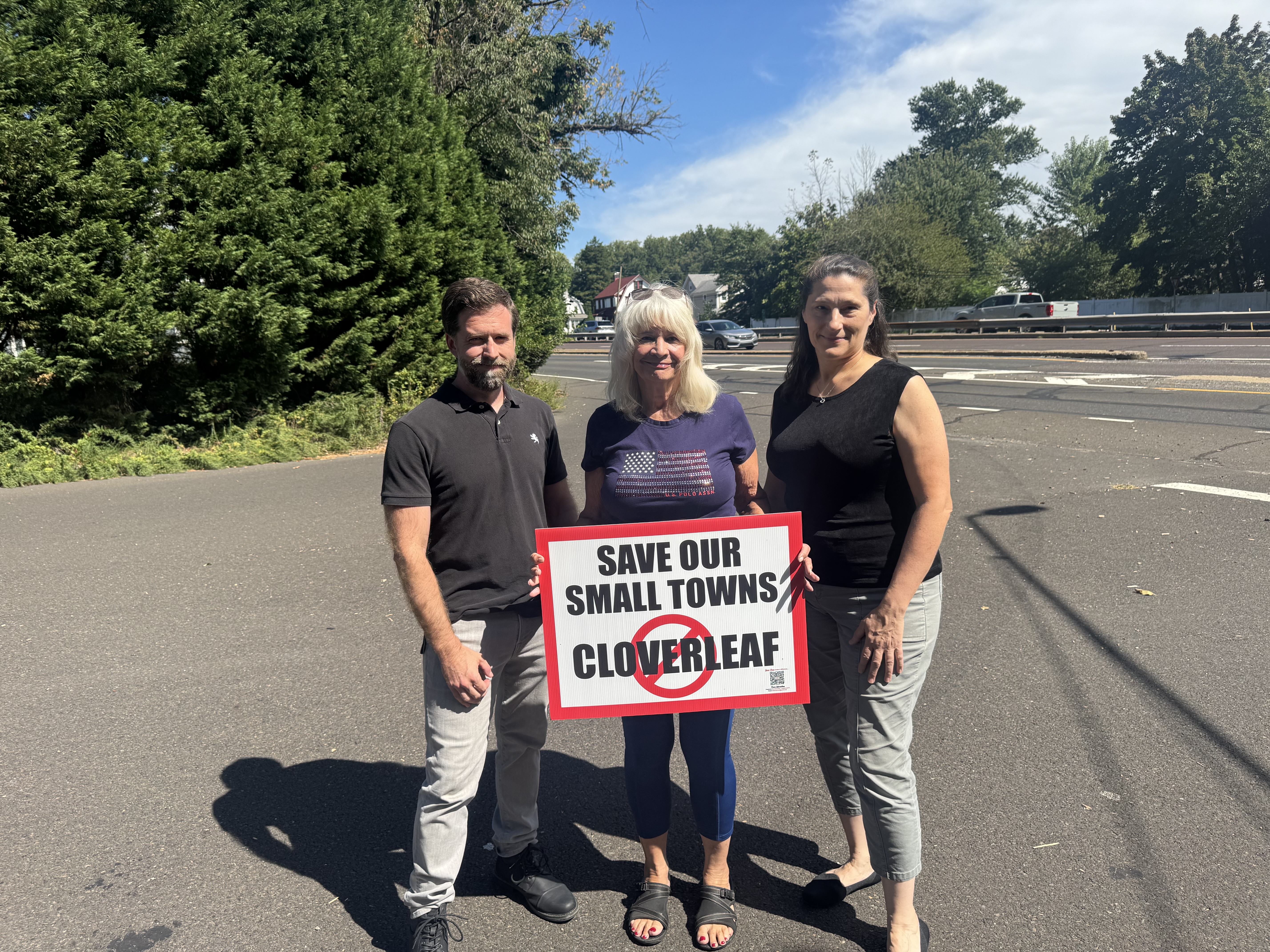
The resolution is the latest in an expanding five-year battle against the proposal from borough residents, joined by people who live in Langhorne Manor and Middletown Township. A sizable number of lawns sport No Cloverleaf signs.
PennDot’s original plan would have eliminated the service roads entirely.
It seemed like a big concession to local residents’ concerns.
But it’s not clear that the roads would continue to provide the same level of access to Route 1, according to the grassroots No Cloverleaf coalition. Local motorists could be forced to use the cloverleaf interchange to get on and off the highway.
“They’re really roads to nowhere” if the cloverleaf interchange is a central part of the Route 1 improvement plan, Langhorne Borough council member Paul Schneider said in an interview.
“The roads’ reason for being then no longer exists,” he said.
The borough’s resolution notes that PennDot traffic studies projected 9.2 crashes per year would occur at two planned signalized intersections on the cloverleaf interchange, at Woods Drive and at Gillam Avenue.
Opponents want the agency to evaluate the option of keeping the service roads as they are and using roundabouts to control traffic through the interchange.
Construction is not scheduled to begin until 2029, following additional environmental studies, detailed responses to community comments, and final engineering designs.
A PennDot spokesperson said nothing is finalized about the project at this point.
Joey Shevenock suffered repeated urinary tract infections, kidney stones, partially amputated toes, and a broken hip during his last years living in a Reading-area group home for people with intellectual disabilities.
Then, on July 2, the 52-year-old with a history of swallowing difficulties choked and breathed in rice while he was being fed. That led to cardiac arrest. Shevenock died three days later at Reading Hospital.
The Shevenock family has hired a lawyer and plans to file a lawsuit claiming that negligence led to his death, which came 15 months after state regulators had revoked the license of the operator of his Exeter Township group home, Supportive Concepts for Families.
State law allows the nonprofit owned by Inperium Inc. to continue operating while it appeals the revocation,which followed at least four deaths, 11 abuse incidents, and dozens of cases of neglect at Supportive Concepts’ homes in the year ended February 2025.
The license revocation covered 103 of its group homes across northeastern Pennsylvania, including those in Berks County.
Joey Shevenock’s brother, Jeff, questions why state law gives Supportive Concepts so much time.
“I’m a chef, and they’ll shut a restaurant down for X, Y, or Z, and they don’t let you reopen until you correct whatever the violations are,” he said.
“It just blows me away that they know this is going on, but they’re like, well, we’re going to give you six months, a year, whatever, to work on it,” he said.
Supportive Concepts CEO Colleen Miller declined to comment, citing privacy laws. “We remain committed to the health, safety, and well-being of the individuals we serve,” she said in an email Wednesday.
Inperium did not respond to questions about the license revocation.
Homes like the one where Joey Shevenock lived for more than 20 years are regulated by the Pennsylvania Department of Human Services, which said it “cannot comment on specific incidents or investigations, and we cannot comment on pending appeals.”
Like many states, Pennsylvania gives operators time to correct deficiencies, with no set timeline on how long an appeal can go on. “It’s not unusual to allow them to continue operating,” said Mark Davis, CEO of Pennsylvania Advocates and Resources for Autism and Intellectual Disabilities, a Harrisburg trade association for service providers.
During appeals, providers are subject to more frequent, unannounced inspections.
The deathat Supportive Concepts reflects a bigger problem in Pennsylvania’s system of care for adults with autism and intellectual disabilities, said Dee Coccia, cofounder of Vision for Equality, a Philadelphia nonprofit advocacy group for these individuals and their families.
Shevenock’s death, detailed to The Inquirer by his family, follows 25 choking-related deaths reportedin Pennsylvania group homes for intellectually disabled individuals in the last 3½ years through June 30, according to state data.
“You wouldn’t stand for it if you were taking care of animals,” Coccia said.
Deteriorating conditions for Joey Shevenock
Cyndi Shevenock, Jeff’s wife, started closely monitoring Joey’s care about eight years ago, after her in-laws moved to South Carolina.
Joey was blind, had cerebral palsy, and needed a wheelchair to get around. He required support for most daily living activities, including dressing, eating, and getting into bed.
After the July Fourth holiday weekend in 2025, a Supportive Concepts staffer took Joey to the hospital with a urinary tract infection, Cyndi recalled.
Cyndi said anurse called while she and Jeff were driving from their home near Baltimore to the hospital and told her that Joey’s urine had become a concerningly darkiced tea-like color.
The nurse also shared that, according to the aide who brought Joey to the hospital, his urine had started smelling three or four days earlier.
Cyndi said “by the time they took him in, the infection was so bad” that the nurse advised the family to report the incident to Adult Protective Services. The investigator found no signs of neglect, Cyndi said.
Cyndi subsequently reviewed 1,448 pages of Joey’s medical records andfound a half dozen urinary tract infections in the last couple years, two choking incidents that he survived, and 26 hospitalizations between January 2020 and his death.
Joey was prone to urinary tract infections and kidney stones because he was incontinent and spent all his time either in his wheelchair or lying down.
He sat in wet diapers far too long before being changed, Cyndi said, and almost always had sores in that area. Regulators consider bed sores a sign of poor care, often found in nursing homes.
In Cyndi’s view, the lack of dignity in his careextended beyond medical needs.
Every visit, she would check his clothes, to make sure they were clean. She invariably found that they “were just shoved into drawers, inside out, wrinkled, shoved in any drawer,” she said. “Sometimes, the clothes weren’t even his.”
Ongoing troubles at Supportive Concepts
A week after Joey’s death, Inperium announced its founding CEO Ryan Smith had returned to Supportive Concepts as acting president.
Smith had started at Supportive Concepts in 1993, rising to CEO in 2000. He remained in that position until 2018, according to hisLinkedIn profile.
He continues to serve as CEO and chairman of Inperium, a nonprofit also based in Reading, which Smith founded a decade ago to acquire Supportive Concepts — and since then dozens of other typically financially struggling nonprofits.
After acquiring a nonprofit, Inperium consolidates back-office and other business functions in a subsidiary called Apis Management Services to save money.
For example, Inperium told investors recently that Apis saved $8 million at Philadelphia-basedResources for Human Development, which it acquired in 2024.
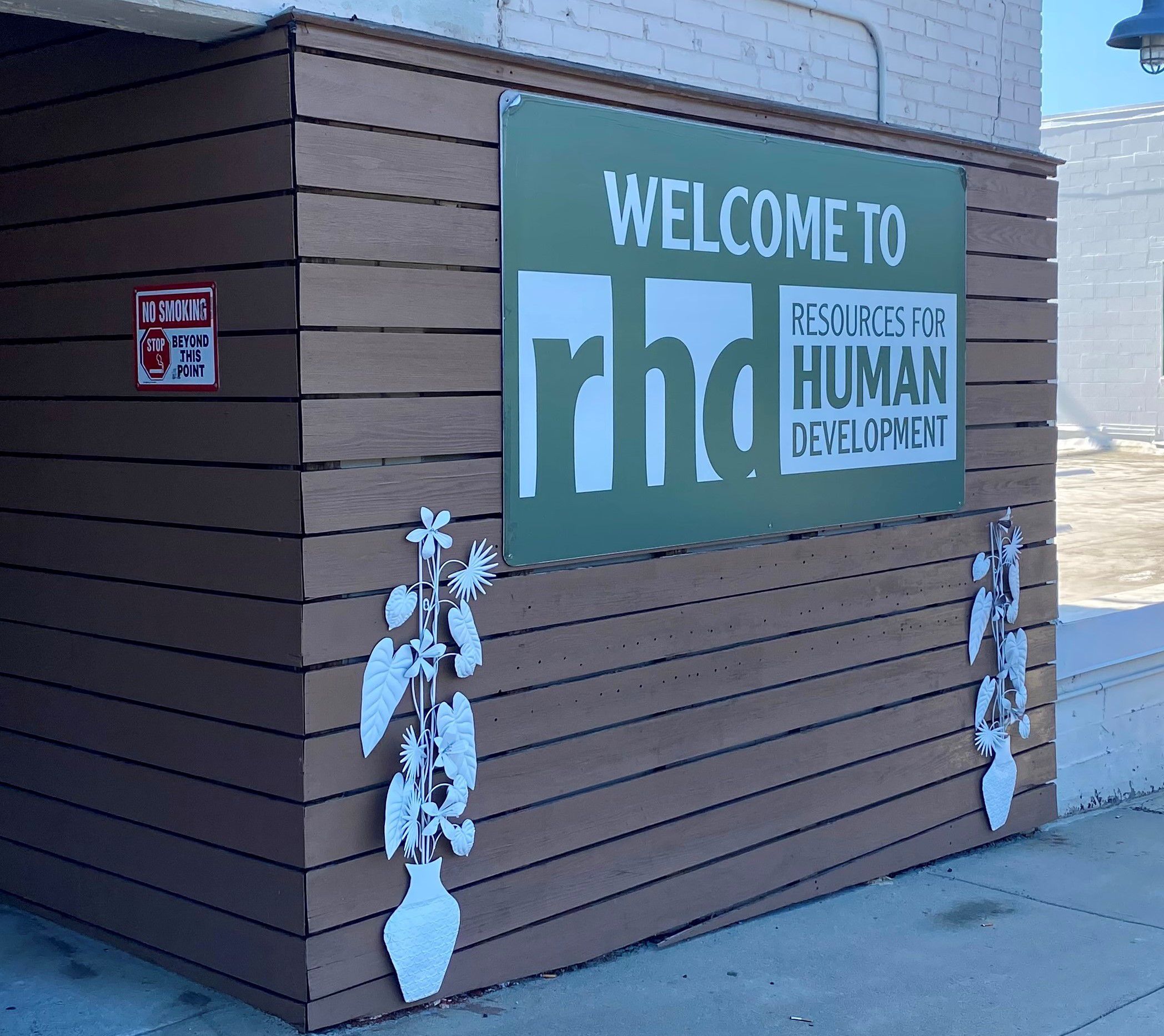
The main entrance to Resources for Human Development on Wissahickon Avenue in Philadelphia. It was acquired by Inperium Inc., a Reading nonprofit that has grown rapidly through acquisitions since its founding in 2016.Harold Brubaker / Staff
Smith’s return to Supportive Concepts has not ended its license revocation affecting operations in 15 northeastern Pennsylvania counties, including Berks. Under the terms of the revocation, the organization cannot open any new homes or accept new clients in existing properties.
State regulators have alsofound significant violations of care standards at Supportive Concept group homes in Western Pennsylvania. Since February, 17 facilities have been operating under provisional license, Inperium disclosed in a recent bond offering statement. The provisional status requires them to implement a correction plan.
The sanctions have led to sharply lower profits for the Supportive Concepts, according to Inperium’s bond statement.
The state sanctions haven’t stopped Inperium from making additional acquisitions in Pennsylvania as Smith aims to build a $1 billion enterprise. (Inperium reached $819 million in revenue for the 12 months that ended June 30.)
Inperium’s most recent sizable acquisition brought into its portfolio KidsPeace, a financially troubled provider of youth mental health services based in Lehigh County.
Inperium’s track record is troubling, said Leonard G. Villari, a Philadelphia lawyer hired by the Shevenock family to represent them in a lawsuit against Joey’s death. He pointed to its ability to keep growing a business largely funded with Medicaid through acquisitions with little state intervention.
“This looks like a very concerning company to me,” he said. “It’s only getting bigger, and they’re aggressive. They’re bolder.”
Bright spots for Joey
Before his choking death, Joey had some memorable relationships with Supportive Concepts staff, the family recalled.
A part-time caregiver would go to Joey’s house on Sundays, give him a fresh shave, make sure he had a nice shirt on, and take him to church with her. After church, they would go out to lunch, Cyndi said, noting the visits ended when the woman stopped working at Supportive Concepts.
In an Instagram comment to a familypost about Joey’s death, another former caregiver recalled how much they loved listening to oldies music like Johnny Cash and Elvis Presley. Joey knew every word of Wizard of Oz and Home Alone, she wrote.
“We’d sit outside together and he was always interested in what the birds and squirrels doing. He’d laugh at the cutest stuff,” she wrote.
The Fourth of July was a significant holiday for Joey and their father, Jeff said. Even though he couldn’t see the fireworks, he loved the sound.
Jeff was so saddened by the thought of his brother dying on that day that the family waited to end his life support the next day.
Charmira and Quincy Pilgrim wanted to become homeowners a decade ago when they got married.
But over the years, job losses, jobs that didn’t pay enough, children, unpaid maternity leave, and risingcosts of living made saving for homeownership impossible.
They were finally able to start putting money away late last year. And this spring, they found a $315,000 house they wanted to buy in West Oak Lane. But they were short thousands of dollars for their down payment and closing costs.
What got them and their five children into their new home was a $10,000 first-time homebuyer grant funded by a group of Quakers in Germantown.
“It was a blessing that I ended up getting the grant because money was tight,” said Charmira, a 32-year-old special-education teacher and case manager.
Up-front cost is a common barrier to homeownership for renters in Philadelphia and across the country. Grants for down payments and closing costs can help aspiring homeowners get in the door. Governments, mortgage lenders, and nonprofits are common funders.
That’s what makes the Pilgrims’ grant stand out. It’s one of five $10,000 grants that Green Street Friends Meeting, a Quaker congregation in Germantown, is funding to help people buy their first homes. It’s part of the congregation’s racial justice plan to redistribute wealth to Black residents in the Germantown area as a form of reparations.
When Green Street announced the homebuyer grants in March, it said it sees reparations as “economic and spiritual repair for the intergenerational harms of slavery, Jim Crow, and their afterlives.” Reparations, it said, are “intended to address the theft and pillaging of Black wealth” for hundreds of years through systemic discrimination.
Lucy Duncan, a member of Green Street, said the homebuyer grants are “a redistribution of wealth that’s about fairness and equity.”
The goal is to keep Black residents from being priced out of their communities and “provide resources to help maintain Black Germantown,” she said.
Rebecca L. Grant, a Black member of Green Street’s reparations committee who has been a Germantown homeowner for 22 years, said the committee wanted to eliminate a hurdle to homeownership and the wealth it can create for Black residents.
“We knew these grants wouldn’t undo generations of discrimination,” Grant said, ”but we thought we could make a difference one family at a time.”
How the homebuyer grants work
To distribute the grants, Green Street partnered with birdSEED, a Washington-based nonprofit that aims to reduce racial wealth gaps in the Washington and Philadelphia areas. As part of its work, the nonprofit helps members of historically disadvantaged communities buy their first homes.
The Quaker congregation contributed funds to birdSEED’s Housing Justice Grant Program and required that its money go to Black homebuyers purchasing in the 19144 or 19138 zip codes.
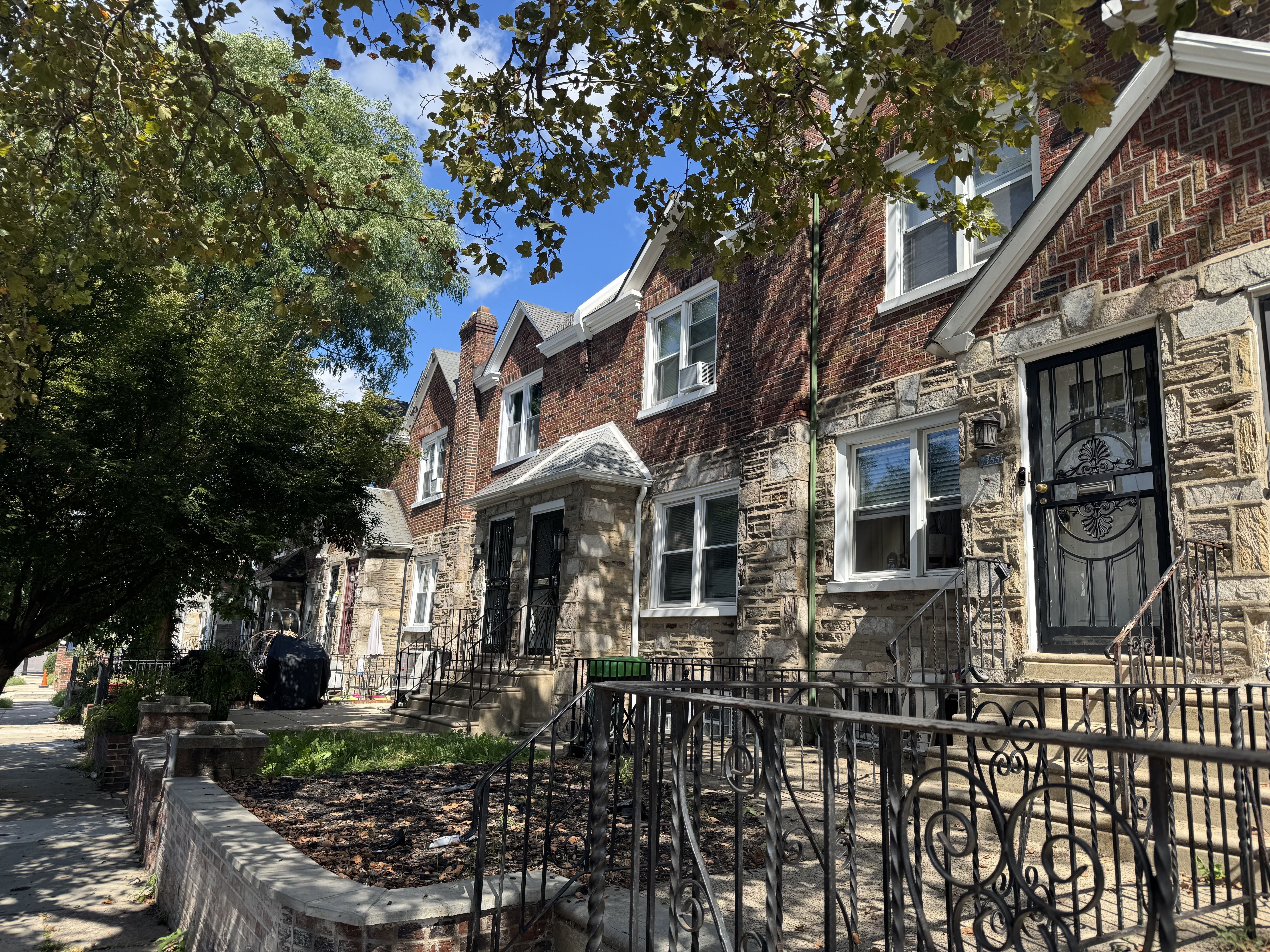
West Oak Lane is one of the communities where homebuyers can use grants from Green Street Friends Meeting to purchase properties.Michaelle Bond / Staff
In the Philadelphia area, birdSEED typically awards grants of between $5,000 and $10,000 for down payments and closing costs. An advisory board reviews applications and interviews top candidates. The board scores applicants based on their readiness to purchase a home and the impact the grant would have, said Leslie Case, birdSEED’s co-executive director.
Candidates need to have lived in the area in which they are buying for at least three years. They cannot have purchased a home before. And their household can make up to $150,000 a year. Preference is given to populations who have historically faced barriers to homeownership.
The nonprofit has awarded about 40 homebuying grants so far in the Philadelphia region, which includes surrounding counties in Pennsylvania and New Jersey.
Maegan Scott, birdSEED’s co-executive director, said the grants funded by Green Street represent “momentum” as the nonprofit seeks to expand its presence in the Philadelphia area.
A majority of the nonprofit’s housing justice grants have gone to first-generation homebuyers. But a common thread ties all applicants together.
“Everyone’s looking for stability,” Scott said. “Everyone is looking ahead to the next generation, the generation after that.”
Green Street’s reparations initiative
In June 2021, Green Street pledged to spend $50,000 a year for 10 years as part of its reparations work, spurred by a moral calling and the realization that the congregation had a large pot of money in unrestricted reserves.
In about a year and a half, clinics to resolve and prevent tangled titles preserved more than $11.3 million in housing wealth for more than 85 families by protecting homes that might otherwise have been lost because of unclear legal ownership, according to Green Street. It was a massive return on the $25,000 the congregation spent on fines and legal services for families who didn’t qualify for free legal help.
Green Street Friends Meeting in Germantown welcomed neighborhood residents to its meetinghouse in April 2022 to get help with tangled titles and estate planning at a legal clinic it hosted.TYGER WILLIAMS / Staff Photographer
Over the last few years, Green Street’s reparations work has included music education for Black youth, funds for Black midwives in Germantown and a new birthing center in Mount Airy, estate planning services, and additional housing support.
“We didn’t want the reparations to just be about acknowledging a painful history,” Grant, the reparations committee member, said. “We want it to be about what we can do now.”
The Pilgrims and one other family have bought homes using Green Street’s grants so far.
Duncan, at Green Street, said that when birdSEED sent her the first pictures of the families, “I almost started to cry.”
“It’s such tangible and long-term impact for these families,” she said. “And hopefully, generational impact.”
A home of their own
Charmira and Quincy Pilgrim closed on their three-bedroom house at the end of May, about a month before their fifth child was born.
The children, the oldest of whom is 8, love playing in the side yard, backyard, and finished basement. Charmira loves to cook, and she now has a big kitchen. The house is close to biological family and church family.
Charmira said being a homeowner “means freedom.” She has started planning future upgrades for her home.
“It feels good to have ownership. It feels good to be in a space I can create a vision for,” she said. “I see this as an opportunity for my kids to have a legacy.”
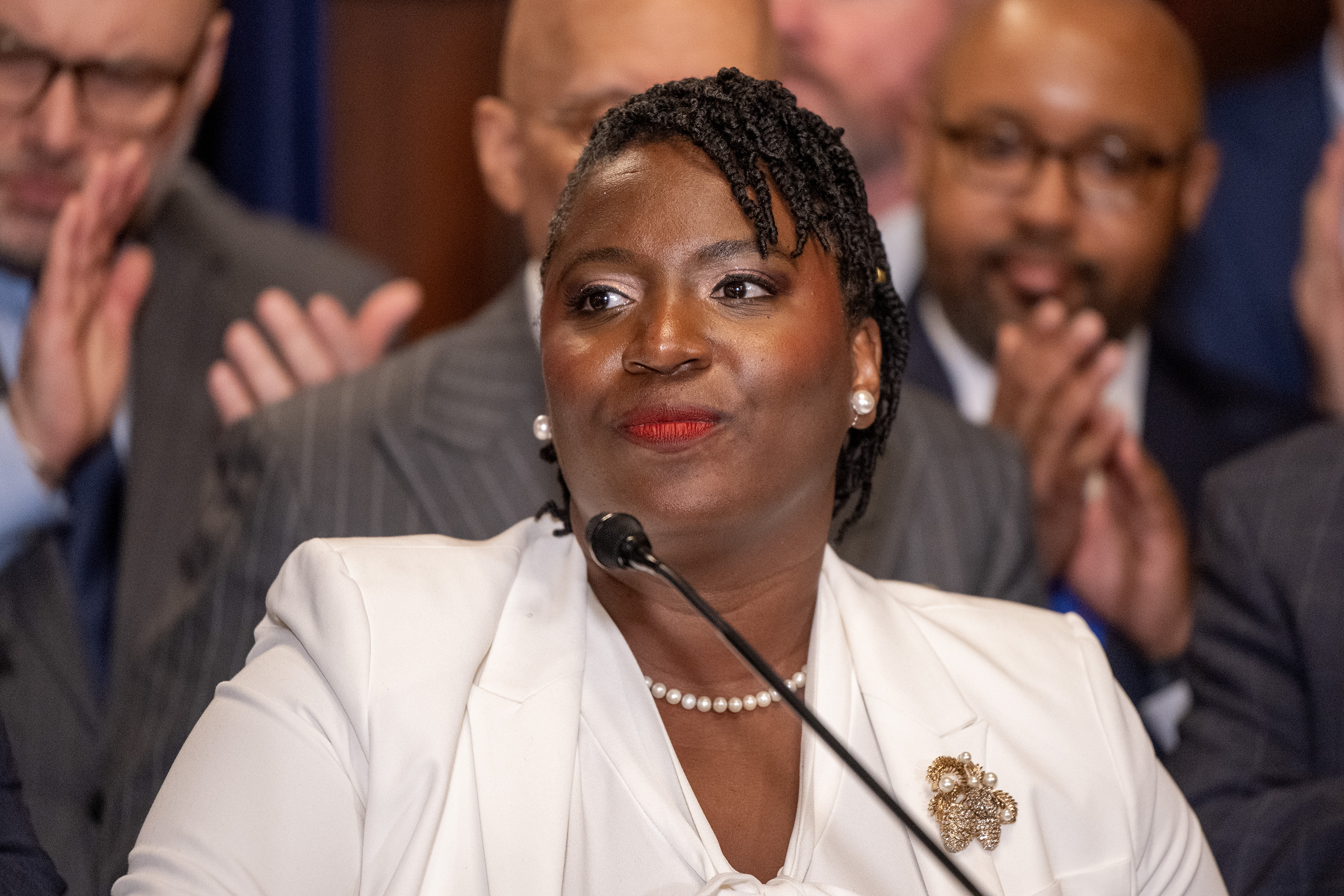
Pennsylvania House Speaker Joanna McClinton was listening to a sketch by comedienne Zainab Johnson when Florida State Rep. Angie Nixon’s name came up. Johnson mentioned how Nixon, who is vying to become the Sunshine State’s first African American U.S. senator, had been attacked by a right-wing influencer named Laura Loomer.
McClinton is closely following Nixon’s race and immediatelywondered: “Who’s Laura Loomer? Who is she?”
McClinton found out soon enough.
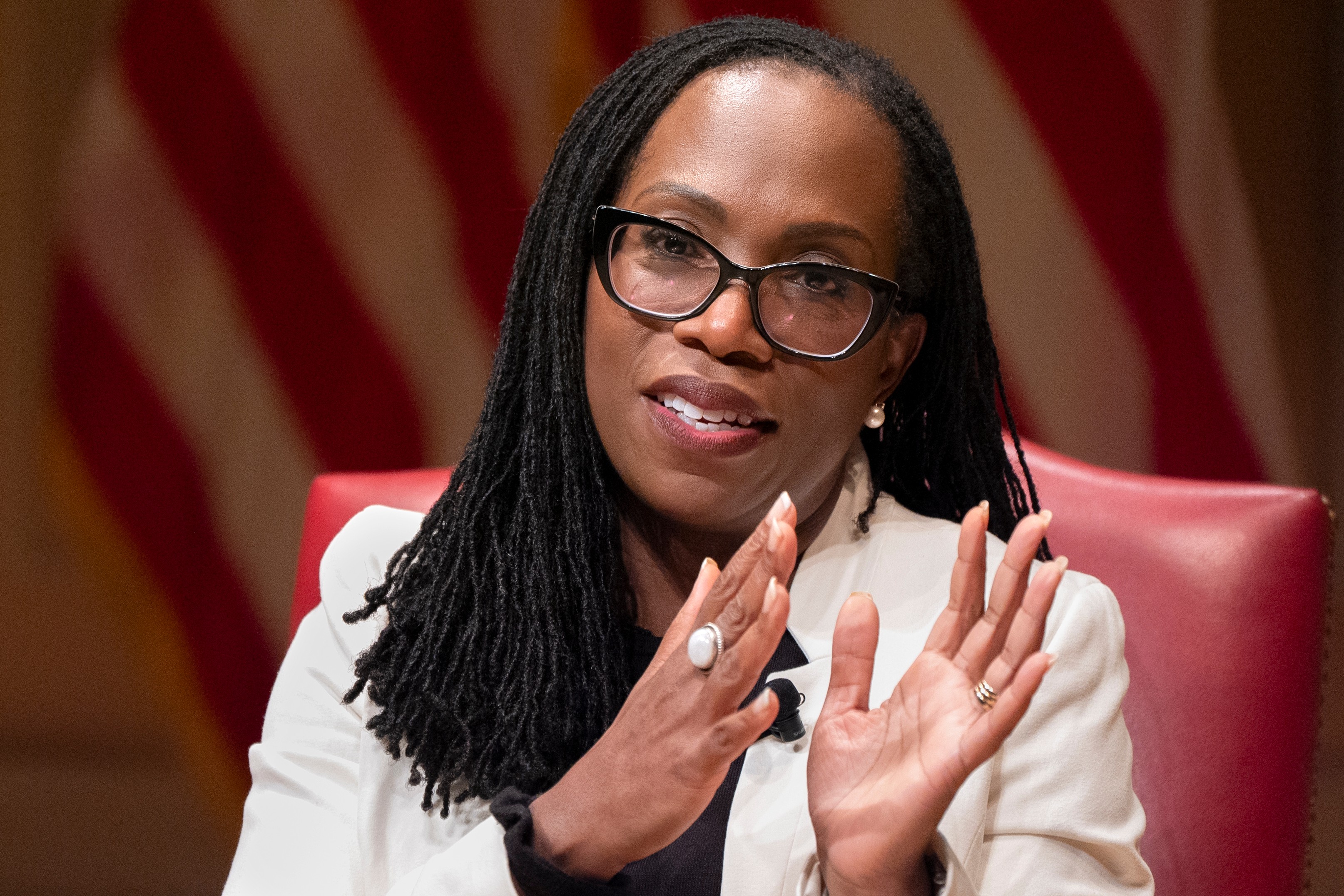
Loomer, reportedly a close ally of President Donald Trump, has been publicly going after Black female legislators and other prominent women — including U.S. Supreme Court Justice Ketanji Brown Jackson — calling them “ghetto” and the B-word.
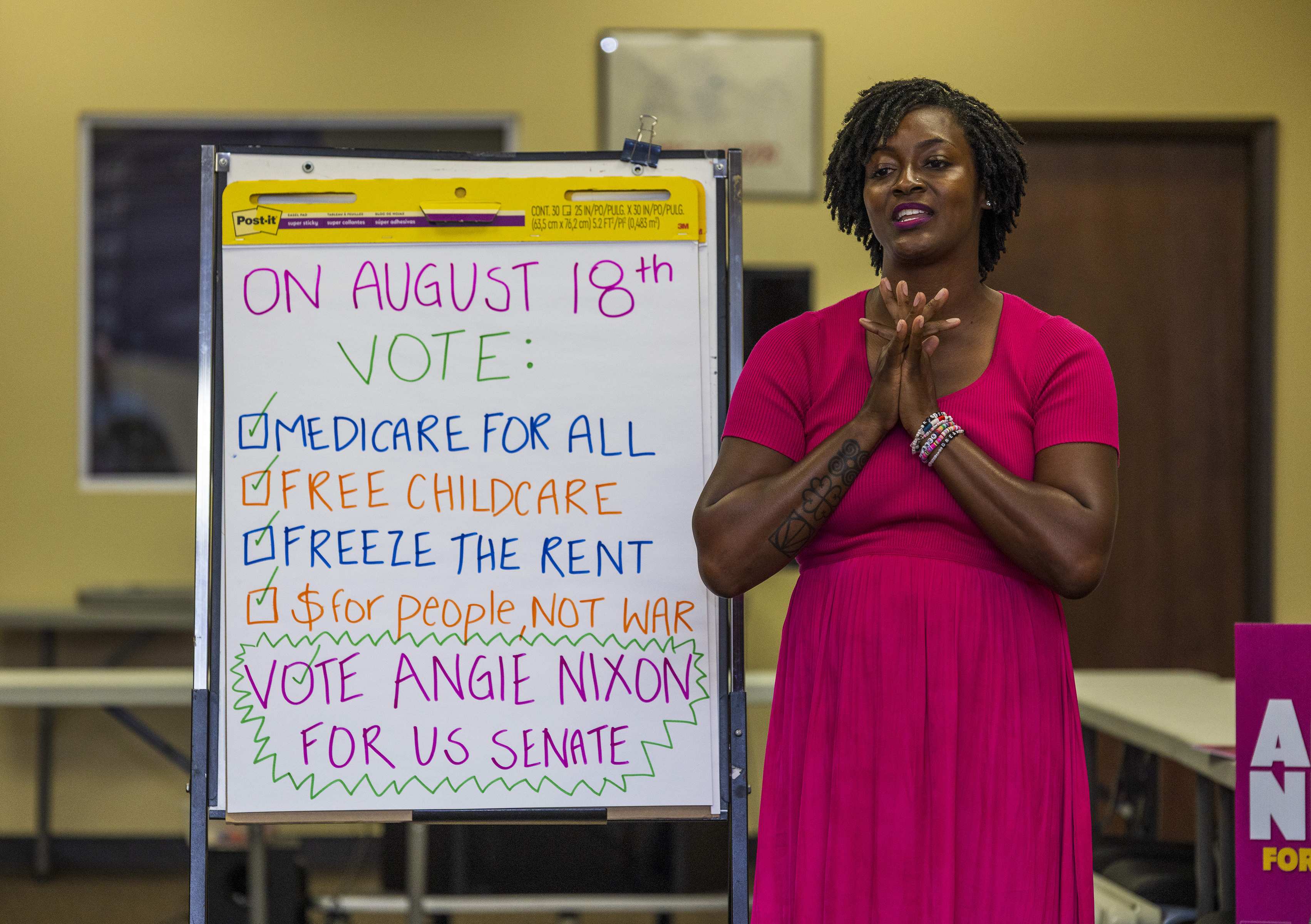
State Rep. Angie Nixon, a Democratic candidate for U.S. Senate, during a canvassing event in Fort Lauderdale, Fla., in August.SAUL MARTINEZ
The MAGA influencer zeroed in on Nixon last month after she won Florida’s Democratic Senate primary and accused her of using Ebonics. She also likened the former grassroots organizer to a dog, saying, “Maybe I need to bark at you and tug your leash and then you’ll finally understand.”
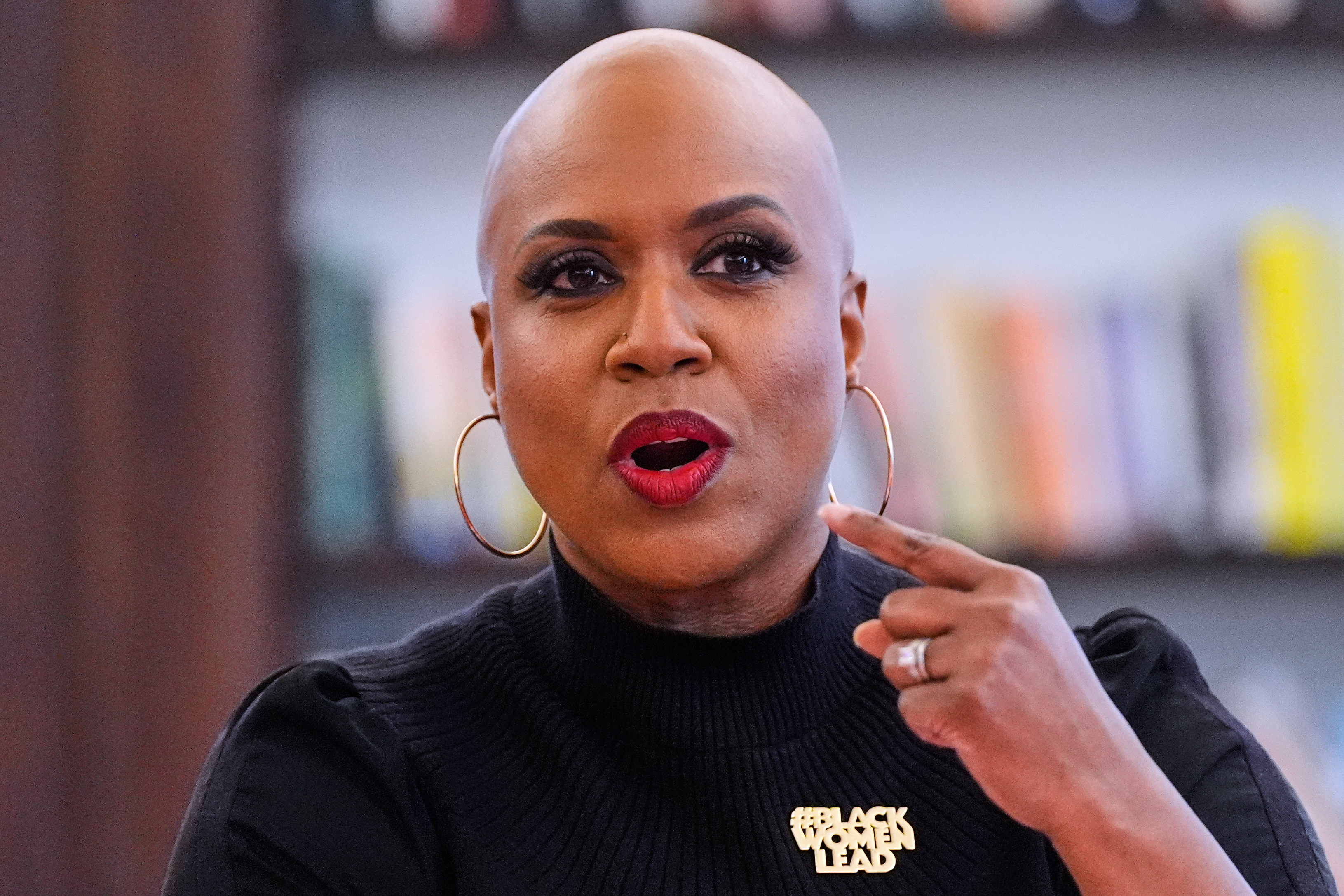
Loomer has also posted about Reps. Ilhan Omar, Ayanna Pressley, and LaMonica McIver, and former Rep. Cori Bush, saying they’re “entitled,” “destructive,” and “race-obsessed.”
I don’t know, Laura — you might want to look in the mirror to see who’s really “entitled,” “destructive,” and “race-obsessed.”
She made me mad.
A lot of people may have brushed it all off, but as you can tell, I haven’t.
Former Rep. Marjorie Taylor Greene has condemned Loomer. Where are the other Republicans who pride themselves on being civil and having family values? Every member of the GOP should speak out against what’s been happening.
House Speaker Joanna McClinton during a news conference at the Capitol in Harrisburg in February.Tom Gralish / Staff Photographer
“We need the president to condemn these comments,” McClinton told me, adding that U.S. Senate leadership should also act. “Unfortunately, attacking Black women is nothing new.”
She added, “We have been fighting with racism and misogyny for as long as we have been a democratic republic.”
I won’t repeat all of the racist things Loomer has uttered on her podcast or posted online lately about Black female politicos. If you’re curious, you can go on social media and see for yourself.
U.S. Supreme Court Justice Ketanji Brown Jackson speaks to the 2025 Supreme Court Fellows Program, Feb. 13, 2025, at the Library of Congress in Washington.Jacquelyn Martin
While you’re there, you can check out her Islamophobic posts.
I thought long and hard about ignoring what’s been happening and writing off Loomer as just another right-wing extremist.
But she has traveled with the president numerous times, visited Mar-a-Lago, and reportedly has Trump’s ear. Her platform is huge — nearly two million followers on X, the social media site formerly known as Twitter. And she doesn’t hesitate to use it.
That’s political currency — not just in Washington. In this era of the attention economy, the most strident voices get traction.
Maryland Gov. Wes Moore was spot on when he posted a statement directed at Loomer saying, “You attack and insult Black women because you believe peddling racism is good for your clicks and your business model.”
It felt good to see Moore, who is a possible presidential contender, defend Black lawmakers against Loomer’s looney tunes. Same with House Minority Leader Hakeem Jeffries, who called her a “stone-cold racist.”
Being a Black woman in traditionally white spaces can be challenging. Nixon appeared near tears during a recent appearance on Don Lemon’s YouTube show and said she was tired. “It’s become so normalized for people to continue to attack us,” she said.
Timothy N. Welbeck, director of Temple University’s Center for Anti-Racism, said he wasn’t surprised there hasn’t been a more fervent pushback against Loomer.
“Things like woke and DEI were politically expedient slurs to convey anti-Black sentiments,” he told me. “And now people like Laura Loomer are forgoing the veiled statements.”
It has felt like open season on Black women ever since Trump’s return to office.
We have been disproportionately impacted by widespread cuts to the federal workforce. Trump weaponized the U.S. Department of Justice to try to prosecute Federal Reserve Governor Lisa Cook and New York Attorney General Leticia James.
Black women are survivors, though. Ever since we were dragged through the Middle Passage and forced into bondage, we have managed to make a way out of no way, as my mother used to say.
This is our heritage.
This is our legacy.
U.S. Rep. Ayanna Pressley (D., Mass.) gestures while addressing a gathering at a roundtable meeting in November in Boston.Charles Krupa
In the spirit of the late Shirley Chisholm, the first Black female member of Congress, and all of the other ancestors, we will get through the Trump era, too.
And we’ll be inspired by the passion of Nixon, the style and commitment of Pressley, and the sheer brilliance of Justice Jackson.
That’s what we do.
As Moore pointed out, “We will never let anyone steal our joy or let those that don’t matter too much, matter too much.”
After logging just 2 total yards in the first two series of the Sean Mannion era, they needed someone — anyone — to step up in a crucial Week 1 divisional game vs. the Commanders.
Thankfully for them, their most underrated offseason acquisition answered the call. Twice.
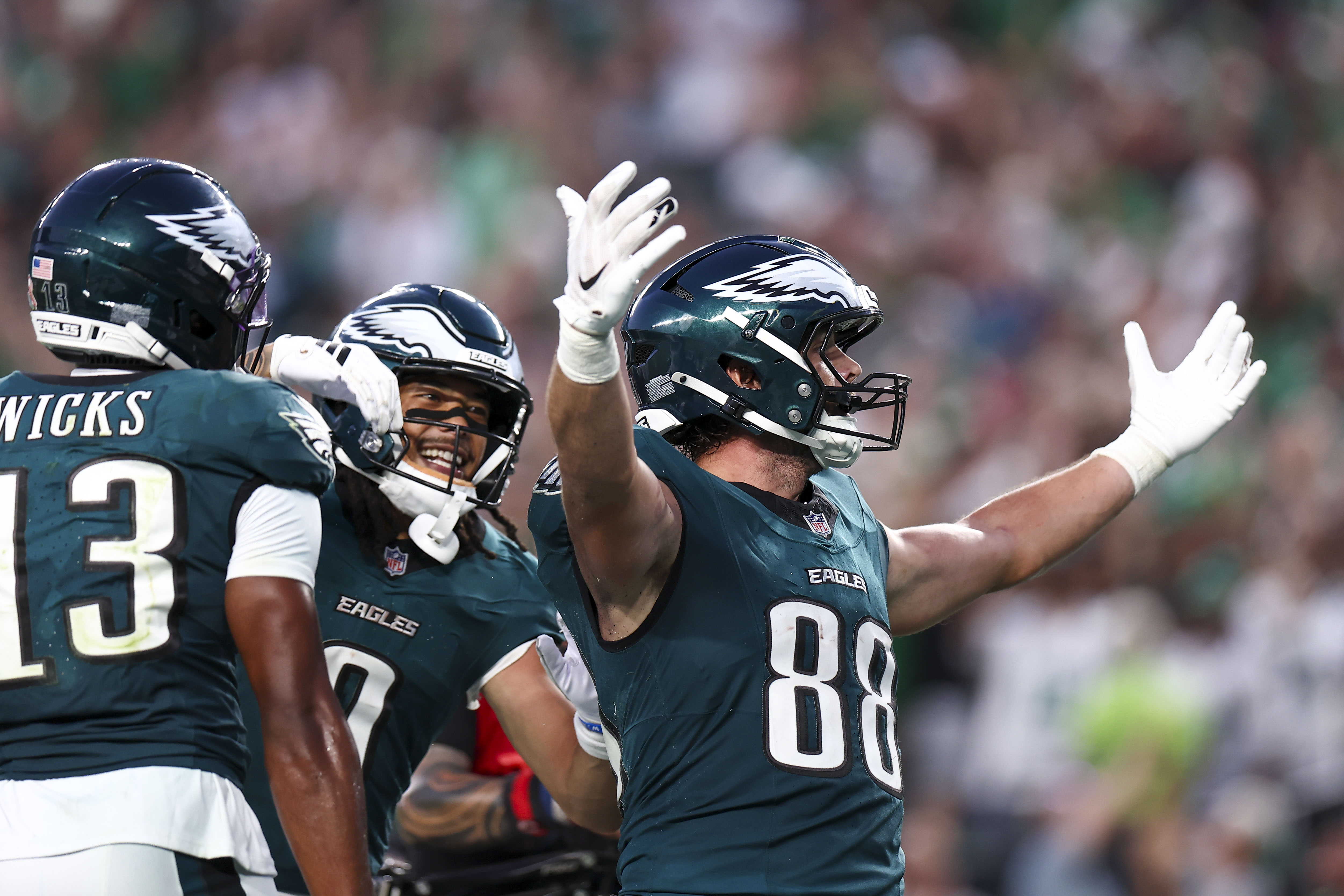
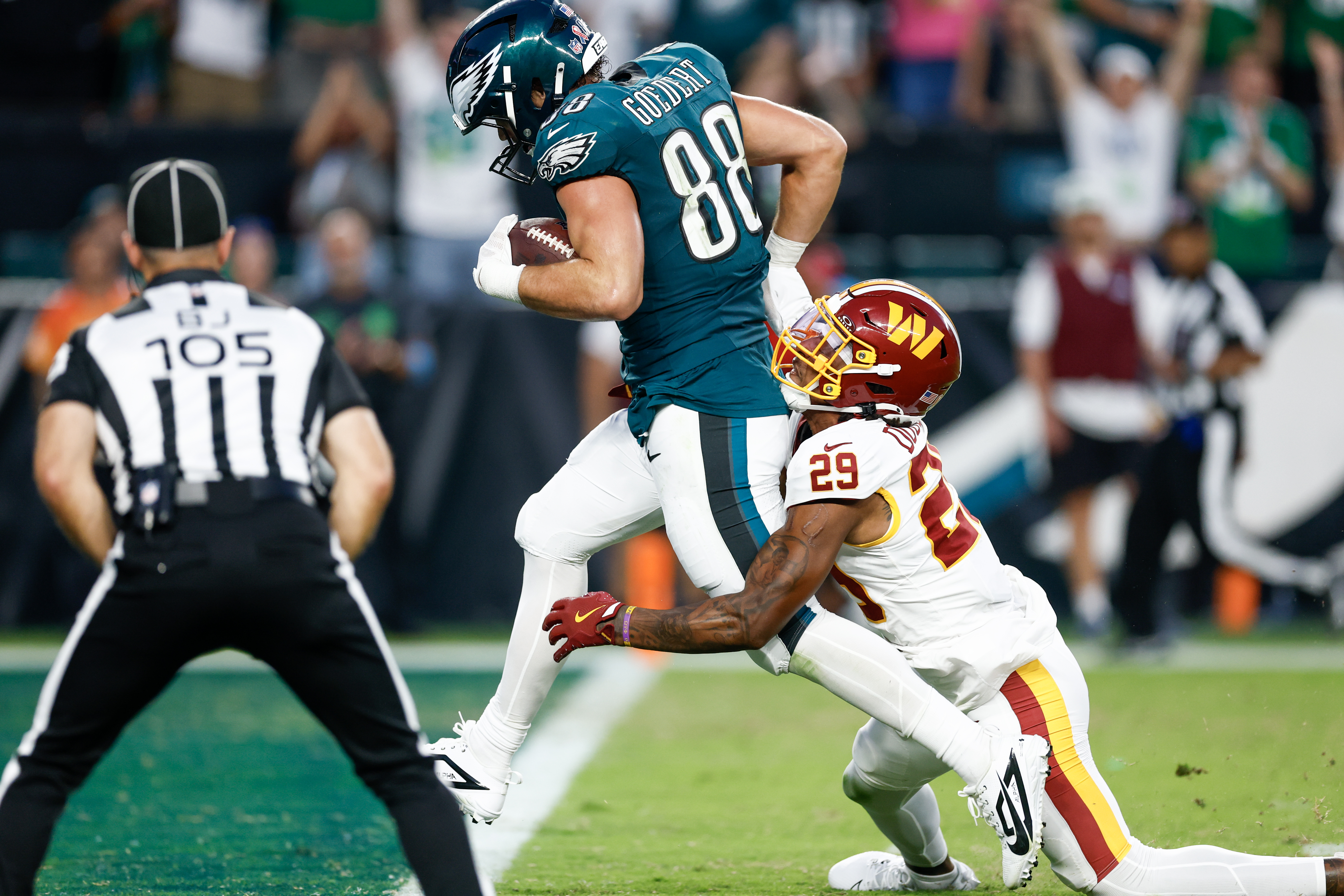
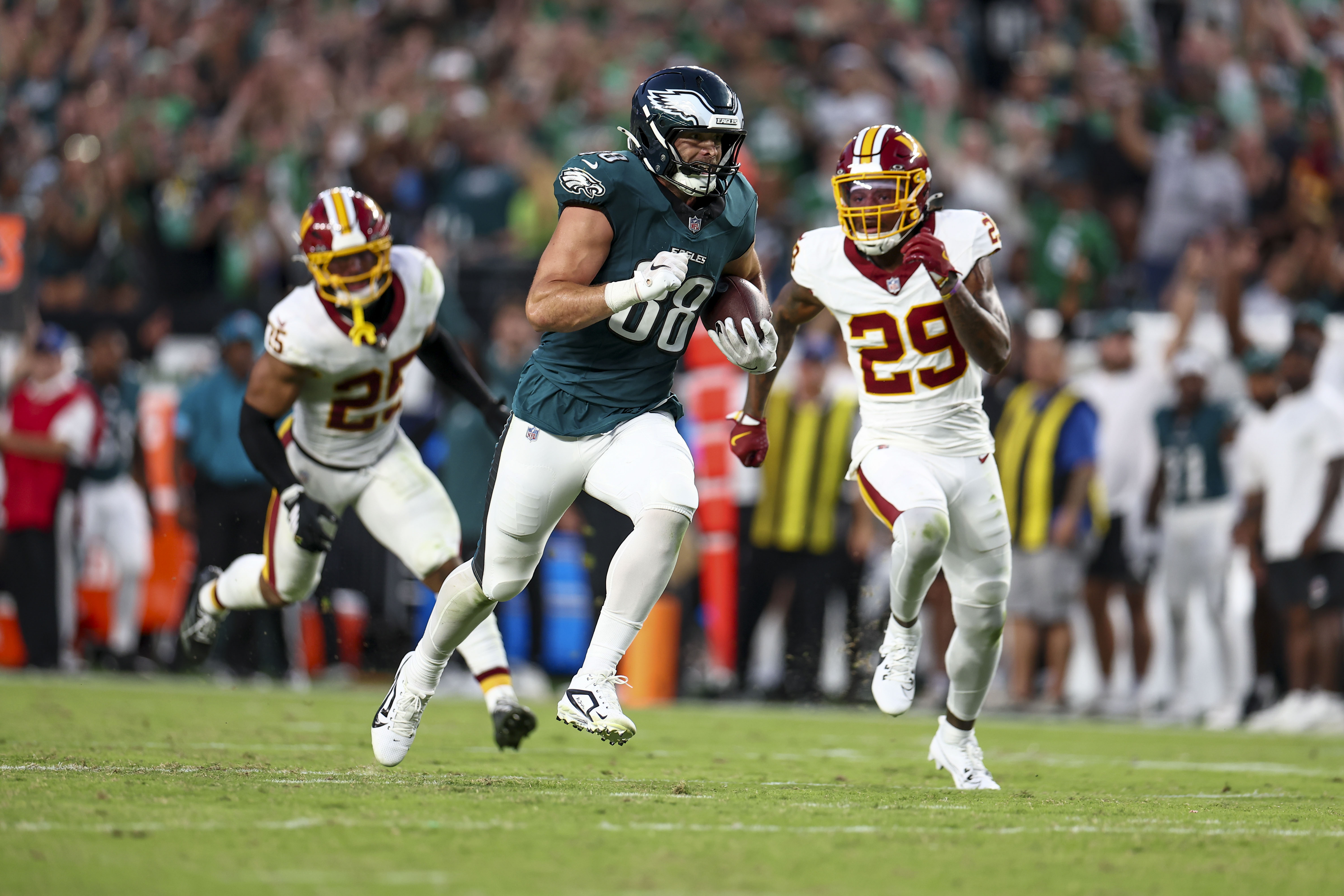
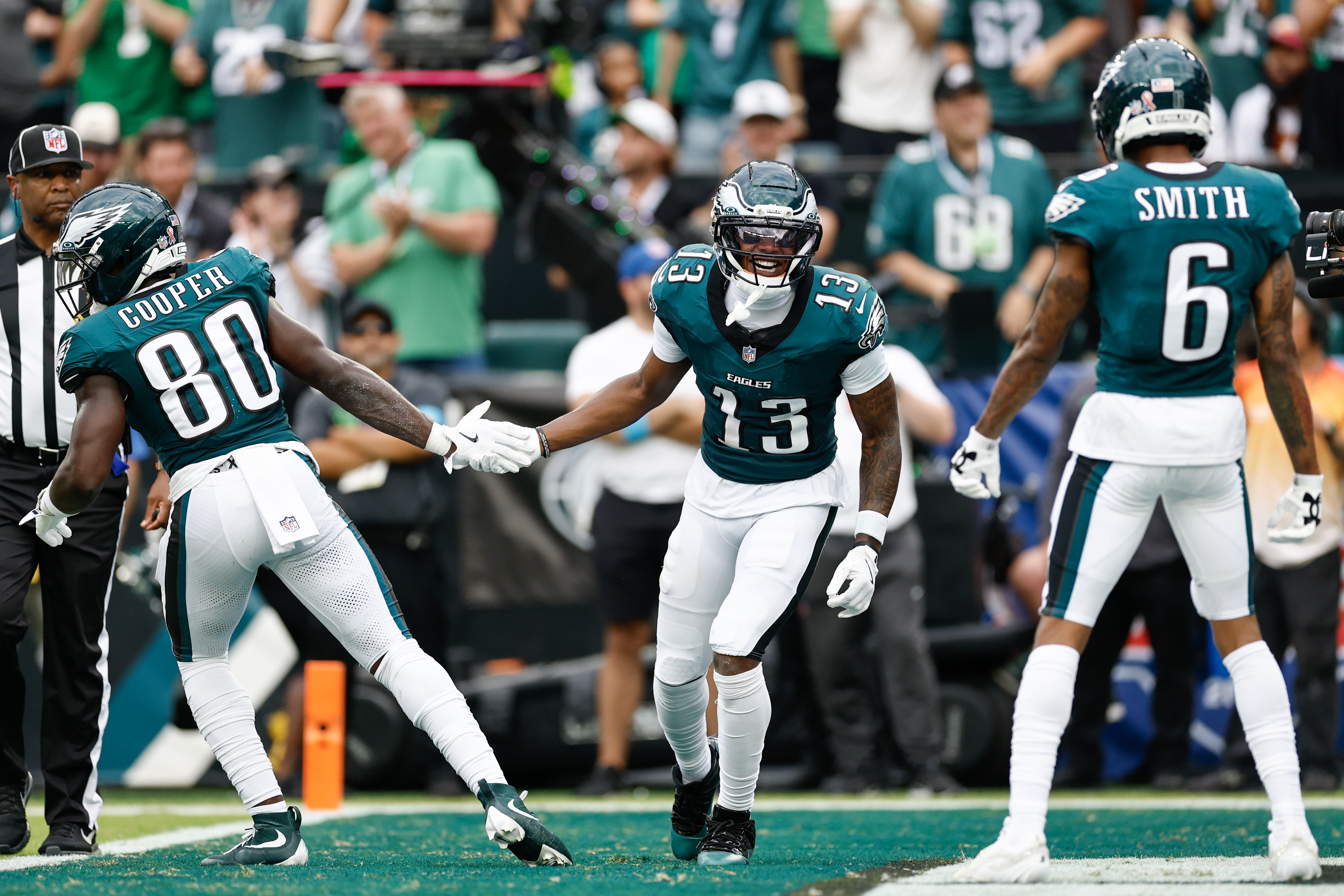
With 1 minute, 57 seconds to go in the first quarter, wide receiver Dontayvion Wicks hauled in a 64-yard pass from Jalen Hurts in what would become the Eagles’ first touchdown drive of the season (Wicks was tackled at the 6-yard line, but tight end Dallas Goedert scored three plays later). Wicks came down with the ball — which traveled 40-plus yards through the air — after he darted past Washington cornerback Mike Sainristil in coverage. It was the longest reception of his career.
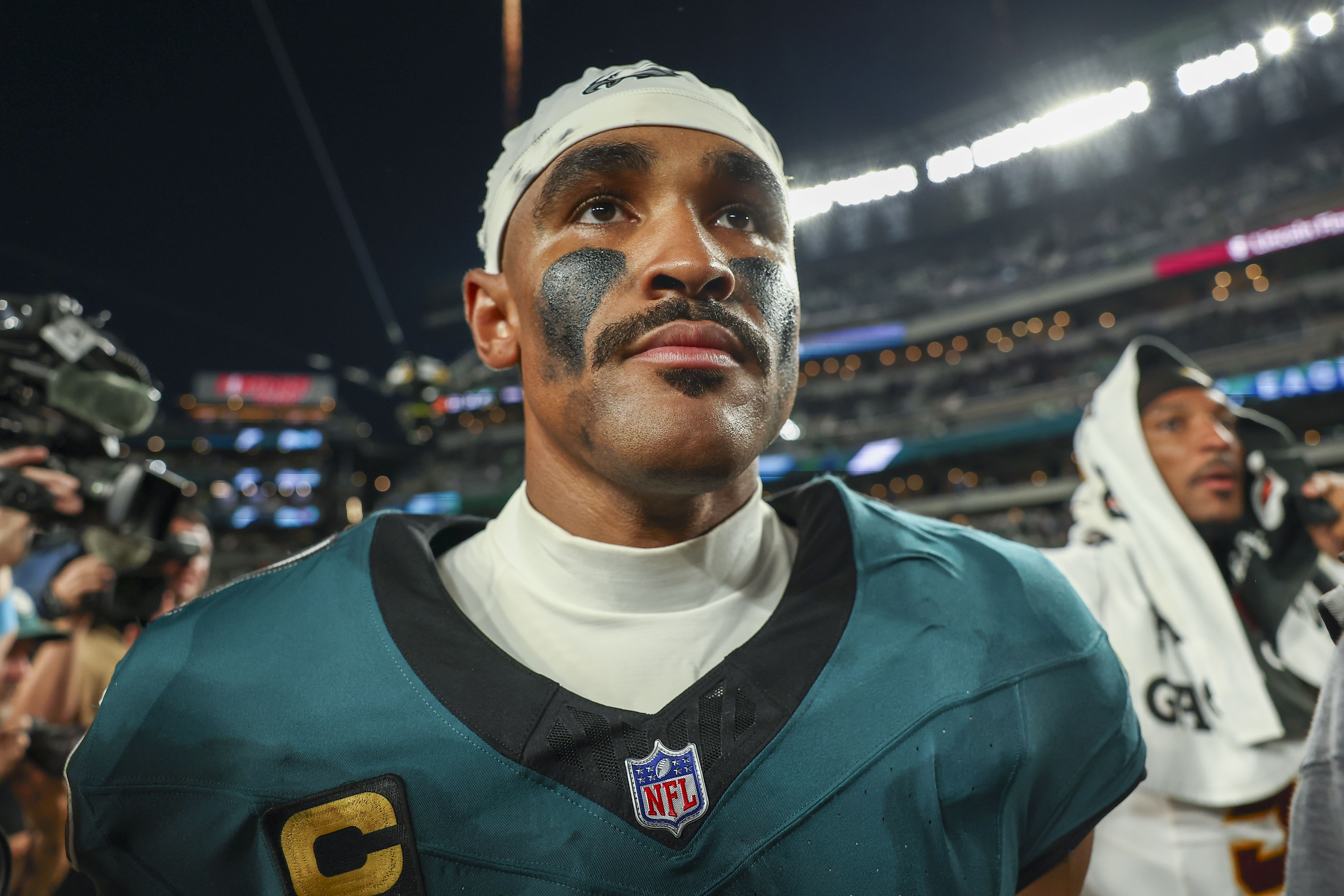
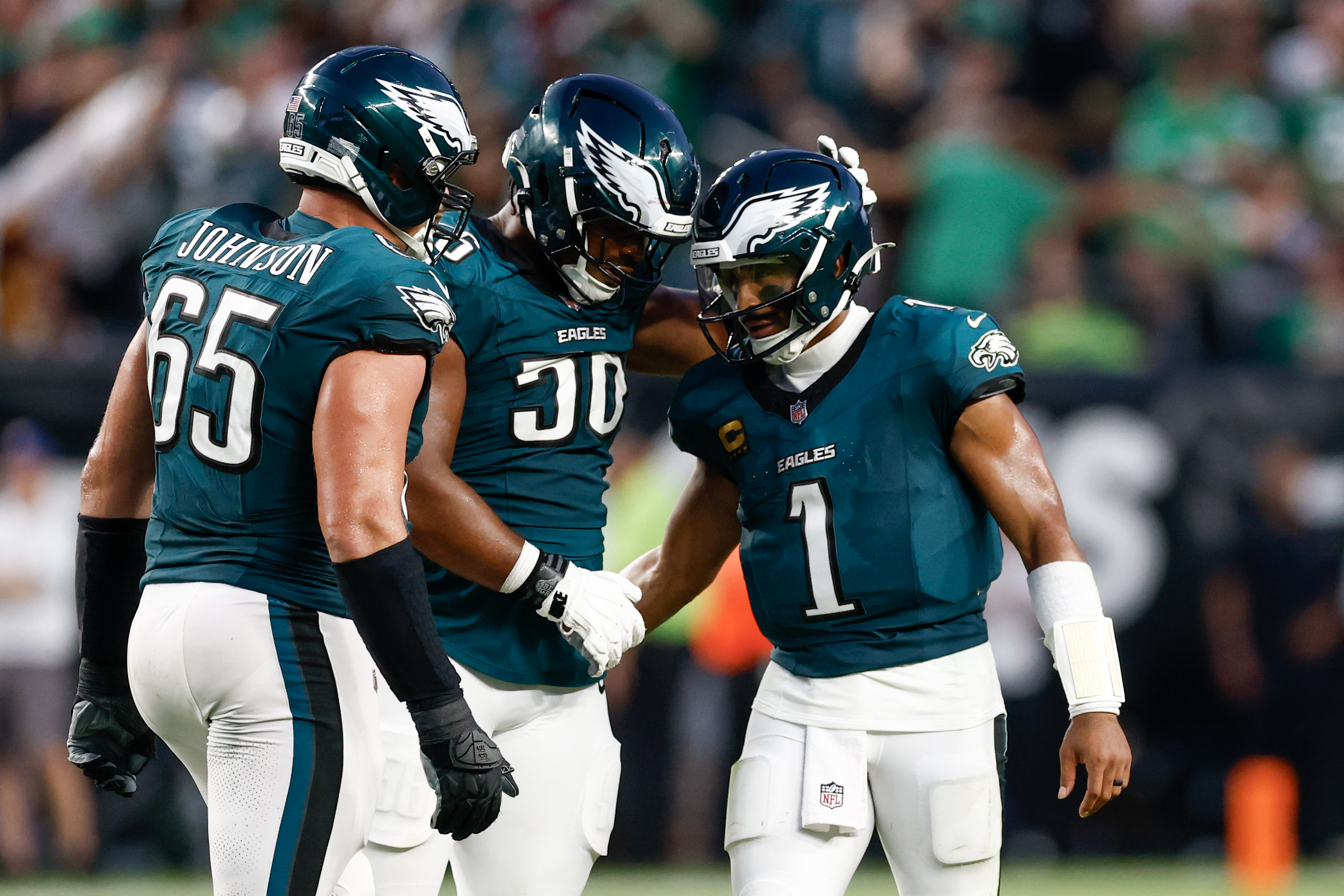
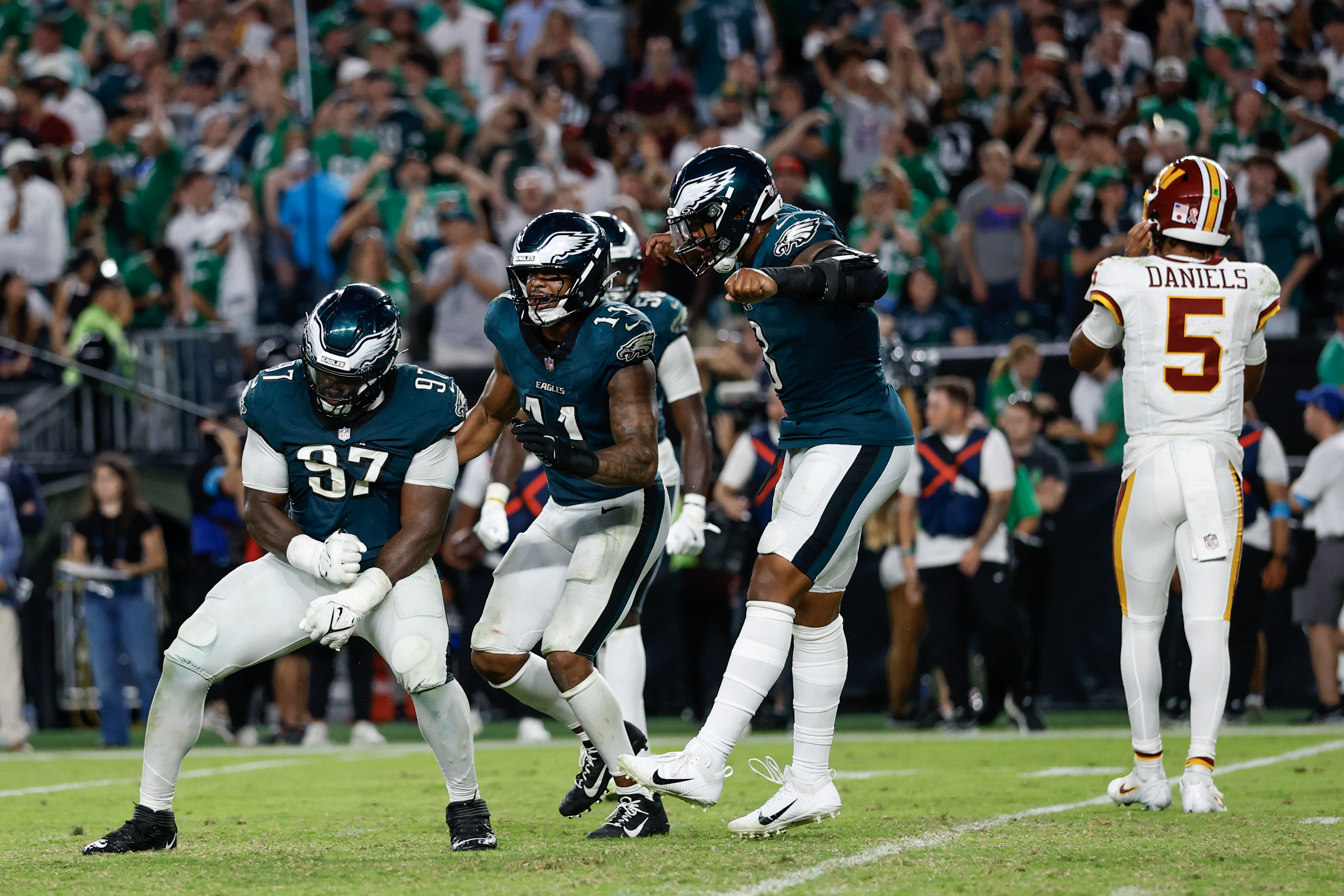
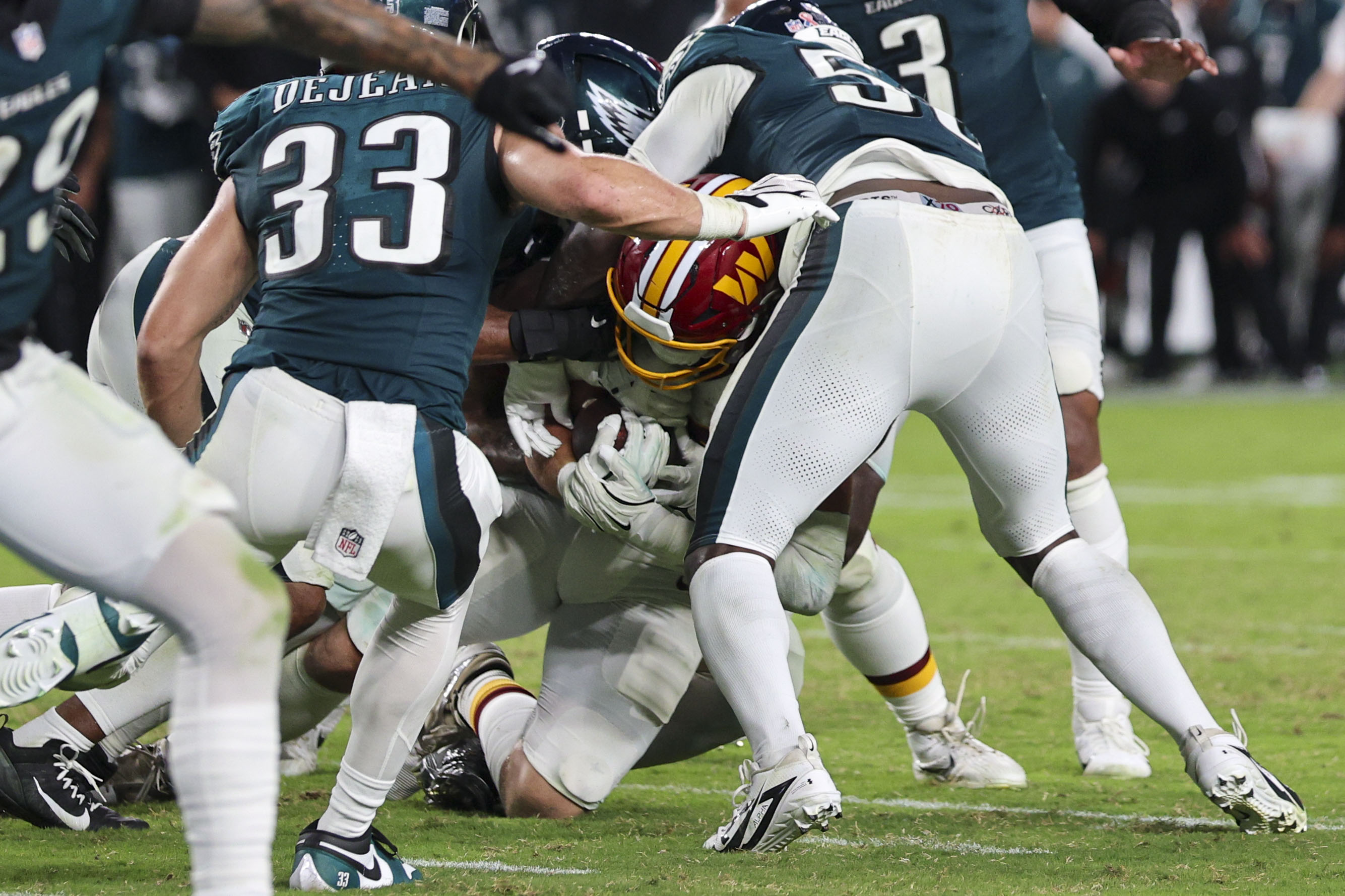
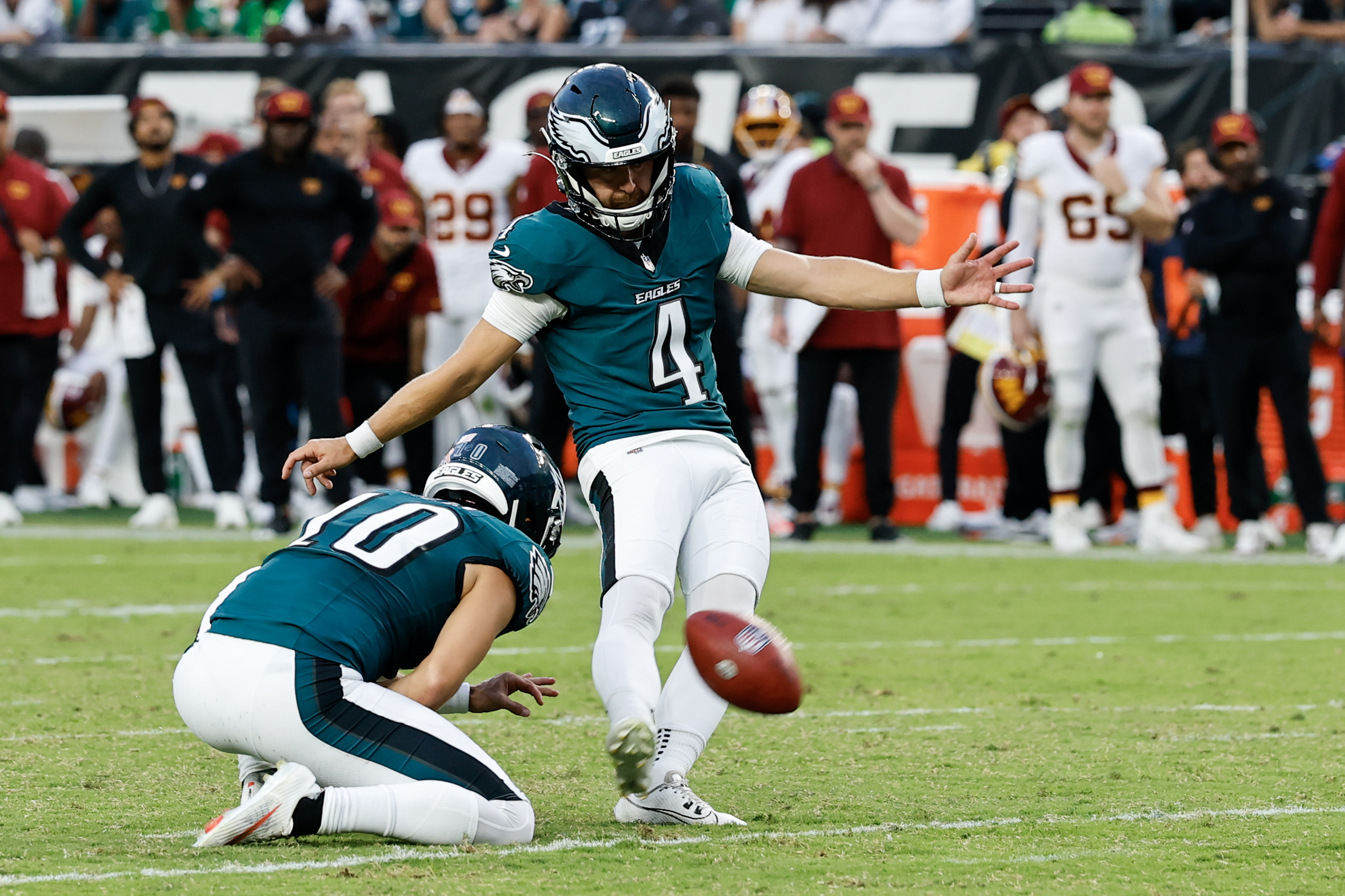
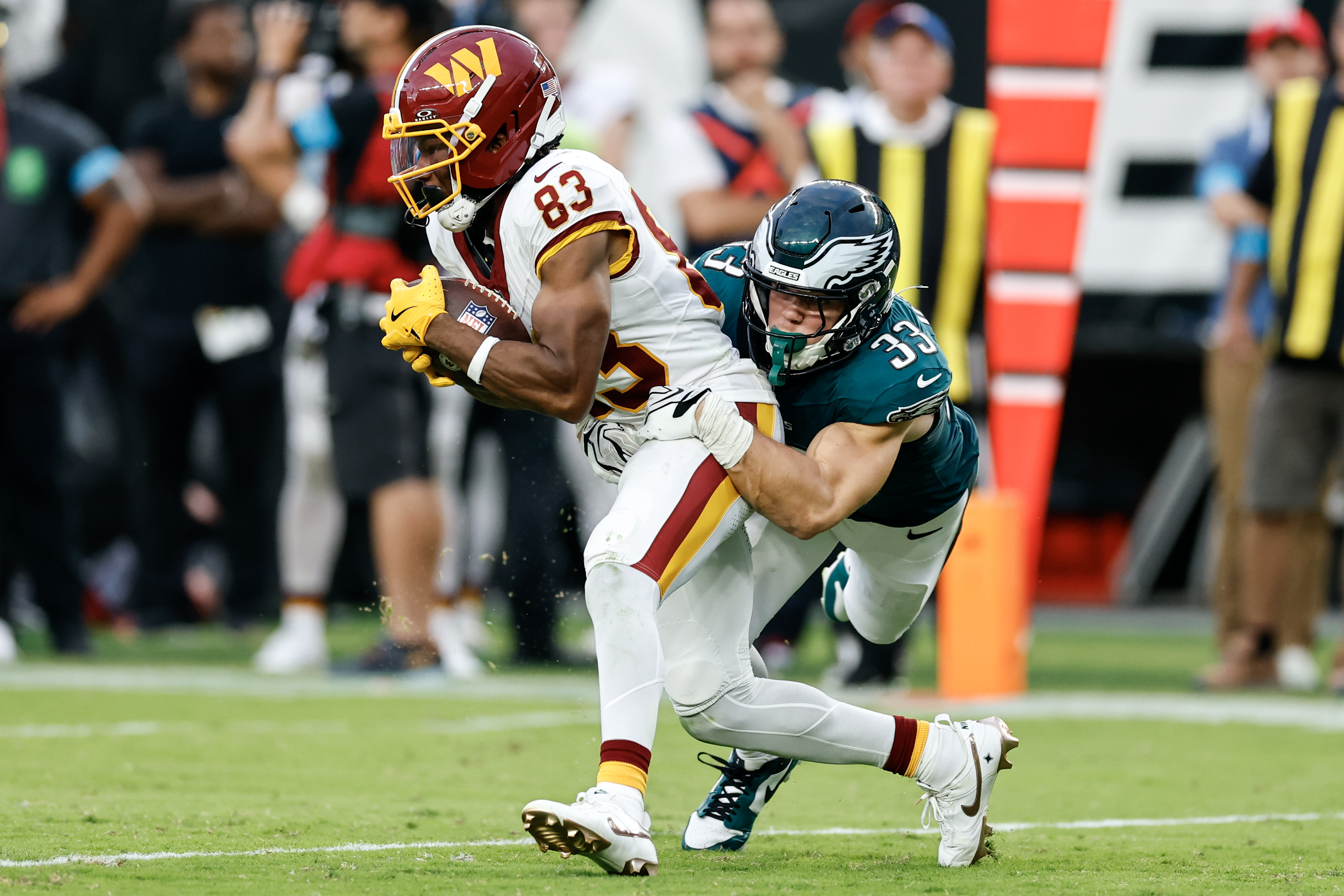
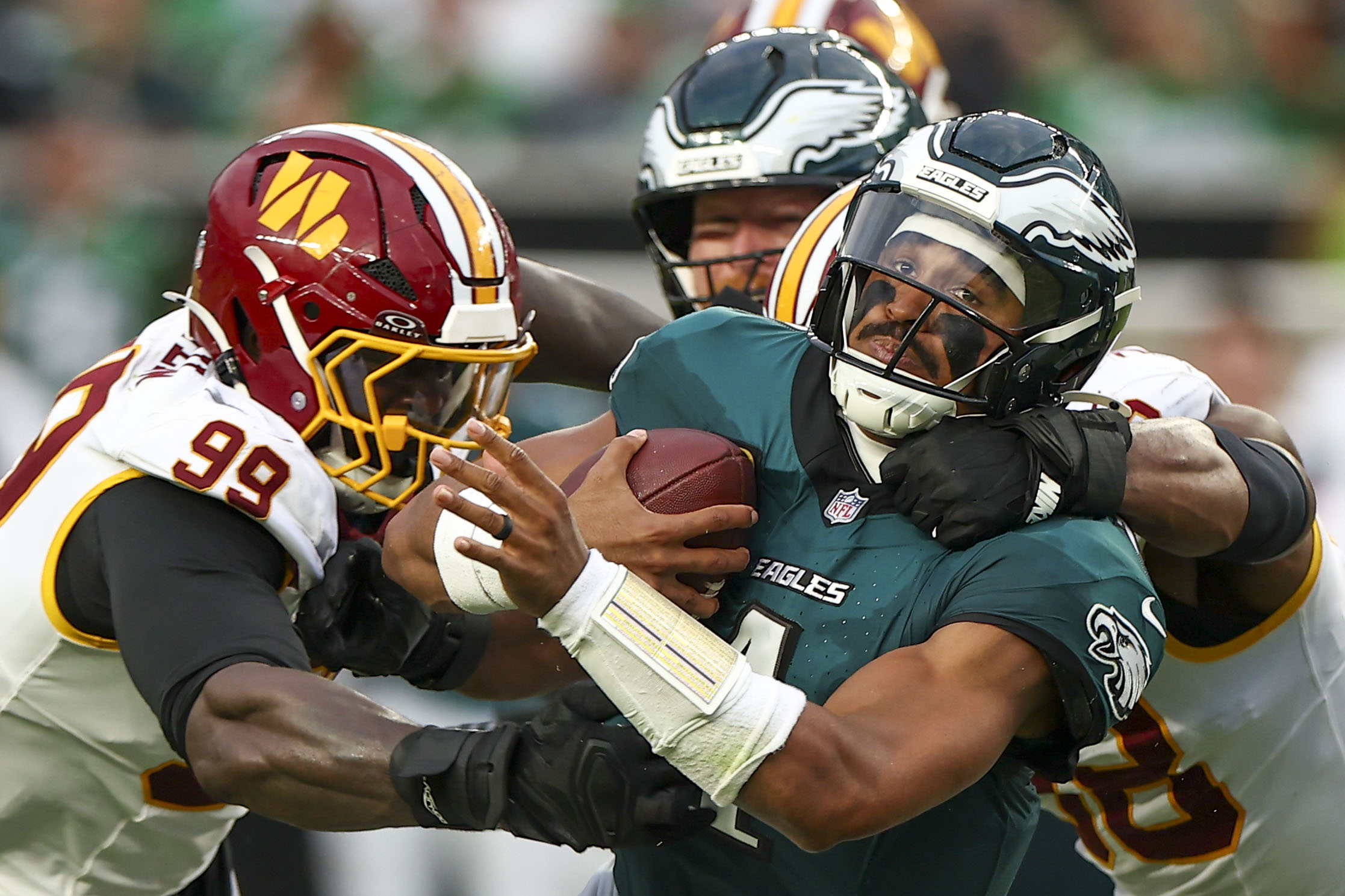
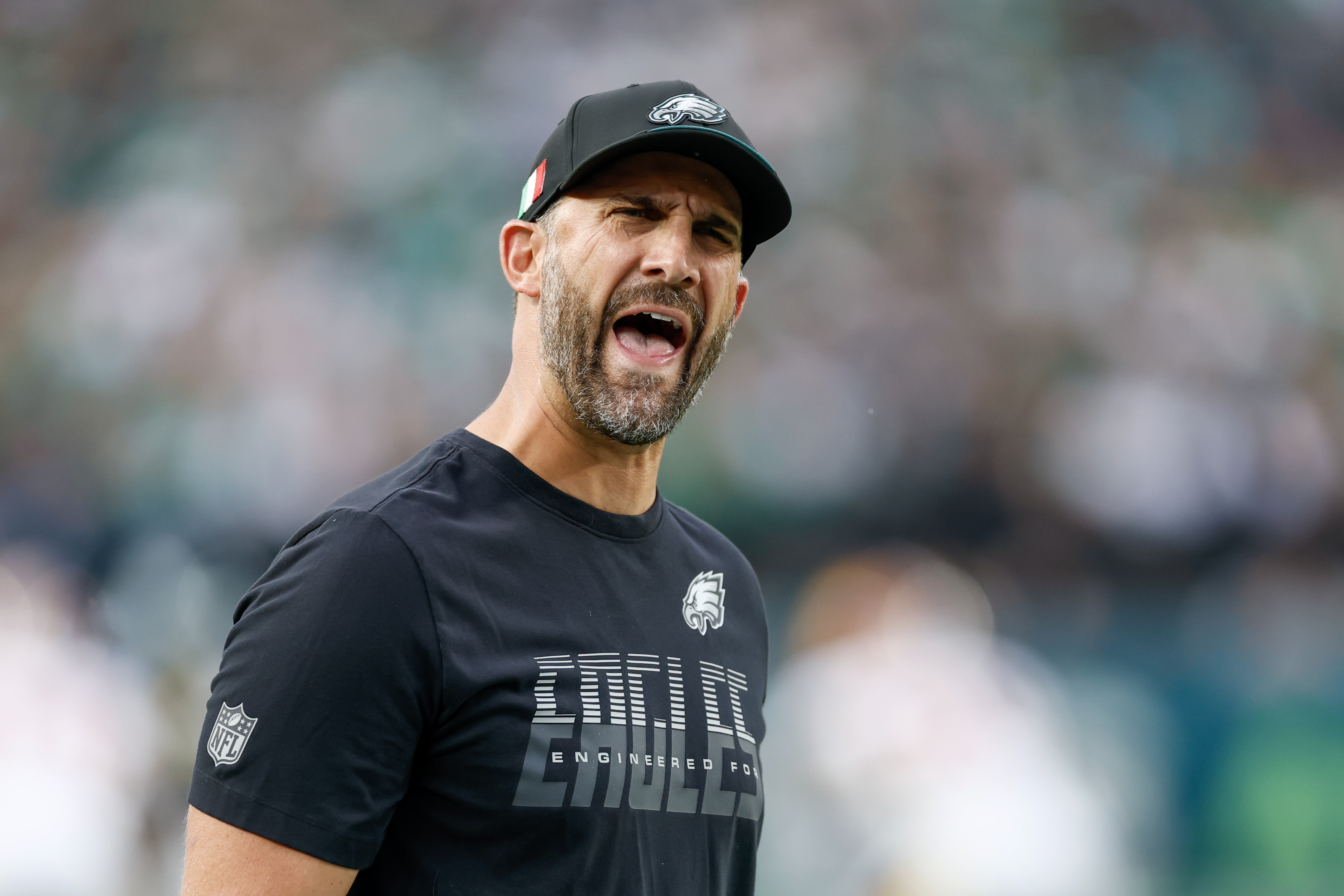
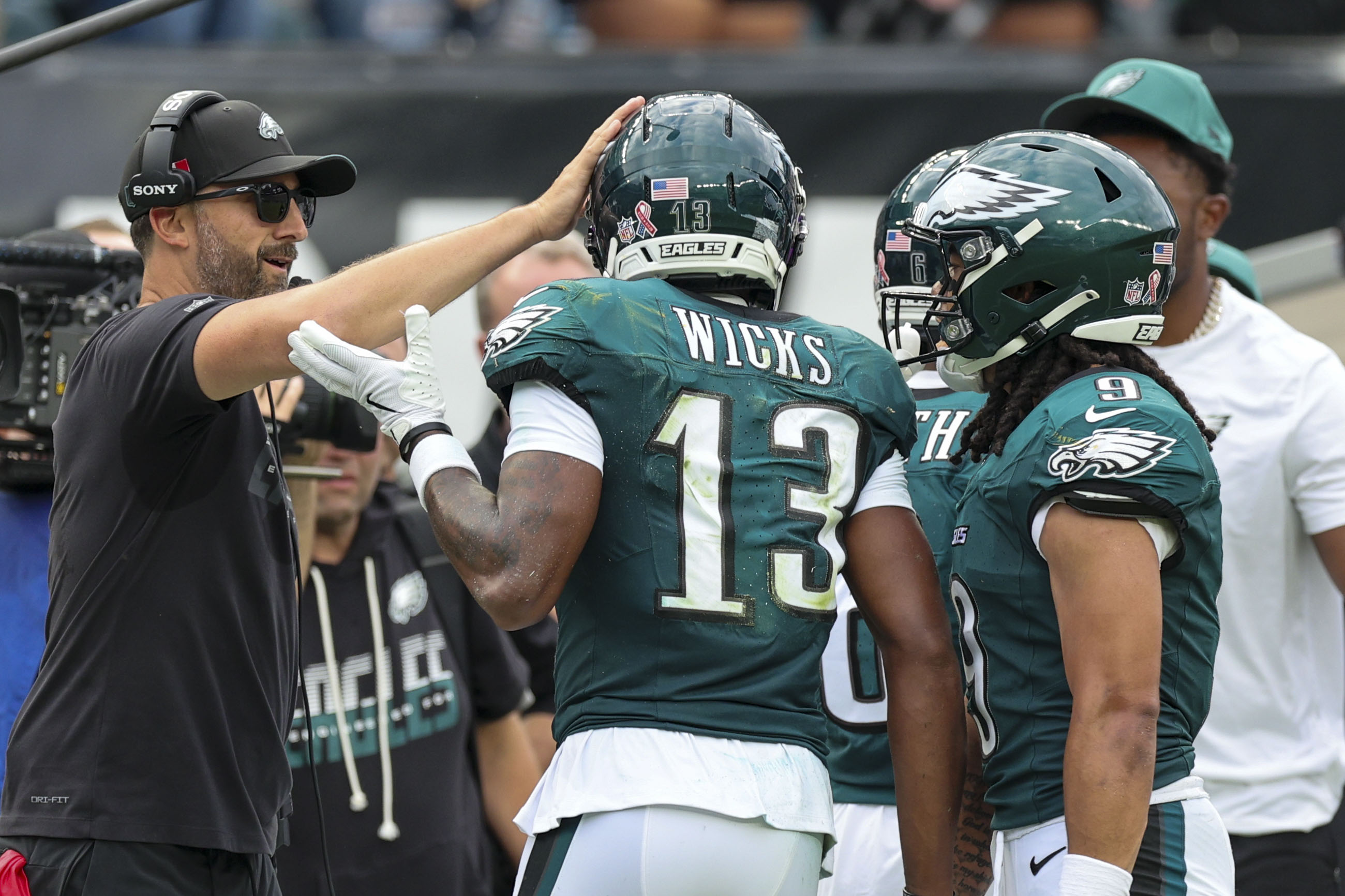
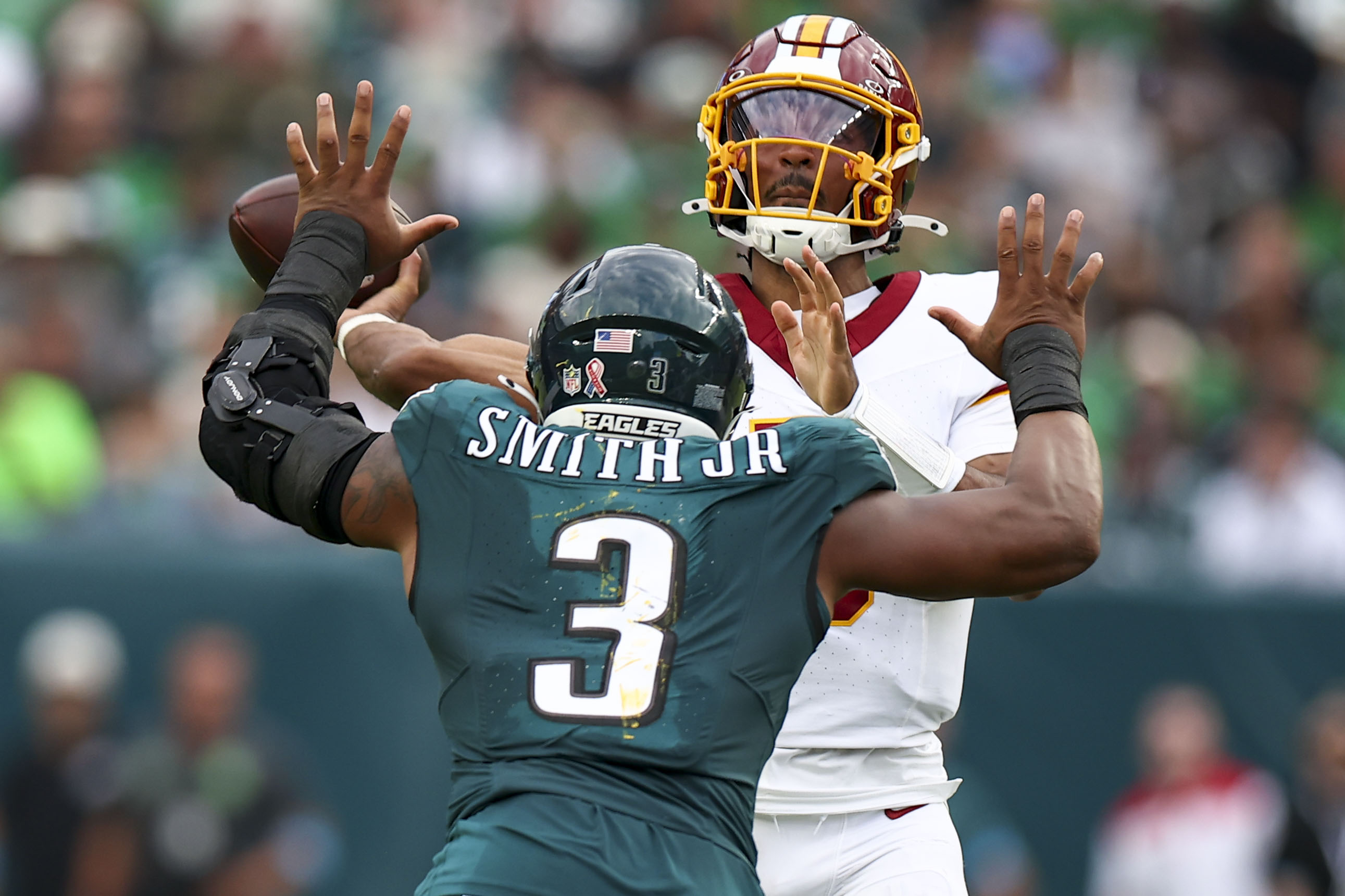
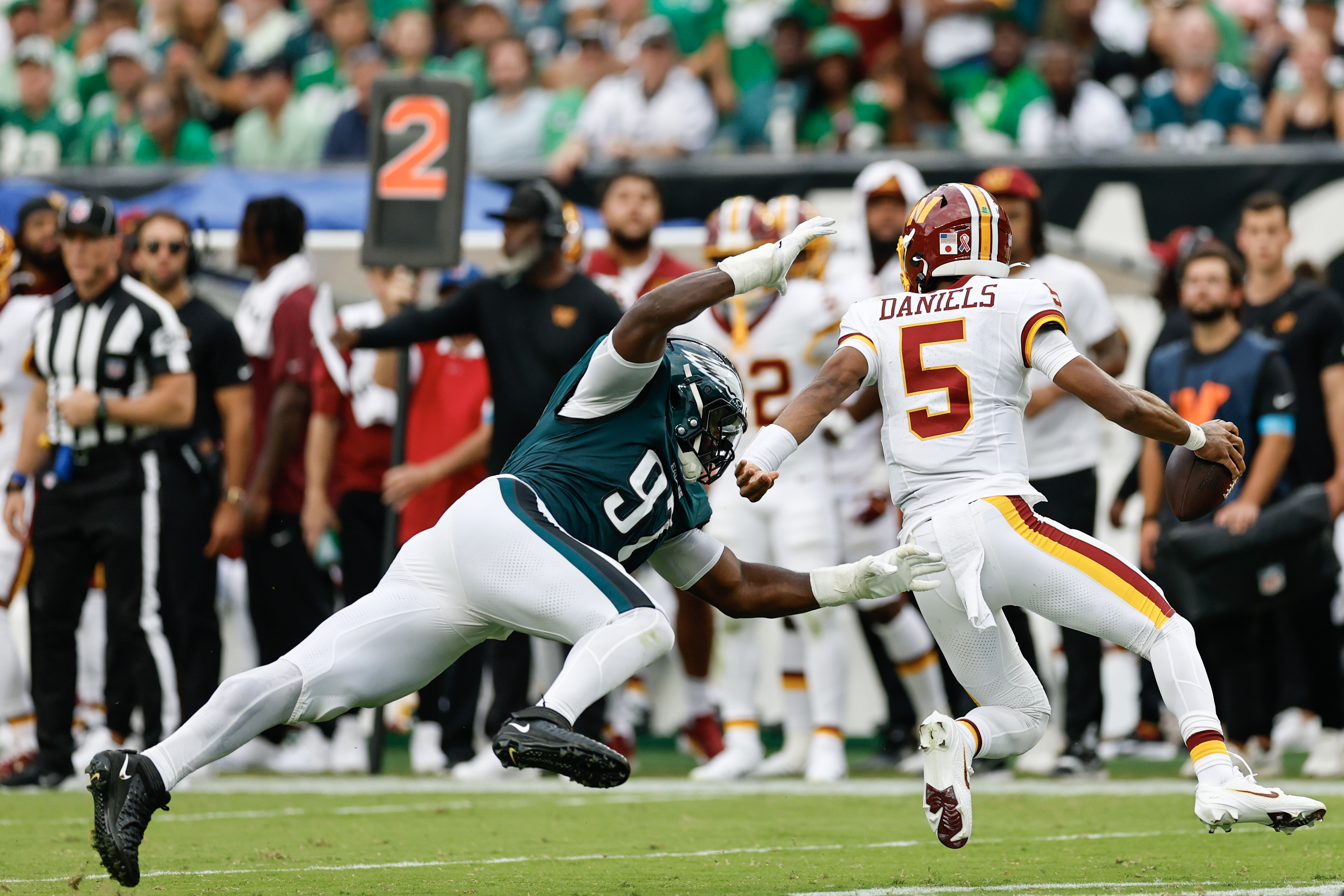
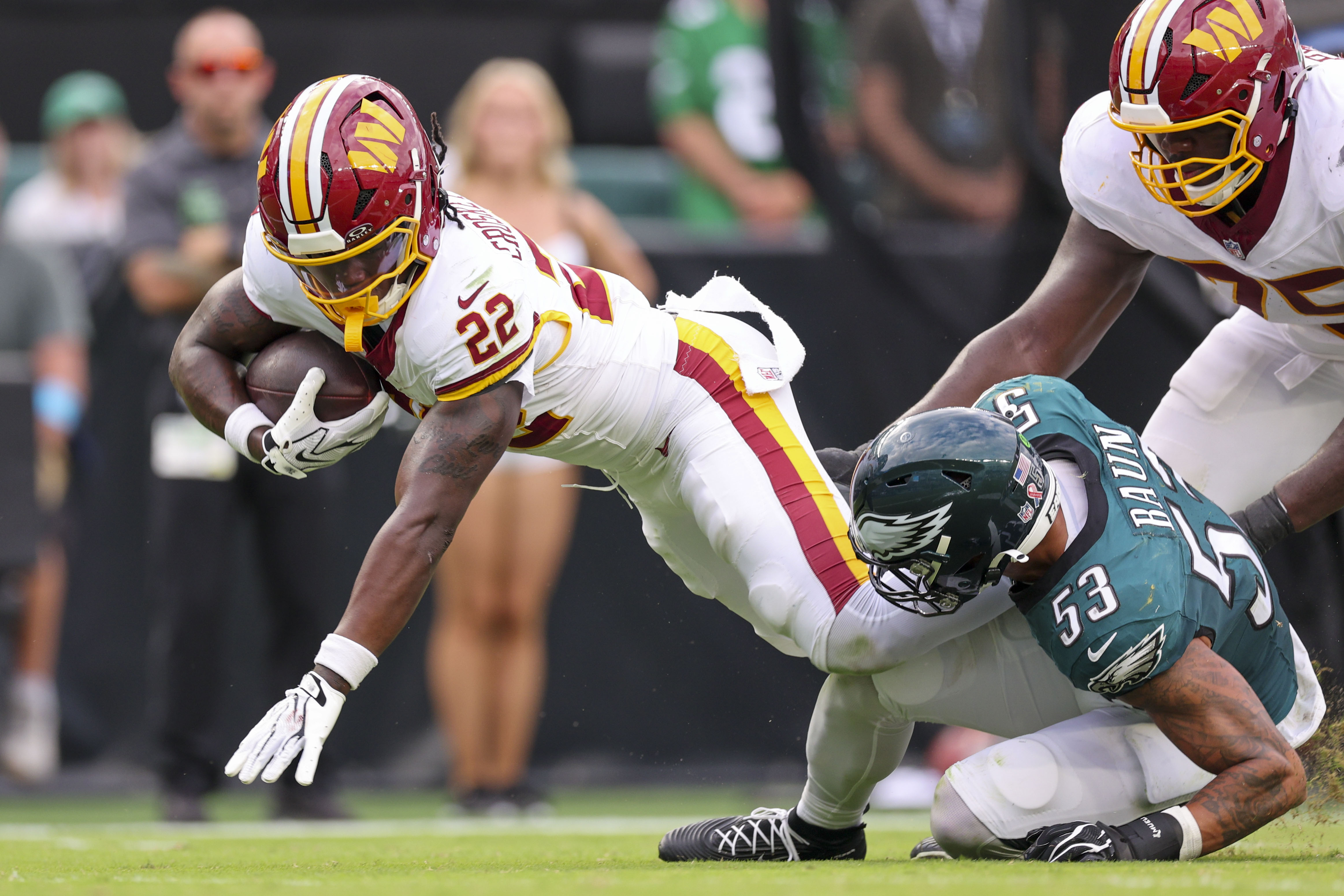
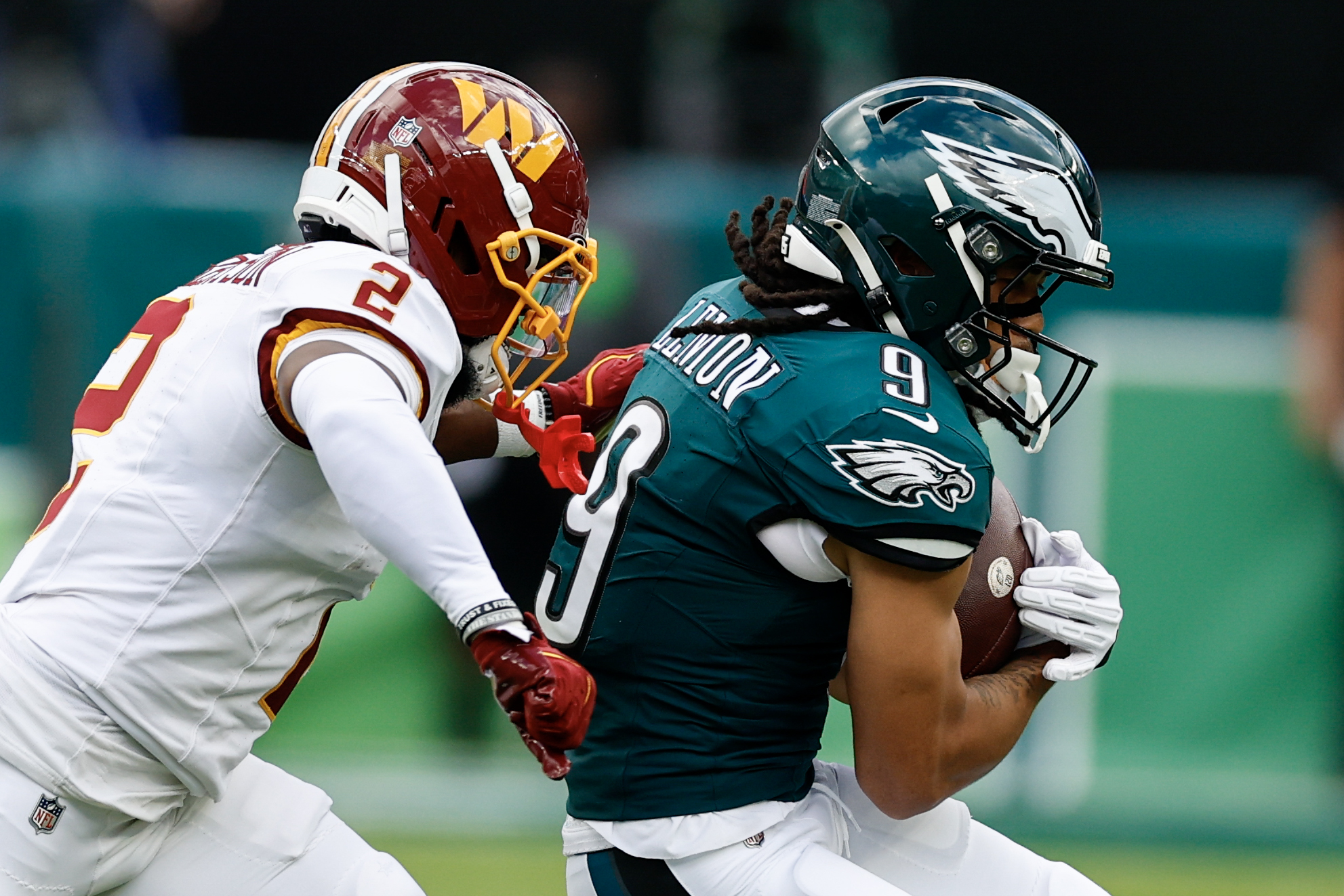
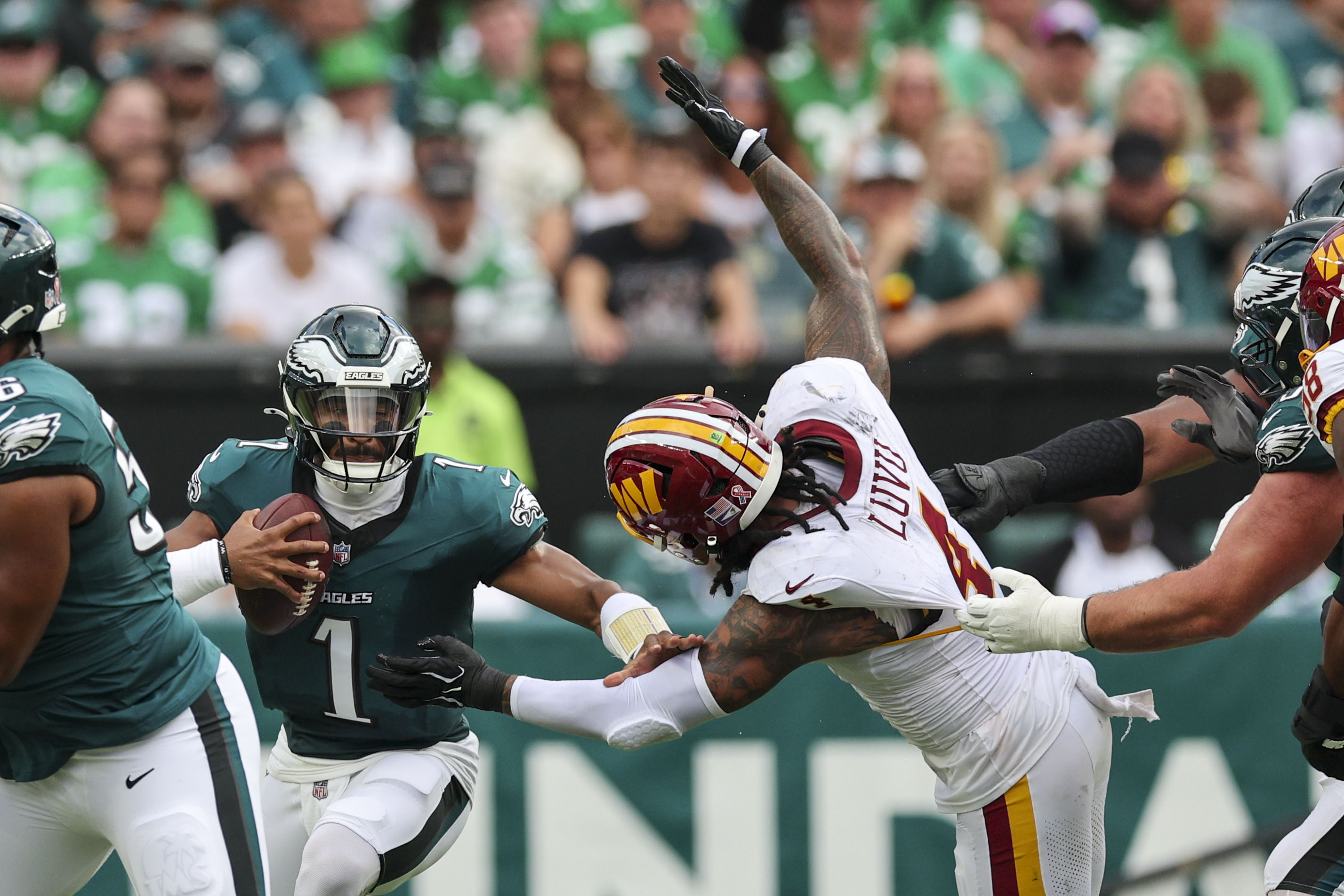
Philadelphia Eagles quarterback Jalen Hurts after winning the season opening game against the Washington Commanders at Lincoln Financial Field on Sunday, Sept. 13, 2026, in Philadelphia.Monica Herndon / Staff PhotographerEagles quarterback Jalen Hurts celebrates a touchdown with Keyshawn James-Newby (center) and offensive tackle Lane Johnson during the fourth quarter of the season opener against the Commanders Sunday, Sept. 13, 2026, in Philadelphia.Yong Kim / Staff PhotographerEagles defensive tackle Moro Ojomo celebrates a two-point conversion stop late during the fourth quarter of the season opener against the Commanders Sunday, Sept. 13, 2026, in Philadelphia.Yong Kim / Staff PhotographerPhiladelphia Eagles stop the two point conversion attempt during the fourth quarter at Lincoln Financial Field on Sunday, Sept. 13, 2026, in Philadelphia.David Maialetti / Staff PhotographerPhiladelphia Eagles tight end Dallas Goedert celebrates his fourth quarter touchdown at Lincoln Financial Field on Sunday, Sept. 13, 2026, in Philadelphia.Monica Herndon / Staff PhotographerEagles tight end Dallas Goedert scores a fourth quarter touchdown past Commanders cornerback Darius Rush during the season opener against the Commanders Sunday, Sept. 13, 2026, in Philadelphia.Yong Kim / Staff PhotographerPhiladelphia Eagles tight end Dallas Goedert runs for a touchdown in the fourth quarter at Lincoln Financial Field on Sunday, Sept. 13, 2026, in Philadelphia.Monica Herndon / Staff PhotographerEagles tight end Dallas Goedert catches the football for a touchdown during the fourth quarter of the season opener against the Commanders Sunday, Sept. 13, 2026, in Philadelphia.Yong Kim / Staff PhotographerEagles quarterback Jalen Hurts first down run during the fourth quarter of the season opener against the Commanders Sunday, Sept. 13, 2026, in Philadelphia.Yong Kim / Staff PhotographerWashington Commanders wide receiver Stefon Diggs hugs the goalpost after scoring a touchdown in the fourth quarter Lincoln Financial Field on Sunday, Sept. 13, 2026, in Philadelphia. Unsportsmanlike penalty was called pushing the Commanders back.David Maialetti / Staff PhotographerWashington Commanders wide receiver Stefon Diggs scores in the fourth quarter at Lincoln Financial Field on Sunday, Sept. 13, 2026, in Philadelphia.David Maialetti / Staff PhotographerPhiladelphia Eagles wide receiver DeVonta Smith catches the ball for a big first down during the third quarter at Lincoln Financial Field on Sunday, Sept. 13, 2026, in Philadelphia.David Maialetti / Staff PhotographerPhiladelphia Eagles quarterback Jalen Hurts gains fourteen yards on a run in the third quarter at Lincoln Financial Field on Sunday, Sept. 13, 2026, in Philadelphia.David Maialetti / Staff PhotographerEagles place kicker Jake Elliott kicks a third quarter field goad during the season opener against the Commanders Sunday, Sept. 13, 2026, in Philadelphia.Yong Kim / Staff PhotographerEagles cornerback Cooper DeJean stops Commanders wide receiver Jaylin Lane during the third quarter of the season opener against the Commanders Sunday, Sept. 13, 2026, in Philadelphia.Yong Kim / Staff PhotographerEagles wide receiver DeVonta Smith catches the ball against Commanders cornerback Darius Rush during the third quarter of the season opener against the Commanders Sunday, Sept. 13, 2026, in Philadelphia.Yong Kim / Staff PhotographerPhiladelphia Eagles quarterback Jalen Hurts sacked in the third quarter by Washington Commanders linebacker Odafe Oweh at Lincoln Financial Field on Sunday, Sept. 13, 2026, in Philadelphia.Monica Herndon / Staff PhotographerPhiladelphia Eagles quarterback Jalen Hurts scrambles on a third down during the third quarter at Lincoln Financial Field on Sunday, Sept. 13, 2026, in Philadelphia.Monica Herndon / Staff PhotographerEagles head coach Nick Sirianni racts during the third quarter of the season opener against the Commanders Sunday, Sept. 13, 2026, in Philadelphia.Yong Kim / Staff PhotographerPhiladelphia Eagles quarterback Jalen Hurts is sacked by Washington Commanders linebacker Sonny Styles in the third quarter at Lincoln Financial Field on Sunday, Sept. 13, 2026, in Philadelphia.Monica Herndon / Staff PhotographerEagles quarterback Jalen Hurts passes to tight end Dallas Goedert late during the second quarter of the season opener against the Commanders Sunday, Sept. 13, 2026, in Philadelphia.Yong Kim / Staff PhotographerEagles defensive tackle Jalen Carter celebrates a blocked extra point late during the second quarter of the season opener against the Commanders Sunday, Sept. 13, 2026, in Philadelphia.Yong Kim / Staff PhotographerPhiladelphia Eagles quarterback Jalen Hurts hands off to Philadelphia Eagles running back Tank Bigsby in the second quarter at Lincoln Financial Field on Sunday, Sept. 13, 2026, in Philadelphia.Monica Herndon / Staff PhotographerPhiladelphia Eagles tight end Dallas Goedert congratulates Philadelphia Eagles wide receiver Dontayvion Wicks after a second quarter touchdown at Lincoln Financial Field on Sunday, Sept. 13, 2026, in Philadelphia.David Maialetti / Staff PhotographerPhiladelphia Eagles head coach Nick Sirianni congratulates Philadelphia Eagles wide receiver Dontayvion Wicks after his second quarter touchdown at Lincoln Financial Field on Sunday, Sept. 13, 2026, in Philadelphia.David Maialetti / Staff PhotographerPhiladelphia Eagles linebacker Nolan Smith tries to block Washington Commanders quarterback Jayden Daniels in the second quarter at Lincoln Financial Field on Sunday, Sept. 13, 2026, in Philadelphia.Monica Herndon / Staff PhotographerEagles defensive tackle Moro Ojomo goes after Commanders quarterback Jayden Daniels during the second quarter of the season opener against the Commanders Sunday, Sept. 13, 2026, in Philadelphia.Yong Kim / Staff PhotographerEagles wide receiver Dontayvion Wicks celebrates a touchdown with Darius Cooper (left) and DeVonta Smith (right) during the second quarter of the season opener against the Commanders Sunday, Sept. 13, 2026, in Philadelphia.Yong Kim / Staff PhotographerEagles linebacker Zack Baun celebrates after breaking up a pass intended for Commanders wide receiver Stefon Diggs during the second quarter of the season opener against the Commanders Sunday, Sept. 13, 2026, in Philadelphia.Yong Kim / Staff PhotographerPhiladelphia Eagles linebacker Zack Baun stops Washington Commanders running back Jacory Croskey-Merritt for a loss, Washington punts on the drive, at Lincoln Financial Field on Sunday, Sept. 13, 2026, in Philadelphia.David Maialetti / Staff PhotographerPhiladelphia Eagles running back Saquon Barkley with a big run in the second quarter at Lincoln Financial Field on Sunday, Sept. 13, 2026, in Philadelphia.David Maialetti / Staff PhotographerPhiladelphia Eagles cornerback Cooper DeJean and Philadelphia Eagles linebacker Zack Baun sandwich Washington Commanders quarterback Jayden Daniels during the second quarter at Lincoln Financial Field on Sunday, Sept. 13, 2026, in Philadelphia.David Maialetti / Staff PhotographerEagles running back Saquon Barkley gains 42 yards during the second quarter of the season opener against the Commanders Sunday, Sept. 13, 2026, in Philadelphia.Yong Kim / Staff PhotographerPhiladelphia Eagles tight end Dallas Goedert celebrates second quarter touchdown with Philadelphia Eagles offensive tackle Lane Johnson at Lincoln Financial Field on Sunday, Sept. 13, 2026, in Philadelphia.Monica Herndon / Staff PhotographerPhiladelphia Eagles tight end Dallas Goedert spikes the ball after a touchdown in the second quarter at Lincoln Financial Field on Sunday, Sept. 13, 2026, in Philadelphia.Monica Herndon / Staff PhotographerEagles tight end Dallas Goedert catches a touchdown against Commanders safety Quan Martin during the second quarter of the season opener against the Commanders Sunday, Sept. 13, 2026, in Philadelphia.nYong Kim / Staff PhotographerPhiladelphia Eagles fans cheer in the first quarter of the season opener against the Washington Commanders at Lincoln Financial Field on Sunday, Sept. 13, 2026, in Philadelphia.David Maialetti / Staff PhotographerEagles quarterback Jalen Hurts reacts during the first quarter of the season opener against the Commanders Sunday, Sept. 13, 2026, in Philadelphia.Yong Kim / Staff PhotographerEagles wide receiver Makai Lemon catches the ball against Commanders cornerback Amik Robertson during the first quarter of the season opener against the Commanders Sunday, Sept. 13, 2026, in Philadelphia.Yong Kim / Staff PhotographerPhiladelphia Eagles quarterback Jalen Hurts is sacked by Washington Commanders linebacker Frankie Luvu in the first quarter at Lincoln Financial Field on Sunday, Sept. 13, 2026, in Philadelphia.David Maialetti / Staff PhotographerPhiladelphia Eagles running back Saquon Barkley misses a pass in the first quarter, defended by Washington Commanders linebacker Sonny Styles, at Lincoln Financial Field on Sunday, Sept. 13, 2026, in Philadelphia.Monica Herndon / Staff PhotographerEagles quarterback Jalen Hurts during a moment of silence before the start of the season opener against the Commanders Sunday, Sept. 13, 2026, in Philadelphia.Yong Kim / Staff PhotographerPhiladelphia Eagles running back Saquon Barkley runs out of the tunnel at the season opener against the Washington Commanders in Lincoln Financial Field on Sunday, Sept. 13, 2026, in Philadelphia.Monica Herndon / Staff PhotographerPhiladelphia Eagles quarterback Jalen Hurts runs out of the tunnel during player introductions before the season opening game against the Washington Commanders in Lincoln Financial Field on Sunday, Sept. 13, 2026, in Philadelphia.David Maialetti / Staff PhotographerGreg Gorski, of Elkins Park, poses for a portrait while tailgating before the Eagles play the Commanders in Philadelphia on Sunday, Sept. 13, 2026.David Maialetti / Staff Photographer
One quarter later, Wicks worked his magic again.
Again with Sainristil in coverage, Wicks motioned left before shimmying past the Commanders cornerback to break free and secure a 9-yard touchdown that put the Birds up 14-3. His final stat line in the 24-22 victory? Two catches on four targets for 73 yards and one touchdown. He only eclipsed 70 yards one time last season with the Packers.
The new Eagles weapon was all smiles in the locker room afterward.
“Man, just going out there and doing my role, I know it’ll help us win,” he said. “The coaches trust me, letting me go on out and do that and make plays. That’s what I did.”
Wicks, 25, was the Eagles’ clear WR2 in the game. He finished with 50 snaps according to Pro Football Focus, trailing only DeVonta Smith (52). This is a welcome change for a player who was buried deep in the Packers’ receiver room last season (he never played more than 54% of the offensive snaps in a single season).
Could that change in Philadelphia? If he continues playing like this, he’ll earn it.
“In Green Bay, we had so many guys. Over here, I’m able to get those looks,” said Wicks. “Over there, I ain’t really had [opportunities].”
The Eagles traded for Wicks this offseason after he spent three seasons with the Packers, the team that drafted him in the fifth round in 2023 out of Virginia. The Eagles signed him to a one-year, $10.5 million extension, keeping him under contract through 2027.
Dontayvion Wicks (13) is building trust among his new teammates and the Eagles coaching staff. David Maialetti / Staff Photographer
They brought him in large part due to his connection with Mannion, with whom he overlapped for two seasons in Green Bay when Mannion served as an offensive assistant in 2024 and the quarterbacks coach in 2025.
How does Wicks feel about the offense, which generated 318 total yards on 12 drives?
“I think [the presnap motion] messed the defense up,” Wicks said. “I think it does a lot with showing us what the defense is going to be in. … So once I motion over and see a DB is chatting and locking, it’s man[-to-man coverage]. …. So, you do motions, they help with tells.”
Hurts, who compiled 203 passing yards and three touchdowns, praised his new weapon after the game.
“I think there’s an opportunity to grow and be able to maintain that level of attack, but I can’t say enough on how he showed up, played, and executed,” said Hurts.
“I think there’s going to be a natural maturation within this system, and particularly maturation within the end-game chemistry that we build, because that’s something that is very important.”
ALLENTOWN — Although it started feeling like the Flyers’ youth were living in Allentown, having been there since Friday for the start of rookie camp, they showed why everyone has a pretty good shot with an impressive set of games over the weekend.
The prospects worked hard and won Game 1 on Saturday, 3-2, before a decisive 4-1 victory in Game 2.
Here are our observations of the Flyers prospects from the Rookie Series:
Denver Barkey (left) scored in Sunday’s Rookie Series game.Monica Herndon / Staff Photographer
Serving as captain, Denver Barkey played Sunday, and was in midseason form. The high-motor forward — “That’s what makes me an effective player,” he said postgame — was flying all night. He used his speed and quickness to effectively keep the Rangers defense on their heels as he drove to the net, notably on his goal. In the first period, Barkey streaked down the left side of the ice, receiving a feed from Oliver Bonk, his teammate of five years (four of them with London of the Ontario Hockey League), as he cut across the crease and dipped the puck around Rangers goalie Danai Shaiikov. Barkey later added an assist when he unselfishly passed up another goal to set up Porter Martone’s empty-netter.
Martone also looks ready to hit the ground running when the Flyers’ main camp opens Thursday in Voorhees, as he displayed his high-octane, edgy game on Sunday. A betting favorite to win the Calder Trophy this season as the NHL’s top rookie, Martone did have one bad turnover in the second period, leading to the Rangers’ lone goal, for which he apologized to his goalie, Marek Sklenička. He said after the game Sunday that he told the 2026 draft pick, “We’ll get it back here.” That wasn’t the only moment he was there for his teammates. He went after 6-foot-7 Rangers forward Dylan Roobroeck when he nailed Barkey. Martone, who looked more than ready for the NHL’s fast pace, posted a game-high five shots and also had an assist.
Alex Bump played only on Saturday but set the tone early following a disappointing main camp last year that stalled the start of his NHL career until March. Wanting to make an impression, Bump came out flying, showcasing his quickness and deftness with the puck, especially on the boards, his hockey IQ, and his willingness to drive to the net, finishing with two points. His goal was nice; his assist was dazzling as he sent a seam pass to Cole Knuble, who was driving to the net backdoor.
Knuble was also impressive in his one game on Saturday, showing a high-end motor akin to Barkey’s. He played physically, was active around the net, and used his feet and body well to protect the puck and create plays.
“Since the day I was drafted, I wanted to be a part of this organization,” said Knuble, who is about to begin his first full season as a pro. “I grew up loving this team, so it’s a dream come true. Every practice, every game, every offseason, that was the goal: to get one step closer to this.”
Jett Luchanko played both nights centering the top lines — Bump and Knuble were his wingers on Saturday and Barkey and Martone lined up with him on Sunday — and looked even better in Game 2. On Sunday, he was a play driver, carrying the puck up the ice and using his speed to wreak havoc in the Rangers’ defense. The recently turned 20-year-old had two assists, with his second coming on the goal by Barkey when he made a nice chip pass off the wall in the neutral zone while taking a hit.
“Showed us the flashes of what he really can become and what he’s going to be. That speed through the neutral zone and his ability to get on top of guys quickly,” Phantoms coach John Snowden said on Sunday. “… Back-to-back, too, right? His legs were still flying, and he was competitive and hard in situations. He had a little bite to his game.”
Maksim Sokolovskii continued to show this weekend why the Flyers made him a first-round pick. Despite his 6-7 frame, he is a smart, quick, fluid skater who can defend well while also creating time and space offensively. He broke up several plays on Sunday at the blue line with his long reach, while also using that same reach to protect the puck as he carried the puck around opponents. Sokolovskii had one assist in the game and has already been invited to the main Flyers camp.
Maksim Sokolovskii used his 6-foot-7 frame and reach to make plays on the puck during Saturday’s game.Yong Kim / Staff Photographer
Noah Powell, who Snowden called a “pretty raw, uncut diamond” that the Flyers can shape in an interview with The Inquirer back in May, may finally be coming into focus. The forward enjoys being a pest and played a hard, physical game all weekend. Oftentimes, his hits rattled the boards, and he got into it at the end of the game with the Rangers’ Jacob Battaglia before dropping the gloves with Jackson Dorrington.
“Hockey is a violent game. I’m not saying I’m a violent person, but when I get out there, I definitely do like to play a violent, vicious style of hockey,” said Powell, who noted he likes to blend Kiefer Sherwood’s motor and relentlessness with Tom Wilson’s toughness and heavy hitting to play his game.
Sklenička and Martin Psohlavec were solid on Sunday, but all eyes were on goalie Carson Bjarnason, who had a rocky first year as a pro with Lehigh Valley of the American Hockey League. The goalie, who turned 21 in June, acknowledged a learning curve with the AHL being faster and his reads needing to be quicker, but said he has put the past behind him. On Saturday, his lone start of the weekend, he looked sharp, stopping 27 of 29 shots — both goals were on a Rangers power play — while flashing the leather on several attempts. His best save came after Luchanko sent an errant pass right onto Roobroeck’s stick for a Grade-A chance in the third period.
“I thought today he looked big in the net,” Snowden said on Saturday. “He looked composed in the net, didn’t really get scrambly at times and just tracked the puck the way he needed to track the puck. If he couldn’t see through traffic at times, he stayed big and pucks hit him. Overall, I thought it was a good step in the right direction for him.”
Matthew Gard scored the Flyers’ first goal of the Rookie Series.Yong Kim / Staff Photographer
Breakaways
Not long after he was drafted last year, Matthew Gard did not stand out at his first Rookie Series, but 2026 was different, especially in the first of two games. The press box was buzzing about the 6-5, lanky centerman who showed some pop — he scored the Flyers’ first goal of the weekend — and smarts. … Brek Liske said before Saturday’s game that he was looking forward to not just wearing an NHL logo on his jersey but to bringing the Flyers vs. Rangers video game matchup that he used to play on NHL 15 to reality. The Flyers’ 2026 second-rounder had a fantastic series, and one scout told The Inquirer that he and Luke Vlooswyk, his defensive partner with Everett of the Western Hockey League and a fellow Flyers prospect who he played with on Sunday, are underrated. Liske scored the go-ahead goal from the goal line on the second night with less than five seconds left in the middle frame after a Spencer Gill blast hit the end boards. Liske said he learned a great deal about communication at the Rookie Series and said after the game on Sunday, “I’m going to try and bring that back with me [to Everett], get everyone talking a little more, and make sure the rinks never quiet.” … Despite missing months after undergoing surgery on an upper-body injury in late January, Ty Murchison looked great in his lone game on Saturday, showing his smooth skating, hockey IQ, leadership — he wore the “C” — and grit as he dropped the gloves and went blow-for-blow at the end of Game 1 with Roobroeck.
The first NFL Sunday feels like Christmas morning, and at least you can head into work Monday on a high note after the Eagles held off the Commanders in a 24-22 win.
First, we have to give credit to Moro Ojomo, who reminded the NFL why he is going to want a hefty pay raise when the season concludes. Ojomo denied John Bates a two-point conversion attempt to tie the game and sealed the win for the Birds.
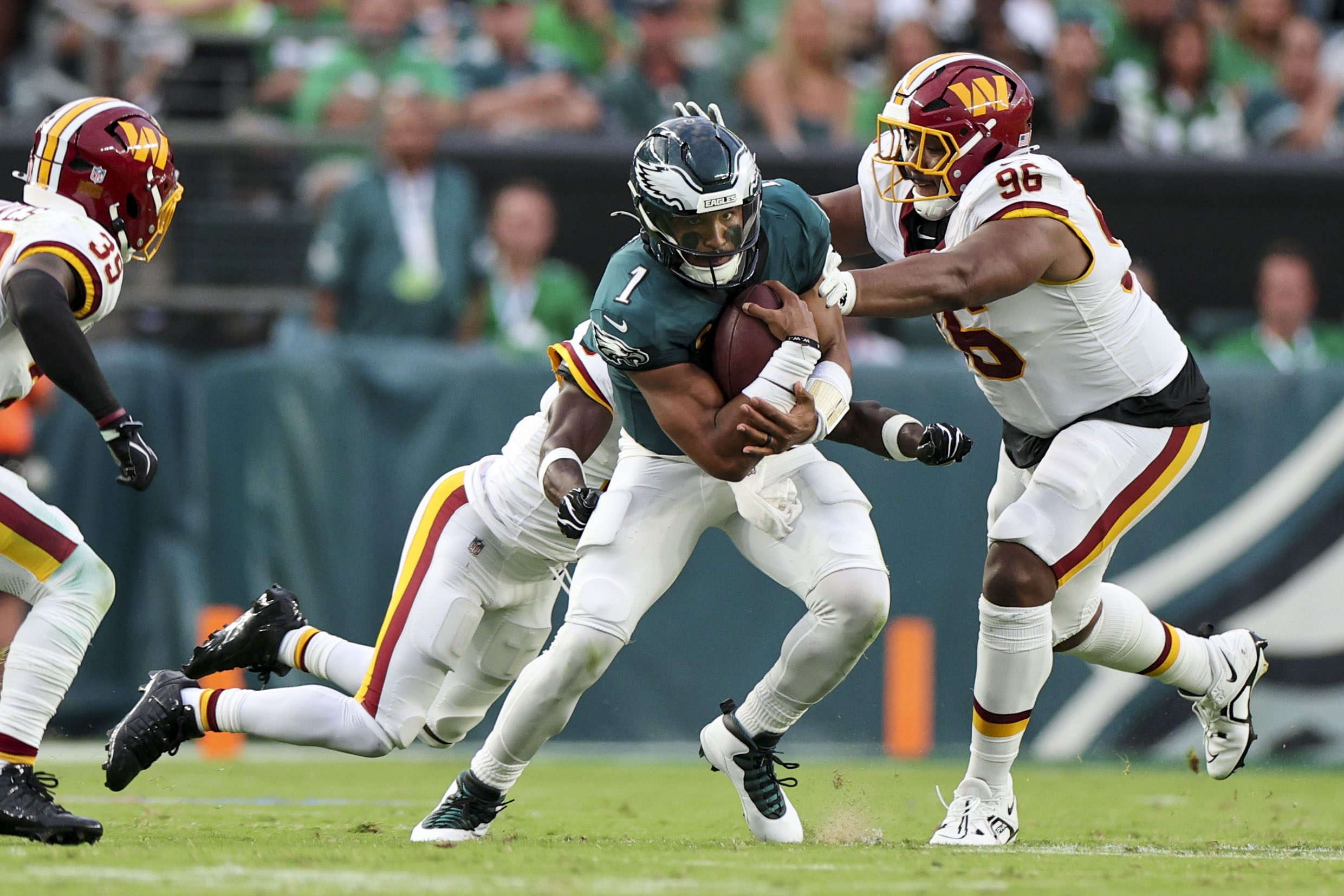
Across the board, Jalen Hurts was solid in his debut, despite Sean Mannion’s offense bringing inconsistent results. Hurts showed he hasn’t lost his touch on the deep ball as he tossed three touchdowns. He also made plays with his legs.
And on defense, All-Pro inside linebacker Zack Baun was arguably the best Eagles defender on the field. Jeff McLane gave out high grades for the two, among other thoughts from the Eagles’ season opener.
Alec Bohm celebrates his bases clearing double in the eighth inning of the Phillies’ win on Sunday.Erik S. Lesser
Alec Bohm changed the Phillies’ fortunes and the tide of the game on Sunday, with one swing. From there, the floodgates opened, and the offense strung together six two-out hits and a walk in a 9-4 victory over the Braves.
“Finally to get to break through and put some runs up was huge,” said interim manager Don Mattingly, especially after the Phillies were stuck in neutral for the first two losses of the series.
Earlier on Sunday, the Phillies activated lefty Tanner Banks from the 60-day injured list.
What we’re …
👂 Hearing: The highlights of the Eagles’ win from the broadcast booth on Fox, which included Tom Brady’s return as a color commentator.
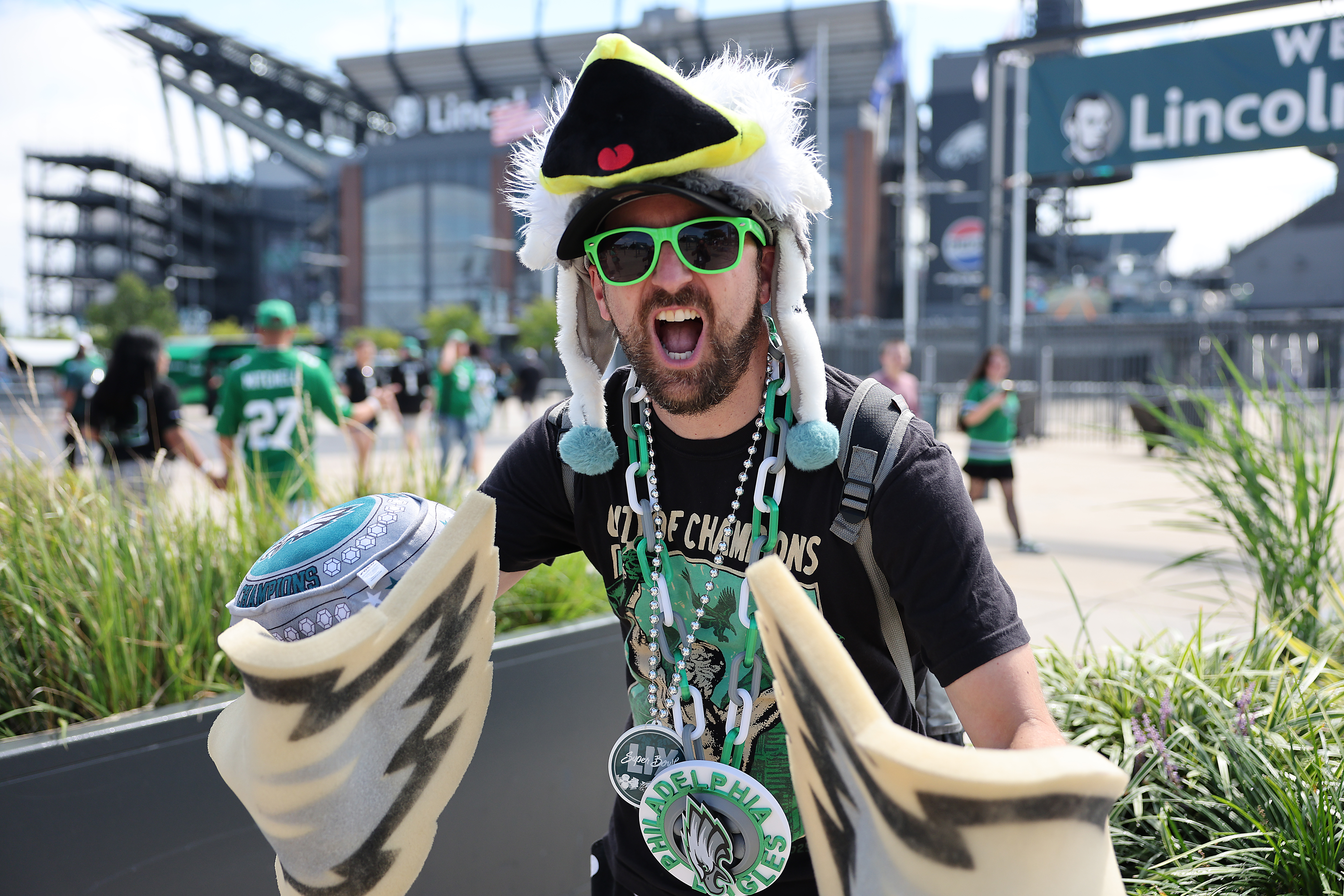
🤔 Wondering: How was the Birds’ first tailgate of the season? We captured the best moments prior to the Eagles vs. Commanders.
🙌 Praising: The journey to Temple linebacker Reggie Jones’ first tackle after three seasons playing college football.
📖 Reading: About girls’ flag football in South Jersey and the excitement around the sport becoming sanctioned by the NJSIAA.
⚽ Relishing: Cavan Sullivan scoring two goals for the Union to extend the team’s unbeaten streak to 10 games in 5-0 win over San Diego.
We answer your questions about a potential historic Sixers season.Monica Herndon / Staff Photographer
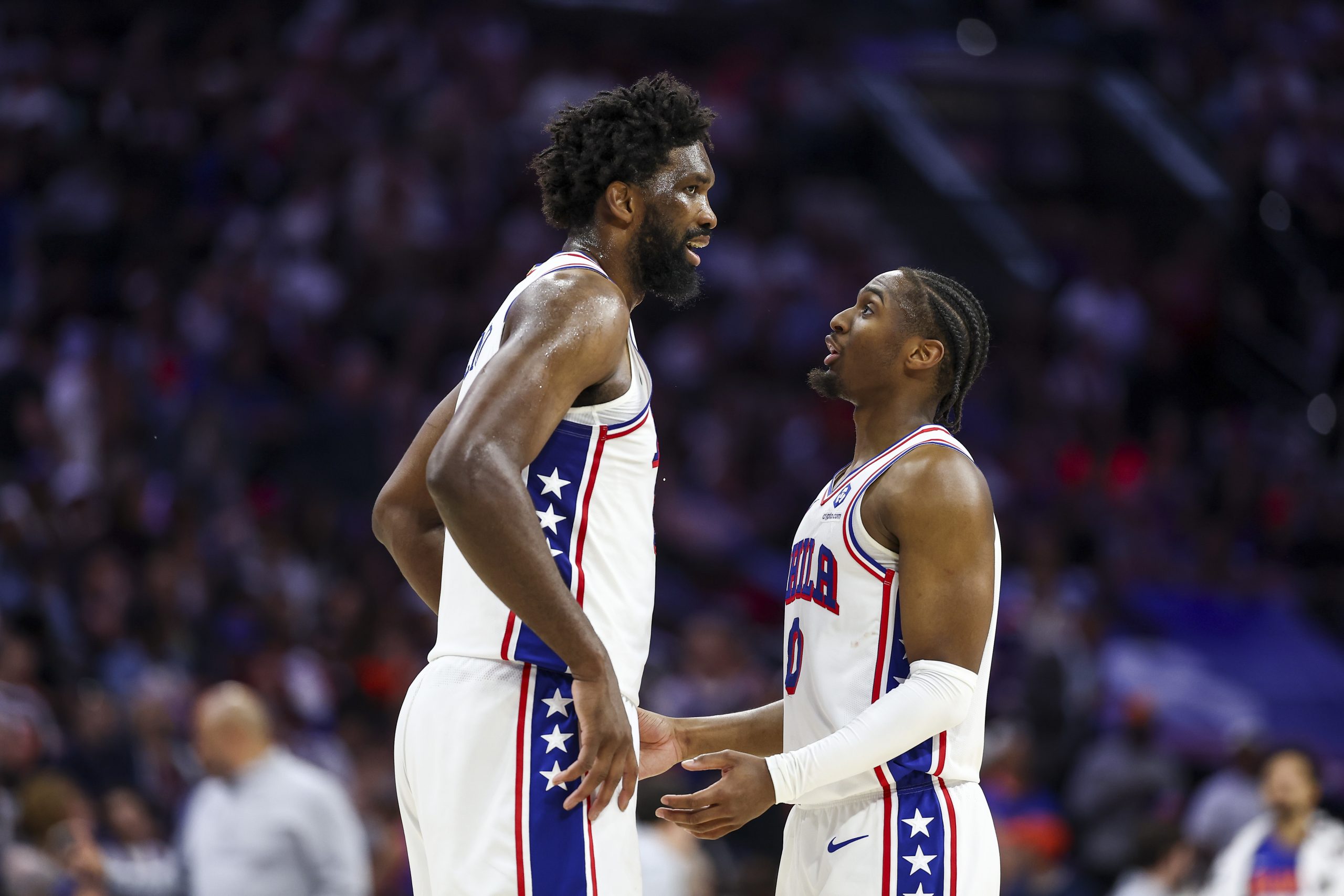
The Sixers are two weeks away from training camp. There’s been plenty to talk about this summer with Jaylen Brown and LeBron James coming to Philadelphia, and it very much could be a historic Sixers season.
While everyone waits for opening night on Oct. 20 at the Knicks, new Sixers beat writer Chris Hine answers the biggest issues facing the team, who the glue guys off the bench might be, and if there’s room for Justin Edwards.
After a pair of underwhelming seasons in junior, Jett Luchanko will look to get back on track this season as he makes the full-time jump to professional hockey.Courtesy of the Lehigh Valley Phantoms
Jett Luchanko is known for his high hockey IQ and speed. The knock on the Flyers’ 2024 first-round pick has been his lack of goal scoring. But the reality is that just having Luchanko on the ice is a big step.
The centerman missed development camp and rookie camp last year because of a groin injury. He also missed development camp this summer after undergoing a procedure on his core about a month prior. It’s possible that better health and more stability will help him get back on track in 2026-27.
And with several Flyers prospects converging on Allentown and Voorhees this week for rookie camp, here’s our updated top 20 prospect rankings.
Penn State tight end Ben Brahmer (18) runs after a catch against Temple on Saturday.Isaiah Vazquez / For The Inquirer
Matt Campbell said that he’d know the true identity of this Penn State team when it faces adversity. That moment came against Temple on Saturday, when the Nittany Lions failed to score on their first two red zone opportunities.
However, Penn State got things rolling in the second half, thanks to tight end Ben Brahmer, who believes his position is the “heartbeat” of offensive coordinator Taylor Mouser’s offense.
And in case you missed it, Saturday’s game was the first time Temple and Penn State faced off in a decade, renewing a 95-year-old rivalry.
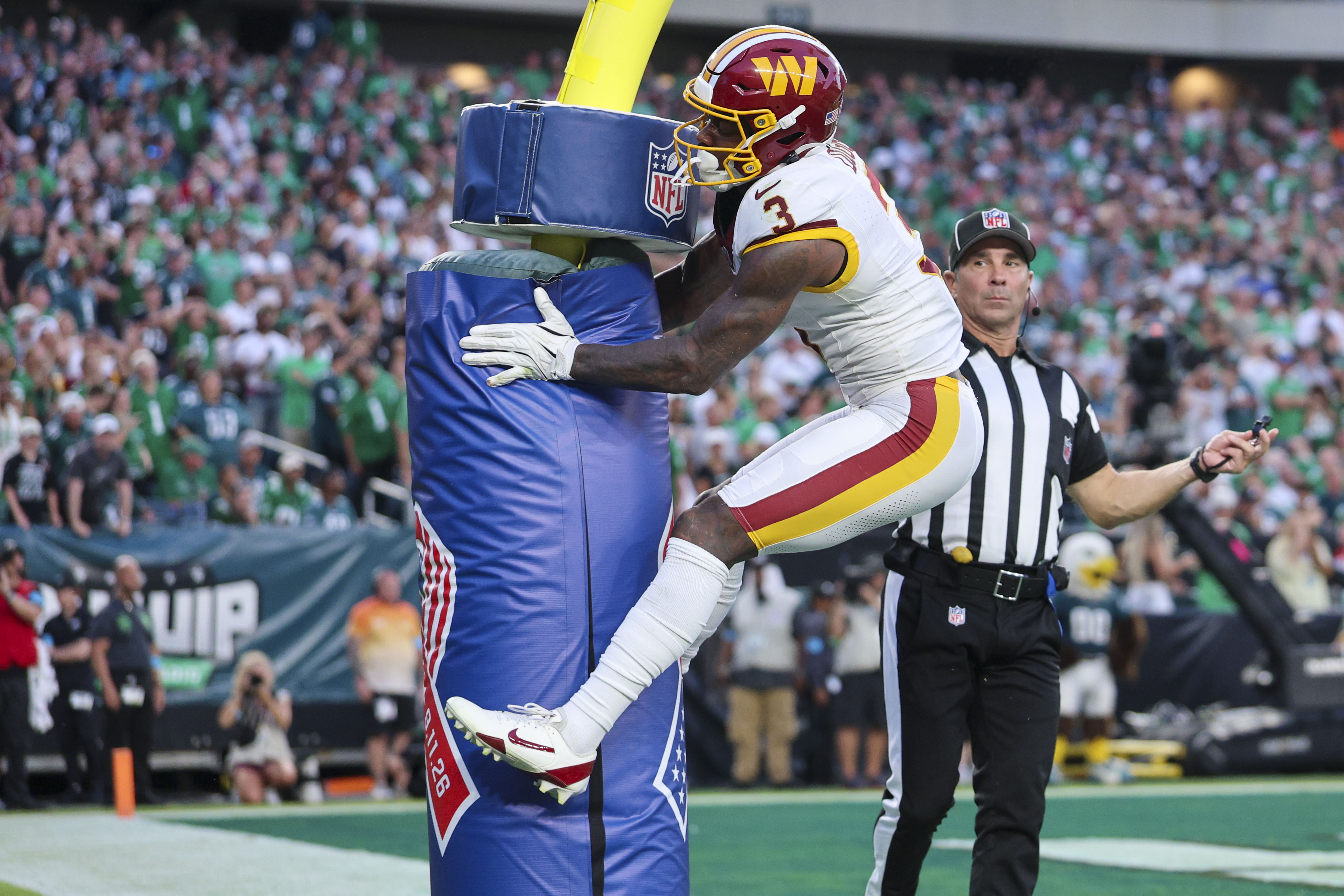
Washington Commanders wide receiver Stefon Diggs hugs the goalpost after scoring a touchdown on Sunday. He was penalized on the play, denying Washington a standard attempt at a two-point conversion.David Maialetti / Staff Photographer
Stefon Diggs caught a touchdown pass, but then hopped onto the goal post and gave it a brief, full-body hug. That behavior is illegal. The Commanders trailed by 2 points, and had the Eagles on their heels. But a 15-yard penalty pushed a two-point conversion try from the 2-yard line to the 17-yard line.
It was a foolish mistake, and there were several that did happen on Sunday. This was essentially a preseason game for the Eagles starters. Though, it was not bad for a dress rehearsal, writes columnist Marcus Hayes.
We compiled today’s newsletter using reporting from Jeff McLane, Olivia Reiner, Jeff Neiburg, Marcus Hayes, Matt Breen, Jackie Spiegel, Lochlahn March, Mia Messina, Ariel Simpson, Lexie Linderman, Faiyaad Kamal, and Lauren Jones.
By submitting your written, visual, and/or audio contributions, you agree to The Inquirer’s Terms of Use, including the grant of rights in Section 10.
Happy Monday! Thanks for getting your morning started with me, I’ll be back in your inbox tomorrow. — Bella
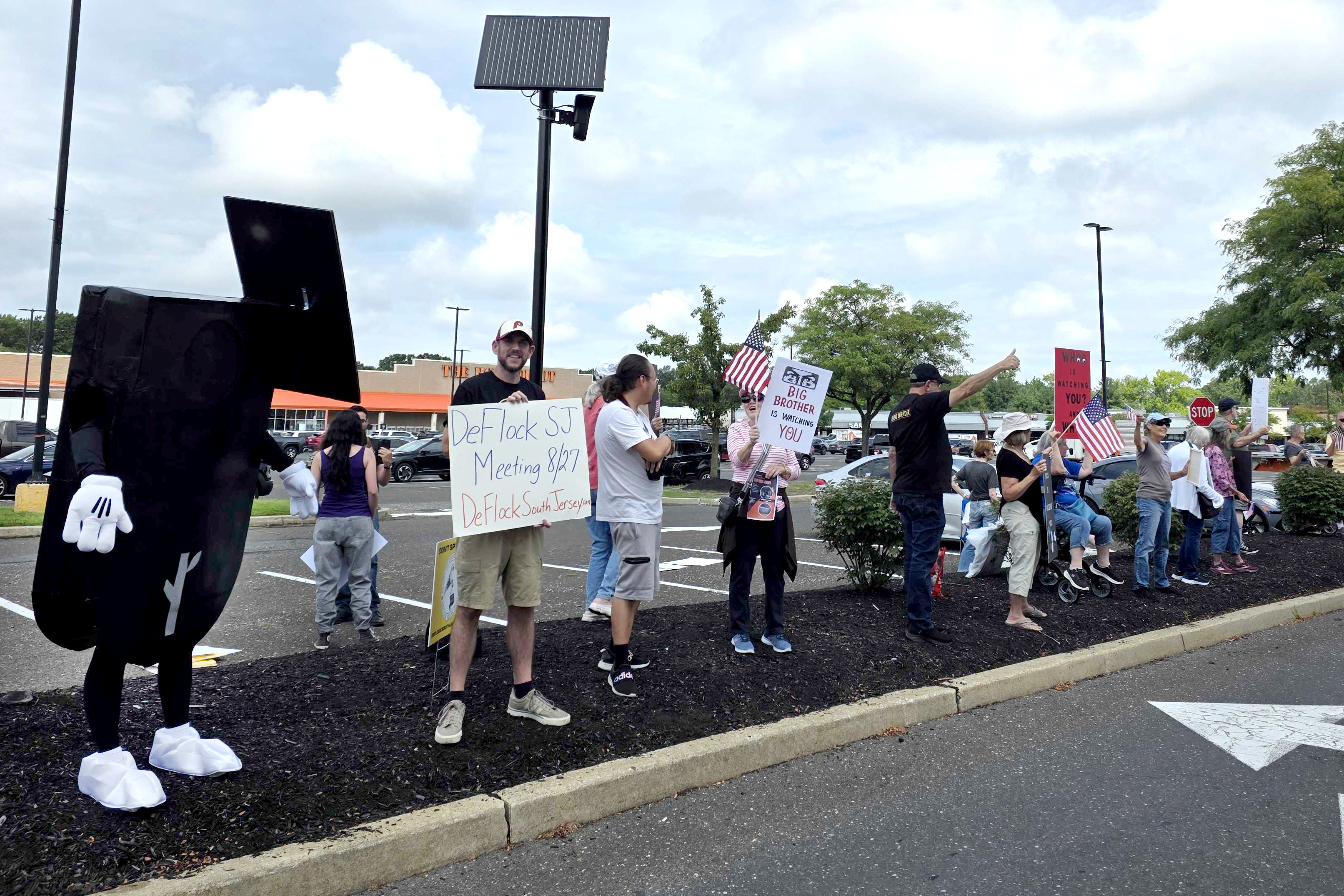
On the outer rim of a Home Depot parking lot in West Berlin, N.J., a group of more than 20 people — many of them senior citizens — did their part to fight Big Brother in the searing August sun.
“It got your license plate number!” shouted one man, pointing to a black, Flock brand solar-powered license plate reader above him and then to various cars in an Oprah-like manner, albeit at a slower clip. “They’re watching you! And You!”
The camera also captured the make, model, and any bumper stickers on passing vehicles going through the shopping plaza’s main entry and exit point, whether they went to Home Depot or not, someone else rattled off. Not to mention all the police-operated license plate readers dotting the region.
Waiting for the light to turn, one driver clearly isn’t buying the “surveillance state” claims. He tells the organizers their phones are already listening, lifting his for emphasis, and flipping them the bird as the line of cars begins to move again.
Michael Cannon, 72, understands that response, but insists these cameras are different.
“This is the freedom to travel,” he said over honks of support. “I can leave my phone at home. I don’t have to shop at Amazon. I don’t have to surf the internet. I choose to use them and I realize I’m giving up some privacy.”
It’s not just that Flock cameras can capture a vehicle’s license and other details, critics say. That information goes into a much-touted national database, which is fed by hundreds of local police departments in every state but Alaska. What’s more, Flock is not the only player in the market.
Automated license plate readers from Motorola Solutions, Axon, Avigilon, Neology, Leonardo, and Genetec are already peppered across the Jersey Shore, the Cherry Hill Mall, and shopping plazas across New Jersey. Major retailers including Lowe’s, Walmart, and Ulta Beauty have embraced the technology, citing loss prevention and employee safety as the driving force. And a majority of New Jersey’s law enforcement agencies have been using the technology since at least 2023, with a $10 million funding boost from then-Gov. Phil Murphy.
The “surveillance state,” say the technology’s harshest critics, is already here and rapidly expanding with a patchwork of regulations people are only now beginning to understand.
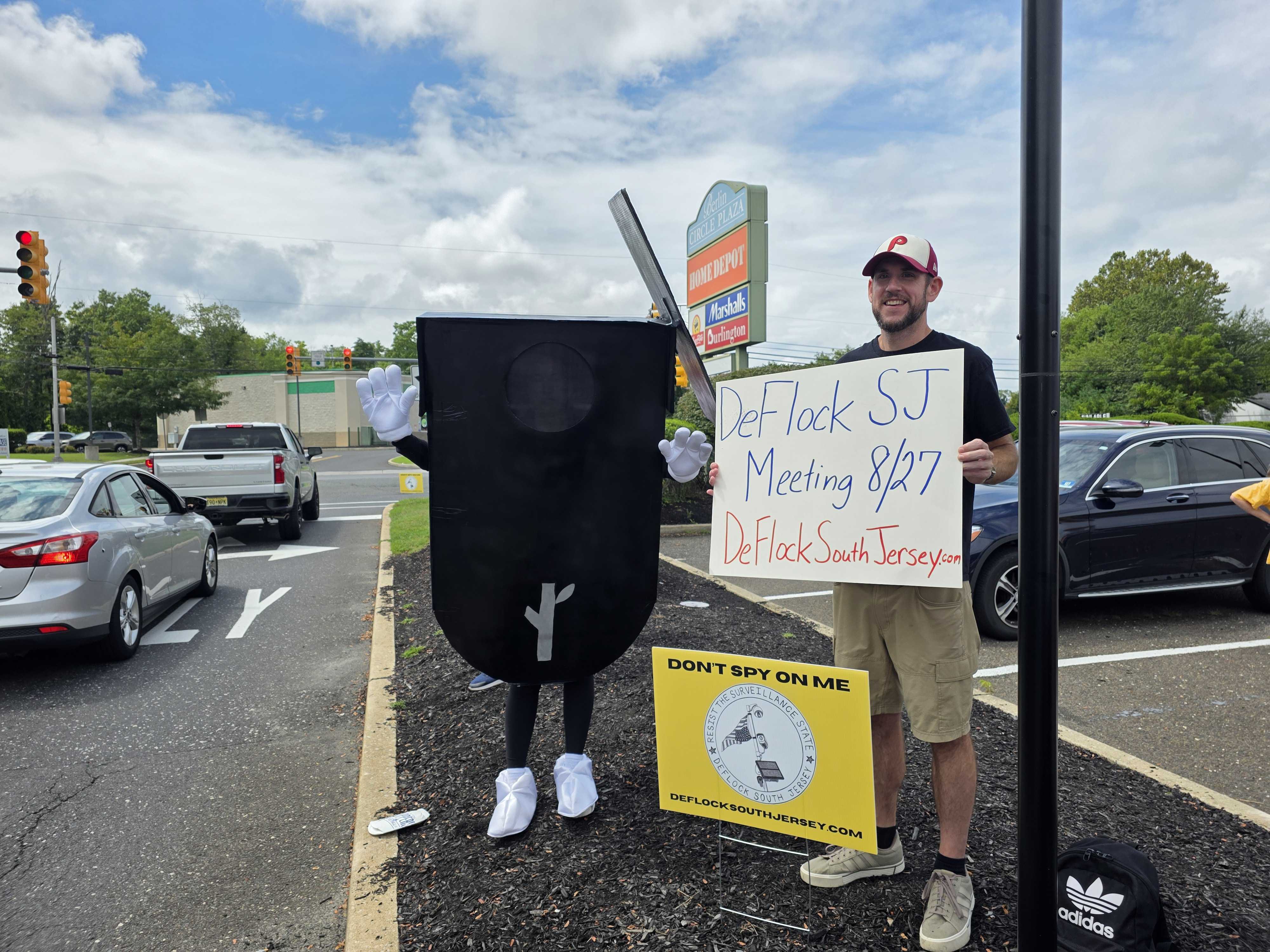
But at the Home Depot, Adam Sheridan tried to convince passing drivers it doesn’t have to be this way.
Sheridan is an organizer with the nascent group DeFlock South Jersey, which formed over the summer as the technology was subject to a flurry of investigative pieces, from local outlets like NJ.com to national publications including the New York Times. The South Jersey group is part of an effort to regulate and limit the growing assortment of automatic license plate readers. Everyday people are filing records requests, planning boycotts of retailers using the technology, and courting elected officials across the political spectrum, urging them to introduce bills regulating the technology.
“We’re trying to educate people,” Sheridan said of the group’s efforts. “They don’t know that this surveillance system is being built without their knowledge or their consent and we have found that when you tell people, they don’t like it.”
Progressives like Sheridan see the collective concern and outrage as a boon to their cause.
“There really is a lot of alignment between very vastly different people and that’s unusual,” he said. “We can go and talk to a Republican legislator and say your voters care about this and then we can go to a Democratic politician and say the same thing.”
Adam Sheridan, an organizer with the new DeFlock South Jersey, alerts passing drivers to an organizing meeting in August where people hope to spread awareness regarding automated license plate readers. Flocky, a homemade mascot, acts as a visual boost.Ximena Conde
High-profile cases of abuse
One of the reasons Flock has received the brunt of criticism in the license plate reader backlash is because of a number of incidents where the technology was abused or misused.
Then there are the legal concerns, including whether the technology can help authorities circumvent the laws of neighboring states. Tech outlet 404 Media reported that police in Texas used Flock to track a woman who left the state to self-administer an abortion. While Texas prohibits almost all abortions, police were able to tap into Flock data in states where abortion is legal because of that national network.
The quandaries are not limited to Flock.
Immigration enforcement is another area where policies and safeguards can change from camera provider, to state, to police department, to private business.
Flock says it does not contract with U.S. Immigration and Customs Enforcement, but clients in states like New York have allegedly used license plate reader data on ICE’s behalf.
For its part, New Jersey limits how state and local law enforcement assist immigration authorities and Flock says it has its own guardrails, requiring out-of-state agencies to confirm that they’ll comply with state law before receiving license plate data. Yet retailers set their own policies on when data can be shared with local and federal law enforcement.
People like Sheridan, someone who organizes for progressive causes in South Jersey, worry about the use of the technology under the current political climate. Even so, he’s encouraged by the criticism the technology has received across the political spectrum.
“We think that people on the right should also be concerned about it because Donald Trump won’t be the president forever,” he said. “There will be a Democratic president, and we don’t think that that president should have these powers either.”
Privacy advocates also urge critics to look beyond Flock and consider how license plate reader technology is being used by other companies and paired with other surveillance tools.
Motorola Solutions didn’t respond to a list of questions, but the American Civil Liberties Union reports it also offers a searchable national database of vehicle information captured by its cameras.
And Leonardo, as first reported in 404 Media, is rolling out sensors to their license plate readers that would capture “unique identifiers” of phones and other Bluetooth-enabled devices in cars. The company said in a statement that this is a separate product that can be paired with their license plate readers and all that information is kept in the end users’ own database.
Critics concede this is all a lot to take in. Yet they hope to tap into the sudden interest in license plate readers and replicate some of the data center bans in New Jersey. Though license plate readers are already ubiquitous, privacy advocates believe a mass mobilization could push for regulation.
A technology used statewide
License plate readers have been around for a long time.
In New Jersey, the Office of Attorney General has led efforts to regulate the technology since at least 2010. The latest tweaks to regulation came out of the office in 2022, mandating annual audits of law enforcement agencies using the technology; requiring license plate reader coordinators to improve oversight and information sharing; and cutting the time these departments can keep data and records from cameras from five to three years.
By the time the first statewide audit was published in 2024, 517 law enforcement agencies were already using the technology, including the New Jersey State Police, NJ Transit Police Department, and various county prosecutor’s offices. The latest report auditing the use of the technology, found 523 law enforcement agencies are using license plate readers. There areabout 530 law enforcement agencies in the state, according to NJ.com.
And while agencies are told to report significant violations and citizen complaints — there were none listed for 2025 — information regarding how many cameras agencies have or how often they’ve been used in investigations is not provided.
Much of what’s known about license plate readers is coming from the companies themselves, with many of the service providers remaining rather tight-lipped.
In its more recent “impact census,” Flock reported its technology supported more than 1 million criminal investigations in 2025 across 700 law enforcement agencies nationwide, helping locate more than 10,000 missing persons. The company also claims more than 40% of its customers used Flock in more than half the cases that resulted in the recovery of a stolen car.
The Cherry Hill Police Department, however, is careful to not to overemphasize the technology’s role in solving crimes.
“In nearly every case where a reader mattered, it gave detectives a direction and the case was then built by corroborating that lead through other evidence: video, physical evidence, witness accounts, forensics,” said the department’s Capt. Sheldon Bryant.
A reader can offer a lead, he said, but proving the crime is still up to law enforcement.
The department has contracted with Flock for the last two years. Bryant highlighted several instances where the township’s 10 readers identified vehicles connected to crimes committed in and out of the township, which led to arrests.
A shooting investigation in Camden last January led authorities to a vehicle in Cherry Hill and just last month, a shooting in Cherry Hill led authorities to New York, according to the department. Cherry Hill Police obtained a warrant in the latter incident and a Flock reader picked up the vehicle’s license plate in New York, leading to an arrest.
In the last year, Cherry Hill’s system generated 2.2 million alerts, the overwhelming majority being expired registration and suspended plates — the department doesn’t use the readers to run enforcement sweeps on those. The alerts connected to criminal activity are far smaller, Bryant said. In the same year the department received alerts for about 800 stolen plates, 212 stolen vehicles, and 15 missing persons.
Many critics of license plate readers argue more granular data from individual law enforcement agencies on how they use the technology would aid in transparency.
How many people are being recorded to try to capture a select few, they ask. An oft-quoted statistic from the Electronic Frontier Foundation, which has been studying new surveillance technology for more than 30 years, noted that less than 1% of cars scanned are connected to a crime, but that’s from research looking at data from 2016 and 2017.
At the inaugural DeFlock South Jersey organizing meeting, this statistic drew denouncements from the crowd.
“I know there’s some benefits but it’s not up to us to prove we didn’t commit a crime,” said a Howell Township resident named Joe afterward. He’s a registered Republican who declined to give his last name to preserve his privacy — a common stance among the group. “I’m driving past these all the time, I shouldn’t be surveilled in case something happens.”
Fighting the warrant loophole
Consider this: Police want to stick a GPS tracker on a suspect’s car. Law enforcement would have to get a judge to sign off on a warrant in order to do so and they would only be able to track an individual’s movements going forward.
Matthew Guariglia, a senior policy analyst at the Electronic Frontier Foundation, said license plate reader technology inverts that system by collecting sensitive data all the time.
“Not only is it like skipping the judge, it’s skipping the judge and going back in time and putting a GPS device on a car 30 days ago,” Guariglia said.
The amount of time license plate readers keep that information varies by company and law enforcement agency. Amid backlash, Flock cut its retention period last month from 30 to seven days. Critics looking for greater regulation feel retention should be uniform across companies and shorter still.
One of the many tactics DeFlock South Jersey aims to take is pushing legislation that forces agencies to delete captured data after 48 hours unless it is needed as evidence. The suggested bill language promoted by the ACLU, also requires other law enforcement agencies to request access to license plate data collected by another entity. The asking agency would have to agree not to further share the data, unless required by law, or have a warrant.
Republican Sen. Michael Testa (Atlantic, Cape May, Cumberland) plans to introduce legislation for license plate reader guardrails this month, though the text has yet to become available.
“The legislation that I will be introducing will establish commonsense protections for law-abiding citizens while still allowing law enforcement to use this technology to catch dangerous criminals,” he said in July.
Back at the organizing meeting, held at the South County Library in Winslow, attendees looked over drafts of the suggested legislation and headed to DeFlock.org — not affiliated with DeFlock South Jersey. The website is an open-source project that flips the script on license plate readers. Volunteers submit the locations of cameras across the country, regardless of brand, despite the name.
Many in the room were already acquainted with the app, having sent in tips themselves. Sheridan floated the idea of a license plate reader “scavenger hunt” as a potential event to raise awareness. Boycotting retailers that use the cameras was also floated as an idea.
Joe, the Republican attendee from Howell, doesn’t mind the cameras on private businesses. Still, as Sheridan hoped, Joe left the meeting ready to take action. He’s stayed in touch with DeFlock South Jersey in the weeks since and they’re coordinating a possible meeting in Howell, Sheridan said.
Despite the technology’s ubiquity in South Jersey, Sheridan feels regulation is within reach because people like Joe are joining the fight.
“Not to be corny about it but this is an American value,” said Sheridan. “The ‘don’t tread on me’ stuff is sort of in our DNA as Americans, the government doesn’t get to watch me everywhere I go.”
As her children start second and third grades in the Colonial School District, Elise LaChapelle expects they will spend no more than 20 to 30 minutes a day on their Chromebooks — limits the Montgomery County district has announced to parents.
Colonial also no longer allows elementary school students to take their laptops home at night. “That seemed to be an acknowledgment on the district’s end that changes were needed,” LaChapelle said.
Amid a spreading backlash to screens in classrooms, public school districts across the Philadelphia region are placing more limits on technology use — including by pulling back on one-to-one device programs once touted as critical for ensuring every student had access to technology.
The Tredyffrin/Easttown School District has stopped assigning iPads to kindergartners, and students across the district’s elementary schools will no longer take their tablets home at the end of the day.
In Methacton, the district has transitioned from individual devices to a shared model for kindergartners and first graders, with Chromebooks available for center-based activities, according to a district spokesperson.
The Phoenixville Area School District has ended its one-to-one device program for kindergarten through third grade, while in Wallingford-Swarthmore, kindergartners through second graders will take fewer online assessments, and kids up to fifth grade are no longer able to search and browse YouTube.
Parents who have been pushing schools to scale back on computer use are applauding the new restrictions as a step in the right direction of promoting teacher-led instruction and reducing screen-based distractions.
But they also question how much will change in practice, because children will still have access to devices in many classrooms. Some parents who have been battling for less screen time want schools to go further to address what they see as excessive reliance on technology at older grade levels.
Yair Lev, a parent who opposes Chromebook use in Lower Merion schools, speaks at a March 23 forum at Harriton High School about technology use in the school district.Maddie Hanna / staff
For many districts, reducing computer usage in elementary schools “seemed like the low-hanging fruit,” said Alex Bird Becker, a Wallingford-Swarthmore parent active in PA Unplugged, a statewide group with about 5,000 supporters that advocates for limits on educational technology. But “when you get to middle school, the device culture has become really ingrained with curriculum. That’s where it gets harder to disentangle.”
Wallingford-Swarthmore, a 3,700-student district, has been soliciting applications from parents to join a new Technology Advisory Council that will advise the district on further changes, including related to device use in grades six to 12. (In Lower Merion, parents have been pressing the district to create a technology review committee that includes parent representation.)
“We know there’s even more we want to do in this area,” said Russell Johnston, Wallingford-Swarthmore’s superintendent.
Wallingford-Swarthmore School District Superintendent Russell Johnston speaks during a Feb. 24 school board meeting in Wallingford.Jose F. Moreno / Staff Photographer
Wallingford-Swarthmore is also reevaluating how laptops are used during “curriculum enrichment” time, Johnston said, when students are broken into small groups to receive extra help.
In Phoenixville, which ended its one-to-one device program for kindergarten through third grade, “students will continue to have access to appropriate and approved educational technology for academic purposes only,” district spokesperson Nicole McClure said.
Alair Southerton, a Phoenixville parent who has been pushing the district to make changes, said the school board had approved “strong language” around when devices should be used in classrooms.
But “we’re still kind of crossing our fingers with the rollout,” Southerton said. She questioned whether teachers had clear guidance from administrators, and whether the district would consider educational technology apps that some parents object to as “gamified” as essential for learning.
“We want to really fine-tune what needs to be done on a device on a screen,” said Southerton, who is a member of a new district Edtech Advisory Council.
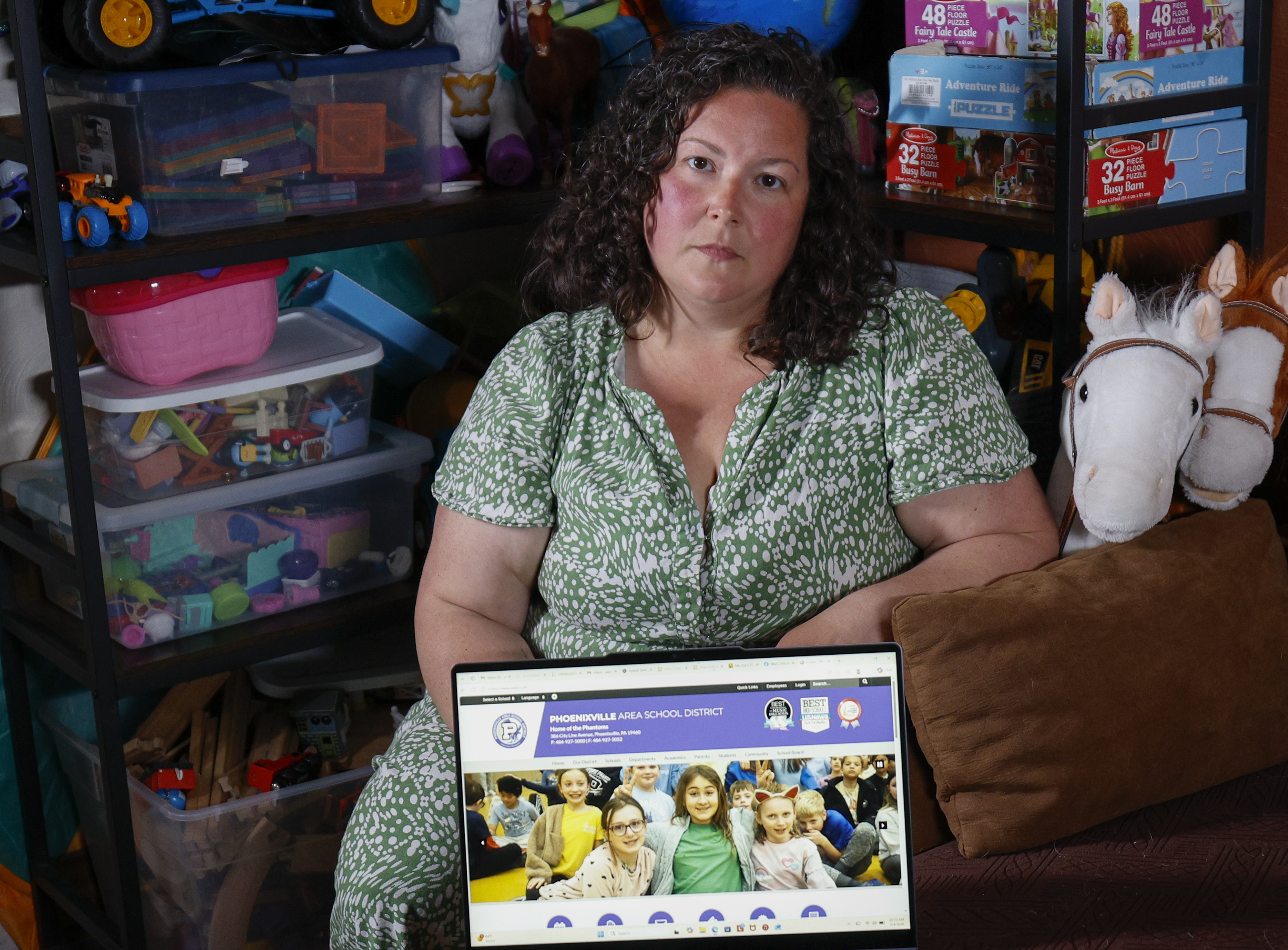
Alair Southerton, pictured at her home in May with the Phoenixville Area School District website on her laptop. Southerton is leading a group of Phoenixville parents who are calling on their district to reduce screen time in school.Steven M. Falk / For The Inquirer
While Phoenixville this fall adopted a new program, Qustodio, to let parents monitor their child’s device usage, Southerton said it has been less revealing than she hoped. The program reports which websites students accessed at 15-minute intervals throughout the school day but does not say how long they actually spent online, she said.
In Colonial, LaChapelle is awaiting the district’s launch of a different program, Securly, that will also allow parents to monitor what their kids accessed.
While the district has placed limits on screen time — 20 to 30 minutes in kindergarten through third grade, 40 to 50 minutes in grades four and five, and 2½ to three hours in grades six through 12 — “accountability and transparency are key,” LaChapelle said.
Colonial spokesperson Jessica Lester said the district had “done more this year to try to communicate what our approach is” to technology.
LaChapelle noted that in order to register her children for school, she had to consent to a list of more than 100 software programs used by the district; officials have since told her they plan to revise that, she said.
LaChapelle hopes the district will continue to make changes. Taking an intentional approach to technology use could be a selling point for districts trying to show leadership, she said.
“We’re doing and saying a lot of the right things,” she said. But “this isn’t a one-and-done conversation.”