Tag: Temple University

  • Villanova U. spent more than $100 million on renovations of the former Cabrini campus. Students will begin living and learning there this fall.

    Villanova U. spent more than $100 million on renovations of the former Cabrini campus. Students will begin living and learning there this fall.

    The former Cabrini University campus has undergone a more than $100 million, Villanova-fueled rebirth, and students will begin attending classes and living there this month.

    Large signature blue and white V’s for Villanova University are everywhere. “Ignite Change. Go Nova,” says a wall in the student recreation center. Beds in the residence halls now have navy blue sheets, and many of the buildings have been renamed to honor Villanova’s Augustinian heritage.

    The Radnor campus once in dire need of maintenance sports a fresh look, including new light poles, landscaping, painting, furniture, boilers, roof repairs, a running fountain, pickleball courts, and restored architectural flourishes, in addition to upgraded educational technology for classrooms.

    The university removed dead trees, installed firepits on the campus green, and connected the two campuses’ phone and internet systems.
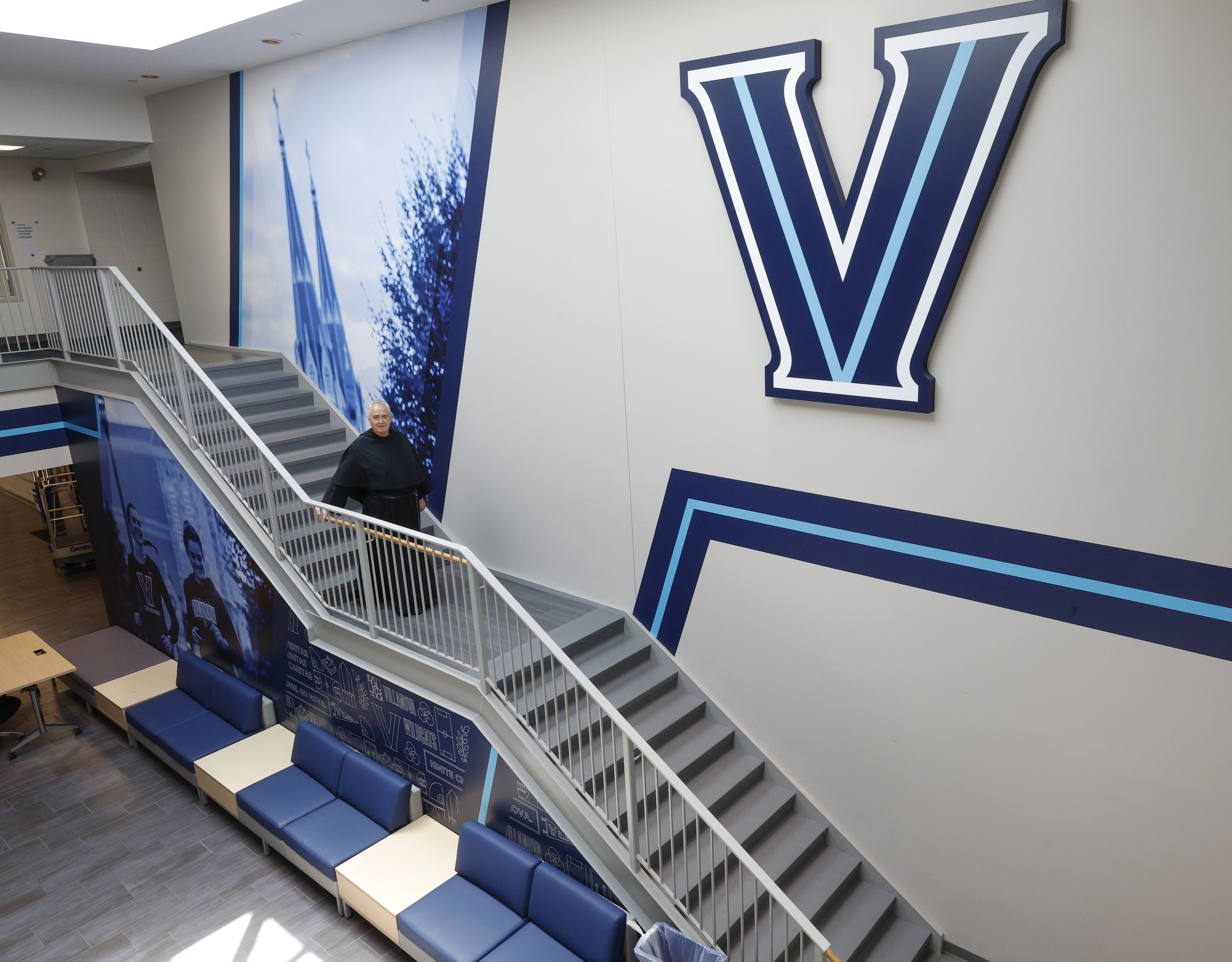
    Villanova President Rev. Peter M. Donohue walks down the stairs at the Dixon Center, which has been covered in Villanova signage and colors. Steven M. Falk / For The Inquirer

    It is all part of Villanova’s effort to make the 112-acre campus that it acquired from the shuttered Cabrini look and feel decidedly Villanovan. The campus has been closed for the last two years as the planning and upgrades took place.

    “It’s always been a beautiful campus, but it looks very Villanova now,” said Kelly Tuzio, assistant director of Villanova’s graduate nursing program, who worked at Cabrini from 2005 to 2011.

    “You can feel the change,” she said, helping to ready the Iadarola Center, the building she works in, for the opening. “Everything is just done to perfection.”

    Some things remain largely untouched, like the signature statue of Mother Cabrini on the green and the Mansion, Cabrini’s former administrative building, which is on the National Historic Register. It was renamed Montefalco Hall. Masses will continue to be celebrated in the chapel: Cabrini was a Catholic university, as is Villanova.
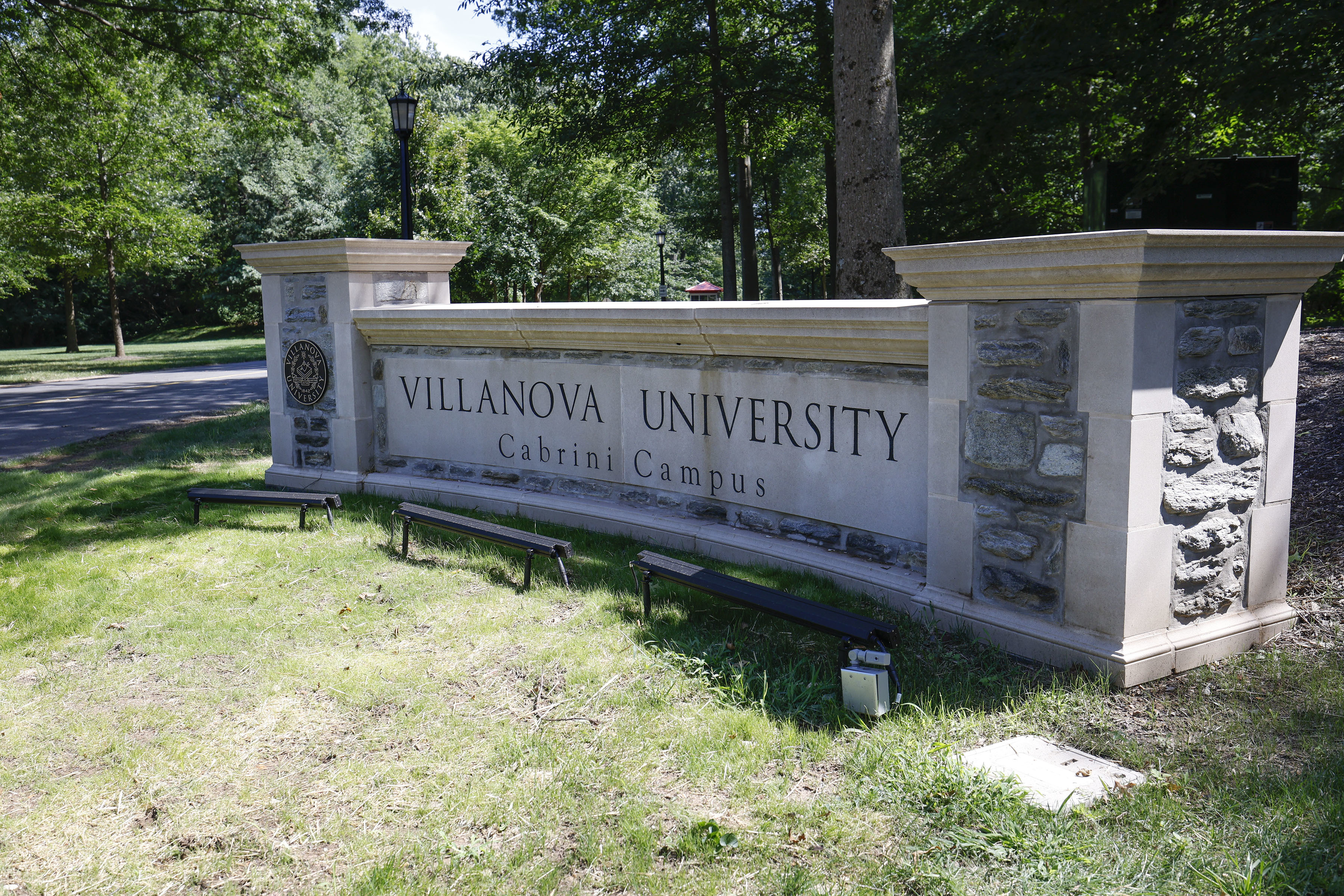
    Villanova University purchased the nearby campus of the now shuttered Cabrini University two years ago and has had the site closed for remodeling. But this fall, students will live and study there. Steven M. Falk / For The Inquirer

    And signs at the entrance to campus say: Villanova University, Cabrini Campus — a nod to Villanova’s larger promise to retain Cabrini’s legacy.

    A new era of growth

    The acquisition of the campus, which officially opens for fall classes Aug. 24, marks an era of new growth for Villanova.

    As many other colleges have lost enrollment in recent years, Villanova plans to grow its undergraduate student body, now at about 7,000, to 8,000 over the next four years, said the Rev. Peter M. Donohue, Villanova’s president. That growth started this year with about 250 additional freshmen. And the school plans to maintain its selectivity; it admitted just 29% of applicants for this fall’s class and saw more than a 10% surge in applications over the last year.

    Villanova, which has a 260-acre main campus, will expand 43% in size with the addition of Cabrini. The university’s acquisition of Rosemont College — which will be complete in 2028 — will add 58 acres, increasing Villanova’s total to 430 acres.

    The Cabrini campus will house five academic departments: psychological and brain sciences, graduate nursing, education and counseling, ethics, and part of communication. About 75 faculty — 10% of the total — will be based there.
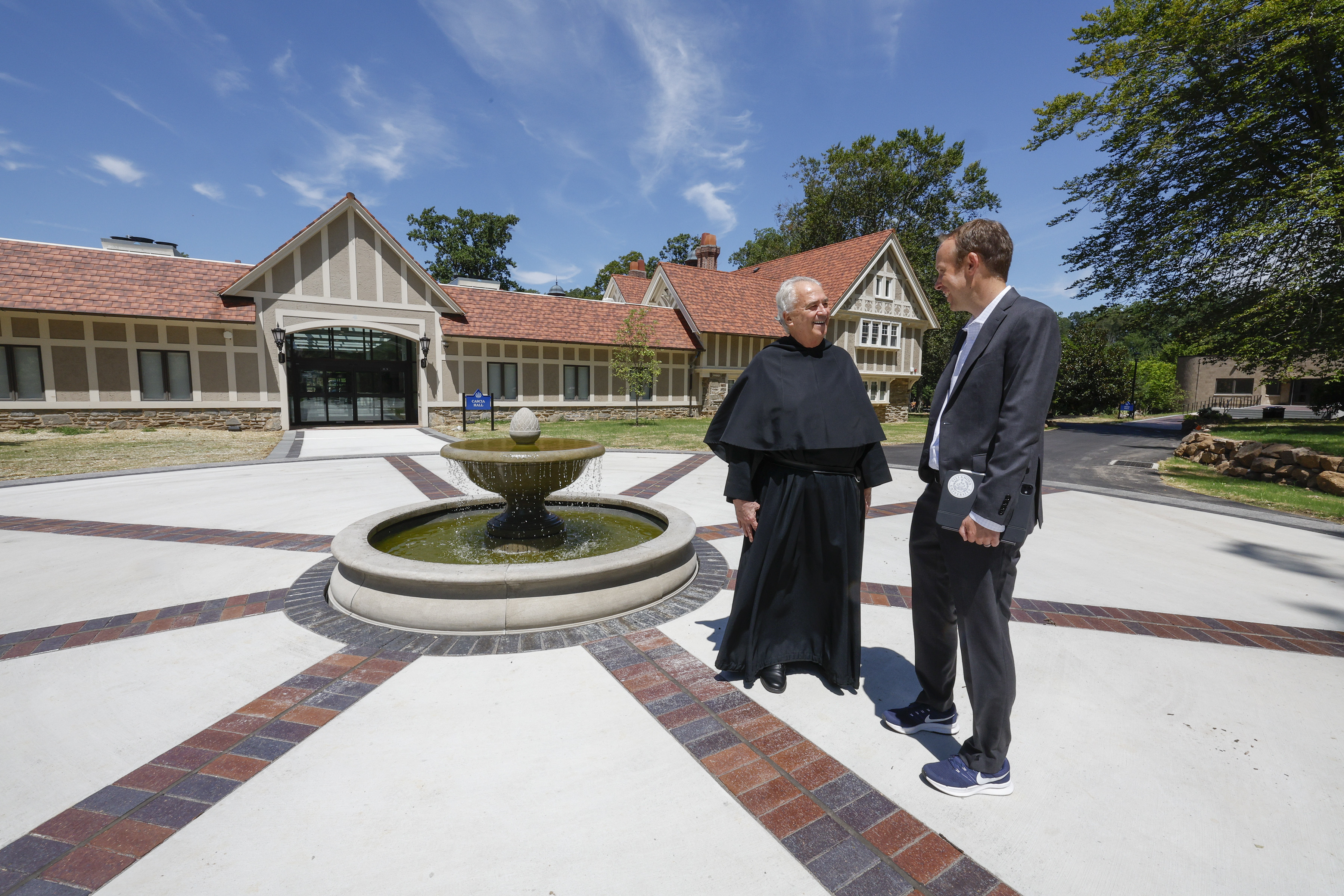
    Villanova University President the Rev. Peter M. Donohue left, and Timothy Hoffman, vice provost for finance and administration, stand in front of a newly installed fountain outside Cascia Hall, which received a lot of renovations inside and out. It houses the student center. Steven M. Falk / For The Inquirer

    About 900 sophomores — roughly half of those enrolled at Villanova — will live on the campus, expanding the percentage of undergraduates who live on Villanova’s campuses to more than 80%.

    In addition, more than 2,000 undergraduate and graduate students — about a fifth of Villanova’s overall student population — will take classes at the Cabrini campus in the fall, said Timothy Hoffman, vice provost for finance and administration.

    “I’m just excited to see life again on the campus,” said Michelle Filling-Brown, formerly dean of academic affairs at Cabrini and now associate vice provost for the integrated student experience at Villanova.

    She has been designing themed living and learning communities for the new Cabrini campus.
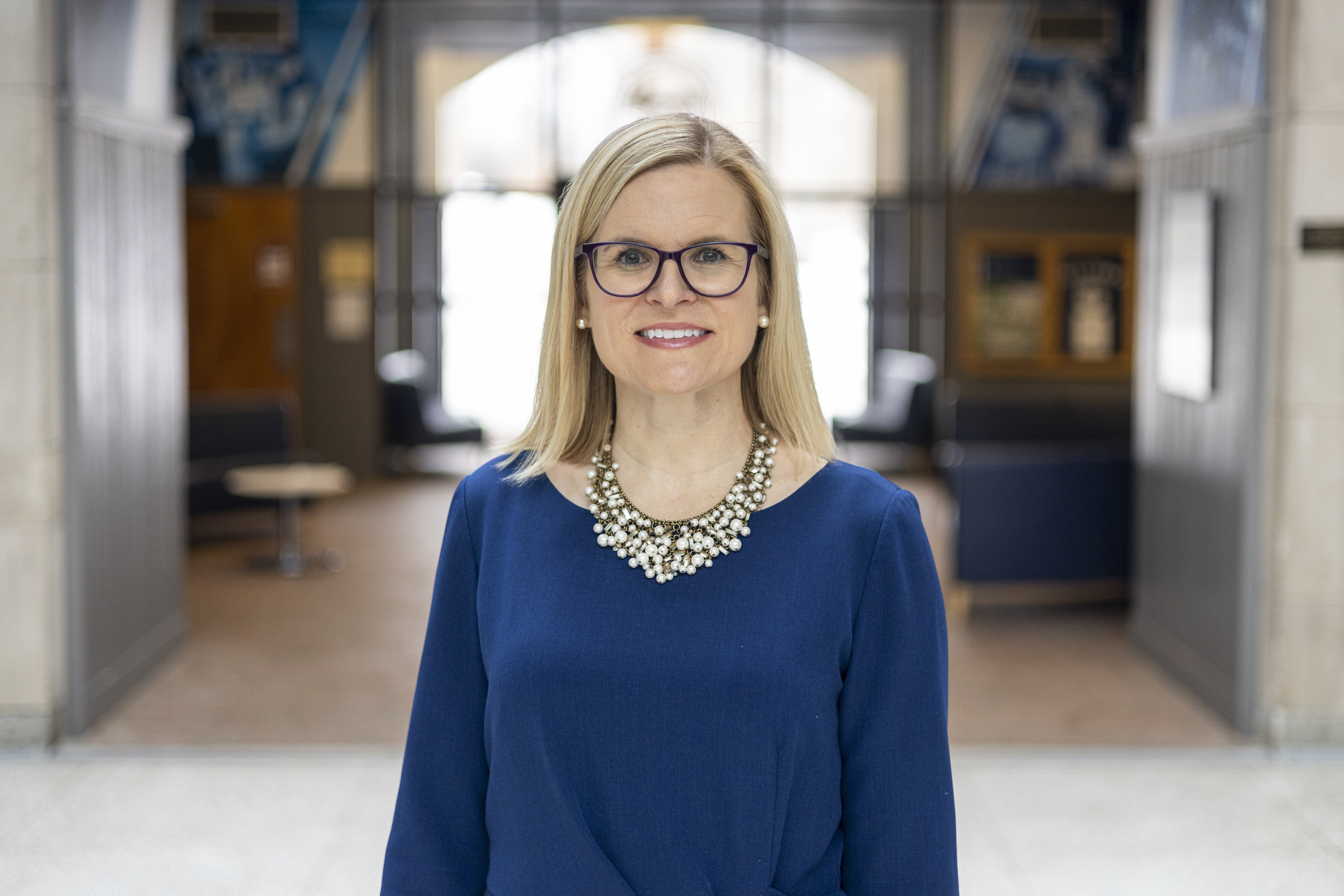
    Michelle Filling-Brown, a former top administrator at Cabrini, now works at Villanova.Tyger Williams / Staff Photographer

    Started in 1957, Cabrini was the only college founded by Sister Francesca Cabrini’s Missionary Sisters of the Sacred Heart. The university announced in 2023 it would shut the next year and Villanova would take it over, giving students and employees a year to find a new runway. The decision came as enrollment plummeted, finances tightened, and deferred campus maintenance mounted.

    In spring 2024, the 67-year-old school marked a series of lasts, including its final commencement.

    Cabrini became one of a growing number of shuttered colleges in the region whose campuses have been acquired by others. St. Joseph’s University bought the University of the Sciences campus, Thomas Jefferson University the former Philadelphia University campus, Drexel the former Salus University, and Lackawanna College the former Peirce College. Various entities, including Temple University, bought pieces of the former University of the Arts. Plans for the soon-to-close University of Valley Forge have not been announced.

    Donohue said Villanova has not yet made specific plans for Rosemont.
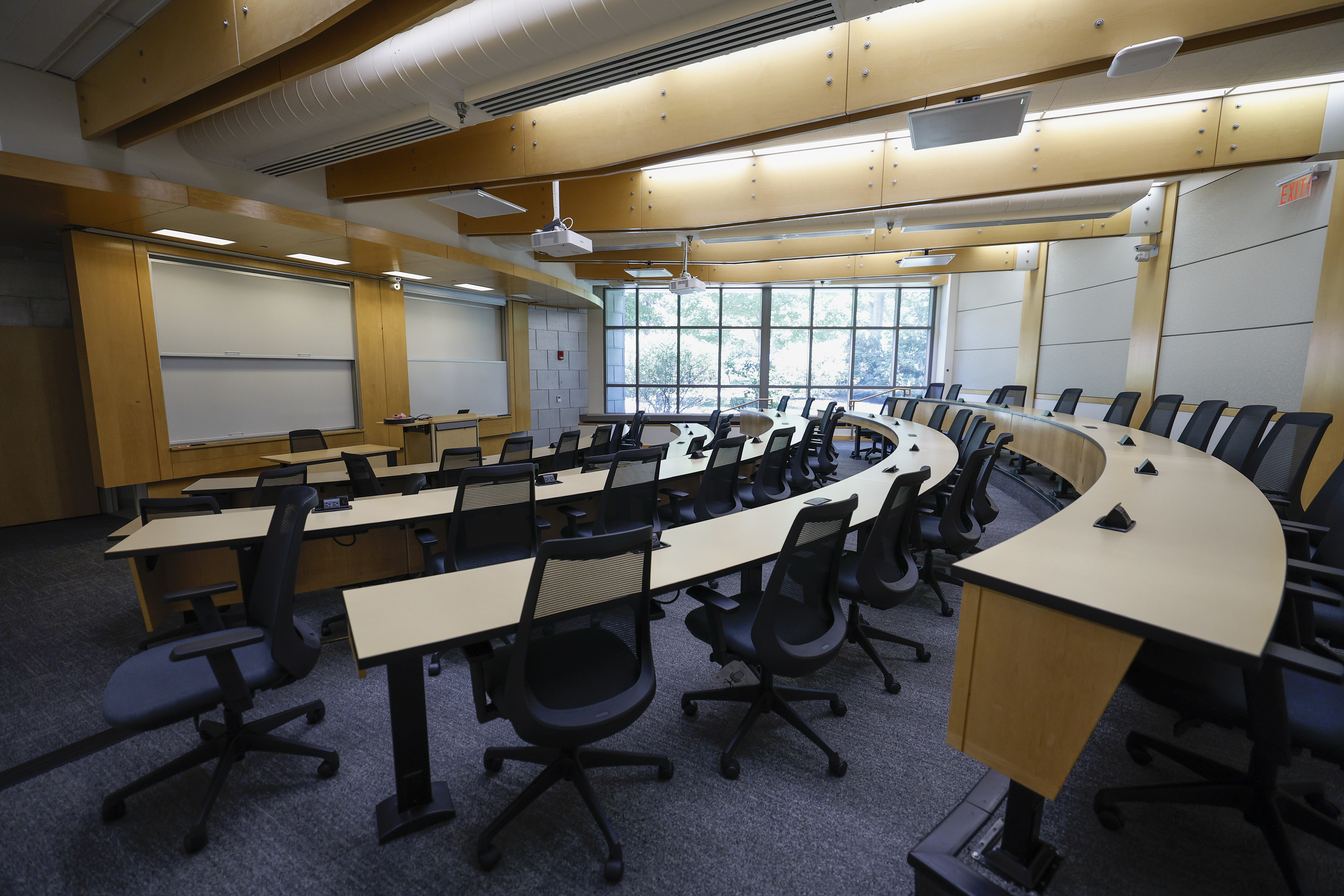
    A classroom with new educational technology at the Iadorala CenterSteven M. Falk / For The Inquirer

    Before beginning renovations, Villanova invited Cabrini alumni to collect memorabilia, Donohue said. The school also donated truckloads of old furniture and materials that it did not plan to use to nonprofits.

    A $170 million-plus investment

    The university has invested more than $170 million into the Cabrini purchase, including the $70 million it paid to close out Cabrini’s debt and acquire its land, buildings, and assets, and more than $100 million on renovations. Donohue said it will take just four years for the school to recover that money through the operation of the campus.

    The university was able to keep $15 million of Cabrini’s $42 million endowment, the school said.

    Though the campus has not officially opened yet, a few students have begun to move in. Last Tuesday, a group of young staff members huddled in a room, planning grand-opening activities. Others unpacked and organized nursing equipment.
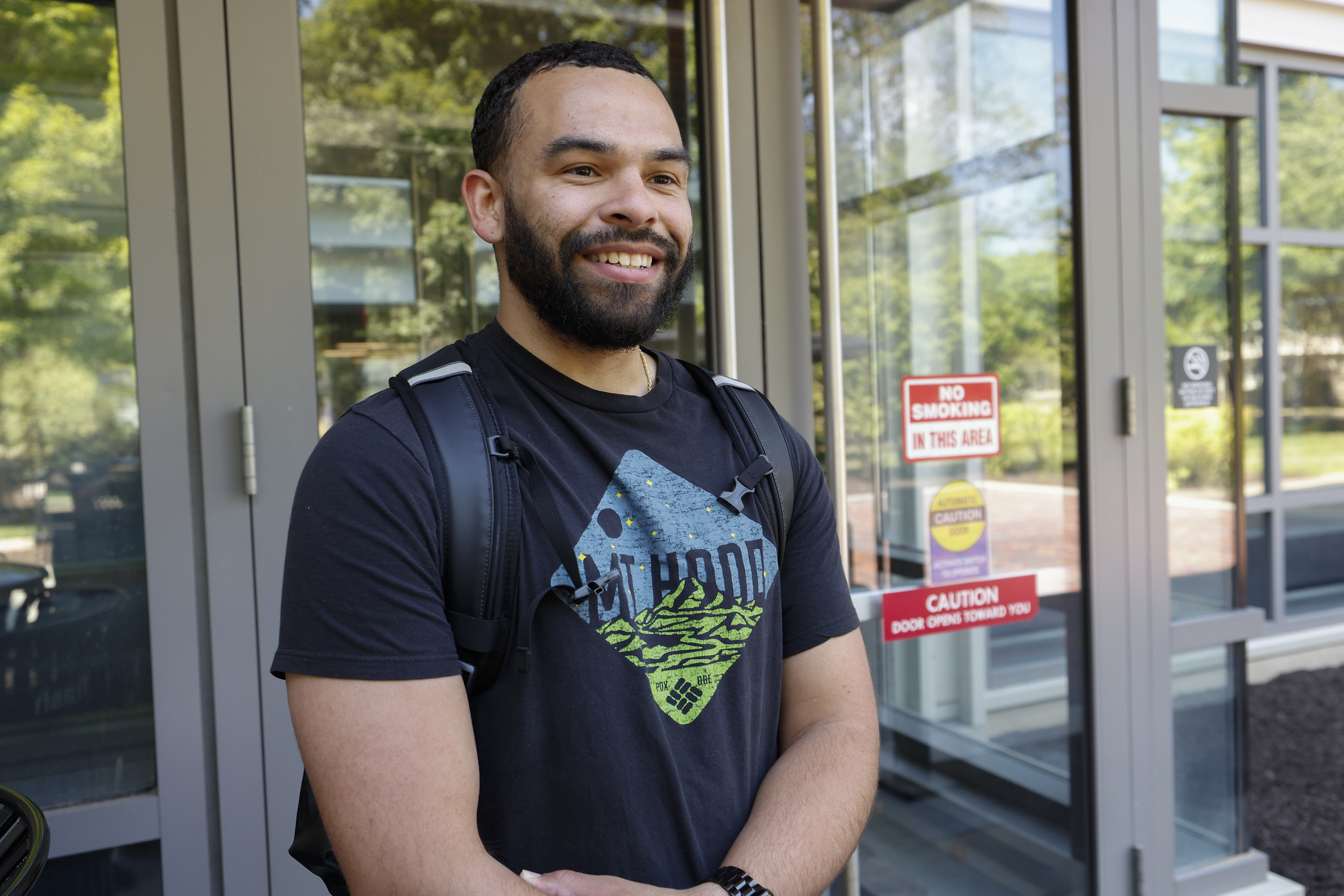
    Graduate student Curtis Wesley stops by the Iadarola Center where he will study this fall.Steven M. Falk / For The Inquirer

    Curtis Wesley, 26, an incoming graduate student in the nurse anesthesia program, strolled out of the building where his classes will be.

    “I just wanted to come and check it out,” said Wesley, who is from Kansas. “I was excited to see all the new technology.”
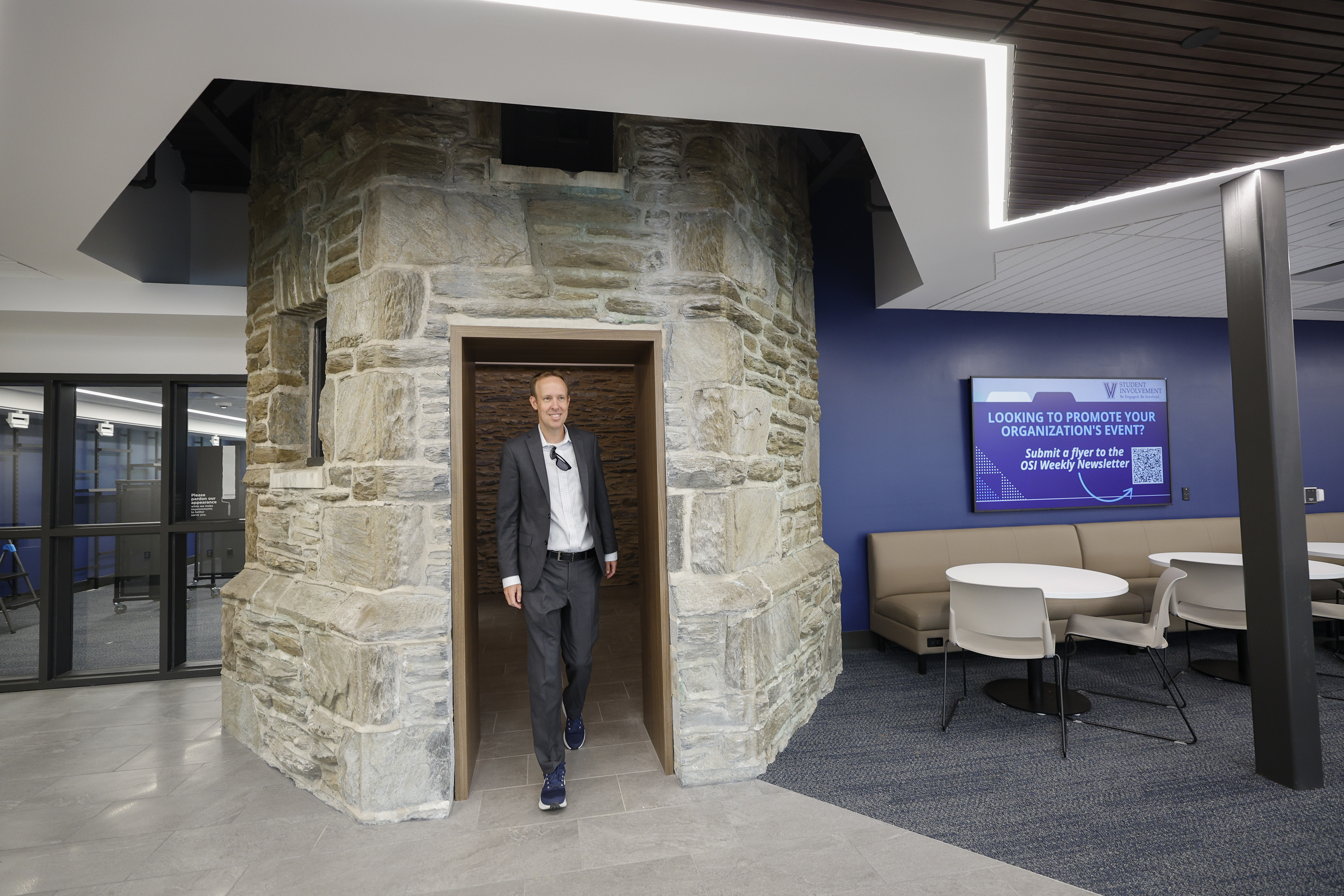
    Timothy Hoffman, vice provost for finance and administration, emerges from the stone-walled turret leading to what will be a Villanova apparel shop. The turret was uncovered during remodeling at Cascia Hall. Steven M. Falk / For The Inquirer

    One of the buildings that received the most renovation was the former Grace Hall, now Cascia Hall, home to the student center. The building used to be a stable house for the Woodcrest Mansion. Over the years, Cabrini put up drywall and turned much of it into office space.

    Villanova knocked those walls down and uncovered architectural flourishes including gargoyle-like stone carvings and a cavernous, stone-walled turret with a wooden-framed doorway, leading to what will be a Villanova apparel shop.
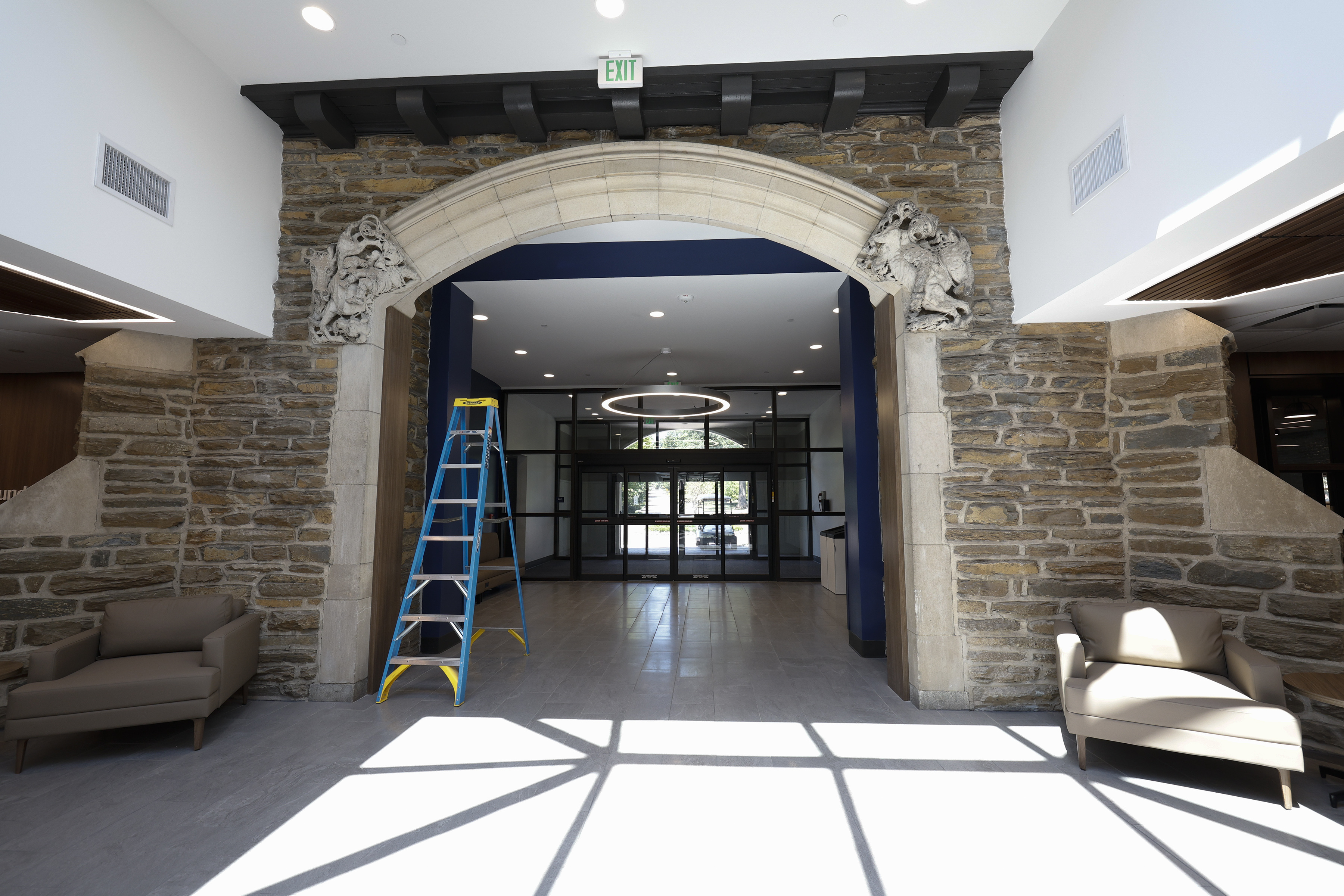
    Renovations at Cascia Hall uncovered some architectural flourishes, including these stone carved gargoyles. Steven M. Falk / For The Inquirer

    The Dixon Center will remain an athletic facility, but now the basketball court has a large V in the center and the smoothie bar will offer treats such as the Brunson, named after Villanova Wildcats basketball star-turned-New York Knicks standout Jalen Brunson, and the Father Peter Power, honoring the university president.

    Donohue couldn’t name the ingredients in his new signature drink.

    “I didn’t know it existed,” he said.

    The facility, which also got new cardio equipment and reupholstered weight benches, will be used for non-varsity sports recreation.
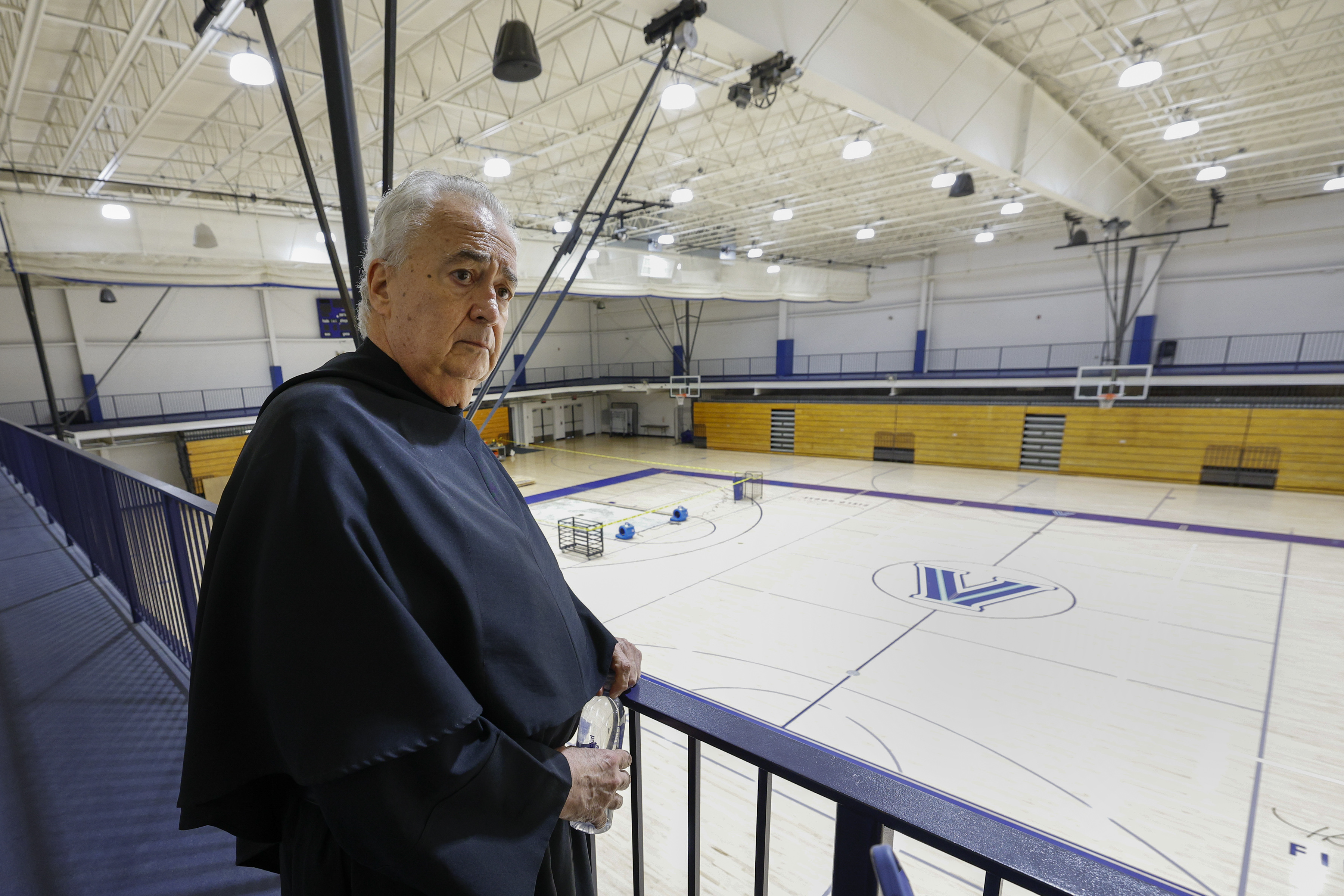
    Villanova President the Rev. Peter M. Donohue overlooks the basketball court at the Dixon Center. Steven M. Falk / For The Inquirer

    “Our intramural basketball activity goes into the wee hours because we’re limited in our number of courts, so we are delighted to have this space,” Hoffman said.

    The Iadarola Center, Cabrini’s former science building, includes a new nursing simulation facility that Cabrini had recently finished. But Villanova added upgrades, including a vivarium for psychology department research and more space for the brain science program. The former Cabrini library has been converted into student study space.

    ‘Many more dorm options’

    Seven residence halls will house students, including two that had been closed amid Cabrini’s enrollment decline. One of them had a malfunctioning boiler — not anymore.

    Sophomores were given the choice of living at Cabrini. Villanova ran tours of the campus for students last academic year. Those who chose Cabrini said they were attracted to the renovated dorms and larger room configurations that allow them to live with several roommates and share a bathroom. Options on main campus for sophomores are largely limited to doubles with a large bathroom shared by an entire floor or wing.
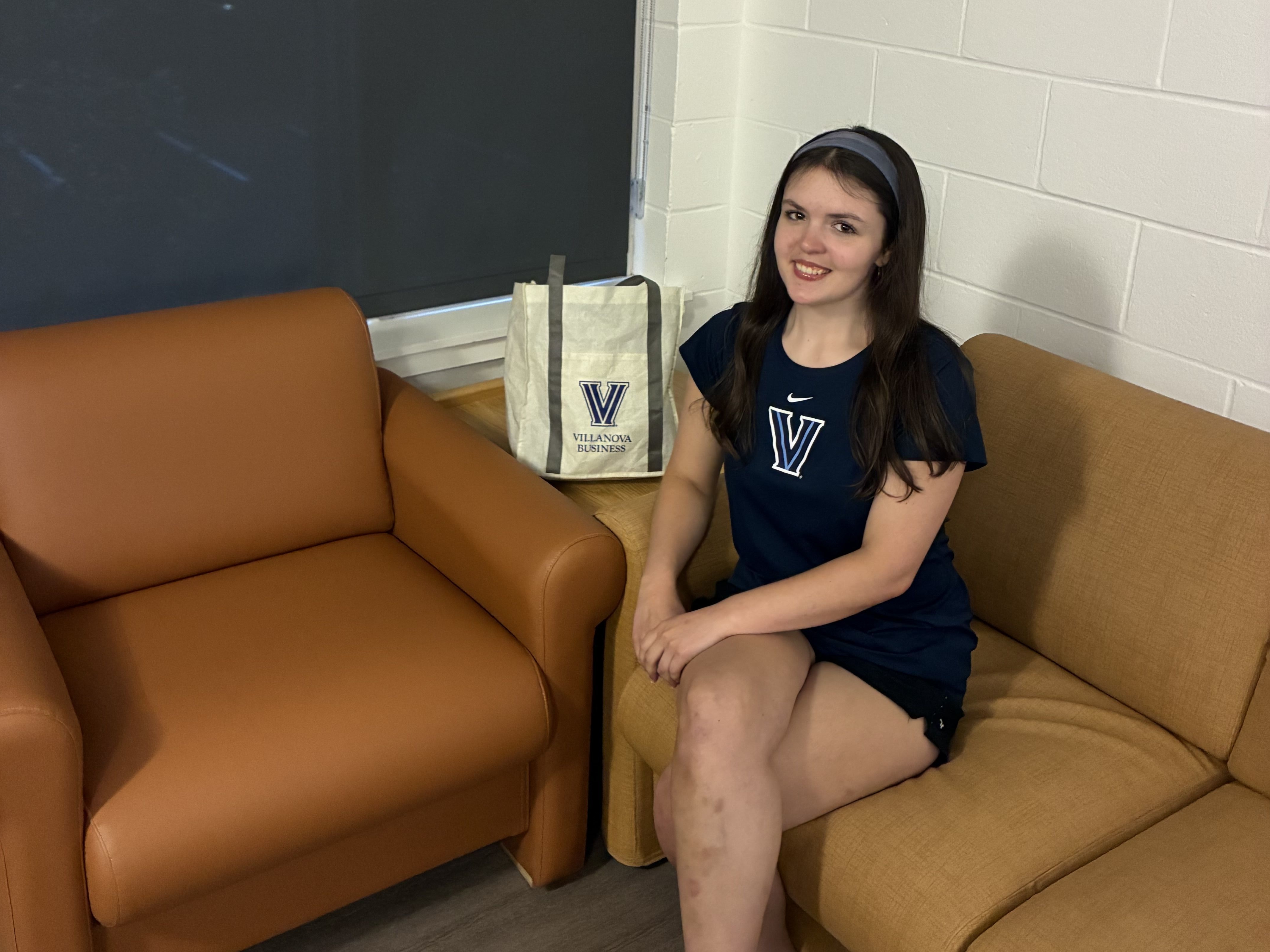
    Villanova University sophomore Molly Dunphy-Culp has moved into her new apartment on the Cabrini campus.Courtesy of Molly Dunphy-Culp

    “With Cabrini, there are so many more dorm options,” said Molly Dunphy-Culp, 19, a sophomore who was born in Boston and grew up in Abington.

    She will be sharing an apartment in Lecceto Hall with three classmates.

    She acknowledged that she will have to take the shuttle to main campus for classes, but said the short ride will be worth it. Dunphy-Culp also has a job on Cabrini as a recreation center supervisor — another plus for living there.

    About half the students on campus will be allowed to have cars. Sophomores do not have that option on main campus.

    “Two of my close friends are both going to have cars on campus,” said Ella Hayman, 19, a sophomore from just outside Boston. “This will give us a little more freedom we didn’t have last year. That was a big motivation.”
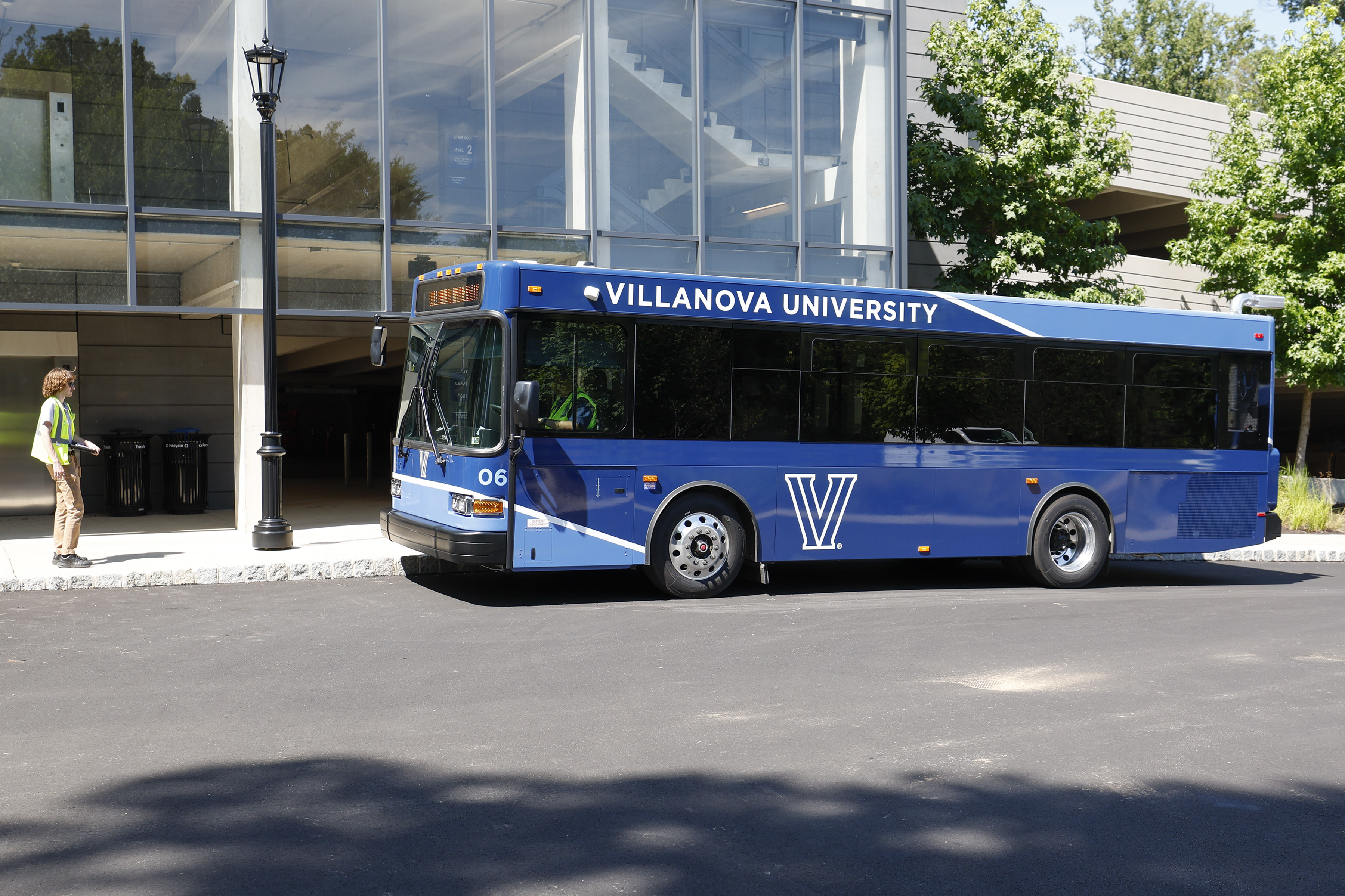
    Shuttle buses including this one will transport students between Villanova’s main campus and the Cabrini campus 1.9 miles away. Steven M. Falk / For The Inquirer

    Thirteen shuttle buses will transport students between the two campuses, which are 1.9 miles apart — a seven- to 12-minute ride, Hoffman said. A team of Villanova employees over the last couple of years visited five universities with multiple campuses, including Lehigh and George Washington, to learn how best to integrate them. They looked closely at models for a shuttle system that would keep students informed of where and when buses would be arriving and departing, Hoffman said.

    Among new dining options on the campus is the restaurant-style Table 1842, named for Villanova’s founding year, where students can order off a menu. It is located in the former Founder’s Hall, now Bellesini Hall, which also was heavily renovated, including the installation of a new entrance that leads directly into dining facilities so people do not have to climb as many steps.

    Bellesini has become the third-largest classroom building at Villanova. Some of the nearly 30 classrooms on the Cabrini campus had to be expanded to accommodate slightly larger class sizes, Hoffman said. Cabrini’s classes were 12 to 14, and Villanova starts at 16, Hoffman said.
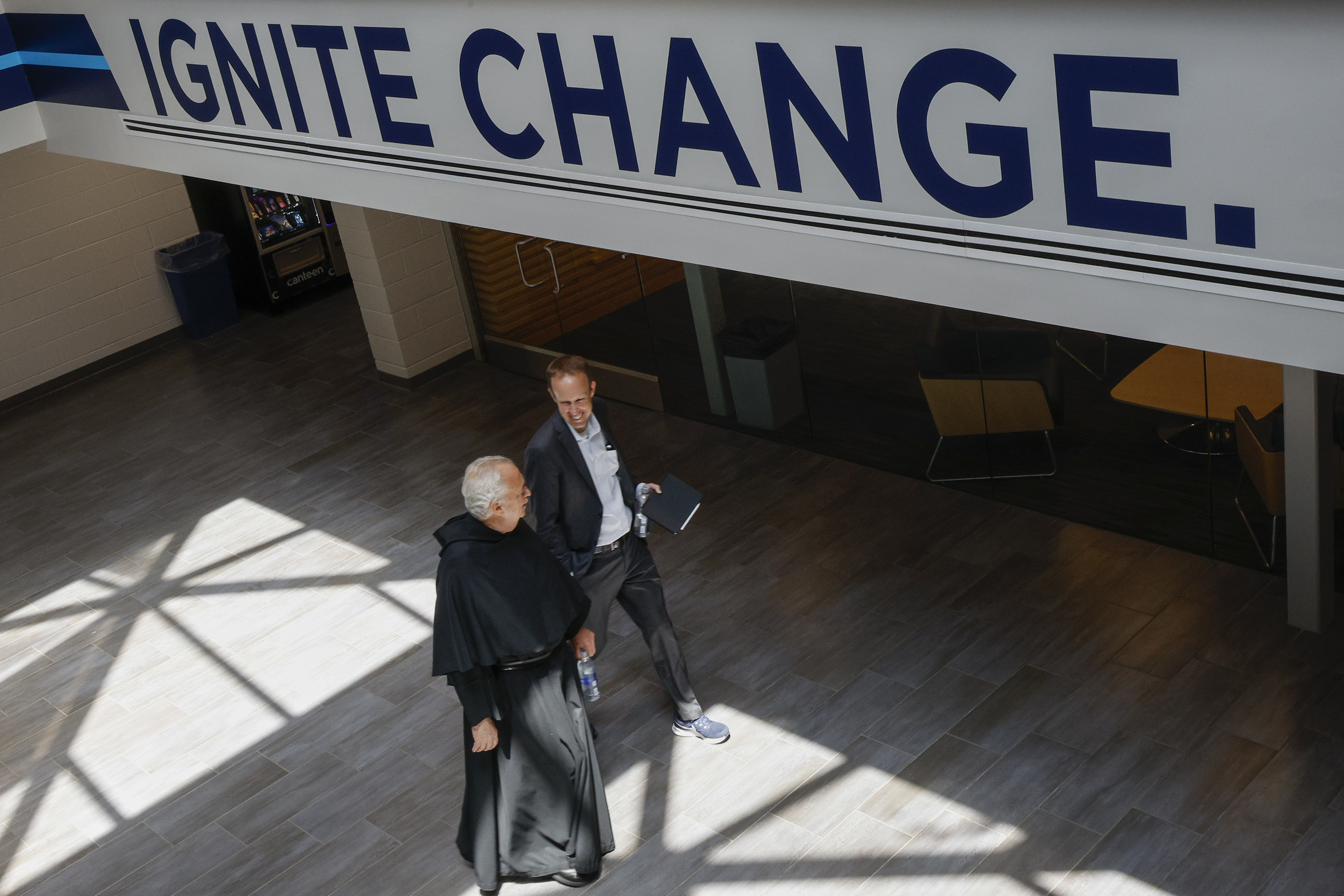
    Villanova University President the Rev. Peter M. Donohue left, and Timothy Hoffman, vice provost for finance and administration, walk through the Dixon Center. Steven M. Falk / For The Inquirer

    Some improvements are still to come, including renovations to the former Mansion, which will be costly, and a nature trail, Donohue said.

    Villanova named Francesca and Xavier Halls for Mother Cabrini and is continuing Cabrini’s Center for Immigration; Villanova converted it to the Mother Cabrini Institute on Immigration. Villanova also launched an elementary education major in honor of Cabrini’s former program.

    Preserving a legacy

    “They had a strong desire to make sure some of their legacy lasted, and we wanted to protect that,” Donohue said.
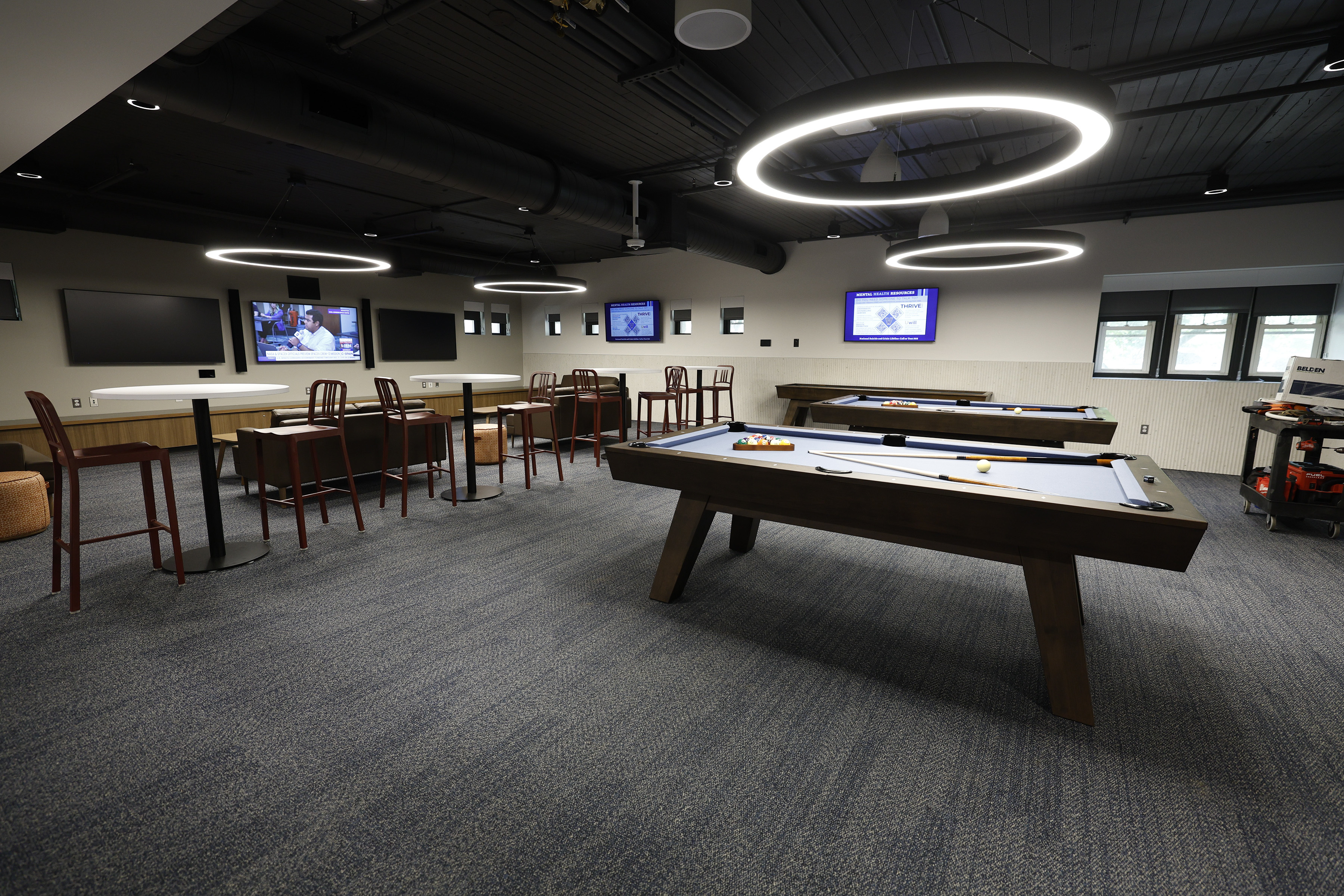
    The game room at Cascia HallSteven M. Falk / For The Inquirer

    Coincidentally, there is a stained glass window of St. Augustine — namesake of Villanova’s founding order — in Cabrini’s chapel and a stained glass window of Mother Cabrini in Villanova’s Corr Hall chapel.

    Filling-Brown, the former Cabrini administrator now at Villanova, said it seems meant to be.

    “It’s beyond my wildest dreams for the campus,” Filling-Brown said. “It’s the best outcome to see Catholic higher education continue on that campus.”
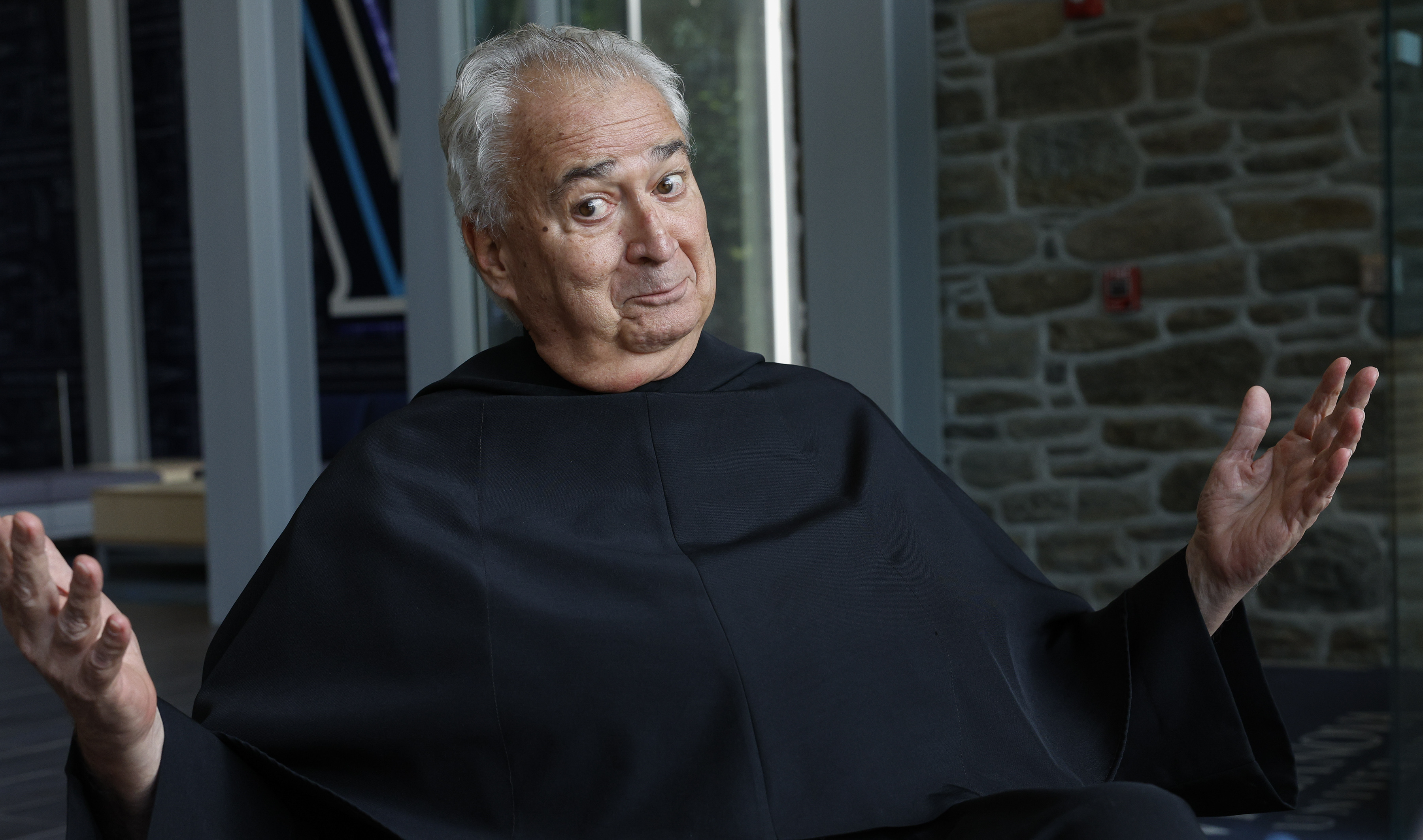
    Villanova President the Rev. Peter M. Donohue discusses all it took to remodel the Cabrini campus. Steven M. Falk / For The Inquirer
  • Booker Rowe, celebrated trailblazing Black violinist with the Philadelphia Orchestra, has died at 85

    Booker Rowe, celebrated trailblazing Black violinist with the Philadelphia Orchestra, has died at 85

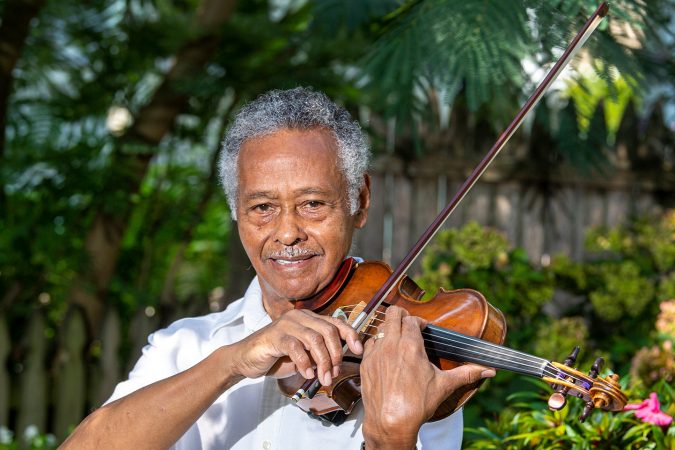
    Booker Rowe, 85, of Philadelphia, award-winning violinist, the first Black musician to play with the Philadelphia Orchestra and the Nashville Symphony String Quartet, the second permanent full-time Black player in the Philadelphia Orchestra, teacher, mentor, and role model, died Friday, July 31, of complications from pneumonia and sepsis at Jefferson Abington Hospital.

    A lifelong musician — he played piano at age 5 and violin at 11 — Mr. Rowe was invited by famed music director Eugene Ormandy in 1968 to become the first Black musician to perform with the Philadelphia Orchestra. He was a substitute violin during most of the 1968-69 season and returned for good in 1971 as the orchestra’s second Black permanent full-time member.

    Mr. Rowe stayed for 49 years.

    “My first day, I came in late from New York, and the orchestra was already rehearsing, and I sat myself down on the last stand to play,” Mr. Rowe told The Inquirer’s Peter Dobrin in 2020. “The sound was amazing. It was like stereo all around me. The stage was slanted down, and when the brass and winds would play I had to brace myself with my right leg from being blown off stage. It was just so beautiful.”

    For five decades, until his retirement in 2020, Mr. Rowe played with half a dozen elite conductors and traveled the world in the orchestra’s second violin section. He and his colleagues gave thousands of memorable performances at the Academy of Music, the Kimmel Center, and the Mann Center in Philadelphia, Carnegie Hall and the Lincoln Center in New York, and the Saratoga Performing Arts Center in Saratoga Springs, N.Y.

    They played at the 1993 World Series at Veterans Stadium, for Pope Francis in 2015, and at the Vail Music Festival in Colorado. They played in Europe, South America, Asia, and elsewhere around the world.

    This photo of Mr. Rowe (left) appeared in the Daily News in 1993Newspapers.com

    In 1973, the orchestra made a historic 10-day, five-concert cultural exchange tour in China, and Mr. Rowe told the Daily News afterward that he visited a commune and returned with Chinese instruments. In 2008, he mingled with former Secretary of State Alexander Haig and other international notables after a concert in Beijing.

    In 2013, he posed for pictures with the Chinese welcoming contingent at Shanghai Airport. “Booker was such a kind soul, and his passion, his artistry, and his humanity are woven into who we are,” Yannick Nézet-Séguin, the orchestra’s music and artistic director, said in a tribute.

    Ryan Fleur, the orchestra’s president and chief executive officer, said: “He was a warm and steadying presence in our orchestra.”

    Born in Kentucky, Mr. Rowe and his family moved to North Philadelphia when he was 2. His father was a singer, and his mother played piano, and they “pushed me in the direction of classical music,” he told the Daily News in 1981.

    He became concertmaster for the West Philadelphia High School orchestra, the All-City high school orchestra, and the old all-Eastern Conference college orchestra. He earned a bachelor’s degree in music at Temple University in 1963 and a master’s degree in music at Yale University in 1968.

    Before Philadelphia, he played solo in New York and with symphony orchestras in Nashville, New Haven, Conn., and Washington. Later, he played with the old Symphony Club of Philadelphia, the Lansdowne Symphony Orchestra, and other local groups.

    Mr. Rowe (left) stands with fellow musicians Andre Watts (center) and Renard Edwards.Courtesy of the family

    He also got freelance gigs with Sammy Davis Jr., Isaac Hayes, Smokey Robinson, the Supremes, Barbra Streisand, Aretha Franklin, and other stars. He played with chamber music ensembles around the country and gave dozens of free concerts for children, churches, and community and scholarship fundraisers.

    He championed racial and ethnic diversity, and was active with the Philadelphia Orchestra’s cultural diversity initiative. He sought and performed work by Black and other minority composers, and mentored dozens of colleagues and students.

    He encountered at least one racist incident that first year in Philadelphia and told the Daily News in 1981: “The time was right for an Afro-American in the Philadelphia Orchestra. It was just a matter of finding somebody who was ready.”

    Mr. Rowe and his family lived in Center City, East Mount Airy, and Germantown. Courtesy of the family

    A friend said on Facebook: “His legacy and historical contributions are unparalleled.”

    Mr. Rowe taught at Settlement Music School and gave private lessons. He earned music and service awards from City Council, the American Foundation for Negro Affairs, and other groups.

    In 2019, he was asked to advise young musicians in a video interview for the Philadelphia Orchestra website, philorch.ensembleartsphilly.org. “Practice, practice, practice,” he said. “But also enjoy, enjoy, enjoy. Do it with love in your heart.”

    Booker Taliaferro Washington Vance Rowe Jr. was born Dec. 10, 1940, in Lexington, Ky. In Philadelphia, he studied at the old Philadelphia Musical Academy and Settlement Music School, and his father worked at RCA Victor records in Camden. So their home was always filled with music.

    Mr. Rowe (rear center) stands with Philadelphia Orchestra colleagues and members of the Chinese welcoming contingent in 2013.

    Jan Regan / Philadelphia Orchestra

    He met soprano Patsy Baxter at a Philadelphia Orchestra concert, and they married in 1970 and had a son, Landis, and a daughter, Vivian. They lived in Center City, East Mount Airy, and Germantown, and visited his family often back in Kentucky and Tennessee.

    Mr. Rowe enjoyed puzzles, hiking and kayaking with his family, and tai chi. Friends noted his “kindness,” “million-dollar smile,” and “cheerful presence” in Facebook tributes.

    “He liked people,” his wife said. “He liked socializing. He liked to stick with one thing and concentrate on it.”

    His son said: “My father and I always had a good time together, and we never knew when playful sparring would break out.”

    Mr. Rowe and his wife, Patsy, married in 1970.
    Jose F. Moreno / Staff Photographer

    His daughter said: “He was very fiery and lovable. He was always who he was. He was one of a kind.”

    In addition to his wife and children, Mr. Rowe is survived by a daughter-in-law, Maria, two granddaughters, and other relatives.

    A celebration of his life is to be held later.

    Mr. Rowe (rear second from left) enjoyed time with his family.Courtesy of the family
  • Trump admin asks colleges to agree to reforms. Penn is a member of the group that helped draft them.

    Trump admin asks colleges to agree to reforms. Penn is a member of the group that helped draft them.

    The University of Pennsylvania, Rutgers University, Pennsylvania State University, and Princeton University belong to a national university group whose leaders helped the U.S. Department of Education develop a new list of reforms it would like all colleges to adopt by the end of the year.

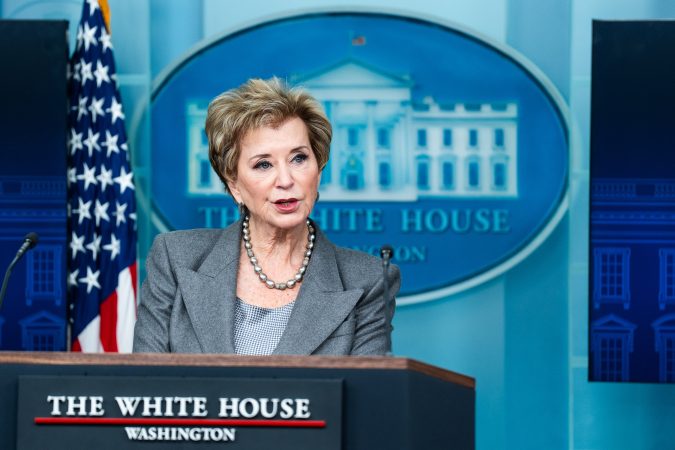
    U.S. Secretary of Education Linda McMahon on Monday sent a letter to colleges asking them to agree in public statements on their websites to wide-ranging reforms that include cracking down on protests, hiring more conservative faculty, combating grade inflation, taking steps to ensure there aren’t “covert” attempts to use race-conscious admissions practices, and containing tuition costs, among other changes.

    There is no plan to sanction schools that don’t sign on, but those that do could be in line to get more research funding, according to Bloomberg, the first to report on the letter, citing a White House official.

    The latest effort by President Donald Trump’s administration to reshape higher education at least initially appears to be getting a warmer response than the list of demands made in its controversial compact that was rejected by most universities, including the University of Pennsylvania, last year.

    The reforms were developed with the help of four university presidents from the Association of American Universities, including the group’s board chair and vice chair, according to Bloomberg.

    “We’d much rather be a partner than play the guessing game as we have been,” Douglas Girod, president of the University of Kansas and board chair, told Bloomberg.

    AAU president Barbara Snyder told Bloomberg she planned to call on her member colleges to support the plan.

    Penn is one of 71 research universities nationally and in Canada that belong to the group. The university did not respond to a request for comment on whether it planned to participate.

    Penn last October rejected the White House’s university compact, which would have given the school preferential consideration for federal funding in exchange for agreeing to operational demands. Many groups on campus had spoken out against the compact, and Penn president J. Larry Jameson in a letter to the federal government at that time said he outlined areas where Penn found “existing alignment” with the compact and where the school had “substantive concerns.”

    “For the good of the nation, university leadership must seize this occasion to drive essential reforms — a process some began by adopting positions of institutional neutrality and improving policies related to campus protests,” McMahon wrote in her letter Monday. She called on all colleges to “describe to the American public your commitments to rigorous teaching, pathbreaking research, and national service — commitments that make our universities a bedrock institution of the American republic.”

    She acknowledged that not every college’s response would be the same, but presented schools with a series of questions that they should address. Among them are:

    “How will your institution ensure admissions decisions are based on merit, achievement, and your university’s educational purpose?”

    “How will you guarantee that unruly and violent protesters do not harass students or disrupt classes, research, public lectures, and campus operations?”

    “How will your faculty hiring and evaluation practices support academic vitality and ensure that all relevant perspectives are taken seriously?”

    “What can your school do to contain costs, improve pricing transparency, and ensure that every academic program equips students to repay their loans?”

    “How will your school protect academic programs from foreign influence and safeguard the integrity of the research enterprise?”

    McMahon also warned against allowing academic disciplines to foster political and social goals.

    “When disciplines skew toward one side of the ideological spectrum, the truth-seeking function of the university suffers and public trust declines,” McMahon wrote.

    Penn State said its leadership team had received the letter and is reviewing it.

    Rutgers said it also had received the letter and “welcomes constructive dialogue with federal and state policymakers and remains focused on providing an excellent, accessible education that advances research to serve New Jersey and the nation.”

    Princeton did not immediately respond to a request for comment.

    “We look forward to learning more from the Department of Education about this effort and collaborating to advance shared goals,” Waded Cruzado, president of the Association of Public & Land Grant Universities, said in a statement. Penn State, Rutgers, Temple University, and the University of Delaware are part of that group.

    The other three AAU presidents involved in drafting the new reforms include Andrew Martin at Washington University in St. Louis, Michael M. Crow at Arizona State University, and Ron Daniels at Johns Hopkins University.

    Temple is not a part of AAU, but Temple president John Fry has worked closely with Crow, whose university sponsors the University Innovation Alliance that Temple joined last year. The alliance is a national organization of public universities aimed at finding innovations to improve learning and increase college attendance, retention, and graduation rates ― especially for low-income students ― then scaling those innovations across campuses. It was founded by 11 presidents including Crow.

    Fry at the time described Crow as a mentor and said that he had known him for more than 30 years. They started presidencies simultaneously in 2002, Fry at Franklin and Marshall College in Lancaster, and Crow at Arizona State.

    In a statement, Temple said it was “carefully reviewing” the letter from McMahon.

    “Upon initial review, much of what is outlined in the letter is consistent with core tenets of what we do as a university,” the school said. “Our approach will continue to be guided by our mission and our strategic plan.”

    Martin, of Washington University, told Bloomberg that he planned to respond to the McMahon letter.

    “My expectation is this letter will have some things in it not everybody will agree with, but that universities will consider it,” he told Bloomberg. “Certainly compared to the compact, I think this is a step in the right direction.”

  • 50 years after Harold Rosenthal’s death, his legacy lives on

    50 years after Harold Rosenthal’s death, his legacy lives on

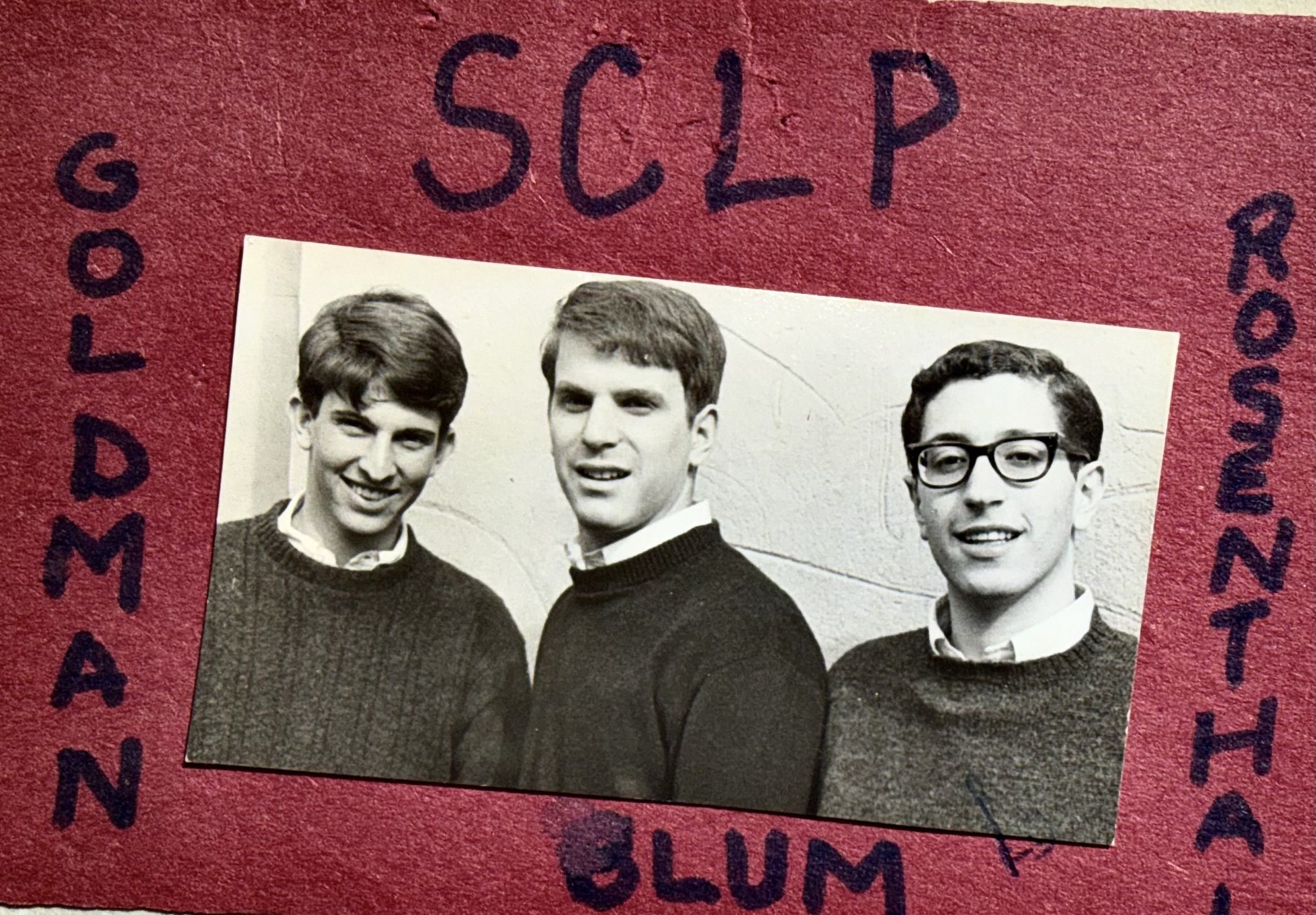
    Fifty years ago this Aug. 11, my brother Harold Rosenthal was late for a plane out of Istanbul bound for Jerusalem. He was always late — school, appointments, parties, or late finishing dinner at Horn & Hardart’s, the only restaurant working-class families patronized in Philly then.

    While my younger brother Norman and I agonized on the sidewalk, Harold would take bites of food in between whatever book he was reading, a passion cultivated when he was a student at Central High in the early 1960s.

    On this August day his tardiness put him near the back of the line at the gate for El Al Airlines. At the time, Harold was working as a senior aide to Republican New York Sen. Jacob K. Javits. He was heading to Israel as part of an assignment for the Senate Foreign Relations Committee, which had sent him on a tour of American embassies in the Mediterranean, ending with a seminar at Jerusalem’s Van Leer Institute.

    Four gunmen from the Popular Front for the Liberation of Palestine stormed the gate in an attempt to hijack the plane. When guards blocked them, they opened fire and then threw a grenade. Four people were killed, including Harold. He was only 29.

    Fifty years on, I’m certain Harold’s improbable rise was built in Philadelphia.

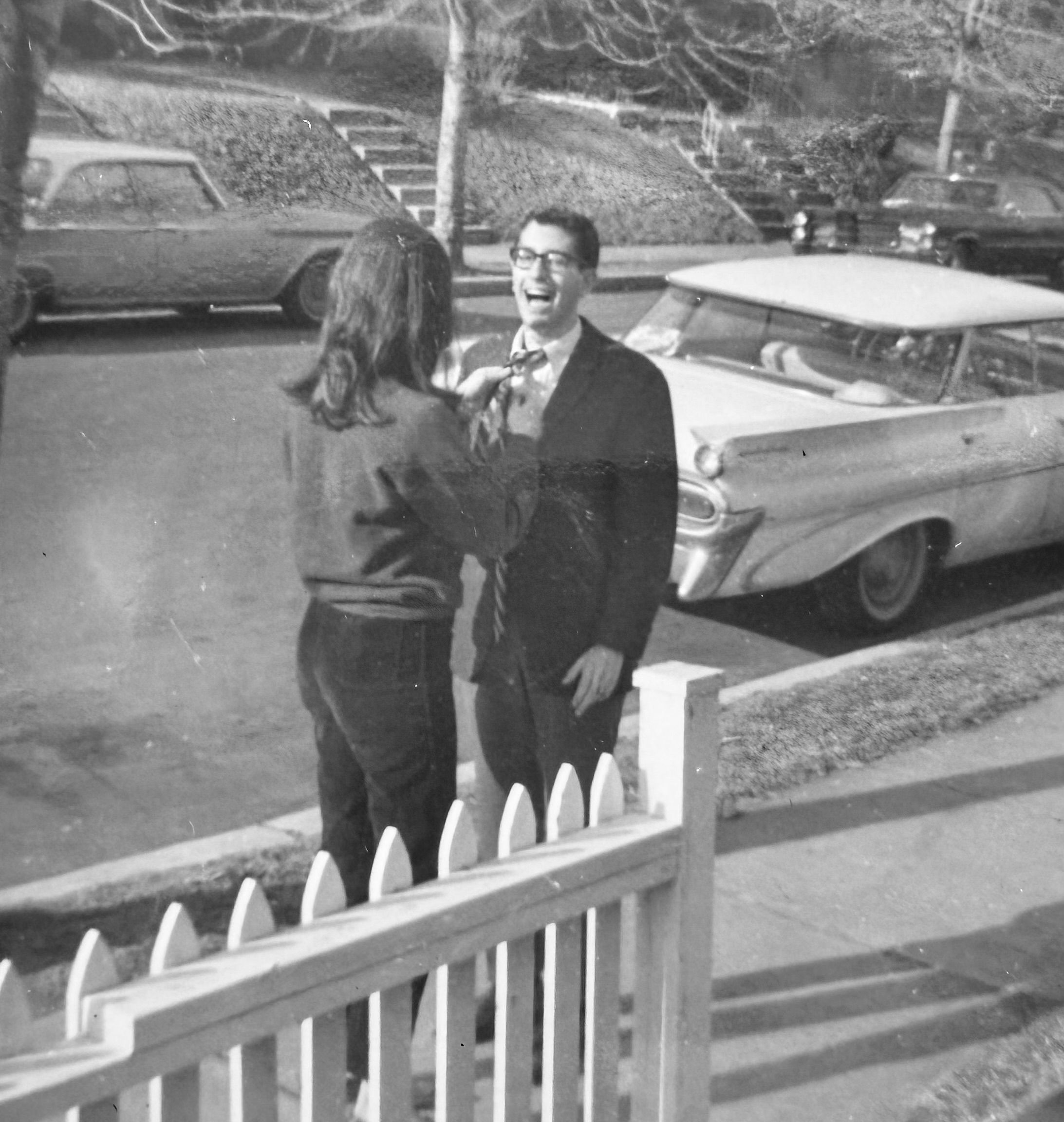
    Harold Rosenthal, on Tulpehocken Street in West Oak Lane, in 1966.Courtesy of Mark Rosenthal
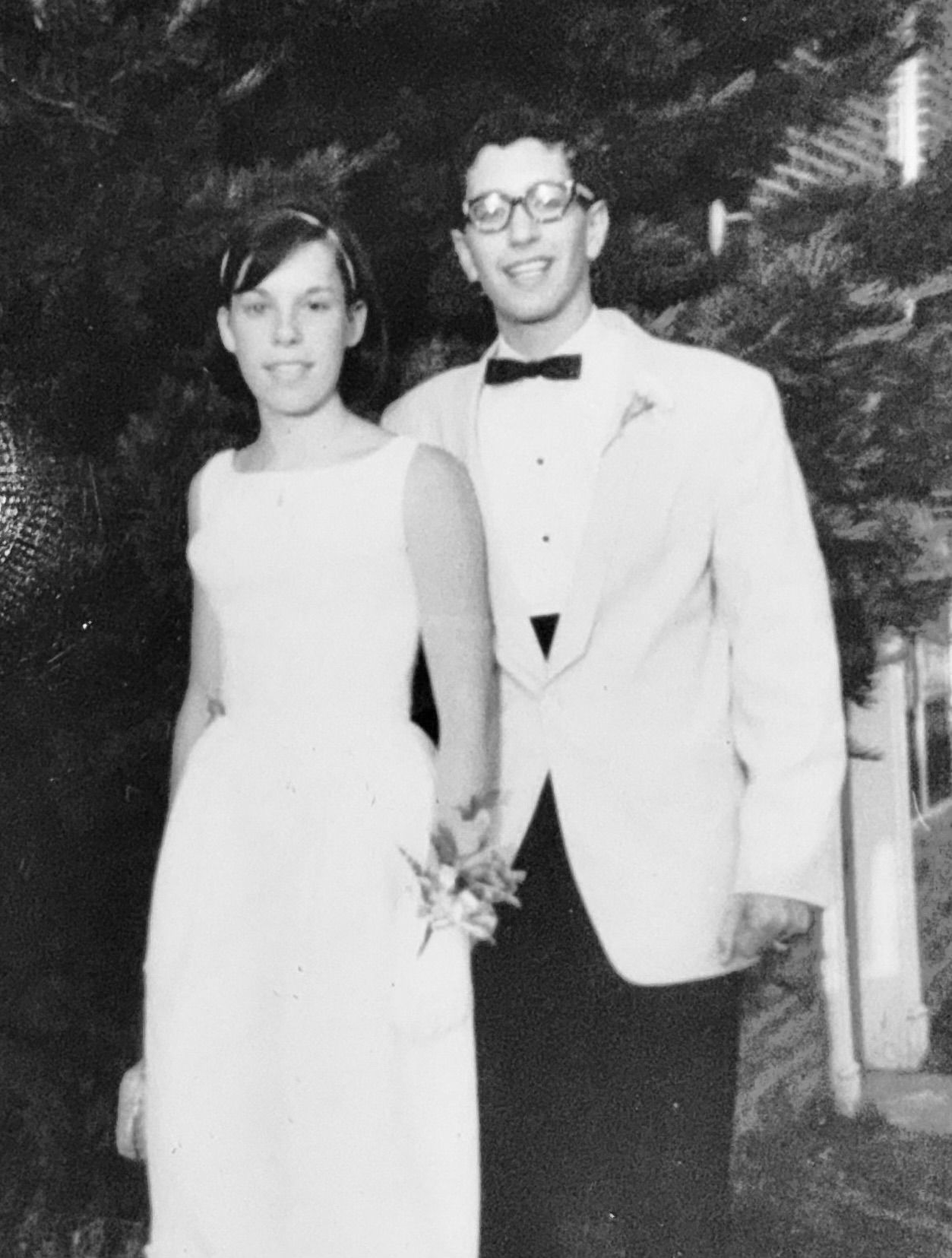
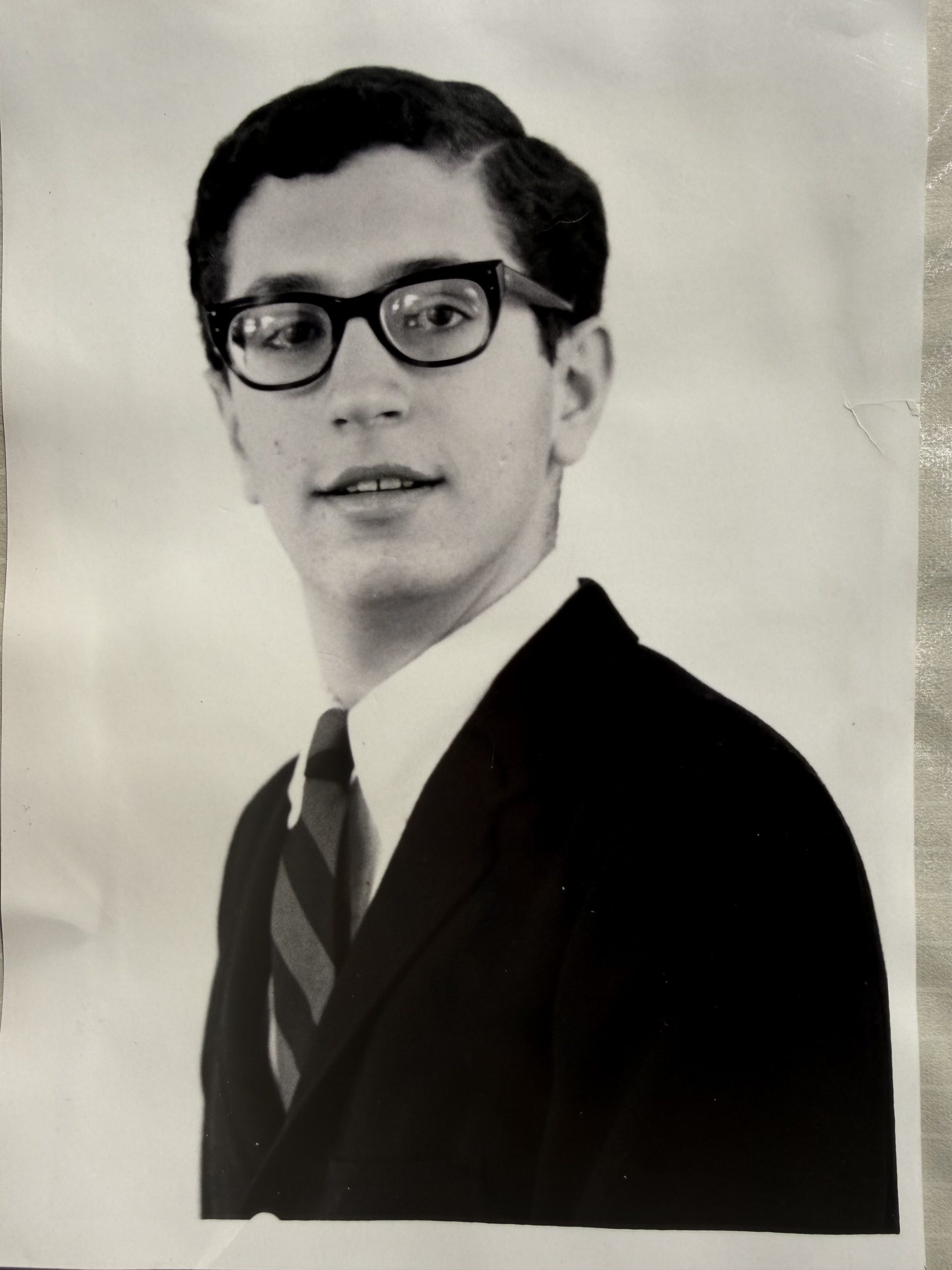
    Harold Rosenthal ready for his senior prom at Central High School, May 1965.Courtesy of Mark Rosenthal

    We grew up in a rowhouse on Tulpehocken Street in West Oak Lane, the kind of block where everyone knew everyone and you learned early which streets were yours to walk down and which weren’t.

    Our parents worked hard but nearly lost that house to foreclosure twice. No kids had cars back then, which was fine. You walked to Pennypacker Elementary and then, to get to Wagner Junior High, Central High, and Temple University, you learned the buses, trolleys, and subways.

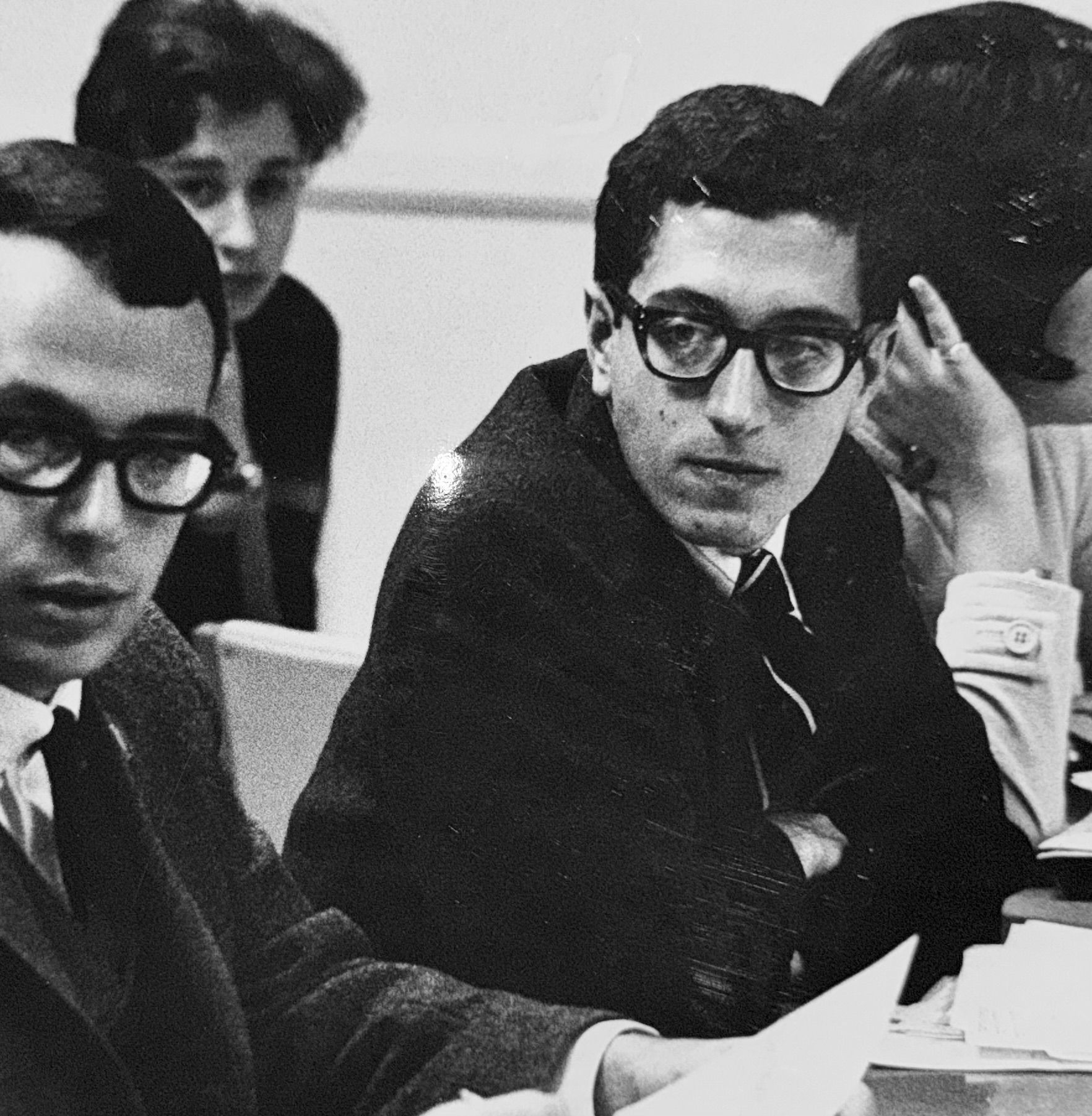
    Harold Rosenthal (right) running for student council at Temple University in 1966.Courtesy of Mark Rosenthal

    Out of this modest life, Harold built a career in a world that seemed unknowable to the rest of us — all on his own. We didn’t have a word yet for “nepo baby” because no one we knew had money or connections. But Harold was audacious about wanting more. That audacity carried him to a scholarship in France, then Cambridge University in England, and finally Harvard.

    I was awed by his fearlessness. At Cambridge, seated at the back of a church for an Advent Carol service, he watched choristers slip through a side door and, deciding his seat wasn’t good enough, followed them. His friends — the ones who’d never dare follow — watched an hour later as he processed down the aisle in white robes, candle flame dancing, past Prince Charles, biting back a laugh.

    That was Harold in full: certain that any door marked not for you was the one worth opening.

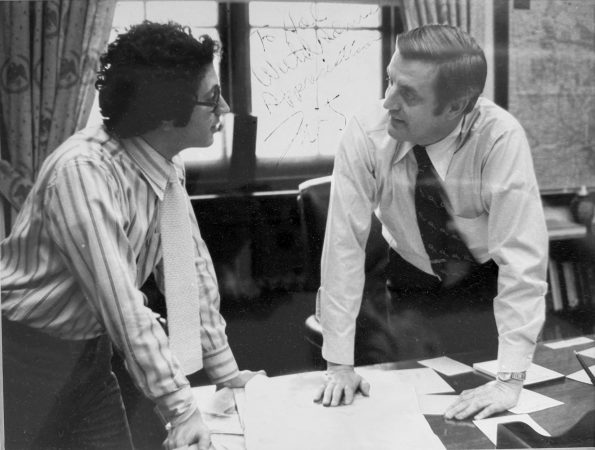
    After Harvard, his climb was stunning. Legislative assistant to New York Rep. Hugh Carey, then for Sen. Walter Mondale of Minnesota, a stint at the Rockefeller Brothers Fund, and finally a senior adviser to Javits.

    Harold Rosenthal at a Harvard seminar in November 1972.Courtesy of Mark Rosenthal
    Harold Rosenthal’s official portrait for the Senate Foreign Relations Committee, 1976.Courtesy of Mark Rosenthal

    Sen. Mondale had already told him that if Jimmy Carter won the White House in November, there’d be a staff position for Harold in the West Wing or as part of an undersecretary’s desk at the State Department. A public school kid from a Philly rowhouse, one election away from the top of the government.

    That August I took a position as a teaching assistant at the University of the Pacific in California, more hiding from adulthood than pursuing a doctorate. Our younger brother, Norman, was already on his way to an influential career as an endocrinologist.

    Harold Rosenthal (center) during a State Department visit to South Africa, 1974.Courtesy of Mark Rosenthal

    If my future was uncertain, Harold was rewarding my overworked parents with the gift of an insider’s view of his rise. He always shared his itinerary, printed on Senate stationery, with my mother, who tracked this Mediterranean tour almost hourly. He was only passing through Istanbul.

    I was at a going-away dinner near Penn when I called home and heard the fear in my mother’s voice — something about an attack on an El Al flight. There was no cable news then, no way to know. I quickly said my goodbyes and drove to Roxborough.

    I opened the door to find my mother collapsed on the floor and my father — who’d flown with the Flying Tigers in China during World War II, and who’d lost his own cousin on D-Day — slamming his head against the wall. A stranger from the State Department had called and quickly said, “We regret to inform you that your son is dead. Someone will contact you soon.” That’s all.

    It took time to bring Harold’s body home. Turkish law required an autopsy first, and a friend of Harold’s quietly warned me it would leave him unrecognizable. Waiting for Harold, my father consoled himself with the fact he’d be able to see his son one last time. In the back of a limo to Roosevelt Cemetery, Norman and I had to tell our father the casket would be closed — one of the hardest sentences I’ve ever spoken.

    Sens. Mondale and Javits both eulogized Harold at the funeral on Broad Street. Weeks later, after a memorial at the Capitol, I sat with my parents outside, silently, in the brutal heat and viscous humidity waiting for a valet to find their car, which had been misplaced. Watching people coming and going up and down the marble steps, I realized this world wouldn’t stop for Harold. It doesn’t pause for anyone. It was already looking for his replacement.

    Years later, because of a new thing called the “internet,” we were handed a second wound. Just a year after the attack, a Christian-supremacist cult leader had fabricated a grotesque “Rosenthal Interview,” inventing a confession in which Harold revealed how Jews secretly run the government. So witless — it was dated a year after Harold died. It was too absurd to survive anywhere but in fringe pamphlets — that is, until the internet gave it a permanence no pamphlet ever could.

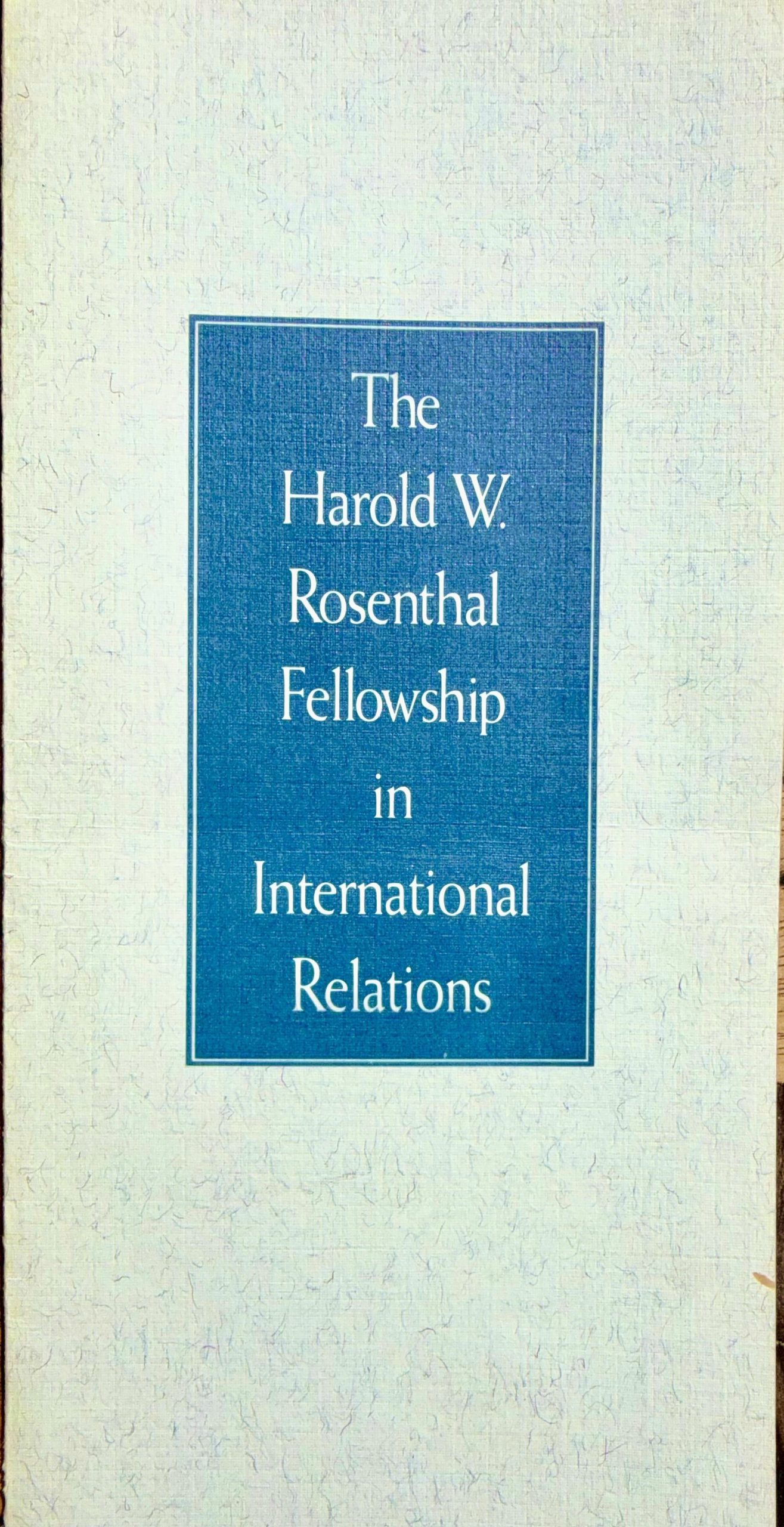
    What outlasted the hoax is the Harold Wallace Rosenthal Fellowship in International Relations, founded by his friends in 1977. Fifty years and over 300 fellows later, it’s still helping ordinary students from ordinary families into congressional offices and embassies — through the same door Harold forced open with nothing but nerve.

    The fellowship started by Harold Rosenthal’s friends on Capitol Hill is still going strong, placing graduate students into offices from the Senate to the Pentagon.Courtesy of Mark Rosenthal

    The night Harold’s shiva ended, sitting in my parents’ now quiet apartment, I demanded of myself to learn something from Harold’s death. Two things happened. First, I admitted the only thing I actually cared about was movies, not academics, and after my doctorate was done, I packed my car, which had been Harold’s car, and drove to Los Angeles to figure out a way into the movie business.

    Second, I swore never to hear news the same way again. We measure disasters in body counts — just two, just eight — a statistic filed away and forgotten by people with their own lives to return to. I promised myself I’d stop, every time, and imagine the families behind each number.

    In floods in Texas. In Gaza. In Kyiv. The dead are aggregated. Grief is always singular. Every one of those numbers is somebody’s brother, somebody’s family.

    Mine was Harold.

    Mark David Rosenthal is a writer and producer of film and television. He is a member of the Motion Picture Academy of Arts and Sciences and the Writers Guild of America, West. He was nominated for an Emmy for the 2016 miniseries, “Roots,” and his WGA credits include “Mona Lisa Smile,” Tim Burton’s “Planet of the Apes,” and “The Jewel of the Nile,” among many others.

  • Quality Community Health Care’s financial troubles have deepened this summer

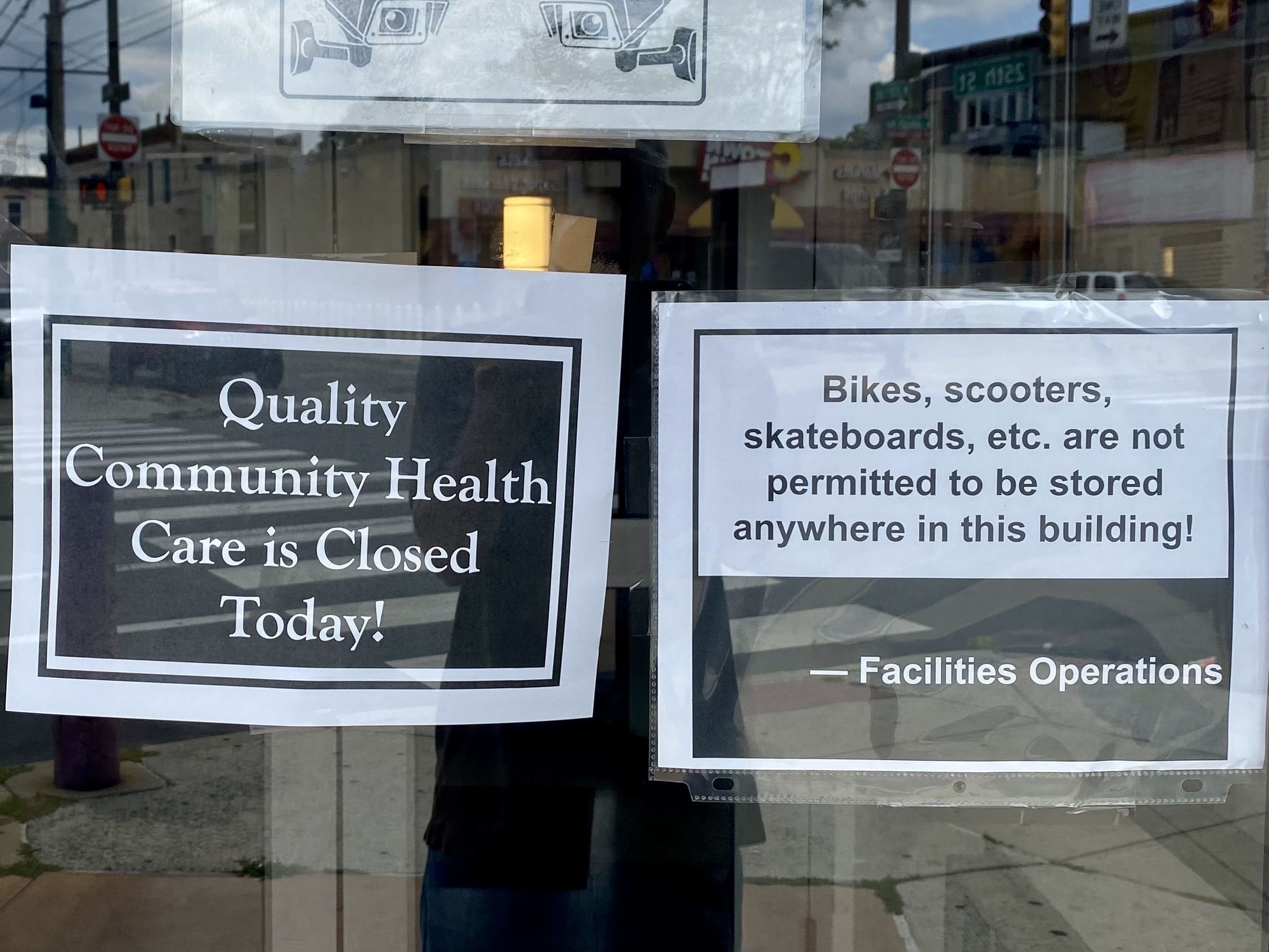
    When Pele Lewis arrived at Quality Community Health Care’s clinic in North Philadelphia Wednesday for his 1:30 p.m. appointment, he found the doors locked and a sign saying the clinic was “closed today.”

    Lewis was puzzled. “They called me this morning” with a reminder to come in, he said, as he stared at the door.

    The clinic, known as QCHC, was closed Thursday and Friday, as well, according to its phone message.

    “For many of our patients, QCHC is far more than a medical office,” its CEO, Helen Wilkinson, said in an email. “Members of our community are treated with dignity and respect regardless of their ability to pay.”

    She did not answer specific questions.

    The clinic at 2501 W. Lehigh Ave. began operating in 1981 under a federal program designed to provide medical and dental care in neighborhoods with few other options.

    Its troubles became public in the spring.

    After years of warnings from federal regulators that the clinic was delinquent on its audits, officials took the rare step in March of suspending it from the federally qualified health center program. At that time, audits for the years 2021 to 2024 were overdue. Now, the same is true for 2025. Typically such audits are due nine months after the fiscal year ends.

    Quality Community Health Care Inc., at 2501 W. Lehigh Ave. in North Philadelphia, was closed Wednesday. Management did not respond to emailed questions about the clinic’s status.Harold Brubaker / Staff

    A new audit

    In a small sign of progress, Quality Community Health Care last week posted an audit for the fiscal year that ended July 31, 2021, on a federal audit clearinghouse. Federal regulators had given a May 2 deadline to complete that audit or risk termination.

    The fiscal 2021 audit pointed to significant problems.

    “None of the data in it can be verified by the auditor,” said Steven Balsam, a professor of accounting at Temple University’s Fox School of Business.

    The auditor put it this way in the filing: “Because of inadequacies in QCHC’s accounting records, we were not able to obtain sufficient appropriate audit evidence for the amounts” stated in numerous categories of the financial statements.

    “I don’t know if just filing reports, if they look like this, is going to get them their funding back,” said Balsam, who reviewed the audit at The Inquirer’s request.

    The federal Health Resources and Services Administration, which regulates federally qualified health centers, has not responded to questions about QCHC since the suspension.

    Missed paychecks

    Some employees were not paid on July 10 and July 24, according to an email from the organization’s chief financial officer to staff Monday. This followed the organization not receiving the main federal funding for health centers, known as Section 330 grants, CFO Denise Ingram wrote.

    “QCHC is experiencing significant cash flow constraints following the suspension of 330 grant funding associated with the unresolved FY2021 audit submissions requirements,” Ingram wrote in the email obtained by The Inquirer.

    “QCHC remains committed to paying employees for all wages earned. Leadership continues to pursue funding, financing, and other lawful alternatives to address outstanding payroll obligations and restore normal operation,” the email said.

    Ingram did not respond to an emailed request for comment.

  • Barbara Gillette Price, prolific painter, fine arts teacher, and former president of Moore College of Art and Design, has died at 87

    Barbara Gillette Price, prolific painter, fine arts teacher, and former president of Moore College of Art and Design, has died at 87

    Barbara Gillette Price, 87, formerly of Philadelphia, celebrated painter and designer, former president of Moore College of Art and Design, former dean of Cranbrook Academy of Art in Michigan, former vice president for academic affairs at the Maryland Institute College of Art in Baltimore, fine arts teacher, mentor, and role model, died Friday, April 24, of age-associated decline at a hospital in Granada, Spain.

    A lifelong artist and longtime educator, Ms. Gillette Price liked to skip her high school classes in the 1950s and wander around the galleries at the Philadelphia Museum of Art. In sixth grade, she told The Inquirer in 1994, her artistic talent drew attention from the teacher when her drawing of a female form was all too accurate.

    She took Saturday classes at Temple University’s Tyler School of Art and the Fleisher Art Memorial when she was young, and earned a scholarship to the old Philadelphia Museum School of Art. She married artist Melville Price in 1957, moved to Tuscaloosa, Ala., in 1958, and earned bachelor’s and master’s degrees in fine arts at the University of Alabama.

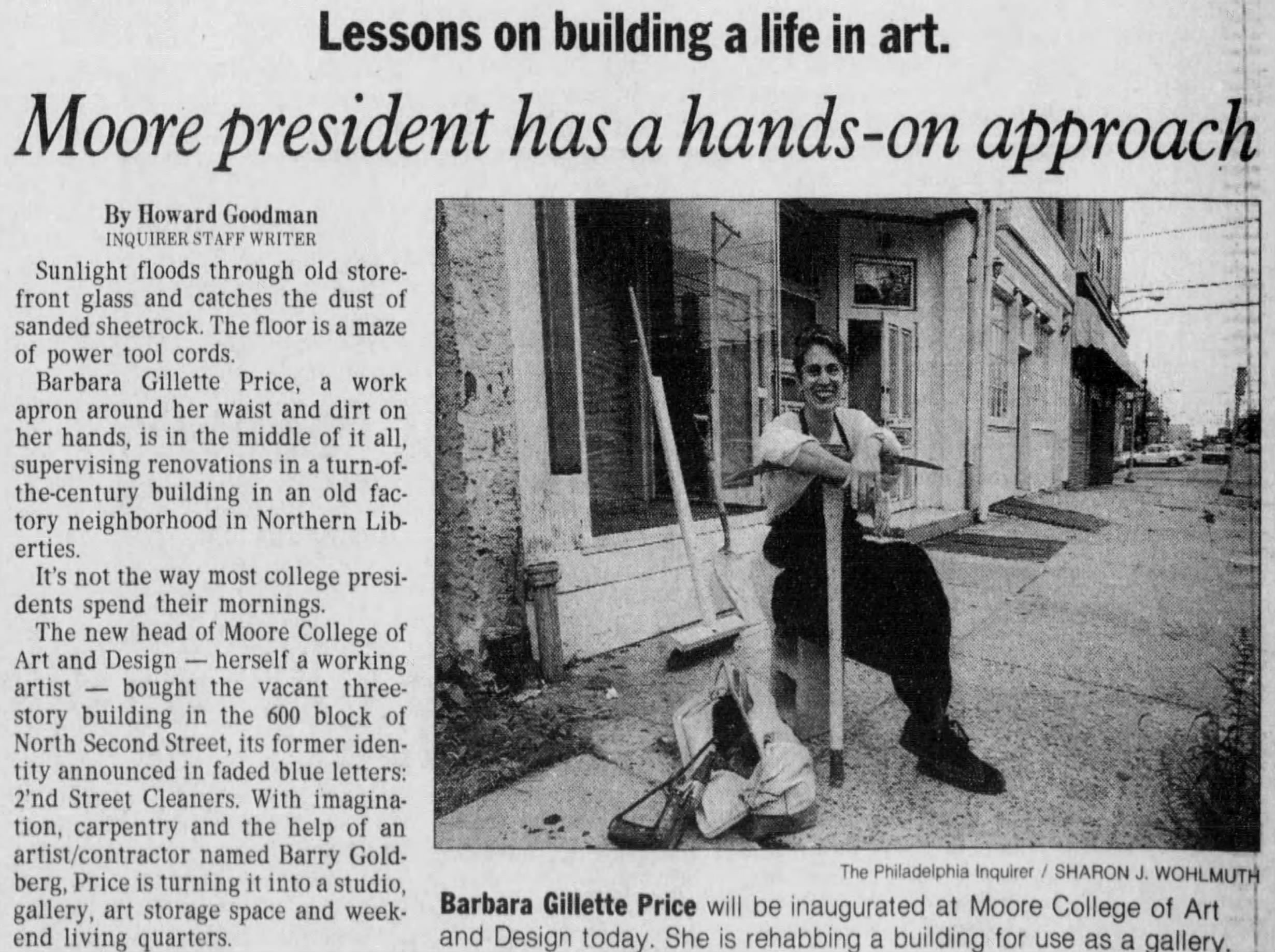
    She joined Cranbrook Academy of Art in 1978, the Maryland Institute College of Art in 1982, and Moore in 1994. At each stop, she renovated nearby old buildings into studios and galleries, expanded curriculum, and invigorated students with international and innovative programs.

    At Moore, she increased enrollment, established a career center, and personally refurbished her three-story studio on North Second Street into a gallery where students exhibited their work and handled logistics and publicity. She also forged working relationships with the Philadelphia School District and other art institutions, supervised an advertising campaign for female artists, and served as a role model for working artists in academia.

    “That’s why I think my presence at Moore is a good thing,” she told The Inquirer in 1994.

    In 1998, Rochelle Levy, then chair of Moore’s board of trustees, said: “Barbara has really been our ambassador out there. She has set an incredible role model for the students as a woman artist.”

    Ms. Gillette Price left Moore in 1998, moved to Spain in 2000, taught art to primary school students, and continued to create and show her work. “Her commitment to arts education helped shape generations of creative thinkers,” former colleagues at Moore said in a tribute. “Her legacy lives on through the institutions she helped strengthen, the students she inspired, and the vibrant body of artistic work she leaves behind.”

    Ms. Gillette Price was featured in The Inquirer when she joined Moore in 1994.Newspapers.com

    As an artist, Ms. Gillette Price was a colorist and inspired by what she called her “labyrinth of imagination.” She expressed herself often in themes and collages, and was adept at abstract and figurative works on canvas, paper, wood, silk, and other textiles.

    One critic said her work “is of an inherent elegance that emerges from excellent craftsmanship and an intelligent narrative.”

    She showed in dozens of solo and group exhibitions in Spain, Philadelphia, Maryland, Michigan, Washington, and elsewhere, and liked to work in the gallery as well as her studio. She painted about nature, light, woman’s perspectives, isolation and fear during the COVID-19 pandemic, and other topics.

    “I seek to make the ordinary extraordinary,” she said on her website, barbaragilletteprice.com. “I am inspired by images I accumulate as I travel and view the world about me. This takes the form of remembered landscapes, figurative compositions, and subtle political statements.”

    She was active in the Civil Rights Movement in Alabama in the 1960s, worked with the Woman’s Caucus for Art in Washington in the 1970s, and taught ceramics, painting, and drawing at the old Corcoran School of Art and Design in Washington and elsewhere. She belonged to the College Art Association and was on boards at the National Association of Schools of Art and Design, the Philadelphia Art Commission, and other organizations.

    She earned grants for her painting and wrote essays and white papers about art. In one paper, she said: “The arts are the humanizing element in the education of the citizens of the 21st century.”

    Barbara Amelia Gillette was born June 26, 1938, in Philadelphia. She and her family spent many summers in Atlantic City, and she graduated from Philadelphia High School for Girls.

    She took piano lessons, attended Saturday concerts at the Philadelphia Orchestra for years, and hung out with high school boyfriend Edward Cutler and others at jazz clubs and the Gilded Cage coffee shop.

    Melville Price died in 1970, and she reconnected with Edward Cutler. They married, had a daughter, Michelle, and lived in Washington. They divorced later, and he died earlier.

    “I consider my mother’s greatest achievement to be the way she showed up as a parent,” her daughter said. “Her artistic legacy can be found in her paintings, drawings, textiles, and exhibitions. Her personal legacy lives on in the people she inspired, mentored, encouraged, and welcomed into her life.”

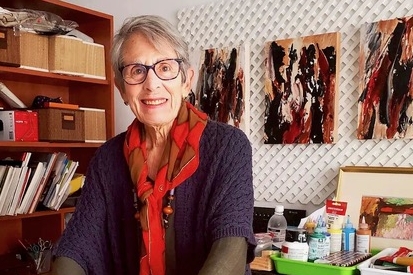
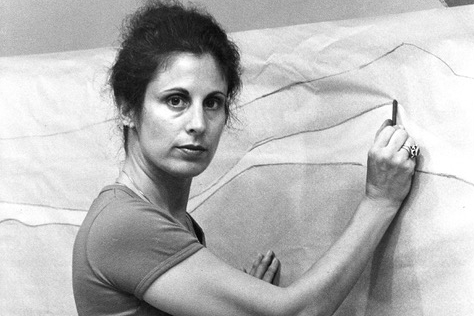
    Ms. Gillette Price created in the galleries as well as her studio.Barbara Gillette Price

    In addition to her daughter, Ms. Gillette Price is survived by a son-in-law, Eric Maroldo, and other relatives. A sister died earlier.

    Services were held earlier.

    Donations in her name may be made to Alhama Street Animal Protection in Granada, Spain.

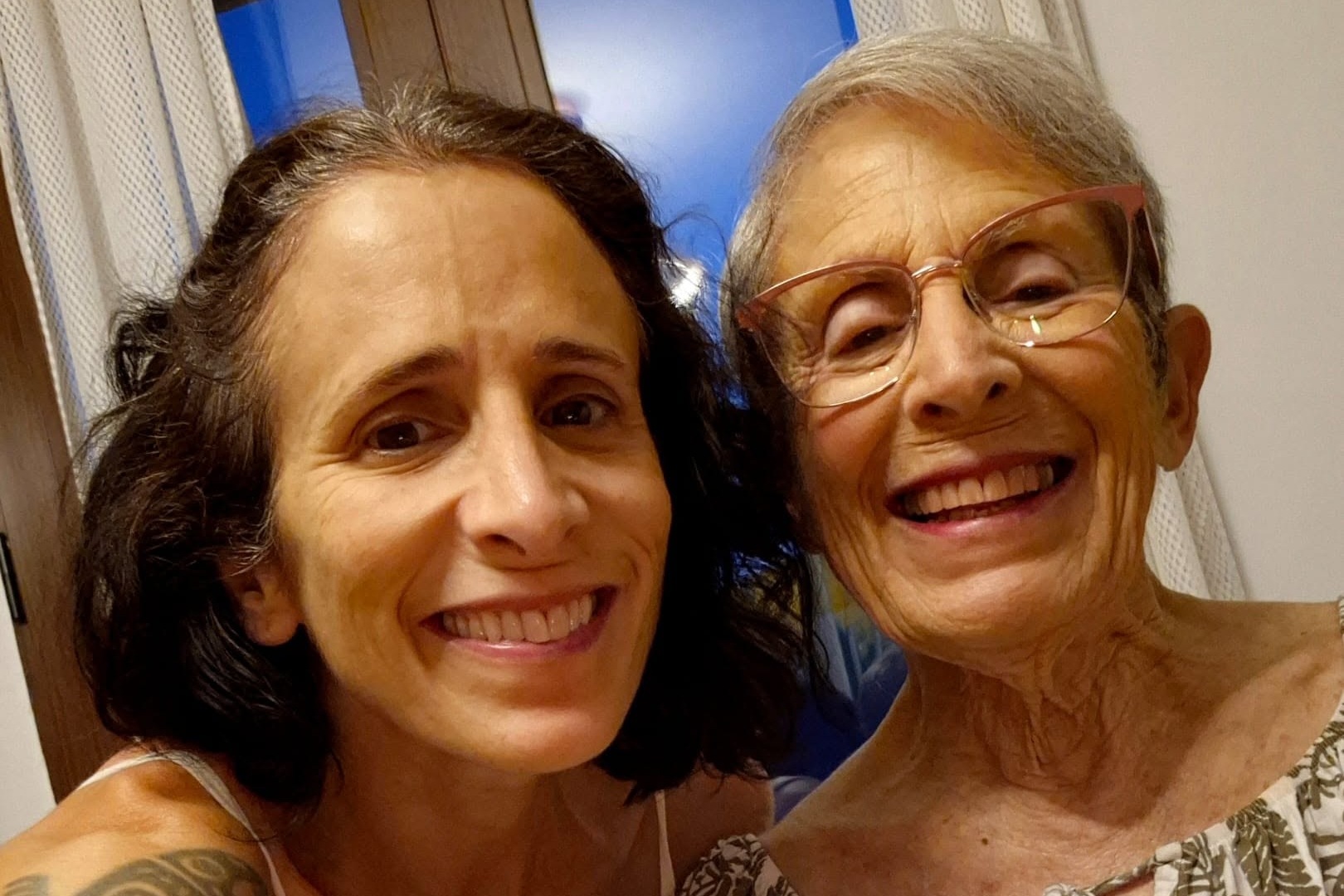
    Ms. Gillette Price (right) and her daughter, Michelle, were close. Courtesy of the family
  • A suspect was arrested in the fatal hit-and-run of a Temple University student on Kelly Drive

    A suspect was arrested in the fatal hit-and-run of a Temple University student on Kelly Drive

    A 48-year-old man suspected of being the hit-and-run driver who killed 20-year-old Temple University student Bryce Wolfe on Kelly Drive in June was arrested Thursday, the U.S. Marshals Service said.

    Derek Reid was taken into custody on the 7200 block of Briar Road in the city’s West Oak Lane section, authorities confirmed.

    The U.S. Marshals Service said Reid also was being sought by the Philadelphia Police Department’s Special Victims Unit on charges of rape and related offenses involving an underage boy in 2021.

    Wolfe, who had just completed his sophomore year at Temple University, was riding his red 2004 Triumph motorcycle on Kelly Drive the night of June 24 when he was struck by a white SUV making an illegal turn onto Reservoir Drive, near the Strawberry Mansion Bridge, Philadelphia police said.

    His body became lodged under the SUV and he was dragged for more than a mile, police said. He died at the hospital the next day.

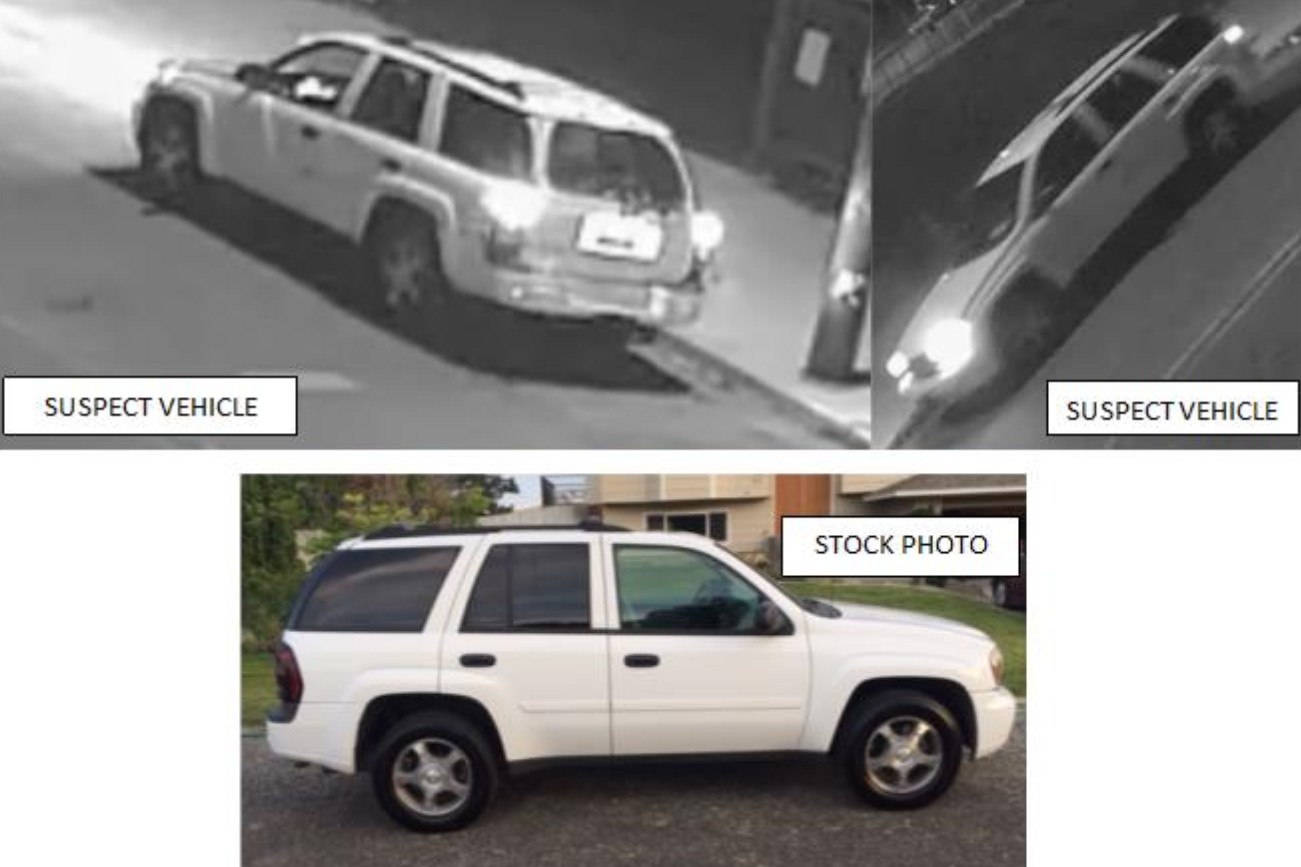
    Police later released surveillance images of the SUV suspected in Wolfe’s death. Investigators believe the SUV was a 2001-08 Chevrolet Trailblazer, possibly with damage on the driver’s side, with possible red paint transfer, a broken rear windshield, and a discolored passenger-side front wheel.

    The suspected vehicle was located earlier this month, police said.

    Police on July 7, 2026, released images of the suspected SUV, believed to be a white 2001-08 Chevrolet Trailblazer, that fatally struck 20-year-old Bryce Wolfe, a Temple University student, on June 24.Philadelphia Police Department

    Lori Wolfe, Bryce’s mother, said the Philadelphia police called earlier on Thursday to let her family know that the suspected driver was in custody.

    “We were happy they made an arrest,” she said. “I felt there would be an arrest because the accident investigation department of Philadelphia worked very hard to bring justice to Bryce.”

    She added: “Although none of this gives our son back to us, the person responsible should be charged with murder. He drug our son for a mile and left him to die in the street.”

    Philadelphia District Attorney Larry Krasner on Friday announced that Reid was charged with homicide by vehicle, accident involving death, involuntary murder, and recklessly endangering another person.

    Krasner confirmed that Reid was facing charges for a violent sexual assault against a minor, including rape, statutory sexual assault involving a victim between 8 and 11 years old, and related offenses.

    After Reid was apprehended by the U.S. Marshals Service, he allegedly admitted to being the driver of the SUV that fatally struck Bryce Wolfe, Krasner said.

    Reid was being held on $750,000 bail for the fatal hit-and-run, and $750,000 for the 2021 rape, Krasner said.

    “The devastation Defendant Derek Reid inflicted on these two families is horrific. No one deserves to have their son taken away in such a careless way. We will pursue these charges to the fullest extent of the law,” Krasner said in a statement.

    “This office also has zero tolerance for predators who brutalize the vulnerable, to include our children and young people. We are standing with these families during their journey of healing and we will do everything we can to seek and secure justice,” Krasner said.

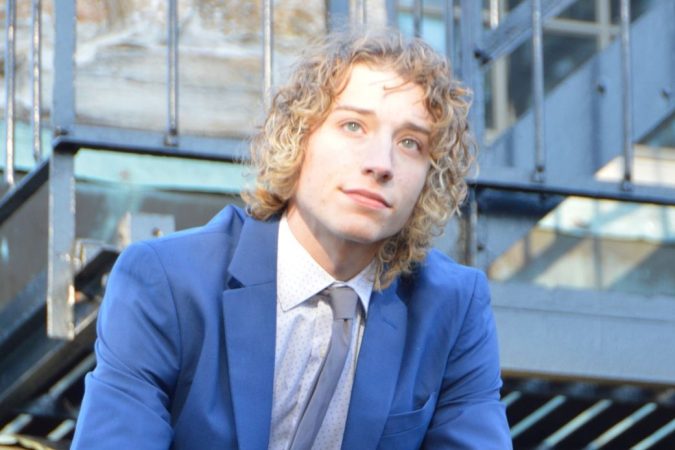
    Bryce Wolfe, of Conyngham, a borough in Luzerne County, was an actuarial science major in the Fox School of Business and had just completed his sophomore year.

    A GoFundMe was established to help Bryce’s family.

    In an obituary written by his parents, Bryce was described as having lived his life “with a fearless spirit of adventure and a genuine love for the outdoors.”

    He “found joy in seeking new challenges and embraced every opportunity to experience the world to its fullest. Whether carving down snow-covered slopes while skiing, exploring miles of trails on his bicycle, or riding motorcycles through rugged dirt tracks and open roads, he felt most alive when he was in motion,” Lori Wolfe and Clarence Wolfe III wrote.

    Bryce had started a summer internship and acquired the Triumph to ride while he stayed in Philadelphia, his mother said in a recent interview.

    Said Lori Wolfe, “It was the first motorcycle he bought and insured all by himself.”

  • A man was found engulfed in flames on Kensington Avenue

    Police found a man engulfed in flames along Kensington Avenue Friday morning in what fire department officials called a “non-suspicious” fire.

    Police responded to the 3400 block of Kensington Avenue Friday morning for a report of a screaming person. Upon arrival, a person passing by said a 34-year-old man was found on the ground engulfed in flames.

    Philadelphia Fire Department medics responded to the scene and transported the man to Temple University Hospital, where he was placed in critical but stable condition.

    The circumstances surrounding the incident remain under investigation by the East Detective Division, but the Fire Marshal’s Office ruled the fire to be “non-suspicious.”

    Anyone with information regarding this incident is encouraged to contact the East Detective Division or submit an anonymous tip through the Philadelphia Police Department’s tip line at 215-686-TIPS (8477).

  • Temple raised a record $214 million in the last fiscal year. Some of the money will support students during a budget crunch

    Temple raised a record $214 million in the last fiscal year. Some of the money will support students during a budget crunch

    Temple University, which faces a budget deficit and challenging financial headwinds, received a record amount of donations in the last fiscal year, putting the institution ahead of its fundraising goals in the first full year under the leadership of a new president.

    The North Philadelphia school received $214 million in donations in fiscal year 2026, more than 60% greater than the prior year’s annual fundraising total and well ahead of its goal of $160 million.

    Included in that total and achieved during president John Fry’s tenure are major donations, including the single largest gift the school has received, $55 million from university trustee Christopher Barnett to rename the College of Public Health, and a substantial but undisclosed amount from Jane Creamer Sullivan to establish a new honors college, which will enroll students beginning in fall 2027.

    They were among 38 donors who gave $1 million or more to the university, up from 24 the year before.

    Fry in an interview credited a new fundraising chief, a strategic plan with clear fundraising goals, and the involvement of deans and other senior leaders in the fundraising process at Temple, which enrolls 33,000 students across its U.S. and international campuses.

    “The difference from where we were in late ’24 to today is kind of night and day,“ Fry said. ”Our priorities as an institution are clearer. … We have a lot of engagement from our deans and senior leadership and trustees, and I think we’re developing a much more disciplined approach to donor relationships.”

    The increased fundraising comes at a pivotal time for Temple, allowing it to invest in academics and student supports while also coping with a budget crunch. The university laid off about 40 employees earlier this month as part of an effort to close what now stands as a $25.5 million deficit in the 2026-27 budget.

    Fry noted that the school cannot use donor funds to plug the deficit because they are restricted, but said the money allows the school to continue to invest.

    “The philanthropy that we’re able to to garner right now allows us to address priorities that we wouldn’t be able to address otherwise,” Fry said.

    The Barnett gift, for example, has helped create an “essential needs hub” to help support students who are struggling with financial and other needs.

    Next for the university is the public launch of what is likely to be a $1.5 billion fundraising campaign kicking off in the next two years and concluding in 2034, when the school celebrates its 150th anniversary. Temple already has raised $340 million during the quiet phase of that campaign, including the $214 million raised in the last fiscal year.

    “This is no declaration of victory,” Fry said. “I think it’s a declaration of progress. … It’s a good, strong start.”

    A renewed focus on alumni giving

    Fry identified fundraising as an area for reform at Temple almost as soon as he arrived, saying that a school of Temple’s stature with more than 380,000 living alumni — more than half of whom live and work in the region — should be raising more than it was.

    He said at the time there was no reason that Temple should not be in the same league as schools such as the University of Delaware, which had announced a gift in excess of $71 million. Pennsylvania State University, which has more than twice the enrollment of Temple, announced earlier this month that it had raised $662.7 million in 2025-26.

    The university’s previous fundraising record was $133 million in fiscal year 2025, and prior to Fry’s arrival in November 2024, Temple raised about $95 million annually on average from 2014 to 2024, the school said.

    Fry hired Al Checcio, who previously led fundraising at the University of Southern California and Fordham University, to assess the university’s fundraising operation. Checcio had previously assisted Fry with fundraising at Drexel when Fry led that university, and he had worked at Temple in the 1990s under the late president Peter Liacouras.

    Impressed with Checcio’s assessment, Fry appointed him as interim fundraising leader in March 2025 and in September named him senior vice president for institutional advancement.

    “I’ve always felt that the Temple alumni base was so untapped,” Checcio said. “They have a lot of pride in the institution, but maybe not as much pride in how the university has interacted with them.”

    To bolster success, Checcio said, fundraising had to become a university-wide priority, with deans, healthcare leaders, and other university leaders all playing a role. It takes vision, leadership, and relationship-building, he said.

    That is all happening, including visits by Fry to donors around the world, and donors are reacting positively, Checcio said in an interview.

    “We’re communicating clearly what our vision for the university is, and we’re doing a lot of work tying institutional priorities into donor interests,“ he said. ”We’re very pleased with our early progress. We think it’s a real sign of things to come.”

    He said the university has the potential to continue raising more than $200 million annually or even more.

    “We think we have a really, really high ceiling,” he said.

    Among other large gifts from alumni in 2025-26 were $5 million from Richard and Amy Oller to the law school and $3 million from investment adviser and author Joslyn G. Ewart to endow the dean’s post for the Center for the Performing and Cinematic Arts.

    Fry said both gifts met several goals in the strategic plan.

    The Oller gift “promotes student success because it has scholarships and fellowships and experiential learning opportunities embedded in it,” he said. “It also strengthens faculty excellence by supporting an endowed chair and monies for bringing distinguished scholars to campus.”

  • Neysa Adams, pioneering civic and community leader, scientist, and teacher, has died at 104

    Neysa Adams, pioneering civic and community leader, scientist, and teacher, has died at 104

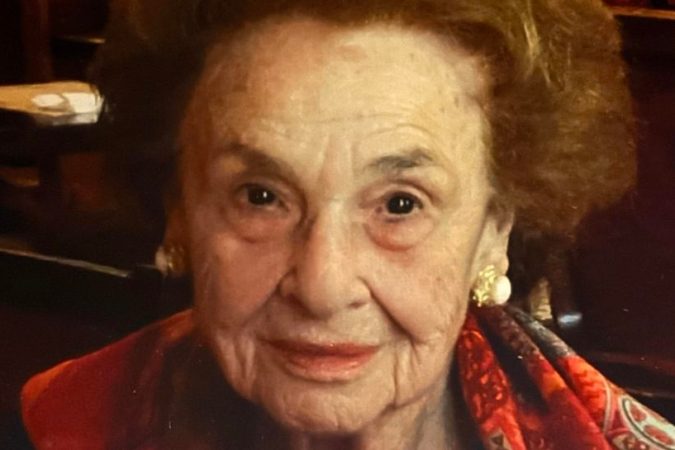
    Neysa Adams, 104, of Philadelphia, 1971 chair of the local United Fund women’s committee, former president of the Rebecca Gratz Club, onetime vice president of the women’s council for the Federation of Jewish Agencies, former associate trustee at the University of Pennsylvania, scientist, high school teacher, investment adviser, and philanthropist, died Friday, June 26, of heart disease at the Hearth at Drexel.

    Born and reared in Philadelphia, Mrs. Adams graduated from Olney High School and lived over the years in East Oak Lane, Germantown, and Elkins Park. She earned a degree in biochemistry with honors at Penn, did scientific research for a time, and taught English and history for two years at Philadelphia High School for Girls.

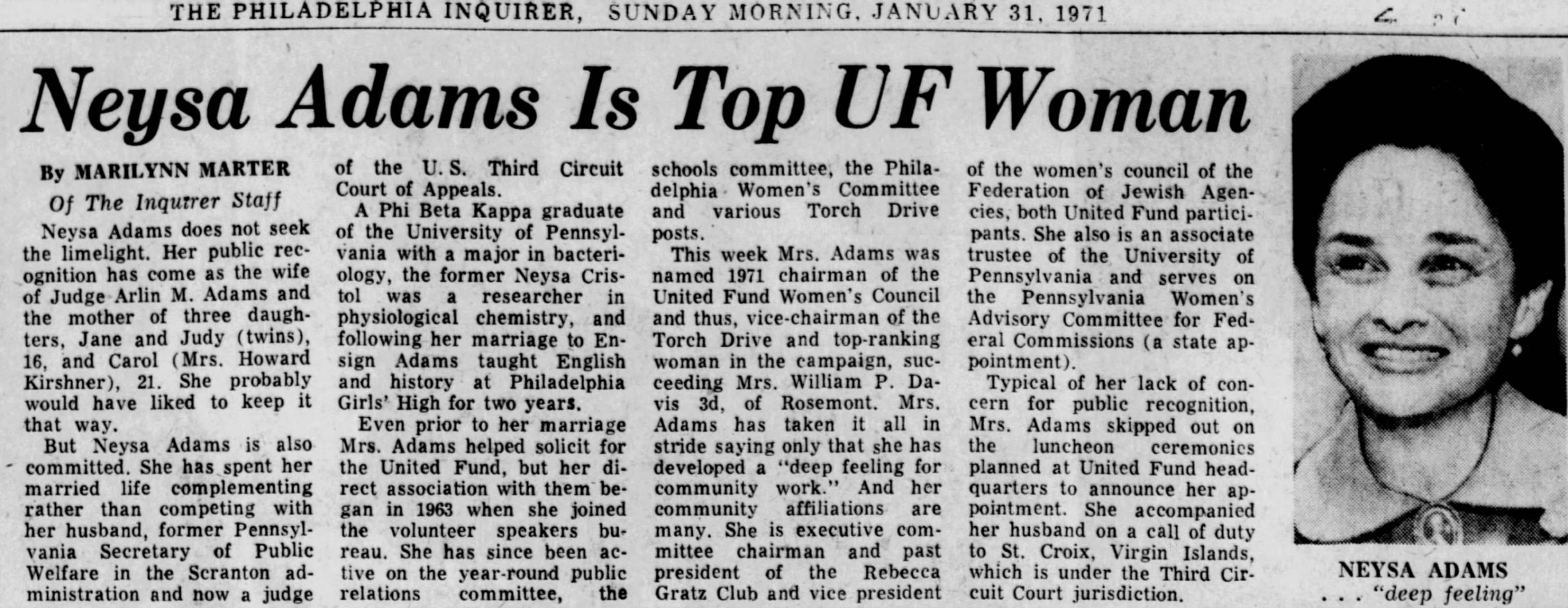
    Smart, friendly, and energetic, she joined the Philadelphia United Fund volunteer speakers bureau in 1963, became active with the fund’s public relations committee, schools committee, and women’s committee, and organized many community fundraising campaigns. In 1971, she told The Inquirer she had a “deep feeling for community work.”

    Mrs. Adams also served on the board at what is now Penn’s School of Social Policy and Practice and was active with the Emergency Aid of Pennsylvania Foundation, the National Conference on Social Welfare, and state and federal women’s advisory commissions. In 2003, then-Gov. Ed Rendell recognized her as a Distinguished Daughter of Pennsylvania for her “outstanding service and contributions to the Commonwealth of Pennsylvania.”

    As a philanthropist, Mrs. Adams and her husband, Arlin, were cochairs of Penn’s Harrison Society for fundraising recognition, and they established, among other endowments, the Arlin and Neysa Adams Lectureship and the Neysa and Arlin Adams Prize for excellence in prelaw studies at Temple University. Her husband died in 2015, and she donated his papers to the archives at Penn Carey Law School in 2017 and later funded its Arlin M. Adams Lecture in Law, Religion, and the First Amendment.

    “Everything good in my life came from him,” Mrs. Adams said in a 2024 online profile by the Hearth at Drexel.

    She also established Neysa Adams’ Library Fund at Reform Congregation Keneseth Israel in Elkins Park. Friends called Mrs. Adams “wonderful,” “outstanding,” and “one of life’s brightest lights” in tributes.

    One friend said: “Neysa was one of the kind.”

    This story about Mrs. Adams appeared in The Inquirer in 1971.Newspapers.com

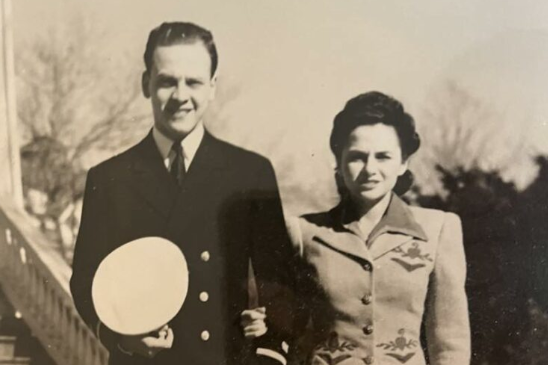
    Neysa Norma Cristol was born Aug. 7, 1921. She met Arlin Adams in high school, and they married in 1942 while he was on leave from the Navy. They had daughters Carol, Judy, and Jane. Her daughter Jane died in 2017.

    Mrs. Adams and her husband, a state secretary of public welfare and longtime federal judge, traveled the world, mostly through his work, and she met a queen, a pope, several U.S. presidents, and other international notables. “Her resilience, intellectual curiosity, and dedication to serving others stand as a testament to a life well lived,” friends at the Hearth at Drexel said in 2024.

    She was active at Keneseth Israel, enjoyed cooking, and was an avid reader. She also worked as an investment adviser.

    She was featured on 6abc TV last August on her 104th birthday and said: “Get those things that make you happy. Enjoy them while you can.”

    Mrs.Adams and husband, Arlin, married in 1942 while he was on leave from the Navy.Courtesy of the family

    Her daughter Carol said: “She was outgoing and had lots of friends. It seemed like she knew everyone in Philadelphia.”

    In addition to her daughters, Mrs. Adams is survived by four grandchildren, one great-grandson, and other relatives. A sister and a brother died earlier.

    A celebration of her life is to be at 11 a.m. Friday, Aug. 7, at Reform Congregation Keneseth Israel, 8339 Old York Rd., Elkins Park, Pa. 19027.

    Donations in her name may be made to the University of Pennsylvania, Box 71332, Philadelphia, Pa. 19176; and Susquehanna University, 514 University Ave., Selinsgrove, Pa. 17870.

    Mrs. Adams (second from right) doted on her husband and three daughters. Courtesy of the family
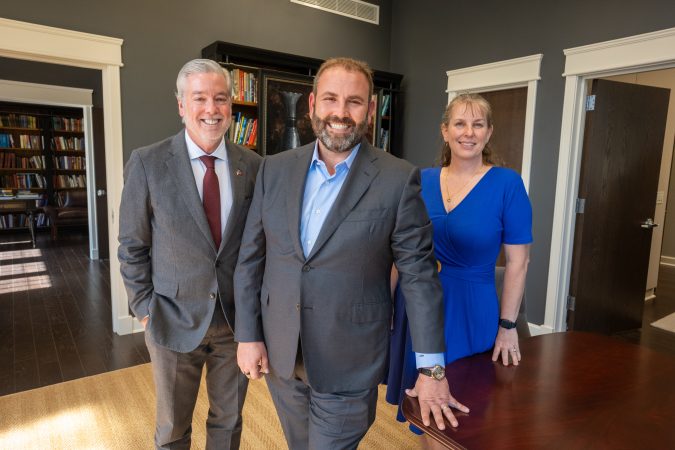
    “It seemed like she knew everyone in Philadelphia,” said Mrs. Adams’ daughter Carol (left). Courtesy of the family