Tag: Temple University

  • Keith A. Morrison, celebrated artist and former Temple dean, has died at 84

    Keith A. Morrison, celebrated artist and former Temple dean, has died at 84

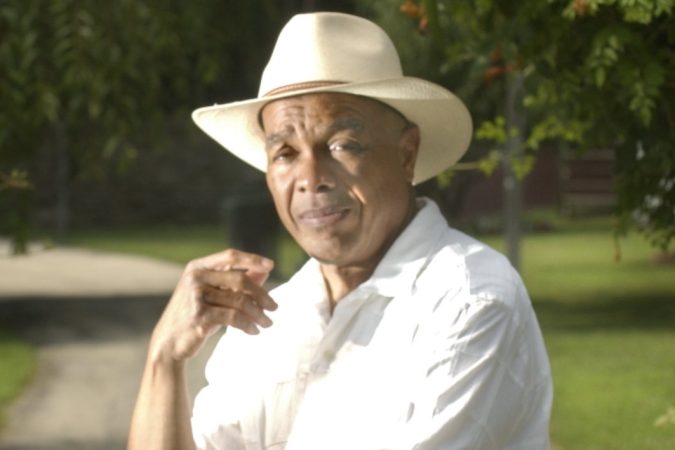
    Keith A. Morrison, 84, of Meadowbrook, Montgomery County, celebrated artist, professor of painting emeritus and former dean at Temple University’s Tyler School of Art and Architecture, curator, critic, consultant, writer, and lecturer, died Monday, June 1, of cancer at Fox Chase Cancer Center.

    Born in Jamaica, Dean Morrison left the Caribbean island for the School of the Art Institute of Chicago when he was 17 and earned bachelor’s and master’s degrees in fine arts and art education. He went on to teach college art classes in Nashville, Chicago, and College Park, Md., and, in addition to Temple, serve as dean at San Francisco State University, the University of Maryland, and the old San Francisco Art Institute.

    He was the first Black academic dean of art in a predominantly white American school in 1993 at the San Francisco Art Institute and joined Temple as dean of its art school in 2005. He became a professor of painting at Temple in 2008 and retired in 2018 as professor emeritus.

    As head of the Temple art school for three years, Dean Morrison hired staff, expanded degree programs, and coordinated popular activities with the school’s affiliated art programs in Europe and Japan. In an online tribute, former colleagues at Temple called him a “dedicated advocate for artists and arts organizations.”

    Earlier, he was associate dean of architecture and art at the University of Illinois, art department chair at DePaul University in Chicago, and associate professor of art at Fisk University in Nashville. He lectured around the world and was a visiting scholar at Sichuan Fine Arts Institute in China and the University of Michigan.

    “He was very serious, very thinking,” said his wife, Susan C. Alunan. “People said he was present and insightful, even life-changing.”

    As an artist, Dean Morrison was inspired by his Afro-Caribbean heritage, his childhood memories of lush Jamaican landscapes, and his multicultural experiences in Europe, Cuba, Mexico, and elsewhere. He worked in watercolors, oils, acrylic, and prints, and created memorable abstract, figurative, and surreal images.

    Many of his paintings feature landscapes, people, plants, and animals, often including Scout, his African gray parrot. His images, he told colleagues, were “more intuitive than intellectualized.”
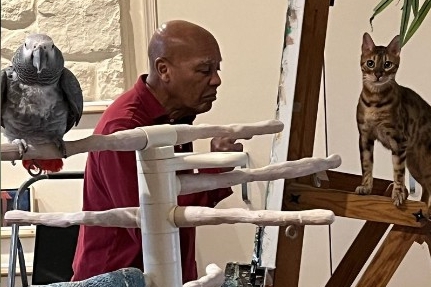
    Dean Morrison worked most often at his home studio in Meadowbrook. His parrot, Scout (left), sometimes appeared in his work. Susan C. Alunan

    Friends and colleagues called his paintings “unique and moving” and “magical in content and accessible by all who encounter them.” Allan Edmunds, founder of Brandywine Workshop and Archives, said on Facebook: “His art connects and shares hidden stories and myths that helped shape his creative vision of multiculturalism as a global reality.”

    Dean Morrison’s work appears on the covers of books and magazines, and in hundreds of solo and group shows around the world. It resides in collections at the Philadelphia Museum of Art, the Pennsylvania Academy of the Fine Arts, the National Gallery of Art and the Smithsonian American Art Museum in Washington, and other galleries.

    Colleagues at the David C. Driskell Center at the University of Maryland said in a tribute: “Morrison’s vivid, imaginative paintings — filled with brilliant color, history, mythology, and fantasy — speak to African diasporic experience as well as Morrison’s unique sense of humor and narrative composition.”

    As a writer, he pioneered Pan-African art criticism and was, in his own words, a Black critic “interested in art from a Black person’s perspective.” He was a visiting editor at the New Art Examiner in Chicago, and his reviews, interviews, and general observations appeared in the Washington Post, museum catalogs, and other publications.

    His book Art in Washington and Its Afro-American Presence: 1940-1970 was published in 1985 and serves as a text at art schools. In 2004, Renée Ater wrote a 128-page monograph called Keith Morrison.

    As a curator, Dean Morrison supervised exhibitions in the United States, Jamaica, and Cuba. He represented the United States and Jamaica at international art exhibitions, and was active with Brandywine Workshop and the Washington Project for the Arts.

    He earned lifetime achievement awards from Howard University and Brandywine Workshop, and was named a Jamaican Commander in the Order of Distinction in 2017 for “outstanding and important services to Jamaica.”

    “My mood is always happy,” Dean Morrison said in a 2008 interview with the University of Delaware’s UDaily. “You can paint anything you want. It does not have to be because you yourself feel that way.”


    This is Dean Morrison’s “In the Rivers of Babylon.”Keith A. Morrison
    This is Dean Morrison’s “Scenes From Childhood.”Keith A. Morrison

    Keith Anthony Morrison was born May 20, 1942, in Linstead, Jamaica. He ran track in high school and took drawing classes at the Jamaica School of Arts and Crafts.

    He learned about the School of the Art Institute of Chicago after high school and worked as a disc jockey and sound effects man for a Jamaican radio station to earn money to travel to the United States. He earned his bachelor’s degree at the University of Chicago in 1963 and his master’s degree at the Art Institute of Chicago in 1965.

    He had a son, Ron, a daughter, Melinda, and, after a divorce, married Alunan in 2003 and welcomed her children into his family. His daughter and former wife died earlier.

    Dean Morrison studied Aristotle and earned a Fulbright Senior Scholar grant. He enjoyed classical music and jazz, and he and his wife traveled the world together.
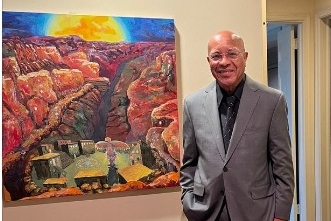
    Dean Morrison “had a great imagination and sense of humor,” his wife said.Susan C. Alunan

    He played tennis and ran, and lived in Chicago, Washington, and San Francisco before settling in Meadowbrook. “He had a great imagination and sense of humor,” his wife said. “He was a fun guy.”

    In addition to his wife and son, Dean Morrison is survived by a brother and other relatives.

    A celebration of his life is to be held later. Brandywine Workshop and Archives has scheduled a showing of his work from 6 to 8 p.m. on Thursday, Aug. 6.
  • Tower Health is laying off 160 workers at Pottstown Hospital while expanding emergency department, behavioral health

    Tower Health is laying off 160 workers at Pottstown Hospital while expanding emergency department, behavioral health

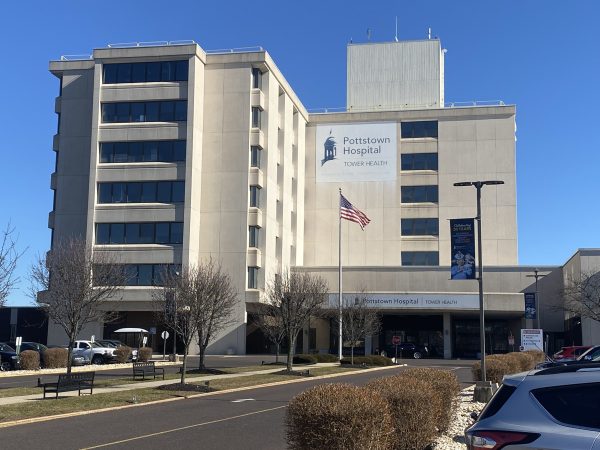
    Tower Health is eliminating 160 jobs at Pottstown Hospital as part of an effort to bring staffing at the Montgomery County facility in line with lower patient volumes, the Berks County nonprofit announced Tuesday. The cuts amount to 22% of the workforce at Pottstown.

    In addition to the job reductions — which are more than the 131 positions cut last year at Pottstown — Tower also plans “a multimillion-dollar investment” to expand the emergency department, enhance inpatient and outpatient behavioral health services, and update portions of the hospital, Tower said.

    “These changes are designed to strengthen the hospital’s ability to serve local residents for generations to come by preserving access to the services patients need most, investing in the areas of greatest community need, and ensuring Pottstown Hospital remains a strong, sustainable community hospital for the future,” Tower said in a statement.

    To expand behavioral health, Tower will convert some underused general-purpose hospital beds to inpatient behavioral health beds. The behavioral health total will rise to 52 from 28, an 86% increase. Pottstown has 213 licensed beds.

    Tower did not provide a timeline for the changes but said it plans to hire 38 people to staff the expanded emergency department and behavioral health unit, which will have a separate entrance for the sake of patients’ privacy when they seek mental health services.

    Another change at Pottstown involves the lease of an unspecified amount of space to Community Health & Dental Care, a federal health clinic that was formed in 2008 with funding from Pottstown Area Health and Wellness Foundation.

    Unlike the restructuring Tower announced last fall at Pottstown, which included the closures of the combined intensive care/critical care unit, the Pottstown location of the McGlinn Cancer Institute, and the hospital’s endoscopy center, this round is not eliminating any services, Tower said.

    In the nine months that ended March 31, Pottstown has 5,104 inpatients, down 9.7% from the same period the year before. Most of that decline came in the first three months of this year, after Tower’s service cuts, according to data shared with bondholders.

    After last year’s layoffs, which included about 60 registered nurses represented by Pennsylvania Association of Staff Nurses & Allied Professionals, Pottstown employed about 700 people. Overall, Tower employs more than 10,000.

    The union said it still has 200 Pottstown nurses in its ranks. “We have been in touch with hospital management to better understand the context for and impact of the proposed layoffs and to push hard for solutions that protect both patient care and the dedicated nurses who serve the Pottstown community,” a union spokesperson said.

    Tower’s anchor is Reading Hospital in West Reading, Pa. In additional to Pottstown, it owns Phoenixville Hospital, plus St. Christopher’s Hospital for Children in North Philadelphia in a 50-50 joint venture with Drexel University. Tower previously owned Brandywine, Jennersville, and Chestnut Hill Hospitals.

    It closed Brandywine and Jennersville and sold Chestnut Hill to a group led by Temple University Health System.

    Tower recently announced that Jefferson Health, Nemours Children’s Health, and Temple University Health System are working on forming an alliance to support St. Chris clinically. Last week, Tower said that it had formed a clinical affiliation to expand advanced care in its markets.

  • Saif Manna’s dorm-room cookie company rises into a bakery-cafe in Kensington

    Saif Manna’s dorm-room cookie company rises into a bakery-cafe in Kensington

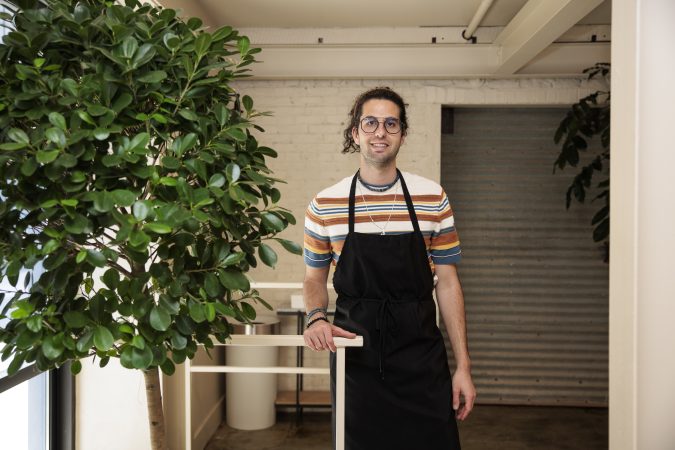
    Before it became one of Philadelphia’s busiest bakery pop-ups, Manna Bakery operated out of a Temple University dorm room.

    Now, after five years of overnight baking sessions, sold-out farmers markets, and long lines for Levantine and Palestinian pastries, chef-owner Saif Manna is opening his first brick-and-mortar bakery in Kensington — a mile and a half from campus.

    Manna Bakery opens Thursday at 110 W. Berks St., the former Essen Bakery. This caps a whirlwind year for Manna, 27, who married his college girlfriend, Stefaniya Surikova, earlier this year. They’re expecting their first child.

    Manna’s rise has the familiar outline of a pandemic success story, although the traditions reach back generations. He said his grandfather’s family lived in Yafa (also known as Jaffa) but left in 1948 after their house was bombed during the Nakba, the mass displacement of Palestinians in the Arab-Israeli war, when hundreds of thousands fled or were expelled from areas that became part of Israel.

    His grandfather headed first to Cyprus and then to Lebanon, studied medicine in England, and made his way to Kuwait to practice.

    Manna was born in California and raised in Dubai before moving to the United States to attend Texas A&M University on a Division I tennis scholarship. After transferring to Temple, he began baking cookies during the pandemic while living in a dorm. Encouraged by Surikova — also on Temple’s tennis team — in 2021, he started selling them online before expanding into pop-ups and the Rittenhouse, Headhouse and Clark Park farmers markets.

    As demand grew, Manna baked overnight at nearby Char Pizza before outgrowing the space.

    Since Manna never lived in the Levant, he describes his business as a third-culture bakery. He said his shop’s logo, a dandelion flower, is a nod to a belief popular in China that equates Palestinians with dandelion seeds that can thrive anywhere they land.

    Manna has followed a path blazed by the recent crop of independent bakeries such as Kouklet, Second Daughter, Machine Shop, Copihue, and Majdal, growing from home kitchens, pop-ups, and farmers markets into storefronts. Manna said he would keep his farmers market stops.

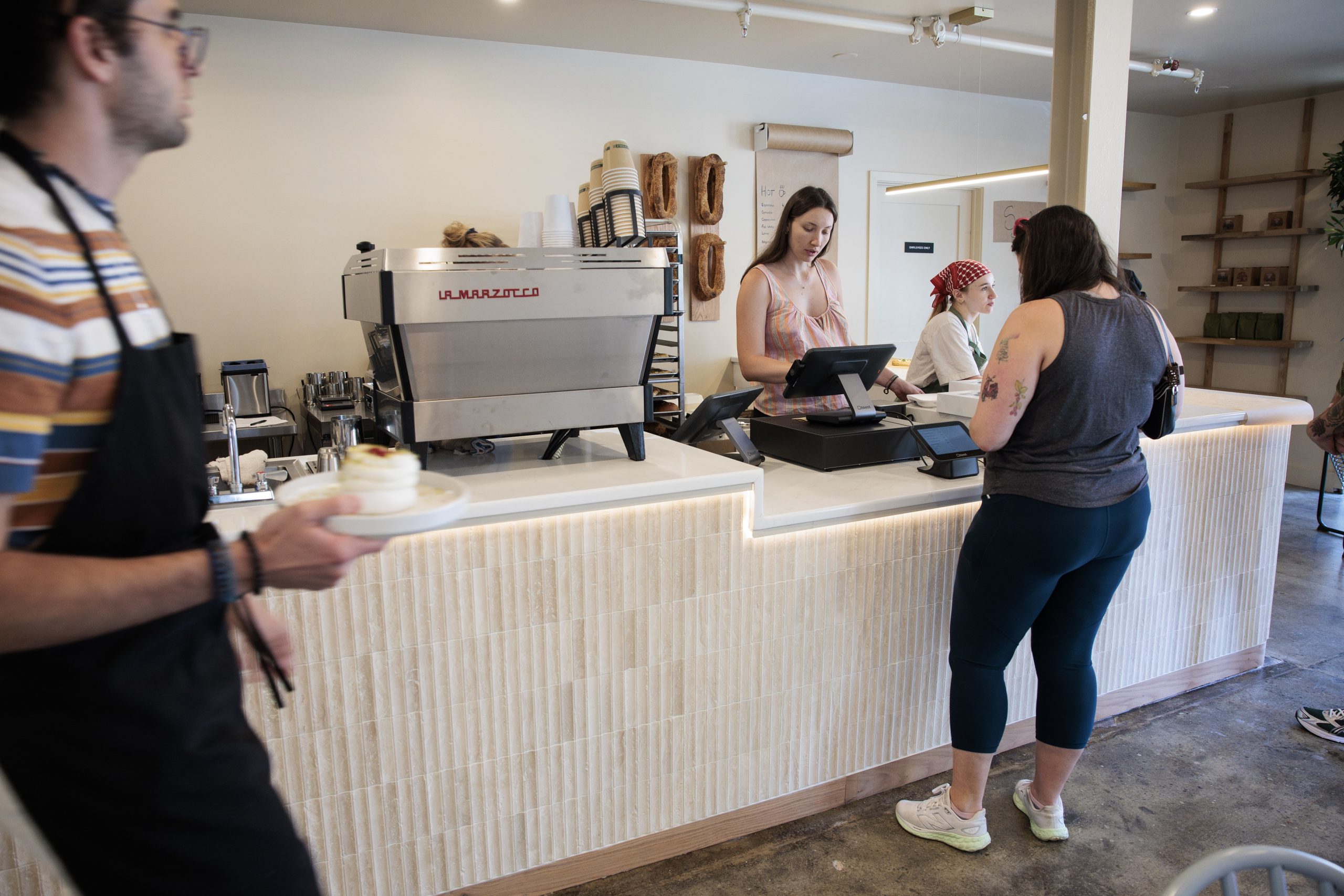
    Stefaniya Surikova serves customers at Manna Bakery.Monica Herndon / Staff Photographer

    His new bakery’s roomy kitchen includes a window where customers can watch the bakers. Manna is still awaiting his chairs and tables for the 60-seat cafe.

    Weekday fare will feature many of Manna’s signatures, including manakeesh, chicken sumac buns, fatayer, cardamom buns, Basque cheesecake, seasonal cakes, and his pistachio chocolate chunk and extra-brown butter chocolate chunk cookies. Weekends will bring an even broader selection.

    The coffee program, featuring beans from Seekers Coffee in Princeton, includes drinks flavored with rose, cardamom, tahini, dates and saffron, along with Manna’s grandmother’s orange blossom lemonade.

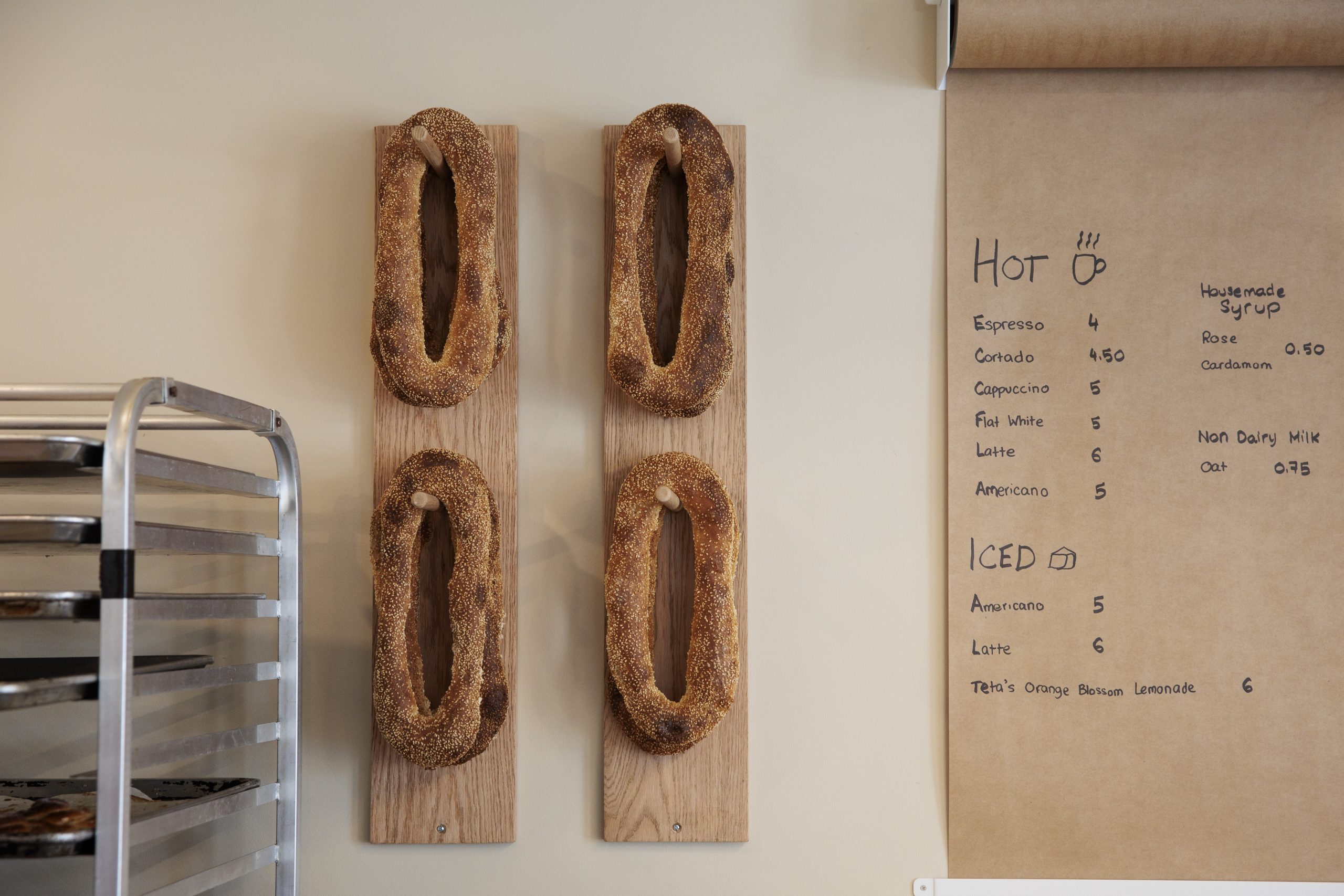
    Jerusalem bagels (ka’ak al-quds) hang on hooks behind the counter at Manna Bakery.Monica Herndon / Staff Photographer

    The shop has been redesigned with warm stone finishes, a small souk stocked with Levantine spices and pantry goods, and a rear room intended for future baking workshops, classes and private events.

    For a soft opening last week, Manna and Surikova recreated their farmers market display, laying pastries across sheets of craft paper.

    Among them were savory offerings such as the open-faced herby cheese fatayer and the banadoura manakish — a tomato-topped Levantine flatbread. Ka’ak al-Quds, the oblong, sesame-seeded Jerusalem bagels, hung from hooks behind the counter.

    A smaller version of those bagels will eventually become Manna’s egg, cheese and za’atar breakfast sandwich. “That’s something I grew up eating,” Manna said. “My mom used to make me that before school.”

    Dillon Assfalg, a line cook at Char who watched Manna’s overnight baking sessions firsthand, said the quality of his pastries stood out from the beginning. He describes himself as a cheesecake fan and ranks Manna’s lemon-and-orange-blossom Basque cheesecake among his favorites.

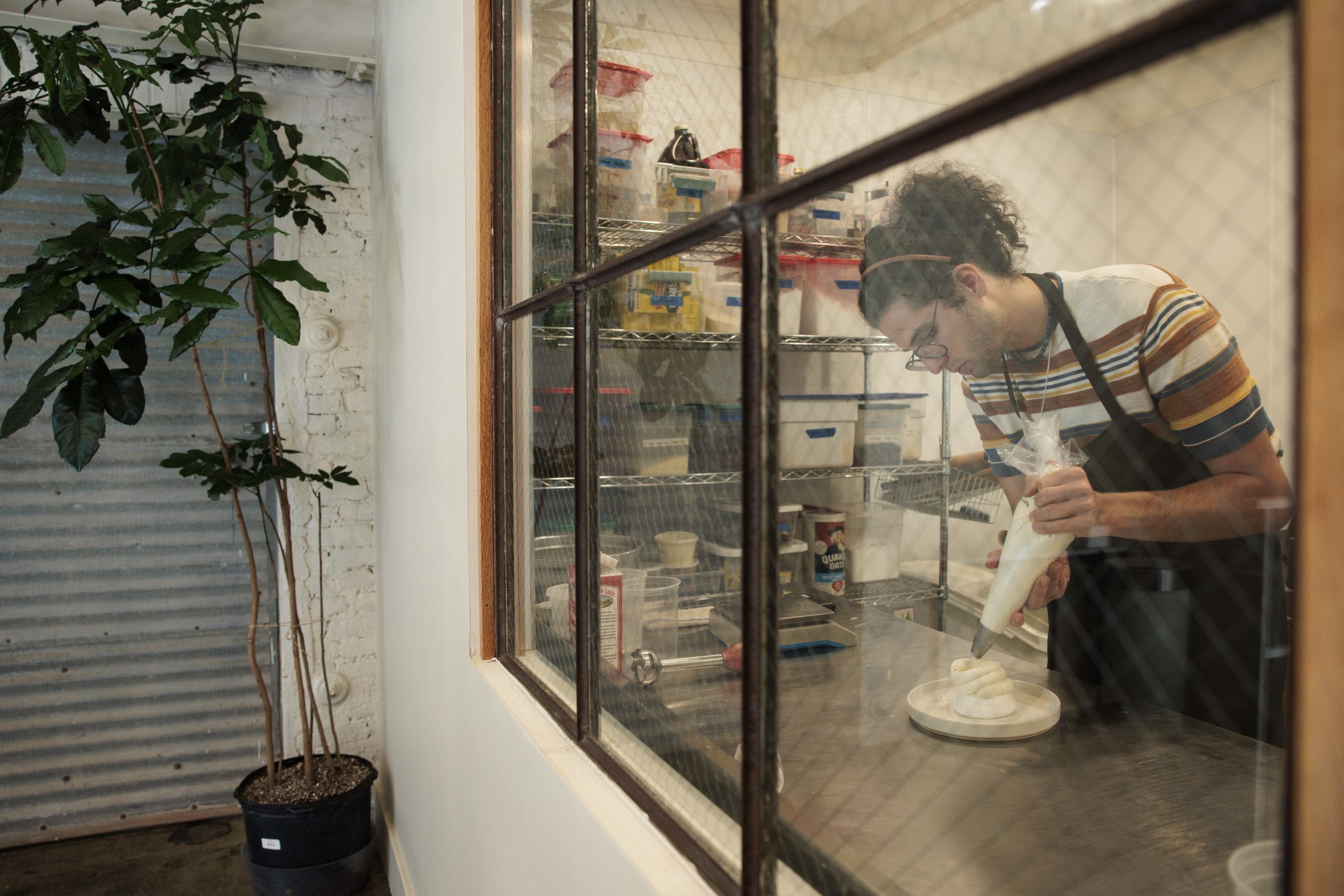
    Saif Manna working on a pavlova for a customer at Manna Bakery.Monica Herndon / Staff Photographer

    “Whenever he’d leave fillings at Char after his middle-of-the-night baking sessions, I’d eat them all the time,” Assfalg said. “They were always super good.”

    Manna isn’t rushing to turn it into a full-service café. He hopes to add options such as slow-roasted lamb sandwiches for brunch, followed by baking workshops, cooking classes and supper clubs before introducing several nights of dinner featuring the Palestinian dishes he grew up with. But those plans can wait until the bakery is firmly established.

    “Long term, I definitely have aspirations. I love cooking as much as baking, so I think people will see more of that from me,” Manna said. “Would I like to have a restaurant one day? Absolutely. But right now my focus is making this bakery the best it can be and continuing to deliver the quality people expect. We’ll go from there.”

    Manna Bakery, 110 W. Berks St. Hours: 7 a.m. to 3 p.m. Thursday to Sunday.

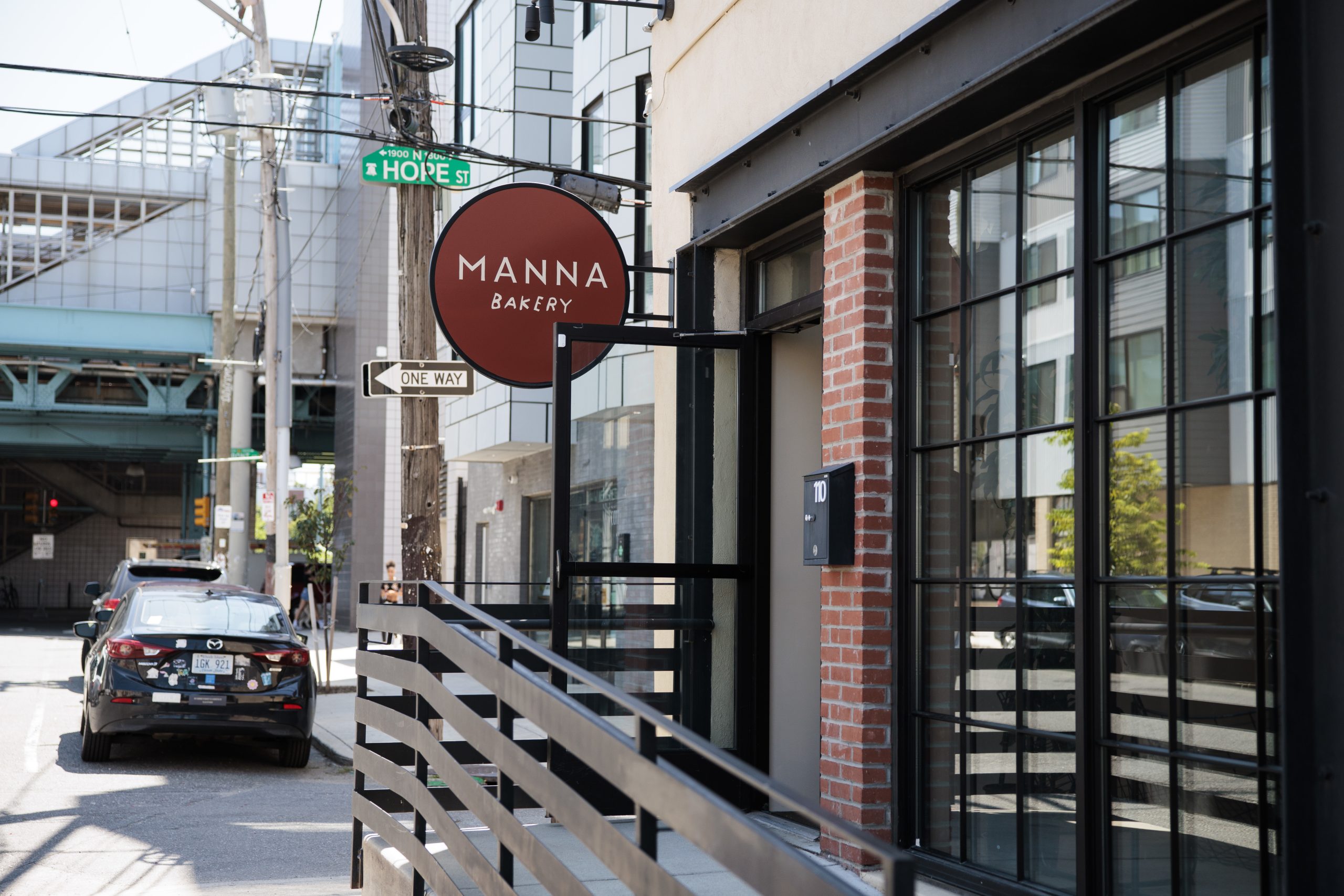
    Manna Bakery is about a half-block from the Berks Station of the Market-Frankford Line.Monica Herndon / Staff Photographer

    Manna’s tip for home bread bakers

    Saif Manna shared one of his favorite tips for home bread bakers: use an autolyse. The technique calls for mixing only the flour and water for about a minute, then letting the shaggy dough rest for an hour or two before adding the remaining ingredients.

    “When you come back, it’ll almost look like someone kneaded it for you,” he said. “It’s like magic. During that rest, the flour hydrates and the gluten begins to develop naturally.”

    Only then does he add the salt, yeast, sugar and, if needed, oil before kneading. “You’ll end up with a much smoother, more beautiful dough, and you’ll never want to skip that step again,” he said.

    The method also reduces mixing time. “People ask, ‘Why do you do it if you have these beautiful mixers?’” Manna said. “If you mix dough too long in a machine, you can overwork it. Bakers sometimes call it ‘bleaching’ the dough. We let it rest through the autolyse, then add the rest of the ingredients and finish the mixing in the machine. Because the gluten has already started developing, we can reduce the machine mixing time and preserve more of the flavor.”

  • Philly sends a third of its trash to a Chester incinerator. Council members took a ‘Toxic Tour’ to get a closer look.

    Philly sends a third of its trash to a Chester incinerator. Council members took a ‘Toxic Tour’ to get a closer look.

    CHESTER — Like a Ben Franklin impersonator waving at Independence Hall and the Liberty Bell, tour guide B. Preston Lyles directed the tour group’s attention to various landmarks as they passed by.

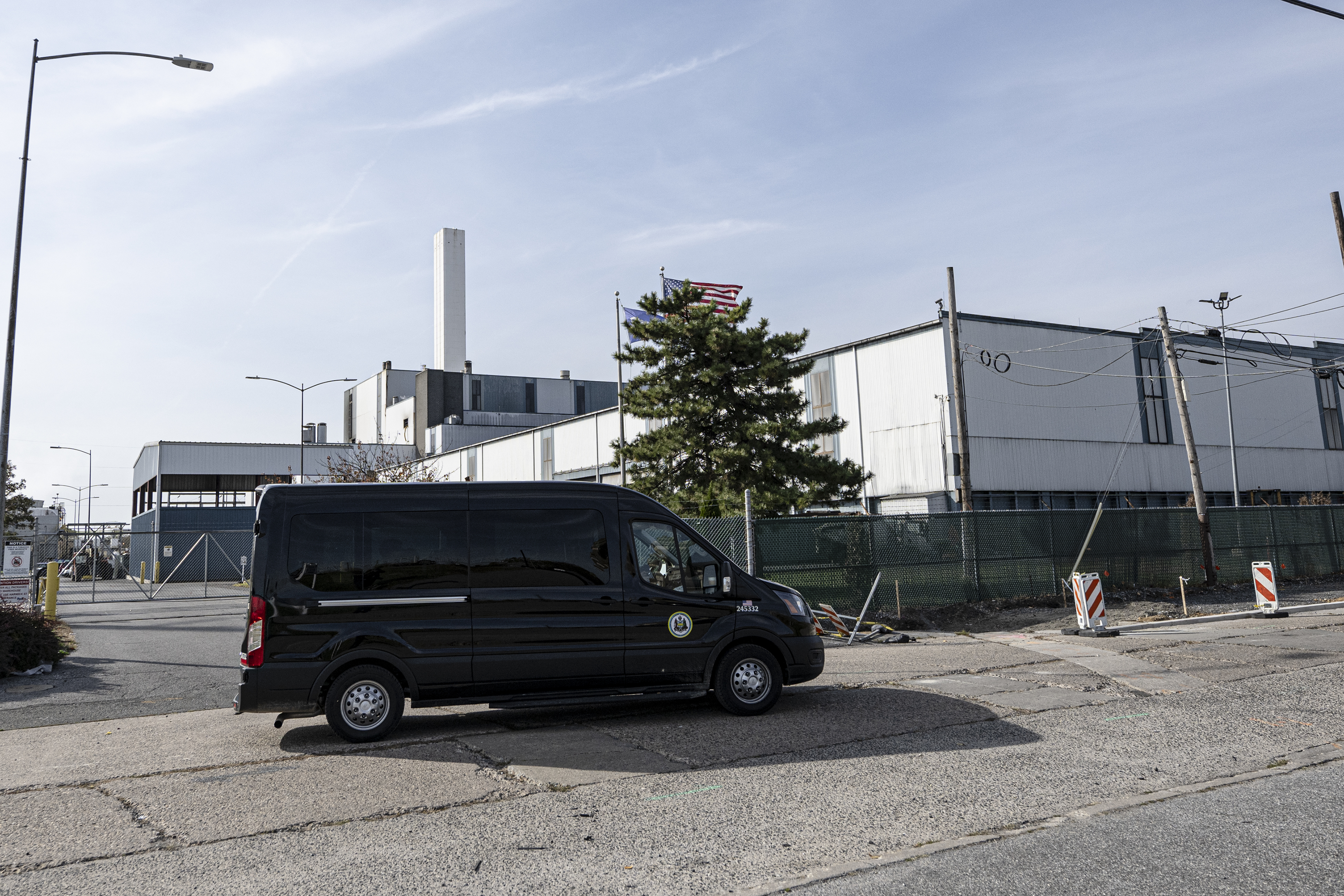
    But instead of highlighting monuments that made locals swell with pride, Lyles was pointing to sites he said made the people of Chester get sick and die younger: power plants, an oil refinery, a sewage sludge-burning facility, and — most relevantly for Friday’s group — the Reworld trash incinerator, the destination for about a third of the rubbish collected by Philadelphia’s city government.

    “Chester City is known as one of the nation’s worst cases of environmental racism,” Lyles, an organizer for Delco Environmental Justice, told the group, referring to the concentration of polluting industries in Black and brown communities. “It is not just because the city holds the nation’s largest waste incinerator, but due to an extreme concentration of toxic industries in and adjacent to such a small city.”

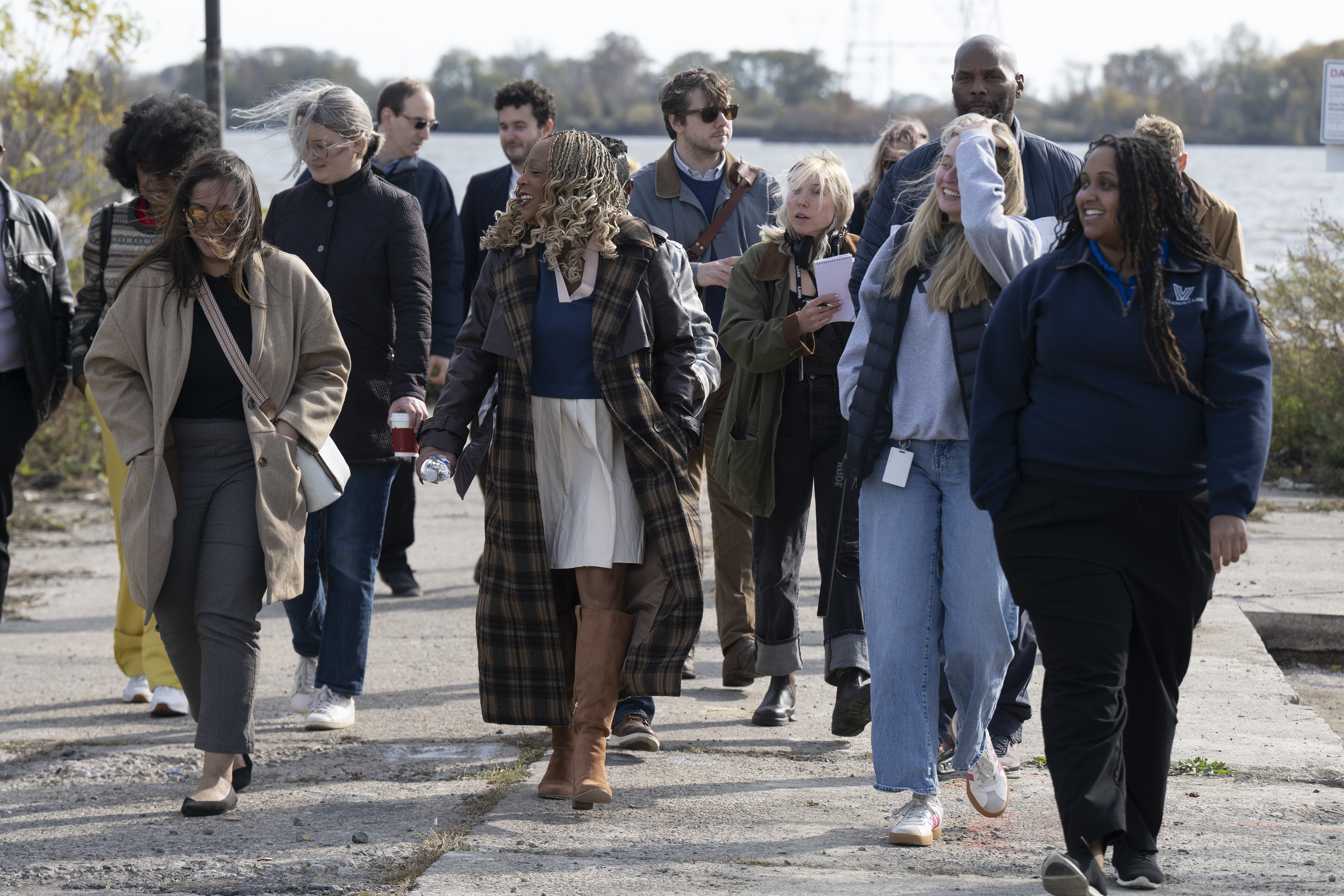
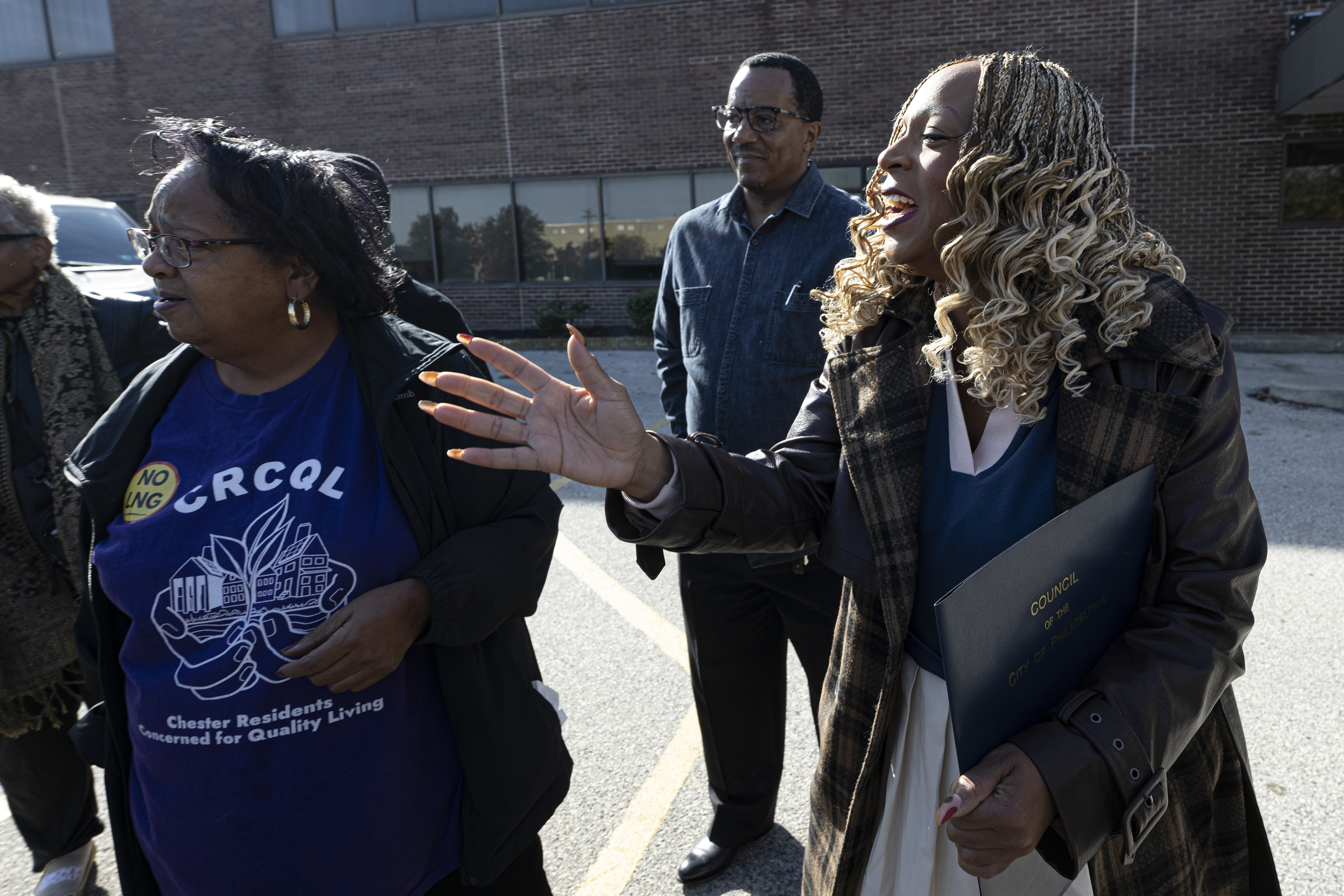
    Philadelphia City Councilmember Jamie Gauthier, who is hoping to end the city’s relationship with the Reworld incinerator, on Friday attended the Energy Justice Network’s “Toxic Tour” in and around Chester to highlight the facility’s impact on Philly’s southern neighbors.

    Philadelphia Councilmember Jamie Gauthier tours Chester to discuss her “Stop Trashing Our Air Act,” which would ban the city from incinerating waste, during a visit with lawmakers and staff in Chester, Pa., on Friday, Nov. 7, 2025.Jose F. Moreno / Staff Photographer

    “From a justice and fairness perspective, it just seems so wrong to me and so obvious,” said Gauthier, who was joined on the tour by Councilmember Kendra Brooks and staffers for other lawmakers. “Seeing the incinerator on the waterfront and all of these other dirty uses and the abandoned homes, that made me want to do this more, because it’s wrong. It’s wrong that people should be loaded down with all these toxic uses.”

    Reworld in 2024 burned more than 355,000 tons of trash collected by the city. Its contract with Philadelphia ends in June 2026.

    Gauthier has introduced a bill, the Stop Trashing Our Air Act, that would prohibit the city from incinerating trash, and Council’s Committee on the Environment, which she chairs, will likely hold a hearing on it this fall.

    Reworld spokesperson Linda Ribakusky said the company is a “leading sustainable waste solutions provider.” The Chester facility, she said, offers “a more sustainable alternative to landfilling by converting waste into renewable energy and recovering valuable metals that would otherwise be lost.”

    “The Reworld Delaware Valley facility helps reduce greenhouse gases by avoiding landfill methane and generates enough clean electricity to power more than 50,000 local homes each year,” Ribakusky said in a statement. “We are proud to be an active part of the Chester community. Working alongside local schools, nonprofits, neighbors, and community organizations, we support initiatives that create real impact.”

    ‘Now is the time’

    The Philadelphia Sanitation Department collects and disposes of about half of the city’s waste, said Michael Ewall, founder of the Philly-based Energy Justice Network. The other half is handled by private haulers hired by businesses and owners of larger residential properties.

    Under its contract, Reworld takes one-third of the municipally collected trash to the Chester incinerator, which the company says produces about 87 megawatts of electricity, enough to power 52,000 homes, while burning the waste. WM, which operates a major landfill in Bucks County’s Falls Township, takes the other two-thirds.

    When the most recent contracts were signed in 2019, the city agreed to pay roughly $65 per ton of trash to both Reworld, which was then known as Covanta, and WM, formerly Waste Management.

    Gauthier said she has had constructive conversations with Mayor Cherelle L. Parker’s administration about eliminating incineration from the city’s waste management operations, and is hopeful the city will include environmental justice concerns in its request for proposals for the new contracts.

    Parker’s office did not respond to a request for comment.

    The Chester incinerator provided a flashpoint in the 2023 mayoral election, which Parker won. During a debate, a moderator asked candidate Jeff Brown about the incinerator, prompting Brown to say, in part, “The trash has to go somewhere.”

    In a debate performance that was key to her rise and Brown’s downfall in the race, Parker was among the candidates who pounced on the soon-to-be-infamous comment.

    “That response is the same way you treat the Black and brown community,” said Parker, who ran on a campaign to turn Philly into America’s “safest, cleanest, greenest” big city.

    Top candidates for the Philadelphia mayor seat former City Council Member Cherelle Parker, left, Former City Council Member Derek Green, and businessman Jeff Brown, during a televised debate at the Temple performing arts center in Philadelphia, Pa. Tuesday, April 11, 2023.Jose F. Moreno / Staff Photographer

    During the debate, however, Parker was not asked directly if she would commit to ending the city’s contract with Reworld.

    “I was enthused to hear our mayor speak about this on the campaign trail,” Gauthier said. “I hope we all want to do the right thing. Now is the time to show that.”

    Environmental advocates contend that neither landfills nor incinerators are good for the environment and urge municipalities to focus on reducing waste in the first place. For instance, Ewall, who developed a policy platform called the Zero Waste Hierarchy, pointed out that thousands of communities now charge residents for each bag of trash just as utilities charge for each gallon of water or kilowatt of electricity.

    But for the “residuals” that do need to be collected, advocates have generally coalesced around the conclusion that incineration is more harmful than landfilling, Ewall said.

    Delaware County, which adopted a Zero Waste Plan in September, commissioned a 2021 study that found incineration was the costliest of its waste-disposal options, from both a health perspective and a financial one.

    The county determined that each ton of trash burned at the incinerator produced $234 to $337 in health and environmental costs. The impact from landfilling, meanwhile, was $144 per ton.

    ‘Reverse the environmental tragedy’

    Founded by William Penn, Chester is the oldest city in Pennsylvania. But over the last century, it has become a hub for some of the region’s least-wanted uses, including polluting manufacturers, fossil fuel facilities, a state prison, and, since the early 1990s, the incinerator. About 69% of Chester’s 33,000 residents are Black, and 31% live below the federal poverty line.

    “We hope that Philadelphia is listening in a strong way … as we attempt to reverse the environmental tragedy that has occurred here in the last 3½ decades due to the incineration of trash,” Chester Mayor Stefan Roots said Friday. “It’s an old technology, and it’s time for it to go. Especially in a community like Chester that’s looking to develop, it’s one of our biggest impediments.”

    Chester resident Zulene Mayfield, left, Philadelphia Councilmember Jamie Gauthier, right, and Chester Mayor Stefan Roots meet to discuss Gauthier’s “Stop Trashing Our Air Act,” which would ban the city from incinerating waste, during a visit with lawmakers and staff in Chester, Pa., on Friday, Nov. 7, 2025.Jose F. Moreno / Staff Photographer

    About 31% of the trash the incinerator burned in 2024 comes from Philly, with Delaware County accounting for 28% and New York City 26%.

    During the tour, Lyles explained how environmental racism can occur even if decision-makers are not consciously prejudiced against certain communities, because wealthier areas often organize to prevent polluting industries in their backyards.

    “In the late 1990s, there were about 60 proposals for new gas-fired power plants in PA. Only 16 of them were built,” he said. “Most of them faced a stiff opposition from community groups in suburban and rural areas, but those on either side of Chester went in with no organized opposition.”

    The final stop on the tour was a row of boarded-up and dilapidated homes along a railroad used for industrial purposes near the edge of the incinerator property. The homes started emptying out in the early 2000s, Ewall said, and the last was abandoned a few years ago.

    He recalled meeting one of the last residents to leave.

    “She had six grandchildren. She lived with her granddaughter, around 14, and one of the times I met her, had an oxygen tank that she would carry around with her just to be able to breathe,” Ewall said. “They just kind of disappeared one day, and I saw a boarded house.”