Philadelphia students are among the friendly faces welcoming the expected more than 1 million visitors to the city this summer.
Youth from Ss. Neumann Goretti High School and Girard Academic Music Program are official staff greeting tourists and giving directions and Philly recommendations over six weeks.
Planning for the huge undertaking of celebrating America’s 250th birthday in its birthplace began years ago, and Kathryn Ott Lovell, president and CEO of the Philadelphia Visitor Center Corporation, knew that she needed reinforcements.
“It was going to be hard to scale our mission and reach as an organization, short of building a visitor center on every corner,” said Lovell.
Enter the Phambassadors, a corps of 10,000 Philadelphians who volunteer to be a welcome wagon of sorts for the tourists arriving in town, some of whom were trained via a Philly-themed boot camp. Lovell, who “was born with this irrational love for Philly,” she said, arbitrarily picked the number 10,000, she said, hoping to attract that number of volunteers by the end of the year. The Philadelphia Visitor Center got there months ahead of schedule.
And when Lovell heard that Neumann Goretti had launched a hospitality program, creating the Youth Phambassador corps felt like a natural extension, both as a way to expand the welcome wagon and a means to help develop the next generation of tourism and hospitality professionals.
Lovell, Philadelphia’s former Parks and Recreation Commissioner, wanted to make it a paid opportunity, a city summer program with training and a stipend for participating students. Twenty Neumann Goretti students signed on, plus six students from GAMP, the South Philadelphia magnet school.
Training was held this month for the 26 Youth Phambassadors to learn both soft skills and hard skills — customer service, visitor engagement, and even citizen diplomacy via the World Affairs Council.
The Youth Phambassadors, who are working with an adult supervisor, are stationed both inside the Visitor Center at Sixth and Market Streets and around the historic district.
The hope is to have the students show off the city, but also “that it’s a portal into the hospitality and tourism world for the kids as they have a really wonderful experience,” Lovell said.
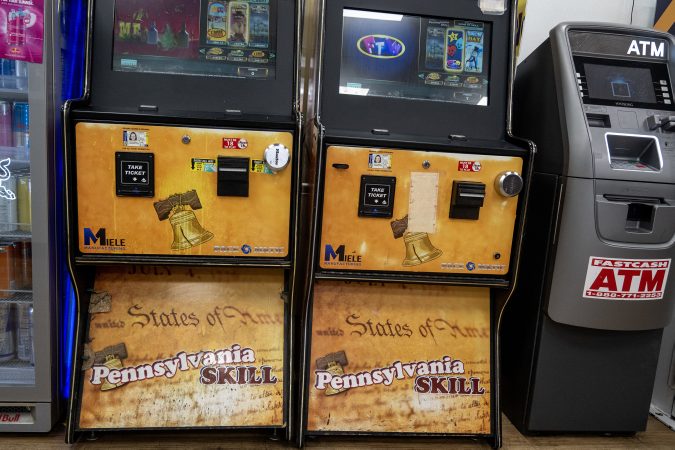
Amid rising inflation and business costs, many Philadelphia corner stores, bars, laundromats, and smoke shops have turned to skill games, the slot machine look-alikes, to help keep their slim margins afloat.
The machines, which shop owners say also encourage their customers to linger in stores and make additional purchases, are particularly profitable because theyare not taxed or regulated like slot machines — and they have been operating without state oversight in a legal gray area for more than a decade. But a recent state Supreme Court ruling may force that tochange.
Last week, Pennsylvania’s highest court handed down a decision deeming skill games the same as slot machines. That means the skill game terminals proliferating around the state will soon be illegal if not operated and taxed at 52%, and housed in a highly regulated casino or truck stop with a license to carry slot machines. Those terms will take effect in less than four months unless the state legislature intervenes.
Owners and clerks at several corner stores throughout Philadelphia that offer the games say they do not contribute a lot of revenue to their establishments directly, but they foster more of a lounge atmosphere in the shops that leads patrons tostay longer and purchase more snacks, drinks, lottery tickets, and other goods. Many of the business owners said they are willing to stomach a tax on skill games, but additional regulations would make them rethink keeping the machines.
José Pérez, who runs a corner store on Opal Street in South Philadelphia, said his store runs on incremental profits. And, he said, when people play the skill game machines and start feeling lucky, they often are inclined to make other purchases there.
“This business is about getting a little bit of money from every product, and the machines are a tiny source of income that adds up to that,” he said in Spanish between transactions at the store’s register. “While people play, they buy other stuff in the store. And if they win, they buy lottery tickets. Because when someone has one vice, they probably have two.”
Tax proposals from Harrisburg
Lawmakers in Harrisburg have for years failed to reach an agreement on how to tax and regulate the so-called skill games
The issue has proved to be tricky in Pennsylvania’s split legislature, where Democrats narrowly control the House and Republicans control the Senate. The skill games industry leader, Georgia-based Pace-O-Matic, long maintained a friendly relationship with the Senate GOP, and the Republican lawmakers appeared willing to support policies that benefited them. But last year, the goodwill began to sour after the company backed political campaigns against incumbent Republican state lawmakers who did not support its requested low tax rate on the machines.
State Rep. Danilo Burgos (D., Philadelphia) and State Sen. Anthony H. Williams (D., Philadelphia) have introduced a bipartisan bill in their chambers to impose a $500-per-month fee on each skill game machine operated in Pennsylvania, with a 50,000-machine cap across the state. There are currently an estimated 70,000 skill game machines in Pennsylvania, according to the state attorney general’s office.
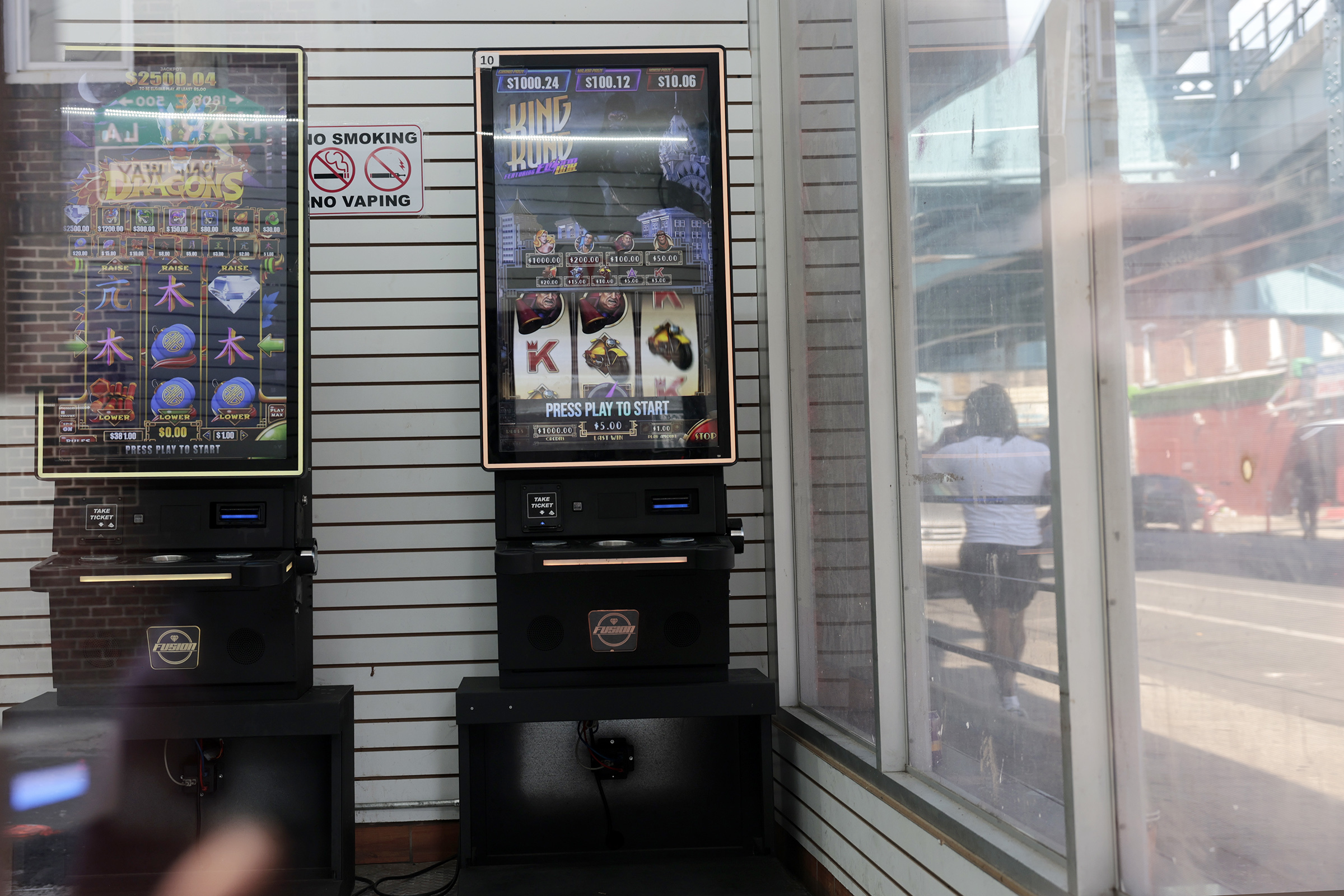
Skill games can be seen through the door of a mini mart on Kensington Avenue in the Kensington section of Philadelphia on Wednesday, July 30, 2025.Elizabeth Robertson / Staff Photographer
The proposed legislation would split revenues among transit and infrastructure, local governments, and state police for enforcing the cap and fee. The bills also prohibit small businesses whose “primary source of net revenue” is from skill games, in an effort to prevent mini casinos in stop-and-go corner stores around the city. Burgos estimates the regulations would bring in $300 million in new revenue to the state in their first year.
The bill includes additional protections for Philadelphia, where City Council voted in 2024 to ban the machines. The ban never went into effect, after a lawsuit was filed seeking to block it. In the legislation before the General Assembly, Philadelphia has specific carve-outs that would allow city officials to block stop-and-go businesses or “chronic nuisance” businesses from getting a license to carry the games.
Surrounded by hundreds of skill games supporters at a news conference Wednesday on the Capitol steps in Harrisburg, Williams said rank-and-file lawmakers would hold up passing the state budget, due June 30, if there is not a deal to protect small businesses from losing their skill games altogether.
“In this time when everybody talks about affordability, I can’t afford a 52% tax,” Williams said.
The fee-per-machine option offered in the Democratic-sponsored bills is backed by Pace-O-Matic, which has spent millions of dollars on political campaigns and lobbying in the state, in addition to millions more spent by other parts of Pennsylvania’s booming gambling industry.
Meanwhile, a separate proposal backed by the Senate GOP and penned last year would set the tax at 35% on gross terminal revenue, in addition to annual license fees. A small portion of those fees would go toward the state’s resources for problem gambling.
Gov. Josh Shapiro, a first-term Democrat, has proposed taxing the machines at the same rate as slot machines — a hefty 52% levy on each machine’s net revenue — in his last two budget proposals. As the machines have continued to proliferate around the state, Shapiro’s office estimated the newly regulated industry could bring in nearly $800 million in revenue in its first year.
Uncertain future with uncertain revenue
Philly store owners were divided on whether it would be worth keeping the machines if they needed to pay a lofty tax on either housing the devices or the profits they made on them.
Andrew Karki, who operates a laundromat near Pérez‘s store in South Philadelphia, said the machines occupy the customers while they wait for their laundry to finish and, as at Pérez‘s store, lead to purchases of candy and soda from the small bodega he runs inside the laundromat.
He estimated the machines make up 15% to 20% of his monthly revenue, and he said he would likely be willing to take on a tax on the games, even a rather large one, to keep them around.
“It’s hard, but we got to pay it. We got to pay it,” Karki said.
For others, like Diego Reyes, who runs a secondhand shop on Kensington Avenue with about a dozen skill machines inside, taxing the small businesses for the machines does not seem fair. The terminals are often owned by small amusement companies, and are largely operated by Pace-O-Matic. The business owners get a cut from the machine’s revenue for allowing the terminal in their building.
“They should tax the owner,” Reyes said in Spanish, wearing a Phillies cap and T-shirt with a size-medium sticker still stuck on the back, as three people played the machines.
Pérez agreed that any tax should be on skill games companies and not on the businesses that carry them.
It is frustrating to think another tax may be coming down the line,he said,when small-business owners already pay so many of them and see little return on the investment in the community.
“Look outside, that pothole has been there for six months. We have no safety,” Pérez said. “What do you want me to pay more taxes for if you are not doing anything to better the conditions with it?”
Staff writer Isabel Maney contributed to this article.
What are the foods that tourists should try on their trip to North America for the World Cup? Apparently, the Philly cheesesteak is way up there, even higher than tacos in Los Angeles or Cuban sandwiches in Miami.
With the 2026 World Cup spanning 16 host cities across three countries, writer Amy Harris found a tour of 16 “completely different food cultures” for this guide. Canada Sports Betting scored the “hero” dish of every host city based on source frequency, local support, tourist recognition, city-specificity, and cultural significance. The result: a ranking of the most unique city-specific dishes.
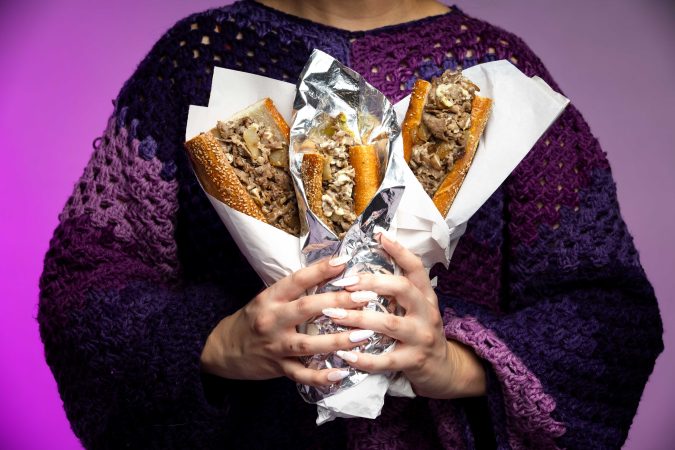
In Philadelphia, “the cheesesteak … defines the city’s entire culinary reputation internationally,” Harris wrote. The iconic sandwich with “shaved rib eye on a hoagie roll with Whiz, provolone, or American was invented by Pat Olivieri in South Philadelphia in 1930,” she continued. “Locals will tell you DiNic’s roast pork at Reading Terminal Market is actually the city’s best sandwich. That internal argument is part of what makes Philadelphia interesting.“
The cheesesteak is, for better or worse, depending on your point of view, No. 3 on The Inquirer’s 76 iconic Philly foods, with only one other sandwich — the hoagie — surpassing it. (Water ice was also rated above cheesesteaks on The Inquirer list.)
“The cheesesteak, much like the city in which it was invented, is a working-class sandwich,“ wrote Inquirer reporter Tommy Rowan. “Its rugged beauty is in its simplicity.“
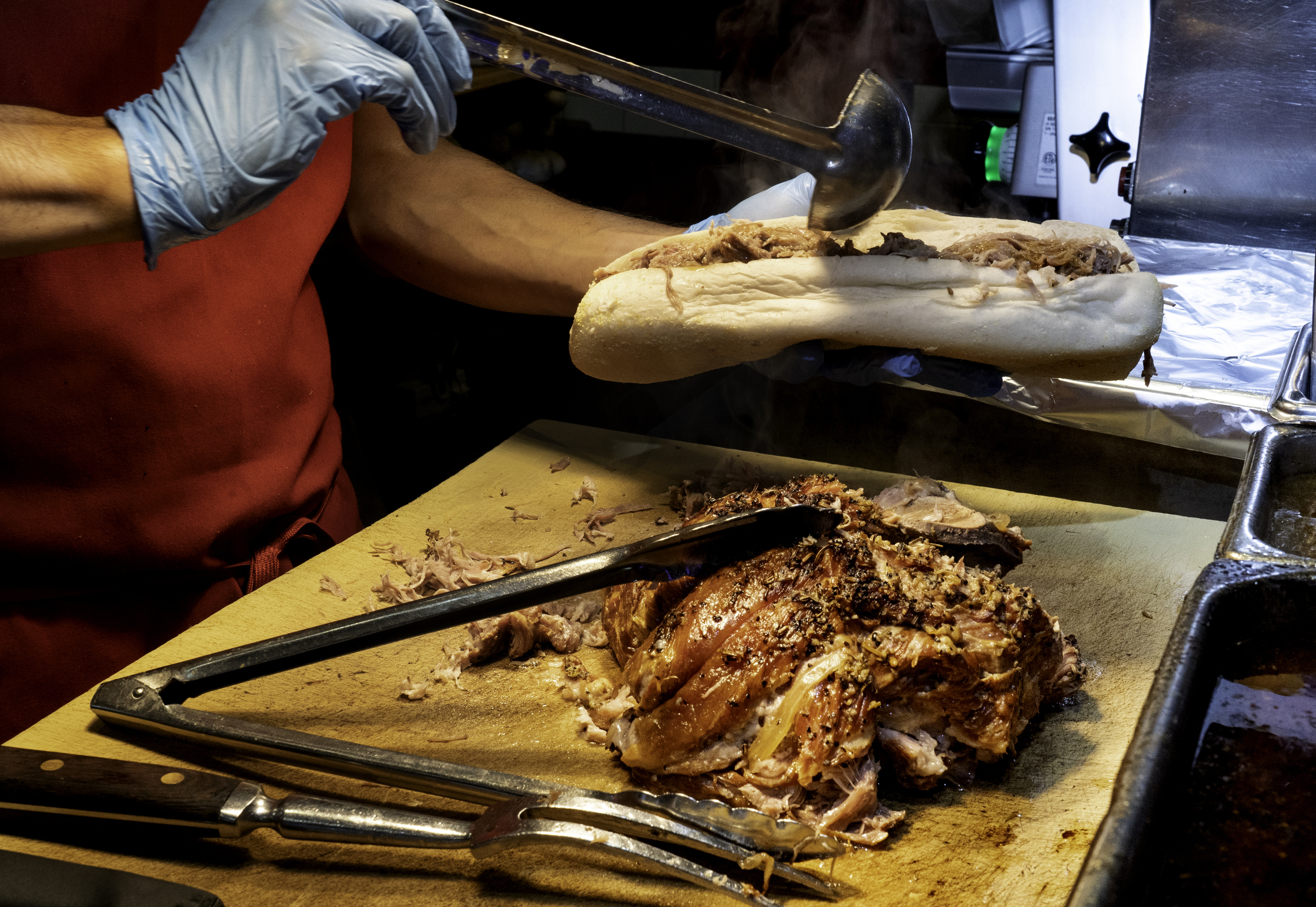
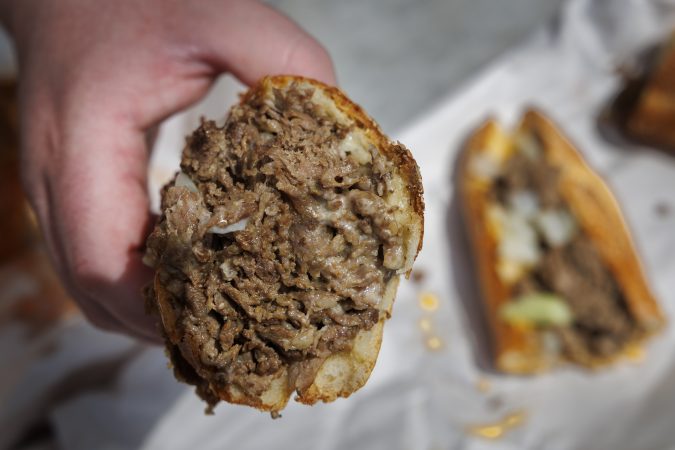
The pulled pork at DiNic’s Roast Pork, Reading Terminal Market, Tuesday, September 26, 2018, in Philadelphia. JESSICA GRIFFIN / Staff PhotographerJESSICA GRIFFIN / Staff Photographer
Guadalajara’s torta ahogada landed in first place, followed by the Viet-Cajun crawfish in Houston. Cabrito al pastor — young goat roasted over live coals — from Monterrey came in third; and the burnt ends — charred tips of a smoked brisket point — from Kansas was fourth.
And all the way in 15th place: New York pizza.
“New York ranks 15th not because its food is unremarkable, but because its most iconic dish has become the world’s most replicated food,” Harris wrote. “New York pizza is made everywhere from Tokyo to Nairobi. That is a consequence of the city’s cultural influence, not a failure of its food.”
But a great cheesesteak? Sorry, you have to come to Philly for that.
A South Philadelphia woman shot and killed her sister and granddaughter before turning the gun on herself Monday in what police described as a double murder and suicide.
The women, identified Tuesday as Janice Picano, 67, Denise Grottini, 55, and Angelina Picano, 18, were found dead inside a home on the 2800 block of South 10th Street, according to police.
Police responded to the residence around 5:30 p.m. and found the women with single gunshot wounds to their heads.
They were pronounced dead at the scene by medics at 5:38 p.m., police said.
Janice Picano, who investigators say fired the fatal shots, was Grottini’s sister and Angelina Picano’s grandmother, according to a law enforcement source.
A gun was found at the home and was taken into evidence.
Philadelphia’s ports ranked as the fastest in North America for the third year in a row, according to the latest annual Container Port Performance Index, sponsored by the World Bank and Standard & Poor’s as a way to encourage improvements to terminals that handle global trade and pack goods moving from the ocean to road and rail for delivery.
The survey gave Philadelphia the highest ranking of more than 50 ports in the United States, Canada, and Central America.
Boston and Jacksonville, Fla., ranked second and third. Philadelphia’s nearest neighbors — the New York area and Baltimore ports — ranked far behind. The list measures the time ships spend at port berths, the time from a ship docks until it is unloaded, crane availability, ship size, and other measures.
No North America port ranked among the 20 fastest of more than 200 surveyed worldwide. That list was dominated by ports in China and other parts of East Asia, in Arab and North African countries, plus Algeciras, Spain, and Posorja, Ecuador.
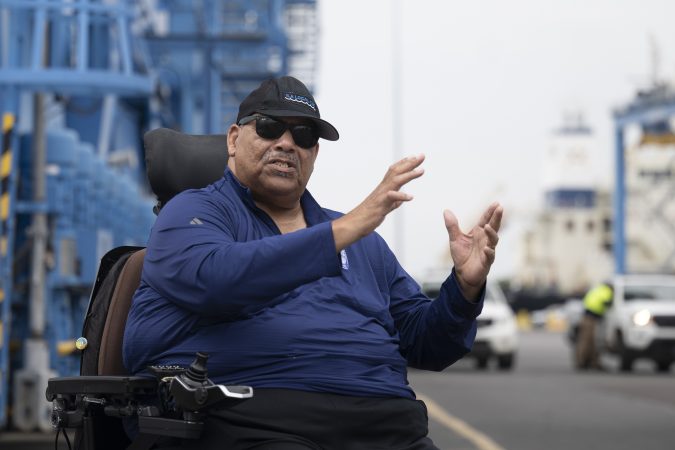
“This sometimes looks like chaos, but it’s organized chaos. It’s about teamwork,” said Boise Butler, president of Local 1291 of the International Longshoreman’s Association.
ILA is the main East Coast port labor union group, claiming more than 1,400 members on the Philadelphia docks, plus more in New Jersey and Delaware.
Butler said Philadelphia had long ago expanded its hours to attract shippers who were concerned that the terminals far up the Delaware estuary were more vulnerable to any delays.
Lazer credited “our very skilled labor” for handling large loads efficiently with minimum damage reports, according to commodity and container shippers.
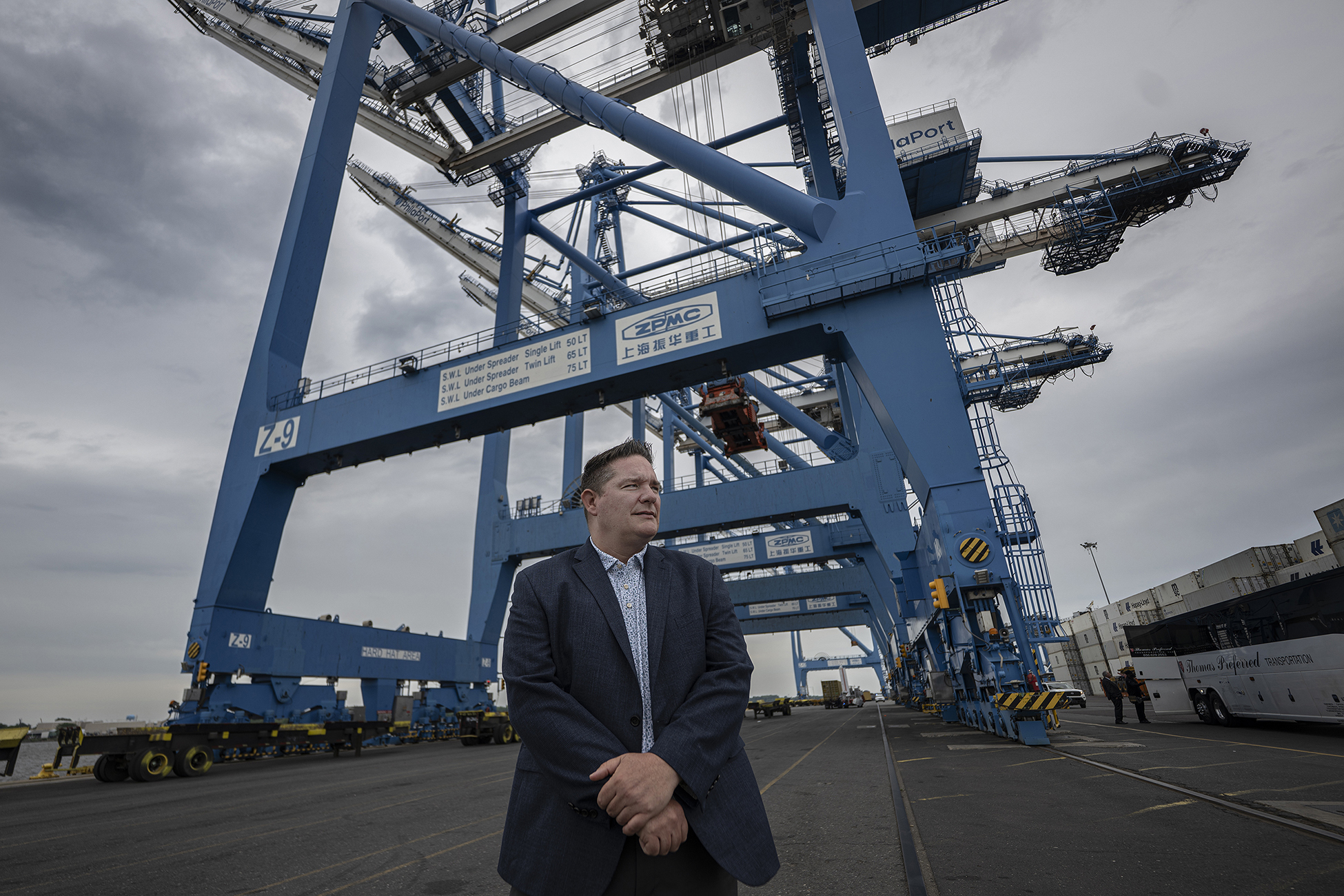
Richard Lazer, CEO of PhilaPort, near cargo cranes at the PhilaPort terminals. Lazer credits “our very skilled labor” for handling large loads efficiently with minimum damage reports.Jose F. Moreno / Staff Photographer
It is premium work. The Longshoremen’s contract currently pays experienced workers $50 an hour, rising to $54 in October, with overtime pay after five hours, Butler said. “If they’re not making $200,000 after five or six years, something’s wrong.”
But the ranking is “not just about labor,” Butler said. “It starts with the Commonwealth of Pennsylvania, what they have built, and their vision for this port.”
Leo Holt, whose family-owned shipping company operates on the Packer Avenue docks and at its own Gloucester City port terminals, said the latest high score is “credit to all parties.”
“It’s a partnership between labor and management that has taken a long time to refine,” Holt said, referring to last year’s report, which also put Philly at the top of North American ports. “We work hard at it.”
Butler said the port needs to expand beyond the recent record hauls of nearly 1 million containers a year if it is to challenge ports like Savannah, Ga., which he said shipped five times as many containers.
“We need more warehouses,” Butler said.
The state built or helped finance many of the port’s improvements and has pledged to lead expansion into part of the former Philadelphia Naval Base and the Norfolk Southern freight yard in South Philadelphia. Four cranes larger than any currently on the area dock and two new 1,000-foot berths are planned, Lazer said.
Philadelphia cargoes through the Tioga Marine Terminal near the Betsy Ross Bridge include wood pulp and cocoa beans moved and, recently, ship propellers and sheet and structural steel imported by Korean industrial giant Hanwha for transfer by barge back down the Delaware to Hanwha Philly Shipyard.
Besides containers, the South Philadelphia port that once handled iron and coal now ships fertilizer and cement. Korean cars from Hyundai and Kia also land in the port.
South American fruit, which once formed a significant part of the Philadelphia and Wilmington port totals, now goes mostly to ports in New Jersey, Butler said.
Angelo’s Pizzeria owner Danny DiGiampietro has been pursuing two ambitious goals: reviving a landmark Montgomery County bakery and opening a branch of his Michelin-recommended pizza-and-sandwich operation in South Jersey, where it all began.
Both projects now appear to be gaining momentum. While Angelo’s vaunted rolls are being baked at the former Conshohocken Italian Bakery property, which DiGiampietro purchased last year, the long-held plans to reopen the bakery’s counter to retail customers remain on hold. DiGiampietro said the building requires additional work, which he declined to specify. “Every time we fix one thing, something else comes up,” he said.
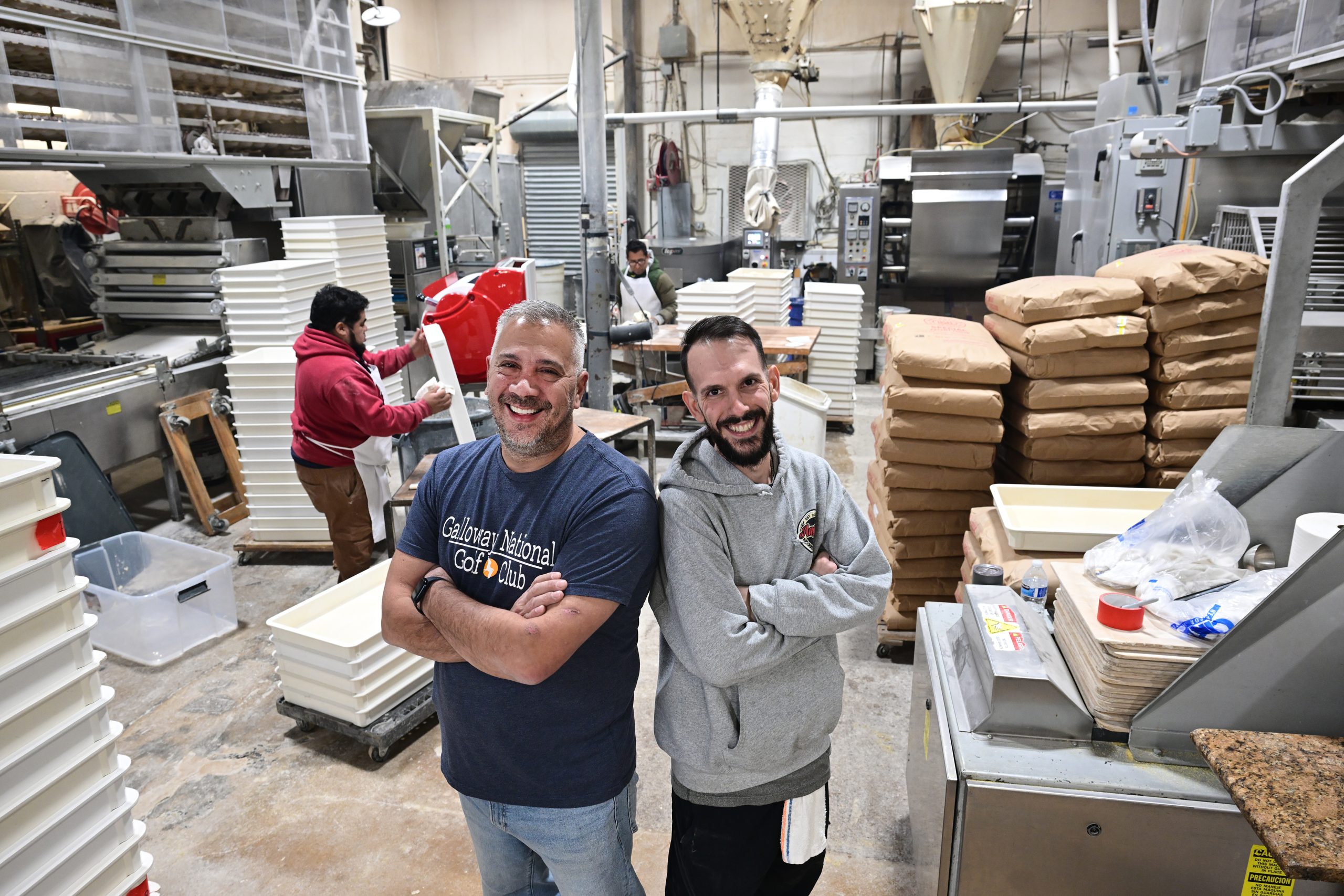
Danny DiGiampietro (left), owner of Angelo’s Pizzeria, with partner Jared Braunstein at the bakery in Conshohocken in December 2024.Jose F. Moreno / Staff Photographer
But Angelo’s is moving into wholesale bread production, the backbone of Conshohocken Italian Bakery’s business under the Gambone family for more than a half-century before its 2024 closing.
A key piece of the puzzle is on the way: a massive Polin oven imported from Italy to give his bakers more flexibility, DiGiampietro said.
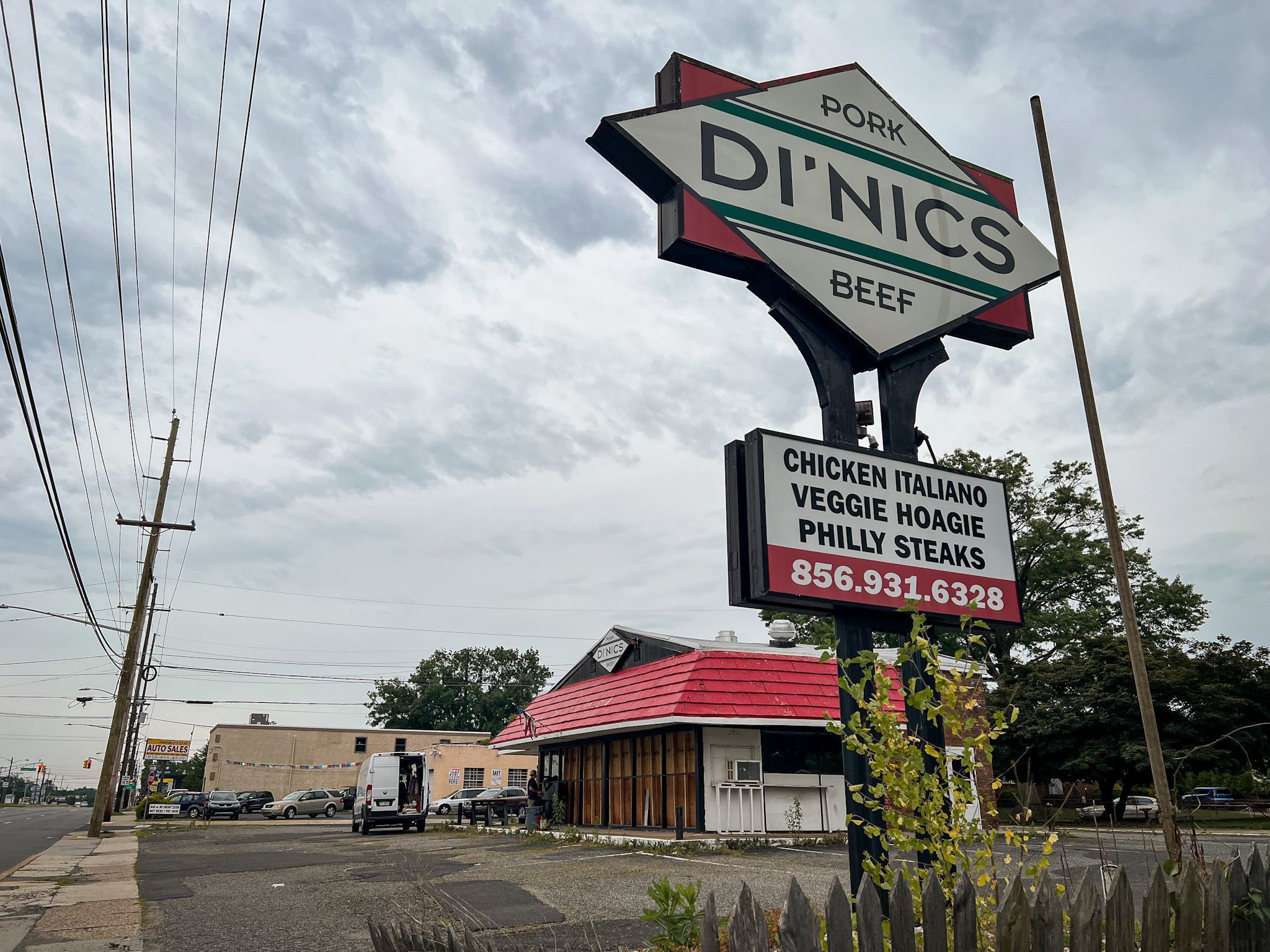
The future location of Angelo’s Pizzeria in West Collingswood Heights, previously Di’Nics, on June 18, 2026.Michael Klein / Staff
At “Conshy,” as the Jones Street bakery was known, the Gambone family supplied rolls and bread to hundreds of restaurants and sandwich shops throughout the region. Its closing created a frenzy among customers and competitors.
DiGiampietro said the new oven will allow bakers to create a line of kaiser rolls, potato rolls, steak rolls, and hoagie rolls. Although he will in effect be selling to his sandwich shop competitors, he likens it to giving shops “the canvas to make their art,” DiGiampietro said. “Everyone’s different.”
A return to wholesaling was not in the initial plans for DiGiampietro, who owned a bread bakery in South Philadelphia about 20 years ago. “I went bankrupt the first time. So hopefully I don’t go bankrupt again.”
Meanwhile, demolition and rebuilding are underway at the future Angelo’s Pizzeria location at 310 Black Horse Pike in the West Collingswood Heights neighborhood of Haddon Township, Camden County. The stand-alone building was formerly Di’Nics.
Crews recently gutted the building, which DiGiampietro hopes to transform into a full-service Angelo’s within the next several months.
The project will mark his return to New Jersey. DiGiampietro opened his first Angelo’s in Haddonfield in 2013 before closing it in 2018 to focus on the Ninth Street location in South Philadelphia, which opened in 2019 and helped turn Angelo’s into one of the region’s most sought-after pizzeria and cheesesteak shops.
The Angelo’s in West Collingswood Heights, about 10 minutes from the Walt Whitman Bridge, will include table seating as well as a counter overlooking the kitchen. Initially, DiGiampietro wanted more seating. Then he began talking about a takeout-only operation.
“But people love the show,” he said. “They like to see everything happening.”
The build-out still requires installation of a pizza oven, walk-in refrigeration, and other equipment. Even so, DiGiampietro believes the compact space can work.
“We think we can keep a dining room and still fit everything we need in there,” he said. “It’ll be tight, but we work on Ninth Street in basically a submarine, so how much tighter can it get?”
Each week, The Inquirer takes readers into a different home in the Philadelphia area, and its residents share what makes the place special.
They may mention the neighborhood, their custom renovation, or their antiques and thrifted treasures. Sometimes it’s the backyard where they cultivate life or the kitchen where they cook for family.
As our photographers work to capture the essence of these houses, apartments, condos, and gardens, they often come across the cats and dogs who live there, too. So this week, we’re going back to some of our Philly-area havens from the past year and taking a look through the eyes of the pets who live there.
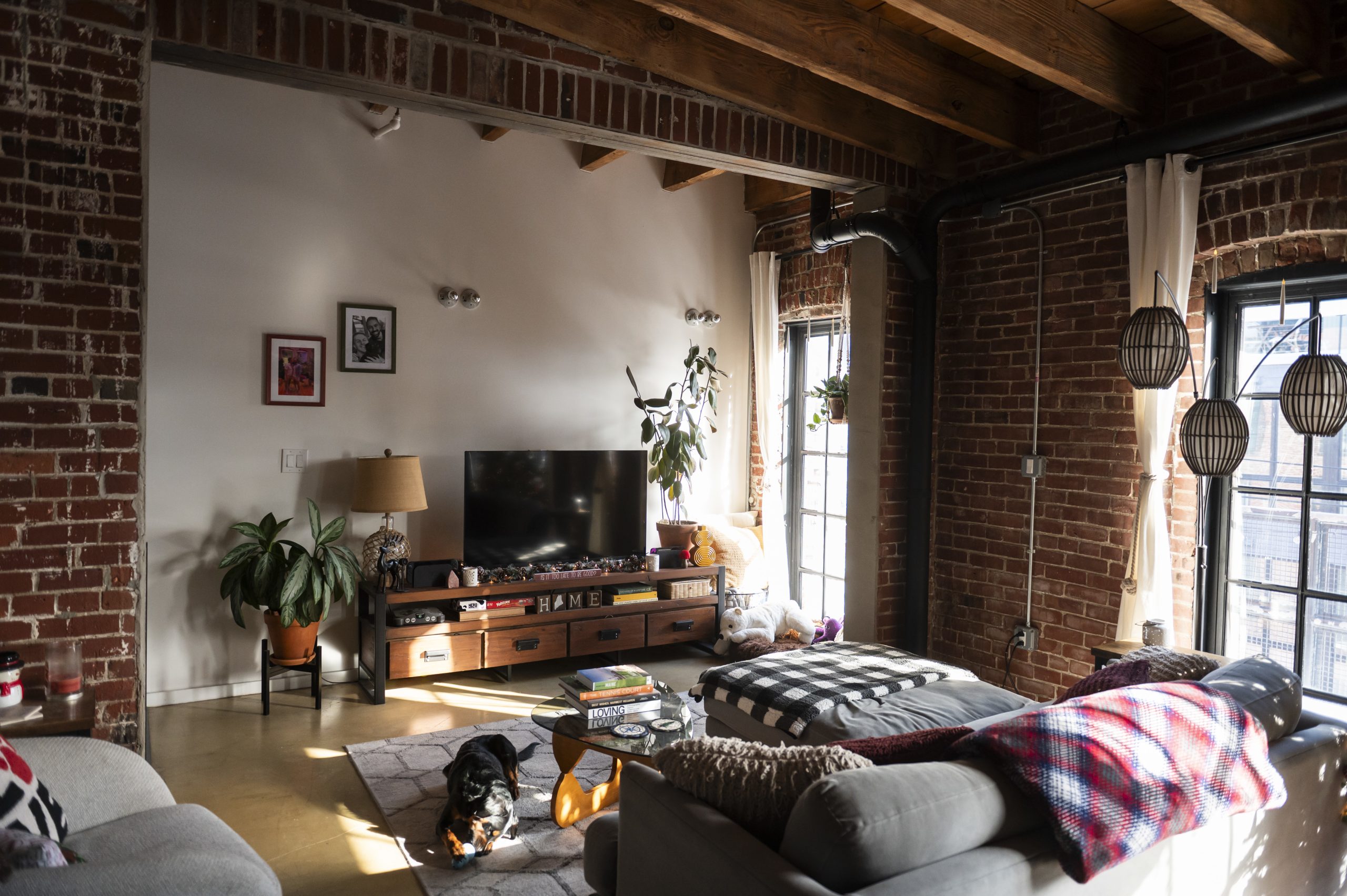
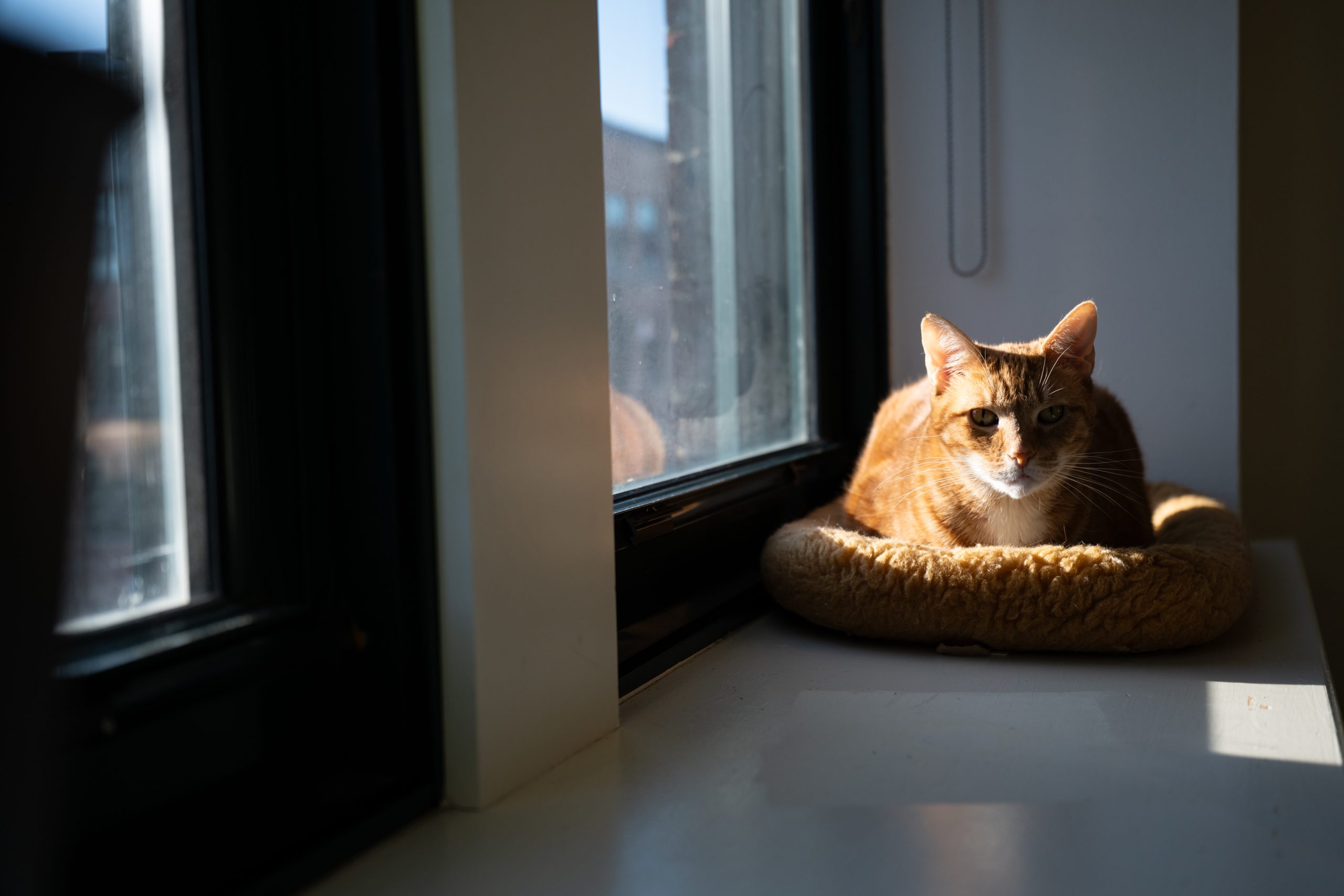
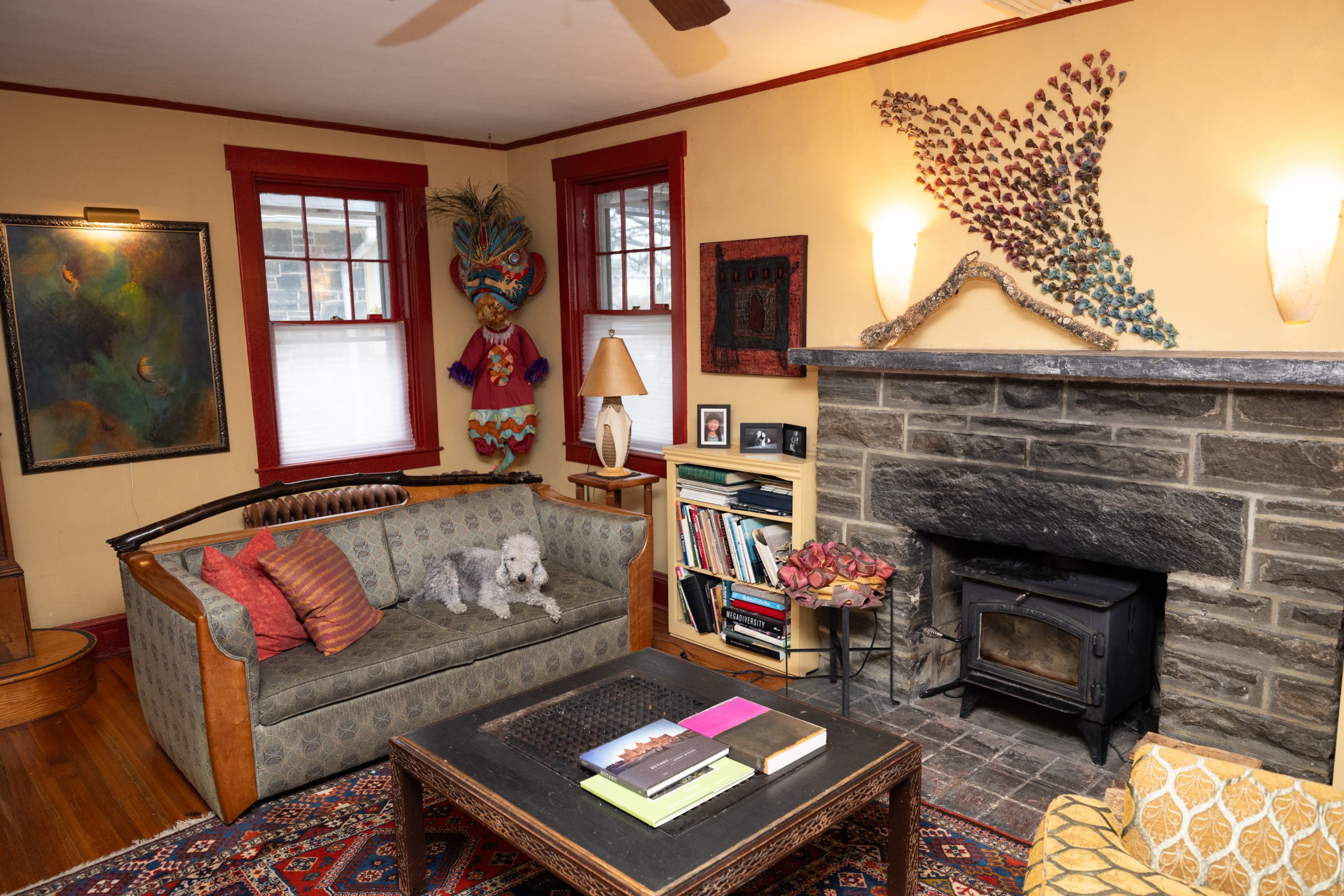
Dipplin the dog plays with a toy in his Fishtown home’s living area, soaking in the sun despite the chill of the January day outside.Allie Ippolito / For The InquirerMark Paulson and Allison Langer’s cat, Frankie, rests in the living room of the couple’s Fairmount-area apartment.Erin Blewett / For The Inquirer
Any city dweller, animals included, will tell you natural light is a coveted commodity. Dipplin the dog, who lives with Hunter Pippin and Kedzie Teller in Fishtown, has mastered the art of finding the sunspot. But his favorite part of the apartment, of course, is its two balconies ideal for people- and dog-watching, Pippin said.
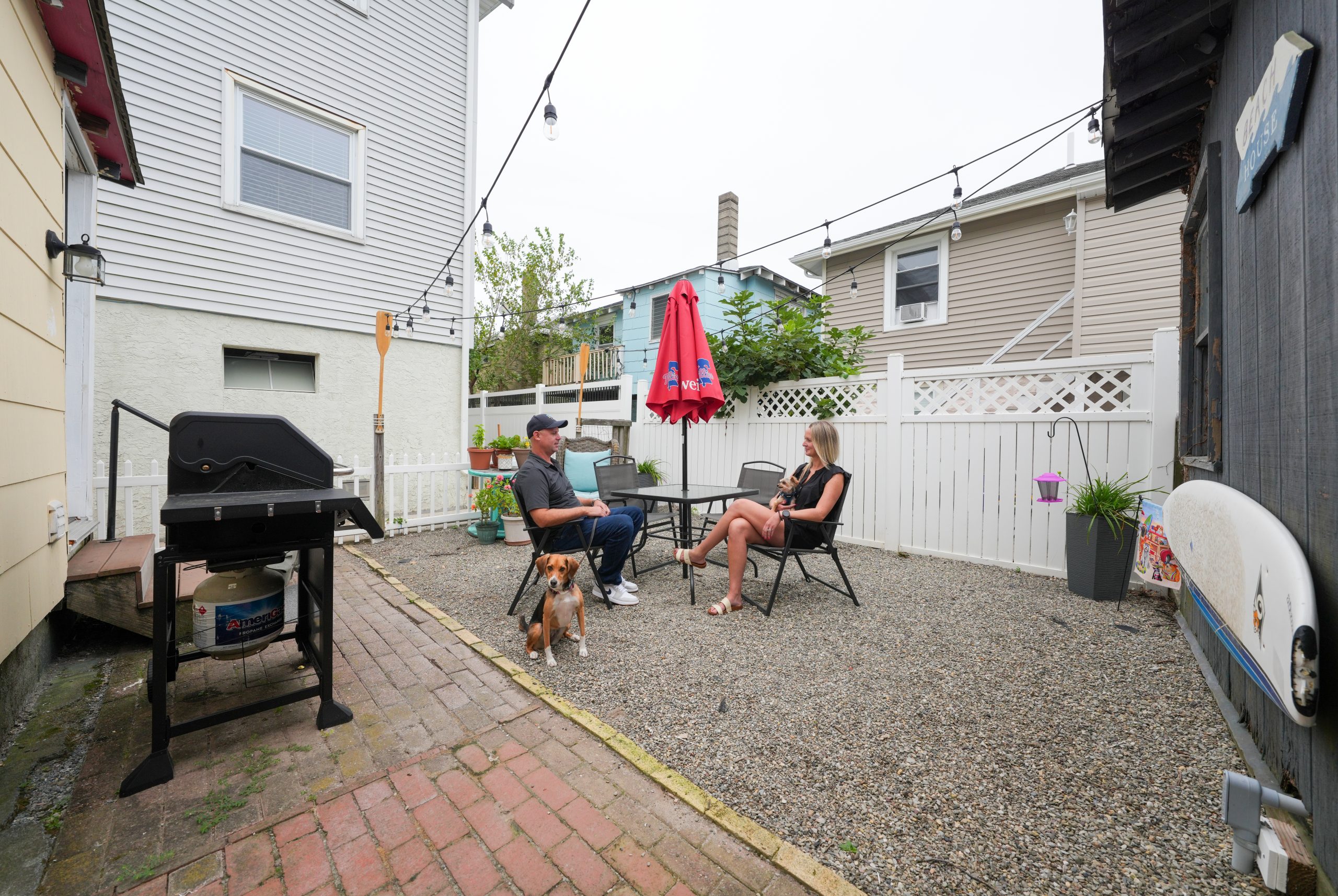
For Claire the beagle and Conrail the teacup Yorkie (aka Connie), sunny days are even better at the Shore. Behind their bungalow in Ventnor, Amy and Zachary Bell added a fence so the two pooches can romp in the backyard. They also recently added a deck with a bay view, where the two dogs enjoy watching the sunset.
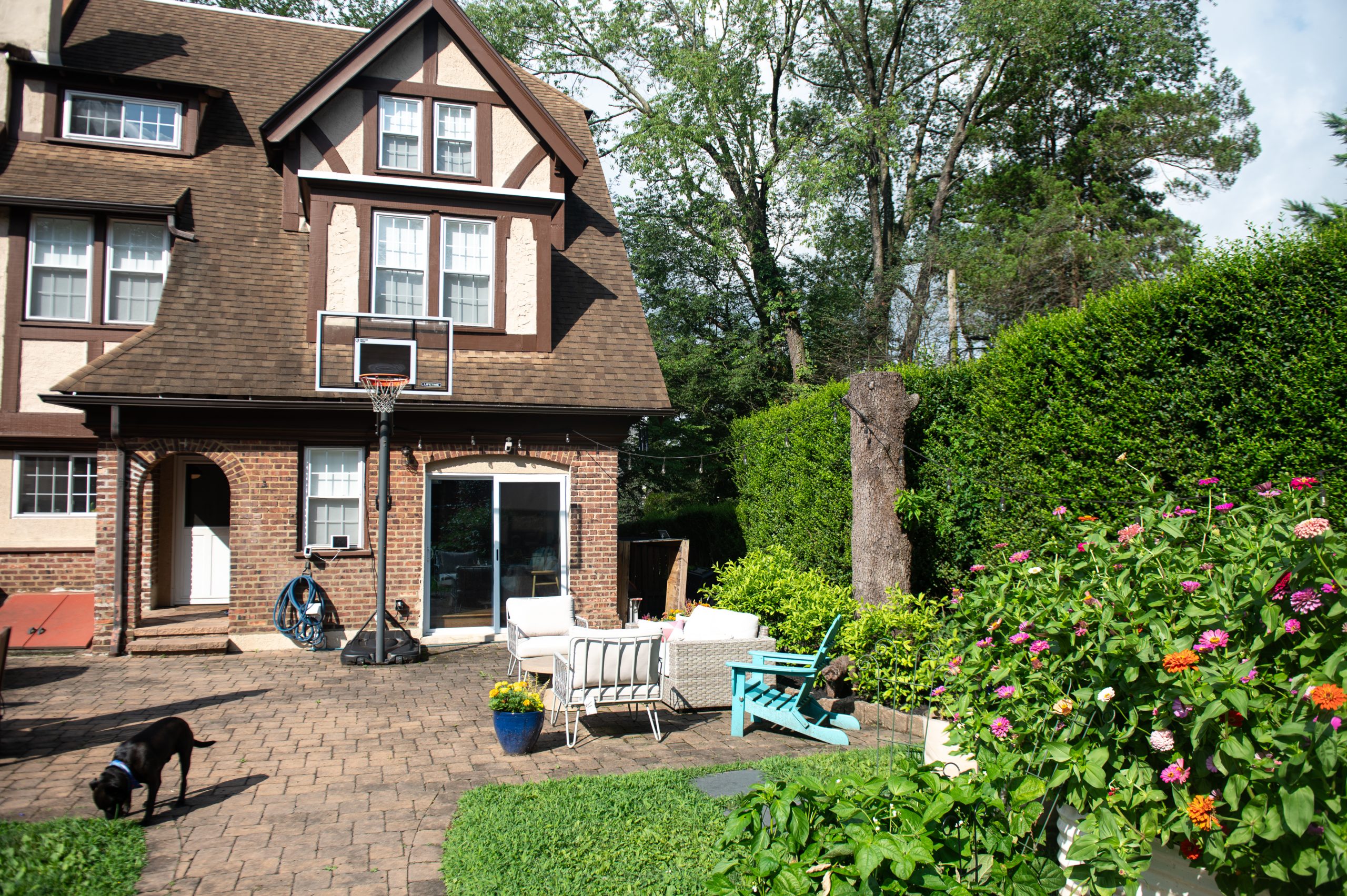
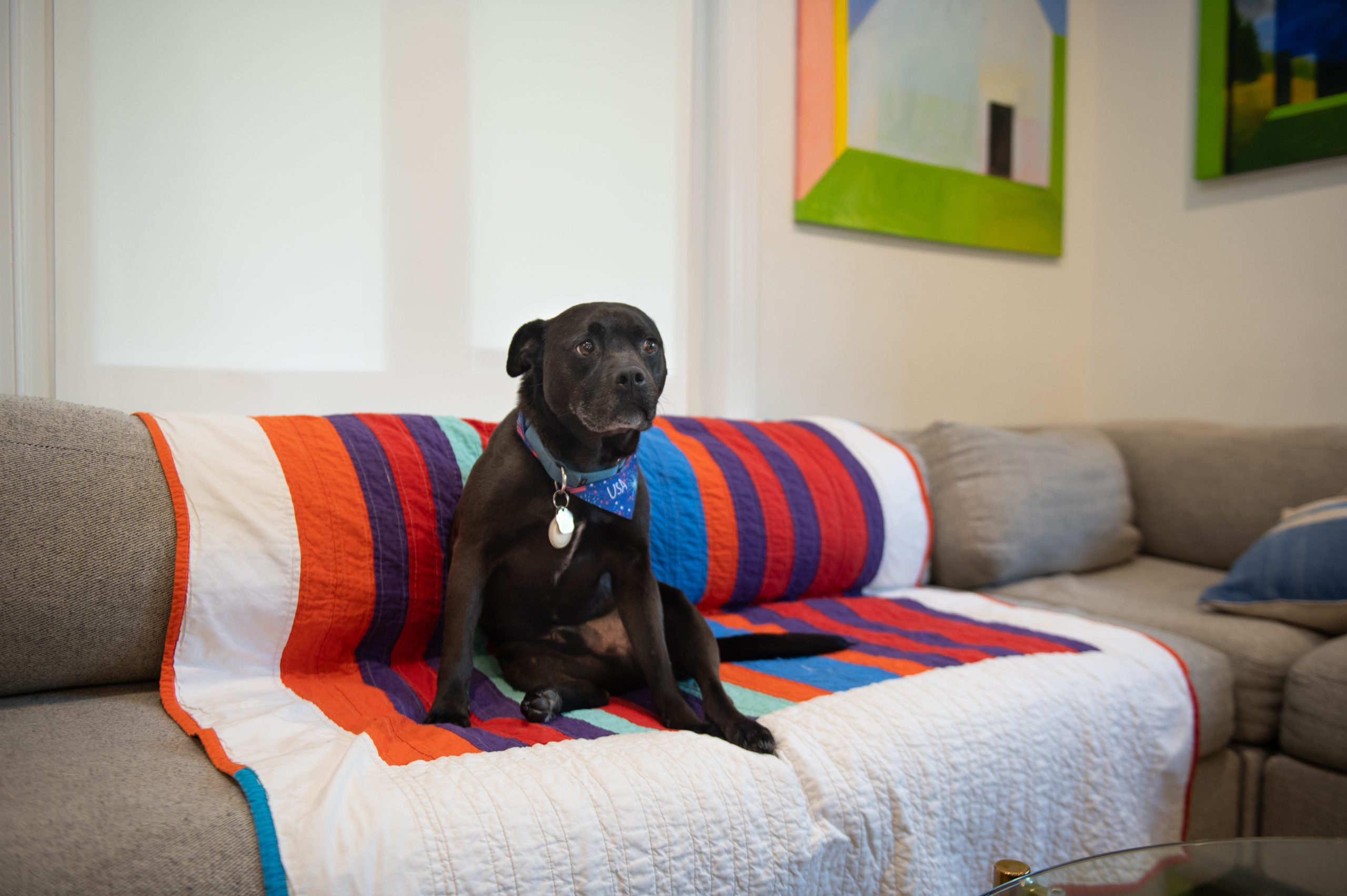
Sunbathing is a favorite pastime for Cruz, a pitbull-black Lab mix who lives in East Falls with Caroline Patten. The back patio is Cruz’s favorite place to be, Patten said.
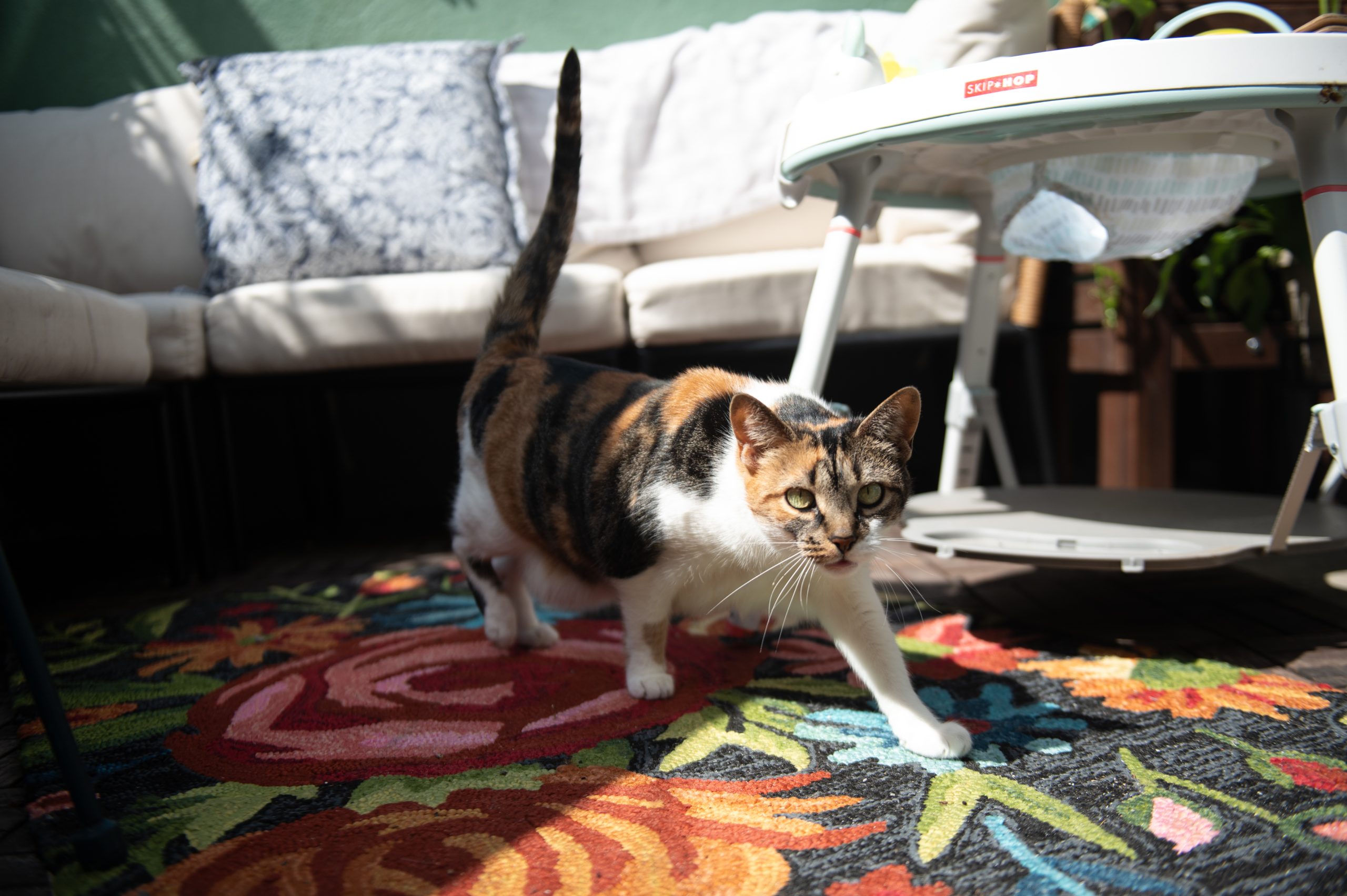
Amy and Zachary Bell of Hammonton sit in the backyard of their Ventnor beach home with Claire, a 3-year-old beagle, and Connie, a 14-year-old Yorkshire terrier.Tim Hawk / For The InquirerCaroline Patten’s dog, Cruz, sniffs the patio behind her home in East Falls, where he loves to relax in the sun.Erin Blewett / For The InquirerDanielle and Jonah Abrams’ cat, Paloma, walked over a decorative rug in the couple’s South Philly backyard last September.Erin Blewett / For The Inquirer
Paloma the cat, who lives with Danielle, Jonah, and Miriam Abrams in South Philadelphia, also enjoys backyard living. But she’s just as comfortable on the ivory sectional in their living room, which they chose in part for its pet-proof fabric and ability to hide cat hair.
And why not splurge on a pet-friendly piece of furniture? After all, some say the couch is the heart of the home.
These comfort-loving dogs couldn’t agree more.
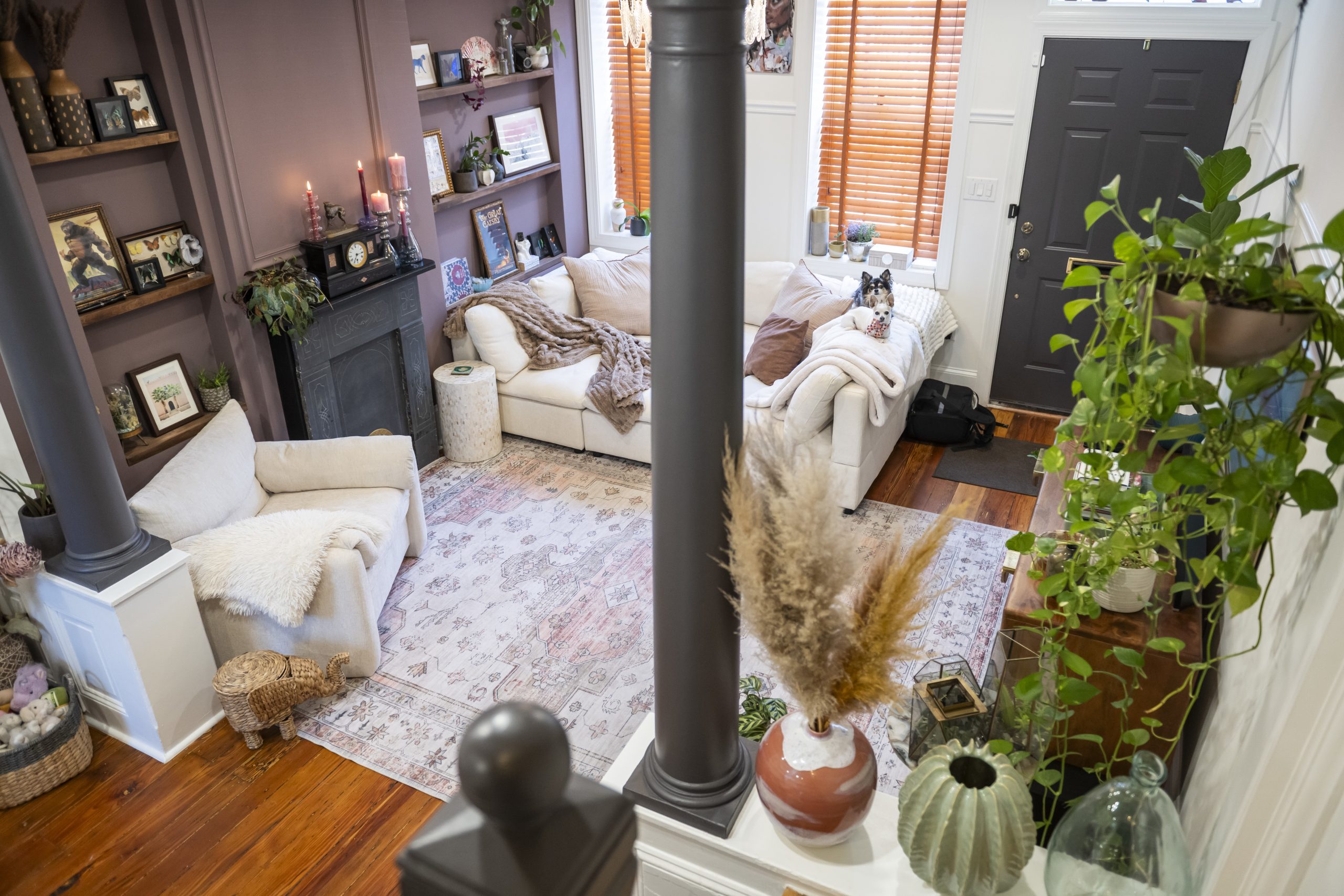
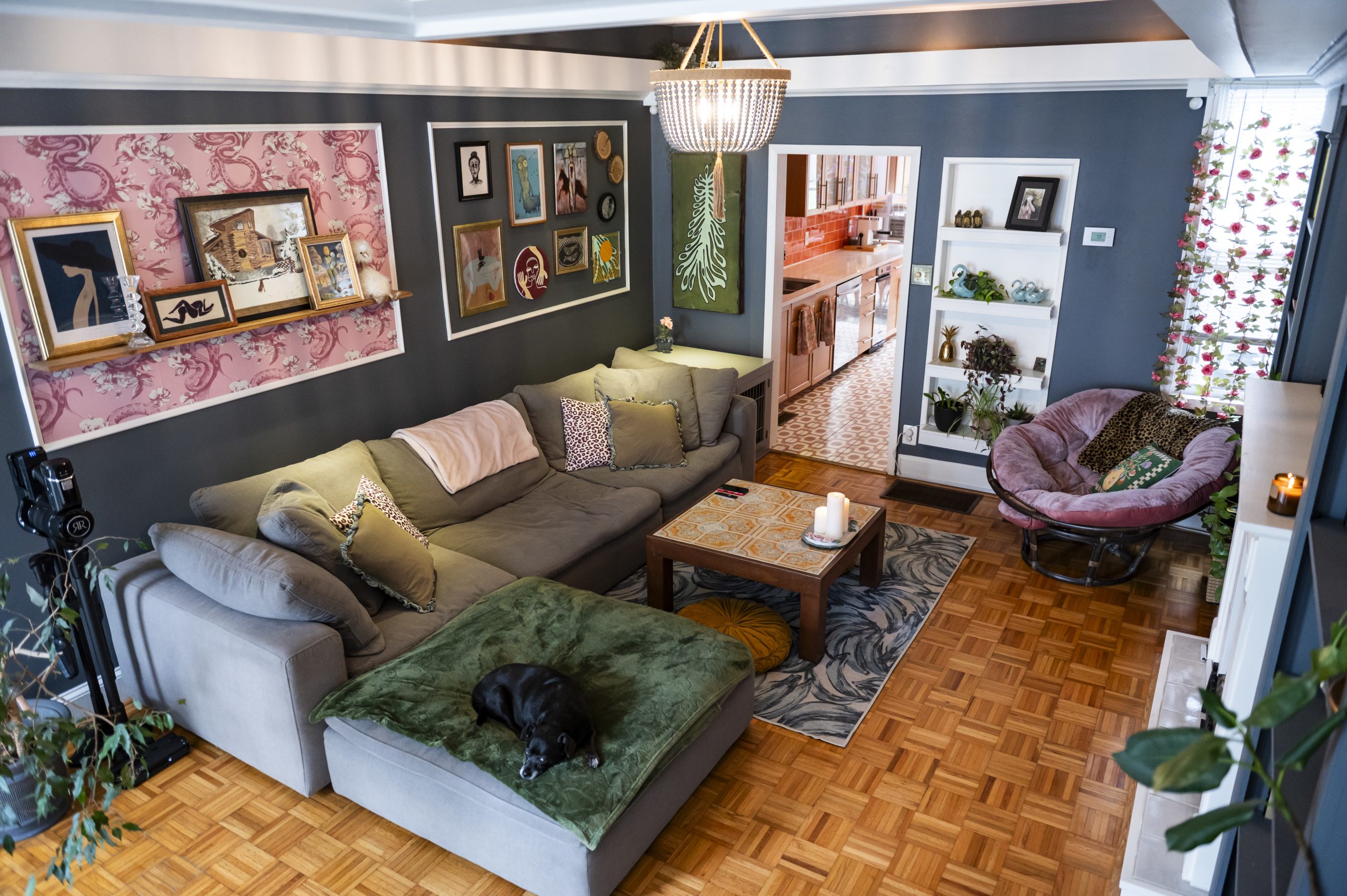
Mya and Sage have plenty of space to recline on the plush couch in Nicala La Reau’s home in Fishtown.Allie Ippolito / For The InquirerCruz the dog sits on a quilt draped over the couch in Caroline Patten’s East Falls home.Erin Blewett / For The InquirerSophia Khan’s 12-year-old chihuahua mix, Paolo, lounges on the sectional in her colorfully designed living room in Kensington.Allie Ippolito / For The InquirerCarla Krash’s dog, Farfel, feels right at home on the couch in the art-filled living space of their Narberth home.Erin Blewett / For The Inquirer
For feline family members, sometimes the best place to relax is where they can hide in camouflage.
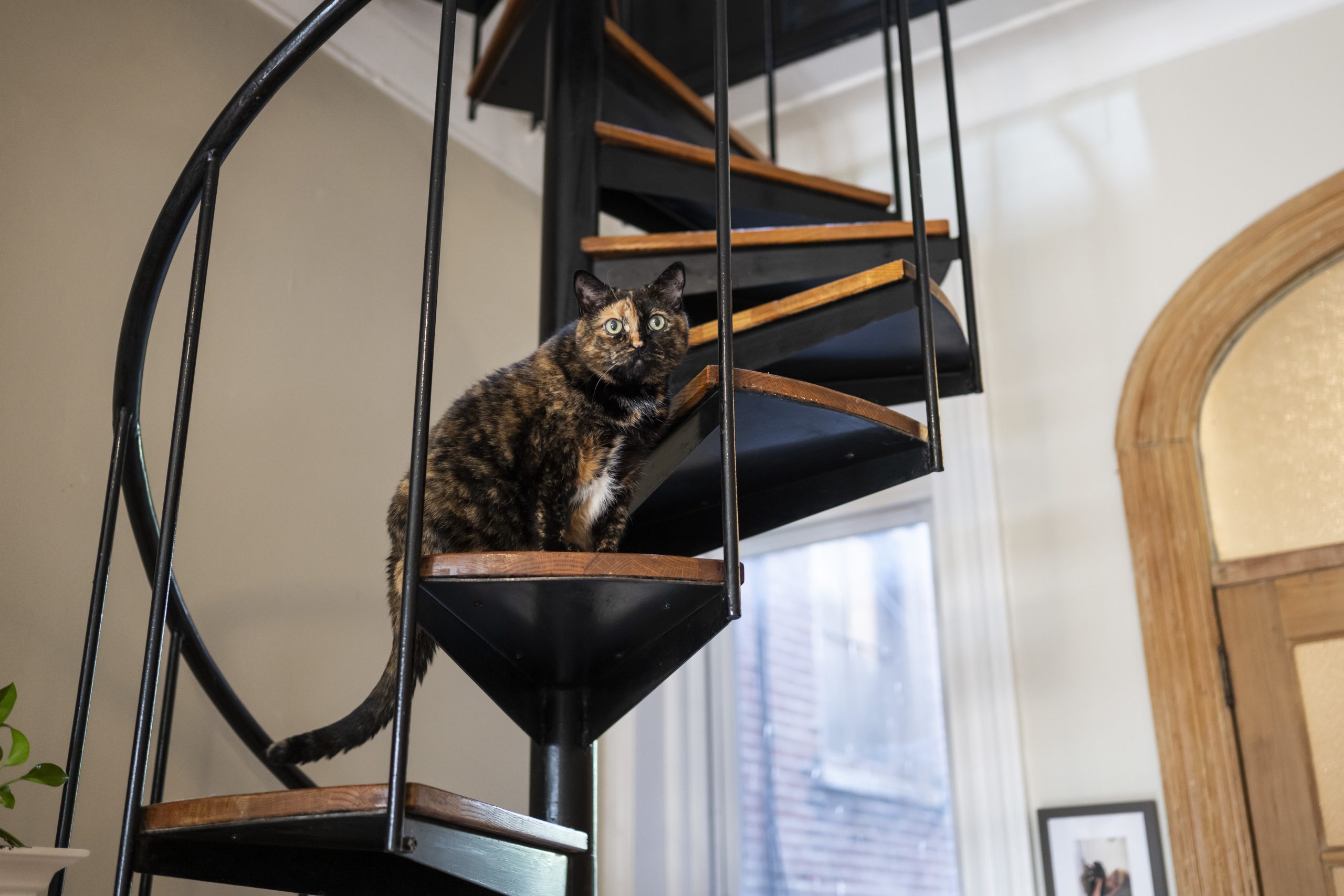
The spiral staircase in Billie’s Fitler Square Victorian almost perfectly matched her coloring. It also served as a perfect vantage point for watching over the home that Billie, who recently died at the age of 16, shared with Natalie LaBossier.
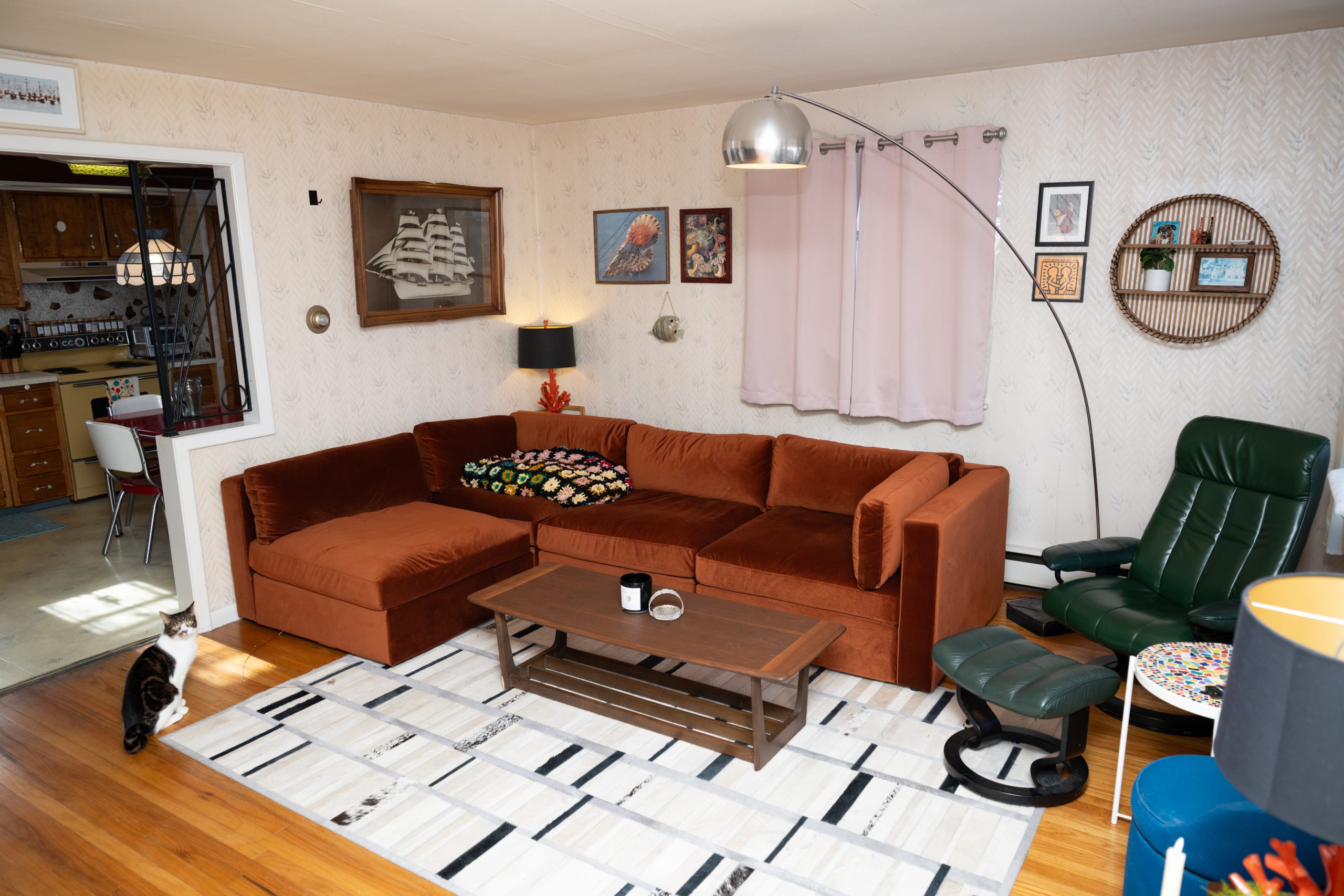
For Frogbert the cat, it would be easy to go unnoticed on the black, white, and gray patterned rug in his mid-century modern living space. It really ties the room together at his home in Clifton Heights, where he lives with Genevieve DeChellis and Jesse Blankschen, as well as Ladybug the cat and Carl the turtle.
Billie the cat, who lived in Fitler Square with Natalie LaBossier, on the a spiral staircase. LaBossier said 16-year-old Billie died several weeks after their home was featured in The Inquirer and “after a lifetime of being the center of attention at dinner parties.”Allie Ippolito / For The InquirerGenevieve DeChellis’ cat, Frogbert, coordinates perfectly with a black and white rug at her home in Clifton Heights.Erin Blewett / For The Inquirer
But not all cats like to blend in.
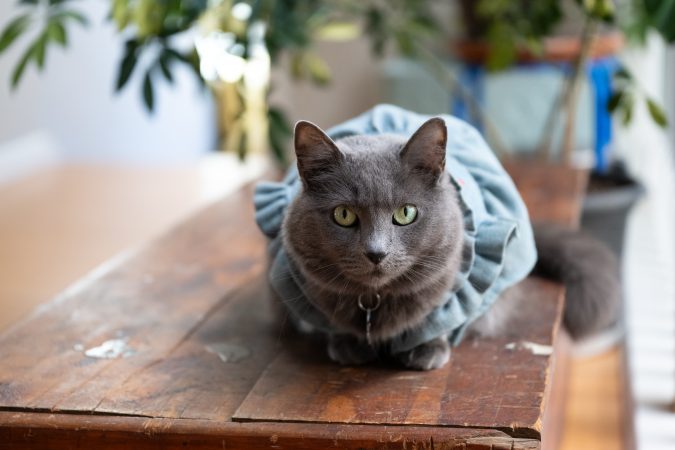
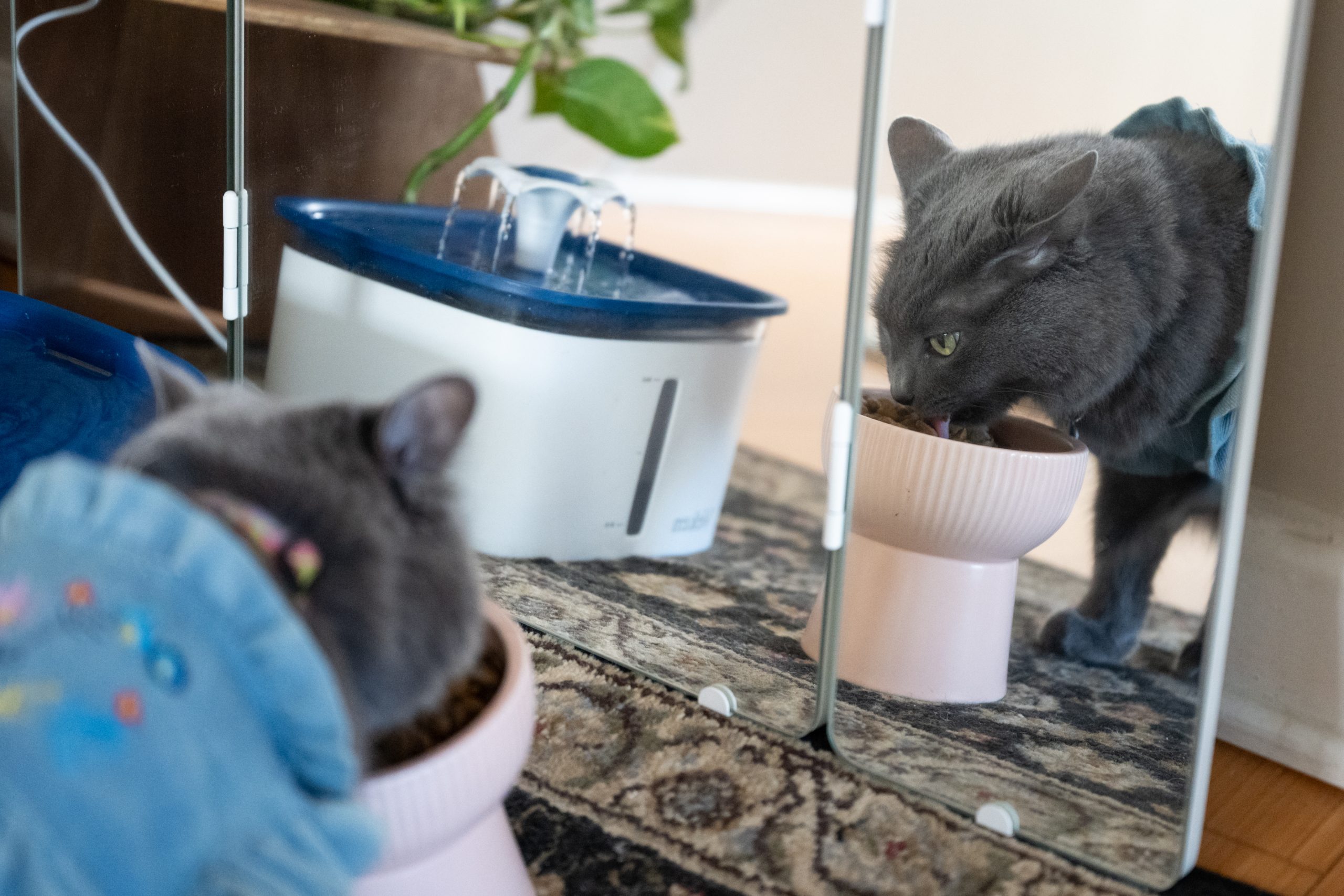
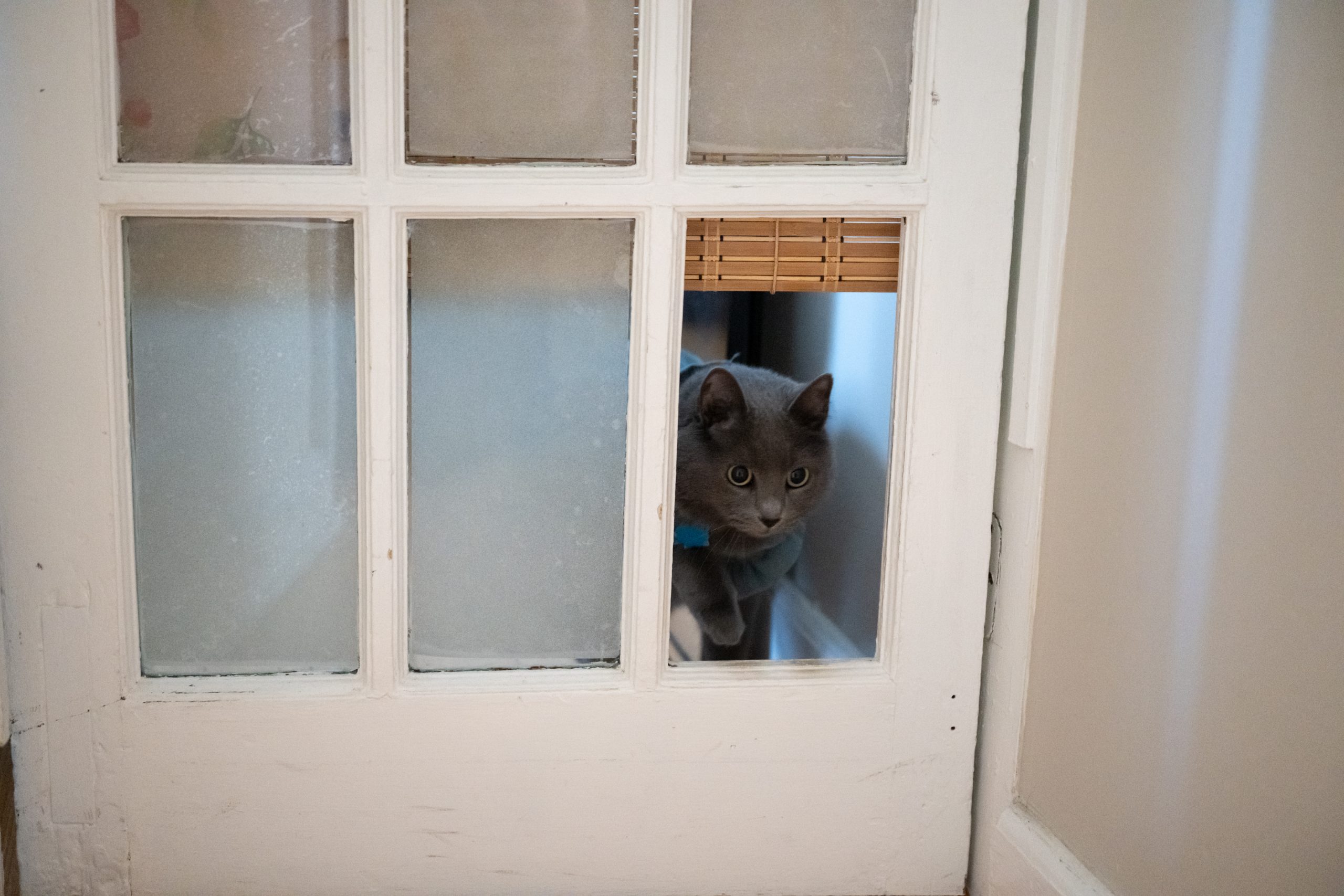
Olive, who lives in a Bella Vista apartment with Allie Osipov and Claire Borgerding, enjoys the small luxuries of her home that, like her wardrobe, allow her to stand out from the crowd.
This city cat has a dining space outfitted with a drinking fountain, a dish elevated on a pedestal, and a mirror to make the area feel even more abundantly bright and spacious.
It’s snack time for Olive the cat, who lives with Allie Osipov and Claire Borgerding in Bella Vista.Erin Blewett / For The InquirerA missing glass panel on the door to Osipov’s bedroom is no flaw at all — it provides the perfect portal for Olive to come and go.Erin Blewett / For The Inquirer
Pets don’t get to choose where they live — if they ever find a way, sign me up to watch that House Hunters spin-off series.
But they often spend more time at home than the people they live with. So perhaps they’re the experts on what makes it just right.
Is your house a Haven? Nominate your home by email (and send some digital photographs) at properties@inquirer.com.
The soft-shell crab is one of the pleasures of late spring and summer. They offer the sweet, briny flavor of fresh blue crab wrapped in a delicate, edible shell that turns crisp when cooked.
This year’s season, however, appears to have been compressed.
Soft-shells are blue crabs that have recently shed their hard outer shell and are briefly in a soft, vulnerable state. Anthony D’Angelo of South Philadelphia seafood distributor Samuels Seafood said warmer water temperatures brought on the crab molt early, while fewer marketable peelers, weather interruptions, and normal predation left restaurants with fewer crabs and a shorter window.
Volume this year is down about 20% from last year, yet prices last year were about 15% higher, D’Angelo said.
As an example, D’Angelo said jumbo soft-shells sold for an average of about $98 a dozen in May, compared with roughly $117 a dozen during the same period last year. Another run of crabs from the Carolinas is expected in late August or early September, likely at lower prices, he said.
Many restaurants are offering soft-shells when they can get them. Blue Corn in the Italian Market recently featured them as tacos with mango slaw, guacamole, fresh jalapeño, and microgreens.
Others keep them on the menu throughout the season. Soft-shells remain one of the more expensive seafood items. Several restaurateurs said they are paying $95 to $100 a dozen for jumbo crabs. Given that many restaurants target food costs of roughly 30% to 33% of menu price, that is one reason a soft-shell dish can easily top $30.
For chef Randy Rucker, who serves soft-shells at both River Twice and Little Water, the annual ritual is worth the cost and unpredictability. “When they’re available, we grab them,” he said. “They’re special. They’ll always be special.”
Here are some of the dishes I’ve found. As always, call ahead to confirm availability.
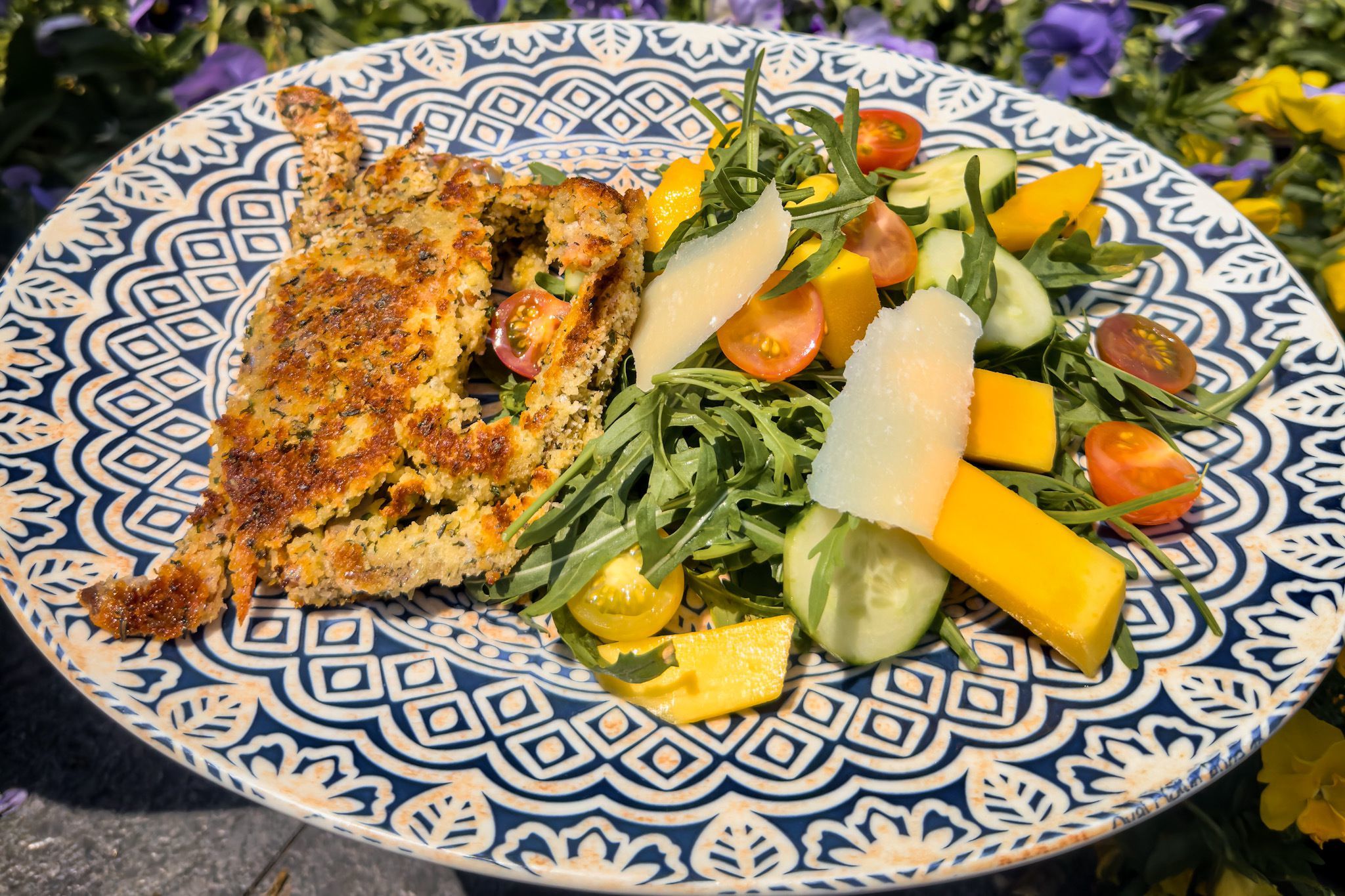
Soft-shell crabs, herb crusted over an arugula salad with tomatoes, cucumbers and mango, at Caffe Aldo Lamberti, 2011 Marlton Pike, Cherry Hill.Courtesy of Caffe Aldo Lamberti
Caffe Aldo Lamberti, Cherry Hill
Chef Genaro “Jerry” Ventura changes the preparation of his crabs frequently at this Italian destination. Last week, he crusted soft-shells with herbs and served them over arugula with tomatoes, cucumbers, and mango. Another preparation paired pan-seared soft-shells with squid-ink linguine, garlic, extra-virgin olive oil, tomatoes, and snap peas. Expect to pay about $28 for one crab at lunch or $45 to $48 for two at dinner.
Condesa, Center City
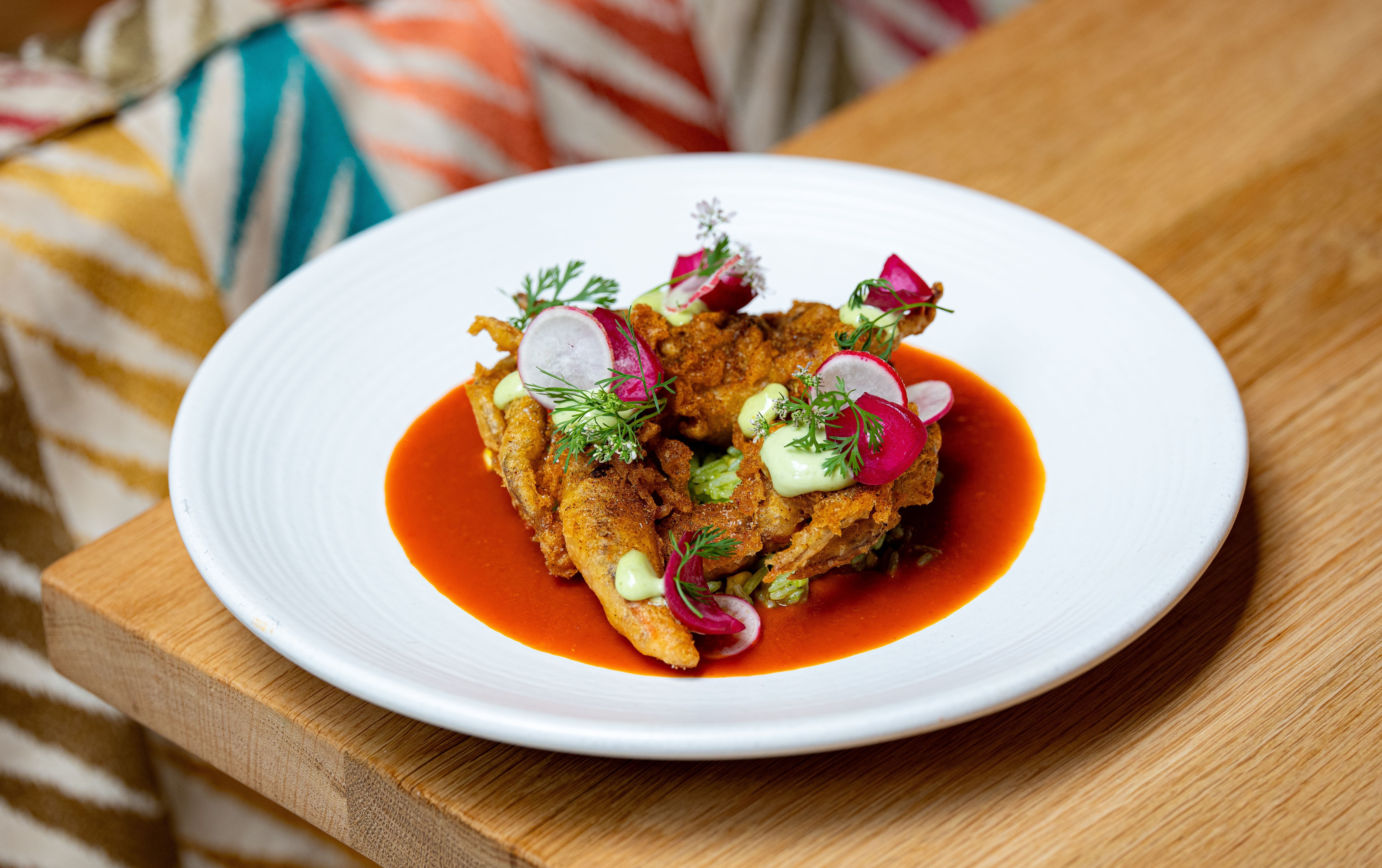
At this Mexican restaurant, chef Jason Peabody’s crab relleno features beer-battered soft-shell crab with green rice, salsa roja, and epazote mayo ($34).
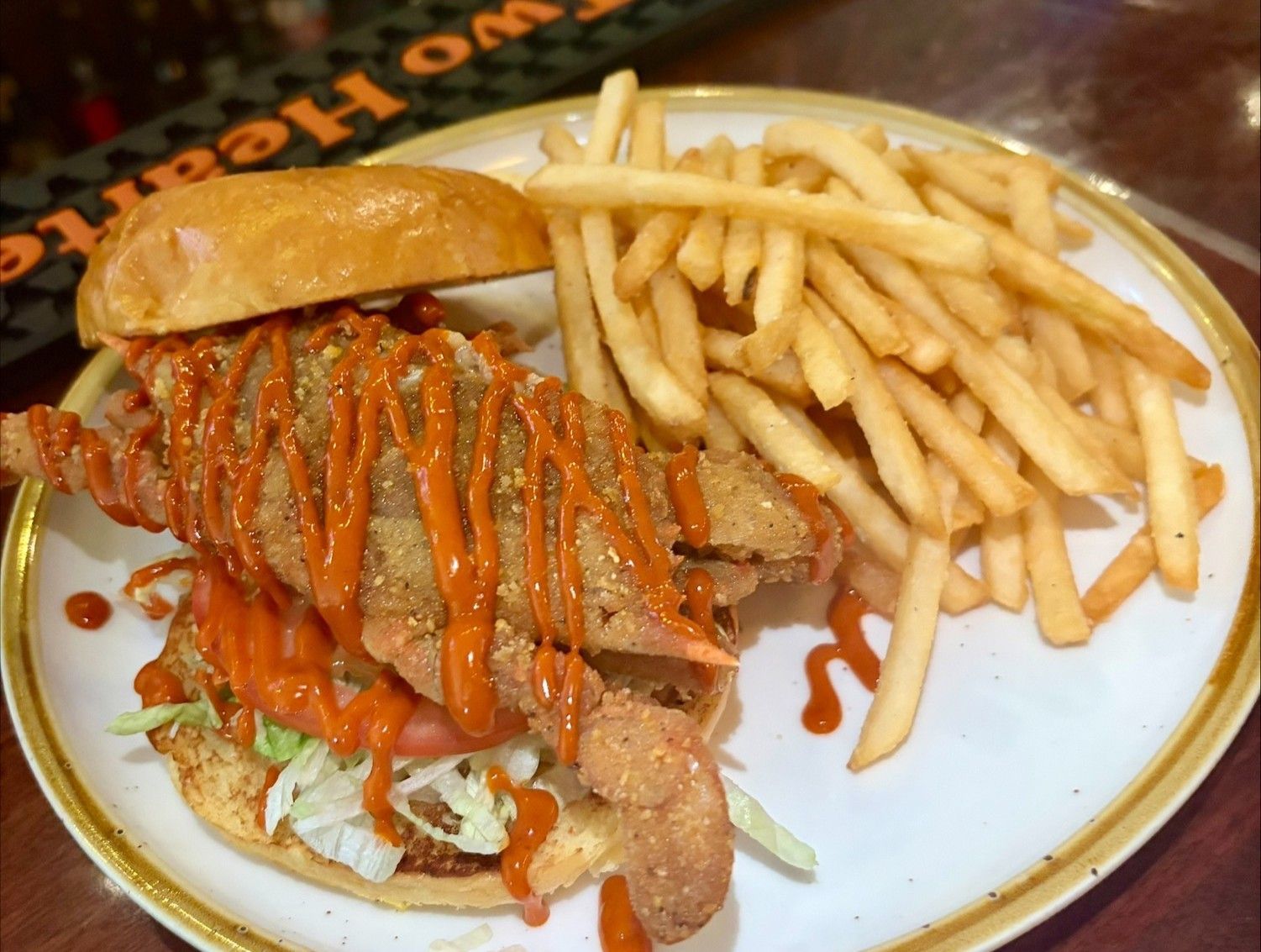
At the Crossbar (2225 Darby Rd., Havertown), a soft-shell crab sandwich is deep fried and topped with a smoky house- made harissa aioli, lettuce, and tomato and served on Le Bus brioche bun.Courtesy of the Crossbar
The Crossbar, Havertown
This Delco taproom’s soft-shell is battered and fried, then topped with smoky house-made harissa aioli, lettuce, and tomato on a Le Bus brioche bun ($24).
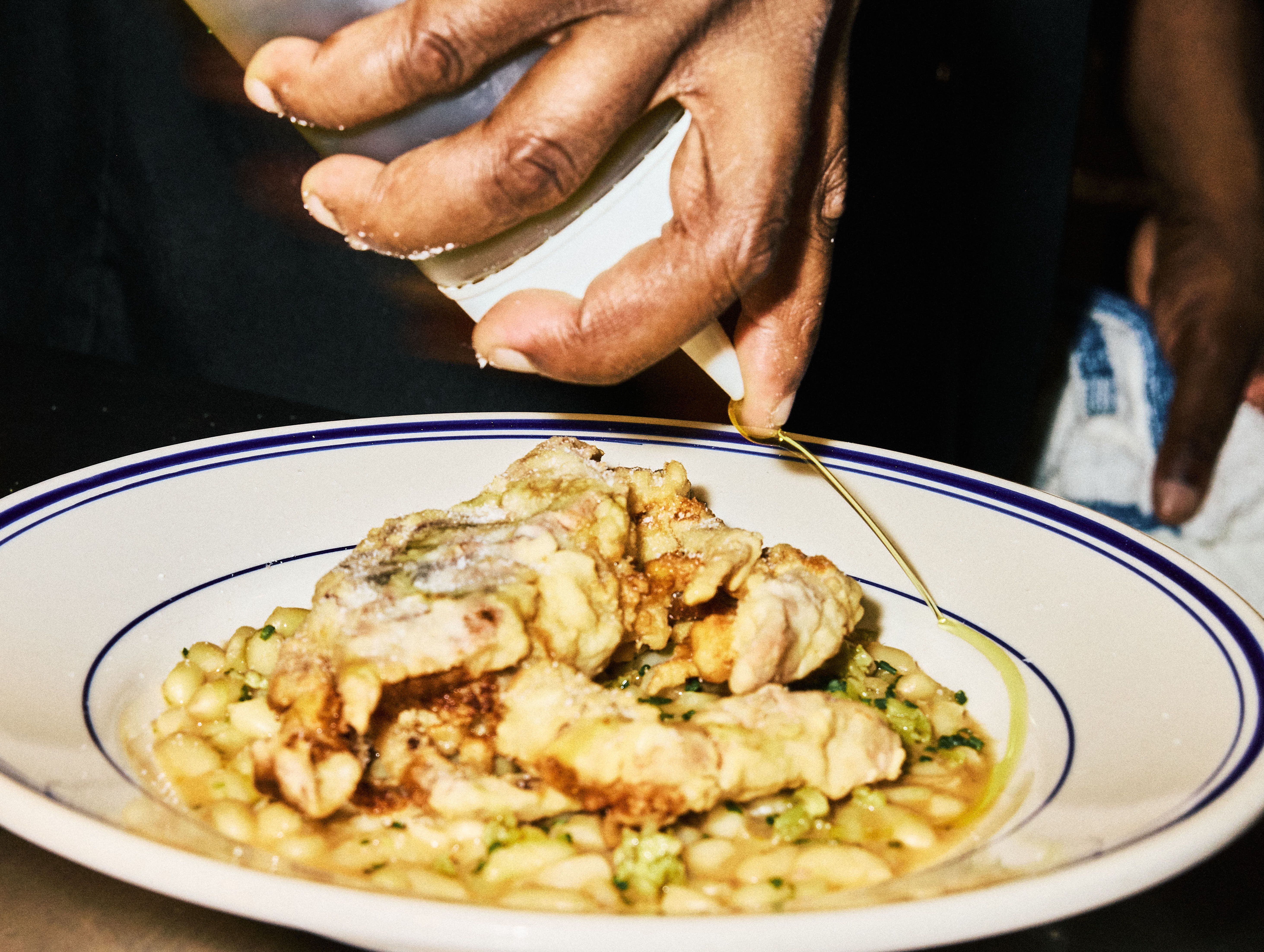
Soft-shell crab with flageolet beans, tapenade, and preserved lemon at the Good King Tavern, 614 S. Seventh St.Ed Newton
The Good King Tavern, Bella Vista
The French bistro has featured soft-shell crab as a chalkboard special with flageolet beans, tapenade, and preserved lemon ($32).
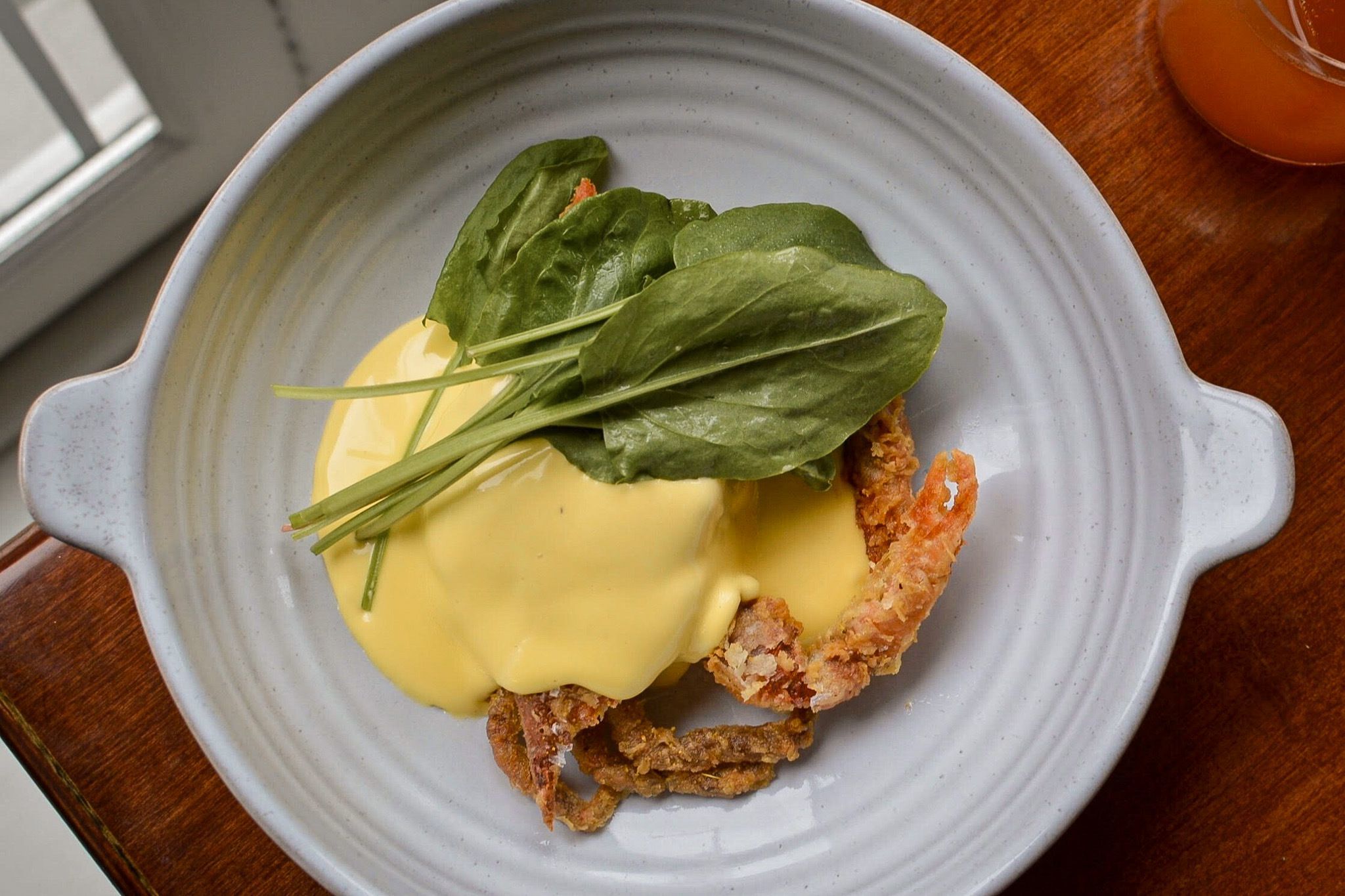
Chicken-fried soft-shell crab with vin jaune hollandaise and sorrel at Little Water, 261 S. 20th St.
.Courtesy of Little Water
Little Water, Center City
This seafood restaurant’s chicken-fried soft-shell crab comes with vin jaune hollandaise and sorrel ($42).
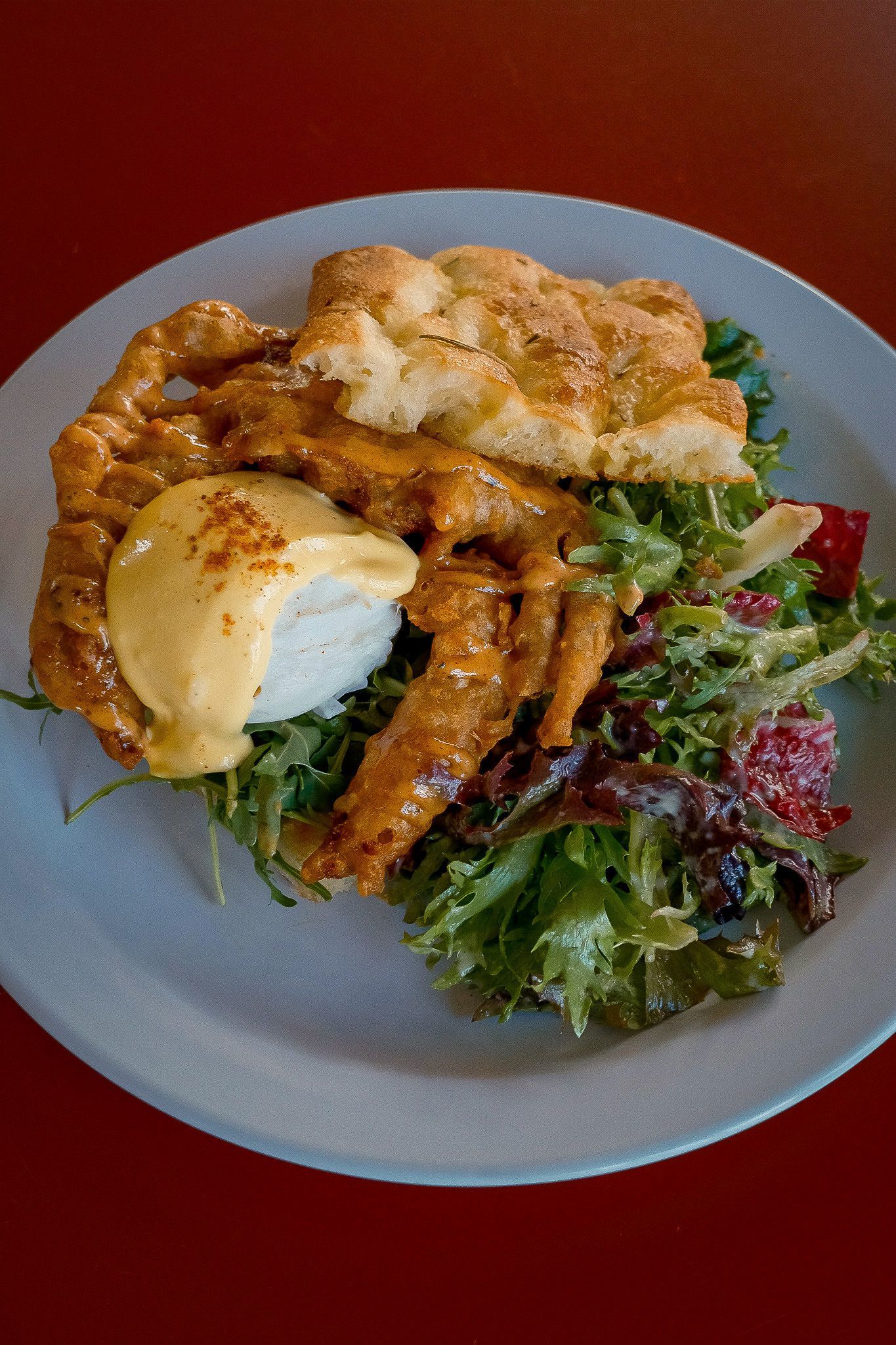
The soft-shell Benedict at Lucky Duck, 501 N. Columbus Blvd.Pri Rambhia
Lucky Duck, Old City/Northern Liberties
Soft-shells are on this riverside bar’s weekend brunch menu as a Benedict with Old Bay Alabama white sauce, arugula, and hollandaise, on brioche.
Oyster House, Center City
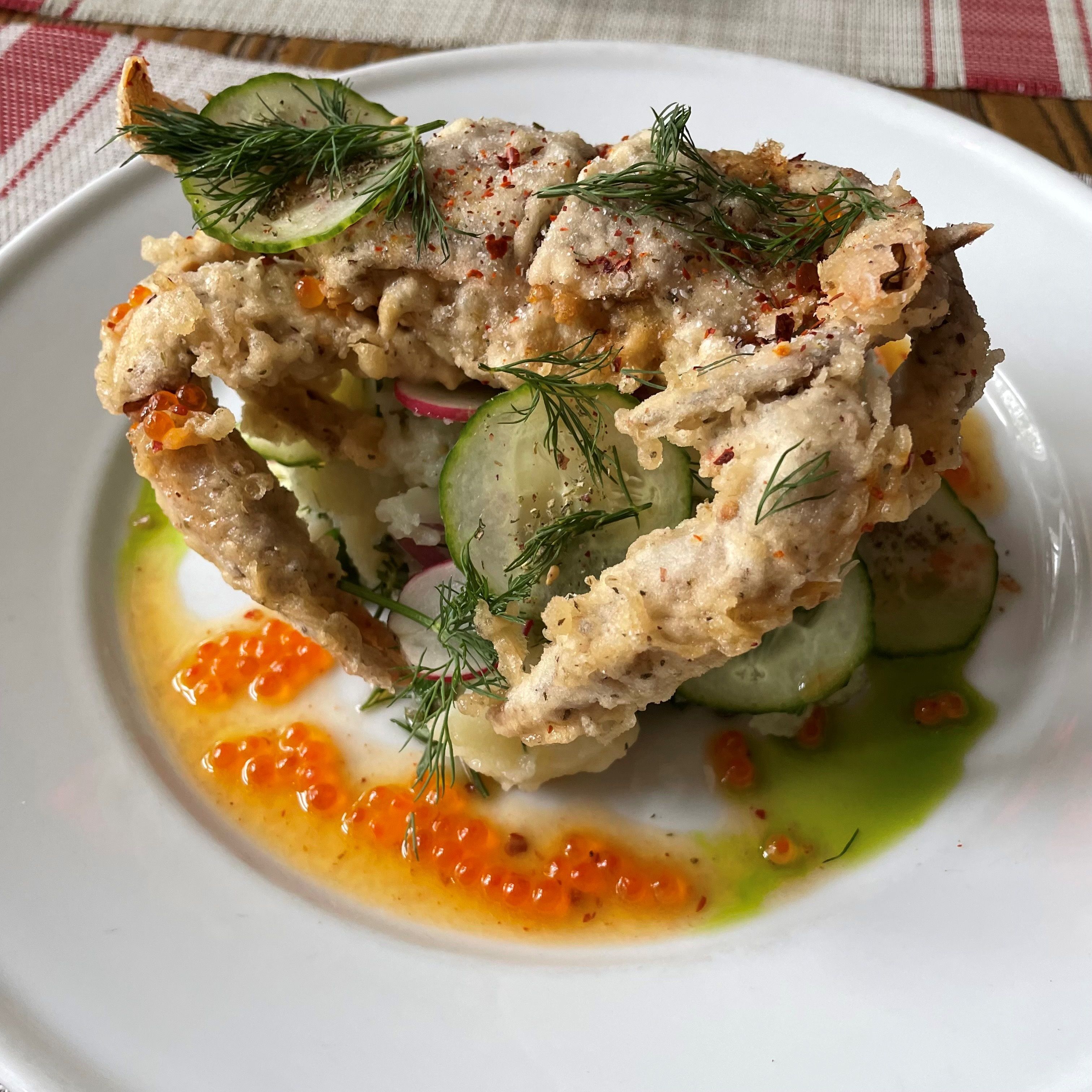
The seafood destination’s grilled soft-shell crab ($36) is plated with poblano Dijon sauce, blanched asparagus, smoked trout roe, and pickled ramps. There’s also a fried soft-shell crab BLT ($29) with smoked bacon and ramp buttermilk ranch.
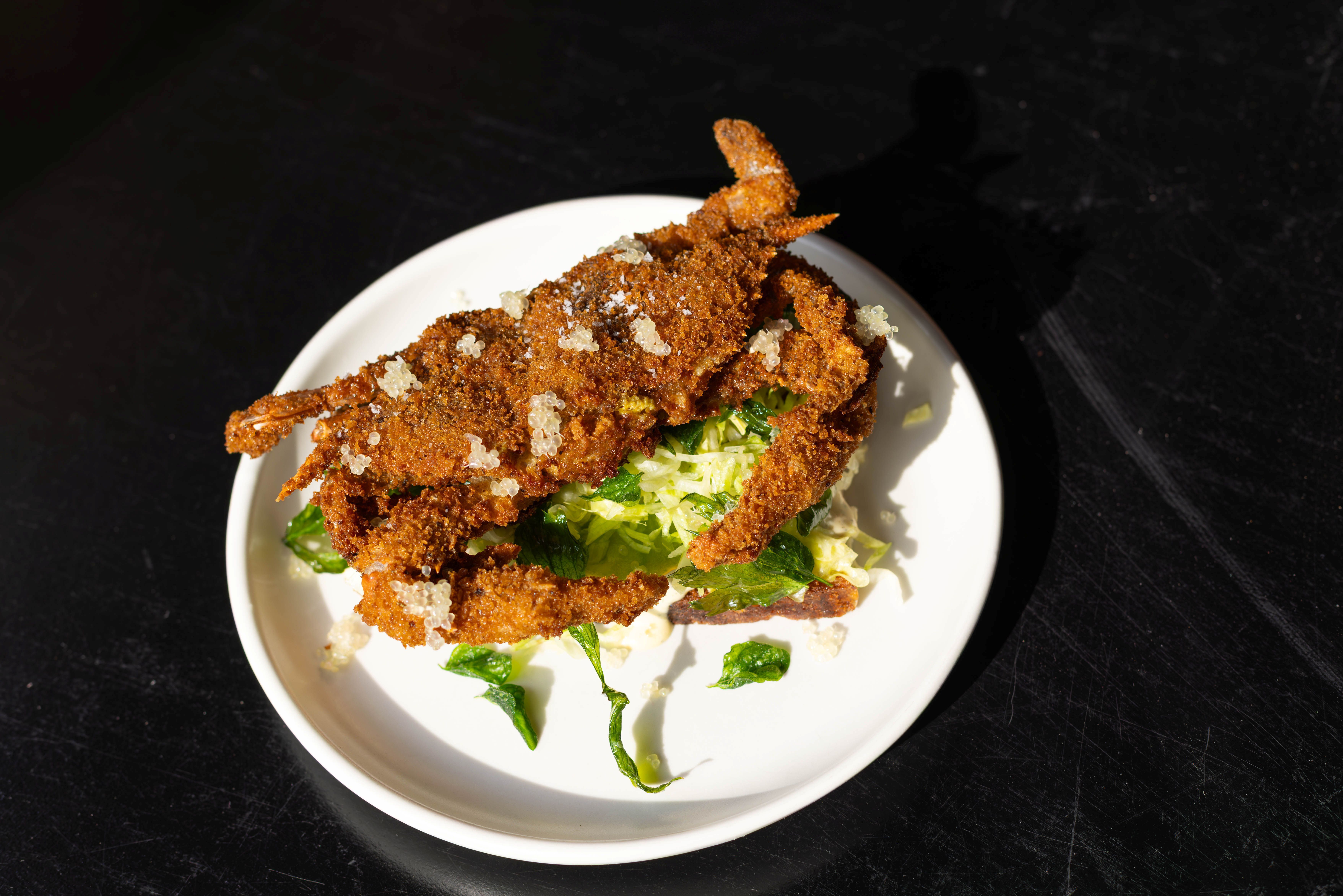
Soft-shell hoagie tartine at Post Haste, 2519 Frankford Ave.KC Tinari
Post Haste, Kensington
At this farm-to-table restaurant, chef Ari Miller (husband of Inquirer food reporter Kiki Aranita) offers a soft-shell hoagie tartine featuring a breaded and fried crab on Brass Monkey bread with green coriander mayo, shredded local iceberg lettuce, heirloom tomato, crispy herbs, and caviar lime ($24).
Soft-shell crab cooked over charcoal with crab fat and golden Ossetra caviar at River Twice, 1601 E. Passyunk Ave.Mike Prince
River Twice, South Philadelphia
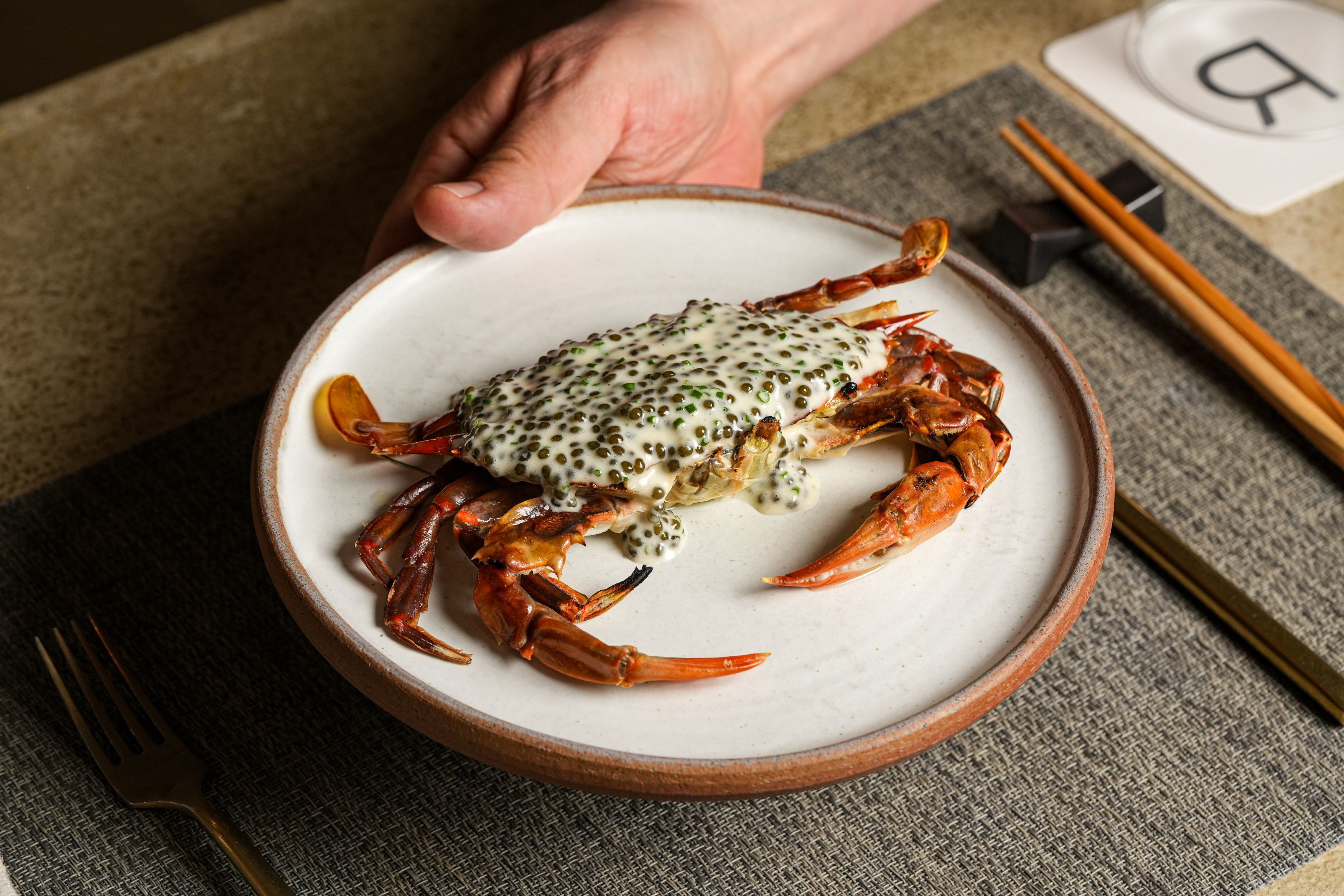
The signature preparation at this Southern restaurant returns this season: a soft-shell crab grilled over charcoal and finished with crab-fat koji butter and golden Ossetra caviar ($52).
At Stina (1705 Snyder Ave.), the soft-shell crab is served with Greek-style potato salad, capers, lemon, herbs, extra-virgin olive oil, smoked trout caviar, and Bukovo vinaigrette.Courtesy of Stina
Stina, South Philadelphia
At his Mediterranean restaurant, chef Bobby Saritsoglou serves soft-shell crab with Greek-style potato salad, capers, lemon, herbs, extra-virgin olive oil, smoked trout caviar, and Bukovo vinaigrette ($36).
At noon on a bright June Tuesday, the scene at Skinny Joey’s Cheesesteaks & Pizza on the Wildwood boardwalk felt more like a South Philly block party than a soft opening.
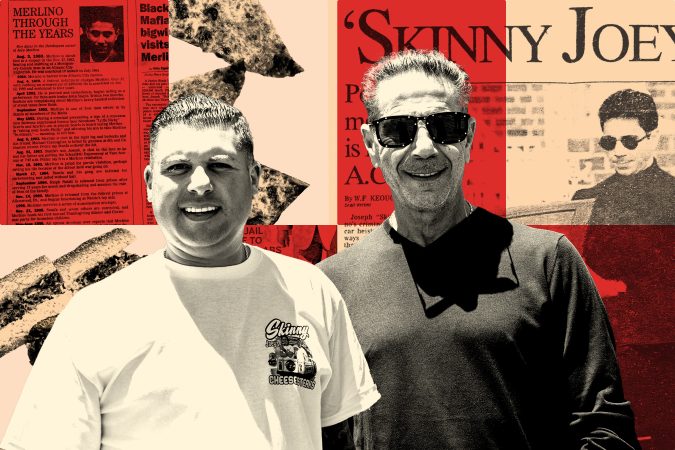
Joseph “Skinny Joey” Merlino worked the crowd at his new shop — hugging, shaking hands, posing for photos — moving easily among his friends and admirers. At 64, five years removed from the criminal justice system, the onetime alleged head of Philadelphia’s underworld is enjoying a second act that few could have predicted: cheesesteak entrepreneur, podcaster, and social-media personality.
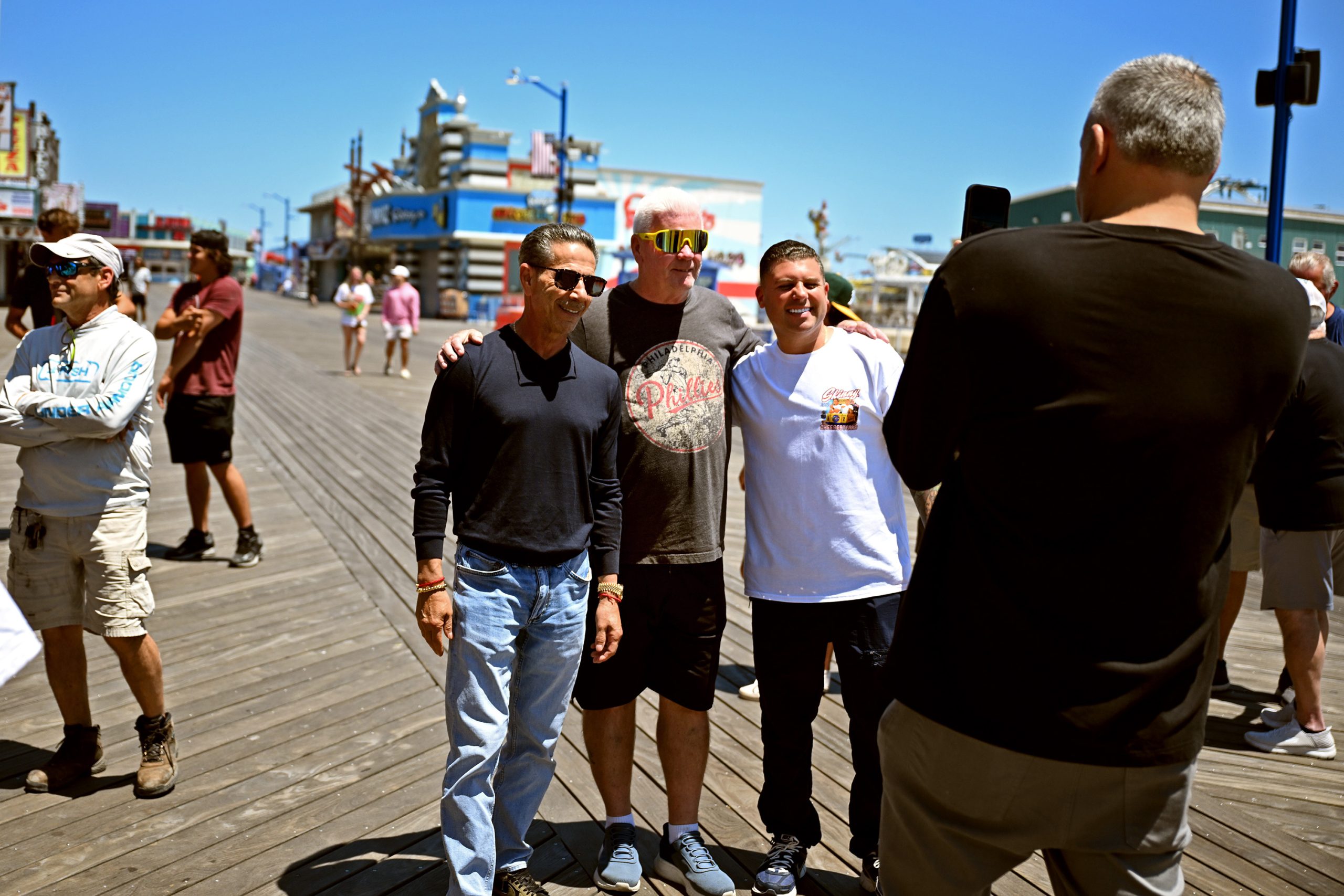
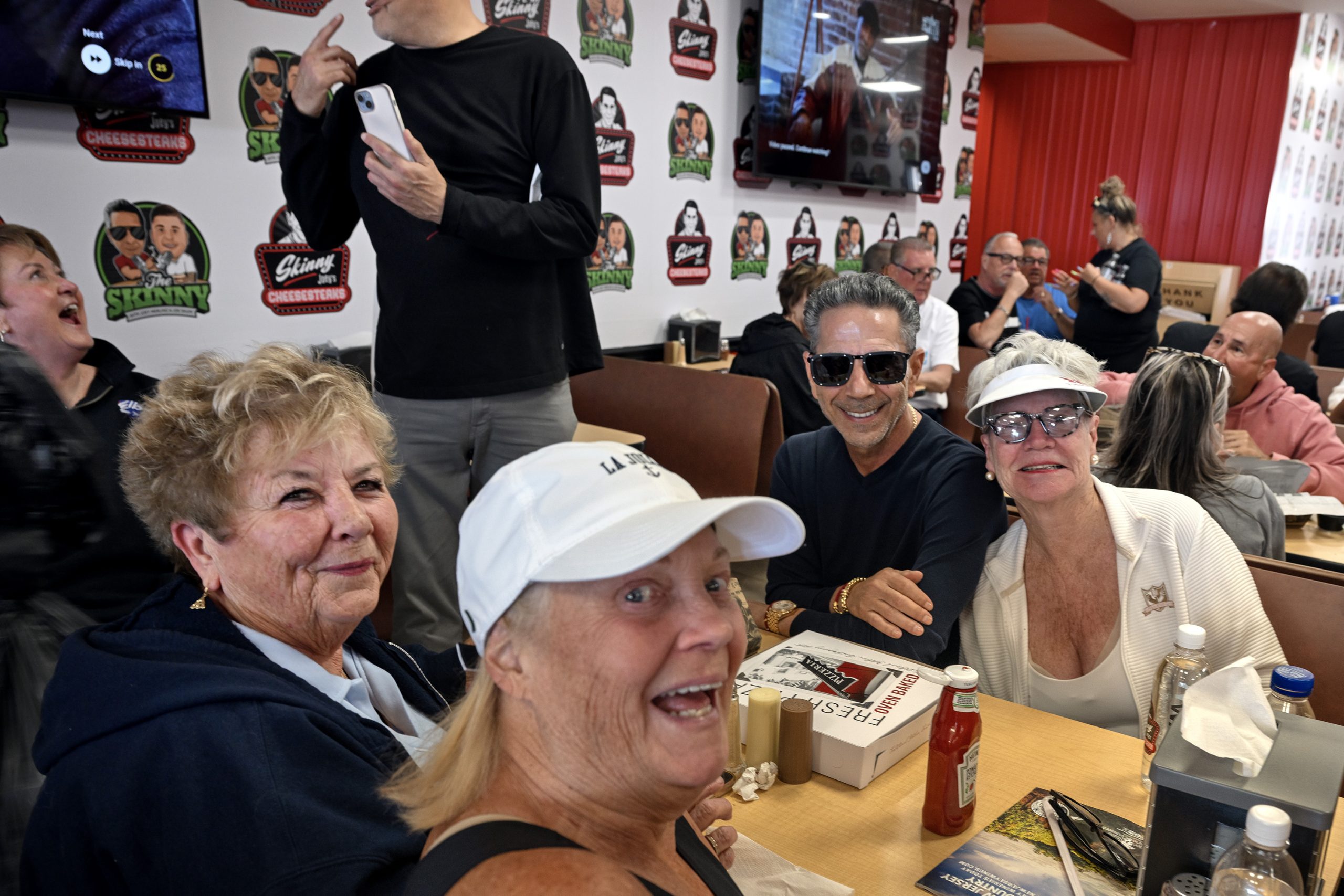
Joseph “Skinny Joey” Merlino (left) and Joe “Lil Snuff” Perri Jr. (right) posing with a customer outside the Skinny Joey’s Cheesesteaks & Pizza shop in Wildwood.Tom Gralish / Staff Photographer
Orbiting him with a phone and a grin was Joe “Lil Snuff” Perri Jr. — 30 years his junior — Skinny Joey’s collaborator and the man who helped set him up with a new career. While customers lined up out front for steaks, slices, photos, $35 hats, and $25 T-shirts, Perri was shooting clips for social media.
Their partnership has transformed Merlino from a flashy, polarizing tabloid fixture into a flashy, polarizing Instagram-age brand. Merlino provides the mythology, while Perri supplies the algorithm.
Symbiotically, they are building an unlikely enterprise. Merlino gives Perri access, credibility, and a bigger stage. Perri gives Merlino comic relief, social-media fluency, and a way to be seen as entrepreneurial rather than simply infamous as a reputed former mob boss.
“Without me, there’s no him,” Perri said. “Without him, there’s no me. It’s just a good mix.”
Joseph “Skinny Joey” Merlino joining customers at Skinny Joey’s in Wildwood during its soft opening on June 2. They call themselves “the Schuylkill Girls” (from left): Julie Shelton, Cindy McCullough, and Terry Landy, all of whom now live in Wildwood.Tom Gralish / Staff Photographer
A ‘mob media’ moment
George Anastasia, who covered organized crime for more than 30 years at The Inquirer and now teaches an organized-crime course at Rowan University, said Merlino’s new career fits a broader moment in mob media.
Former wiseguys, associates, historians, and fans now gather in a true-crime subculture known online as “MobTube,” where the lore is packaged into YouTube shows, Patreon feeds, podcasts, clips, and merch.
Merlino has lived the story that fuels the genre. One of Philadelphia’s most recognizable organized-crime figures, Merlino was convicted in 1990 for his role in a $352,000 armored truck robbery in 1987.
In 2001, he and six co-defendants were tried on federal racketeering charges, including three counts of murder and two of attempted murder. Merlino was acquitted on those counts, but served about 12 years on other charges, including gambling and extortion. A supervised-release violation briefly returned him to prison in 2014, and a second major racketeering case ended in 2018 with a guilty plea to a single illegal-gambling charge after a mistrial. In a separate trial in 2004, he was acquitted of the 1996 killing of Joseph Sodano, an underling in North Jersey. Merlino completed federal supervision in 2021, but he’s been banned from New Jersey casinos since 1988 and from Pennsylvania casinos since a 2016 incident at the former SugarHouse Casino.
And Merlino has made it no secret that he is different from many of the former figures who populate the MobTube genre. Unlike Sammy “The Bull” Gravano, John Alito, and Jimmy Calandra, Merlino never cooperated with prosecutors.
“He saw guys who cooperated come back and become media sensations,” Anastasia said. “And I think he got [annoyed] that these are all guys who, in his view, violated the code, and now they’re making money on that old life. He did his time as a stand-up guy. ‘So [to heck with that] — I’m going to make money, too.’ And he created this brand.”
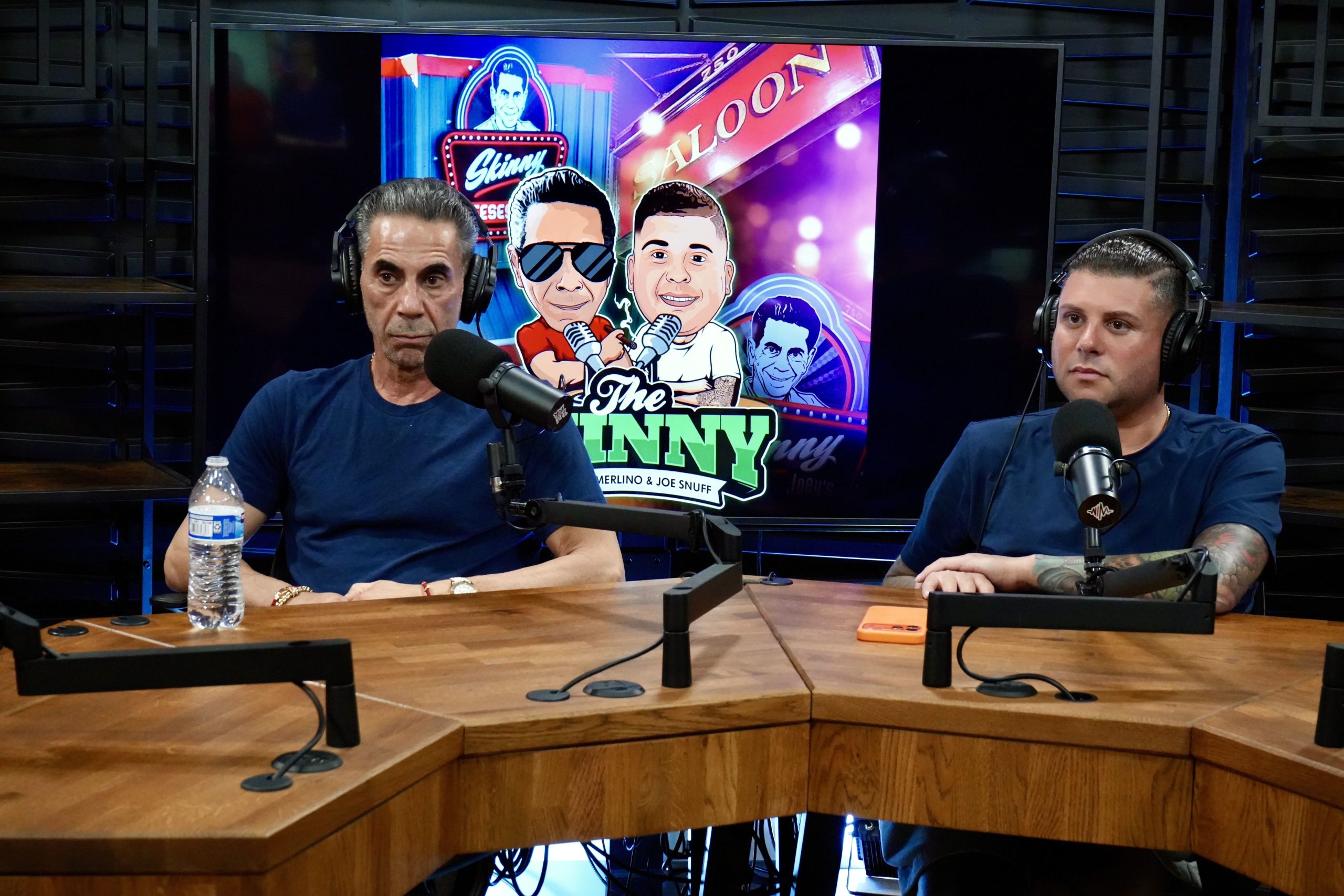
Joseph “Skinny Joey” Merlino (left) and Joe Perri Jr. on the set of “The Skinny” podcast.Courtesy of Joe Perri Jr.
Perri helped make that legible to a younger audience.
“Lil Snuff is part sycophant and part guide,” Anastasia said. “He’s the one who, in a lot of ways, sets the flow. Joey is going to be Joey, but somebody has to keep bringing him back to the point.”
The rise of Lil Snuff
Before he was Merlino’s co-host, Perri was Lil Snuff.
The nickname came from his father: As a 10-year-old, Joe Sr. turned around when a cousin was calling for a dog named Snuffy. Boom. He was Snuff. When his son was born at Methodist Hospital in 1992, Snuff became Big Snuff.
As a teenager, Lil Snuffbussedtables at Stogie Joe’s, the Saloon, and Fitzwater Cafe. At 18, he joined the stagehands union. At 21, he got a job at Mall Chevrolet in Cherry Hill. The older salesmen had relationships and repeat customers. Perri’s mentor told him that he needed a lane.
It was 2013, and social media was beginning to reshape promotion. Perri started making his own brassy, unscripted commercials. “Selling Chevys for less” became his tagline.
He also made videos about gambling and food, his two passions. He was not famous, but he was visible in the South Philly-to-South Jersey social media corridor where restaurants, sports, betting, family, and neighborhood identity blur into one feed.
At the same time, Perri said, he was abusing pills. In 2014, at 22, his parents found him a rehab center in South Florida. To make sure he got there safely, they called a family friend whose Italian restaurant in Boca Raton had recently opened:
Joey Merlino.
“My father grew up with his grandfather,” Merlino said, explaining the bond. “I grew up with his father. I’ve known him since he was born.”
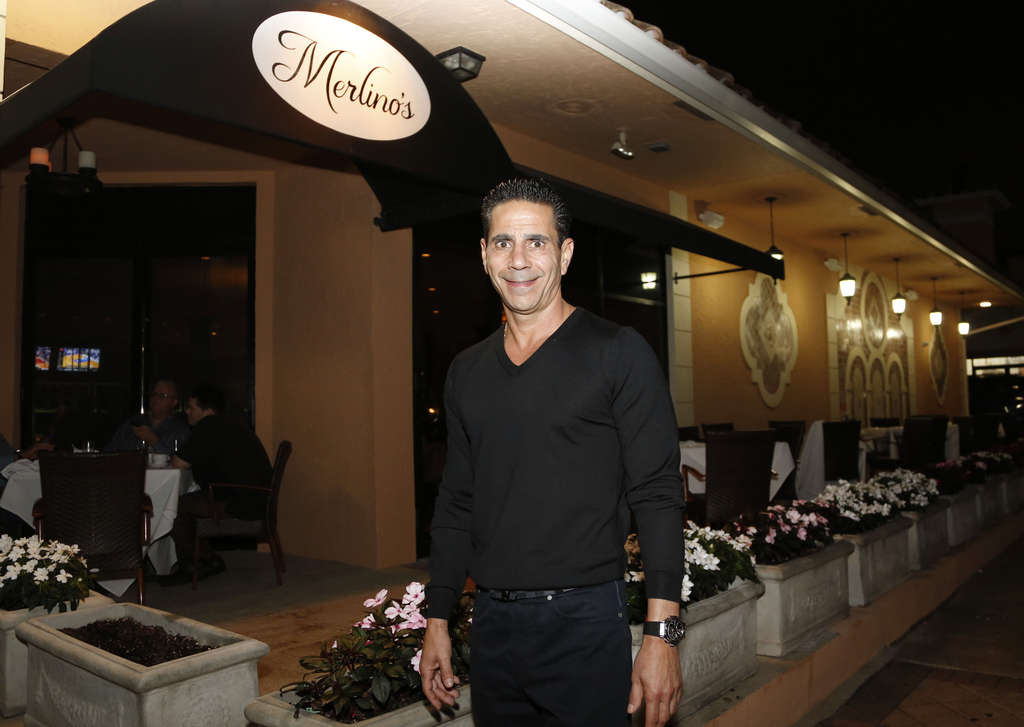
Joseph “Skinny Joey” Merlino in 2014 at the Boca Raton restaurant bearing his name.Terry Renna / For The Inquirer
Perri said it took several attempts before recovery stuck. He has been sober since Sept. 11, 2016. “I’m big with recovery,” he said. “That’s the main thing in my life. I put sobriety first and then everything after that.”
Merlino’s — where Merlino was maitre d’ because his legal situation then precluded ownership — closed in 2016, just before the feds arrested Merlino at his home in Boca in the lead-up to his second racketeering case. “If I didn’t have this trouble, it would still be open,” Merlino said earlier this month.
After Merlino attained freedom in July 2021, producers called with movie, television, and book deals. Merlino turned them all down. “Nothing seemed right,” Merlino said. Someone brought up the idea of a podcast.
“I didn’t even know what that was,” Merlino said.
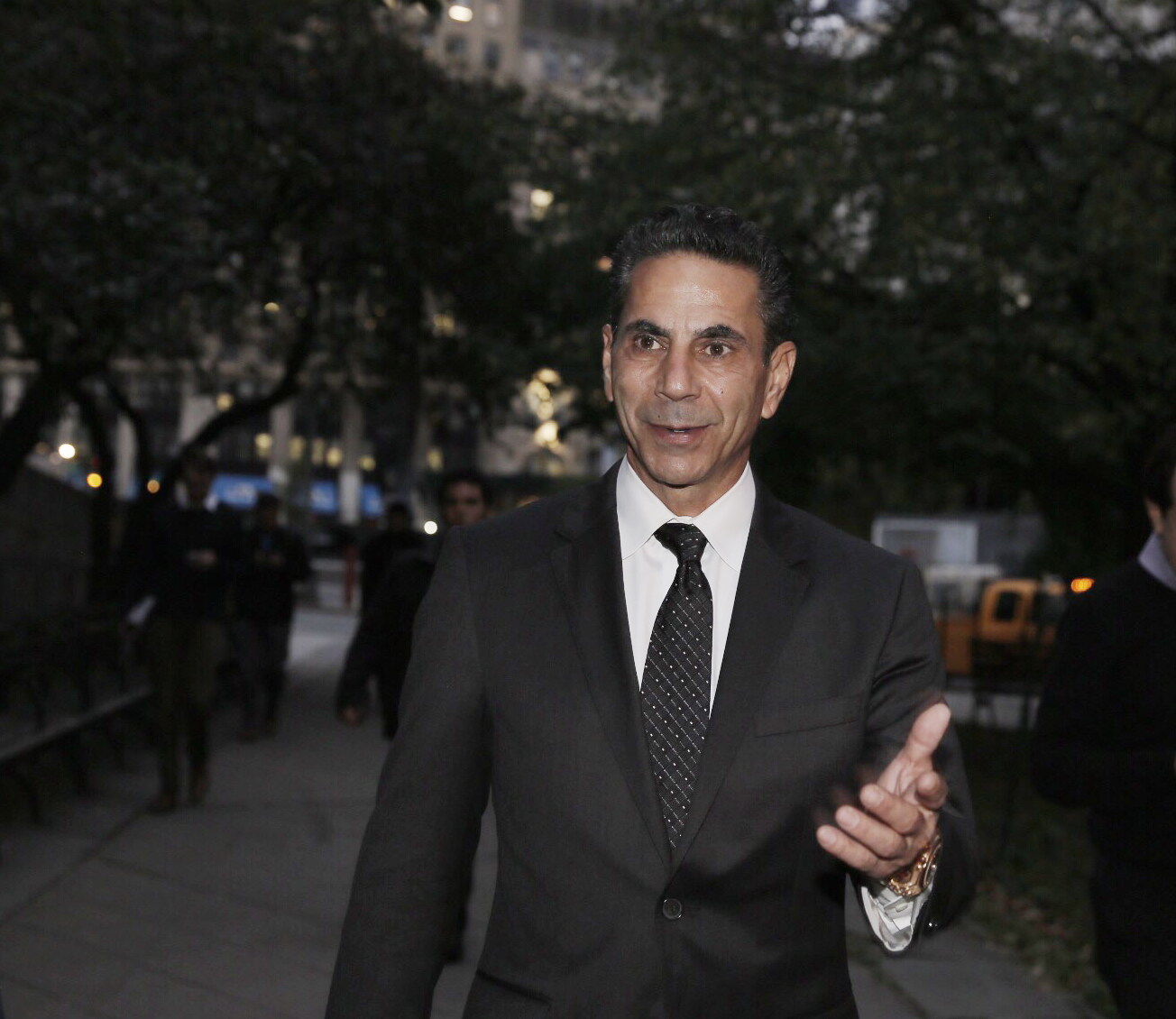
Joseph “Skinny Joey” Merlino leaving the federal courthouse in Manhattan after being sentenced on Oct. 17, 2018.Elizabeth Robertson / Staff Photographer
His friend Raymond “Wags” Wagner explained the concept and suggested a loose format built around food and sports betting. Actor Kevin Connolly of Entourage fame, who was involved early as a producer, told Merlino that he needed a co-host.
“They said, ‘Who would you want?’” Perri said. “They were sending him people, and he was like, ‘I’m not doing nothing with these people.’”
Then Ray Wags suggested Perri.
“Joey was like, ‘100 percent. Get him on the phone,’” Perri said. “Kevin Connolly said, ‘Send me your videos.’ I sent him my videos, and he said, ‘You’re the guy.’ The rest was history.”
The world of ‘MobTube’
Merlino and Perri launched the video podcast in 2023. Viewers are not just watching Merlino talk about the old life. They see him bust Perri’s chops about eating too much and mock his parlays. They get gambling tips, watch them interview athletes and celebrities — all part of a South Philly generational comedy.
Perri describes it in family terms. “My dad’s my dad, but he’s also my best friend, too,” Perri said. “We gamble together. We go out together. We have fun together. So they see me and Joey as that, and they can’t figure out how we mix so good.”
“He’s good,” Merlino said. “I’m old, he’s young. He talks good, he’s funny. He’s a pain in the balls, but it’s a good fit.”
They began The Skinny podcast on YouTube, but now focus more on Patreon, where the content is unfiltered. And better monetized. Perri says TheSkinny has 1,600 Patreon subscribers paying $15.95 a month. He said their social-media pages combined average 30 million views a month.
Perri’s wife, Danielle, handles bookings and schedules. “I produce,” Perri said. “I cut the clips. I do everything. It’s me and Joey. Two-man show.”
A wider audience
When they started, Perri was still selling cars at Mall Chevrolet. But the now-shuttered dealership got tired of people showing up hoping to see Merlino instead of test-driving a Suburban.
Perri quit. The show grew.Merlino’s reinvention has coincided with a broader shift in the gambling world. Legal sportsbooks, now ubiquitous on television and online, have largely supplanted the corner bookmaker, turning an activity once associated with organized crime into a mainstream consumer business. Guests span sports, hip-hop, gambling, and entertainment, including Wallo267, Fat Joe, Ric Flair, and Bernard Hopkins.
Each booking widened his audience, and Merlino was being absorbed into a broader celebrity ecosystem.
Last October, Netflix released Mob War: Philadelphia vs. The Mafia, a docuseries revisiting the violent 1990s power struggle between John Stanfa and Merlino’s younger faction. It steered even more viewers to Merlino and Perri’s world.
‘Skinny Joey,’ wit’
Then came the cheesesteaks.
One night, Perri, Merlino, and friends were playing poker. Merlino wanted cheesesteaks. Perri said he’d make them.
“He’s like, ‘You can’t make cheesesteaks,’” Perri said. “I said, ‘Are you nuts? I’ve been making them my whole life.’”
Perri cooked some. “He was like, ‘This is the best f— cheesesteak ever,’” Perri said. “He said, ‘Let’s open up a cheesesteak place.’ I said, ‘All right. Call it Skinny Joey’s Cheesesteaks.’ And that was it.”
The first shop opened in March 2025 at 3020 S. Broad St., near the sports complex. From the start, Skinny Joey’s was more than a sandwich shop. It was a set. The shop leaned into Merlino’s notoriety; the sandwiches are wrapped in a collage of newspaper articles about his past.
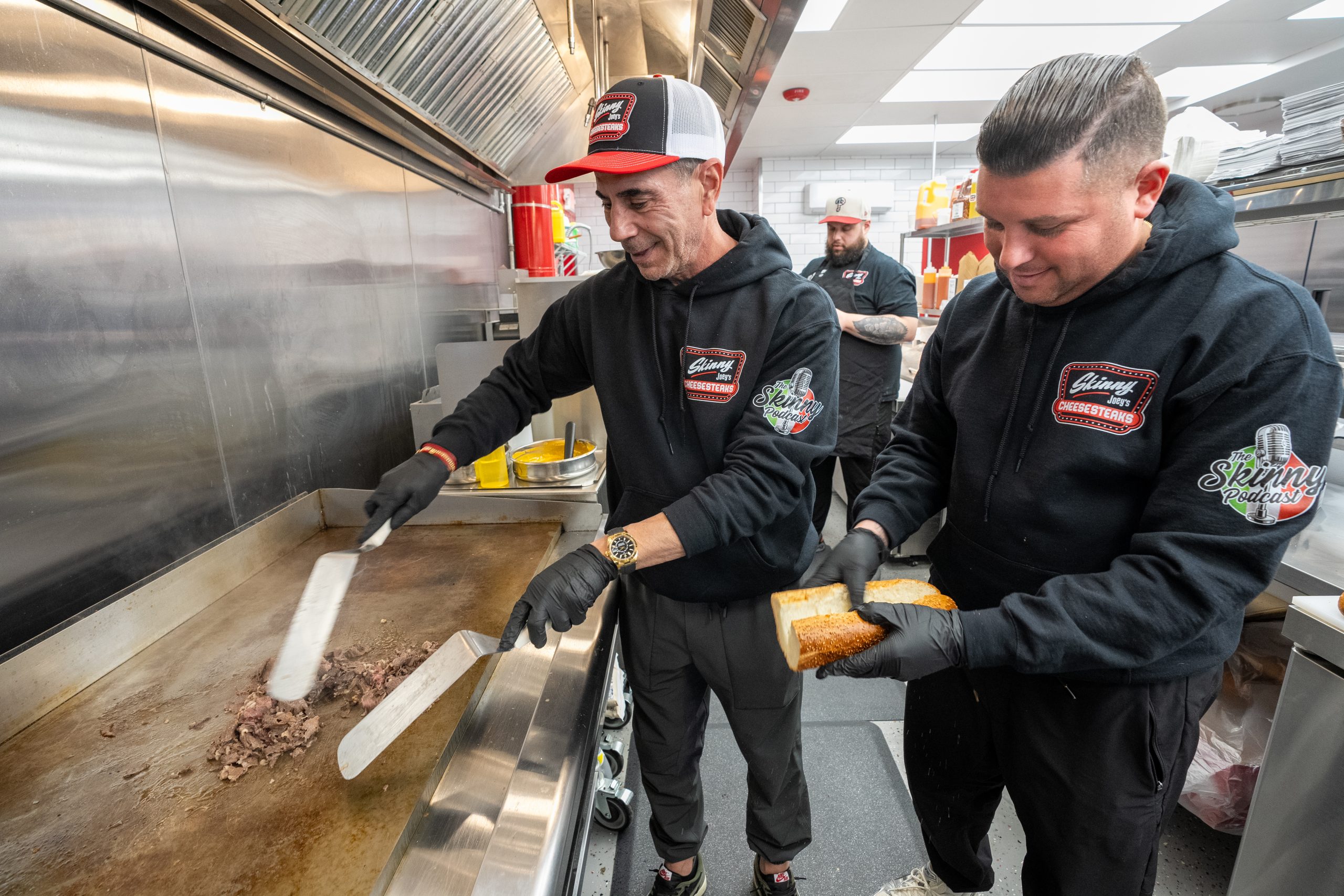
Joseph “Skinny Joey” Merlino (left) working the grill beside Joe “Lil Snuff” Perri Jr. at the Skinny Joey’s Cheesesteaks in Philadelphia at its opening in March 2025.Jessica Griffin / Staff Photographer
Celebrities showed up: Jason Kelce, Landon Dickerson, Mack Wilson. A customer eating a cheesesteak was good content. A recognizable person eating one on camera was better.
The restaurant also became a magnet for the kind of drama that fuels digital engagement: online beef. Podcaster Gene Borrello, a former Bonnano crime family associate and Merlino antagonist, weighed in last year on an apparent feud between Skinny Joey’s camp and Frank Olivieri of Pat’s King of Steaks. Merlino and Perri had taken issue with a video posted by Olivieri — whose great-uncle invented the steak sandwich — in which he chided shops that chop the meat on the grill. Like most online food feuds, this seems to have subsided.
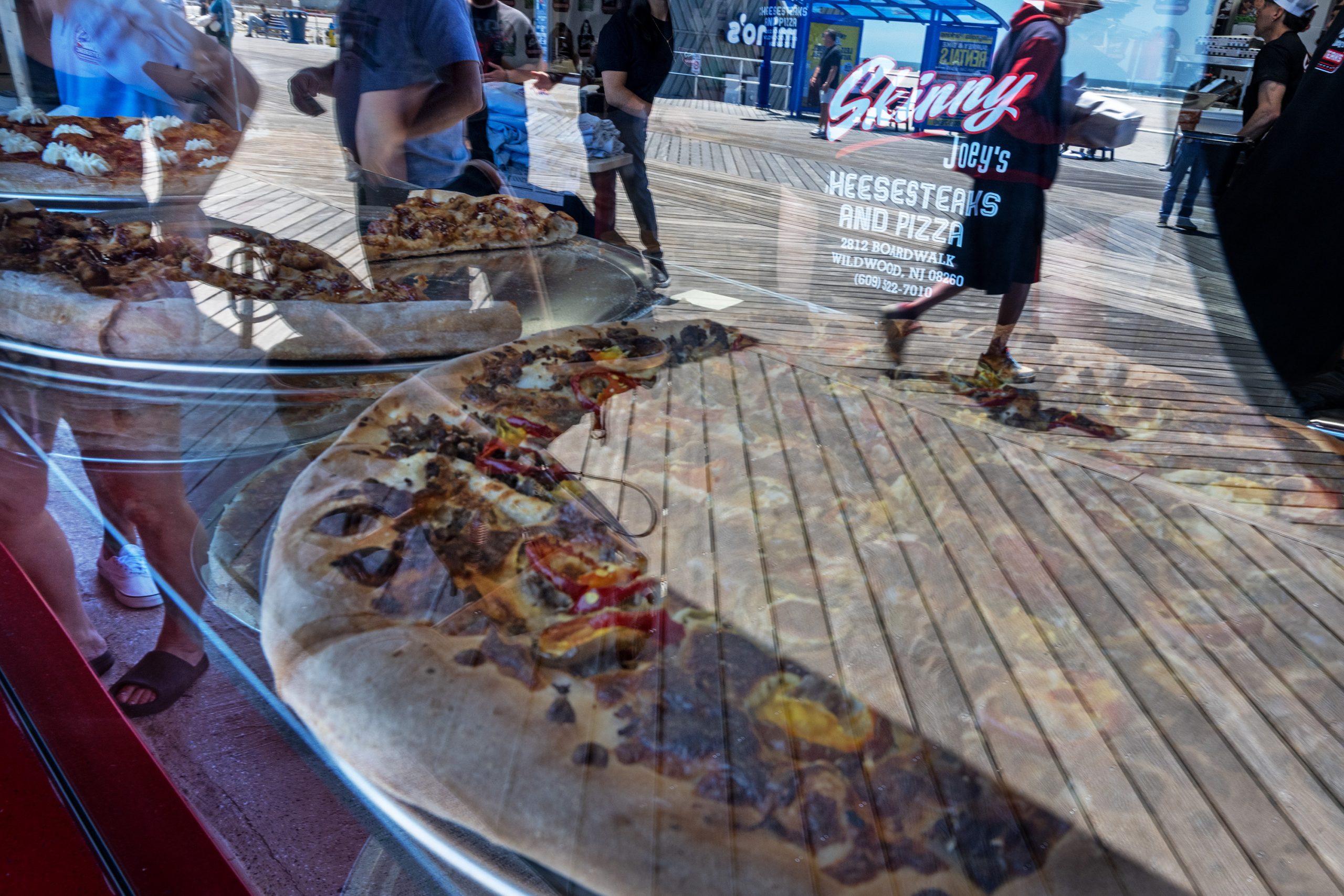
Then came the deal for Wildwood, where Skinny Joey’s replaced Joe’s Pizzeria, which had been on the boardwalk at Magnolia Avenue for 15 years. There, Skinny Joey’s added pizza and stromboli, which are not sold at the South Philadelphia location.
Reflections in the pizza display case on the boardwalk at Skinny Joey’s Cheesesteaks & Pizza in Wildwood.Tom Gralish / Staff Photographer
The pizza recipe comes from Vito’s on Haddonfield Berlin Road in Cherry Hill, and the stromboli from Pizza Shack at 15th and Oregon in South Philadelphia, both owned by Skinny Joey’s business partners Stephen Casasanto and John Fioravanti, whom Merlino also described as longtime friends.
More locations are planned. Perri said a Boothwyn shop is expected around Sept. 1, and several others are in the pipeline.
Bypassing the gatekeepers
Merlino is an extreme case of a recent phenomenon. People with complicated histories — criminal, scandalous, controversial, or simply overexposed — no longer need traditional gatekeepers to reintroduce themselves. They can speak directly to followers and monetize the attention.
Perri is not a journalist, of course, or a publicist, exactly. He is not merely a manager, producer, or sidekick. He is something in between — a new kind of local media operator.
He knows the scene, and how to make content feel unscripted even when the business behind it is deliberate. He is close enough to Merlino to bust his chops and deferential enough to preserve the hierarchy. He can translate Merlino to younger audiences without making him seem managed.
Perri softens Merlino without sanding him down. Merlino still curses, rants, and mocks rivals. Anyone they disagree with is a “bedbug.”
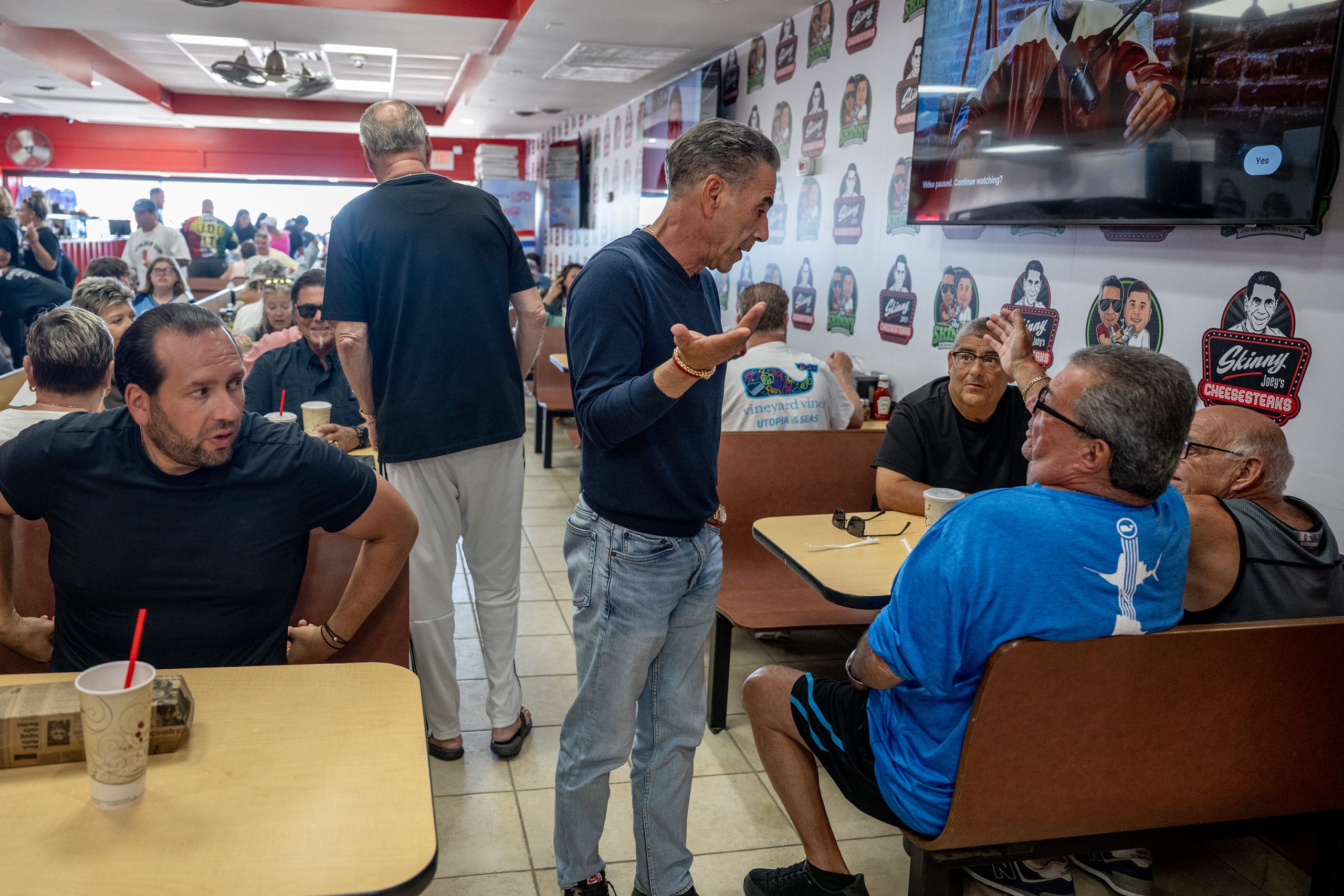
Joseph “Skinny Joey” Merlino greets a table of customers at Skinny Joey’s Cheesesteaks & Pizza in Wildwood.Tom Gralish / Staff Photographer
“At the end of the day, Joey isn’t going to change who he is for anybody,” Perri said. “If he can’t talk the way he wants to talk, what’s the point?”
That is part of the appeal and part of the discomfort. The audience knows Merlino’s history. They may see him as funny, defiant, loyal, misunderstood, or simply entertaining.
“There’s a segment of the American population that has always been fascinated with the outlaw: Billy the Kid, Jesse James, Don Corleone, Al Capone,” Anastasia said. “What the internet has provided is: Here are these guys in their own words. Are they being genuine? I don’t know. You can say that about any personality. But here’s a look at them without any filter.”
The filter used to be people like Anastasia.
“I was, in a lot of ways, the middleman between the people who were interested in this and the guys who were doing it,” he said. “And people who are interested in this don’t need the middleman anymore. They just go online and listen to whoever they want to listen to.”
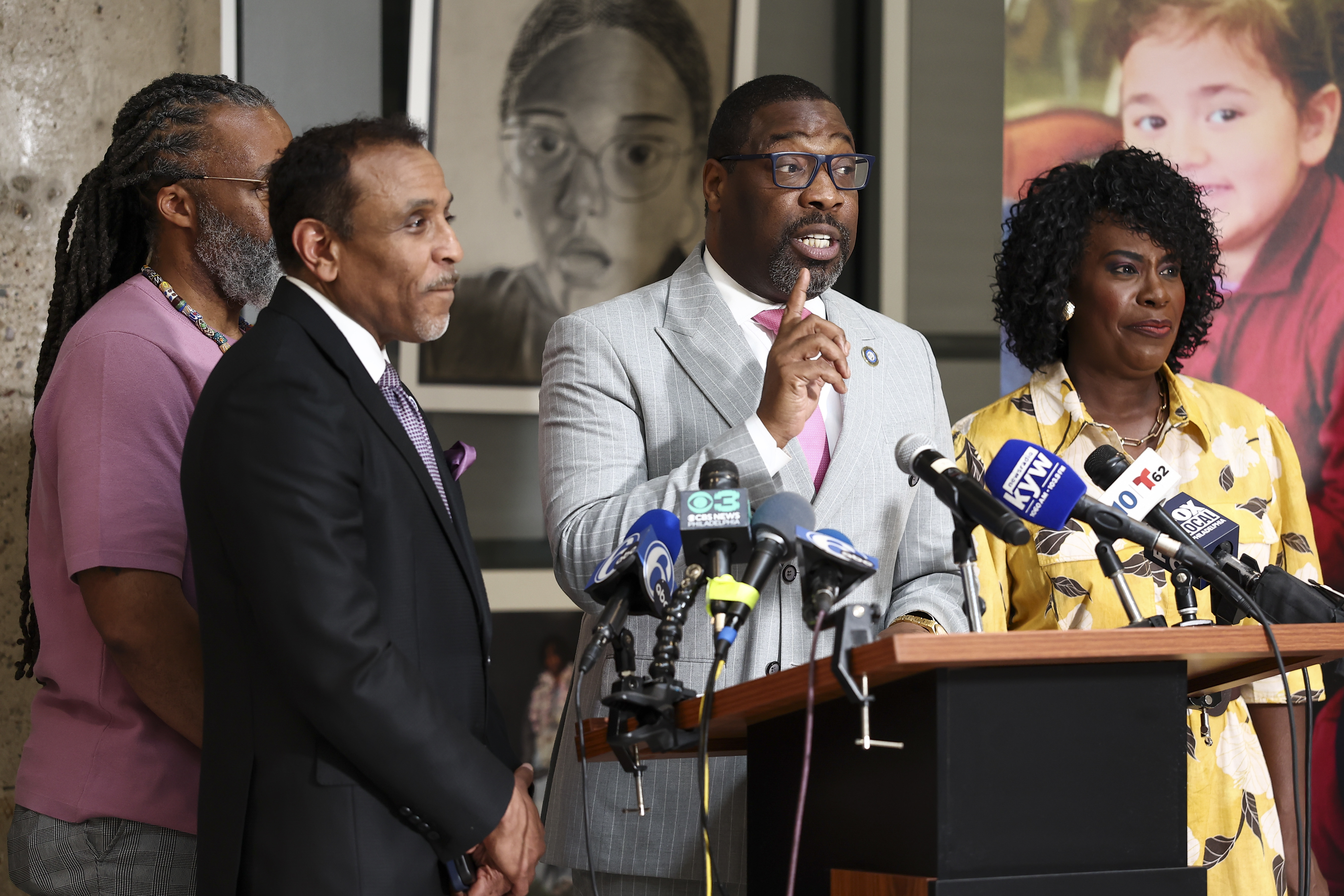
Philadelphia School District officials and public education advocates were relieved Wednesday when Mayor Cherelle L. Parker announced she had reached a deal with City Council that will prevent 340 classroom positions from being eliminated amid the district’s funding woes.
But as limited details about the agreement began to emerge Thursday, it became clear that the deal was less of a schools-funding program than a plan to figure one out over the next year — with the prospect of $216 million in city budget cuts taking effect if Parker and Council cannot eventually agree to adopt a new revenue stream.
“Council President Kenyatta Johnson and I publicly committed to working together to find local, recurring, predictable, and dependable revenue sources for the School District of Philadelphia over the next year to ensure that we keep these critical positions,” Parker said Thursday during a city budget bill-signing ceremony. “That is our shared goal and our commitment.”
But if Parker and Johnson do not make good on that commitment by July 1, 2027, the city will be on the hook for additional funding it has promised the school district between 2028 and 2031, including roughly $50 million in the first year of that time frame.
Council President Kenyatta Johnson speaks during an announcement at the School District of Philadelphia Headquarters on Wednesday, June 10, 2026 in Philadelphia. Philadelphia School District officials will move to restore 340 classroom-based jobs that were slated to be cut, despite top district leaders saying last week that they did not have the recurring funding needed to keep the positions.Monica Herndon / Staff Photographer
Parker, Johnson, Superintendent Tony B. Watlington Sr., and school board president Reginald Streater triumphantly unveiled the agreement to stave off the planned job cuts Wednesday. That announcement followed days of suspense after Council last week refused to pass the mayor’s proposed $1-per-trip rideshare tax, which would have funded schools, and instead advanced a city budget with about $50 million from one-time cuts that would be sent to the district as a Band-Aid for its $300 million budget gap.
Council’s move prompted Watlington, with Parker’s backing, to say the positions would still be eliminated without an explicit promise that the money would be recurring, rather than a one-time allocation.
Officials said they worked “around the clock” between Council’s rejection of the rideshare tax and Wednesday’s announcement, which Johnson jubilantly hailed as “Christmas in June.”
On Thursday, education advocates and labor leaders heaped praise on the administration for the deal.
Several district principals said Thursday they do not yet have details about exactly how much they will get back in their budgets, or how the dominoes will fall once positions are restored.
Watlington had school leaders build their 2026-27 budgets as if the cuts were happening, and many of the affected teachers, counselors, and climate staff secured new positions, some in the district and some outside the system. The restoration will undoubtedly cause vacancies elsewhere, months after other districts filled jobs for the fall.
“The win is making sure that those 340 jobs, with teachers, will not be laid off, and they will not have to second-guess if next year they’re going to come back to work,” Johnson told reporters Thursday. “And I think ultimately we can talk about sometime the ‘how’ we get to a particular end. But it’s always the ‘why.’ … At the end of the day, all of our young people still can have a chance to get a quality education.”
‘Budget sequestration’ comes to Philly?
The agreement between Parker and Johnson in some ways hearkens back to Congress’ 2011 “budget sequestration” debacle, when President Barack Obama, a Democrat, and House Speaker John Boehner (R., Ohio) agreed to severe across-the-board spending reductions that would take effect automatically if lawmakers and the White House failed to reach a “grand bargain” to restructure the federal budget.
They never reached an agreement — and the sequestration cuts, once thought of as too painful to countenance, eventually became reality.
Parker and Johnson are optimistic their arrangement for the school district and the city budget will not suffer a similar fate.
The future city budget cuts will be reflected in the city’s five-year plan, which must be approved by a state oversight board each year but is not binding legislation like annual taxing and spending measures. That gives City Hall more wiggle room to figure out how to find the money officials have now promised the district than Obama and Boehner had.
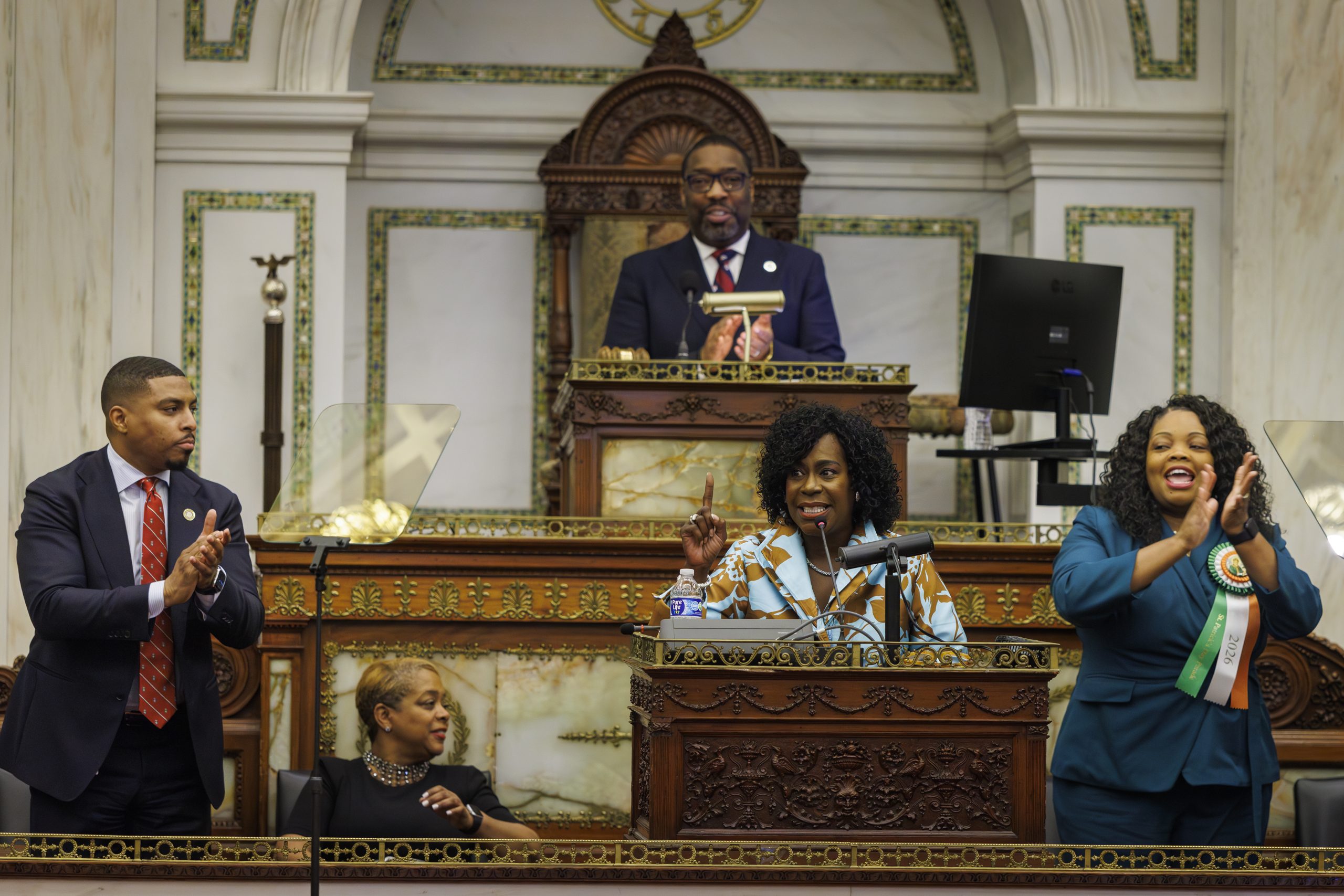
Philadelphia Mayor Cherelle L. Parker is cheered by members of Philadelphia City Council at conclusion of the budget address, Thursday, March 12, 2026. From left are council members Nicholas O’Rourke, Cindy Bass and Katherine Gilmore Richardson. In background is council President Kenyatta Johnson. .Alejandro A. Alvarez / Staff Photographer
Parker said her administration has already identified the cuts that will be reflected in the five-year plan when it is up for approval next month at the Pennsylvania Intergovernmental Cooperation Authority. But she has offered few specifics on what those potential cuts would entail.
Parker said Thursday that the city could make up part of the difference by reducing future debt repayment obligations by reducing the size of planned city bond sales. She mentioned the city’s capital budget, which funds projects like repaving roads and renovating recreation centers, but did not say how much would be cut.
And she said the city could halve its next borrowing related to her signature housing program, Housing Opportunities Made Easy. The city plans to take out a second tranche of $400 million in city bonds next year for H.O.M.E.; the potential cuts to free up money for schools could include taking only $200 million at that time, she said.
“Where did we get the money from in future years?” Parker said Thursday. “In our five-year plan, we made cuts to very important programs associated with our capital budget and even our H.O.M.E. plan — but cuts that will never have to be realized once we all make good on that commitment to generate that approximately $50 million in new, predictable recurring revenue.”
One complication in the negotiations to come is that Parker and all 17 Council members are up for reelection next year, and lawmakers are not eager to approve new taxes before voters head to the ballot box.
The Democratic primary, which effectively decides almost all elections in Philadelphia due to the city’s deep-blue electorate, will be in May 2027. The next city budget, including all tax measures for the following fiscal year, must be enacted by the end of June 2027, leaving several weeks after the election for Council to potentially approve a new tax to provide money for the district next year.
Philadelphia City Council members at City Hall in Philadelphia, Pa. on Thursday, June 11, 2026.Aidan T. Gallo / Staff Photographer
Some possibilities do not involve new or increased taxes for residents. The city, for instance, could speed up its plans to increase the share of property tax revenue that is dedicated to the district. Currently, the district receives 56% of property tax revenue, while the city takes 44%.
Parker said the agreement will allow Philadelphia to present a united front in Harrisburg as officials prepare to ask for more state funding for the city’s school district. State lawmakers in the past have pointed to disagreements among city leaders when rejecting requests for additional support.
“This is the first time … in my lifetime that the city of Philadelphia, the administration, and the legislative branch, along with the superintendent of the School District of Philadelphia and the school board, will all travel [to Harrisburg] in unity, along with all of our union partners and all of our education advocates,” Parker said. “We can stand up when we arrive in Harrisburg and say … ‘Philadelphia’s homework is done.’”
School advocates relieved
Arthur Steinberg, president of the 14,000-member Philadelphia Federation of Teachers, said the news of Parker and Johnson’s agreement came just in time. Thursday was the last day of school for 114,000 district students; staff finish the school year Friday.
“It was a very difficult year, and I’m glad that we’re able to tell them now that the positions that were cut due to this will be restored,” Steinberg said at a news conference Thursday morning outside Council chambers. “This means a lot to them. There’s stability over the summer. The communities will know who their teachers will be, and they’ll know where they’re going.”
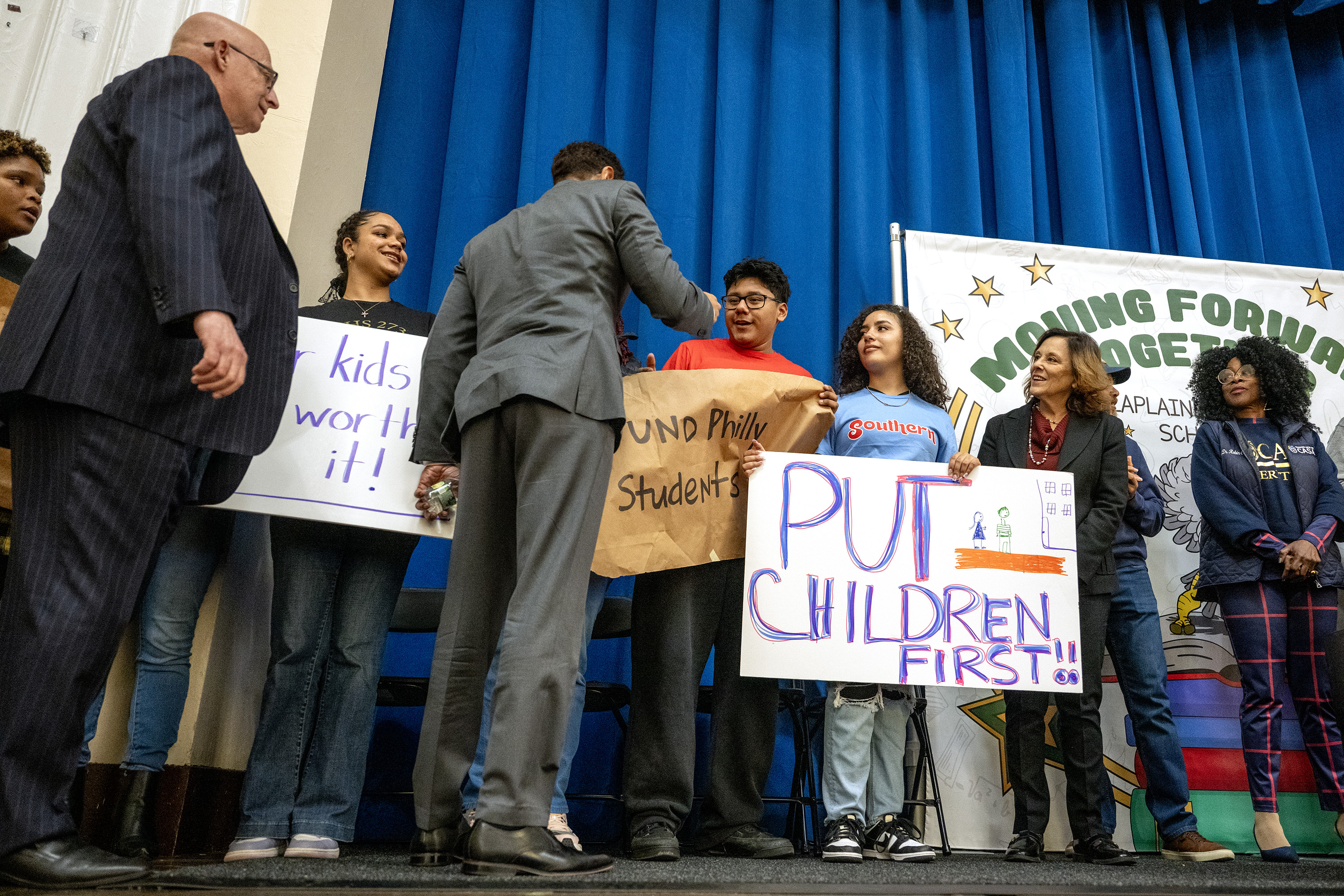
Arthur G. Steinberg (left), president of the Philadelphia Association of Teachers, and school superintendent Tony B. Watlington, Sr. (right) greet students as they arrive onstage for Mayor Parker’s announcement March 23, 2026, of $1 rideshare tax proposal to fund city schools.Tom Gralish / Staff Photographer
Tiffany Johnson Williams said she was thrilled that cuts at her child’s school — Nebinger Elementary in South Philadelphia — and others would be rolled back.
“I am equally grateful to Mayor Parker, Superintendent Watlington, and the school board for coming back to the table and working collaboratively to reach the solution that restored our critical positions,” Williams said at the news conference. “As a parent and educator and a youth advocate, I know that stability matters.”
Councilmember Isaiah Thomas, who has had a testy relationship with the district and school board over the last several months, suggested it was time to move forward cohesively to push for more funding elsewhere.
“I think where we are at this moment is recognizing that as we come together as Philadelphians, our job now is to use our advocacy initiatives and our leverage to try to get even more resources from Harrisburg,” Thomas said.
Staff writers Anna Orso and Jake Blumgart contributed to this article.