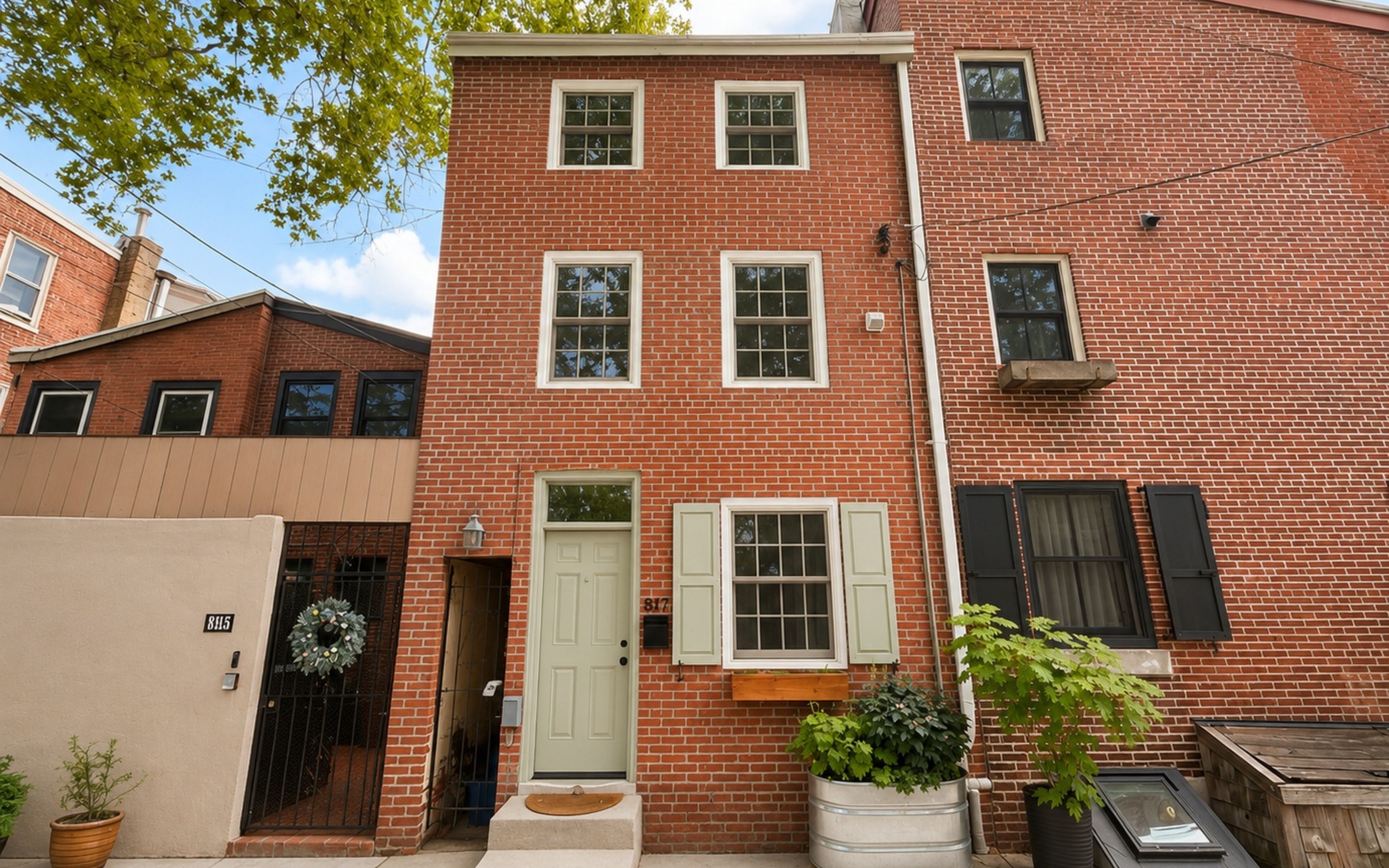
When Hunter Wages and his wife, Lauren Nalley, bought their Queen Village trinity in 2023 after renting nearby for two years, they especially liked having the Weccacoe Playground across the street.
They liked the constant activity there, such as park cleanup days, and, “It’s hard to beat having a tennis court in your front yard,” said Wages.
For Nalley, an environmental engineer in water resources, and Wages, who does software testing for a veterinarian agency, the two-bedroom, 1½-bathroom house was the first they had owned together.
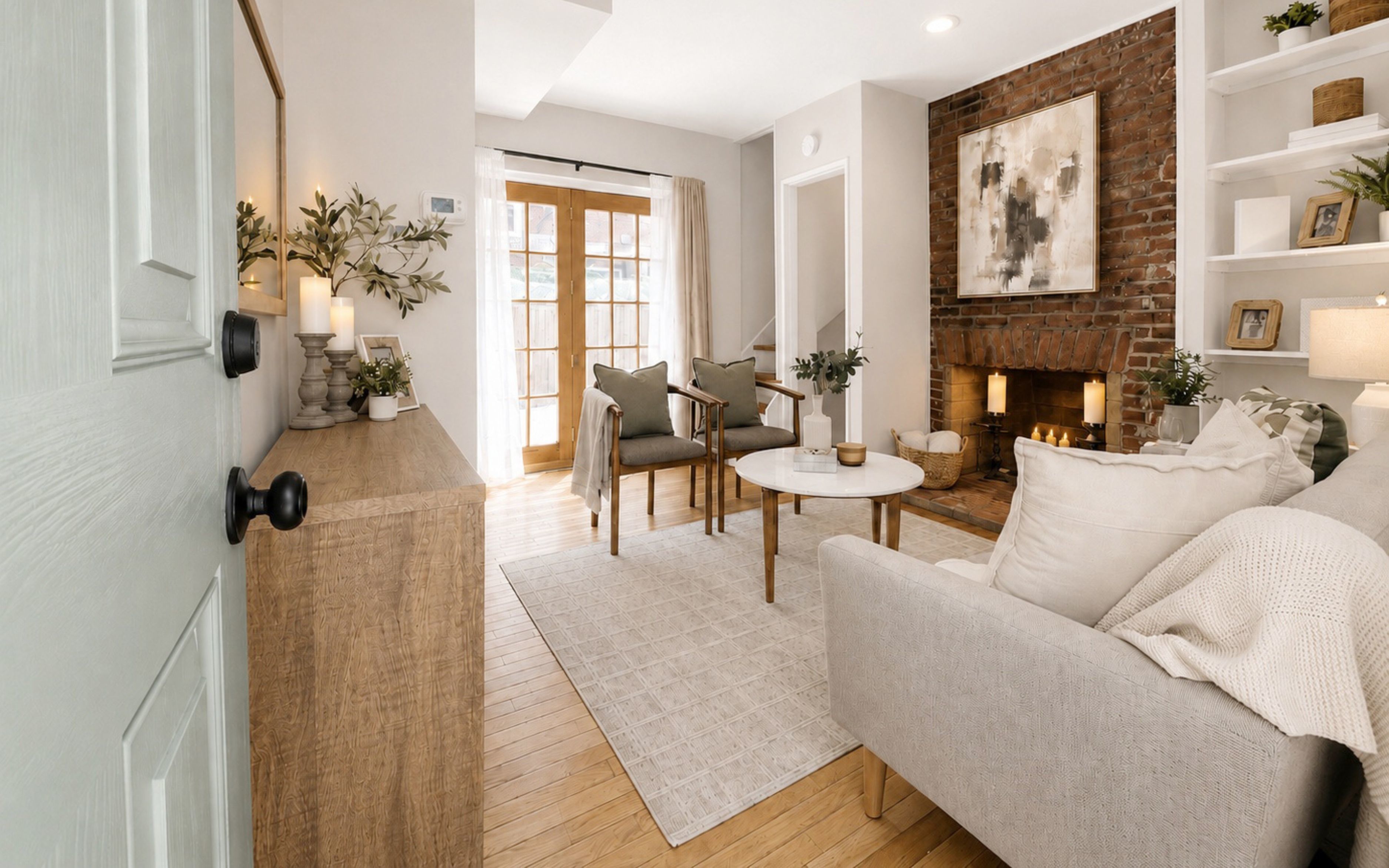
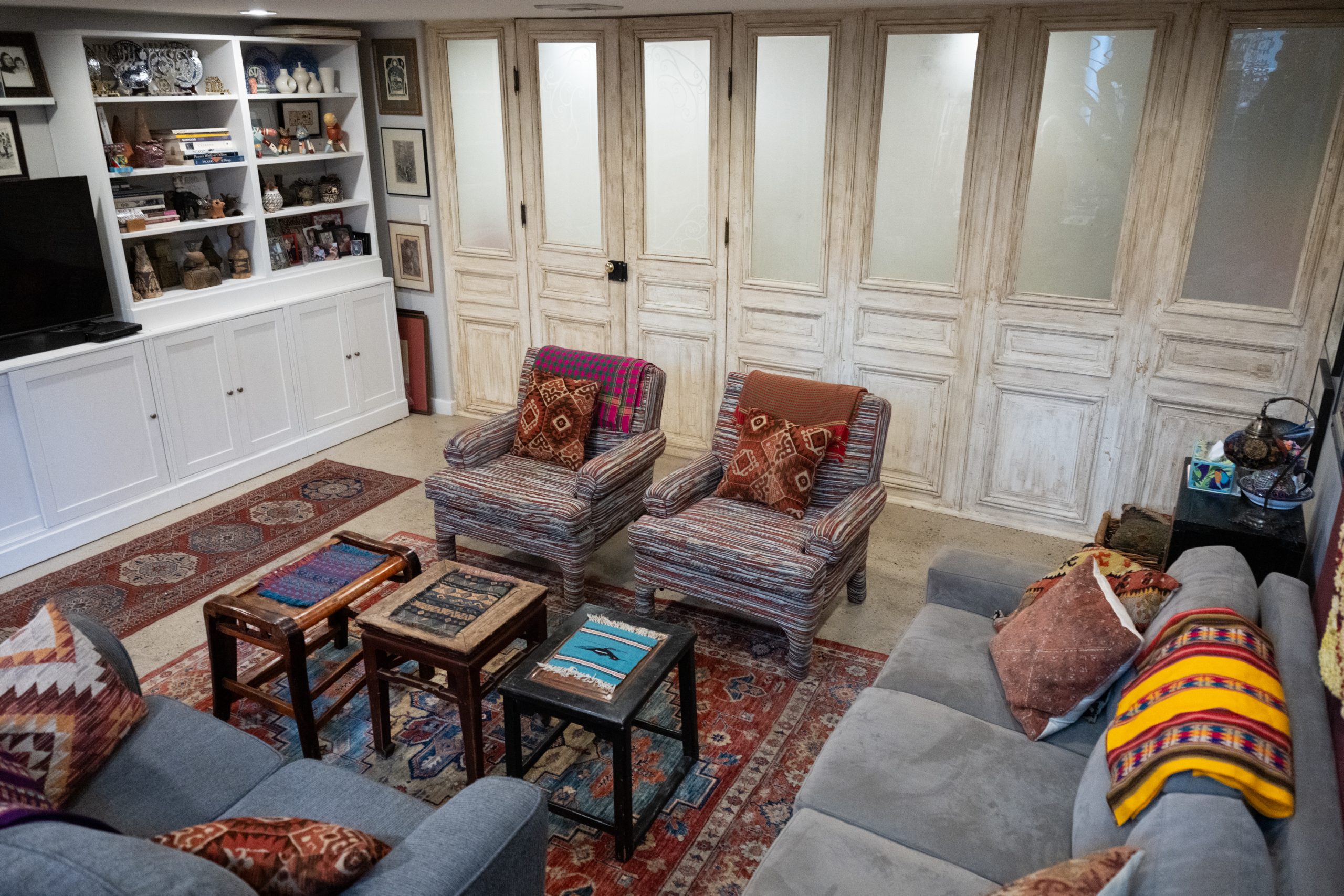
Living roomJim Armstrong
Noting the home’s “historic charm,” Wages said, “trinities are unique.” And he found the exposed brick sections of the interior attractive. But they are moving to Colorado to be with friends and family.
The 710-square-foot house on a tree-lined street has replacement windows and central air-conditioning.
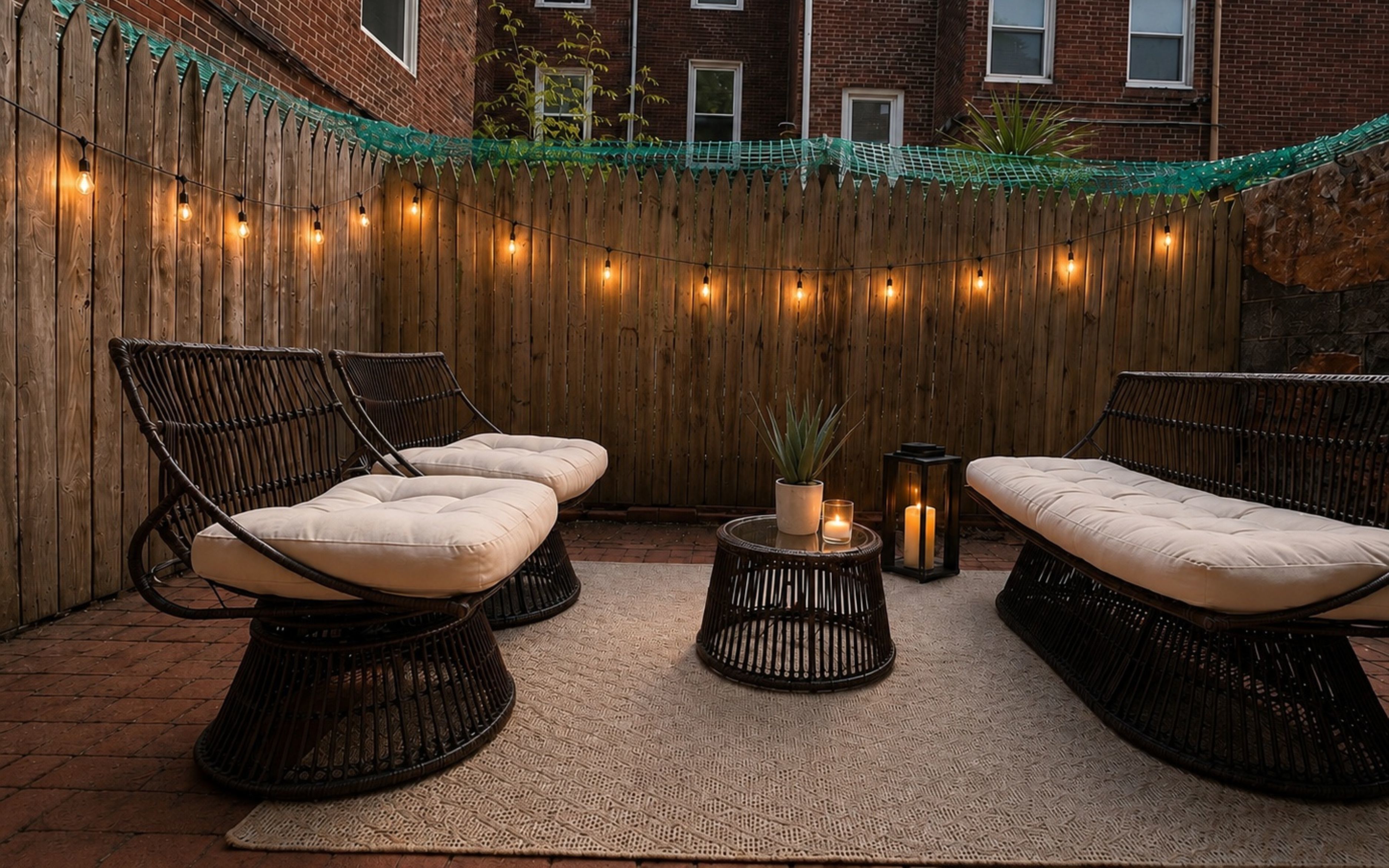
The private fenced patioJim Armstrong
The living room has hardwood floors, built-in custom cabinetry, and French doors opening to a private fenced patio.
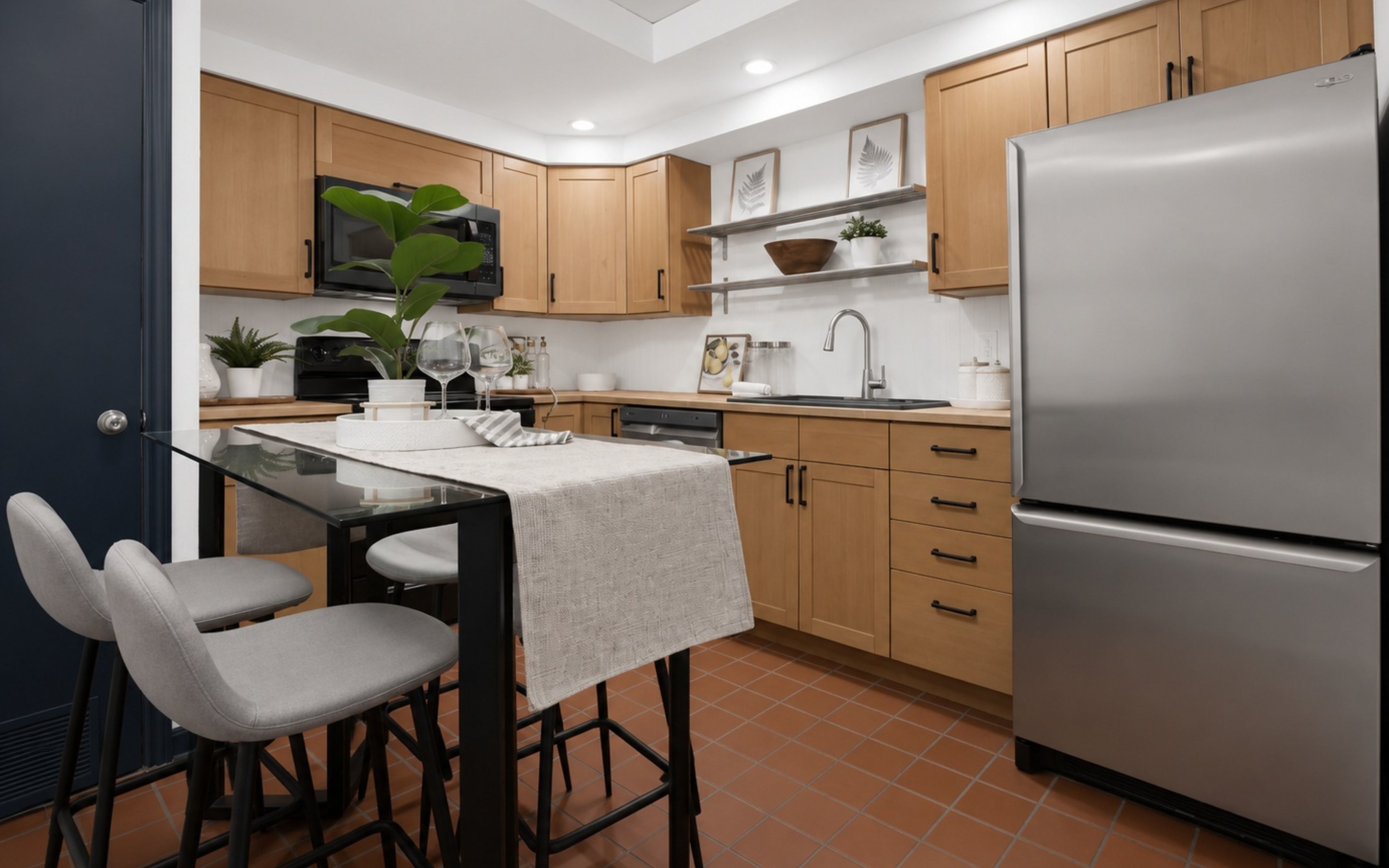
The lower level also has a modern kitchen.
KitchenJim Armstrong
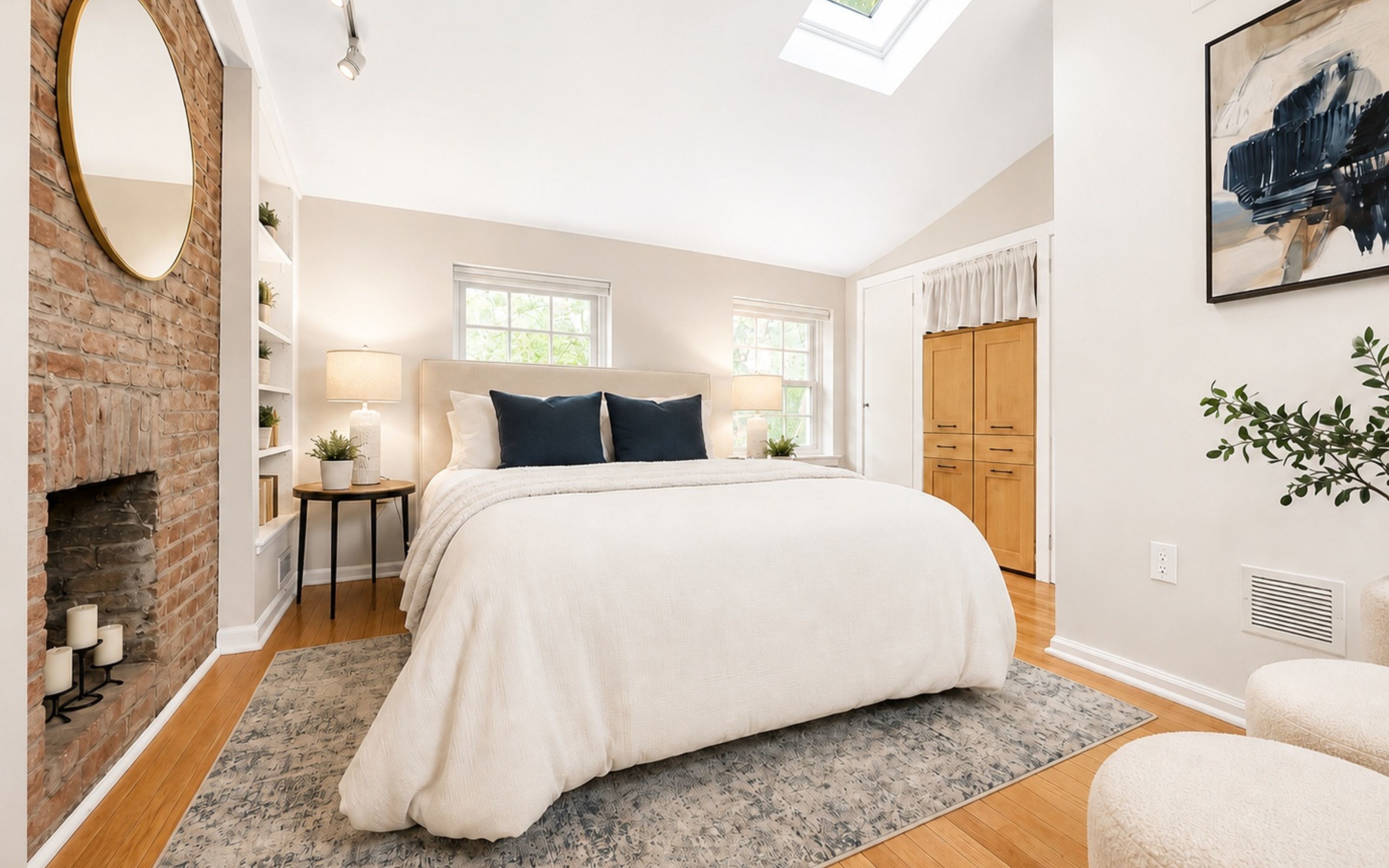
The second floor has a bedroom, the full bathroom, and multiple closets. The primary bedroom is on the third floor, with built-in shelves, vaulted ceilings, and an updated half-bathroom.
There are also decorative fireplaces on the first and third floors.
The primary bedroom has built-in shelves and a decorative fireplace.Jim Armstrong
The house is steps away from neighborhood restaurants such as Southwark and Ambra, as well as the Famous 4th Street Delicatessen and the Delaware River Trail.
It has easy access to I-95 and several bus routes.
It is in the William M. Meredith School catchment area.
It is listed by Jim Armstrong of JG Real Estate for $349,000.
Immigration advocates say at least 10 people have been arrested by ICE at Philadelphia International Airport since July 12, including a 68-year-old grandmother and the young babysitter of three children.
That comes amid a nationwide push by the Trump administration to increase arrests at American airports, spurring immigration attorneys to warn noncitizens with limited documentation that travel has become risky, including for those with valid work permits or pending applications for relief.
“People might not think Philly is being targeted, but we are,” said Vivian Chang, executive director of Asian Americans United, an advocacy group. “They’re trying to threaten people, trying to intimidate them — you can’t work freely, you can’t travel freely, you can’t fly.”
She said the arrests in Philadelphia include three people originally from Indonesia and others from India, Ukraine, China, Chile, and Argentina. Another person, a religious leader, was briefly taken into custody and released, she said.
Chang described the arrests in Philadelphia as especially troubling because the airport is owned and operated by the city.
She questioned why that property would not be subject to Philadelphia’s recent “ICE Out” legislation, which bars U.S. Immigration and Customs Enforcement from conducting operations on city-owned lands and bans access to city-owned spaces, absent a judicial warrant.
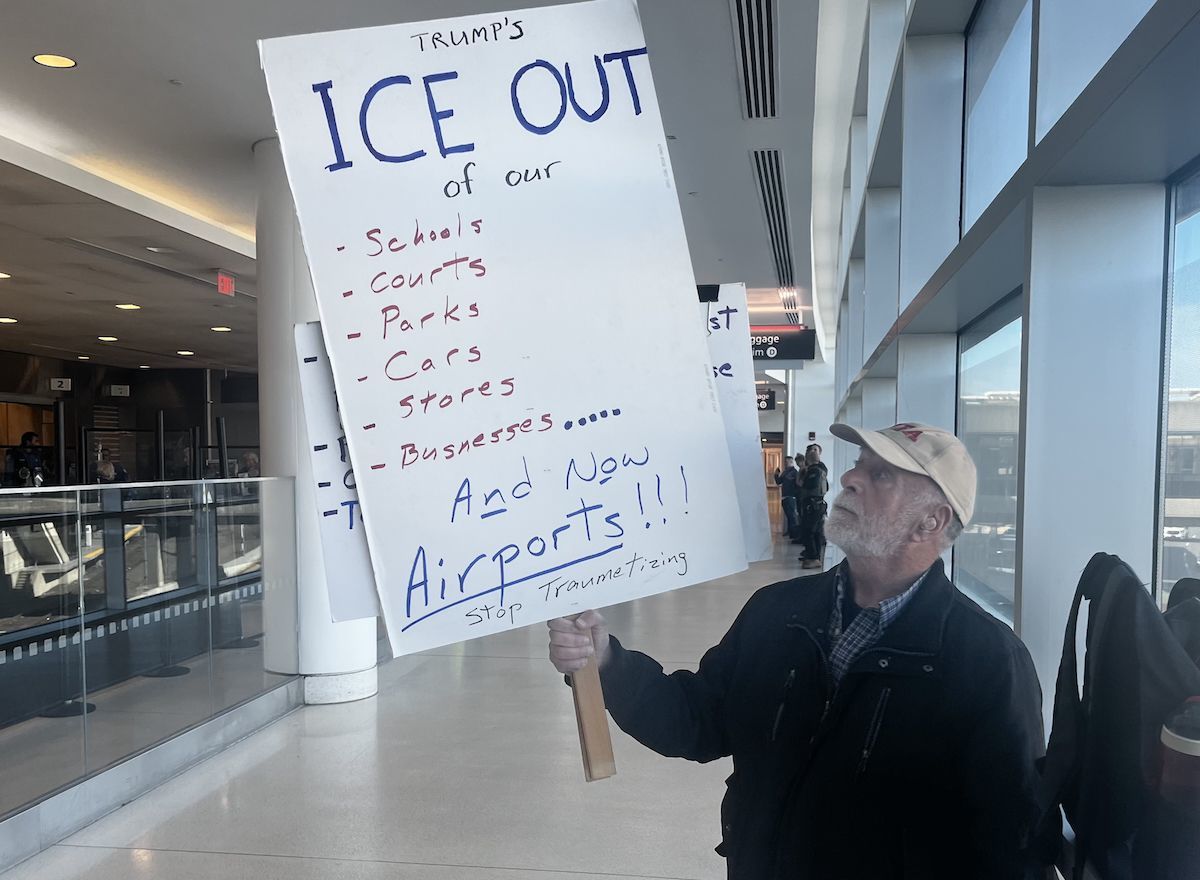
Steve Papelian, 73, drove more than an hour from Nazareth, Pa. to the Philadelphia International Airport to protest the deployment of ICE agents to international airports across the U.S. on March 24. The former school teacher believes that ICE should target criminal activity, not “moms and pops with kids,” he said.Henry Savage / Staff
Sam Scavuzzo, chief of staff for the city law department, said in a statement that “federal law enforcement access to particular areas of the airport is governed by federal law.”
A spokesperson for the Department of Homeland Security said airport arrests are occurring because the Trump administration “reversed the horrendous Biden-era policy that allowed aliens in our country illegally to jet around our country.”
“Under President Trump, DHS will no longer tolerate this. This administration is working diligently to ensure that aliens in our country illegally can no longer fly unless it is out of our country to self-deport.”
The department said “being in detention is a choice,” and the federal government is offering people who are here without permission a $2,600 payment and a free flight home.
Self-deportation can preserve the right to later come back to the U.S., absent the penalties that accompany a government deportation.
DHS said people who do not leave voluntarily “will be arrested and deported without a chance to return.”
On July 11, what started out as a fun soccer trip for a South Philadelphia babysitter ended with her being arrested and ultimately moved across the country to an ICE detention center in New Mexico.
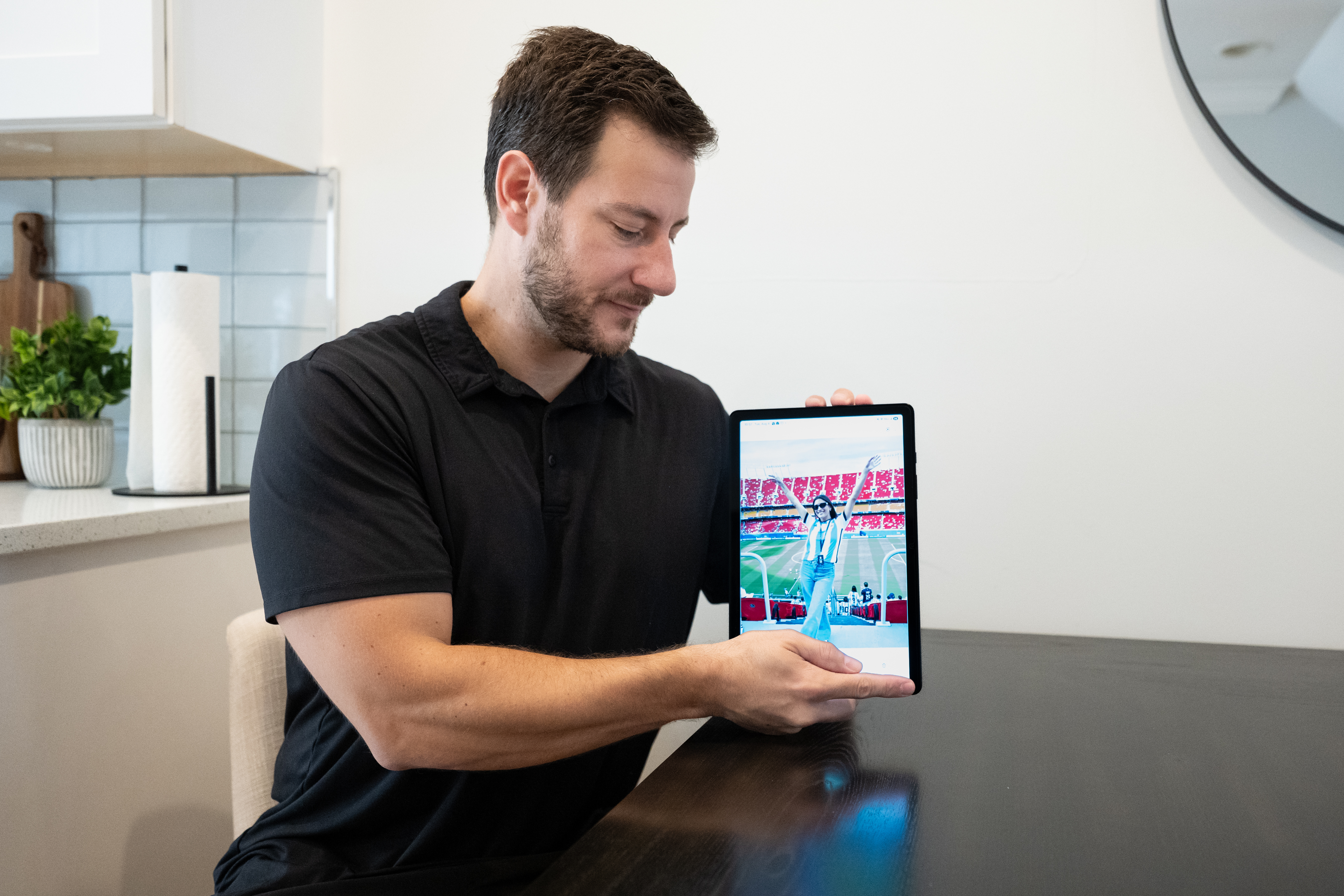
Steven Melchiorre, 35, a health worker, said that at 7 a.m. that day he dropped off his girlfriend, Iliana Lick, 30, to fly to Kansas City. Originally from Buenos Aires, she planned to see the Argentina national team play in the World Cup.
On July 11, what started out as a fun soccer trip for a Philadelphia babysitter ended with her being arrested and ultimately moved across the country to an ICE detention center in New Mexico. Iliana Lick legally entered the U.S. in 2023, though her visa later expired. She cares for the children of two South Philadelphia families.Courtesy of Steven Melchiorre
She texted Melchiorre from inside the airport to say the line was short, then did not answer his reply.
After a while, he said, Lick phoned, crying, to say she had been arrested by ICE. She was moved from Philadelphia to the Cambria County prison, which holds prisoners for the agency in south-central Pennsylvania, and in the following days was transferred to ICE facilities in Louisiana, Texas, and New Mexico.
Late Friday afternoon, an immigration judge in New Mexico set bond for Lick at $10,000, according to her boyfriend. He immediately began working to post that bond and bring her home. It was not clear how quickly Lick might be released.
DHS said Lick was arrested during a targeted operation, having overstayed her visa.
The department noted that work authorization or a pending application for immigration relief, both of which Lick has, do not confer legal status to be in the United States.
ICE began to deploy agents at U.S. airports in March, and the move was announced as a way to assist at checkpoint lines during a partial government shutdown.
The deployment quickly proved controversial, as travelers and labor unions objected, saying the agents were intimidating and lacked aviation training.
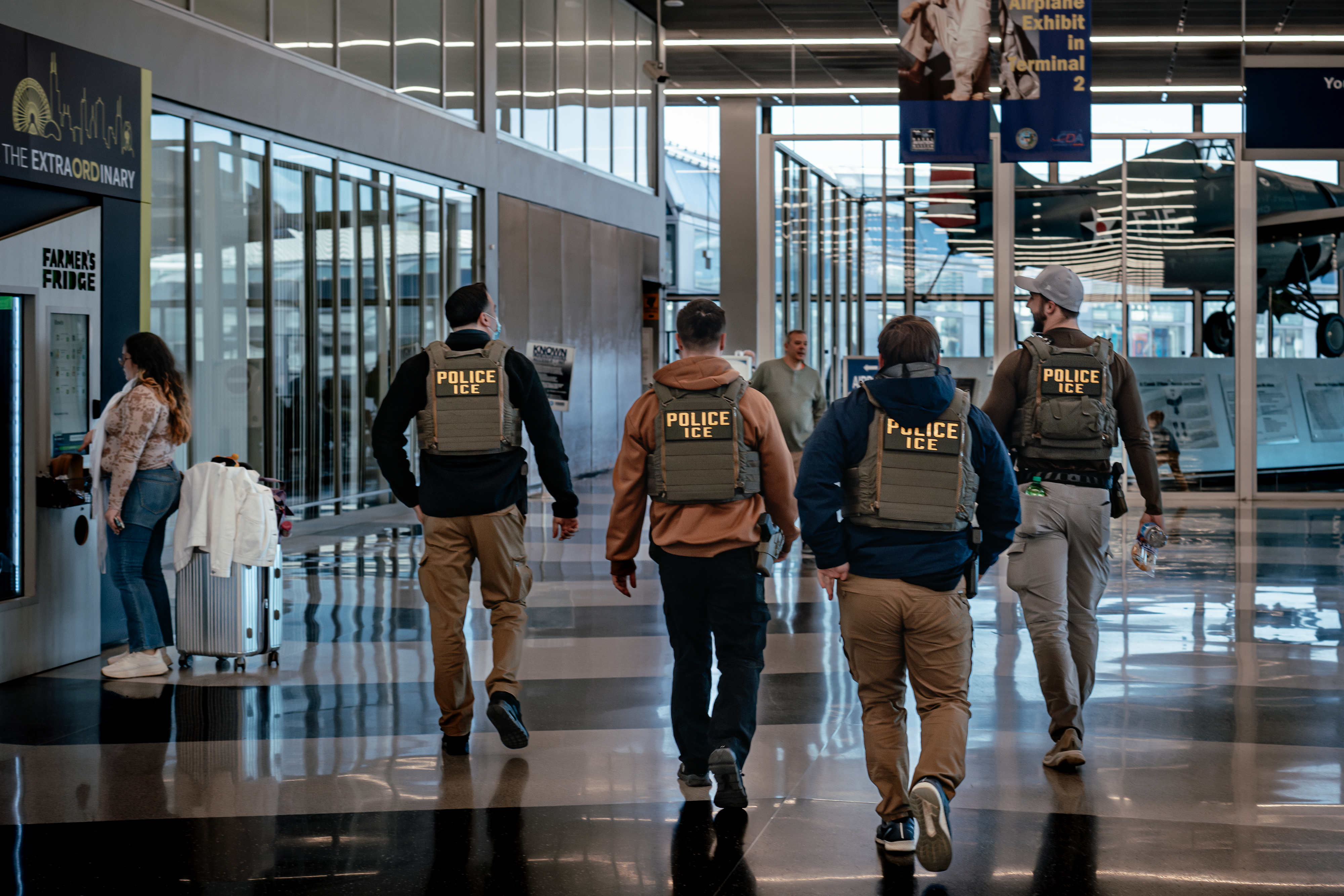
A group of federal immigration officers walk through O’Hare International Airport in Chicago on March 23, 2026. From large cities like Chicago and Las Vegas to small suburbs outside Milwaukee and San Antonio, immigrants have been picked up and detained at courthouses, ICE check-ins and traffic stops, with daily arrests doubling in the last week of June and continuing to climb.JAMIE KELTER DAVIS
Airports rank among the most sensitive public spaces in the country, traversed by millions of people, including U.S. citizens, noncitizens, and mixed-status families, California immigration lawyer Andrew Neitor wrote for the American Immigration Lawyers Association, a legal group.
The introduction of ICE agents, he said, blurs critical lines between airport security and immigration enforcement, around what authority is being exercised and by whom, and over the legal protections due to people who may be arrested.
“ICE was not intended to be omnipresent in daily civic life,” Neitor said. “Yet its footprint has expanded from courthouses to neighborhoods, workplaces, and even parking lots, shifting from targeted enforcement to visible, normalized presence.”
Last year, the Transportation Security Administration and ICE signed a memorandum of agreement that outlined how ICE would share information with TSA to identify people in whom ICE was interested, according to the memo, obtained through the Freedom of Information Act by the watchdog group American Oversight. The agreement said sharing the data would enhance national security, transportation safety, and immigration management.
On Tuesday, U.S. Rep. Rashida Tlaib of Michigan introduced a bill, the No TSA Data for ICE Act, that would bar the agencies from coordinating to conduct what her office called “a dramatic violation of privacy rights.”
The bill would ban TSA from sharing passenger names, birth dates, and other data that enable ICE to target immigrants who are in the process of changing status, including those awaiting visa extensions or who recently married U.S. citizens.
“TSA is readily offering up our immigrant residents to suffer at the hands of ICE agents so they can fulfill their daily arrest quota,” Tlaib said in a statement. “Immigrants should be able to safely fly in this country without the fear of arrest or deportation.”
Today ICE is making record numbers of arrests across the country, not only at airports but also at places that were once considered off-limits, including routine immigration check-ins.
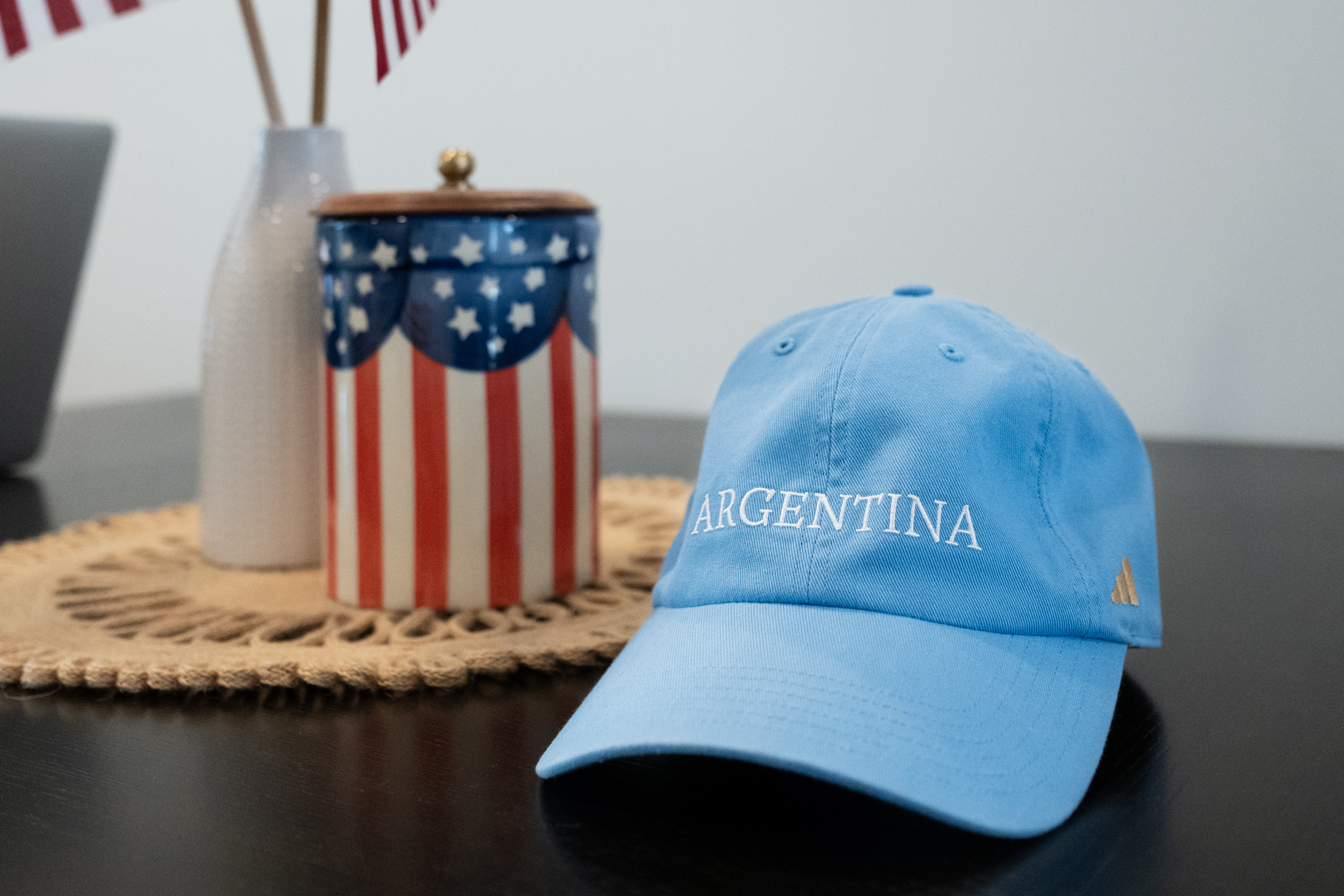
A hat belonging to Iliana Lick sits on a table in the home she shares with her partner, Steven Melchiorre, in the Point Breeze neighborhood of Philadelphia on Tuesday, Aug. 4. Lick has remained in ICE custody since her detention at Philadelphia International Airport on July 11, 2026.Erin Blewett / For The Inquirer
In June in Philadelphia, a 36-year-old survivor of slavery who had fled Mauritania, a mostly desert land in West Africa, filed suit in federal court over the issue. He accused ICE of having unlawfully rescinded a policy that generally allowed immigrants to pursue their cases without fear of arrest.
Nationally, the rate of ICE arrests topped 1,300 a day in June, and grew again to a record 1,474 a day during the first 11 days of July, Syracuse University professor and immigration-data analyst Austin Kocher reported.
Some of those being arrested at airports had legally entered the United States, then stayed after their visas expired. That includes some, like Lick, who were seeking to legally change their immigration status while in the U.S.
Lick, now of Point Breeze, legally entered the country in 2023. She held and extended a visa, and holds work authorization and a REAL ID driver’s license, her boyfriend said. She was trying to adjust her status before her visa expired and continued to do so afterward, Melchiorre said.
Lick works taking care of three children for two South Philadelphia families.
Britni Zahodnick and her husband, Zane Schultz, have employed Lick as a babysitter for their two young children, ages 4 and 1, for more than a year. They described her as soft-spoken, kind, attentive, funny, thoughtful, and a good listener.
“She was very quickly thought of as family,” Schultz said.
Trust does not come easily for any parent preparing to place their children in another’s hands, but Lick won theirs, the couple said.
“All the things you would look for in a caretaker for your kids,” Zahodnick said.
Illiana Lick with partner Steven Melchiorre in New York City. On July 11, what started out as a fun soccer trip for a Philadelphia babysitter ended with her being arrested and ultimately moved across the country to an ICE detention center in New Mexico. Iliana Lick legally entered the U.S. in 2023, though her visa later expired. She cares for the children of two South Philadelphia families.Courtesy of Steven Melchiorre
Melchiorre acknowledged that ICE had legal authority to detain Lick. He said people should follow immigration laws — but the couple thought Lick was doing so. They did not know domestic flights were in question, having flown in the past without incident.
Melchiorre said he was surprised and frustrated by her arrest, “because Iliana has not committed any crime, hasn’t missed any fees, hasn’t missed any court dates. She wasn’t trying to dodge immigration. Being detained, it’s similar to how criminals are treated.”
The Phillies tell me they sell more than 40 brands of beer, priced from $6.99 for a 12-ounce can of nonalcoholic beer to $17.69 for a 24-ounce premium can. Beer is everywhere at Citizens Bank Park, including at a humongous walk-through cooler on the main level.
I recently strolled into that cooler and found a lager — at $38.48 for two 19-ounce cans — that paired nicely with chicken fingers and the Fightin’ Phils. OK, so 64 ounces of the exact same beer costs $11.99 at Acme, but you can’t watch the Phils live from Acme, can you?
“Sometimes, things become clichés because they’re true: A cool beer on a warm summer day at the ballpark is among the great joys of fandom,” says the avuncular Glen Macnow, the former Inquirer reporter (and colleague) and sports talk-show host whose What’s Brewing PA beer show appears on the NBC Sports Philadelphia networks.
Macnow — who is, full disclosure, also the part-owner of Conshohocken Brewing Co., which vends two of its brands at the ballpark — adds: “I’ve spent many an afternoon (or evening) with a beer in one hand, a hot dog in the other, juggling both so I can fill out the scorecard balanced on my knees.
“Those are simple and eternal pleasures. Baseball isn’t designed for trendy cocktails in a can; it’s designed for the tradition of leisurely enjoying a cold brew over several innings as you try to convince the guy in the next seat that the manager (whoever he is) is the dumbest one in Phillies history.”
OK, but just in case you don’t care for a brewski, the Phillies also sell about a dozen different trendy cocktails in cans, with prices running from $14.55 to $23.99. These are no bargains, either, but consider the alternative: The Phillies used to not sell booze at all.
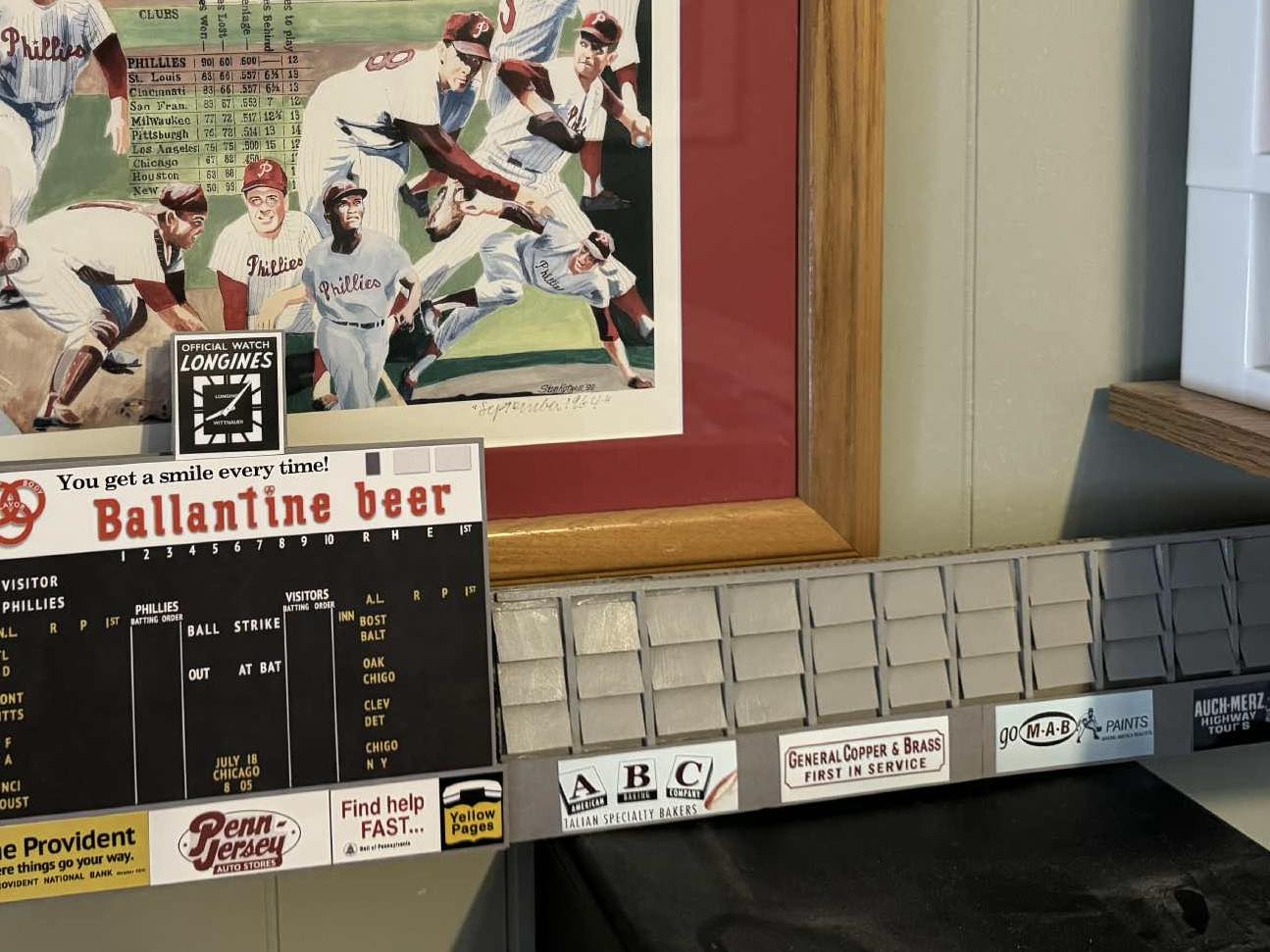
Baby boomers like me vividly remember the towering, then-state-of-the-art right field scoreboard at Connie Mack Stadium, topped by a gigantic advertisement for Ballantine Beer (and its three-ring logo, for Purity, Body, and Flavor).
A handmade model of the iconic Ballantine Beer scoreboard at Connie Mack Stadium by Phillies fan Bernie Valente.Courtesy of Bernie Valente
Well, that scoreboard was erected in 1956, five years before beer was sold there.
The Phillies first legally sold beer inside Connie Mack Stadium, their musty old park in North Philadelphia, on Aug. 7, 1961, when they put seven local brands of bottled beer on sale for 35 cents, first poured into a paper cup by eight vendors working the aisles.
The paper cup was a vital part of the transaction, because, prior to legal sales, Phillies fans used to sneak in cans of beer, often sold in “cold packs” at nearby bars like Charlie Quinn’s Deep Right Field Cafe at 20th and Lehigh.
Beer cans were heavier in those days, so they tended to become missiles when the umpires missed a call, or if the Phillies stank, which was quite often.
The low point probably came on June 12, 1959, when a twi-night doubleheader against San Francisco was halted after five innings because of rain. The Phillies were no-hit — but even worse, fans were denied rain checks to both games because the first game was official.
As Frank Fitzpatrick, the now-retired Inquirer reporter who attended the game as a 9-year-old, recalled in the paper in 2016: “Suddenly, one empty can fluttered toward the field. A second followed quickly. Soon, it was a dangerous deluge. So many were tossed that cans obscured the tarp, from the mound to the batter’s box.”
That was not good news for Robert R.M. Carpenter, the Phillies owner, who dearly wanted a new ballpark for his team. Plans had been drafted for a 45,000-seat, $8 million stadium in the Torresdale section of Philadelphia, with an adjoining theme park, yacht basin, and bird refuge park adjacent to I-95. Beer sales would bring in some cash for that amazing project.
On June 20, 1961, the Pennsylvania Senate passed a previously approved bill by the state House that would permit the sale of beer every day but Sunday at sporting events at stadiums in the state that seated more than 25,000. (The Pittsburgh Pirates also happened to be looking for a new ballpark.)
But they faced stout foes. After voting against the bill earlier in 1961 that would have enabled the Phillies to sell beer, a Democratic state assemblyman from Philadelphia, Charles Heavey, predicted that the sale of beer would actually “contaminate” youngsters.
So … first the beer had to be poured into a paper cup before drinking, preventing another beer can pileup on the field like the one in 1959. And there would be more than one starting pitcher: Schmidt’s, Esslinger, Old Dutch, Horlacher, Neuwiler and, yep, Ballantine were all included in the original sudsy rotation.
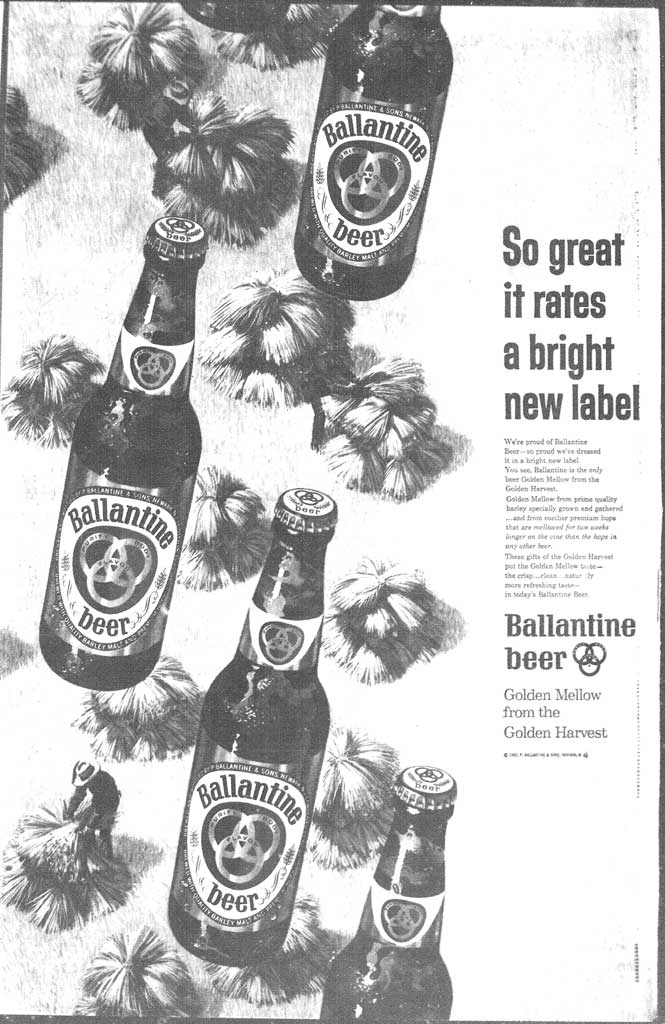
A 1962 newspaper advertisement for Ballantine beer.
Larry Merchant provided statistics in his Daily News column the next day: A total of 3,739 beers were served to 5,586 who attended that Aug. 7 game, a 3-1 Pittsburgh victory on a Monday, which was also the Phillies’ 10th straight loss. No bottles or cans were thrown on the field, he reported, but fans did pop the cups and try to throw those onto the field — often in vain.
“For serious drinkers, it was about a four-beer game, just two and a half hours long,” Merchant joked. “For serious Phillies fans, it was a six-beer job. They look better that way.”
Merchant made note of signs at the entrances that read, “Bringing in of canned beer or bottled beverages will be a cause for ejection from the park.” Nonetheless, he reported, seven would-be beer smugglers were caught at the gate, their brews returned when they left the park.
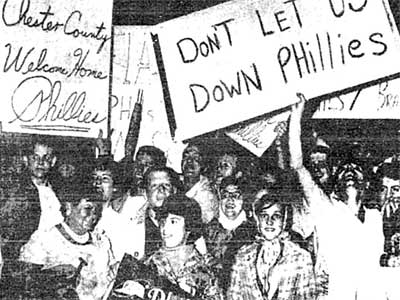
Those 1961 Phillies were so lousy that their losing streak grew to 23 games, still a modern record. After the Phillies beat Milwaukee, 7-4, on Aug. 20 in the second game of a doubleheader, their flight home was welcomed by 500 fans at 1 a.m. the next day at the airport.
About 500 Phillies fans welcomed the team home at the airport like conquering heroes after the club broke a 23-game losing streak in August 1961.
“They are selling rocks at $1.50 a pail,” Phillies pitcher Frank Sullivan, looking out of the plane, joked to his teammates.
He then wisecracked: “Leave the plane at five-minute intervals. That way, they can’t get us all with one burst.”
In truth, the beer ploy sales did not seem to provide much of a boost to the 1961 Phillies, who lost 107 games and finished last in the National League in home attendance in 1961, averaging only about 7,600 per home game. But a door, or many brewskis, had been cracked.
Beer would not be sold at Sunday home Phillies games until 1972, after the Phillies moved to Veterans Stadium, following the amendment of the ancient Pennsylvania Blue Laws, intended to curtail activities on Sundays (including Phillies and A’s home games until 1934).
“My parents didn’t drink, so I always associated the public consumption of alcohol as something dark and troubling,” Fitzpatrick told me recently. “That feeling was confirmed in spades at that 1959 game.
“By 1966, the summer I worked at the ballpark, I felt differently. I was a soda vendor, and beer suddenly was a precious commodity. Now I envied the beer sellers, because they made the most money and had the least amount of walking. Occasionally, rowdy fans would harass young vendors like me, hurling popcorn containers or wadded-up cups at us, [but] it definitely was comforting to know you wouldn’t have to dodge metal cans. On the other hand, in ’66 the smell of spilled beer now permeated the place. I don’t remember that same aroma when fans brought their own.”
Carpenter never did get his Torresdale stadium. After a one-year delay because of construction, however, the Vet opened in 1971 in South Philadelphia. A few fans grumbled about paying 75 cents for a 12-ounce beer served there by a vendor, perhaps because those same items were 40 cents and 60 cents, respectively, at Yankee and Shea Stadiums in New York.
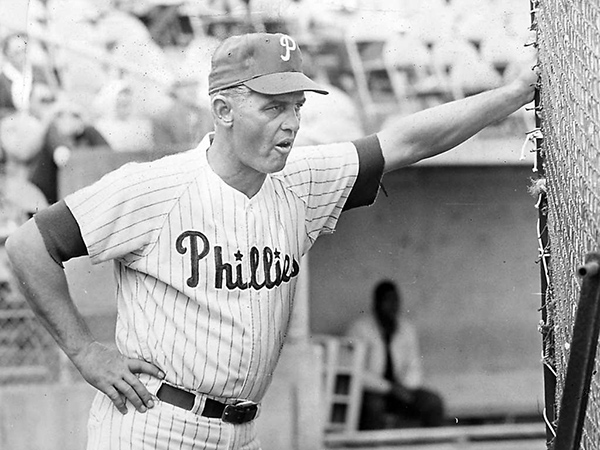
Gene Mauch managed the Phillies during their historic 107-loss season in 1961. That team dropped 23 straight contests.
The pricing was actually meant to be sort of a deterrent. Bud Vye, the Connie Mack stadium manager, told The Inquirer, “At these prices, they’ve got to bring a bankroll just to get bombed out.”
But beer stuck around. A 1998 Daily News exposé into how Ogden Entertainment, then the vendor at the Vet, was caught skimming a half million dollars in annual beer sales led to a price reduction. Local brands, kicked to the side by the national brews, were sold again when the Phillies moved to Citizens Bank Park in 2004. (Large premium drafts then sold for $6.)
Cups were eventually discontinued, and most beer at the ballpark is sold in much lighter cans (which, it should be noted, are opened by the cashier, lest someone try to hurl a full can on the field). Dozens of different brands of beer can be spotted at any Phillies game.
“A big part of this is marketing,” Macnow tells me. “Beer at the ballpark is no longer poured into paper cups, so there’s a long-term benefit to seeing people walking around the park holding cans of your beer. Labeling becomes important. Naming beers becomes important.”
And so is the vessel itself. The Phillies continue to sell “beverage bats,” large hollow plastic souvenir baseball bats that can be filled with any beverage. Those are not cheap, either. Phillies fans may be held captive by the prices, but beer and baseball are inseparable.
Dave Caldwell lives in Manayunk and covered sports for The Inquirer from 1986 to 1995.
“When I turned 80,” Andrea Preis said, “our sons told me, ‘It’s time for you and Dad to downsize and move into a place that is more manageable.’ So we did.”
So in 2024, Andrea and husband Eran Preis moved from a four-bedroom home in Queen Village, where they lived for 26 years, to a two-bedroom condo in Bella Vista.
Andrea had no room for her collection of framed embroidery, her cookbooks, art books, albums of photos taken on trips all over the world, dishes, a painted cupboard, and other treasures.
“I had to force myself,” she said, to part with beloved objects. “It made me sick. It was so hard.”
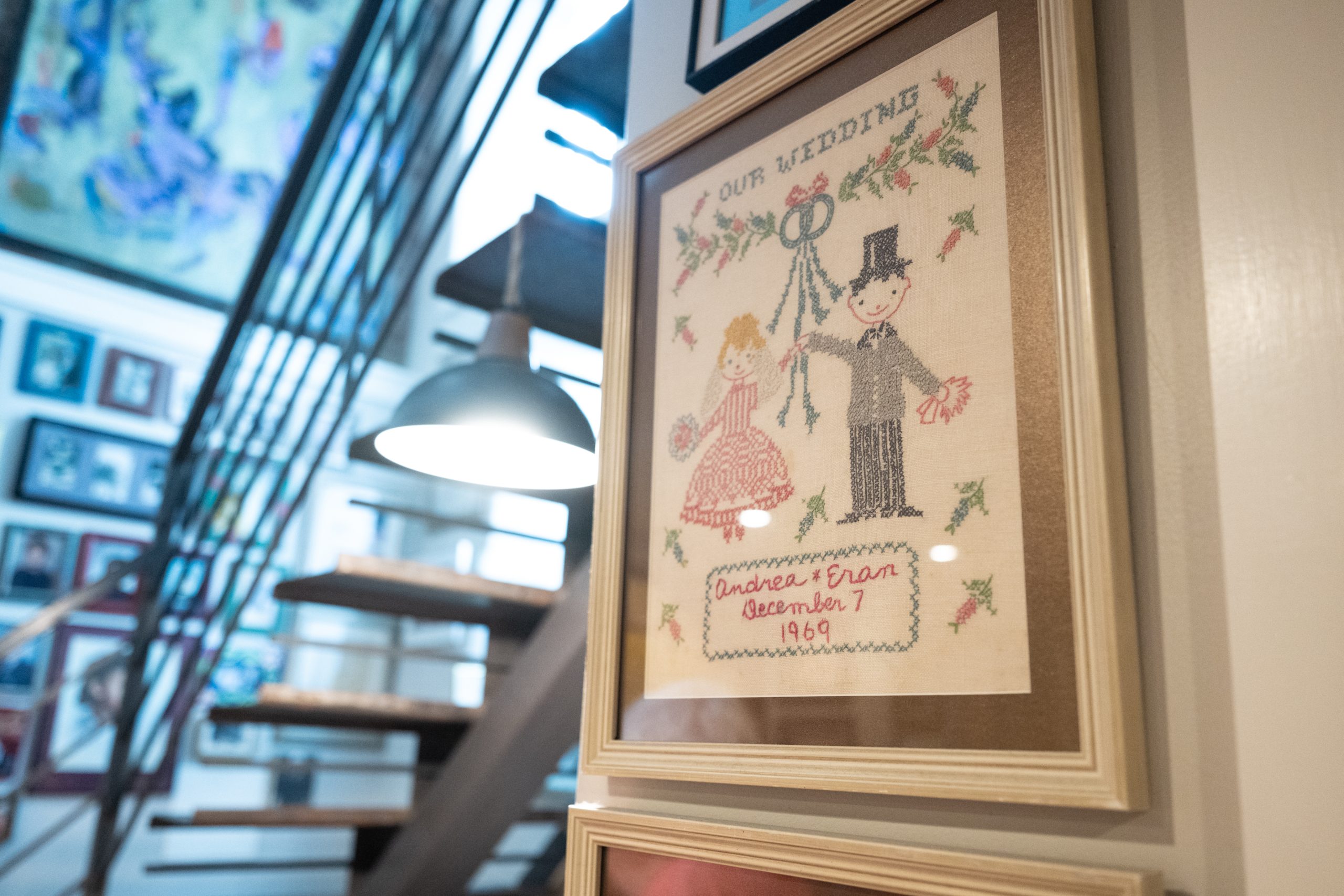
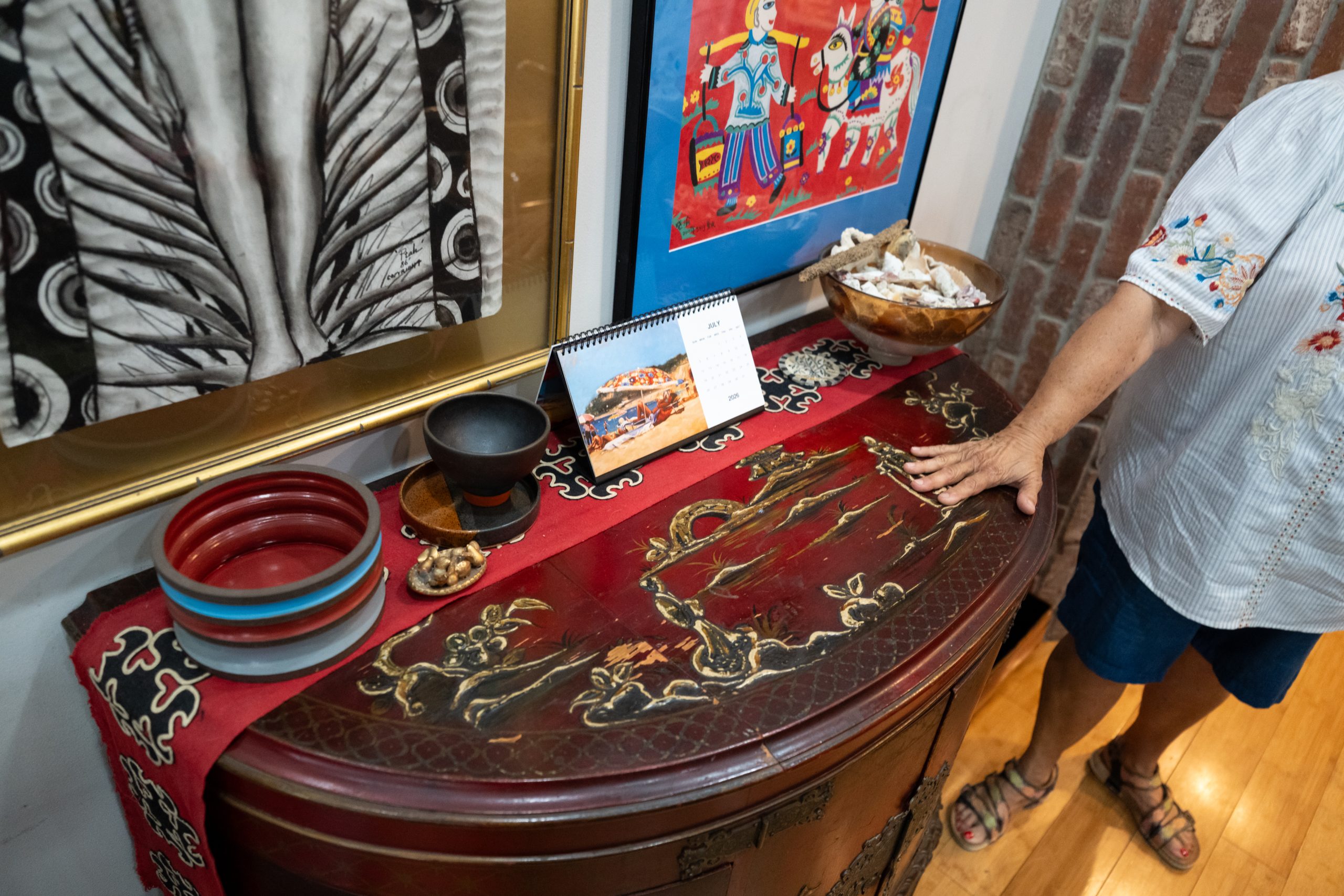
A wedding memento embroidered by Andrea Preis’ grandmother hangs in the basement of the home.Erin Blewett / For The InquirerAndrea Preis touches a cabinet at the front of the home, adorned with some of the items she has collected.Erin Blewett / For The Inquirer
Eran, who gave away stacks of books, was less nostalgic. “We needed to be on one level and our house was starting to fall apart,” he said.
Andrea had a house sale and later set out a table in front of her old home with items people took for free. “When I finally put away the table a woman knocked on the door wondering where everything was,” she recalled.
The couple’s condo comprises the first floor and basement of the three-story rowhouse and was renovated 20 years ago. The ground floor features a sitting area, kitchen, bedroom, and bathroom, and a tiny garden. In the basement there is another bedroom, bathroom, and sitting room.
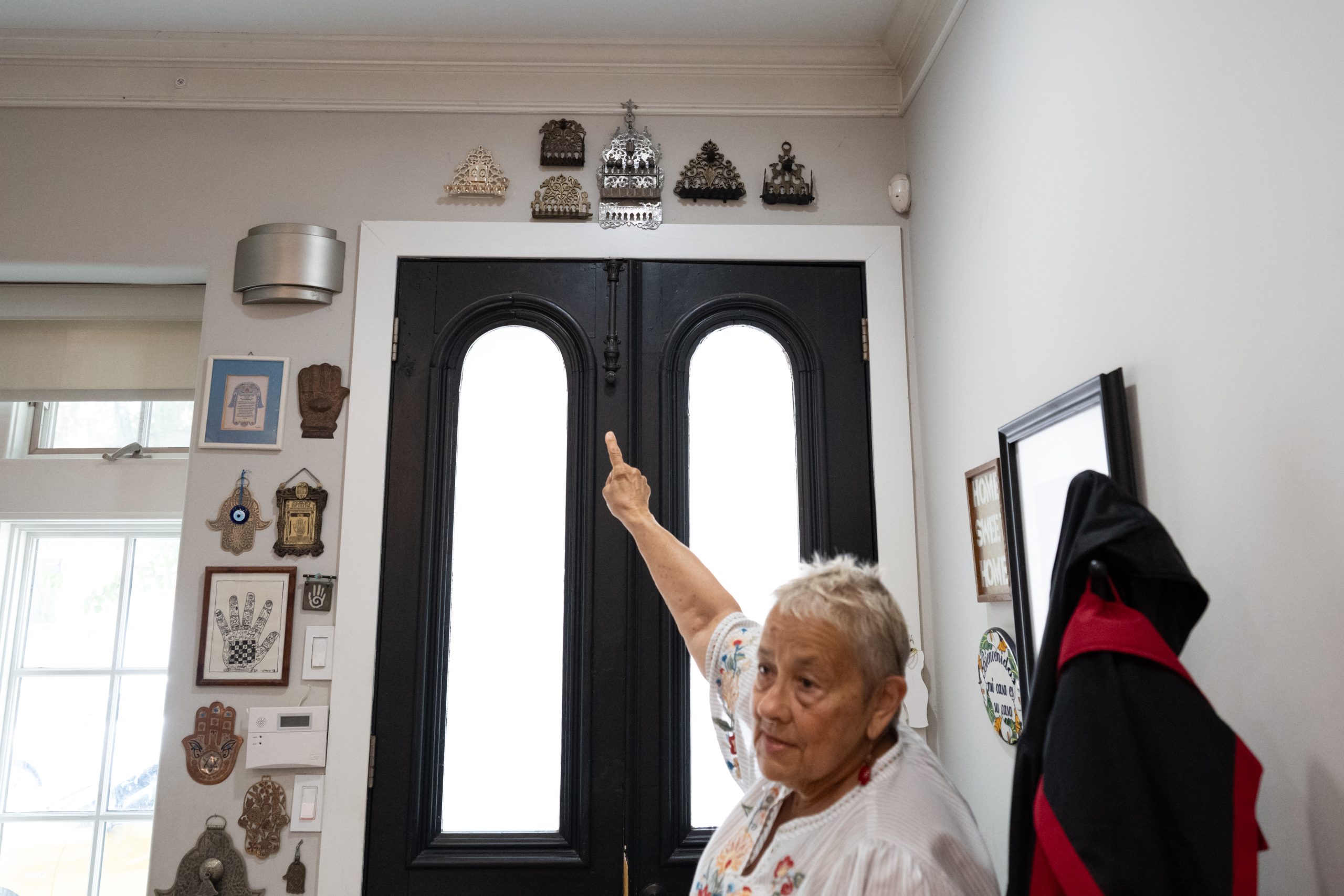
Though she purged half of her furnishings, Andrea kept favorites such as an elaborately carved antique buffet with brass fittings. Over the front door hang vintage Hanukkah oil lamps from Spain and Italy. White painted and exposed brick walls are hung with abstract art.
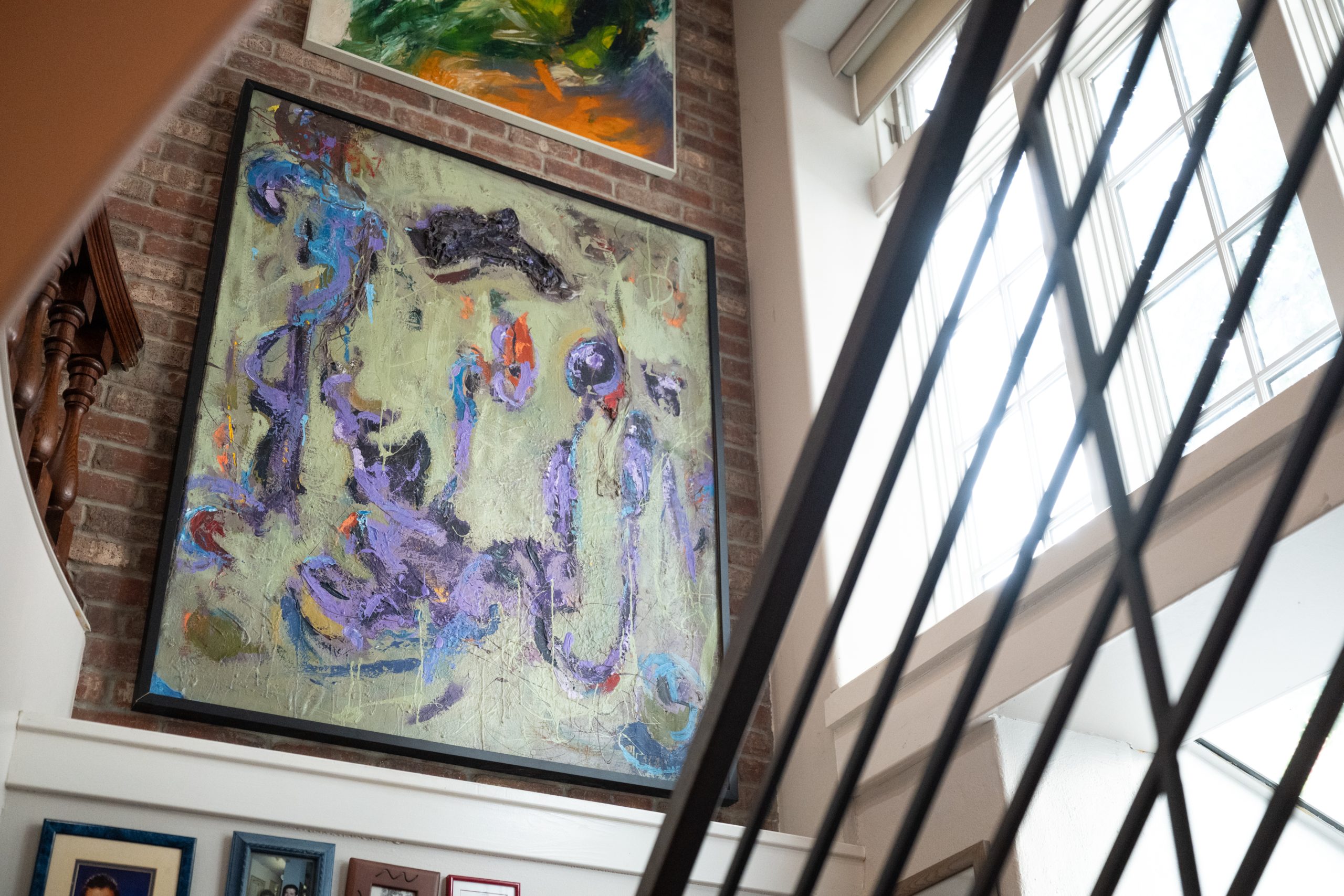
Andrea Preis points to vintage Hanukkah oil lamps from Spain and Italy hanging above the front door.Erin Blewett / For The InquirerA painting created by the couple’s son hangs in the stairwell.Erin Blewett / For The Inquirer
Several paintings are by Andrea and her son Abner. Her cousin Harriet Quick painted the swirls of green, gold, and orange on a white background.
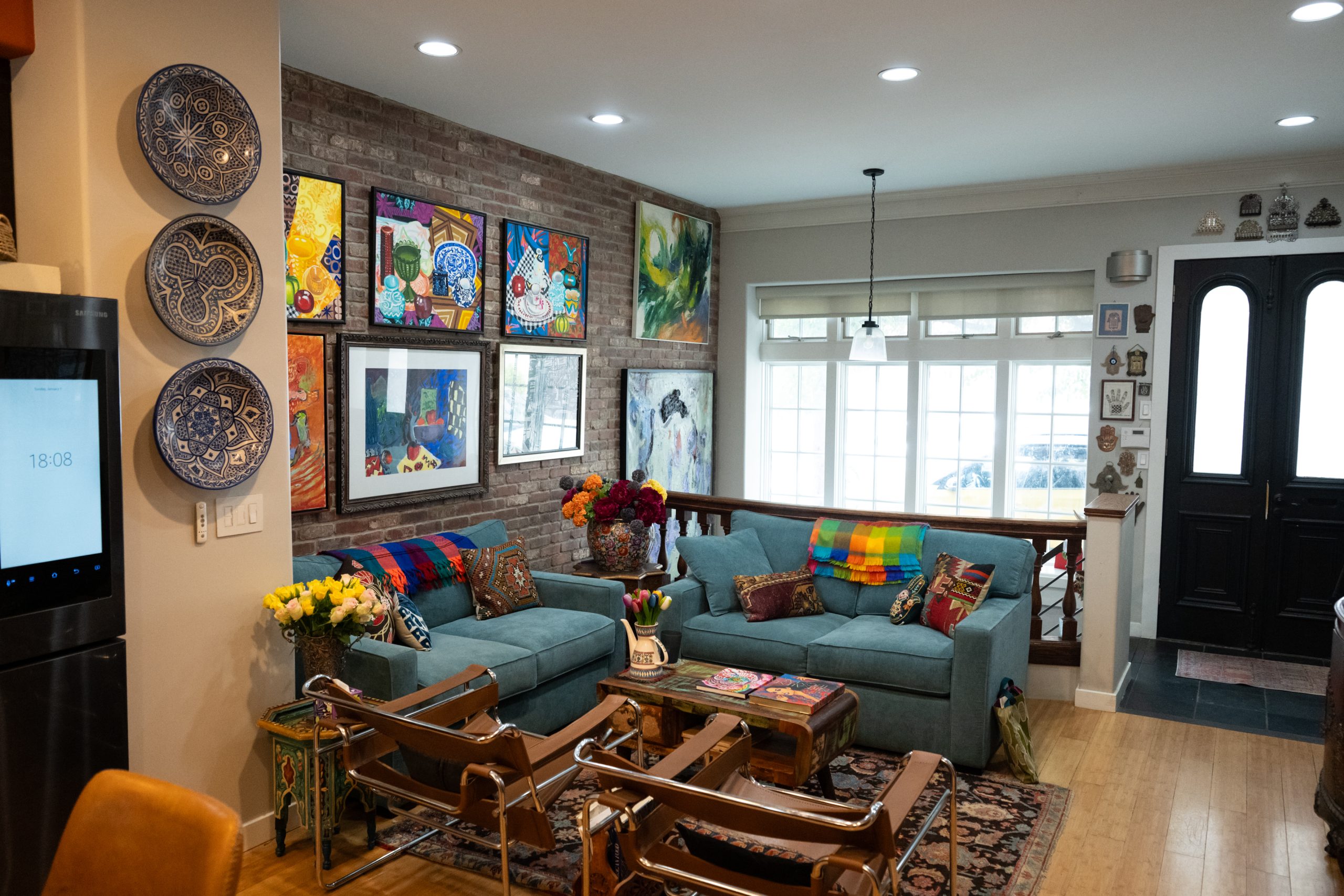
The sitting area has two blue couches from Macy’s, two leather slingback chairs from a nearby furniture store, and a Persian rug from Material Cultures.
The living room walls are covered in art, echoed by brightly colored throw blankets and pillows.Erin Blewett / For The Inquirer
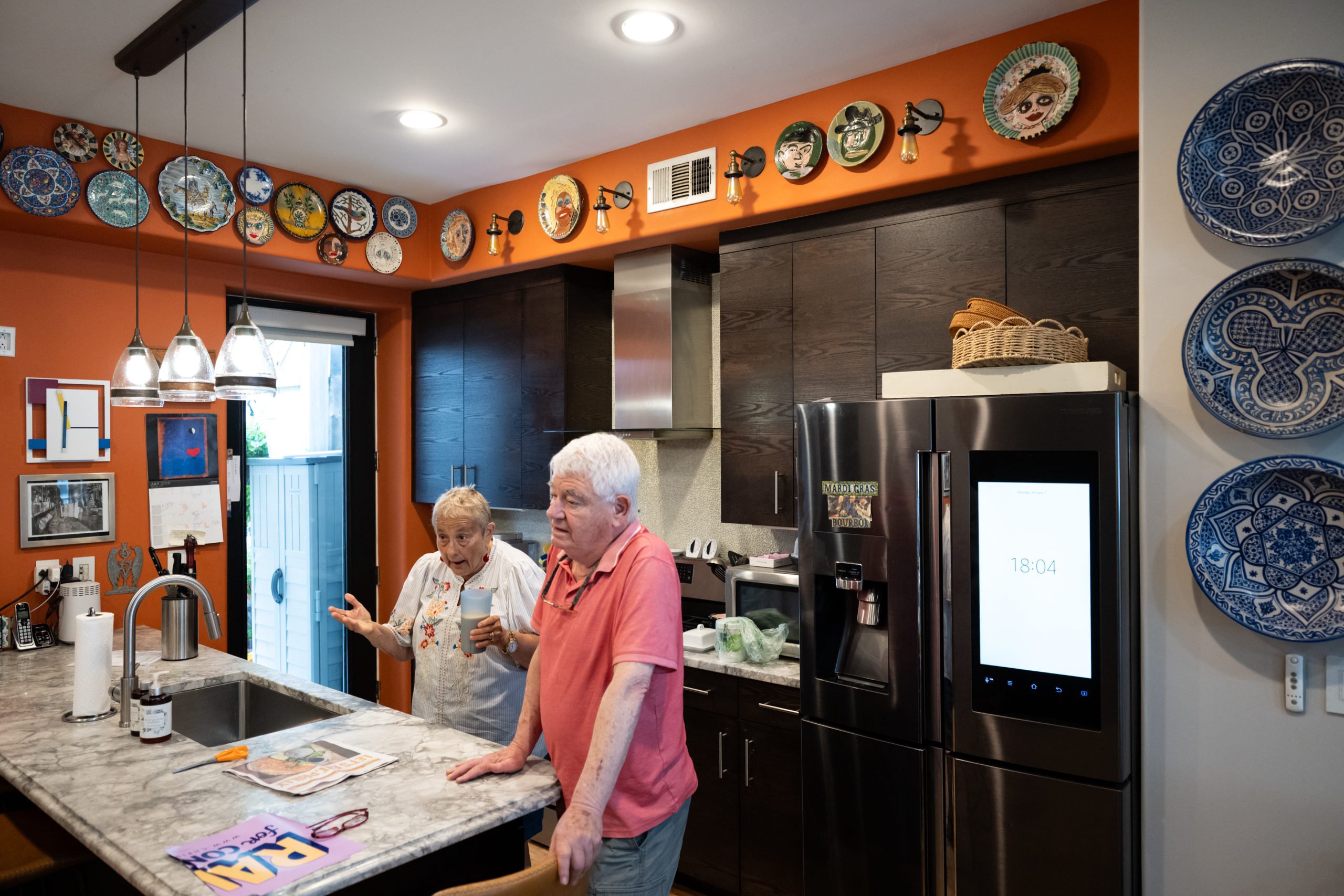
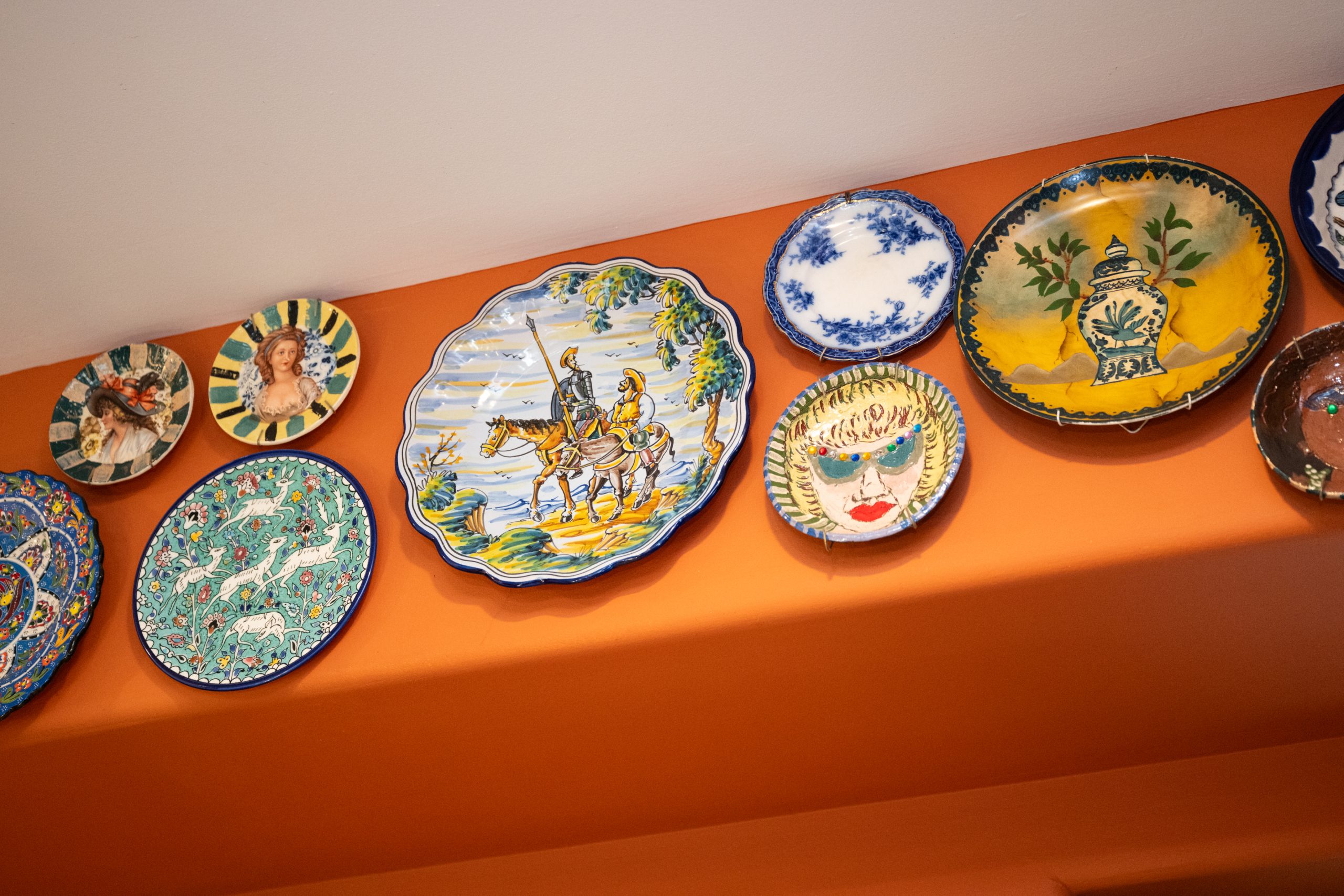
The kitchen’s pumpkin accent wall is decorated with over a dozen artfully arranged plates. Several of them, depicting whimsical women’s faces, were crafted by Andrea, a talented ceramicist and painter. Walnut double doors conceal a commodious pantry.
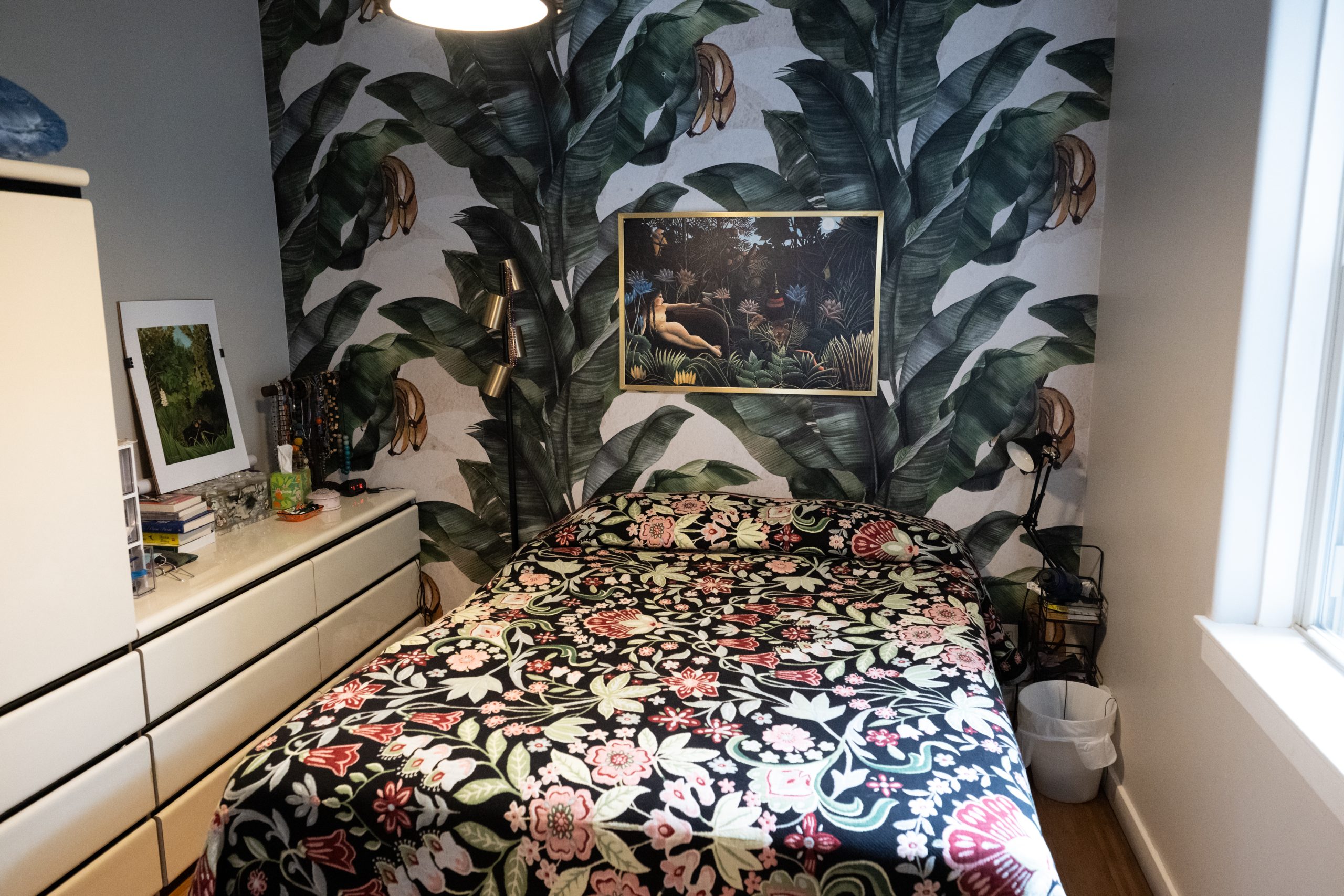
The queen-sized bed just fits in the bedroom, papered in an oversize leaf pattern. A poster of Henri Rousseau’s Eve in the Garden of Eden continues the leaf motif.
Andrea gave her dining table, which seated 14, to a family of 10. She now uses three folding tables, which seat 12, when she entertains.
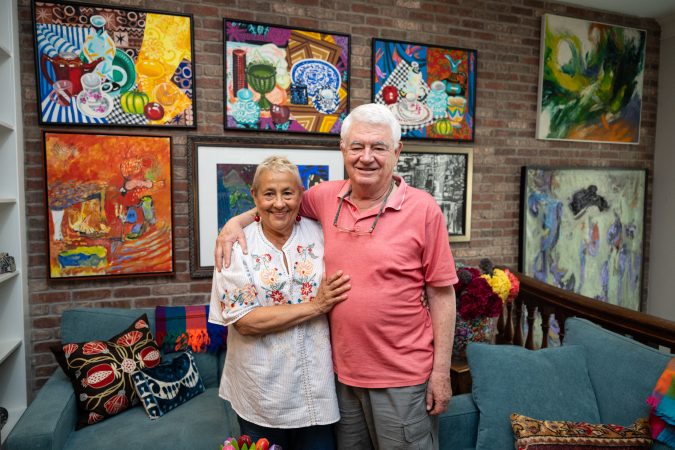
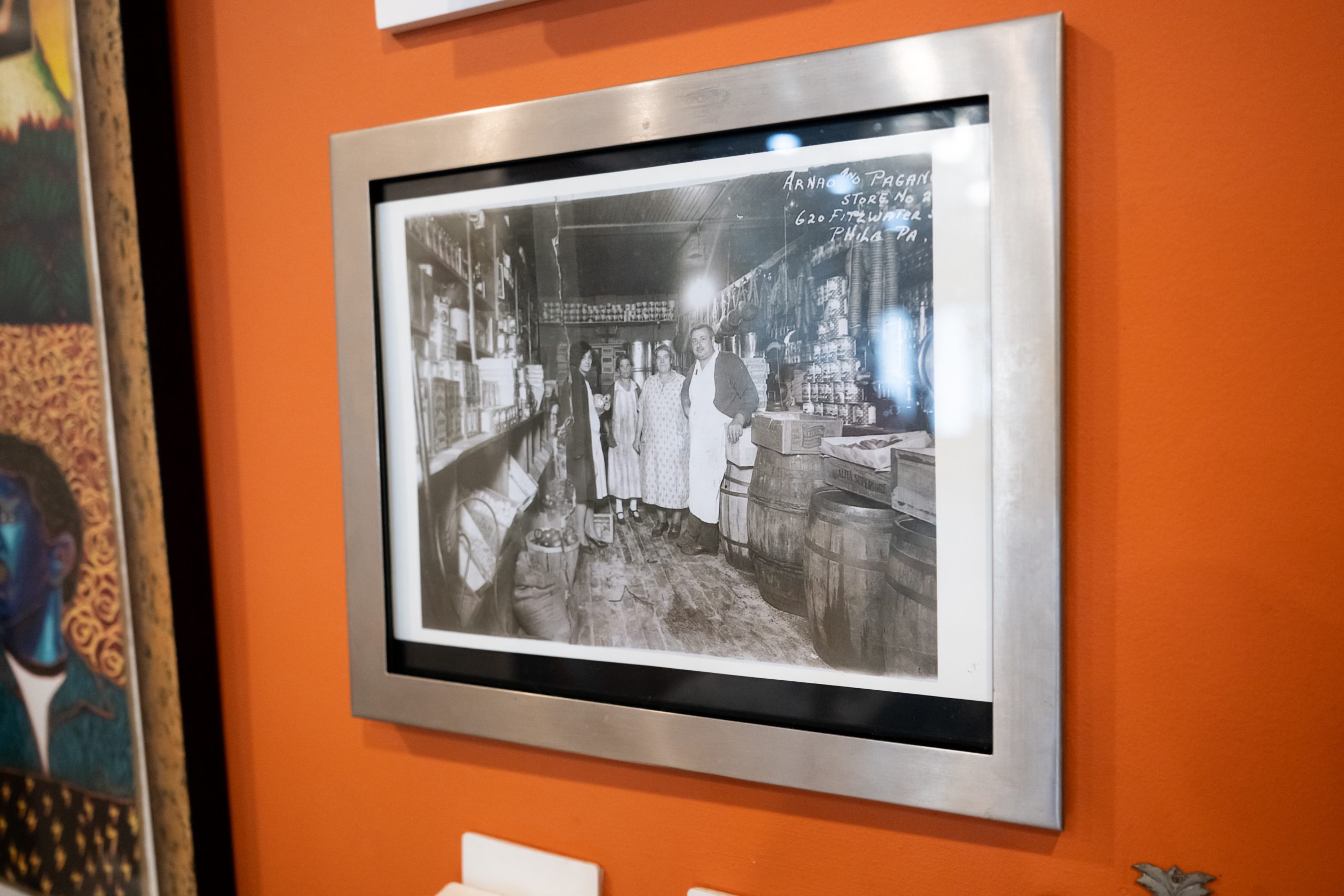
The couple stand in their kitchen. Erin Blewett / For The InquirerThe bedroom design includes a bold wallpaper and a print of a Henri Rousseau painting.Erin Blewett / For The InquirerA photograph showing the building when it was used as a store in the early 20th century. The image has been passed down from one homeowner to the next, Preis said.Erin Blewett / For The InquirerCeramic plates hanging on the wall above the kitchen include some Andrea Preis made herself.Erin Blewett / For The Inquirer
One new treasure from previous owners is a photo of the rowhouse when it was Arno & Pagano’s grocery store in the early 1900s.
During the building’s renovation, the exterior cellar door was replaced with a window to add light. Andrea did not want to tend fish in the former owner’s aquarium in the stairwell under the window. She replaced it with an array of fabric dolls in colorful costumes from around the world.
The basement sitting room is furnished with a love seat, two striped chairs, and a pullout couch for visiting family. Andrea and Eran have three sons and four grandchildren.
Bookshelves are filled with travel souvenirs and there is a large television.
Next to Eran’s basement desk hangs a poster for Beyond the Walls, an Israeli movie he cowrote. The prison drama was nominated for an Academy Award for Best Foreign Film in 1984.
Andrea, who grew up in Akron, Ohio, met Eran in his native Israel when she was living on a kibbutz. They married in 1969 and lived in Israel for 17 years, where Eran was a playwright and screenwriter for Israeli television, theater, and films.
The basement is where the couple enjoy watching movies with friends.Erin Blewett / For The InquirerDecor in the basement, including several books, though Eran gave away much of his collection when the couple moved.Erin Blewett / For The Inquirer
After earning a Master’s in Fine Arts from Ohio University, he taught at Midwestern universities before joining Temple University’s faculty in the late 1990s. He retired as a professor of film and media arts at Temple two years ago.
The couple have a film club with friends. Movie showings in the basement sitting room are followed by refreshments and discussions led by Eran.
“If and when we are no longer able to navigate the stairs,” Andrea said, “we will move the television upstairs and live in our cozy one-floor apartment.”
Is your house a Haven? Nominate your home by email (and send some digital photographs) at properties@inquirer.com.
On a humid Wednesday morning in Manayunk, movers in sweat-soaked T-shirts hauled three movie chairs, each at least 100 pounds, up two flights of a spiral staircase in a three-story home about to welcome its new owner.
Kevin Boras,a recent Temple University graduate working at Gentle Giant Moving Co. for the summer, has learned some tricks of the trade. As he tilted the widest chair on its side to squeeze through the entrance and over the railing, he explained, “Sometimes you gotta puzzle-piece it up the stairs.”
After the unwieldy seats were handled, the movers looked to the next item — a thin floor lamp.
Boras grabbed and huffed his way up the stairs, joking, “I don’t know if I’m gonna make it!”
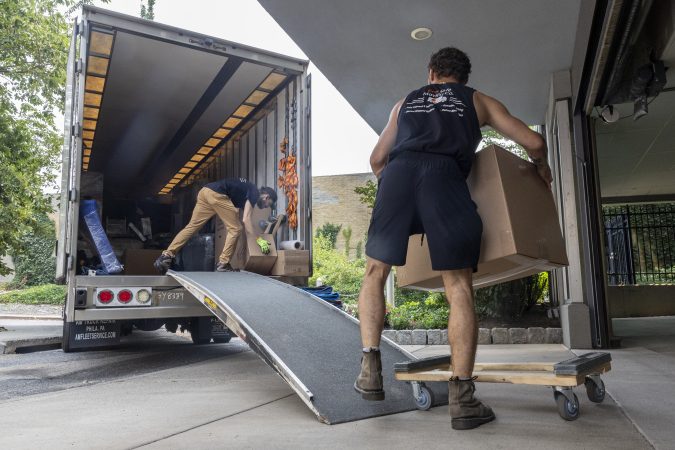
For most homeowners and renters, moves are stressful — once ranked more stressful than getting a divorce — but for the city’s professional movers, it’s just another day at work. Between parking troubles on tight South Philly streets and narrow doorways in historical trinity homes, these crews encounter and overcome Philly-specific challenges daily.
But, as Sultans of Schlep owner Tom Brouillette said, most of the city’s biggest moving obstacles can be overcome.
“Not everything is possible, but most things are,” Brouillette said.
So, larger, modern furniture is often a mismatch in these older homes, according to Jay Leone, a managing partner at EverSafe Moving Co. Sometimes, it’s unrealistic for a Samsung refrigerator to fit inside the entrance of a trinity.
“There’s only so much you can do in terms of disassembling something to buy yourself an extra inch of space,” Leone said.
An aged setting isn’t helped by the sizable items many Philadelphians own. James Dawkins, a regional manager at Two Men and a Truck, said his movers have faced retro pinball machines, pianos, and gun safes weighing more than 600 pounds. “People have a lot of fun toys in their house,” he said.
One time a customer had Two Men and a Truck movers transport a casket inside a residential home. Once they confirmed it was empty, no further questions were asked.
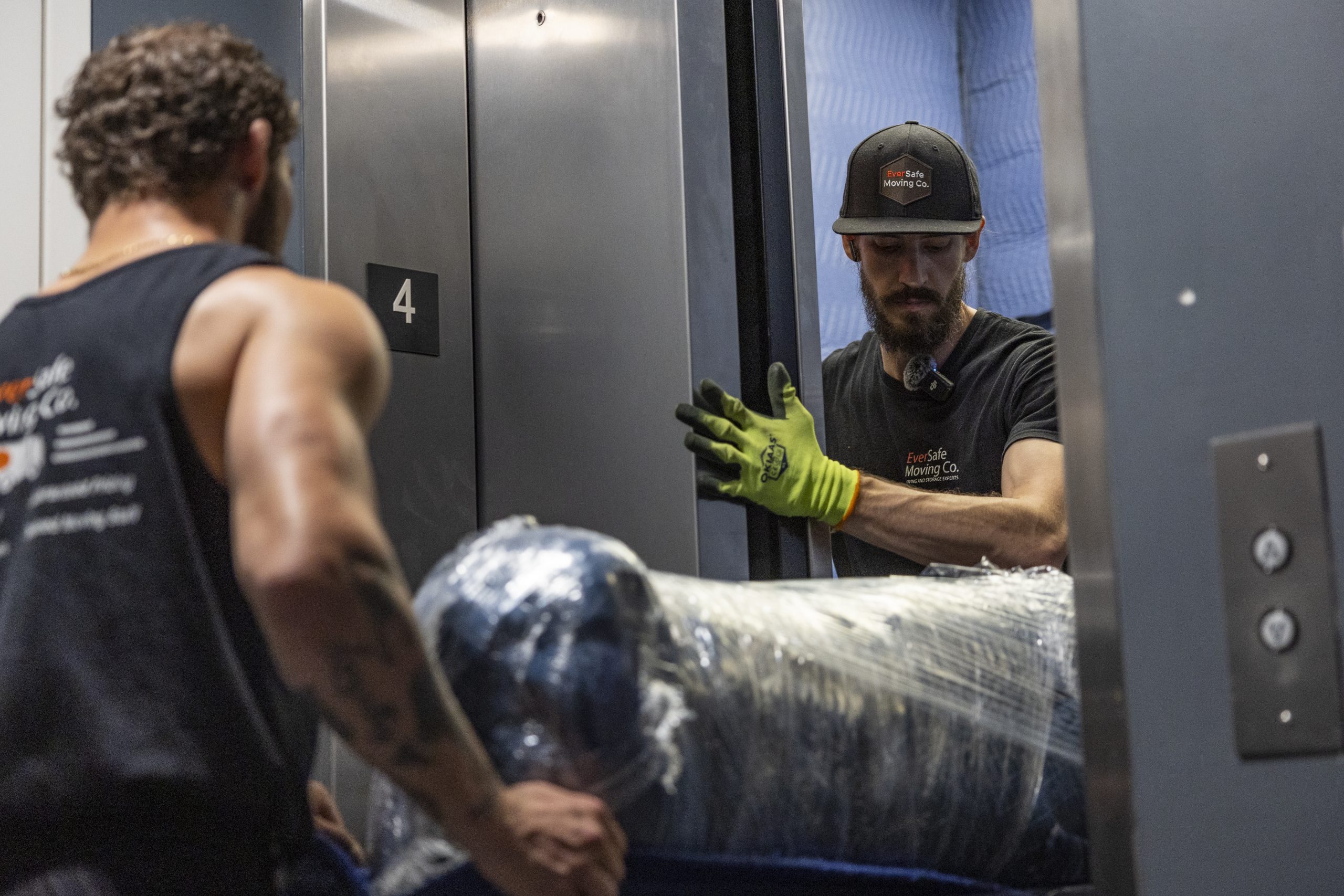
Fred Meder (right) holds the elevator door while John Wulffen loads in furniture during a July move in the city.Aidan T. Gallo / Staff Photographer
Often, the solution to small entrances can be hoisting larger items through a balcony or window. Sometimes, it’s more complicated.
Fred Meder of EverSafe recalls an especially tricky move into a four-story South Philly home. Since its tiny staircases couldn’t accommodate the customer’s bulky furniture, Meder hoisted it in pieces up to the third and fourth stories through literal holes in the floor — the home had been designed with 5-by-5-foot trap door-esque openings in the floorboards of each level.
“That was an interesting and tough scenario that I’m glad we don’t run into very often,” Meder said.
Devin Latimore, owner of No Stress Movers, said older, mid-rise apartment buildings present additional challenges. While these buildings have elevators, the elevator shafts were typically built first, Latimore said, and the building was constructed around it “with no mind for modern, bigger furniture.” The elevators also tend to be manually operated, slowing down the moving process.
“If the operator has to go to the bathroom, we’re stuck,” he said. “We have to wait for him to come back in order to do anything.”
Still, stairs are not always the preferred option. Latimore once carried a 350-pound office printer up 184 stairs and said it was one of the hardest jobs he’s ever accomplished.
“It feels like gravity gets stronger the higher you go,” he said. “We were trying not to drop it, and not die at the same time.”
Parking troubles
Parking in Philadelphia can be difficult for any driver on a regular day. It’s a nightmare for professional movers.
South Philly’s narrow streets were not designed for big trucks — “You could lay across the street and touch both curbs,” Lattimore said — and one must be an experienced truck driver to navigate the area.
For a recent South Philly move, Dawkins’ team had to park at the end of the block because they couldn’t get their truck to the house. The farther the truck is parked from the house, the longer and more strenuous the move.
Manayunk is another challenging neighborhood for parking: “The worst of both worlds,” according to Latimore. Not only does it have tight streets, but traffic comes from both directions.
For the Gentle Giants recent move in Manayunk, the moving truck was parked across the street, but the home was at a busy three-way intersection. The movers rolled furniture on top of dollies on the crosswalks, avoiding oncoming traffic like a game of Crossy Road.
To reserve a parking zone, movers can obtain temporary permits from the city’s Department of Streets that bar other vehicles from parking in a specific area. But these permits aren’t foolproof.
“It’s almost a 50-50 shot in Philly as far as whether the locals will abide by those parking permits, or even notice them,” Leone said. “We’re hoping nobody takes our spot before we get there.”
Tom Martin of EverSafe Moving Co. moves furniture into his company truck for a Philly customer in July.Aidan T. Gallo / Staff Photographer
Moving tips
For a seamless move, Latimore emphasized the importance of hiring movers early. He said a majority of customers reach out only two weeks before a move and are quickly surprised and stressed by pricing and availability.
“Start earlier than you think,” Latimore said. He recommended collecting estimates up to six months before a move, as costs increase closer to the moving date.
Nearby parades, road closures, and block parties also are a factor to consider when choosing a moving date, as they can make a movers’ job near impossible.
“You have so much happening in the city, and everyone is always celebrating something,” Dawkins said. “Sometimes it can throw a wrench in your plans.”
When creating an estimate, movers will want to discuss a home’s challenges so the company can allot the correct amount of time and muscle. It’s important to be straightforward about all potential roadblocks.
“Moving is one of the most challenging things; no one’s excited for it,” Dawkins said. “We try to make it as easy as possible.”
For more than a year, Giuseppe Tosco tried to get Dave Portnoy’s attention with a giant roadside sign outside his Montgomery County pizzeria that read, “We Want Dave Portnoy.”
Two months ago, Tosco finally took it down to replace it with a sign advertising the new patio at Italian Delite in Trappe.
On Tuesday, Portnoy walked in anyway. “The first thing he asked was, ‘Where’s the sign?’” Tosco said. “I told him we’d taken it down. He said, ‘Oh my God, it’s been that long?’”
The surprise visit was one of at least five stops Portnoy made across Philadelphia and its suburbs Tuesday as the Barstool Sports founder filmed new installments of his influential “One Bite Pizza Reviews,” whose scores can transform the fortunes of a neighborhood pizzeria.
In each review, Portnoy samples a plain cheese slice — often taking much more than one bite — and assigns it a score on a 10-point scale. His ratings have become one of the pizza world’s most sought-after endorsements, often drawing long lines and national attention for top-scoring shops.
Three of Tuesday’s scores became known almost immediately, as onlookers shared them. Johnny’s received an 8.3, Liguria an 8.2, and Marina’s a 7.9. The owners of Pizza Di Vita and Italian Delite said they never heard their scores before Portnoy moved on; they are waiting for the videos to be released.
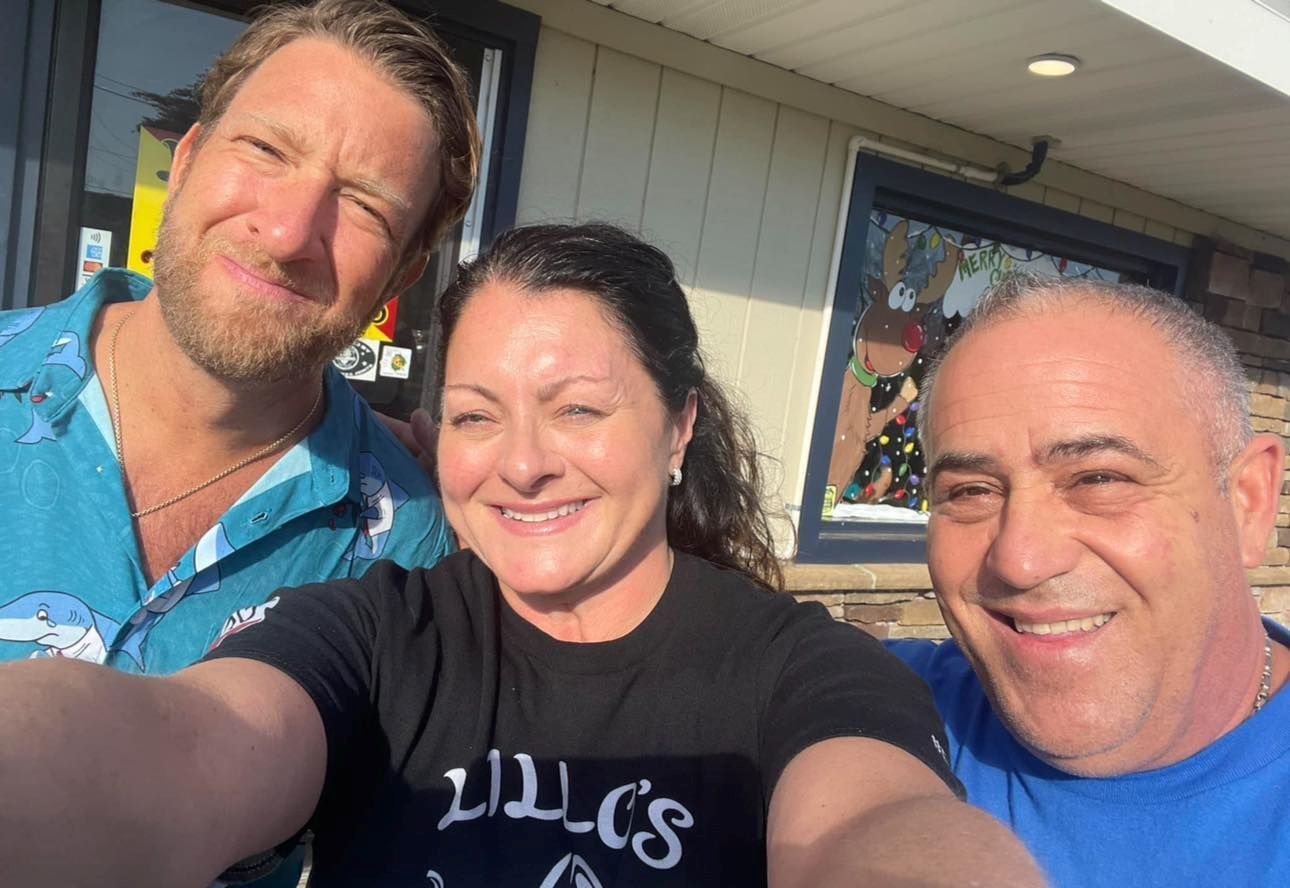
Lisa and John Paxia of Lillo’s Tomato Pies in Hainesport with Barstool Sports’ Dave Portnoy (left) in November 2022.Courtesy of Lillo Paxia
If Tosco spent more than a year trying to lure Portnoy to the Collegeville suburbs, John Bisceglie initially refused to believe the reviewer was coming to Johnny’s Pizzeria (which has a spot on The Inquirer’s 76 list).
“Somebody texted me, ‘Dave’s in Philly. Heads up,’” Bisceglie said. “I just laughed it off. I’ve heard that before.”
Still, he was working at his shop in Wayne when he sent a photo of Portnoy to his employees at Johnny’s Bryn Mawr, just in case.
Then, manager Jaison Velásquez called.
“He said, ‘I just got an order for Barstool,’” Bisceglie recalled. “I said, ‘Oh my God. It’s happening.’”
Bisceglie stayed on the phone coaching his staff. “I told them, ‘Wait about 10 minutes so the pizza comes right out of the oven. Make it crispy. Well done.’”
He credited Velásquez and manager Dan Bisceglie, his cousin, with staying calm. “He kept telling me, ‘I got this. Relax. I got this,’” Bisceglie said of Velásquez.
When Portnoy awarded the pie an 8.3 on camera, Bisceglie knew it was significant.
“Those pizza guys don’t hand out scores like that very often,” he said. “An 8.3 is a big deal.”
For Tosco, at Italian Delite in Trappe, the visit was memorable before the review even began.
Tosco said he had tagged Portnoy incessantly on social media. “I told him, ‘If you came, you came. If you didn’t, you didn’t. I just didn’t want to keep bothering you,’” Tosco said.
The day became even stranger when Portnoy reviewed the wrong pizza.
Tosco had been away at a catering meeting when his cousin called to say Portnoy had arrived after placing an order under the name “Austin.” By coincidence, the restaurant’s social media team was filming, and Tosco’s cousin had made workers prepare a practice pizza for the camera. That pie came out of the oven before Portnoy’s order.
“My cousin said, ‘That’s not your pie,’” Tosco recalled. “Dave said, ‘I don’t care. I want that one.’”
As Tosco pulled into the parking lot, Portnoy was already recording the review.
Afterward, Tosco asked Portnoy to hang for five minutes. “I told him, ‘I just want to make you a Philly cheesesteak,’” Tosco said. “He said, ‘You seem like a good dude. I’ll come back in for you.’”
Tosco still doesn’t know what score Portnoy awarded his pizza. “I ended up getting a cheesesteak review, too, which was really cool,” Tosco said.
High Street Hospitality founder and James Beard Award winner Ellen Yin is just about ready to hit Rittenhouse with Bar Cicci, an all-day drop-in for espresso and pastries by morning, sandwiches by day, and spritzes, cicchetti, and small plates by night. Join Beatrice Forman on Sansom Street for your first look.
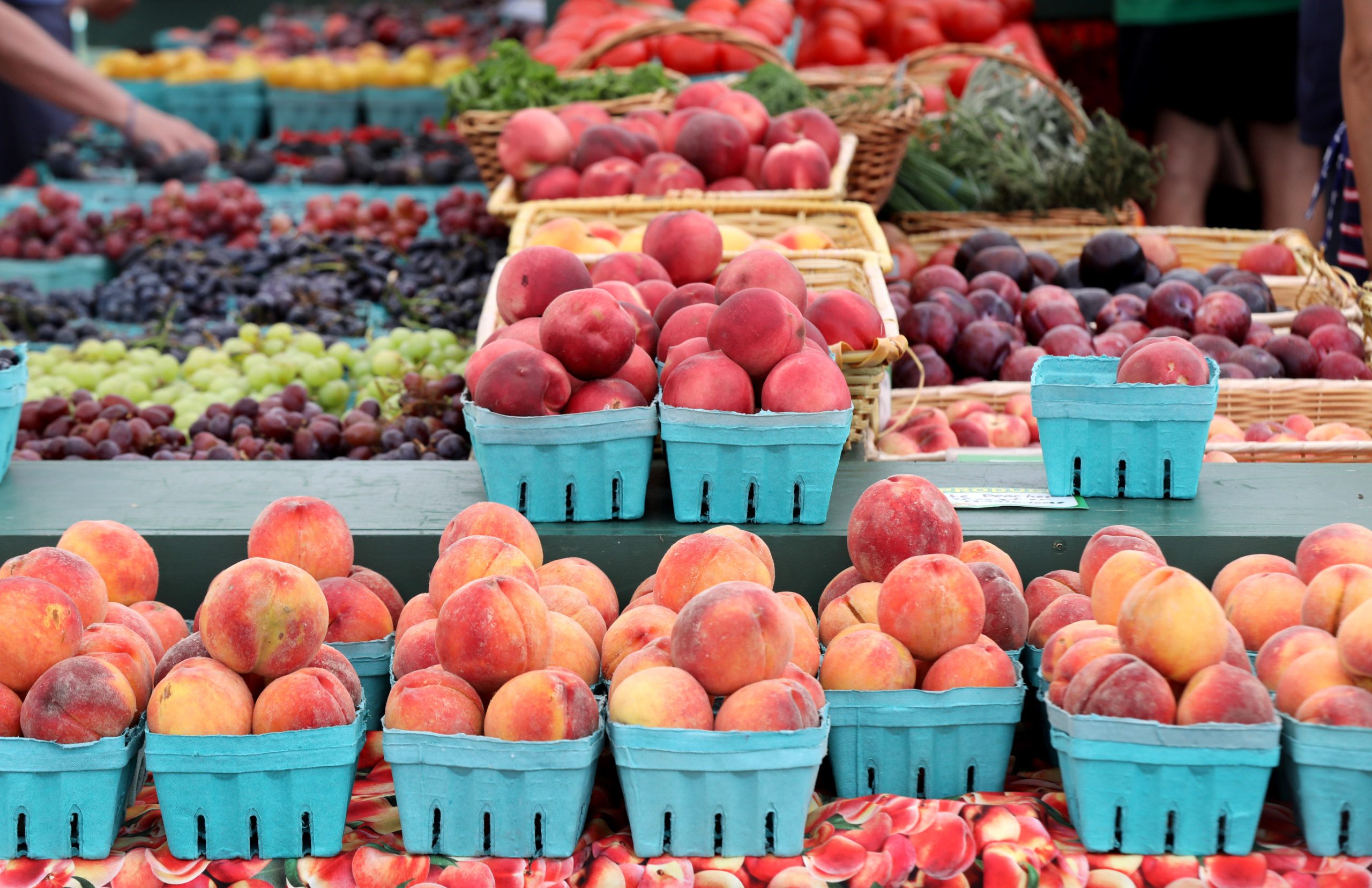
Shore season isn’t done yet, and neither are farmers markets, which have seen an uptick in business locally in the midst of a cyclospora outbreak. Hira Qureshi maps out where you can buy local produce, baked goods, and more at markets down the Shore.
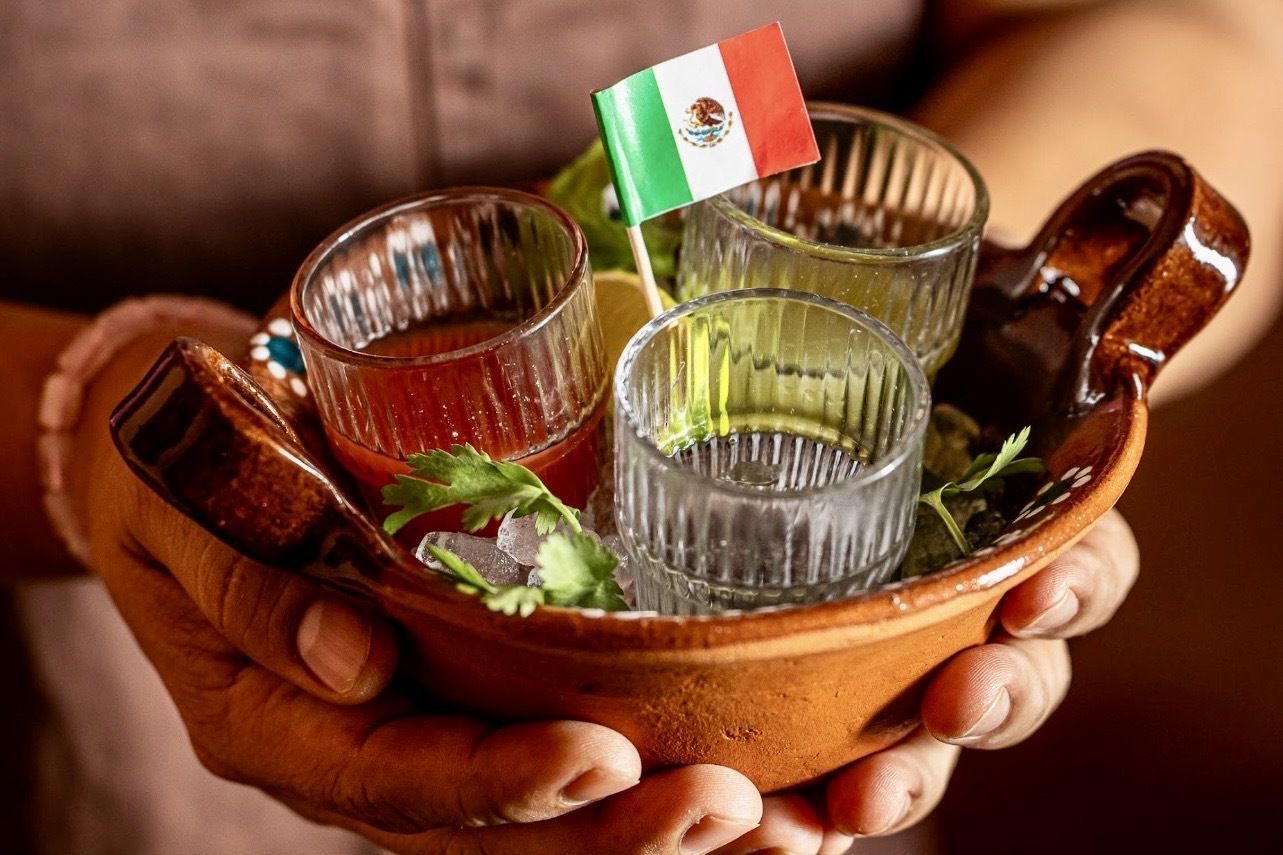
Besides Bar Cicci, a half-dozen new restaurants are on tap this month, including Recipe Philly in Center City, Cecilia in Bridgeport, and Mixteca in East Kensington, where the red, white, and green of la bandera figures into the signature cocktail.
Lancaster Avenue in Ardmore, one of the Main Line’s busiest commercial strips, is now home to two new dessert shops. Denali Sagner explains that one specializes in tea, cakes, and buns, while the other celebrates the mango.
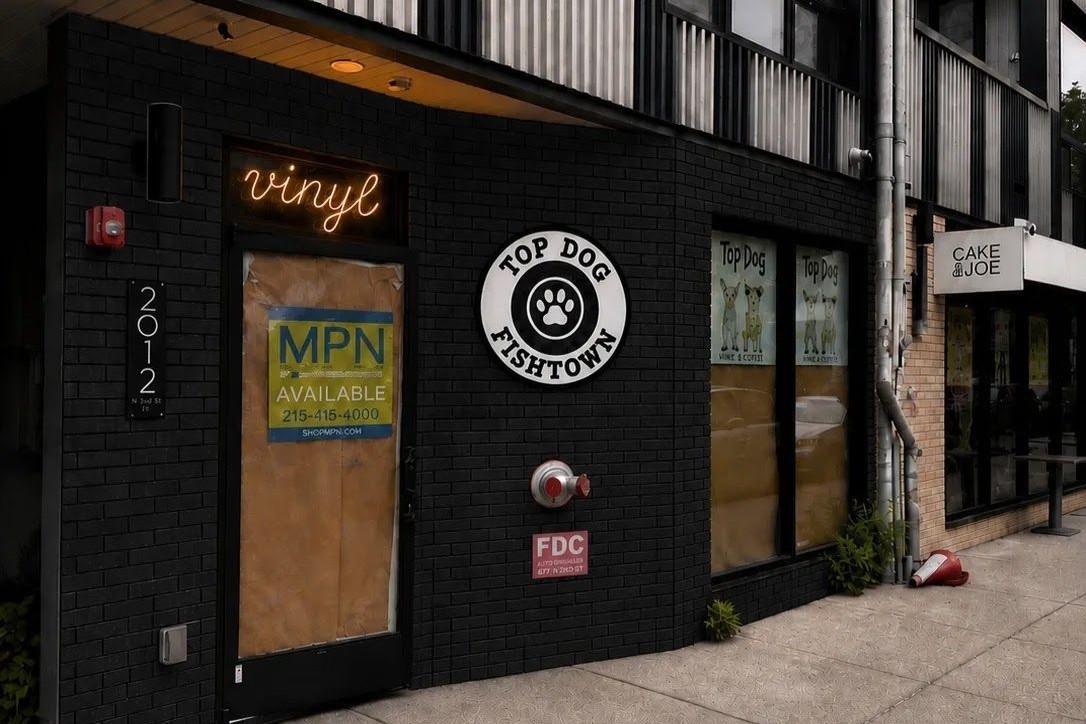
Canned-cocktail brand Top Dog is setting up listening rooms in Kennett Square and Fishtown, embracing the Japanese jazz kissa model — a music cafe or bar that’s focused on listening to vinyl records. Brooke Schultz chatted up Top Dog’s Ken Smukler, who aims to deliver an “analog feel in a digital world.” The Fishtown location is tiny. It used to be an ATM.
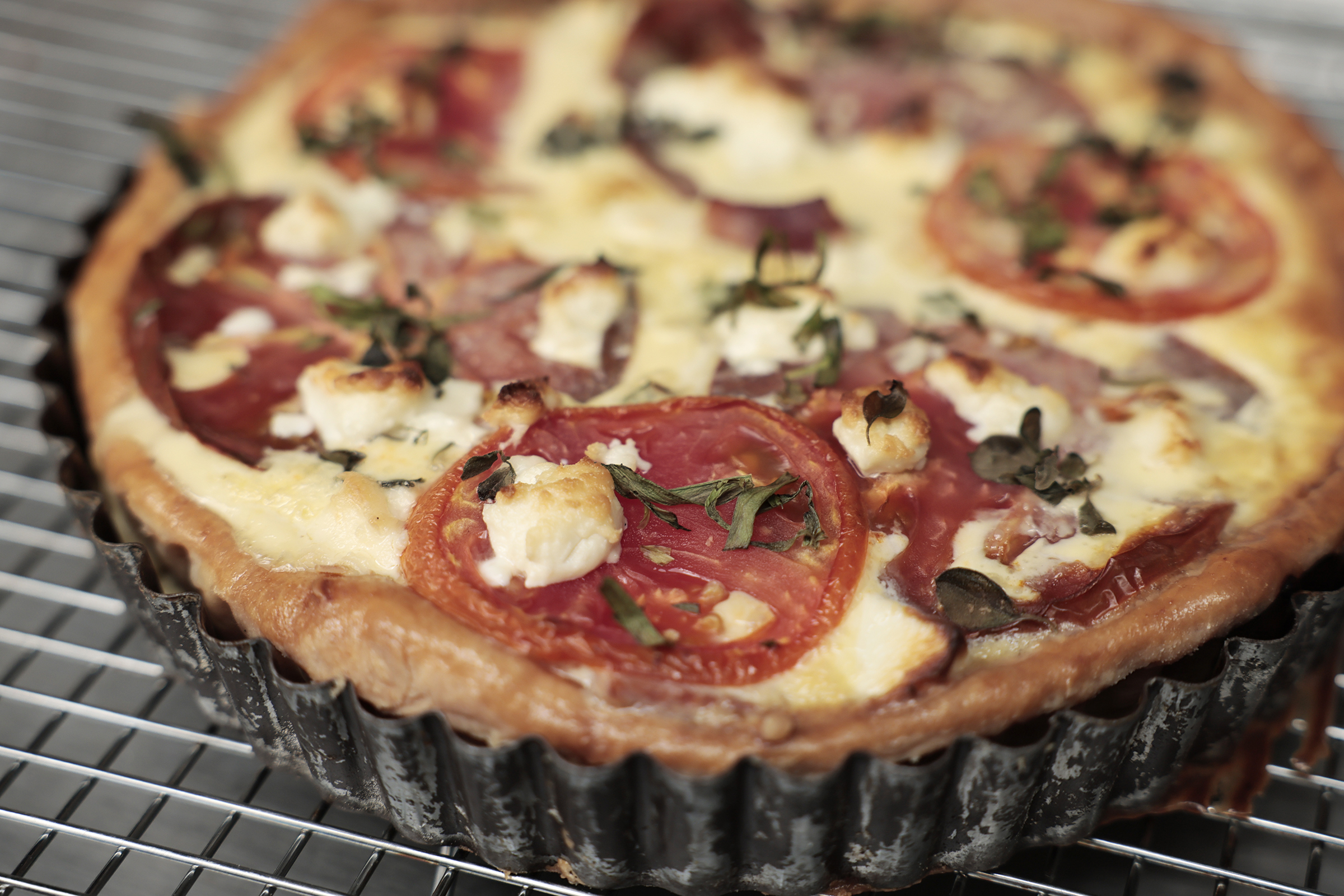
The handmade tarts from Market Day Canelé layer summer tomatoes over a corn custard with cremini and button mushrooms, herb-roasted cotto ham, eggs, and Gruyère in a flaky crust. Kiki Aranita says you have to act fast to snap one up.
Scoops
Two chefshave made big professional strides from their roots in Roxborough, and now they’re coming home to Manayunk to take over the Winnie’s space with a “punk French” eatery.
Aldar Bistro in Bala Cynwyd is giving way after 34 years to a white-tablecloth Southern Italian restaurant called Bruzi.
Does a spateof restaurant-closing announcements — such as Hiroki, Federal Donuts & Chicken,and the Lodge by Two Robbers — portend industry doom? No, and I’ll explain why not.
Restaurant report
Gabriella’s Vietnam in South Philadelphia is counting down to closing in mid-December as the new owner of her building is planning a restaurant of their own. Chef-owner Thanh Nguyen told Kiki Aranita that she is looking for a new spot.
Side Eye, the Queen Village bistro, gets a bit of side eye from critic Craig LaBan, who likes the vibe and pricing but thinks the execution could be sharper.
New drive-thru coffee option: The syndicated 7 Brew has opened at 4000 Woodhaven Rd. in Northeast Philadelphia’s Knights Road Shopping Center.
More bagels are coming round: Central Florida-based Jeff’s Bagel Run — schmeared with private-equity investment — has cinched a franchisee for 10 stores from the Harrisburg area east through Reading and the Lehigh Valley to suburban Philadelphia. No leases have been signed, the company announced in a press release.
Briefly noted
Cantina la Martina’s fourth annual Cemita Festival returns from 11 a.m.-4 p.m. Sunday at the Garden Center across from Mural City Cellars (1825 Frankford Ave). Six restaurants will each serve interpretations of Puebla’s iconic cemita sandwich for $16: Cantina la Martina, Gilda, Bolo, Vientiane Bistro, Cinteotl Tamalli, and Los Cuatro Soles Restaurant. Also: beverages from Mural City Cellars, DJ Cali Rumba, dance performances by Danza Tonantzin Cultura, face painting, and artisan vendors. It’s pay-as-you-go. Some cemita vendors are cash only.
Post Haste in East Kensington will become Philadelphia’s only participant in the inaugural Global Pay What You Can Day on Aug. 26, joining restaurants from Mexico City to Mumbai in a one-day effort to make dining more accessible. Guests can order whatever they’d like and pay what they can (excluding alcohol), building on chef Ari Miller’s weekly pay-what-you-can program launched earlier this year. (Miller is married to Inquirer staff writer Kiki Aranita.)
The Fishtown Pickle Project is taking its annual pickle-themed dinner outside of Fishtown for the first time. The Aug. 27 edition will have founders Niki Toscani and Mike Sicinski in Rittenhouse to collaborate with Uchi on a nine-course, pickle-centric tasting menu (e.g. oysters with giardiniera, yellowtail with pickled peach, salmon with pickled enoki, and a dessert featuring pickle jam). Seatings: 6 and 8:30 p.m. Tickets: $125 per person, plus tax and gratuity.
Chef Chaz Brown, in partnership with Forman Arts Initiative, will present the third annual Oxtail Collective from 1-5 p.m. Aug. 30 at the Substation in Kensington. Titled “The Hercules Posey Celebration” — after George Washington’s enslaved chef — the event will bring together Black chefs, historians, artists, and entrepreneurs to explore the intersections of food, culture, business, and history while serving as an early public introduction to Forman’s future 100,000-square-foot arts campus. Participating chefs include Chad Williams of Friday Saturday Sunday, Omar Tate and Cybille St. Aude-Tate of Honeysuckle, and Shola Olunloyo of Studiokitchen. PBS NewsHour’s Geoff Bennett will moderate panels, and the program also includes tastings from 15 chefs, cooking demos, and a marketplace featuring Black-owned businesses. Tickets ($92.55, including fees) are on sale.
Delicious City Philly Podcast’ssecond annual Hoagie Throwdown has a date: Sept. 27, from noon-4 p.m., at Other Half Brewing in Fishtown, drawing 20 chefs, restaurants, delis, and sandwich makers to compete. There will be unlimited hoagie samples, beer/soft drinks, and pro wrestlers grappling. (Last year’s outing was a scene: The Inquirer’s Craig LaBan, in a Zorro mask and big hat, went through hoagie-making boot camp.) The podcast has made 500 tickets available and early pricing starts at $55.
❓Pop quiz
Which Pennsylvania farm crop is in the crosshairs of the U.S. Department of Commerce?
What is going on at 117 Chestnut St.? The restaurant 117 is closed already and it just opened. — Chris D.
Old City restaurant 117, which opened only last November, posted a note on Instragram last week that it had closed “due to circumstances beyond our control.” According to Philadelphia court records, the restaurant was evicted over back rent.
The space’s previous occupant, the Avery, also had a very short run last year. Previous occupants had better luck: 2nd Story Brewing Co. closed in 2024 after a decade and was the last to use the brewing equipment installed by Triumph Brewing Co. for its own run from 2007 to 2014.
Adding intrigue now is the liquor license application that was filed at 117 Chestnut St. last week in the name “Finish Your Champagne LLC.” Finish Your Champagne is the name of the long-in-the-works Columbus Boulevard cocktail bar project from Kevin Dolce, owner of Center City’s Taste Cheesesteak Bar and Savù. Dolce declined comment.
📮 Have a question about food in Philly? Email your questions to me at mklein@inquirer.com for a chance to be featured in my newsletter.
By submitting your written, visual, and/or audio contributions, you agree to The Inquirer’s Terms of Use, including the grant of rights in Section 10.
From Ellen Yin’s Italian aperitivo bar to a restaurant built around a community recipe contest, August’s opening calendar reflects the breadth of Philadelphia’s dining scene. Here’s what’s expected to debut this month — and what’s still to come.
Note that in most cases, opening dates will not be locked in until shortly before the debuts.
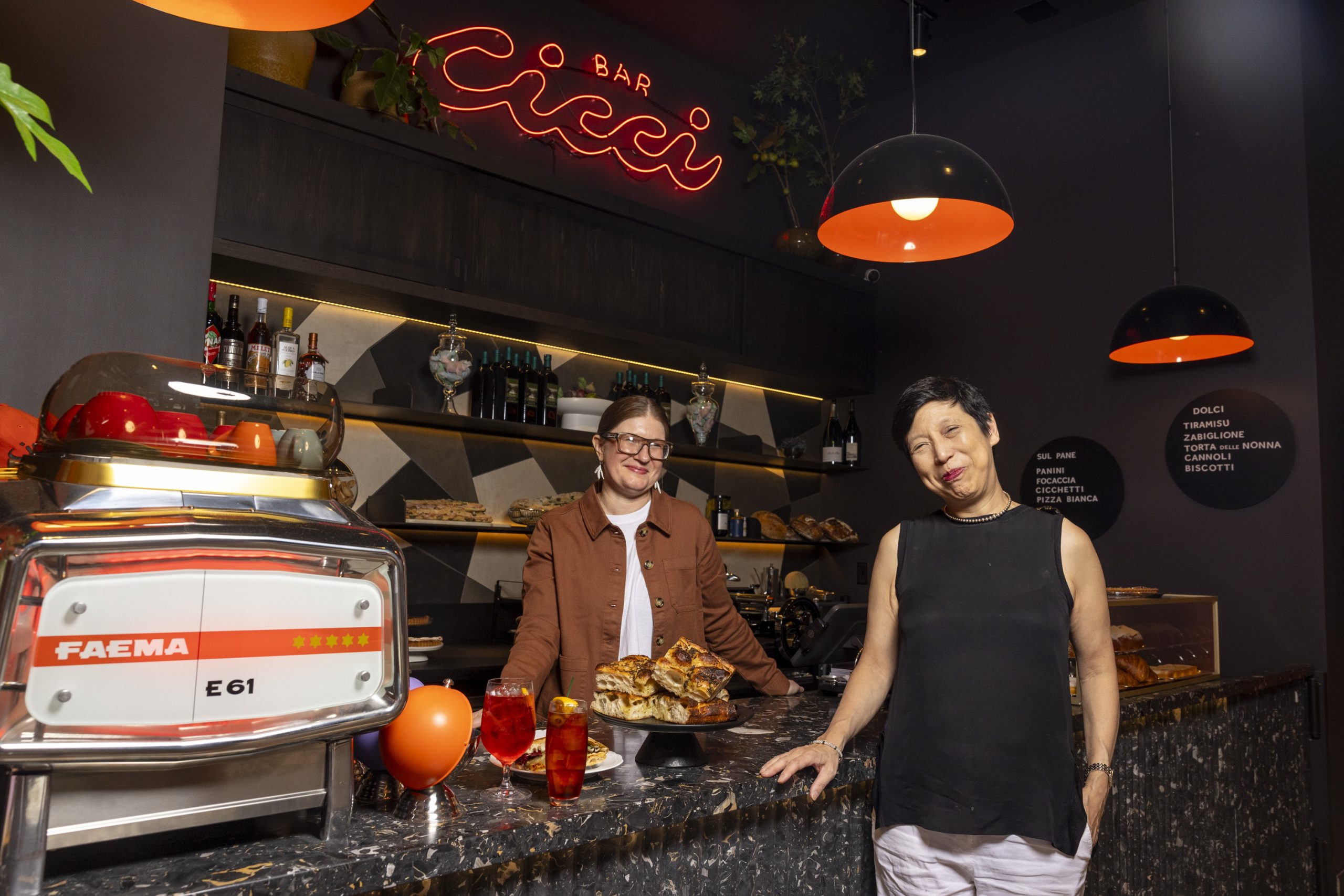
Christina McKeough (left) and Ellen Yin outside Bar Cicci.Tyger Williams / Staff Photographer
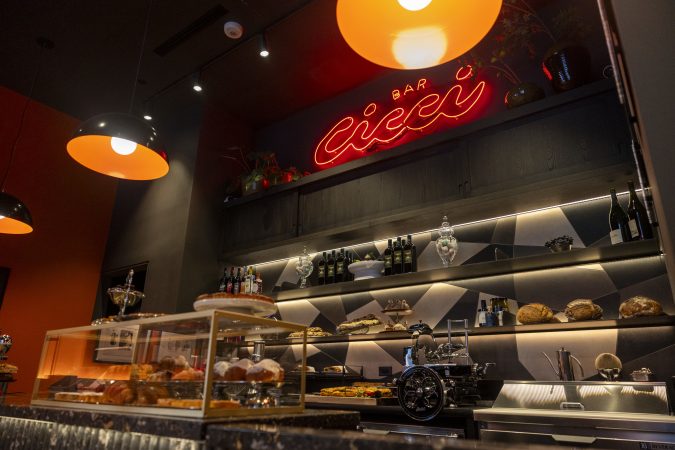
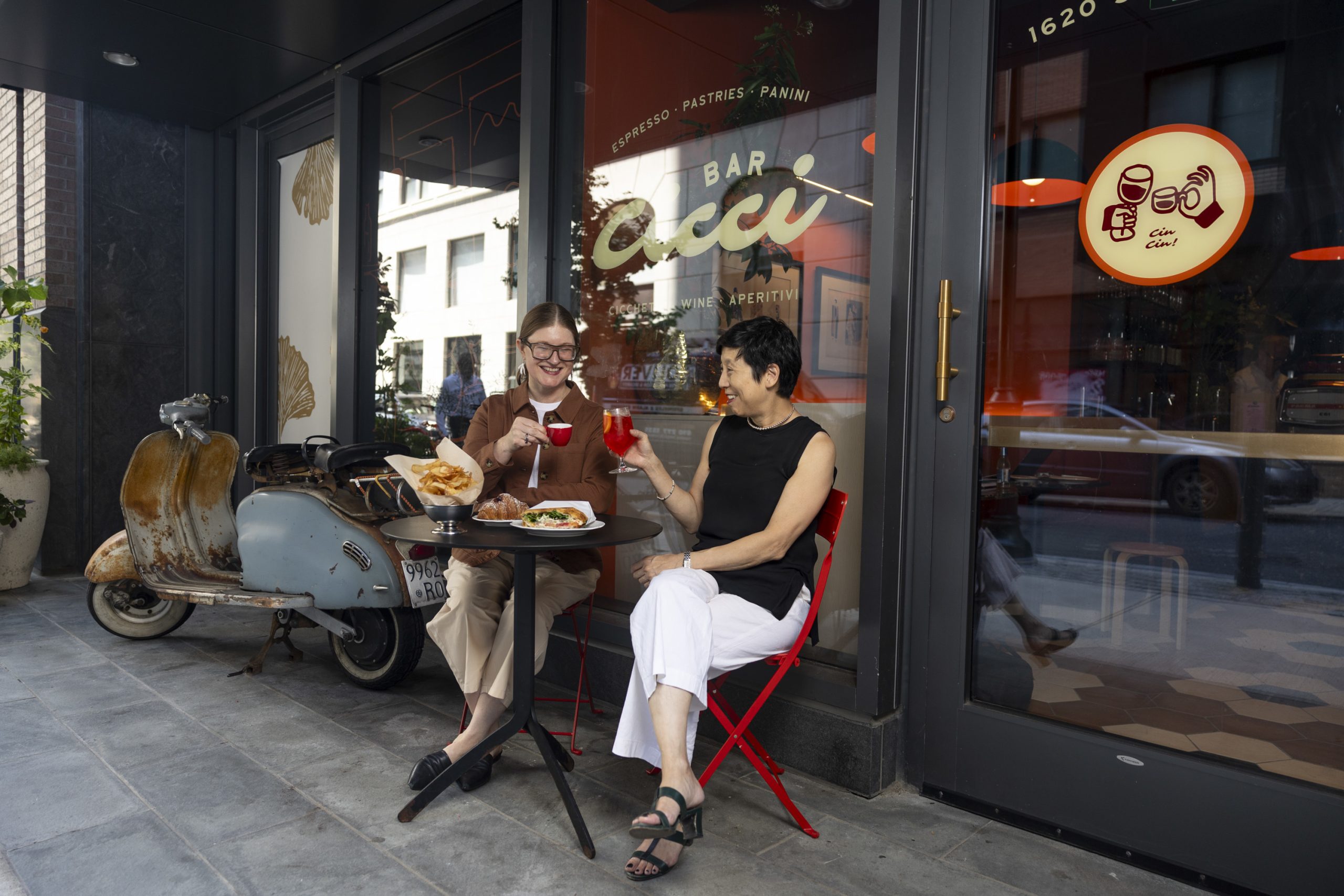
Bar Cicci (1620 Sansom St., Rittenhouse): Ellen Yin’s all-day aperitivo bar, located next to Uchi, is targeting a mid-August opening. In sum: 30 seats, espresso and pastries in the morning, sandwiches by day, and spritzes, cicchetti, and small plates by night, all in a Milan-inspired space complete with a vintage Lambretta scooter out front.
Cecilia (266 E. Fourth St., Bridgeport): The crew from Blue Bell Inn in Blue Bell and Horsham’s Copper Crow has revamped Taphouse 23 into a modern American bar-restaurant with a comfort-food menu and massive patio sporting a wood-burning oven. It’s targeting a late-month opening.
La Bandera is the signature cocktail at Mixteca.
Mixteca (2113 E. York St., East Kensington): Billed as a neighborhood agave bar and restaurant, this New York City import from hospitality veterans Jeff Bell and Victor Lopez is headed to the former Martha space, with an opening later this month. The roughly 100-seat venue will spotlight tequila, mezcal, Bacanora, and raicilla with 10 margarita variations, agave twists on classic cocktails, and zero-proof drinks alongside contemporary Mexican fare featuring handmade tortillas, ceviche, tacos, and family-style pork al pastor.
Recipe Philly’s recipe judges are (from left) Clara Park, Josh Moore, and Jennifer Carroll.
Recipe Philly (1401 Arch St., Center City): Local home cooks take the spotlight at this restaurant at Broad and Arch Streets built around a public recipe competition, with winning family dishes earning a permanent spot on the menu alongside the cooks’ stories. Opening Aug. 13, the concept blends restaurant, community cookbook, and reality-show competition into one distinct experience.
Toll Man Joe’s (1141 Pine St., Washington Square West): Returning to Philadelphia nearly five years after its pandemic closure, this sports bar will take the former location of the long-running Mixto. Founder Lori Penrose aims to open later in the month to catch football season.
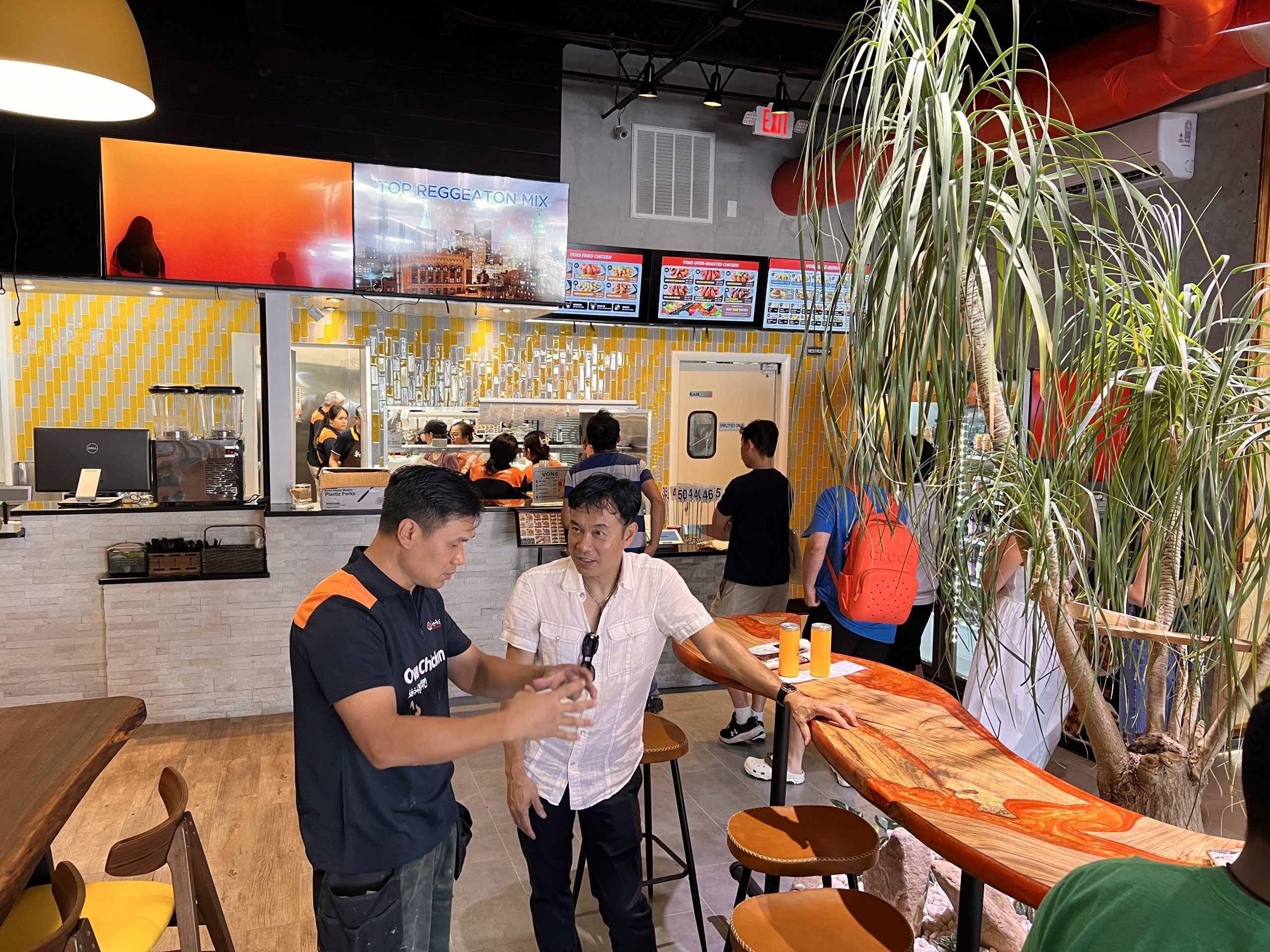
Vons Chicken is set up with a counter and table seating.Michael Klein / Staff
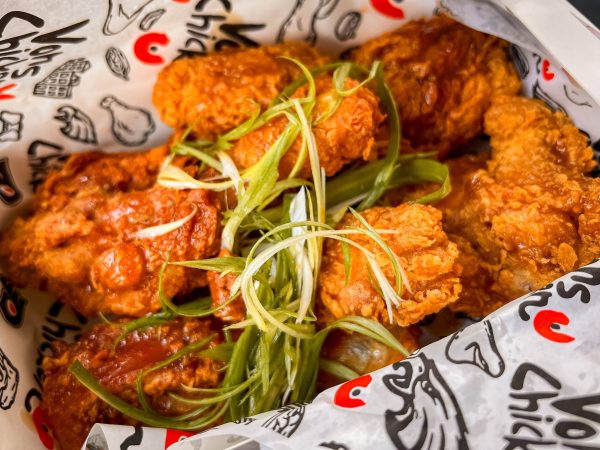
Vons Chicken (1714 Washington Ave., South Philadelphia): This South Korean-rooted chain, big on the West Coast, opened last weekend in a Point Breeze strip mall next to AutoZone with a roomy dining area offering counter service. Menu includes crispy Korean fried chicken as well as oven-roasted chicken slicked with sauces, plus sides such as kimchi fried rice and tteokbokki. Local franchisee Thao Le, who first tasted Vons in California while visiting family, has assorted restaurant experience, including serving at Pietro’s Italian in Center City. Ever crave a beer with fried chicken? Vons secured a liquor license and stocks mostly local bottles in a fridge.
Looking ahead
Restaurants targeting September debuts include the Fishtown and Rittenhouse locations of Washington, D.C.-rooted bagel chain Call Your Mother; the all-day bar-restaurant Eggcetera Haus, filling the former Redcrest at Sixth and Bainbridge Streets on the Queen Village/Bella Vista line; and the New Orleans-inspired Philly Po Boy at Front and Berks Streets in Kensington. The Fishtown opening of Adda, the edgy Indian restaurant from New York’s Unapologetic Foods, is targeting October.
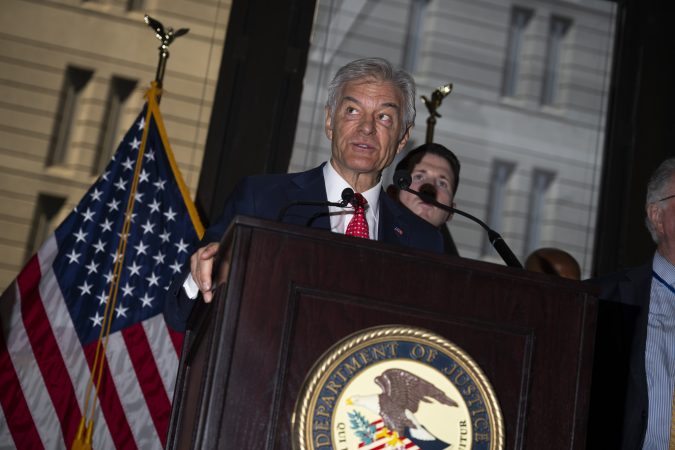
Federal and state officials including Mehmet Oz, head of the Centers for Medicare and Medicaid Services, and Pennsylvania Attorney General David Sunday were in Philadelphia on Tuesday to highlight efforts to combat the persistent problem of Medicaid billing fraud in home care.
During a news conference in Center City, officials outlined Pennsylvania cases involving a personal-care assistant who billed Medicaid 1,000 times for more than 24 hours of work in a single day, another who billed for helping his father in South Philadelphia while being arrested in Chester, and an agency that billed Medicaid $225,000 for services provided by an aide who was dead.
Federal and state prosecutors used the occasion to announce charges against 18 people and one agency in mostly unrelated cases for defrauding Pennsylvania’s Medicaid program of $4 million by billing for home-care services they did not provide. The alleged fraud occurred roughly over the last five years.
The alleged fraud in these cases filed over the last two weeks is tiny compared with the size of the program. Pennsylvania spent $8.1 billion on home-care services last year, up from $2.3 billion in 2020, when the program expanded and thousands more people started getting paid to provide home care.
“Used properly by honest citizens, the program allows those with physical ailments to be cared for by those they trust the most,” said Colin McDonald, of the Justice Department’s National Fraud Enforcement Division. “But infiltrated by greedy and deceitful opportunists, this program becomes a money tree, a gravy train for criminal fraudsters.”
Colin McDonald, Assistant Attorney General, Department of Justice National Fraud Enforcement Division, speaks as federal and state law enforcement officials announce healthcare fraud charges, Tuesday, August 4, 2026 in Philadelphia.Joe Lamberti / For The Inquirer
The U.S. Department of Justice shared details on six new cases. The Pennsylvania attorney general recently filed five new cases.
The biggest case involved $1.5 million in billings from a personal-care assistant registered with 13 agencies who more than 1,000 times charged Medicaid for more than 24 hours in a single day, Sunday said. On one occasion, the aide billed for 126 hours in a single day, Sunday said.
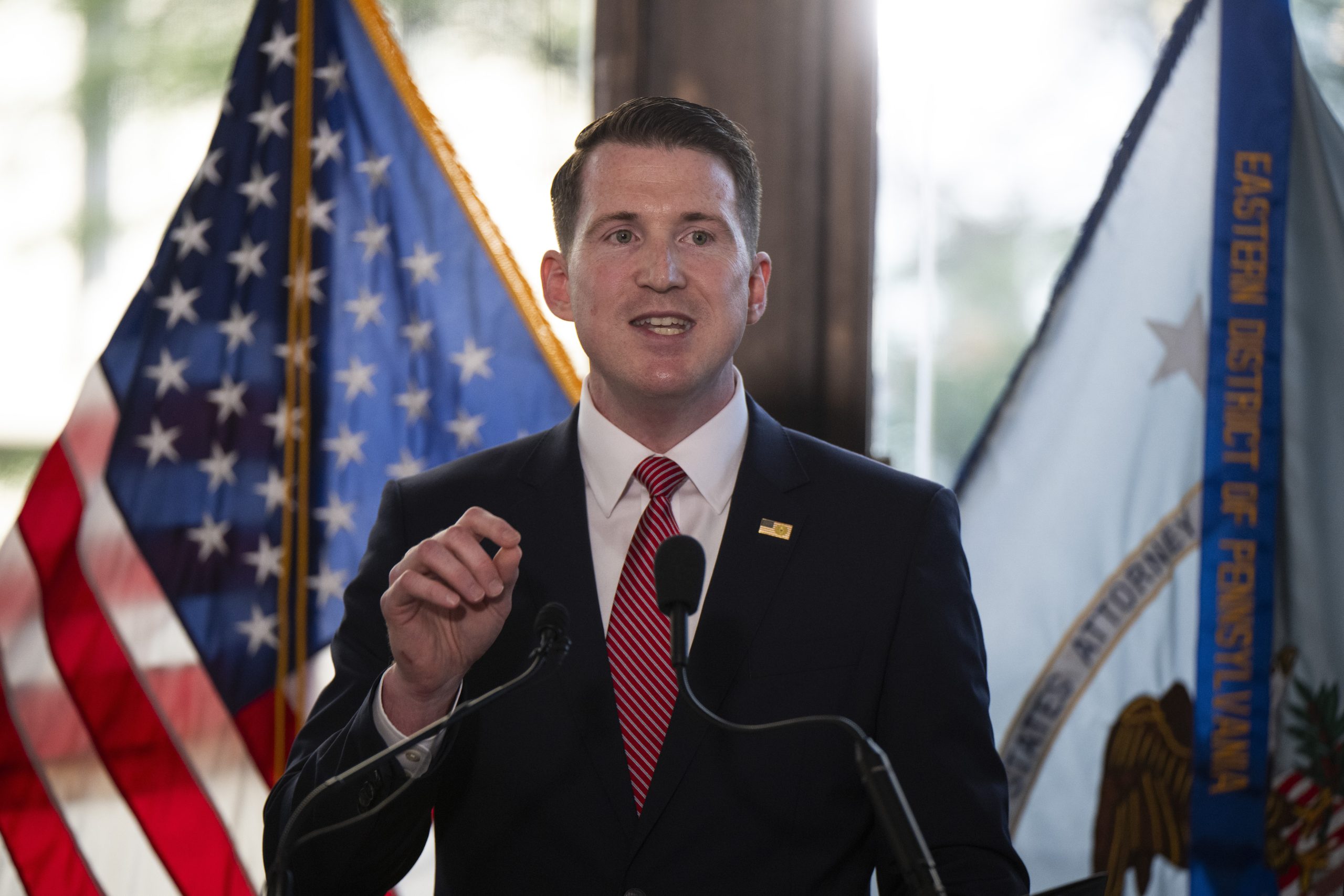
Federal prosecutors charged Benevolent Home Health Care with billing 600 times in 13 months for a personal-care aide who was dead. That case originated during the arrest of the husband of one of its owners on drug-trafficking charges, said David Metcalf, U.S. attorney for the Eastern District of Pennsylvania.
As the man was being arrested, he told agents from the Drug Enforcement Agency that he had to clock out of his shift as a home-care aide, even though he was not providing services. When asked about it, according to Metcalf, he said: “Everybody is doing this. If that’s a problem, you’d have to arrest the whole city,”
Attorneys for Khaleelah Williams and Saleemah Davis, Benevolent’s owners, said they had no comment.
In other cases, defendants billed for providing services while they were in prison, working at one of Philadelphia’s sports stadiums, or vacationing in Saudi Arabia, Jamaica, or Colombia
This story has been updated to correct the name of the agency Mehmet Oz heads.
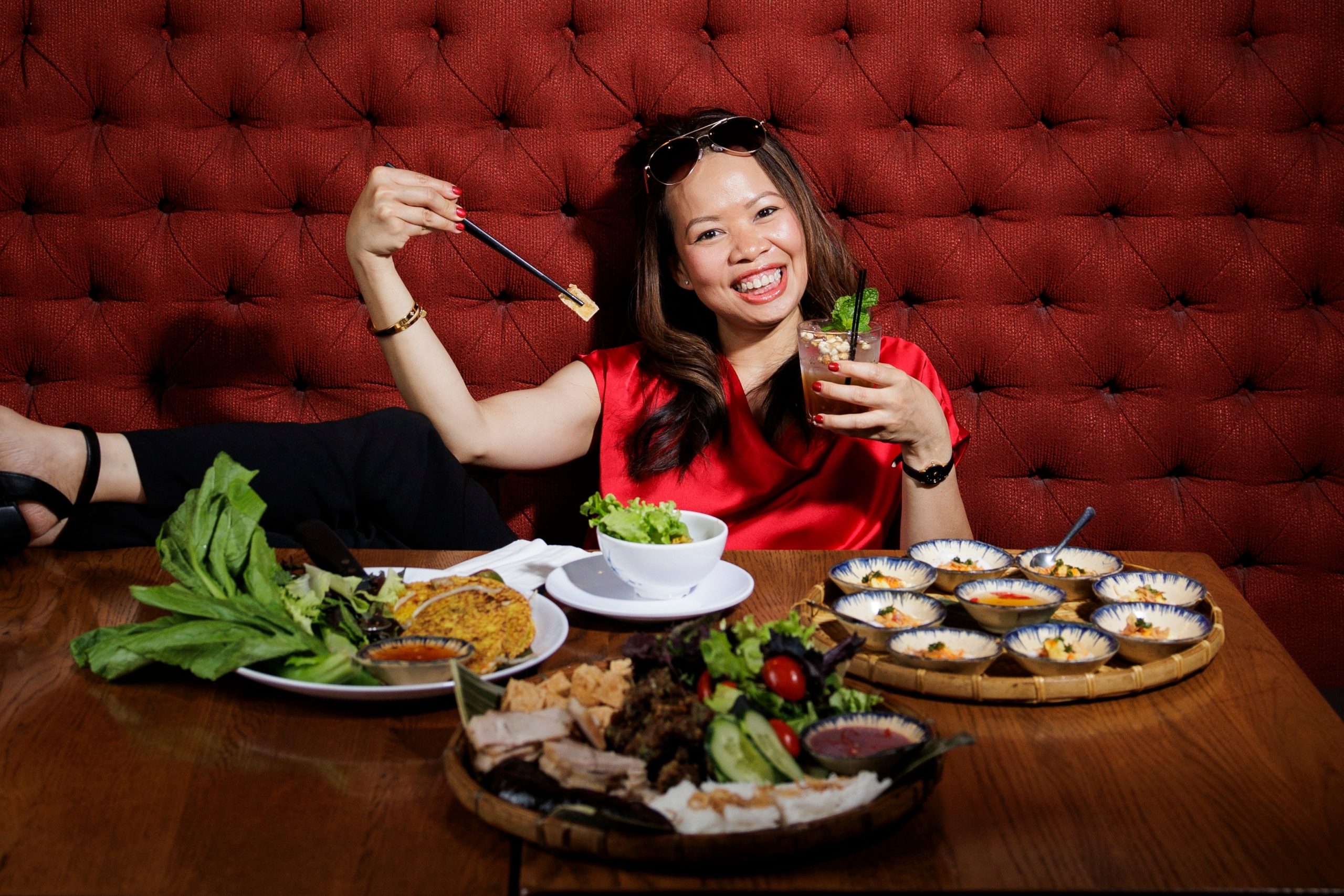
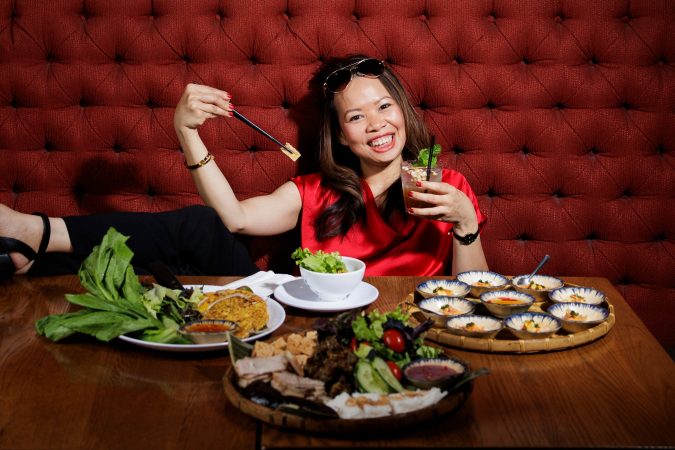
Gabriella’s Vietnam, the acclaimed South Philadelphia restaurant known for showcasing regional Vietnamese cooking, will close in mid-December after nearly six years as chef-owner Thanh Nguyen searches for a new home.
Nguyen began looking for another location last fall after the building at 1837 E. Passyunk Ave., near Mifflin Street, was sold. She has continued operating under a month-to-month lease while planning the restaurant’s next chapter.
The building’s new owners, Bharat Bist and Gigi Giri — who operate Mount Masala in Voorhees and Nepali Momo Kitchen in Spring Garden — plan to open a yet-to-be-named Himalayan restaurant there early next year. Giri said the menu will combine Mount Masala’s bold stews with Nepali Momo Kitchen’s extensive lineup of momos, the steamed, filled dumplings.
“I have a dream to do something different,” said Giri, whose husband, Bist, is the chef.
The couple also plan to open a shop serving coffee and momos on Third Street near South Street within the next two months.
Nguyen said she and Giri reached an agreement that allowed Gabriella’s to remain open through mid-December.
“Gigi was very sweet and nice,” Nguyen said. “She didn’t kick me out right away, and she gave me a year.”
Gabriella’s backstory and future plans
Gabriella’s, which opened in February 2021 in the former home of Ange Branca’s Saté Kampar, has earned widespread acclaim. It appeared on The Inquirer‘s 76 list and was named to the New York Times’ 2022 list of Best New Restaurants.
The restaurant helped broaden Philadelphia’s understanding of Vietnamese cuisine beyond pho and bánh mì, centering its menu on dishes from across Vietnam’s regions. Among its specialties are lemongrass clams and a catfish hot pot, dishes rarely found elsewhere in the city.
For Nguyen, Gabriella’s also fulfilled a longtime personal ambition.
“I came to the U.S. and went to school for my family, not for me,” said Nguyen, who left the University of Pennsylvania one English composition class short of completing an undergraduate degree in biochemistry. “I wanted to make a business like my family did.”
She told The Inquirer’s Craig LaBan that her parents own a seafood market in Ho Chi Minh City, formerly Saigon, and initially disapproved when she entered the restaurant business with her husband, Chris.
The couple began building their restaurant company in the suburbs in 2012, opening Banh Mi Bar & Bistro in Norristown, followed by Melody’s Grillhouse in Ambler. Gabriella’s Vietnam, named for their younger daughter, marked a shift toward a more ambitious menu focused on traditional Vietnamese cooking beyond the country’s best-known dishes.
Nguyen hopes her next restaurant will have a full liquor license, allowing her to expand the beverage program alongside the food. Gabriella’s now operates under a satellite license through Five Saints Distilling that permits it to serve Pennsylvania-produced spirits, including the vodka used in its signature pho cocktail.
Developing those drinks sparked an unexpected passion for mixology, Nguyen said, and she envisions her next restaurant having a larger cocktail program and a menu of bar snacks to complement its Vietnamese cuisine.
“I had several restaurants in the suburbs, but when I came to Philly, I realized Philly was really missing traditional Vietnamese food besides bánh mì,” Nguyen said. “There are so many other foods popular in Vietnam that don’t get as much focus. And I want people to try it.”