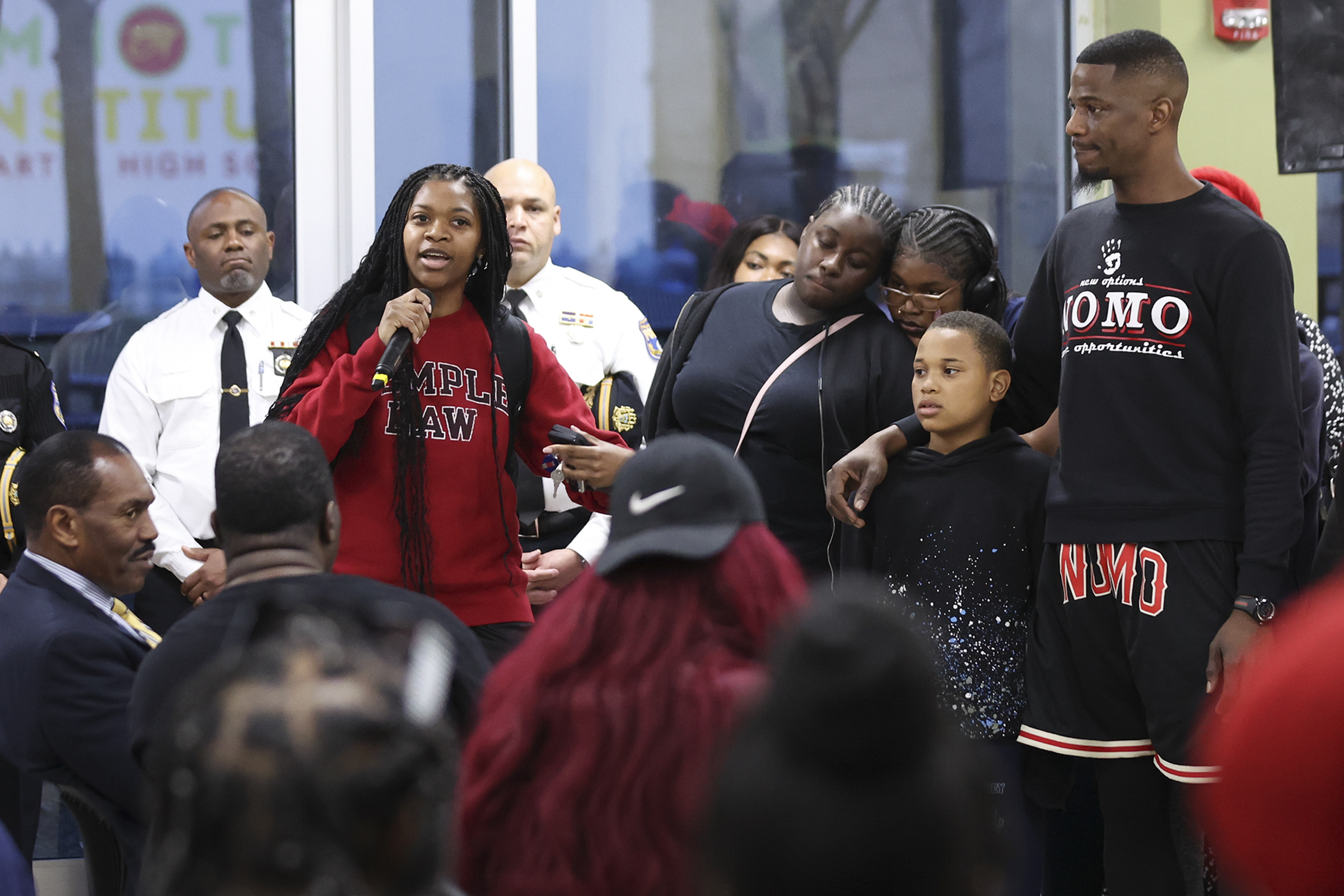
Shania Bennett was the director of youth engagement in Mayor Cherelle L. Parker’s administration until she resigned in May. The mayor, she said, once treated her as a protégé.
Now, Bennett, 26, says she plans to run against Parker next year — the first candidate to publicly announce an intention to challenge the mayor’s reelection bid in next May’s Democratic primary.
“Sometimes, you have to be willing to hold people you love accountable,” Bennett said in an interview Tuesday. “To be honest, I’m the change that I want to see. I think a lot of Philadelphians [are] waiting on it.”
She released a video on social media Tuesday announcing her campaign with the slogan, “Leadership you can trust.”
A Parker campaign spokesperson declined to comment.
Bennett, who lives in her native South Philadelphia and graduated from Pennsylvania State University in 2020, said she resigned from Parker’s cabinet in May after realizing the administration would not give her office the budget or authority it needed to accomplish its mission.
“My hands were tied. I couldn’t do anything on behalf of young people,” she said. “It was an opportunity for me to put all of my passion into something I really believed in, just to end up disappointed.”
In July, she posted on social media that working for the administration was “the worst experience of [her] life” and that she had quit after “unprofessional harassment.”
No Philadelphia mayor has lost reelection since the city’s Home Rule Charter was adopted in 1951, and Bennett has her work cut out for her if she wants to break that streak in her first run for office.
Parker, 54, has spent 21 years in elected office, and her campaign had more than $1.4 million in the bank as of May 4, according to her most recent campaign finance report.
Bennett said she has not yet put together a campaign team and is still ironing out her policy platform. She said she plans to conduct listening sessions so she can craft proposals that address Philadelphians’ needs.
“Let me see the things you want me to talk about as a candidate,” she said. “I haven’t seen a candidate that really reflects the people’s choice in Philadelphia.”
Bennett said she was alarmed by last weekend’s “teen takeovers,” when police officers arrested three people after confrontations erupted between large groups of teenagers who congregated near City Hall on consecutive nights.
“It’s just young people acting out, and we have to get to the root cause,” Bennett said. “Is what we’re funding effective, and is it giving us the outcome that we want?”
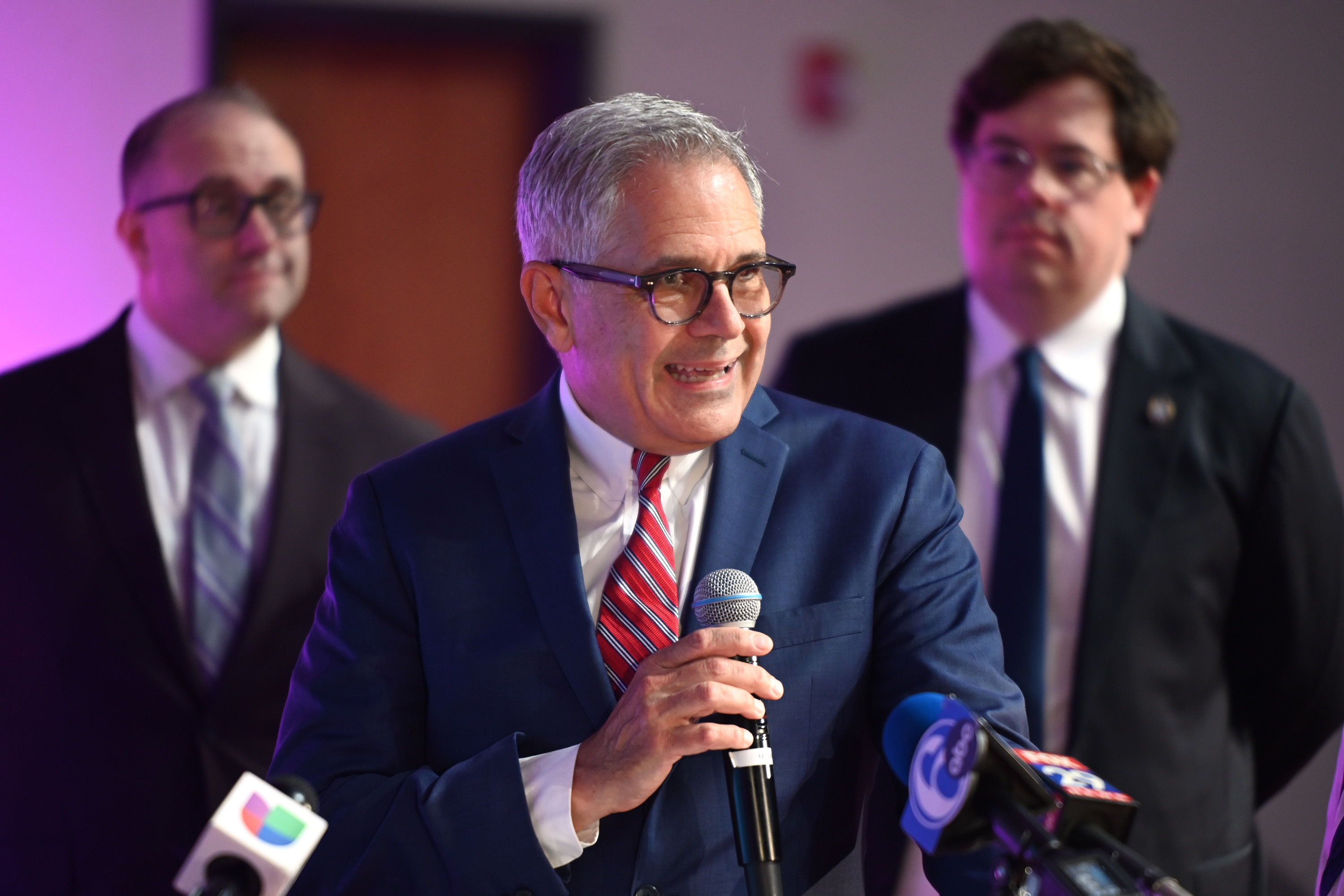
Parker, a moderate Democrat with strong support among the local party establishment, is seen by some as potentially vulnerable to a challenge from a progressive politician such as District Attorney Larry Krasner.
Bennett said her platform will reflect the problems facing the city, not ideology.
“Some of it might be progressive, but some of it might be: You have to put your foot down,” said Bennett, who founded the anti-violence nonprofit Reach4Peace as a teenager. “Philly has some unique challenges. It is not one party or one ideology that can fix them.”
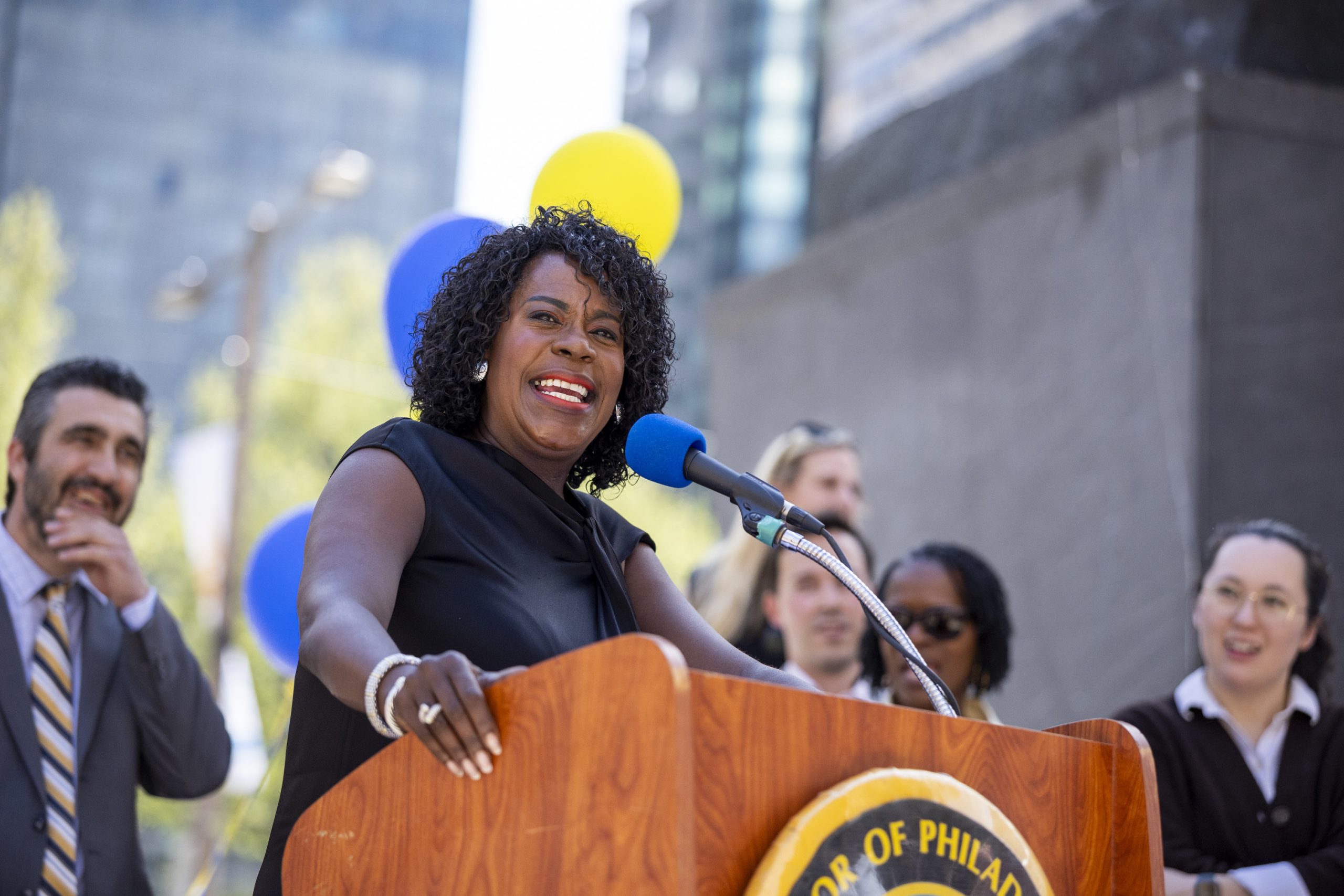
Mayor Cherelle L. Parker, speaks at the ribbon cutting for the newly renovated skate plaza at the Municipal Services Building in Philadelphia, Pa., on Friday, April. 17, 2026.Tyger Williams / Staff Photographer
Bennett said she understands that many powerful politicians and deep-pocketed groups like labor unions are unlikely to endorse her challenge to Parker. But she is holding a launch event on Sept. 26 and hopes to gain momentum from there.
“It’s still extremely early, but I’m hoping to announce early to do the hard work of fundraising and listening sessions,” she said.
Parker took Bennett under her wing during the 2023 mayor’s race.
Bennett had previously worked for State Rep. Jordan Harris and State Sen. Nikil Saval, both Philadelphia Democrats, but had no previous ties to Parker before showing up at a campaign office offering to help, she said.
Bennett stood out as a hardworking volunteer as she knocked on doors and organized neighborhood canvasses, and she caught Parker’s eye.
“Every time I saw her, she was hard at work,” Parker said when she appointed Bennett to lead the Mayor’s Office of Youth Engagement in early 2024.
After leaving the administration, Bennett briefly worked for the Pennsylvania Democratic Party as a regional organizing director before resigning to launch her mayoral bid.
“When you leave somewhere with your integrity intact, it’s like, ‘OK, you can do something about it,’” Bennett said. “I was just like, ‘Know what? I’mma press play.’”
Nearly a decade ago, when U.S. District Judge Paul S. Diamond was asked to determine the fate of a prosecutor who admitted breaking the law, he did not hold back.
Just moments after then-Philadelphia District Attorney Seth Williams pleaded guilty in a public corruption case, Diamond had Williams handcuffed and hauled off to jail to await sentencing.
Then, a few months later, Diamond imposed the maximum prison term allowed by law — five years. And he upbraided Williams as a “criminal” who surrounded himself with “parasites” and “fed his face at the trough” of public money.
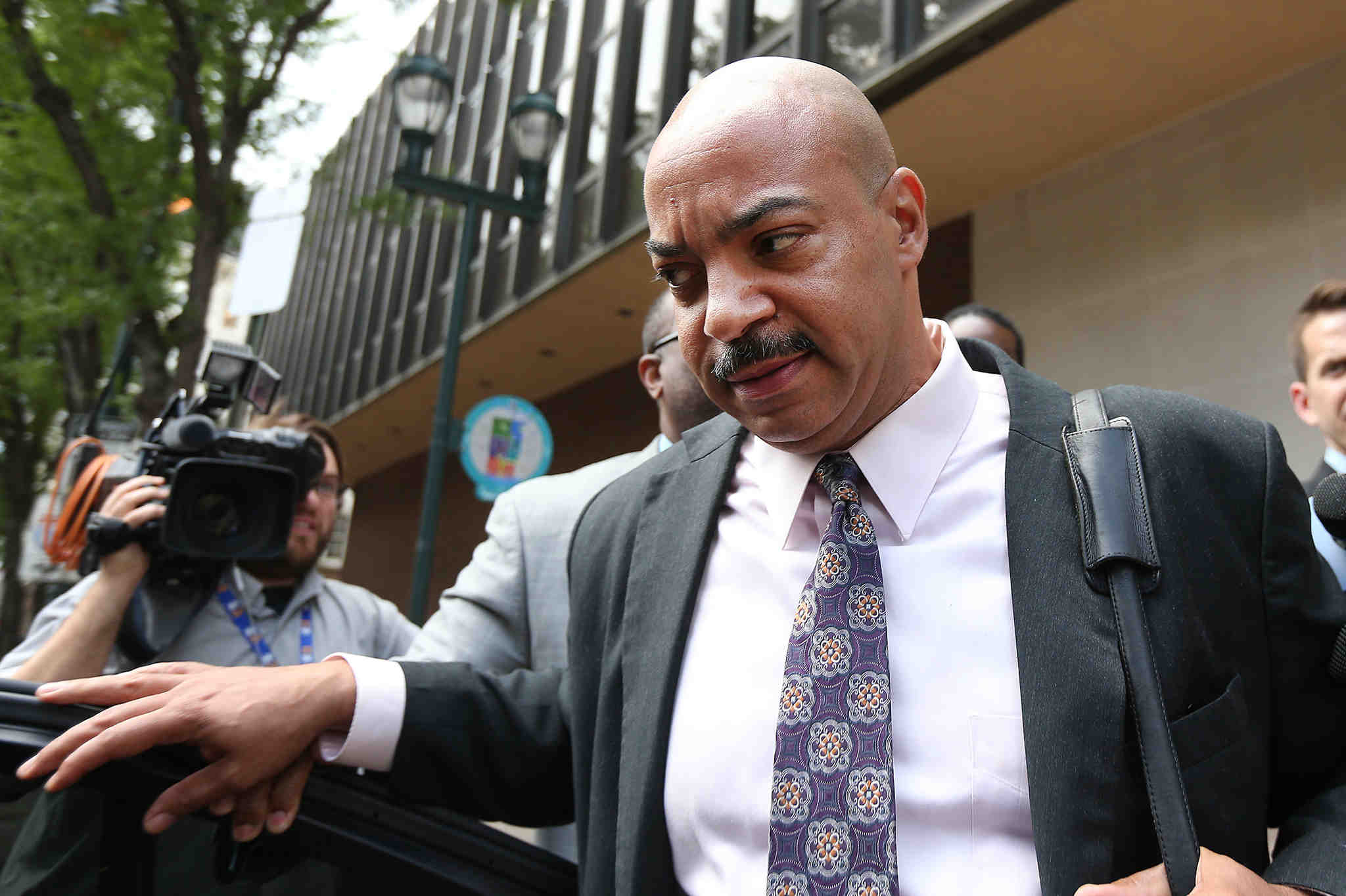
Then-District Attorney Seth Williams leaves the federal courthouse in 2017.DAVID MAIALETTI / Staff Photographer
Now, Diamond is overseeing a new case with a new set of accusations against a different district attorney.
The allegations against top prosecutor Larry Krasner have come as part of a dispute with staffers over how to handle a case, and Diamond has already made clear that he views the assertions as serious — suggesting in a hearing last month that he believed some could amount to federal crimes.
“If what they say is true, potential wrongdoing abounds,” Diamond said, listing off offenses including perjury, conspiracy, and obstruction of justice.
To some area legal observers, the pointed remarks were reflective of Diamond’s reputation as a stern, no-nonsense jurist — particularly when it comes to assessing the conduct of fellow lawyers.
Then-Assistant District Attorney Paul George (back left) was disbarred in federal court in 2025.JESSICA GRIFFIN / Staff Photographer
In 2017, while the case against Williams was still pending, he ordered it to proceed to trial just months after the indictment was unsealed — a highly unusual timetable for a federal case, but one the judge said was necessary because of its “obvious and possibly calamitous effect on the city’s criminal justice system as well as the city itself.”
And even in a comparably trivial legal dispute in 2014, Diamond was unabashedly critical of a lawyer who sued over the rights to a song by the R&B artist Usher, writing: “It is difficult to convey the poisonous atmosphere created by [the lawyer’s] continual belligerence.” The lawyer was ultimately suspended from practicing in the region’s federal courts for three months.
Samuel Stretton, a veteran defense lawyer who often handles legal ethics cases, said Diamond “has high standards. And if someone violates, in his mind, those high standards, he takes a very tough position on them and voices that opinion quickly.”
Still, Stretton said he thinks Diamond’s principled views are sometimes expressed in overly harsh ways.
“He has a strong belief in ethics, and lawyers having those especially, and he feels he must enforce them,” Stretton said. “But sometimes his manner of enforcing them is overstated, and he’s abrupt and a little bit of a bully.”
The question now facing Krasner is what actions Diamond might take in the post-conviction case pending in his courtroom — and whether any could lead to consequences for the city’s DA.
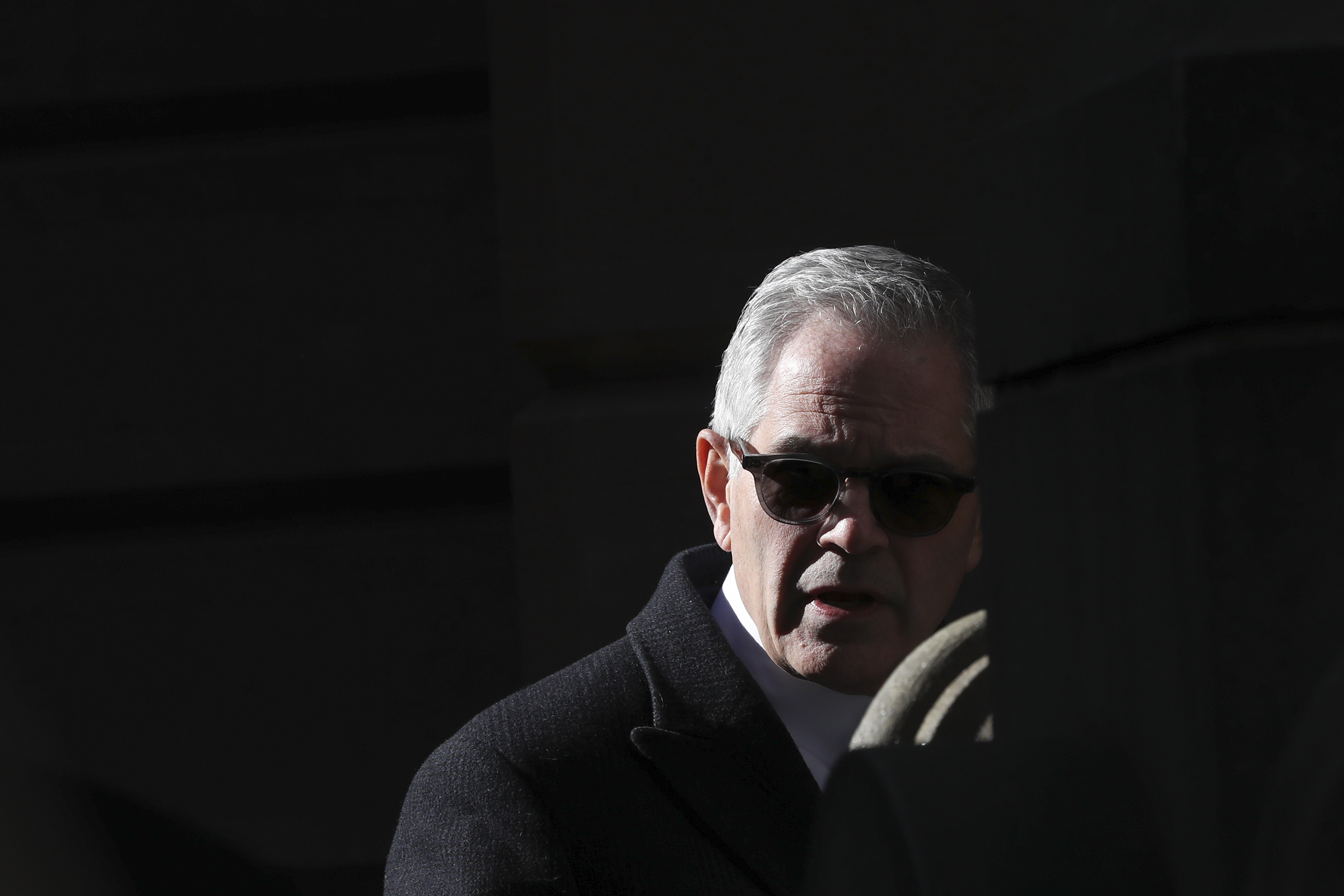
District Attorney Larry Krasner in a file photo from 2023.Allie Ippolito / Staff Photographer
Who is Paul Diamond?
Diamond, 73, was appointed to the region’s federal bench in 2004 by then-President George W. Bush. He was unanimously confirmed by the U.S. Senate.
Before his judicial nomination, he spent nearly two decades in private practice. He began his career as an assistant district attorney in Philadelphia in the late 1970s, and graduated from the University of Pennsylvania law school and Columbia University.
While he worked in private practice, Diamond focused on civil litigation, white-collar criminal cases, and disciplinary matters, according to an online biography. And his clients were sometimes unique.
In 1994, he represented a South Philadelphia candy making company that pleaded guilty to safety violations after an unguarded taffy-pulling machine killed one of its workers.
A few years later, he represented Lower Merion Township when the Barnes Foundation sued and accused township officials of using racism and discrimination to try to hurt the foundation. The suit was dismissed, and a defiant Diamond was later quoted in The Inquirer saying he planned to bill the Barnes around $1 million to cover the township’s legal fees.
“This is a claim that should never have been filed; it’s outrageous that it was ever filed, and now the Barnes is going to see the mother of all fee petitions,’’ he said.
A consistently exacting judge
Like all federal court judges, Diamond oversees a mix of criminal and civil cases. And even though not all receive significant public scrutiny, Diamond is viewed by some as a consistently exacting judge.
In 2012, for example, he ordered a 60-year-old grandmother jailed for using her dead mother’s Social Security checks to support her grandchildren.
“Did it ever occur to you to go out and get a job?” Diamond asked the woman. “Did it ever occur to you that the way to help your grandchildren is not to commit a series of endless federal frauds?”
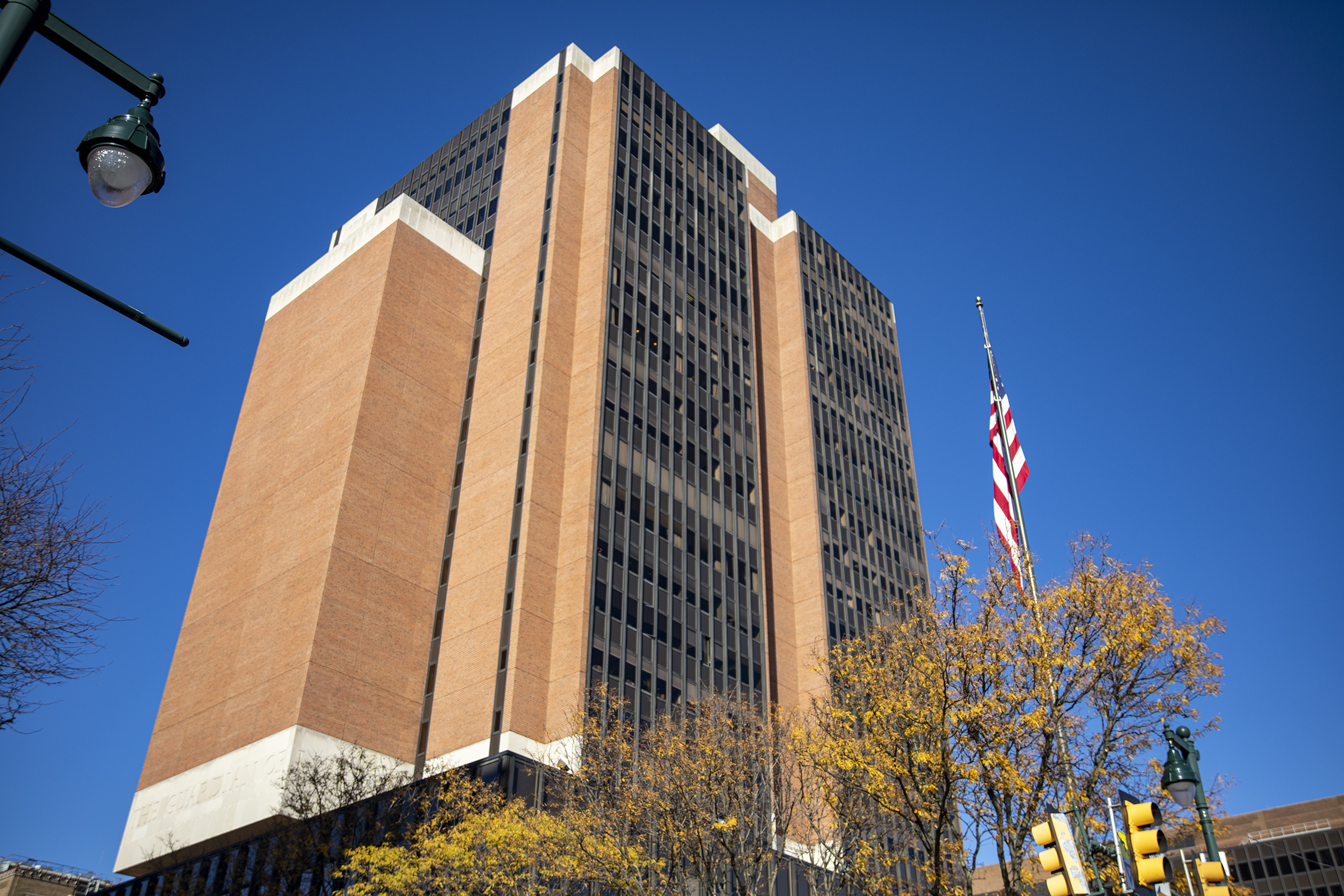
The federal courthouse in Philadelphia.TYGER WILLIAMS / Staff Photographer
Last year, he was subtly critical of the Trump administration in court documents, writing that it was using competing interpretations of the law to try to justify its policy to detain nearly all undocumented immigrants.
It is “difficult to credit the Government’s squarely contradictory position here,” Diamond wrote.
The Krasner matter that ended up in his courtroom arrived as a routine post-conviction case: Dennis Johnson, who was found guilty of second-degree murder in state court in 2009, filed a petition in federal court seeking to have his conviction overturned.
The petition was filed more than 10 years ago, but it wasn’t until 2022 that the origins of the current controversy would begin to take shape.
A frenzy within the DA’s office
That year, after the district attorney’s office had spent years opposing Johnson’s bid for relief, prosecutors changed course.
Then-Assistant District Attorney Jaclyn Mason filed a brief agreeing with Johnson’s lawyers that his trial counsel had been ineffective. And she said her office had discovered problems or inconsistencies with testimony from key witnesses, leading her to recommend that the conviction be overturned.
The case was first sent to a federal magistrate to review, and Judge Lynne A. Sitarski — relying on Mason’s brief — agreed with her position.
But Sitarski’s recommendation was not binding — the final call would fall to Diamond. And this spring, Diamond signaled he was not inclined to accept the assertions in Mason’s brief. He scheduled an evidentiary hearing to hear testimony that could corroborate — or undercut — the office’s conclusion.
That triggered a frenzied sequence of events inside the DA’s office, prosecutors have since testified.
District Attorney Larry Krasner speaks at a news conference while flanked by two prosecutors who have since testified about actions he took in a controversial post-conviction case: David Napiorski (left) and Peter Andrews.Tom Gralish / Staff Photographer
To prepare for the hearing, Mason’s supervisors in the law division reviewed her brief and found a series of what they called “material misstatements.” They decided they needed to try to withdraw Mason’s filing and apologize to Diamond for the mistakes. And they asked that Mason sign on to the new filing with them.
But Mason declined and resigned. She’s since said she only filed her brief at the urging of her then-boss, Matthew Stiegler, who she said had done nothing to review the case himself but instead was “colluding” with Johnson’s defense attorneys to secure his release from prison.
Mason said she didn’t want to become a scapegoat for Stiegler or the office. And she accused her colleagues of attempting to force her to lie to protect the institution.
Her former supervisors have denied that, saying that once they noticed the errors in her brief, they were ethically obligated to correct the record in front of Diamond.
But as they strategized their approach, they said, they encountered consistent resistance from an unusual source: Krasner.
In their telling, Krasner was ardently opposed to asking the state attorney general’s office to take over the case — something the supervisors generally agreed was appropriate because of the drama surrounding the matter within their office.
Assistant District Attorney David Napiorski, head of the office’s law division.Alejandro A. Alvarez / Staff Photographer
And according to the supervisors — Katherine Ernst, Steven Wildberger, David Napiorski, and Peter Andrews — Krasner made a series of notable statements during their discussions, including that he wanted to handle the case in a way that would “protect the office,” that those who didn’t follow his orders would face “consequences,” and that he wanted to keep the matter from the attorney general’s office because he viewed its staffers as “Nazis.”
Several potential paths forward
All of those assertions were aired in Diamond’s courtroom in recent weeks, after the judge decided the evidentiary hearing in Johnson’s case would, for now, focus on the conduct of the prosecutors involved, rather than the merits of his petition. The judge said he’ll evaluate that aspect of the case later.
The attorney conduct portion of the hearing concluded last month, leaving Diamond with several choices about what to do with their startling testimony, legal observers said.
The most immediate issue is whether he’ll allow the DA’s office to continue handling Johnson’s case. Given the dysfunction prosecutors testified to, he could ask the attorney general’s office to take over instead.
But Krasner — who was not called to testify and who has said he can’t comment on the case while it’s pending — will likely have the opportunity to propose his own solution in court documents. In earlier filings, he said he engaged an outside lawyer to handle the matter on the office’s behalf — which, in his view, would insulate the case from the issues roiling his office, and preclude the need to involve state prosecutors.
Beyond that question, however, the testimony about conduct by the DA’s office could, in theory, lead to other consequences.
District Attorney Larry Kranser was not called to testify in front of U.S. District Judge Paul S. Diamond in the post-conviction case that Diamond is overseeing.Heather Khalifa / Staff Photographer
Stretton, the defense lawyer and ethics expert, said Diamond could refer the matter to the federal court’s disciplinary committee. There, a panel of judges could seek to determine if any of the prosecutors involved — including Krasner — behaved in a way that might warrant disciplinary action, such as a suspension or disbarment from practicing in federal court.
That process, which is largely confidential, would also likely be lengthy: In an earlier federal case that led to sanctions for two supervisors in Krasner’s office, a federal judge said he was seeking to initiate the disciplinary process in 2022, and punishments were not decided for another three years.
After that, Stretton said, if discipline is imposed in federal court, the matter would likely be forwarded to the state’s disciplinary board, which would make its own determination of possible penalties. That could also be an extended process.
And in what would likely be the most serious scenario, Stretton said, Diamond could refer the matter to federal or state prosecutors — or prosecutors could decide to pursue it themselves — to determine if crimes were committed. That, too, would almost certainly not be resolved quickly.
Stretton said any of those processes — and any potential outcomes — could also be further delayed or complicated because of inevitable disputes or competing interpretations over what lawyers did. In his view, for example, ethical rules generally allow a supervisor such as Krasner to pursue a legal strategy opposed by his subordinates as long as he had a “reasonable” argument for doing so.
And the testimony that unfolded before Diamond has already demonstrated that different lawyers had different recollections of what occurred: Mason accused her bosses of encouraging her to participate in a cover-up, but the supervisors said that wasn’t true.
The supervisors, meanwhile, accused Krasner of trying to get them to violate their ethical obligations, a contention he has similarly denied.
For now, the case remains on hold as Diamond weighs how to move forward. He has asked lawyers in the case to file additional briefings by Tuesday about how they believe the case should proceed.
Beyond that, Diamond has not indicated how quickly he might rule on the matter.
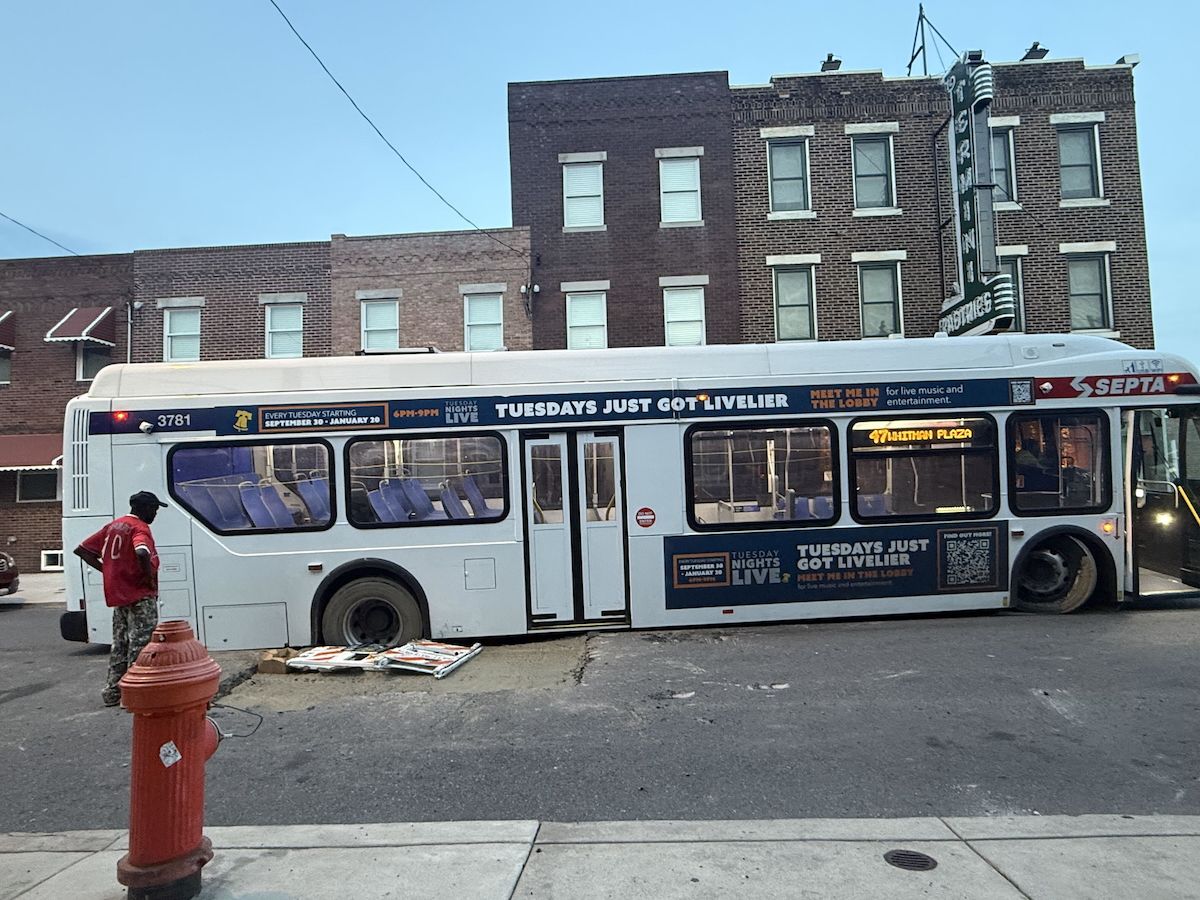
In what Joey Termini of Termini Brothers Bakery is calling the “most South Philadelphia thing ever,” a Route 47 bus drove through wet concrete after two people reportedly hopped off to move street barricades so the bus could pass Thursday.
The sinking bus, which tilted on a slight edge as it got stuck on South Eighth Street outside Termini Bros., drove through the concrete only two minutes after city crews poured it into the road.
In surveillance footage provided by Termini, the bus, aptly adorned with Top Dog Law advertisements, slows to a halt in front of two A-frame street closure signs on Eighth Street. Two passengers are then seen hopping off the bus, casually moving the signs out of the way and directing the bus driver like air traffic controllers around the patch of concrete in the middle of the road. As the bus gets stuck and tilts to the side, smacking the pavement in the process, hardly any of the passengers on the bus can be seen visibly reacting.
“In South Philly, people are like, “I’ll find a way,” Termini said. “At the time I was a little frustrated because we waited months to get that pothole fixed, but you know looking back at it now, it really is funny. I’m just glad nobody was hurt.”
The brothers Termini have been coordinating with the city to get the pothole-turned-sinkhole resolved since it formed 14 months ago, Termini said. He knew it was getting bad when the sinkhole started swallowing traffic cones placed inside it — a time-honored Philadelphian quick fix.
Their prayers were answered Thursday when city crews came in the afternoon to repair the street. But right after the concrete was poured and the street blocked off at 7:21 p.m., a 47 bus found its way into the concrete pit at 7:23 p.m., according to Termini’s surveillance footage.
The bus was towed within about 45 minutes, SEPTA spokesperson Andrew Busch said. According toan inspection, the only damage to the bus was from cement on one tire, so it will not be out of service for an extended period of time, Busch said.
The city posted notices about the scheduled maintenancealong the street in the days preceding the repair and no-parking signs were posted. “This wasn’t something that they just decided to do on a whim,” Termini said.
SEPTA had a detour in place for this block along Route 47 on Thursday, which is standard operating procedure during planned road maintenance, Busch said. All internal notices of the detour were made, including to operators working on the 47.
“We have an internal review underway to determine exactly why this occurred,” Busch said. “We will also see what we can learn from it and possibly improve on moving forward.”
Termini feels for the driver, who wasn’t the first to have trouble on Eighth Street, as he saw at least three other buses making difficult turns to move around detours — something he felt could have been coordinated better by the city and SEPTA.
“I know the driver was probably really stressed out,” Termini said. “But the guy getting off the bus to move the barriers and then run back on the bus, even after the bus got stuck in concrete, I was like, ‘This is Philly.’”
And to make the ending sweeter, when city crews came out Friday morning to repair the bus-botched repair job, Termini handed out cannolis to those working on the road.
“There’s enough craziness going on in the world out there,” Termini said. “Sometimes, we just have to laugh.”
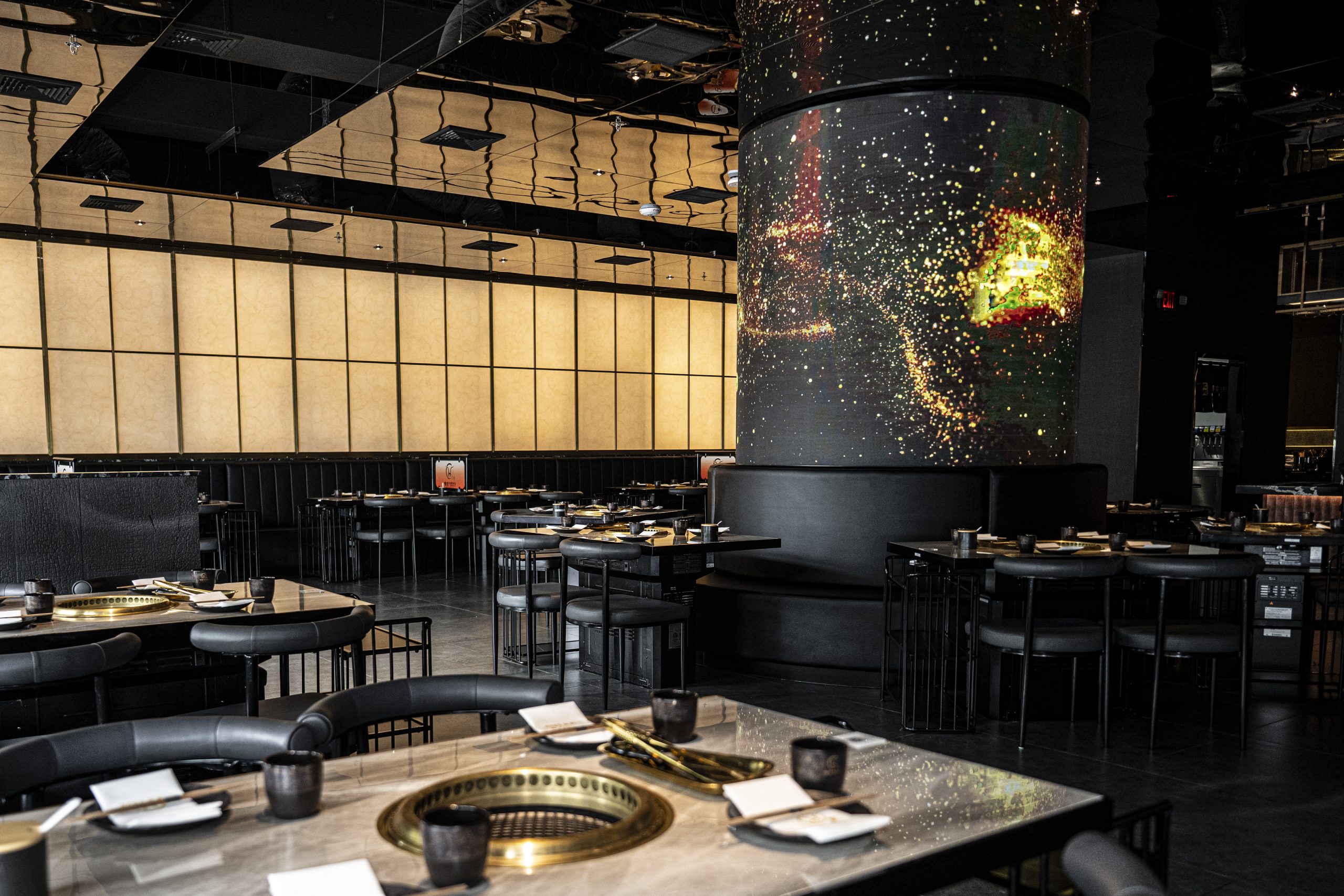
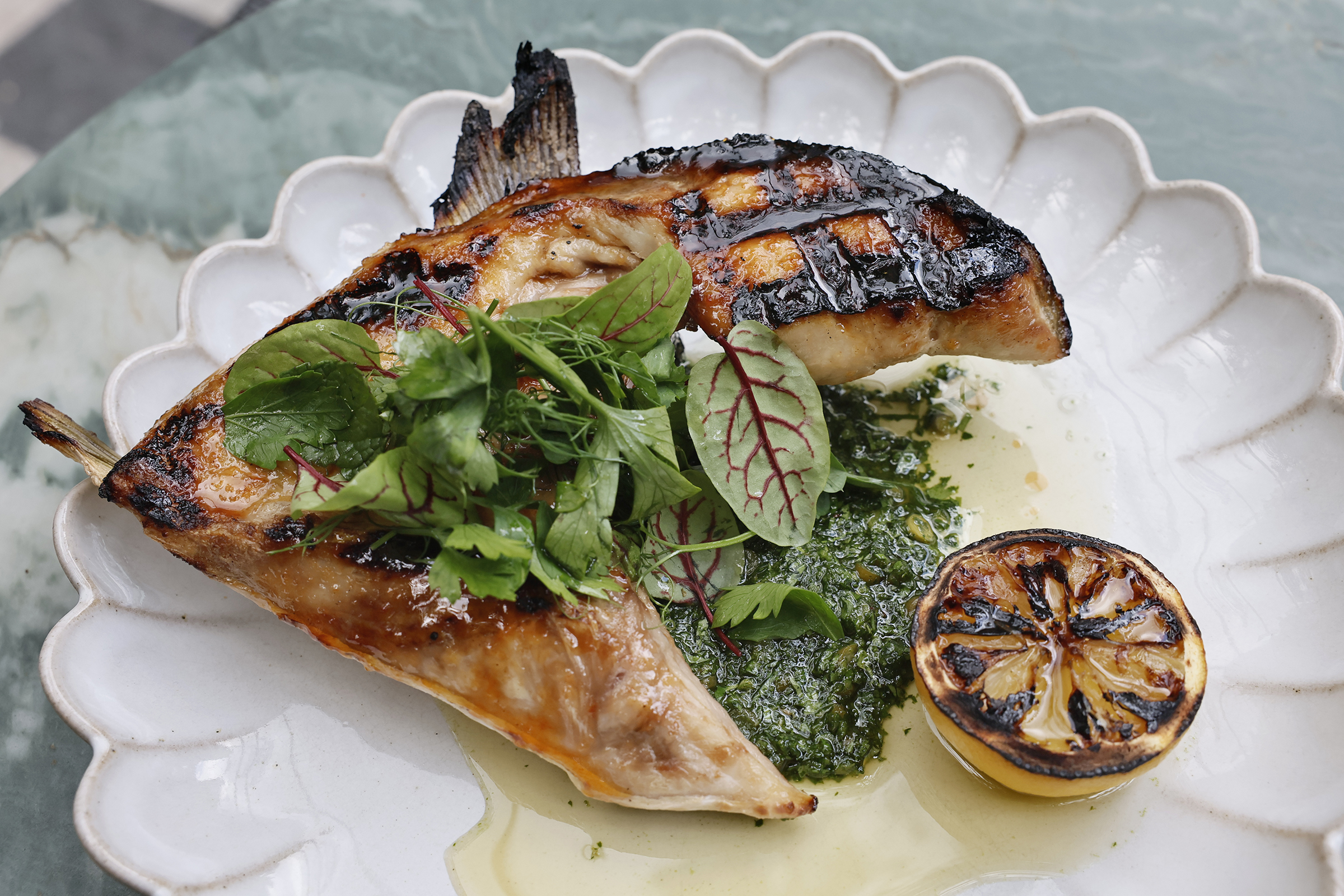
In our quest to keep you up to date on the restaurant scene, here are 12 spots that opened in the last few months. One example is Ogyu (shown above), which took over Ardmore’s former Iron Hill Brewing. It’s a grill-it-yourself Japanese steakhouse from the owner of the nearby Osushi.
You have to be in shape to lug around 100-pound salmon and tuna. Kiki Aranita found a group of sushi chefs who routinely lift weights. As they say in the maki game: no pain, no grain.
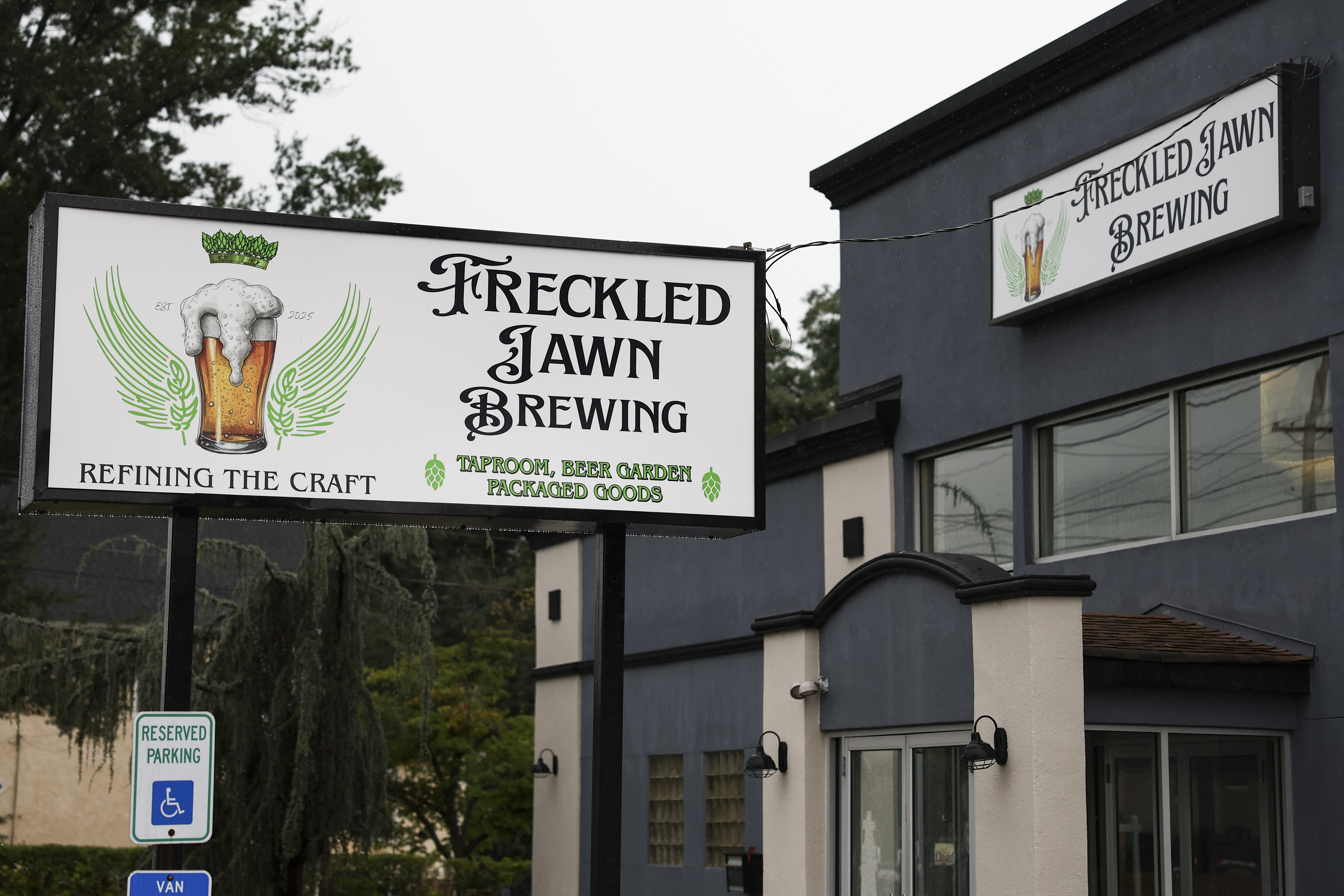
A couple didn’t want their local drinking spot to shut down for good. Sarah Nicell writes that they found a solution: They bought it.
The lines are long, and the branding is adorable. Kiki Aranita visits Kyo Matcha in Chinatown.
Pinot grigio is wildly popular for a good reason, and wine writer Marnie Old explains where the best ones come from.
Poe is expanding
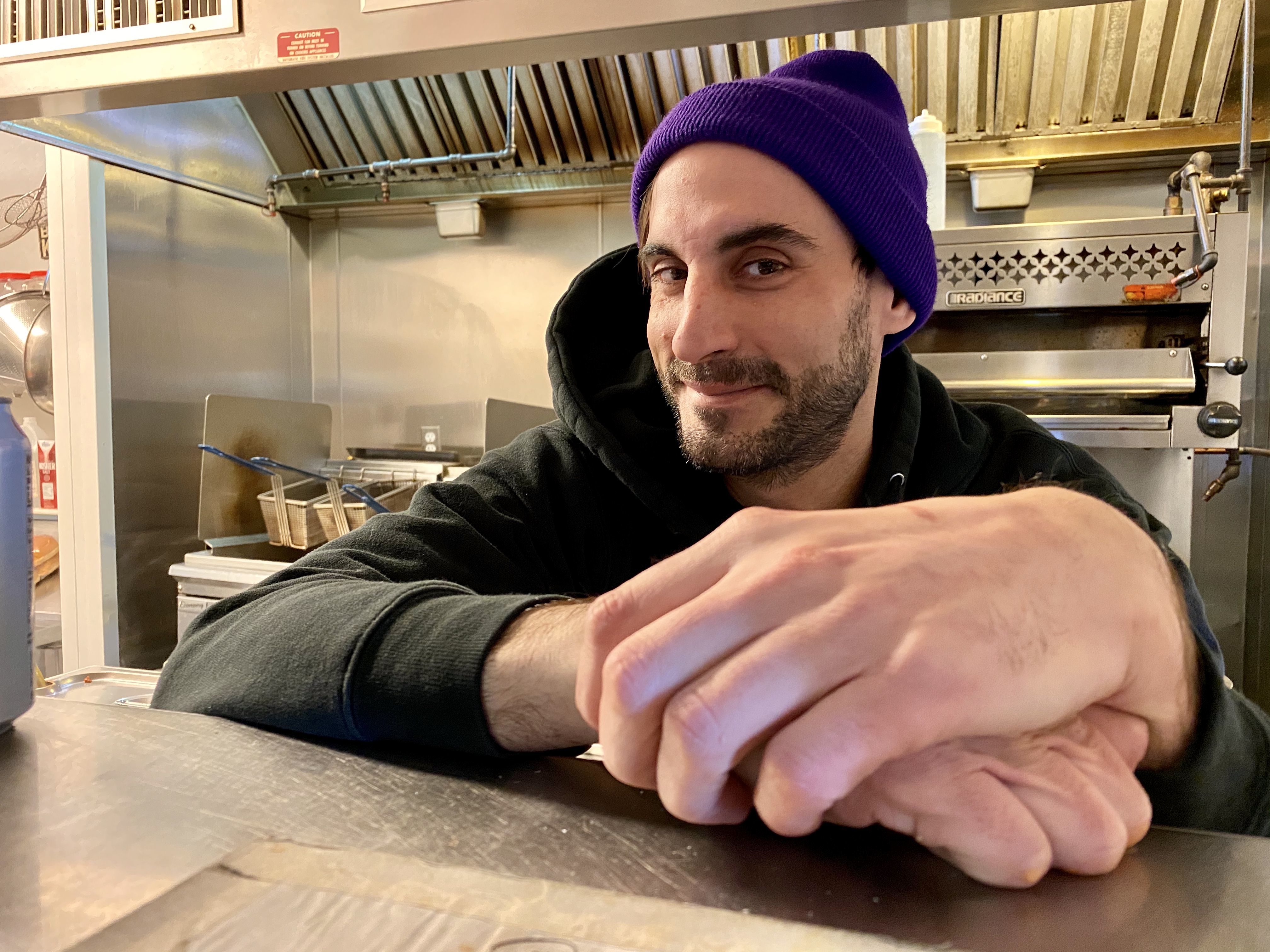
Sandwichmeister N.A. Poe will expand the hours of his kitchen operation at Poison Heart next week while preparing to open a new Poe’s Sandwich Joint location by the end of the year.
Starting Tuesday, Poe’s will operate seven days a week out of Poison Heart, 931 Spring Garden St., where he’s run the cocktail bar’s kitchen since last September. Daytime service will be pickup, takeout, and delivery only; Poison Heart itself will not open for daytime bar or dine-in service.
Poe, the nom de plume of Richard Tamaccio Jr., is not disclosing the new joint’s location or opening date. “We look forward to the freedom to do things our way without interference or apologies,” he said.
The move follows Poe’s split with Human Robot Brewing Co., where he had operated since 2019. His last day at Human Robot’s Kensington location is Thursday. Cantina La Martina will take over Human Robot’s kitchens at both Kensington and Brewerytown. Poe also parted company with the Monto, a new Old City bar.
At Poison Heart, Poe’s will operate from 11 a.m. to 9 p.m. Sunday through Tuesday and 11 a.m. to 6 p.m. Wednesday through Saturday. Poison Heart’s regular Wednesday-through-Saturday evening service will continue, with Poe’s classics and specials added to the menu.
Two tasty bright spots of a staycation for Emily Bloch and her boyfriend included hamachi collar and poolside swordfish skewers. In other words: There’s great fish to be had in Fishtown.
Scoops
Old Friend, an upscale restaurant with a wood-fired grill and a chef with a Center City pedigree, is coming to the Main Line later this year.
Corte, on its way to the former East Market home of Mulherin’s Pizza, will have an Italian backbone, focusing on handmade pasta and cooking from the wood-fired oven. If that sounds like University City’s Corio, that’s because the same crew is behind it.
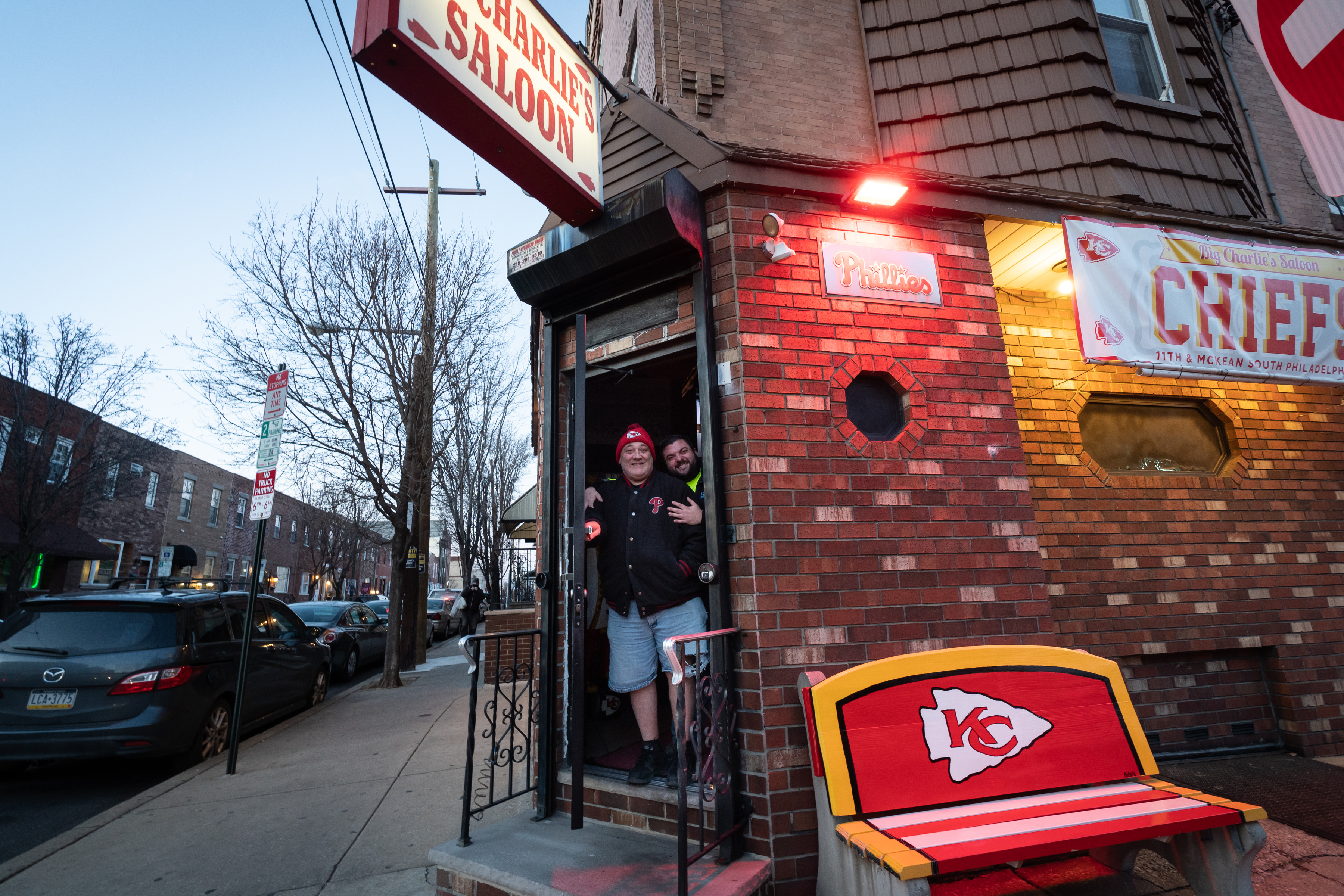
Big Charlie’s Saloon, the nationally known Kansas City Chiefs-theme bar in South Philadelphia that closed with the owner’s death last December, is under agreement of sale. The buyers’ plans don’t include NFL memorabilia.
Restaurant report
We’re in a New York state of mind:
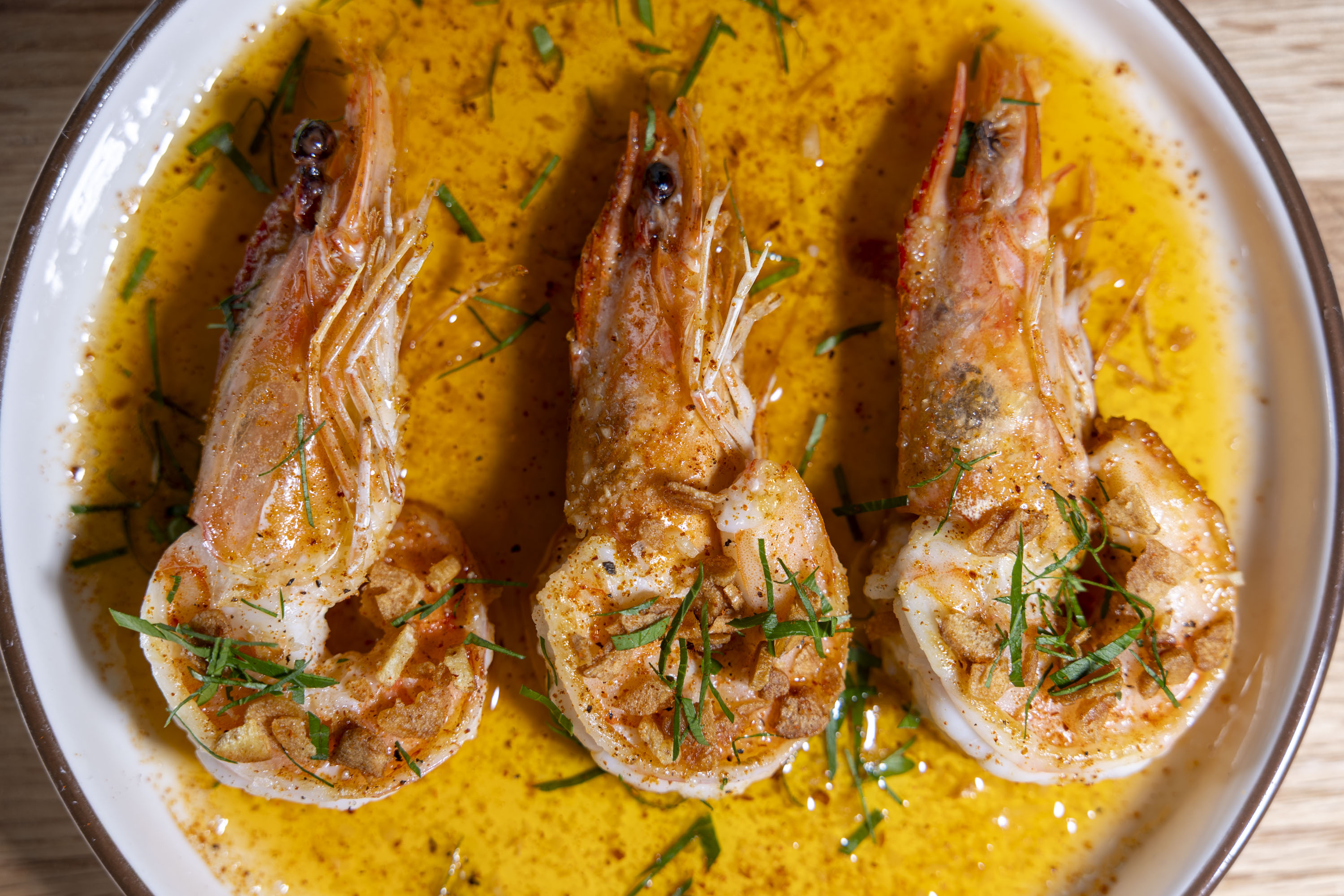
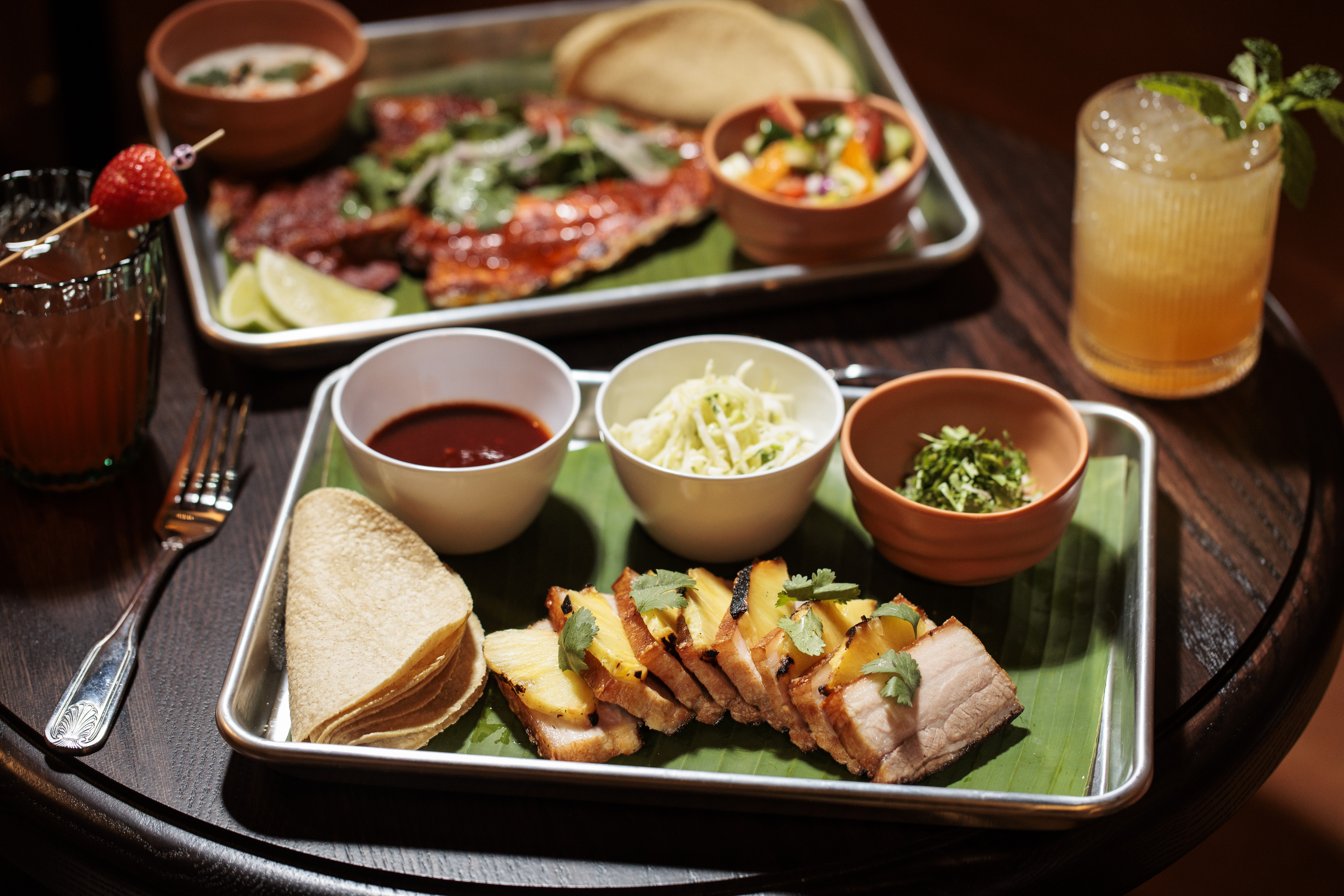
Dorade asado and pork belly al pastor (shown above) are two dishes offered at the new Mixteca, the Kensington offshoot of a Manhattan agave-focused coctelería from two James Beard Award-winning bartenders. Beatrice Forman heads to the former Martha for a look around.
Smash burgers and fries are the hook at 7th Street Burger, a fast-growing Manhattan-based burger chain that just opened the first of four Philadelphia-area locations in Fishtown. Kiki Aranita takes a bite.
Briefly noted
Jose Pistola’s 19-year run in Center City has ended. Its related bars in Fishtown and South Philadelphia are unaffected.
Mount Masala Himalayan Cuisine (300 White Horse Rd., Voorhees) will host a Nepal disaster-relief fundraiser on Thursday, Sept. 10 from 5 p.m. to closing under the auspices of South Jersey Food Scene. It’s a $25 buffet of Nepali-Himalayan dishes for dine-in or takeout, with all sales donated to the Nepalese government for flood relief.
🥂 New Jersey has permanently allowed the sale and delivery of to-go alcoholic beverages in towns that permit it.
Ask Mike anything
Did Philip Korshak ever open his store, Korshak Picnic Provisions? — Joan M.
Back in February, Phil Korshak, the poet-baker who left town in 2023 after closing his cult-favorite Korshak Bagels, thought he’d open his quirky corner store at 13th and Reed Streets by May. However, “you have no idea how many contractors, electricians, and plumbers go to Europe and Japan in the summertime,” he told me in June. This week, Korshak said the store — now called Korshak Parkside Provisions — is in the health department inspections queue and he’s expecting equipment deliveries. “Let’s call it October,” he told me.
📮 Have a question about food in Philly? Email your questions to me at mklein@inquirer.com for a chance to be featured in my newsletter.
By submitting your written, visual, and/or audio contributions, you agree to The Inquirer’s Terms of Use, including the grant of rights in Section 10.
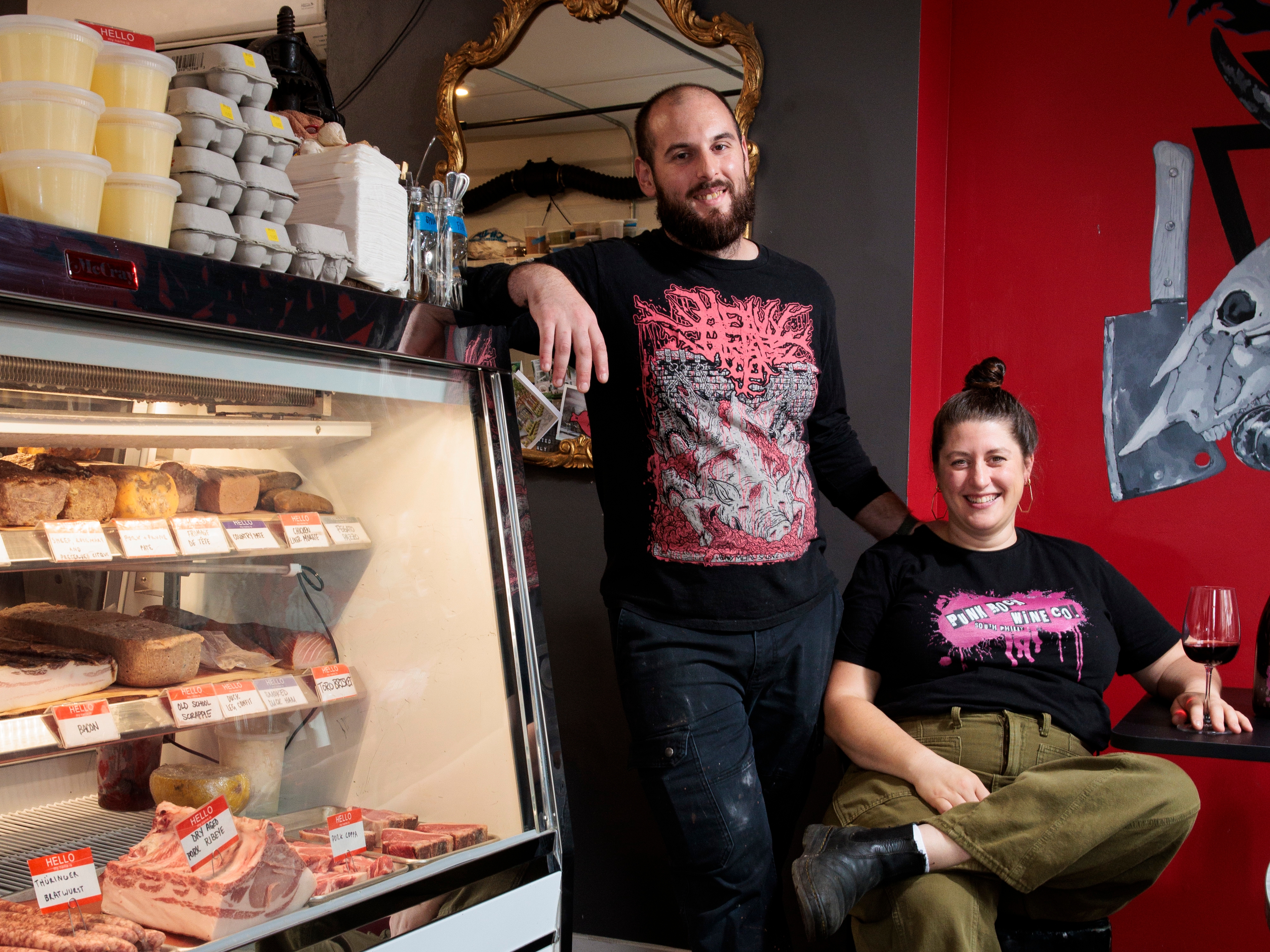
South Philly butcher shop Heavy Metal Sausage Co. indefinitely paused its after-hours Italian dinners last weekfollowing a failed health inspection that ordered the shop to removeall indoor seating. Co-owners Patrick Alfiero andMelissa Pellegrino say the resulting loss of revenuecould close the business.
An inspector with Philadelphia’s Department of Public Health ordered the shop to remove itseightseats and cease all food prep in the basement on Aug. 21. The inspection found Heavy Metal’s setup did not align with the restaurant’s plan review, a document detailing operating procedures that all restaurants must submit to the health department in order to receive a food license.
Among the three-hour inspection’s other findings: flies, mouse dropping, and unauthorized kitchen equipment, plus evidence that Heavy Metal was canning foods and dry-aging meat without an FDA-mandated food safety plan.
The most consequential violation on the report, however, is that “the food facility does not have a handwash sink conveniently located in the customer dining area” because “access to the toilet room is located through the kitchen.”
The location of Heavy Metal’s bathroom renders the space unsuitable for indoor dining, according to the health department. The recent determination — which came four years into Heavy Metal’s run as a hybrid butcher-restaurant — could cost Heavy Metal thousands of dollars in renovations and lost revenue, Pellegrino said.
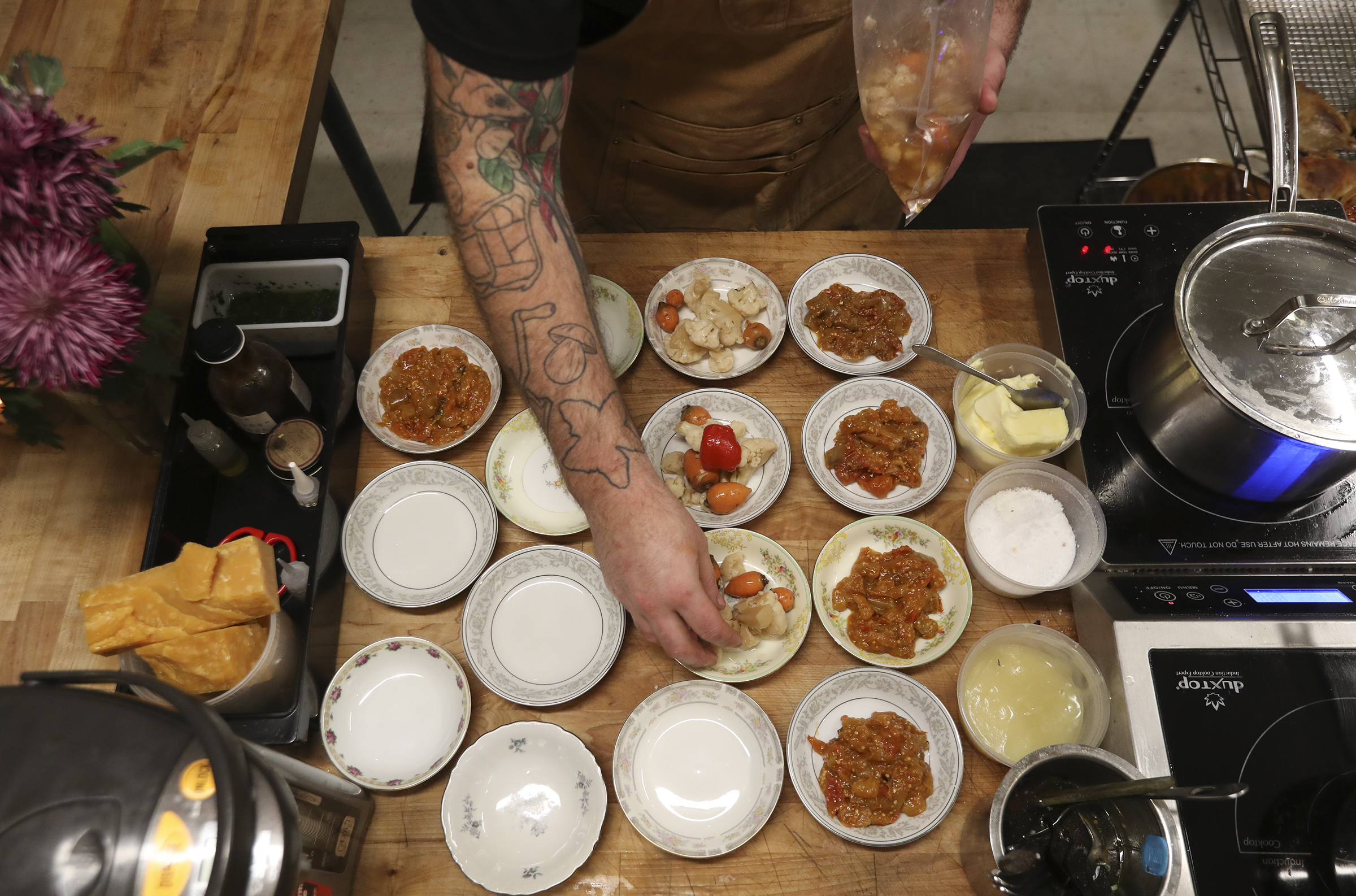
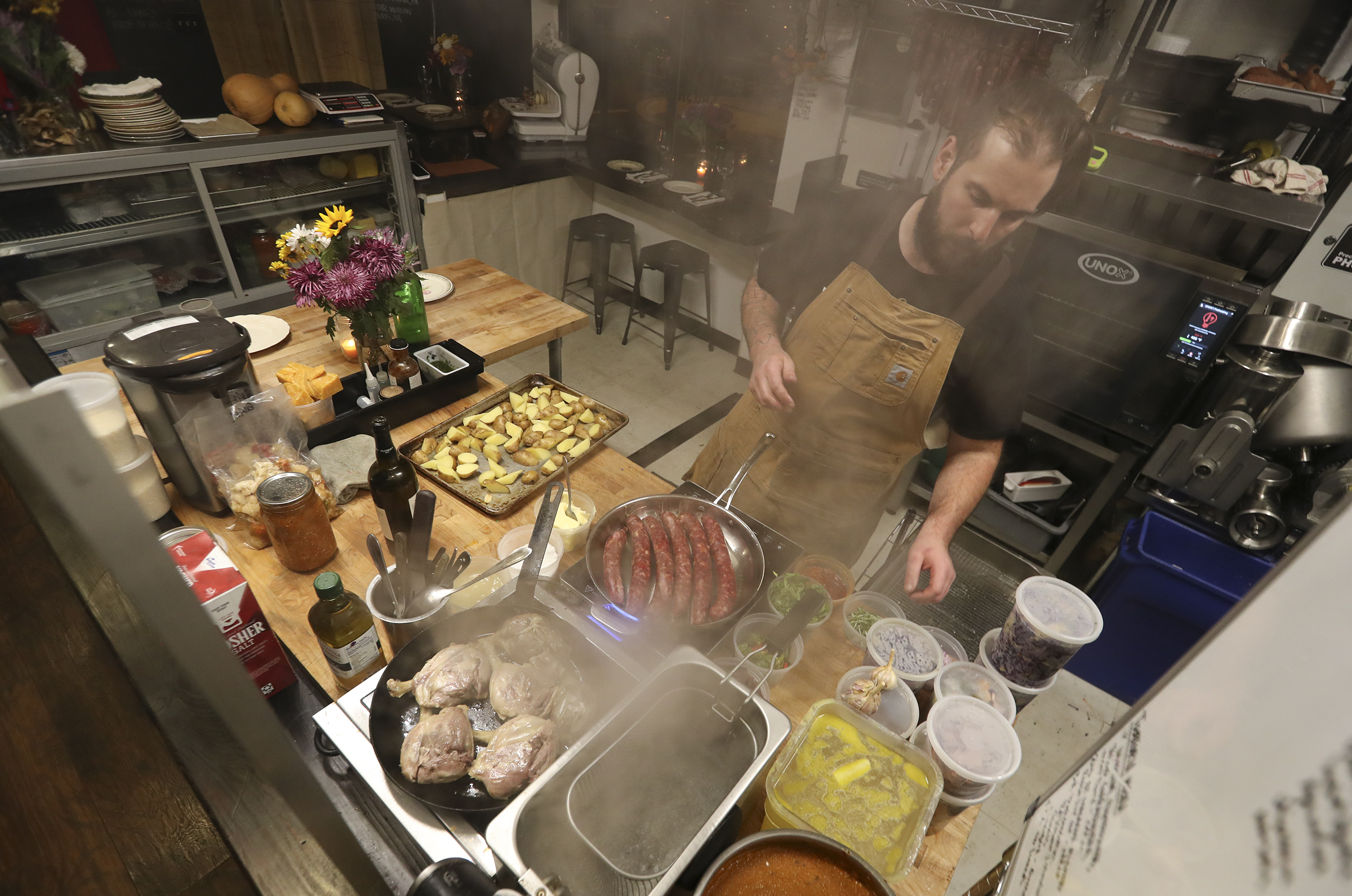
Alfiero and Pellegrino opened Heavy Metal Sausage Co. at 1527 W. Porter St.in 2022. By day, it’s a deli where Alfiero uses local ingredients and artisanal cured meats to create hearty, inventive sandwiches. By night Thursday through Sunday, the 500-square-foot space transforms into an intimate trattoria. Tables are pressed against deli cases and seats are tucked into empty corners, lending a vaguely illicit, punk-rock aura to what’s otherwise a traditional prix fixe meal.
The$98 dinners are also a moneymaker, accounting for well over half of Heavy Metal’s revenue, Pellegrino said. Without them, the duo have already had to lay off a cook and a server.
“When the [health inspector] asked if we could stop dinner, I told him we might not be here in six weeks to be reinspected,” Alfiero said. “I was just like, ‘How are we going to survive this?’”
Heavy Metal Sausage Co. chef/co-owner Patrick Alfiero prepares the antipasto course during the trattoria dinner on Nov. 17, 2022.Yong Kim / Staff Photographer
Same setup, new violation
Pellegrino and Alfiero told The Inquirer that they were blindsided by the findings in August’s health inspection. Heavy Metal has never hidden how it operates.
The couple started offering the after-hours dinners just six months after opening as a way to offset the costs of running a niche butcher shop, which has never been profitable.
A copy of the business’ plan review, reviewed by The Inquirer last week, shows that some form of indoor seating has been always accounted for. It also showsthat the deli’s bathroom is accessible to customers via a hallway that runs parallel to the kitchen.
The issue is brand-new despite Heavy Metal’s layout remaining static for months, according to a review of city records. The business has had an active food preparation and serving license since 2022. Heavy Metal has also passed all previous health inspections, including one in April 2026, whose report makes no mention of unauthorized seating, kitchen equipment, or food prep. It also doesn’t touch on sink or bathroom access.
Heavy Metal Sausage Co. chef/co-owner Patrick Alfiero preps food before a trattoria dinner on Nov. 17, 2022.Yong Kim / Staff Photographer
Health inspections are considered “snapshots in time” that may not necessarily be indicative of day-to-day operations, department spokesperson Jason Brooks said over email. During Heavy Metal Sausage’s prior inspections, inspectors only noted a basement storage space, “indicating that no food prep activities were taking place there — at that time,” Brooks wrote.
“In April, our inspector did not observe any seating for indoor dining. Inspectors are investigating what they can physically observe and document during the inspection,” he wrote. “During this most recent inspection, our inspector observed, in real time, food preparation in an unapproved space and unapproved indoor dining. For this, the food business was cited for violations of its approved plan.”
Pellegrino disputes the idea that Heavy Metal’s seating is a new development. “We were inspected four months ago, and we have done absolutely nothing different in those four months,” Pellegrino said. “Not a single thing has changed.”
The deli’s inspection comes amid other notablehealth department shutdowns.
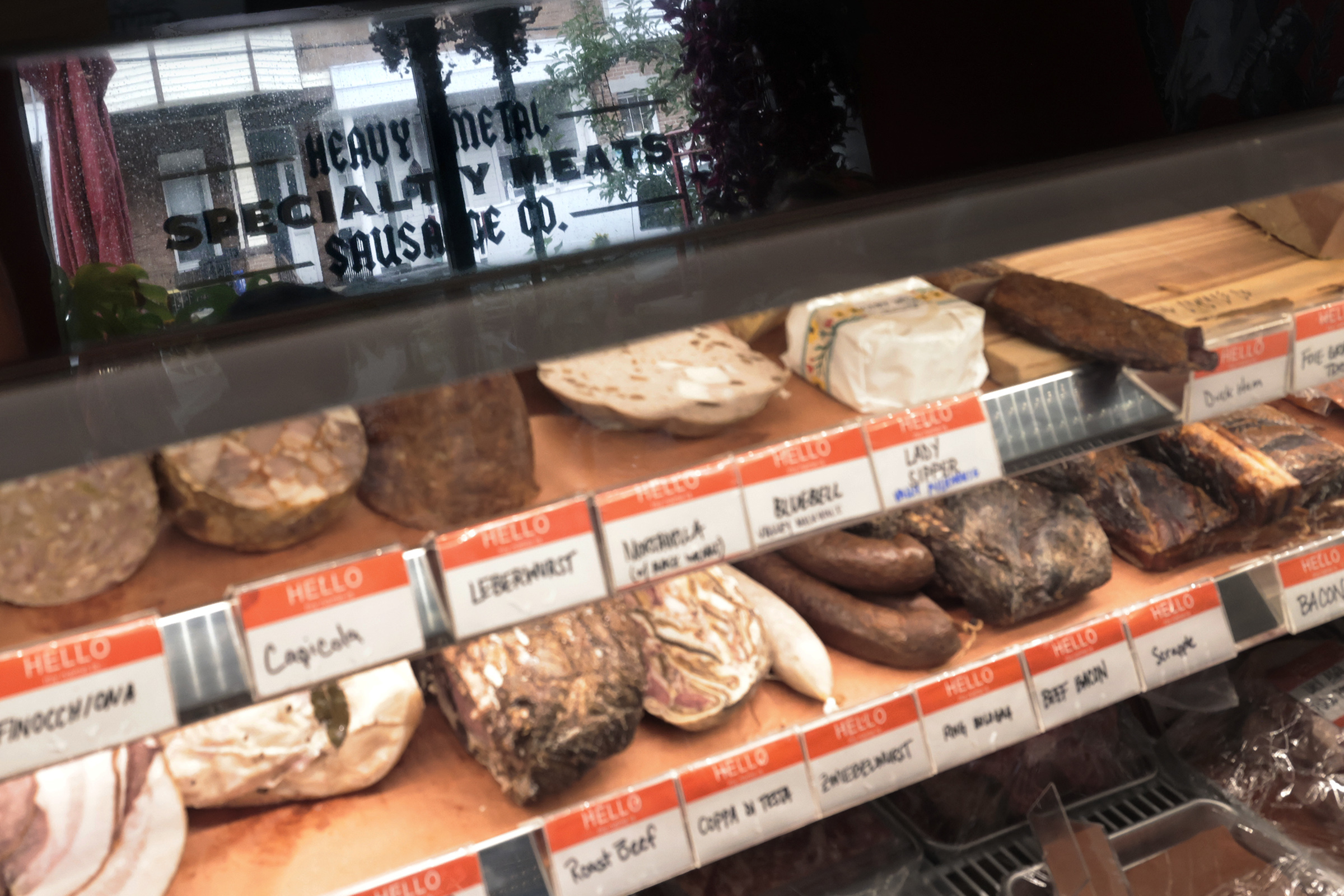
The front window is reflected in the top of the meat case inside of the Heavy Metal Sausage Co., 1527 W. Porter St. in Philadelphia, on Aug. 9, 2024.Elizabeth Robertson / Staff Photographer
Last week, Victory Brewing Co.’s three-level taproom on the Benjamin Franklin Parkway was ordered to temporarily cease operations after an inspector documented 26 health code violations that included live roaches, mice, and flies. And in mid-August, the health department failed Stargazy over “two unapproved countertop deep fryers without adequate mechanical ventilation,” a violation that has forced the East Passyunk Avenue restaurant to stop serving fish and chips.
How can Heavy Metal fix this?
Since Heavy Metal’s violations didn’t pose an imminent health hazard, the restaurant is allowed to remain open without indoor dining, Brooks confirmed.
The butcher and deli counters are still open during normal daytime hours (11 a.m. to 4 p.m. Thursday through Saturday, 11 a.m. to 3 p.m. Sunday) for takeout only. Pellegrino and Afiero said they’ve addressed most of the violations by creating the required food safety plans and limiting the basement to storage only.
The only hitch: What to do about the sink?
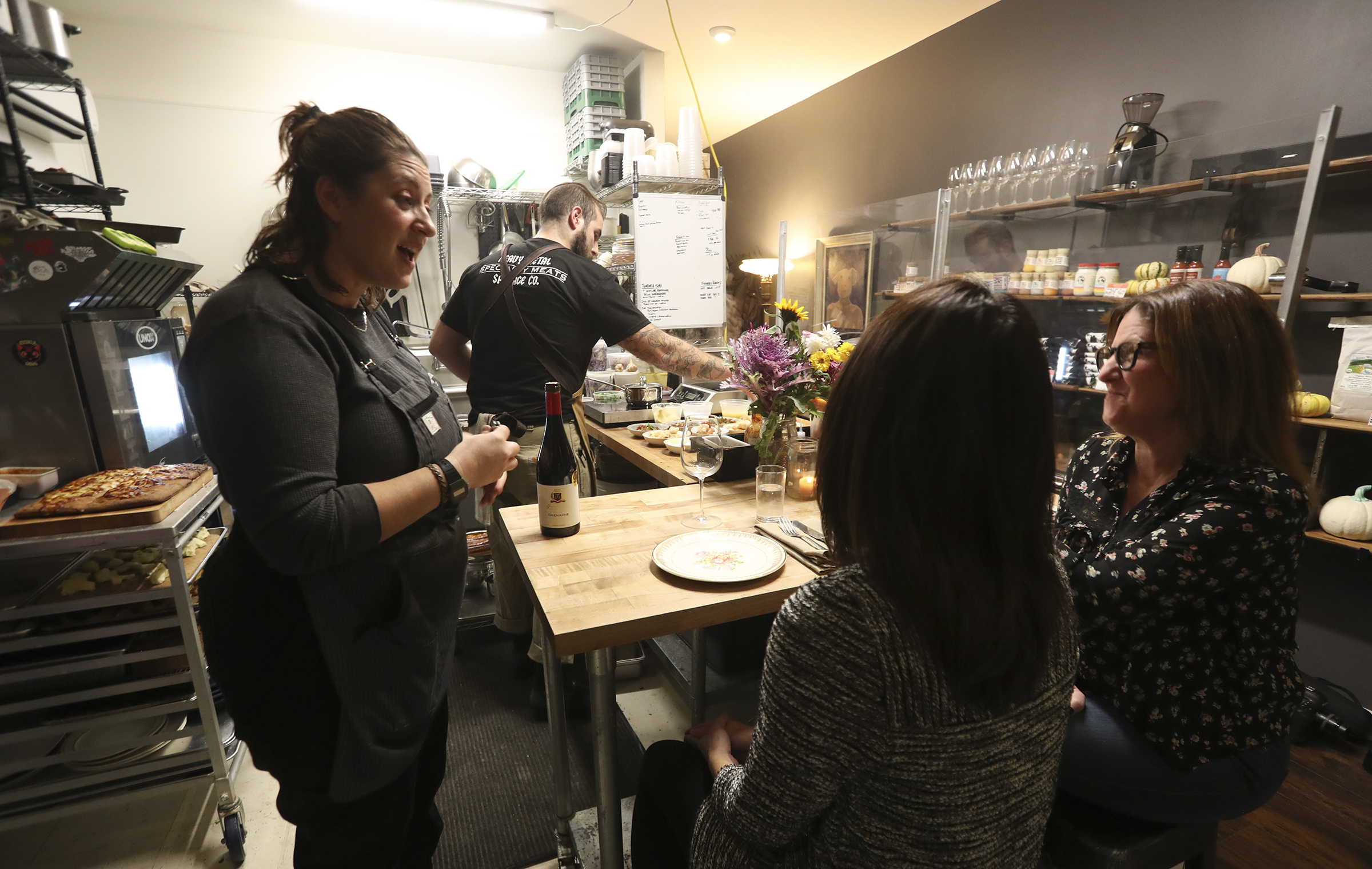
Heavy Metal Sausage Co. co-owner Melissa Pellegrino (left) greets diners Jeannette Armstrong (center) and Liz Rissover as chef/owner Patrick Alfiero prepares meals in the kitchen during the trattoria dinner on Nov. 17, 2022.Yong Kim / Staff Photographer
Heavy Metal must submit a new plan of review to the health department for approval. If the plan is approved and the restaurant passes reinspection, Brooks said, they will be allowed to restart indoor dining.
But to do so, Pellegrino said the health department recommended Heavy Metal install a customers-only sink at the front of the restaurant, a change that would require a separate, weeks-long permitting process and a contractor. When Pellegrino asked the health department if she could add curtains or room dividers to more clearly separate the bathroom hallway from the kitchen — which she considers a more cost-effective solution — she said they didn’t respond.
“All of these things take time and money,” Pellegrino said, “and we will have to make a calculus of what’s worth doing.”
With temperatures expected to get close to 90 degrees later this week, some Philadelphia schools will dismiss early Tuesday.
Fifty-two schools still lack air-conditioning.
“The Philadelphia region is experiencing higher-than-normal temperatures, and while the district has made significant progress toward ensuring our schools are adequately cooled to provide safe and comfortable learning environments, some schools still have inadequate cooling systems,” Oz Hill, the deputy superintendent of operations, wrote in a letter sent to families Monday.
The Philadelphia School District’s extreme-weather protocol means that if temperatures are forecast to reach or exceed 85 degrees by noon, those schools dismiss early; if it hits 85 degrees by 9 a.m., the call is for remote learning.
That means an unequal experience for students across the system, with students in some schools not missing any instructional time when it’s hot, and those in a quarter of schools subject to interrupted schedules.
“While we know that in-person learning is the best environment for students, the safety and well-being of our students, staff, and families remains our top priority,” Hill wrote. “Thank you for your flexibility and partnership. Please take care, stay cool, and stay safe.”
The holdup in air-conditioning all district schools is not related to the cost of air-conditioning units, but rather upgrading old electrical systems in the 52 schools.
Such upgrades are tricky. An HVAC project at Kensington High went awry this summer, triggering asbestos issues that forced students and staff to relocate for the rest of the calendar year.
School officials said in 2022 they aimed to have all district schools fully air-conditioned by 2027. But on the cusp of that cutoff, that goal seems unlikely.
Which schools will dismiss early?
The 52 schools that will have a half day Tuesday are:
Big Charlie’s Saloon, the South Philadelphia corner bar known nationally for its unlikely devotion to the Kansas City Chiefs, is getting a new playbook.
DiTomo and Jacobsen say they plan to turn it into Sweets, a neighborhood bar. DiTomo said that he would remain at Meetinghouse and that his business partners there have no stake whatsoever in Sweets.
Sweets will have no Chiefs memorabilia — or sports theme of any kind, for that matter. DiTomo said they’re thinking low-key. “I’m not a big concept guy,” he said. “I’m going to stay true to what that neighborhood deserves out of a neighborhood bar, and that’s about it.” The partners started an Instagram account to float photos that inspire them.
DiTomo said he and Jacobsen are working through due diligence for the purchase of the building, which had been listed at $1.1 million and includes apartments upstairs. A liquor license transfer is also pending.
They are aiming for a winter opening, though that timing is tentative. “If we could capture the holiday season, that would be beyond fantastic,” DiTomo said. “But we’re both realists. We’ll see how it goes.”
Its allegiance dated to Super Bowl IV in January 1970, when Staico’s father, Charlie, bet on Kansas City to beat the Minnesota Vikings and promised his young son a bicycle if the Chiefs won. They did, Paul got the bike, and a lifelong allegiance began.
After taking over the bar following his father’s death in 1983, Staico bought a satellite dish in 1986 so he and friends could watch Chiefs games that rarely appeared on Philadelphia television. Over the decades, the bar became known as “Arrowhead East,” its wood-paneled rooms covered with signed helmets, pennants, bobbleheads, street signs, and other Chiefs memorabilia.
But Big Charlie’s was also a neighborhood bar, and that is the aspect of the property that DiTomo intends to preserve — rather than its sports identity. He and Jacobsen both live in South Philadelphia.
“I’ve always admired neighborhood bars,” he said. “I grew up in neighborhood bars, so I want it to be true to form — just the classics, done well.”
That philosophy will extend to the drinks. DiTomo said the bar will pour Meetinghouse beer, along with a straightforward selection of beer, wine, and cocktails built around classics.
Sweet’s food will be simple, he said, because of the tiny kitchen.
DiTomo, a Culinary Institute of America graduate who rose to prominence a decade ago in the Marc Vetri organization at Amis, was a chef consultant on M. Night Shyamalan’s series Servant on Apple TV+ when Meetinghouse opened in 2023.
DiTomo and Jacobsen have been friends for about five years. DiTomo said Jacobsen had long been interested in doing a project together, but nothing had clicked until the Big Charlie’s building became available. “This building spoke to him, so he jumped on it,” DiTomo said.
Stickball, Jacobsen’s shop, specializes in vintage clothing, art, and objects. GQ included it on its 2024 list of 30 notable vintage menswear stores in the United States.
DiTomo said the Sweets name came from a running list he has kept over the years. He associates the word with several of his uncles, who used it as a term of affection. “I always liked the feeling of it,” he said. “It sounds nice, and it’s timeless. It feels good for the neighborhood, too.”
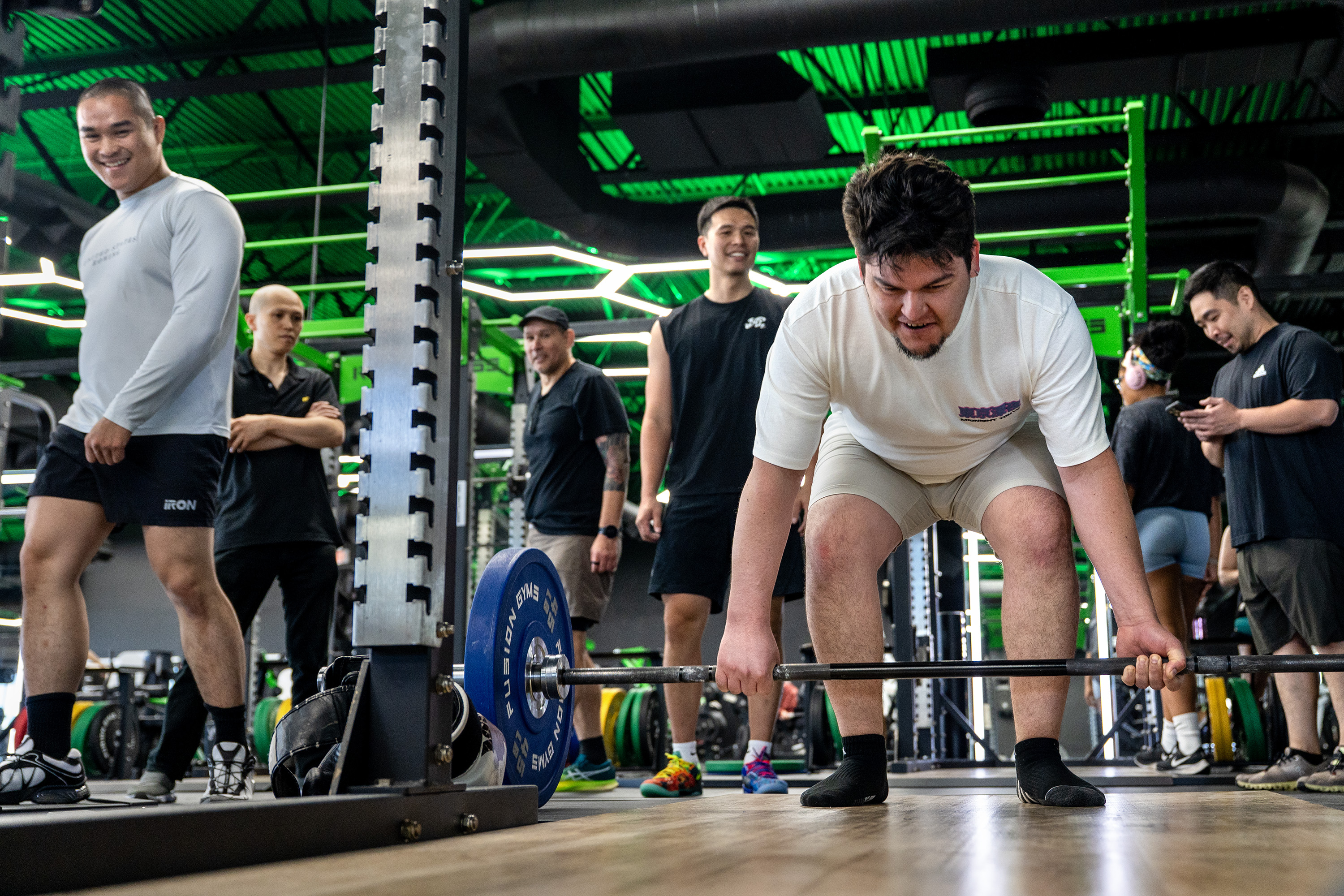
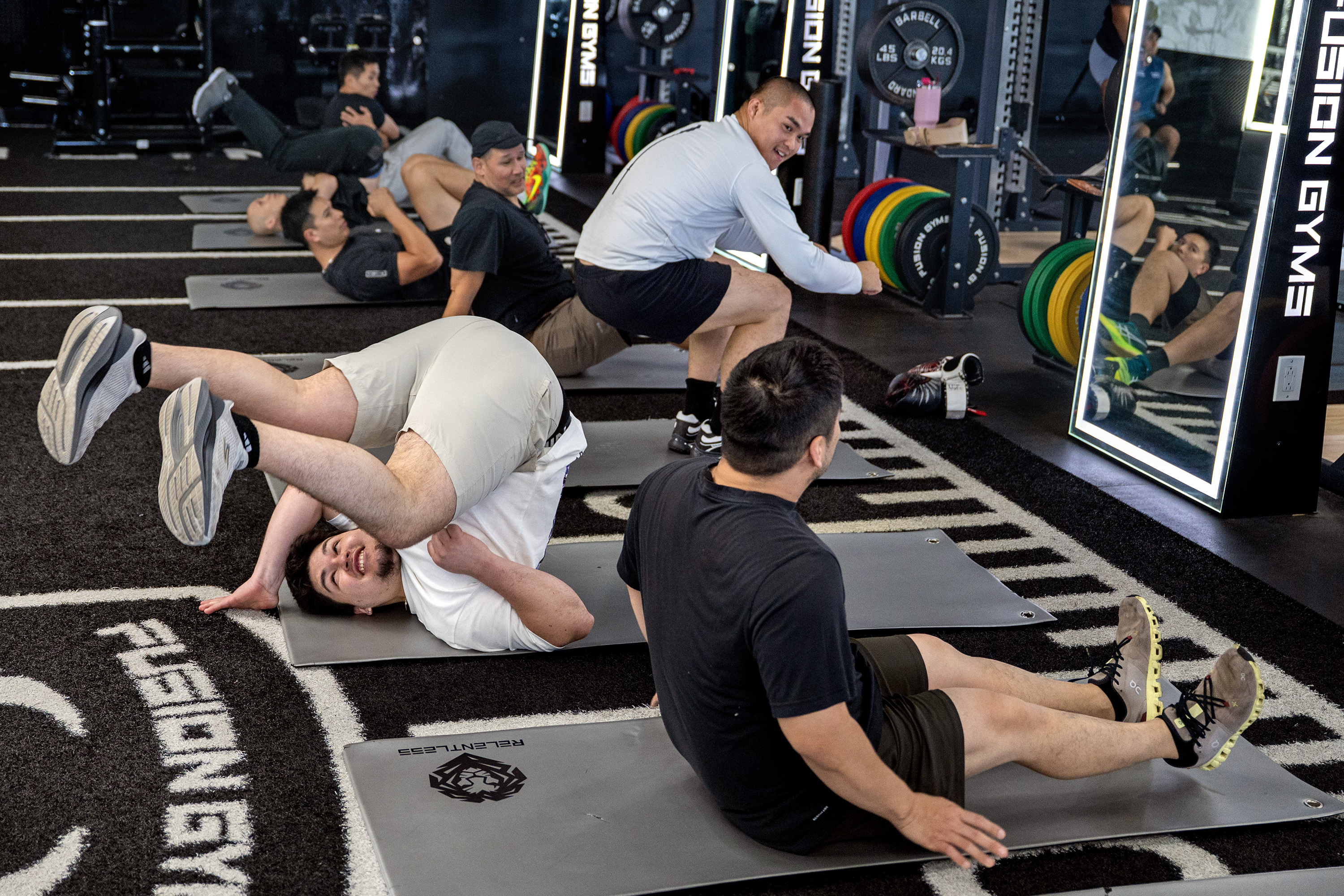
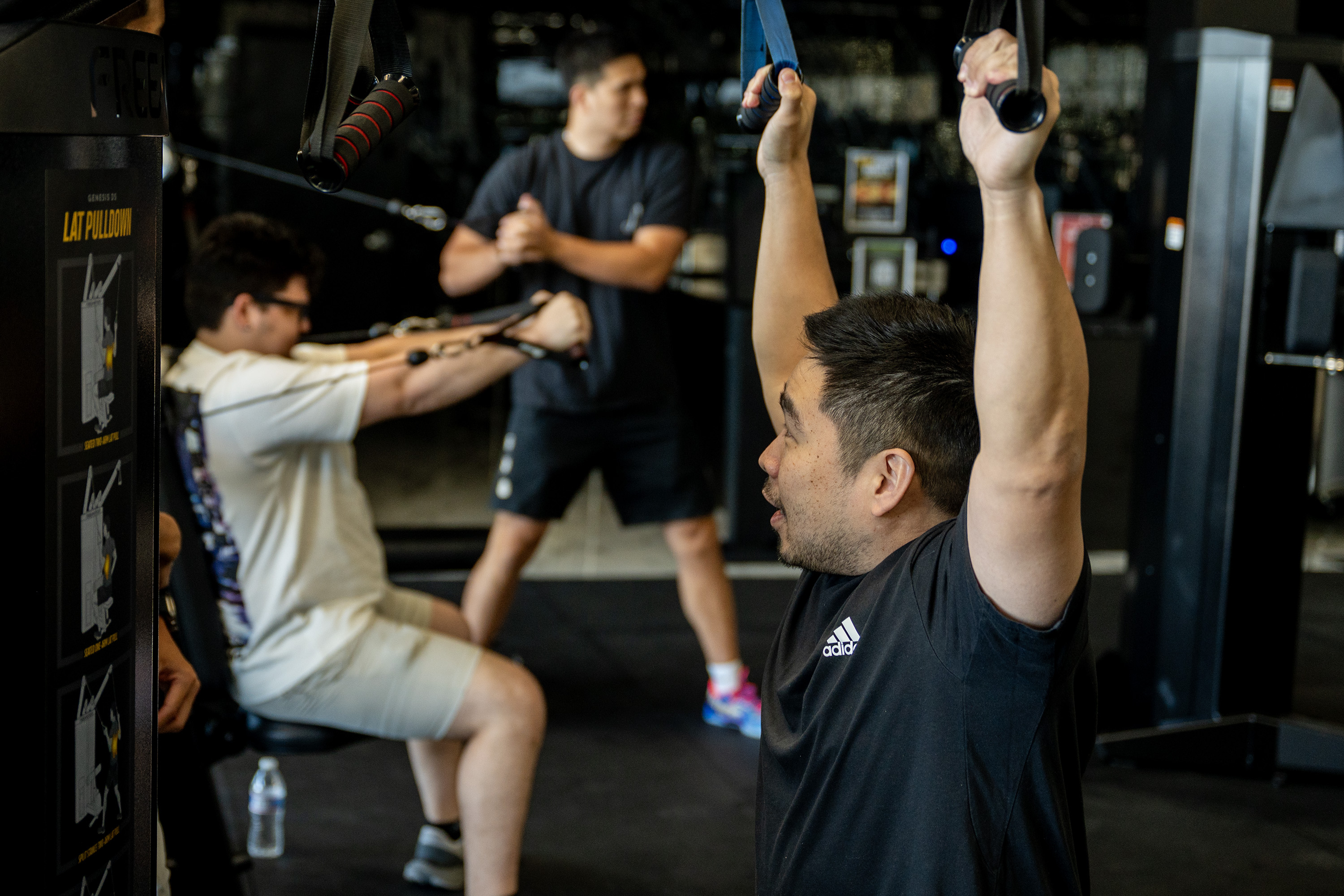
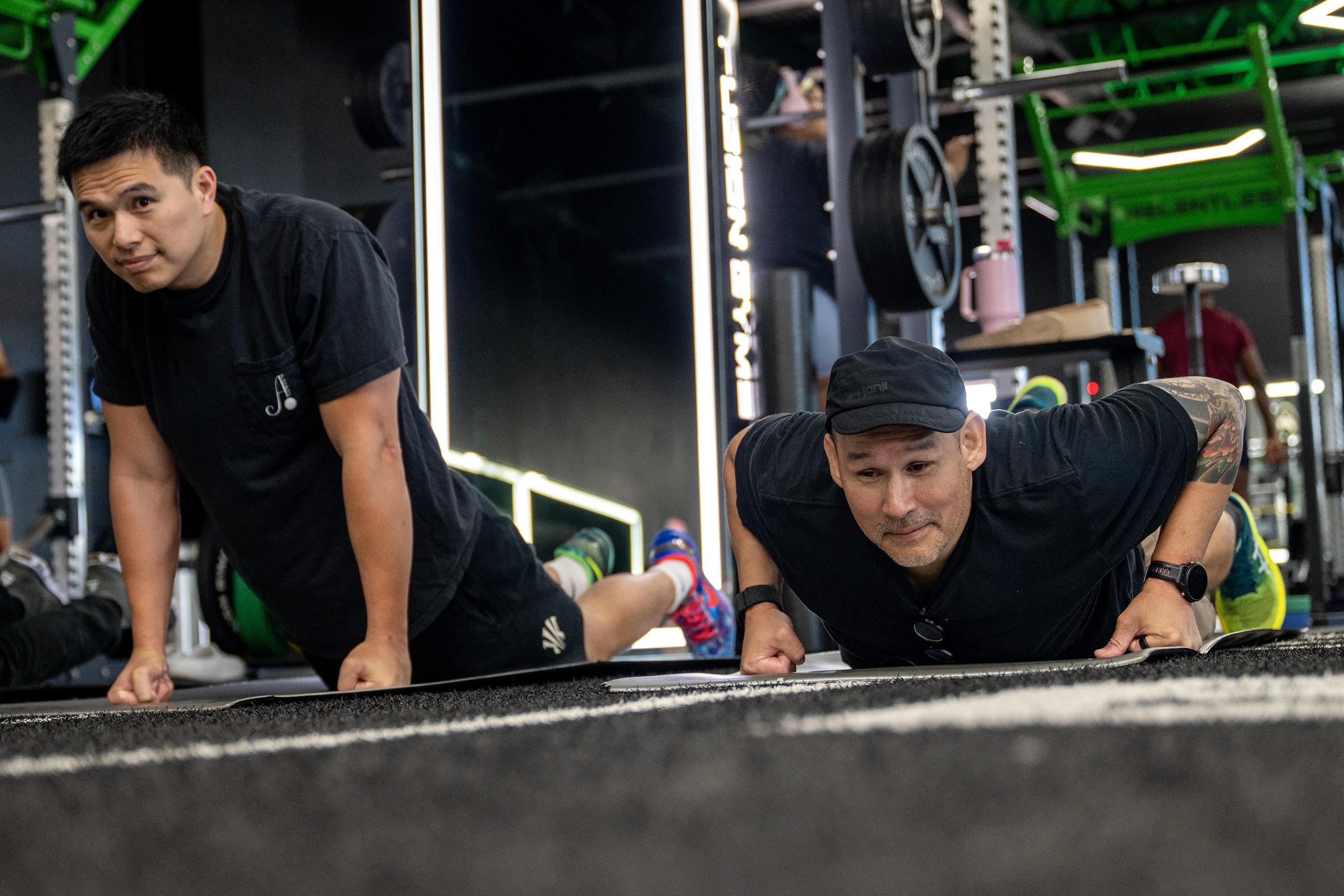
One of Fusion Gyms’ five locations is in a strip mall in deep South Philly, sandwiched between a children’s clothing shop and a wig store. In the neon-green glow of the gym’s bright lights, seven Philly sushi chefs stretched on rubber mats, preparing to lift weights set to be as heavy as a fully grown bluefin tuna.
The crew — usually just four or five chefs — meets regularly on weekday mornings, loosely led by Albert Zheng, 34, and Dan Santana, 40, who co-own and run Kiku Sushi in South Philadelphia. (Zheng also owns Javelin in Fairmount and is a partner in the upscale Old City omakase restaurant Ogawa.)
Zheng and Santana are there every weekday. The other chefs drop in weekly or monthly. They exercise to stay fit for their physically demanding jobs, but also just to hang out with each other.
On a recent Tuesday morning, a larger-than-normal group gathered, including chefs from Kiku, Ogawa, and Javelin, as well as Kichi Omakase and Yanaga Kappo Izakaya, which houses the omakase counter 637 Sushi Club.
Sushi chefs work out at Fusion Gyms in South Philadelphia in August. They get together regularly, trading both exercise tips and fish intel. From front to back are Dan Santana; Carlos Wills, Joseph Nguyen, Kevin Yanaga, Albert Zhang, Cai Li, and Alex Jiang.Tom Gralish / Staff Photographer
They also count among their crew sushi chefs from Sagami and Nakama. “We’re less consistent in summer, when our kids are home from school,” Zheng said. “During the school year, we drop the kids off and meet at the gym right after.”
They work out for two, sometimes three hours at a stretch. “The third hour is usually our jaw workout,” joked Zheng. “And it takes longer when there are more people.”
As they wove through Fusion Gyms’ open-floor plan, they compared ingredient lists andtraded tips about good restaurants and where to get salmon for a better price. These are regular topics ofdiscussion, along with mise en place and sourcing.
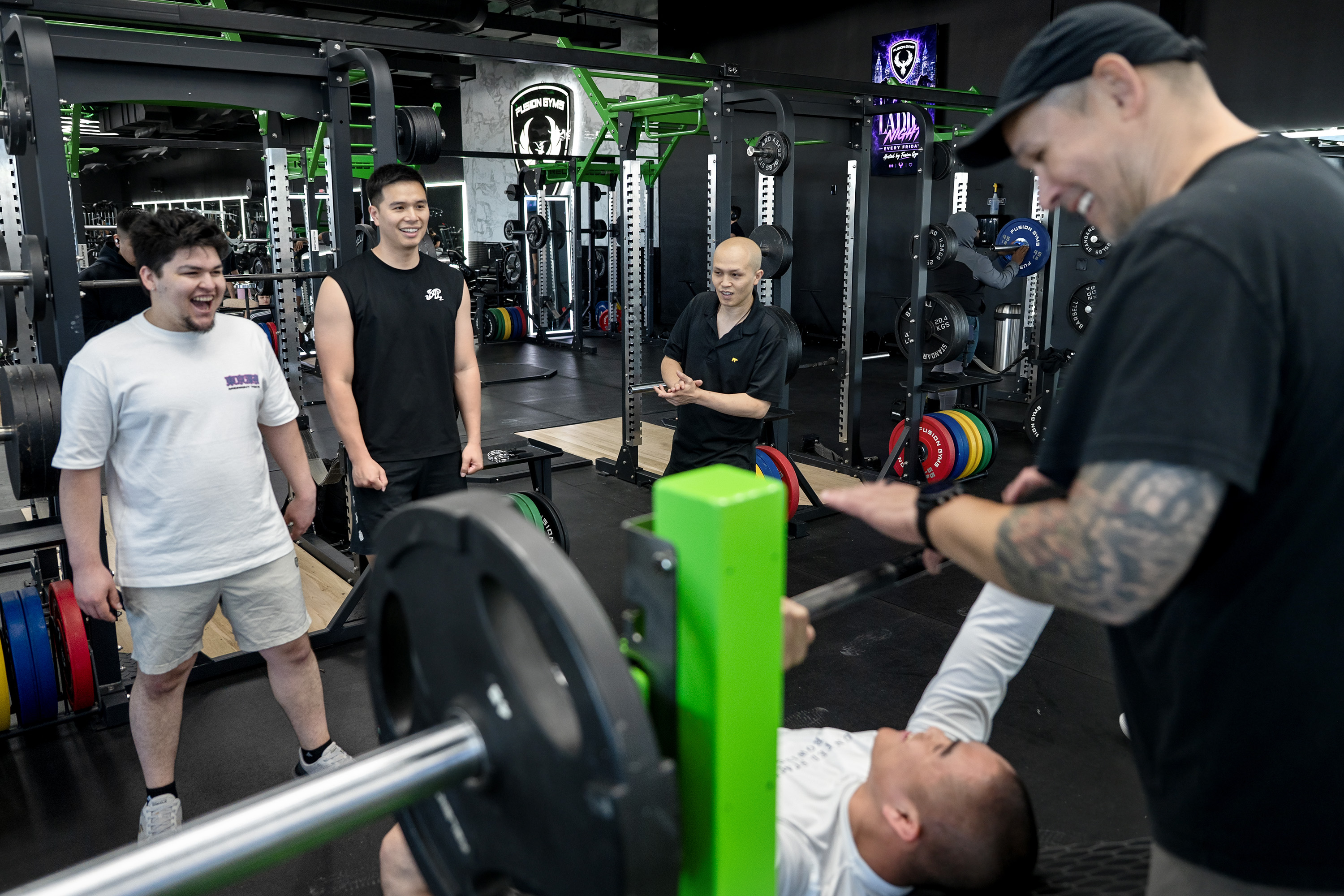
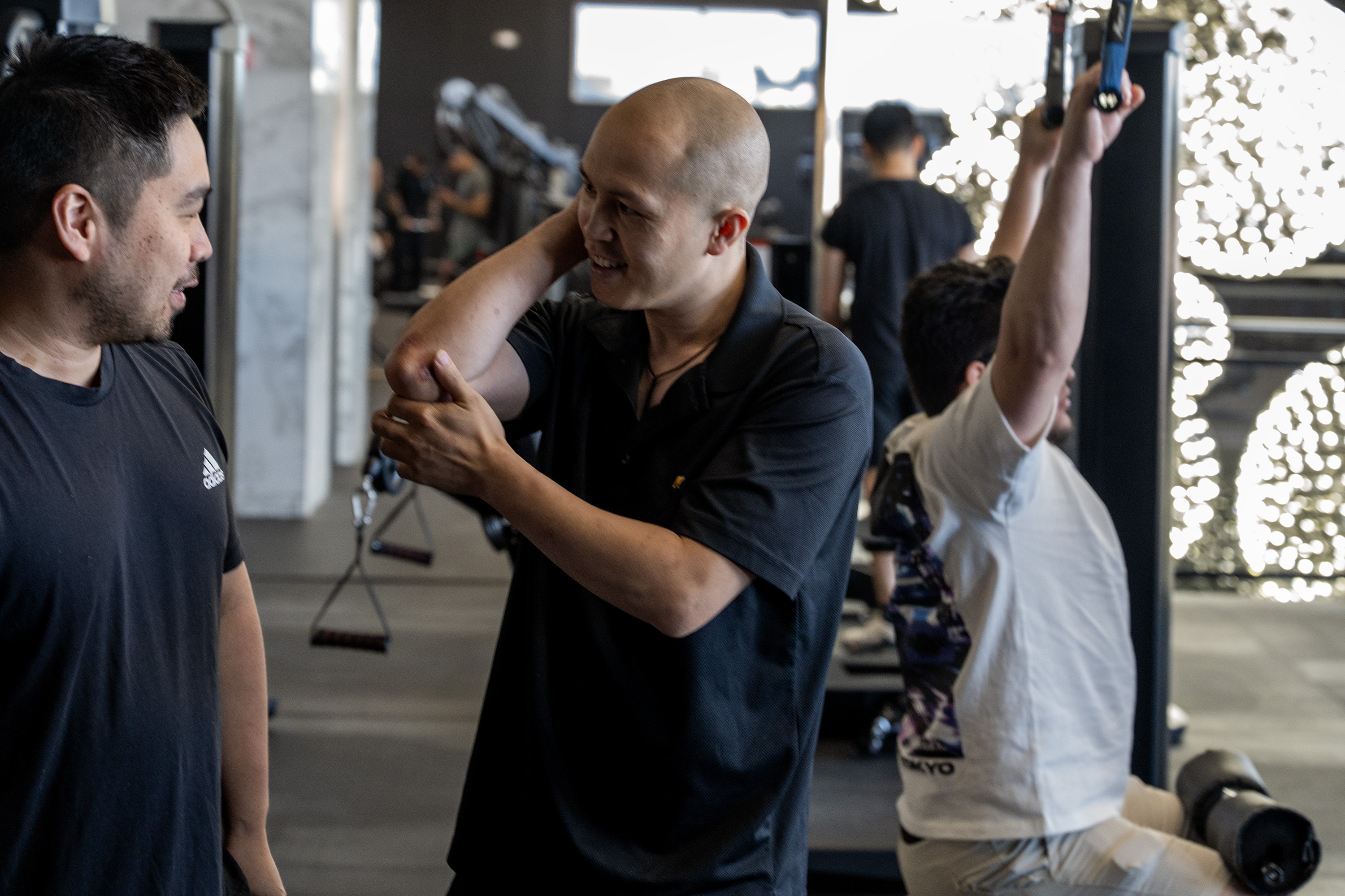
Sushi chefs work out at Fusion Gyms in South Philadelphia in August. They get together regularly, trading both exercise tips and fish intel. Clockwise from left: Carlos Wills, Albert Zheng, Alex Jiang, Kevin Yanaga, and Joseph Nguyen (on bench).Tom Gralish / Staff Photographer
Kevin Yanaga, 55, and Joseph Nguyen, 27 — partners in 637 Sushi Club’s Oma Cafe, which pairs fish with coffee — coached the others through Muay Thai moves while trying to convince the other chefs to join them on a November trip to Vietnam for a three-day Oma Cafe pop-up. “I need help prepping,” said Yanaga.
Sushi chefs work out at Fusion Gyms in South Philadelphia. They get together regularly, trading both exercise tips and fish intel. From front to back are Dan Santana, Carlos Wills, and Albert Zheng.Tom Gralish / Staff Photographer
At one point, Carlos Wills, 26, who helms the omakase counter at Ogawa, pulled up a list of available ingredients sent by his buyer from Japan’s Toyosu Market, the world’s largest wholesale seafood market, and showed Yanaga the $500 tray of uni and $55 60-sheet packet of nori that he was considering ordering once he was done working out.
On this Tuesday, the chefs were also drinking some of the world’s most expensive coffee, brewed by Nguyen. “It’s Orange Geisha and it’s expensive because it’s so rare and it takes half a pound of beans for me to brew one bottle,” explained Nguyen, who also owns and operates the Coffee Connoisseur Club. The Instagram-based subscription club sources beans from Nguyen’s plots in Vietnam and small farmers in South America. “This is a $250 bottle of coffee,” Yanaga interjected.
“I’m getting kumquat, jasmine, and orange notes coming from it,” said Nguyen. “I like saba [mackerel] paired with this, as the fattiness of it pairs with the bright citrusy notes. Saba with a little bit of wasabi.”
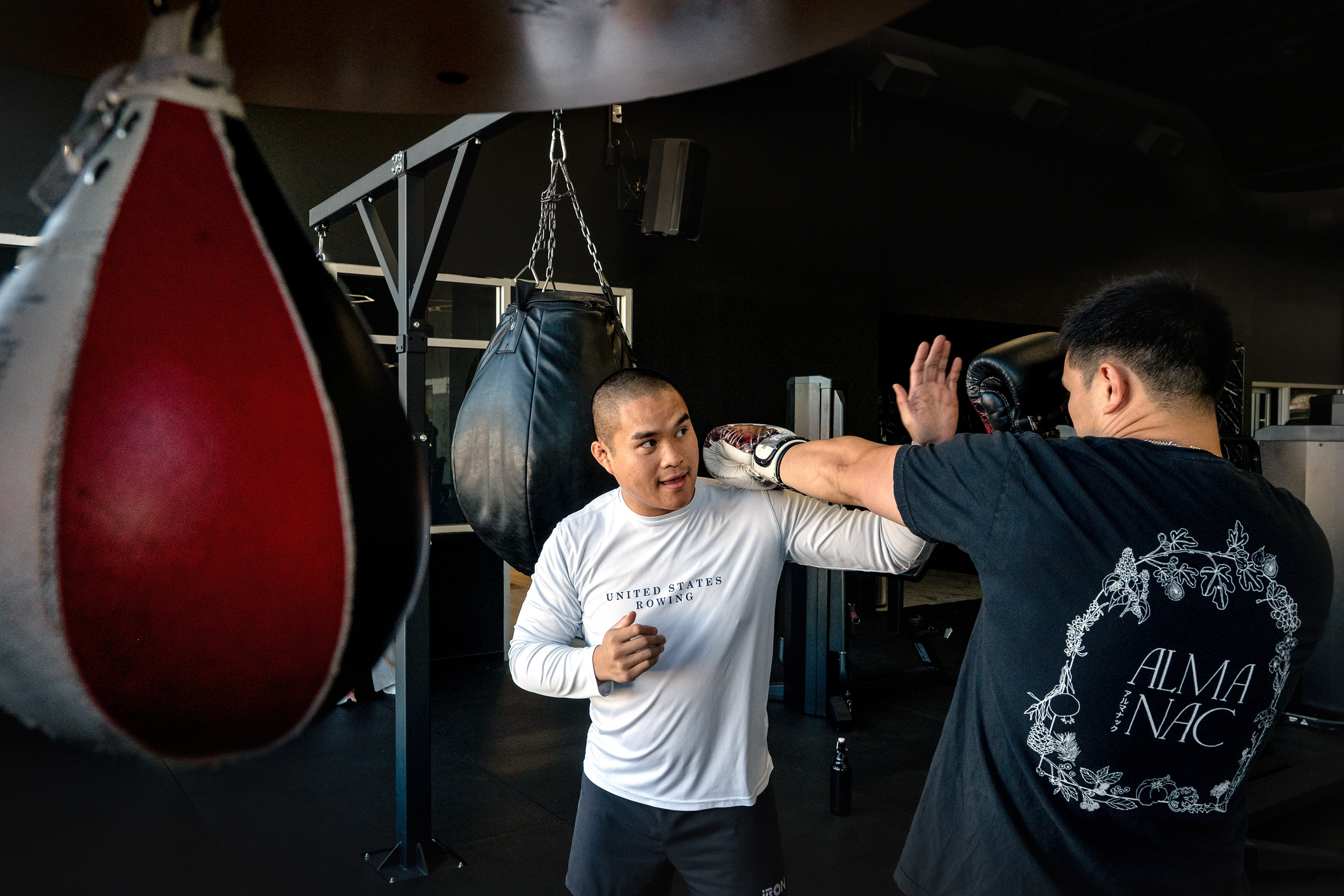
There was no saba in sight as Nguyen held a punching bag while Zheng jabbed, gently coaxing him on where to aim his punches. He did the same for Alex Jiang, 42, from Kichi Omakase. “We have a heavy jab over here!” he proclaimed.
Sushi chefs Joseph Nguyen (left) and Albert Zheng work on boxing at Fusion Gyms.Tom Gralish / Staff Photographer
When the crew moved on to bench-pressing, Wills said, “You can tell people this is how I prepare to lift a tuna.”
As Wills sat back on the weight bench and lifted the bar, he said, “This is a 60-pound tuna.”
The sushi chefs spot one another and cheer each other on: “One more! Half a tuna more! You’re very strong!”
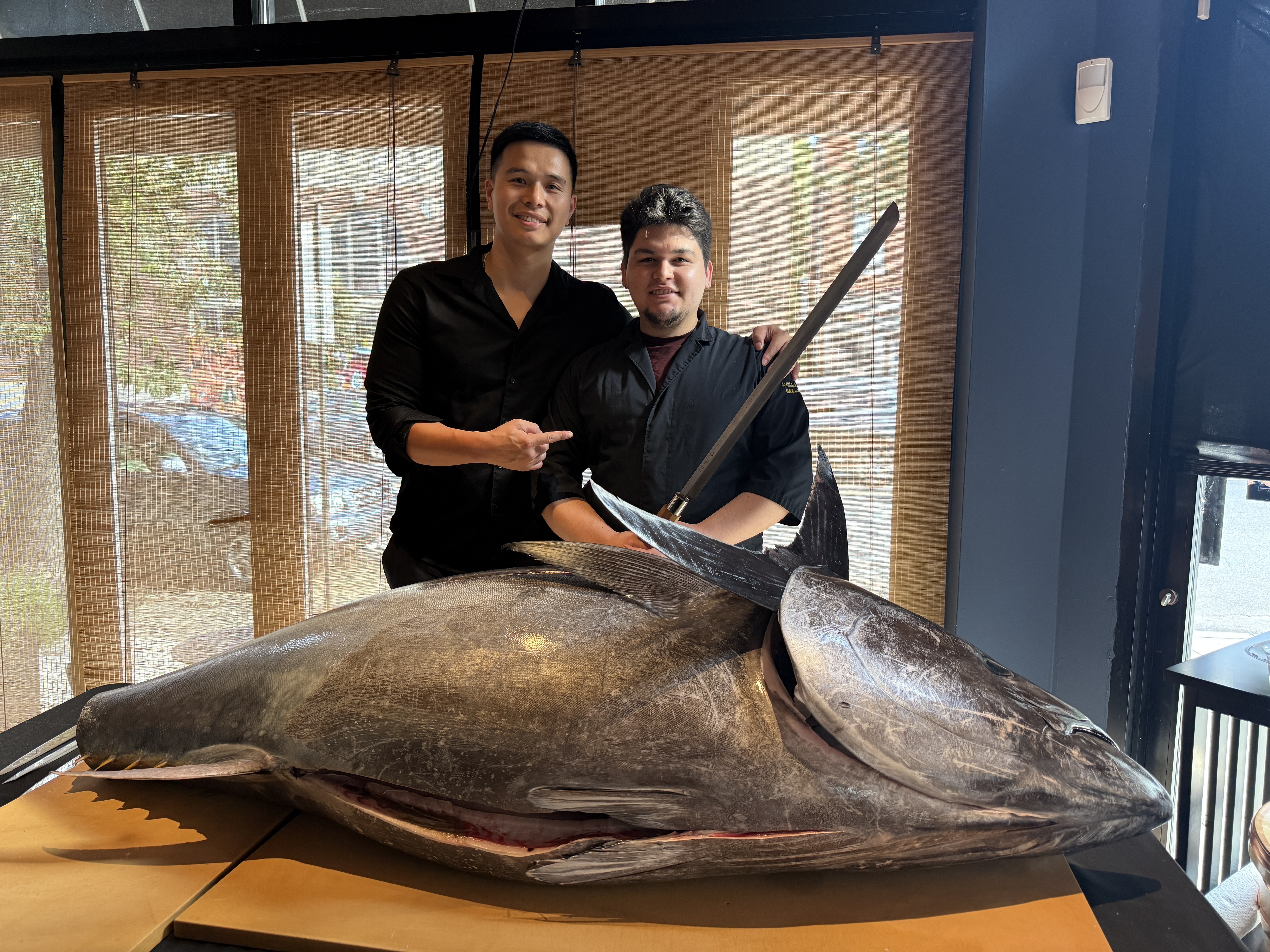
“I thought about bench-pressing the 281-pound tuna we brought into Javelin for the tuna breakdown last week,” said Zheng. “But it was so slippery.”
Sushi chefs like Albert Zheng and Carlos Wills say they work out to stay in shape for lifting fish like this 281-pound Spanish bluefin tuna at Javelin in Fairmount.Kiki Aranita / Staff /
“When we get a tuna like that, it takes eight of us to lift it,” said Yanaga.
“We got a Spanish bluefin last week,” said Wills. “It was $23 per pound, so just over $6,600. Pretty cheap. The Japanese ones are $31 per pound right now.”
“Who wants to do a whole tuna?” asked Zheng as he and Santana added more weights on to a bar for a round of dead lifts.
Nguyen steps up and dead lifts 315 pounds. “We’re hiring him for the next tuna breakdown,” said Wills.
Sushi chefs (from left) Dan Santana, Alex Jiang, and Carlos Wills work out at Fusion Gyms.Tom Gralish / Staff PhotographerSushi chefs Albert Zheng (left) and Kevin Yanaga work on planks at Fusion Gyms in South Philadelphia.Tom Gralish / Staff Photographer
In fact, the chefs do often join up for tuna cuttings, helping one another out even if they aren’t in business together.
But mostly, the crew keeps one another accountable at the gym, welcoming each other even if weeks or months pass between workouts.
Once the coffee was consumed and their muscles were spent, the chefs dashed off in different directions, to their respective sushi counters.
A distinctive stretch of 15th Street in Center City has lost both of its longtime bars within a year.
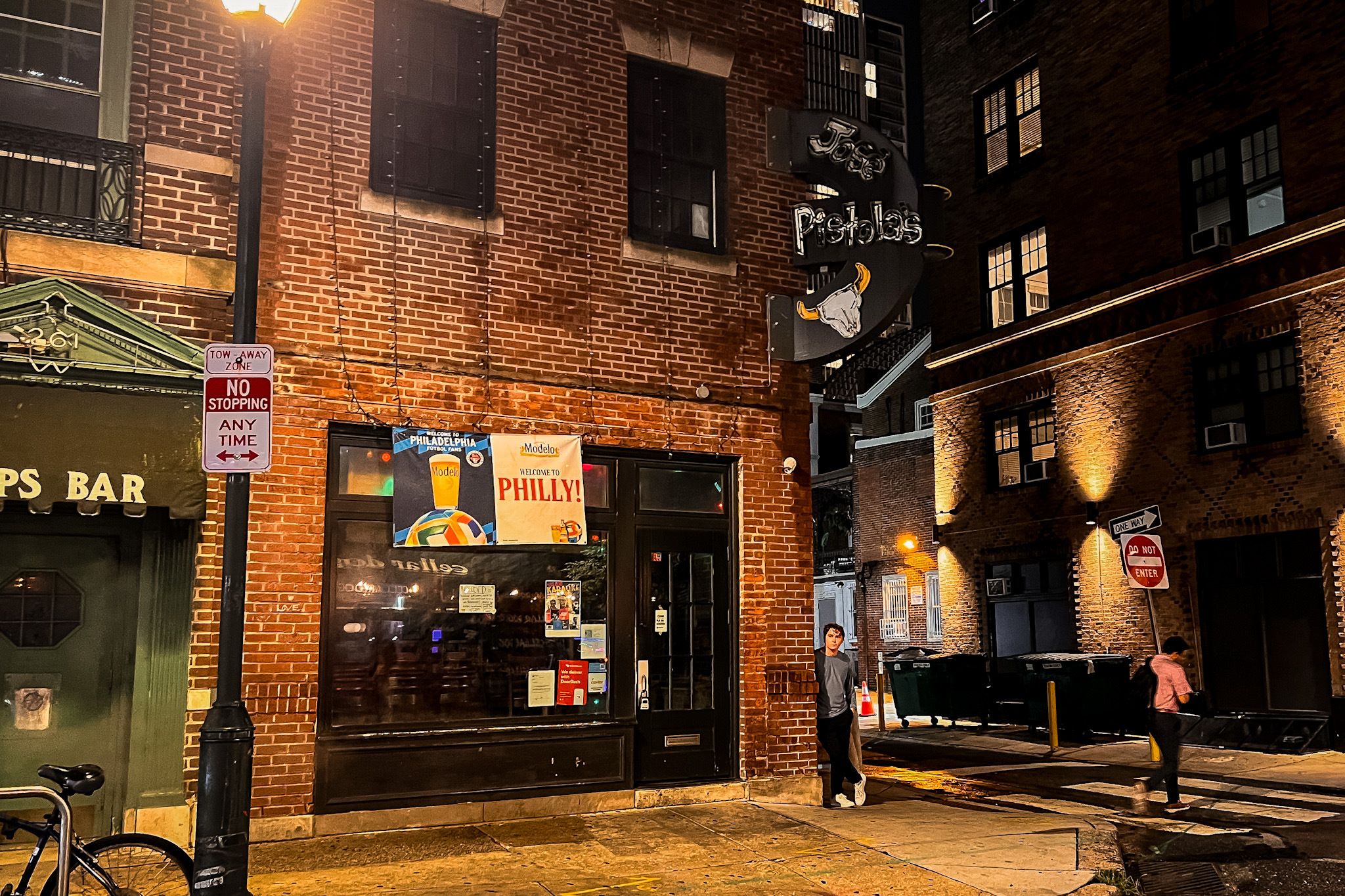
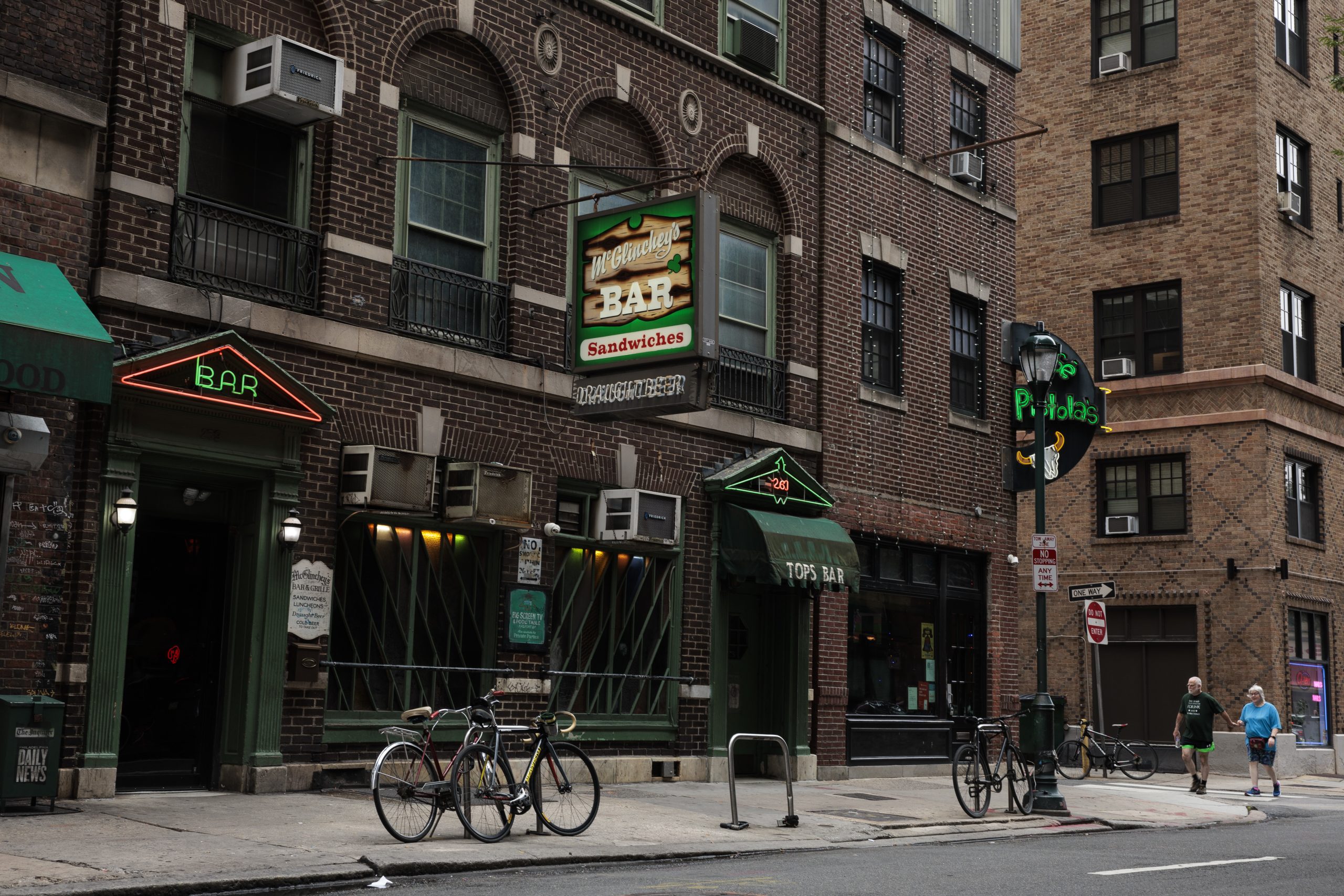
Jose Pistola’s, the Mexican-inspired craft beer bar at 263 S. 15th St., has closed after 19 years, following last August’s closing of its next-door neighbor, McGlinchey’s.
The closing of Jose Pistola’s came abruptly Tuesday amid a number of factors, including the Philadelphia Gas Works’ cutoff of its gas service. Although co-owner Joe Gunn said the business had made payments and was trying to resolve the issue, he said PGW would not restore service for three more days. . “That was the straw that broke the camel’s back,” Gunn said.
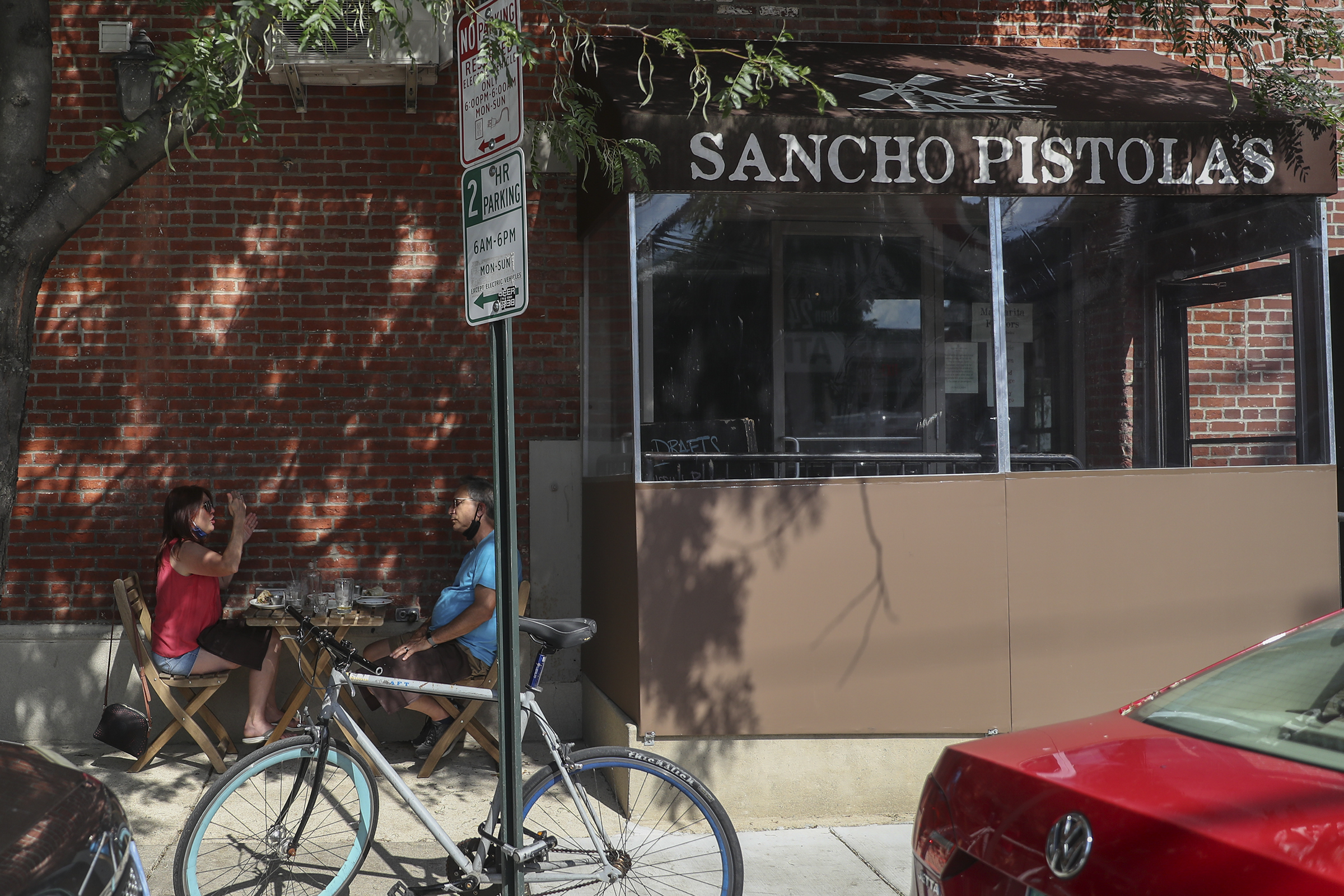
Sancho Pistola’s in Fishtown, which opened in 2014, is not affected by the Center City closing.Heather Khalifa / Staff Photographer
The closing does not affect Sancho Pistola’s on Girard Avenue in Fishtown, which opened in 2014, or Pistola’s Del Sur on East Passyunk Avenue in South Philadelphia, which opened in 2017. They are doing well, Gunn said. “They’re in no danger of going anywhere.”
In 2009, court records show, the City of Philadelphia, which owns PGW, obtained a judgment of nearly $48,000 against Jose Pistola’s. According to a 2025 court docket entry, the judgment was never satisfied. A PGW spokesperson on Friday declined to comment, saying it does not share information about individual accounts.
Gunn, saying that he did not want to blame PGW, said the interruption forced a decision that he and business partner Casey Parker had already been contemplating.
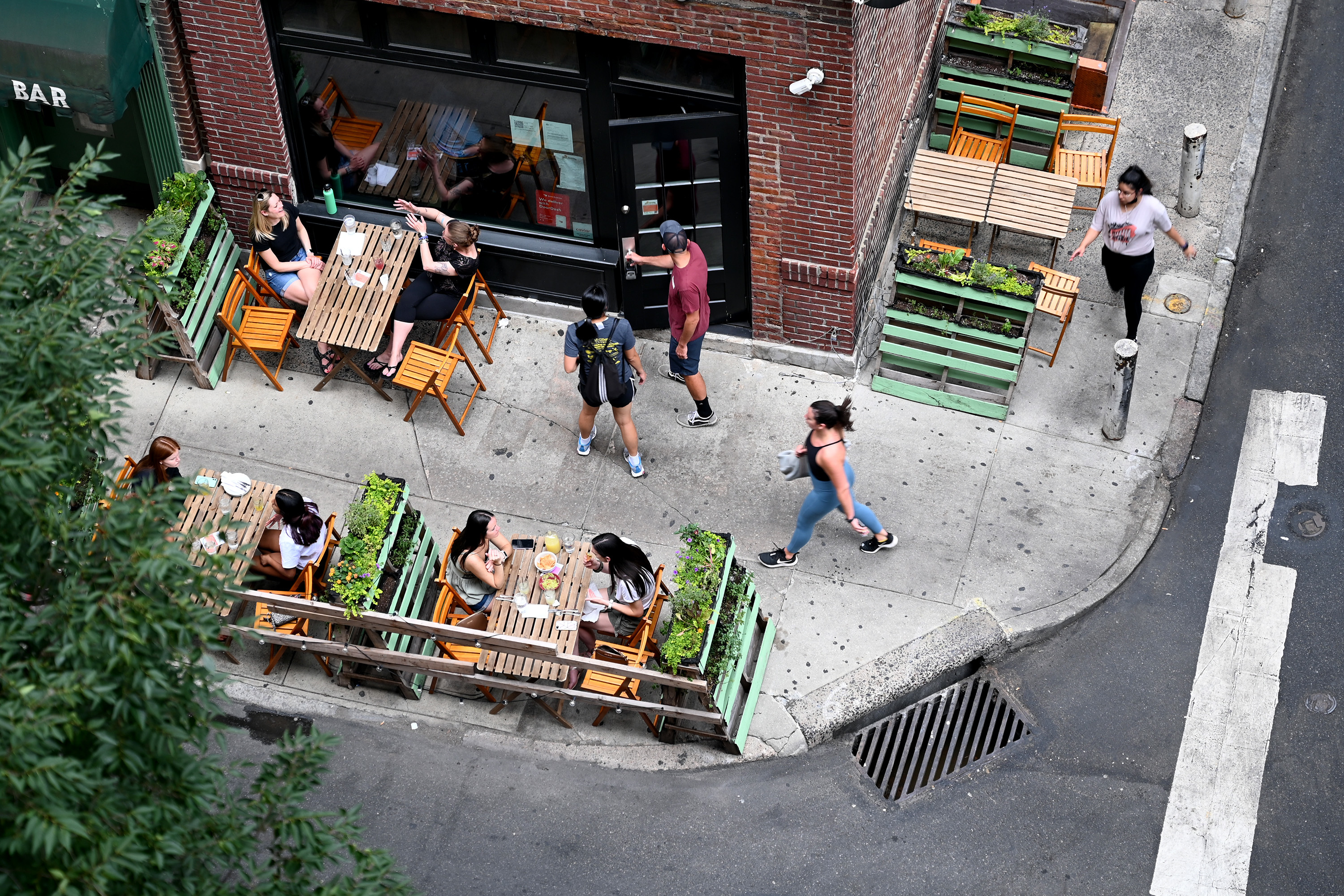
A view of Jose Pistola’s pandemic-era outdoor seating at 15th and Manning Streets in 2021. Tom Gralish / Staff Photographer
Gunn said they had about a year remaining on their lease and had been discussing a five-year renewal with their landlord. But with both Gunn and Parker now 51 and their children getting older, he said another long commitment seemed increasingly daunting. “It takes a lot of energy to play that game,” Gunn said.
The numbers were difficult, too. As other bar and restaurant owners have lamented, higher food and operating costs had squeezed the business, while the late-night trade that once helped sustain bars like Pistola’s has diminished.
“Frankly, [the bar] just never fully recovered from COVID,” Gunn said. “Coming out of COVID, the world was a different place — the price of goods, the cost of everything, and people don’t go out as much late. These younger generations are too smart to drink their life away.”
“It’s always been tight, but everything changed,” Gunn said. “And then people just don’t drink as much.”
About 25 people worked at Jose Pistola’s. Gunn said they had little warning because the owners themselves had not decided to close until the last minute. He said he and Parker are trying to place employees at their other restaurants or with friends in the industry.
“We’ll absorb what we can, obviously, in the other two places,” Gunn said. “We have a lot of friends in the business, so we’re aggressively trying to help them.”
Jose Pistola’s bar, as decorated in 2019 for its annual Jose Pistola’s Christmas Smackdown Bar Crawl.Tom Gralish / Staff Photographer
Jose Pistola’s — its name a loosely licensed Spanish rendering of Gunn’s first and last names — opened Aug. 29, 2007, taking over the longtime Copa, Too! space. Gunn and Parker were both veterans of Fergie’s Pub; Gunn had worked there for about seven years before leaving to open Pistola’s, while Parker had moved on by then.
The bar quickly established itself through its combination of craft beer, Mexican-inspired food, and an irreverent neighborhood-bar atmosphere. It became particularly associated with Philadelphia’s burgeoning craft beer movement and the early years of Philly Beer Week.
Its food grew more ambitious after Puebla-born chef Adán Trinidad joined the operation and eventually became a partner. Trinidad, whose resumé included El Vez and Alma de Cuba, brought to the menu such dishes as tortilla soup, goat sopes, carnitas-filled steamed buns, and Brussels sprout tacos that caught the attention of Inquirer critic Craig LaBan.
The partners later expanded the Pistola’s name to Fishtown and East Passyunk. Trinidad died after a fall in October 2021 at age 39.
Adán Trinidad was chef-partner until his death in an accidental fall in 2021.Rachel Delsurdo / Courtesy of Jose Pistola's
For most of Jose Pistola’s run, its next-door neighbor offered a study in contrasts.
McGlinchey’s — now on the market — was a cash-only dive bar known for low prices, dim lighting, smoke in the air, and an eclectic clientele. It endured by barely changing, while Jose Pistola’s brought craft beer and more ambitious food to an equally unpretentious neighborhood-bar sensibility.
The two businesses were nevertheless close.
“We had a great relationship with them,” Gunn said. “We loved them because of how funny they were. They were just kind of cranky, and they put up with us.”
McGlinchey’s, as seen in August 2025, was next door to Jose Pistola’s.Monica Herndon / Staff Photographer
Gunn said the McGlinchey’s closure was part of a broader change he has watched on this stretch of 15th Street between Locust and Spruce Streets.
“The whole corridor used to be more vibrant,” he said. “I think COVID wiped out a lot of those places. It changed everything for us.” The block is also home to Cellar Dog and Garage Rittenhouse.
As recently as Thursday, Gunn said, he and Parker were “still fighting to figure out a way to [save] it. But it just, I think, ran out of steam.”
The seeded roll is a staple of Sarcone’s Bakery.Michael Klein / Staff
The seeded-roll question is part of the crowded field of never-settled cheesesteak disputes: Which cheese is correct? How finely should the beef be chopped? Should the onions be diced, sliced, or chopped?
Tourists vs. locals
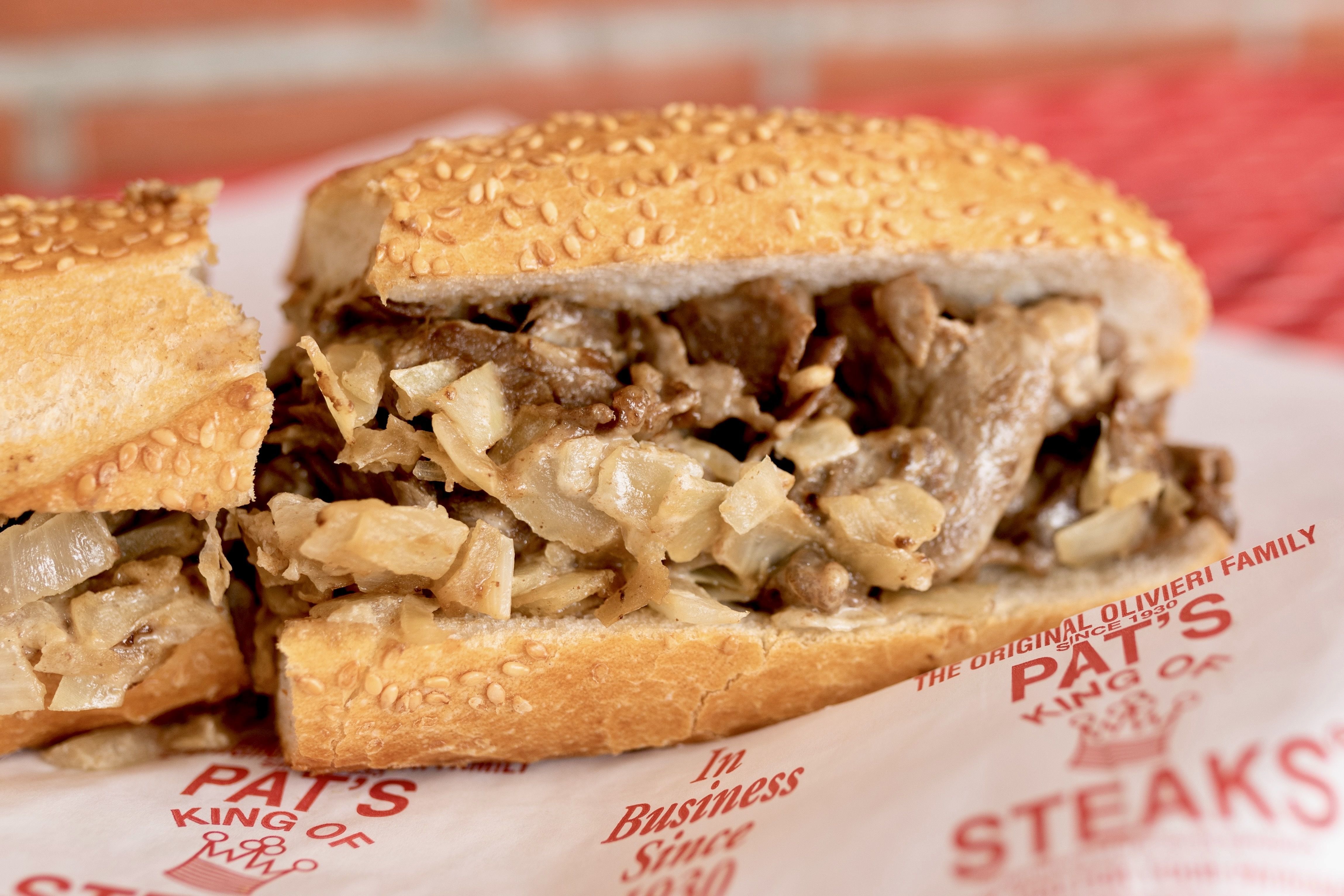
Earlier this month, Jim’s began offering seeded rolls as an option for the first time since it opened in 1976. Pat’s, which made news in February when it began offering them after 96 years of plain rolls, abandoned the experiment after only a few weeks.
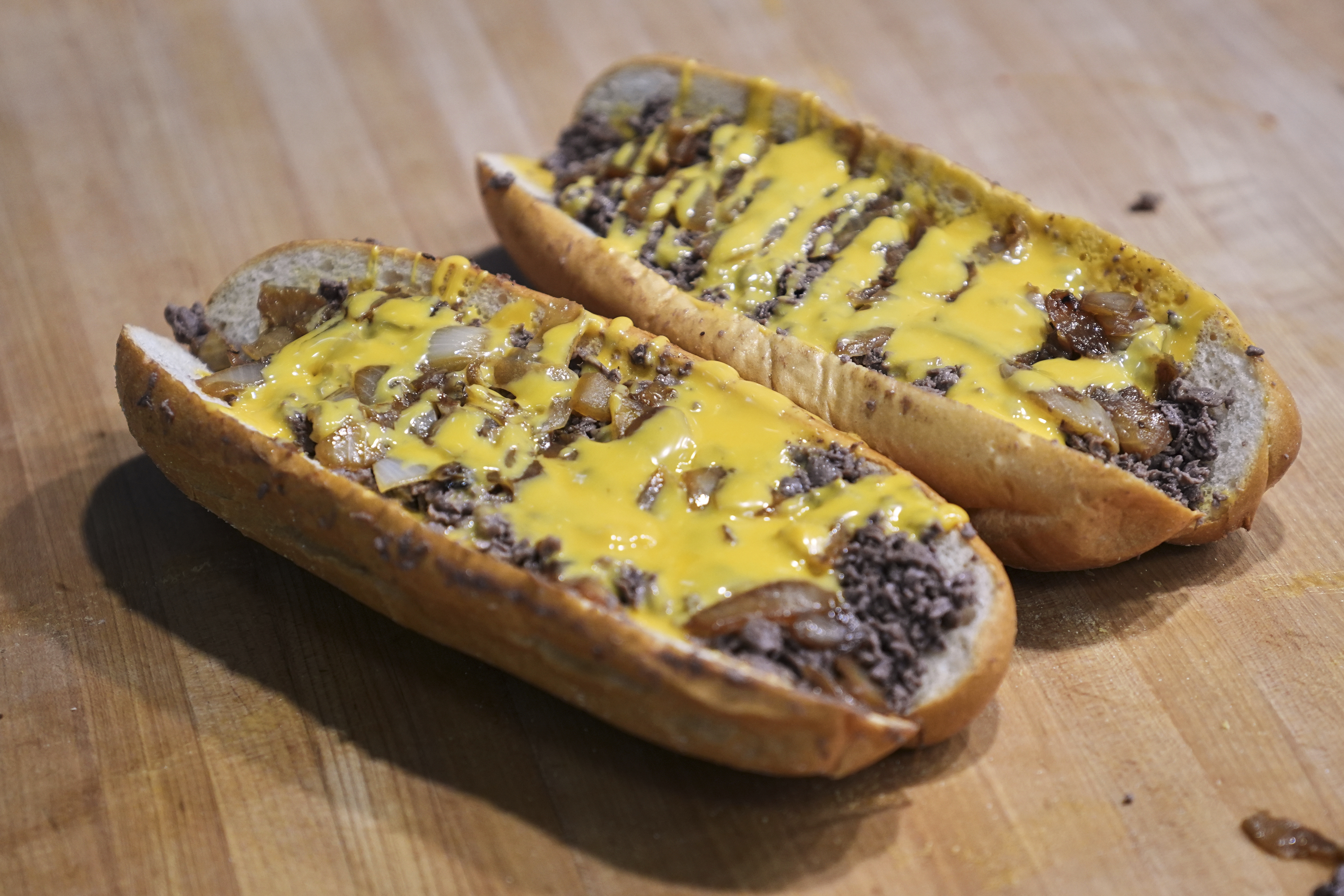
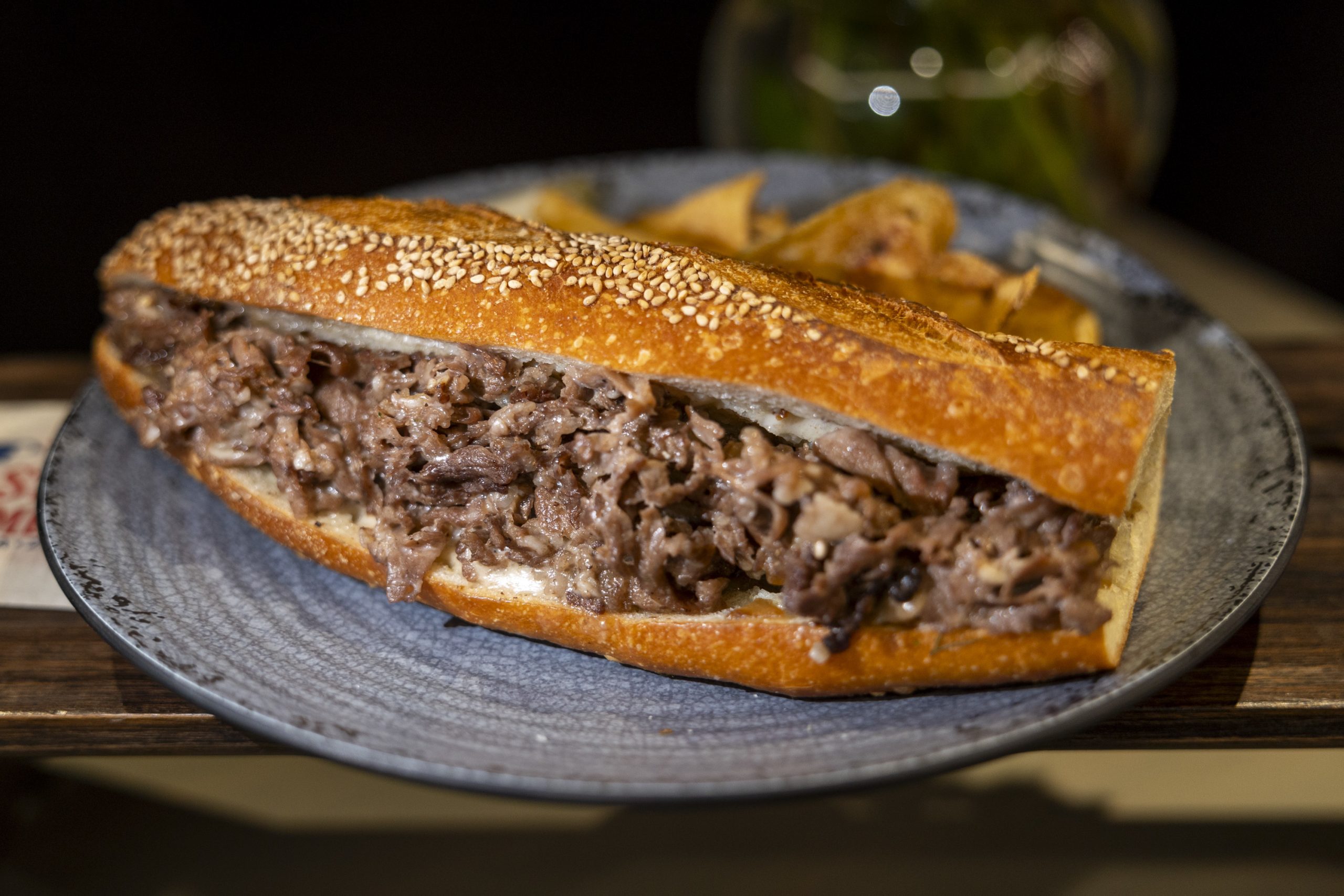
Seeded rolls tend to be crustier, and the toasted sesame adds a faintly nutty flavor. Plain rolls are generally softer and milder, putting more emphasis on the beef and cheese.
At Jim’s, owner Ken Silver said he added seeded rolls to his Liscio’s bread order to give customers a choice. “For the most part, it’s a tourist thing,” Silver said. “Our local base is almost all plain.”
Silver said Jim’s made the change “for the same reason we added chicken and Cooper Sharp [cheese]. People expect it from what they see on social media.” Overall so far, he said, seeded is outselling unseeded, 6 to 1.
At Pat’s, those expectations did not translate into sales.
A cheesesteak on an unseeded roll at Jim’s South Street.Matt Rourke
Owner Frank Olivieri began offering seeded rolls in February, shortly after the death of his father, Frank P. Olivieri, who had resisted changes. The younger Olivieri initially said the limited-time offering would likely be permanent.
It lasted a month.
“If I got in 400 [seeded rolls] a day, by the end of the day, I was throwing out 390 of them,” Olivieri said. “Not that I’m the barometer to judge everybody else by or what influencers think you should eat, [but] not everybody who comes to Pat’s Steaks wants the [seeded] rolls.”
How the old guard rolls
Pat’s recently switched its bread supplier from Aversa to Corropolese, and offers plain rolls only now.
Geno’s Steaks, across Passyunk Avenue, also has been firmly seedless since Joey Vento opened the shop in 1966. “It’s never crossed my mind,” said Geno Vento, who took over after his father’s passing in 2011. “We have our customer base, and I don’t feel that we need to change the roll [baked by Liscio]. I feel like it’s more of a trend right now. And they might put [cheesesteaks] on rye bread next. You never know.”
Geno’s concession to the new generation is Cooper Sharp, which the shop buys in sauce form and heats up — as an option.
At the old-school Dalessandro’s in Roxborough, owner Steve Kotridis said he began offering seeded rolls a few years ago “when it became a fad,” though he estimated that only 3% of customers order them. Dalessandro’s uses a softer Amoroso roll for cheesesteaks and a sturdier, seeded Aversa for hoagies, both with and without seeds.
For newer cheesesteak shops, however, the seeded roll has become all but de rigueur — a style that predates social media but has been amplified by it. Famously, Donkey’s Place in Camden has served its distinctive cheesesteaks on poppy-seeded round rolls for more than 80 years.
Louis Sarcone Jr. at the century-old Sarcone’s Bakery credits Bobby Toner of the now-closed JR’s Deli with helping establish seeded bread as a hoagie standard in the 1980s, after Toner began buying Sarcone’s seeded loaves.
Sarcone said Primo Hoagies, founded in South Philadelphia in 1992, spread the style widely as it expanded into a 120-unit chain. Sarcone supplied Primo for years before it started using parbaked rolls supplied by another bakery.
By 2024, Sarcone said, 90% of the rolls he baked were seeded, up from 75% a decade earlier.
John Bucci Jr. said John’s Roast Pork began serving cheesesteaks on seeded rolls in 1987, after its supplier, Vilotti, went out of business. Bucci’s father, who was terminally ill, left the choice of a new bakery to his son. “JR’s had started making their hoagies on seeded bread, so, I figured, why not try [it] on a cheesesteak?” Bucci said.
John’s initially bought its seeded rolls from Carangi and later switched to Sarcone’s.
Now a cheesesteak roll
The seeded roll’s rise as a defining feature of the modern Philadelphia cheesesteak came later, accelerated by Angelo’s Pizzeria.
Owner Danny DiGiampietro, whose wife is Louis Sarcone’s niece, used Sarcone’s seeded rolls when he opened the first Angelo’s in Haddonfield in 2013. After moving Angelo’s to Ninth and Fitzwater in 2019, DiGiampietro began baking his own bread.
As Angelo’s fame grew, its crusty, sesame-seeded rolls — an image widely broadcast on social media and emulated by other shops — helped define the newer-generation cheesesteak.
Del Rossi’s cheesesteak is served on a house-baked seeded roll.Tyger Williams / Staff Photographer
At Del Rossi’s, owner Nish Patel said cheesesteak orders were roughly split between plain and seeded rolls when he took over in 2020. Since he began baking his own rolls in 2024, virtually all have gone out on seeded bread.
“We barely get any requests for unseeded,” Patel said.
The contrast with Pat’s could hardly be sharper. There, Olivieri said, almost nobody wanted the seeded option.
Jim’s now finds itself somewhere in between — offering the roll that has come to signify a Philadelphia cheesesteak to many, while continuing to sell mostly plain rolls to its longtime clientele.
“People expect it from what they see on social media,” Silver said.