Tag: South Philadelphia

  • What 100,000 fans saw at the Linc: HBCU excellence is the norm

    What 100,000 fans saw at the Linc: HBCU excellence is the norm

    Loren LoRosa is the cohost of “The Breakfast Club,” a 2014 graduate of Delaware State University, and the founder of Brown Girl Grinding. Tony Allen is the president of Delaware State University, a senior fellow at the Dr. N. Joyce Payne Research Center, and a recipient of the National Urban League’s Whitney M. Young Jr. Award.

    One of us — Loren — graduated from Delaware State University in 2014, the first in her family to finish college, and now sits behind a microphone that reaches millions of people every weekday morning.

    The other — Tony — was also a first-generation college student, and has been president of Delaware State since the start of the decade.

    We are a generation apart, but we were both at the Linc on Oct. 31, and we came away believing the same thing — that what happened in South Philadelphia that night wasn’t just a football game. It was a demonstration of what historically Black colleges and universities do, staged for the one part of the country that most needs to see it.
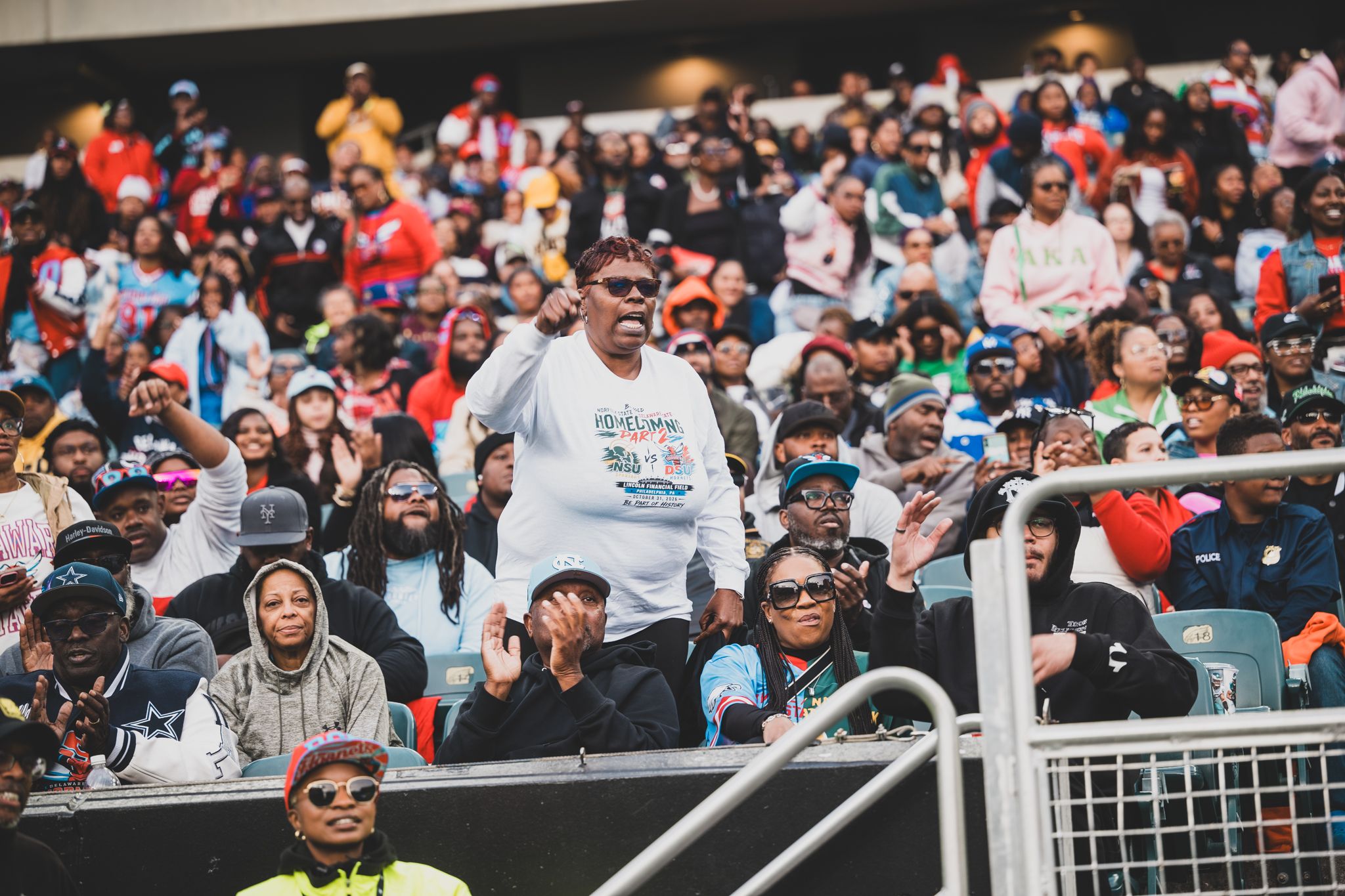
    Fans react in the stands during the Delaware State-Norfolk State game at Lincoln Financial Field on Saturday, Oct. 31. The game drew 32,500 fans and closed out the second One Philly HBCU Week. A fan’s shirt reads “Homecoming Part 2,” the name supporters gave the rematch.Michael Nicholls-Pierce

    Ask any high school junior in North Philadelphia, Camden, Chester, or Wilmington to picture an HBCU, and they will likely picture the South: Atlanta, Houston, Tallahassee.

    They may not know that the oldest HBCU in the country is 40 minutes from their house, that Lincoln University gave Philadelphia its mayor, or that the most diverse HBCU in America is an hour south of Wilmington, in Dover. The Northeast Corridor, from Washington to New York, is home to nearly a dozen HBCUs and one of the largest concentrations of Black families in the country.

    Howard and Lincoln first played each other in 1894. In 1919, they began the Thanksgiving Day series that Black Philadelphia and Black Washington simply called “the Classic,” alternating between the two cities. Then the tradition thinned.
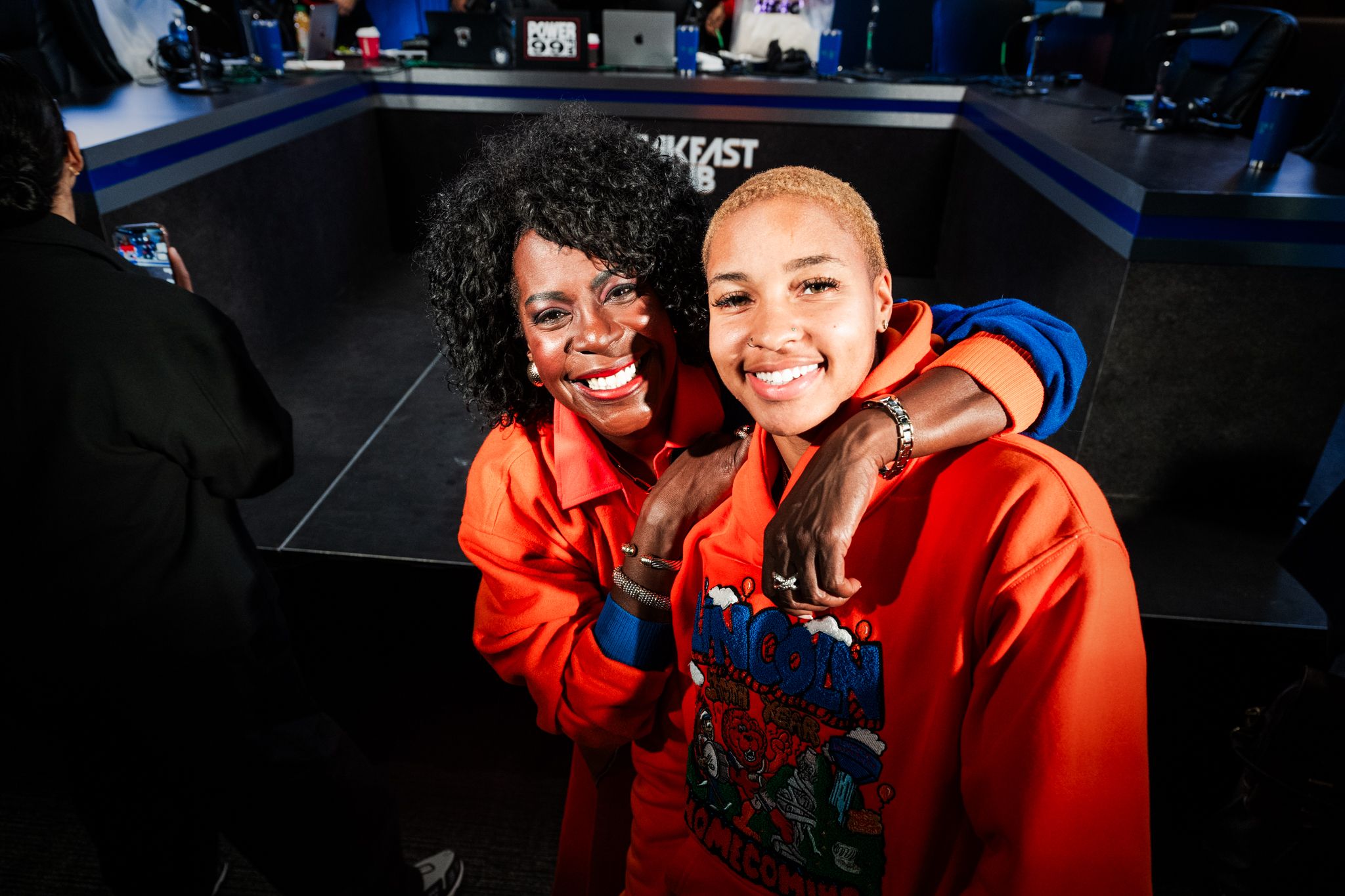
    Philadelphia Mayor Cherelle L. Parker, a Lincoln University graduate, with a Lincoln supporter at a live broadcast of “The Breakfast Club” from Lincoln Financial Field on Friday, Oct. 30.Michael Nicholls-Pierce

    Two years ago, Mayor Cherelle L. Parker, the Philadelphia Eagles, Norfolk State University, and Delaware State University brought it back.

    Across two years and three games, more than 100,000 people have come to Lincoln Financial Field to watch One Philly HBCU Week football. On a cold, wet night in October a year ago, 47,266 were there for the first meeting of Michael Vick’s Norfolk State and DeSean Jackson’s Delaware State teams. It was televised on ESPNU, and Good Morning America was in the building.

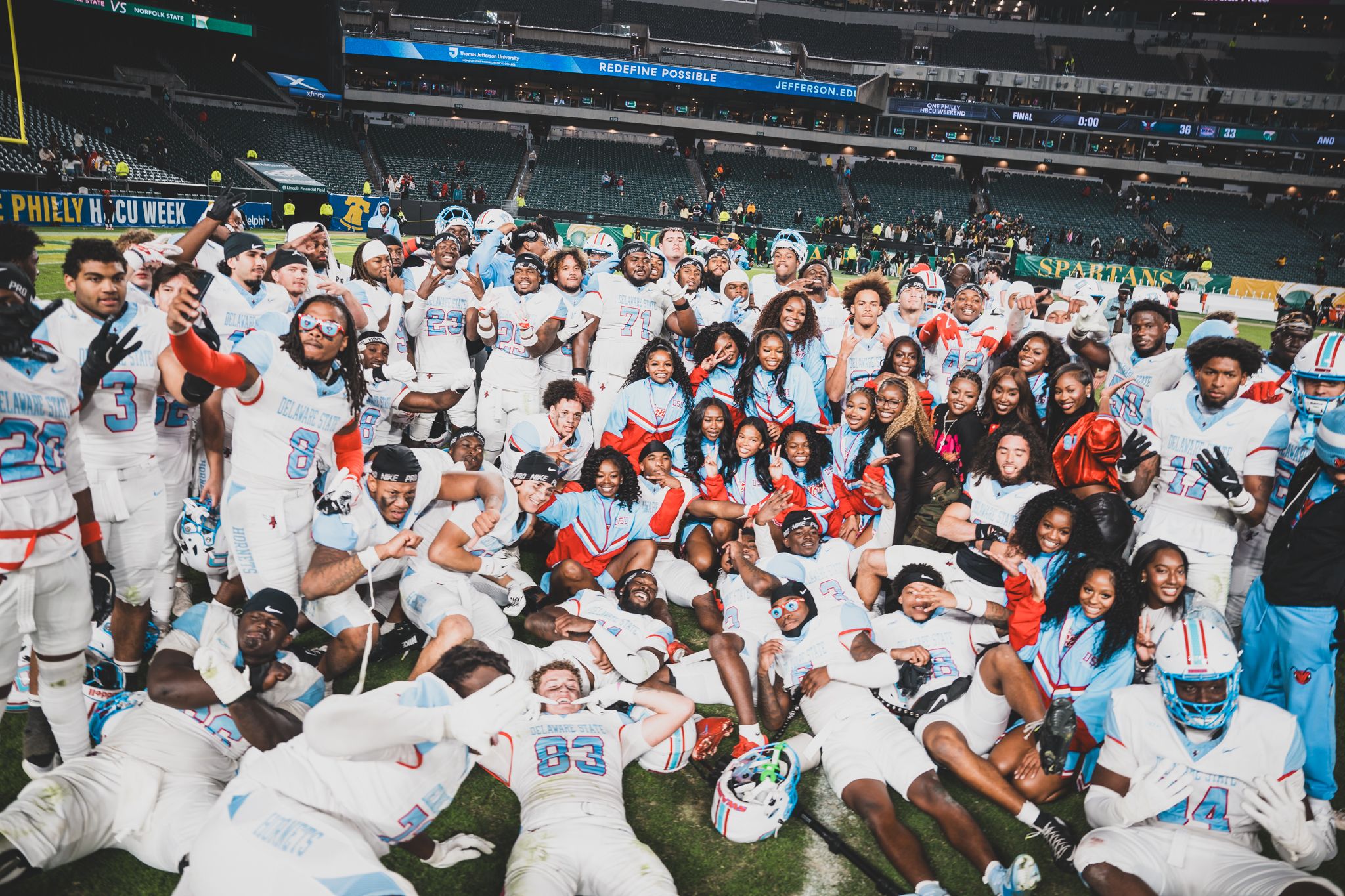
    This year, 21,000 gathered at the Linc on Friday, Oct. 30, for a matchup between Lincoln University and Virginia Union, and 32,500 on Saturday, Oct. 31, watched this year’s rematch between Norfolk’s Spartans and Delaware State’s Hornets — with the Hornets storming back from 17 points down to win the game.

    The winning quarterback, Marqui Adams, grew up in Philadelphia and went to Neumann-Goretti. Coming back to his home city, he said afterward, felt like a blessing.
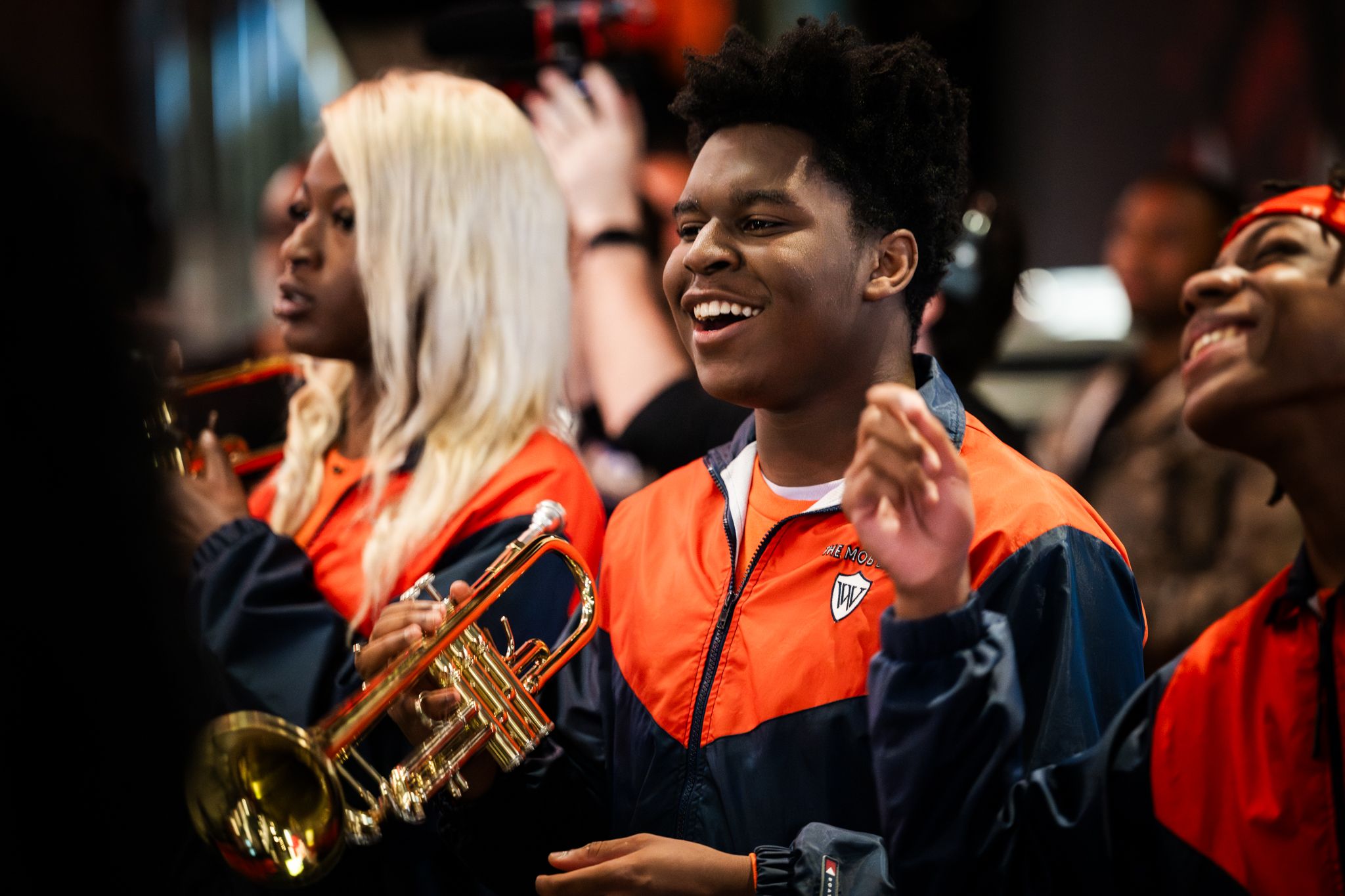
    Members of the West Philadelphia High School marching band, winners of the One Philly HBCU Week Battle of the Bands, perform during “The Breakfast Club’s” live broadcast from Lincoln Financial Field on Friday, Oct. 30.Michael Nicholls-Pierce

    Here is what the weekend did for the young people in those stands and in the region.

    It put the institutions in front of them. On Friday afternoon, before anyone kicked a ball, the Linc hosted a college and job fair where high school students met admissions officers and employers from colleges across the country, then a step show.

    It put HBCU culture on the air.

    Lincoln University cheerleaders and Asia Faith Allen, the 53rd Miss Lincoln University take part in “The Breakfast Club’s” live broadcast from Lincoln Financial Field on Friday, Oct. 30.Michael Nicholls-Pierce

    On Friday morning, The Breakfast Club, heard in more than 90 markets and streamed live on Netflix, broadcast from the stadium; for the first time in the show’s history, it has gone on the road. HBCU graduates, the presidents of the Divine Nine organizations, the mayor, the West Philadelphia High School band, Lincoln’s cheer squad, and Miss Lincoln filled four hours of national morning radio with the sound of these schools.

    The millions who listen to The Breakfast Club every morning heard a 189-year tradition of excellence that began just outside Philadelphia, at what is now Cheyney University.

    It put the evidence on the table. The Dr. N. Joyce Payne Research Center at the Thurgood Marshall College Fund reported last year that nearly 70% of public HBCU graduates reach the American middle class or above — a rate about half again higher than graduates of predominantly white institutions — and that applications to public HBCUs have risen 126% since 2004.

    This summer, the center, with Gallup, surveyed HBCU alumni from the last 15 years and found 70% thriving in their everyday lives, against 46% of Black adults nationally; 79% saying the education was worth the cost, 46% engaged at work (half again the national rate), and half holding a good job within two months of graduation.

    These are not feel-good numbers. They are return on investment, for the student and for the region that keeps them.

    And it put money and attention into a city and a corridor. More than 100,000 fans across two Octobers filled hotels, restaurants, and SEPTA cars; four universities, a city, and an NFL franchise learned to work together; and a generation of Philadelphia students now has a reason to look at Lincoln, Cheyney, Delaware State, Morgan, Howard, and the rest of the corridor’s HBCUs as their own.

    From left: “The Breakfast Club” cohost Loren LoRosa, a 2014 Delaware State University graduate, Charlamagne Tha God, Delaware State University president and first lady Tony and Tara Allen, and “The Breakfast Club” cohost Jess Hilarious at the live broadcast from Lincoln Financial Field on Friday, Oct. 30.Michael Nicholls-Pierce

    When one of us — Loren — enrolled at Delaware State, people told me I’d never get a good job. I interned at a magazine in New York, produced television, reported for TMZ, and brought a national broadcast to the Eagles’ stadium. I’m not the exception. This is normal.

    The other one of us — Tony — has spent my career watching the country treat HBCU success as a surprise. The facts say otherwise. The steady, ongoing pattern of HBCU-driven success has built much of the Black American middle class.

    That is what the weekend at the Linc was for. Not to prove HBCUs can fill a stadium. To let the Northeast Corridor’s young people see, in person and on the air, that the schools down the road from them produce exactly the lives they want. And that choosing one is not a long shot. It is normal.
  • ‘ICE OUT’ coalition says arrests at the Philly airport must stop. The agency says it’s going full speed ahead.

    ‘ICE OUT’ coalition says arrests at the Philly airport must stop. The agency says it’s going full speed ahead.

    ICE says it is going full speed ahead on immigration arrests, including at Philadelphia International Airport.

    Airport officials say there is nothing they can do about it.

    And the ICE OUT of PHL Airport Coalition, composed of roughly 60 advocacy, labor, and political leaders, said loudly on Thursday that the situation must change.

    The group formally announced its intention to try to stop Immigration and Customs Enforcement from arresting immigrant travelers in Philadelphia during a late-afternoon news conference, with people gathered at Terminal E Departures.

    They say that what is beginning as a public-awareness campaign could escalate into exerting financial pressure on companies that do business at the airport.

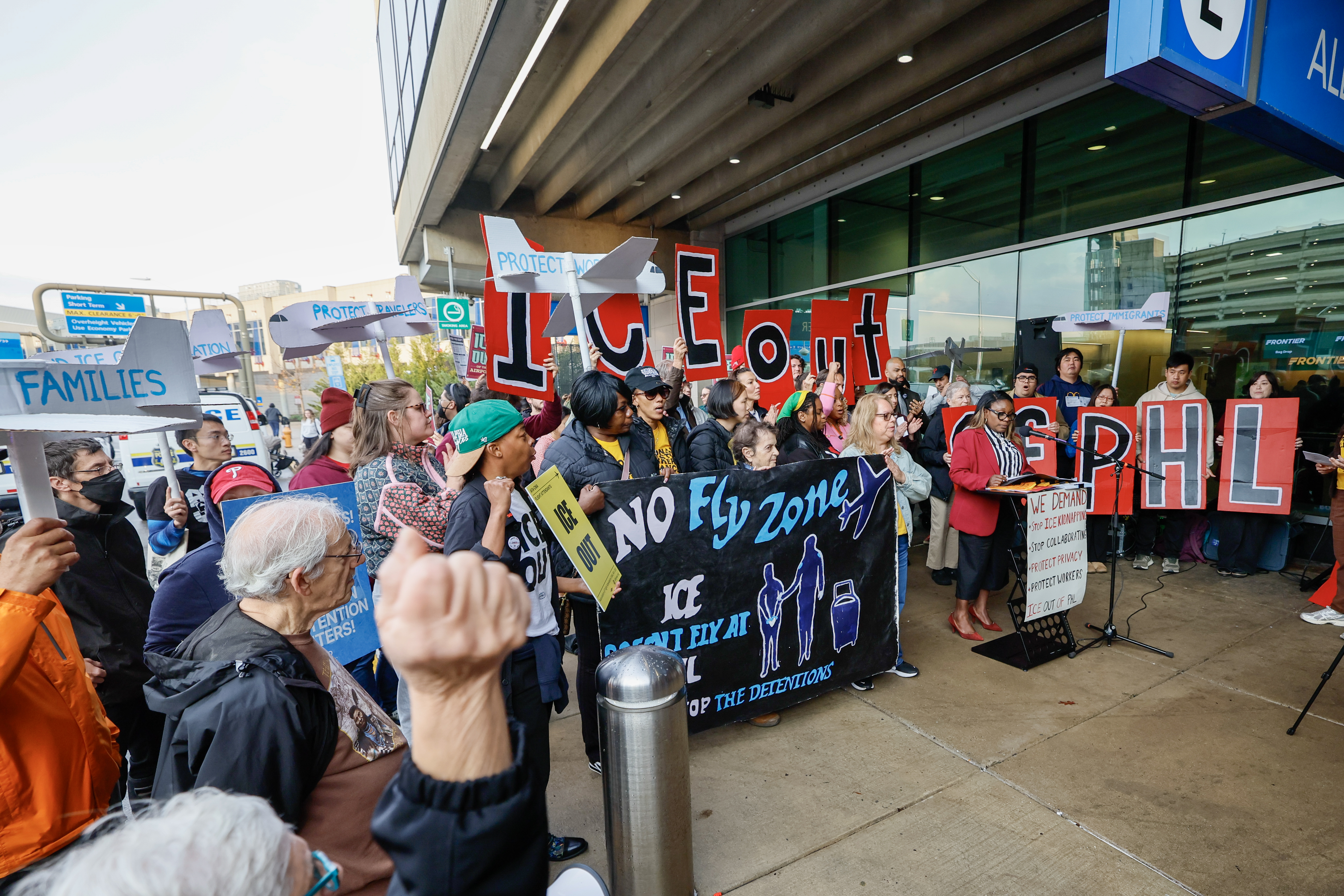
    About five dozen protesters gathered Thursday afternoon under the watchful eye of a phalanx of Philadelphia police, holding up a big banner that said: “No Fly Zone. ICE doesn’t fly at PHL. Stop the detentions.”

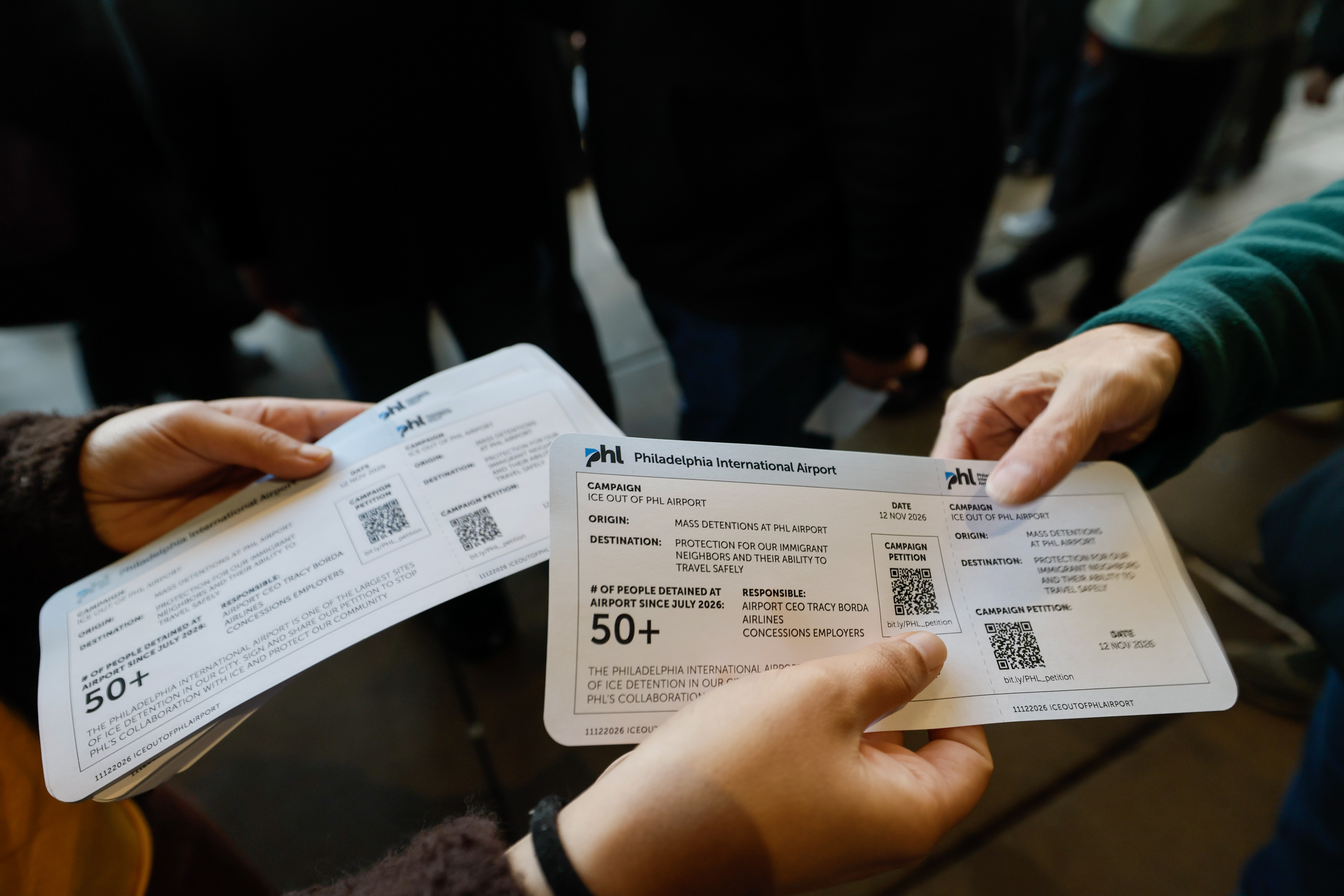
    They handed out imitation paper boarding passes that listed the destination as “Protecting our immigrant neighbors.”

    Others held cardboard airplanes that were marked “End ICE collaboration.” They chanted, “ICE Out!,” with the return call of “PHL!”

    Some airport workers stepped outside to see what the commotion was about.

    “We stand in solidarity with you,” City Council President Kenyatta Johnson told the crowd, calling the heavy police presence “overkill” and criticizing ICE for “occupying the people’s airport.”

    Councilmember Rue Landau said Philadelphia is a city of immigrants, one “that believes everyone deserves to live with dignity, safety, and respect.”

    She said the words on the airport sign must ring true: “Welcome to Philadelphia.”

    Vivian Chang, executive director of Asian Americans United, demanded that airport leadership meet with the group before Thanksgiving, describing the day as a particularly risky time for immigrant travelers.

    People hand out flyers that look similar to an airfare ticket at the new ICE OUT of PHL Airport Coalition rally on Thursday.Elizabeth Robertson / Staff Photographer

    At least 50 immigrant travelers, young and old, mostly female, some of them parents of young children, have been arrested at the airport since July, according to the coalition.

    Organizers believe the Southwest Philadelphia airport has become one of the riskiest places in the region for noncitizens, where work authorizations, pending petitions for relief, and other types of immigration permissions have proven no barrier against arrest.

    Support for the campaign has continued to expand during the last week, now topping more than 60 organizations and political leaders.

    It includes the Association of Flight Attendants-CWA, 32BJ SEIU, Philadelphia Council AFL-CIO, UNITE HERE Local 274, and the Pennsylvania chapter of the National Domestic Workers Alliance. The campaign counts six City Council members among its supporters — Johnson, Landau, Kendra Brooks, Nicolas O’Rourke, Nina Ahmad, and Jamie Gauthier — along with Pennsylvania State Rep. Rick Krajewski and Sen. Nikil Saval, both Philadelphia Democrats.

    The campaign comes as a response to President Donald Trump’s push for mass deportations ― including the targeting of immigrant travelers at airports around the country.

    Immigrants who long thought they were safe, and who had previously been allowed to fly, now are at risk, in some cases finding themselves suddenly surrounded by agents and shipped to far-off detention centers in places like New Mexico.

    The airport is owned and operated by the city, which recently passed extensive “ICE Out” legislation to try to limit agency activities within Philadelphia.

    Sam Scavuzzo, chief of staff for the city law department, said in an earlier statement, however, that “federal law enforcement access to particular areas of the airport is governed by federal law.”

    The number of those arrested could be higher than reported, as the known cases represent only people who reached out to lawyers or community organizations. Immigrant travelers without those connections may simply have disappeared into detention.

    When asked about the airport campaign last week, a spokesperson for the Department of Homeland Security said: “Our message remains: ICE is NOT slowing down. Enforcing federal immigration law is the responsibility of federal law enforcement. This administration does not ignore the rule of law and DHS will not pick and choose which laws we enforce.”

    DHS said it had “reversed the horrendous Biden-era policy that allowed aliens in our country illegally to jet around our country. Under President Trump, DHS will no longer tolerate this. This administration is working diligently to ensure that aliens in our country illegally can no longer fly unless it is out of our country to self-deport.”

    Philadelphia airport officials said earlier that the facility “is subject to federal regulation, and federal agents have broad access to airport property,” including pre- and post-security areas in the terminals, the customs offices and screening area, the airfield, and public spaces like parking ramps and lots.

    Airport officials cannot interfere with law enforcement operations by federal agencies, including ICE, officials said in a statement. They do not receive advance notice of immigration-related actions and cannot “confirm cases, incidents, or speculation about immigration enforcement activities.”

    The coalition is calling for airport leadership to ban ICE from entering airport property without a judicial warrant, to prohibit airport employees from assisting ICE, and to bar ICE from using city-owned airport spaces to stage arrests.

    The groups want the airport to publish regular public reports documenting ICE activity, including the number of people detained and the airlines they intended to fly.

    They also want airlines that use the Philadelphia airport to bar ICE agents from going to flight gates, and to not share passenger information with the agency. They are asking airport concession companies to not discipline workers when they miss work due to fear of ICE activity.

  • City Council wants to make it easier to build apartments around most South Philly subway stations

    City Council wants to make it easier to build apartments around most South Philly subway stations

    Philadelphia City Council introduced legislation Thursday to create a corridor of zoning incentives along South Broad Street meant to encourage multifamily housing development along SEPTA’s Broad Street Line.

    The legislation would opt five subway stations into what Mayor Cherelle L. Parker has dubbed the “transit-oriented communities” zoning overlay, which boosts the number of units that can be built on areas zoned for multifamily and mixed-use development within a quarter mile of transit stations.

    The legislation stretches the incentive from Locust Street in Center City to Pollock Street in South Philadelphia, from Lombard-South Station to Oregon Station.

    It would include the bus stop at Broad and Christian Streets in Center City. It could run from 17th Street to the west to 11th Street to the east.

    “I support transit-oriented development along South Broad Street,” said Council President Kenyatta Johnson, who introduced the legislation with Councilmember Mark Squilla. “Hopefully, it’ll bring some level of affordable and also market-rate development to those immediate areas.”

    Squilla represents the eastern side of Broad Street. Johnson represents the western side.

    The bill builds on a Parker initiative earlier in the year that expanded an existing law that grants development incentives to most non-single-family properties around transit stations. That law increased a previous radius of 500 feet around a transit station to a quarter of a mile.

    Transit advocates hailed the legislation.

    “This is a big opportunity to build more housing where people can actually use transit to get to work and to opportunities,” said Jay Arzu, a member of the urbanist group 5th Square Advocacy. “It sets the precedent for building more housing and more economic development adjacent to stations.”

    Unlike in other American cities, Philadelphia’s law does not apply to all transit stations. Instead, district City Council members have to opt their individual stations into the law.

    That left a mixed pattern of adoption, with Councilmember Jamie Gauthier opting all the Market-Frankford Line stations in her district into the program long ago, while none on the Broad Street Line are included.

    Johnson and Squilla’s proposal would finally change that.

    “Both district Council offices have been in contact regarding station-area development impacts,” reads a memo obtained by The Inquirer from the Planning Commission about the legislation. “They have expressed intention to consult local civic groups.”

    City Council President Kenyatta Johnson (left) and Councilmember Mark Squilla (right) with Mayor Cherelle L. Parker in 2024.Tom Gralish / Staff Photographer

    There could be some pushback from residents who live along South Broad Street, as was seen in a recent small apartment proposal for a surface parking lot in the Council president’s district.

    But in that case, Johnson listened to organized community groups, who negotiated with the developer for concessions.

    Squilla says he expects a robust debate on the legislation as neighborhood groups weigh in.

    “Once you get into the more residential neighborhood, it’ll be a little more challenging because the area is so big now,” he said. “You might get some more pushback as this moves forward.”

    Changes at Snyder Station

    If the legislation passes City Council, the effects of the changes could be relatively limited around some of the stations. The quarter mile around Lombard South is already densely built, and there are few developable lots.

    Much of the land around Oregon Station is either zoned for single-family residential or covers a public park, neither of which would be eligible for density bonuses.

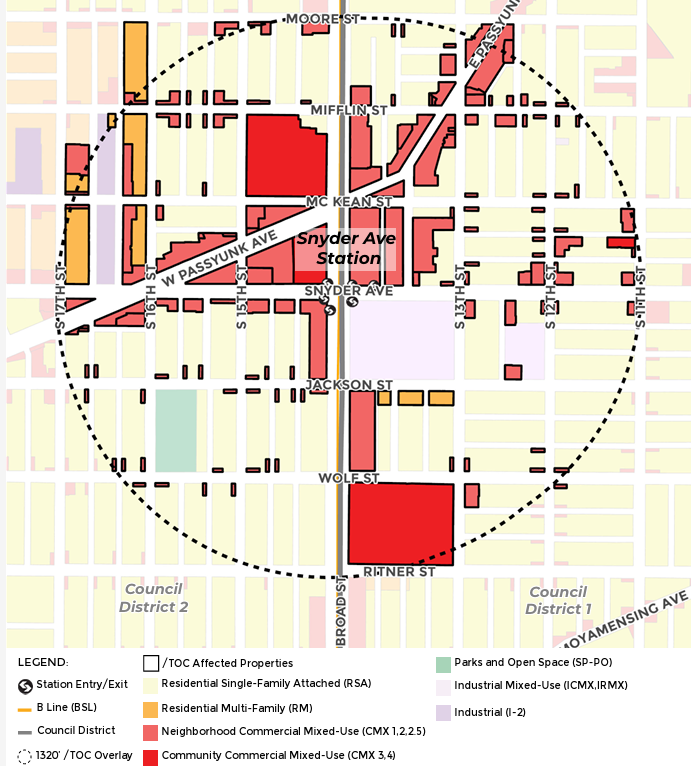
    But Snyder Station, which has struggled with vagrancy and drug dealing since the pandemic, could get a significant boost, transit advocates say.

    “Snyder Station has seen better days,” Arzu said. “The neighborhoods surrounding it could benefit from more density there, could benefit from more eyes on the street.”

    A screen shot of the Planning Commission’s analysis of which properties — those coded red or pink — would see the greatest development boosts from the new law. All the yellow coded areas are rowhouse blocks that would be unaffected.Philadelphia Planning Commission

    Johnson said the intersection of Broad Street and Snyder Avenue could use more development, and more residents.

    “With this particular piece of legislation, hopefully, people will say, ‘Let me take a look at what we can build up and build capacity in that area, and add more foot traffic,’” Johnson said. “Hopefully it attracts more businesses.”

    There also are a number of large surface parking lots and vacant lots nearby, including the property that used to host the Melrose Diner. Some one-story, low-occupancy retail buildings could be replaced with larger mixed-use structures.

    “For the most part, the South Broad stations, there’s not a ton of areas that are going to see major changes. That’s one of the reasons why I think that this is moving so fast,” Arzu said. “Snyder is the outlier.”

    What comes next?

    Arzu sees South Broad Street as a test case. Johnson signaled earlier this year that he was interested in such a move, and Squilla has long been seen as open to the idea.

    With the political will in place and fewer opportunities for big development on the corridor to draw opposition from neighborhood groups, the addition of these stations should be a relatively easy lift.

    “It is important about both the Council president and Councilman Squilla signing on to this. It shows that they’re willing to put their money where their mouth is and open the door to other parts of the city joining,” Arzu said.

    The bigger opportunities are on North Broad Street, which has a lot more vacant land and more areas with multifamily zoning in place.

    But Councilmember Jeffery Young, a frequent critic of new development, has sought to block apartment development on North Broad Street around the former Hahnemann University Hospital.
    He has not expressed interest in adopting the mayor’s new transit-oriented development overlay in his district.

    “The goal here is to get those North Broad stations because they would be the most impacted by the … legislation,” Arzu said. “North Broad is really the next step.”

  • Long-awaited pedestrian swing bridge across Schuylkill is officially open. Here’s what you need to know.

    Long-awaited pedestrian swing bridge across Schuylkill is officially open. Here’s what you need to know.

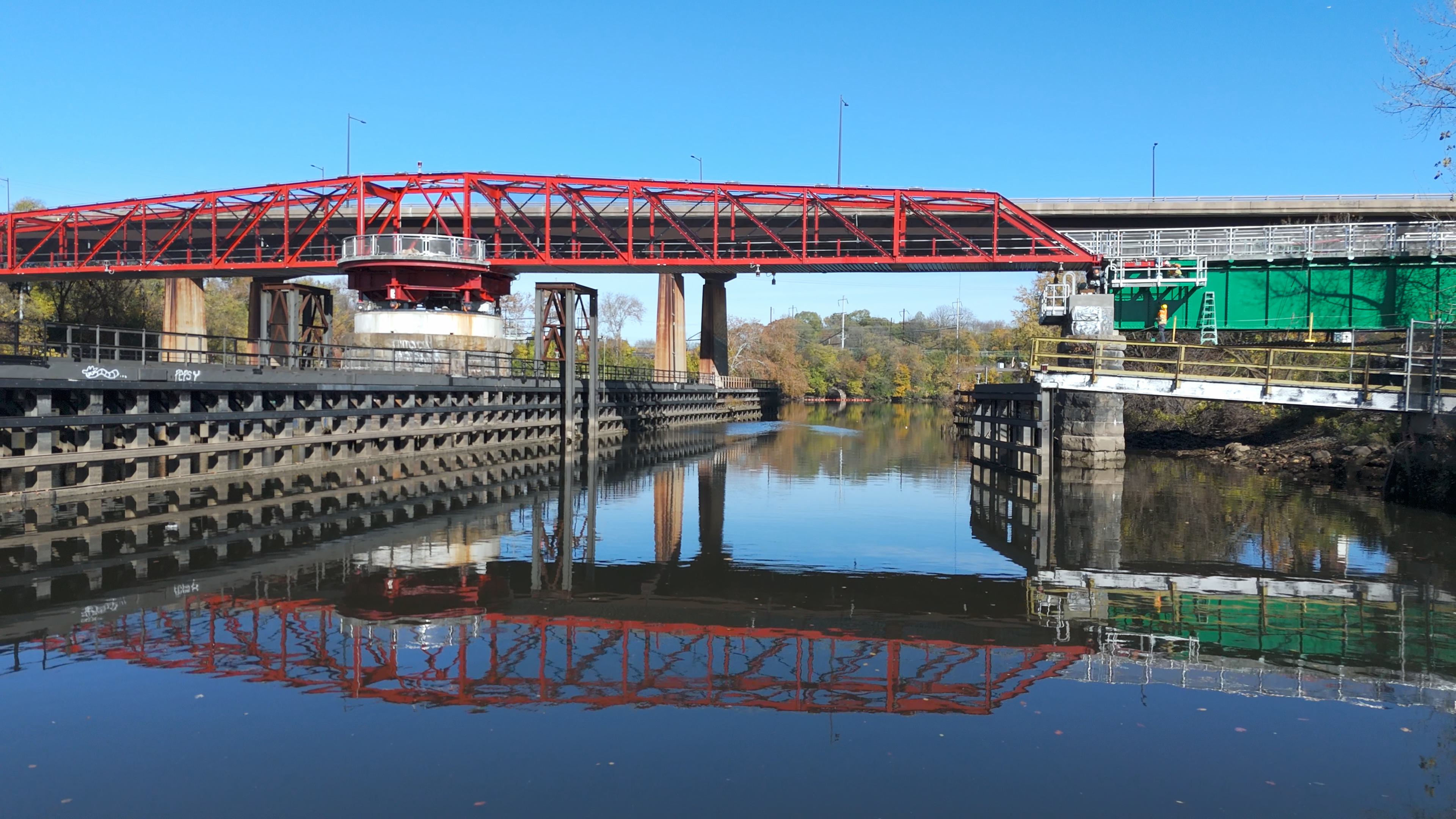
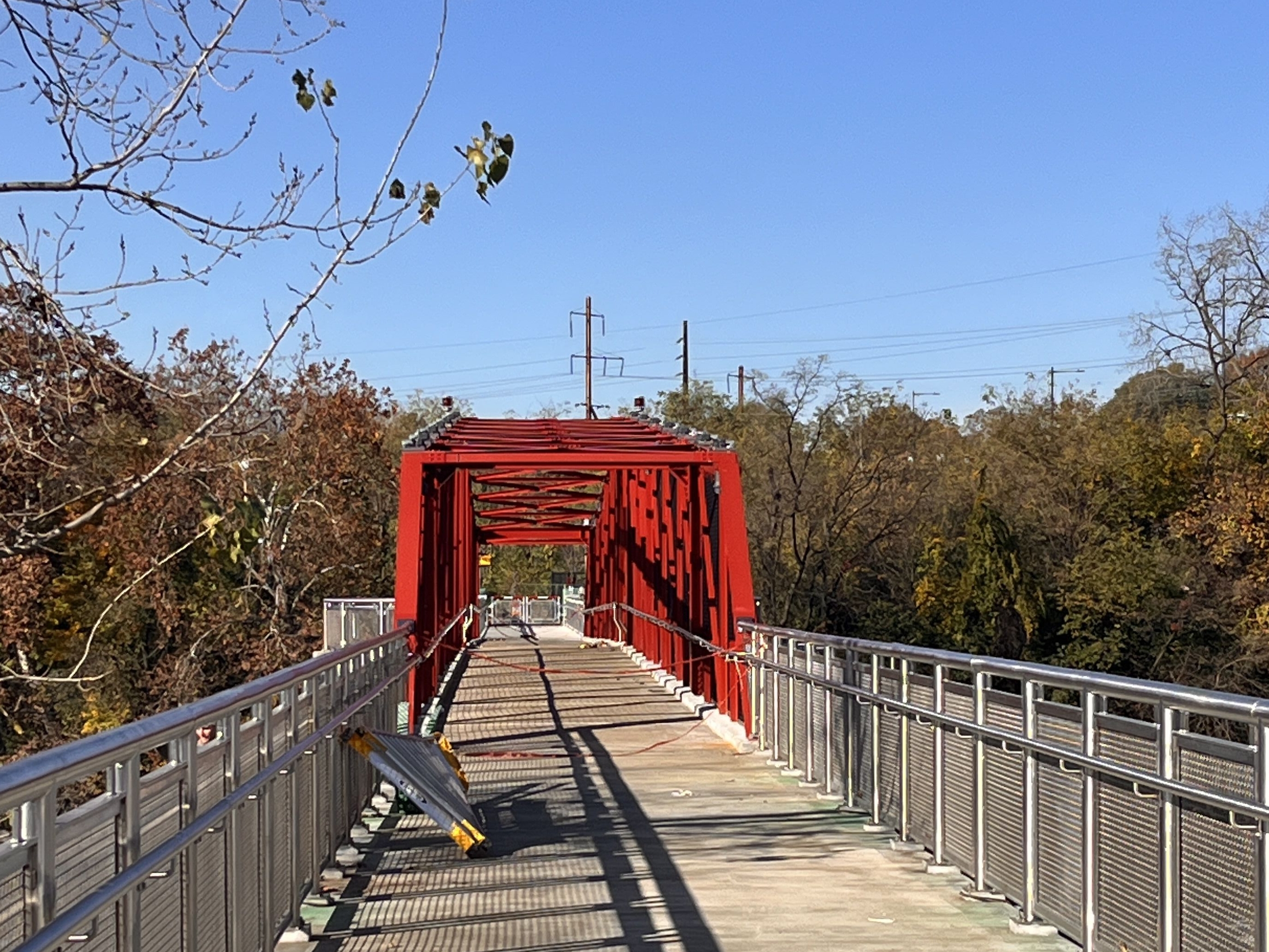
    A red steel bridge swung over the Schuylkill in one of its final tests before opening to the public.

    Its 225-foot span and 60,000 pounds of mechanical drive equipment pivoted into place with precision, joining the east and west sides of the river.

    “It is kind of like a Swiss watch,” Tyler Barile, assistant chief construction engineer for the Philadelphia Streets Department, observed during a test of the new bridge Wednesday. “All those pieces have come from all over the country to fit together with tolerances to thousandths of an inch.”

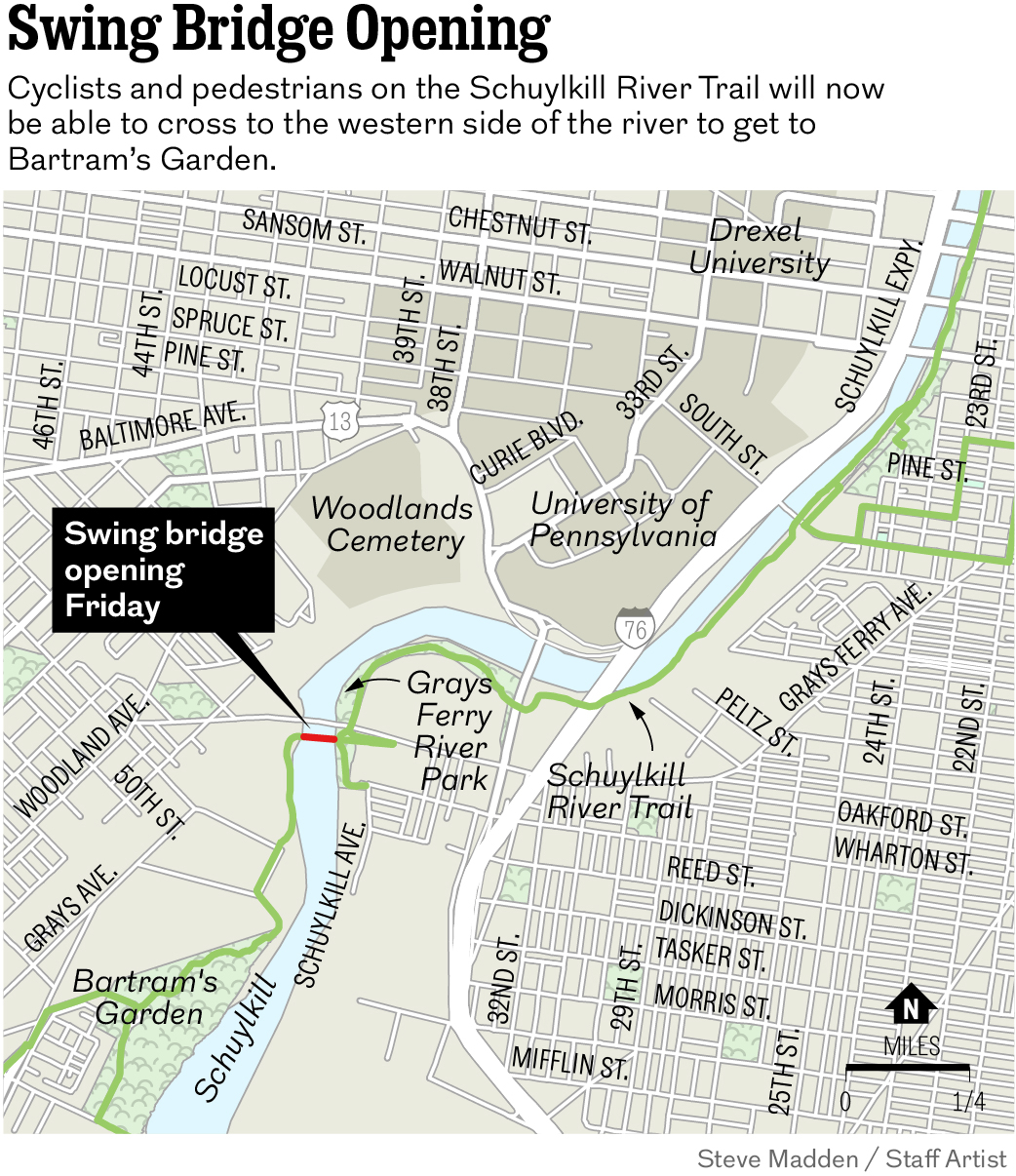
    The $28 million bridge officially opens Friday to thousands of runners, cyclists, and walkers using the Schuylkill River Trail. They will be able to cross unimpeded from Center City through South Philadelphia to Grays Ferry. They will come out just above Bartram’s Garden.
    Officials call it a major engineering achievement for the Schuylkill River Trail in Philadelphia.

    Map of a new swing bridge opening Friday connecting the east and west sides of the Schuylkill River TrailSteve Madden

    Connecting historic landmarks

    The bridge was built through a partnership between the nonprofit Schuylkill River Development Corp. (SRDC) and the city. SRDC works with the city on the Schuylkill corridor from the Fairmount Dam to the Delaware River, branded as Schuylkill Banks, which is part of the much larger Schuylkill River Trail.

    “The bridge fills an important gap that connects not just the east and west river banks,” said Heather Saeger, interim CEO of SRDC, “but it also connects Bartram’s Garden to Fairmount Waterworks, both National Historic Landmarks.”

    The crossing links approximately 1.5 miles of trail to the south with three miles to the north, creating about 4.7 continuous miles along Schuylkill Banks with the bridge included.

    Beyond Schuylkill Banks, the opening extends unbroken riverfront trail travel to over seven miles north to Ridge Avenue in Manayunk, where plans are underway for a connector to the rest of the Schuylkill River Trail that now extends to Reading.

    Saeger emphasized that adding the swing bridge alongside the Schuylkill Banks boardwalk and cable-stayed bridge that opened in 2025 is “hugely important for completing that vision, building momentum for future trail sections.”

    Past trail expansions have dramatically accelerated use. Average weekly trips by users on Schuylkill Banks grew from 8,000 during its 2000 opening to 37,000 now, at Walnut Street, after the cable-stayed bridge opened, Saeger said.

    In fact, Schuylkill Banks is by far the most heavily used trail segment in the region where trail counters are installed, according to data from the Delaware Valley Regional Planning Commission.

    In the year to date, counters have logged 431,159 cyclist and 1.4 million pedestrian trips on the segment.

    The new crossing also serves as a critical stepping stone for future southern extensions toward Passyunk Avenue and, ultimately, Fort Mifflin. It unlocks a dedicated commuter route between Southwest and South Philadelphia.

    The bridge will remain in place across the river for trail users most of the time, swinging open only occasionally to let marine traffic pass. The city will get notice far in advance through the U.S. Coast Guard and can schedule the closing of the trail.

    In all, it takes about three minutes from start to finish for the gates on the pedestrian walkway to close and the bridge to open or close.

    A view from the top of Philadelphia’s new $28 million swing bridge. The ladder was being used by a worker performing last minute work.Frank Kummer

    Why a swing bridge?

    The idea for using a swing bridge to cross the Schuylkill dates to 2009, said Chariss McAfee of Charles Loomis Chariss McAfee Architects. The firm volunteered with the nonprofit Community Design Collaborative’s Infill Philadelphia initiative, which explores development opportunities through design.

    At the time, the group was studying connections between Wharton Street in South Philadelphia and Bartram’s Garden.

    Separately, the SRDC and city officials were considering building a pedestrian bridge over the existing swing bridge at the same location. That bridge was adjacent to the traditional Grays Ferry Avenue bridge, which has a pedestrian walkway but is not connected to the trail on both sides.

    McAfee and the Infill Philadelphia group believed that building over the infrastructure of the old swing bridge would require a new bridge to be very high with steep ramps.

    The swing bridge was built in 1902. Conrail acquired it in 1976 and removed it from service in 1984.

    The Infill Philadelphia team proposed rehabilitating it.

    “We suggested that they really consider reusing the swing bridge,” McAfee said, “because it would put the people crossing it, the bikers and the pedestrians, closer to the water.”

    That concept drew support.

    “It’s going to be wonderful to actually cross and come over on the other side pretty much at the bank level,” McAfee said this week, “and not have to come down another massive ramp.”

    Philadelphia’s new $28 million swing bridge spanning the east and west sides of the Schuylkill, Wednesday, Nov. 11, 2026, in Philadelphia. It officially opens to users of the Schuylkill River Trail on Friday, Nov. 13.Gabriel Coffey / Staff

    Built in Coatesville

    The city adopted the concept of a bank-level swing bridge, but structural realities required building a new truss atop the historic stone piers.

    It took about eight years from planning and funding through to construction and installation. The bulk of the funding came in 2015 through a federal grant.

    The swing bridge work involved construction that had to navigate around I-76, active CSX rail yards and tracks, and private commercial landowners along the riverfront. And it included building over a tidal riverfront.

    Removing the old bridge and assembling a new bridge posed significant challenges, said Barile, the city engineer. The old truss was frozen open, and removing it risked destabilizing it. Because it rested on a pivot, workers had to cut a little off one side, then a little off the other side repeatedly to keep it balanced.

    The new bridge had to be built and assembled to rest on the original stone-and-masonry piers and abutments already anchored in bedrock.

    A center pivot balances the new bridge with so little friction that workers were able to spin it by hand during assembly.

    Motors came from California, electrical controls from Chicago, various machinery from Miami, and gearboxes from Niagara Falls. The main truss was fabricated in Coatesville.

    South Jersey-based AP Construction is the general contractor, and Philly-based Urban Engineers provides construction management oversight.

    “You’re not just ordering a truss online, and it gets you a two-day shipping,” Barile said.

  • A very, very slow and final bon voyage for the SS United States along the Florida Panhandle

    A very, very slow and final bon voyage for the SS United States along the Florida Panhandle

    DESTIN, Fla. — The SS United States broke speed records crossing the Atlantic in its heyday. It did not break any records for what ended up being a very, very slow sink to the bottom of the Florida Panhandle.

    It was a spectacle of a retirement full of 11th-hour dramas, including lawsuits and a longer-than-expected sinking process, worthy of a vessel used to a life of celebrity and notoriety.

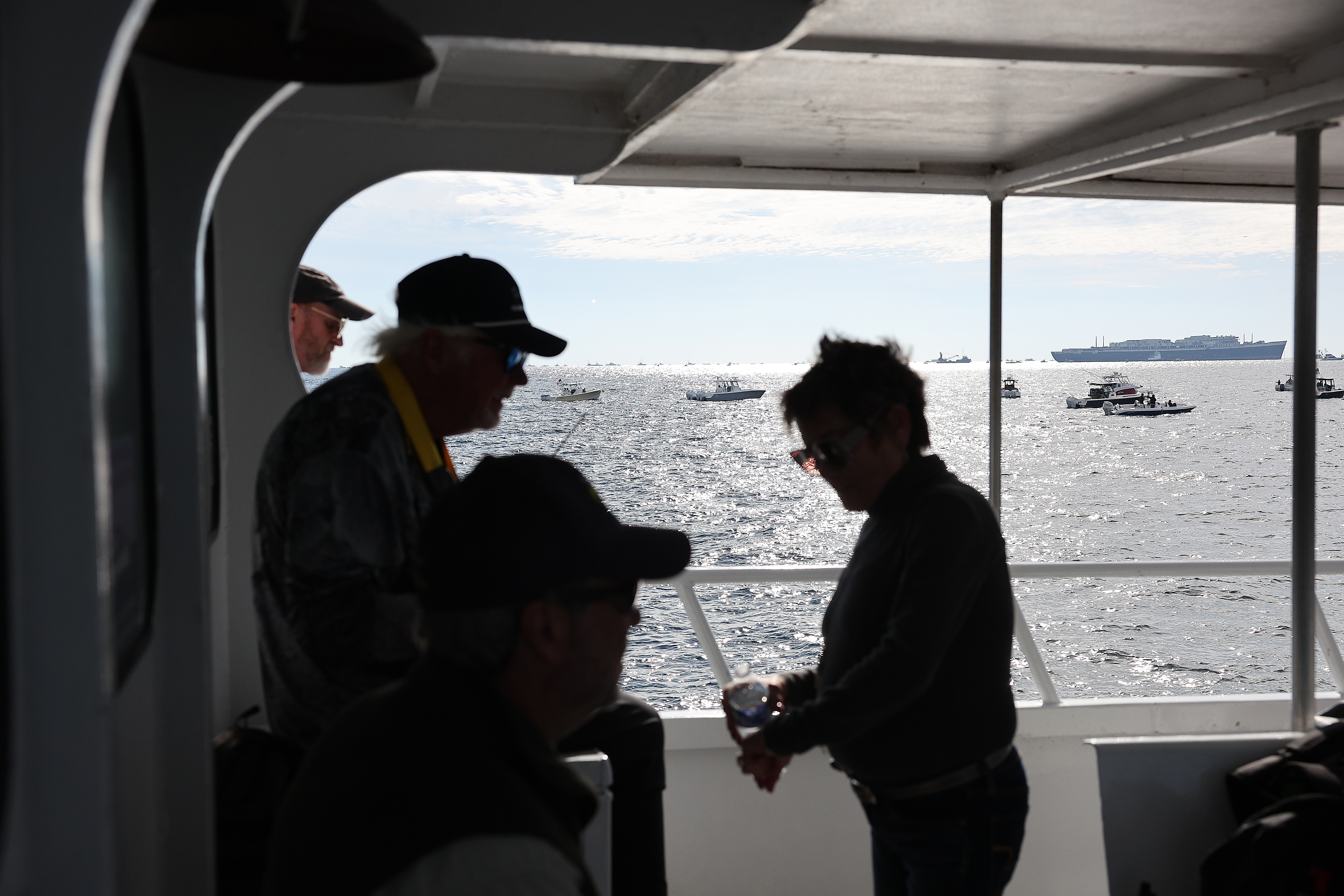
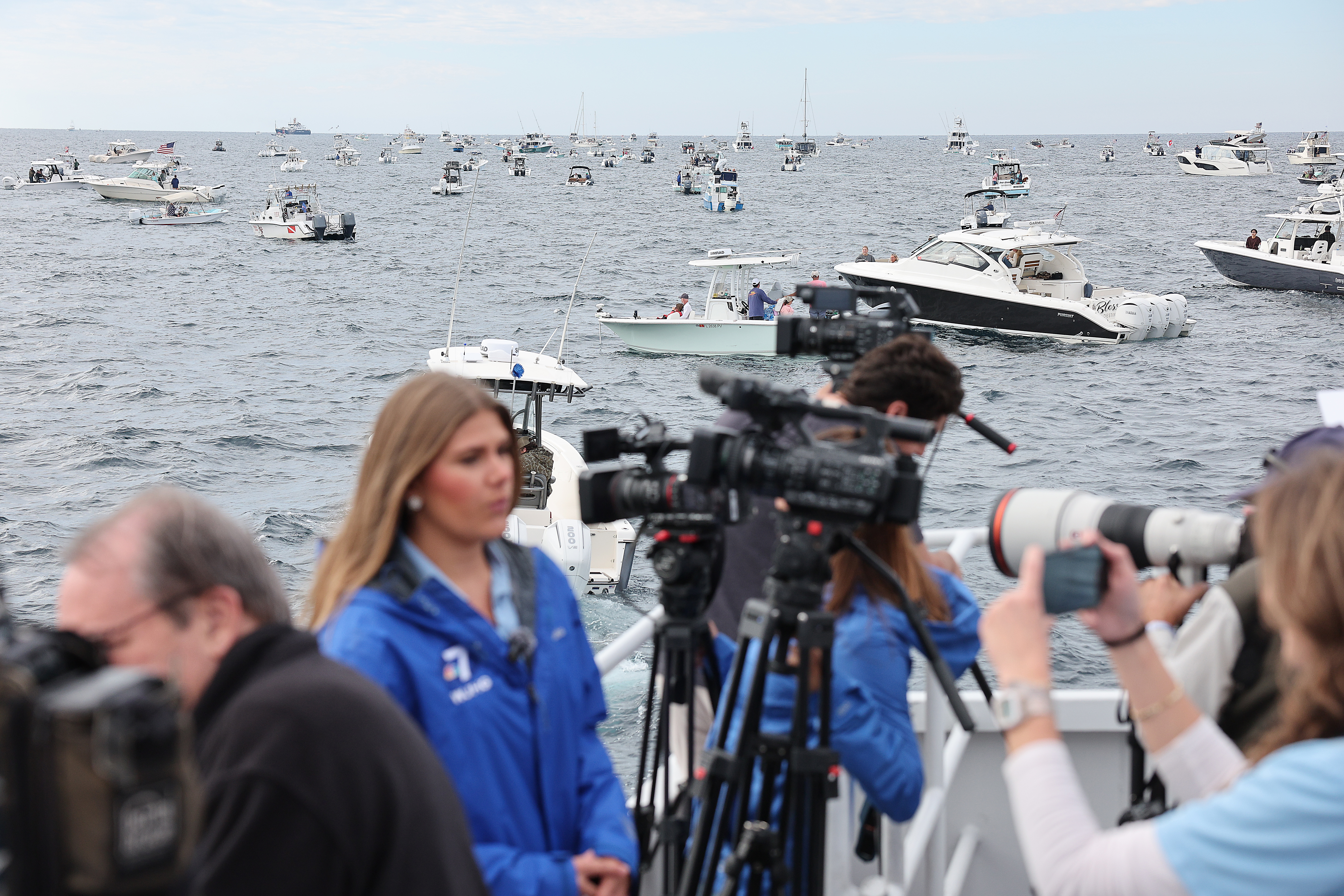
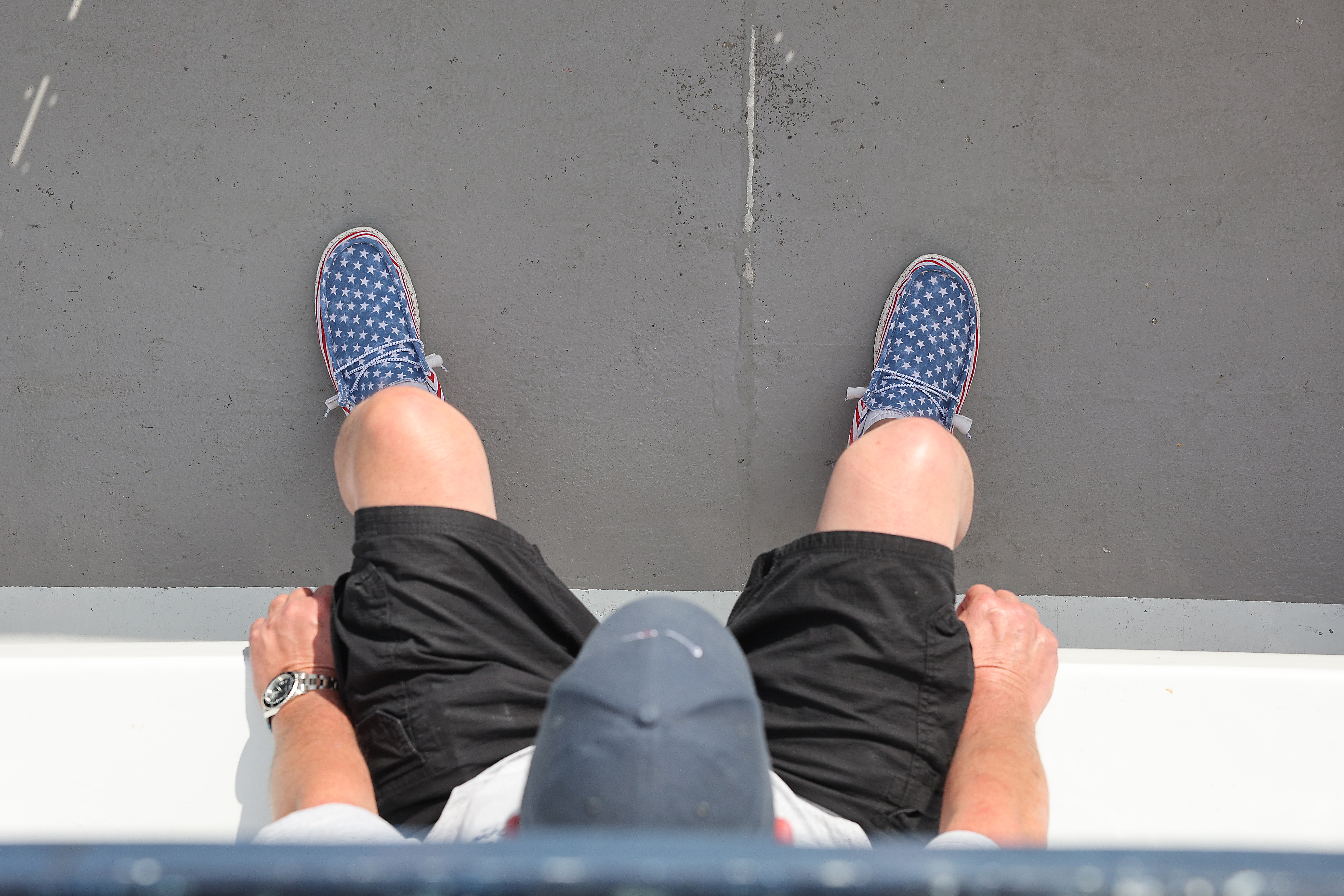
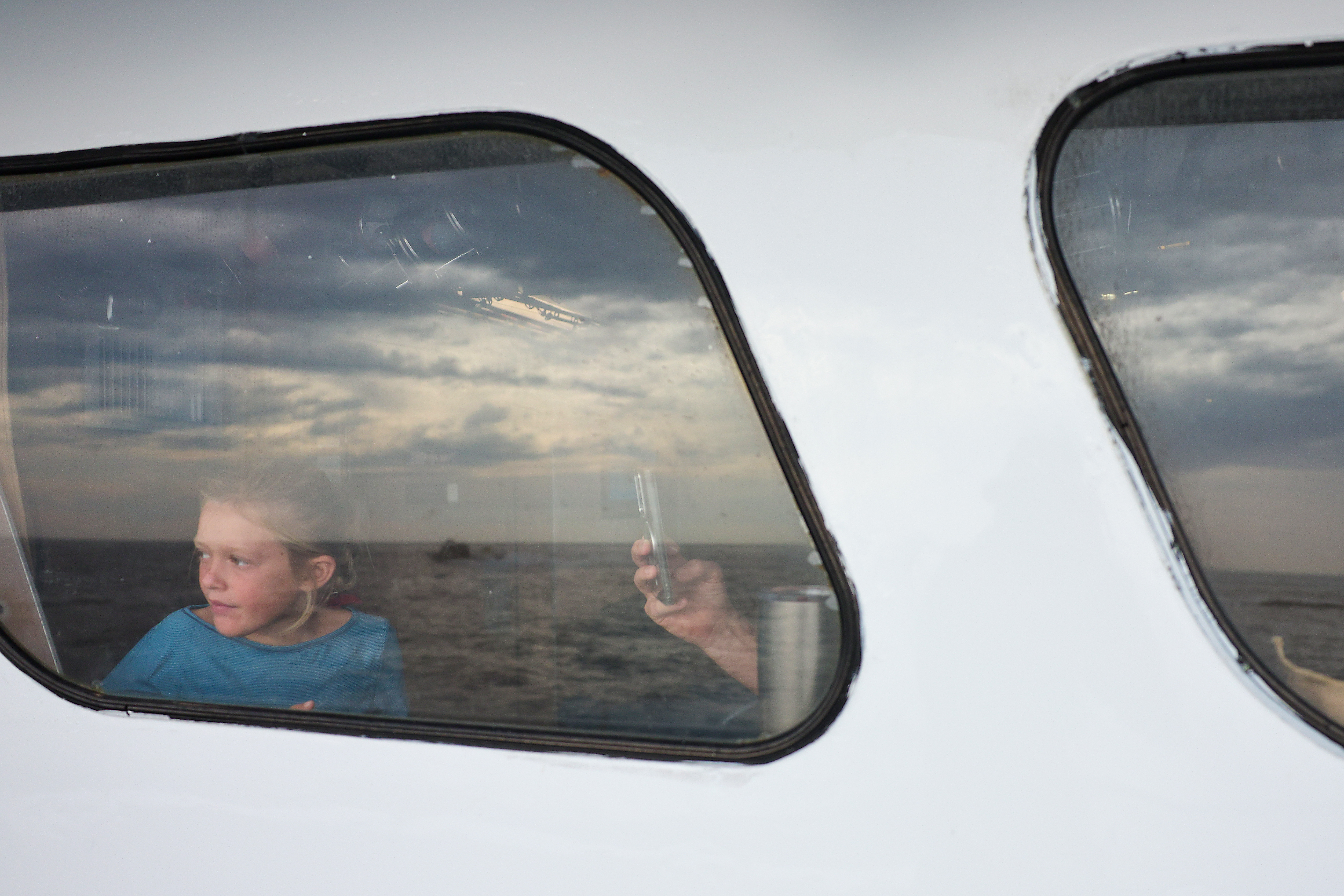
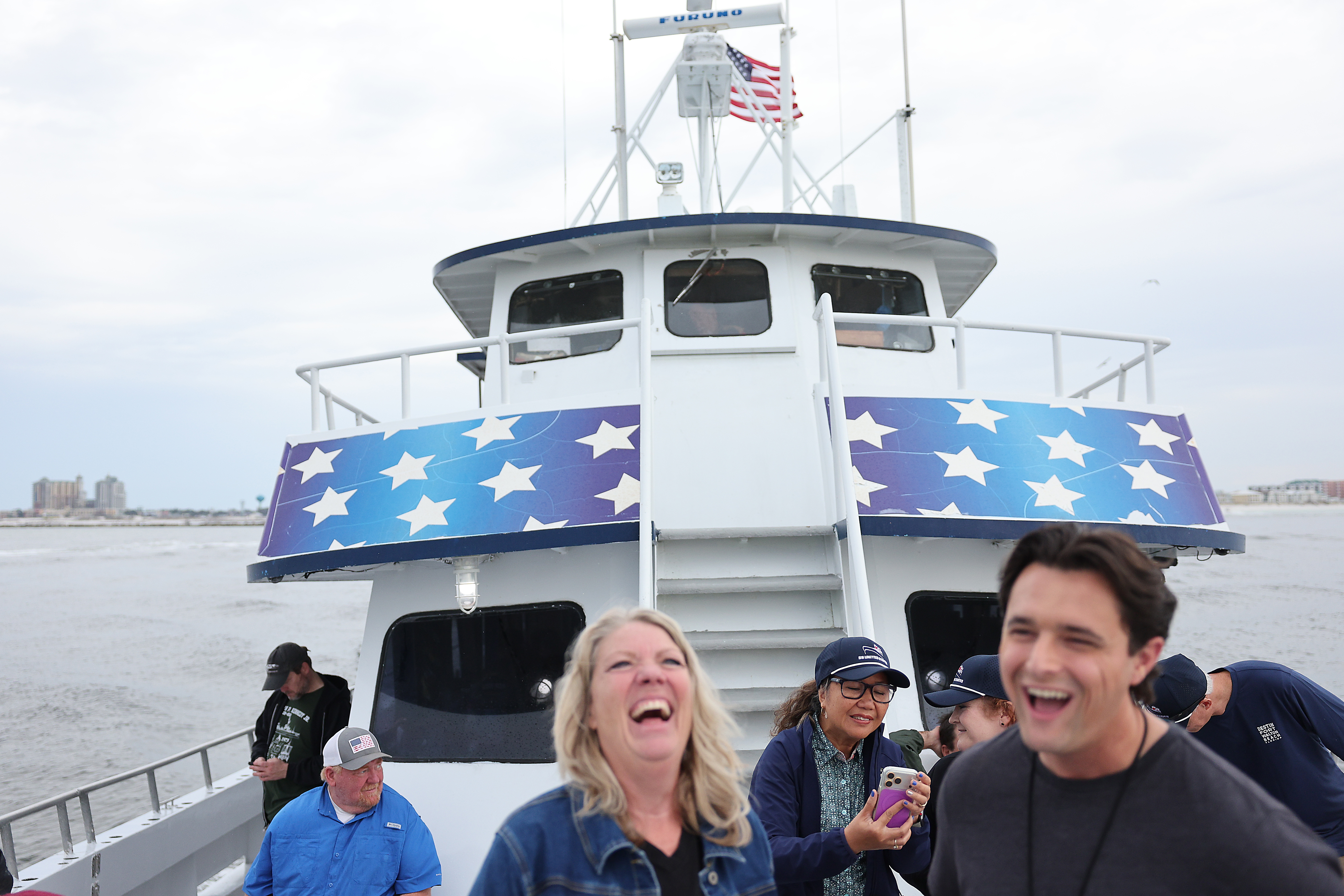
    Hundreds of boats tried to get as close as the U.S. Coast Guard would let them, angling for a better view of the slow drop into the Gulf of Mexico, with some passengers coming from as far as California and Philadelphia.

    At about 10 p.m. Philly time, the ocean liner finally submerged to take its place on the Gulf floor. The ocean liner’s final moments, scored by sweeping string music, had a cinematic feel as the water overtook one side of the vessel and then the rest.

    “This is history,” said Panama City Beach resident PJ Hughes, knowing little else about what her day had in store aboard the Gulf Breeze and unknowingly foreshadowing the unexpected delays. “I’m just like a little puppy dog. We might be out there for about six hours, I don’t know.”

    For many, the trip to sea was much longer than that.

    The ocean liner had to undergo some last-minute prep when it was supposed to begin the controlled flooding. The sinking was then much slower than expected when it finally began, submerging inches by nightfall, not feet. It was not immediately clear when the process would end, said the Okaloosa County officials in charge. Many captains took the news as a sign to turn back, with floodlights doing little for those trying to see the vessel slowly dropping into the sea.

    It was an anticlimactic return to shore as buzzes wore off and light sunburns set in.

    The event had drawn media from across the country. Reporters descended on Destin to cover the once-unthinkable sinking of one of the last and fastest ocean liners the United States ever produced.

    “It is very emotional,” said Susan Gibbs, granddaughter of the vessel’s designer, who desperately fought for redevelopment as the head of the SS United States Conservancy.

    “It’s almost overwhelming. We tried for decades to save the ship, keep her afloat. But this is a poignant, poignant transition, and may she rest in peace.”

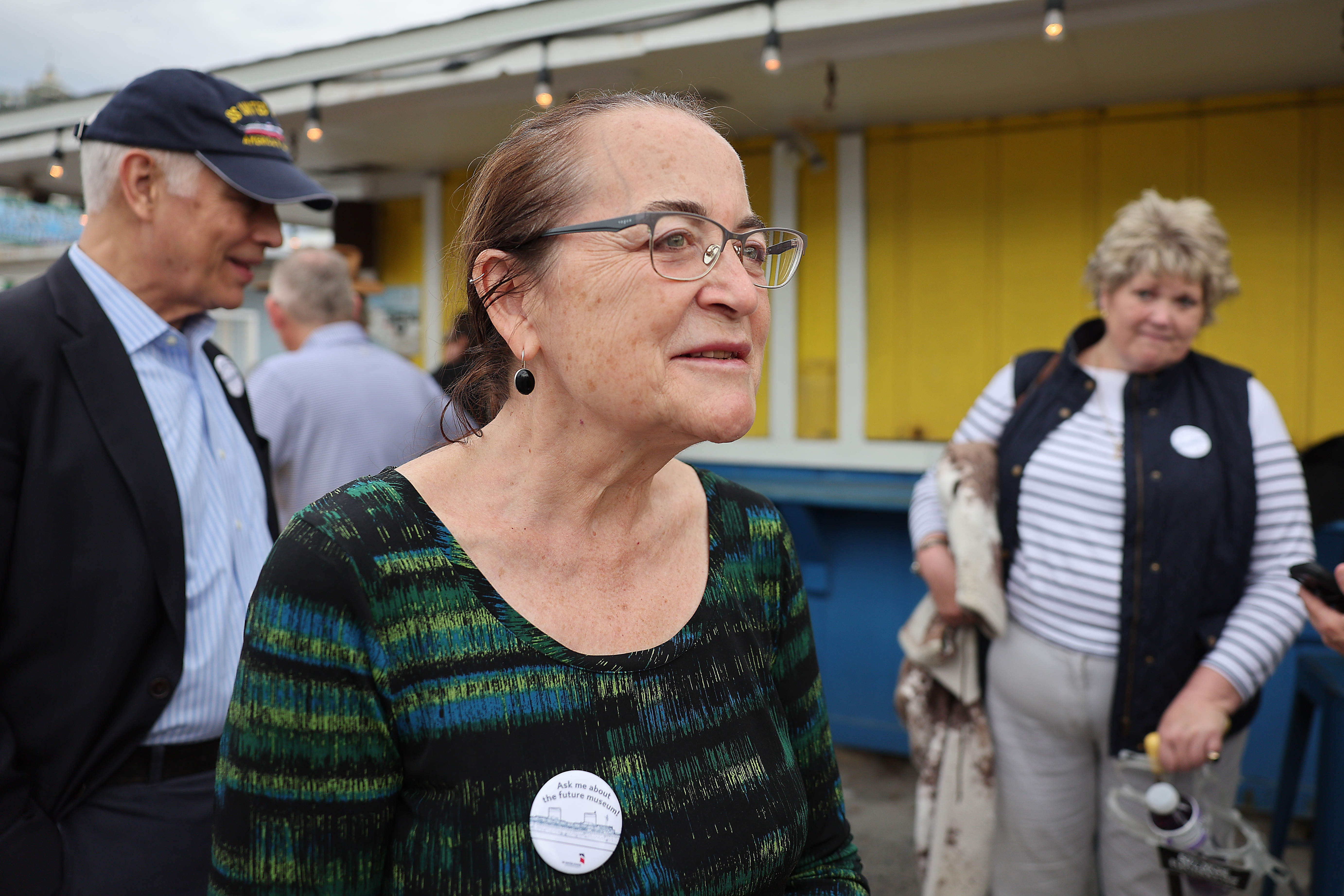
    Susan Gibbs, who is the granddaughter of the architect of the SS United States, talks about the sinking of the SS United States outside Destin-Fort Walton Beach, Fla. on Wednesday, Nov. 11, 2026. The ship will become the world’s largest artificial reef.David Maialetti / Staff Photographer

    Gone were the days when the ship carried close to 8,000 quarts of ice cream and 500 pounds of caviar for guests looking to travel in luxury. A household name like Marilyn Monroe, Judy Garland, or Grace Kelly had not stepped aboard its decks in decades. And the SS United States, stripped of its furnishings and gutted, would not be considered a secret military weapon by anyone — it once could transport 14,000 troops.

    The SS United States spent close to 30 years as a Philadelphia resident that locals loved or loved to hate. Stripped of its remaining interiors in the 1990s, its frame acquired the rusty patina of a shipwreck, deemed an eyesore by many, dubbed the Ikea boat because of its proximity to the Swedish big box store’s South Philadelphia location.

    Various owners sank more than $40 million into buying, maintaining, and unsuccessfully reimagining the SS United States during its time in Philly. But they all eventually learned the gutting of the ocean liner only made redevelopment ambitions all the more difficult to pitch.

    The SS United States could not move on its own and required extensive environmental remediation. Restoration was estimated to run to the tune of $400 million.

    No one took the bait.

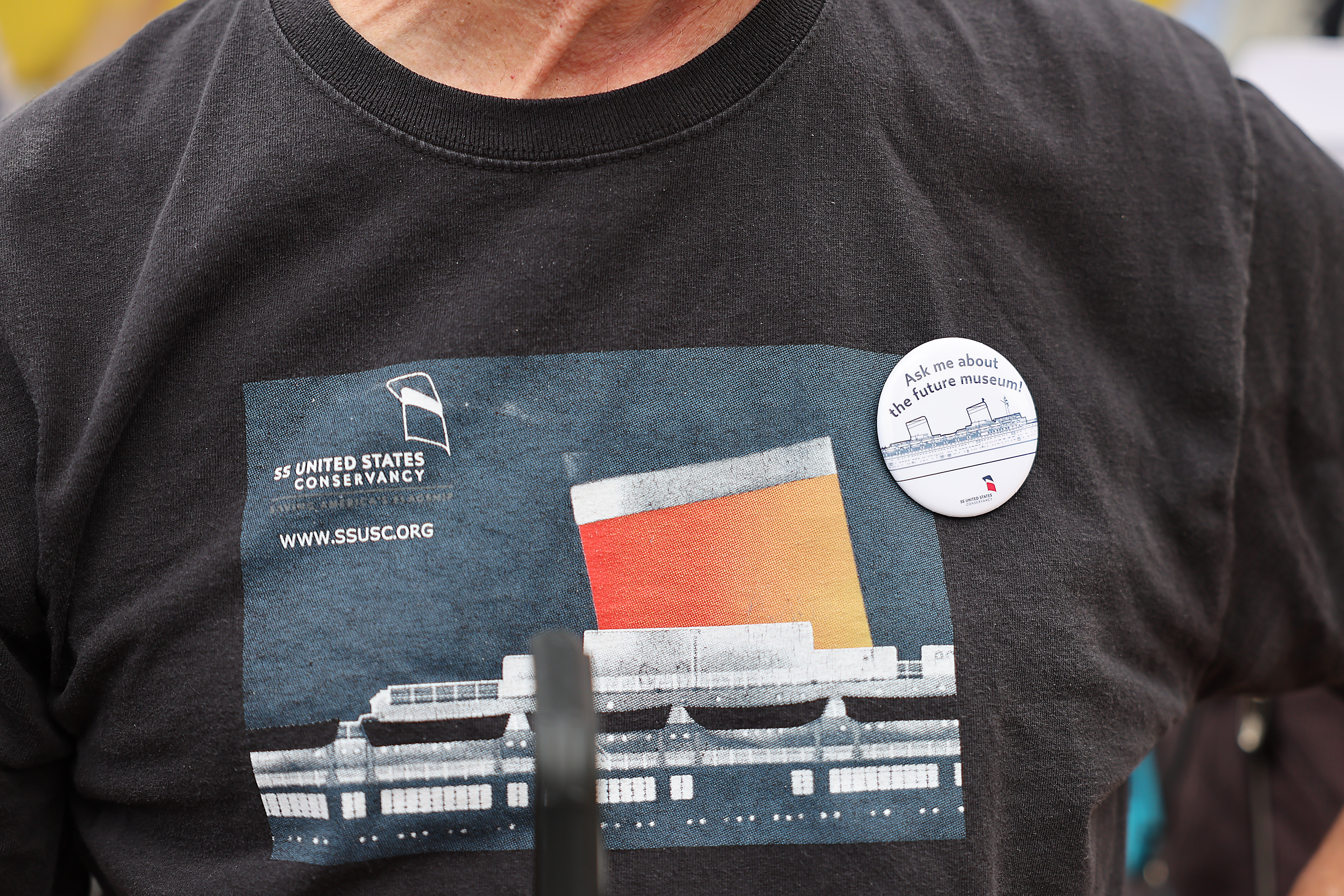
    The conservancy took to selling its namesake for $1 million in 2024 as an alternative to sending it to the scrap heap. It is now focusing its advocacy efforts to fundraise and build a museum in Okaloosa County, Fla., that will feature more than 10,000 artifacts, including the first-class bar. The conservancy also has possession of the vessel’s two iconic, once red-and-white smokestacks.

    Warren Jones is one of the conservancy members who is now directing his energy to building the museum.

    He noted the irony of waiting for the SS United States to sink aboard a boat named the American Spirit. Even so, he maintained the sinking was a rebirth better than the scrapyard or, worse, a purgatory on some pier — not unlike how the vessel existed in Philadelphia.

    “That would be disrespectful,” he said, looking onto the vessel. “You know that would be what people would remember the ship as, and that’s not right.”

    Onlookers like David Heath, 62, put it more bluntly.

    “This is probably the best outcome rather than it being made into razor blades,” he joked.

    Some of the most fervent critics of reefing the vessel also appeared resigned to the idea Wednesday. No protesters showed, as once suggested, and the final lawsuit to stop the sinking was dismissed Friday.

    A fresh start

    Okaloosa County jumped at the opportunity to sink the SS United States 22 nautical miles southwest of Destin-Fort Walton Beach. The area has undergone a bit of an artificial reef renaissance in the last decade under Alex Fogg, the county’s natural resources chief.

    Unlike the Florida Keys or the Caribbean, Destin-Fort Walton’s shores do not have natural reefs.

    “We rely on artificial reef habitat, things we intentionally deploy to be reef habitat for the fish to thrive, for people to have places to go fishing, and for places for people to go diving,” Fogg said earlier this year.

    Okaloosa County has deployed hundreds of concrete structures and smaller ships in the last decade but by reefing the SS United States, the county aims to cement its place as a diving attraction.

    “Divers are going to have that place completely swamped up for the first four or five years,” mused Jim Westbrook, captain of the American Spirit, a charter boat.

    Westbrook welcomes what hosting the world’s largest artificial reef will mean for tourism, but as someone who would visit for fishing, he knows he will have stiff competition.

    “I expect to maybe fish it in 2030,” he joked. “I’ll have to go out when it’s nasty. Otherwise, there’ll be 20 and 30 dive boats anchored up on it every day.”

    David Landsman, who was a visitor on the SS United States as a kid, waits to depart on a charter boat for the sinking of the SS United States outside Destin-Fort Walton Beach, Fla. on Wednesday, Nov. 11, 2026. The ship will become the world’s largest artificial reef.David Maialetti / Staff Photographer

    The vessel is expected to draw divers of all abilities. Because the SS United States’ main deck is expected to hover about 60 feet underwater, it will be perfect for those starting out. Meanwhile the bottom is about 175 feet, ideal for the technical diver.

    Local diving companies confirm people are already booking trips for this month. People have the all-clear to explore the gutted vessel as early as Thursday, weather permitting. Marine life will be limited in the first few weeks, limited to bait fish. But scientists expect groupers, snappers, amberjacks, and sea turtles within the year.

    As the American Spirit headed back to shore full of dejected spectators, Jones, the member of the Conservancy, couldn’t help but laugh.

    A quote by William Francis Gibbs, the vessel’s designer, came to mind, he said. Gibbs used to say the vessel couldn’t catch fire, sink, or be caught.

    “Well, we’ve caught her, but she hasn’t caught fire, and she definitely hasn’t sunk yet,” Jones joked, as the American Spirit headed back to shore.

  • Mark ‘Chumley’ Singer, eclectic events producer and community activist, has died at 65

    Mark ‘Chumley’ Singer, eclectic events producer and community activist, has died at 65

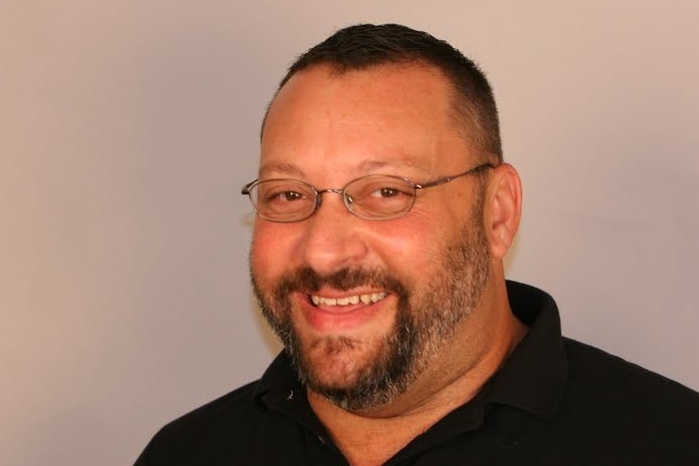
    Mark “Chumley” Singer, 65, of Philadelphia, eclectic events producer, graphic designer, entrepreneur, adjunct professor of visual merchandising at Drexel University, and community, charity, and gay rights activist, died Monday, Oct. 26, of pancreatic cancer at his sister’s home in Cherry Hill.

    Nicknamed after the lovable walrus sidekick to the 1960s penguin cartoon character Tennessee Tuxedo, Mr. Singer was what the Daily News in 2002 called “a local man-about-town.” He was onetime creative director for Welcome America Inc., events and marketing manager for the Eagles Youth Partnership, and a founding committee member of the Lights for the Cure breast cancer awareness project.

    He helped develop the city’s skyline lighting initiative in the early 2000s and coordinated marketing and community events affiliated with the city’s millennium celebration, the Liberty Bell Pavilion, the National Constitution Center, the Philadelphia Museum of Art, and the Mummers, Thanksgiving Day, and Independence Day parades. He was also a founding board member of the Philadelphia Gay Tourism Caucus.

    “The Philadelphia of today,” a longtime friend and colleague said on Instagram, “was formed by Chumley’s creative mind.”

    In 1999, Mr. Singer told The Inquirer: “My goal is to get the travel industry to think of Philadelphia and the Fourth of July as a package just as we link New Orleans and Mardi Gras. If that’s my legacy, I’d be proud.”

    He became a serious fundraiser after his best friend died of AIDS, and he organized popular gay bingo nights and other events to benefit HIV/AIDS services. He designed the rainbow street signs in Philadelphia’s Gayborhood and collaborated with fellow performer Michael Byrne to cohost gay bingo, movie night at the Prince Music Theater, and other community get-togethers.

    “He leaves behind a legacy of memorable celebrations, meaningful philanthropy, and lasting connections,” Byrne said. “He developed a reputation for transforming an idea into an experience that people would remember long after the lights came up.”

    Mr. Singer earned a bachelor’s degree in graphic design at Temple University’s Tyler School of Art and Architecture in 1984 and worked at first as a visual merchandiser at Gimbels, Macy’s, Urban Outfitters, and other retailers. In the 1990s, he painted frescoes for homeowners and opened a store that sold unique home furnishings.

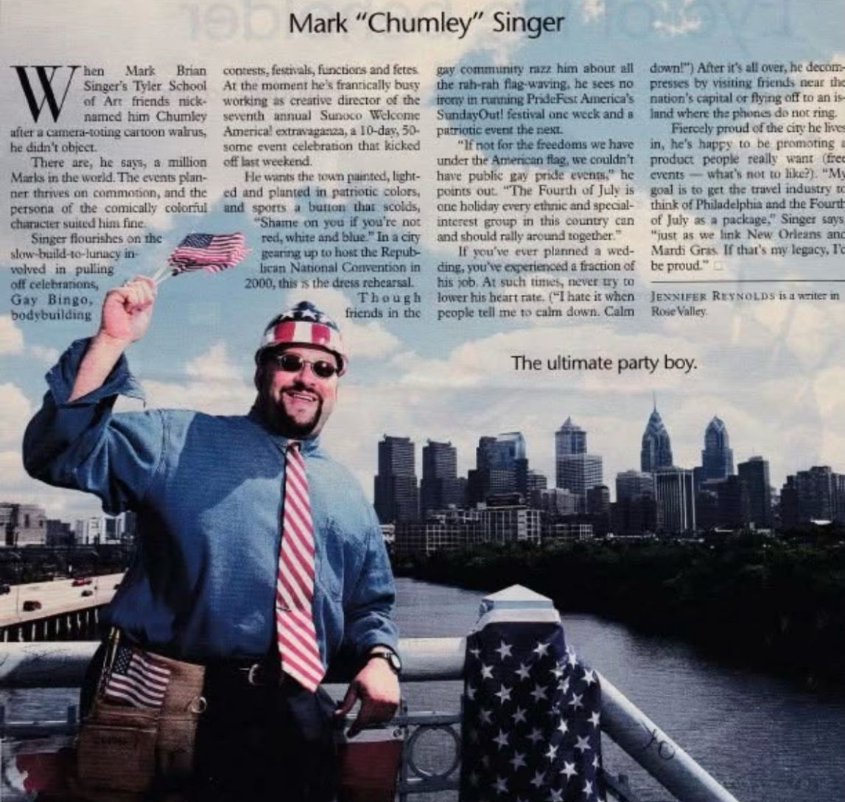
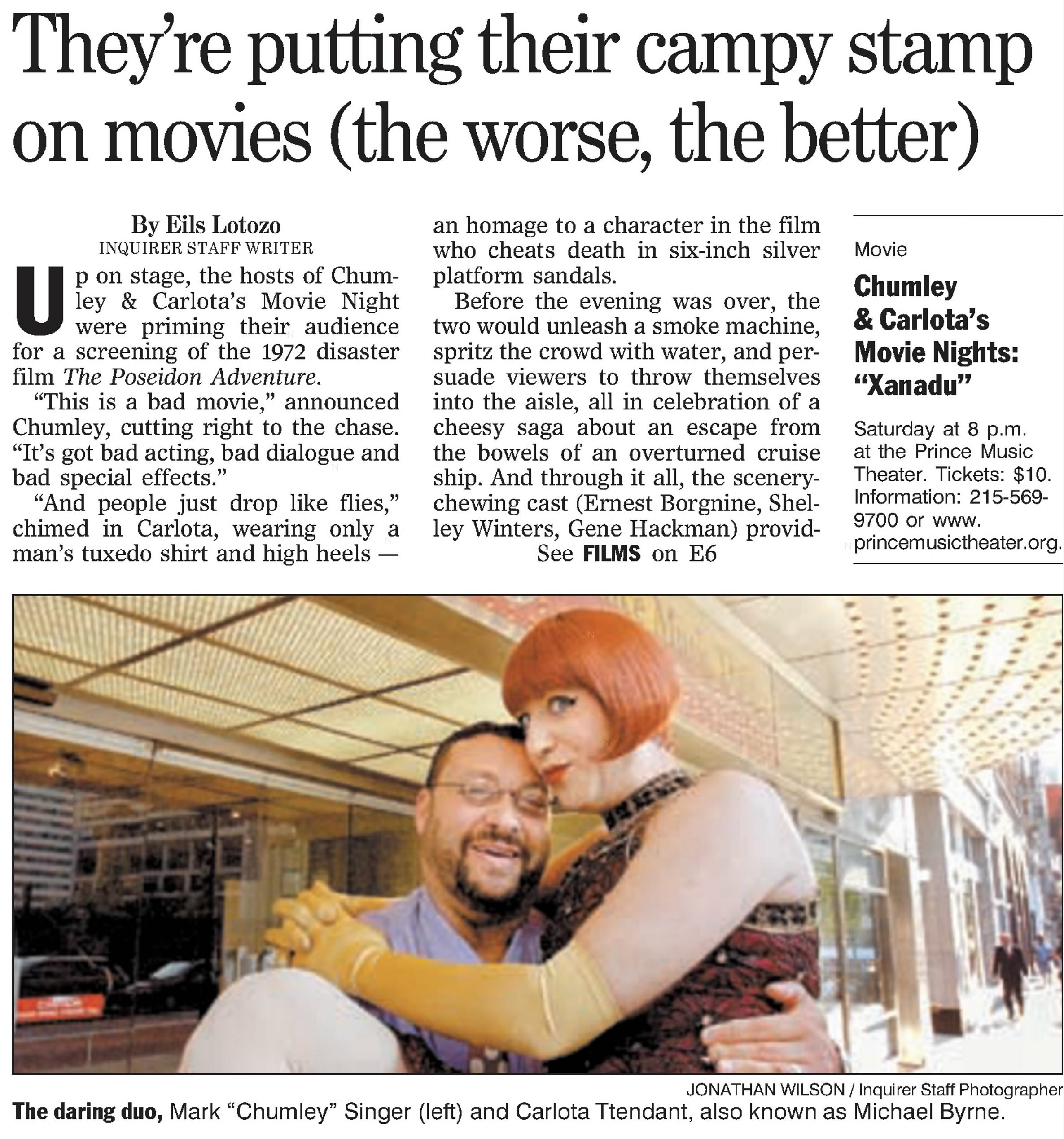
    Mr. Singer appeared in The Inquirer in 1999, above, and 2002, below. Newspapers.com

    In 2003, to celebrate the gay community’s “hairy/beefy/burly/gay ‘bears,’” he established Chumley’s Bear Cruises, a group tour company that books cruises to Alaska, Aruba, and elsewhere around the world.

    Affable and engaging, Mr. Singer appeared on the podcast A Jaded Gay, was featured often in The Inquirer and Daily News, and was named to the Daily News’ Council of Cool in 2002. In online tributes, friends and colleagues called him “a creative visionary,” “an unspeakably beautiful man inside and out,” and “everyone’s advocate, cheerleader, and a voice of encouragement.”

    Byrne said: “He helped create spaces where people could gather, celebrate, and feel connected. If Chumley said, ‘I can do it,’ he could.”

    Mark Brian Singer was born April 18, 1961, in Philadelphia. His father died when he was 9, and he graduated from the Milton Hershey School in Hershey, Pa.

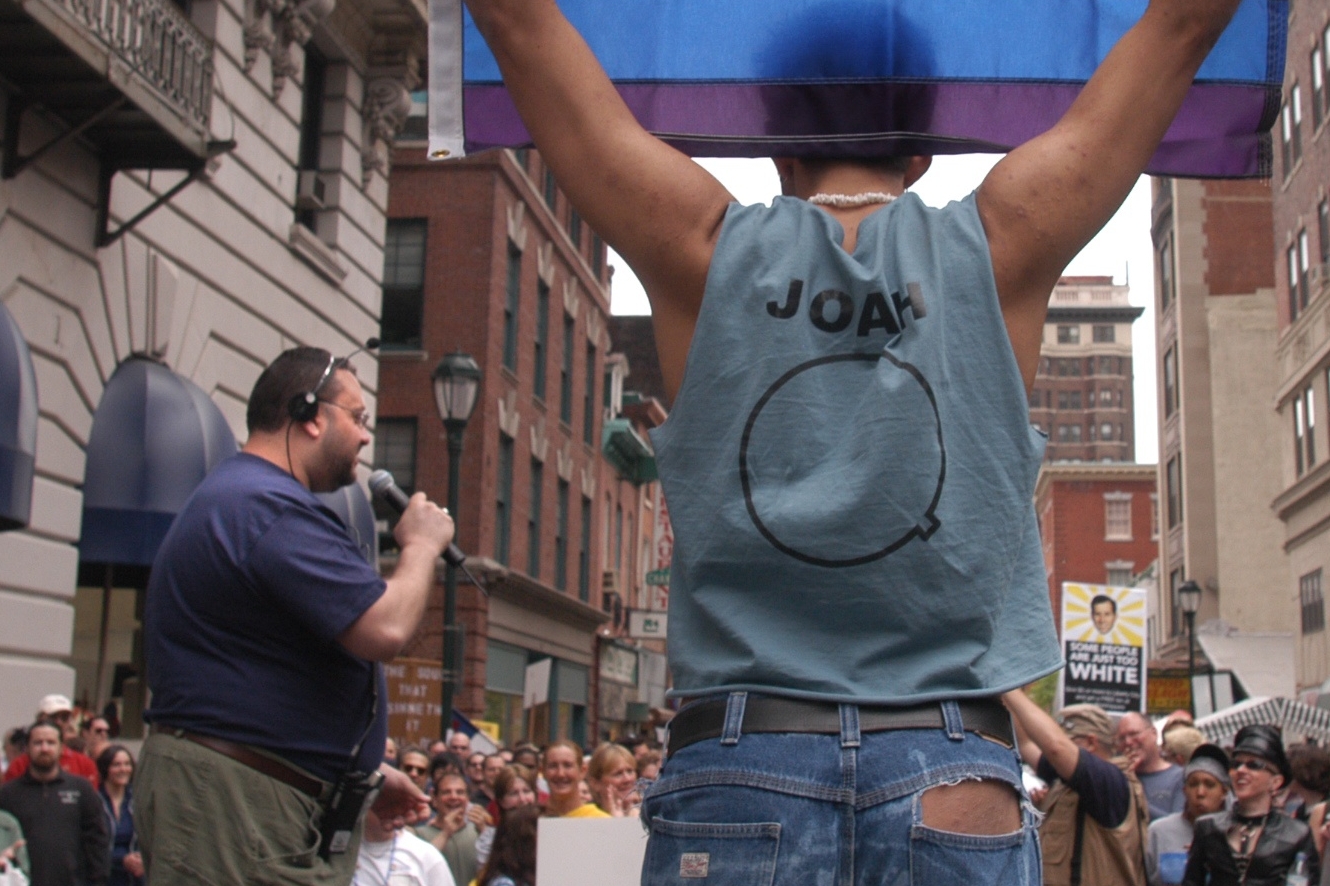
    Mr. Singer, left above, was a dynamic speaker and organizer. Rebecca Barger / Staff Photographer

    He met fellow artist and actor Ven Schmidt in 2017, and they married in 2022 and lived in South Philadelphia.

    Mr. Singer enjoyed camping and traveling. He listened to the Smiths and followed the Eagles closely.

    He liked to watch movies and take weekend getaways to Atlantic City and New Hope with his husband. He was habitually punctual.

    “He not only advocated for the gay community as a whole, he made individual people feel uplifted and welcome,” his husband said. “He inspired me and truly changed my life. He had a heart of gold, and I wanted to be just like him.”

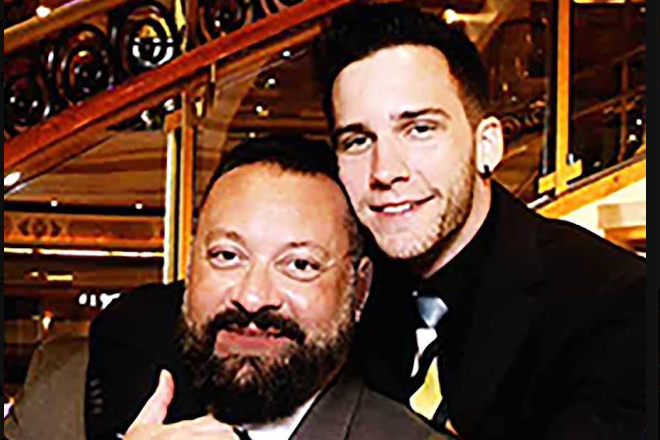
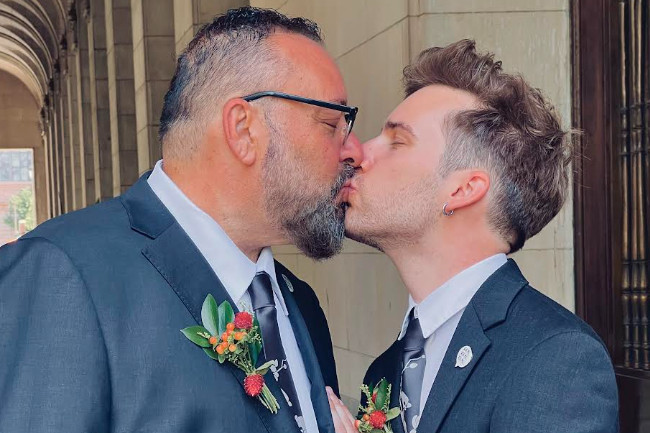
    Mr. Singer, left above and below, and his husband, Ven Schmidt, married in 2022.Courtesy of the family

    In addition to his husband, Mr. Singer is survived by a sister, Aline Zaslow, and other relatives.

    Services were held earlier. A celebration of his life is to be held later.

    Donations in his name may be made to the Breathing Room Foundation, Box 287, Jenkintown, Pa. 19046.

    Mr. Singer “not only advocated for the gay community as a whole, he made individual people feel uplifted and welcome,” his husband said.Courtesy of the family
  • Their Bella Vista home got bigger as their children grew

    Their Bella Vista home got bigger as their children grew

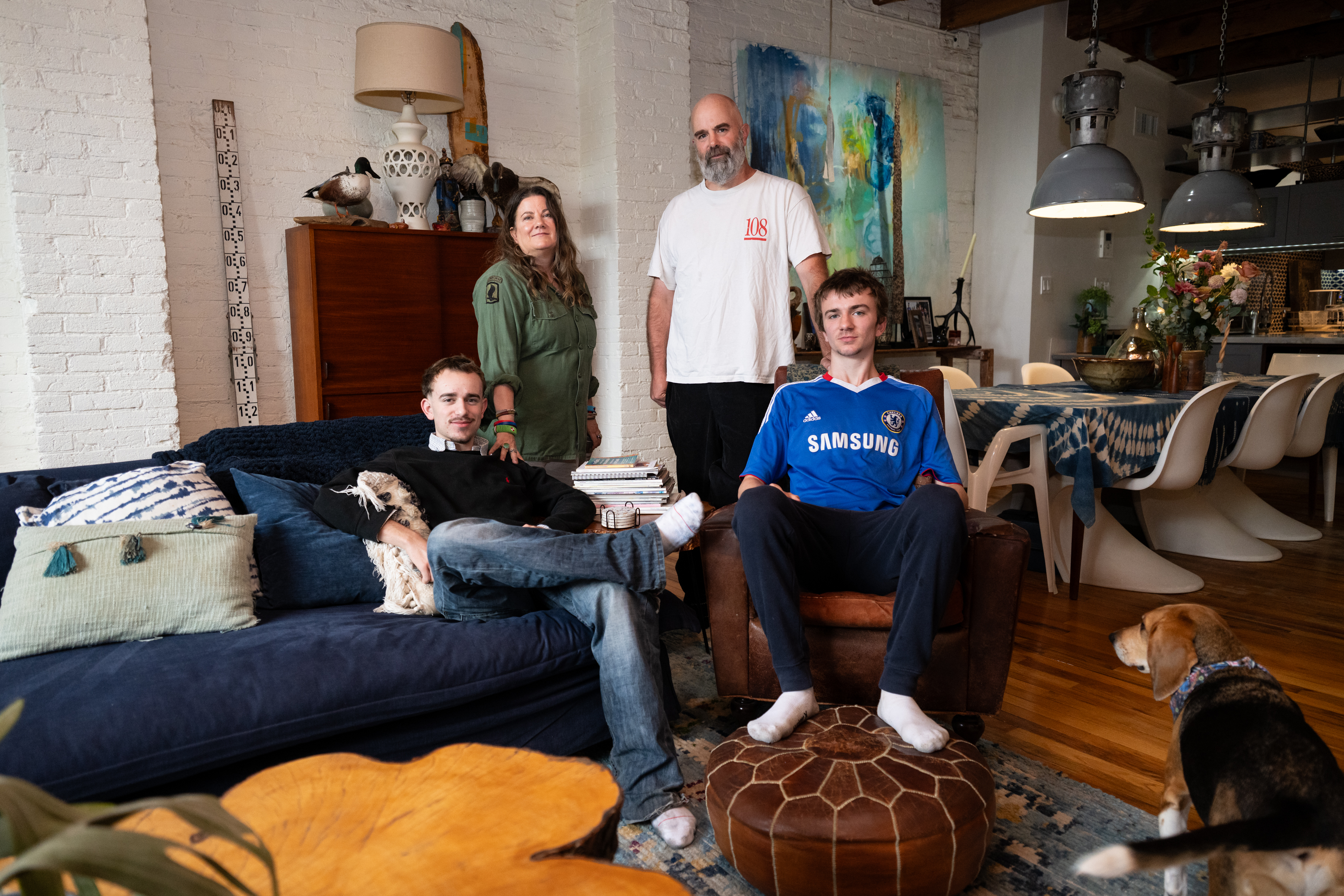
    Missy and Dan Peltz’s Bella Vista home is a joyful mix of colorful, imaginative, and zany collections. From stuffed ducks and bird sculptures to skateboards and fine art, it is a lively portrait of the close-knit family.

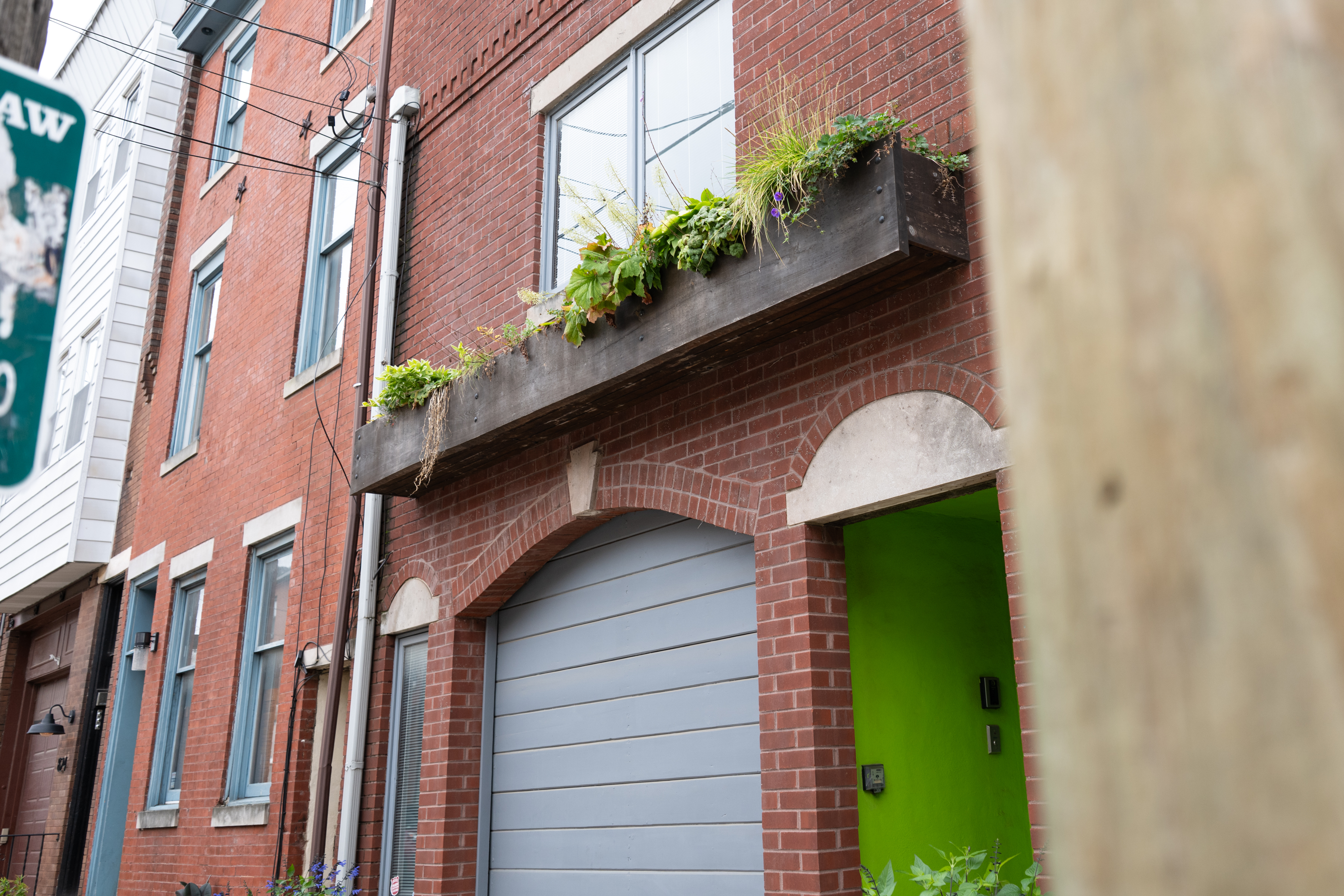
    When they first stumbled upon the three-story house in 2007, it seemed all wrong. The house looked tiny from the outside, and with just one usable bedroom and a baby on the way, it felt too small inside, too. The decor also included lots of red and pink.

    The exterior of Missy and Dan Peltz’s rowhouse in Bella Vista.Erin Blewett / For The Inquirer

    “But when we walked in, we saw a giant loft, it had a garage, and an enormous backyard,” said Missy, who runs the sustainable marketplace for Free People and dabbles as the owner of MAP CoLab Design on weekends. She recognized the home’s potential.

    Built in 1908, the property was part blacksmith shop and part mill, Missy believes. The exposed brick walls were thick and sturdy and the wooden ceiling beams remained in good shape.

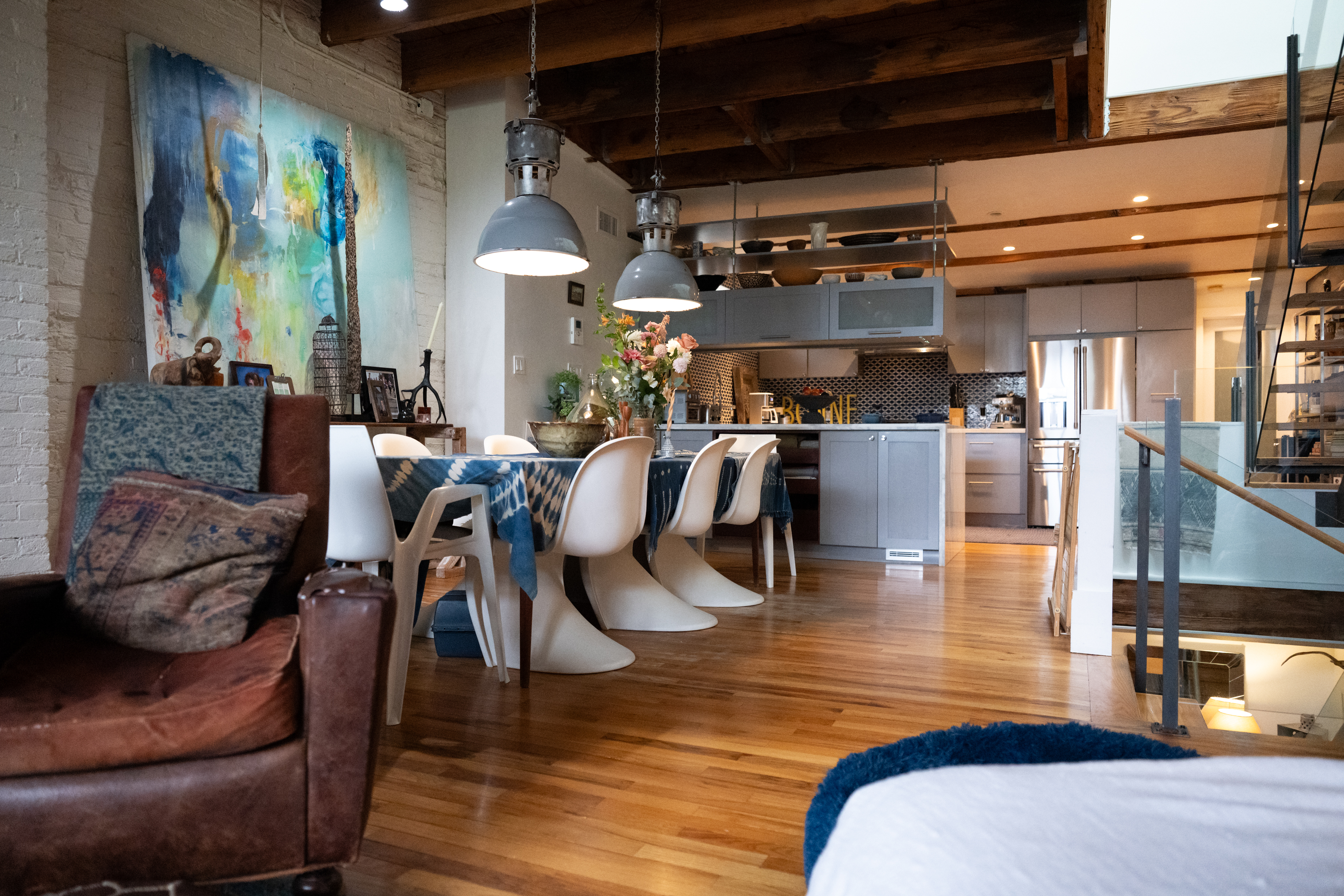
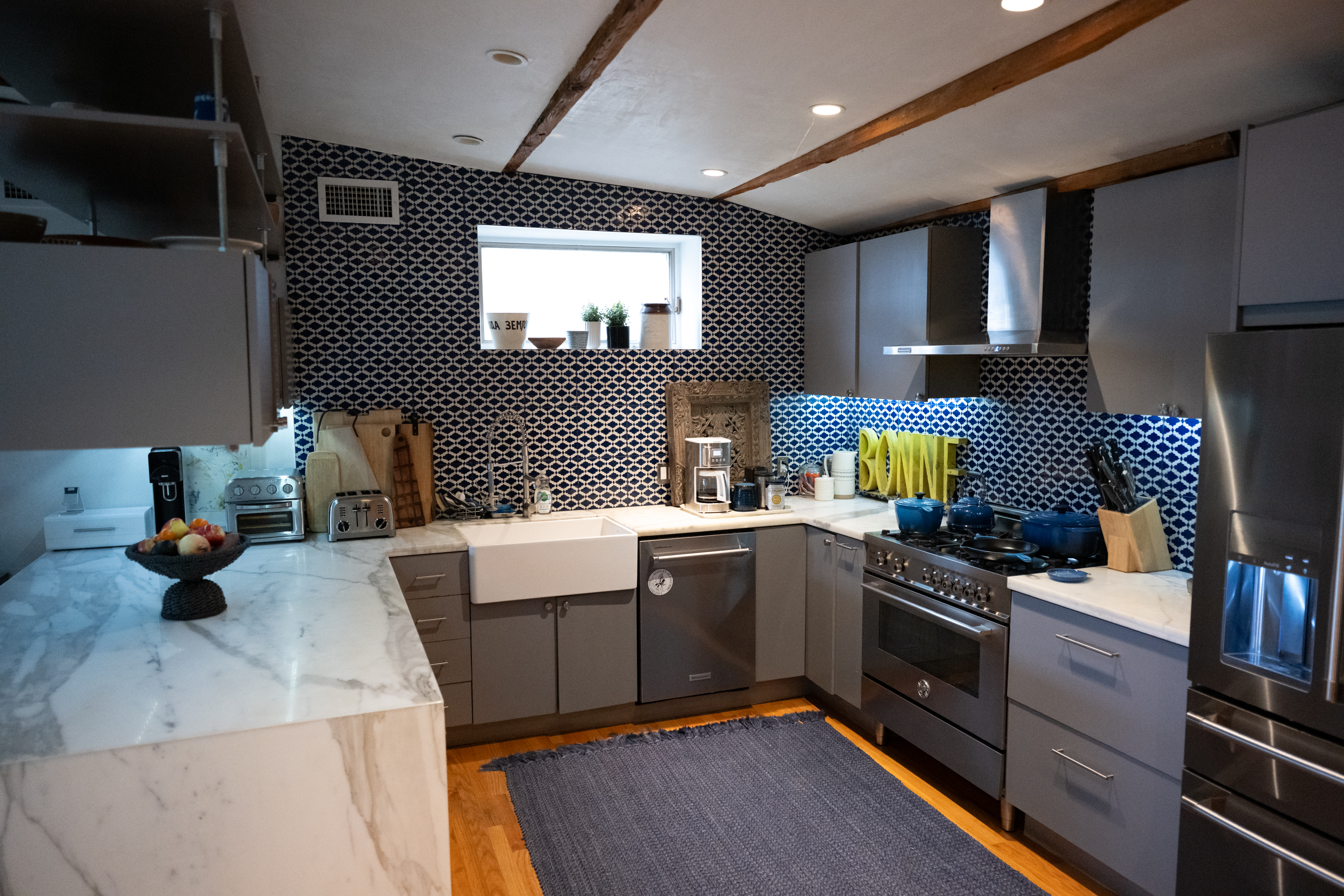
    When the couple bought the house they immediately whitewashed the red brick walls and gave the rose marble fireplace a natural-colored faux finish. Over the years, through three separate projects, they renovated the kitchen, removed a wall between the kitchen and dining room to create an open-concept living area, added bedrooms, offices, a laundry room, and bathrooms.

    The first floor of the home includes the living room, dining area, and kitchen.Erin Blewett / For The Inquirer
    The couple renovated the kitchen and made it more open-concept with the dining room.Erin Blewett / For The Inquirer

    The result is a 3,400-square-foot home with three bedrooms and four bathrooms. The couple now have a primary bedroom with an en-suite bathroom, and sons Grey, 18, and Sid, 16, have their own bedrooms and bathrooms.

    Missy calls her design style maximalist.

    “I basically have no filter and zero control,” she said. “I love to just buy things and start new collections all the time.”

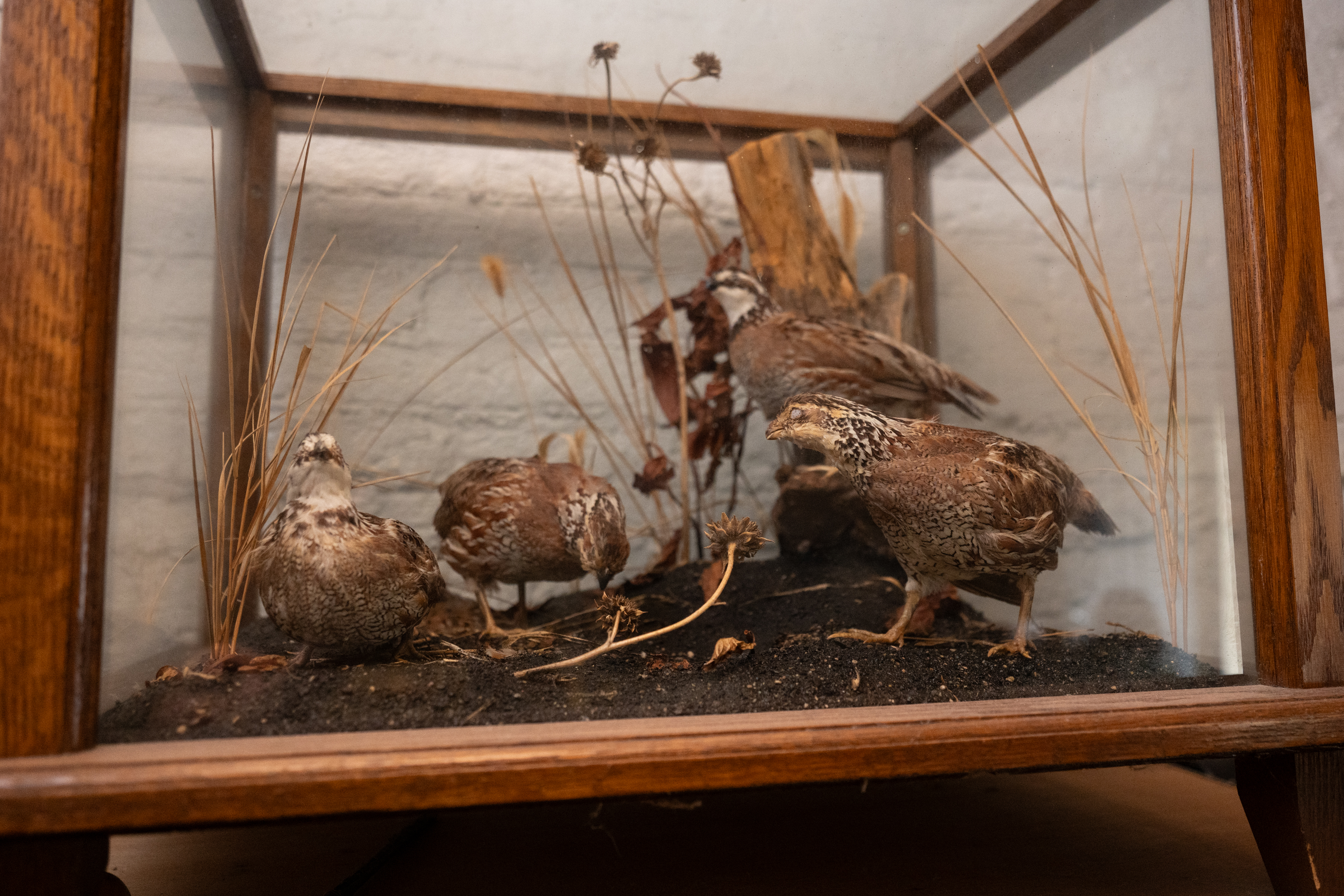
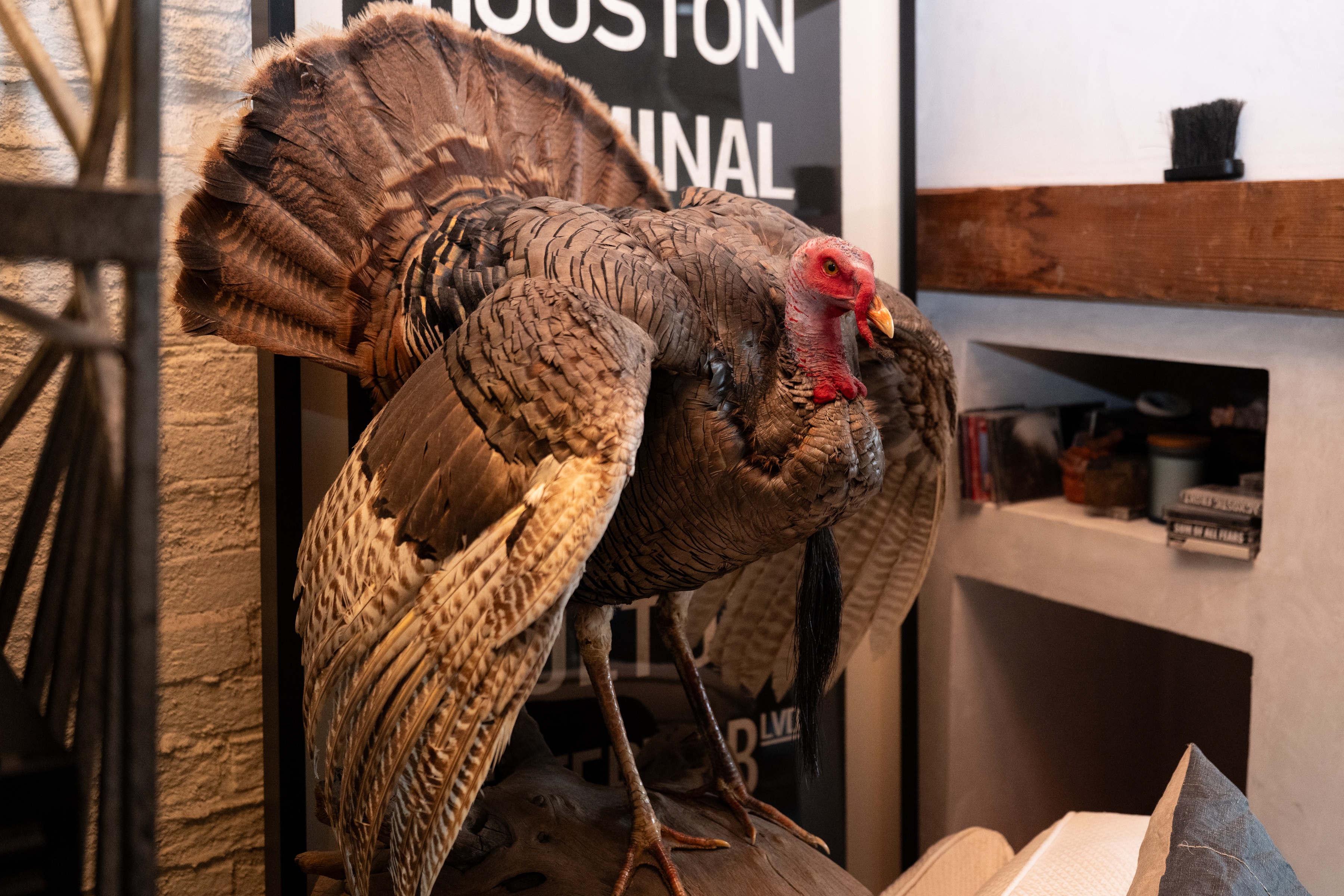
    Her passion began when she discovered the thrill of taxidermy while in college. That collection includes ducks, pheasant, deer, armadillo, and birds, including a rare turkey. Her love of birds also inspired collections of Victorian bird boxes and unusual nests.

    Other favorite pieces of Missy’s include an African mask. She enjoys furniture and objects that incorporate rustic, knotted wood.

    A taxidermy display featuring several birds.Erin Blewett / For The Inquirer
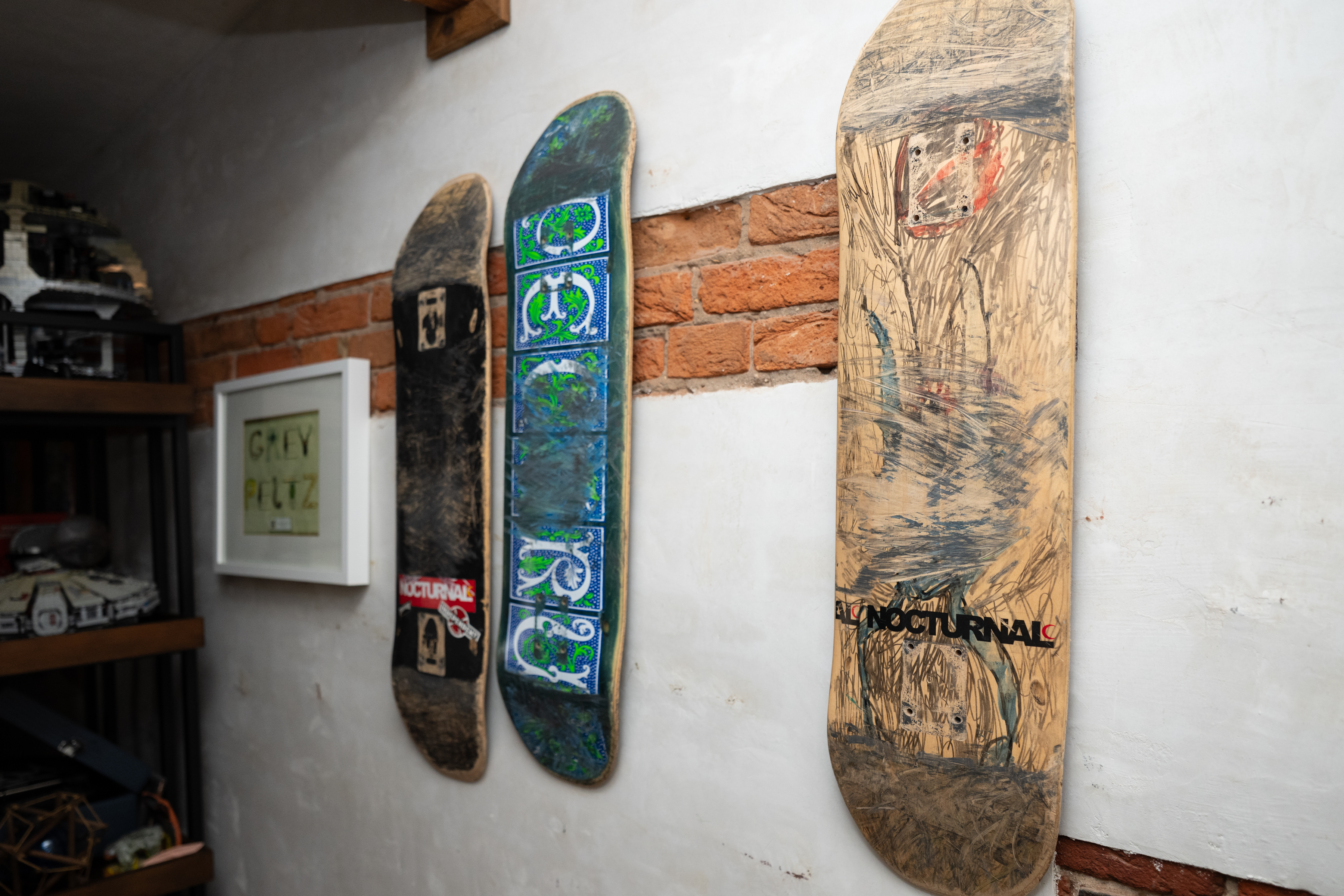
    Skateboards hang on a wall in the bedroom of Grey Peltz.Erin Blewett / For The Inquirer
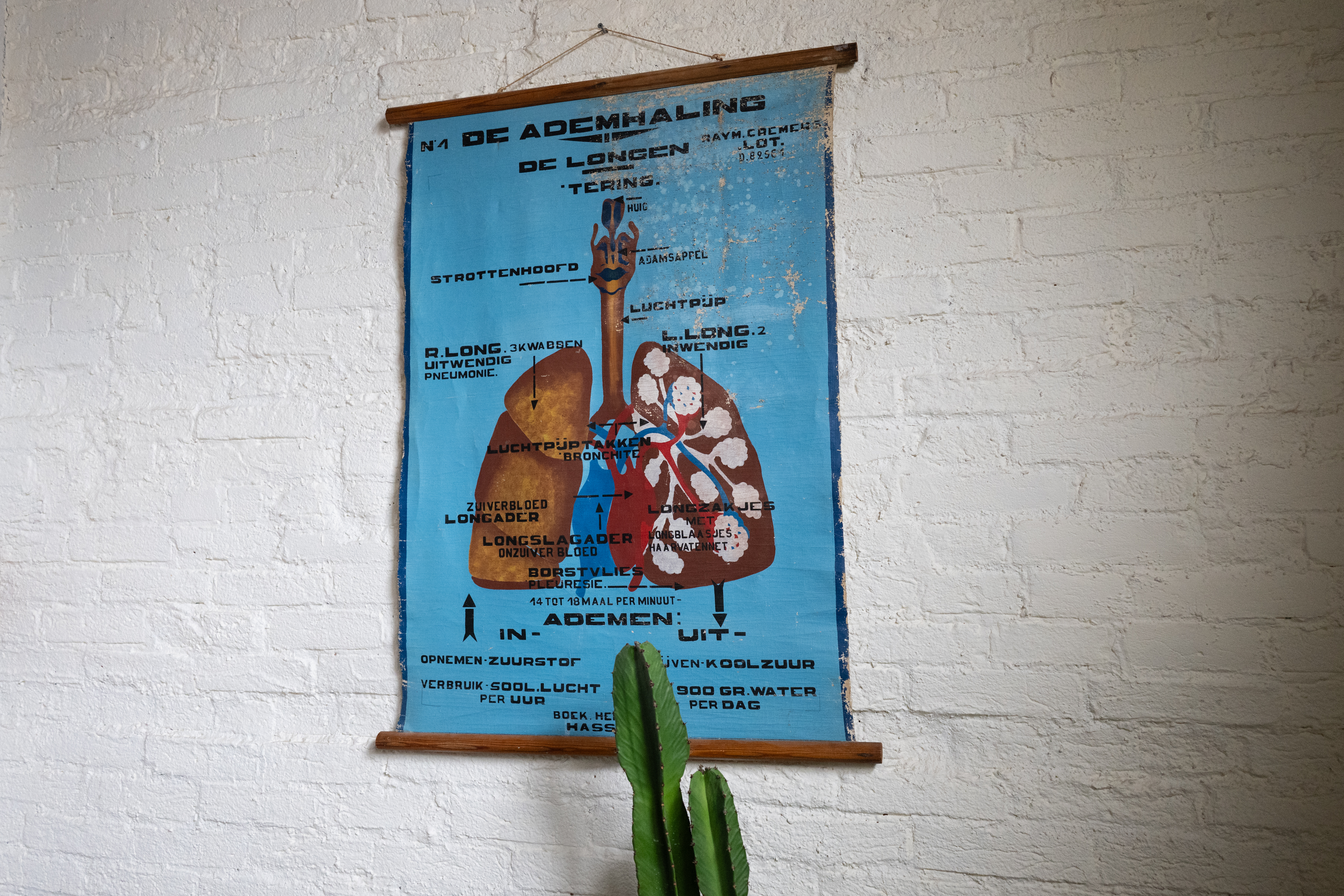
    A vintage anatomical chart hangs on a wall in the living room.Erin Blewett / For The Inquirer
    A taxidermied turkey is displayed in the living room.Erin Blewett / For The Inquirer

    Dan, an avid skateboarder, has a wall in the garage filled with skateboards he’s ridden throughout his life. The collection is a favorite among their sons’ friends. He also collects records and antique fishing gear.

    Missy shops at flea markets, junk stores, and antique stores, and when she sees something she loves, she buys it. She can always find a place to put it.

    “I like things with soul,” she said. “It has to have a story, be weathered, and had a life before me.”

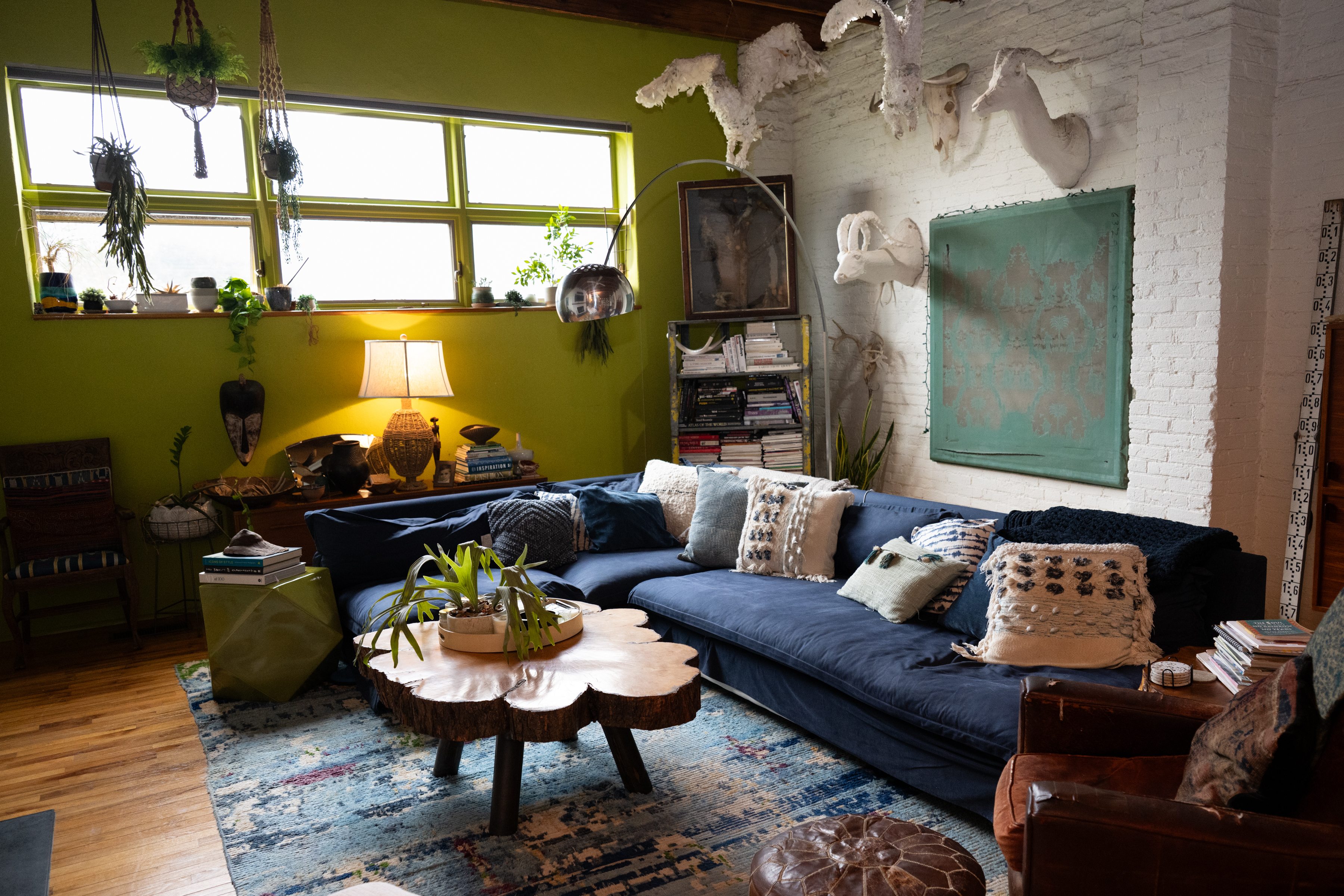
    The living room, with 12-foot ceilings, is the family gathering spot and hub for entertaining. They have thrown parties where 75 guests mingled comfortably. A typical night includes cozying up on the oversized blue canvas couch to hang out and watch movies.

    The living room, where the family gets cozy on the oversized couch, also features pieces from Missy’s taxidermy collection.Erin Blewett / For The Inquirer

    “It’s the heart of the home where we end up spending our time,” Missy said. “It’s also incredibly quiet for a city home because the windows don’t face the street. It’s almost like we’re in our own little oasis.”

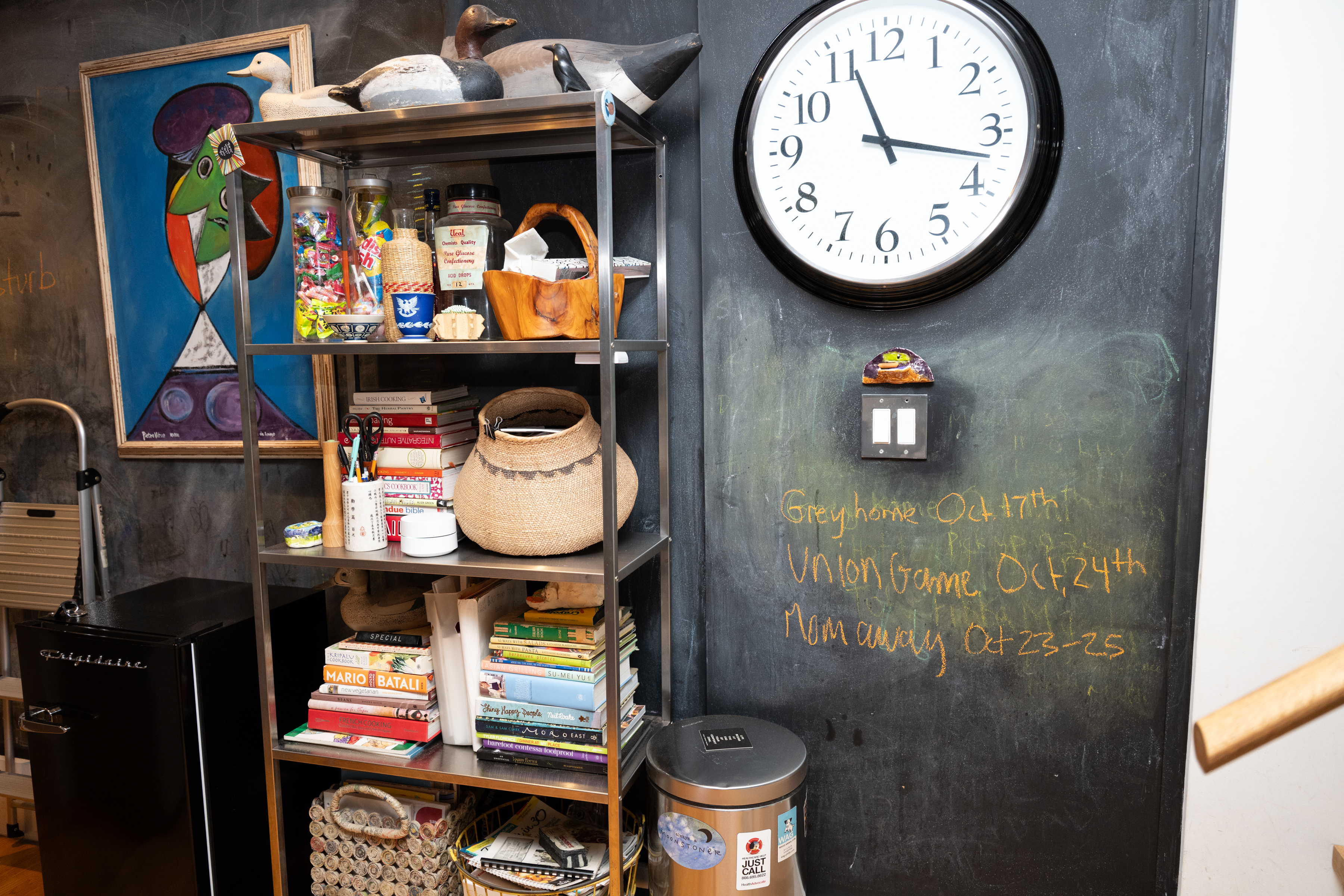
    Both Missy and Dan like to cook — homemade pizza is his specialty. The kitchen features a chalkboard wall, one of the first things Missy created when she moved in. It’s where the kids learned their ABC’s and kept track of their growth and where Missy formulates her shopping list. The wall serves as the hub for family communication.

    They eat meals at the 10-foot wooden dining room table, built in the 1950s, that Missy found in the 1990s at the Salvation Army for $39. Though it came with chairs, she opted instead to splurge on white s-shaped plastic Panton chairs with her first bonus check from work. She bought the industrial-look light fixture on a trip to Belgium.

    Above the table sits one of three paintings she owns by Canadian artist Claire DesJardins, with whom Missy collaborated during a previous job.

    A chalkboard wall and shelves filled with books and baskets in the kitchen.Erin Blewett / For The Inquirer
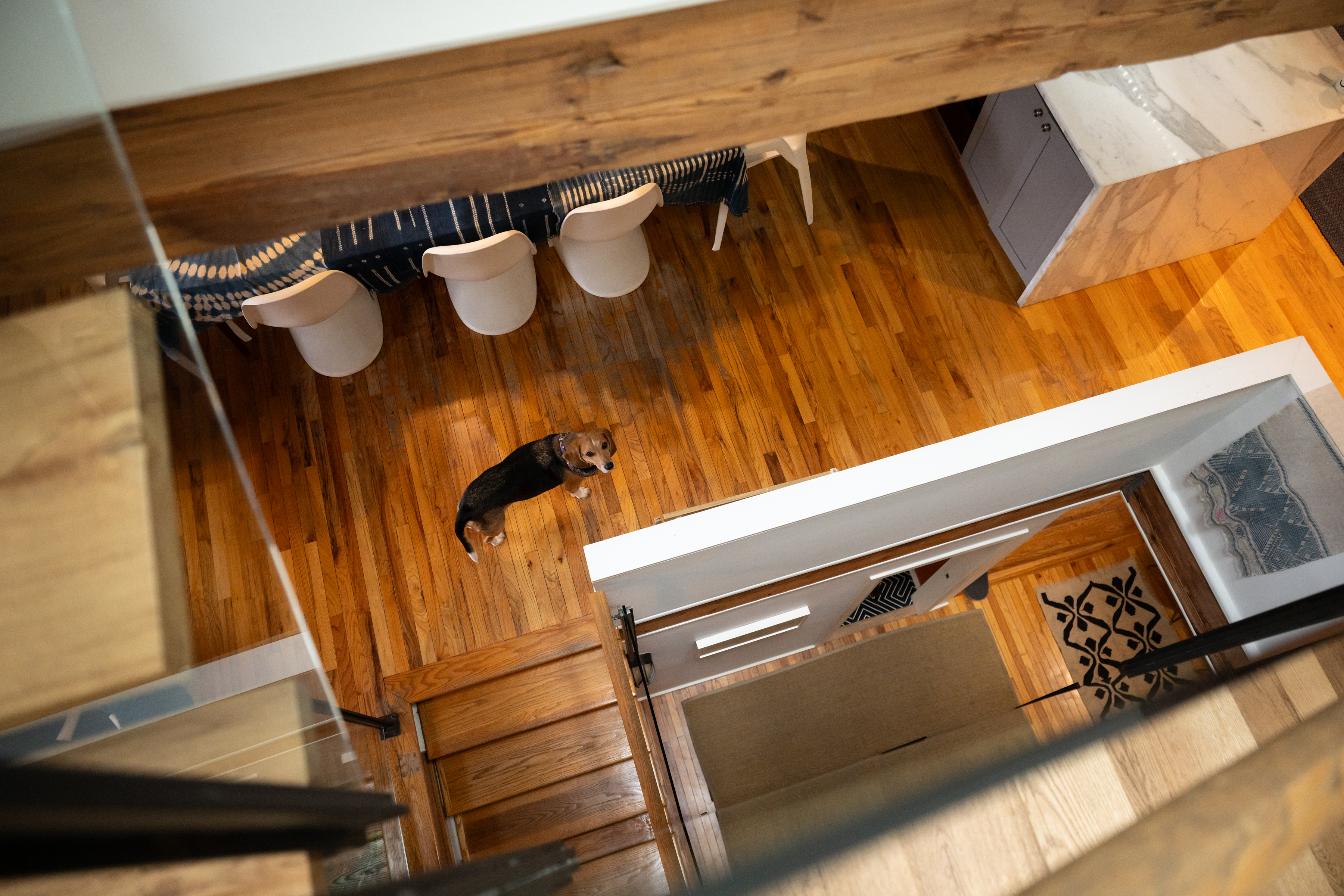
    The family dog, Bill Murray, is seen from a staircase.Erin Blewett / For The Inquirer

    “The paintings are so vibrant in color and every day I look at them and they make me smile,” Missy said.

    The family enjoys spending time in the backyard where their 6-year-old beagle, Bill Murray, likes to frolic. The area, surrounded by a 20-foot bamboo privacy wall, includes a garden house, basketball hoop, and spaces for dining and relaxing.

    “I love living in Bella Vista,” Missy said. “It’s in the city but it feels like I’m in the suburbs because I know all my neighbors and the kids have all grown up together. We feel really lucky.”

    Is your house a Haven? Nominate your home by email (and send some digital photographs) at properties@inquirer.com.

  • Tormund, the viral South Philly cat best known for standing, has died

    Tormund, the viral South Philly cat best known for standing, has died

    Pet loss is a painful and often isolating experience. But for one South Philadelphia family, the end of their cat Tormund’s life is being grieved by thousands of strangers across the internet.

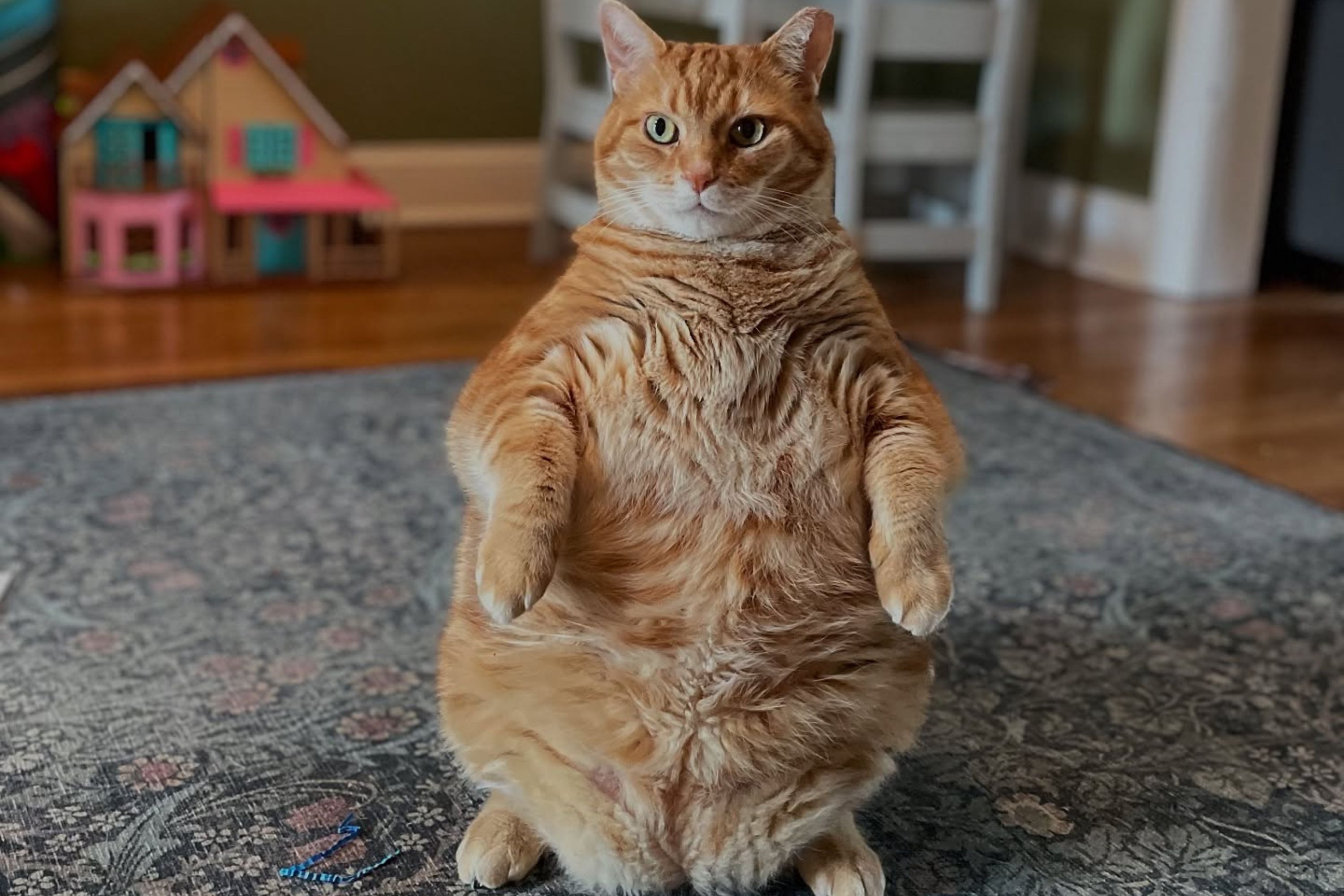
    Tormund, best known as Standing Orange Cat, has died of medical complications, his humans said in a social media post. He amassed nearly 300,000 fans across his dedicated social media platforms because of, well, the funny way he would stand.

    The bulbous orange tabby, with white whiskers, freckles on his lips, and green eyes, was a rescue from the streets — so his exact age was unclear. His owners, Alex and Jeff Holden, began posting photos of Tormund online in 2020.

    In hundreds of photos and videos posted of the chunky feline since, Tormund could be seen perched on his short hind legs, belly protruding, and front arms awkwardly flapping in the front.

    Quickly, the followers came. Comments on social media would call him “rare,” “aloof,” “hilarious,” and “adorable.”

    “We don’t know why he started standing,” the Holdens wrote on Tormund’s website, orangecatstanding.com, which they used to sell stickers and other merch. “We’re just glad he did.”

    His charming standing pose became fodder online for memes, even inspiring a birthday cake carved in the shape of a standing orange cat for Alex Holden’s birthday celebration last year.

    Despite his online virality, Tormund’s owners say he was a sweet, affectionate boy behind the scenes.

    “He would jump on the bed and force me to cuddle,” Alex Holden wrote on social media. “He slept on Jeff’s sweatpants, beside his side of the bed almost every night.”

    And, Garfield-esque appearances aside, Tormund had never tried lasagna. His favorite human foods were popcorn and turkey. The Holdens said he was on an exercise and diet regimen under their care and that the way Tormund stood made him appear larger than he was.

    Last week, the Holdens posted that Tormund’s health appeared to be declining quickly. Veterinarians said he likely had a mass on his spleen, and the cat’s family needed to weigh options fast.

    Within about 72 hours, fans raised nearly $5,000 to go toward Tormund’s ultrasounds, scans, and veterinary care.

    In a Facebook post, Alex Holden wrote that fans’ quick mobilizing efforts gave her family the ability to make decisions without finances being a factor.

    Monday night, she posted the update all pet owners dread.

    “We took Tormund to the vet and it was determined it was time to let him go,” she wrote, explaining that a prolonged vet stay had no guarantees and would be traumatic on the cat who famously already hated going to the vet. “We are absolutely heartbroken and feel his loss around us every minute.”

    Alex Holden added that leftover funds raised for Tormund would go to Jeff Holden’s cousin, Lindsay Gaspari, who is credited as “Tormund’s original fan” and the woman who encouraged Alex Holden to post photos of Tormund standing online.

    Gaspari was diagnosed with an inoperable cancerous brain tumor last year. She has undergone radiation and chemotherapy to slow the cancer’s growth. The Holdens have directed Tormund’s fans to Gaspari’s GoFundMe if they feel compelled to support.

    Alex Holden says she plans to continue posting to Tormund’s Orange Cat Standing social media profiles in time — “when I can look at pics without crying” and plans to do a run of holiday-themed merch.

    “Thank you all for loving him and the community we have created,” she wrote.

    Tormund is survived by “his humans,” Alex and Jeff Holden, their son (known as his “human brother,” Oliver), his cat brothers, Gandalf and Lazlo, and his dog brother, George Costanza.

  • Is this South Philly chef feeding Mark Ruffalo?

    Is this South Philly chef feeding Mark Ruffalo?

    What’s fueling Mark Ruffalo as he gallivants around Delco filming for HBO’s Task?

    Tofu tiramisu and Tupperware containers full of vegan lasagna, courtesy of a South Philadelphia chef.

    Private chef Carly Foglia posted a TikTok video at the end of October alluding to her newest high-profile client: An “A-list actor currently filming in Philly” with a “sweet tooth” and a long list of dietary restrictions.

    “And if you’re as nosy as I am, maybe I’ll let you know who this is for next time,” Foglia teased at the end of the video while panning over an aesthetically pleasing array of colorful lettuce wraps, salads, and rice bowls.

    Foglia’s 43,000 followers wasted no time trying to unmask her secret client.

    “It’s definitely Mark Ruffalo and I’m here for it,” read one comment, which Foglia liked. “Mark Ruffalo would have the more annoying dietary restrictions,” read another, which Foglia — crucially — did not like.

    Reached by phone last week, Foglia confirmed she’s been preparing ready-made meals for Ruffalo since July. That’s when the actor returned to Philly to film season two of Task, the Delaware County-set crime drama from Mare of Easttown creator (and Berwyn native) Brad Ingelsby.

    “We usually meet at a Wawa close to set,” said Foglia. “Isn’t that the most Delco thing ever?”

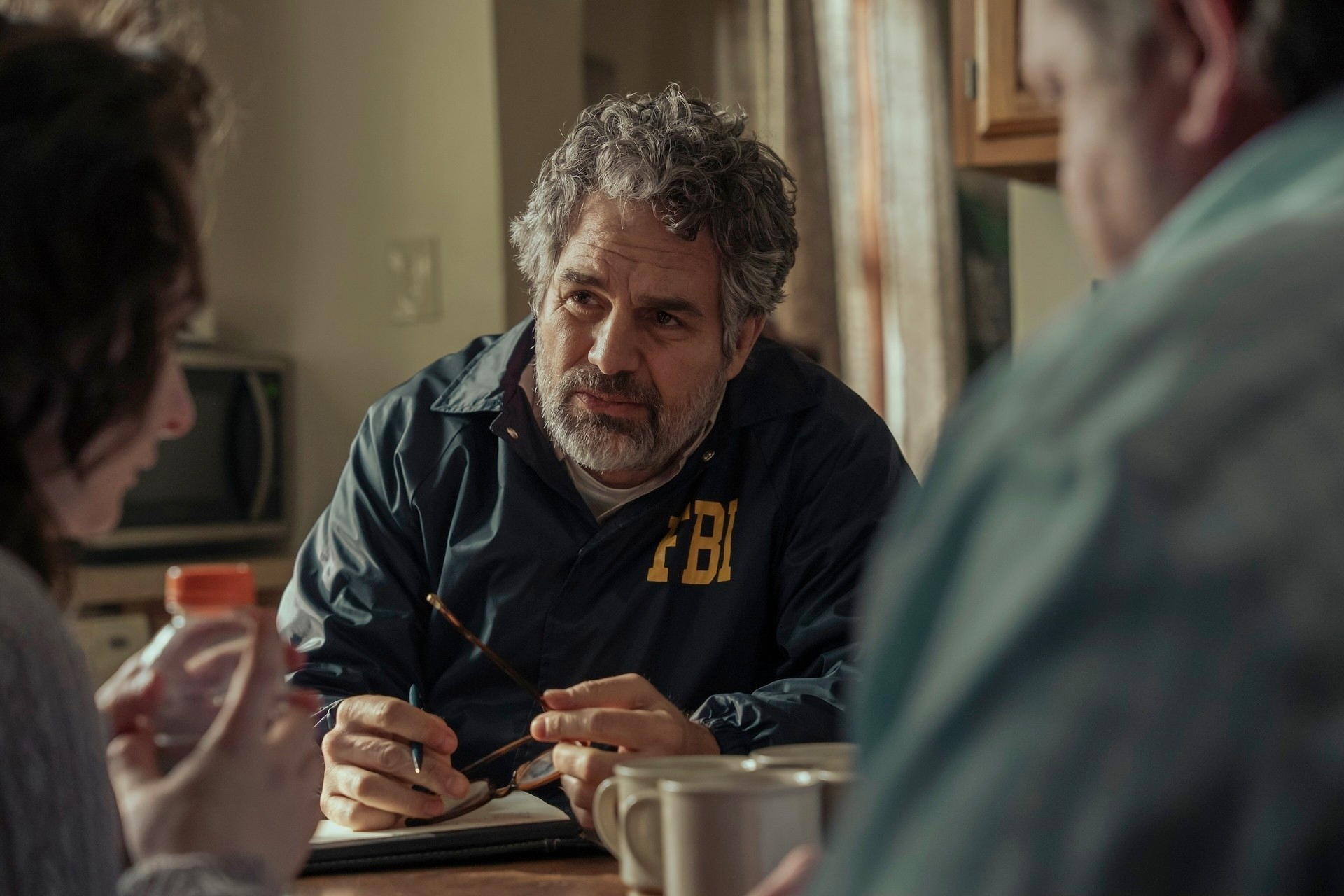
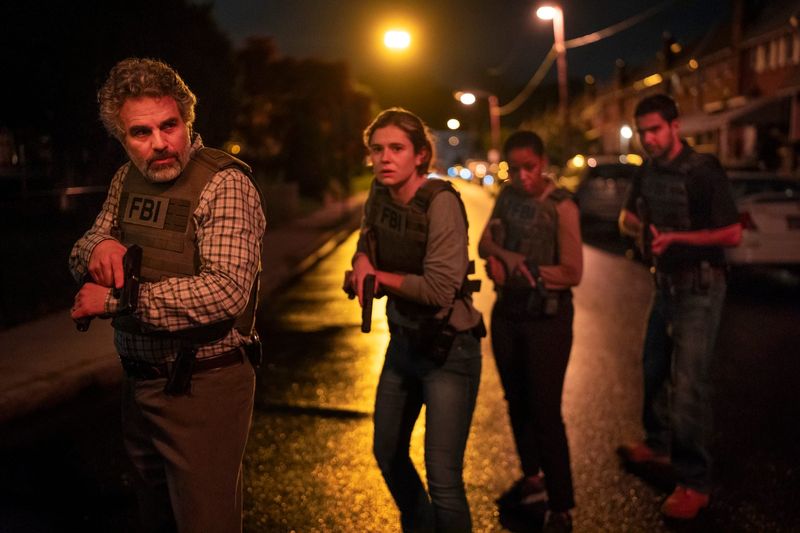
    Ruffalo was nominated for outstanding lead actor in a drama series at this year’s Primetime Emmy Awards for his work as Tom Brandis — a priest-turned-FBI agent — on the first season of Task, which filmed everywhere from a Rita’s Italian Ice & Frozen Custard in Collingdale to the former Philadelphia police headquarters and several iconic Delco dive bars and diners.

    Mark Ruffalo as Tom, Alison Oliver as Lizzie, Thuso Mbedu as Aleah, and Fabien Frankel as Anthony in “Task.”HBO

    Filming for season two is still underway, with Ruffalo and other cast members already spotted in character around Manayunk, Center City, and Upper Darby.

    Foglia, a registered dietitian and meal-prep entrepreneur who lives in South Philly, said she got connected with Ruffalo through one of his assistants, who found her via Instagram. Her business, Prepped By Carly, is a favorite among local influencers, who often post videos of themselves unpacking a week’s worth of her entrees and snacks, which range from miso salmon poke bowls and pumpkin enchiladas to protein-packed cosmic brownies.

    Foglia said she currently has a roster of 60 customers buying weekly meal kits. Ruffalo is by far her most famous, even though she didn’t quite realize who he was at first.

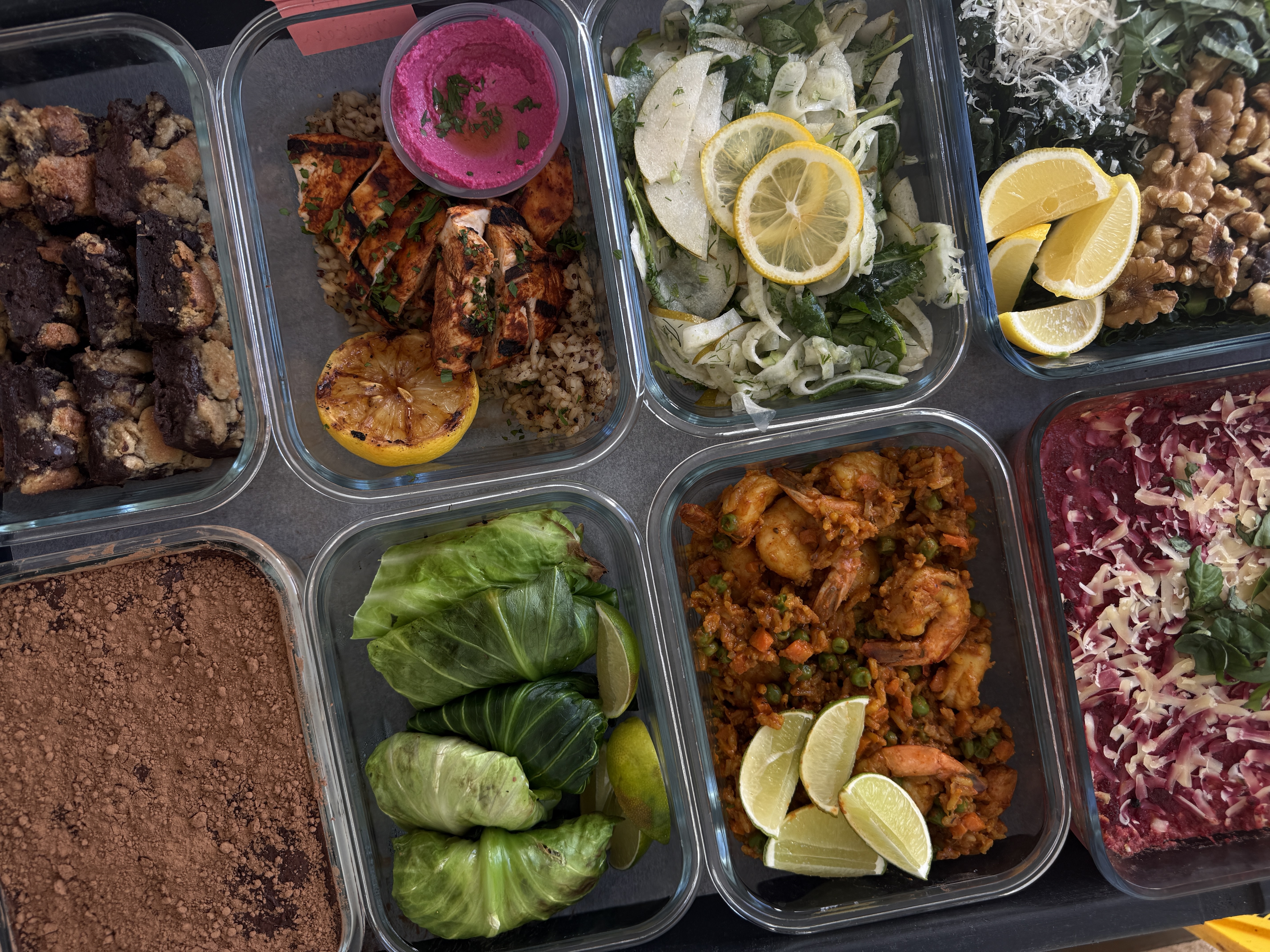
    A week’s worth of meals for actor Mark Ruffalo included tofu tiramisu, vegan lasagna, and lettuce wraps, among other dishes.Courtesy Carly Foglia

    “When I got the job, I called my sister and was like, ‘I’m cooking for Matty from 13 Going on 30!’” Foglia, 30, said. “My sister had to tell me that I would actually be working for the Hulk.”

    Foglia has binged Task three times since she began cooking for Ruffalo. She remains in awe of his Philly accent. “I’m still like, ‘Do we actually sound like this?’” she said.

    Though Ruffalo did admit to eating a lot of cheesesteaks to bulk up for season one, Foglia said the actor is currently on a gluten- and dairy-free low-inflammation diet. It’s required her to get extra creative, since she said Ruffalo likes two things in particular: Italian food and dessert.

    “The first time I dropped food off, he asked, ‘Did you bring anything sweet?’” she recalled. It was the only time Foglia felt like she didn’t deliver.

    A week’s worth of meals for actor Mark Ruffalo included tofu tiramisu, vegan lasagna, and lettuce wraps, among other dishes.Courtesy Carly Foglia

    Since then, she said, the biggest hits have been her tofu tiramisu and vegan caramel cheesecake bites, made with a cashew-based cream cheese alternative.

    Another Ruffalo favorite, per Foglia: her vegetable lasagna, which uses a sauce made from beets and carrots in place of traditional marinara. “I promise that it takes on the taste of red gravy,” she said. She estimates she spends about 10 to 15 hours a week cooking for the Task star.

    Foglia started Prepped By Carly in 2019 as a weekend-only side hustle while getting a master’s in nutrition at West Chester University. Seven years later, she still works from a commercial kitchen near campus, juggling her regular meal-prep business with a handful of private-chef clients — including a Phillies player she refuses to name.

    “People think I’m, like, whipping up soufflés constantly. Sometimes my clients just want chicken fingers,” she said. “It’s not five-star meals every day … it’s not always glamorous.”

    Foglia is holding out hope that she’ll end up at Task’s wrap party, whenever that may be. “I keep manifesting,” she said. “Who knows if I’ll be invited.”

  • A consequential day for democracy, an uneventful day at the Philly polls

    A consequential day for democracy, an uneventful day at the Philly polls

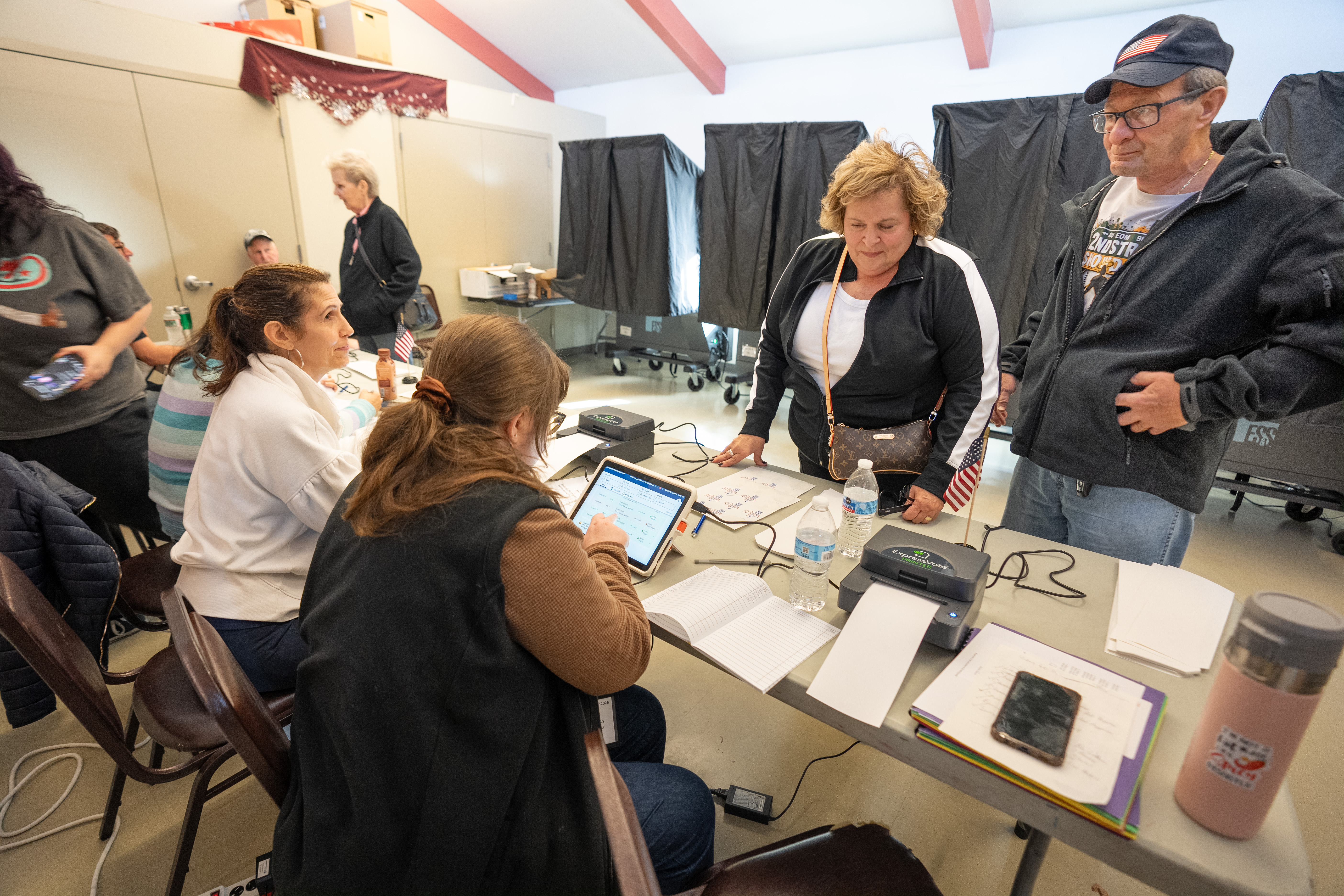
    When I first joined the Office of the City Commissioners back in 2014, I only understood elections as results. Even as I learned all about the process and hard work needed to keep democracy on track, my most important lesson came from veteran administrator Joe Lynch: When you run elections, you don’t care who wins or loses. You just don’t want it to be close.

    On Tuesday, it wasn’t even. Philadelphia, already a Democratic stronghold, reflected the mood of the national electorate, which sharply turned against the GOP.

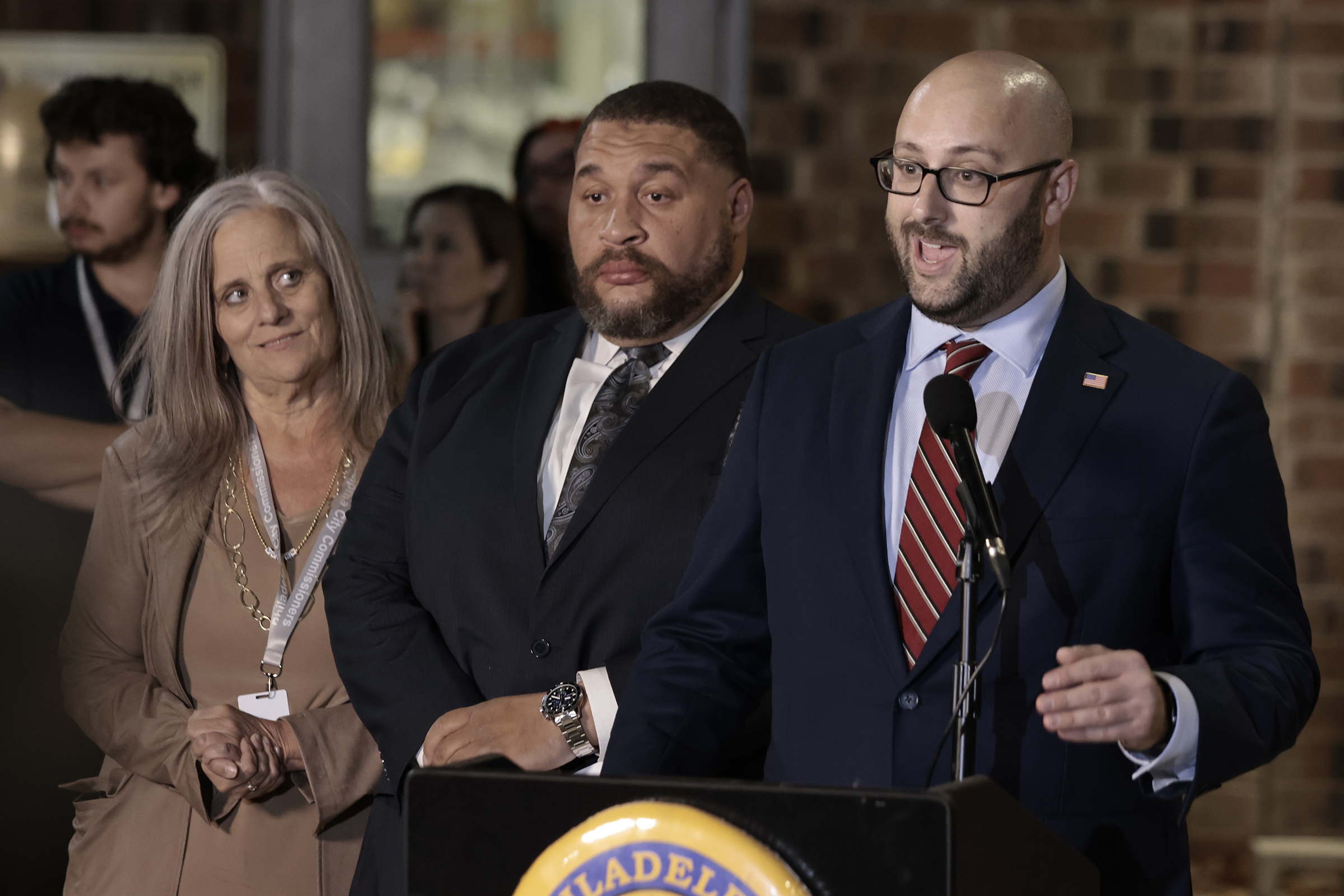
    At the end of Election Day, after the bulk of the workers had been sent home, Democratic City Commissioners Omar Sabir and Lisa Deeley expressed similar sentiments. “The day was as beautiful as the weather,” Deeley told me. The election was smooth, “just like the weather,” Sabir said.

    That doesn’t mean there weren’t a few clouds, though.

    Commissioner Seth Bluestein, the panel’s Republican member (and a friend since our days at Central High School), compared Election Day to planning 685 weddings — the number of polling places in the city — on the same day. For voters, even the smallest inconvenience can generate anxiety about whether their ballot will be counted. For candidates, this thinking can turn conspiratorial.

    That’s where Bluestein comes in. Both now and in his previous job as deputy to then-Commissioner Al Schmidt — who, as secretary of the commonwealth, is now responsible for elections in Pennsylvania — Bluestein has become widely known as a go-to troubleshooter, with Republicans, mainstream Democrats, and left-leaning insurgents alike calling him for advice and information.

    Thanks to Gov. Josh Shapiro’s 20-plus-point win, this election was a relatively light lift for the commissioners and their staff. At around 10:30 p.m., Bluestein’s deputy, Eric Kapenstein, released most of the workforce. They had already counted the 95,000 mail ballots received. Six years after the introduction of no-excuse mail voting in Pennsylvania, the staff has mastered the process.

    City Commissioners Lisa Deeley, Omar Samir, and Seth Bluestein give election updates to the media at Philadelphia’s election warehouse on Roosevelt Boulevard in 2024.Elizabeth Robertson / Staff Photographer

    Despite some concern over the presence of U.S. Department of Justice poll monitors, the biggest voter suppression worry I heard about Tuesday was a data error. Out of the roughly three million texts sent by the Pennsylvania Democratic Party, around 3,000 went to the wrong person. These voters were given incorrect information on where to vote.

    Clearly, given the Democrats ended up winning control of the General Assembly, this did not have a decisive effect.

    That’s not to say there was nothing to do. After starting his workday at 6 a.m. and spending the morning observing the count at the voter registration warehouse in far northeast Philadelphia, Bluestein took me along as he visited polling stations around the city.

    Most of these visits were done in conjunction with activists from Asian Americans United and the Asian American Legal Defense and Education Fund. After years of lobbying, Philadelphia added Chinese to the list of ballot languages available in 2022.

    In the past, representatives from these groups were able to enter polling places to verify that translators were present and competent, interpretation cards were properly displayed, and to make suggestions for improvements in the future. But because these groups are not affiliated with a campaign or political party, recent state guidelines meant they were not eligible to enter the polls this year.

    This limited their ability to check on polling stations, so Bluestein offered to do it for them. Across Asian American communities in Northeast Philadelphia, Center City, and South Philadelphia, he checked on conditions. Because the addition of Mandarin is still relatively fresh, poll workers sometimes forget to post the pink sample ballot with the new language outside the polling place entrance. The interpretation card was also judged too small.

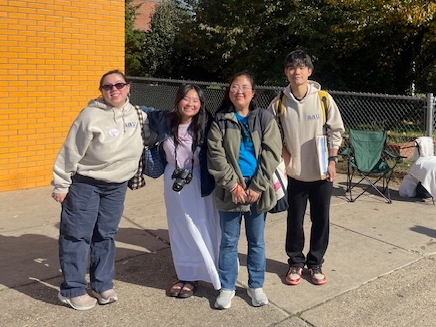
    Volunteers from Asian Americans United outside Mayfair Elementary School on Election Day.Daniel Pearson

    While these issues may seem trivial, activists like Shihong Lin and Wei Chen with Asian Americans United understand that language access is a key part of democracy.

    The last stop on Bluestein’s polling place tour was a division in the Far Northeast. Out of the three congressional races, three state Senate races, the gubernatorial race, and 26 state House races, only the contest between Republican Martina White and Democrat Rob Gurtcheff in the 170th District was anywhere close to competitive.

    After hearing reports that polling machines may have been temporarily unattended, Bluestein visited the division. Upon reviewing the clerk book, pollbooks, and voting machines, he defused any concerns. White was reelected by roughly 15 points.

    For what ended up being a widely consequential election across the country and the Keystone State, Election Day in Philadelphia was satisfyingly low-key.

    The biggest issues of the day were a translation card that could be bigger, an electrical outage at Germantown’s Happy Hollow Recreation Center, and a texting glitch. The federal election monitors, a source of alarm for many, had no impact as far as I could tell. And threats of immigration agents at the polls did not materialize.

    Spending the day with Bluestein and remembering the elections I’d worked beside him in the past — including the 2020 race when Philadelphia came under siege by election deniers — I was struck by how the job demands patience and understanding.

    Voters, poll workers, and activists need to have election rules explained to them without raising their ire, making them feel ignored, or getting into a back-and-forth about how things should be.

    Still, Bluestein’s efforts and those of his fellow commissioners, although effective, are just one piece of the puzzle. While election officials do all they can to educate the public, prevent fraud, and improve operations, it is incumbent on voters to accept their answers.

    We’ll have to wait until the next fiercely contested election to see if they do.