An eclectic crop of new restaurants has opened over the last several months across the Philadelphia suburbs in Pennsylvania, New Jersey, and Delaware. Some — like the three sports bars in Camden County alone — are breathing new life into familiar addresses. Others mark ambitious first ventures.
Here are 18 of them, from Phoenixville to Gloucester Township to Wilmington.
Pennsylvania
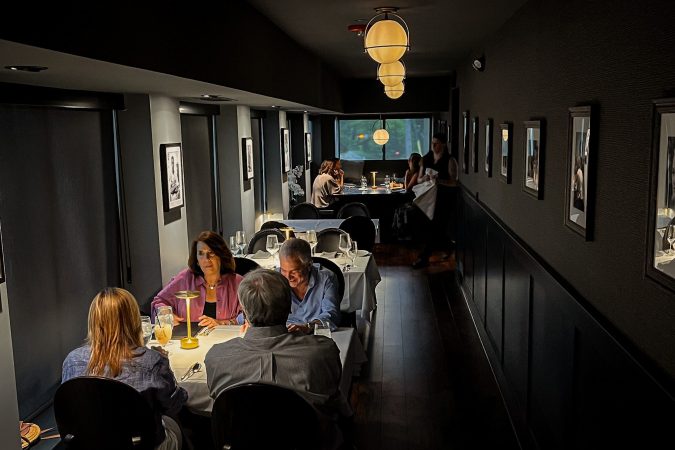
Academy Grill (424 S. Bethlehem Pike, Fort Washington): Michael Sloane and Jay Rosenthal’s group, Fine Line Dining, has transformed the former Cantina Feliz into a polished white-tablecloth destination. Jeffrey Power, longtime chef at the erstwhile Dettera in Ambler, oversees a menu of house-made pasta, seafood, and steaks.
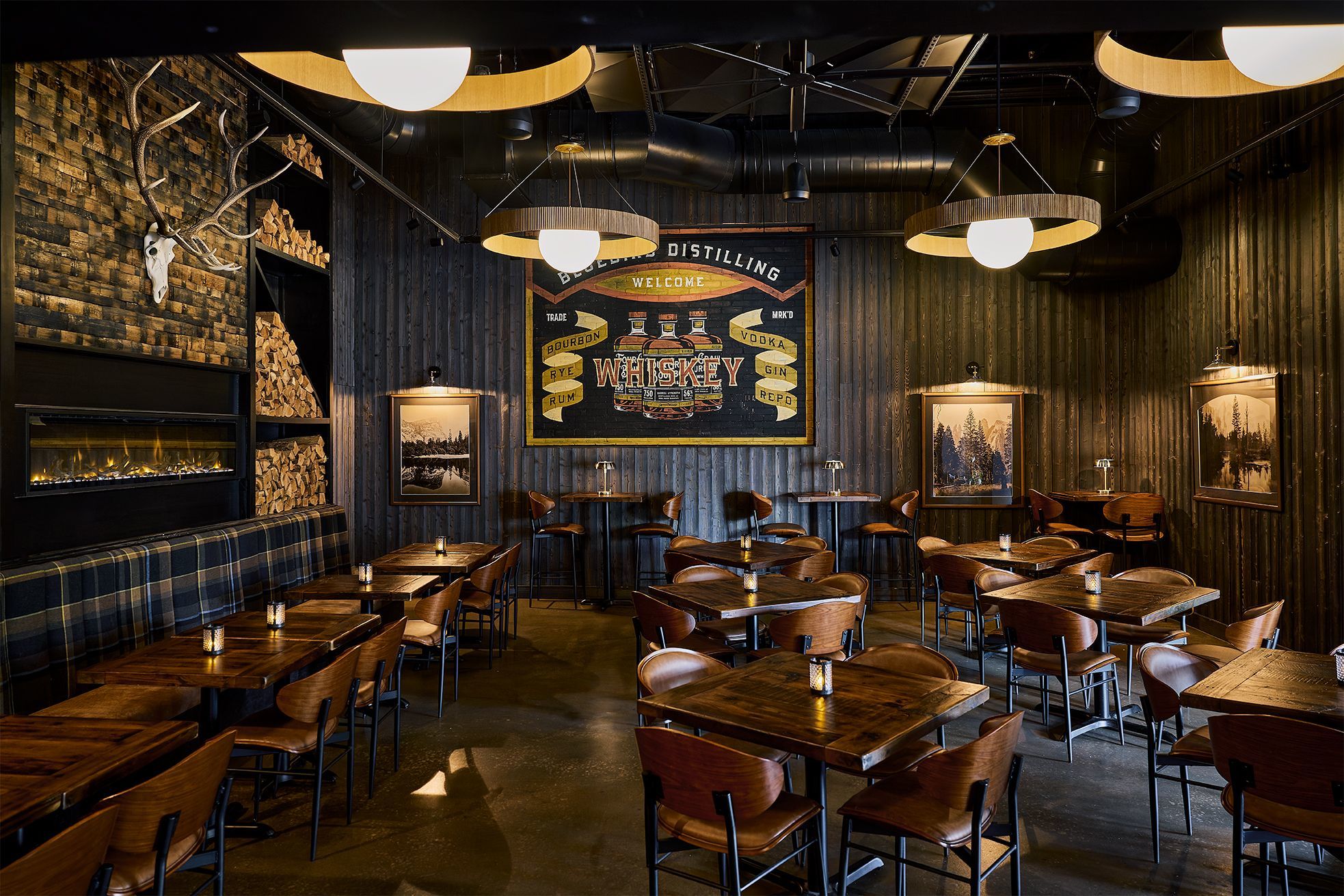
Bluebird Distilling has reopened with a new neo-Neapolitan pizzeria and restaurant.Photos courtesy of Ed Newton
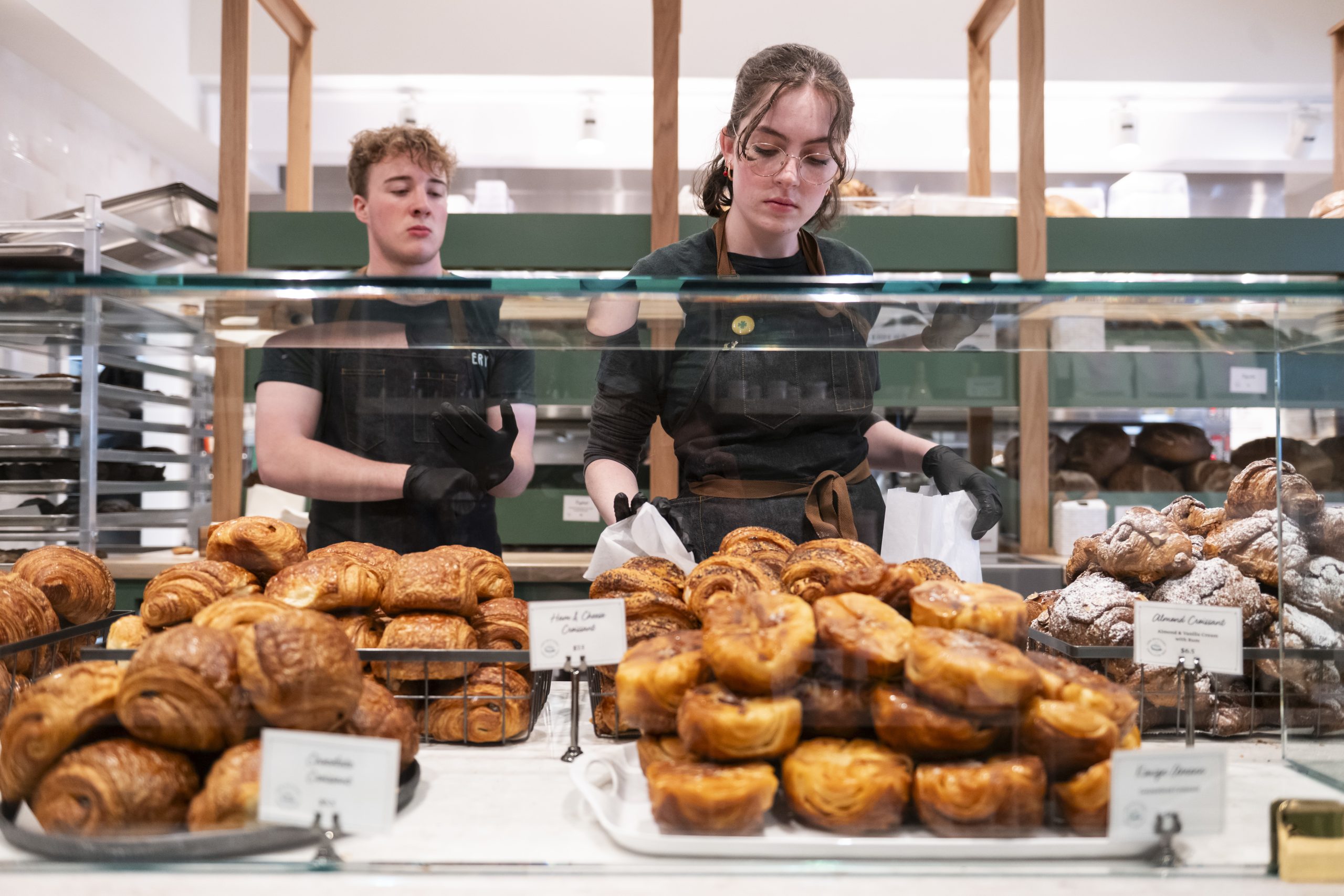
Noah Clifford (left) and Sofia Siano working the pastry case at the Buttery in Bryn Mawr.Allie Ippolito / For The Inquirer
The Buttery Bryn Mawr (836 W. Lancaster Ave., Bryn Mawr): The Malvern bakery-cafe opened its Main Line expansion with 82 indoor seats and daily service from 7 a.m. to 5 p.m. The menu includes sourdough breads, pastries, Turkish eggs (poached eggs cooked in garlicky yogurt with a drizzle of spicy butter), sandwiches, and seasonal lunch dishes, plus grab-and-go foods after the kitchen closes at 3 p.m.
Cleavers (103 Squire Dr., Newtown Square): The Center City cheesesteak shop grand-opened its second location last month at Ellis Preserve, offering cheesesteaks, chicken cheesesteaks, burgers, sandwiches, fries, and milkshakes.
The Coffee Station (1117 Smithbridge Rd., Glen Mills): The Delaware County breakfast-and-lunch operator took over the former Meghan’s Restaurant, which had occupied the building for 27 years. The menu includes omelets, pancakes, breakfast sandwiches, burgers, hoagies, wraps, soups, and salads. Other locations are in Morton and Garnet Valley.
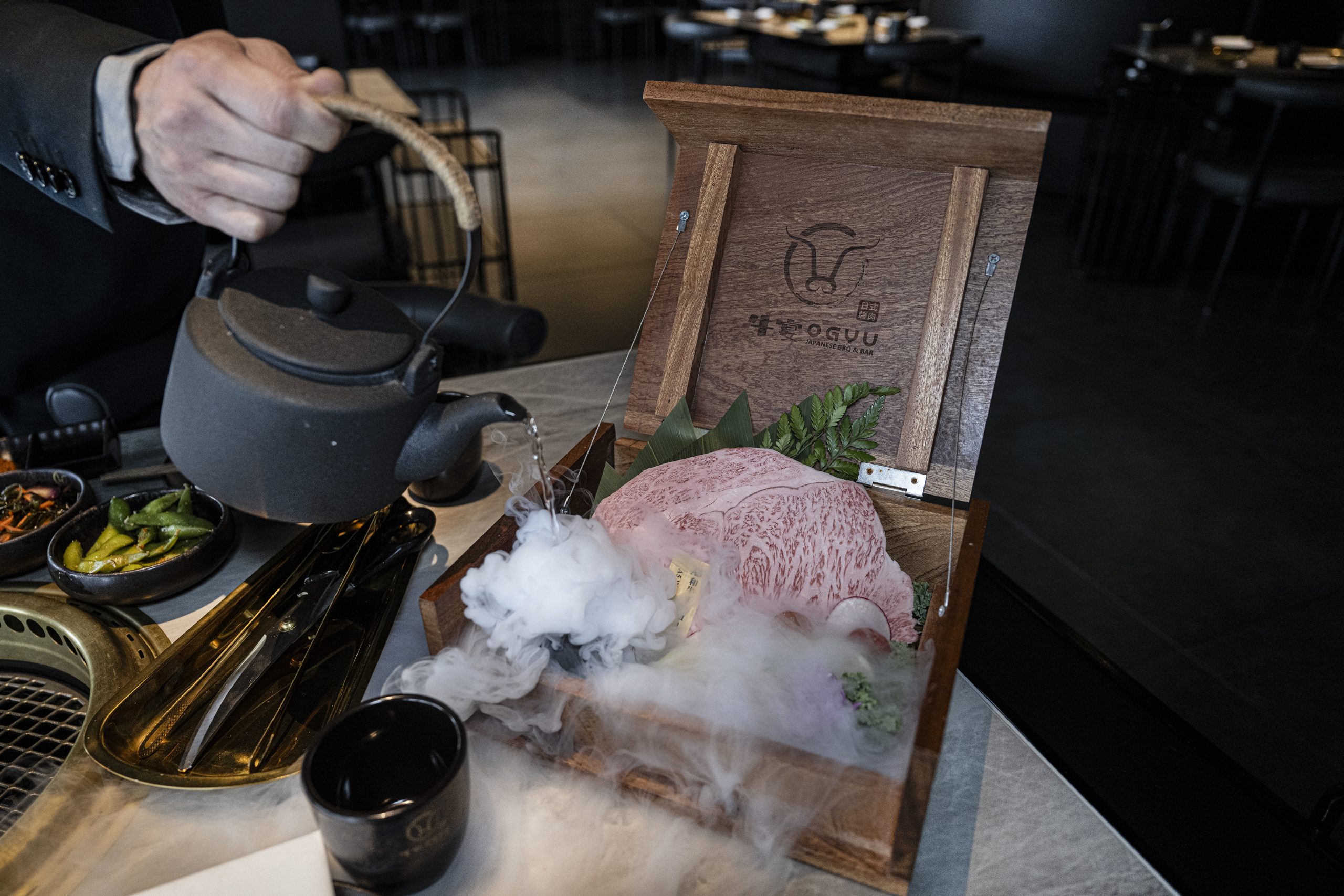
Tabletop and tableside cooking are offered at Ogyu Japanese BBQ.Jose F. Moreno / Staff Photographer
Ogyu Japanese BBQ & Bar (60 Greenfield Ave., Ardmore): Restaurateur Sam Li’s upscale yakiniku restaurant occupies the former Iron Hill Brewery. Customers grill premium Wagyu and other meats on tabletop burners, choosing from fixed-price packages or à la carte selections. The dramatically remodeled space includes black-and-gold finishes, marble-paneled walls, a large bar, and private dining rooms.
Upper Darby’s Tina Fey offers Jimmy Fallon a slice of Pica’s pizza on the “Tonight” show in 2014.Lloyd Bishop / NBC
Pica’s Italian Market (1101 Sussex Blvd., Broomall): After closing its landmark Upper Darby dining room earlier this year, the Pica family soft-opened this mostly takeout shop in a Delco light-industrial park, carrying the restaurant’s signature square pizzas, sandwiches, prepared foods, and other Italian specialties. Pica’s, which hit the national radar in 2014 when locally raised Tina Fey sampled its pizza on the Tonight show, traces its roots to Frank Pica Sr.’s West Philadelphia pizzeria. There’s a West Chester location, too.
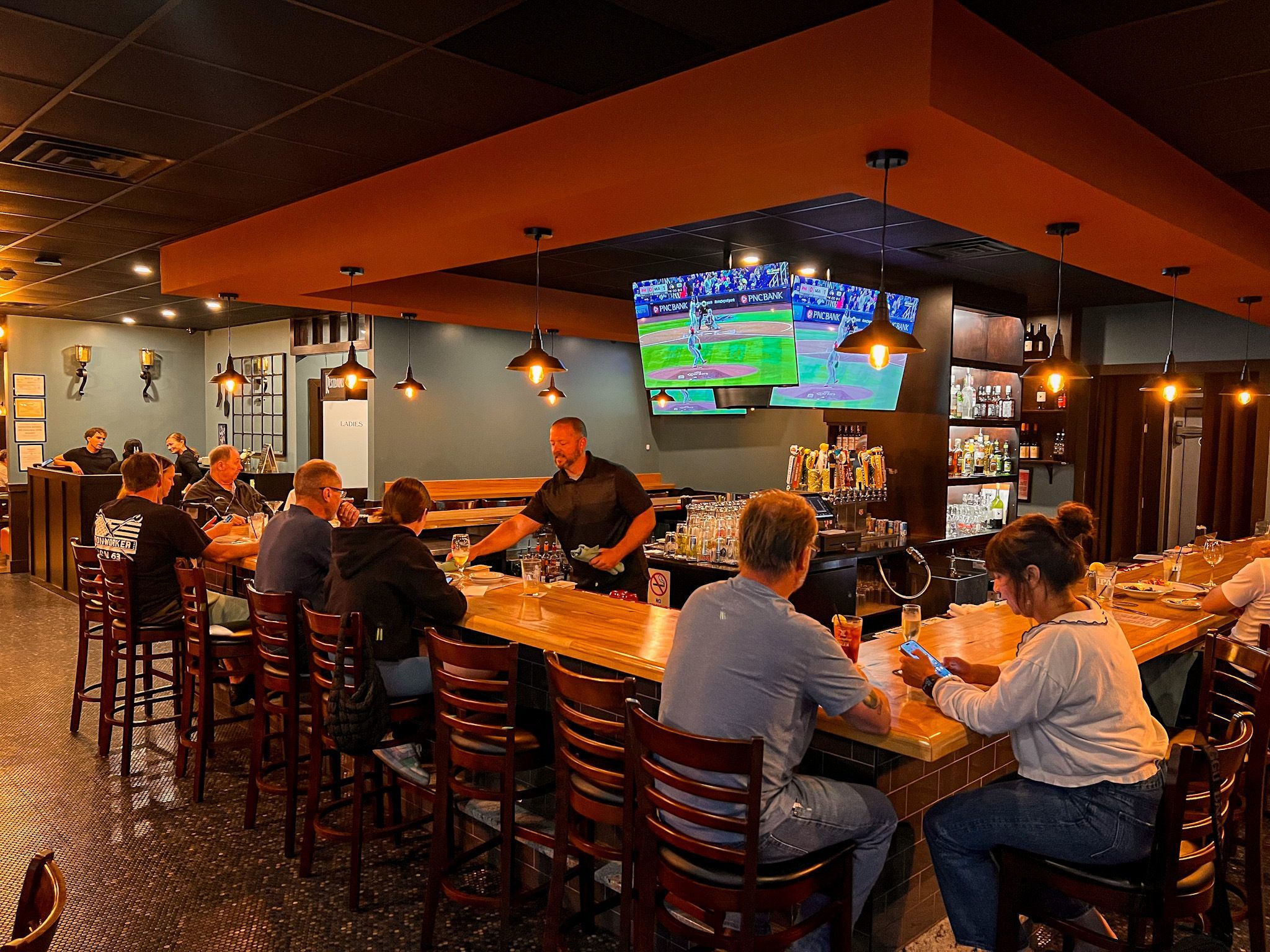
P.J. Whelihan’s (2920 S. Eagle Rd., Newtown): The regional sports-bar chain took over the former Iron Hill Brewery at the Village at Newtown with its signature wings, burgers, sandwiches, salads, and American entrees, backed by numerous televisions and a broad draft-beer selection. Most of Iron Hill’s existing layout was retained.
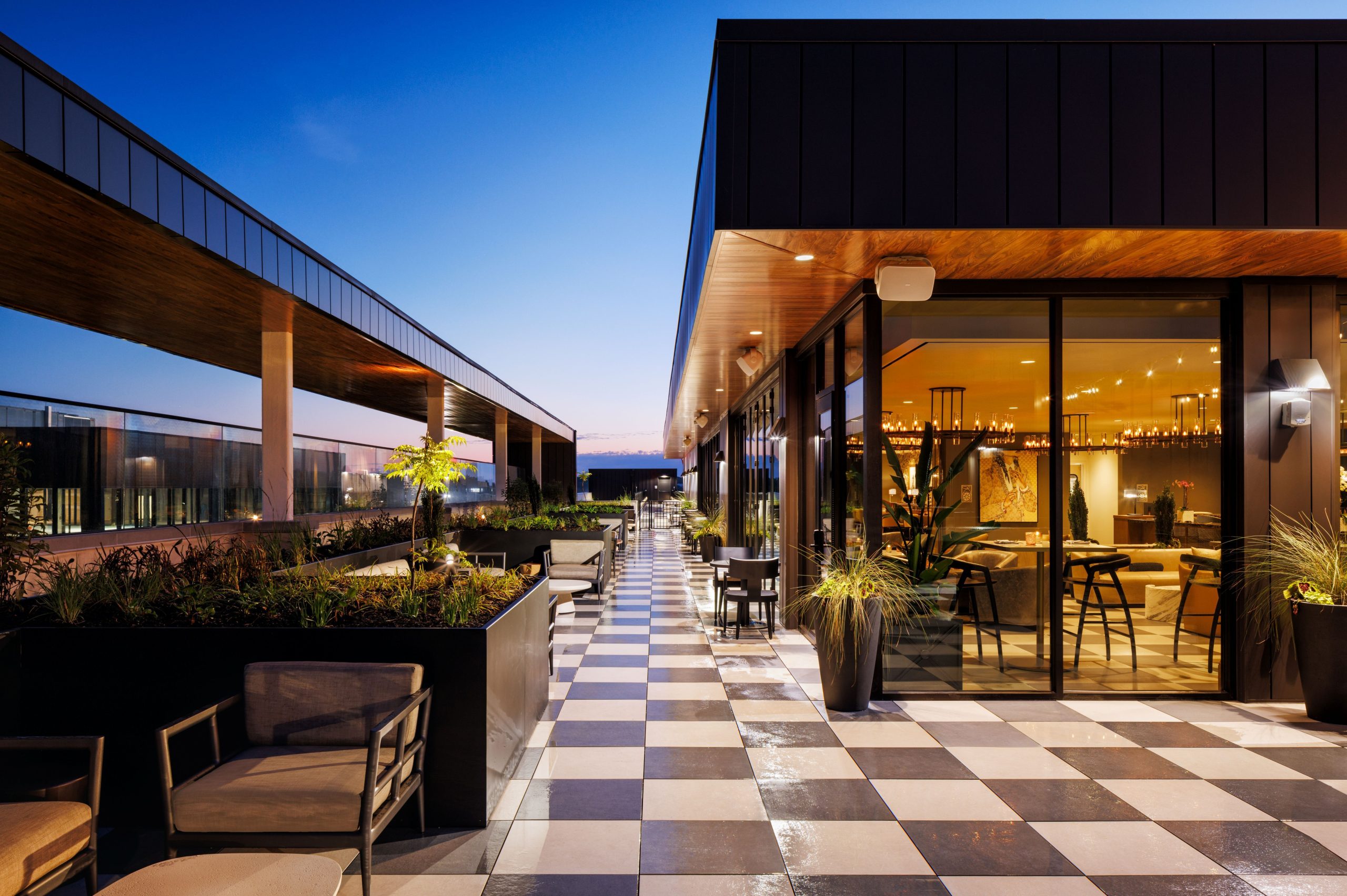
Pomelo Rooftop Terrace at the Brandywine, 165 King of Prussia Rd., King of Prussia.The Brandywine
Pomelo Rooftop Terrace (165 King of Prussia Rd., Radnor): This expansive rooftop bar and lounge atop The Brandywine hotel in Radnor (with 136 seats, inside and out) will grand-open Aug. 8 with chef Michael Davies’ menu of shareable plates (e.g. oysters, scallop crudo, a smash burger, grilled branzino, lion’s mane mushroom cake), raw bar, botanical-focused cocktails, wine, and beer. Weekend brunch begins Aug. 22.
Porter (34 E. Butler Ave., Ambler): This newcomer is in the former Gypsy Blu space on the first floor of Ambler’s historic former Wyndham Hotel, offering contemporary American cooking in a candlelit, vintage-inspired dining room. Menu includes oysters, pasta, risotto, seafood, and meat dishes. Gaslight, a separate craft-cocktail bar with small plates, is upstairs.
Rick’s Tavern (201 W. Seventh Ave., Conshohocken): Chef Derek Davis runs the show at Rick and Gale Mahoney’s modern tavern on the rebuilt site of Pizza Time Saloon and Old Time Saloon. The two-story restaurant honors those neighborhood institutions with wood-fired pizza while adding house-made pasta, cocktails, private-event space, and live music upstairs on Friday and Saturday nights.
The bar at the Scratch Kitchen by Gallo’s, 575 Horsham Rd, Horsham.Michael Klein / Staff
The Scratch Kitchen at Gallo’s (575 Horsham Rd., Horsham): The Harvey family, owners of Gallo’s Seafood in Northeast Philadelphia, is behind this casual, roomy neighborhood restaurant in the former Farm & Fisherman Tavern. Chef Bob DeLange, the owners’ son-in-law, combines seafood dishes from Gallo’s with burgers and bar food inspired by Harv’s Burger Bar, Gallo’s adjoining Northeast Philadelphia tavern.
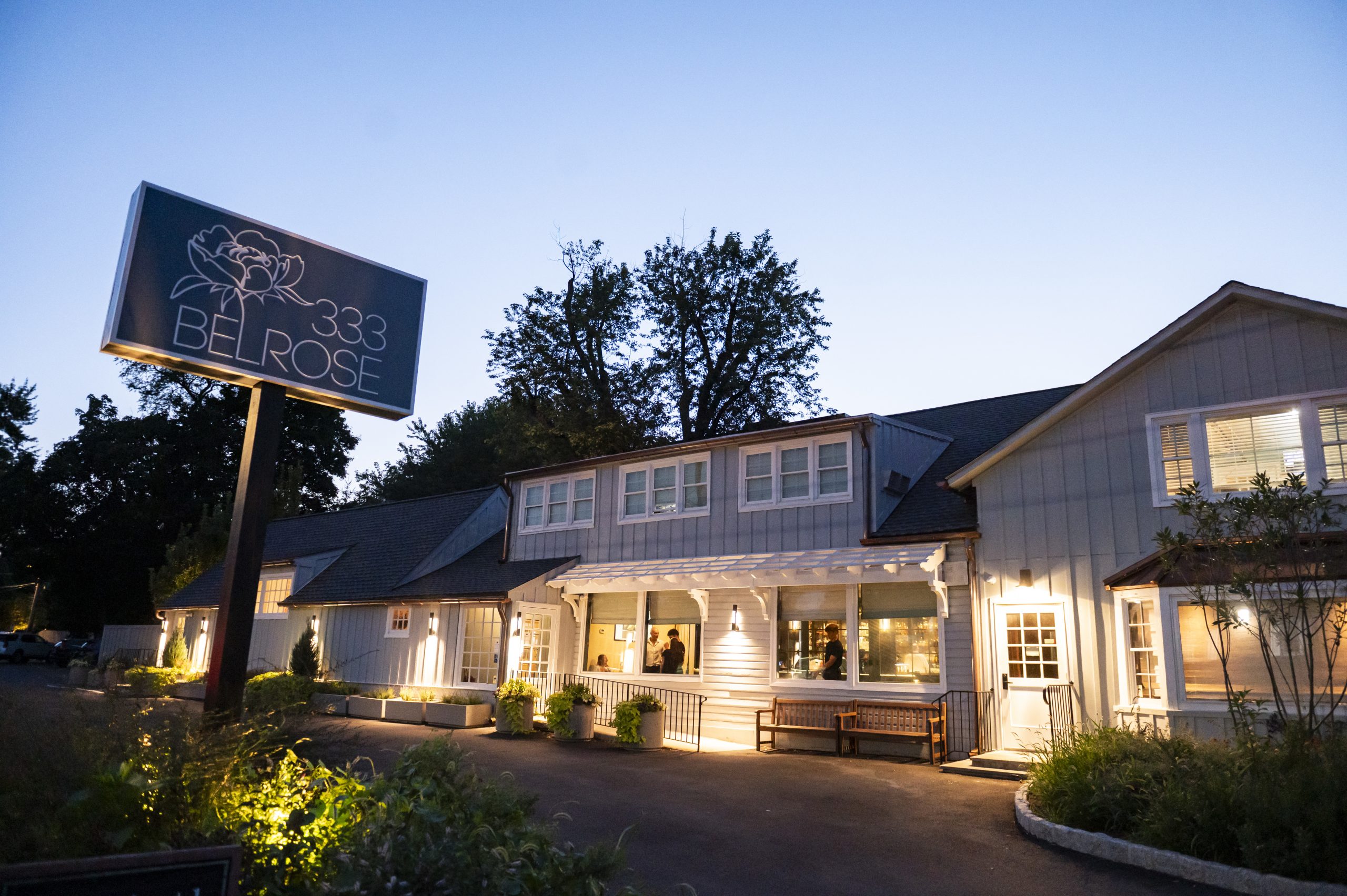
The exterior of 333 Belrose in Radnor’s St. Davids’ area.Allie Ippolito / For The Inquirer
333 Belrose (333 Belrose Lane, Radnor): The longstanding contemporary American restaurant has reopened under chef Ross Essner after an extensive renovation that flipped the positions of the bar and main dining room.
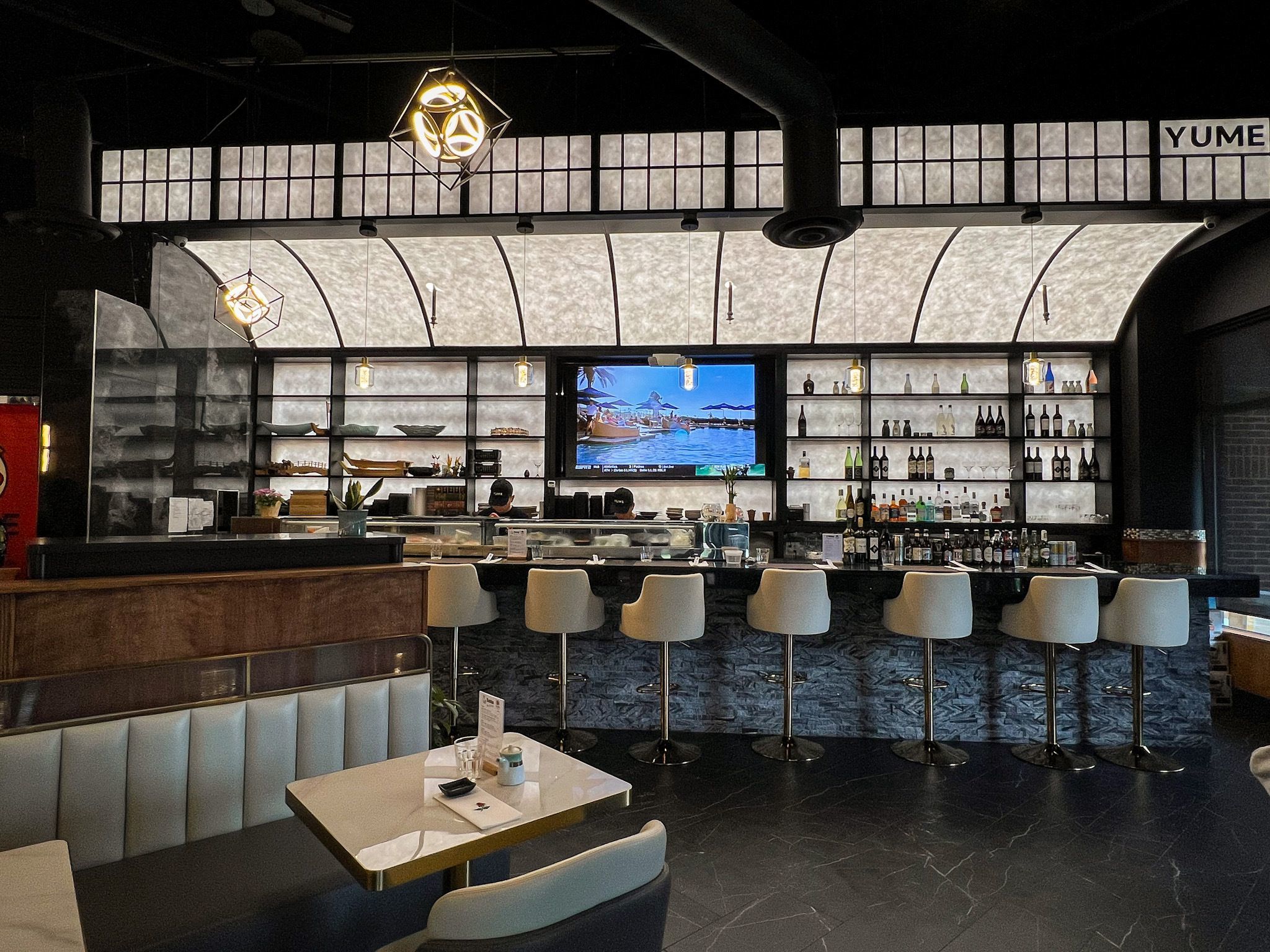
Yume Sushi in the Shoppes at English Village, 1460 Bethlehem Pike, North Wales.Michael Klein / Staff
Yume Sushi (1460 Bethlehem Pike, North Wales): This Japanese restaurant has opened in the Shoppes at English Village, down the row from Trader Joe’s. Co-owner and head chef Kevin Wan brings about a decade of sushi experience to the venture. The menu centers on sushi, sashimi, rolls, and Japanese-Asian fusion dishes.
New Jersey
Flying Pig Tavern & Tap (1300 Blackwood-Clementon Rd., Gloucester Township): The sprawling former Favorites off-track-betting building has come up as the fifth unit in a growing group. Menu of pizzas, burgers, wings, tacos, and entrees shares billing with live bands, darts, shuffleboard, and a covered tiki bar. A sixth location is planned for the former Andalusia Bar & Grill space in Bensalem.
Home Team Tavern (267 S. Black Horse Pike, Mount Ephraim): Greg D’Alesio has turned the former Mount Ephraim Bar & Grill into a compact, sports-themed neighborhood tavern. Its scratch kitchen serves pizzas, burgers, wings, sandwiches, and elevated bar food, alongside draft cocktails and beer.
Thirsty Turtle Tavern (270 White Horse Pike, Barrington): This new concept from SAS Restaurant Group in the former Chuck Lager space features an open kitchen, burgers, pizza, sushi, cocktails, draft beer, and an outdoor patio behind garage doors. It operates daily; weekday happy hour and weekend brunch are expected to begin in the fall.
Delaware
Ezme (625 N. Market St., Wilmington): Chef Antimo DiMeo and the Bardea Restaurant Group opened this coastal Mediterranean restaurant across from Bardea Food & Drink. Inspired by cuisine from Turkey, Greece, and the Aegean coast, the menu encompasses mezze, raw-bar dishes, handmade breads, grilled seafood, and fire-driven preparations accented with herbs, citrus, and spices. Both à la carte and tasting-menu formats are available.
A prosecutor dropped felony rape and sexual assault charges against Philadelphia-area doctor John Smyth Michel on Tuesday after his accuser failed to appear at his criminal trial.
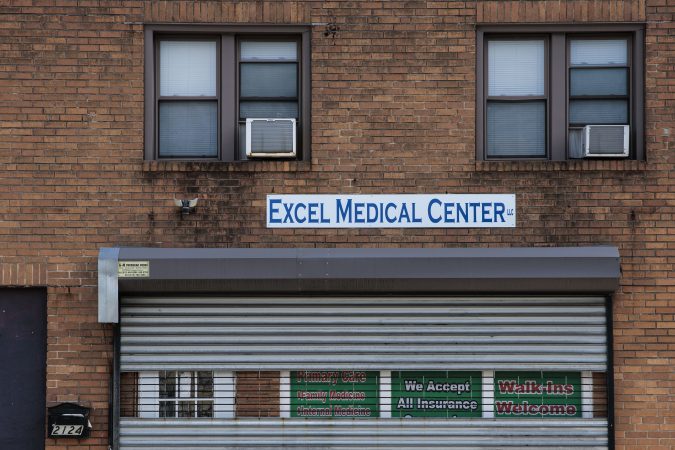
The woman’s testimony against Michel, the former medical director of Excel Medical Center, was key because the case lacked physical evidence. The then-38-year-old patient from Northeast Philadelphia had claimed Michel raped her during a 2024 office visit.
Michel’s criminal defense lawyer, Andrew Gay Jr., told jurors the sex was a “terrible” mistake but consensual.
“As terrible of a decision as it could have been for a physician to make,” Gay said during his opening statement Monday on the trial’s first day, “it was an entirely consensual act between two adults.”
Gay declined to comment on Michel’s behalf after Common Pleas Court Judge Chesley Lightsey dismissed the case at the prosecutor’s request.
“This case is done,” Lightsey declared before excusing the jury empaneled at the city’s Criminal Justice Center.
The stakes were high for the 56-year-old doctor from Jenkintown on two fronts: He faced up to 20 years in prison on the rape charge alone and loss of his medical license, if convicted.
Under state law, doctors convicted of sexual offenses are prohibited from being licensed and practicing medicine.
The Pennsylvania State Board of Osteopathic Medicine, which regulates and oversees licensure of osteopathic doctors like Michel, suspended his license last year after he apologized for having sex with a patient — a violation of state licensure laws. As of Tuesday, his license remained suspended, according to a state spokesperson.
Excel Medical Center, which Michel founded, is currently closed, Gay said. The center was composed of 12 locations in the Philadelphia region, with more than 200 employees and about 20,000 patients.
In a letter to the medical board last year, Michel described the October 2024sex with the patientas a “lapse in judgment” for which he is “profoundly contrite.”
“I fully acknowledge that I crossed a professional boundary,” Michel wrote to board members last year. “I recognize that boundaries are not only a legal and ethical obligation but a critical element of safe, respectful, and therapeutic care. I make no excuses for my actions.”
Claims of rape
The patient, identified in police records by the initials “D.R.,” had accused Michel of kissing her during a May 2024 exam at his East Mount Airy office on Stenton Avenue. She told him “no,” left the office, and did not report the kissing incident.
About five months later, she went to an appointment at Michel’s North Philadelphia office on West Diamond Street. During the Oct. 14, 2024, visit, she said, Michel raped her with such force that her head banged twice against the exam room wall. She pushed him off her and fell to the ground crying, according to criminal court records.
In early November 2024, she told her husband what had happened and subsequently filed a police report, records show.
Late last year, a second woman accused Michel of sexual abuse.The woman had worked for Michel as a medical assistant from 2015 to 2019 at his East Mount Airy office and at a location in Germantown on Chelten Avenue.
The former employee claimed that beginning in 2018, Michel touched her breasts over her clothing on multiple occasions while she was working in the office. He additionally groped her vagina over her clothing before she quit in 2019, according to a document filed in court last year by the Philadelphia District Attorney’s Office.
Prosecutors never charged him in connection with those accusations, but argued the former employee’s claims bolstered their patient rape case, given there were no witnesses. Gay, Michel’s lawyer, had declined to comment after the second woman came forward.
A no-show witness
In the patient’s case, Philadelphia police arrested Michel in February 2025 after prosecutors charged him with three felonies — rape, sexual assault, and involuntary deviate sexual intercourse — and two misdemeanors — indecent exposure and assault. He was released on bail.
Assistant District Attorney Allison Christian dropped all but the rape and sexual assault charges prior to the trial. Michel pleaded not guilty.
The former patient had been scheduled to testify on Tuesday morning. Christian told the judge that she had spoken with her the night before. She sounded “very emotional” and seemed to be having a “nervous breakdown,” but said she would testify, Christian said.
“I’ve been calling her since 8:15 a.m. this morning every 15 minutes,” Christian said. “I haven’t heard from her.
“I’m not going to issue a bench warrant for a rape victim,” she said before dropping the charges.
A path to practicing medicine
Prior to the patient’s accusations, Michel had no criminal complaints and no disciplinary history against his medical license, state records show.
Michel agreed to be disciplined by the board of osteopathic medicine for violating a state law prohibiting sexual misconduct, according to a June 2025 agreement.
The discipline included a $4,000 civil penalty and an indefinite suspension of his medical license for a minimum of 24 months, followed by probation, according to a spokesperson for the Pennsylvania Department of State, which oversees licensing boards.
While Michel is on probation, a chaperone must be physically present when he treats female patients and a separate monitor must oversee his practice. Michel also must complete in-person classes on physician-patient boundaries and 15 hours of continuing education on ethics, the disciplinary agreement says.
The state spokesperson on Tuesday said the board will reinstate Michel’s license to “non-suspended, probationary status” once he has met the agreement’s reinstatement conditions.
The same weekend America turned 250, I also watched a mosque burn in Northeast Philadelphia, a governor threatened with violence he’d already survived, and masked men march past the U.S. Capitol chanting “Reclaim America.”
None of it happened in the same city or involved the same people — and that is exactly why it matters.
This image provided by Commonwealth Media Services shows damage after a fire at the Pennsylvania governor’s mansion while Democratic Gov. Josh Shapiro and his family slept inside on April 13, 2025, in Harrisburg, Pa.Commonwealth Media Services
Read that twice. A man was arrested for describing arson against a governor’s family as an act of sympathy.
On the National Mall, hundreds of Patriot Front members, a group the Anti-Defamation League calls the most visible white supremacist organization in the country, marched in coordinated uniforms, carrying Confederate flags, chanting about reclaiming a nation they insist belongs to them alone. They did this in broad daylight, on Independence Day, and walked away unbothered.
It doesn’t have to be this way. Pennsylvania has offered a glimpse of the right response to hate.
After mailers went out to Upper Bucks County voters attacking a Democratic candidate as the pick of the “corporate, Israel-first Democratic party,” alongside a photo of State Sen. Steve Santarsiero, who is Jewish, with an Israeli flag under his face, he called the language exactly what it was: “an antisemitic trope that falsely implies Jewish Americans are disloyal to the United States.” Republican Attorney General Dave Sunday agreed, as did State Rep. Dan Frankel (D., Allegheny) and State Sen. Judy Schwank (D., Berks), who called the mailers “unacceptable and dangerous.”
That’s what the response to hate should look like every time, not because it’s convenient, but because antisemitic hate speech is hate speech, and in the end, it is incumbent on all parties and political leaders to speak out.
Extremism doesn’t wait for permission from a party platform. It shows up as a firebomb thrown into a mosque, a slur hurled at a governor, matching uniforms marching past the Capitol, a hateful symbol that doesn’t disqualify a candidate.
The only real defense is what happened with the mailer in Bucks County: leaders naming it immediately, without waiting to see who it benefits politically to stay quiet.
I have spent my career watching people search for the loophole: this hate doesn’t count, this extremist isn’t really one of ours, this symbol was just a tattoo. There is no loophole. Hate doesn’t get a partisan exception, and neither does our responsibility to name it the first time we see it.
Here is what I’d ask, whatever you believe and whomever you vote for:
Condemn it the first time, not the 10th.
Refuse the whataboutism. “The other side does it, too” has never made anyone safer.
Show up for communities that aren’t yours. A mosque needs the same solidarity a synagogue would after an attack, and vice versa.
Report what you see. Silence is how patterns become normal.
This year marks 250 years of a promise: that all people are created equal.
That promise doesn’t come with a partisan carve-out. Leaders in Pennsylvania showed us it doesn’t have to. The question is whether we follow that example, or wait for the next arson, slur, or tattoo before it finally matters.
Andrew Goretsky is the senior regional director for ADL Philadelphia.
A 15-year-old boy was struck and killed by a CSX freight train late Monday night in Northeast Philadelphia.
Abdusalom Babaev, who was identified by police Tuesday evening, had been reported missing on Sunday from his home in the city’s Bustleton section.
Babaev was walking south along the railroad tracks near the 1500 block of Grant Avenue near his home when he was hit at 11:19 p.m., according to CSX. No crew onboard the train were injured.
The Philadelphia Police Department responded to the area at 11:30 p.m. for a report of a train striking a pedestrian. Officers’ initial investigation indicated that a CSX train, operated by a 55-year-old man, was traveling north at a “normal operating speed” under dark conditions and limited visibility when the conductor saw Babaev walking along the tracks.
According to police, the conductor immediately initiated emergency braking in an attempt to avoid crashing into the boy, but was unable to stop the train in time.
Babaev was pronounced dead at the scene at 11:44 p.m. by the Philadelphia Fire Department. His body was transported to the city Medical Examiner’s Office for further investigation.
“CSX extends its deepest sympathies to everyone impacted by this tragic incident and will support local law enforcement as they complete the investigation,” a CSX spokesperson said.
Staff writer Robert Moran contributed to this article.
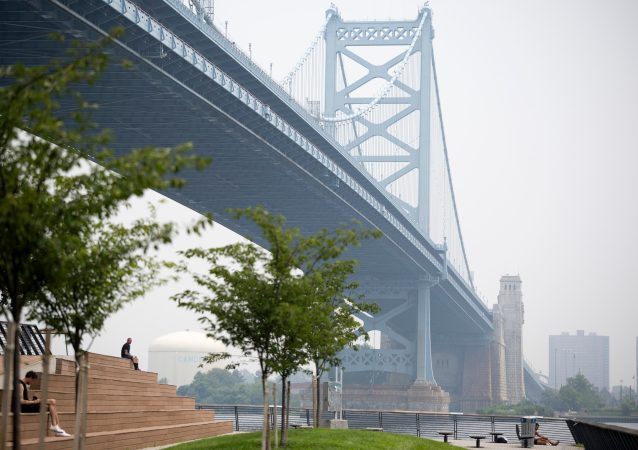
The polluted campfire-like vaporfrom Canadian wildfires plummeted air quality Thursday, lowered visibility enough that flights were delayed at Philadelphia International Airport, and prompted cancellation of a concert at Cooper River Park in Camden County.The Phillies moved Thursday night’s game up one hour due to air quality concerns.
The smoke, which was expected to blanket the region at least through Friday, originated from fires burning in Western Ontario, said Sarah Johnson, a meteorologist at the National Weather Service’s Mount Holly office.
It was swept in by winds that mixed to keep it closer to the ground.
“It’s just a factor of the winds at all levels kind of working together,” Johnson explained.
It is difficult to pinpoint when the air quality might return to normal, she said. Those forecasts come from state environmental protection departments and are usually no more than 48 hours out.
The Pennsylvania Department of Environmental Protection has declared a Code Purple Air Quality Alert for Friday. Code purple signifies very unhealthy air, meaning people should avoid long or intense outdoor activities, and sensitive groups should avoid all outdoor activities. The department suggested not using gas-powered lawn and garden equipment, and avoiding the burning of leaves or trash.
Rain forecast for Saturday could help suppress the smoke, Johnson said, but on Thursday afternoon it was too early to be sure.
Poor air quality caused by the fires remained the biggest issue as they burned through forests and buildings before their smoke swept south, collecting ambient pollution from Boston, New York, and other areas before reaching Philadelphia.
Philadelphia issued a Code Red Air Quality Caution Day on Thursday, meaning some people were at risk of experiencing health effects, including elevated risks forpeople with heart or lung disease, asthma, older adults, children, pregnant people, immunocompromised people, people experiencing homelessness, people who use drugs, people without access to air filtration, and outdoor workers.
The city advised people to limit their time outdoors and consider rescheduling activities.
“Today is not the day to start your marathon training plan,” Palak Raval-Nelson, commissioner of the Philadelphia Department of Public Health, said in a statement.
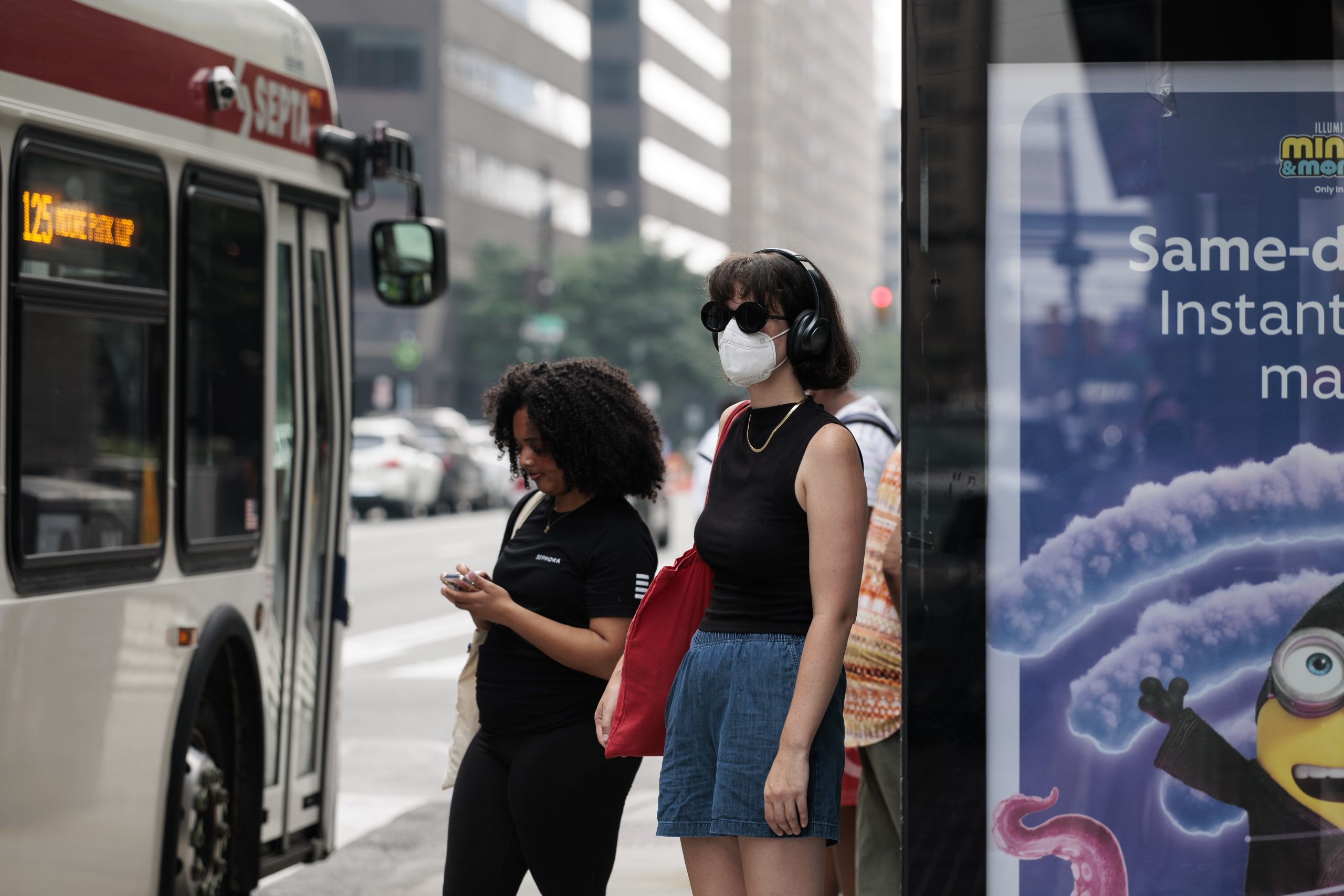
Penn State graduate student Ray Boone waits for the bus with a face mask on because of the air quality, on Thursday, July 16, 2026 at 17th Street and JFK Boulevard in Philadelphia. The Pennsylvania Department of Environmental Protection has declared a statewide Code Red air quality day due to Canadian wildfire smoke blowing into the Philadelphia region.Monica Herndon / Staff Photographer
High temps increase risks
The smoke affected thousands of square miles in the region, from the Poconos to the Shore through Delaware.
The Air Quality Index, or AQI, by the U.S. Environmental Protection Agency was in the unhealthy range for all of the region as of 4 p.m. Thursday. The index ranges from 0 to 500. Unhealthy is from 151 to 200.
Censors in Centre County, Pa., recorded a hazardous AQI of 345 by Thursday afternoon, the highest and most dangerous level. Other sensors in Lycoming and Bradford Counties recorded AQIs above 200, or very unhealthy.
Not helping: Temperatures in the 90s with humidity so high that it made it feel in excess of 100 degrees.
Julie and Bill Guise, 66 and 72, respectively, basked in the somewhat cool breeze billowing from a giant fan inside the President’s House complex at Independence National Historical Park, hoping to get relief from the oppressive air. The Flagstaff, Ariz., residents, however, were unaware of what exactly was causing it.
“We couldn’t figure out what it was,” Bill Guise said of the haze in the atmosphere.
But it did not change their plans. The couple are used to wildfires.
“It’s much worse out West,” Julie Guise added, likening the western smoke, when it’s extra bad, to sitting next to a campfire.
Eric Balaban, a pulmonary and critical care fellow at Temple University, was hesitant but still went running Thursday morning.
“If I didn’t have an addiction to running, I would not have gone. And I would recommend other people not to run. Do as I say, not as I do,” he said with a laugh.
But exposure to the smoke is a serious matter, Balaban said. He noted that the smoke that travels “carries a uniquely toxic profile that poses severe health risks to both healthy individuals and vulnerable populations.”
Ruth McDermott-Levy, a professor at Villanova University’s school of nursing, said that air quality had become a risk not only for those already suffering from health issues, but for everyone.
“All of us are at risk,” McDermott-Levy said. “Certainly there are groups of people at greater risk, from pregnant women, children, older people, and those with cardiac and respiratory illnesses. But we’re at an unhealthy level for everyone.”
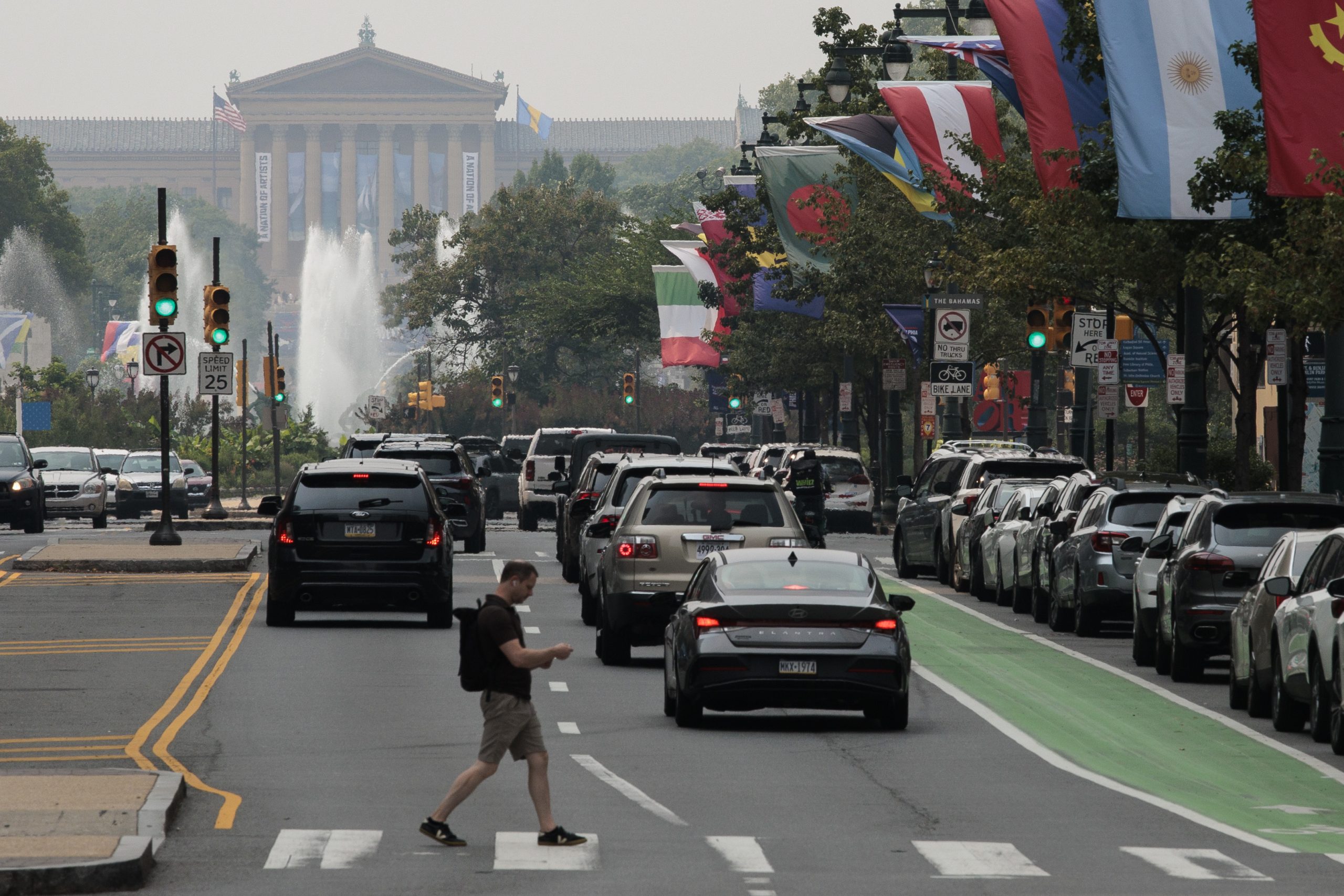
The Philadelphia Museum of Art behind a smokey haze on Thursday, July 16, 2026 in Philadelphia. The Pennsylvania Department of Environmental Protection has declared a statewide Code Red air quality day due to Canadian wildfire smoke blowing into the Philadelphia region.Monica Herndon / Staff Photographer
What’s in the air?
The two major pollutants of concern are ground-level ozone and fine particulate matter known as PM2.5.
Ground-level ozone is a pollutant that forms when nitrogen oxides and volatile organics emitted by vehicles, power plants, and industry react in sunlight, especially during hot days. It can cause airways to constrict, leading to shortness of breath. It can especially affect those with asthma, emphysema, and chronic bronchitis.
Fine particulate matter is so small that it can cross from the lungs directly into the bloodstream, bringing a body-wide exposure that can increase the risk of heart attacks and strokes, in addition to causing acute chest tightness, shortness of breath, and dizziness in otherwise healthy people.
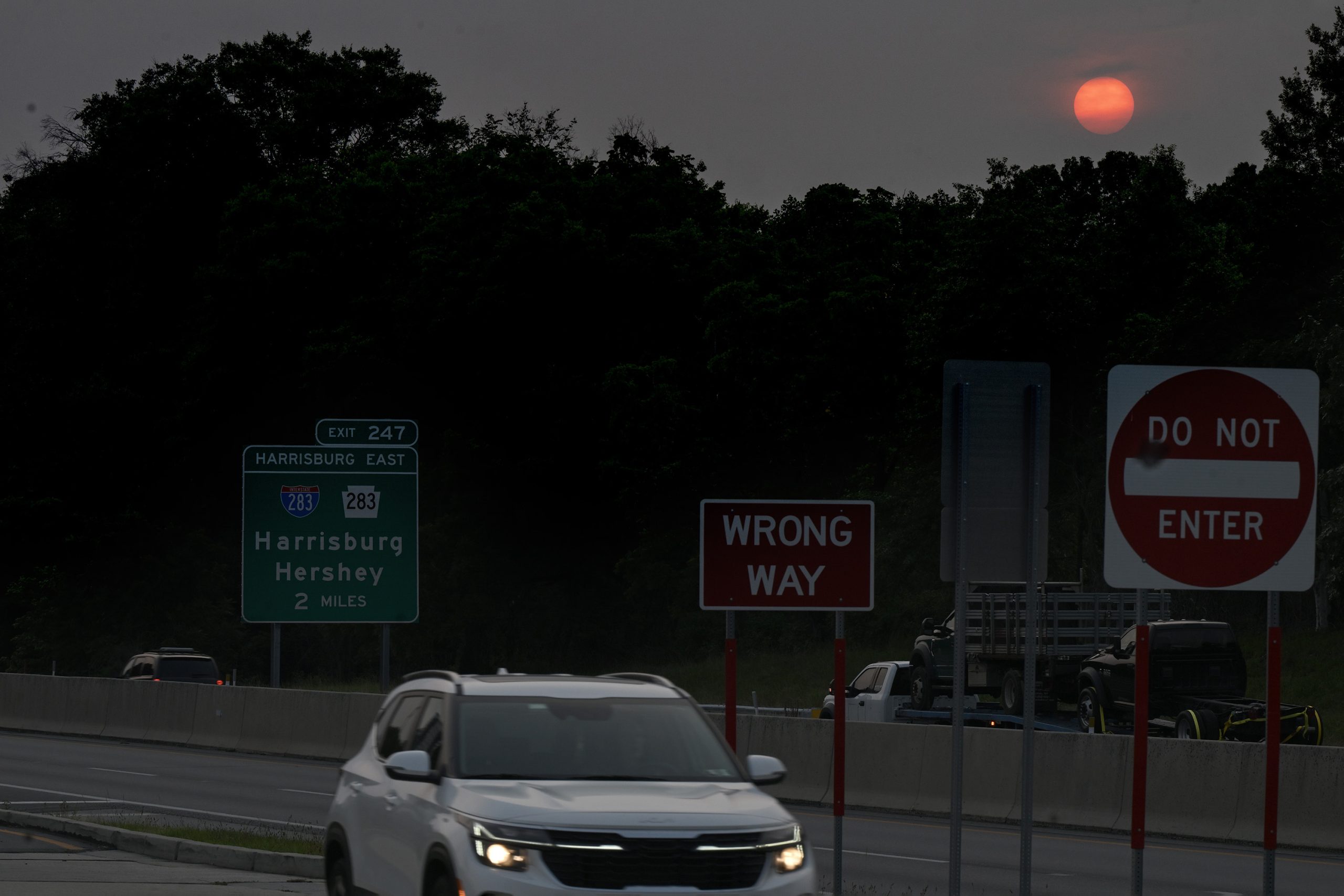
The sun sets in a hazy sky over the Pennsylvania Turnpike Wednesday, July 15, 2026 as the Canadian and Great Lakes wildfire smoke moves into the region’ This at the Highspire Service Plaza], eastbound near Middletown.Tom Gralish / Staff Photographer
Staff writer Nate File contributed to this article.
Michelle “MiMi” Gravley changed addresses frequently during her childhood in the 1990s, but rarely with a moving truck.
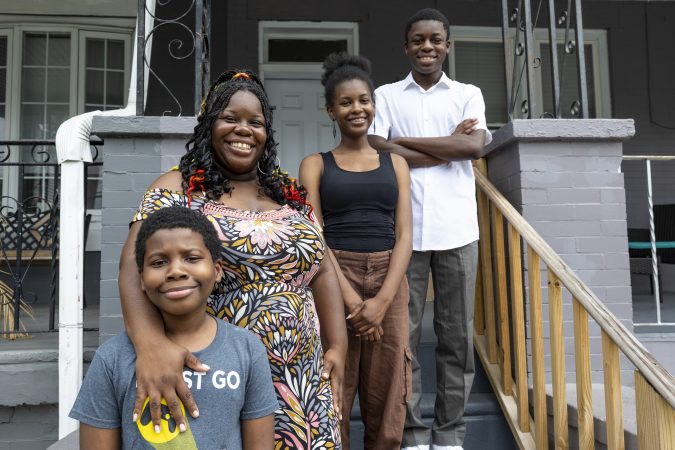
With her belongings in boxes and plastic bags, she would often find herself lodging at others’ houses in rooms her single mother could afford to rent. So it meant the world to Gravley, herself a single mother, last fall when she bought her first house, a rowhouse in North Philadelphia.
Gravley, 38, is no longer battling housing instability. But she has spent much of her adult life poor, including nearly two decades straight of government assistance, and wants a different fate for her three children. So she’s looking at wealth — specifically her house and her high-yield savings accounts — as something that can help her children avoid poverty as adults.
“I just want them to be OK,” Gravley told me, referring to her daughter, Buttons, 17, and her sons, Chippy, 14, and Boots, 11. “And when they have their kids, their kids is OK. And just, just breaking up generational curses.”
Gravley is one of the parents I spoke with recently in the Philadelphia area who wants to help their children build wealth to break the cycle of poverty in their families. Their goal is to bequeath something — whether it be modest savings or a piece of real estate — to help counter the pull of intergenerational poverty.
They face long odds: Only 16% of children who spend at least half their childhood poor go on to be economically successful, one study found. But there are emerging ideas and policies designed for children that some believe could improve those odds.
I’ve been a business reporter for more than a decade, with a keen interest in how wealth is built and deployed. I’ve had conversations with people from across the economic spectrum, from workers earning minimum wage to C-suite executives and billionaires. I closely follow developments about wealth and personal finance. And lately, I’ve been noticing growing momentum and innovation around wealth-building policies for children — some of which could impact the children or grandchildren of people like Gravley.
In my reporting, two relatively new wealth-building programs stand out. The first is baby bonds, which are government-run trust funds designed to benefit poor children. The other program is Trump Accounts, which are private investment accounts available to all children that allow nonprofits, philanthropic groups, and other entities to target contributions at low-income zip codes. Each has its pros and cons.
Because the creation of baby bonds and Trump Accounts are relatively recent developments (Connecticut approved the first statewide baby bond program in 2021; Trump Accounts were launched this year), there aren’t yet any long-term studies that directly assess their impact on poor populations. But advocates of early wealth accounts, as they are often called, point to supporting evidence from similar initiatives, including Education Savings Accounts. They also argue that structural changes in the economy necessitate a new kind of social contract with America’s young people.
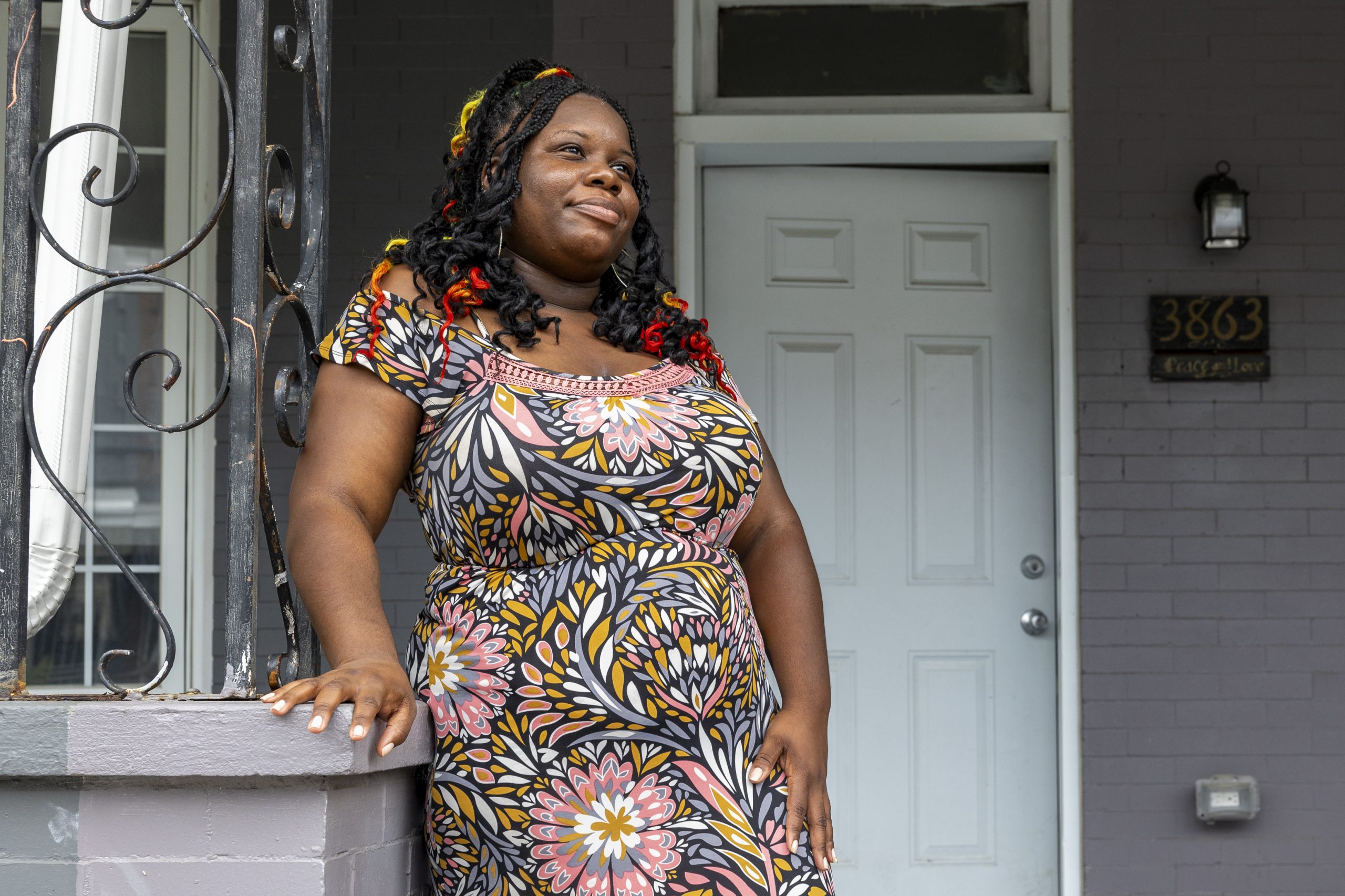
Of her children’s financial future, MiMi Gravley says, “I just want them to be OK.”Aidan T. Gallo / Staff Photographer
“Younger generations face economic headwinds that older generations have not — student loans, unaffordability of housing, starting a family, probably declining Social Security benefits,” said Ray Boshara, a senior policy adviser with the Aspen Institute and Washington University in St. Louis who helped design the framing for Trump Accounts and a similar precursor plan by former Sen. Bob Casey, 401Kids.
He added: “They face a transformed economy. So part of the real purpose of Trump Accounts, I think, is … to give them start-up capital at age 18 to counter these economic headwinds.”
Gaining steam
Across the country, efforts rooted in baby bonds or Trump Accounts are either active, forthcoming, or undergoing serious consideration.
The framework for baby bonds was proposed in a 2010 paper by Darrick Hamilton, founding director of the Institute of Race, Power and the Political Economy at the New School, and William Darity Jr., an economist and social scientist at Howard University and Duke University.
Connecticut launched its CT Baby Bonds program in 2023. It automatically enrolls children whose births are covered by Medicaid. The idea is straightforward enough: When participants turn 18 and complete a financial literacy course, they can claim at least a five-figure sum that can only be used for specified wealth-buildingactivities, such as buying a home or starting a business.
Trump Accounts, also known as 530A accounts, were signed into law last year and took effect this month. Children who are enrolled in the program by their parents could potentially receive $1,000 from the U.S. government. When the enrollee turns 18, the account becomes a traditional IRA and can be used for a variety of purposes, though the tax consequences are lower if used for postsecondary education, a first home, or retirement.
Unlike baby bonds, Trump Accounts were not specifically designed for poor children. And one criticism is that wealthier families will likely contribute more than poor families, which would worsen wealth inequality. But what’s notable about them is that they allow third parties such as employers or philanthropists to contribute cash or stock directly to children in low-income neighborhoods.
For instance, the Dell family pledged funds for every American child in specific zip codes, while the Dalio family and financier Brad Gerstner pledged funds to children in Connecticut and in Indiana, respectively.
Attention in the Keystone State
It’s still early, but for now, the idea of helping poor children build a foundation of capital for the future appears to be drawing bipartisan interest. And in Pennsylvania, policymakers have started paying attention.
“Baby bonds have been a topic of a lot of focus because we all want to make sure that we are creating long-term economic mobility and really breaking the cycles of financial insecurity early,” said State Rep. Morgan Cephas, a Democrat whose district covers West Philadelphia. “So these are some models that we’ve been looking at … and are absolutely looking to do more.”
State Rep. Martina White, a Republican whose district covers Northeast Philadelphia, said Trump Accounts can be a “great tool for working families” and planned to look further into the concept of baby bonds.
Her initial preference, she said, would be to model baby bonds like a college endowment, in which the funding source for the program would come from interest or investment earnings, as opposed to directly from taxpayer dollars.
“I think that the fact that more legislative bodies and governments are looking into ways that we can provide the tools for working families to build their wealth — I think that’s phenomenal, and we should be doing more of that,” White said. “But also helping make sure that government is getting out of the way, too.”
Democratic State Rep. Morgan Cephas said baby bonds have been a focal point for her party “because we all want to make sure that we are creating long-term economic mobility.”Tom Gralish / Staff Photographer
Although baby bonds haven’t been proposed in Pennsylvania’s legislature, the state does have an early wealth initiative through its Keystone Scholars program, which puts $100 into an account that Pennsylvania students can use toward their education costs.
In Philadelphia, there aren’t any initiatives specifically targeting wealth building for children. But there are programs that aim to advance overall wealth access and accumulation. One of the latest is Philly Saves, which, upon implementation, would give workers a way to save for retirement if their current jobs don’t offer retirement plans.
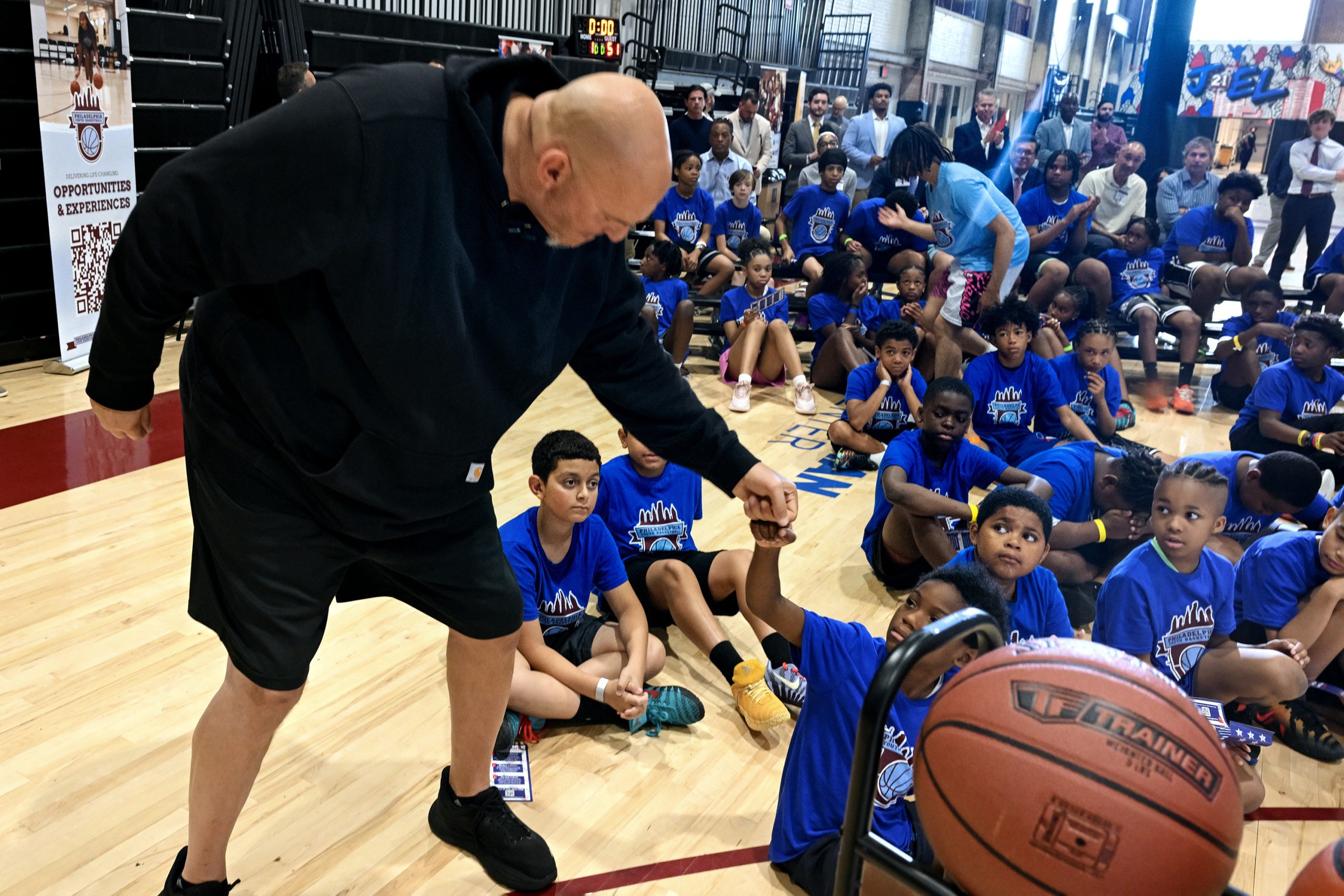
Last month, Sens. John Fetterman and Dave McCormick made a joint appearance in Nicetown, where they urged parents to sign up for Trump Accounts. Fetterman seemed to anticipate that some listeners might be dubious about the program and presume it is politically partisan because of its name.
“Do not fall into that political trap,” Fetterman said. “This isn’t some radical thing. … Do this for your child.”
Even if early wealth initiatives arrive soon in Pennsylvania, it may be too late to have a big impact on older children because the accounts need time to grow.
For Gravley, that means early wealth policies could impact her children but will likely yield larger sums for her future grandchildren. Gravley said she welcomes them as long as there’s some kind of financial literacy involved.
“If you give these children … $10,000 with no instructions, good luck with that,” she said. “It has to be instructions with it, but I think it could be a big stepping stone.”
Darity, the social scientist who helped conceive the idea for baby bonds, said early wealth accounts will have different maximum outcomes based on their design, even if they each grew at 1% above the inflation rate.
For instance, the baby bonds plan he coauthored would turn $60,000 into $72,000 over 18 years at that growth rate (no annual contributions allowed). A federal baby bonds plan proposed by New Jersey Sen. Cory Booker ($1,000 deposit; maximum yearly government contributions of $2,000) would grow to about $41,000 at those terms. For Trump Accounts, a $1,000 deposit and maximum yearly private contributions of $5,000 would grow to $100,000 in 18 years.
While Trump Accounts have the highest growth potential, low-income families who don’t have thousands to contribute annually won’t have “a transformative sum of money at the end of the 18 years,” Darity said.
Because both programs are still so new, we’re decades away from seeing the results of any long-term studies on the efficacy of baby bonds or Trump Accounts once participants reach adulthood. But research into other programs suggests that external interventions in wealth building can have positive outcomes.
For instance, a long-term study of Oklahoma’s SEED OK program found that newborns who randomly received $1,000 in state funds had, by age 14, higher educational expectations, greater social-emotional development, and more family-contributed savings for college compared with those who didn’t.
A 2015 global study of roughly 10,000 households found that asset interventions — like giving impoverished families an income-producing asset, cash assistance, and skills training — had positive economic outcomes well after the program stopped.
Those findings are part of a growing body of evidence from other asset-building experiments that “already points in a consistent direction,” said William Elliott, founding director of the Center on Assets, Education, and Inclusion at the University of Michigan.
That direction, Elliott said, indicates that early wealth accounts should be a pillar of a new social contract with Americans — especially in an age when higher education debt can stall wealth creation.
“The current policy setup strongly favors those who already have wealth,” Elliott said. “And so you don’t have meritocracy happening. To get there, you can’t just give [people] a job anymore, because there’s a gap between wages and productivity. You also have to give them some wealth to make their effort and ability pay off.”
During an appearance in Nicetown with Sen. Dave McCormick, Sen. John Fetterman urged parents to sign up for child wealth-building accounts.Tom Gralish / Staff Photographer
The landscape in Philadelphia
There are more than 300,000 Philadelphians living below the poverty line, according to Pew Charitable Trusts — that translates to about $33,000 annually for a family of four. While the poverty rate here has declined to 19.7% from 26% over the past decade, Philadelphia still has the second-highest poverty rate among large U.S. cities.
Other figures show the prevalence of low-income households in our city.
Gravley, the only worker in her household of four, makes about $40,000 annually.
Raising Pennsylvania’s minimum wage above $7.25 may help workers locally; all of the commonwealth’s neighboring states have higher wage floors. But it could also be untenable for some small businesses.
For Gravley, her home is an asset that could help her family long term, but there’s little it can do to improve her economic prospects today. Despite holding three degrees — an associate in culinary arts, an associate in early childhood education, and a bachelor’s degree in leadership and organizational change — she still regularly grapples with the challenge of making ends meet.
As a program coordinator at Strawberry Mansion High School, Gravley said her expenses are usually about $2,200 per month, which means she typically has about $100 per month for the high-yield savings accounts she manages for herself and her children.
At one point she invested in the stock market but pulled out because she didn’t understand it.
It’s been this way for more than a decade for Gravley. As a recipient of Supplemental Nutrition Assistance Program and Medicaid benefits, she is making enough to cover needs, but financial security and financial growth for her family appear largely out of reach.
“[Welfare] helps, but it’s nothing programmed to get me out of the food stamp thing. Because you tell me to get the degrees and get the better job, and I’m trying to do that, or I did that, and it’s still not enough money. So where is the money?”
Jared Council is a business journalist based in Philadelphia. He was part of a team at the Wall Street Journal recognized as a finalist for the 2022 Pulitzer Prize in explanatory reporting for a series about the 1921 Tulsa Massacre. He is currently a program manager at Every Voice, Every Vote, a civic information and engagement program at the Lenfest Institute for Journalism.
The Inquirer is one of two dozen news organizations powering the Philadelphia Journalism Collaborative. Follow us at @PHLJournoCollab. This article is part of a national initiative exploring how geography, policy, and local conditions influence access to opportunity. Find more stories at economicopportunitylab.com.
Daniel Martino didn’t set out to build an empire of pie shops. He just wanted somewhere to get coffee without leaving the neighborhood.
When he bought his home in Port Richmond in 2013, the closest coffee shop was an hour round trip, he said. “Selfishly, I thought, I can put a little coffee shop here.”
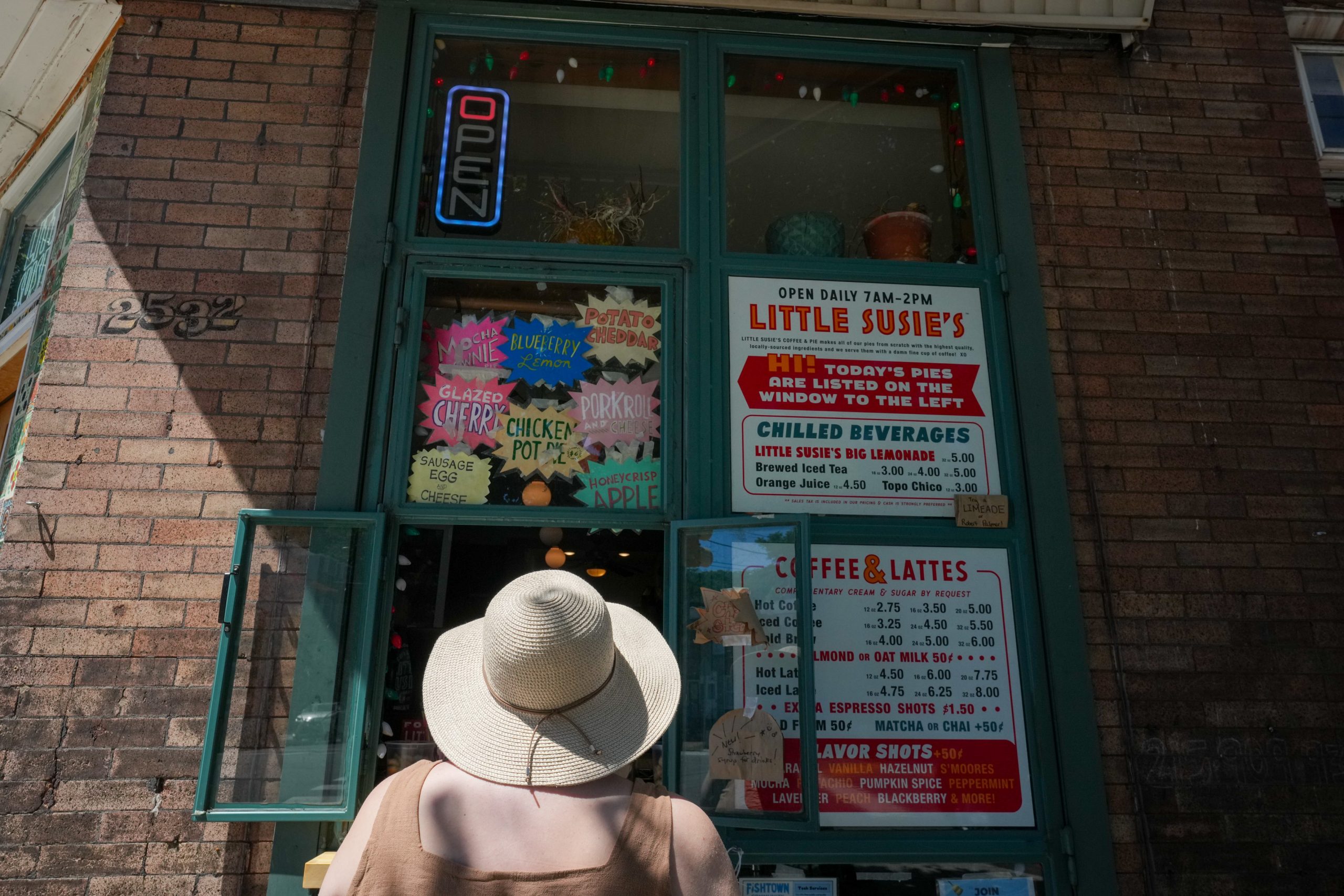
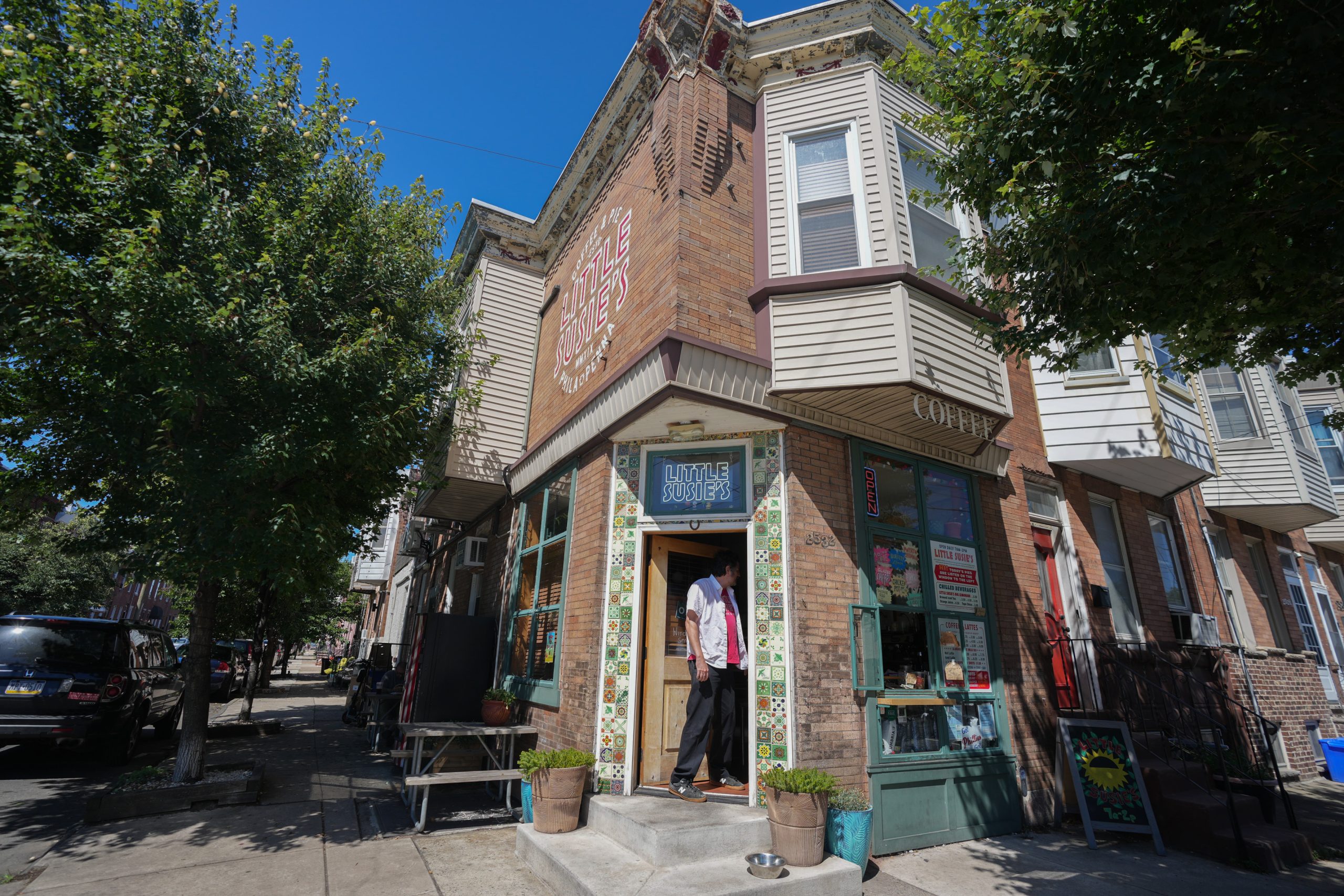
The takeout window at Little Susie’s flagship location at 2532 E. Lehigh Ave.Jessica Griffin / Staff Photographer
And what goes better with a cup of coffee than pie? He had a recipe he’d been baking for family get-togethers.
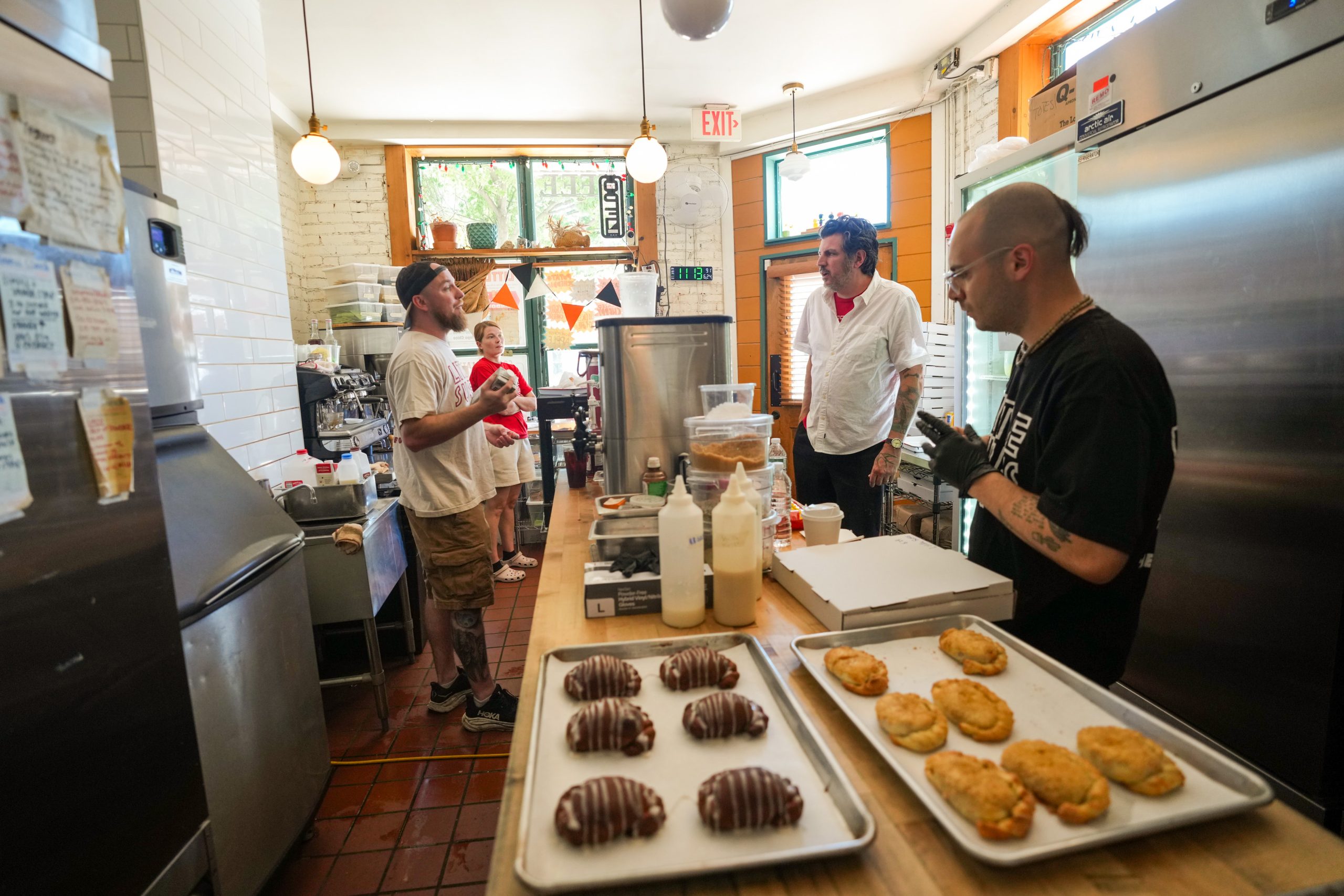
Seven years after Martino opened Little Susie’s Coffee & Pie in the building next door to his house, his modest idea has grown into four Philadelphia locations, with a fifth expected to open Friday at the former Pop’s Bun Shop in Bella Vista, a franchise headed to Milwaukee, and plans for additional shops in Fairmount and Northern Liberties. All his stores run from takeout windows, requiring little more than coffee stations and electric ovens.
Today, the company employs 28 people and turns out about 1,200 pies a day from a bakery occupying two cramped rooms in the corner rowhouse on Lehigh Avenue.
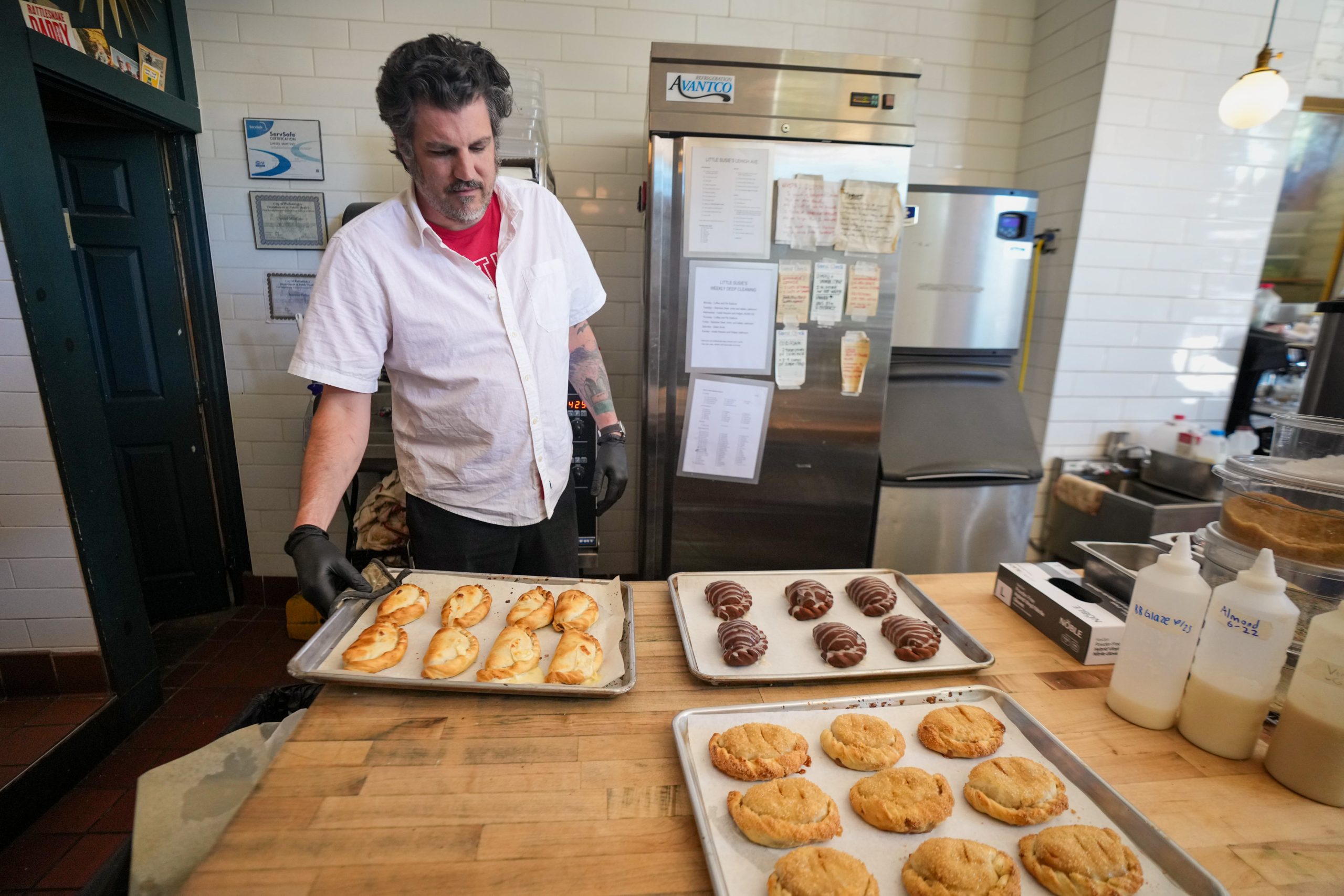
Owner Daniel Martino with trays of pies at Little Susie’s.Jessica Griffin / Staff Photographer
Martino, 46, who grew up in Northeast Philadelphia, has spent much of his working life around food. As a teenager, he worked at a swim club snack bar before taking a kitchen job at what is now Jefferson Torresdale Hospital.
After studying film at Temple University, he joined Public House Investments, which ran City Tap House, as a DJ before becoming the hospitality company’s creative director, designing menus, logos, ads, and marketing material.
When the property next door to his house became available, Martino said he used a home-equity line of credit to buy it before securing a Small Business Administration loan to renovate it.
The takeout window at Little Susie’s. Hand-lettered signs advertise the specials.Jessica Griffin / Staff Photographer
By the time Little Susie’s opened in December 2019, he said, “I had maxed out every credit card I had. I even had to go to the bank, hat in hand, and sign a signature loan for the last $10,000 just to get it open.”
His shop offered a simple menu, little more than coffees and lattes and four kinds of pies. There was a counter for seating. The first day brought in about $180, and “it was the greatest day of my life,” Martino said.
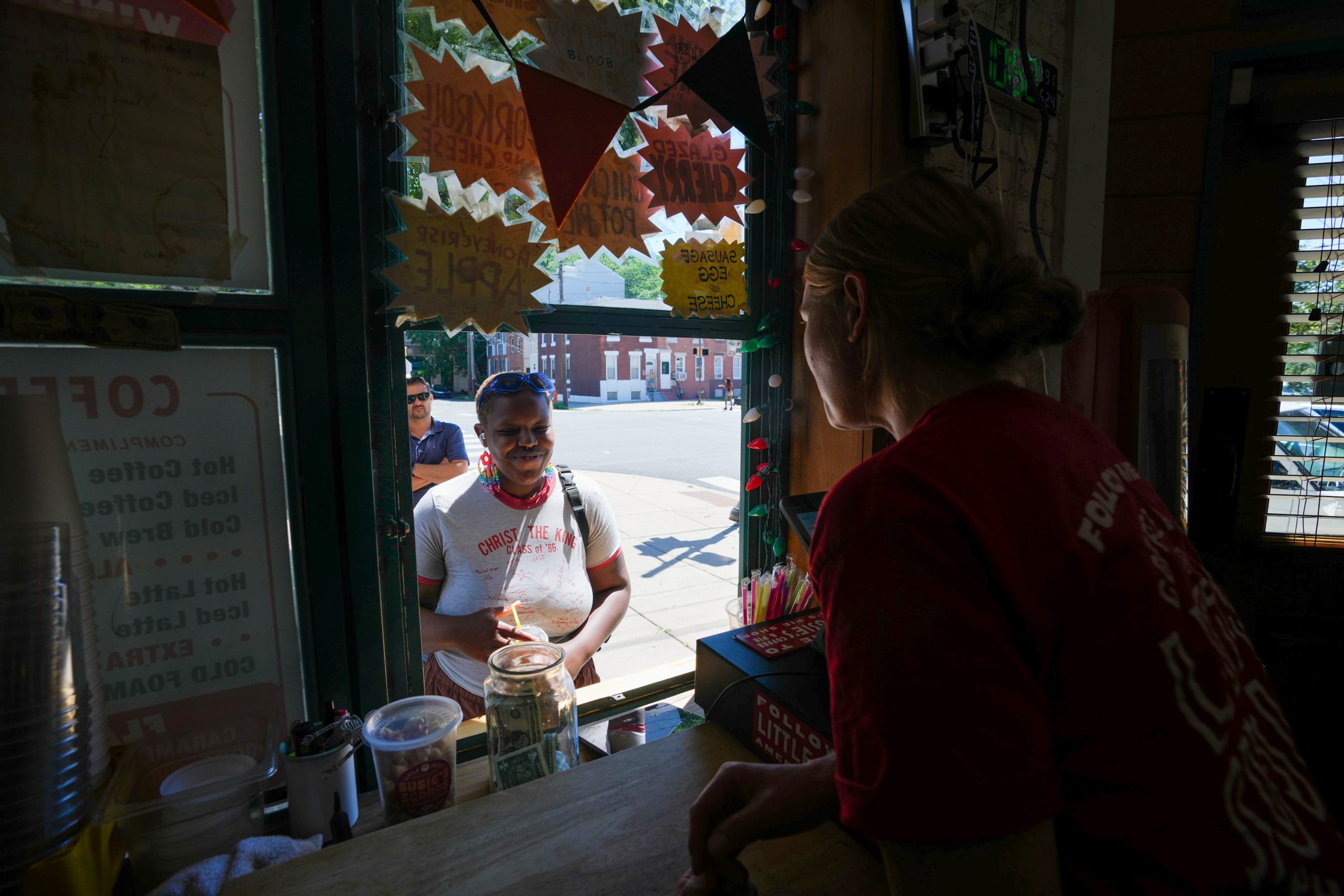
Then the pandemic arrived. When COVID-19 restrictions shut down indoor dining, Little Susie’s shifted to window service. Customers called in orders, paid over the phone, and picked up coffee and pies outside. Even after restrictions were lifted, the shop never reopened indoors.
It wasn’t what Martino had imagined. His idea was ”Cheers with coffee — the neighbors and the mailman talking about the weather,” he said.
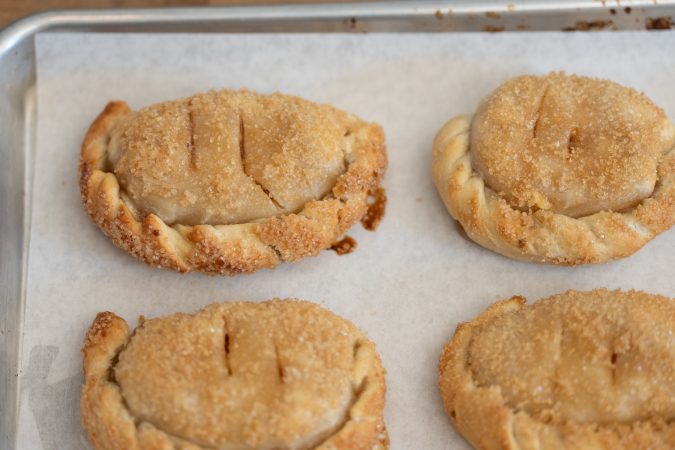
Instead, customers embraced the walk-up model and the seating at a picnic table beneath a maple tree. The pies especially quickly caught on. The signature is the crust. Rather than trimming away the excess dough, workers twist it around each pie by hand, creating what Martino calls “a fluffiness that the fork doesn’t provide — that flaky tenderness you want in a pie crust. The twist is its own special treat in and of itself.”
Owner Daniel Martino (rear, right) with staff and pies at Little Susie’s, set up in a rowhouse.Jessica Griffin / Staff Photographer
The pies, which are baked and not fried, are made with a simple crust of flour, butter, sugar, and salt. It’s a 48-hour process. Dough is mixed at the company’s Kensington location, where a 20-quart mixer runs nearly all day. The dough rests for 24 hours before it is brought to Port Richmond, where it is sheeted, filled, twisted, frozen, and delivered to the other stores to be baked to order.
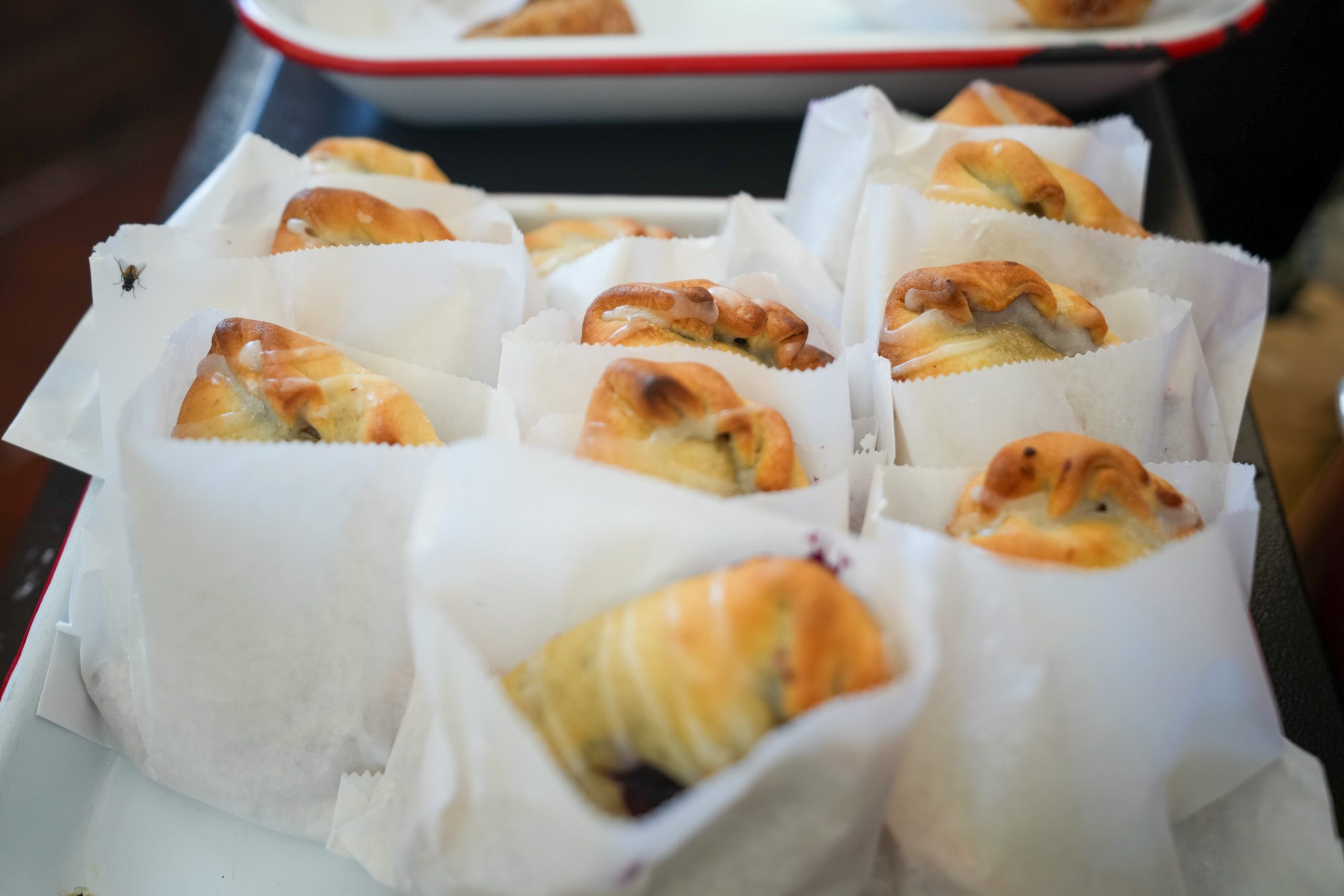
Little Susie’s first menu included only blueberry, pork roll, apple, and mushroom Swiss fillings. Today, it offers about a dozen varieties, with eight available year-round and others rotating seasonally. “You can practically throw anything in this pie crust,” Martino said. “I haven’t been disappointed yet.”
Pies at Little Susie’s.Jessica Griffin / Staff Photographer
Pork roll remains the top seller, followed by apple, and a sausage, egg, and cheese breakfast pie encrusted with everything bagel seasoning. Seasonal flavors have included ham and Brie, chocolate-covered strawberry, and Cajun crab and corn. None are gluten-free because of the shop’s limitations, he said.
Not every idea works. “We tried to make a cannoli pie, but the cream just melted right out,” he said.
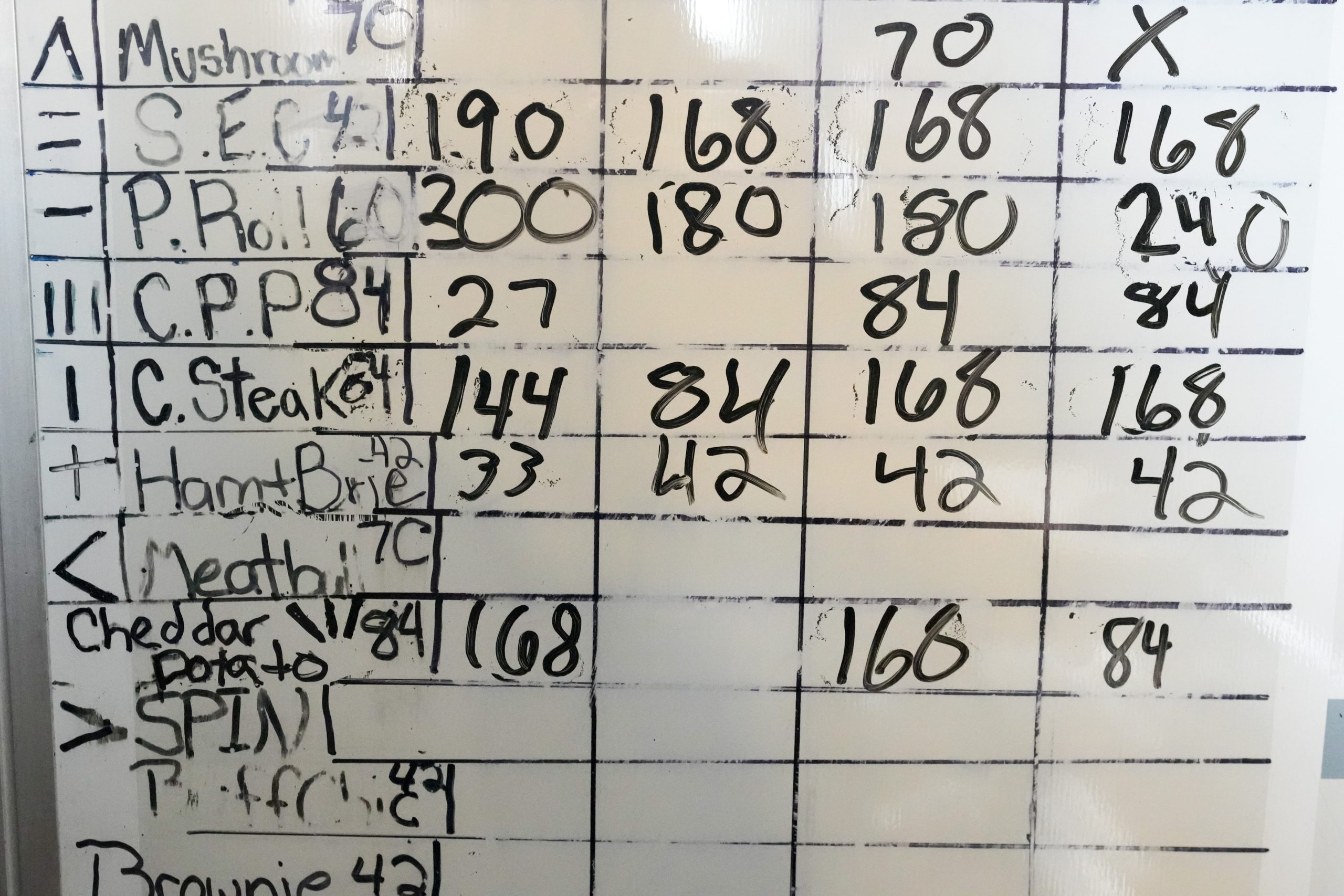
Each shop sells 200 to 300 pies a day. The production kitchen now employs 11 bakers, who track production on a whiteboard nicknamed “the Pieble.” Each variety get its own knife mark on top; an inverted V, for example, denotes mushroom Swiss.
The “Pieble” at Little Susie’s, the flagship pie takeout place located at 2532 E. Lehigh Ave., in Philadelphia, June 24, 2026.Jessica Griffin / Staff Photographer
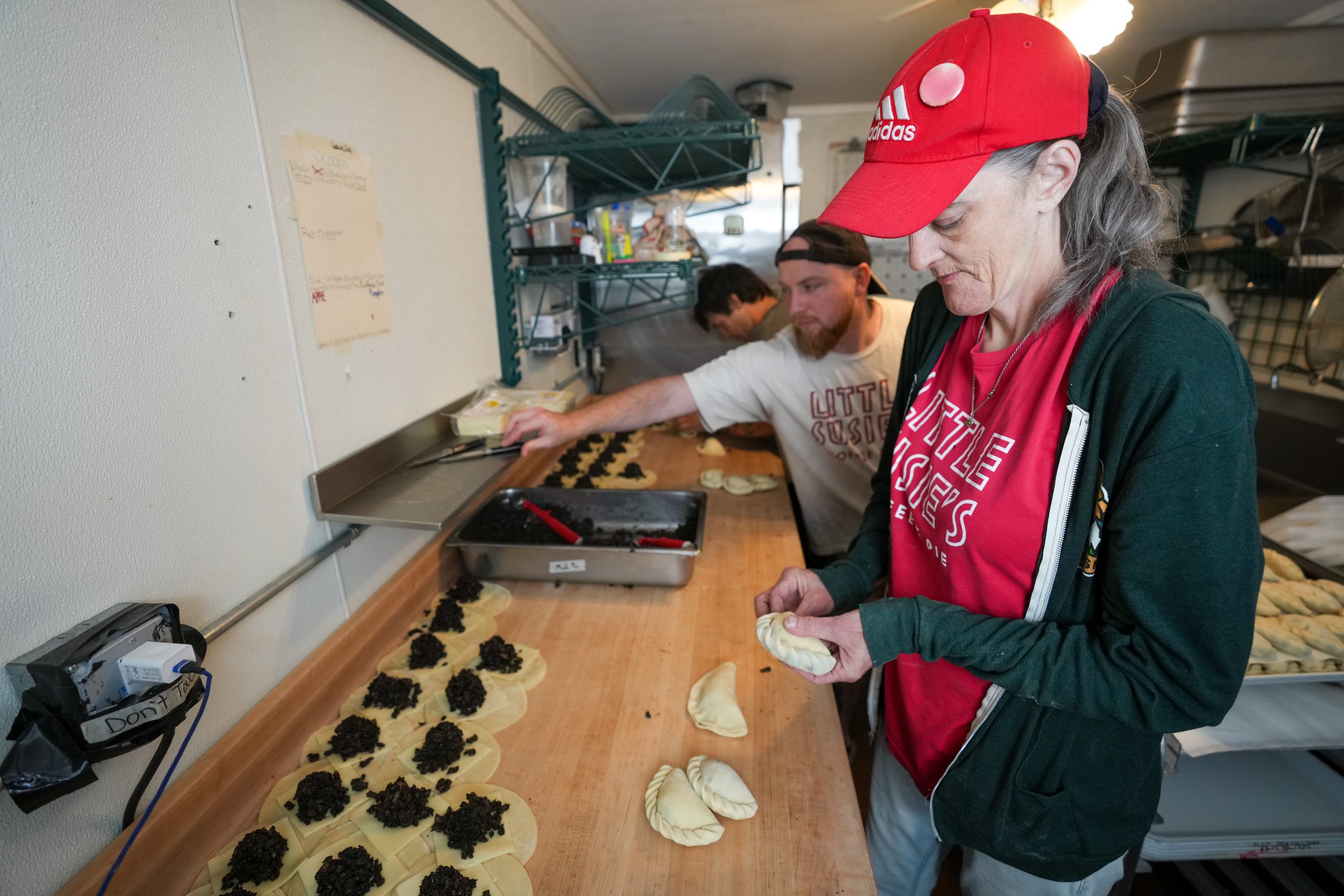
Lena Hurchick, who has worked at Little Susie’s for three years, said she enjoys “the competition of filling all the shops” and watching customers eat pies she helped make.
“Susie” was the name of the dog that belonged to the former owner of the building. “When we had the community meeting here, I said, ‘I’m thinking Little Susie’s,’ and people started crying,” he said.
Lena Hurchick crimps mushroom pies at Little Susie’s.Jessica Griffin / Staff Photographer
Expansion has brought complications. A planned Fairmount location was nearly ready to open before the city determined that the property required zoning approval for food sales. “The city does not make it easy,” he said, adding that it will take months to get onto the zoning board’s calendar.
Even so, he expects the company to keep growing. He has a handshake deal for a spot in Northern Liberties. Milwaukee is planned as the first franchise — operated by a friend — while Martino has begun thinking about a larger bakery in Philadelphia.
“We’re basically bursting at the seams,” he said. “We’re probably going to need a 10,000-square-foot facility.”
Owner Daniel Martino at Little Susie’s.Jessica Griffin / Staff Photographer
He wants that growth to remain slow enough that the pies are still made fresh every day. “I don’t want to get too far away from making them every day, because then it just becomes some frozen-food empire,” he said.
Little Susie’s Coffee & Pies’ locations are at 2532 E. Lehigh Ave. in Port Richmond, Second and Chestnut Streets in Old City, 1772 N. Front St. in Kensington, and 1754 S. Chadwick St. in Point Breeze. A fifth, at 800 S. Ninth St. in Bella Vista, is due to open Friday. Hours are 7 a.m. to 2 p.m. daily.
MAX Surgical Specialty Management, a private-equity backed company consolidating oral and maxillofacial surgery groups in the Northeastern U.S., has acquired two more practices in the Philadelphia area.
The latest deal, announced Friday, gives the Hackensack, N.J., firm 12 surgeons at 12 locations in Pennsylvania. Surgeon Jason M. Auerbach founded MAX in 2022 with private-equity backing and entered Pennsylvania two years later.
The two newly acquired practices have six offices in Bucks and Chester Counties.
Oral and Maxillofacial Surgeons P.C. has three surgeons, and offices in Doylestown, Quakertown, Warminster, and Chalfont. Oral Associates of the Main Line has two surgeons and offices in Exton and Paoli.
MAX did not disclose financial terms of the transactions.
In addition to New Jersey and Pennsylvania, MAX has practices in Connecticut, New York, and Vermont. The company — a management services organization — is majority-owned by its physicians, Auerbach said.
Oral and maxillofacial surgeons work at the crossroads of dentistry and medicine. Most have dental degrees, but some also have medical degrees. They remove wisdom teeth, install dental implants, repair facial traumas, and treat jaw injuries, among other services.
North Jersey origins
Auerbach founded Riverside Oral Surgery in Bergen County in 2007 and grew it to 12 locations before founding MAX with private equity partners. Part of his motivation was to create a home for independent physicians, Auerbach said in a May interview.
The Philadelphia region still has a high concentration of independents, with strong patient demand. “It’s hard nowadays to be an independent oral-maxillofacial surgeon, in terms of the complexities in running a healthcare business,” Auerbach said.
Robert Mogyoros, whose Greater Philadelphia Oral Surgery is in Elkins Park, said he valued his independence above all, but decided to look for a group to joinafter the business side had gotten too challenging.
Physician groups get better prices from vendors, better deals with insurers, and have an upper hand in physician and employee recruitment, said Mogyoros, who became part of MAX last July.
“What attracted me to MAX was that it’s doctor-driven and doctor-run,” he said in a May interview.
Rothman and Kim Oral & Maxillofacial Surgery, with offices in Northeast Philadelphia and Cinnaminson, was MAX’s first acquisition in Southeastern Pennsylvania. That deal also happened last year when MAX announced that it had borrowed $77 million to support growth.
When doctors sell their practices to MAX, they typically invest about 30% of the value into MAX, Auerbach said. MAX’s outside investors are MedEquity Capital near Boston, RF Investment Partners in New York, and Kian Capital in Charlotte, N.C.
Editor’s note: This article was update to correct the year when MAX made its first Pennsylvania acquisition.
Not to be left behind, Walmart has touted a “store of the future” concept for years as it opens and remodels hundreds of locations, including 32 in Pennsylvania this year, to have better layouts and services that aim to make the shopping experience seamless.
“By modernizing our stores, we’re making shopping faster, easier, and more convenient, all while empowering our teams to serve customers better and creating local opportunity,” said Annie Walker, senior vice president of the East Business Unit at Walmart, in a statement announcing the Pennsylvania investments this year.
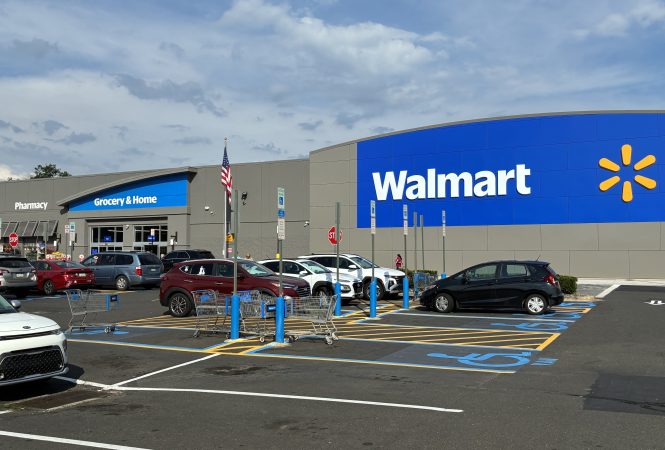
The Walmart Supercenter in Warminster is the latest “store of the future,” unveiling its remodel this month.
I tried it out to see what the future holds for shoppers. Spoiler alert: It’s nothing out of The Jetsons, but a handful of customers told me they liked the improvements nonetheless.
“A lot of stuff is different, but it’s easier to find things,” said Cuong Kim, 41, of the new layout, walking out with a bag of toiletries.
Sparky, where are the fiber gummies?
Walking in, the store doesn’t feel that different from counterparts in South Jersey or Philadelphia. The polished concrete floors remain the same and there are an Auntie Anne’s and a Subway near the entrance.
Still, I could see the company followed through on its “elevated assortment of healthy foods” promise. There were meat and cheese snack packs galore, along with a wide range of ready-to-eat salads and sandwiches in the grab-and-go section.
Because better online/in-store integration is part of the company’s “store of the future” pitch, I brought an admittedly specific grocery list with me to test out Sparky, the company’s generative AI shopping assistant launched last year, another trend major retailers are adopting.
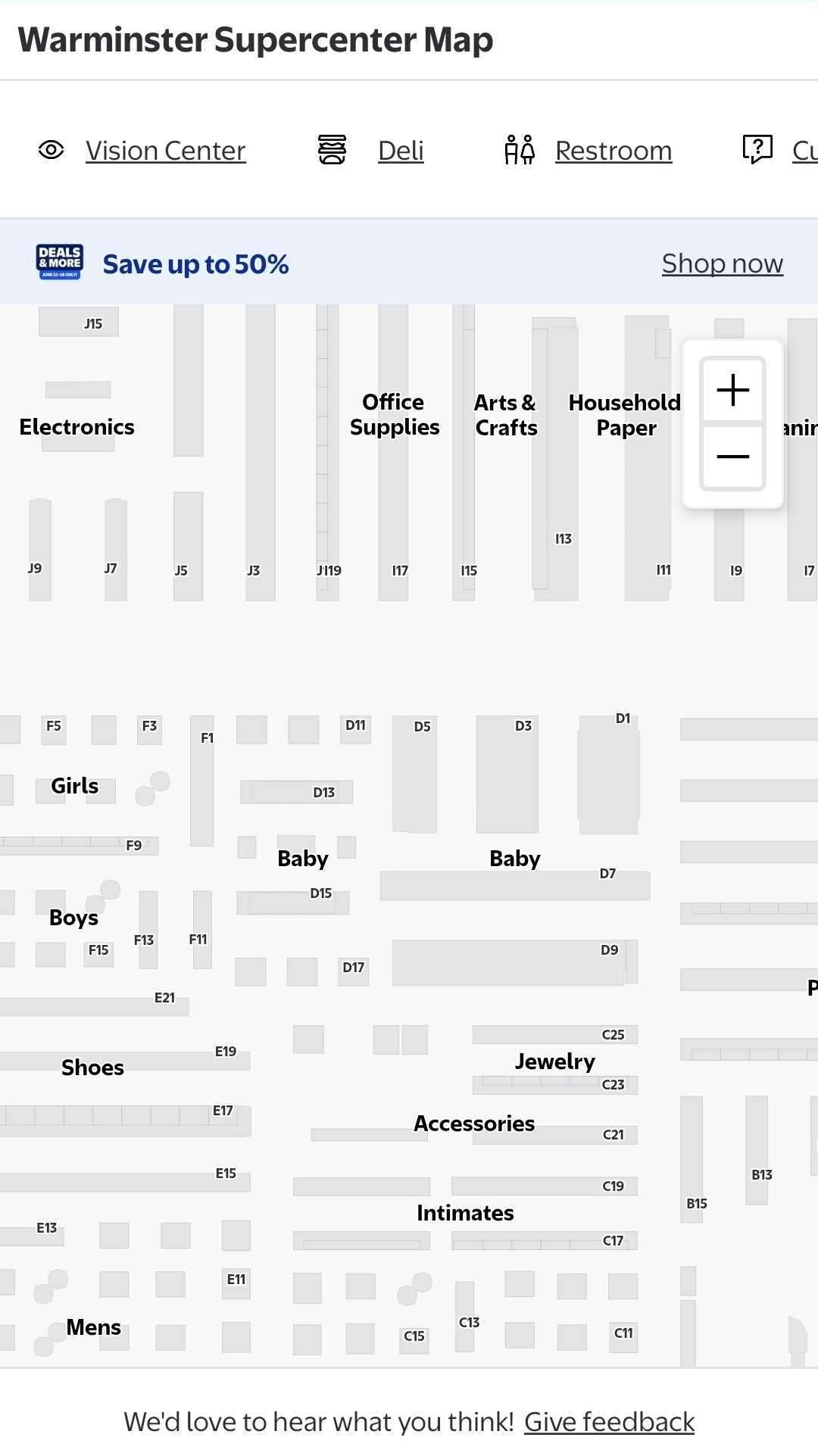
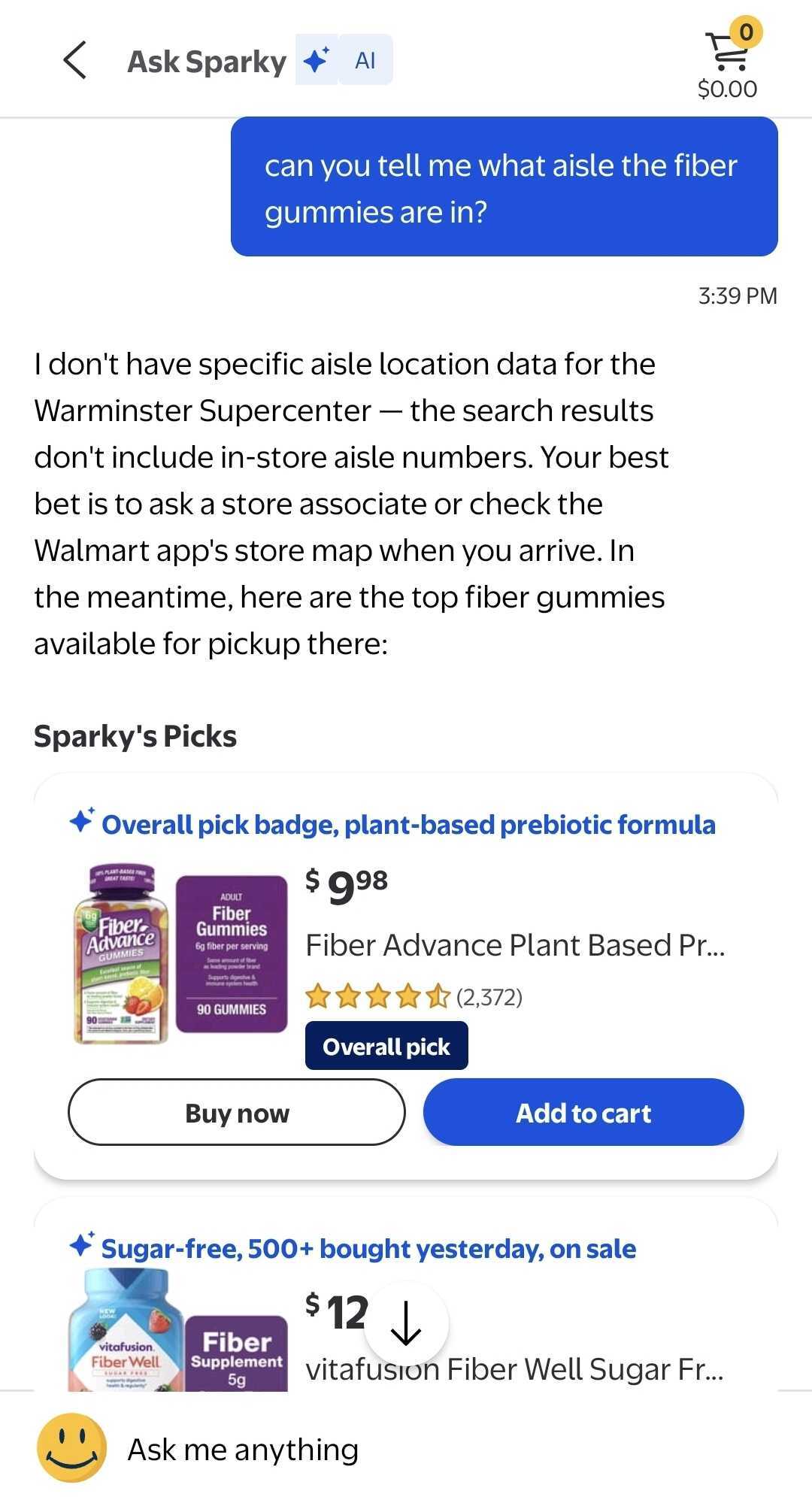
Though the Walmart app provided a handy static map of the store, Sparky was not helpful in helping me find mango pulp for a cheesecake I’m making or my fiber gummies, which I will need if my rich dessert plans move forward.
A static map of the Warminster Walmart in the app.Screenshot by Ximena
While Sparky pointed me to several fiber gummy brands, it was less helpful in telling me what aisle they were in.
“Your best bet is to ask a store associate or check the Walmart app’s store map when you arrive,” Sparky said.
Sparky, Walmart’s AI shopping assistant, doesn’t know what aisle the fiber gummies are in.Screenshot by Ximena
On the mango pulp front, Sparky showed me several options, which got my hopes up because I’d never used this item and was worried it might be hard to find.
Alas, none of Sparky’s suggestions were in the store, but could be shipped by the next day — helpful information if I weren’t already on site.
To be fair, one shopper told me that while Sparky doesn’t have a 100% hit rate, it is not a total dud.
He was right. Seltzer, another item on the list, was in aisle A22.
As I walked around the store, I noticed some aisles, like the beverage sections, could fit three shopping cartsacross. That’s some Costco-level width and another “store of the future” feature.
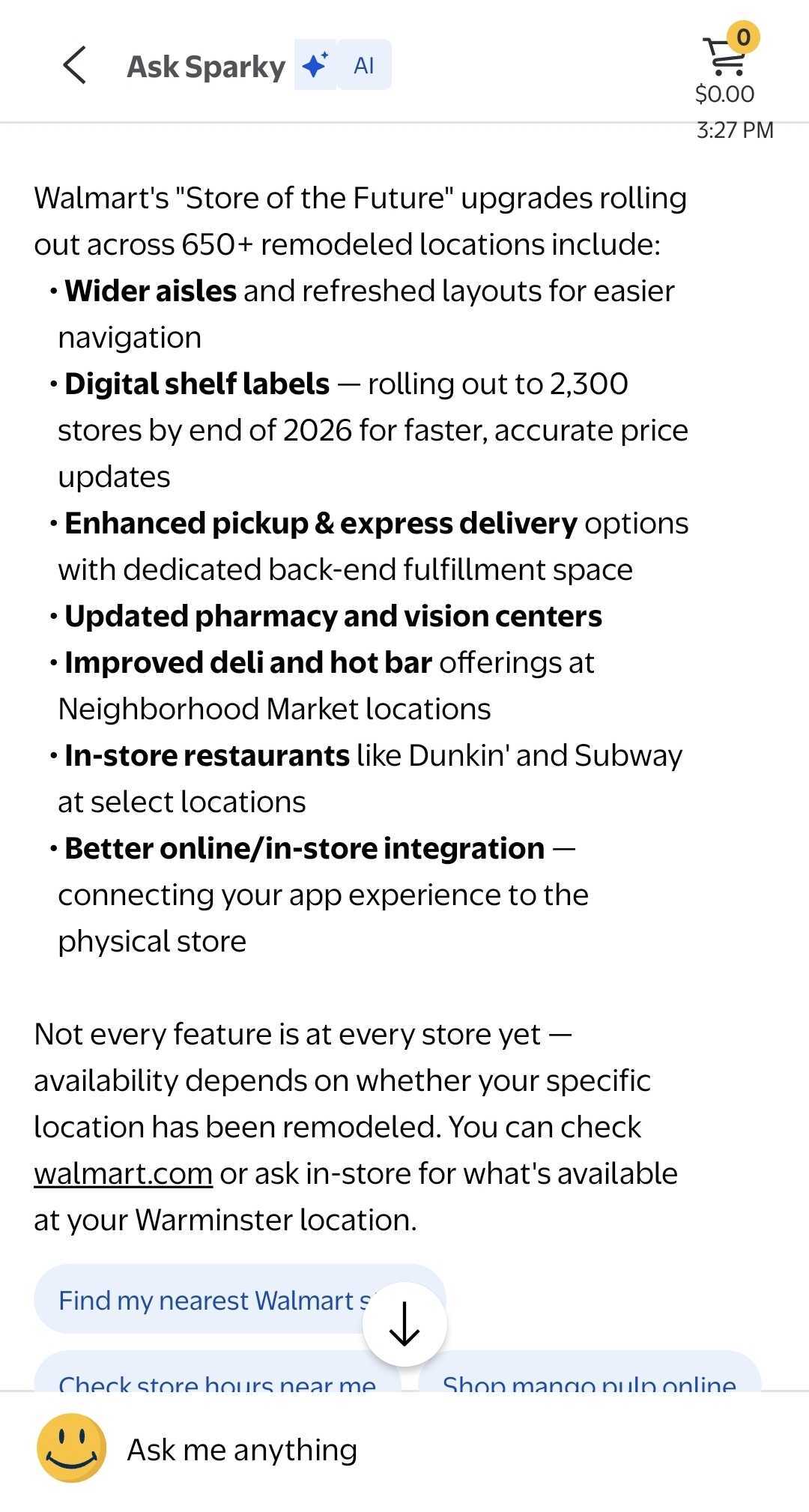
Even so, wider lanes, a semi-useful shopping assistant, and more snack packs didn’t make my shopping experience feel that futuristic, so I asked Sparky: “What’s new about my Walmart? I heard it’s the store of the future but not sure what’s changed.”
It reiterated some of what I’d already seen and highlighted the enhanced pickup and express delivery services. I recently had a laptop charger delivered from a different Walmart location and I can confirm it arrived in less than an hour.
Sparky lays out the store of the future upgrades.Screenshot by Ximena Cn
Ol’ Sparky, however, warned me “not every feature is at every store yet.” For example, Walmart plans to roll out digital shelf labels that allow rollbacks and price changes to appear in real time, but were nowhere to be found in Warminster.
I also asked an employee what was new with the store to fact-check Sparky.
“It’s little things,” said the cheerful associate. “There’s more [grab and go] coolers, more cash registers, and a bigger electronics section.”
A reminder that no one knows a store better than the people who work there.
What we learned
It seems the people who would get the most use out of Sparky are those ordering online for delivery or planning their haul ahead of time, checking to see if their desired items are in store. These features, however, are not exclusive to the 32 Walmarts up for a makeover.
Yet while not exactly futuristic, shoppers in Warminster certainly appreciated the less tech-centered changes, such as the added breathing room as they shopped in clearly labeled sections.
Kim, the shopperwho traveled from Northeast Philadelphia for his haul, also reminded me that sometimes the most seamless shopping experience is pretty simple. He’s not an app user like some of the other customers I talked to. But he travels to Warminster because very few items require waiting for an associate to unlock them from glass cases.
“It’s easier to shop here,” he said. “In Philly, they lock everything up.”
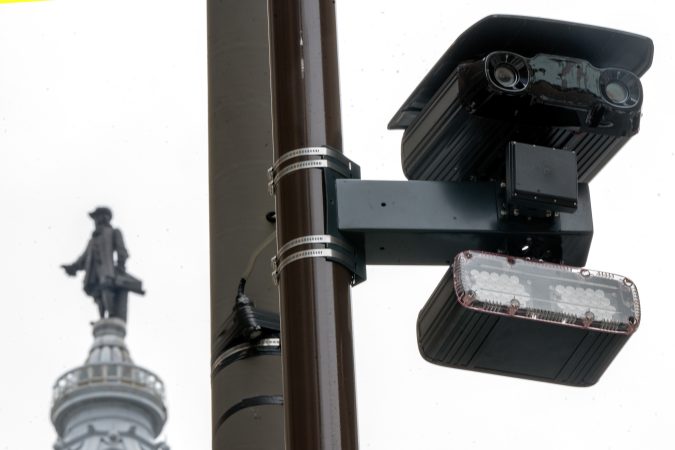
Starting Friday, drivers traveling 36 mph or faster on Frankford Avenue in Northeast Philadelphia will face a minimum $100 fine.
Tennew speed-enforcement cameras were activated on April 13, initiating a 60-day warning period which brought mailed warnings to violators of the road’s 25 mph speed limit.
“Speed cameras are a tremendous tool that helps save lives,” said Gabe Roberts, acting executive director of the Philadelphia Parking Authority, in an emailed statement.
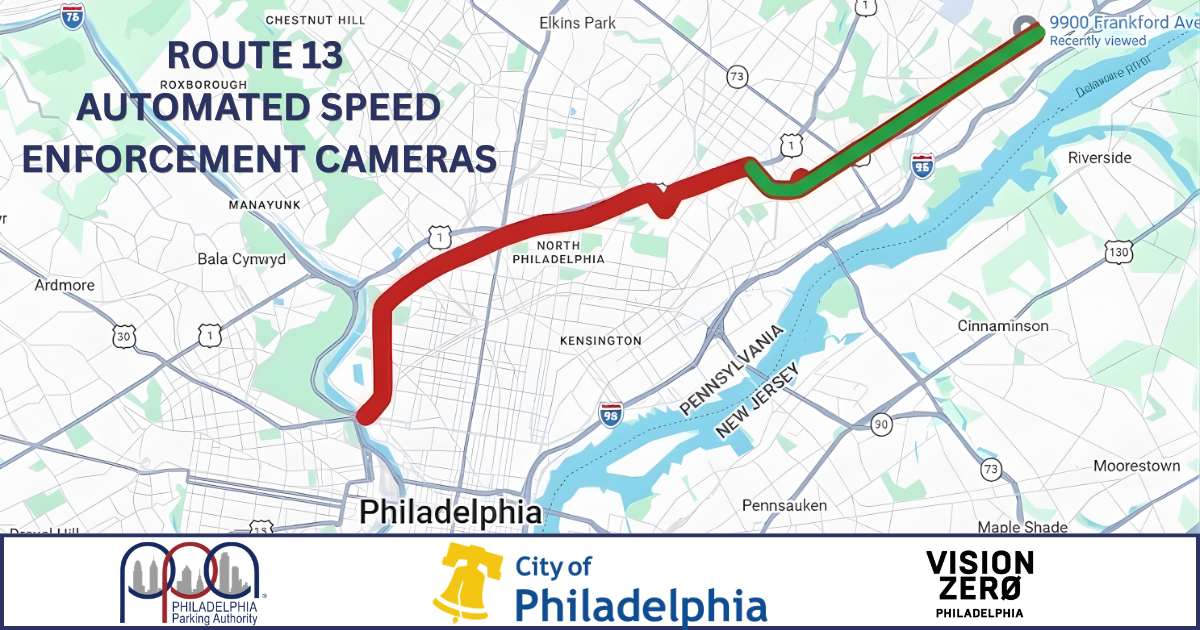
There are three tiers of penalties for speeding on the 4.5-mile stretch of U.S. Route 13 that are now going into effect.
Fines are $100 for traveling 11-19 mph over the speed limit; $125 for going 20-29 mph over; and $150 for speeding by 30 or more mph.
Tickets are mailed to the registered owner of the vehicle speeding. No points — PennDOT’s method of recording driving violations — are added to the motorist’s driver’s license.
The cameras are placed at 9900 Frankford Ave.; 8300 Frankford Ave.; 7000 Frankford Ave.; 6400 Frankford Ave.; 3100 Levick St.; and 2100 Robbins St.
Automated speed enforcement cameras went live Monday April 13 on the portion of U.S. Route 13 shown in green. Philadelphia Parking Authority will install cameras on the rest of the corridor in July 2026.City of Philadelphia
Speed-enforcement cameras were first piloted in Philadelphia on Roosevelt Boulevard in June 2020, with 32 automated cameras placed along the highway previously considered the most dangerous road in the city.
According to the Philadelphia Parking Authority, speed violations have since decreased on the boulevard by more than 90%, and there has been a 50% reduction in pedestrian-involved crashes.