As the afterglow of the world’s largest sports tournament and the country’s formal 250th birthday party in Philadelphia fades, the city is returning to its regularly scheduled programming.
But those months of celebrations came with significant investments into the city: building up the Benjamin Franklin Parkway, hosting Grammy Award-winning stars, renovating Lemon Hill to welcome half a million people, and, of course, the cleaning and maintenance work that made Philadelphia look fresher than it has in years.
SEPTA and the city partnered to landscape and beautify major traffic intersections, sometimes with a new mural provided by Mural Arts Philadelphia. SEPTA stations alsoreceived a much-needed deep clean and graffiti removal, all before and during the summer celebrations.
PHLASH buses got an extra stop to get to Lemon Hill; fans got free rides on the Broad Street Line after World Cup games. And, just as the international fans packed up their bags to head home, it’s time for many of those features to go, too.
But what about all the things staying in Philly? The city is not getting just generational memories and a summer party out of the deal. Here are some of the major legacy projects remaining in Philadelphia for years to come, perhaps even until the tercentennial celebration in 2076.
(function(){function e(){window.addEventListener(`message`,function(e){if(e.data[`datawrapper-height`]!==void 0){var t=document.querySelectorAll(`iframe`);for(var n in e.data[`datawrapper-height`])for(var r=0,i;i=t[r];r++)if(i.contentWindow===e.source){var a=e.data[`datawrapper-height`][n]+`px`;i.style.height=a}}})}e()})();
New mini soccer pitches across Pennsylvania
Location: Throughout Pennsylvania.
The project: How does the United States grow the next crop of elite soccer players? By making it easier to play soccer starting at a young age. At least 13 mini soccer pitches are being installed at schools, recreation centers, and parks across Pennsylvania.
The first two of Philly’s mini pitches were installed at West Oak Lane’s Building 21 and the Swenson Arts and Technology High School in Northeast Philadelphia. According to the U.S. Soccer Foundation, which is overseeing the project, each mini pitch costs $150,000 to install.
The U.S. Soccer Foundation has committed $2 million to install mini-soccer fields like this one in Northeast Philadelphia ahead of the 2026 FIFA World Cup.Kerith Gabriel
Who is behind it: The city and several nonprofits and private companies are backing this initiative, mostly through a $2 million investment from Philadelphia Soccer 2026, the city’s host committee for the 2026 men’s World Cup. Additional backers include the Philadelphia School District, Independence Blue Cross, and Comcast, among others. The U.S. Soccer Foundation is administering the funds and overseeing the installation of the pitches.
The project: The transformation of Fishtown’s TipTop Playground into two mini, enclosed turf soccer pitches, with additional event space and field lighting for night play. The pitches are now open for kids and adults.
Fishtown’s street soccer park will host leagues, free training clinics, and youth soccer programs. Casual pickup soccer is available outside of scheduled programming, led by Street Soccer USA, the organization that helps run such soccer parks across the country.
Who is behind it: You guessed it: Bank of America and Visa. Street Soccer USA will run programming at the park in collaboration with local groups.
Lemon Hill Park
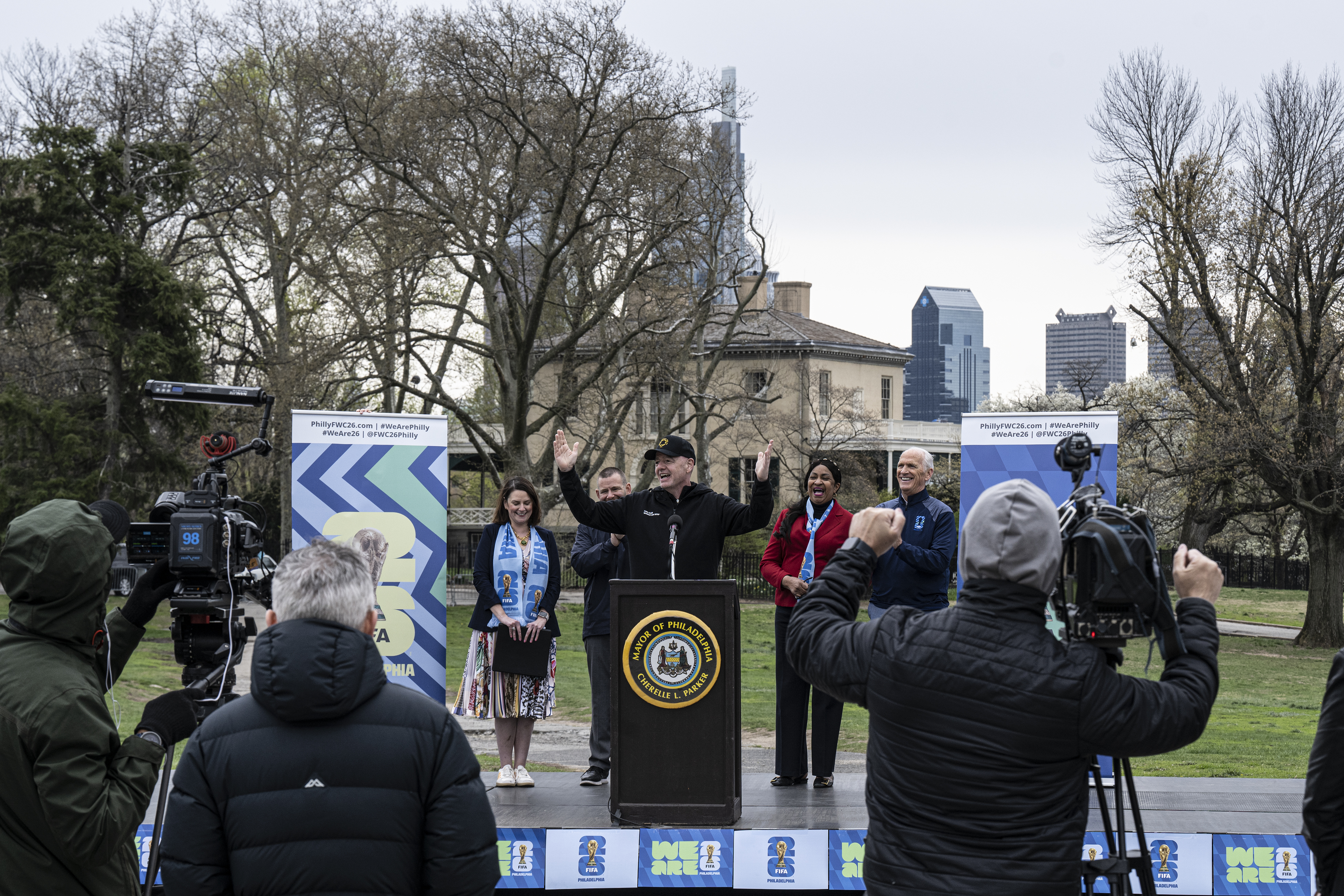
FIFA President Gianni Infantino, center, will visit Lemon Hill Park on Thursday, April 10 for an operational planning tour of Philadelphia Soccer 2026’s FIFA Fan Festival siteJose F. Moreno / Staff Photographer
Location: Sedgley Drive and North Lemon Hill Drive.
The project: Lemon Hill Park received some updates ahead of hosting the official FIFA Fan Festival, and is now getting a much-needed makeover after 39 days of World Cup festivities. The restoration of the grass is underway, with more permanent amenities soon to be constructed.
Some upgrades are complete:
Other upgrades are coming soon:
Who is behind it: Philadelphia Soccer 2026 is committing $4 million to park upgrades, with help from the city, to repair the grass fields, bring new modern amenities to parts of the park, and outfit the space with new electrical service, provided by Peco, to prepare for future large events.
FDR Park’s Ashburn Field
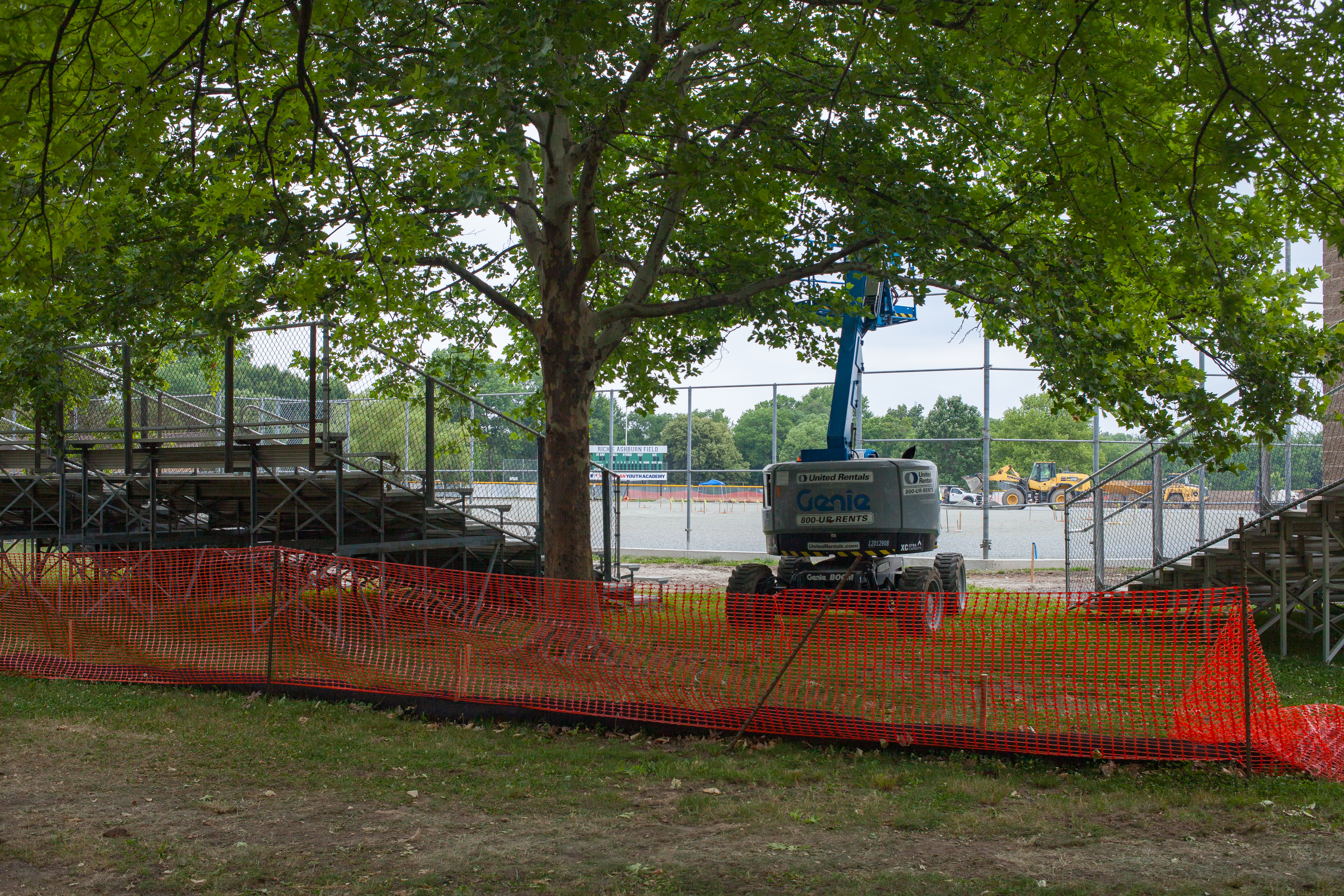
The MLB is renovating Ashburn Field in FDR Park, a city field managed and maintained by the Phillies that hosts a variety of youth baseball programs.
Location: 1500 Pattison Ave.
The project: Ashburn Field at FDR Park has been resurfaced with a new turf field, meant to better handle wet weather conditions. The 135,000-square-foot field was built in 1998, using funds generated from the 1996 MLB All-Star Game in Philadelphia.
Who is behind it: Major League Baseball and the Phillies, as part of a combined investment of more than $5 million in various projects tied to the 2026 MLB All-Star Game, including revitalizing the Negro Leagues Memorial Park and mural at 44th Street and Parkside Avenue in West Philly.
Independence National Historical Park
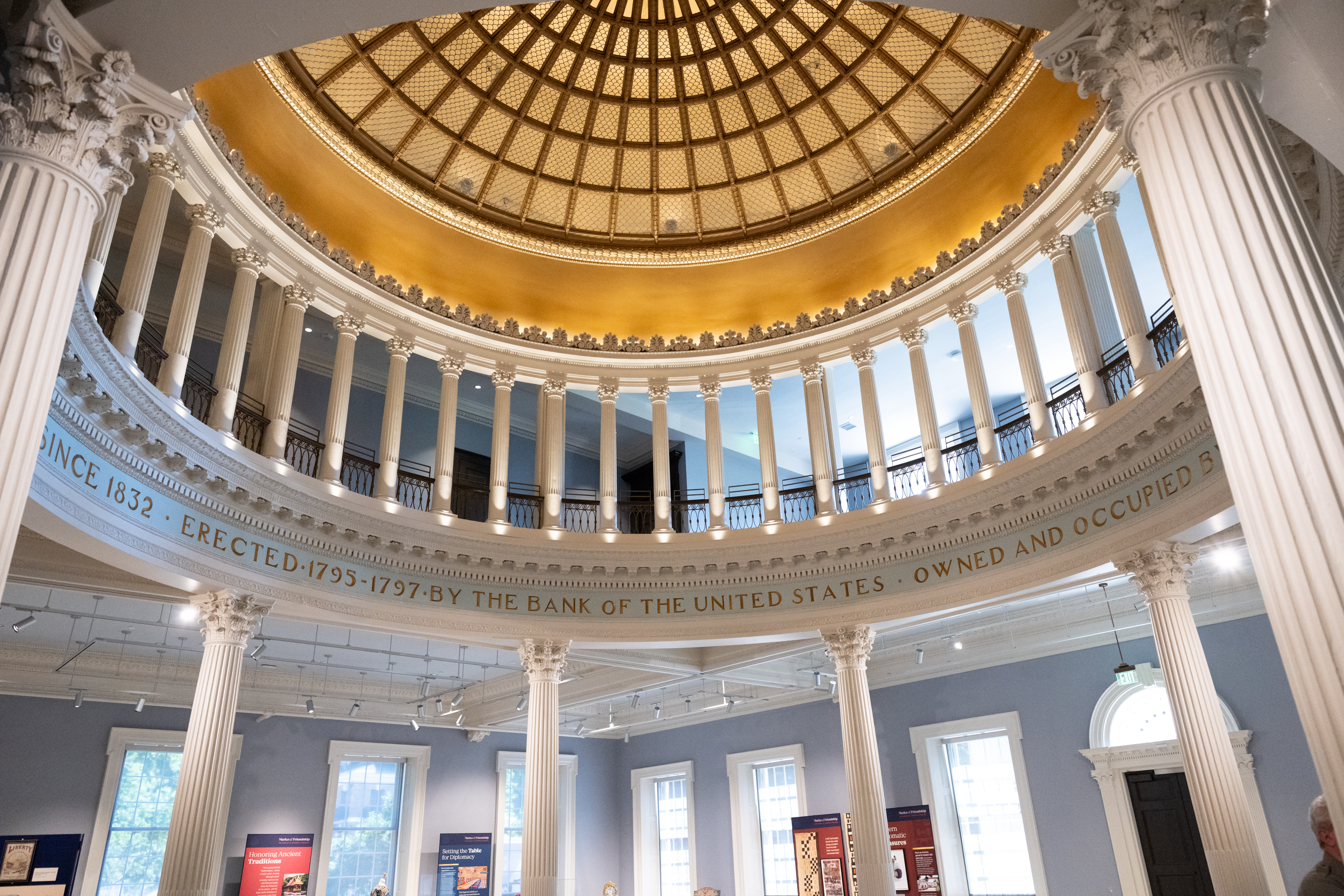
The rotunda inside the First Bank of the United States is pictured on Monday, June 29, 2026 in Philadelphia.Erin Blewett / For The Inquirer
Location: 599 Market St.
The project: Several improvements have already come to Independence National Historical Park and Independence Mall to commemorate the nation’s Semiquincentennial, and more are on the way. They include:
A $3.9 million “Join or Die” sculpture on Independence Mall, inspired by the truncated snake in Benjamin Franklin’s cartoon of the same name. The 46-foot-long granite work is expected to be unveiled this fall.
Beautification and horticultural work. This includes work at the Benjamin Rush Garden at Third and Walnut Streets, which showcases the 1976 Bicentennial Bell, a 10-ton Liberty Bell replica gifted by Queen Elizabeth II.
The reopening of the First Bank of the United States, on Third Street between Walnut and Chestnut Streets. The bank had been closed for 50 years but is now open for visitors thanks to a $43 million renovation.
Who is behind it: Independence Historical Trust, the city, the state, private foundations, philanthropists, and legacy groups.
Germantown Historical Society Visitor Center
Location: 5501 Germantown Ave.
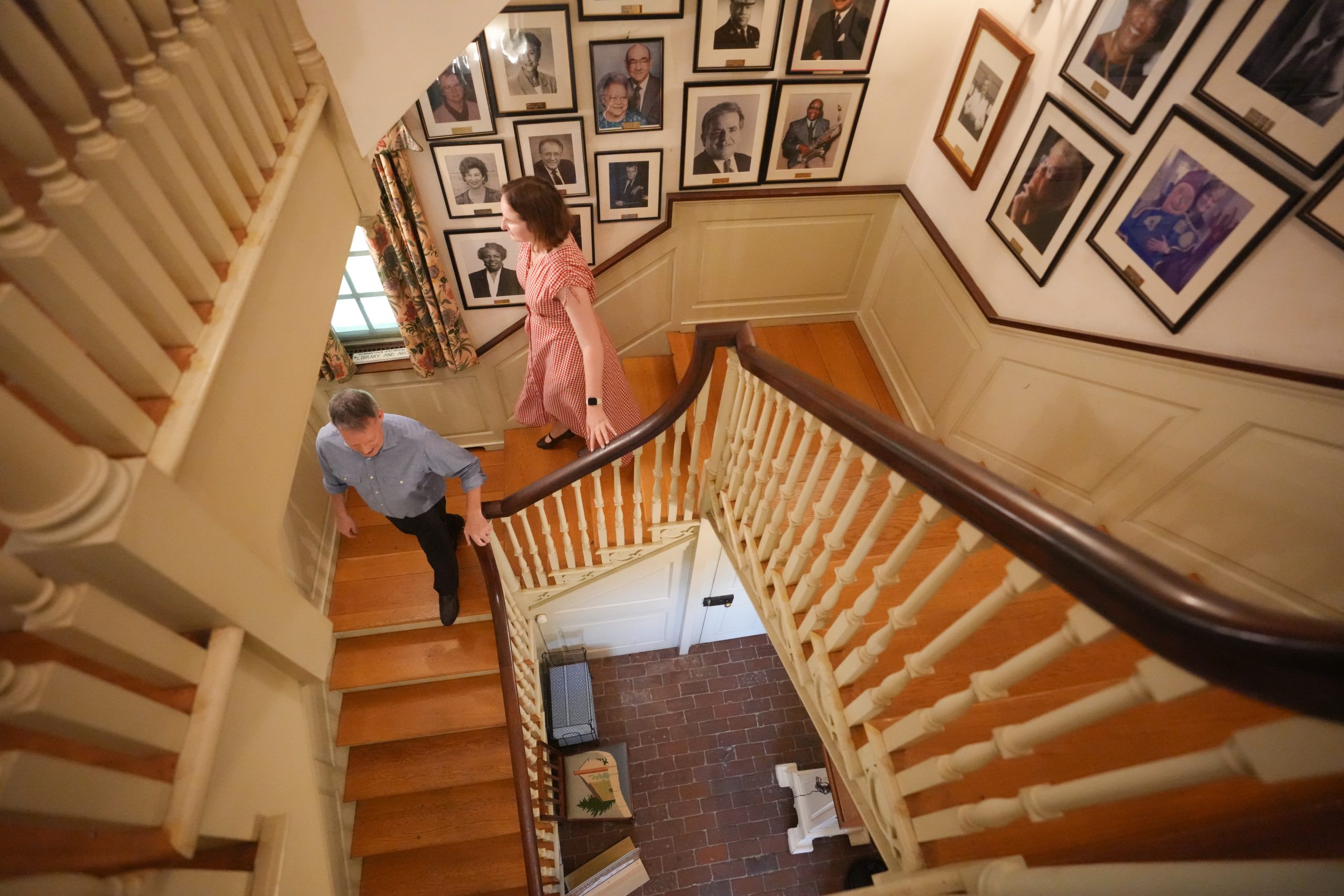
Tuomi Forrest, executive director at the Germantown Historical Society, and Kaila Temple, curator of collections at GHS, at the Germantown Historical Society building located at 5501 Germantown Ave. in Philadelphia, July 21, 2026.Jessica Griffin / Staff Photographer
The project: The Germantown Historical Society has its first visitors center, thanks to a $100,000 renovation of a section of its headquarters. It is modest but will host rotating exhibits, maps and pamphlets, and a gift shop.
Historic Germantown consists of various landmarks and attractions in Northwest Philly, including the Aces Veterans Museum, Awbury Arboretum, and the Germantown White House, where George Washington once lived.
Who is behind it: The Funder Collaborative for the Semiquincentennial, a philanthropic group organized by the Connelly Foundation that donated to many initiatives and projects related to the 250th anniversary celebration.
Whitney Biennial curators travel the length and breadth of the country, paying visits to artists in their studios, surveying their work, and picking creators whose work they think represents the present climate of art making in the country. Together, they bring a once-every-two-years expansive exhibition to New York’s Whitney Museum of American Art, often regarded as the most prestigious and faithful register of American art.
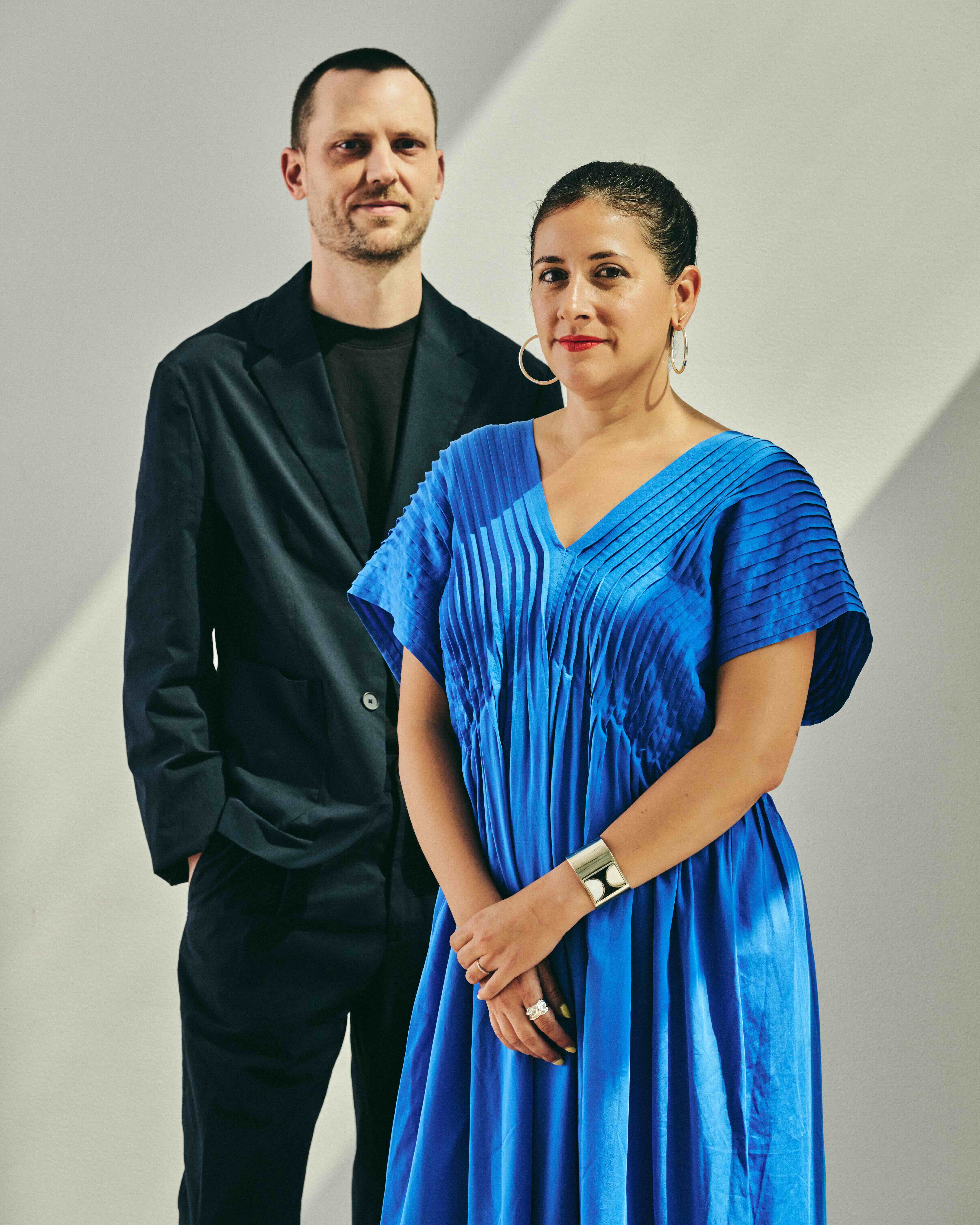
Past biennial curators — the 2024 edition was curated by the Institute of Contemporary Art’s former associate curator, Meg Onli — have embarked on these travels separately, but for the country’s 250th year and the biennial’s 82nd, Whitney curators Marcela Guerrero and Drew Sawyer traveled together.
Whitney Museum of American Art’s Biennial 2026 curators Drew Sawyer, Marcela GuerreroBryan Derballa
“We wanted to just listen to artists and see where they were at, see what they were thinking about, how they were processing recent events,” said Guerrero. They traveled for a bit over a year, nationally and internationally, and visited more than 300 artists.
“The idea of relationality and how do we relate in different ways” at political and interpersonal levels, is a theme that eventually emerged from their survey, Guerrero said.
While in the past some curators have traveled as far as Hawaii, Guerrero and Sawyer’s short travel to Philadelphia in the winter of 2024 proved equally fruitful.
“Philly was such a productive trip and very coherent in terms of what we were hearing from artists on gentrification, displacement, and the cost of living,” Guerrero said.
Artists in Philadelphia, Sawyer noticed, “seem to be particularly preoccupied with ideas of infrastructure” and there exists a strong sense of connection among them. Several of the city’s artist are graduates of the MFA programs at the University of Pennsylvania and University of the Arts, taught by the same professors like Michelle Lopez (whose work is included in this year’s biennial) and Sharon Hayes (whose work was a part of the 2024 biennial).
Maia Chao, “Being Moved,” 2026. Performance, Whitney Museum of American Art, New York, May 14–17, 2026. Commissioned by the Whitney Museum of American Art.Julieta Cervantes
Performance artists Maia Chao and Jonathan González, both of whose works are part of the biennial, live in West Philadelphia and are friends and collaborators. Emilio Martínez Poppe attended Penn and studied with Lopez, and was particularly interested in the idea of infrastructure from the perspective of the labor of public sector employees to help build and maintain our social and civic architectures.
“A kind of certain institutional critique, I would say, was common” among Philadelphia artists, said Sawyer.
“One of my biggest takeaways is the real vibrancy of the artistic scene in Philadelphia,” he said.
Here are the Philadelphia artists whose works appear in the Whitney Biennial.
West Philadelphia-based artist Maia Chao’s performance pieces “Being Moved’ and “Scores for the Museum Visitor” are part of the 2026 Whitney Biennial.Amelia Golden
Maia Chao
“Scores for the Museum Visitor,” “Being Moved”
Maia Chao’s performance art emerges from studying social behavior. Where some might see the mundane walk from home to work, she sees choreography, a rhythm, and an interaction of the body with its surroundings.
Her biennial performance piece Being Moved, choreographed by Lena Engelstein, takes inspiration from how museum visitors interact with the art. “It reframes the focus from the art itself to the visitors’ experience,” she said. The title refers to both “this potential to be moved by an artwork,” but also “of the ways that the institution makes us move, makes us move our bodies, and makes us behave in the presence of extremely valuable assets.”
That tension of the push and pull of a museum — where its mission might seem inviting and welcoming but once inside, rules around how to behave, what to touch abound — is at the center of Chao’s piece.
Maia Chao, “Being Moved,” 2026. Performance, Whitney Museum of American Art, New York, May 14–17, 2026. Commissioned by the Whitney Museum of American Art.Julieta Cervantes
When visiting the biennial beyond Chao’s performance schedule, visitors view Scores for the Museum Visitor as a set of prompts, an invitation to create “micro performances” of their own.
Among the scores are: “Identify another museum visitor. From afar, copy their movements as closely as possible.” “While holding a museum brochure, clasp your hands behind your back. Drop the brochure.” “Find a bench. Take a seat. Imagine the artworks slowly falling to the floor.”
“These are invitations to kind of transgress the rules, [for] engaging with the artwork, or interpreting and encountering an artwork,” the artist said.
Maia Chao, “Being Moved,” 2026. Performance, Whitney Museum of American Art, New York, May 14–17, 2026. Commissioned by the Whitney Museum of American Art.Julieta Cervantes
Chao first caught the curators’ attention with Agents of Deterioration (2024), made in collaboration with Ethan Philbrick, a performance piece commissioned by the Hirshhorn Museum and Sculpture Garden. Sawyer was drawn in by Chao’s “legacy of institutional critique through affective registers.”
“There’s a real kind of commitment to the institution, even as Maia is critiquing it, which we felt was important in this moment where there’s, from many different directions, an eroding of faith in institutions. We were really interested in the way she both critiques and pushes institutions to do better,” he said.
Artist and Penn professor Michelle Lopez whose “Pandemonium” is part of the 2026 Whitney BiennialKelsey Valencia, Denniston Hill Residency
Michelle Lopez
“Pandemonium”
Pandemonium is a fully Philadelphia piece of art. It was made in collaboration with the Moore College of Art and Design and the Franklin Institute, supported by the Pew Center for Arts & Heritage and the University of Pennsylvania, filmed at Northeast Philadelphia’s RAIR (Recycled Artist in Residency), premiered at the Fels Planetarium and the Galleries at Moore, and inspired by artist Michelle Lopez’s earlier work exhibited at the ICA.
“Philadelphia is just a really supportive environment for artists,” said Lopez, who is an associate professor of fine arts at Penn’s Stuart Weitzman School of Design, where she leads the sculpture program. “I could not have made that work in New York.”
The video project, as Lopez says, came from a desire to “situate the viewer in the eye of a storm so that they could feel, on a somatic level, what it was like to have their environment really collapse around them.”
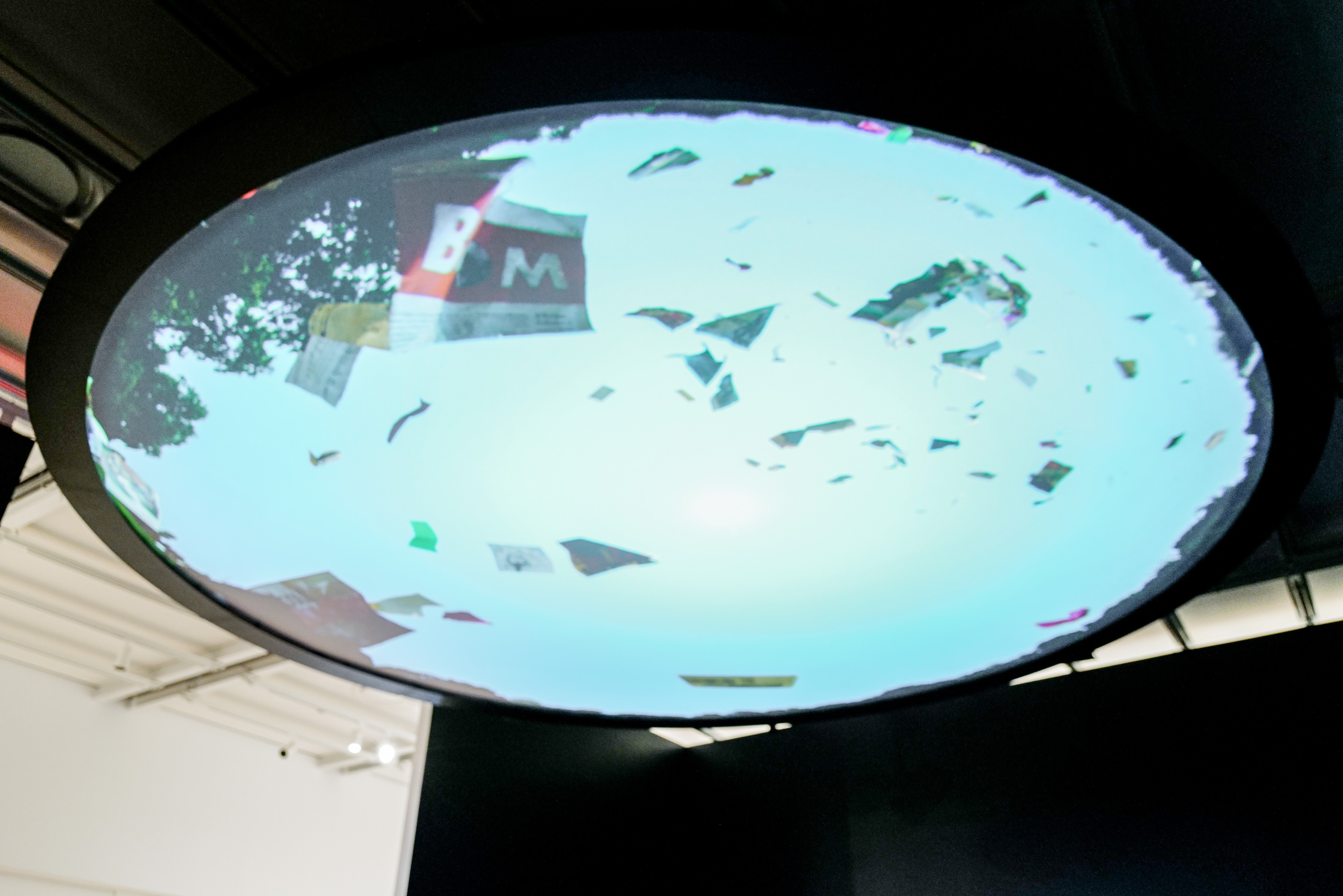
At the Whitney Museum, Pandemonium plays on a domed screen on the ceiling of the gallery and demands that the viewer sit below it and look up. What they witness is things moving around with a violent force against the sky — debris, newspapers, packaging, clothing (including Lopez’s own and her son’s old underwear), and other markers of extreme human consumption.
In order to make this mayhem happen, Lopez, who is trained in sculpture, built a tornado machine using a robotic contraption, industrial fans, and leaf blowers. Together they created a simulation of a tornado at RAIR which was then filmed and eventually screened in the Fels Planetarium.
“A lot of the work imagistically, came from seeing images of tornadoes and hurricanes wiping out towns. I was really interested in the way nature could collapse culture,” said Lopez, who lives in South Philadelphia.
Installation view of Whitney Biennial 2026 (Whitney Museum of American Art, March 8–August 2026). Michelle Lopez, “Pandemonium,” 2025.Jason Lowrie/BFA.com
While a Whitney gallery is nowhere close to the grandeur and wonder of the Fels Planetarium, the 360-format video manages to suck in a viewer who feels almost weightless as the feeling of being thrown around by the forces of nature is simulated.
When the curators visited Philadelphia for studio visits, “top on our list was Michelle Lopez,” said Sawyer. “We were aware that she had been working on this major moving image project that departed from what she’s most well known for, which is sculpture. So we were really excited to meet with her, especially because her work had not been a part of the biennial before.”
Artist Emilio Martínez Poppe, whose work “Civic Views” was on display in the City Hall courtyard last year. This year, it’s a part of the Whitney Biennial.Neal Santos
Emilio Martínez Poppe
“Civic Views”
Like Lopez’s Pandemonium, artist Emilio Martínez Poppe’s Civic Views is an artwork that is only possible because the city of Philadelphia exists. Several Philadelphians have already seen Martínez Poppe’s workwhen it was on view last year in the City Hall courtyard.
Martínez Poppe was then studying city planning and working toward an MFA in visual art from Penn when he was mulling over the future of city planning graduate students who’d go on to join the public service workforce.
It was in conversation with professors that he found out that the oldest surviving daguerreotype in the country, which is stored at the Historical Society of Pennsylvania, was taken by Joseph Saxon, who was a public sector employee working for the U.S. Mint.
“That was shot out of the U.S. Mint, where the Widener Building is today. He’s following Daguerre’s technological recipe, he uses it to photograph what he sees through the window. Unlike Daguerre, who was a theater entrepreneur, Saxton was a public sector employee who was doing something he was not hired to do,” said Martínez Poppe. “He was hired to work on the newly nationalized currency and he was tinkering with this invention in his office, and that view is one of the only real entry points that we have into his position at his job there, which is interesting.”
Emilio Martínez Poppe looks out the windows at the Department of Behavioral Health and Intellectual disAbility Services office on Tuesday, Feb. 11, 2025 in Philadelphia. Emilio Martínez Poppe is working on a project curated by Jameson Paige that documents the views from municipal service buildings. The project also includes interviews with city workers.Monica Herndon / Staff Photographer
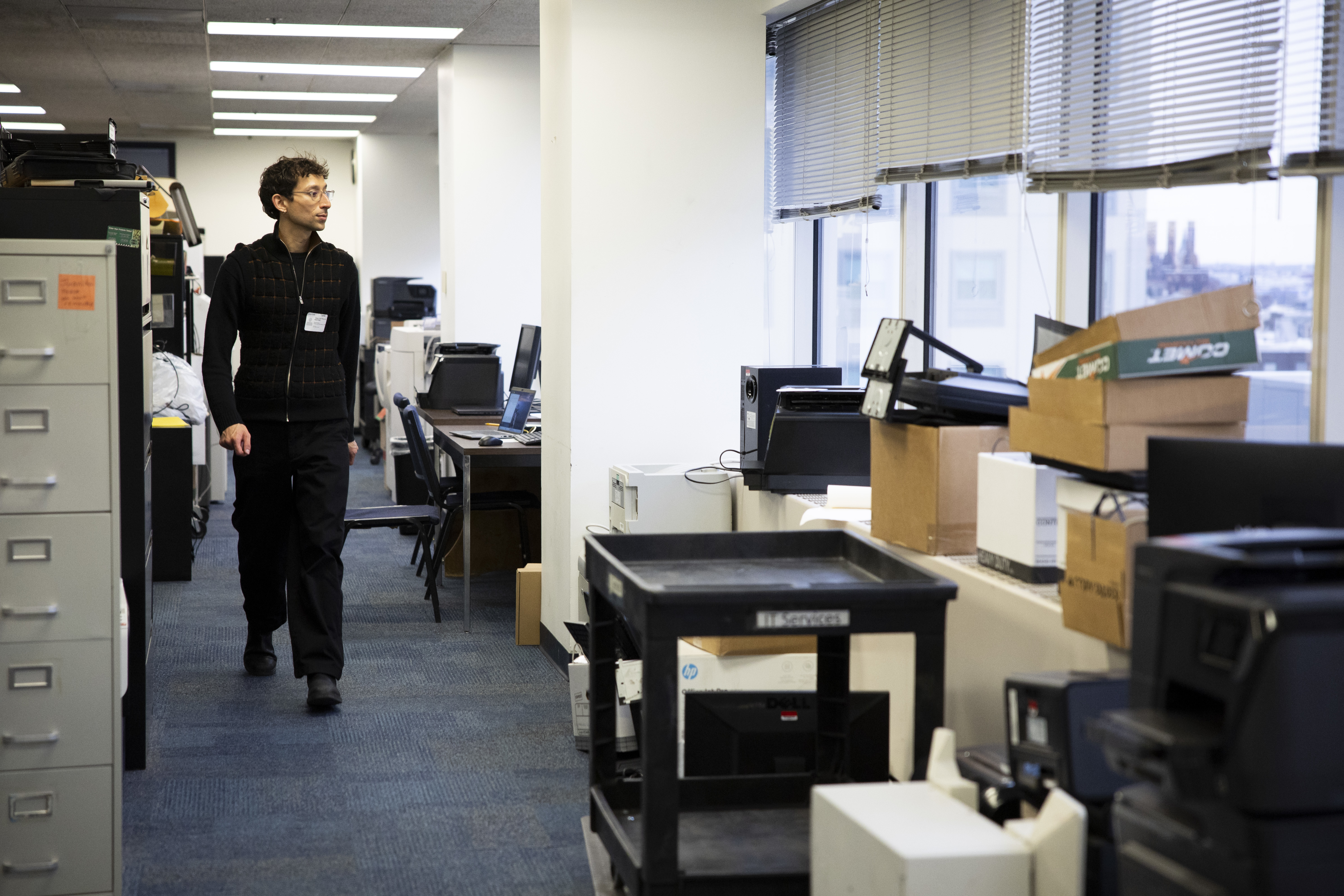
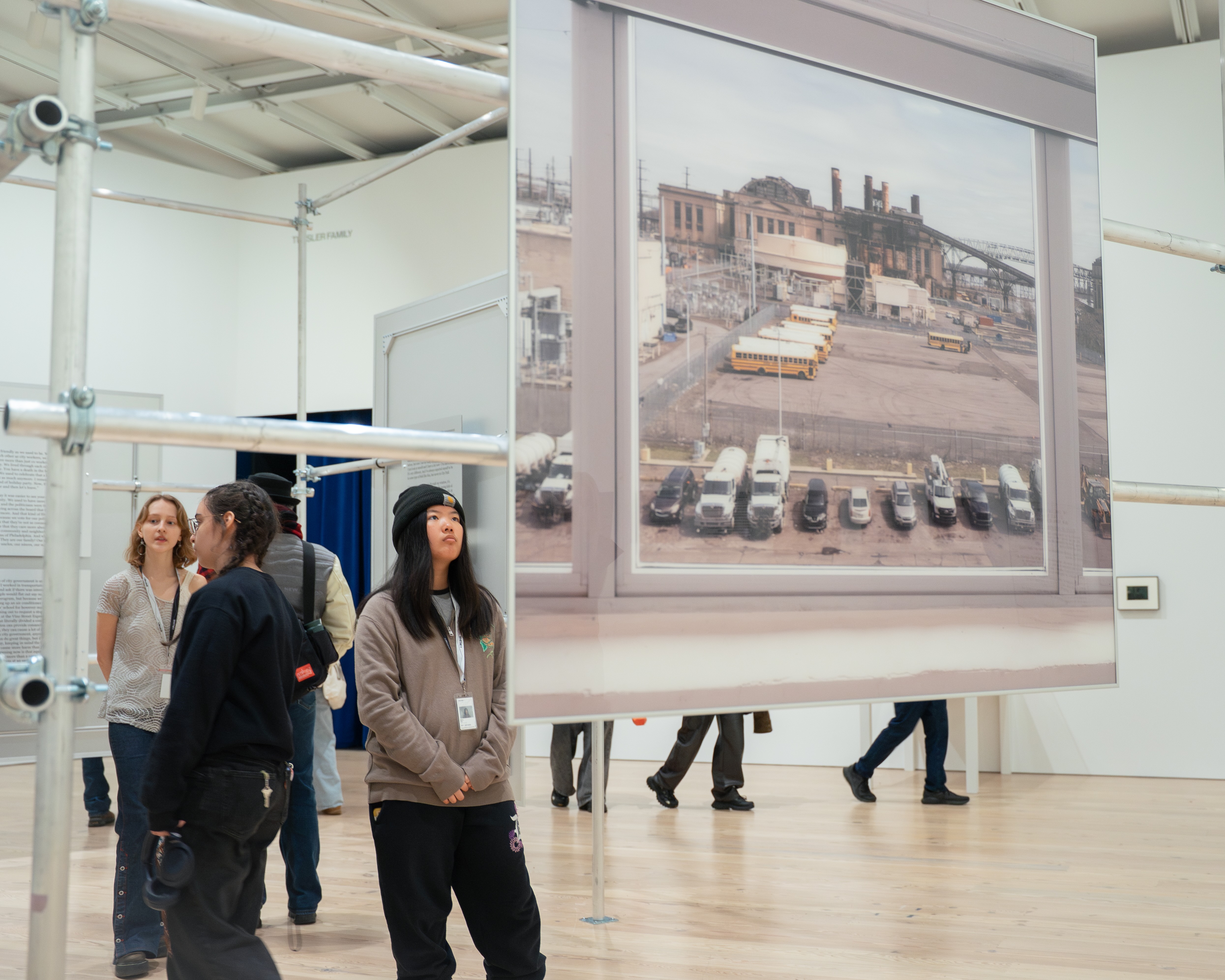
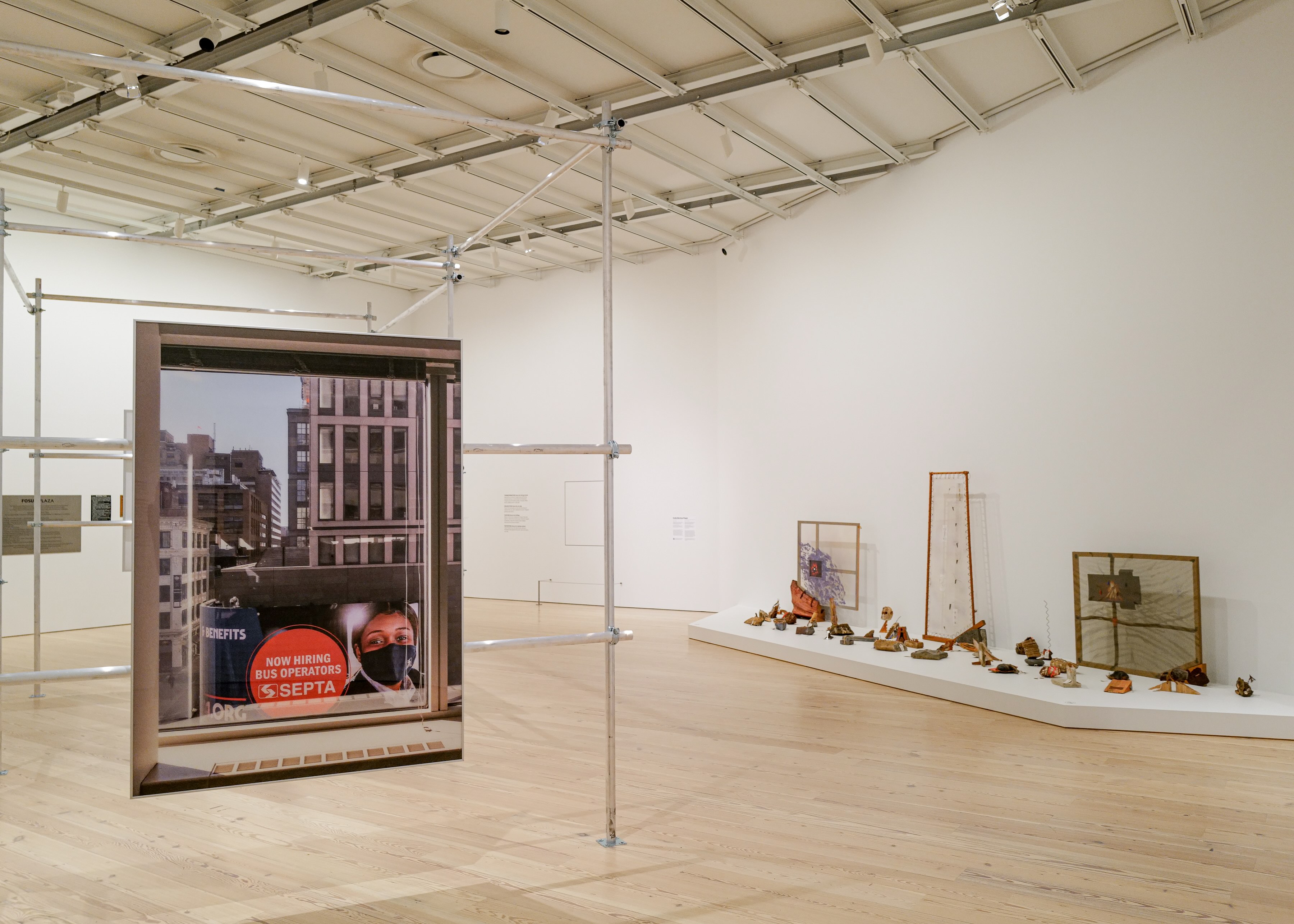
Inspired, Martínez Poppe visited municipal buildings all across Philadelphia and photographed views from the inside out so he could document what city workers see from their windows. Alongside, he conducted “dozens of long form, anonymized interviews” with city workers from more than 20 agencies.
“I would ask them, what was your perspective of city government before working here, who taught you about the value of public sector work? Often, so many people would tell me it was their mothers.”
Civic Views is a result of those conversations — a coming together of anonymized interview snippets and photographs displayed in a scaffolding-like structure in the middle of a Whitney gallery. “It’s the scaffolding that dissolves the authoritative center, even in the Whitney Biennial,” said Martínez Poppe.
An installation view of Emilio Martínez Poppe’s “Civic Views.”Summer Surgent-Gough
“The public sector is vulnerable to radical change, for better or worse. With my work, I want to say that it’s time to seize the means, seize our technology to create the world that belongs to us,” the artist, who now works for the New York City Mayor’s Office as a civic arts programs coordinator, said.
“We need to assume that responsibility. That’s why the project centers the voices of workers and how their positions shape their views. But also how their views shape the structures that we are living in and living through.”
On the curators’ Philadelphia visit, Guerrero recalled seeing Civic Views and people of the city interacting with it. “It was very touching,” she said. Her favorite part about the work is that it uses “the tropes of the camera, of the interview, of bureaucracy, but then upends it completely.”
Installation view of Whitney Biennial 2026 (Whitney Museum of American Art, March 8–August 2026). “Civic Views” (2024) by Emilio Martínez Poppe, “Philadelphia Housing Authority, South,” 2024; Emilio Martínez Poppe, “Philadelphia Department of Sanitation, North,” 2024; Emilio Martínez Poppe along with works of Kainoa GruspeJason Lowrie/BFA.com
“You see how important the job of a public servant is,” she said, “and how you know they’re in kind of a double bind because they’re the face of the government and also they receive the same services they provide … their kids are in the public school system, they depend on the Department of Sanitation.”
She finds this complexity “beautifully translated” in Civic Views. “You can really put yourself in the shoes of the person who’s speaking and feel the care that really goes into this type of work that should not be overlooked.”
Artist Jonathan González whose performance piece ‘magic hour — golden time’ is part of the 2026 Whitney BienialRudy Gerson
Jonathan González
“magic hour — golden time”
Like Chao, Jonathan González’s work also sees a two-pronged approach with performance and photography. Three Super 8 photographs, A, B, and C, mark the locations, across the museum, of the three-hour long performance piece presented by González and their co-artists.
“Each photograph shares with the performers how to perform the work,” said González, who also lives in West Philadelphia. Magic hour-golden time, they said, “is a double leaning. Magic hour comes from the usage in broadcast television when you have the highest viewership. And golden hour is that moment of the sunset. And so the piece is merging this experience of looking out and also being seen over three hours.”
Jonathan González, “magic hour–golden time,” 2026. Rehearsal performance, Whitney Museum of American Art, New York, May 12, 2026. Commissioned by the Whitney Museum of American Art.Julieta Cervantes
From three terraces around the museum, the performers follow the sun’s movement for three hours. In the first hour, the performers “embody the architecture that surrounds the museum” and makes up the city’s skyline. The second hour, they said, “is a procedure of call and response … the dancers dance with every dance you’ve ever danced, and take information from one another as dancers, as well as from the pedestrians.”
The final hour, González said, is performed on an inaccessible terrace. “It can only be viewed from across the street, you cannot see it from the museum. It’s called the ‘Endless Bow,’ and it’s 60 minutes of bowing to the sun and bowing to the world and bowing to the performance.”
Philadelphia, the former University of the Arts professor said, gives them “the capacity to slow down to hear these voices, and have dreams, visions come to you.” The city allows them the time to spend time in the studio with friends like Chao and inspires them to “collaborating not toward a particular product or aim, but much of the time experimentation.”
Jonathan González, “magic hour–golden time,” 2026. Performance, Whitney Museum of American Art, New York, May 12, 2026. Commissioned by the Whitney Museum of American Art.Julieta Cervantes
“Just the fertile nature of Philly as a historical Black geography has been really important for me to really situate the questions of time and what happens to a city at the late stage of industrialization, and to really think critically about what a group can do, what mutuality is,” they said.
“Certain artists just stay in your mind, and you want to come back and see what they are working on,” said Guerrero recalling her first tryst with González’s work. “The work felt so mature. There’s this notion of how, through improvisation, you can be attuned to your surroundings. In the case of their performance, they make these other effective strategies [for attunement] that don’t always rely on the senses, and that is something that is very present in the show.”
The Whitney Biennial 2026 is on view through Aug. 23 and on partial view, which will include all of the Philadelphia artists’ static works, through Oct. 12. The Whitney Museum of American Art, 99 Gansevoort St., New York. whitney.org
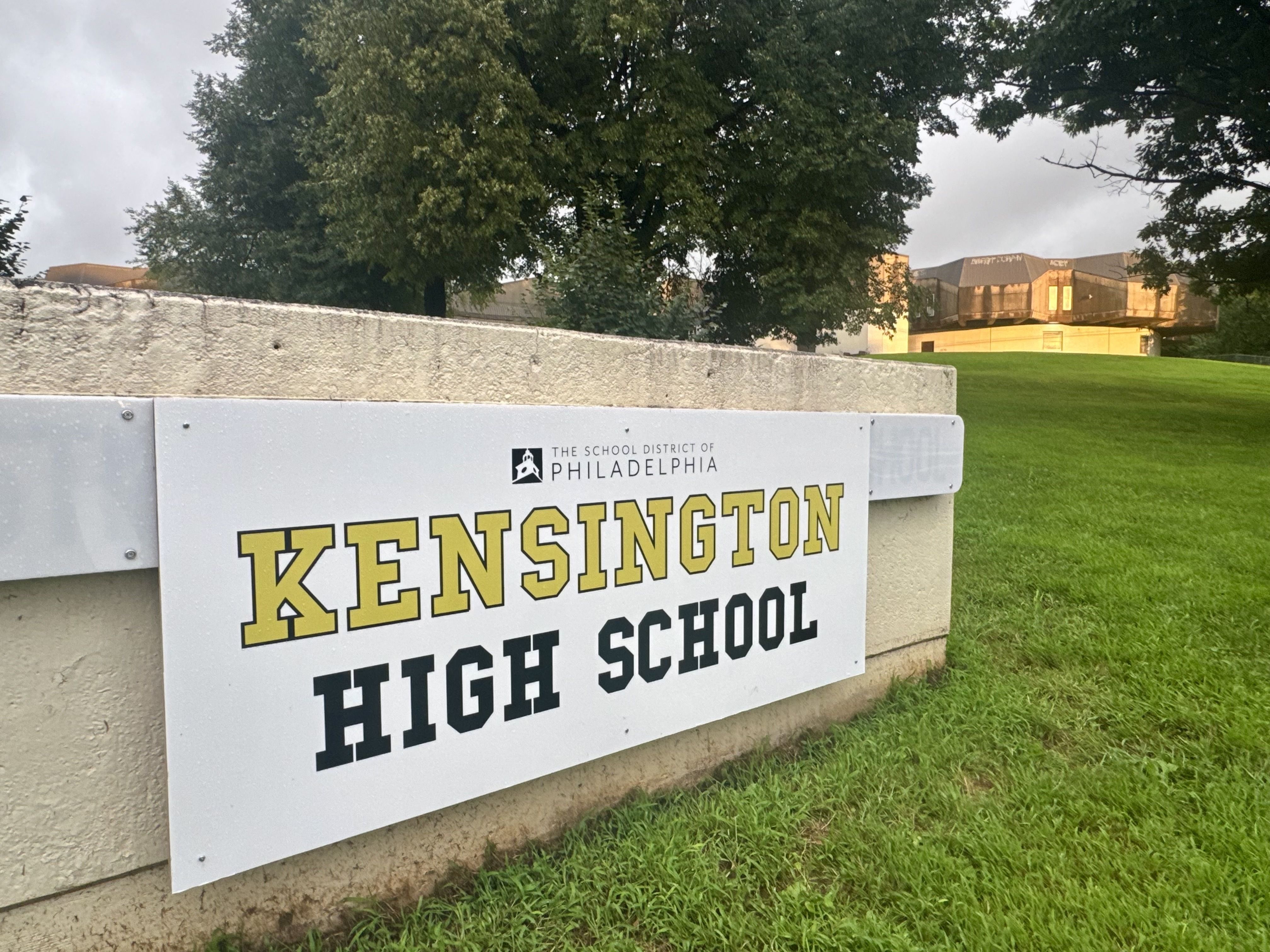
Kensington High students can begin the 2026-27 school year at the former Austin Meehan Middle School in the Northeast, on Monday — despite a lawsuit that hoped to halt the relocation before classes begin.
Philadelphia Common Pleas Court Judge Christopher R. Hall on Friday declined to issue an emergency injunction that would have prevented moving Kensington students to Meehan, a now-empty Northeast middle school.
Asbestos issues rendered Kensington’s E. Clearfield Street building temporarily unusable. District officials decided to move Kensington’s 400-plus students and 90 staff to Meehan — on Ryan Avenue in Mayfair — until Kensington’s building is ready, likely in January.
Meehan shares a campus with Lincoln High and Northeast Community Propel Academy, which are both already overcrowded.
Harold Brown, parent of a rising sophomore at Lincoln, and Peter McDermott, a former district teacher and Mayfair civic leader, objected to the relocation, saying that moving Kensington into the Meehan space would create safety and other concerns.
After a four-hour hearing, Hall said he did not “believe that there is evidence of an immediate and irreparable harm” if Kensington students start the year at Meehan on Monday.
In fact, the judge said, “I think granting the injunction would throw off the Kensington families,” forcing the district to pivot to virtual instruction on short notice, which would harm students’ academics, food security and social and emotional needs.
“The balance does not tip there,” Hall said in court.
Hall’s ruling rests on the district meeting a 5 p.m. Friday deadline to submit a safety plan for the Kensington-at-Meehan campus. Hall and McDermott’s lawyers said they would file another injunction request.
More police, and yellow bus service for most Kensington students
Witnesses for both sides made their case over several hours.
The school system rejected two alternative sites closer to Kensington — Roberto Clemente Middle School, in North Philadelphia, and Penn Treaty High School, in Fishtown — before settling on Meehan, Teresa Fleming, chief operating officer, told the judge.
Clemente was considered the better alternative, but ultimately could not accommodate all Kensington programs. Penn Treaty didn’t meet accessibility needs for students with disabilities, Fleming said.
And Craig Johnson, the school system’s chief safety officer, said the district is adding police officers to ensure student arrival and dismissal run smoothly.
Kensington typically had four school safety officers; it will get a fifth full-time officer with the relocation to Meehan, and a sixth part-time officer to help with arrival and dismissal.
Answering concerns about additional students complicating the transit situation at the Lincoln-Meehan-Propel campus, Fleming said there will be no more than 90 Kensington students traveling to Meehan by SEPTA buses.
Just under 70 Kensington students already receive yellow bus services, and those will continue, Fleming said; an additional 250 students now live close enough to walk to Kensington, and will take yellow bus shuttles from Kensington to Meehan. The remaining 90 students, who are out of catchment for Kensington, already receive SEPTA fare cards and will continue to do so, but may also opt to use the yellow buses if they so choose.
‘The kids are just kids’
Brown, on the witness stand, said he had no problem with Kensington students specifically.
“I don’t even want to say the kids are bad, the kids are just kids, but if you have more kids, things arise,” said Brown.
After Hall made his ruling, Michael van der Veen, a lawyer for the plaintiffs, said his clients remained concerned, despite the district’s plans.
What if “a week from now, or a month from now, we get a shooting, a stabbing, a killing, or violence that breaks out there?” van der Veen said.
Regardless of Hall’s rejection of the injunction, the lawsuit will continue, van der Veen said, and “we’re going to continue to look at what the legal options are.”
William Brennan, another lawyer representing the plaintiffs, said the relocation of Kensington students to Meehan is “a neighborhood safety issue, and we’re going to do everything we can to keep the neighborhood safe.”
Hall, during the hearing, asked Brown and McDermott’s lawyers why parents and the neighborhood groups – who also say the district is violating 2019 and 2020 community benefits agreements – did not object to other students using Meehan.
In the past, elementary school students from Mayfair Elementary — which was overcrowded, and Thomas Holme Elementary, which needed a temporary building while its new school structure was being built — learned in the Meehan space.
“There’s a significant difference in that they were K-8 students, and now we’re looking at 9-12 students,” said McDermott, who previously taught in the district, at Benjamin Franklin High, when it and Science Leadership Academy were relocated after construction on their shared building went awry.
Brennan expressed skepticism that the district’s safety plan, finished a few days before students return to class, will be adequate.
“It sounds like the plan is to drop the bomb on the neighborhood,” Brennan said, “and just hope for the best.”
A series of human and oversight failings is being eyed by federal investigators as possible contributors to the fatal crash of a medical jet in Northeast Philadelphia last year, according to documents filed by the National Transportation Safety Board.
The federal agency does not identify a cause of the Jan. 31, 2025, crash of the Mexican-owned medical transport that crashed near the Roosevelt Mall just after takeoff, killing all six people onboard and twoon the ground.
But among the factors it has found during a 1½-year probe are possibly fatigued pilots who had never flown in or out of the airport, an improper setting on the Learjet tail’s elevators, and a lack of Federal Aviation Administration safety checks on a workhorse foreign-owned carrier.
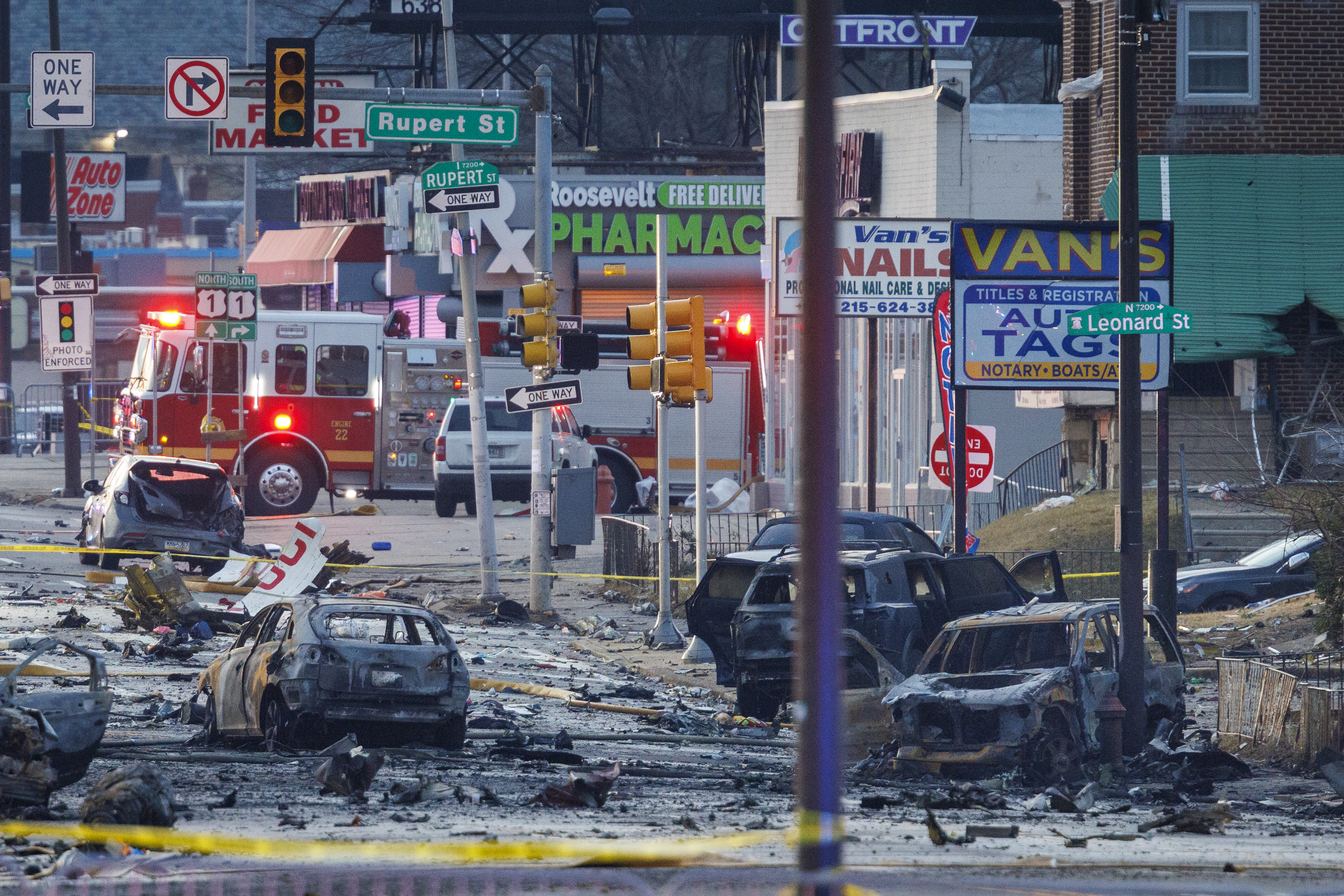
Images released by the NTSB as part of their investigation show the scene along Cottman Ave. where a medical plane that crashed, in Northeast Philadelphia on Jan 31, 2025.Courtesy of NTSB
Upon impact, the 1982 Learjet 55 erupted into flames that spread to homes and cars in the heavily populated area. At least 24 people were reported injured. The jet took off just after 6 p.m. that Friday and within a minute had begun a swift nosedive into the sidewalk near Cottman Avenue and Roosevelt Boulevard.
On board were 11-year-old Valentina Guzmán Murillo, who had just received care at Shriners Children’s Philadelphia before returning home to Mexico; her mother; a pilot; a copilot; a flight physician; and a paramedic.
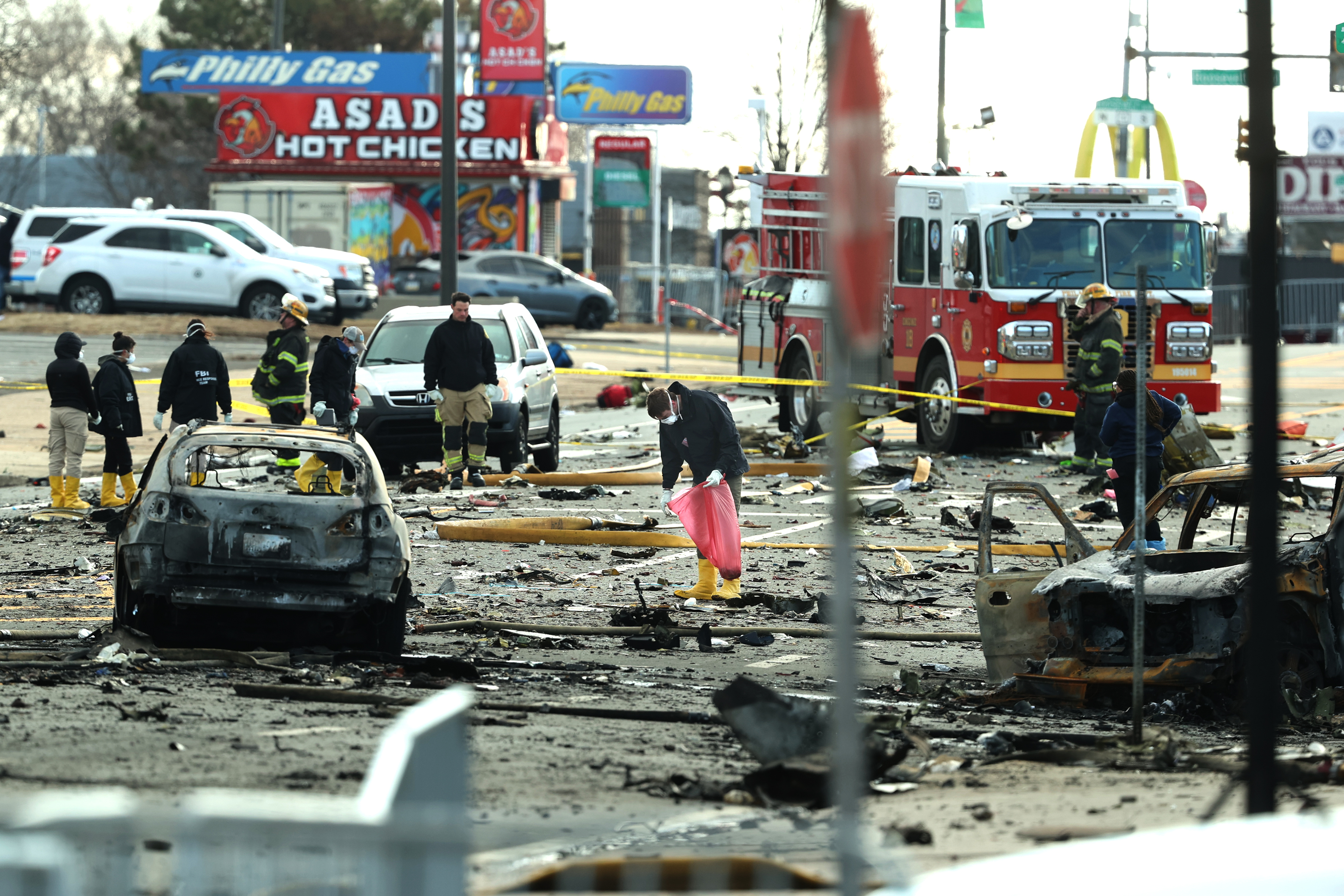
Investigators going through the debris on Cottman Avenue Saturday, Feb. 1, 2025, in Philadelphia. A medical jet with six people on board crashed Friday evening near the Roosevelt Mall in Northeast Philadelphia.Charles Fox / Staff Photographer
Potentially fatigued pilots and potential training weaknesses
As investigators try to piece together what might have gone wrong in the cockpit, they are focused on the two pilots.
One factor that could have played a role was their workload in the days leading to the fatal crash. They had flown multi-leg trips all four days before the accident.
NTSB investigators also looked into the effects of “spatial disorientation,” a phenomenon pilots experience when their perception of motion and relation to the Earth’s surface becomes mismatched.
During the ascent from Northeast Philadelphia Airport, the pilots rolled the plane to the right by 12 degrees. Air traffic controllers then communicated with the pilots, and the pilots responded just as the plane began to rotate back to zero degrees. According to the NTSB, within 10 seconds of their last communication with the air traffic tower, the plane continued rolling to the left at a rapid speed until the plane stopped climbing.
“Pilots who are properly trained and current in instrument flying can normally use instrument information to overcome misleading sensations, however, even well-trained pilots experience sensory illusions from time to time,” NTSB investigators wrote.
When there is a delay, it can take a few seconds or more for a pilot to regain spatial awareness. But during that delay, a pilot may make inappropriate control inputs that place an airplane in “an unrecoverable trajectory.”
In interviews with the pilots’ most recent training instructors at Flight Safety International in Tucson, Ariz., the pilot in command demonstrated a “tendency to react before thinking through a problem,” the report says. The instructor noted that the same pilot would select modes of operation when the autopilot system was off, something the pilot in command is supposed to delegate to the second-in-command pilot.
“That allows the pilot to concentrate on actually flying the aircraft. So what happens is, if the autopilot’s off and the pilot flying goes to select modes of operation, it’s distracting him from flying the aircraft, which typically results in deviations of altitudes, speeds, and headings,” said the flight instructor, who was not identified in the report.
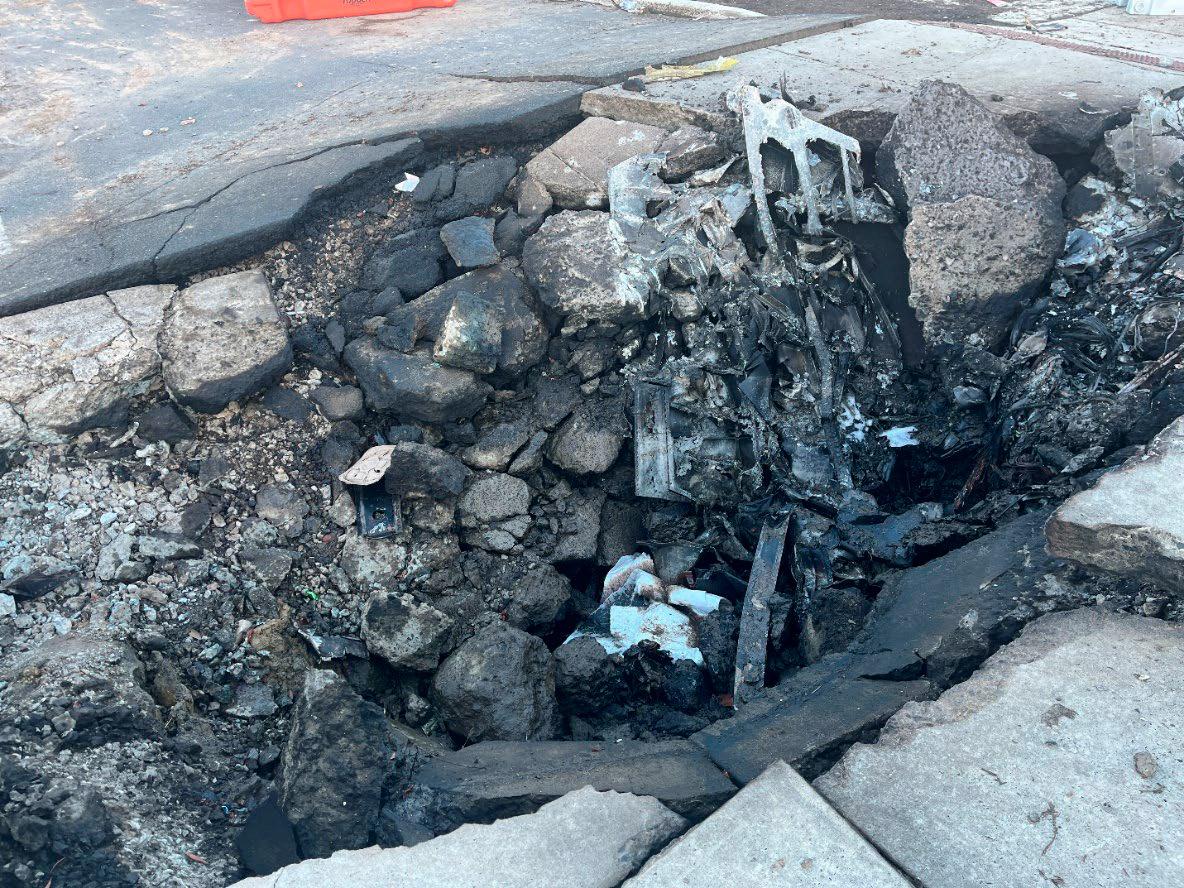
Images released by the NTSB as part of their investigation show the wreckage of a medical plane that crashed in Northeast Philadelphia on Jan 31, 2025.Courtesy of NTSB
The second-in-command pilot’s training report also showed that his lack of recent experience in flying a similar-model Learjet “was evident.”
A spokesperson for Jet Rescue Air Ambulance, the Learjet 55’s operator, could not be immediately reached Wednesday for comment on the new release of documents.
Jeff Guzzetti, a former NTSB investigator, wondered if the low visibility that night, made more hazardous by overcast and lightly choppy weather conditions, could have exacerbated a phenomenon called somatogravic illusion.
That happens when rapid acceleration or deceleration, or other changes in gravity, can cause pilots to falsely believe a plane is pitching up or down when it is not.
“When you look at those four things — the low cloud ceiling, nighttime conditions, high velocity descent, less than a minute after takeoff — that could be consistent with spatial disorientation,” he said. Add in other distractions, like changing radio frequencies, and even experienced pilots have lost their bearings while relying solely on their instruments to navigate, Guzzetti said.
Images released by the NTSB as part of their investigation show the medical plane that crashed in Northeast Philadelphia on Jan 31, 2025.Courtesy of NTSB
Investigators search the jet
The extreme impact, and a debris field scattered across more than a dozen city blocks and a shopping center, has hampered the investigation. Nearly all parts of the plane, from its engines to the mechanical and electrical systems that controlled the jet, were found in damaged condition.
Even so, the NTSB has reported that the jet’s pitch trim, which would have aided the angle of flight and airspeed, was not in optimal position. That meant the pilots would have had to exert up to 50 pounds of force against the controls during takeoff and 12 pounds for level flight, investigators said.
Arthur Alan Wolk, a Philadelphia-based aviation attorney and pilot, was dubious. “They blame the pilot for the trim,” he said. “I don’t think you can rely on that record” because the impact makes interpreting the damaged parts difficult.
Wolk also said the pilot could have corrected for this by hitting an electrical trim switch. “Could it have happened? Yes. Is it a factor? In my opinion, I don’t think so.”
The investigation devoted extensive research into tanks filled with oxygen and other gases the medical jet had on board, which could have led to a fire or impaired the flight crew. Investigators said cameras that caught the airplane’s descent did not show trailing smoke or any visible internal fire.
In all, 11 gas cylinders were recovered with various states of damage. In previous incidents, investigators noted, flight crews had become incapacitated by carbon dioxide exposure. The Learjet’s carbon dioxide tank was found with its valve stem fractured, though the NTSB did not say if it believed there had been a leak prior to the crash.
Jet Rescue Air Ambulancetold the NTSB that the company had no record of the raft for this jet and believed it was installed by a crew member without authorization.
Despite the NTSB stating in March 2025 that the cockpit voice recorder had not worked in years, investigators were able to repair its analog tape and listen to the audio. But the recordings were of a prior landing.
The report did not say why the device failed to record the final takeoff. This jet was not required to carry or maintain a cockpit voice recorder, though it was listed on the preflight checklist.
The NTSB also examined the Learjet’s logbooks and maintenance reports and found they were largely in order, though they could not determine if any new maintenance was done prior to the final flight.
From left Philadelphia Mayor Cherelle Parker, Sean Patrick Duffy, United States Secretary of Transportation turning to acknowledge Pennsylvania Governor Josh Shapiro’s work at press conference. These three and others tour the scene of medical jet crash, Cottman Avenue on Monday, Feb. 3, 2025. The plane crashed Friday evening, Jan 31, 2025.Alejandro A. Alvarez / Staff Photographer
Lack of FAA oversight
A major piece of the investigation rests on the FAA’s Dallas International Field Office, which oversaw the U.S. operations of the medical jet operator.
Because the operator flew unscheduled, non-U.S. registered flights, FAA personnel said they were limited to performing “ramp checks,” or unannounced inspections of the aircraft and crew on the ground, as a safety measure. But when investigators searched the FAA’s safety assurance system for any record of ramp checks, they found none prior to the fatal crash.
Asked by NTSB investigators if there was a requirement to perform ramp checks or other surveillance on operators like Jet Rescue Air Ambulance, the primary inspector stated: “Oh, I’m not sure.”
The primary inspector continued that there was no surveillance plan in place before the time of the crash and that FAA staff in charge of Jet Rescue Air Ambulance’s operations had no knowledge of the operator’s previous crashes. The operator experienced a fatal accident in November 2012 in Fort Lauderdale, Fla., a nonfatal accident in February 2019 in Toluca, Mexico, and a fatal accident in November 2023 in Cuernavaca, Mexico.
Jet Rescue Air Ambulance was not on the FAA’s Heightened Surveillance List, which would have flagged the operator for additional inspections.
Unscheduled operators like Jet Rescue Air Ambulance are required to notify the Dallas FAA field office before operating in the United States, which the FAA would use todetermine when inspections are needed. But Jet Rescue Air Ambulance did not notify the office of its operations before the accident flight, according to the NTSB findings.
The NTSB release of evidence comes as federal probers complete their investigation phase and prepare their final report, followed by a review process that can take up to six months.
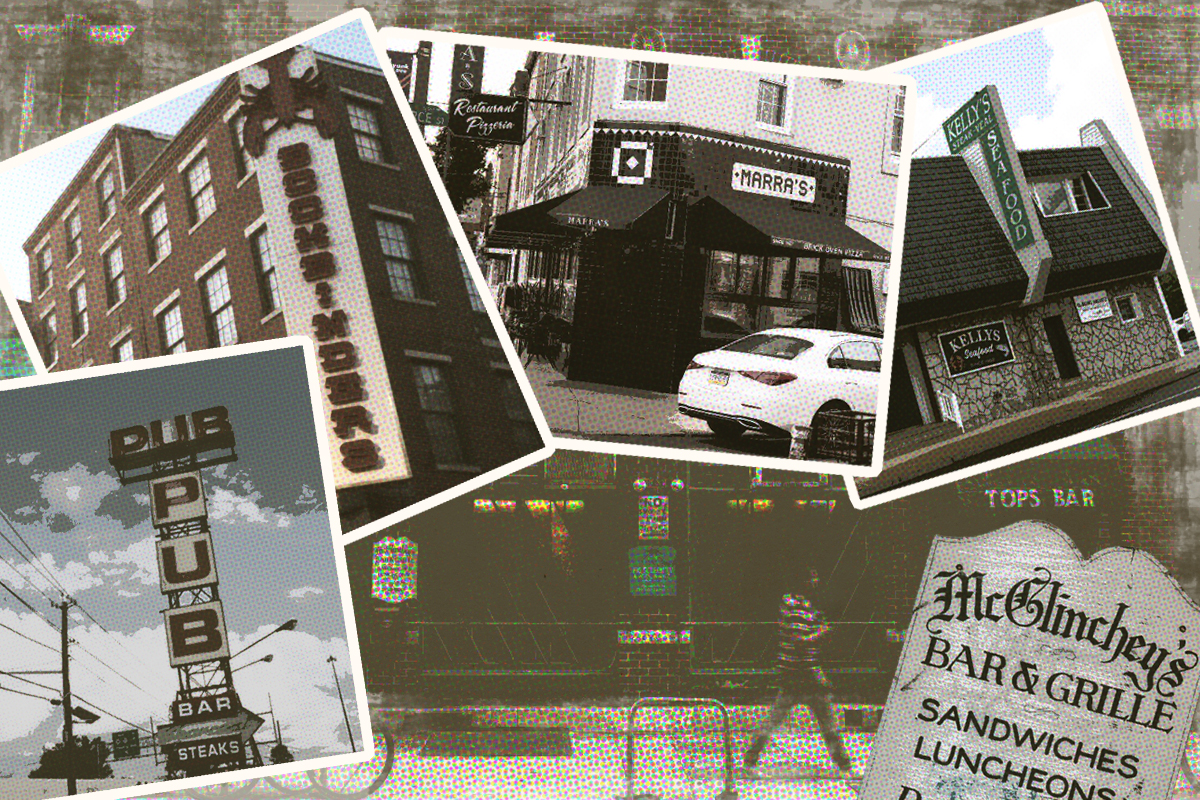
An unusually visible collection of Philadelphia-area restaurant institutions is reaching a turning point at the same time — with some closing for good and others seeking buyers as a generation of longtime owners reaches retirement age.
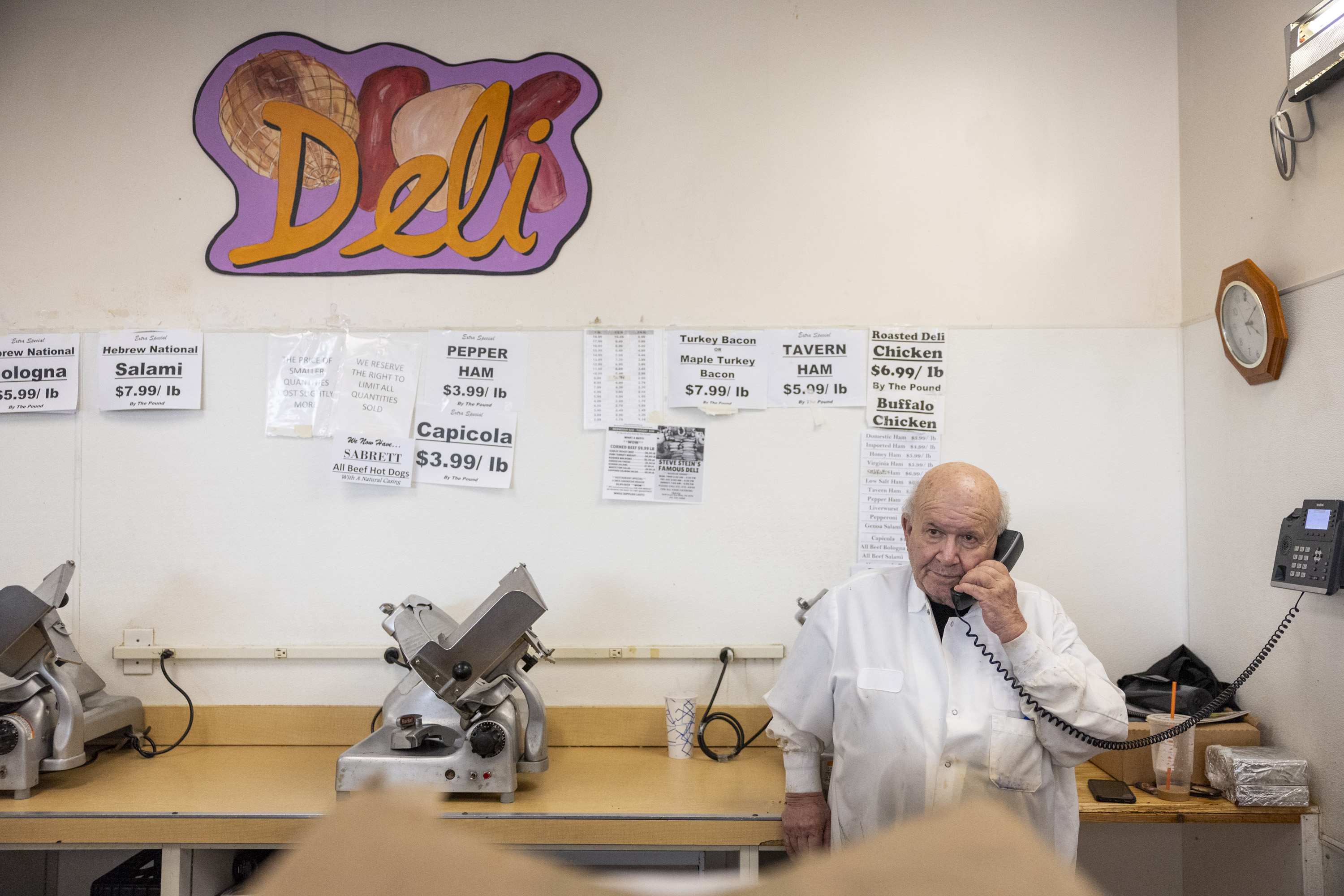
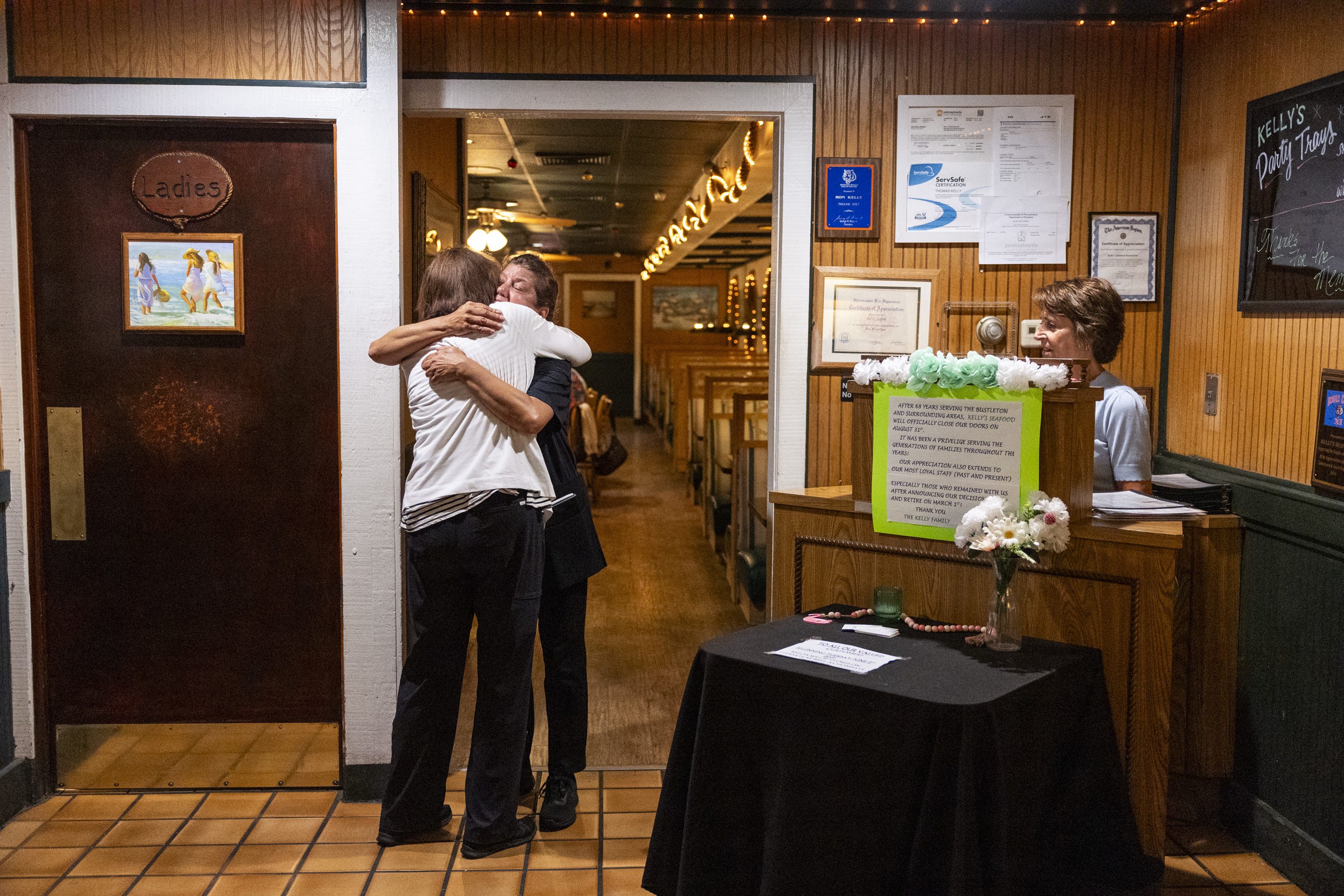
At Kelly’s Seafood, the end is definite. The Northeast Philadelphia restaurant will close this month as its owners retire, ending a run spanning three generations of the Kelly family. So will Steve Stein’s Famous Deli, whose history in the Northeast also reaches back nearly 70 years.
Elsewhere, the outcomes are less certain.
Cherry Street Tavern has been around for a century at 22nd and Arch Streets.Tyger Williams / Staff Photographer
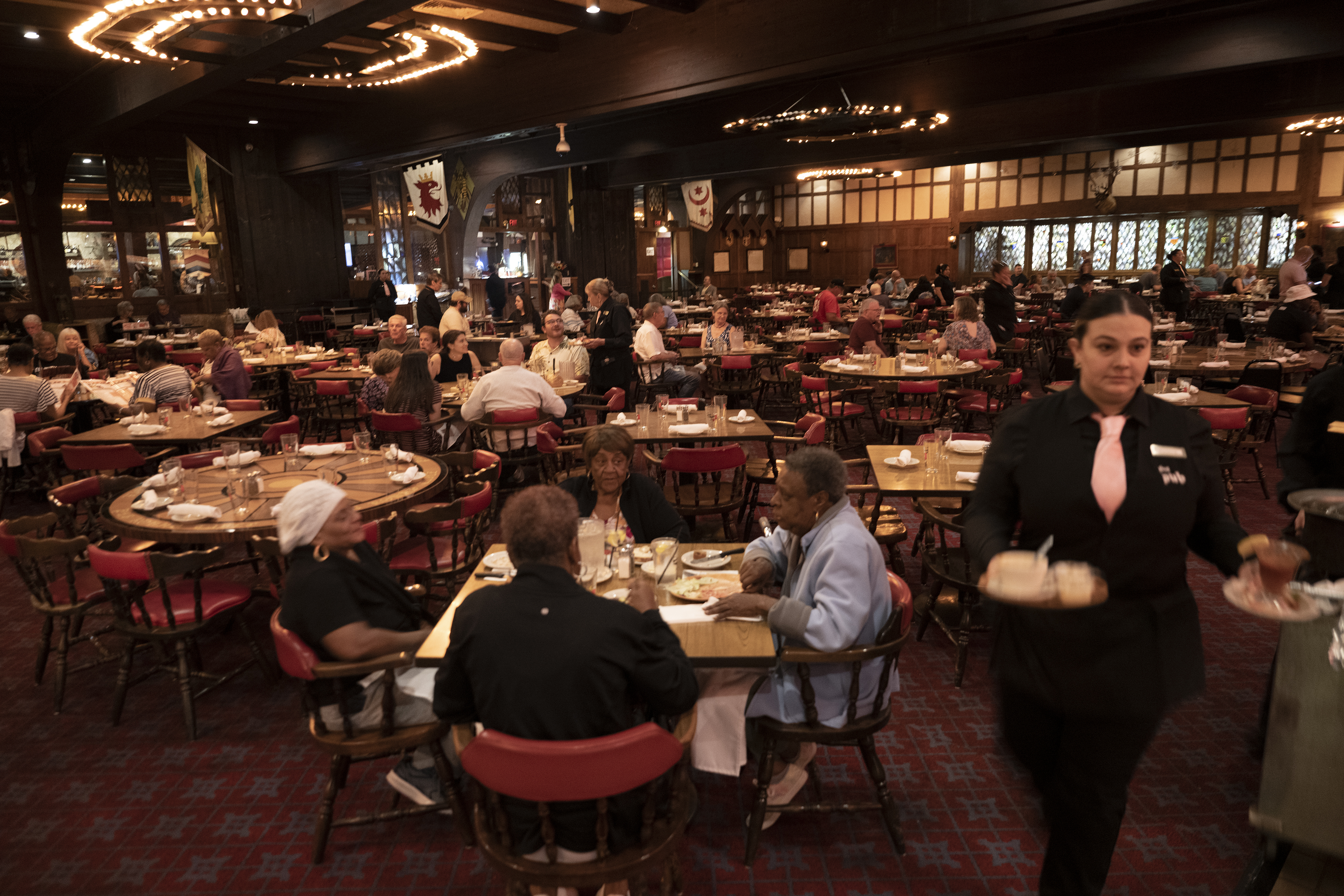
The Pub, the sprawling Pennsauken steakhouse known for its open hearth, medieval decor, and thousand-plus seats, is on the market. The restaurant, which dates to 1951, is not closing: It is on its customary summer break and is scheduled to reopen Sept. 18.
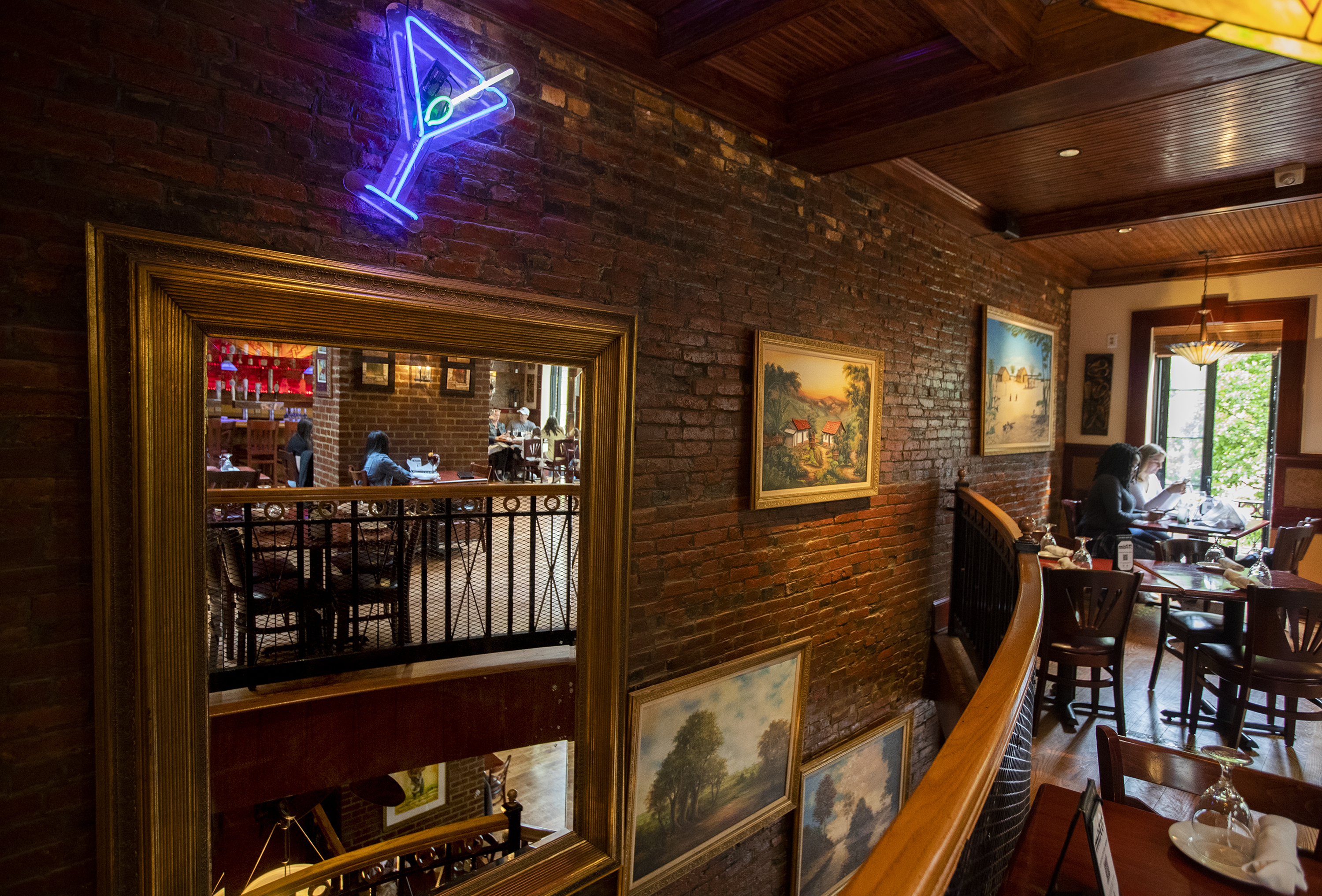
The owners of Cherry Street Tavern, the Logan Square bar that has operated for more than a century, are looking for a buyer after 50 years of stewardship by the Loughery family. The buildings that housed Mamma Maria’s, the East Passyunk Italian restaurant that opened in 1992, went up for sale this month. Aldar Bistro in Bala Cynwyd has been sold after 34 years and will give way to an Italian restaurant called Bruzi.
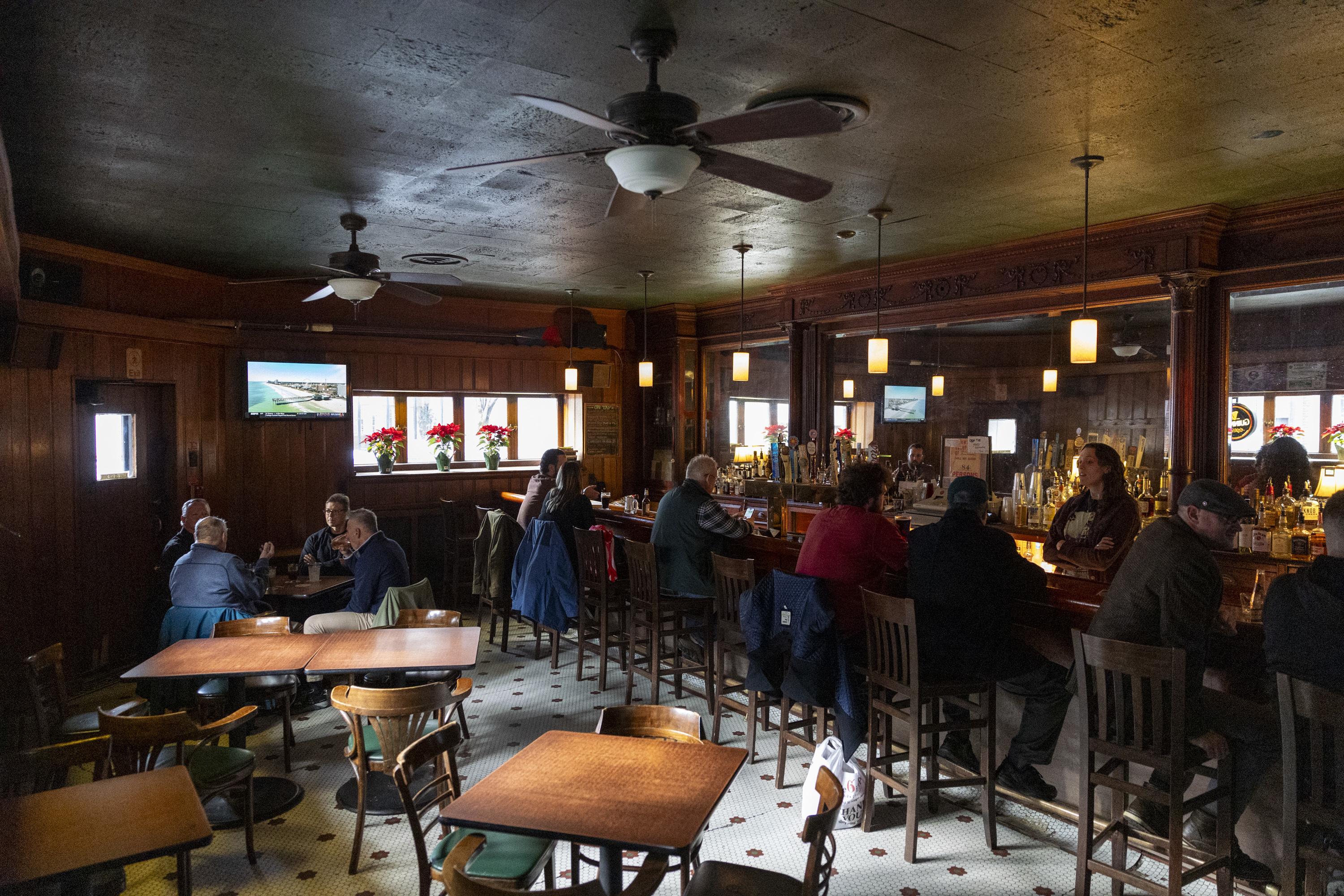
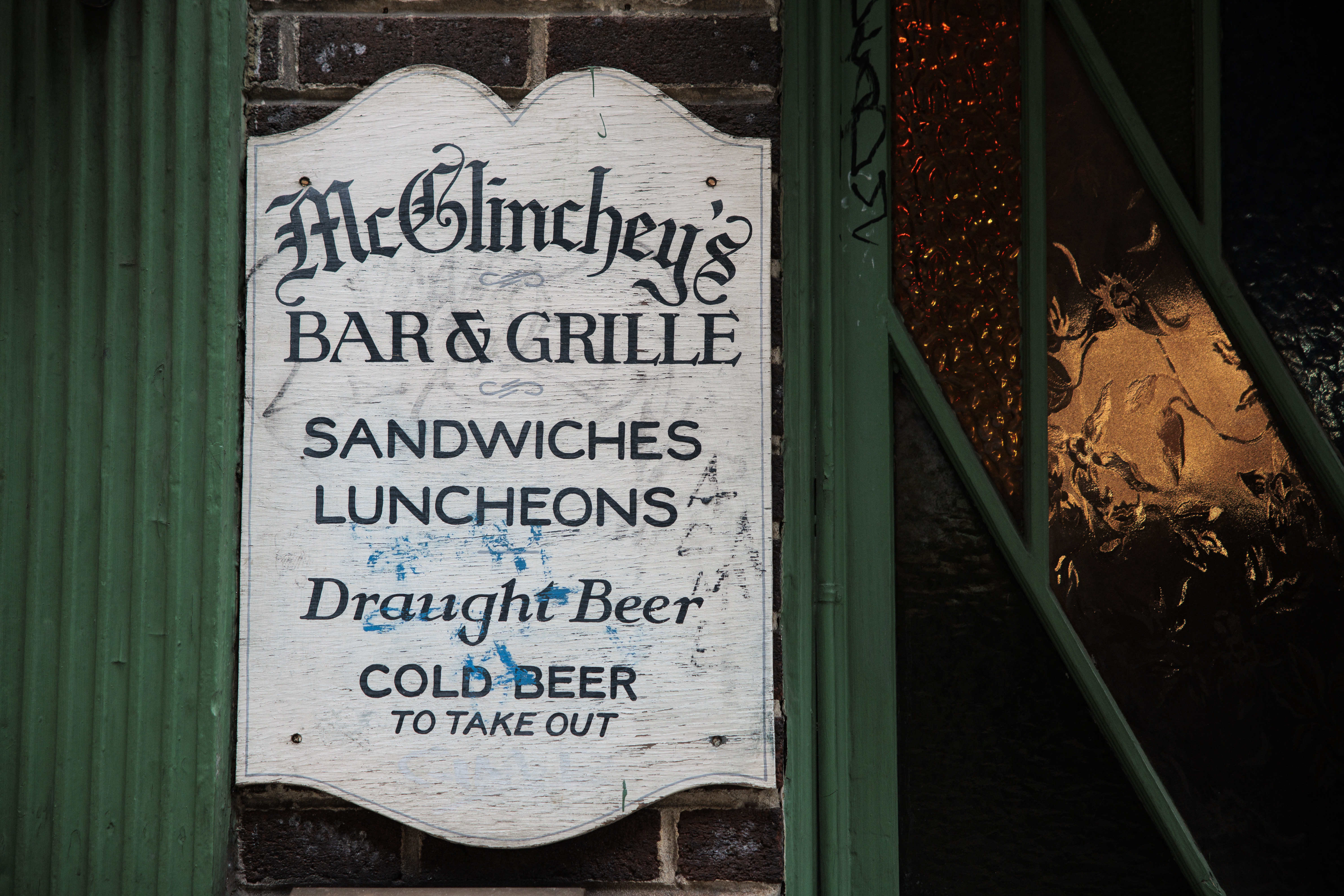
McGlinchey’s, the Center City dive that closed last year after nearly 90 years, is back on the market after a prospective buyer walked away from a deal for the building.
McGlinchey’s, at 259 S. 15th St., after its closing in August 2025.Monica Herndon / Staff Photographer
And the nearly 40-year-old Jake’s & Cooper’s Wine Bar in Manayunk is being marketed for sale as owner Bruce Cooper looks toward retirement.
Restaurants have always turned over, and the recent activity does not appear to reflect a restaurant market in retreat. The Inquirer counted 86 Philadelphia-area restaurant closings in 2025, while more than 100 new restaurants and bars were on the drawing board for 2026. What distinguishes many of the businesses now closing or being sold is their longevity: They survived for decades, weathering the pandemic and recent increases in food and labor costs, before their owners reached retirement.
‘The gray wave’
People in the restaurant, liquor, and real estate businesses say the turnover is part of a broader generational transition among small businesses as longtime owners reach retirement without children interested in taking over.
Jim Creed, handling Jake’s listing, calls it the “gray wave.”
“You’ve got operators who have been in business 40 or 50 years, and they don’t have heirs who want to take over the business,” said Creed, a senior vice president with CBRE.
His father, also Jim Creed, knows the issue from the other side. He opened Creed’s Seafood & Steaks in King of Prussia in 1982 and, at 78, has no immediate plans to sell. “I go to the restaurant every night,” he said. “It’s actually fun.” But when he does decide to close, he said, his children don’t want to take over.
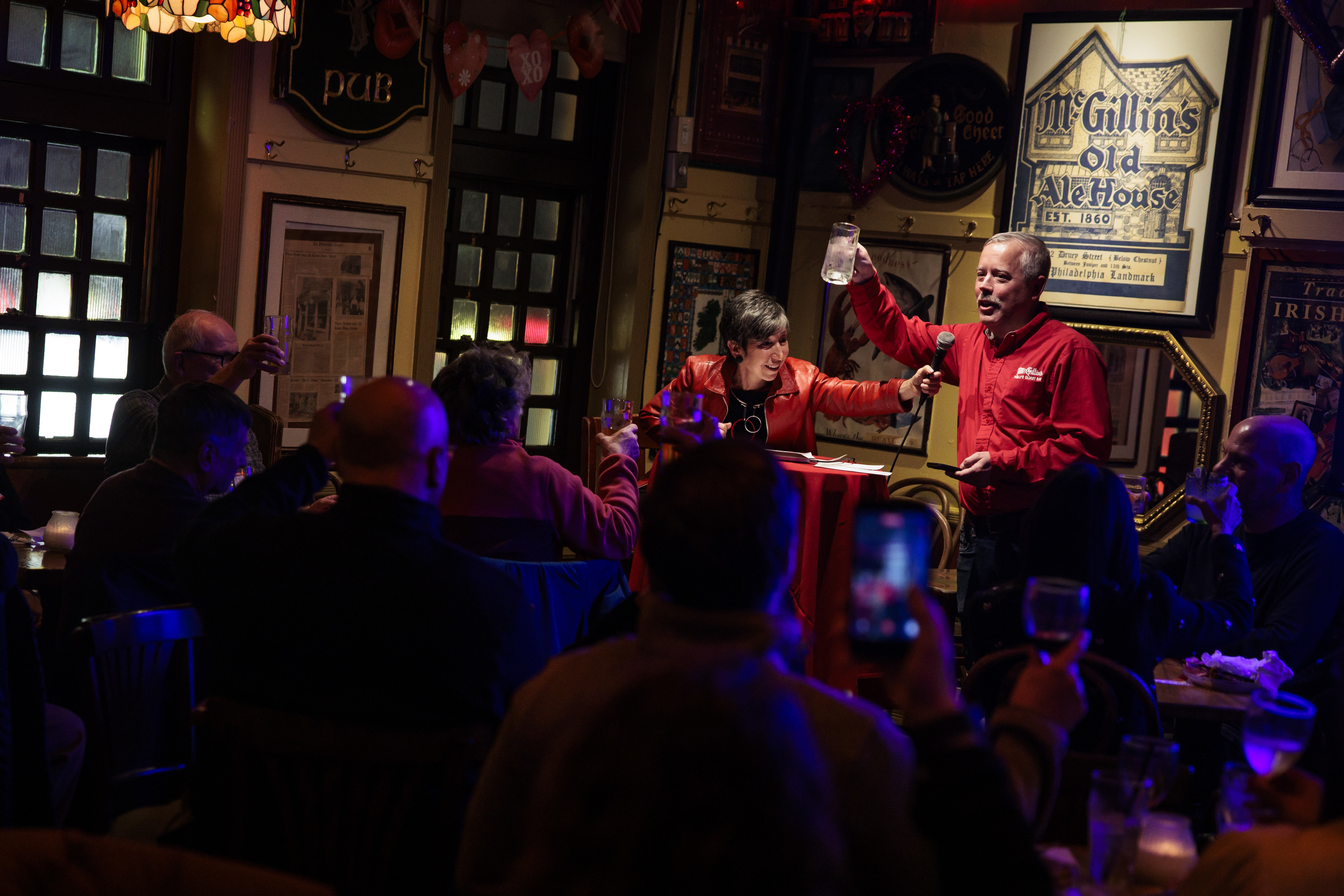
For the counterexample, consider McGillin’s Olde Ale House in Center City. Open since 1860, it has survived through generations of owners; the Spaniak family has run it since 1958, with Chris Mullins Jr. now the third generation involved. There are no plans to sell. “It’s part of my DNA, part of our customers’ DNA, part of our staff’s DNA,” Mullins told The Inquirer this year.
Irene Levy Baker and Chris Mullins Jr. lead a toast at McGillin’s on Tuesday, Feb. 3, 2026 in Philadelphia. Attendees gathered for a book talk on “Cheers to McGillin’s: Philly’s Oldest Tavern” on Tuesday.Monica Herndon / Staff Photographer
Ed Taraskus has watched generations of restaurant and bar owners come and go over 50 years of practicing liquor licensing law. He could not say whether the current number of sales and closings constitutes a statistical trend, but said the succession problem is familiar.
“The parents retire and the children don’t want to get into the business — because it’s a hard business,” he said.
Taraskus said the hours can be punishing for small family operators. His clients also complain about finding employees willing to work nights and weekends. Drinking habits have changed, he said, and some businesses are still feeling the effects of the pandemic.
Taraskus knows the succession question personally. His South Philadelphia family owned a small restaurant and tavern, but his father discouraged him from entering the business. When his parents retired in the 1960s, they sold.
Real estate on the line
Retirement can present a second question for operators who own their buildings: What, exactly, are they selling?
A restaurant may have value as a going business, but decades of appreciation can make the underlying real estate a substantial part of an owner’s nest egg. Sometimes the economics favor a different restaurant — or an entirely different use.
Douglas Green, a principal at commercial real estate brokerage MSC, said the value of restaurant real estate is closely tied to the sales a location can support and, consequently, the rent an operator can afford.
“The more volume they do, the more rent they can pay,” Green said.
That means a location can be worth more to another restaurateur if the existing operator is underperforming. And in some cases, Green said, a restaurant may no longer be the property’s most valuable use at all.
“At some point, perhaps the building becomes obsolete,” Green said. “Perhaps the highest and best use of the real estate is no longer a restaurant.”
Those possibilities are playing out among the region’s longtime establishments.
The Pub restaurant near the former Airport Circle in Pennsauken in 2024.Jose F. Moreno / Staff Photographer
At the Pub, the Gelman family is seeking a buyer for the restaurant and its roughly 6.3 acres on Kaighns Avenue near the former Airport Circle. The family has operated it since Marc Gelman bought it in 2000.
“I don’t think there’s one thing in general why we’re selling, but it’s time for a new steward — if you will — of the business, or the property,” Marc’s son David Gelman said.
At Cherry Street Tavern, at 22nd and Arch Streets, the Loughery family hopes to find a buyer who understands what generations of regulars value about the place.
McGlinchey’s illustrates the other possibility. Its nearly 5,000-square-foot property at 259 S. 15th St. is listed for $2.45 million, including the liquor license, bars, and McGlinchey’s name, as either a turnkey bar and restaurant or a redevelopment opportunity.
Decisions for buyers
Creed said longevity itself can tell a prospective buyer something about a restaurant property.
“Anytime you have operating longevity, that speaks to the real estate,” he said. “When you have a concept that has been in operation for 40 years, clearly the real estate has something to do with that, too.”
The retirement of one operator does not necessarily mean the end of restaurant use.
The former Mixto space is set to become the revival of South Philadelphia bar Toll Man Joe’s.Charles Fox / Staff Photographer
Mixto closed July 12 after nearly 24 years at 1141 Pine St. Within weeks, restaurateur Lori Penrose bought the property and announced plans to revive her former South Philadelphia sports bar, Toll Man Joe’s, there.
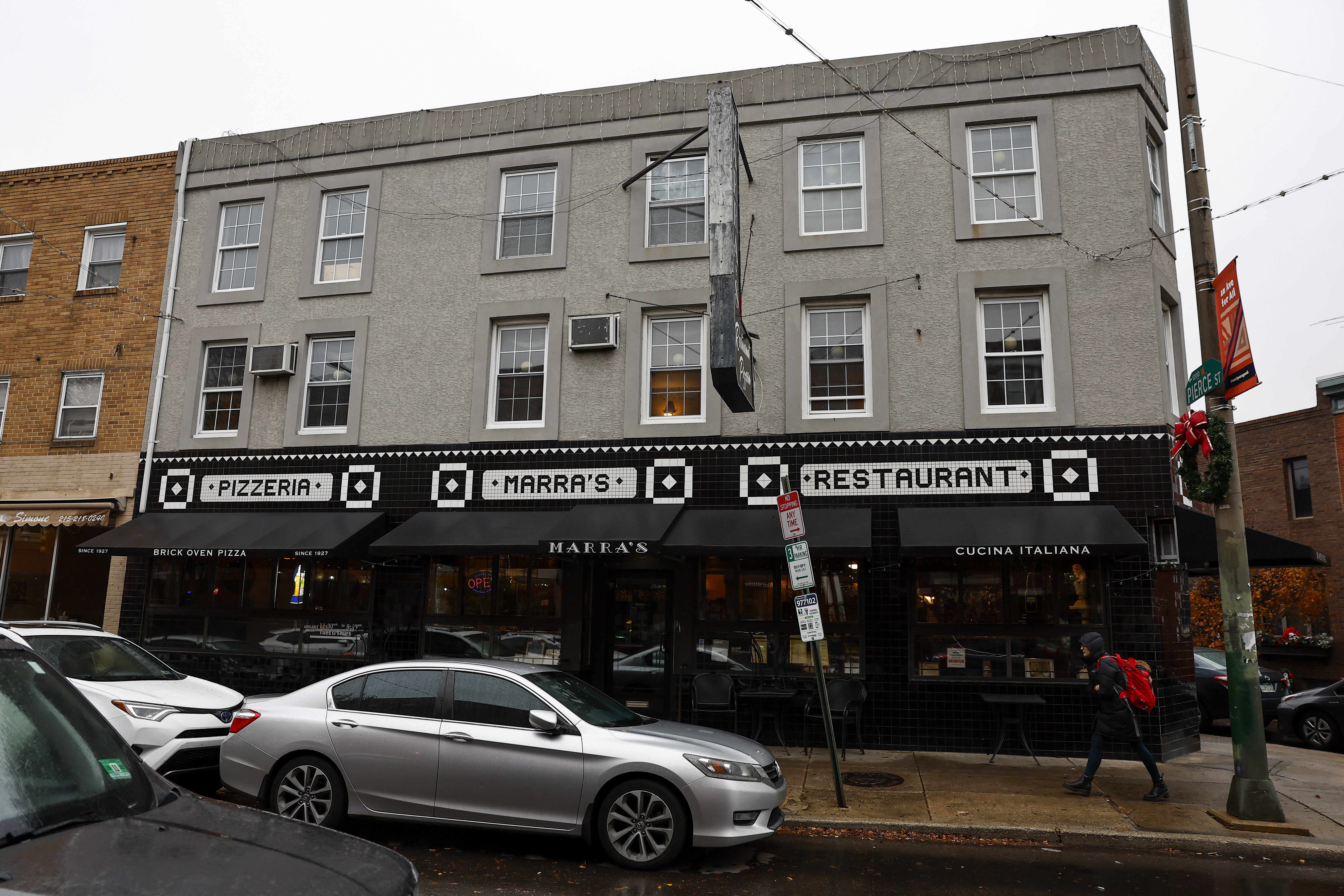
The exterior of Marra’s Restaurant on East Passyunk Avenue is due to become a branch of Dan Tsao’s burgeoning restaurant group. Monica Herndon / Staff Photographer
“There are pros and cons to both,” Tsao said of taking over an existing restaurant rather than starting with a new space. “But with an existing restaurant space, especially a legacy restaurant, it already has a place in the neighborhood, and a place in the memories and hearts of generations of customers.”
Such properties may also have much of the expensive infrastructure required to operate a restaurant.
But for Tsao, the attraction isn’t purely economic.
“I also like the idea of preserving some of that history,” he said, “while giving the space a new chapter.”
Northeast Philadelphia’s last traditional Jewish delicatessen will close this weekend, ending a chapter in a food culture that for decades seemed inseparable from the area itself.
Steve Stein’s Famous Deli, in Bustleton’s Grant Plaza, outlasted a food landscape once crowded with Jewish delis, bakeries, butchers, and other specialty shops. Its closing Sunday comes more than nine years after the finale of Jack’s Deli in Bell’s Corner, the Northeast’s penultimate deli. Like Stein’s, Jack’s combined a retail counter with a restaurant.
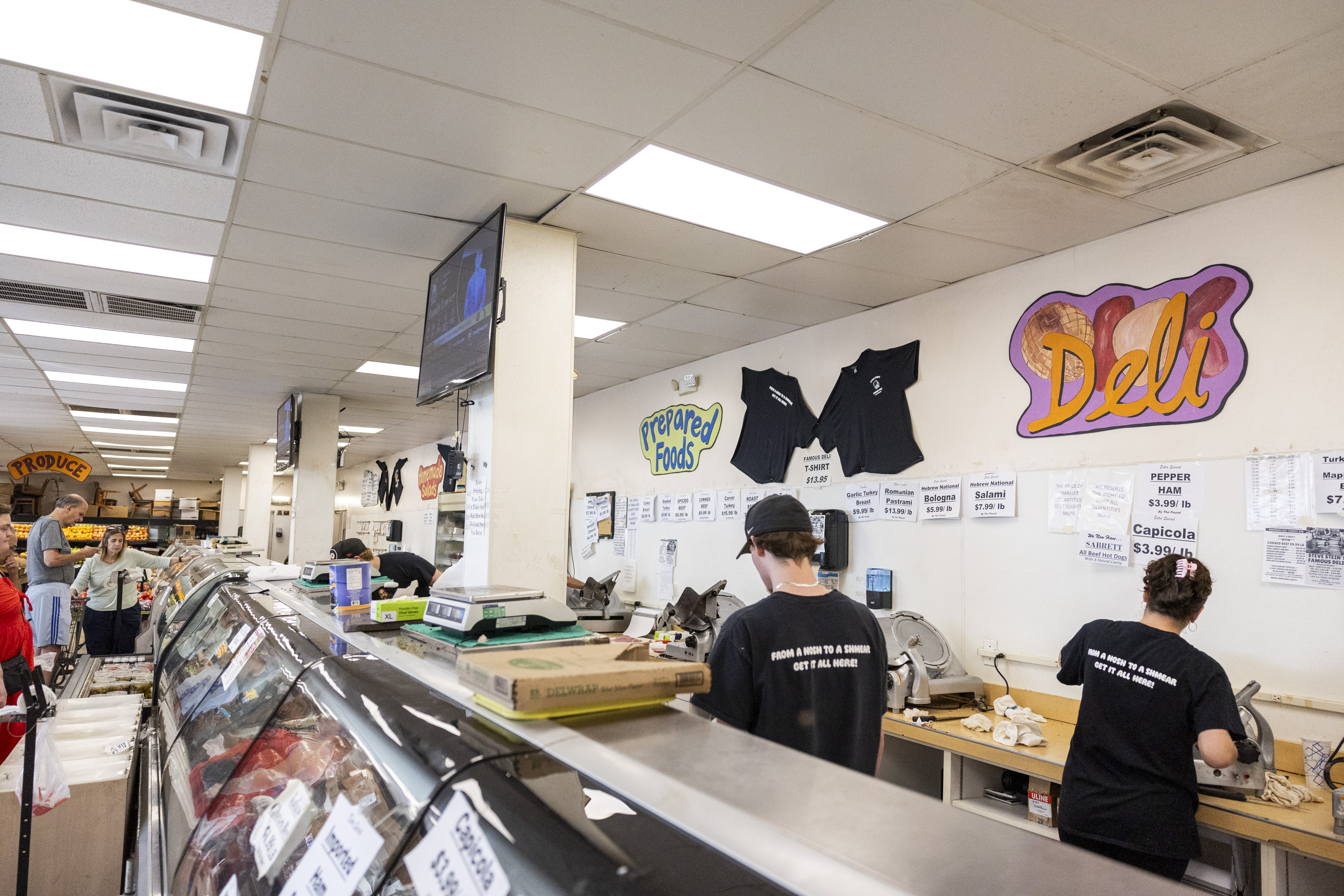
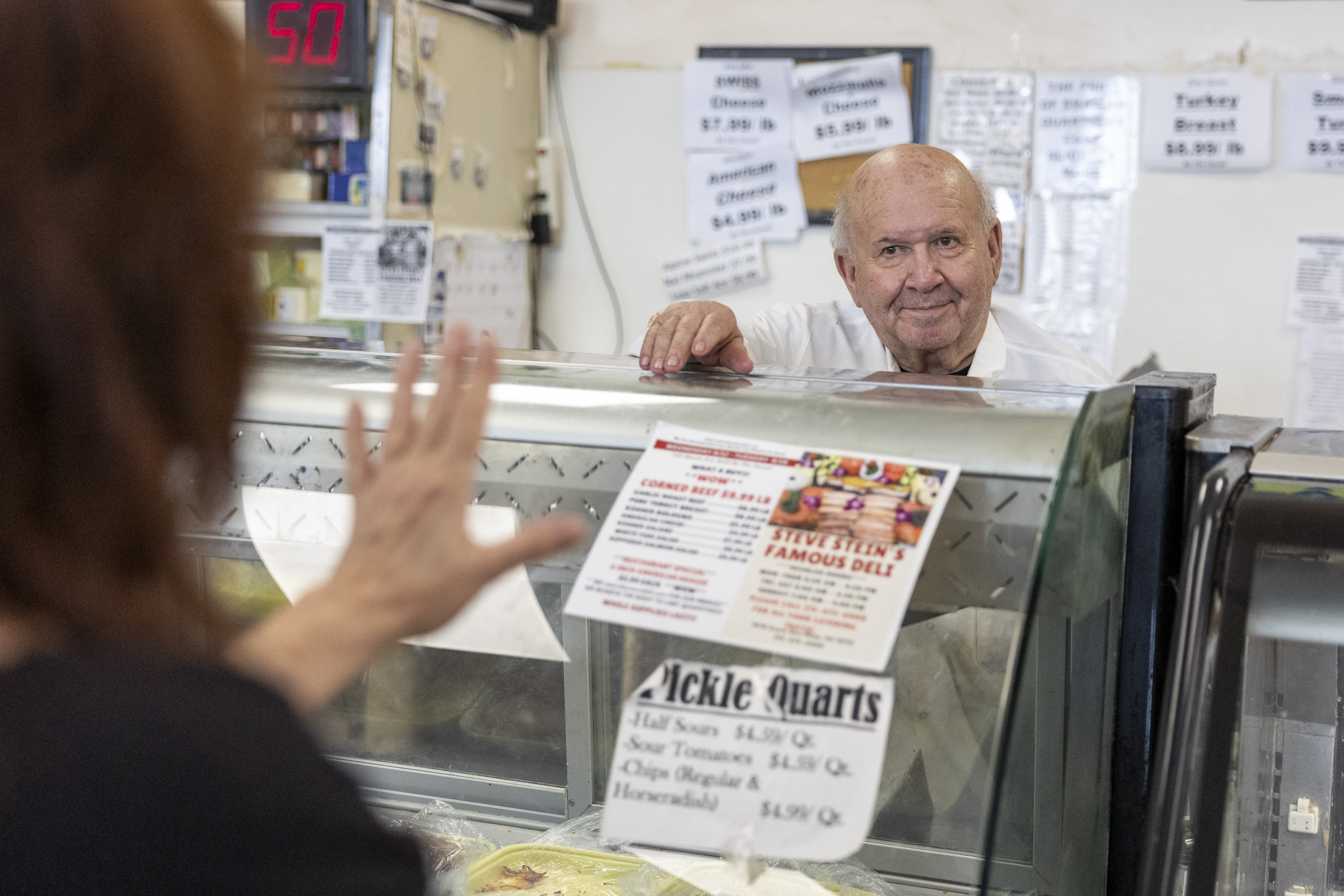
The deli counter at Steve Stein’s Famous Deli on Aug. 14, 2026.Tyger Williams / Staff Photographer
For Steve Stein, 83, the closing will end a family business whose roots stretch back to the late 1950s, when his family became involved with the Famous Deli location at 6826 Bustleton Ave. in Castor Gardens.
Famous was part of an older Philadelphia deli dynasty. Beginning in the 1920s, the Auspitz brothers launched a string of delis around the city, including the flagship at Fourth and Bainbridge Streets in Queen Village, now owned by Al Gamble.
Around 1960, Stein said, the Auspitzes sold the Bustleton Avenue Famous to Stein’s father, Mike, his brother Arnold, and his cousin Jack. The boys had run the produce concession there. Steve and Arnie, who died in 2010, later ran it side by side. Steve now runs the place with his son, Lee, now 57.
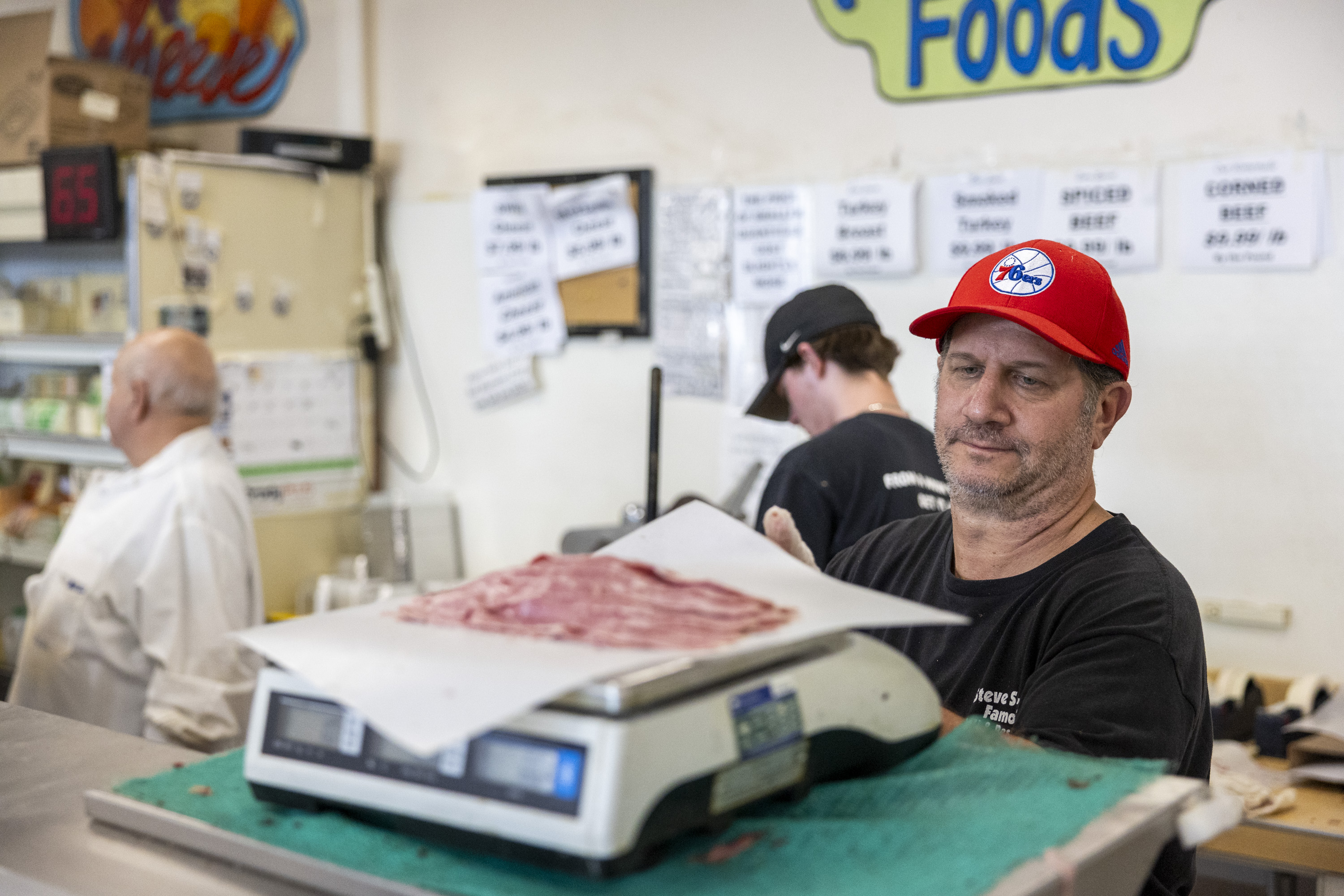
Lee Stein weighs corned beef at his father’s deli on Aug. 14, 2026.Tyger Williams / Staff Photographer
Since Stein announced the closing, customers have been stocking up on corned beef, smoked fish, rye bread, and other foods they fear they will not easily replace. Stein has cut prices as he tries to move inventory.
“Nobody’s charging $9.99 a pound for house-cured corned beef,” Lee Stein said.
On Friday, Tracey Lynn of Fox Chase ordered two pounds of corned beef while plucking garlic-perfumed sour tomatoes from a barrel, telling Stein that she planned to freeze some of the meat.
Lynn said she and her husband have been customers since 1993. She is not sure where she will shop next. “I don’t want whitefish salad from BJ’s or from Costco,” she said.
The closing is partly a retirement story. Stein said problems with his legs have made it increasingly difficult to work.
But it is also about labor costs, food prices, succession, and a neighborhood whose demographics have changed dramatically over the life of the business.
As Jewish families moved farther into the Northeast, Famous followed: first, in the mid-1970s, to Krewstown Road (where it had two locations) and, 14 years ago, to Grant Avenue. Stein, who later also had a short-lived store in Holland, Bucks County, sold the Bustleton Avenue store in the mid-1970s.
In that sense, the history of Famous tracks the movement of Jewish Philadelphia itself.
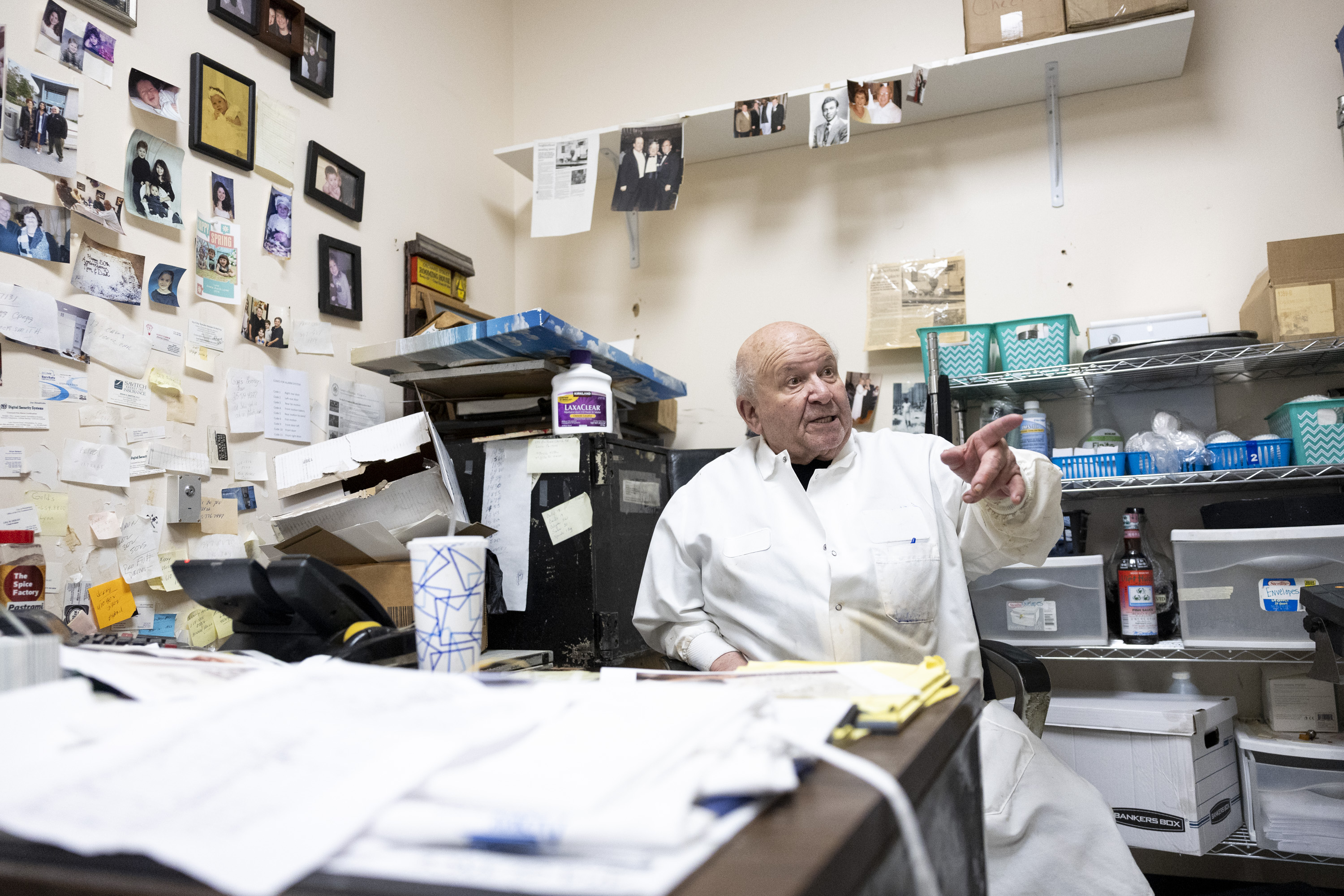
Steve Stein, owner of Steve Stein’s Famous Deli, takes a break in his office.Tyger Williams / Staff Photographer
A suburban diaspora
After World War II, thousands of Jewish families left older Philadelphia neighborhoods such as Strawberry Mansion, Queen Village, and Wynnefield for Oxford Circle, Castor Gardens, Rhawnhurst, and Bustleton in the rapidly developing Northeast. Others moved to Lower Merion and Cherry Hill, which developed large Jewish communities and deli cultures of their own that remain.
By 1970, demographer Ira Rosenwaike estimated, using Census data on Yiddish as a mother tongue, that more than 68,000 Jewish adults 25 and older lived in the Near and Far Northeast.
That population supported an extraordinary density of Jewish food businesses: Abe’s Appetizers, Castor Deli, R&W, Stern’s, Paul’s, Four Lads, Dave’s, Casino, the Nasherei, four Barson-Overbrook locations.
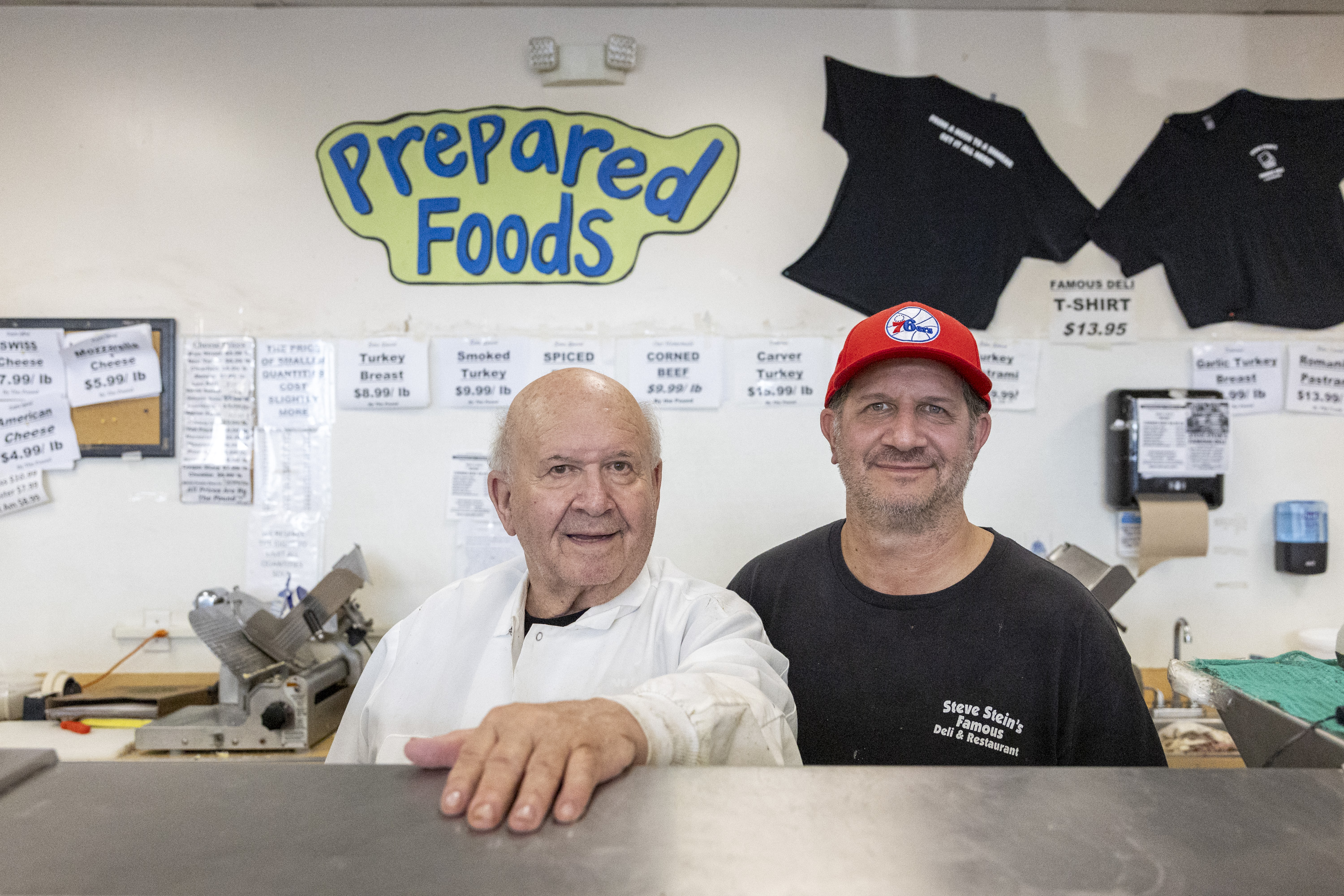
Steve Stein (left), owner of Steve Stein’s Famous Deli, behind the counter with his son, Lee.Tyger Williams / Staff Photographer
To Hasia Diner, a historian and New York University professor who specializes in American Jewish history, the significance of delis was precisely their ordinariness. They were not institutions created to preserve Jewish culture. They were where neighborhood life happened.
“On the one hand, [delis] seem so everyday,” Diner said in an interview. “They’re not great synagogues where religion was expounded, or places where great ideas were pronounced. But they were places where life was lived.”
Some were kosher and others were not. What mattered, Diner said, was that the deli offered a secular Jewish space, rooted as much in neighborhood and food as in religious observance.
By the 1980s, however, those neighborhoods were changing. In a 1987 Inquirer article, Bruce Isakoff of Paul’s Deli, on Castor Avenue near Brighton Street, said his business was doing more lunchtime trade as Jews left the neighborhood and it became a more generic deli. By then, Four Lads, on Castor Avenue at Creston Street in Oxford Circle, had stopped carrying smoked fish and pastrami. Both are long gone.
A ‘kind of shrine’
Many Jewish households moved farther north and into Bucks and Montgomery Counties. A 1996-97 Jewish Federation study found that Philadelphia accounted for 41% of the region’s population living in Jewish households, down from 54% in 1984, while Bucks County’s share had nearly doubled.
The studies used different definitions and geographic boundaries, but the direction was unmistakable: The dense Jewish population that once sustained neighborhood delis had dispersed.
Steve Stein, owner of Steve Stein’s Famous Deli, taking a deli order on Aug. 14, 2026.Tyger Williams / Staff Photographer
The movement itself was nothing new, Diner said. American Jewish communities repeatedly established themselves in neighborhoods and moved elsewhere. What changed was the role of the old neighborhood — and of the deli within it.
“The deli was often the kind of shrine to which they went back,” she said.
The old delis offered something beyond nostalgia. In their heyday, Diner said, they were overwhelmingly Jewish spaces where customers did not have to explain themselves or worry about how they appeared to outsiders.
“These places were so rich with a kind of embeddedness, of comfort and security and, again, letting your hair down,” she said.
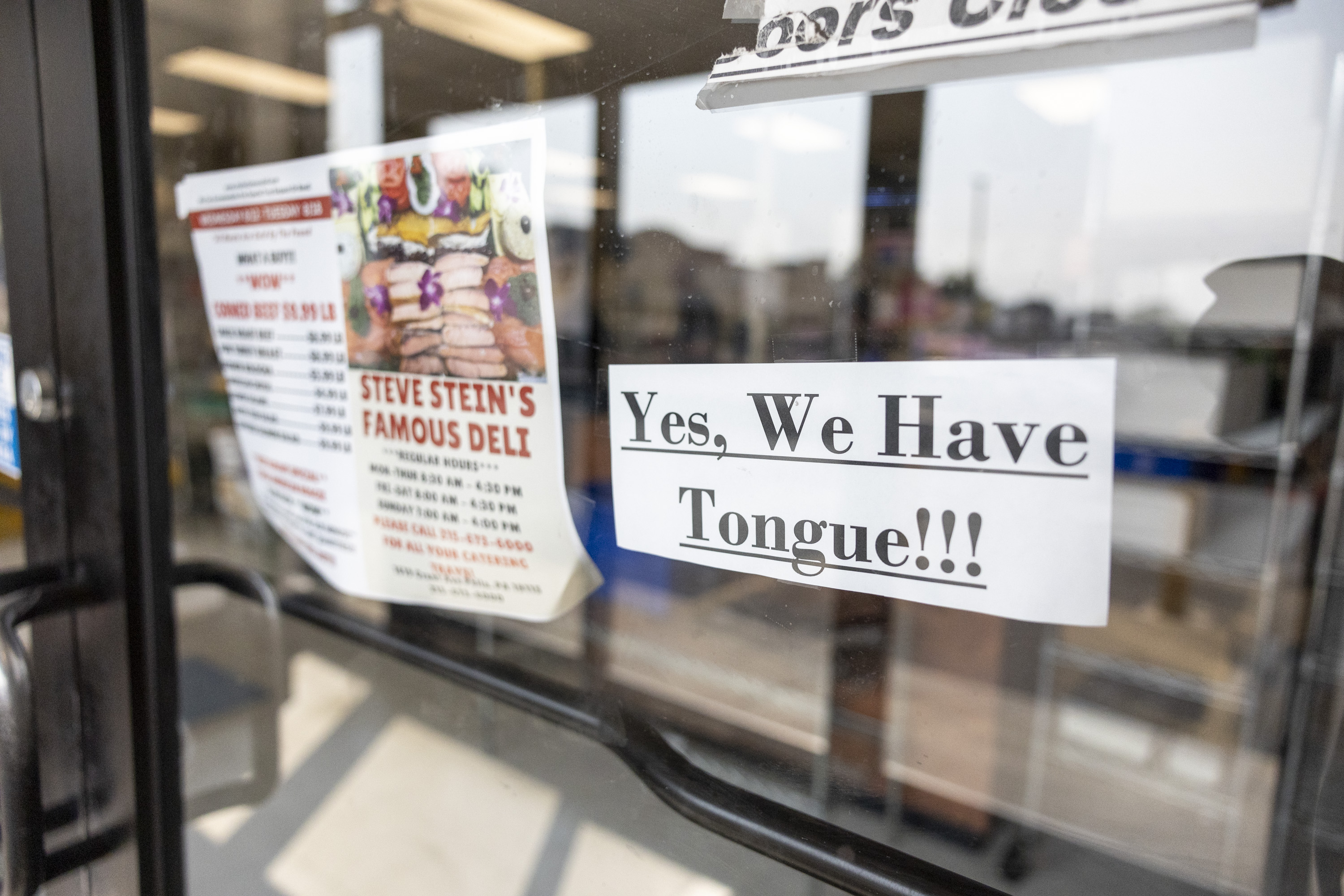
A sign proclaiming, “Yes, We Have Tongue!!!” at the entrance at Steve Stein’s Famous Deli.Tyger Williams / Staff Photographer
Population was only part of the story. Supermarkets increasingly stock foods that once sent customers to specialty counters: corned beef, pastrami, smoked fish, whitefish salad, herring, rye bread, bagels, pickles, and knishes. But not everything. Signs at Famous proclaim, “Yes, We Have Tongue!!!” Not many others do.
More important, Diner said, is what cannot be sold at a supermarket: the deli as a secular gathering place, where being Jewish required neither religious observance nor agreement about politics. “A pastrami sandwich is a pastrami sandwich,” she said.
Costly ingredients
The traditional deli model itself is expensive and labor-intensive, built around extensive preparation and a sprawling inventory. Famous still cures its corned beef and makes its own turkey, pastrami, whitefish salad, and spice beef.
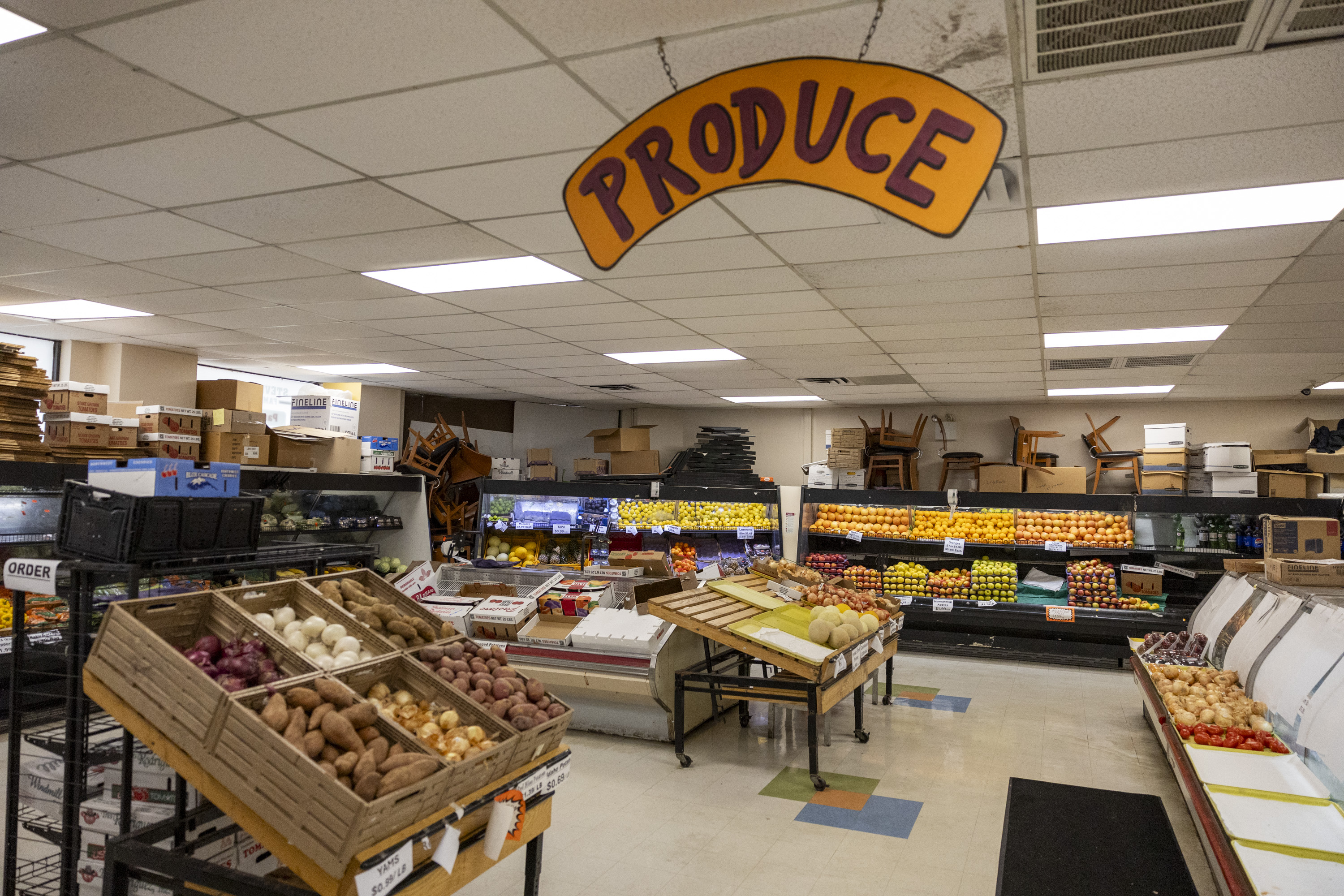
Steve Stein’s Famous Deli is equal parts market, deli counter, and restaurant.Tyger Williams / Staff Photographer
Steve Stein said finding employees has become increasingly difficult. Lee Stein said prospective workers have easier options, such as driving for Uber or making deliveries for Grubhub.
The deli has about 35 employees, many part-time. Some are placed through SPIN, the Philadelphia nonprofit that supports people with intellectual, developmental, and autism spectrum disabilities.
Survival has also required adapting to the customer base, increasingly non-Jewish. Lee said he remembers when Famous carried a single canned ham, hidden behind the counter. Though few Jewish delis are kosher, pork traditionally has been another matter.
“Nobody was allowed to say the word ham,” he said.
Today, their case holds about a dozen varieties.
Rob Woloshin, 40, owner of Manny’s Deli Stop in Willow Grove, grew up going to Stein’s Famous with his father. His deli represents a leaner version of the old model: counter service, a few tables, online ordering, and delivery, with traditional deli sandwiches alongside chicken cutlets, wraps, and other contemporary offerings.
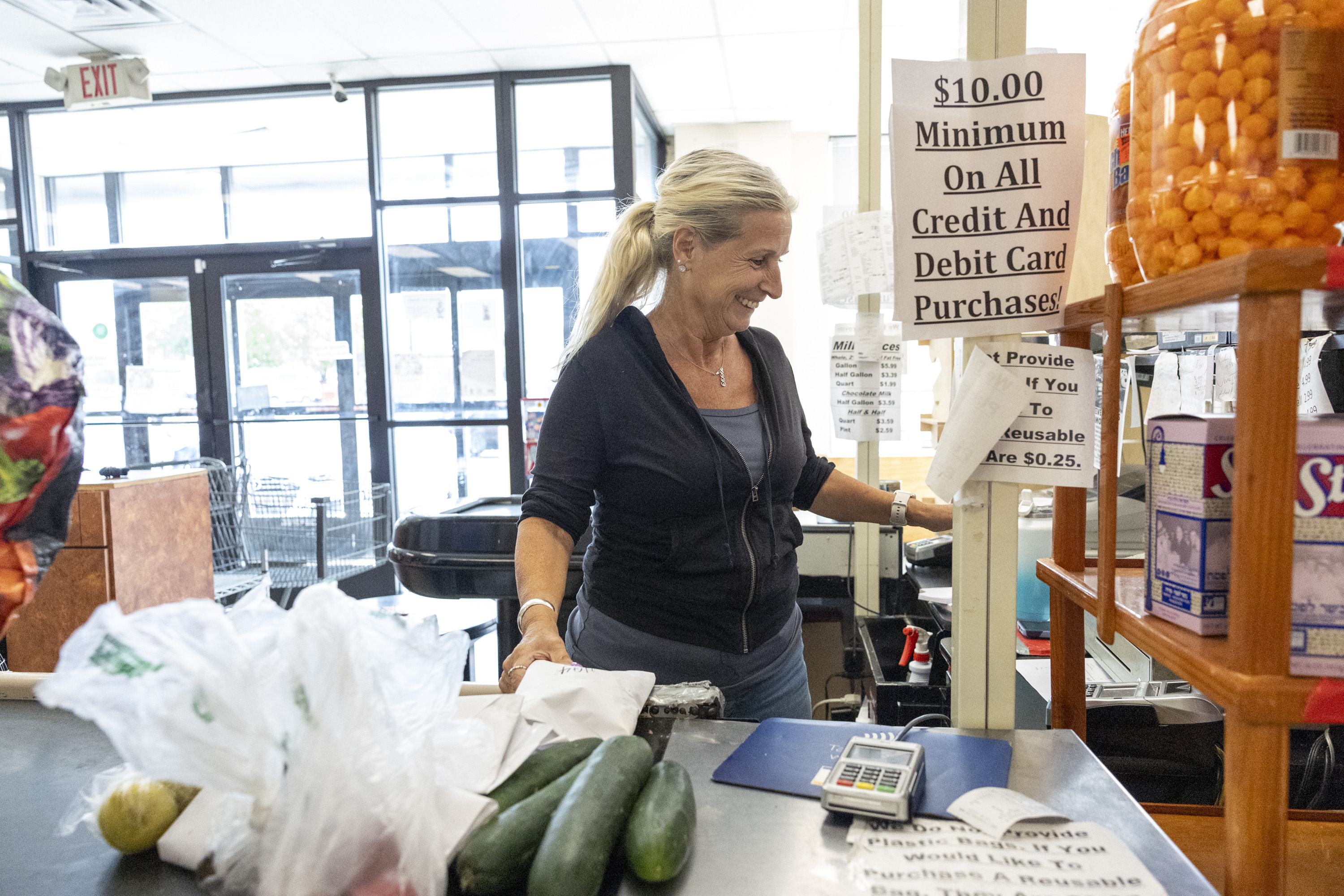
Cashier Linda DiNenno, who has worked at Steve Stein’s Famous for about 13 years, checks out a customer.Tyger Williams / Staff Photographer
“We’ve kind of modernized, I guess, as much as the Jewish deli can be modernized,” Woloshin said.
Famous may yet have an afterlife. Lee Stein said he is talking with the landlord about a deal that could keep him in the space, under another name, in time for the Jewish High Holy Days, which begin Sept. 11. If not, he might offer catering from a synagogue kitchen.
For longtime cashier Linda DiNenno, the closing is less about corned beef than the people around the counter. She said she will miss the family atmosphere among employees and customers who have been calling to say goodbye.
“I’ve got customers calling on the phone, like, ‘Oh my God, I’m gonna miss you, Linda,’” she said.
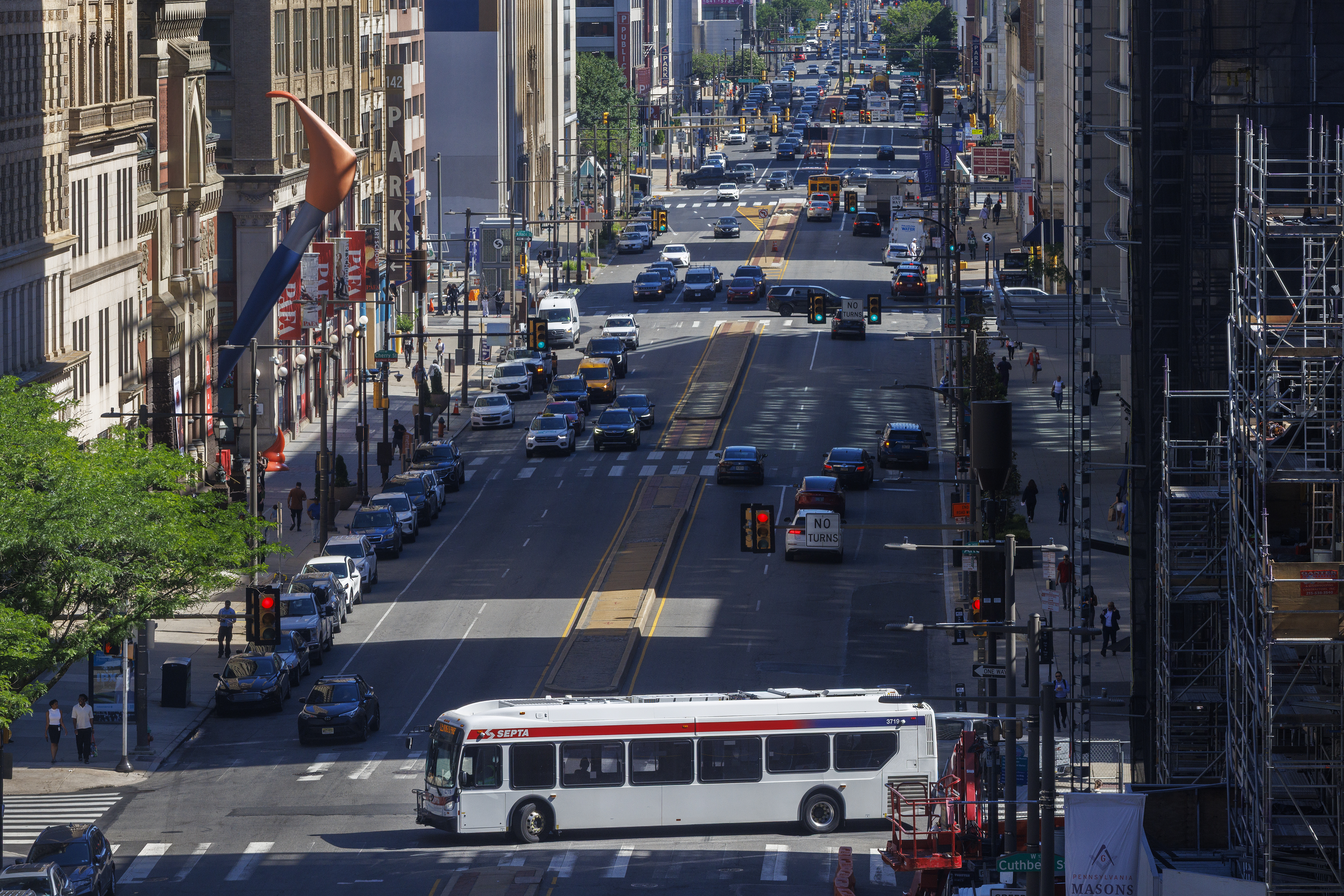
The first phase of SEPTA’s bus network overhaul begins Aug. 23, and Brandon Miller is mobilizing hundreds of employees for a final push to meet face-to-face with riders in the days leading up to the changes and during the first week after they take effect.
“It’s a blitz,” said Miller, manager of planning programs at SEPTA, describing discussions at “pop-ups” as an effective way to help people navigate the new network.
Unlike some transit agencies, SEPTA has not done a comprehensive redesign of its bus network in its 58-year history. The agency has publicly pushed to do so since 2021, but change was delayed by opposition, political wrangling, and, later, a two-year fiscal crisis.
Originally the “Bus Revolution” was supposed to happen all at once, but SEPTA ultimately decided to phase in changes to routes.
“I think there’s more willingness to accept the fact that … we need to make the bus network a little bit more efficient,” Nemiroff said. “We need to make the system more attractive for people.”
Some routes with low ridership or that duplicate nearby service will be eliminated. Others will be extended or run more frequently, and two new routes will be added.
What routes will change?
New and expanded routes: Route 72, a new crosstown bus running along Cheltenham Avenue, and the new Route 76 bus from Columbus Commons to Rising Sun and Olney. Route 45 will be extended to provide service to the Navy Yard, and Route 79 will be extended from South Philadelphia into University City.
Eliminated routes: 35, 47M, 62, 78, 80, 89, and 106.
Riders can call SEPTA customer service at 215-580-7800 or email specific questions to planning@septa.org.
I want to talk to someone in person.
Beginning Monday, street teams will conduct “pop-up” visits at key transit hubs at various times between 6 a.m. and 8 p.m.
Next week, visits will include South Broad Street and Snyder Avenue, Cedarbrook Plaza, Hunting Park Station for changes to Route 53, Spring Garden Station, and Willow Grove Mall.
Staff are also attending community events.
When will changes happen?
The majority of changes will take effect Sunday, Aug. 23, followed by the Route 105 extension and elimination of Route 106 on Monday, Aug. 24.
Phase 3 changes are planned to begin in June 2027.
Phase 4 changes are planned to begin in Fall 2027. Many details are still being worked out.
Why redesign the bus network?
SEPTA launched its bus redesign efforts in earnest after ridership declined 13% from 2013 to 2019, a drop attributed to slow speeds, reliability problems, and competition from ridesharing companies. And that was before the COVID-19 pandemic.
Bus ridership rebounded faster than it did on other transit services, but SEPTA’s thinking is that simplifying the network will make it easier to use, with more frequent service on fewer or shorter routes.
Will bus stops be changed?
Stops will disappear during the first phase on routes that are eliminated, but there will be no wholesale changes yet.
Having more stops per mile provides access to more people, but closely spaced stops can also slow buses and make them less reliable.
Early plans for Philadelphia’s bus network redesign aimed to “rebalance” stops by spacing them farther apart to improve speed. But the idea has been unpopular.
SEPTA may revisit the issue later.
More questions about the New Bus Network?
Email transportation reporter Thomas Fitzgerald at tfitzgerald@inquirer.com.
Kensington High School students and staff are being relocated to the vacant Austin Meehan school building through the end of the calendar year, after an asbestos “concern” arose during an HVAC project, Philadelphia school district officials said.
While workers were installing a new heating and cooling system, “an asbestos inspector identified a concern about the demolition of the old system,” Oz Hill, the district’s deputy superintendent of operations, said in a letter to the high school community Thursday — a little more than a week before the new school year begins Aug. 24.
Hill said the district “immediately stopped the project and has been working cooperatively with the city’s Air Management Services and the Philadelphia Federation of Teachers while the building is thoroughly cleaned and air quality tests are conducted to show the space meets standards to be reopened.”
Arthur Steinberg, president of the PFT, said he was told that “a contractor broke into some space … disturbed some asbestos, and tracked it all over the building.”
“That essentially contaminated the entire building, by them moving around after the asbestos material was disturbed,” Steinberg said in an interview Friday.
Steinberg said the relocation to Austin Meehan, a vacant middle school in Northeast Philadelphia, would mean “turmoil.”
Austin Meehan, which closed in 2022, is more than seven miles away from Kensington High School.
In the message, Hill said the district had considered closer options, but they “did not meet the space or accessibility needs for Kensington’s more than 400 students and 90 staff.” He said “details about the schedule, transportation, and all logistics will be forthcoming.”
A district spokesperson did not immediately respond to a request for comment Friday.
Steinberg said the relocation “creates logistical nightmares for everybody,” with new commutes for staff and families.
“But it’s better than trying to make them occupy a building that’s contaminated with damaged asbestos,” Steinberg said. He said the PFT will be on site as Kensington staff report to Austin Meehan Monday to hear and address concerns.
The PFT also has an occupational hygienist at Kensington High School supervising the district’s work, to ensure the asbestos is properly cleaned up and tested, Steinberg said.
The union “will ensure that building is suitable for occupancy, or our members will not go back in,” he said.
Hill said the district “will also work to address other Kensington building needs, including maintenance repairs and the continued proactive removal of asbestos materials where we can minimize future risk of damage.”
“When Kensington students and staff return to the building in January, they will be welcomed back to a healthy, more comfortable space for learning,” Hill said.
Bananas are trending everywhere, but especially at cocktail bars and cafes, which use fresh bananas, banana liqueur, banana extract, and even banana peel. Kiki Aranita isn’t alone in suggesting it might be “the next pumpkin spice.”
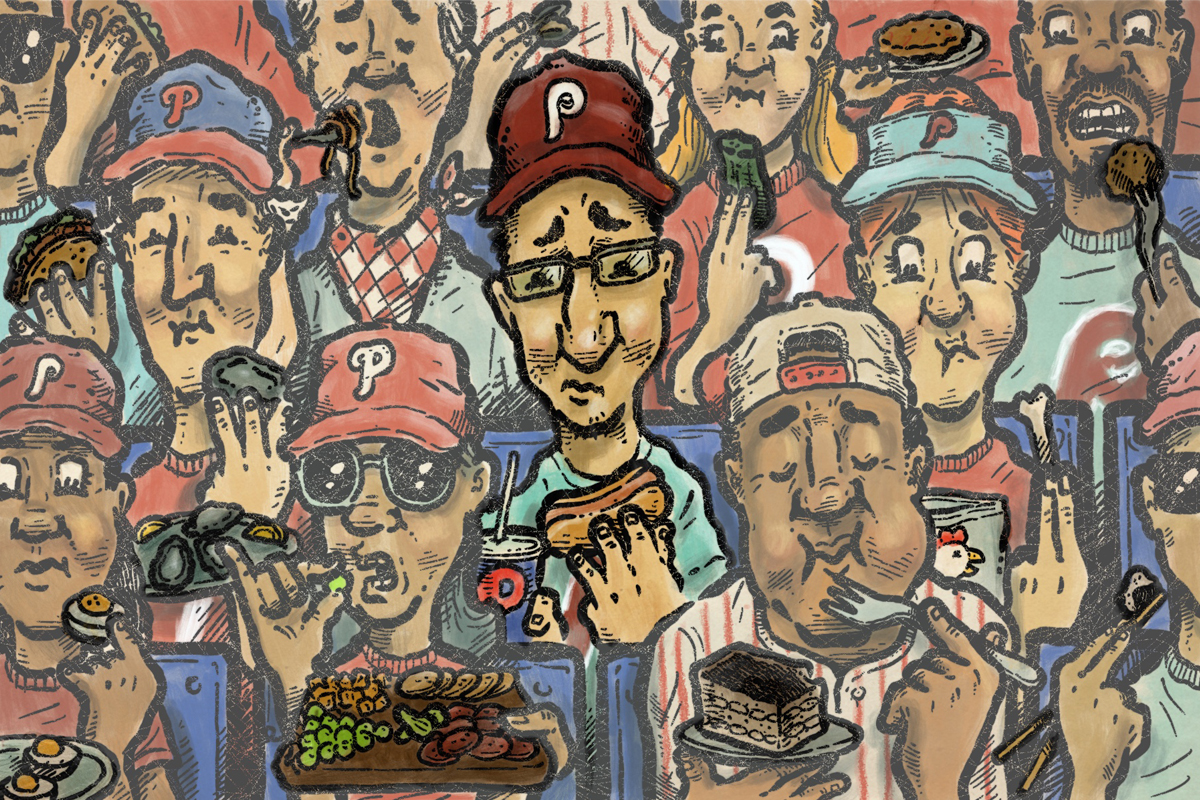
Phillies fans are bringing way more than hoagies and cheesesteaks into Citizens Bank Park. Beatrice Forman winds up and delivers a fun read about the BYO eats you’ll find in the stands. Curried tuna salad, anyone?
Kelly’s Seafood has been a Northeast Philly fixture, serving generations of families — and plenty of snapper soup. Now, as the family prepares to close, longtime customers are returning for one last meal, stocking their freezers, and saying goodbye.
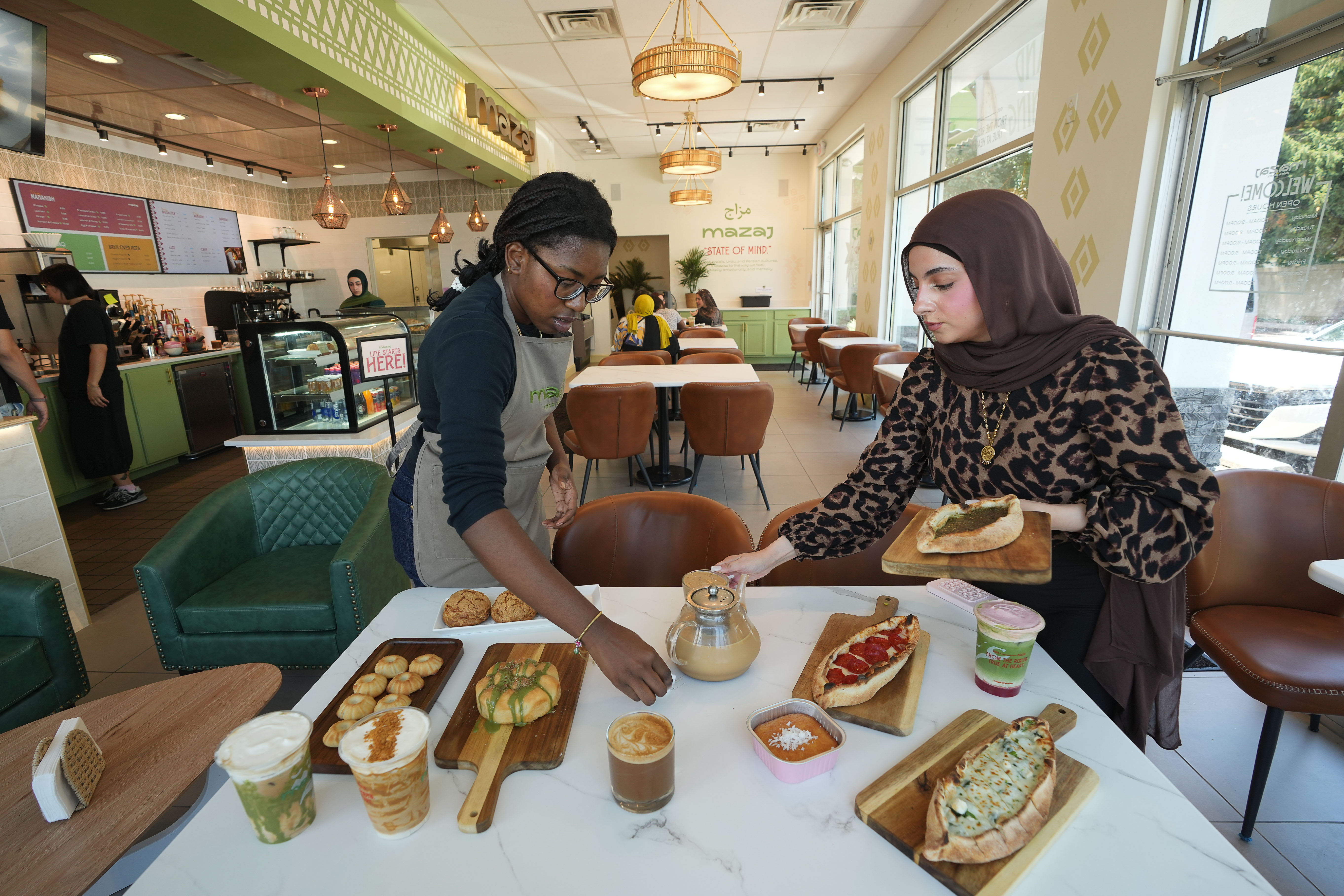
Mazaj, an offshoot of the twin Malooga restaurants, has landed in Willow Grove with Yemeni coffee, Middle Eastern pastries, a drive-through, and a plan to expand.
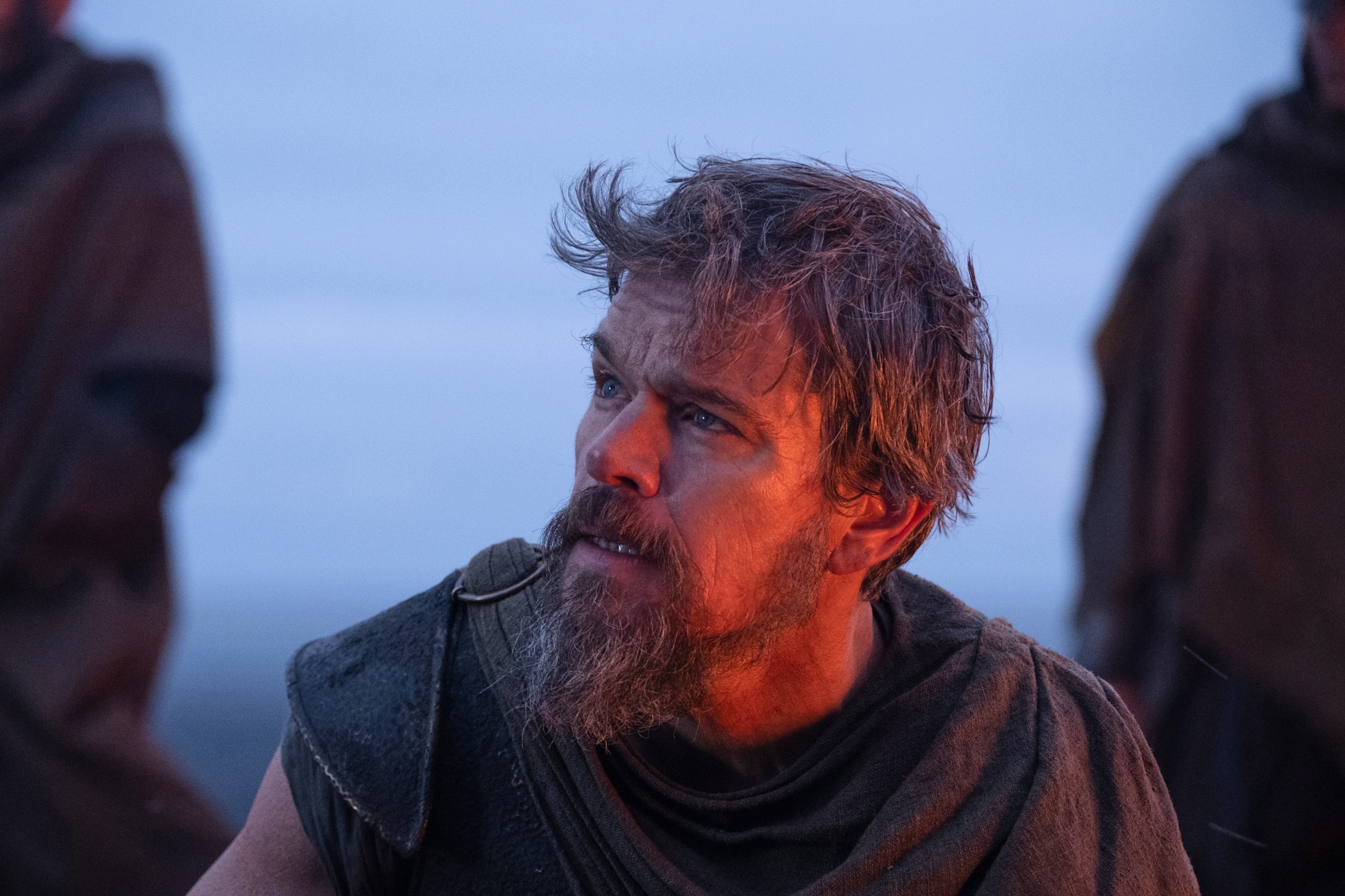
The Odyssey by Christopher Nolan has plenty of monsters, mayhem, and spectacle — but where’s the feast? Kiki Aranita, a classics scholar in her past life, explains what Homer’s heroes would have eaten, and where to embark on your own culinary odyssey around Philly.
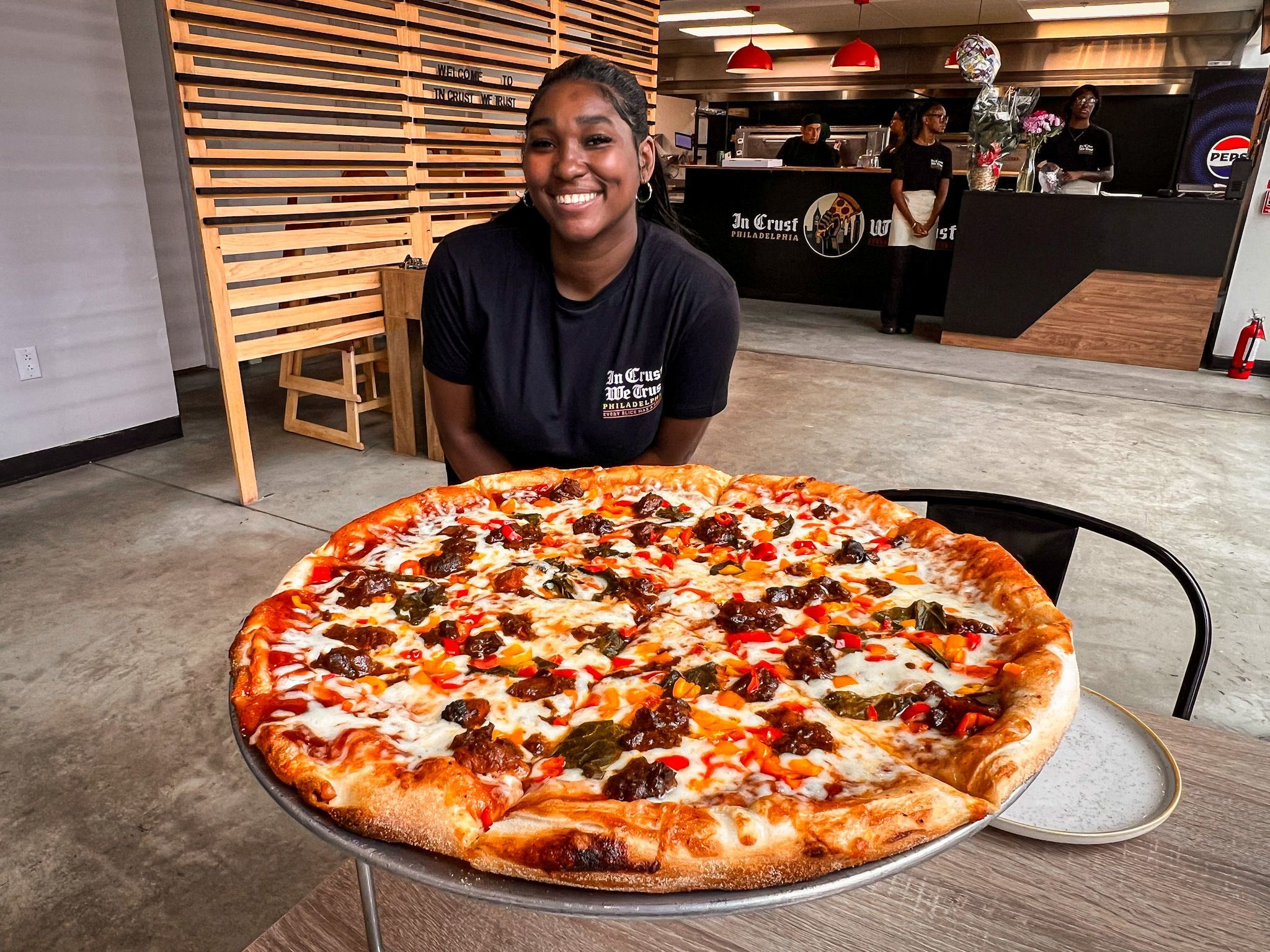
In Crust We Trust has joined the pizza boom now underway in Fishtown. Anyae Wilson-Worley’s pizzeria is offering something none of the others are: a taste of Philly-style Black culture.
In other pizza news: Dave Portnoy, the Barstool Sports founder, visited the Philadelphia area last week to shoot a handful of “One Bite Pizza Reviews,” whose scores in previous years have transformed the fortunes of a neighborhood pizzeria.
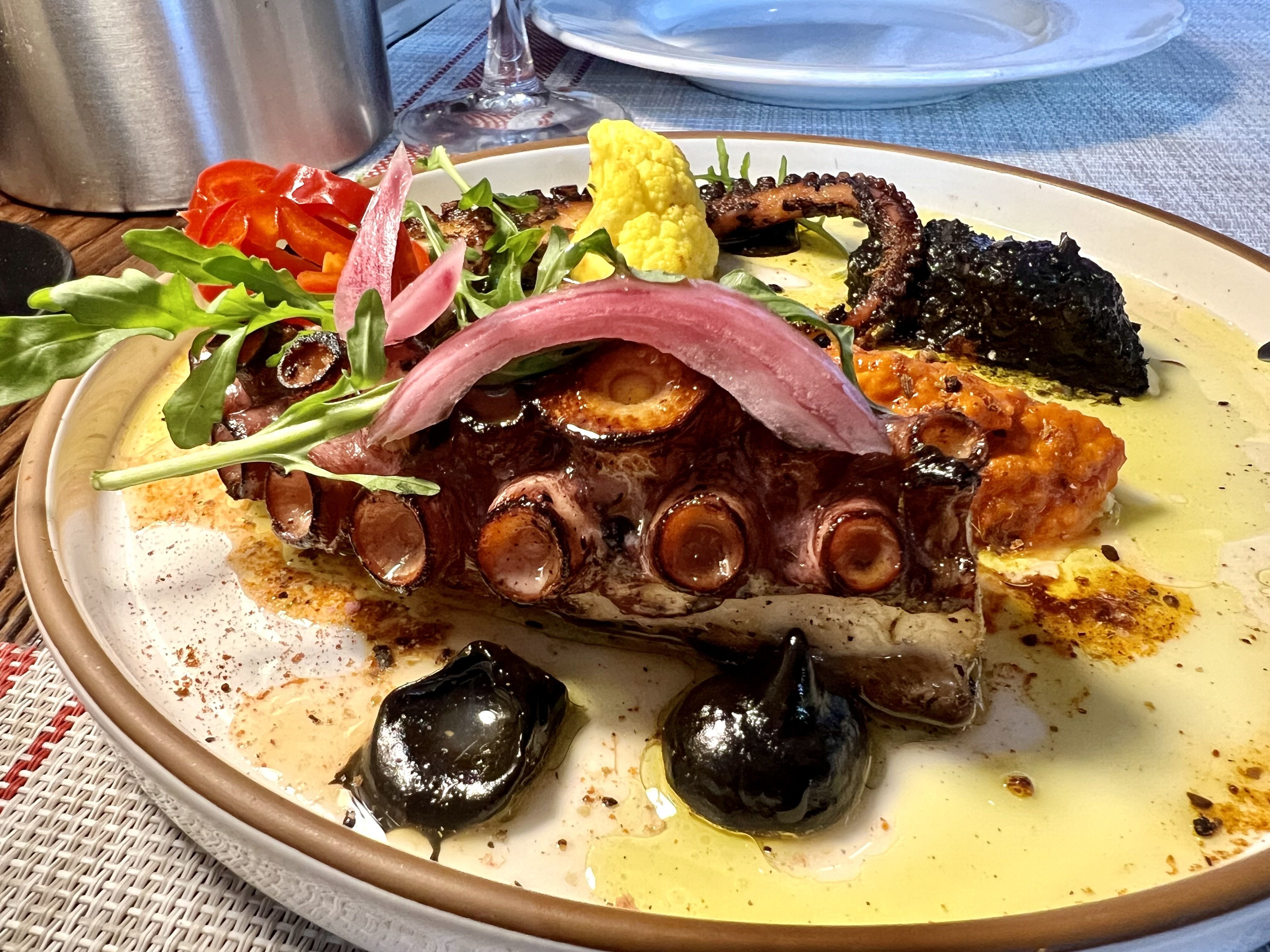
What a joy: Dunking chunks of octopus into the almond romesco and black garlic purée at Stina in West Passyunk. For another treat, writes Hira Qureshi, don’t miss the spanakopita.
Scoop
The Pub in Pennsauken, which sits on 6 acres, is being offered for sale for the first time in 26 years. The steakhouse institution is closed now for summer break, but the owner insists that it will reopen next month — unless a deal is magically struck.
Restaurant report
Recipe Philly, whose menu is built around recipes submitted by local home cooks, opens Monday at 1401 Arch St., a splashy, 175-seat redo of the long-ago McDonald’s at Broad and Arch. Funded by retired business executive Ed Baumstein (above), the restaurant will serve lunch and dinner, featuring dishes from 31 cooks who also will appear in a reality TV series now being shopped around.
Among them:
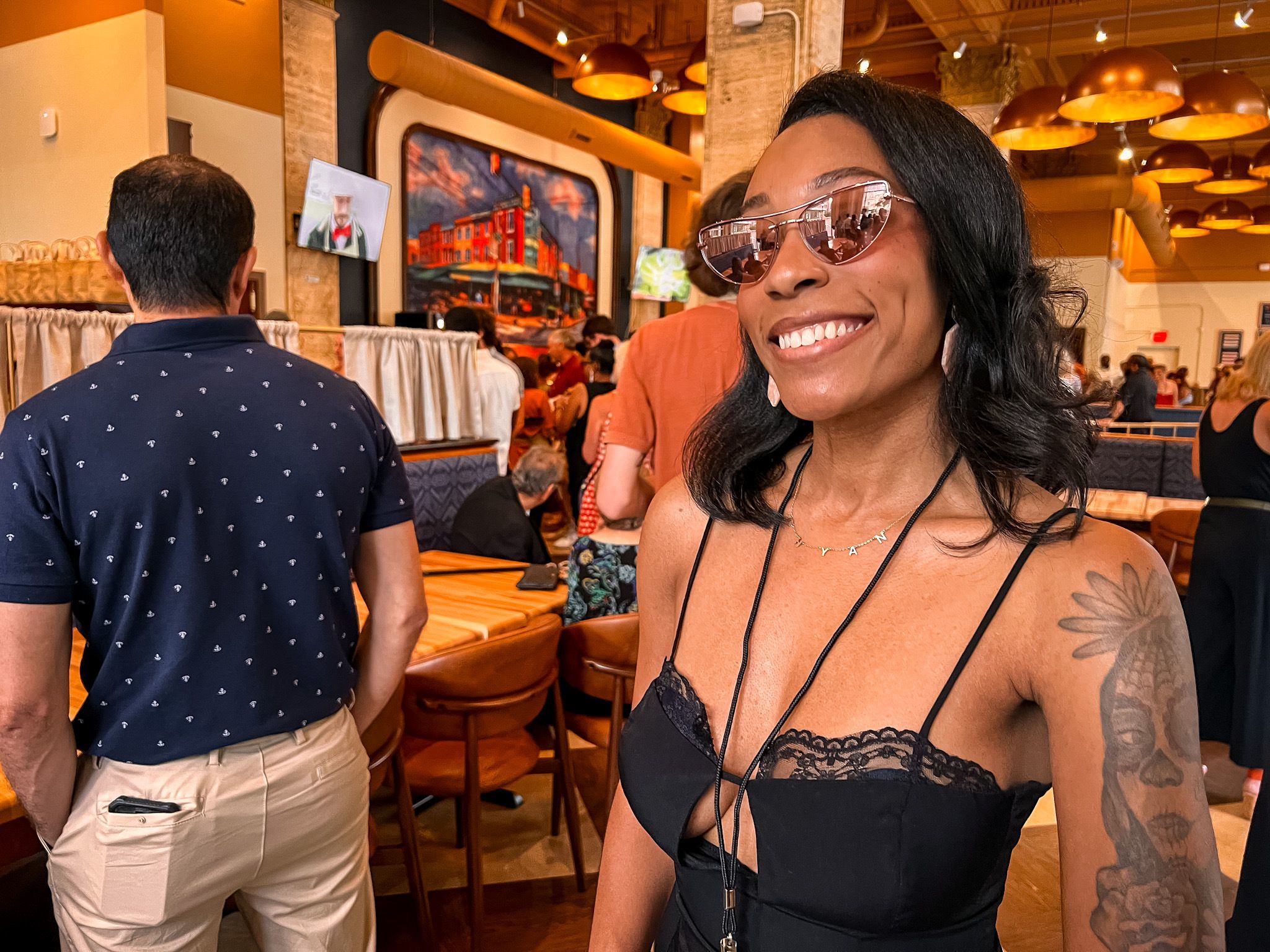
Germantown data analyst Chyan Adams Bentley (above), 30, drew inspiration for her honey-chipotle shrimp tostadas from a rooftop cooking class she took in Guatemala.
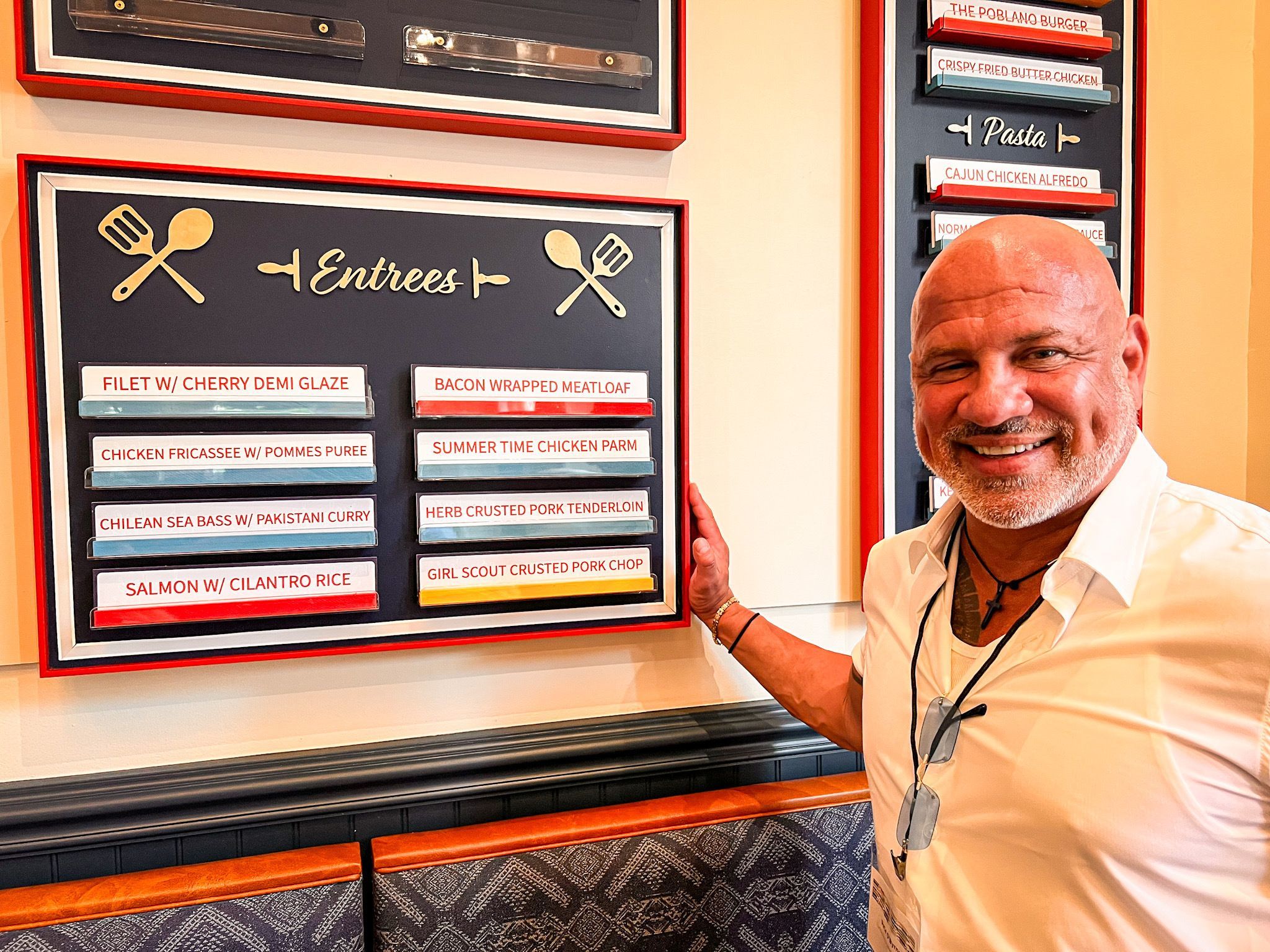
Pete O’Byrne (above), 60, of Jeffersonville, contributed a pork chop crusted with Pecorino Romano, panko, and shortbread Girl Scout cookies. “The Girl Scouts are one of my customers,” said O’Byrne, who sells production printers and software. “I know when the truck comes in.”
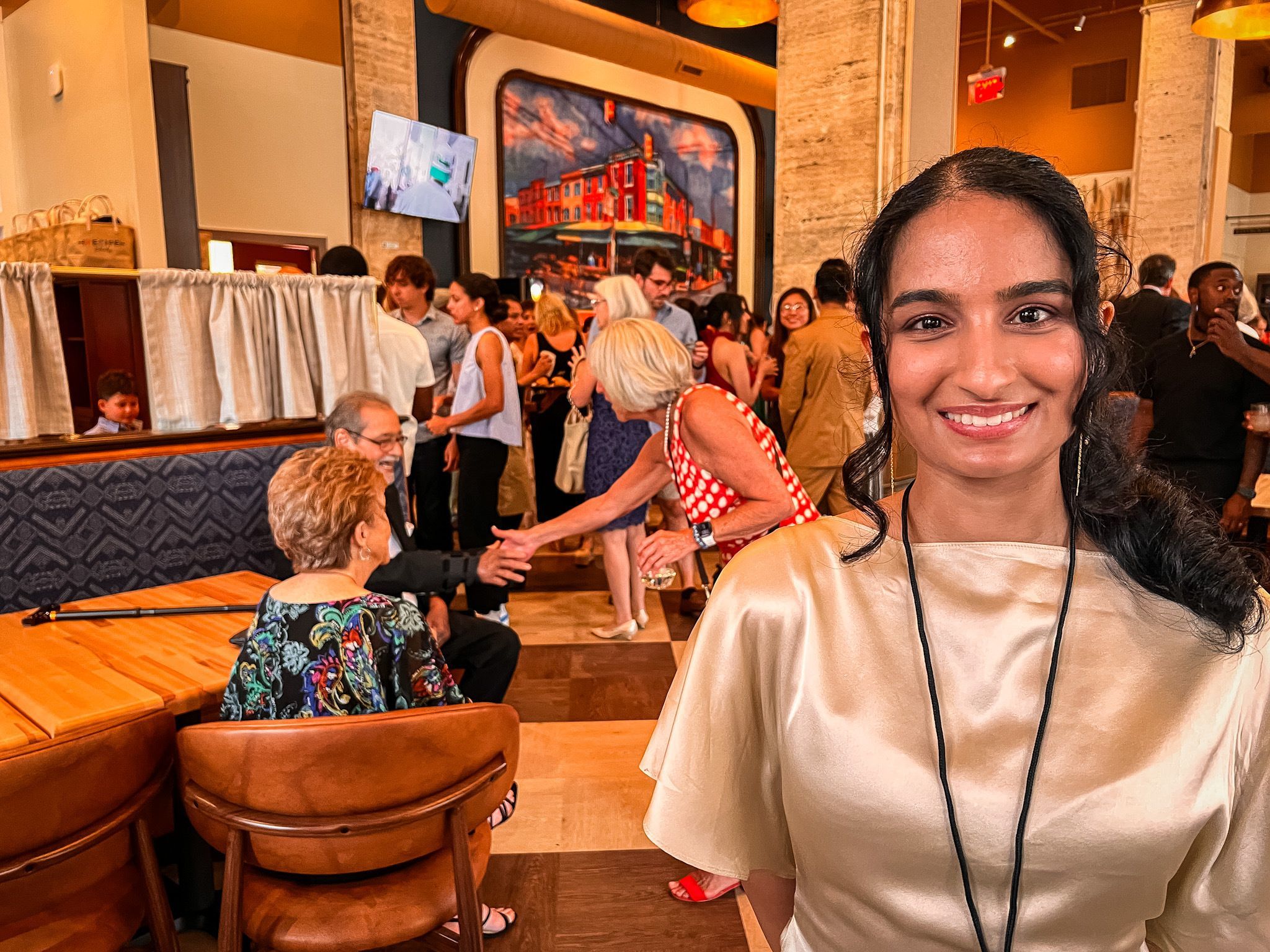
Nayha Hussain (above), 24, a Spring Garden software engineer who has cooked since age 12, elevated a home-style Pakistani coconut curry with Chilean sea bass. Since Recipe is a 15-minute walk from her place, “it’s my local neighborhood restaurant that has my dish on it,” she said.
You’ll be hearing a lot about Anh Em, which soft-opened last weekend at 21st and Titan Streets in Point Breeze. Anna Huynh and husband Victor Nguyen are behind the 50-or-so-seater specializing in Vietnamese comfort food, mixing classics with home-style dishes (like crispy bánh xèo, above, and the beef carpaccio dish known as bò tái chanh), inspired by what the couple grew up eating. Chef is Nguyen, who managed Tango and once co-owned a Chinatown bubble-tea shop; he oversees a 20-seat bar pouring local beers from 24 taps, plus cocktails. The couple retained the former Madeira Indian Grill’s exposed brick while adding burgundy booths, light-blue accents, lanterns, and shelving built by Nguyen and their son. Here’s the soft-opening menu.
Anh Em, 1252 S. 21st St. Hours: 4 p.m.-2 a.m. Wednesday-Monday. Closed Tuesday.
Briefly noted
The 2026 Michelin Awards will return to New York City for its ceremony. Reminder that its inspectors are scouring Philadelphia in advance of the December announcements.
Heytea, the expanding Chinese tea shop, enters the Philadelphia market Friday at 1001 Arch St. in Chinatown. Drinks will be buy-one/get-one from Friday-Sunday.
With Ember & Ash still closed after a June 24 fire, chef Scott Calhoun will cook at Cartesian Brewing (1326 E. Passyunk Ave.) from 4-8 p.m. Saturday. Using yakitori grills in the courtyard, Calhoun will serve dishes including octopus “dogs,” a Filet-O-Fish-inspired skate sandwich, ’nduja-stuffed piquillo peppers, and sourdough with romesco, along with Cartesian’s beverages.
Javelin (1811 Fairmount Ave.) will host chef Carlos Wills of Ogawa Sushi & Kappo for a maguro kaitai, or tuna-cutting ceremony, Aug. 18. Starting at 5 p.m., Wills will break down a 250- to 300-pound bluefin tuna for a multicourse tasting ($170 plus tax/tip) including sashimi, nigiri, hand rolls, and tuna marrow with uni and caviar. Richie Tray will serve Cambodian-inspired appetizers and cocktails. Reserve via Toast.
Libertee Grounds (1600 W. Girard Ave.) will host a Cooper DeJean look-alike contest on Aug. 27. Doors/registration at 5 p.m., contest at 6:30 p.m. Signup via Instagram.
❓Pop quiz
Why can red Côtes-du-Rhône wines such as Ogier Artésis remain relatively affordable?
A) Rhône producers are prohibited from aging their wines in pricey oak barrels.
B) Grenache can produce large crops of flavorful grapes even in dry conditions.
C) French law limits the markup on Côtes-du-Rhône wines.
D) The wines are made primarily from surplus Syrah grapes, and this is the source of the expression “Qué Syrah Syrah.”
What do you know about the sale of Ardana in Bucks County? — Cindy S.
The Cristou family announced last week that they’ve sold their Ardana Food & Drink location in Newtown, Bucks County, to Rob LaScala after 3½ years. LaScala tells me that the Ardana name and Cypriot-inspired menu will remain for about two months before he transitions to LaScala’s Fire, his semicasual Italian concept. LaScala, who also owns Chicken or the Egg in Marlton and Beach Haven, is on fire with Fire, as there are nearly a dozen locations now, plus New Jersey expansion plans for Freehold, Bridgewater, and Cherry Hill. The Cristous still retain their Ardana and KC Prime Steakhouse, both in Warrington.
📮 Have a question about food in Philly? Email your questions to me at mklein@inquirer.com for a chance to be featured in my newsletter.
By submitting your written, visual, and/or audio contributions, you agree to The Inquirer’s Terms of Use, including the grant of rights in Section 10.
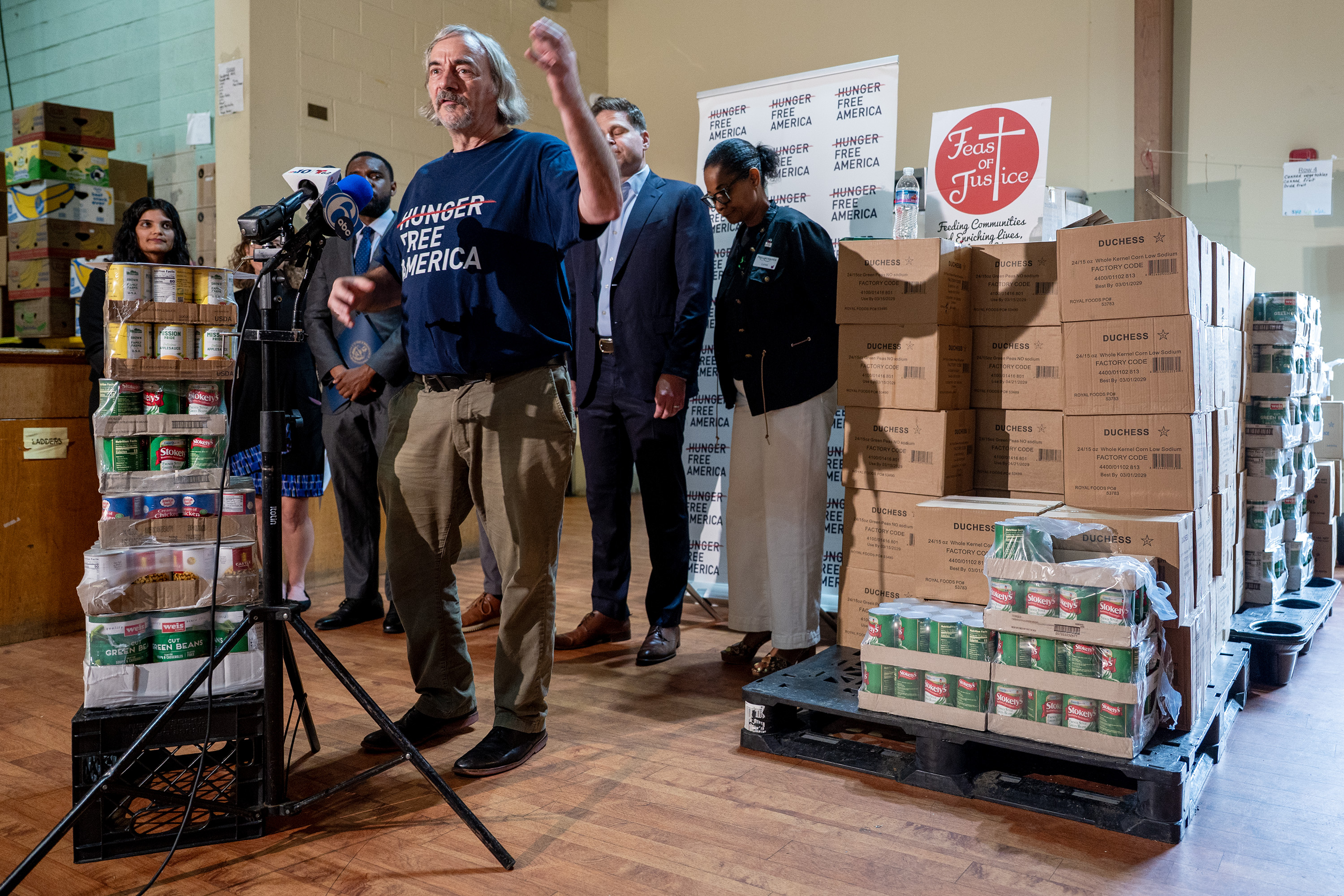
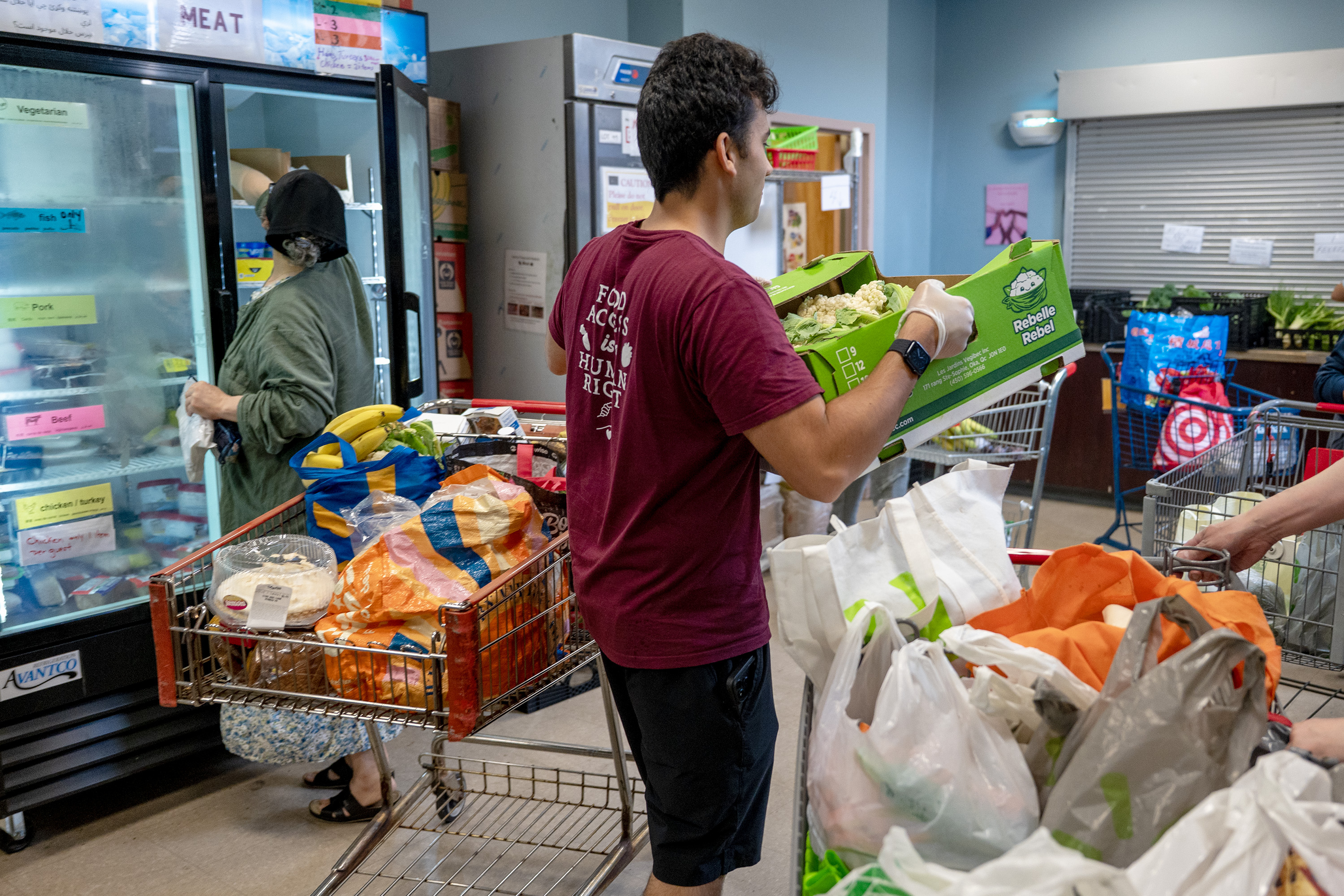
People throughout the Philadelphia region, hampered by cuts to federal food aid and soaring prices, are “facing a dangerous double whammy causing a skyrocketing hunger crisis,” said Joel Berg, a national hunger fighter, speaking in Northeast Philadelphia on Tuesday.
Berg, CEO of the New York-based nonprofit Hunger Free America, was visiting Feast of Justice, one of the largest food pantries in the city with “probably the most diverse food pantry clientele in the nation,” he said. That is proof, according to Berg, that food insecurity can affect anyone, from any background.
Feast of Justice, he added, “is the food affordability issue in the flesh.”
Especially critical of the One Big Beautiful Bill Act, signed into law by President Donald Trump on July 4, 2025, Berg noted that it included more than $1.1 trillion in cuts to Medicaid and the Supplemental Nutrition Assistance Program (SNAP).
Roughly 4 million Americans are expected to lose SNAP benefits in 2026 under the law. Many of them do not meet work or age requirements newly added to the anti-hunger program. The reductions in SNAP and Medicaid benefits helped pay for tax cuts ordered by Trump.
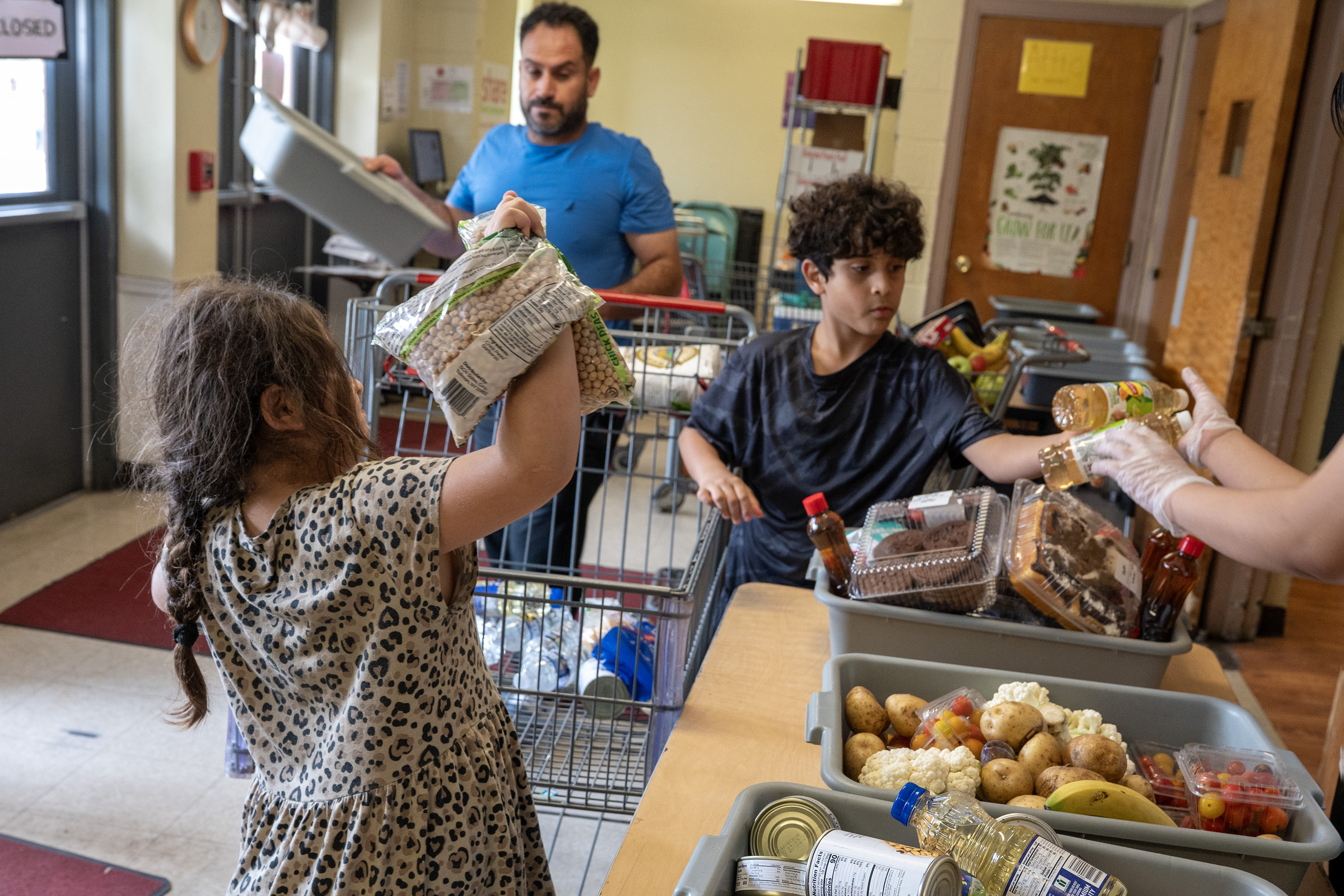
Alahallak Abdelmenim and his children Asil (left), 6, and Hasan (right), 8, load groceries into their shopping cart at the Feast of Justice Food Pantry Tuesday, Aug. 11, 2026.Tom Gralish / Staff Photographer
In Pennsylvania, around 144,000 SNAP recipients could see benefits cut this year — an estimated 45,000 in Philadelphia and 12,000 in its collar counties, according to Pennsylvania Department of Human Services estimates. In New Jersey, around 50,000 individuals could lose SNAP benefits, New Jersey Department of Human Services figures show.
It’s not “rocket science,” said Berg, who used a pallet of canned beans and apple sauce as a lectern as he addressed a small crowd at the pantry. “When there’s a drought and you take away water, the drought’s going to get worse. When there’s a hunger crisis, and you take away food, the hunger crisis is going to get worse, especially after you throw in inflation,” he added.
In response, Trump spokesperson Anna Kelly said Tuesday that Trump is “strengthening” SNAP to sustain it into the future. Changes to SNAP “crack down on waste, fraud, and abuse,” she said. Kelly added that Trump is “uplifting every American’s financial situation by passing the largest tax cut in history — which every congressional Democrat opposed — and bringing historic numbers of jobs and investments into our country.”
Pastor Tricia Neale, executive director of Feast of Justice, said Tuesday that since the enactment of the One Big Beautiful Bill Act, an additional 1,850 families in Northeast Philadelphia have turned to the pantry for help. Overall within the last five years, she said, the number of households the pantry supports has grown from 2,750 to 6,425, a more than 200% increase.
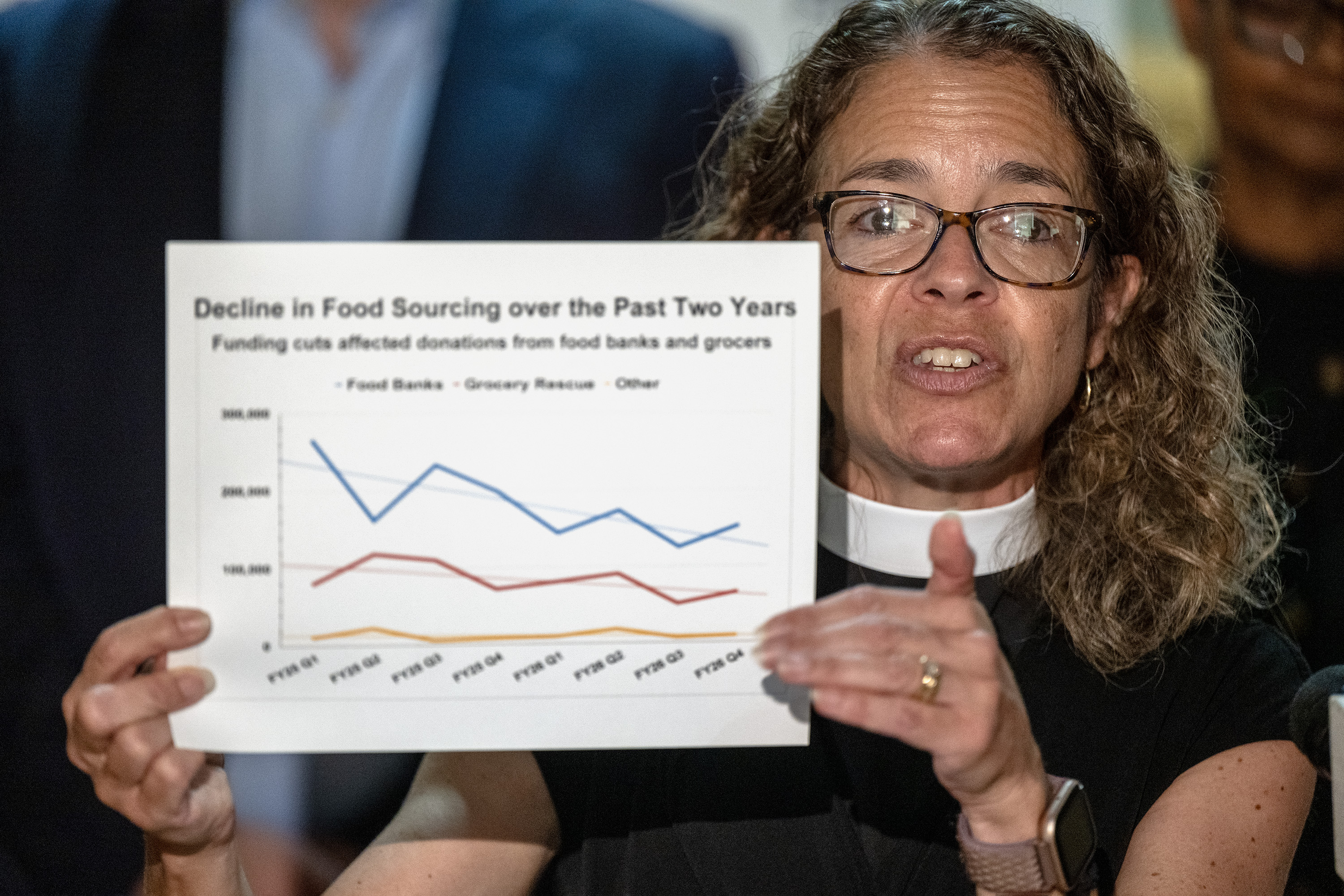
Pastor Tricia Neale, executive director at Feast of Justice, displays a chart showing the decline in food sourcing as she speaks at a press conference at the food pantry Tuesday, Aug. 11, 2026. Tom Gralish / Staff Photographer
The pantry has been forced to absorb a 35% decline in donated food it receives, in part because of cuts to federal and state food programs that have been so vital, she added.
Even with diminished supplies, Feast of Justice is an essential institution, according to Angie Bryant, 55, of Tacony, a client. Formerly a phlebotomist who can no longer work, Bryant said she recently lost her SNAP benefits because new age restrictions exclude her participation.
“In the body, hunger is hurtful,” she said. “Without this place, I don’t know how I could make it.”
Food banks such as Philabundance and Share Food Program do their best to provide Feast of Justice whatever food they can, Neale emphasized.
Volunteer Daniel Khan (center) restocks the shelves as clients load groceries into their shopping carts at the Feast of Justice Food Pantry Tuesday, Aug. 11, 2026. Tom Gralish / Staff Photographer
If SNAP is the safety net, “we’re the safety net of the safety net,” said Loree Jones Brown, CEO of Philabundance, who joined Berg and Neale at Feast of Justice on Tuesday. “But we can’t make up for the cuts.”
She added that “this is a crucial time for food banks, legislators, and community organizations to stand together for our neighbors and against hunger.”
That Feast of Justice does its best to beat back hunger is widely appreciated in the community, said client Anthony Morales, 27, of Mayfair. Laid off from a warehouse job, he said he is responsible for feeding his 7-year-old daughter and his partner, and he needs the pantry’s support.
“When you fall,” he said, “this place lifts you up. You have a lot of fear and anxiety without enough food. It can give you hope and confidence that tomorrow could be better.”