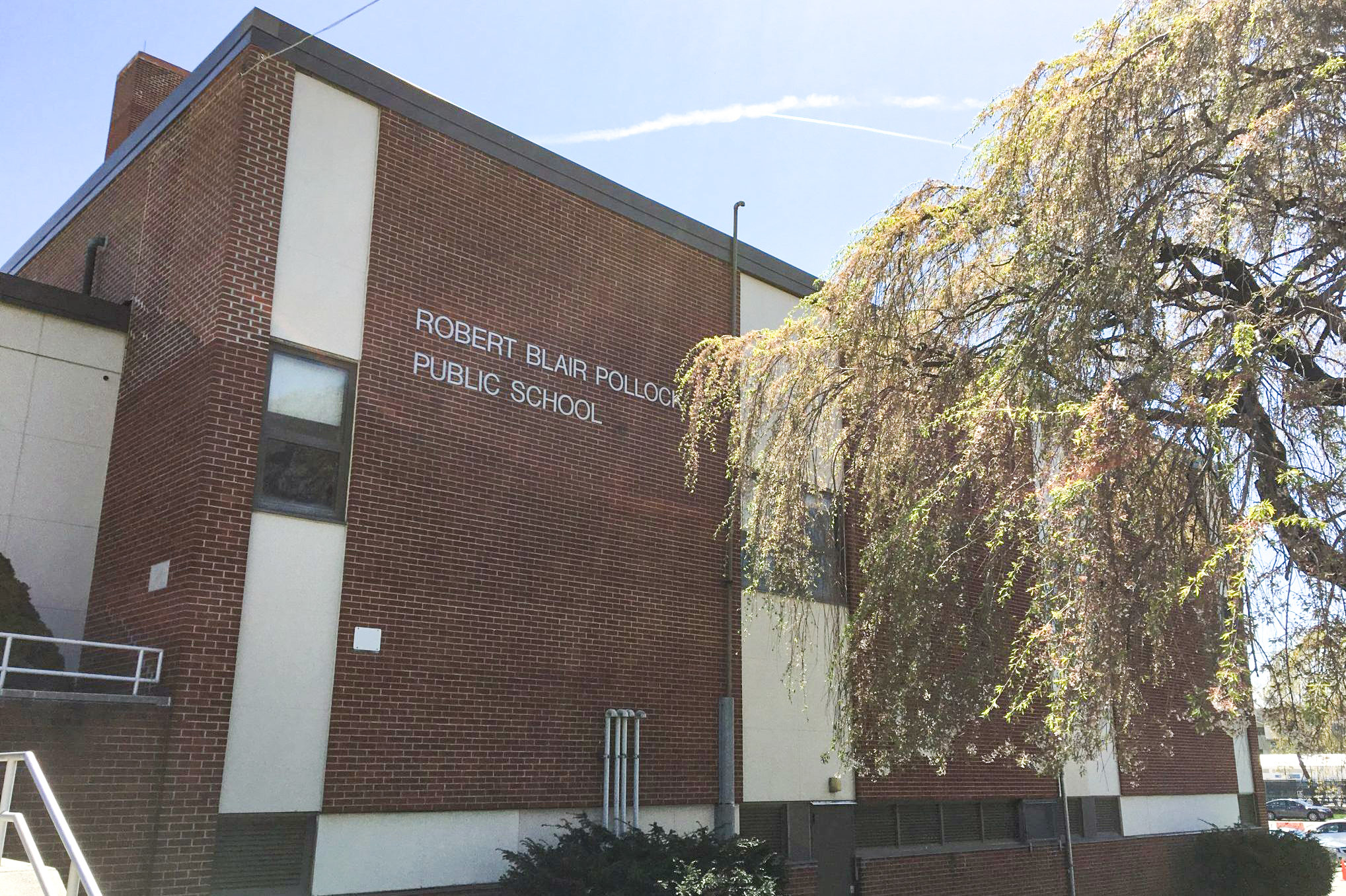
The former principal of a Northeast Philadelphia elementary is on the hook for $31,000 paid to the school by students but never deposited into its bank account.
According to the Philadelphia School District’s inspector general, the former principal of Robert Pollock Elementary, Yvette Jackson, received the money from events including book fairs, holiday bazaars, and class trips — plus dues for graduating eighth graders — but “failed to deposit proceeds.” Jackson has since retired.
Multiple vendors, including Scholastic Books Inc., were not paid for goods delivered under Jackson’s watch, according to Pollock sources and documents reviewed by The Inquirer. The inspector general’s report confirmed the lack of payments.
Jackson’s actions violated the district’s policies, “eroded the public’s trust and violated the district’s ethical standards required by the [Employee Code of Ethics] mandating honesty and forthrightness and avoiding falsification, misrepresentations and deceptions in records the former principal kept while managing and administering” school activities funds, wrote Sha S. Brown, the inspector general.
The report stopped short of accusing Jackson of taking the funds, but said she was liable for all losses “resulting from administrative negligence and failure to exercise proper oversight and accounting” of student funds.
At Brown’s recommendation, the district is withholding $31,576.24 from Jackson’s final termination pay. Jackson did not respond to a request for comment, but, according to the inspector general’s report, “the former principal acknowledged receipt of the memo and did not object to the proposed withholding.”
Pollock, a K-8 school on Welsh Road, educates 900 students, 77% of whom are considered economically disadvantaged.
Missing money, missing records
The possible financial improprieties came to light during a reconciliation of school accounts after Jackson retired from Pollock at the end of the 2024-25 school year.
When district personnel attempted to balance the books, money from trips, bake sales, class dues, and the holiday bazaar was missing, according to sources. Scholastic Books was not paid for either its fall 2024 or spring 2025 book sales.
Ultimately, the district’s office of general accounting filed a complaint with the inspector general’s office “pertaining to the mismanagement of the Robert Pollock School Student Activity Fund (SAF) by the retiring principal,” according to documents reviewed by The Inquirer.
The inspector general’s probe concluded that Jackson failed to keep adequate records and that over the course of the 2023-24 and 2024-25 school years, she made only five bank deposits, despite cash having been received for various school events through the year.
District policy requires cash received for student activities be deposited into the bank “as soon as possible, ideally daily unless this would cause an undue hardship.”
None of the deposits Jackson made came with required documentation, such as the dates and descriptions of the activities, number of students who participated, cost of participation, and more, the report said.
“The former principal failed to account for, and deposit, the proceeds of several fundraising activities including book fairs and class dues (graduation fees) … the OIG could only partially match one bank deposit pertaining to the school’s 2023 fall book fair sales over this two-year period. Further, records indicate the former principal failed to pay invoices of SAF-related vendors,” Brown said.
Brown found that Jackson collected the $31,576.24 but never deposited it. She also told a staffer managing the book fair that there was “no need for receipts,” the investigation found, despite district policy explicitly stating that receipts were required.
In some instances, vendors were stiffed. Both Scholastic and a business that provided goods for the holiday bazaar were not paid, the report said.
Book fair money is typically used to purchase books for classroom libraries and for students to take home. Other activities, like the bake sale, fund things like classroom pizza parties and assorted celebrations.
“According to an administrator of the school, the holiday bazaar vendor said the former principal kept telling the vendor they were ‘… good for the money,’” the report said. “In total, the OIG found that three invoices remained unpaid and totaled $16,840.49.”
Going forward, Brown said, the district must require student activities fund money be deposited into a bank account weekly.
“Accounting and Financial Reporting staff will continue to work with school leaders to make timely deposits,” chief financial officer Mike Herbstman said in the district’s response to the report.
The school district had no immediate comment Tuesday on the inspector general filing.
There are few Spanish bar snacks as satisfying — or so hotlydebated — as a properly made tortilla Española.
If you’re lingering in the hot southern cities of Andalusia, where the iconic potato-and-onion omelet is typically served room temperature or cold, the eggs are fully set.
“But from Madrid north to Basque Country, it’s traditionally made to order and served warm and custardy,” says Patrick Iselin, 50, the co-owner of BAR ilu, who spent half his childhood in Spain and now splits time between Philadelphia and the Madrid apartment once owned by his grandmother, Iluminada “Ilu” Prellezo Inchausti.
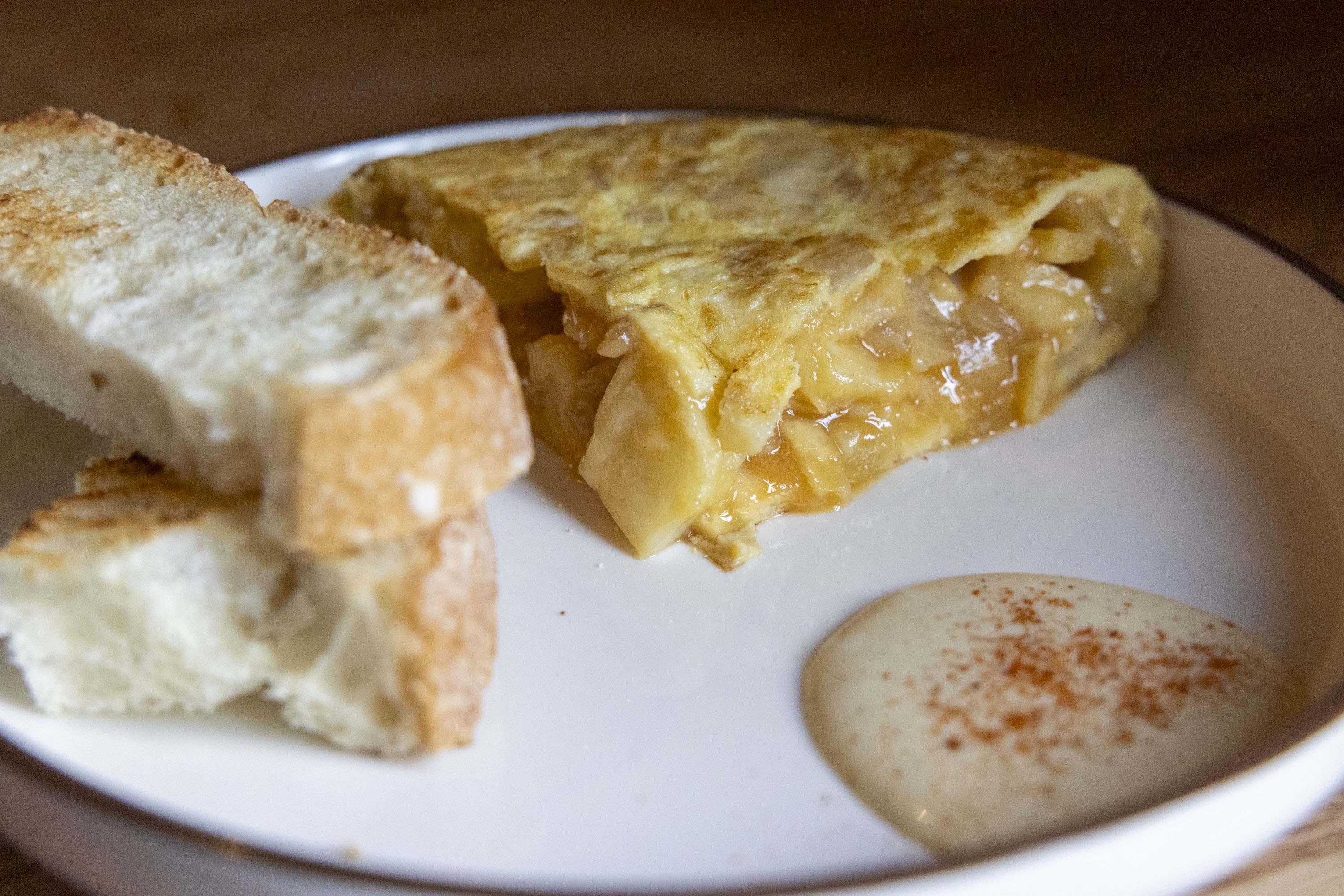
So it follows thatthe eponymousnew cornerbar at Dauphin and Martha Streets — which happen to share the 40th parallel north with Madrid — serves its tortilla Española with a loose and edgy Kensington flair: “runny af,” as noted on the menu. Served as a wedge, with olive oil-fried potato chunks and sweet onion laces bulging from its glossy middle, a warm forkful of this eggy wonder is as transporting as it gets.
Andrew Butler, chef de cuisine at BAR ilu, making the tortilla Espanola.Tyger Williams / Staff PhotographerThe tortilla Espanola at BAR ilu.Tyger Williams / Staff Photographer
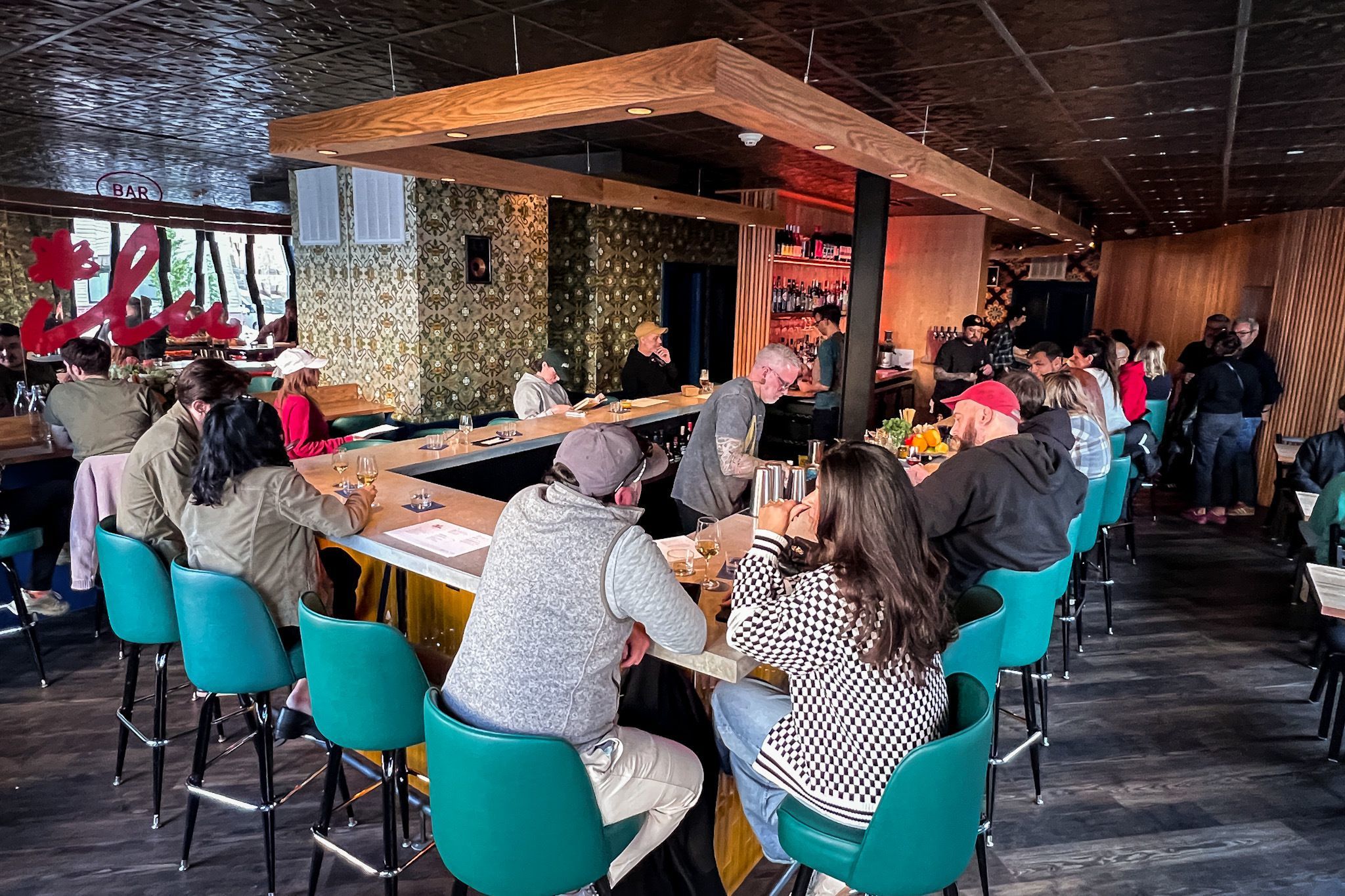
Wash it down with a bracingly crisp glass of La Gitana Manzanilla sherry on draft, plus a fistful of crunchy Marcona almonds, a forkful of tangy boquerones, and a crock of olives warmed with orange zest and herbs, and it’s hard to deny that BAR ilu is an appealing development for this rapidly changing corner of Kensington. It is perhaps also a little dissonant for those who know the neighborhood history. Thisstylish Euro concept, complete with its undulating circular bar and foam-topped glasses of vermouth, haslanded in a space previously occupied by the Old Philadelphia Bar, one of the last unreconstructed dive bars from what co-owner Scott Coudriet calls Kensington’s “pre-hip-storic” days.
Coudriet, who owns Fishtown’s Lloyd Whiskey Bar, is also partnered with Iselin at nearby Cormorant bar. Their other partners in ilu are Salvatore D’Amato and Jason Evenchik, whose Vintage Syndicate hospitality group operates Vintage, Starbolt, Time, Bar, three Garage locations, and the Goat Rittenhouse.
This veteran team is keenly aware of the sensitive dynamics of change at longstanding bars. That’s why Iselin was adamant about keeping prices reasonable for Kensington locals — no more than $14 a plate, and $16 for distinctive cocktails that would easily cost a few dollars more in Center City — while building this tribute to Spain in his adopted city.
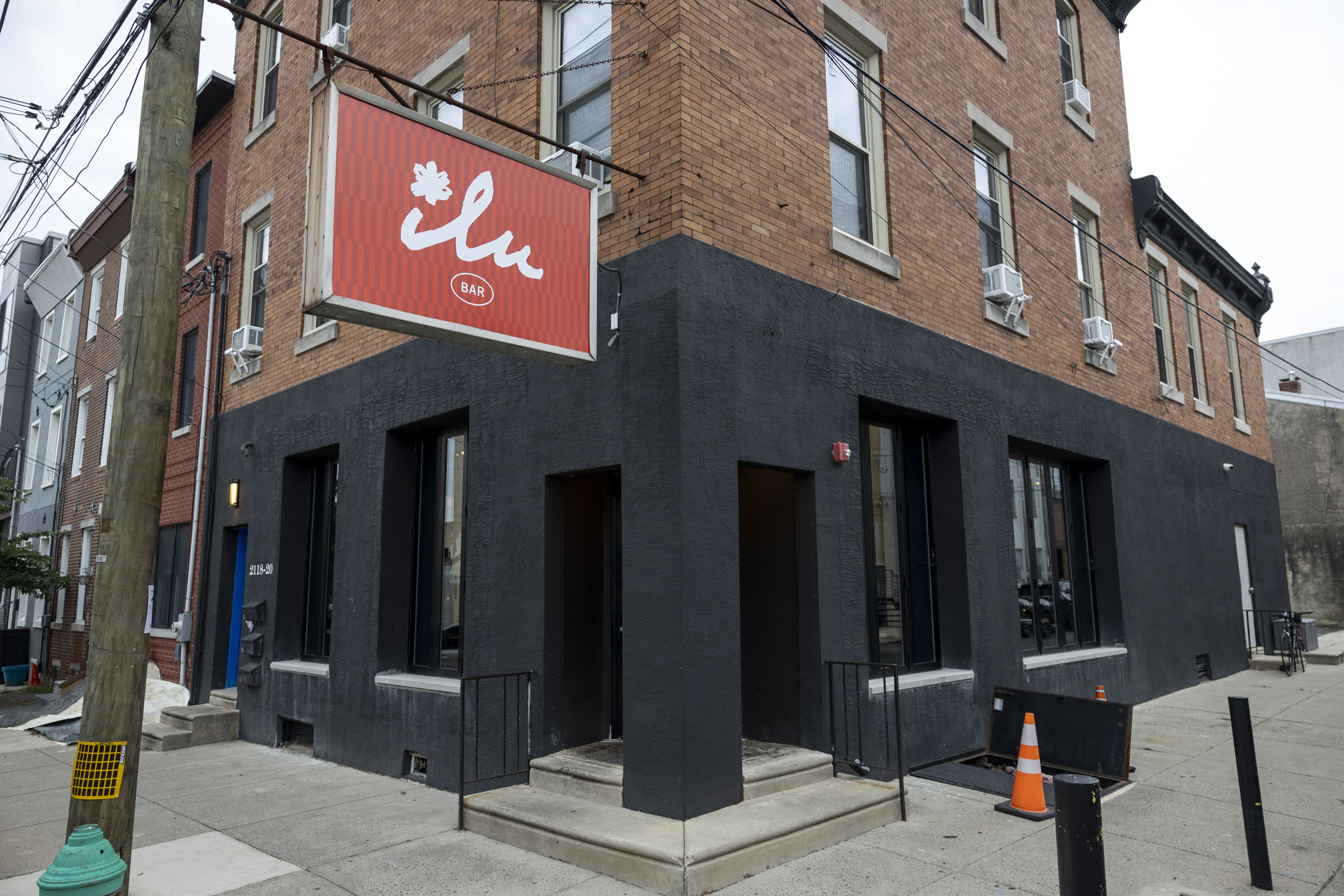
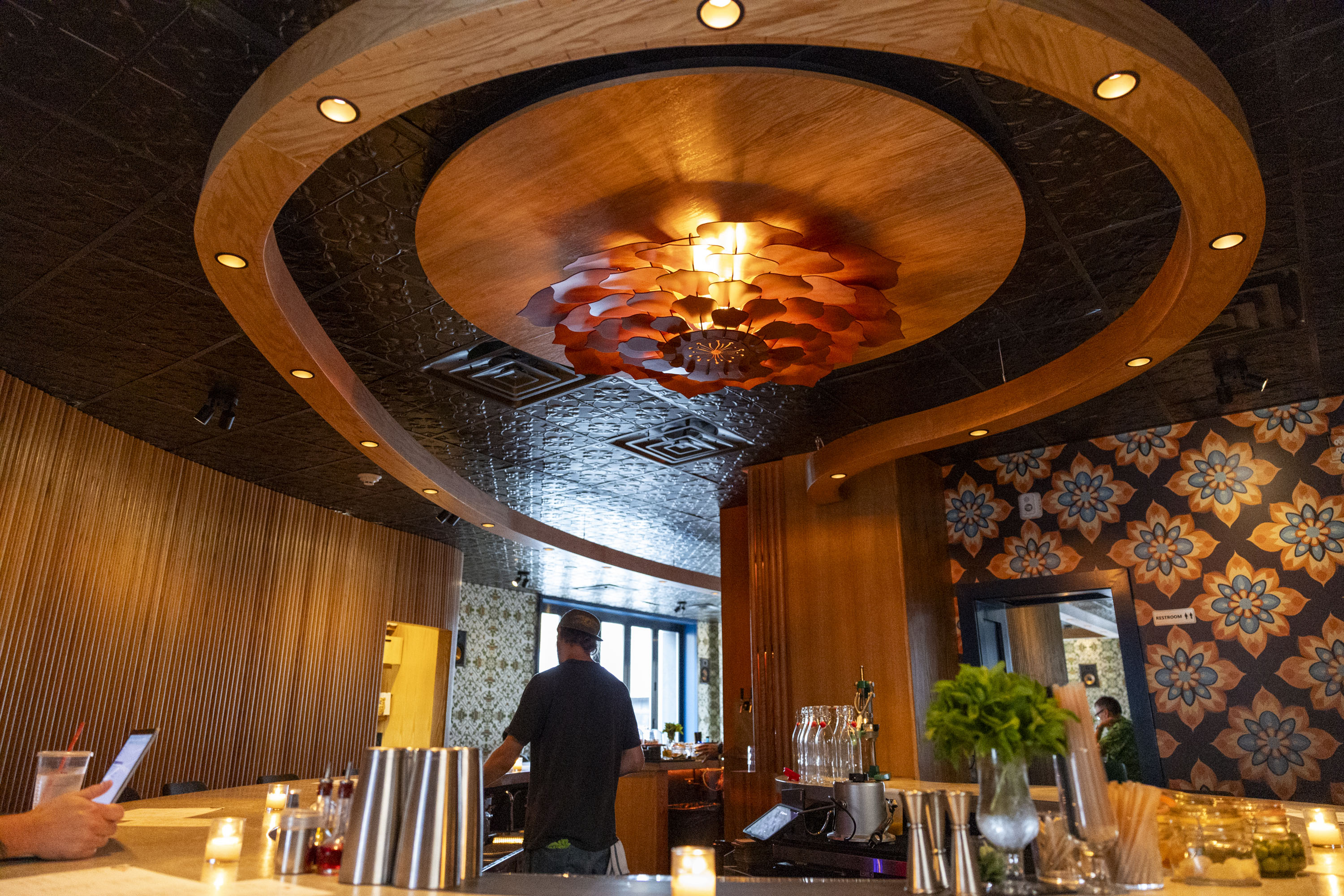
The outside of BAR ilu on Thursday, Aug. 20, 2026, in Philadelphia.Tyger Williams / Staff PhotographerThe back bar area at BAR ilu on Thursday, Aug. 20, 2026, in Philadelphia.Tyger Williams / Staff Photographer
Iselin wanted to craft this 40-seater with as few clichés as possible (no hanging hams, no toro horns, no sangria), but rather the feel of a modern tapas bar he might frequent in Madrid today. He had no idea he was also tapping into the latest evolutionary trend for the Philadelphia bar.
Twenty years ago, the smoky old taverns of yore were being replaced by the gastropub movement of the early aughts, where local craft beers flowed and house charcuterie and pickle programs anchored ambitious seasonal menus that gave a cool new vibe to the neighborhood restaurant. In some cases, they helped redefine the neighborhoods themselves.
Philly’s bar scene is now officially in its grazing phase, with curated drink menus centered around culinary cocktails, natural wines, and nonalcoholic drinks with food offerings often so limited that a hungry fellow like me might need to order three-quarters of the menu to make a meal. Supérette, the charming French wine bar beside East Passyunk’s Singing Fountain, captured this development perfectly in 2025. Owners Chloé Grigri and Vincent Stipo described these snack-centric bars as a “generational thing” for 30-somethings who want a stylish place to hang for in-between meals with friends without committing to an entire evening.
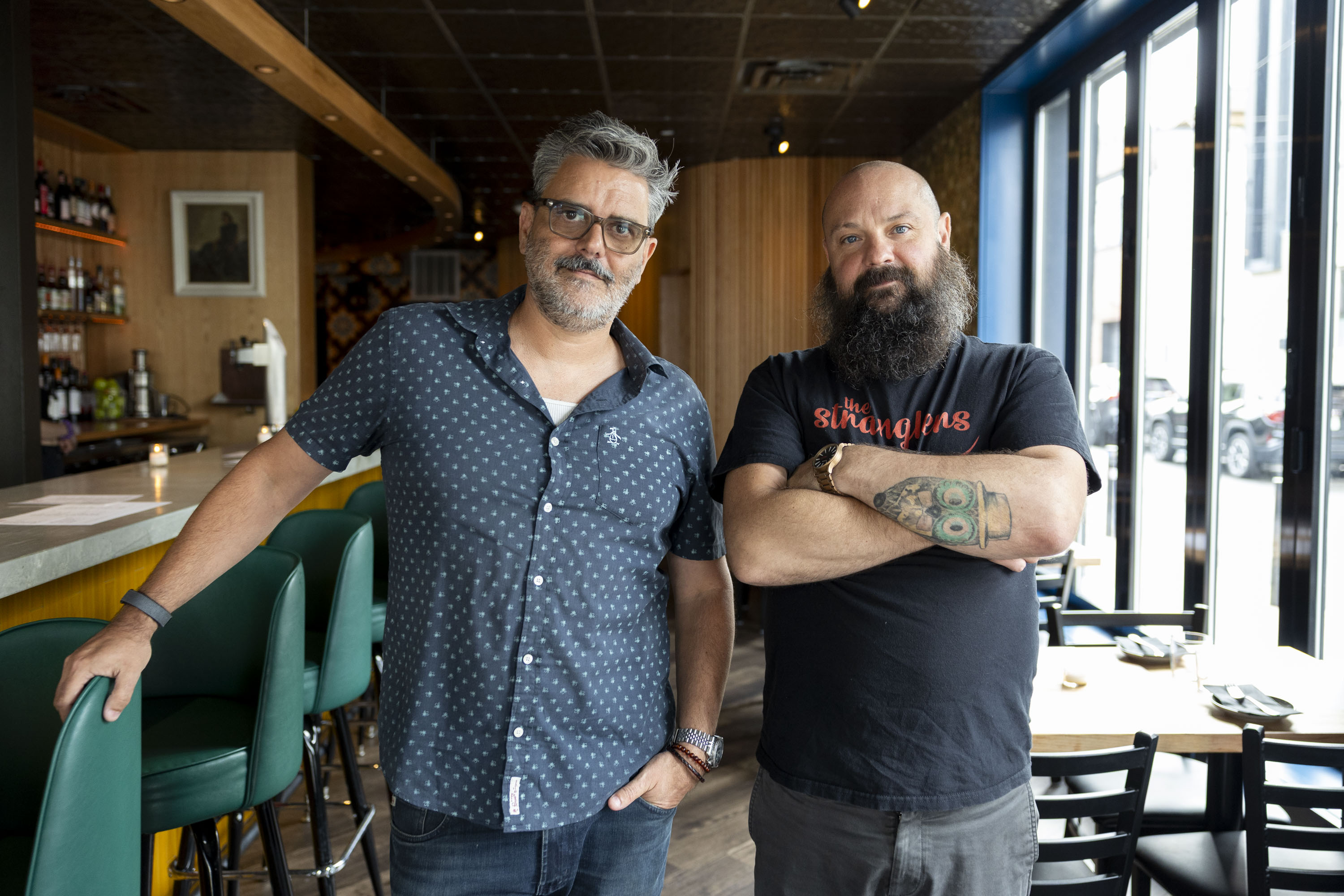
Co-owners Patrick Iselin and Scott Coudriet of BAR ilu, pose for a portrait together on Thursday, Aug. 20, 2026, in Philadelphia.Tyger Williams / Staff PhotographerThe La Gitana Manzanilla Sherry at BAR ilu on Thursday, Aug. 20, 2026, in Philadelphia.Tyger Williams / Staff Photographer
A similar approach is at work through a Japanese lens at Almanac, the cutting-edge Japanese cocktail bar (with Wagyu hot dogs and kombu-cured celery sticks) above the omakase room at Ogawa. The food menu at Chris Kearse’s new cocktail bar in Washington Square West, Known Associates, lists only a dozen items, counting the cool ranch freeze-dried peas. Same with the recently opened Lillian’s Bar in Point Breeze.As Chris Fetfatzes told me about Grace & Proper, the Portuguese-inspired bar with “tasca” nibbles he debuted in 2022, this template — a distinctive drink program bolstered by a small menu that can be produced with limited service and light kitchen investment (i.e. no hood) — makes perfect business sense in the post-COVID era.
Of course, the Spanish have been doing this for centuries with tapas, a light-bite evening repast that reflects their cultural preference for a larger meal earlier in the day. And yes, Amada has been serving tapas here for 20 years, but always alongsidea much broader menu with large plates and paellas.
Considering all the new small-plate projects that have come online recently, including Bar Cicci, Ellen Yin’s all-day aperitivo bar, Philadelphians may have finally embraced the concept on its own snacky terms.
The front bar at BAR ilu, 2118 E. Dauphin St.Michael Klein / StaffThe various plates including The Boquerones, Melon with Ham, the Tuna Empanada, Tomato Salad, Almonds, and Olives at BAR ilu on Thursday, Aug. 20, 2026, in Philadelphia.Tyger Williams / Staff Photographer
BAR ilu has a slightly more substantial food menu than most.And part of its appeal is the natural ease with which it blends a Kenzo vibe (seethe mismatched thrifter style of its floral-print wallpaper, black tin ceiling, and teal barstools) with an inventive drink program and classic Spanish plates lightly updated by chef Andrew Butler.
Fig leaf oil adds a shade of coconut-vanilla to a familiar pairing of juicy cantaloupe with shaved serrano ham. Smoked olive oil brings a whiff of earthiness to ripe summer tomatoes with cucumbers and piquillo peppers. A juicy burger topped with Manchego cheese, pickled red onions, and aioli firmly anchors the menu with one can’t-miss comfort option that even the least Spanish-inclined customer will embrace.
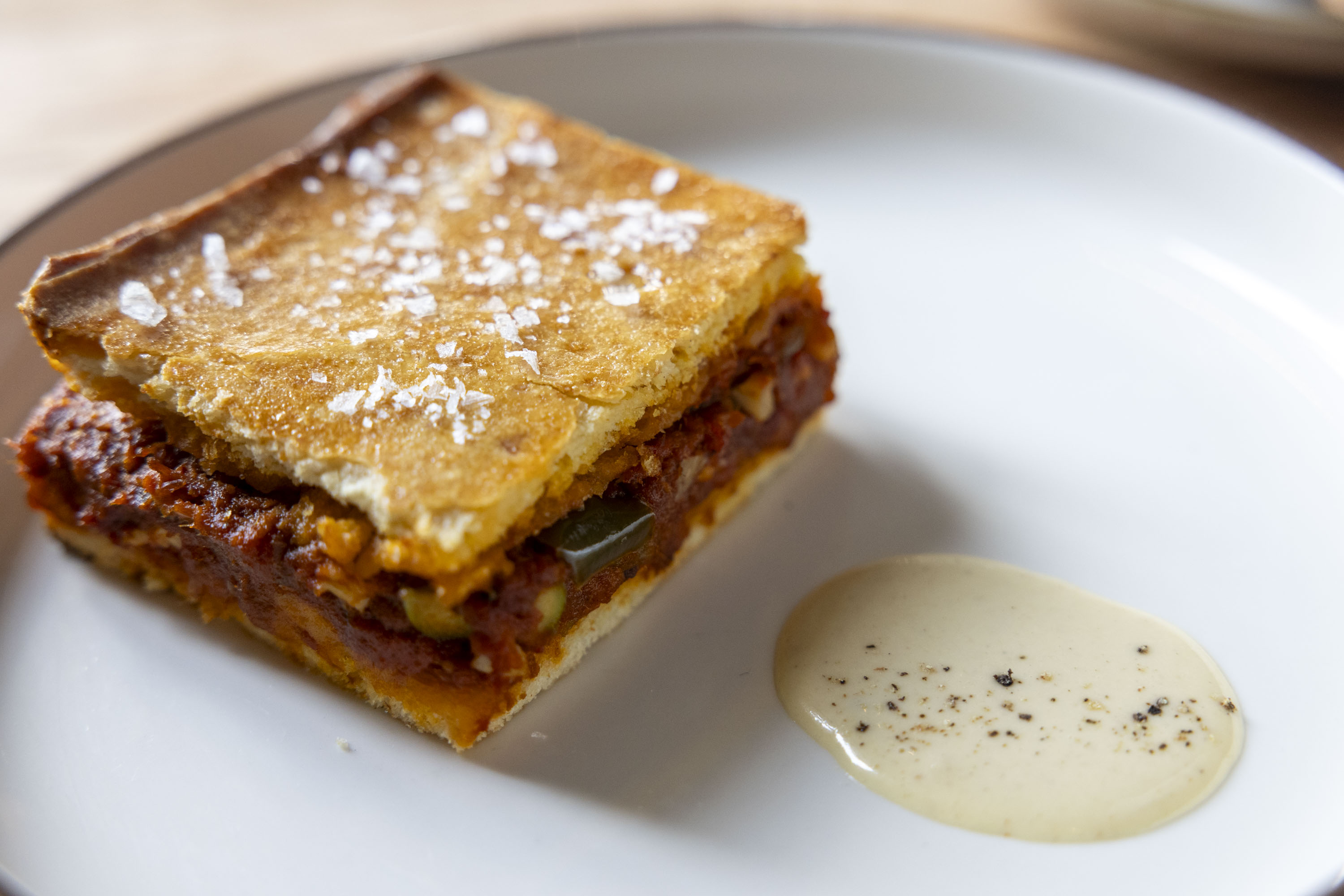
But the Spanish flavors, both on the plate and in the glasses, are what have me hooked. Aside from the tortilla, there’s a double-crusted Galician-style empanada stuffed with tuna and cooked-down tomate frito. Plump head-on gambas al ajillo take on a flicker of chili oilheat. Crisp spheres of perfectly fried croquetas harbor lusciously creamy béchamel centers flecked with serrano ham or, my favorite, salty flakes of bacalao.
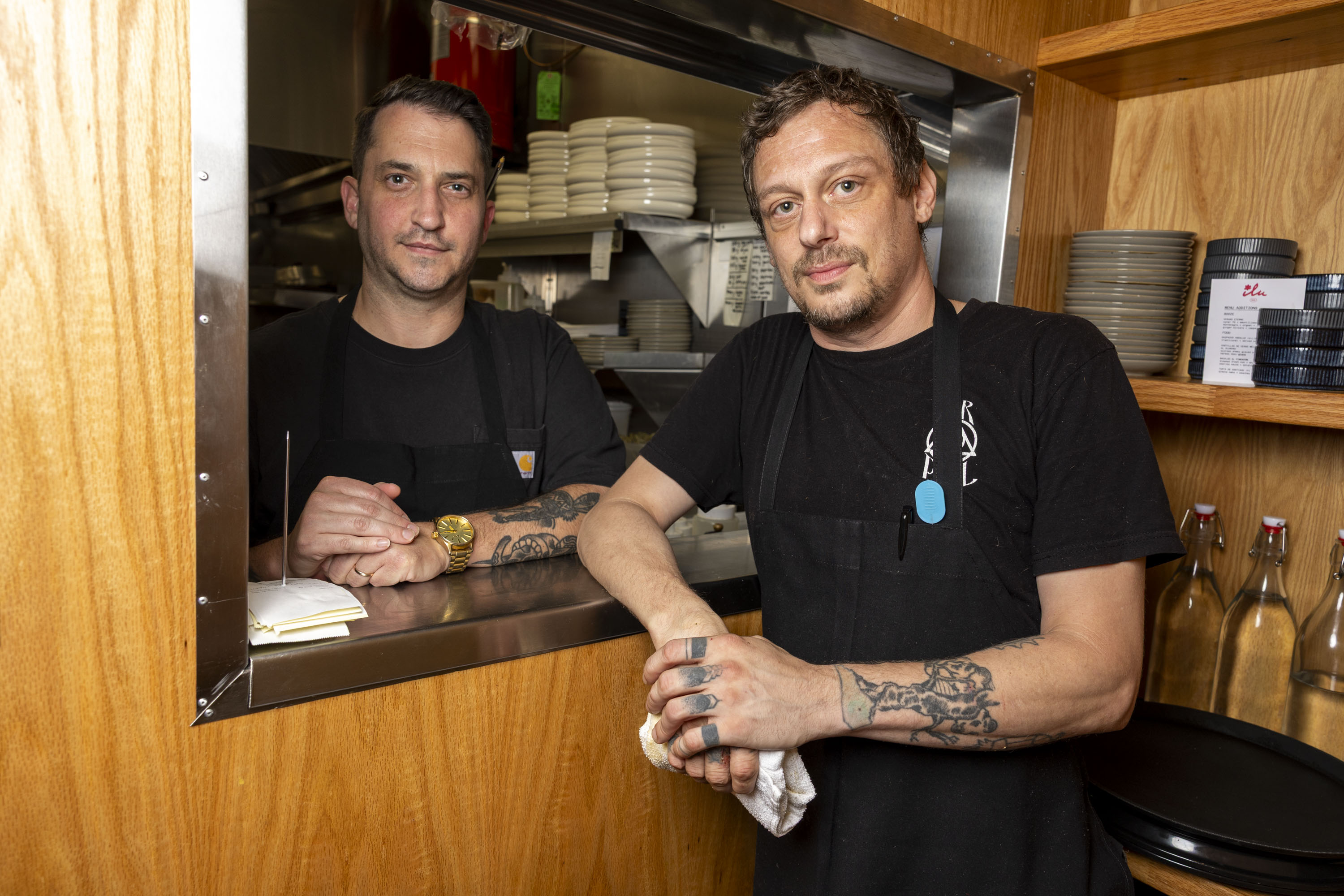
A Tuna Empanada at BAR ilu on Thursday, Aug. 20, 2026, in Philadelphia.Tyger Williams / Staff PhotographerPat Szoke, culinary director, and Andrew Butler, chef de cuisine, at BAR ilu.Tyger Williams / Staff Photographer
There were a few misfires. The patatas bravas were pale and lacking crisp. The flattened confit artichoke heart was mushy. The seared mushrooms were oversalted. But these were minor complaints compared to winners like the crusty bocadillo sandwich overstuffed with paprika-fried baby squid drizzled with lemony aioli and more tomate frito. Along with some tiny olives stuffed with briny anchovy, every morsel seemed deliberately calibrated to stoke a thirst.
I especially enjoyed BAR ilu’screative approach to sherry and vermouth, both in cocktails and poured neat. A crisp Manzanilla, already one of my favorite predinner quaffs in summer, added a bracing dryness to Cynar amaro and gin for Remember the Alimony. Vanilla-scented Licor 43 from Spain pairs with chilled Cafe Bustelo for a carajillo whose pebble ice is dusted with coffee-orange powder, and is now one of my top five coffee cocktails in the city.
The Carajillo at BAR ilu on Thursday, Aug. 20, 2026, in Philadelphia.Tyger Williams / Staff Photographer
The Fire Drill is a refreshing tropical blast of passion fruit swirling in mezcal smoke, with an herbal whiff of Lo-Fi gentian amaro to counter the fruity sweetness. A whole Granny Smith apple is juiced to order forthe simpleBooze & Juice, paired with the spirit of your choice (make it mezcal).
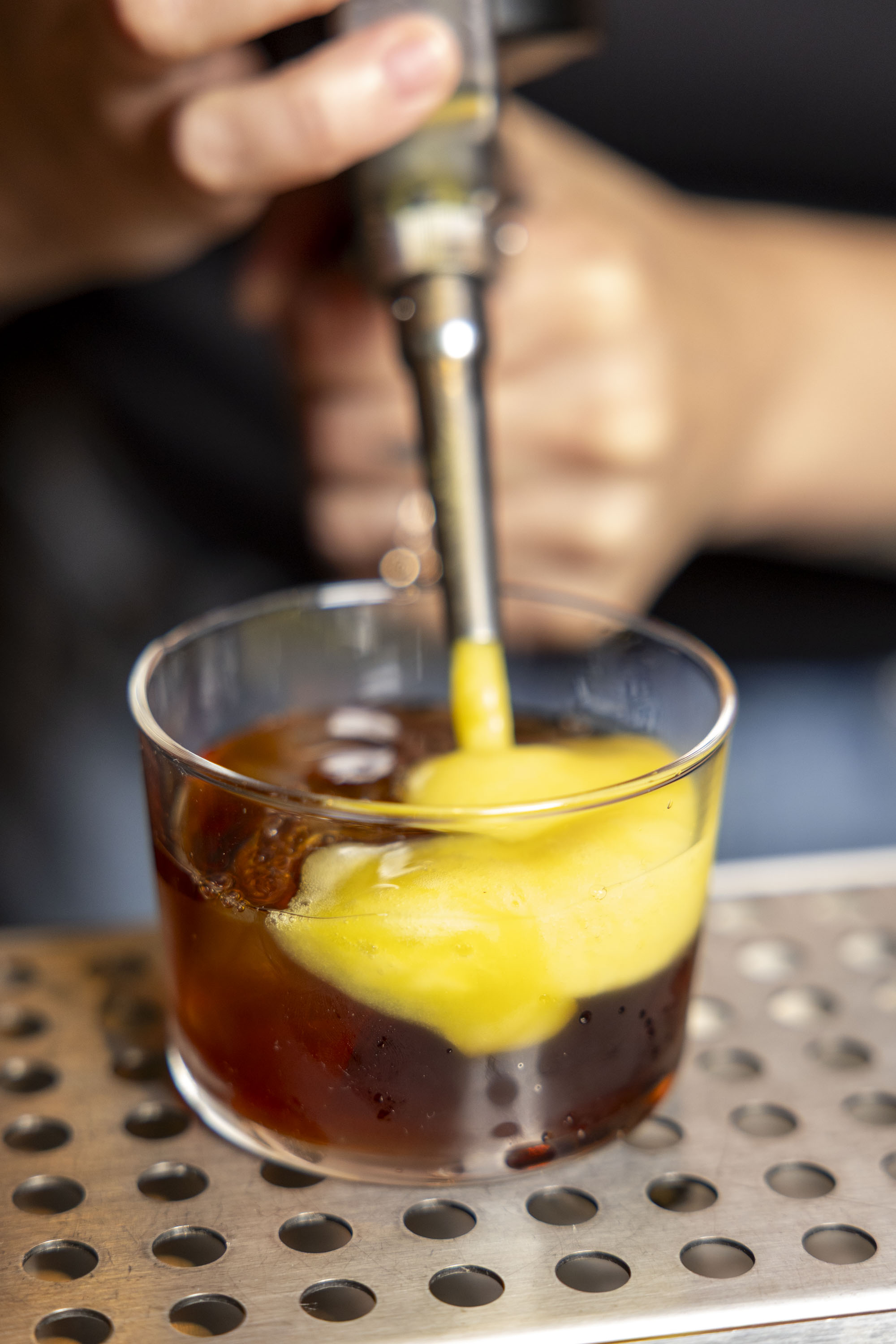
Meanwhile, unless you order a glass of dark, sweet-tangy Pedro Ximenez to cap your meal, try the Barquero vermut on draft and top it with orange foam, a combo that tastes like flat Coke dolloped with an orange-creamsicle cloud. There is actual dessert here, too: a perfectly fine almond cake with macerated peaches and cream. But that foamed vermouth was satisfyingly herbal, sweet, and mysterious — and one of the best things I drank all summer.
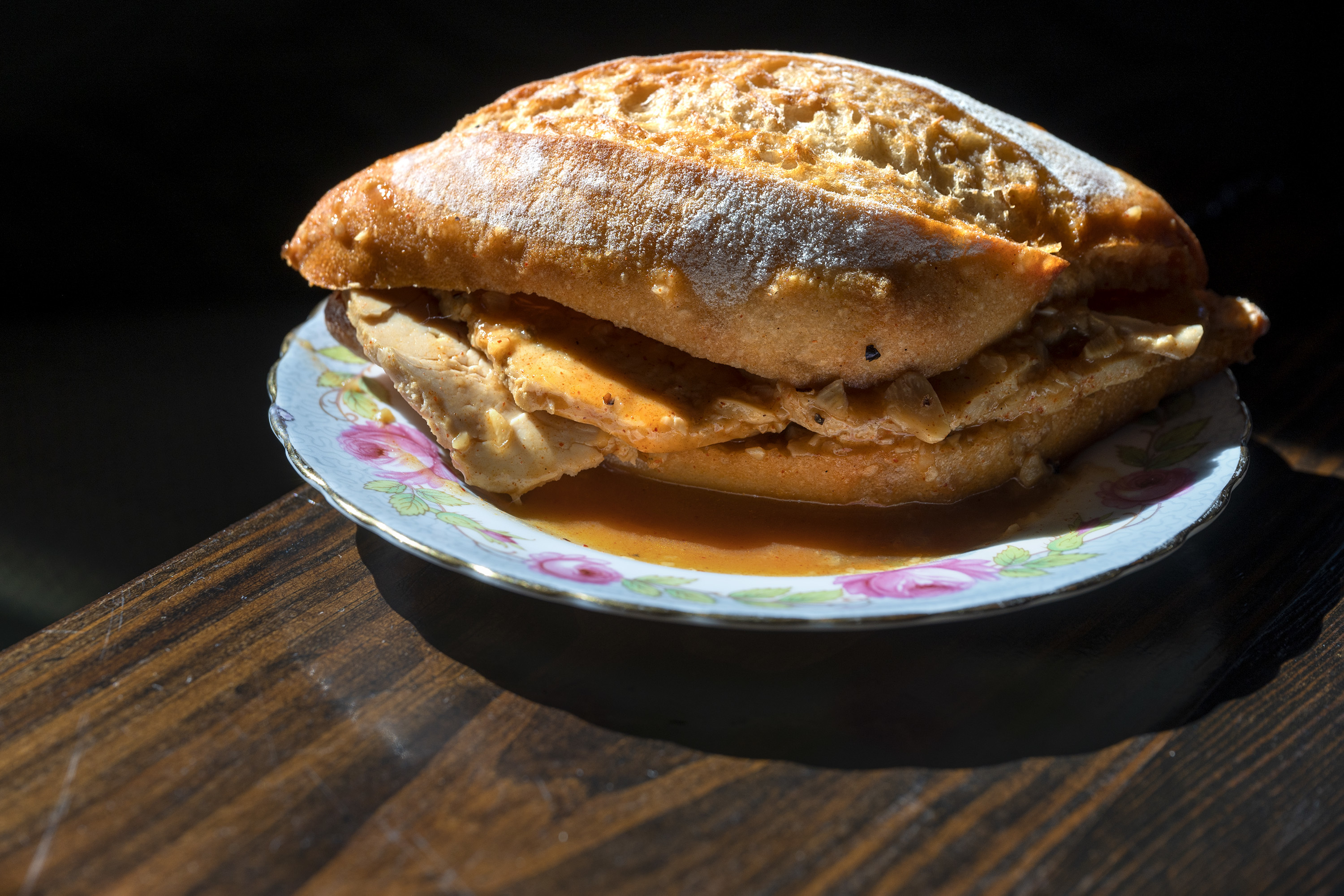
The Vermouth with Orange foam at BAR ilu on Thursday, Aug. 20, 2026, in Philadelphia.Tyger Williams / Staff PhotographerThe Bifana sandwich as served at Grace & Proper in Queen Village Wednesday, Mar. 8, 2023.Tom Gralish / Staff Photographer
Grace & Proper
If BAR ilu represents a modern interpretation of tapas culture in Philly, the vintage vibes at Grace & Proper’s Italian Market space reflect a different take on Iberian bar culture, this one influenced by the Portuguese roots of co-owner Chris Fetfatzes’ family.
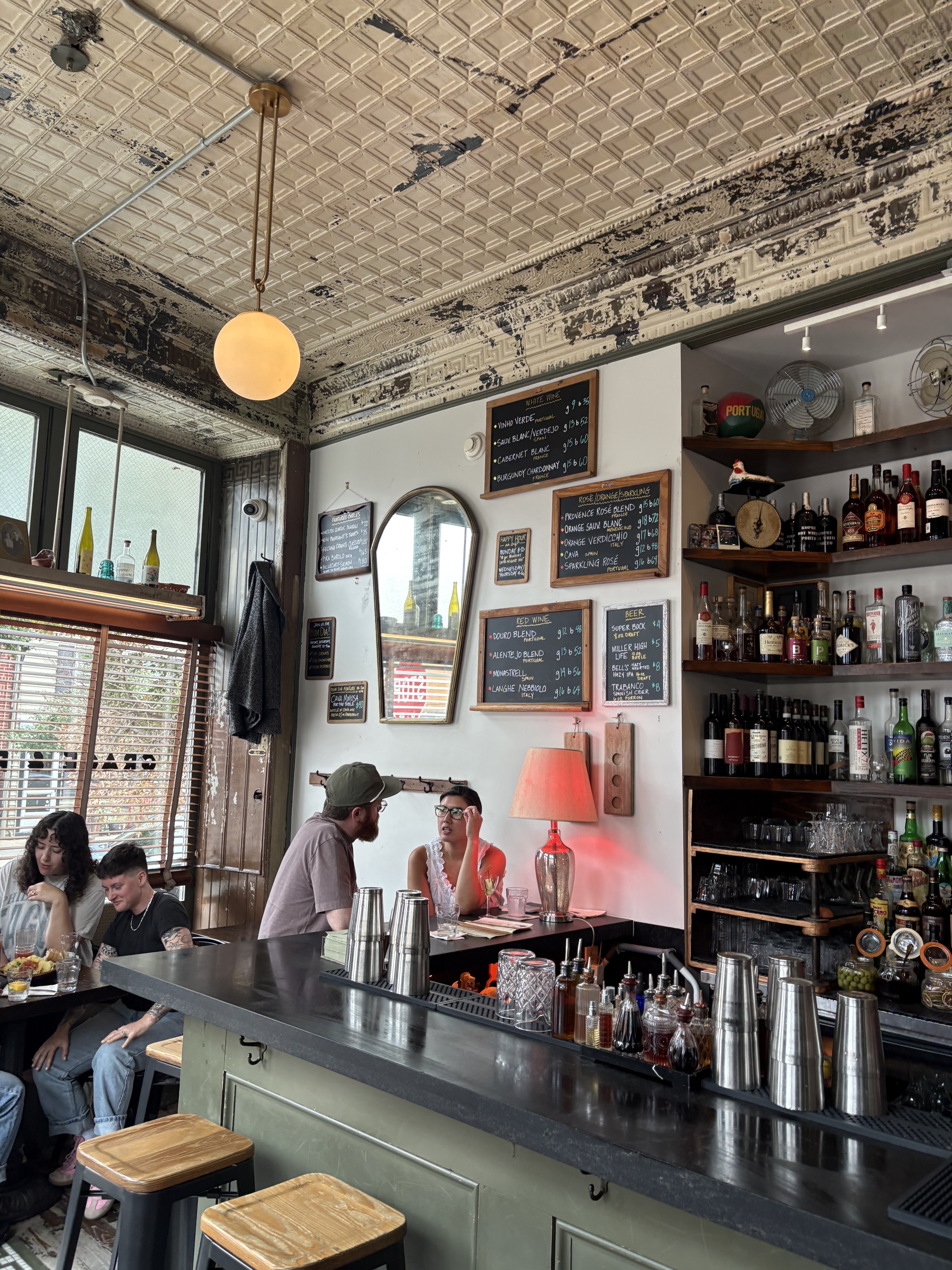
Fetfatzes, his wife, Heather Annechiarico, and their Happy Monday Hospitality partner Susan Freeman, who also own Wine Dive and Sonnys Cocktail Joint, leaned into the antique charm of the distressed tin ceiling, tiled floor, and exposed brick walls that wereuncovered during renovations of the old pharmacy (and Italian deli) that once occupied this corner space at Eighth and Carpenter. Fetfatzes was hoping to create the cocktail counterpart to Fountain Porter, the 14-year-old craft beer destination in East Passyunk known for its $7 burgers and pickles that, perhaps, helped mark the beginning of the minimalist-nibble bar.
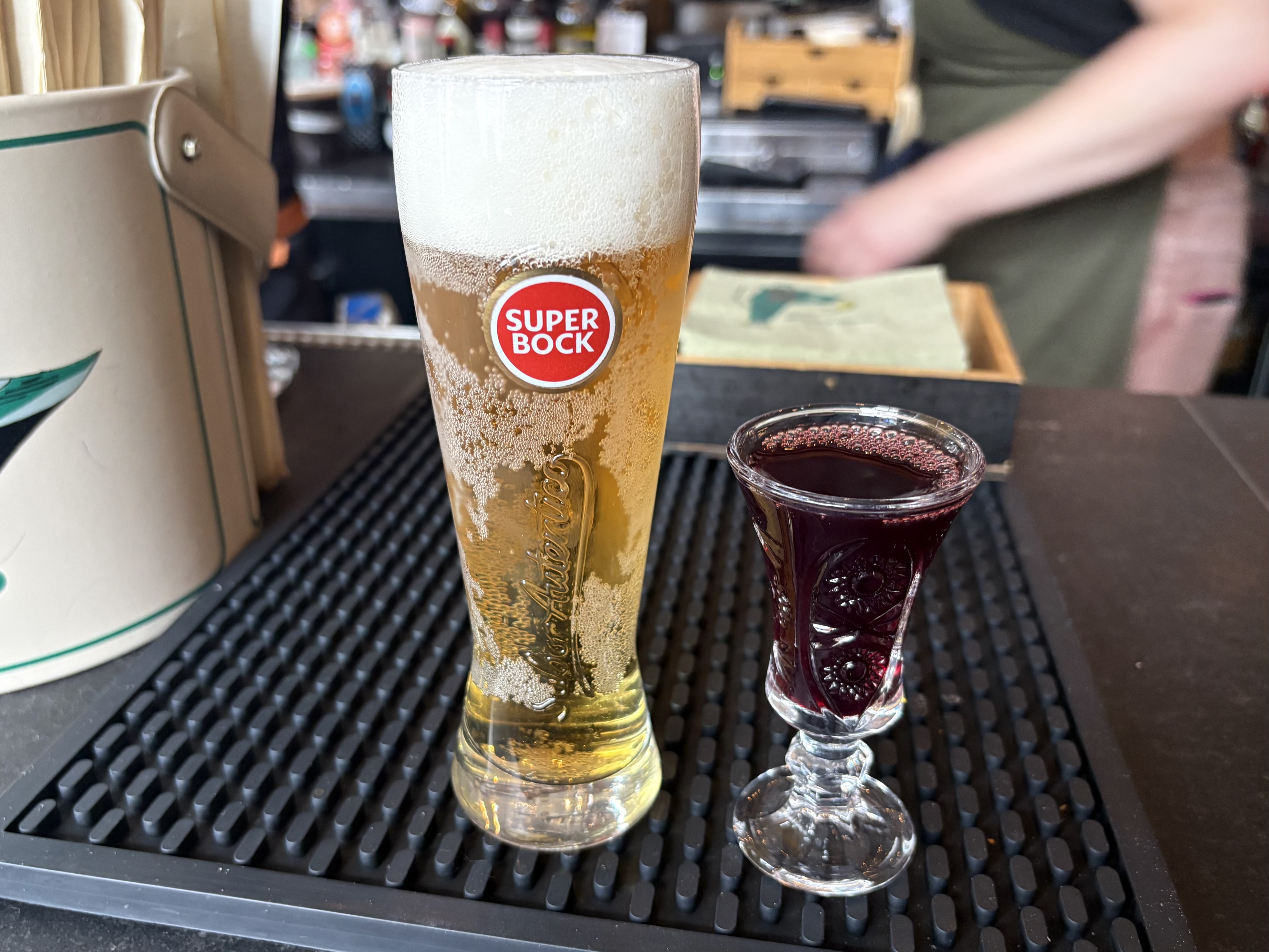
Given Grace & Proper’s compact space, with just 15 barstools and 26 table seats sidled into window banquettes (plus 30 more outside in fair weather), it’s amazing how its 200-bottle collection of amari, vermouths, ports, whiskeys, Madeiras, sherries, agave spirits, and indie Euro wines somehow fits into the tall shelves behind the bar. If you’re a fan of funky Asturian cider, there’s a proper porrón carafe to stream it directly into your mouth from an arm’s length away, ideally while watching Premier League or MLS soccer. Or try the Philly-Portugal Lisbon Wide hybrid, a draft of Super Bock Portuguese lager paired with a shot of ginjinha, a house-made cordial steeped from Morello sour cherries harvestedin Northeast Philadelphia.
The Lisbon Wide is Grace & Proper’s Portuguese twist on a Citywide, pairing Super Bock beer with housemade Ginjinha sour cherry liqueur.Craig LaBan / StaffThe Meat & Chips at Grace and Proper on Thursday, Aug. 3, 2023.Allie Ippolito / Staff Photographer
Grace & Proper doesn’t post a food menu online, but it’s substantial enough to anchor your table for a couple hours of snacking, from an irresistible pile of truffled potato chips feathered with spicy Calabrese salami to soulful onion soup infused with port and lardo, a crock of white bean stew with kale and breadcrumbs, piri piri-spiked Buffalo chicken dip, and sweet-tart-smoky bacon-wrapped prunes with black garlic aioli.
I didn’t care for the overly firm meatballs and their unbalanced blackberry romesco or, for that matter, the presentation of cheeses as crumbled nuggets. But these are all quibbles. Because there is really a single essential reason to visit Grace & Proper: the bifana, a classic sandwich of wine-marinated roast pork on a molete roll from Teixeira’s Bakery in Newark that comes perched over a paprika-orange pool of zesty gravy. Equal parts lemony, garlicky, winey, and scented with bay, that roasted pork essence is so good, the gravy is also offered as a chaser to the Piggy Backshot (oloroso sherry and Armagnac).
All you’ll need after that is a custardy sweet pastel de nata (also baked by Teixera’s, according to G&P’s recipe) and what might well be the best crema-topped shot of espresso at any bar in Philly. Grace & Proper is one of the precious few that actually adds fresh-pulled coffee to its espresso martinis, but I still prefer this coffee solo. I value the energy boost because, in these days of no-commitment sip-and-nibble bars, I’ve still got places to go.
The Pastéis de Nata at Grace and Proper on Thursday, Aug. 3, 2023.Allie Ippolito / Staff PhotographerVintage details of the former pharmacy and Italian deli have been preserved to add character to the bar at Grace & Proper.Craig LaBan / Staff
Menu available 4 to 11 p.m. Sunday, Tuesday through Thursday; 4 p.m. to midnight Friday and Saturday. Bar is open 4 p.m. to midnight Sunday, Tuesday, Wednesday; 4 p.m. to 1 a.m. Thursday through Saturday.
Plates, $4-$14.
Dining room is wheelchair accessible via a ramp off rear of building off Martha Street. Bathrooms are not accessible.
Not ideal for gluten-free diners, aside from some small snacks.
Menu highlights: croquetas (ham and bacalao); anchovy-stuffed olives; serrano ham and chips; tortilla Española; ham and melon; cheeseburger; gambas al ajillo.
Drinks: Cocktails built around sherry and vermouth are the most distinctive opening move, while straight fortified wines on draft, including La Gitana Manzanilla or Barquero vermut with orange foam, are also highlights. There are also 10 affordable Spanish wines by the glass.
Menu served 4 p.m. till midnight Monday, Wednesday, Thursday; noon to midnight Friday through Sunday. Bar is open till 1 a.m. on Friday and Saturday.
Plates, $7-$15.
Not wheelchair accessible.
About 40% of the menu is gluten-free or can be modified.
Menu highlights: bifana; bacon-wrapped plums; salami and truffled chips; Porto lardo onion soup; pasteis de nata.
Drinks: The vast 200-bottle collection is a sipper’s delight, from amari to fortified wines, extensive whiskies, and a surprising agave spirits collection. Don’t miss creative cocktails made with the company’s new house-distilled spirits, including a Chartreuse-inspired “Green Monk” or the ginjinha cordial, steeped from Northeast Philly sour cherries, served in the Lisbon Wide as a sidecar to a draft of Super Bock.
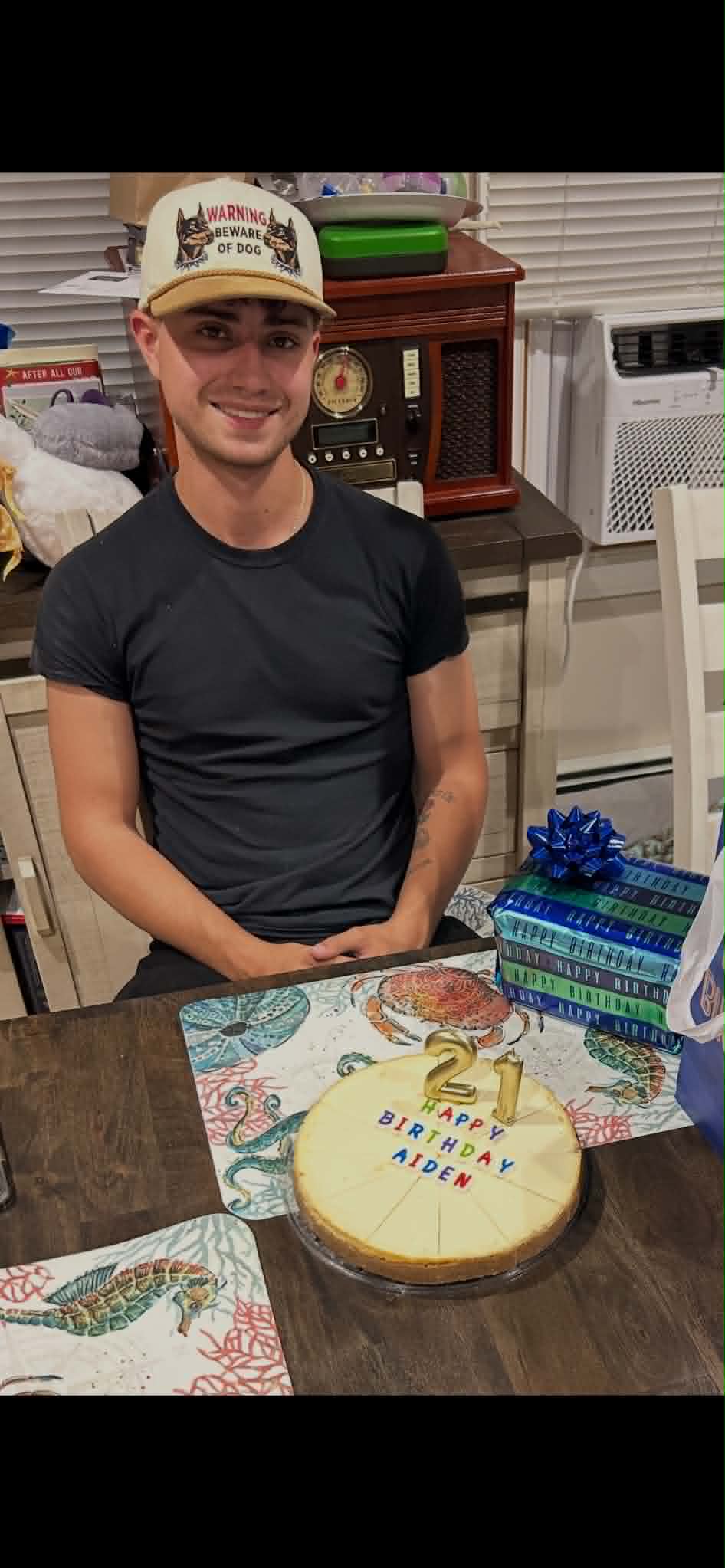
Aiden Zeallor was only trying to get home the night he was struck and killed by gunfire while driving on I-95 near Port Richmond last year.
Zeallor, 21, was a bystander, in the wrong place at the wrong time when at least 50 rounds were fired at a nearby vehicle in what investigators said was an attempted targeted killing of another person.
Now, nearly 18 months after the Levittown native’s death, police have arrested a man and woman they say are responsible.
Alondra M. Lopez, 28, and Joseph G. Toledo-Gonzalez, 27, face charges of murder, attempted murder, and related crimes in connection with the 2025 shooting.
Lopez is being held in the Philadelphia Industrial Correctional Center and Toledo-Gonzalez is being held in the Curran-Fromhold Correctional Facility. Both were denied bail.
Zeallor’s mother, Denise Donahue, said the arrests have given her some semblance of closure, even if no development in the case will bring back her son.
“He was a loving boy that should still be here,” Donahue said. “His life was stolen from him.”
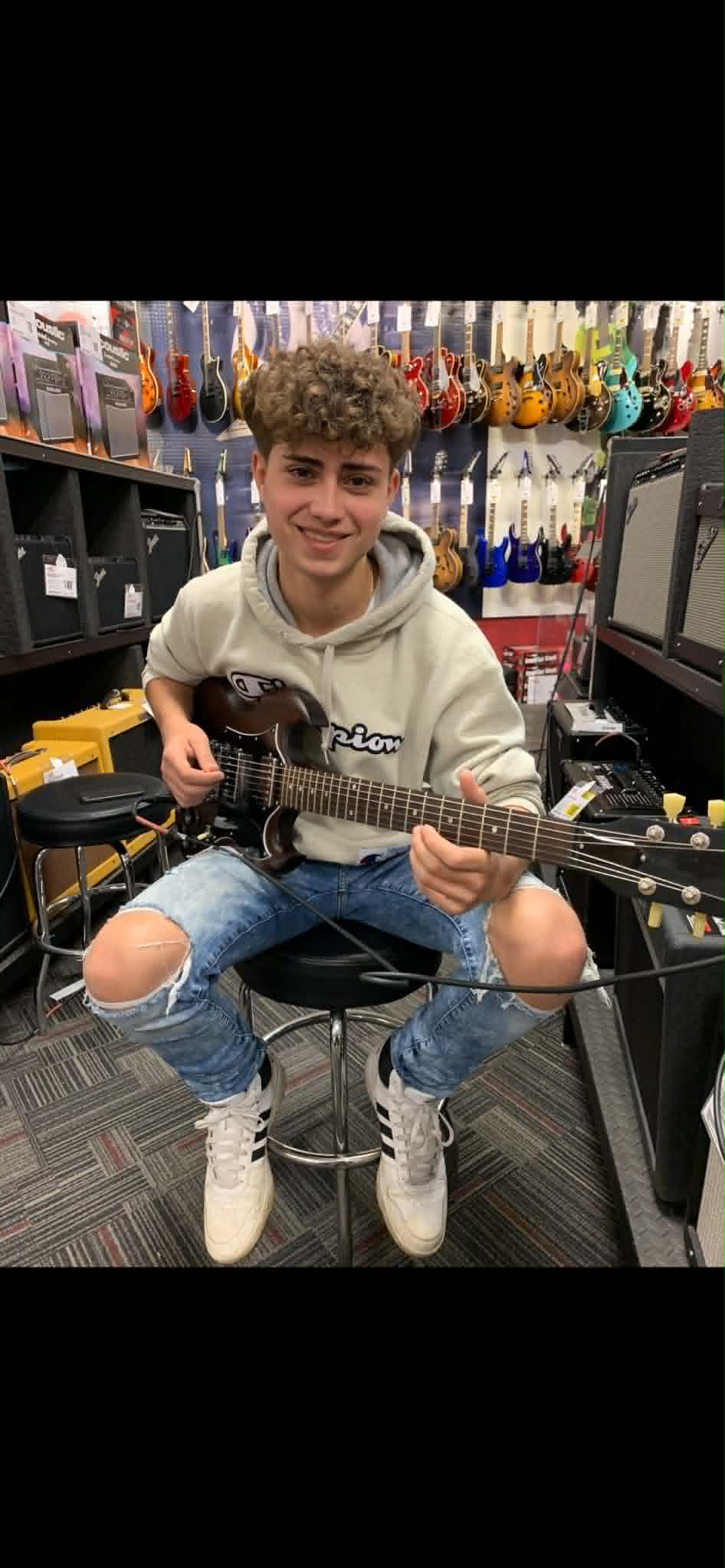
The curly-haired young man was an avid fisherman and outdoor enthusiast who worked as a technician for his family’s HVAC company and was always surrounded by friends, Donahue said.
He was also devoted to his family, she said. Not long before Zeallor’s death, he had moved into his grandmother’s house in Northeast Philadelphia to take care of her and so she did not have to live alone.
Donahue, meanwhile, continues to grieve the loss of her son. She had already experienced the death of Zeallor’s father, in 2009.
Her life was again forever altered the evening of March 29, 2025, when she learned her son had been shot in the head and torso and was put on life support.
A photo of Aiden Zeallor.Denise Donahue
She rushed to the hospital from her home in Wildwood. Zeallor was declared brain-dead and died later that morning.
Donahue said her son had been out dancing with a friend that evening at a nightclub in Philadelphia.
The two were heading back to Zeallor’s grandmother’s house and were in the northbound lane of I-95 around 2:30 a.m. in Zeallor’s Ford Mustang when bullets fired from a semiautomatic rifle riddled a nearby Acura, the intended target of the shooting.
Two stray bullets pierced Zeallor’s windshield as he drove, striking his right eye and under his right arm.
The driver of the Acura was shot in the leg and was treated at a nearby hospital.
Court documents offered few details about Lopez and Toledo-Gonzalez’s role in the shooting and do not describe the motive.
A spokesperson for the Pennsylvania State Police, which is handling the investigation, did not immediately return a request for comment.
A preliminary hearing for both defendants is scheduled for Sept. 14 in Municipal Court.
Donahue said she and relatives plan to attend every court proceeding as they seek justice for Zeallor.
They are also urging lawmakers to pass “Aiden’s Law,” which would require the installation of surveillance cameras on certain Pennsylvania highways to help investigators identify suspects in violent crimes.
Meanwhile, the family is comforted knowing that Zeallor helped save four lives through organ donation.
“We changed other people’s lives that day,” Donahue said. “That makes me proud, as Aiden’s mom.”
Maleka Evans waited outside Octapharma Plasma in South Jersey at 8:30 on a recent sweltering morning, sweat beading on her face. A dozen other prospective donors had arrived before her, and the line was still growing a half hour before doors opened.
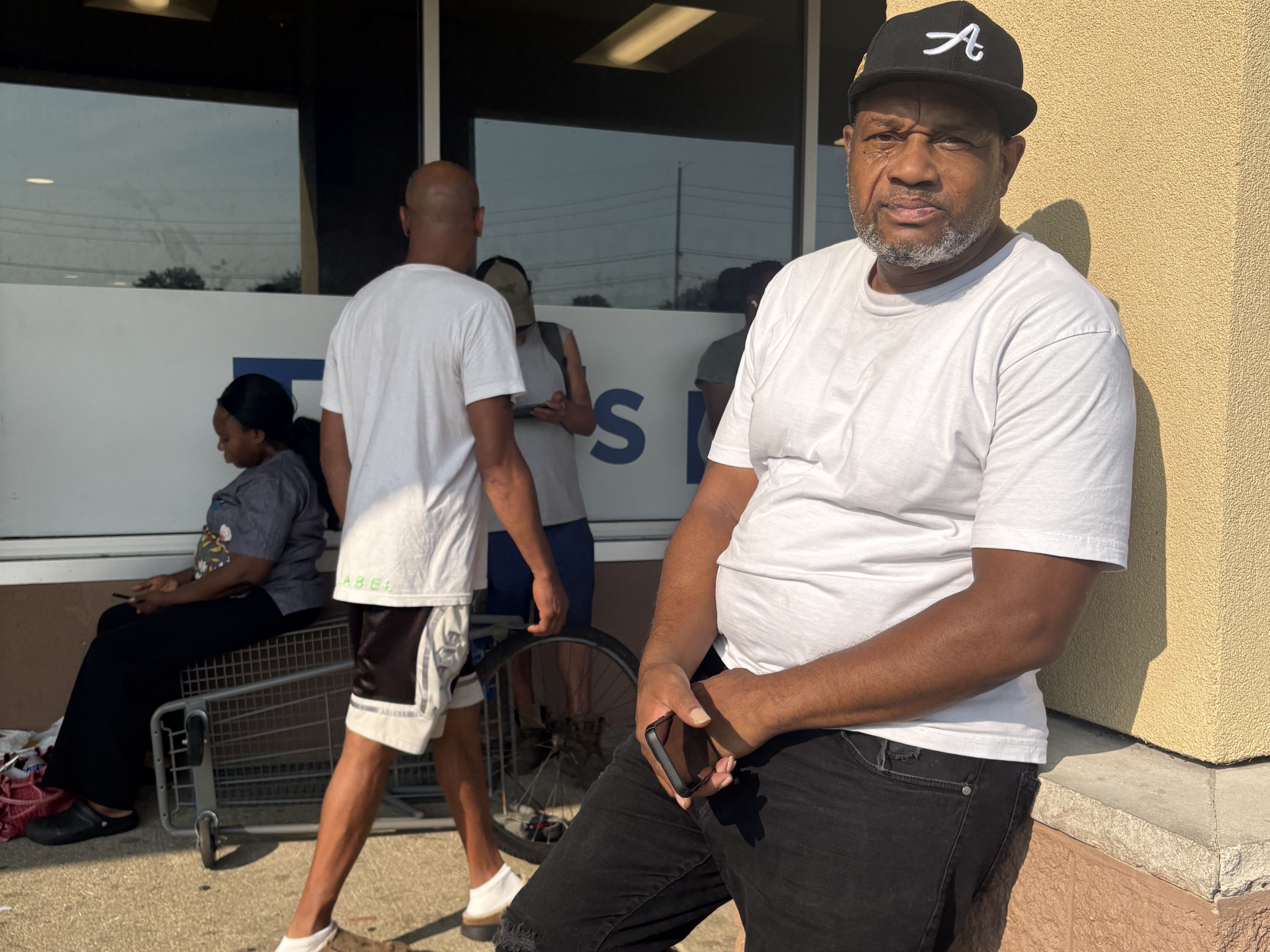
One woman sat on an overturned shopping cart pilfered from the nearby Walmart. Another brought her own folding chair. A man held a bicycle tire, removed to protect his bike from being stolen once he was inside and hooked up to a machine that extracts antibody-rich blood plasma needed for medical treatments.
Every Monday and Friday for the last three years, Evans has trekked to the Audubon strip mall for what she considers her second job. She takes a 45-minute bus ride from her Willingboro home to Camden, then walks another 45 minutes to the donation site with a slogan posted in its window: “When it pays to give hope. That’s plasmagic.”
The 37-year-old single mom has noticed the lines growing in the last year, as others are seeing at donation sites elsewhere in the Philadelphia region and across the nation. The for-profit business is booming as more and more Americans, both poor and middle class, struggle to straddle the gap between stagnant wages and increased living costs.
Evans relies on the $50 that she typically earns for each plasma donation — loaded onto a prepaid debit card — to help with bills that she cannot cover with her $18-per-hour job packing boxes at a warehouse.
“Prices for everything — food, rent, transportation, electricity — are just getting higher and higher,” Evans said. “You have to work two jobs to make ends meet, and you’re still living paycheck to paycheck.”
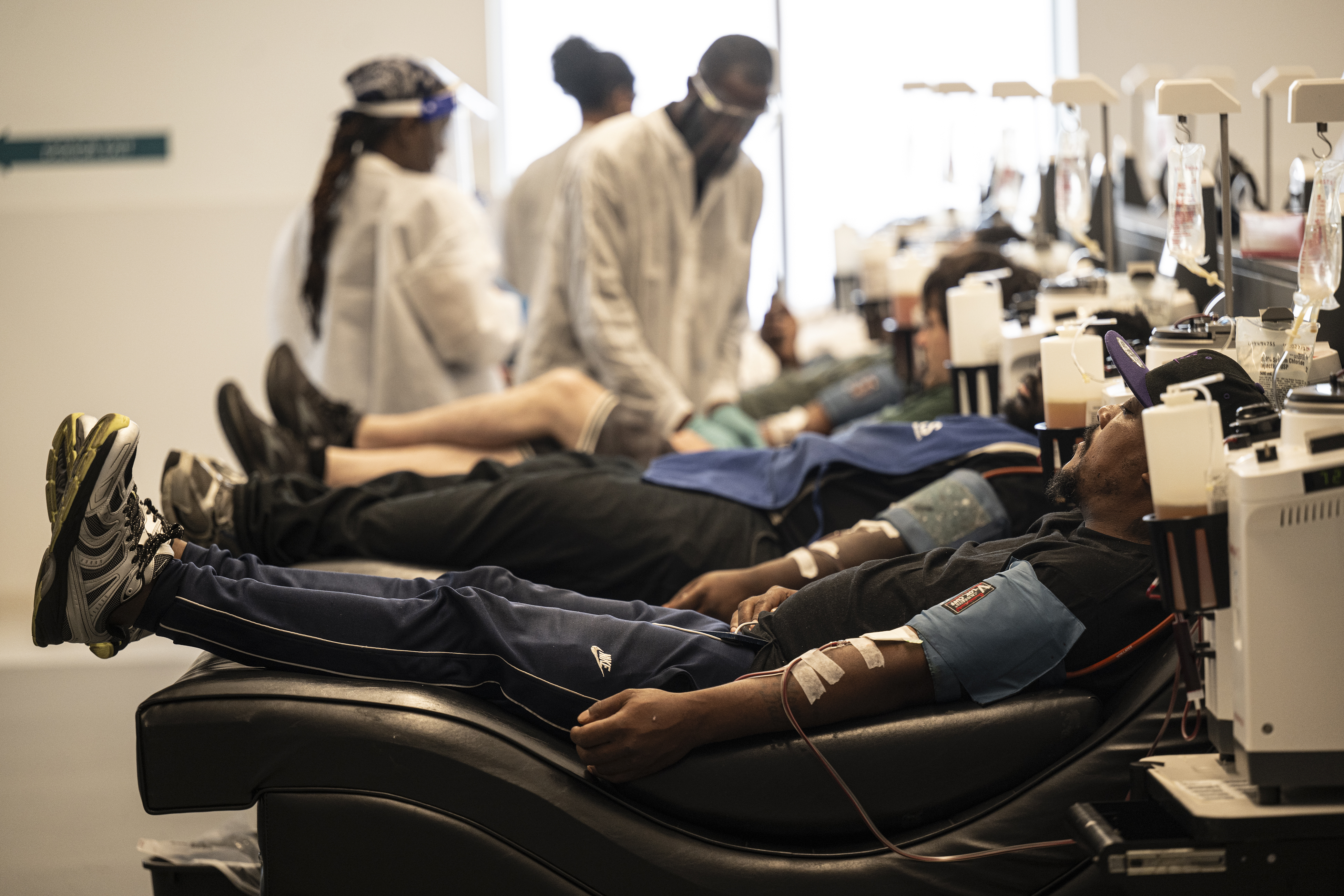
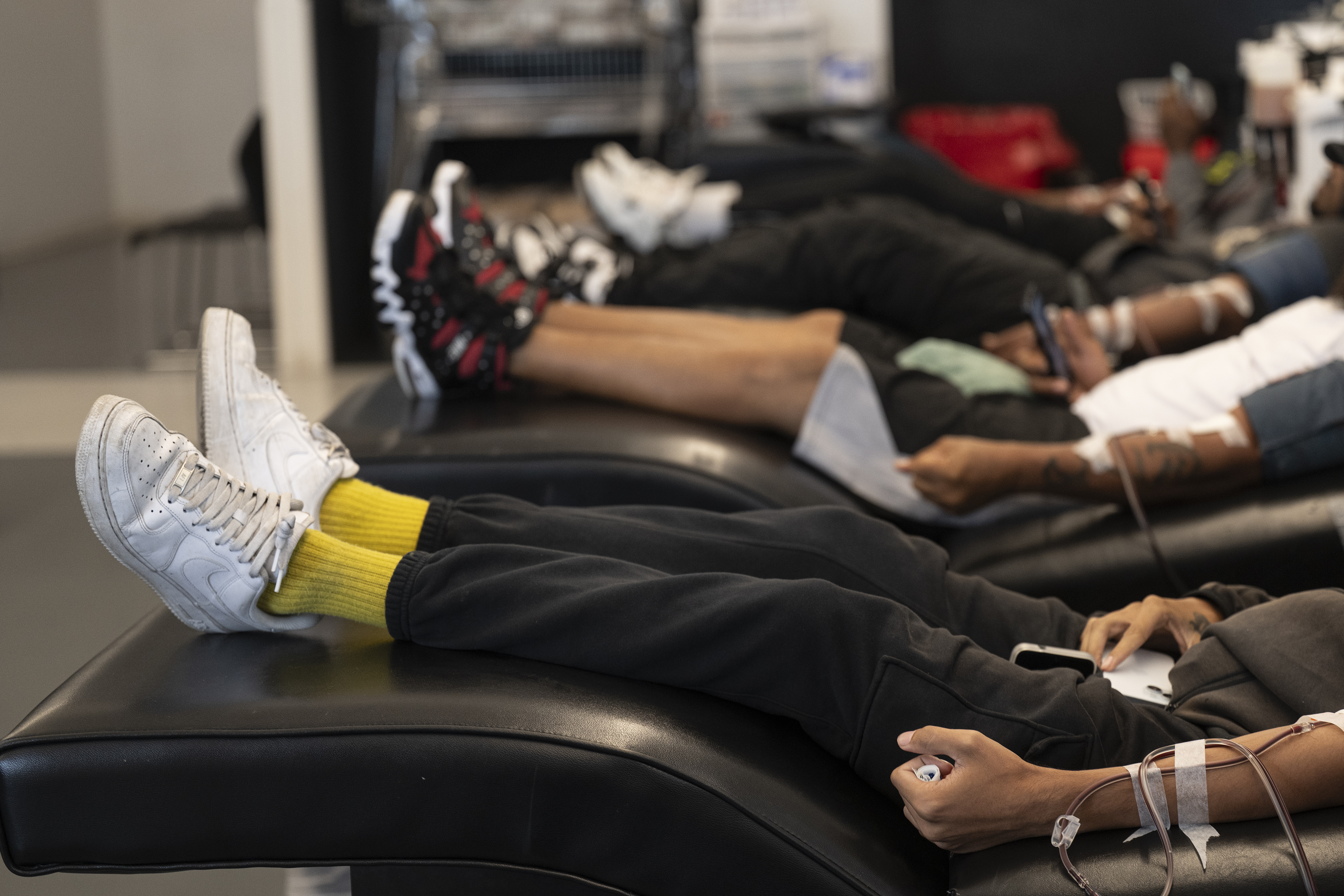
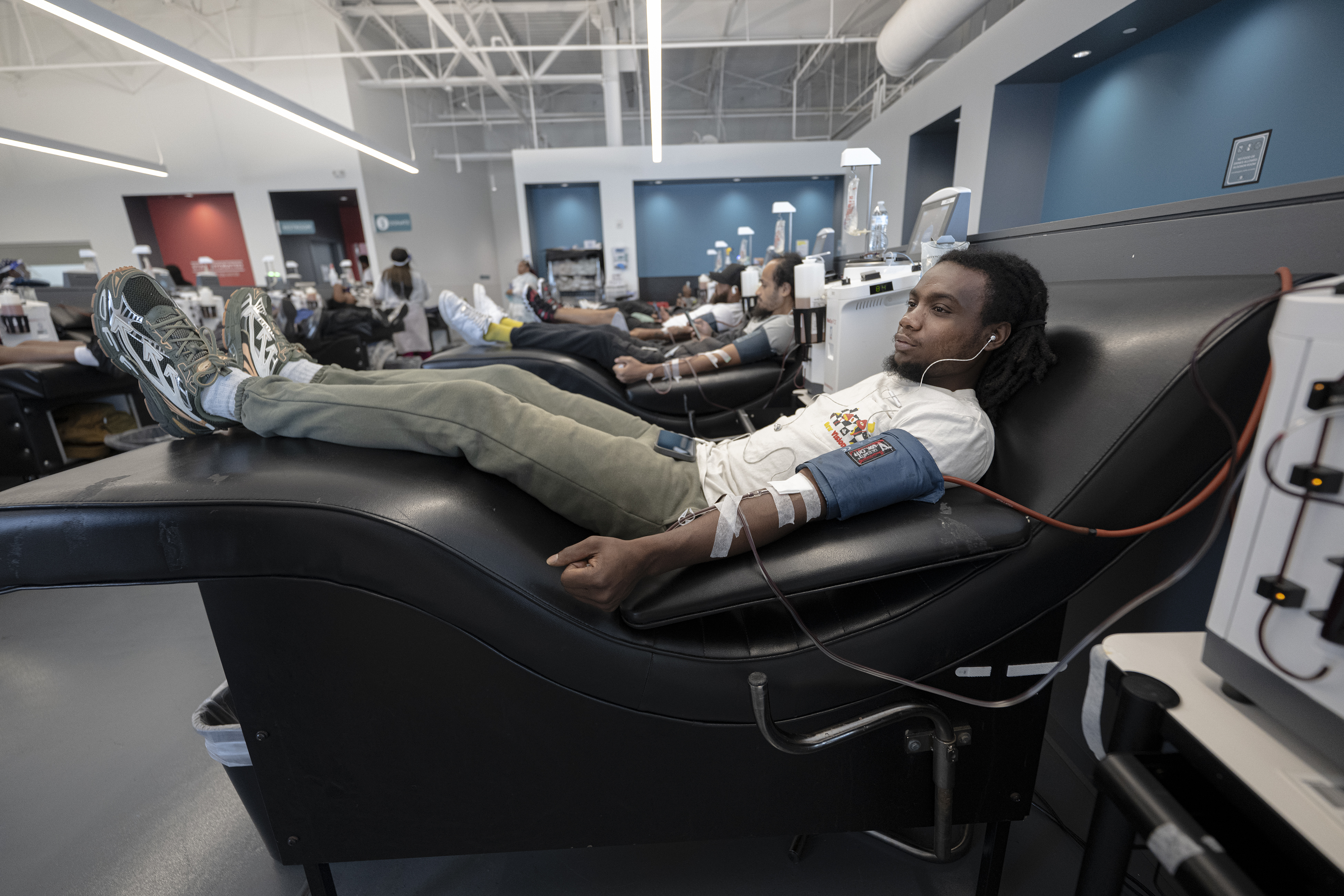
An increasing number of people in the Philadelphia region are selling their blood plasma for money. Here, local donors sit in recliners with needles in their arms at B Positive Plasma in Montgomery County.Jose F. Moreno / Staff Photographer
The U.S is one of about a dozen countries where it is legal to pay donors for plasma. It is among only three countries where people are allowed to donate two times over seven days, though not on back-to-back days, per U.S. Food and Drug Administration regulations.
Nearly 70% of the world’s plasma comes from donors in America, fueling a multibillion-dollar global industry. Plasma, a straw-colored liquid in blood, contains antibodies and other proteins used for treating a wide range of patients with immunodeficiencies, neurological conditions, kidney disease, and bleeding disorders.
Last year, U.S. donors produced 62.5 million liters of plasma — the highest volume ever collected and an 8% increase from the previous year. That trajectory has continued into this year, according to Georgetown University professor Peter Jaworski.
“When the price of most staples goes up, so does the amount of plasma donations,” Jaworski said. “If I fell on hard times, the very first thing I would do is become a regular plasma donor.”
Donating plasma is widely considered low-risk, with millions of people doing it each year without reported health problems. However, the long-term health effects of donating twice weekly for years have not been well-studied. Safety concerns raised by the deaths of two people in Canada who had recently donated at for-profit clinics run by the healthcare company Grifols haveprompted an investigation there.
In the U.S., an FDA investigation into 34 deaths of people who had donated plasma between 2016 and 2020 did not find a link between donations and fatalities.
Some donors experience lightheadedness, fatigue, bruising, bleeding, or dehydration. Drinking water and eating foods high in iron and protein can help alleviate those side effects, according to U.S. health guidance.
Security guard Danny Morales of North Philadelphia said he feels “tired” after donating. But that has not deterred him from heading to CSL Plasma in the city’s Olney neighborhood twice a week, as soon as he finishes his overnight shift at 6 a.m.
Morales can earn $520 a month donating plasma, which helps to offset rising expenses that have the 35-year-old father feeling ever more drained: The cost to fill up his Honda Civic’s gas tank jumped from $30 to $80 in the last year; a package of ground beef increased by $8; and even the brand of mac and cheese that his 8-year-old daughter and 2-year-old son enjoy costs about $1 more, he said.
“It’s just getting worse and worse,” said Morales, whose plasma donations supplement his $18 hourly security job wage. “Stuff is just getting so expensive. Groceries are ridiculous.”
CSL opens at 6 a.m., but a line starts to form around 4:30 a.m. In late July, it snaked past the building, wrapping around the corner. The sight caught the attention of nearby Olney resident Tony Reed.
“There’s always a line there, especially toward the end of the month and definitely on Monday mornings,” Reed said. “People are broke.”
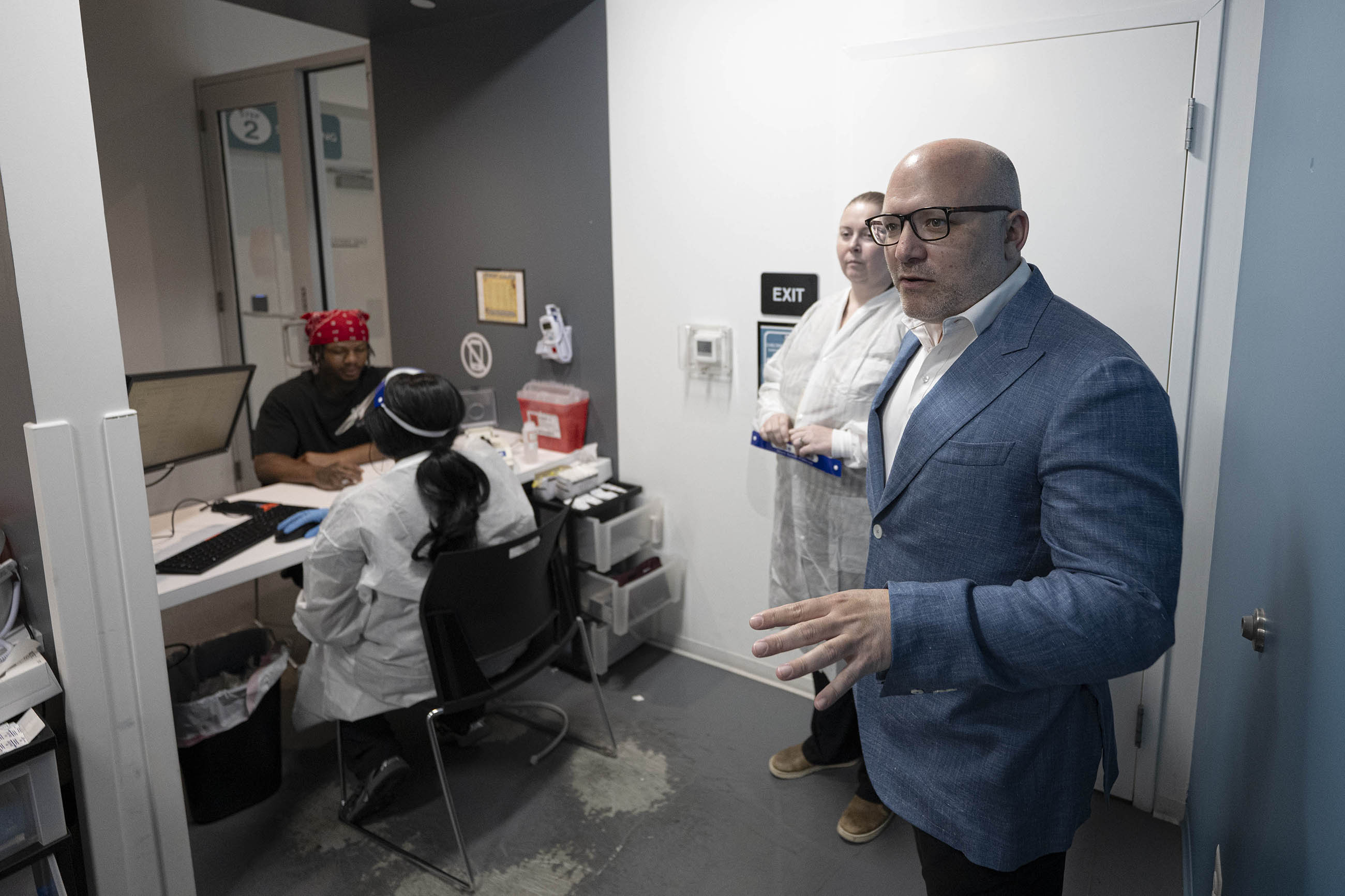
Ben Ruder, CEO and founder of B Positive Plasma, and Pearl Dixon, an assistant manager and phlebotomist, explain the donor intake process. Each donor fills out an extensive health questionnaire, undergoes a medical exam, and gets a finger prick to test their blood for iron and protein levels. Jose F. Moreno / Staff Photographer
Inside the booming industry
On a recent Wednesday afternoon at B Positive Plasma in Montgomery County, a steady stream of donors checked in at kiosks in the lobby.
After filling out an extensive health history questionnaire, each new donor undergoes an on-site medical exam by a licensed practical nurse. Repeat donors must get annual exams. At each visit, a medical tech checks their vitals, including blood pressure, pulse, and temperature, and performs a finger prick to test their blood for protein and iron levels. Donors must weigh at least 110 pounds.
“We make sure they’re healthy and well,” said Ben Ruder, founder and CEO of B Positive Plasma, noting that the plasma itself is tested for HIV and hepatitis B and C before being sold.
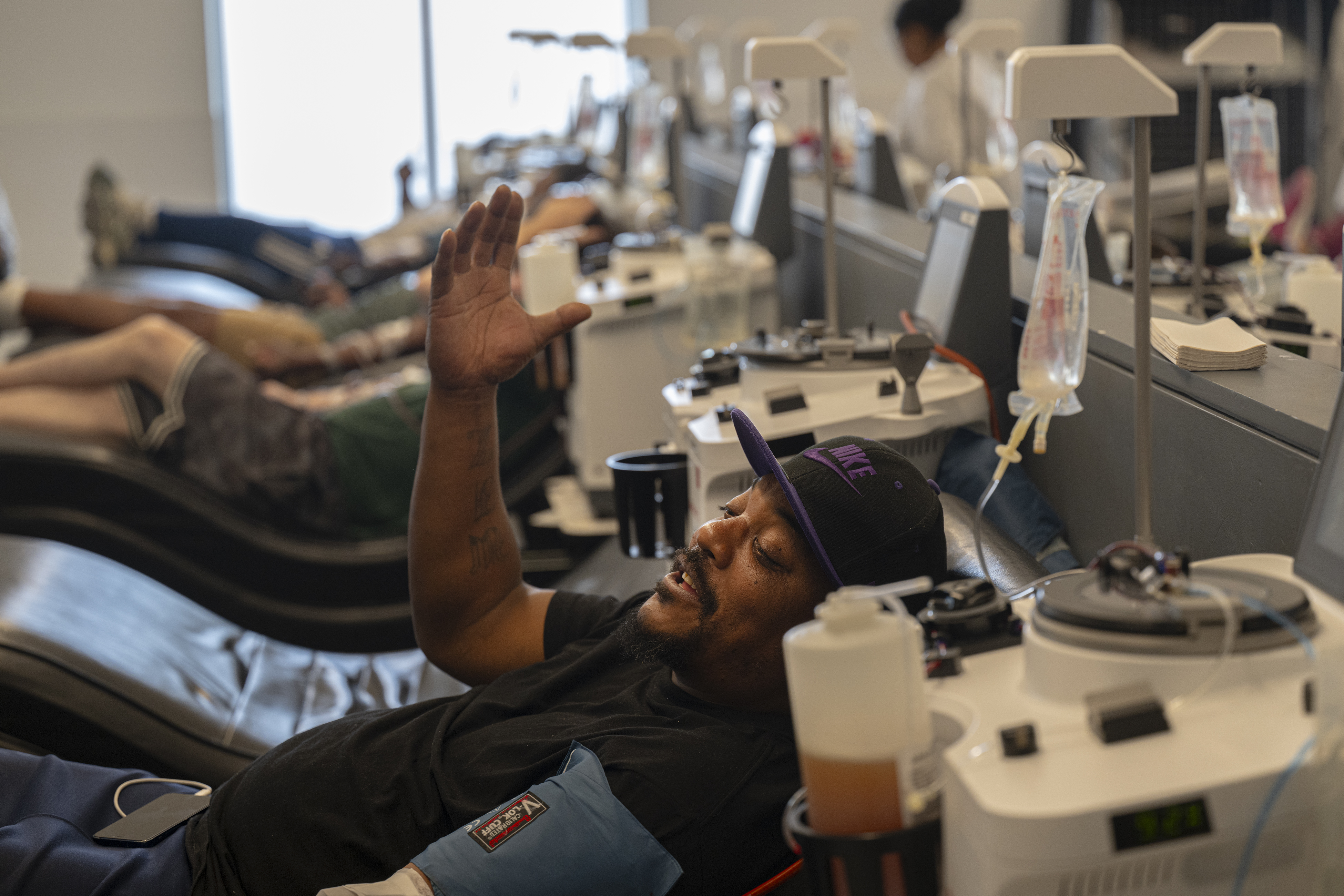
Next, plasma donors are hooked up to a machine that draws out blood, spins off the plasma, and then returns the red blood cells back to the donor, a process that typically takes 45 minutes to an hour.
At 2 p.m., 18 of the 24 cushioned recliners at the Wyncote location on Cheltenham Avenue were occupied by donors, each with a needle in one arm. They included a Philadelphia police officer who had donated more than two dozen times since May 2025; a casino cleaner who earns $120 a week donating to support his young daughter; and a home health aide who donates twice a week to help cover his $750 monthly apartment rent.
Jason Johnson, 29, of East Mount Airy, has donated plasma 68 times at B Positive Plasma in the past two years. He makes an extra $120 a week donating twice weekly. The money helps supplement the $17.80 an hour he earns as a cleaner at Live! Casino & Hotel Philadelphia. “In the beginning, I was doing it for the extra money, but once I learned that I’m helping people out in their life, it made me want to come back even more,” Johnson said. Jose F. Moreno / Staff Photographer
Plasma donation differs from whole blood donation, a faster process that relies on unpaid volunteers who can donate only once every 56 days in the U.S.
B Positive Plasma is on track to see a record year, with 180,000 donations, peaking this holiday season, when people need extra money for gifts. Last year, the company saw 150,000 donations at about 1 liter per person.
Ruder, 42, who lives in Center City, opened his first plasma donation center in Cherry Hill in 2012 and rapidly expanded to 12 locations in New Jersey, Pennsylvania, and Delaware. He plans to open two more sites in Maryland next year and another in Allentown later this year.
B Positive Plasma, like other plasma companies, structures payments to incentivize twice-weekly donors. For instance, donors whose weight and physical health yield the maximum amount of plasma — 1,001 to 1,200 milliliters — will receive $45 for the first visit and another $90 if they return that same week. Plus, the company offered a $50 bonus for anyone who donated eight times in August.
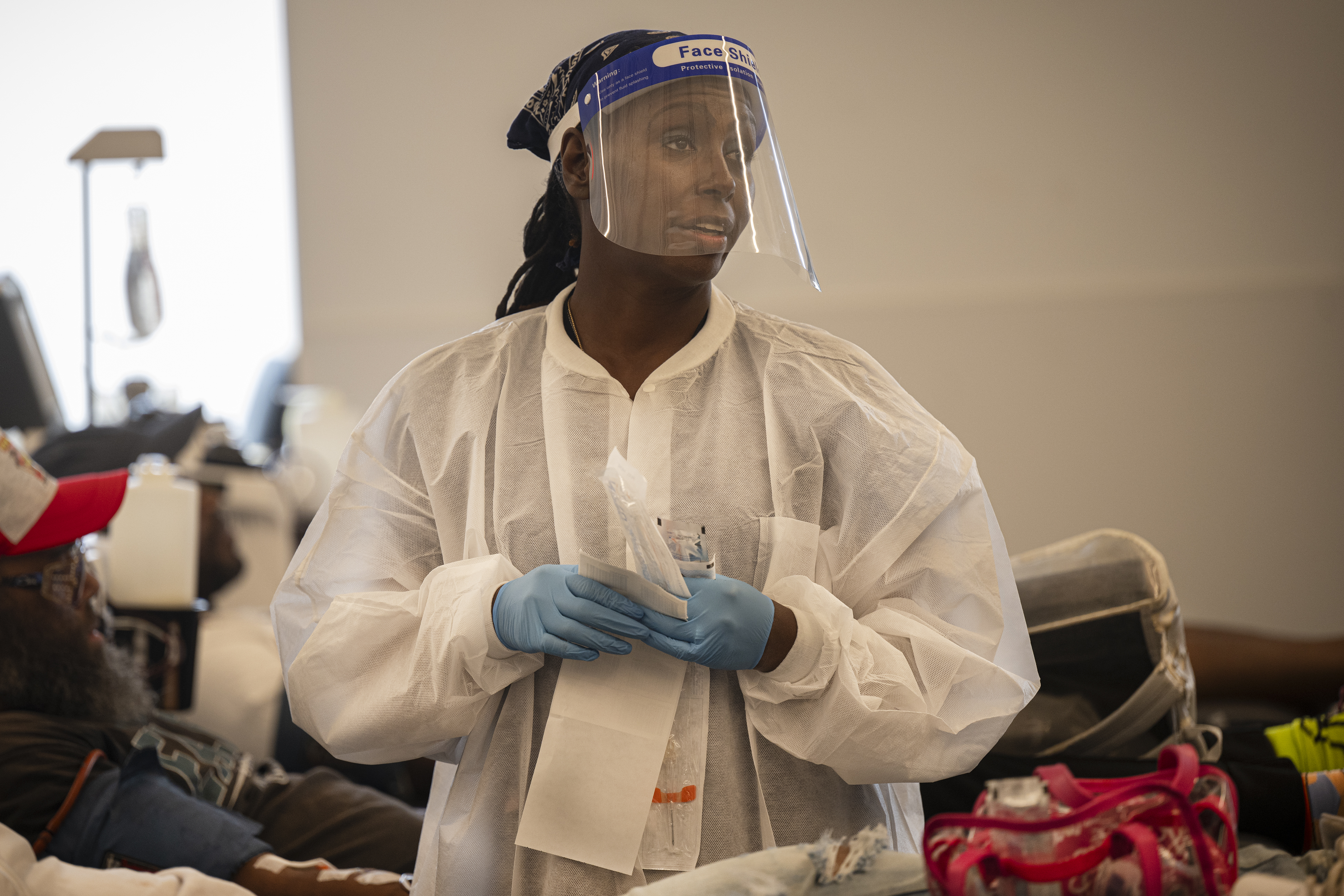
Donyele Wilkins, 48, a phlebotomist and medical assistant, works in the donation room at the B Positive Plasma in Montgomery County. She suffers from lupus, a chronic autoimmune disease for which she receives plasma-derived infusions to control her symptoms.Jose F. Moreno / Staff Photographer
Phlebotomist Donyele Wilkins works 12-hour shifts, four days a week, at B Positive Plasma.
For Wilkins, the paycheck is not the only benefit of working there.
The 48-year-old Northeast Philadelphia resident suffers from lupus, an autoimmune disease in which the body’s immune system attacks its own tissues and organs. Wilkins said she relies on plasma-derived medication, infused through an IV every four to five months, to help control symptoms like inflammation and joint pain.
Knowing how plasma is processed makes her feel “safe,” she said. She also likes getting to know “the regulars” who donate.
“It makes me feel like I know exactly where it’s coming from, and I know the people who are doing it,” Wilkins said. “A lot of them really need the money, so they’re helping me, on top of me helping them.”
‘Blood money’
Paying donors for plasma has sparked ethical debate, with some accusing the industry of exploiting poor people.
In her 2023 book, Blood Money: The Story of Life, Death, and Profit Inside America’s Blood Industry, Kathleen McLaughlin, a Montana-based journalist, found that donors in many U.S. regions are disproportionately Black and brown people.
McLaughlin, who has a rare autoimmune disease treated withmonthly plasma-derived infusions, said today’s rise in donations is “a symptom of our broken economic system.”
While the FDA regulates health safety at plasma centers, the pay rate is set by the companies, McLaughlin found. She thinks donors should be paid more and the amount should be standardized.
“Right now, it’s a capitalist free-market system, where the pricing isn’t transparent,” McLaughlin said. “The profit margins are crazy for these plasma companies, and it’s gamified to make you donate twice a week, every week, in perpetuity.”
Jaworski, the Georgetown University professor, said donors are compensated fairly. A donor whosits for an hour and a half makes “significantly more than” New Jersey’s $15.92 minimum hourly wage and Pennsylvania’s $7.25. Plus, he stressed, donors save “hundreds of thousands of lives.”
Wallace Smith, 45, of Upper Darby, prides himself on making an honest living. He earns $15 an hour as a home health aide. He makes an extra $130 a week selling his blood plasma. The money helps cover cigarettes, rent, and his phone bill. Jose F. Moreno / Staff Photographer
Recently published research suggests that communities can benefit when a new plasma center opens, because fewer young people take out high-interest payday loans and area crime drops, mostly driven by decreases in property and drug-related offenses.
“It helps you from having to do something wrong,” plasma donor Wallace Smith said.
When Smith was in his late 20s, he got arrested for selling drugs. Now 45, he is still struggling to find a job that pays a living wage, he said.
Smith, of Upper Darby, works three days a week, earning $15 an hour, as a home health aide. He earns $130 a week donating plasma, which helps pay for cigarettes, his phone bill, and rent, he said.
Like many donors, Smith said he likes the win-win of earning extra cash and helping patients who depend on plasma.
“They say there’s a job’s out here for everybody, but when you become a person who made mistakes in life, then they look at your background, so there’s only certain jobs you can do,” Smith said as his blood flowed into a spaghetti-thin clear tube at B Positive Plasma.
“With that being said, you don’t go back to your old ways,” he said. “You find better resources like this.”
On a hot August morning, donors line up outside Octapharma Plasma in South Jersey to sell their blood plasma for money. They arrive before the doors open at 9 a.m. to beat the wait. Donor Carl Davis, 56, of Camden, donates every Saturday and Monday, earning $70 each time. The extra money helps supplement his $900 monthly Social Security Income disability check. “I get SSI disability, but it’s not enough at all to pay my bills and buy food,” Davis said.Wendy Ruderman
Beach boardwalk fun
At Octapharma Plasma in South Jersey, the wait time can be as long as three hours, donors said. When a sewer pump broke and bathrooms stopped working earlier this year, the company trucked in a row of porta-potties to accommodate donors and staff.
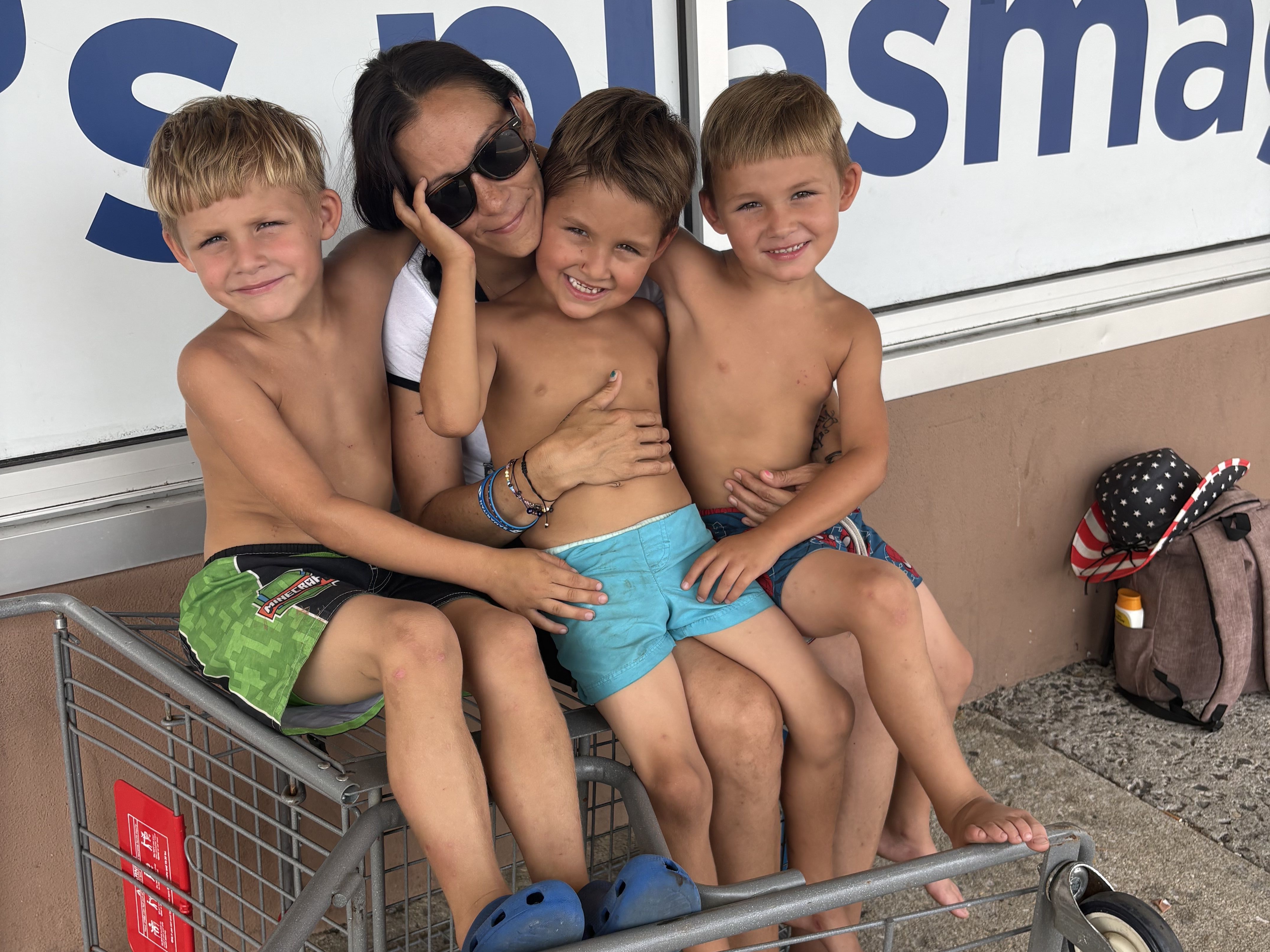
On a recent August morning, Brittany Barr, 36, and her three sons — 5-year-old twins and a 6-year-old — waited outside Octapharma as her husband donated. The family had walked roughly two miles from their Gloucester City home.
When Barr learned her friend had kidney failure and needed plasma infusions, she wanted to help. Barr was unable to donate plasma because she is anemic, so her husband agreed to do it.
In the month since Barr’s husband started donating, the family has earned more than $500. It has helped with groceries and their phone bills to supplement her husband’s income as a shipping manager.
“With only one income, money is tight these days,” Barr said. “Everything is messed up.”
The boys, clad in their bathing suits, climbed up on Barr as she sat on a tipped-over shopping cart. They were headed next to Atlantic City for a beach day.
“This week, the money is going toward fun. They’re going to play arcades and have ice cream or whatever their little hearts desire,” Barr said. “Next week, it’s going to school supplies.”
Brittany Barr, 36, seated with her boys (from left) Cooper, Cannon, and Colton, waits outside for her husband to finish donating plasma at Octapharma Plasma in Audubon, N.J. The family from Gloucester City was next headed down the Shore, where they planned to spend the extra money earned from donating plasma on arcade games and ice cream.Wendy Ruderman / Staff
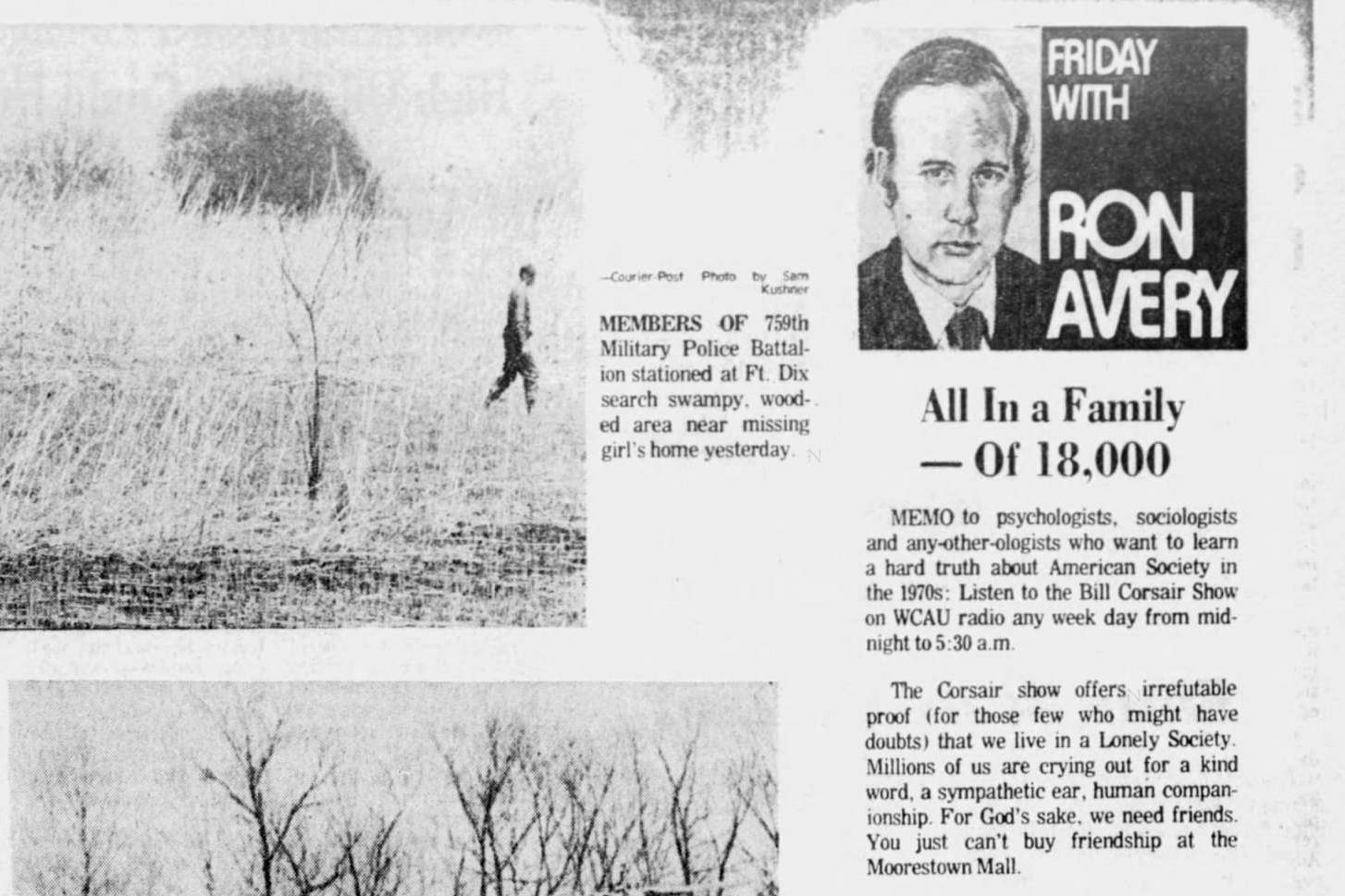
Ron Avery, 85, of Philadelphia, retired eclectic reporter and columnist for the Daily News, Philadelphia historian, volunteer city tour guide, author, high school history teacher, veteran, and canoe enthusiast, died Sunday, Aug. 2, of complications from amyotrophic lateral sclerosis at his home in East Falls.
Reared in Fairmount, Mr. Avery graduated from Thomas Edison High School and earned a bachelor’s degree in history at Pennsylvania State University. He was assigned to the ship newspaper in the Navy after college, found a creative niche in journalism, and went on to work for more than 30 years at the Associated Press, the Bucks County Courier Times, the Courier-Post in South Jersey, and the Daily News.
He wrote for the Daily News as a correspondent in 1981, joined the staff in 1982, and, until his retirement in 2000, wrote thousands of stories about crime, casinos, war orphans, historic houses, the MOVE bombing, local notables, and other subjects. His columns, “Poor Ronald’s Almanac” and “One of Us,” hammered away at local issues and featured everyday people doing exceptional things.
“He covered every nook and cranny of the city,” said his son Serge. “That burning curiosity sustained him till his last days.”
He wrote three books about Philadelphia, including A Concise History of Philadelphia in 1999. He produced a series of video guides he called the Urban Explorer for local TV in 2004 and posted blogs about the city from 2017 to 2019 on a website called Philadelphia Cracks Me Up.
“Like all cities,” he said in a 1995 Daily News column, “Philadelphia is honeycombed with hidden spaces and forgotten places.” In a 1997 review of his book, City of Brotherly Mayhem: Philadelphia Crimes and Criminals, The Inquirer’s Thomas Brady said: “The book … is decidedly a fun read.”
Alex Strang, his director on the Urban Explorer videos, called Mr. Avery an “unforgettable legend” and “a walking encyclopedia of the city’s history and eccentricities” in a Facebook tribute. Other former colleagues said he was “a clever journalist” and “a true Philadelphian.”
Longtime Daily News colleague Robin Palley said on Facebook: “He had an amazing knack of finding quirky people with fascinating skills or habits and making them come to life on our pages.”
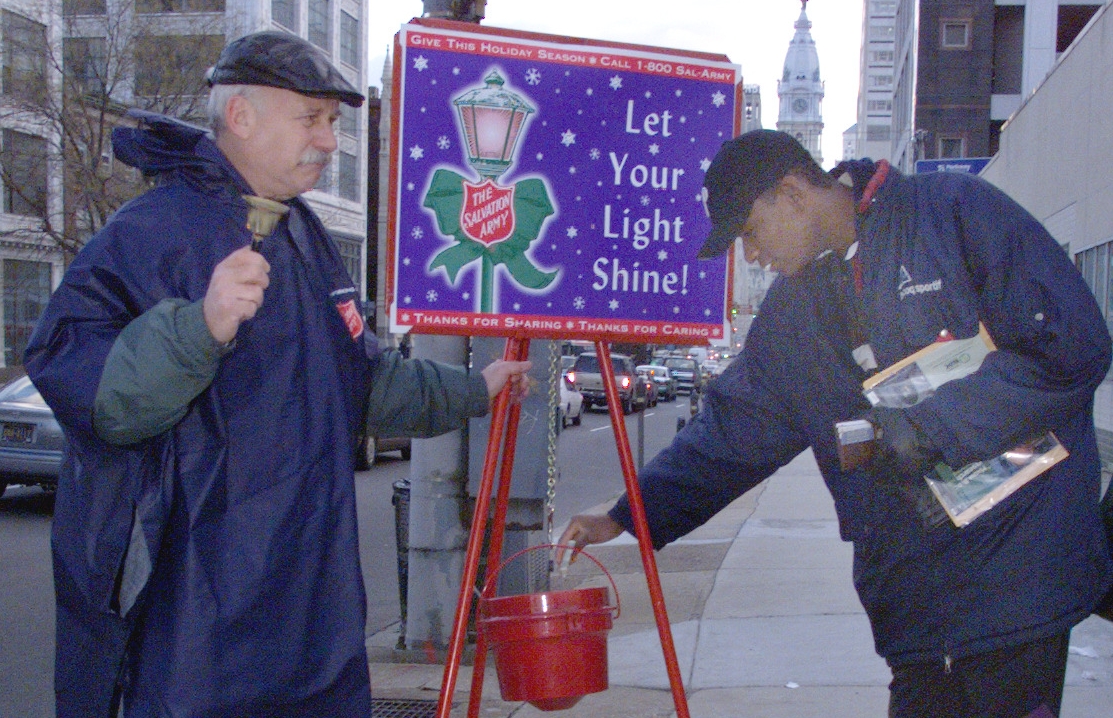
Mr. Avery (left) mans a Salvation Army donation kettle in 1999.Steven M. Falk / Staff Photographer
Before the Daily News, Mr. Avery wrote news and feature stories for the Courier-Post in the 1970s, and the Courier Times and the AP in the 1960s. He moved to Israel for six months in 1972 but returned to work for the Courier-Post in 1973.
He also wrote freelance pieces for the Hidden City Daily, PhillyHistory.org, UShistory.org, and op-eds later for The Inquirer and Daily News. He served in the Navy from 1964 to 1966, joined the Philadelphia Canoe Club later, and led water trips in the New Jersey Pine Barrens and elsewhere.
Knowledgeable, energetic, and naturally affable, he was a tireless promoter and volunteer guide in Philadelphia. He led walking tours throughout the city for students, civic groups, and other organizations, and his explanatory video tours featured cobblestone alleys, urban gardens, museums, statues, and other features of city life.
He was a stickler for details and historical accuracy, and he helped spur City Council to pass an ordinance in 2008 to educate and certify paid Center City tour guides. “They score high as Philadelphia ambassadors of good will,” he said in a 1995 column about uneducated guides, “but as historians they often flunk out.”
Mr. Avery wrote a column for the Courier-Post in 1974.Newspapers.com
Ronald Avery was born June 10, 1941, in Strawberry Mansion. He joined the Boy Scouts, earned his bachelor’s degree at Penn State in 1963, and taught history at Bensalem High School for a year.
He was a boxer in college and, mesmerized by the sport, later worked as a referee for amateur matches.
He met Suzet Habif in Israel in 1967, and they married in 1968. They had sons Serge and Ben, and lived for years in a rowhouse in Oxford Circle.
Mr. Avery cared for his wife during her long illness in the 1980s and ’90s. She died in 1993.
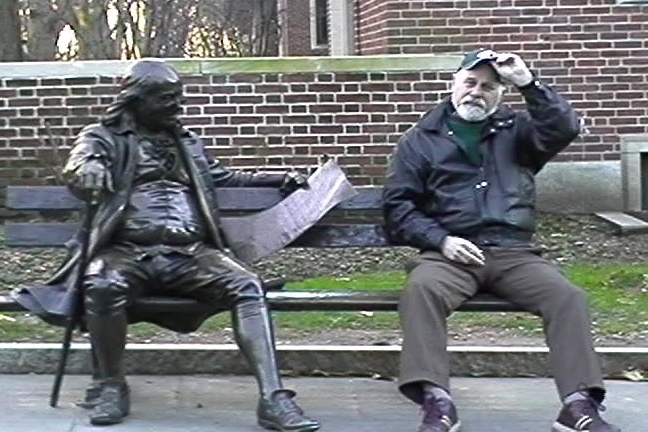
Mr. Avery liked to hang out with Benjamin Franklin and other historic figures. Alex Strang
He lived later in Pennsport and East Falls, was diagnosed with ALS in 2015, and proudly outlived its average life expectancy of 18 months by nearly a decade. “He defied that diagnosis and did not let it define him,” his son Serge said. “He always said he had a lot to live for.”
Mr. Avery was an avid reader and street photographer. He liked poetry, wrote limericks on birthday cards, and posted hundreds of his photos on flickr.com. One of his photos won a contest and was displayed at the airport.
He enjoyed jazz and jokes, led the prayers at family gatherings, and gave Yiddish quizzes to his two grandsons. He shared favorite recipes with Daily News colleagues and whipped up memorable homemade soups, especially white bean.
“I’ll greatly miss his endless anecdotes about all things Philadelphia,” said his daughter-in-law, Rebecca Houlding, “the stories about the local criminals, and his love of his family and friends.”
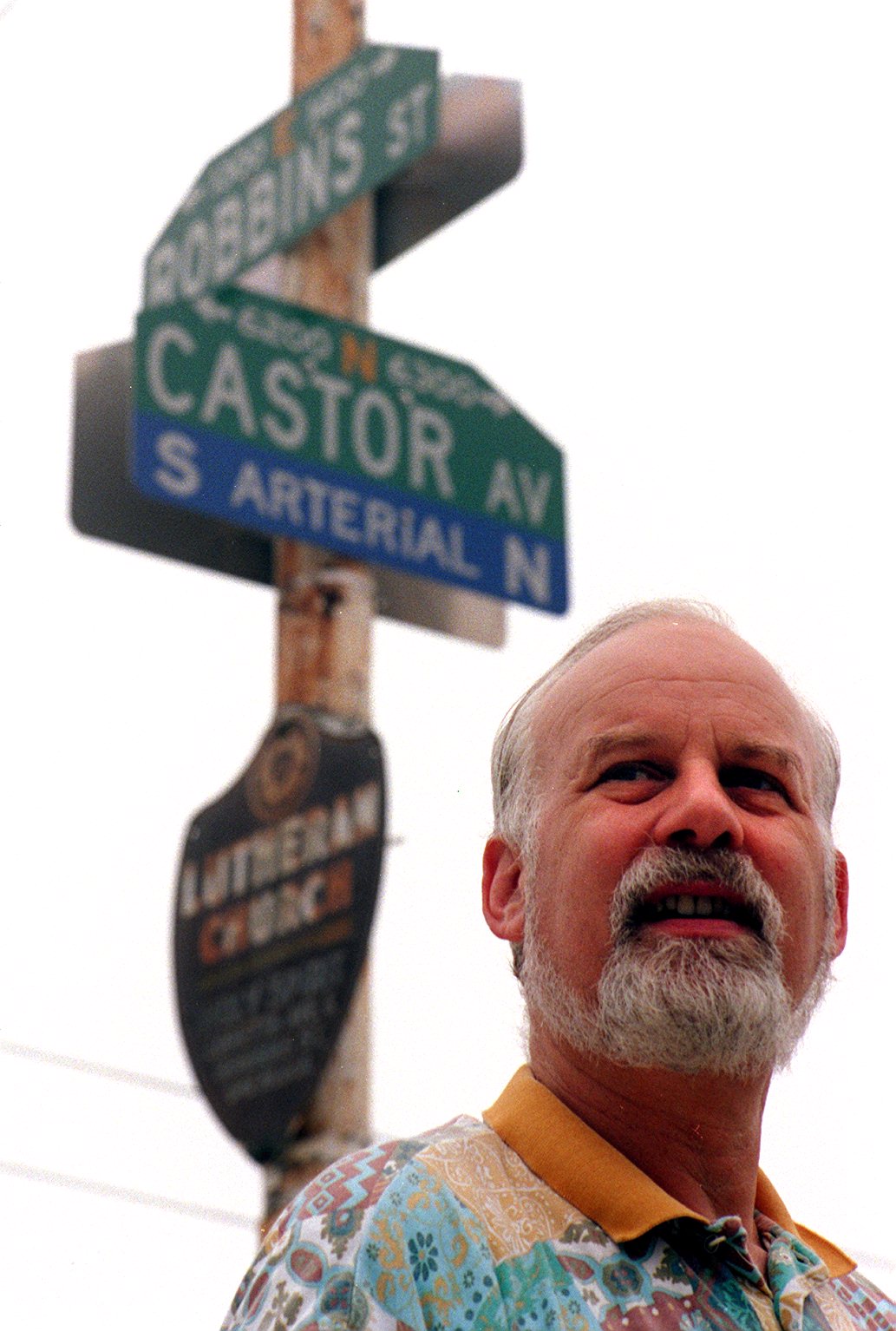
Mr. Avery wrote about his life in Northeast Philadelphia for the Daily News in 1997.Alejandro A. Alvarez / Staff Photographer
His son Serge said: “He loved chasing the stories from the back alleys and driveways, highlighting the working people of our town.”
In addition to his sons, daughter-in-law, and grandsons, Mr. Avery is survived by other relatives. A sister died earlier.
Two men were killed in separate shootings over the weekend in Philadelphia, police said, adding to the homicide toll in the city even as it continues to see a sharp decline in deadly violence.
The killings occurred within hours of each other late Saturday and early Sunday. Investigators have not publicly identified the victims or released a motive in either shooting. No arrests have been made.
Police continue to investigate, said Officer Shawn Ritchie, a police spokesperson.
The first shooting was reported shortly before midnight Saturday near Wakeling and Jackson Streets in the Frankford section of Northeast Philadelphia. Responding officers found a 64-year-old man with a gunshot wound to the face, police said.
He was pronounced dead at the scene.
Officers detained a 39-year-old man for questioning and recovered two handguns at the scene, police said. The man had not been charged as of Monday afternoon, according to police.
Several hours later, shortly after 5 a.m., officers were called to the 3200 block of Kensington Avenue for a report of a person with a gun. When they arrived, police said, they found a 35-year-old man with multiple gunshot wounds to his back, chest, and right leg.
The man was taken to Temple University Hospital, where he was pronounced dead, police said.
The Kensington shooting occurred along a stretch of the avenue that has long been associated with the city’s open-air drug trade, but police have not said whether the killing was connected to any activity in the area.
Despite the two weekend killings, Philadelphia’s homicide total remains significantly lower than in recent years. By the same time last year, the city had recorded 146 homicides, and 176 in 2024, according to police data. As of Sunday, the data show, the city has logged 117 homicides this year.
Both shootings remain under investigation, police said. Anyone with information about either killing is asked to contact the police department’s tip line at 215-686-8477 (TIPS). A reward of up to $20,000 is available for information leading to an arrest and conviction, police said.
As the afterglow of the world’s largest sports tournament and the country’s formal 250th birthday party in Philadelphia fades, the city is returning to its regularly scheduled programming.
But those months of celebrations came with significant investments into the city: building up the Benjamin Franklin Parkway, hosting Grammy Award-winning stars, renovating Lemon Hill to welcome half a million people, and, of course, the cleaning and maintenance work that made Philadelphia look fresher than it has in years.
SEPTA and the city partnered to landscape and beautify major traffic intersections, sometimes with a new mural provided by Mural Arts Philadelphia. SEPTA stations alsoreceived a much-needed deep clean and graffiti removal, all before and during the summer celebrations.
PHLASH buses got an extra stop to get to Lemon Hill; fans got free rides on the Broad Street Line after World Cup games. And, just as the international fans packed up their bags to head home, it’s time for many of those features to go, too.
But what about all the things staying in Philly? The city is not getting just generational memories and a summer party out of the deal. Here are some of the major legacy projects remaining in Philadelphia for years to come, perhaps even until the tercentennial celebration in 2076.
(function(){function e(){window.addEventListener(`message`,function(e){if(e.data[`datawrapper-height`]!==void 0){var t=document.querySelectorAll(`iframe`);for(var n in e.data[`datawrapper-height`])for(var r=0,i;i=t[r];r++)if(i.contentWindow===e.source){var a=e.data[`datawrapper-height`][n]+`px`;i.style.height=a}}})}e()})();
New mini soccer pitches across Pennsylvania
Location: Throughout Pennsylvania.
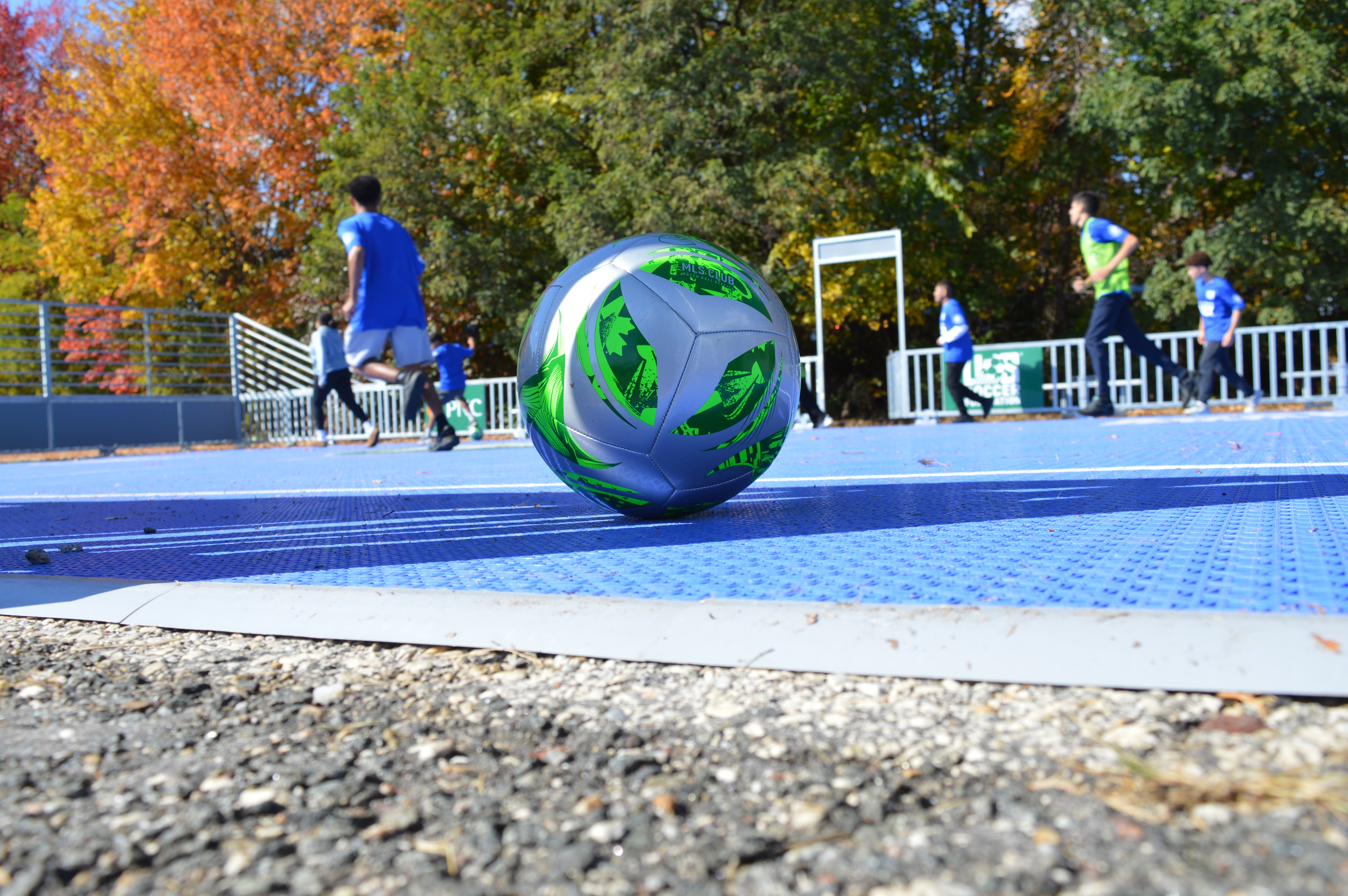
The project: How does the United States grow the next crop of elite soccer players? By making it easier to play soccer starting at a young age. At least 13 mini soccer pitches are being installed at schools, recreation centers, and parks across Pennsylvania.
The first two of Philly’s mini pitches were installed at West Oak Lane’s Building 21 and the Swenson Arts and Technology High School in Northeast Philadelphia. According to the U.S. Soccer Foundation, which is overseeing the project, each mini pitch costs $150,000 to install.
The U.S. Soccer Foundation has committed $2 million to install mini-soccer fields like this one in Northeast Philadelphia ahead of the 2026 FIFA World Cup.Kerith Gabriel
Who is behind it: The city and several nonprofits and private companies are backing this initiative, mostly through a $2 million investment from Philadelphia Soccer 2026, the city’s host committee for the 2026 men’s World Cup. Additional backers include the Philadelphia School District, Independence Blue Cross, and Comcast, among others. The U.S. Soccer Foundation is administering the funds and overseeing the installation of the pitches.
The project: The transformation of Fishtown’s TipTop Playground into two mini, enclosed turf soccer pitches, with additional event space and field lighting for night play. The pitches are now open for kids and adults.
Fishtown’s street soccer park will host leagues, free training clinics, and youth soccer programs. Casual pickup soccer is available outside of scheduled programming, led by Street Soccer USA, the organization that helps run such soccer parks across the country.
Who is behind it: You guessed it: Bank of America and Visa. Street Soccer USA will run programming at the park in collaboration with local groups.
Lemon Hill Park
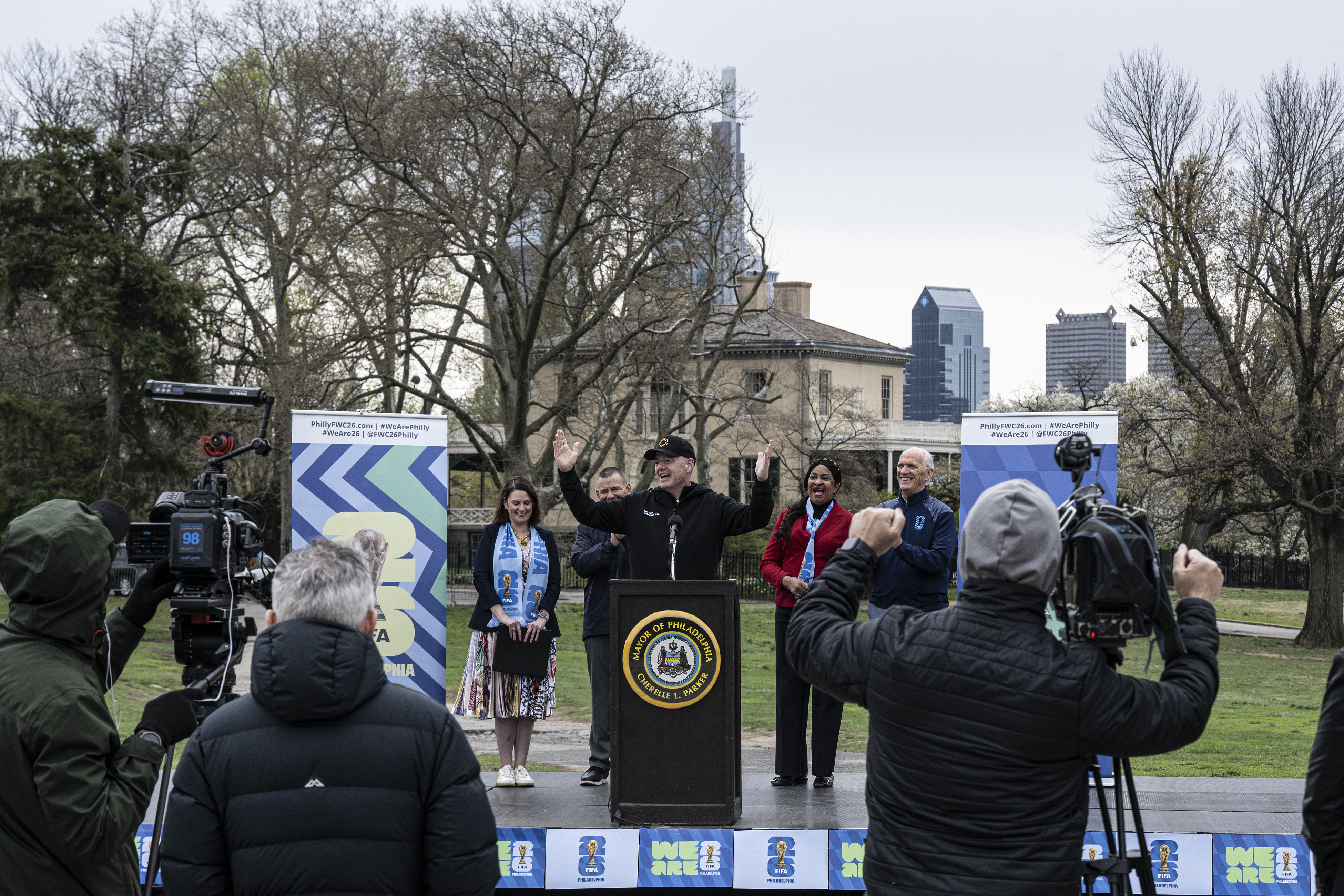
FIFA President Gianni Infantino, center, will visit Lemon Hill Park on Thursday, April 10 for an operational planning tour of Philadelphia Soccer 2026’s FIFA Fan Festival siteJose F. Moreno / Staff Photographer
Location: Sedgley Drive and North Lemon Hill Drive.
The project: Lemon Hill Park received some updates ahead of hosting the official FIFA Fan Festival, and is now getting a much-needed makeover after 39 days of World Cup festivities. The restoration of the grass is underway, with more permanent amenities soon to be constructed.
Some upgrades are complete:
Other upgrades are coming soon:
Who is behind it: Philadelphia Soccer 2026 is committing $4 million to park upgrades, with help from the city, to repair the grass fields, bring new modern amenities to parts of the park, and outfit the space with new electrical service, provided by Peco, to prepare for future large events.
FDR Park’s Ashburn Field
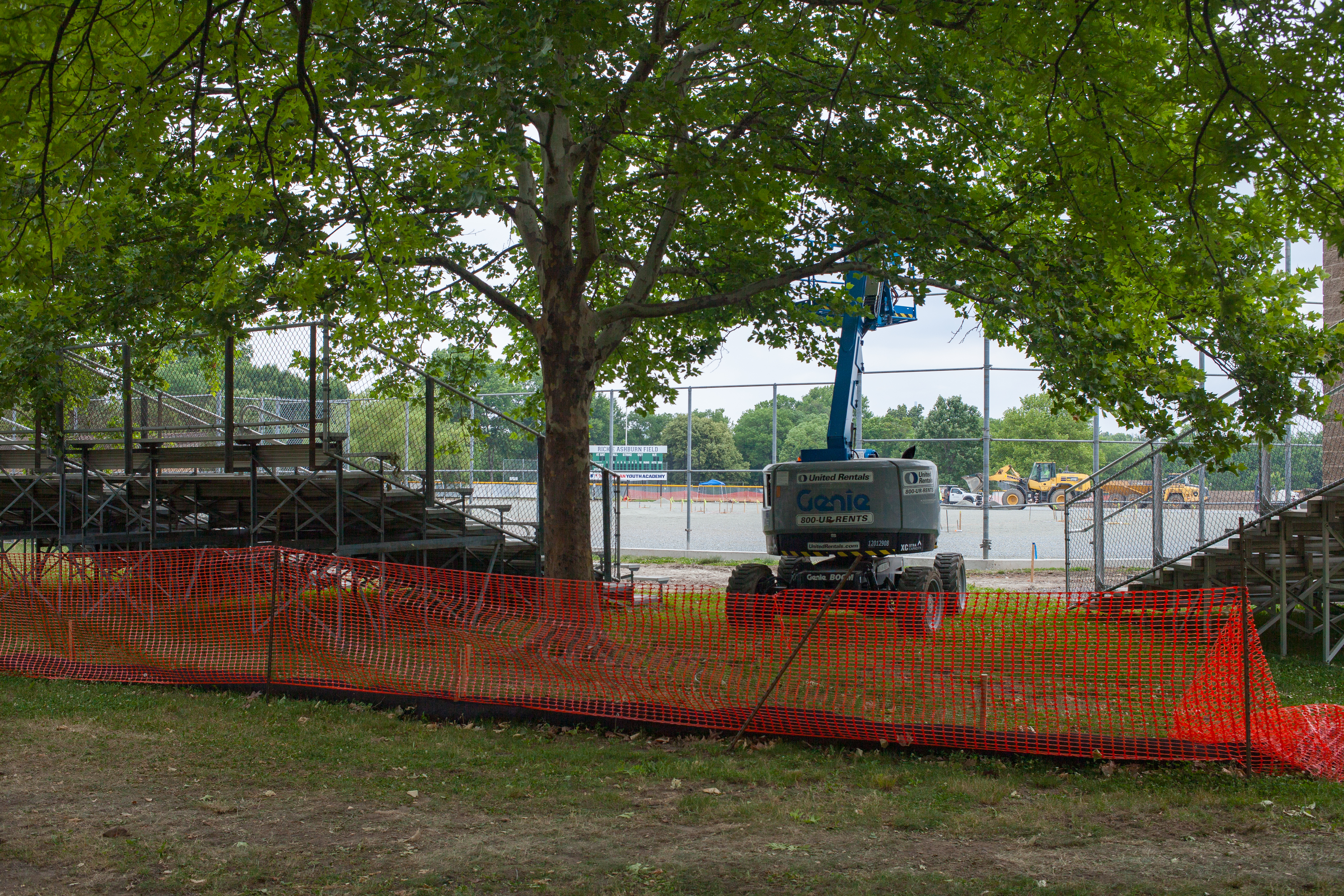
The MLB is renovating Ashburn Field in FDR Park, a city field managed and maintained by the Phillies that hosts a variety of youth baseball programs.Colin Evans / For The Inquirer
Location: 1500 Pattison Ave.
The project: Ashburn Field at FDR Park has been resurfaced with a new turf field, meant to better handle wet weather conditions. The 135,000-square-foot field was built in 1998, using funds generated from the 1996 MLB All-Star Game in Philadelphia.
Who is behind it: Major League Baseball and the Phillies, as part of a combined investment of more than $5 million in various projects tied to the 2026 MLB All-Star Game, including revitalizing the Negro Leagues Memorial Park and mural at 44th Street and Parkside Avenue in West Philly.
Independence National Historical Park
The rotunda inside the First Bank of the United States is pictured on Monday, June 29, 2026 in Philadelphia.Erin Blewett / For The Inquirer
Location: 599 Market St.
The project: Several improvements have already come to Independence National Historical Park and Independence Mall to commemorate the nation’s Semiquincentennial, and more are on the way. They include:
A $3.9 million “Join or Die” sculpture on Independence Mall, inspired by the truncated snake in Benjamin Franklin’s cartoon of the same name. The 46-foot-long granite work is expected to be unveiled this fall.
Beautification and horticultural work. This includes work at the Benjamin Rush Garden at Third and Walnut Streets, which showcases the 1976 Bicentennial Bell, a 10-ton Liberty Bell replica gifted by Queen Elizabeth II.
The reopening of the First Bank of the United States, on Third Street between Walnut and Chestnut Streets. The bank had been closed for 50 years but is now open for visitors thanks to a $43 million renovation.
Who is behind it: Independence Historical Trust, the city, the state, private foundations, philanthropists, and legacy groups.
Germantown Historical Society Visitor Center
Location: 5501 Germantown Ave.
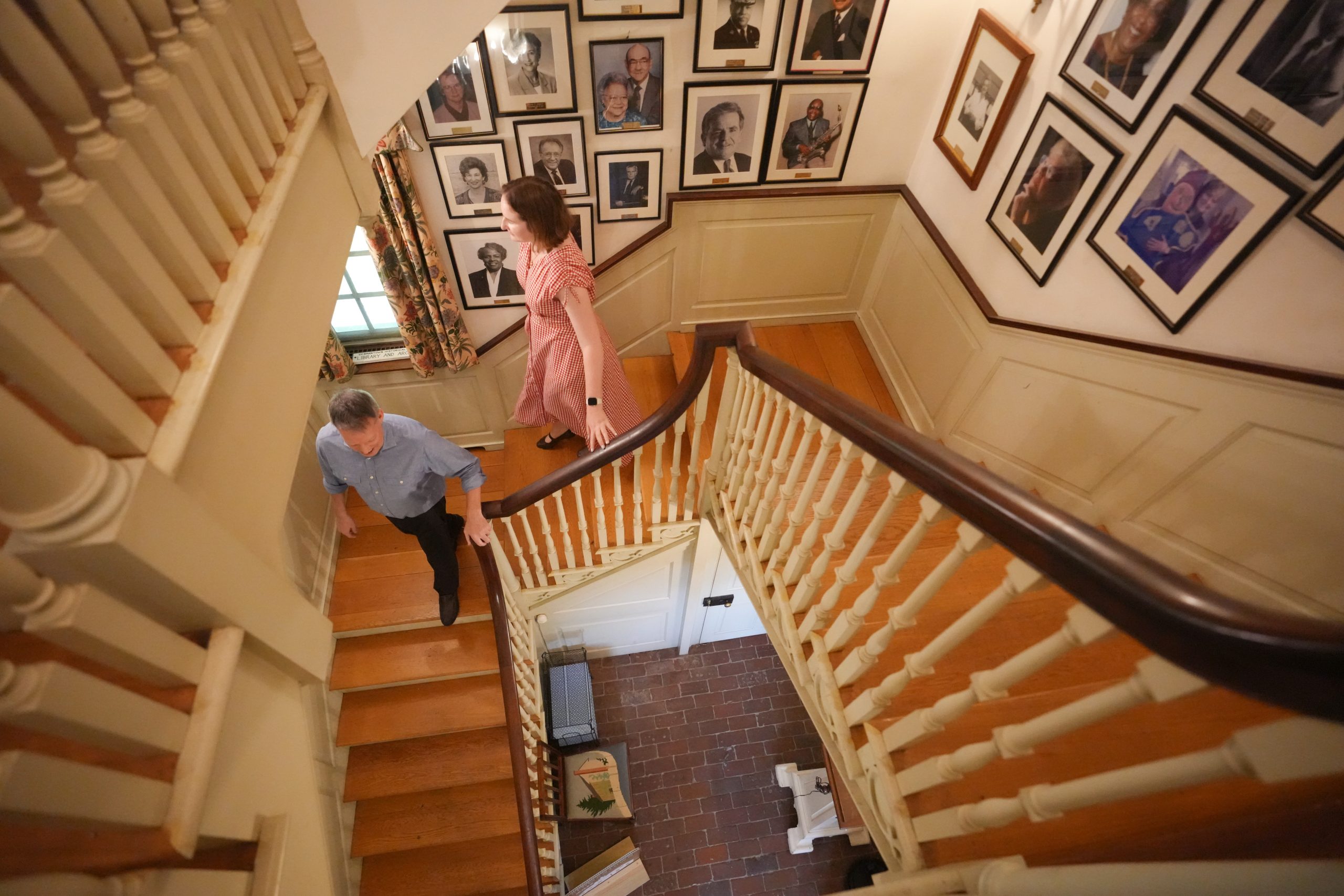
Tuomi Forrest, executive director at the Germantown Historical Society, and Kaila Temple, curator of collections at GHS, at the Germantown Historical Society building located at 5501 Germantown Ave. in Philadelphia, July 21, 2026.Jessica Griffin / Staff Photographer
The project: The Germantown Historical Society has its first visitors center, thanks to a $100,000 renovation of a section of its headquarters. It is modest but will host rotating exhibits, maps and pamphlets, and a gift shop.
Historic Germantown consists of various landmarks and attractions in Northwest Philly, including the Aces Veterans Museum, Awbury Arboretum, and the Germantown White House, where George Washington once lived.
Who is behind it: The Funder Collaborative for the Semiquincentennial, a philanthropic group organized by the Connelly Foundation that donated to many initiatives and projects related to the 250th anniversary celebration.
Whitney Biennial curators travel the length and breadth of the country, paying visits to artists in their studios, surveying their work, and picking creators whose work they think represents the present climate of art making in the country. Together, they bring a once-every-two-years expansive exhibition to New York’s Whitney Museum of American Art, often regarded as the most prestigious and faithful register of American art.
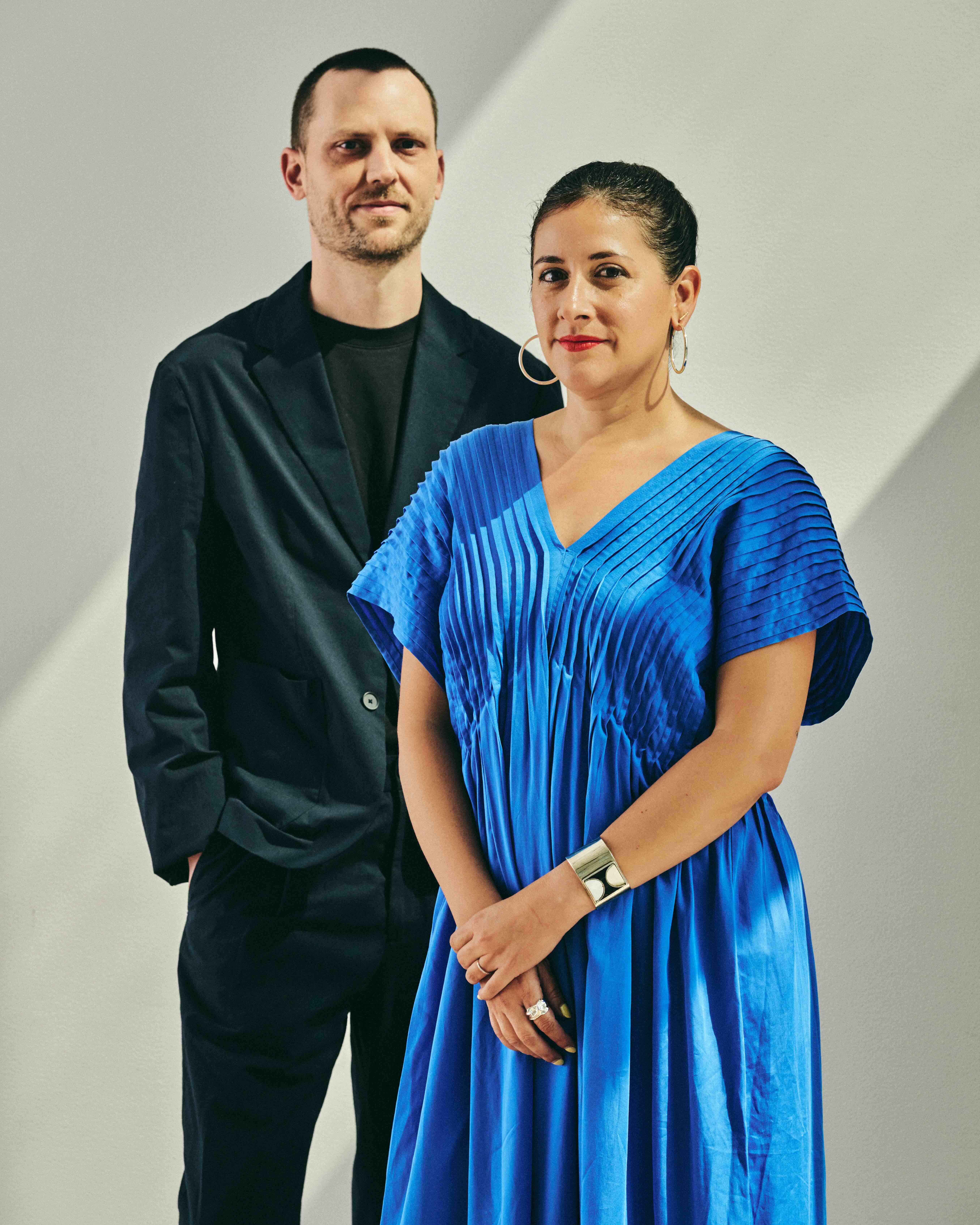
Past biennial curators — the 2024 edition was curated by the Institute of Contemporary Art’s former associate curator, Meg Onli — have embarked on these travels separately, but for the country’s 250th year and the biennial’s 82nd, Whitney curators Marcela Guerrero and Drew Sawyer traveled together.
Whitney Museum of American Art’s Biennial 2026 curators Drew Sawyer, Marcela GuerreroBryan Derballa
“We wanted to just listen to artists and see where they were at, see what they were thinking about, how they were processing recent events,” said Guerrero. They traveled for a bit over a year, nationally and internationally, and visited more than 300 artists.
“The idea of relationality and how do we relate in different ways” at political and interpersonal levels, is a theme that eventually emerged from their survey, Guerrero said.
While in the past some curators have traveled as far as Hawaii, Guerrero and Sawyer’s short travel to Philadelphia in the winter of 2024 proved equally fruitful.
“Philly was such a productive trip and very coherent in terms of what we were hearing from artists on gentrification, displacement, and the cost of living,” Guerrero said.
Artists in Philadelphia, Sawyer noticed, “seem to be particularly preoccupied with ideas of infrastructure” and there exists a strong sense of connection among them. Several of the city’s artist are graduates of the MFA programs at the University of Pennsylvania and University of the Arts, taught by the same professors like Michelle Lopez (whose work is included in this year’s biennial) and Sharon Hayes (whose work was a part of the 2024 biennial).
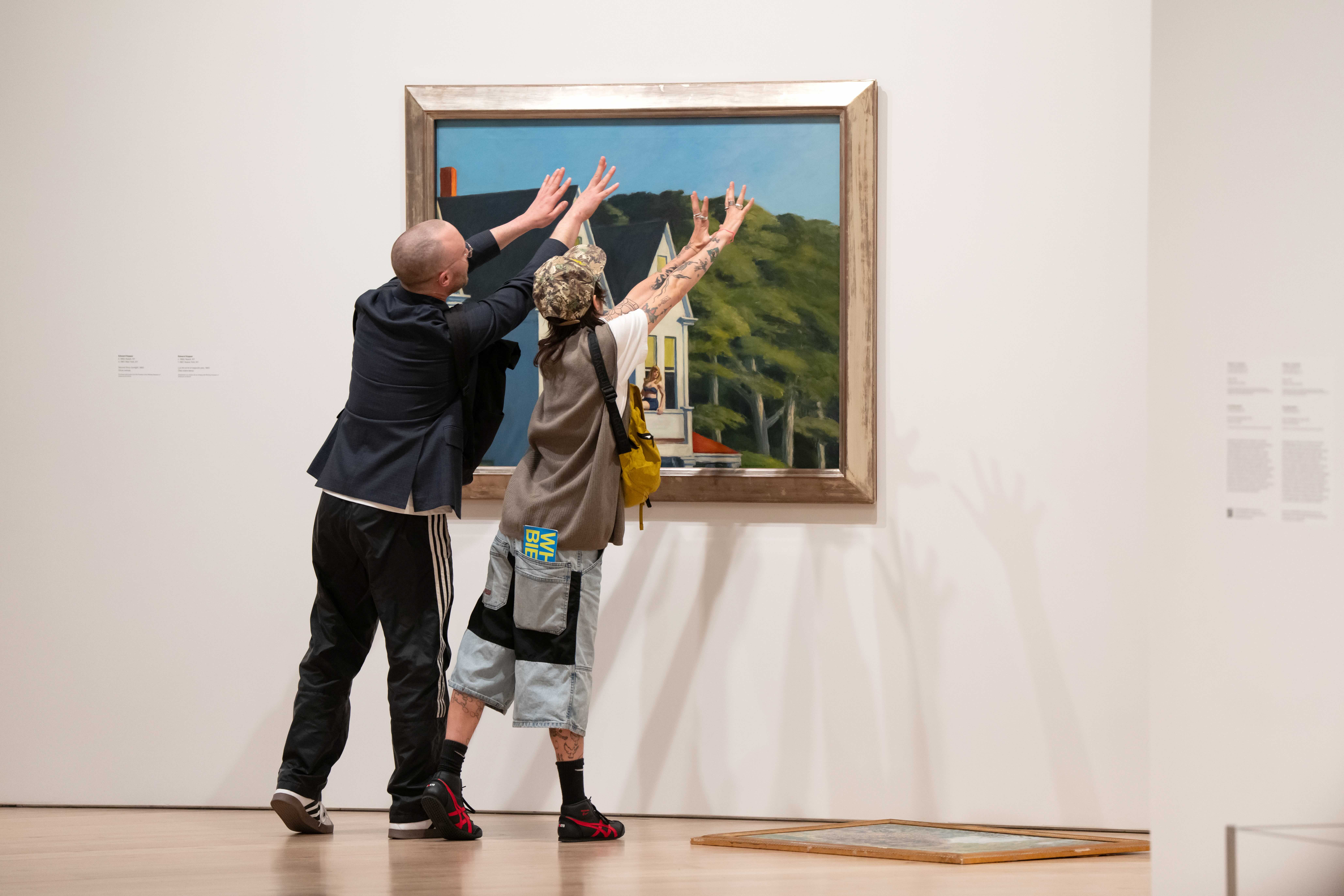
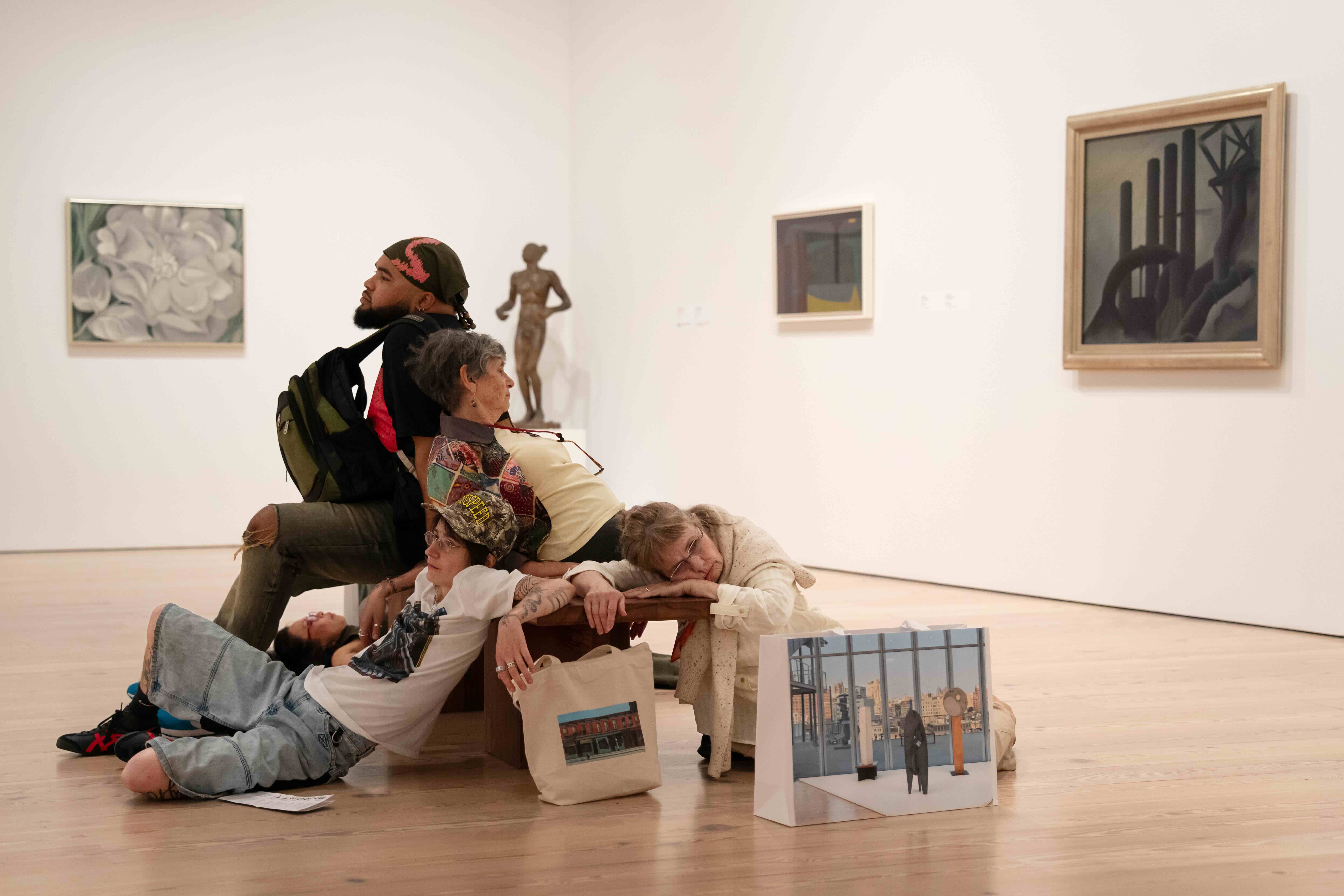
Maia Chao, “Being Moved,” 2026. Performance, Whitney Museum of American Art, New York, May 14–17, 2026. Commissioned by the Whitney Museum of American Art.Julieta Cervantes
Performance artists Maia Chao and Jonathan González, both of whose works are part of the biennial, live in West Philadelphia and are friends and collaborators. Emilio Martínez Poppe attended Penn and studied with Lopez, and was particularly interested in the idea of infrastructure from the perspective of the labor of public sector employees to help build and maintain our social and civic architectures.
“A kind of certain institutional critique, I would say, was common” among Philadelphia artists, said Sawyer.
“One of my biggest takeaways is the real vibrancy of the artistic scene in Philadelphia,” he said.
Here are the Philadelphia artists whose works appear in the Whitney Biennial.
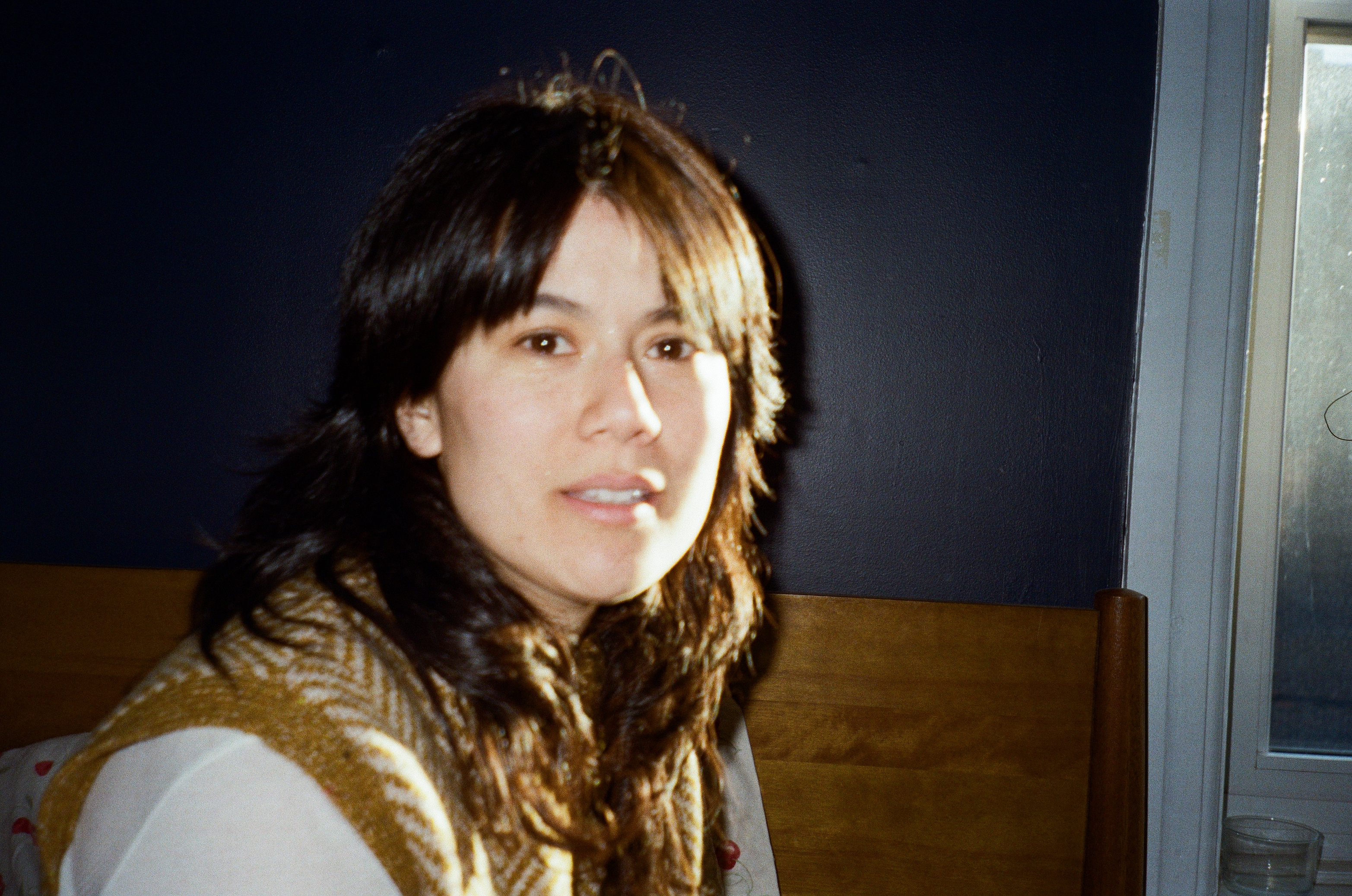
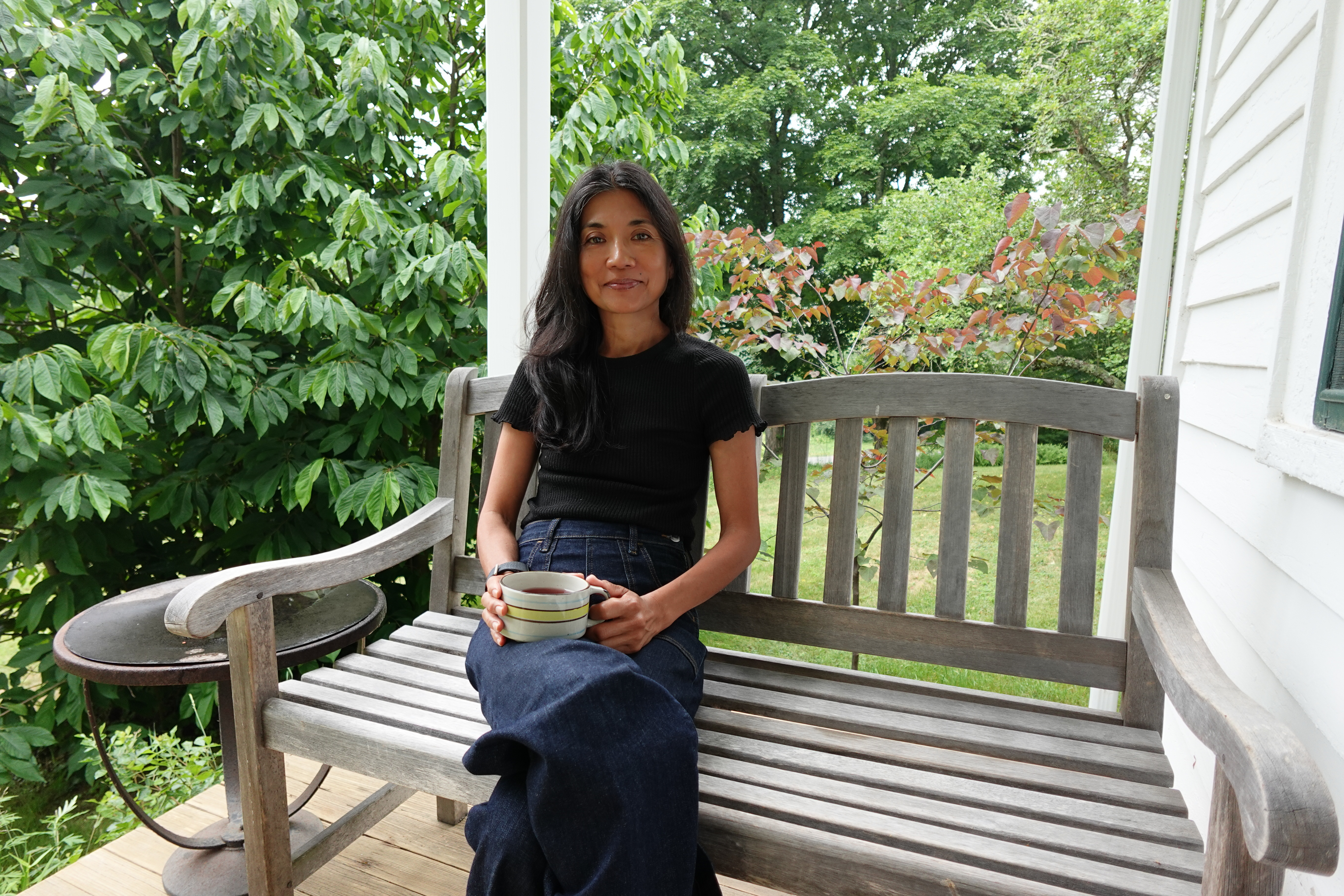
West Philadelphia-based artist Maia Chao’s performance pieces “Being Moved’ and “Scores for the Museum Visitor” are part of the 2026 Whitney Biennial.Amelia Golden
Maia Chao
“Scores for the Museum Visitor,” “Being Moved”
Maia Chao’s performance art emerges from studying social behavior. Where some might see the mundane walk from home to work, she sees choreography, a rhythm, and an interaction of the body with its surroundings.
Her biennial performance piece Being Moved, choreographed by Lena Engelstein, takes inspiration from how museum visitors interact with the art. “It reframes the focus from the art itself to the visitors’ experience,” she said. The title refers to both “this potential to be moved by an artwork,” but also “of the ways that the institution makes us move, makes us move our bodies, and makes us behave in the presence of extremely valuable assets.”
That tension of the push and pull of a museum — where its mission might seem inviting and welcoming but once inside, rules around how to behave, what to touch abound — is at the center of Chao’s piece.
Maia Chao, “Being Moved,” 2026. Performance, Whitney Museum of American Art, New York, May 14–17, 2026. Commissioned by the Whitney Museum of American Art.Julieta Cervantes
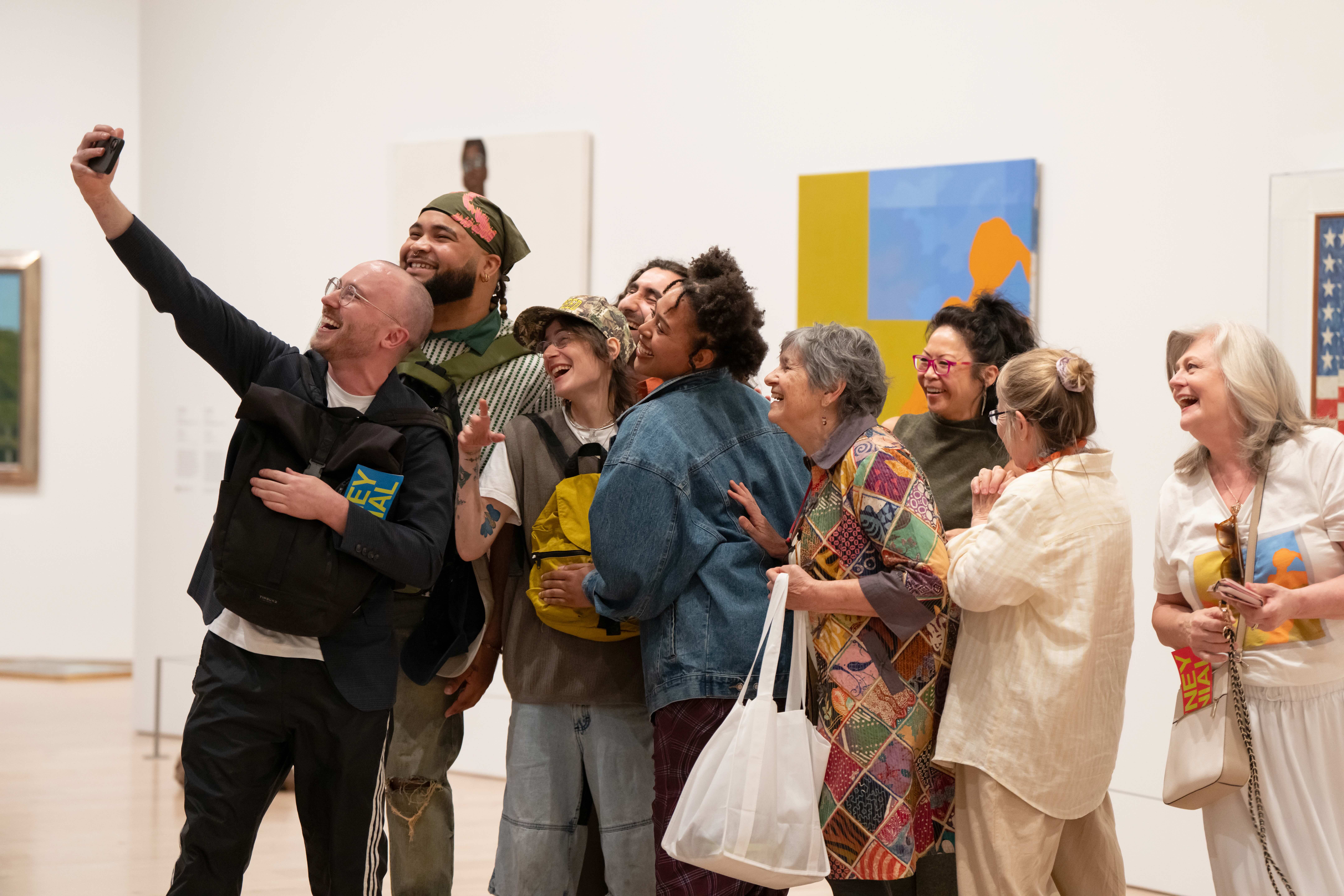
When visiting the biennial beyond Chao’s performance schedule, visitors view Scores for the Museum Visitor as a set of prompts, an invitation to create “micro performances” of their own.
Among the scores are: “Identify another museum visitor. From afar, copy their movements as closely as possible.” “While holding a museum brochure, clasp your hands behind your back. Drop the brochure.” “Find a bench. Take a seat. Imagine the artworks slowly falling to the floor.”
“These are invitations to kind of transgress the rules, [for] engaging with the artwork, or interpreting and encountering an artwork,” the artist said.
Maia Chao, “Being Moved,” 2026. Performance, Whitney Museum of American Art, New York, May 14–17, 2026. Commissioned by the Whitney Museum of American Art.Julieta Cervantes
Chao first caught the curators’ attention with Agents of Deterioration (2024), made in collaboration with Ethan Philbrick, a performance piece commissioned by the Hirshhorn Museum and Sculpture Garden. Sawyer was drawn in by Chao’s “legacy of institutional critique through affective registers.”
“There’s a real kind of commitment to the institution, even as Maia is critiquing it, which we felt was important in this moment where there’s, from many different directions, an eroding of faith in institutions. We were really interested in the way she both critiques and pushes institutions to do better,” he said.
Artist and Penn professor Michelle Lopez whose “Pandemonium” is part of the 2026 Whitney BiennialKelsey Valencia, Denniston Hill Residency
Michelle Lopez
“Pandemonium”
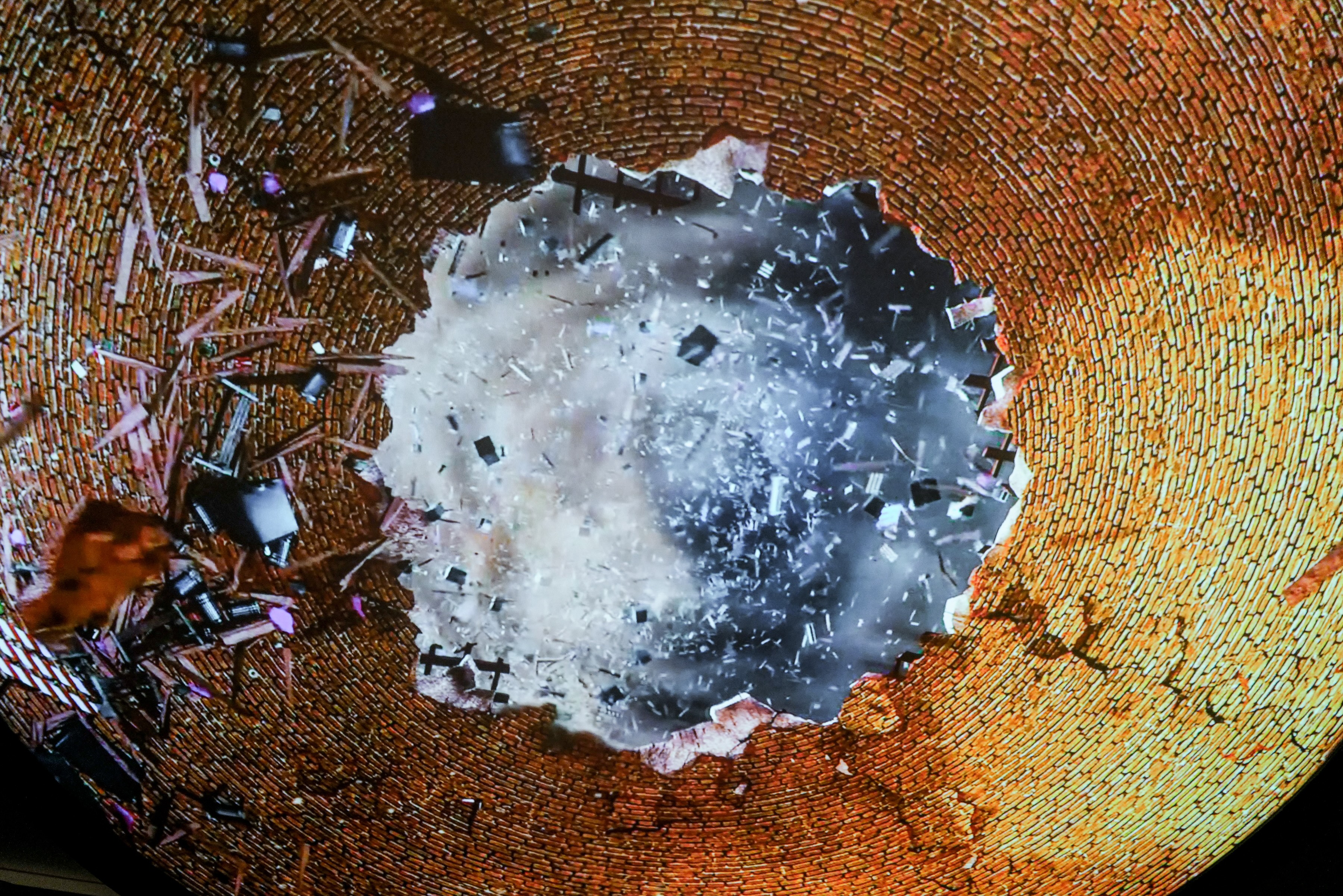
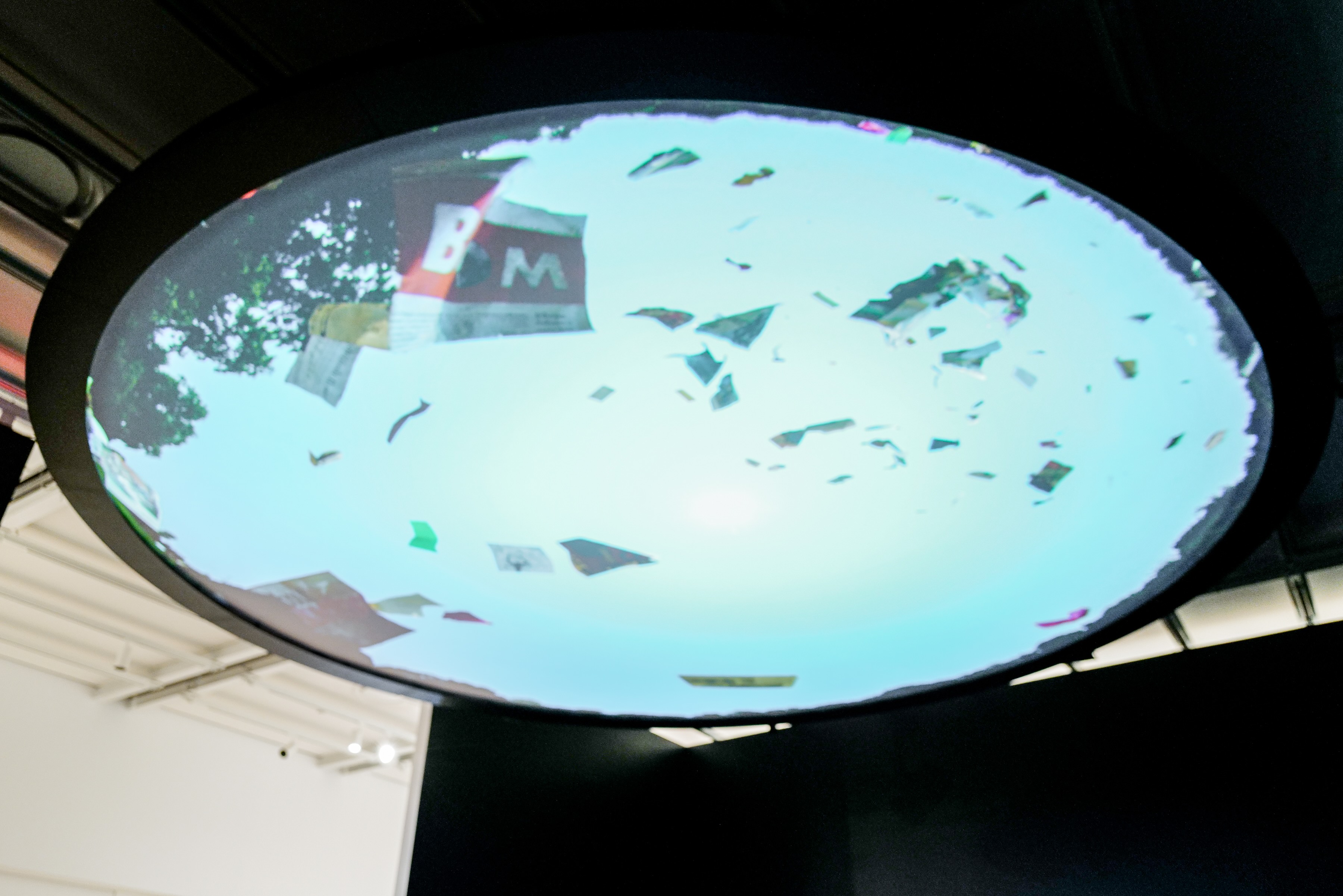
Pandemonium is a fully Philadelphia piece of art. It was made in collaboration with the Moore College of Art and Design and the Franklin Institute, supported by the Pew Center for Arts & Heritage and the University of Pennsylvania, filmed at Northeast Philadelphia’s RAIR (Recycled Artist in Residency), premiered at the Fels Planetarium and the Galleries at Moore, and inspired by artist Michelle Lopez’s earlier work exhibited at the ICA.
“Philadelphia is just a really supportive environment for artists,” said Lopez, who is an associate professor of fine arts at Penn’s Stuart Weitzman School of Design, where she leads the sculpture program. “I could not have made that work in New York.”
The video project, as Lopez says, came from a desire to “situate the viewer in the eye of a storm so that they could feel, on a somatic level, what it was like to have their environment really collapse around them.”
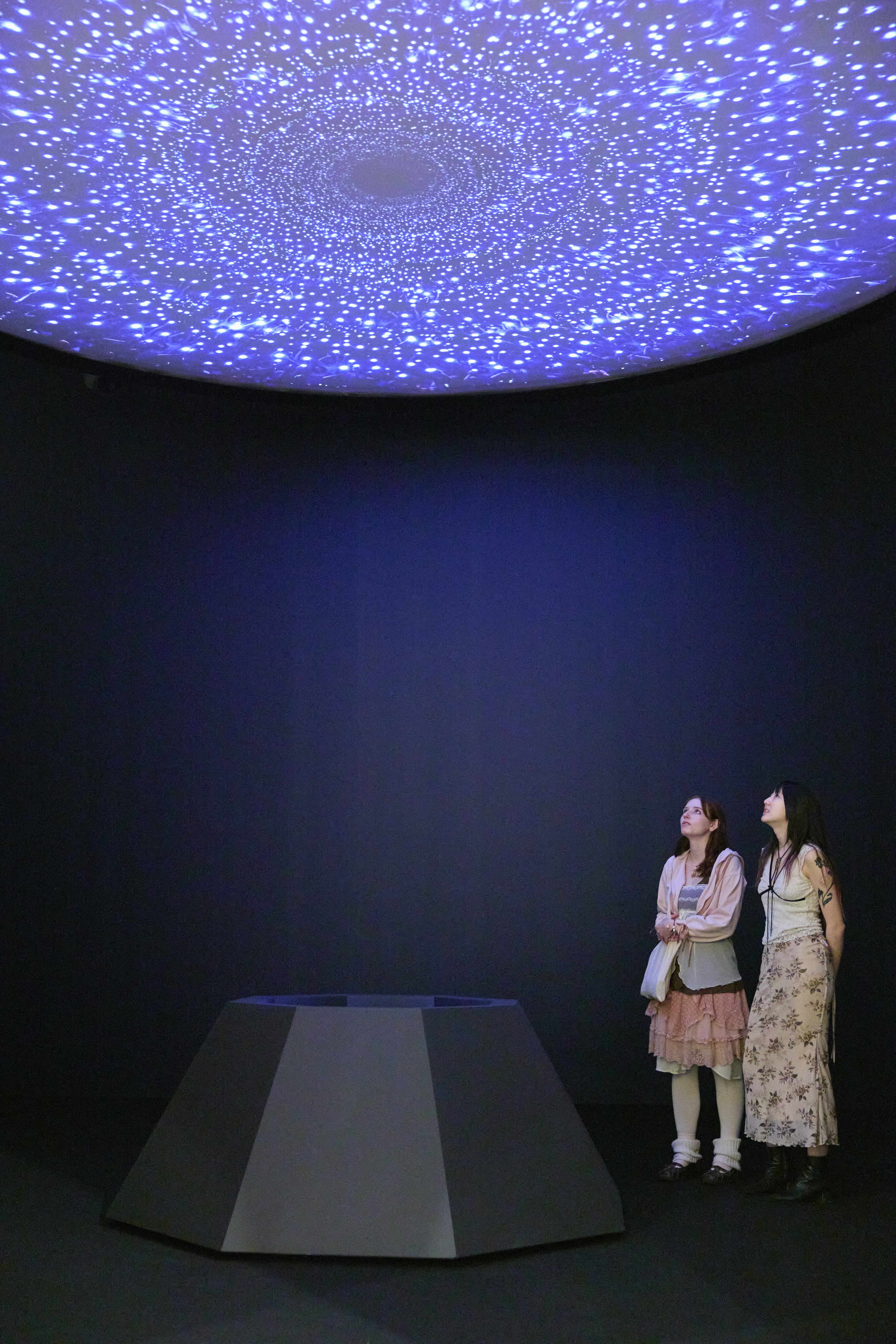
At the Whitney Museum, Pandemonium plays on a domed screen on the ceiling of the gallery and demands that the viewer sit below it and look up. What they witness is things moving around with a violent force against the sky — debris, newspapers, packaging, clothing (including Lopez’s own and her son’s old underwear), and other markers of extreme human consumption.
In order to make this mayhem happen, Lopez, who is trained in sculpture, built a tornado machine using a robotic contraption, industrial fans, and leaf blowers. Together they created a simulation of a tornado at RAIR which was then filmed and eventually screened in the Fels Planetarium.
“A lot of the work imagistically, came from seeing images of tornadoes and hurricanes wiping out towns. I was really interested in the way nature could collapse culture,” said Lopez, who lives in South Philadelphia.
Installation view of Whitney Biennial 2026 (Whitney Museum of American Art, March 8–August 2026). Michelle Lopez, “Pandemonium,” 2025.Jason Lowrie/BFA.com
While a Whitney gallery is nowhere close to the grandeur and wonder of the Fels Planetarium, the 360-format video manages to suck in a viewer who feels almost weightless as the feeling of being thrown around by the forces of nature is simulated.
When the curators visited Philadelphia for studio visits, “top on our list was Michelle Lopez,” said Sawyer. “We were aware that she had been working on this major moving image project that departed from what she’s most well known for, which is sculpture. So we were really excited to meet with her, especially because her work had not been a part of the biennial before.”
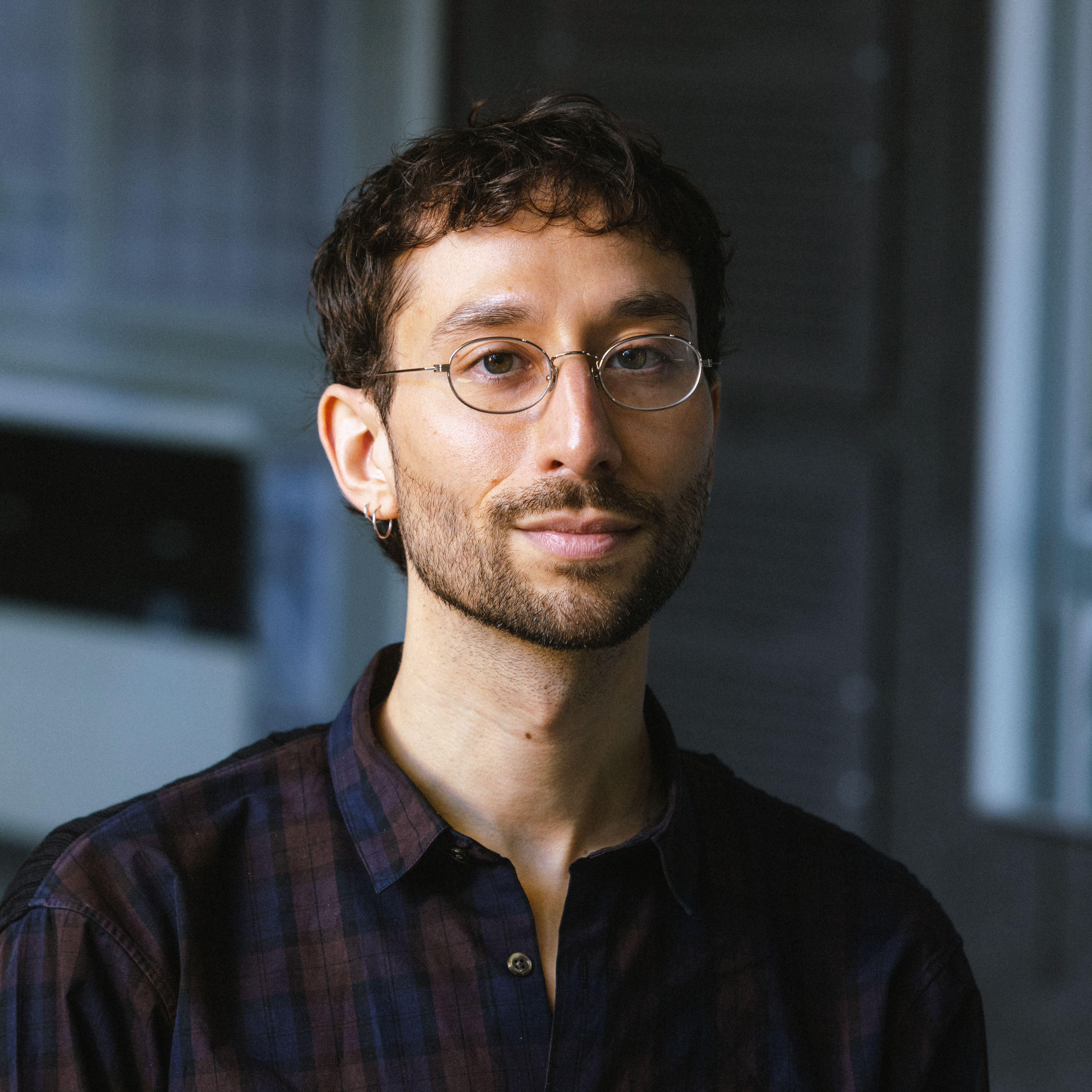
Artist Emilio Martínez Poppe, whose work “Civic Views” was on display in the City Hall courtyard last year. This year, it’s a part of the Whitney Biennial.Neal Santos
Emilio Martínez Poppe
“Civic Views”
Like Lopez’s Pandemonium, artist Emilio Martínez Poppe’s Civic Views is an artwork that is only possible because the city of Philadelphia exists. Several Philadelphians have already seen Martínez Poppe’s workwhen it was on view last year in the City Hall courtyard.
Martínez Poppe was then studying city planning and working toward an MFA in visual art from Penn when he was mulling over the future of city planning graduate students who’d go on to join the public service workforce.
It was in conversation with professors that he found out that the oldest surviving daguerreotype in the country, which is stored at the Historical Society of Pennsylvania, was taken by Joseph Saxon, who was a public sector employee working for the U.S. Mint.
“That was shot out of the U.S. Mint, where the Widener Building is today. He’s following Daguerre’s technological recipe, he uses it to photograph what he sees through the window. Unlike Daguerre, who was a theater entrepreneur, Saxton was a public sector employee who was doing something he was not hired to do,” said Martínez Poppe. “He was hired to work on the newly nationalized currency and he was tinkering with this invention in his office, and that view is one of the only real entry points that we have into his position at his job there, which is interesting.”
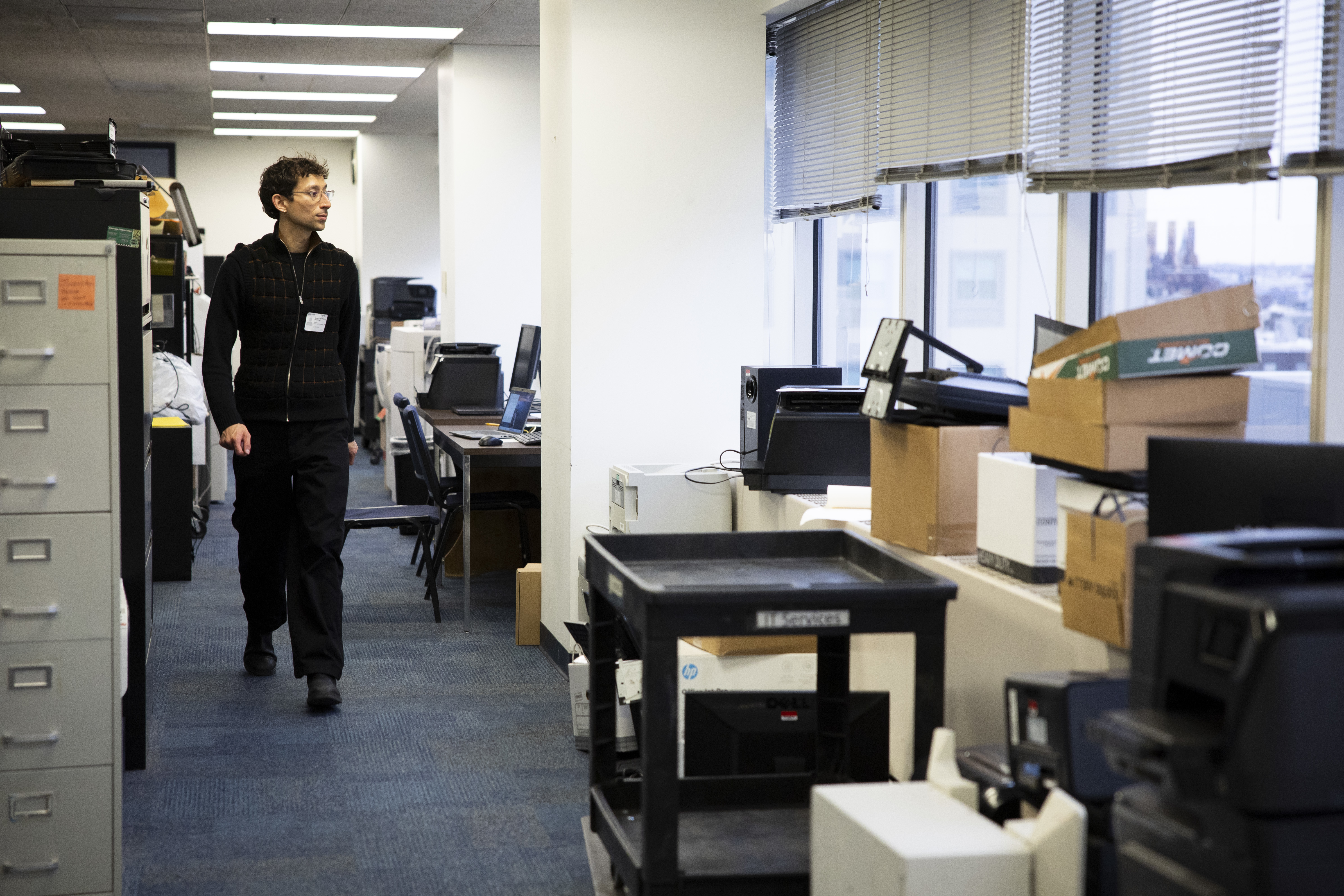
Emilio Martínez Poppe looks out the windows at the Department of Behavioral Health and Intellectual disAbility Services office on Tuesday, Feb. 11, 2025 in Philadelphia. Emilio Martínez Poppe is working on a project curated by Jameson Paige that documents the views from municipal service buildings. The project also includes interviews with city workers.Monica Herndon / Staff Photographer
Inspired, Martínez Poppe visited municipal buildings all across Philadelphia and photographed views from the inside out so he could document what city workers see from their windows. Alongside, he conducted “dozens of long form, anonymized interviews” with city workers from more than 20 agencies.
“I would ask them, what was your perspective of city government before working here, who taught you about the value of public sector work? Often, so many people would tell me it was their mothers.”
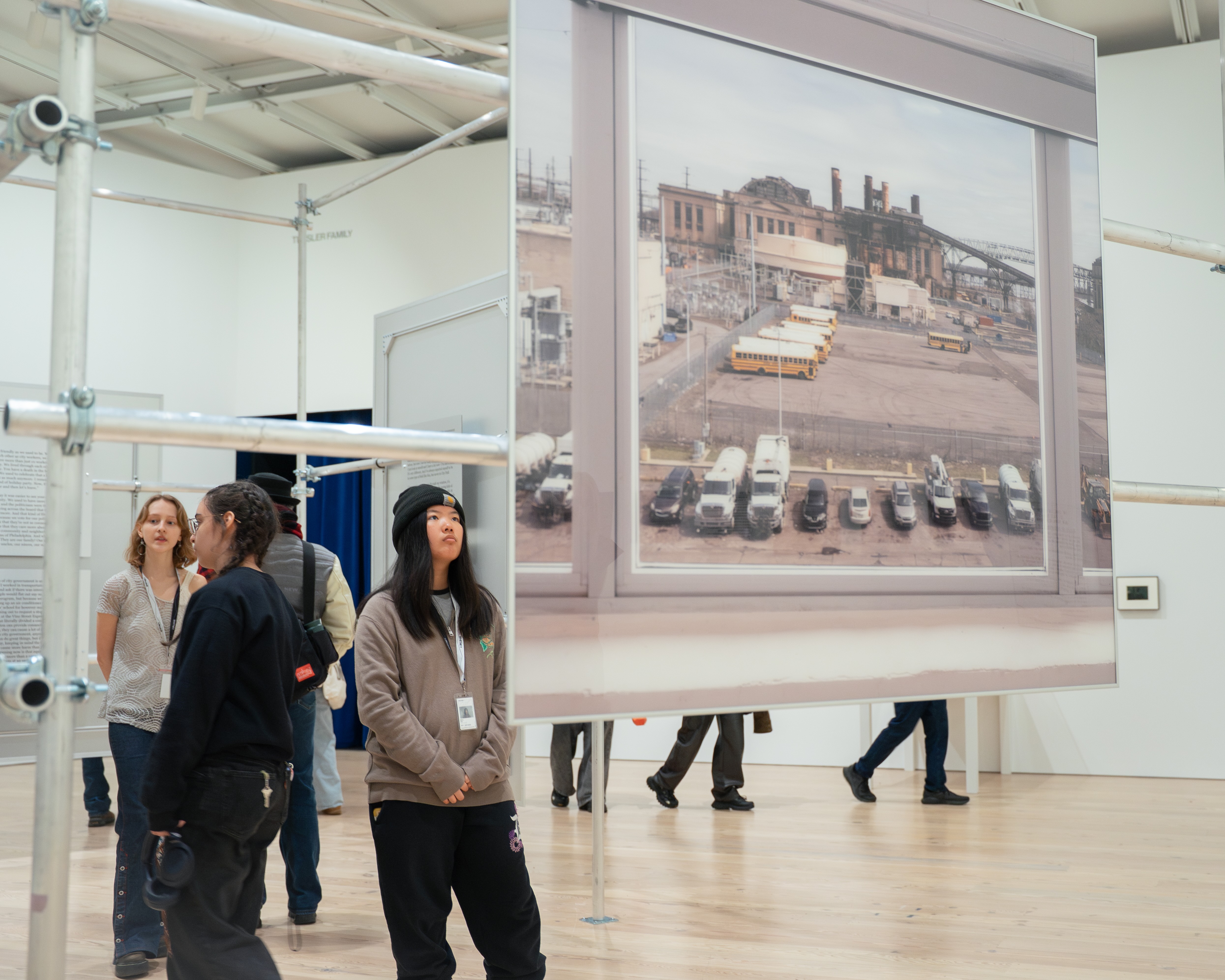
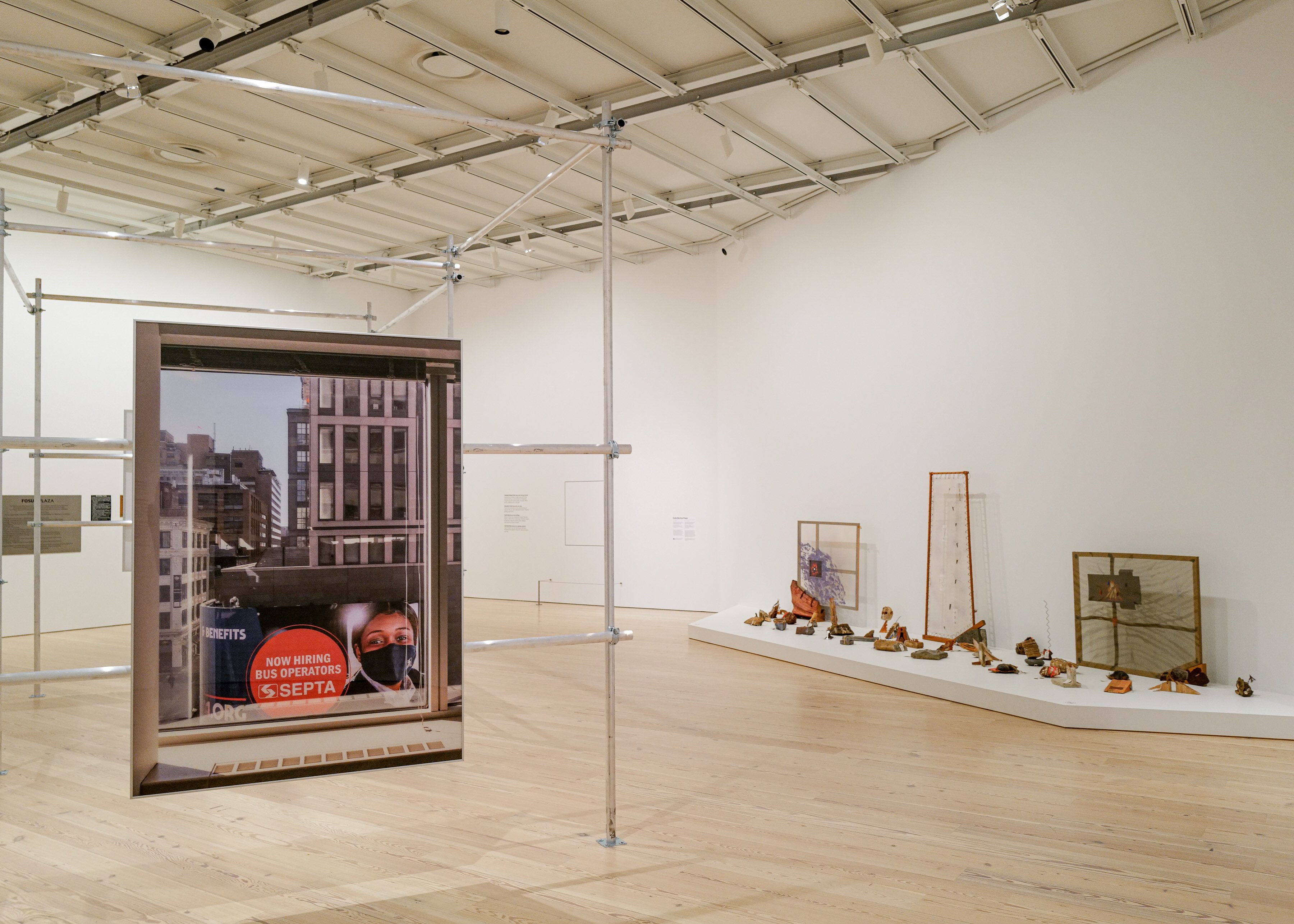
Civic Views is a result of those conversations — a coming together of anonymized interview snippets and photographs displayed in a scaffolding-like structure in the middle of a Whitney gallery. “It’s the scaffolding that dissolves the authoritative center, even in the Whitney Biennial,” said Martínez Poppe.
An installation view of Emilio Martínez Poppe’s “Civic Views.”Summer Surgent-Gough
“The public sector is vulnerable to radical change, for better or worse. With my work, I want to say that it’s time to seize the means, seize our technology to create the world that belongs to us,” the artist, who now works for the New York City Mayor’s Office as a civic arts programs coordinator, said.
“We need to assume that responsibility. That’s why the project centers the voices of workers and how their positions shape their views. But also how their views shape the structures that we are living in and living through.”
On the curators’ Philadelphia visit, Guerrero recalled seeing Civic Views and people of the city interacting with it. “It was very touching,” she said. Her favorite part about the work is that it uses “the tropes of the camera, of the interview, of bureaucracy, but then upends it completely.”
Installation view of Whitney Biennial 2026 (Whitney Museum of American Art, March 8–August 2026). “Civic Views” (2024) by Emilio Martínez Poppe, “Philadelphia Housing Authority, South,” 2024; Emilio Martínez Poppe, “Philadelphia Department of Sanitation, North,” 2024; Emilio Martínez Poppe along with works of Kainoa GruspeJason Lowrie/BFA.com
“You see how important the job of a public servant is,” she said, “and how you know they’re in kind of a double bind because they’re the face of the government and also they receive the same services they provide … their kids are in the public school system, they depend on the Department of Sanitation.”
She finds this complexity “beautifully translated” in Civic Views. “You can really put yourself in the shoes of the person who’s speaking and feel the care that really goes into this type of work that should not be overlooked.”
Artist Jonathan González whose performance piece ‘magic hour — golden time’ is part of the 2026 Whitney BienialRudy Gerson
Jonathan González
“magic hour — golden time”
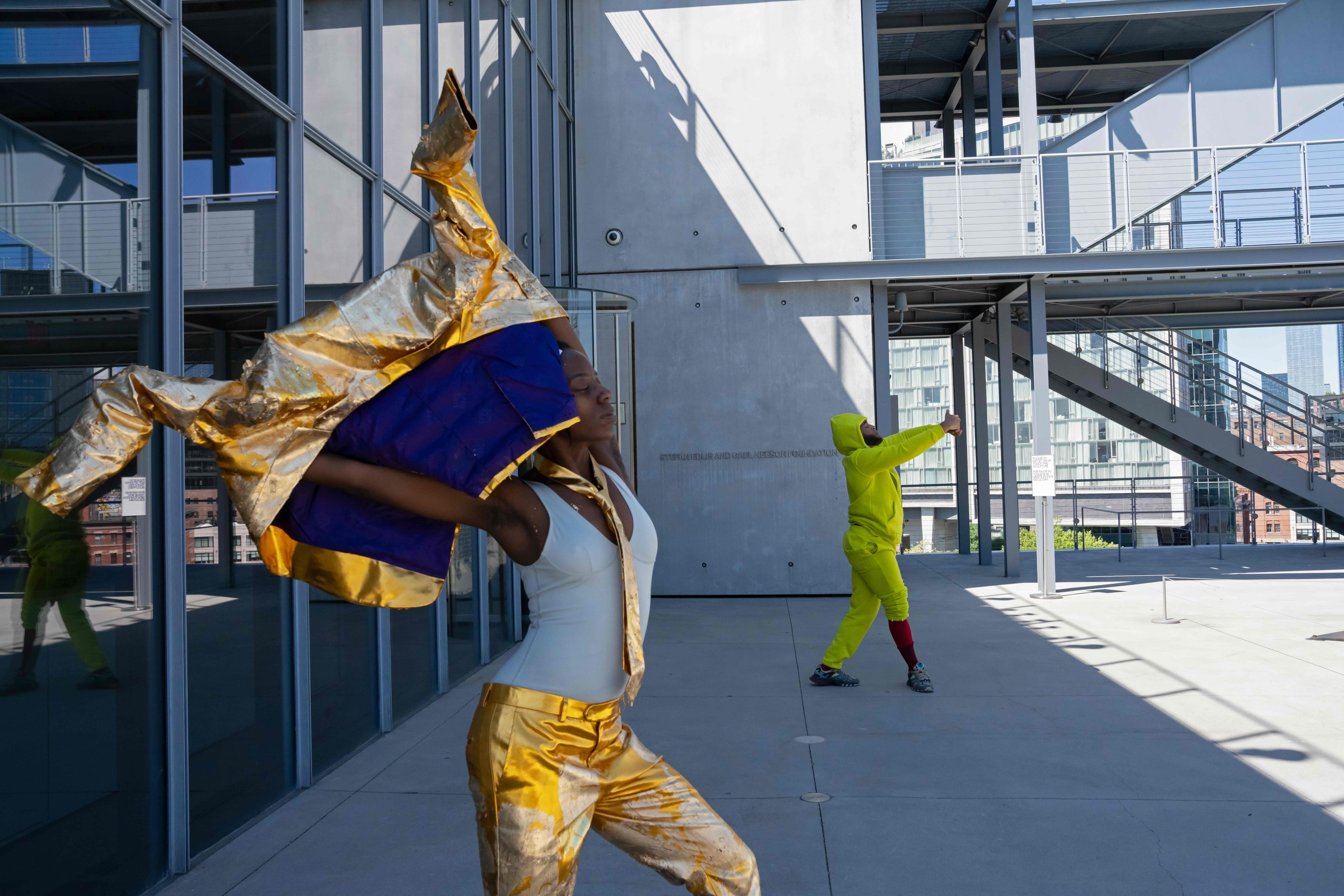
Like Chao, Jonathan González’s work also sees a two-pronged approach with performance and photography. Three Super 8 photographs, A, B, and C, mark the locations, across the museum, of the three-hour long performance piece presented by González and their co-artists.
“Each photograph shares with the performers how to perform the work,” said González, who also lives in West Philadelphia. Magic hour-golden time, they said, “is a double leaning. Magic hour comes from the usage in broadcast television when you have the highest viewership. And golden hour is that moment of the sunset. And so the piece is merging this experience of looking out and also being seen over three hours.”
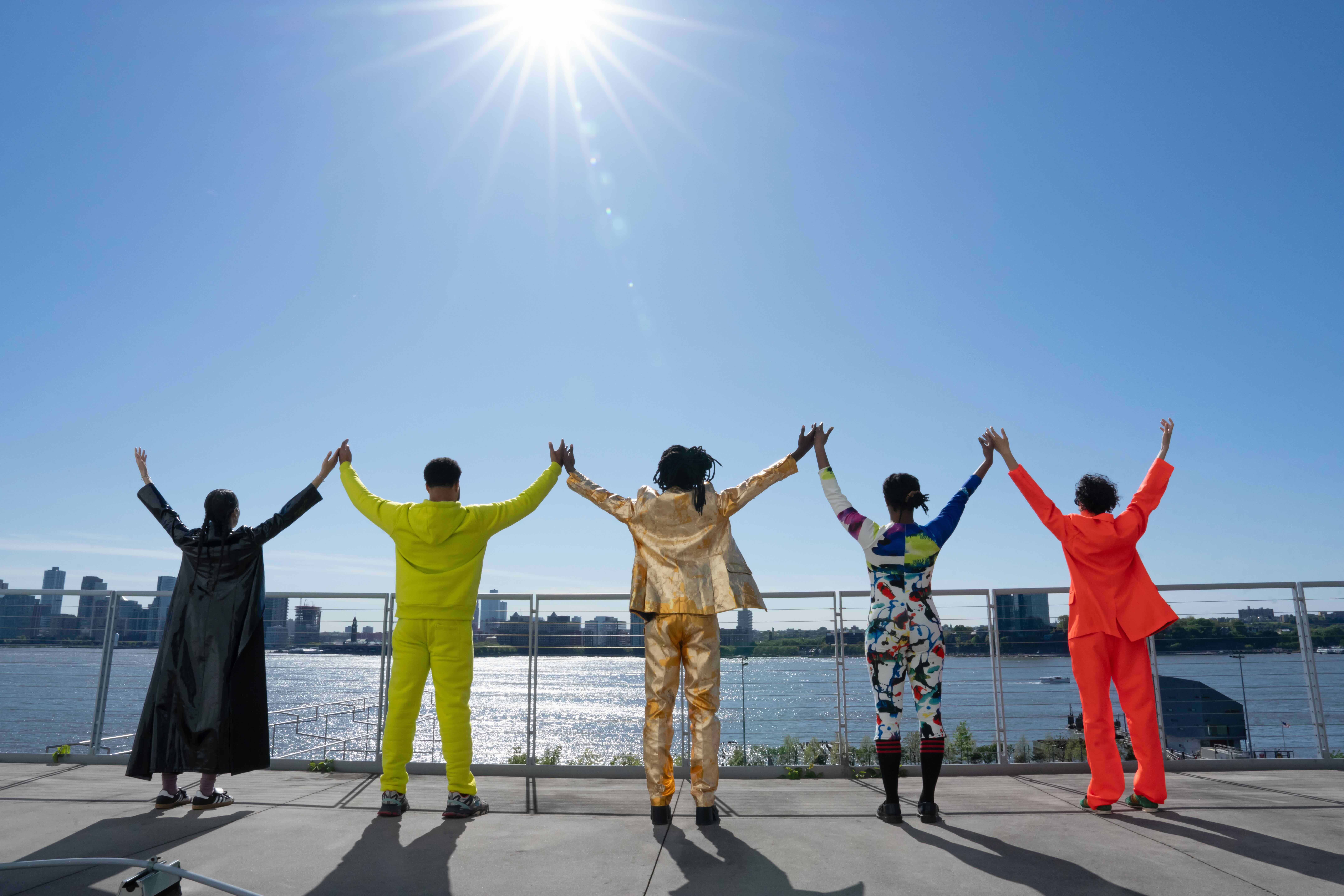
Jonathan González, “magic hour–golden time,” 2026. Rehearsal performance, Whitney Museum of American Art, New York, May 12, 2026. Commissioned by the Whitney Museum of American Art.Julieta Cervantes
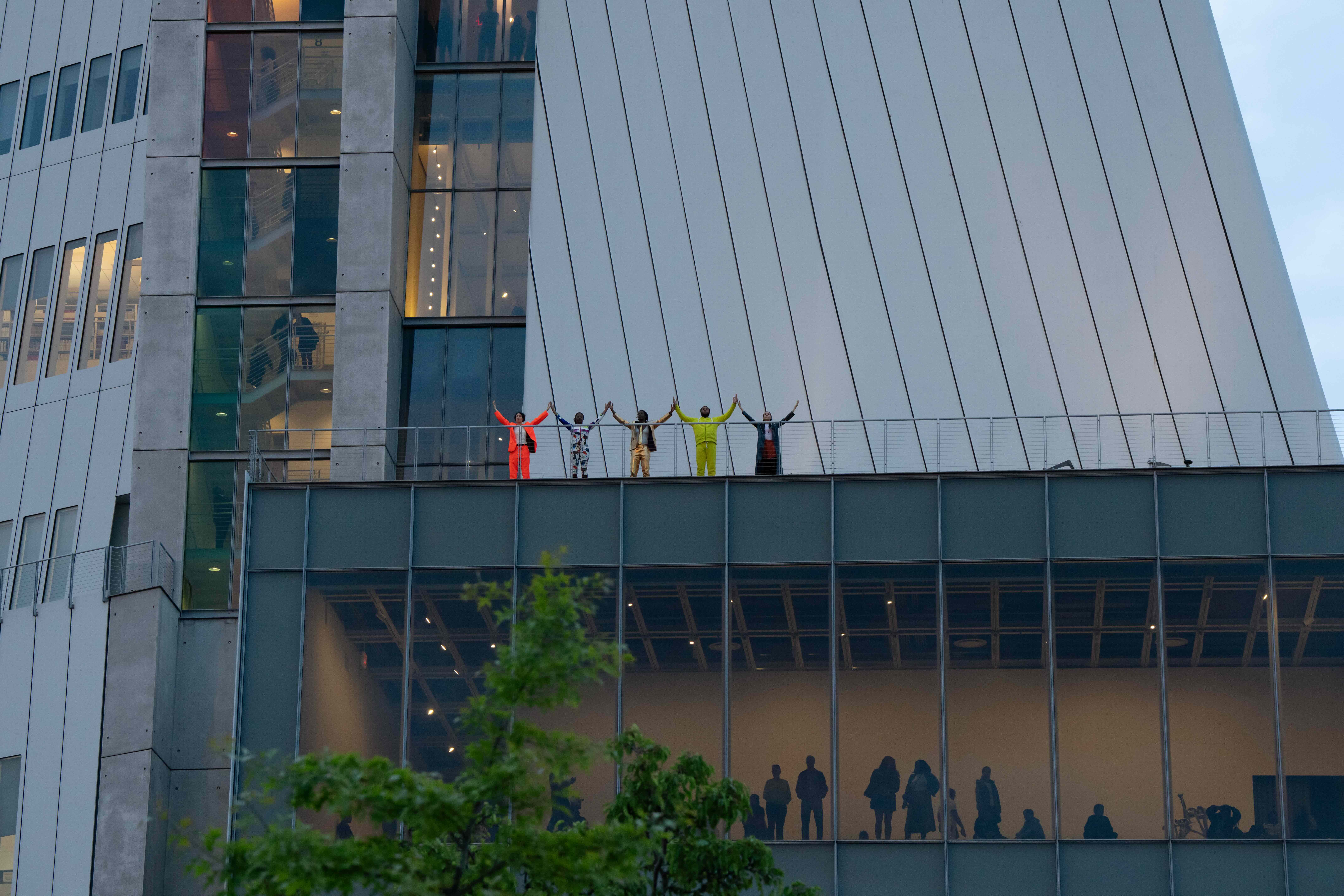
From three terraces around the museum, the performers follow the sun’s movement for three hours. In the first hour, the performers “embody the architecture that surrounds the museum” and makes up the city’s skyline. The second hour, they said, “is a procedure of call and response … the dancers dance with every dance you’ve ever danced, and take information from one another as dancers, as well as from the pedestrians.”
The final hour, González said, is performed on an inaccessible terrace. “It can only be viewed from across the street, you cannot see it from the museum. It’s called the ‘Endless Bow,’ and it’s 60 minutes of bowing to the sun and bowing to the world and bowing to the performance.”
Philadelphia, the former University of the Arts professor said, gives them “the capacity to slow down to hear these voices, and have dreams, visions come to you.” The city allows them the time to spend time in the studio with friends like Chao and inspires them to “collaborating not toward a particular product or aim, but much of the time experimentation.”
Jonathan González, “magic hour–golden time,” 2026. Performance, Whitney Museum of American Art, New York, May 12, 2026. Commissioned by the Whitney Museum of American Art.Julieta Cervantes
“Just the fertile nature of Philly as a historical Black geography has been really important for me to really situate the questions of time and what happens to a city at the late stage of industrialization, and to really think critically about what a group can do, what mutuality is,” they said.
“Certain artists just stay in your mind, and you want to come back and see what they are working on,” said Guerrero recalling her first tryst with González’s work. “The work felt so mature. There’s this notion of how, through improvisation, you can be attuned to your surroundings. In the case of their performance, they make these other effective strategies [for attunement] that don’t always rely on the senses, and that is something that is very present in the show.”
The Whitney Biennial 2026 is on view through Aug. 23 and on partial view, which will include all of the Philadelphia artists’ static works, through Oct. 12. The Whitney Museum of American Art, 99 Gansevoort St., New York. whitney.org
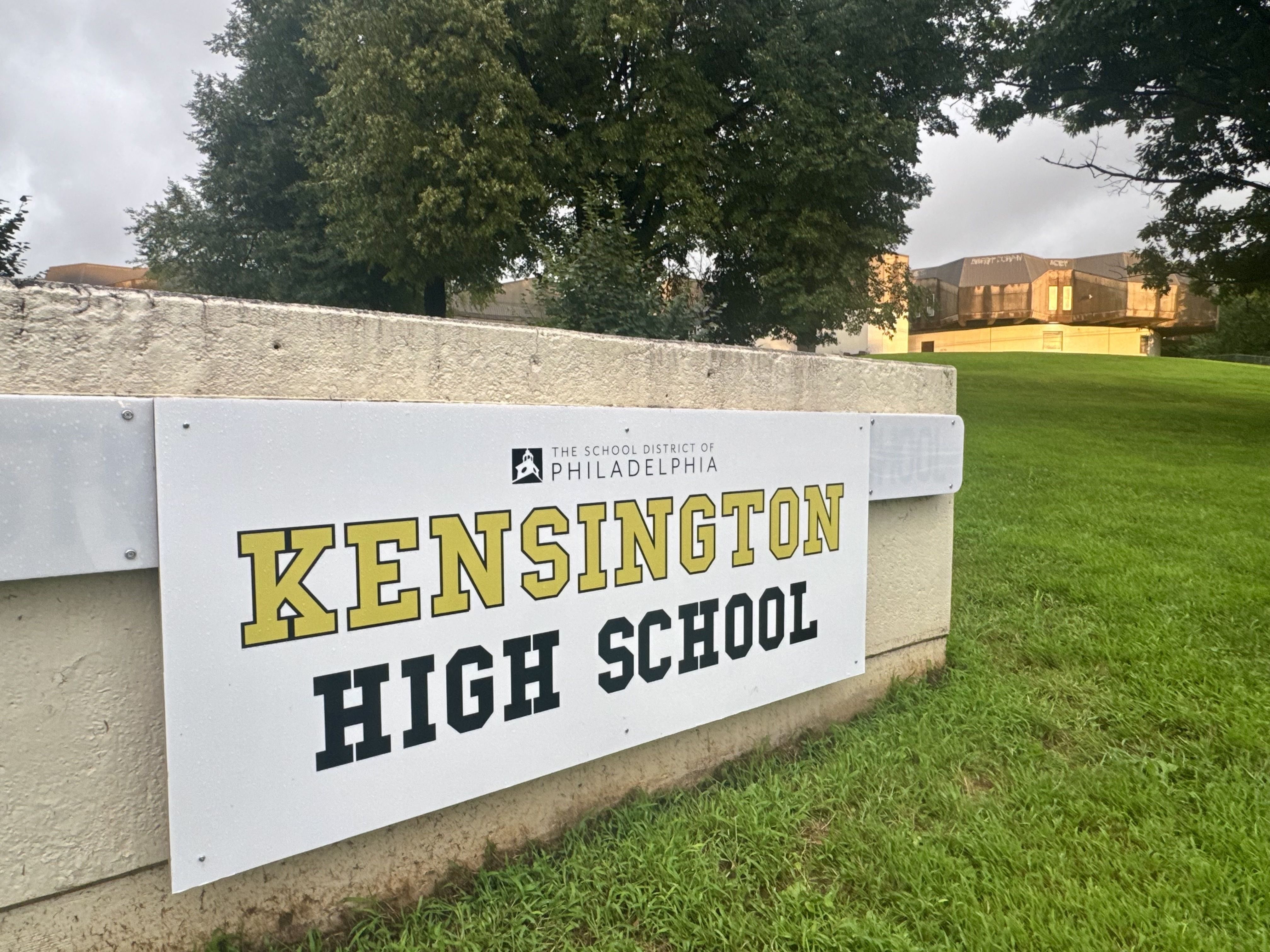
Kensington High students can begin the 2026-27 school year at the former Austin Meehan Middle School in the Northeast, on Monday — despite a lawsuit that hoped to halt the relocation before classes begin.
Philadelphia Common Pleas Court Judge Christopher R. Hall on Friday declined to issue an emergency injunction that would have prevented moving Kensington students to Meehan, a now-empty Northeast middle school.
Asbestos issues rendered Kensington’s E. Clearfield Street building temporarily unusable. District officials decided to move Kensington’s 400-plus students and 90 staff to Meehan — on Ryan Avenue in Mayfair — until Kensington’s building is ready, likely in January.
Meehan shares a campus with Lincoln High and Northeast Community Propel Academy, which are both already overcrowded.
Harold Brown, parent of a rising sophomore at Lincoln, and Peter McDermott, a former district teacher and Mayfair civic leader, objected to the relocation, saying that moving Kensington into the Meehan space would create safety and other concerns.
After a four-hour hearing, Hall said he did not “believe that there is evidence of an immediate and irreparable harm” if Kensington students start the year at Meehan on Monday.
In fact, the judge said, “I think granting the injunction would throw off the Kensington families,” forcing the district to pivot to virtual instruction on short notice, which would harm students’ academics, food security and social and emotional needs.
“The balance does not tip there,” Hall said in court.
Hall’s ruling rests on the district meeting a 5 p.m. Friday deadline to submit a safety plan for the Kensington-at-Meehan campus. Hall and McDermott’s lawyers said they would file another injunction request.
More police, and yellow bus service for most Kensington students
Witnesses for both sides made their case over several hours.
The school system rejected two alternative sites closer to Kensington — Roberto Clemente Middle School, in North Philadelphia, and Penn Treaty High School, in Fishtown — before settling on Meehan, Teresa Fleming, chief operating officer, told the judge.
Clemente was considered the better alternative, but ultimately could not accommodate all Kensington programs. Penn Treaty didn’t meet accessibility needs for students with disabilities, Fleming said.
And Craig Johnson, the school system’s chief safety officer, said the district is adding police officers to ensure student arrival and dismissal run smoothly.
Kensington typically had four school safety officers; it will get a fifth full-time officer with the relocation to Meehan, and a sixth part-time officer to help with arrival and dismissal.
Answering concerns about additional students complicating the transit situation at the Lincoln-Meehan-Propel campus, Fleming said there will be no more than 90 Kensington students traveling to Meehan by SEPTA buses.
Just under 70 Kensington students already receive yellow bus services, and those will continue, Fleming said; an additional 250 students now live close enough to walk to Kensington, and will take yellow bus shuttles from Kensington to Meehan. The remaining 90 students, who are out of catchment for Kensington, already receive SEPTA fare cards and will continue to do so, but may also opt to use the yellow buses if they so choose.
‘The kids are just kids’
Brown, on the witness stand, said he had no problem with Kensington students specifically.
“I don’t even want to say the kids are bad, the kids are just kids, but if you have more kids, things arise,” said Brown.
After Hall made his ruling, Michael van der Veen, a lawyer for the plaintiffs, said his clients remained concerned, despite the district’s plans.
What if “a week from now, or a month from now, we get a shooting, a stabbing, a killing, or violence that breaks out there?” van der Veen said.
Regardless of Hall’s rejection of the injunction, the lawsuit will continue, van der Veen said, and “we’re going to continue to look at what the legal options are.”
William Brennan, another lawyer representing the plaintiffs, said the relocation of Kensington students to Meehan is “a neighborhood safety issue, and we’re going to do everything we can to keep the neighborhood safe.”
Hall, during the hearing, asked Brown and McDermott’s lawyers why parents and the neighborhood groups – who also say the district is violating 2019 and 2020 community benefits agreements – did not object to other students using Meehan.
In the past, elementary school students from Mayfair Elementary — which was overcrowded, and Thomas Holme Elementary, which needed a temporary building while its new school structure was being built — learned in the Meehan space.
“There’s a significant difference in that they were K-8 students, and now we’re looking at 9-12 students,” said McDermott, who previously taught in the district, at Benjamin Franklin High, when it and Science Leadership Academy were relocated after construction on their shared building went awry.
Brennan expressed skepticism that the district’s safety plan, finished a few days before students return to class, will be adequate.
“It sounds like the plan is to drop the bomb on the neighborhood,” Brennan said, “and just hope for the best.”
A series of human and oversight failings is being eyed by federal investigators as possible contributors to the fatal crash of a medical jet in Northeast Philadelphia last year, according to documents filed by the National Transportation Safety Board.
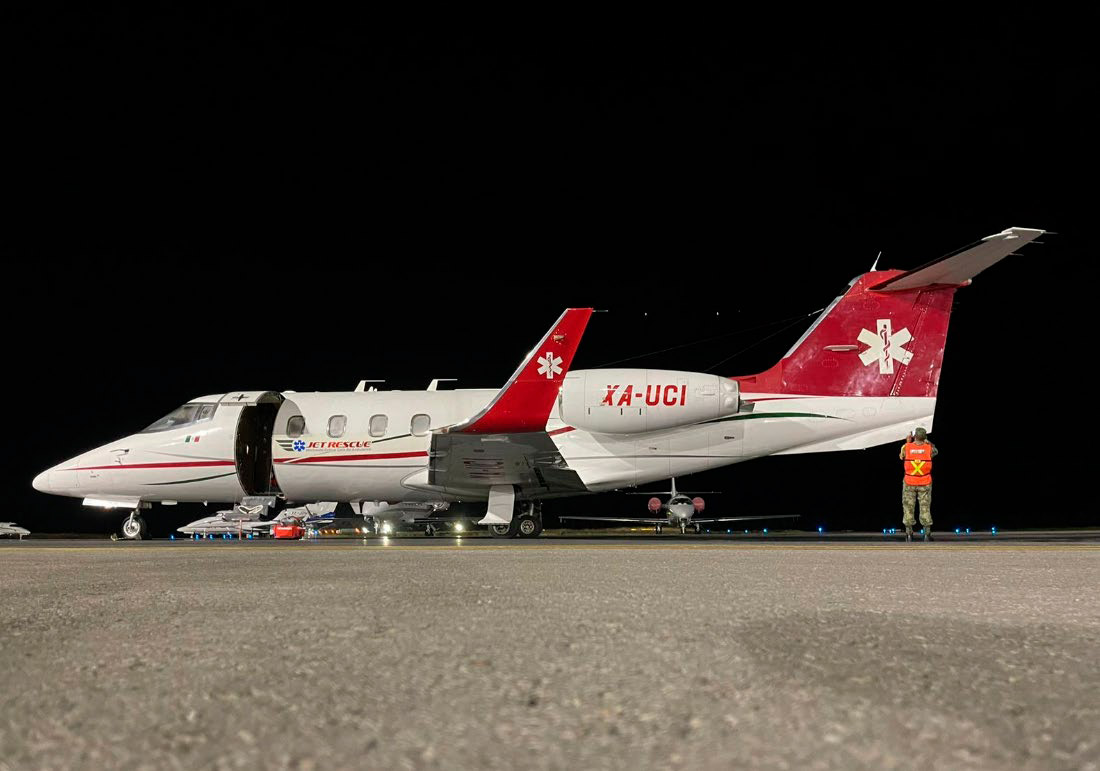
The federal agency does not identify a cause of the Jan. 31, 2025, crash of the Mexican-owned medical transport that crashed near the Roosevelt Mall just after takeoff, killing all six people onboard and twoon the ground.
But among the factors it has found during a 1½-year probe are possibly fatigued pilots who had never flown in or out of the airport, an improper setting on the Learjet tail’s elevators, and a lack of Federal Aviation Administration safety checks on a workhorse foreign-owned carrier.
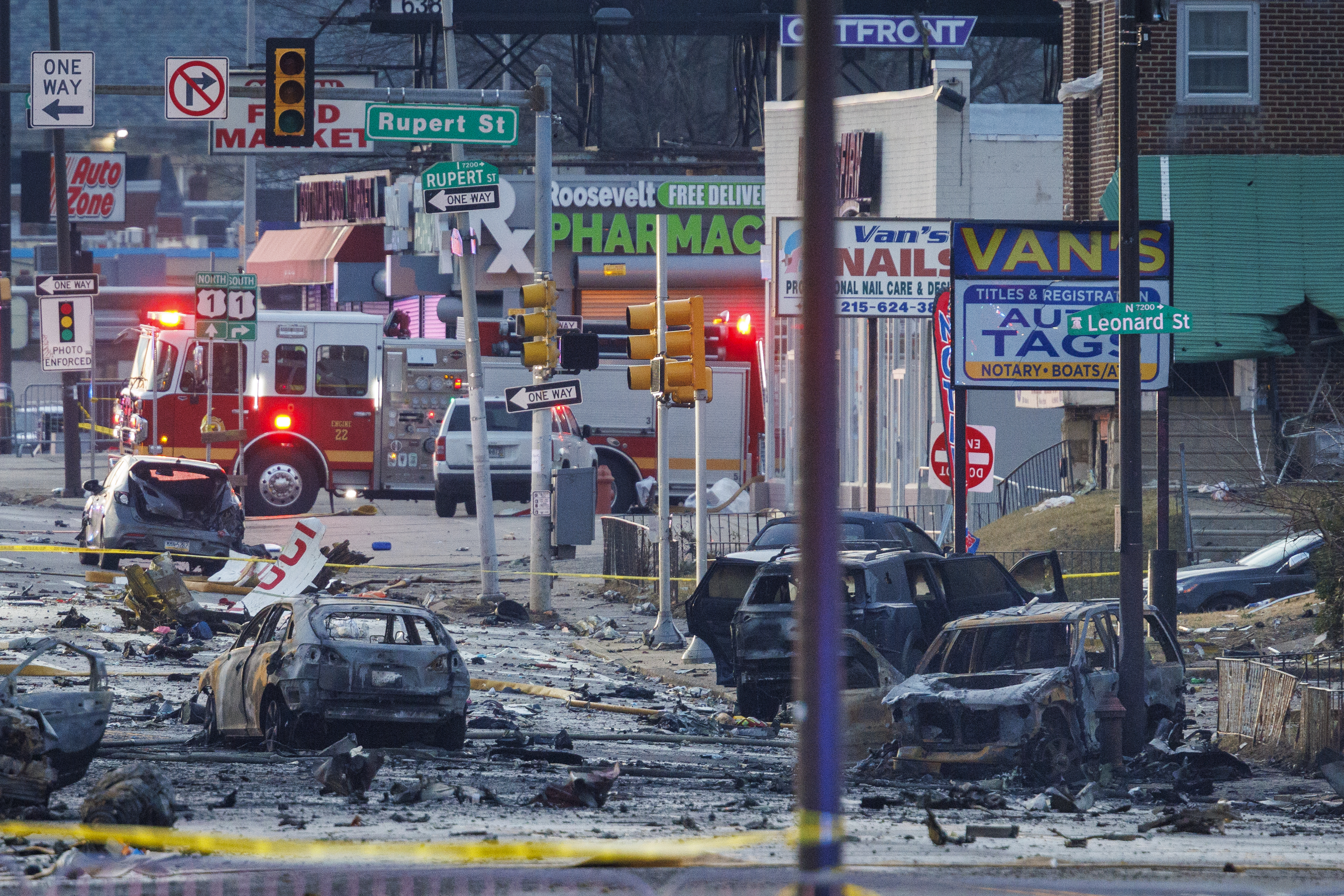
Images released by the NTSB as part of their investigation show the scene along Cottman Ave. where a medical plane that crashed, in Northeast Philadelphia on Jan 31, 2025.Courtesy of NTSB
Upon impact, the 1982 Learjet 55 erupted into flames that spread to homes and cars in the heavily populated area. At least 24 people were reported injured. The jet took off just after 6 p.m. that Friday and within a minute had begun a swift nosedive into the sidewalk near Cottman Avenue and Roosevelt Boulevard.
On board were 11-year-old Valentina Guzmán Murillo, who had just received care at Shriners Children’s Philadelphia before returning home to Mexico; her mother; a pilot; a copilot; a flight physician; and a paramedic.
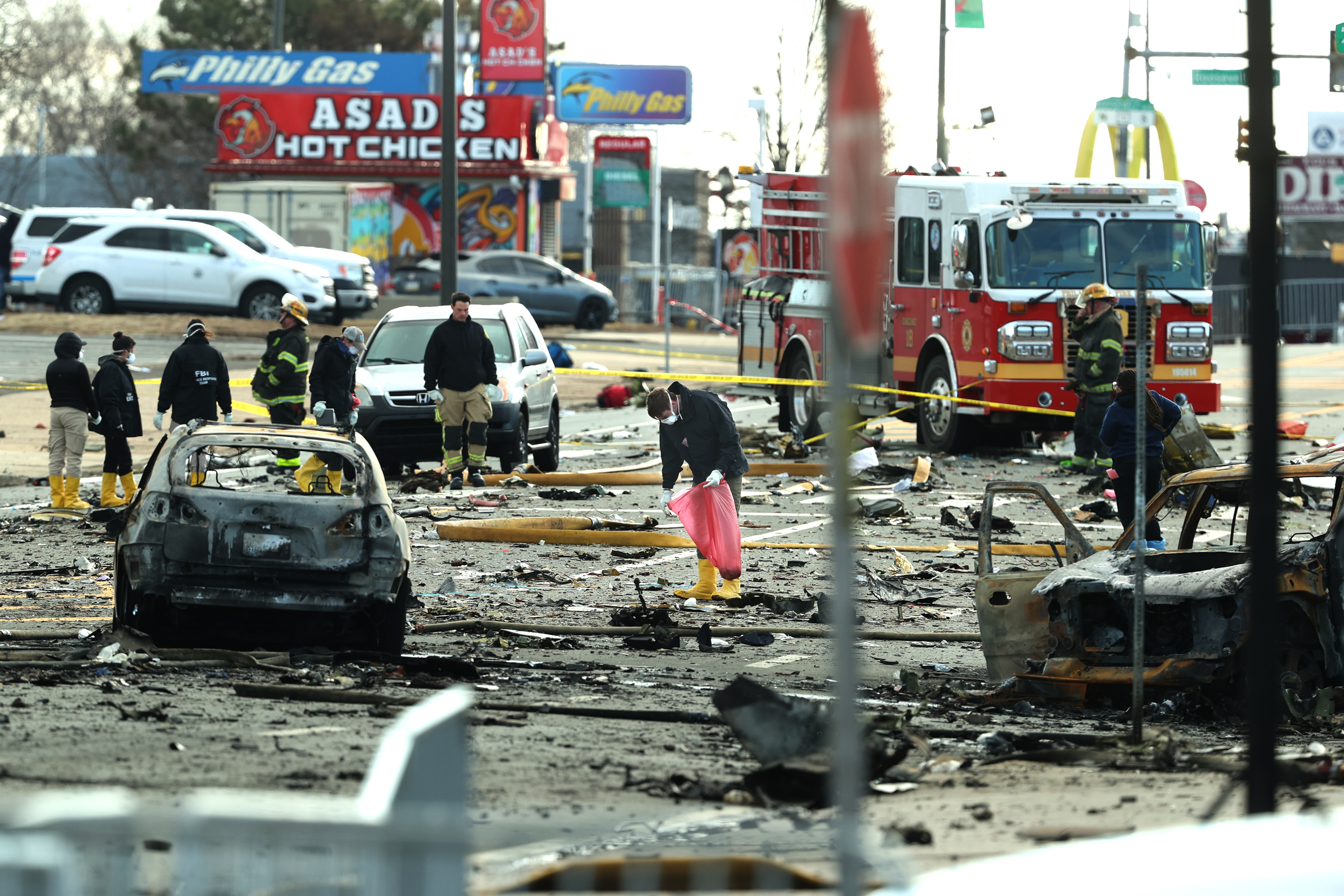
Investigators going through the debris on Cottman Avenue Saturday, Feb. 1, 2025, in Philadelphia. A medical jet with six people on board crashed Friday evening near the Roosevelt Mall in Northeast Philadelphia.Charles Fox / Staff Photographer
Potentially fatigued pilots and potential training weaknesses
As investigators try to piece together what might have gone wrong in the cockpit, they are focused on the two pilots.
One factor that could have played a role was their workload in the days leading to the fatal crash. They had flown multi-leg trips all four days before the accident.
NTSB investigators also looked into the effects of “spatial disorientation,” a phenomenon pilots experience when their perception of motion and relation to the Earth’s surface becomes mismatched.
During the ascent from Northeast Philadelphia Airport, the pilots rolled the plane to the right by 12 degrees. Air traffic controllers then communicated with the pilots, and the pilots responded just as the plane began to rotate back to zero degrees. According to the NTSB, within 10 seconds of their last communication with the air traffic tower, the plane continued rolling to the left at a rapid speed until the plane stopped climbing.
“Pilots who are properly trained and current in instrument flying can normally use instrument information to overcome misleading sensations, however, even well-trained pilots experience sensory illusions from time to time,” NTSB investigators wrote.
When there is a delay, it can take a few seconds or more for a pilot to regain spatial awareness. But during that delay, a pilot may make inappropriate control inputs that place an airplane in “an unrecoverable trajectory.”
In interviews with the pilots’ most recent training instructors at Flight Safety International in Tucson, Ariz., the pilot in command demonstrated a “tendency to react before thinking through a problem,” the report says. The instructor noted that the same pilot would select modes of operation when the autopilot system was off, something the pilot in command is supposed to delegate to the second-in-command pilot.
“That allows the pilot to concentrate on actually flying the aircraft. So what happens is, if the autopilot’s off and the pilot flying goes to select modes of operation, it’s distracting him from flying the aircraft, which typically results in deviations of altitudes, speeds, and headings,” said the flight instructor, who was not identified in the report.
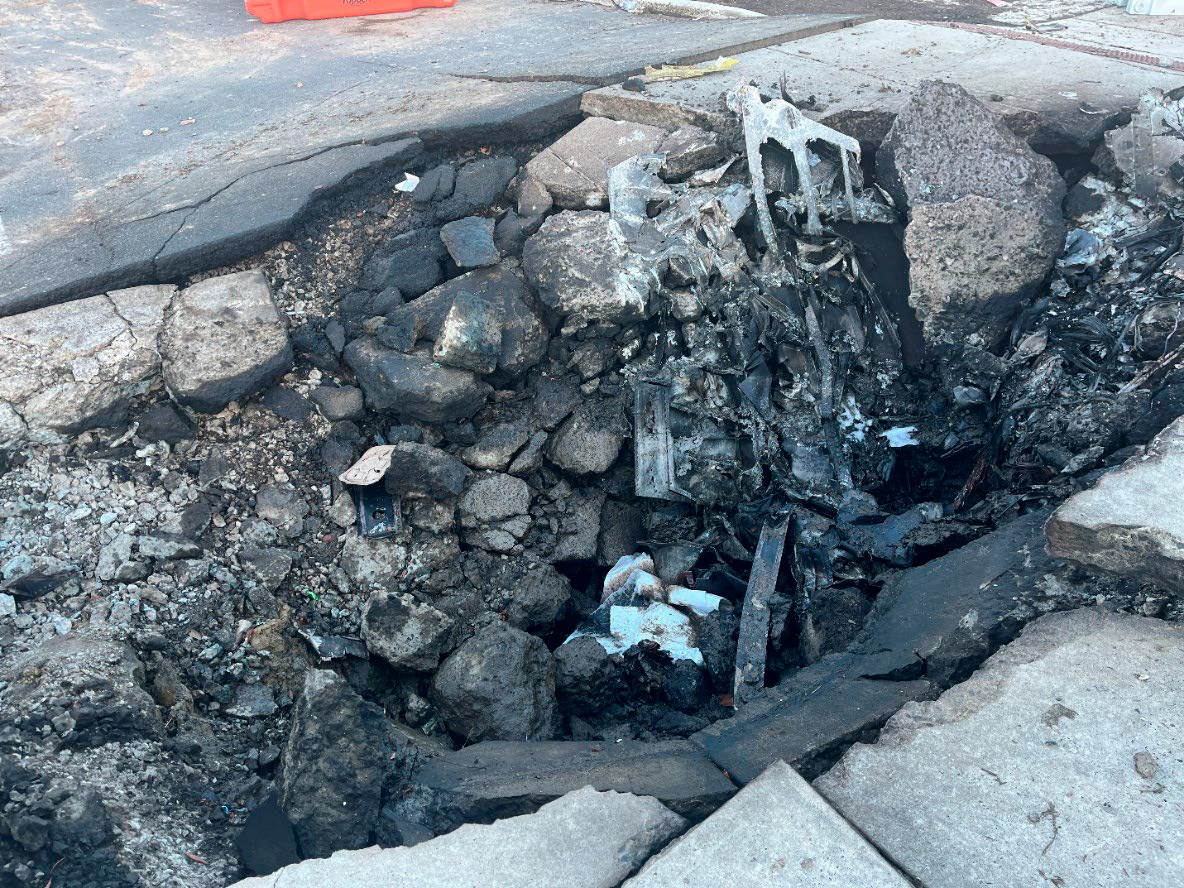
Images released by the NTSB as part of their investigation show the wreckage of a medical plane that crashed in Northeast Philadelphia on Jan 31, 2025.Courtesy of NTSB
The second-in-command pilot’s training report also showed that his lack of recent experience in flying a similar-model Learjet “was evident.”
A spokesperson for Jet Rescue Air Ambulance, the Learjet 55’s operator, could not be immediately reached Wednesday for comment on the new release of documents.
Jeff Guzzetti, a former NTSB investigator, wondered if the low visibility that night, made more hazardous by overcast and lightly choppy weather conditions, could have exacerbated a phenomenon called somatogravic illusion.
That happens when rapid acceleration or deceleration, or other changes in gravity, can cause pilots to falsely believe a plane is pitching up or down when it is not.
“When you look at those four things — the low cloud ceiling, nighttime conditions, high velocity descent, less than a minute after takeoff — that could be consistent with spatial disorientation,” he said. Add in other distractions, like changing radio frequencies, and even experienced pilots have lost their bearings while relying solely on their instruments to navigate, Guzzetti said.
Images released by the NTSB as part of their investigation show the medical plane that crashed in Northeast Philadelphia on Jan 31, 2025.Courtesy of NTSB
Investigators search the jet
The extreme impact, and a debris field scattered across more than a dozen city blocks and a shopping center, has hampered the investigation. Nearly all parts of the plane, from its engines to the mechanical and electrical systems that controlled the jet, were found in damaged condition.
Even so, the NTSB has reported that the jet’s pitch trim, which would have aided the angle of flight and airspeed, was not in optimal position. That meant the pilots would have had to exert up to 50 pounds of force against the controls during takeoff and 12 pounds for level flight, investigators said.
Arthur Alan Wolk, a Philadelphia-based aviation attorney and pilot, was dubious. “They blame the pilot for the trim,” he said. “I don’t think you can rely on that record” because the impact makes interpreting the damaged parts difficult.
Wolk also said the pilot could have corrected for this by hitting an electrical trim switch. “Could it have happened? Yes. Is it a factor? In my opinion, I don’t think so.”
The investigation devoted extensive research into tanks filled with oxygen and other gases the medical jet had on board, which could have led to a fire or impaired the flight crew. Investigators said cameras that caught the airplane’s descent did not show trailing smoke or any visible internal fire.
In all, 11 gas cylinders were recovered with various states of damage. In previous incidents, investigators noted, flight crews had become incapacitated by carbon dioxide exposure. The Learjet’s carbon dioxide tank was found with its valve stem fractured, though the NTSB did not say if it believed there had been a leak prior to the crash.
Jet Rescue Air Ambulancetold the NTSB that the company had no record of the raft for this jet and believed it was installed by a crew member without authorization.
Despite the NTSB stating in March 2025 that the cockpit voice recorder had not worked in years, investigators were able to repair its analog tape and listen to the audio. But the recordings were of a prior landing.
The report did not say why the device failed to record the final takeoff. This jet was not required to carry or maintain a cockpit voice recorder, though it was listed on the preflight checklist.
The NTSB also examined the Learjet’s logbooks and maintenance reports and found they were largely in order, though they could not determine if any new maintenance was done prior to the final flight.
From left Philadelphia Mayor Cherelle Parker, Sean Patrick Duffy, United States Secretary of Transportation turning to acknowledge Pennsylvania Governor Josh Shapiro’s work at press conference. These three and others tour the scene of medical jet crash, Cottman Avenue on Monday, Feb. 3, 2025. The plane crashed Friday evening, Jan 31, 2025.Alejandro A. Alvarez / Staff Photographer
Lack of FAA oversight
A major piece of the investigation rests on the FAA’s Dallas International Field Office, which oversaw the U.S. operations of the medical jet operator.
Because the operator flew unscheduled, non-U.S. registered flights, FAA personnel said they were limited to performing “ramp checks,” or unannounced inspections of the aircraft and crew on the ground, as a safety measure. But when investigators searched the FAA’s safety assurance system for any record of ramp checks, they found none prior to the fatal crash.
Asked by NTSB investigators if there was a requirement to perform ramp checks or other surveillance on operators like Jet Rescue Air Ambulance, the primary inspector stated: “Oh, I’m not sure.”
The primary inspector continued that there was no surveillance plan in place before the time of the crash and that FAA staff in charge of Jet Rescue Air Ambulance’s operations had no knowledge of the operator’s previous crashes. The operator experienced a fatal accident in November 2012 in Fort Lauderdale, Fla., a nonfatal accident in February 2019 in Toluca, Mexico, and a fatal accident in November 2023 in Cuernavaca, Mexico.
Jet Rescue Air Ambulance was not on the FAA’s Heightened Surveillance List, which would have flagged the operator for additional inspections.
Unscheduled operators like Jet Rescue Air Ambulance are required to notify the Dallas FAA field office before operating in the United States, which the FAA would use todetermine when inspections are needed. But Jet Rescue Air Ambulance did not notify the office of its operations before the accident flight, according to the NTSB findings.
The NTSB release of evidence comes as federal probers complete their investigation phase and prepare their final report, followed by a review process that can take up to six months.