The battle over data centers and the artificial intelligence they power has officially reached Philadelphia City Hall.
A coalition of activist groups and environmental advocates gathered at City Hall Monday to call on local lawmakers to pass a moratorium on data center construction in the city, the opening salvo for the group’s public pressure campaign to oppose the projects that it says could hike energy rates and drive pollution.
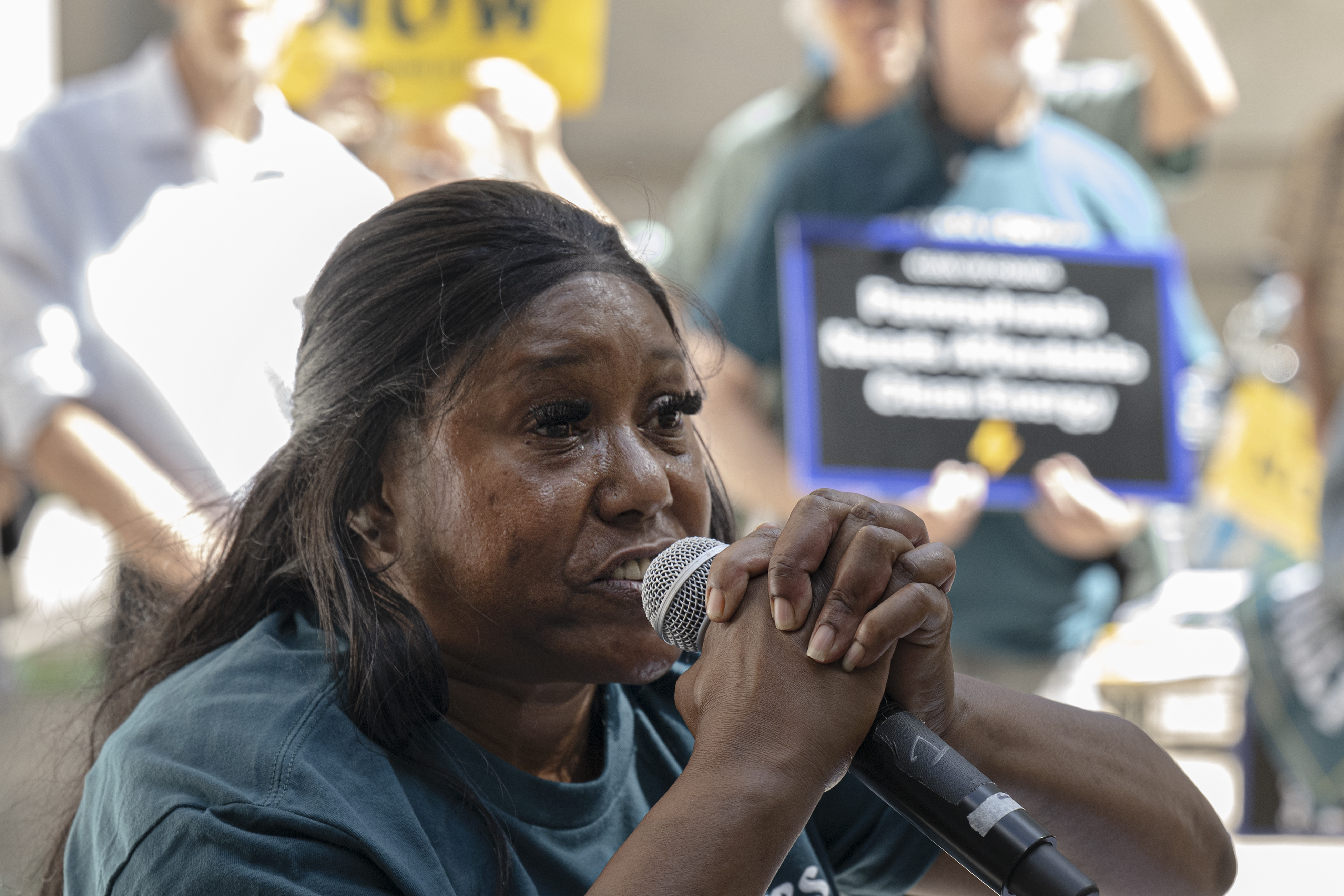
“There’s way too much at stake to let data centers expand without guardrails,” said Sonya Sanders, board president of Philly Thrive, an advocacy group for racial, economic, and environmental justice.
The coordinated push could put Mayor Cherelle L. Parker and members of City Council in a politically tricky spot as they gear up to run for reelection in the spring. Data centers have proven deeply controversial and have drawn bipartisan backlash, but some unions that see job-creating potential support their construction.
There is no specific data center proposal currently under consideration by City Council, andno member has said that they will introduce a moratorium bill. A spokesperson for Council President Kenyatta Johnson said that Council members and Parker’s administration are in “discussions on the future of data centers in the city.”.
Any data center legislation would have to run through Parker, a centrist Democrat who has not staked a position on the issue. She is allied with the unions that represent construction workers and has generally been pro-development. However, she positioned herself as an opponent of Big Tech earlier this year when she advocated for new taxes on companies like Uber and Airbnb.
Parker said in a statement Monday that she would sign an executive order this week to “formalize” a task force she convened over the summer to explore potential standards for data center development, and she vowed that the city would put “rigorous guardrails in place.” She did not specify a timeline.
Grays Ferry resident Sonya Sanders speaks during a rally at Philadelphia City Hall on Monday, calling on City Council to pass a citywide data center moratorium and kicking off the No Data Centers in Philly campaign.Jose F. Moreno / Staff Photographer
The data centeractivists’ event in Philadelphia came as fear of AI’s rapid development and increasingly humanlike capabilities has spread substantially and as leaders of the nation’s largest AI developers over the weekend signaled support for a global slowdown.
On Saturday, Anthropic chief executive Dario Amodei wrote that the technology is advancing more rapidly than leading companies can implement safeguards. Several of his top rivals, including Sam Altman of OpenAI and Elon Musk of SpaceX, endorsed his call for a slower pace of growth.
Meanwhile, talks of regulation have gripped Washington, with lawmakers from both major parties drafting plans to rein in tech companies and add layers of oversight to AI development. Any proposal faces an uncertain future, as President Donald Trump has said the country should remove barriers to AI development and accelerate advancement in order to outpace China.
On Monday morning, Trump posted on his Truth Social platform: “The only control or ‘guardrails’ that AI needs is a STRONG AND SMART (High IQ!) PRESIDENT, and the U.S.A. has that, in spades!”
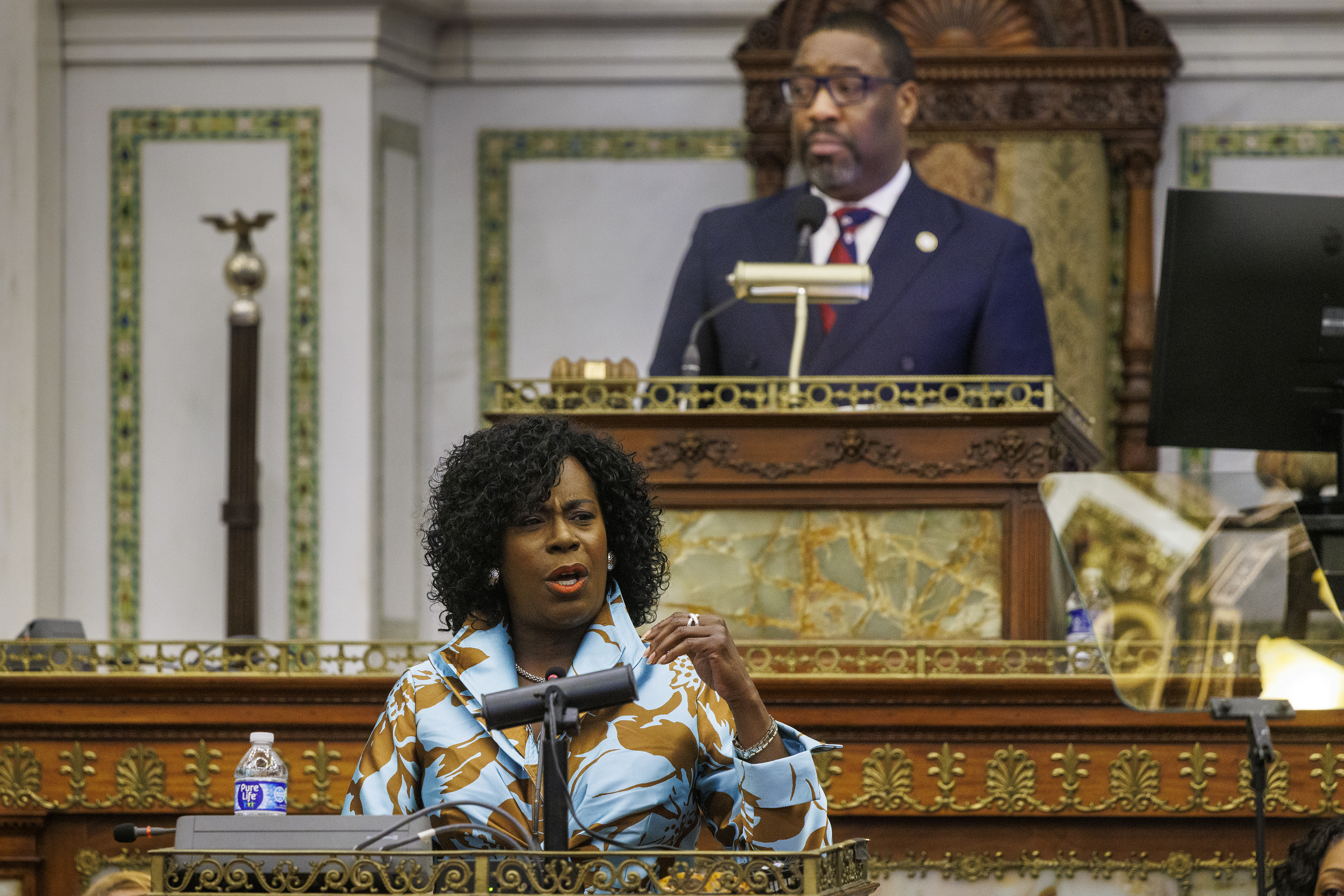
Philadelphia Mayor Cherelle L. Parker start to make her budget presentation to City Council in Council Chambers on March 12. In the background is Council President Kenyatta Johnson.Alejandro A. Alvarez / Staff Photographer
Inaction in Washington has left an opening for states and cities to regulate the construction of data centers, which produce the massive amount of computing power needed for artificial intelligence. They have become increasingly unpopular — a July poll found that 3 in 4 Pennsylvanians don’t want a data center in their backyard.
Municipalities in Pennsylvania, including Philadelphia, now have more power than ever to slow or halt the development of data centers. Gov. Josh Shapiro, a Democrat who is considered a potential presidential contender and who had previously courted data center projects, last month signed an executive order requiring local approval for any project to receive a state permit.
Philadelphia is already home to eight data centers that were constructed before the issue was widely controversial. The existing data centers are far smaller than the newer “hyperscale” projects that are meant to power AI and have faced opposition in communities across the country.
In July, the city’s planning commission said there are only two locations in the city that could support an industrial-size data center: the former South Philly refinery site known as the Bellwether District and 2600 Grant Ave., a city-owned plot adjacent to the Northeast Philadelphia airport.
Planning commission officials emphasized that they were not asked to consider a specific proposal to build a data center at either of those sites.
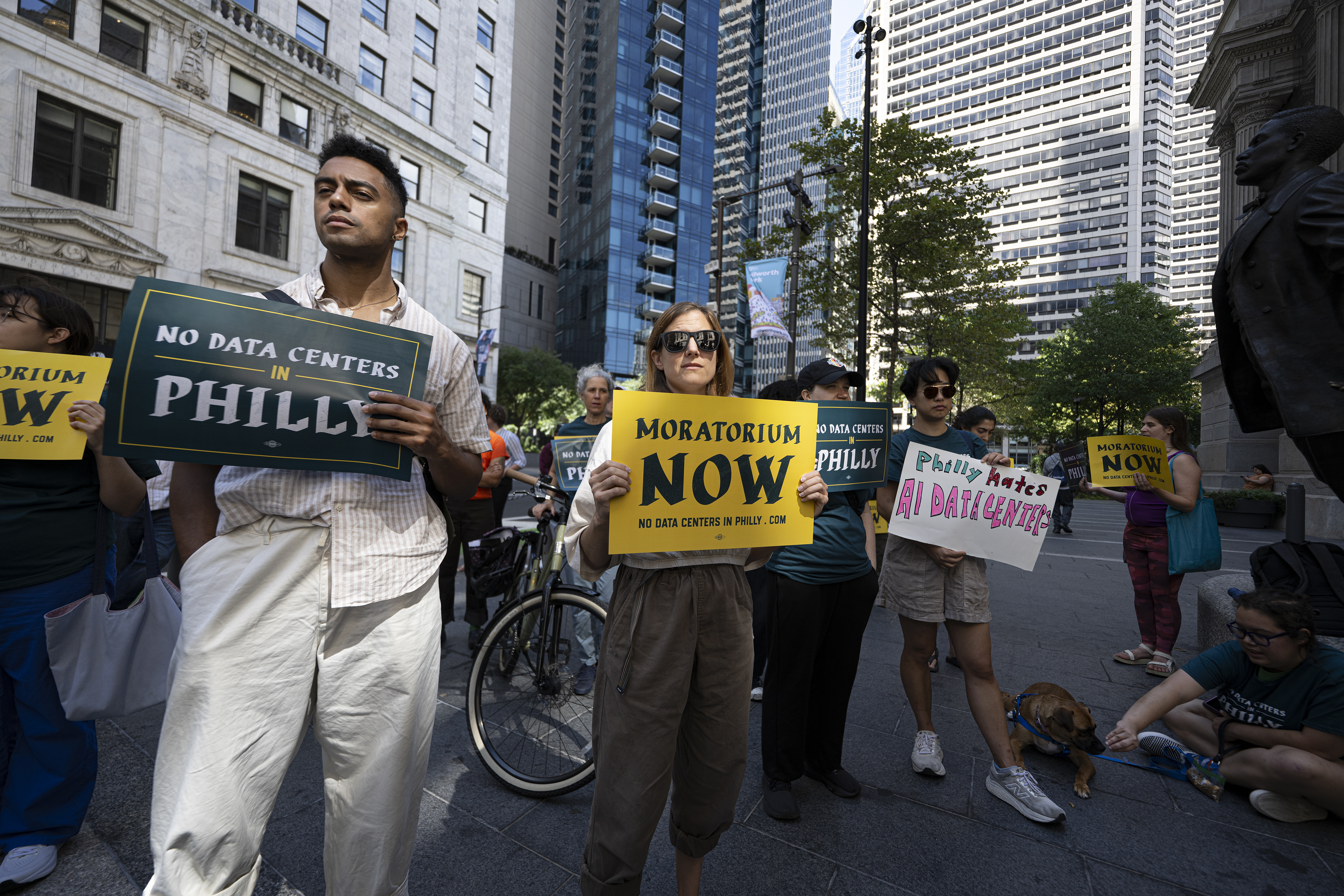
People hold signs opposing data centers during a rally at Philadelphia City Hall on Monday, calling on City Council to pass a citywide data center moratorium and kicking off the No Data Centers in Philly campaign.Jose F. Moreno / Staff Photographer
City Council has thus far not taken action on data centers, aside from passing a resolution authored by Councilmember Rue Landau earlier this year to hold hearings on the issue. A hearing has not yet been scheduled.
Council, which is led by a supermajority of Democrats, will convene Thursday for the first meeting of the fall session.Members are unlikely to green-light a controversial data center project ahead of the primary election in May, when every Council seat will be on the ballot.
But activists said Monday that city lawmakers must take proactive steps to ban data centers temporarily while they draft a regulatory framework and a system for considering public input on proposed projects.
Shawmar Pitts, the managing co-director of Philly Thrive — which is rooted in the communities that surround the former South Philly oil refinery — said Council members are “on notice.”
“Don’t put a moratorium in place, and your seat will be taken,” he warned.
Senia Lopez, a Northeast Philly resident and an organizer with the advocacy group 215 People’s Alliance, said people in neighborhoods surrounding any future hyperscale data center would be saddled with higher utility costs and “increased threats to our health.”
“City Council must chose whose interests it represents,” Lopez said. “It can side with Big Tech companies seeking to extract from our communities, or it can stand with the working people who have built and sustained them.”
Butter chicken has taken an indirect route to South Street’s Pronto Pizza: from its roots in North India to a Pakistani family kitchen in Northeast Philadelphia, then into an Italian American pizza shop and, finally, onto a roll.
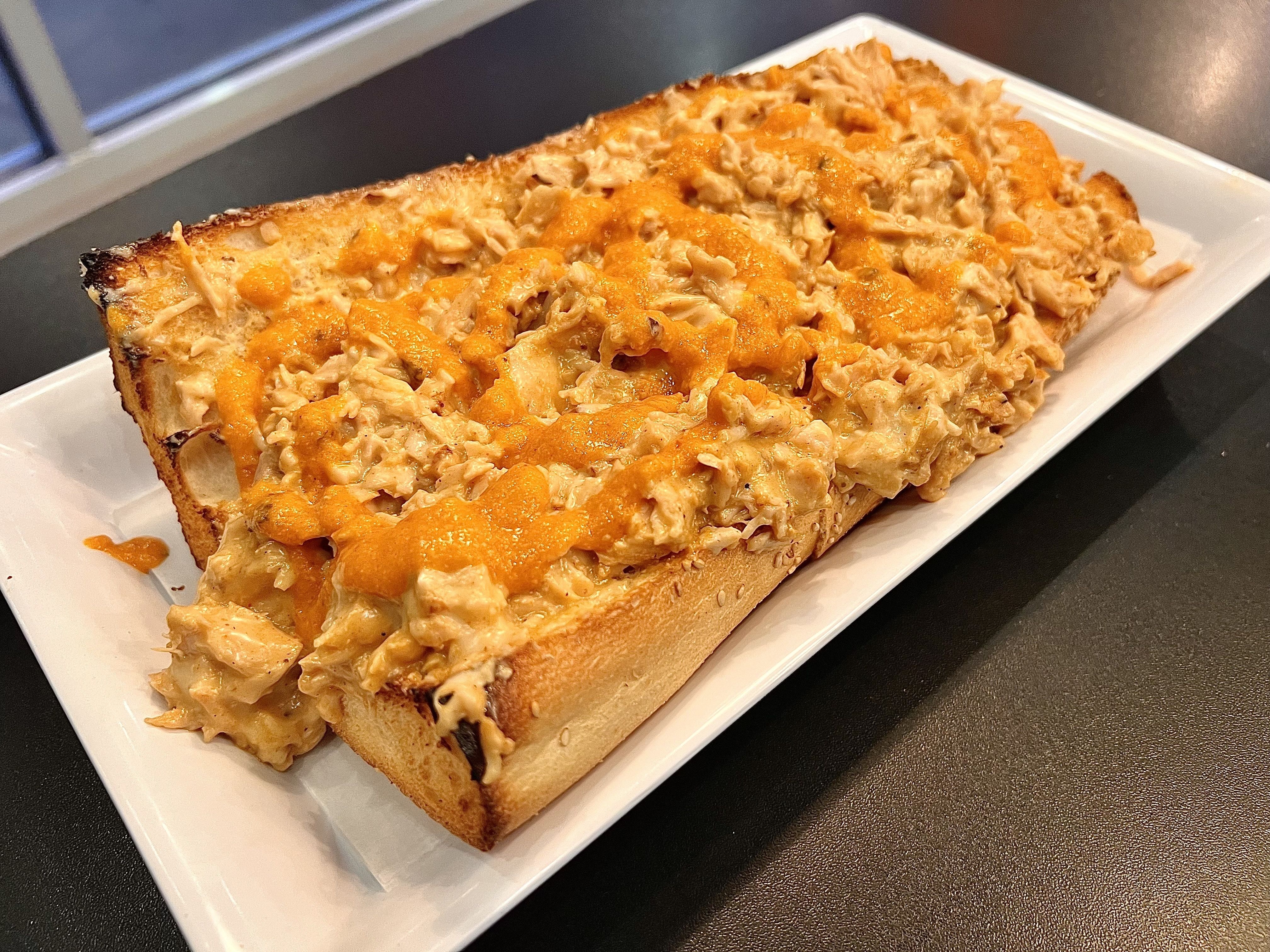
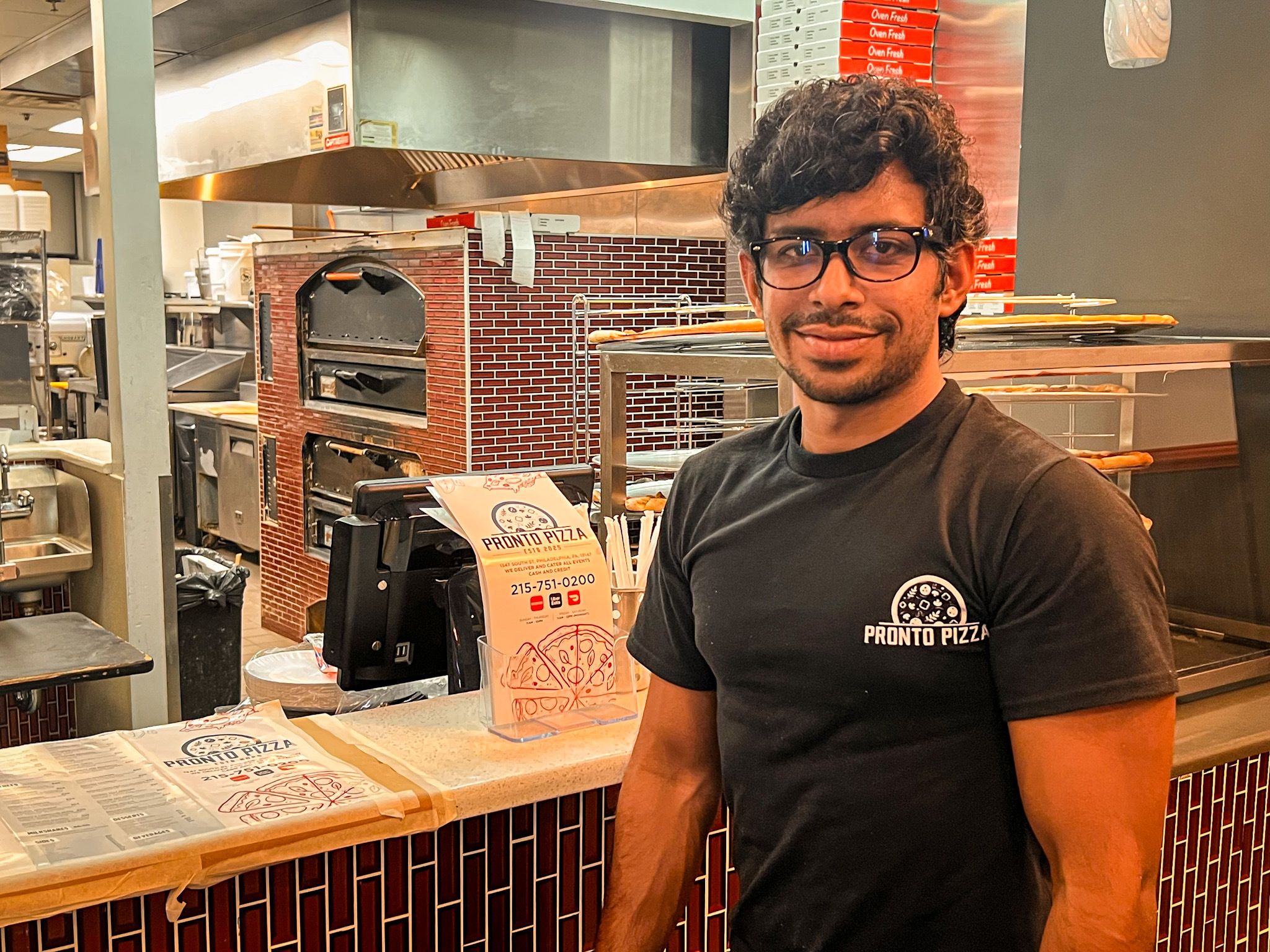
At Pronto, just off Broad Street, it’s a secret menu item. Owner Umair Cheema tops chopped marinated chicken with Cooper Sharp and butter chicken sauce based on his mother Asma’s recipe. The $12 sandwich is Cheema’s addition to a citywide assortment of cheesesteak variations that includes versions made with oxtail and salmon.
Cheema does not skimp. He lightly toasts the Liscio’s roll before adding nearly a pound of a mixture of chicken and melted cheese. Then comes a ladle or two of the rich butter sauce, which comes perilously close to gilding the lily.
Umair Cheema owns Pronto Pizza, 1347 South St., which previously was LaScala’s Pronto.Michael Klein / Staff
Cheema, 28, had eaten plenty of butter chicken in Pakistan, but he credits his younger brother, Adil, with inspiring Pronto’s version. After the family moved to Northeast Philadelphia in 2019, Adil routinely asked their mother to cook for him.
“One day my mom made butter chicken, and I was like, ‘Mom, this is outstanding. This is the kind of butter chicken I eat at restaurants,’” Cheema said.
A staple entree on Indian restaurant menus in the United States, butter chicken typically features yogurt-marinated chicken in a mild, creamy tomato sauce seasoned with onions, garlic, and spices such as garam masala, turmeric, cumin, and coriander. The dish has proved adaptable to other formats. Chef Reuben Asaram, for example, has incorporated it into his Mexican-Indian “Reubychanga.”
Pronto is also not the area’s only shop making a butter chicken cheesesteak. Double Down Kitchen at Ridge Hall in Ambler serves one alongside versions made with jerk chicken and bulgogi-marinated rib-eye.
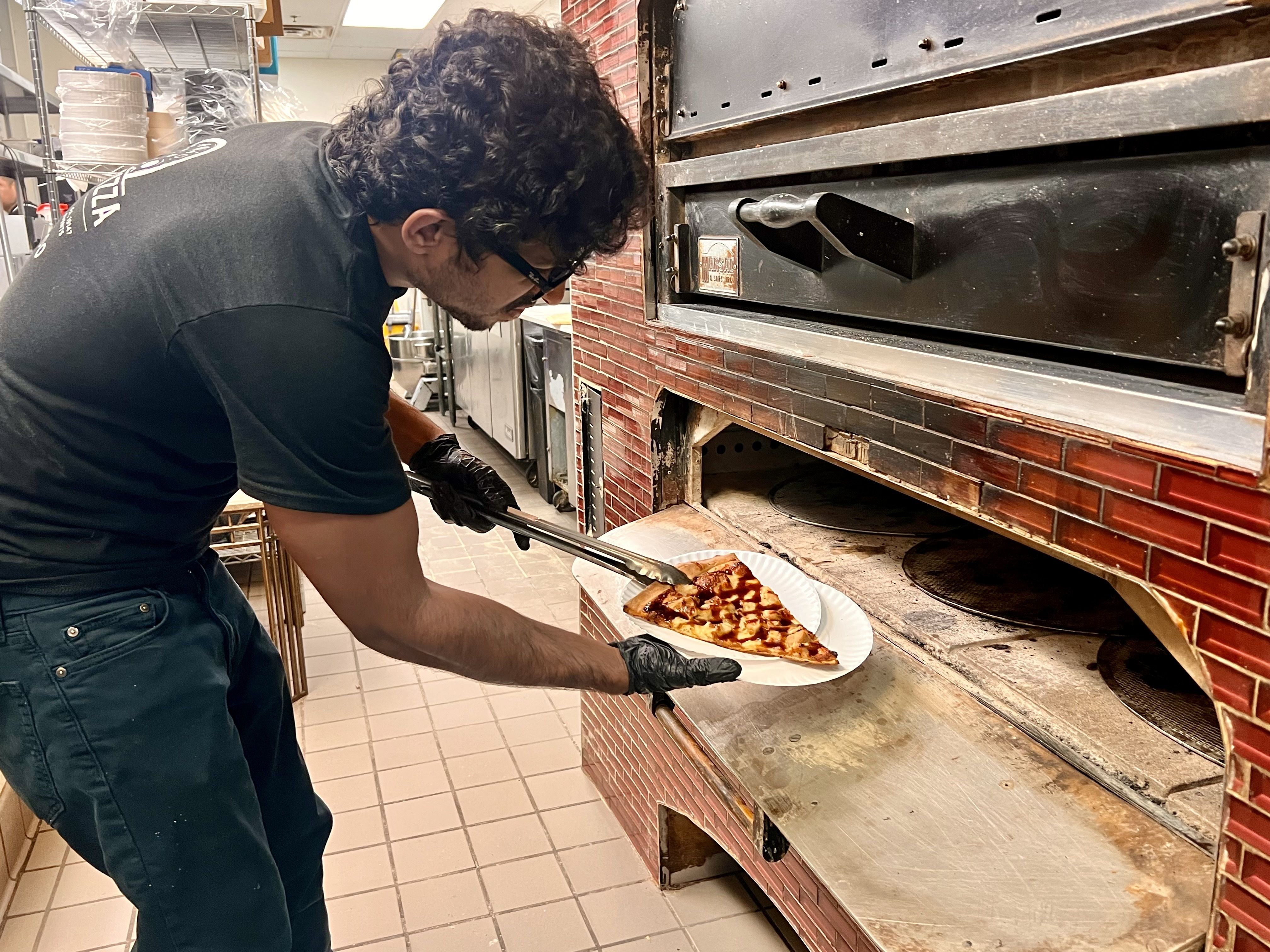
Owner Umair Cheema pulls a slice of pizza from the oven at Pronto Pizza, 1347 South St.Michael Klein / Staff
Cheema’s sandwich is part of his effort to broaden the menu at Pronto, which he bought from restaurateur Rob LaScala. He largely retained LaScala’s offerings of pizza, sandwiches, wings, pasta, meatballs, chicken Parmesan, and grilled salmon platters.
Cheema had not expected to enter the pizza business. After arriving from Pakistan, where his father had worked as a banker, he took a job at Kabobeesh, his aunt’s West Philadelphia restaurant. His father was diagnosed with severe diabetes soon afterward, while his mother found warehouse work.
“I took charge,” Cheema said. “I was like, ‘Let me deal with all of this now. It’s my time to handle this.’”
His opportunity came when an uncle learned that Naz’s Pizza in Chester was for sale.
“He called me and said, ‘Someone is really desperate. They want to sell their pizza shop. I know you have some money saved. If you really want to look into it, I’ll help you out, too.’”
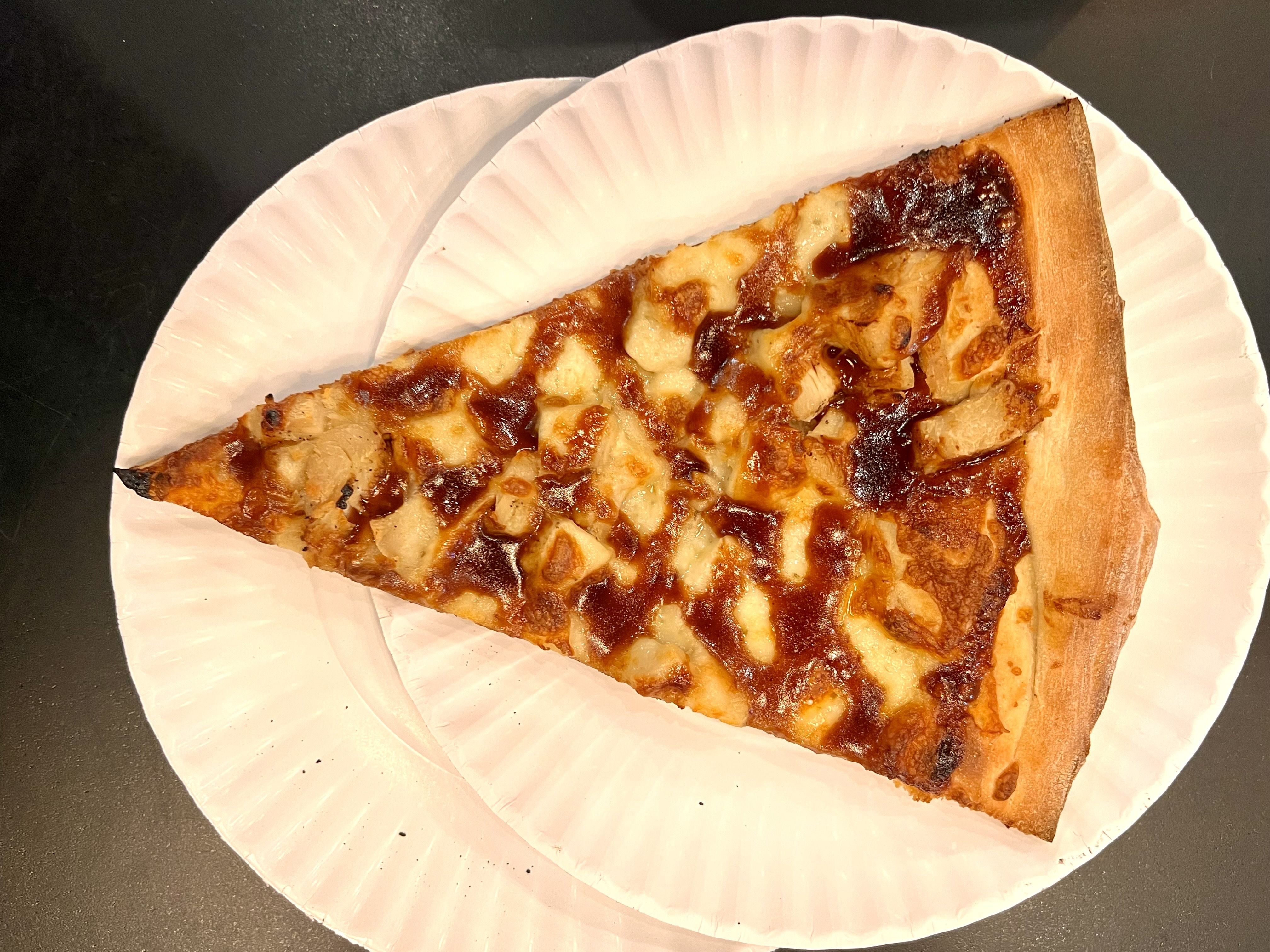
Barbecue chicken pizza slice at Pronto Pizza, 1347 South St.Michael Klein / Staff
Cheema drove to Chester the next day and arrived around 3 p.m., hardly primetime at most pizzerias. “I saw people coming in and the phones ringing,” he said. “That means a business is working. So I told my uncle, ‘Everything seems OK. They are short a couple of things, but we can fix it.’”
Cheema and his uncle bought the shop, and Cheema said sales doubled within six months. They eventually expanded to six shops before dividing the business to pursue separate growth; Cheema sold off the Chester store. Besides the Pronto at 1347 South St., Cheema owns another Pronto in Torresdale, Holme Style Pizza near Holme Circle, and Old English Style Pizza in Olney.
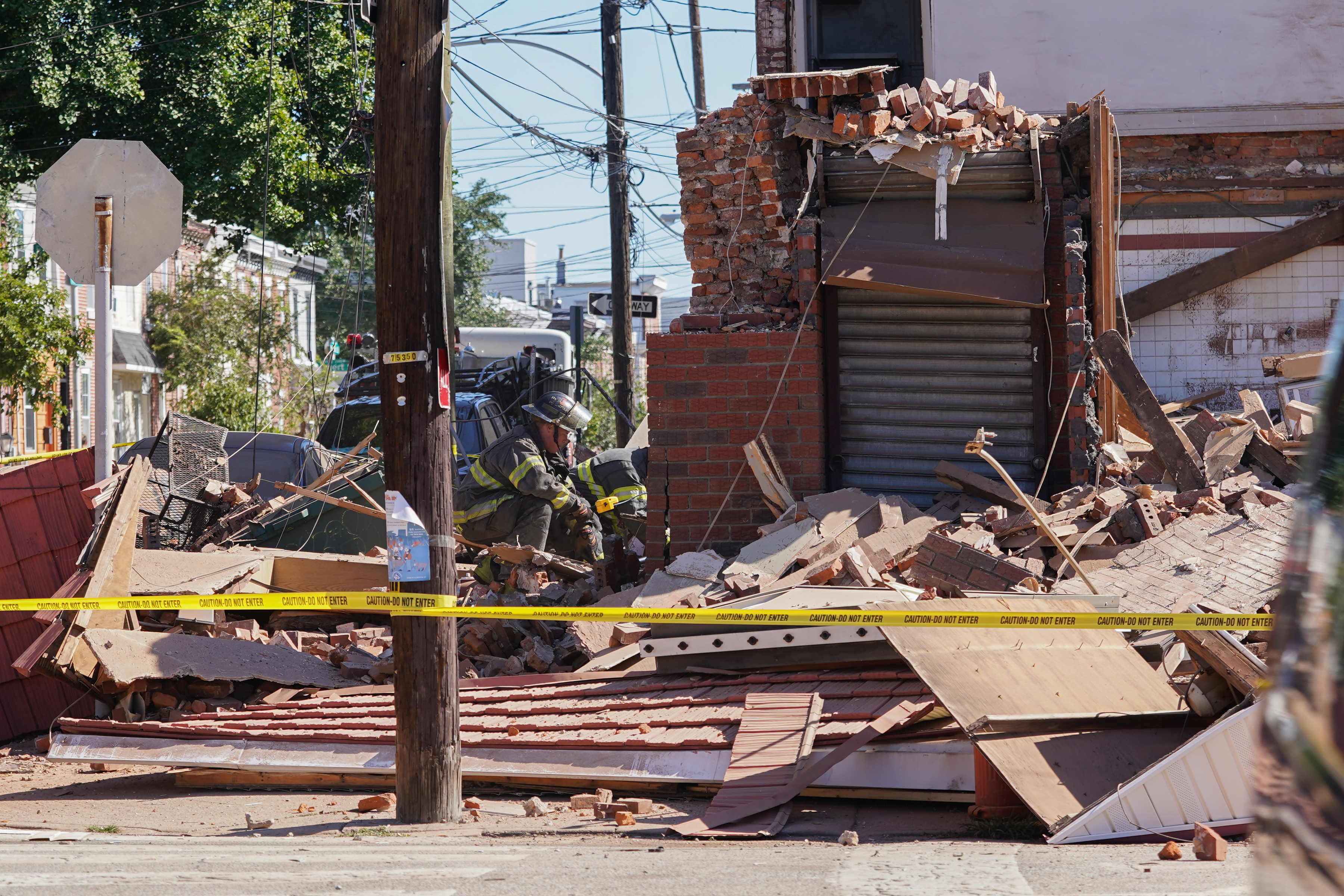
His most serious setback came in September 2022, when the three-story East York Street building housing Key Pizza, his busiest shop, collapsed. “You couldn’t tell there had been a pizza shop there the night before,” Cheema said. Construction work next door was blamed.
The roll-up door and some bricks are all that remained of Key Pizza at 2329 E. York St. after its collapse on Sept. 14, 2022.Jessica Griffin / Staff Photographer
No injuries were reported, but he lost the business, and the resulting insurance litigation was resolved only recently, about 3½ years later, he said.
Cheema does not plan to rebuild Key. He is focused instead on Pronto, its catering operation, and potential additional locations. The butter chicken cheesesteak gives him a way to integrate his family’s cooking into the kind of business in which he found his footing.
“Everybody in Philly knows what a cheesesteak is, and there are so many good places out there already selling cheesesteaks that are famous for them,” he said. “But I wanted to do something different, and something that still relates to Philly.”
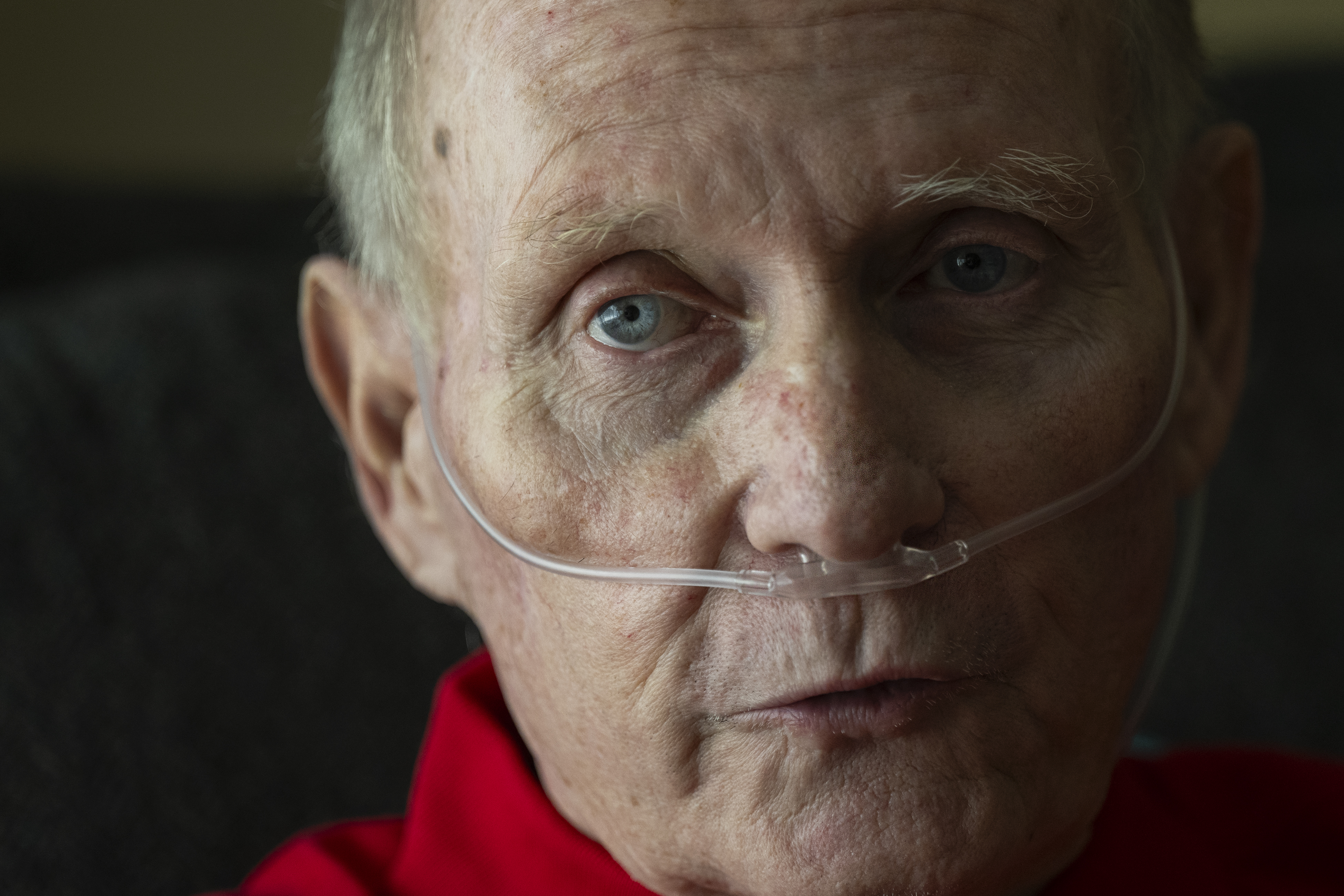
Retired Philadelphia Police Capt. Mark Fisher gets winded and lightheaded while emptying the dishwasher or pushing his gas-powered lawnmower, his lungs forever scarred by the ankle-deep ash that he trudged through at ground zero.
WhenFisherarrived at the nation’s worst crime scene, two days after the Sept. 11, 2001, terrorist attacks, each step he took kicked up a powdery plume, coating his tan work boots. Dense smoke from fires burning beneath the rubble of the World Trade Center site stung his eyes and clogged his lungs.
Then a lieutenant in charge of the Philadelphia department’s crime scene unit, Fisher scoured the wreckage for nearly two weeks. He helped recover the lifeless body of a firefighter crushed under concrete. A torso. The severed arm of a businessman.
The coughing fits started about a year later. Then, about six years after 9/11, a chest X-ray revealed a thick, hardened fluid around his lungs, makingit difficult to breathe. He developedsevere pulmonary disease linked to exposure to toxins.
Fisher, 69, needs a double lung transplant soon, his doctors say, that at best will extend his life by five to seven years. His deteriorating health shows how grossly federal and local health officials underestimated the environmental hazards.
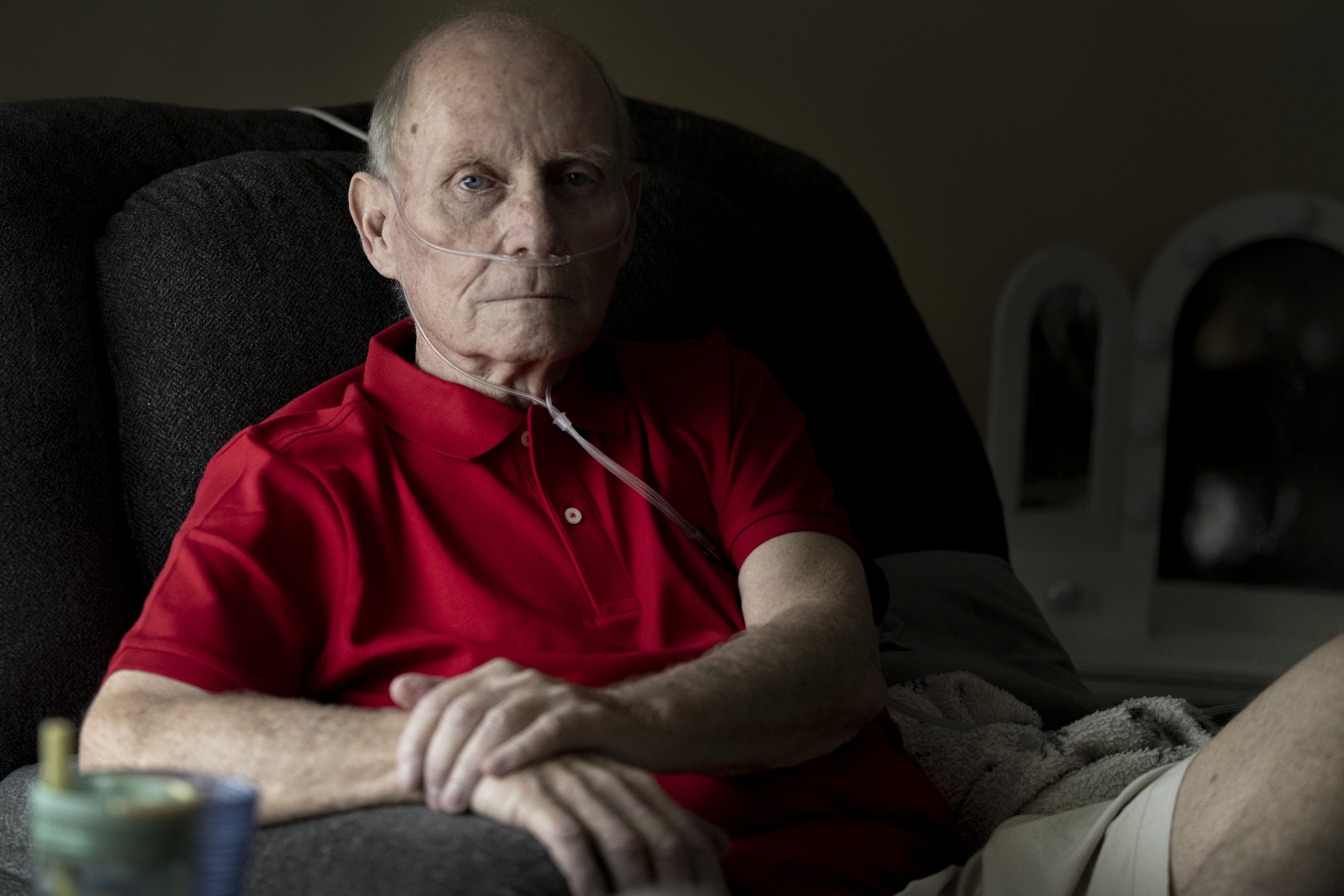
“I can’t breathe worth a darn. My lungs just aren’t going to last,” Fisher said, as he sat in his Northeast Philadelphia home with oxygen prongs in his nostrils and a heating pad against his back.
“Everything aches,” he rasped, coughing relentlessly.
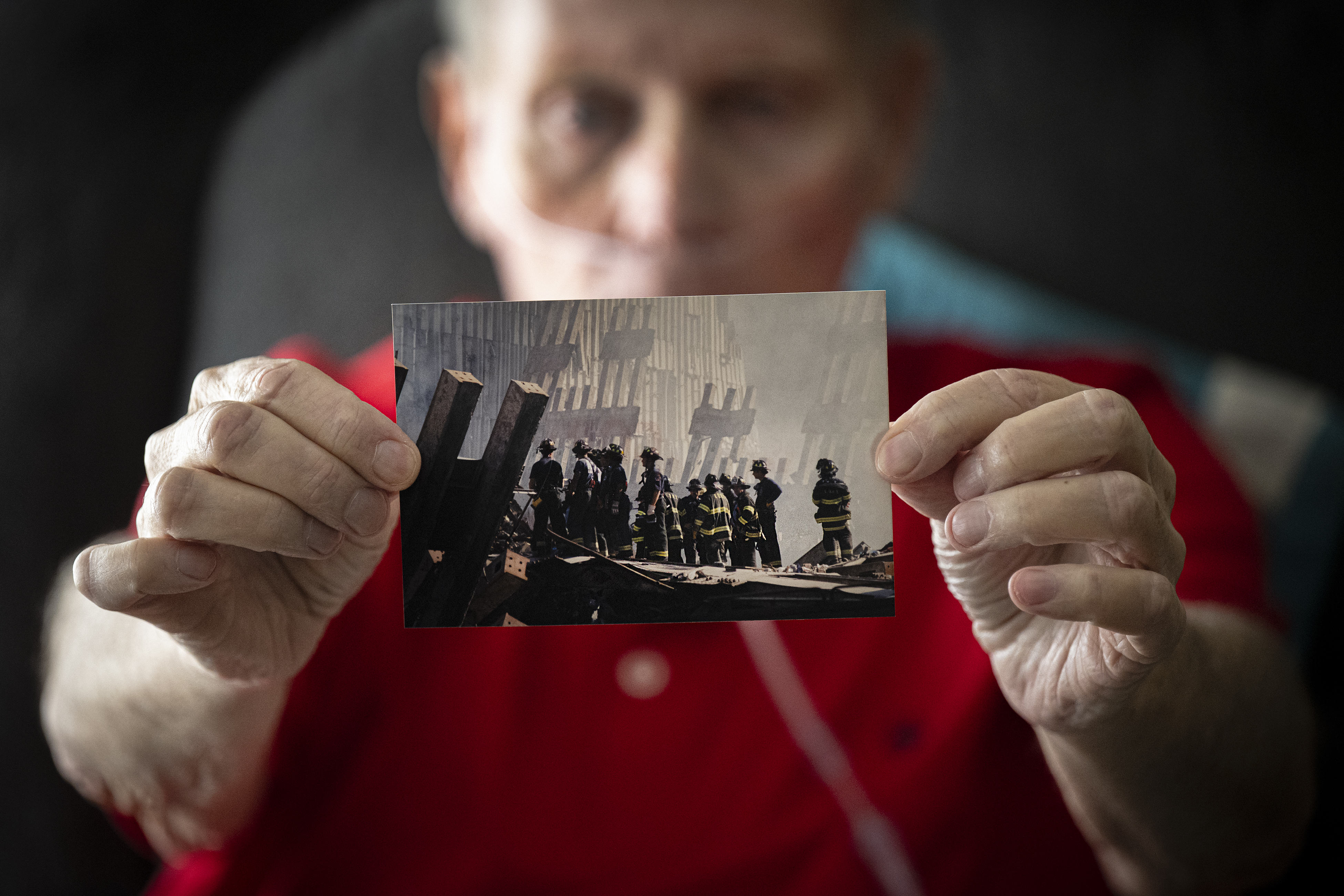
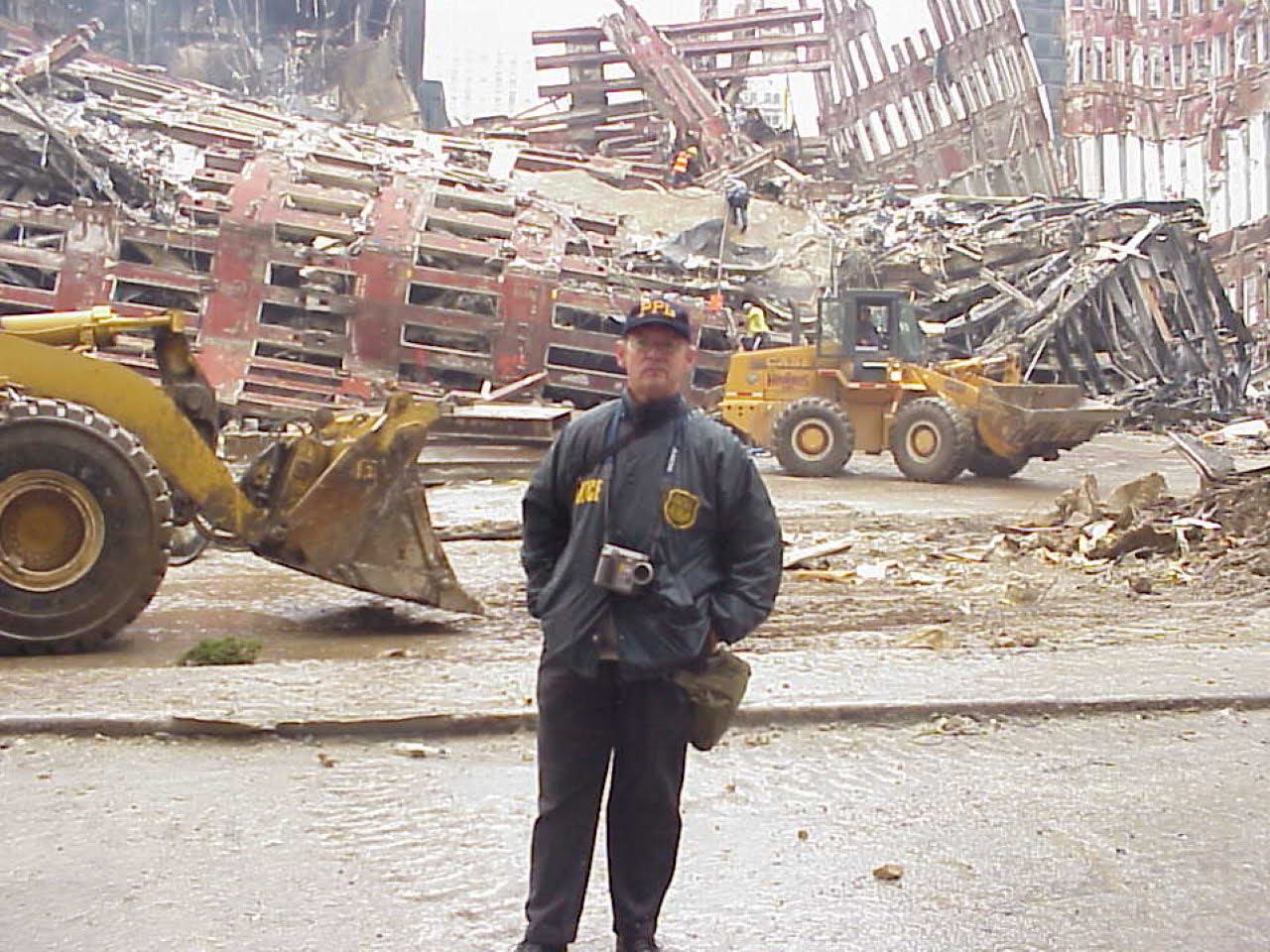
Retired Philadelphia Police Captain Mark Fisher, 69, shows a photograph he took while working as a crime scene investigator at ground zero.Jose F. Moreno / Staff Photographer
Cancer is the fastest-growing diagnosis, now that enough years have passed for tumors and other abnormalities to emerge, soaring from about 3,200 cases to more than 57,000 within the last 11 years.
Most of the toxic dust — as deep as snow drifts in spots — formed when the concrete floor slabs of the 110-story towers collapsed on top of one another in quick succession. The wreckage, known as “The Pile,” contained more than 350 chemicals andmineral agents:potassium hydroxide in concrete, calcium sulfate in wallboard, jet fuel, asbestos, glass insulation fibers, heavy metals — all finely groundand aerosolized.
“It was such a mixture of stuff, like a witch’s brew,” said Iris Udasin, a Rutgers Health doctor who treats 9/11 responders and studies the long-term health effects of the attack.
The alkaline alone in “the cement from all these buildings was toxic in and of itself,” she said. “It basically burned holes in people’s noses and made them more likely to absorb other chemicals and gases that were in the air.”
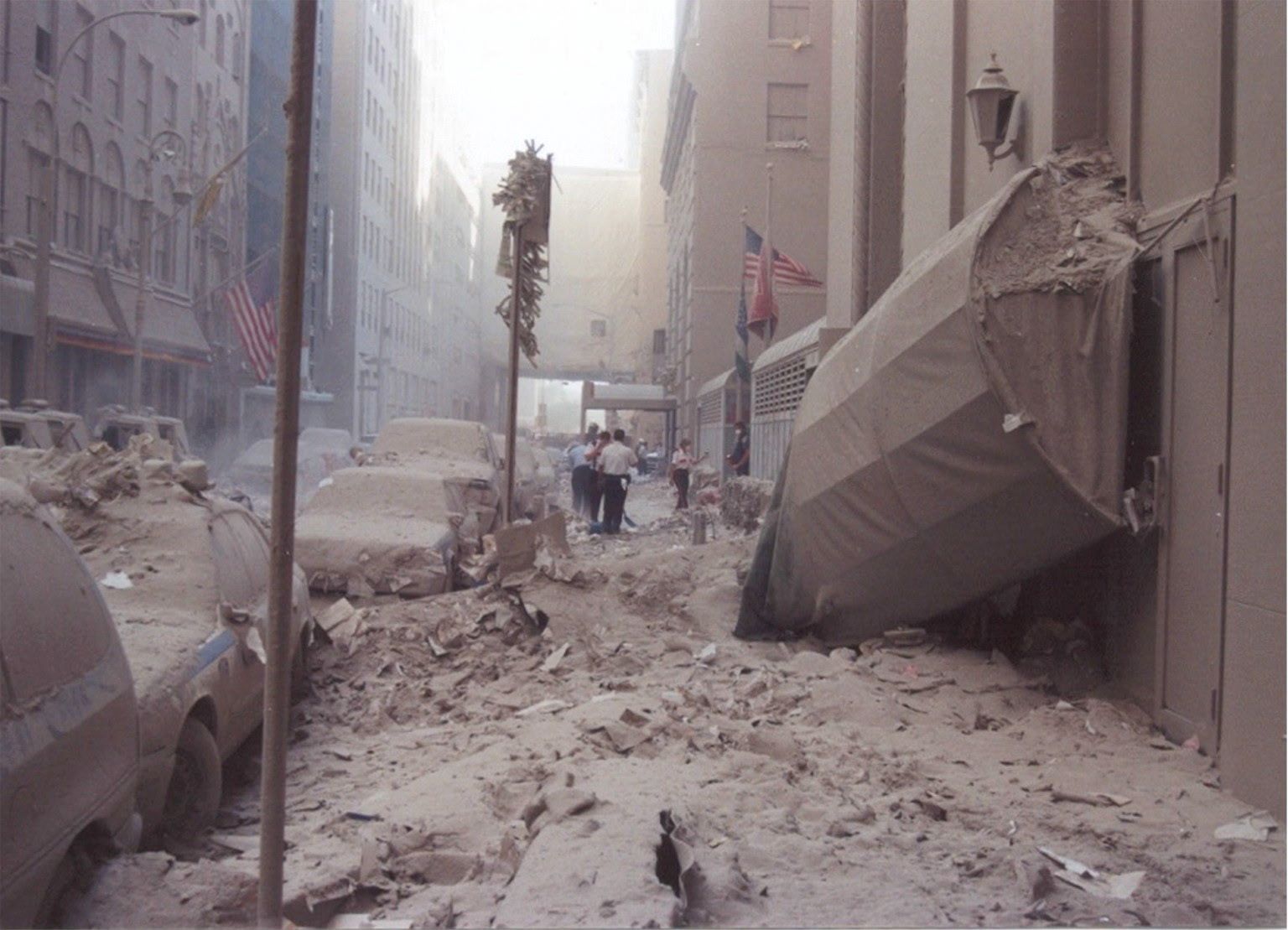
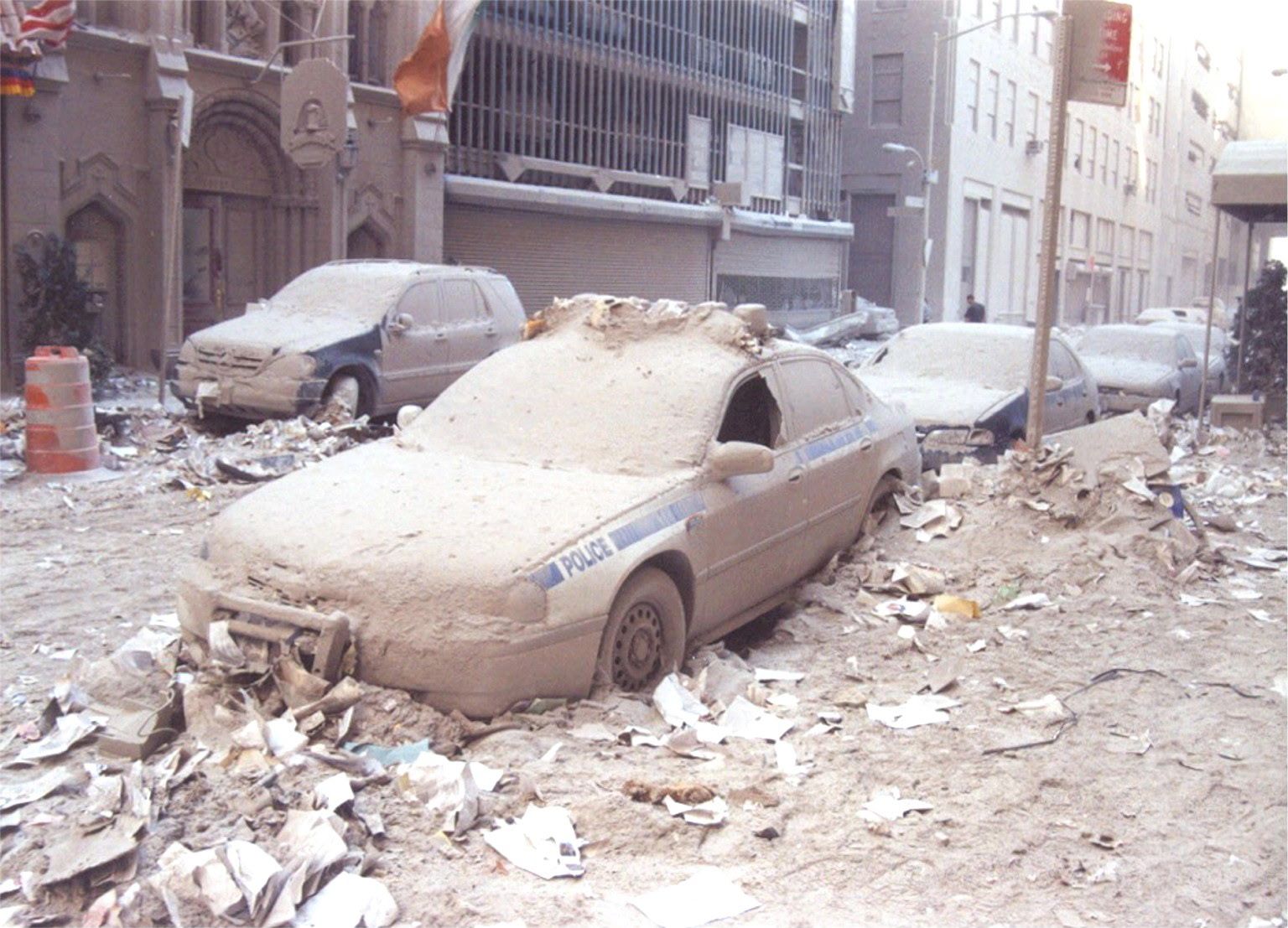
While at ground zero, then-Philadelphia Police Sgt. Greg Masi took photos of the dust and debris. When Masi started wheezing and coughing a few years later, he thought, “I’m just getting old. I didn’t want to believe that the days I was there affected me,” he said. He’s since been diagnosed with asthma, lung nodules, and a type of blood cancer linked to breathing toxic dust. Courtesy of Greg Masi
From WTC cough to lifelong disease
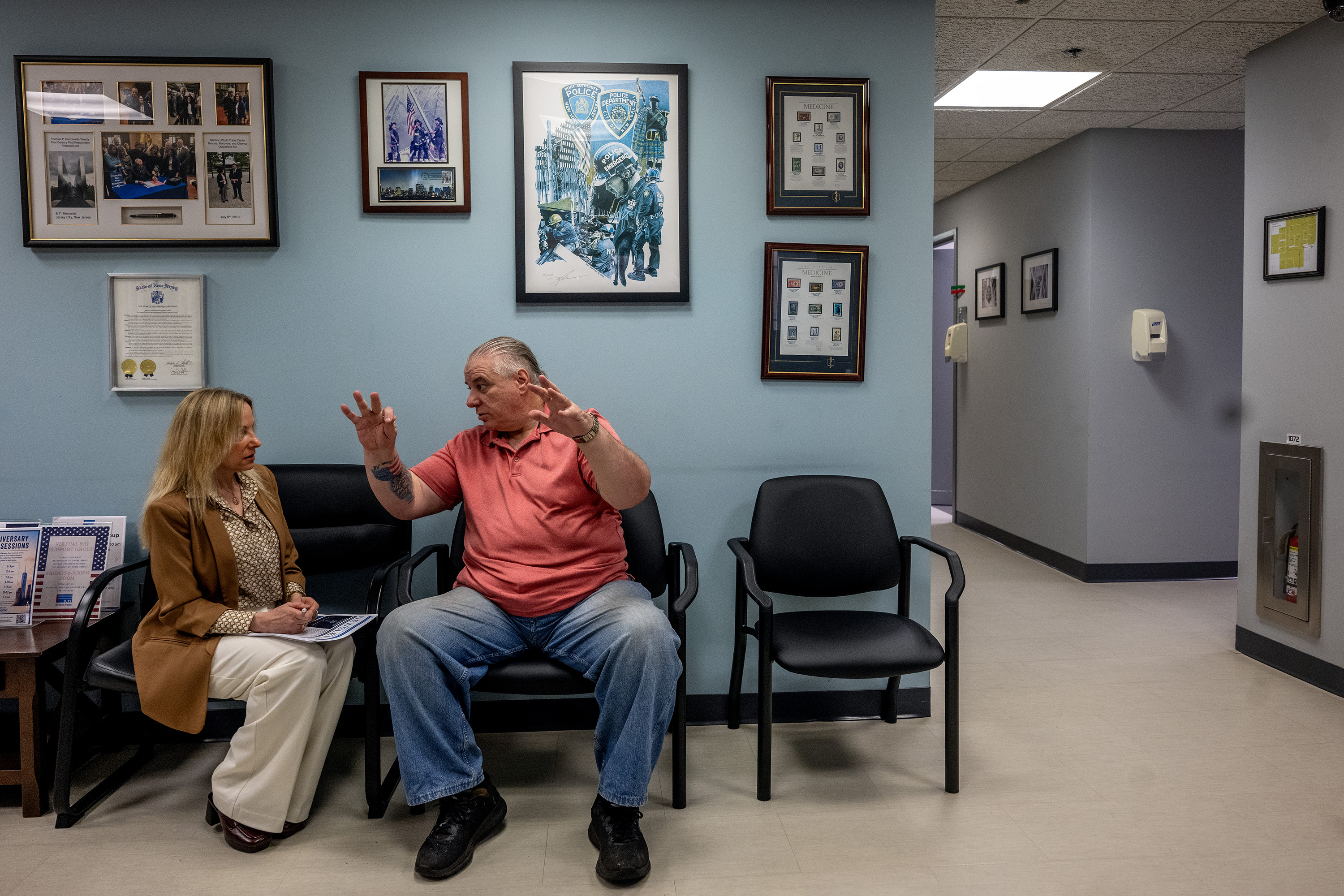
Udasin directs the WTC Health Program at Rutgers University in Piscataway, N.J. — one of six clinics created nationally to treat 9/11 responders.
When it opened in 2003, Udasin mostly treated responders for what she calls “World Trade Center cough,” a dry and persistent hacking that improved with asthma medication.
Now their cases are far more complicated and life-threatening, often requiring referrals to medical specialists, from pulmonologists to oncologists.
Udasin can name many of the roughly 3,000 responders she treats annually by their faces alone. She prefers to relay test results, both good and bad, to patients herself, rather than delegate.
On a recent morning,she escorted an older man from an exam room to the clinic’s lobby and asked: “Do you want me to call you with the results? If you are going to be scared, I can have somebody else call you with the results.”
Her patients, hailed as heroes after 9/11, could not have anticipated how working at ground zero would impact their long-term health.
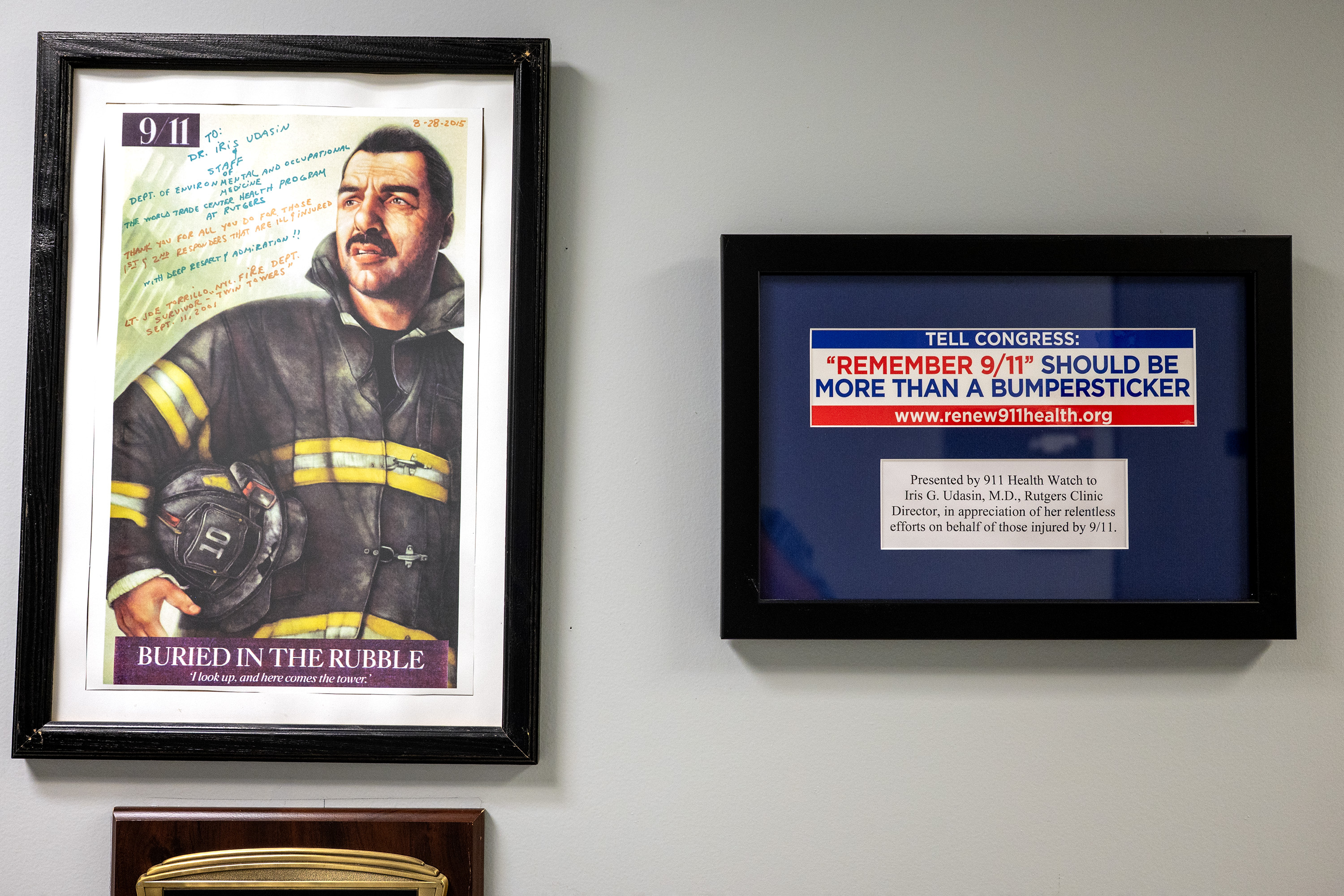
A plaque (right) presented to Iris Udasin, medical director of the World Trade Center Health Program at Rutgers University, hangs on the wall of the patient waiting room. Udasin’s federally funded clinic provides medical monitoring and free treatment to 9/11 responders. Tom Gralish / Staff Photographer
Local and federal officials initially minimized the environmental health hazards. Christine Todd Whitman, who was the head of the Environmental Protection Agency under President George W. Bush, infamously assured the public within days of the attack that the air around the WTC was “safe to breathe.”
“The [EPA] scientists did the best they could with the data that they had and with the knowledge they had at the time,” said Whitman, who had previously served as New Jersey governor.
“It’s a case of you don’t know what you don’t know,” Whitman added in an interview with The Inquirer late last month.
Whitman said her agency did urge responders on “The Pile” to wear protective gear, preferably respirators. The EPA distributed masks, but many refused to wear them, she said.
In hindsight, she said, the masks were not protective enough. Responders are now paying “the price” of breathing toxic air: “It sickens me to say it,” Whitman said.
The Rutgers program grew out of early alarms about air quality hazards, of which details are still emerging. On Tuesday, New York City officials publicly released a trove of documents revealing that toxins lingered in the air for months after the attacks.
Medical monitoring and free healthcare forresponders continue to evolve as the responder population ages.
Researchers evaluated more than 5,000 WTC responders, with an average age of 53 at the start of the eight-year study.
“As this population ages, we are seeing increasing concerns related to memory, attention, and executive functioning, sometimes at ages when the responders themselves are surprised to be experiencing them,” said Jodi Streich, mental health director at Rutgers’ WTC Health Program.
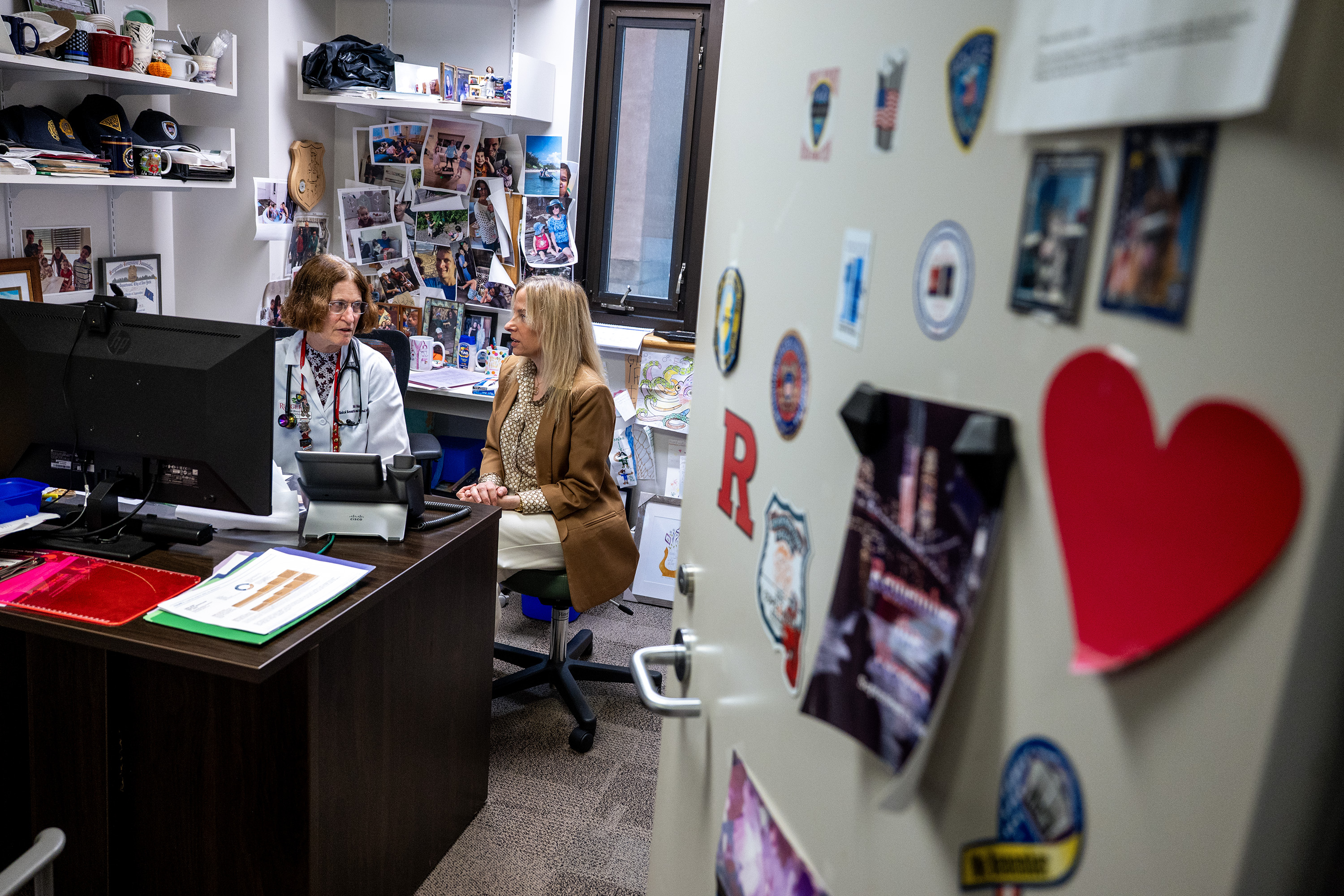
Iris Udasin, medical director, and Jodi Streich (right) mental health director, of the World Trade Center Health Program at Rutgers University sit together in Udasin’s office. They treat responders with WTC-related illnesses at the medical clinic, which is funded by the National Institute for Occupational Safety and Health (NIOSH) within the Centers for Disease Control (CDC). Tom Gralish / Staff Photographer
A stubborn and spreading blood cancer
Udasin’s clinic currently treats 1,177 cancer patients. Research shows that 9/11 responders suffer from thyroid, prostate, lung, and blood cancers at higher rates than the general population.
“The question is: Are certain cancers higher because we looked for them, or are they higher because they’re really higher?” Udasin said. “We really don’t know the answer to that, but my job is to treat everybody.”
In 2023, Udasin successfully lobbiedto have gynecologic cancers, including uterine, included on the list of WTC-related conditions.
Philadelphia Police Department Sgt. Greg Masi at ground zero just days after the twin towers fell. Then-Police Commissioner John Timoney dispatched Masi to New York City because of his expertise in radio communications. He’s developed asthma, lung nodules and T-cell lymphoma from breathing in toxic fumes and dust.Courtesy of Greg Masi
Greg Masi, 71, a retired Philadelphia police sergeant from the Northeast, was diagnosed with a form of blood cancer known as T-cell lymphoma in 2019.
First, red bumps appeared on his left arm. A scaly rash hassince spread over much of his body, killing hair follicles. His oncologists worry the cancer will find “a road map” into his organs.
Light therapy and topical medications did not work. Chemo and radiation would be a last resort. Since there is no cure, the goal is to slow it down.
Masi, an expert in radio communications, can still hear the horns that blared each time responders thought they found someone still alive beneath the rubble at ground zero, or to signal an imminent structural collapse.
The dust that caked cars and blanketed fire escapes struck himas a mere nuisance.
“We figured it was just dust, like dirt,” Masi said. “We had no idea it had harmful toxins in it.”
An avid runner and marathoner, Masi developed bad chest colds with wheezing about five years after Sept. 11. He was later diagnosed with asthma and nodules on his lungs, both common afflictions among responders.
He recently learned that one nodule has doubled in size, and doctors plan to monitor it for signs of cancer.
Then-Philadelphia Police Department Sgt. Greg Masi captured photos of the dust during his time at ground zero. Masi and three other department staffers have been diagnosed with WTC-related illnesses from breathing in deadly dust.Courtesy of Greg Masi
Mental health toll still mounting
Multiple diagnoses are commonly seen in 9/11 responders. Frank Geffre Jr., a retired firefighter from Central Jersey, has asthma, two types of cancer, and post-traumatic stress disorder.
In 2013, surgeons removed a “grapefruit-sized tumor” and parts of his colon and stomach to treat his stage-four colon cancer. Two years later, he learned the cancer had spread to his rectum.
After more than a decade of chemotherapy and radiation, his cancer is in remission. He credits Udasin, his primary care doctor, with saving his life.
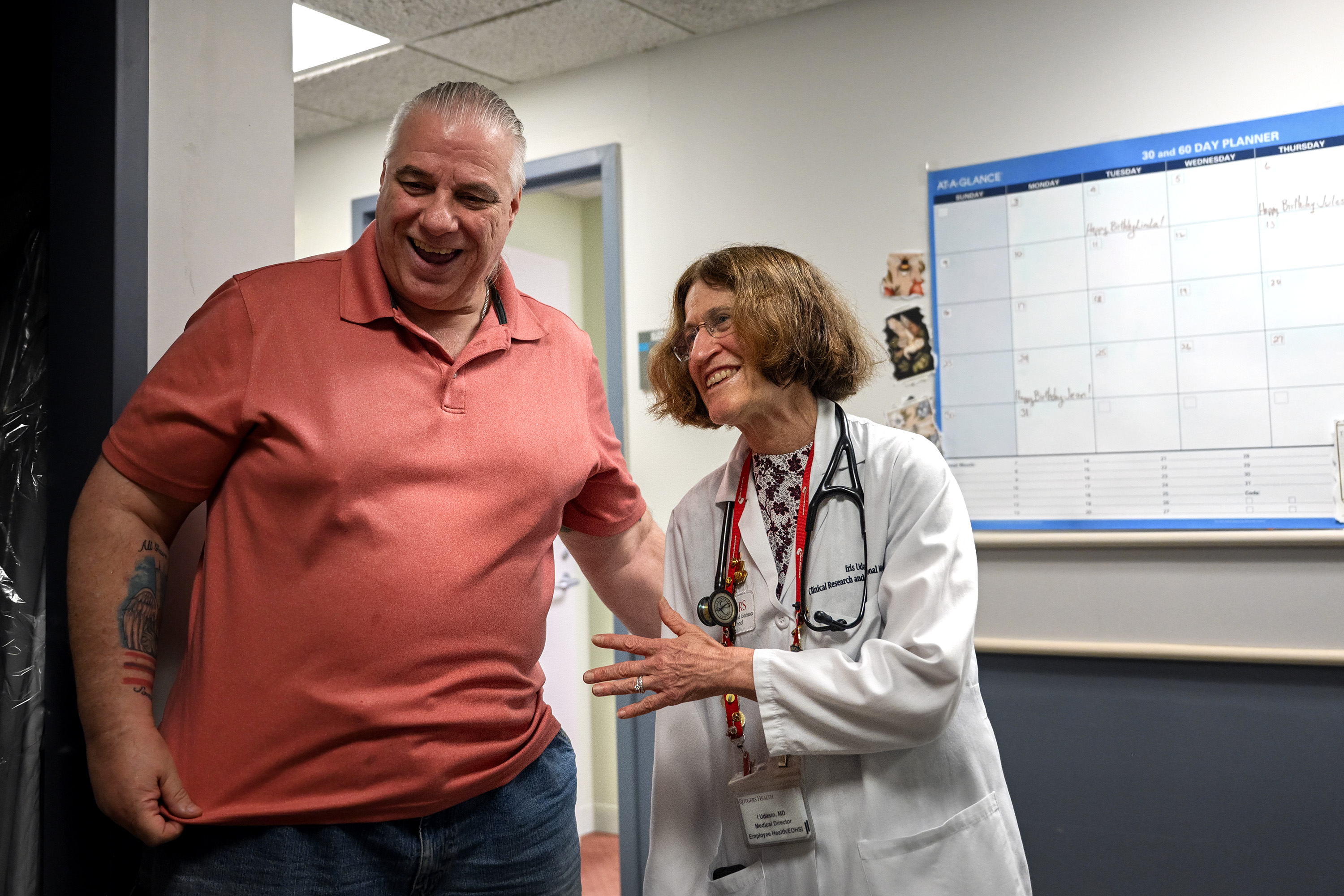
Retired Piscataway firefighter Frank Geffre Jr. shares a laugh with Iris Udasin, medical director at the World Trade Center Health Program at Rutgers University. Geffre credits Udasin and her team at Rutgers with saving his life after he was diagnosed with colon and rectal cancer. “Dr. Udasin is like the quarterback of the team,” he said.Tom Gralish / Staff Photographer
He sees a psychiatrist and a therapist for PTSD, which he finds especially hard to manage as Sept. 11 approaches each year. He lies awake after a recurring nightmare in which he is trapped in Manhattan with his family amid a terrorist attack, and he can’t get them out.
After the first plane struck on 9/11, Geffre and five other firefighters from Fire District No. 3 in Piscataway were immediately dispatched. His team got to ground zero shortly after the second tower violently pancaked.
“It was dark as can be, even though it was daylight. You had smoke clouds so thick you couldn’t even see your hand in front of your face,” Geffre said. “The dust was so thick it was like you had two foot of snow the night before.”
He initially wore respiratory gear, but the oxygen tank ran out as he worked nonstop over the first 30 hours. He saved roughly a dozen people after putting out fires that were blocking their exit from the burning buildings within the World Trade Center complex.
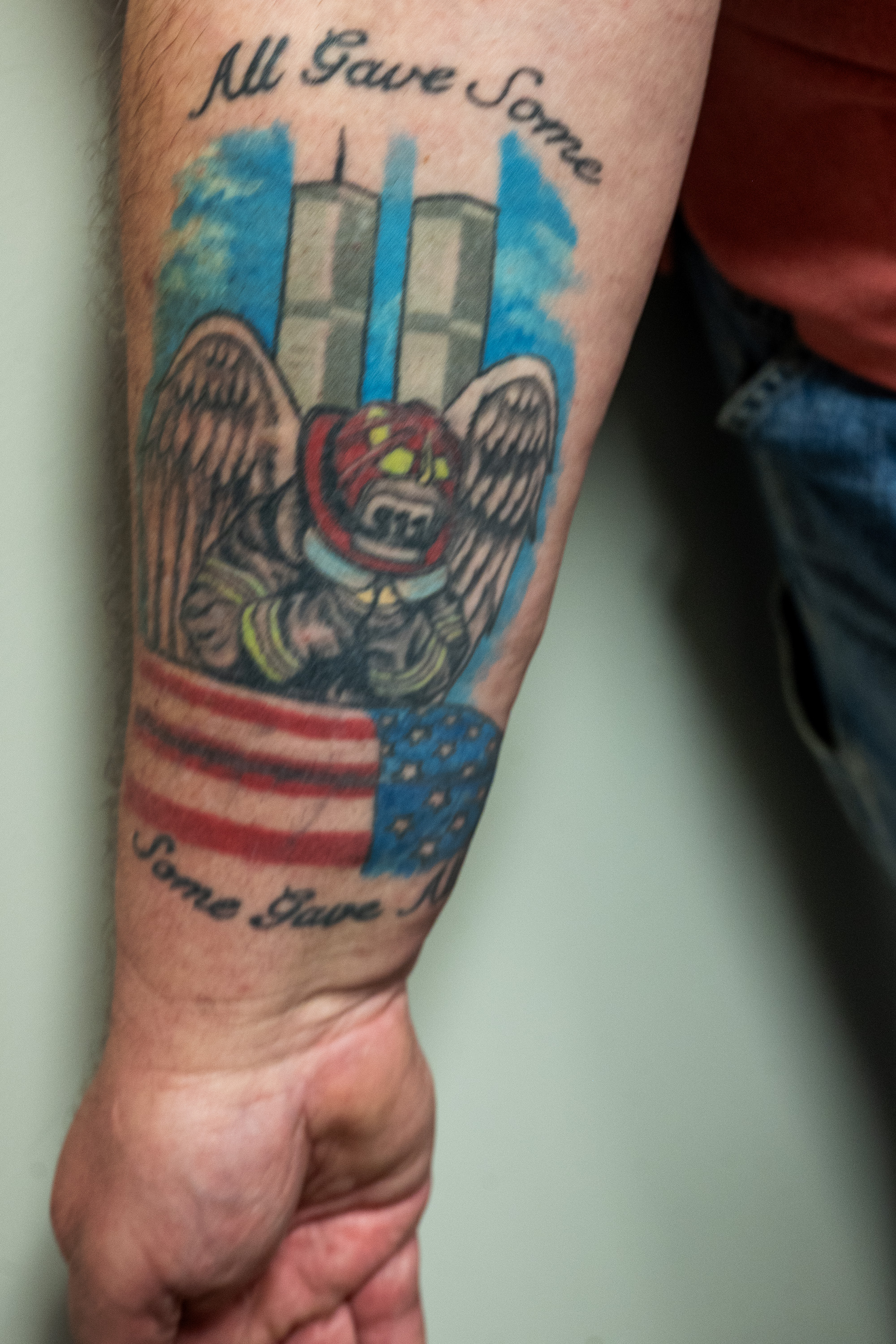
Retired firefighter Frank Geffre Jr. displays his 9-11 tattoo – “All Gave Some – Some Gave All” – during an appointment at the World Trade Center Health Program at Rutgers University. He designed the tattoo from a photo of himself splashing water on his face to rinse off dust and debris from ground zero. His wife said he looked like he was praying in the photo.Tom Gralish / Staff Photographer
He vividly recalls findinga brown dress shoe with a foot still in it. A blue polyester suit jacket with a torso seared to its lining. A wristwatch. A ring.
In all, he worked The Pile for 20 days, smearing Vicks VapoRub under his nose to cope with the“unforgettable, unbearably horrid smell of burning human flesh,” he said.
Now he can’t use the menthol and eucalyptus goo for his bouts of sinusitis, because the scent stirs bad memories.
“It feels like it was yesterday and a lifetime ago,” Geffre said. “The ‘Never Forget’ vow is not for first responders. We won’t ever forget. It’s embedded in us.”
He is ever-vigilant, prone to panic attacks. He avoids movie theaters and other places with crowds. “Too many variables,” he said.
He has a second home in Florida but drives back and forth. He won’t get on a plane. “I get paranoid that somebody on the plane is going to hijack it,” he said.
Two of the five firefighters with him on Sept. 11 have since died of cancer. He keeps in touch with four of the people he helped out of burning buildings. One committed suicide in recent years.
Retired firefighter Frank Geffre Jr. talks with Jodi Streich (left), mental health director of the World Trade Center Health Program at Rutgers University. Rutgers is one of six federally funded health clinics that monitors and treats 9/11 responders, as the health impacts continue 25 years later. The patient waiting room at the Rutgers clinic is adorned with photos of responders. Tom Gralish / Staff Photographer
Geffre, enrolled in the Rutgers program since its start, gets his mental healthcare through the clinic, which has seen a significant increase in demand for these services.
As more responders become ill or die from 9/11-related diseases, some have developed “heightened anxiety and vigilance about their own health,” Streich said.
Having more unstructured time in retirement, along with the loss of job identity and camaraderie, can be detrimental for mental health, she said.
“Things that we once buried — they come fully alive during retirement,” Streich said, adding that the support group she runs for retirees is now the most widely attended after the cancer support group.
Emergency responders who had felt too embarrassed or ashamed to seek help while working — because they feared being seen as weak — are coming in for the first time. Many are unable to eat or sleep, Streich said.
“We see them when they are at rock bottom,” Streich said. “They’ll come in and say, ‘I’m ready to talk about what I’ve been holding in for 25 years.’”
‘Exhaustion, desperation and heartache’
When asked if he regrets being dispatched to ground zero, Mark Fisher is emphatic: “Absolutely not.”
But he is tormented by images of people standing outside makeshift morgues with photos of their missing loved ones.
Fisher recalls becoming so distraught that a Red Cross volunteer pulled apart two tables piled with fresh clothes for responders to reach and embrace him.
“She hugged me for the longest time,” Fisher recalled, blowing air through his lips to steady his breathing and control tears. “I’m an Irish Catholic, so I wear my heart on my sleeve and face. I just had that look of exhaustion, desperation, and heartache.”
These days, he feels exhausted both emotionally and physicallyas his lung disease progresses. Fisher spent most of this summer in the hospital with a kidney infection that required two surgeries.
Five days after he got out of the hospital, his gall bladder became infected. “If I die, I want to die in a Catholic hospital,” he told his wife. Doctors removed his gall bladder in July.
The once-burly cop is rail-thin. He’s lost 35 pounds.
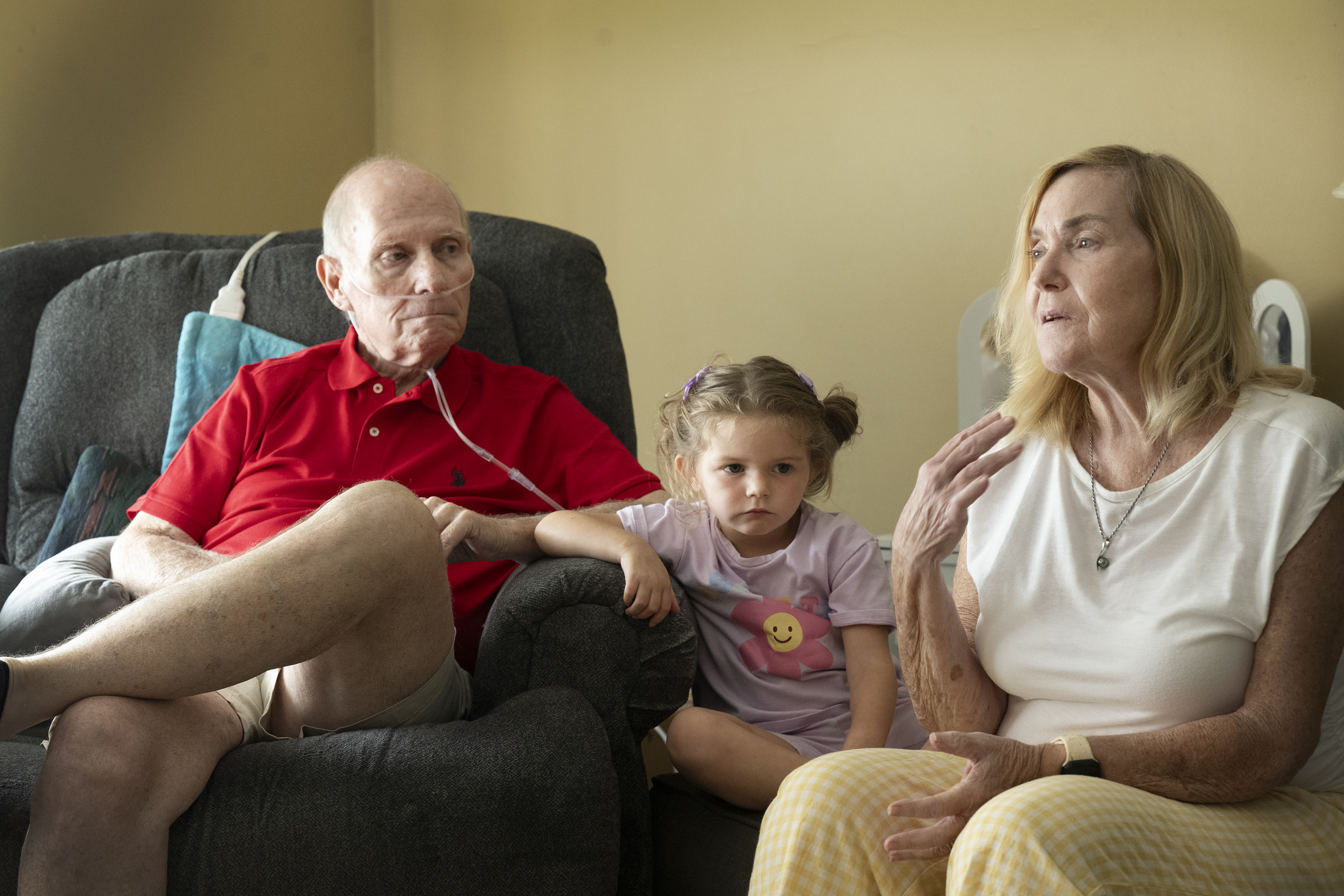
Inside their Northeast Philadelphia home, Sue Fisher (right) talks about the day she learned her husband, Mark Fisher, would need a double lung transplant. The couple’s 3-year-old granddaughter, Morgan Elizabeth Fisher, sits between them. Mark Fisher needs to use a portable oxygen tank to take walks with Morgan. Jose F. Moreno / Staff Photographer
Fisher’s priority right now is spending time with his wife and former sweetheart at Archbishop Ryan High School, and making sure she will be in decent financial shape when he dies.
Fisher, Masi, and two other responders from the Philadelphia Police Department are seeking written assurances from the city that if they die from their World Trade Center-related illnesses, their families will receive line-of-duty death benefits.
The status would enable their spouses to collect their full pensions, rather than half.
City officials said their families can apply to the Philadelphia Board of Pensions and Retirement, which would review each case individually after death.
Sue Fisher tries not to cry in front of her husband of 42 years;she’ll do it behind the shed in their backyard or on a walk with their golden retriever, Bentley.
He wants to delay as long as possible a double lung transplant, for which the survival rate is about five to seven years. “If they say that’s all he’s got, I’ll take it,” SueFisher said. “It’s better than him suffering the way he is.”
At night, she lies awake listening for the sound of Fisher’s breathing. Sometimes, she fears he has stopped. Then she nudges him with her toe until he stirs.
Retired Philadelphia Police Captain Mark Fisher wants the city’s word that if he dies of lung disease from his time at ground zero, his wife will get line-of-duty death benefits. City officials have said that his wife can apply to the pension board after he dies. Jose F. Moreno / Staff Photographer
Faced with a huge rent increase, Northeast Philadelphia aluminum fence maker Jerith Manufacturing is closing its factory by next spring.
Continuing to operate out of the 14400 McNulty Rd. facility would be “economically impractical” in light of the rising cost of rent, general manager K. Robert Lomber said in a layoff notice filed with the Pennsylvania Department of Labor and Industry.
Rent on the 445,000-square-foot facility is expected to nearly triple starting May 1, Lomber said.
In the layoff notice, Lomber said Jerith is “going out of business as a separate operating entity.” But the president of Jerith’s parent company, Ameristar Perimeter Security, said last month that Jerith would be adopting a new operating model“to better serve customers and support the long-term success of the Jerith brand.”
The closure of the Philadelphia site affects 61 workers, 24 of whom will be offered new positions at a New Jersey facility owned by Jerith’s parent company, according to the notice. Layoffs will occur in phases beginning Nov. 15.
Thirty-eight of Jerith’s 61 Philly workers are represented by Teamsters Local 830.
Jerith spends about $4.4 million on employee payroll annually, and Philadelphia is expected to miss out on $140,000 annual tax revenue when it is closed, the layoff notice indicates.
Going forward, some of the manufacturing, assembly, and transportation work Jerith has been doing in Philadelphia will be carried out by Ameristar, which also makes fences, gates, and other barriers, in New Jersey and Tulsa.
Jerith, which dates back to 1961, uses U.S. aluminum in its products — one of the materials currently caught in the tariff dispute between the United States and Canada, under the Trump administration.
Jerith was acquired in 2017 by Assa Abloy, which has 64,000 employeesin over 70countries and over 250 brands, including manufacturers of locks and doors, such as Ameristar Perimeter Security.
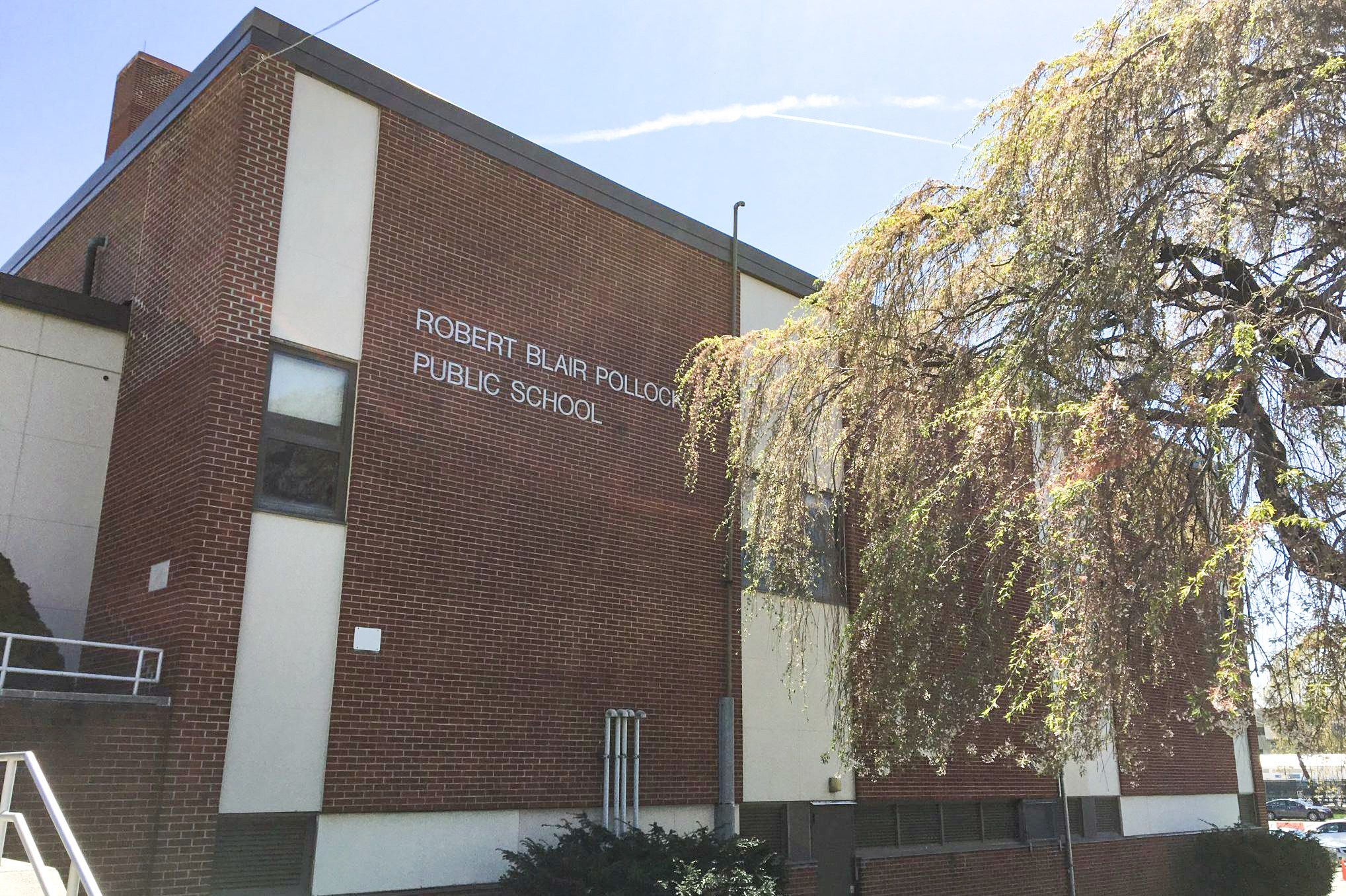
The former principal of a Northeast Philadelphia elementary is on the hook for $31,000 paid to the school by students but never deposited into its bank account.
According to the Philadelphia School District’s inspector general, the former principal of Robert Pollock Elementary, Yvette Jackson, received the money from events including book fairs, holiday bazaars, and class trips — plus dues for graduating eighth graders — but “failed to deposit proceeds.” Jackson has since retired.
Multiple vendors, including Scholastic Books Inc., were not paid for goods delivered under Jackson’s watch, according to Pollock sources and documents reviewed by The Inquirer. The inspector general’s report confirmed the lack of payments.
Jackson’s actions violated the district’s policies, “eroded the public’s trust and violated the district’s ethical standards required by the [Employee Code of Ethics] mandating honesty and forthrightness and avoiding falsification, misrepresentations and deceptions in records the former principal kept while managing and administering” school activities funds, wrote Sha S. Brown, the inspector general.
The report stopped short of accusing Jackson of taking the funds, but said she was liable for all losses “resulting from administrative negligence and failure to exercise proper oversight and accounting” of student funds.
At Brown’s recommendation, the district is withholding $31,576.24 from Jackson’s final termination pay. Jackson did not respond to a request for comment, but, according to the inspector general’s report, “the former principal acknowledged receipt of the memo and did not object to the proposed withholding.”
Pollock, a K-8 school on Welsh Road, educates 900 students, 77% of whom are considered economically disadvantaged.
Missing money, missing records
The possible financial improprieties came to light during a reconciliation of school accounts after Jackson retired from Pollock at the end of the 2024-25 school year.
When district personnel attempted to balance the books, money from trips, bake sales, class dues, and the holiday bazaar was missing, according to sources. Scholastic Books was not paid for either its fall 2024 or spring 2025 book sales.
Ultimately, the district’s office of general accounting filed a complaint with the inspector general’s office “pertaining to the mismanagement of the Robert Pollock School Student Activity Fund (SAF) by the retiring principal,” according to documents reviewed by The Inquirer.
The inspector general’s probe concluded that Jackson failed to keep adequate records and that over the course of the 2023-24 and 2024-25 school years, she made only five bank deposits, despite cash having been received for various school events through the year.
District policy requires cash received for student activities be deposited into the bank “as soon as possible, ideally daily unless this would cause an undue hardship.”
None of the deposits Jackson made came with required documentation, such as the dates and descriptions of the activities, number of students who participated, cost of participation, and more, the report said.
“The former principal failed to account for, and deposit, the proceeds of several fundraising activities including book fairs and class dues (graduation fees) … the OIG could only partially match one bank deposit pertaining to the school’s 2023 fall book fair sales over this two-year period. Further, records indicate the former principal failed to pay invoices of SAF-related vendors,” Brown said.
Brown found that Jackson collected the $31,576.24 but never deposited it. She also told a staffer managing the book fair that there was “no need for receipts,” the investigation found, despite district policy explicitly stating that receipts were required.
In some instances, vendors were stiffed. Both Scholastic and a business that provided goods for the holiday bazaar were not paid, the report said.
Book fair money is typically used to purchase books for classroom libraries and for students to take home. Other activities, like the bake sale, fund things like classroom pizza parties and assorted celebrations.
“According to an administrator of the school, the holiday bazaar vendor said the former principal kept telling the vendor they were ‘… good for the money,’” the report said. “In total, the OIG found that three invoices remained unpaid and totaled $16,840.49.”
Going forward, Brown said, the district must require student activities fund money be deposited into a bank account weekly.
“Accounting and Financial Reporting staff will continue to work with school leaders to make timely deposits,” chief financial officer Mike Herbstman said in the district’s response to the report.
The school district had no immediate comment Tuesday on the inspector general filing.
There are few Spanish bar snacks as satisfying — or so hotlydebated — as a properly made tortilla Española.
If you’re lingering in the hot southern cities of Andalusia, where the iconic potato-and-onion omelet is typically served room temperature or cold, the eggs are fully set.
“But from Madrid north to Basque Country, it’s traditionally made to order and served warm and custardy,” says Patrick Iselin, 50, the co-owner of BAR ilu, who spent half his childhood in Spain and now splits time between Philadelphia and the Madrid apartment once owned by his grandmother, Iluminada “Ilu” Prellezo Inchausti.
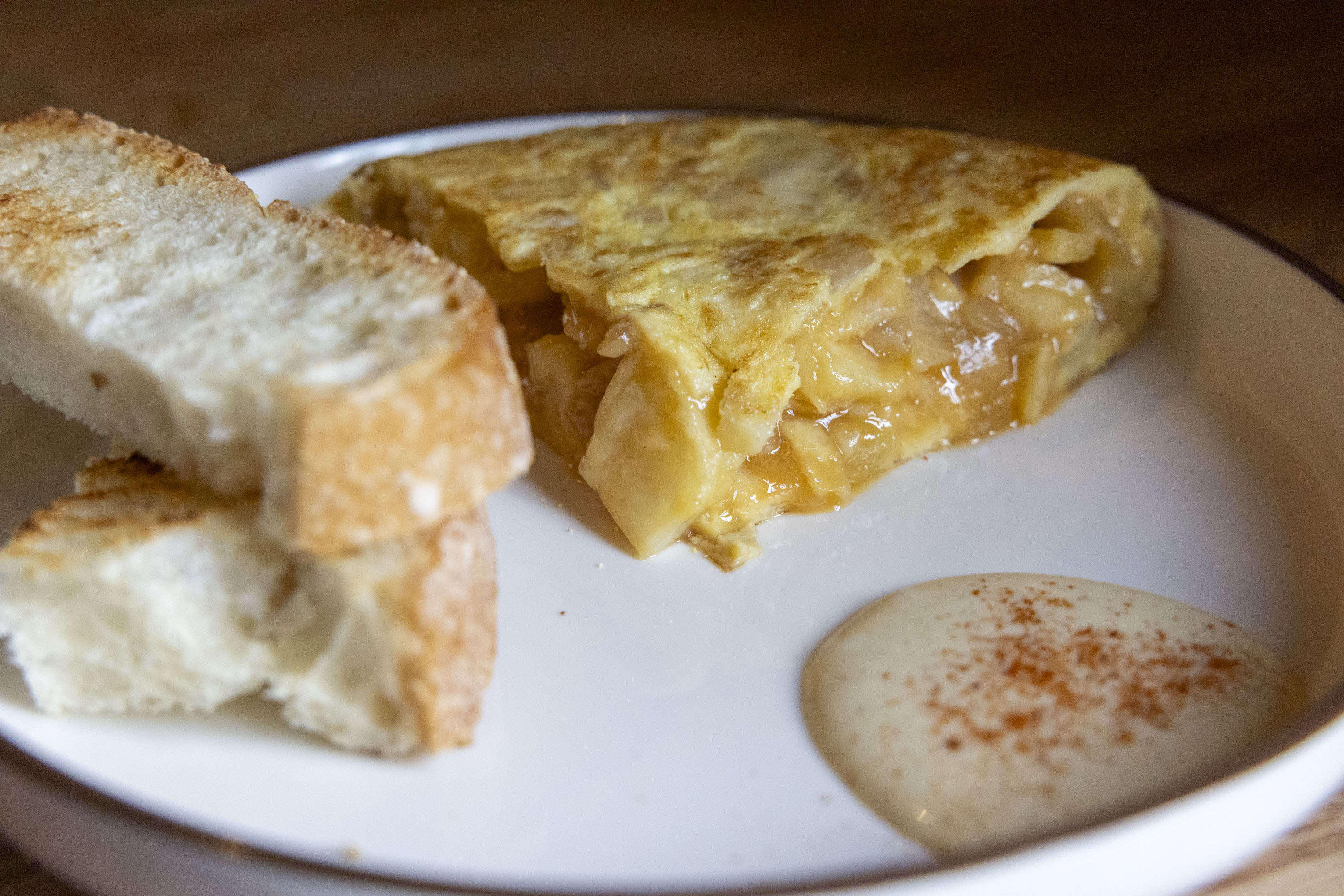
So it follows thatthe eponymousnew cornerbar at Dauphin and Martha Streets — which happen to share the 40th parallel north with Madrid — serves its tortilla Española with a loose and edgy Kensington flair: “runny af,” as noted on the menu. Served as a wedge, with olive oil-fried potato chunks and sweet onion laces bulging from its glossy middle, a warm forkful of this eggy wonder is as transporting as it gets.
Andrew Butler, chef de cuisine at BAR ilu, making the tortilla Espanola.Tyger Williams / Staff PhotographerThe tortilla Espanola at BAR ilu.Tyger Williams / Staff Photographer
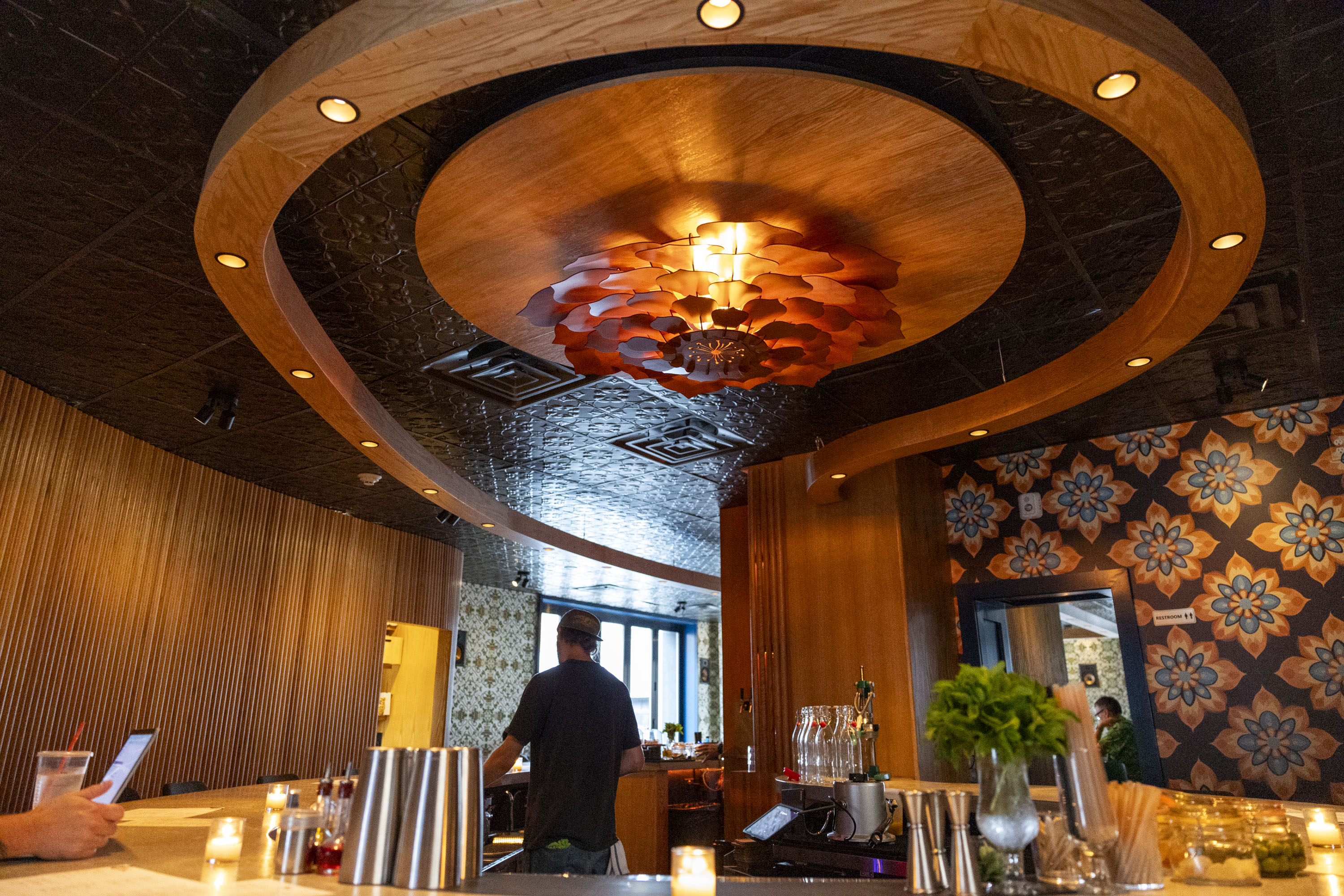
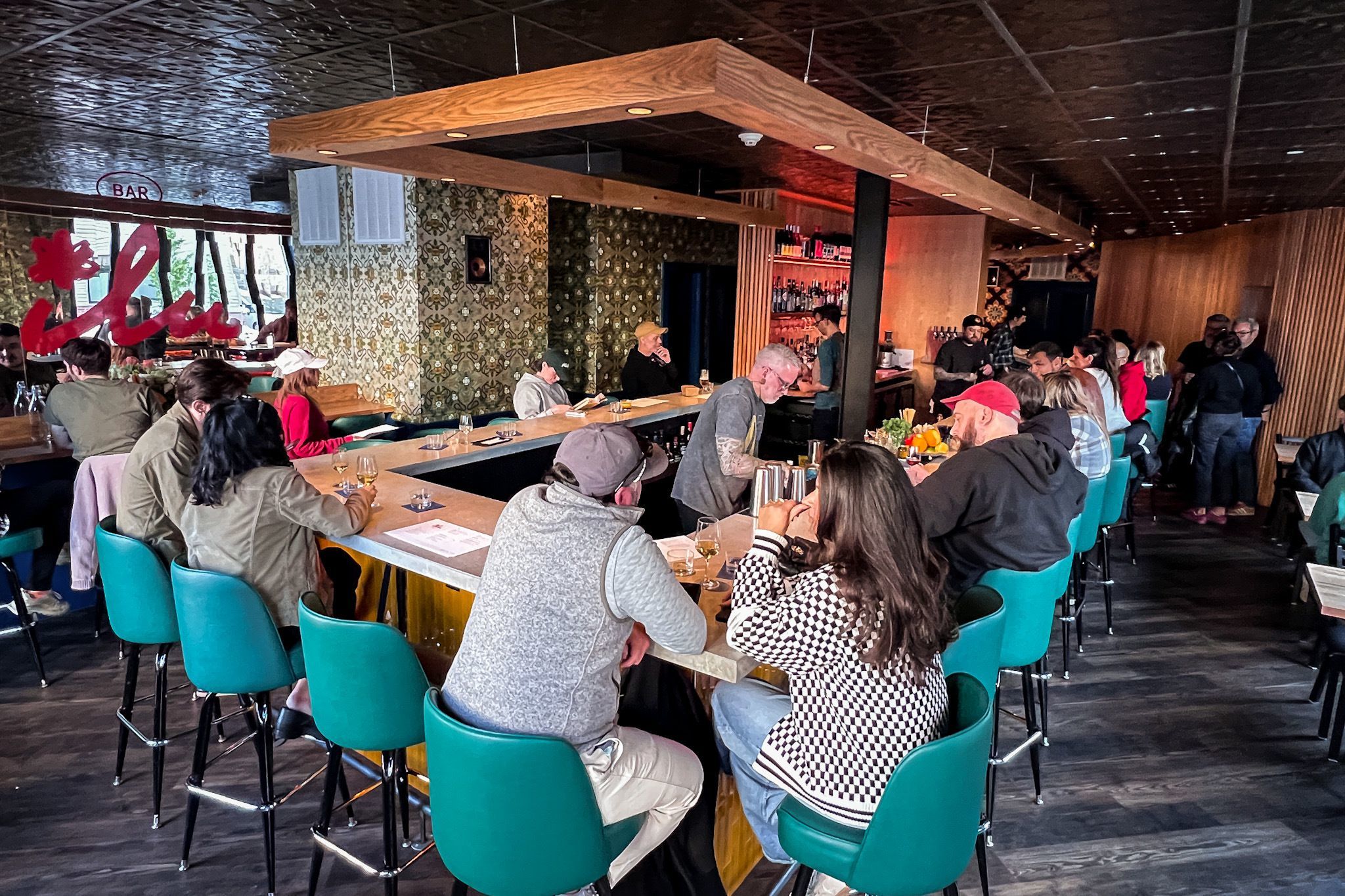
Wash it down with a bracingly crisp glass of La Gitana Manzanilla sherry on draft, plus a fistful of crunchy Marcona almonds, a forkful of tangy boquerones, and a crock of olives warmed with orange zest and herbs, and it’s hard to deny that BAR ilu is an appealing development for this rapidly changing corner of Kensington. It is perhaps also a little dissonant for those who know the neighborhood history. Thisstylish Euro concept, complete with its undulating circular bar and foam-topped glasses of vermouth, haslanded in a space previously occupied by the Old Philadelphia Bar, one of the last unreconstructed dive bars from what co-owner Scott Coudriet calls Kensington’s “pre-hip-storic” days.
Coudriet, who owns Fishtown’s Lloyd Whiskey Bar, is also partnered with Iselin at nearby Cormorant bar. Their other partners in ilu are Salvatore D’Amato and Jason Evenchik, whose Vintage Syndicate hospitality group operates Vintage, Starbolt, Time, Bar, three Garage locations, and the Goat Rittenhouse.
This veteran team is keenly aware of the sensitive dynamics of change at longstanding bars. That’s why Iselin was adamant about keeping prices reasonable for Kensington locals — no more than $14 a plate, and $16 for distinctive cocktails that would easily cost a few dollars more in Center City — while building this tribute to Spain in his adopted city.
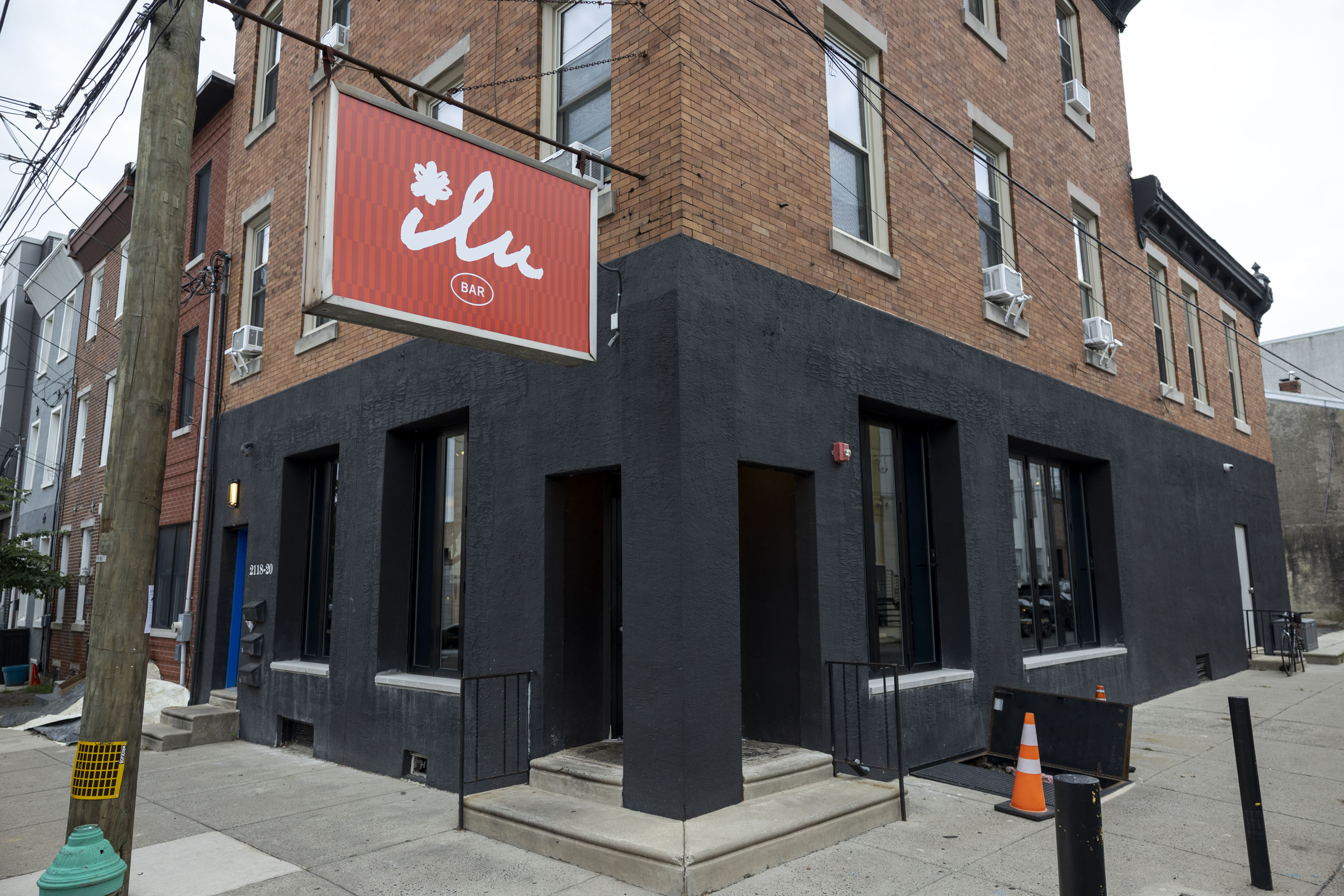
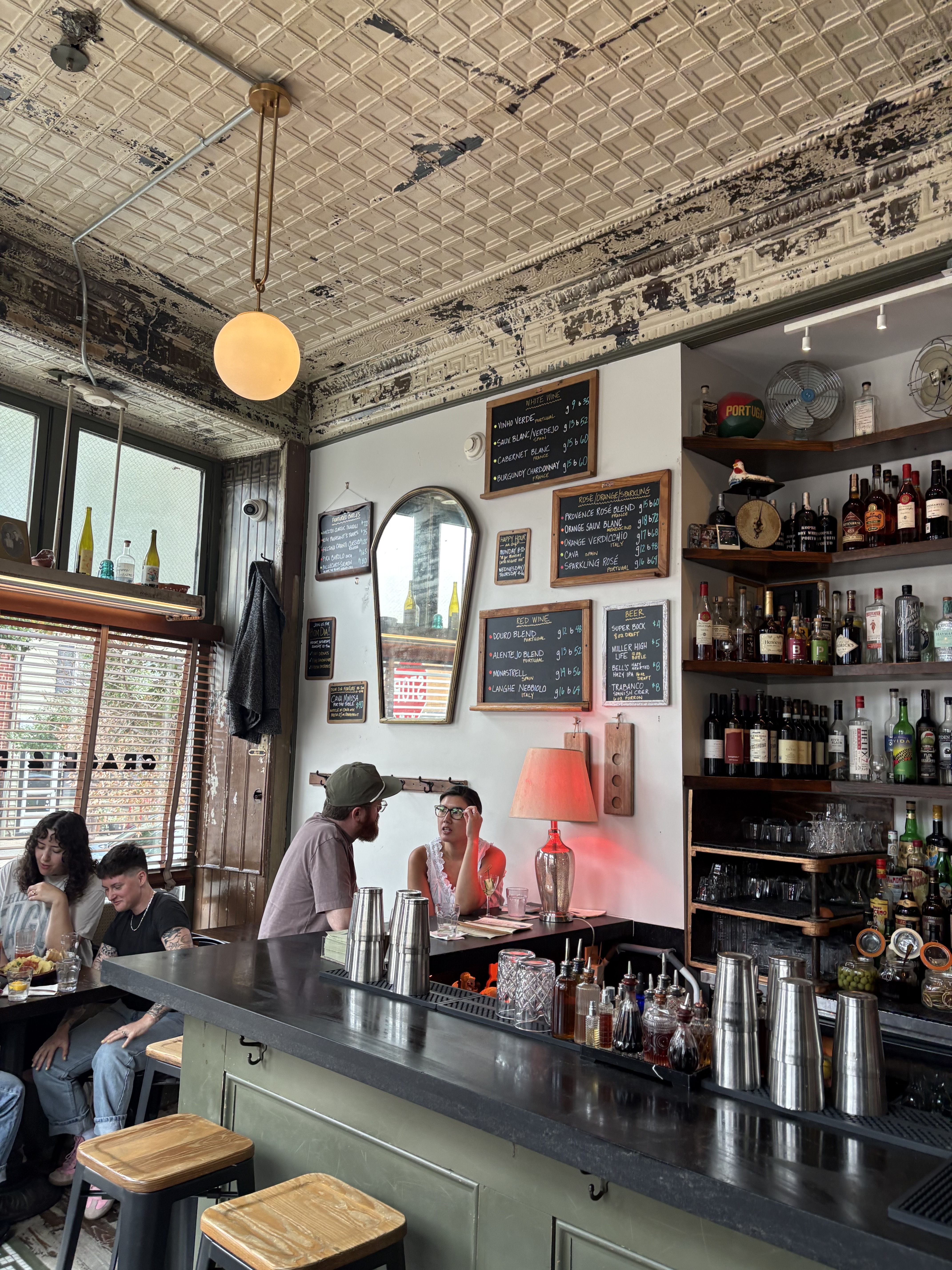
The outside of BAR ilu on Thursday, Aug. 20, 2026, in Philadelphia.Tyger Williams / Staff PhotographerThe back bar area at BAR ilu on Thursday, Aug. 20, 2026, in Philadelphia.Tyger Williams / Staff Photographer
Iselin wanted to craft this 40-seater with as few clichés as possible (no hanging hams, no toro horns, no sangria), but rather the feel of a modern tapas bar he might frequent in Madrid today. He had no idea he was also tapping into the latest evolutionary trend for the Philadelphia bar.
Twenty years ago, the smoky old taverns of yore were being replaced by the gastropub movement of the early aughts, where local craft beers flowed and house charcuterie and pickle programs anchored ambitious seasonal menus that gave a cool new vibe to the neighborhood restaurant. In some cases, they helped redefine the neighborhoods themselves.
Philly’s bar scene is now officially in its grazing phase, with curated drink menus centered around culinary cocktails, natural wines, and nonalcoholic drinks with food offerings often so limited that a hungry fellow like me might need to order three-quarters of the menu to make a meal. Supérette, the charming French wine bar beside East Passyunk’s Singing Fountain, captured this development perfectly in 2025. Owners Chloé Grigri and Vincent Stipo described these snack-centric bars as a “generational thing” for 30-somethings who want a stylish place to hang for in-between meals with friends without committing to an entire evening.
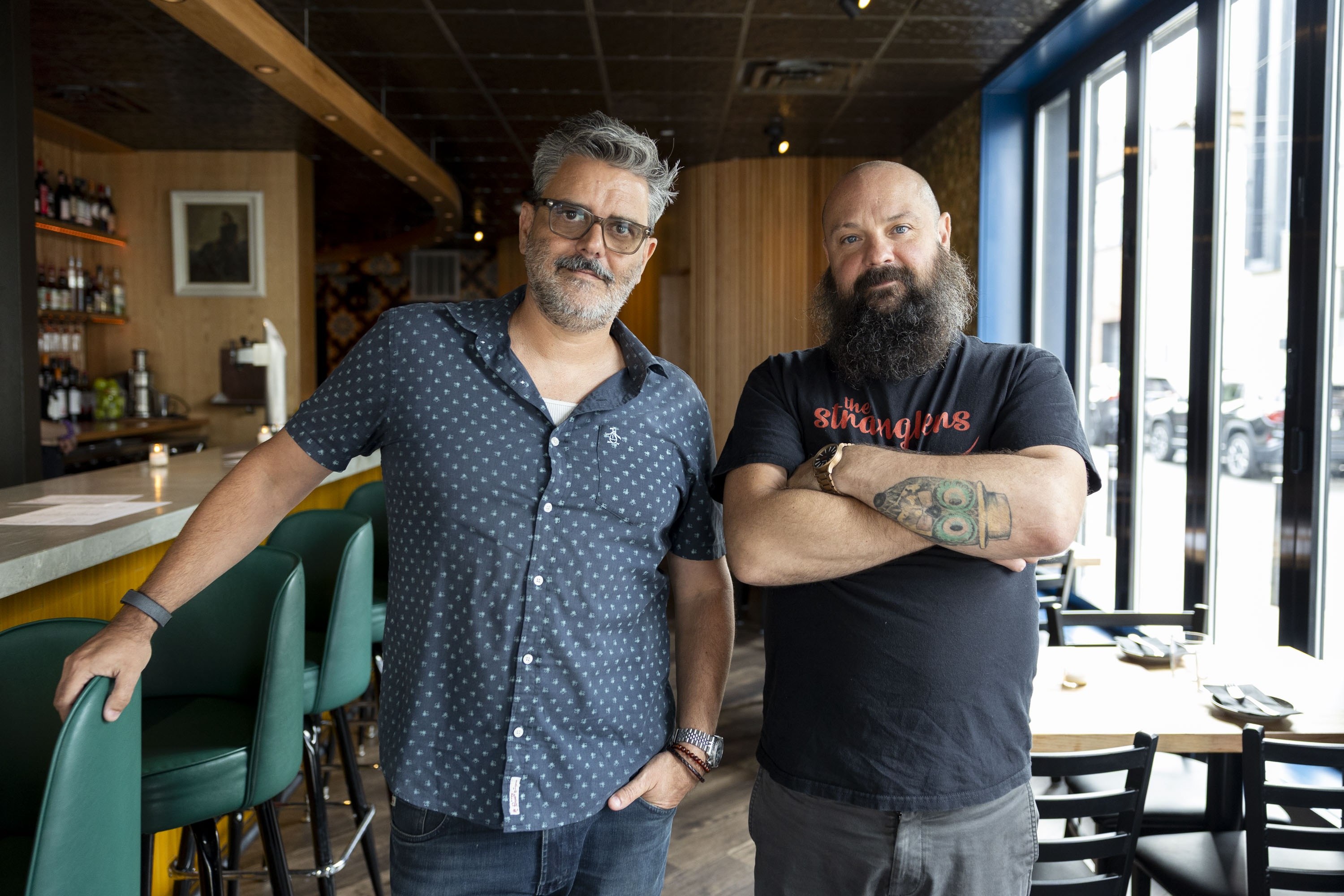
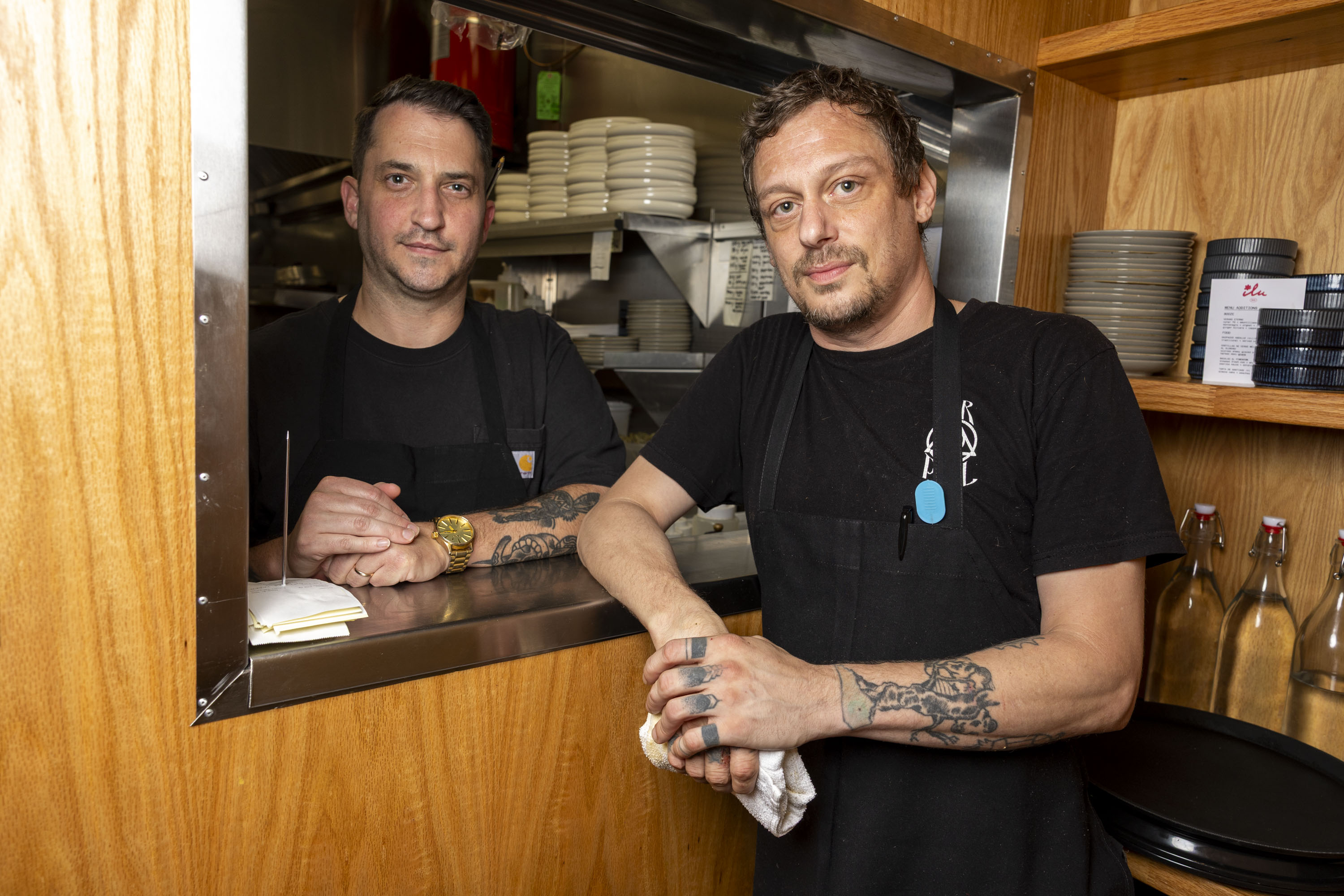
Co-owners Patrick Iselin and Scott Coudriet of BAR ilu, pose for a portrait together on Thursday, Aug. 20, 2026, in Philadelphia.Tyger Williams / Staff PhotographerThe La Gitana Manzanilla Sherry at BAR ilu on Thursday, Aug. 20, 2026, in Philadelphia.Tyger Williams / Staff Photographer
A similar approach is at work through a Japanese lens at Almanac, the cutting-edge Japanese cocktail bar (with Wagyu hot dogs and kombu-cured celery sticks) above the omakase room at Ogawa. The food menu at Chris Kearse’s new cocktail bar in Washington Square West, Known Associates, lists only a dozen items, counting the cool ranch freeze-dried peas. Same with the recently opened Lillian’s Bar in Point Breeze.As Chris Fetfatzes told me about Grace & Proper, the Portuguese-inspired bar with “tasca” nibbles he debuted in 2022, this template — a distinctive drink program bolstered by a small menu that can be produced with limited service and light kitchen investment (i.e. no hood) — makes perfect business sense in the post-COVID era.
Of course, the Spanish have been doing this for centuries with tapas, a light-bite evening repast that reflects their cultural preference for a larger meal earlier in the day. And yes, Amada has been serving tapas here for 20 years, but always alongsidea much broader menu with large plates and paellas.
Considering all the new small-plate projects that have come online recently, including Bar Cicci, Ellen Yin’s all-day aperitivo bar, Philadelphians may have finally embraced the concept on its own snacky terms.
The front bar at BAR ilu, 2118 E. Dauphin St.Michael Klein / StaffThe various plates including The Boquerones, Melon with Ham, the Tuna Empanada, Tomato Salad, Almonds, and Olives at BAR ilu on Thursday, Aug. 20, 2026, in Philadelphia.Tyger Williams / Staff Photographer
BAR ilu has a slightly more substantial food menu than most.And part of its appeal is the natural ease with which it blends a Kenzo vibe (seethe mismatched thrifter style of its floral-print wallpaper, black tin ceiling, and teal barstools) with an inventive drink program and classic Spanish plates lightly updated by chef Andrew Butler.
Fig leaf oil adds a shade of coconut-vanilla to a familiar pairing of juicy cantaloupe with shaved serrano ham. Smoked olive oil brings a whiff of earthiness to ripe summer tomatoes with cucumbers and piquillo peppers. A juicy burger topped with Manchego cheese, pickled red onions, and aioli firmly anchors the menu with one can’t-miss comfort option that even the least Spanish-inclined customer will embrace.
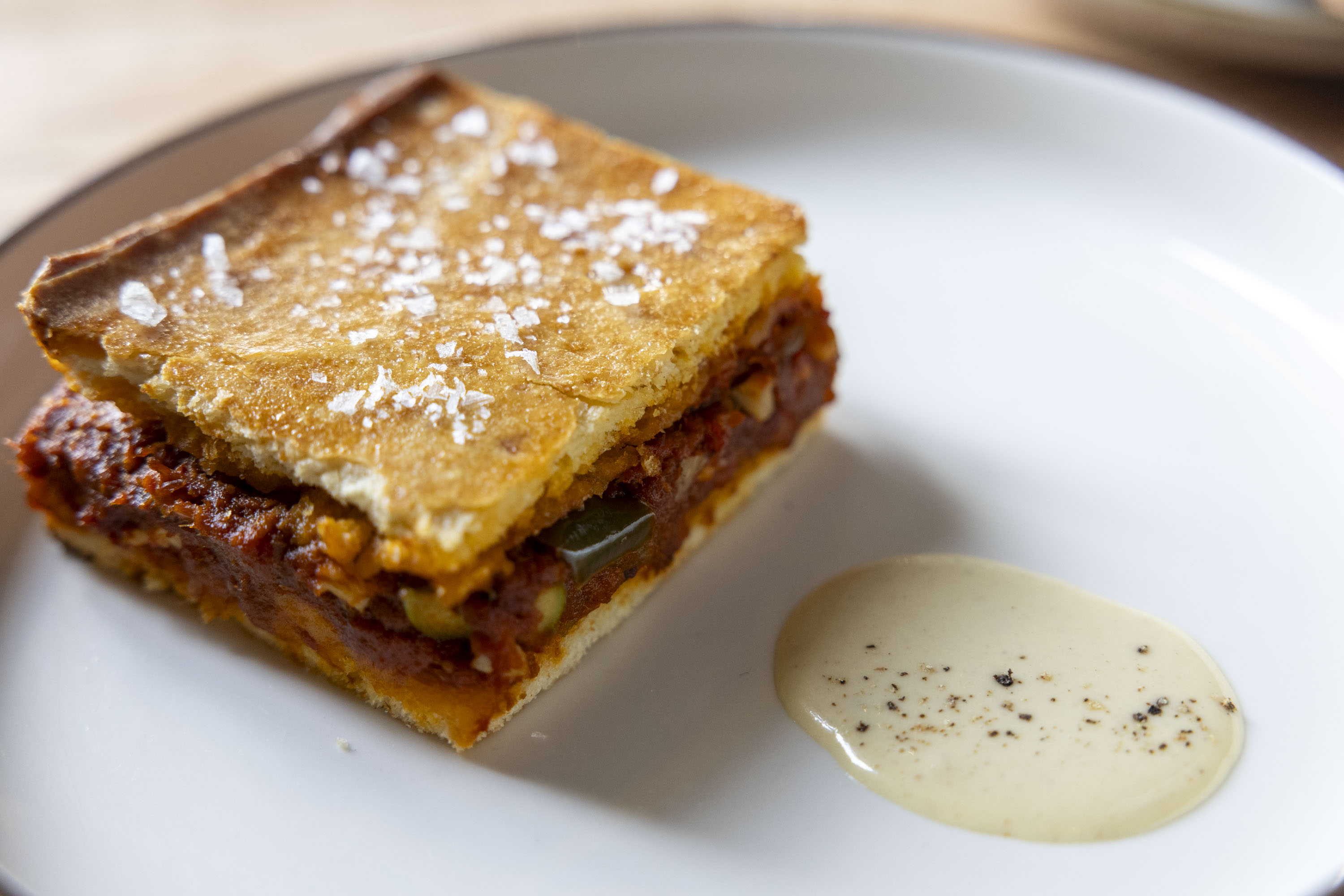
But the Spanish flavors, both on the plate and in the glasses, are what have me hooked. Aside from the tortilla, there’s a double-crusted Galician-style empanada stuffed with tuna and cooked-down tomate frito. Plump head-on gambas al ajillo take on a flicker of chili oilheat. Crisp spheres of perfectly fried croquetas harbor lusciously creamy béchamel centers flecked with serrano ham or, my favorite, salty flakes of bacalao.
A Tuna Empanada at BAR ilu on Thursday, Aug. 20, 2026, in Philadelphia.Tyger Williams / Staff PhotographerPat Szoke, culinary director, and Andrew Butler, chef de cuisine, at BAR ilu.Tyger Williams / Staff Photographer
There were a few misfires. The patatas bravas were pale and lacking crisp. The flattened confit artichoke heart was mushy. The seared mushrooms were oversalted. But these were minor complaints compared to winners like the crusty bocadillo sandwich overstuffed with paprika-fried baby squid drizzled with lemony aioli and more tomate frito. Along with some tiny olives stuffed with briny anchovy, every morsel seemed deliberately calibrated to stoke a thirst.
I especially enjoyed BAR ilu’screative approach to sherry and vermouth, both in cocktails and poured neat. A crisp Manzanilla, already one of my favorite predinner quaffs in summer, added a bracing dryness to Cynar amaro and gin for Remember the Alimony. Vanilla-scented Licor 43 from Spain pairs with chilled Cafe Bustelo for a carajillo whose pebble ice is dusted with coffee-orange powder, and is now one of my top five coffee cocktails in the city.
The Carajillo at BAR ilu on Thursday, Aug. 20, 2026, in Philadelphia.Tyger Williams / Staff Photographer
The Fire Drill is a refreshing tropical blast of passion fruit swirling in mezcal smoke, with an herbal whiff of Lo-Fi gentian amaro to counter the fruity sweetness. A whole Granny Smith apple is juiced to order forthe simpleBooze & Juice, paired with the spirit of your choice (make it mezcal).
Meanwhile, unless you order a glass of dark, sweet-tangy Pedro Ximenez to cap your meal, try the Barquero vermut on draft and top it with orange foam, a combo that tastes like flat Coke dolloped with an orange-creamsicle cloud. There is actual dessert here, too: a perfectly fine almond cake with macerated peaches and cream. But that foamed vermouth was satisfyingly herbal, sweet, and mysterious — and one of the best things I drank all summer.
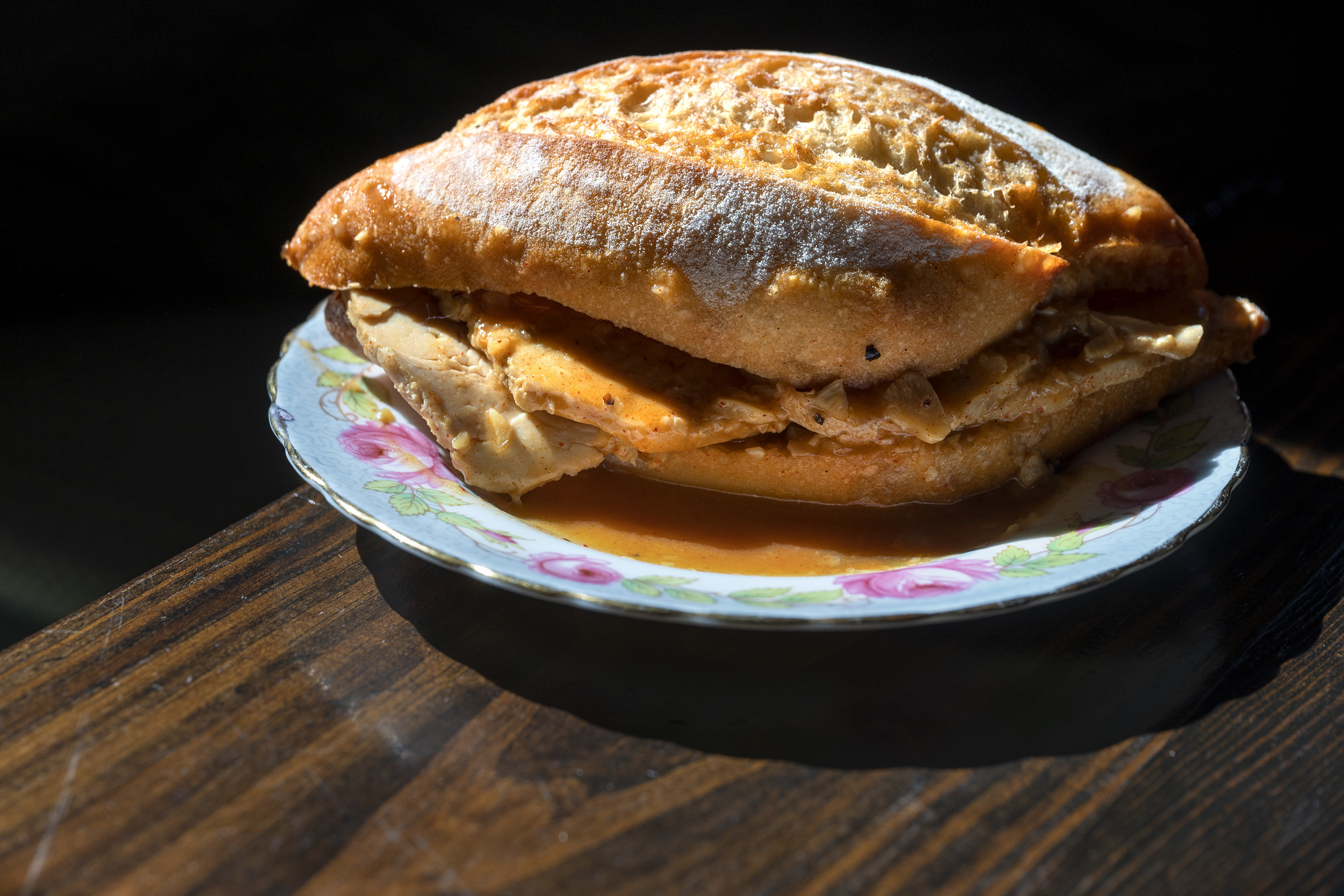
The Vermouth with Orange foam at BAR ilu on Thursday, Aug. 20, 2026, in Philadelphia.Tyger Williams / Staff PhotographerThe Bifana sandwich as served at Grace & Proper in Queen Village Wednesday, Mar. 8, 2023.Tom Gralish / Staff Photographer
Grace & Proper
If BAR ilu represents a modern interpretation of tapas culture in Philly, the vintage vibes at Grace & Proper’s Italian Market space reflect a different take on Iberian bar culture, this one influenced by the Portuguese roots of co-owner Chris Fetfatzes’ family.
Fetfatzes, his wife, Heather Annechiarico, and their Happy Monday Hospitality partner Susan Freeman, who also own Wine Dive and Sonnys Cocktail Joint, leaned into the antique charm of the distressed tin ceiling, tiled floor, and exposed brick walls that wereuncovered during renovations of the old pharmacy (and Italian deli) that once occupied this corner space at Eighth and Carpenter. Fetfatzes was hoping to create the cocktail counterpart to Fountain Porter, the 14-year-old craft beer destination in East Passyunk known for its $7 burgers and pickles that, perhaps, helped mark the beginning of the minimalist-nibble bar.
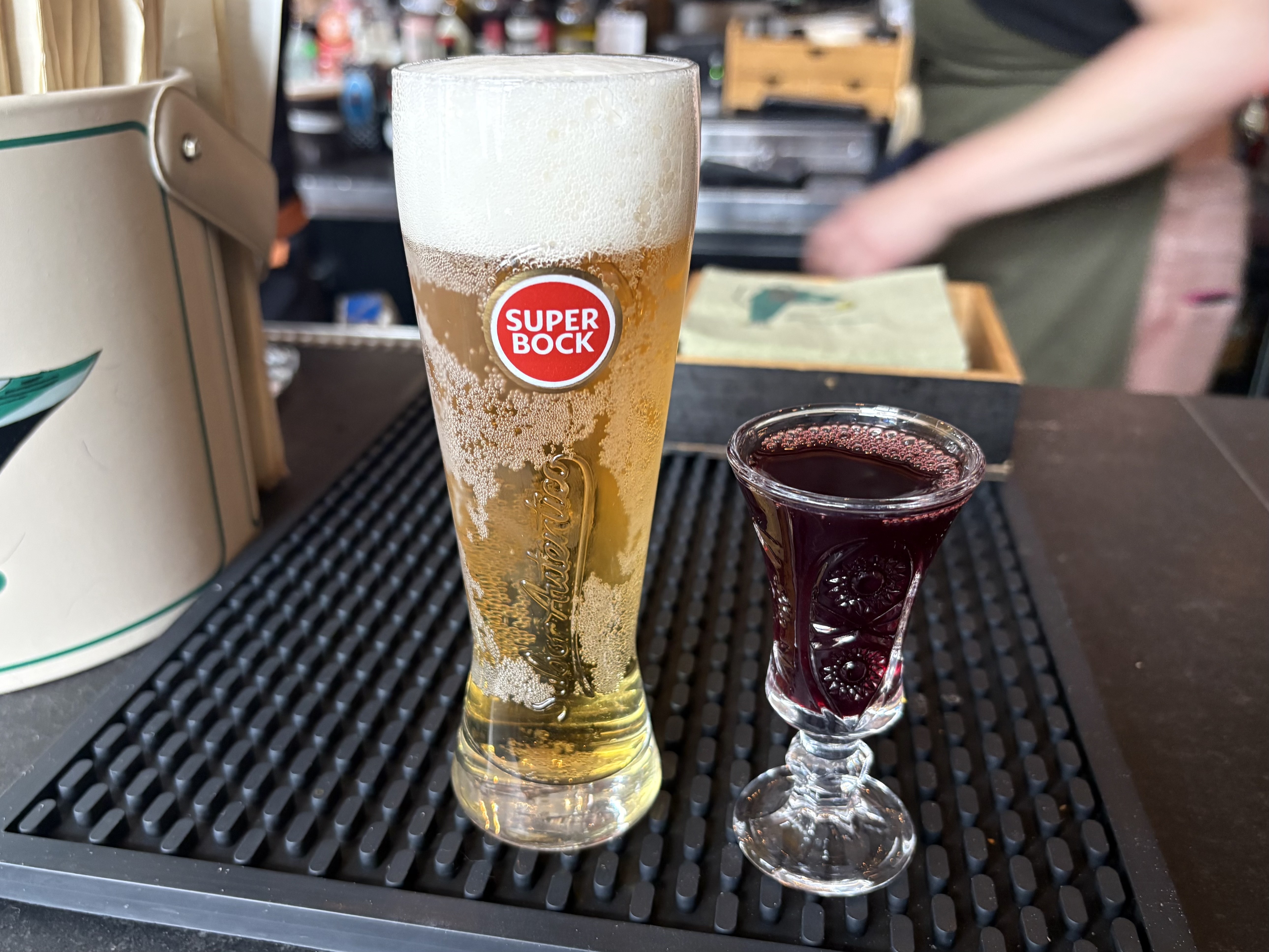
Given Grace & Proper’s compact space, with just 15 barstools and 26 table seats sidled into window banquettes (plus 30 more outside in fair weather), it’s amazing how its 200-bottle collection of amari, vermouths, ports, whiskeys, Madeiras, sherries, agave spirits, and indie Euro wines somehow fits into the tall shelves behind the bar. If you’re a fan of funky Asturian cider, there’s a proper porrón carafe to stream it directly into your mouth from an arm’s length away, ideally while watching Premier League or MLS soccer. Or try the Philly-Portugal Lisbon Wide hybrid, a draft of Super Bock Portuguese lager paired with a shot of ginjinha, a house-made cordial steeped from Morello sour cherries harvestedin Northeast Philadelphia.
The Lisbon Wide is Grace & Proper’s Portuguese twist on a Citywide, pairing Super Bock beer with housemade Ginjinha sour cherry liqueur.Craig LaBan / StaffThe Meat & Chips at Grace and Proper on Thursday, Aug. 3, 2023.Allie Ippolito / Staff Photographer
Grace & Proper doesn’t post a food menu online, but it’s substantial enough to anchor your table for a couple hours of snacking, from an irresistible pile of truffled potato chips feathered with spicy Calabrese salami to soulful onion soup infused with port and lardo, a crock of white bean stew with kale and breadcrumbs, piri piri-spiked Buffalo chicken dip, and sweet-tart-smoky bacon-wrapped prunes with black garlic aioli.
I didn’t care for the overly firm meatballs and their unbalanced blackberry romesco or, for that matter, the presentation of cheeses as crumbled nuggets. But these are all quibbles. Because there is really a single essential reason to visit Grace & Proper: the bifana, a classic sandwich of wine-marinated roast pork on a molete roll from Teixeira’s Bakery in Newark that comes perched over a paprika-orange pool of zesty gravy. Equal parts lemony, garlicky, winey, and scented with bay, that roasted pork essence is so good, the gravy is also offered as a chaser to the Piggy Backshot (oloroso sherry and Armagnac).
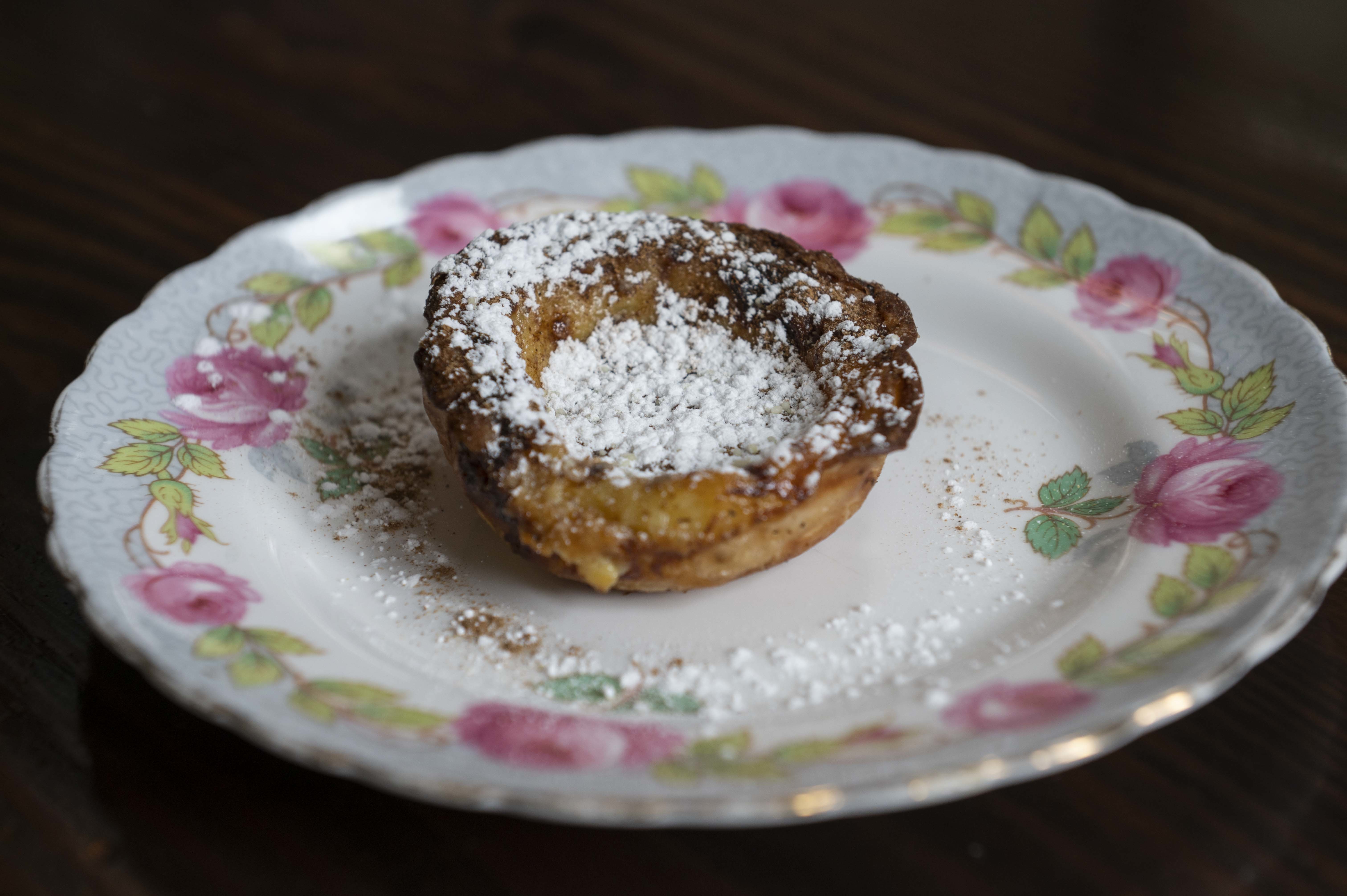
All you’ll need after that is a custardy sweet pastel de nata (also baked by Teixera’s, according to G&P’s recipe) and what might well be the best crema-topped shot of espresso at any bar in Philly. Grace & Proper is one of the precious few that actually adds fresh-pulled coffee to its espresso martinis, but I still prefer this coffee solo. I value the energy boost because, in these days of no-commitment sip-and-nibble bars, I’ve still got places to go.
The Pastéis de Nata at Grace and Proper on Thursday, Aug. 3, 2023.Allie Ippolito / Staff PhotographerVintage details of the former pharmacy and Italian deli have been preserved to add character to the bar at Grace & Proper.Craig LaBan / Staff
Menu available 4 to 11 p.m. Sunday, Tuesday through Thursday; 4 p.m. to midnight Friday and Saturday. Bar is open 4 p.m. to midnight Sunday, Tuesday, Wednesday; 4 p.m. to 1 a.m. Thursday through Saturday.
Plates, $4-$14.
Dining room is wheelchair accessible via a ramp off rear of building off Martha Street. Bathrooms are not accessible.
Not ideal for gluten-free diners, aside from some small snacks.
Menu highlights: croquetas (ham and bacalao); anchovy-stuffed olives; serrano ham and chips; tortilla Española; ham and melon; cheeseburger; gambas al ajillo.
Drinks: Cocktails built around sherry and vermouth are the most distinctive opening move, while straight fortified wines on draft, including La Gitana Manzanilla or Barquero vermut with orange foam, are also highlights. There are also 10 affordable Spanish wines by the glass.
Menu served 4 p.m. till midnight Monday, Wednesday, Thursday; noon to midnight Friday through Sunday. Bar is open till 1 a.m. on Friday and Saturday.
Plates, $7-$15.
Not wheelchair accessible.
About 40% of the menu is gluten-free or can be modified.
Menu highlights: bifana; bacon-wrapped plums; salami and truffled chips; Porto lardo onion soup; pasteis de nata.
Drinks: The vast 200-bottle collection is a sipper’s delight, from amari to fortified wines, extensive whiskies, and a surprising agave spirits collection. Don’t miss creative cocktails made with the company’s new house-distilled spirits, including a Chartreuse-inspired “Green Monk” or the ginjinha cordial, steeped from Northeast Philly sour cherries, served in the Lisbon Wide as a sidecar to a draft of Super Bock.
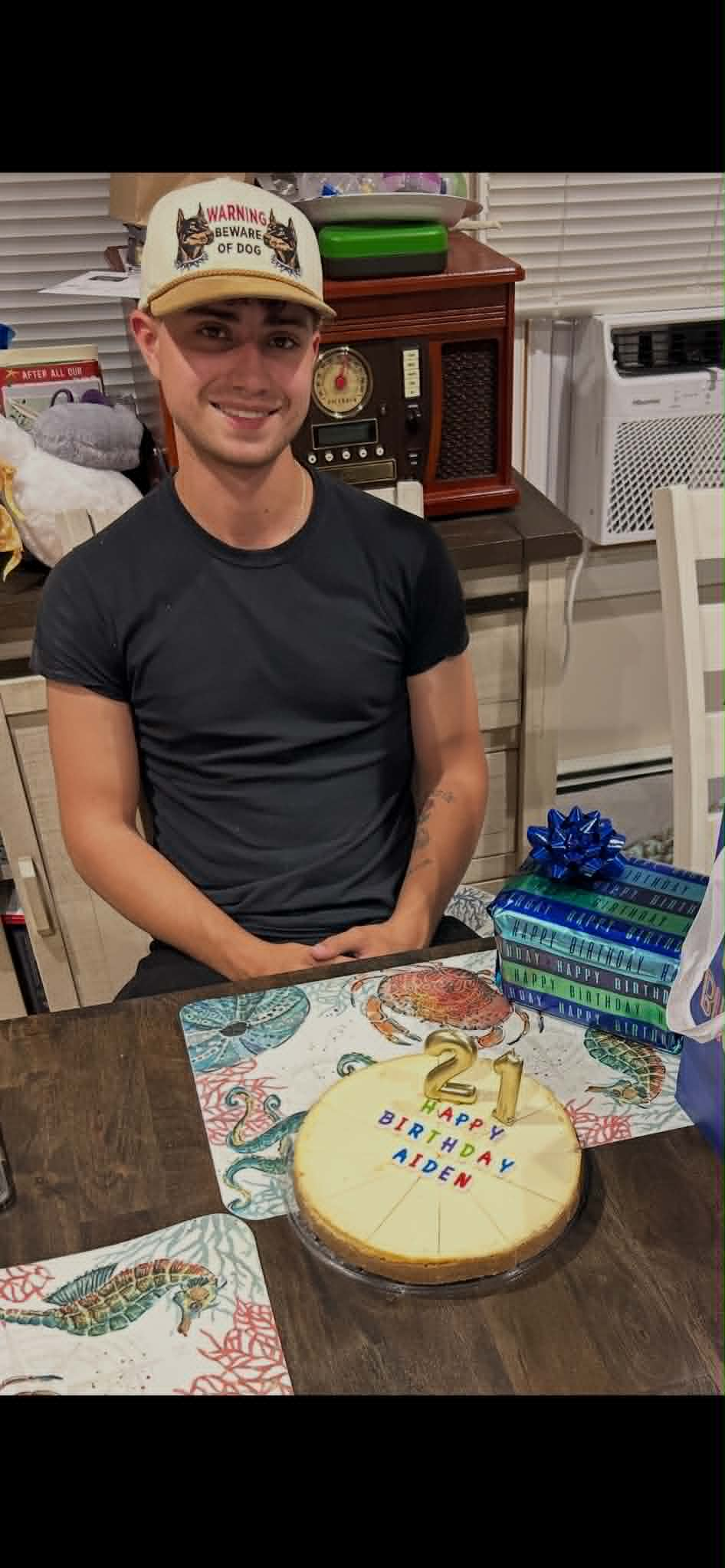
Aiden Zeallor was only trying to get home the night he was struck and killed by gunfire while driving on I-95 near Port Richmond last year.
Zeallor, 21, was a bystander, in the wrong place at the wrong time when at least 50 rounds were fired at a nearby vehicle in what investigators said was an attempted targeted killing of another person.
Now, nearly 18 months after the Levittown native’s death, police have arrested a man and woman they say are responsible.
Alondra M. Lopez, 28, and Joseph G. Toledo-Gonzalez, 27, face charges of murder, attempted murder, and related crimes in connection with the 2025 shooting.
Lopez is being held in the Philadelphia Industrial Correctional Center and Toledo-Gonzalez is being held in the Curran-Fromhold Correctional Facility. Both were denied bail.
Zeallor’s mother, Denise Donahue, said the arrests have given her some semblance of closure, even if no development in the case will bring back her son.
“He was a loving boy that should still be here,” Donahue said. “His life was stolen from him.”
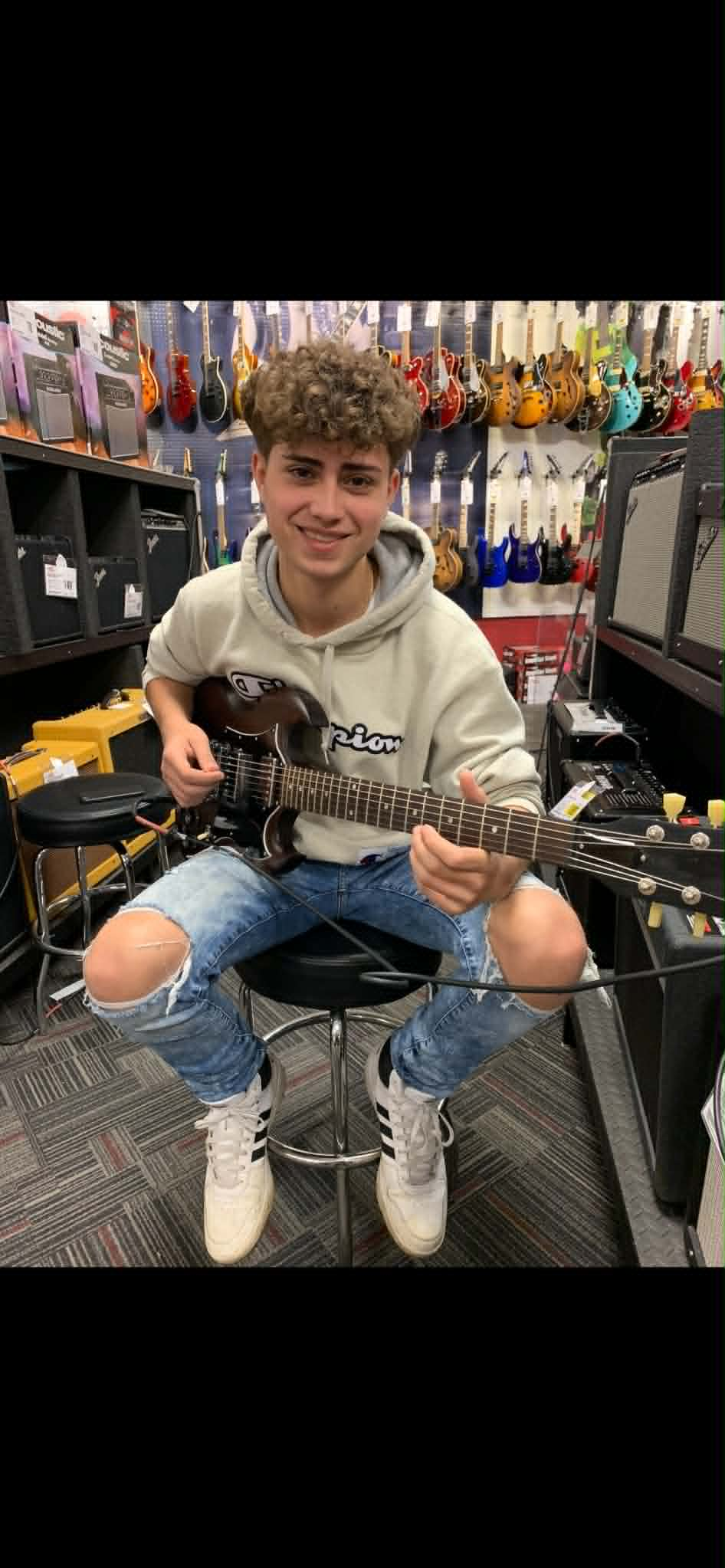
The curly-haired young man was an avid fisherman and outdoor enthusiast who worked as a technician for his family’s HVAC company and was always surrounded by friends, Donahue said.
He was also devoted to his family, she said. Not long before Zeallor’s death, he had moved into his grandmother’s house in Northeast Philadelphia to take care of her and so she did not have to live alone.
Donahue, meanwhile, continues to grieve the loss of her son. She had already experienced the death of Zeallor’s father, in 2009.
Her life was again forever altered the evening of March 29, 2025, when she learned her son had been shot in the head and torso and was put on life support.
A photo of Aiden Zeallor.Denise Donahue
She rushed to the hospital from her home in Wildwood. Zeallor was declared brain-dead and died later that morning.
Donahue said her son had been out dancing with a friend that evening at a nightclub in Philadelphia.
The two were heading back to Zeallor’s grandmother’s house and were in the northbound lane of I-95 around 2:30 a.m. in Zeallor’s Ford Mustang when bullets fired from a semiautomatic rifle riddled a nearby Acura, the intended target of the shooting.
Two stray bullets pierced Zeallor’s windshield as he drove, striking his right eye and under his right arm.
The driver of the Acura was shot in the leg and was treated at a nearby hospital.
Court documents offered few details about Lopez and Toledo-Gonzalez’s role in the shooting and do not describe the motive.
A spokesperson for the Pennsylvania State Police, which is handling the investigation, did not immediately return a request for comment.
A preliminary hearing for both defendants is scheduled for Sept. 14 in Municipal Court.
Donahue said she and relatives plan to attend every court proceeding as they seek justice for Zeallor.
They are also urging lawmakers to pass “Aiden’s Law,” which would require the installation of surveillance cameras on certain Pennsylvania highways to help investigators identify suspects in violent crimes.
Meanwhile, the family is comforted knowing that Zeallor helped save four lives through organ donation.
“We changed other people’s lives that day,” Donahue said. “That makes me proud, as Aiden’s mom.”
Maleka Evans waited outside Octapharma Plasma in South Jersey at 8:30 on a recent sweltering morning, sweat beading on her face. A dozen other prospective donors had arrived before her, and the line was still growing a half hour before doors opened.
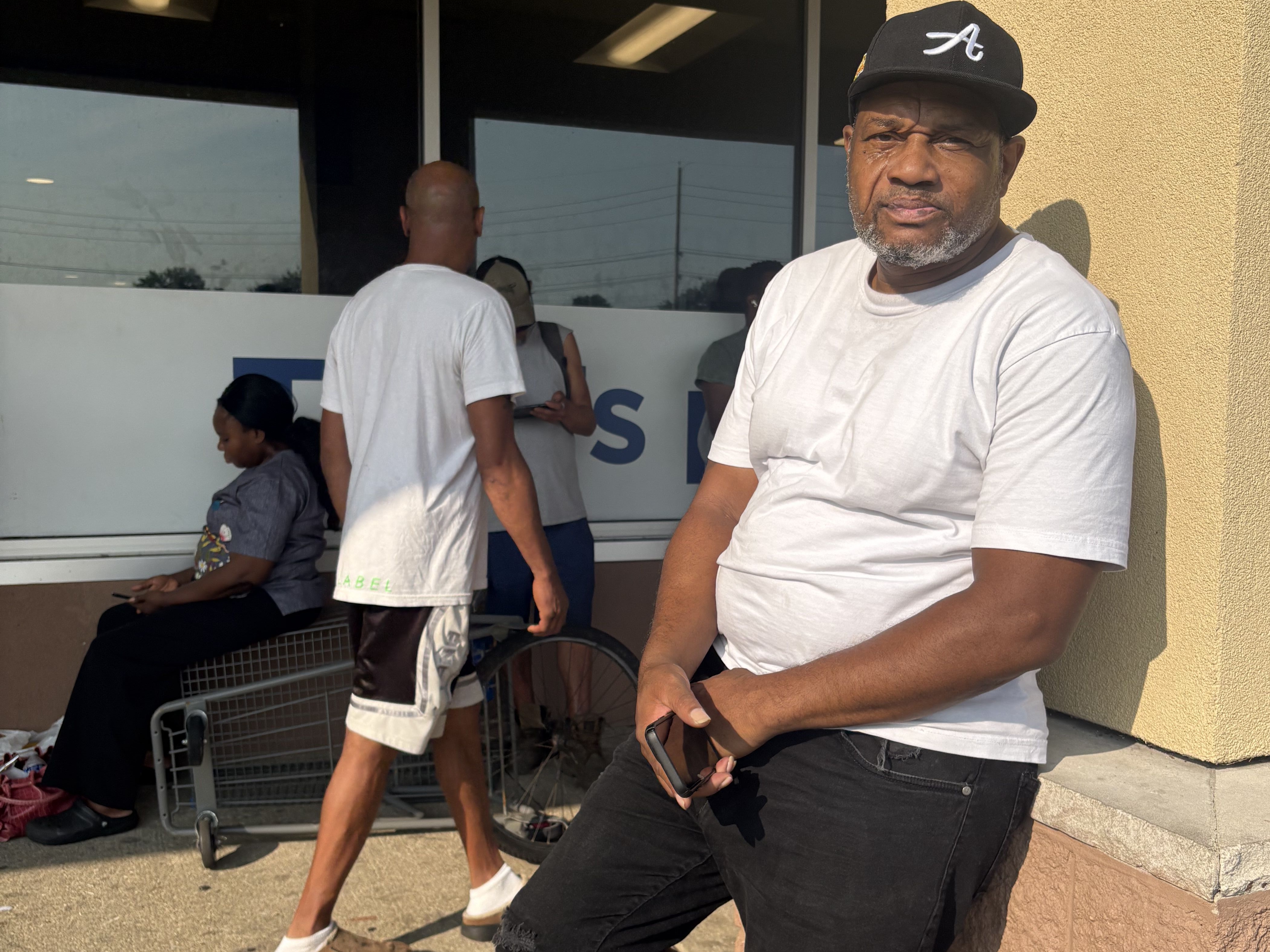
One woman sat on an overturned shopping cart pilfered from the nearby Walmart. Another brought her own folding chair. A man held a bicycle tire, removed to protect his bike from being stolen once he was inside and hooked up to a machine that extracts antibody-rich blood plasma needed for medical treatments.
Every Monday and Friday for the last three years, Evans has trekked to the Audubon strip mall for what she considers her second job. She takes a 45-minute bus ride from her Willingboro home to Camden, then walks another 45 minutes to the donation site with a slogan posted in its window: “When it pays to give hope. That’s plasmagic.”
The 37-year-old single mom has noticed the lines growing in the last year, as others are seeing at donation sites elsewhere in the Philadelphia region and across the nation. The for-profit business is booming as more and more Americans, both poor and middle class, struggle to straddle the gap between stagnant wages and increased living costs.
Evans relies on the $50 that she typically earns for each plasma donation — loaded onto a prepaid debit card — to help with bills that she cannot cover with her $18-per-hour job packing boxes at a warehouse.
“Prices for everything — food, rent, transportation, electricity — are just getting higher and higher,” Evans said. “You have to work two jobs to make ends meet, and you’re still living paycheck to paycheck.”
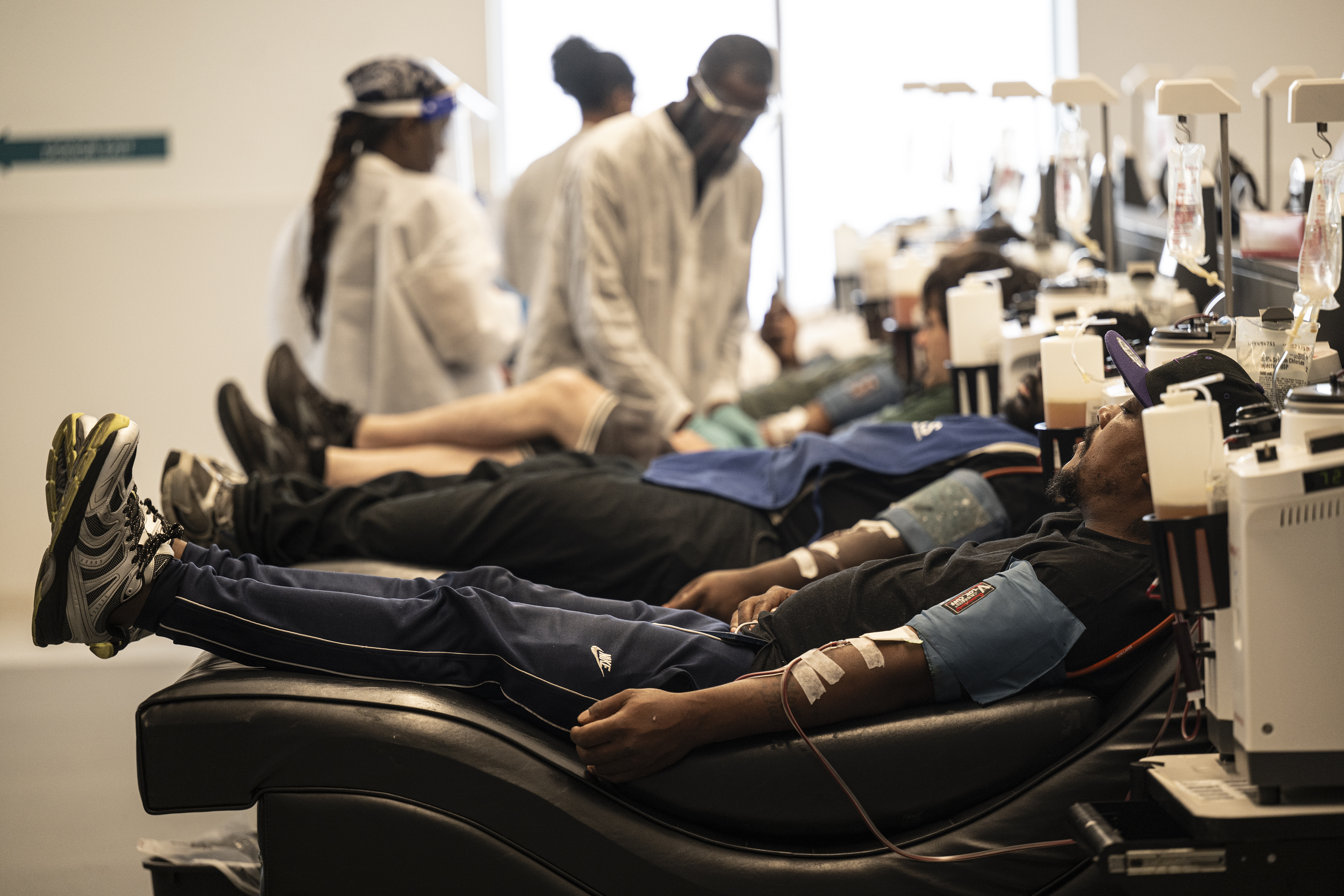
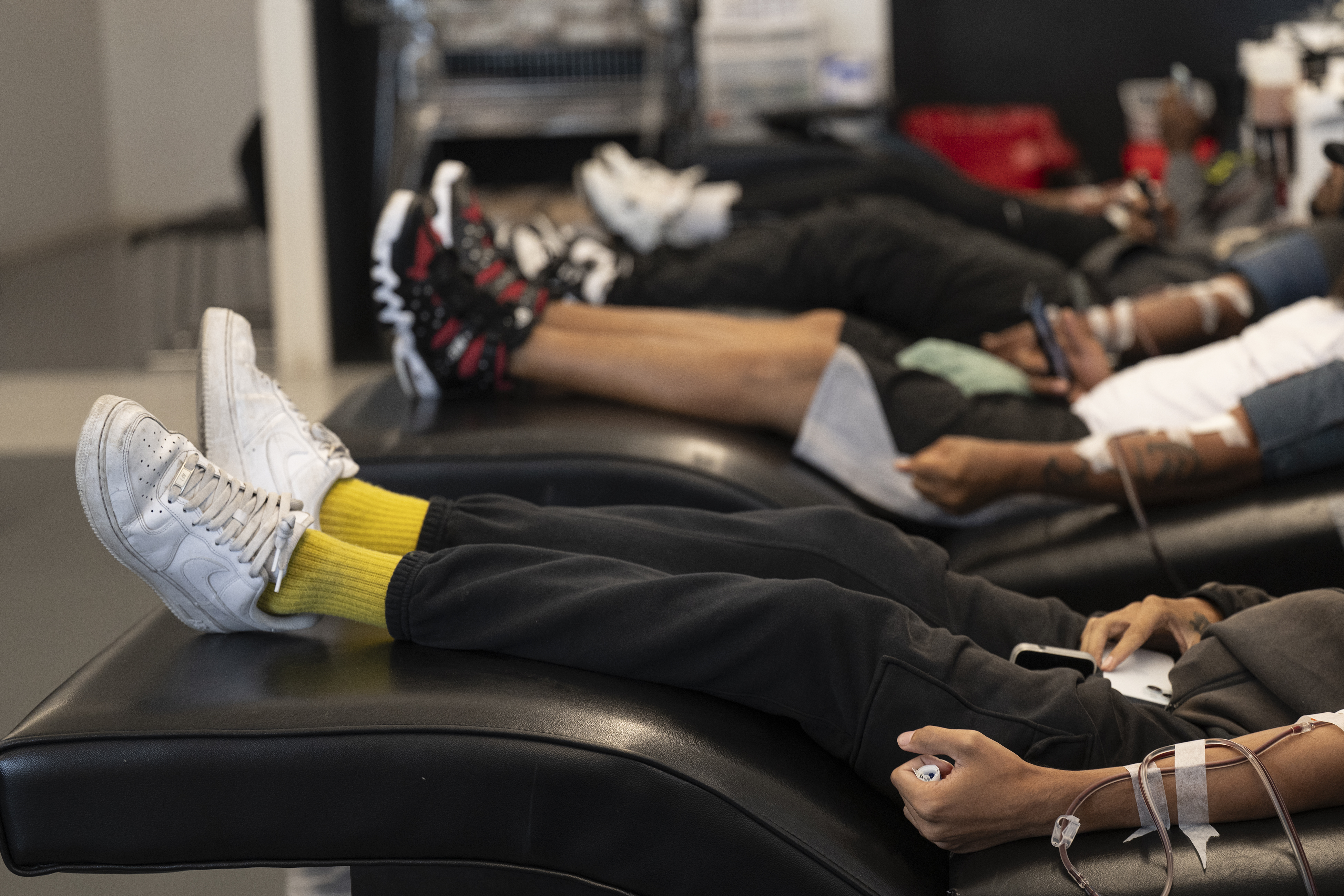
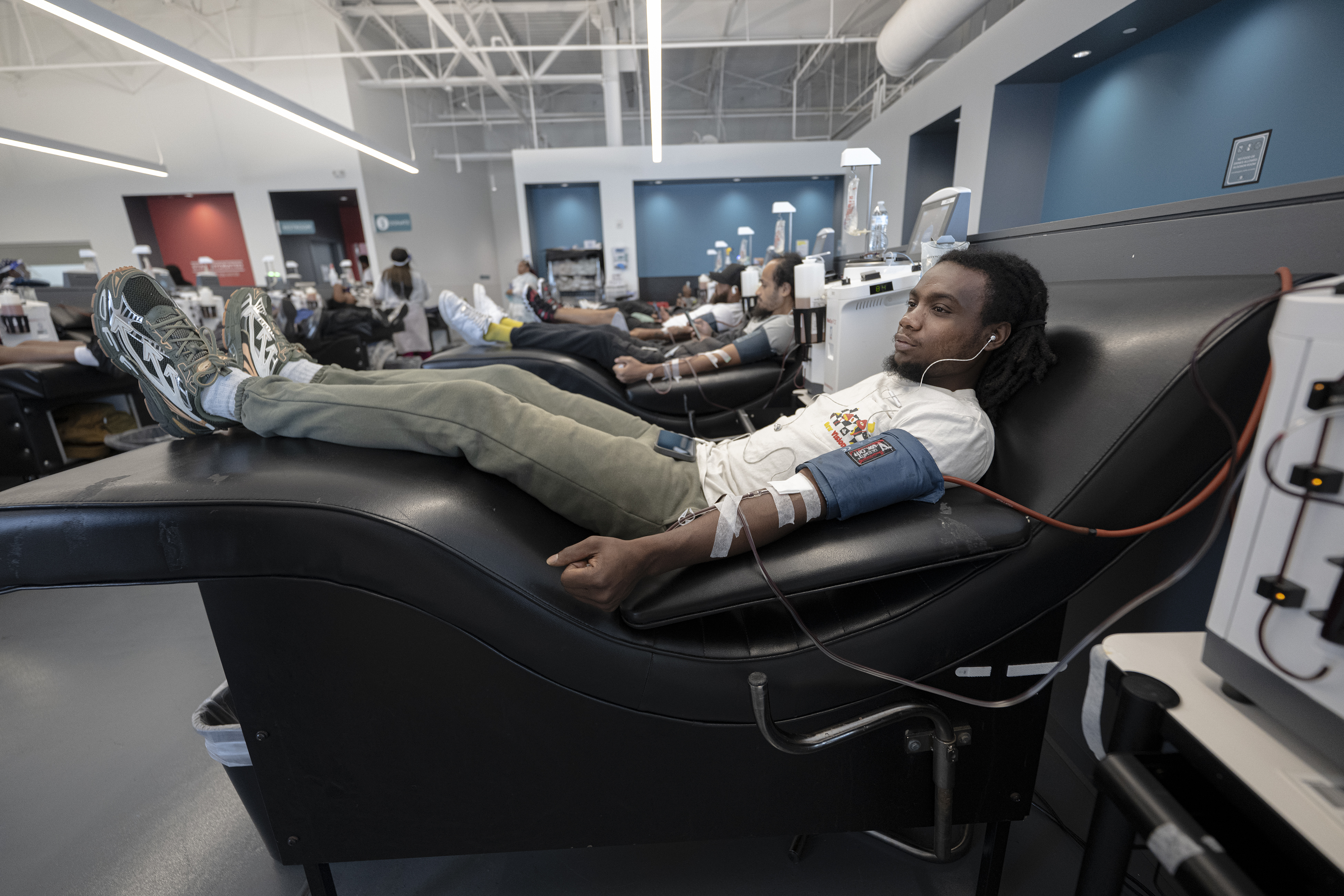
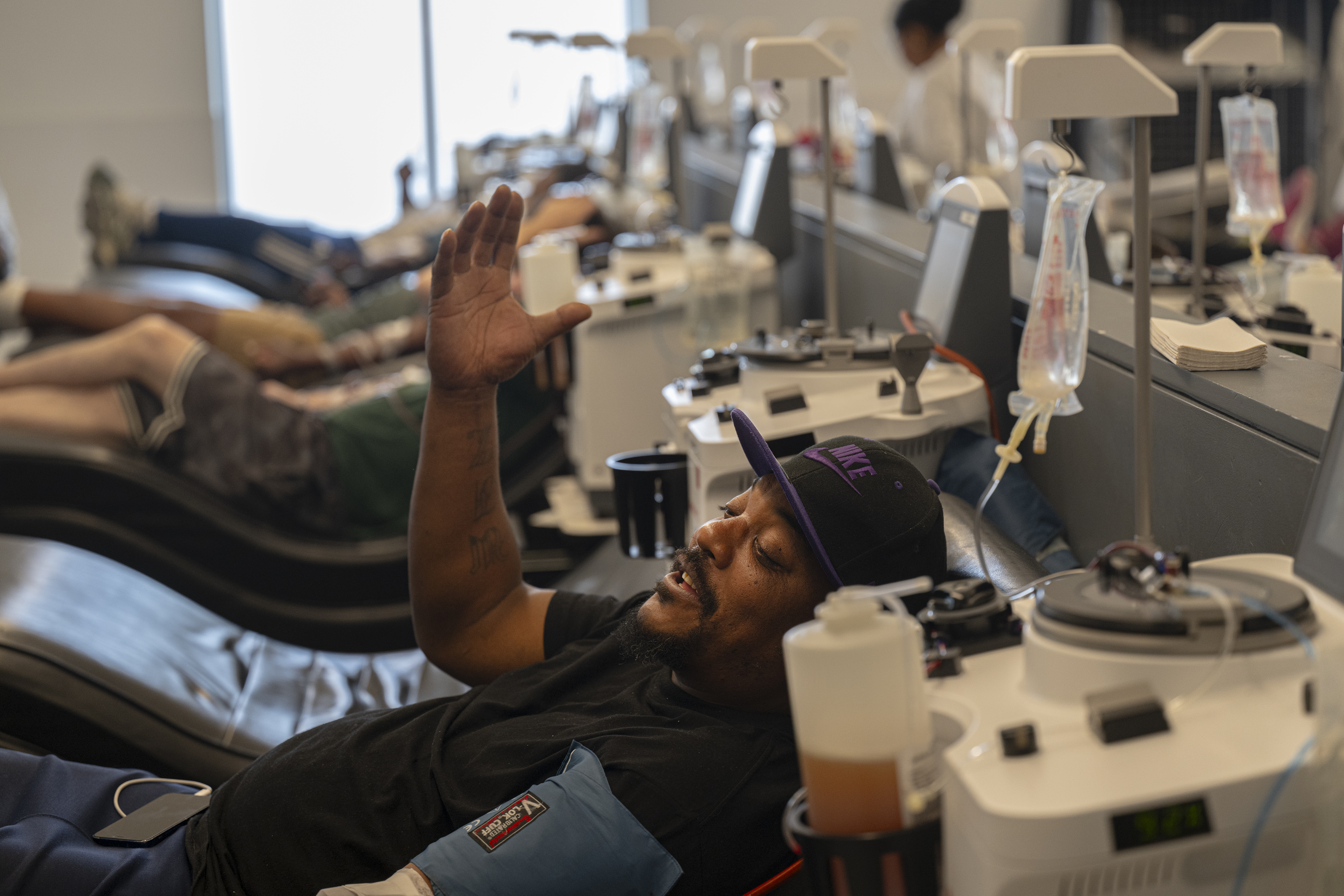
An increasing number of people in the Philadelphia region are selling their blood plasma for money. Here, local donors sit in recliners with needles in their arms at B Positive Plasma in Montgomery County.Jose F. Moreno / Staff Photographer
The U.S is one of about a dozen countries where it is legal to pay donors for plasma. It is among only three countries where people are allowed to donate two times over seven days, though not on back-to-back days, per U.S. Food and Drug Administration regulations.
Nearly 70% of the world’s plasma comes from donors in America, fueling a multibillion-dollar global industry. Plasma, a straw-colored liquid in blood, contains antibodies and other proteins used for treating a wide range of patients with immunodeficiencies, neurological conditions, kidney disease, and bleeding disorders.
Last year, U.S. donors produced 62.5 million liters of plasma — the highest volume ever collected and an 8% increase from the previous year. That trajectory has continued into this year, according to Georgetown University professor Peter Jaworski.
“When the price of most staples goes up, so does the amount of plasma donations,” Jaworski said. “If I fell on hard times, the very first thing I would do is become a regular plasma donor.”
Donating plasma is widely considered low-risk, with millions of people doing it each year without reported health problems. However, the long-term health effects of donating twice weekly for years have not been well-studied. Safety concerns raised by the deaths of two people in Canada who had recently donated at for-profit clinics run by the healthcare company Grifols haveprompted an investigation there.
In the U.S., an FDA investigation into 34 deaths of people who had donated plasma between 2016 and 2020 did not find a link between donations and fatalities.
Some donors experience lightheadedness, fatigue, bruising, bleeding, or dehydration. Drinking water and eating foods high in iron and protein can help alleviate those side effects, according to U.S. health guidance.
Security guard Danny Morales of North Philadelphia said he feels “tired” after donating. But that has not deterred him from heading to CSL Plasma in the city’s Olney neighborhood twice a week, as soon as he finishes his overnight shift at 6 a.m.
Morales can earn $520 a month donating plasma, which helps to offset rising expenses that have the 35-year-old father feeling ever more drained: The cost to fill up his Honda Civic’s gas tank jumped from $30 to $80 in the last year; a package of ground beef increased by $8; and even the brand of mac and cheese that his 8-year-old daughter and 2-year-old son enjoy costs about $1 more, he said.
“It’s just getting worse and worse,” said Morales, whose plasma donations supplement his $18 hourly security job wage. “Stuff is just getting so expensive. Groceries are ridiculous.”
CSL opens at 6 a.m., but a line starts to form around 4:30 a.m. In late July, it snaked past the building, wrapping around the corner. The sight caught the attention of nearby Olney resident Tony Reed.
“There’s always a line there, especially toward the end of the month and definitely on Monday mornings,” Reed said. “People are broke.”
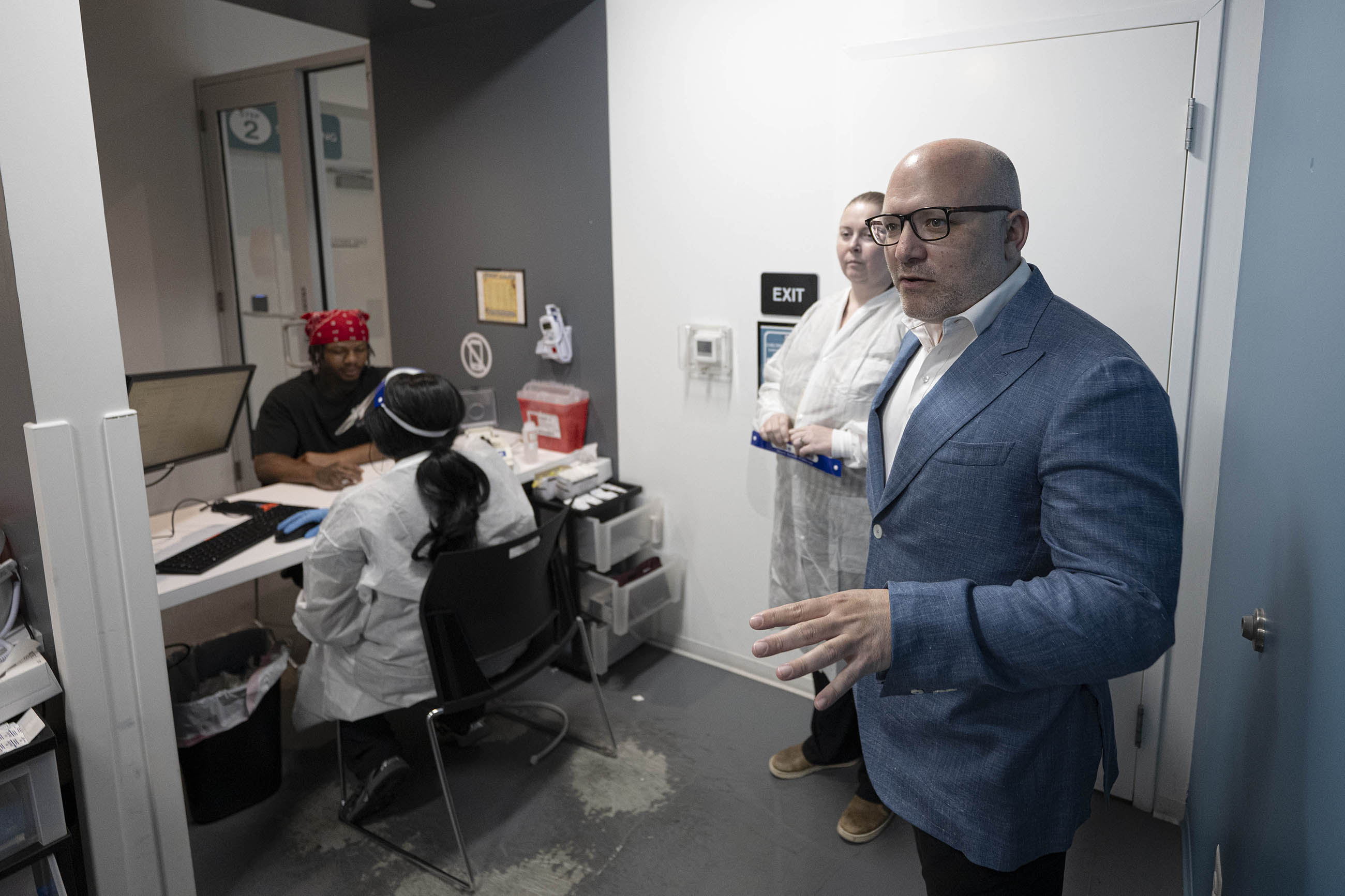
Ben Ruder, CEO and founder of B Positive Plasma, and Pearl Dixon, an assistant manager and phlebotomist, explain the donor intake process. Each donor fills out an extensive health questionnaire, undergoes a medical exam, and gets a finger prick to test their blood for iron and protein levels. Jose F. Moreno / Staff Photographer
Inside the booming industry
On a recent Wednesday afternoon at B Positive Plasma in Montgomery County, a steady stream of donors checked in at kiosks in the lobby.
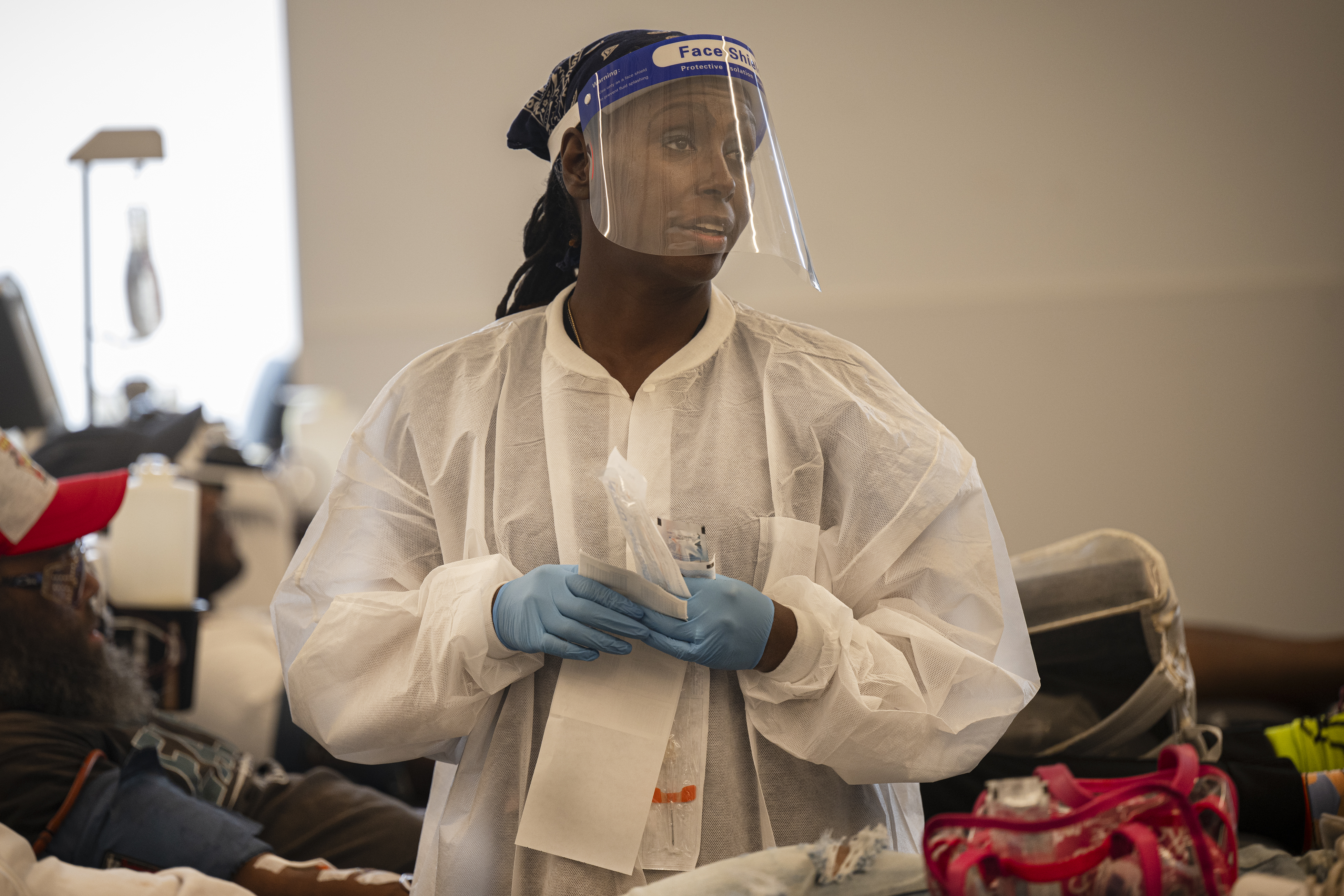
After filling out an extensive health history questionnaire, each new donor undergoes an on-site medical exam by a licensed practical nurse. Repeat donors must get annual exams. At each visit, a medical tech checks their vitals, including blood pressure, pulse, and temperature, and performs a finger prick to test their blood for protein and iron levels. Donors must weigh at least 110 pounds.
“We make sure they’re healthy and well,” said Ben Ruder, founder and CEO of B Positive Plasma, noting that the plasma itself is tested for HIV and hepatitis B and C before being sold.
Next, plasma donors are hooked up to a machine that draws out blood, spins off the plasma, and then returns the red blood cells back to the donor, a process that typically takes 45 minutes to an hour.
At 2 p.m., 18 of the 24 cushioned recliners at the Wyncote location on Cheltenham Avenue were occupied by donors, each with a needle in one arm. They included a Philadelphia police officer who had donated more than two dozen times since May 2025; a casino cleaner who earns $120 a week donating to support his young daughter; and a home health aide who donates twice a week to help cover his $750 monthly apartment rent.
Jason Johnson, 29, of East Mount Airy, has donated plasma 68 times at B Positive Plasma in the past two years. He makes an extra $120 a week donating twice weekly. The money helps supplement the $17.80 an hour he earns as a cleaner at Live! Casino & Hotel Philadelphia. “In the beginning, I was doing it for the extra money, but once I learned that I’m helping people out in their life, it made me want to come back even more,” Johnson said. Jose F. Moreno / Staff Photographer
Plasma donation differs from whole blood donation, a faster process that relies on unpaid volunteers who can donate only once every 56 days in the U.S.
B Positive Plasma is on track to see a record year, with 180,000 donations, peaking this holiday season, when people need extra money for gifts. Last year, the company saw 150,000 donations at about 1 liter per person.
Ruder, 42, who lives in Center City, opened his first plasma donation center in Cherry Hill in 2012 and rapidly expanded to 12 locations in New Jersey, Pennsylvania, and Delaware. He plans to open two more sites in Maryland next year and another in Allentown later this year.
B Positive Plasma, like other plasma companies, structures payments to incentivize twice-weekly donors. For instance, donors whose weight and physical health yield the maximum amount of plasma — 1,001 to 1,200 milliliters — will receive $45 for the first visit and another $90 if they return that same week. Plus, the company offered a $50 bonus for anyone who donated eight times in August.
Donyele Wilkins, 48, a phlebotomist and medical assistant, works in the donation room at the B Positive Plasma in Montgomery County. She suffers from lupus, a chronic autoimmune disease for which she receives plasma-derived infusions to control her symptoms.Jose F. Moreno / Staff Photographer
Phlebotomist Donyele Wilkins works 12-hour shifts, four days a week, at B Positive Plasma.
For Wilkins, the paycheck is not the only benefit of working there.
The 48-year-old Northeast Philadelphia resident suffers from lupus, an autoimmune disease in which the body’s immune system attacks its own tissues and organs. Wilkins said she relies on plasma-derived medication, infused through an IV every four to five months, to help control symptoms like inflammation and joint pain.
Knowing how plasma is processed makes her feel “safe,” she said. She also likes getting to know “the regulars” who donate.
“It makes me feel like I know exactly where it’s coming from, and I know the people who are doing it,” Wilkins said. “A lot of them really need the money, so they’re helping me, on top of me helping them.”
‘Blood money’
Paying donors for plasma has sparked ethical debate, with some accusing the industry of exploiting poor people.
In her 2023 book, Blood Money: The Story of Life, Death, and Profit Inside America’s Blood Industry, Kathleen McLaughlin, a Montana-based journalist, found that donors in many U.S. regions are disproportionately Black and brown people.
McLaughlin, who has a rare autoimmune disease treated withmonthly plasma-derived infusions, said today’s rise in donations is “a symptom of our broken economic system.”
While the FDA regulates health safety at plasma centers, the pay rate is set by the companies, McLaughlin found. She thinks donors should be paid more and the amount should be standardized.
“Right now, it’s a capitalist free-market system, where the pricing isn’t transparent,” McLaughlin said. “The profit margins are crazy for these plasma companies, and it’s gamified to make you donate twice a week, every week, in perpetuity.”
Jaworski, the Georgetown University professor, said donors are compensated fairly. A donor whosits for an hour and a half makes “significantly more than” New Jersey’s $15.92 minimum hourly wage and Pennsylvania’s $7.25. Plus, he stressed, donors save “hundreds of thousands of lives.”
Wallace Smith, 45, of Upper Darby, prides himself on making an honest living. He earns $15 an hour as a home health aide. He makes an extra $130 a week selling his blood plasma. The money helps cover cigarettes, rent, and his phone bill. Jose F. Moreno / Staff Photographer
Recently published research suggests that communities can benefit when a new plasma center opens, because fewer young people take out high-interest payday loans and area crime drops, mostly driven by decreases in property and drug-related offenses.
“It helps you from having to do something wrong,” plasma donor Wallace Smith said.
When Smith was in his late 20s, he got arrested for selling drugs. Now 45, he is still struggling to find a job that pays a living wage, he said.
Smith, of Upper Darby, works three days a week, earning $15 an hour, as a home health aide. He earns $130 a week donating plasma, which helps pay for cigarettes, his phone bill, and rent, he said.
Like many donors, Smith said he likes the win-win of earning extra cash and helping patients who depend on plasma.
“They say there’s a job’s out here for everybody, but when you become a person who made mistakes in life, then they look at your background, so there’s only certain jobs you can do,” Smith said as his blood flowed into a spaghetti-thin clear tube at B Positive Plasma.
“With that being said, you don’t go back to your old ways,” he said. “You find better resources like this.”
On a hot August morning, donors line up outside Octapharma Plasma in South Jersey to sell their blood plasma for money. They arrive before the doors open at 9 a.m. to beat the wait. Donor Carl Davis, 56, of Camden, donates every Saturday and Monday, earning $70 each time. The extra money helps supplement his $900 monthly Social Security Income disability check. “I get SSI disability, but it’s not enough at all to pay my bills and buy food,” Davis said.Wendy Ruderman
Beach boardwalk fun
At Octapharma Plasma in South Jersey, the wait time can be as long as three hours, donors said. When a sewer pump broke and bathrooms stopped working earlier this year, the company trucked in a row of porta-potties to accommodate donors and staff.
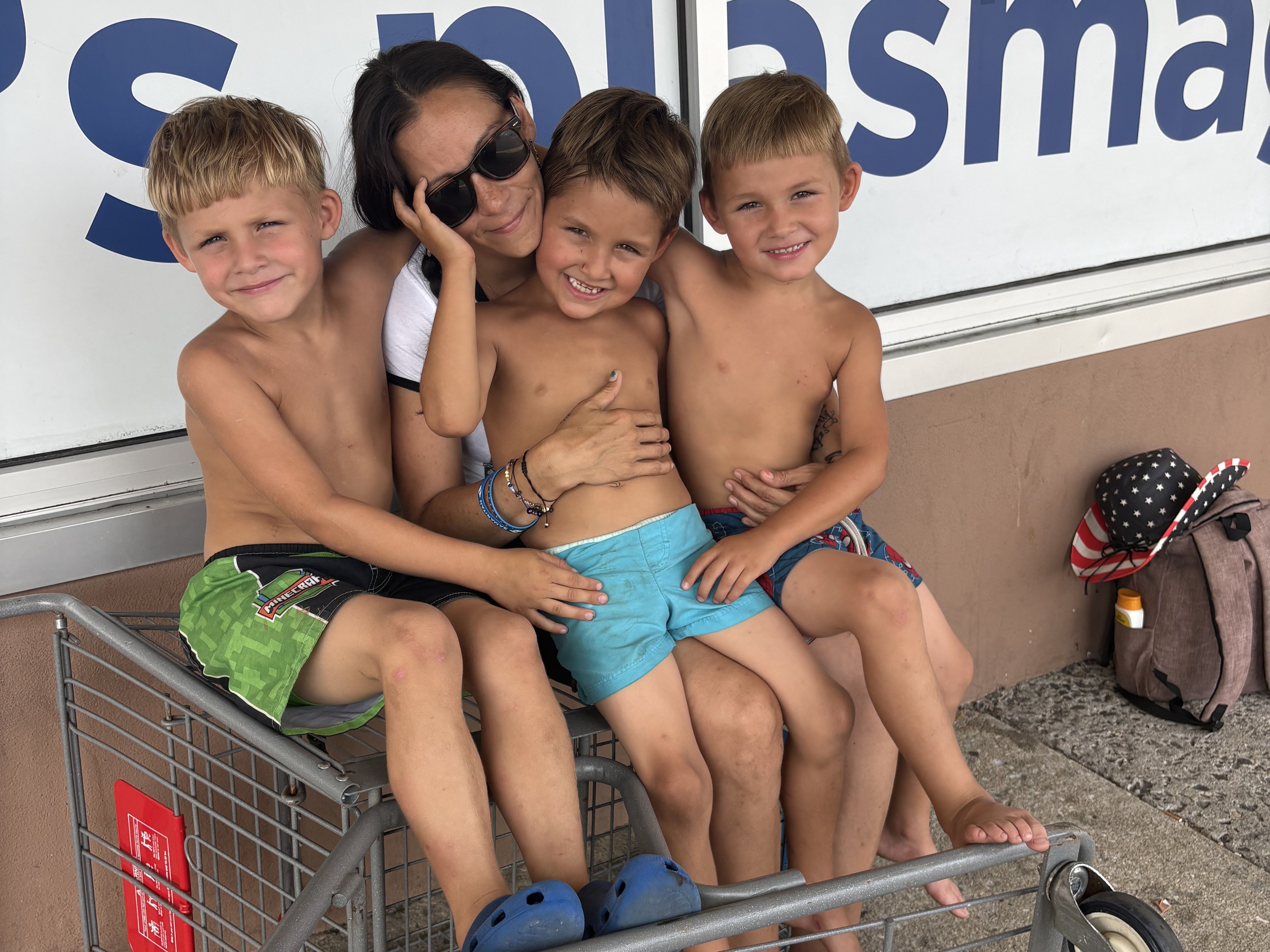
On a recent August morning, Brittany Barr, 36, and her three sons — 5-year-old twins and a 6-year-old — waited outside Octapharma as her husband donated. The family had walked roughly two miles from their Gloucester City home.
When Barr learned her friend had kidney failure and needed plasma infusions, she wanted to help. Barr was unable to donate plasma because she is anemic, so her husband agreed to do it.
In the month since Barr’s husband started donating, the family has earned more than $500. It has helped with groceries and their phone bills to supplement her husband’s income as a shipping manager.
“With only one income, money is tight these days,” Barr said. “Everything is messed up.”
The boys, clad in their bathing suits, climbed up on Barr as she sat on a tipped-over shopping cart. They were headed next to Atlantic City for a beach day.
“This week, the money is going toward fun. They’re going to play arcades and have ice cream or whatever their little hearts desire,” Barr said. “Next week, it’s going to school supplies.”
Brittany Barr, 36, seated with her boys (from left) Cooper, Cannon, and Colton, waits outside for her husband to finish donating plasma at Octapharma Plasma in Audubon, N.J. The family from Gloucester City was next headed down the Shore, where they planned to spend the extra money earned from donating plasma on arcade games and ice cream.Wendy Ruderman / Staff
Ron Avery, 85, of Philadelphia, retired eclectic reporter and columnist for the Daily News, Philadelphia historian, volunteer city tour guide, author, high school history teacher, veteran, and canoe enthusiast, died Sunday, Aug. 2, of complications from amyotrophic lateral sclerosis at his home in East Falls.
Reared in Fairmount, Mr. Avery graduated from Thomas Edison High School and earned a bachelor’s degree in history at Pennsylvania State University. He was assigned to the ship newspaper in the Navy after college, found a creative niche in journalism, and went on to work for more than 30 years at the Associated Press, the Bucks County Courier Times, the Courier-Post in South Jersey, and the Daily News.
He wrote for the Daily News as a correspondent in 1981, joined the staff in 1982, and, until his retirement in 2000, wrote thousands of stories about crime, casinos, war orphans, historic houses, the MOVE bombing, local notables, and other subjects. His columns, “Poor Ronald’s Almanac” and “One of Us,” hammered away at local issues and featured everyday people doing exceptional things.
“He covered every nook and cranny of the city,” said his son Serge. “That burning curiosity sustained him till his last days.”
He wrote three books about Philadelphia, including A Concise History of Philadelphia in 1999. He produced a series of video guides he called the Urban Explorer for local TV in 2004 and posted blogs about the city from 2017 to 2019 on a website called Philadelphia Cracks Me Up.
“Like all cities,” he said in a 1995 Daily News column, “Philadelphia is honeycombed with hidden spaces and forgotten places.” In a 1997 review of his book, City of Brotherly Mayhem: Philadelphia Crimes and Criminals, The Inquirer’s Thomas Brady said: “The book … is decidedly a fun read.”
Alex Strang, his director on the Urban Explorer videos, called Mr. Avery an “unforgettable legend” and “a walking encyclopedia of the city’s history and eccentricities” in a Facebook tribute. Other former colleagues said he was “a clever journalist” and “a true Philadelphian.”
Longtime Daily News colleague Robin Palley said on Facebook: “He had an amazing knack of finding quirky people with fascinating skills or habits and making them come to life on our pages.”
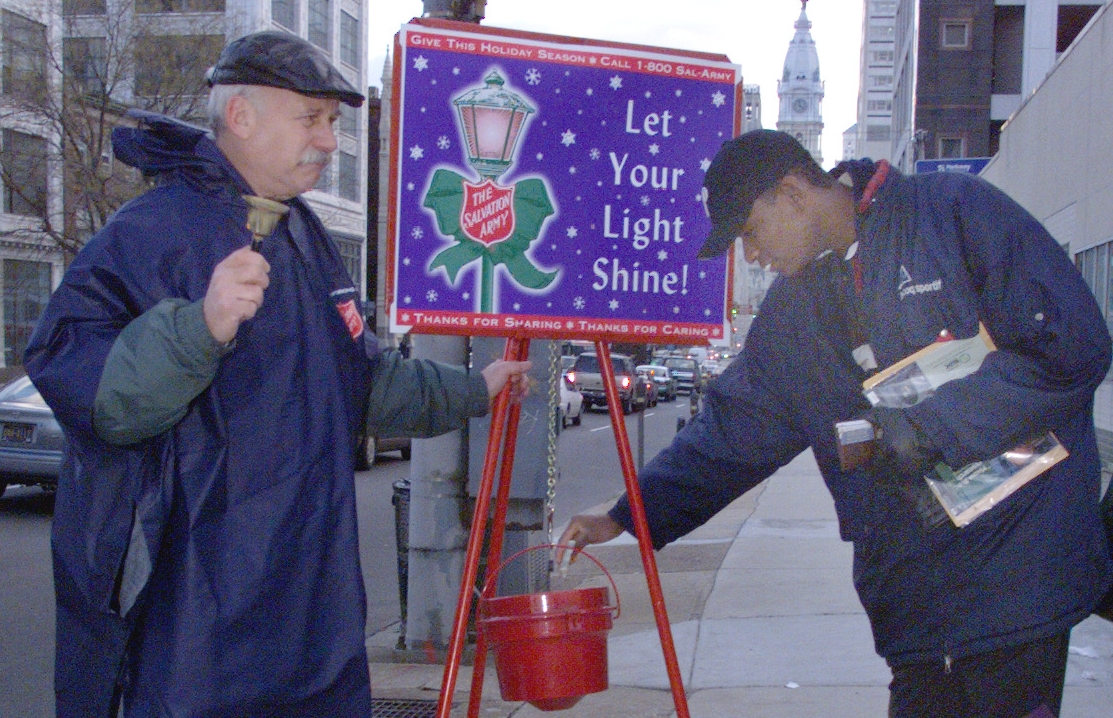
Mr. Avery (left) mans a Salvation Army donation kettle in 1999.Steven M. Falk / Staff Photographer
Before the Daily News, Mr. Avery wrote news and feature stories for the Courier-Post in the 1970s, and the Courier Times and the AP in the 1960s. He moved to Israel for six months in 1972 but returned to work for the Courier-Post in 1973.
He also wrote freelance pieces for the Hidden City Daily, PhillyHistory.org, UShistory.org, and op-eds later for The Inquirer and Daily News. He served in the Navy from 1964 to 1966, joined the Philadelphia Canoe Club later, and led water trips in the New Jersey Pine Barrens and elsewhere.
Knowledgeable, energetic, and naturally affable, he was a tireless promoter and volunteer guide in Philadelphia. He led walking tours throughout the city for students, civic groups, and other organizations, and his explanatory video tours featured cobblestone alleys, urban gardens, museums, statues, and other features of city life.
He was a stickler for details and historical accuracy, and he helped spur City Council to pass an ordinance in 2008 to educate and certify paid Center City tour guides. “They score high as Philadelphia ambassadors of good will,” he said in a 1995 column about uneducated guides, “but as historians they often flunk out.”
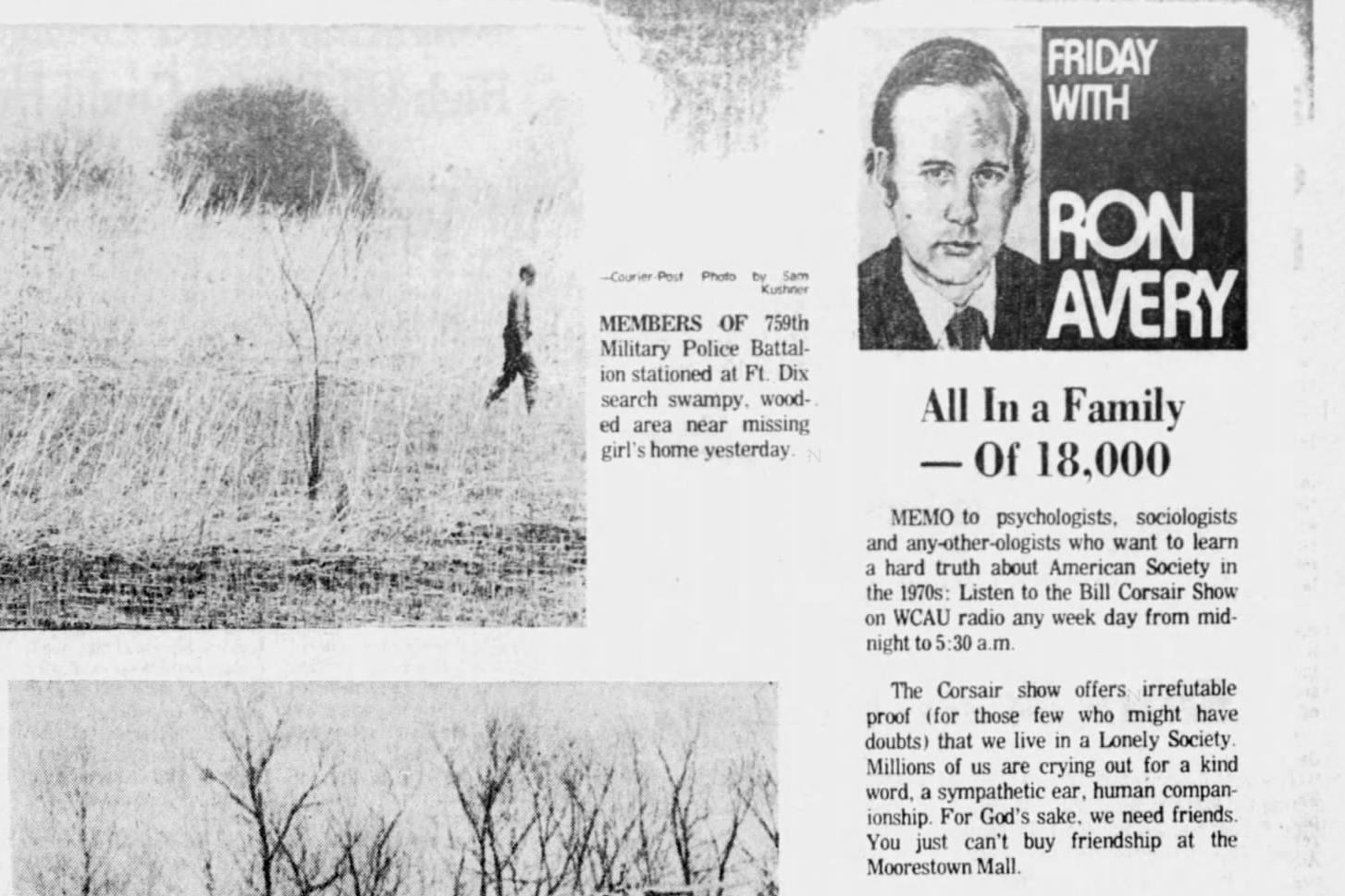
Mr. Avery wrote a column for the Courier-Post in 1974.Newspapers.com
Ronald Avery was born June 10, 1941, in Strawberry Mansion. He joined the Boy Scouts, earned his bachelor’s degree at Penn State in 1963, and taught history at Bensalem High School for a year.
He was a boxer in college and, mesmerized by the sport, later worked as a referee for amateur matches.
He met Suzet Habif in Israel in 1967, and they married in 1968. They had sons Serge and Ben, and lived for years in a rowhouse in Oxford Circle.
Mr. Avery cared for his wife during her long illness in the 1980s and ’90s. She died in 1993.
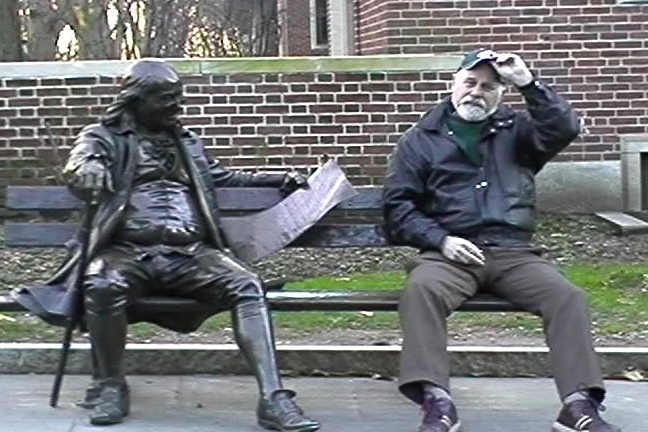
Mr. Avery liked to hang out with Benjamin Franklin and other historic figures. Alex Strang
He lived later in Pennsport and East Falls, was diagnosed with ALS in 2015, and proudly outlived its average life expectancy of 18 months by nearly a decade. “He defied that diagnosis and did not let it define him,” his son Serge said. “He always said he had a lot to live for.”
Mr. Avery was an avid reader and street photographer. He liked poetry, wrote limericks on birthday cards, and posted hundreds of his photos on flickr.com. One of his photos won a contest and was displayed at the airport.
He enjoyed jazz and jokes, led the prayers at family gatherings, and gave Yiddish quizzes to his two grandsons. He shared favorite recipes with Daily News colleagues and whipped up memorable homemade soups, especially white bean.
“I’ll greatly miss his endless anecdotes about all things Philadelphia,” said his daughter-in-law, Rebecca Houlding, “the stories about the local criminals, and his love of his family and friends.”
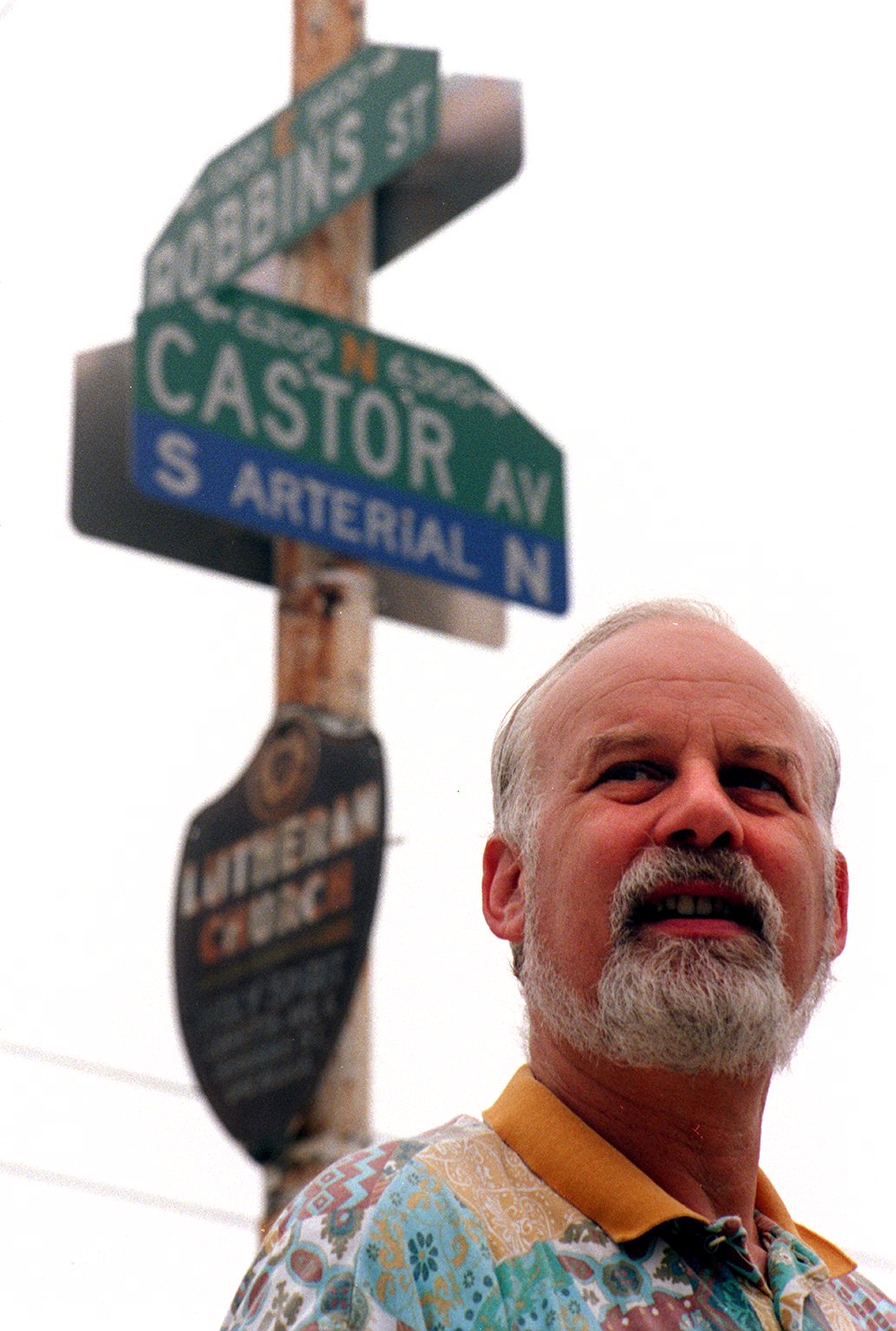
Mr. Avery wrote about his life in Northeast Philadelphia for the Daily News in 1997.Alejandro A. Alvarez / Staff Photographer
His son Serge said: “He loved chasing the stories from the back alleys and driveways, highlighting the working people of our town.”
In addition to his sons, daughter-in-law, and grandsons, Mr. Avery is survived by other relatives. A sister died earlier.
Two men were killed in separate shootings over the weekend in Philadelphia, police said, adding to the homicide toll in the city even as it continues to see a sharp decline in deadly violence.
The killings occurred within hours of each other late Saturday and early Sunday. Investigators have not publicly identified the victims or released a motive in either shooting. No arrests have been made.
Police continue to investigate, said Officer Shawn Ritchie, a police spokesperson.
The first shooting was reported shortly before midnight Saturday near Wakeling and Jackson Streets in the Frankford section of Northeast Philadelphia. Responding officers found a 64-year-old man with a gunshot wound to the face, police said.
He was pronounced dead at the scene.
Officers detained a 39-year-old man for questioning and recovered two handguns at the scene, police said. The man had not been charged as of Monday afternoon, according to police.
Several hours later, shortly after 5 a.m., officers were called to the 3200 block of Kensington Avenue for a report of a person with a gun. When they arrived, police said, they found a 35-year-old man with multiple gunshot wounds to his back, chest, and right leg.
The man was taken to Temple University Hospital, where he was pronounced dead, police said.
The Kensington shooting occurred along a stretch of the avenue that has long been associated with the city’s open-air drug trade, but police have not said whether the killing was connected to any activity in the area.
Despite the two weekend killings, Philadelphia’s homicide total remains significantly lower than in recent years. By the same time last year, the city had recorded 146 homicides, and 176 in 2024, according to police data. As of Sunday, the data show, the city has logged 117 homicides this year.
Both shootings remain under investigation, police said. Anyone with information about either killing is asked to contact the police department’s tip line at 215-686-8477 (TIPS). A reward of up to $20,000 is available for information leading to an arrest and conviction, police said.