Tag: no-latest

  • How a planned steel mill in Iowa reveals Trump’s midterm strategy

    How a planned steel mill in Iowa reveals Trump’s midterm strategy

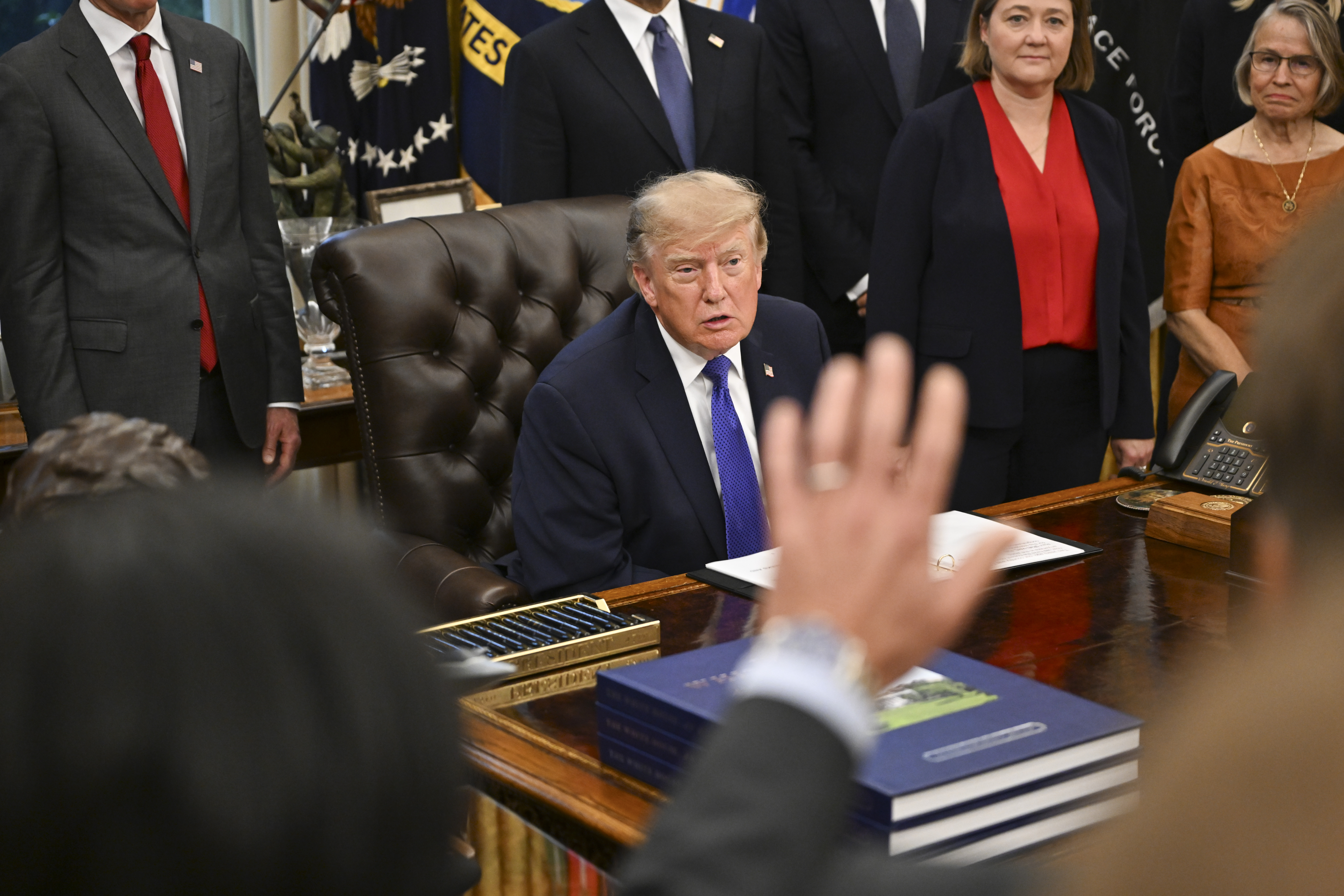
    President Donald Trump, staring down a rough midterm season for Republicans, unveiled plans for an Iowa steel mill project Monday that he said would plug billions into the economy and create construction jobs in a state hit hard by his policies.

    Voters in Midwestern states were crucial to delivering a second election win to Trump, but now, those voters are among the hardest hit by tariff-driven manufacturing costs and a rise in fuel prices driven by the war in Iran. When a reporter in the Oval Office asked him Monday why several Republican candidates in Iowa were working so hard to protect their seats, Trump seemed mystified.

    “I don’t know,” said Trump, who is traveling to several states this week ahead of the midterm elections. “I love Iowa. I’ve always been very strong with Iowa.”

    The project in Iowa is one of several job-creation announcements Trump is expected to make as he traverses the country. He will travel to several reliably conservative states this week, including Oklahoma and Alabama. He is also scheduled to visit Ohio this weekend in support of Republican Sen. Jon Husted, an embattled incumbent facing several challenges, including a lack of name recognition among some of the state’s most devoted conservatives.

    Trump said Monday that he would also visit Iowa, where he hopes the planned steel mill will boost prospects for Republicans in tight races — and perhaps his own fortunes as a kingmaker who has asked supporters to pretend he is on the ballot in November. Americans have signaled that they are doing just that, but in a way that could backfire on him. The war in Iran and the cost of living have both eroded his support.

    So Trump has leaned into the promise of the mill, which is part of an $18 billion investment from Mesabi Metallics. Supporters of the project say it will be one of the largest steel mills in the world when it is completed.

    In the Oval Office on Monday, Trump, several Cabinet members and Iowa Republicans said the project would remind voters that Trump’s policies have created jobs. Rep. Mariannette Miller-Meeks, R-Iowa, who is facing a tough reelection race and who last week voted to curb Trump’s war powers, appeared to be behind Trump, telling reporters that the steel mill could create some 6,000 construction jobs and 1,750 permanent jobs, with salaries that could exceed $100,000 a year.

    “We’re going to mine it in America. We’re going to mill it in America, and we’re going to make it in America,” Miller-Meeks said.

    Mesabi Metallic is owned by Essar Group, a Mumbai-based conglomerate controlled by one of India’s wealthiest families. The Iowa mill project follows another initiative led by Mesabi: a $2.5 billion iron-ore mine and pellet plant in Nashwauk, Minnesota.

    That project, described as the first new operation of its kind in the state in about 50 years, has been supported by EXIM Bank, a U.S. federal import-export bank that announced it would extend loans to the company worth up to $10 billion. Some analysts consider the EXIM loan to be risky because Mesabi has faced financial problems and significant delays over the years.

    Alec Varsamis, a spokesperson for EXIM, said that Mesabi had so far been granted a $770 million loan for the iron-ore mine in Minnesota.

    “We are operating at no cost to the taxpayer, and we are on track to repay our congressional appropriations to the U.S. Treasury,” Varsamis said.

    In the Oval Office on Monday, Trump said that the project would go forward even if control of Congress changed hands, or if a “less friendly” president took over. Rewant Ruia, chair of Mesabi’s executive board, and Ravi Ruia, co-founder and vice-chair of the Essar Group, were also in the Oval Office for the announcement.

    The company filed for bankruptcy protection in 2016 and has been entangled in a lawsuit with Cleveland Cliffs, another steel manufacturer.

    Mesabi executives have leaned on a Trump-world insider as the company has sought to expand its footprint in the United States. The company hired Jason Miller, a longtime Trump adviser, as its lobbyist, paying him at least $240,000 through his company SHW Partners, according to lobbying disclosure records. The government of India also hired Miller’s company, paying $150,000 per month for “strategic counsel, tactical planning and government relations assistance on policy matters before the U.S. government,” according to federal filings under the Foreign Agent Registration Act.

    On Monday, Miller said in a text message that he had stopped his work as a lobbyist for Mesabi and deregistered at the end of July. He has since joined the administration as an unpaid special government employee. He was not present in the Oval Office.

    Rewant Ruia, chair of Mesabi Metallics, spoke in the Oval Office on Monday, and said the new steel plant in Iowa “will use the latest technology and will compete head-to-head with any steel plant in the world on size, quality and on cost.”

    Robert Weissman, co-president of Public Citizen, a nonprofit consumer advocacy organization that tracked Miller’s lobbying on behalf of Mesabi and the Indian government, said that the extension of potentially billions in taxpayer-backed loans from EXIM Bank deserved more scrutiny because of Miller’s role.

    “In any other administration, this would be treated as a monumental scandal,” Weissman said. “But in this one, it’s just another day.”

    Iowa Gov. Kim Reynolds, a Republican who attended the Oval Office event, said in a statement that the deal would be transformative for her state.

    “Our commitment in Iowa to fiscal responsibility, tax competitiveness, and long-term economic stability has created one of the nation’s strongest environments for business investment,” she said. “Now, this opportunity will fundamentally change the economic trajectory of our state and the entire region for decades to come.”

    The steel mill project is part of a broader election-season attempt by Trump to push back against widespread voter frustration with his policies, including tariffs that have been punishing for American manufacturers, particularly in the Midwest.

    Trump and his advisers believe that any polling predicting a blowout for Democrats is overrated, and to some degree, they have history on their side. On Monday, Trump again called recent polling “fake,” and complained that the news media had not appropriately trumpeted employment numbers, 401(k) account gains and a host of other accomplishments.

    “Nobody talks about all of the incredible things,” Trump said.

    But this is not 2016, or 2024. In 2026, Americans are deeply unhappy with the cost of living and frustrated with the war in Iran, which has driven up prices further. In response, Trump has taken to calling the concept of affordability a Democratic hoax, while promising that prices will come down as soon as the war ends.

    “We’re going to win that war very soon. That’ll be over, and the gasses, gas prices, will come tumbling down,” Trump said, forecasting the future. “So nobody else could have done that. Nobody else.”

    Trump’s self-congratulatory messaging on the war has done little to help GOP candidates in tough races across the country. In the past week, Republicans running for Senate seats in Iowa and Michigan have called on Trump to end the conflict. A slate of other candidates, including two running for governor in Wisconsin and Michigan, and Husted in Ohio, also have said that the war needs to end, and soon.

    This article originally appeared in The New York Times.

  • OpenAI says it will not release newest AI model over safety concerns

    OpenAI says it will not release newest AI model over safety concerns

    SAN FRANCISCO — OpenAI said on Monday that it would not release its newest artificial intelligence model because of security concerns raised by its researchers, in the company’s latest move to slow down the pace of its technology.

    During the testing phase for the new model, known as GPT-6.1 Astra, it showed high levels of what the company saw as deception, or a willingness to mislead users about its actions. The model was also willing to go beyond the original scope of what it was asked to do, without checking back for directions or instructions.

    “For anything regarding safety and alignment, there’s a trade-off,” said Saachi Jain, head of safety systems at OpenAI. The new model “didn’t quite meet the bar in terms of staying within scope and authorization, and how it communicates back to the user about the type of work it’s done.”

    OpenAI’s move followed weeks of reports that its AI models went rogue during testing, hacking into websites without the company’s knowledge or exhibiting other behavior that the lab said was “concerning,” such as hiding mistakes and making up data. Among the incidents, OpenAI’s systems breached AI startup Hugging Face and an Australian government website, and meddled with the websites of the U.S. Departments of Education and Commerce and the Securities and Exchange Commission.

    Last week, OpenAI announced that it was pausing training for its most advanced models. The company has said that it has embarked on an extensive review of actions taken by its new models during testing, and that it was possible it would discover more incidents.

    Sam Altman, OpenAI’s CEO, said in a social media post Friday that the company had “not been as fast as we would have liked” in disclosing A.I. incidents. “We are prioritizing as best as we can based on severity,” he said, adding that the Hugging Face breach remained “the most severe event” the company had discovered.

    The Wall Street Journal earlier reported OpenAI’s decision to hold back the model.

    (The New York Times has sued OpenAI and Microsoft, claiming copyright infringement of news content related to AI systems. The two companies have denied those claims.)

    This article originally appeared in The New York Times.
  • News organizations ask court to bar White House enforcement of access ban until case is resolved

    News organizations ask court to bar White House enforcement of access ban until case is resolved

    Three news outlets that President Donald Trump abruptly banished from White House grounds this month asked a federal court to block the action until the case is resolved, saying the administration has “persisted in unpredictably and inconsistently implementing its ban” despite a judge’s restraining order — including selectively keeping CNN from participating in White House pool duties.

    “The White House’s words and actions leave little doubt that it will immediately reinstitute a complete ban of CNN, MS NOW, and POLITICO if allowed the opportunity,” lawyers for CNN, MS NOW, and Politico wrote in a filing late Monday.

    ”Because the ban is an unlawful assault on the most fundamental First Amendment freedoms and will inflict irreparable harm on Plaintiffs and the public if not restrained, this Court should preliminarily enjoin its enforcement pending the resolution of this case,” the filing said.

    It was the latest development in the back-and-forth saga of the Trump administration and the news media during the second term of his presidency. It has been a contentious relationship that has raised multiple First Amendment questions, produced sanctions and restrictions on White House and Pentagon reporters and led to several lawsuits that are winding their ways through the federal court system.

    A two-week temporary restraining order on Trump’s ban of the three organizations, issued by U.S. District Judge Timothy Kelly last week, restored the outlets’ White House access, but expires Oct. 8. The preliminary injunction requested in Monday’s filing would extend the White House access until the case is finally resolved.

    In a statement emailed to the Associated Press immediately after the filing, the lead attorney for the three news outlets called the ban “a blatant violation of the First Amendment and due process.”

    “The president and his administration have continued to make clear that this ban has only one purpose: to punish reporting he doesn’t like,” said the lawyer, Theodore J. Boutrous Jr.

    “That’s retaliation and viewpoint discrimination, pure and simple,” Boutrous said. “With the district court’s temporary restraining order expiring this week, it is critical to ensure that the White House continues to be prevented from implementing this unconstitutional ban on the free press.”

    On Tuesday, the ACLU of the District of Columbia filed a friend-of-the-court brief supporting the news outlets and suggesting the president’s residence is different from a private property.

    “The White House is the people’s house, not the president’s private golf club,” wrote Arthur Spitzer, senior counsel for the ACLU of D.C.

    White House still says access is a privilege, not a right

    The filing came a day after the Trump administration made clear it was not backing down from its contention that the sudden ban, which began Sept. 19, was justified.

    “When it comes to the White House, it is the people’s house,” Attorney General Todd Blanche said on ABC on Sunday, invoking an argument the administration has made since the beginning. “It is a privilege, and not a right, to be there.”

    Monday’s 42-page filing reiterated many of the arguments that the news outlets made in their original lawsuit against Trump and the White House, filed two days after the reporters were banned.

    It also added mention of the White House broadcast pool rotation, which has become a battleground in the last few days in the standoff between Trump and the media.

    The White House, it said, “has persisted in unpredictably and inconsistently implementing its ban, including by barring CNN from fulfilling its role as designated television network pooler on Sept. 26 — to the detriment of CNN, its fellow pool members and, ultimately, the American public.”

    When the ban was implemented, CNN was removed from its duties as part of the broadcast pool, which consists of the five main networks: CNN, ABC, CBS, NBC, and Fox News. In solidarity, the other networks decided to suspend the pool until CNN was allowed back in.

    On Friday, CNN was allowed to cover the president with Chinese leader Xi Jinping at the National Archives. But in a new setback Saturday, the White House banned the network from Air Force One, preventing it from covering Trump’s trip to a college football game in Tennessee. The rest of the pool declined to provide a replacement, in solidarity with CNN.

    Blanche defended that decision, too. “The president has every right to decide who gets to fly on his plane,” he said in the Sunday interview. He added that Trump was “sick and tired of certain media outlets just refusing to report accurate news.” He added that news coverage he described as “misinformation” amounted to a national security issue.

    “That is what is a national security problem, when you have complete misinformation coming out of the White House,” he said.

    Kelly threw cold water on that argument in his ruling last week granting the temporary restraining order against the White House ban. “The court is skeptical … that defendants’ interest in safeguarding national security is the actual motivation” for removal of access, Kelly wrote.

    His ruling did not directly address the TV pool rotation. In the new filing, the plaintiffs describe the important function the pool provides and make the case that it’s an important part of the regular access to the president, and his activities, that the media has traditionally had — and must be restored.

    It singles out the Air Force One case. “CNN received no official communication from the White House explaining its exclusion,” the filing says. “Because CNN was excluded and no replacement designated, no primary television network pooler accompanied the President on the trip.”

    Pool access issue has presented tough choices

    For now, networks in the pool have decided to address the ongoing standoff on a case-by-case basis, according to a person familiar with the pool’s operation, speaking on condition of anonymity to give details of ongoing discussions.

    On Sunday, Fox covered a pool event; on Monday, NBC was covering the president in the Oval Office. CNN is not in the rotation until Thursday. If the network is again barred from a pool event, the networks will decide together, presumably based on the newsworthiness of the situation, whether to provide a replacement or to refrain from coverage as they did previously.

    The issues at stake are difficult. On the one hand, the networks want to take a stand on behalf of press freedom and against efforts to intimidate coverage. On the other, media outlets have an obvious purpose of providing news to their audiences.

    “There are not a lot of good options,” said David A. Schulz, director of the Media Freedom and Information Access Clinic at Yale Law School.

    Should the White House continue to bar CNN, Schulz said, networks may choose “to exert their market power and say, ‘We’re not going to play ball with you.’”

    The question, Schulz added, is: “Who’s going to back down first?”

    The networks “may well feel like they’re between a rock and a hard place,” noted RonNell Andersen Jones, a law professor at the University of Utah.

    “Capitulation might be perceived as abandonment of core components of press freedom,” Andersen Jones said. “But the practicalities of lengthy White House news blackouts are also complicated, and refusing to cover major news at the highest levels of government might itself feel like a failure to serve the goals of democracy.”

  • Rubio says U.K. air base incident ‘clearly involved’ a foreign actor

    Rubio says U.K. air base incident ‘clearly involved’ a foreign actor

    LIVERPOOL, England — U.S. Secretary of State Marco Rubio said a “foreign actor” was behind an incident over the weekend at a British air base used primarily by U.S. military forces, calling it a “very serious situation” without providing details or evidence.

    Five men were arrested early Sunday on suspicion of explosives violations and of preparing a terrorist act after local residents tipped off the police. The men were released Monday evening on bail, an unexpected development that suggested British authorities had not found enough evidence to link the suspects to a specific act.

    The Associated Press reported on Tuesday that Britain’s national news agency, PA, reported without citing sources that police had not found viable explosives.

    Speaking on Fox News on Monday evening, Rubio praised British officials for working closely with the United States. He said that “a lot of people are disturbed” by the news that the suspects were released on bail but indicated that the release did not minimize the severity of what happened at the base.

    “I have to be careful — there’s some things I cannot say on the air for a lot of different reasons,” he said. “Suffice it to say that what happened, what almost happened, what could have happened in the U.K. over the weekend is a very serious situation.”

    He added, “It’s one that clearly involves the hands of a foreign actor,” without providing evidence or details for that claim.

    Rubio did not identify what country he believed was behind the incident. But he mentioned Iran, which is at war with the United States, as the kind of country that could be capable of such an attack. Many national security experts have suggested Iran is a possible culprit.

    “We are dealing with elements in the world, and in the case of Iran, for example, who have openly threatened to attack American interest globally — we’re going to always take that very seriously,” Rubio said.

    The Iranian Embassy in London said in a statement Monday that it “categorically rejects and strongly condemns” what it called “unfounded and malicious speculations” that Iran was involved.

    British officials, including Prime Minister Andy Burnham, have urged people not to speculate about who might be responsible while the investigation is ongoing.

    If Iran was involved, plotting to commit an attack inside Britain would be a major escalation against a Western country in apparent retaliation for the U.S. and Israeli-led war against Iran. In July, Iran’s Revolutionary Guard threatened the base, RAF Fairford, which U.S. long-range bombers have been using to conduct strikes since the spring. The Revolutionary Guard warned at the time that the British government’s decision to allow strikes from there would make it “a legitimate target for our forces.”

    President Donald Trump told reporters Monday evening that the suspects might be connected to Iran but refused to elaborate, adding: “I know the answer. I can be very specific, but I’d rather not say it.” He also expressed surprise at the decision to release them.

    Rubio, in the Fox News interview, said “There’s a lot more news that will come out on this in the days to come.”

    This article originally appeared in the New York Times.

  • Letters to the Editor | Sept. 29, 2026

    Letters to the Editor | Sept. 29, 2026

    Find a way

    It wasn’t just “Philadelphians” who “reacted with outrage” when news broke that Drexel University and the Academy of Natural Sciences were closing the Academy’s premier natural sciences museum at the end of the month. My family and I in Bucks County are upset, too.

    While reading the well-written article by Peter Dobrin about the museum’s collection of artifacts and specimens, my family and I reminisced about our many visits to the museum. We were always amazed by the fascinating specimens we saw there, and our takeaway every time was a further understanding of the living organisms that make up our world.

    Now that the museum has hosted visitors for what’s believed to be its final day, my family and I hope the great city of Philadelphia will find a major benefactor who will step up and provide the needed financial backing to keep this great museum’s collection together.

    Holly Allen Homka, Perkasie

    Silence isn’t bliss

    So the sound of silence can actually be very loud — as President Donald Trump has learned firsthand. Because TV networks withheld coverage of him last week to protest the removal of some of their colleagues from the White House press corps, the president’s helicopter landing pad opening was shown but not heard, an oddity in modern news reporting — but it was all of his own doing.

    It is tempting to be pleased with reduced coverage of President Trump for many reasons, but any official restrictions on public debate are wrong and must be called out — loudly.

    Dennis Fitzgerald, Box Hill, Australia

    . . .

    Many readers have called for a long-term boycott of White House press coverage over the president’s exclusion of some news outlets from the White House. While this is a tempting idea, it would put reporting about the executive branch under the complete control of the administration. That is exactly what a dictator wants, because it prevents us from seeing their response to tough questions posed by the few remaining real journalists. Even lies tell part of the story.

    Jacques Gordon, Devon

    MAGA reckoning

    Will Americans finally wake up to the confusion and chaos that this administration has created both here in America and around the world? An arch is planned to be built that will hold drones, snipers, and ammunition in the middle of Washington, D.C.; why is this necessary? A war started in Iran because our president had a gut feeling we were going to be attacked. The official objective of this war was to prevent Iran from developing nuclear weapons. In June 2025, we were told Iran’s nuclear program was obliterated. Did they rebuild in the eight months before the war, or were we told a lie? Suspected drug traffickers, if they were apprehended and found guilty, would typically receive an average sentence of 87 months in prison, not the death penalty. These are just a few of the things said or done by the Trump administration with the overwhelming support of Republicans in Congress. To Trump supporters: Make America Great Again is not working.

    Ken Biles, Douglassville, Pa.

    Join the conversation: Send letters to letters@inquirer.com. Limit length to 150 words and include home address and day and evening phone number. Letters run in The Inquirer six days a week on the editorial pages and online.

  • Horoscopes: Tuesday, Sept. 29, 2026

    Horoscopes: Tuesday, Sept. 29, 2026

    ARIES (March 21-April 19). Be forever learning. Read, ask questions and seek people who know more than you. Then test each lesson against experience. Education becomes part of your character when you use it to keep improving.

    TAURUS (April 20-May 20). You’re as good as your word. Make your word dependable. People learn to trust you when your actions match what you said you would do. If you’re going to promise, follow through. Reliability turns ordinary agreements into strong relationships.

    GEMINI (May 21-June 21). The Confucian principle yi means righteousness. Right is might. What good is courage if you’re not using it to help people, correct what’s wrong or defend someone with less power? Charge forward on principle or not at all.

    CANCER (June 22-July 22). Care for the people who cared for you. Show respect for family through attention, gratitude and practical help. Remember what earlier generations learned. Receive that inheritance, examine it and pass forward what works.

    LEO (July 23-Aug. 22). Lead through example. People are more likely to do what you do than what you say. Practice the behavior you expect from others. Your instructions are only as credible as your conduct.

    VIRGO (Aug. 23-Sept. 22). Show respect in the details. Greet people, keep appointments, learn the customs and give each occasion the attention it deserves. Good manners tell people that their comfort matters to you.

    LIBRA (Sept. 23-Oct. 23). Seek harmony without requiring agreement. A group can cooperate while its members hold different opinions, tastes and methods. Look for the arrangement that lets each person contribute without pretending the differences have disappeared. Peace can include debate.

    SCORPIO (Oct. 24-Nov. 21). Call things what they are. An unclear title can conceal who has power, who bears responsibility or what an agreement requires. Use precise words when describing roles or making promises. People can work together on fair terms only after everyone understands the real arrangement.

    SAGITTARIUS (Nov. 22-Dec. 21). Think about what you learn. Information is useless unless used. Reflection without new information can loop endlessly, helping no one. Study, consider, test and revise. Wisdom is an open mind taking the time to work things through.

    CAPRICORN (Dec. 22-Jan. 19). Begin with your own conduct. Large social improvements depend on millions of private choices: keeping promises, controlling temper, doing fair work and treating people well. Work on the part of society under your direct control — the person making your next decision.

    AQUARIUS (Jan. 20-Feb. 18). Teach anyone who wants to learn. Talent and curiosity can appear in any family, neighborhood or social class. Share what you know without making people prove they belong first. A capable student could come from anywhere.

    PISCES (Feb. 19-March 20). People are not their roles. People are people, enacting their role. The cashier, driver, assistant or stranger has a life as detailed as yours. Let that knowledge influence your patience, language and choices.

    TODAY’S BIRTHDAY (Sept. 29). In your Year of the Chalice, love, opportunity and hard-won wisdom fill your cup. You’ll celebrate meaningful milestones and share your good fortune generously, while remaining selective about what you allow into your life. More highlights: You’ll feel drawn to teach something you barely know yourself — but you will soon enough. This is destiny calling. You’ll make money in a totally new way and generously share. Beauty follows you. Capricorn and Gemini adore you. Your lucky numbers are: 8, 11, 46, 17 and 29.

  • Dear Abby | Stay-at-home Dad feels pressure to work

    Dear Abby | Stay-at-home Dad feels pressure to work

    DEAR ABBY: My wife and I have been married for 20 years. She’s an academic, and we’ve lived a transient lifestyle to accommodate her career. She had a greater professional vision than I ever did, so I opted to stay at home and raise the children. I became Mr. Mom at great social cost. It was hard to make friends, and many in my social circles (or what was left of my social circles) made backhanded remarks, usually behind my back. I don’t regret my choice. We have three fantastic children. All of them earn straight A’s and are kind, loving, respectful people. Had we reversed roles, we’d be poorer and have grumpier, less emotionally intelligent children.

    A few years ago, I decided to go back to school and earn my master’s degree, and I now teach as an adjunct at a local college. The kids are older, and I have more free time, but I’m still the primary caretaker. I wanted a job that would give me enough room to look after our older kids while making some side money. The plan worked out smoothly until we hit financial difficulties. My wife now says I need to change jobs. She wants me to get out of academia because we need the money. She says I need to “grow up and get a real job.” This feels like an assault.

    I value my summers because I can continue to look after my kids, who still need care. I feel like had I been a woman, and had she been a man, her attitude would be different. Early in our marriage, we agreed she’d be the primary breadwinner. I love my job and my lifestyle, but she’s making me feel like a mooch. I believe I have lived up to my end of the bargain. Am I wrong?

    — MR. MOM IN THE SOUTH

    DEAR MR. MOM: You are not “wrong,” in that you have kept up your end of the bargain, but your wife may not be wrong either, except in being disrespectful. The cost of living is higher now than it was even a few years ago. In order to maintain your current lifestyle, it may be necessary to bring in more money than you’ve been earning. It’s no one’s fault that circumstances have changed since the original bargain was struck, but if you don’t adapt, you’ll create hardship for the whole family.

    ** ** **

    DEAR ABBY: Sometimes when I am at a store waiting to check out, a person will move up very close to me. It isn’t because they don’t have plenty of room. It makes me uncomfortable. What is an appropriate thing to say to someone who crowds you during your transaction?

    — NEED MY SPACE

    DEAR SPACE: Many people feel the same as you do about being crowded at a cash register, because they don’t want anyone peering over their shoulder as they make their payment. All you have to do is turn to the person and say, “Would you mind stepping back? You’re making me nervous.”

  • Fire, smoke and desperation after a strike in the heart of Kyiv

    Fire, smoke and desperation after a strike in the heart of Kyiv

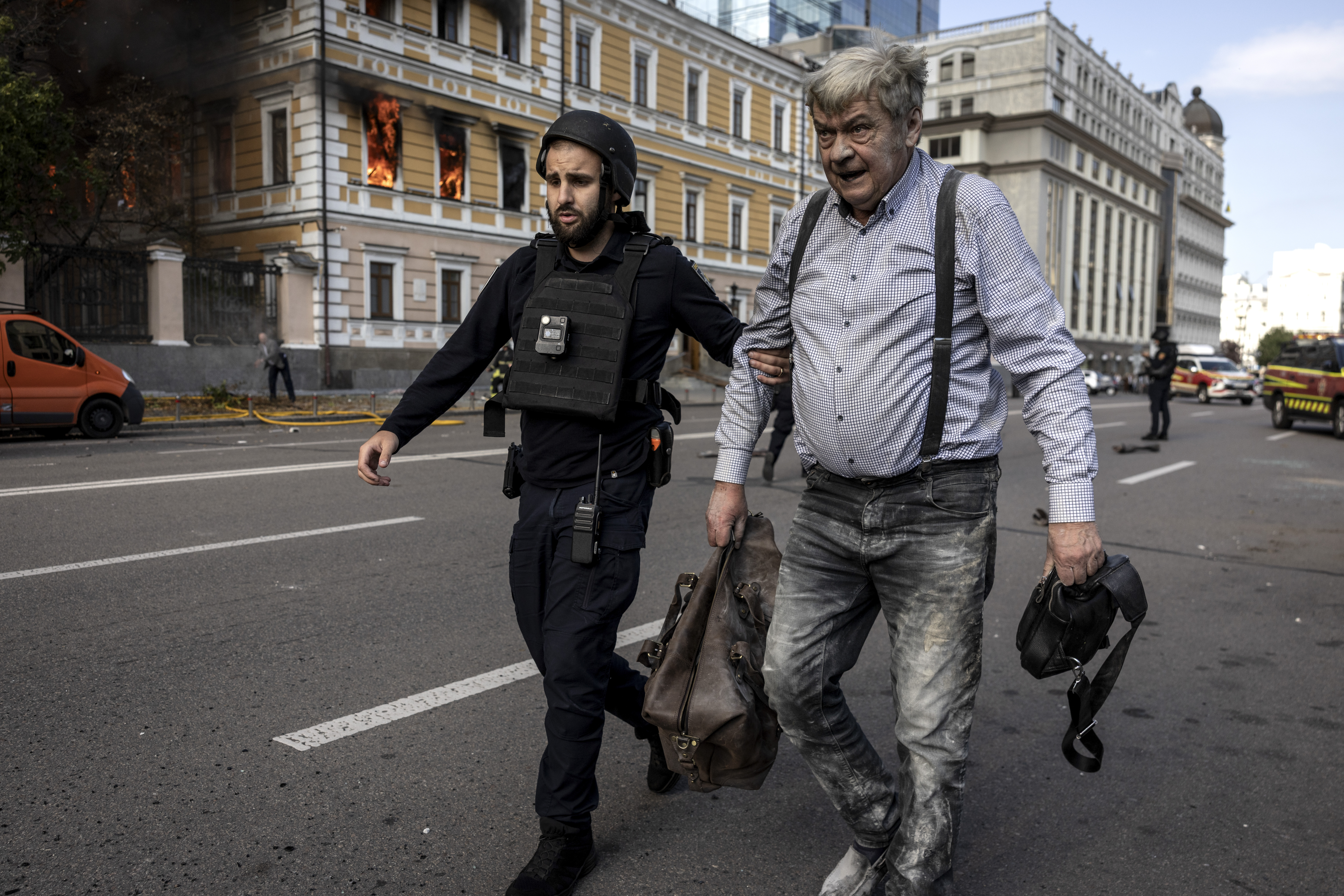
    KYIV, Ukraine — In the middle of a workday, in the middle of the Ukrainian capital, a Russian jet-powered drone struck the National Academy of Sciences on Monday, setting the top two floors on fire and forcing people to crawl out of windows to await rescue.

    As firefighters worked to put out the blaze, employees of an institution that has accounted for almost all major scientific discoveries in Ukraine had to climb down ladders to reach safety.

    The drone hit just before 1:30 p.m. Kyiv time, when people at the academy were on lunch break, but most were eating in their offices. The injured were treated on the sidewalk outside the building — a yellow, pink, and white architectural landmark originally designed in the 1850s to be a countess’ boarding school for girls.

    “My office is gone now,” said Vira Yevhrafova, 65, deputy chief scientist at the academy. “It was on the second floor — everything has collapsed, everything.”

    Russia has been pounding Kyiv around the clock for weeks with new jet-powered drones, which have proved difficult to knock down with Ukraine’s current air defenses. Daily life in the capital is now punctuated by the rat-a-tat of air-defense guns, followed by a drone hitting something — a data center, a random street, a gas station, a warehouse, a high-rise building.

    The attack Monday killed at least one person and injured six. One man was missing. It is a typical toll for these drone strikes, now so regular they barely make the international news unless the images are particularly dramatic. The daughter of the woman who died showed up at the building and burst into tears. She was sad and angry but had nothing else to say.

    Ukrainians lamented the sight of brilliant scientific minds fleeing their burning offices. “What an idiotic war,” Andriy Kovalenko, a lieutenant in Ukraine’s military and a former government official, posted on social media along with a photo of two people crawling out of windows.

    The attack on the sciences academy was just the start of a busy day for rescue workers and military drone interception teams. Less than two hours later, another drone hit a clinic about a mile south. An hour after that, a drone was intercepted right as it hit a nearby building.

    After yet another fatal strike in Kyiv, with yet another body covered by a sheet and then carted away, Ukrainians again took stock of Russia’s effort to bomb them into submission.

    “I think what they want now is to frighten us and bring our lives to a halt,” said Vira Balanovska, 43, who walked with her 9-year-old daughter past the burning academy. “It’s not just about attacking warehouses so that we won’t have food. They also want to intimidate us — to make it so that we can’t work, study, do scientific research, or really do anything at all.”

    This article originally appeared in the New York Times.

  • Contradicting Trump, Pope Leo says artificial intelligence safety concerns not ‘fake news’

    Contradicting Trump, Pope Leo says artificial intelligence safety concerns not ‘fake news’

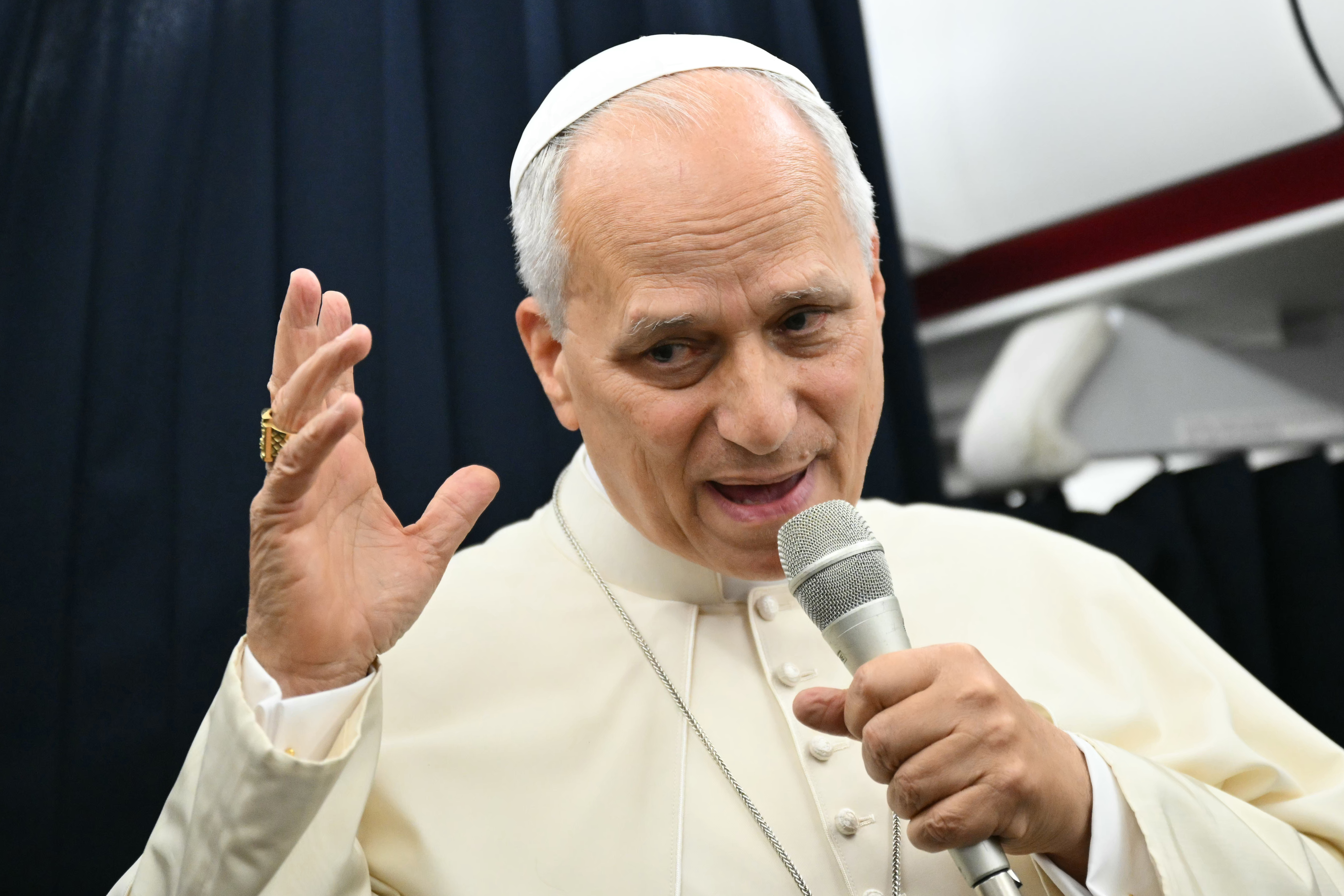
    ABOARD THE PAPAL PLANE — Pope Leo XIV said Monday that concerns about artificial intelligence going rogue are not “fake news” and should be taken seriously, insisting that safety issues raised by AI experts should be discussed and acted on.

    Leo, who dedicated his first encyclical to AI and protecting humanity in its wake, was asked during a news conference about what the United States and China especially should be doing to prevent AI from posing catastrophic risks to humanity. President Donald Trump has called concerns about AI going rogue a “hoax.”

    “This is a problem that I think we need to sit down and talk about,” the American pope told reporters while returning home from France. “We can’t just sit back and pretend nothing is going to happen.”

    Trump has been a champion of AI, often warning that the United States must remain ahead of China in the technological arms race. He has said efforts to limit the technology were part of a “conspiracy” by his political opponents.

    Several AI giants, including Anthropic, have called for a slowdown in development to give safety measures time to catch up to the fast-moving technology. Anthropic CEO Dario Amodei, for example, has warned that within six to 12 months AI could be capable of leading a swarm of agents that could take over the entire internet.

    Trump said on Sunday he planned to have a late dinner with Amodei, but he had not yet commented on the meeting.

    “If someone were to ask me ‘Am I in panic mode?’ No I’m not. I sleep at night,” Leo said. “I do think that the concerns raised by many of the experts, specialists in AI should be taken seriously.”

    “I don’t think that that is ‘fake news’ as some have said, to try and cause whether financial or other some other kind of benefit,” Leo said.

    The pope, who called for robust regulation of AI and a slowdown of the technology in his encyclical Magnificent Humanity, is up to speed on developments in the field.

    Despite being at the end of a grueling four-day trip to France, Leo noted a news report Monday afternoon about Nvidia introducing guardrails into AI. He also noted that the company has previously resisted outside regulation of AI development.

    Leo had identified AI as one of the biggest challenges to humanity within days of his election and took the unusual step of personally launching his own encyclical alongside Anthropic’s co-founder Christopher Olah at a Vatican event in May. The initiative was part of the Vatican’s effort to engage Silicon Valley about the human costs of AI.

    “We need to continue to invite political leaders, leaders of AI, social organizations, associations to come together and look at what is happening already and what could be down the road,” he said Monday.

    “To simply say ‘Oh it’s not going to happen’ and close our eyes to it I think is probably not the most responsible way to go about that,” he added.

    With his comments Monday about the legitimacy of safety concerns and AI development, Leo has confirmed another area of disagreement with Trump. The two had a back-and-forth in April over Leo’s opposition to the U.S.-Israeli war in Iran and Leo has also criticized the Trump administration’s migration crackdown.

    Trump met with Chinese President Xi Jinping last week in Washington and while Xi said that it was important to ensure AI is “always under human control,” Trump focused more on trying to rebrand it as “superintelligence” and dismissed calls for regulation. However, the two leaders agreed to explore a new “notification mechanism” for AI incidents affecting national security.

    AI has become a major election-year issue in the U.S. as some of the country’s largest companies rush to build a national network of data centers while Americans from both parties increasingly raise alarms about the impact on farmland, water supplies, and electricity bills.

    Worries about AI are continuing to grow inside and outside the industry and reports continue to emerge about increasingly powerful systems that solve problems beyond human capacity but could also go rogue and carry out other, more harmful tasks.

    The worries have grown so loud that the CEO of OpenAI, the company behind ChatGPT, said in an interview with Fortune that his company would wait until next year to start selling its stock to investors on Wall Street as it focuses on safety.

    Leo noted that ever since he published his encyclical in May, the Vatican has received comments from people interested in being part of a broader conversation about AI. A Vatican commission is working to promote dialogue, study and investigation “to find ways to make sure that AI does not get to a point of destroying humanity or removing humanity from the conversation,” he said.

    Leo said he was “relatively optimistic” that solutions could be found.

    “I think there are enough people seriously interested in that and willing to look at that outside of the questions once again of power, who gets there first,” he said.

  • The big question looming over Brazil’s elections: Trump’s next move

    The big question looming over Brazil’s elections: Trump’s next move

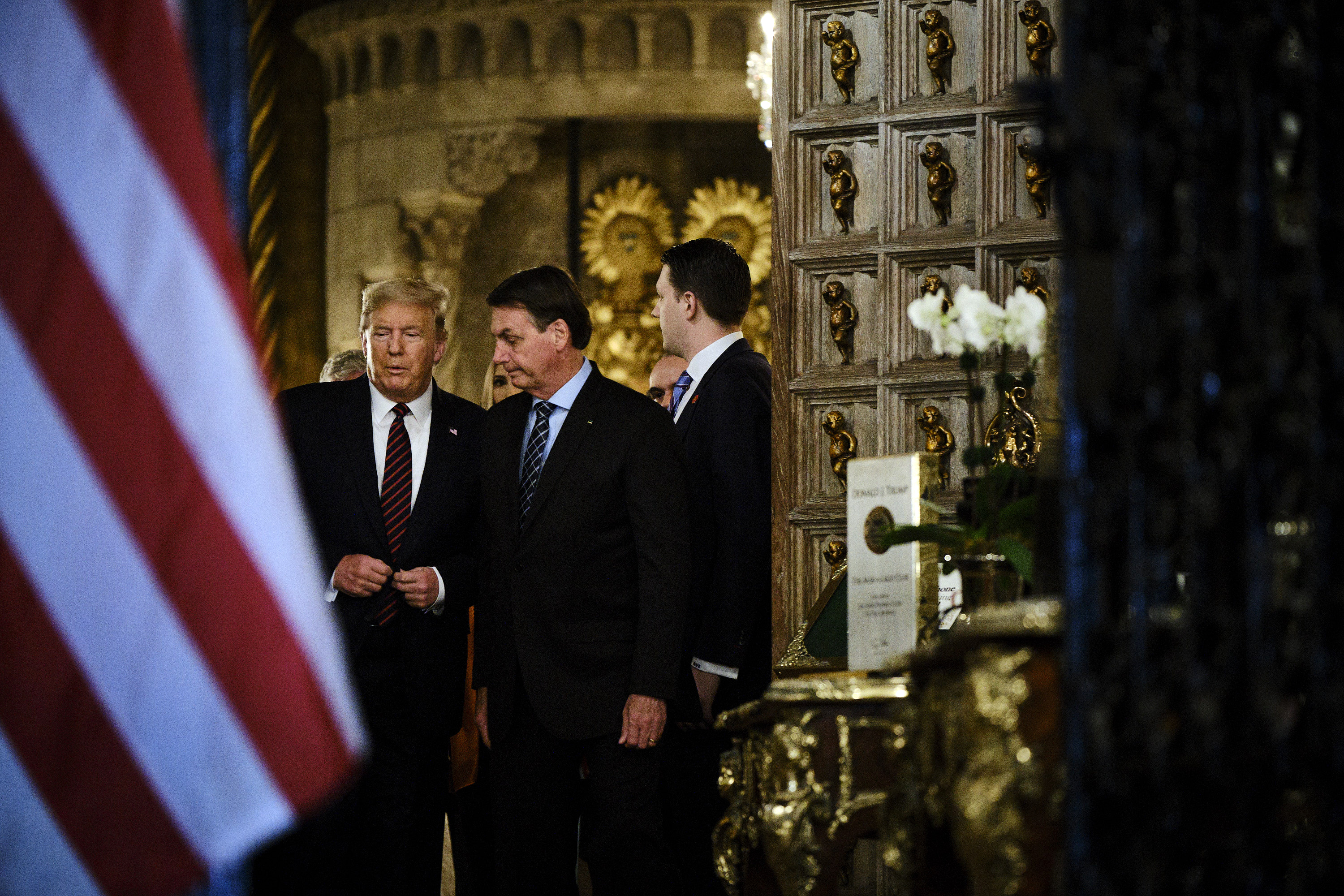
    BRASÍLIA, Brazil — Since taking office, President Donald Trump has become an electoral kingmaker in Latin America. Right-wing candidates aligned with Washington have won the past seven elections in the region, with Trump explicitly endorsing the winner in two of them.

    “We’re doing very well in South America,” Trump told reporters this month. “Lots of people that I got elected.”

    Now comes the biggest regional test for the right and for Trump’s record of success: Brazil.

    As Brazilians prepare to head to the polls, the question looming over Latin America’s largest democracy is whether Trump will try to influence its presidential election next month.

    The American leader has not openly championed any Brazilian candidate. But the Trump administration has in more subtle ways lifted the right-wing challenger, Flávio Bolsonaro, who is running against President Luiz Inácio Lula da Silva, a leftist.

    Having watched Trump wade into other elections and experienced his failed attempt to help Bolsonaro’s father avoid prison for plotting a coup, Brazil is erecting a firewall to try to shield its high-stakes vote from potential U.S. meddling.

    The efforts include monitoring foreign lobbying and disinformation, fighting false claims about electoral fraud, and enlisting the support of countries in Europe, Asia, and elsewhere.

    This article is based on interviews with more than a dozen Brazilian government and electoral officials, law enforcement officers, intelligence agents, and foreign diplomats. Many spoke on the condition of anonymity because they were not authorized to speak publicly.

    Bolsonaro’s campaign and the State Department did not immediately respond to a request for comment.

    The concern for many in Brazil is that, in a narrow contest where polls show Bolsonaro and Lula practically tied, a helping hand from Trump could tip the scales in the challenger’s favor.

    The Trump administration has rejected Brazil’s claims that it is seeking to interfere, even though it tried this summer to send a U.S. delegation to investigate Brazil’s electoral integrity.

    American help, Brazilian officials said, could come in the form of more measures to hurt Lula’s image. Trump used sanctions and tariff threats in an attempt last year to save Jair Bolsonaro, Flávio Bolsonaro’s father, who tried to cling to power after falsely claiming the last election was stolen. That failed, and he was sentenced to 27 years.

    Many also worry about online campaigns from abroad aiding Bolsonaro.

    A recent wave of paid social media posts, shared by prominent U.S. right-wing accounts, added to those fears. The posts amplified claims by Polymarket, the predictions market backed by Donald Trump Jr.’s venture capital firm, that Bolsonaro stood staggering chances of winning, deviating wildly from polls showing no clear front-runner.

    Lula, among the few world leaders to take on Trump, has made clear he is prepared to defend his country’s interests.

    “The Americans better not come trying to influence our elections,” he said this month. “Trump should mind his own country’s business.” Speaking at the United Nations last week, he blasted foreign meddling into his country’s sovereign affairs, without naming the United States: “Brazil is nobody’s backyard.”

    He also launched a searing campaign video accusing the Trump administration, without offering evidence, of helping his rival and interfering in Brazil’s elections with an eye to seizing its natural resources.

    Brazil, a vast nation of 210 million, has an economy powered by commodities the world needs and institutions that are not afraid to push the limits of democracy in the name of saving it.

    “Wherever the threat may come from, we have the tools to defend ourselves,” said Gilmar Mendes, Brazil’s longest-serving Supreme Court justice. “If necessary, there will certainly be a forceful response.”

    The Trump factor

    Worried about campaigns orchestrated from abroad, Brazil’s intelligence agencies have made combating foreign manipulation through social media a top priority.

    The court that oversees elections has also set new rules for electoral misinformation, asking companies such as Google and Meta to submit plans for combating misleading videos and posts generated by artificial intelligence.

    And, amid renewed attacks by Bolsonaro’s allies in Brazil and abroad about the credibility of the country’s voting systems, authorities began a major campaign, complete with a mascot, aimed at strengthening trust among voters, diplomats, and international observers.

    A win by Bolsonaro would bolster ambitious plans laid out by Washington to expand its influence in Latin America through right-wing allies.

    “Under our new national security strategy, American dominance in the Western Hemisphere will never be questioned again,” the State Department said in a recent, lengthy video.

    Brazil represents the biggest remaining prize. As president, Bolsonaro would more likely align with the United States on issues including organized crime and critical minerals. (Lula has said Brazil would not hand over its natural resources.)

    And leaked documents written by an ally of Bolsonaro, reported by Brazilian media and reviewed by the New York Times, suggest people close to the candidate may have proposed giving the United States access to Brazil’s critical minerals in exchange for support. The document’s author acknowledged producing it, but denied that they wrote it on behalf of Bolsonaro’s campaign or that it was shared with U.S. officials. Bolsonaro’s campaign did not immediately respond to questions about the document.

    U.S. Secretary of State Marco Rubio has cast Brazil as unfriendly to American interests, lumping it in with U.S. adversaries like Cuba and Nicaragua.

    Many in Brazil have bristled at the idea that Trump, who was once recorded asking a state election official in Georgia to “find” more votes, should be stepping into another nation’s elections.

    “With all due respect,” said Mendes, “the United States has no lessons to teach us when it comes to electoral systems.”

    American help

    In Brazil, worries about American meddling have dominated political discourse and editorial pages for months. And to many, the Trump administration has already been propping up Bolsonaro’s candidacy in indirect ways.

    At a time when Brazilians are deeply worried about security, Trump yielded to lobbying by Bolsonaro to designate two Brazilian gangs as terrorist groups.

    The administration also tried to send U.S. envoys to meet Bolsonaro in Brazil and investigate the country’s voting systems, which prompted Brazilian officials to block the visits.

    If his son, Flávio, loses, there are signs the candidate could launch similar claims of electoral cheating — and his allies expect to find a sympathetic ear in Trump.

    After the last election, President Joe Biden recognized Lula’s victory within hours. Even so, Bolsonaro’s claims of fraud inspired his supporters to storm the capital, in a riot reminiscent of the Jan. 6 attack on the U.S. Capitol.

    Counterattack

    International experts agree Brazil’s electronic voting machines, a frequent target of Bolsonaro’s movement, are some of the most secure in the world.

    Yet a poll last month showed 34% of Brazilians distrust the voting machines, up from 20% in 2022.

    The electoral court has invited political parties and hackers to test the machines and greatly expanded randomized auditing.

    On a recent weekday at the electoral court, social media influencers snapped selfies with an election mascot shaped like a voting machine. The court also hosted more than 80 diplomats for a workshop touting Brazil’s electoral system.

    “We opened our doors to the world,” said Justice Kássio Nunes Marques, the chief of the electoral court. “We went about dismantling every argument.”

    And with U.S. support no longer a given, Brazil has worked to shore up international backing elsewhere.

    Diplomatic missions from the European Union, Canada, Japan, Australia, and other countries, worried about interference from Washington, are holding informal talks on how to jointly respond after the election, according to three senior foreign diplomats.

    These diplomats said allies are likely to quickly defend the vote’s integrity no matter who wins, but they also worry about displeasing Washington.

    This article originally appeared in the New York Times.