A key vote on the nomination of Jim O’Neill to lead the nation’s science funding agency was abruptly pulled Wednesday morning amid concerns from the chairman of the committee that was considering his candidacy.
O’Neill had served in the No. 2 slot at the Department of Health and Human Services under Robert F. Kennedy Jr. from June 2025 to February, as well as the acting head of the Centers for Disease Control and Prevention for roughly five months. Sen. Bill Cassidy (R, La.), chair of the Senate Health, Education, Labor and Pensions Committee, said Wednesday that he had concerns that O’Neill “did not do enough to stand up for science and against irresponsible decisions and statements from Secretary Kennedy.”
The decision to pull a scheduled committee vote on O’Neill to lead the National Science Foundation came from Cassidy, according to three people familiar with the matter who spoke on the condition of anonymity to describe internal matters. The move further delays installing a permanent leader of the agency anytime soon given that Democrats are slated to control the Senate in the new year and are unlikely to view President Donald Trump’s nominees favorably.
On Wednesday, Cassidy said “several members” of the committee had aired similar concerns, though he did not specify which lawmakers or their political affiliations.
In a statement, Allison Schuster, a White House spokeswoman, said that O’Neill’s “track record of success makes him highly capable” of taking on the role of NSF director.
“The National Science Foundation needs the leadership of Jim O’Neill, who has spent over a decade in the private sector helping to identify and finance cutting-edge technologies of the future,” Schuster said. “In the Trump administration, O’Neill played a key role at HHS by slashing fraud and restoring the Gold Standard of Science over ideology as the driving factor behind agency decision-making.”
O’Neill is the latest health and science nominee who will not be moving forward this year. Trump officials on Tuesday abandoned the nomination of Heidi Overton to lead the Food and Drug Administration amid concerns she could not be confirmed by the Senate. Overton, who is currently the deputy director of the White House’s Domestic Policy Council, had also been slated to get a vote before Cassidy’s committee Wednesday morning.
But her nomination faced backlash from Democrats and prominent supporters of the Make America Healthy Again movement championed by Kennedy. Some Republican senators had raised questions over vapes, a commonly used abortion pill, and vaccines. However, Cassidy maintained Tuesday night that he believed there was “a viable confirmation path” for Overton.
O’Neill’s nomination received pushback from some groups, such as the progressive Union of Concerned Scientists, who raised alarm about his involvement in the new vaccine recommendations and concerns about his connections to Silicon Valley.
O’Neill became acting CDC director after Susan Monarez was fired amid a clash on federal vaccine policy. He was actively involved in an attempt to overhaul the childhood vaccine schedule in January, signing off on recommendations to reduce the number of recommended immunizations. That effort has been halted by a federal judge.
O’Neill left HHS in February amid a shake-up of the leadership team as Trump officials sought to push out several deputies and elevate others in an effort to stabilize the department.
Some O’Neill allies and Trump officials said they believe the move to halt the National Science Foundation vote was shortsighted for an agency that has undergone turmoil in the past year, canceling hundreds of research grants amid efforts by Elon Musk’s Department of Government Efficiency. The agency helps with Antarctic research stations and engineering centers and supports basic science research in laboratories across the United States. The NSF is credited with supporting research that lays the groundwork for many innovations the world relies on, such as magnetic resonance imaging, 3D printing and the development of barcodes.
SHENZHEN, China — President Vladimir Putin of Russia is not ready to engage in serious negotiations on a peace settlement for Ukraine, according to Western intelligence assessments, even as he prepares to meet with President Donald Trump on Thursday in China.
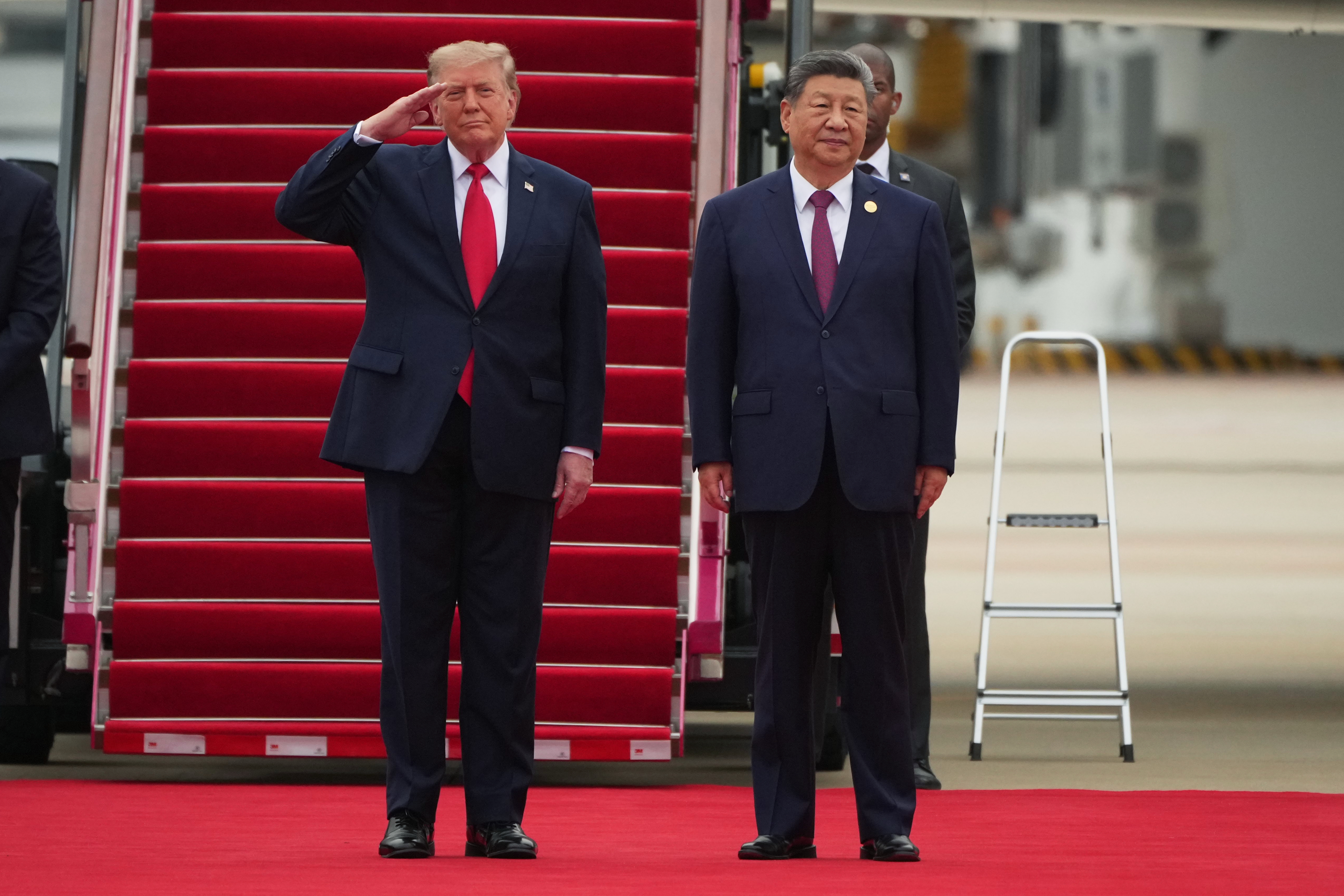
The two presidents, along with Xi Jinping, the leader of China, are scheduled to meet on the sidelines of an economic summit in the southern city of Shenzhen. The plan is extraordinary: The leaders of those three nations have never met in a trilateral summit, and for years the United States has considered both China and Russia to be rivals or even adversaries.
Trump said Monday that he planned to discuss nuclear arms issues and Ukraine, his “favorite subject.”
But recent Western intelligence assessments underscore Putin’s desire to keep fighting at least through the winter, said officials familiar with the reports. Putin hopes his army can make more progress in eastern Ukraine or that the Russian military’s drone and missile attacks on the capital, Kyiv, which kill civilians, can wear down the Ukrainian resistance, they said.
Putin is under increasing pressure as Russia continues to suffer high casualties, recruiting difficulties, and an unstable economy, the officials said. The war allows Putin to tamp down domestic criticism, some of them added.
Those assessments align with recent comments from European diplomats and leaders, who say they doubt the nearly 5-year-old war will end anytime soon.
“We believe Russia is in a very dire situation,” Aurélien Lechevallier, the French ambassador to Washington, said in an interview, referring to the country’s wartime economic condition and its impact on Putin’s legitimacy. “He needs the war in Ukraine to fuel his own leadership, his own narrative.”
Lechevallier noted that Putin had opposed the idea of even a partial ceasefire. That stance, he said, was “blatantly going against what President Trump has been asking from the start, which is to stop the hostilities.”
Putin could press Trump to lift some of the sanctions that the United States has imposed on Russia because of the war. In October, Trump signed an executive order exempting Russia from sanctions that Congress had passed a month earlier. Trump said the United States would import diesel from Russia in an effort to bring down gas prices weeks before the midterm elections.
Ukraine and other European nations saw that as a betrayal — and a sign that Trump was reverting to his long-running efforts to befriend Putin. European nations have increased their military aid to Ukraine and steadily added to the sanctions they have imposed on Russia since Putin began his full-scale invasion of Ukraine in February 2022.
Putin would have an advantage in discussing Ukraine with Trump in the trilateral setting. Xi, the host, has supported Russia’s invasion by allowing Chinese companies to trade with Russian defense enterprises. U.S. intelligence officials say China supplies microelectronics and other critical material to Russia’s defense industry.
Yuri Ushakov, a top aide to Putin, said the Russian president was eager for the talks.
“The significance and symbolism of this meeting cannot be overstated,” he told reporters Monday. “It is the first such meeting of its kind.”
“It has been agreed that it should be structured in the spirit of the mutual understanding and alliance between our three countries during the Second World War, with an emphasis on our countries’ cooperation in the establishment of the United Nations,” he added.
Lechevallier said Putin would think he had scored a win by appearing alongside Trump and Xi.
That could result in a photo that stands out in the annals of history, like the iconic photos of the leaders of the United States, Britain, and the Soviet Union, allies during World War II, that were taken at their summit in 1945 at Yalta on the Crimean Peninsula.
“From a Russian perspective, that would be the crowning of their diplomacy, because they want to appear as equals to the U.S. and China, which obviously they are not anymore,” Lechevallier said. “But that’s the storytelling they would like to push.”
Putin has faced increasing pressure at home this year from Ukraine’s strikes around Moscow, as well as from economic hardships and the difficulty conscripting men into the Russian army. Western intelligence agencies estimate that 40,000 to 50,000 Russians are being killed or seriously injured each month in Ukraine.
Allied intelligence agencies have varying interpretations of Putin’s reluctance to negotiate an end to the war. One agency assesses that the war gives Putin a sense of purpose, and that he needs to claim victory to hold on to power, an official said. Putin intends to make Ukraine suffer this winter under a barrage of attacks, the official added.
Putin could accept a deal if the right agreement was presented to him, the official said. As of now, at least one intelligence agency assesses that the terms would have to include Ukrainian leaders ceding all of the Donbas region in the east to Russia and promising that Ukraine will never join NATO.
But President Volodymyr Zelenskyy of Ukraine and other top officials in Kyiv would almost certainly not agree to those terms, so that type of agreement is unrealistic, the officials said.
Luc Frieden, the prime minister of Luxembourg, said in an interview Friday that he was “not too optimistic — let’s say it like that — that there will be a just and lasting peace in the near future.”
“We have seen Russia giving the impression, on several occasions, that they want to go towards peace, but then, a few weeks afterwards, we saw that it was not the case,” he said.
Some European officials say they suspect that the Kremlin is playing for time in hopes that a wave of 2027 elections in Europe could lead to cracks in support for Ukraine.
Marine Le Pen, the front-runner in the French presidential election, has said she will cut aid to Ukraine if she is victorious.
Putin’s recalcitrance is reflected in far-reaching demands that Russia has made in recent talks with Trump’s representatives, Steve Witkoff and Jared Kushner, the president’s son-in-law.
The Russians are insisting that the NATO allies adopt a new “security architecture” by, among other things, pulling troops back to positions they held in 1997, before the alliance expanded eastward toward Russia’s borders.
Putin made those demands two months before invading Ukraine in 2022. And he did so again last week, when Russian officials met with Witkoff and Kushner in Moscow and in Abu Dhabi, United Arab Emirates.
Russian officials circulated a document with Putin’s latest demands last week, according to a copy obtained by The New York Times.
European leaders have rejected Russia’s demand to roll back NATO, but were not surprised by it, two diplomats said Friday. They view Russia’s position as maximalist, which is also how Kushner has described it.
Kaja Kallas, the European Union’s top diplomat and an Estonian with a record of being tough on Russia, said during a news conference on Monday that Russia is “just trying to blur the picture, to say that, you know, we are just brainstorming.”
“They are not brainstorming.”
Some European officials said that if Russia was serious about peace, it would end its daily strikes on Ukraine.
“I thank the U.S. for its continuing efforts,” Micheál Martin, the prime minister of Ireland, said at a news conference Friday. “But Russia has to demonstrate through its actions that it is serious about ending its aggression.”
Yet European nations are laying the groundwork for a day when Russia might accede to a peace settlement. This month, France and Britain are leading 2,800 European troops in training exercises in Poland and Turkey aimed at preparing to help defend Ukraine if a settlement is reached.
“It’s really to make sure that once we have a ceasefire between Russia and Ukraine, European troops can be deployed,” Lechevallier said. “That will be very important the day we can strike this ceasefire.”
FILE — Oleksandr, a senior Ukrainian soldier, who has done regular rotations inside the underground pipes Ukrainian forces are using to move troops to front-line positions, near Kupiansk, in the eastern region of Kharkiv, Oct. 9, 2026. President Vladimir Putin is not ready to engage in serious negotiations on a peace settlement for Ukraine, according to Western intelligence assessments, even as he prepares to meet with President Trump on Thursday in China. (Finbarr O’Reilly/The New York Times)FINBARR O'REILLY
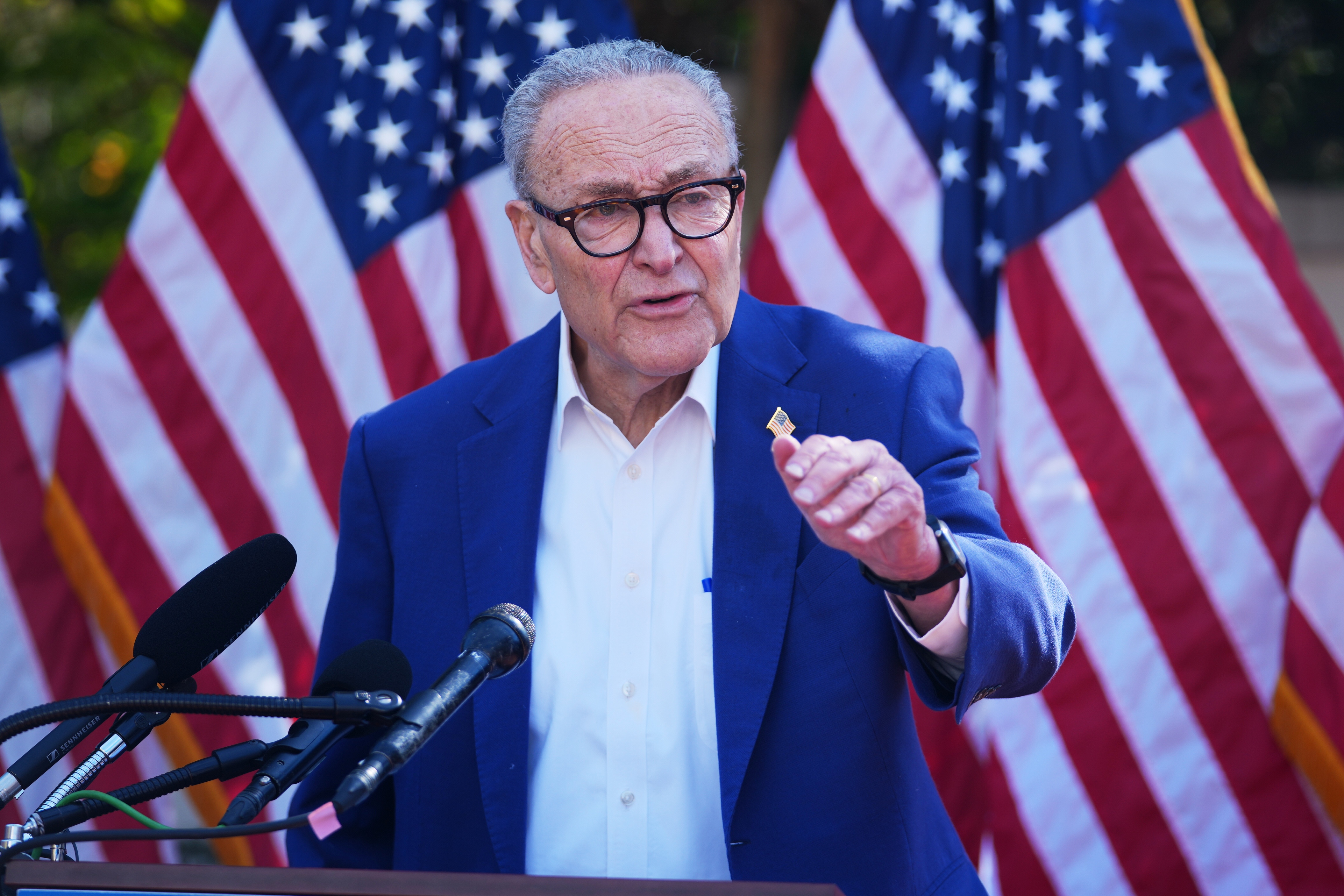
Sen. Chris Van Hollen (Md.) is challenging Sen. Chuck Schumer (N.Y.) in the first contested election for Senate Democratic leader in more than three decades.
Schumer has led Senate Democrats since 2017 and helped the party recapture the Senate in the midterms. Van Hollen is running to deliver on what he sees as voters’ desire for change.
The leadership election is scheduled to be held Dec. 1 by secret ballot. Only senators who will be in the next Congress can vote, not outgoing senators. Schumer or Van Hollen will need at least 28 votes to win if every eligible Democrat votes.
While Democrats are set to hold a 56-44 majority next year, only 55 Democrats can vote because Sen. Amy Klobuchar (Minn.), who was elected governor this month, will not name her successor until she assumes her post in January. Here is where every senator who is eligible to vote stands.
Supporting Schumer
More than a dozen Democrats have endorsed Schumer, who has said he is confident he has enough votes to be reelected leader.
Most of those supporters have served in the Senate for more than a decade. Just one of the 13 Democrats elected to the Senate in the midterms has endorsed Schumer: Sherrod Brown (Ohio), who is returning to the chamber after losing his seat in 2024.
Schumer’s supporters include several of the most moderate Democrats in the Senate.
Four senators who struck a deal with Republicans last year to end the government shutdown are backing Schumer. But he also has the support of Democrats with more progressive voting records, such as Sens. Richard Blumenthal (Conn.) and Tammy Baldwin (Wis.).
Supporting Van Hollen
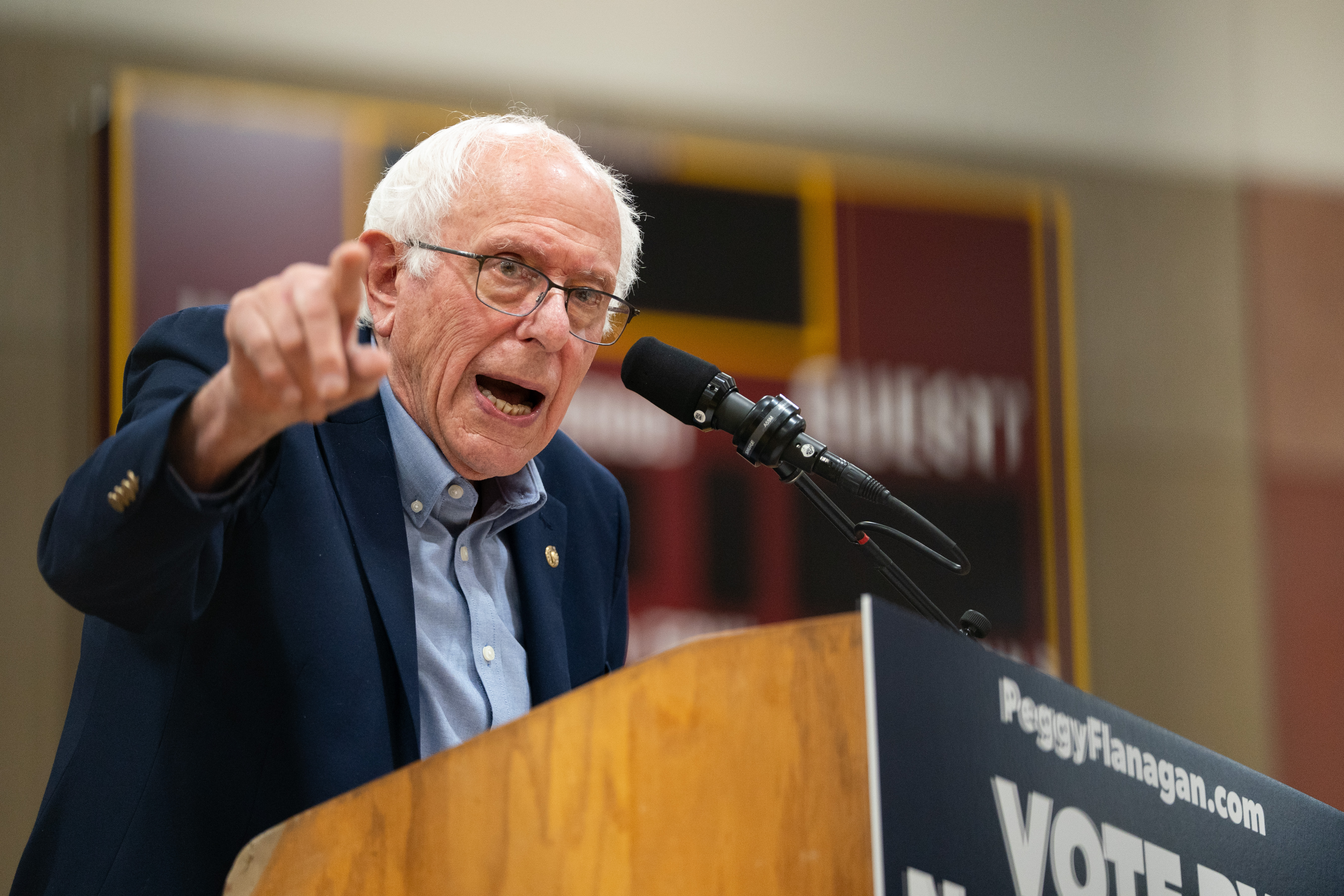
Sen. Bernie Sanders (I, Vt.), who caucuses with Democrats, and three Democrats are backing Van Hollen. He has said he has the support of about 15 Democrats, including those who are supporting him privately.
Van Hollen and his supporters are outspoken progressives, though Van Hollen has said his decision to challenge Schumer was not rooted in ideology.
Two of his supporters — Sen. Jeff Merkley (D, Ore.) and Sanders — are Senate stalwarts who have served alongside Schumer for years. The other two, Sens.-elect Abdul El-Sayed (D, Mich.) and Peggy Flanagan (D, Minn.), won their seats in the elections this month.
Opposing Schumer
A handful of Democrats have said they will not support Schumer but have not endorsed Van Hollen, either. Three of them are newly elected and pledged to oppose Schumer during the campaign: Sens.-elect Juliana Stratton (Ill.), Troy Jackson (Maine) and Adam Hamilton (Kan.).
Uncommitted
Most Senate Democrats have not said whom they plan to support, and some may never reveal their votes because of the secret ballot.
The Democrats who remain uncommitted include most of the newly elected senators as well as longtime senators such as Ron Wyden (Ore.) and Patty Murray (Wash.), both of whom have served alongside Schumer since he was first elected to the Senate in 1998.
They include progressives such as Sens. Elizabeth Warren (Mass.) and Ed Markey (Mass.) as well as Democrats considered more moderate, such as Sens. Chris Coons (Del.) and Maggie Hassan (N.H.).
WASHINGTON — The United States could hit a cap on how much it can borrow to fund government spending as soon as February if Congress does not take action to raise or suspend the nation’s statutory debt limit, according to an analysis published on Wednesday by the Bipartisan Policy Center.
The think tank’s analysis previewed a looming fiscal showdown in Washington, as the government continues to borrow huge sums of money to fund its spending on everything from the military to retirement benefits.
The debt limit has plagued presidents from both parties for decades. The cap stems from a 1917 law that requires Congress to authorize how much the nation is allowed to borrow to fund its obligations. Republicans raised the debt limit by $5 trillion to $41.1 trillion as part of the tax cut package they enacted last year. That threshold is expected to be reached sometime in February or March.
At that point, the Treasury Department would need to deploy so-called extraordinary measures to stretch out how long the government has to avoid default. Those measures include suspending investments in savings plans for government workers and health plans for retired postal workers to allow the nation to continue paying its bills. The Treasury can also temporarily move money between government agencies and departments to make payments as they come due.
The Bipartisan Policy Center estimates that the “X-date” — the moment when the United States is unable to meet its financial obligations and might default on its debt — could come as early as August.
The deadline could put pressure on Republicans to try to forge an agreement over spending and the debt limit before Democrats take control of Congress in January. If they are unable to pass such legislation, President Donald Trump will be forced to negotiate with Democrats next year to prevent the government from defaulting.
The national debt topped $40 trillion in August, a milestone that came faster than expected because of the cost of the tax cuts that Republicans passed and spending on the war in Iran. Despite pledges to reduce the debt by cutting spending and accelerating economic growth, it has continued to grow under Trump’s watch. Concerns about the debt rattled investors this year, raising borrowing costs and making it more expensive for Americans to buy homes and cars.
A debt limit standoff would put pressure on Treasury Secretary Scott Bessent to come up with creative ways to manage the government’s cash flow. During previous debt limit fights, Treasury secretaries have even examined the lawfulness of minting a $1 trillion coin or revaluing the nation’s holdings of gold to market prices.
The Bipartisan Policy Center said the timeline for the X-date would depend on several factors, including interest rates, court decisions related to tariffs, and economic growth. The timing will also be affected by the spending bill that lawmakers are working to pass before the end of the year.
It is possible that Democrats’ taking control of the House and the Senate could mean the end of a cap on what the United States can borrow.
Rep. Brendan Boyle (D, Pa.), who is in line to become chair of the House Budget Committee in January, told The New York Times this month that he would like to cut a deal with Trump to end what has become a perennial cycle of high-stakes fiscal clashes between the president and Congress that have repeatedly brought the country dangerously close to a default.
Boyle has long pushed for legislation that would allow the Treasury Department to suspend the debt limit, subject to congressional override, rather than requiring an affirmative vote by Congress to increase it.
“He wants it raised,” Boyle said of Trump. “We never again want to see a Democratic president have to have this held like a gun against their head, the same way it happened to Joe Biden and to Barack Obama.”
The idea has a chance of winning favor with Trump, who said last year that he agreed with Sen. Elizabeth Warren (D, Mass.), that the debt limit should be abolished.
“The Debt Limit should be entirely scrapped to prevent an Economic catastrophe,” Trump wrote on social media.
Both sides have continued their attacks as delegations await word on another round of U.S.-mediated talks. U.S. President Donald Trump says he plans to discuss the nearly five-year war with Chinese President Xi Jinping and Russian President Vladimir Putin on Thursday during a visit to China.
Ukraine’s General Staff said the strikes hit storage tanks at the Ilsky refinery and a processing unit at the Afipsky refinery, both in Russia’s Krasnodar region. The two refineries, also targeted Sunday night, can together process around 95 million barrels of oil a year and supply Russian forces on the front lines in southern and eastern Ukraine, it said.
Russian officials reported attacks on two industrial facilities in the region but gave no details.
Ukraine has repeatedly targeted refineries as it seeks to hurt Russia’s oil sector, a mainstay of its economy, and Moscow presses on with its all-out invasion of its neighbor.
“Our technologies and companies are developing very well,” Zelensky said in a social media post.
Ukraine’s cutting-edge long-range drones and missiles were deployed against the Kerch Bridge in a large-scale attack on Monday night that was prepared over weeks, he said.
“Right now, we’re in the top three in the world for tech development. In Europe, I think we’re number one,” Zelensky said.
The Pentagon has argued that strikes deep inside Russia are counterproductive, but Ukraine’s European backers disagree.
Zelensky said the strike on the Kerch Bridge, which could disrupt supplies to Russian troops on the front lines, was justified by Russia’s relentless bombardment of Ukraine.
Russian forces have focused on knocking out power in Ukraine before the winter, aiming to erode the morale of civilians.
Attacks last month killed at least 372 Ukrainian civilians and wounded 1,981 others — a number 95% higher than in October 2025, the U.N. Human Rights Monitoring Mission in Ukraine said on social media Wednesday.
This year, the war has brought “significantly higher” civilian casualties than in previous years, the agency said.
“The first 10 months of this year have seen more civilian deaths than all of 2025, which in turn was worse than the year before,” said Danielle Bell, who heads the U.N. agency in Kyiv. “The world should not become numb to the deadly toll the war exacts on Ukraine’s civilians.”
Russian drones attacked energy facilities, civilian businesses, and residential buildings in five regions overnight and Wednesday morning, Ukrainian Prime Minister Serhii Koretskyi said.
A Russian strike on the southern Ukrainian city of Odesa killed four people Wednesday, local officials said.
Russia’s Defense Ministry said its forces used drones overnight to strike the port of Izmail in the Odesa region.
A Russian drone attack on a market in the Kharkiv region wounded 12 people, including an 11-year-old boy, Ukraine’s State Emergency Services said.
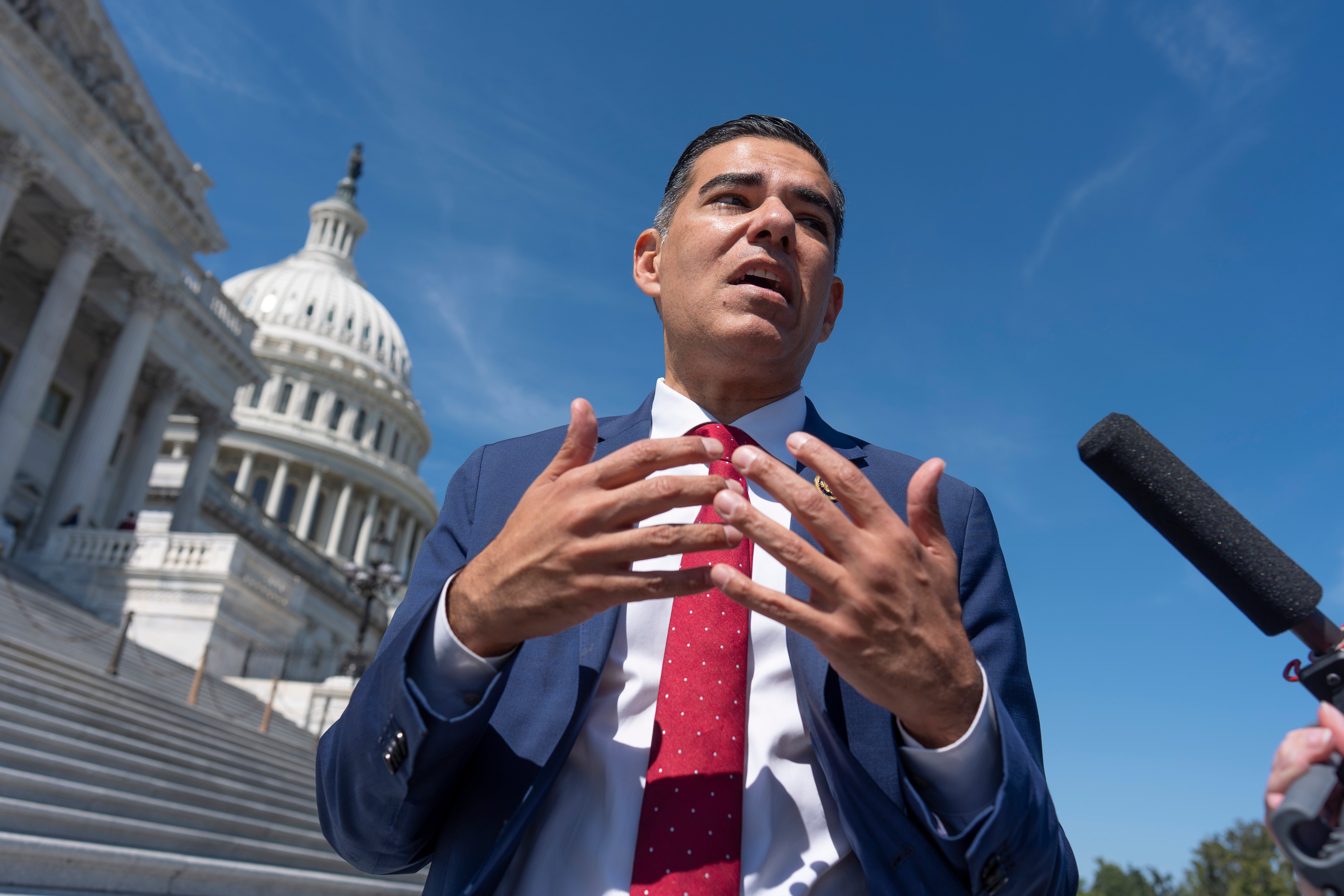
Rep. Robert Garcia of California, who is expected to lead the committee when Democrats take control, sent letters directing members of President Donald Trump’s family and top administration officials to preserve documents. It’s an early step toward undertaking investigations of the Republican president and his administration.
The letters released Wednesday cover a wide range of potential investigations, including alleged financial conflicts involving Trump’s family, misconduct at the Department of Homeland Security, and the administration’s handling of files related to Jeffrey Epstein.
“Oversight Democrats are fighting to put an end to this Administration’s self-dealing, misconduct, and abuse,” Garcia said in a statement. “These investigations will lay the groundwork for legislation which helps all Americans. This is just the beginning.”
The White House has repeatedly pushed back at the investigative ambitions outlined by Democrats, with officials saying they are willing to engage on oversight inquiries that they see as legitimate but not ones assessed as politically motivated.
The president is “willing to work with anyone to continue delivering victories for hardworking Americans,” White House spokeswoman Lauren Bis said. “If Democrats choose to pursue sham investigations and radical left policies, they are choosing to work against the American people.”
The letters offer an early glimpse of how Democrats plan to use their newly won congressional majority to scrutinize Trump and his administration. As favorable election results rolled in for Democrats on election night, Garcia posted a two-word warning on social media: “Lawyer up.”
The preservation notices do not compel recipients to turn over documents, but they signal the investigations that Democrats intend to pursue once they gain control of the committee and its subpoena power in January.
Before the midterms, Garcia outlined several areas Democrats would scrutinize, including the administration’s handling of the Epstein investigation, U.S. Immigration and Customs Enforcement operations and potential financial conflicts involving Trump’s family.
The letters to Vance and Blanche focus on the administration’s handling of files related to Epstein, including allegations by Democrats that White House officials sought to conceal information and manage the political fallout from the investigation.
The White House has warned Garcia and other Democrats that their planned investigations into the Trump administration may open them up to investigations from the Justice Department.
Last week, White House counsel Will Scharf said in a letter to Garcia that “threats to executive branch officials designed to deter them from public service, or process designed merely to abuse or instill fear in the recipient may cross the line into blatant criminality.”
The investigative powers of Congress are well established, inherent in its constitutional authority as a check on the other branches of government. Modern U.S. history is filled with congressional investigations and their aftermath, from the Watergate investigation to the 9/11 attacks to Republicans’ more recent look into Democratic President Joe Biden’s family.
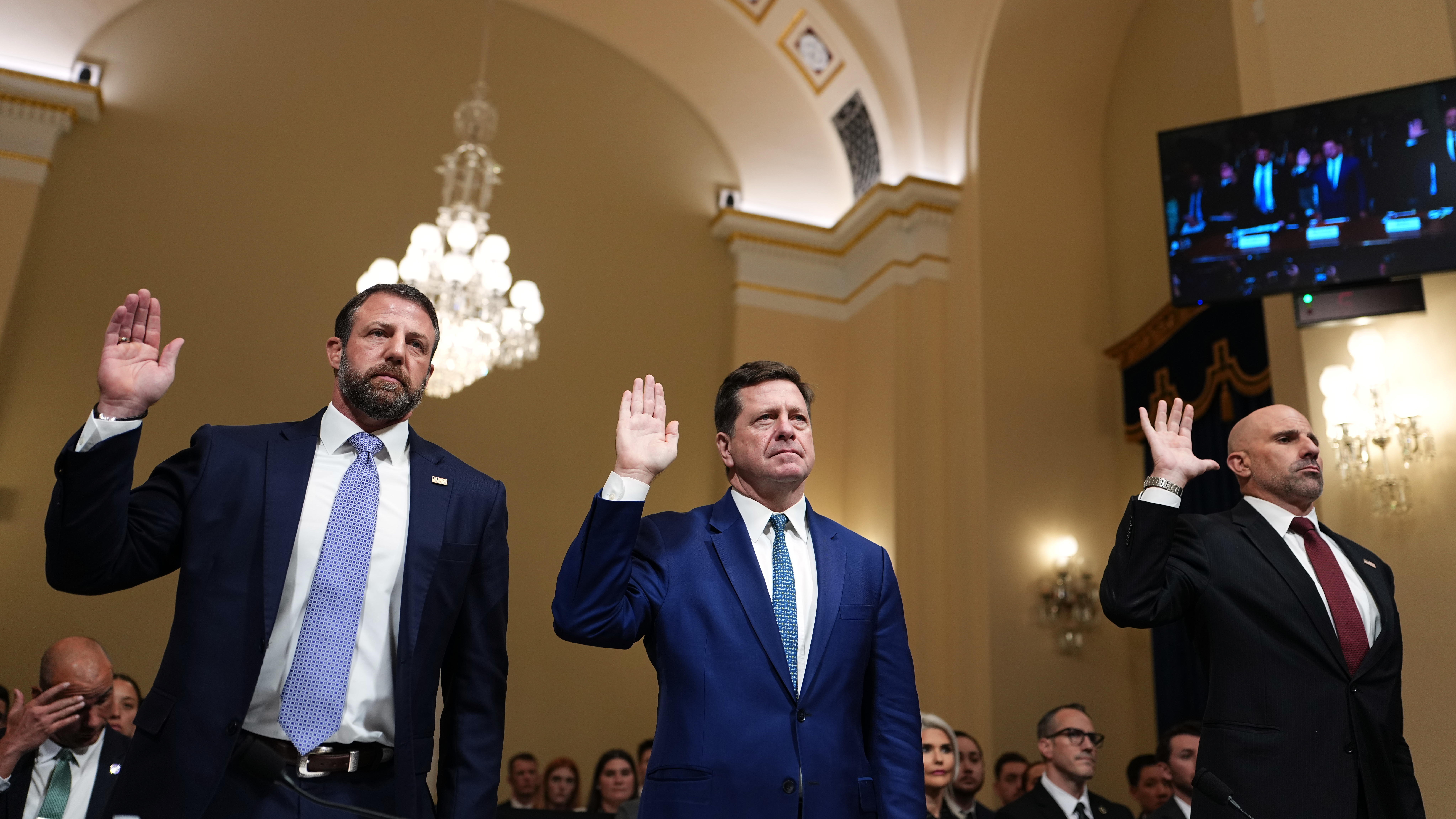
WASHINGTON — Homeland Security Secretary Markwayne Mullin defended before a House committee Wednesday his flight to a weekend LSU-Texas football game as travelers across the U.S. were still stuck at airports after the nationwide grounding of flights, saying canceling it could have caused confusion.
Mullin spoke at a congressional hearing about threats facing the country at a time of looming questions over cyber infrastructure, the future of immigration enforcement, and his decision to fly to the college football game.
The hearing in front of the House Homeland Security Committee is a standard yearly opportunity for members of Congress to grill top administration officials over national security threats. But it comes as the U.S. has faced a series of cyber and technology problems that have left Americans feeling vulnerable.
The hearing is also the first opportunity for Democrats after their midterm drubbing of Republicans to grill the Cabinet official who is key to President Donald Trump’s mass deportation agenda. Two others facing questioning are FBI Deputy Director Christopher Raia and the Trump administration’s national intelligence director, Jay Clayton.
Mullin flew to a football game as travelers were scrambling
The secretary has faced scrutiny over his decision to fly to Louisiana on Saturday to watch the LSU-Texas game.
Mullin’s flight took place after the stoppage was lifted and as planes were back in the air. But thousands of flights were canceled because of the ground stop, and Mullin flew as people nationwide were forced to scramble for alternative travel options.
On Wednesday, he said canceling the trip could have sent a confusing message.
Mullin said the trip had been planned for weeks so that he could take his nieces to the game and that there was discussion before the trip about whether to forgo it.
“If we canceled something with the airspace completely open, it could bring confusion because I was meeting the governor there. I was meeting other people there that would show maybe distrust that we’re not even willing to fly,” Mullin said.
Mullin had said Tuesday and reiterated Wednesday that he is required to fly on government planes and that he personally paid for the trip.
Mullin defends ground stop response
Mullin, whose department includes the agency tasked with protecting the country’s cyber infrastructure, was front and center in the Republican administration’s response to the grounding of all aircraft last week.
The Trump administration has said the ground stop was the result of problems with newly installed routers that caused the Federal Aviation Administration’s telecommunications system to be flooded with data, forcing the agency to ground all flights while it addressed the issue.
At the hearing, Mullin pushed back on criticism that the administration wasn’t giving the American public clear answers.
“We were able to put the planes back in the air safely. We landed over 4,000 planes when the ground stoppage went out because of the communication and didn’t have one single incident. That in itself is a great success,” Mullin said.
During a news conference Friday with Transportation Secretary Sean Duffy at the White House, he pushed for more funding for the aging air traffic control system while also assuring the public that the government was not seeing any signs of a deliberate cyberattack.
The Trump administration has been attempting to offer reassurances about a spate of outages over the last week that have affected everything from Microsoft and the Federal Aviation Administration to the banking industry, United Airlines, and a classified internal communications network at the National Security Agency.
Top Trump administration national security officials have said there was no indication that the events are related or attributable to a cyberattack or hostile activity.
Clayton told the committee Wednesday that the outages are “not a coordinated or state-sponsored attack.” Instead, they appear to be “separate service outages associated with maintenance and technical changes.”
Mullin’s sprawling Department of Homeland Security also includes an agency designed to play a central role in the federal government’s response to cyber incidents. The Cybersecurity and Infrastructure Security Agency is tasked with working with industry to protect infrastructure, including water and electric generation, election systems, chemical facilities and cyber networks.
But CISA has been without a Senate-confirmed leader since Trump took office for a second term in early 2025. Trump’s original pick to lead the agency withdrew his nomination earlier this year after it languished for months in the Senate.
CISA also lost staff last year during cuts aimed at reducing the size of the federal government.
Immigration enforcement under new scrutiny
Mullin, whose department includes Customs and Border Protection and Immigration and Customs Enforcement, faced questions over the Republican president’s immigration agenda at a time when Democrats are vowing rigorous oversight of everything from immigration detention contracts to the use of force by ICE officers.
Trump has indicated he could work with Democrats on immigration legislation, but he has also elevated Stephen Miller, the architect of his immigration crackdown, to be his chief of staff, raising questions over how easily compromise could be reached on the issue.
Mullin took over from ousted Department of Homeland Security Secretary Kristi Noem in March after the killing of two American citizen protesters in Minneapolis at the hands of immigration enforcement officers forced the administration to adjust its mass deportation strategy.
Immigration arrests initially fell but then rebounded as ICE, flush with billions of dollars in new congressional funding, hired new officers and maximized cooperation from local and state law enforcement agencies across the country.
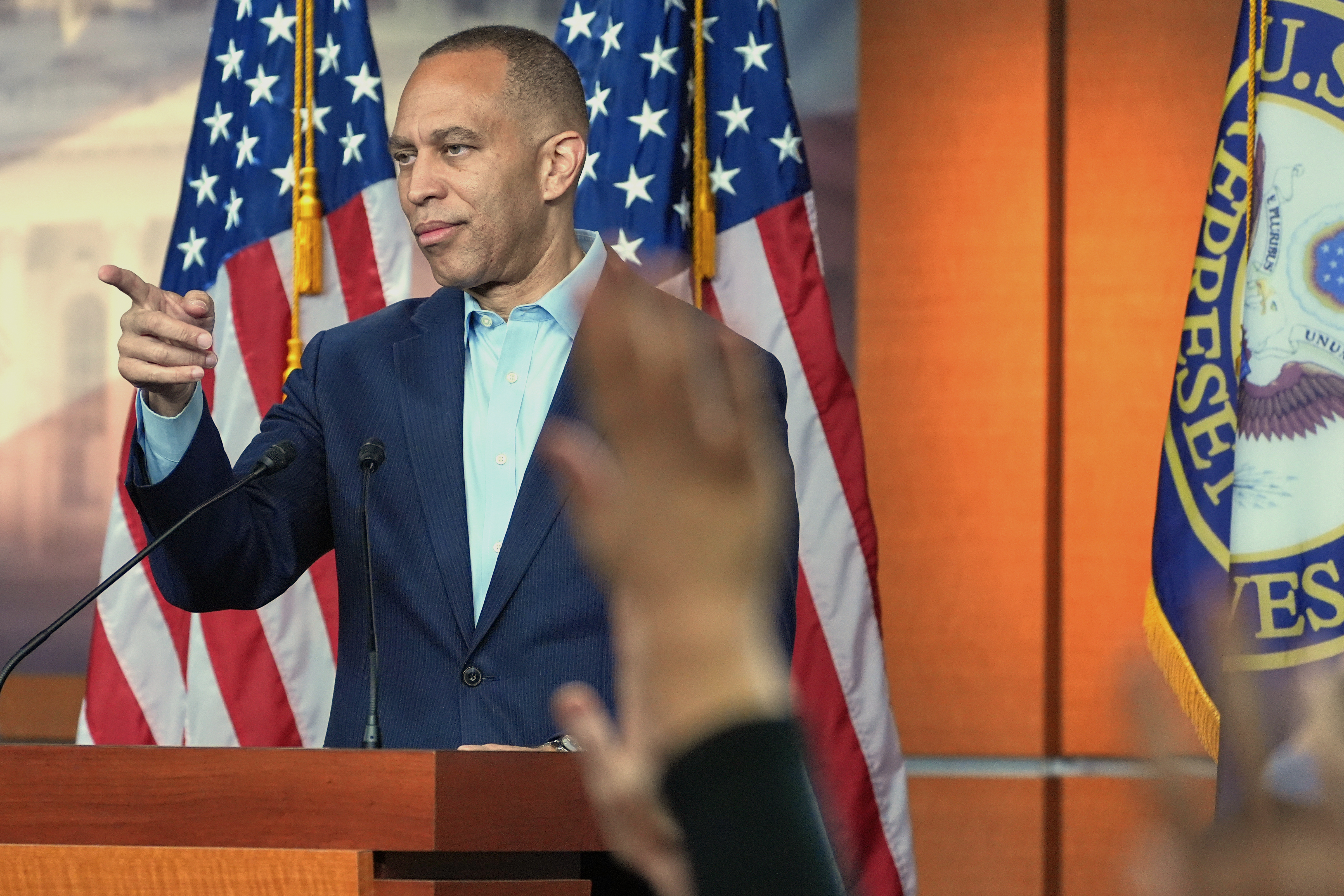
WASHINGTON — House Democrats on Wednesday nominated Rep. Hakeem Jeffries of New York to be speaker, voting overwhelmingly over resistance from the left to put him in line to become the first Black lawmaker to hold the post.
The election by secret ballot came just over two weeks after Jeffries, 56, who has led House Democrats since 2022, presided over sweeping victories for his party, which won a historically large majority in the midterm elections.
The vote was 251-11, with two Democrats abstaining, according to a person who attended the confidential session and detailed the results on the condition of anonymity. The margin demonstrated the breadth of Jeffries’ backing in a large and ideologically diverse caucus.
He will still have to be elected on the House floor in January, when he will need a majority of members in the chamber to rise and say his name to formally win the post that is second in line to the presidency. But the lopsided the secret-ballot vote suggested he will have more than enough support to do so.
Jeffries’ nomination was almost a foregone conclusion; no Democrat emerged to challenge him, and even some of his loudest critics ultimately did not want to publicly oppose the man in line to be the nation’s first Black speaker.
His frictionless ascent counted as a rarity in the House, where party leaders often rise through tumultuous challenges.
“It’s a good day,” Rep. Steny Hoyer of Maryland said as he headed into the closed-door session. “I served with the first woman speaker of the House. Now we’re going to elect the first African American speaker of the House.” Hoyer said it was a testimony to the country’s progress.
Inside the room, according to a person who was present, Rep. Jim Clyburn, D-S.C., gave the final speech nominating Jeffries, invoking the civil rights hero and long-serving Rep. John Lewis of Georgia as he reflected on the significance of elevating a Black man for the job.
Still, Jeffries faced loud grassroots resistance from progressives fed up with the Democratic Party establishment who see Jeffries, a reserved moderate and prodigious fundraiser, as an avatar of the status quo who is beholden to corporate interests.
Progressives who want Democrats to cut off U.S. aid to Israel and who champion “Medicare for All” said they were concerned that Jeffries, a longtime supporter of the Jewish state who they view as too closely aligned with AIPAC, the pro-Israel lobbying group, would stand in the way of their demands.
Jeffries, who in recent days met with almost all members and newly elected Democrats as he sought to wrap up his nomination with as little opposition as possible, is known for his cautious and highly disciplined style.
He likes to host listening sessions and have a caucus “family discussion” before telegraphing his stance on any issue. But he also appears willing to move in response to broad calls for bold action.
On Tuesday, for instance, less than 24 hours before his nomination, Jeffries endorsed a broad expansion of Medicare to cover more Americans and a wider variety of services, edging closer to the Medicare for All proposal championed by progressives.
It was a sign that with a larger majority giving him more room to maneuver and progressives pressing him to take up a bolder agenda, he saw the need and opportunity to take a more ambitious approach.
Jeffries, who grew up in a working-class home in the Crown Heights section of Brooklyn in the 1980s, first ran for the state Legislature at 29. He was always viewed by people around him as a potential national leader, though he had been hesitant to reflect on the significance of his place in history until he had the vote wrapped up.
“Over the last four years, that pressure has already been on me,” he said in an interview earlier this month, when asked if he felt the weight of breaking a racial barrier. “Failure is not an option.”
Despite the sweeping electoral victories, Jeffries has been facing loud resistance to his leadership. Many lawmakers said their phone lines had been blowing up with constituents demanding a new face to lead the party as it takes control of Congress. But even amid that pressure, many of the progressives in Congress said they thought Jeffries deserved a chance to lead them in the majority.
WASHINGTON — Sen. Bernie Sanders is preparing to use his return atop a powerful Senate committee to push for sweeping changes to the nation’s healthcare system, setting up an early test of how far Democrats are willing to go in embracing progressive priorities.
Sanders, a Vermont independent who caucuses with Democrats, is currently the ranking member on the Senate Health, Education, Labor and Pensions Committee and is expected to become its chairman when Democrats take control of the Senate in January. His agenda, first provided to The Associated Press, lays out the legislative implementation for proposals that he and progressive candidates championed on the campaign trail this cycle.
At the center is Sanders’ longstanding push for Medicare for All, a universal healthcare system that would be implemented over four years. The first year would lower the Medicare eligibility age from 65 to 55, expand coverage to include dental, vision, and hearing care, and guarantee healthcare to children through age 18.
“This is no longer a utopian vision. This is where the American people are,” Sanders said in an interview with the AP.
The proposals offer an early glimpse of how progressives hope to shape the Democratic Party’s priorities after an election that delivered the party control of Congress but also exposed competing visions for its future. With the 2028 presidential election already looming, Sanders is seeking to push Democrats toward a populist economic agenda that he argues has gained broader support.
“I think the election, in my opinion, was a crying out for fundamental change in the way the government does business and the absolute need to protect a struggling working class,” Sanders said. “I think this is a time to bring about very significant changes in policies so that we can actually improve the lives of working families.”
Sanders keeps pushing for Medicare for All
Sanders has long championed a single-payer national health insurance program that would replace most private insurance with a federally administered system providing universal coverage.
His proposal for the new Congress lays out a four-year transition to that system, beginning with expanding Medicare eligibility and benefits. In the second year, the eligibility age would fall to 45, followed by 35 in the third year, before extending coverage to everyone in the fourth year.
“Transforming a system which is 18% of the GDP of America, you don’t do that overnight,” Sanders said of the transitional period.
But the costs of lowering Medicare eligibility are likely to lead to massive debate between the two major political parties as the national deficit stands at $2 trillion, or 6.2% of gross domestic product. And the Congressional Budget Office estimated in 2022 that lowering the age of Medicare eligibility to 60 would increase federal budget deficits by $155 billion over the 2026–2031 period.
Sanders’ prior proposals to pay for the program shift healthcare financing away from private insurance premiums and toward payroll contributions — including a combination of employer and household premiums, higher taxes on the rich, and new taxes on Wall Street and large firms.
Sanders also argued that Democrats could pass the first stage of the transition through budget reconciliation, a process that allows certain tax and spending legislation to advance through the 100-member Senate with a simple majority rather than the 60 votes typically required to overcome a filibuster. Democrats will have a 56-44 Senate majority when the new Congress begins in January, marking the party’s largest advantage in the chamber in 16 years.
Along with pushing for greater access to primary care, Sanders says Democrats will push for lower prescription drug costs.
A changing political landscape
Sanders has previously balanced his progressive ambitions with the realities of governing. During his first stint chairing the HELP Committee from 2023 to 2025, he worked with Republicans on legislation to lower prescription drug costs and expand access to primary care. He also chaired the Senate Budget Committee from 2021 to 2023, helping advance major Democratic spending priorities.
But now, just weeks after the midterms, Sanders is laying out an ambitious agenda that he argues reflects a shift not in his own positions but in voters’ demands for sweeping changes to the healthcare system.
He sees signs of that shift among Democratic leaders. House Democratic leader Hakeem Jeffries of New York has pledged to get to work “right out of the gate” to restore Affordable Care Act subsidies and reverse Medicaid cuts enacted under Republicans.
Jeffries said Tuesday that Democrats know that simply returning to the status quo “is not acceptable” and they are preparing ways to further expand healthcare access by lowering the Medicare eligibility age, adding access to vision, hearing, and dental coverage, and ensuring all kids are covered.
“Jeffries basically supported the first year of Medicare for All,” Sanders said.
But anything that passes Congress the next two years will still need to be signed by President Donald Trump to take effect. Sanders rejected the notion that Trump, a Republican, wouldn’t sign something like Medicare for All into law.
“Donald Trump may be crazy, but he is not stupid. He’s a smart guy, and he’s a very good politician,” Sanders said.
An agenda beyond healthcare
Sanders is also preparing to use the committee to advance a broader economic agenda that includes raising the federal minimum wage from $7.25 an hour to $20 an hour and promoting the PRO Act, which would strengthen workers’ rights to unionize.
The proposed wage increase would nearly triple the federal minimum, which has remained unchanged since 2009, and could face resistance from lawmakers concerned about the impact on small businesses and employment. Sanders proposes to implement it over a four-year transition period.
Sanders’ agenda also calls for sweeping restrictions on artificial intelligence, including a moratorium on new AI data centers, a pause in advanced AI development, and a ban on artificial superintelligence.
SHENZHEN, China — President Donald Trump landed in China on Wednesday, seeking to reinforce the U.S. status as the world’s leading technology power, but a distressing series of technical outages back home has left the administration scrambling to calm the American public.
The issues put the administration on the defensive at a moment when the president wants to project strength and certainty ahead of a potentially complicated trilateral meeting on Thursday with the presidents of China and Russia, Xi Jinping and Vladimir Putin.
As he began his trip to Asia, Trump initially had been nonchalant about the outages that left people in the United States worried about accessing their email, checking their bank accounts or safely flying on an airplane.
“It’s fine,” Trump pronounced on Tuesday from the Philippine capital of Manila, suggesting it was all just a consequence of being a nation that is “big and powerful.”
But then the outages involving Microsoft, the Federal Aviation Administration, JPMorgan Chase and the National Security Agency’s communications network began to overshadow Trump’s visit. They raised the specter that artificial intelligence can disrupt daily life, as new cyber vulnerabilities identified require software to be constantly upgraded to fix flaws or other security holes, known as patching, which is supposed to improve how the technology runs.
So at the start of the second day of Trump’s trip, Secretary of State Marco Rubio stepped in to reassure Americans on Trump’s behalf. He told reporters there was “zero” evidence that the outages are connected or tied to rival nations, cyber hackers or criminals.
“Sometimes when you are going in to fix your system because you’ve identified a vulnerability, it creates a short-term disruption,” said Rubio, who is also Trump’s national security adviser.
Trump is trying to project strength in Asia, but the outages challenge that image
Xi paid Trump a special honor by greeting him on the tarmac after Air Force One arrived in Shenzhen, China, reciprocating a gesture made by the U.S. president during Xi’s state visit to Washington in September.
The two leaders greeted each other at the foot of the airplane’s stairs in a handshake that became a hug as group of dancers waved flowers and flags. When Putin arrived earlier on Wednesday, Xi did not greet him at the airport despite their longstanding friendship.
Trump has signaled that he wants to take an improvised approach during his time in Shenzhen, the skyscraper-filled tech hub that is hosting world leaders for the Asia-Pacific Economic Cooperation summit. It’s a bet that his unscripted brand of diplomacy based on personal relationships can create some kind of legacy to reshape world affairs during his final two years in the White House.
The White House said that Trump would have two separate meetings on Wednesday with Mexican President Claudia Sheinbaum and Canadian Prime Minister Mark Carney before the official APEC greeting ceremony. Trump has previously voiced his disapproval of the U.S. trade pact with Canada and Mexico that was negotiated during his first term.
As leaders were introduced on Wednesday night ahead of an APEC group photo, Putin approached Trump. They shook hands and traded greetings.
On Thursday, at a first-ever trilateral, Trump said he plans to talk with Xi and Putin about limiting nuclear weapons and bringing an end to the war in Ukraine, which began in 2022 with Russia’s invasion. Analysts are not expecting substantive breakthroughs, despite the unprecedented nature of the meeting.
Before the trip, Trump’s aides had told reporters that the war in Ukraine would not be on the agenda. But Trump said on Tuesday that the deaths of tens of thousands of Russian troops every month had created an opening to resolve the conflict.
“I think it’s very close to getting it done,” Trump said. “We’re going to have a good meeting on that.”
Trump also teased the possibility of a private meeting with Putin and a separate sit-down with North Korean leader Kim Jong Un. But neither option had been added to his official schedule.
Trump has a reunion with old friend Imelda Marcos
Before he landed in Shenzhen, Trump had lunch in Manila with President Ferdinand Marcos Jr. at the Malacañang Presidential Palace.
Marcos noted that he had sent fried chicken from the Philippine chain Jollibee to the U.S. delegation for a late-night snack Tuesday and complimented Trump for “working very hard.”
Trump praised the U.S. bond with the Philippines and the interior decoration of the presidential palace.
“Our people share common history, common values, common interests, common architectural tastes,” Trump said. “I love what you’ve done here.”
He said after their meeting that the two nations had reached a trade deal on Wednesday, though he had also said last year that an agreement had been reached.
Trump also had a short reunion with Imelda Marcos, the former first lady and mother of the Philippines’ current president.
Famed for her lavish shoe collection, Imelda Marcos knew Trump decades ago through the New York City party scene. During the 1986 “People Power” uprising, her husband, Ferdinand Marcos, was ousted as the Philippines’ strongman leader.
Trump called her “always the most beautiful” and the 97-year-old matriarch appeared to hand him a gift, according to a video posted by the White House.
What’s on the agenda for Trump’s meetings with Xi and Putin
The prospect of Trump meeting with two of America’s largest geopolitical rivals has been a source of unease as the U.S. president has been less welcoming of historic allies such as Canada and NATO partners in Europe.
His tariffs that were intended to curb China’s trade surplus have done little to stop the progress of the world’s dominant manufacturer, which for the second straight year will have exported $1 trillion more in goods than what it imported.
Even without the digital outages in the U.S., questions about how to handle AI loom over the summit.
The technology is viewed as key to unlocking faster economic growth, but its rapid development has meant it poses national security risks and could evolve in ways that put AI beyond human control.
Trump’s close tech industry ally Jensen Huang was recently removed as the CEO of Nvidia after he admitted to an affair with a woman alleged to be an agent of the Chinese government. Beijing has denied that she was a spy, yet the affair raised concerns about how China has been able to access Nvidia computer chips to develop its own AI models that are competing with the U.S.
When asked this week why the U.S. had not been more aggressive in cutting off China’s access to advanced computer chips, Trump said there were differences of opinion inside his administration and that “We have a very good relationship with China, and you don’t want to insult them.”