Tag: no-latest

  • DOJ probe into Trump foes sees another prominent departure

    DOJ probe into Trump foes sees another prominent departure

    Another prominent Trump loyalist working on the wide-ranging conspiracy investigation in Florida into President Donald Trump’s political foes has abruptly left the probe, according to three people familiar with the matter, marking the latest departure in a high-profile inquiry that has become a central focus for the administration and its allies.

    Kurt Olsen — who before joining the so-called “grand conspiracy” investigation in June had served several months as Trump’s election security czar — tendered his resignation from the Justice Department on Monday, the people said. Olsen did not respond to requests for comment.

    Two of the people said Olsen had become frustrated by pressure from Justice Department officials in Washington to increase the pace of the probe and secure grand jury indictments. The third person, who disputed that description, said Olsen left after issues arose with his security clearance that prevented his further involvement.

    The resignation was the latest staffing shake-up to roil the investigation in recent days, prompting questions about its direction and its future. Earlier this month, Joseph diGenova, another Trump ally who was appointed to lead the inquiry, suddenly quit five months in after publicly lobbying for the job.

    Multiple other attorneys who had been dispatched to Florida to work on the case have since left to return to previous assignments or take on new ones, and other new lawyers have since joined the case, the three people familiar with the staffing situation said.

    They all spoke on the condition of anonymity to describe the inner workings of the “grand conspiracy” investigation, which has become the ambitious and legally complicated investigation of the Justice Department’s efforts to prosecute Trump’s political foes.

    The theory, as officials have described it, is that high-ranking officials from the Obama and Biden administrations engaged in a decadeslong, “deep state” conspiracy to violate Trump’s civil rights.

    Those efforts, investigators contend, include the FBI and intelligence community investigations of potential ties between Russia and Trump’s 2016 campaign, as well as the push under special counsel Jack Smith to prosecute Trump after his first term for allegedly mishandling classified documents.

    Speaking to the Washington Post earlier this month, DiGenova declined to discuss in detail the reasons for his departure, saying in a text message that he still believed in the strength of the case the team was building, but that “time was needed to build those cases” and “people differ on how long that should take.”

    He was the second prosecutor overseeing the investigation to step aside. Maria Medetis Long, a veteran national security prosecutor in Miami, left the investigation in April after expressing discomfort with its direction, the Post has reported.

    Olsen joined soon after Meditis’s departure. Before that role, Olsen had been working in the White House, investigating Trump’s baseless claims that the 2020 election was stolen, and had played a central role in initiating the FBI’s ongoing investigation into the vote count in Fulton County, Ga., which was pivotal to Trump’s loss that year.

    Before the second Trump administration, Olsen was among a group of lawyers who had unsuccessfully pushed the Justice Department in 2020 to endorse those false claims.

    His resignation from the Justice Department and the “grand conspiracy case” was first reported Monday by the Daily Mail.

    Despite that staffing uncertainty, signs have emerged in recent days that the investigation is moving forward under the leadership of Jason Reding Quiñones, the U.S. attorney in Miami whose office has been tasked with overseeing the probe.

    Attorneys for former CIA director John Brennan — one of the investigation’s purported targets — said in a recent court filing that he had been subpoenaed to testify next week before a grand jury in Fort Pierce, Fla. Several former FBI agents tied to the 2022 search of Trump’s Mar-a-Lago estate in Florida have also indicated that they have been summoned to offer testimony.

    Two of Attorney General Todd Blanche’s top deputies, Trent McCotter and Aakash Singh, traveled to Florida in recent weeks to meet with the investigative team, a person familiar with that trip said.

    Speaking Monday, a Justice Department spokesperson rejected any suggestion that top officials had pressured DiGenova, Olsen, or anyone else involved in the “grand conspiracy” investigation to bring charges before the inquiry was complete.

    “Leadership has full confidence in the great team of experienced prosecutors in the Southern District of Florida led by U.S. Attorney Quiñones,” the department said in a statement. “Work on this investigation continues, and we are grateful to the talented team of attorneys, which continues to grow, doing the work each day.”

  • Jack Smith clashes with senators over Trump probes, says he will not be silenced

    Jack Smith clashes with senators over Trump probes, says he will not be silenced

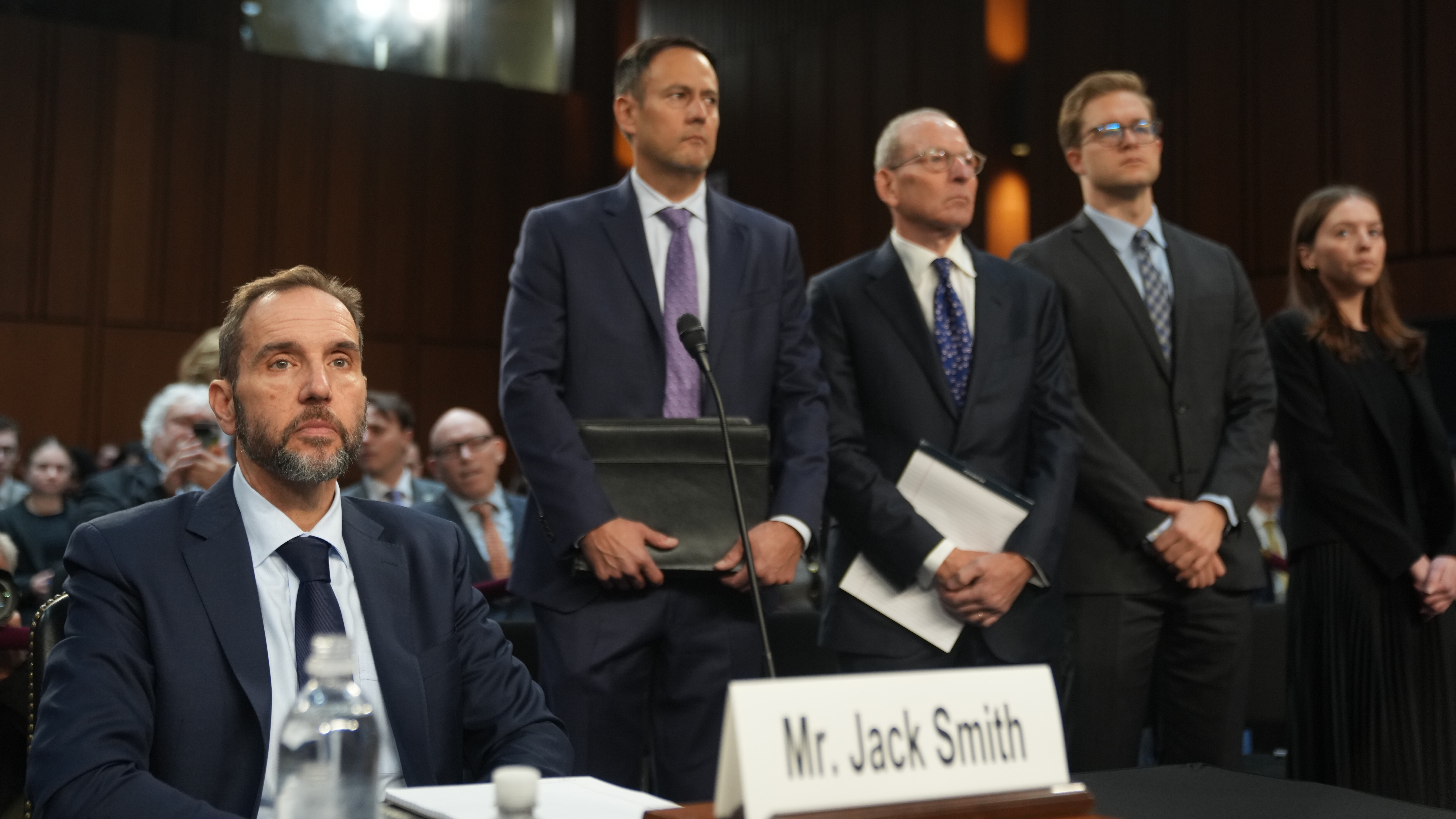
    Former special counsel Jack Smith forcefully defended his derailed efforts to prosecute President Donald Trump on Tuesday, telling lawmakers he would not “be silenced by continued threats of prosecution” from the president.

    Testifying before the Senate Judiciary Committee, Smith rejected Republican assertions that his investigations of the then-former president were driven by partisanship or were used to improperly surveil GOP lawmakers during the Biden administration.

    Smith said he stood by his decision to charge Trump in two felony indictments during his years out of office, the first focused on his alleged mishandling of classified documents and the second on his efforts to overturn the results of the 2020 election.

    “If asked whether to prosecute a former president today based on the same facts, I would do so regardless of whether the president was a Republican or a Democrat,” Smith said.

    But with few new insights into his investigations on offer and Republicans intent on pressing old attacks, the proceeding quickly devolved into an opportunity for the former special counsel’s critics to deliver a public tongue-lashing.

    “No matter what you say, there’s no legitimate basis for what you did,” committee Chairperson Chuck Grassley (R., Iowa) said. Sen. Eric Schmitt (R., Mo.) piled on, telling Smith he “will go down as a total dirtbag.”

    “You have brought the Department of Justice into disrepute,” Sen. Ted Cruz (R., Texas) added. Sen. John Kennedy (R., La.) told Smith: “You make me want to throw up in my mouth.”

    The nearly four-hour flogging grew so intense that Sen. Cory Booker (D, N.J.) marveled at the relentlessness of the Republicans’ message.

    “This is gaslighting of the American people,” he said, telling Smith, “I am so sorry that they’re attempting to put investigators on trial while ignoring the extraordinary conduct that that they are duty bound to really investigate.”

    But not all of the Republican attacks landed. Schmitt at one point accused Smith of perjury when he said he had not attended an Atlanta Hawks basketball game in February 2024. Schmitt said he had texts proving otherwise and suggested, with no evidence, Smith had made a secret trip to Atlanta to meet with Fani T. Willis, the district attorney who prosecuted Trump in Georgia.

    But within minutes, Sen. Amy Klobuchar (D, Minn.) deflated Schmitt’s “gotcha” moment. After Smith said he had attended a basketball game around that time featuring the Iowa Hawkeyes, Klobuchar suggested Schmitt had mixed up the team names of the Hawks and Hawkeyes — meaning Smith had not been in Atlanta at all.

    “Perhaps you should have looked at it more carefully,” Klobuchar told Schmitt.

    Behind those theatrics, Tuesday’s proceedings carried very real stakes for Smith — who Trump has repeatedly said should face prosecution — and the Republican senators, who have sought to wrest control of the public’s understanding of the special counsel’s twin probes, both of which he was compelled to abandon after Trump won the 2024 election.

    The president and his allies for years have asserted that Smith and other prosecutors weaponized law enforcement against them and deserve to be punished. Democrats say Trump plainly committed indictable offenses and that it is he who has corruptly turned the Justice Department into a cudgel to target perceived political foes.

    “The aspersions cast on Mr. Smith nonstop are petty, personal, and political,” said Sen. Dick Durbin (Ill.), the committee’s top Democrat. “They are nothing but a smoke screen to distract from the president’s own clear unlawful conduct.”

    Smith responded to it all Tuesday with little emotion, except when Republican lawmakers questioned his wife’s past support for President Barack Obama or sought to vilify members of his former staff of career prosecutors and investigators. Many of them were fired from their Justice Department jobs soon after Trump returned to office last year.

    “I’m extremely proud to have worked with them,” Smith told the senators. “The fact that they have been targeted illegally, lost their jobs illegally, and had their lives turned upside down by this Department of Justice is an outrage.”

    Smith said he expects to face personal consequences as well, and that he believes the Trump administration will do “everything in its power” to try to build a case against him despite lacking any legitimate basis to do so.

    After similar testimony earlier this year before the House Judiciary Committee, committee Chairperson Jim Jordan (R., Ohio) referred Smith to the Justice Department for prosecution, alleging he had lied to Congress. Department officials have said they are reviewing the evidence and have not decided whether to seek a grand jury indictment against Smith.

    Separately, federal prosecutors in Florida earlier this month subpoenaed former FBI agents involved in the 2022 raid of Trump’s Mar-a-Lago estate that led to Smith’s classified documents case against Trump. Those interviews are part of a broader “grand conspiracy” probe pursued by the Justice Department under a vague legal theory that Biden- and Obama-era officials engaged in a decadelong conspiracy to violate Trump’s civil rights.

    “The rule of law faces challenges unlike any we have experienced in our lifetime,” Smith told the senators Tuesday. “Individuals are threatened with criminal prosecutions because they are perceived to have opposed the president. Predetermined outcomes increasingly seem to take precedence over the Justice Department’s long-standing core values, traditions, and norms.”

    Nonetheless, Smith lobbied for months for the opportunity to publicly address lawmakers and defend his investigations’ conclusions that Trump committed felony crimes.

    Smith said Tuesday that strict secrecy rules bar him from answering many questions about grand jury interviews or materials. He also said he was limited in what he could discuss about his team’s investigation of Trump’s handling of classified documents because of a court ruling on a final report he drafted summarizing his findings.

    U.S. District Judge Aileen M. Cannon, who oversaw that case, permanently barred the report’s release and blocked officials from discussing its contents with those outside the Justice Department.

    Still, Smith forcefully defended his team’s investigative methods.

    Grassley seized on subpoenas that Smith’s team had obtained to secretly review phone records of several GOP lawmakers as part of the investigation into Trump’s actions in the aftermath of the Jan. 6, 2021, attack on the U.S. Capitol — a step the senator described as a “rampant abuse of authority.”

    Smith described those requests as essential to tracking phone calls made from the White House that day to Trump’s allies in Congress as he sought to delay certification of the 2020 election results.

    The records included the times and lengths of those phone calls and text messages, but did not disclose the contents of any senators’ communications.

    But the Justice Department has since revealed that Smith also obtained the incidental communications of 44 lawmakers’ text messages as part of a separate subpoena to the National Archives and Records Administration seeking information on several White House affiliated phones.

    Smith has said Trump is to blame for the need to obtain that information in the first place, given his unprecedented actions as Congress was preparing to certify Joe Biden’s victory in the 2020 election.

    “It was an important part of our investigation and it was centrally relevant to the issue of [Trump’s] criminal intent,” he said.

    Cruz tried to paint those subpoenas and others, which provided information on donations from some Trump allies, as a “fishing expedition” to broadly investigate Republicans.

    “Is it a crime to be a Republican?” Cruz demanded at one point. Smith responded: “Absolutely not.”

  • Trump administration prepares to ask tax filers if they are U.S. citizens

    Trump administration prepares to ask tax filers if they are U.S. citizens

    WASHINGTON — The Trump administration is preparing to add a question on next year’s tax returns asking people whether they are a citizen or legally authorized to work in the United States, expanding an attempt to cut tax refunds for immigrants or push them out of the tax system entirely.

    In a draft version of Form 1040, the primary tax form, the IRS this month included a new section that asks filers to check a box “Yes” or “No” to answer the question: “At the time you file your return, are you, and your spouse if filing jointly, a U.S. citizen, U.S. national, or an alien lawfully authorized to work in the U.S.?”

    The additional question comes as part of what the Trump administration has said is an effort to prevent immigrants lacking permanent legal status from receiving federal tax benefits. But many tax credits require recipients to have valid Social Security numbers, meaning previous tax forms already screened immigrants living in the country illegally from receiving them. That fact has led several tax and immigration experts to conclude that the question is simply intended to scare people out of filing their taxes at all.

    That fear first emerged last year, when the IRS shared addresses it had on file for roughly 47,000 people with Immigration and Customs Enforcement. Federal law closely guards access to information submitted on tax returns, and several courts have blocked the IRS from sharing bulk data with ICE. Still, even if the IRS may not be able to legally do so, the addition of the citizenship question could reawaken concerns about the agency using its vast stores of information to help detain or deport people.

    Immigrants lacking permanent legal status pay tens of billions in combined federal income, payroll, and local taxes every year. Since they do not have valid Social Security numbers, these immigrants are among the people who can use a separate nine-digit code called an individual taxpayer identification number to file their taxes. The IRS has not in recent history asked taxpayers about their immigration status, and has instead sought to encourage every U.S. resident to file their taxes.

    “The IRS doesn’t need this information to administer the tax law,” said Nina Olson, a former IRS official and the executive director of the Center for Taxpayer Rights, which sued the IRS over its previous data sharing with ICE. “The only reason you have that attestation is to deter people.”

    At the same time, the Treasury Department is moving forward with a push to cut off immigrants with legal status from receiving the full value of several tax credits. The administration has said those new rules are targeted at “illegal aliens,” but in reality they would affect recipients of Deferred Action for Childhood Arrivals, or DACA, as well as immigrants on work visas, among others.

    The question on tax forms and the stricter eligibility rules are the latest signs that the IRS has become a tool in the Trump administration’s anti-immigration agenda, an important shift for an agency that for decades was narrowly focused on collecting taxes. Tax preparers and lawyers said the Trump administration’s new tax credit rules are stricter than the eligibility rules approved by Congress and threaten to create confusion for millions of tax filers next year.

    President Donald Trump has in recent months also sought to build a database of U.S. citizens, and he has proposed excluding noncitizens without green cards from the census. The new tax return question would most likely not be able to feed into those other efforts, though, because of taxpayer privacy laws. The proposed changes would probably draw legal challenges.

    The IRS did not respond to a request for comment. A representative of the Treasury Department said the citizenship question on tax forms would “provide the IRS important and necessary information to help ensure tax benefits go where the law directs” without addressing specific questions about the changes.

    “That rationale doesn’t hold water,” said Brandon DeBot, a senior attorney adviser at New York University’s Tax Law Center. “The government already has all the information it needs for whether someone is eligible for a tax credit.”

    The overall effort began to take shape in August, when the Treasury Department proposed regulations outlining the new restrictions for four refundable tax credits: the earned-income tax credit, the child tax credit, the adoption tax credit, and the American Opportunity tax credit, which covers education costs. In general, tax credits offset the amount of tax that someone owes, but refundable tax credits can go further, providing a payment to a filer that is larger than the balance of owed tax.

    The Treasury regulations would, for the first time, define the money received through the tax credits — the amount beyond the tax owed — as a “federal public benefit.” That would subject this portion of the tax credit to a set of eligibility requirements laid out in a separate 1996 law, rather than the rules Congress wrote for the tax credits specifically.

    Under tax laws passed by Congress, three of the four credits are already limited to people with work-authorized Social Security numbers, while the adoption credit is available to a broader pool. The proposed regulations would, instead, require recipients to be a “qualified alien” under the terms of the 1996 law, called the Personal Responsibility and Work Opportunity Reconciliation Act.

    Several categories of immigrants are authorized to work — and therefore have Social Security numbers — but do not count as “qualified aliens” under that law. Beyond DACA recipients and people with work visas, residents with student visas or temporary protected status would no longer be able to receive the full amount of the tax credits because they are not “qualified aliens.”

    “This isn’t about undocumented immigrants, no matter how much they advertise it as such,” said Margot Crandall-Hollick, a researcher at the Tax Policy Center, a think tank. “This is about going after people who are allowed to be here and allowed to work here.”

    The additional question on Form 1040 asks only if someone is a citizen, a U.S. national, or authorized to work — and not whether the filer is a “qualified alien,” meaning that the answer would not be relevant to enforcing the Treasury’s new rules. Reflecting that, the IRS released a draft of a separate additional form that directly asks if someone is a “qualified alien.”

    Those hoping to receive the full value of the tax credits will now have to know whether their immigration status aligns with the complicated definition of “qualified alien.” That added complexity could cause some people who are in fact “qualified aliens,” like green card holders, to not claim the full value of the tax credits. The Treasury regulations warn of penalties for people who fill out the forms incorrectly, a potential deterrent for uncertain filers.

    “The design of these questions is to confuse and scare the people. Tax preparers are completely unprepared to figure out whether someone is a qualified immigrant,” said Sarah Krieger, senior policy counsel at the National Immigration Law Center. “People are just going to be chilled or deterred from filing their taxes or claiming credits they’re eligible for.”

    This article originally appeared in the New York Times.

  • Immigrant shot by ICE in Austin is charged with assault

    Immigrant shot by ICE in Austin is charged with assault

    The Justice Department filed assault charges Tuesday against a Venezuelan immigrant shot by a federal immigration officer in Austin.

    An unsealed affidavit said the man, Wilber Garcés Pérez, struck a U.S. Immigration and Customs Enforcement officer in the torso with his vehicle’s side-view mirror as he fled the scene of a traffic stop Sept. 20. He then led that officer and another on what was described as a high-speed pursuit.

    The first ICE officer, identified only as “L.G.,” later shot Garcés in the upper back through the back right window of Garcés’s car, the affidavit said. Garcés had attempted to strike the officer with his car, “causing the officer to fire his pistol,” the Justice Department said in a news release.

    Garcés could face up to 20 years in federal prison if convicted, authorities said. A detention hearing is scheduled for Friday.

    The government’s account of the shooting contradicts the initial public accounts provided by Garcés and his attorney, Kate Lincoln-Goldfinch, who said last week that the ICE officers had not activated their law enforcement lights before ramming his car. They said he thought it was an aggressive driver and attempted to pull over but did not lead the officers on a vehicle pursuit before being shot.

    However, video clips of the encounter indicate that Garcés drove away after he was initially stopped by officers. The officers asked Garcés “to place the car in park and step out,” according to the affidavit. He ignored the request and about one minute later “abruptly closed the window and drove off.”

    A day after the shooting, while in custody in an immigration detention facility, Garcés used a tablet computer to call into a news conference arranged by his attorney and told reporters that he had been briefly hospitalized and then sent to the ICE detention facility with a bullet still lodged near his spine.

    L.G. was not wearing a body camera, the affidavit said. The other officer was wearing a camera but turned it off as the officers pursued Garcés in their SUVs, it said.

    L.G. was a relatively new officer who had previously worked at another federal law enforcement agency and joined ICE during the Department of Homeland Security’s hiring spree last year, the Washington Post has reported.

    DHS has faced mounting criticism from former officials who say the recruits were put into active duty before being adequately vetted and trained. In recent months, the agency has begun quietly firing some of the recruits over poor performance or red flags that some former officials said should have been identified earlier.

    ICE has faced scrutiny for officer-involved shootings in recent months, including two fatal shootings in Houston and Maine in July. The agency has ramped up arrests as part of President Donald Trump’s push for mass deportations.

    In several instances, federal judges have dismissed charges against people who were arrested or shot by immigration officers, including Marimar Martinez, a U.S. citizen who was injured in Chicago last year, after evidence emerged that contradicted the government’s accusations.

    ICE acting director David Venturella said over the summer that body cameras would be disseminated to every officer by the end of August following the fatal shootings in Houston and Maine by officers who did not have cameras recording when they fired their weapons. One of those officers was a recruit who had a volatile history, according to relatives and court records.

    An agency spokesperson told the Post in late August that DHS had enough body cameras to equip all ICE officers nationwide. But in early September, Homeland Security Secretary Markwayne Mullin said at a news conference that the cameras had not yet been fully distributed and that only officers assigned to make arrests in the field would be given the devices.

    It was unclear why the officer in Garcés’ shooting was not wearing a body camera.

  • Judge blocks U.S. from tying emergency grants to election changes

    Judge blocks U.S. from tying emergency grants to election changes

    The Trump administration cannot withhold emergency preparedness grants from states that do not change how they conduct elections, a federal judge ruled Monday.

    The Federal Emergency Management Agency warned state and local governments in June it would withhold up to 20% of some terrorism-preparedness grants unless officials demonstrated that they were exploring a transition to paper ballots or verifying voters’ citizenship. The grants, totaling $1 billion each year, help harden urban areas against terrorist attacks, develop anti-terrorism plans, and conduct terrorism drills.

    The changes to elections that FEMA sought were in line with President Donald Trump’s false and largely debunked claims of widespread voter fraud.

    A group of local governments in Tennessee, Texas, and Ohio sued FEMA and the Department of Homeland Security, its parent agency, over the move last month, arguing the federal government did not have the power to force changes to how they conduct elections. They also said the rules would disenfranchise eligible voters.

    Judge Amir H. Ali of the U.S. District Court for the District of Columbia, an appointee of President Joe Biden, agreed that the conditions exceeded the administration’s power over elections and ordered them stricken from the grant programs’ application process.

    FEMA and Homeland Security officials did not immediately respond to a request for comment on the ruling.

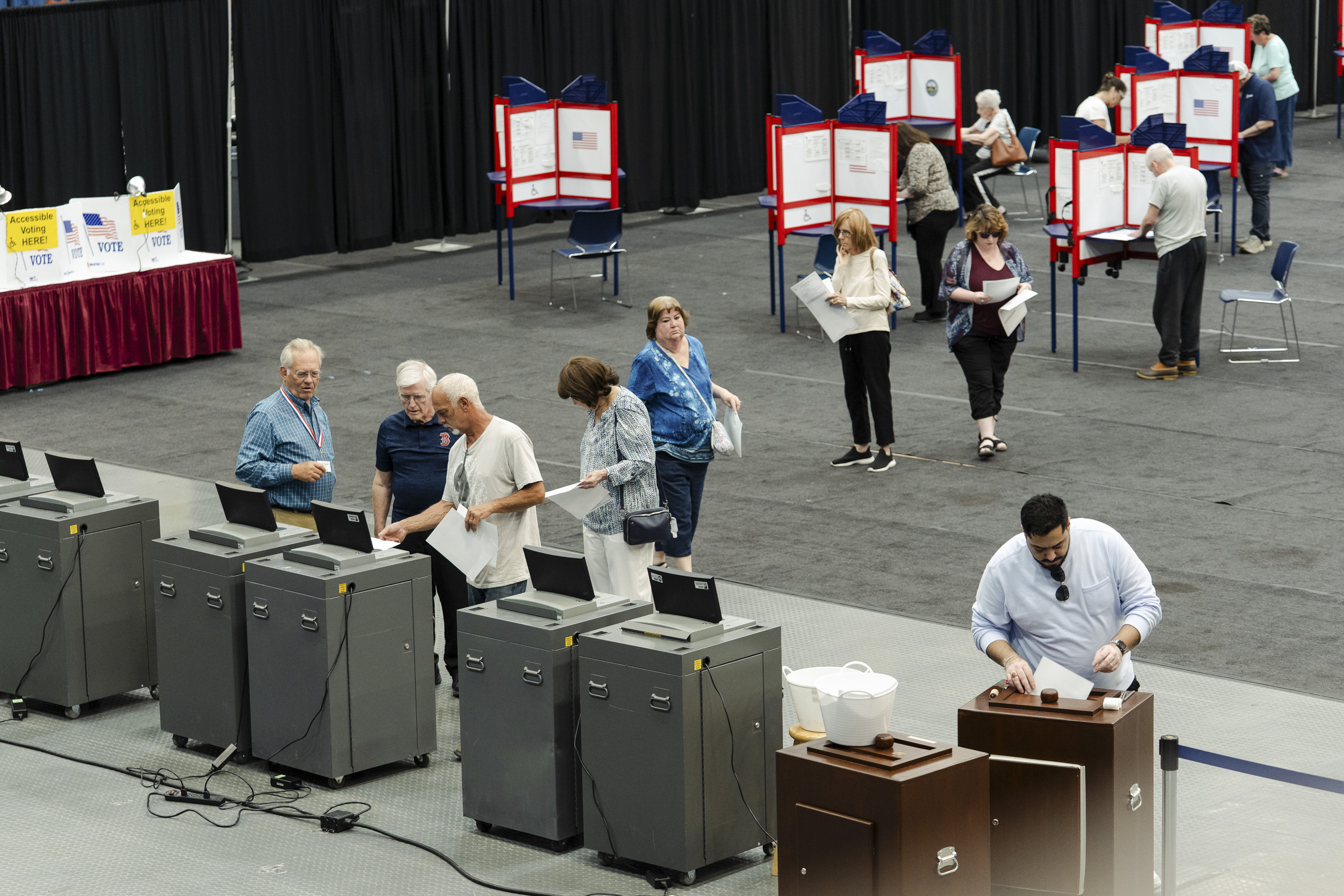
    The ruling follows several actions by the Supreme Court addressing Trump’s push to exert more control over elections before the midterms. This month, the court blocked changes to mail-in voting but approved increased screenings for ineligible voters.

    This article originally appeared in the New York Times.

  • New California law bans officers from using gloves that deliver electric shocks

    New California law bans officers from using gloves that deliver electric shocks

    SACRAMENTO, Calif. — California Gov. Gavin Newsom signed a law Tuesday banning local, state, and federal law enforcement officers from using gloves that can deliver painful electric shocks to people.

    The ban on shock gloves will take effect next year and remain in place until 2030. It comes weeks after U.S. Immigration and Customs Enforcement moved to equip its officers with the gloves, which are designed to gain compliance from combative individuals. Last month, the agency awarded a nearly $17 million contract to buy 6,000 pairs.

    “Trump has put his political interests above the health, safety, and livelihood of American families,” Newsom said in a statement. “California is taking action to strengthen transparency, accountability, and oversight around immigration enforcement in our state.”

    The law is the latest example of how Democratic-led states have been pushing back against President Donald Trump’s immigration enforcement efforts since he took office last year. In California, lawmakers passed at least two dozen bills this year seeking to fortify immigrants’ rights, restrict cooperation with federal immigration agents, and tighten regulations on immigrant detention facilities, among other things.

    Nationwide, 17 states with Democratic-led legislatures have passed a total of more than 100 pro-immigrant bills this year, according to an Associated Press analysis using the bill tracking software Plural. The most common purpose is to limit cooperation with federal immigration enforcement agents.

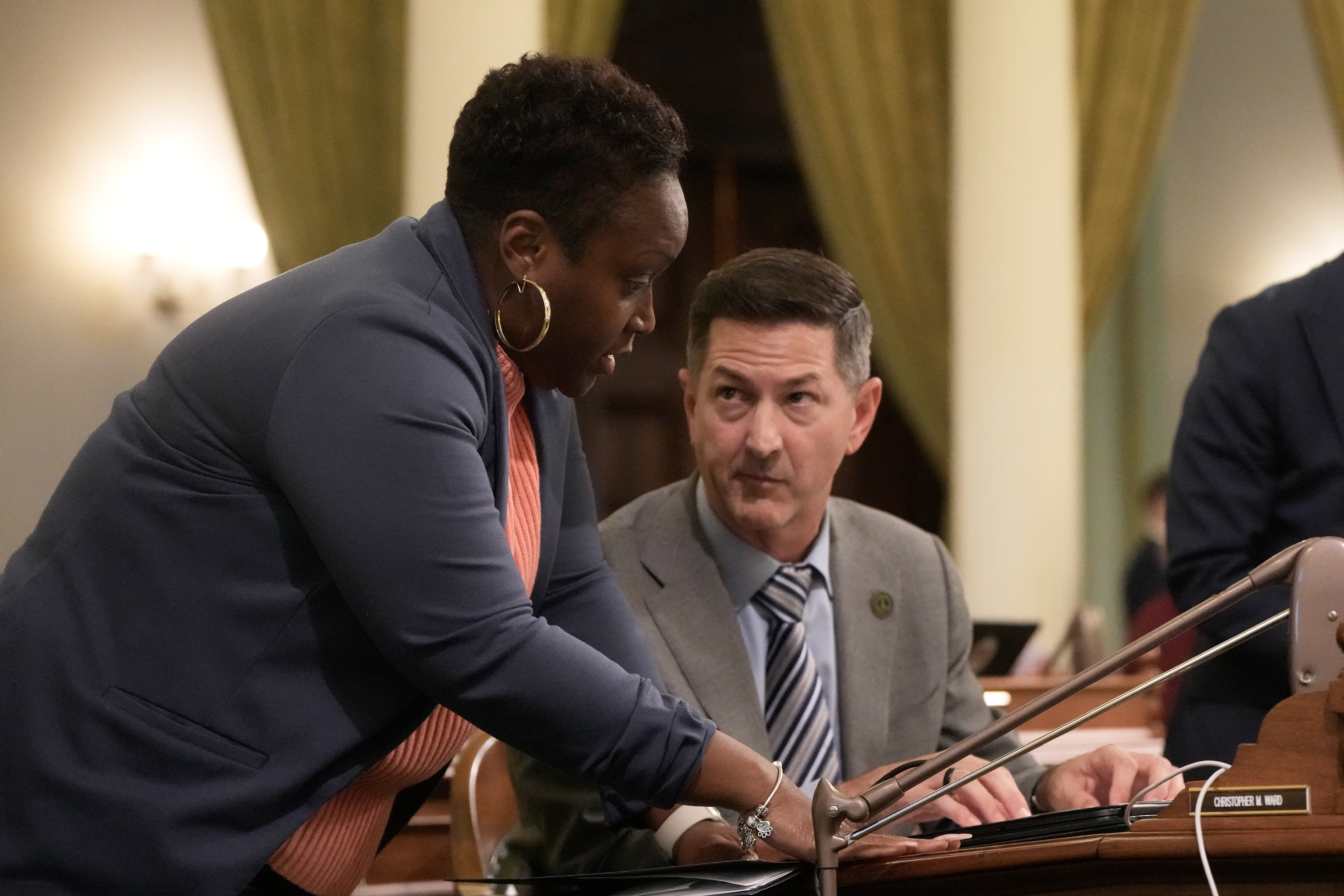
    Democratic California Assemblymember LaShae Sharp-Collins said she introduced the shock-gloves legislation to “put a pause” on law enforcement’s use of the devices while the state examines their potential risks. The law requires the state’s Justice Department to study their safety and report to lawmakers by 2029.

    “There’s a lot of unrest and a lot of uncertainty,” she said in an interview. “A lot of people are scared.”

    The law will again test the state’s authority to restrict federal agents amid the Trump administration’s immigration crackdown. A federal judge earlier this year blocked the state’s first-in-the-nation law barring federal officers from wearing face coverings, deeming it too selective because it applied to local and federal law enforcement but exempted state officers.

    Lawmakers passed a new bill this year to make the ban apply to all officers. Newsom signed that legislation.

    Kevin Johnson, a professor emeritus at the University of California, Davis, School of Law, said courts are likely to ultimately rule that the state cannot bar federal officers from wearing shock gloves or face coverings. The laws are well-intentioned, he said, but likely conflict with the Supremacy Clause of the U.S. Constitution, which generally sets federal law as supreme over conflicting state law.

    “The state has very limited, if any, powers in dictating to the federal government how its officers are armed,” he said.

    California law enforcement groups broadly opposed the ban.

    Sacramento Sheriff Jim Cooper, a Democrat and former state lawmaker, said banning shock gloves “really makes no sense” because they are among the nonlethal tools officers can use if necessary.

    “When the federal government does something, the state Legislature wants to ban it,” he said at a news conference. “They’re making our job harder.”

    Sharp-Collins said ICE’s plan to use shock gloves was the catalyst for the ban. But she cited their use by other officers, including a case in which a Kentucky family alleges a man died after being tased and shocked with the gloves dozens of times while in law enforcement custody in 2024.

    State Sen. Scott Wiener, a San Francisco Democrat who wrote last year’s mask ban, also authored this year’s measure to expand it to state officers.

    “California must use every available tool to stand up for our communities under attack from ICE’s secret police terror campaign,” he said in a statement after it passed the Legislature.

  • Israeli settlers stop soldiers from returning Palestinians to their home

    Israeli settlers stop soldiers from returning Palestinians to their home

    TEL AVIV, Israel — More than 100 Israeli settlers attacked Palestinians and soldiers in the West Bank when the military tried to return a Palestinian family to their home after they were forced out, with authorities accused of not doing enough to confront a rising tide of settler violence.

    The Israeli government, military, and police have been condemned for failing to protect Palestinians in the occupied territory after a surge of settler attacks resulted in few arrests and stoked international criticism.

    In the latest outburst of violence overnight Monday, the settlers set fire to Palestinian homes and wounded three Israeli border police officers when the soldiers tried to return the family, the Toubassis, to their home in the village of Jalud, north of the city of Ramallah, the military said in a statement. Three people were arrested, according to the Israeli police, who said in a statement that they had opened an investigation into the attack.

    The family members were forced to leave their home in July after repeated settler attacks on the property. In August, the Israeli military said in a statement that it had created a closed zone in the area to prevent nonresidents from entering. But Palestinians documented Israeli soldiers standing by as settlers went in and out of the Toubassi house or even playing ball with them in the yard.

    The Supreme Court this month ordered the military to ensure the safe return of the Toubassis after settlers took over their home. Under international law, the military is responsible for maintaining law and order and protecting Palestinians living in the West Bank because Israel is an occupying power, a principle that is recognized by Israeli courts. The military said the soldiers filmed playing with the settlers had been removed from combat duty, according to the Supreme Court decision.

    Overnight, after the family had returned to the property, a group of settlers set fire to a vehicle at the house and threw stones at the building, according to Mahmoud Toubassi, one of the family members. The military evacuated the family members about an hour after they had returned when settlers moved to set the house alight, Toubassi added.

    “Without the army, we would have not been able to leave,” he said.

    The military said in a statement that it had been unable to return the family members to their home because of the violence.

    Settler violence against Palestinians in the West Bank has soared, according to U.N. data, especially since the start of the war in the Gaza Strip, which was ignited by the Hamas-led attack on Israel on Oct. 7, 2023. So far in 2026, at least 23 Palestinians have been killed in incidents linked to clashes with settlers, according to the U.N. humanitarian office.

    International pressure on Israel to rein in settler attacks has grown in recent weeks. This month, Britain, Canada, and France banned trade with Israeli settlements in the West Bank. Most of the international community considers the settlements to be illegal.

    In recent months, settlers have besieged Palestinian families in their homes or forced them out, including in Jalud and in neighboring villages. The violence has been widely condemned, including by Mike Huckabee, the U.S. ambassador to Israel, who this month called settlers who attacked Palestinians “terrorists.”

    In a statement released by his office, Prime Minister Benjamin Netanyahu of Israel condemned the violence targeting the Toubassis. He added that “the handful of rioters are not representative of the law-abiding settler public in Judea and Samaria,” using the biblical name of the West Bank.

    Last week, Netanyahu said in a speech to the U.N. General Assembly that settler violence against Palestinians was down to 150 “juvenile delinquents.” But Israeli former security officials and human rights groups say that the problem is far broader. A group of prominent Israelis, including more than three dozen retired army and air force generals, has accused the Netanyahu government of failing to check what they termed “Jewish terrorism.”

    Instead of being able to sleep in their own beds after Israeli troops escorted them back home, the Toubassis watched as their home was attacked again.

    “It broke my heart to see the fire eating up the house,” Toubassi said.

    This article originally appeared in the New York Times.

  • FBI vows to pursue ShinyHunters hackers after personnel data theft

    FBI vows to pursue ShinyHunters hackers after personnel data theft

    WASHINGTON — The FBI on Tuesday warned the criminal hacking gang that stole vast amounts of its sensitive personnel data that it would aggressively pursue its members as it promoted the recent arrest of one of its suspected associates.

    In a video posted online, Brett Leatherman, the head of the FBI’s cyber division, said the bureau had worked with authorities in the Netherlands. The authorities recently arrested a 24-year-old convicted of cyberattacks on suspicion of aiding in data thefts and extortions tied to the group, known as ShinyHunters.

    News of the arrest and its possible links to the group surfaced earlier this week, but Leatherman’s remarks are the first significant public statement from the FBI about the hackers since the agency’s breach of its online jobs portal was revealed last week.

    Leatherman did not specifically mention the FBI hack in the video, but made clear the bureau has stepped up its pursuit of the notorious hacking collective.

    “We’re confident you have seen or heard things in recent days that the public has not,” Leatherman said. “Other groups believed anonymity or their friends would protect them, and they were wrong. Arrests have a way of changing who is willing to talk, and seized infrastructure has a way of showing us who’s left.”

    Looking directly into the camera, Leatherman said, “We know how to find you.”

    An email account ShinyHunters uses to correspond with reporters did not immediately respond to a request for comment on the video. On Monday, it denied that the Dutch person who was arrested had ties to the group.

    “That individual has no association with us,” ShinyHunters said in an email. “Frankly, we are laughing.”

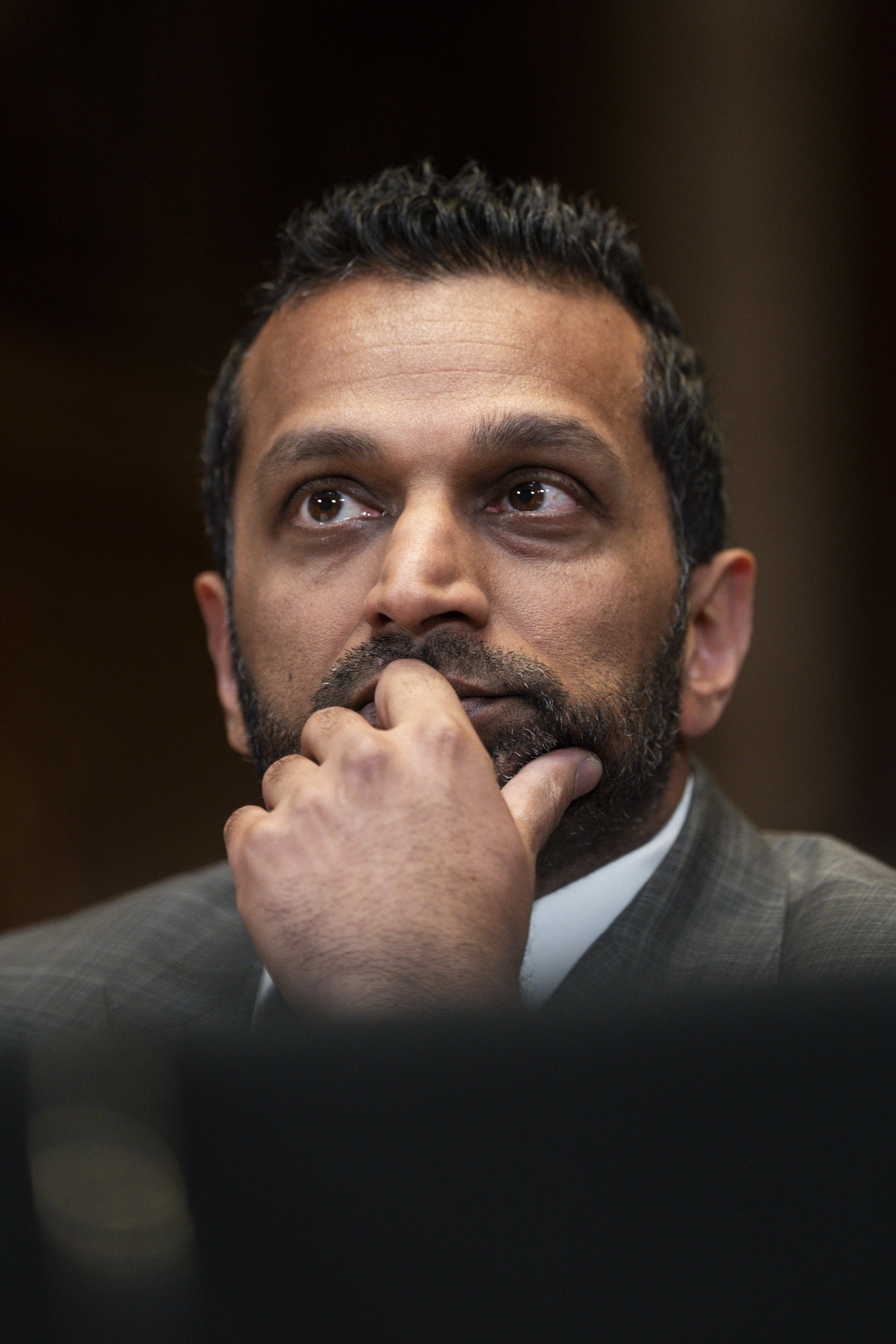
    Leatherman’s promise to pursue ShinyHunters, as well as a social media post Tuesday by FBI Director Kash Patel, came as the bureau was scrambling to assess the damage from the breach. A large tranche of data — including names, home addresses, details about spouses and other family members, secretive job titles, and much more — on potentially all FBI employees was stolen in the hack.

    In announcing its theft, ShinyHunters had given the FBI a deadline of the end of Tuesday to comply with its demand to revise or remove a public advisory the bureau issued in May stating the hackers engaged in a variety of harassment and intimidation tactics to coerce hacked victims into payment. The group said it was angry about the characterization, which it denied, and suggested it would leak the stolen data online.

    On Monday, the group issued a statement saying that it would not leak the private material and contending that it never planned to do so.

    Leatherman did not say when the arrest occurred in the Netherlands, but a Dutch news release stated it took place two weeks ago, before ShinyHunters disclosed its hack of the FBI. It is not clear when that breach first occurred, but in an email, the group told the New York Times that the attack happened last week.

    ShinyHunters is considered one of the most notorious and capable cybercriminal enterprises in the world. The group is believed to have breached more than 140 organizations and extorted $70 million since last year, Leatherman said, and has often targeted third-party vendors and cloud-based platforms.

    This article originally appeared in the New York Times.

  • Senate resoundingly approves sweeping college sports measure

    Senate resoundingly approves sweeping college sports measure

    WASHINGTON — The Senate on Monday approved a sweeping remake of collegiate sports regulations in an effort to restore stability to an athletic landscape that has been upended by constant transfers, frequent shifts in conference membership, and an infusion of money from wealthy boosters eager to lure top talent.

    Known as the Protect College Sports Act, the bill passed by an overwhelming bipartisan vote of 77-22, making it one of the last major pieces of business to be tackled by lawmakers before the midterm elections. It was a bid by Congress to lay out significant new rules and standards governing popular college sports that are a mainstay of American life as well as a path to an education for student athletes.

    Authors of the legislation, which faces an uncertain future in the House, said aggressive congressional intervention was necessary because a series of legal rulings had sowed chaos in college sports. They warned that the current financial path of colleges and universities was unsustainable, would decrease competition, and could cause schools to jettison less popular sports that were not as lucrative as football.

    “It would be nice if college sports could somehow magically fix itself, but this is a matter of law, federal law, and it is only Congress that can fix it,” said S. Ted Cruz (R., Texas), a chief proponent of the bill.

    But it has run into fierce opposition from Black lawmakers and others who say the measure restricts opportunities for players, many of them Black, while doing little to hold down the pay or mobility of top coaches.

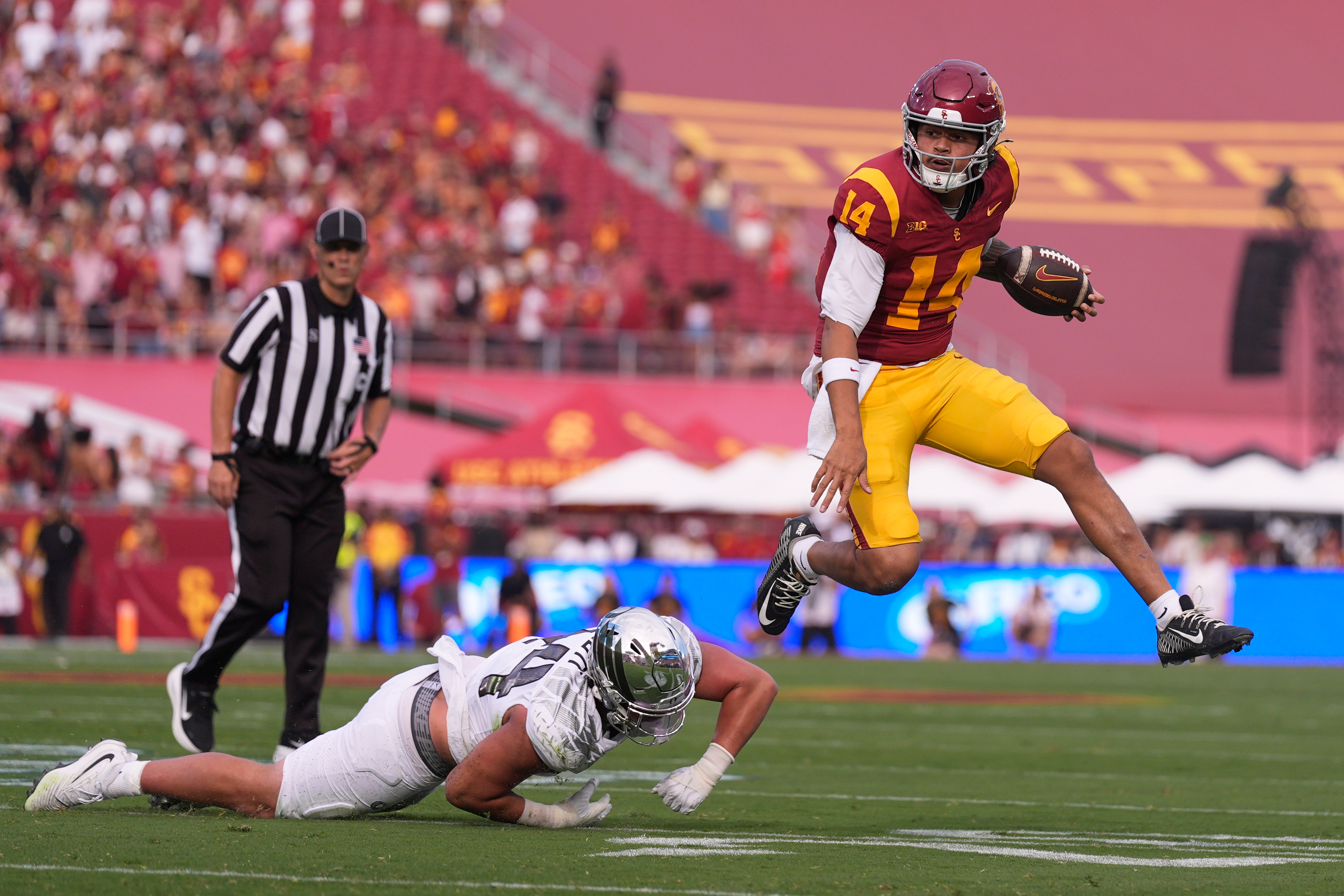
    The legislation would limit college athletes to one transfer before they would have to sit out a season, as they had in the past before court rulings opened the transfer “portal,” spurring thousands of athletes to try to change schools each year. It also would set eligibility at five years. It would protect the right of college athletes to receive compensation for their “name, image, and likeness” and institute guarantees for scholarships and healthcare.

    The measure also would grant the NCAA, the governing body of college sports, a limited antitrust exemption while remaining silent on collective bargaining by student athletes. It attempts to discourage schools from jumping from conference to conference and it imposes new restrictions on agents for athletes.

    “Sports is about any given Saturday,” said Sen. Maria Cantwell of Washington, the lead Democratic sponsor of the bill. “It is not about whether you have a billionaire in your backyard. It is about whether you can coach and recruit and develop and maintain and have academic performance and have fairness.”

    Despite the Senate approval, opponents blasted the measure as unfair to players. An amendment to cap coaching salaries at $5 million and limit their contract buyouts to one year’s salary was defeated Monday as the authors beat back a series of proposed changes. Democratic opponents also were unhappy with the lack of clarity about future collective bargaining.

    “It’s a bill for the control and power of the NCAA and member institutions,” said Sen. Cory Booker (D., N.J.), a top opponent of the legislation. “It is not about athletes who are winning their rights, winning court cases, gaining leverage, and now are having that taken away from them.”

    But resistance to the bill was no match for the major sports conferences, state schools, big-name coaches, and other powerful interest groups that got behind it, including airing television spots that featured high-profile figures such as Deion Sanders, the former professional sports star who is now the head football coach at the University of Colorado.

    “The colleges and the conferences and the boosters flooded this place,” said Sen. Christopher S. Murphy (D., Conn.), another leading opponent of the bill. “It is a hard slog when the players have no money and no representation. Ultimately, this is going to be really bad for student athletes and destructive of the college sports model because these kids aren’t going to stick around very long if they are not getting paid what they are worth.”

    Others said Congress should have stayed out of the fight.

    “The people who oversee the post office now want to run college sports. What could go wrong?” said Sen. Rand Paul (R.,Ky.). He said he doubted that the founding fathers ever envisioned that “Congress would one day be in charge of dictating the rules for college sports.”

    With the House scheduled to be in recess until after the midterm elections, there is at present no clear path for the legislation to pass before Congress reconvenes in mid-November. Whether Republican leaders would take it up after the elections is unclear. Lame-duck agendas can be notoriously tricky. But President Donald Trump is an enthusiastic supporter of the legislation and could put pressure on the House to act.

    The measure is strongly opposed by members of the Congressional Black Caucus. Rep. Hakeem Jeffries (D., N.Y.), the minority leader who is in line to become speaker if Democrats win the House, has repeatedly expressed reservations. He called the legislation a “work in progress.”

    “I share many of the concerns that have been articulated by both the Congressional Black Caucus and the NAACP,” Jeffries said.

    Those groups contend that by limiting transfers and capping the overall amount of compensation paid to athletes, the proposal shifts the balance of power back to the schools and coaches after athletes won new rights through the courts. On the other side of the issue, some House Republicans favor explicitly declaring that student athletes are not school employees, limiting their bargaining capacity.

    “They have problems on both the left and the right in the House of Representatives,” Murphy said. “We are going to continue to fight this bill.”

    This article originally appeared in the New York Times.

  • From motorcycles to booze, U.S. ban on $1 billion worth of Canadian imports goes into effect

    From motorcycles to booze, U.S. ban on $1 billion worth of Canadian imports goes into effect

    WASHINGTON — U.S.-Canada relations, already tense, are likely to deteriorate further after the United States went ahead early Tuesday with a decision to ban nearly $1 billion worth of Canadian imports, including alcoholic beverages, dairy products, and motorcycles.

    The ban amounts to barely a ripple in $880 billion worth of annual two-way trade between the two northern neighbors. But it marks another ratcheting up of President Donald Trump’s second-term trade war with America’s longtime ally and trading partner.

    The import ban “certainly won’t do anything to help the trade tensions between the United States and Canada,” said trade attorney Patrick Childress, a partner at Holland & Knight and a former U.S. trade official.

    The latest sparring began over the summer when Trump reached back to a Great Depression law to impose 50% tariffs on about $20 billion worth of Canadian imports, charging that Canada discriminates against U.S. dairy, auto, and alcoholic beverage producers. Canada promptly counterpunched with tariffs of 15%, 25%, or 50%, matching U.S. imports dollar for dollar.

    To punish Canada for retaliating against his tariffs, Trump decided to ban a list of Canadian products, effective 12:01 a.m. Eastern time Tuesday.

    Economic impact likely to be modest

    The economic impact is likely to be minimal. Childress noted that the products on the banned list were already facing Trump’s tariffs. ”For a lot of these goods, the 50% was already acting as a de facto ban by making importation from Canada into the United States uneconomical,″ he said.

    Jacob Jensen, director of trade policy at the center-right American Action Forum think tank, calculates that the ban would cover $967 million worth of Canadian imports, based on 2025 numbers. Of that, 87% would be alcoholic beverages that the U.S. targeted because of some Canadian provinces responding to Trump’s provocations by banning U.S. booze from store shelves.

    Also banned are some dairy products — including the milk byproduct whey. The two countries have long clashed over Canada’s attempts to protect its dairy industry from foreign competition by imposing hefty tariffs once dairy imports have exceeded a quota.

    The ban also covers motorcycles. Bombardier Recreational Products (BRP) in Quebec confirmed that its three-wheel Can-Am Spyder and Canyon motorcycles “will be excluded from importation into the U.S.’’ But BRP said the impact likely won’t be felt until next year because it has completed most production and shipments for the current season.

    Independent spirit distillers and beer brewers are expected to bear the brunt of the ban more than some well-known Canadian brands that may have workarounds. For example, Crown Royal can ship its whisky in bulk for processing, bypassing the ban. And beer maker Labatt Brewing Co. has some bottling operations in the U.S., exempting some of its beer from the ban.

    Diageo, which owns Crown Royal, and Anheuser-Busch InBev, which owns Labatt, did not respond to requests for comments.

    A distillery just across the Detroit River in Canada has stopped shipping whiskey to Michigan due to the ongoing tariff war and Trump’s ban on Canadian alcohol. “It’s really unfortunate,” said Danielle Moldovan, director of marketing at the Wolfhead Distillery in Amherstburg, Ontario. “We are a border town. The Americans are great friends of ours, and they visit our distillery on a daily basis.”

    Moldovan is worried about the long-term impact on Wolfhead’s business. Buyers in Georgia were interested in importing the distillery’s Coffee Whisky. And its Michigan importer was considering its Vanilla Almond Biscotti and Banana Caramel Vodka. But “those products are going to be put on hold right now until we have further clarification about what’s going to happen, how long this ban’s going to last,” Moldovan said.

    “This marks yet another escalation in the trade war that may result in further retaliation on the Canadian side,” Jensen said. He expects Canadian exporters and U.S. importers “impacted by these bans will be highly motivated” to demand that trade officials on both sides find some way to reach a “resolution of this whole ordeal.’’

    A threat to U.S. goal of a North American trade pact

    The impasse imperils efforts to renew the U.S.-Mexico-Canada Agreement, a North American trade pact Trump pressured America’s neighbors into accepting in his first term and which he once declared “the most modern, up-to-date, and balanced trade agreement in the history of our country.”

    The deal allowed most goods to cross North American borders duty free. But since returning to the White House last year, Trump has announced a series of tariffs that have clouded the future of trade in the region.

    Longtime ally Canada moves rapidly to find new trading partners

    Trump has directed most of his ire at Canada. He is openly seeking to pull Canadian manufacturing south. And he has inflamed public opinion in Canada by repeatedly suggesting that the country become America’s 51st state.

    Canadian Prime Minister Mark Carney came to power last year on a promise to stand up to Trump. In addition to retaliating against Trump’s tariffs — China is the only other country to do so, with very different results — Carney has sought to reduce Canada’s reliance on the United States, which last year accounted for more than 70% of Canadian exports.

    “There is now a price to be paid for access to the United States market,” Carney said earlier this month. The Canadian prime minister wants to double Canada’s non-U.S. trade over the next decade.

    Carney has embraced the prospect of Canada becoming the European Union’s first associate member.

    And he said last week that trade negotiations with India are making “good progress” and that the two countries are aiming to conclude talks by the G20 summit in mid-December.

    Carney also broke with the U.S. earlier this year, striking a deal with China to allow a limited number of Chinese electric vehicles into Canada at a sharply reduced tariff in exchange for China lowering tariffs on Canadian canola.

    “We take note of the coming into force of the Administration’s previously announced trade measures,” said Gabriel Brunet, a spokesperson for Canada-U.S. Trade Minister Dominic LeBlanc. ”Our first priority remains on protecting and supporting Canadian workers, farmers, families, and businesses from these unjustified actions. Our core focus is on what we can control: building strength at home, diversifying our partnerships abroad, and building Canada strong for all Canadians.”

    Trump expressed confidence that the Canadians would cave in.

    “They’re gonna come in and they’re gonna say, ‘Sir, we are sorry,’” he told reporters Monday. “They’ve treated the United States very, very badly. I think a deal will be made but it’s gonna be fair.”

    Trade attorney Childress said the standoff is likely to continue for months, not weeks. The import bans and the tariffs so far “probably won’t cause enough economic upheaval to force either party back to the negotiating table,’’ he said.

    Mae Anderson, Rob Gillies, and Mike Householder contributed to this article.