Tag: no-latest

  • Letters to the Editor | Oct. 26, 2026

    Letters to the Editor | Oct. 26, 2026

    Tech threats

    In raising the possibility of a Donald Trump-led coup if Democrats gain control of one or both chambers of Congress, Inquirer columnist Will Bunch asks whether Americans would come together to stop such an unthinkable act.

    I wonder if we could, given how much we’ve come to depend on digital technology for both information and communication.

    Meta’s deactivation of the No Kings Coalition’s Instagram account on Oct. 17 should scare anyone who wants to protect democracy and the free flow of information. Regardless of whether this incident was a mistake, as Meta maintains, it shows what Big Tech can do if it allows itself to become one of the Trump regime’s most useful tools.

    Of course, I also worry about the harm Congress would continue to rubber-stamp if it remains in GOP hands. And I long for the days when elections were routine matters, not something to fear regardless of the outcome.

    Lisa Von Ahn, Pottsville

    …

    Will Bunch’s column informed us that there are Presidential Emergency Action Documents that give the president power to void the Constitution. They were designed in the event of a destructive nuclear war. Additionally, a 2025 law may be used against people the administration defines as enemies — no war or insurrection needed. What happens if Donald Trump and the GOP decide to vacate the results of next month’s elections? Is there any doubt that he would abuse these powers? He already has National Guard in Washington, U.S. Immigration and Customs Enforcement, regular military, reservists, and more National Guard throughout the country. How would we act? My son-in-law, a Marine who participated in the first invasion of Iraq, told me, “I was in favor of the Second Amendment in case we were invaded. In Iraq, I saw what our military could do and realized those small arms were useless” against a military force. As a Vietnam vet, I agree. In the 20th century, military or violent revolutions only led to dictator or totalitarian governments. The only thing is to peacefully take to the streets. If that fails, we will need to organize underground, as in The Handmaid’s Tale.

    John “Jack” Marquess, Haddon Heights

    …

    Will Bunch’s column in Tuesday’s paper adds to other frightening warnings about the possibility of upheaval in our country’s democracy. His piece draws a line from President Donald Trump’s actions — undermining our voting system, attacking the judiciary and the press, weaponizing the Justice Department, etc. — to the potential creation of a totalitarian state. Then there are Trump’s imperialistic ambitions, which we see in his attack on Venezuela to seize the country’s oil, the decrease in our critical support for Ukraine, the inhumane strangulation of Cuba, the ongoing conflict with Canada, and the quest to control Greenland. Added to these ominous signs is the fact that those around Trump are involved in initiating, participating in, or approving these actions, including the GOP-controlled Congress. It brings to mind a goal of an attempt to divide up the world among dictators: Russia gets Europe, China gets Asia, and the U.S. gets North, Latin, and South America. Horror of all horrors. We Americans must recognize that the threats to our democracy and the world order are obvious. The coming elections will be critical. We desperately need leaders who will break the growing misdirection of our country.

    Luis W. Morales, Paoli

    …

    How is it that Will Bunch’s column — “Are the secrets to a postelection coup locked in a White House safe?” — is not on the front page of The Inquirer? The emergency powers that a rogue president can invoke as well as the Presidential Emergency Action Documents are startling. How come we’ve never heard of this?

    Donald Trump is a thug, and we’ve already seen how Congress, the Department of Justice, Supreme Court, and all his Republican cronies are in his pocket.

    If the Democrats do win control of either chamber of Congress next month, that optimism will be deflated shortly; Trump is a dictator and dictators don’t relinquish power easily. Trump almost always finds a way to get what he wants, and he will not go down without a fight by claiming the election was rigged.

    Wake up America, Nov. 3 will be déjà vu — Jan. 6, 2021 all over again.

    Cynthia Davis, Lansdale

    Real and surreal

    I suspect the benefits of artificial intelligence may have to follow the same paved highway littered with the same skepticism that today’s ubiquitous personal computers once traveled before they became an integral part of our daily lives.

    The past can offer valuable lessons as we attempt to anticipate and prepare for the future. But history also reminds us that even the most influential figures can be spectacularly wrong when predicting the course of technological progress.

    Thomas J. Watson Sr., the longtime chair of IBM, is often credited with predicting that the worldwide market for computers would amount to only five machines — a quotation whose authenticity remains uncertain.

    Then there was Ken Olsen, founder and president of Digital Equipment Corporation (DEC), who was widely reported to have said in 1977, “There is no reason anyone would want a computer in their home.”

    Both remarks are enduring examples of how even prominent technology leaders can underestimate the potential of an emerging technology. IBM went on to become a giant of the computer industry, while DEC helped pioneer smaller computers that brought computing power beyond the realm of massive mainframes.

    The lesson is not that every modern technology deserves uncritical enthusiasm. Rather, it is that skepticism about an innovation’s usefulness should not be confused with an accurate prediction of its future. The personal computer transformed how we work, communicate, learn, and live.

    Whether artificial intelligence will prove equally transformative — or something more consequential — remains to be seen. But history urges humility before we confidently declare what people will or will not want, need, or benefit from in the future.

    Steve Wenick, Voorhees

    Breaking silence

    As a fellow Philadelphian and a woman who has had experiences similar to Jane Doe’s, I think it’s extremely important to recognize the importance of supporting survivors of sexual assault and holding the perpetrators accountable. I’ve personally seen a disgusting amount of backlash against and harassment of Jane Doe on social media, including sickening remarks from even my own peers at school. And it’s especially upsetting that, despite Jane Doe’s allegations, criminal charges were not initially pursued against the men. When one case isn’t taken seriously, it discourages other victims from speaking out because they fear they won’t be taken seriously either. I think the protesters’ decision to share their own experiences was powerful because it shows others that sexual violence is not an isolated issue or something that we should keep to ourselves. In my own life, the publicity surrounding this case has made me less afraid to speak about my experiences and has encouraged me to use them to help others. As a society, we should continue creating spaces where survivors can speak about sexual assault and support one another, while pushing for meaningful action and accountability rather than allowing these issues to be ignored.

    Annie Goldrick, Philadelphia

    Join the conversation: Send letters to letters@inquirer.com. Limit length to 150 words and include home address and day and evening phone number. Letters run in The Inquirer six days a week on the editorial pages and online.


  • Horoscopes: Monday, Oct. 26, 2026

    Horoscopes: Monday, Oct. 26, 2026

    ARIES (March 21-April 19). Know your target and what lies beyond it. You can get so focused on the prize that you forget to imagine life after you get it. Look past the immediate win. Make sure you like what comes next.

    TAURUS (April 20-May 20). Hunt only what is in season. You may want something whose time has yet to come. Put your attention where conditions favor you now. You will have plenty to pursue while you wait for another opportunity to ripen.

    GEMINI (May 21-June 21). Take only what you can use. You have access to more information, invitations and opportunities than you need. Choose according to what fits your life. Leave something for another person, and give yourself room to enjoy your haul.

    CANCER (June 22-July 22). Get permission before entering someone else’s territory. You may feel close enough to ask a personal question or offer help. Check first. You will earn greater access by respecting the boundaries around another person’s private world.

    LEO (July 23-Aug. 22). Choose your shot with care. You have plenty of power, so you can afford to wait for the angle that gives you confidence. Once you see it, act. You will make a stronger impression with one well-timed move.

    VIRGO (Aug. 23-Sept. 22). Follow through after you make your move. You may need to send another message, check the result or finish one last task. Stay with what you started. You will find the prize through persistence after the first attempt.

    LIBRA (Sept. 23-Oct. 23). Read the signs before you make your approach. Observation requires a certain unselfishness, a subversion of ego and a desire to know how things actually are instead of seeing only what you’d like to be true.

    SCORPIO (Oct. 24-Nov. 21). Pay attention to the wind. You can sense which direction people are moving before anyone makes an announcement. Position yourself with that movement in mind. You will gain an advantage by noticing where things seem to be headed.

    SAGITTARIUS (Nov. 22-Dec. 21). Stay still long enough to see what comes within range. You have an instinct to go looking, though today you can accomplish more through observation. Give the situation time to reveal itself. You will recognize your opening.

    CAPRICORN (Dec. 22-Jan. 19). Know when to pass. You can recognize an opportunity and still decide against pursuing it. Save your energy for the prospect that gives you a better angle. You will feel powerful when you choose rather than chase.

    AQUARIUS (Jan. 20-Feb. 18). Respect the territory you cross. You can pursue what you want while leaving people and places better for having encountered you. Keep your promises and mind your impact. You will earn invitations back into places you enjoyed visiting.

    PISCES (Feb. 19-March 20). Begin the hunt long before you make your move. You can study the terrain and learn the patterns. Decide what you truly hope to find. By the time your opportunity appears, you will know exactly what to do.

    TODAY’S BIRTHDAY (Oct. 26). In your Year of the Centering, it will be as though the very core of your being is fortified. With more gravity at your center, you’ll draw desired people and opportunities into your realm and have the staying power to keep good things in orbit. More highlights: You’ll spot the income opportunity that’s more about timing and savvy than trading your time for dollars. Love notes and an energizing new interest. Taurus and Aquarius adore you. Your lucky numbers are: 9, 8, 4, 24 and 13.

  • Dear Abby | Mom isn’t keen on walk down memory lane with son

    Dear Abby | Mom isn’t keen on walk down memory lane with son

    DEAR ABBY: I am the mother of a beautiful 30-year-old son, “Caleb,” who’s married, employed and happy. We have a close relationship, and he thinks Mom and Dad (married 35 years) are awesome. He was also close to his “perfect” grandma, who died recently. He adored her, and she loved and spoiled him. What he doesn’t know is Grandma was a horrific parent who left my cold, heartless dad to marry another man, breaking up the family. Mom pushed me to graduate from high school early, forcing me into college when I wasn’t prepared. I failed, and then she pushed me into a marriage at 20 to an abusive man so she could be alone with her new hubby. I divorced after two years of beatings, which she knew about before the wedding. She was manipulative and selfish even into her last days, which Caleb never saw.

    Now Caleb wants me to do one of those “Mom, Tell Me About Your Life” books. I don’t know what to say. Telling him I was previously married will be a jolt, but the “why” questions will be tougher. I don’t want to lie, but I also don’t want to ruin his image of his grandma. My husband says I should tell him only the basics, but I feel that would be a lie of omission. How do I proceed?

    — TROUBLED PAST

    DEAR TROUBLED PAST: I’m sorry for the loss of your mother, even though you weren’t on good terms. Caleb is old enough to understand your reasons for not wanting to participate in his project. Tell him you and your mom didn’t always get along, and you’d prefer to spare him the unpleasant details. If he persists, add that these memories are painful and you don’t care to relive them.

    ** ** **

    DEAR ABBY: I thought I was having a private conversation with my husband on my daughter’s porch. My daughter overheard some negative comments I made about her through her new home security system and was extremely hurt.

    I have apologized and told her it wasn’t meant for her to hear. I’m forgetful at 77, and I forgot she had told me about her new security system. We’ve had no contact since, even though I’ve sent birthday cards. She has no children but convinced her sister and her sister’s kids to no longer have contact with us. What can I do?

    — BIG MOUTH IN GEORGIA

    DEAR BIG MOUTH: I’m sorry you didn’t mention what you said that caused you and your husband to become estranged from your children and grandchildren. Why you felt it was necessary to speak disparagingly about your daughter in her own home is puzzling, unless your relationship with her was strained to begin with.

    You can apologize repeatedly for hurting her feelings, but there’s no guarantee she will accept it. In the future, instead of opening your mouth, remember the words of Benjamin Franklin, who said, “I will speak ill of no man, and speak all the good I know of everybody.” Especially family.

  • Brazil votes in a tense Lula vs Bolsonaro runoff with U.S. influence over Latin America at stake

    Brazil votes in a tense Lula vs Bolsonaro runoff with U.S. influence over Latin America at stake

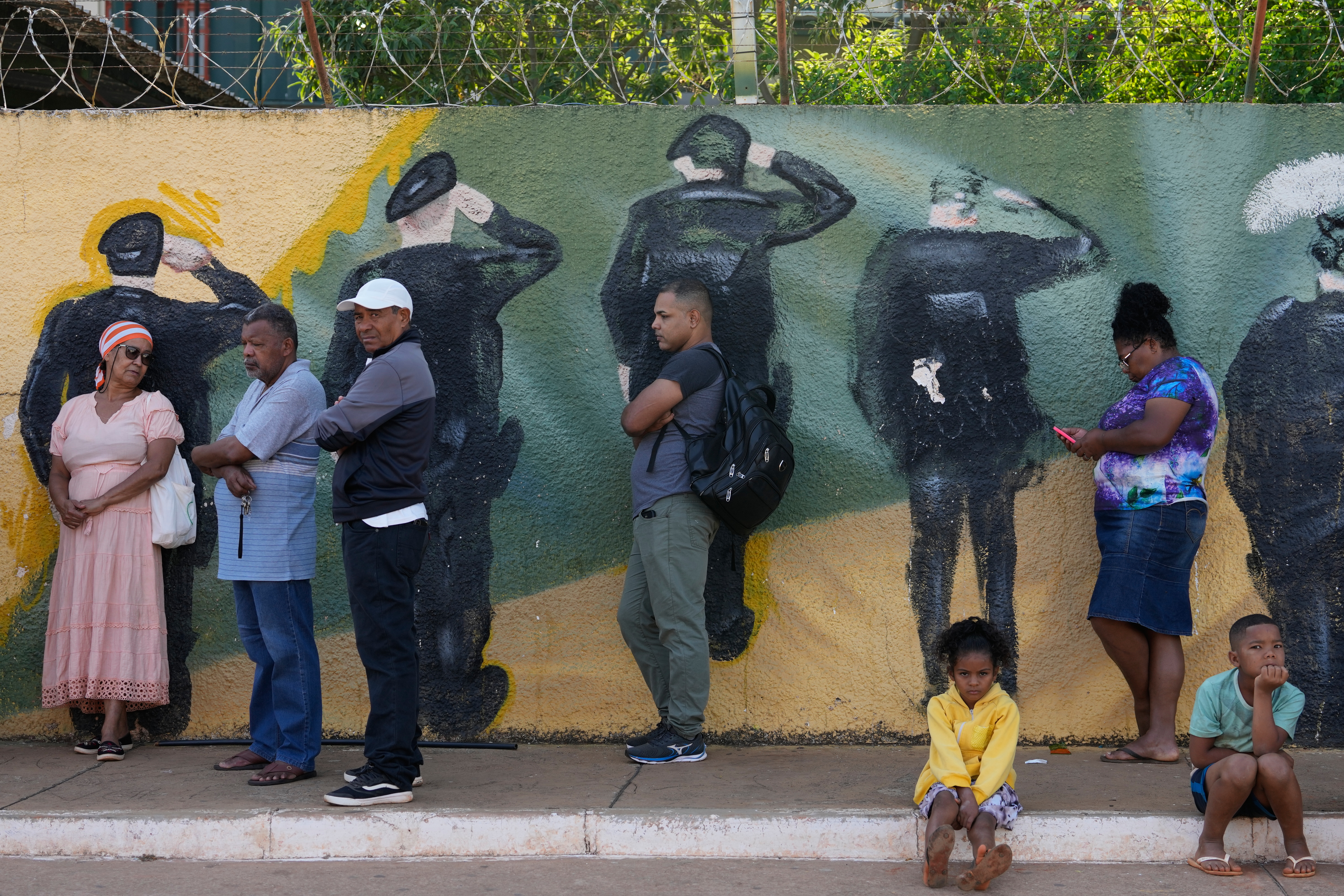
    RIO DE JANEIRO — Brazilians were voting in Sunday’s polarizing presidential runoff between incumbent President Luiz Inácio Lula da Silva and Flávio Bolsonaro, a contest that will determine whether the U.S. will significantly expand its growing influence in Latin America.

    A win for Bolsonaro would signify a pivot to the right by Latin America’s most populous country and its largest economy, in a year when Trump allies have scored victories in Chile, Peru, and Colombia. A victory for Lula would leave Brazil and Mexico with left-of-center leaders.

    Polls showed the two candidates, who need more than 50% of the vote to become Brazil’s next leader in January, in a neck-and-neck race. The election pits the left-of-center veteran politician Lula against Bolsonaro, an ally of U.S. President Donald Trump and the son of imprisoned former President Jair Bolsonaro.

    Judge rules to extend voting by 2 hours

    Shortly after polls closed, Brazilian Supreme Court Cristiano Zanin ruled to extend voting nationwide for two hours. The ruling came after both presidential candidates had asked the electoral court to extend voting hours in some cities. Lula’s request came after issues in nine states with buses that provide transportation to polls. Bolsonaro’s request was due to heavy rains in Brazil’s south.

    In Brasilia, volunteers who oversaw the vote count at a school debated whether they needed to stay after the announcement to extend voting, but most left 15 to 20 minutes after polls closed and they had given count information to electoral authorities.

    Bolsonaro bested Lula by more than 2.2 million votes in the first round of the election earlier this month. However, more than 33 million voters out of nearly 160 million did not turn out.

    Bolsonaro and Lula have opposing ideological views on issues ranging from U.S.-Brazil relations and climate change to social welfare.

    In many ways, Brazil’s runoff vote is another tight rematch between the country’s two polarized political forces that trigger passion as much as loathing. Four years ago, Lula beat Bolsonaro’s father by the narrowest margin since the country’s return to democracy in 1985.

    Security and cost-of-living concerns

    Lula, who first governed Brazil between 2003 and 2010, has faced a tough reelection battle because of concerns about the cost of living and security. Bolsonaro made a tough-on-crime approach the cornerstone of his campaign and pledged to bring down food costs while Lula, trying to lure undecided voters, has invested in costly incentives.

    Both have been hit by corruption suspicions involving family members and allies, with Bolsonaro implicated in a sprawling scandal rocking Brazil. Lula previously spent more than a year in prison on corruption convictions that were eventually annulled.

    As Bolsonaro voted at a school in Rio de Janeiro, his supporters shouted “Lula, thief, your place is in prison” while Lula’s supporters chanted in his support.

    “The time of real change has arrived,” Bolsonaro said. “Brazil can’t go on for another four years on its current trajectory.”

    Eduardo Bolsonaro, Flávio Bolsonaro’s brother and a 42-year-old former lawmaker, spoke to supporters at a polling station in Miami, Fla.

    “What we really need is freedom,” he said, calling for judicial reform. “Most of the people here are coming to vote to free Jair Bolsonaro… we need to reform the judiciary, we need to free the political prisoners.”

    Lula voters respect his past, Bolsonaro voters want change

    Lula voters turned out Sunday driven by his history of supporting marginalized people and working to lift Brazilians out of poverty.

    “Lula is a man of the people and he knows what it’s like to be poor,” Luzia da Souza, who runs a bar in Rio de Janeiro, said. “I find it impossible not to vote for him.”

    Anderson Falcão, a 43-year-old journalist in Brasilia who sported a red shirt in support of Lula, said he worried about Bolsonaro’s long-term political vision, which he called “exclusionary.”

    “It’s a project that harms the less fortunate, harms the worker, women, the forest, the Amazon,” he said.

    Bolsonaro voters, many of whom wore yellow and green Brazil jerseys in support of the senator, said they want change.

    “Things are really expensive and taxes are too high,” Fabianne Borges Santoro, a 45-year-old physiotherapist in Rio de Janeiro, said. She added that she once voted for Lula’s party but now associates it with corruption.

    Third-party voters, abstentions from first round could decide vote

    Kelvin Gomes Pimental, a 28-year-old data analyst in Brasilia, voted for a third-party candidate in the first round, making his vote a decisive one in this election. He ultimately decided to vote for Lula.

    “It’s not even about Flávio himself. It’s also very much about the management of the other Bolsonaro government. He wanted to stage a coup,” he said. “These issues scare me a little.”

    Diogo Furtado, a 35-year-old Uber driver in Rio de Janeiro, didn’t vote the first time because of his work, but said he’ll vote blank on Sunday. He said that neither candidate convinced him.

    “Brazil needs a new candidate,” Furtado said. “But unfortunately our country has become dominated by two names: Lula and Bolsonaro.”

    Issues with public transportation affect the vote

    In Bahia state, a stronghold for Lula, whose voters tend to live in areas that depend more heavily on buses, at least 75 public buses were prevented from leaving municipal garages during the presidential runoff vote, according to a state electoral judge. He ordered the arrest of the mobility secretary of the capital Salvador, Pablo Souza, in relation to the case.

    “We will not be robbed by mayors, governors, or businessmen,” Lula told press. “These people need to respect democracy.”

    International observers earlier in the day said that voting was occurring peacefully and with transparency and did not immediately comment on the incident.

    Trump administration looms large

    Lula criticized the U.S. president before Brazil’s election, speaking about the risks of U.S. intervention after the Trump administration imposed high tariffs against Brazilian exports and classified drug-trafficking groups as foreign terrorist organizations. Experts say the moves may have been intended to make Lula look soft on crime.

    Flávio Bolsonaro has touted his proximity to the White House and insisted that Brazil needs to strike better deals with the Trump administration, including in the rare minerals economy. Brazil estimates that its deposits hold up to 21 million tons, second only to China. He denies he’s being helped by the U.S. government.

    Trump said Sunday that he is watching the election but declined to endorse a candidate.

  • She planned to protest Trump. She didn’t plan on getting punched

    She planned to protest Trump. She didn’t plan on getting punched

    The night before President Donald Trump spoke in Youngstown, Ohio, this month, Blake Miley stayed up past 4 a.m., cutting out felt letters for a T-shirt that would say “RELEASE THE EPSTEIN FILES.”

    The next evening, she went to the rally and stood up halfway through, revealing her shirt and yelling, “Fascist, fascist!” Almost immediately, Miley, 29, was tackled, held down, and punched by male rallygoers as the president mocked her from the stage, calling her “scum,” “low-class,” and “a fat guy.”

    As Trump barnstorms the country hoping to revive his base before the midterm elections, he is returning to an old habit: heckling protesters and encouraging violence against them. In Georgia last week, he expressed his love for a supporter who had responded to a protester by “slapping the guy around,” and promised to bring the slapper to Washington. In South Carolina on Wednesday, he praised an “incredible” punch that a rallygoer landed on another protester, saying, “He got whacked, man!”

    Ten years after Trump shocked some voters by saying he would personally like to punch a protester in the face at one of his rallies, these skirmishes are now met by many with a shrug. Miley, who is identifying herself publicly for the first time, said she suspects that no one in power much cares that she got beaten up.

    “I knew there was a really good possibility that this would happen,” she said. “But I don’t blame myself. It is not right what they did to me.”

    Miley attended the rally alone, and had intentionally seated herself among people who seemed older, she said. She hoped it would keep her safe. But as soon as she started yelling, a man grabbed for her neck and then shoved her backward, video of the episode shows. When she stood back up, another man appeared to pull her to the ground, put her in a headlock, yank her hair, and punch her in the face.

    She remembers being hit twice, unable to get up until Mahoning County sheriff’s deputies intervened about 30 seconds into the brawl.

    “What he doesn’t know is that his mother and father voted for me,” Trump continued about Miley, who is a woman. “Oh, he looks so terrible. And he’s going to get home and he’s going to get smacked.”

    The deputies escorted Miley out of the arena. The men who attacked her were left alone. One raised his fists and high-fived those around him.

    In the arena’s parking lot, Miley was shaking so severely that onlookers called her an ambulance. She said she spent a few hours at the hospital, was discharged, and drove in a daze to her mobile home north of Columbus. She threw her Epstein shirt in her closet and collapsed onto her bed.

    Back in Youngstown, the Mahoning County Sheriff’s Department was getting flooded with angry calls from people who had seen video of the incident, demanding to know why no one had been arrested. Sheriff Jerry Greene said he had as many 800 phone messages, many of them containing raw abuse.

    Video footage, Greene said, clearly showed a woman being punched in the face. “I know what people saw, and if I saw that video, too, I’d be like, ‘My God, why didn’t the police do anything?’”

    Greene, who had changed parties to become a Republican in 2023, said that he is, in fact, doing something. He reviewed body camera footage, which he said shows that his deputies were pushing through the crowd to reach Miley and did not witness the punch.

    He has identified three men who he said took part in the assault, including a New Jersey resident who said in a now-deleted Facebook post that he and two friends had “subdued her and threw her to the concrete.” Investigators believe the other two men, including the one who threw the punch, are local; none could be reached by the New York Times.

    The sheriff said that all three would be interviewed in coming days. He is waiting for medical records from Miley’s trip to the emergency room, he added, to determine whether her injuries were severe enough to warrant felony charges instead of misdemeanors.

    Three days after the rally, one of the sheriff’s investigators tracked down Miley through her mother, who, contrary to Trump’s presumption, does not vote.

    She had not told her parents she was going to the Trump rally. Although she had been to a few local protests before, facing down the president and his most fervent supporters directly was out of character for Miley, who spends most of her days at home.

    She frequently has seizures, she said, and after years of passing out while working at warehouses, nursing homes, and retail stores, she has not held a job since April. Lately, she relies on financial help from her boyfriend, who works in an auto-parts store, and her mother, who is a nurse.

    “Most days are quite monotonous for me,” she said. “I get up. I might wash dishes or do laundry. I work on my art.”

    When she scrolls, her feeds seem to constantly be filled with news about Trump and how he is changing the country.

    She is worried about the prospect of losing Medicaid, which is likely to happen next year unless she starts working, volunteering, or going to school 80 hours per month under a new law that Trump championed. She is worried about the cost of gas and groceries for her grandparents, who are still working at ages 79 and 82. But Miley is particularly bothered about the millions of documents related to sex offender Jeffrey Epstein, she said, because of her own experiences with abuse in a past relationship.

    She has watched every documentary she can find on Epstein, who before his arrest and subsequent suicide routinely communicated with politicians, celebrities, and business executives — including Trump. Many of their names appear in the files of documents, some of which the Justice Department started releasing, with redactions, last year after months of resistance from the president.

    Most days this year, as she waited for her boyfriend to come home for dinner, Miley felt as if she could do little about Trump’s actions. But this month, a video came across her TikTok feed of a protester interrupting a Trump rally in Vandalia, Ohio, and being escorted out.

    It was something simple, something doable. The president, she realized, would be back in her state just a few days later.

    She said she did not coordinate with any formal protest group, and despite Trump’s allegation that she was paid, went of her own accord.

    In the days after she came home with cuts on her face and bruises on her arms, she read dozens of posts about the incident. She noticed the commenters who called her brave, who seemed to far outweigh the ones that made fun of her. It bothered her that there were AI-generated images of the scene, but one showed her with her arms raised, her face defiant. “I’m with her,” the caption said.

    A high-profile civil rights attorney, Subodh Chandra, is representing her for free. Chandra said he has been in touch with the sheriff, and he feels “persuaded that they are trying to do their jobs.” If arrests are not made, he said, Ohio has a law allowing citizens to file charges for a judge to review.

    This article originally appeared in the New York Times.

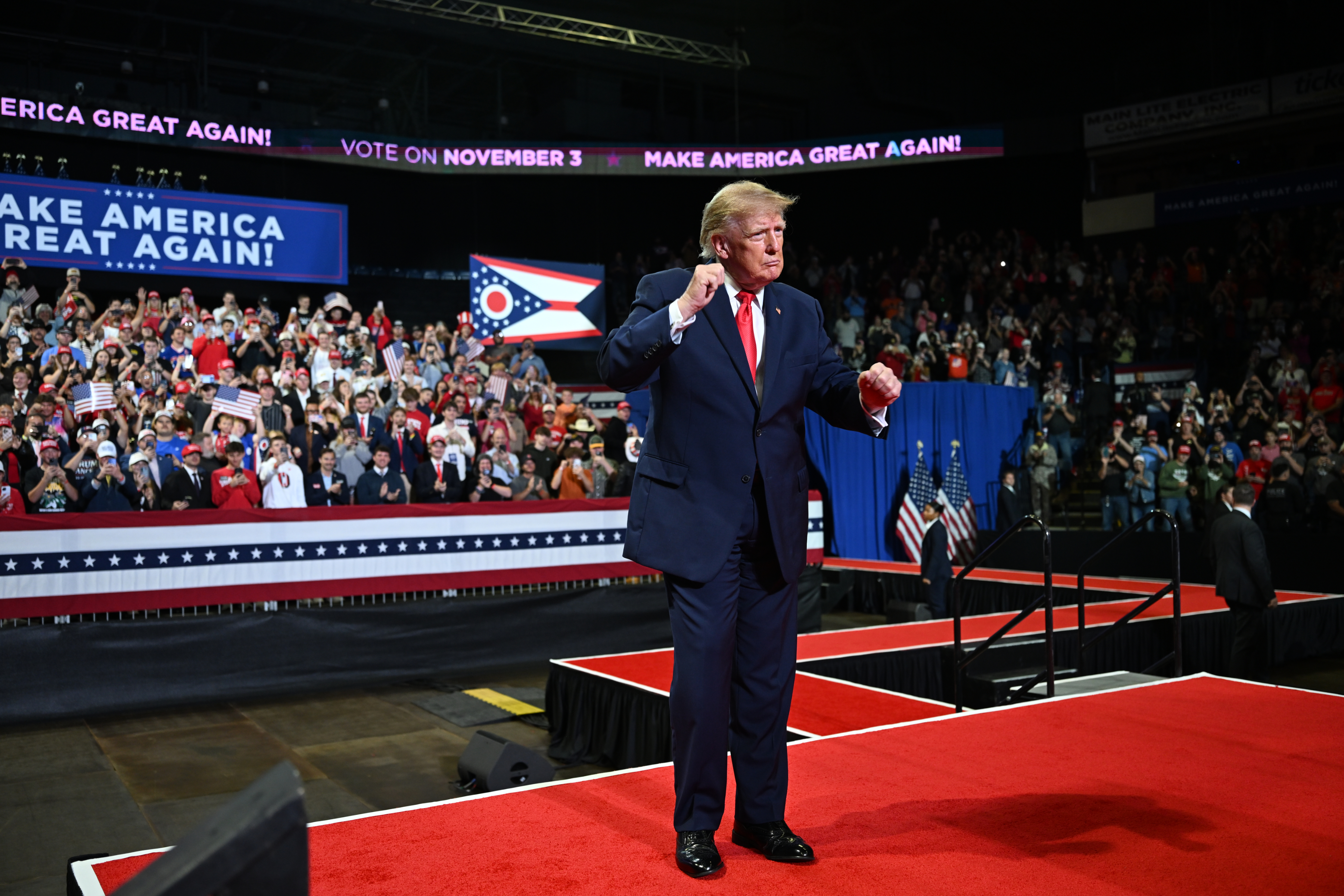
    FILE — President Donald Trump on stage at a rally where protester Blake Miley yelled out “facist” and revealed a T-shirt with the message “Release the Epstein Files,” in Youngstown, Ohio, Oct. 12, 2026. Miley was held down and punched by males near her as Trump mocked her from the stage, but nobody has been charged. (Kenny Holston/The New York Times)KENNY HOLSTON
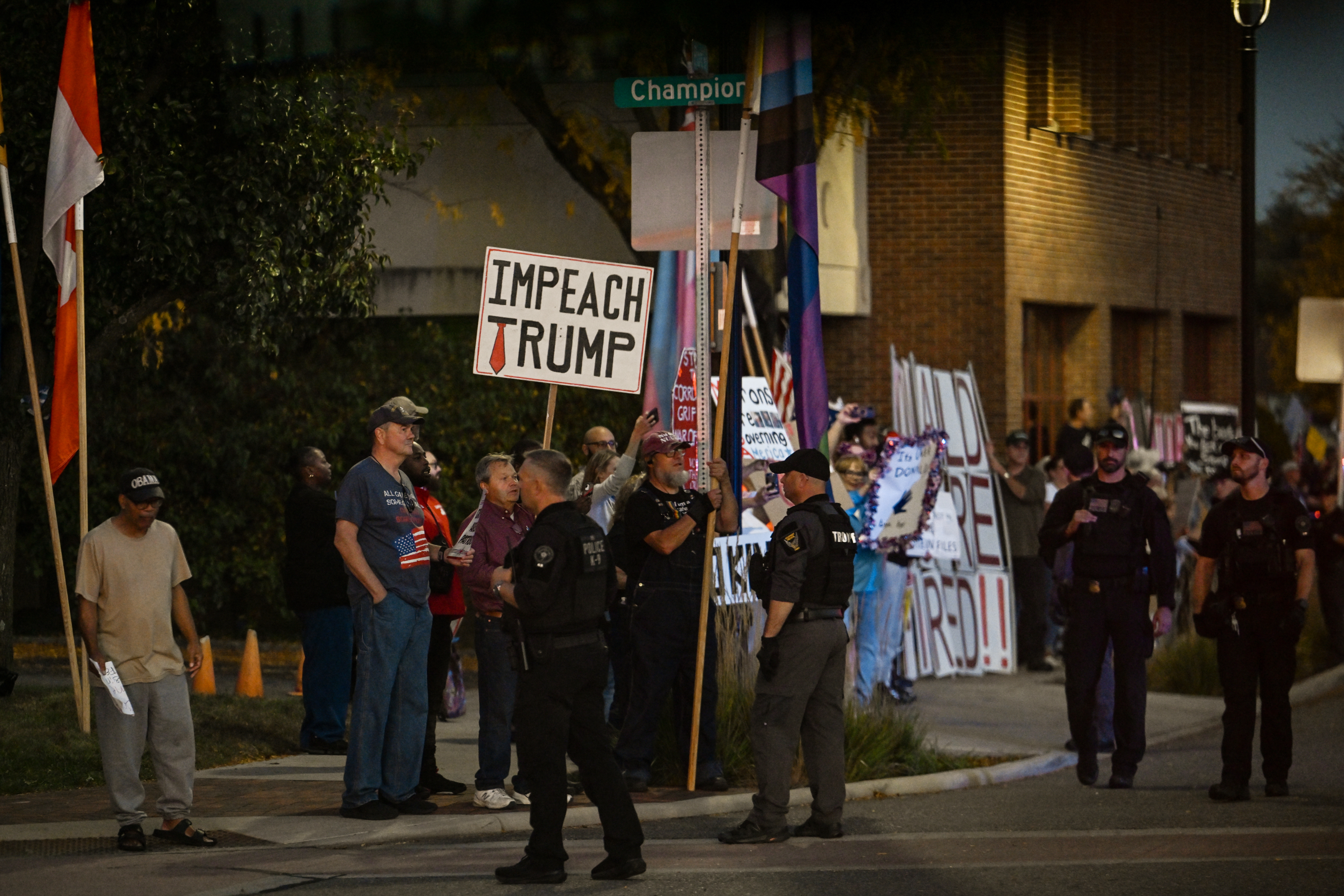
    FILE — Demonstrators outside the venue where Blake Miley yelled out “facist” and revealed a T-shirt with the message “Release the Epstein Files,” while President Donald Trump was on stage during an election rally in Youngstown, Ohio, Oct. 12, 2026. Miley was held down and punched by males near her as Trump mocked her from the stage, but nobody has been charged. (Kenny Holston/The New York Times)KENNY HOLSTON
  • Why is the U.S. accusing Canada of election interference?

    Why is the U.S. accusing Canada of election interference?

    As President Donald Trump stares down what could be a bruising midterm election in November for the Republican Party amid his record-low approval ratings, his administration has identified a familiar target to place some blame: Canada.

    Last week, the U.S. Embassy in Ottawa, Ontario, said Canada’s “ministers and premiers openly describe plans to influence American politics in official documents and public appearances.”

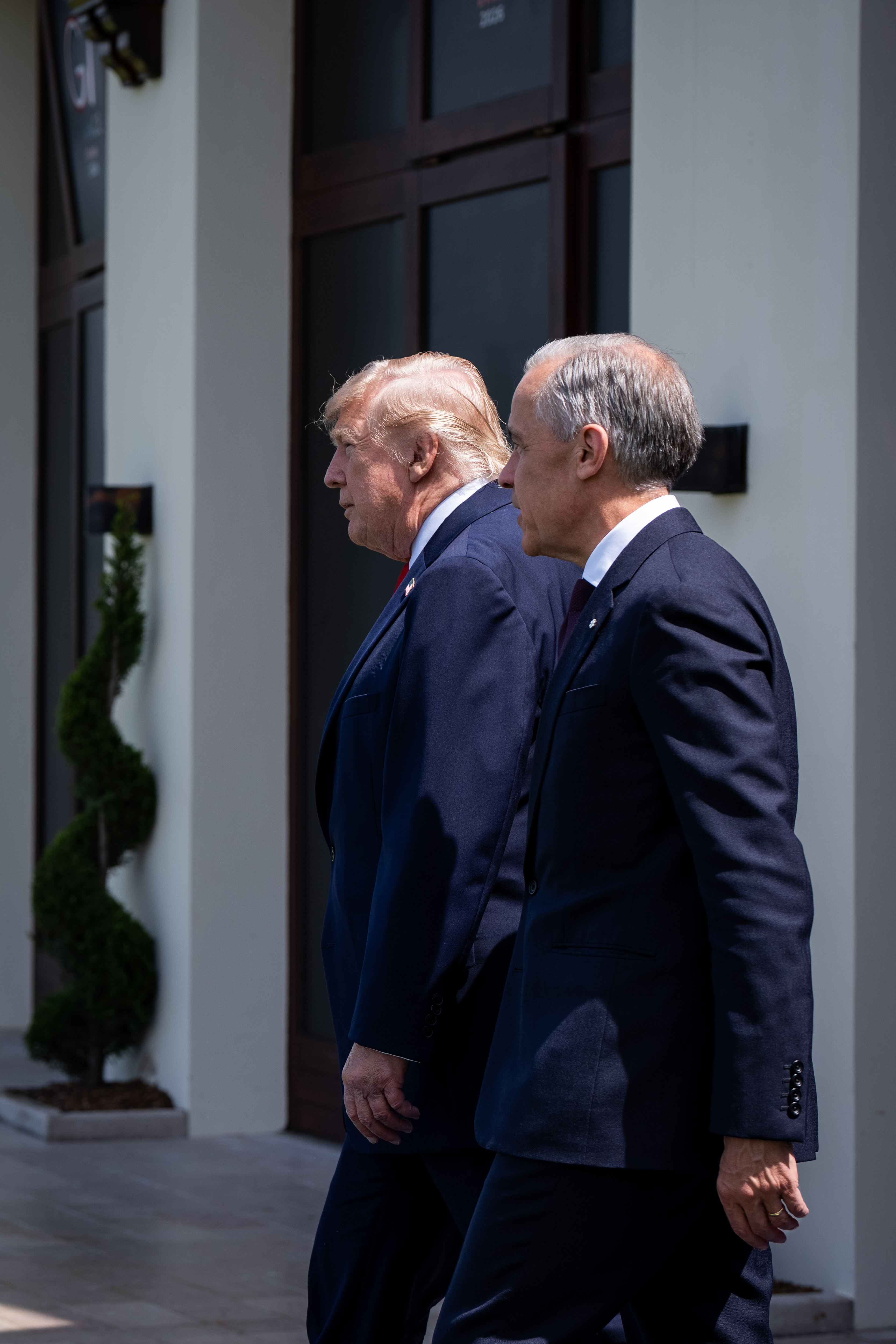
    Prime Minister Mark Carney of Canada said in a news conference Friday that those claims had “no merit” and that his government was ready to “drop everything” to negotiate an end to its costly trade war with the United States.

    The Trump administration’s claims of election interference added to a long list of animosities that have been piling up between the two countries since Trump’s second term began.

    What are the accusations?

    In a statement Wednesday, the U.S. Embassy accused Canadian officials of meeting with Democratic lawmakers, urging the use of retaliatory levies to hit Republican states, and running anti-tariff political advertising campaigns in the United States.

    The embassy zeroed in on Canada’s industry minister, Mélanie Joly, who has said or implied on multiple occasions that her nation’s trade policy was designed to strategically hit Republican states. In a news conference in August, shortly after trade talks had collapsed, Joly said Canada would impose tariffs on “products that will target states in the U.S.” to “put political pressure” on the Trump administration.

    The embassy also said she met in September with Democratic officials in Boston and Chicago. Joly said the goal of the trip was to discuss trade and investments with individual U.S. states and companies.

    In addition, the embassy’s statement recalled an incident in October of last year in which Doug Ford, Ontario’s conservative premier, announced he would run an advertisement that included sound bites of President Ronald Reagan criticizing tariffs. In response, the Trump administration halted trade negotiations altogether.

    Pete Hoekstra, the U.S. ambassador to Canada, has since walked back his office’s accusations.

    “Someone could assume” based on Canadian officials’ actions that they were trying to interfere in U.S. elections, Hoekstra said on a Canadian politics podcast recorded Wednesday and released Friday. “As an embassy, we hadn’t reached that conclusion.”

    Trump has repeatedly drawn Canadians’ ire by calling the nation America’s “51st state,” and by moving to rename Lake Ontario, which straddles the border between the two countries, “Lake America.”

    But the greatest strain on the neighbors’ relationship has been their trade war. Shortly after Trump returned to office, he imposed tariffs on Canadian goods in return for what he said was the country’s role in allowing fentanyl to enter the United States. Canada retaliated with tariffs of its own, and the dispute has devolved into an ongoing retaliation hurting businesses and consumers in both countries.

    On Friday, the Trump administration announced that it would shuffle its tariffs on Canadian products, exempting some items and applying new tariffs to others, in what appeared to be a last-minute bid to provide relief to American farmers before the midterm elections.

    How has Canada responded?

    At a news conference in Turkey on Friday, Carney said Canada took pains to avoid the appearance of meddling in U.S. politics. And he dismissed any notion that Canadian officials had favored one party or another in its dealings.

    “We have no intention to interfere with their democratic processes,” he said.

    Joly also defended herself against the U.S. Embassy’s claims Thursday. “Indeed, I met with Democrats in the U.S., but I met with Republicans,” as well, she said.

    On Wednesday, Ford told reporters he had “no interest” in engaging in election interference.

    “We’re going to focus on what we can do here in Ontario, and in Canada, to make sure we protect our economy, protect the people and protect communities,” he said. “And the people of the United States will make that determination in the midterms.”

    Stewart Prest, a political science lecturer at the University of British Columbia, said the Canadian actions cited by the U.S. Embassy could have been intended to encourage policy changes, not to hurt Republicans at the ballot box.

    Didn’t U.S. officials meet Albertan separatists?

    In his statements, Carney noted that some Trump administration officials met with Albertan separatists this year, before the province’s referendum on holding a vote on whether to secede from Canada. (Voters roundly rejected it.)

    “The resources of the media here can make their own judgment about the extent to which very, very senior U.S. officials have directly intervened, so to speak, in Canadian sovereignty, Canadian democratic processes,” Carney said.

    White House and State Department officials confirmed that State Department officials met with activists in the separatist movement in Washington three times last year. But the Trump administration has denied making any material promises to Albertan separatists.

    “The department regularly meets with civil society types,” the State Department said in a statement. “As is typical in routine meetings such as these, no commitments were made.”

    To Prest, the political science lecturer, the Trump administration’s rhetoric and involvement in the Albertan separatist movement showed that its latest claims of election interference by Canada smacked of hypocrisy.

    “The accusation is itself a kind of confession,” he said. The administration was “trying to create an equivalency where I don’t think any exists.”

    This article originally appeared in the New York Times.

  • North Korean leader Kim Jong Un visits China to inaugurate a new cross-border bridge

    North Korean leader Kim Jong Un visits China to inaugurate a new cross-border bridge

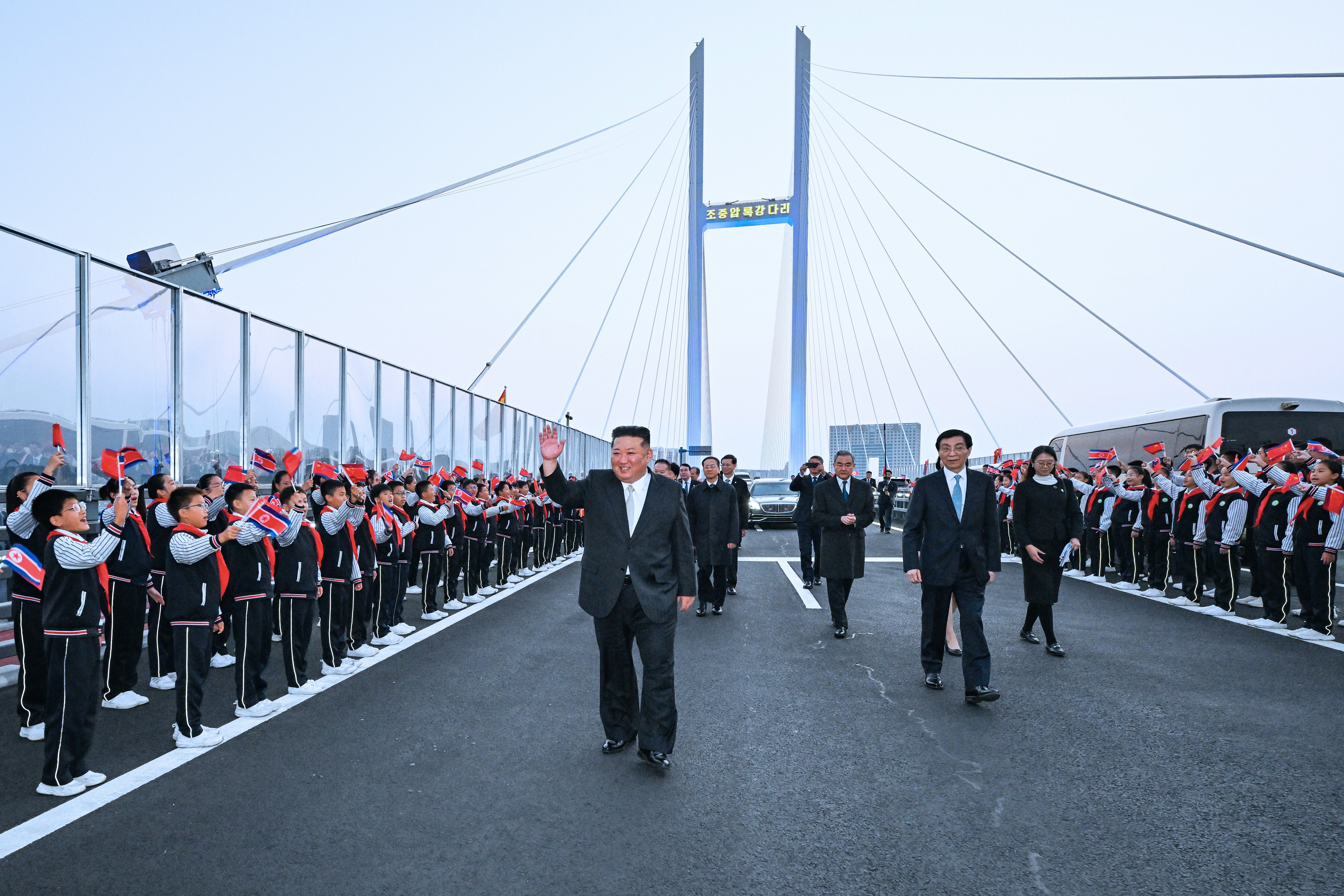
    SEOUL, South Korea — North Korean leader Kim Jong Un visited China on Saturday, inaugurating a new bridge that connects the two countries and vowing to expand cooperation with his powerful neighbor.

    Kim’s visit to China is his latest move in an increasingly assertive foreign policy as he seeks to align Pyongyang with Beijing and Moscow in a united front against the United States under what he portrays as a “new Cold War.” It’s his first visit in a year.

    Kim arrived in the Chinese border city of Dandong Saturday after crossing the newly opened bridge, according to South Korea’s Unification Ministry and China’s official Xinhua News Agency.

    Both sides promise to strengthen cooperation

    In Dandong, Kim visited a memorial marking China’s support of North Korea during the 1950-53 Korean War and met with Wang Huning, a member of the Standing Committee of China’s Communist Party.

    At the memorial, Kim said that North Korea will “firmly carry forward the invincible DPRK-China friendship forged at the cost of blood all the time,” according to the North’s official Korean Central News Agency. DPRK stands for the Democratic People’s Republic of Korea, the North’s official name.

    During their meeting, Kim reaffirmed a resolve to develop bilateral cooperation, while Wang conveyed Chinese President Xi Jinping’s greetings and said Kim’s visit to the memorial was “of great significance” in carrying forward the friendship between the two countries, KCNA said.

    The two toured a car factory as well, before Wang accompanied Kim to the bridge to send him off, according to KCNA and Xinhua.

    New bridge was built to help expand trade

    Experts said the opening of the New Yalu River Bridge this month was a key symbol of strengthening ties between North Korea and China and reflected their intent to expand trade, as it is expected to accommodate two-way traffic around the clock, including container shipments and heavy cargo trucks. The bridge was opened after more than a decade of delay.

    While returning home via the bridge, Kim said “the bridge would undoubtedly and correctly fulfill its historic mission of linking the two countries and firmly joining the minds of the peoples of the two countries,” KCNA reported.

    Kim has recently taken steps to bolster ties with China, the North’s traditional main ally and economic lifeline, after years of prioritizing ties with Russia. China, for its part, has sought to restore its unique influence over North Korea.

    North Korea has sent thousands of troops and conventional weapons to support Russian President Vladimir Putin’s war in Ukraine, possibly in exchange for military and economic assistance.

    Kim’s visit timed to key battle anniversary

    Kim’s latest visit to China is his sixth since taking power in late 2011 following the death of his father, Kim Jong Il. The visit appears to be timed to underscore the strength of his ties with Beijing ahead of the Oct. 25 anniversary of China’s first major victory in the Korean War, which was days after Chinese troops crossed the Yalu River into North Korea in October 1950.

    The war began with North Korea’s surprise attack on the South in June 1950, prompting a U.N.-led coalition headed by the United States to intervene and push back the offensive. North Korea was backed primarily by Chinese forces, with assistance from the then-Soviet Union’s air force, before fighting ended with a 1953 armistice that left the peninsula technically at war.

    Xi traveled to Pyongyang in June for a meeting with Kim. During their summit, Xi expressed Beijing’s willingness to expand bilateral cooperation in trade, agriculture, construction, and technology, while Kim described ties with China as a top strategic priority.

    Kim last visited Beijing in September 2025, when he met with Xi and watched a military parade alongside Putin and other foreign leaders.

    Kim has maintained a hard line toward Seoul and has so far rebuffed a proposal from U.S. President Donald Trump to revive their diplomacy, which broke down in 2019 during Trump’s first term. Kim’s government has called for Washington to abandon its “hostile policy” and drop demands for the North’s denuclearization as a precondition for renewed talks.

    South Korea’s liberal government, which favors engagement with the North, hopes renewed talks between Washington and Pyongyang will thaw inter-Korean relations, and has also urged China to play a “constructive” role in resolving the standoff. Seoul’s spy agency told lawmakers last month that it saw a 50% possibility of a meeting between Trump and Kim on the sidelines of next month’s Asia-Pacific Economic Cooperation, or APEC, summit in Shenzhen, China.

    “From Seoul’s perspective, if North Korea focuses more on economic development than military buildup and threats, that would be positive for diplomacy and security,” said Leif-Eric Easley, a professor at Ewha University in Seoul.

    “But if Kim can extract ever more benefits from China and Russia, it is unclear what Seoul could offer that would be worth the political risks Pyongyang attaches to exchanges with a more prosperous, globalized, and free Korea.”

  • Venezuela’s opposition leader Machado returns after months in exile, as doubts over democracy deepen

    Venezuela’s opposition leader Machado returns after months in exile, as doubts over democracy deepen

    CARACAS, Venezuela — Opposition leader and Nobel laureate María Corina Machado reappeared in Venezuela Sunday for the first time since December, returning from exile at a time when doubts about the country’s democratic future — and the role of the U.S. — are growing.

    It was her first appearance since the U.S. military deposed the country’s then-President Nicolás Maduro in January, replacing him with an interim president who has exceeded the time she was authorized to serve, with no election scheduled.

    Machado announced her arrival on social media, writing, “I am here. With you.”

    Another leading figure in the Venezuelan opposition, Edmundo González, wrote on X confirming that Machado had arrived and that he would be at her side “very soon.”

    “Today is a very important day for Venezuelans. Our sovereign voice returns with her to lead and guide this process!” he wrote. “You know it, this is until the end.”

    Venezuela run by Maduro ally backed by Trump administration

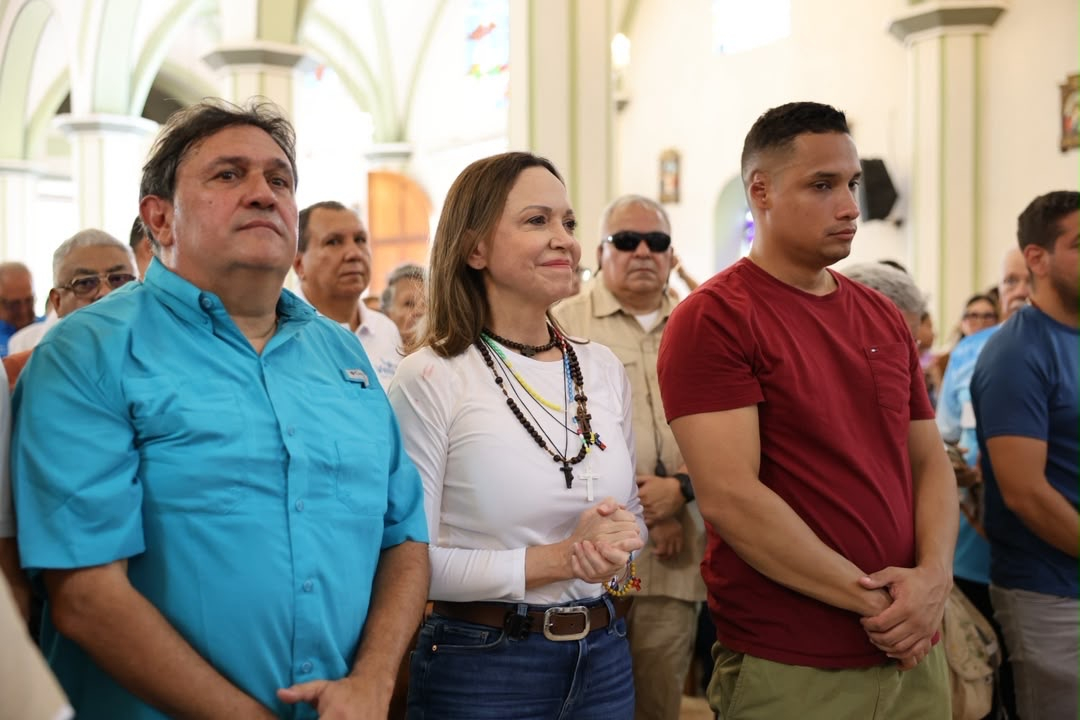
    On Sunday afternoon, Machado strode into a church in the state of Lara, west of Caracas, to the applause of dozens gathered there as they shook her hand and hugged her, with cellphones aloft to record her return.

    “María! María!” one person cried, as another shouted, “Welcome to Venezuela!”

    “Long live freedom, damn it!” a man yelled.

    One woman wiped away tears and called it “a miracle” while another woman’s hands flew to her face as she saw Machado enter the church.

    The crowd began chanting “Freedom!” as some supporters pumped their fists in the air.

    Machado then left the church and was headed to Caracas with stops scheduled on the way as people reached into her car, with one woman promising: “We’re not going to leave your side!”

    Asked by reporters Sunday about Machado’s return to Venezuela, U.S. President Donald Trump said, “I don’t know anything about it, but I think she’s a very nice woman. She gave me her Nobel Prize. So how can I say anything else? And I hope she’s safe. She’s a very nice woman. But we’re doing really well in Venezuela.”

    Since Maduro’s ouster, Venezuela has been run by acting President Delcy Rodríguez, a longtime Maduro ally who received the Trump administration’s blessing to succeed him.

    Rodríguez was initially supposed to serve only 90 days as acting president, but has remained in office and has made no move to call an election.

    Machado was briefly detained in January 2025, following a protest against Maduro’s planned swearing-in ceremony, and went into hiding in Venezuela for 11 months. After making a clandestine escape from the country, she reappeared that December in Norway, where she was awarded the Nobel Peace Prize for her peaceful challenge to Maduro’s authoritarian government.

    Machado and her allies have been demanding a date for a presidential election in Venezuela, but U.S. officials have emphasized economic stabilization first.

    Credible evidence shows the opposition won the last election

    In October 2023, Machado won an opposition primary and intended to challenge Maduro in the 2024 presidential election, but the government barred her from running for office.

    González took her place on the ballot, and ample credible evidence showed that he defeated Maduro by more than a 2-to-1 margin. But the National Electoral Council, which is stacked with ruling-party loyalists, declared Maduro the winner.

    The lead-up and aftermath of the election were marked by widespread government repression, including forced disappearances, torture, and other human rights violations. More than 2,000 people, including poll workers, were detained in the days after the vote.

    In January, the U.S. military captured Maduro in Caracas and whisked him to New York to face drug-related charges, which he has denied. Many Venezuelans were stunned by the Trump administration’s decision to work with Rodríguez, instead of Machado, to try to revitalize the crisis-racked country.

    Machado has demanded a date for a presidential election

    Machado had repeatedly vowed to return to Venezuela and, according to her party, she made seven unsuccessful attempts.

    One of the efforts would have seen her take a charter boat, but the operator canceled the trip, alleging the vessel was unfit for navigation. In another attempt, her team said, Machado tried to fly to the Caribbean island of Curacao, from where she could take a speedboat to Venezuela, but her plane was denied landing permits.

    Opposition activists have accused Venezuela’s government of blocking Machado’s return, a claim denied by Venezuelan authorities. Others have also questioned whether the Trump administration has also been involved in the efforts to stop her from returning.

    Trump administration officials deny they are holding Machado back but have said that, on some occasions, they have advised her against returning due to safety concerns.

    After Maduro was deposed, Venezuela’s highest court said Rodríguez could serve as acting president for up to 90 days — an interim appointment that could be extended by the National Assembly for an additional 90 days. But the ruling party-controlled assembly never voted to extend her term.

    Machado and her allies have demanded that the Rodríguez government set a date for a presidential election. Rodríguez told the U.N. General Assembly in September that Venezuelans will determine the “right moment” for the next election.

    U.S. Secretary of State Marco Rubio has argued that before holding new elections, Venezuela must stabilize its economy and rebuild its institutions, including its courts and electoral council. But he said in a news conference earlier this month that Machado has “every right to enter her country whenever she wants to return.”

    Supporters of Machado have held demonstrations in Caracas demanding her return.

  • Tens of thousands of Israelis living abroad are expected to fly in for pivotal vote

    Tens of thousands of Israelis living abroad are expected to fly in for pivotal vote

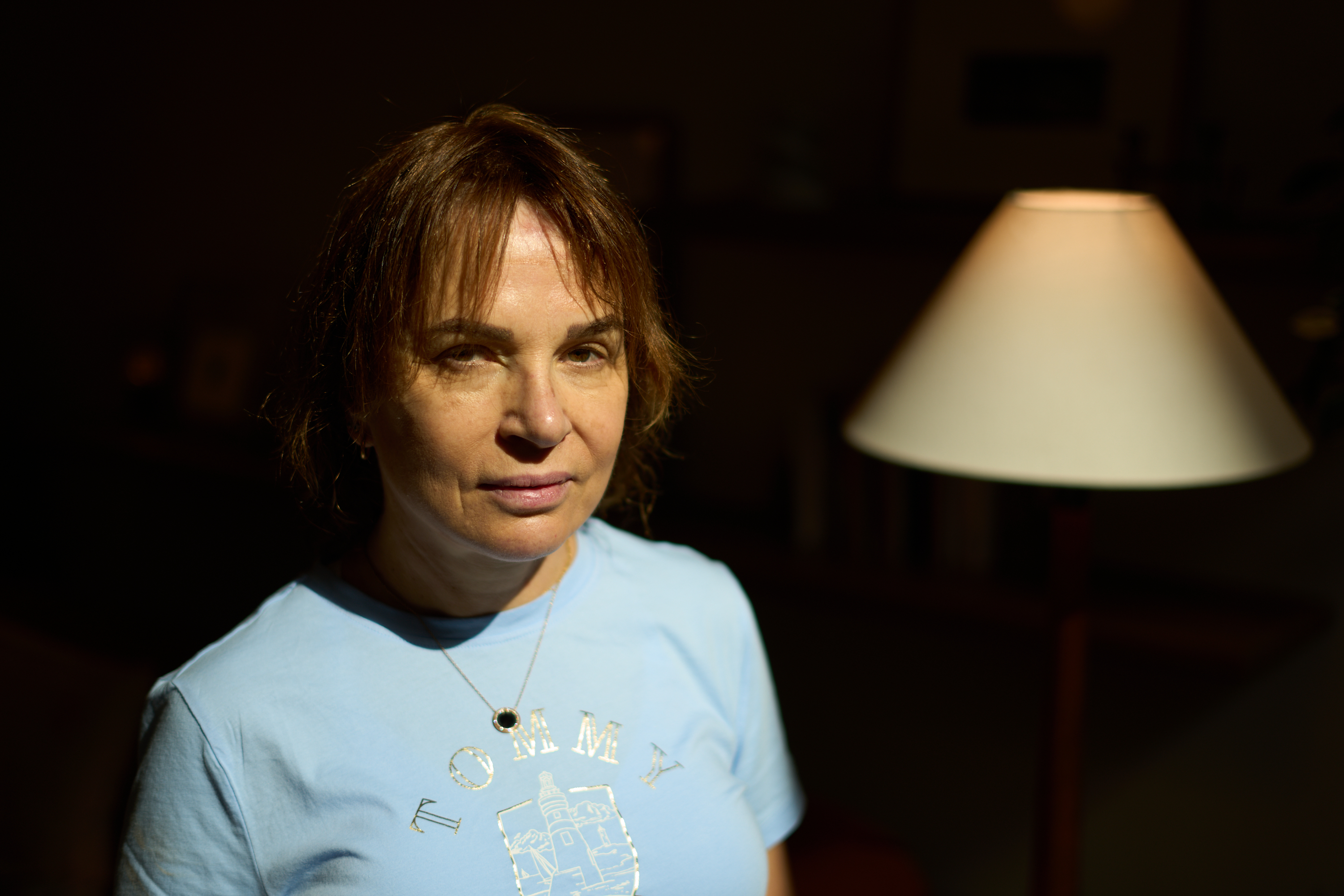
    TEL AVIV, Israel — For two decades since leaving Israel for Canada, Yael Natra said, she didn’t consider returning to vote in her home country’s elections. She felt it wasn’t right to cast a ballot in a place she no longer lived.

    But now, after seeing the far right gain power, Natra, 61, said she believed she had no choice.

    Ahead of Israel’s election on Tuesday — the first since the 2023 Hamas-led attacks and ensuing wars in the region — Natra spent thousands of dollars to travel nearly 6,000 miles from Toronto to Tel Aviv to be in the country and vote, she said.

    Israeli law generally requires citizens to vote in person in the country, with narrow exceptions for diplomats and certain official emissaries abroad. Natra said she plans to cast her ballot for parties not aligned with the current government led by Prime Minister Benjamin Netanyahu.

    “The Israel that I grew up in is disappearing,” she said in an interview from Toronto, citing an eroding democracy and deeply divided society. “If something won’t change this time, I don’t know what’s going to be.”

    Tens of thousands of Israelis living abroad are expected to fly in for this week’s vote, according to AID Coalition, a U.S.-based nonprofit focused on strengthening Israel’s democracy. The election is one of the most consequential in Israel in years, widely seen as a referendum on Netanyahu’s handling of the wars and the hard-right turn Israel has taken both domestically and on the world stage.

    Israel has more than 7.3 million registered voters, but polling suggests a tight race. Previous elections have turned on thin margins. It’s unclear what effect these voters might have, but many liberal Israelis who don’t support Netanyahu have left the country in recent years, suggesting that those returning to cast ballots would not support him.

    “Many Israelis who have left over the years — and especially since Oct. 7 — are exposed to the isolation and animosity toward the country much more palpably than those inside, and as such are likely to want to vote out. Netanyahu,” said Mairav Zonszein, a senior analyst with the International Crisis Group, a nonprofit think tank.

    U.S tops the list of voters traveling to Israel, group’s estimates show

    AID Coalition estimates that as many as 67,000 voters are returning to Israel, based on surveys of expatriates and registration data gathered for its “Fly&Vote” initiative. It says about half are flying in from the United States, with others from Europe, Canada, Australia, and New Zealand.

    “It doesn’t matter what side of the political spectrum you’re on, everyone views these elections as going to be critical,” said Jonathan Barsade, AID Coalition’s president.

    Israelis planning to travel from the U.S., United Kingdom, and Canada told the Associated Press they felt a sense of obligation to try to preserve Israel’s democracy.

    Hadar Susskind, 53, said he wants a new Israeli government to reverse course in the West Bank and Gaza, halting settlement activity and settler violence in the former and allowing for reconstruction in the latter.

    He and four relatives who live in the U.S. were flying back to “reaffirm Israel’s democracy,” he said.

    “This government is digging the hole deeper every day,” he said. ”The first thing the new government needs to do is put the shovel down.”

    Dahlia Scheindlin, an American-Israeli political analyst, said the mobilization effort this year is notable, compared with past elections. And while many campaigns have focused on anti-Netanyahu sentiment, she said it’s unclear overall how those flying in will vote.

    “There are also expats coming in to vote for the pro-Netanyahu side,” Scheindlin said.

    Some previously supported Netanyahu but say their views changed

    Netanyahu’s main opponent, Gadi Eisenkot, is a centrist politician and former military chief of staff who has pledged to establish a state commission of inquiry to investigate the Oct. 7 attacks and Israel’s conduct during the war. Eisenkot says he wants to restore the country’s standing with international allies.

    Natra, who described her politics as center-right, said she voted for Netanyahu in the 1990s. But now, she said, his government’s inability to take responsibility for the failures that led to the Oct. 7 attacks and his support for the ultra-Orthodox community have turned her away.

    Natra’s younger sister, 57-year-old Tamar Ichilov, said the “horrible things” Israel is doing in Gaza and the occupied West Bank motivated her to travel to Israel to vote. She said Israel is consumed by a “vendetta” and intent to “destroy” after the Oct. 7 attacks, and she believes its actions have contributed to rising antisemitism.

    “People don’t like us, and I can’t blame them,” she said in Tel Aviv, shortly after landing at Israel’s main international airport.

    Record numbers of Israelis left in recent years

    A record number of Israelis have moved away in recent years, a trend that began in 2022 and peaked amid the wars and turmoil following the Oct. 7 attacks, according to Israel’s Central Bureau of Statistics.

    Eti Wissotzky Cohen, 44, said she settled last year in the U.K. with her husband and two children after growing increasingly alarmed by Israel’s democratic backsliding and the shrinking space for liberal voices. But it was the first war with Iran in June 2025 that convinced Cohen the Israeli government would do anything to stay in power.

    “They’re looking at the Israeli population as pawns,” she said, telling AP she flew back to Israel to vote for the center-left Democrats party.

    Cohen said she wants to return to Israel to live someday but would find it difficult with Netanyahu in power.

    Zorik Nitzan also said he still believes in “the dream of Israel” but moved to Canada just over a decade ago “for a better, easier life.”

    He is traveling to Israel a few days before the election, he said, because it feels like “the last chance … to beat the Netanyahu movement and to get this country back on course.”

  • Ukraine disputes Elon Musk’s claim that its military violated Starlink’s terms of service

    Ukraine disputes Elon Musk’s claim that its military violated Starlink’s terms of service

    KYIV, Ukraine — Ukrainian officials have disputed claims by SpaceX CEO Elon Musk that the country’s military violated Starlink’s terms of service by using the civilian satellite internet network for offensive drone strikes.

    Serhii Beskrestnov, a defense technology adviser to President Volodymyr Zelensky, said long-standing restrictions on the civilian system in Ukraine made such offensive use impossible.

    “It’s very strange that Elon Musk doesn’t know about the restrictions on Starlink’s operation in Ukraine,” he wrote in an online post.

    SpaceX’s Starlink and its military-focused Starshield service are critical to Ukraine’s wartime connectivity. Earlier this month, Ukrainian drones connected to Starshield lost connectivity at high speeds, disrupting defenses during daily Russian air attacks. Officials said the so-called speed caps were lifted on Saturday, and the service was restored.

    Still, questions have persisted about who ordered the interruptions to the satellite internet system that Kyiv has relied on for years to counter Moscow’s attacks.

    Writing on Telegram, Beskrestnov said that drones operated via the civilian Starlink system had a speed restriction of 43-56 mph within Ukraine and did not work in Russia.

    “Therefore, we physically cannot use commercial Starlink for deep strikes or medium-range strikes,” he said.

    Musk acknowledged on Saturday that SpaceX had throttled Starlink in Ukraine.

    “Using Starlink, a civilian commercial service, for offensive drone strikes to kill people has never been allowed, nor should it be,” Musk wrote. “Ukraine military violated Starlink terms of service and used it for offensive drone strikes to kill people. That loophole was closed last week.”

    But he maintained that the U.S. government controlled whatever changes happened with Starshield, the military-grade version of Starlink that is the backbone of Ukraine’s drone operations and communication. U.S. President Donald Trump has maintained that he didn’t make that call, while Vice President JD Vance has hinted at White House coordination with Musk.

    Restrictions imposed last week on Starshield alarmed the Ukrainian military and government officials, with commanders reporting lost drones and disrupted missions. They also added to tensions between Kyiv and Washington, a relationship already strained by Trump’s reported deal with Moscow to import diesel from Russia that Ukraine viewed as a betrayal.

    The U.S. is making new efforts to end the war

    The restoration of Starlink service followed a new U.S. diplomatic push to end the war. Russia agreed Wednesday to resume three-way negotiations with Washington and Kyiv next month. On Friday, Kyiv and Moscow also agreed to a localized ceasefire brokered by first lady Melania Trump around Oleshky, a war-ravaged, Russian-occupied town in Ukraine’s southern Kherson region.

    Meanwhile, Zelensky on Sunday said Russia had launched nearly 2,300 drones targeting Ukrainian cities over the past week, renewing his call on Western allies to speed up deliveries of interceptors.

    “This week alone, Russia has launched about 1,600 guided bombs, 48 missiles of various types, including ballistic missiles, and almost 2,300 strike drones at Ukraine,” Zelensky wrote in an online post.

    He said the attacks — many of them deadly — had affected nine regions of the country, damaging power plants, grain stores, civilian homes, and commercial facilities.

    More civilian deaths in Ukraine and Russia

    Russia launched more than 20 attacks on Ukraine’s Dnipropetrovsk region overnight into Sunday, using drones and an aerial bomb, according to local authorities. Three people died at the scene and a fourth man later died in hospital, regional military administration head Oleksandr Hanzha reported, while over a dozen people were injured.

    In Vinnytsia, a city in central Ukraine, at least six people were injured when a Russian drone struck a residential building, according to the state emergency service. The attack also damaged a nearby care home, with emergency crews evacuating 15 elderly residents, the service said.

    Also according to the emergency service, consecutive Russian strikes on a shopping center in Kharkiv injured four people late on Saturday, including three rescue workers. Ukraine has long accused Russia of so-called double-tap strikes, in which an initial attack is followed by another once rescuers arrive on the scene.

    Russia’s Defense Ministry on Sunday claimed its forces targeted multiple sites in and around Kharkiv, including a shopping and logistics center, that it said had stored dual-use goods meant for the Ukrainian military.

    In Russia, two people were killed and 13 others injured in Belgorod, a city 25 miles from the Ukrainian border, following “mass” nighttime drone strikes by Kyiv, regional Gov. Alexander Shuvayev reported on Sunday.

    In the Russian city of Oryol, the body of a fourth victim was pulled from the rubble the day after a Ukrainian strike on an industrial plant, local Gov. Andrey Klychkov reported. On Saturday, local authorities said three people had been killed in the attack.

    Ukraine’s General Staff that day said its forces hit an electronics plant in Oryol that makes components for the cruise and ballistic missiles Russia fires at Ukrainian cities.