Tag: no-latest

  • A mistrial is declared in the murder case against Lindsay Clancy. Here’s what could happen next

    A mistrial is declared in the murder case against Lindsay Clancy. Here’s what could happen next

    The trial to decide if Lindsay Clancy was criminally responsible when she strangled her three children in 2023 ended in a mistrial Friday after jurors were unable to reach a consensus after weeks of conflicting testimony about her postpregnancy mental health and seven days of deliberations.

    What happens now?

    Clancy, a 36-year-old former labor and delivery nurse, remains charged with murder and will continue to be held in a psychiatric hospital until the case is resolved. Attorneys on both sides have a few options when it comes to the next steps.

    A hearing later this month could determine the path forward

    Judge William Sullivan set a hearing for Sept. 29. During that proceeding, defense attorney Kevin Reddington will likely ask the judge to declare Clancy not guilty. It’s a long shot move and very unlikely to succeed.

    That hearing could also reveal whether prosecutors will move to put Clancy on trial for a second time. They could also choose to seek a plea deal or even drop the case entirely, though that option is unlikely.

    Sullivan suggested that everyone involved in the case, from attorneys to witnesses to court administrators, would need to look at their calendars to find a suitable time for a new trial, if one is held.

    Clancy doesn’t deny strangling her children at their home south of Boston, but says postpartum psychosis led to her actions. After the killings, her husband found her badly injured in the yard, where she landed after jumping from a second-story window. She was left paralyzed from the waist down.

    Prosecutors argue she knew what she was doing.

    Prosecutors will weigh many factors as they decide on a new trial

    Plymouth County District Attorney Timothy Cruz said there would not be an immediate decision about a second trial, but he emphasized that his goal was always “getting justice for those three little babies.”

    “This case was about Lindsay Clancy and what she did … the cruel and calculated killing of three innocents,” Cruz said shortly after court ended on Friday. He later continued, “Children were murdered and it’s our job to seek justice.”

    Still, prosecutors typically consider a lot of things when determining whether to retry a case, said New York Law School professor Heather Ellis Cucolo, including the potential expense and the likely outcome.

    “I know the prosecutor stated openly that he would not allow public opinion to sway his decision, which is accurate, but the prosecution serves the public,” Cucolo said. “If it is believed that justice must be served by another trial, that is something the prosecutor’s office will take into account and weigh very heavily.”

    A conviction could mean life in prison for Clancy, while an acquittal might lead to confinement in a mental health facility.

    Clancy’s defense will likely push to drop the charges

    Cucolo said the defense attorney will likely push for the charges to be dropped entirely, and might also be open to a plea deal.

    “But if the prosecution chooses to move forward with a trial, there’s no way to prevent that from happening,” Cucolo said.

    Reddington said in court that he believed Clancy’s constitutional rights were violated when the judge declined to remove one juror after the other jurors suggested that he was not following the judge’s instructions on reasonable doubt. But a mistrial isn’t subject to an appeal, Cucolo said, because it’s not a final judgment.

    The impact on family members is another consideration, said Randy Gioia, a Boston-based defense lawyer who formerly supervised public defenders across the state.

    Gioia said prosecutors should not put Clancy through another trial. He said he accepts Reddington’s disclosure that Clancy was extremely close to an acquittal, based on a note presented to the judge by the jury foreperson.

    “Why put everyone through the trauma again: 16 to 18 jurors, all the witnesses, Patrick Clancy,” Gioia said, referring to Lindsay Clancy’s former husband. “What’s to be served here when we’ve had a long trial and long deliberations? You don’t have a strong case. You almost lost the case.”

    Attorneys on both sides could tweak their approach in a retrial

    It’s not clear exactly how the jury reached an impasse, but Reddington suggested that just one juror stood in the way of an acquittal, and said the other jurors were “robbed.”

    “They know they were robbed by one man, for whatever his agenda was, who stole seven weeks of the life of these other jurors that were so attentive, so beautiful, so wonderful,” he said outside the courthouse. “You could see how defeated they were sitting there. I got a funny feeling they would have gone on for another week if they had to. So I hope that guy can sleep well at night.”

    Jurors are under no obligation to speak to attorneys on either side of the case, but it’s common for the attorneys to see if any are open to talking about their experience, Cucolo said. Prosecutors can then use any information they get to reassess and fine-tune their approach, she said, perhaps focusing more on specific evidence or witnesses.

    A retrial would have rippling impacts

    David Meier, a lawyer who represents Patrick Clancy in a lawsuit over his former wife’s mental health treatment, released a statement about the emotional burden of the case, saying “there will never be closure” from the loss of the children.

    “The prospect of reliving this tragedy through another trial is extraordinarily painful — for Patrick, for his family, and for all of us,” Meier said.

    The statement didn’t indicate whether Patrick Clancy would support a second trial.

    Lindsay Clancy has also filed a lawsuit over her mental health treatment. A retrial would likely force those civil cases to be put on hold, Cucolo said.

    “They would not be able to move forward for now because of concerns of possible Fifth Amendment violations,” Cucolo said, because anything Clancy says in a civil case could potentially be used against her in the criminal case. That means the lawsuits could remain in legal limbo for a year or more, she said.
  • Trump moves to allow ranchers and hunters to kill gray wolves

    Trump moves to allow ranchers and hunters to kill gray wolves

    President Donald Trump on Friday ordered the Interior Department to begin the process of removing endangered-species protections for gray wolves, again intervening in a long-running fight between conservationists and ranchers who say the predators threaten their operations.

    Trump also ordered the Interior and Agriculture departments to make it easier for ranchers to kill the wolves if necessary. The measures, long sought by GOP lawmakers from Western states, elicited a swift rebuke from animal rights groups and could draw legal challenges.

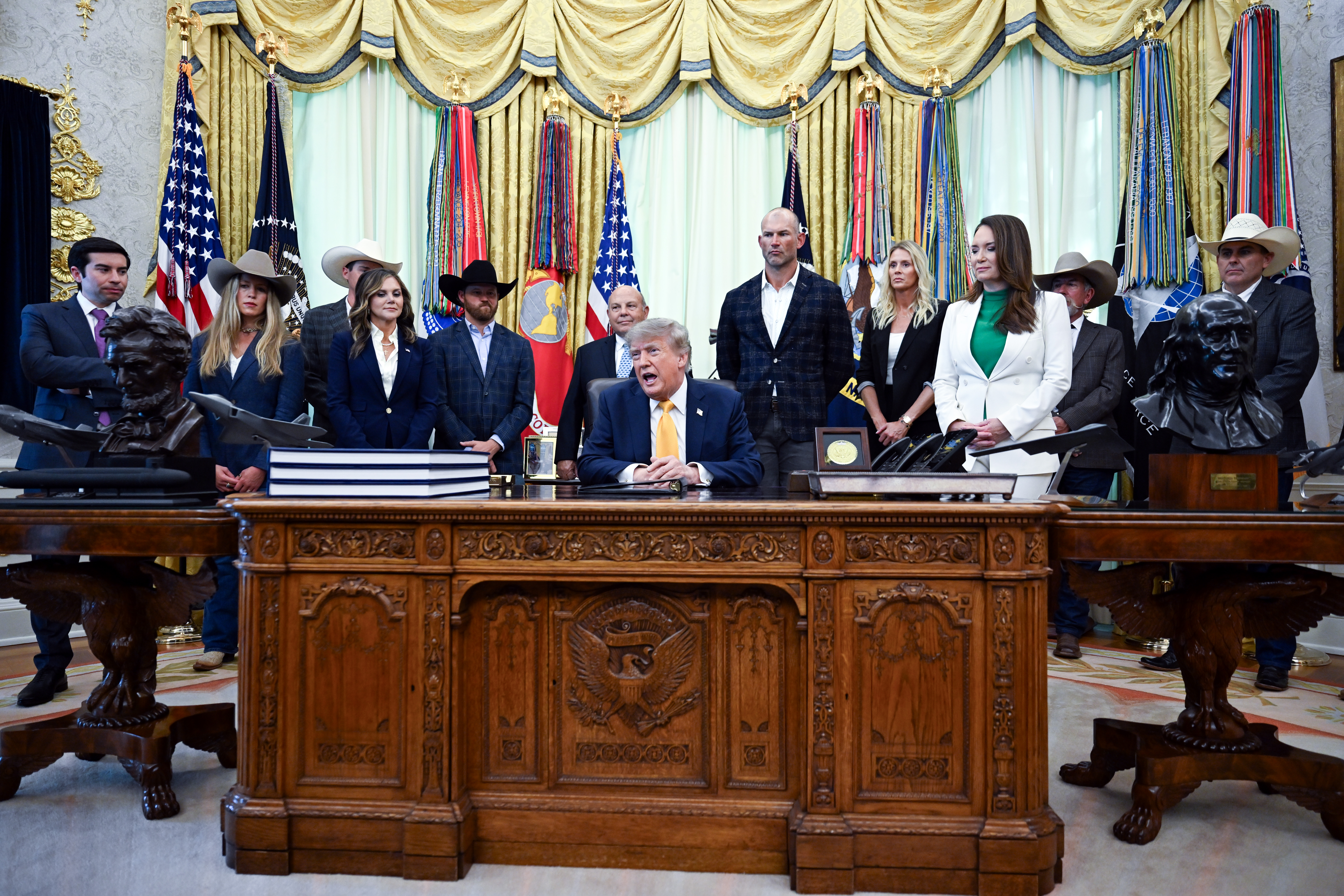
    “You’re not allowed to protect yourself, right? Or your company, your cattle,” Trump said at an Oval Office event, flanked by ranchers who shared stories of watching wolves tear through their herds. “So how do you like the idea that I’m letting you do that?”

    Under Trump’s order, Interior Secretary Doug Burgum will prepare a recommendation to fully delist or downlist the gray wolf and the Mexican wolf under the Endangered Species Act. The order also includes other measures intended to give states, ranchers, and hunters greater latitude to kill the animals.

    “Rolling back federal protections now — or setting that process in motion — would jeopardize decades of recovery and open the door for brutal killing,” Kitty Block, president and CEO of Humane World for Animals, said in a statement.

    The gray wolf and several subspecies were first listed as endangered under federal rules in the 1960s and 1970s, after centuries of westward settlement and government-backed eradication campaigns reduced their historical range in the Lower 48 states by an estimated 95%.

    Federal protections and reintroduction efforts helped lift that population from about 1,000 during the early listings to more than 6,000 by 2020, according to the U.S. Fish and Wildlife Service.

    But that recovery has fueled a long-running dispute over whether the wolves still deserve strict protections. Presidents of both parties have moved to lift at least some protections, only to have those efforts stymied, and sometimes overturned, in court.

    The Trump administration in 2020 stripped gray wolves of their endangered-species designation in the Lower 48 states, declaring the species recovered. A federal judge vacated that rule in 2022, and the wolves remain officially endangered in much of the country.

    Congress has also entered the fray. The GOP-led House in December passed a bill to end gray wolf protections. The Senate is still considering the legislation.

    “The science has been clear for years: Gray wolves are fully recovered, and their resurgence deserves to be celebrated as a true conservation success story,” Rep. Lauren Boebert (R., Colorado.), who authored the legislation, said in a statement after her bill passed the House. “It’s long past time to delist them and empower states to set their own management policies.”

    Ranchers on Friday discussed their frustrations with the status quo.

    “The problem is, because they’re on the Endangered Species List, they can’t shoot them. They have to sit and watch them destroy their herd,” Agriculture Secretary Brooke Rollins said in the Oval Office.

    “But you can shoot them as of today,” Trump mused, to laughter.

    “Well, Secretary Burgum has to do a project, but, yes,” Rollins responded.

  • U.N. approves African proposal for a new world map

    U.N. approves African proposal for a new world map

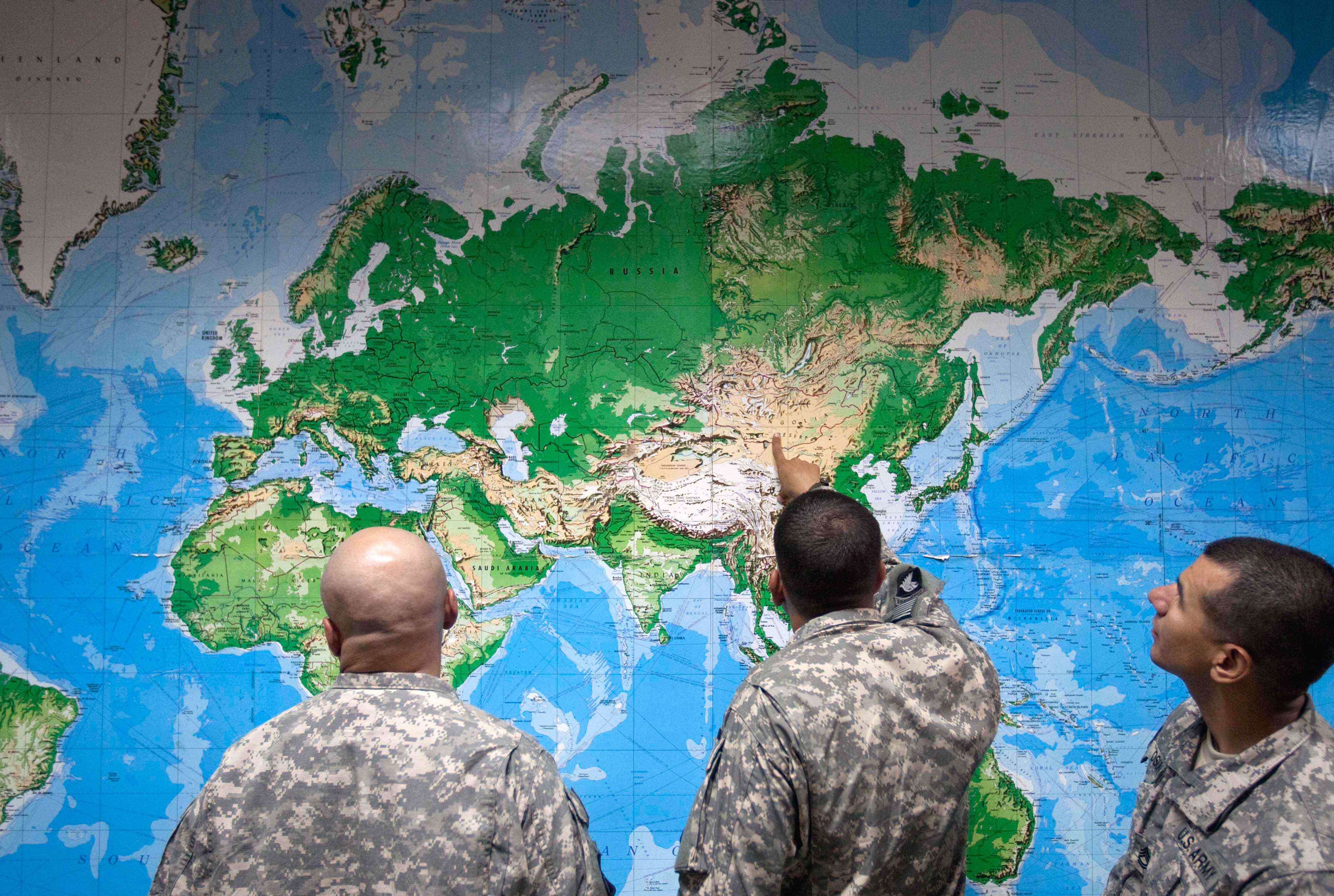
    The United Nations General Assembly on Friday endorsed a world map that depicts the size of Africa more accurately than the map most commonly used now.

    The assembly approved a resolution favoring the Equal Earth projection, a map that supporters say shows the true size of countries, over the familiar Mercator projection, which shrinks regions near the equator. It passed with 164 votes in favor and 6 abstentions, according to the United Nations.

    The only nation that voted against the resolution was the United States, which said the map promoted an “ideological agenda” and was a distraction from the “genuine problems of international peace, prosperity, or good relations.”

    The new map has supporters in Africa, who say the Mercator projection has contributed to a historical bias that has minimized tropical and equatorial regions and exaggerated the size of countries near the poles.

    The U.N. resolution does not outlaw the Mercator projection or require the use of the Equal Earth map. But it is part of a campaign to raise awareness of the effects of visual representations of the Earth on how people view the world.

    Here’s what to know about the debate.

    What is the Mercator projection?

    The projection, one of many ways to represent the spherical Earth on a flat plane, was designed by Flemish cartographer Gerardus Mercator in 1569 to help sailors navigate.

    It was created by projecting the Earth’s features onto a cylinder, then flattening that into a rectangle.

    The map was invaluable for seafaring: Any straight line drawn on the map represents a compass direction that sailors can use to determine which way to go. The projection has since become widely used in books, classrooms, and online services like Google Maps.

    Why do critics want to move away from it?

    Every map projection makes sacrifices, like shape, size, or distance: You can’t flatten a round object without somehow stretching, shrinking, or tearing it. The Mercator projection reflects true directions but distorts the size of landmasses.

    If you had a Mercator projection on your classroom wall, you might have grown up believing that Greenland, for example, is as big as Africa, even though it is 1/14th its size. You might also think that Alaska is bigger than Mexico, when it is 25% smaller.

    Critics have argued that the Mercator map creates a subtle bias whereby northern nations, including some of the world’s wealthiest, appear large and equatorial regions, home mostly to developing countries, are depicted as small. Some cartographers say it reinforces a Eurocentric and colonial worldview.

    The Equal Earth projection — created in 2018 by cartographers Bojan Savric, Bernhard Jenny, and Tom Patterson — sacrifices straight-line directions in order to render landmasses in their correct proportions. It has rounded edges to account for the Earth’s spherical shape instead of a rectangle.

    Advocacy groups in Africa have campaigned to replace the Mercator map since April 2025. The African Union endorsed the campaign in August that year, urging its 55 member states to adopt the Equal Earth map in schools and public communications. The West African nation of Togo sponsored the U.N. resolution, backed by other countries in the African Union.

    “A map is never neutral,” Robert Dussey, the foreign minister of Togo, said Thursday, promoting the U.N. resolution. “It shapes perceptions, influences how the place of peoples and continents in the world is understood, and may, sometimes from the earliest years of schooling, perpetuate representations that do not correspond to geographic reality.”

    What does the U.N. resolution do?

    The resolution calls on the more than 190 U.N. member states to update their educational materials and educate students about the accurate sizes of countries and the limitations of different map projections.

    It also urges major digital map providers to discuss the issue with governments and adopt more accurate cartographic representations.

    The resolution is not binding. But the push to replace the Mercator map has made progress in other ways.

    Google, which used a Mercator-based map for more than a decade, shifted in 2018 to showing the Earth as a globe when zoomed out on the desktop platform. “Greenland’s projection is no longer the size of Africa,” the company said on social media.

    Some schools have begun replacing Mercator maps. Boston Public Schools in 2017 began purchasing maps with the Peters projection, which shows countries in their correct proportional sizes to one another at the cost of stretching and squashing their outlines.

    The shift was part of the district’s effort to “decolonize the curriculum,” Colin Rose, then a district administrator, told the Boston Globe.

    This article originally appeared in the New York Times.

  • Judge orders Trump officials to divulge names of those who set up $1.8 billion fund

    Judge orders Trump officials to divulge names of those who set up $1.8 billion fund

    A federal magistrate judge ordered the Trump administration on Friday to reveal the identities of the people who devised a contentious plan to create a $1.8 billion fund to compensate those who believed they were wronged by political prosecutions.

    The order by the magistrate judge, Ivan D. Davis, could shed further light on how the fund was put together. The plan to create the fund, which could have funneled taxpayer money to the president’s allies, drew repeated scrutiny. It prompted a rare rebuke from Senate Republicans, and imperiled the confirmation of Todd Blanche as attorney general.

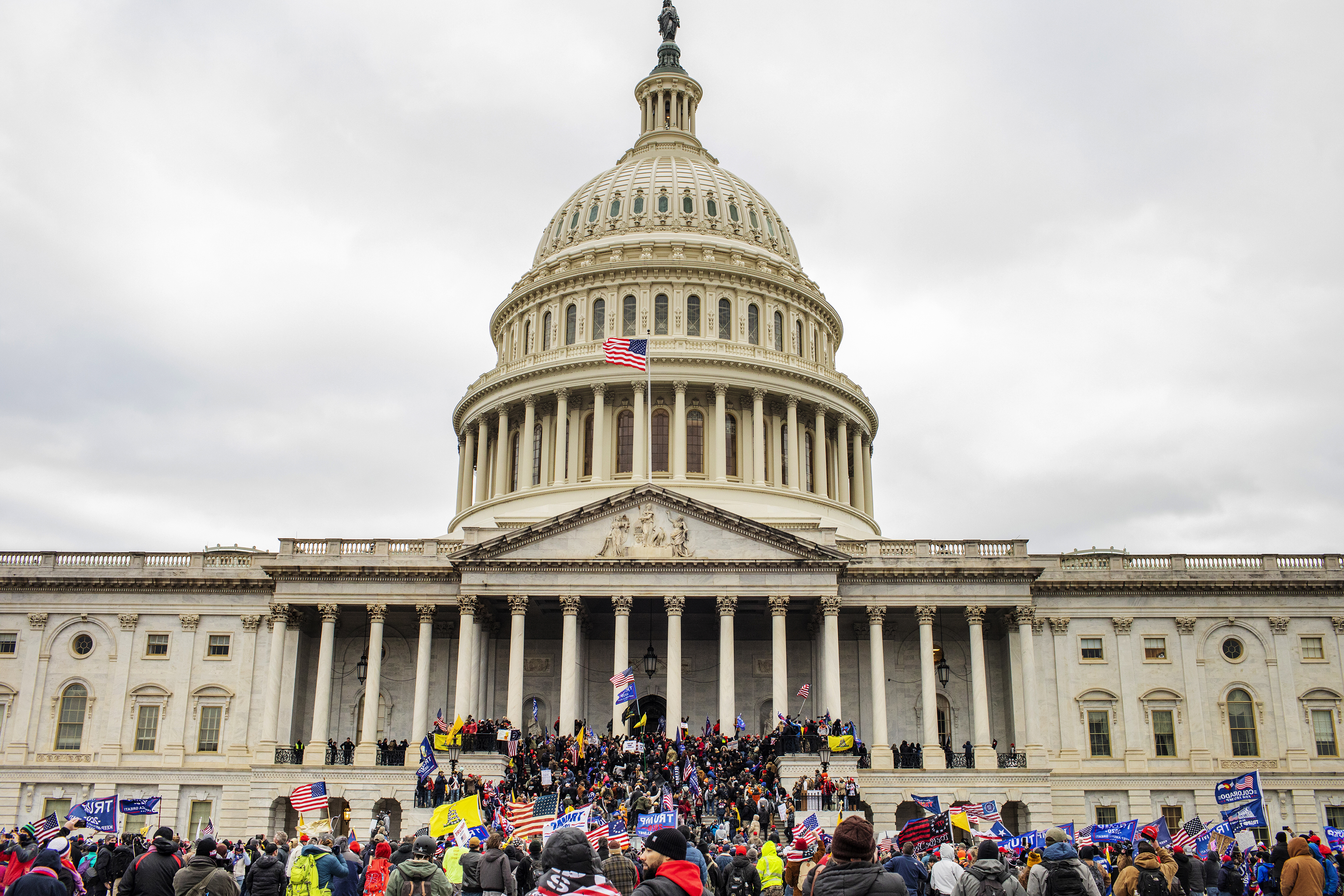
    Blanche has repeatedly said the fund is dead, but President Donald Trump has been more circumspect, indicating his support for compensating people including the rioters who were prosecuted for attacking the Capitol on Jan. 6, 2021.

    Davis’ order, issued in U.S. District Court in Alexandria, Va., came as part of a lawsuit challenging the legality of the fund and another measure by the Justice Department that benefited Trump. That provision granted the president, his family, and his businesses expansive protections against all past tax investigations.

    Both the fund and the tax immunity deal emerged from backroom negotiations between Trump’s personal lawyers and senior Justice Department officials. The measures were made public after Trump agreed to dismiss a lawsuit he had filed against the IRS, seeking damages for claims that the agency had failed to stop the release of some of his tax returns to news organizations.

    A federal judge in Florida later excoriated both the suit and the way in which it was dismissed. She said the suit was an improper exercise in self-dealing because the president had brought claims against a federal agency that he himself controlled. She also asserted that the dismissal had been worked out with the intent to evade judicial oversight.

    The suit seeking to kill the fund and the tax immunity deal was brought in Virginia by a group of plaintiffs that includes a former federal prosecutor who was fired by the Trump administration after working on Jan. 6-related cases. The group has claimed that the program was unfairly designed to help only supporters of the president.

    The union representing IRS workers later joined the suit, claiming that the tax provisions were illegal and could put its employees in the untenable position of carrying out unlawful orders.

    Lawyers for the plaintiffs hailed the decision.

    “Today’s order granting discovery is a significant step in getting to the bottom of the slush fund,” said Aman George, a lawyer for Democracy Forward, which filed the suit.

    The Justice Department did not immediately comment on the ruling.

    This article originally appeared in the New York Times.

  • Kennedy Center board renews call for Trump-backed shutdown after part of a ceiling collapses

    Kennedy Center board renews call for Trump-backed shutdown after part of a ceiling collapses

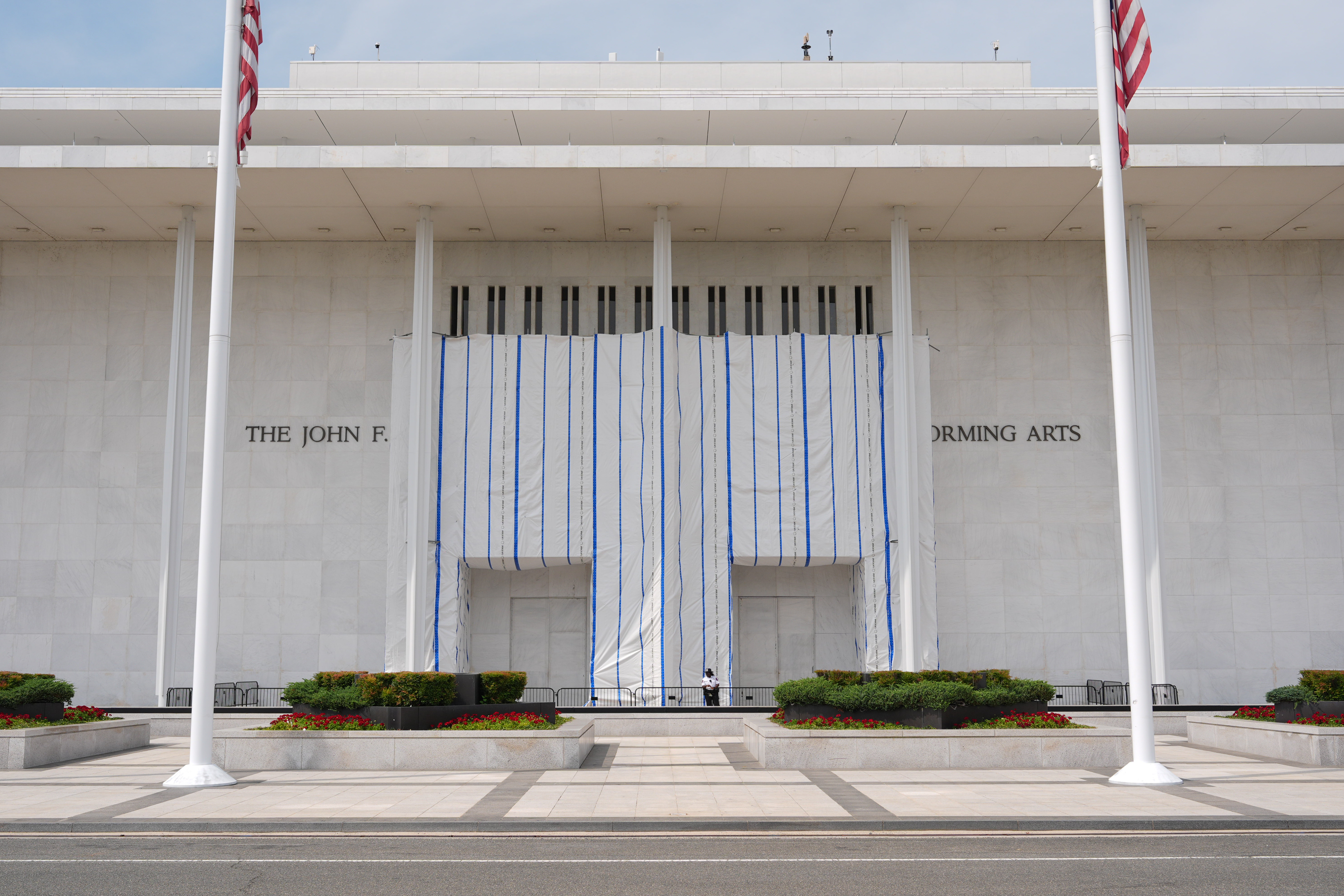
    WASHINGTON — A chunk of ceiling fell inside a main hallway of the Kennedy Center, according to a spokesperson who said the damage underscores the need to shut down the historic arts venue for renovations sought by President Donald Trump.

    No one was injured when a piece of the ceiling inside the Kennedy Center’s grand foyer collapsed Friday evening, said Roma Daravi, the center’s vice president for public relations.

    Photos provided by the center showed a large hole in the high ceiling and debris littering the red carpet in part of the hallway that connects the Kennedy Center’s three main performance auditoriums. The damage occurred during stormy weather in Washington.

    The Kennedy Center’s Trump-aligned board is fighting in court to move forward with plans to add Trump’s name to the building’s facade and to close the center for two years as it undergoes $250 million in renovations.

    Daravi called the partial ceiling collapse Friday “another example of the urgent need to close for renovation and revitalization, as our Chairman President Trump has championed.”

    “This structural failure stems from decades of neglect and deferred maintenance by the previous leadership, and there’s no justification for further delays in restoring America’s cultural center,” Daravi said in a statement.

    Trump’s efforts to add his name and make other big changes to the center established to honor President John F. Kennedy following his assassination are just part of Trump’s broader second-term agenda to reshape Washington.

    Trump already has demolished the East Wing of the White House to make way for a ballroom. He also plans a triumphal arch near Arlington National Cemetery and a renovated golf course along the Potomac River.

    U.S. District Judge Christopher Cooper ruled in May that Trump’s name had been added to the Kennedy Center illegally and ordered that it be taken down. He also blocked the administration from closing the venue for renovations.

    Now before the judge is an August vote by the Kennedy Center’s board to return Trump’s name to the facade so it reads: “The John F. Kennedy Center for the Performing Arts Restored and Renovated By President Donald J. Trump.” Justice Department lawyers have argued donations for renovations will dry up without Trump’s name on the building.

    Other changes have moved forward. Last week, the Kennedy Center took down a large stick figure sculpture known as Blue that had stood outside the center since 2019. The Kennedy Center gave no reason for its removal, but said in a statement “we are honored to have been stewards” of the late sculptor Joel Shapiro’s work.

    Grace Terpstra of Keep the KC, a community group fighting the Kennedy Center’s closure, said she suspects the board will seize on what appears to be limited ceiling damage “to make the point that the whole thing needs to be shut down, that it’s going to fall on everybody.”

    “I think they’ll try to make it into a bigger thing and show that they’ve found a lot of other things,” said Terpstra, the group’s founder.

  • U.S. military hits 3 Iranian oil tankers after saying Navy ships were targeted with missiles

    U.S. military hits 3 Iranian oil tankers after saying Navy ships were targeted with missiles

    CAIRO — U.S. forces struck three Iranian oil tankers after Navy warships were targeted with missiles, the American military said Saturday, warning that it would “if necessary, destroy Iran’s limited and exposed oil fleet.”

    The strikes — a day after U.S. President Donald Trump sought to minimize the conflict as “small potatoes” — keep up a new tilt back toward fighting after six months of on-again, off-again war that began with U.S. and Israeli attacks on the country on Feb. 28. Both sides have sought to inflict both military and economic pain, and negotiations have collapsed.

    The military’s statement said that an American aircraft carrier and a destroyer evaded “multiple unprovoked Iranian attacks” while patrolling in the region and no U.S. personnel were hurt. It said that two Iranian oil carriers were “permanently disabled” and the third, unladen one, was destroyed.

    The U.S. statement said that the tankers were part of a shadow network helping to fund Iran’s powerful Revolutionary Guard and its armed proxies in the region.

    There was no immediate Iranian response.

    Iran had reported a strike near Kharg Island

    Earlier, Iranian state television had said that four U.S. missiles struck a tanker about 6 miles from Kharg Island, home to a terminal through which the country exports most of its oil. Kharg Island has been repeatedly targeted during the war, including U.S. strikes on military sites there in March.

    The U.S. said that one tanker was struck off Kharg Island and another was struck near Jask, east of the Strait of Hormuz. The unladen tanker was hit in the Gulf of Oman, and the U.S. said its crew had been “directed to abandon ship.” The statement shared what it called video footage of the strikes.

    After the U.S. statement, Iran’s state broadcaster reported the two other tankers attacked, saying their crews had evacuated.

    “We will not hesitate to defend American forces, and if necessary, destroy Iran’s limited and exposed oil fleet,” said Adm. Brad Cooper, the head of U.S. Central Command.

    The strikes came nearly a week after the U.S. and Iran resumed attacks following a month of relative calm, with the Strait of Hormuz and Iranian communities along it again being targeted. At least five people were killed earlier in the week during a U.S. bombardment of southern Iran. One strike hit a wedding.

    Masoumeh Zarei, 13, was wounded in the attack. She spoke to the Associated Press at a hospital while being treated for injuries to her abdomen.

    She said that the wedding celebration had already begun when she set out to join it. She never made it there. She was knocked unconscious when a telecommunications tower was struck. Her next memory was of waking up in a hospital.

    “The party had just started, and we wanted to go there,” Zarei said, her voice hoarse. “I had made my nails really pretty for the party, but everything changed.”

    Her friend, 14-year-old Kiana Karimi, also was wounded and in intensive care. She told the AP that she heard five explosions.

    “The first three explosions at the telecommunications tower threw us to the ground,” Karimi said. “I quickly got up to pick my brothers up off the ground. Then there were two more explosions, and after that I don’t remember anything.”

    U.S. had tried to turn to economic pressure

    The resumption of fighting in the past week came after new U.S. efforts to apply economic pressures on Tehran, whose hard-line new senior leaders have signaled the willingness to dig in after weathering decades of sanctions. The elected government of Iranian President Masoud Pezeshkian, however, has said that it favors a negotiated end to the war.

    Iran has found ways over the years to circumvent sanctions — and now a U.S. blockade of its ports — and get its oil to buyers to help ease growing economic pressures. That relies in part on a shadow fleet transporting its oil.

    Meanwhile, the issue that helped lead to the war — Iran’s nuclear program — was meant to be addressed in negotiations that fell apart soon after the U.S. and Iran signed a memorandum of understanding in mid-June. Now diplomats say the U.S., Britain, France, and Germany seek to refer Iran to the U.N. Security Council for failure to comply with its nuclear nonproliferation obligations.

    Instead, Tehran’s new leverage focuses on the strait that is crucial to global oil and natural gas shipments and was seen as an international waterway before the war began.

    The U.S. military has been helping to guide ships through the strait as Tehran asserts control and targets some vessels, but overall traffic remains low.

  • Companies can tell investors less under proposed SEC rules

    Companies can tell investors less under proposed SEC rules

    The Trump administration has aggressively expanded its push for financial deregulation, raising concerns that the changes could facilitate another Wall Street crisis, sooner or later.

    The Securities and Exchange Commission this summer proposed two big changes to how publicly traded companies report their finances. The first, and most eye-catching, one would let companies file earnings reports only twice a year instead of quarterly, slashing a rule that has existed for more than half a century.

    The second one, which has flown under the radar, would exempt most companies the SEC regulates from having to bring in outside auditors to verify a company’s internal books and processes for avoiding errors and fraud.

    The rollback would weaken regulations passed by Congress in 2002, after the collapse of Enron, an energy trading company, and the implosion of Arthur Andersen, its accounting firm, revealed how easily companies could hide financial problems, or cook their books, without independent oversight.

    Some money managers are asking whether either change would improve the investment environment. And public interest groups worry the changes could enable another costly scandal like Enron’s failure, or something worse.

    “If the quality of reporting information from the financial system deteriorates, then that absolutely leads to financial sector risks of the kind that have bitten us before, as in 2008 and other crises,” said Simon Johnson, a Nobel laureate economist and a co-chair of the Systemic Risk Council at the CFA Institute, which administers the industry’s chartered financial analyst credential.

    In the past three decades, the number of publicly traded companies active in the U.S. stock market has fallen by half. The number of initial public offerings has also greatly decreased in comparison with past business cycles.

    Trump administration officials say onerous regulations and audits for public companies have made going public less attractive and increased the allure of less regulated private markets. This, in turn, has resulted in fewer opportunities for smaller investors to participate in the growth of early-stage companies the way large private investors can.

    “Under my chairmanship, we’re out to change that,” Paul Atkins, the Trump-appointed chair of the SEC, said in a statement. “As part of my ‘make IPOs great again’ agenda, we’re advancing a modernized regulatory framework that will reduce friction and increase certainty for both issuers and investors and streamline the path for companies to go and remain public.”

    Smaller public companies are already given more breathing room by U.S. regulators, which are sensitive to overburdening them with compliance costs that bigger companies can more easily afford. Now, however, the SEC wants to make a categorical shift that would bump the share of companies operating under lighter rules to about 80% from 50%.

    The riskiest consequence, according to watchdogs like Americans for Financial Reform, would be to exempt those companies from more thorough independent audits to help ensure that the financial statements companies provide to investors and the SEC are accurate. That more stringent external vetting was a requirement Congress instituted under the Sarbanes-Oxley Act of 2002 to prevent accounting frauds such as those at Enron and WorldCom, which led to bankruptcies, mass layoffs, and billions of dollars lost by investors.

    The Business Roundtable, a lobbying group that represents some of America’s largest companies, has supported the SEC moves on auditing and quarterly reporting, echoing concerns about the costs of independent auditor reviews and extra legal counsel. But a broad range of former and current executives have criticized the SEC’s deregulatory proposals, which remain provisional until they are made final.

    The SEC received a lopsided response to the semiannual reporting proposal during its formal public comment period, which closed last month. Of the hundreds of thousands of comments submitted, more than 97% opposed the change.

    The Managed Funds Association, which represents hedge funds and private credit funds, has said less frequent reporting could increase market volatility and harm transparency, raising the risk of insider trading. Institutional asset managers at banks and pension funds also say they rely on standardized quarterly statements to accurately value assets.

    “What is the big problem that we need to solve?” said Rebecca Patterson, a former chief investment officer of Bridgewater, a hedge fund.

    “U.S. firms today are highly profitable overall, and they are still able to make longer-term strategic business decisions,” she added. “They are nicely walking and chewing gum at the same time.”

    With respect to the debate over financial audits, market analysts have questioned the SEC chair’s diagnosis that burdensome audit rules are to blame for the decline in IPOs or publicly traded stocks.

    Matt Kennedy, a senior IPO market strategist at Renaissance Capital, an investment adviser, said the enormous growth in fundraising options outside publicly traded stock markets had been the key force keeping more private companies private.

    Not too long ago, Kennedy explained, a company might have gone public after a “Series A, B, or C” round of funding. But in recent years, he joked, “we’re almost running out of the alphabet,” as venture capitalists, private equity, private credit, and angel investors have queued up for privately traded stakes in companies.

    “I don’t think it’s compliance costs keeping them from going public,” he said.

    Industry experts note that companies would still need audits of their financial statements. But 80% of publicly traded companies would no longer need auditors to separately attest and certify that a firm’s internal financial processes were aboveboard.

    Other rollbacks the SEC proposed this summer have raised some concerns, too, including a rule change that would make federal regulatory laws “preempt,” or overrule, state-level financial regulations; another that would do away with the need for companies to report their “climate risk”; and a proposal to cut a requirement for companies to report ratios about disparities in pay.

    The SEC is expected to finalize the proposed rule changes despite the opposition. Although the exact timeline remains unclear, agency leadership, including Atkins, has signaled reluctance to make concessions to critics in public remarks.

    “I really don’t get it,” said Ben Carlson, the director of institutional asset management at Ritholtz Wealth. “In a world where information is becoming more and more important, why would you want less of it?”

    This article originally appeared in the New York Times.

  • Silicon Valley’s big money is about to get a lot bigger

    Silicon Valley’s big money is about to get a lot bigger

    SAN FRANCISCO — As artificial intelligence companies Anthropic and OpenAI prepare to go public, the question around Silicon Valley is which investors will win big.

    The answer, it turns out, is just about everyone.

    At least 95 investors have put money into both Anthropic and OpenAI, according to a tally on PitchBook, which tracks private investment. Sequoia Capital, a marquee venture capital firm, invested in both start-ups. So did Founders Fund, Coatue Management, and Altimeter Capital Management.

    That’s highly unusual. In the past, venture capital firms that invest in young start-ups typically backed just one company in a fast-growing new technology category. Putting money into direct competitors was considered a conflict of interest.

    But the AI boom has changed nearly everything around Silicon Valley, and the way that investors nurture start-ups is no exception. Top firms on Sand Hill Road — the famous stretch in Menlo Park, Calif., that remains the nexus of venture capital firms — have shifted their norms and adapted their strategies so that they do not miss out on investing in the AI companies that could be the next $2 trillion winner.

    Few large investment funds want to say, “We missed both” OpenAI and Anthropic, said Karan Mehandru, an investor at Madrona Venture Group.

    Just how much of Silicon Valley is tied up in the success or failure of Anthropic and OpenAI is evident from the amount of money that the two privately held companies have accumulated.

    Anthropic has raised more than $130 billion from roughly 300 investors, according to PitchBook, including venture capital firms, hedge funds, Big Tech companies, and Middle Eastern sovereign wealth funds. OpenAI has raised more than $180 billion from roughly 230 investors, such as Big Tech companies and Joshua Kushner’s investment firm, Thrive Capital.

    In contrast, Facebook (before it became Meta) raised $2.4 billion before going public in 2012, and Uber raised roughly $20 billion before reaching the stock market in 2019.

    Not all of the investors named as Anthropic and OpenAI shareholders by PitchBook got their shares through traditional venture funding rounds; the list includes some who bought indirectly via private share sales on the “secondary market,” which is when investors obtain stock from existing shareholders like employees or early investors.

    SpaceX’s successful $1.7 trillion initial public offering in June has further fueled investor excitement for Anthropic and OpenAI. Anthropic is heading toward a public offering this year that could value it at $2 trillion and become the biggest listing ever. OpenAI may go public next year, and its offering is also expected to be enormous.

    For investors, that means “all the numbers are bigger, including the entry price and the exit price,” said Sohail Prasad, CEO of Destiny100, a firm that bought shares of OpenAI and Anthropic on the secondary market.

    Anthropic and OpenAI declined to comment. (The New York Times has sued OpenAI and Microsoft, claiming copyright infringement of news content related to AI systems. The two companies have denied those claims.)

    For years, venture capital investors followed similar rules. Their idea was to take a big stake in a young company and help it with advice. The investor would take a seat on the start-up’s board.

    When Facebook went public, venture firm Accel Partners owned 11.4% of the company’s stock. Jim Breyer, a partner at the firm, sat on Facebook’s board alongside Marc Andreessen and Peter Thiel, two other venture capital investors.

    And when Uber went public, venture firm Benchmark Capital Partners owned 11% of the company. One of Benchmark’s investors, Matt Cohler, sat on the board.

    But Anthropic, which was founded five years ago, looks very different. That’s partly because venture firms initially dismissed the company as a science project. More than 20 firms rejected the start-up’s pitch, Anjney Midha, an Anthropic investor, said on a recent podcast. Instead, people in effective altruism circles, the philanthropic movement that prioritizes data and analysis for social causes, first invested in Anthropic.

    Spark Capital, a Silicon Valley venture capital firm, eventually led a round of funding in Anthropic in 2023. Yasmin Razavi, a Spark Capital investor, joined Anthropic’s board.

    Around that time, Dario Amodei, Anthropic’s CEO, and Neerav Kingsland, an Anthropic executive, visited the home of Guy Oseary, a Hollywood talent manager who invests in tech through his firm, Sound Ventures. Oseary was impressed by Anthropic’s pitch, said a person familiar with the matter who, like others interviewed for this article, spoke on the condition of anonymity because the discussions were private. But Sound Ventures had already invested in OpenAI.

    So the firm got permission from Sam Altman, OpenAI’s CEO, and Amodei to invest in both companies, the person familiar with the matter said. That made Sound Ventures one of the first firms to put money into both competitors.

    Soon after, Oseary raised a new fund dedicated to AI. “We believed this would be the most important technology of our lifetime,” he said in a statement.

    As Anthropic and OpenAI grew, their need for capital outpaced backing from many venture firms, which were not set up to write checks that big. Menlo Ventures, a Silicon Valley firm known for backing Uber, engineered a workaround. To further invest in Anthropic, the firm in 2024 created a “special purpose vehicle,” a fund that rounded up many small investors into one $750 million entity controlled by Menlo.

    Thrive Capital created a similar vehicle to invest in OpenAI in 2024.

    Google, Amazon, Microsoft, and Nvidia also took stakes in both Anthropic and OpenAI and have signed large contracts to provide cloud computing services or chips to them. Some of these giants are now the biggest shareholders of the start-ups.

    This article originally appeared in the New York Times.

  • Dear Abby | Son feels shunned by father over physical appearance

    Dear Abby | Son feels shunned by father over physical appearance

    DEAR ABBY: I am a 62-year-old man. I was born with a cleft lip and cleft palate. Growing up, I had several surgeries and much dental work to improve my appearance. I had wonderful friends who never teased me about it.

    Now, looking back at my childhood, I realize that my father hated me because of the way I looked when I was born. He has never asked me to spend time with him and was always angry with me. Even now, when he sees me, I can feel the hatred he has toward me. I really hate being around him, but I sometimes have to see him at family gatherings. How should I handle this?

    — ANGRY AND CONFUSED

    DEAR ANGRY AND CONFUSED: Start by remembering to cherish your wonderful friends and consider yourself lucky to have so little contact with dear old Dad. Handle family functions by limiting your direct interaction with him. Be cordial, but maintain a comfortable distance. Focus on the rest of the family and enjoy their company. Many families have members who don’t get along, but it doesn’t have to cause drama.

    ** ** **

    DEAR ABBY: Several weeks ago, I got a phone call from a stranger. She asked if I was the “Steve Hall” who had been in the Marines, and whom she remembered from high school. I told her I was not, and that I grew up in a different part of the country. Then I got a letter from her, asking essentially the same thing. She called again, and I repeated my answer and wished her luck.

    I’m writing because I am concerned for her. She appears obsessive or perhaps very forgetful. She seems able to use the internet and make phone calls, she is calm and polite, her letters are brief and lucid, and she has neat handwriting. Like I said, though, her persistence seems odd. I’m just a little concerned. What would you do in this situation?

    — STEWING STRANGER

    DEAR STRANGER: This interaction has all the signs of a scam. You have already allowed this person to identify you as someone who answers calls from unknown numbers. If you mentioned the letter to her, you have verified the physical address that goes with your phone number.

    Be aware that the caller herself may not perpetrate the scam. She may be merely a scout who identifies possible victims for the real scammers. In the future, block all calls from unknown numbers. Also be wary of mail from unexpected sources. Do not respond to any offer that seems too good to be true or to anyone demanding payments that don’t make sense to you.

    ** ** **

    DEAR ABBY: I am approaching 80 and am healthy and fairly active. When I look in the mirror, I see a pleasant-looking old woman, but when photos are taken at holidays, I look even older than I am — and scary — like the granny in the old Addams Family comics. What do you suppose is wrong with these modern cameras?

    — BETTER THAN THAT IN ATLANTA

    DEAR BETTER THAN THAT: The problem is they are taking photos in high definition. However, this problem is easily solved. You can ask the photographer to touch up the photos electronically to make everyone appear flawless, or you can wear sunglasses while viewing them.

  • Horoscopes: Saturday, Sept. 5, 2026

    Horoscopes: Saturday, Sept. 5, 2026

    ARIES (March 21-April 19). Once you’ve made your point, stop. Because when you go past it, the next sentence starts weakening the one before it. Today’s challenge is recognizing that moment, then letting silence be your encore.

    TAURUS (April 20-May 20). When the move is bold, it will also be memorable. And remembering a moment is like living it again. So you act in a way you wouldn’t mind reliving. That makes your method just as important as your victory.

    GEMINI (May 21-June 21). Every thought makes a bid for your attention. Some deserve the investment. Others are little more than convincing sales pitches. It’s time to get pickier about what to spend your minutes on.

    CANCER (June 22-July 22). Someone needs to track the time, money and activity or much could be wasted. You may do this in a low-key way so as not to interfere with the vibes. Some people won’t perform at their best if they think they are being watched too closely.

    LEO (July 23-Aug. 22). Whatever the cat dragged in, it will drag in again. It’s in the cat’s nature. And besides, according to the cat, this is a gift. Try to see it that way and you may just decide that the cat, though messy, is actually right.

    VIRGO (Aug. 23-Sept. 22). Today features a gathering, and whether you feel it in the moment or not, you set the tone. Others catch on by osmosis. You have kind instincts, grade and taste. The group is better because you’re in it.

    LIBRA (Sept. 23-Oct. 23). Friendships make sense. Business arrangements make sense. Even the reasons you admire certain people usually make sense. Then there are your current passions, which answer to an entirely different set of rules.

    SCORPIO (Oct. 24-Nov. 21). You don’t owe anyone a tutorial on your decision-making process. Sometimes you don’t even know yourself. Maybe you don’t have to. Things still work out.

    SAGITTARIUS (Nov. 22-Dec. 21). To do or to be, that is the question. Both are possible at the same time, of course. But it’s also possible to get busy doing something to distract yourself from having to feel what it’s like to just be.

    CAPRICORN (Dec. 22-Jan. 19). Life is not inherently serious. Neither is it inherently funny, sweet, mundane or profound. Life is what you think it is. It’s what you’re looking for. Today life will be the mood you bring to it.

    AQUARIUS (Jan. 20-Feb. 18). Every to-do list eventually reaches a point where it stops describing a day and starts describing a fantasy. You won’t finish it all in a day, but you will finish it all eventually, and everything on the page is worth it.

    PISCES (Feb. 19-March 20). You don’t have to agree with something to understand it. In fact, understanding usually comes first. Before deciding what something means, you have to let it be exactly what it is.

    TODAY’S BIRTHDAY (Sept. 5). It’s your Year of the Moon Landing when you achieve monumental feats because you dared to shoot for the stars. Your passion for helping others is going strong, and you’ll be fortified by what you’re able to do for them. You’ll get used to receiving prizes and distinctions. More highlights: Serendipitous meetings and mutual attractions. You’ll wheel and deal your way to something you’ve long wanted. Gemini and Aquarius adore you. Your lucky numbers are: 9, 50, 2, 22 and 16.