Tag: no-latest

  • Trump removes White House shrouds as he prepares for Xi visit

    Trump removes White House shrouds as he prepares for Xi visit

    Workers on Saturday removed drapes shrouding the White House’s iconic North Portico, as President Donald Trump prepares to show off his renovation work when Chinese President Xi Jinping visits the White House later this month.

    Teams of workers had been working under the shrouds for two months to repair the North Portico’s tall white columns, as well as fortifying the portico’s entrance to the White House.

    The removal meant that scaffolding on the portico’s columns was newly visible for the first time since July. Workers are expected to soon remove the scaffolding, too, said two people who spoke on the condition of anonymity to discuss the project.

    The White House did not immediately respond to questions about the state of construction on the North Portico. Administration officials have previously said Trump has personally driven the project.

    “President Trump comes out to greet a world leader. He sees door dings in the pillars and says, ‘Look at all this stuff. It needs to be repaired,’” Interior Secretary Doug Burgum said in July on The Katie Miller Podcast.

    The North Portico project is among a slew of White House construction and renovation projects launched by Trump, with the president seeking to complete several before Xi visits for a planned state dinner on Sept. 24.

    Trump earlier this year sped up a project to build a new helipad on the White House’s South Lawn and overhaul a nearby portion of the driveway, hoping to have the work done before Xi arrived. That project was completed this week, Trump has said.

    Trump also has mused about more renovations, such as redoing the North Portico’s graceful Ionic columns, which have served to frame the White House’s main entrance for two centuries. Trump prefers more decorative columns, a style known as Corinthian, the Washington Post first reported in March.

    “To be honest with you, the White House should have used Corinthian,” Trump said in a New York Magazine interview that published Friday, adding that the White House was a “luxury house” that deserved a higher level of column. “Maybe I’ll fix that, too.”

    Asked by reporters on Friday what he hoped to accomplish during Xi’s visit, the president quickly pivoted to the helipad.

    “We have a beautiful heliport, should he want to use a helicopter, just opened,” Trump said. “If you want to go outside and check it out, it’s beautiful. Just was completed, under budget, ahead of schedule, and beautiful.”

    Trump has also invoked Xi’s visit as a reason he is working to complete his new White House ballroom. The president has said that the White House is not currently equipped to hold large events to honor VIPs, forcing officials to either set up tents outside on the lawn or limit attendance.

    “Everybody’s fighting for tickets,” Trump said in a Rose Garden event on Wednesday. “We’re arguing over seats, but we won’t have that in a year from now. We won’t have that problem anymore.”

  • Trump officials draft plan to pay at-home parents, using funds for working ones

    Trump officials draft plan to pay at-home parents, using funds for working ones

    WASHINGTON — The Trump administration is moving to allow married couples with a stay-at-home spouse to collect childcare subsidies, a policy championed by Vice President JD Vance, using funds from a federal program intended to assist working parents, according to people familiar with the discussions.

    The change would create the only federal subsidy to pay parents to stay home and raise their children, one of the most significant efforts to date by the Trump administration to harness federal funds to promote a traditional view of families.

    To do so, officials are seeking to use a Health and Human Services Department fund that was created in the 1990s to help low-income and working-class parents afford childcare so they could work or go to school.

    Under the draft new rule, parents who stay home with their children could benefit from the program, which typically provides about $9,000 per child each year, potentially reshaping which families get federal childcare money.

    The move could end up redirecting money away from working parents and their childcare providers, causing some to raise their rates or even close, critics said, potentially worsening what many experts say is a childcare crisis in the country.

    About 80% of the 870,000 families who currently get the childcare subsidies have single working parents, most of them mothers, according to Health Department data.

    The policy change would effectively create a government incentive for parents to stay home with their children, an idea embraced as part of a broader conservative effort to advance policies that promote more mothers staying at home.

    The new rule being drafted would allow married couples with one stay-at-home parent in certain income brackets to collect a subsidy, according to the people, who spoke on the condition of anonymity to describe the plan before it is finalized. The change could be made without approval from Congress.

    More than 80% of stay-at-home parents are mothers, according to the Pew Research Center.

    The plan is being pushed by the White House and is seen as a top priority of Vance, according to several people familiar with the discussions. The draft rule also incorporates policies in legislation written by Secretary of State Marco Rubio when he was a senator from Florida.

    Representatives for the White House, Vance, and the Department of Health and Human Services did not respond to requests for comment.

    Vance, whose wife Usha, a former corporate lawyer, gave birth to their fourth child in July, has long advocated for more mothers to stay at home with young children and called for efforts to open up childcare subsidy programs to those providing “kinship care.”

    In 2021, Vance co-wrote an opinion essay in the Wall Street Journal contending that daycare can harm children and declaring, “Young children are clearly happier and healthier when they spend the day at home with a parent.”

    He also wrote then on Twitter that “normal Americans” want a “family policy that doesn’t shunt their kids into crap daycare so they can enjoy more ‘freedom’ in the paid labor force.”

    Some family policy experts said the changes to the program would hurt parents who have to work and have difficulty affording childcare.

    “I am a big proponent of more support for stay-at-home parents. But this is not how I would choose to do it,” said Joshua McCabe, director of social policy at the Niskanen Center, a centrist think tank.

    “Expanding the eligibility without increasing funding would mean more parents competing for the same dollars, and leaving more parents — particularly single working parents — worse off,” he said.

    The $12 billion Child Care and Development Fund, which is run by the Health Department’s Administration for Children and Families, was created during the Clinton administration to support the employment of low- to moderate-income parents. It subsidizes the care of children up to age 13 and currently offsets the costs for caring for about 1.3 million children.

    Under the current rules, most of the money is distributed to states, which in turn distribute it to parents, usually in the form of vouchers or direct deposits to childcare providers.

    To qualify, parents must prove that their income is lower than 85% of their state’s median income and that they are working, in school, or receiving job training. Some states set a lower threshold of 60% of the state’s median income.

    Under the proposed rule changes, the same pot of money would also be used to pay married parents who meet the income requirements when one parent works and the other cares for the child. The money would be intended to help offset the lost income of the stay-at-home parent.

    The proposal “creates the option for a new category of care, parent-based childcare, that will allow one married parent to receive CCDF assistance to care for their own child, while a spouse works at least 35 hours per week,” according to a draft document viewed by the New York Times.

    Unmarried couples in which one parent stays at home would not qualify under the draft. Single parents who do not work are currently not eligible for the subsidy, nor would they be under the new proposal for married couples.

    The rule, which could still be changed before publication, would need to be approved by the White House and then would be posted online for public comment. If it is finalized, it could go into effect as soon as next year.

    Some department lawyers working on the plan have questioned the legality of requiring recipients to be married, according to the people familiar with the matter. Some have also raised concerns about whether the change could increase the risk of fraud, since the money would be going to individuals rather than businesses. The administration has sought to crack down on fraud in social services programs, particularly childcare.

    The idea of paying parents to stay home was outlined in Project 2025, the conservative blueprint published by the Heritage Foundation ahead of President Donald Trump’s return to office, much of which overlaps with the administration’s policy agenda.

    “Instead of providing universal daycare, funding should go to parents either to offset the cost of staying home with a child or to pay for familial, in-home childcare,” it says, although it does not specify how or which fund to use.

    “You don’t need statutes to do it, and with existing programs we can end discrimination against stay-at-home parents,” said Roger Severino, a vice president at the Heritage Foundation who wrote the Project 2025 section on childcare policy.

    “It would be a welcome change to see equal treatment between commercial daycare and the contribution stay-at-home parents provide in caring for and raising the next generation,” he said in an interview. “It doesn’t get more pro-family than that.”

    Severino said he believed that the provision privileging married parents would most likely withstand a legal challenge. He said that under the Supreme Court decision Obergefell v. Hodges, married same-sex parents would most likely also qualify for the subsidies.

    In a letter to governors on Mother’s Day, Alex Adams, head of the Administration for Children and Families, previewed that policy changes were coming and urged states to “use every available” flexibility to distribute federal money in ways that “support married two-parent families,” and particularly “families who choose to have a parent remain at home with young children.”

    Childcare policy experts said they anticipate that in some states, the rule change could lead to much of the money going to stay-at-home parents. States have some flexibility in determining how their subsidies from the Child Care and Development Fund are allocated, and lawmakers in some red states, including Idaho, Wyoming, and Utah, have pushed for new policies for the states to support stay-at-home parents.

    That outcome could in turn shutter some of the roughly 225,000 childcare providers that rely on the subsidies for tuition payments.

    Krystal Gastineau, owner of Cribs 2 Crayons, a childcare center in Aurora, Colo., said that about half the children she cares for receive the subsidies, which are paid directly to Gastineau’s business via direct deposit. “If they could, I think parents would choose to take the money and stay home,” she said. “That would take away a major source of income.”

    “I think that’s a misuse of the system,” she said.

    Lezlie Cranston, in Auburn, Wash., uses the subsidy program to pay for care for her 4-year-old son, Ricky, and her 2-year-old daughter, Samantha, while she pursues a certification at Skagit Valley College. The subsidies have “helped tremendously with allowing me to do my coursework,” said Cranston, a single parent.

    “But changing it to let the money go to stay-at-home parents is going to create conflict between parents,” she said. “That’s a bad situation. We’re already trying to figure out how more working parents can get the subsidies. This could lead to single parents not being able to afford childcare again.”

    This article originally appeared in the New York Times.

  • Trump appeals to Supreme Court as time runs out on push to restrict mail voting

    Trump appeals to Supreme Court as time runs out on push to restrict mail voting

    MADISON, Wis. — President Donald Trump is running out of time in his quest to limit voting by mail, even as he filed another last-ditch appeal to the Supreme Court on Sunday.

    A judge has consistently held up the administration’s plans, and election officials have begun sending ballots to voters in two swing states and are gearing up to send them across the country.

    Nearly a third of voters used mail ballots in 2024, and last-minute changes to how they are handled could lead to undelivered ballots and uncounted votes.

    Trump has long argued that mail ballots are prone to fraud, though evidence over many elections and independent investigations suggests that mail-in balloting is secure and that any fraud is exceedingly rare. Trump regularly votes by mail, including in last month’s primaries in Florida.

    A lower-court judge has blocked Trump’s plans for now in a legal fight that has made its way to the Supreme Court once and could soon be before the justices again. On Sunday, the Trump administration asked the Supreme Court to pause the injunction, saying its reasoning is “baseless” and erroneously blocks the president’s goals.

    The Supreme Court could still upend mail ballot rules, but the president and the U.S. Postal Service are running out of options that don’t involve significant upheaval because tens of thousands of voters will be getting ballots in their mailboxes in the coming days.

    New rules are ‘effectively impossible’

    Wisconsin’s bipartisan elections board told local officials on Aug. 31 they could start putting ballots in the mail, and by Tuesday at least a few already had. And officials in North Carolina mailed ballots to voters on Friday. Election clerks in other states plan to do the same soon.

    Those ballots are getting placed in the mail under long-standing policies, not the new ones Trump has spent months trying to impose. Some officials said they wanted to mail ballots as soon as possible because they considered the new rules — which require new approvals and the use of technology that has not yet been deployed — impossible to follow.

    “There’s no practical way for Wisconsin clerks to comply,” said Don Millis, chairperson of Wisconsin’s elections board.

    Millis, a Republican who has helped oversee Wisconsin elections for years, said the president’s proposal would “hurt the Republican turnout more than the Democratic turnout.”

    Cities that are home to large numbers of Democratic voters can easily expand early in-person voting opportunities if mail voting is curtailed. Republican-leaning rural communities in Wisconsin don’t have the staffing or budgets to do the same, he said.

    Even if the president can win in court, he will have tremendous difficulty changing how ballots are mailed because of timing constraints and logistical obstacles, according to election officials and those who work closely with them.

    In a court filing, Tammy Patrick, chief programs officer at the National Association of Election Officials, called making required changes in time for this year’s election “effectively impossible.”

    Under Trump’s plans, the Postal Service is seeking to have state and local officials submit lists of voters — possibly multiple times a day — through an online portal that has not yet been made public. An anonymous whistleblower has submitted a report to Congress describing the portal as riddled with errors and at risk of a catastrophic failure.

    The plans would also require thousands of jurisdictions to get approval for the design of their ballot envelopes. It’s unclear how long the approvals would take, and election officials say there’s not enough time to redesign them and print new ones if they’re rejected.

    Election officials would have difficulty updating the Postal Service on their voter lists because they change so frequently, said Gerry Cohen, a Democrat on the elections board in Wake County, N.C. His county receives about 1,500 voter registrations a week, he said.

    “Tell me you don’t know anything about elections without telling me you don’t know anything about elections,” he said after reviewing the Postal Service’s plans.

    The online portal will probably be made available to states this week, according to the Postal Service, which has said its plans will ensure that mail ballots “will be handled securely and delivered reliably.” White House spokesperson Lauren Bis said the technology the Postal Service plans to deploy “is neither complex nor unique” and would help make elections “safe, transparent, and honest.”

    Ballots are in the mail

    Officials across North Carolina mailed ballots to tens of thousands of voters on Friday under a state law that requires them to be promptly sent to those who request them starting 60 days before an election. The swing state is home to one of the most closely watched Senate races this year.

    In Wisconsin — a battleground state with a marquee race for governor — ballots don’t need to be mailed under state law until mid-September. But local officials can send them before then, and state officials are recommending they do so.

    “It’s more important that we get the ballots out because there are other ways at least to return them” in ballot drop boxes or at government offices, said Ann Jacobs, a Democrat on Wisconsin’s elections commission. “But if you can’t even get the ballots out, people can’t vote.”

    By Tuesday, the tiny Wisconsin towns of Alban and Lanark had mailed out ballots, said Portage County Clerk Maria Davis. Others, including larger cities such as Madison, plan to follow soon, local officials said.

    Richard Hasen, a UCLA law professor and director of the school’s Safeguarding Democracy Project, said “it is already too late” to implement the president’s executive order.

    “I cannot see how any court in good conscience could allow them to be implemented for the midterm elections,” Hasen said.

    That may be true of some courts, but the Supreme Court has shown a willingness to disregard local timelines, even after warnings of chaos. In April, the conservative majority on the court hollowed out a major section of the Voting Rights Act, eliminating the need to preserve Black-majority districts. The ruling prompted several red states to redraw their congressional districts to benefit Republicans, in one case after thousands of primary election ballots had been cast.

    The Supreme Court revived the fight over mail ballots last month, issuing a ruling that gave the administration a temporary lifeline in imposing the new rules. The administration’s plans have since been blocked again, and it is trying to get the Supreme Court to allow them to go into effect.

    The most recent setback to Trump’s plans came Friday, when U.S. District Judge Indira Talwani in Massachusetts issued an injunction barring the new postal rules for the midterm elections. She wrote that the postal policy “threatens disenfranchisement of millions of United States citizens who seek to vote by mail.”

    In appealing to the Supreme Court on Sunday, Solicitor General D. John Sauer disputed that characterization, saying the Postal Service was well within its authority. The new rule, he wrote, “simply imposes reasonable preparation requirements for certain election-related mail.”

    Officials in some states want to follow the new postal policies even if they are not required to do so. Missouri Secretary of State Denny Hoskins (R) said in a court filing that he was “figuring out some details of implementation” but believed it would be “straightforward” to adhere to the rules for the midterm elections.

    Hoskins did not respond to questions about what he had done to voluntarily comply. It’s unclear how voters in that state would be affected if Hoskins carries out such plans — or whether local officials would go along with them.

    Talking to FedEx and UPS

    Even if Trump’s executive order remains blocked, election officials fear more mail ballots will be discounted because of delays in postmarking them. In 19 counties in Washington state, more than twice as many primary ballots were rejected this year compared with two years ago, according to state officials. For instance, in Mason County, 258 ballots were rejected this year for having a late postmark, compared with 60 in the primary two years ago.

    Election officials have said they don’t expect Trump’s executive order to go into effect but are developing contingency plans in case they do. Some are considering establishing pickup locations where voters can get their ballots. Others are planning to deploy more ballot drop boxes so voters have more options to return them.

    New Mexico officials are talking to FedEx and UPS about using their companies to deliver mail ballots instead of the Postal Service, said Secretary of State Maggie Toulouse Oliver (D). The cost would be manageable because the state sends out a relatively small number of mail-in ballots, she said.

    “We are still planning for plan B in a worst-case scenario,” she said. “There are other ways to deliver ballots.”

  • Teaching in Philly can be tough. At some schools, so is finding a place to park.

    Teaching in Philly can be tough. At some schools, so is finding a place to park.

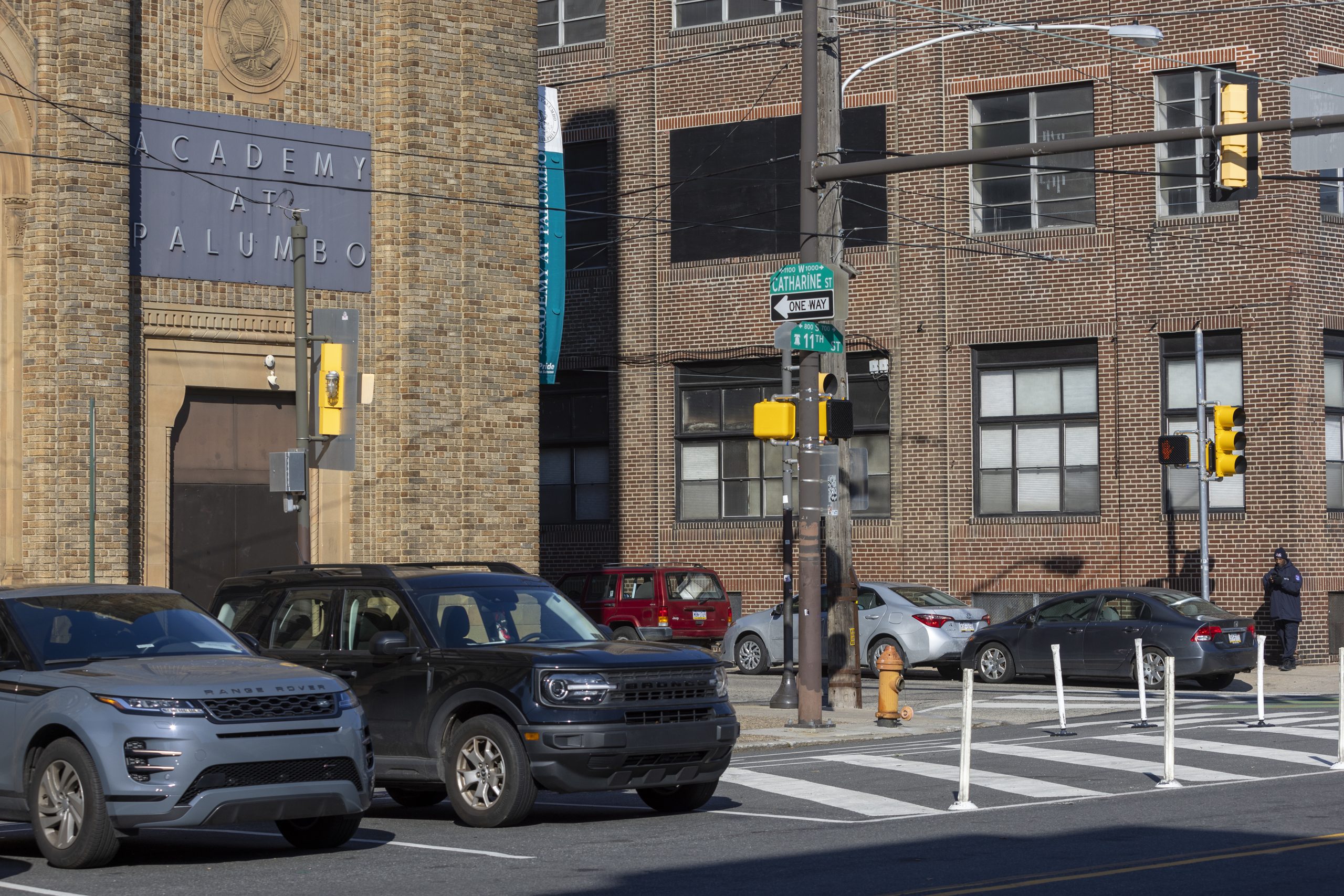
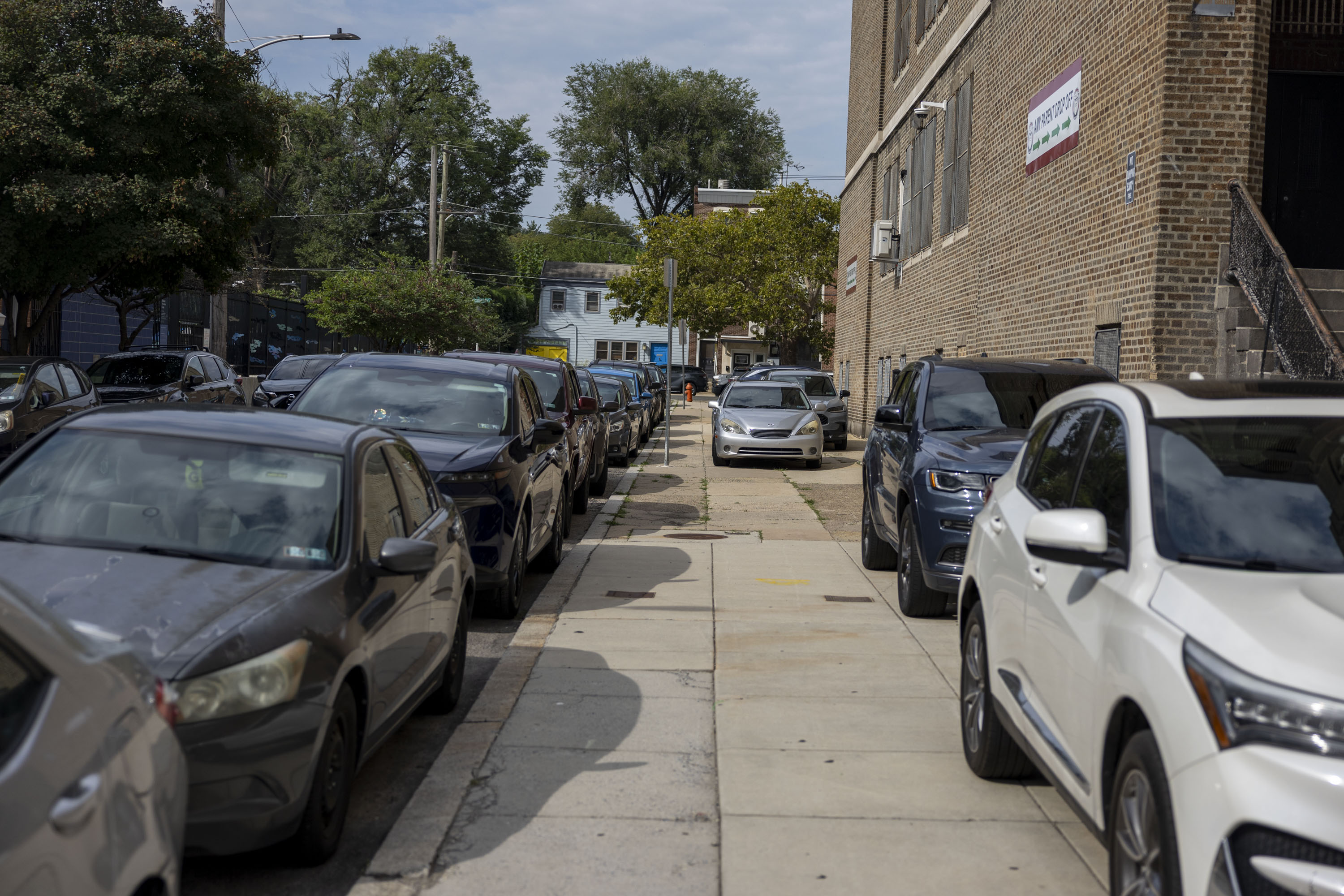
    The math is simple: There are 11 parking spots reserved for Academy at Palumbo teachers and 107 teachers and staff at the South Philadelphia school.

    There’s no parking lot and people who work at the acclaimed magnet school tend to drive, teachers say.

    Though public transportation is an option for some school staff, many teachers live outside the city, with fewer transit options nearby. And while some schools in the Philadelphia School District are close to bus, train, or trolley stops, others are farther afield, making them tougher to access via public transit.

    “Before I even walk in the doors of the school, I am already overwhelmed with stress every single day,” Palumbo teacher Sheila Fisher said. She and other Palumbo staff might circle for 30 minutes or more hunting for a space and often have to park in two-hour spots, they said — meaning they have to dash out during the school day to move their cars.

    Parking is at a premium at The Academy at Palumbo, at 11th and Catharine Streets, shown in this 2023 file photo. The school has over 100 staffers, no staff parking lot, and just 11 dedicated spaces.Alejandro A. Alvarez / Staff Photographer

    It’s a common problem at many Philadelphia School District schools that lack dedicated parking lots, or those that have lots too small to fit all employees’ cars. Amid a continuing teacher shortage, in an underfunded school system that offers lower pay and tougher working conditions than many neighboring districts, it’s a quality-of-life problem with a real effect.

    Bridget Mason, a Palumbo teacher, said neighbors have threatened to slash her tires if she parks in front of the public spaces in front of their houses.

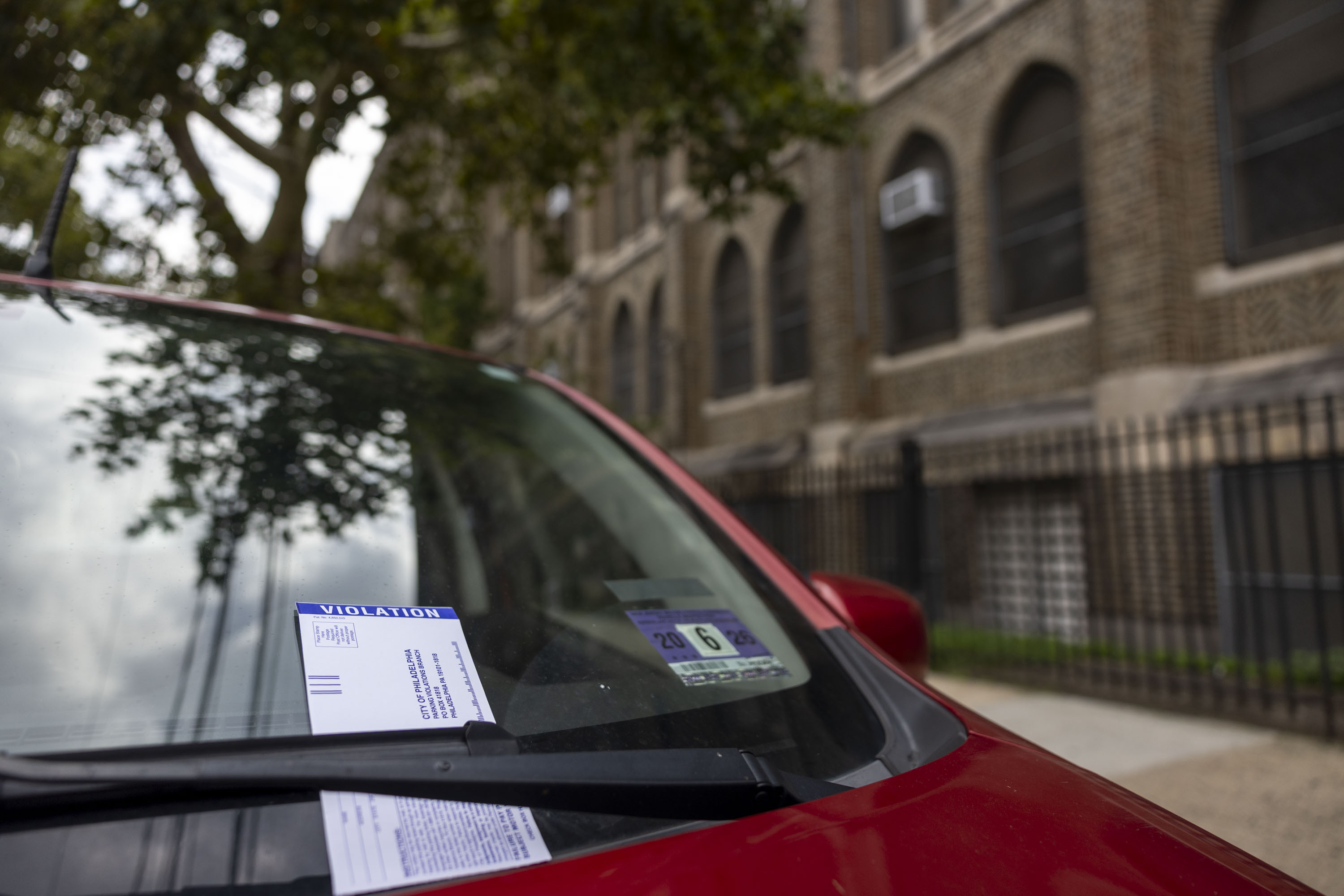
    Fisher estimates she’s gotten 150 or more tickets in the three years she’s worked at Palumbo and said she has paid close to $5,000 in tickets and lot fees on the days she just can’t find any spot.

    Fisher loves teaching at Palumbo and hopes it will be her last job before retirement, years from now. But that’s not a given, she said.

    “The stress has come to the point where my husband has mentioned the option of me leaving Palumbo to work elsewhere, because parking has become such a challenge,” Fisher said.

    ‘It’s a nightmare’

    To park at Penn Treaty High School in Fishtown, you can’t arrive too early, because neighbors won’t have moved their cars yet. But you can’t arrive too late, or you’ll miss your window, get locked out of a spot, and be late to work because you have to “circle and circle” for a space, said Kerri Todd, a longtime Penn Treaty teacher.

    Cars fill the streets and sidewalks outside Penn Treaty High School on Tuesday.Tyger Williams / Staff Photographer

    “It’s a nightmare — parking is so scarce,” Todd said. Some cars park on the sidewalk around the perimeter of the building.

    Todd knows exactly when she has to arrive for the best chance at a parking spot. And if she ends up having to settle for a two-hour space, it’s not as tough as it would be for other teachers, because Todd’s free periods make convenient times for car moving.

    But it’s still difficult, Todd said. (Penn Treaty teachers have the extra headache of knowing their school is closing for good in 2030 — the fifth- through 12th-grade school is one of 17 the district plans to close permanently.)

    Even Todd’s principal gets into the act. If she’s working in her office, Wajibah Thompson might hang her head out the window and help.

    “She’s like, ‘Yo, Kerri, move over, I think another car can squeeze in there.’ She’ll ask neighbors, ‘Can you move your car up a little more? We can get another car in,’” Todd said.

    A car with a parking ticket outside of Penn Treaty High School on Tuesday.Tyger Williams / Staff Photographer

    Parking is also a perpetual worry at Muñoz-Marín Elementary at Third and Ontario Streets in North Philadelphia, said Jennifer Goldman, a veteran teacher there. Muñoz-Marín has a lot, but it’s not nearly large enough for all staff at the 500-student school.

    Compounding the problem, Goldman said, is a vacant parcel adjacent to Muñoz-Marín’s parking lot — people dump trash there, and it’s smelly and not usable.

    “It’s awful parking around here,” Goldman said. “We just have to circle — it’s a race to find a spot, and sometimes people are late. Residents have started [putting cones in] their spots.”

    Educators working in neighborhoods around the city struggle with parking, with teachers at schools including Bache-Martin in Fairmount, Fanny Jackson Coppin and Southwark in South Philadelphia, and Robert Morris in North Philadelphia raising the issues to an Inquirer reporter.

    Cars parked all along a side street outside of Fanny Jackson Coppin School on Tuesday.Tyger Williams / Staff Photographer

    ‘It should not be this difficult’

    There’s some precedent for school parking help.

    Councilmember Jamie Gauthier paved a way for special parking permits for teachers at Powel Elementary in West Philadelphia. (The same permits are not available to Science Leadership Academy Middle School staffers, who work in the same building.)

    The permits are not free: The cost is roughly similar to the price of a monthly transit pass.

    Palumbo’s parent group wants a similar option for their teachers and staff, but three years of efforts have yielded only frustration, its leaders said. They’ve been shuffled from bureaucrat to bureaucrat, and ultimately have been told the person who can make it happen is City Council President Kenyatta Johnson, whose district includes Palumbo.

    Vincent Thompson, Johnson’s spokesperson, said Johnson understands parent and staff concerns but “at the same time, any discussion of changes to parking policy must consider the impact on the broader community” — the Philadelphia Parking Authority, neighbors, and residents who would be affected by turning some spaces into school staff permit parking during school hours.

    “Council President Johnson and his district office are willing to work with the Philadelphia Federation of Teachers to find thoughtful, practical solutions to parking challenges around our schools in the Second Councilmanic District,” Thompson said in a statement.

    The Philadelphia School District did not respond to a request for comment.

    Academy at Palumbo Liberal Arts High School, located at the corner of Catherine and S. 11th Streets. The teachers at school need to move their cars during work day because of timed street parking.Alejandro A. Alvarez / Staff Photographer

    Martin O’Rourke, a spokesperson for the PPA, said it “does its best to assist whenever possible, recognizing the delicate balance that exists among residents, businesses, visitors and teachers necessary to manage and share the limited curb space available for parking in many neighborhoods near local schools.”

    It’s frustrating to Julie Kaeli, the former Palumbo HSA president, that three years of “begging and nagging” Johnson’s office and others on behalf of students and teachers has led nowhere, she said.

    “They’re giving us lip service,” Kaeli said. “It’s so clear to us that they are no interested in addressing this issue. Our school is highly ranked, our teachers are amazing and so dedicated. We know what little resources and support they have. This is such an easy fix; it should not be this difficult.”

    ‘Parking was a must have’

    The lack of adequate parking for staff has consequences, according to educators and those who support them.

    “For me, parking was a must have when deciding on a school,” said Cathy Provenzano, who recently retired from teaching at Hill-Freedman World Academy in East Mount Airy. Hill-Freedman has a large lot.

    Parking problems have scared off teachers who were otherwise interested in coming to Palumbo, too.

    “Each year when interviewing potential new staff, the school may be interested in offering a position to a candidate, but candidates turn down offers because of the lack of parking,” the school HSA said in a statement. “With the teacher shortages the district has had, this is not ideal.”

    The parking lot full with teachers and staff’s cars at Luis Muñoz-Marín Elementary School on Tuesday.Tyger Williams / Staff Photographer

    A teacher at a Kensington school has dealt with a lack of parking lot for years. But it’s gotten tougher to park in the neighborhood, and she’s at her wit’s end, she said. The teacher requested her name be withheld because she feared reprisal.

    “I’ve been at my school for over 10 years and have never considered leaving until the first day of school this year,” the teacher said. “I drove around for about 35 minutes, trying to find parking.”

    She ended up clocking in late.

    “Our students deserve high-quality educators, but us not having a parking lot is a huge deterrent for many people,” she said. “While we are lucky to have several staff members at our school that have been there for five or more years, we also have had a higher turnover in the years since street cleaning became a thing. Teachers don’t want to spend extra time driving around to find parking. That time is meant to be preparing for our student, to make sure that they’re getting the education they deserve.”

  • Camp Cranium zips ahead, despite funding uncertainty

    Camp Cranium zips ahead, despite funding uncertainty

    MILLVILLE, Pa. — In an open field, arrows whizzed through the humid June air and struck their targets. Campers and counselors cheered.

    It was archery hour at Camp Cranium. Operations director Drew Meyer watched, a few tears escaping from behind his dark sunglasses.

    “They will surprise you, like, flat out,” he said of the campers, who have all survived brain injuries. “They’ll come out here, and they’ll shoot for three hours and start hitting the target.”

    Campers, ranging in age from 10 to 21, have been coming to Camp Cranium in Pennsylvania’s rural Columbia County since 2008. Some of their brain injuries are so severe that they have to relearn basics, from talking to tying their shoelaces. Some use wheelchairs or crutches. But during a week at camp, they climb rock walls, swim, and whiz down a zip line through the lush forest.

    The existence of Camp Cranium, and a handful of others like it, is a response to a decades-long national trend: More people, including children, now survive crises resulting in brain injury than did in the 1980s. The improvements in survival are largely due to seat belt laws and federal investments in research and trauma centers that can treat injuries quickly.

    But recently, efforts to track and prevent one type of brain injury, traumatic ones, are in flux after Congress didn’t renew a law to further research and prevention of traumatic brain injuries, and the Trump administration fired hundreds of employees at the Centers for Disease Control and Prevention, including the team tracking traumatic brain injuries, or TBIs.

    “Brain injury can happen to anybody,” said Rebeccah Wolfkiel, executive director of the National Association of State Head Injury Administrators. “This community deserves more.”

    Lucas Hardy uses a hoist to climb the rock wall at Camp Cranium, a weeklong event in Pennsylvania’s Columbia County that helps children with brain injuries gain confidence. (Sarah Hofius Hall/WVIA News) Sarah Hofius Hall / WVIA News

    Tracking brain injuries

    Lucas Hardy, 14, smiled at the encouraging crowd below. In a shady clearing in the woods, he climbed the 30-foot rock wall, aided by a hoist that pulled him out of his wheelchair and helped support his moves. Hardy suffered a traumatic brain injury at age 3, when a tree branch fell on him at a birthday party.

    Annually, an estimated 2.8 million Americans experience a TBI — including about 475,000 children, according to the Brain Injury Association of America.

    Recent data suggests those are undercounts. In 2018, a CDC team piloted a household survey asking about TBIs in a sample of U.S. children and adults. The results informed a study concluding that such injuries, which are often considered “hidden” because the damage is internal and unseen, are more widespread than hospitalization numbers suggest.

    The mass firings at the CDC in early 2025 gutted the team studying TBI, right before they were expected to launch a nationwide concussion surveillance system. A spokesperson for the Department of Health and Human Services, Emily Hilliard, did not respond to questions about the number of employees terminated, or if they were reinstated or replaced.

    In a statement, she said: “The Trump Administration remains committed to supporting efforts to prevent traumatic brain injuries, improve surveillance, and ensure Americans have access to practical, evidence-based information that can help protect their health and safety.”

    She said the agency’s TBI work is now handled by other staff members at the National Center for Injury Prevention and Control.

    Hilliard said the CDC is deciding how to establish a cost-effective national concussion surveillance system within the bounds of current funding, and said the agency in 2026 dedicated funds to support, among other things, an educational campaign about concussions, an injury prevention program, and concussion surveillance.

    But Wolfkiel still worries about how the CDC firings and the impasse over federal funding will affect brain injury research and prevention efforts in the long term.

    “The lack of resources and programs and information that’s out there is really just sort of appalling,” Wolfkiel said.

    Tony Sadowski (right) serves as executive director of Camp Cranium. He first learned about the camp when a speech therapist recommended it to his son, Bryan, who had suffered a brain bleed that caused a hemorrhagic stroke at age 6. Now 18, Bryan (left) is preparing to study occupational therapy at Elizabethtown College. (Sarah Hofius Hall/WVIA News) Sarah Hofius Hall / WVIA News

    Federal funding uncertainty

    Tony Sadowski, the camp’s executive director, remembers when his son, Bryan, suffered a brain bleed that caused a hemorrhagic stroke at age 6. “You’re in the emergency room,” he recalled, “not knowing what version of your son’s going to wake up.”

    Now 18, Bryan Sadowski has attended the camp for years.

    “We’re very lucky to be able to be here,” the elder Sadowski said.

    In 1996, before Bryan was born, Congress passed the Traumatic Brain Injury Act, which has provided many states with grants for TBI research, advocacy, and services. Since then, Congress reauthorized the act four times, largely with bipartisan support, until 2024.

    It has remained lapsed since then. Trump’s secretary of the Department of Homeland Security, Markwayne Mullin, supported reauthorizing funding when he was a senator. Congress is still considering whether to reauthorize funding through 2030.

    Despite the lapse in funding, money is still flowing to TBI programs at the CDC and in states, according to Rick Willis, president and CEO of the Brain Injury Association of America.

    Congress did appropriate $8.25 million for TBI program activities through the Consolidated Appropriations Act of 2026. That’s far less than the $23 million Congress provided for each fiscal year, from 2020 through 2024, the last time it reauthorized the act.

    “The TBI Act is the only piece of federal funding for traumatic brain injury at the federal level,” Willis said. “We’re aiming to preserve what we have.”

    The funding uncertainty has not affected the handful of brain injury camps, including Camp Cranium and Bright Ideas TBI Camp in Alabama, because they are nonprofits that mostly rely on private donations.

    Brianna Engleman (right) collects song requests for a dance scheduled that night at Camp Cranium. Engleman has been a camper since 2018 and says she plans to come back as a counselor to support other campers like herself. (Sarah Hofius Hall/WVIA News) Sarah Hofius Hall / WVIA News

    Back at Camp Cranium, bursts of laughter, whoops of delight, and distant chatter punctuated the humid summer air.

    While her fellow campers did archery or art, Brianna Engleman moved between groups, collecting song requests for a dance that evening. When she was 5, doctors performed a hemispherectomy to relieve her of debilitating seizures. But the surgery itself can injure other parts of the brain.

    She lives in Northern Virginia and first attended Camp Cranium as a teen in 2018. It was her first time being around so many people like her, said Engleman, now 21.

    “I’ve gotten more confident,” Engleman said. “It made me think, well, there’s actually good people out there.”

    Next time she returns to camp, she said, she plans to do so as a counselor.

    This article is from a partnership that includes WVIA, NPR, and KFF Health News.

    KFF Health News is a national newsroom that produces in-depth journalism about health issues and is one of the core operating programs at KFF — the independent source for health policy research, polling, and journalism.

  • As workplace surveillance grows, experts say it’s good to know the ways your employer is watching

    As workplace surveillance grows, experts say it’s good to know the ways your employer is watching

    NEW YORK — College administrators read an adjunct professor’s comments to students on personal essays. Managers told a pharmacist to spend less time with patients after tracking the number and length of her appointments. Scanners on a warehouse conveyor belt monitored the pace of workers to ensure they inspected hundreds of items per hour.

    Thousands of employers are keeping tabs on the whereabouts, productivity, and communications of workers with technology that was adopted widely during the coronavirus pandemic. A vast array of digital tools still are being used to track locations, collect data on task completion rates, and access work-issued smartphone and laptop cameras, raising concerns about how much privacy employees have relinquished, even in their own homes.

    Employers have always monitored workers, but recent advances in artificial intelligence and data science enable them to create extensive data sets or “dossiers” that can be used to punish workers or attempt to predict employee behavior, said Wilneida Negrón, director of research and policy at Coworker, a nonprofit that helps workers organize to improve working conditions.

    “Oftentimes, the workers with the least amount of power in the labor markets tend to be testing grounds for some of the more intrusive forms of data collection,” Negrón said.

    Some of the most common workplace monitoring programs have shared names, email addresses, and other personal worker data with hundreds of outside data brokers and technology companies without clearly disclosing the practice, according to an investigation by Vanderbilt University, Northeastern University, and the University of California at Berkeley.

    Data privacy experts and workers who say they’ve been closely monitored spoke with the Associated Press about what they see as the risks of employer surveillance and the steps employees can take to protect their personal information.

    Team up with like-minded colleagues to advocate for yourself

    Pharmacist Lannie Duong’s job at a medical clinic involved meeting with patients who had chronic conditions such as diabetes, hypertension, and heart disease. She reviewed their medical histories, blood work, and symptoms, and adjusted their medications. She frequently enlisted interpreters to help her communicate with patients who had limited English language skills.

    Duong said her employer tracked the length of her phone calls and appointments, and in performance evaluations questioned why she took so long with each patient.

    “Everything was counted. How many minutes you’re on the phone. The minutiae of it was ridiculous,” Duong said. “We’re just tasked to do what feels like the impossible.”

    Under what she described as unrelenting pressure, Duong felt “not trusted, not appreciated, almost completely hopeless. It was so depressing.” She eventually went on medical leave and began volunteering with other pharmacists to organize a union.

    “I spoke up, hoping others would voice their concerns as well, but that didn’t really pan out,” Duong said. She says her employment was terminated after the medical leave.

    Many of the employers using surveillance tools do so transparently and engage employee boards in reviewing how the tools are used, Negrón said. But there are also employers tracking, ranking, and scoring employees in ways that are not transparent to workers, she said.

    “Workers are going to have to come together because the forces of centralizing this kind of tracking and monitoring are moving too fast,” Negrón said.

    Find out what kind of data your employer is collecting about you

    As awareness about surveillance tools grows, some workers are pushing back on tools that track how long it takes to fulfill tasks, saying such monitoring contributes to injuries, and questioning what personal information is being collected and how it’s being used, said Hayley Tsukayama, director of state affairs at the Electronic Frontier Foundation, a nonprofit that focuses on digital privacy.

    “Unfortunately, if you are on a machine that’s been issued by your workplace, you should expect that there’s some type of monitoring,” Tsukayama said.

    Researching data collection and surveillance trends in your industry is a good idea, according to Negrón. Without that knowledge, workers may find themselves unprepared when confronted with information unearthed during surveillance.

    While teaching a college writing class, Arianna Anaya discovered that an administrator was reading the papers her students uploaded to the school’s learning management software and the comments Anaya made on the work. The students often wrote about intimate topics, including abuse, eating disorders, and family trauma.

    “The school essentially used the online learning system to allow administrators and staff to read student work that was often immensely private and personal, something we were specifically told students should not know about,” Anaya said.

    A colleague who printed out the comments criticized the casual tone Anaya used with students and accused her of not sticking to the course syllabus. A few months later, Anaya’s teaching contract wasn’t renewed, although she doesn’t know the exact reason.

    “It made me quite paranoid,” Anaya said. “It made me feel less safe in the world.”

    Check state laws to see what’s required of employers

    Some states, including Delaware, New York, Connecticut, and Maine, require employers to notify workers if they’re being monitored. Maine’s law goes further, prohibiting visual monitoring in employees’ homes or personal vehicles unless that kind of observation is required for the duties of the job, said Edward Halle, a privacy and AI compliance manager.

    “The question becomes, what does the law mean by ‘the duties of the job’?” Halle said. “A telehealth nurse needs a camera; the camera is the job. A productivity webcam bolted onto ordinary desk work almost certainly isn’t. Where that line falls is the first thing the Department of Labor will be asked to sort out.”

    If you work in a state without a notification requirement, it’s difficult to find out if an employer is using technology to monitor your performance.

    To raise the issue with managers, Tsukayama suggests coordinating with a union. If that’s not an option and you’re asking managers individually, approach the topic cautiously and take a curious tone, she advised. You could say you’ve noticed something on the computer and have questions, such as, “How is this information being used within the company? How might it get out of the company?” Tsukayama said.

    One place to start is asking what specific employee data your organization collects, said Aiha Nguyen, director of the Labor Futures Initiative at Data & Society, a nonprofit institute studying the impacts of technology. If your manager doesn’t know, the information technology department may have answers, since the people working there often are the ones turning on the features, Nguyen said.

    Some common software programs such as Microsoft Office and Zoom have tools that can be used for tracking worker productivity, but the tracking features aren’t always activated. Knowing whether those tracking features are turned on can be difficult, because they’re built into the programs, Nguyen said.

    “It’s automatic. It’s considered something that employers have been able to say, ‘This is necessary for work. You have to use these tools,’” she said.

    To help safeguard personal information, don’t use work devices to handle family matters or sensitive personal information such as medical conditions, experts advise.

    “I think most people know that,” Nguyen said. ”But it can become tedious to switch between phones, or people don’t really think it’s that harmful. … You don’t want to potentially put yourself at risk.”

  • Why more homeowners across the U.S. are turning to an insurance that offers less coverage

    Why more homeowners across the U.S. are turning to an insurance that offers less coverage

    A last-resort insurance policy with fewer homeowner protections and less government oversight is booming, a Washington Post analysis finds, as traditional insurers continue to back away from areas of the country most vulnerable to extreme weather.

    The policies are growing fastest in California, Florida, Texas, and South Carolina because increasingly intensifying weather and massive disasters are putting more insurers on the hook for substantial claim payouts. Last year in California, insurance companies paid out $23 billion in homeowners claims, according to industry data.

    The amount of premiums written under what is known as “surplus” or “excess” insurance lines has nearly tripled nationwide in the past five years, from about $1.5 billion in 2021 to $4.1 billion in 2025, according to data from the National Association of Insurance Commissioners (NAIC) — which insurers submit to the organization — and analyzed by the independent firm Weiss Ratings and provided to the Post. The Post reviewed the data and the Weiss analysis.

    While this represents only a small share of the total $187 billion in premiums written in the United States each year, according to the Weiss data, industry experts say they reflect a problem where Americans living in the most weather-exposed places are becoming harder to insure.

    In 2025, the Treasury Department’s Federal Insurance Office released a report showing how, due to climate-related events, millions of Americans were finding it harder to obtain insurance and had to pay more for it.

    And as more insurers pull back or limit coverage, more Americans have struggled to find it and have sought out surplus line plans. Independent brokers often steer homeowners to surplus policies when they cannot obtain a traditional plan, though carriers also advertise directly to consumers.

    These once-niche policies, which date to the late 1800s, historically covered commercial, high-risk, or unusual properties.

    They can sometimes be more expensive and often have more limitations and restrictive clauses, including arbitration clauses stating that homeowners cannot select their own contractors or price adjusters.

    Experts said they have fewer consumer protections, prompting some advocates and state regulators to warn that homeowners may get lower payouts in the event of a disaster.

    California’s surplus line industry is expanding more than almost any other state, according to the Post and Weiss analysis of NAIC data, which only includes insurers based in the U.S. Since 2021, the amount of surplus premiums written in California increased tenfold from $135 million to nearly $1.3 billion, now accounting for 7% of all homeowners premiums in the state compared with just 1% five years ago.

    California’s insurance crisis has been spreading beyond wildfire-prone regions, according to new Stanford University research, which found that the number of residents having to get coverage from the state’s backup insurance option, the Fair Plan, has tripled since 2020.

    A Post review of domestically based surplus line carriers across the U.S. found that 10 companies account for slightly more than half of all premiums, most of which are owned by major insurance companies.

    Major insurance providers, such as Lloyd’s of London and Berkshire Hathaway, dominate the industry, but smaller companies have also been proliferating.

    Some industry experts say these policies fill a void created by carriers pulling out or limiting coverage, and that without them, markets would be in greater distress. These companies are exempt from certain rules, allowing them to change what their plans cover and how much they charge faster than standard carriers.

    “The industry is built on two things: freedom of rate and form,” said Benjamin McKay, CEO of the Surplus Line Association of California, a nonprofit organization that advises the California Department of Insurance on law and policy. “You can charge what you want to charge and then have the contract say whatever it needs to say. You can exclude and include whatever.”

    The push-pull with surplus lines, McKay explained, is that while they are needed, they are a “reactive function of what’s happening in the admitted market.”

    McKay said the “proper role” for these less-conventional homeowners plans is “as a safety valve, not becoming the default option. Bottom line: We just need a healthy market.”

    State officials also have less insight into surplus carriers’ financial conditions, because they are not subject to the same financial requirements and tests that states such as California impose on admitted carriers.

    However, surplus lines still have to follow California laws, said Michael Soller, deputy commissioner of the California Department of Insurance’s communications and public relations branch.

    The Post recently found that some major surplus line companies such as AIG had been including separate “wildfire deductibles” in their policies, which Soller said violated state consumer codes and warranted a review.

    AIG — which has three subsidiaries offering surplus line policies to high-net-worth properties, all of which are operating in California — stopped offering its standard, regulated insurance for high-end properties in the state due to what the company said in a statement was “part of AIG’s multi-year transformation to streamline its portfolio.” In 2021, nearly 8,000 wildfires burned nearly 2.6 million acres of land across California.

    Over the years, according to California insurance officials, AIG asked for rate increases that were substantially lower than what their own data reflected was necessary for its exposure to risk. In 2020, after the state approved two subsequent raises, AIG asked to bump rates by nearly 42% before withdrawing that request.

    One of its subsidiaries, Lexington Insurance Co., is the seventh-largest surplus line carrier nationally, a Post review of data shows. AIG said its plans for “high-net-worth homeowners’ insurance” are primarily issued through that company.

    From 2020 to 2025, AIG’s standard homeowners business plummeted to zero in California, according to data obtained by Weiss Ratings and reviewed by the Post. Meanwhile, its surplus line business grew from $24 million to $119 million, data shows. The carrier announced in January 2022 that it was pulling back coverage but would still offer surplus line insurance to high-net-worth, specialty clients.

    “AIG has switched its entire California homeowners business to surplus line insurance,” said Martin Weiss, founder of Weiss Ratings.

    Over that six-year period, the insurance company’s surplus line premiums grew by 394% in California.

    “AIG has participated in California’s surplus lines market for more than 60 years, providing coverage for specialized risks that generally cannot be placed in the admitted market,” the company said. It added that while its surplus line business for high-net-worth homeowners has grown along with the rest of the market, “it represents less than one percent of total California homeowners insurance premiums.”

    Isaac Park, who runs the Los Angeles-based Excel Adjusters with his father, said he has seen an increased number of clients over the past decade shifting to the state-backed Fair Plan, who are then forced to get a second policy for risks such as water damage. Park added that he has also seen more surplus line firms operating in the state.

    “They have more limitations of coverage,” he said.

    Some consumer advocates worry that since surplus line carriers don’t participate in state guarantor funds, which help support policyholders if their insurer goes insolvent, people are at greater risk of bad-faith behavior or not getting paid out on their claims.

    Companies are paying out less to homeowners with surplus line policies compared with traditional ones, according to the NAIC data provided to the Post. In the past five years, surplus insurance lines paid out an average of 36 cents in claims for every dollar in premiums they collected, compared with 58 cents for admitted carriers. In 2024, carriers paid out 15 cents on each dollar of premiums they collected from surplus line policyholders.

    Payouts from surplus line insurers spiked in 2025 because of the L.A. fires, according to experts.

    “They are the perfect loophole for an insurer who wants to evade regulation,” said Amy Bach, executive director of United Policyholders.

    Bach described surplus lines’ ability to avoid regulation as a “powder keg” for the industry. But she added, “They are also doing a good thing by providing protection that other insurers are not willing to provide.”

    A new report from Climate Cabinet Education, a nonprofit advocacy group, charts how this explosive growth happened. Most states, for example, require insurance agents and brokers to demonstrate that they made a “diligent effort” to place policyholders within the admitted market. In California, three carriers have to deny a resident before they can seek out a surplus line plan. But last year, Florida — where surplus lines in the homeowners market grew 74% between 2020 and 2025 to $888 million, according to the NAIC data — became the fifth state to scrap that requirement.

    Jayson O’Neill, spokesperson for the insurance reform advocacy group Unlocking America’s Future, said that several consumer advocacy groups are working with lawmakers in Texas and North Carolina on stronger regulations that could include barring insurers from removing some protections from basic coverage.

    Park, the public adjuster who helps represent Californians in battles with their carriers over claims, said that even before last year’s fires in L.A., he was seeing “a lot of insurance companies dropping my clients after just one claim.” Now the landscape seems even more dire.

    Ben Taggart lives in Oakland Hills, Calif., near the site of a massive fire in 1991 and a community identified as a high-risk zone for wildfires. He found his current surplus line insurer two years ago, which aggregator sites identified as the only other option aside from the state-backed Fair Plan.

    Taggart said in an email that he wished he could get a policy through an insurer admitted into the California market, and that he is reluctant to file any claims given that his deductible is $10,000 and he worries the company would drop him if he made a claim.

    “The only people I know on our block who are still with admitted insurers are boomers who have been in their house a really long time,” he said. “Everyone who moved here recently is on surplus or Fair.”


  • Horoscopes: Sunday, Sept. 6, 2026

    Horoscopes: Sunday, Sept. 6, 2026

    ARIES (March 21-April 19). Make your move. When you know it’s the right thing to do, there’s power in acting while your conviction is fresh. Some of the best things in life begin with one sentence that almost stayed inside your head.

    TAURUS (April 20-May 20). What’s standing between you and change? Something you don’t want to lose. Because while change brings new things into your life, it also makes room for it by dropping something else. You still haven’t definitively decided if it’s worth it.

    GEMINI (May 21-June 21). Complaining is like sitting in a rocking chair — the motion can comfort even while going nowhere. Stay a while in the back and forth. Not every problem needs fixing, and not every fix is yours to make.

    CANCER (June 22-July 22). Your efforts have been building something larger than today’s results suggest. Choice by choice, you’ve become part of a story that extends well beyond your own chapter.

    LEO (July 23-Aug. 22). Your favorite people are the ones who accept you so fully, you’re able to dream a little with them, take risks and be silly. The humor could hit or miss, but the misses don’t cost much and the hits are some of the most fun you have.

    VIRGO (Aug. 23-Sept. 22). Your fans at a distance see the broad strokes of your life, while the ones who adore you up close have that nuanced understanding of you that is closer to how you experience yourself, which is why their feedback means so much.

    LIBRA (Sept. 23-Oct. 23). You have a big heart and an impressive tolerance for the kind of communicators who can’t seem to throw the ball back. They need all the attention they can get and will keep going until you conclude things, so prepare for that.

    SCORPIO (Oct. 24-Nov. 21). Some of your preferences feel like they may have been borrowed, at least originally. Even if so, they’re yours now, and you’ll mix and experiment with them as you develop taste all your own.

    SAGITTARIUS (Nov. 22-Dec. 21). Creativity isn’t just for artists. It’s one of the most practical tools you own. Some people think creativity belongs at the end of the process. Today, it belongs at the beginning.

    CAPRICORN (Dec. 22-Jan. 19). Finally, it’s the perfect opportunity to bring something dusty and dated right up to the current moment, and it won’t cost you a thing. It’s as simple as changing a word or noticing an idea no longer applies. In a blink, you’re au courant.

    AQUARIUS (Jan. 20-Feb. 18). The answers are out there. Never before in history have they been so readily available. And yet, knowledge can only rise to the level of the question being asked. You’ll ask great ones today that get right to the root of the matter.

    PISCES (Feb. 19-March 20). Ideally, you would have many people in your life with whom you feel comfortable sharing an unpolished version of a story. The person who listens while you figure out what you’re trying to say is a true friend.

    TODAY’S BIRTHDAY (Sept. 6). In your Calliope year, life seems to rhyme with poetic magic, justice and epicness. People feel a profound resonance in the work you’re doing. They respond to the power of your personal stories. Relationships sing with inspiration, and you’ll make many lasting memories. Love has a tender specificity. A long-delayed payment arrives, closing an old chapter. More highlights: community events, parties and performances. Virgo and Cancer adore you. Your lucky numbers are: 6, 3, 4, 19 and 22.

  • Dear Abby | Antisocial husband ruins all the fun

    Dear Abby | Antisocial husband ruins all the fun

    DEAR ABBY: My husband and I have been married for eight years. For the most part, we are happy, but there is one thing that upsets me. He doesn’t like to have people over for social events. In fact, I can’t get him to participate in any social outing without him moaning and complaining the entire time.

    I enjoy getting together with friends and having people over and so do our children. I love hosting birthday parties, barbecues and such, and I would love to have couples over for drinks or even a game night. It’s a constant struggle because my husband won’t meet me halfway. I feel like I’m trapped in my own home and can’t go anywhere. If I do go, he rarely accompanies me and our kids to social gatherings, and I am left to explain why he isn’t with us. I hate being put in this position. How can I make him meet me halfway?

    — HELD BACK

    DEAR HELD BACK: Short of ordering your husband to socialize at gunpoint, there’s nothing you can do. (Please do not point a gun at your husband.) By now, you should have realized that you can’t change him. You can, however, change how you react to his behavior.

    Unless he had a complete personality change after the wedding, this is the person you married. Because this is who he is, it’s up to you to be less embarrassed and more up-front about explaining his absence when you and your children socialize without him. (“You know, ‘Harry’ just isn’t comfortable socializing. It’s not in his nature.”) Unless he forbids you to host a game night once in a while, go ahead and plan one. If he’s as antisocial as you say he is, he won’t be missed.

    ** ** **

    DEAR ABBY: My granddaughter “Carrie” is getting married this fall. She has asked me to escort her down the aisle. She is in her mid-30s, and this is her second marriage. I am honored but also uncomfortable. Her mother (my daughter, “Lori”) and father were never married, and they have three children together. He was emotionally and physically abusive to the children and my daughter.

    Carrie is estranged from her father and has had nothing to do with him for several years. She is also estranged from her mother. She feels that Lori has never been a mother to her, didn’t protect her or her siblings from their father and has recently made little effort to show an interest in her life. I have not yet told Lori that Carrie asked me to escort her down the aisle. I know Lori will be heartbroken. I am afraid that when I do tell her, our relationship will suffer. It is a long time between now and the wedding. Any suggestions?

    — CONFLICTED GRANDMOTHER

    DEAR GRANDMOTHER: Lori must already know that she won’t be invited to the ceremony, much less be a member of the wedding party. She can’t expect Carrie to walk down the aisle alone, so I hope she will be grateful that Carrie has a proud grandmother to fill the role. If not, that’s her problem; do not make it yours. Help give Carrie a loving, happy wedding day, and don’t allow the conflict between them to drag you down.

  • Gene Bertoncini, 89, jazz guitarist who dazzled with subtlety

    Gene Bertoncini, 89, jazz guitarist who dazzled with subtlety

    Gene Bertoncini, a prolific jazz guitarist celebrated for his bountiful lyricism and driving swing, for accompanying celebrated singers including Tony Bennett and Lena Horne, and for performances and arrangements that blurred the line between jazz and classical music, died on Saturday at the Actors Fund Home in Englewood, N.J. He was 89.

    His niece Nina Collins confirmed the death.

    Throughout a career that began in a duo with his older brother, Renny, an accordionist, playing in restaurants and catering halls near their childhood home in the Bronx, Mr. Bertoncini was heralded as a sensitive accompanist and innovative leader.

    In a sideman role, he worked with many of the greatest jazz singers of the 20th century, including Bennett, Horne, and Nancy Wilson, and with instrumentalists as varied as Benny Goodman, Wayne Shorter, and Michel Legrand.

    Mr. Bertoncini was equally at home with the Great American Songbook, the European classical repertoire, and, in advance of his fellow jazz guitarists, Brazilian works in the bossa nova style composed by such colleagues as Antonio Carlos Jobim and his close friend Joao Gilberto.

    Mr. Bertoncini was in his early 20s when he played his first major date with a nationally known headliner, Buddy Rich, and passed muster with the notoriously temperamental drummer and bandleader.

    “Buddy really liked the way I played rhythm with him,” Mr. Bertoncini said in an interview last year. “He liked that he didn’t have to tell me anything. I was able to lock into the beat with him, which was amazing, because he was such a dominant force.”

    In the early 1960s, Mr. Bertoncini found plentiful work in New York studios, not least because his facility with nylon-string classical guitar technique lent itself to bossa nova at a time when few established guitarists could play it.

    During those years, he played on Ahmad Jamal’s 1963 album Macanudo; formed a trio with pianist Monty Alexander and bassist Bob Cranshaw; performed on two albums by the trumpeter Clark Terry; and became a regular in the Tonight Show band until that late-night program moved to Los Angeles from New York in 1972.

    Over the next several decades, Mr. Bertoncini played thousands of studio dates. Some teamed him with bassist Ron Carter, and Mr. Bertoncini gave his last major performance in New York, at Mezzrow, with Carter in December.

    Gene Joseph Bertoncini, the younger of two sons, was born in the Bronx on April 6, 1937, to Italian immigrants Mario and Anita (Ori) Bertoncini.

    Mario Bertoncini, a waiter who later owned and operated a diner called Joe’s on Third Avenue in Manhattan, also taught his sons to play the music of the old country.

    At 17, Mr. Bertoncini accepted a scholarship to study architecture at Notre Dame, which seemed like a safer career bet than the itinerant life of a musician. During the five-year program, he also played in student ensembles and directed the school’s swing band.

    Upon returning to New York after graduating in 1959, Mr. Bertoncini took an entry-level position in the architecture firm of David Henken, a prominent disciple of Frank Lloyd Wright, and moonlighted in big bands. In the middle of one show with a dance band led by Richard Maltby, Mr. Bertoncini later said, he had an epiphany after he hit a wrong note, which was a shock to his system at the time.

    “Probably nobody noticed but me, but I couldn’t live with that,” he said. “I attributed it to the fact that I hadn’t been practicing enough.” He decided to quit his day job and commit full-time to the guitar.

    Discographer Glenn Broadhead compiled a listing of 188 known albums featuring Bertoncini — 32 as leader and 156 as sideman — but even that was far from an exhaustive list, considering the guitarist’s work on thousands of sessions for pop albums and singles, and film and TV soundtracks.

    In the jazz world especially, it’s largely acknowledged that Mr. Bertoncini — who never married and left no immediate survivors — influenced legions of guitarists through his music.