Tag: no-latest

  • Thousands of observers are expected to descend on polling places to monitor the vote on Election Day

    Thousands of observers are expected to descend on polling places to monitor the vote on Election Day

    NEW YORK — Democrats and outside watchdogs are planning a massive presence at the polls on Election Day driven by concerns that President Donald Trump will further leverage the vast resources of the federal government to interfere with a midterm that could hobble his final two years in office.

    They won’t be the only ones there. A sprawling election protection effort on the left that is expected to deploy tens of thousands of monitors will be met by the largest-ever monitoring program by the Justice Department and still more observers from Republican-aligned groups. The result could be unlike anything seen at the polls in modern times.

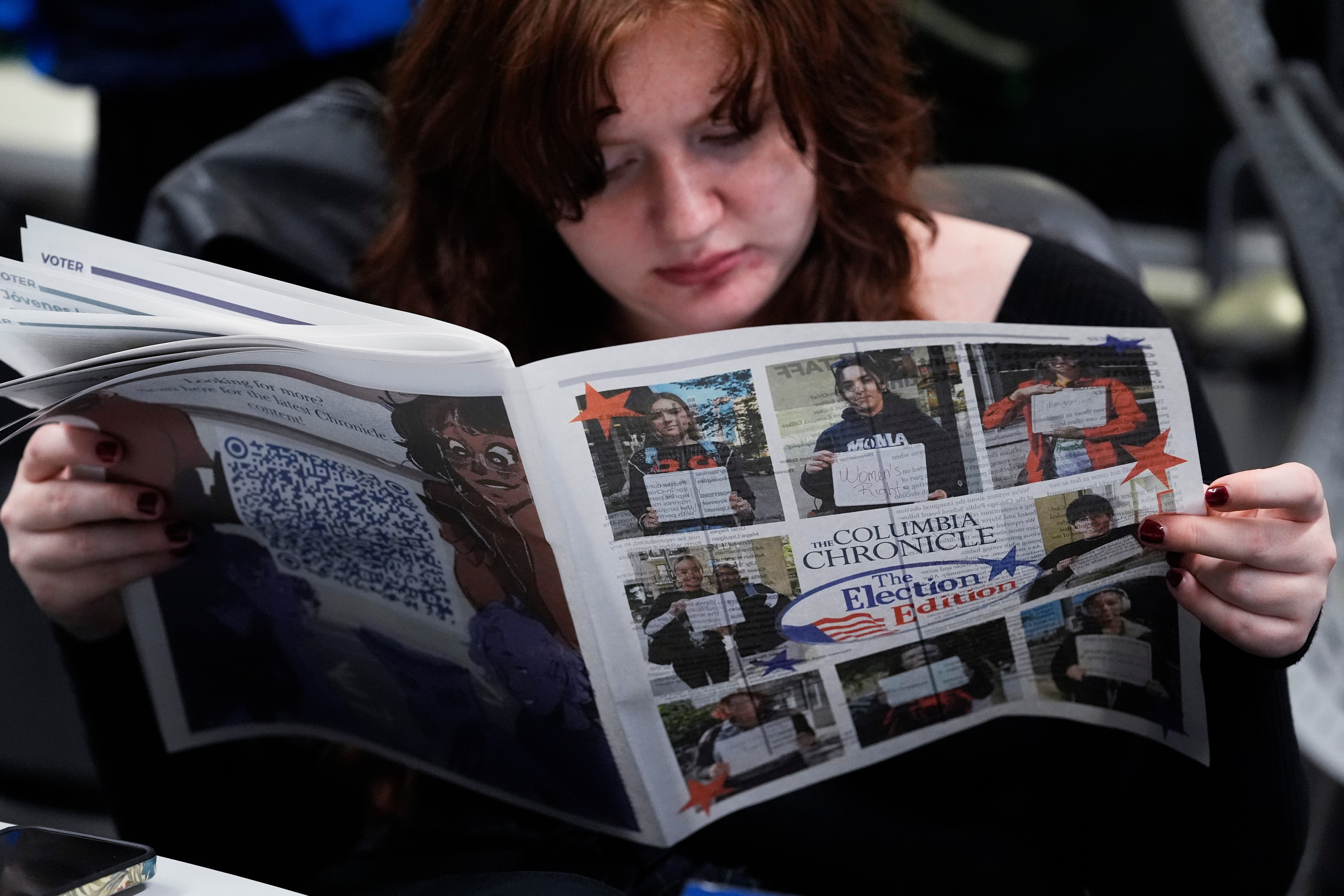
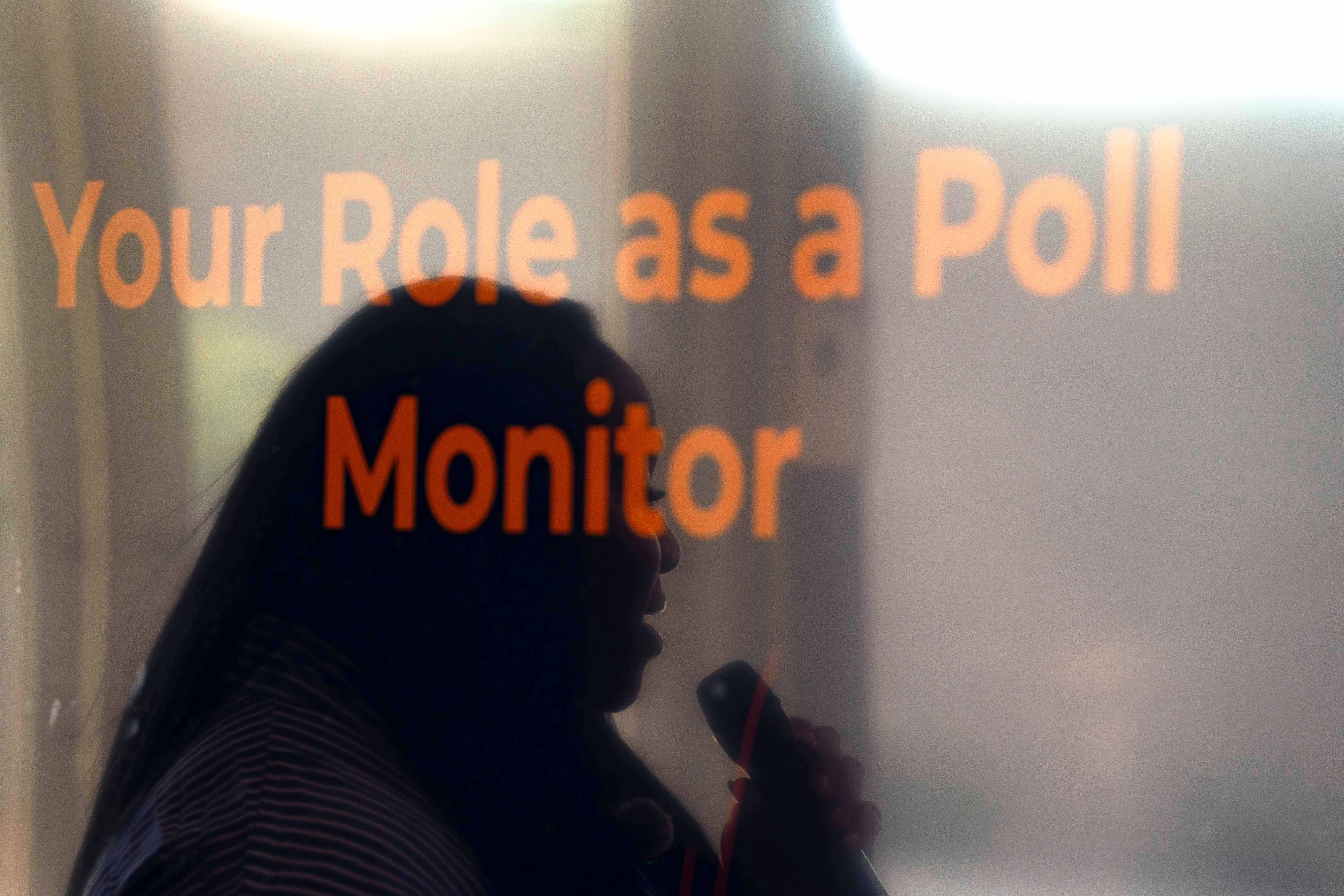
    The effort among Democratic and nonprofit groups includes training volunteers to stand watch outside polling places and report activities they consider concerning. The network includes traditional government watchdogs such as Common Cause and the American Civil Liberties Union plus a flood of volunteers assembled by state Democratic parties, congressional leaders, national activist groups, and organizations focused on protecting democracy.

    The Democratic National Committee’s Association of State Democratic Committees created a first-of-its-kind cybersecurity unit staffed by former CIA and FBI officials to monitor and report online misinformation, including artificial intelligence deepfakes, said Jane Kleeb, vice chair of the DNC.

    That’s as Democratic mayors, attorneys general, and secretaries of state host tabletop exercises simulating worst-case scenarios, such as a surge of Immigration and Customs Enforcement officials at voting locations or the seizure of ballots and voting equipment.

    On Capitol Hill, Democratic leaders have assembled a legal team that rivals that of any presidential campaign.

    “We’ve never done this before,” Kleeb said of the party’s sweeping efforts. But “we’ve never had to deal with the president of the United States saying that he may seize ballots, put ICE agents outside polling locations, and other kinds of very clear, direct threats to the voting process.”

    The Department of Justice has already filed lawsuits in California and Alaska that could affect ballot counting or certification.

    While Trump continues to make baseless allegations of cheating in the election, administration and military officials have said they have no plans to deploy immigration agents or troops to polling sites.

    White House spokesperson Lauren Bis blamed “radical Democrats” for creating fears about election security by refusing to enact voter ID requirements and other Republican-backed measures.

    “President Trump has done more than any other president to ensure we have free and fair elections,” Bis said.

    DOJ will send monitors to Philadelphia

    The U.S. Justice Department plans to send monitors to polling stations in Philadelphia and three other Pennsylvania counties for Election Day, according to a letter obtained by The Inquirer.

    The Oct. 22 letter addressed to Pennsylvania Secretary of State Al Schmidt says the Justice Department intends to send monitors to Philadelphia, Allegheny, Luzerne, and Lehigh Counties for the Nov. 3 general election. It does not say what led to the decision to deploy monitors, or how the counties were selected.

    The monitors will follow all state and local rules, wrote James Catania, the Justice Department attorney assigned to supervise the monitors in the region. They will ensure compliance with federal voting laws, including the Voting Rights Act, National Voter Registration Act, and Americans with Disabilities Act.

    “Our monitors only observe and take notes,” the letter said. “They do not intrude or interfere in any way in the voting process.”

    The monitors will not be allowed to wear uniforms or pins that identify them as Justice Department staff, the letter said.

    Federal monitors are not entitled to greater access to polling places than members of the general public, a Pennsylvania Department of State spokesperson said in a statement.

    Vic Walczak, ACLU-Pennsylvania’s legal director, said he didn’t see cause for alarm by the plan to send monitors to Philadelphia and the three other Pennsylvania counties. The Biden administration sent monitors to the same counties in previous elections, he said. And if any monitor breaks the rules, Walczak said, he expected the county would take steps to eject them.

    “We are not expecting that to happen,” Walczak said. “Historically it hasn’t happened.”

    Tens of thousands of volunteers trained to observe

    State Democratic parties have trained an estimated 10,000 volunteers to observe polling places and report anything potentially concerning they might see from federal agents. Common Cause has trained roughly 16,000 more volunteers to stand watch at voting precincts, said Suzanne Almeida, vice president of states for the group.

    She said a broader Election Protection coalition involving 300 other groups has trained tens of thousands more.

    Smaller pockets of volunteers from other groups also are preparing to show up, including roughly 100 organized by Senate Democrats and hundreds more from a Democratic-allied group called Save America, which is training clergy members, veterans, teachers, and other local community members. National groups such as Indivisible and MoveOn are activating their own expansive networks.

    There are so many organizations working to protect the voting process — including many that cannot legally coordinate with each other — that some officials involved worry about unintentionally creating chaos outside polling locations.

    Almeida said Election Day confusion is possible in some precincts but the nature of the threat requires a collective effort.

    “It will actually take all of us if some of the threats we are most worried about come to pass,” she said.

    Trump administration sends its own team

    Harmeet Dhillon, a Trump appointee who leads the Justice Department’s Civil Rights Division, was asked on CBS’ 60 Minutes whether the Republican administration is planning to send ICE agents to polling places.

    “There is no plan to do that,” she responded.

    Still, the Justice Department is planning its largest-ever election monitoring effort, with about 1,000 department staff expected to observe voting and ensure federal laws are being followed, spokesperson Kiersten Pels said. That comes after a primary season in which the department said it deployed more than 100 election monitors across hundreds of polling locations.

    At least one of those placements sparked tensions with local officials. Wyoming Gov. Mark Gordon, a Republican, said the behavior of two monitors during that state’s primary was “a bit aggressive” and “irregular.” A Laramie County clerk said the Justice Department monitors arrived at the polls intending to interview voters, but her office didn’t allow it.

    The department disagrees that the monitors did anything improper, Pels said. She added that the monitors are trained to comply with federal law governing conduct at polling places and won’t “interfere with the voting process.”

    Democratic lawmakers and voting rights advocates have raised concerns that the Trump administration’s monitors could intimidate voters or abandon the duty they’ve had for decades to protect against civil rights violations.

    The department plans to send them to every state, focusing on high-population areas, jurisdictions that have had problems in the past, and districts with close elections, according to a senior department official who briefed reporters on the condition of anonymity under terms set by the department.

    The Republican National Committee said its operation involves deploying “election integrity deputy state directors” in 22 states, among them Arizona, Michigan, Georgia, and North Carolina.

    Those workers are the “eyes and the ears of the RNC in the field” who recruit volunteers and organize trainings, said Ally Triolo, the RNC’s election integrity communications director. Their mission is to surface anything that seems unlawful.

    At the same time, the RNC has enlisted nearly 22,000 poll workers and is recruiting poll-watching volunteers for competitive districts. The poll watchers will “observe the process and help ensure election rules are followed in accordance with the law,” Triolo said.

    Local election officials prepare for increased attention

    While federal monitors have quietly observed elections for decades, largely without incident, some election officials are taking precautions.

    Chris Swope, the city clerk in Lansing, Mich., said he preemptively contacted law enforcement and his attorney in case federal monitors violate election law, although he expects them to abide by the rules.

    The Democratic Mayors Association issued guidance to local Democratic officials with detailed instructions about what to do if federal agents appear at polling locations.

    It notes that federal law prohibits the presence of federal immigration agents, the FBI, or other investigative personnel. It also issued a reminder that federal agents are not allowed to be armed at the polls, nor are they allowed to interact with voters or handle ballots or election equipment.

    Justice Department officials have said their monitors won’t be armed and will not interfere with voting. Asked about department monitors being sent to Georgia, Trump told a reporter recently: “They’re not going to do anything other than watch.”

    Some of the poll observations have already begun. Mary Corcoran, Save America’s executive director, said her group’s volunteers have been monitoring precincts during early voting in Georgia, Michigan, North Carolina, and Ohio to help give voters a sense of security.

    “The fear is the point, and we must do something about it,” she said. “Left unanswered, fear does the work of keeping people home without a single agent setting foot at a polling place.”

    Staff writer Abraham Gutman contributed to this article.
  • Trump’s election attacks enter new preemptive phase

    Trump’s election attacks enter new preemptive phase

    WASHINGTON — For months, President Donald Trump has mounted a sustained effort to attack the integrity of U.S. elections while using the federal government to try to assert more control over the voting process overseen by states.

    Recently, Trump opened a new front.

    Rather than simply push false claims at his rallies or target voters his administration claims should not be on the rolls, Trump moved to preemptively challenge the certification of Alaska’s Senate election if the Republican candidate narrowly loses.

    In doing so, Trump harnessed the power of the federal government to try to interfere in the voting process before Election Day — essentially trying to nullify an opponent’s potential win before the game has been called.

    Even for a president who worked to undermine and overturn the 2020 presidential election, the anticipatory strike reflects a new intensification of Trump’s attempts to use his official powers to achieve the election results he wants — one that undermines the democratic process, according to election and legal experts. While they say the administration’s lawsuit is unlikely to be successful, the tactic could still further Trump’s goals by shaking the confidence of voters in the outcome of the race.

    “This is part of the election takeover playbook that I’ve seen around the world and unfortunately in some other autocratic environments,” said Michael McNulty, a former senior elections adviser for the U.S. Agency for International Development who has studied election issues around the world, including in El Salvador, Hungary, and Venezuela. “Trump has essentially undermined the independence of the DOJ and it’s been weaponized.”

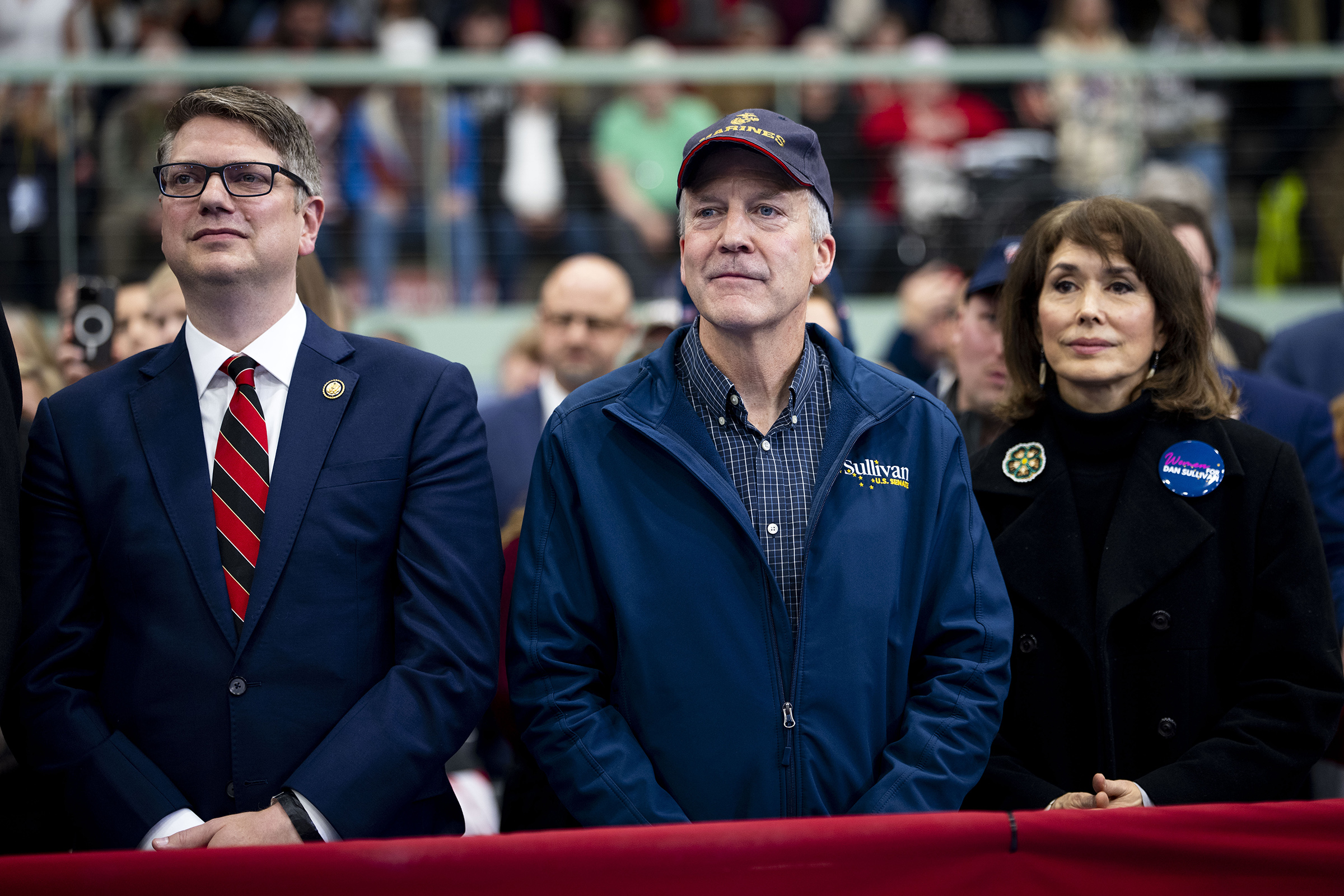
    The latest phase of Trump’s strategy centers on the Justice Department, which asked a federal court to block the certification of the election if the Republican incumbent, Sen. Dan S. Sullivan, were to lose by a slim margin. The administration argued the presence of another candidate with a nearly identical name on the ballot has skewed the election toward Democrats.

    The issue has already been litigated in the state: In June, the Alaska Supreme Court ruled that Daniel J. Sullivan Jr., a retired elementary schoolteacher, could appear on the ballot.

    But Attorney General Todd Blanche maintained on Sunday that the federal government had a role in inserting itself into the process.

    “We’re not saying that the federal government is going to decide who the next senator from Alaska is,” Blanche said on CNN’s State of the Union. He added: “But if it’s clear that there was confusion and that confusion led to an unjust, improper result that is not the will of the Alaskan voters, we want to make sure that the Alaskan system and the Alaskan state courts and the Alaskan electoral process can understand that in a way that lets them do the right thing.”

    When asked for comment, the White House referred to an exchange Trump had with reporters on Saturday about his administration’s efforts to intervene in Alaska, a lawsuit he said was made at his direction. Republicans have asserted that the candidacy of the second Sullivan is a Democratic scheme to confuse voters. Democrats have said they have no connection to that candidate, who will appear on the ballot without any party affiliation and has said he is running a genuine campaign.

    “It is a totally corrupt weaponization situation, and they shouldn’t be allowed to do it,” Trump said of the Democrats in Alaska. “So I recommended it to the DOJ. They looked at it, they agreed with me, and they’ve gone to court. Let’s see what happens. But that’s pure corruption.”

    Election law specialists say Trump’s lawsuit in Alaska lacks legal basis and will likely fail. But that might not be the point.

    The lawsuit is just one piece of a blitz of federal actions by the Trump administration to assert more control over the electoral process that have run into court challenges. Trump introduced a plan to have the U.S. Postal Service screen mail ballots, only to have it be blocked by the Supreme Court.

    The administration has sued 30 states and the District of Columbia for refusing to cede to the federal government’s demands to turn over voter rolls. The administration has lost 27 of those cases. The other cases are pending.

    Trump has deployed Homeland Security investigators to find evidence of illegal voting in states where it has claimed without evidence there is widespread noncitizen voting. A federal judge restricted much of that effort in the past week.

    But with each claim of election fraud, Trump is creating another platform to sow doubt about the elections and, some state officials and election experts worry, lay the groundwork to challenge the results of the specific contests.

    “The goal is obviously not to win the legal case because if so, that would be a complete failure because it’s going to fail,” said McNulty, senior policy director for Issue One, a nonpartisan group that tracks election issues. “The goal is to create doubt about the process and then use that doubt to justify later intervention or interference.”

    Trump’s frequent attacks on the security of voting machines have raised fears among congressional Democrats and some election officials that he could be setting the stage to contest the results of the November elections.

    The lawsuit in Alaska has added a new layer to those worries. The federal challenge could give cover to officials in the state to question the results of the election, experts warned.

    The state’s Division of Elections is overseen by Alaska’s lieutenant governor, a Republican, who initially gave the green light to remove the second Sullivan from the ballot before he was reinstated by the courts. The lieutenant governor, Nancy Dahlstrom, previously challenged Rep. Mary Peltola, Sullivan’s primary Democratic opponent in the Senate race, for her House seat.

    Trump has installed allies throughout the federal government who have echoed his false claims about voting. And across the country, a number of local election officials who have expressed sympathy with the election-denier movement now occupy key posts.

    Benjamin Hovland, who was ousted by Trump from the independent, bipartisan federal Election Assistance Commission earlier this year, said he worried the various actions by the administration were serving a pretext for lawsuits after Election Day, based on dubious claims of noncitizen voting and fraud in the electoral process.

    “What the DOJ is tipping its hand to is stepping in as essentially the president’s personal law firm to try to undercut the credibility of election results they don’t like,” Hovland said. “And that is a pretty horrible prospect.”

    This article originally appeared in the New York Times.

  • Lawmaker seeks dozens of messages between Kennedy Center and Trump aides

    Lawmaker seeks dozens of messages between Kennedy Center and Trump aides

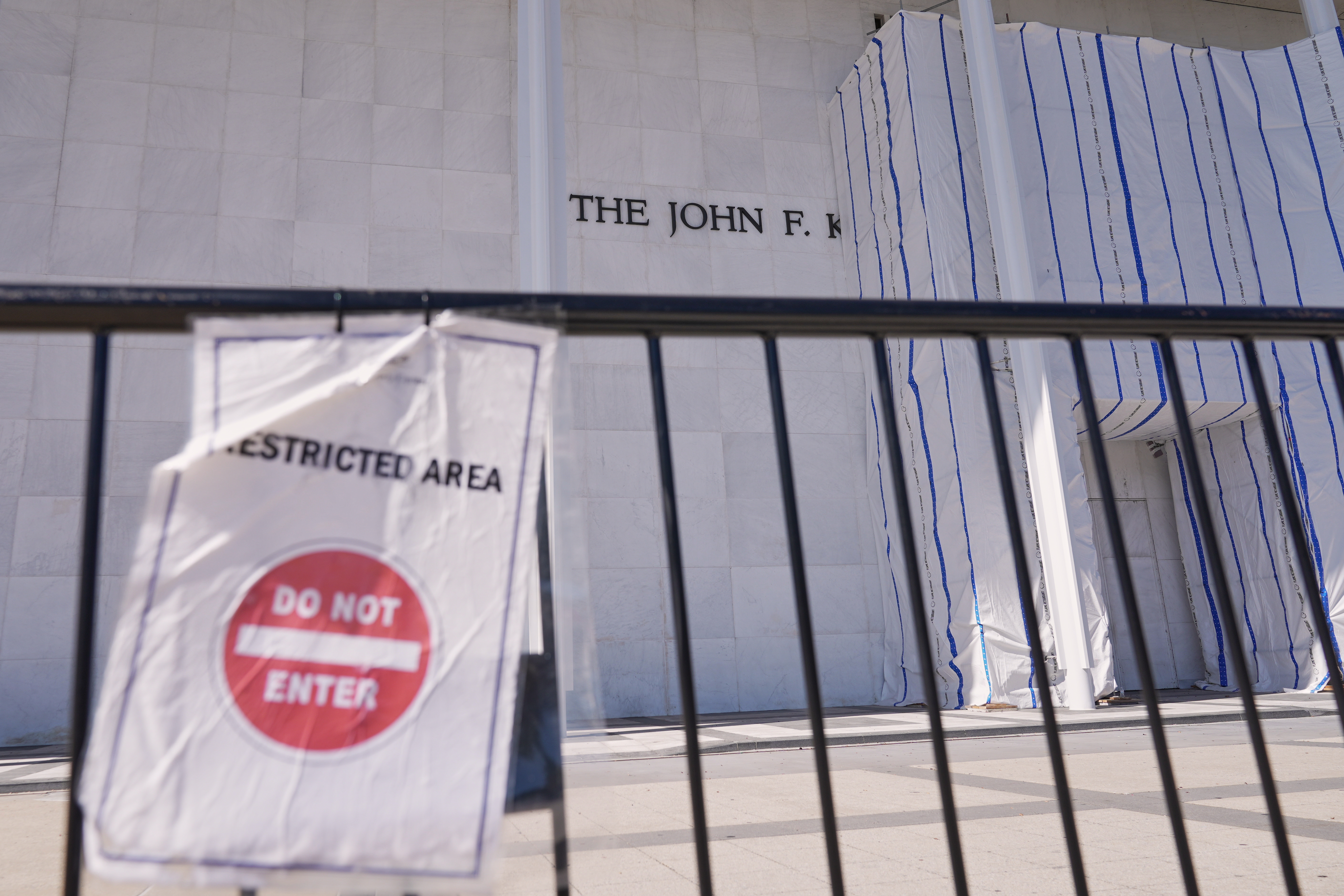
    A newly filed court document reveals extensive communications between Kennedy Center management and President Donald Trump’s advisers, including exchanges with Commerce Secretary Howard Lutnick and presidential aide Natalie Harp around pivotal court rulings and board votes over the institution’s future. But exactly what they’re saying remains secret, amid a court battle over whether presidential privileges apply to Trump’s role at the center.

    The administration’s list of withheld records identifies roughly 180 text messages between Kennedy Center executive director Matt Floca and Lutnick, who holds no formal position at the center. Their exchanges began the day after Trump publicly declared Lutnick’s involvement with the institution.

    The list also identifies 19 messages between Floca and Harp, including 11 on Sept. 15, when trustees voted once more to close the main building for a two-year, $257 million renovation.

    The records show how closely Trump’s advisers have become involved in managing the national arts institution he chairs, with officials fielding information about the center’s finances, litigation, and the Kennedy Center Honors. The contents of the withheld exchanges could help clarify who shaped decisions about the center’s future and how much authority its trustees exercised, which has become a key question in the court fight over the center’s closure.

    The administration says presidential communications privilege protects the exchanges from disclosure, though legal experts have cast doubt on that argument. U.S. District Judge Christopher Cooper has yet to rule on the matter.

    Rep. Joyce Beatty (D., Ohio), a trustee challenging the center’s decisions, filed the list Sunday after defendants provided it late last week. Her lawyers argue that the records could show whether trustees exercised independent judgment or approved decisions made beforehand.

    “This latest revelation underscores how Trump personally micromanages the operations of the Kennedy Center,” attorneys Norm Eisen and Nathaniel Zelinsky said in a statement. “It would be a serious blow for the rule of law if, after appointing himself Chairman, Trump can evade accountability for his misdeeds through a sham invocation of executive privilege.”

    The center, the White House, and the Commerce Department did not immediately respond to questions about the communications.

    The Lutnick correspondence began against the backdrop of a legal setback. On May 29, Cooper ruled that the board had illegally voted in December to add Trump’s name to the center. Trump responded by announcing that he was working with Congress to transfer control of the institution and had directed Lutnick to facilitate the change.

    That same day, the list identifies an email exchange involving Floca and White House official Joshua Fisher, with a memorandum addressing center “operations, statutory duties, and litigation risks,” along with material about its financial outlook.

    Their exchanges continued through Sept. 15. Messages were recorded June 11, when trustees voted to appeal Cooper’s ruling and seek to delay his order, and June 12, the deadline for removing Trump’s name. Crews removed the lettering early June 13.

    The defendants describe the conversations with Lutnick as relating to operations, renovation, and board matters, intended to help advisers “formulate plans to and reflect advice from” Trump. The Harp exchanges concerned similar subjects and were intended to inform and reflect presidential deliberations.

    Other entries identify arrangements for a presidential meeting July 30 and a summary concerning Kennedy Center matters that Floca sent that day to Commerce advisers and a White House employee.

    Beatty’s lawyers argue that the records concern Trump’s work as board chairperson and should not be shielded by presidential privilege.

  • 6 citizens sue Trump, saying media ban deprives them of news as audience stakeholders

    6 citizens sue Trump, saying media ban deprives them of news as audience stakeholders

    In the increasingly bitter legal standoff between President Donald Trump and media outlets whose reporting he dislikes, a new and crucial third party has emerged: citizens who watch and read the news and need it to do their jobs.

    A lawsuit filed Monday on behalf of six such citizens — effectively representing the audiences for the news media — argues that it’s not only the rights of news organizations that are violated when Trump bans them from White House premises. Even more fundamentally, the lawsuit argues, such bans violate the public’s right to independent reporting about its president and government.

    “The ultimate injury here … is to the democratic public,” says the suit, filed in federal district court in New York against Trump and three key aides, including the White House chief of staff, Susie Wiles.

    “The First Amendment protects the public’s right to know what its government is doing,” said Katie Fallow, deputy litigation director at the Knight First Amendment Institute, which filed the lawsuit on behalf of the six plaintiffs, along with the Media Freedom & Information Access Clinic at Yale Law School.

    “The White House cannot decide what information Americans receive by punishing critical reporting,” Fallow said in a statement. ”When the White House expels reporters because of their coverage and threatens others with expulsion, it isn’t just the press that suffers — the public loses access to independent reporting and gets something closer to government propaganda.”

    The plaintiffs all rely on White House news for their work

    The six plaintiffs are all people who say they rely on independent and diverse White House reporting for their teaching, journalism, or advocacy. They include a noted human rights advocate, a political journalist, a Yale history professor, a high school civics teacher, a legal journalist, and a student journalist at the University of Pennsylvania.

    The complaint filed Monday recounts how various news organizations that have been targeted by Trump are already battling the administration in the courts. These cases include the current lawsuit by CNN, MS NOW, and Politico, whose journalists were banished from the White House in September.

    A federal judge recently extended an order preventing the White House from enforcing the ban while the case makes its way through the legal system. Still affected, though, is CNN’s pool coverage of Trump. The White House has been denying the network its usual slots in the video pool covering the president’s activities and travel, and CNN has threatened further action.

    Also continuing is the legal case involving the Associated Press, whose reporters were barred last year from the Oval Office, Air Force One, and some events in retaliation for the outlet’s decision not to follow Trump’s lead in changing the name of the Gulf of Mexico, which lies partially in Mexican and other waters, to the Gulf of America.

    The New York Times is also involved in litigation, over a Pentagon policy requiring escorts for journalists on its grounds. And ABC is fighting back against the Trump administration in a dispute over renewal of its broadcast licenses.

    This lawsuit seeks more wide-ranging relief

    The new lawsuit filed Monday, though, is different from previous legal action against the president — first, in that the plaintiffs are ordinary citizens. And it seeks more wide-ranging relief.

    The suit, which names Trump as defendant along with Wiles, White House Communications Director Steven Cheung, and Secret Service Director Sean M. Curran, calls not only for reinstatement of access that has already been impacted, but for a broad injunction that would protect from retaliation every news outlet that covers the White House.

    The complaint says: “Defendants’ policy of restricting the access of disfavored news organizations deprives the public of the reporting of those organizations, and it inevitably deprives them of the independent reporting of other news organizations as well, since every journalist who reports from the White House must now account for the possibility that a critical or ill-advised word about the president may result in their access being summarily restricted or revoked.”

    “Plaintiffs … seek a declaration that the policy is unconstitutional because it imposes restrictions on a limited public forum that are viewpoint-based and unreasonable. They also seek an injunction barring defendants from enforcing the policy.”

    Plaintiffs include a human rights advocate, a teacher, and a student journalist

    The plaintiffs are:

    — Kenneth Roth, former longtime executive director of Human Rights Watch and a lecturer at Yale’s law school and school of global affairs. Roth “relies on newsgathering and reporting from members of the White House press corps to inform his public writing and commentary,” the suit says.

    — Daniel Froomkin, media and political journalist and editor of Press Watch, a nonprofit that encourages political journalists to “fulfill their essential mission of creating an informed electorate and holding the powerful accountable.”

    — Beverly Gage, Pulitzer Prize-winning historian and professor at Yale University who “relies on newsgathering and reporting from the White House press corps to inform her scholarship, public writing and commentary.”

    — Peter Schmidt-Nowara, a social studies teacher at a New York City high school, who teaches civics courses and considers White House reporting “essential to his work as an educator.”

    — Benjamin Wittes, editor-in-chief of Lawfare and a senior fellow at the Brookings Institution, whose publication is “especially reliant on the White House press corps to provide accurate and timely coverage of the president.”

    — Ethan Young, a student at the University of Pennsylvania and editor-in-chief of the Daily Pennsylvanian, who, as a student journalist, “relies on a diverse, independent and trustworthy cohort of White House reporters to serve as his proxy.”

    Schmidt-Nowara, who teaches at Brooklyn Technical High School, is quoted in the lawsuit as saying: “As a social studies teacher, I want my students to have access to accurate, independent reporting about their government.” He adds he is ”gravely concerned that the Trump administration’s restrictions on White House reporters are cutting off access to crucial information.

    “I joined this lawsuit because my students deserve to know what’s happening in their government and to hear from a free and independent press,” he says.

    Young, the student journalist, contends that since he can’t personally access White House press spaces, he relies on “a diverse, independent and trustworthy cohort” of White House reporters to serve as his proxy.

    The effect of federal policy changes has been “acutely felt on college campuses, Penn’s included,” Young is quoted as saying. “As a student journalist, I rely on reporting from the White House press corps to understand the decisions made in Washington, their consequences, and how they impact my college community. A vibrant free press allows me to do just that.”

  • Lula is declared winner of Brazil’s election as Bolsonaro rejects results

    Lula is declared winner of Brazil’s election as Bolsonaro rejects results

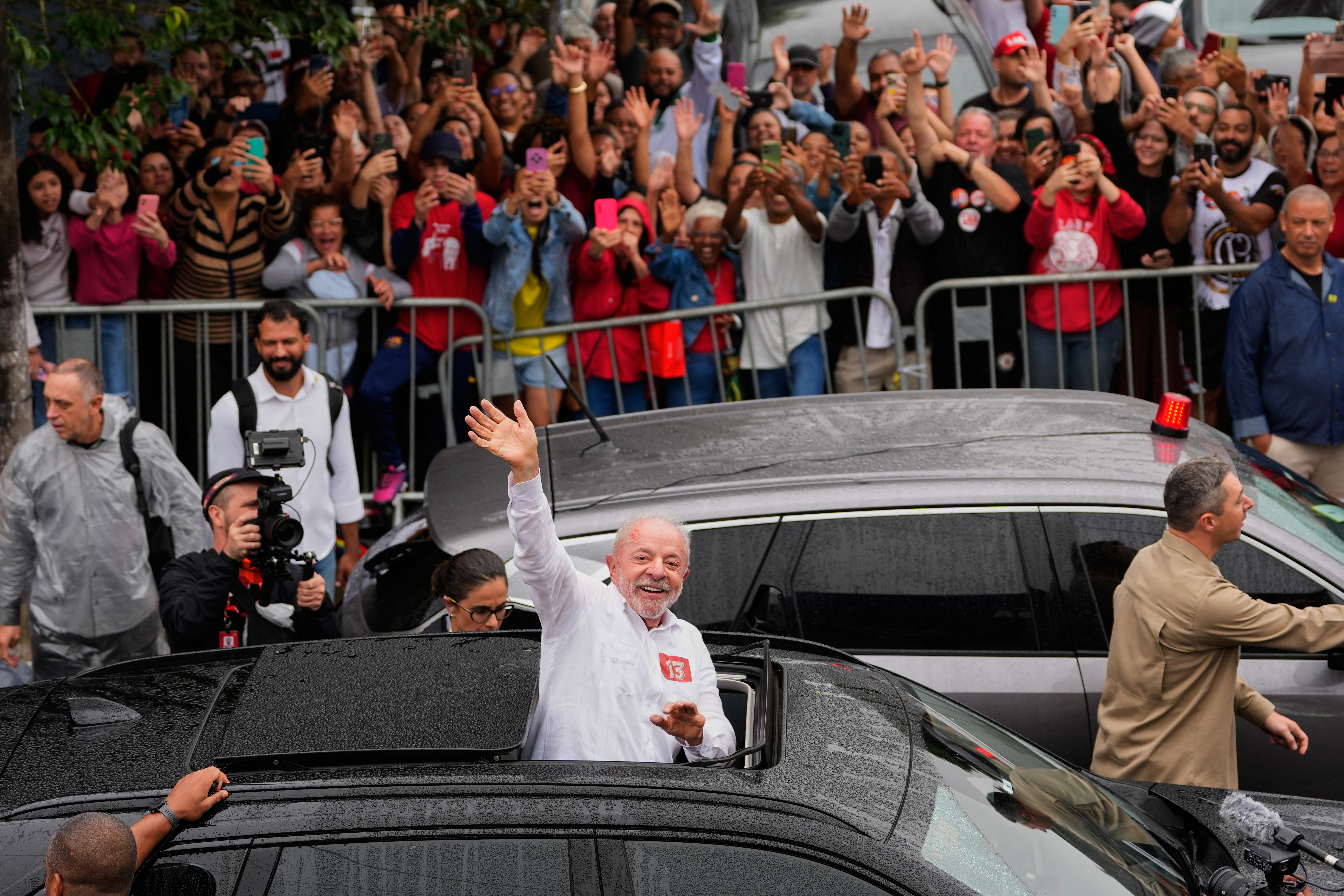
    RIO DE JANEIRO — Brazil’s President Luiz Inácio Lula da Silva, a vocal critic of U.S. President Donald Trump, was reelected Sunday in a result that provides relief to critics of widening U.S. influence in Latin America.

    With 100% of the vote counted, Brazil’s electoral court announced that the soon to be 81-year-old Lula had a lead of nearly 4.4 million votes over opponent Flávio Bolsonaro, giving him 51.8% of the total vote. Bolsonaro quickly refused to concede defeat and asked for the election results to be annulled after an evening of chaos at some polling places that followed a last-minute decision to extend voting by two hours.

    Bolsonaro is the son of former President Jair Bolsonaro, whom Lula defeated to take the presidency in 2022.

    Lula’s triumph bucks a regional trend of victories for right-of-center presidential candidates allied with Trump. It also means Latin America’s largest economy, with a GDP of $2.6 trillion per year, will likely continue defying Trump’s demands, despite the pressure of increased tariffs.

    Lula says Brazil is ‘not anyone’s backyard’

    A video published by Lula’s campaign shows the veteran leader celebrating with First Lady Rosângela da Silva and allies after his runoff victory was confirmed by Brazil’s electoral court. Wearing star-shaped red glasses, he kissed his wife.

    Speaking to his supporters, thousands of whom gathered on Sao Paulo’s main artery and in Rio de Janeiro’s Cinelandia Square, Lula expressed his gratitude to the Brazilian people, and pledged to respect all Brazilians, regardless of gender or religion. He also attacked Bolsonaro.

    “This was a defeat for denialism and lies. I must confess that every time I attended a debate, I felt embarrassed,” he said.

    He also doubled down on his commitment to Brazil’s sovereignty.

    “Either the homeland remains free, or we die for Brazil,” he said. “This country will not accept being anyone’s backyard.”

    In Rio de Janeiro, cars beeped their horns and a woman dressed in red — the color of Lula supporters — shouted “You lost! Cry harder!” to four men in yellow and green sipping beers, Bolsonaro’s signature colors. A huge roar echoed in the street as the result was confirmed.

    Rodrigo Valentim, a 51-year-old businessman and supporter of Bolsonaro, said that another Lula government would harm the economy. He pointed to financial markets’ positive reaction to the result of the first round, when Bolsonaro bested Lula.

    “I don’t understand how people can vote for Lula,” he said. “The country is collapsing.”

    Lula is set to begin his fourth non-consecutive term as president on Jan. 5, 2027.

    Bolsonaro rejects results after confusion at polling places

    The electoral court’s announcement ended an evening of confusion at polling places after Brazilian Supreme Court Justice Cristiano Zanin ruled three minutes before the scheduled end of voting to keep polls open for two more hours, following requests by both candidates. Lula’s request came after issues with buses that provide transportation to polls in Sao Paulo and Salvador, two cities that tend to favor the incumbent. Bolsonaro’s request was due to heavy rains in Brazil’s south, where he is favored.

    The decision delayed tallying the votes by two hours. It was unclear how many polling stations stayed open after the scheduled closing time. Polling stations in Brasilia and Rio de Janeiro closed shortly after the original 5 p.m. deadline, reporters for The Associated Press observed.

    Bolsonaro, whose father is serving a 27-year prison sentence for attempting a coup after he lost the 2022 presidential election to Lula, pointed out that Zanin is Lula’s former lawyer and criticized him for “changing the rules of the game in the middle of the game.”

    “It’s impossible to recognize the results of the election in the context of these things that happened,” he said.

    It’s not clear if Bolsonaro’s complaint could meet the legal threshold to annul the results. Bolsonaro also has the right to request a recount if he has evidence of fraud, but that might not change the results.

    The president of the electoral court, Kassio Nunes Marques, who was appointed to the Supreme Court by former President Bolsonaro, said that the extension of voting hours did not impact results.

    Joao Pedro Padua, a law professor at the Fluminense Federal University, said that Bolsonaro can file a lawsuit directly with the country’s electoral authorities or the Supreme Court, asking for the elections to be declared null and void.

    “But there isn’t much legal basis for that,” Padua said. “The extension of voting hours is unusual, but for it to invalidate the elections, the candidate would have to prove that it affected voters’ ability to freely express their will. There doesn’t seem to have been any such impact.”

    Lula overcame concerns about security and cost of living

    Bolsonaro bested Lula by more than 2.2 million votes in the first round of the election earlier this month. Sunday night’s victory by Lula marked the first time since Brazil’s military dictatorship ended in 1985 that the second-highest vote-getter in the first-round elections won the presidency.

    Lula faced a tough reelection battle because of concerns about the cost of living and security. Bolsonaro made a tough-on-crime approach the cornerstone of his campaign and pledged to bring down food costs while Lula, trying to lure undecided voters, has invested in costly incentives.

    Both have been hit by corruption suspicions involving family members and allies, with Bolsonaro implicated in a sprawling scandal rocking Brazil. Lula previously spent more than a year in prison on corruption convictions that were eventually annulled.

    This will likely be the last victory of the veteran leader’s political career. Lula began his political career in the 1970s as a union leader. He then helped found the Workers’ Party, which he represented as a presidential candidate three times until he finally won it in 2002. He was reelected four years later and was succeeded by one of his cabinet ministers, Dilma Rousseff, in 2010. She was reelected in 2014 but impeached two years later.

    Lula tried to run for president again in 2018 but was jailed in March after being convicted. He was released from prison after 580 days and saw Brazil’s Supreme Court annul his sentence after police found messages that showed the judge who convicted him was biased. He quickly became one of Jair Bolsonaro’s biggest critics and narrowly beat him in 2022.

    Since he lost the first round, Lula reorganized his campaign, appealed to young voters, put millions of Brazilians on the streets to defend democratic values and his legacy, raised fears of another Bolsonaro administration and boosted several government initiatives.

    He joins Trump and Nicaragua’s President Daniel Ortega — all aged 80 — as one of the oldest presidents in the Americas.

  • Why more than half the world has likely breathed unhealthy air this year

    Why more than half the world has likely breathed unhealthy air this year

    Extreme heat waves and wildfires have contributed to unhealthy levels of smog and smoke around the world so far in 2026, a recent global analysis of air quality trends found.

    More than half of the world’s population was exposed to very high or extremely high levels of ground-level ozone pollution, or smog, between January and September, according to the September report by the Copernicus Atmosphere Monitoring Service, or CAMS, a program of the European Center for Medium-Range Weather Forecasts. The report uses air-monitoring data, satellite data and meteorological models to estimate the amount of air pollution and how it moved across the planet.

    Ozone can cause lung problems, including shortness of breath, asthma, inflammation and infection, according to the Environmental Protection Agency. It is created when air pollutants, including methane and nitrogen oxides released by vehicles, power plants, fossil fuel production and other sources, react with sunlight and high temperatures. Climate change makes those warm air conditions all the more common, which means ozone is a stubbornly difficult pollutant to reduce.

    Even as many countries have made progress in cutting the emissions that form it, high temperatures can outweigh those gains.

    “Ozone concentrations stay stable, and one of the reasons why is that we have those heat waves,” CAMS director Laurence Rouil said in an interview. “Policymakers … will have to make more effort to deal with ozone because of climate warming.”

    With the Northern Hemisphere having just experienced the hottest summer on record, experts said 2026 is shaping up to be another year of unhealthy air, continuing recent trends. In North America, the analysis found that more than a quarter of the population was exposed to “extremely” or “very” poor air quality when it came to ozone, and another 41 percent were exposed to “poor” air quality. (The report uses a World Health Organization guideline for ozone, which is stricter than that used by the United States.)

    North America’s high levels of ozone in 2026 also have been driven, the report found, by wildfires, which release huge amounts of nitrogen oxides and volatile organic compounds. Those react in the atmosphere to create ozone in addition to releasing high levels of soot, or particulate matter, which is also dangerous for people’s lungs and heart.

    Climate change worsens droughts through high temperatures, creating conditions ripe for fire. Wildfires break out more often and grow larger in a warming climate; one study found the frequency of extreme wildfire activity has more than doubled globally between 2003 and 2023.

    “For Europe, it was terrible,” Rouil said of summer air quality. In addition to smoke drifting in from North America, historic wildfires in France and Spain played a role, she said, noting that wildfire smoke events “were quite intense this year.”

    Rouil said the analysis shows why policymakers will need to make even more effort to cut air pollution in a warming climate. In the United States, however, regulations are moving in a different direction: The EPA under President Donald Trump’s administration has weakened several air pollution rules created under President Joe Biden, arguing that repealing the rules will save money for taxpayers and businesses.

    For example, this year, the EPA has weakened Biden-era rules for coal-fired power plants on controlling soot, mercury and other heavy metal pollution; repealed carbon pollution rules on power plants; and relaxed fuel economy standards for vehicles.

    Those changes worry air quality advocates.

    “We would expect — and are very concerned — that more and more communities will be dealing with higher levels of local pollution” due to the rollbacks, said Will Barrett, assistant vice president of nationwide clean-air policy at the American Lung Association.

    “The progress we’ve made to this point in reducing ozone, in many parts of the United States, is at a grave risk,” he said.

  • Trump’s election attacks enter new preemptive phase

    Trump’s election attacks enter new preemptive phase

    WASHINGTON — For months, President Donald Trump has mounted a sustained effort to attack the integrity of U.S. elections while using the federal government to try to assert more control over the voting process overseen by states.

    Recently, Trump opened a new front.

    Rather than simply push false claims at his rallies or target voters his administration claims should not be on the rolls, Trump moved to preemptively challenge the certification of Alaska’s Senate election if the Republican candidate narrowly loses.

    In doing so, Trump harnessed the power of the federal government to try to interfere in the voting process before Election Day — essentially trying to nullify an opponent’s potential win before the game has been called.

    Even for a president who worked to undermine and overturn the 2020 presidential election, the anticipatory strike reflects a new intensification of Trump’s attempts to use his official powers to achieve the election results he wants — one that undermines the democratic process, according to election and legal experts. While they say the administration’s lawsuit is unlikely to be successful, the tactic could still further Trump’s goals by shaking the confidence of voters in the outcome of the race.

    “This is part of the election takeover playbook that I’ve seen around the world and unfortunately in some other autocratic environments,” said Michael McNulty, a former senior elections adviser for the U.S. Agency for International Development who has studied election issues around the world, including in El Salvador, Hungary and Venezuela. “Trump has essentially undermined the independence of the DOJ and it’s been weaponized.”

    The latest phase of Trump’s strategy centers on the Justice Department, which asked a federal court to block the certification of the election if the Republican incumbent, Sen. Dan S. Sullivan, were to lose by a slim margin. The administration argued the presence of another candidate with a nearly identical name on the ballot has skewed the election toward Democrats.

    The issue has already been litigated in the state: In June, the Alaska Supreme Court ruled that Daniel J. Sullivan Jr., a retired elementary schoolteacher, could appear on the ballot.

    But Attorney General Todd Blanche maintained on Sunday that the federal government had a role in inserting itself into the process.

    “We’re not saying that the federal government is going to decide who the next senator from Alaska is,” Blanche said on CNN’s “State of the Union.” He added: “But if it’s clear that there was confusion and that confusion led to an unjust, improper result that is not the will of the Alaskan voters, we want to make sure that the Alaskan system and the Alaskan state courts and the Alaskan electoral process can understand that in a way that lets them do the right thing.”

    When asked for comment, the White House referred to an exchange Trump had with reporters on Saturday about his administration’s efforts to intervene in Alaska, a lawsuit he said was made at his direction. Republicans have asserted that the candidacy of the second Sullivan is a Democratic scheme to confuse voters. Democrats have said they have no connection to that candidate, who will appear on the ballot without any party affiliation and has said he is running a genuine campaign.

    “It is a totally corrupt weaponization situation, and they shouldn’t be allowed to do it,” Trump said of the Democrats in Alaska. “So I recommended it to the DOJ. They looked at it, they agreed with me, and they’ve gone to court. Let’s see what happens. But that’s pure corruption.”

    Election law specialists say Trump’s lawsuit in Alaska lacks legal basis and will likely fail. But that might not be the point.

    The lawsuit is just one piece of a blitz of federal actions by the Trump administration to assert more control over the electoral process that have run into court challenges. Trump introduced a plan to have the U.S. Postal Service screen mail ballots, only to have it be blocked by the Supreme Court.

    The administration has sued 30 states and the District of Columbia for refusing to cede to the federal government’s demands to turn over voter rolls. The administration has lost 27 of those cases. The other cases are pending.

    Trump has deployed homeland security investigators to find evidence of illegal voting in states where it has claimed without evidence there is widespread noncitizen voting. A federal judge restricted much of that effort in the past week.

    But with each claim of election fraud, Trump is creating another platform to sow doubt about the elections and, some state officials and election experts worry, lay the groundwork to challenge the results of the specific contests.

    “The goal is obviously not to win the legal case because if so, that would be a complete failure because it’s going to fail,” said McNulty, senior policy director for Issue One, a nonpartisan group that tracks election issues. “The goal is to create doubt about the process and then use that doubt to justify later intervention or interference.”

    Trump’s frequent attacks on the security of voting machines have raised fears among congressional Democrats and some election officials that he could be setting the stage to contest the results of the November elections.

    The lawsuit in Alaska has added a new layer to those worries. The federal challenge could give cover to officials in the state to question the results of the election, experts warned.

    The state’s Division of Elections is overseen by Alaska’s lieutenant governor, a Republican, who initially gave the green light to remove the second Sullivan from the ballot before he was reinstated by the courts. The lieutenant governor, Nancy Dahlstrom, previously challenged Rep. Mary Peltola, Sullivan’s primary Democratic opponent in the Senate race, for her House seat.

    Trump has installed allies throughout the federal government who have echoed his false claims about voting. And across the country, a number of local election officials who have expressed sympathy with the election-denier movement now occupy key posts.

    Benjamin Hovland, who was ousted by Trump from the independent, bipartisan federal Election Assistance Commission earlier this year, said he worried the various actions by the administration were serving a pretext for lawsuits after Election Day, based on dubious claims of noncitizen voting and fraud in the electoral process.

    “What the DOJ is tipping its hand to is stepping in as essentially the president’s personal law firm to try to undercut the credibility of election results they don’t like,” Hovland said. “And that is a pretty horrible prospect.”

    This article originally appeared in The New York Times.

  • Israeli Jews across the spectrum face an election of fears

    Israeli Jews across the spectrum face an election of fears

    JERUSALEM — At an event in Jerusalem in July, an opposition candidate for Israel’s Parliament kicked things off by asking what voters feared most if Prime Minister Benjamin Netanyahu’s right-wing, religious government won another four-year term. The answers were startling.

    Israel would become even more of an international pariah, one said. “I’m afraid my children would leave,” said another. “I’d want my children to leave,” said a third.

    It got darker from there. “Tyranny of the majority.” “Civil war.” “Collapse.”

    Every national election is important, and many play on voters’ fears. But none has felt so consequential and dire to so many Israeli Jews as the one Tuesday.

    And no wonder: They have the chance to render a verdict on polarizing decisions that have torn the country apart for years — and to choose between starkly different visions for Israel’s future.

    Perhaps the rawest emotions among Netanyahu’s opponents surround the question of whether the long-serving prime minister, legendary for his political survival skills, will be held accountable for the worst national-security failure in Israel’s history, the Oct. 7, 2023, massacre.

    As traumatic and shocking as that attack was, many other deep questions about Israel’s character hang in the balance.

    Will the country weaken its judiciary and grant the government far more power? Will it rewrite the social contract to demand service and sacrifice from all sectors of society?

    Will it arrest accelerating emigration before a brain drain threatens its tech-driven economy and, close behind, its vaunted military?

    Will Israel defy global opprobrium and try to thwart Palestinian aspirations to statehood once and for all, potentially risking its relationship with the United States? Or will it reverse course and attempt to repair ties, at least with Washington?

    Finally, will it end Netanyahu’s tenure precisely at a moment when his staunchest supporters believe that his fortitude and skills are most needed to face down Israel’s adversaries on the global stage?

    These issues are so divisive, and the country so polarized, that even a clear election result may not begin healing the rifts.

    “Whoever wins, the other side will feel that they’re not part of the Israeli state,” said Yuval Eylon, a retired Israeli rear admiral and researcher at the Institute for National Security Studies in Tel Aviv, Israel.

    In a recent poll, the institute found that 39% of Israelis fear violence between different segments of society — as many as fear an Iranian nuclear weapon.

    “It’s really a danger for the Israeli state as an idea,” Eylon said. “Ten years ago, people said we could deal even with a nuclear Iran, because we’re strong as a country, strong inside. But if you don’t have unity of the people, then the external threat becomes a mortal threat.”

    Targeting the ultra-orthodox

    Dan Ben-David, president of the Shoresh Institution for Socioeconomic Research, has been warning for years that Israel faces a demographic point of no return.

    He focused largely on the ultra-Orthodox, or Haredi Jews, who tend to have many children and educate them in religious schools that don’t teach math, science, English or civics. They also receive far more subsidies than they contribute in taxes, largely thanks to Netanyahu, who has relied on their support to stay in power.

    The ultra-Orthodox are doubling as a percentage of the population every 25 years, even as fewer of them are prepared for jobs in a modern economy.

    That is an unsustainable trend, Ben-David warns, and a key driver of another: Already, just 20% of Israel’s workers supply 93% of all income-tax revenue, while half of all Israelis are so poor that they pay no income tax whatsoever.

    Crucially, the ultra-Orthodox have also avoided military service — first under a decades-old exemption, and then, after the Supreme Court ordered in 2024 that conscription begin, by simply draft-dodging.

    The Israel-Hamas war in the Gaza Strip brought that issue to the fore. Roughly half of Israel’s citizens serve in the army, bearing the burden, in casualties and reserve duty, of defending the country, while many Haredim loudly declare they would rather die than be drafted and shut down highways and train lines with protests.

    “We ourselves hang in the balance here,” Israel Friedman, editor-in-chief of Yated Ne’eman, a Haredi daily newspaper, said in an interview. “What is at stake is our right to be Haredi.”

    Ben-David, whose recommendations have been embraced to varying degrees by most opposition leaders, says the resulting fury at the ultra-Orthodox has created a rare chance not only to make them enlist but to cut their subsidies, overhaul a failing education system and reorient Israel toward a sustainable future.

    If the opposition fails to dislodge Netanyahu and the Haredi parties now, he says, Israel may never get another chance.

    A brain drain is already underway: The country faces an acute shortage of doctors, more people are moving out of the country than immigrating to it, and those leaving are better educated and better earners than those staying behind.

    Should enough of Israel’s roughly 300,000 physicians, tech workers, professors, engineers — the citizens who could most easily take jobs elsewhere — decide to emigrate, Ben-David said, those left behind would be too unskilled to save the economy or defend themselves.

    Israel simply “won’t be,” he said. “It’ll be over.”

    The threat of international isolation

    Even erstwhile Netanyahu allies worry that Israel’s international isolation could cost it dearly.

    Michael Oren, who was Netanyahu’s deputy prime minister and ambassador to the United States, said the spread of sanctions against Israel as it backs settlers in the occupied West Bank could devastate the economy.

    “We’re going to have a choice of whether we’re going to build in E1 or have an economy,” he said, referring to a vast tract outside East Jerusalem where the government is pushing for new Israeli settlement. Critics say doing so would effectively cut the West Bank in two, making a contiguous Palestinian state all but impossible.

    Oren said that a new government, by contrast, could buy some global goodwill by ending vigilante violence and illegal settlement construction in the West Bank, stating its desire for peace with Palestinians and disavowing territorial ambitions in Gaza, Syria or Lebanon.

    But he added that the damage in relations with some U.S. Democrats was done: “It’s no longer what we do but who we are, and no matter who the prime minister is, it’s not going to make much difference.”

    Fears over security and the courts

    Many Israelis who oppose the government describe Tuesday’s vote as make-or-break.

    “The building is burning,” said Paul Gross, a British-born scholar at the Menachem Begin Heritage Center in Jerusalem, “and this election is about putting the fire out.”

    What worries him most, Gross said, is the prospect that the government could finish what it started in 2022: an effort to undermine the judiciary and give itself effectively unchecked power.

    “The last time, we could always say, this isn’t what people voted for,” he said. “Netanyahu ran in 2021 on security and Iran, not on judicial reform. This time, no one can claim they don’t know what the government’s intentions are.”

    Without a strong judiciary, he could envision some demonstrations being barred, he said, noting that Netanyahu’s allies have already voted to ban some political parties only for the Supreme Court to stop those moves. Without that judicial check, “you really are in authoritarian territory,” he said. “That is very scary.”

    Backers of the judicial overhaul, of course, see it positively, as a chance to bolster democracy by removing power from “deep state” judges and bureaucrats, and returning it to elected lawmakers and ministers.

    But the prospect has many Israelis obtaining or renewing foreign passports and considering options elsewhere.

    Alexandra Benjamin, who moved to Israel from London a quarter-century ago, said she was eyeing the exits out of despair over the country’s politics.

    She mentioned the widespread denigration of the rights of Arab citizens and political leftists, and how some citizens had been willing to write off Israeli hostages held in Gaza for the sake of destroying Hamas.

    “If we end up with the same government, I just can’t see how to be in Israel anymore,” Benjamin said. “Do my kids really have a future here? Do I? Is the state of Israel even sustainable?”

    Benjamin, 49, has lived in Israel through difficult times, including the Second Intifada, when about 1,000 Israelis were killed in attacks, but had not considered leaving till now. “External” threats like from Iran, she said, had never made her afraid to stay.

    “That didn’t challenge my sense of purpose and the sense of identity around this society and who we are, and who we want to be,” she said. “But you have to decide, has the country changed in a way that I can’t stay bought all-in?

    She added, “It’s hopelessness about the country, but also, like, who are these voters who will reelect these people?”

    Fights over identity and faith

    Few supporters of the current government talk about emigrating.

    Rather, many right-wing Israelis say that their determination to stay, no matter what, makes them the real Zionists, and grants them a moral superiority over others, said Shraga Bar-On, a settler and a professor of Jewish thought at the Shalom Hartman Institute.

    But they, too, see the stakes as enormous.

    For Israeli settlers led by the far-right Bezalel Smotrich, the finance minister in Netanyahu’s government, reelection would be a chance to drive a stake through the heart of a two-state solution and declare Israel’s sovereignty over the West Bank — land they see as their biblical birthright, and the heart of a potential Palestinian state that they consider a fundamental threat.

    Smotrich calls for Palestinians to submit to Israeli rule or leave.

    “If, God forbid, a government from the left comes to power, its view of Judea and Samaria would be entirely different,” said Yair Frank, rabbi of the Amihai settlement, using the biblical names for the West Bank. “Development could come to a halt, or things could become even worse.”

    For Netanyahu’s die-hard supporters, Israel’s international isolation is only an added reason to keep him in power. No one else, they often say, is capable of defending the country, prosecuting multifront wars and standing up to President Donald Trump, let alone to the rest of the world.

    The rhetoric is even more apocalyptic among the ultra-Orthodox. Some say they feel hated or demonized, and compare their situation to how it felt to be Jewish in 1930s Germany.

    Friedman, the Haredi editor, argued that yeshiva students ought to be exempt from the draft because the military threatens the Haredi way of life. “This is an army with a gender agenda, an army with an educational agenda,” he said. “This is what we oppose: the melting pot. I don’t want a melting pot. I want to be Amish.”

    Deep divisions

    To some, perhaps the most frightening thing about the election is the possibility that the outcome does nothing to cool the tensions bubbling over in Israeli society.

    Ehud Olmert, a former prime minister, said he feared the polarization could spark violence. “It was always underneath the issues of the day, but never did we arrive at a point of physical confrontation as it is now,” he said.

    It felt, Bar-On said, as though “every segment of Israeli society is completely sure that the others want to crush it.”

    Some Israelis have been reaching back to ancient times for comparisons, noting that Israel, at 78 years old, is roughly the same age as two Jewish states that didn’t survive their third generations: the biblical kingdom of Saul, David and Solomon, and the Hasmonean dynasty, which fell to Pompey the Great of Rome.

    Amotz Asa-El, a veteran columnist, argues in a new book that modern Israel is failing to heed the grim lessons of ancient Jewish civil wars.

    “I feel the willingness and ability to assault fellow Jews,” he said. “That’s how civil wars begin. Talk to people and you feel that they hate each other.”

    He recalled a first-century historian’s observation: “Josephus at one point says the Jews were so divided, while the Romans approached, that arguments invaded families and split them down the middle,” he said. “I feel that happening here.”

    This article originally appeared in The New York Times.

  • Serbia’s longtime strongman Vucic concedes defeat in parliamentary elections

    Serbia’s longtime strongman Vucic concedes defeat in parliamentary elections

    BELGRADE, Serbia — Serbia’s longtime nationalist strongman, Aleksandar Vucic, conceded defeat Sunday in a general election held after his once-tight grip on power was weakened by nearly two years of student-led street protests.

    Serbia’s vote for a new parliament came just six months after voters in neighboring Hungary rejected their own populist nationalist leader, Viktor Orban, a close ally of Vucic. The Serbian leader had adopted many of the Hungarian’s authoritarian methods — and, at the end, his gracious acceptance of defeat, as well.

    “It is clear that we have lost these elections,” Vucic said in a surprisingly early speech congratulating the victors, a new political grouping called Student List-Students Win. He said that the slate of candidates selected by protesting students had won at least 135 seats in Serbia’s 250-member legislature, compared with around 105 for his own party.

    Vucic’s speech set off joyous celebrations by tens of thousands of mostly young people in central Belgrade, the Serbian capital. Car horns honked and fireworks lit the sky as the crowd, waving Serbian flags and cheering, welcomed a day that many feared would never arrive.

    “For the first time in my adult life, I’m seeing a change of government. After so many years under the same leadership, I’m happy that I’ll finally get to live in a free, normal country,” said Milos Milutinovic, 24, an engineering student.

    Vucic, Europe’s longest-serving leader outside the former Soviet Union, has been Serbia’s dominant political figure since 2012, serving as both president and prime minister, a post he had hoped to regain after Sunday’s election.

    Amid widespread reports during the day of violence and irregularities at polling stations, many feared that Vucic might follow the example of his former mentor, Slobodan Milosevic, Serbia’s nationalist leader during the Balkan wars of the 1990s, who declared victory in a contested election in 2000 before huge street protests forced him to accept that he had in fact lost.

    “What happened in Serbia tonight is not the electoral defeat of one government but a tectonic blow to the political order established in 1987,” said Ratko Knecevic, a former diplomat from Serbia’s neighbor Montenegro. That was the year Milosevic visited Kosovo and vowed to defend Serbs against ethnic Albanians in what was then a region of Serbia.

    Milosevic built an order in which Serbia’s neighbors all became enemies and “every criticism of power is treason,” Knecevic said, adding that “Vucic perfected it,”

    On many contentious issues, however, like the status of Kosovo (which declared independence from Serbia in 2008) and relations with Russia and the European Union, little divides Vucic’s party and Sunday’s victors. European Serbia, the only party that openly campaigned for speeding up Serbia’s stalled application to join the European bloc, failed to reach the 3% threshold of votes needed to enter parliament.

    During the campaign, opposition candidates pointed to Serbians’ complaints about rampant corruption. Vucic tried to keep the focus on his construction of new highways and the relatively strong economy.

    In the end, the vote was largely a referendum on Vucic.

    He and his governing Serbian Progressive Party — known as SNS, but rebranded for the election as “Aleksandar Vucic — United Serbia” — are deeply detested by their opponents.

    “SNS is a big evil that we have to rip out,” Nina Dordevic, 29, a psychology student, said after casting her vote for the Student List in Belgrade

    “Nobody should be in power for so many years,” she said.

    At polling stations in Belgrade, only a few people were ready to acknowledge voting for Vucic, and among those that did some refused to give their names.

    An older woman who spent time in Beijing as the spouse of a diplomat at the embassy of Yugoslavia, of which Serbia was formerly part, said her experience of the 1989 student protests in Tiananmen Square and the military assault that ended them had left her “scared of all protests.” She was wary of supporting the Student List, she said.

    A retired military officer who gave only his first name, Ivan, said he had voted for Vucic because “students should be studying, not playing politics.” He also said he admired Vucic for refusing to condemn Ratko Mladic, a Serb general convicted of genocide by an international tribunal. Mladic died in custody in the Hague in September and was buried with military honors in Belgrade last month.

    Vucic, who was Milosevic’s information minister, began his career in politics as a radical nationalist committed to “Greater Serbia,” but later moderated his views somewhat. However, he continued to embrace many of the authoritarian methods and the narratives of Serb victimhood used by his former boss.

    “No force can forever overpower a people who have decided to take their destiny into their own hands,” one Student List candidate, Radomir N. Saicic, a chemistry professor at Belgrade University, said after Vucic’s concession speech. “Almost every citizen of Serbia, whether at home or far away, cast their vote and showed that they care about this country’s future,” he said.

    This article originally appeared in the New York Times.

  • Letters to the Editor | Oct. 26, 2026

    Letters to the Editor | Oct. 26, 2026

    Tech threats

    In raising the possibility of a Donald Trump-led coup if Democrats gain control of one or both chambers of Congress, Inquirer columnist Will Bunch asks whether Americans would come together to stop such an unthinkable act.

    I wonder if we could, given how much we’ve come to depend on digital technology for both information and communication.

    Meta’s deactivation of the No Kings Coalition’s Instagram account on Oct. 17 should scare anyone who wants to protect democracy and the free flow of information. Regardless of whether this incident was a mistake, as Meta maintains, it shows what Big Tech can do if it allows itself to become one of the Trump regime’s most useful tools.

    Of course, I also worry about the harm Congress would continue to rubber-stamp if it remains in GOP hands. And I long for the days when elections were routine matters, not something to fear regardless of the outcome.

    Lisa Von Ahn, Pottsville

    …

    Will Bunch’s column informed us that there are Presidential Emergency Action Documents that give the president power to void the Constitution. They were designed in the event of a destructive nuclear war. Additionally, a 2025 law may be used against people the administration defines as enemies — no war or insurrection needed. What happens if Donald Trump and the GOP decide to vacate the results of next month’s elections? Is there any doubt that he would abuse these powers? He already has National Guard in Washington, U.S. Immigration and Customs Enforcement, regular military, reservists, and more National Guard throughout the country. How would we act? My son-in-law, a Marine who participated in the first invasion of Iraq, told me, “I was in favor of the Second Amendment in case we were invaded. In Iraq, I saw what our military could do and realized those small arms were useless” against a military force. As a Vietnam vet, I agree. In the 20th century, military or violent revolutions only led to dictator or totalitarian governments. The only thing is to peacefully take to the streets. If that fails, we will need to organize underground, as in The Handmaid’s Tale.

    John “Jack” Marquess, Haddon Heights

    …

    Will Bunch’s column in Tuesday’s paper adds to other frightening warnings about the possibility of upheaval in our country’s democracy. His piece draws a line from President Donald Trump’s actions — undermining our voting system, attacking the judiciary and the press, weaponizing the Justice Department, etc. — to the potential creation of a totalitarian state. Then there are Trump’s imperialistic ambitions, which we see in his attack on Venezuela to seize the country’s oil, the decrease in our critical support for Ukraine, the inhumane strangulation of Cuba, the ongoing conflict with Canada, and the quest to control Greenland. Added to these ominous signs is the fact that those around Trump are involved in initiating, participating in, or approving these actions, including the GOP-controlled Congress. It brings to mind a goal of an attempt to divide up the world among dictators: Russia gets Europe, China gets Asia, and the U.S. gets North, Latin, and South America. Horror of all horrors. We Americans must recognize that the threats to our democracy and the world order are obvious. The coming elections will be critical. We desperately need leaders who will break the growing misdirection of our country.

    Luis W. Morales, Paoli

    …

    How is it that Will Bunch’s column — “Are the secrets to a postelection coup locked in a White House safe?” — is not on the front page of The Inquirer? The emergency powers that a rogue president can invoke as well as the Presidential Emergency Action Documents are startling. How come we’ve never heard of this?

    Donald Trump is a thug, and we’ve already seen how Congress, the Department of Justice, Supreme Court, and all his Republican cronies are in his pocket.

    If the Democrats do win control of either chamber of Congress next month, that optimism will be deflated shortly; Trump is a dictator and dictators don’t relinquish power easily. Trump almost always finds a way to get what he wants, and he will not go down without a fight by claiming the election was rigged.

    Wake up America, Nov. 3 will be déjà vu — Jan. 6, 2021 all over again.

    Cynthia Davis, Lansdale

    Real and surreal

    I suspect the benefits of artificial intelligence may have to follow the same paved highway littered with the same skepticism that today’s ubiquitous personal computers once traveled before they became an integral part of our daily lives.

    The past can offer valuable lessons as we attempt to anticipate and prepare for the future. But history also reminds us that even the most influential figures can be spectacularly wrong when predicting the course of technological progress.

    Thomas J. Watson Sr., the longtime chair of IBM, is often credited with predicting that the worldwide market for computers would amount to only five machines — a quotation whose authenticity remains uncertain.

    Then there was Ken Olsen, founder and president of Digital Equipment Corporation (DEC), who was widely reported to have said in 1977, “There is no reason anyone would want a computer in their home.”

    Both remarks are enduring examples of how even prominent technology leaders can underestimate the potential of an emerging technology. IBM went on to become a giant of the computer industry, while DEC helped pioneer smaller computers that brought computing power beyond the realm of massive mainframes.

    The lesson is not that every modern technology deserves uncritical enthusiasm. Rather, it is that skepticism about an innovation’s usefulness should not be confused with an accurate prediction of its future. The personal computer transformed how we work, communicate, learn, and live.

    Whether artificial intelligence will prove equally transformative — or something more consequential — remains to be seen. But history urges humility before we confidently declare what people will or will not want, need, or benefit from in the future.

    Steve Wenick, Voorhees

    Breaking silence

    As a fellow Philadelphian and a woman who has had experiences similar to Jane Doe’s, I think it’s extremely important to recognize the importance of supporting survivors of sexual assault and holding the perpetrators accountable. I’ve personally seen a disgusting amount of backlash against and harassment of Jane Doe on social media, including sickening remarks from even my own peers at school. And it’s especially upsetting that, despite Jane Doe’s allegations, criminal charges were not initially pursued against the men. When one case isn’t taken seriously, it discourages other victims from speaking out because they fear they won’t be taken seriously either. I think the protesters’ decision to share their own experiences was powerful because it shows others that sexual violence is not an isolated issue or something that we should keep to ourselves. In my own life, the publicity surrounding this case has made me less afraid to speak about my experiences and has encouraged me to use them to help others. As a society, we should continue creating spaces where survivors can speak about sexual assault and support one another, while pushing for meaningful action and accountability rather than allowing these issues to be ignored.

    Annie Goldrick, Philadelphia

    Join the conversation: Send letters to letters@inquirer.com. Limit length to 150 words and include home address and day and evening phone number. Letters run in The Inquirer six days a week on the editorial pages and online.