Tag: no-latest

  • Horoscopes: Tuesday, Oct. 27, 2026

    Horoscopes: Tuesday, Oct. 27, 2026

    ARIES (March 21-April 19). Whatever the awkward or seemingly inauspicious thing that happened, the sooner you brush it off, the better. You’ll laugh about it in a week, and in four you’ll hardly remember it. That you showed up at all — that’s what matters.

    TAURUS (April 20-May 20). Move under the radar, operate within the group, and support others and help them to shine. Not attracting attention gives you an advantage. For starters, attention is something to manage. You have more energy when you don’t have to deal with it.

    GEMINI (May 21-June 21). Your curiosity is on 10. You ask the extra question. You stop to read the plaque. You want to know how the machine works or why the building looks like that. Today, people will have more fun because you bothered to look.

    CANCER (June 22-July 22). Life is material for your collage on this day of eclecticism. You’ll trim, swap or rearrange until everything clicks into place. Then you’ll stop. Knowing when enough is enough is part of the art.

    LEO (July 23-Aug. 22). Groups of people can look intimidating from afar, but today, that’s just an illusion you’ll dispel soon enough. Today, you’ll have the opportunity to mingle in a group, and the hardest part will be breaking the ice. After that, people will be warm.

    VIRGO (Aug. 23-Sept. 22). There’s something about yourself that you decided, for whatever reason, to edit. And now the reason has been debunked or is no longer applicable, but the habit of hiding the real you will remain until you willfully break it.

    LIBRA (Sept. 23-Oct. 23). Wait — have you been accommodating a preference that nobody actually asked you to accommodate? Check your assumptions. You may discover that everyone is flexible, including you. Make the plan you’d enjoy and see who joins.

    SCORPIO (Oct. 24-Nov. 21). You know how a certain conversation usually goes, which gives you the perfect opportunity to change it. Skip your customary line. Ask the question you’ve avoided. Old dynamics will be altered by new material.

    SAGITTARIUS (Nov. 22-Dec. 21). Don’t borrow trouble. For starters, it’s hard to return, and the late fees are brutal. It will be lucky to borrow other things today, though, and to lend them. Say what you need and what you have to give.

    CAPRICORN (Dec. 22-Jan. 19). You’ll still accomplish what needs doing, plus you’ll have a story from an otherwise forgettable afternoon. An ordinary errand turns into an outing. The right company helps. Stop somewhere you’ve passed a hundred times.

    AQUARIUS (Jan. 20-Feb. 18). You know the shortcut, but do you know the long way? Take something apart, trace the steps or learn what happens behind the button you push. You’ll gain more than trivia. When the usual route closes, you’ll know another way through.

    PISCES (Feb. 19-March 20). You can change the atmosphere by changing one small detail. Wear the good thing on an ordinary day. Call the person instead of texting. You’ll turn a routine moment into one that earns a place in memory.

    TODAY’S BIRTHDAY (Oct. 27). In your Year of the Spectacular Scrapbook, the moments worth capturing will be as big as family reunions and as small as flowers in the garden — grand as cars and canyons and geese overhead. Emotions and achievements will be worthy of the archives. More highlights: Steady investment pays much later, dozens of fun events and three key agreements. Capricorn and Sagittarius adore you. Your lucky numbers are: 8, 14, 30, 15 and 20.

  • Dear Abby | Friend’s gift-reselling habit grows irksome

    Dear Abby | Friend’s gift-reselling habit grows irksome

    DEAR ABBY: My husband and I are friendly with another couple, “Matt” and “Mara.” They have two young children, one of whom is autistic. We have five children, so we understand the daily challenges of parenting.

    My husband and Matt have been friends since preschool. I met Mara soon after she and Matt started dating. We weren’t that close until after we both had children. When it comes time for birthday and Christmas gifts, Mara and I always ask each other what our kids would like for a gift. Besides the usual toys, books, etc., Mara always asks for expensive sensory items for her autistic son. I adore her son, but I roll my eyes every time she sends me a link for a $90 memory foam chair. My husband doesn’t see a problem. We just buy more things for their other child so they are treated equally.

    My problem is that within a few months, I see Mara has listed my gift for sale online. It hasn’t happened just once, but multiple times — pajamas with the tags still on, a $50 plastic climbing dome and an expensive race car track that Mara specifically asked me for.

    When I brought it up to my husband, he was a little peeved at first. After it happened again, he brushed it off, saying that maybe Mara had asked multiple people for the same gift and ended up with two of the same thing.

    I could understand if she had used the gifts for a while and then her kids weren’t interested anymore, but the fact that her ad says these items were brand-new and never used seems like a slap in the face. Do I have a right to be upset? Should I just stick to gift cards from now on?

    — GENEROUS FRIEND IN THE EAST

    DEAR FRIEND: Could Mara be doing this because she needs the money? Of course you have a right to be upset about the wasted effort that went into purchasing these gifts. You might feel less peeved if you were to give her gift cards to spend on her children, but there’s no guarantee that’s how they’d be used.

    ** ** **

    DEAR ABBY: At a recent wake service, I hugged the wife of the deceased and told her how sorry I was for her loss. She thanked me for coming, and I responded, “I wouldn’t have missed this.” Later, I wondered if that sounded flip, like putting my attendance on the same plane as not missing a concert or sports event. What might have been a better response to her thanking me? Or was that acceptable?

    — WANTING TO BE RESPECTFUL

    DEAR RESPECTFUL: Wakes, visitations and funerals are emotional events. We’re all prone to minor gaffes and other social awkwardness under such circumstances. I’m sure the widow understands you meant no disrespect. In the future, you might phrase that sentiment more like this: “It was important to me to be here for you.” You can also never go wrong by paying a simple, heartfelt compliment to the deceased.

  • Netanyahu’s legacy is on the line as Israelis vote in the first elections since the Oct. 7 attack

    Netanyahu’s legacy is on the line as Israelis vote in the first elections since the Oct. 7 attack

    JERUSALEM — When Hamas-led militants attacked Israel on Oct. 7, 2023, it looked like Prime Minister Benjamin Netanyahu‘s days in office were numbered.

    With the country overwhelmed by grief and anger after the deadliest security breakdown in its history, his resignation seemed like a matter of time.

    But the divisive, veteran Israeli leader has scratched, scraped, and literally battled his way back during a stormy three-year period of nonstop domestic crises and wars across the region. Confounding his critics, he now finds himself in a tight race for reelection on Tuesday.

    Netanyahu has been the country’s most dominant politician for nearly two decades, and his legacy is on the line. A poor showing could end the 77-year-old’s lengthy career on a bitter note and open the door to a new era in Israeli politics. A victory would cement his image as the ultimate political survivor.

    Former Prime Minister Ehud Olmert, a onetime ally turned rival of Netanyahu, said there has never been so much at stake — from national security to the future of Israel’s democratic institutions and its standing in the world. After a series of wars that have destabilized the region and jolted the global economy, the world is watching closely.

    Politicians often say the current election is the most fateful in their country’s history, Olmert said, but “this time it really is.”

    The vote is a referendum on Netanyahu

    Netanyahu’s opponents, led by former military chief Gadi Eisenkot, see Tuesday as a day of reckoning. They say Netanyahu should be held accountable for Oct. 7 and the failure to turn battlefield victories into diplomatic achievements.

    “What he is offering is an eternal war,” Eisenkot, whose son and two nephews were killed in combat, said in a radio interview. “Choosing a leader whose only goal is not to surrender means choosing a leader who will not deliver victories.”

    Netanyahu’s supporters say he was betrayed by Israel’s defense establishment and that he has led the country through a remarkable turnaround with devastating strikes against Hamas, Lebanon’s Hezbollah, and Iran.

    The Israeli leader has also turned to his traditional use of scare tactics. His campaign slogan, “Right or Palestine,” which rhymes in Hebrew, suggests his opponents would establish a Palestinian state alongside Israel, something his main rivals vehemently reject.

    A two-state solution, still seen internationally as the only realistic way to solve the conflict, is politically toxic in Israel — another legacy of Netanyahu’s long rule.

    Scars of Oct. 7 have hung heavily over campaign

    Nearly every poster, stump speech, or televised debate seems to reference the Oct. 7 attack, which has scarred the country and remains fresh in the minds of voters.

    Some 1,200 people were killed that day and 251 others taken hostage, the last of whom were returned in a ceasefire deal last year.

    Israel responded with a military offensive that has killed over 74,000 Palestinians in Gaza, according to local health authorities, left the territory in ruins, and triggered open-ended wars in Lebanon and Iran. Netanyahu faces an international arrest warrant, experts have accused Israel of genocide, and Israel’s image has further deteriorated with a spike in settler violence in the occupied West Bank.

    Most Israelis across the political spectrum reject the war crimes and genocide allegations. But Netanyahu’s opponents, including many former hostages, refer to his outgoing coalition as the “failure government” and have pledged to launch an official investigation into how Oct. 7 was allowed to happen.

    Netanyahu has refused such an inquiry and calls his ongoing — and inconclusive — military campaigns a “war of redemption.”

    Boosted by an endorsement from President Donald Trump, Netanyahu has also tried to turn attention to Iran, threatening to resume the war, and vowing to destroy its nuclear program and topple its government.

    “Donald, we have a job to finish. You said it and we’ll finish it together,” he said in a conversation with Trump released by his campaign.

    Oct. 7 failures have deepened earlier fissures

    Netanyahu’s rule has left Israelis bitterly divided over other issues, especially a longstanding system granting ultra-Orthodox men exemptions from military service.

    In a country where enlistment is mandatory for most Jewish men and women, these exemptions have always angered the broader public. But resentment has grown as hundreds of young soldiers have been killed in battle and tens of thousands have been pulled away from families and careers for reserve duty.

    Netanyahu, who has close ties with politically powerful ultra-Orthodox parties, has resisted attempts to end the exemptions.

    He has also outraged many Israelis with his attempts to overhaul the legal system.

    Before the war, Netanyahu, who is on trial for corruption charges, launched a controversial plan to weaken the courts. That prompted mass anti-government demonstrations by crowds who accused him of undermining the country’s system of checks and balances to escape prosecution.

    Each side has accused the other of weakening Israel on the eve of the Oct. 7 attacks. The plan has been mostly frozen since then, but Netanyahu’s allies want to revive it.

    A clear winner is unlikely

    Israelis vote for political parties, not individual candidates. Since no political party has ever captured a 61-seat majority on its own, political leaders must form coalitions.

    Netanyahu has been a master at forming coalitions with religious and nationalist partners, but opinion polls suggest a tight race between his bloc and the one led by Eisenkot.

    With nonaligned Arab parties campaigning hard, there is a strong possibility that neither of the main Jewish blocs will capture a majority. That could set the stage for weeks or even months of negotiations among around a dozen parties expected to win seats.

    Netanyahu’s allies and members of Eisenkot’s bloc both say they will not govern with Arab partners.

    Amid so much uncertainty, a number of scenarios are possible — including a unity government between Eisenkot and Netanyahu, or an Eisenkot-led government backed by Arab partners from outside the coalition.

    Eisenkot says he will not serve in a Netanyahu government. But politicians have broken promises before. The alternative would be to hold new elections early next year — leaving Netanyahu in office until then.

    The Palestinians are barely an issue

    Largely missing from the Israeli public discourse is any discussion of the dire situation in Gaza or Israel’s open-ended military rule over millions of Palestinians.

    The Oct. 7 attack, which came after decades of conflict and four previous wars with Hamas, convinced many Israelis there was no partner for peace, while Netanyahu and his allies have largely succeeded in branding the Israeli left as weak or even traitorous.

    Palestinians have little hope their lives will improve regardless of whether Netanyahu wins or loses.

    Olmert, who led the last serious negotiations with the Palestinians before a corruption scandal forced him from office and Netanyahu replaced him in 2009, said the candidates aren’t discussing the two-state solution because it is not popular with voters.

    But given the international outrage over the situation in Gaza and settler attacks, he said, it will be impossible for the next government to ignore the issue for long.

    “Sooner or later, a new government will have to deal with it,” he said.

  • U.N.-commissioned experts say Gaza ceasefire has not stopped Israel from committing genocide

    U.N.-commissioned experts say Gaza ceasefire has not stopped Israel from committing genocide

    JERUSALEM — A ceasefire agreement in Gaza has not stopped what a group of independent experts commissioned by the U.N. say is genocide carried out by Israel in the territory, the team said in a new report Monday. They also accused Israeli forces of crimes against humanity, including torture and rape, in the West Bank.

    In response, Israel’s mission in Geneva called for the commission’s dissolution and said on X the report marked an example of the body’s “misinformation campaign to demonize the state of Israel and portray its very existence as criminal.”

    Israel has long criticized the commission’s output and denied accusations of genocide in Gaza and sexual assault by its forces.

    The Associated Press could not independently corroborate multiple graphic accounts described in the report of sexual assaults by prison guards and soldiers on Palestinian detainees since October 2023. In one, female guards strip-searched a pregnant Palestinian, touching inside her anus and vagina. In another, guards beat a detainee and hurled sexist slurs while denying her access to the toilet and sanitary pads. She bled onto her clothes and interrogation chair.

    The findings by the Commission of Inquiry on the Occupied Palestinian Territory, which seeks to document in minute detail the allegations and evidence of crimes to bolster accountability for perpetrators, could be used by prosecutors at the International Criminal Court or in other jurisdictions to try to bring justice to victims and their relatives.

    The report Monday said Israel was “continuing to commit genocidal acts with the genocidal intent to destroy, in whole or in part, the Palestinians in Gaza.”

    Much of the harm has come from Israel’s expansion deeper into Gaza during the ceasefire period, the report says. Since October 2025, when the ceasefire was signed, Israeli forces have gone from controlling 53% of Gaza to at least 60%, the commission said.

    In that time, Israeli fire across the advancing front has killed at least 196 Palestinians — including 18 women, 32 boys, and 11 girls, the commission said.

    The report also accused Israeli soldiers and prison guards of war crimes and crimes against humanity in the West Bank, including extermination, torture, rape, and other forms of sexual violence and persecution against civilians.

    The commission said that it had recently documented six cases where Israeli guards were sexually violent toward male detainees from Gaza in the Sde Teiman military prison.

    In one case, it says guards raped a Palestinian detainee with a stick, then forced him to put the stick in his mouth until he vomited. It also recalled another episode in which guards instructed a Palestinian man to urinate as they tied a plastic cord around his genitals.

    The ceasefire scaled down a devastating war started by the Hamas-led attacks on Israel on Oct. 7, 2023, when the militants killed 1,200 people and took 251 hostages. Israel responded with a campaign that has killed over 74,000 Palestinians, according to Gaza’s Health Ministry.

  • In Islamophobic rant, Trump seeks to stir Republican base in Michigan

    In Islamophobic rant, Trump seeks to stir Republican base in Michigan

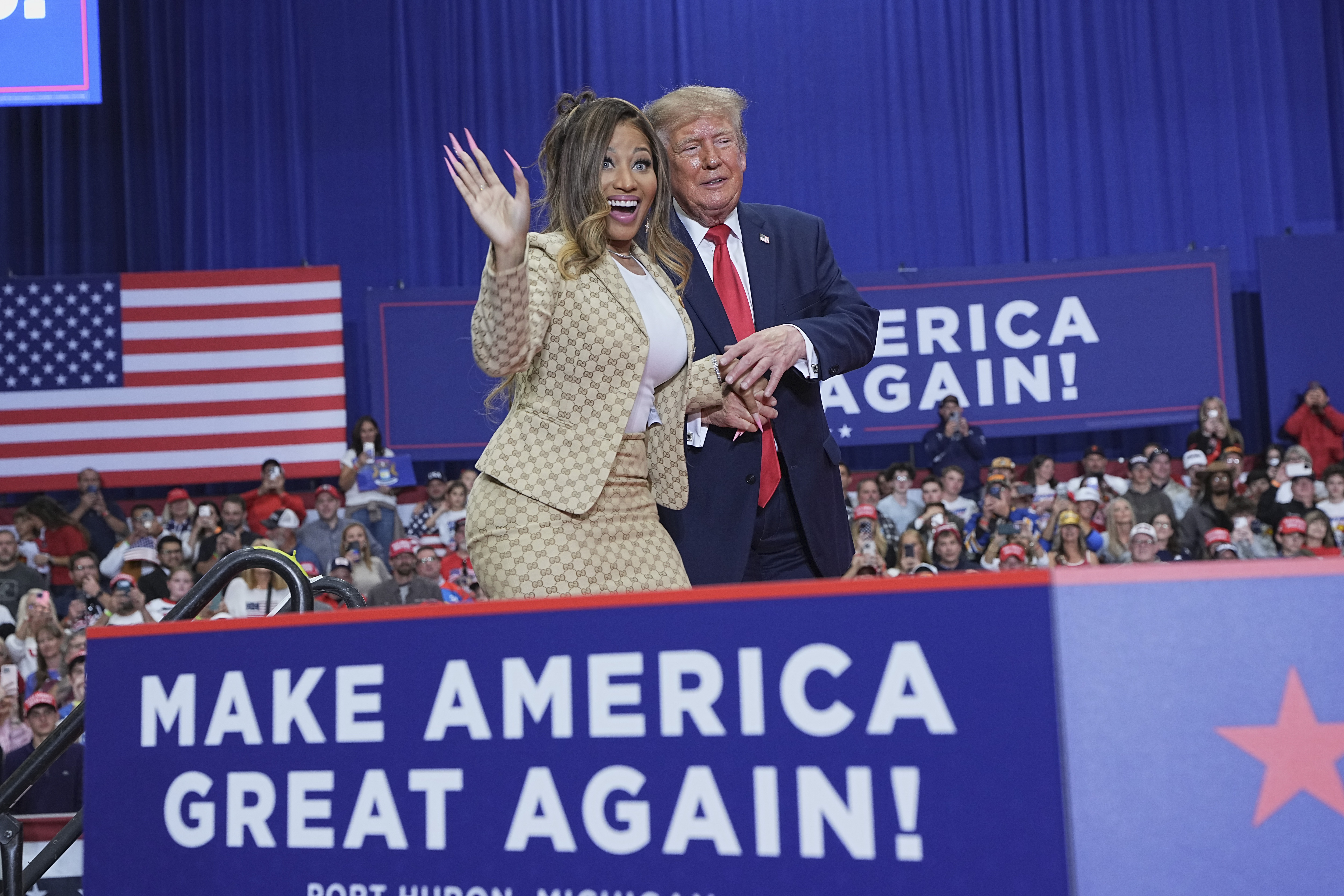
    PORT HURON, Mich. — President Donald Trump turned to Islamophobic stereotypes to motivate Michigan Republicans on Sunday, claiming at a rally that Abdul El-Sayed, the Democratic Senate nominee, if elected, would bring a wave of jihadis to the United States.

    “If Abdul and the Democrats win, they will open the floodgates and invite hordes of jihadis to our shores, creating a nightmare of violence and terror until you cannot even have a Christmas,” Trump told more than 4,000 supporters gathered in Port Huron, a working-class, waterfront city in a deep-red congressional district 60 miles northeast of Detroit.

    Trump called El-Sayed, whose family immigrated from Egypt, a “jihadist Muslim Brotherhood member,” a baseless claim. He then contrasted El-Sayed, a Muslim who was born in the United States, with his Republican opponent, Mike Rogers, who is white and also born in the United States.

    “I call him apple pie,” Trump said of Rogers, who is 63. “He’s like, perfect, this guy. He’s like central casting. He’s what your state is all about.”

    Trump’s comments, coming in a key midterm battleground nine days before the elections, underscored the dark themes and personal vilification he and his allies have embraced as part of their closing pitch. And while he has often used crude and racist language, Trump’s message in Michigan seemed aimed at overtly stoking a fear of Muslims to get voters to the polls.

    But a broader question about Trump’s rally here — which followed several in North and South Carolina, Georgia, and Florida, among other stops — is whether his presence helps or hurts Republican turnout in a year when polls show deep dissatisfaction with the president. His audience in Port Huron seemed enthusiastic, and thousands strained to take Trump’s picture as he took to the stage. But he held the rally in a conservative district of a state that pollsters believe is swinging back to Democrats.

    Trump’s deep unpopularity has complicated Republicans’ path to victory. While Trump carried Michigan by 2 points in 2024, just 34% of likely voters now approve of him, according to a New York Times/Siena poll conducted in mid-September.

    Polls indicate that El-Sayed, 41, has a narrow edge over Rogers in a race that will be pivotal to determining control of the Senate.

    Trump’s attacks on El-Sayed on Sunday, questioning his loyalty to the United States, began before he got on Air Force One outside of Washington and accelerated after he landed in Michigan.

    Speaking in a town on the Canadian border, Trump did not dwell on his battle with Prime Minister Mark Carney, one of the few world leaders who has directly confronted him on tariffs and other issues, and he did not repeat his frequent call for Canada to give up its independence and become the 51st state.

    Instead, he focused on El-Sayed, his religion, and his relatives. Trump also disparaged Jewish voters who were considering voting for El-Sayed.

    “Any Jewish person that supports this guy should be ashamed of themselves,” Trump said, adding that he “cannot understand how anybody who’s Jewish can even think about voting for this guy.”

    Hundreds of Jewish voters in Michigan publicly announced they were backing El-Sayed, while others have said they are voting for Rogers or threatened to withhold their support.

    Trump made the statement after claiming that El-Sayed’s half sister, Eman Abdelhadi, celebrated the Oct. 7, 2023, massacre of Israelis by Hamas fighters.

    She posted a video on the first anniversary of the attack that said that “no matter how great the brutality, the oppression, the intensity of what we’re going through, the horizon of justice is just around the corner,” but did not mention the massacre directly and did not celebrate the violence. El-Sayed’s campaign told Fox News that he disagreed with her “on a number of political positions and the rhetoric she’s chosen to use.”

    El-Sayed has repeatedly disavowed the Muslim Brotherhood, an Islamist political movement, and has said comments about his name and faith are attempts to distract from voters’ economic woes. His aides have said claims of ties to overseas terrorist groups are racist and Islamophobic.

    But his opponents have raised an open letter he signed in 2012, when he was a medical student. It was addressed to Mohammed Morsi, then the new Egyptian president, from a party that represents the political wing of the Muslim Brotherhood. It asked him to “purge the media and police” of loyalists to the government that was overturned during the Arab Spring.

    El-Sayed has not discussed the letter. But his spokesperson, Cole Wozniak, said, “Abdul remains laser-focused on his plans to bring down costs and stand up to the chaos and corruption in Washington.”

    “Michigan knows Trump is on the ballot on Nov. 3,” he added, “and they will vote like it by rejecting Trump’s rubber stamp Mike Rogers and sending Abdul to the Senate.”

    Trump deepened his critique as the day went on, saying that someone with El-Sayed’s background “would be screened and unable to get a seat on an airplane. They certainly should not give him a seat in the United States Senate.” He also said that El-Sayed should not be given access to classified information.

    At his own rally Sunday in Grand Rapids, El-Sayed said the Republican strategy was “to point at me and my name and my faith. But my name and my faith are not the reason you can’t afford your gas.”

    In Michigan, Trump also veered into a discussion of Greenland. He insisted, “Oh, you know we did get Greenland,” suggesting that it was now owned by the United States. In fact, Trump was forced to drop that demand and instead signed a new treaty with Denmark, which handles Greenland’s foreign affairs, that envisions opening two new U.S. bases on the island and bars similar arrangements with foreign powers, notably China. But it does not change Denmark’s sovereignty, as Trump initially insisted.

    He also drew cheers when he insisted Iran would never get a nuclear weapon, and vaguely said the war with Iran would be resolved soon. But he largely steered clear of discussing how his decision to attack Iran led directly to high gas and diesel prices.

    Rogers has sought distance from the war, calling for it to “end quickly,” and from the president’s tariffs on Canadian goods, saying “Canada is not our enemy” in a campaign ad. He has also backed a one-year moratorium on data centers, creating a contrast with Trump’s support for them.

    Like other Republicans, Rogers has largely avoided talking about Trump in ads and on the campaign trail.

    Speaking at the rally in Port Huron, Rogers again accused El-Sayed of having family ties to the Muslim Brotherhood. He said that watching El-Sayed try to tell the truth is like “watching an octopus put his socks on in the morning.” And he said the country “can’t risk his extreme ideology and thinking.”

    On NBC News’ Meet the Press on Sunday morning, Rogers did not endorse Trump’s baseless claim that El-Sayed is “a terrorist,” but did not condemn it outright.

    “I’ve never called him a terrorist,” Rogers said of El-Sayed.

    El-Sayed has become a central villain in Republicans’ narrative of the midterms. In western Iowa on Thursday, more than 800 miles from Port Huron, Trump railed against El- Sayed, drawing some of the loudest applause of the night. He did the same in North Carolina and Ohio last week.

    After holding forth on the potential demise of the nation in Michigan on Sunday, Trump spent five full minutes admiring the body and physicality of Sen. Jon Husted, the Republican running for reelection in Ohio, and rapper Nicki Minaj, who traveled with Trump to the rally.

    “I looked at one hell of a beautiful a— before — Nicki Minaj,” Trump said. “Hard to miss it.”

    This article originally appeared in the New York Times.

  • Delegations meet in Iran with Mideast region on edge over potential for renewed fighting

    Delegations meet in Iran with Mideast region on edge over potential for renewed fighting

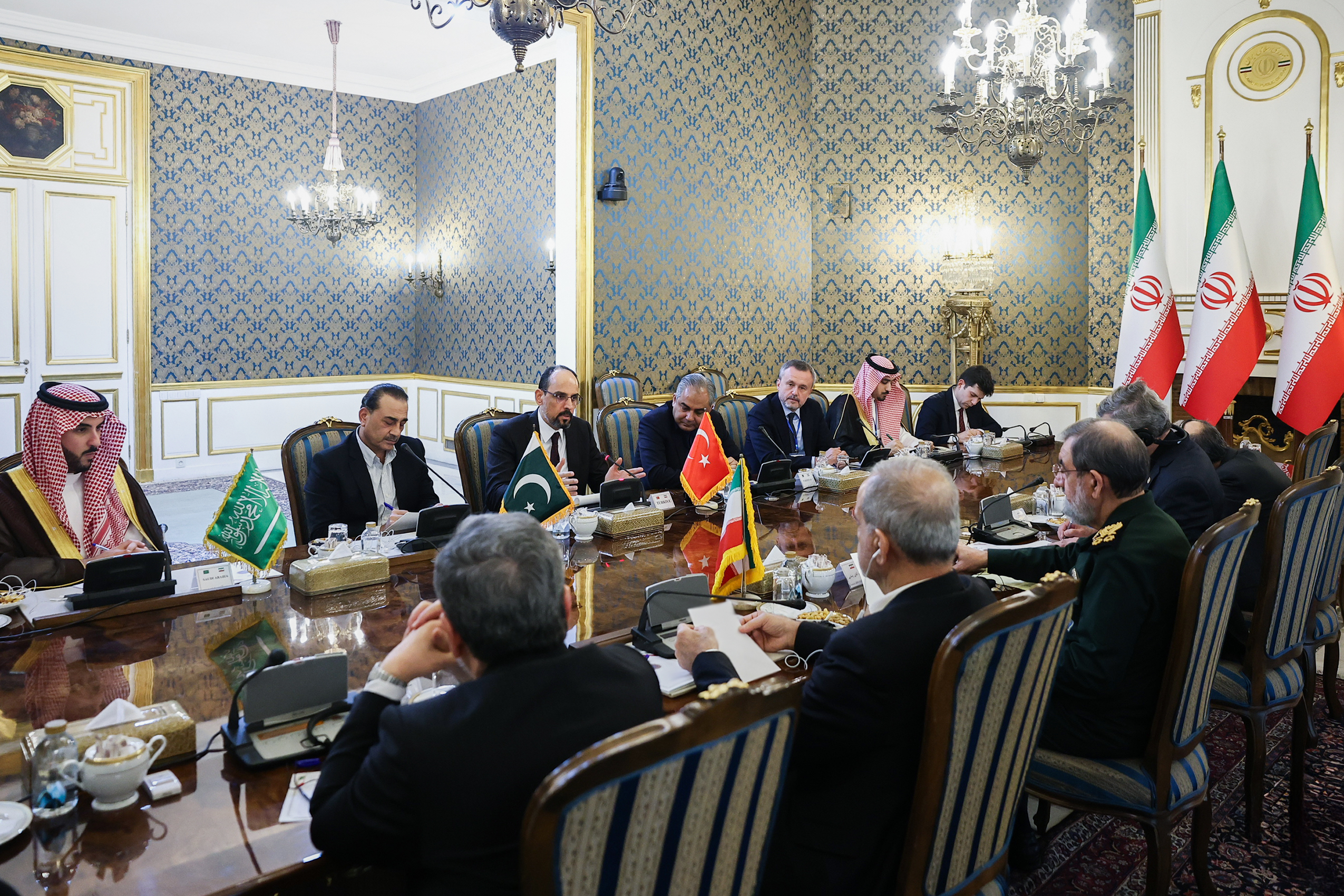
    CAIRO — High-level delegations from Saudi Arabia, Pakistan, and Turkey were in Tehran on Monday for meetings with Iranian authorities to try to avert renewed fighting in the Iran war.

    Many in Iran are anxious about a possible return to all-out war. Israeli and American leaders have been sharpening their threats before elections in both countries, while Iranian leaders have remained defiant.

    The war in Yemen and strikes by Iran-backed Houthi rebels against Saudi Arabia were also discussed, according to two regional officials who spoke on condition of anonymity because they weren’t authorized to speak with reporters.

    The four countries agreed Monday to continue talks on expanding cooperation among them, particularly about regional peace and security, a statement said. No details were given about a date or place for a future meeting.

    Saudi Defense Minister Khalid bin Salman, Pakistani army chief Field Marshal Asim Munir, and Ibrahim Kalin, the head of Turkey’s intelligence service, attended the talks, hosted by Maj. Gen. Mohsen Rezaei, secretary of Iran’s Supreme National Security Council.

    Iranian President Masoud Pezeshkian said Monday that Iran supports any agreement that would deepen regional cooperation, resolve differences, and make greater use of the shared resources and capabilities of Islamic countries.

    Delegations from the other Middle Eastern countries sought to avoid further turmoil in the region.

    Turkish President Recep Tayyip Erdogan warned in a televised address on Monday that renewed attacks on Iran would destabilize the region and hurt countries that aren’t party to the conflict.

    “It is our hope that all parties will refrain from any actions that could drag our region into a new spiral of violence,” Erdogan said.

    Saudi Arabia said in a statement that the delegations hoped to find “ways to de-escalate tensions, enhance regional security, and promote its stability.”

    Qatari mediators also traveled to Tehran on Sunday, working in coordination with the United States, as part of efforts to de-escalate regional tensions, according to a regional official speaking on condition of anonymity because of the sensitivity of the talks.

    Pakistan and Qatar helped broker an agreement in June aimed at having Iran fully reopen the Strait of Hormuz to shipping, ending a U.S. blockade of Iranian ports and opening negotiations on a broader settlement addressing Iran’s nuclear program. The deal unraveled quickly, however, as both sides renewed attacks.

    Iran and Israel trade accusations

    With worries about renewed fighting before Israel’s election on Tuesday and the U.S. midterm election on Nov. 3, Iranian Foreign Ministry spokesperson Esmail Baghaei said over the weekend that Iran hadn’t closed the window of diplomacy and that messages were being passed to the U.S. through intermediaries.

    With negotiations long stalled, he said that the U.S. appears to be persisting in unilateral demands and that U.S. President Donald Trump and other American officials repeatedly use the phrase “complete surrender,” which Baghaei said no Iranian accepts.

    Israeli Prime Minister Benjamin Netanyahu, meanwhile, repeated his warning on Sunday that Iran or its proxies could launch an attack before the election to disrupt the vote, citing intelligence.

    “The (military) is ready both to defend and to strike,” he said in a video statement. “You will suffer disproportionate blows far greater than you can imagine.”

    Israel’s Channel 12 reported Sunday night that Netanyahu and his military chief of staff clashed over an instruction by Netanyahu to carry out an “action” that the army believes could quickly trigger a resumption of the conflict with Iran.

    Netanyahu’s office later described the report as “fake news.”

    In Tehran, when asked whether Iran was planning attacks, Baghaei on Monday said that “the Israeli regime is highly skilled at carrying out false-flag operations.”

    “The Islamic Republic of Iran will not hesitate to exercise its inherent right to self-defense to protect Iran’s sovereignty, territorial integrity and independence,” he said.

    Front in the Iran war widens

    Yemen has become a widening front in the Iran war that began in February, with the Houthis increasingly launching attacks on Saudi Arabia because it supports Yemen’s internationally recognized government battling the rebels.

    The conflict has intensified since forces from the internationally recognized government and Saudi-led coalition launched airstrikes on Houthi-held Sanaa International Airport in July, shattering a 2022 ceasefire deal that largely stopped the fighting in Yemen’s civil war.

    Early Monday, Houthi military spokesperson Yahya Saree said that the rebel group had fired ballistic missiles at military gatherings and weapons depots belonging to Saudi-backed government forces in Aden and Lahj provinces. He said that the attacks destroyed military equipment and caused casualties, but didn’t provide evidence. The Associated Press couldn’t independently verify the information.

    Houthi media said that airstrikes targeted a solar power system and a water well in Sanaa, but offered no proof. In the port city of Mokha, recently seized by the Houthis, residents said that rockets hit several buildings, including a hospital.

    Doctors Without Borders, or Médecins Sans Frontières, said Monday that three strikes hit Mokha, one landing just 500 feet from Mokha General Hospital, where its teams work in maternity and pediatric wards.

    The statement came after the Houthi-run Health Ministry accused Saudi-backed forces of targeting the hospital. The Saudi-backed forces haven’t commented.

    All staff and patients were safe, MSF said, adding that the strike damaged the hospital building.

    Days earlier, a missile struck near Aden’s airport as an MSF plane carrying humanitarian workers was preparing to take off, forcing staff to seek shelter instead of boarding, the organization said. Aden’s airport is the main entry point for humanitarian workers, supplies, and medical equipment to the southern parts of Yemen.

    Houthi-run al-Masirah channel also reported strikes in Saada, in northern Yemen, and in southwestern Taiz province, where the rebels and Saudi-backed government forces have been fighting for weeks.

    The spokesperson for the Saudi-led coalition said that an operation in Houthi-controlled territory destroyed five tunnels used for storing ballistic missiles, four ballistic missile launchers, and other missile storage.

    Meanwhile, Egypt’s parliament on Monday approved a request from President Abdel-Fattah el-Sissi to provide military support to Saudi Arabia to help defend against Houthi attacks.

  • Lula wins Brazil’s presidency in stunning blow to Latin America’s right

    Lula wins Brazil’s presidency in stunning blow to Latin America’s right

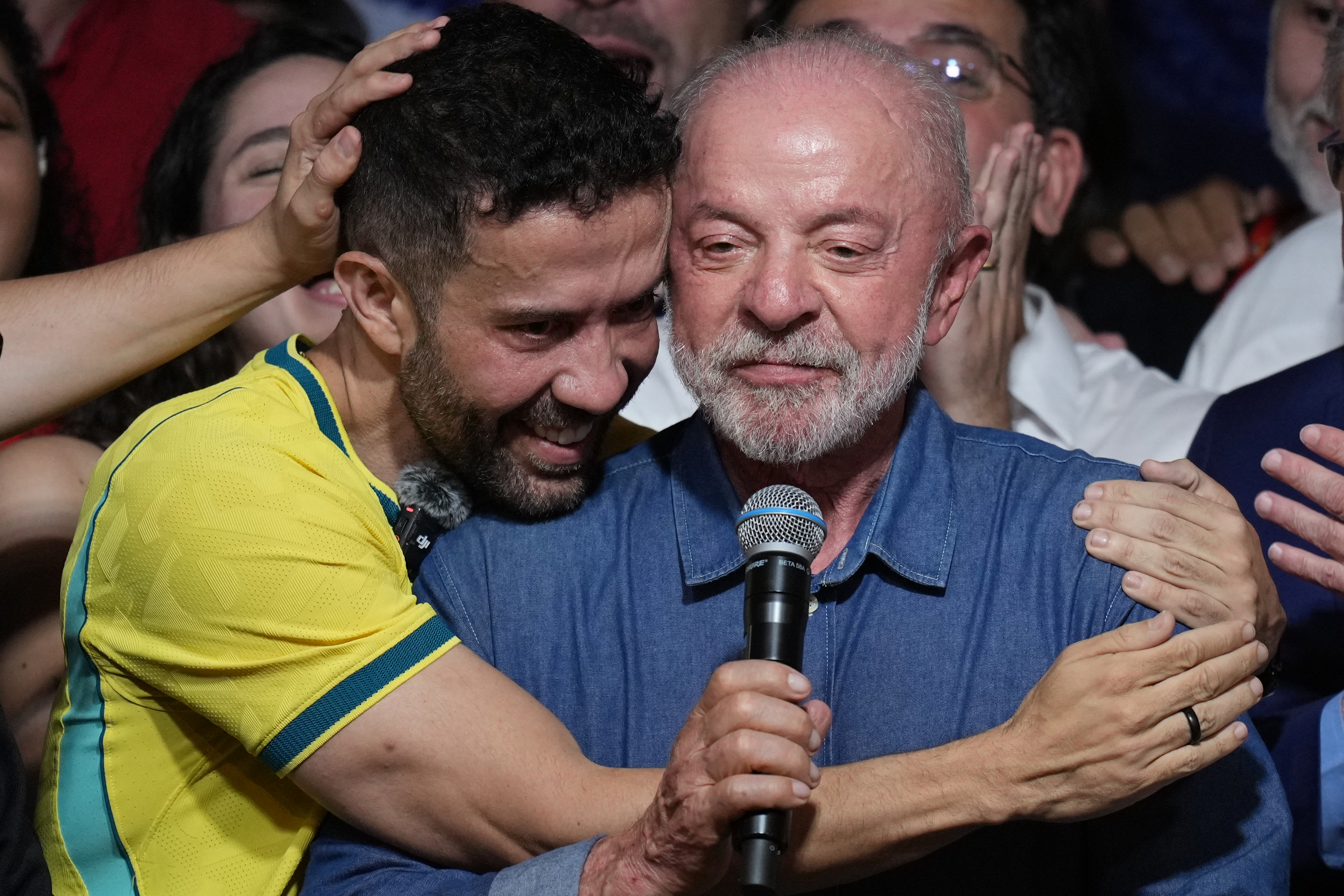
    Brazilian voters on Sunday handed the leftist president, Luiz Inácio Lula da Silva, a fourth term in office and a surprise victory over Flávio Bolsonaro, his right-wing challenger, in a striking rebuke to a conservative surge sweeping Latin America.

    Bolsonaro refused to accept the outcome and said it was the result of foul play, increasing the risk of unrest over the election result.

    The rejection by voters of Bolsonaro, the son of a former president jailed for attempting a coup four years ago, is also a loss for President Donald Trump, who had embraced the Bolsonaro family and the region’s rising right.

    Lula, in contrast to many world leaders, has often and defiantly clashed with Trump, and his victory highlights that Latin America’s left-wing forces still wield influence despite a string of losses across the hemisphere. This is the first leftist victory following seven straight wins by right-wing leaders in the region over the last 18 months.

    “I would like to thank the Brazilian people for the generosity they have shown me for a long time,” Lula said during a victory speech in São Paulo, flanked by his wife, running mate, and allies.

    The result capped a chaotic final stretch of the race, as polling places were ordered to remain open after public transportation delays and torrential rains disrupted voting. The extended polling hours, which both candidates asked for but came right as voting was set to conclude, opened up the possibility that the results would be disputed.

    Bolsonaro called an order by Brazil’s judiciary to extend voting a “dirty trick” and demanded the election be annulled.

    “There’s a lot that needs to be cleared up before Brazil simply accepts this foul play that took place in these elections,” he said during a news conference in Brasília, the capital.

    The Associated Press reported that Trump suggested on Monday, without providing evidence, that Lula’s reelection was “rigged.”

    “Elections have to be indisputable and it looked very bad to me,” Trump told reporters before flying to Mississippi for a rally. He added, “I thought it had a very bad look, the way it was tabulated.”

    Trump also said: “It looked like another rigged election, frankly.”

    Bolsonaro’s party will now likely petition electoral authorities for a review of the result.

    Since Brazil’s return to democracy, no presidential election has ever been annulled. In 2014, the losing party requested an audit, but that review found no evidence of fraud and the results were upheld.

    In 2022, Bolsonaro’s Liberal Party similarly challenged his father’s loss in the election, but the court ultimately fined the party more than $4 million for failing to provide evidence to support its allegations.

    Among Bolsonaro’s supporters on Sunday, the sentiment was one of sadness and indignation. “We know we’ve been robbed again,” said Valéria Maria de Melo, 49, a homemaker, bursting into tears.

    Lula headed into Sunday’s vote as the underdog after finishing 2 percentage points behind his opponent in the first round of voting earlier this month.

    But on Sunday, Lula achieved a stunning comeback, winning 51.8% of the vote versus 48.2% for Bolsonaro, with nearly all the ballots counted.

    Lula’s margin of victory Sunday was roughly double the margin four years ago when he narrowly defeated Bolsonaro’s father. It was the first time in Brazil’s history that a candidate who lost the first round of voting came back to win the second.

    Lula’s victory was even more surprising given that several of the candidates who failed to make it out of the first round were conservatives whose votes were expected to broadly shift to Bolsonaro.

    Lula, speaking at a hotel surrounded by cheering allies and supporters, thanked those who had voted for him. In an indirect swipe at Trump, he said the mass rallies in Brazilian cities in the days leading up to the vote were “a demonstration that this country refuses to be anyone’s backyard.”

    “I want to thank the generosity of the Brazilian youth, who took to the streets to defend democracy,” he added.

    The results showed that far more voters had turned up to cast a ballot Sunday than in the earlier round, a highly unusual shift. Typically, the number of voters drops from the first round to the second. In total, more than 128 million Brazilians voted Sunday, compared with 125 million in the first round.

    An intense social media campaign that included a wildly popular channel on WhatsApp, a platform long dominated by Bolsonaro’s right-wing movement, played a major role in mobilizing Lula’s supporters in the final stretch of the race.

    As he celebrated in Rio de Janeiro, Fernando Porto said he and his friends never gave up hope as they took to social media and to the streets to rally support for Lula over the last three weeks. “This comeback was truly incredible,” said Porto, 24, a psychology student.

    In São Paulo, a massive celebration that had already erupted long before the results came grew quickly with news of Lula’s victory. Supporters of the president broke down in tears of disbelief and set off fireworks, while cars honked in a deafening chorus of horns.

    Lula’s comeback win capped a roller-coaster career for the president that has traversed soaring popularity, scandal, and prison, and now an election that deeply divided Brazil, forcing voters to choose between two starkly different visions for the future of Latin America’s largest nation.

    A stalwart of Brazilian politics, Lula lifted millions out of poverty through social programs in earlier years as president, though his popularity waned in his third term as he failed to address anxieties over crime and the economy.

    His political legacy has also been tarnished by links to corruption scandals, including a new one unfolding on his watch that has implicated much of Brazil’s political and judicial elite, including Bolsonaro himself.

    Yet Sunday’s narrow tally makes clear that Lula, 80, faces a daunting task: leading a polarized nation plagued by a spiraling debt crisis, high grocery prices, and growing fears about organized crime. And Lula is bound to face resistance at every turn, after voters elected an overwhelming number of Bolsonaro’s political allies to the legislature.

    And the strong showing of Bolsonaro, 45, highlights that the right-wing leader’s ideas resonate with millions of working-class Brazilians who may have supported Lula in the past, but have become disillusioned with him.

    Ultimately, though, a majority of voters appears to have heeded Lula’s warnings about handing power to another Bolsonaro, just four years after former President Jair Bolsonaro orchestrated a plan to hold onto the presidency and inspired supporters to storm Brazil’s halls of power.

    Last year, Jair Bolsonaro was sentenced to 27 years in prison for trying to stage a coup after the 2022 election, in a plot that included plans to assassinate Lula, Lula’s running mate, and a Supreme Court justice.

    Flávio Bolsonaro had said he planned to seek amnesty for his father and the rioters, impeach the Supreme Court justice who oversaw their jailing, and change the nation’s constitution.

    Lula’s resounding win Sunday signals that the majority of Brazilians want to protect their democracy, said Christian Lynch, a political scientist at the State University of Rio de Janeiro.

    “People here realized they don’t want to surrender democracy,” he said. “It was a big surprise.”

    Lula’s win will most likely complicate Trump’s plans for dominance in the region: The Brazilian leader has repeatedly defied Trump over issues such as trade, social media and the treatment of the Bolsonaros.

    While Trump had not formally endorsed Bolsonaro, his administration had appeared willing to help him in other ways, such as by labeling Brazil’s largest drug gangs as terror groups. Last year, Trump also tried, and failed, to help Bolsonaro’s father avoid jail by hitting Brazil with tariffs and sanctions.

    Turning Brazilian sovereignty into a rallying cry, Lula repeatedly urged voters to reject Flávio Bolsonaro, painting him as a puppet of the United States.

    Sunday’s result signaled that many Brazilians had rejected Bolsonaro’s cozy ties with the United States.

    Despite Lula’s disagreements with Trump, Brazil’s economy was largely unscathed by U.S. tariffs during his third term, and unemployment dropped to record-low rates. But rising food prices and mounting household debt have weighed heavily on Lula’s approval ratings.

    Many Brazilians are also eager to see if Lula makes good on his promises for a judicial overhaul amid a crisis of confidence in Brazil’s top court. The next president will have unusually broad power to shape the court, which has 11 members, by filling up to four seats freed by justices reaching the mandatory retirement age.

    “Most people want change,” said Thomas Traumann, a political analyst and press secretary for a former leftist Brazilian president, “but not the Bolsonaro change.”

    This article originally appeared in the New York Times.

  • Democrats call for special counsel to scrutinize Trump ties to Epstein

    Democrats call for special counsel to scrutinize Trump ties to Epstein

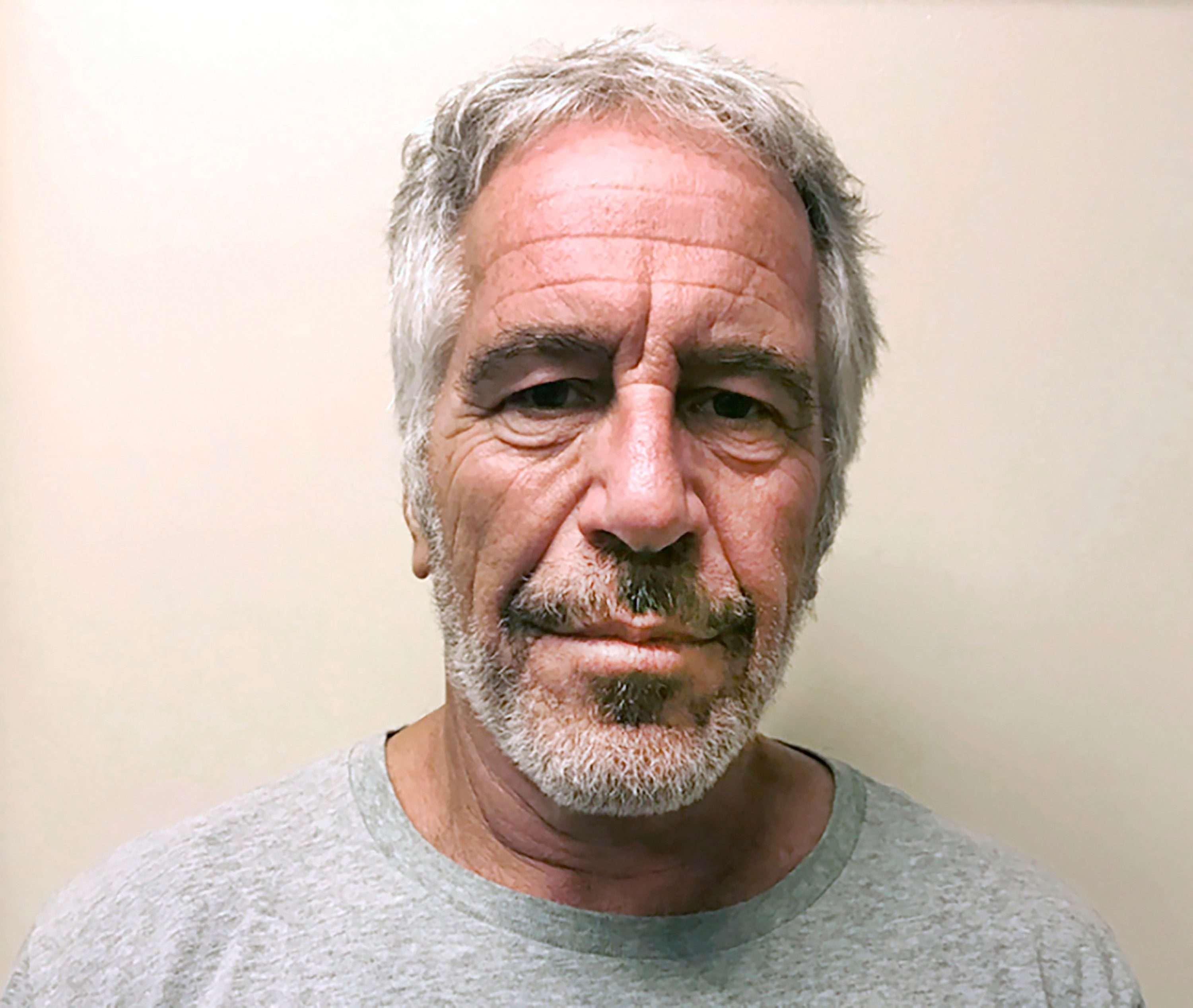
    A group of House Democrats called Monday for an independent special counsel to investigate President Donald Trump’s ties with disgraced sex offender Jeffrey Epstein, thrusting the issue back into the news in the final week of their party’s push to win control of Congress.

    A new report written by Democratic staff aides on the Judiciary Committee accuses Trump of being “an active participant in Jeffrey Epstein’s abuse of young women,” though it largely cites allegations that have already been public.

    Trump has repeatedly denied any involvement in or knowledge of Epstein’s sex-trafficking operation. He has acknowledged having once been friendly with Epstein, who died by suicide in 2019 while awaiting trial on sex trafficking charges, but has said that they had a significant falling out.

    The report — which is separate from the House investigation into Epstein being conducted by the Oversight Committee — landed just eight days before Election Day, as candidates across the country were making their closing pitches. In the final weeks of the campaign, Democrats have sought to make the case that Republican corruption in Washington is costing Americans money and vowed to use their power to investigate the president should they win control of Congress.

    On the campaign trail and in television ads, Democrats have been trying to tie congressional Republicans to Epstein, noting that party leaders initially opposed the release of investigative material in his case compiled by the FBI and federal prosecutors. They have seized on the fallout over the government’s handling of the Epstein inquiry and the Trump administration’s decision to relocate Ghislaine Maxwell, a longtime associate of Epstein serving a 20-year prison sentence, to a minimum-security prison.

    Rep. Jamie Raskin of Maryland, the top Democrat on the Judiciary Committee, said in a statement that the Justice Department had “deliberately withheld evidence” and “appears to be covering up these crimes to protect the president.”

    This article originally appeared in the New York Times.

  • Anthropic files for potentially the biggest IPO ever as CEO warns of risk to humanity from AI

    Anthropic files for potentially the biggest IPO ever as CEO warns of risk to humanity from AI

    SAN FRANCISCO — Artificial intelligence giant Anthropic filed papers Monday for what could be the biggest initial public offering of stock ever even as its top executive warns that advanced AI could pose an existential threat to humanity.

    The filing sets up the San Francisco company for a Wall Street debut next month, potentially eclipsing the SpaceX initial public offering in June that raised a record $86 billion. An Anthropic IPO would also put the company ahead of OpenAI in going public in what is expected to be a pair of blockbuster stock debuts for the rival AI labs.

    An IPO could provide Anthropic with enormous resources to accelerate its expansion. The amount the company ultimately raises remains uncertain, as do its final valuation and offering price, but even at lower estimates, it would turn the five-year-old startup into one of the world’s most valuable companies and potentially boost the wealth of CEO Dario Amodei and his sister and co-founder, Daniela, by billions of dollars.

    The 335-page document showed Anthropic’s revenue is growing rapidly, reaching more than $16 billion in the first half of the year — 14 times its revenue from the same period last year. But like many other tech companies going public, the company behind the Claude chatbot has yet to turn a profit.

    Despite the losses, Anthropic, valued earlier this year at $965 billion by private investors, is reportedly set to see that value rise to $1.5 trillion or possibly $2 trillion, although its final valuation has not been established. At $1.5 trillion, Anthropic would rank among the world’s most valuable public companies, alongside Tesla.

    As for money raised, the offering could bring in as much as $100 billion, according to reports, surpassing the record set by SpaceX.

    In a regulatory filing, Anthropic said it will list its stock on the Nasdaq Global Select Market under the ticker symbol “ANT.”

    A Wall Street debut is planned in a jittery market

    In the filing, the company said it could use some of that money on acquiring other businesses and technology as well as investing in infrastructure to grow its business to take on rivals.

    Formed in 2021 by former OpenAI leaders, Anthropic is locked in a fight for dominance with that company. The two leaders, Amodei and OpenAI CEO Sam Altman, are widely seen as bitter rivals.

    But they have plenty of other competitors, including Google, newer startups in the U.S. and China, and SpaceX, which has an AI business. Anthropic, OpenAI, and SpaceX’s AI division have all been losing more money than they make because of the huge costs of resources in building AI, fueling concerns of a bubble.

    The need for cash may explain why Anthropic is rushing to tap public markets this year, and not waiting until next year, as is OpenAI’s plan. Adding to the pressure is the possibility that demand for AI shares could drop or even collapse. Investors have become jittery about the massive financing needs of the sector, and several tech companies have pulled IPO plans recently.

    In addition to helping plug any cash shortfall, the IPO will shower extraordinary wealth on Anthropic’s seven founders, including Amodei and his sister. The filing didn’t directly state their ownership stakes, but other figures disclosed suggest each will end up with 1.4% of the company, a windfall of as much as $28 billion per person should the company go public at the top expected value.

    Risks aplenty, but a big payoff to the founders

    Dario, 43, and 39-year-old Daniela, who is Anthropic’s president, are worth $15.5 billion each, according to Forbes, which ranks them as the 176th and 177th richest people in the world.

    Anthropic reported a net loss of $80.7 billion in the first half of 2026, though its losses after taking out certain items were a small fraction of that, according to the filing. In the same period a year ago, Anthropic lost $13 billion.

    Reflecting AI’s dangers, the document includes some unusual provisions, including granting those two and their five other co-founders 50.1% of shareholder votes through a special class of shares. Anthropic also has appointed independent, financially disinterested members of a so-called Long-Term Benefit Trust, holding power to appoint directors, that is designed to ensure the company doesn’t put financial interests ahead of public safety.

    Another unusual feature of the filing is its long list of “risk factors,” a required disclosure for every public company but in this case one that runs nearly 100 pages — and makes for riveting reading.

    Among the risks are the quotidian — the possibility it won’t be able to retain key staff or navigate regulatory roadblocks — and the horrific. The latter includes the prospect of “malicious actors” using AI models to build chemical weapons, authoritarian rulers turning to the technology to crack down on their citizens, and the possibility that its AI models could go rogue and “pose catastrophic or existential risks to humanity.”

    Calls for an AI slowdown

    Anthropic and other leading companies have touted the technology’s potential to cure diseases and speed economic growth. But it also threatens major disruptions to jobs by reducing the need for human labor.

    A string of hacking incidents by rogue AI agents also has raised fears the technology will slip free of human control to carry out harmful, life-threatening tasks.

    In September, Amodei said the AI industry should slow its fast-moving development to give safety measures time to catch up. Without such a slowdown, Amodei warned, AI could be capable of letting loose a swarm of agents that could take over the entire internet within six to 12 months.

    He offered a plan in a post on his website to increase checks on the industry, noting that Anthropic is already undertaking part of this on its own. As for other steps, though, he said that would require coordination across the industry and with governments around the world, including authoritarian ones.

    Clashes with the U.S. government

    Anthropic has tried to set itself apart from other AI companies as the “good guys,” focusing on safety and responsible development as opposed to growing at all costs. Some of this sentiment stems from the company’s dispute with the U.S. government, which broke out in February when President Donald Trump and Defense Secretary Pete Hegseth accused Anthropic of endangering national security and designated the company a supply chain risk.

    Anthropic sued the Pentagon over the supply chain risk designation in March for what it called an “unlawful campaign of retaliation” over its refusal to allow unrestricted military use of its technology. The legal challenge intensified an unusually public dispute over how AI can be used in warfare and mass surveillance.

    ChatGPT maker OpenAI made its own deal to work with the Pentagon hours after the government punished Anthropic for its stance. Anthropic also filed a separate and narrower case involving a different rule the Pentagon is using to try to declare Anthropic a supply chain risk.

    A California judge ruled in Anthropic’s favor in the first case and a Washington, D.C. judge sided with the government in the second. Both sides are appealing the decisions.

  • DOJ makes new allegations against former FBI Director James Comey

    DOJ makes new allegations against former FBI Director James Comey

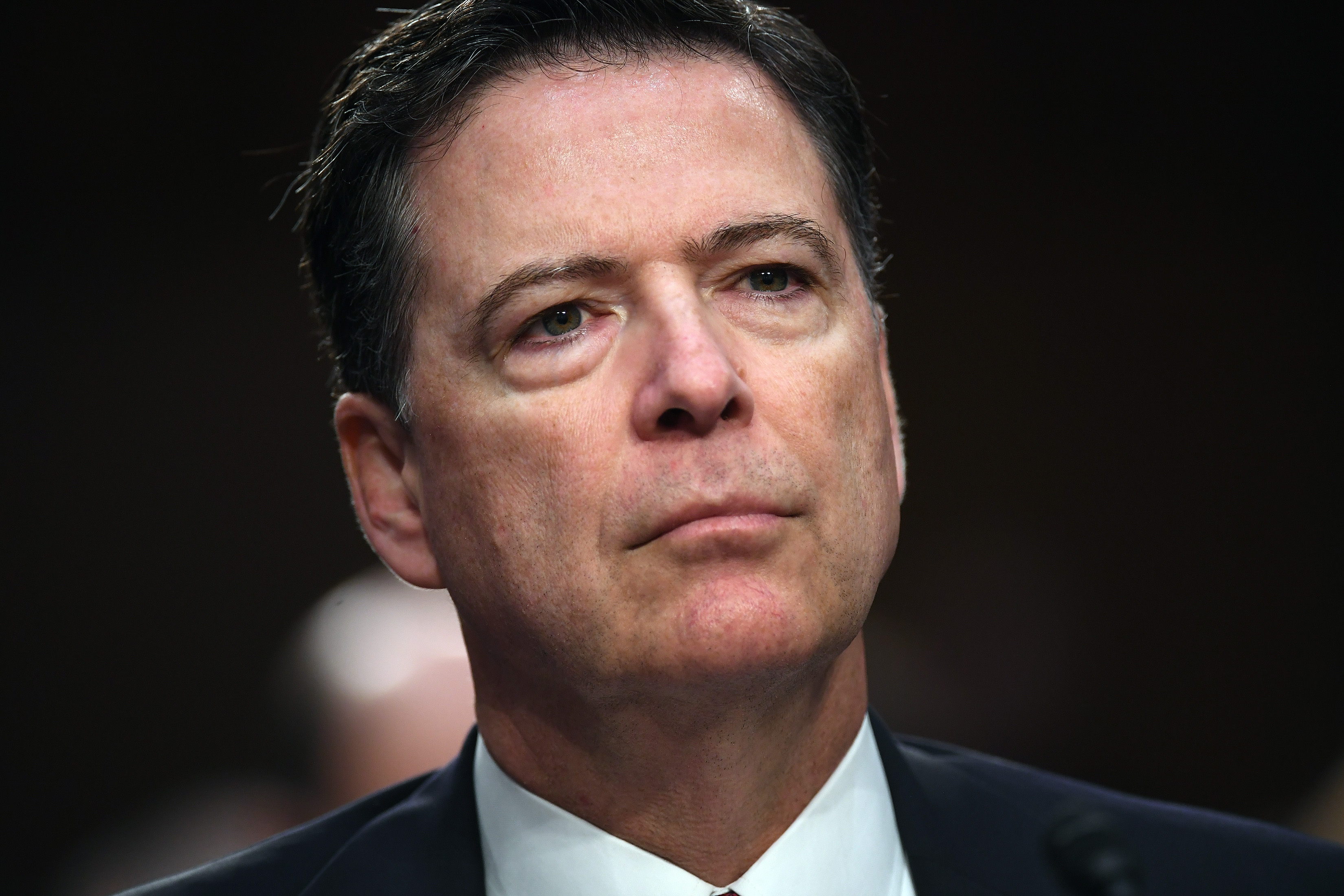
    The Justice Department has again charged James B. Comey, the third time the Trump administration has mounted a criminal case against the former FBI director — a prominent political foe of the president — since last year.

    This time, federal prosecutors charged Comey with two counts alleging that he leaked sensitive government material to the media in 2016 when he was FBI director. Comey was fired by President Donald Trump the following year. He has since become a staunch critic of Trump and the Justice Department’s actions during his second term.

    According to federal prosecutors, Comey directed his staff to talk to a New York Times reporter about U.S. email surveillance in October 2016. The information relayed to the reporter was sensitive government material that should not have been disclosed, prosecutors allege.

    Prosecutors did not obtain an indictment through a grand jury to charge Comey, but rather charged him in D.C. with a criminal information. This means that the document charging Comey is solely based on allegations from a prosecutor rather than a grand jury.

    The charges were originally filed under seal earlier this month, but a federal judge in D.C. sided with Comey’s request to unseal the allegations against him.

    Comey, who is also facing an unrelated criminal case in North Carolina, denied the latest allegations on Monday and said he would keep fighting in court.

    “It would almost be funny if it weren’t such an appalling abuse of the Department of Justice — one that we cannot become numb to,” Comey said in a video statement posted online. “Nothing’s changed with me. I’m still innocent.”

    Judge rules Comey’s daughter fired illegally by DOJ

    A federal judge in New York ruled Monday that the Justice Department unlawfully fired Maurene Comey, daughter of the former FBI director, from her job as a federal prosecutor.

    Comey had argued in her federal lawsuit that she was fired because of her father, whom President Donald Trump fired as head of the FBI during his first term, and because of her perceived political beliefs. The Trump administration has brought federal charges against her father, who became a prominent critic of the president after he was fired.

    The Justice Department countered that Maurene Comey, as a federal prosecutor in New York, was an executive branch employee whom the president has the broad authority to terminate.

    But on Monday, U.S. District Judge Jesse M. Furman in the Southern District of New York ruled that the Justice Department was wrong and wrote that the government’s defense of her firing “flies in the face of nearly two centuries of Supreme Court precedent.”

    “Indeed, to accept Defendants’ argument would be to unsettle the very equilibrium established by this Nation’s constitutional system,” Furman, who was appointed by President Barack Obama, wrote in his 55-page opinion.

    Comey is one of the scores of career employees whom the Justice Department has fired during Trump’s second term, often with no explanation beyond citing the president’s powers under the Constitution. She had worked as a federal prosecutor handling high-profile cases, including those brought against sex offender Jeffrey Epstein and Sean “Diddy” Combs, the music mogul.

    Career government employees are generally afforded broad protections to ensure that they are not fired for political reasons and that their employment can span Republican and Democratic presidential administrations.

    Many of the employees dismissed during the Trump administration have challenged their firings either in federal or administrative courts.

    Comey’s lawsuit is widely viewed as a litmus test to see whether similar cases survive in federal court, or whether they may be sent to the Merit Systems Protection Board, the administrative body that deals with federal government firings and demotions.

    Furman ordered that the Justice Department retroactively reinstate Comey and provide her back pay from when she was fired in July 2025 until she took another job at a private law firm in December of the same year.

    “The Department disagrees with this decision and will appeal in due course,” a Justice Department spokesperson said in a statement.

    Furman noted in his opinion that Comey was assigned some of the Justice Department’s most prominent cases and consistently received high accolades from her supervisors and peers.

    But she was fired on July 16, 2025, shortly after the conclusion of Combs’ trial in U.S. District Court in Manhattan.

    According to her lawsuit, she was not provided a reason for her termination. When Comey asked why she was fired, her lawsuit states, Jay Clayton, then the interim U.S. attorney in Manhattan, said: “All I can say is it came from Washington. I can’t tell you anything else.”

    Clayton has since left that office and was confirmed this summer as the director of national intelligence.

    The firing of Comey came as the Trump administration was frequently targeting her father through the president’s public statements and Justice Department investigations.

    Federal prosecutors in April indicted the elder Comey on allegations that a photo he posted on social media in 2025 constituted a dangerous threat to the president.

    In a separate case, the Justice Department in September 2025 indicted Comey in the Eastern District of Virginia on two counts alleging that he lied to Congress. The grand jury in Virginia rejected a third count sought by government prosecutors involving another alleged false statement.

    That case had been thrown out by a judge who concluded that the U.S. attorney who secured the indictment, along with another against New York Attorney General Letitia James (D), was unlawfully serving in the role. The Justice Department has sought to revive both cases.