Tag: no-latest

  • Trump threatens to ban Bombardier jet sales as Canada’s tariffs take effect

    Trump threatens to ban Bombardier jet sales as Canada’s tariffs take effect

    President Donald Trump threatened to ban the sale of Canadian Bombardier jets unless they are built in the United States, as Canadian retaliatory tariffs on U.S. goods came into effect amid an escalating trade war between the countries.

    “NO MORE SELLING BOMBARDIER IN THE UNITED STATES!” Trump said in a Truth Social post Monday that also urged people to “BUY AMERICAN.”

    It was not immediately clear how Trump would restrict the sale of the jets. The White House did not immediately respond to an overnight request for comment.

    The president’s comments mark the latest escalation in the ongoing tit-for-tat trade feud between the U.S. and Canada. Just after midnight on Tuesday, Canada’s countertariffs of up to 50 percent on $20 billion worth of U.S. imports came into effect. The levies apply to a vast range of products, including steel and aluminum, dairy, appliances, agricultural equipment, plastics and electronics.

    The move came in response to the U.S. imposing 50 percent tariffs on about $20 billion in Canadian goods last month. After trade talks between the two sides faltered, Prime Minister Mark Carney vowed that Canada would retaliate “dollar for dollar.”

    In his Monday post, Trump said that if Bombardier wanted access to the U.S. market, “they must build here, and stop treating America like a ‘piggybank.’”

    In a statement that did not directly address Trump’s comments, Bombardier said it had sites in nine U.S. states and Washington D.C., and noted that it manufactured its wings in its Texas facility, and flight-control components in California.

    It added it worked with about 2,800 American companies across 47 states and that it “values its great partnership with American companies and its U.S. employees.”

    The Quebec-based firm has previously said it employs more than 3,000 people in the U.S.

    Quebec Premier Christine Fréchette said she had contacted Bombardier’s chief executive to offer “our full support.”

    “Quebec will not allow anyone to dictate where our companies must produce in order to access a market. We will defend our companies, our workers, and our expertise with resolve,” she said in a post on X.

    U.S.-Canada relations have deteriorated drastically during Trump’s second term. In addition to the trade war, Trump has threatened to make Canada the 51st state and signed an executive order renaming Lake Ontario as Lake America.

  • The GOP was confident about keeping its Senate majority. Now the fight for control is wide open

    The GOP was confident about keeping its Senate majority. Now the fight for control is wide open

    WASHINGTON — Republicans appeared to have a firm grip on the Senate heading into the final two years of President Donald Trump’s term. But with less than two months until Election Day, control of the chamber is now up for grabs.

    Democrats have found themselves competing in states that once seemed beyond their reach as President Donald Trump’s slipping approval ratings and voters’ dissatisfaction with the economy create a difficult political environment for Republicans. But races Democrats once counted on winning have also become more complicated.

    It’s a battle that’s expected to exceed $3.4 billion in spending across all races during the midterm campaign. The implications are huge for Trump’s agenda and his ability to fill administration jobs and open court seats for the remainder of his term, as the Senate is empowered to confirm or block presidential nominees.

    Republicans say it’s unlikely for everything to break in Democrats’ favor, but they acknowledge they’re facing a difficult landscape. Senate Majority Leader John Thune told South Dakota’s KELOLAND News last week that he does “worry” about losing the chamber.

    “I’m a realist,” Thune said. ”I don’t ever try and sugarcoat things. I think it’s a competitive environment right now.”

    Democrats face a scrambled path to the majority

    Democrats need to net four seats to win the majority. The original path had been to hold Michigan, Georgia and New Hampshire while winning back Republican-held seats in Alaska, Maine, North Carolina and Ohio. But things have changed.

    “We now have multiple paths for the majority,” Senate Democratic Leader Chuck Schumer said last month. “We found new states — Iowa, Texas — which people a year ago weren’t even paying attention to.”

    Some of the states where Democrats were feeling most optimistic at the start of the election cycle, such as Michigan and Maine, have grown murkier.

    In Michigan, where there’s an open seat this fall, no GOP candidate has won a Senate race since 1994. But Democrats are struggling to unite behind nominee Abdul El-Sayed. The favorite of progressives narrowly defeated moderate U.S. Rep. Haley Stevens in the August primary, and feelings remain raw from a bruising contest that saw nearly $70 million spent against El-Sayed.

    Republicans believe Mike Rogers, who lost the 2024 Senate race by fewer than 20,000 votes, has an improved shot against El-Sayed. The Senate Leadership Fund — Senate Republicans’ spending PAC — added $6 million to its Michigan advertising investment after El-Sayed won, bringing their total spending to $51 million, the third-highest total.

    Democrats also saw a prime opportunity to finally defeat five-term Republican Sen. Susan Collins in Maine, where Democratic Vice President Kamala Harris won more votes than Trump in 2024.

    Progressive Graham Platner easily won the nomination in June, but he left the race the next month over a sexual assault allegation that he denies. Democratic delegates in late July chose Troy Jackson, a lesser-known former state legislative leader, to replace him.

    Jackson has been forced to play catch-up. Collins and aligned super PACs have spent almost $80 million so far, according to the ad-tracking firm AdImpact, while Jackson and Democratic-aligned groups have spent and reserved close to $45 million since he became the nominee.

    As one path narrowed for Democrats, others widened

    Democrats increasingly see a real possibility in Texas, a state that has been an elusive goal for decades, and other GOP-led states including Iowa, Alaska and Ohio.

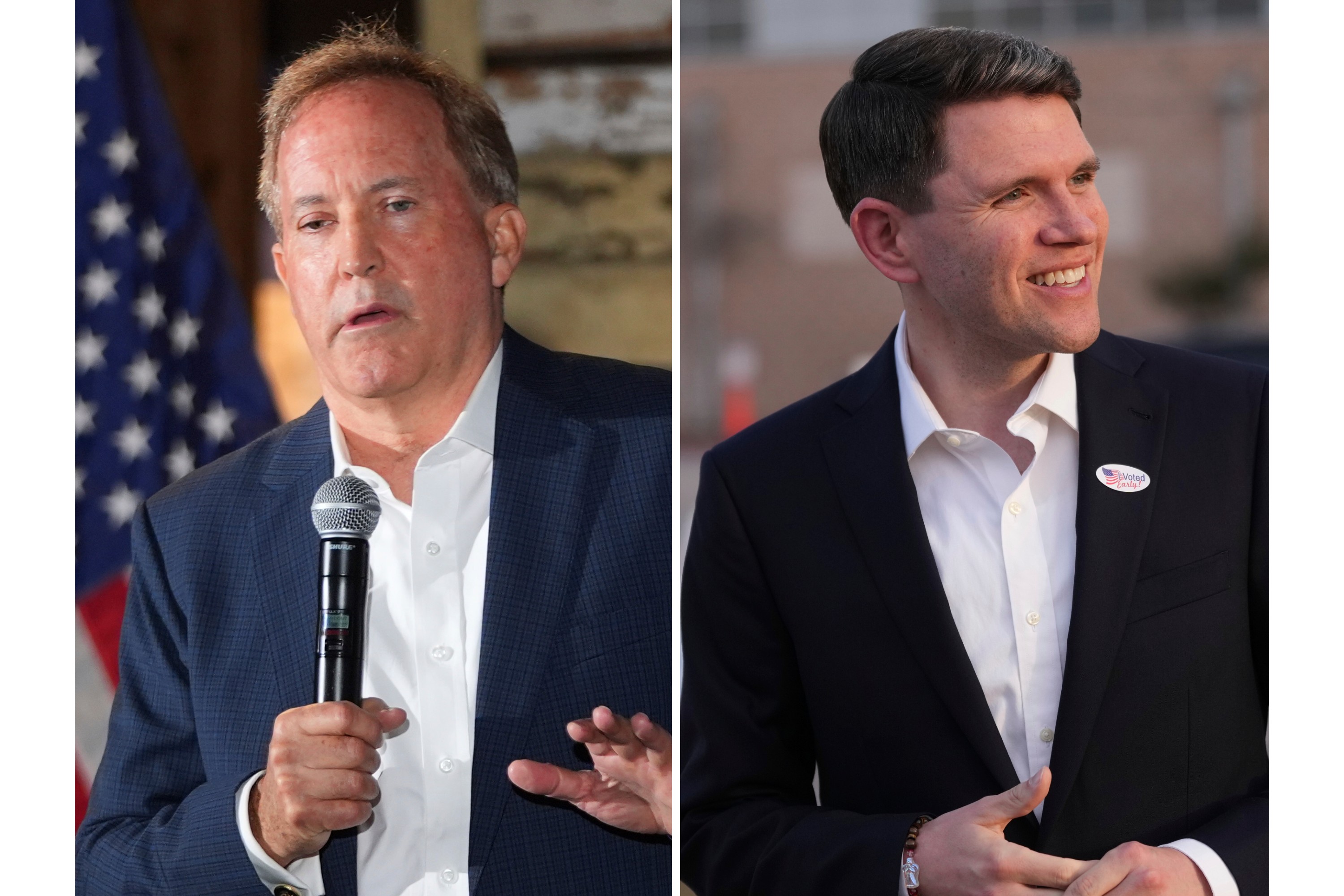
    In Texas, Democrat James Talarico faces state Attorney General Ken Paxton, who ousted four-term incumbent Republican Sen. John Cornyn to win the GOP nomination. Senate GOP leadership backed Cornyn, seeing him as the stronger general election candidate.

    Paxton has been shadowed for decades by legal and ethical questions, including indictments for securities fraud, though he was not convicted.

    Talarico and allied groups have spent nearly $30 million on advertising since the May runoff, compared to less than $3 million by pro-Paxton groups. The political fund associated with Trump last week spent $10 million on TV and digital ads to help Paxton — the first major general election investment by MAGA Inc. for the midterms. Senate GOP leaders had petitioned Trump’s political team to spend some of the more than $400 million it had last month to help Paxton.

    Democrats have also upped their spending in Alaska, Iowa, Ohio and North Carolina, all states currently held by Republicans. The GOP, meanwhile, is feeling more optimistic about New Hampshire as well as Michigan, while spending more to defend seats in Iowa and Alaska.

    The expanded map has upped the anticipated total spending this cycle. AdImpact in June projected $3.4 billion in advertising spending on Senate races, a significant increase from the $2.8 billion the ad spending firm projected in the fall of 2025.

    Why more states are in play than expected

    Democrats’ path has widened in part because of Trump’s slumping job approval, notably on handling the economy, which was at 32% according to an AP-NORC poll in July — down from 40% in March 2025, shortly after he took office.

    Trump’s trade policies and the war in Iran, with its corresponding inflated fuel costs, have added to the economic uncertainty for voters less than two months before Election Day.

    “Things still cost too much. And so we’ve got to work on that issue,” Republican Rep. Jim Jordan of Ohio told The Associated Press. “We understand that and we know that’s real.”

    Ohio Sen. Jon Husted heard the concern firsthand at a roundtable last month. Husted is looking to fend off a comeback from former Sen. Sherrod Brown in another key matchup for both parties.

    During the discussion on housing, one attendee told Husted that costs were “skyrocketing” in part because of uncertainty around tariffs.

    “Uncertainty is the killer to this economy,” said Dean Windham, a real estate developer who previously ran for office as a Republican.

    Some Republican Senate candidates have defended Trump’s policies while confronting concerns about their economic impact.

    In Michigan, where Trump’s tariffs on Canada have become a central issue, Rogers has backed the president’s approach while leaving room for disagreement.

    “President Trump is right to put America First — and tariffs are necessary, but are not a one-size-fits-all solution,” Rogers said in a recent statement.

    Republicans believe the math still favors them

    Even if Democrats hold every seat they currently control, they would need to flip at least two seats in states Trump carried by double digits in 2024 to win the majority.

    Republicans are betting that those underlying advantages will matter more as Election Day approaches — particularly as Trump and the party turn their attention toward mobilizing voters who helped return him to the White House.

    Trump told reporters last week that he will “be making a lot of stops” in the last 30 days before the election.

    This week, Republicans will hold a midterm convention in Texas, where Trump is set to speak and top Senate candidates including Rogers and Husted are expected to attend.

    But Republicans acknowledge they have work to do.

    “Politics is local,” Republican Sen. Mike Rounds of South Dakota said. He pointed to Trump’s decision to import beef, which he said made farmers and ranchers “feel just like the administration pulled the rug right off from underneath” them.

    “They’re hurt,” Rounds said. “They feel like they’ve been let down.”

  • Letters to the Editor | Sept. 8, 2026

    Letters to the Editor | Sept. 8, 2026

    Cruelty politics

    It was through tears and outrage that I read about Pierre Damas Bel, a 20-year-old Haitian college student who had to wear an ankle monitor after his Temporary Protected Status was terminated. As a result of feeling deep humiliation and shame, and then having to suffer bullying by his insensitive classmates, he died by suicide. It was so heartbreaking to read how cruel immigration authorities were by not removing the monitor after he begged them to do so.

    Here was a young man who was completely integrated into the American way of life, doing everything right, and living the life any aspiring American student would be living. He was an honors student, played soccer, and joined JROTC. He hoped to become a doctor. Instead, he had his heart ripped out by Donald Trump’s cruel racist policies. There is and never was any “migrant crisis” in this country. It is all a manufactured racist fantasy created by Trump, who has not been shy about his contempt for people of color. The president has blood on his hands and is directly responsible for what happens to any of the 350,000 Haitians who wait to be sent back to a politically volatile and gang-ridden country where they could be kidnapped or killed.

    Judy Rubin, Philadelphia

    Who’s targeted?

    When I hear that U.S. Immigration and Customs Enforcement is targeting the “worst of the worst” among undocumented immigrants in this country, I think of murderers, rapists, child molesters — people who clearly should be taken off the streets and deported. A recent letter by reader Mark Fenstermaker chided the media for failing to recognize the success of ICE in removing dangerous criminals from our communities. He points to a list maintained by the U.S. Department of Homeland Security of more than 40,000 aliens arrested by ICE, which is literally entitled “Worst of the Worst.”

    I looked at that list, and it includes many people whose only crime is joyriding, illegal reentry, or some other civil immigration violation, all nonviolent and noncriminal offenses. Furthermore, the ICE list is of people arrested, not necessarily tried and convicted after due process hearings. A recent article noted that ICE has arrested more than half a million people during Donald Trump’s second term, and nearly 40% do not have a criminal record. Under Trump, armed and masked ICE agents have little oversight or accountability, and their credibility is further tarnished when they violently arrest immigrants who have lived and worked in our communities for years or even decades without criminal offenses.

    Stephen Kunz, Phoenixville, spkunz@aol.com

    Tired of winning

    It would be interesting to see the percentage of Americans who not only disagree with the Trump administration’s actions, but are actually embarrassed by the chaos of the last year and a half. From the election fraud claims of the 2020 election, to the Jan. 6, 2021, riot in the U.S. Capitol and the pardoning of the rioters, to the killing of more than 200 people in the Atlantic and Pacific Oceans suspected of being drug smugglers. If these people had been captured and found guilty in a court of law, their punishment would have been prison, not death. The war with Iran is the latest example.

    President Donald Trump has done some good things. He has closed the borders and eliminated the one-cent coin. Unfortunately, with his pledge to deport criminals, he has also deported those who are not criminals, uprooting families and creating more chaos within the immigration process. I have talked to several people who are true Trump supporters and some who are not. It seems to me we have two sets of facts for the same event. We have Trump facts and reality facts. We have met the enemy, and he is us.

    Ken Biles, Douglasville

    Join the conversation: Send letters to letters@inquirer.com. Limit length to 150 words and include home address and day and evening phone number. Letters run in The Inquirer six days a week on the editorial pages and online.

  • Horoscopes: Tuesday, Sept. 8, 2026

    Horoscopes: Tuesday, Sept. 8, 2026

    ARIES (March 21-April 19). Maybe your progress has been hindered by other people’s perceptions of you, but likely it’s your perception of you that has made the biggest impact and some of that is inaccurate. You’re capable of more than you think you are.

    TAURUS (April 20-May 20). Creating involves stages and steps that are much more fun to execute than they are to watch. That’s why when you’re creating, it’s wise not to invite an audience until the end. Let the process be unselfconscious.

    GEMINI (May 21-June 21). It would be physically impossible to give your attention to all who want it. And whether or not you realize it, you have a system for determining where to focus. What you learn today will help you tune up the system.

    CANCER (June 22-July 22). Rest allows you to catch your breath while your best ideas have a chance to catch up with you. The time you spend away from your responsibilities will improve the time you spend returning to them.

    LEO (July 23-Aug. 22). You’re always in the middle of a learning process. As long as you have curiosity, this will be you. The little frustrations that happen when you don’t know what you’re doing yet are badges of honor for the lifelong learner.

    VIRGO (Aug. 23-Sept. 22). One small improvement will make a real difference. For instance, a loved one’s tone of voice can give you a new feeling about the relationship, a belief that you’re allied and that beautiful things are possible because of this.

    LIBRA (Sept. 23-Oct. 23). Today you’ll be like a journalist with taste, hunting down the story just because it fascinates you. And if you’re curious, you can bet others will be, too. You’ll get to the truth of the matter.

    SCORPIO (Oct. 24-Nov. 21). You’re moving fast and you’ll experience multiple locations over the course of the day, so it’s only natural for certain details to get lost in the blur. This is not a warning to slow down but a suggestion to adjust expectations.

    SAGITTARIUS (Nov. 22-Dec. 21). It’s worth learning what your project will be without the influence of others. You can always do new drafts later, but you can’t go back to the original impulse once you invite outside feedback.

    CAPRICORN (Dec. 22-Jan. 19). Imagine if everyone wanted the same job, admired the same people and chased the same dreams. Life depends on differences. You’ll lean into those particular interests that fill a space no one else occupies quite the same way.

    AQUARIUS (Jan. 20-Feb. 18). Last week, you were last-week-you. This week, you’re this-week-you. There’s no continuity expert who is going to complain if you’re doing the character different now. You’re allowed to change in whichever direction you want.

    PISCES (Feb. 19-March 20). It’s better to connect with a person while you have the chance than wait until you’re ready. You don’t have to perfectly present yourself. A story doesn’t have to have an ending to be worth telling. People want the play-by-play.

    TODAY’S BIRTHDAY (Sept. 8). In your Year of the Faun, life dances with curiosity and playfulness. Even your most serious pursuits have their roots in enjoyment and your keen instinct for finding and sharing happiness. More highlights: A partner makes ordinary things more enjoyable and extraordinary things more possible. You’ll be well paid for your judgment and taste. You create something once that continues earning long after it’s complete. Sagittarius and Virgo adore you. Your lucky numbers are: 9, 19, 4, 20 and 33.

  • Dear Abby | Renewed connection won’t take a hint

    Dear Abby | Renewed connection won’t take a hint

    DEAR ABBY: Two years ago, I ran into an old friend I hadn’t seen in more than 25 years. We went to dinner the following week. The dinner lasted three hours. Abby, she talked the entire time! It was a mix of grandiose stories, complaints about her health, complaints about her relationships and an attempt to make me feel guilty for not contacting her sooner. I tried to excuse it, telling myself, “It’s been decades; of course she has a lot to say.”

    Every subsequent interaction followed the same pattern, with an expectation of far more of my time and energy than I was comfortable giving. At one point, she even sprinkled in a little condescension about my political leaning. I started feeling anxious before seeing her and drained afterward.

    Over a year ago, I decided to take a step back. I told her I’d reach out when I felt up to socializing again, and I haven’t contacted her since. Despite that, she’s continued to call and text. I don’t want to hurt her feelings, but I have no interest in the friendship. At the same time, continuing to ignore her feels unkind. I know this will hurt her, but what’s the most honest (and least painful) way to tell her I don’t want further contact?

    — GHOSTING HER ISN’T WORKING

    DEAR GHOSTING: Unless you want to fully commit to the ghosting strategy by blocking this woman’s number, stop avoiding her calls and texts. Decline her next invitation by telling her you are trying to focus on other parts of your life right now. That’s the truth. If she persists, tell her getting together isn’t feasible right now and you prefer that she let you initiate contact in the future. If she still doesn’t get the message, blocking her is your only option.

    ** ** **

    DEAR ABBY: I have a young neighbor who is interested in social causes. She advocates stopping animal abuse, has run the race against breast cancer and volunteers to feed the homeless. I enjoy talking to her because she’s so passionate about these causes.

    She has told me she feels alienated from her schoolmates, who don’t like her “constant preaching.” Even her mother has told her she should “slow down and enjoy being a teenager.” The girl has told me I’m the only one who understands her. This is uncomfortable because she should be able to confide in her mother. Her mom should be proud of her for not engaging in the harmful behavior some teens do. The girl is lonely at school, and I don’t know what to tell her. Have you any ideas?

    — SUPPORTIVE NEIGHBOR IN OHIO

    DEAR SUPPORTIVE NEIGHBOR: Feeling some sense of alienation is part of being a teenager. I don’t think the girl’s mother suggesting she slow down and enjoy being a teen is a criticism, and you shouldn’t assume that the woman isn’t proud of her daughter.

    Sometimes people — not just teenagers — need someone in their lives who is willing to listen and offer praise. Because the girl relates well to you, continue to fill that role. However, if her “constant preaching” is alienating her schoolmates, it couldn’t hurt to suggest that no one ever learned anything by talking — she should also do some listening. It’s good advice, and it applies to situations other than high school.

  • Why Amy Klobuchar wants to run a state beleaguered by Trump

    Why Amy Klobuchar wants to run a state beleaguered by Trump

    ST. PAUL, Minn. — On a sweltering summer morning, Sen. Amy Klobuchar (D.,Minn.) was making small talk with merchants at the St. Paul farmers market when a cheesemaker expressed a sentiment that has kept coming up as Klobuchar campaigns for Minnesota governor.

    “We’re going to miss you in Washington,” the cheesemaker, Brenda Carlson, told Klobuchar while bagging a piece of Tilsit.

    Klobuchar acknowledged having mixed feelings about leaving her seat as the chamber’s third highest-ranking Democrat. “But we need to get this sorted out,” she said, frowning slightly.

    By “this,” Klobuchar meant the current condition of Minnesota, which has become a punching bag in the Trump administration’s quest to portray Democratic-run states and cities as hopelessly dysfunctional.

    As she gears up for what could be the capstone of a decades-long political career, Klobuchar is pitching herself as uniquely qualified to clean up the messes at home and reset the state’s poisonous relationship with the White House.

    Her reputation makes the case, supporters say: She is known as both a hard-charging workaholic who scrutinizes program details to a fault and a centrist with allies on both sides of the aisle in Washington, including in President Donald Trump’s administration.

    But both qualities could also cause friction. Minnesota agencies are bracing for turbulence as Klobuchar vows to audit every state program. And many residents remain shell shocked from the Trump administration’s immigration crackdown early this year, which paralyzed the Twin Cities for weeks and left two U.S. citizens dead.

    When it comes to relations with the president, some residents say they want a fighter in the governor’s office, not a conciliator.

    Nekima Levy Armstrong, a civil rights lawyer who is facing trial over her role organizing a protest against Immigration and Customs Enforcement at a church, said Klobuchar did not speak out stridently enough about the wintertime deportation campaign.

    “Many of us felt abandoned by our elected officials during Operation Metro Surge,” Levy Armstrong said. “We felt abandoned by Amy Klobuchar in particular.”

    In an interview, Klobuchar said she was “as angry about some of the things Trump has done as anyone.”

    “But I have decided that I’m going to get us to a higher place and not act like him,” she said. Her first goal, she added, “is to earn back the trust of the people of Minnesota in state government.”

    For now, Minnesota Democrats have expressed almost uniform relief that Klobuchar is their nominee rather than current Gov. Tim Walz.

    They began 2026 in panic mode as a scandal over widespread fraud in state-run safety net programs dogged Walz’s bid for a third term. State lawmakers openly fretted that his name at the top of the ballot in this year’s midterm elections would give Republicans a strong shot at winning the governor’s mansion for the first time in two decades and controlling the tightly divided Legislature.

    “I would definitely be lying if I said that the worry meter wasn’t ticking up, up, up by the week,” said state Rep. Mike Howard, a Democrat from the Twin Cities.

    They exhaled when Walz dropped his reelection bid in early January, as the Trump administration was sending thousands of immigration agents to the state in what the president called a campaign of “RECKONING & RETRIBUTION.”

    Klobuchar announced her run for governor later that month as Minnesotans were reeling from the killings of Renee Good and Alex Pretti, two American citizens shot by immigration agents in Minneapolis. “These times call for grit and resilience,” Klobuchar proclaimed.

    The announcement amounted to a reversal of fortunes for Democrats, making Klobuchar the clear favorite in the general election race against Lisa Demuth, the Republican speaker of the Minnesota House. Even far-left lawmakers in the state Capitol — where the party has a one-seat majority in the Senate and is tied in the House — have emerged as enthusiastic surrogates for Klobuchar.

    “People in the Democratic Party here in Minnesota understand she’s our best path to winning a majority and defending ourselves from Donald Trump,” said state Sen. Zaynab Mohamed, a member of the democratic socialist wing of the party.

    Klobuchar kicked off her run by calling all 101 Democrats in the Legislature, keeping several on the phone for more than an hour. There was talk of campaign strategy, lawmakers said, but Klobuchar was most interested in their policy goals.

    When she ran for president in 2020, Klobuchar was the subject of several critical articles depicting her as a perfectionist and difficult boss whose office had among the highest turnover in the Senate.

    Klobuchar has a tendency to personally tackle tasks most elected officials delegate and to fire off all-caps emails to aides, which often land in inboxes between midnight and dawn.

    Some supporters now call that feverish approach an asset.

    State Rep. Zack Stephenson, the Democratic leader in the Minnesota House, recalled being startled by a 3 a.m. email from Klobuchar in 2006 when he served as a lowly aide in her first Senate campaign.

    “The lesson I took away from that race is that to be successful in politics, the secret is to work really hard,” he said.

    The sense of relief extends to Democratic voters like Carlson, the cheesemaker, who says she has soured on Walz, a former schoolteacher and coach who oversaw the adoption of a raft of progressive policies and made a splash on the national stage by running for vice president in 2024.

    In recent years, Carlson said, small-business owners like herself have grown frustrated by tax increases and red tape that seem to grow each year. Then came revelations about rampant fraud in state programs meant to feed low-income children, treat minors with autism, and help people at risk of homelessness.

    “I just think things got away from him when he did the whole run,” said Carlson, 54, who lives in Center City, a conservative town 40 miles north of the Twin Cities. “He couldn’t keep a watchful eye, and whoever was wasn’t doing their job.”

    She said she hoped Klobuchar would be different.

    That is the senator’s pitch.

    Having enthusiastically backed Walz’s vice-presidential bid two years ago, Klobuchar has now distanced herself from him.

    She kicked off her campaign in May by announcing a detailed plan to combat fraud. Evoking the years she served as the elected county prosecutor in Minneapolis, she stood alongside the former U.S. attorney in Minnesota against a backdrop of law books.

    “You are right to be angry about the fraud,” Klobuchar said at the time.

    Klobuchar has also questioned how Walz and allied lawmakers spent a $17 billion surplus in 2023. After Walz granted a pardon in June to a man convicted of child sexual abuse who was facing deportation to Laos, Klobuchar said she would have let the conviction stand.

    A spokesperson for Walz did not respond to a request for comment.

    Demuth, the Republican candidate for governor, has sought to portray Klobuchar’s bid as a de facto third term for Walz, questioning why she wasn’t outspoken about the fraud problem before jumping into the race.

    “She will not be able to enact the changes that are desperately needed,” Demuth said in an interview.

    Klobuchar has called Demuth a “rubber stamp for Donald Trump.”

    But how Klobuchar will approach the Trump administration — and whether that will satisfy Democrats in a state with a strong leftist streak — remains unclear.

    Activists have pressed her to adopt a statewide sanctuary policy for immigrants without legal status, which would ban local jurisdictions from signing cooperation agreements with ICE. One activist recently confronted Klobuchar about the issue as she marched in a small town parade.

    So far she has refused. In the interview, Klobuchar, who has long championed a broad overhaul of the immigration system, said she intended to make a case that immigrants are vital to Minnesota’s economic growth.

    “I cannot tell you the number of small businesses that we have run by immigrants in our state,” she said.

    Klobuchar trounced a handful of little-known candidates in the Aug. 11 primary, winning nearly 90% of the vote. That dominance meant she avoided being meaningfully drawn into fraught policy debates playing out in other national races, said Kobey Layne, 26, a democratic socialist who placed a distant second.

    Layne said she worried that as governor, Klobuchar would prioritize bipartisan cooperation and incremental change over bold overhauls, such as the creation of a state-run, single-payer healthcare system.

    Asked about the growing clout of democratic socialists, Klobuchar said she welcomed intraparty policy debates and expected pushback from all sides if elected. She also acknowledged rumors that she was considering appointing Republicans to her cabinet.

    “Spoiler alert,” she said. “You’re not going to like everything I do.”

    This article originally appeared in the New York Times.

  • Party’s over for crypto scammers who went on a spending spree after a $240 million bitcoin theft

    Party’s over for crypto scammers who went on a spending spree after a $240 million bitcoin theft

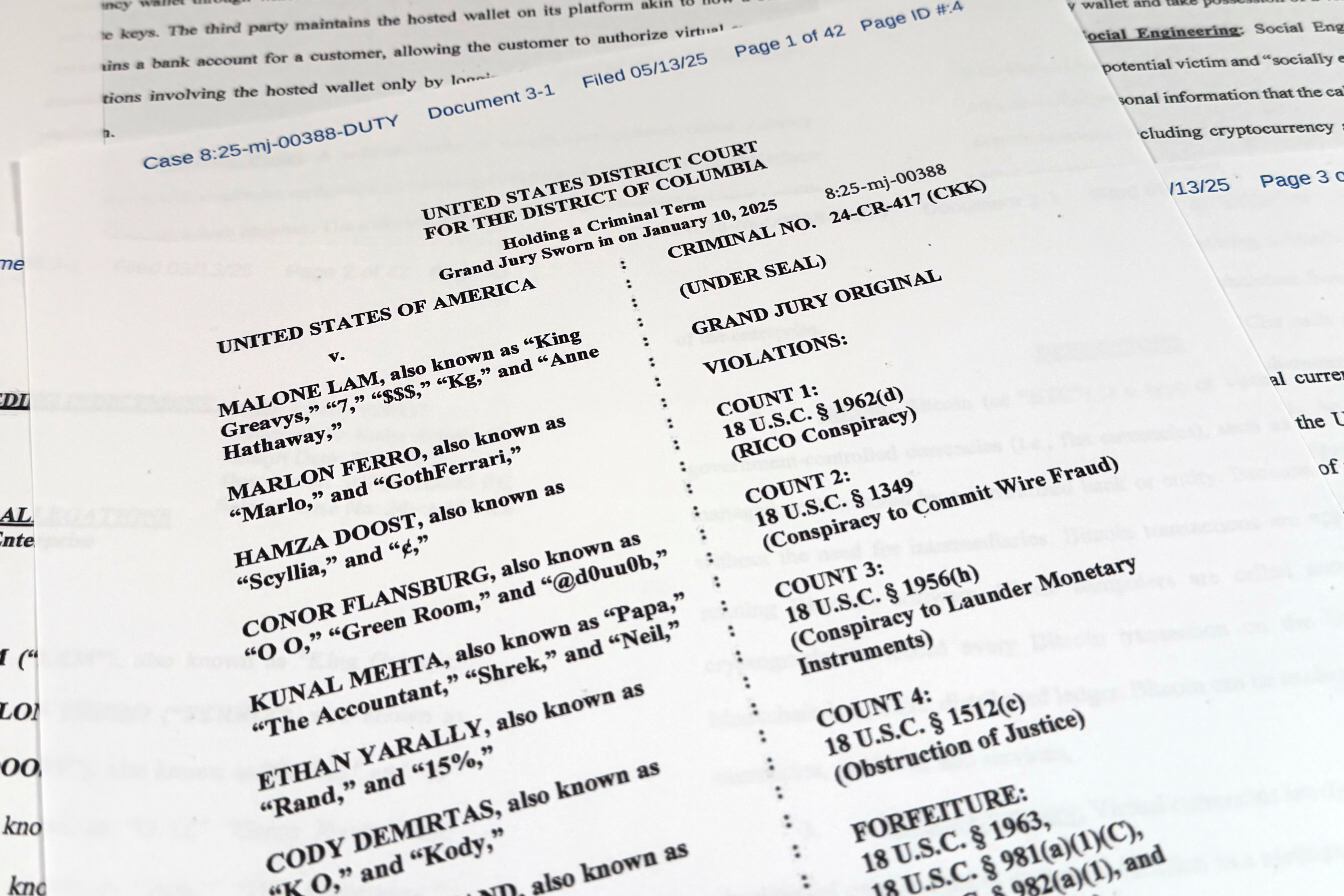
    WASHINGTON — They pulled off one of the largest cryptocurrency thefts in U.S. history, duping a stranger out of bitcoin worth over $240 million. They tried to hide their digital fingerprints, carrying out a sophisticated scheme to launder the proceeds.

    And then the party started.

    The scammers — a network of young men in their late teens or early 20s — celebrated the August 2024 heist by embarking on a wild spending spree. They purchased fleets of sports cars, flew on private jets, hired security guards, and rented mansions in Miami and the Hamptons. An alleged ringleader, 22-year-old Malone Lam, spent over $569,000 in one evening at a Los Angeles night club.

    Their bender lasted a month before FBI agents arrested Lam on charges that he organized a “social engineering” attack on the Washington, D.C., resident. Lam, an eighth-grade dropout from Singapore, has a plea agreement hearing set for Tuesday. His conviction would be a capstone for the government’s investigation.

    The charges against Lam and 17 others are an extreme example of an increasingly common form of cybercrime. Complaints of cryptocurrency investment fraud to the FBI rose by nearly 50% in 2025, while Republican President Donald Trump’s administration largely abandoned a regulatory crackdown on the volatile industry.

    Last year, the Justice Department disbanded a unit dedicated to prosecuting crypto-related crimes. Meanwhile, crypto companies that complained of unfair treatment during Democratic President Joe Biden’s presidency are enjoying the government’s hands-off approach under Trump, who took in roughly $1.2 billion from his crypto businesses in 2025.

    Cybersecurity researcher Allison Nixon, who has spent years tracking the Com, an underground subculture of young hackers united by the “insane amount of money” that crypto fraud can generate, advocates for more law enforcement resources to go after them.

    “If we don’t seriously ramp up the resources to take these people down and do it faster, then it’s going to spread more and more,” she said.

    Scammers nabbed millions though ‘social engineering’ heist

    A man identified as “Victim 7” in court filings was at home in Washington on Aug. 18, 2024, when his phone rang. The first caller identified himself as a Google representative inquiring about attempts to breach his account. A second, claiming to be from the Gemini crypto exchange, warned the man of a malware attack affecting his crypto wallet.

    The callers manipulated the man into giving them access to his Google Drive and revealing security codes that allowed Lam to siphon off over 4,100 bitcoin, according to prosecutors. They said Lam and his friends on the calls — Veer Chetal and Jeandiel Serrano — targeted the man because he was a wealthy, longtime crypto investor.

    A private recording captured the moment when the friends realized how much money they just stole, according to a video posted by a well-known private investigator of cryptocurrency crimes who goes by ZachXBT.

    “Oh, my God! Bro, bro, I’m going to spaz out!” a voice on the video said.

    Once they swiped the man’s savings, they used money laundering specialists to wash it through multiple exchange platforms and convert virtual currency into government-issued cash.

    It wasn’t the first social engineering scam for the friends, who met in online gaming forums. They had teamed up on other multimillion-dollar thefts since late 2023 using a similar playbook, according to prosecutors.

    This time, however, one of them made a costly mistake: Serrano failed to conceal his IP address when he created an account on a cryptocurrency exchange to hold nearly $30 million in stolen crypto, according to prosecutors. Investigators linked the IP address to a home in Encino, Calif., that Serrano was renting for $47,500 a month.

    Lavish spending quickly drew attention

    Serrano was vacationing in the Maldives when investigators identified him as a suspect. Lam was in Los Angeles, where he and friends spent $4 million at nightclubs in one month, authorities say. Chetal gifted a Lamborghini to his parents and hid a duffel bag filled with $500,000 in cash in their laundry machine.

    Word of their windfall quickly spread in crypto scammers’ circles. A week after the big score, Chetal’s parents were driving in Danbury, Conn., when several masked men cut them off, forced them out of their new car, beat Chetal’s father with a baseball bat, shoved the couple into a van, and bound their hands.

    The captors, from Miami, had intended to use Chetal’s parents as leverage for extorting him into giving up his share of the stolen crypto. But the ransom plot fell apart when witnesses notified police, who apprehended the carjackers.

    The FBI showed up to search Chetal’s apartment in Brunswick, N.J., on Sept. 9, 2024, and found $37 million in stolen crypto in his possession. He agreed to cooperate with their investigation.

    Lam was attracting attention, too, for spending hundreds of thousands of dollars a night at clubs and tossing handbags worth tens of thousands of dollars to women in the crowds. He also used stolen cryptocurrency to buy a $2 million watch and over 30 cars, including custom Porsches, Lamborghinis, and Ferraris, according to the FBI.

    “This luxury lifestyle, of which so many young men and women could only dream, was just built on a foundation of fraud,” a prosecutor, William Hart, said during a recent sentencing hearing for a money laundering co-defendant.

    ‘Ferris Bueller gone bad’

    Serrano was wearing a $500,000 watch when FBI agents arrested him at Los Angeles International Airport on Sept. 18, 2024. He initially professed his innocence but soon admitted to having roughly $20 million of the D.C. man’s stolen crypto, prosecutors said.

    Lam was arrested at one of his Miami mansions on the same day as Serrano. An off-duty law enforcement officer had tipped off Lam that authorities were on their way to arrest him, the indictment says.

    “We always talked about what it would be like if I were to go down, but never thought it would be this crazy,” Lam told associates from jail on a recorded call, according to his indictment.

    The judge for Lam’s initial court appearance in Miami sounded astonished by a prosecutor’s summary of his lavish spending.

    “I could only think of Ferris Bueller gone bad,” U.S. Magistrate Alicia Valle said, referring to the school-skipping protagonist of the 1986 movie Ferris Bueller’s Day Off.

    Lam’s capture didn’t stop the splurging. Ferro, who pleaded guilty to a racketeering conspiracy charge last year, used stolen funds to cover Lam’s legal expenses.

    Judgment days

    Eighteen defendants have been charged. Lam would be the 11th to plead guilty. At Lam’s first court appearance, a prosecutor estimated that his sentencing guidelines would recommend a prison term of at least 14 years upon conviction.

    U.S. District Judge Colleen Kollar-Kotelly, who presides over Lam’s case, already has sentenced three of his co-conspirators. She sentenced two money launderers to prison terms of approximately six years.

    Chetal pleaded guilty to conspiracy charges in November 2024 and awaits sentencing. Serrano’s charges remain pending.

    Tucker Desmond, who pleaded guilty to destroying evidence of other plotters’ crimes, was sentenced to probation. Desmond apologized at his sentencing hearing in March, saying he “got obsessed with the image of success rather than actually becoming a hard-working individual myself.”

    Ferro declined to address the court during his sentencing hearing in May. His attorney, Kevin Wilson, described the co-defendants as mischievous “young kids,” but the judge didn’t accept that as an excuse.

    “Being young only goes so far,” Kollar-Kotelly said.

  • Trump officials strip military language criticizing Confederate memorial

    Trump officials strip military language criticizing Confederate memorial

    The Trump administration has removed language criticizing a memorial to the Confederacy formerly located in Arlington National Cemetery, part of its ongoing effort to reshape portrayals of the Civil War.

    The Confederate Memorial, a 32-foot bronze statue commissioned by the United Daughters of the Confederacy and unveiled in 1914, was removed from the military cemetery in 2023. Its removal followed a congressional mandate to rid U.S. military property of names and symbols honoring the Confederacy and its leaders.

    The decision by the bipartisan Naming Commission to remove the statue was based on criticism and backlash over the memorial’s depictions, which included an enslaved woman carrying an infant child of a white officer and an enslaved man following his owner to war.

    A Defense Department website and a marker at the memorial’s former site included contextual language describing the sculpture as portraying a “nostalgic, mythologized vision of the Confederacy, including highly sanitized depictions of slavery.” The website also described the two Black figures as enslaved people, including an enslaved woman depicted as a “Mammy,” and it remarked on how the portrayal of the “faithful slave” helped to shape American pop culture.

    Now, that language has been removed from the website, and the marker in the cemetery has been replaced by a new sign that omits wording critical of slavery and the Confederacy.

    The website also formerly featured additional context about the sculpture’s symbolism, including a Latin phrase inscribed on it.

    “An inscription … construes the South’s secession as a noble ‘Lost Cause,’” the website previously read. “This narrative of the Lost Cause, which romanticized the pre-Civil War South and denied the horrors of slavery, fueled white backlash against Reconstruction and the rights that the 13th, 14th and 15th Amendments (1865-1870) had granted to African Americans.”

    That language and other text was removed in recent weeks, according to photographs of the sign and archived versions of the webpage.

    Asked about the changes to the sign and the website, the Defense Department referred questions to Arlington National Cemetery, which did not respond Monday.

    The statue was relocated to the Virginia Military Institute in 2023 amid some congressional GOP opposition. Defense Secretary Pete Hegseth said last year that the statue would be reinstalled at Arlington National Cemetery. Last year, then-Virginia Gov. Glenn Youngkin (R) had said that the statue would return next year.

    “The Army expects to display the sculpture at this site in 2027 after it has undergone comprehensive conservation and refurbishment,” according to a new marker in Arlington National Cemetery at the statue’s former site.

    Stephen West, a Catholic University historian, said he first noticed that the sign had been changed when he visited Arlington National Cemetery on Sunday.

    “The language that used to be on the sign and website described the Memorial correctly. Ezekiel’s sculpture did sanitize slavery, and it did mythologize the Confederacy,” West wrote in a text message to the Washington Post. “And so as a historian, I’m deeply disturbed by the removal of that language and by plans to restore the statue — especially because they’re of a piece with the censoring and slanting of history at other federal sites.”

    Trump has previously said he supports efforts to recognize the Confederacy and sees it as a freedom of speech issue.

    “When people proudly have their Confederate flags, they’re not talking about racism,” Trump said in a 2020 interview with Fox News. “They love their flag, it represents the South; they like the South.”

    The president has decried efforts to remove Confederate statues and worked to reinstall them in his second term.

    A statue of Confederate Gen. Albert Pike that was torn down and torched by protesters in 2020 was restored to its original location in downtown Washington in October. And last year the Pentagon ordered that a portrait of Gen. Robert E. Lee in his Confederate uniform be restored to the West Point library. The painting, which had been ordered removed by the Naming Commission, featured an enslaved man in the background tending to Lee’s horse.

    Ty Seidule, a retired U.S. Army brigadier general who served as vice chair on the commission, said he was particularly disturbed by the Confederate Memorial’s pending return.

    The Confederate Memorial “is the cruelest monument that I have ever seen,” Seidule said in an interview Monday. He said that he and a number of his colleagues called the statue “the most egregious example of racism that they had seen on any public land in America. It is a pro-slavery, anti-United States monument.”

    Seidule said the rewording of the marker and the website is the first step the administration is taking before bringing the memorial back to the cemetery. Restoring the monument, he said, would be “against the will of the American people through their elected representatives in the law that they created.”

  • Ousted Kennedy Center chairperson buys dismantled ‘Blue’ sculpture

    Ousted Kennedy Center chairperson buys dismantled ‘Blue’ sculpture

    Billionaire philanthropist David Rubenstein has purchased the abstract sculpture called Blue that was removed from the grounds of the John F. Kennedy Center for the Performing Arts last week, according to two people familiar with the sale.

    It will eventually be displayed in the Sculpture Garden of the National Gallery of Art, the people said.

    Rubenstein, a major arts donor, was chairperson of the Kennedy Center’s board until he was ousted in early 2025 during President Donald Trump’s takeover. He is the chairperson of the board of trustees at the National Gallery.

    He purchased the sculpture from a foundation dedicated to its artist, Joel Shapiro, which received the artwork after its removal. One of the people familiar with the sale said the price was more than $2 million.

    Since 2019, the 24-foot-tall, stick-figure-like sculpture stood on the grounds of the Reach, an addition to the Kennedy Center that was partly funded by Rubenstein, who co-founded private equity giant the Carlyle Group. The sculpture was deinstalled with no prior notice or explanation from the institution, drawing a flurry of questions and objections from local patrons who considered it a landmark overlooking the Potomac River.

    Representatives for the National Gallery did not immediately respond to requests for comment, and it was not clear when Blue would go on display.

    The Kennedy Center board has voted to close for a two-year, $250 million renovation project championed by Trump. But officials have proposed that the Reach remain open, partly to serve as an active memorial to President John F. Kennedy, which is required by law.

    Shapiro, who died in 2025, had given the sculpture to the Kennedy Center as a gift for the opening of the Reach. After it was deinstalled, it was transferred to the artist’s foundation, which is run by his daughter Ivy Shapiro.

    Ivy Shapiro did not immediately respond to requests for comment on the purchase. She said last week that her father would have been “alarmed” by the sculpture’s removal from the Kennedy Center, where it had been originally intended as a permanent fixture.

    The aluminum sculpture, painted a vivid blue, was designed to look like a person mid-kick while dancing on the grass.

    “In Joel’s mind, it was one of his greatest site-specific commissions, which celebrated joy, freedom, and creativity,” Shapiro said last week.

    Trump, who replaced Rubenstein as chairperson of the Kennedy Center board after stacking it with loyalists, has been pushing for months to close the building for renovations that he and his allies say are desperately needed.

    The closure was temporarily blocked by a federal judge, who also rejected the board’s decision to add Trump’s name to the center’s official title. The center’s officials are now seeking to persuade the judge to allow for the closure and for the president’s name to be inscribed on the building’s marble facade, in recognition of his role in securing money from Congress for the renovations.

    This weekend, officials at the center intensified their push for a closure, alerting the public to a hole in the ceiling of the building’s Grand Foyer that they said was caused by recent storms.

    This article originally appeared in the New York Times.
  • For Trump’s former fixer, a tortured path from ‘rat’ to reconciliation

    For Trump’s former fixer, a tortured path from ‘rat’ to reconciliation

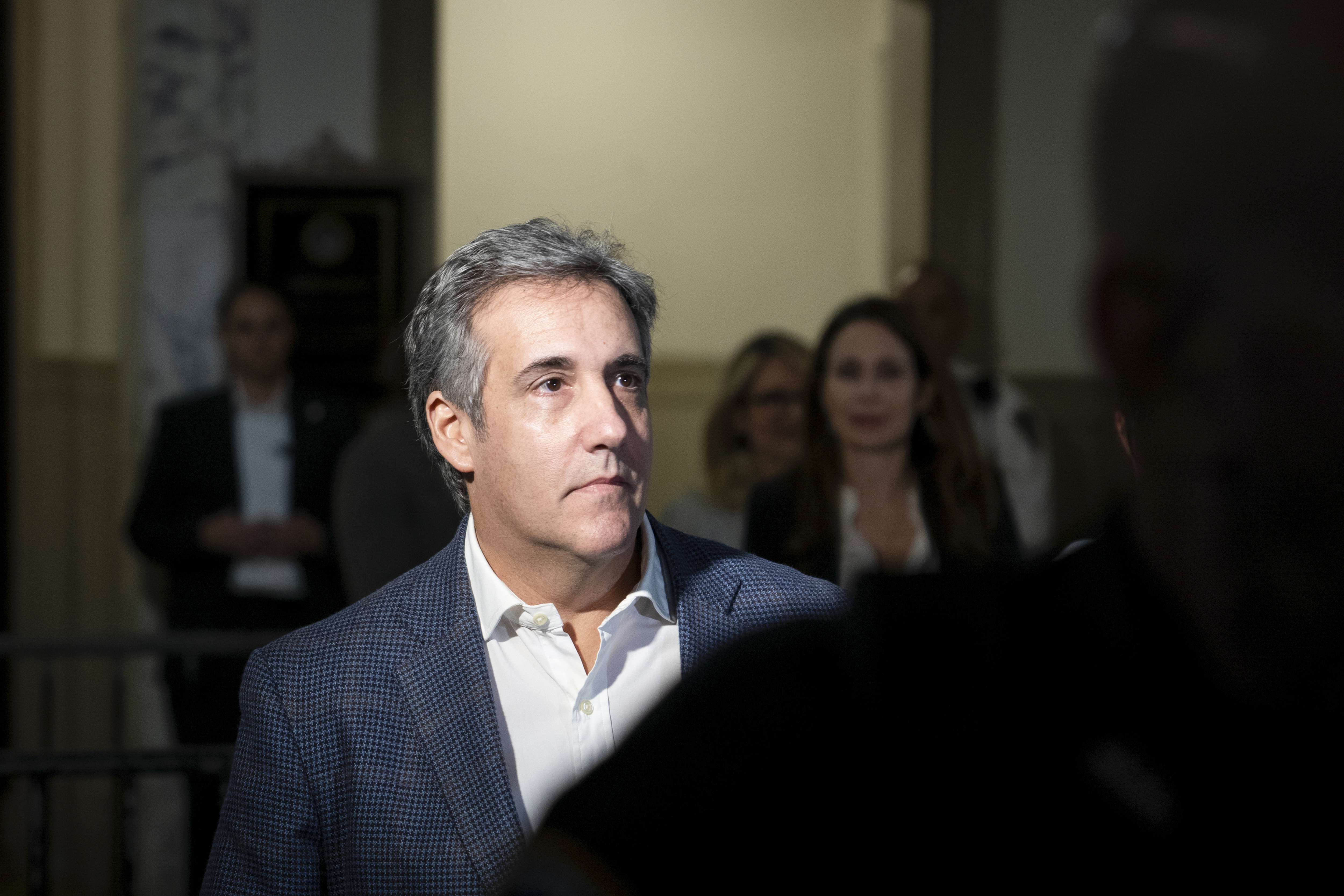
    WASHINGTON — On a radio show last month, President Donald Trump welcomed Michael Cohen, the former fixer he once denounced as a “rat” for testifying against him, back into the fold. “I respect the fact that you recanted everything you said,” Trump said. He went on to use the word “recant” three more times.

    In case anyone missed it, the president posted a message on social media Friday claiming that Cohen, a key witness against Trump in criminal and civil trials, “has just fully RECANTED his testimony.” Trump demanded “that any remnant of those Politically Weaponized Cases against me be immediately terminated and dismissed.”

    Except that Cohen has not, in fact, recanted his testimony. He has not taken any of it back.

    In his eagerness to return to the president’s good graces, Cohen now says he “felt pressured and coerced” by prosecutors to testify. But he has not actually disavowed anything that he swore to under oath about Trump’s hush money scheme to cover up an affair with an adult film actor or about his former boss’s efforts to defraud his lenders.

    And so this unlikeliest of rapprochements between two men who helped get each other convicted of crimes is built not on an emotional outpouring of forgiveness but on what looks like a pretty straightforward bargain, spoken or unspoken, according to people close to both. Trump is trying to use his former lawyer’s desire for absolution to rewrite history as he presses his effort to overturn his conviction. Cohen gets to position himself as an insider once again and possibly obtain a presidential pardon to wipe out his own felony record.

    “Everything is transactional,” said Brian Karem, a journalist who helped Cohen write the second of his books assailing Trump. “It’s the weirdest example yet of the transactional nature of the president of the United States and those around him. Who knows him better than Michael? I’m just surprised that it took him this long. The first thing I said was, ‘Wow, it took you long enough.’”

    The unlikeliest of reunions

    Even in the long history of strange-bedfellow political alliances, this may be one of the strangest. To call the reconciliation between Trump and Cohen Shakespearean would not fully capture just how mind-boggling it really is. The Bard would have been hard-pressed to come up with a scenario quite so far-fetched.

    Trump, to be sure, has a well-known history of falling back in with people he has fallen out with. (Think Elon Musk, Steve Bannon, Michael Flynn, or, for that matter, his current vice president who once compared him to Adolf Hitler, or his secretary of state who once questioned the size of his private parts.)

    But as one baffled Trump ally put it, Cohen is not someone who just trash-talked the president; he actually testified in court against him. Cohen went to prison because, he said, he committed crimes at the instructions of the man he now again calls “Boss.” And in a trial in which his onetime fixer provided evidence for the prosecution, Trump was convicted of 34 felonies that, had it not been for the intervening 2024 election, might have put him behind bars as well.

    “You can’t write it,” said Donny Deutsch, a longtime New York advertising executive and television commentator who has been close with Cohen for years, reflecting the astonishment in both New York and Washington. “These two guys who were archenemies found mutual shared interest to get back in bed together.”

    Deutsch said he did not blame Cohen, who in his view was collateral damage for Trump. “Michael was left by the side of the road as roadkill,” he said. “Beyond going to prison, he couldn’t practice law, he couldn’t get a job, he couldn’t get insurance. He’s doing what he needs to do to survive.”

    As for Trump, accepting Cohen back into his orbit, even an outer orbit somewhere past Pluto, allows him to claim vindication.

    “If you go grovel to him and suck up to him, he loves that because it’s validation of his power,” said George Conway, the former conservative lawyer who became one of Trump’s most vocal foes. “He has brought someone to heel. And part of what he does is try to intimidate people into doing that. He has a reptilian ability to sense who he can intimidate.”

    Cohen did not respond to emails seeking comment. Trump posted his social media message Friday about Cohen’s supposedly recanting three hours after a request for comment was sent to the White House, which then passed along the link but otherwise did not respond to questions.

    ‘On the wrong side’ of the Boss

    The relationship between these two men has arguably been one of the most consequential in modern presidential history. Cohen worked for Trump for years as his lawyer and fixer, a self-described “pit bull” who handled business and personal problems, and sought to intimidate people who got in the way. He styled himself as a consigliere so loyal that he famously said he would “do anything to protect Mr. Trump” including “take a bullet.”

    Cohen secretly sought on Trump’s behalf to seal a deal with the Russians to build a Trump tower in Moscow even while his boss was running for president in 2016. He was the middleman who paid $130,000 to porn star Stormy Daniels to buy her silence about her alleged tryst with Trump before the election. (Trump denies the affair.)

    That eventually led to criminal charges, a guilty plea. and prison. When Cohen was released, the Trump administration revoked his home confinement and locked him up again because he planned to publish a book, a move that a judge overruled because it was “retaliatory.”

    Cohen later turned witness for Manhattan District Attorney Alvin Bragg in the case that convicted Trump for falsifying business records to cover up the payments to Daniels. He also testified for New York Attorney General Letitia James in her civil case that found Trump liable for business fraud. His was not the only evidence against the president, and some lawyers argue that there was enough to convict Trump even without Cohen’s testimony.

    But when Cohen broke from Trump, he broke big time. In addition to testifying in court, he also went after the president publicly with both barrels, writing books titled Disloyal and Revenge and characterizing his former employer as “a racist,” “con man,” and “cheat” during a congressional committee hearing.

    Outside the halls of Congress, Cohen went even further, calling Trump “a mob boss,” “the slime of humanity,” a “scumbag,” a “petty tyrant,” a “deranged president,” a “narcissistic sociopath,” a “Cheeto-dusted cartoon villain,” “Dictator D-Bag,” “this Frankenstein’s monster,” and “the poster boy for fascism” who was trying “to screw over the country.” And those were the lines printable in a family newspaper.

    By the time Trump won a second term, though, Cohen’s tone began to change. He had not gotten the pardon he had requested from President Joe Biden, nor had he been welcomed with open arms by much of the anti-Trump resistance. With Trump returning to office, any hope for acceptance, much less clemency, now lay with his former boss, and he has resubmitted his pardon application, replacing the word “Biden” with “Trump.”

    “I think he really wants a pardon,” said Stephanie Grisham, a former White House press secretary for Trump who broke with the president. “I also think he has realized just how hard it is to be on the wrong side of the administration. It’s damn scary out here on the anti-Trump island. And I never got the vibe from him that he wants to work hard at anything, and doing the right thing is never easy.”

    In January 2025, just as Trump was assuming power again, Karem interviewed Cohen for a documentary that will be shown next month at New York’s Chelsea Film Festival and asked if he would go back to Trump if invited.

    “You know what, it’s such a difficult question to answer simply because, one, I know it’s never going to happen,” Cohen said in the film. “Donald refuses to accept any type of responsibility for anything. We’ve all seen that. Do I think I’m owed an explanation? Absolutely.”

    Karem saw that as an implicit yes. “Anybody who spent any time talking with him back then, it was obvious that was open to him,” Karem said. “It was an avenue he was willing to explore because he felt wronged by the justice system. He wasn’t considered the hero he thought he would be. He told me he wanted a pardon.”

    ‘His identity was Donald Trump’

    In the summer of 2025, Cohen had a brief conversation with Trump at his golf club in Bedminster, N.J., joined by the president’s top personal legal adviser, Boris Epshteyn, as the New York Times previously reported. By January 2026, Cohen was writing on Substack that “I felt pressured and coerced to only provide information and testimony that would satisfy the government’s desire” to convict Trump.

    Two months later, he reached out to Lara Trump, the president’s daughter-in-law, who then invited him onto her podcast, where he defended Trump against those questioning his relationship with disgraced financier and sex offender Jeffrey Epstein. Soon, Cohen was given a radio slot on WABC by John Catsimatidis, the station’s owner and a longtime Trump supporter.

    Even so, Cohen for a while kept a foot in both camps. Conway, who ran unsuccessfully for the Democratic nomination for a House seat in New York earlier this year, said Cohen volunteered to help his campaign.

    “At the same time I’m reading these clips about him trying to get back in, he was calling me up saying, ‘I want to help you with your campaign. I want to help you with your campaign. Let’s go be seen together on the Upper East Side. People love me. It’ll help your campaign,’” Conway recalled. “I’m like, what? He’s trying to suck up to Trump, and literally my entire campaign was about sending this guy to jail.”

    Cohen’s turnaround shocked people he had gotten to know on the left. Joanne Carducci, a liberal podcaster who had become friends with Cohen, said she was so upset that she cried, feeling that she had been fooled. “I trusted him, and I believed him when he said, ‘I’m done with that guy. I’ll never recover from what he did to me. I went to prison because of him,’” she recalled. “What is the pathology there that he could be so convincing?”

    After Cohen’s Substack essay, Carducci texted to ask why he was now publicly helping Trump undermine the cases against him. “I have attacked him and the administration 998 out of 1000 times,” Cohen replied in a text that she shared with the Times. “James and Bragg, and the entire system is broken and abusive. That’s the point I was making. I’m not going to be a puppet as I lived the abuse.”

    By all accounts, including his own, Cohen was crushed and embittered by the events of the past several years. His life, as he put it on his radio show, was “shredded to pieces,” and he lost his sense of purpose.

    “I know what it feels like to take hit after soul-crushing hit, to be bloodied and knocked to the dirt while a crowd of millions cheers for your destruction and then, then, to have to pick up the shattered pieces of your life, alone in the dark while the circus packs up and moves on to its next victim,” he said on his show. “I know the sheer suffocating terror of being turned into a public target sitting in silence while your family weeps, wondering if you’re ever going to survive the night.”

    And yet after all that, Cohen turned back to Trump. “People have their sect, their team,” said Greg Ehrlich, a onetime friend who recalls first introducing Cohen to Trump. “It’s your identity. His identity was Trump. Then he got lucky and had a second life, which was against Trump.” But now, Ehrlich said, “he needs his identity, and his identity was Donald Trump.”

    Indeed, when they finally had their bury-the-hatchet talk on the radio last month, Cohen sounded needy, anxious to reminisce about the old times with the Boss, but the Boss wasn’t having any of it. Distant and hardly warm, Trump focused on promoting the fiction that Cohen had recanted his testimony, making clear that their reconciliation was dependent entirely on that. “You took it back,” Trump said falsely. “I wouldn’t even be talking to you right now if you didn’t, to be honest.”

    Cohen did not correct Trump during the show. But in other appearances, he has stood by his accounts. Asked by Dan Abrams on SiriusXM radio if his criticism of prosecutors meant that his past testimony was not truthful, Cohen said: “No, to the exact contrary. As I stated, I felt pressured and coerced. That’s my personal feeling, which I am certainly entitled to have. In no way, shape, or form should it connote that the information that I provided was anything but truthful and accurate.”

    Stating otherwise, of course, could expose Cohen to criminal perjury charges, and it did not go unnoticed that he emphasized that he “felt” pressured, as opposed to saying that he actually was. When Jake Tapper said on CNN that Cohen had claimed that he was “pressured and coerced” into testifying against Trump, Cohen offered a word-parsing correction.

    “The comment that I had written was in regard to Alvin Bragg and Tish James is that I felt pressured and coerced,” Cohen said. “And I think the distinction is extremely important.”

    But that is a distinction without a difference for Trump. In the reality that the president is now selling, Cohen’s pivot is proof that Trump was innocent after all. Even if that is not what Cohen is actually saying.

    This article originally appeared in the New York Times.