Tag: no-latest

  • New ICE guidance bans high-speed car chases and sets tighter rules for traffic stops, a memo shows

    New ICE guidance bans high-speed car chases and sets tighter rules for traffic stops, a memo shows

    U.S. Immigration and Customs Enforcement officers have been ordered not to engage in high-speed car chases and to make vehicle stops only if they have completed specific training, under new internal guidance issued after several drivers were shot in encounters with ICE.

    A memo sent to officers in ICE’s Enforcement and Removal Operations division and obtained by The Associated Press warned they are not authorized to chase vehicles that fail to pull over under any circumstances. Instead, officers should take down the vehicles’ information for further investigation, according to the memo signed by ICE’s executive associate director Marcos D. Charles and dated Wednesday.

    The new guidance comes after ICE-initiated vehicle stops have repeatedly escalated when drivers have refused to cooperate or tried to flee. ICE agents have fired their guns during more than a dozen such encounters since last year, killing at least four people and wounding several others.

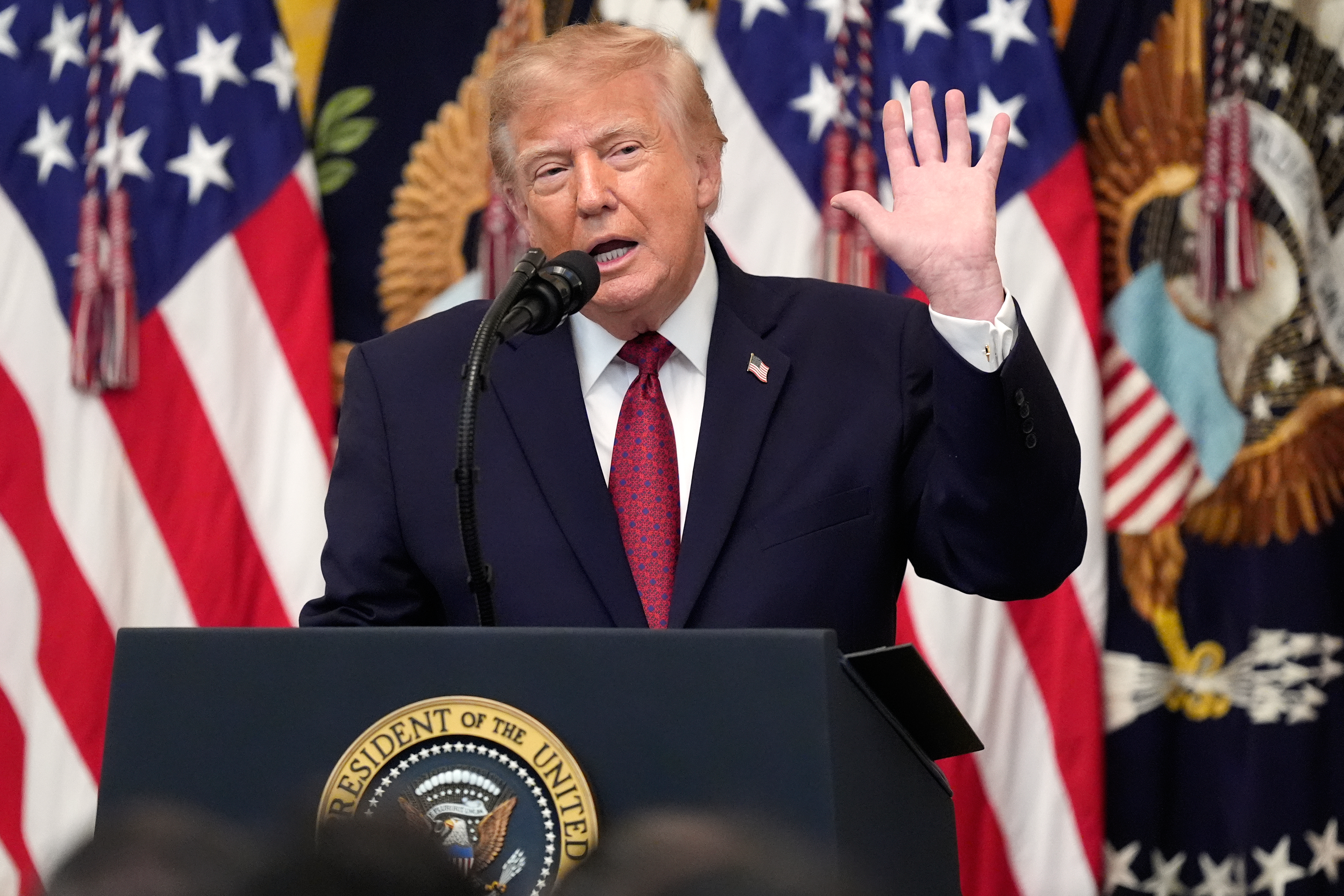
    President Donald Trump’s administration has faced internal tension over how to handle traffic stops, which are seen as particularly high-risk encounters.

    After fatal shootings of drivers in Maine and Texas in July, ICE officers were directed to temporarily pause most vehicle stops. But the next day, Trump went on social media to direct the agency to continue traffic stops, calling them “one of ICE’s most important and effective Crime Fighting tools.”

    ICE has faced intense pressure from the White House to deport more people who are in the country illegally, and its arrests have reached record numbers. At the same time, the agency’s rapid hiring spree last year resulted in some poorly vetted and trained officers hitting the streets.

    ICE and the Department of Homeland Security had no immediate comment on the policy guidance.

    The new memo outlines steps intended to improve the safety of vehicle stops for ICE officers, drivers they are targeting, their passengers, and the public.

    The memo told ICE’s field office directors that they must ensure vehicles used for traffic stops have lights and sirens that let the public know they are law enforcement vehicles when activated. All officers on the scenes of vehicle stops must wear and activate their body cameras, under the guidance.

    In addition, only officers who have completed one of five specific agency training courses can conduct vehicle stops. Officers who have not completed the training courses can only participate in vehicle stops “in a support capacity” as passengers and cannot be the drivers of any of the vehicles involved.

    The guidance says ICE officers can continue to use a controversial technique known as pinning, which is defined as “using a vehicle or physical barrier to trap or stop a car,” but only if they have received special training. Similarly, only trained officers can use spike strips that deflate tires to prevent drivers from fleeing.

    The memo came the day that courtroom testimony highlighted ways in which two ICE officers involved in a vehicle stop, pursuit, and shooting that wounded a delivery driver in Austin last month would not have complied with the new guidance.

    During a bond hearing for Wilber Rafael Garces Perez, testimony showed that the officer who shot him wasn’t wearing a body-worn camera. The ICE officer who did have a camera was driving in a separate car and turned it off during the pursuit.

    Prosecutors presented surveillance video that showed an ICE agent chasing Garces Perez at high speeds through residential streets after he fled an initial traffic stop.

    Garces Perez faces federal assault charges after investigators say he struck an ICE officer with his driver’s side mirror. That officer then shot into Perez’s vehicle, lodging a bullet in his back, officials say.

    Attorneys for Garces Perez have called the charges against him “retaliation” and have argued that the camera footage was inconclusive because it didn’t fully capture the moment when he allegedly tried to flee.

  • U.S. is moving thousands of troops aboard ships to the Mideast as Trump weighs new strikes on Iran

    U.S. is moving thousands of troops aboard ships to the Mideast as Trump weighs new strikes on Iran

    WASHINGTON — The U.S. military is dispatching roughly 9,000 troops aboard a group of ships to the Middle East, a U.S. official said Thursday. The bolstering of the American military presence comes as President Donald Trump warned anew that new strikes against Iran could be on the horizon.

    He also said early indications suggest that Iran is linked to the co-pilot who stabbed his captain and tried to crash an Israel-bound flight on Wednesday.

    In an exchange with reporters at the White House, Trump raised the connection when asked by a reporter if there were any links between the pilot behind the attack and Tehran.

    “I would say the answer, based on what I’m hearing, is ‘yes,’ but we’re working on it right now,” Trump said, without offering details.

    Trump also warned that if the link is established to Iran, the United States would retaliate.

    “Oh they’ll be hit, very hard, don’t worry,” Trump said. “You just ask them. They know what happened. They’ll be hit very hard.”

    Meanwhile, the group of ships now en route to the Middle East together carry over 7,000 sailors and 2,000 Marines.

    It includes the USS Theodore Roosevelt carrier strike group, which recently deployed with the cruiser USS Chosin, and the USS Makin Island amphibious readiness group, which includes the USS John P. Murtha and USS Anchorage amphibious landing ships.

    It could mean that three carriers are in the region as early as the end of October, according to the U.S. official who spoke to The Associated Press on condition of anonymity to discuss sensitive military operations.

    Given the personnel already in place in the Middle East, the move would bring the U.S. naval presence to an unusually high number of more than 20,000 sailors and Marines and hundreds of aircraft. The Navy previously had three carrier strike groups in the Middle East in April for the first time since 2003.

    The carriers USS George H.W. Bush and the USS George Washington are in the region now, along with the USS Boxer amphibious readiness group. The Washington is typically deployed to Pacific Ocean but it was moved to the Middle East to relieve the USS Abraham Lincoln, whose arduous deployment resulted in the crew being at sea for more than 260 days straight.

    Trump, in a Time magazine interview published Thursday, also raised the prospects of new strikes, saying it is “possible” that he will ramp up bombing in Iran after the Nov. 3 elections in the United States.

    When pressed, Trump said he could not go further in detailing his strategy.

    “I can’t tell you that because look, you know, you’re asking, where are you going to bomb?” Trump said.

    He said in the interview, conducted Monday, that he rejected the latest ceasefire proposal from Iran because “things that I wouldn’t have approved a year ago I wouldn’t have today.”

    Trump cited as an example an offer from Iran to “open up” the Strait of Hormuz, the key energy shipping corridor, but said the overall proposal was “not good enough.”

    Asked if the increasingly unpopular war would threaten Republican Party chances in November, Trump at first responded, “It’s possible.” But then he added, “It should help, because Iran will not have a nuclear weapon.”

    The president said “100% of the people” oppose Iran having nuclear attack capabilities “including worldwide.”

    “So, when you say it that way, It would help,” Trump added. “If you don’t say that, it could hurt.”

  • France gripped by spreading student protests as PM calls crisis meeting

    France gripped by spreading student protests as PM calls crisis meeting

    PARIS — France’s prime minister convened a crisis meeting Thursday and canceled ministers’ trips to focus on the nationwide spread of protests, some violent, by high school students venting about under-resourced schools, long hours, and other complaints.

    The demonstrations erupted in Paris-region schools last week and have snowballed, with police making hundreds of arrests in clashes with the young protesters. Authorities have reported many dozens of injuries, including from hurled objects but also, in some suspected cases, from police riot-control projectiles.

    The protests are quickly blowing up as a hot topic in the election campaign to replace President Emmanuel Macron, who is constitutionally barred from seeking a third consecutive term next May. They are also heightening pressure on the government beset by France’s growing financial problems, and overshadowing the release on Thursday of its proposed cost-cutting budget for 2027.

    At a Paris high school where students barricaded an entrance, 18-year-old Salama Gargouri said protesters want to target “overloaded schedules, the system, the teachers, people who don’t listen to us, the university application process.”

    High school students in France often start classes at 8 a.m. and remain at school until late afternoon.

    “Older people say, ‘Kids, go to school from 8 a.m. to 6 p.m. every day.’ But you don’t know what that does mentally,” said Janna Tahari, another Paris high school student.

    Arson, thrown projectiles, and other violence on the margins of some protests have caused mounting injuries and recriminations. The interior minister has issued orders for police to break up blockades that prevent pupils from attending classes and to put a stop to violence and vandalism.

    Juliette Estiville, a high school Spanish teacher, said that the repression of the protests led her to join the students.

    “So, I’m here just to provide protection, to form a barrier between the police and the students,” she said. “And indeed, today went well, it’s going well, but I really think that the teachers who come to the blockades are really just there to protect our young people.”

    Education Minister Edouard Geffray said Thursday’s violence included a school set on fire and staff doused with gasoline. He said he issued instructions that classes be held remotely when blockades or damage to schools put students at risk.

    “Violence will not deprive our students of their fundamental right to education,” Geffray said in a post on X.

    Far-left presidential hopeful Jean-Luc Mélenchon has denounced the government response as repressive. His critics have accused Mélenchon’s party of inciting violence and using the unrest to score points ahead of the presidential election.

    The office of Prime Minister Sébastien Lecornu said he asked ministers to cancel any planned official trips in the coming days, to enable authorities and police to focus on dealing with the demonstrations.

  • This Head Start center teaches in two languages. A Trump overhaul would require one: English

    This Head Start center teaches in two languages. A Trump overhaul would require one: English

    IMMOKALEE, Fla. — It’s almost noon, and after playing on the playground, working with clay and washing their hands, the 2-year-olds are ready for lunch.

    The eight children and their Head Start teachers pray in English, thanking God for the meal. Then, the adults bring over several bowls.

    “Hoy tenemos arroz. Eduardo, ¿puedes servir tu arroz, por favor?” In Spanish, the teacher announces the children are having rice, asking Eduardo to start serving. The little boy grabs a ladle and scoops rice onto his plate.

    Both English and Spanish are core to daily life in this Head Start preschool in Immokalee, Florida — an agricultural area about 120 miles northwest of Miami. The center serves more than 50 children from mostly Guatemalan families, ages six months to 5 years. Most students arrive speaking little or no English.

    Children who speak a language other than English at home account for at least a third of the enrollment in Head Start, a federally funded early childhood program serving roughly 700,000 low-income children and their parents. For decades, Head Start has supported these kids by hiring multilingual teachers to teach them English, while using their home languages as a foundation.

    But an overhaul of Head Start’s standards proposed by President Donald Trump’s administration would amend that approach.

    If finalized, the proposal would require Head Start programs to conduct all education in English, though programs could seek waivers, and certain Tribal-language instruction would be exempt. The administration argues emphasizing English will expand children’s future economic opportunities and their ability to participate in American communities.

    “A firm foundation in the English language” is critical to preparing kids for school, said the Department of Health and Human Services, which oversees Head Start, in response to questions from The Associated Press.

    The administration says the change would allow programs to reduce multilingual services and redirect resources toward English-language education and “assimilation.” But it also estimates tens of millions of dollars in one-time costs to make the switch to English instruction, including nearly $47 million to replace curricula, books, and other classroom materials containing other languages.

    How Head Start teaches in multiple languages

    Toys line shelves in the Immokalee classrooms, labeled in English and Spanish — helicopters, airplanes, tower builders. Bilingual signs show shapes in different colors and list children’s birthdays.

    Every day, teachers sing and read in both languages, with offerings like “La Vaca Lola” (Lola the Cow), “The Wheels on the Bus,” “El Camioncito Azul” (Little Blue Truck) and “Pete the Cat.”

    One afternoon, a group of children is eating muffins when it suddenly grows dark outside and thunder rolls. Noticing the preschoolers look worried, a teacher explains in English, “When you see it, it’s lightning. When you hear it, it’s thunder. What was it?”

    “Thunder,” a boy responds. Another answers the question in Spanish, noting the danger: “Es muy peligroso.”

    “Si te cae un rayo muy fuerte, te puedes lastimar,” the teacher responds. (If a very strong bolt of lightning hits you, you could get hurt.) Then she adds in English: “So we don’t go outside.”

    The children cover their ears. “¡Lo escuché!” one shouts. (I heard it!)

    Speaking in English, the teacher tries to calm them down. Everything is fine, she explains. They are safe inside the classroom.

    This is part of Head Start’s Planned Language Approach in action. Educators help children learn English while also using the language they speak at home — not simply as an accommodation, but as a teaching strategy. Research shows skills and knowledge developed in a child’s home language can provide a foundation for learning English.

    If a child already knows the word for “yellow” in Spanish, she doesn’t have to completely rediscover the concept behind the color when learning the word in English. Rather, Spanish becomes a bridge to English.

    Asked for research supporting the proposed English-only requirement, the Department of Health and Human Services pointed to a section of the proposal that cites Trump’s executive order designating English as the country’s official language. “The changes set forth in the proposed Head Start rule help achieve these goals by exposing children to English earlier, during a critical time in children’s development,” a department spokeswoman said.

    But education studies don’t back up the administration’s claim, said Michael López, a child psychologist who has spent more than three decades researching early learning and leading Head Start studies for the federal government and non-governmental organizations.

    “There’s really not any credible research basis that suggests that English-only instruction will produce stronger English academic outcomes,” López said. “It’s a mistake. It’s really going back 30 years.”

    Dual-language instruction produces better academic outcomes, he said, including in subjects like mathematics. And, he said, studies suggest instruction in both languages can produce better Spanish skills without sacrificing English-language development.

    Francisco Rodriguez, who attended Head Start in Florida as a child, said he spoke English at home with his mother, but often couldn’t communicate with his father, who speaks only Spanish. Head Start helped him build a foundation in Spanish to deepen his relationship with his dad. Today, he is fluent in both languages.

    “Knowing how to read or write in English, it was easy for me to pick up Spanish words,” said Rodríguez, now 32, who holds a master’s degree in architecture and creates interactive experiences in museums. “And because I’ve heard them at home, I can easily put two and two together.”

    In the 1970s, Head Start began requiring centers with significant numbers of non-native English speakers to hire at least one staff member fluent in their home language — a regulation still in place today.

    The Trump administration wants to drop that requirement, saying it could help centers more easily staff classrooms.

    The language changes are part of a broader effort by the Trump administration to eliminate or rewrite many federal Head Start requirements for classroom conditions, curriculum and safety. Instead, state and local regulations — which are often more lenient — would apply. The administration says the change would give Head Start centers more flexibility over how they operate.

    The proposed changes do not require a vote in Congress, but the administration is required to seek and consider feedback from the public. Comments are due Oct. 6.

    Thus far, most comments related to the English-only proposal oppose that approach.

    Multilingual approach allows parents to participate in learning

    At Immokalee, teachers give daily notes to parents when they pick up their children, writing in both English and Spanish. A recent note to the family of a girl named Deleiza, for example, said she’d eaten almost all her breakfast and lunch. “Hoy estuve sonriente,” it said. (Today I was smiling.)

    Beyond these simple reports are monthly parent meetings on campus to discuss topics like security, plus four in-person parent-teacher conferences every year — two at the children’s homes and two at school. (Those conferences would become optional under the Trump administration proposal.)

    In all of these interactions, parents and staff currently speak in Spanish with each other.

    The executive director overseeing the Immokalee center said she is unsure what the English-only proposal would mean in practice, particularly for parents’ involvement.

    “I don’t know how you’re going to keep people from … speaking Spanish, because it is the home language,” said Isabel Garcia, who, as executive director of the Redlands Christian Migrant Association, supervises 26 Head Start and Early Head Start locations. “It is important that (family members) feel comfortable understanding what is happening with their child.”

    HHS told the AP the English-language requirement would apply only to instruction. Head Start teachers could continue using kids’ home languages in non-instructional contexts — explaining safety rules or providing comfort, for example — and when communicating and engaging with families, the department said. In fact, the law requires Head Start centers to communicate with parents in a language they understand, “to the extent practicable,” which wouldn’t change.

    But communicating thoroughly may be more difficult without a staff member who speaks the language. The department acknowledged that eliminating requirements for bilingual staffers “may negatively affect communication with non-English-speaking families and weaken family engagement.”

    “Technology-based translation tools may help mitigate some of these impacts,” the department said.

    López, the researcher, noted parents help advance their children’s learning by being teachers at home, even when they’re using a language other than English. They help kids by counting, referencing different colors, and repeating stories and songs.

    “We are going to lose that bridge,” López said.

    During naptime at the Immokalee center, a mother opens the door to pick up a sick child. The teacher greets her in Spanish, reporting her daughter didn’t want to sleep or eat.

    “No quiso dormir. No quiso comer,” the teacher says.

    The mother lifts her daughter from the mat, rests her little head on one of her shoulders, and says to her: “It is OK, bebé.”

    “Hasta mañana,” the teacher whispers. “Hope you feel better.”

  • Average long-term U.S. mortgage rate churns upward to its highest level in nearly 3 years at 7.28%

    Average long-term U.S. mortgage rate churns upward to its highest level in nearly 3 years at 7.28%

    NEW YORK — The average long-term U.S. mortgage rate jumped this week to its highest level in nearly three years.

    The benchmark 30-year fixed-rate mortgage rose to 7.28% from 7.03% last week, mortgage buyer Freddie Mac said Thursday, the biggest leap in four years. A year ago, the average rate was 6.34%.

    It is the sixth consecutive week that mortgage rates have increased.

    The average rate is now the highest it’s been since Nov. 22, 2023, when it reached 7.29%, and it’s not climbed this fast week-to-week since October 2022.

    Borrowing costs on 15-year fixed-rate mortgages, often sought by borrowers refinancing a home loan, also climbed this week. That average rate increased to 6.60% from 6.42% last week. A year ago, it was at 5.55%.

    Higher mortgage rates can add hundreds of dollars a month to borrowers’ costs, limiting homebuyers’ purchasing power. As rates rise, that can also lead prospective home shoppers to delay buying.

    In late February, the average rate on a 30-year mortgage briefly dipped to 5.98%, its lowest level going back to late 2022. The roughly 1 percentage point increase in the rate since then translates roughly into an additional $276 a month cost for a borrower financing a $400,000 home loan at the current average rate.

    Depending on a borrower’s income, credit, and other factors, they may qualify for a rate on a 30-year mortgage that is below or above the current average.

    The housing market has been stuck in a rut this year in large part because of elevated mortgage rates, which have been climbing in the months since the U.S. and Israel attacked Iran in late February.

    Mortgage rates are influenced by inflation, Federal Reserve policy, and bond-market investors’ expectations for the economy, among other factors. They generally follow the trajectory of the 10-year Treasury yield, which lenders use as a guide to pricing home loans.

    Expectations of higher inflation amid surging oil prices have pushed up the 10-year Treasury yield, which was at 3.97% in late February, before the war began. It surged to 5.34% in midday trading but then pulled back to 5.23% Thursday.

    High yields slow the overall economy by making it more expensive for everyone to borrow money, while undercutting prices for stocks and other investments.

    The U.S. housing market has been in a slump since 2022, when mortgage rates began to climb from pandemic-era lows. Sales of previously occupied U.S. homes were essentially flat last year, stuck at a 30-year low.

    Last month the National Association of Realtors said that existing home sales fell 2% in August from July to a seasonally adjusted annual rate of 3.98 million units. That was their slowest annual pace in more than a year.

    And many potential homeowners are now hitting the brakes.

    Mortgage applications, which include loans to buy a home or refinance an existing mortgage, tumbled 6% last week from the previous week, according to the Mortgage Bankers Association. This marks the fourth straight weekly drop.

    Applications for loans to refinance existing mortgages also declined.

    The elevated mortgage rates are driving more prospective homebuyers to adjustable-rate mortgages, or ARMs. Such loans, which typically offer lower initial interest rates than traditional 30-year, fixed-rate mortgages, accounted for more than 10% of all mortgage applications last week, MBA said.

  • Trump and Vance hit the campaign trail in deep-red areas where GOP candidates seek a boost

    Trump and Vance hit the campaign trail in deep-red areas where GOP candidates seek a boost

    WASHINGTON — President Donald Trump and Vice President JD Vance both hit the campaign trail on Thursday, but they headed to heavily Republican areas to shore up lagging enthusiasm in their party ahead of next month’s midterm elections.

    Trump’s travel to Texas and Oklahoma kicks off what the president said will be a 32-day campaign blitz leading up to Nov. 3.

    Vance stumped in Florida, putting the Republican Party’s highest-ranking officials in areas where GOP candidates once expected to have glide paths to victory but are now facing tougher races. The vice president tried to cast the GOP as representing common sense in the face of a Democratic push to the left.

    “I have the easiest job in the world,” Vance said in Lakeland, Florida. “I get to talk about how crazy the Democrats are.”

    Trump and Vance could have their work cut out for them, though.

    A new poll from The Associated Press-NORC Center for Public Affairs Research finds that only 17% of U.S. adults approve of Trump’s handling of the cost of living. Just 26% approve of his handling of the economy overall, marking a new low.

    Republicans have expressed growing pessimism about their chances in the election, which will determine control of Congress, as the president has repeatedly dismissed concerns about high costs and gas prices as his unpopular war in Iran drags on.

    According to Trump, his party’s headwinds are merely a matter of poor public relations about a job he says is well done.

    “I give us an A+ on the government, on economics, on everything,” Trump said Thursday, as he left the White House, while blaming the press for not covering the positive aspects of his administration.

    Landing in Texas, he said “we have to get the message” out, while vowing “to go campaigning all over the country.”

    Democrats say Trump and the Republicans are desperate

    Delanie Bomar, a spokesperson for the Republican National Committee, said in a statement that “the president is barnstorming the country, energizing our base, and supercharging Republican candidates in battleground districts and beyond.”

    The Democratic National Committee said Trump and Vance are “desperately trying to rally their base as the midterm elections approach and Republicans face defeat.”

    “Donald Trump and JD Vance started a deadly and costly war with Iran that sent the economy spiraling and pushed prices even higher, and now — in the final stretch to the midterms — they’re desperately pleading with voters to ‘give (them) another chance,’” said DNC deputy communications director Kendall Witmer.

    In Oklahoma, Trump will campaign with Republican Mike Mazzei, who is running against Democratic state House Minority Leader Cyndi Munson in the race for governor.

    Democratic Governors Association spokesperson Kevin Donohoe said Trump’s campaign rally shows that Republicans “are in full-on panic mode.”

    “This race continues to get more competitive — and national Republicans are right to be worried about Mazzei,” he said.

    The event will be held on the Choctaw Nation of Oklahoma, putting Trump in the company of just a handful of U.S. presidents who have visited tribal nations while in office.

    Before his evening Oklahoma stop, Trump toured a truck manufacturing facility and chatted briefly with workers in Texas, where Republicans are spending heavily to try to bolster state Attorney General Ken Paxton in a Senate race. Paxton faces a very competitive challenge from Democratic state Rep. James Talarico.

    Paxton planned to attend the event.

    Vance also stumped for GOP candidates

    Trump will be campaigning in more politically competitive areas in the days and weeks ahead as he embarks on his travel blitz, but Republican officials will not send him to places where they think his presence could drag down their candidates, according to a person familiar with the party’s strategy who was not authorized to speak publicly and spoke on the condition of anonymity.

    Trump’s Oklahoma visit, and likewise one on Friday to Alabama, are aimed at hitting two targets with one stop, the person said.

    Republican officials have noted that Durant is close to the Dallas and Fort Worth media market, meaning Trump’s message will also be carried to Texas voters, and he’s expected to talk about Paxton even while addressing voters in the neighboring state.

    His Friday stop in Mobile, Alabama, is aimed not only at boosting Sen. Tommy Tuberville as he runs for Alabama governor but also at shoring up support in Florida’s adjacent panhandle for Republican Rep. Byron Donalds. Donalds is running for Florida governor against David Jolly, the Republican-turned-independent who is now running as a Democrat.

    Donalds’ campaign in heavily GOP Florida comes as Republicans there have faced some turbulence and voter concerns about affordability and artificial intelligence data centers have become central issues.

    While Trump is in Oklahoma and Texas, Vance campaigned for Donalds in central Florida. That came a day after the vice president campaigned in Texas, rallying with Republican candidate Eric Flores, who is in a tight U.S. House race in south Texas.

    Vance, speaking in Harlingen, Texas, on Wednesday, acknowledged broader discontent over the high prices in the U.S. but shifted the blame away from Trump and Republicans.

    “I know that there are people out there who are frustrated by the pace of progress,” he said, but “we have spent every single day fighting for you, digging ourselves out of the hole that Joe Biden left us in.”

    Trump will also campaign on Saturday in Vandalia, Ohio, and on Monday in Grand Island, Nebraska.

    Trump is expected to campaign for the GOP almost daily

    In a meeting on Capitol Hill this week, White House chief of staff Susie Wiles described privately to GOP senators that Trump will have a near-daily sprint of campaigning ahead of the Nov. 3 midterms.

    Wiles showed Republicans the president’s upcoming travel schedule, which attendees described as extensive and almost every day, all across the country.

    West Virginia Republican Sen. Shelley Moore Capito said that White House officials are “acknowledging the headwinds” but that “they have a strategy, and we have a strategy,” including money that the president’s operation will continue to deploy.

    Capito also defended the White House’s plan to send Trump to traditionally conservative territory, arguing that he can motivate the Republican base not just where he travels but elsewhere in the country because he has such a broad reach.

    “He can get more of his voters out — that are going to be our voters — than anybody else,” Capito said.

  • Christa Pike is in critical condition after Tennessee’s failed execution attempt, her lawyers say

    Christa Pike is in critical condition after Tennessee’s failed execution attempt, her lawyers say

    Christa Pike was in critical condition Thursday and receiving “lifesaving care” at a hospital, her lawyers said, a day after a failed attempt to execute her in what Tennessee’s governor called a “deeply disturbing” outcome.

    Pike, who was sentenced to death in a 1995 murder, was taken to a hospital Wednesday night after she received a double dose of the drug Tennessee uses to execute prisoners but survived.

    “We don’t have a sense of her prognosis or much update on her health at the moment,” attorney Randy Spivey said during a news conference. ”But we know she is alive right now.”

    The failed execution, which one death penalty expert described as unprecedented, led Republican Gov. Bill Lee to order a review and to indefinitely postpone Pike’s execution and Tennessee’s lone other one scheduled for this year. It also reignited the debate over the state’s execution procedures, including its single-drug lethal injections.

    Spivey called the process cruel and tortuous, saying he was “haunted” by what he saw after the execution team struggled to find a vein for the lethal drugs. He said he counted at least seven needles in her left arm.

    During the struggle to locate a vein, Pike even suggested where they might find a spot, he said.

    “Please try here, please try here,” Spivey recalled her saying. “She told them over and over, please try higher on my shoulder.”

    An execution fails

    The state tried to execute Pike by lethal injection, but neither the initial nor backup dose of pentobarbital killed her and she was still snoring when the execution chamber’s microphone was cut off more than an hour into the attempt. She was later taken to a hospital for treatment.

    At one point during the execution attempt, she asked prison officials if her arm was supposed to feel that way, though it’s unclear if it was after the first dose entered her body, as officials don’t share that information. Later, more than an hour after the process began and nearly 30 minutes after a backup dose of pentobarbital was administered, she could be heard snoring loudly.

    Another of Pike’s attorneys, Steve Ferrell, said she feared there would be complications with the lethal injection because of a lifelong blood disorder that made it tough to get needles into her veins. “Throughout her life, she’s explained to us that she had trouble having blood drawn,” he said.

    It was quite possible, Ferrell said, that the IV line didn’t enter her vein properly and that the drug was filling her arm instead of entering her bloodstream.

    Her lawyers called for her death sentence to be commuted, saying what she went through Wednesday amounted to torture.

    May Martinez, whose daughter was murdered by Pike and her boyfriend and who traveled to Nashville to watch the execution, told NBC News “it was a mess.”

    Pike, 50, was sentenced to death for a murder she committed at age 18. She would have been the first woman executed in Tennessee in more than 200 years.

    An appeals court stopped the lethal injection an hour before it was scheduled to begin, but the U.S. Supreme Court overturned that stay hours later.

    It was the second time this year that Tennessee was unable to complete an execution. In the other case, officials couldn’t find a suitable vein for an IV line so the drugs weren’t administered.

    Governor halts another 2026 execution

    The governor said it appeared prison staff followed procedure, but he described what transpired as “deeply disturbing.”

    “There are very few answers this morning. It’s very early,” Lee told reporters Thursday. “The people of our state deserve to have those questions answered.”

    Officials gave Pike two doses of pentobarbital, her attorneys said in court filings late Wednesday. The drug has been used in executions in multiple states and by the federal government, but there have been concerns raised about the potential for “unnecessary pain and suffering.”

    The Tennessee Department of Correction said in a statement that it “followed every step of the State’s lawful, established execution protocol approved by the Attorney General’s Office.”

    The state changed its execution method two years ago

    Tennessee announced in 2024 that it was switching from a three-drug series for lethal injections to a single drug, pentobarbital. That came more than two years after the state abruptly halted the execution of Oscar Smith and acknowledged it had failed to ensure its lethal injection drugs had been tested properly.

    Robin M. Maher, executive director of the Death Penalty Information Center, said what Pike experienced is “singular and unparalleled” in that she survived long enough to be moved to a hospital.

    Seven other people have survived medical problems due to an execution team’s failure to access a vein to administer lethal injection drugs, but no one has stayed alive after receiving the drugs used in such executions, she said.

    Executions in the U.S. have fallen sharply since the beginning of this century amid growing public opposition and concerns about the costs and the drugs used. But the number of executions nearly doubled last year behind a record increase in Florida.

    Pike would have been the 30th person executed in the U.S. this year.

    Pike was awake in the chamber

    Strapped to a gurney in the execution chamber, Pike described herself as at peace.

    When asked if she had any last words, Pike said several things, including, “I’m at peace. I’m ready to be free. … This is a happy day.”

    But she remained awake, and at one point complained about the feeling in her arm. The chamber’s curtains were closed briefly, suggesting it had been five minutes since the first dose was administered. But they were reopened three minutes later.

    An hour after officials first raised the curtains, witnesses reported that a second dose of pentobarbital was administered. Pike could still be heard snoring behind a closed curtain until the microphone was cut off almost 30 minutes later.

    Her lawyers filed an emergency motion with the Tennessee Supreme Court seeking to immediately halt and stay the execution, saying she was in “unnecessary agony” and the procedure violated her right to be executed free of cruel and unusual punishment.

    Last May, Tennessee officials called off the lethal injection of Tony Carruthers, who was convicted of kidnapping and killing three people in 1994, after executioners tried for over an hour but failed to find a suitable vein for a secondary IV line.

    Pike didn’t deny her role in the killing

    Pike and her boyfriend were convicted of the fatal stabbing of 19-year-old Colleen Slemmer, a classmate. The killing stoked fears of Satan worship because of a pentagram carved on Slemmer’s body.

    Pike’s boyfriend wasn’t eligible for the death penalty because he was 17 at the time of the killing and received a sentence of life in prison. He was denied parole last year.

    Pike didn’t dispute that she helped kill Slemmer, but supporters argued that Pike’s age at the time of the murder, her mental illness and her allegations of severe sexual abuse should be considered. She was diagnosed with bipolar disorder and post-traumatic stress disorder after the killing.

    “It took me numerous years to even realize the gravity of what I’d done,” she once said.

  • DC judge permanently dismisses case charging ex-Olympian with vandalizing Reflecting Pool

    DC judge permanently dismisses case charging ex-Olympian with vandalizing Reflecting Pool

    WASHINGTON — A judge in the nation’s capital agreed on Thursday to permanently dismiss a criminal case charging a former Olympian with vandalizing the Lincoln Memorial Reflecting Pool, a move that could prevent federal prosecutors from reviving the case under political pressure from President Donald Trump.

    D.C. Superior Court Judge Todd Edelman ordered the dismissal of David Hearn’s case with “prejudice,” which would block U.S. Attorney Jeanine Pirro’s office from refiling the felony charge against him. The judge ruled nearly a month after hearing attorneys’ arguments.

    Hearn’s lawyers say Trump administration officials have continued to falsely accuse the Maryland resident of vandalizing the reflecting pool despite Pirro’s decision to drop the case on July 31. Trump responded by saying Pirro “choked” and “folded like an umbrella.”

    Edelman said the case presents “exceptional circumstances” that warrant dismissing the case permanently. He agreed with defense attorneys that the government “shot first and asked questions later” by charging Hearn in a “a lightning-fast indictment process.”

    “While the government wishes to hold open the possibility of the development of evidence that would support a future prosecution, its own representations make plain that such a possibility is theoretical at best, and more likely, is simply fanciful,” the judge wrote.

    Permanently dismissing the case protects Hearn from prosecutors electing to revive the case under political pressure from Trump, the judge said.

    “Although the prosecutors assigned to this case have deemed it meritless, the President of the United States has repeatedly disparaged them and pressured them to change course,” Edelman wrote.

    In a court filing in July, Pirro said new evidence produced by the Interior Department showed Hearn wasn’t responsible for damage to the pool’s lining. Pirro’s office attributed the damage instead to a botched installation by a contractor as well as a rush to complete the project in time for this summer’s America 250 celebration in Washington.

    Pirro’s admission was an embarrassing setback for the White House. Interior Secretary Doug Burgum has backed Trump’s claims that vandals damaged the pool.

    Hearn has said he was on a bike ride on June 19 when he reached in to examine the pool’s newly peeled coating and briefly touched a chunk attached to the side of the pool. But he said he obeyed a park worker’s command to let go of it.

    Hearn was charged with one count of property destruction, which carries a maximum prison sentence of 10 years. His lawyers questioned whether prosecutors properly presented the grand jury with adequate evidence to support the charge and the amount of damage alleged by the government.

    Hearn, 67, of Bethesda, Maryland, competed in three Summer Olympics, earning his best finish, ninth, at the 1996 Atlanta Olympic Games, the U.S. Olympic and Paralympic Committee says on its website.

    Trump, a Republican, appointed Pirro, a former Fox News host, to serve as the top federal prosecutor for the District of Columbia. Edelman was nominated to the bench by Democratic President Barack Obama.

    Hearn’s attorneys said the ruling is “a victory for the rule of law and for an innocent American seeking justice” and allows Hearn to “move forward with his life as he deserves.”

    “This administration chose to pursue an unjust prosecution against Mr. Hearn. It should not get repeated chances to wield the power of criminal prosecution against someone who should never have been prosecuted,” the lawyers said in a statement.

  • Supreme Court grants review of Trump administration’s mandatory detention policy for immigrants

    Supreme Court grants review of Trump administration’s mandatory detention policy for immigrants

    WASHINGTON — The Supreme Court on Thursday agreed to review a Trump administration policy denying bond hearings for immigrants as the government carries out a sweeping crackdown.

    The justices will consider whether immigrants who have been living in the U.S. have a right to a hearing to determine if they should remain detained while challenging their possible deportation.

    The case will test a key pillar of the Trump administration’s hard-line immigration agenda.

    Most appeals courts to have considered the issue have found that it violates federal law to detain immigrants, including those living in the U.S. illegally, without a bond hearing. Those decisions conflict with rulings by the 5th and 8th circuits, which held that immigrants accused of illegally entering and remaining in the U.S. must be detained while their deportation cases are pending.

    The high court agreed to hear the case of Ricardo Aparecido Barbosa da Cunha, a citizen of Brazil. Authorities say he entered the United States illegally two decades ago and applied for asylum in 2016. He sought a bond hearing after an immigration judge determined that his detention was mandatory following his September 2025 arrest.

    He has never been charged or convicted of a crime, his attorneys said. The court is expected to hear the case in the coming months.

    President Donald Trump’s administration had urged the high court to take up a different but related case that involves the broader constitutional implications of the new policy.

    Attorneys from the Republican administration argue the circuits’ split is “disrupting the orderly administration of immigration law.” They say the nation’s courts have been inundated with thousands of petitions filed by immigrants challenging the government’s legal interpretation.

    “The result is an unworkable patchwork of inconsistent immigration enforcement, where aliens present without admission are subject to mandatory detention in some circuits but are entitled to bond hearings and often released in others,” lawyers for the administration wrote.

    The plaintiffs are immigrants represented by the American Civil Liberties Union, which says hundreds of district court judges have joined most circuits in rejecting the Trump administration’s new reading of the statutes. Plaintiffs’ lawyers say the administration is trying to deny bond hearings for immigrants apprehended anywhere in the U.S. — no matter how long they’ve lived in the country — rather than limiting the restriction to noncitizens stopped at the border.

    “Millions of noncitizens could be affected by the government’s new interpretation,” ACLU attorneys wrote.

    The Trump administration says its new mandatory detention policy is legal under a 1996 immigration law. The policy change departs from the practices of prior administrations, which typically allowed most noncitizens without criminal records to request a bond hearing if they were arrested away from the border.

  • Renee Good’s family sues U.S. government and immigration officials over her killing in Minneapolis

    Renee Good’s family sues U.S. government and immigration officials over her killing in Minneapolis

    Renee Good’s family sued the U.S. government and the architects of President Donald Trump’s immigration crackdown on Thursday, saying “the time is absolutely now for accountability” after her killing in January by a federal agent in Minneapolis.

    Good’s partner, Becca Good, and brother, Brent Ganger, accused the government and the Immigration and Customs Enforcement officer who shot into her SUV and killed her, Jonathan Ross, of unjustified and excessive use of force.

    The Jan. 7 shooting, captured on bystander video, was “the predictable and intended product” of the Trump administration’s crackdown on Somali and other immigrants in Minnesota, an exercise that officials dubbed Operation Metro Surge, the lawsuit said.

    “I’m here today because last January the whole world had to watch as our entire universe was destroyed,” Becca Good said at a news conference announcing the lawsuits.

    The killings of Good, a 37-year-old mother, and another U.S. citizen, Alex Pretti, in Minneapolis just weeks later sparked outrage across the country and calls to rein in immigration enforcement. At least 10 people have died in encounters with immigration officers during Trump’s second term.

    “What happened to Rene was completely senseless,” Ganger said. “And the fact that there’s been no accountability, no investigation, no expression of condolence, no change in policy is completely mind blowing.”

    “The hole in my family and myself created by my sister’s passing is hauntingly apparent,” he added.

    The lawsuits — one against the government, the other against Ross and officials including White House Deputy Chief of Staff Stephen Miller, ex-Homeland Security Secretary Kristi Noem and White House border czar Tom Homan — seek unspecified damages for wrongful death, conspiracy and other violations.

    “Our government has become a grave and mortal threat to its own citizens,” the family’s lawyer, Antonio Romanucci said.

    The Justice Department didn’t immediately respond to an email seeking comment.

    Officer shot Good as she turned her car away from him

    Renee Good was fatally shot Jan. 7 as protests against immigration raids flared across the city. According to Becca Good, her partner stopped their car in a street to support neighbors during an immigration operation.

    Bystander video shows Renee Good in the driver’s seat of a red SUV blocking part of the road and repeatedly honking her horn.

    Two immigration officers get out of a truck, their faces covered, and one orders Good to get out of the car. She reverses briefly, then turns the steering wheel as the officer says again, “get out of the car.”

    Almost simultaneously, Becca Good, standing in the street, shouts: “Drive, baby, drive!”

    One officer standing in front of the vehicle pulls his weapon and fires into the windshield. He lurches back as the car turns away from him. The officer, who is now very close to the open window on the driver’s side, fires two more times, fatally shooting Renee Good, according to an analysis of the videos by The Associated Press and others.

    Federal officials at the time said the officer acted in self-defense and that Good had engaged in “an act of domestic terrorism.”

    One lawsuit alleges wrongful death

    The lawsuit against the United States of America seeks damages for Good’s wrongful death and “the immense suffering Renee endured in the final moments of her life and for the profound and permanent losses that her death has inflicted upon her family,” according to a news release by lawyers for Ganger and Good.

    The lawsuit, which seeks a bench trial, also alleges “intentional infliction of emotional distress and negligent infliction of emotional distress” on Becca Good.

    Becca and Renee Good, the mother of three children, were not legally married, according to a family lawyer, but referred to one another as wives. They had only recently relocated to Minneapolis from Kansas City, Missouri.

    Another lawsuit alleges conspiracy to conceal evidence

    The other lawsuit alleges a conspiracy to interfere with civil rights and seeks a jury trial. It says the federal government moved to hide the evidence of what actually happened on Jan. 7.

    It describes a “carefully planned, coordinated effort between senior federal officials and private actors to make two ethnic communities — Minnesotans of Somali and Hispanic descent and origin — the object of aggression and abduction, and to silence by intimidation, arrest and violence the neighbors and allies of those targeted communities who observed, documented and warned of that campaign.”

    Other defendants include: Corey Lewandowski, a Trump campaign manager who also served as one of Noem’s advisers; former acting director of U.S. Immigrations and Customs Enforcement Todd Lyons; former U.S. Border Patrol commander Gregory Bovino; and 10 unnamed federal agents.

    Good’s partner acknowledges other lives lost in immigration crackdown

    In social media accounts, Renee Good described herself as a “poet and writer and wife and mom.” On Pinterest, a profile picture shows her smiling and holding a young child, alongside posts about tattoos, hairstyles and home decorating.

    In an interview shortly after her death, Renee Good’s mother, Donna Ganger, told The Associated Press: “She had this way of making you feel special and loved that I didn’t even understand that until we lost her.”

    Good’s partner noted the broader loss to communities nationwide.

    “As we have tried to navigate our own massive loss, I am also devastated by how many other lives have been destroyed in this darkest of times,” Becca Good said in a news release Thursday. “So many other families are dealing with the loss of their loved ones; to everyone who has had to witness it — the pain of this moment extends far beyond our family. What happened to us should never happen to any family.”