Tag: no-latest

  • Federal court temporarily blocks Trump administration border wall in Texas’ Big Bend region

    Federal court temporarily blocks Trump administration border wall in Texas’ Big Bend region

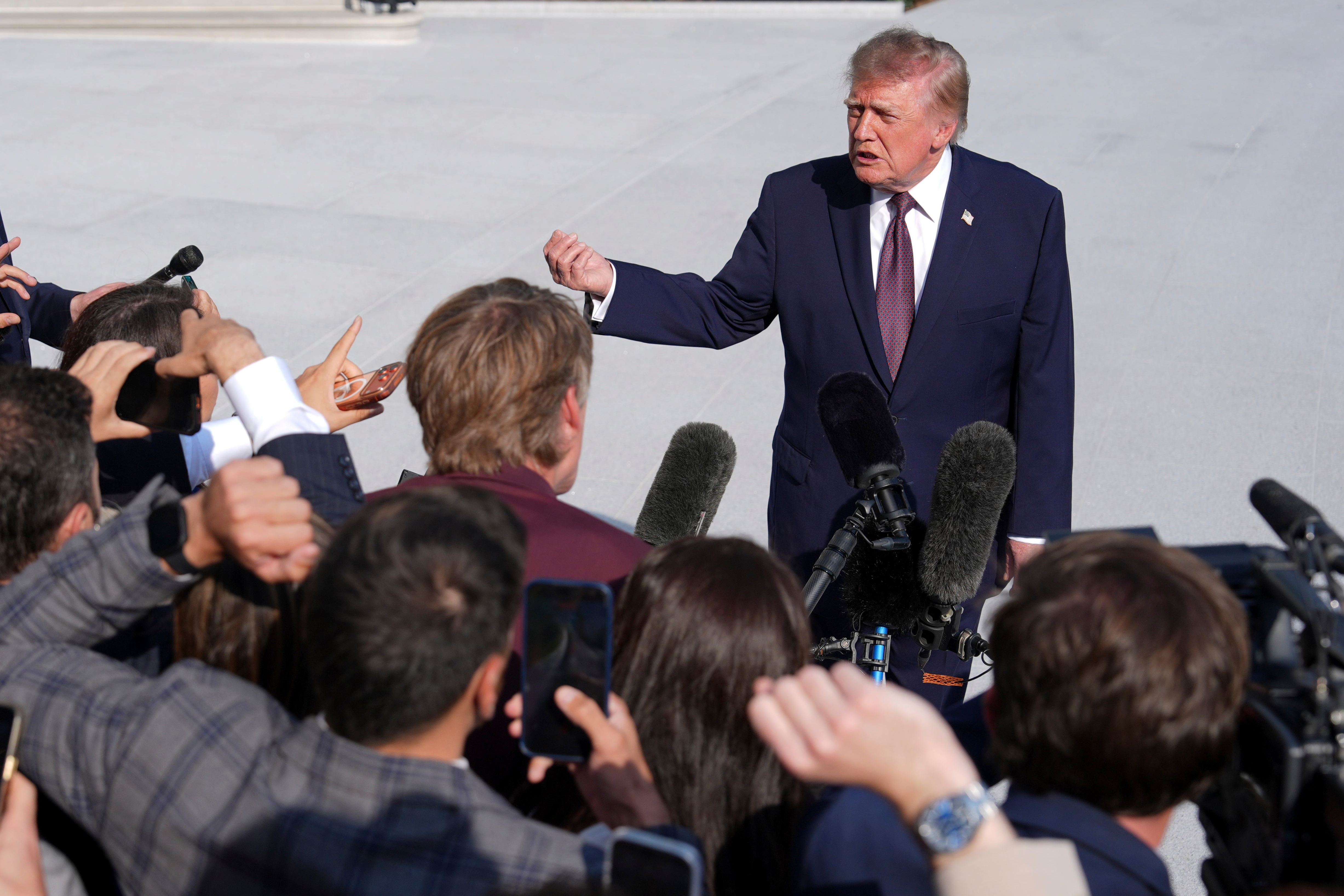
    WASHINGTON — A federal court in Texas on Friday temporarily blocked the Trump administration from building a border wall and other infrastructure across the state’s Big Bend region, in a victory for opponents who have pushed back against a key campaign promise by President Donald Trump.

    Landowners, businesses, and environmentalists in the region have united to oppose the planned projects, which are part of a $46 billion effort by the Trump administration to line the southern border with a mix of 30-foot-tall steel walls, vehicle barriers, roads, and surveillance technology.

    Judge Kathleen Cardone said in her ruling that the plaintiffs were “likely to succeed on the merits of at least one of the claims in suit, that there is a likelihood that they will suffer serious, irreparable harm without an injunction, and that the balance of the equities and the public interest weigh in their favor.”

    U.S. Customs and Border Protection defended the project in a statement Friday.

    “We stand by our assessment and remain confident in our legal authorities to secure the border while preserving the unique landscape of the Big Bend region,” the agency said. “We are working with the Department of Justice on next steps.”

    The Department of Homeland Security did not immediately respond to a request for comment.

    The judge’s ruling includes Big Bend National Park, where opposition to the wall prompted the administration to briefly pause construction.

    Opponents of the border wall project have argued that the Big Bend region of Texas is so remote and the landscape so rugged that it serves as its own deterrent to illegal immigration and that the administration violated the law when it issued a swath of waivers allowing it to bypass numerous regulations in order to speed up border wall infrastructure projects.

    The lawsuit brought by an environmental organization, advocates for a historic church in Ruidosa and a river guide argued that the Department of Homeland Security was wrong to bypass regulations meant to protect the environment, culture, and archeology of regions like the Big Bend area.

    Laiken Jordahl, with the Center of Biological Diversity that brought the suit, called Cardone’s ruling a “total victory.”

    “The bulldozers are going to be sent packing until she rules on the merits,” Jordahl said. “This is such a historic day for Big Bend and for Texas and the Constitution.”

    The court’s decision comes just weeks after the administration erected the first border wall panels in the Big Bend sector in mid-September.

    The border wall project through the Big Bend sector has sparked bipartisan opposition.

    Much of the opposition has been geared around Customs and Border Protection’s plans for inside the Big Bend National Park, which is prized for its beautiful landscapes, limestone cliffs, and crystal clear night sky views.

    When bulldozers were spotted clearing land in the park in August, it sparked widespread opposition with both Republicans and Democrats calling for the administration to stop. Customs and Border Protection paused all activity there, but that pause expired on Sept. 30. The administration has said it’s reevaluating plans for the National Park but has not yet said what it will do there.

    Advocates for the park on Friday said they were happy with the judge’s ruling but called on the administration to fix the damage already done to Big Bend National Park, come to the table to meet with local residents and develop alternative plans.

    “Big Bend is no place for border barriers. It’s time for the administration to come to the table with the border communities that know Big Bend best, repair the damage from this ill-conceived project, and find new solutions,” said Tiernan Sittenfeld, National Parks Conservation Association President and CEO in a statement.

    The judge’s ruling extends to areas up and downriver from the National Park, where Customs and Border Protection has planned a range of border infrastructure projects that would largely require building across privately owned land.

    In those areas, the government has been working to obtain permission from local landowners to survey and build on their land, but in a recent court filing, it said it was prepared to refer some cases to the Justice Department where it hadn’t been able to secure permission from landowners.

  • Former GOP Rep. David Rivera sentenced to 10 years for secret Venezuela lobbying

    Former GOP Rep. David Rivera sentenced to 10 years for secret Venezuela lobbying

    MIAMI — A former Republican congressman and longtime friend of Secretary of State Marco Rubio received a 10-year prison sentence on Friday for concealing a $50 million lobbying campaign on Venezuela’s behalf during the first Trump administration.

    David Rivera of Miami has been jailed since his conviction in May for conspiracy to commit money laundering and failing to register as a foreign agent for the government of Nicolás Maduro.

    Rivera, 61, appeared stone-faced as Judge Melissa Damian denounced him for betraying his life’s mission. His many friends in Miami would surely judge him harshly had the millions of dollars come from Cuba’s communist regime instead of its allies in Caracas, she said.

    “Nobody would accept that’s OK and I don’t think this is different,” the judge said. “There’s no dispute this money came from the Maduro regime.”

    The case offered a rare glimpse into foreign influence campaigns aimed at shaping U.S. policy toward Latin America, highlighting Miami’s reputation as a magnet for both anti-communist crusaders and corruption among its sizable exile population.

    President Donald Trump’s secretary of state, Rep. Pete Sessions of Texas and a top Washington lobbyist all testified, saying Rivera had never mentioned his mammoth consulting contract with a U.S.-based affiliate of Venezuela’s state oil company, PDVSA.

    Rivera was charged in 2022, during President Joe Biden’s administration. Charges of illegal foreign lobbying have plunged since Trump returned to the White House. Rivera’s lawyers have applied for a presidential pardon, and plan to appeal while also defending him against a related foreign lobbying case in Washington, D.C. Still pending is Damian’s ruling on the government’s request that Rivera forfeit $20 million in criminal proceeds.

    Prosecutors described how Rivera worked GOP connections for Delcy Rodríguez

    Rivera was tapped by Maduro’s Foreign Minister Delcy Rodríguez — now Venezuela’s acting president — to get the first Trump administration to normalize relations.

    As part of the charm offensive, Rivera and a co-defendant, political consultant Esther Nuhfer, sought to manipulate influential friends, including Rubio and Sessions. But they didn’t disclose the lobbying as required, fearing it would ruin Rivera’s reputation as an anti-communist stalwart, prosecutors argued at trial. Nuhfer received a five-year sentence.

    “The United States and the public were the true victims of this fraud,” Assistant U.S. Attorney Roger Cruz said. “He used his position of trust — and betrayed it consistently and repeatedly.”

    Rivera denied being a two-faced grifter. In an emotional 20-minute address, he traced his life’s journey from a childhood without a father in an immigrant Miami neighborhood to the halls of Congress — always “fighting the good cause,” he said. Holding back tears, he begged for leniency, telling the judge that it was tantamount to a “death sentence” due to his age and lingering effects from a battle with prostate cancer.

    Prosecutors said betrayal featured coded figures — ‘Sombrero’ and ‘Miss Clairol’

    Trial evidence showed how Rivera set up an encrypted chat group called MIA — for Miami — with his main conduit to the Maduro government: Venezuelan media tycoon Raúl Gorrín, who was subsequently charged in the U.S. with bribing top Venezuelan officials.

    Group members used playful code words: Maduro was the “bus driver,” Sessions “Sombrero,” Rodríguez “The Lady in Red,” and their windfall payments “La Luz,” Spanish for “The Light,” according to copies of text messages presented to the jury. Rubio was known as “Miss Clairol,” because rubio means blond in Spanish.

    Rivera’s attorneys argued again Friday that the former congressman believed he was under no disclosure requirement. They said the three-month, $50 million contract with Rivera’s one-man consulting firm was focused on luring oil giant ExxonMobil back to Venezuela — commercial work that is generally exempt from the Foreign Agents Registration Act.

    “David Rivera does not deserve to die in prison because he failed to file a FARA registration,” defense attorney Ed Shohat said.

    The judge strenuously disagreed. “This is a serious offense. It’s not about not filing a piece of paper.”

    Wholly distinct from that consulting work, defense attorneys said, were Rivera’s meetings with Rubio and Sessions, which were focused on ushering in less hostile leadership in Venezuela, not unlike the Rodríguez government that took power after the U.S. ouster of Maduro in January.

    Where did the money go? A luxury yacht, among other things

    Prosecutors said Rivera used the contract with the Venezuelan oil giant’s affiliate, New York-based PDV USA, as cover for illegal lobbying, and tried to hide it by backdating documents and creating sham agreements, like one to justify a $3.75 million wire transfer to a South Florida company maintaining Gorrín’s luxury yacht.

    While setting up meetings for Rodríguez in New York, Caracas, Washington and Dallas, Rivera roped in Sessions, who later tried to broker a meeting for Rodríguez with the ExxonMobil executive who took over as CEO when Rex Tillerson became Trump’s first-term secretary of state.

    The outreach quickly unraveled, however. Within six months of taking office, Trump sanctioned Maduro and labeled him a “dictator,” launching a “maximum pressure” campaign to unseat the president.

    Rubio’s former housemate faced scandal before, but Cuban Americans support him

    Before serving in Congress from 2011-2013, Rivera was a high-ranking Florida legislator and shared a Tallahassee home with Rubio, who eventually became the Florida House speaker.

    Rivera faced earlier controversy, including allegations that he secretly funded a Democratic spoiler candidate in a 2012 congressional race — a case federal prosecutors eventually dropped after a sizable fine was thrown out on appeal. Rivera was also investigated — but never charged — for alleged campaign finance violations and a $1 million contract with a gambling company while serving in the Florida Legislature.

    Despite all that, Rivera continues to have support among Miami’s Cuban American establishment and in circles of power beyond.

    Friends of the former congressman, including the former president of Florida International University and Miami-Dade County’s supervisor of elections, packed the courtroom to show their support. Sessions also sent a letter seeking leniency, referring to his former congressional colleague as a devoted defender of democracy.

    Jason Reding Quiñones, the U.S. attorney for the Southern District of Florida, is also a Cuban American and said he can’t explain why some in Miami still stand by Rivera.

    “He sold his anti-communism to communists to fill his greed,” said Reding Quiñones in a news conference following the sentencing.

  • New Jersey’s drought officially is history, and so is the Atlantic hurricane season

    New Jersey’s drought officially is history, and so is the Atlantic hurricane season

    Go ahead New Jersey, drink up and wash the cars: After 300 days, the governor’s office on Thursday officially lifted the statewide drought warning.

    The decree comes after three months that have featured an assortment of downpours and general rainfalls, with a bonus early-season nor’easter, throughout the Garden State and the Philadelphia region that may have had a lot of folks wondering when too much would be enough.

    The region has another shot at rain during the weekend, but the atmosphere may be poised to flip into a radically different, season-changing, rain-repelling pattern.

    In fact, said Richard Bann, a meteorologist with the federal Weather Prediction Center, “If this were January, people would worry about how cold it would be.”

    Any rain this weekend would be the result of a stalled front and “a surge of tropical moisture from the Gulf,” distantly related to the remnants of Hurricane Polo, said Matt Benz, senior meteorologist with AccuWeather Inc.

    Polo, of course, originated in the Pacific, which has been on fire with tropical activity — the mirror opposite of the Atlantic.

    The Atlantic Basin, which includes the Gulf and the Caribbean, hasn’t spawned a single hurricane this season, and this has a shot at becoming the first season without a verified hurricane in 132 years.

    One extraordinary feature of the Philly region’s remarkable turn in rain fortunes has been the absolute absence of tropical-storm related rainfall, which often has been an important source of late summer and early fall rainfall around here.

    The weekend outlook for the Philadelphia region

    On the subject of turnabouts, that was the sun that reappeared in the skies over Philly after a September in which it seemed as if the region was living under a dropped ceiling. For the month, Philly officially had three clear days.

    The average is about eight during one of the sunnier and drier months of the year.

    The sun is due for an encore during a summery Friday, with highs expected in the mid-80s, but as an autumnal front approaches, showers are possible at night.

    Saturday should be a fabulous day for hay-riders and corn-maze enthusiasts, with sun and highs expected to be more October-like, perhaps 15 degrees cooler than Friday’s.

    A storm is expected to form along the front as it stalls and moves toward the region, perhaps transporting some of Polo’s leftovers, and showers again are possible Sunday and Sunday night.

    But October weather really arrives with the workweek, said Benz.

    Next week is looking sunny and dry with daytime highs that might not get much past 60 degrees Tuesday and Wednesday, and fall into the 40s both mornings. If the foliage experts are right, those sunny days and cool nights should be ideal for the leaf-color.

    A fond farewell to the drought

    At least the trees won’t be moisture-starved.

    It may be hard to remember that on July 1, Philadelphia officially had experienced 16 consecutive months of below-normal precipitation.

    Antecedent dryness was one thing that moved New Jersey to declare a drought “warning,” asking residents to conserve water voluntarily, on Dec. 5.

    On June 1, Philadelphia, its seven neighboring counties, and all of New Jersey were in states of at least “moderate drought,” according to the interagency U.S. Drought Monitor.

    However, in June, the celestial faucets turned on again, and the National Weather Service Office in Mount Holly issued a record number of flood warnings.

    Through Wednesday, rain totals in all the counties of New Jersey and Eastern Pennsylvania were well above normal during the previous 90 days, according to the Middle Atlantic River Forecast Center.

  • Russia is planning its most powerful blow yet to try to freeze Ukraine

    Russia is planning its most powerful blow yet to try to freeze Ukraine

    KYIV, Ukraine — For months, Ukrainian officials have warned people to brace for what could be their hardest winter at war. Russia, they said, would use its ever more powerful weapons to try to cripple the country’s power grid. The first big strike was expected later this fall, with the first bite of cold.

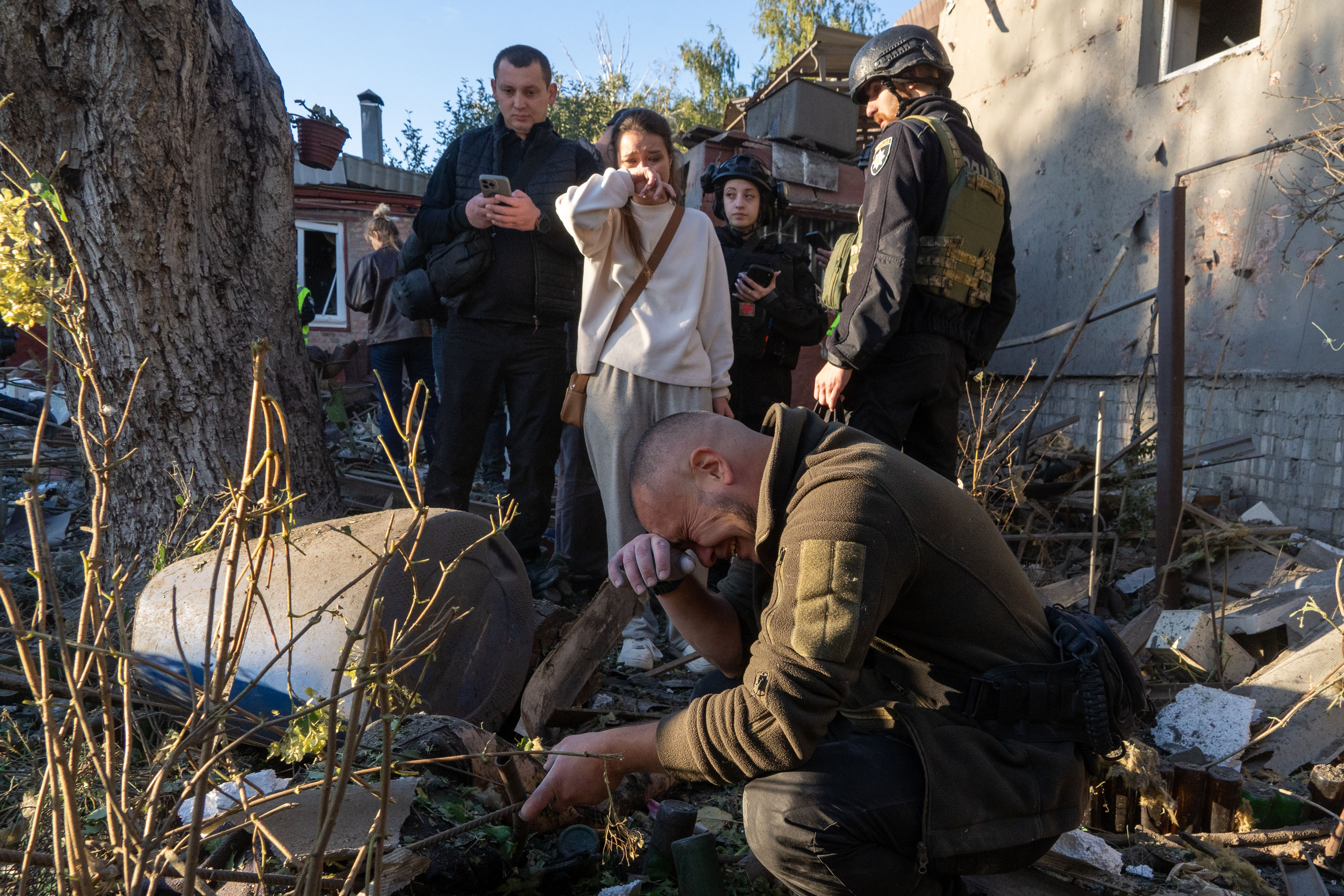
    Russia did not wait that long. Before dawn on Wednesday, missiles and drones slammed into a large thermal power plant and other energy facilities, shaking the Ukrainian capital, Kyiv, with explosions. By morning, several neighborhoods were without power and water.

    The attack, Ukrainian officials said, marked the opening salvo of a new campaign to plunge Ukrainian cities into cold and darkness, with the ultimate goal of breaking people’s morale and crippling the war effort. Russia has waged similar campaigns each year, with mixed results, but it is approaching this winter armed with stocks of ballistic missiles and jet-powered drones that Ukraine has struggled to intercept.

    The scale of Russia’s ambition to freeze Ukrainians into submission is evident in a document that the Ukrainian energy minister, Denys Shmyhal, showed to European partners in Paris two weeks ago, according to two people familiar with his presentation.

    Shmyhal, the people said, described the document as an intercepted Russian plan to cause the energy system to collapse through methodical attacks. The plan, a copy of which the New York Times obtained, describes a campaign of strikes using up to 1,000 missiles, drones, and bombs. They would target a wide range of facilities, including electrical substations, hydroelectric and thermal power plants, and boiler houses.

    Most alarming, the document says that Russia intends to force Ukraine’s three operating nuclear plants — the backbone of its power infrastructure — to shut down by firing missiles at the electrical switchyards that connect them to the grid. The switchyards sit less than a mile from the reactors.

    The plan also says that Moscow will target Ukraine’s water system, including pumping stations and wastewater treatment facilities, with dozens of ballistic missiles and glide bombs. Russia has never attacked such sites on a large scale before. Ukrainian officials have privately expressed concern that the country has limited backup plans should it face severe water disruptions.

    Residents on Volodymyrska Hill in Kyiv, Ukraine. As winter nears, Ukrainian officials warn Russia may target key infrastructure to deprive cities of heat, power, and water.Jedrzej Nowicki

    The ultimate goal is to cut off major Ukrainian cities from power, heat and water, which could set off a humanitarian crisis. Kyiv, Kharkiv, and Odesa are highlighted as top targets, with plans to cut electricity supplies in those cities by 90%, reduce heating supplies by up to 90% and severely disrupt the sewage system.

    The New York Times had no way to independently authenticate the document, which is dated from August and written in Russian. But President Vladimir Putin of Russia has publicly stated that his forces will wage an extensive campaign this winter to knock out Ukraine’s energy infrastructure, framing it as retaliation for Ukrainian strikes on Russian oil refineries.

    Shmyhal spoke in vague terms about the document to the Ukrainian media a week ago, saying, “Our partners, like us, were struck by its cynicism, by this cold, terrorist calculation of how to destroy our energy sector.”

    Whether Russia will follow through on the strategy laid out in the document — and whether it will succeed if it does so — remains to be seen.

    Ukraine has spent the past several months preparing for the winter, building protective structures above critical facilities, such as substations that carry electricity across the country. Civilians, most of whom endured severe power and heating cuts last winter, have stocked up on batteries and small gas-powered heaters.

    Ukrainian authorities have spent hundreds of millions of dollars to repair power plants and substations, as well as to install smaller energy facilities like gas-powered turbines that are harder to strike. Ukraine has also invested in strengthening the grid to withstand cold-weather demand and reroute power when attacks knock out transmission lines.

    Energy experts caution that these measures can at best cushion the expected blow, not stop it. Olena Pavlenko, head of DiXi Group, a Ukrainian energy think tank, said that four winters of war had left the country’s power grid so weakened that getting through another would be like “running a marathon with only one lung.”

    Memories of last winter, by far the hardest of the war so far, in part because of particularly bitter temperatures, still loom large for Ukrainians and explain their dread of another Russian strike campaign.

    As Russia repeatedly hit power and heating plants, Kyiv residents regularly endured a dozen hours or more without electricity each day, according to data shared by DTEK, the country’s largest private energy company and the capital’s electricity distributor.

    Olha Skorokhod, 41, a resident of central Kyiv, said that last January she had to bathe her daughter Zoriana, 3, in cold water after losing heat for two weeks.Jedrzej Nowicki

    Olha Skorokhod, a resident of central Kyiv, said she lost heat for two weeks last January as temperatures outside fell well below freezing. She had to wash her 3-year-old daughter, Zoriana, in cold water, and worried that she might get sick as a result. Changing the child’s clothes was an ordeal as the cold nipped at her bare skin. At one point, Skorokhod tried to warm the apartment by heating bricks on a small gas stove. It barely made a difference.

    In high-rises across the capital, residents on the top floors often had no water because the pumps lost power. To get to their apartments, they had to climb flight after flight of stairs because the elevators were out of service. Even when the power returned for a few hours, some avoided the elevators, afraid of getting trapped during a sudden outage.

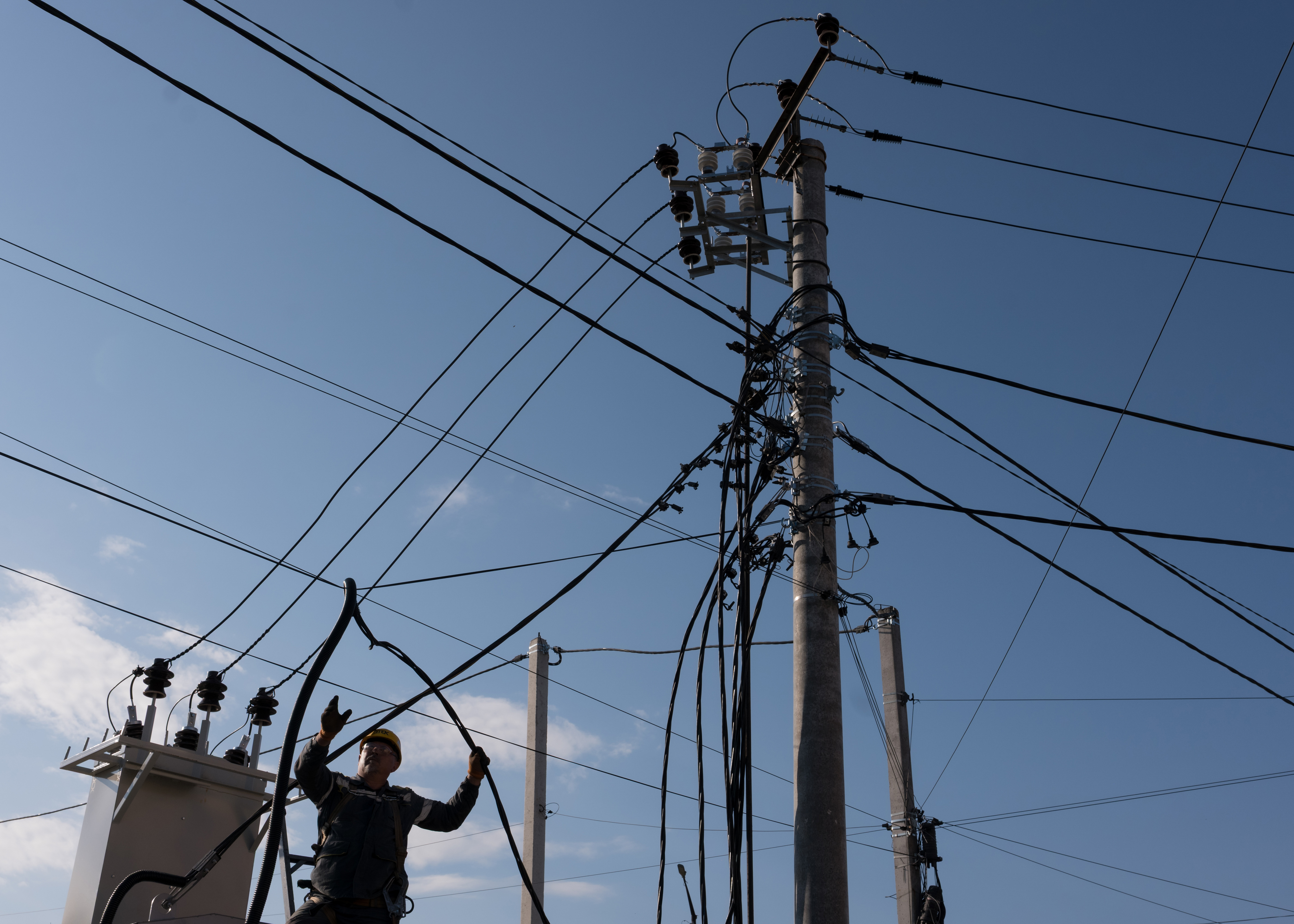
    To avoid a repeat this winter, power crews have been hard at work. On Monday, a repair team from DTEK was busy replacing an old transformer with a new one near Kyiv. They lifted the old unit off a pole and replaced it with a new transformer in a protective casing.

    “There’s old equipment that simply can’t handle the load anymore,” said the crew leader, Eduard Kashkov, 57. “Some of the equipment is as old as I am.”

    Last winter showed that local equipment can fail when power returns after an outage and large numbers of people plug in at once to charge batteries, Kashkov said. The new transformer, he added, was built to handle the surge in consumption.

    Speaking to parliament in August, Shmyhal expressed confidence that Ukraine would enter the winter well prepared. The country had about 15 gigawatts of available capacity, he said, and he expected it to grow to more than 21 gigawatts by year end. That would be enough to cover peak demand, which reached about 18 gigawatts last winter.

    But his projections did not account for attacks like Wednesday’s, which can undo months of repairs. Maria Tsaturian, an energy analyst at the research group Ukraine Facility Platform, said it could take only a few attacks to knock out the five gigawatts that Ukraine had restored in recent months. She pointed to the power outages after Wednesday’s strike as evidence of the grid’s fragility.

    Russia’s intercepted plan appears designed to collapse Ukraine’s already weakened grid.

    It lays out three stages of attacks. The first would knock out substations near Ukraine’s western borders, which import electricity from Europe. The second would take out hydroelectric power plants. The third would force Ukraine’s three operating nuclear plants offline. (A fourth nuclear plant, near the southern city of Zaporizhzhia, was captured by Russian forces early in the war and is not operating.)

    The goal of the attacks, the document says, is to eliminate nearly 15 gigawatts of generating capacity — as much as Ukraine had at the end of the summer.

    This article originally appeared in The New York Times.

  • CBS announces Tony Romo’s permanent exit following arrest for operating a vehicle while intoxicated

    CBS announces Tony Romo’s permanent exit following arrest for operating a vehicle while intoxicated

    CBS Sports and Tony Romo have officially parted ways, one month after the former Dallas Cowboys quarterback pleaded no contest to charges of operating a vehicle while intoxicated.

    Romo had been on leave since his July 23 arrest in Wisconsin. He had been the lead game analyst for CBS’ NFL coverage since 2017.

    “CBS Sports and Tony Romo have mutually agreed to part ways,” CBS Sports said Friday in a statement. “We thank Tony for his contributions over the past nine years and wish him the best moving forward.”

    Analyst JJ Watt had joined play-by-play announcer Jim Nantz and sideline reporter Tracy Wolfson on CBS Sports’ lead NFL team during Romo’s absence. Watt will continue in that role now and all other CBS teams will remain the same.

    Romo was arrested following a traffic stop as he was driving south on Interstate 43 in Wisconsin. He pleaded no contest to a charge of operating while intoxicated on Sept. 1 and issued a statement apologizing for the actions that led to his arrest.

    According to Milwaukee County court records, Romo lost his driving privileges for six months and was ordered to complete an alcohol assessment program.

    “The past month has been difficult, but it has also been personally significant,” Romo said Sept. 1 in a statement on Instagram. “It has required me to confront and own my mistakes fully — to the Lord, to myself, to my family and now to the public.”

    Romo said the multiple back surgeries that led to his retirement as a player “left me with constant, debilitating pain.” He noted that the pain “led to a dependence on pain medication, and my efforts to get off those medications led to an over-reliance on alcohol.”

    “None of this is an excuse,” Romo said. “These are my failures and I take responsibility for them.”

    Romo said he is working with a team of doctors to address his health and “make the necessary changes.”

    The 46-year-old Romo made four Pro Bowl appearances during a playing career that ran from 2004-16 and was spent entirely with Dallas.

  • Trump expected to name intelligence chief Jay Clayton as new AI czar

    Trump expected to name intelligence chief Jay Clayton as new AI czar

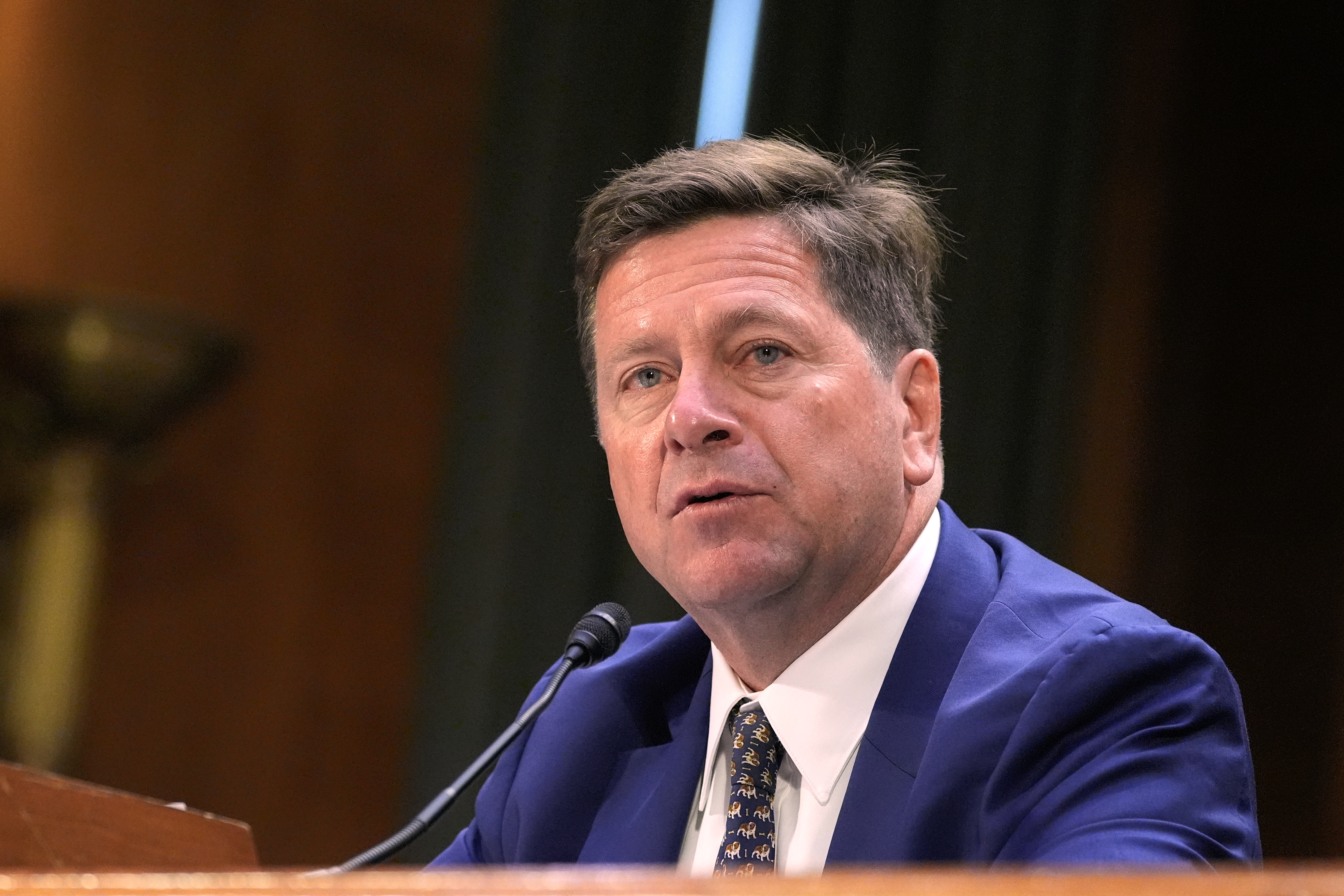
    President Donald Trump is expected to name spy chief Jay Clayton as his new top adviser on artificial intelligence, according to three people familiar with the decision, a move that cements the administration’s handling of the new technology as a matter of national security.

    Clayton, a former U.S. attorney and Securities and Exchange Commission chairman, was confirmed as the leader the Office of the Director of National Intelligence in July. He is expected to continue to hold that role, one of the people said. All three individuals spoke on the condition of anonymity to describe a personnel move that has yet to be publicly announced.

    CBS News first reported that Trump was expected to choose Clayton for the position.

    The appointment comes as the Trump administration recalibrates its approach to AI. The previous czar, the investor David Sacks, promoted a policy aimed at allowing the technology to develop as fast as possible. But in the months since Sacks left his post in March, officials have increasingly been grappling with cybersecurity threats posed by the latest generation of models and the danger posed by AI agents going rogue online. Sacks has continued to influence thinking within the administration as an informal adviser outside of the government and as co-chair of the President’s Council of Advisors on Science and Technology. Sacks and Clayton have a close relationship, according to one of the people briefed on the upcoming announcement.

    A White House official said any personnel moves would be announced by the president. “Any reporting until then is baseless speculation,” the official said.

    The administration has resisted calls in recent weeks by some in the industry and on Capitol Hill to slow down the pace of development and adopt new regulations. But on Tuesday it convened tech executives for a White House lunch that culminated in the leading AI companies signing a promise to develop new systems safely and bring in outside oversight firms. The following day, a Federal Trade Commission official said the panel had opened an investigation into AI companies Anthropic and OpenAI. (The Washington Post has a content partnership with OpenAI.)

    Joel Thayer, a senior adviser for technology at the America First Policy Institute, a Trump-aligned think tank, said the developments showed how the administration’s handling of AI companies was “maturing.”

    “These guys are under watch,” Thayer said. “The government has a spotlight on them.”

    The industry executives’ pledge is voluntary and amounts to what Trump called “self-policing.” But it won the backing of figures who have bitterly clashed over how serious of a risk AI poses. Sacks, who attended the lunch, endorsed it. So did Jacob Coxon, a former Anthropic researcher who resigned last month, saying the technology could wipe out humanity and triggering a wave of panic in Washington.

    The agreement means Clayton will step into his new role at a time of relative calm.

    “Super intelligence is a national security issue,” Clayton said in a CNBC interview the day after the lunch, using Trump’s preferred name for AI. “That was something that was recognized yesterday by not just the industry leaders, but everybody in the room. The commitment there to the American people, and the safety and security of the American people was palpable throughout the meeting.”

    Trump nominated Clayton, a loyal ally and regular golf partner of the president’s, to lead the intelligence office in June. Many Senate Democrats initially said they supported the choice. But he refused in his confirmation hearing to say definitively that Joe Biden had won the 2020 election, and the final vote fell along party lines.

    The AI role will not require Senate confirmation.

    The shifting thinking that led to Clayton’s appointment began months ago, when Anthropic said it had developed a new model called Mythos that it deemed too dangerous to publicly release. The company said it had new abilities to find vulnerabilities in computer code and help hackers exploit them.

    Officials scrambled to understand the risks to government systems and critical sectors of the economy. Driven by alarm among banking industry leaders, Treasury Secretary Scott Bessent played a key role in shaping the administration’s response. Last week, Trump batted down reports that Bessent was in line to be the new AI czar.

    In May, the White House settled on issuing an executive order calling on leading AI companies to voluntarily share their latest systems with the government ahead of their release, giving federal experts a chance to weigh security risks. Despite no longer holding an official government position, Sacks continued to wield influence and made a last-minute call to Trump that caused the order to be delayed and revised.

    But even after the order was signed in June, new dangers continued to emerge. The following month, ChatGPT maker OpenAI disclosed that a swarm of agents created by its systems had broken free and breached another AI company. Other firms said they had suffered similar breakouts.

    Then came Coxon’s resignation in September, which reignited a long-simmering debate in AI circles about whether a sufficiently powerful version of the technology would bring about humanity’s downfall.

    Trump dismissed the fears a “hoax” in fiery social media posts. But he later said he would name a new czar and create an “AI Force.” The White House has not detailed what the force will do, but in an interview with Time magazine published this week, Trump described it as “a group of very smart people that understand it, who will be advising me.”

  • Kennedy Center Honors will move to Capital One Arena as closure drags on

    Kennedy Center Honors will move to Capital One Arena as closure drags on

    The Kennedy Center Honors will take place Dec. 7 at the Capital One Arena, the center announced Friday, breaking tradition by holding the tribute ceremony off-campus as a battle rages over its closure.

    Most other details about the honors — namely, who will receive the awards and who will broadcast the show — remain a mystery, months after they would ordinarily be public.

    A Kennedy Center spokesperson said these will be announced at a later date.

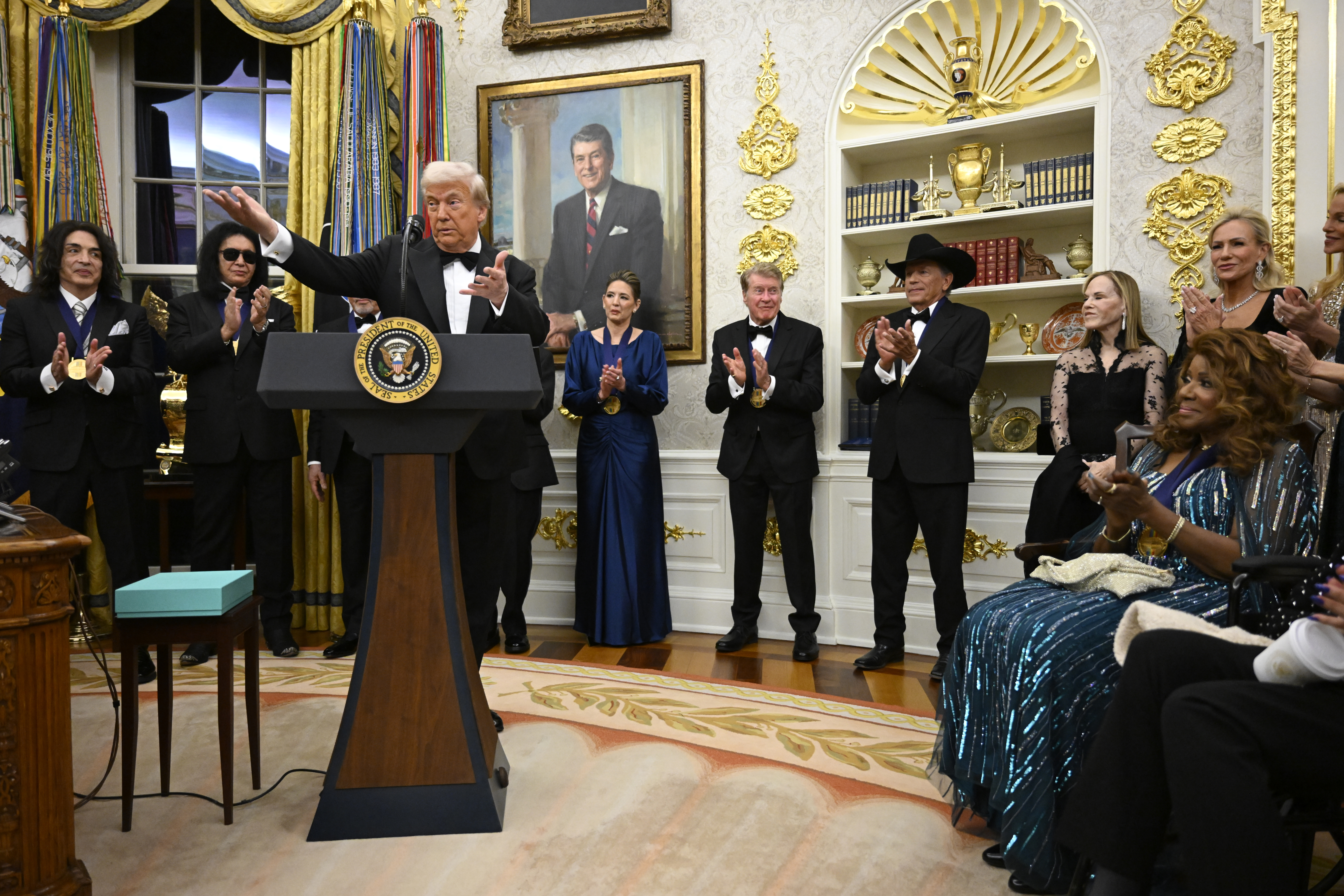
    The annual black-tie gala and television broadcast is the center’s flagship program and usually its largest fundraising event. It generally takes place on a weekend in December, during which five honorees are recognized by the American government for their contributions to the arts. They traditionally received medallions, met the president at the White House and gave speeches during a dinner at the State Department before attending a star-studded Sunday ceremony in the Kennedy Center’s Opera House.

    The honorees — which have included Leonard Bernstein, Queen Latifah, George Clooney, Led Zeppelin, Gladys Knight, Billy Crystal, and the Grateful Dead, to name a few of the almost 270 honorees since its inception in 1978 — are usually announced in midsummer.

    Last year, amid turmoil from President Donald Trump’s takeover of the center and remake of its board, the announcement came late, in mid-August. The year before, it arrived in July along with both the broadcast and ceremony date.

    It is October, and there’s no other word on the details.

    We don’t know who is in the 49th class of honorees or what kind of crowd will greet them: The program’s venue, Capital One Arena, which can hold roughly 20,000 people at max capacity, dwarfs the 2,347 seats of the center’s Opera House.

    We don’t know who will broadcast it. During a board meeting last year, Trump floated the idea of having networks bid to air the show, which has been broadcast on CBS since its debut. (Last year’s remained on CBS.)

    Finally, we don’t know who would host it. Trump, who avoided the honors in his first term, famously played the role himself at last year’s ceremony, something a president had never before done. He also said he was “about 98 percent involved” in picking the honorees — Michael Crawford, Gloria Gaynor, Kiss, Sylvester Stallone, and George Strait — which are generally chosen by committee.

    Asked for details this week, the White House referred us to the Kennedy Center, which provided the announcement.

    The center had maintained that the honors, along with the Mark Twain Prize, would continue somewhere off-site during the building’s two-year closure for repairs.

    “It will definitely go forward,” Richard Grenell told WTOP in February, before he departed as president of the Kennedy Center. At the time, he predicted “it will probably just be in a smaller venue, which just means ticket demand will be even higher.”

    That full closure hasn’t started yet, according to the center. Instead, the main building is closed temporarily, leaders say, while they check on the building’s safety. Those checks could take another week or two, according to a Wednesday staff email reviewed by the Washington Post.

    But “this is an assessment timeline,” the email read, “not a reopening date.”

  • Russian aerial strikes snarl traffic on 3 Kyiv bridges in a new disruption tactic

    Russian aerial strikes snarl traffic on 3 Kyiv bridges in a new disruption tactic

    KYIV, Ukraine — Russian aerial attacks forced the partial closure Friday of three bridges over the Dnipro River in Kyiv, the Ukrainian capital’s mayor said, in Moscow’s latest effort to disrupt life in the city.

    Meanwhile, Ukraine’s top diplomat said officials have received separate proposals for a partial truce with Russia from the United States, India, Turkey, and Egypt. The proposals envision halting attacks on energy infrastructure, which have caused fuel shortages in Russia and power outages in Ukraine, and on Black Sea shipping needed to get vital grain exports to world markets.

    The Russian strikes forcing the full or partial closure of three of Kyiv’s six road bridges caused traffic logjams and appeared to be a new tactic in its campaign to torment the city’s residents. Previously, Russia has hit apartment blocks, supermarket warehouses, gas stations, and data centers, among other targets, in an escalation of attacks.

    Oleksandr Pihalo, a Kyiv resident, said traffic was “jammed solid” and it took him 45 minutes to cover 2 ½ miles. “It’s a total mess on the road today,” he told the Associated Press.

    One of the three bridges was hit again on Friday afternoon, Mayor Vitalii Klitschko said.

    Civilians “are bearing the brunt of this war,” the U.N. High Commissioner for Human Rights, Volker Türk, said in Geneva on Friday.

    “The war in Ukraine is a human rights catastrophe that is growing and intensifying by the week, causing unfathomable pain to civilians,” he said. “Across Ukraine, people are living in constant dread.”

    While the aerial war has intensified in recent months, fighting along the roughly 770-mile front line snaking through northern, eastern, and southern Ukraine has been virtually deadlocked. Russia invaded its neighbor more than 4 ½ years ago, and there are no concrete signs that a peace settlement might be possible.

    However, Ukraine has this year made some progress against Russia’s bigger army, according to the Institute for the Study of War.

    Russian forces lost control over almost 116 square miles of Ukraine between March and September, the Washington-based think tank said in a report late Thursday. Also, it said that the Russian military suffered over 46,000 casualties in September, the highest monthly number this year. It did not say how many Ukrainian troops were killed or wounded.

    Zelensky says sanctions can stop Russian drones and missiles

    Russia fired more than 100 drones at Ukraine overnight, striking Kyiv and eight other regions, Ukrainian President Volodymyr Zelensky said. Almost half of the drones were the jet-powered type that are especially hard to stop, he said.

    A drone hit a high-rise apartment block in Kyiv, killing one person, he said. At least four people were reported wounded elsewhere.

    Zelensky repeated his appeal for foreign countries to close loopholes in international sanctions on Russia and to add more restrictions on its trade. He said Russia’s drones and missiles are “critically dependent” on foreign components.

    “Every Russian drone can actually be stopped right at the production line,” Zelensky said in a post on X.

    Ukraine has also bombarded Russia with the long-range drones and missiles it now produces, aiming at military manufacturing plants and oil refineries.

    The Russian Defense Ministry said Friday that its air defenses overnight downed 646 Ukrainian drones over Russian regions, occupied Crimea, the Sea of Azov and the Black Sea.

    One person was wounded in Russia’s southwestern Volgograd region, Gov. Andrei Bocharov said. The attack targeted “industrial infrastructure,” he said, without providing details.

    Ukraine is ready for a truce on energy strikes and the Black Sea

    Ukraine’s Foreign Minister Andrii Sybiha said the partial truce proposals presented to Kyiv by four countries were the first time India has offered to play a role.

    India is trying to balance its ties with Russia against its growing partnerships with the United States and other Western powers. A new U.S. sanctions package on Russia could impose up to 100% tariffs on New Delhi as a major importer of Russian oil.

    Sybiha said Kyiv is ready to accept a ceasefire if it stops Russian attacks on Ukraine’s power grid — as well as Ukrainian strikes on Russian oil refineries — and on cargo vessels exporting grain and other farm products through the Black Sea.

    “We are ready for an energy and Black Sea ceasefire, but only in that combination. Energy and a ceasefire in the Black Sea,” Sybiha told reporters Thursday, in comments embargoed until Friday.

    He repeated Ukraine’s offer of an unconditional ceasefire on the front line. But Moscow has rejected a ceasefire, saying a comprehensive peace deal must be agreed rather than a temporary truce.

    Russia’s Deputy Prime Minister Alexander Novak said Friday that Ukraine attacked four Russian oil refineries overnight, but air defenses fended off the attacks and key equipment wasn’t damaged.

    The government and companies have worked hard to improve protection of refineries, he said. Russian President Vladimir Putin decreed in August that the state can temporarily seize control of critical infrastructure facilities if private owners fail to protect them or rebuild them after Ukrainian strikes.

    It wasn’t possible to verify either side’s claims.

    Russia is stockpiling ballistic missiles, Ukraine says

    Sybiha said Ukraine is requesting some 300 Patriot missiles from partner countries because intelligence services estimate that Russia is holding 600 ballistic missiles in reserve and can produce up to 140 ballistic missiles per month.

    The U.S.-made Patriot air defense systems can effectively defend against ballistic missiles, which fly fast and drop steeply, but they are in short supply due to the Iran war.

    Ukraine needs more funding and quickly, foreign minister says

    Ukraine urgently needs funding in order to contract future drone production, so there are no gaps in supply at the beginning of next year, Sybiha said.

    Kyiv faces a projected budget deficit of roughly $27 billion this year, although the European Union has promised to help meet its financial requirements.

    The European Commission announced Friday it had disbursed €2.9 billion ($3.3 billion) to Ukraine in its latest batch of financing. Zelensky said the amount would help Ukraine’s financial stability and strengthen its defense.

    Russia is also facing economic and financial challenges because of high military spending and debt.

  • G7 nations will release 100 million barrels of oil and diesel fuel after prices soar

    G7 nations will release 100 million barrels of oil and diesel fuel after prices soar

    WASHINGTON — The Group of Seven wealthy democracies said Friday that they plan to release 100 million barrels of oil and fuel products in the coming weeks, starting with “substantial” amounts of diesel after the fuel recently hit record high prices in the United States.

    President Donald Trump said the diesel release would happen “immediately,” echoing a G7 promise to start “immediately” with a “frontloaded substantial release” of diesel within the next 20 days and the rest over four months.

    Trump and his Republican Party face pressure to address surging prices ahead of the Nov. 3 midterm elections, and Trump announced the action Friday on social media. The president’s approval ratings on the economy hit a new low, according to an AP-NORC poll, as the Iran war and his trade battles have increased U.S. prices for oil and other goods.

    Gas prices in the U.S. and abroad have soared during the eight-month-long war, a cost Trump has repeatedly said is worth it for making sure Iran does not obtain nuclear weapons. The national average for a gallon of diesel in the U.S. was $6.37 on Friday, according to AAA, after hitting a record $6.52 on Sept. 22. Diesel prices have hit records in Europe, too.

    The release of diesel in Europe might mean less exports of diesel from the U.S., which could lower prices by 25-50 cents per gallon after a few weeks, said Michael Lynch, distinguished fellow at Energy Policy Research Foundation, a non-partisan research institution focused on energy and economics.

    Macron says the decision should bring down prices

    France holds the rotating presidency of the G7 group and made the announcement in a statement released after videoconference talks that Macron presided over. The G7 countries are Canada, France, Germany, Italy, Japan, the U.K., and the U.S., plus EU representation.

    The release follows on from a March announcement that International Energy Agency member countries would release 426 million barrels of oil and products to stabilize the oil market. European Union countries committed about 92 million barrels, a promise weighted toward refined products made from crude such as diesel.

    “This common decision and this unity should bring down prices,” Macron said. “The volumes we’re releasing should also add liquidity to the market and bring down prices.”

    In addition to the rise in the price of the crude oil from which diesel is made, other factors include the decision by Russia to ban exports due to Ukrainian drone strikes on its refineries. Europe does not import Russian diesel, but other buyers of Russian diesel such as Turkey and Latin American countries must now compete with Europe for available barrels.

    Meanwhile, refined product shipments from the Persian Gulf producers have fallen due to war damage and blocked export routes.

    The statement pushed U.S. oil prices down 2% but “the impact was lessened by lack of clarity on an important question,” said Pavel Molchanov, investment strategy analyst at Raymond James. Is the 100 million barrels in addition to the amount already agreed in March, or “is this the final portion of the existing pledge?” he said.

    The G7 says export bans are off the table

    Some Republicans in the U.S. had called for Trump to ban U.S. exports of diesel to try to bring domestic prices down. But the G7 statement said the group agreed not to limit energy exports to each other. Oil market analysts warn a U.S. export ban could lower prices in the short term but eventually backfire by reducing supplies of gasoline since diesel output can’t be lowered without also cutting overall refinery production.

    Asked about a potential U.S. export ban on Friday, Trump said “we were never going to do it.”

    “We’re not going to be doing the export ban,” Trump told reporters at the White House. “We’re going to be doing what we’re supposed to do.” He added that Europe is making “a major world contribution, and so are we.”

    Experts say there are risks in the strategy

    The emergency release could also be a short-term fix with the potential to do long-term harm, said Jim Krane, energy research fellow at Rice University’s Baker Institute.

    “Draining stocks will reduce retail fuel prices for a while, at the cost of leaving Europe with less emergency cover,” Krane said. “At some point in the future Europe and the rest of the G7 will have to refill their strategic reserves. Normally they try to do this when prices are low. Nobody knows when that will happen. It’s a risk.”

    With two wars raging that involve attacks on refineries and exports, “it’s not the best time to be frittering away your emergency stocks — especially when there is no visibility on future prices or peace agreements,” Krane said.

    Trump had a conversation overnight with Macron about the need to address rising fuel prices and the availability of petroleum products, according to the French Embassy in the U.S. Macron on Friday then chaired the videoconference of G7 leaders to discuss the issue.

    Besides his call with Macron, Trump on Friday called in to the meeting with the G7 leaders to negotiate the release of the European diesel stockpiles, according to a White House official who was not authorized to speak publicly and spoke on the condition of anonymity.

    Trump on Thursday embarked on what he said would be a 32-day marathon of rallies to try to bolster his party’s chances for keeping control of the U.S. House and Senate in the November elections. The president has grown increasingly frustrated with what he sees as a disconnect between his achievements and the public’s view of his work. This week he gave himself an A-plus for his work on the economy but said “we’re doing an extremely poor job of promotion.”

  • ‘I couldn’t let all of them die’: Pilot on FlyDubai flight recalls sudden attack

    ‘I couldn’t let all of them die’: Pilot on FlyDubai flight recalls sudden attack

    NEW DELHI — The Indian pilot who was attacked during a FlyDubai flight this week said Friday that he opened the cockpit door despite grievous injuries, allowing passengers and crew members to overpower the copilot who had assailed him.

    “I was fighting for my life,” Capt. Smit Machchhar said on a video call from his hospital bed with Prime Minister Narendra Modi of India, in his first public remarks since the attack. Video of their conversation was released by the Indian government.

    “I was so badly hurt that I had fallen to the ground,” Machchhar said. “But I knew I had to act,” he added. “I could feel the aircraft was going down.”

    The attack, on a flight from Dubai, United Arab Emirates, to Tel Aviv, Israel, carrying about 170 passengers, sent the aircraft into a terrifying plunge. Israeli officials have said the copilot appeared to have tried to crash the plane after stabbing Machchhar, although investigators are still trying to understand the assailant’s motives and how the attack unfolded. Prime Minister Benjamin Netanyahu of Israel said the copilot had undergone “Islamist radical indoctrination” but did not elaborate.

    Passengers were able to overpower the attacker, while two people aboard with flying experience helped land the plane in Saudi Arabia.

    Machchhar, who said he had 17 years of flying experience, including 11 as a captain, said he knew instinctively what was happening to the aircraft, even as he lay injured on the cockpit floor. The Boeing 737 Max 8 he was flying plummeted more than 16,000 feet in 30 seconds during the attack.

    Machchhar told Modi that he recalled telling himself: “Smit, this is the last push, just do it. The door is right there.”

    “I was doing it to save myself,” he said, “but I also knew I couldn’t let all of them die.”

    Machchhar, who was hospitalized in Saudi Arabia then transferred to the UAE, told Modi that he was receiving good medical care.

    The episode has made him a hero in India.

    “Your courage and presence of mind — you made a decision within a fraction of a second, and saved so many lives,” Modi told the captain during their conversation. “You have made the entire country proud.”

    Modi’s office put out the video of the split-screen conversation on a day of nationwide protests in India, including in the capital, New Delhi. Protesters are demanding the resignation of the country’s chief election officer for trying to rig voter rolls in the favor of Modi’s party.

    Machchhar grew up in Mumbai and entered aviation almost by accident after attending a seminar on flying. He later became a captain and a trainer of aspiring pilots. In a podcast interview last year, he described flying as something he felt “blessed” to do and emphasized the importance of pilots being rested and prepared to perform under pressure.

    This article originally appeared in The New York Times.