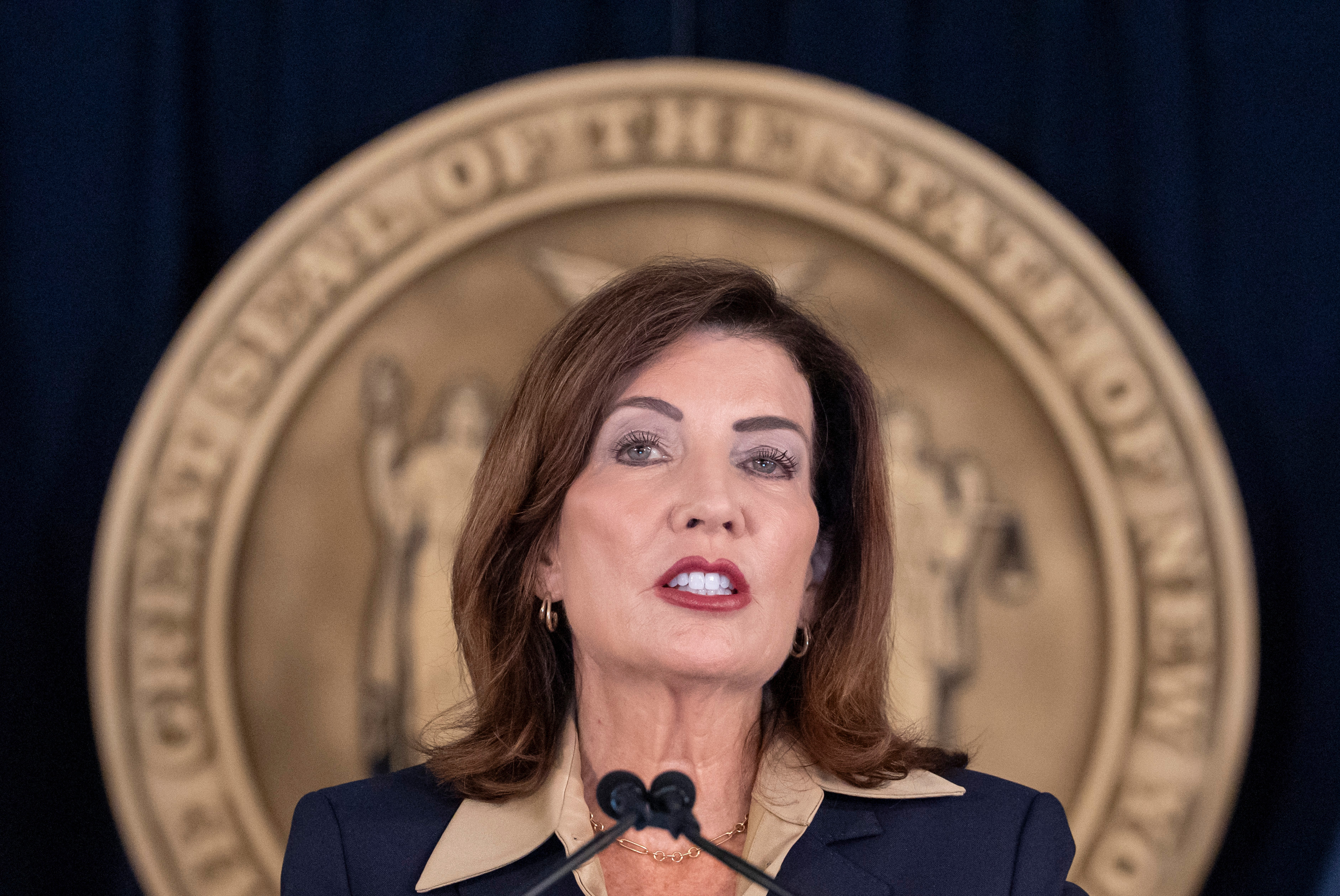
NEW YORK — The woman who accused members of a Cornell University fraternity of gang rape was “failed” by people obligated to protect her, including campus police and the county prosecutor, New York Gov. Kathy Hochul said Friday.
Hochul said at a news conference that she decided to appoint Attorney General Letitia James as a special prosecutor to take over the case after learning “troubling details” about how authorities have handled the woman’s claims thus far, including that the district attorney closed the case without having anyone interview the accuser or anyone else involved in the alleged attack.
“In what world does the district attorney not even interview her, or anyone else involved, or even request the full transcript?” Hochul said. “This woman, this young woman, had already endured something that is utterly unspeakable. And then at every turn, she was failed by people and institutions with an obligation to protect her.”
She also assailed the Cornell University Police Department for not fully conveying the woman’s story to prosecutors.
“After this young woman came forward, she spoke to the police. She sat for hours and told them exactly what happened to her. And according to new reports, she could not have been clearer that she was 100% confident that she had been raped,” the Democratic governor said. ”Yet, shockingly, those words never made it into the account that the Cornell police sent to prosecutors.”
James is brought in
Hochul said Thursday that she appointed James to oversee the case because she had lost faith in the local district attorney’s ability to handle it.
James didn’t say how long her investigation might take, but she said it would take some time and wouldn’t be rushed, as every New Yorker “deserves to know that when they report a crime, it will be investigated fully and fairly, that they will be seen and heard.”
“We will review the facts, gather evidence, interview witnesses and, if warranted, pursue prosecutions,” James said. “I know that you want answers. I do too. A comprehensive investigation of this nature takes time, but my office is committed to seeing it through.”
The investigation initially was closed without charges in 2024.
Last month, the woman filed a lawsuit and Tompkins County District Attorney Matthew Van Houten reopened the investigation. He has since been bombarded by criticism that he abandoned the original investigation too quickly.
Van Houten has defended his decision not to prosecute, maintaining that a sworn statement by the woman prepared by police didn’t include the woman’s allegations that she was drugged against her will, incapacitated beyond the ability to consent and forced into sex.
He didn’t respond Thursday or Friday to messages seeking comment.
The attorney general will determine whether there is enough evidence to press charges, Hochul said.
“The young woman at the center of this case deserves to know that every fact will be examined and justice pursued,” she said in a statement Thursday.
The case’s impact extends beyond Cornell
The case has roiled the Ivy League school and raised questions about its response and the larger issue of how sexual assaults are handled on college campuses.
The woman, identified only as Jane Doe in court documents, told campus police in November of 2024 that she was sexually assaulted, then discussed it with the university’s internal investigators as part of Cornell’s disciplinary process.
The lawsuit against seven fraternity brothers, the university, the Chi Phi fraternity and others alleges that she was plied with drugs and alcohol, then subjected to sexual acts by a group of men while she was partially or entirely incapacitated. One of the men sent a social media message to other fraternity members alerting them to what was happening and inviting people to take part, according to the lawsuit.
Lawyers for two of the men she is suing have denied they participated in a sexual assault. One said his client didn’t touch the woman. Attempts to reach the other men or their representatives for comment have been unsuccessful.
Officials say New York’s sexual assault laws need updating
Hochul also threw her support behind proposals to change an element of New York law that has long made it more difficult to prosecute people who have engaged in sex with someone who voluntarily became intoxicated to the point where their ability to consent was compromised.
Under the law, rape charges generally need to involve force or a clear refusal of sex, unless the victim is physically helpless due to being unconscious, or mentally incapacitated due to being drugged without their consent. New York is one of 19 states with such laws.
“If someone is too intoxicated to consent, it should not matter whether they chose to use drugs or alcohol. Voluntary intoxication is not a license for sexual assault or gang rape, period,” the governor said.
New York governors have turned to attorneys general to oversee important cases in the past.
In 2018, then-Gov. Andrew Cuomo appointed then-Nassau County District Attorney Madeline Singas as a special prosecutor to investigate Eric Schneiderman, who resigned as New York attorney general after women accused him of violent slapping, choking and other abuse.
In 2021, James oversaw a non-criminal investigation into sexual harassment allegations against then-Gov. Andrew Cuomo, leading to his resignation. Cuomo initially tried to choose who would lead the investigation into the allegations. He then allowed James to choose two independent attorneys to lead it instead.
James’ office also handles other criminal work and has the power under state law to investigate every death involving law enforcement in the state. But, typically, she can’t initiate criminal investigations without a referral from a local district attorney, the governor or a state agency, or an appointment like the one Hochul made Thursday.
Almost every day in September, Iranian media outlets have published reports of explosions “heard from the sea,” an ominous sign that military activity is taking place in the Strait of Hormuz.
But the reports left mysterious just who was carrying out the attacks.
It turns out it was Iran itself.
Confidential data shared with the New York Times by a Western security official who spoke on condition of anonymity to discuss operational matters shows that Iran has been launching dozens of drones and missiles at commercial ships in the strait each week, largely out of the public eye, though it has often failed to strike its targets.
And on Wednesday, Iran’s Revolutionary Guard for the first time appeared to confirm it was behind the near-daily sounds of explosions heard from Iran’s southern coast, saying it was striking targets in the Strait of Hormuz every 24 hours.
“We prevent them from passing, but for some time now, America has not responded,” a spokesperson for the Revolutionary Guard said in a state news interview.
The aggression shows that even as oil exports from the Middle East have rebounded in recent weeks, shipping through the waterway remains risky, as Iran jostles to keep control of one of its biggest sources of leverage.
“Negotiations aren’t going anywhere. Neither side is really budging. So it’s a standoff,” said Gregory Brew, an Iran analyst at the Eurasia Group. He said that the violence in the strait “speaks to the position that both sides are in: Neither is looking to aggressively escalate the conflict.” But both, he said, want to control the waterway.
Since the beginning of August, Iran has launched about 30 drone attacks and 10 anti-ship missile attacks per week against commercial ships transiting the Strait of Hormuz, according to the data shared with the Times by the Western security official. At least four commercial ships have been hit by Iran in the past 10 days, the official said.
A tally of reports by a monitoring group run by the British navy show that since Sept. 10, at least 13 ships, most of them oil tankers, had been struck by projectiles or debris from projectiles. (Those reports may be incomplete because they are based on voluntary reports by ship crews.) While the reports do not specify who was responsible for the attacks, maritime experts say the details suggest many were Iranian.
Motorcyclists pass a billboard depicting President Donald Trump underwater amid explosions, with the words “Great Victory! Strait of Hormuz,” in Tehran, Iran, on Aug. 24.Vahid Salemi
The attacks in the strait have kept up even as crude oil exports from the Middle East have gotten closer to prewar levels. Part of that turnaround, analysts say, is because of a U.S. military operation aimed at protecting the vessels from the attacks, an effort that appears to have encouraged more shipments from big exporting countries, such as Saudi Arabia and the United Arab Emirates.
Those ships pass through Oman’s territorial waters in a U.S. Navy-guided route, with the support of U.S. fighter jets and attack helicopters to help ward off strikes. Some ships also turn their transponders off to help pass through the strait undetected.
But analysts say U.S. military protection requires significant resources and will be hard to maintain indefinitely. And a big part of the regional increase in exports, according to Kpler, a cargo tracking group, is from export routes that circumvent the Strait of Hormuz altogether.
Just because more ships and oil are moving than seen earlier in the war “doesn’t mean we’re seeing a normalization of flows,” said Ana Subasic, a trade risk analyst at Kpler.
U.S. Central Command, which oversees military operations in the Middle East, declined to comment on Iranian attacks on shipping in the Strait of Hormuz in September. The Pentagon has not announced any strikes on Iran or Iranian vessels since early that month.
Ian Ralby, president of the maritime governance nonprofit group Auxilium Worldwide, said the fact that Washington has appeared not to respond militarily against Iran for its shipping attacks may be a function of the Trump administration’s seeking an off-ramp to the conflict now in its seventh month.
Brew, the Iran analyst, said that with the rise in oil exports, the administration may think it has less to gain from retaliatory strikes.
Ever since the United States and Israel attacked in February and started the war, Iran has used its ability to throttle shipping through Hormuz, a key route for oil and gas exports, disrupting the global economy.
The United States has imposed a naval blockade and tougher sanctions on Iran in retaliation, putting the country under further pressure, as President Donald Trump has sought to pivot the war from a military campaign to one focused on strangling its economy.
Artificial intelligence companies racing to shape how the federal government might regulate their industry amid rising safety and economic concerns are spending heavily to influence which candidates make it to Congress.
A New York Times analysis of federal campaign finance data shows that the political groups aligned with the two leading AI developers, OpenAI and Anthropic, have quietly but decisively intervened in key 2026 races, spending on campaign advertising and outreach to voters to the tune of $55.7 million.
So far, the spending has been concentrated almost entirely in the primaries. The two groups have spent $52.6 million on safe seats — those that are unlikely to change party hands but that often feature intense intraparty contests.
The big AI players have also spent more heavily for Democrats than Republicans. They have bolstered candidates who align with their agendas, helped defeat those they see as hostile to them, and ingratiated themselves with front-runners who are likely to be in positions of power in the next Congress to make decisions critical to their bottom lines.
But with voters quickly souring on their industry — including demanding that lawmakers do more to regulate AI and halt or mitigate the proliferation of data centers — they have taken pains to obscure their involvement. With few exceptions, they have intervened without ever explicitly mentioning AI or data centers in the TV and digital ads they have purchased.
(The Times has sued OpenAI and Microsoft, claiming copyright infringement of news content related to AI systems. The two companies have denied those claims.)
The Times reviewed 95 unique ads bought by four AI super political action committees heavily funded by the two biggest players — the OpenAI-aligned Leading the Future and the Anthropic-aligned Public First Action — each of which funnels its money through separate Republican and Democratic groups. None of the ads mentioned data centers. Only seven mentioned AI or an AI company directly.
An ad for Rep. Barry Moore (R., Ala.) featured the phrase “CHAMPION AMERICAN INNOVATION” as he shook hands with firefighters in a garage — one of several AI-backed advertisements that used that phrase over images of workplaces that appeared to have nothing to do with AI.
Another was in support of former Rep. Jesse Jackson Jr., a Democrat running for an open House seat in Illinois. It was paid for by Think Big, which is aligned with OpenAI, and praised him as committed to reducing gun violence and supporting law enforcement.
And in some instances, both the Republican and Democratic groups funded by the same big AI player created advertisements advocating opposing sides of an issue. For example, two spots for House candidates in Texas, a Democrat and a Republican, praise opposite positions on immigration. Both are funded by the Anthropic-aligned super PACs.
“It’s so cynical,” said Nate Blouin, a state senator in Utah who lost a Democratic primary to an opponent who had been backed by more than $1 million in AI-funded ads. “They’re coming into races in safe seats that they know that they’re going to be decided in the primaries, and they are spending millions of dollars on things that are unrelated to the core issue that they are pushing for.”
It is a strategy that has also been deployed this cycle by the American Israel Public Affairs Committee, another major interest group whose brand has become a liability in recent years and has spent in the midterms to the tune of tens of millions of dollars while rarely mentioning its top issue.
The companies behind the spending have somewhat different policy agendas. Anthropic generally supports stricter regulation of AI development, while OpenAI tends to push for fewer guardrails to allow for the acceleration of AI development. But they both share the same goal: promoting AI and electing policymakers who hold a favorable view of it.
In a statement, Anthony Rivera-Rodriguez, a spokesperson for Public First Action, vehemently denied that the Anthropic-aligned group had a parallel agenda to the political group affiliated with OpenAI.
“We reject any suggestion that we have anything in common with Leading the Future, a group that exists to gut every serious attempt to regulate artificial intelligence,” he said. His organization, he added, “was founded to be the counterweight to Big Tech’s political machine” and stands “with the people willing to fight for real rules on this technology and protect kids, workers and families from AI harms.”
Jesse Hunt, a spokesperson for Leading the Future, said the group was “focused on building a bench of champions who understand the need for a national AI framework that keeps America at the forefront of innovation while putting responsible safeguards in place to protect workers, families and communities.”
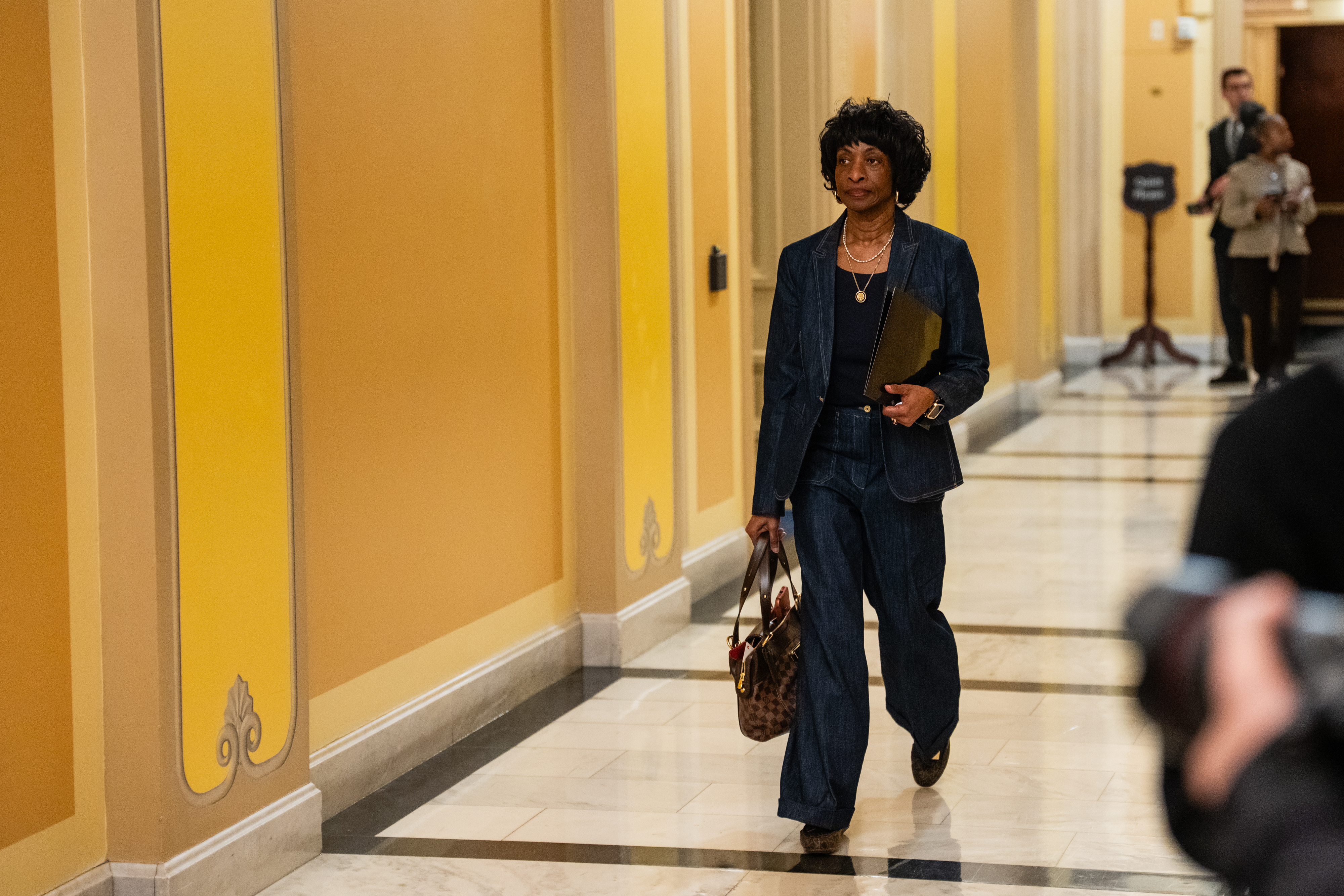
A PAC aligned with Anthropic spent $1.6 million to help Rep. Valerie Foushee (D., N.C.) win her primary.ERIC LEE
Helping the AI-friendly
Late last year, Rep. Valerie Foushee, a Democrat who represents most of North Carolina’s Research Triangle, was staring down a formidable primary challenge.
Then, two days before Nida Allam, a younger, more progressive candidate who had challenged her in the past, announced that she was running again against Foushee, Rep. Hakeem Jeffries of New York, the Democratic leader, named Foushee as co-chair of the party’s new Commission on AI and the Innovation Economy.
Two months later, the Anthropic-aligned Jobs and Democracy PAC spent $1.6 million in support of Foushee. She won narrowly, defeating Allam by less than 1 percentage point.
“These committees and task forces — they’re basically a flag or indicator to the lobbyist industry that these are people who will have decision-making power over your industry and so you need to go spend money on their campaigns,” Allam said in a recent interview. “No one is spending that amount of money unless they’re getting something in return.”
In a statement, Foushee denied that the money had bought any favorable treatment for AI, saying that her work on the issue “has centered on establishing guardrails, holding corporations accountable and protecting our children, communities and jobs.”
In Washington state, American Mission, an OpenAI-aligned PAC, waded into the GOP primary to replace Rep. Dan Newhouse, who is retiring at the end of this Congress, to back Amanda McKinney. McKinney, a Yakima County commissioner, won President Donald Trump’s endorsement this cycle but was running against a former race car driver who had won Trump’s endorsement in 2024 when he challenged Newhouse.
“She believes the United States must lead in artificial intelligence and advanced technologies, not surrender leadership to China or other adversaries,” her campaign website says. “Amanda opposes heavy-handed regulation that stifles innovation or drives jobs overseas.”
American Mission spent about $780,000 to support McKinney. She advanced from her primary with 35% of the vote.
Punishing the skeptics
With other seats, in Utah, Illinois and New York, the PACs moved to undercut candidates who had established themselves as opponents of AI.
The most prominent example was in the primary to succeed Rep. Jerrold Nadler (D., N.Y.). The race was inundated by outside spending after Alex Bores, an Assembly member, sponsored legislation seeking to regulate advanced AI models. That set off a multimillion-dollar influx from rival AI interests, with Think Big, aligned with OpenAI, attacking Bores and Jobs and Democracy, aligned with Anthropic, defending him. He narrowly lost the race.
Along with Foushee’s contest in North Carolina and a primary in the Florida district of Rep. Debbie Wasserman Schultz, the former chair of the Democratic National Committee, the race drew the most money from the AI PACs this cycle.
In Utah, Think Big intervened to back Ben McAdams, a former Democratic member of Congress.
It was not expected to be a highly competitive primary, and was made even less so after Punchbowl News unearthed a series of old posts in which his opponent, Blouin, joked about sexual assault and made offensive comments about women and Mormons. McAdams made no mention of AI on his campaign website, though he wrote an opinion essay arguing that schools “should begin treating AI fluency as a basic form of literacy.” He said he opposed the construction of a 40,000-acre AI data center campus proposed in the district.
But Blouin, the state senator, described himself as a “leading skeptic of the push for unchecked growth of data centers,” and grew increasingly vocal about AI and data center regulation as the race went on.
Think Big spent about $1.1 million on television and digital ads and text message blasts supporting McAdams. Asked for comment, McAdams reiterated a previous statement he made during a June debate, in which he said that “every member of Congress needs to be proactive in providing oversight of AI in order to protect jobs, our kids, the environment and the fabric of our communities.”
“That will require federal guardrails to make sure this technology happens carefully and transparently, with appropriate regulation, strong oversight, human accountability, and safeguards for data privacy and civil rights,” he said. “AI could potentially cure cancer, but it could also destroy our kids. I believe thoughtful policy can unleash the good and stop the bad.”
Backing front-runners
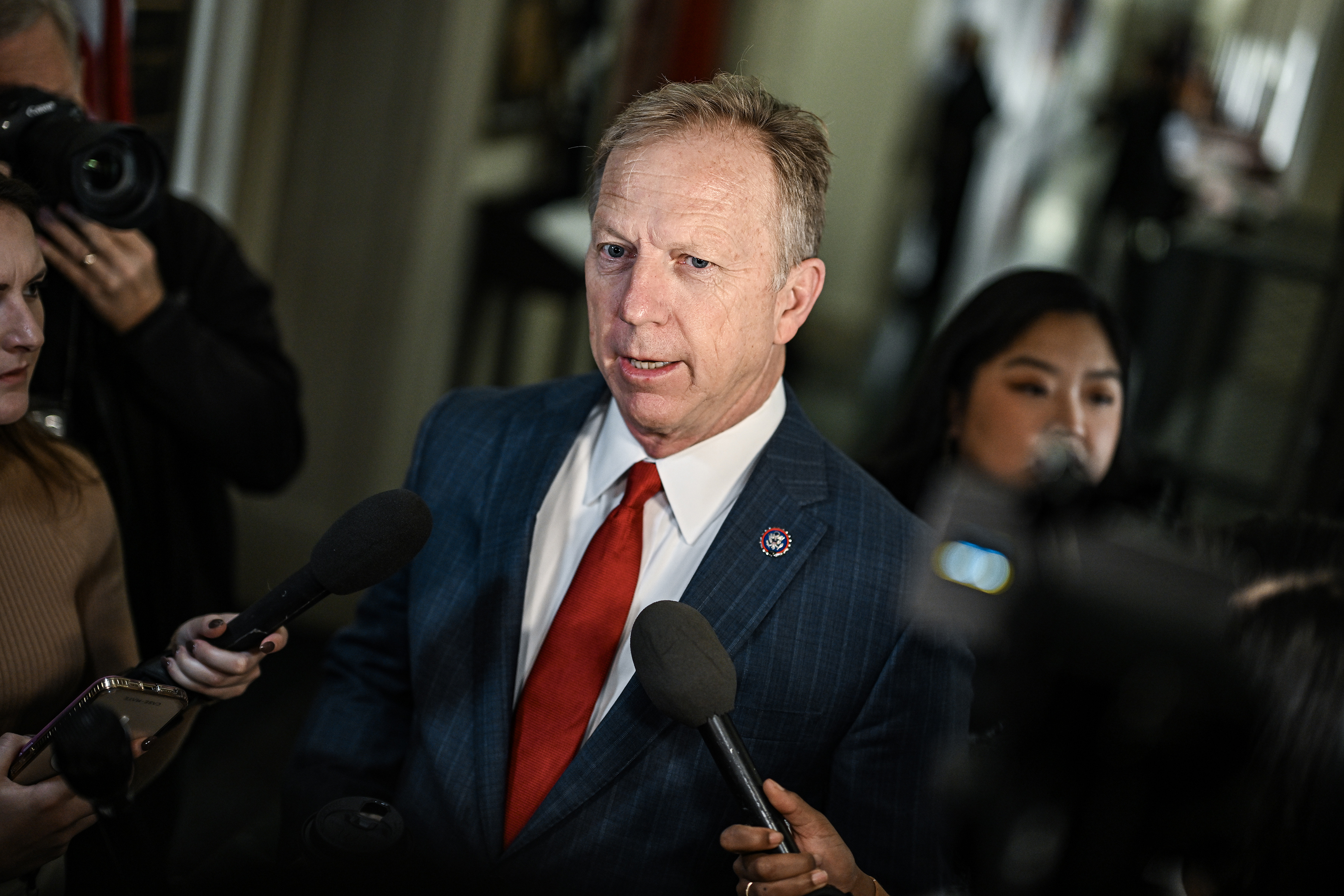
The AI groups spent in support of clear front-runners in primaries all across the country, including favorites of party leaders, many of them Republican. Rep. Kevin Hern of Oklahoma, who was widely expected to win the nomination to replace Markwayne Mullin in the Senate, was backed by nearly $1.3 million spent by American Mission and Defending Our Values, an Anthropic-aligned PAC, before his victory in June.
Rep. Kevin Hern (R., Okla.) prevailed in his primary to replace Markwayne Mullin in the Senate. He received backing from Anthropic and OpenAI.KENNY HOLSTON
Defending Our Values also supported Carlos De La Cruz, the brother of Rep. Monica De La Cruz of Texas, who both received speaking slots at the midterm convention in Dallas. Carlos De La Cruz is favored to win his election; the nonpartisan Cook Political Report recently rated Monica De La Cruz’s race as a “toss-up.”
American Mission spent about $375,000 to support Sen. Lindsey Graham for his primary campaign in South Carolina, though it was never expected to be particularly competitive. After he died, the super PAC spent nearly $1.2 million supporting his sister, Darline, in the primary and general contests.
A vanishing money trail
With about a month until the midterms, the AI groups have yet to wade into many general election contests.
American Mission has doled out roughly $500,000 each on behalf of three Republican candidates for Senate who are running in less competitive races: Rep. Julia Letlow in Louisiana, Graham in South Carolina, and Cindy Hyde-Smith in Mississippi. Think Big, the Democratic super PAC, has spent nearly $300,000 to support three House candidates: Reps. Greg Stanton of Arizona, Emilia Sykes of Ohio and Steven Horsford of Nevada — as well as roughly $50,000 to support Rep. Joseph Morelle in New York.
The amounts could grow. But political operatives closely following their spending believe that the groups will have to shift their strategy amid the furious outpouring of anti-AI sentiment, and will instead move money through other means. That could include donating directly to the major political PACs associated with House Democrats or Republicans, or establishing smaller, more obscure groups to move the money through, as AIPAC has done.
Usamah Andrabi, the communications director for Justice Democrats, the ultraprogressive organization that backed many candidates whom AI groups spent against, said the industry’s influence was already becoming as difficult to track as that of AIPAC and other pro-Israel groups.
“There was a time where I could tell you every Israel lobby super PAC, and I cannot tell you that anymore because there’s so many pop-up PACs, there’s so many shell PACs, there’s so many pass-throughs,” Andrabi said. “And I think the same thing is happening with the AI lobby.”
ITHACA, N.Y. — There were fiery testimonies, voices lurching and pleas for action from school leadership. There were fingers pointed angrily at Cornell University’s internal investigators, including by a woman who faced her student government representatives and said, emphatically: “I am also speaking as Jane Doe.”
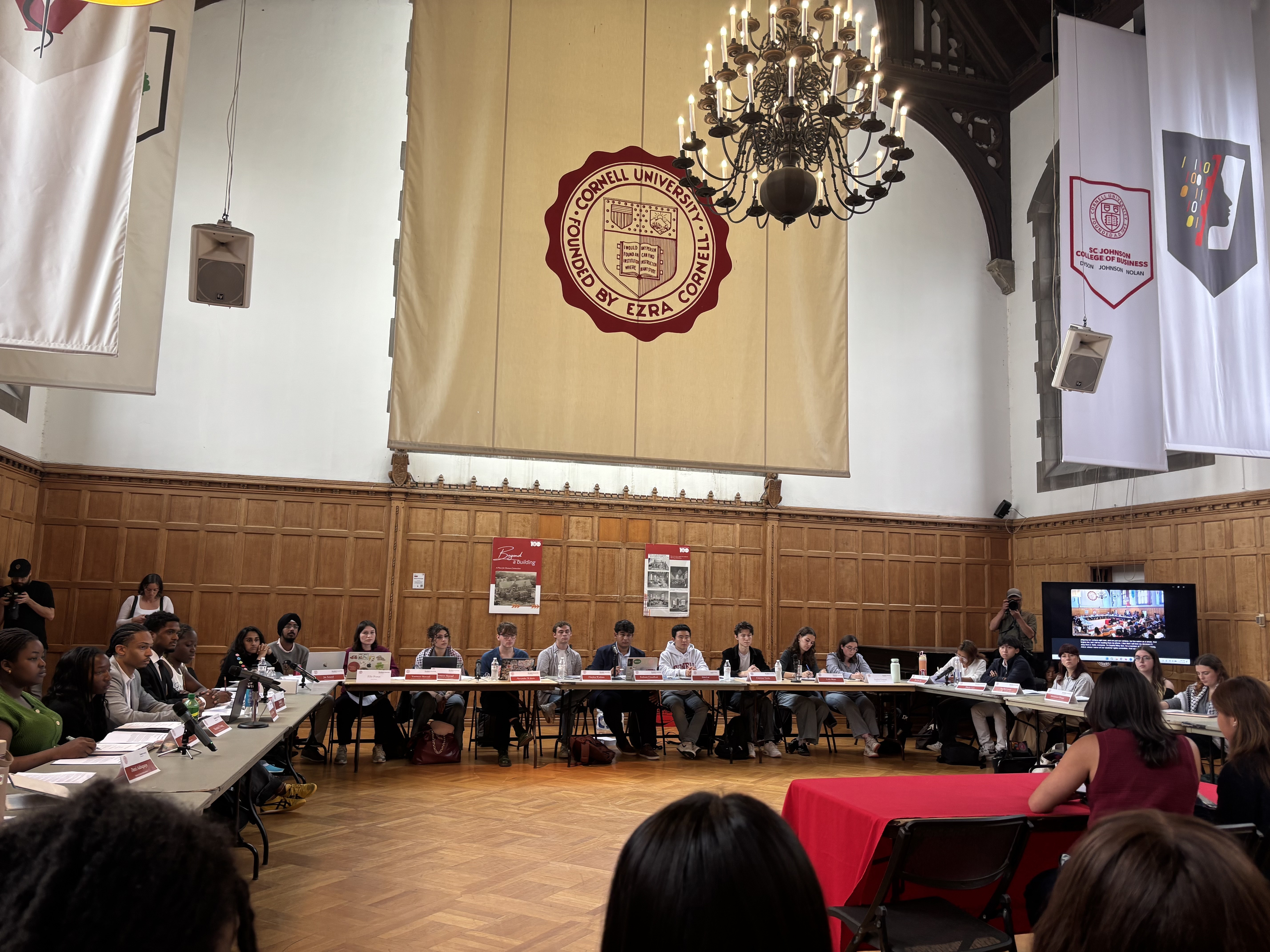
Cornell’s student government convened a public hearing on sexual assault Thursday, and some 100 people turned out to share their raw emotions in a student union auditorium, Cornell flags and chandeliers hanging overhead.
Some broke down in tears, channeling the churning emotions of the broader campus. They walked forward, one by one, to offer testimonies, facing a semicircle of somber-faced student assembly representatives who were surrounded by backpacks and soda bottles.
“I cannot pretend this is a normal Thursday,” said Sophia Riley, a junior, remembering that as a freshman in 2024 she was shattered to hear that a student said she was assaulted at the Chi Phi fraternity house. “I cried about it then, and I’m still equally devastated now.”
In the days since a lawsuit and rape allegations put Cornell in the national spotlight, the school’s Ithaca campus has been consumed by the news. The meeting gave students a chance to denounce administrators, saying that they had mishandled the allegations of assault, though few school leaders were in the room and the university president, Michael Kotlikoff, was absent.
Some students expressed rage about the fraternity culture cited in the lawsuit. The suit had prompted the Tompkins County district attorney to reopen the investigation into the claims by a woman known only as Jane Doe that she was sexually assaulted by seven men at a fraternity house.
University officials have defended their disciplining of the defendants in the lawsuit and denied that the consequences were not strong enough, saying that “false narrative” could make assault survivors feel less safe and less likely to report crimes.
None of the men accused in the lawsuit has been charged with a crime, and they all have denied any wrongdoing. Four said that they had consensual sexual contact with the woman at the party, and the others denied any participation. Two were expelled, and others received lesser penalties.
Along with the students, the forum brought together faculty members and a smattering of Cornell parents. Eeshaan Chaudhuri, the student body president, began the event by addressing the room.
“We’re absolutely ashamed of the events that happened on campus,” Chaudhuri said, before inviting members of the community to line up and make comments. “I think we’ve made it abundantly clear for the past couple of days that we as a campus community stand with victims of sexual violence.”
A stream of ideas and proposals followed from students, some of whom feel besieged by national media and eager to shift the focus to solutions. Students urged administrators to improve the required workshops and trainings that teach students about consensual sex. And they asked for their classmates to be supported if they can’t complete homework and exams this week because of distress about the case.
“Students should not have to choose between grieving and keeping up with their academic responsibilities as if nothing had happened,” said Riley, declaring that the campus is in a “mental health crisis.”
While the majority of the meeting was declared off the record so students could come forward and candidly share their reflections, a handful shared their stories in front of reporters gathered for the public portion.
Emotions heightened as a woman came to the front of the room and said she, too, had reported a sexual assault at Cornell and felt let down by the university’s Title IX process, which investigates complaints of sexual assault on campus. She saw her own experience reflected in the accuser’s reports, of having an assault claim mishandled.
“When I filed my Title IX case in the midst of all of my mental, physical and emotional recovery from the assault,” Jane Wang, a junior, said, “I was also met with an abundance of paperwork, very little instruction on how to navigate it and no follow-up from our Title IX office of an outcome.”
Wang said that for students like herself to feel comfortable coming forward to report assault, they need to know the institution will act on it. “Through this event, we have witnessed the complete opposite,” she said.
The latest figures released by the Health Ministry on Thursday showed that 4,018 people have died among 8,300 cases recorded since the outbreak was declared in eastern Congo on May 15.
Some health workers, meanwhile, gathered at the epicenter in Ituri Province to demand payment for wages owed them. The protesters, who included surveillance team members, waved placards saying, “No money, no data!” and “No payment for months.”
Some of the workers haven’t been paid for August and September, said Biongi Beiza, one of the protesters in Bunia, Ituri’s capital. “There is no explanation from the administration,” he said.
Congolese authorities did not immediately address the issue. Front-line workers have gone on strike several times since the outbreak began, further hampering efforts to contain the disease.
A senior U.N. official said an Ebola-hit displacement camp housing a transit center for infected patients was burned by soldiers earlier this week as they were looking for weapons in Kigonze, on the outskirts of Bunia, forcing 19,000 people in the camp to flee.
Creating such transit and treatment centers has been a struggle, requiring money and staff, all of which are in short supply, said Julien Harneis, the U.N. senior Ebola coordinator. “When we lose a center, that means we lose capacity, we lose investment, and we have to start again. And above all, it means that people do not get access to the care that they really need,” Harneis said.
Infected aid worker evacuated to the Netherlands
An aid worker with Médecins Sans Frontières, known in English as Doctors Without Borders, was infected with Ebola while working in Congo, the group said in a statement.
The worker arrived in the Netherlands late Thursday on a special medical flight and was transferred to a high-level isolation unit, the Leiden University Medical Center said in a statement.
“The human cost of this crisis is unprecedented in the DRC, with communities facing the largest Ebola disease outbreak ever recorded in the country,” MSF said.
At least 50 health workers have died after contracting the virus.
Mobile labs are helping detect cases quickly
One way local authorities have tried to contain the outbreak is through mobile laboratories. In Butembo, an Associated Press journalist watched a medical team operating one such lab near an Ebola treatment center on Thursday.
Test results that used to take 72 hours can now be obtained in six hours with the mobile labs, said Lota Kalubi, a doctor at the treatment center.
The labs have also made it easier to get to locations usually difficult to reach, said Michel Ngimba with the National Institute of Biomedical Research in Butembo. “So we can go, if today we have an emergency, for example, in Katwa, we can start up the vehicle, and we can move the lab to Katwa,” said Ngimba.
Insecurity and community resistance are hampering containment efforts
The World Health Organization has recently raised the alarm about the virus’ rapid spread into new health zones, stretching limited resources. The current outbreak is on track to exceed the deadliest on record, West Africa’s regional outbreak between 2014 and 2016, which killed 11,000 people, WHO has said.
The number of newly confirmed cases is falling, but that could be attributed to insecurity and challenges in getting communities to cooperate in some of the hot spots, Africa CDC said on Thursday. While the spread of the disease has slowed in some areas, it has accelerated in others.
Confirmed cases fell from around 850 cases and 470 deaths a week in mid-July to an average of 490 cases and 230 deaths in September.
A Congolese politician was beaten to death earlier this week in one of the emerging hot spots after defending government measures to deal with the outbreak, highlighting tensions and mistrust in communities.
Authorities last month launched a village-centered approach that involved working with local leaders to educate people about the virus, but those efforts face resistance from residents who dismiss Ebola as a hoax. There is also deep distrust in the country’s government for reasons including how it’s managed past Ebola outbreaks and chronic corruption.
As a psychiatrist, I increasingly see people seeking help for a familiar constellation of troubles. They have a hard time staying focused. They often forget things. They suffer from disorganization, restlessness, and impulsivity. They struggle with spreadsheets and memos, with laundry and food preparation, with showing up at appointments and meeting deadlines — with tackling, in other words, the necessities of daily life.
Increasingly, these patients view their problems as ones of “attention,” as more people identify with the diagnosis of attention-deficit/hyperactivity disorder, or ADHD.
The rise in ADHD diagnoses — along with the use of prescribed stimulants like Ritalin or Adderall — has led to great debate among the public and within my field of psychiatry. Has the medical establishment finally recognized a long-overlooked disorder? Or has the diagnosis become too capacious, overmedicalizing ordinary difficulties?
But this debate runs up against a fundamental scientific uncertainty. The condition’s name notwithstanding, “attention deficit” may be the wrong conceptual framing for ADHD. Scientists have been exploring a more basic quandary: What is the condition in the first place?
A major study published last year in the journal Cell spoke directly to this question. It looked at how stimulant medications influence the functioning of brain circuits in children. The researchers found that the drugs seemed to affect brain networks involved in salience, reward, and arousal. But they found no detectable changes in the brain’s attention networks, whether or not the child had been diagnosed with ADHD.
It’s a clear signal that the most popular mental model for ADHD — as a deficit of attention that stimulants remedy — might not be entirely accurate.
What would a better mental model look like? Part of the answer is understanding that “attention” means different things in the clinic and in the neuroscience lab. For scientists studying brain functions, attention means something narrow: the selective amplification of relevant information. It can be measured by laboratory tasks that assess, for example, how well someone ignores irrelevant or conflicting information or finds a target hidden among distractions.
But that’s generally not what people mean when they are talking about attention problems in ADHD.
The classic features of ADHD include things like not staying on task, losing the thread of a conversation, and forgetting instructions. They are failures of “sustained engagement.” If attention is about the mind homing in on what’s relevant in a given moment, engagement is about keeping that spotlight pointed at the same target over time. Doing so may be less a matter of filtering out distractions and more a matter of whether the task registers in the brain as worth doing in the first place.
Once this distinction is appreciated, the results of the Cell study stop being contradictory. Stimulants create what looks like improved attention and focus, but they really do so by enhancing the salience of mundane activities — tricking the brain into assigning greater worth and significance to things like math homework and laundry.
This also helps explain why stimulants like amphetamines calm down hyperactive children. People without ADHD who use amphetamines often find themselves jittery and revved up, so the calming effect may seem counterintuitive. However, if a child is restless and fidgeting because the task at hand isn’t rewarding enough, then it makes sense that stimulants would help that child sit still and stay engaged rather than seek stimulation elsewhere.
The Cell study’s results focused mostly on what stimulants do, but scientists have been challenging the idea that ADHD is a deficit of attention since the 1990s.
In a 1992 experiment, developmental psychologist Edmund Sonuga-Barke and his colleagues gave hyperactive children repeated choices between a small but immediate reward and a larger, delayed one. The children preferred the immediate reward only when that choice allowed them to end the experiment sooner. The problem was not necessarily an inability to wait, but an aversion to waiting itself.
Sonuga-Barke later argued that ADHD could arise from several underlying causes, including difficulty stopping an action once it’s underway, intense dislike of waiting, and disruptions in the brain’s ability to track events over time. Psychologists can measure capacities such as working memory, impulse control, and the ability to wait for a reward with standardized tasks. This is called neuropsychological testing. But no single abnormality turns up in all people with ADHD on these tests, and no deficit is unique to them. This is why neuropsychological testing is not considered a gold standard for diagnosis.
Clinical neuropsychologist Russell Barkley proposed that the basic problem in ADHD is with a person’s ability to inhibit behaviors and regulate emotions, and with motivation and working memory. People with ADHD can live in a shrunken present moment, in which future consequences carry little significance and weight. Barkley’s shorthand for this, time blindness, has become a popular characterization. His later work showed emotional self-regulation as a core feature of ADHD, manifesting as emotional impulsiveness and low frustration tolerance.
While names for medical conditions denoting outdated hypotheses can be harmless etymological curiosities — malaria means “bad air,” for example — incorrect names like “attention deficit” can invite confusion. The focus on attention as the central problem for ADHD means those who struggle with lateness, boredom, emotional volatility, and the inability to start anything without the pressure of a deadline might remain undiagnosed because these issues don’t sound like a problem of “attention.”
On the other hand, recognition of these aspects of ADHD has not only made the boundaries of the disorder harder to specify, but it has also raised uncomfortable questions about whether some of these problems make sense as a diagnosable medical disorder. The prospect of using medications to help children sit still in class and focus on tedious coursework, or using medications to allow adults to tolerate periods of intense boredom and dreary housework, makes many people uncomfortable.
It’s also the case that some people reach for medications in an effort to maintain lifestyles that are unsustainable for them. Modern work environments heavily emphasize the ability to handle multiple tasks and tedious work, and that has been compounded by other aspects of 21st-century living, such as cellphones and social media, that have arguably made us distractible and impatient. The result of all this is that modern life becomes more disabling for those with ADHD.
ADHD may be poorly named, but the consensus in psychiatry is that it’s a genuine problem for which there are effective treatments. In observational studies, treating ADHD with medication is associated with reductions in death, self-harm, transport accidents, criminal convictions, and substance misuse.
As a society, we are struggling to answer these complicated questions that the science and treatment of ADHD throw at us. A recent Channel 4 documentary in Britain, “The Great ADHD Myth?” characterized ADHD as a “social construct” rather than a disorder of the brain. This binary tendency to locate the problem either in the brain or in the environment can overlook how impairment arises from an interaction of mental capacities and situational demands. When disadvantages in mental abilities become disabling under the demands of modern life, those who struggle will desire and even need treatment. But it’s also worth understanding that the problem is not entirely with the individual.
There are many pathways in the brain that probably influence the difficulties in focus that characterize ADHD, but scientific investigations into causes and treatments point toward problems with impulse control and motivation more than a defective capacity for attention. This accumulating data underscores how even psychiatrists and scientists can change their thinking about what a diagnosis means based on more research into how the brain works. What’s perhaps most important for understanding ADHD is to not allow its name to confuse us; it’s a poor guide to how the human mind works.
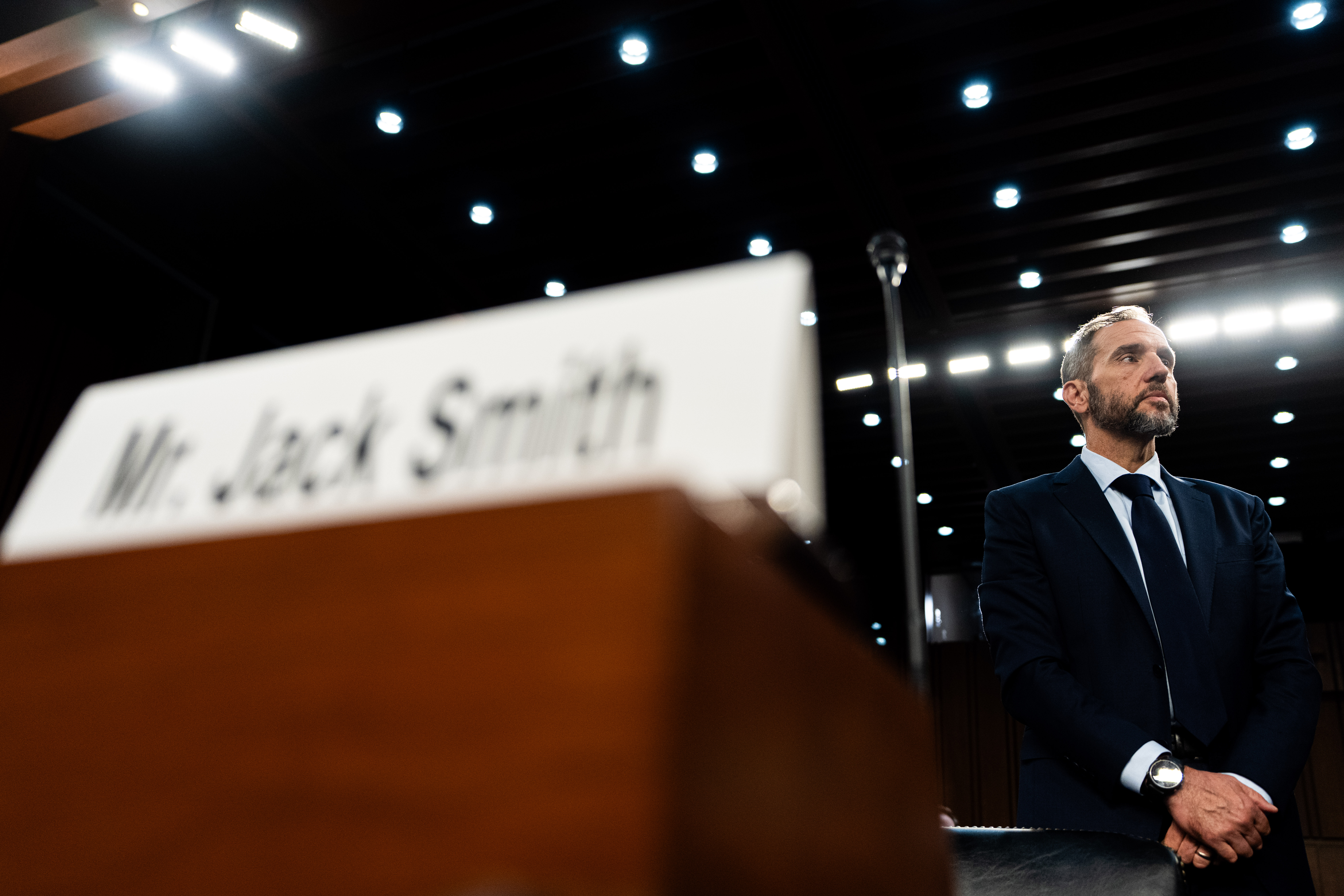
The political depths to which the Republican Party has descended may be best demonstrated by the Republican senators who questioned former special counsel Jack Smith. There is incontrovertible evidence that Donald Trump took classified documents with him to Mar-a-Lago after he left office (the photos of boxes of these documents prove it), and that he egged on his followers as they attacked the U.S. Capitol to prevent the certification of Joe Biden’s win. But during the recent hearings, Smith was insulted and demeaned as the GOP members of the committee showed their obeisance to Trump. Instead of trying to stop an unpopular war or regulating AI, the GOP can only persist in defending a very unpopular president. Not only is it necessary that the Democrats control both houses of Congress, but they also must win control of as many state legislatures and governorships as possible to prevent the Republicans from carrying out the agenda of their master — Trump — on the state level. We have, I believe, the worst president in our history — and one whose sanity is increasingly called into question. He must be stopped.
David C. Harrison, Philadelphia
Voter integrity
The recent article about Pete Hegseth saying that national security forces will guard U.S. election systems during next month’s midterm elections should concern us all. When the press allows political spin to rewrite facts, it creates a dangerous blueprint for democratic subversion. With the midterms a few weeks away, Donald Trump’s designs on election interference are on full display. Under the guise of voter integrity, the president has ordered a series of disturbing actions by government agencies that actually amount to voter suppression: seizing ballots and records, purging voter registries, restricting mail voting, and stoking illegal voting myths.
Driven by a cadre of experienced election deniers embedded within the federal apparatus, this bureaucratic overreach claims to protect the electorate. Nonsense. This is election rigging of the highest order.
Democracy is undermined when the media ignores a core journalistic principle: to serve as a watchdog over government. To prevent the electorate’s most fundamental right from being forever compromised, the press must shatter the illusion of “voter integrity” and call it what it truly is: democratic subversion.
Jim Paladino, Tampa, Fla.
A must-read
Knowledge is a powerful tool under any circumstance. I congratulate The Inquirer for “The Art of the Steal” — its series of editorials about President Donald Trump’s expanding wealth. The journalists who contributed to this section were thorough and brilliant. Now the only problem we have is whether any MAGA follower is going to push aside their beliefs, take the time to read it, and maybe have an “aha” moment. Each editorial is based on facts, not a conspiracy theory or “fake news.”
I challenge every follower of MAGA to read this.
It seems that all the MAGA disciples wake up every morning and forget what happened the day before — and what’s been going on for years.
They complain about the rest of us suffering from TDS, but they have their version, too: Trump denial syndrome.
Sad.
Alan Golombek, Langhorne
. . .
I must thank The Inquirer editors for devoting the entire Sunday Opinion section to “The Art of the Steal.” It should be required reading for all high school seniors and college freshmen who may be voting for the first time this November. It would also help if all voters were to read it.
Paul Cosdon, Solebury
. . .
I just want to say what a great series of editorials “The Art of the Steal” was. The writers did a wonderful job of capturing all the corruption of the entire Trump family.
The thing is, we all know this has been going on, and yet so many people just look the other way. Whether you’re a Democrat or a Republican, you can’t deny that the man is just corrupt, and those who can do something about it won’t. But on Nov. 3, we can.
Evelyn Lare, Plymouth Meeting
School crossroads
Jenice Armstrong’s fine column on the regrets of 1619 Project author Nikole Hannah-Jones about keeping her daughter in a failing public school is a cautionary tale of what happens when innocent people fall victim to someone else’s ideology.
Hannah-Jones states that there are only two viable educational options for Black parents: send your child to a failing public school in the naive belief that you can rescue it, or spend thousands of dollars to attend a private school that enrolls few Black students.
But there is a third way, and both Armstrong and Hannah-Jones have seen its benefits: Catholic school. It is an open secret that many of America’s parish Catholic schools no longer attract the number of students they need to remain open. Instead, many upwardly mobile Black families have been filling those seats. They are attracted to the structure, discipline, and high expectations that Catholic schools provide.
An example: While Ms. Hannah-Jones is shocked to realize her daughter did not get homework in middle school, my grandson gets homework regularly in his Catholic school — and he’s in kindergarten.
There are also private religious schools, such as the Gesu School in North Philadelphia and St. James (Episcopal) School in East Falls, which are nearly 100% Black and offer scholarships. Children thrive there.
Saving city schools requires a multigenerational fix. In the meantime, reasonable alternatives exist. Ms. Hannah-Jones should send her child to the best school she can — and then volunteer to be on the board of her local public school, where she can share her extensive expertise.
Rosemary McDonough, Narbeth
. . .
I appreciate Nikole Hannah-Jones’ New York Times essay regarding the consequences of sending her daughter to a mostly Black and brown underresourced Brooklyn public school. But I’m surprised there is so much chatter about it — and why there are so many questions asking why the Hannah-Jones family made the choice they did. The attention should instead be directed to finding the remedies and solutions for the generations of Black and brown students who are being grossly undereducated.
For decades, the dilemma the Hannah-Jones family faced is what many Black families attempting to provide quality education for their children have faced, except most Black and brown families do not have the resources to have a choice.
But as indicated in the essay, the “haves” in our communities have figured out many ways to ensure they bypass our failing public schools. However, many of the “haves” in our community who seemingly advocate for quality education for the “have-nots” have done little to rectify the continuing issue of a failing education system for the “have-nots.”
In Philadelphia, in reality, very little has changed regarding state educational test scores. (Check out the state test scores published in U.S. News and World Report.)
Local media and school officials are complicit because they continue to mostly provide nuanced information that doesn’t really show just how poorly Philly public school students are doing.
What is also troubling to me is that most of our elected officials are not adequately sharing the dire conditions in our public schools — is that because of their allegiance to the teachers’ union?
Another reality that is often overlooked is that children attending private K-8 schools are transferring to the few high-performing high schools in the city, thereby blocking students who come through the public school system.
Scholar, writer, and parent Nikole Hannah-Jones has put the issue of failing schools on full blast. The question now is, what are we going to do about it?
Karen Warrington, Philadelphia
Join the conversation: Send letters to letters@inquirer.com. Limit length to 150 words and include home address and day and evening phone number. Letters run in The Inquirer six days a week on the editorial pages and online.
DEAR ABBY: I am a 79-year-old woman who, over time, has suffered the loss of several family members. Now I’m facing the worst loss imaginable. A year ago, my 24-year-old grandson “Rafe” cut himself off from his father and from me. Until then, we had been a close, loving family who did things together. Rafe and his girlfriend live rent-free in my son’s house, yet they refuse to speak to either of us. I’ve written and spoken to him, but he says that unless my son and I “change,” he wants nothing to do with us. We are clueless as to what change he wants from us, and he offers no explanation.
My son was recently diagnosed with incurable cancer. The doctors say that, with treatment, he can live for a number of years. All of this has been explained to Rafe, yet he remains silent. If there had been abuse or lack of care over the years, I could understand his attitude, but it’s the opposite. His father and I have done everything in the world for him all his life, maybe too much. My son needs love and support now more than ever. What can I do to reach my grandson? Do I need to accept this and give up?
— HEARTBROKEN
DEAR HEARTBROKEN: I understand your pain and frustration. Until Rafe decides to explain what has caused his grudge, his issues belong on the back burner. For now, focus your energy on your son. Support him as much as you can, and try not to let him dwell on his problems with his son. Consider that an adult son who continues to give his father the silent treatment may not deserve to live in his father’s house at all, much less rent-free.
** ** **
DEAR ABBY: My son (51) has been married to his wife (47) for 13 years. From day one, it was apparent that she had a shopping addiction. Together they have money to support this constant waste, but it overruns the house. My son has often expressed that it’s a problem. First, it was stocking the pantry, then a second pantry and no room in the fridge for even a cold drink. They have magazines that are never read, piles of books to read “someday” and every drawer in the kitchen overflowing with unused gadgets. You don’t even want to know what it’s like at Christmas. This has been a constant source of stress for my son. I suspect she has a mental problem, but how should we approach it? She thinks it’s OK to live this way.
— NEED HELP IN BEACH TOWN
DEAR NEED HELP: Your daughter-in-law appears to be a shopping addict and a hoarder. The good news: There are organizations that help with both of those problems. Find a nearby Spenders Anonymous meeting (spenders.org) and suggest that your son attend even if his wife refuses. To get rid of all the extra stuff, search for a decluttering service in their city. Your DIL will be anxious or unhappy about this at first, but your son can learn strategies that may bring her around.
ARIES (March 21-April 19). The impending retrograde prompts a moment of introspection on the topic of relationships. Though you may love the same people, you do not continue to love them in the exact same way because the nature of love is to evolve — noticeably so today.
TAURUS (April 20-May 20). Your special relationship with Venus has you poised to sense the upcoming retrograde before it begins. You may find less satisfaction in a familiar pleasure and take it as a nudge to explore. Your tastes are changing, and your choices will soon reflect it.
GEMINI (May 21-June 21). You’re starting to feel more playful as the Venus retrograde stirs up ideas about surprising and delighting those you know best. Familiarity gives you excellent material. Use an old joke or shared memory as the setup for something new.
CANCER (June 22-July 22). As Venus stations for her backward stint, you may also feel suspended in motion. You have been racing to secure a certain outcome. Use the pause to notice whether you still want the thing you were chasing at that speed.
LEO (July 23-Aug. 22). One question Venus brings up for you in the weeks ahead is this: How much of your charm is spontaneous, and how much is work? You know how to light up a room. During the retrograde, you may decide which rooms deserve the full production.
VIRGO (Aug. 23-Sept. 22). As Venus slows down, you begin noticing the labor inside affection: who remembers the details, who makes the reservation, who checks that everyone got home. This is useful information that may influence how you distribute your energy going forward.
LIBRA (Sept. 23-Oct. 23). The day before Venus retrogrades, you can feel the shifting balance inside a social arrangement. Perhaps one person has been setting the rules or the tone or making every adjustment. You’re already thinking about a fairer arrangement.
SCORPIO (Oct. 24-Nov. 21). Venus pauses in your sign before turning backward, and you may notice how much power you get from what you leave unsaid. Someone is waiting for a signal. You are deciding whether to give it, withhold it or ask what they intend next.
SAGITTARIUS (Nov. 22-Dec. 21). You find yourself looking up a subject that fascinated you years ago. Venus has slowed to a stop, and so have you. Before reviving the old pursuit, consider what you wanted then and what you would want from it now.
CAPRICORN (Dec. 22-Jan. 19). You promised yourself a reward for finishing your work. Now that you are close to the finish line, you may realize that the prize, chosen by an earlier version of you, seems less exciting to who you are now. So change it, but do not skip it!
AQUARIUS (Jan. 20-Feb. 18). As Venus prepares to reverse, you may examine a relationship rule you once accepted without question. Love doesn’t have to look like this. Commitment doesn’t have to follow these rules. Once you start poking, this whole premise might come apart.
PISCES (Feb. 19-March 20). Before Venus turns retrograde, you may catch yourself planning three scenes ahead in a relationship that is still on Page 1. Shake yourself from the script. The real person may offer something better than the role you wrote for them.
TODAY’SBIRTHDAY (Oct. 2). In your Global Mindset Year, your choices reflect an awareness of how wide-reaching the effects are. You take responsibility for creating your part of the world, which is connected in some way to every other part. You’ll apply the surge in personal power to increasing the sum total of joy. More highlights: You’ll earn top dollar and honors for sharing your expertise. A new relationship involves travel. Family additions. Leo and Scorpio adore you. Your lucky numbers are: 6, 4, 44, 20 and 13.
NEW YORK — Francis Lee Rogers was a fixture in Central Park’s Ramble, a wooded area that is popular with birders.
She spent her days painting the Ramble’s birds and kept her homemade network of feeders filled with seed, as legions of bird lovers walked by hoping to catch a glimpse of warblers and sparrows.
For years, Rogers, who was homeless, brushed off concerns about the perils of a woman in her 60s — or anyone, for that matter — spending nights in and around the Ramble as she largely had for decades.
Last Sunday morning, Rogers, 63, was found dead, beaten and stabbed in the rustic wooden gazebo where she spent her nights, a short walk from the Central Park Boathouse, an upscale restaurant known for leisurely lunches and weddings.
She was found barefoot and covered in dirt, her body stabbed repeatedly and her head severely beaten, according to two law enforcement officials with knowledge of the matter.
Chillingly, her long graying hair, which she wore in signature tight braids, had been shaved off.
Shortly after the attack, Jonathan Robles, 36, walked into the Central Park police precinct and told officers that a woman in the park had threatened him, one of the officials said. Robles later told investigators that he killed Rogers.
The police charged him with murder and possession of a weapon. Robles, who was living in transitional housing in a midtown hotel, had been arrested twice in New York City, both times for nonviolent crimes, including leaving an IHOP without paying the bill, the official said.
Murders are rare in Central Park, a haven for tourists and New Yorkers alike. There were none this year through Sept. 20, and none last year during the same period, according to police data.
In a city where people largely go about their lives in anonymity, especially the homeless population, Rogers stood out as a familiar figure in the park.
Known as Lee, she chatted with rich and poor, native New Yorkers and foreigners and tourists. She had hardy mountain-woman looks, with her long braids spilling out from her wide-brimmed birder’s hat, running down over layers of wool sweaters.
She carried a large rucksack filled with her watercolors, oils and paintings and sketches in progress. And she was never without her crooked walking stick or her sketchbook of pencil drawings of birds and notes about their colors.
She was devoted to the network of bird feeders she had rigged in the Ramble by hanging them with lines looped over high branches.
“For years, she was the only person maintaining those bird feeders in the Ramble,” said Lincoln Karim, a wildlife photographer who knew Rogers for about 25 years. “She would spend hundreds of dollars on birdseed and suet.”
In the perhaps three decades that Rogers had been living largely in and around the park, she sold hundreds of paintings, her friends said.
Most of the sales came by word of mouth among local birders. But she also gained a following among those who saw her working on her small, nearly pointillist renderings at her regular table in the Boathouse restaurant at the Ramble’s eastern edge.
In this affordable cafe section, Rogers could nurse a cup of coffee for hours, often using the cup’s plastic lid as a palette. It was her atelier, surrounded by large windows overlooking the Ramble and the lake.
“She was a fixture — she came by the same time every day, carrying a big backpack, and she was always welcome,” said Dean Poll, who operated the restaurant from 2000 until 2022. “I gave her her space and she never bothered anybody.”
“She was like family,” he said. “She made us Christmas cards that were beautiful. We still have them.”
Rogers, who also went by the name Elise Bainbridge Hill, told the New York Times in 2012 that her sleeping spots varied from the steps of local churches to a women’s shelter near Park Avenue in cold weather. She told a documentarian in a film released in 2016 that she ran away from her abusive childhood home in New Jersey and initially became a prostitute in New York.
Painting was her escape from life on the streets, she said, with Central Park as her oasis from Manhattan’s bustle.
In conversation, Rogers would often slip seamlessly from detailed discussions about bird species to digressions about conspiracy theories.
“She knew a lot about a lot of things but then she would just slip into outrageous stuff, like her flying in spaceships,” Karim said. “But she was a damn good painter, I have to say.”
Karim said he helped Rogers sell several works, with smaller ones fetching $300 and a large oil painting going for $1,200. “She had enough money to get off the street,” he said.
Joe Lopez, 64, of Manhattan, a caterer who knew Rogers for 15 years, said he bought several of her illustrations for as much as $400, including one of Pale Male, the celebrity red-tailed hawk that captivated the city’s bird-watching community from his nest on a Fifth Avenue luxury building.
Rogers, who used a public bathroom in the park to wash up, took pride in keeping a neat appearance. But more recently she would go barefoot, Karim said, or sometimes wrap her feet in cardboard.
The gazebo had become her regular sleeping spot. Just before her death, she weathered the nor’easter that buffeted the region by sleeping on a bench beneath a green tarp, with her belongings and painting supplies around her.
On Monday, some of her friends trudged through the rain to pay their respects. One of them, Moises Diaz, 71, of the Upper East Side, lit a candle for Rogers, whom he had seen for years on his daily walks.
Diaz, who is also an artist, played a recording of a conversation he had with Rogers about six months ago. She had asked him about his recent work, a wall hanging he had made out of foam.
“She had a beautiful voice,” he said as he listened to the recording. “There’s a lot of mean people that come to this place — a lot, but not her.”
Lopez came by, too. He brought along a satchel of drawings by Rogers, including the one of Pale Male. He called it “a masterpiece.”
“To me, I was buying something beautiful, but it was also money I knew she needed,” Lopez said. “She wasn’t a homeless person to me, she was a genuine special character. The birders really respected her.”