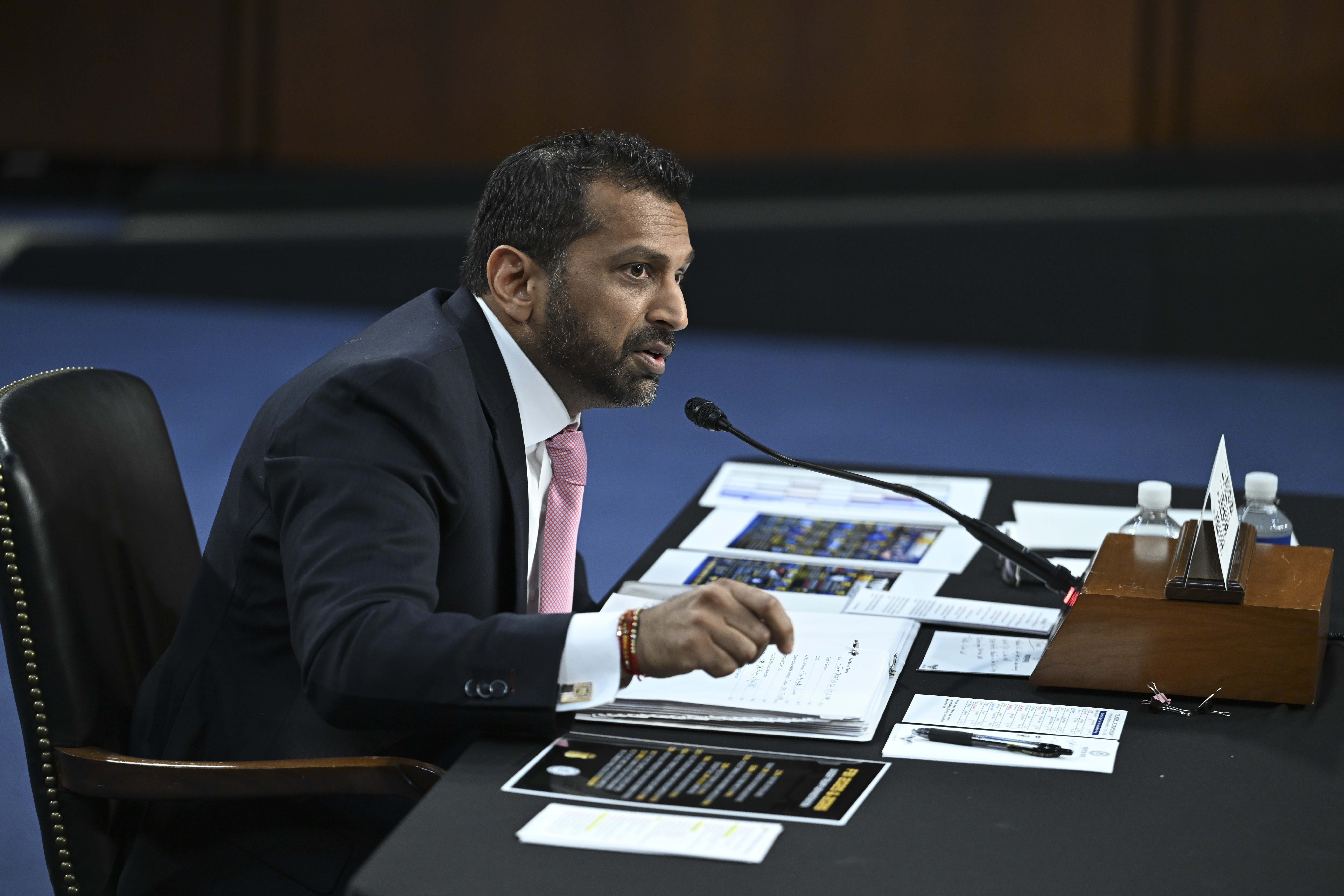
WASHINGTON — FBI Director Kash Patel suggested Tuesday that he was open to sending federal agents to polling places, raising alarms from Democrats that the Trump administration would act aggressively to assert greater control over the coming elections.
The remarks, made during testimony before the Senate Judiciary Committee, stood at odds with earlier comments indicating that he did not intend to send federal agents to polling places around the country. However, when Sen. Peter Welch (D., Vt.) pressed the issue, Patel seemed to reverse course.
“I thought you weren’t going to be sending people to the polls,” Welch said.
“When did you hear that? Just another lie,” Patel declared, raising his voice.
Welch revisited the issue. “So you are sending FBI agents to the polls?”
“We have election crisis coordinators manned at all 56 field offices,” Patel replied, appearing to refer to what are known as election crime coordinators. “Election integrity is of paramount importance. This FBI will not shy away from that effort.”
Under the law, armed federal officers or military personnel are barred from being deployed “at any place where a general or special election is held.” The chair of the Joint Chiefs of Staff said in a letter to a Democratic senator last month that there were “no plans” for the armed forces to deploy troops to polling stations for the midterm elections.
As President Donald Trump has ramped up his efforts to cast doubt on the integrity of the vote in an election his party might lose, Democrats have sought assurances from Trump administration officials that they will follow the law, which carries a potential five-year prison sentence for any violations.
The president regularly declares the 2020 election he lost was “rigged,” and has said the only way Democrats can win control of Congress this year is by cheating. The claims have fueled broader concerns that loyalists within the administration may wage a pressure campaign against state officials to produce election results favorable to Trump’s party.
When he was first asked about the issue at the hearing, Patel vowed to “follow the law.”
“If there’s a reason to go there because there’s been a violation, we will, otherwise we won’t,” he added, noting that “we’re going to house our agents and intel analysts in our field offices.”
Historically, the Justice Department used workers at its public integrity unit to consult with prosecutors and agents around the country on sensitive investigative issues around elections. But the Trump administration dismantled that unit last year, leaving it unclear who in the department and the FBI would handle such critical decisions in the final days of the election cycle.
Welch expressed alarm at Patel’s responses, saying they suggested he could harness the power of the federal government to try to affect election outcomes.
“This is about whether the United States citizens — Republicans, Democrats, independents — are the deciders of this election or there is election interference led by the FBI and the Trump administration,” Welch said.
The senator prodded further. “Do you pledge that you will not in any way interfere in the will of the American people when they go to the polls in November?”
Patel sidestepped the issue, saying instead: “I pledge unequivocally that I will not participate in your charade of lies.”
An angry argument ensued, with the pair exchanging attacks. The senator denounced the FBI director as a “panderer” to Trump, and Patel suggested Welch’s personal finances were suspicious.
“Let’s knock it off,” said Sen. John Cornyn (R., Texas) as he tried to lower the temperature in the hearing room.
It did not work.
“Everybody sees you for the complete and total fraud you are,” Patel said angrily to Welch.
The Vermont senator then challenged Patel over his travel, in which he often combines work with recreational activities. During a trip to Italy, Patel spent time at the Olympics in Milan, during which he was filmed chugging a beer with the men’s hockey team after they won gold.
“I go where I want to go, after delivering the most prolific crime reduction in U.S. history,” Patel said. “What you’ll never understand is the players who are my friends invited me to the locker room.”
Patel was also pressed on whether counterintelligence agents had opened an investigation into how a wealthy Russian oligarch paid for part of the wedding celebrations for Trump’s son Donald Trump Jr.
“It may involve some intelligence degradation, and I would like to know what steps you are taking to investigate,” said Sen. Richard Blumenthal (D., Conn.).
He added, “I think there’s a potential for compromise in intelligence and also the possibility of improper influence.”
Patel was noncommittal.
“We will look at whatever information comes our way,” he said.
In one of the stranger exchanges, Patel repeatedly fielded questions about bestiality, part of a recent change in FBI policy that loosened hiring standards, including by no longer automatically disqualifying job candidates who have participated in sexual activity with animals. The change, he said, was made out of consideration for people who may have been forced, either as children or sex-trafficking victims, to participate in such conduct.
“We did not want to punish victims of bestiality, victims who were trafficked,” Patel said. While he did not elaborate, there have been cases in which children or others were forced to engage in sex with animals.
Previously, the director said, the FBI had automatically disqualified anyone who had engaged in such conduct, no matter the circumstances. Lawmakers seemed flummoxed by the explanation.
“Either side of what, the bestiality?” Sen. John Kennedy (R., La.) asked. “So you disqualified the animal?”
Patel replied, laughing: “We have great K-9s, but we’re not going to disqualify them.”
At other points, the hearing veered into sniping.
Sen. Cory Booker (D., N.J.) said Patel had acted “like a thug” in using law enforcement agents to subpoena reporters.
“We are not targeting reporters at any point in time,” Patel replied.
“We don’t have an FBI director, we have a lackey here, and frankly not even a good lackey, he’s an incompetent lackey,” Booker said. “This is a mockery and a sham.”
As the two men argued, Sen. Chuck Grassley (R., Iowa) sought to end the exchange.
“Are you done now? Are you ready to shut up?” Grassley growled at Booker.
The popular image of Yemen’s Houthi rebels is of men on the backs of pickup trucks, firing AK-47s into the desert air.
Yet the group has launched long-range missile strikes at Israel, more than 1,000 miles away. The Houthis prey on ship traffic in the Red Sea with naval drones. And evidence points to their growing ambition to use artificial intelligence and other means to produce more advanced weaponry themselves, making them less reliant on their sponsors in Iran.
Although they are backed by Iran, for months the Houthis remained on the sidelines of this year’s fighting in the region. That ended in July, when they declared a maritime blockade on Saudi Arabia. Since then, they have marched south, seizing the historic port city of Mokha last week while capturing islands near the narrow strait known as the Bab el-Mandeb, tightening the group’s grip on the choke point at the southern end of the Red Sea.
“They use every opportunity to build their capability, to test their capability, such that they are now the most lethal nonstate actor in the entire Middle East,” said Timothy A. Lenderking, the former U.S. special envoy for Yemen, speaking at a Middle East Institute forum Friday.
A report by Anthropic last week on the misuse of AI said that “a cell of threat actors based in northern Yemen,” where the Houthis have their stronghold, used Claude for “a sustained effort to develop guided weapons.” Despite Anthropic’s safeguards, the company said, the cell proceeded as far as the test firing of a guided rocket.
The Houthis still rely on their Iranian sponsors for the most sophisticated components in their drones and ballistic missiles, but as the Anthropic report suggested, in recent years they have become much more advanced at building their own weapons systems.
This has given the Houthis greater flexibility to maintain their fight against their Yemeni and Saudi adversaries, attack shipping traffic in the Red Sea, and threaten Israeli and U.S. targets even with the U.S. Navy enforcing a monthslong blockade of the Strait of Hormuz.
Laboratory of war
The Houthis and their Iranian advisers were already experimenting with uncrewed surface vessels a decade ago. The militant group used a remote-controlled boat loaded with explosives to attack a Saudi frigate all the way back in 2017, killing two people in the process.
After the Houthis captured Yemen’s capital, Sanaa, in 2014, Saudi Arabia led a military coalition propping up the country’s government and fighting back against the militants. A ceasefire was declared in 2022, but experts say the group has used the intervening years to dramatically advance its capabilities.
The truce gave the Houthis time “to regroup, retrain, refit, restock,” Lenderking said.
“The volume of goods being brought into Yemen to make weapons increased exponentially and the number of routes being used increased exponentially after the truce was announced in Yemen in 2022,” said Peter Salisbury, an adjunct professor at Columbia University’s School of International and Public Affairs, who has studied Houthi weapons manufacturing closely.
At first, Yemen was a laboratory for Iran’s pursuit of warfare. Increasingly, it is the factory, too. Salisbury said that larger parts like missile chassis are fabricated in Houthi-controlled territory rather than sent from Iran.
“Iran and Hezbollah have invested heavily in continuing to up-skill the Houthis in the manufacture and use of weapons,” Salisbury said. “Increasingly they’ve been able to indigenize the production of a lot of things like one-way attack drones.”
According to Farzin Nadimi, a senior fellow with the Washington Institute for Near East Policy, the Iranian defense industry has dedicated design bureaus and factories for weapons systems specifically for proxy forces like the Houthis that are “simple to assemble, simple to move, simple to prepare for launch, and simple to use.”
Resilient supply chains
The Iranians encouraged the Houthis to develop additional supply chains for components from places like China, whose factories supply many of the drone parts used around the world.
“There’s a lot the Houthis don’t need anymore, and the reason they don’t need it anymore is because they’ve been able to use the global black market supply chain to get most of the things they need,” said Kevin Donegan, a former commander of the U.S. 5th Fleet, whose area of responsibility included the Persian Gulf and the Red Sea, and who built the first intelligence fusion cell to study Iranian support for the Houthis.
“They do need key components still, especially for the missiles to make them effective,” Donegan said. “They have the ratlines that still can bring those components because they’re not the big pieces.”
Those might include guidance systems, rocket engines, and wing tips and fins that require a higher degree of precision engineering, Salisbury said.
While the U.S. Navy’s blockade focuses on large container ships and tankers, smaller components can be smuggled on medium-size vessels like the traditional dhows plowing the region’s waters. Shipments can be sent directly to Houthi-controlled areas of Yemen, transshipped via the Horn of Africa or even transferred ship to ship in the waters off the coast of Somalia. Salisbury calls it a “giant game of three card monte.”
Increased self-sufficiency is not necessarily the same thing as complete independence from their sponsors in Iran’s Revolutionary Guard. “I think they pretty much still need a lot of help from the IRGC,” Nadimi said. He said that he believed there were “significant numbers” of Revolutionary Guard officers involved in the planning and execution of the current phase of the fighting in Yemen.
The need for Iranian advisers and the more advanced components may explain how the renewed fighting in Yemen started this summer in the first place.
A Houthi delegation traveled to Tehran, Iran, in July for the funeral of Iran’s supreme leader, Ayatollah Ali Khamenei. After, they boarded a flight home operated by Iran’s Mahan Air, which is under sanctions imposed by the U.S. government, back to Sanaa.
The Saudis and the Yemeni government believe that the aircraft carried Iranian military personnel and weaponry. When airstrikes prevented the plane from landing at Sanaa International Airport, the flight diverted and managed to land elsewhere in Houthi-controlled territory.
The Houthis then launched retaliatory attacks on Abha International Airport, in the southern part of Saudi Arabia. It was the first Houthi attack on Saudi Arabia since 2022, and began a new and unpredictable phase of fighting, with an adversary that spent years planning and advancing its tactics and technology.
If the Anthropic report is accurate, the group that was using Claude in northern Yemen tried to develop a multistage ballistic missile with a range of more than 1,200 miles and a hypersonic glide vehicle. The would-be weapons designers were careful to avoid the company’s safeguards, hiding the true purpose of the guidance systems they were designing from the very system helping them design it.
Anthropic said there was no evidence that they were successful in “fielding an operational device.” The users queried Claude Code about why their field test had failed. “Nevertheless, we have evidence that the actors had already built an offline simulation tool kit that does not rely on Claude,” the report said.
Recent history suggests they will keep working to improve their capabilities.
“Keep in mind that the Houthis are always on the move,” said Lenderking, the former U.S. envoy. “They’re extremely entrepreneurial.”
The United States has stationed weapons in Earth’s orbit, Air Force Secretary Troy E. Meink said Monday, the first such public acknowledgment by a Pentagon official after years of preparations to counter potential deployments by Russia and China.
“We are increasing readiness against existing threats, and the United States has on-orbit space control weapons capable of defending the Joint Force against hostile adversary action,” he said at a convention in Maryland, according to a news release published on the Air Force’s website.
Meink did not provide details about the type of weapons or say when they had been deployed. He made his remarks in a keynote speech at the Air, Space, and Cyber Conference in National Harbor, Md., an annual forum hosted by the Air and Space Forces Association, a nonprofit organization for members of both services.
The Space Force did not immediately respond to a request for comment late Monday.
The Pentagon has long feared that China and Russia are making advances in space operations that could threaten U.S. ground forces as well as U.S. satellites.
Guo Jiakun, a spokesperson for China’s Foreign Ministry, said Tuesday in response to a question about Meink’s comments that China opposed an “outer space arms race.”
“We urge the U.S. side to stop expanding its military force and preparing for war in outer space,” he said in a regular news briefing.
In 2024, the New York Times reported that U.S. intelligence agencies had raised concerns that Russia could be planning to put a nuclear weapon in space, a threat that could disrupt satellite networks that are vital to everything from communications to military operations.
Shortly after President Donald Trump returned to the White House last year, he signed an executive order to expand U.S. air defenses, including the development and deployment of “space-based interceptors.” The project, named the Golden Dome, would be designed to guard against weapons such as hypersonic missiles, which Russia has deployed in Ukraine.
In May, Trump said that Gen. Michael Guetlein, vice chief of space operations at the Space Force, would oversee the project.
The United States, Russia, and China began testing weapons capable of destroying satellites decades ago, but the United States has since disavowed such arms because they leave destructive debris fields in orbit.
In recent years, the Air Force started developing “low-debris-causing weapons” capable of disrupting or disabling enemy satellites, Frank Kendall, who served as Air Force secretary under President Joe Biden, told the Times in a 2024 interview.
Gen. Chance Saltzman, who served as the Space Force’s chief of space operations during the Biden and second Trump administrations until his retirement last month, told a Senate committee in 2023 that the new space weapons systems would be fully operational by 2026.
Neither Kendall nor Saltzman specified how the systems would work. Other former Pentagon officials have said they likely would include lasers, high-powered microwave systems, or even U.S. satellites that can grab or move enemy satellites.
Kendall said in 2024 that it was prudent to recognize that space “is a place that can be used for military advantage.”
“The threat is there,” he said at the time. “It’s a domain we have to be competitive in.”
WASHINGTON — The Supreme Court dealt President Donald Trump a major blow Monday when it blocked his executive order to restrict mail ballots. But Trump’s battle to assert control over the election process is far from finished.
The stymied attempt to have the U.S. Postal Service screen mail ballots was just one piece of a broader effort involving the full power of the federal government to take more control of state-run elections.
Just days before the Supreme Court blocked Trump’s mail ballot order, the Justice Department sent threatening letters to at least 30 top election officials across the country, escalating a fight to gain access to private voter data and election records.
Federal agents are scouring voter rolls managed by states for noncitizens, despite a lack of evidence of widespread fraud. Trump’s Homeland Security secretary recently pushed for an investigation into whether a commonly used voting machine can be trusted, casting doubt on digital voting systems.
“This is far from over,” said Benjamin Hovland, who was ousted from the independent, bipartisan Election Assistance Commission by the Trump administration this year.
Hovland acknowledged that the Supreme Court’s decision mitigated “real-world impact” on voters and election workers, particularly since voters in some states have already begun to mail in their ballots. But he said Trump’s actions were alarming.
“What you’re seeing is using the apparatus of government, using federal agencies, using taxpayer dollars, to push that narrative that only undermines confidence in our democracy and ultimately hurts voters and election officials,” Hovland said.
Trump argues that he is trying to secure the integrity of the vote, but his claims of widespread fraud in the election system have been investigated and debunked repeatedly, and critics say his actions needlessly sow doubt about the outcome of the vote.
The White House did not immediately respond to requests for comment.
There are stark differences between now and Trump’s first term, when his attempts to undermine the election results in 2020 ran into stiff pushback not only from the courts but also from his own government officials. In his second term, Trump has surrounded himself with loyalists willing to turn his obsession over the country’s election systems into a blitz of federal actions. He has also installed election deniers in key posts.
The Supreme Court’s decision Monday did, however, add to a string of mounting losses for Trump, who said this year that he wanted to “take over” and nationalize elections. Even before the Supreme Court decision, two lower court judges ruled that Trump’s changes to mail-in balloting were most likely illegal and should not be imposed so close to the November elections.
Trump administration lawyers had urged the Supreme Court to step in and clear the way for its plan to use the Postal Service to screen ballot envelopes after they are submitted by state elections officials. The new rules would require states to submit lists of voters approved to receive mail ballots. The Postal Service would then deliver mail ballots only to the voters on the lists.
In addition to the loss Monday, Trump’s other attempts to pressure states over the election process have faced legal setbacks.
The Justice Department has sued 30 states for unredacted voter lists, which include personal information such as driver’s license numbers and partial Social Security numbers.
They have lost 23 of those cases. Decisions are pending in the rest.
The federal actions, as well as the various court decisions, have caused alarm among local election officials and voters, according to election experts.
This month, the chief election officials in seven Republican-controlled states filed a brief to the Supreme Court, arguing that with less than two months until Election Day, it was too close to the midterms to make any major changes to the election process.
Some states including North Carolina, Delaware, and Alabama had already mailed out their ballots, even before the Supreme Court issued a final decision.
“Attempting to implement the rule now will almost certainly lead to mistakes, delays, and confusion for both voters and election officials,” the brief stated.
But it was not just the pending Postal Service rule that has caused confusion and upended coordination among local election officials and the federal government.
The administration has also asked the Supreme Court to intervene to allow it to move forward with an effort to build citizenship lists by merging data from various agencies, including the Department of Homeland Security and the Social Security Administration. A lower court has so far blocked the use of that tool, which administration officials argue is needed to verify citizenship for voting, among other purposes.
In July, Markwayne Mullin, the Homeland Security secretary, threatened election officials in a speech and said they could face prison time if they did not comply with the Trump administration’s efforts to change election policies. Officials in the Justice Department have also explored whether they could bring criminal charges against state or local election officials if the administration determined they had not sufficiently safeguarded their computer systems.
The Federal Emergency Management Agency, which sits under the Homeland Security Department, is demanding that states change the way they conduct elections or risk losing tens of millions in federal terrorism-prevention funds.
Kimball W. Brace, the president of Election Data Services, an organization that works with local governments on election preparedness, said he did not expect the Supreme Court decision to stop Trump’s broader effort to pursue his election grievances.
“I don’t anticipate people on the Republican side not wanting to continue and push their side of the story as much as possible,” Brace said.
Distrust of the election process among voters is growing as the November elections approach. A survey from the Associated Press and the NORC Center for Public Affairs Research and USAFacts showed that only 34% of U.S. adults trust government certifications of election results “a great deal” or “quite a bit,” down from 40% in 2024.
Trump has also gutted the government’s election security infrastructure. Experts warn that his cuts to agencies tasked with coordinating election security with state governments could reduce visibility into foreign influence campaigns and cyberattacks.
Brace said all the executive actions have fueled pressure on local election officials.
“They don’t want to deal with this crazy pressure that various interests and various individuals have pushed on the election administration,” he said.
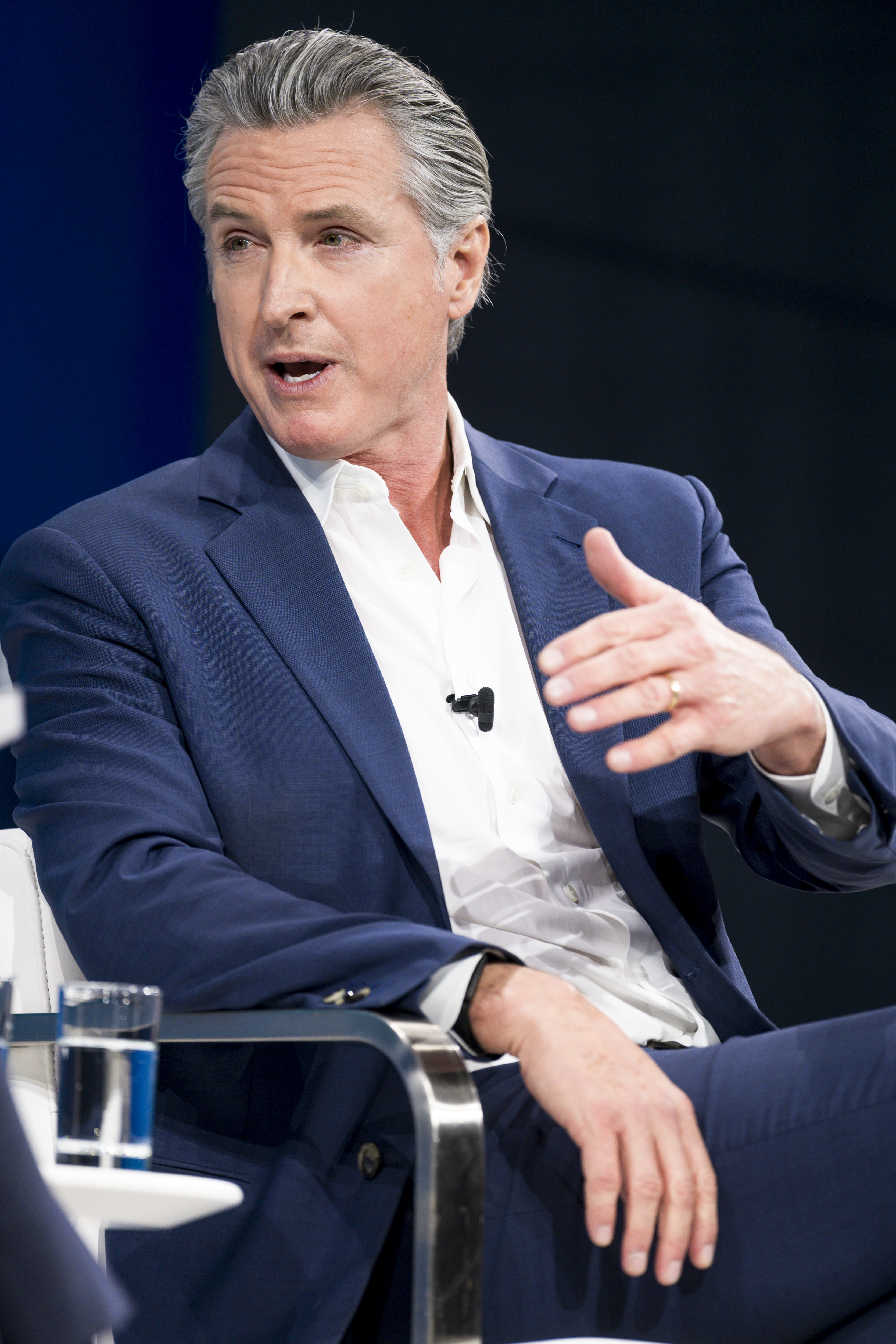
WASHINGTON — Gov. Gavin Newsom of California, who is widely expected to run for president in 2028, said in an interview published Monday by CNN that he would forgo a campaign if former Vice President Kamala Harris decided to run herself.
“I wouldn’t run if she ran,” Newsom said during an interview recorded during a fly-fishing outing in Montana with Jake Tapper, the CNN anchor, adding: “I wouldn’t waste everyone’s time. Who needs that?”
Newsom’s statement, volunteered as he and Tapper cast their lines at a scenic river, seemed to fly in the face of the presidential ambitions the governor has telegraphed since even before Harris lost the 2024 election.
The surprising pledge, if taken at face value, might appear to constrain Newsom’s ambitions if Harris does in fact run again. He would be forced to either keep his word and not pursue an office he has openly coveted, or go back on his word and run against a fellow California Democrat with whom he has a long and complicated relationship.
It is also possible that Newsom could announce a presidential campaign before Harris does, which could give him some wiggle room to argue that he had not broken any promises. Newsom might also believe that Harris will not run.
A spokesperson for Newsom said he could not immediately offer more clarity on what the governor had meant.
“They’ve been friends long enough that they wouldn’t play cat-and-mouse games on something this important,” said the spokesperson, Bob Salladay.
The 2028 presidential primary race is expected to officially start as soon as late this year, after the midterm elections, and potential contenders including Newsom and Harris have made moves to maintain their national political profiles.
This year, Newsom has made two trips to South Carolina, the first state on the Democratic Party’s presidential nominating calendar. Shortly after President Donald Trump took office for a second time, Newsom started a podcast in which he has interviewed guests from across the political spectrum, including Charlie Kirk before his assassination, Hunter Biden, and a series of Democratic governors.
When Tapper laid out the case for why Harris, who has also expressed her interest in running for president again, might not be the best option because she has already been nominated and lost, Newsom agreed.
“That would be the case you’d make, a pretty good one, actually, that’s objectively true,” he said. “But I know what that means. I know her base of supporters, I know her friends.” Referring to the overlap in their circles as “pure crossover,” he added, “I wouldn’t do that.”
WASHINGTON — The Supreme Court has not been eager to tangle with President Donald Trump. For much of his second term, the court seemed to have settled on a strategy of deference, ducking, and delay.
But sometimes the court put its foot down. It did so Monday night in rejecting Trump’s plan to make it harder to vote by mail by having the Postal Service screen mail ballots and determine which ones it would deliver.
Election administrators of both parties were mystified and alarmed by the plan, which they said would result in the disenfranchisement of millions of voters. Just three weeks ago, the court’s conservative majority deferred a decision on the matter, saying it was not yet ripe.
That punt, the court’s unsigned ruling said, did not mean it would approve the plan in the end. “On that score,” the majority wrote, “time will tell.”
That time arrived Monday, and the message was clear. The majority blocked the plan, saying it was most likely unlawful.
“There aren’t five votes for abject chaos,” said Justin Levitt, a law professor at Loyola Marymount University in Los Angeles.
Trump, for his part, reacted to the decision with fury, lashing out at his three appointees, none of whom noted a dissent.
“This Supreme Court is bullied and cajoled by the Radical Left into making decisions that have set America back at least a hundred years,” he wrote Tuesday morning on social media. “These are not the people I interviewed to serve on the United States Supreme Court, they are merely a shell of their original selves.”
The decision on mail ballots is part of a pattern. The Trump administration met with overwhelming success in some 30 emergency applications to the Supreme Court since the president’s second term began, on what critics call its shadow docket. Those decisions were nominally provisional, but they often delivered lasting victories to the president.
In rushed proceedings that mostly yielded decisions with scant or no reasoning, the court divided along partisan lines much more often than in cases on the court’s so-called merits docket, which require full briefing, oral arguments, and in-person deliberations.
The theme of those emergency rulings was deference to presidential power.
But the tide started to turn in December, when the court refused to allow the deployment of the National Guard in Illinois over the objection of local officials.
The rebukes continued in the term that ended in June.
The court rejected the centerpiece of Trump’s beloved tariffs program, leading to refunds of many billions of dollars in illegal levies. It also thwarted Trump’s attempt to fire a Fed governor and disagreed with his interpretation of a law that he said barred counting some ballots received after Election Day.
After a preliminary ruling last year limiting the power of lower courts to order relief in a case that arose in the context of birthright citizenship — at the time perceived as a major victory for Trump — the court this summer returned to address the citizenship question directly. This time, it dealt Trump a stinging loss, ruling that his executive order seeking to curtail automatic citizenship for babies born in the United States violated the Constitution.
The majority opinion about mail-in balloting Monday was just three sentences long, but it went further than it might have. Instead of ruling merely that the administration’s plan had been rolled out too close to the November election, a conclusion that might have suggested Trump might still win in the end, the majority signaled that the government was likely to lose on the merits.
That move was at odds with one of Chief Justice John Roberts’ judicial touchstones. “If it is not necessary to decide more to dispose of a case,” he wrote in 2022, “then it is necessary not to decide more.”
All the court had to do to block the postal regulation was to say it would cause more harm than good in the current election cycle, Josh Blackman, a law professor at South Texas College of Law Houston, wrote in a blog post Monday night.
“But the chief justice didn’t want this case to come back, so he reached the merits,” Blackman wrote. “If there is no need to decide more, the court should not decide more. Except when Trump is involved.”
That approach may be a response to the fire hose of executive orders, programs, initiatives, dodges, and feints from the Trump administration that have threatened to overwhelm and outpace the courts. However significant Trump’s losses in the Supreme Court may have been, he remains hard to constrain by a judicial system used to moving at a stately pace.
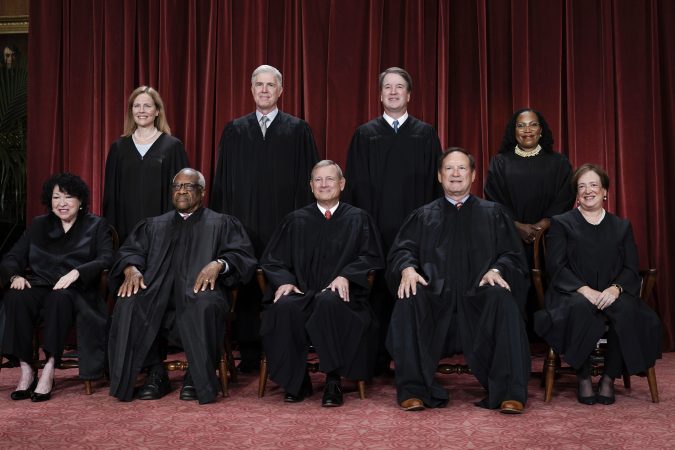
The vote count in Monday’s ruling was not disclosed, but only Justice Samuel Alito, appointed by President George W. Bush, and Justice Clarence Thomas, appointed by President George H.W. Bush, publicly dissented.
Those two justices are the most reliable votes for Trump’s agenda, while the court’s three Democratic appointees seldom vote for the president. That leaves the three Trump appointees and the chief justice, who was appointed by George W. Bush, at the court’s center.
If the court is to check Trump in the typical case, then, at least one of his appointees must vote against him. And that has now happened in a series of major clashes.
“This is not a MAGA court,” Donald B. Verrilli Jr., who served as solicitor general in the Obama administration, said at a briefing for reporters Tuesday at Georgetown University Law Center.
The practical consequences of the court’s ruling are a mixed bag, election administrators said.
“The feeling of relief here is palpable,” Marybeth Kuznik, the director of elections in Fayette County, Pa., said on an email forum for election law specialists. Still, she added, “with all the hullabaloo in the media, voters have become alarmed and many are afraid their mail-in votes may not be counted no matter what the ruling may be.”
There was another election-related ruling last week, about an attempt to redraw Missouri’s voting map to give Republicans an advantage in the midterm elections. It also took two trips to the Supreme Court to resolve. Over the administration’s objections and without public dissent, the court rejected the map.
Yet another election-related application from the administration is pending at the court. It asks the justices to allow the use of a government database that includes Social Security information to help verify whether potential voters are citizens. It is another example of the administration’s everything-all-at-once approach.
Still, the combination of the Missouri ruling and the one Monday on the postal regulations sent a message for the coming election, Levitt said.
“The court is effectively done with actors making sizable last-minute changes,” he said. “The rules are now what they are, and the election is going to be — as it should be — up to the voters.”
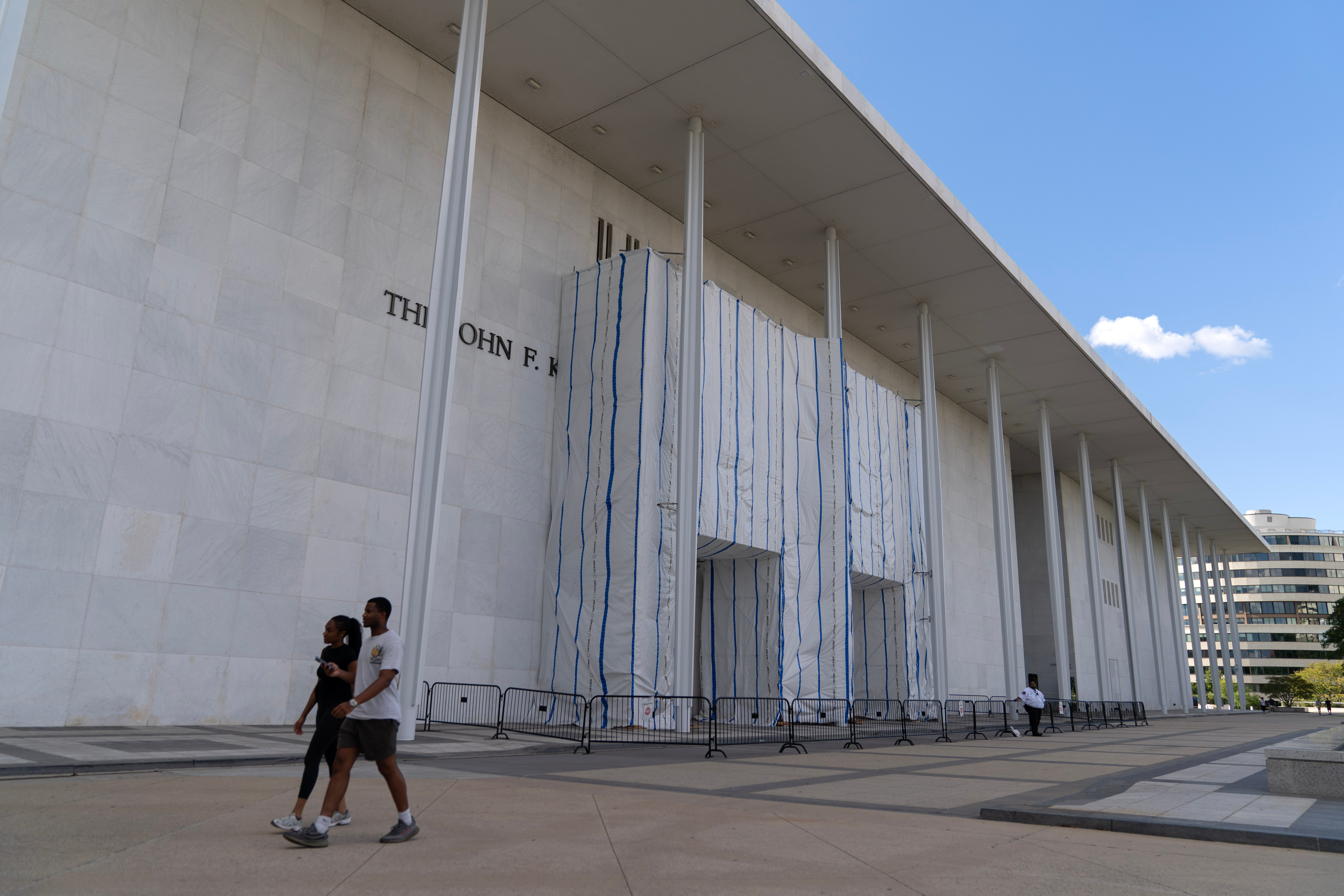
WASHINGTON — The Trump-aligned Kennedy Center board voted on Tuesday to close most of the iconic performing arts venue just hours after a federal judge blocked the institution from returning President Donald Trump’s name to the building.
In a social media post, Trump said the closure was needed for safety repairs. But he said the repairs, which Congress has allocated $257 million to cover, would only happen if the board was allowed to move forward with plans to add his name to the building. A federal judge has twice said that can’t happen without the approval of Congress.
“Simply put, Defendants cannot install memorials for President Trump or anyone or anything else at the Kennedy Center without Congress’s blessing,” U.S. District Judge Christopher Cooper said in the latest ruling on Tuesday.
Trump, who was named the Kennedy Center’s chairman last year by loyalists on the board, participated in the virtual board meeting and said on social media that the Justice Department would appeal Cooper’s ruling. He said he’d given $17 million to an endowment intended to support the institution.
The meeting included testy exchanges at points between Trump and Rep. Joyce Beatty, an Ohio Democrat who has led the campaign to block efforts to memorialize the president at the Kennedy Center. At one point, Beatty referred to Trump as someone who caused “extreme harm,” according to a participant in the meeting who spoke on condition of anonymity to discuss private conversations.
Trump said Beatty was “incompetent” and “holding up everything.”
“You’re holding up the whole country,” she responded.
The developments threw into limbo the fate of one of the nation’s most prominent cultural institutions, a place where presidents, lawmakers, and celebrities of all political ideologies have gathered for decades to recognize and celebrate the best in American arts and culture.
The venue’s leaders have argued that the massive building, which began construction in 1965, was in dire need of renovations. A partial ceiling collapse in the building’s main hallway earlier this month intensified the calls for renovations.
But Trump’s insistence on a physical recognition of his work on the building, reminiscent of his tendency to add his name to buildings as a real estate developer, has been a persistent sticking point — alienating many of the institution’s longtime supporters and facing repeated legal roadblocks.
The fight over the Kennedy Center marks a rare setback in Trump’s second term bid to dramatically remake the nation’s capital in his gilded tastes. He’s demolished the East Wing of the White House and is replacing it with a ballroom and plans to build a triumphal arch near Arlington National Cemetery. He’s also eyeing a golf course renovation along the Potomac River.
The Kennedy Center board voted in August to inscribe his name on the Kennedy Center’s facade so it would read “The John F. Kennedy Center for the Performing Arts Restored and Renovated By President Donald J. Trump.” If the Trump Kennedy Center Fund reached $100 million, another inscription would be added reading: “Endowed by the Trump Kennedy Center Fund.”
The plaza in front of the Kennedy Center would also be renamed in Trump’s honor.
Cooper ruled in May that the Kennedy Center illegally added Trump’s name to the building, ordering it removed. The institution’s leaders complied in June but left a tarp and scaffolding in place where Trump’s name once stood.
Hanging over the hearing was the prospect that the administration may seek to demolish the Kennedy Center. In a filing earlier this week, administration lawyers told the court that absent recognition of the president, the Kennedy Center would struggle to raise money for renovations. Without that money, they suggested, the building may need to be demolished, a prospect that alarmed some given Trump’s swift moves last year to dismantle the East Wing.
The Kennedy Center, the lawyers argued, “will deteriorate further into an unsafe, decrepit structure that will be required to be taken down, with a determination to follow on what to build on the site, such as a large outdoor amphitheater overlooking the Potomac River that has been proposed, by some, for many years.”
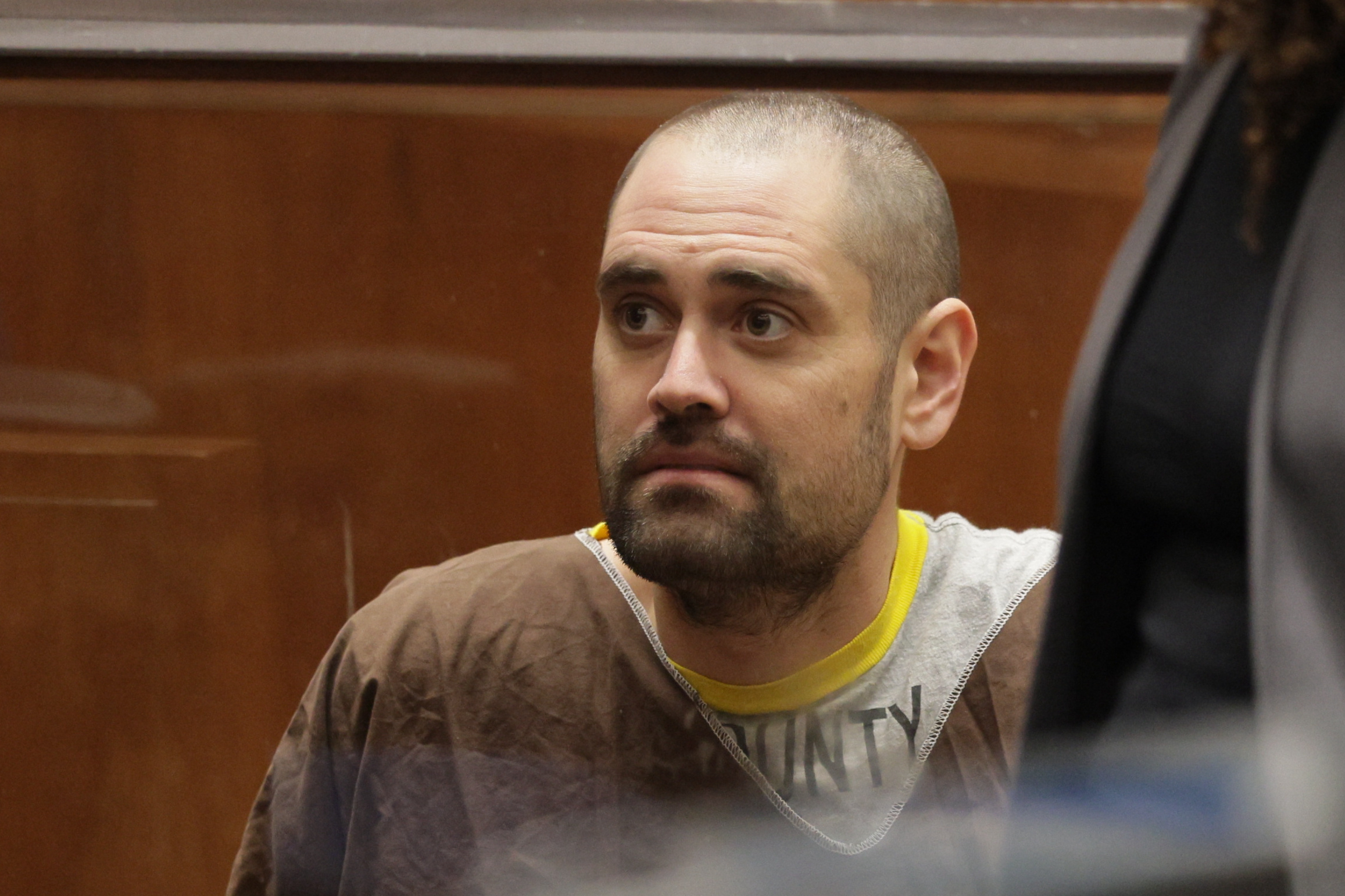
LOS ANGELES — The Los Angeles County district attorney said Tuesday that his office would not seek the death penalty in the double murder case against Nick Reiner, who is accused of killing his parents, Hollywood director Rob Reiner and Michele Singer Reiner.
Nathan J. Hochman, the district attorney, said in a news conference before a hearing in the case that the decision was made after “a rigorous review, where we look at the aggravating factors as well as the mitigating factors.”
Hochman said the district attorney’s office had spoken with the victims’ family, prosecutors, and law enforcement.
“We did speak with Nick Reiner’s siblings,” he said, referring to Jake and Romy Reiner. “They made their views very clear. We took their views into consideration in ultimately deciding not to seek the death penalty.”
If Reiner, 33, is convicted, he would face a maximum sentence of life in prison without the possibility of parole. No trial date has been set.
Rob Reiner and Michele Singer Reiner were found dead inside their home in the Brentwood neighborhood of Los Angeles in December. A grand jury indicted Nick Reiner on two counts of first-degree murder, to which he has pleaded not guilty.
Reiner has been charged with murder under special circumstances — including the fact that there were multiple killings — which meant prosecutors could seek the death penalty. Other special circumstances included in the indictment were the allegations that he committed the murders “by means of lying in wait” and with a dangerous and deadly weapon, a knife.
A public defender representing Reiner did not immediately respond to a request for comment.
Reiner has been trying to gain access to a $1.6 million family trust fund so he can hire a private lawyer, but he has faced opposition from a financial steward who cited California’s “slayer statute.” The statute blocks people from inheriting money from someone they “feloniously and intentionally” kill.
Reiner has a history of serious mental illness and drug addiction. He has been diagnosed at different times with schizophrenia and schizoaffective disorder, according to people familiar with the situation, and was placed into a yearlong mental health conservatorship in 2020. One of those people told the New York Times that Reiner had been struggling in the weeks before his arrest with a change in his medication.
Few details have been shared publicly about what the authorities believe led to the killings and what Reiner’s motive could have been. A judge has issued a protective order, barring prosecutors or defense lawyers from releasing any discovery materials.
Jake and Romy Reiner were both listed on the witness list for grand jury proceedings in July. In an interview with ABC that was broadcast last month, Jake Reiner recalled the discovery of his parents’ killings on Dec. 14, 2025, when his sister called him in distress.
“Romy told me our dad was dead,” he said in the interview, “and then she said, ‘I can’t find mom.’”
He declined to say whether he was surprised when he learned that his brother was considered the prime suspect.
“I’ll never understand,” he said. “I don’t care how it’s explained to me, I don’t care what facts come out. I will never understand why this happened.”
The number of cancer deaths estimated to be attributable to alcohol in the United States doubled from 1990 to 2023, particularly among men and people aged 55 years and older, according to a University of Miami study published this month, adding to the body of recent research underscoring the health risks of alcohol consumption.
Around 23,126 people died of alcohol-attributable cancer in 2023, up from 11,361 in 1990, according to the study, which estimated the deaths using a global database of disease mortality and population-level estimates of alcohol exposure.
The impact of alcohol, a known carcinogen, increased over the past decades as cancer mortality decreased overall, according to the study.
“Even though overall the cancer mortality was going down for some of these cancers … alcohol-associated mortality was going up,” said Chinmay Jani, a hematology-oncology fellow at the University of Miami’s Sylvester Comprehensive Cancer Center and one of the authors of the study. “Which means that alcohol as a risk factor was impacting more cancer deaths in 2023 than it was in 1990.”
What cancers have been linked with alcohol consumption?
The breakdown of alcohol in the body produces chemicals that can damage DNA and cause cancer. Alcohol can also affect hormone levels, including estrogen, which can lead to breast cancer.
The leading causes of alcohol-attributable cancer deaths in 2023 were liver, esophageal, and colorectal cancer, according to the study. The incidence of colorectal cancer in particular has increased among younger people in recent years, other studies have found.
For many cancers, the proportion of deaths attributed to alcohol increased over time, even as overall cancer mortality declined. The increases were more pronounced in people 55 or older.
While alcohol has been closely linked to several types of cancer, including mouth, throat, liver and breast cancer, its connections to other types of cancer like stomach and pancreatic cancer are still being investigated, researchers said. The study also found links between deaths from those cancers and alcohol use, which could warrant further research, Jani said.
The study also found large disparities in alcohol-related cancer deaths across states. Washington, D.C., had the highest alcohol-attributable cancer mortality rate in 2023, while Utah had the lowest, according to the study. Previous studies have found links between states with less restrictive alcohol policies and higher shares of alcohol-related cancer deaths, the authors wrote.
Is there any ‘safe’ amount of alcohol?
Jani said that the study did not analyze individual-level data on alcohol consumption or confirm a reason for why alcohol-attributable cancer deaths increased.
Gilberto Lopes, chief of the division of medical oncology at Sylvester and another author of the study, added that the data did not establish a safe threshold for alcohol consumption.
“It is difficult to ascertain exactly what the safe level of alcohol is,” Lopes said. But “it is quite clear that we do know the mechanisms through which alcohol causes cancer. So that there’s no dispute about.”
Other researchers have urged the tightening of U.S. drinking guidelines, a push that has drawn political controversy. A June study initially commissioned by the federal government found that having more than one drink a day can raise the risks of cancer and other illnesses, though the Department of Agriculture loosened its drinking guidelines in January.
Priscilla Martinez-Matyszczyk, a researcher at the Public Health Institute and a co-author of the June study, said that the University of Miami study did not examine the risks of people’s average daily alcohol intake but that its findings on alcohol-associated deaths supported previous research.
“These findings reinforce the growing literature that alcohol plays an important role in the cancer landscape,” she said.
Lopes said that people should make their own decisions on alcohol consumption but that everyone should be aware of its health risks.
“Our job as cancer doctors is not to tell adults how to live. It is to make sure they are making that decision with accurate information,” he said. “If someone wants to minimize their cancer risk from alcohol, less is better, and none is best.”
The Trump administration is accelerating efforts to make artificial intelligence an integral part of medical care in the United States, throwing the resources and support of the federal government into projects that deploy AI agents to diagnose and prescribe treatments to patients.
The multifront effort at the Department of Health and Human Services (HHS) has raised concerns among some officials over the last few months that change is moving too quickly, with inadequate evidence of the technology’s safety and effectiveness, according to people who have been involved the discussions. They also worry about outsized influence of Silicon Valley investors that have previously played little role in federal health policy.
Vinod Khosla, a billionaire Silicon Valley venture capitalist whose son has a healthcare AI company, has been particularly influential in conversations with top health department officials, according to people close to the matter. Those officials include Mehmet Oz, head of Medicare and Medicaid. Chris Klomp, who faces a confirmation hearing this week to be the second-in-command at the health department, said on a podcast in May that the use of AI in patient care was the “holy grail” in the agency’s quest to improve the nation’s health and reduce costs.
Khosla has predicted for more than a decade that AI would largely replace doctors. “It’s over for doctors, human doctors,” he said at a July AI startup event. “AI is just going to be better.”
In an interview, Khosla trumpeted Curai Health, his son’s company, which he has backed financially, saying it could offer an AI primary care provider that could give underserved people rapid access to care. “CMS seems to be very excited,” Khosla said, referring to the Centers for Medicare and Medicaid Services.
Concerns about the dangers of AI, and calls to regulate it, have erupted in recent days as some top executives of AI labs have called for slowing the pace of development. In medicine, doctors are increasingly relying on AI for help with administrative tasks, but the prospect of AI taking over physician roles in assessing and treating patients is unnerving to some.
Models meant to render care independently to patients “are not ready for primetime,” said John Whyte, CEO of the American Medical Association, the nation’s largest physicians organization.
He said the evidence that Khosla and others have cited as showing AI’s superiority to doctors — including in a recent essay in an American Medical Association publication whose authors included Khosla and his son, Neal — was not convincing and largely based on simulations.
“AI in health should not be driven by the tech industry,” Whyte said. “It should be driven by the clinical community. And right now, what we have going on is that tech is the tail wagging the dog.”
Grace Davis Jamison, a health department spokesperson, said the department was taking a “responsible, evidence-based approach” to AI deployment and “expanding its use as the evidence demonstrates value.”
“HHS is embracing cutting-edge American innovation, including AI as a practical tool, to better serve patients, families, and clinicians as we work to Make America Healthy Again,” she said in a statement.
As part of the effort, federal health officials are working on developing a new payment category for Medicare, the federal health program that covers more than 60 million older Americans, to reimburse companies for AI software that supports medical care or diagnosis. Medicare officials have urged private insurers covering about 165 million Americans to reimburse for “technology-supported care,” including some AI projects, if they improve care and cut costs.
The Food and Drug Administration has approved more than 1,500 medical devices that include AI to perform discrete tasks, such as spotting a tumor or a blood clot. But the agency does not have rules built to address newer models, such as chatbots or so-called agentic AI that perform tasks that a doctor would do, such as prescribing a drug. Jamison said the FDA was examining how its rules should change to keep up with AI systems “that operate with greater autonomy.”
Still, Medicare officials are moving an array of pilot programs forward without FDA approval. Medicare has allowed more than 200 companies to try out pilots that can include AI.
Through a program aligned with the Medicare effort, the FDA has rejected many of those applicants but has allowed the use of four otherwise-unapproved AI models that meet safety criteria and appear likely to benefit patients. They include a project that offers talk therapy with an AI chatbot to Medicare beneficiaries with depression or anxiety.
The FDA is still discussing how it should regulate complex AI models that change over time and perform actions like prescribing. The task is daunting. The agency would have to manage the risks of large-language models; one was already accused of giving “dangerous” medical advice to a man who delayed care for a life-threatening blood clot.
It would also have to contemplate whether AI doctors could go rogue in a manner akin to the OpenAI agents that coordinated a hacking campaign on a company called Hugging Face. Robert F. Kennedy Jr., the health secretary, has publicly acknowledged the risks, but said during a congressional hearing in April that AI was “going to revolutionize medicine.”
“AI is very dangerous potentially,” he said at the hearing. “But it also has the capacity to bring really great things to humanity, particularly in the realm of human health.”
One of his sons, Finn, started a venture capital fund this year that says it “builds and invests in generational health companies” and was reported to have solicited funds to invest in healthcare AI.
Last year, Finn Kennedy worked for 8VC, a venture capital firm run by Joe Lonsdale, a billionaire ally of President Donald Trump’s; the younger Kennedy coauthored articles at the firm, saying that AI doctors “won’t work for free,” suggesting that the companies that create the technology should be paid. He laid out the federal overhaul needed to deploy them, which included appointing a person at the FDA to focus specifically on artificial intelligence.
Jared Seehafer, an FDA official with Silicon Valley ties, proposed a plan to centralize artificial intelligence oversight at the health department or in the FDA commissioner’s office. U.S. FOOD AND DRUG ADMINISTRATION
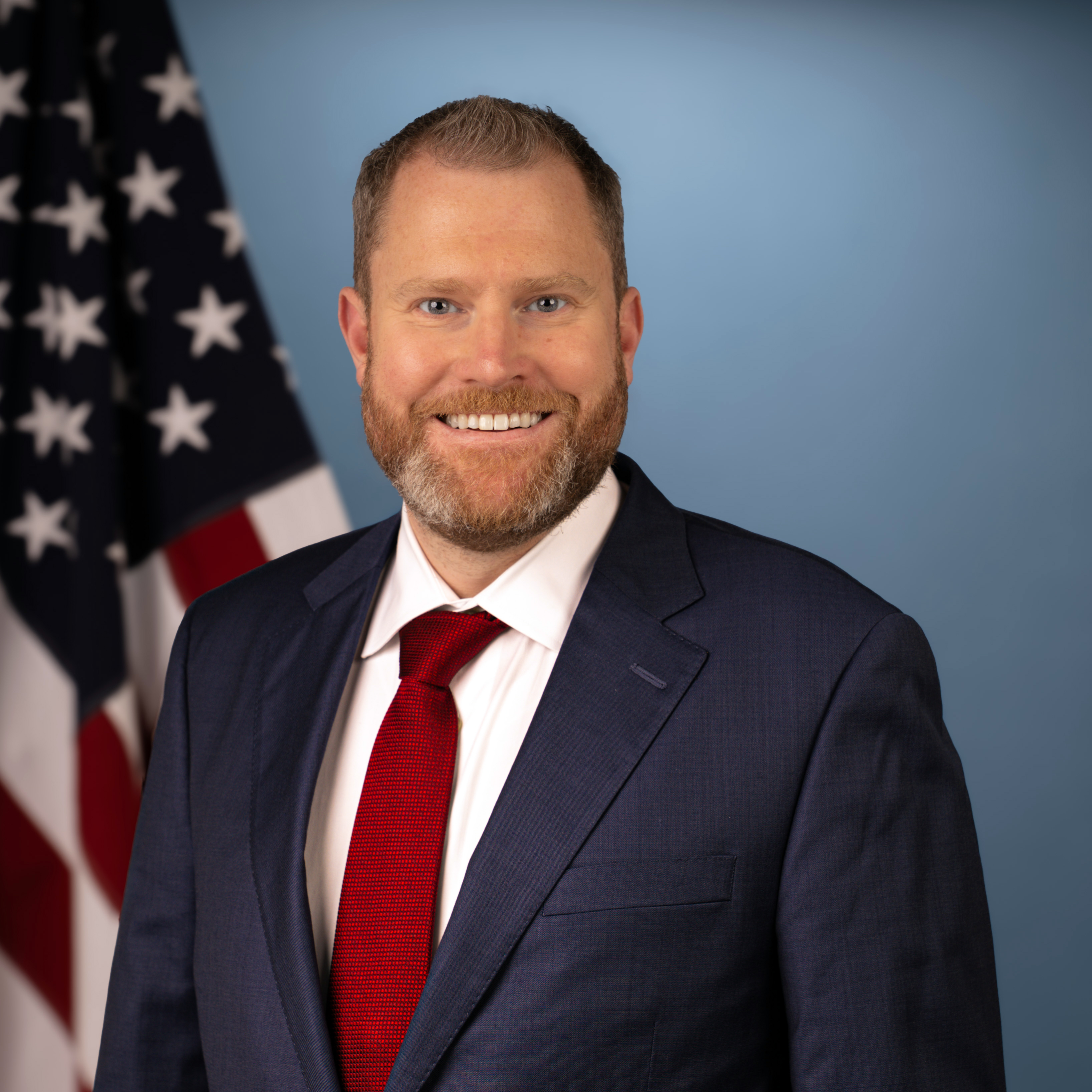
Last week, the health department did just that, announcing that it had elevated Jared Seehafer, a former tech entrepreneur, to a newly created post of deputy commissioner for technology and artificial intelligence. Seehafer, a political appointee who has been at the agency about a year, has been described by people who worked with him as wanting to pare back the agency’s oversight of medical AI.
Seehafer’s appointment drew notice in Silicon Valley investment circles. “Great choice from the HHS team,” Sebastian Caliri of 8VC, who cowrote the AI articles with the younger Kennedy, posted on the social platform X. Lonsdale, his boss, whose venture capital firm has invested in medical AI, wrote: “Excited to see the right talent going in.”
Seehafer began working at the FDA after he sold his startup that provided software to help companies comply with FDA rules. Soon he began to clash with Marty Makary, then the agency’s commissioner, and with the director of medical devices, whose division oversees software that directs patient care.
Seehafer proposed a plan to centralize AI oversight at the health department or in the FDA commissioner’s office, raising concerns that decisions would be more influenced by the tech sector than by medical considerations, according to people familiar with the plan who were not authorized to discuss it publicly.
The plan met with resistance from Michelle Tarver, the top medical devices official overseeing AI software, favoring leadership from expert scientists with a focus on patient safety.
Makary, who had been outspoken about the influence of Silicon Valley investors, then got word that health department officials wanted him to fire Tarver, according to people with knowledge of the matter. He refused.
The FDA said in a statement, “The work, expertise and involvement of career staff is a vital component of FDA successfully delivering public health for the American people.”
The statement added that Seehafer “has nothing but respect for Dr. Tarver” and her division’s “long history of facilitating innovation while ensuring the safety and effectiveness of medical devices.”
Within the administration, conversations about AI in medicine have continued, including on whether to pay AI doctors operated by tech companies and startups as much as 60% to 80% of what human doctors earn for the same service, according to a person involved.
A demonstration of a Limbic AI mental health app in London on Sept. 10, 2026. Jeremie Souteyrat
Other projects offer payment based on whether they demonstrate benefits to patients and cost savings to Medicare. One of them is from the company Limbic, offering cognitive behavioral therapy to Medicare beneficiaries who were diagnosed with depression or anxiety.
The company, which was backed by the elder Khosla, was selected by the FDA to participate in a Medicare AI pilot.
In it, an AI counselor, which has a female voice and uses the name “Hope,” offers an hourlong session each week with check-ins as needed. A study by company scientists and engineers that was published in the journal Nature Medicine found that clinicians who were unaware if they were reviewing a therapy transcript led by a human or a chatbot concluded that the Limbic AI outperformed humans and a general chatbot.
Ross Harper, Limbic’s CEO, said that one clinician would supervise thousands of AI therapists.
“It is a moral issue to get this out into the hands of people who can’t access care,” said Harper, who holds a doctorate in computational neuroscience. He added: “We have to remind ourselves: What are we comparing this against? We’re comparing it against no treatment, a long wait list.”
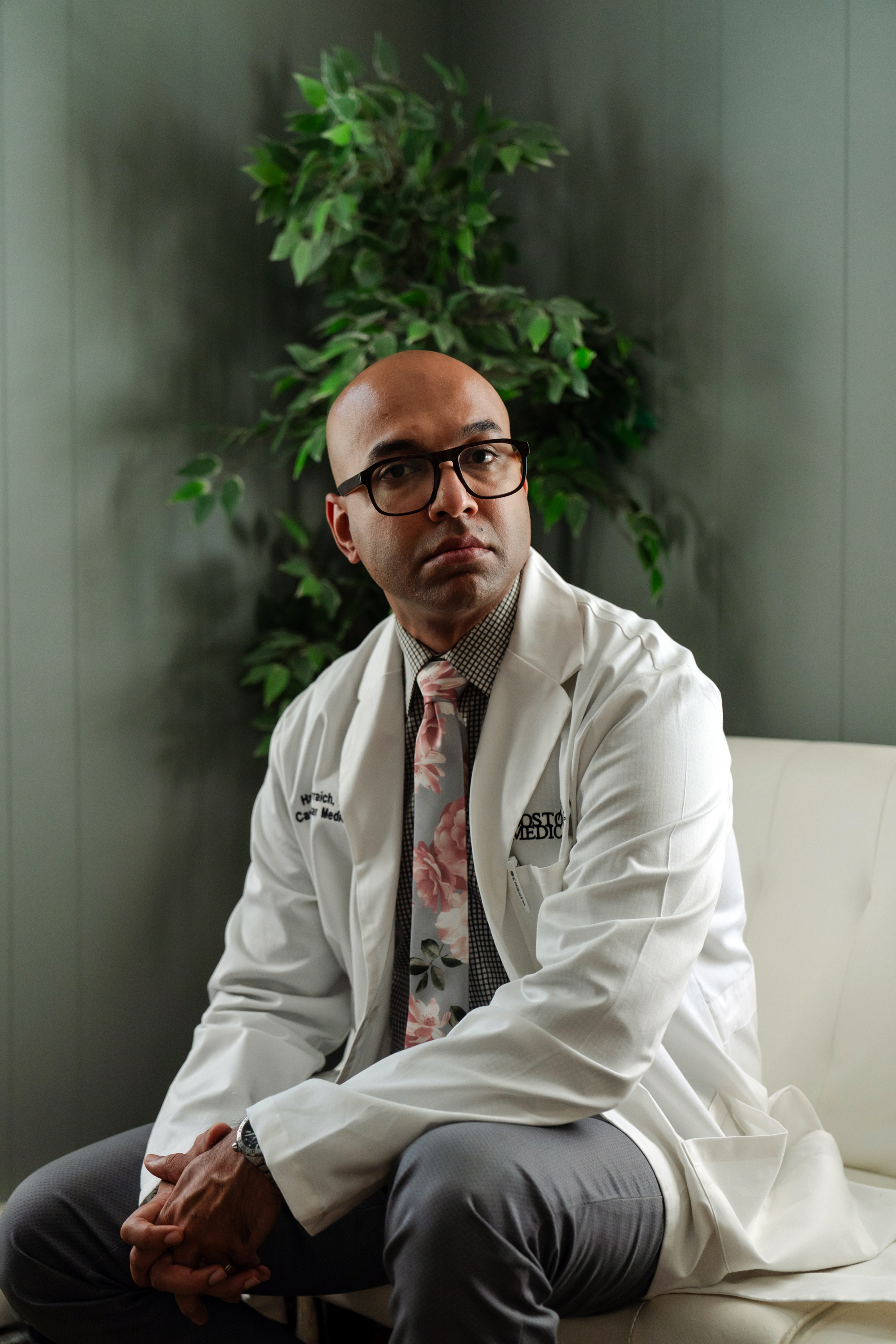
Another medical AI pilot with about $60 million in funding is moving forward at the health department’s Advanced Research Projects Agency. Haider Warraich, a former FDA official and cardiologist, said the Advocate project is meant to ultimately deploy autonomous AI to manage care for heart failure patients, giving them access to a chatbot that can prescribe and manage medications.
Warraich said the project was inspired by his experience as a cardiologist managing heart failure patients during the COVID-19 pandemic. He said his team had routine phone contact with patients, many of whom were afraid to enter the hospital and catch the virus, and found that patients improved with the regular check-ins.
He said the AI effort, put into practice by teams at Stanford University and Duke University, among other groups, would include remote monitoring or wearable sensors linked to the AI, which could adjust medications if a patient’s condition began to deteriorate. (Given current laws and rules, a doctor will oversee the AI.)
The goal, he said, “is to really bring safe and effective clinical AI to the bedside, and build a regulatory pathway for this technology, so that we can really help unlock the potential of this technology — not just for heart failure, which is our main focus, but really for all conditions.”
Dr. Haider Warraich, a former FDA official and cardiologist, says his health department pilot project is meant to ultimately deploy autonomous artificial intelligence to manage care for heart failure patients, giving them access to a chatbot that can prescribe and manage medications.Sophie Park
Other companies accepted into Medicare’s pilot programs include Slingshot AI and Devoted Health, organizations backed by Andreessen Horowitz, a venture capital firm that has heavily supported Trump.
Neal Khosla’s company, Curai Health, was selected by Medicare and has an application pending with the FDA to deploy its autonomous AI primary care doctors. In a prepublished study by company scientists and engineers, his team found that clinicians concurred with the AI doctor’s diagnosis about 91% of the time across about 2,300 cases. However, in three cases, the AI suggested a telehealth visit in situations where a human doctor advised an urgent or emergency evaluation.
Given the promise to vastly expand affordable care, the younger Khosla said he was surprised by the vitriol generated by the recent editorial that he and his father and Ezekiel Emanuel, vice provost for global initiatives at the University of Pennsylvania and a health policy official in the Obama administration, wrote with Abe Baker-Butler in a JAMA journal. The article argued that autonomous AI outperformed human doctors in several areas and would be in widespread use by 2030.
Emanuel said that he got feedback from peers reminding him of the role doctors play in consoling patients. Overall, he said the response has been about “40% supportive.”