TOKYO — The number of people aged 100 or older in Japan surpassed a record 100,000 this year, the latest government figures show, underscoring the country’s rapidly aging and declining population.
The Health and Welfare Ministry statistics released Tuesday show Japan now has 107,677 centenarians, up 7,914 from the previous year and exceeding the 100,000 mark for the first time. Nearly 88% of them are women.
Kyoto resident Fuyo Kishimoto was recently recognized as the oldest Japanese woman at age 114. Japan’s oldest male is 112-year-old Hikaru Kato from Kumamoto in southern Japan.
The figures were released to mark this year’s Sept. 15 Respect the Aged day, when healthy and active centenarians are honored by the government with a letter from Prime Minister Sanae Takaichi and a silver sake cup.
“I’m very pleased that many people are living a long, healthy and active lives,” Health Minister Kenichiro Ueno told reporters Tuesday, citing progress in medical technology, healthy lifestyle, and diet as contributing factors.
Ueno noted the importance of maintaining a sustainable social security system as the population continues to age and decline.
Many younger people, however, are not optimistic about their future.
The National Institute of Population and Social Security Research last week released the results of a survey indicating more than 20% of both men and women who are single and aged between 18 and 34 have no intention of ever marrying, with nearly half saying they see no benefit in marriage.
Ueno acknowledged the reasons for marriage reluctance among young people include the high costs of raising and educating children and the mental and physical burden on working parents. He said the government will continue addressing their concerns and attempt to turn around problems related to Japan’s aging population and dwindling births.
Japan’s drastic population decline is inevitable, experts say, noting the country’s total fertility rate dropped to a record low 1.14 in 2025, far below the 2.1 children needed to be born to each Japanese woman to maintain the current population.
Japan’s total population during the 2020 census stood at 126 million, almost 30% of which were 65 or older. Experts estimate there will be a decline to 87 million by 2070 with nearly 40% aged 65 or older, according to the national institute.
There were 153 people aged 100 or older in Japan when centenarian surveys began in 1963. They exceeded 1,000 in 1981 and surpassed 10,000 in 1998, according to the Health and Welfare Ministry.
CAIRO — Saudi Arabia accused Yemen’s Iran-backed Houthi rebels of trying to attack Islam’s holiest city, as the region responded with condemnation Wednesday but no sign of military support. The kingdom, a key U.S. ally, declared Mecca a “red line” as it slid deeper into the new front of the Iran war.
With the world’s biggest oil exporter under fire from the rebels backed by the Saudis’ regional adversary, the kingdom needs a safe outlet for its crude as well as military assistance. There’s no clear path to either.
A crucial Saudi pipeline has been shut down, reportedly for weeks, after an attack by Iranian-backed militias in Iraq. The Houthis have been targeting infrastructure in the kingdom and its shipping on the Red Sea, where they have seized several islands in the Bab el-Mandeb Strait. And Iran is still targeting ships in the Strait of Hormuz. Oil prices remain above $100 a barrel.
The Houthis denied firing drones toward Mecca, about 1,100 kilometers (680 miles) from Yemen’s border. The Saudis said they intercepted and destroyed the drone before it entered the airspace over the birthplace of the Prophet Muhammad.
Turkey and Pakistan say the Saudis haven’t asked for help
The attacks are the first test of a new defense pact among Saudi Arabia, NATO member Turkey and nuclear power Pakistan. But officials from Turkey and Pakistan told The Associated Press they have not received a Saudi request for support in response to the Houthis’ escalation.
The Turkish official said efforts to “institutionalize” the alliance need to be completed before the pact becomes operational. The officials spoke on condition of anonymity because they were not authorized to speak publicly on the issue.
Amid the condemnation of the attempted attack on Mecca, Pakistani Prime Minister Shehbaz Sharif said his country and the Saudis stand “unwaveringly, shoulder to shoulder.” Turkey’s foreign minister expressed solidarity and said no country can “remain indifferent,” state-run Anadolu Agency reported.
Criticism also came from the Organization of Islamic Cooperation, representing over 57 Muslim states, which said the attempt violates the “sanctity of holy sites.”
This was the second attempted attack by the Houthis against Mecca after the rebels fired a ballistic missile toward the city in 2017, according to Col. Turki al-Maliki, spokesperson for the Saudi-led military coalition fighting the rebels.
Houthis claim shooting down an F-15 fighter jet
Later Wednesday, the rebels claimed, without offering evidence, that they shot down an F-15 fighter jet operated by the Saudi-led coalition over Yemen’s central province of Marib.
Houthi military spokesperson Brig. Gen. Yahya Saree didn’t say when it occurred, and The Associated Press could not independently verify the claim. The rebels at times take days to claim attacks.
Spokespeople for the Saudi-led coalition and the Saudi government didn’t immediately respond to a request for comment.
For now, the US is staying out of the fight
The United States has sold billions of dollars in weapons to Saudi Arabia and has committed to providing training and other support to protect the kingdom, but top U.S. officials in recent days have indicated a lack of desire to get involved in the conflict.
“The Houthis called us, and they don’t want to fight with us,” U.S. President Donald Trump said Saturday, adding that the rebels appear focused on the Saudis.
Vice President JD Vance on Monday said Washington had been in “constant contact” with the Saudis and had been “engaged in direct conversations with the Houthis themselves,” calling it “a very fluid and dynamic thing” to be monitored.
On the ground, forces with Yemen’s internationally recognized government have said they are regrouping to combat the Houthis after fleeing the rebels’ advance. But those forces are a collection of armed groups with varying aims.
The number of Yemeni civilians fleeing the fighting in the Arab world’s poorest country soared once again to over 100,000 people, the International Organization for Migration said, as fears grow over a return to civil war.
Iran’s top diplomat is in China
While Saudi Arabia appeared to face the choice of pursuing diplomacy or taking the fight to the Houthis, the top diplomat for rival Iran was in China, the biggest buyer of Iranian oil.
Chinese Foreign Minister Wang Yi called on the U.S. and Iran to exercise restraint and reopen the Strait of Hormuz as soon as possible, and expressed China’s concern about the spread of the fighting to Yemen and the Red Sea, according to China’s Foreign Ministry.
Iran’s Foreign Minister Abbas Araghchi said in a statement after the meeting that Tehran seeks “the restoration of calm to the region and friendly and peaceful relations with our neighbors.”
“In this regard we have begun dialogue with the countries of the region,” he added.
China has avoided direct involvement in the war, but President Xi Jinping at the BRICS summit in New Delhi over the weekend again offered Beijing’s help in ending it.
Oil flows through the Strait of Hormuz have recovered somewhat as tankers risk using a route near Oman on the other side of the waterway, with guidance from U.S. forces. Estimates vary because ships can turn off location systems but range from 5 million to 7 million barrels per day on average.
That’s less than half the amount before the war began with U.S. and Israeli strikes on Iran on Feb. 28.
Studies have long suggested that helping others can make us feel happier, and this extends to caring about animals too — as anyone who volunteers can attest.
But a new study about compassion offers a window into how it relates to mental health, and it turns out that one type of compassion has more impact than you might think: How we care about and treat ourselves.
“What came out of the study is that if someone reported high compassion for others but low compassion for themselves, they tended to have anxiety, depression and low well-being,” said Bassam Khoury, lead researcher in the study and clinical psychologist and professor at McGill University in Canada.
People who struggle with self-compassion, Khoury said, tend to describe themselves in harsh terms.
“I have many patients saying, ‘I hate myself,’” he said.
He offered an example of a daughter who takes her aging parent to every appointment but tells herself she’s not doing enough. Or a nurse who covers others’ shifts but misses her own doctor’s appointment.
“It’s inhuman to care for everyone and not yourself,” Khoury said. “It will fail at some point.”
Khoury said he sees this pattern often in his practice — and his latest study suggests that having compassion for others while having low compassion for yourself can harm your mental health.
In the study, published last month in the journal Personality and Individual Differences, Khoury and colleagues surveyed more than 1,200 Canadians online. Participants answered detailed questionnaires about their sense of compassion — how considerate and caring they are toward themselves, toward others and toward animals — as well as their stress, anxiety and depression, emotional regulation, and overall well-being.
A group of about 200 participants repeated the self-reported survey a few months later, so researchers could determine whether people’s compassion levels remained consistent over time.
Khoury said self-compassion has four main components: thinking about yourself without judgment, actively taking care of yourself, feeling love and respect for yourself, and accepting comfort or help from others when you need it.
Paul Gilbert, a clinical psychologist who created the Compassion Focused Therapy method, said compassion is about being considerate of someone’s suffering — including your own — and hoping to ease it. Gilbert was not a part of Khoury’s study.
“Compassion really is the courage and wisdom to address suffering, whether it’s within you or other people,” Gilbert said. “Compassion is the way we deal with the mutual suffering of all of us.”
On difficult days, Khoury said, someone with low self-compassion is far more likely to do something harmful to themselves than something kind.
“This is a population that is much more at risk for mental health challenges,” he said.
In Khoury’s study, the researchers sorted respondents into six groups based on their answers. Some groups had high compassion for people and animals, or only for animals, but also had low self-compassion. Despite their kindness and consideration toward others, these two groups reported more stress, anxiety and depression than the other groups.
“If you do things for others but you still don’t take care of yourself, it doesn’t protect you,” Khoury said, noting that those who don’t practice self-compassion are more susceptible to compassion fatigue or burnout. “You can be the best caregiver, but at the end of the day, if you don’t love yourself, you will start resenting others.”
Another group that had both high self-compassion and high compassion for others and animals reported the least anxiety and depression and the highest sense of well-being of any of the six groups.
“It’s about balancing; being able to have self-compassion while having compassion for others,” Khoury said.
Christopher Germer, a clinical psychologist and lecturer at Harvard Medical School who was not involved in Khoury’s study, said the pattern Khoury found is in line with other research on self-compassion. Germer, who studies self-compassion, recently wrote the book Self-Compassion for Shame.
“Self-compassion is associated with just about every measure of psychological well-being that’s been studied so far,” Germer said. “To grow our compassion for others, it’s important to grow our compassion for ourselves.”
Khoury cautioned that his study has several limitations, including that the sample skewed heavily female, and most participants were English-speaking Canadians. Khoury said he hopes to expand his research to larger, more diverse samples across different countries. Still, he said he’s confident the core findings will remain.
One obstacle to self-compassion, he said, is the misconception that it is selfish or self-indulgent.
“It’s actually the opposite,” he said. “There’s no ego in it. You’re taking care of yourself so you can be an even more loving person.”
Germer said the simplest way to practice self-compassion is to actually put a hand over your heart (some research suggests it may help reduce the stress hormone cortisol) “as a reminder that we, too, matter; we, too, are in the room; and we, too are suffering,” he said.
He recommended asking yourself: “What do I need right now? That could be physically, emotionally, relationally, spiritually,” he said. “Then do it for yourself.”
For those looking to build self-compassion, Khoury suggested a few starting points:
Carve out time each day that belongs to only you. Take a walk, watch television, have a bath — anything that is done for you and not for someone else.
Try meditation. Khoury said loving-kindness meditation is one of the most effective tools for cultivating self-compassion.
Accept help from others. This is what people struggle with the most, Khoury said, but letting others take care of you is part of taking care of yourself.
Consider therapy. If someone is holding negative beliefs about themselves, talking things through with a professional, Khoury said, is itself an act of self-compassion.
“Anyone can get better at it,” Khoury said. “You just need to put some work in.”
Building self-compassion doesn’t require you to sacrifice compassion for others. If anything, Khoury said, they are connected.
“If you take more time for yourself, you are also helping others in a way,” he said.
But self-compassion isn’t a quick fix. It takes practice.
“We are all like a flower,” Khoury said. “If you water it every day, it will be much better than if you do nothing and hope it survives.”
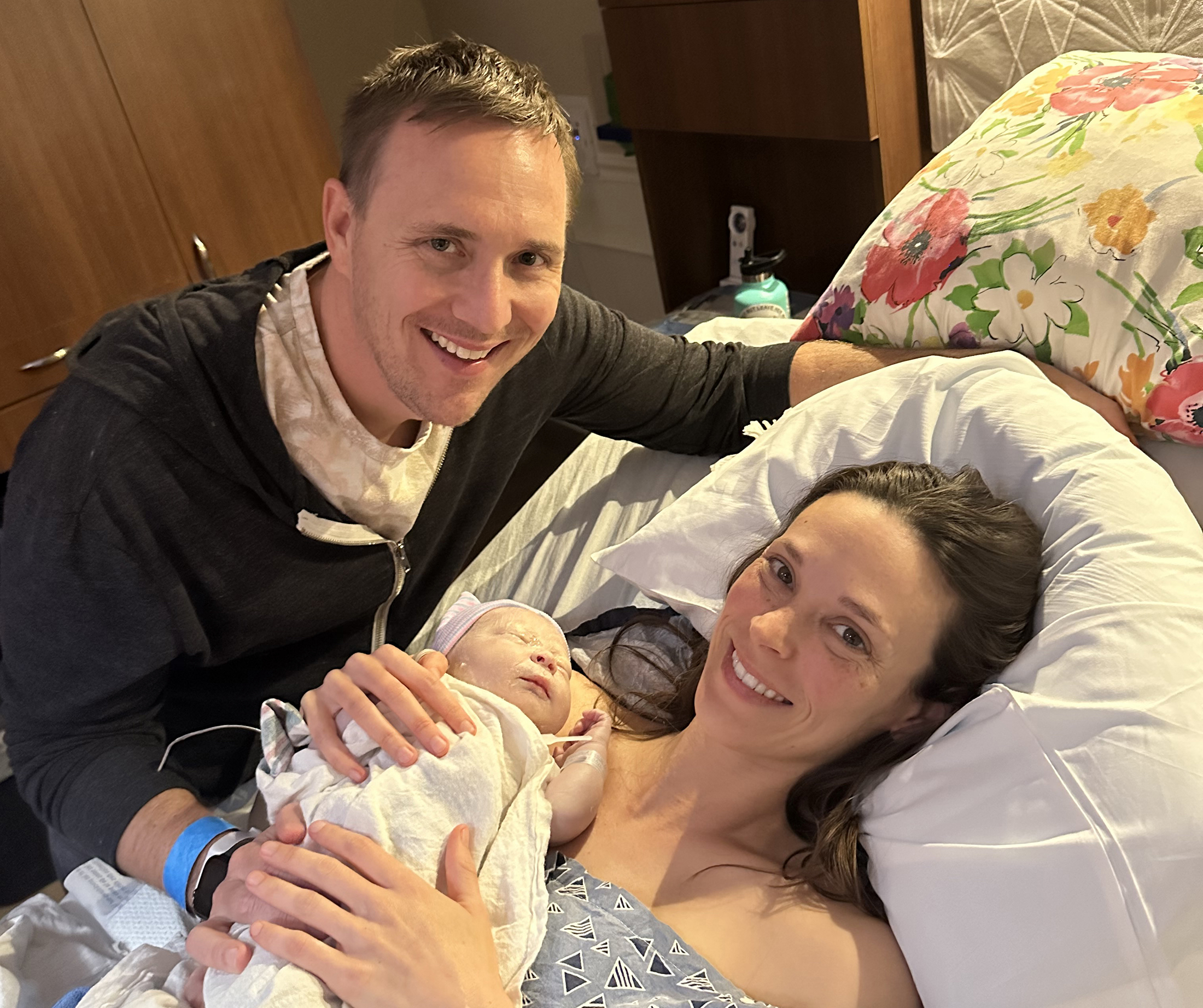
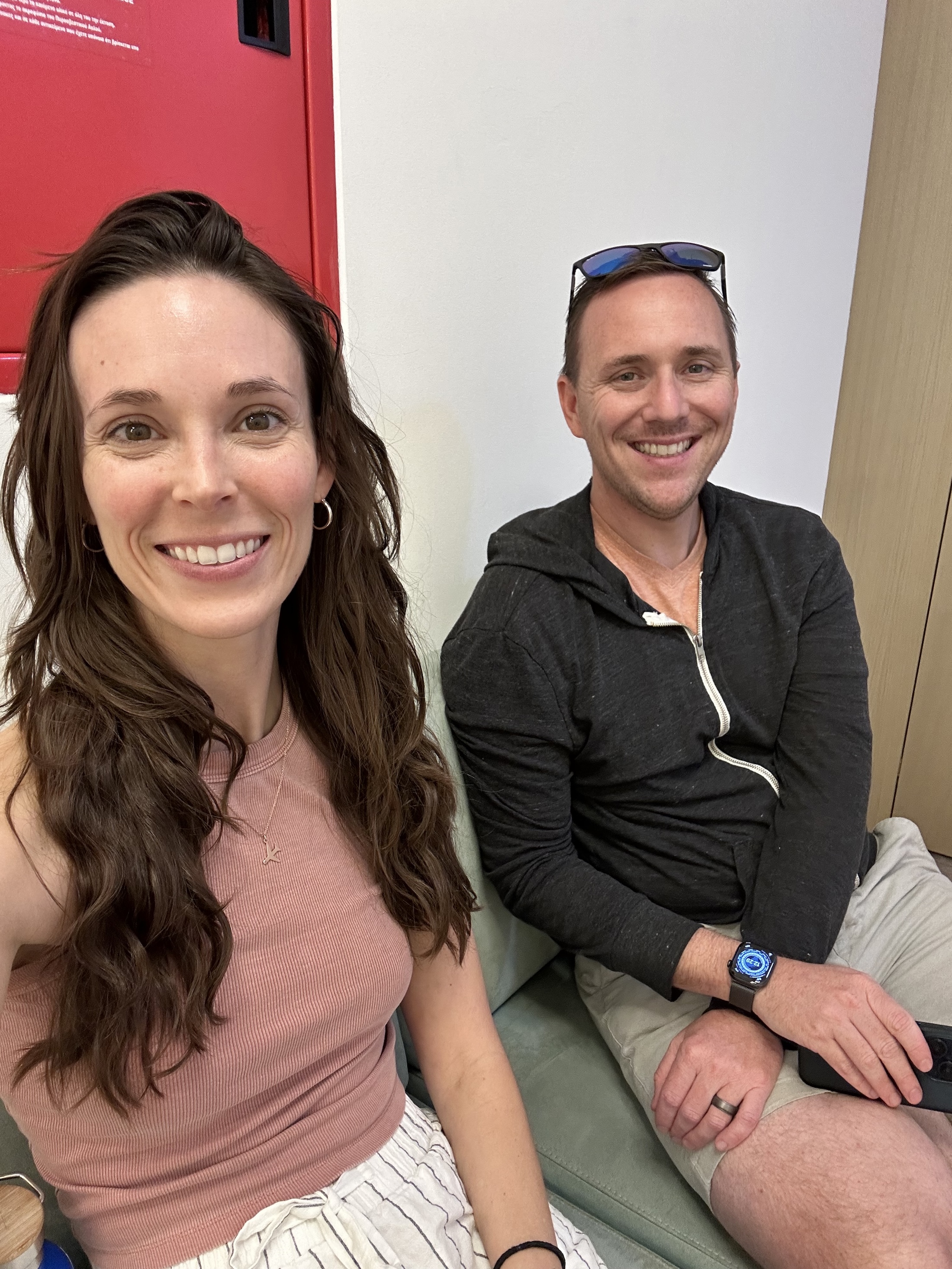
In the summer of 2024, Emilie and Justin Solomon found themselves on a top-secret mission in Greece.
Their family and friends thought the adventure-loving couple was on another jet-setting vacation, but they were keeping something else under wraps: They had turned off their phone locations to hide visits to a Greek clinic where they were trying to get pregnant.
The Solomons are among the growing numbers of Americans looking abroad, particularly to Greece and Spain, to escape the high cost of fertility treatments in the U.S., where such procedures are often not covered by insurance. The treatments include in vitro fertilization, which involves ovulation stimulation, retrieving the eggs, fertilizing them in a lab, and transferring the embryos into the uterus. Other less intensive medical therapies also address infertility.
President Donald Trump has made fertility, and IVF in particular, a focus of his administration’s agenda after he promised total coverage for women during his 2024 campaign. His administration proposed a rule in May intended to make it easier for employers to offer fertility coverage, although it has yet to be finalized. So far, the most concrete result has been lower costs for some IVF medications through TrumpRx, a site where cash-paying patients can find some discounted medicines through participating pharmacies. The White House projected that patients could save up to $2,200 per IVF cycle.
While significant, those savings are up against a 90% rise in IVF medication costs since 2014, according to GoodRx, a prescription discount service. A study of insured Americans released in July by Axene Health Partners and the Women’s Reproductive Health Foundation found that the overall cost for a cycle of IVF was over $29,000 — or 35% of the median annual household income in the U.S. Genetic testing, embryo storage, pregnancy care, and delivery costs can push the total over $54,000 per IVF-conceived birth, according to the study. An average patient needs two to three cycles to successfully have a child, so the costs for many patients would be even higher.
Infertility affects nearly 7 million people in the U.S., but only an estimated 24% of treatment needs are met, because of those high costs and limited insurance coverage, according to the American Society for Reproductive Medicine. The condition is believed to be rising partly because of people having children later, as well as environmental factors such as pollution.
Still, more than 100,000 babies were born via IVF in the U.S. in 2024 — a record, according to the Society for Assisted Reproductive Technology. An increasing share of people hoping to be parents are seeking help in Europe: The number of Americans choosing European clinics grew by more than 37% last year, according to Jakub Dejewski, the chair of the European Fertility Society, a group that tracks data on fertility treatment in Europe.
In Greece, the Solomons were able to get a round of the IVF treatment for about $12,000, not including their travel expenses. Emilie Solomon
The Solomons knew IVF was their only chance to have children together biologically, because Justin had testicular cancer in his late teens. What the college sweethearts had not expected was the cost — and they learned early in their IVF journey that their insurance would not cover their treatment. While some states have passed laws to require insurers to pay for some fertility care, the coverage varies widely.
When the couple first explored IVF in Florida, where they live, they were quoted $40,000 for one round of treatment. The price shocked them, and Emilie said the clinic’s offer of a spring discount for an embryo transfer felt “off-putting.”
“They just kind of prey upon your hopes and dreams to be parents,” Emilie said.
Treatment plus island-hopping tours
The price of IVF and uncertainty around proposed personhood legislation in Florida, which the Solomons feared could jeopardize their control over their embryos, sent them to the Pelargos IVF Medical Group in Athens. There, in the first of two trips, Emilie underwent ovulation stimulation and egg retrieval.
Including medication, fertilization, storage, and the ultimate embryo insertion, the total treatment cost about $12,000, not including travel, according to the Solomons, a fraction of what they might have spent in America. That affordability drew the couple abroad, but so did the allure of sightseeing and experiencing a new country.
On that first trip, they spent a weekend between doctor appointments exploring the Greek island of Milos. Between Emilie’s hormonal injections, they rented a boat to explore the island. Their video from the trip shows them climbing the island’s striking white volcanic cliffs, and Emilie floating in the turquoise water of the Aegean Sea. Despite the emotional and physical toll of the IVF process, the couple remembers being in a little bubble, away from everyone, exploring a beautiful place.
“It was one of the best summers that we’ve had,” Emilie said.
Emilie and Justin Solomon visited Greece in 2024 after they were quoted $40,000 for one round of in vitro fertilization treatment in Florida.Emilie Solomon
When they traveled back to Greece for their embryo transfer in October 2025, they spent two days in Croatia.
IVF in Greece using a patient’s own eggs typically costs around $3,000 to $4,000, not including medication, so even with travel, it is often a fraction of what patients pay in the U.S.
“Americans choose Greece because they can access treatment that is more affordable, faster to begin, and well supported for international patients,” Dejewski said.
Jakub Dejewski, the chair of the European Fertility Society, which tracks data on fertility treatment in Europe, says the number of Americans choosing European IVF clinics grew by more than 37% in 2025 from the year before.Dawid Linkowski
Patients in Greece do face some legal restrictions: Embryo storage is time-limited, donor anonymity is standard, sex selection and embryo-transfer numbers are restricted, surrogacy access is limited for nonresidents, and patients must carefully consider documentation requirements if they plan to move embryos between Greece and the U.S.
Penny Ampatzi said she is clear about these legal differences when Americans consult with her clinic in Athens. Serum IVF offers to schedule airport pickup for patients, as well as island-hopping tours. Ampatzi, the cofounder and clinic director at Serum IVF, said the main draw for the dozen or so American patients her clinic sees each month is the personalized fertility treatment plans. Affordability is close behind. A cycle at her clinic costs just under $6,000, not including embryo freezing. Almost all of Serum’s patients are foreigners, according to Ampatzi.
“You consider that you have a good possibility of success, plus you don’t pay that high amount of money, and you also have combined the treatment with holidays — so it’s a ‘Why not?’” she said.
Not without risks
IVF costs in the U.S. have been driven up by a mix of inflation, a shortage of embryologists, a surge in demand after pandemic backlogs, and private equity ownership, Dejewski said.
William Kiltz, vice president of marketing and business development at U.S.-based CNY Fertility, said that the costs are becoming too far out of reach. “IVF is almost a treatment that only the top 1% can afford reasonably,” he said.
Kiltz said CNY’s model — offering IVF for around $8,000, not including embryo storage, at its 18 locations across the country — brings just enough profit to “keep the lights on” and open new locations while keeping its costs lower. “We’re trying to deliver this care at the absolute bare-minimum cost,” he said.
More than half of CNY’s patients travel from out of state in search of those lower-cost options, Kiltz said.
He said he hopes the IVF market will eventually settle out, as happens with many new technologies. But nearly five decades in, that normalization hasn’t come. Kiltz believes that’s because the market is so emotionally driven.
“People will do just about anything,” Kiltz said. “There’s certainly some risk in something like that, where the demand and the desire from a single individual is so strong that they could be taken advantage of.”
Tarita Pakrashi, the head fertility doctor at the CNY location in Norfolk, Va., pointed to the difficulties of trying to vet a clinic overseas when one doesn’t speak the language or understand the local IVF regulations. It also can be challenging to transport temperature-sensitive medication back home.
“It’s almost like a full-time job trying to play regulatory expert and inspector all at the same time, while you’re a patient,” Pakrashi said.
She said she also has had patients who sought treatment abroad return to her clinic struggling to transfer records or understand a diagnosis they received overseas. They often have to repeat tests.
And going abroad for IVF is still out of reach financially for many Americans.
The Solomons said seeking treatment overseas takes a certain type of adventurous spirit, too. But for them, all the logistics and travel were worth it. Their one cycle of IVF and two trips to Greece allowed them to welcome a healthy baby boy this summer.
KFF Health News is a national newsroom that produces in-depth journalism about health issues and is one of the core operating programs at KFF — the independent source for health policy research, polling, and journalism.
President Donald Trump’s political operation has unleashed its vast financial resources to try to save the Republican Party’s control of Congress, reserving nearly $138 million over the past 10 days to help the party’s midterm candidates.
The planned spending linked to Trump’s $400 million super political action committee has grown by the day and is set to fuel a massive ad campaign supporting battleground Republican candidates beginning this month. Some Republicans for months have criticized Trump’s super PAC, MAGA Inc., for not seriously engaging in the midterms despite its huge war chest.
But now a blitz of spending tied to the group has arrived.
A new super PAC that The New York Times previously reported was linked to MAGA Inc., No Going Back PAC Inc., has booked more than $95 million worth of ads, according to data from AdImpact, a media tracking firm.
Another $27 million worth of ads is slated to come from another new super PAC called Safety and Affordability PAC Inc. The group is financially backed by MAGA Inc., according to two people with knowledge of the matter, who spoke on the condition of anonymity to disclose a confidential arrangement. The group has not yet begun advertising.
The paperwork for No Going Back and Safety and Affordability was filed with the Federal Election Commission six minutes apart by the same treasurer.
So far, Safety and Affordability PAC has appeared to focus on helping House Republicans. It has booked ads in 15 races for the lower chamber. No Going Back PAC, by contrast, has booked two-thirds of its ad reservations on Senate races. And MAGA Inc. itself has booked another $9 million in ads — so far, only in the Texas Senate race.
The three super PACs seem to have essentially carved up the midterm map; so far, their only overlapping advertising spending is in just two House races: New York’s 17th District and Michigan’s 4th District.
In addition to the ad reservations, the super PACs have also spent about $6.5 million on direct-mail efforts and about $80,000 on text messages, according to FEC records. Together, the three groups are slated to spend about $138 million on ads, mail and texts to help Republican candidates in about 50 general-election races, spending the most on Senate contests in Michigan, Ohio and Alaska.
The House races with the most planned spending by the Trump operation are in New York’s 17th District, Florida’s 25th District and Michigan’s 4th District.
Details on the precise financial arrangement between MAGA Inc. and the two newer super PACs remain unknown and could be revealed in future filings with the FEC.
The two newer super PACs appear to be so-called pop-up groups, appearing late in an election cycle and spending heavily before they are legally required to disclose their donors.
The two groups were formed in quick succession on Sept. 1 by Charles Gantt, a Republican political operative who specializes in campaign finance, according to FEC disclosures. Both of the super PACs’ websites are nearly identical in design, down to the same boilerplate text that each group “makes independent expenditures in U.S. federal elections in support of candidates who share the values of the founders and funders” of each group.
Gantt did not immediately respond to a request for comment.
The spending should quiet Republicans who harbored suspicion that Trump’s political group would hold close to its resources for his own political projects. The trio of Trump groups are, together, slated to be the biggest ad spenders in the November elections outside the super PACs tied to congressional leadership, according to AdImpact data.
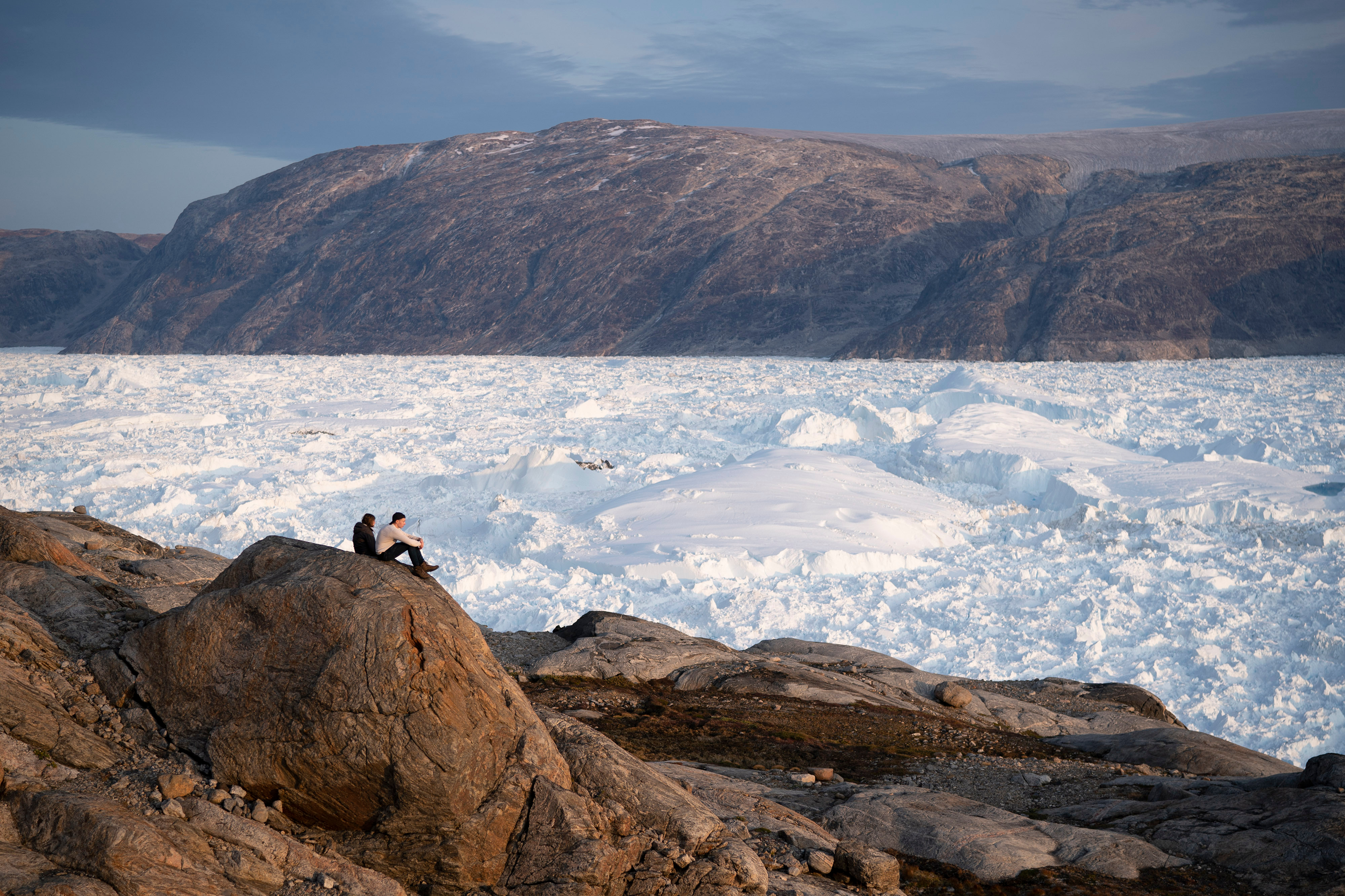
About 12.5 trillion tons of ice from glaciers in Greenland and Antarctica have melted since 1979, which is enough frozen water to stack ice 5 feet deep across the continental United States, according to a major scientific report.
A warming Earth is accelerating the melting of the planet’s two major ice sheets, with five-sixths of the melt not coming from hotter air, but from warmer waters eating away at the ice sheets from below and the sides, with glaciers flowing into the oceans, according to a study in Wednesday’s journal Scientific Data. That’s bad news for future sea level rise, the study’s authors said.
“The ice sheets are melting away fast,” said study co-author Eric Rignot, an ice scientist at University of California, Irvine. “We are melting the polar regions, sea level is rising worldwide and will exacerbate the vulnerability of coastal regions.”
Huge numbers for ice melt, people flooded
The numbers behind the melt are both mind-bogglingly huge and deceptively small.
All that melted ice turned into nearly 3 quadrillion gallons of water, which pushed global sea levels up about an inch since 1979, on top of other climate factors raising ocean heights, the report said.
An inch may not sound like much, but for every third of an inch (or centimeter) of sea level rise, another 2 to 3 million people get flooded at least once a year, said lead study author Ines Otosaka, an ice scientist at Northumbria University in England.
The Jakobshavn glacier in Greenland is now retreating up to 164 feet a day, Otosaka said.
The international collaboration of polar scientists, headed by the European Space Agency, had in the past only looked at ice sheet melt since the 1990s based on European satellite data. But by incorporating NASA satellites, the scientists were able to chart ice sheet volumes in Antarctica back to 1979 and in Greenland back to 1972.
The melting is accelerating
“There is a clear trend that the ice sheets are losing more mass and it has been increasing from decade to decade, especially if you look at the ice being discharged to the ocean,” Otosaka said. “And that’s quite clear that there’s a link to climate change.”
It showed that in the 1970s, 1980s and into the 1990s, the ice sheets were relatively stable, but then melt started happening and it really kicked in during the 2010s, Otosaka said.
“That’s something to be concerned about as it shows that the changes are tracking decades behind global warming, which means we can expect them to continue for decades more — even if we are able to stop heating the planet,” said study co-author Andrew Shepherd, also of Northumbria.
The accelerating numbers seemed to pause from 2020 to 2023, but the study’s authors said it more reflected short-term weather variations not long-term trends. Otosaka said the study stopped with 2023 data, but she’s looked at measurements since and found the accelerating trend has picked back up.
A lot of the stability in Antarctica was because East Antarctica had record snowfall, which compensated for the rapid melting in the less stable West Antarctic Ice Sheet, the authors said.
The three-year hiatus was “just a bump in the record,” Rignot said. “The long rise is climate and the threat is crystal clear.”
Worrying about a collapse scenario
The biggest changes scientists saw are in what they call dynamic processes, which are more abrupt and active than the slow steady melting from the air, and that’s something prone to trigger runaway “tipping points,” Otosaka said.
New York University ice scientist David Holland said that’s what concerns him “because most of the ice loss is dynamical and that is exactly what you would expect in an ice sheet instability collapse scenario.”
The international team used 45 independent surveys and 27 different satellites. “The use of relatively independent methods gives me greater confidence in the result,” said Holland, who wasn’t part of the study. “The upward trend is real.”
“The ‘wild cards’ of Antarctic mass loss continue to pose a challenge for human management of the planet — a clear and present danger, but many decades in the future,” said University of Colorado ice scientist Ted Scambos, who wasn’t part of the study. “We are now as a society smart enough to know the future, but not prudent enough to act upon the knowledge.”
The House on Tuesday passed a largely symbolic measure intended to halt the war in Iran — the latest bipartisan attempt to limit President Donald Trump’s war powers.
The vote, which advanced by a margin of 220 to 204, came after similar efforts this summer. Seven Republicans joined Democrats in supporting it, the largest number of GOP lawmakers so far to publicly oppose the war.
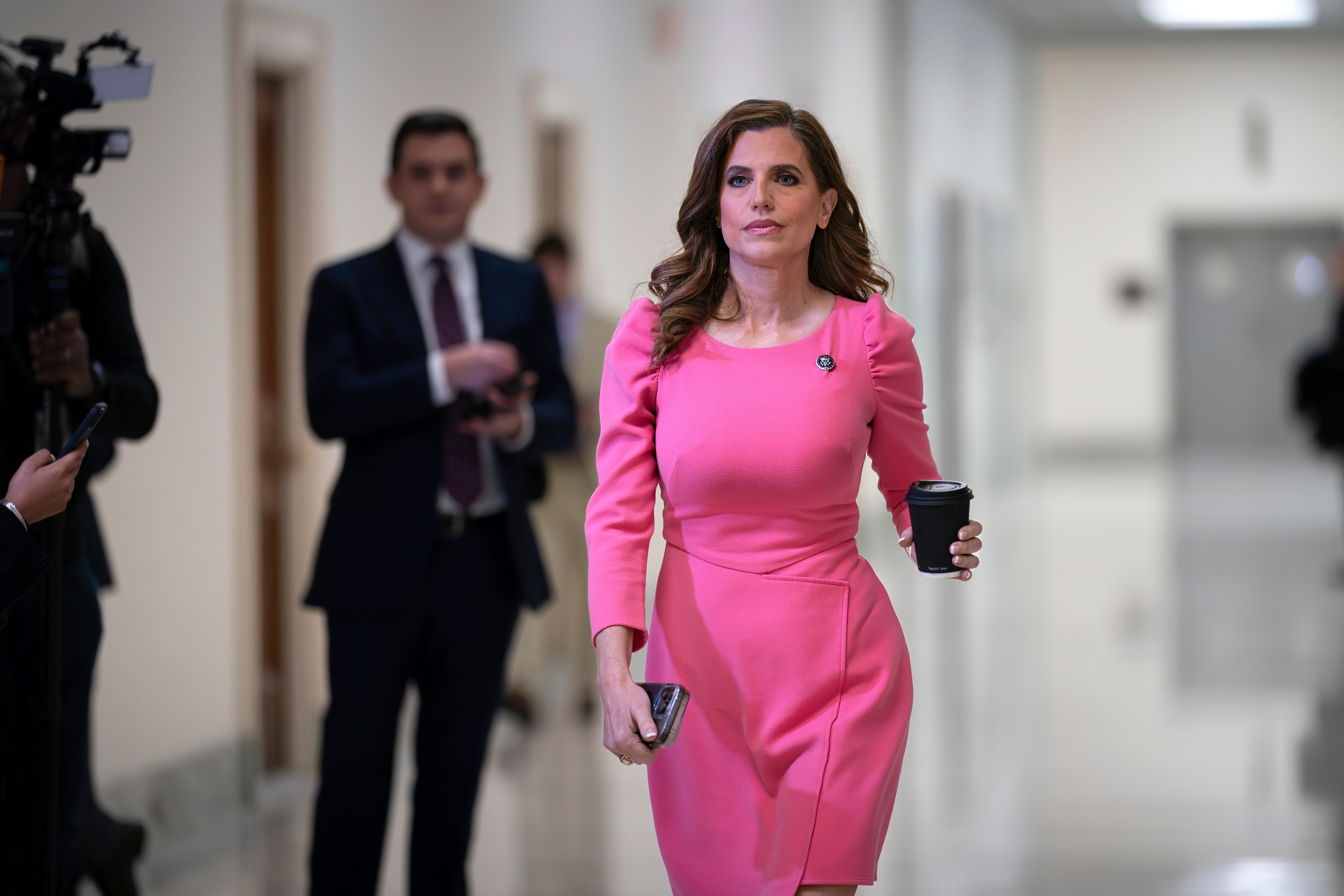
Rep. Zach Nunn and Rep. Mariannette Miller-Meeks of Iowa and Rep. Nancy Mace of South Carolina joined four Republican lawmakers who had voted for previous measures: Reps. Tom Barrett of Michigan, Warren Davidson of Ohio, Brian Fitzpatrick of Pennsylvania and Thomas Massie of Kentucky.
The measure, led by Rep. Seth Moulton (D-Massachusetts), directs the administration to “remove United States Armed Forces from hostilities against the Islamic Republic of Iran” except for personnel needed to defend American or allied bases in the Middle East.
The vote relects Democrats’ months-long strategy to force votes on war powers resolutions in order to highlight Republican support for the unpopular conflict, which after seven months has roiled global energy markets and depleted the Pentagon’s stocks of precision weaponry.
The nonpartisan Congressional Budget Office released a report Tuesday estimating that the war had cost about $38 billion through July, and an additional $2 billion to $3 billion per month depending on the intensity of the fighting.
The Pentagon did not respond to the CBO’s requests for information and has previously estimated the war would cost $37.5 billion through the end of September — though that total does not account for the substantial damage to U.S. bases targeted by Iran throughout the region.
In June, the House and Senate passed a similar measure calling on Trump to end the war in Iran, though the White House has asserted that the measure is not legally binding and Democrats and Republicans disagree on whether it has the force of law. The House again voted to limit Trump in July, but a similar measure failed in the Senate.
U.S. Central Command, which oversees America’s military operations in the region, has maintained a footprint of around 50,000 troops in the Middle East and has periodically struck Iran following the collapse of a ceasefire the Trump administration reached with Tehran in June.
The Trump administration has cut or frozen up to $177 billion in federal grants since the president took office for his second term, according to a tracking tool released Wednesday by a pro-democracy nonprofit and a group of researchers and scientists.
The cuts affected all 50 states and the District of Columbia, with health, nutrition, the environment, and disaster relief making up the largest share of cuts, the States United Democracy Center and Grant Witness organization found.
Among the grants that were eliminated, frozen, or delayed were ones related to maternal health in Michigan, education research in Mississippi, and assistance to minority farmers in Iowa, the researchers found. California, Texas, New York, Illinois, and North Carolina saw the highest amounts of interrupted grant money. The tracking tool is called Lost Funds.
“By bringing thousands of funding disruptions from the Trump administration together in a publicly accessible, verified database, Lost Funds puts the magnitude of their impact on full display,” Scott Delaney, co-founder of Grant Witness, said in a statement.
The $177 billion finding represents nearly 10% of federal discretionary spending, the groups said.
The tracker’s organizers said the disrupted grants were beyond the kind of cuts that typically happen when administrations change.
“Lost Funds shows the extraordinary scale and real human impact of these disruptions, and how states are once again on the front lines protecting their residents,” said Kelly Rader, States United Democracy Center’s research director.
In some cases, courts have ruled against the administration’s grant funding cuts.
The new tool, which is being made available for public use, relies on data from USASpending.gov, an open data source of federal spending information, according to the groups’ methodology. They said the tracker would be updated regularly as the administration takes new action and lawsuits move through the courts.
States United bills itself as a nonpartisan group dedicated to the rule of law and free, fair, secure elections. It was cofounded by Norm Eisen, an attorney who has been involved in prominent lawsuits against the Trump administration, including over the Kennedy Center. Eisen left the States United center in 2024.
Grant Witness is a group of scientists, researchers, and attorneys who document how funding is changing under President Donald Trump’s administration.
A message seeking comment on the analysis was sent to the White House.
LOS ANGELES — A motorist was arrested on murder charges after authorities say she slammed her SUV into a city bus in Los Angeles, killing at least two people and injuring six others in a prelude to a second deadly tragedy: the fiery crash of a TV news helicopter that was covering the collision.
Bailee Lynn Rios, 36, of Simi Valley, was arrested Monday night and is being held at a Los Angeles jail with bail set at $4 million, police said. The case is being forwarded to the district attorney’s office, which will decide whether to file the charges in court or pursue different ones. Information on a lawyer who could speak on her behalf wasn’t immediately available.
The helicopter, which was used by NBC and Telemundo, crashed about two hours after police say Rios drove her 2004 Ford Expedition the wrong way down a busy avenue, ran a red light and struck a vehicle before hitting the bus. One passenger was fully ejected from the bus and another was partially ejected, police said.
NBC4 Los Angeles reported that two people aboard the helicopter — reporter Eliana Moreno and pilot George Marciniw — were killed when the chopper went down Tuesday in the Chatsworth neighborhood in the San Fernando Valley north of downtown. A person on the ground, identified as 29-year-old Edy Gutierrez Mejia, died in a parking lot, the Los Angeles County Medical Examiner’s Office said.
The crash happened as news crews were reporting on the collision.
There were no immediate details on what caused the helicopter crash, but an alarm could be heard sounding inside the helicopter’s cockpit as it lost altitude in the final seconds of video the crew broadcast before the crash.
Just after the beeping noise starts, a woman’s voice says “uh oh.” The helicopter moves quickly away from the bus crash site and starts losing altitude. The woman says “You can’t pull up?” before the video stops as the chopper nears the ground.
The helicopter, a Eurocopter AS350, went down near a large storage facility. At least four cars and two storage containers burned after the helicopter caught fire. NBC4 reporter Robert Kovacik was at the bus scene, saw black smoke, and rushed to the helicopter crash site.
News station identifies those on the helicopter
The station identified the helicopter crash victims as Moreno, a familiar voice for NBC4 and Telemundo 52 during the station’s aerial coverage, and Marciniw. Both were employees of Angel City Air, which operated the chopper for the station.
Moreno, born in Orange County, joined Angel City Air in 2010, the same year she earned a broadcast journalism and political science degree from Chapman University. She reported for several news outlets and began flying with Marciniw in 2023, the NBC4 website said.
Marciniw grew up in Southern California and graduated from Burbank High School in 1974.
“I think a lot of us are still trying to process what happened, this terrible loss,” NBC4 reporter Lauren Coronado told viewers early Wednesday as she stood near the crash site. A hazmat crew was cleaning up jet fuel, she said.
In a tribute to Moreno and Marciniw, the newscast referred to them as “the team in the sky,” saying Moreno would often post videos from her job and was in awe of the view.
In an interview with the station, Esteban Jimenez, a pilot, said he had known Marciniw since the 1990s. He said Marciniw had been his instructor.
“I just talked to him on Sunday. We were talking about the aviation business and retiring,” he said.
Expert talks about what may have caused the crash
Aviation safety expert Jeff Guzzetti said the alarm sounding in the helicopter’s final video sounds like the low rotor RPM warning horn that signals the main rotor is no longer spinning enough to keep the helicopter in the air.
“It just has all the earmarks of a potential loss of engine power and a dangerous decrease in the main rotor speed,” said Guzzetti, who used to investigate crashes for both the NTSB and FAA.
Guzzetti said the pilot appeared to be trying to perform an emergency maneuver to use the wind to force the rotor to spin again much like a breeze turns a windmill. Doing that can create a bit of lift that could help cushion the impact, but Guzzetti said there would have been little opportunity to do that because the helicopter had been hovering at a low altitude beforehand.
There are risks to news helicopters particularly in a major city like Los Angeles where multiple helicopters respond to an incident, but the pilots all coordinate closely over the radio to ensure they maintain a safe distance from each other. The industry also shares best practices to help keep these news flights safe.
Condolences for the victims and their families
NBC4 and Telemundo 52 Los Angeles said in a statement they “are deeply saddened” and extended “heartfelt condolences to the families, friends and colleagues of those who lost their lives.”
“Losing five Angelenos is very painful,” Los Angeles Mayor Karen Bass said. “And I know this community of Chatsworth, hit hard, will be grieving for some time.”
California Gov. Gavin Newsom thanked the emergency crews responding to both crashes and said in a post on X that “our hearts are with the victims and families.”
The National Transportation Safety Board and the Federal Aviation Administration said personnel will arrive Wednesday to begin an investigation into the cause of the helicopter crash.
As Ted Cruz spoke during the two-day Trumpapalooza (a.k.a. Republican midterm convention) in Dallas, each time he mentioned a Democratic politician, a voice from the sparse crowd yelled, “He should be shot!” Cruz’s reaction? Nothing. He just kept speaking, with no attempt to denounce or even acknowledge the outbursts. Three times. No pushback. Republican reaction, in general, has been muted. Neither Dave McCormick nor Brian Fitzpatrick nor Democrat John Fetterman has responded in any way to these calls for violence against political opponents. First, it was “Lock her up!” against Hillary Rodham Clinton. Now it has escalated to “He should be shot!” against Abdul El-Sayed, James Talarico, and Zohran Mamdani. The anemic-to-nonexistent Republican pushback to these calls for violence smacks of condonation and quiet, passive encouragement. Is any opposing Democrat now fair game?
In addition, in complete disregard for the Constitution, Donald Trump begged the attendees to pledge an oath to him, “the greatest president in the history of the United States, that loves us so much he can’t even breathe, that I will go out with my family, my friends, I’ll do it any way — I don’t care if I’m registered or not, I’m going to cheat like hell like they do.”
Cheat like hell. They should be shot. How did we get here?
This is a president and a conservative machine that knows they are on the ropes. The threat is real, and has been building for months. As others have said, Trump wouldn’t be working so hard to suppress our votes if our votes didn’t matter. The Dallas midterm convention is just the latest alarm bell tolling loudly and clearly, telling us in no uncertain terms that this November our vote matters more than ever.
Deborah DiMicco, Newtown
. . .
I am horrified at the response of “He should be shot,” which seemed to be directed at Democrats during Ted Cruz’s speech at the midterm convention in Dallas. But now I am more horrified that The Inquirer has not responded. We always count on you to validate our values of nonviolence. Your writing is so eloquent and true, and we know you are not afraid to stand up to violent threats or the people who normalize them. Please help us to condemn violence.
W. Walker, Philadelphia
No Kings
The 22nd Amendment, which was added to the Constitution in 1951 after President Franklin Delano Roosevelt was elected four times, states that “no person shall be elected to the Office of the President more than twice.” President Donald Trump, elected twice, affirmed that “there are methods” for him to win a third term and lead the country after 2028.
Unfortunately, Trump will continue to explore ways to stay in office. We need to stand in unison and demand an end to Trump’s unchecked power-grab. We cannot bring our democracy to the brink.
Ed Vreeswyk, Yardville
Join the conversation: Send letters to letters@inquirer.com. Limit length to 150 words and include home address and day and evening phone number. Letters run in The Inquirer six days a week on the editorial pages and online.