Tag: no-latest

  • Horoscopes: Wednesday, Sept. 16, 2026

    Horoscopes: Wednesday, Sept. 16, 2026

    ARIES (March 21-April 19). You can care about someone and try to understand them, but you can’t know every feeling inside them. Even understanding a small part can help two people feel close.

    TAURUS (April 20-May 20). Your work will mean different things at different times. Now it helps someone. Later, it matters in a deeper way. Eventually, newer work will replace it. Years later, people may look back at it as part of history.

    GEMINI (May 21-June 21). It’s almost like you’ve decided that anything the other person said would be OK. You’ll make people feel safe enough to tell you the real problem, feeling and situation instead of the version they think you want to hear.

    CANCER (June 22-July 22). Your instinct is usually to give more than is necessary, and that’s often a lovey surprise that fosters trust and even fondness. There’s also a point that’s “too much,” and it’s important to know where that is, too. What feels fair and sustainable?

    LEO (July 23-Aug. 22). It’s easier to be optimistic about someone else’s scene because they are the ones who have to do the work. You’ll do the harder thing — find optimism about your own scene and let it fuel you to finish the job.

    VIRGO (Aug. 23-Sept. 22). Your work ethic was never in question, though today you might wonder what’s actually worth doing. Take the time to test out new tools that will make certain parts of the job a lot easier so you can focus on the parts you like best.

    LIBRA (Sept. 23-Oct. 23). Like an action star in a fantastically choreographed fight scene, dodging blows and using the felicitous arrangement of your surroundings to help your cause, you’ll have the flexibility to dodge, jump or conquer anything thrown your way.

    SCORPIO (Oct. 24-Nov. 21). Adventure doesn’t always mean travel, questing and novelty. Today, it just means letting yourself imagine more and having the courage to follow your curiosity through the next steps of that dream.

    SAGITTARIUS (Nov. 22-Dec. 21). You’re right to be proud of the fact that you don’t have to make every interaction about you. Many people find that hard. When you connect with others, you leave them space and make them feel special, and they just keep coming back.

    CAPRICORN (Dec. 22-Jan. 19). Before grocery shopping, you make sure you know what you have and what you need. The same goes for your personal life. You’ll be meeting new people, and there are roles that would be good to fill. Refresh the order before you embark.

    AQUARIUS (Jan. 20-Feb. 18). No matter who you are, there always seems to be someone with more money, time or help than you have. Use that feeling to name the kind of cushion you want to build for yourself. A little more ease is a worthy goal.

    PISCES (Feb. 19-March 20). When the conversation goes wonky, sometimes an honest “I’m lost” helps. A laugh and a simple question will be better than pretending you know what the other person means.

    TODAY’S BIRTHDAY (Sept. 16). In your Year of the Sweet Song, it’s as though you are always accompanied by the cosmic music to enhance the mood, motivate or soothe, romance or empower you. Your openness to feeling and sensation have you comforted and connected to life’s rhythms. More highlights: Working in the perfect team for you, incorporating foreign influence and resources to lucrative and creative effect. Six savvy and large deals. Cancer and Libra adore you. Your lucky numbers are: 4, 14, 22, 18 and 50.

  • Dear Abby | Mom doesn’t want daughter visiting neighbors

    Dear Abby | Mom doesn’t want daughter visiting neighbors

    DEAR ABBY: My next-door neighbors are appropriately friendly, mow their lawn and generally mind their own business. The husband is a leader in a fundamentalist church whose pastor preaches that being gay is a sin and transgender people are mentally ill. My wife and I are lesbians, and our middle child is transgender. This is obvious to anyone who has met us.

    Our third child is the same age as the neighbors’ daughter, and they play outside sometimes. Her mom has started asking if my daughter can come over to their house. I’m looking for a kind way to let her know that playdates are not an option. I respect their family’s right to have values different from mine, but I don’t think it’s emotionally safe for my kid to be over there. Similarly, my house is too queer-friendly for me to feel comfortable hosting a conservative neighbor’s kid here. How do I give a blanket “no” to visits while remaining cordial neighbors?

    — THE LESBIAN NEXT DOOR

    DEAR LESBIAN NEXT DOOR: I get the impression you and your neighbors are polite but not close, so there’s your reason: Tell her you aren’t comfortable letting your daughter spend time inside the home of someone you don’t know well. To improve this relationship, invite them over for dinner, perhaps a casual outdoor barbecue. If it turns out your two families are as incompatible as you suspect, your daughter will stop receiving playdate invitations.

    ** ** **

    DEAR ABBY: My boyfriend, “Dirk,” and I are in our late 50s. We both are divorced, and we each have a single child over the age of 18. Every time Dirk and I go out for a nice dinner date, he either orders a meal “to go” to bring home for his son or purposely eats only half his dinner and brings the rest home for him. I’ve told Dirk this is rude. It spoils the mood of having an intimate adult date. His son is old enough to figure out how to feed himself.

    The problem is, Dirk won’t stop doing this, and it’s been going on for years. It took two years to finally get Dirk to stop bringing his son with us if we went on errands together. I feel suffocated and like I’m dating two rather than one in that household. Dirk chooses to blur boundaries and always pulls the “single dad, raising him on my own” card, an excuse I’ve never had to make. I believe it applies to minor children, not adults, and coddling to this extreme is ridiculous.

    Am I being too harsh? My son is self-sufficient. He has a healthy social life and keeps healthy boundaries when it comes to my love life. I’ve talked myself hoarse being honest with Dirk about all of this, but it never changes, and these dynamics keep me from advancing my commitment to Dirk. He begs me to move in, but I think after one week, I’d be at my wits’ end. Should I pull the plug altogether and move on?

    — DATING TWO IN CALIFORNIA

    DEAR DATING: I think that unless you’d like to become a family of three living under Dirk’s roof, you need to do exactly that. Feeling as you do about Dirk’s son, the relationship would be doomed from the moment you unpacked your bags.

  • Maduro ally Alex Saab pleads guilty in a $195M money laundering case, agrees to cooperate

    Maduro ally Alex Saab pleads guilty in a $195M money laundering case, agrees to cooperate

    MIAMI — A close ally of former Venezuelan President Nicolás Maduro long described by U.S. officials as the ousted leader’s frontman pleaded guilty Tuesday to a single count of money laundering tied to an alleged bribery conspiracy to win lucrative government contracts in the South American country.

    As part of the plea deal, Alex Saab agreed to cooperate in continuing federal investigations, paving the way for his eventual cooperation against his former protector. He also agreed to forfeit $195 million in criminal proceeds from the corruption scheme.

    Saab, 54, was deported in May by Venezuela’s acting President Delcy Rodriguez to the U.S., which has been targeting the Colombian-born business owner for more than a decade.

    The money laundering offense carries a maximum 20-year penalty but prosecutors agreed to recommend a sentence at the low end of the recommended range and seek additional reductions should his cooperation prove substantial.

    Saab was previously charged during the first Trump administration in 2019 and then arrested during a refueling stop in Cape Verde on what the Venezuelan government described as a high-level humanitarian mission to Iran.

    But President Joe Biden pardoned Saab in 2023 in exchange for the release of several imprisoned Americans in Venezuela. The deal, part of a failed effort by the Biden White House to lure Maduro into holding a free presidential election, was harshly criticized by Republicans and federal law enforcement officials, who immediately began investigating Saab for other alleged crimes not covered by the narrowly tailored pardon.

    “This case sends a clear message: Political connections, wealth, and proximity to a corrupt regime will not put anyone beyond the reach of American justice,” said Jason A. Reding Quiñones, U.S. attorney for the Southern District of Florida, who attended Tuesday’s proceedings along with more than a dozen federal agents.

    The new indictment centers on contracts for the so-called CLAP program set up by Maduro to provide staples — rice, corn flour, cooking oil — to poor Venezuelans at a time of rampant hyperinflation and a crumbling currency.

    High-level protection offered in exchange for bribes

    In an eight-page statement of facts submitted as part of the plea deal, Saab admitted to skimming at least $195 million from at least six contracts awarded to companies he controlled to import food and medicine.

    The scheme “had the approval, participation, and protection of some of the Venezuelan government’s highest ranking public authorities,” including from an individual described only as “Government Official 1A,” who designated a surrogate — one of four unnamed co-defendants — to receive bribe payments on their behalf.

    Also receiving $17 million in kickbacks was former Gov. Jose Gregorio Vielma Mora, a Maduro ally who with Government Official 1A’s support secretly awarded a Saab-controlled company a contract in 2016 to deliver 10 million boxes of food rations in Tachira state, prosecutors allege. Vielma Mora was previously charged in the conspiracy in 2021.

    To conceal the criminal activity and hide the payments, Saab said, he and his associates falsified shipping records and set up a network of shell companies and bank accounts in countries including Antigua, Bulgaria, Liechtenstein, the Marshall Islands, Montenegro, Switzerland, Turkey, the United Kingdom, and the United Arab Emirates.

    Over time, as U.S. sanctions deepened the country’s financial woes, Saab and his associates received payment in the form of Venezuelan oil, gold, and other natural resources.

    In court Tuesday, Saab told Judge Kathleen Williams that he takes the antidepressant Zoloft and other medicines daily for what he described as “post-traumatic stress disorder” following his 2020 arrest.

    Saab could become a witness against Maduro

    U.S. officials have long described Saab as Maduro’s “bag man” and could ask him to serve as a character witness against the former president, who is awaiting trial on drug charges in Manhattan after being captured in a raid by the U.S. military in January.

    The new U.S. prosecution of Saab and Maduro is taking place as the Trump administration overhauls relations with Venezuela, focusing its attention on tapping into Venezuela’s vast oil reserves. This month, Trump announced a partnership with Venezuelan oil entrepreneur Alejandro Betancourt in which the U.S. government will gain a stake in and access to at-cost crude shipments from oil fields with a potential to produce 65 billion barrels.

    Saab was little known even in Venezuela until after his first arrest, in 2020, when Maduro’s government invested huge resources rallying public support for his release.

    Rodríguez, then serving as Maduro’s vice president, helped mount an international campaign in which she referred to Saab as an “innocent Venezuelan diplomat” who had been illegally “kidnapped” by the U.S.

    But after Maduro’s capture, Rodríguez distanced herself from Saab, firing him from her cabinet and stripping him of his role as the main conduit for foreign companies looking to invest in Venezuela.

    Saab amassed a fortune through Venezuelan government contracts but became even more valuable to Maduro as U.S. sanctions forced Venezuela to conduct much of its oil sales and foreign trade outside of Western financial institutions.

  • Gulf Arab states explore new options as U.S. bases fail to deter Iran

    Gulf Arab states explore new options as U.S. bases fail to deter Iran

    RIYADH, Saudi Arabia — Gulf Arab countries have long relied for their security on the U.S. military bases that they host.

    But after six months of war, the repeated pummeling of those countries by Iranian missiles and drones has made the limitations of U.S. security guarantees abundantly clear.

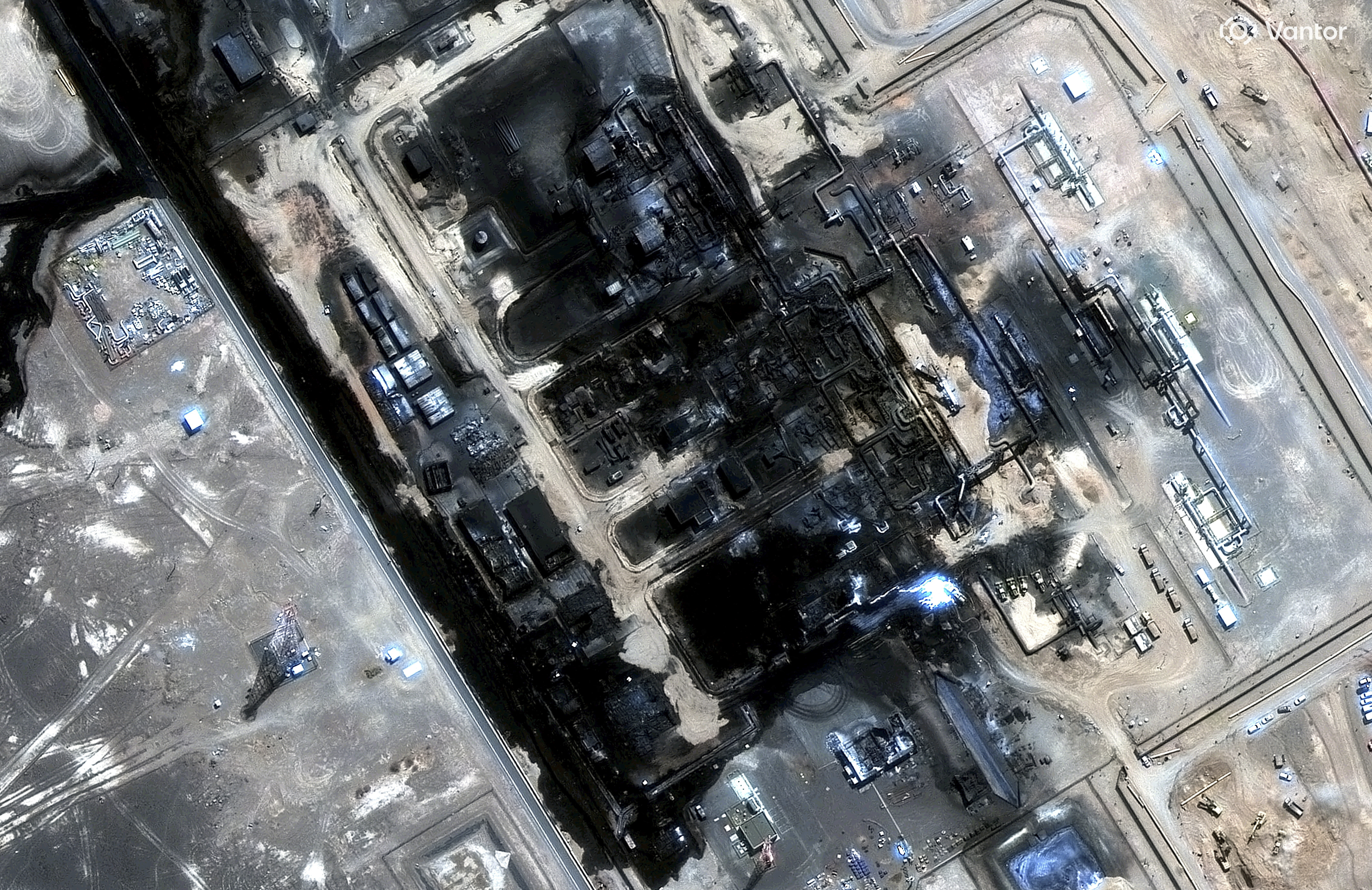
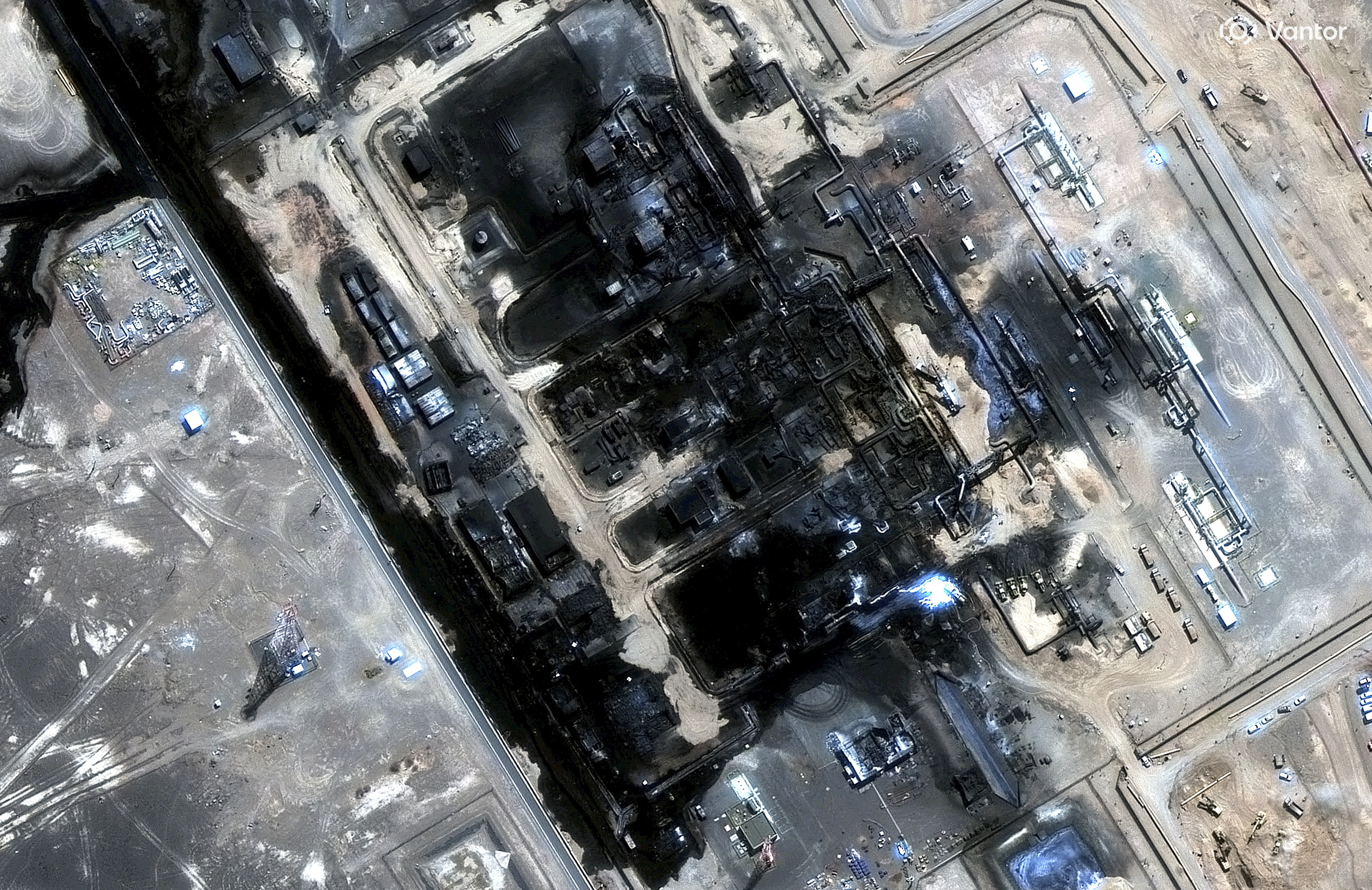
    Iran and its allies have nearly destroyed some of the U.S. bases, set luxury hotels ablaze, and, most recently, knocked offline one of the most critical pieces of energy infrastructure in the world, an oil pipeline that stretches across Saudi Arabia.

    Their backs against a wall, Gulf Arab officials are now trying to cobble together different ways to avoid attacks by Iran and its allies, including direct diplomacy with the Islamic Republic.

    Even that option faces challenges. On Sunday night, a meeting that was scheduled for Monday between Iran and the Gulf Arab states was abruptly postponed. The delay came after Saudi Arabia and Iran reached an impasse in discussions about the Strait of Hormuz — a crucial route for Gulf energy exporters — according to a senior Gulf official, who spoke on the condition of anonymity to discuss sensitive diplomacy.

    Analysts say the region’s leaders have no choice but to seek different security options after the U.S.-Israeli war with Iran exposed the vulnerabilities of the Gulf Arab countries and emboldened the Islamic Republic.

    “We’re stuck in this position of trying to build something new while maintaining some of the old,” said Bader Al-Saif, an assistant professor of history at Kuwait University. “We need to snap out of this external protector syndrome.”

    The island nation of Bahrain, for example, has been host to a major U.S. naval base for decades in the hopes of protecting itself from Iran. But as in other Gulf countries, the base became a target instead.

    The base was nearly destroyed in February, on the first day of Iran’s retaliatory attacks against the assault launched by the United States and Israel. Most of the sailors stationed there were evacuated to Florida, leaving a skeleton crew, according to a U.S. military official, who spoke on the condition of anonymity to discuss operational matters.

    Some sailors in Bahrain were evacuated so rapidly that the U.S. Navy is still trying to reunite them with their belongings, Adm. Daryl Caudle, chief of naval operations, said at a recent town hall meeting. It is unclear when they will return, he said.

    For the United States and its allies in the Middle East, the war has incurred steep costs. Iran’s effective closure of the Strait of Hormuz represents a major strategic failure and an economic setback for Gulf energy exporters. The inability of U.S. forces to fend off attacks by Iran is another strategic failure, which could have significant consequences for those countries and for the United States’ projection of power.

    Yet Bahrain and the other Gulf countries, including Saudi Arabia, the United Arab Emirates, and Kuwait, have no clear, single alternative to the United States as the guarantor of their security.

    Their militaries are smaller and weaker than Iran’s, despite spending hundreds of billions of dollars on advanced weaponry in recent decades, including American F-15 fighter jets and Patriot missile defense systems.

    China and Russia have not stepped in to defend the Gulf countries, despite close ties with many of them.

    Many Gulf officials are calling for greater regional self-sufficiency in defense. But efforts to bolster regional security — like a new defense pact among Saudi Arabia, Pakistan, and Turkey — are unproven. It remains unclear whether any of these countries will be willing and able to come to each other’s aid.

    The most realistic option for Gulf countries is to build defense partnerships that will “supplement, rather than replace, the U.S. security umbrella,” said Yasmine Farouk, Gulf and Arabian Peninsula project director at the International Crisis Group.

    Gulf analysts and officials say that without U.S. assistance and American weaponry, such as air defenses, the damage to the Gulf states would have been far worse. Dozens of people were killed in the Iranian attacks, instead of hundreds or thousands. Flights carrying tourists and businesspeople were canceled and delayed but have started to resume.

    Still, Iran’s campaign wreaked havoc on the energy-rich economies of the Gulf countries, cracking their images as safe havens in a volatile region.

    The war proved that the Gulf’s advanced defense systems are not “leak proof,” and that Iran can “impose major costs” on the countries by using large numbers of relatively cheap drones, said Kristian Alexander, a senior fellow at the Rabdan Security & Defence Institute, a government-linked research institution in the UAE.

    Facing fierce counterattacks from Iran, the United States “prioritized protecting its personnel and defending Israel,” Alexander added. “These priorities did not always coincide with the Gulf’s needs to protect airports, ports, desalination plants.”

    The short supply of U.S. missile interceptors globally also posed a challenge for the Gulf Arab states in the early weeks of the war, and they have tried to fill the gap by turning to Ukraine and other European countries. But even enhanced air defenses against relatively inexpensive Iranian drones cannot provide complete protection.

    Anna Kelly, a White House spokesperson, said President Donald Trump is “in constant communication” with regional partners and that the United States “maintains stronger bonds with these countries than ever before.”

    She dismissed the idea that U.S. military protection for the Gulf countries has been insufficient, saying that analysts who assert that “are not privy to sensitive diplomatic conversations and have no idea what they are talking about.”

    This article originally appeared in The New York Times.

  • Pollution spikes after Trump halted global air-monitoring efforts, report says

    Pollution spikes after Trump halted global air-monitoring efforts, report says

    Air pollution in dozens of cities around the world rose after U.S. embassies and consulates stopped monitoring air quality readings last year, according to a study published Monday.

    The Trump administration halted the program that published independent air quality data at more than 80 U.S. diplomatic sites in March 2025, citing budget constraints.

    Later that year, local air pollution levels increased by between 24% and 33% in 46 of those cities, according to Monday’s study, published in the Proceedings of the National Academy of Sciences.

    “This is such a big loss,” said Zoey Zhou, an assistant professor of climate at Columbia University and one of the study’s authors. “Not only for the data, but also for the health impacts and also for accountability.”

    The State Department’s program had been linked in a previous study to lower air pollution levels in the cities where it was active. Its pullback came amid other moves the administration has made to curtail climate change research and regulations on air quality. The Environmental Protection Agency repealed limits on greenhouse gas emissions for coal and natural gas power plants on Monday.

    The State Department did not respond to a request for comment on the recent findings and on whether the monitoring program will resume.

    The program originated in 2008 when the U.S. Embassy in Beijing began to share air quality information from a monitor installed on its roof. The readings, which sometimes topped the Chinese government’s reported levels, drew local anger and pressured Chinese officials to act.

    A 2022 study of 50 cities where U.S. embassies began monitoring air quality found that it led to significantly lower air pollution and increased local Google searches for terms like “air quality.”

    “The US Embassy monitoring program provided high quality and credible information to the public about the state of their air, often where there were no other sources of such information,” Andrea La Nauze, an associate professor of economics at Deakin University in Australia and one of the authors of the 2022 study, wrote to the Washington Post. (La Nauze was not involved in the most recent report.)

    Experts said the monitoring was valuable in cities and countries where local governments did not provide air quality information or offered inaccurate reports.

    “This has been very valuable to the citizens of those countries to be able to understand what are the levels of air pollution, and how much trust should they place in the numbers that are published by the national government or by the city or region,” said Kristie Ebi, a professor at the Center for Health and the Global Environment at the University of Washington. “And that has been useful then for people to take action.”

    Monday’s study investigated whether air quality gains would continue when that information disappeared, the authors wrote. They used satellite imagery to estimate air pollution levels in 46 cities where U.S. embassies and consulates halted monitoring in March 2025.

    By September that year, the aerosol optical depth — a measure of particles in the air derived from satellite imagery that is correlated with levels of PM 2.5, pollutants small enough to enter the bloodstream — around those cities had increased by about 33%. By November 2025, pollution levels had decreased but were still around 24% higher than before monitoring stopped.

    A 33% increase in aerosol optical depth corresponds to an increase of about 2 micrograms per cubic meter of PM 2.5, according to the study. The World Health Organization’s global air quality guidelines recommend that average PM 2.5 levels not exceed 5 micrograms per cubic meter each year.

    Grouped by region, the largest average increases in aerosol optical depth appeared at sites in Southeast Asia, sub-Saharan Africa, and South Asia, according to Zhou, the study co-author. She cautioned that the number of sites in each region was small and that the study was not designed to isolate particular countries or cities, where readings could have been affected by other local factors.

    Zhou wrote that the reduction in air pollution between September and November 2025 could suggest that other sources of air pollution information gradually filled the gap after U.S. embassies stopped their monitoring. But she said the pullback by American diplomatic missions, which issued highly visible and trusted air quality reports, was still a large loss.

    Zhou added that her study did not perform a full cost-benefit analysis of the air quality monitoring program for the U.S. embassies involved.

    Ebi of the University of Washington, who was not involved in the new study, said that the U.S. embassies’ data was also invaluable to researchers investigating other climate trends affected by air pollution, such as the spread of wildfire smoke and heat waves.

    “As a scientist, I don’t understand why there is such a strong focus on removing information,” Ebi said. “Of moving to a situation where people are more ignorant, less knowledgeable about the harms they may be facing … and what actions to take to help reduce those harms.”

  • Trump’s planned sale of controversial bombs to Israel is largest in years

    Trump’s planned sale of controversial bombs to Israel is largest in years

    The Trump administration is preparing a multibillion-dollar sale of 2,000-pound bombs to Israel in the largest single sale of the controversial munition in recent years, a U.S. official told the Washington Post.

    The $2.8 billion package, which would be purchased with U.S. taxpayer dollars, includes 40,000 bombs that weigh 2,000 pounds each, including 20,000 MK-84s and 20,000 BLU-117s, said the official, who like others spoke on the condition of anonymity to discuss military matters. The sale also includes 20,000 I-2000 Penetrator warheads.

    Among the most destructive munitions in Western military arsenals, an MK-84 explosion sends metal fragments in every direction for thousands of feet, can rip through metal and thick concrete, and often creates large craters in the earth.

    The pending transaction has been informally notified to congressional committees, setting up a potential litmus test for Democrats as frustrations with Israeli Prime Minister Benjamin Netanyahu have created unprecedented strain in the U.S.-Israel relationship.

    Though described as a sale, the transaction is financed through a mechanism known as Foreign Military Financing, in which the United States provides the money that Israel uses to buy the weapons.

    When asked about the humanitarian concerns, a senior administration official said: “All foreign arms sales are moving through the appropriate process. We do not comment on pending sales.”

    The Israeli Embassy did not respond to a request for comment.

    The size of the package eclipses previous sales of 2,000-pound munitions to Israel during the Biden administration and the Trump administration, including a controversial $2.04 billion sale in 2025 that bypassed the normal congressional review process.

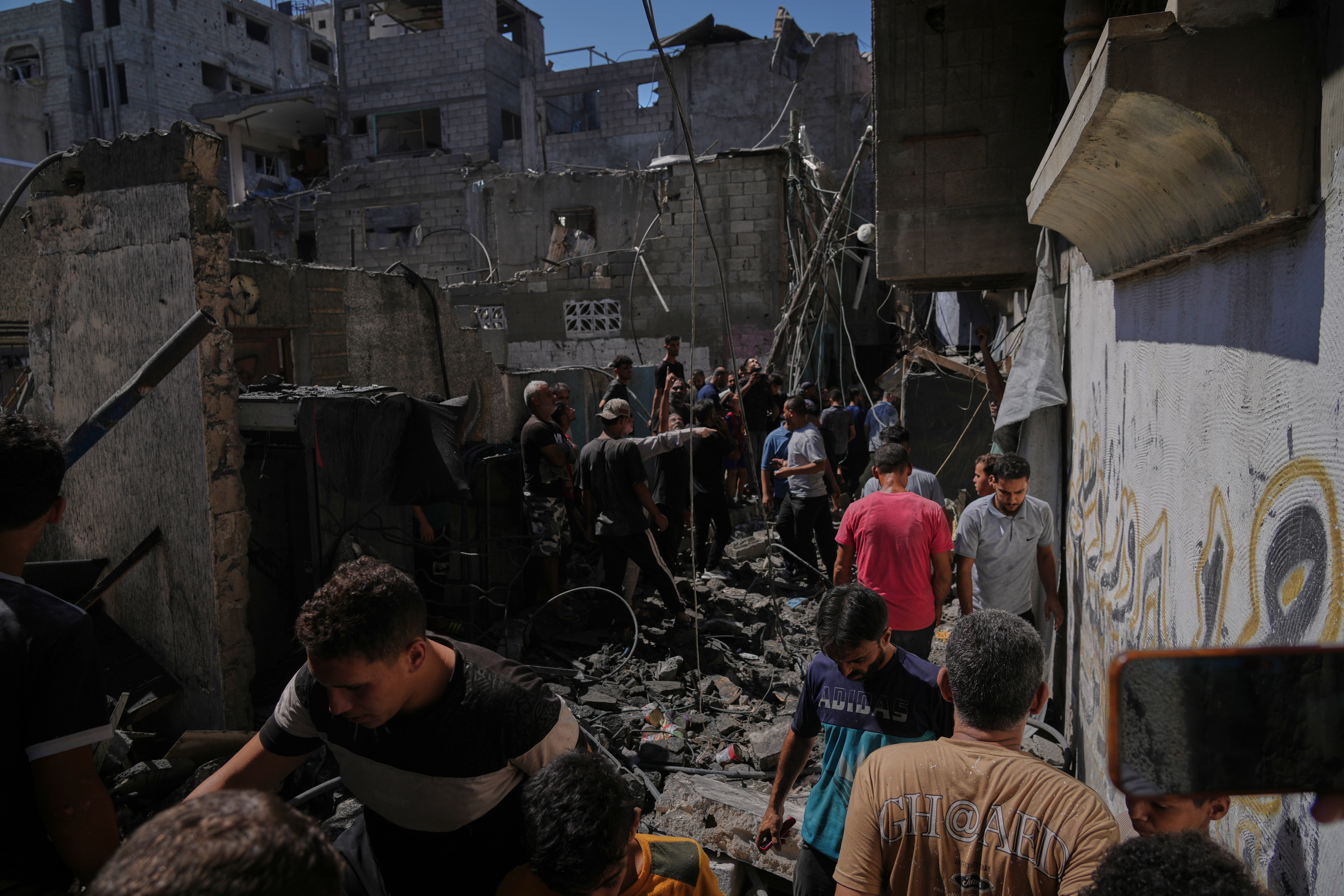
    The 2,000-pound bombs have been employed by Israel on hundreds of occasions in Gaza and Lebanon, playing a significant role in the death toll of those conflicts. Israel has drawn criticism for routinely dropping MK-84s in zones it designated as safe for civilians in Gaza.

    “They do like to use them a lot when they’re trying to target any building,” said Trevor Ball, a former explosive-ordnance-disposal technician for the U.S. Army. “If Hezbollah or whoever is in a building, an MK-84 will bring down the whole building.”

    Nicknamed the “hammer” by U.S. pilots in the first Gulf War, it is the only munition that President Joe Biden’s administration stopped sending to Israel during the Gaza war out of concern about the killing of Palestinian civilians. That involved suspending a single shipment of the munitions in the spring of 2024. The policy was immediately reversed by President Donald Trump in January 2025, his first month back in office.

    “Given the way Israel conducted its air war in Gaza and, to some extent, in southern Lebanon, there are real concerns about how such weapons would be used in densely populated areas,” said Brian Finucane, a senior adviser at the International Crisis Group. “That’s assuming that you have valid military targets to start with because there are concerns about what Israel deems to be valid military targets.”

    U.S. support for the sale comes despite several areas of tension between Israel and the Trump administration, including over the violent attacks on Palestinians by Israeli settlers in the West Bank, and ongoing concerns about Israeli military operations in Lebanon and Syria. Israelis also have spurned Trump’s peace plan for Gaza, which involves Hamas disarming in exchange for a withdrawal of Israeli forces.

    When the Trump administration struck a short-lived deal with Iran aimed at ending the war there, allies of Netanyahu harshly criticized the agreement and attacked Vice President JD Vance for negotiating it.

    As the conflict has dragged on ahead of the midterm elections, Trump and his aides have grown increasingly frustrated with Netanyahu, who pushed for the war on the promise of a quick and decisive victory.

    Though the delivery time for such orders can be multiple years, approving such sales sends a broader signal about the bilateral relationship.

    “If the Trump administration’s goal is to calm things down in the Middle East, the timing of this is unusual,” Finucane said. “Whether they intend to or not, it sends a vote of confidence to Israel.”

    The Trump administration is pressing the leaders of the Senate Foreign Relations Committee and the House Foreign Affairs Committee to approve the sale.

    Republican and Democratic leaders historically have backed such sales, but they are starting to face resistance from rank-and-file members regarding U.S. support for Israel stemming from the unpopularity of the wars in Gaza and Iran.

    Polls consistently show most Americans oppose the war in Iran, which has raised energy costs and increased inflation. In July, more than 100 House Democrats voted to end all U.S. aid to Israel, signaling a historic shift in the party’s opposition to the country.

    Republicans are more unified in their support for Israel, but a growing number of conservative commentators, including Megyn Kelly, Tucker Carlson, and Candace Owens, have questioned Washington’s steadfast backing and the $3.8 billion of aid the U.S. sends to Israel every year.

    Besides the MK-84, the sale includes I-2000s, a penetrating bomb body used to attack hardened structures, and BLU-117s, a variant of the MK-84 that has thermal protective coating to make it safer for naval storage.

  • Democrats gain edge as Trump drags down GOP, new poll finds

    Democrats gain edge as Trump drags down GOP, new poll finds

    With fewer than 50 days until the midterms, Democrats have developed a clear advantage over Republicans as the president has lost the public’s trust on the economy, according to a new national poll from the New York Times and Siena University.

    President Donald Trump’s lingering unpopularity and intense frustration over his management of cost-of-living issues, in particular, have deepened Republican vulnerabilities as Democrats push to win control of both the House and Senate.

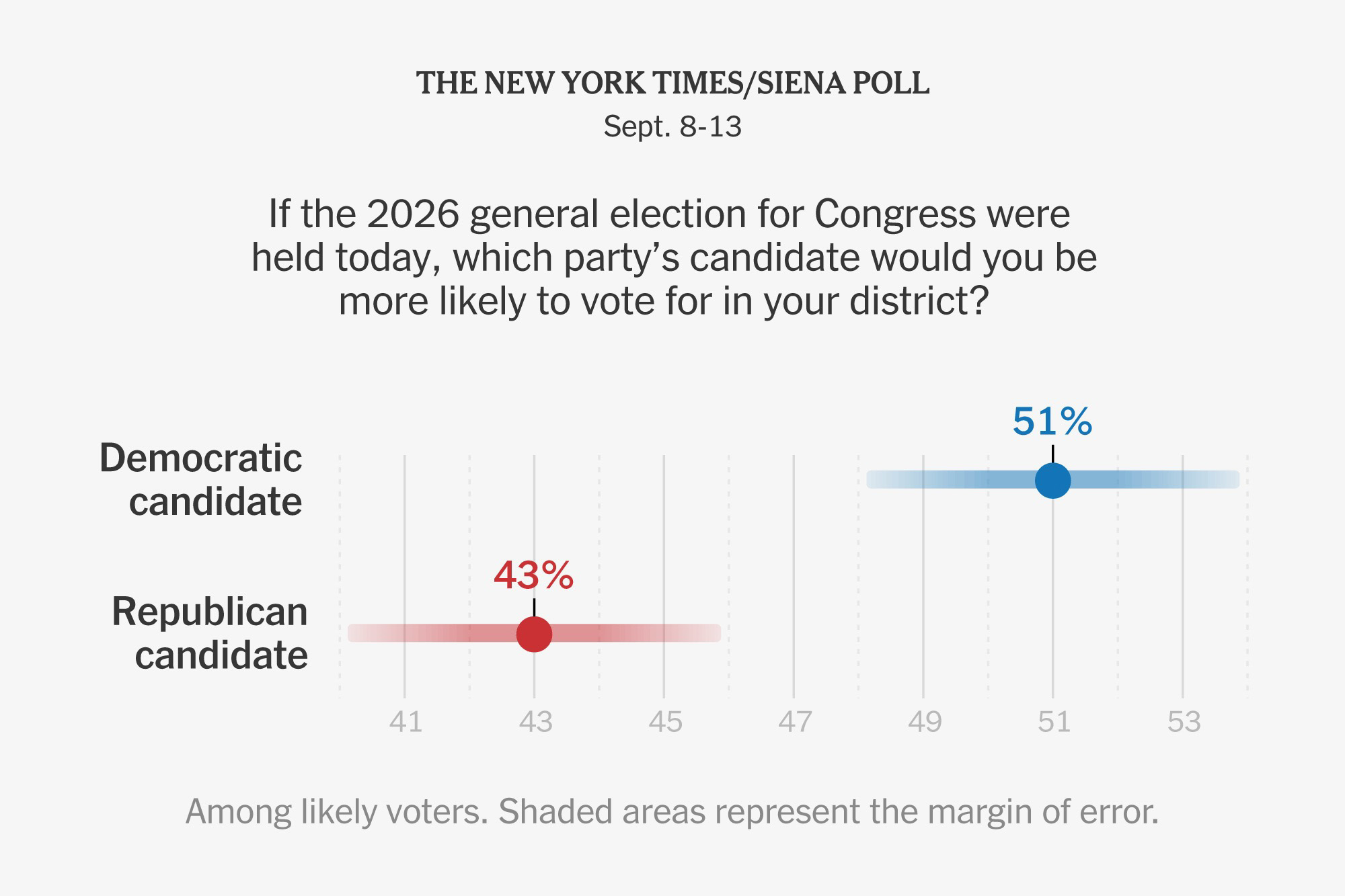
    Likely voters favored Democratic candidates over Republicans by close to 9 percentage points in their congressional district — a metric that is closely watched by both parties as a leading indicator of political momentum.

    Trump’s approval rating continued to languish at 38% among likely voters, essentially unchanged from the lows it sank to after he went to war with Iran. A majority of voters disapproved of Trump’s handling of every major issue included in the poll: the economy, immigration, tariffs, the war, and, especially, the cost of living.

    And voters said they trusted Democrats more than Republicans on not just healthcare and foreign wars but also on the two issues that powered Trump’s 2024 victory: immigration and the economy.

    The political conditions found by the poll suggest the makings of a potential Democratic wave in November. But that outcome is far from assured. Thanks in part to gerrymandering, relatively few House seats are truly competitive, and in the run-up to the midterms, Republicans drew new House maps in several states favorable to their candidates. And even a nearly 9-point advantage would not guarantee flipping some of the Senate seats Democrats are counting on in 2026 — Texas, Ohio, Alaska, Iowa — which Trump won by double digits in 2024.

    Still, independent voters have especially soured on Trump. Just 10% of them said the economy was better today than a year ago and only 27% approve of Trump’s job performance overall. And in the fight for Congress, 57% of independent voters said they planned to vote for a Democrat compared with only 34% for a Republican.

    The cost of living is dragging down Republicans more than any other issue, as even some Republican voters lose faith in Trump’s economy. Only 28% of voters said they approved of how Trump has managed matters related to affordability.

    Even Trump’s most loyal and durable demographic base — white voters without college degrees — disapproved of the president’s handling of the cost of living by a wide 21-percentage point margin.

    And opposition to Trump is intensifying. The survey was the first Times/Siena poll in his second term to find a majority of voters, 52%, saying that they “strongly” disapproved of him.

    The war in Iran, which has driven gas prices above $4 a gallon, is also weighing down the president. More than three-quarters of independent voters said they disapproved of his handling of the conflict, and so did nearly a quarter of Trump’s own 2024 voters.

    Yet the survey found that the GOP’s vulnerabilities extend beyond Trump.

    Voters see Republicans broadly as more extreme, more elitist, and more corrupt than Democrats, according to the poll. And while voters continue to have doubts about both parties, they aligned more with the Democratic Party on both cultural and economic matters than the Republican Party in the survey.

    One glimmer of good news for Republicans is that the political situation has not deteriorated further since the spring. Yes, Trump is unpopular. But he is not more so than he was five months ago. The Democratic Party is viewed as too far left. And Republicans are generally outpolling Trump — including on how they would handle particular issues.

    Still, by an 11-point margin, voters said they would prefer for Democrats to control Congress after the November election.

    “All I know is right now, the Republicans are in power and I’m not really seeing the change I wanted to see,” said Elizabeth Gloden, 21, an independent college student in Arizona who voted for Trump in 2024 but is planning to vote Democratic this year. “I’m Gen Z. I am in the area where we want to move out of our parents’ houses, but we can’t because everything costs a million dollars,” she added. “I think it’d be a good idea to just see the other side what they can do.”

    There were indications that the Democrats were winning back groups they had lost ground with in the 2024 presidential race. The current Democratic strength in the battle for Congress was being driven heavily in the poll by younger voters (those under 30 favored Democrats by 35 percentage points), Hispanic voters (43 points) and independent voters (23 points) — all groups the party had seen sagging support from two years ago.

    Trump’s approval rating among voters under 30 stands at an abysmal 18%.

    The economy ranked as the top issue for voters. Only 14% of voters said the economy was better than it was a year ago — down from 31% who said so in January.

    The erosion among Republicans is especially stark. While 72% of Republicans said in January that the economy was better than it had been the prior year, only 29% of Republicans said so now.

    Trump has tried to wave off those concerns. “This has been the most successful two years financially and every other way in the history of the presidency,” Trump claimed in his address last week at a convention in Dallas.

    Voters are not buying it.

    “I actually feel really gaslit because I’m constantly hearing from Republicans, from conservatives just in the media in general, that ‘don’t believe your lying eyes, everything’s great, wages have increased,’ all of these different things,” said Meghan Demetrios, 40, an independent voter in South Carolina.

    “I feel like I’m super poor in America,” she continued. “I got a new career job about nine months ago, and I was so proud of myself and so excited. And I thought everything was going to get a little bit better. And I turn around, and I find that every single bill I have has gone up.”

    She plans to vote Democratic this year.

    All told, 71% of voters disapprove of how Trump is handling the cost of living while 28% approve — a net disapproval of 43 percentage points, which is 13 points worse than it was January.

    Economic hardship appears to be especially hampering the GOP among lower-wage earners.

    Those earning less than $50,000 were more than twice as likely to say they would vote for a Democratic congressional candidate this fall rather than a Republican, 63% to 31%.

    That would represent a dramatic shift from 2024, when Trump narrowly carried that group, according to exit polling.

    More than half of voters said they worry more about Republicans in Congress allowing Trump to go too far, while 39% said that they worry about Democrats trying to move the country too far to the left.

    Adding to the party’s problems, Republicans face an enthusiasm gap: 61% of Democrats said they were almost certain to vote, compared with 56% of Republicans.

    One of the Democratic Party’s potential vulnerabilities is being seen as outside the mainstream. The share of voters who see Democrats as too far left has grown to 50%, up from 47% earlier this year. (But likely voters were more likely to describe the Republican Party as “extreme” than the Democratic Party.)

    And a 51% majority of voters had an unfavorable view of socialism — one reason Trump’s convention in Dallas repeatedly used that label.

    “The Democrats have always done a horrible job of supporting their own cause because they can’t get out of their own way,” said Thomas Lappin, 48, a Democrat who lives in Austin, Texas, and who wished his party would move strategically to the center. “I feel like they’re just doing this again and every time they get their act together, they just somehow screw it up again.”

    About a tenth of all voters, including Democrats, Republicans, and independents, say they disagree with both parties when it comes to economic issues. This year, Democrats seem to be winning them over, at least for now.

    James Witherington, 41, left the Army after two decades last year and is now a real estate investor in Colorado Springs. He called his voter registration — he’s a Republican — a “loaded question” these days, considering his frustrations with Trump, whom he called “an egomaniac.”

    “This is an unnecessary war,” he said. “Do I hate Iran? Yes. Should we destroy them? Yes. But now is not the time.”

    But Witherington said he is still planning to vote for his local Republican congressman, Jeff Crank, whom he knew by name. “He emails me about veterans problems,” he said.

    “The extreme left has gone too far,” he said. “The extreme right is like the high school jock bully. But most people are in the middle. Most people are just walking down the hall.”

    This article originally appeared in the New York Times.

  • Iranian strikes have damaged hundreds of structures at U.S. bases, watchdog says

    Iranian strikes have damaged hundreds of structures at U.S. bases, watchdog says

    Iranian strikes have damaged or destroyed hundreds of buildings and other structures at U.S. bases across the Middle East, and caused about $184 million worth of damage at U.S. diplomatic facilities, according to a Pentagon watchdog report.

    The inspector general’s report to Congress on Operation Epic Fury — the Trump administration’s name for the war with Iran — also details the extent of U.S. munitions shortages, in the first comprehensive public accounting of the war, which is now in its seventh month.

    The report, released Monday, covers operations through June 30. It contains input from the departments of Defense and State and other agencies to provide the most complete picture yet of the cost and military impact of the ongoing conflict.

    Buildings and other structures at U.S. bases in Kuwait, Bahrain, Qatar, UAE, Saudi Arabia, Iraq, Oman, and Jordan were damaged or destroyed in the war, the report stated, adding that U.S. diplomatic facilities in Iraq, Kuwait, Saudi Arabia, and the United Arab Emirates also sustained damage.

    The mounting costs of the war and impact on U.S. munitions stockpiles has already come under scrutiny. In July, Defense Secretary Pete Hegseth told a Senate hearing that the war has cost $37.5 billion and defended the administration’s request for a further $67 billion to restock the Pentagon’s arsenal and avoid looming budget shortfalls.

    The latest report details how the war has “resulted in strategic inventory shortfalls” of munitions and “revealed industrial base bottlenecks for munitions resupply.”

    It said the Defense Department is working to “streamline” procurement and production processes, as well as stockpile critical materials, components, and munitions to mitigate the shortage. But while these efforts have begun, the defense industrial base requires “significant lead time” to expand production.

    “The most persistent bottlenecks remain in the production of solid rocket motors, the availability of high-grade explosives and propellants, and the recruitment of skilled manufacturing labor,” it states.

    The expenditure of U.S. munitions is increasingly worrying U.S. allies and Pentagon officials in the Indo-Pacific region who fear the war in Iran could undermine readiness for a potential conflict with China. The weapons drain has become a source of tension between President Donald Trump and Hegseth, though Trump has denied U.S. weapons are running low.

    On Monday, Trump touted U.S. weapons stockpiles in a post on Truth Social, saying he had received a report noting the U.S. is producing “more Exquisite and Elite Weapons than at any time in our History” that were being delivered to U.S. forces.

    “A primary focus of this production has been Patriots, THAAD Systems, Tomahawks, and other Standard Missile Systems, of which we already have large numbers in stock,” he said.

    The Pentagon and the White House did not immediately reply to requests for comment early Tuesday.

    The Washington Post reported in May that the U.S. had depleted much of its inventory of advanced missile-defense interceptors, using up roughly half of the Pentagon’s total inventory of Terminal High Altitude Area Defense, or THAAD, interceptors. The U.S. military also fired more than 850 Tomahawk cruise missiles in the first four weeks of war, a rate that has alarmed some Pentagon officials.

    The extent of the munitions the U.S. has used during Operation Epic Fury illustrates the “magnitude and complexity” of the challenge posed by Iran, the report said, noting Iran’s large armed forces, extensive underground facilities, and decades of building a domestic defense industry.

    The U.S. launched Operation Epic Fury on Feb. 28 in joint strikes with Israel that killed Iran’s leader at the time, Ayatollah Ali Khamenei. The war has now entered its seventh month, with Iran retaining leverage over the Strait of Hormuz, a critical waterway for oil and gas flows from the Persian Gulf. A recent lightning offensive by Houthi rebels in Yemen, supported by Iran, has threatened to further imperil shipping through the Bab al-Mandab Strait.

    Dozens of U.S. aircraft have been damaged or destroyed during the operation, including four F-15E fighter jets, one F-35A damaged in enemy fire over Iran, and several other aircraft and helicopters, the report said.

    More than 50,000 U.S. service members have been deployed throughout U.S. Central Command’s area of responsibility in support of the operation, the watchdog report said. A total of 18 have died, the report said, including several in July. It said 417 service members were wounded between Feb. 28 and June 30.

    The State Department has also incurred around $113 million in costs, including nearly $80 million responding to events such as the evacuation of U.S. citizens and State Department personnel, the report said, adding that about 9,000 Americans have left the region on charter flights and buses.

    The war has also had an “immediate negative impact” on U.S. assistance across the Middle East, including agriculture, food, health, nutrition, and water sanitation, because of the departure of embassy staff, the report said.

  • FBI Director Kash Patel suggests agents may be sent to the polls

    FBI Director Kash Patel suggests agents may be sent to the polls

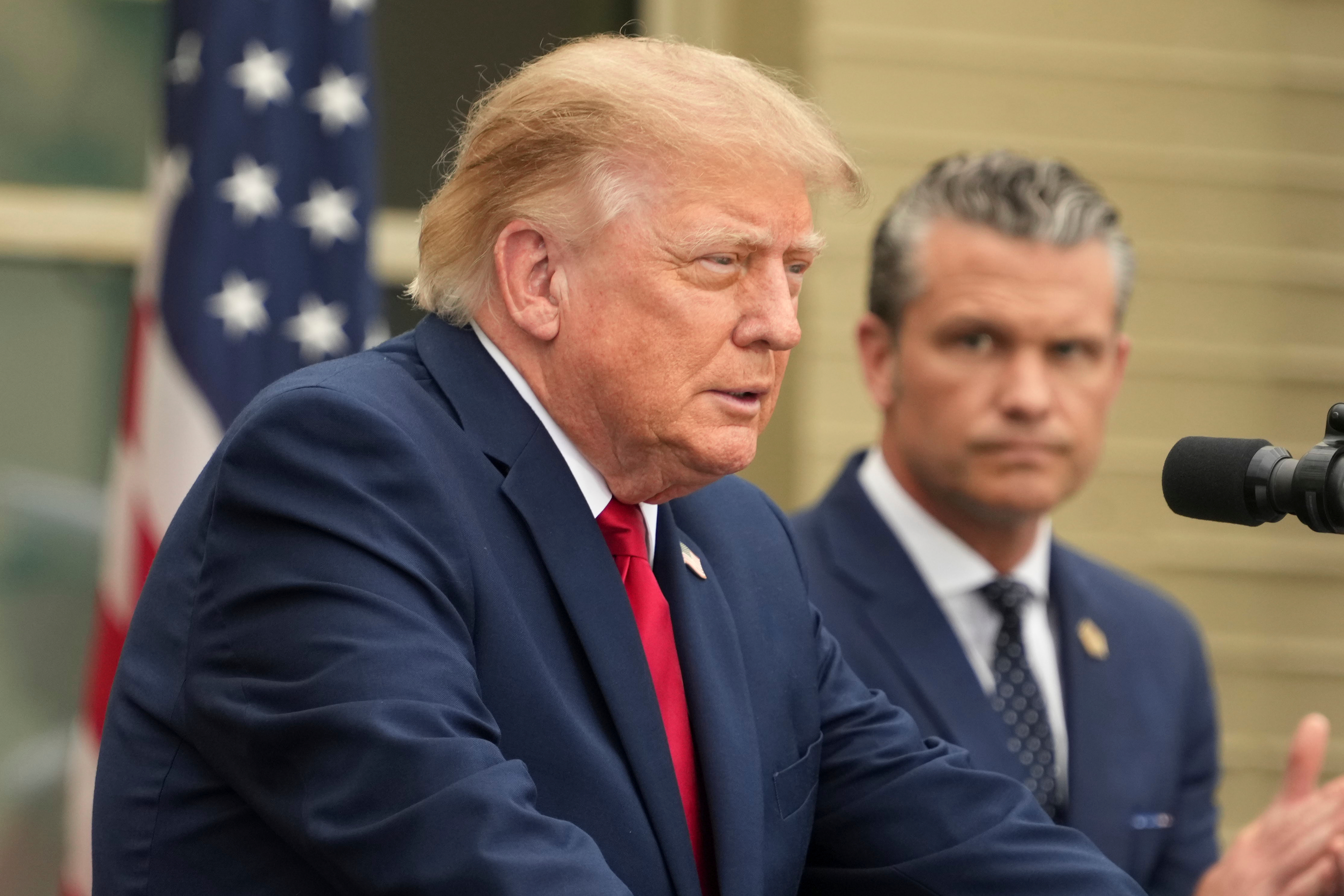
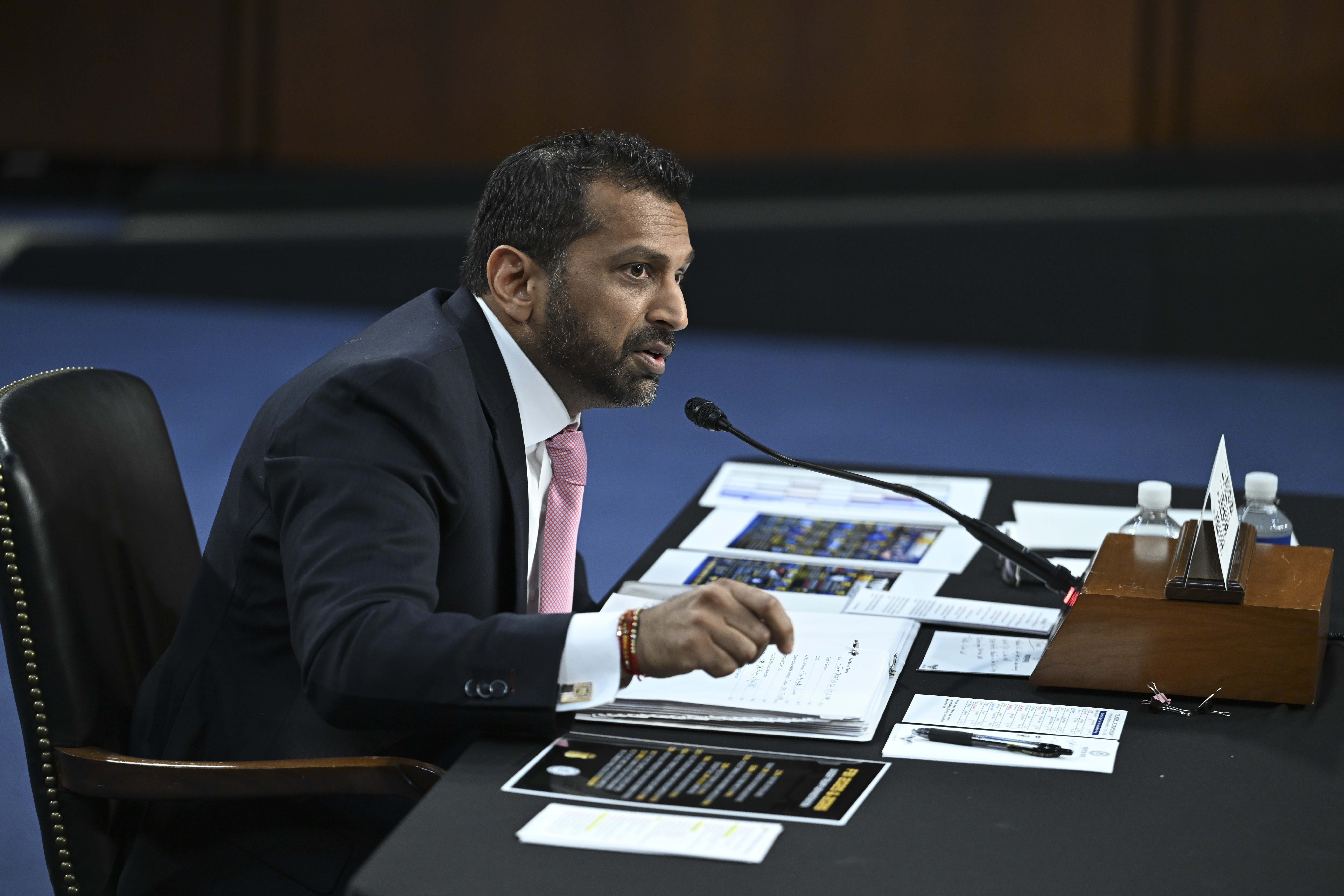
    WASHINGTON — FBI Director Kash Patel suggested Tuesday that he was open to sending federal agents to polling places, raising alarms from Democrats that the Trump administration would act aggressively to assert greater control over the coming elections.

    The remarks, made during testimony before the Senate Judiciary Committee, stood at odds with earlier comments indicating that he did not intend to send federal agents to polling places around the country. However, when Sen. Peter Welch (D., Vt.) pressed the issue, Patel seemed to reverse course.

    “I thought you weren’t going to be sending people to the polls,” Welch said.

    “When did you hear that? Just another lie,” Patel declared, raising his voice.

    Welch revisited the issue. “So you are sending FBI agents to the polls?”

    “We have election crisis coordinators manned at all 56 field offices,” Patel replied, appearing to refer to what are known as election crime coordinators. “Election integrity is of paramount importance. This FBI will not shy away from that effort.”

    Under the law, armed federal officers or military personnel are barred from being deployed “at any place where a general or special election is held.” The chair of the Joint Chiefs of Staff said in a letter to a Democratic senator last month that there were “no plans” for the armed forces to deploy troops to polling stations for the midterm elections.

    As President Donald Trump has ramped up his efforts to cast doubt on the integrity of the vote in an election his party might lose, Democrats have sought assurances from Trump administration officials that they will follow the law, which carries a potential five-year prison sentence for any violations.

    The president regularly declares the 2020 election he lost was “rigged,” and has said the only way Democrats can win control of Congress this year is by cheating. The claims have fueled broader concerns that loyalists within the administration may wage a pressure campaign against state officials to produce election results favorable to Trump’s party.

    When he was first asked about the issue at the hearing, Patel vowed to “follow the law.”

    “If there’s a reason to go there because there’s been a violation, we will, otherwise we won’t,” he added, noting that “we’re going to house our agents and intel analysts in our field offices.”

    Historically, the Justice Department used workers at its public integrity unit to consult with prosecutors and agents around the country on sensitive investigative issues around elections. But the Trump administration dismantled that unit last year, leaving it unclear who in the department and the FBI would handle such critical decisions in the final days of the election cycle.

    Welch expressed alarm at Patel’s responses, saying they suggested he could harness the power of the federal government to try to affect election outcomes.

    “This is about whether the United States citizens — Republicans, Democrats, independents — are the deciders of this election or there is election interference led by the FBI and the Trump administration,” Welch said.

    The senator prodded further. “Do you pledge that you will not in any way interfere in the will of the American people when they go to the polls in November?”

    Patel sidestepped the issue, saying instead: “I pledge unequivocally that I will not participate in your charade of lies.”

    An angry argument ensued, with the pair exchanging attacks. The senator denounced the FBI director as a “panderer” to Trump, and Patel suggested Welch’s personal finances were suspicious.

    “Let’s knock it off,” said Sen. John Cornyn (R., Texas) as he tried to lower the temperature in the hearing room.

    It did not work.

    “Everybody sees you for the complete and total fraud you are,” Patel said angrily to Welch.

    The Vermont senator then challenged Patel over his travel, in which he often combines work with recreational activities. During a trip to Italy, Patel spent time at the Olympics in Milan, during which he was filmed chugging a beer with the men’s hockey team after they won gold.

    “I go where I want to go, after delivering the most prolific crime reduction in U.S. history,” Patel said. “What you’ll never understand is the players who are my friends invited me to the locker room.”

    Patel was also pressed on whether counterintelligence agents had opened an investigation into how a wealthy Russian oligarch paid for part of the wedding celebrations for Trump’s son Donald Trump Jr.

    “It may involve some intelligence degradation, and I would like to know what steps you are taking to investigate,” said Sen. Richard Blumenthal (D., Conn.).

    He added, “I think there’s a potential for compromise in intelligence and also the possibility of improper influence.”

    Patel was noncommittal.

    “We will look at whatever information comes our way,” he said.

    In one of the stranger exchanges, Patel repeatedly fielded questions about bestiality, part of a recent change in FBI policy that loosened hiring standards, including by no longer automatically disqualifying job candidates who have participated in sexual activity with animals. The change, he said, was made out of consideration for people who may have been forced, either as children or sex-trafficking victims, to participate in such conduct.

    “We did not want to punish victims of bestiality, victims who were trafficked,” Patel said. While he did not elaborate, there have been cases in which children or others were forced to engage in sex with animals.

    Previously, the director said, the FBI had automatically disqualified anyone who had engaged in such conduct, no matter the circumstances. Lawmakers seemed flummoxed by the explanation.

    “Either side of what, the bestiality?” Sen. John Kennedy (R., La.) asked. “So you disqualified the animal?”

    Patel replied, laughing: “We have great K-9s, but we’re not going to disqualify them.”

    At other points, the hearing veered into sniping.

    Sen. Cory Booker (D., N.J.) said Patel had acted “like a thug” in using law enforcement agents to subpoena reporters.

    “We are not targeting reporters at any point in time,” Patel replied.

    “We don’t have an FBI director, we have a lackey here, and frankly not even a good lackey, he’s an incompetent lackey,” Booker said. “This is a mockery and a sham.”

    As the two men argued, Sen. Chuck Grassley (R., Iowa) sought to end the exchange.

    “Are you done now? Are you ready to shut up?” Grassley growled at Booker.

    This article originally appeared in the New York Times.

  • Yemen’s Houthi militants are learning to arm themselves with AI

    Yemen’s Houthi militants are learning to arm themselves with AI

    The popular image of Yemen’s Houthi rebels is of men on the backs of pickup trucks, firing AK-47s into the desert air.

    Yet the group has launched long-range missile strikes at Israel, more than 1,000 miles away. The Houthis prey on ship traffic in the Red Sea with naval drones. And evidence points to their growing ambition to use artificial intelligence and other means to produce more advanced weaponry themselves, making them less reliant on their sponsors in Iran.

    Although they are backed by Iran, for months the Houthis remained on the sidelines of this year’s fighting in the region. That ended in July, when they declared a maritime blockade on Saudi Arabia. Since then, they have marched south, seizing the historic port city of Mokha last week while capturing islands near the narrow strait known as the Bab el-Mandeb, tightening the group’s grip on the choke point at the southern end of the Red Sea.

    “They use every opportunity to build their capability, to test their capability, such that they are now the most lethal nonstate actor in the entire Middle East,” said Timothy A. Lenderking, the former U.S. special envoy for Yemen, speaking at a Middle East Institute forum Friday.

    A report by Anthropic last week on the misuse of AI said that “a cell of threat actors based in northern Yemen,” where the Houthis have their stronghold, used Claude for “a sustained effort to develop guided weapons.” Despite Anthropic’s safeguards, the company said, the cell proceeded as far as the test firing of a guided rocket.

    The Houthis still rely on their Iranian sponsors for the most sophisticated components in their drones and ballistic missiles, but as the Anthropic report suggested, in recent years they have become much more advanced at building their own weapons systems.

    This has given the Houthis greater flexibility to maintain their fight against their Yemeni and Saudi adversaries, attack shipping traffic in the Red Sea, and threaten Israeli and U.S. targets even with the U.S. Navy enforcing a monthslong blockade of the Strait of Hormuz.

    Laboratory of war

    The Houthis and their Iranian advisers were already experimenting with uncrewed surface vessels a decade ago. The militant group used a remote-controlled boat loaded with explosives to attack a Saudi frigate all the way back in 2017, killing two people in the process.

    After the Houthis captured Yemen’s capital, Sanaa, in 2014, Saudi Arabia led a military coalition propping up the country’s government and fighting back against the militants. A ceasefire was declared in 2022, but experts say the group has used the intervening years to dramatically advance its capabilities.

    The truce gave the Houthis time “to regroup, retrain, refit, restock,” Lenderking said.

    “The volume of goods being brought into Yemen to make weapons increased exponentially and the number of routes being used increased exponentially after the truce was announced in Yemen in 2022,” said Peter Salisbury, an adjunct professor at Columbia University’s School of International and Public Affairs, who has studied Houthi weapons manufacturing closely.

    At first, Yemen was a laboratory for Iran’s pursuit of warfare. Increasingly, it is the factory, too. Salisbury said that larger parts like missile chassis are fabricated in Houthi-controlled territory rather than sent from Iran.

    “Iran and Hezbollah have invested heavily in continuing to up-skill the Houthis in the manufacture and use of weapons,” Salisbury said. “Increasingly they’ve been able to indigenize the production of a lot of things like one-way attack drones.”

    According to Farzin Nadimi, a senior fellow with the Washington Institute for Near East Policy, the Iranian defense industry has dedicated design bureaus and factories for weapons systems specifically for proxy forces like the Houthis that are “simple to assemble, simple to move, simple to prepare for launch, and simple to use.”

    Resilient supply chains

    The Iranians encouraged the Houthis to develop additional supply chains for components from places like China, whose factories supply many of the drone parts used around the world.

    “There’s a lot the Houthis don’t need anymore, and the reason they don’t need it anymore is because they’ve been able to use the global black market supply chain to get most of the things they need,” said Kevin Donegan, a former commander of the U.S. 5th Fleet, whose area of responsibility included the Persian Gulf and the Red Sea, and who built the first intelligence fusion cell to study Iranian support for the Houthis.

    “They do need key components still, especially for the missiles to make them effective,” Donegan said. “They have the ratlines that still can bring those components because they’re not the big pieces.”

    Those might include guidance systems, rocket engines, and wing tips and fins that require a higher degree of precision engineering, Salisbury said.

    While the U.S. Navy’s blockade focuses on large container ships and tankers, smaller components can be smuggled on medium-size vessels like the traditional dhows plowing the region’s waters. Shipments can be sent directly to Houthi-controlled areas of Yemen, transshipped via the Horn of Africa or even transferred ship to ship in the waters off the coast of Somalia. Salisbury calls it a “giant game of three card monte.”

    Increased self-sufficiency is not necessarily the same thing as complete independence from their sponsors in Iran’s Revolutionary Guard. “I think they pretty much still need a lot of help from the IRGC,” Nadimi said. He said that he believed there were “significant numbers” of Revolutionary Guard officers involved in the planning and execution of the current phase of the fighting in Yemen.

    The need for Iranian advisers and the more advanced components may explain how the renewed fighting in Yemen started this summer in the first place.

    A Houthi delegation traveled to Tehran, Iran, in July for the funeral of Iran’s supreme leader, Ayatollah Ali Khamenei. After, they boarded a flight home operated by Iran’s Mahan Air, which is under sanctions imposed by the U.S. government, back to Sanaa.

    The Saudis and the Yemeni government believe that the aircraft carried Iranian military personnel and weaponry. When airstrikes prevented the plane from landing at Sanaa International Airport, the flight diverted and managed to land elsewhere in Houthi-controlled territory.

    The Houthis then launched retaliatory attacks on Abha International Airport, in the southern part of Saudi Arabia. It was the first Houthi attack on Saudi Arabia since 2022, and began a new and unpredictable phase of fighting, with an adversary that spent years planning and advancing its tactics and technology.

    If the Anthropic report is accurate, the group that was using Claude in northern Yemen tried to develop a multistage ballistic missile with a range of more than 1,200 miles and a hypersonic glide vehicle. The would-be weapons designers were careful to avoid the company’s safeguards, hiding the true purpose of the guidance systems they were designing from the very system helping them design it.

    Anthropic said there was no evidence that they were successful in “fielding an operational device.” The users queried Claude Code about why their field test had failed. “Nevertheless, we have evidence that the actors had already built an offline simulation tool kit that does not rely on Claude,” the report said.

    Recent history suggests they will keep working to improve their capabilities.

    “Keep in mind that the Houthis are always on the move,” said Lenderking, the former U.S. envoy. “They’re extremely entrepreneurial.”

    This article originally appeared in the New York Times.