Tag: no-latest

  • Bob Mackie, designer who bedazzled Carol Burnett and Cher, dies at 87

    Bob Mackie, designer who bedazzled Carol Burnett and Cher, dies at 87

    Bob Mackie, the exuberant costume and fashion designer whose glittering, beaded, sequined, rhinestoned, feathered, and often winged creations bedecked, bedazzled and elevated performers like Carol Burnett, Diana Ross, Tina Turner, Bernadette Peters, Bette Midler, Mitzi Gaynor, Liza Minnelli, Elton John, RuPaul, and, most memorably and enduringly, Cher — as well as an 11.5-inch model named Barbie — died Monday in Palm Springs, Calif. He was 87.

    The death, at a hospital, was confirmed by Joe McFate, Mackie’s longtime design director.

    “He dressed every spangly woman in show business,” said Frank DeCaro, author of Unmistakably Mackie: The Fashion and Fantasy of Bob Mackie (1999). “You can mention some of the greatest names in fashion, and the average person won’t be able to conjure up, for example, a Giorgio Armani suit. But if you say to an American of a certain age, ‘What is a Bob Mackie?,’ they know exactly what you’re talking about.”

    Mr. Mackie got his start in Hollywood, dropping out of college to sketch for costume designers Jean Louis and Edith Head, but it was television that made his name. When Carol Burnett put together her variety show in 1967, she picked Mr. Mackie to design the costumes. At the time, he was in his late 20s — though he looked about 12, Burnett often said. Over the show’s 11 seasons, he created an average of 60 costumes a week for Burnett, Harvey Korman, Vicki Lawrence, Tim Conway, and Lyle Waggoner, as well as the show’s guest stars and supporting performers.

    The skits, of course, were comedic gold, and Burnett said that she frequently found her characters through Mr. Mackie’s designs. For Mrs. Wiggins — the dim and indifferent secretary whom “the IQ fairy never visited,” in Burnett’s words — he assembled a frosty blond wig, a pushup bra, and a tight black skirt that wasn’t quite tight enough for Burnett’s lanky frame. “Stick your behind back into it,” he instructed her, and the character’s mincing walk was born.

    The show was known for its zany movie parodies, and when it took on a scene from Gone With the Wind (renamed Went With the Wind) in which the main character, fallen on hard times, has a dress made out of her curtains, Mr. Mackie asked the prop department for a curtain rod so he could fashion his own version for Burnett as “Starlet O’Hara.” It was such an instant, irresistible sight gag that Burnett made sure to warn Korman, playing “Ratt Butler,” beforehand so he wouldn’t lose his composure onstage.

    “That gown is gorgeous,” Ratt exclaimed in the skit.

    “Thank you,” Starlet replied. “I saw it in the window, and I just couldn’t resist it.”

    Mr. Mackie’s curtain dress is now in the permanent collection of the Smithsonian National Museum of American History in Washington.

    Television variety shows were the closest thing to movie musicals, as Mr. Mackie liked to say, particularly in the 1970s; they were nightly extravaganzas that delivered high-wattage stars and over-the-top, glamorous fashion to America’s living rooms.

    Sonny Bono and Cher had veered from their folk roots and were playing Las Vegas when CBS hired them to do a weekly show. Mr. Mackie had seen photos of them, and as he told Vogue, which put together an oral history of the designer in 2019, “They were kind of like New Age cave people. There they were in their fur vests and funny pants and belts and just a whole look that nobody had had up until that time.”

    The producers, he added, didn’t know what to do with Cher, but Mr. Mackie did. (He noted that she was built just like Burnett, a perfect size 6 with no cleavage: a human clothes hanger.) Their collaboration, first on The Sonny and Cher Comedy Hour, which ran from 1971 to 1974, delighted television audiences and confounded the network’s censors, as Mr. Mackie bared more and more of Cher’s extraordinary physique in ever more outlandish getups.

    Mr. Mackie recalled a censor complaining of one outfit that revealed the undersides of Cher’s breasts. (The industry term was “underboob.”)

    “Well, if we stand her on her head,” he retorted, “it will just be cleavage.”

    Later, Cher became the first person allowed to show her belly button on television.

    “People can watch a show and see people stealing hubcaps, and then they can go out and steal hubcaps,” she told TV Guide, “but I don’t think my show will provoke anybody into stealing a belly button.”

    Reviewing Cher, her postdivorce variety show that ran for 11 months in 1975-76, Newsweek declared that the performer “played second banana to the show’s real star — a cool, hip, certifiably freaky costume designer named Bob Mackie. Television hasn’t shown so much glitter and flash since NBC did a special on Liberace’s closet.”

    As DeCaro observed, “He brought glamour to a sequin-starved America.”

    In the process, Mr. Mackie’s name became a gay touchstone. “For gay kids sitting at home like me or RuPaul, looking for a way out of our drab surroundings, Bob Mackie was the portal,” DeCaro said. “He made women look like drag queens, but in the best possible sense. He was a window into a glamorous, funny, inclusive glitter world. For me, the ultimate Mackie moment was when the first Cher special ended in a sea of white balloons, and it’s Bette Midler, Elton John, Flip Wilson, and Cher, all dripping with mirror tiles and looking like glamorous disco balls come to life.”

    And yet Mr. Mackie — preternaturally boyish, always soberly dressed in his uniform of button-down shirts and khaki pants, like he had stepped out of a Ralph Lauren ad — looked as if he would be allergic to sequins.

    Robert Gordon Mackie was born in Monterey Park, Calif., a bit east of downtown Los Angeles, on March 24, 1939. That was the year, he liked to say, that Gone With the Wind, The Women, and The Wizard of Oz came out.

    His father, Charles Robert Mackie, who worked at Bank of America, and his mother, Mildred Agnes (Smith) Mackie, a homemaker, divorced when he was young, and he was raised by his paternal grandmother, Bessie Ida Mackie, in Alhambra, Calif. Her house, he recalled, was on a busy highway with not much neighborhood, and he was often alone and lonely. He drew to entertain himself.

    “I was a weird kid,” he told Vogue in 1990. “But I was always pretty good with crayons.”

    His mother and his older sister would visit on weekends and take Bob to the movies — Technicolor musicals, mostly, that entranced him. “It didn’t look like that at my house, and I wanted to be part of that,” he said. He remembered being dazzled by the dance numbers in An American in Paris. When the credits rolled at the end, he discovered that costume design was a job.

    Mr. Mackie attended Pasadena City College and then the Chouinard Art Institute, now part of the California Institute of the Arts, before dropping out to work on movies, first with Fred Thompson, then Louis and Head. (Mr. Mackie sketched the skintight gown that Louis made for Marilyn Monroe when she sang “Happy Birthday” to President John F. Kennedy in 1962.)

    In 1963, he was hired by Ray Aghayan, an Iraqi-born designer who was working on Judy Garland’s television variety show. The two became business and romantic partners, sharing the first Emmy ever awarded for costume design, in 1967, for their work on Alice Through the Looking Glass, an eye-popping confection of a television movie.

    The pair received Oscar nominations for Lady Sings the Blues, the 1972 biopic of Billie Holiday starring Ross, and for Funny Lady, the 1975 sequel to Funny Girl. Mr. Mackie was nominated on his own for Pennies From Heaven, the 1981 film musical starring Steve Martin and Peters.

    He won an Emmy in 1999 for Cher’s costumes in Cher: Live in Concert From Los Angeles and again in 2003, for Cher: The Farewell Tour.

    A brief marriage to Marianne Nicholson, an actor whose stage name is Lulu Porter, ended in divorce in the early 1960s. Their son, Robert Gordon Mackie Jr., who was known as Robin and worked as a makeup artist, died of AIDS in 1993. Aghayan died in 2011. Mr. Mackie’s survivors include a granddaughter and two great-granddaughters.

    In the early 1980s, Mr. Mackie began designing ready-to-wear. A decade later, he created a line of clothing and home furnishings for QVC, the shopping channel. While critics enjoyed the high camp factor of his cinema-siren clothes and the theatricality of his fashion shows, he was often derided for being not an authentic fashion designer, although his clothes were meticulously made, like couture garments.

    “Subjecting Mr. Mackie to serious fashion criticism is a little like asking Ada Louise Huxtable to meditate on Malibu Barbie’s dream house,” Ginia Bellafante of the New York Times wrote, reviewing his 2002 fashion show.

    Yet Mr. Mackie was proud to design for that diminutive doll, which he began doing in 1982, creating outfits as exotic and outrageous as those he made for his human muse, Cher. Goddess of the Sun Barbie, out in 1995, has 11,000 sequins on her hand-sewn gown.

    “They called him Barnum Bob, the Raja of Rhinestones and the Sequined Sheik,” McFate said. “They thought of him as a Hollywood guy. It was hard for him to get a footing on Seventh Avenue.”

    In 2001, the Council of Fashion Designers of America gave Mr. Mackie an award for “fashion exuberance.” In 2019, he earned the organization’s lifetime achievement award. That same year, he won a Tony for the costumes in the Broadway musical The Cher Show, a dizzying, giddy paean to the performer and her style.

    As he told Vogue, “For a long time, everyone just thought all I knew how to do were Cher’s dresses, you know, with her tummy out and showing half her whatever.”

    He added, “I always just sort of pray in my life somebody will give me a nice 19th-century movie or a good 1930s Depression film.”

    This article originally appeared in the New York Times.
  • Houthis seize 2 strategic Red Sea islands

    Houthis seize 2 strategic Red Sea islands

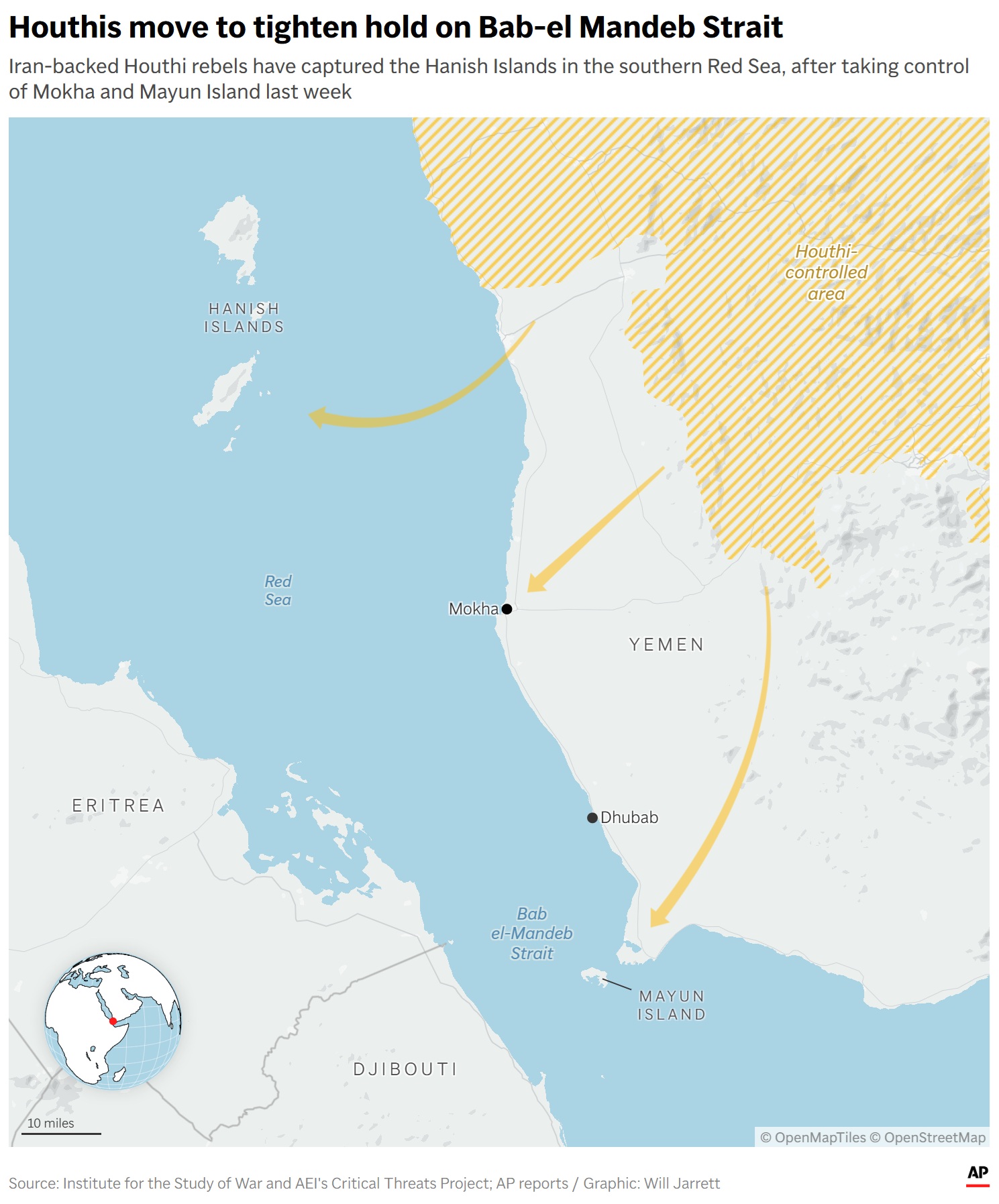
    Yemen’s Houthi rebels have seized the strategic islands of Greater and Lesser Hanish in the southern Red Sea, bolstering the Iran-backed rebels’ ability to control a key maritime shipping route.

    Meanwhile, repairs to a crucial Saudi Arabian oil pipeline that was struck in an attack last week could last three to five weeks, putting it mostly out of service, two regional officials said.

    Houthis gain ground as oil prices face more pressure

    Houthi officials said Monday that rebels had taken over the two islands just as Saudi-backed government forces tried to claw back territory from the rebels’ swift advances around the Bab el-Mandeb Strait, a crucial shipping alternative to the Strait of Hormuz.

    Iran effectively closed the Strait of Hormuz — through which a fifth of the world’s traded oil and gas transits in peacetime — in the opening days of the war. The Saudis have since used the Bab el-Mandeb Strait, which leads out of the Red Sea, for crude oil exports.

    The Houthis’ latest takeover, following the seizure of the Red Sea port of Mokha and a strategic island last week, puts more pressure on Saudi shipments and, in turn, global oil supplies and prices.

    This could give Iran additional leverage in its war with the United States.

    Oil might only partially move through damaged line

    Saudi Arabia relies on the East-West Pipeline to move crude from Gulf ports to ports on its western, Red Sea coast. From there it can be put on tankers for export.

    Two officials briefed on the matter said repairing damage from an attack on Sept. 10 could take weeks, including at a major pumping facility.

    The officials spoke on condition of anonymity because they weren’t authorized to brief the media. One said the line may work partially while teams carry out the repairs.

    China, a major Middle East oil importer, called Houthi attacks on Saudi energy infrastructure “unacceptable” and said that it was “deeply concerned” about further escalations by the rebels.

    Iran says Saudi Arabia behind postponed meeting on Hormuz

    Iranian Foreign Ministry spokesperson Esmail Baghaei said Monday that Saudi Arabia had “demanded” that a meeting bringing together Iran with other regional countries to discuss the Strait of Hormuz be scrapped “for the time being.”

    Baghaei called the meeting, which was to be hosted by Oman, a “proper opportunity” to restore security in the region.

    The spokesperson said that an agreement between Iran and Oman on the Strait of Hormuz has been finalized and it will be announced later.

    Saudi Arabia had submitted amendments to the agreement, citing concerns that it could have lasting implications for the Strait of Hormuz, negatively impacting other Gulf Cooperation Council countries, according to a Gulf official familiar with the matter who wasn’t authorized to comment publicly and spoke on condition of anonymity.

    Iran condemns Austria’s visa refusal for its nuclear chief

    Iran denounced on Monday the refusal by Austria to issue visas to the Iranian nuclear chief and other delegation members for the International Atomic Energy Agency’s general conference in Vienna, calling the decision “completely unjustified.”

    Baghaei said that Tehran summoned the Austrian chargé d’affaires, saying Austria was obligated as the host country to issue the visas.

    Baghaei accused Western countries of denying Iran an opportunity to defend itself and blamed the U.S. for pressuring Austria to deny the visas.

    The refusal is part of U.N. sanctions on Iran, reinstated last year, that include a travel ban on Iranian officials.

    Iran fails to live up to nuclear obligations, U.S. official says

    U.S. Energy Secretary Chris Wright on Monday criticized Iran’s failure to cooperate with the U.N. nuclear watchdog.

    Wright was particularly critical of Tehran’s refusal to grant U.N. inspectors access to Iran’s nuclear sites affected by the war. He said that Iran had “ample time to address its egregious negligence” toward its obligations ”but that time is up.”

    Speaking at the IAEA general conference in Vienna, Wright said that giving Iran more time “only delays overdue accountability.”

    Yemenis flee homes as rebels press on

    Nearly 94,000 people have fled their homes in Yemen since fighting between Iran-backed Houthi rebels and government forces escalated this month, the International Organization for Migration said Monday.

    The worst-hit areas are Taiz and Lahj, where 48,000 have been displaced, the U.N. agency said, adding that more than 2,000 people have fled across the sea into Djibouti.

    Around 200 schools have been converted to shelters in southwestern Yemen to absorb an influx of families, the International Rescue Committee, an aid group, said.

    Fears mount that Yemen is inching closer to a return to a civil war that killed 150,000 before a 2022 ceasefire. The World Health Organization said more than 500 people were killed in a weeklong period ending Saturday, a sharp increase.

    Israel accused of dismantling ‘Palestinian existence’ in West Bank

    The B’Tselem human rights group said Monday Israel is carrying out a systematic and accelerated project aimed at “dismantling the foundations of Palestinian existence” in the occupied West Bank.

    The group said in a new report that Israeli actions against Palestinians in the West Bank by settlers and the military are designed to undermine Palestinian collective life “while entrenching a permanent system of Jewish supremacy” across the territory.

    Settler violence has surged under the ultranationalist government of Israeli Prime Minister Benjamin Netanyahu. Rights groups say the military frequently turns a blind eye to the violence, and that when it intervenes it often focuses on protecting the settlers.

    The B’Tselem report also says that Israeli actions rely heavily on open cooperation between state authorities and armed settlers who attack Palestinian communities, while the military either fails to prevent the violence or sometimes participates in it.

  • Saudi Arabia faces ‘worst-case scenario’ after being rebuffed by Trump

    Saudi Arabia faces ‘worst-case scenario’ after being rebuffed by Trump

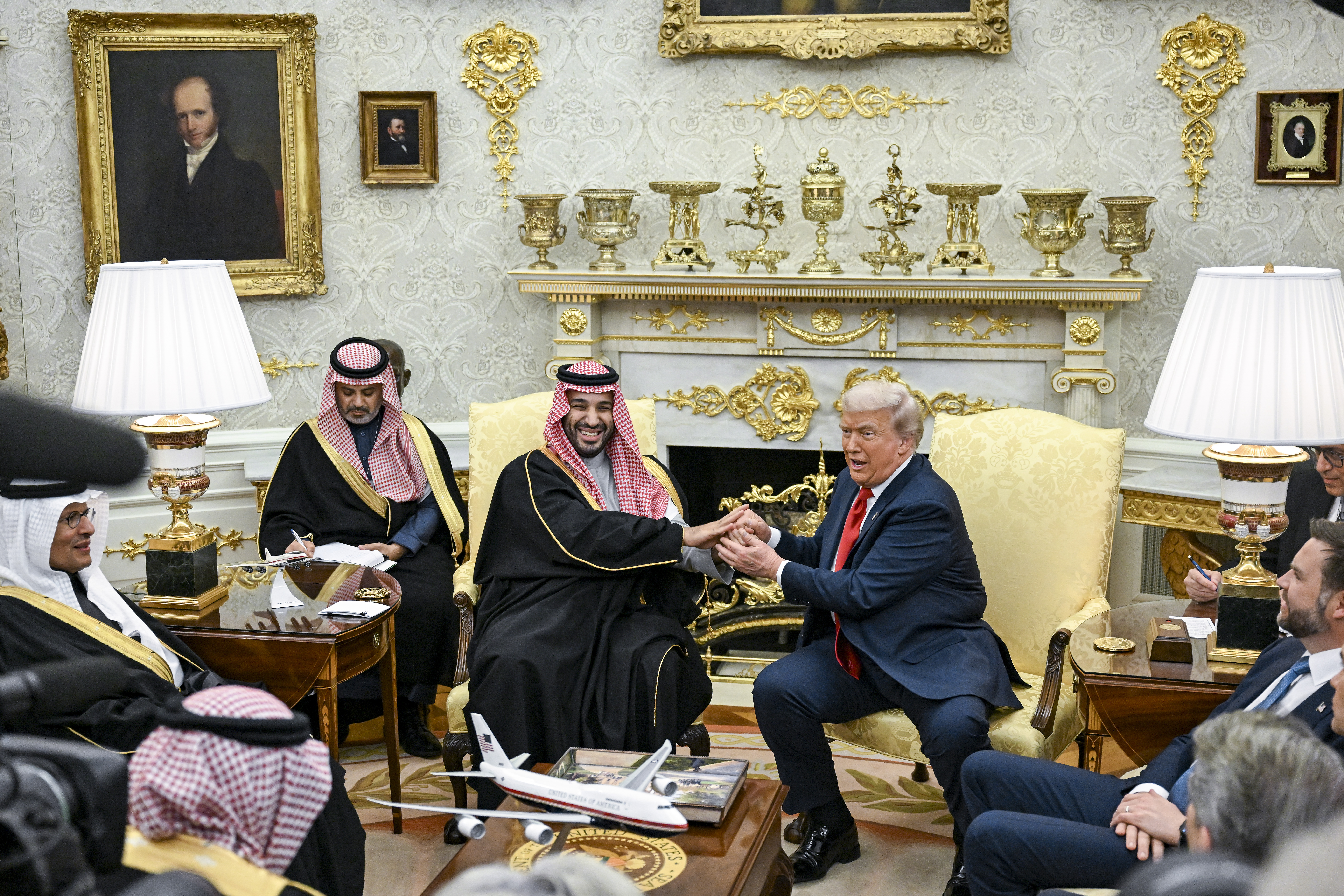
    RIYADH, Saudi Arabia — Saudi Arabia has increasingly found itself caught in the middle of the war between the United States and Iran. Now, the kingdom’s leadership is assessing dwindling options on how to respond.

    In recent weeks, the Iran-allied Houthi militia in Yemen has repeatedly attacked the kingdom, threatening to throttle its ability to export oil and piling pressure on the global economy. But Saudi Arabia has been left frustrated and disappointed by President Donald Trump’s reluctance to confront the Houthis, former diplomats and analysts say.

    The kingdom’s diplomatic efforts to engage with Iran have also had limited results. A meeting planned Monday between officials from Iran, Saudi Arabia, and other Persian Gulf countries was abruptly postponed Sunday night, as the gap between their positions remained vast.

    “Right now the Saudis are really frustrated,” said Michael Ratney, a former U.S. ambassador to Saudi Arabia. “In some sense it’s their worst-case scenario.”

    The Saudi government’s Center for International Communication, which fields queries from journalists, did not respond to a request for comment.

    The kingdom’s conundrum underscores the heavy costs that the U.S.-Israeli war with Iran has imposed across the Middle East, including on countries whose leaders opposed the war or have sought repeatedly to bring it to an end.

    In the first few months of the fighting, Saudi Arabia was relatively untouched by Iran’s retaliatory attacks, compared with its neighbors. Now, with no end to the hostilities in sight, Iran is seeking greater leverage over the United States, and Saudi Arabia — the world’s largest oil exporter until the war knocked it down the list — has become a primary target.

    Over the past two weeks alone, Saudi Arabia has faced Iran-backed attacks from the east, the south, and the north.

    A Saudi oil tanker was struck in the Strait of Hormuz at the end of August, killing two sailors.

    On Friday, the Houthi militia, which had already declared a blockade on Saudi oil shipments through the Red Sea, seized territory on an important global shipping route and trounced Saudi-allied forces in Yemen.

    The same day, Saudi authorities announced that they had been forced to shut down a critical oil pipeline, blaming a drone attack by an Iran-backed Iraqi militia. The pipeline had become a key alternative export route for Saudi Arabia to get its oil to the Red Sea, after Iran effectively choked off the Strait of Hormuz.

    “The reason a country like Saudi Arabia invests so heavily in developing a security partnership with the United States is for just this sort of eventuality,” Ratney said.

    Crown Prince Mohammed bin Salman of Saudi Arabia, the country’s de facto ruler, had reasons to be confident in that partnership. For years, his government has invested billions of dollars and extensive political capital in building personal relationships with Trump and his family.

    But when the crown prince asked Trump last week to take military action against the Houthis, the president declined, according to officials with knowledge of the conversations.

    Saudi officials and pundits have been clear that the kingdom does not want to fight the Houthis alone. That is especially true because an earlier military campaign that Saudi Arabia led against the group turned into a decade-long quagmire.

    “This demands international support, not only from Saudi Arabia and regional countries,” Abdulrahman al-Rashed, a columnist close to the Saudi government, wrote in a Saudi-owned newspaper Saturday.

    Trump, however, appears reluctant to get involved.

    “Already confronting one open-ended conflict with Iran, with an overstretched Navy and a diminishing munitions stockpile, it’s unsurprising that he does not want to open this new front,” said Dan Shapiro, a former top Middle East policy official in the Pentagon during the Biden administration. “But it is bitterly disappointing to the Saudis.”

    On Saturday, Trump told journalists on a trip to Ireland that the Houthis had “called us and they don’t want to fight with us.”

    “There’s just one country that they’re not too happy with and we’ll get that straightened out,” he added, referring to Saudi Arabia.

    Mohammed al-Bukhaiti, a Houthi political official, denied that the group had reached out to the United States. “We did not communicate with Trump, nor did we ask him not to attack us,” he said.

    Whether the United States gets involved in Yemen is still a matter of discussion, and Washington is continuing to assist Saudi Arabia with intelligence, said Vice Admiral John W. Miller, a retired U.S. Navy commander in the Middle East.

    Saudi Arabia is now likely to turn to diplomacy, according to Barbara Leaf, a former assistant secretary of state for Near Eastern affairs at the State Department. Despite years of Saudi, U.S., and Israeli bombing campaigns against the Houthis, “no one has come up with a military solution” for dealing with them, she said.

    Saudi Arabia could also work with its neighbors and Iran to hammer out an “ugly set of arrangements” to bring the war with Iran to an end, she said.

    The kingdom could look to China to try to find a solution, but Beijing’s previous diplomatic efforts in the region have not led to lasting peace deals, she noted. China brokered a rapprochement between Saudi Arabia and Iran in 2023 that has since frayed.

    For now, Saudi officials are unlikely to complain publicly about the United States, however frustrated they feel, analysts said.

    “They’re not going to show some sort of distance,” she said. “They’re going to have to generate some other diplomatic effort.”

    This article originally appeared in the New York Times.
  • Trump says he likes Flock license-plate cameras amid growing backlash

    Trump says he likes Flock license-plate cameras amid growing backlash

    President Donald Trump expressed his support for a fast-growing surveillance tool opposed by many Americans, saying he likes Flock cameras “because of law enforcement.”

    “I sort of like them because of that, because of law enforcement, but some people don’t,” Trump told reporters aboard Air Force One on Sunday in his first public comments endorsing the technology. “They think it’s an infringement. I like them.”

    Trump has previously sidestepped questions about his stance on the artificial intelligence-powered license-plate readers that have provoked broad privacy and surveillance concerns. Asked about them in the Oval Office last month, he said: “It’s being studied right now. We’ll have an answer … as to our views on it over the next couple of weeks.”

    Trump’s new comments on Flock came shortly after he rejected calls from top AI leaders to limit the pace of development of artificial intelligence models. “We’re leading China in AI, we’re the most sophisticated country in the world, and frankly I want to keep it that way,” he said on the sidelines of the Irish Open golf tournament. “Whoever wins AI, wins.”

    Atlanta-based Flock has a network of more than 120,000 cameras across the U.S. The cameras record 20 billion license plate scans every month, the company says, which have helped officers investigate 1 million crimes a year.

    The surveillance systems had broad support as recently as last year, but an August survey by YouGov of approximately 20,000 U.S. adults found that 46% said they oppose the technology being used in their communities, compared with 38% support.

    The same month, an investigation by the Washington Post found dozens of law enforcement officers have been charged with or accused of misusing the plate-reading technology. Soon after, Flock announced changes to its platform to prevent the camera network from being abused by police officers, including a requirement for every search to be labeled with a criminal case number.

    But the technology has increasingly become a topic of political debate ahead of the midterm elections, with candidates from both parties outlining their opposition to them.

    “Do you ever feel like you are in a cage, kind of stuck, being watched?” U.S. Senate candidate Abdul El-Sayed asked in a video posted last month. “Well, that is because you are,” the Michigan Democrat continued, before criticizing what he called the “mass proliferation of” Flock cameras across the country.

    Rep. Keith Self, a Republican running for reelection in Texas, mentioned the cameras in a social media post, saying: “Big Brother has NO place in the Lone Star State.”

    Florida Gov. Ron DeSantis (R) last month said the cameras are “out of control.”

    “I don’t want to have this become a surveillance state,” he added.

  • Trump Jr. wedding celebrations were sponsored by powerful Russian businessperson

    Trump Jr. wedding celebrations were sponsored by powerful Russian businessperson

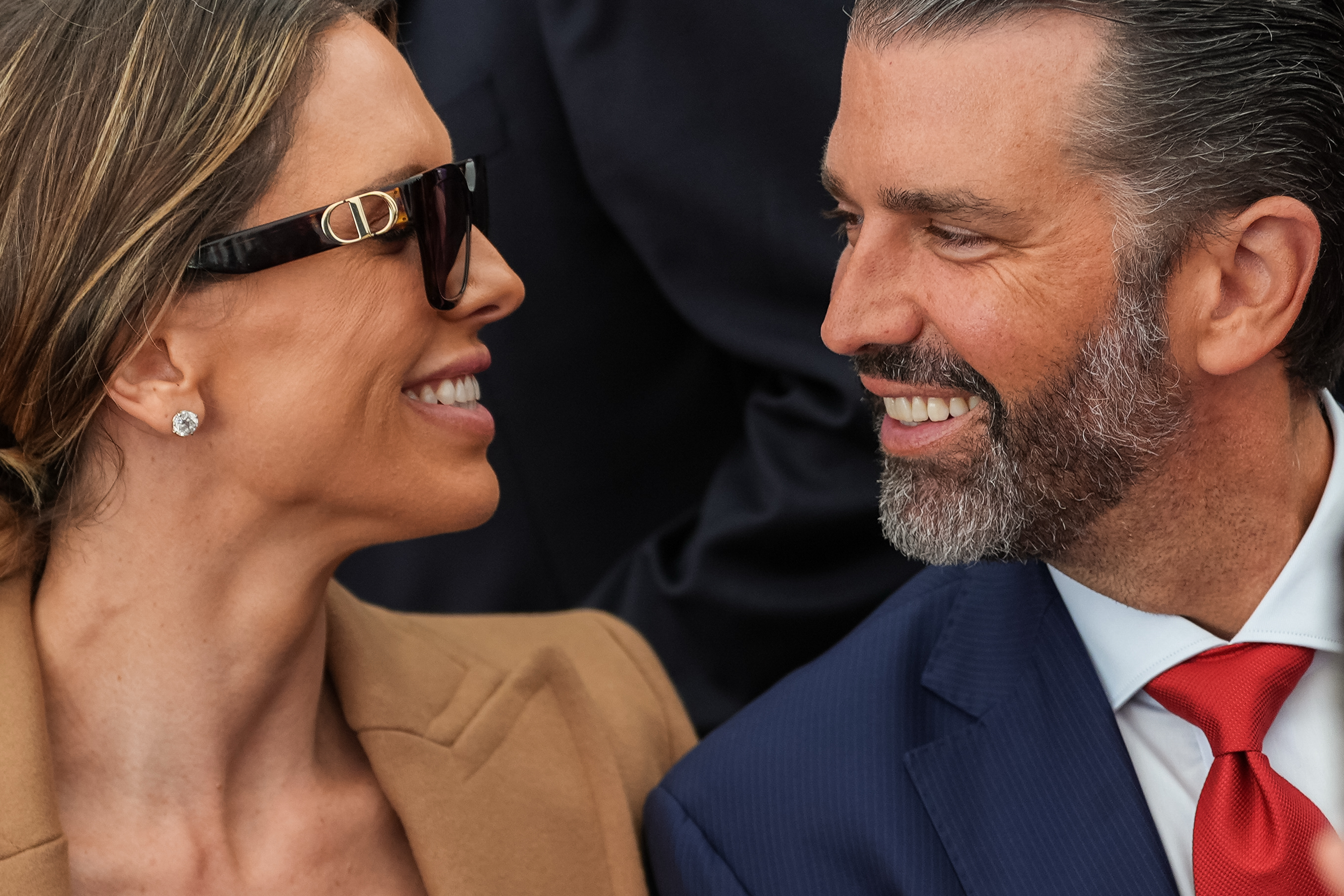
    Some of the festivities for Donald Trump Jr.’s intimate wedding celebration on two private Bahamian islands in May were paid for by a wealthy Russian who does business with the state.

    Umar Kremlev is the president of the International Boxing Association, a Switzerland-based sports league financed by Russian state energy giant Gazprom. He recently accompanied Russian President Vladimir Putin on a delegation to China, and he is under Ukrainian sanctions that describe him as a “close friend of the head of Putin’s security service.”

    Kremlev hosted two nights of celebrations after Trump Jr.’s wedding ceremony, the bride, Bettina Trump, said on Instagram on Monday.

    “It was an extraordinarily generous wedding gift from a friend, and something for which we were and remain incredibly grateful,” she wrote alongside photos from the festivities showing the couple and other Trump family members.

    Kremlev’s contribution was first disclosed by the investigative news website ProPublica, which reported that it cost hundreds of thousands of dollars and included event planning, a fireworks show, and rental of one of the private islands where guest slept. The payments came from a Dubai entity affiliated with the boxing agency, the website reported, citing records reviewed and interviews with three people.

    Bettina Trump denied any sinister or political motive. “Generosity doesn’t automatically come with an agenda,” she wrote on Instagram. “Sometimes a wedding gift is simply a wedding gift.”

    President Donald Trump did not attend the wedding. “It’s going to be just a small little private affair,” he told reporters at the time. “This is not good timing for me. I have a thing called Iran and other things.”

    In response to questions, the White House referred to Bettina Trump’s Instagram post.

    Kremlev did not immediately respond to a request for comment through the boxing association. He met Trump Jr. several years ago and speaks limited English, according to ProPublica.

    Kremlev has a criminal record under a previous name, the Washington Post reported in 2024. As head of the Russian Boxing Federation, Kremlev awarded Putin a diamond boxing glove, and Putin gave Kremlev a prestigious state honor known as the Order of Merit to the Fatherland. In April, Putin awarded Kremlev another honor, the Order of Friendship.

  • As Supreme Court weighs Trump mail ballot plan, another judge blocks it

    As Supreme Court weighs Trump mail ballot plan, another judge blocks it

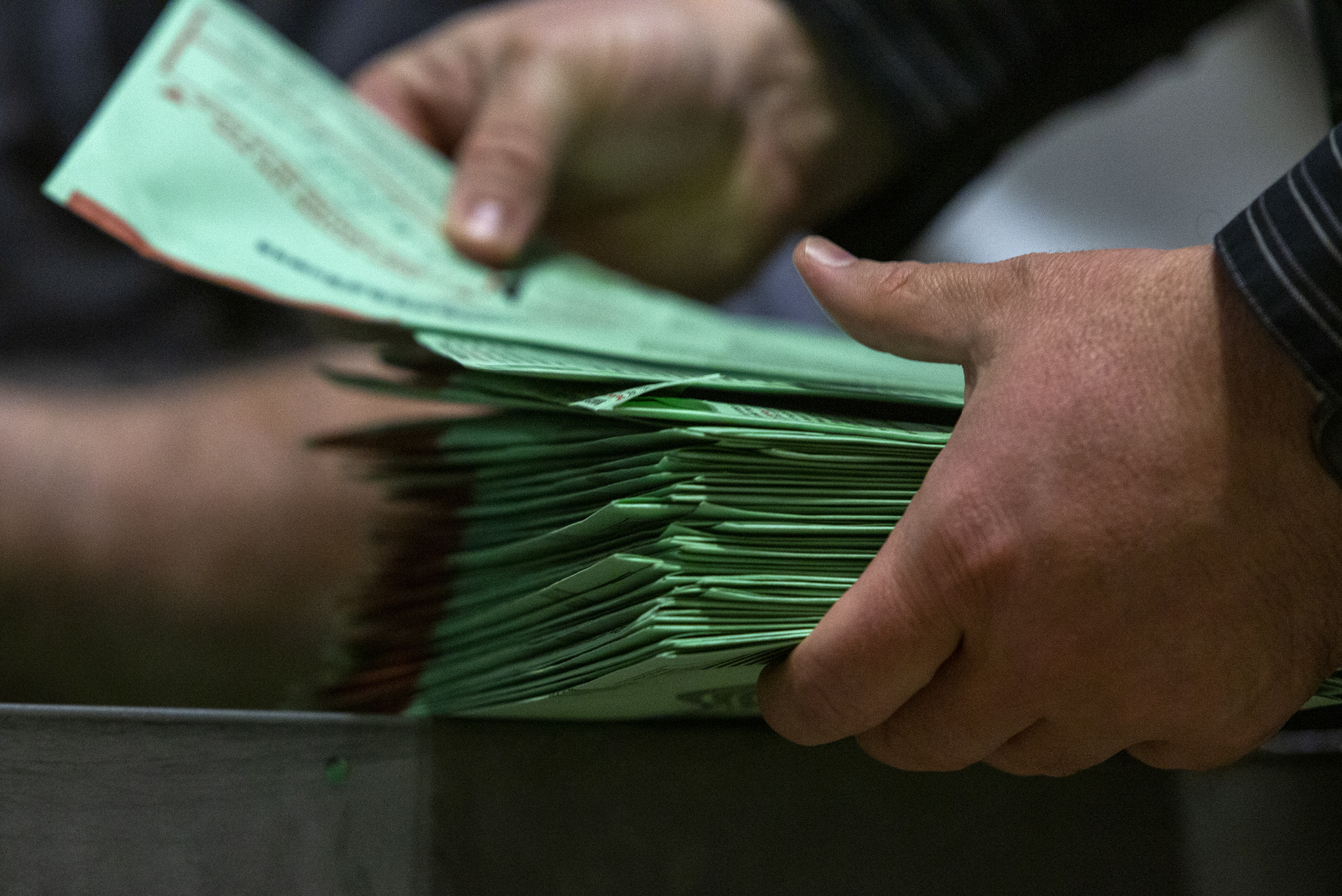
    WASHINGTON — As the Supreme Court weighs the legality of a Trump administration plan to change mail-in balloting, a second lower court judge ruled overnight Sunday that the plan is likely illegal and should be blocked before the November election.

    The ruling by Judge Carl J. Nichols, a Trump appointee, delivered another blow to President Donald Trump’s effort to add new conditions that could make it harder to vote by mail and easier for the federal government to scrutinize state voter rolls while searching for evidence of fraud.

    The Supreme Court is considering a similar ruling by a different federal judge based in Massachusetts. Judge Indira Talwani, an Obama appointee, has repeatedly found that the plan is likely unconstitutional and could not be implemented so close to the election without disenfranchising voters.

    Nichols, of U.S. District Court in Washington, wrote that the Trump administration had not identified any “evidence that there will be significant fraud in the upcoming elections” if he halted the rule. On the other hand, he wrote, there was an “increased risk that a significant number of otherwise appropriate absentee or mail-in ballots will ultimately not be counted in the upcoming elections” if the rule took effect.

    “The public has a strong interest in ensuring that doesn’t happen,” he wrote.

    Nichols’ ruling came in a lawsuit brought by a coalition of Democratic-aligned groups, including the Democratic Senatorial Campaign Committee, as well as a number of civil rights organizations. The Massachusetts suit was brought by a coalition of Democratic state attorneys general and voting rights groups.

    Nichols ruled in May that he could not stop the Postal Service from drafting the rule or preemptively declare it would necessarily be illegal before it was finalized. The Supreme Court similarly ruled last month that it was premature for the courts to intervene to stop Trump’s plan.

    But Nichols said he would review the issue after the Postal Service finalized the regulation, which it did in August. His finding that the proposal now should be blocked could offer a preview for how the justices view the issue.

    In a court filing Monday, the Trump administration formally alerted the Supreme Court about Nichols’ ruling.

    Lawyers for the Trump administration told the justices that if they allowed the Postal Service plan, it would mean Nichols would be required to immediately lift his block and clear the way for the ballot screening rules.

    The new rule stemmed from an executive order Trump signed in March, directing the Postal Service to preregister voters casting their ballots by mail, and to decline to deliver ballots from anyone whose information was not submitted by their state election officers.

    Talwani, who considered the separate legal challenge in Massachusetts, had found that the rule likely violated the constitutional authority given to states to run their own elections. But Nichols focused on another issue: the absence of any federal statute by which Congress gave the Postal Service the power to screen voters.

    “As the government concedes, the Postal Service could issue (and enforce) the rule only if Congress gave it the authority to do so, but here no statute grants the Postal Service the power to issue key parts of the rule,” he wrote.

    He focused on an online portal the Postal Service has said it is building that would let states upload the names and addresses of voters they deemed eligible to vote by mail. The relevant laws do not authorize the agency “to create a data collection system for mail-in and absentee voters,” he wrote.

    Despite the lawsuits, a number of Republican-led states have indicated in court that they would voluntarily adopt the new procedure and were taking steps to comply if the courts ultimately allowed it.

    Voting rights groups had argued that it would be nearly impossible to ensure the lists were up to date or counted people who had moved or recently registered in a new state. They warned that the new rules would very likely lead to improperly rejected ballots.

    State election officials have warned the plan could cause chaos. In some states, mail ballots have already been distributed to voters.

    Nichols appeared to agree, writing that the rule appeared certain to cause “delays and mistakes” at several stages. That could include the building of the portal, which has not yet opened, and the Postal Service’s new role screening outbound ballots and “confirming that each absentee and mail-in voter matches information in the portal,” he wrote.

    “Plaintiffs have demonstrated that there is an increased risk that a significant number of absentee or mail-in ballots will ultimately not be counted,” he wrote, noting that the Postal Service was likely to handle “more than 50 million pieces of federal ballot mail” this election season.

    This article originally appeared in the New York Times.

  • Ex-CIA Director John Brennan issued subpoena in Trump “grand conspiracy” investigation, lawyer says

    Ex-CIA Director John Brennan issued subpoena in Trump “grand conspiracy” investigation, lawyer says

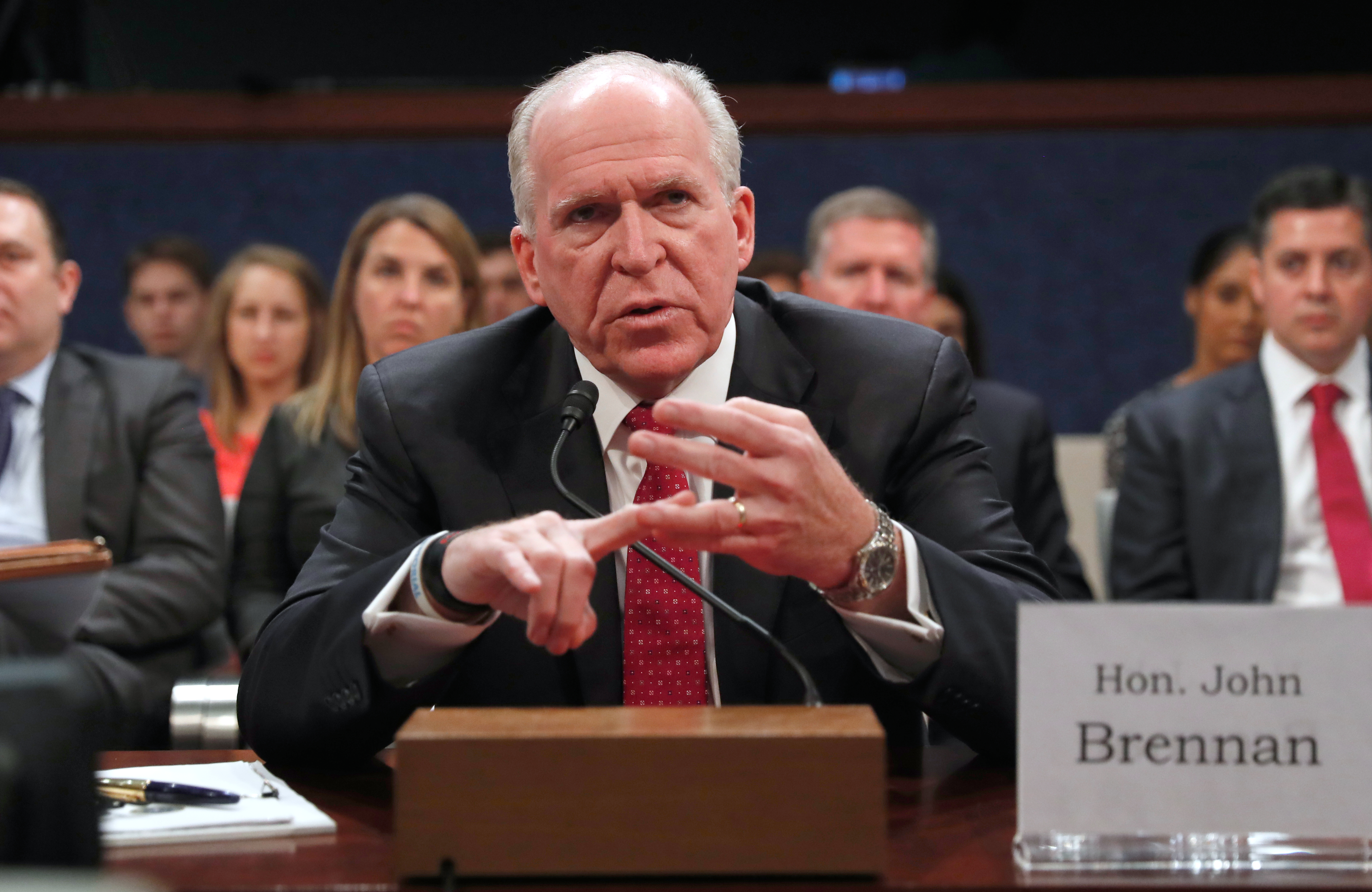
    WASHINGTON — Former CIA Director John Brennan has been subpoenaed to testify next month before a Florida grand jury as part of a Justice Department investigation into whether former law enforcement and intelligence officials conspired against President Donald Trump, one of his lawyers said Monday.

    Ken Wainstein, an attorney for Brennan, disclosed in a court filing that prosecutors last Thursday presented him with a subpoena for Brennan to appear Oct. 15 before a grand jury in Fort Pierce, Fla.

    He said he was told that the subpoena relates to a “far-reaching” criminal probe examining a loosely defined theory that the government officials who have investigated Trump over the last decade, including over Russia election interference in 2016 and his more recent retention of classified documents at his Mar-a-Lago estate, conspired to deprive Trump of his civil rights. The subpoena to Brennan is among a flurry that have been issued in recent weeks.

    Wainstein said he was informed by a prosecutor that Brennan remains a target in a Washington-based investigation into whether he lied to Congress in 2023, a claim the former CIA director and his attorneys have consistently denied. Subpoenas demanding testimony before a grand jury in that false statements probe were issued in spring, then abruptly withdrawn in favor of voluntary interviews.

    The subpoena was delivered on the same day that Joe diGenova, the prosecutor who had been leading what is casually known as the “grand conspiracy” investigation, abruptly resigned amid what a person familiar with the matter has described as displeasure from the Justice Department and White House over the pace and management of the probe.

    The Justice Department has not publicly announced a replacement for diGenova. The member of the investigative team with whom Wainstein spoke was Kurt Olsen, a lawyer who unsuccessfully pushed the Justice Department in 2020 to back Trump’s false claims that the 2020 election had been stolen from him.

    The subpoena was disclosed hours ahead of a court hearing in Washington in a lawsuit brought by Brennan. The former CIA director is seeking a court order that would require the preservation of all records from the investigations targeting him, saying such documents would be essential for him to challenge any potential indictment on vindictive prosecution grounds.

  • Putin warns Europe of war if peacekeeping troops are deployed to Ukraine

    Putin warns Europe of war if peacekeeping troops are deployed to Ukraine

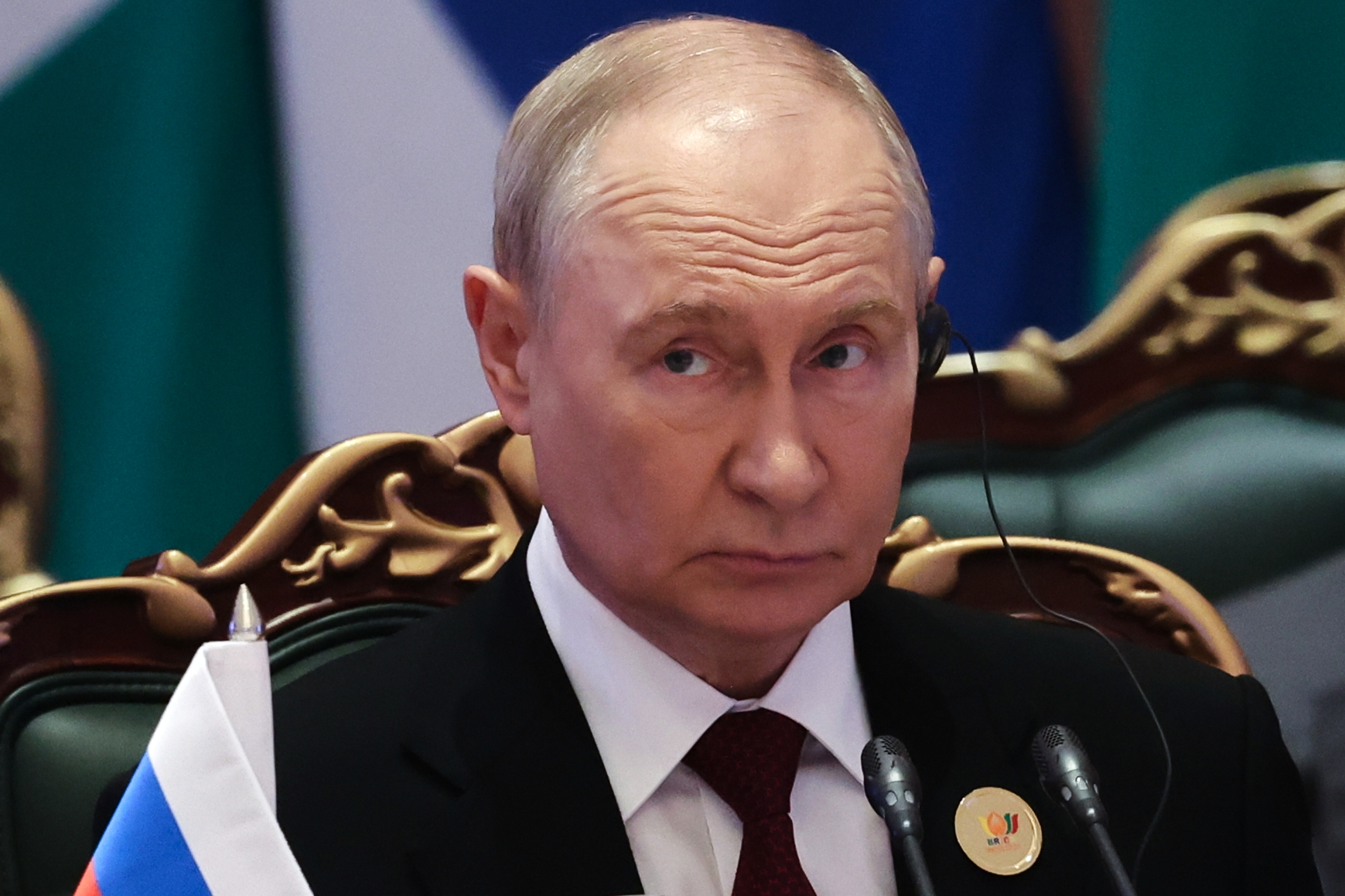
    Offering a grim assessment of Russia’s relations with the West, President Vladimir Putin pointedly warned European governments not to deploy any troops, including peacekeeping forces, to Ukraine, saying it would mean “war.”

    “They speak of contemplating the dispatch of troops to the territory of Ukraine,” Putin said, following his participation Friday at a summit of leaders of the BRICS bloc of nations in New Delhi. “This would mean war with Russia.”

    Putin lashed out at what he called systemic errors committed by the “West’s globalist circles,” insisting that Russia posed no danger to European countries, which he said “seek to frighten their populations with a mythical Russian threat.”

    He also insisted that the West was to blame for the war in Ukraine by seeking to expand NATO. “They directly supported separatism in the Caucasus and sought to break up Russia; this is a matter of fact. Furthermore, today’s crisis in Ukraine was likewise instigated by them.”

    As if to put an exclamation point on Putin’s remarks, a Russian drone strike hit passenger rail infrastructure in western Ukraine as many Western diplomats, officials, and experts, including former CIA Director David Petraeus, former British Prime Minister Boris Johnson, and former Swedish Prime Minister Carl Bildt were leaving the country after attending the annual Yalta European Strategy conference in Kyiv.

    Passengers on at least one train were evacuated, but no deaths or injuries were reported from the strike.

    German Defense Minister Boris ​Pistorius called the drone strike a calculated escalation to fuel fear in Europe.

    “It is ​all the more important that we ⁠remain levelheaded, that we do not ​allow ourselves to be provoked, but ​that at the same time we leave no doubt that we are capable of defending ​ourselves,” Pistorius told reporters. “What Vladimir Putin is doing is dangerous. He knows that, and that is ​why he ​is doing ⁠it.”

    The rail line attack further alarmed European officials who have been warning that Russia could attack near Ukraine’s border crossings with NATO countries or could intensify sabotage operations inside Europe to discourage Western leaders from further aiding Ukraine.

    “These coming weeks and months will be a time of very intensified actions on the Russian side, and unfortunately we cannot rule out that this escalation will also affect our territory,” Polish Prime Minister Donald Tusk said Sunday following a government security briefing.

    The Trump administration in recent days has renewed its efforts to jump-start peace negotiations between Russia and Ukraine, including with trips by presidential envoys Steve Witkoff and Jared Kushner to Moscow and Ukraine.

    Following those talks, Kushner said that Washington had already drafted most of the peace agreement but that it was being held up by Ukraine’s reluctance to make territorial concessions to Russia, which now occupies about one-fifth of Ukraine’s sovereign territory.

    Putin has demanded that Ukraine surrender all of its eastern Donbas region, and Russia has claimed, illegally, to have annexed four Ukrainian regions, even though militarily it does not control all of that land.

    “President Putin laid out his position regarding what he wants to achieve,” Kushner said at the YES conference. “If Ukraine wanted to retreat to that line, we would have already prepared and agreed on the remaining terms of the deal. Currently, Ukraine does not want to do this.”

    Ukraine has repeatedly said that ceding land that Russia failed to capture militarily is a nonstarter, arguing that withdrawing from fortified cities in Donbas would only expose the country to future attacks.

    Kushner and Witkoff said they were pushing for trilateral negotiations. And Ukrainian President Volodymyr Zelensky said he is willing to meet Putin at the Group of 20 summit scheduled for mid-December at Trump’s resort in Doral, Fla.

    The Kremlin immediately ruled out such a meeting, calling it “impossible” and saying that Putin would only meet Zelensky in Moscow. Kyiv repeatedly has dismissed the offer of a meeting in Moscow as the Kremlin playing games.

    Putin’s spokesperson Dmitry Peskov said that the talks on Ukraine probably would resume in October, after Russia holds a key parliamentary election this weekend.

    The potential deployment of a European peacekeeping force has been discussed as one potential way to provide Ukraine with “security guarantees.” But any such step would first require the signing of a durable truce between Kyiv and Moscow.

    Britain and France previously had agreed to deploy forces in Ukraine if the country reaches a peace deal with Russia, with then-Prime Minister Keir Starmer and President Emmanuel Macron signing a “declaration of intent.”

    But as negotiations stalled, with Washington focused on its own war in Iran, the proposals to send European troops to Ukraine have also gone quiet.

    Europe, because of its increasing role in Ukraine’s capability to launch strikes against Russian territory, is becoming “Moscow’s central strategic problem, overshadowing the United States, Ukraine, and, to some extent, even NATO,” Tatiana Stanovaya, a senior fellow at the Carnegie Russia Eurasia Center, wrote on X.

    “This will shape the nature of negotiations with and about Ukraine, as well as the outcome of any settlement, far more than it did a year ago,” Stanovaya added. “It is likely to dominate European geopolitics for decades.”

  • United Kingdom’s unity threatened by pact between Wales, Scotland and Northern Ireland

    United Kingdom’s unity threatened by pact between Wales, Scotland and Northern Ireland

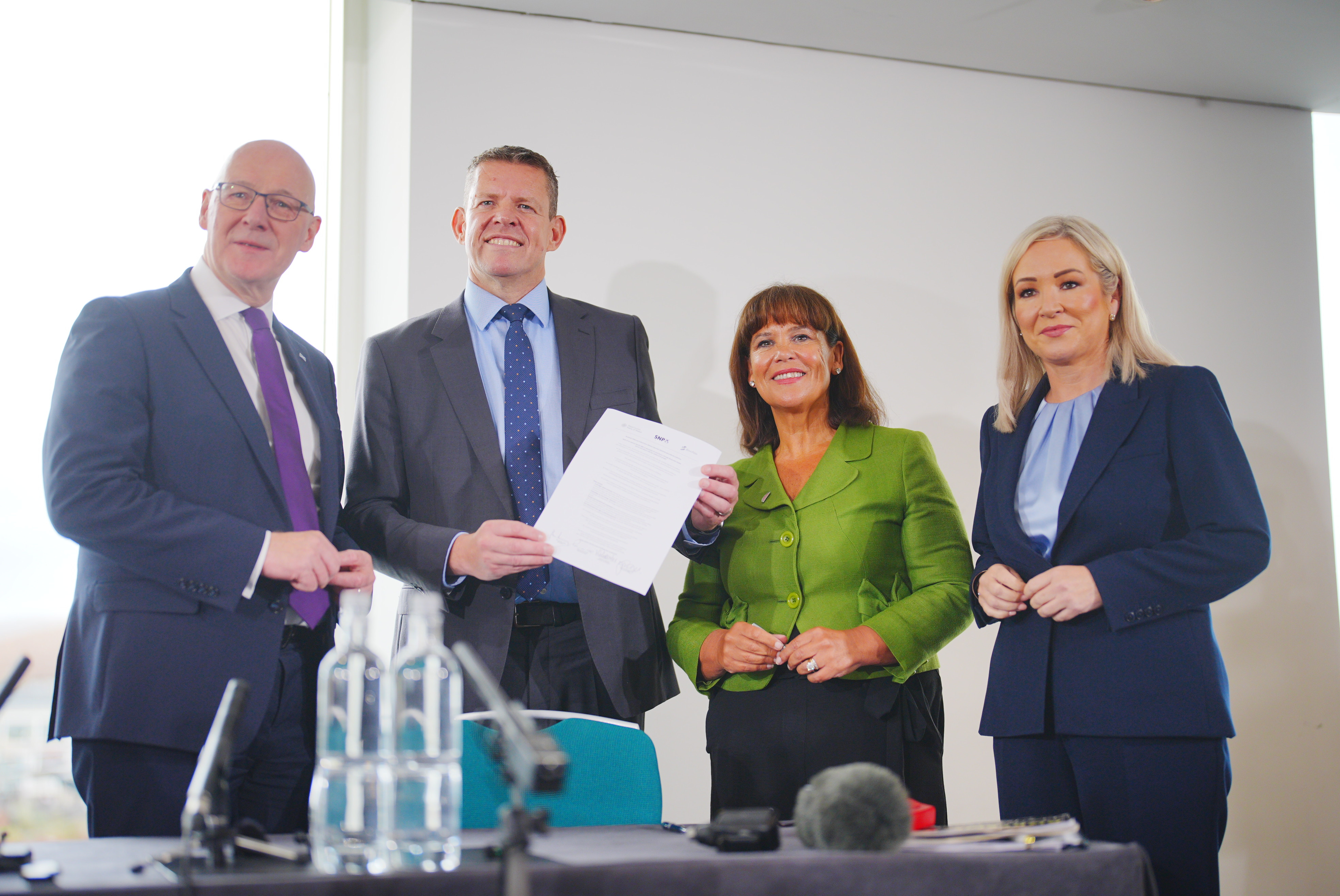
    LONDON — The leaders of Wales, Scotland, and Northern Ireland signed a pact Monday that threatens to lead to the breakup of the United Kingdom.

    The first ministers of the three semiautonomous regions of the U.K. told Prime Minister Andy Burnham and his government to prepare for constitutional change and that their future lies with the European Union.

    “For people watching across these islands — for people watching around the world — there could be no clearer sign that Westminster’s time is coming to an end,” they said in a memorandum of understanding, referring to Parliament.

    The announcement came about 48 hours after U.S. President Donald Trump waded into the waters of the politically contentious issue when he said he would ” love to see ” a reunified Ireland during a trip to visit his golf course hosting the Irish Open.

    It’s the first time the leaders of all three countries are either from pro-independence parties, or pro-unification in the case of Northern Ireland, which was partitioned and remained part of the U.K. when Ireland won independence from Britain over a century ago.

    Tensions remain despite devolution of power

    Burnham’s spokesperson brushed aside the threat and said the prime minister strongly believes in the union and was more focused on lowering the cost of living than dealing with constitutional debates.

    “The United Kingdom is at its best when people come together around our shared values and problem-solving, rather than division,” Tom Wells said.

    Nicola McEwen, director of the University of Glasgow Center for Public Policy, said the summit was symbolically important but has no legal significance.

    “I don’t see the threat to the union being bigger today than it was yesterday,” McEwen said.

    In the late 1990s, the U.K. passed legislative acts that decentralized government through the process of devolution, giving each country except England some level of policy independence and self-governance through their own parliaments. But tensions have remained with the U.K.-wide government in London, which retained control over national issues and those concerning England.

    Scotland’s John Swinney and Northern Ireland’s Michelle O’Neill called for independence referendums in their countries, while Rhun ap Iorwerth did not provide a timetable for one in Wales.

    The three leaders appeared in their political capacity, rather than their official one, possibly because O’Neill is in a power-sharing government with the Democratic Unionist Party.

    Northern Ireland’s Deputy First Minister Emma Little-Pengelly, of the DUP, accused O’Neill, of the Sinn Fein party, of “weaponizing” the role of first minister by signing the agreement.

    “I am first minister in the north of Ireland,” O’Neill replied. “This is about historic change happening all around us.”

    Scottish nationalists believe support for independence is rising

    Scotland tried unsuccessfully to break away in 2014, with voters rejecting a referendum 55% to 45%. But McEwen said support for Scottish independence has grown since Brexit, in which the U.K. formally left the European Union in January 2020, following a referendum in June 2016.

    Swinney, leader of the Scottish National Party, said he believed voters would now vote for independence if the U.K. government approved a referendum.

    Burnham told Parliament last week he would allow such a vote to be held if there was a “clear consensus” in Scotland, but later sent Swinney a letter saying a vote was “off limits.”

    The 1998 Good Friday peace accord that ended three decades of sectarian violence in Northern Ireland known as “The Troubles” requires a vote on unification if polls there indicate it would likely pass, a threshold the U.K. government says has not been met. Ireland would also have to approve the change in a referendum.

    Burnham has made devolution a major theme since taking office less than two months ago, but his focus has been on regional governments across England, a reflection of his years as mayor of Greater Manchester.

    Swinney tried to turn Burnham’s ideology to his advantage, saying his frequent talk of devolution “leads you to the logic of recognizing the right of the people of Scotland, in my case, to decide their own future.”

    Beyond any threat of departing the union, McEwen said the greatest impact of the three joining forces could be that they agreed to cooperate with each other routinely and that could help to exert more influence on the U.K. government.

    “It does keep on the agenda that question about, well, if the United Kingdom is a union based on consent, what is the pathway where it looks like that consent may no longer be there?” McEwen said. “Any U.K. government has been very reluctant to engage in that discussion.”

  • Kennedy Center warns of bankruptcy unless Trump’s name is added

    Kennedy Center warns of bankruptcy unless Trump’s name is added

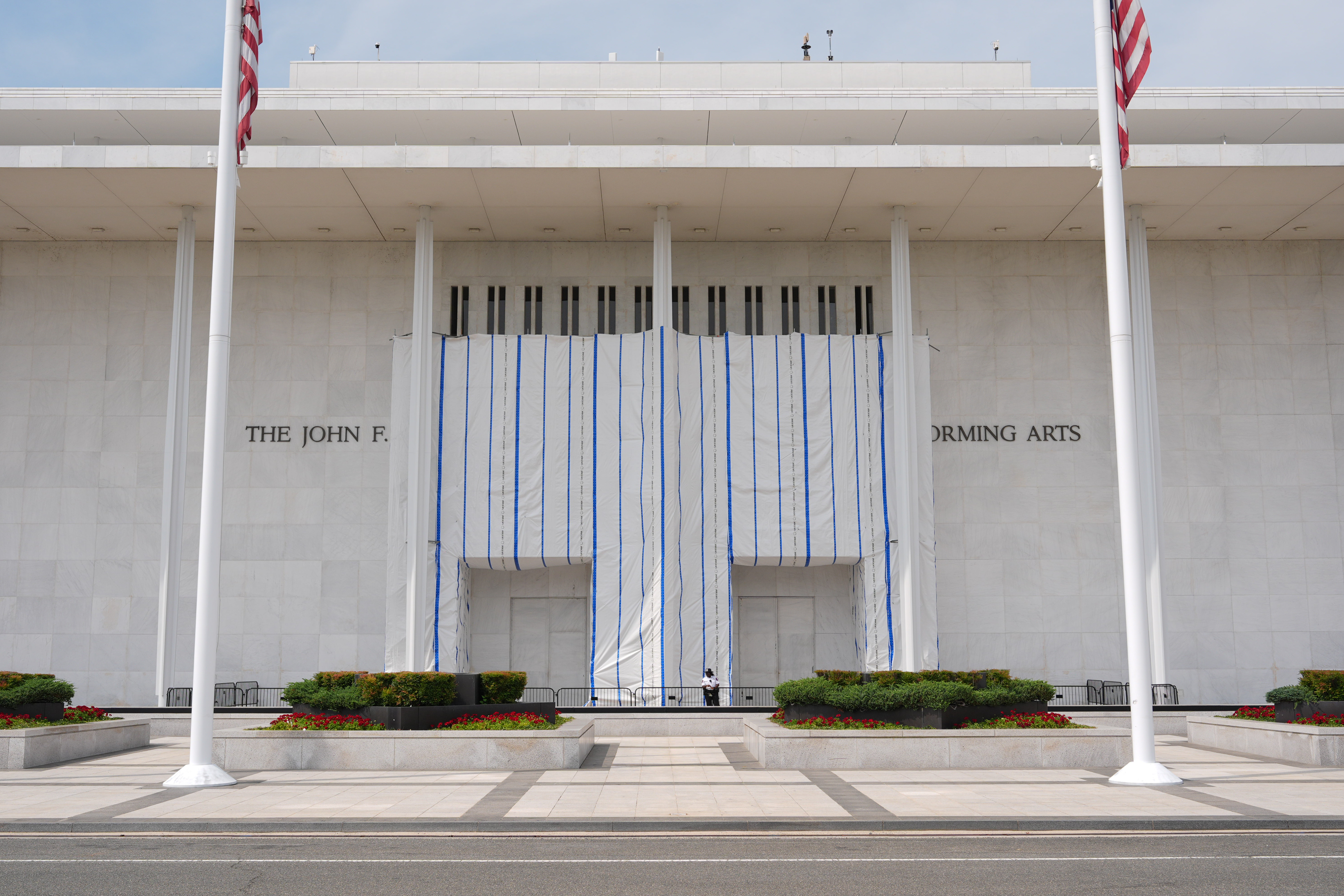
    Officials at the John F. Kennedy Center for the Performing Arts have warned in documents that the institution faces “certain fiscal collapse within weeks” unless President Donald Trump’s name is added back to the building in some fashion.

    The warning, contained in a draft resolution ahead of a board meeting scheduled for today, appears to be part of an effort by Trump-allied officials to convince a judge that the institution’s financial health hinges on placing a tribute to the president on the building’s facade.

    The judge, Christopher R. Cooper, ruled months ago that the president’s name should be removed from the building because Congress needed to have approved its renaming as the “Trump-Kennedy Center.”

    The draft resolution shared with trustees says the center is at risk of bankruptcy and of missing payroll — but that Trump has “offered to step in and raise the necessary funds” to save the center. The draft resolution presents 10 options for how to add Trump’s name below the main signage on the front of the center.

    “The board understands that without such appropriate recognition it is unlikely that President Trump will provide the fundamental oversight of the renovation of the main building and lead the fiscal rescue of the center,” the draft resolution says.

    Trump took over the Kennedy Center at the start of his second term, and the board voted last December to add his name to the building. Weeks later, Trump announced a plan to close the center for two years for a renovation project to transform what he called a “dilapidated” structure.

    In May, Cooper temporarily blocked the closure and ordered Trump’s name removed from the building.

    The center complied while pursuing an appeal. But in recent weeks, board members have moved aggressively to restore his name in an inscription beneath the building’s title.

    One option included in the draft resolution, which was first reported by the Washington Post, reads, “renovated, restored, and sustained through the generosity of President Donald J. Trump.” Another says, “renovation, oversight, and support provided by President Donald J. Trump.”

    The documents were shared days before a court hearing before Cooper. Rep. Joyce Beatty (D., Ohio), an ex officio board member whose lawsuit prompted the court’s scrutiny of the center, has objected to the center’s plans for the inscription. In court papers, her lawyers called the effort a “childish refusal” to accept the judge’s previous order.

    In a statement Sunday, Norm Eisen and Nathaniel Zelinsky, lawyers for Beatty, described the documents as “the third attempt to deface this sacred memorial and turn it into a vanity project for one man’s ego.”

    Roma Daravi, a spokesperson for the center, declined to comment on the documents.

    Paolo Zampolli, a board member and longtime Trump ally, said in a brief phone interview Sunday that the addition of the president’s name to the building was critical to the center’s financial health because “Trump attracts money.”

    “So when Trump says donate to this place, everyone will donate,” he said.

    Some donors, though, took exception to the fact that Trump’s name was added to the building and were part of an exodus of artists and audience members unwilling to associate with an increasingly politicized institution. Beatty’s lawsuit contends that decision was part of the reason the center now finds itself in a financial quandary.

    Kennedy Center officials have repeatedly blamed previous leadership for the institution’s financial problems.

    The documents shared with the board included another draft resolution that suggests the center’s main building should be closed immediately, citing a recent incident in which a section of plaster fell from the ceiling of the building’s grand foyer during a storm. Daravi has framed that event as evidence of an urgent need for the building’s closure.

    “This structural failure stems from decades of neglect and deferred maintenance by the previous leadership,” she said in a statement this month, “and there’s no justification for further delays in restoring America’s cultural center.”

    Cooper temporarily blocked the center from fully closing, but he did not prevent the staff from pursuing renovations, which have been funded by $257 million from Congress.

    Although the building has been open to the public as a memorial to Kennedy, its programming calendar has been largely bare for weeks. The National Symphony Orchestra, the center’s resident ensemble, has booked its season at other local venues. And the center’s staff has been diminished to a small fraction of what it was before Trump’s takeover.

    This article originally appeared in the New York Times.