Tag: no-latest

  • Takeaways from a big primary night in Michigan, Kansas, Missouri and more

    Takeaways from a big primary night in Michigan, Kansas, Missouri and more

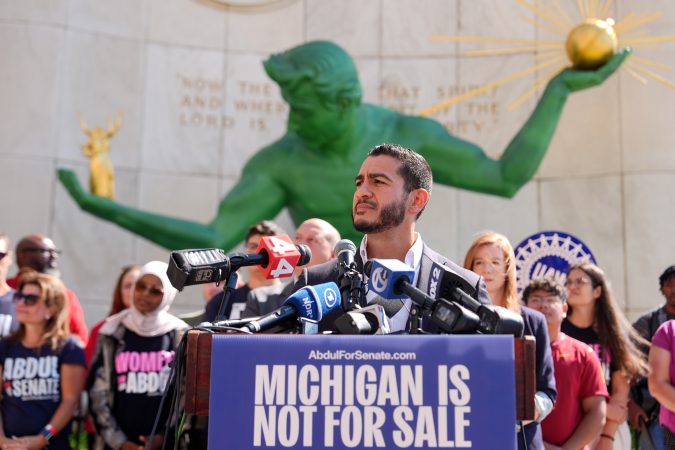
    Democrats in Michigan signaled their eagerness for a new political direction as voters advanced progressive Abdul El-Sayed over Rep. Haley Stevens for a key Senate seat and two left-wing candidates in key House primaries.

    The Senate race in Michigan exposed deep rifts among Democrats in how they approach Israel and money in politics, and how they deem candidates electable.

    Across the country, similar ideological battles were waged with mixed results. And in two red states, voters rejected GOP-led ballot measures that would have given state legislators more power to reshape the law on key issues, including abortion.

    Here’s a rundown from Tuesday’s primaries.

    Michigan’s marquee race ends in win for progressives

    In November, El-Sayed will face former Republican Rep. Mike Rogers, who narrowly lost his first Senate bid in 2024 and received an endorsement from President Donald Trump. Democrats will have a tougher time retaking the chamber if they lose the Michigan seat.

    The primary divided the Democratic Party between progressives, who saw El-Sayed’s left-wing politics as a way to energize voters, and establishment leaders, who viewed Stevens as a stronger candidate to win over independents and Republicans.

    The two candidates also personified Democrats’ struggle with Israel. Like others on the party’s left, El-Sayed called the war in Gaza a genocide and said he wanted the U.S. to end its military aid to Israel. Stevens, an Israel supporter, benefited from more than $30 million spent by the super PAC of the American Israel Public Affairs Committee. The group’s support, sometimes even rumors of it, fuels tensions as Democrats wrestle with articulating their stance on Israel without alienating voters.

    Left-wing candidates win key House primaries in Michigan

    In Michigan’s 7th Congressional District, voters chose a progressive over two centrist candidates in the Democratic primary. The district is among the 18 House races classified by the Cook Political Report, a nonpartisan election analysis site, as a toss-up this year.

    Sunrise Movement co-founder William Lawrence defeated Bridget Brink, former U.S. ambassador to Ukraine, and Matt Maasdam, a retired Navy SEAL, and notched another big win for the surging left flank of the Democratic Party.

    “Tonight the people of Michigan’s 7th district sent a clear message: they are tired of Silicon Valley billionaires and DC insiders determining the future of our towns and our country,” Lawrence said in a statement. “They want an unbought representative who isn’t afraid to stand up to leaders of both parties and fight for working people.”

    Lawrence will run against incumbent Rep. Tom Barrett (R).

    In Michigan’s 13th District, Rep. Shri Thanedar lost the Democratic primary contest to Donavan McKinney, a member of the Democratic Socialists of America.

    Virginia Democrats choose contenders for key races

    Virginia’s 2nd Congressional District is headed for a rematch between incumbent Rep. Jen Kiggans (R) and former Rep. Elaine Luria, who won a crowded Democratic primary. The district, anchored in Virginia Beach, is considered the most competitive in the state.

    Luria held the seat for two terms before she lost to Kiggans in 2022. Of incumbent Republicans in Virginia, Kiggans is most in jeopardy this year as Democrats look to flip red districts narrowly won by Trump.

    Incumbent Rep. Rob Wittman (R) is defending GOP territory with better odds in Virginia’s 1st Congressional District. In November, he will face Shannon Taylor, a prosecutor who won another crowded Democratic primary Tuesday.

    Tom Perriello, who won the Democratic nomination in the 5th Congressional District he once represented, faces much tougher odds. Perriello will face the incumbent Rep. John McGuire (R) in a district Trump won by 12 percentage points in 2024.

    A rematch sees a familiar end in Missouri

    Rep. Wesley Bell again defeated former Rep. Cori Bush in the Democratic primary in Missouri’s 1st Congressional District. Bell’s win against Bush, a member of the Democratic Socialists of America, is a setback for the party’s left wing that has succeeded in defeating other incumbents.

    The Missouri race assessed the power of AIPAC as it did when the duo competed in 2024. AIPAC’s spending that year made the race one of the most expensive primaries in U.S. history and helped Bell unseat Bush. The former congresswoman, an ex-member of “the Squad” of several progressive lawmakers, harshly criticized Israel over the war in Gaza before some Democrats even began to question their stance. On the night of her 2024 loss, Bush hinted at a comeback bid: “AIPAC, I’m coming to tear your kingdom down.”

    The group spent about $3 million this year on lifting Bell to a second victory. He is favored to win in the solidly blue district.

    Washington sets up battleground contest

    On the West Coast, Washington’s most competitive district held a nine-way primary race that also featured a progressive-versus-moderate showdown among the Democrats. Washington uses an open primary system, meaning the top two vote-getters advance to the general election regardless of party.

    Republican John Braun, a former state senator who had Trump’s endorsement, and the incumbent Democratic Rep. Marie Gluesenkamp Perez will compete in November. Gluesenkamp Perez, a centrist who is seeking a third term, overcame a challenge from the left by Democrat Brent Hennrich.

    The district, which went for Trump in 2024, is considered a toss-up.

    Voters deny GOP-led ballot measures

    Kansans rejected an effort to start electing state Supreme Court justices, delivering a blow to Republican state lawmakers who have long been frustrated by their rulings.

    For 68 years, Kansas governors have been required to appoint justices through a merit-based system. GOP legislators asked voters to scrap that system through a ballot measure that would have allowed the state to elect its justices directly. Critics viewed it as a gambit to remake the Kansas Supreme Court and enable its justices to revisit high-profile rulings that angered conservatives — including a decision that guaranteed a right to abortion.

    In Missouri, voters turned down another measure pitched by GOP lawmakers that would have made it harder to pass citizen-led constitutional amendments. Voters in recent years have used such amendments to pass liberal policies, including preserving abortion access and legalizing marijuana.

    The failure of both measures from Republican lawmakers in red states shows the limits in trying to persuade voters to change election rules or cede political power, even at the behest of lawmakers they may support.

  • Scrolling endlessly to unwind? It could be making you feel worse.

    Scrolling endlessly to unwind? It could be making you feel worse.

    If you want to tune out and relax after a long day, you might turn to social media, online shopping, or playing games on your phone. But a new study suggests that these activities might actually stress you out more.

    Research published recently in the journal PLOS One finds that “problematic” internet users are more stressed, have lower moods, and are tempted to use the internet more than others. Researchers define problematic internet usage as causing significant distress or leading to “neglecting important areas of life like relationships or work.”

    But are people using the internet more because they’re grumpier, or are they grumpier because they’re online more?

    “It seems like we have a vicious circle,” said Andreas Oelker, a PhD student in psychology at the University of Duisburg-Essen and one of the authors of the study, which was conducted in Germany. “If you’re in a bad mood, you try to lift your mood by using the internet, but it doesn’t help very much. So you use it more and more and more.”

    Why we turn to the internet for stress relief

    The internet is full of temptations, and apps are designed to keep our attention. A Washington Post analysis showed how TikTok hooks its users by delivering an endless stream of personalized video clips. Some of those videos may be entertaining or informative, but users often spend many more hours a day on the app than they would like. And it’s hard to stop because there’s always more content.

    “You might have the expectation that you get a better mood if you watch funny videos or whatever. And that actually helps in the short run,” said Silke Müller, a postdoctoral researcher at the University of Duisburg-Essen and co-author of the study.

    The problem, she said, is there are many other things on social media besides funny videos. You’re likely to also encounter stressful news or posts from acquaintances that lead to painful social comparison.

    Sometimes you might feel relief after looking at your phone, and other times you might feel worse. Researchers also noted that the more time you spend online, the more opportunities you miss for activities like sleep, hobbies, socializing, or work.

    In the study, the researchers interviewed 900 people about their online habits when it came to gaming, watching pornography, shopping, and looking at social media. Their internet use was classified as “nonproblematic,” “risky,” or “pathological.” Those who spent so much time online that they neglected their relationships or other activities had trouble controlling their behavior or kept doing it despite negative consequences were considered to be problematic users.

    Then, over the next 14 days, participants answered surveys every evening about their day, their mood, stress levels, and time online. Nonproblematic users might spend an hour on a social media app or an online gaming site, while problem users could spend two to four hours or even more. But the researchers emphasized that the time spent online wasn’t necessarily a problem if the person felt in control of their behavior and it wasn’t causing them to neglect other activities.

    The researchers found that problematic users had lower moods and that their internet use led to neglecting other activities like work, studies, or even hygiene.

    One limitation of the study is that it relied on self-reported data, which required people to accurately remember how they felt throughout the day and how they used the internet.

    Another notable takeaway is that researchers found the temptation to look at the internet was more powerful than the pleasure gained from time spent online. Sometimes it made people feel better and at other times worse.

    “I wouldn’t recommend that this is the best activity to do to lift the mood,” Oelker said.

    Why it’s hard to stay offline

    Part of what makes online games and social media compelling is that the rewards are inconsistent. Sometimes you win (you see a funny video maybe). Sometimes you don’t (you end up doomscrolling, or seeing images that make you feel worse).

    “Uncertainty is exciting,” said Ayelet Fishbach, a behavioral science professor at the University of Chicago Booth School of Business. In her research, she and her colleagues have found that people find uncertain rewards more motivating. Even though we generally don’t like uncertainty, we want to see the resolution.

    In games, uncertainty is part of the appeal. Social media has uncertainty built in, too, and it capitalizes on our human need to be social.

    “There’s fear of missing out. And there are no cues to stop,” Fishbach said. “Social media is just designed to get us addicted with every feature that is on the screen.”

    If you want to cut back on your internet use

    Fishbach and the researchers on the new study noted that there are effective strategies to try if you want to spend less time online.

    Think about what you’d like to do instead. If you’re spending three or four hours a day on social media or playing online games, decide what you’d rather do with that time. Make a plan to have dinner with a friend or take an exercise class or watch a movie you’ve been meaning to see. Moving toward something you want will be more motivating than just trying not to be on your phone.

    Put distance between you and your device. Literally. Fishbach said we underestimate how much our environment affects our behavior.

    “Checking the phone that’s already on your desk is much more likely than checking the phone that’s in your purse,” Fishbach said. “If the phone is in another room, the cost of going there just increases dramatically than if it’s in my pocket.”

    Try deleting apps or using an app blocker. There are more tools than ever to help people who want to be online less. Some apps require you to input a reason you need to open a locked app. Any excuse will work, but the point is to slow down the automatic temptation to check social media when you’re bored and force yourself to consciously decide whether you want to use it. Other devices, like the Brick, can be used to block yourself from accessing certain apps on your phone.

    “If you don’t have a problem, it’s just a recreational activity you can do like any other hobby and you might enjoy it,” Oelker said. “But if you have problematic use and neglect other activities, you might reconsider.”

  • Letters to the Editor | Aug. 5, 2026

    Letters to the Editor | Aug. 5, 2026

    Restore 60-vote barrier

    Regarding President Donald Trump’s now-abandoned plan to pull Todd Blanche’s attorney general nomination, for decades, the Senate required 60 votes to end debate on cabinet nominees, forcing presidents to choose consensus-building moderates. That changed in 2013, when lowering the threshold to a simple majority intensified partisanship and eroded the standard of qualifications for nominees.

    When merit and integrity become subordinate to political ideology, it creates a logjam in the confirmation process. This is the case with U.S. Department of Justice nominee Todd Blanche. Blanche’s current confirmation mess highlights the dangers of this simple majority shift.

    As the president’s former personal defense lawyer, Blanche has consistently prioritized absolute loyalty to Trump over the sacred constitutional oath required of the nation’s top law enforcement officer. This blatant expression of fealty over objectivity perverts the process by choosing personal loyalists instead of independent public servants. To mend our impaired political system, the Senate must end this fast-track approach and restore the 60-vote barrier.

    Jim Paladino, Tampa, Fla.

    Prevent falls

    Like the rest of the country, Pennsylvania’s population is aging quickly, meaning the demand for services that support seniors’ health and well-being is increasing. For many, that includes access to physical therapy.

    Physical therapy is a lifeline for seniors struggling with balance or mobility issues. It was a topic we had the opportunity to discuss when Rep. Madeleine Dean recently visited our facilities. Every day, we help older adults stay safe on their feet and reduce their risk of falls, the leading cause of injury-related deaths among Americans age 65 and older.

    Deaths and injuries related to falls have increased significantly over the past couple of decades. Tens of millions of older Americans experience a fall each year, and one out of every five falls results in a serious injury. Beyond the personal toll on individuals and families, falls also contribute to tens of billions of dollars in healthcare costs annually.

    That’s why I want to voice my support for the Stopping Addiction and Falls for the Elderly (SAFE) Act (HR 1171). This bill would ensure Medicare beneficiaries can receive a falls risk assessment at no cost as part of their annual wellness visit. These assessments allow physical therapists to identify risks early and recommend strategies to prevent falls before they happen.

    Rep. Dean’s support for the SAFE Act would help advance this important legislation and improve access to preventive care for older adults. Together, we can help keep seniors safer, healthier, and independent while reducing unnecessary healthcare costs.

    Timothy Flaherty, regional vice president-Northeast, ATI Physical Therapy, Ambler

    Misplaced priorities

    It is shameful to read The Inquirer’s extensively documented story about the city taking over Philadelphia’s only crisis rape center when public officials, hospital executives, and Drexel administrators could not come up with the small amount of $300,000 to keep the center open. Meanwhile, we spent millions of dollars to host the World Cup and stage the Semiquincentennial events, including that costly Fourth of July concert. Only one Council member, Nina Ahmed, stepped up to help. After she did, the mayor passively agreed to send money their way and have the Department of Public Health take over the center. Soccer, fireworks, and concerts are great, but this is yet another example of badly misplaced priorities.

    Koert Wehberg, Philadelphia

    Getting on board

    As an Inquirer subscriber for whom SEPTA is essential, I appreciate the Editorial Board’s budget recap highlighting the severe lack of new transit funding while showcasing SEPTA’s proven results with the funds it receives. What’s encouraging are the concrete steps underway across state government to solve the 2027 transit crisis.

    Through initiatives like PennDot’s Shared Ride Advisory Committee and the Transportation Funding Assessment Study Task Force, state legislators and transit leaders are coming together to build real solutions. Moreover, transit is becoming more of a bipartisan issue. Republican lawmakers in the General Assembly, like State Sen. Frank Farry and State Rep. Martina White, have joined the growing chorus calling for new funding to benefit disabled and older neighbors.

    Public transit is a lifeline for me, my friends, and neighbors in every corner of our state. The 2026 budget passed without new funding, but riders have built real momentum to rally around. I encourage anyone statewide who relies on transit to join us at Transit for All PA as we keep organizing for a full 2027 solution.

    Catherine Moran, West Chester

    Simple math

    As the president and his terrified enablers look at their dismal poll numbers, they are obsessed with the SAVE America Act and preventing “election fraud.” Well, the ultraconservative Heritage Foundation (the authors of Project 2025) maintains a database that covers elections from 1982 to 2025. It found about 1,600 proven cases of voter fraud out of hundreds of millions of votes cast. According to an analysis by the New York Times, that’s about 0.000008% of more than 1.3 billion votes in presidential elections during that time. Infinitesimal. Meanwhile, the White House’s silence on the following numbers speaks volumes: Donald Trump has pardoned 1,800 felons during both of his terms thus far, and nearly 100 of the criminals from Jan. 6, 2021 (approximately 1/16) have been rearrested for such acts as child molestation, domestic violence, and drunken driving. Hopefully our free, fair, state-run elections will SAVE us from more of this madness.

    Neil M. Cohen, Philadelphia

    Absentee ballots

    The possibility of voter fraud seems to be a concern to some people, even in the absence of credible evidence to suggest it is a problem. Numerous lawsuits and investigations and studies have found no significant issues with election safety.

    A recent “glitch” in New Jersey allowed the incorrect voter registration of about 6,000 people, and 400 of them voted.

    These “ineligible” voters did not realize there had been an error in their receiving a voter registration card. And they thought enough of that right to vote, so they voted. They should be commended. Unlike the hundreds of thousands (maybe millions) of legally registered voters in Pennsylvania and New Jersey who do not vote.

    Rather than be concerned about the few ineligible votes, we all should be concerned about the missing votes from eligible voters. A few “ineligible” votes are not going to be a significant factor in an election. However, getting all the missing “eligible” votes will affect the outcome of an election. The more votes that are received in an election, the more truly representative the outcome will be.

    Karen Inverso, Springfield

    A servant leader

    Instead of asking Anthony Fauci absurd, demeaning, and accusatory questions, Rand Paul, the junior Republican senator from Kentucky, should introduce a bill to erect a statue in Fauci’s honor. Dr. Fauci, a true servant leader, served this country faithfully and with great success for more than 40 years. He could have likely become wealthy in the private sector, but he chose public service instead. Dr. Fauci has been pilloried by his critics for far too many years. Now, at age 85, he’s highly deserving of living out his remaining years in peace. Sen. Paul, stop hectoring this poor man. Have you no shame?

    Ken Derow, Swarthmore

    Retrofit it yourself

    It occurred to me that since it is so costly to retrofit the new Air Force One, perhaps President Donald Trump, having made so much money this year, should consider footing the bill.

    Penny Orloff, Elkins Park

    Join the conversation: Send letters to letters@inquirer.com. Limit length to 150 words and include home address and day and evening phone number. Letters run in The Inquirer six days a week on the editorial pages and online.

  • Horoscopes: Wednesday, Aug. 5, 2026

    ARIES (March 21-April 19). On the last day of Venus in Virgo, let go of overthinking. Going forward you’ll need more curiosity than certainty. There’s no reason to fear being seen for who you are right now, as-is, because fortune will favor your authenticity.

    TAURUS (April 20-May 20). As this Venus chapter draws to a close, let go of second-guessing yourself. Instinct over analysis is the way. And there’s no reason to fear making the first move, because your motion activates those around you to support you.

    GEMINI (May 21-June 21). In these final moments of Venus in Virgo, let go of what merely functions. It’s got to delight you, too — otherwise you won’t keep coming back. A sustainable dynamic will be rich in both beauty and efficiency.

    CANCER (June 22-July 22). As Venus packs her bags for Libra, let go of whatever stands in the way of accepting help. Is it your pride? Or are you worried there are strings attached? It’s better to take those risks and take the help that’s offered.

    LEO (July 23-Aug. 22). As Venus changes the subject, let go of trying to impress anyone. Your warmth will accomplish what performance never could. The people meant for you will crave your attention, not your perfection. You make them feel seen, and that’s enough.

    VIRGO (Aug. 23-Sept. 22). As Venus leaves your sign, let go of believing every answer has to come from you. The next chapter is collaborative. Your greatest advantage won’t be knowing everything, but attracting people whose strengths naturally complement your own.

    LIBRA (Sept. 23-Oct. 23). As Venus returns home to your sign, let go of waiting to enjoy your life. Beauty isn’t a reward for finishing the work. It’s nourishment that helps you do the work with greater joy, confidence and generosity.

    SCORPIO (Oct. 24-Nov. 21). As Venus heads home to Libra, let go of trying to read every hidden motive. Some people are exactly as kind as they appear. Curiosity will serve you well, and people will enjoy responding to your respectful questions.

    SAGITTARIUS (Nov. 22-Dec. 21). As Venus waves goodbye to Virgo, let go of perfection. Going forward, you’ll need more connection than correction. You may even come to the realization that something you called a “flaw” is what makes you irresistible.

    CAPRICORN (Dec. 22-Jan. 19). As the atmosphere softens, let go of measuring every opportunity by its immediate usefulness. From where you’re standing, it’s impossible to see how it will all come together. Trust that some of your most treasured future experiences will begin as today’s simple pleasures.

    AQUARIUS (Jan. 20-Feb. 18). As Venus slips into Libra, let go of assuming you have to do everything differently. Innovation often involves invention, but not always. Sometimes it’s about giving your unique take on the obvious solution.

    PISCES (Feb. 19-March 20). As one Venus story ends and another begins, let go of being the emotional sponge for those with messy feelings. You try to help wherever you can, and you’ve been generous. But you’re allowed to live in lightness, too.

    TODAY’S BIRTHDAY (Aug. 5). It’s your Year of Righting Personal Injustice. In whatever ways you’ve settled, you’ll draw a new boundary and rise. With every choice to bring your focus back to what you find exciting, fun and fulfilling, your life grows richer. Stressors and limits fall away. More highlights: You’ll hone your voice and be applauded for originality. Unexpected money will be best lavished on you. Sanctuary, laughs and agency. Aquarius and Virgo adore you. Your lucky numbers are: 9, 33, 2, 27 and 12.

  • Dear Abby | To share or not to share the family secrets?

    DEAR ABBY: There are two significant secrets in my family, and as I’m a member of the oldest generation and likely in my last decade, I wonder if they should see the light of day.

    The first involves my cousin. He’s a year older than I am and doesn’t know he was adopted. My older sister was 10 when his parents brought him home. She remembers it vividly, and my mother and I talked about it from time to time. My cousin has led a challenged life of addiction and estrangement. He blames his parents and “inherited characteristics” for many of his problems — his mother’s addiction to anxiety meds, his father’s poor eyesight, etc. Should I share with him what I know?

    The second secret involves my first wife. We divorced 40 years ago, and although we don’t talk, our two children are a prominent part of my life. My ex lives a life of isolation. She is angry and has difficult relations with everyone. What I know is that she had a baby while in high school and gave it up for adoption. I suspect that her guilt about it has caused her withdrawal and alienation from everyone in her family. Should I share with our children that they have an older half-sibling?

    — KEEPER OF SECRETS

    DEAR KEEPER: I think the answers to your questions are yes and no. I do think it might help your cousin if you told him the truth about his adoption, in case he might like to contact any living birth relatives to get an accurate family history or medical history.

    However, as far as revealing your first wife’s secret, I don’t think it would be wise, kind or helpful to out her to your children. She was a minor at the time, and her parents may have been responsible for what happened to her child. Rather than being consumed with guilt or shame, she may still be mourning the loss of that baby.

    ** ** **

    DEAR ABBY: My parents had three kids. The oldest is married with five kids. The second is married with two kids. The third is single, has mild autism and has trouble meeting people. Our parents don’t seem too concerned about the youngest being perpetually single, but he is unable to live on his own due to credit card debt that he can’t pay back. He doesn’t want to live with anyone unless he finds a romantic partner. What happens if he ends up being single for life? Is there anything that anybody can do to help him before our parents die?

    — FACING THE FUTURE

    DEAR FACING THE FUTURE: Has this sibling considered declaring bankruptcy? Mild autism should not stop him from living on his own again once his financial situation improves. A financial adviser or credit counselor may be able to help him with that. The National Foundation for Credit Counseling (nfcc.org) is a good place to start.

    Encourage your brother to join social groups that suit his hobbies and interests. If a club has in-person meetups in a quiet space, he may be able to attend comfortably without becoming overstimulated. He may not find romance, but he could make new friends, easing everyone’s anxiety about his future.

  • Authorities arrested a man with ammo and apparently monitoring security at Trump golf course near LA

    Authorities arrested a man with ammo and apparently monitoring security at Trump golf course near LA

    RANCHO PALOS VERDES, Calif. — A California man carrying ammunition and with a gun in his car was arrested Sunday at President Donald Trump’s Los Angeles-area golf course after appearing to monitor security preparations two days ahead of Trump’s fundraiser there, authorities said Tuesday.

    The Los Angeles County Sheriff’s Department said the man was taking photos and video and had a 16-round magazine with ammunition in his pocket. Authorities recovered a loaded pistol in his car. Law enforcement searched his home Monday and found a plethora of firearms, magazines, and ammunition, body armor, and notebooks with “concerning statements.”

    The sheriff’s department announced the arrest as Trump was preparing to arrive for a fundraising dinner for the Republican National Committee at the Trump National Golf Course in the suburb of Rancho Palos Verdes just south of Los Angeles.

    The 38-year-old man was arrested for allegedly carrying a concealed firearm and possessing prohibited ammunition. The sheriff’s department said the man was being investigated by the El Segundo Police Department for robbery.

    The sheriff’s department said there is “no credible threat to our communities.”

    A jury in 2025 found a man guilty of trying to assassinate Trump at the president’s Florida country club.

  • Nurses chase cyclospora with interviews, fast-food receipts, and the messy details

    Nurses chase cyclospora with interviews, fast-food receipts, and the messy details

    More than 900 people in Washtenaw County, Mich., have been sickened with cyclosporiasis since mid-June. Linda Kim, a public health nurse, has called more than 100 of them. Almost everyone has said the same thing: It’s excruciating, and one of the worst illnesses they’ve experienced.

    But on a Wednesday in July, she called one man who said he wouldn’t mind having it again, actually.

    “You’re enjoying the weight loss?” Kim said, laughing as she took notes in a small conference room at the Washtenaw County Health Department building, just outside Ann Arbor. “Well, I’m glad to hear that. At least you got something good out of it!”

    Normally, Kim’s supposed to be working downstairs in the clinic, where families wait in gray plastic chairs in the lobby for free or low-cost immunizations. But she hasn’t been there in months.

    In March, Kim was transferred to a different department to help deal with a measles outbreak that sickened seven people in the county, five of them children. It was an all-hands-on-deck situation; everyone worked overtime. The state issued an advisory urging families in Washtenaw and surrounding counties to get babies 6 months or older vaccinated ahead of schedule, if possible.

    The contact-tracing calls for measles could be contentious, Kim said. People were suspicious, asking her how she knew they had tested positive, or why they should give her any information.

    “People were like, ‘Oh, you’re just trying to restrict my life,’ or ‘You’re just trying to get information out of me and get me in trouble,’” she said. “It’s like, no, we’re actually not doing that at all.”

    As she tried to explain to them, tracing the spread of the highly contagious virus and publicizing possible exposure sites was an effort to “keep it contained, so it doesn’t become something huge.”

    Before reports of cyclosporiasis cases started pouring in this summer, Washtenaw County Health Department staff in Michigan were working to contain a measles outbreak with contact tracing and testing. The county’s outbreak ended in May.Kate Wells/KFF Health News

    The county’s measles outbreak ended in late May. Then in June, reports of cyclosporiasis cases started pouring in — more than 11,000 so far in Michigan, including two deaths. Both people who died had “significant underlying health conditions that may have been impacted by cyclosporiasis and dehydration,” the state health department said on its website on Monday. Health officials aren’t providing more details, department spokesperson Lynn Sutfin said in an email, but are stressing that cyclosporiasis generally isn’t life-threatening and that deaths from it are uncommon in the U.S.

    Kim said the cyclosporiasis surveillance has been very different from her experience with the measles outbreak. Now, people seem eager to divulge even the most graphic details, such as “pooping their beds, and, like, putting down towels and it’s not enough.”

    Since she’s a nurse, such confessions don’t faze her, she said. Still, staffers have hundreds of these calls to make, so they try to keep each conversation under an hour.

    But foodborne illness investigations are complex. Especially for this parasite, cyclospora. Symptoms can take as long as two weeks to appear after people have eaten contaminated food. And no one remembers what they ate two weeks ago, public health staffers said.

    The interview process can be extremely detailed. Kim and her colleagues ask people to pull up their restaurant receipts, scroll through purchases on their grocery store apps, even try to recall details such as the exact brand of bagged salad mix they bought, or the type of taco they got at Taco Bell.

    “Is that the crunchy one or the soft one?” Kim asked on a recent call, typing on a laptop decorated with cat and vaccine-themed stickers.

    Kim has been working with the health department for two years, a period defined by federal funding cuts.

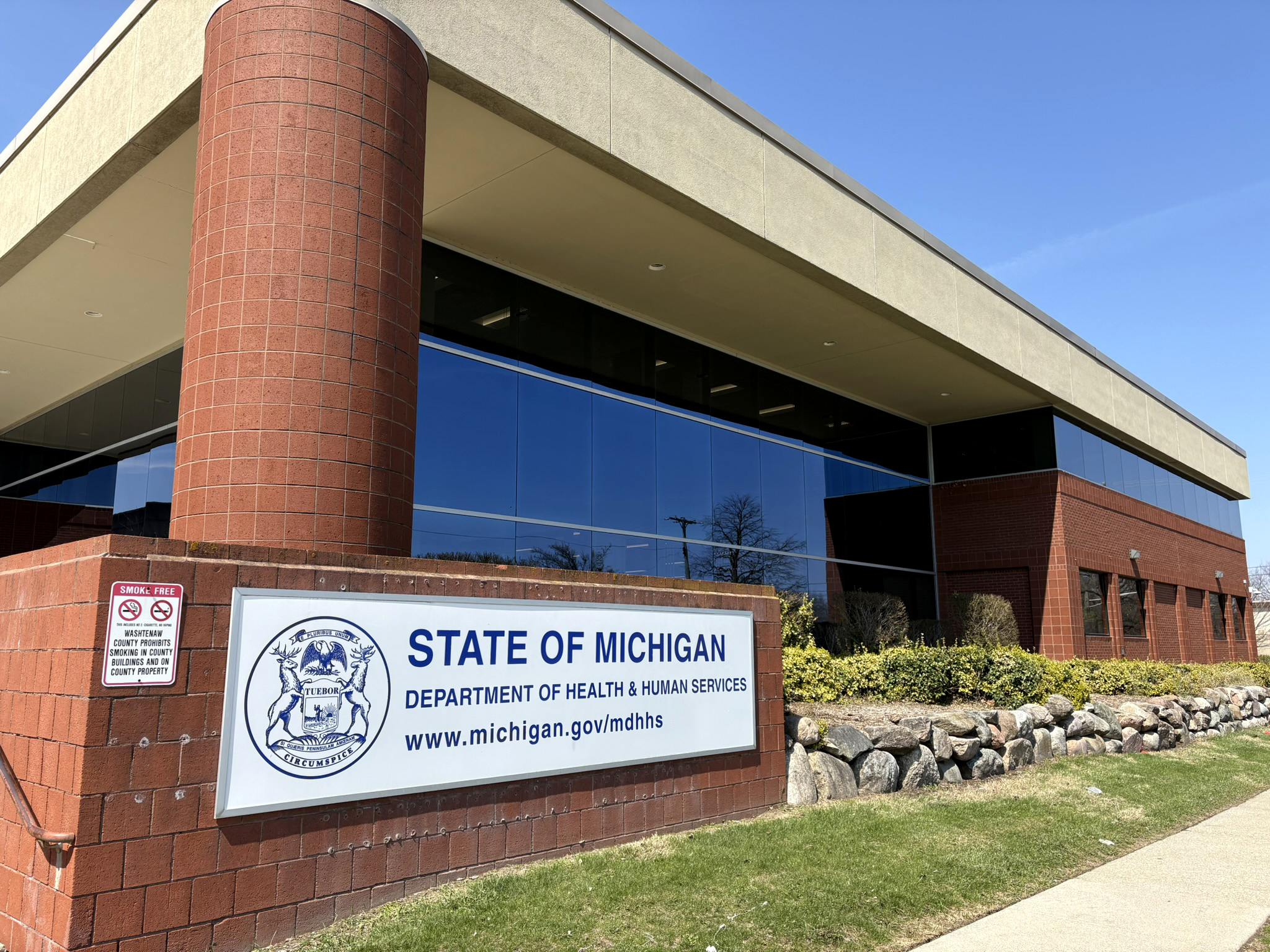
    Laina Stebbins, a spokesperson for the Michigan Department of Health and Human Services, said the Trump administration’s sweeping cuts to public health grants eliminated a contract between the state health department and 44 of the state’s 45 local departments that funded 123 full-time employees.

    Those cuts also affected the state’s disease surveillance labs, “reducing funding for equipment maintenance contracts, data modernization, and the ability to innovate laboratory processes during emerging disease response,” Stebbins said.

    Some of that funding was restored after Michigan won a temporary restraining order against the Trump administration. But Washtenaw’s health department still had to scale back some disease surveillance and outbreak response work. Currently, employees who leave or retire aren’t replaced, except for those on the nursing team, which is hiring but still understaffed.

    The county’s Health Equity Council, which aims to reduce health disparities, including in mental health, was shuttered suddenly in early 2025. Nearly a year later, it resumed its work, with funding at least through this September.

    Staff at the Washtenaw County Health Department in Ypsilanti, Mich., have been working to trace the sources of the recent cyclospora outbreaks by conducting detailed, often lengthy interviews with hundreds of people.Kate Wells/KFF Health News

    An employee from the Centers for Disease Control and Prevention had been stationed at the department. During the funding chaos, the worker was fired, then rehired, then furloughed.

    The federal response to cyclosporiasis has felt frustratingly slow, according to Christina Zilke, a nursing supervisor at the Washtenaw health department.

    “It took them forever to say that this was lettuce, and fast-food restaurants were taking it off the shelves before the CDC ever said what it was,” she said.

    During a July 14 press call, the deputy director of the CDC’s Division of Foodborne, Waterborne, and Environmental Diseases, Gwen Biggerstaff, said it’s not unusual for it to take a long time to identify a specific source for cyclosporiasis — if it’s identified at all. That’s partly due to the lag time between exposure and the appearance of symptoms, and the complexity of tracing this particular parasite.

    Meanwhile, Zilke’s been stocking the coffee station and bringing in pizza, trying to keep up staff morale. It’s not a reward, she said. “It’s more like: ‘Here’s some food for survival. Here’s a break so you don’t quit.’”

    Kim, for her part, remains enthusiastic about the job but said it’s been a surreal introduction to a public health career — first measles, now cyclospora.

    “If nationally they don’t know what’s going on, how are we locally expected to know what’s going on?” she said. “And also just frustrating to be, like, ‘Wow, I don’t think even our government knows how important public health is.’”

    But there’s no time to dwell. She has to move on to the next call, as soon as she can wrap up this one. She gives each person her work number, so people can call or text with any follow-up questions.

    KFF Health News is a national newsroom that produces in-depth journalism about health issues and is one of the core operating programs at KFF — the independent source for health policy research, polling, and journalism.

  • Iran and Oman make progress on a deal to reopen the Strait of Hormuz, officials say

    Iran and Oman make progress on a deal to reopen the Strait of Hormuz, officials say

    CAIRO — Iran and the Gulf Arab state of Oman have made progress toward a deal to reopen the Strait of Hormuz, a potential breakthrough that could help wind down the war in the Middle East, regional officials said Tuesday.

    Under the emerging agreement, ships would enter the Persian Gulf through an Iranian-controlled route and exit through a route controlled by Oman, with service fees charged for providing security and preserving the maritime environment, two regional officials told the Associated Press.

    They said negotiations are still underway and that the final agreement could take a different form, with any deal linked to lifting the U.S. blockade on Iran’s ports. The officials spoke on condition of anonymity to discuss the sensitive negotiations unfolding behind closed doors.

    Any agreement formalizing Iran’s control of the strait would mark a significant strategic victory for Tehran. For that reason, the U.S. could seek to block the deal by refusing to lift the blockade. The strait was an open international waterway before the U.S. and Israel attacked Iran on Feb. 28.

    A U.S. official familiar with the negotiations said that any “temporary” routes established through the strait would not involve approvals by Iran or charges. The official, who was not authorized to comment publicly and spoke on condition of anonymity, said the U.S. remains committed to returning to the status quo in which “no party controls the lanes or the ability to transit through them.”

    U.S. President Donald Trump is under mounting pressure to end an unpopular war that has driven up gas prices ahead of midterm elections and drawn down U.S. supplies of some munitions. In recent days, he has again whipsawed between threatening massive strikes and voicing support for diplomatic efforts.

    In an exchange with reporters on Monday, Trump reiterated his public stance that he’s opposed to tolling in the strait. “I’m not going to let them charge,” Trump said. “Anybody’s going to charge, we’ll charge.”

    U.S. and Iranian officials confirm progress without giving details

    Iranian Foreign Ministry spokesperson Esmail Baghaei said the bilateral talks with Oman are focused on “establishing safe inbound and outbound shipping lanes,” routes that “uphold sovereign rights while also addressing the national security considerations of both Iran and Oman.”

    “The final results of these negotiations will be announced once concluded,” he added, in remarks carried by Iran’s state-run IRNA news agency.

    U.S. Secretary of State Marco Rubio, speaking to reporters at the State Department, said, “There’s been progress made in those talks, but not finality yet. We’re hoping that will happen very shortly.”

    Rubio has previously ruled out any deal that would give Iran control over the strait, saying last month that it would create a “very dangerous precedent” for other parts of the world.

    Treasury Secretary Scott Bessent told CNBC that “there is a chance we may have a deal today or tomorrow to open the strait and move towards a more normalized position in this conflict.”

    Asked whether there would be tolls for movement through the strait, Bessent said: “I think it would be freedom of movement.”

    The potential agreement between Iran and Oman was first reported by the New York Times.

    Cargo ship reports strike in Strait of Hormuz

    Meanwhile, a cargo ship reported being “hit by an unknown projectile” in the strait off the coast of Oman, the United Kingdom Maritime Trade Operations Center said, without providing further information on the ship, including what flag it was sailing under or whether it was carrying cargo.

    The ship sustained damage, according to British maritime security firm Ambrey, which did not elaborate.

    In recent weeks, Iran had repeatedly attacked ships using a route running close to Oman that is overseen by the U.S. military and intended to bypass Tehran’s control.

  • The Danube River’s water is dropping so low that World War II ships are emerging

    The Danube River’s water is dropping so low that World War II ships are emerging

    PRAHOVO, Serbia — Water levels on the Danube River, the second longest in Europe, have dropped so low because of drought that the hulks of dozens of World War II German battleships are emerging into view.

    They are a curious distraction from the summer heat crisis. The Danube’s record low water levels also have forced power plants to the brink of shutting down, and governments across Central and Eastern Europe are taking steps to conserve electricity.

    In the middle of the river separating Serbia and Romania near the Serbian port of Prahovo, a rusty hull is now visible along with a broken mast where the Nazi flag used to fly.

    The ships, some still laden with weapons, belonged to Nazi Germany’s Black Sea fleet that the Germans deliberately sank as they retreated from Romania and as Soviet forces advanced deeper into Europe near the end of the war.

    Historians say up to 200 German warships were scuttled in September 1944 near Prahovo in the Danube gorge as they came under Soviet fire. The idea behind the deliberate sinking was to slow down the Soviet advance in the Balkans. But Nazi Germany surrendered months later, in May 1945.

    The sight of the old warships is a reminder that the Serbian government, with European Union financial support, has long been trying to do something about them. Some were removed from the river by Communist Yugoslav authorities, but most have remained because of the explosives they carried.

    Now, however, authorities are trying to keep traffic moving on the Danube, which flows through 10 nations, as the dropping water levels create dangerous conditions. Experts have linked the unusually hot weather to global warming and other factors.

    Krsta Brandic, a Prahovo resident, said the low water levels have almost stopped ship traffic: “As you can see, the (big) ships can’t pass anymore.”

  • Leonardo DiCaprio and Jeff Bezos lead $200M project to save 100 of globe’s most threatened species

    Leonardo DiCaprio and Jeff Bezos lead $200M project to save 100 of globe’s most threatened species

    LOS ANGELES — Foundations funded and co-founded by Leonardo DiCaprio and Jeff Bezos have launched an initiative committing $200 million to revive 100 of Earth’s most threatened species, including endangered lemurs, salamanders, pangolins, pigs, and echidnas.

    DiCaprio’s Re:wild and the Bezos Earth Fund are leading the Phoenix Species Project, the groups announced Tuesday. They call it the largest single fund in history dedicated exclusively to recovering critically endangered species.

    DiCaprio has for years been developing the idea of a major concerted effort to help species whose habitats and future existence are threatened by climate change.

    In 2021, he and Re:wild co-founder Wes Sechrest, a biologist who serves as the organization’s CEO, met with the Amazon-founding mega billionaire Bezos and his wife, former TV news reporter and host Lauren Sánchez Bezos. He serves as chair and she as vice chair of the Bezos Earth Fund.

    The meeting led to a series of conversations with local governments, environmental groups, and Indigenous people on how best to reverse the decline of their most vulnerable species. Those conversations eventually led to the Phoenix Species Project.

    Animals the initiative is seeking to sustain include:

    – The golden-crowned sifaka, a lemur from Madagascar

    – The Hickory Nut Gorge green salamander, a lungless tree-dweller that lives only in a small canyon in North Carolina.

    – The Visayan warty pig, endemic to islands in the Philippines.

    – Mexico’s Cozumel harvest mouse, which lives only on an island off the Yucatán Peninsula.

    – The pink land iguana, found only on Wolf Volcano in the Galápagos Islands.

    – The Malayan pangolin, also known as the Sunda pangolin, native to Southeast Asia.

    – Tanzania’s pancake tortoise, named for its flat, flexible shell.

    – The starry night harlequin toad, known and named for its black-and-white evening sky appearance, found only in the mountains of Colombia.

    – Attenborough’s long-beaked echidna, a monotreme, or mammal that lays eggs, from New Guinea named in honor of the 100-year-old naturalist and narrator-of-nature David Attenborough.

    The project’s goals include giving long-term sustenance to successful but fleeting smaller efforts.

    “We’ve protected the golden-crowned sifaka for years on a budget that would never match what this species deserves, but letting it go extinct was never an option,” Tiana Andriamanana, executive director of Association Fanamby, one of the groups getting a grant from the initiative, said in a statement. “This funding, this global platform, and technical support change what is possible.”