Tag: no-latest

  • School backpack overload: Heavy bags can strain kids’ bodies

    School backpack overload: Heavy bags can strain kids’ bodies

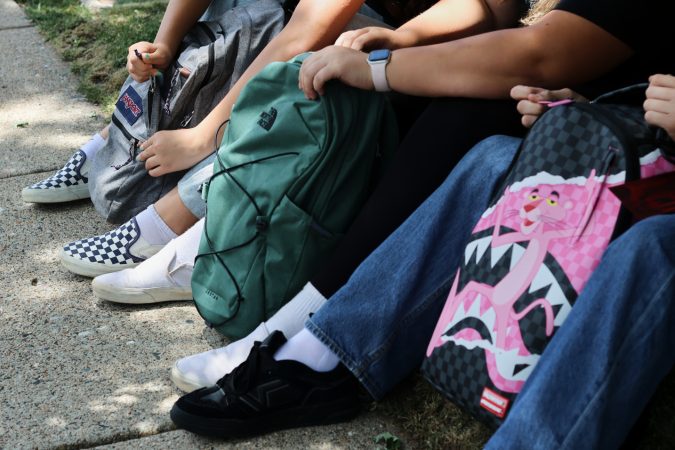
    Backpacks can be fashionable and functional, but they can also be too heavy — weighed down by digital devices, musical instruments, sports equipment and more. Some kids carry home a laptop or tablet and textbooks, too.

    It’s good to be prepared, but kids who walk to school or participate in extracurricular activities may be lugging more than their bodies can handle. Lockers and classroom storage aren’t available everywhere — and a child carrying too much weight might not be ready to learn.

    As families begin back-to-school shopping, here’s how to know if your child’s backpack is too heavy, and how to lighten their load.

    How heavy is too heavy?

    The modern school backpack has evolved, but it hasn’t necessarily gotten lighter. Whether students have textbooks, digital devices or both, they often are accompanied by notebooks, water bottles, lunch containers, workout clothes and more. Individually, those items may not seem heavy, but together they can add unnecessary strain to children’s bodies.

    According to the American Academy of Pediatrics, signs a backpack may be too heavy include a child leaning forward to support its weight or having difficulty walking. Straps should not dig into shoulders.

    Don’t wait for a child to express discomfort or pain to lighten the load, experts say.

    Dr. Sadika Kendi, a physician who chairs the academy’s injury-prevention efforts, says back injuries are uncommon but possible, particularly if a child falls while carrying a heavy backpack.

    “It’s worse if, for example, they trip and fall and they have a huge, heavy backpack on their back. Then that’s just more weight that could increase the severity of an injury,” she said.

    Although 10% to 15% of a child’s body weight is often cited as a backpack guideline, there isn’t enough evidence to establish a one-size-fits-all approach, Kendi said. Because children vary in size, strength, physical development and daily routines, caregivers should consider their child’s individual needs and, in general, keep backpacks as light as possible.

    Teachers say leave this stuff at home

    After families receive back-to-school checklists for classroom materials, they should take an audit of what a child really must carry every day.

    Samantha Ness, a history teacher in Phoenix, said parents should focus on making sure children have basic supplies rather than getting caught up in trendy, decorative or expensive items. Her students have access to classroom textbooks but are still expected to carry a laptop and charger each day. As technology becomes more central to schoolwork, some students have stopped bringing paper, she said. They rely instead on their devices, which can also become distractions.

    “When considering the things going into their backpacks, how is it going to help them be successful in the classroom?” said Ness, who has been teaching for about 10 years.

    In Fairfax County, Virginia, the school district is bringing back math textbooks after a backlash against technology. That was a win for the group Fairfax County Parents for Intentional Technology, but it also means hard decisions about weight in backpacks.

    Parents should think carefully about whether a child really needs to carry both books and a laptop every day, said mom Alix Fetch, a spokesperson for the parents group. Some elementary schools don’t require students to take computers home, while others allow parents to opt out, she said. Block scheduling can also mean older students don’t need every textbook every day.

    Fetch said her 7-year-old typically carries lunch, a water bottle and occasionally a folder with homework or notes from the teacher. Even that can feel burdensome, she said, particularly when students move between classrooms for activities such as art or music. And the inside of the bag can still be messy.

    “Kids are still kids. There’s food in their backpack and water, and they’re scrunching up papers,” Fetch said.

    As students get older, Ness said, backpacks can become more personal storage than school storage, carrying items such as makeup, nail polish and hair dryers.

    “They’re using their backpacks more as purses and like storage than they are actually using them for school,” she said.

    How to carry the load safely

    Experts recommend choosing a backpack that fits the child and has two broad, padded shoulder straps, a padded back, compartments to distribute weight and a waist or chest strap to redistribute the load. The American Academy of Pediatrics also recommends teaching children to pick up and carry backpacks safely, including bending at the knees rather than the waist when lifting heavier bags to avoid strain.

    Backpacks with wheels can be helpful, especially for children with injuries, but experts say they may be problematic in schools with stairs or crowded walkways, where they can pose a tripping hazard.

    Children should remove their backpacks before riding in a moving vehicle, Kendi said, because wearing one can interfere with how a seat belt works during a crash or sudden stop. Instead, place the backpack beside the child, even if leaving it on seems more convenient during drop-off.

    “Don’t wear it in a car or any form of transportation while that car is moving,” Kendi said. “It’s just incredibly dangerous.”

    Regularly cleaning out backpacks can also help reduce unnecessary weight and keep track of notes, permission slips and assignments. Some teachers recommend doing it weekly to catch missing work, spills from leaky water bottles and accumulating crumbs.
  • Trump’s National Guard deployment in D.C. set to cost additional $1.4 billion

    Trump’s National Guard deployment in D.C. set to cost additional $1.4 billion

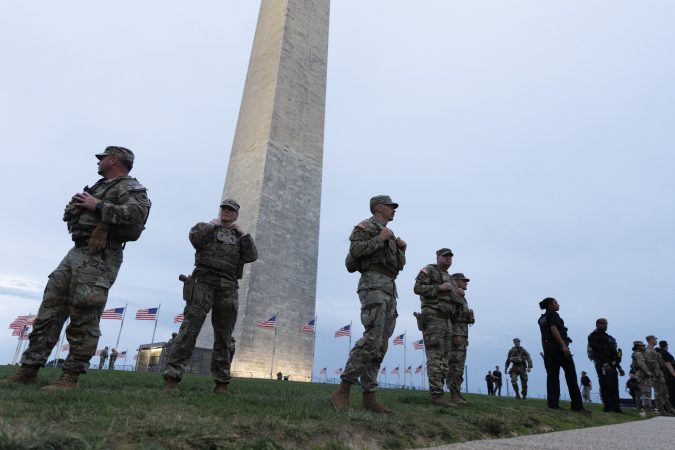
    The Pentagon’s deployment of National Guard troops to Washington, D.C., is set to cost an additional $1.4 billion through the end of the Trump administration, according to information provided to Congress and reviewed by The Washington Post.

    The estimate, which encompasses October 2026 through January 2029, adds to the hundreds of millions of dollars spent on the mission to date. While the administration has not disclosed the full cost of the mission so far, the new figure represents the most comprehensive accounting yet of the president’s unprecedented use of the military to patrol the nation’s capital — an operation fiercely criticized by many Democrats and civil liberty advocates.

    The information was provided to Sen. Elizabeth Warren (D-Massachusetts), a member of the Senate Armed Services Committee, by Jules Hurst III, Trump’s nominee to become the Pentagon’s comptroller, as part of his confirmation process. Hurst is set to be confirmed in a bloc of Trump administration nominees as soon as this week.

    The administration deployed National Guard personnel to Washington in August 2025, after Edward Coristine, a former staffer in Elon Musk’s U.S. DOGE Service initiative to slash the federal government, was assaulted in an attempted carjacking. The National Guard will maintain a presence in D.C. until January 2029 or “until the president says the mission is over,” Brig. Gen. Leland Blanchard II, the interim commanding general of the D.C. National Guard, told reporters in a news briefing Monday.

    The cost estimate provided to Warren assumes a deployment of about 2,500 National Guard personnel. There are approximately 4,600 service members in the city now, Blanchard said, part of a temporary surge coinciding with summer events to commemorate the 250th anniversary of the signing of the Declaration of Independence.

    Democrats have called the deployment a wasteful use of military resources and an infringement on Americans’ civil liberties, and they have pressed Defense Secretary Pete Hegseth to justify the mission as the Pentagon faces urgent budget shortfalls because of the Iran war and other military operations.

    “The National Guard are not pawns and taxpayer dollars are not a piggy bank for Trump’s political stunts,” Warren said in a statement.

    In testimony to the Senate Appropriations Committee last month, Hegseth acknowledged the Defense Department is facing financial pressure but repeatedly blamed the situation on the Biden administration’s management of the military.

    The Pentagon did not immediately respond to a request for comment.

    Since returning to office, Trump has deployed active-duty and National Guard units to American cities on controversial missions to stop crime or protect federal immigration agents. Academics and researchers who specialize in politicization and the military, along with local officials in some of the targeted communities, have argued that the operations violate laws barring the military from engaging in domestic law enforcement.

    Some state and local governments, including Washington, have challenged the deployments in court.

    The Congressional Budget Office estimated in January that the administration’s National Guard deployment in Washington cost $223 million through the end of 2025. It said deployments in Los Angeles, Memphis, Chicago and Portland, Oregon, together cost an additional $273 million in 2025.

    CBO has estimated that each additional month of deployment in Washington would cost about $55 million.

    Trump’s record $1.5 trillion defense budget request for fiscal 2027 includes $2.3 billion in funding for domestic use of the military, including $605 million for the National Guard mission in Washington.

    In a separate request to Congress for $67 billion in additional funding to help cover the costs of the Iran war, the Trump administration also requested $800 million for the National Guard. Sen. Patty Murray (Washington), the Appropriations Committee’s top Democrat, said during last month’s hearing with Hegseth that those funds would go toward extending the D.C. deployment.

    Blanchard, the National Guard general, defended the mission, noting that last month the Trump administration signed a $292 million contract to move National Guard members into local apartments from hotels in and around Washington. The move, Blanchard said, will save $90 million on lodging and transportation costs over the course of the contract.

    He said, too, that service members have responded to about 800 medical emergencies — performing CPR and applying tourniquets on gunshot victims, and administering 325 doses of Narcan, a drug used to treat overdoses.

    While Trump officials have repeatedly asserted the National Guard was necessary to help address a crime emergency in the city, D.C. police data shows violent crimes this year have remained about the same from this time in 2025. Property crimes, including burglary from cars and motor vehicle theft, have decreased by about a quarter. When the National Guard was deployed last year, crime rates were near a six-year low, according to federal data.

    National Guard personnel in Washington are supposed to yield to local police for law enforcement activities, such as arrests, said Michael Perloff, the senior staff attorney for the American Civil Liberties Union’s D.C. chapter. But their orders leave open gray areas, including how personnel should respond in an emergency or when under threat, he said.

    “National Guard members aren’t trained to handle those situations,” said Perloff, whose organization is challenging the mission’s legality in court.

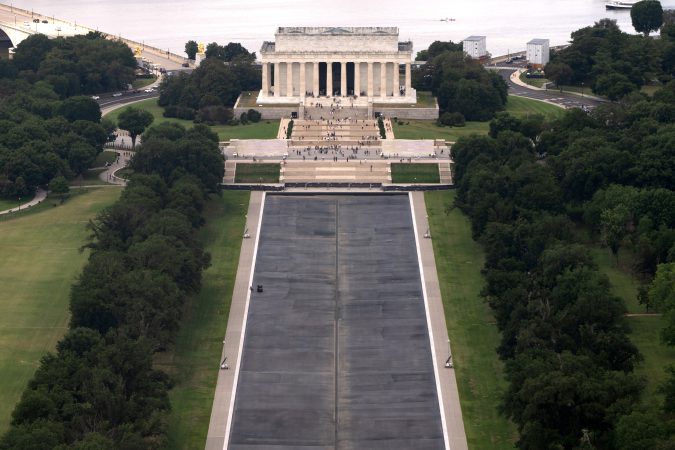
    The service members deployed in D.C. have been tasked with a variety of missions, such as guarding the Reflecting Pool in front of the Lincoln Memorial and cleaning up garbage on city streets.

    In November, two National Guard personnel were shot while patrolling the city blocks away from the White House. One died from her injuries.

    Rahmanullah Lakanwal, an Afghan national charged in the shooting, pleaded not guilty in June. He is facing a possible death sentence if convicted.

  • Trump claims active ceasefire talks, but Iran denies direct negotiations

    Trump claims active ceasefire talks, but Iran denies direct negotiations

    The status of the Iran war remained in limbo Monday, as President Donald Trump insisted that talks between Tehran and Washington were “going on right now” while Iran’s Foreign Ministry spokesman said, “We are not currently holding negotiations with the United States.”

    Trump, who in a social media post earlier in the day called Iranian leaders “unbelievably duplicitous,” told reporters in the Oval Office that “we’re straight about” talks between the two countries, though “they deny. But they’re not denying it now. They just put out a statement, not denying it.”

    Asked where that statement could be found, a White House spokesperson referred The Washington Post back to the president’s remarks.

    Trump said Iran, along with other regional states, had “begged” for talks, leading him to call off what he had described as an imminent U.S. attack that would have been “harder than any attack … since World War II.”

    “We were going to hit them very hard yesterday, very, very hard,” Trump said. But “I want to give them every last chance before decapitation. It’s very tough to do what we have planned, still planned,” he said. “I’m very proud of the fact that I will give people a chance.”

    It was far from the first time since the war began on Feb. 28 that the two sides have offered differing versions of reality on damage done by their dueling airstrikes, what they have agreed to in on-again-off-again informal talks, or even whether those talks were happening.

    The conflict, which officials originally said would last only a few weeks but is now entering in its sixth month, has dragged down Trump’s poll numbers. Growing numbers of Republican lawmakers and voters have questioned both the rationale for the war and Trump’s strategy.

    Although Trump went into the war saying his goal was to destroy Tehran’s nuclear program — an objective he previously said was achieved after 12 days of U.S. and Israeli bombing last summer — Iran’s closure of the Strait of Hormuz within days after the conflict began quickly became the focus of administration attention. The narrow waterway is a chokepoint, bordered by Iran and Oman in the Persian Gulf, through which at least 20 percent of the world’s energy supplies transit.

    Iran refused to let ships pass without permission, said it was going to impose tolls, and began mining the channel and shooting at commercial vessels. In April, the U.S. imposed a naval blockade barring all ships from entering or leaving Iranian ports. Iran continued to menace international shipping while Washington responded by bombing Iranian defensive sites around the waterway and some infrastructure farther inland, leading Tehran to fire missiles and drones at its Persian Gulf neighbors that host U.S. military facilities.

    As the price of gasoline surged at U.S. pumps, the two sides agreed to direct talks in mid-April in Islamabad, with the U.S. delegation headed by Vice President JD Vance. Unable to reach agreement there, after subsequent lower-level negotiations they signed a 14-point memorandum of understanding in mid-June that included a pullback of the U.S. blockade, an easing of sanctions against Iran, and plans for Iran and Oman to jointly figure out a way to manage the strait, while Washington and Tehran moved to nuclear negotiations.

    The ceasefire collapsed within weeks, largely over Iran’s insistence on continuing its control over the strait. The U.S. reimposed its blockade and sanctions, as both sides resumed sporadic military attacks.

    In recent days, regional Arab powers — including Saudi Arabia, the United Arab Emirates and Qatar — have been in touch with Trump as they try to facilitate an end to the conflict, which is damaging their economies. Iran has also been reaching out to many of those same leaders.

    U.S. intelligence agencies have assessed that Iran is unlikely to change its own negotiating stance or be defeated in the near term.

    According to Tehran, there have been no direct negotiations with the U.S. since April, although both sides concede that messages have been passed through regional mediators.

    Last week, Oman sent Tehran a proposal for reopening the Strait of Hormuz that would divide maritime traffic 50-50 between routes along their opposite coastlines. Muscat also suggested a system of “voluntary” contributions from nonprofits, interested states and companies to pay for navigational aid, maintenance and environmental safeguards for the strait.

    Similar to a process used by Singapore, Malaysia and Indonesia, which border the Strait of Malacca, an international trade chokepoint between the Pacific and Indian oceans, the proposed system could be a face-saving way for Iran to move away from the tolls and controls that it has demanded and that Trump and other world leaders have said can never be allowed.

    In a press briefing Monday in Tehran, Foreign Ministry spokesman Esmaeil Baqaei said that Iran was negotiating only with Oman over ensuring the safe passage of commercial shipping through the strait and that there were no talks with the United States.

    “The strait was not closed because of disagreements between Iran and Oman,” Baqaei said. “It has faced disruption since last March due to the military aggression of the United States and the Zionist regime” in Israel.

    In his Truth Social post Monday morning, Trump was dismissive of the Iran-Oman talks. “They ask for a meeting, some would say ‘beg,’ talks begin, with more scheduled in the immediate future,” he said of Iran, “and they say, openly and proudly, that they’re not having any discussions, that nothing is being talked about, and they’re only dealing with ‘Oman.’”

    “They then go on to give their usual blather in saying, the Strait of Hormuz will be operated powerfully by them,” Trump said. But the United States has erected a “wall of steel” with its naval blockade, and “nothing gets through to Iran, unless we want it to, and nothing will get through, unless a Deal, or Total Surrender, is accomplished.”

    Isaac Arnsdorf contributed to this report.

  • Letters to the Editor | Aug. 4, 2026

    Letters to the Editor | Aug. 4, 2026

    Beyond hazing

    I was shocked, saddened, disgusted, disbelieving, and angry to read about what took place in the locker room of Cheltenham High School last year. I grew up in Cheltenham, went through Cheltenham schools, have lived here all of my life, and am just sickened to see that we have made it to the front page of The Inquirer for something as horrendous as this. It is unconscionable that young people participating in an activity that should be the epitome of sportsmanship and proper conduct took it upon themselves to debase a fellow team member in such a barbaric manner. This is not hazing; this is sick, sadistic behavior.

    My questions for those who participated, and even those looking on without intervening, are: Where did you ever learn such behavior, and why would you choose to do this to someone? Was your upbringing such that you learned that this is acceptable? What is lacking inside of you that you feel you have to harm another just to feel better about yourself?

    The behavior these young men exhibited, and the fact that their coaches, men toward whom they should be looking for moral, ethical, and sportsmanlike conduct and guidance, gave them such devious advice, need to be addressed. No matter what kinds of punishments are meted out to any of those involved, they will never come close to erasing the scarring that this young victim will carry with him all of his life.

    To quote an overused phrase: “We are better than this.” Cheltenham has always been proud of our community, our schools, our achievements, and our place in the world. This is not how we want to be known. Nothing like this should take place anywhere. There is no place in our community, or anywhere else, for behavior like this. We need to take a moment to think about how we got here, and make sure we never go there again.

    Barbara Kotzin, Cheltenham

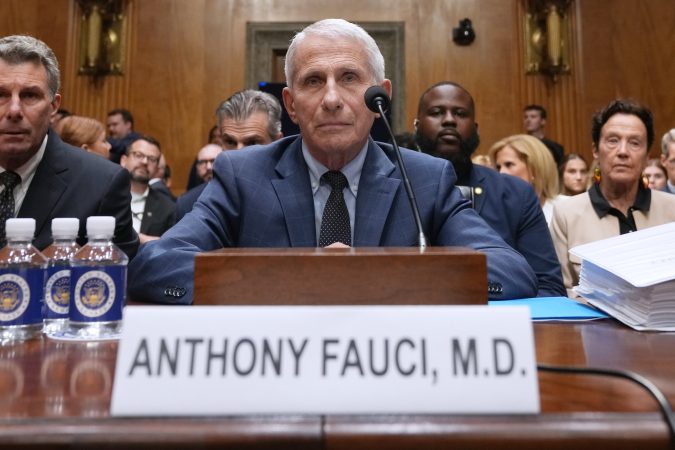
    In support of Fauci

    The attacks on Anthony Fauci say more about the current political climate than they do about his leadership during the COVID-19 pandemic. Dr. Fauci, an American hero, was confronted with a once-in-a-century public health emergency caused by a novel virus that caused the deaths of over 1.25 million of our fellow Americans. His job was to follow the science at the time and make the best decisions he could to save lives. Science and data (rather than politics) have since taught us that, but for the measures recommended by Dr. Fauci, millions more Americans would have died. I suspect Sens. Rand Paul, Josh Hawley, and Bernie Moreno would say that’s a reasonable price to pay in making that binary choice between saving lives or rescuing the economy while obsessing over Dr. Fauci on national television. If that’s their position, they should say so.

    Richard Golomb, Philadelphia

    Join the conversation: Send letters to letters@inquirer.com. Limit length to 150 words and include home address and day and evening phone number. Letters run in The Inquirer six days a week on the editorial pages and online.

  • Dear Abby | Couple’s relationship teeters above oblivion

    DEAR ABBY: I am in a relationship with my hot-and-cold fiancé. I caught him cheating after we moved in together. He had been courting someone at work. I eventually forgave him. That was five years ago. In the time since, he has changed completely — for the worse.

    He doesn’t take me out, shows me no affection and rarely talks to me about anything except the bills. On top of that, we don’t make love anymore. Is it because he got caught, or could he be cheating again? Either way, it doesn’t matter. I’ve started to cheat, too. I don’t care anymore. Should I kick him out and start over, or give it another chance?

    — FRUSTRATED IN THE SOUTH

    DEAR FRUSTRATED: Let’s review the things you have (and haven’t) said in your letter. You allowed a man who cheated on you from the time he moved in to continue living with you. Since then, he doesn’t take you out, shows you no affection and is no longer inclined to make love with you. The reason isn’t because you caught him cheating. It’s because he isn’t in love with you!

    Whether he’s seeing other women is no longer relevant because you aren’t faithful to him either. Why you would give this relationship another chance is beyond me. Not once in your letter did you say you love him. It’s time to end it. Then do what you can to heal from this sorry experience (including consulting a licensed counselor if one is available) and move on with your life.

    ** ** **

    DEAR ABBY: My husband and I just had our first child. He is less than 3 months old. We live close to our family and get together often. My sister and her husband have two sons, 3 and 1. They are constantly sick. My sister and her husband have a history of downplaying their illnesses so that they don’t miss out on family events. They always show up, and even before we had a child, it made us uncomfortable. Now that we have a vulnerable baby, it’s become not only reckless but dangerous.

    When their kids arrive sick, they cough all over everything, and they are never encouraged to wash their hands or cover their mouths when they do it. How do we express our concern to my sister and her husband without sounding like overbearing parents?

    — CONCERNED NEW MOTHER

    DEAR MOTHER: Congratulations on your new baby! Infants under 6 months old are prone to severe complications from colds and other viruses, so you need to do more than “express your concern.” Stop letting sick people near your new son.

    If the gathering is at someone’s home, designate a “baby room” where people with coughs and sneezes are not allowed, and everyone must wash up before entering. Take turns with your husband sitting with the baby in the safe space, or even hire a (healthy) sitter to stay in the room with your son. If people tease you or call you overbearing, so be it. Your baby, your rules.

  • Horoscopes: Tuesday, Aug. 4, 2026

    ARIES (March 21-April 19). Chiron emphasizes the Ram’s courage today. It’s so like you to volunteer before anyone asks or start something without having every answer. Others admire this quality that you hardly think about until it’s the very reason they make you the leader.

    TAURUS (April 20-May 20). Chiron emphasizes the Bull’s confidence in having enough today. You’ll use what’s already on hand, fully enjoy it and feel grateful you don’t have to buy, store or maintain more than you need. When the quantity is right, you’re free of the burden of excess.

    GEMINI (May 21-June 21). Chiron emphasizes the Twins’ discernment today. Two stories will compete for your attention. One falls apart after a few questions. The other keeps matching the facts. Your good judgment keeps you from wasting your time.

    CANCER (June 22-July 22). Chiron emphasizes the Crab’s trust today. You’ll hear, “I saved you a seat,” “Drive safely” or “Text me when you get home.” It’s easier to trust someone when they keep showing you, in little ways, that you’re on their mind.

    LEO (July 23-Aug. 22). Chiron emphasizes the Lion’s generosity today. You’ll share an introduction, recommend someone’s work or hand over the spotlight without losing any of your own. Later people will remember whose warmth made them feel so welcome.

    VIRGO (Aug. 23-Sept. 22). Chiron emphasizes the Virgin’s craftsmanship, which is remarkable. Your eye for detail has you straighten things just so. Your project manager’s efficiency has you thinking ahead and finishing the job in a way that saves time tomorrow.

    LIBRA (Sept. 23-Oct. 23). Chiron emphasizes the Scales’ reciprocity. Maybe to you it’s normal when a relationship settles into an easy rhythm of taking turns, picking up the check, returning calls and meeting each other halfway without anyone keeping score. But indeed, this is special!

    SCORPIO (Oct. 24-Nov. 21). Chiron emphasizes the Scorpion’s resilience today. Something that once rattled you no longer has potency in your psyche. Note your steady hands. Note how your thoughts and words flow without impediment. No hesitation, no drama.

    SAGITTARIUS (Nov. 22-Dec. 21). Chiron emphasizes the Archer’s humility today. You’ll meet someone who knows a great deal about one subject, and the conversation grows more interesting every time you ask the next question. And when they say “great question,” they really mean it.

    CAPRICORN (Dec. 22-Jan. 19). Chiron emphasizes the Goat’s endurance today. While others drift between projects, you’ll keep working through the same one until there’s nothing left to tighten, sign, file, stack or send. You’d rather finish one thing than leave a dozen tabs open.

    AQUARIUS (Jan. 20-Feb. 18). Chiron emphasizes the Water Bearer’s originality today. You’ll suggest the idea that almost stayed in your notebook, and before long someone across the table is building on it.

    PISCES (Feb. 19-March 20). Chiron emphasizes the Fish’s compassion today, and you’ll feel drawn to listen more deeply, witness more fully and be generally more patient with those who are “going through it” because you’ve been there, too.

    TODAY’S BIRTHDAY (Aug. 4). It’s your Year of Apothecary in which the particular way you mix elements of healing, magic and craft will be both intuitive and repeatable, resulting in remedies that are custom-made for the moment. More highlights: Your social ease attracts sweet souls. A profitable sale puts extra money in your pocket. Your uncanny ability to cast the right people in key roles turns an ambitious project into a standout success. Cancer and Capricorn adore you. Your lucky numbers are: 1, 11, 8, 15 and 21.

  • 25 states sue over Trump’s new tariffs, calling them ‘pretext’ to replace his old ones

    25 states sue over Trump’s new tariffs, calling them ‘pretext’ to replace his old ones

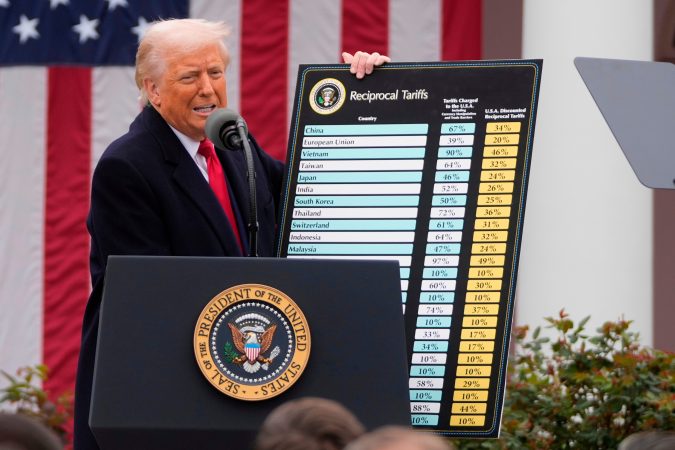
    WASHINGTON — Twenty-five states sued the Trump administration Monday over its latest tariffs, calling them a pretext for replacing import taxes the Supreme Court struck down in February.

    The United States last month imposed double-digit tariffs on 59 countries and the European Union, charging that they had not done enough to crack down on imports produced by forced labor. The new tariffs took effect just as the clock ran out on temporary tariffs President Donald Trump had turned to after the Supreme Court defeat.

    “After losing at the Supreme Court, the administration is once again trying to illegally raise taxes on families and businesses with a new round of tariffs,” said New York Attorney General Letitia James.

    Joining New York in the lawsuit announced Monday are Arizona, California, Colorado, Connecticut, Delaware, Hawaii, Illinois, Kentucky, Massachusetts, Maryland, Maine, Michigan, Minnesota, Nevada, New Jersey, New Mexico, North Carolina, Oregon, Pennsylvania, Rhode Island, Virginia, Vermont, Washington, and Wisconsin.

    Pennsylvania Gov. Josh Shapiro, who joined the suit in his official capacity, posted about in on X Monday afternoon.

    “Donald Trump is once again trying to impose his disastrous and illegal tariffs. So we’re taking him to court — again. The President’s tariffs have injected unnecessary chaos and confusion into Pennsylvanians’ lives — and have raised prices across the board for our farmers, small businesses, and families,” Shapiro said. “We’ve won in court before to protect Pennsylvanians from the costs of Trump’s disastrous trade war — and the Supreme Court has already ruled his tariffs unlawful — so now we’re going back to court to stop him yet again.”

    Trump, who argues that high tariffs will revive American manufacturing, last year overturned decades of U.S. policy that favored lower tariffs and ever-freer trade. Invoking the 1977 International Emergency Economic Powers Act, or IEEPA, he imposed double-digit tariffs on imports from almost every country, saying America’s longstanding trade deficit amounted to a national emergency.

    But the Supreme Court ruled that IEEPA did not authorize tariffs. The decision forced the administration to send refunds to importers who’d paid the tariffs. Eager to make up the lost revenue, Trump turned to temporary 10% worldwide tariffs. But they expired at midnight July 24.

    Now he’s tapping more durable tariffs under Section 301 of the Trade Act of 1974, which permits the president to impose import taxes and other sanctions against countries found to engage in unfair trade practices. Trump used Section 301 to impose big tariffs on China in his first term, and they survived court challenges.

    The administration this time invoked Section 301 to impose the forced-labor tariffs, which range from 10% to 12.5% and hit countries that provide 99% of American imports.

    “The United States is using its lawful authority to obtain the elimination of unreasonable acts, policies, and practices that burden U.S. commerce,” White House spokesperson Kush Desai said. “A foreign country’s failure to impose and effectively enforce a prohibition on the importation of goods produced with forced labor is unreasonable and burdens U.S. commerce, including American workers, and must be addressed. Section 301 tariffs have proven to be a legally durable tool since the President’s first term, and they remain so now.”

    The states’ lawsuit follows two other lawsuits filed in The Court of International Trade in July by small businesses that also challenged the 301 tariffs.

    Both of those lawsuits argue that the government didn’t adequately establish its case against each specific economy or spell how the tariffs will eliminate the specified practice they are being levied for, as required by Section 301.

  • Trump says Pirro ‘folded like an umbrella’ in bid to drop Reflecting Pool vandalism charges

    Trump says Pirro ‘folded like an umbrella’ in bid to drop Reflecting Pool vandalism charges

    WASHINGTON — President Donald Trump said Monday that U.S. Attorney Jeanine Pirro “choked” and “folded like an umbrella” in moving to drop charges against a former Olympian accused of vandalizing the Lincoln Memorial Reflecting Pool.

    Speaking at an unrelated Oval Office event, Trump ducked questions about whether he’d fire Pirro, a former Fox News host and longtime ally he handpicked as top federal prosecutor in the nation’s capital. But the president kept up his drumbeat of sharp criticism, saying he remained disappointed by her assessment that damage to the Reflecting Pool was the result of shoddy construction, not vandalism.

    “Frankly, I think she choked because the judge was really vicious. Instead of going after the people that did it, the judge went after her and went after her department, and I guess she choked,” Trump said in response to a reporter’s question after he signed an executive order for military spouses. “I don’t know what the hell happened.”

    The move to dismiss charges against David Hearn was an embarrassing setback for the Justice Department and marked a rare moment during Trump’s second term of an aide or political appointee openly defying him. After initially posting on social media over the weekend, “I disagree 100% with Jeanine Pirro,” Trump was still fuming two days later, insisting for several minutes that vandalism had marred the troubled project.

    “I was disappointed with Jeanine Pirro, really disappointed,” the president said Monday. “She folded like an umbrella.”

    Pirro has not commented publicly since Trump’s initial social media post criticizing her.

    Hearn has said he was on a bike ride June 19 when he reached in to examine the pool’s newly peeled coating and briefly touched a chunk attached to the side of the pool. But he said he obeyed a park worker who told him to let go of it.

    The president also used the opportunity Monday to distance himself from the troubled project, which he had touted as part of his overarching efforts to spruce up the nation’s capital.

    Trump said in April that he had consulted with a trio of firms that had worked on swimming pools at his properties and that the one he picked for the Reflecting Pool project had done work at his golf course in Northern Virginia. That firm was Virginia-based Atlantic Industrial Coatings, which was awarded a $14.7 million no-bid contract to repaint and waterproof its concrete floor.

    “I have a guy who’s unbelievable at doing swimming pools,” Trump said then. “He looked at it. He called me up. He said, ‘Sir, we can do something on it.’”

    But Trump insisted Monday that “I didn’t know the contractor” and for the first time hinted that he wasn’t pleased by the work that was done to get the Reflecting Pool ready in time for Independence Day celebrations.

    “I’m not saying I was 100% thrilled with the contractor, but the contractor was rushing. We wanted to get it open for July Fourth,” he said.

    Crews drained the Reflecting Pool weeks ago to launch a new round of repairs. The White House hasn’t said when those might be finished or how much more they will cost, but the Trump administration did not seek new bids from other companies on the new round of repair work.

    Trump also said Monday that the Reflecting Pool would be “fixed” and reopened in the next week and a half to two weeks — without providing further details.

  • FAA certifies Boeing’s new 737 Max 7 jetliner for flight after years of delays

    FAA certifies Boeing’s new 737 Max 7 jetliner for flight after years of delays

    The Federal Aviation Administration on Monday approved the smallest model of Boeing’s Max jetliners for commercial service nearly a decade after the aircraft manufacturer first unveiled the plane.

    Certification of the Boeing 737 Max 7 represents a milestone in the company’s work to overcome years of safety, quality, and production challenges. The long-delayed Max 7 is part of Boeing’s 737 family of commercial jets, which is the company’s bestseller and has been at the center of its troubles.

    The FAA said it cleared the new plane after years of additional testing, design changes, and an extensive review of its design and safety systems. The certification was delayed as Boeing addressed technical issues and heightened regulatory scrutiny following two crashes involving the larger Max 8 that killed 346 people in 2018 and 2019.

    Since the crashes off the coast of Indonesia and in Ethiopia, the FAA overhauled how it certifies Boeing aircraft. It said its oversight of the company would continue beyond the Max 7’s approval.

    Before signing off on the aircraft, the FAA said, it required Boeing to make several safety changes, including updating flight-control software, improving cockpit alerts for pilots and redesigning the engine anti-ice system to prevent overheating.

    “Our team of dedicated engineers and test experts worked through challenges, an extended pandemic, and the transition to new certification processes,” said Stephanie Pope, president and CEO of Boeing Commercial Airplanes.

    Safety inspectors will remain at Boeing production facilities to monitor manufacturing, including observing the company’s Safety Management System and overall safety culture, the agency said.

    The Max 7 is expected to be used primarily on short- and medium-haul routes. Several carriers, including Southwest Airlines, have outstanding orders for the plane.

  • U.S. stocks rally near a record as falling oil prices ease Wall Street’s worries about inflation

    U.S. stocks rally near a record as falling oil prices ease Wall Street’s worries about inflation

    NEW YORK — The U.S. stock market rallied to the edge of its all-time high on Monday after easing oil prices helped calm Wall Street’s worries that inflation could get even worse.

    The S&P 500 jumped 1.5% and is just 0.1% below its record set earlier this summer. It was coming off a frenetic July, where it swung up and down as oil prices shot higher because of the war with Iran, before ultimately ending the month just about where it started.

    The Dow Jones Industrial Average, which measures a narrower slice of the U.S. stock market, climbed 693 points, or 1.3%, to an all-time high, while the Nasdaq composite leaped 2.1%.

    Stocks got a lift as the price for a barrel of Brent crude sank 4.7% to $83.77. It dropped after President Donald Trump said over the weekend that he decided to hold off on new strikes against Iran at the urging of allies in the region.

    Brent’s price careened between $72 and $102 last month as worries rose and fell about when the war with Iran would allow oil tankers to freely exit the Persian Gulf again to deliver crude to customers worldwide. The latest acquiescence by Trump helped to ease worries about the global flow of crude, and Treasury yields correspondingly fell in the bond market.

    The yield on the 10-year Treasury sank to 4.68% from 4.75% late Friday. It, though, remains well above its 3.97% level from before the war with Iran.

    Higher yields threaten to undercut prices for stocks and other investments, while slowing the economy by making borrowing more expensive for U.S. households and businesses. The average long-term U.S. mortgage rate has already leaped to its highest level in a year.

    Monday’s ease in oil prices helped airlines and other companies with big fuel bills lead the market. United Airlines flew 5.8% higher, while American Airlines climbed 5%. Norwegian Cruise Line Holdings steamed 6.6% higher.

    Boeing jumped 8% after U.S. regulators certified its 737 MAX-7 planes, clearing them for commercial service.

    Tyson Foods rose 2.8% after the meat company reported a slightly stronger profit for the spring than analysts expected. CEO Donnie King said strength is continuing in the company’s chicken business and its prepared foods, which include brands like Jimmy Dean and Hillshire Farm.

    It joined a lengthening list of big U.S. companies to deliver a bigger profit for the spring than analysts expected. That’s imperative for Wall Street because stock prices tend to follow the path of corporate earnings over the long term, and worries were rising that U.S. stock prices may have broadly already shot too high.

    Companies in the S&P 500 are on track to deliver earnings per share for the spring that are 47% higher than a year before, according to FactSet, with more than half of the companies in the index having already reported. If that ends up being the case, it would be the strongest growth since the spring of 2021, when the economy was roaring out of the COVID pandemic.

    Also offering encouragement for profits was a report on Monday showing that growth for U.S. manufacturing accelerated to its strongest level since 2022.

    Keeping Wall Street unsettled, though, were swings for stocks of companies that make computer chips. They’ve been veering up and down for weeks on worries about whether their surging revenues because of the artificial-intelligence boom are sustainable.

    If AI ends up producing less profit and productivity than hoped, Big Tech companies could curtail their spending sprees on data centers that have helped chip stocks soar to tremendous heights.

    Micron Technology went from a drop of 6.4% to a gain of 1.7% through the day before ending with a gain of 0.8%, for example. It’s up roughly 190% for the year so far.

    All told, the S&P 500 rose 110.78 points to 7,600.50 and finished just shy of its all-time closing high of 7,609.78. The Dow Jones Industrial Average climbed 693.38 to 53,178.41, and the Nasdaq composite rallied 540.04 to 25,913.90.

    The manic swings for AI stocks have been most dramatic in South Korea, where the Kospi index is dominated by just two tech titans, Samsung Electronics and SK Hynix.

    Seoul’s Kospi fell 5.1% Monday, coming off Friday’s 17.9% surge that was its best day in history.

    In neighboring Japan, Tokyo’s Nikkei 225 fell 0.9% after the United States and Japan confirmed they had moved together to prop up the value of the Japanese yen against the dollar. A stronger yen would help to limit inflation in Japan, but it could also potentially hurt Japan’s exporters.