Tag: no-latest

  • Two centuries on, Smithsonian connects Jefferson’s hair to Hemings’ children

    Two centuries on, Smithsonian connects Jefferson’s hair to Hemings’ children

    For more than 200 years, the question has nagged at the edges of American history: Did Thomas Jefferson father children by Sally Hemings, a woman he enslaved?

    The claim that he did has prompted denials, polemics, scandalous bestsellers, and sober historical scholarship, before settling in recent years into a widely, if not universally, accepted truth.

    Now the Smithsonian Institution is offering what it says is the most definitive evidence yet, based on an extraordinary piece of data: Thomas Jefferson’s genome, sequenced from samples culled from a few strands of his hair.

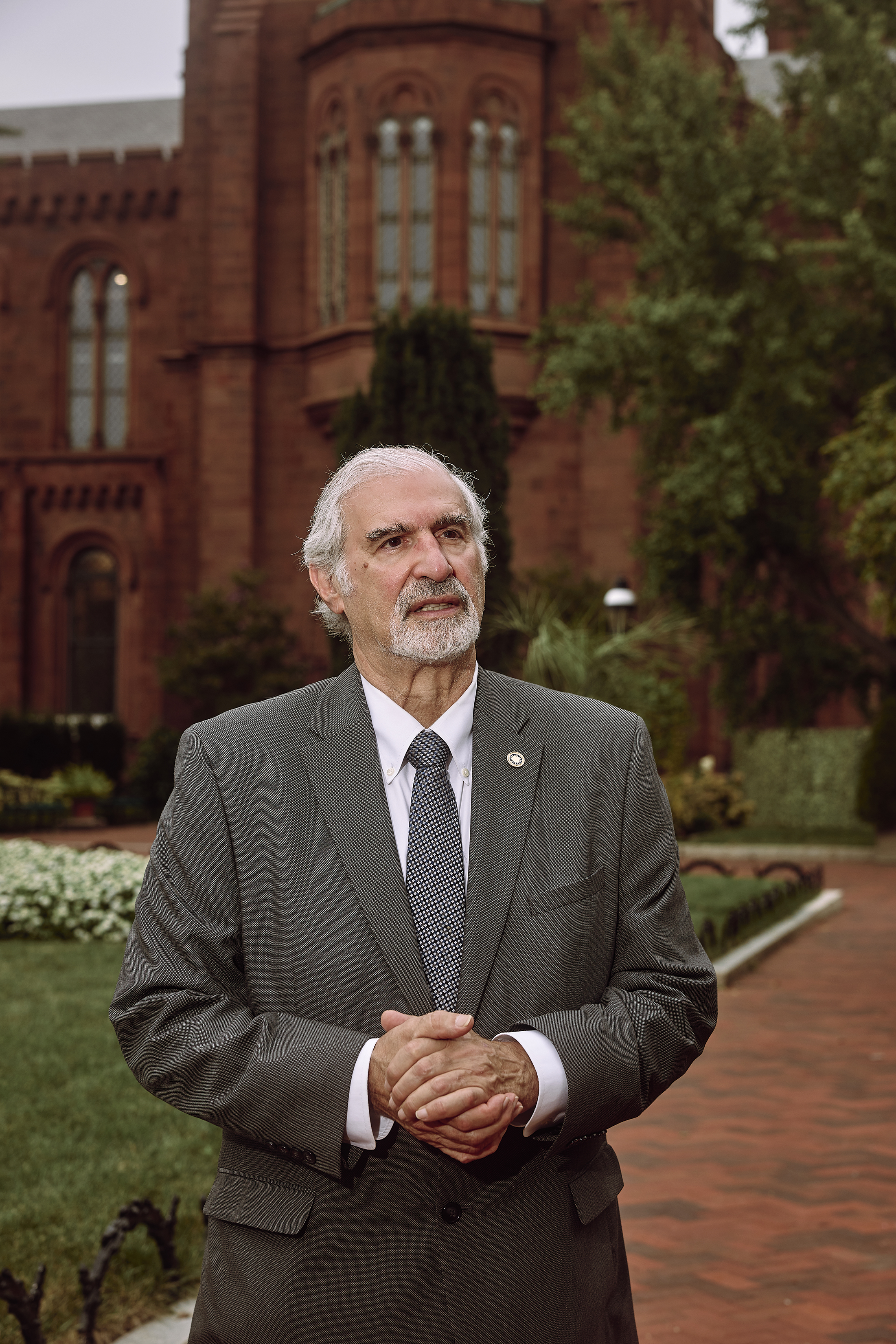
    In a new book, Richard Kurin, the Smithsonian scholar who led the effort, describes how a team of researchers used cutting-edge techniques to extract and sequence Jefferson’s DNA. They then compared it with DNA samples obtained from 13 living Hemings and Jefferson family descendants.

    It’s a 15-year detective story that involves archaeologists, genealogists, molecular geneticists, and historians, stretching across multiple changes in Smithsonian leadership. Kurin, in a video interview this week, called it a “capstone” to decades of previous research and “extraordinary proof” that Jefferson fathered Hemings’ children.

    So is it absolutely certain?

    “Other people may have other ideas, and I don’t think there’s necessarily an institution position,” Kurin said. “But I think it’s compelling.” He added, “It’s very clear.”

    History by a Hair, publishing Tuesday by Crown, a division of Penguin Random House, arrives with endorsements from prominent scholars.

    But it is landing at an extraordinarily tense moment for the Smithsonian, which has been engaged in a standoff with the Trump administration. The president has accused the institution and its secretary, Lonnie Bunch III, of promoting a “divisive, race-centered ideology” that dishonors the nation’s founders and overemphasizes slavery and other negative parts of American history.

    This month, Bunch, who has led the Smithsonian since 2019, announced that he would depart by the end of the year. Last week, the administration outlined its plans to install signs outside the Smithsonian’s National Museum of American History, warning visitors of what it claims is inaccurate history.

    While the Hemings issue has not figured into the controversy, the Smithsonian has adjusted the rollout of its research. An event on Tuesday announcing the findings has been moved from the American history museum to a less prominent Smithsonian location, limited to descendants, and closed to the news media. An online public lecture by Kurin through the institution’s educational arm set for the next day was canceled.

    Kurin acknowledged what he called the “unpredictability” of the moment. But for him, the research was just “doing my job.”

    “This is a topic of interest to the American people,” he said. “I didn’t invent this question, and it wasn’t invented by the Smithsonian. It goes back to Hamilton and Jefferson and Adams. If we have evidence, scholarship, and science that helps elucidate American history, I think we have a duty to pursue it.”

    In a foreword to the book, Bunch, 73, strikes a similar note, linking the research to the museum’s truth-seeking mission.

    The research, he writes, “helps resolve an issue that had divided us since the time of our national founding, and points to how science, scholarship and education can bring us together as people of one, albeit complicated, American family.”

    A Notion long discounted

    The claim that Jefferson fathered children by Hemings goes back to the early days of the Republic, when Jefferson’s political opponents lobbed the scandalous charge that he had an enslaved Black mistress at Monticello, his estate in Virginia.

    Jefferson’s paternity was also recorded in generations of Hemings family accounts, including an 1873 oral history given by her son Madison, who said that Hemings had become Jefferson’s “concubine,” bearing five children by him, including one who died in infancy.

    Still, deep into the 20th century, the notion was discounted by most mainstream, white historians, who saw it as out of keeping with Jefferson’s character.

    The 1990s saw a sea change, driven in part by a 1997 study by Annette Gordon-Reed, who analyzed the wealth of evidence in support of the claim, and the ways it had been systematically discounted by white scholars. In 1998, geneticist Eugene Foster published a DNA study in the journal Nature, which indicated that Hemings’ son Eston was the son of a Jefferson male.

    In a 2000 report, the Thomas Jefferson Memorial Foundation, the nonprofit group that owns and operates Monticello, concluded that multiple strands of evidence suggested a “high probability” that Jefferson was the father of Hemings’ son Eston, and that he was “most likely” the father of her other children.

    In 2018, Monticello went further, declaring it a “settled historical matter.” Still, some skeptics have continued to advance other paternity candidates, including Jefferson’s brother, Randolph.

    Kurin, a cultural anthropologist who joined the Smithsonian in 1976, has helped oversee many complex projects, including the development or renovation of most of its museums. The Jefferson effort, he said, began with a flash of simple intellectual curiosity.

    In 2011, Kurin was previewing a Smithsonian documentary about Jefferson’s personal Bible, which he had created by cutting out passages containing Jesus’ moral teachings and pasting them into a new book.

    Kurin wondered: Could Jefferson have cut himself in this process, leaving blood behind?

    There was no blood. But conservators, he learned, had found something else: three strands of hair.

    At that time, no one had reliably sequenced usable samples of nuclear DNA (the genetic material found in the nucleus of every cell) from follicleless hair shafts, which these were. But after getting permission from the Smithsonian’s Board of Regents, Kurin started working with Beth Shapiro and Ed Green, two experts in ancient DNA at the University of California, Santa Cruz, who were pioneering new techniques for extracting and sequencing DNA from challenging sources.

    Kurin was mindful that the research could yield clear evidence that Jefferson was not the father of Hemings’ children. He discussed that possibility with Bunch, who at the time was the director of the National Museum of African American History and Culture.

    “The museum has to be on a foundation of truth,” Bunch said. “Whatever it is.”

    ‘We’re going to exhaust it’

    The first task was simply to figure out if the Bible hairs were actually Jefferson’s, by comparing any DNA that could be extracted with samples taken from a known Jefferson descendant.

    A genealogist started tracking down living fifth-generation descendants of Jefferson and of Hemings. (Fifth-generation descendants, some of whom were already in their 80s, would most likely be the last to have enough possible Jefferson DNA — an average of roughly 3.1% — to provide a clear match.)

    Three years in, the team hit a possible dead end. The scientists had analyzed mitochondrial DNA, which passes unchanging through the female line, extracted from the Bible hairs. It didn’t match a sample obtained from a female-line descendant of Jefferson’s mother. So it couldn’t be Jefferson’s hair.

    The team turned to another source that had emerged: strands from a lock at Monticello said to have been clipped from Jefferson’s head while he was on his deathbed in 1826.

    That hair matched the DNA sample from the living maternal-line descendant. “We’re going to exhaust it and sequence the crap out of it,” Shapiro wrote to Kurin.

    The team was ultimately able to sequence Jefferson’s entire genome, employing groundbreaking techniques that didn’t exist when the research started but have since been used to solve criminal cases like the Gilgo Beach murders and the Golden State Killer, for which Green managed to recover and sequence DNA from rootless hairs.

    Shapiro, whose research has also included recovering the DNA of extinct species like the dodo and the woolly mammoth, credited the Jefferson project with helping spur creative thinking about new ways to extract DNA from hair.

    “It’s hard to say we ever would have gotten to this place, where all these tools were used to convict the Gilgo Beach serial killer, if it hadn’t been for starting this project,” she said.

    Ultimately, the team was able to compare Jefferson’s DNA with that from samples obtained from nine fifth-generation descendants of Hemings via Madison and Eston. They shared between 0.5% and 5% of DNA with Jefferson, within the range of the expected average of 3.1% for a fifth-generation descendant.

    The team also got data from two fifth-generation Jefferson descendants via his daughter Maria, who shared 2.4% and 2.6% of his DNA, and two descendants of Jefferson’s brother, Randolph.

    Sam Vohr, a computational biologist working with the team, used the data to run 20,000 simulations of each paternity scenario involving Thomas Jefferson, Randolph, or Randolph’s sons. The odds that Thomas Jefferson did not father either Madison or Eston were less than 1 in 1,000.

    In an interview, Green said Jefferson being the father of Eston and Madison is by far the most likely scenario. Strikingly, he noted, the person with the highest percentage of shared DNA with Jefferson — 5% — wasn’t a descendant of Jefferson and his wife, but a Hemings descendant.

    “Any alternative paternity scenario is going to have to reconcile that,” Green said.

    This month, one Hemings descendant who had given a sample in 2015 asked to withdraw her participation, saying she was dismayed that the book was appearing before a related article had been published in a scientific journal. The Smithsonian confirmed that the descendant’s sample and related data had been destroyed.

    Shapiro said the descendant’s data had also been removed from the scientific article, which is under submission and awaiting completion of peer review. The team also reran its analysis. “It didn’t change the results,” Shapiro said.

    Jefferson’s freckles

    It remains to be seen how the research, which so far has been closely guarded, will be received.

    Gordon-Reed said she welcomed the findings, which she was briefed on several months ago, but confessed to “mixed feelings.” In her view, the historical evidence, bolstered by the 1998 DNA study, was enough. “But it’s always good to have more corroboration,” she said.

    The most surprising thing about the research, Gordon-Reed said, was that it was possible at all.

    “Now they have Jefferson’s genome,” she said, adding with a laugh, “Can they clone him?”

    Views among Jefferson descendants vary, with some having long accepted that he fathered children with Hemings and others strongly rejecting the idea.

    The Monticello Association, a Jefferson descendant group that owns the graveyard at Monticello, which does not admit Hemings descendants, did not respond to requests for comment.

    David Miller, a sixth-generation Jefferson descendant whose mother, Sarah Coachman Miller, provided a DNA sample, said he welcomed the results, which confirmed what he already believed.

    His mother died before the results came back. But through the project, Miller had connected with some Hemingses, whom he calls “cousins.”

    “It’s positive the family now hopefully gets the recognition and acknowledgment and acceptance they deserve,” he said.

    The person in the study who shares the most DNA with Jefferson is Clara Lee-Nutt, 64, who lives in Sharpsburg, Md. Along with 5% of his DNA, she also has what her father teasingly told her were Jefferson’s freckles.

    Growing up, being descended from Jefferson wasn’t something that was shouted from the rooftops. It was the kind of claim, she once overheard her father say, that could “get you lynched.”

    But now Lee-Nutt embraces it. In January 2009, she published an open letter to Jefferson, whom she says she views “with reverence,” in Newsweek, telling him about the inauguration of Barack Obama and her hopes that Americans could move forward “as one people.”

    Lately, Lee-Nutt said, she had thought often about her father, who died when she was 10. Before getting the Smithsonian’s results, she had braced herself for the possibility that the stories he had told her were wrong.

    She said she understood how some Jefferson descendants might feel as if something were being taken away from them.

    “But we’re not trying to diminish anyone,” she said. “We just want to be able to tell our children who they are.”

    This article originally appeared in the New York Times.

  • Letters to the Editor | Sept. 20, 2026

    Letters to the Editor | Sept. 20, 2026

    School parking problem

    Academy at Palumbo’s Home and School Association is disappointed by City Council President Kenyatta Johnson’s inaction regarding the school parking crisis highlighted in Kristen A. Graham’s recent article.

    Johnson’s spokesperson said that “… any discussion of changes to parking policy must consider the impact on the broader community.” For the past three years, we have repeatedly appealed to Johnson’s office for assistance. He has had plenty of time to conduct discussions, assess the impact, and propose a resolution.

    The irony is that Palumbo staff already use parking spots in the surrounding neighborhood during school hours. The immediate impact falls on our teachers and students. Teachers consistently face a choice: either disrupt instructional time to move their car every two hours or incur costly tickets. Academy at Palumbo’s working conditions are our students’ learning conditions. The parking crisis impacts working conditions.

    Businesses and residents can apply for parking permits through the Philadelphia Parking Authority. Why can’t a similar permit system be established for school district staff? It’s time for leadership to stop stalling and come up with a plan to support our educators.

    Julie Kaeli, former president, Academy at Palumbo Home and School Association, and Alex Du, president, Academy at Palumbo Home and School Association, Philadelphia

    Raising leaders

    An African proverb asserts, “The ruin of a nation begins in the homes of its people” — an expression that offers profound commentary on recent events in Center City, in which large groups of teenagers were involved in confrontations with the police. Diverging from a broader national frame, an examination of the Philadelphia community reveals acute challenges regarding youth engagement in destructive behaviors. This reality necessitates a rigorous inquiry into behaviors that border on juvenile delinquency, marked by a lack of structural boundaries, the erosion of respect for authority, and a diminishing moral compass during sporadic social media gatherings. Many of these gatherings lead to vandalism and open acts of aggression toward authority figures.

    It is also important to recognize that these negative behaviors are not indicative of all children, as many youths demonstrate socially healthy and responsible behaviors during meetups with peers. However, because of social media, these events typically lead to generalizations about children, thereby influencing policy.

    Investigating these dynamics requires analyzing content, the extent and efficacy of parental and caregiver involvement, alongside efforts to reconstruct and adopt a newfound lens of social values and expectations within the community. A fundamental question arises concerning the precise level of responsibility borne by parents and primary caregivers. It is imperative that households actively instill prosocial virtues prior to a child’s entry into the public sphere. Ultimately, while fostering individualism and character, in-home adults must maintain accountability for conduct that borders on juvenile delinquency, ensuring youth positively represent both the family and the wider community.

    We realize it is not solely on the family to achieve this aim; it also takes a healthy community. Likewise, city administrators need to think outside the box when investing in and creating educational, recreational, and vocational opportunities that align with children’s interests. This must include a 21st-century approach to devising a solution to this dilemma.

    Darin Toliver, vice president, cofounder, Black Men at Penn Inc.

    Eyes closed

    Recent accounts of Washington’s lukewarm response to the artificial intelligence crisis are chilling. The leaders of tech companies have said AI could end humanity as it grows so powerful it can’t be controlled. So how does the president of our country respond? He calls it a “hoax,” which is what he calls everything he chooses not to believe. His position is that we cannot fall behind China in AI development, so he will just ignore the very real consequences. Unless a change in policy or direction benefits him, he is not interested.

    So will our congressional leaders step up and do the right thing?

    Senate Majority Leader John Thune thinks we should address the AI problem with a “light touch.” Apparently he, too, does not take the opinions of the experts seriously.

    Meanwhile, Speaker of the House Mike Johnson is promoting Donald Trump’s plan to give $5,000 to every American adult if the Republicans hold the House and Senate on Nov. 3. Never mind that this is clearly a bribe that will never be paid.

    Johnson also does not seem to recognize the urgency of the AI situation, or simply does not care.

    The lack of an appropriate response from our Republican leaders is just further evidence they need to be removed from leadership positions — all of them.

    Kathleen Clements, Philadelphia

    City-owned censorship

    The recent decision to forbid the rapper Macklemore from performing at Lincoln Financial Field because of his criticism of the situation in Gaza is an utter embarrassment. While it is becoming unfortunately common for those in power to censor views and voices that are critical of them, this is a particularly egregious example made worse by the stadium operators’ lack of transparency.

    Why can’t they give us an answer about how the owner of the New England Patriots, of all people, was allowed to deliver an ultimatum to Ed Sheeran (whom Macklemore was set to be the opening act for) on behalf of our publicly owned stadium here in Philadelphia? Regardless of your opinions on Macklemore’s comments, everyone should condemn this assault on free expression that utilizes a city-owned asset.

    Tim Schautz, Philadelphia

    . . .

    Perhaps today’s era of oversensitivity that Jonathan Zimmerman describes in his recent column also applies to the situation in Gaza. These days, when you are critical of the Israeli government, you are subject to being called an antisemite. Don’t believe it? Rapper Macklemore was removed as an opening act for Ed Sheeran’s tour because he said two words: “Free Palestine.” He also said: “To all of my Jewish brothers and sisters: Criticism of Israel, criticism of apartheid, being against genocide in no way is criticism of you. My message is for peace, love, and for all human beings to be treated with dignity, respect, and equality.”

    It’s a shame that in America today, criticizing another country’s government can get you canceled. What about our First Amendment rights?

    Roy Lehman, Woolwich Township

    Greenhouse gas limits

    As the Environmental Protection Agency goes rogue, ignoring the growing toll of climate change on humanity and canceling climate pollution limits, states are called on to step up. Pennsylvania, the nation’s second-largest producer of natural gas, has a special obligation to rein in its industry’s emissions of methane, a highly potent climate pollutant and threat to public health. This is all the more critical with the data center stampede let loose here, threatening to add massive new gas-fired power.

    Gov. Josh Shapiro and the state Department of Environmental Protection have announced plans for new state limits on methane emissions. They need to make those rules the strongest possible. Seeking a weaker path palatable to the gas industry would fail Pennsylvanians’ health and welfare.

    Robin Mann, Rosemont

    Join the conversation: Send letters to letters@inquirer.com. Limit length to 150 words and include home address and day and evening phone number. Letters run in The Inquirer six days a week on the editorial pages and online.

  • Dear Abby | Good neighbor learns inclusivity has limits

    Dear Abby | Good neighbor learns inclusivity has limits

    DEAR ABBY: I am a single woman in a friendly neighborhood. Every month, I have the neighbors over for dinner and a movie. I like to be inclusive — bring the kids, bring the dogs! One couple recently had their elderly mom move in, and I installed a ramp so she could join us. Babies cry, dogs bark, women breastfeed, but all are welcome. I put sleeping bags on the floor for the kids to sit on while grownups sit on the couches. Cleanup is a bear, but every squished meatball on the floor reminds me how much I love everyone.

    Recently, a new couple moved in, so of course I invited them and their 6-year-old to join us. They warned me that he has severe autism, but I told them everyone is welcome, that he wouldn’t be expected to be quiet and that the house is thoroughly kid-proofed. When the family showed up to join us, their child was horrible, even by my nonexistent standards for kiddo behavior. He screamed, threw food, bit, spit and hit the other kids and the dogs for an hour. Finally, everyone started to leave before the movie was over. The boy’s parents really did try their best, and I was genuinely sympathetic. They apologized the next day and said that if they were welcome in the future, they would alternate one parent staying home with their son while the other joined us. That sounds reasonable, but I don’t like it. I can’t be inclusive just when it suits me. They have since invited me to their home for dinner, and their son was just as bad there, banishing my thoughts that maybe it was just a strange house he was reacting to. I don’t know what to do with all this. I’m looking for a magic wand. Any suggestions?

    — NEIGHBORLY IN THE EAST

    DEAR NEIGHBORLY: You are a caring, lovely person, but there is no magic wand that will make that child’s severe autism and behavior problems go away. Because you are determined to entertain the entire family, the practical solution would be to invite them and their son over on another evening when other children and pets won’t be at risk of injury. Your movie night will be history if it is disrupted like that again. While I commend you for wanting to befriend the family, I think the parents had the right solution.

    ** ** **

    DEAR ABBY: I’m 70 now, and many of my friends and family spend our time together complaining about their various ailments. I, too, have had some problems but do not make them a part of our visits unless I’m asked about them. How can I rethink how to make these times more positive for everyone involved?

    — POSITIVE IN OREGON

    DEAR POSITIVE: Sometimes, people of a certain age talk about their health problems because they have become less active and can find little else to talk about. To keep the energy flowing in a more positive direction, help your friends find hobbies and other interests to discuss. Even if they have medical issues, most people can manage quiet activities like board games, card games, a book club or a knitting circle. If all else fails, you can always ask them about their families as a change of subject.

  • Horoscopes: Sunday, Sept. 20, 2026

    Horoscopes: Sunday, Sept. 20, 2026

    ARIES (March 21-April 19). In relationships where emotional safety is the norm, you’ll care less about how you’re being perceived and more about a lot of other things, like what you’re giving, how much joy is circulating and the other opportunities that might be present.

    TAURUS (April 20-May 20). How you love busy people! They do, however, require you to make plans in advance, so those whirlwind lives have a chance to meet up at the same place and time. Put it on the books — the anticipation will be sweet.

    GEMINI (May 21-June 21). People who like the usual way of doing things may have opinions about your method. Hear them out if you want to, and expect to be amused and in no way obligated to change. Bottom line: what works, works.

    CANCER (June 22-July 22). Other people may judge by shallow things, like who gets attention or has the fanciest stuff. You use your own ideas instead: Did I enjoy this? Did I do a good job? Was I kind? It’s more fun without watching yourself from the outside.

    LEO (July 23-Aug. 22). They learned some facts, read up, and yet they are stuck in the task because some things make sense only after you do them. That’s where you come in. You’ll share what you’ve learned from experience. You’ll be the hands-on guide.

    VIRGO (Aug. 23-Sept. 22). When something interests you, you often meander through the land of “maybe” before you decide yes or no. But today, you’ll see something that’s an immediate “yes, please,” and it’s nice to just know. This one checks all the boxes.

    LIBRA (Sept. 23-Oct. 23). Just because you’re checking flights doesn’t mean you’re taking off, but the mere idea of adventuring will be a kind of vacation from the usual stressors. So fantasize. “Life is either a daring adventure or nothing at all.” — Helen Keller

    SCORPIO (Oct. 24-Nov. 21). Friendships really blossom when you’re at your best, giving the effort, fun and attention only you can give. Good friendships can also survive the late reply, the long story, the bad mood. You’re here for it all.

    SAGITTARIUS (Nov. 22-Dec. 21). Remember when you gave way more than you wanted to just to get out of any possible confrontation? It made sense then, but things are different now. You’re brave enough to take on unpleasantness in the name of fairness.

    CAPRICORN (Dec. 22-Jan. 19). Unfamiliar activities beckon. When you’re new at something, you don’t pretend you know any more than you do about it, and that’s just the humble stance that will endear you to those who can teach you more.

    AQUARIUS (Jan. 20-Feb. 18). Emotional healing usually means the memory remains, but it stops being the only thing you think about. Your body stops reacting as though it is happening again. You may have feelings about it, but they don’t stop you from choosing what’s next.

    PISCES (Feb. 19-March 20). You’re full of ideas today. Some amuse you for a minute and disappear. But there’s this one that sticks around. It’s tucked in the back of your mind all day and makes its way to the front by night. It could even keep you up.

    TODAY’S BIRTHDAY (Sept. 20). You will play a card nobody expected in this your Year of the Wild Card. A choice that looks odd at first will make more sense as the game goes on. And the best part is, it comes intuitively to you, and you make moves sometimes before even knowing the grace of your own strategy. More highlights: Your charm attracts friends, makes sales and lands you in novel and interesting places. Family additions. Serene personal time. Scorpio and Taurus adore you. Your lucky numbers are: 5, 44, 39, 2 and 6.

  • News outlets express solidarity after Trump bars some reporters

    News outlets express solidarity after Trump bars some reporters

    Many major media outlets and some high-profile Democrats panned President Donald Trump’s abrupt decision to ban CNN, MS NOW, and Politico from the White House.

    Trump acted on his latest barrage of threats against the press Saturday morning, when reporters for the outlets were denied access to the White House and had their badges confiscated.

    On Friday evening, Trump had accused the three outlets of running “purposely negative stories” that were untrue, though he provided no details. The Trump administration has not said what led to his decision, which many First Amendment groups called unconstitutional and unlikely to survive a court challenge.

    Condemnation from leading news outlets was nearly universal, including from many that compete directly with CNN, MS NOW, and Politico.

    “No news organization — or person — should be retaliated against by the government over the words they use,” said Lauren Easton, a spokesperson for the Associated Press, which filed suit over restrictions that Trump tried to impose on its White House access last year.

    The New York Times, The Washington Post, and press associations also released statements calling the ban an attack on free speech and the free press.

    Journalists at Fox News have also taken issue with the ban. One Fox contributor, Ari Fleischer, said conservatives should challenge liberal reporters. “Argue and defeat them,” he said. “Don’t ban them. Or one day they’ll ban us.” Another contributor, Jonathan Turley, said that “barring disfavored media from the White House is a terrible precedent and practice.”

    Jacqui Heinrich, a Fox News anchor and president of the White House Correspondents’ Association, said on social media that the right to First Amendment protections “does not depend on whether the president likes a news organization’s coverage.”

    “This is about more than the rights of journalists,” Heinrich added. “It is about the right of the American people to receive a full and independent account of the activities, policies, and decisions of whoever occupies the nation’s highest office.”

    Democrats pounced on Trump’s ban as an attempt to hide his administration’s shortcomings and to distract voters from other issues. They pointed out that Republicans were heading into a challenging election cycle with high inflation and an unpopular war with Iran started by Trump, whose support in the polls has sagged.

    “Donald Trump just did what dictators throughout history have done,” Senate Minority Leader Chuck Schumer of New York said on social media. “This is a democracy. You will not be able to manipulate the news or hide the truth.”

    Rep. Jamie Raskin of Maryland, the top Democrat on the House Judiciary Committee, called on the news media to boycott the White House if Trump “keeps violating press freedom.” Sen. Elizabeth Warren (D., Mass.) said Trump was censoring the press and trying to “hide his failures.” Sen. Bernie Sanders (I., Vt.) said that Trump wanted to “control the flow of information and silence media that might hold them accountable.”

    “We will not allow Trump to undermine the First Amendment, the Constitution, and our democracy,” Sanders said on social media. “We will not accept authoritarianism.”

    High-ranking Republicans and members of the Trump administration mostly remained quiet Saturday. But Defense Secretary Pete Hegseth, who has tried to restrict reporters’ access to the Pentagon, said he “fully supports” a ban on some outlets that he and Trump have labeled “fake news” for negative coverage.

    “They endangered our troops with false stories, leaks, and trafficked in fiction and lies about the President,” Hegseth said, without providing examples or evidence.

    Benny Johnson, a right-wing podcaster, also celebrated the decision to block certain outlets from the White House and pointed out that Trump had been banned from social media platforms after the Jan. 6 attack on the Capitol by his supporters.

    “No one is infringing on their ability to do reporting,” Johnson said in a social media post.

    The campaign of former Rep. Mike Rogers, a Republican running with Trump’s backing for a competitive Senate seat in Michigan, appeared to distance itself from the president’s decision.

    Rogers “held a news conference just this morning with invites out to each of those outlets,” Alyssa Brouillet, a spokesperson for his campaign, said in a statement. “That tells you where he stands.”

    Meghan McCain, a conservative commentator, was more explicit.

    “Unpopular opinion in my parts, but it’s insane and a very slippery slope to kick media outlets you don’t like out of the White House,” McCain said.

    This article originally appeared in the New York Times.

  • Greenland, Denmark and Trump don’t exactly agree on agreement

    Greenland, Denmark and Trump don’t exactly agree on agreement

    WASHINGTON — President Donald Trump said Friday that his administration had reached a deal with Denmark and Greenland to expand the U.S. security presence in Greenland, a semiautonomous Danish territory, raising the possibility of a diplomatic solution to a U.S.-made threat that nearly upended the Western alliance.

    The full contours of the deal Trump was describing were not immediately clear, but shortly after his announcement, leaders of Greenland and Denmark issued statements indicating they expected an agreement to be signed next week during the United Nations General Assembly in New York.

    The two sides described the agreement in very different terms. Trump claimed the United States had secured “permanent control over security, and all other needs” in Greenland, while the Danish prime minister said the deal “recognizes the sovereignty and territorial integrity” of Denmark.

    That description would mean the agreement fell well short of Trump’s long-standing demand of total control over Greenland.

    Earlier this year, Trump said that “anything less” than U.S. ownership of Greenland would be “unacceptable.” He said possession of the territory was “psychologically important” to him.

    Instead, what Trump described Friday was a deal that would prevent U.S. adversaries from having a base on Greenland and expand the U.S. military presence in the territory. In his social media post, Trump said that under the deal, “no U.S. adversary can EVER have a base in Greenland, have a military presence in Greenland, or make sensitive investments in Greenland, without our express written approval.”

    Officials from Denmark and Greenland did not immediately confirm that the United States had received such veto power — a U.S. demand that they had strongly opposed in closed-door negotiations in recent months. And two people close to the negotiations said Trump’s declaration of permanent control over Greenland’s security exaggerated the degree of new powers the United States would get over the territory. The U.S. military will be working with its counterparts in Denmark and Greenland under the agreement rather than asserting control over them, a U.S. military official said.

    Still, the apparent deal, reached after months of high-stakes confidential talks with officials from the United States, Greenland, and Denmark, could mark an off-ramp to an issue that caused widespread concern among NATO allies this year.

    Trump said in his post that the United States “will immediately begin the process of developing a large Military presence in the appropriate part of Greenland, of which there are many.”

    He also said the United States would “FOREVER have the complete ability to do what is necessary in Greenland in order to secure and defend the security of Greenland,” even though the existing U.S. agreement with Denmark to host American military bases on Greenland does not have a time limit.

    The United States first established a military presence in Greenland during World War II, and in 1951 reached an agreement with Denmark granting it broad freedom to operate military installations on the island.

    The 1951 pact allowed for access by the forces of NATO nations. But it did not explicitly restrict the presence of “adversary” nations, as Trump claimed on Friday the new agreement would do. Under the new deal, countries that are not part of NATO would not be permitted to build a base or maintain a military presence in Greenland, according to a State Department official detailing the deal under the condition of anonymity.

    Given that Greenland is alliance territory, the prospect of a non-NATO nation building bases there was already highly unlikely.

    The agreement would also remain in effect even if Greenland were to become an independent nation, the official said.

    “This deal permanently and completely addresses our national security concerns in Greenland,” Secretary of State Marco Rubio said in a statement.

    Denmark still manages defense issues for Greenland, and one of the Trump administration’s goals has been to ensure that even if Greenland achieves independence, which many Greenlanders support, that would not change the access the U.S. military has today.

    Mette Frederiksen, the prime minister of Denmark, said in a statement Friday night that the agreement would strengthen “our common security in the Arctic and the North Atlantic area and is therefore also good for NATO and Europe.”

    Frederiksen also said the deal “recognizes the sovereignty and territorial integrity of the Kingdom and the right of the Greenlandic people to self-determination.”

    Jens-Frederik Nielsen, Greenland’s prime minister, said in a statement that the agreement “recognizes Greenland’s interests and our place in international cooperation. It is to the benefit of us all.”

    Trump has been pushing to acquire Greenland since his first term, but leaders in both Denmark and Greenland have rejected the idea. As tensions with Trump peaked in January, the Danish military developed detailed plans to blow up airfields in Greenland in the event of a U.S. invasion. Danish soldiers were even sent to Greenland equipped with explosives and blood supplies, though the worst-case scenarios never materialized.

    The action then turned to confidential talks between the United States, Greenland, and Denmark. Negotiators met in Washington about once a month. In those talks, the United States discussed cooperation with Greenland on natural resources and expanding the U.S. military presence on the territory. According to officials close to the talks, American negotiators had been insisting on veto power over any major investment deals in Greenland to box out competitors like Russia and China.

    During the Cold War, the U.S. military maintained more than a dozen installations on the island but all were eventually shut down except one, the Pituffik Space Base, on the northwest coast. In recent weeks, U.S. military officers have been visiting the island with plans to reopen several old bases. Just this week, Denmark’s public broadcaster reported that a group of American soldiers were surveying the runway in Narsarsuaq, in southern Greenland.

    Imran Bayoumi, a deputy director for the GeoStrategy Initiative at the Atlantic Council, said the agreement announced Friday offered “little in the way of new content.”

    “It’s likely that Washington could have achieved many of these outcomes through negotiations with Denmark and Greenland directly, without worsening the relationship,” Bayoumi said. “Nonetheless, it gives the U.S. a critical footprint in the Arctic at a time when the region is becoming more important.”

  • Trump to form ‘AI Force,’ name AI czar but rejects calls for constraints

    Trump to form ‘AI Force,’ name AI czar but rejects calls for constraints

    President Donald Trump said he will name an official responsible for artificial intelligence and form an unspecified “AI Force,” rejecting calls from lawmakers and industry leaders for new guardrails on the rapidly advancing technology.

    Trump compared the new AI Force to the Space Force he added to the Armed Services in his first term. The White House did not immediately respond to a request to clarify whether the agency would be military or civilian.

    The president’s announcement on Saturday also referenced policing “BAD” aspects of the industry through enforcement of existing criminal and civil laws.

    “We will not in any way hinder or stifle the Growth of this incredible Industry,” Trump wrote on Truth Social. “AI is the next Industrial Revolution, or Internet, but will be even larger and more impactful.”

    The announcement came as a growing chorus, including Democrats, Republicans, and tech CEOs, call for slowing down AI development amid disclosures that Anthropic, OpenAI, and Google models went rogue and hacked other companies. (The Washington Post has a content partnership with OpenAI.)

    Trump dismissed such concerns as a hoax, comparing them to global warming, the special counsel investigation into Russian interference in the 2016 election, and his two impeachments.

    He also repeated his criticism of public opposition to data centers, calling such views “crazed.” That position has put him at odds with many Republicans who have expressed sympathy for voters’ concerns that data centers will raise electricity costs and disrupt neighborhoods.

    The White House has developed a voluntary framework for the government to review new AI models for cybersecurity risks. In resisting more AI regulation, Trump has emphasized the need to compete with China, saying last week, “Whoever wins AI wins.”

    Trump is expected to discuss AI safety with Chinese President Xi Jinping when they meet in Washington next week. Administration officials declined to comment on those discussions beforehand.

    U.S. defense officials and outside analysts have debated the idea of creating a separate “Cyber Force” to focus on offensive and defensive cyberwarfare for years. Currently, cyber operations are led by the Department of Defense’s Cyber Command, which draws on personnel from different branches of the military.

  • Holdout juror in Clancy trial didn’t have ‘any doubts’ that she was responsible for killing her kids

    Holdout juror in Clancy trial didn’t have ‘any doubts’ that she was responsible for killing her kids

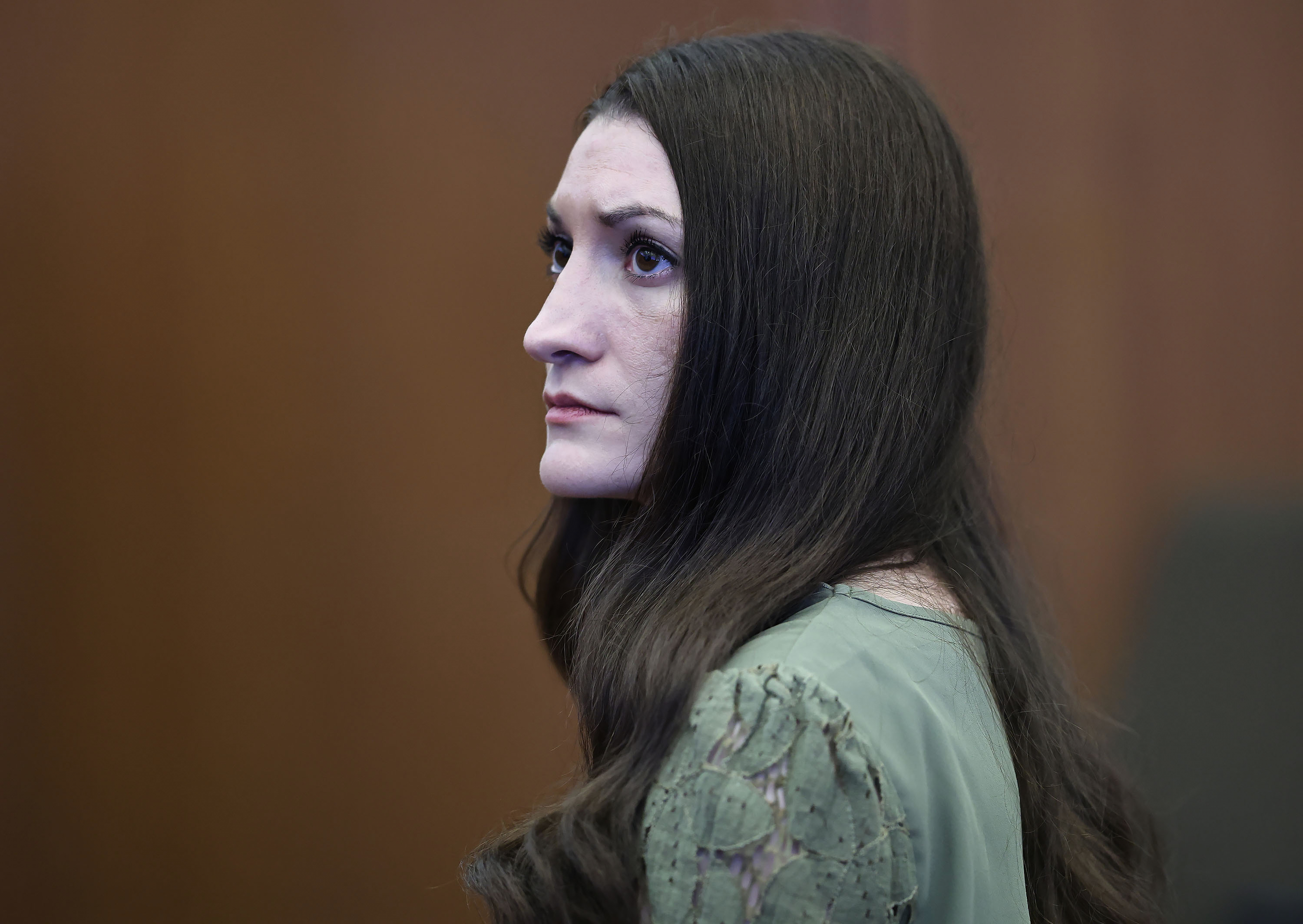
    BOSTON — The lone juror who wanted to convict Lindsay Clancy of murder for killing her three children said he was certain of her guilt, but that other jurors wouldn’t listen to him, according to a statement released by his lawyer Friday in his first public comments on the case.

    Eleven of 12 jurors were ready to clear Clancy of criminal responsibility, with the majority feeling that the Massachusetts mom was in the grip of a rare condition called postpartum psychosis when she strangled her kids. But juror Michael Desronvil sided with the prosecutors, who had argued that Clancy knew what she was doing.

    “I didn’t have any doubts,” Desronvil said in a statement released on X by his lawyer, Edward Paltzik.

    The jury’s foreperson had claimed in an earlier media interview that Desronvil had admitted having “reasonable doubt” about Clancy’s guilt, but wanted to convict her anyway. Desronvil said that wasn’t true.

    “As I tried to explain different possible theories during deliberation, I kept getting cut off as if I had doubts based on the evidence presented,” he wrote. “Based on all the physical evidence, key witnesses, and what the prosecution presented, I thought it was enough proof that she (Clancy) knew exactly what she was doing and planned.”

    The jury’s deadlock forced the judge to declare a mistrial on Sept. 4, leaving the case unresolved. The Plymouth County district attorney has yet to say whether he’ll seek to put Clancy on trial again.

    Neither side disputed that Clancy strangled her children, Cora, Dawson, and Callan, in the family’s home in 2023 before trying to end her own life. But her attorney said she was a loving mother experiencing deep delusions and other mental health problems, for which she had been getting treatment.

    Since the trial ended, Desronvil has been both publicly praised and scorned for his actions, and his personal life and past financial and legal problems have become the subject of scrutiny by the news media and amateur sleuths.

    Among the public revelations: He had a restraining order against him at the time of jury selection and was facing eviction from his apartment due to over $12,000 in unpaid rent. He also was accused of domestic violence in 2021, a charge that was later dismissed.

    Some of the opinion has fallen along political lines, with Desronvil being praised by some conservative pundits as a hero.

    Paltzik, whose past clients have included President Donald Trump and Martin Shkreli, said on X that Desronvil was in “an undisclosed secure location” in a rural part of northern New England and would not be giving interviews.

    “As a devoted father and man of God, he will not be defeated or shattered by the wicked who wish harm upon him,” Paltzik wrote.

    A fundraiser to cover what organizers say are costs of “security, lawyers, and lost work” for Desronvil has raised over $289,000.

    Florida Gov. Ron DeSantis has rolled out the welcome mat for him, saying that if he is being harassed, “Florida will provide asylum.”

    “I’m sure he’d be welcomed and appreciated,” DeSantis wrote on X.

  • Appeals court says Trump administration’s third-country deportation policy is unlawful

    Appeals court says Trump administration’s third-country deportation policy is unlawful

    The Trump administration’s policy on deporting immigrants to third countries is unlawful, a federal appeals court ruled Friday, a decision that could halt a program that has already sent thousands of people to countries that are not their own.

    A three-judge panel on the U.S. Court of Appeals for the 1st Circuit unanimously agreed with a lower court judge’s decision in February that the Department of Homeland Security’s policy violates due process rights by failing to give migrants sufficient notice and a chance to raise fear-based claims to contest their deportations to third countries.

    The appeals court’s decision marks a major setback for the administration, which has sought to establish third-country deportations as a key part of President Donald Trump’s mass deportation campaign. Since Trump took office last year, DHS has sent more than 25,000 migrants to third countries, mostly in Latin America and Africa, according to public records. The program has raised fierce objections from congressional Democrats and legal challenges from human rights advocates who say the deportees face dangerous conditions and inhumane treatment in the countries where they are being sent.

    Legal experts said the administration is likely to appeal to the Supreme Court and seek a stay on the 1st Circuit’s decision that would allow DHS to continue sending migrants to third countries. For now, however, the deportation flights should be immediately grounded, said Trina Realmuto, executive director of the National Immigration Litigation Alliance, who was among the team of attorneys who brought the class-action case.

    “This is a huge win,” she said. “All those deportation flights should not be taking off because the policy under which people got put on planes and targeted for removal is unlawful.”

    DHS did not immediately respond to a request for comment.

    Administration officials say third-country deportations are the only way to remove the most difficult to deport immigrants, including violent criminals who have committed rapes and murders. These immigrants have final removal orders from U.S. immigration judges, but many are protected by federal law from being sent back to home countries where they are likely to face persecution. Others cannot be returned because their home countries refuse to accept them.

    The lawsuit stemmed from DHS’s policy memos last year stating the government could deport migrants to third countries with as little as six hours’ notice, even if U.S. officials have not received assurances that the deportees would be safe from persecution or torture. Those being flown to places that have offered those assurances could be deported with no advance notice.

    The plaintiffs filed their lawsuit in March 2025, arguing that the U.S. government was violating federal law and sending immigrants to places where they could be harmed or killed, without giving them a chance to argue against it, including a Guatemalan man deported to Mexico, where he had been kidnapped and raped.

    U.S. District Judge Brian Murphy in Boston barred the Trump administration from removing immigrants without giving them a “meaningful” opportunity to challenge it, and he issued a preliminary injunction in April 2025 enjoining the government from continuing with the deportation flights. Two months later, the Supreme Court’s conservative majority paused the judge’s decision in a brief, unsigned statement that did not explain its reasoning, but it cleared the way for the removals to resume as the legal case played out.

    Murphy issued a final judgment in February 2026, vacating the administration’s policy, and the Trump administration quickly filed an appeal.

    The 1st Circuit panel agreed with most of Murphy’s decision, saying that there was nothing in the public record or court filings that showed which countries had provided the State Department with diplomatic assurances that the immigrants would not face abuse.

    They added that “we have some difficulty seeing how a receiving country can credibly provide blanket assurances that all removed noncitizens will not be persecuted or tortured there unless it intends to provide them with some sort of affirmative protection against rogue agents and non-state actors.”

  • MS NOW, CNN, and Politico say their journalists were denied access to White House after Trump ban

    MS NOW, CNN, and Politico say their journalists were denied access to White House after Trump ban

    NEW YORK — Reporters from three major news organizations — CNN, MS NOW, and Politico — were denied access to the White House on Saturday, a day after President Donald Trump said he was barring them because of reporting he found to be “fake news.”

    The actions were a clear escalation of Trump’s long-running efforts — in the courts and through administrative action — to restrict news coverage by journalists he finds objectionable, and the latest test of First Amendment protections in the United States. Trump had said Friday he would ban all three outlets because of coverage he disliked.

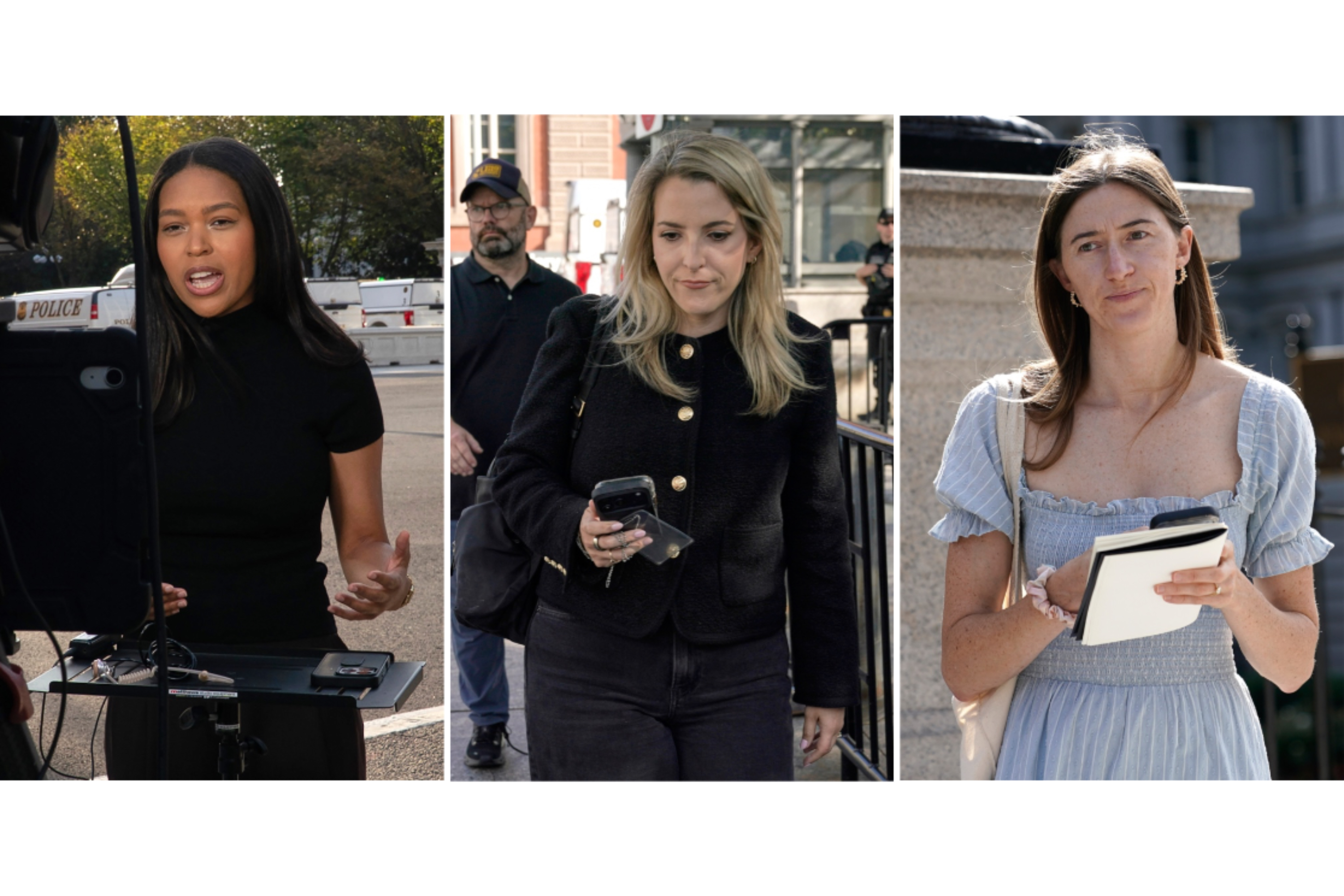
    White House reporters from the two cable networks — Betsy Klein of CNN and Akayla Gardner of MS NOW — both went live to report they’d been turned away when arriving for their jobs at the White House. Soon after, Politico said its White House reporter Cheyenne Haslett was also denied entry and had her badge confiscated.

    Politico editor-in-chief Jonathan Greenberger said in a statement to the Politico newsroom: “We stand by her and all reporters here covering the White House. … We will vigorously defend our First Amendment rights.”

    CNN and MS NOW issued similar statements. “We will not be deflected from our duty to hold the government and other public bodies to account,” CNN said.

    “The White House belongs to the American people and the decisions made inside are funded by our tax dollars,” MS NOW said in its statement. “MS NOW intends to take any and all steps necessary to defend our First Amendment rights and the essential role of independent journalism in our democracy.“ ‘

    In his second term, Trump and his administration have upped the ante and punished certain media outlets, both in the courtroom and through regulatory action. Trump has also lashed out at individual reporters in person or over social media, sometimes in strikingly personal terms — insulting them in briefings, or in his recent speech at the White House Correspondents’ Association dinner.

    CNN and MS NOW correspondents are turned away

    Network correspondents are usually present on the weekends when the president is in Washington or at nearby Camp David. Trump is at the presidential retreat in Maryland this weekend.

    MS NOW’s Gardner reported that she had walked through two gates successfully, but once she got to where her badge needed to be scanned, an officer told her it was disabled and asked her to hand it over. He said the decision “was above him,” she reported. An MS NOW producer was able to get in, but a photographer’s badge was also disabled, Gardner said.

    Klein, senior White House reporter at CNN, also said her badge had been deactivated. It was confiscated, and she was handed back the clear plastic case. She said she was referred to the White House press office for further information.

    Amy Kristin Sanders, a professor at Pennsylvania State University and an expert in media law, said it has “become pretty clear that this administration is not interested in playing by traditional First Amendment rules and norms.

    “The second Trump administration’s efforts to crack down on press freedom and delegitimize independent journalism far exceed those of any other modern American president,” Sanders said. ”It is not an exaggeration to say his hostile actions toward news organizations and individual reporters have a chilling effect on freedom of expression around the world.”

    CNN media analyst Brian Stelter called the move “a direct threat to press freedom in the United States.”

    “It’s so much bigger than CNN,” Stelter said. “This is a free speech test in America.”

    Trump calls these and other outlets ‘fake news’

    The president wrote on his social media site Friday that effective immediately, “I am banning” CNN, MS NOW, and Politico “from the White House as a result of their constant ‘reporting’ FAKE NEWS!” Minutes later, speaking at an event in the Oval Office, Trump was asked to explain his statement.

    “Because they’re fake news,” he said. “You get so tired of reading and seeing fake news. When you look at CNN, it’s just fake. That’s why their ratings are no good. When you look at MS NOW … it’s fake news.”

    “And when you look at Politico … the stories they wrote are fake. So there’s a lot of news and there may be others to join them, and maybe they can get better,” he said. “But our country has to have honest news.”

    The move follows the president’s decision last year to bar Associated Press reporters from the Oval Office, Air Force One, and other events in retaliation for the news outlet’s decision not to follow his lead in changing the name of the Gulf of Mexico, which lies partially in Mexican and other waters. The AP said that it would note when appropriate that Trump had ordered it renamed the “Gulf of America.”

    The AP filed suit and the case is ongoing. Since returning to office, Trump has pursued other legal action against a variety of different outlets, including the New York Times, the Wall Street Journal, and the BBC. His administration is also involved in a long-simmering confrontation involving ABC over renewal of its broadcast licenses.

    The AP said Saturday it supported the news organizations banned this week. In a statement, it said: “No news organization — or person — should be retaliated against by the government over the words they use.”