Tag: no-latest

  • Chipotle pulls jalapeños from some restaurants as health officials investigate salmonella outbreak

    Chipotle pulls jalapeños from some restaurants as health officials investigate salmonella outbreak

    CHICAGO — Chipotle Mexican Grill said Tuesday that it had removed jalapeños from some of its restaurants after determining the peppers could potentially be tied to a salmonella outbreak public health officials are investigating.

    In a brief statement, Chipotle maintained that the “health and safety of our guests and employees is our highest priority” — and that it had pulled the jalapeños out of an abundance of caution and “replaced them with product from different growers” in all locations where a previous common lot had been distributed.

    The company did not specify where the initial peppers came from but noted that the jalapeños in question were sent across multiple states to several retailers.

    The Minnesota Department of Health on Tuesday confirmed that it was investigating a salmonella outbreak tied to several Mexican-style, quick-service restaurants — with jalapeños as the suspected source. Officials identified 110 cases in the state. Chipotle made up the majority of those where they were able to reach affected consumers for an interview — who ate at the chain between mid-June and mid-July — but not all.

    “Based on all the evidence so far, the food that made people sick was served at other restaurants as well,” Carlota Medus, senior epidemiologist supervisor in the MDH’s Health Foodborne Diseases Unit, said in a statement.

    Medus said Chipotle had been cooperative over the course of the investigation — and that given the measures the company put in place, his department was not concerned about the chain at this time. Still, he said it was “too soon for us to know if the outbreak is ongoing” and that it’s possible contaminated food is being served elsewhere.

    MDH noted that other states are contributing to the investigation, without elaborating further. On the federal level, the Food and Drug Administration is conducting the traceback probe — covering but not limited to jalapeños.

    The FDA on Tuesday confirmed it initiated its traceback investigation “of multiple ingredients” on July 22, in response to a cluster of salmonella illnesses identified by both state officials and the Centers for Disease Control and Prevention. In a statement, the agency said it appreciated Chipotle’s cooperation and that it would “provide additional information if and when there is an actionable public health update.”

    The CDC did not respond a request for further comments Tuesday afternoon.

    Symptoms of salmonella poisoning include diarrhea, fever, severe vomiting, dehydration, and stomach cramps. Most people who get sick recover within a week. Infections can be more severe in young children, older adults, and people with weakened immune systems, who may require hospitalization.

    Shares of California-based Chipotle Mexican Grill plunged nearly 10% on Tuesday.

  • Runaway online rumors sparked frantic rush by migrants to the Spanish territory of Ceuta

    Runaway online rumors sparked frantic rush by migrants to the Spanish territory of Ceuta

    FNIDEQ, Morocco — It started with Instagram posts that suggested Spain’s border with Morocco was opening up. Then came Facebook users tracking coast guard patrols and TikTok videos showing where to swim.

    After many shares and comments, thousands of Moroccans became convinced that Europe was suddenly within reach.

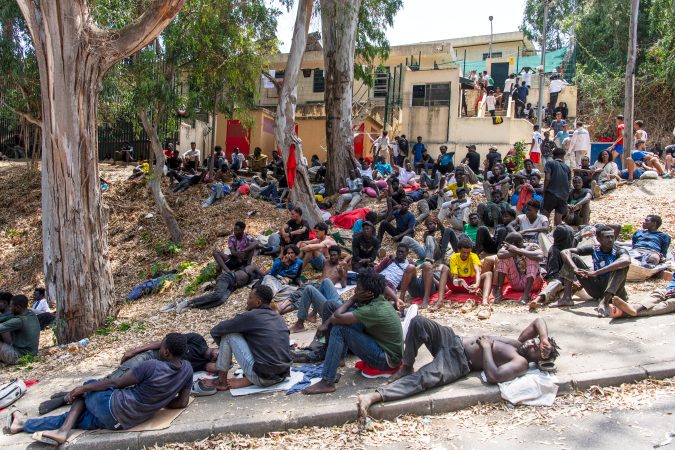
    Within hours, young people began heading toward the border with the Spanish territory of Ceuta in North Africa. Packed buses rolled into the neighboring Moroccan city of Fnideq. Regional trains filled up. Taxis did too.

    By the time authorities reacted, some 72,000 people had reached Ceuta in just a few days, the largest migration surge between Morocco and Spain in years. More than 80 migrants died on both sides of the border, including some who drowned and others who were killed in a stampede, authorities said.

    Nearly all of the surviving migrants soon returned, but the fallout from last week’s events will linger.

    Rumors started online

    In the northern Moroccan city of Larache, about 93 miles from Ceuta, three friends watched a video posted by an Instagram account called Haraga Ceuta claiming the border would be open. Haraga refers in Moroccan dialect to young migrants who destroy their identification papers and try crossing illegally into Europe.

    The post convinced Anas Amrani, Yahya Harak, and Ismail Atik that it was worth risking the journey.

    For migrants hoping to reach Spanish territory, the most common route begins in Fnideq, where many attempt the roughly 3-mile swim around the border breakwater. Others leave from the nearby village of Belyounech.

    One TikTok video mapped the exact route swimmers should follow.

    On Facebook groups such as Fnideq Bab Sebta, users shared screenshots from vessel-tracking platforms to identify moments when coast guard patrols appeared lighter. Some sought advice on using inflatable boats. Others advertised wetsuits for sale.

    “I saw online that the border was open, and I decided to go,” said 17-year-old Omar Danbor from Fnideq, walking back exhausted along the coast.

    It’s unclear who was behind the claims that the border was open or who operated many of the social media accounts, several of which were deleted soon after the crossings. The Associated Press contacted several accounts but received no response.

    The surge to Ceuta touched a political nerve in Europe, and the European Union is investigating what happened. The EU’s migration commissioner expressed concern Tuesday about online disinformation but didn’t identify a specific culprit.

    Chaos unfolded at the breakwater

    As migrants reached the shores of Ceuta, mass chaos erupted at a narrow concrete breakwater where many tried to climb onto land.

    According to multiple migrants interviewed by AP, people rushed to scramble over the slick rocks at the same time, pushing and climbing over one another. Several said they saw people knocked back into the water and forced beneath others, leaving them unable to resurface as migrants sought to reach land.

    “I stepped on the face of a dead man while I was climbing out. I hope God forgives me and all those whose bodies were found,” said Lahcen Kalouch, a Moroccan migrant who reached Ceuta before returning home distraught.

    At least 72 people died on the Spanish side of the border. Another 11 died on the Moroccan side.

    Tens of thousands of migrants have since returned to Morocco, either after being expelled or leaving by choice because of a lack of shelter, food, and water in Ceuta.

    Some misinterpreted Spain’s new migration measures

    Some migrants misunderstood recent legal developments in Spain, including Prime Minister Pedro Sánchez’s immigration regularization measures and a court ruling limiting authorities’ ability to immediately return migrants who swim into Ceuta.

    Sánchez’s recent efforts to regularize migration were meant only for people already living in Spain prior to Jan. 1, the majority of whom hail from Latin America and entered Spain legally but overstayed their visas. But some in Morocco misinterpreted his policy, believing they would be allowed to stay. That belief spread online.

    “Pedro Sánchez is a liar. He told us if we came, we would get jobs and papers, but they sent us back,” said Adam Assil, a migrant from Casablanca, even though Sánchez never made such a promise.

    While attempts to reach Ceuta are common, migration activists said this episode was different because of the way rumors snowballed online, encouraging thousands of people to head toward the territory at the same time instead of in smaller, scattered groups.

    Failures happened on both sides of the border

    Moroccan authorities said the migration wave was not spontaneous. The Interior Ministry blamed the “exploitation of the digital sphere” and “the spread of misinformation.” Officials offered no evidence but said an investigation had been opened. Spain’s government made similar statements.

    Ceuta officials said they had warned the Spanish government of a surge in arrivals before the massive crush on Thursday. The Spanish Interior Ministry said Monday that it had not received “any report or warning regarding the mass arrival of people in Ceuta,” and it praised cooperation with the Moroccan authorities in sending most of the migrants back.

    “Nobody addressed how these individuals managed to breach the border,” said Mustapha Azaitraoui, a Moroccan geographer specializing in migration dynamics. “If a large group of people can cross the border under these circumstances, it suggests a broader security issue that has yet to be acknowledged publicly.”

    Migrants reject government claims of smuggling

    Both Morocco and Spain blamed the Ceuta crisis on human smugglers and trafficking networks, saying organized criminal groups encouraged the mass crossings.

    But returning Moroccan migrants interviewed by AP largely rejected that explanation.

    “No one smuggled me there. I wanted to go of my own free will, but that country is not worth all this sacrifice,” Kalouch said.

    “There are no mafias. The border was open, and I crossed. But now I regret it,” said Danbor, his clothes still wet after making the journey back.

    The Spanish Interior Ministry said investigations into smuggling networks are ongoing and noted that Spain and Morocco have carried out joint operations against trafficking groups. The Moroccan Interior Ministry did not respond to questions about smuggling networks.

    Several politicians and experts have suggested it would be impossible for so many to cross without Moroccan complicity. A high-ranking Moroccan diplomat appeared to push back against that.

    “It would be reductive to say that Morocco should have used force to stop the migrants,” said the diplomat, who spoke on condition of anonymity because the issue is highly sensitive in Morocco. “We are not Europe’s police.”

    The lack of jobs is a key factor

    Morocco’s economy is projected to grow by 4.5% this year, boasting major factories, advanced ports, and ambitions to become a regional hub for the car industry.

    Yet for many young Moroccans, that transformation has not translated into stable work. Youth unemployment remains high, with 37% of people ages 15 to 24 out of work. Among university graduates, unemployment stands at nearly 20%. The dream of migration is often reinforced by stories of relatives who left and returned with cars, new clothes, and foreign currency.

    One of those who breached the border was a 16-year-old who grew up a few dozen miles from Ceuta. Europe had always seemed a dream close enough to see, yet impossibly far.

    So when he saw a post on Facebook suggesting the border was open and thousands were making it across, he joined the rush.

    Days later, he was back in Morocco, crying as he asked strangers for money for a taxi home.

    “They fired tear gas at me and beat me with batons. There’s nothing for me there,” said the teen, who spoke on condition of anonymity out of fear of being stigmatized following his failed border crossing attempt.

    “I just wanted to provide for my mom,” he said, wiping his tears.

  • Todd Blanche’s nomination for attorney general clears critical hurdle after deal with GOP holdouts

    Todd Blanche’s nomination for attorney general clears critical hurdle after deal with GOP holdouts

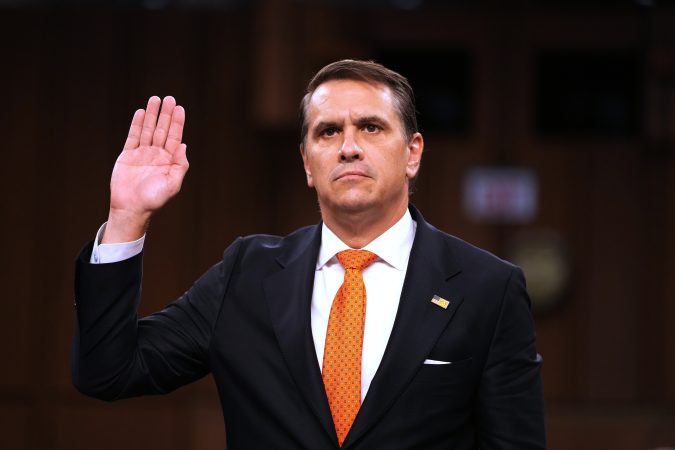
    WASHINGTON — Acting Attorney General Todd Blanche cleared a critical hurdle Tuesday in his bid to be confirmed to the post after swaying Republican holdouts on a Senate committee to advance his nomination for a floor vote.

    The Senate Judiciary Committee voted 12-10 along party lines in support of the nomination of President Donald Trump’s former personal attorney, who has aggressively pushed the Republican administration’s priorities since taking over from Pam Bondi in April.

    The vote followed a deal struck late Sunday between Blanche and two Republican senators — John Cornyn of Texas and Thom Tillis of North Carolina — who had been threatening to block his confirmation over the settlement of Trump’s lawsuit against the Internal Revenue Service regarding the president’s leaked tax returns.

    The full Senate could vote later this week on Blanche’s nomination. If all Democrats oppose him, Blanche can only afford to lose two Republican votes if Sen. Mitch McConnell of Kentucky, who was hospitalized after a fall, does not return before then.

    Cornyn and Tillis backed Blanche’s nomination after the Justice Department confirmed in writing that it wasn’t moving forward with a $1.8 billion fund to compensate Trump allies who believe they were prosecuted for political purposes, which the administration announced as part of the settlement.

    After days of negotiations, Blanche issued an order Sunday evening confirming “beyond any doubt, that there is no Fund.”

    Democrats complain about the fund

    Democrats say Blanche’s order doesn’t go far enough to prevent the Trump administration from reviving the fund after the acting attorney general’s confirmation and have called for legislation to permanently bar it.

    The order also doesn’t stop the administration from compensating Trump allies — including people who attacked the Capitol on Jan. 6, 2021 — through a previously established process that allows people to file claims for damages if they believed they were wronged by the government.

    The fund “can easily be revived with a new order from the Department of Justice 15 minutes after Mr. Blanche is confirmed as attorney general,” said Dick Durbin of Illinois, the top Democrat on the committee.

    Cornyn and Tillis had also pressed for clarification on a separate part of the settlement that would grant Trump and members of his family immunity from tax audits.

    Under the deal, the Justice Department clarified in writing that the tax audit immunity agreement applies only to claims open at the time of the settlement and does not protect Trump from examination of future tax filings. It also makes clear that only the parties that brought the lawsuit — Trump, two of his sons, and the Trump Organization — are covered by the tax agreement.

    Cornyn said his reasons for backing Blanche go beyond the deal struck Sunday, adding that he believes the Justice Department needs a “stabilizing force” at the helm.

    “The Department of Justice does not need a temporary, unconfirmed nominee as our nation’s top law enforcement official. Trump needs someone in this role, as well, with a strong legal mind,” Cornyn said.

    Blanche’s independence has been called into question

    Blanche has faced intense scrutiny regarding his ability to maintain independence from the White House, the Justice Department’s pursuit of the president’s political foes, and the agency’s handling of files related to disgraced financier Jeffrey Epstein’s sex trafficking investigation.

    But it was the settlement of Trump’s $10 billion lawsuit against the IRS that threatened to derail Blanche’s nomination, forcing a delay in the committee vote last week amid pressure from the two Republican senators, who are not returning to Capitol Hill after their terms end in January.

    Republican Sen. Chuck Grassley, who chairs the committee, said Tillis and Cornyn’s demands were “common sense.” Grassley said the senators’ concerns about the “Anti-Weaponization Fund” and the IRS settlement were shared by many other lawmakers, including himself.

    “I’m grateful that they as well as Mr. Blanche and the White House worked in good faith to solve them, formally rescinding the fund, clarifying the scope of the release of claims has put this issue to bed once and for all,” Grassley said.

    Trump’s lawsuit has been sharply criticized because of the highly unusual way it was handled, with the president challenging an agency overseen by the executive branch he leads. A judge last month slammed the case as an improper exercise in self-dealing and referred one of Trump’s attorneys who filed it for potential disciplinary action.

    Blanche was an important figure for Trump’s defense

    Blanche, a former federal prosecutor and key member of Trump’s defense team as the Republican battled four indictments, arrived at the Justice Department last year as deputy attorney general. He was elevated to acting attorney general following Bondi’s failure to meet Trump’s demands to successfully prosecute his perceived political opponents.

    While Blanche insisted he wasn’t auditioning for the permanent post, he moved swiftly to accelerate investigations into Trump foes and advance other White House priorities, drawing condemnation from critics who say he has not shed his title as Trump’s personal lawyer.

    Shortly after Blanche took the top post, the Justice Department moved to indict longtime Trump adversary James Comey, the former FBI director, on charges of threatening the 47th president by posting a social media photograph of seashells in the numerical arrangement of “86 47.”

    Comey’s lawyers have accused the Justice Department of misleading judges, submitting documents containing false statements, and withholding key facts to bring what the defense described as a politically motivated prosecution.

    Blanche separately appointed Joseph diGenova, a former Justice Department prosecutor from the Reagan administration, to oversee a Florida-based investigation into whether former law enforcement and intelligence officials conspired over the last decade to undermine Trump.

  • Trump’s National Guard deployment in D.C. set to cost additional $1.4 billion

    Trump’s National Guard deployment in D.C. set to cost additional $1.4 billion

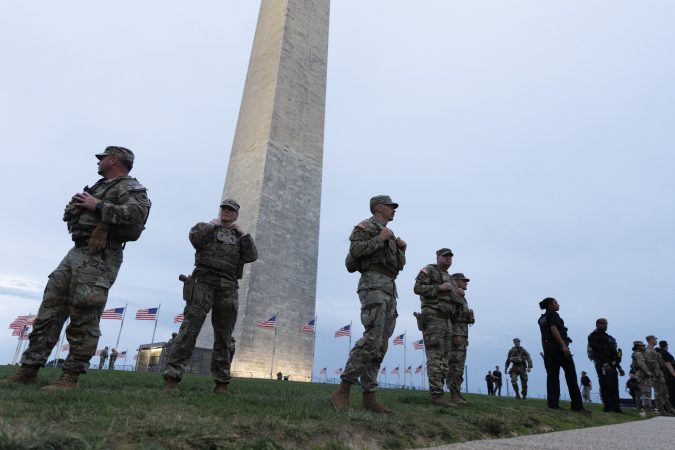
    The Pentagon’s deployment of National Guard troops to Washington, D.C., is set to cost an additional $1.4 billion through the end of the Trump administration, according to information provided to Congress and reviewed by the Washington Post.

    The estimate, which encompasses October 2026 through January 2029, adds to the hundreds of millions of dollars spent on the mission to date. While the administration has not disclosed the full cost of the mission so far, the new figure represents the most comprehensive accounting yet of President Donald Trump’s unprecedented use of the military to patrol the nation’s capital — an operation fiercely criticized by many Democrats and civil liberty advocates.

    The information was provided to Sen. Elizabeth Warren (D., Mass.), a member of the Senate Armed Services Committee, by Jules Hurst III, Trump’s nominee to become the Pentagon’s comptroller, as part of his confirmation process. Hurst is set to be confirmed in a bloc of Trump administration nominees as soon as this week.

    The administration deployed National Guard personnel to Washington in August 2025, after Edward Coristine, a former staffer in Elon Musk’s U.S. DOGE Service initiative to slash the federal government, was assaulted in an attempted carjacking. The National Guard will maintain a presence in D.C. until January 2029 or “until the president says the mission is over,” Brig. Gen. Leland Blanchard II, the interim commanding general of the D.C. National Guard, told reporters in a news briefing Monday.

    The cost estimate provided to Warren assumes a deployment of about 2,500 National Guard personnel. There are approximately 4,600 service members in the city now, Blanchard said, part of a temporary surge coinciding with summer events to commemorate the 250th anniversary of the signing of the Declaration of Independence.

    Democrats have called the deployment a wasteful use of military resources and an infringement on Americans’ civil liberties, and they have pressed Defense Secretary Pete Hegseth to justify the mission as the Pentagon faces urgent budget shortfalls because of the Iran war and other military operations.

    “The National Guard are not pawns and taxpayer dollars are not a piggy bank for Trump’s political stunts,” Warren said in a statement.

    In testimony to the Senate Appropriations Committee last month, Hegseth acknowledged the Defense Department is facing financial pressure but repeatedly blamed the situation on the Biden administration’s management of the military.

    The Pentagon did not immediately respond to a request for comment.

    Since returning to office, Trump has deployed active-duty and National Guard units to American cities on controversial missions to stop crime or protect federal immigration agents. Academics and researchers who specialize in politicization and the military, along with local officials in some of the targeted communities, have argued that the operations violate laws barring the military from engaging in domestic law enforcement.

    Some state and local governments, including Washington, have challenged the deployments in court.

    The Congressional Budget Office estimated in January that the administration’s National Guard deployment in Washington cost $223 million through the end of 2025. It said deployments in Los Angeles, Memphis, Chicago, and Portland, Ore., together cost an additional $273 million in 2025.

    CBO has estimated that each additional month of deployment in Washington would cost about $55 million.

    Trump’s record $1.5 trillion defense budget request for fiscal 2027 includes $2.3 billion in funding for domestic use of the military, including $605 million for the National Guard mission in Washington.

    In a separate request to Congress for $67 billion in additional funding to help cover the costs of the Iran war, the Trump administration also requested $800 million for the National Guard. Sen. Patty Murray (Wash.), the Appropriations Committee’s top Democrat, said during last month’s hearing with Hegseth that those funds would go toward extending the D.C. deployment.

    Blanchard, the National Guard general, defended the mission, noting that last month the Trump administration signed a $292 million contract to move National Guard members into local apartments from hotels in and around Washington. The move, Blanchard said, will save $90 million on lodging and transportation costs over the course of the contract.

    He said, too, that service members have responded to about 800 medical emergencies — performing CPR and applying tourniquets on gunshot victims, and administering 325 doses of Narcan, a drug used to treat overdoses.

    While Trump officials have repeatedly asserted the National Guard was necessary to help address a crime emergency in the city, D.C. police data shows violent crimes this year have remained about the same from this time in 2025. Property crimes, including burglary from cars and motor vehicle theft, have decreased by about a quarter. When the National Guard was deployed last year, crime rates were near a six-year low, according to federal data.

    National Guard personnel in Washington are supposed to yield to local police for law enforcement activities, such as arrests, said Michael Perloff, the senior staff attorney for the American Civil Liberties Union’s D.C. chapter. But their orders leave open gray areas, including how personnel should respond in an emergency or when under threat, he said.

    “National Guard members aren’t trained to handle those situations,” said Perloff, whose organization is challenging the mission’s legality in court.

    The service members deployed in D.C. have been tasked with a variety of missions, such as guarding the Reflecting Pool in front of the Lincoln Memorial and cleaning up garbage on city streets.

    In November, two National Guard personnel were shot while patrolling the city blocks away from the White House. One died from her injuries.

    Rahmanullah Lakanwal, an Afghan national charged in the shooting, pleaded not guilty in June. He is facing a possible death sentence if convicted.

  • ICE begins outfitting Haitian immigrants with ankle monitors, attorneys say

    ICE begins outfitting Haitian immigrants with ankle monitors, attorneys say

    The Department of Homeland Security has begun summoning Haitian immigrants in Ohio to check-in appointments with federal officers who are outfitting them with ankle monitors, in what appears to be a new enforcement effort after the Supreme Court allowed the Trump administration to end their humanitarian protections.

    Guerline Jozef, executive director of the Haitian Bridge Alliance, said about 50 Haitians with temporary protected status in Springfield, Ohio, were called into Immigration and Customs Enforcement offices on Friday. Local attorneys said the immigrants were arrested and then conditionally released with electronic monitoring devices. They were instructed not to travel anywhere outside a 75-mile radius from their homes.

    A Trump administration official confirmed the effort to call Haitians with temporary protected status into ICE offices, give them ankle monitors, and release them. The official, who spoke on the condition of anonymity to discuss internal ICE operations, expected the check-ins to be scheduled in waves.

    The U.S. Supreme Court ruled in June that the Trump administration could end temporary protections for about 350,000 Haitians, despite ongoing political instability and gang violence in the Caribbean nation. DHS alerted employers last week that it had officially ended temporary protected status for Haitians, triggering mass layoffs and confusion because a lower court that had blocked the administration’s attempts to terminate the program has not yet lifted the order keeping TPS benefits in effect.

    Congress created temporary protected status in 1990 to shield immigrants in the United States from being deported to countries engulfed in armed conflict, a natural disaster, or another extraordinary crisis, allowing them to work legally in the U.S. for up to 18 months. Applicants to the program cannot have serious criminal records, and they must pay fees and pass a background check. DHS can renew the protections — and it has, multiple times, for several countries.

    Advocates and immigration attorneys said the new arrests in Ohio reflect ICE’s attempts to more quietly carry out President Donald Trump’s deportation campaign. Rather than large-scale operations like the ones DHS conducted in Minneapolis and Chicago, the agency has been focusing on arrests that take place after traffic stops and ICE check-ins. Arrests rose significantly in July.

    “Rather than showing up with a militarized force in a particular neighborhood in Springfield and having communities be able to organize around that, this is calling people into a very secure facility,” said Erik Crew, a senior attorney at the Haitian Bridge Alliance, a California-based advocacy organization. “Yes, people can protest outside, but sometimes people can go in and never come out and be sent to a detention center somewhere remote, likely in the South, and be sent out of the country from there.”

    A DHS spokesperson said the agency does not discuss “ongoing or future” operations but conducts enforcement daily.

    “Temporary Protected Status is exactly that — temporary. For too long, TPS has been allowed to function as a de facto amnesty program despite Congress never intending it to be permanent,” DHS said in a statement. “What we would say now is it’s closing time which means you don’t have to go home, but you can’t stay here.”

    Many of the Haitians outfitted with ankle monitors in recent days have ongoing asylum claims and no final order of deportation, their attorneys said. Historically, the agency has deployed the worn devices on a case-by-case basis, but immigration attorney Carolyn Marks, who accompanied two Haitian clients to appointments with ICE on Sunday, said they are now being used more broadly.

    “In the past, they have been used with people who have criminal records or had missed court hearings or an order of deportation,” Marks said. “But all these people had been and are complying with the law.”

    Trump has long stated that he intended to target Haitian immigrants as part of his mass deportation drive. During his campaign, he falsely claimed that Haitian residents in Springfield were killing and eating their neighbors’ pets. After the Supreme Court ruling was announced, Stephen Miller, the White House deputy chief of staff, told reporters that Haitians and others with temporary protected status should be detained and deported once they lose the benefit.

    Sens. Chris Murphy (D., Conn.) and Chris Van Hollen (D., Md.) criticized the Trump administration’s efforts to terminate TPS in a call with reporters on Monday. Both senators said the cancellations were not only putting families in danger but pulling thousands of needed workers out of the labor force.

    “This is an embarrassment for the United States of America,” Murphy said. “There is no safe place to return for TPS holders from places like Haiti and Yemen and Venezuela and Syria. In fact, in those places I just mentioned, the situation is not stabilizing, getting better. It is getting worse.”

    Katie Kersh, managing attorney with Advocates for Basic Legal Equality, a nonprofit based in Ohio that is providing legal representation to Haitian immigrants in the area, said ICE officers asked people who went to the check-ins over the weekend for biographical information and collected their fingerprints. She and other attorneys said the officers encouraged the immigrants to leave voluntarily and noted the $2,600 financial incentive DHS is offering those who choose to self-deport.

    Kersh said one of her clients is a woman in her 60s who may miss the birth of her grandchild in Indiana as a result of the travel restrictions. She is a diabetic and worried that having the device strapped tightly to her ankle would cause pain. She inquired about an alternative, which ICE does sometimes provide, but was not offered one.

    “ICE is setting up circumstances that makes it easier to detain them,” Kersh said.

    Vilés Dorsainvil, who runs the Haitian Support Center in Springfield, stood outside an ICE office near Cincinnati as people reported for appointments. He said he asked ICE officers if the devices were necessary and was told that the “the order came from the top,” referring to DHS Secretary Markwayne Mullin.

    DHS stated online last week that temporary protected status for Haitians was “terminated, effective July 27, 2026.” But lawyers say that TPS cannot officially end until lower courts execute a Supreme Court ruling and officially allow the Trump administration to terminate the program, which was first established for Haiti in response to the catastrophic 2010 earthquake in that country.

    A DHS spokesperson disagreed, saying, “These activist lower court judges are openly defying the Supreme Court on this, but the end result will be the same. Haitians with TPS cannot and will not be able to stay.”

    Jessica Bansal, an attorney focused on TPS litigation with the National Day Laborer Organizing Network, said that “for all practical intents and purposes, there is no longer any protection.”

    Ruby Powers, a Houston immigration attorney who represented clients from Venezuela who lost TPS after the administration canceled it for those immigrants, said ankle monitors and more frequent ICE check-ins are a means of pressuring people to leave.

    “It’s the government’s way of signaling, ‘We know where you are, we are monitoring you closely, and we have the ability to detain you at any time,’” she said.

    Marks, the immigration attorney, said that whatever might happen next will change her community.

    “It’s going to be a very destabilizing event for Springfield,” she said.

  • CDC expands largest known cyclospora outbreak to 15 states

    CDC expands largest known cyclospora outbreak to 15 states

    The Centers for Disease Control and Prevention is expanding the largest known cyclospora outbreak to 15 states, adding six states where illnesses have been traced to shredded iceberg lettuce sourced from central Mexico, according to three individuals familiar with the investigation.

    Missouri, which is reporting 1,095 cases, is one of the states being added, according to a state health department spokesperson. The number of state cases jumped dramatically in the past week. Patients who were interviewed at length by state and local investigators said they consumed Taco Bell before getting sick, spokesperson Lisa Cox said.

    Information was not immediately available about the five other states. The individuals spoke on the condition of anonymity to discuss an ongoing investigation.

    The expansion marks a significant widening of the outbreak. On Monday, Michigan health officials announced that two people have died in the cyclospora outbreak there, the first deaths confirmed in the United States related to the microscopic parasite. Both people had underlying health conditions that may have been affected by the intestinal illness and dehydration.

    On July 24, federal officials had linked illnesses in nine states to the outbreak. The CDC has said epidemiological and trace-back data continues to show that iceberg lettuce from Taylor Farms de Mexico was contaminated with the parasite that has made people sick.

    The newly linked states join Illinois, Indiana, Kansas, Kentucky, Michigan, Ohio, Oklahoma, Pennsylvania, and West Virginia.

    Taylor Farms recalled shredded iceberg lettuce sourced from central Mexico on July 17 after investigators linked the product to illnesses among people who had eaten at Taco Bell. The company said the lettuce was distributed from June 29 through July 16 through food-service channels and retail stores in 27 states.

    Federal investigators so far have publicly linked illnesses to only a portion of the states where the company said the recalled lettuce was distributed. Federal officials are also investigating outbreaks and illness in more than two dozen states that have not been linked to the 15-state outbreak. The sources of other outbreaks have not been identified or tied to Taylor Farms.

    Taylor Farms has declined to provide additional details, including how many pounds of product were covered by the recall and where shredded lettuce was distributed before June 29. A Taylor Farms spokesperson did not immediately respond to a request for comment.

    During foodborne-illness outbreaks, the CDC is charged with trying to identify the food sickening Americans, relying on labor-intensive disease detective work that includes detailed interviews with people about what they ate, where they ate it, and when. The Food and Drug Administration works to determine who produced the contaminated food and works with food companies to stop it from being sold. The FDA also tries to identify how the food may have become contaminated.

    The new cases being reported don’t necessarily mean the risk is still ongoing, experts have said. The true number of sick people in the multistate outbreak is probably higher than the number reported, and the outbreak may not be limited to the states with known illnesses, the CDC has said.

    The incubation period is long, and some people recover without medical care and are not tested for cyclospora. Recent illnesses may not yet be reported because it can take as long as six weeks to determine if a sick person is part of an outbreak.

    “We’re always trying to figure out what is the risk today of going and eating a salad, for example,” said Craig Hedberg, a professor at the University of Minnesota’s division of environmental health sciences.

  • Netanyahu says no Israeli withdrawal from Gaza until Hamas has been completely disarmed

    Netanyahu says no Israeli withdrawal from Gaza until Hamas has been completely disarmed

    DEIR AL-BALAH, Gaza City — Israeli Prime Minister Benjamin Netanyahu said Tuesday that Israeli forces will not withdraw from their current lines in Gaza until Hamas has completely disarmed.

    In remarks on social media, Netanyahu suggested there were differences between Israel and the Trump administration over a recent deal announced to disarm the militant group.

    The agreement called for Hamas to begin disarming and for Israel to halt its strikes and begin withdrawing from Gaza. It was part of an October ceasefire agreement that ended major military operations but has stalled on other fronts. Netanyahu instead said disarmament should come first, and that Israeli forces would continue to “do whatever is necessary to protect themselves, our territory, and our citizens.”

    The Trump administration “sent us a draft. We did not agree. It is not our draft. We sent our comments,” Netanyahu said. “This is our position. We stand firm on our interests, I believe both wisely and resolutely.”

    Earlier on Tuesday, Palestinians gathered for a mass funeral of more than 100 bodies finally recovered from a deadly Israeli strike in Gaza in 2023. More than 300 people were killed on Nov. 22, 2023, weeks into the war with Hamas, when warplanes flattened a residential block in Gaza City’s Sabra neighborhood.

    Around 40 bodies were recovered soon afterward in a frantic scramble of rough tools and bare hands, but most were buried deep beneath the rubble. Reports of the high number of victims in one of the war’s deadliest attacks took days to reach the public in the chaos just before its first ceasefire.

    Over the weekend, first responders dug through the destroyed buildings and recovered remains of 112 victims, including 40 children, according to the Civil Defense, a rescue agency operating under the Hamas-run Interior Ministry.

    It said 157 bodies still have not been found.

    “The only crime of these martyrs was that they remained steadfast and resilient in their homes, believing that these homes would protect them,” one relative, Taysir al-Hassayna, told the Associated Press following the funeral prayers.

    For the missing, it’s “as if their bodies had evaporated without a trace.”

    The current ceasefire has allowed recovery of remains

    Only now are some bodies of people killed in the war’s ferocious early months slowly being recovered, as a fragile ceasefire that took effect in October allows such efforts to push ahead in parts of devastated Gaza.

    Those discoveries have contributed to the war’s rising toll. The Hamas-led militant attack on southern Israel on Oct. 7, 2023, killed around 1,200 people and saw 251 taken hostage. Israel’s retaliatory offensive has killed more than 73,377 Palestinians, including since the ceasefire, Gaza’s Health Ministry said.

    At least 7,400 people have been reported by relatives to still be under the rubble, Zaher al-Waheidi, head of the ministry’s records department, told the AP. The true number is likely thousands higher because in some cases entire families were killed in a single bombing, leaving no one to report the missing, al-Waheidi has said.

    The people mourned on Tuesday were from a residential block belonging to the Hassayna and Abu Sharia clan, and many were related. The Associated Press has identified at least 60 families across Gaza who lost 25 or more family members during the first three months of war.

    On Tuesday, the remains of the victims, wrapped in Palestinian flags, were laid in rows on the ground. Many were marked with photos, and flower petals were scattered around all. Hundreds of people surrounded the bodies for funeral prayers, some standing on the rubble.

    Following the prayers, people carried the bodies on stretchers along a narrow street lined by destroyed buildings and buried them in a nearby cemetery.

    Gaza is struggling to rebuild amid ceasefire violations

    The ceasefire halted much of the fighting, but at least 1,252 people have been killed in Gaza since it took effect, according to the territory’s Health Ministry. The ministry, part of the Hamas-led government, maintains detailed casualty records that are seen as generally reliable by U.N. agencies and independent experts. It does not give a breakdown of civilians and militants but says women and children make up most of the dead.

    Israel says its strikes are against militants who endanger its soldiers, took part in the Oct. 7 attack, or carry out other violations. Five Israeli soldiers have been killed since the ceasefire.

    Gaza remains largely shattered. Most of its 2 million Palestinians are displaced, many living in tent camps where poor conditions and overcrowding have led to rodent infestations and outbreaks of infectious diseases such as chickenpox.

    Each side has accused the other of violating the ceasefire, and negotiations on further steps have largely stalled. Hamas has held onto its weapons, despite agreements to disarm, and the Israeli military has refused to withdraw and controls over half the territory.

    The Board of Peace official overseeing Gaza’s postwar transition, Nikolay Mladenov, on Monday met with Netanyahu, in part to discuss a new disarmament deal the U.S.-created board has reached with Hamas.

    Last week, President Donald Trump announced an agreement that calls for Israel to cease its military operations in Gaza and for Hamas and its allies there to halt all militant activity. After the text of the agreement was released, Israel said it had “serious security concerns.”

  • Trump’s arch could harm the integrity of many of Washington’s historical sites, report says

    Trump’s arch could harm the integrity of many of Washington’s historical sites, report says

    WASHINGTON — President Donald Trump’s proposed 250-foot-tall memorial arch could disrupt the historical significance of dozens of sites near its planned location, according to an assessment by the National Park Service.

    Many of Washington’s monuments, buildings, and sites have been carefully planned over the decades to reflect significant moments in the nation’s history and evoke symbolism in being connected by sightline to other sites.

    The proposed towering gilded arch, which last month received initial approval from a key federal commission, would impact the “integrity” of dozens of those historical properties because it would change “character-defining visual and spatial relationships” between them.

    The NPS report, published Monday, said the immediate project area is located within the Memorial Avenue Corridor cultural landscape, “a nationally significant historic designed landscape extending between the Lincoln Memorial in Washington, D.C., and Arlington National Cemetery in Arlington, Virginia.”

    One of the most obvious elements the report cited is that the arch would break alignment between the Lincoln Memorial, Memorial Bridge, and Arlington House that was formerly Confederate Gen. Robert E. Lee’s home.

    “The bridge alignment and associated ceremonial landscape were intended to physically and symbolically unite North and South through a coordinated monumental composition extending across the Potomac River,” the report said.

    The report puts a snag in a project that has sailed through several steps of the approval process in front of planning bodies stocked with Trump appointees and allies.

    The proposed arch is one of several projects the Republican president is pursuing to leave his lasting imprint on Washington. With the potential to change the city’s sightlines, it has already sparked opposition, including through a lawsuit filed by a group of veterans and a historian.

    The arch design, proposed by Trump, has already received early approval from the U.S. Commission of Fine Arts. The commissioners were all appointed by Trump. The National Capital Area Planning Commission approved the site and preliminary plans at its July meeting. The commission is expected to take up the matter again at its September meeting.

    The arch is one of several projects Trump has proposed that are involved in litigation. The plaintiffs, three veterans and a historian, have challenged its construction, saying it requires Congressional approval.

    “Our claim is essentially that none of this has any authorization to be happening in the first place,” said Nicolas Sansone, an attorney with Public Citizen Litigation Group representing the plaintiffs. Authorization of the construction of a monument “in the core of Washington, D.C., on National Park Service land” requires an act of Congress, he said.

    The National Park Service assessment confirms what the plaintiffs have said the construction will do to the symbolic and solemn area, he added.

    “I think it’s very significant that the National Park Service itself understands that this is the effect that it’s going to have,” Sansone said.

    The White House did not immediately respond to a request for comment.

  • Trump orders changes to new helipad after weeks of around-the-clock work

    Trump orders changes to new helipad after weeks of around-the-clock work

    President Donald Trump has directed contractors to redo weeks of work on his planned White House helipad, frustrated with its appearance and questioning whether the slope of the White House lawn needs to be changed, according to two people who spoke on the condition of anonymity to discuss his private comments.

    Trump has made the helipad a priority, ordering that work begun in June be completed by a state visit in September, but was dissatisfied with the results, the people said. The White House’s South Lawn, where the helipad is being built, slants downward. Trump has expressed a desire for a landing pad that sits level with the horizon, prompting contractors to disassemble their work and consider whether to start by changing the lawn itself, the people said.

    Photographs obtained by the Washington Post on Tuesday show how contractors have taken apart their work, including a 100-foot-wide granite presidential seal that was beginning to take shape last week.

    Construction crews having been working around the clock on the project, which Trump hopes will wrap up before Chinese President Xi Jinping visits in late September, the Post reported last month.

    It was unclear how much additional cost or time the latest changes would add to the $5 million-plus project, which is being paid for by Lockheed Martin. It owns the company that manufactures the helicopters.

    Lockheed Martin did not immediately respond to a question on Tuesday about whether it had been asked to cover any additional costs. Clark Construction, the firm that is working on the project, referred questions to the White House, which did not comment on the president’s specific changes.

    “For years, the White House has desperately needed a proper Helipad on White House grounds that will allow the President to land safely and also protect the beautiful South Lawn grass from the fierce exhaust fumes of the incredible Marine One,” spokesperson Davis Ingle said in a statement. “Thanks to President Trump, the White House has never looked better, and it will only continue to get better under his leadership.”

    Helipads should be flat for safety but do not need to be perfectly horizontal, to ensure water runoff, according to federal recommendations. The South Lawn, used for decades by helicopters that transport the president, slopes downward about 20 degrees in some places, the White House has previously said. That exceeds the recommended slant for helipads. The area chosen for the new helipad is flatter than other places.

    The helipad will be near the South Portico, the traditional landing site for Marine One, the call sign for whichever helicopter is being used for the president. The project is intended to address a long-running problem: The new generation of Marine One helicopters runs the risk of burning the lawn.

    The VH-92A Patriot, manufactured by Sikorsky Aircraft, has exhaust vents that aim heat down, making grass-scorching likely. Sikorsky, which is owned by Lockheed Martin, spent years working with administration officials to find a solution before Trump approved the planned helipad.

    In the meantime, Trump is using the Ellipse — a park south of the White House — as a temporary landing zone for Marine One.

  • Trump keeps making threats. Washington and the world have stopped flinching.

    Trump keeps making threats. Washington and the world have stopped flinching.

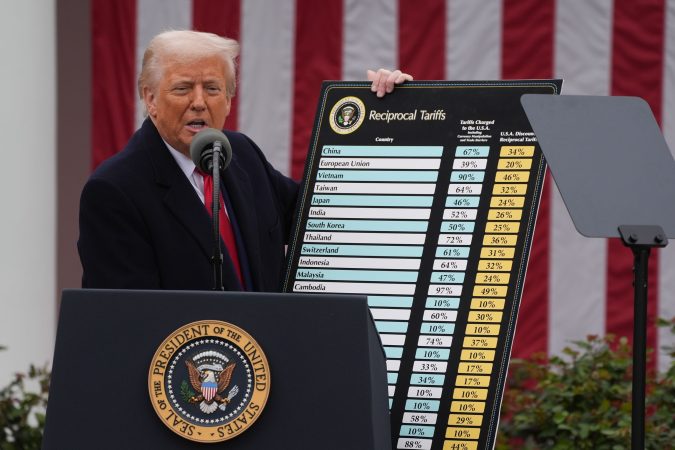
    LONDON — When President Donald Trump strode into the Rose Garden in April 2025 brandishing a poster board of tariff hikes, the world leaped as if a fire alarm had gone off. Markets shed trillions of dollars, envoys rushed to Washington, and more than 75 governments scrambled to negotiate, some scrapping carefully prepped countermeasures in a rush to cut deals.

    Sixteen months later, the flabbergasting threats keep piling up — to weaponize trade, annex Canada, seize Greenland, abandon NATO, annihilate Iran — but the alarm bells have gone quiet. World leaders are slower to rattle as they’ve seen the president increasingly fenced in by courts, rebuffed by Congress, and strung along by Tehran — his ultimatums evaporating and poll numbers sinking.

    When Trump announced a fresh barrage of tariffs last month, this time based on accusations of child labor violations to skirt limits imposed by the Supreme Court, the world didn’t shriek — it shrugged. France’s central bank governor predicted little impact. Britain proclaimed its exporters largely unaffected. Mexico’s economy minister waved it off as one tariff simply replacing another.

    The financial markets, inured to the bluster, hardly moved.

    As Trump nears the midpoint of his second term, officials and analysts say, one of his signature powers — to bluster on social media, shock, spark panic, and convert that panic (“thank you for your attention to this matter”) into the outcomes that he wants, has begun to fade. The bully pulpit of the presidency remains, but the audience is no longer quaking in the pews.

    “We are getting used to these daily announcements,” said Brando Benifei, an Italian member of the European Parliament who chairs its delegation for relations with the United States. “We don’t take them so seriously anymore.”

    At home, Trump continues to dominate the national conversation and drive the policy agenda. Still, the president was unable to muscle the Republican-controlled Senate into leaving the Epstein files under seal or passing his signature Save America Act. This week, he had to make concessions to get his nomination of Todd Blanche as attorney general back on track.

    Abroad, most consequently, Iran refuses to bend under American bombs and reopen the Strait of Hormuz, and Russian President Vladimir Putin persists in his war in Ukraine. Europe met Trump’s recently renewed demands for Greenland with a collective sigh, and trading partners have shrugged off the latest tariffs.

    For a world weary of the United States’ capacity to disrupt, the bombast is baked in, the threats are frequently bluffs, and the president who relishes shock and awe, in the end, often backs down.

    The stock trader’s refrain of “TACO” — Trump Always Chickens Out — has begun to take hold in more world capitals, said Jeremy Shapiro, director of the U.S. program at the European Council on Foreign Relations think tank.

    “I’ve been a little surprised at how much his bluster has worked until now,” Shapiro said of the bravado that rattled the world at the start of Trump’s second term. It was effective, he said, because it drew on the “awesome power and deep, long-stored-up diplomatic capital of the United States” — reserves, he said, that Trump has “finally started to blow through.”

    Officials “are starting to notice that he’s kind of a bully, and is quite easy to scare,” Shapiro said.

    Last year’s “Liberation Day” tariffs were hollowed out within days by carve-outs and delays. The steep levies he threatened against European allies over Greenland were withdrawn in Davos, Switzerland, in January for a vague “framework” that Denmark never accepted and has yielded no major change.

    China met his threat of 100% tariffs by refusing to blink, then used its chokehold on rare-earth minerals and a halt on U.S. soybean purchases to force Washington into a climbdown — a lesson in how standing tough often causes Trump to bend that other governments have also learned.

    Brazil’s president, Luiz Inácio Lula da Silva, ignored a 50% tariff designed to derail the prosecution of former president Jair Bolsonaro, who was convicted of charges related to fomenting an armed coup and sentenced to 27 years anyway.

    Nowhere is the erosion of Trump’s bluster-power starker than in Iran, where the United States and Israeli initiated a bombing campaign that killed the country’s supreme leader and other top officials but left the Islamic regime intact and with a stranglehold on the Strait of Hormuz, a vital conduit for global energy supplies and other cargo.

    Trump issued a cascade of ultimatums demanding that Tehran reopen the strait, notably threatening to annihilate Iranian “civilization” if it refused. The strait stayed shut. Iran did not fold, even under existential threat, and Trump quietly shifted his stated goals on regime change and on Iran’s stockpile of enriched uranium.

    “Between threats, then bombing, then backing off, what he’s radiating to the Iranians is that he’s desperate,” said Ronald E. Neumann, a career Foreign Service officer and U.S. ambassador to Afghanistan, Bahrain, and Algeria under Presidents Bill Clinton and George W. Bush. “As experienced bargainers, that means you don’t have to lower the price.” Neumann also put it less diplomatically: “The way Trump bargains,” he said, “I wouldn’t give him money to go to the carpet bazaar.”

    Trump’s browbeating also failed to pull European countries into his Iran campaign. He threatened Spain with a total trade embargo after it refused assistance, leaned on Britain, France, and Germany to reimpose U.N. sanctions, and hinted he might not honor America’s NATO obligations. But those allies refused to get more deeply involved the war — and some countries, namely Spain and Italy, have closed their bases or airspace to it.

    When Trump threatened to cut off trade with Spain, said one EU diplomat, officials seemed more inclined to dismiss the comments as rhetorical bluster, with many having learned from experience that his outburst would fizzle if ignored. But this diplomat, who spoke on the condition of anonymity to discuss delicate relations, conceded that Trump’s unpredictability made such calculations difficult.

    “It can be tricky,” the diplomat said, citing Trump’s military operations against Iran. “He doesn’t always chicken out.”

    To be sure, Trump has shown he is willing pull the trigger.

    To the surprise of his America First base that expected retrenchment, not adventurism, he has deployed the U.S. military more aggressively abroad than any recent president — seizing Venezuela’s Nicolás Maduro in a January raid by Special Operations forces, bombing Tehran a month later, and ordering dozens of lethal strikes on alleged drug boats across the Caribbean and Pacific.

    At home, he sent National Guard troops on patrol in Washington, D.C., and his immigration crackdown has thrown American cities into turmoil, with masked federal agents sweeping workplaces and courthouses — raids that sometimes turned deadly and ignited protests.

    But even the willingness to use force has not bought the deference it once did. Increasingly, officials and politicians at home and abroad are willing to challenge Trump’s threats — or ignore them.

    “Europe is noticeably less prone to panic,” said Mujtaba Rahman, managing director for Europe at the Eurasia Group consultancy. “European governments are increasingly distinguishing between Trump’s rhetoric … and the policies that ultimately emerge.”

    The pattern reaches into the Gulf, where officials have grown inured to Trump’s style of deal making, analysts said.

    Last month, Washington and Riyadh announced an agreement on Saudi Arabia’s civilian nuclear program only for Trump to post later on Truth Social that the deal was contingent on Saudi Arabia joining the Abraham Accords.

    Saudi officials found the claim surprising and annoying given that they had already trumpeted the agreement across their own channels, said Andrew Leber, a Middle East scholar at the Carnegie Endowment for International Peace, the Washington-based policy institute.

    “At this point, they have dealt enough with Trump deals to know that such exasperating and inconsistent moves have become the norm,” Leber said.

    For much of Trump’s first year back, European capitals ran the same strategy of flattery and appeasement they believed had contained him before. European Commission President Ursula von der Leyen flew to Trump’s Scottish golf resort to settle a trade fight on his terms. Britain invited him for an unprecedented second state visit.

    Leaders now are still willing to flatter Trump, especially in private, but they are less willing to offer the concessions he wants, according to a European diplomat who has been involved directly in talks with the administration.

    “Behind closed doors they are still putting it on thick because they know it works,” said the diplomat, who spoke on the condition of anonymity to discuss sensitive interactions. “This is a president who can significantly soften his position in the course of a single meeting. But that doesn’t mean you give in. That is true more than ever.”

    Greenland was a turning point, the diplomat said, because Trump’s threats evaporated against united European opposition. China, too, showed that pushing back could bend the president, as did Brazil, whereas Europe’s surrender to Trump’s initial trade barrage merely led to further demands from him.

    “I think people are saying, well, we don’t want to provoke him unnecessarily, but we can’t really make him happy,” said Neumann, the former ambassador.

    Learning to mute Trump’s threats won’t necessarily make the rest of his term easier to navigate, analysts said. Doing so could even make things less predictable if Republicans lose one or both of their majorities in Congress in the midterm elections and Trump turns to more unilateral executive actions.

    “It could be super dangerous,” Shapiro said. “Trump is not somebody who will go quietly into the night. He will rage about his loss of capacity and he will look for other ways to take risks with American power.”