Tag: no-latest

  • Tupac Shakur was killed in Las Vegas in 1996. Here’s who was there that night

    Tupac Shakur was killed in Las Vegas in 1996. Here’s who was there that night

    LAS VEGAS — New details about one of hip-hop’s most enduring mysteries — the 1996 killing of rap icon Tupac Shakur — could finally come to light in the upcoming trial of Duane “Keffe D” Davis.

    Davis, 63, is accused of orchestrating the drive-by shooting near the Las Vegas Strip that also wounded rap music mogul Marion “Suge” Knight. Davis’ jury trial will begin Monday, nearly three years after he was arrested in 2023. He pleaded not guilty.

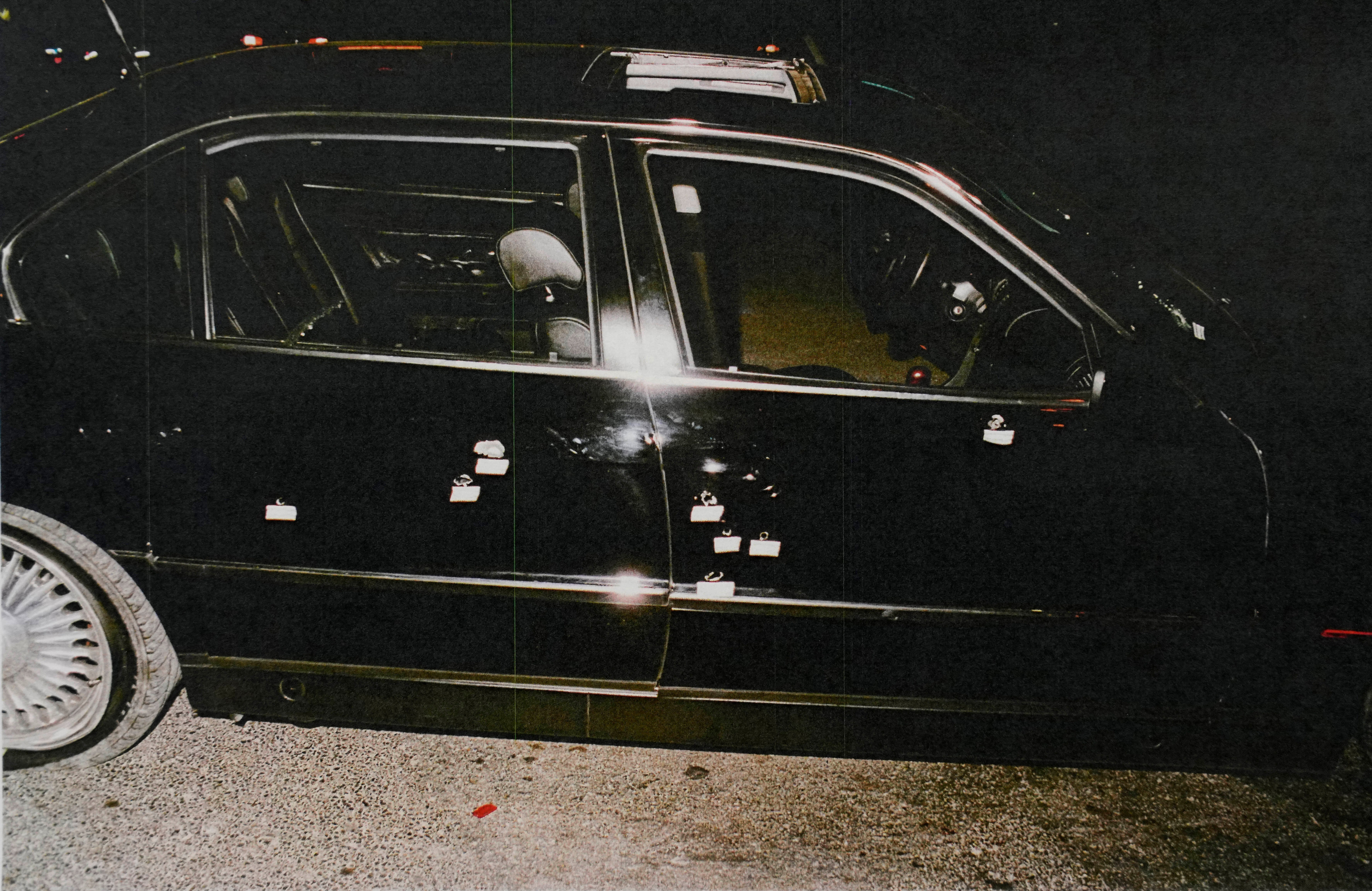
    On the night of Sept. 7, 1996, Shakur was in the passenger seat of a black BMW that Knight was driving when a white Cadillac pulled up on their right side and gunfire erupted. Knight was wounded but survived. Shakur died a week later at the age of 25.

    Police and prosecutors say the shooting stemmed from a fierce competition for dominance in a musical genre that pitted East Coast members of a Bloods gang sect against West Coast members of a Crips sect that Davis has said he led in Compton, Calif.

    That night, three others were with Davis in the Cadillac, but none of them faced charges in Shakur’s killing before they died.

    Here’s what we know about who was in both vehicles from authorities, court records, grand jury testimony, interviews, and Davis’ 2019 tell-all memoir, Compton Street Legend.

    Tupac Shakur

    Shakur is considered one of the most influential rappers of all time. He had five No. 1 albums, was nominated for six Grammy Awards, and was inducted into the Rock & Roll Hall of Fame in 2017. He received a posthumous star in 2023 on the Hollywood Walk of Fame and he will appear in the upcoming video game Stranger than Heaven.

    His death came as his fourth solo album, All Eyez on Me, remained on the charts, with some 5 million copies sold. He also used the stage names 2Pac and Makaveli. As an actor, he starred in several films.

    Shakur was born Lesane Parish Crooks in New York in 1971, and his name was changed a year later. His late mother, Afeni Shakur, and late stepfather Mutulu Shakur were active in the Black Panther Party in New York. Tupac Shakur was not close with his biological father, William “Billy” Garland.

    Two of the rapper’s siblings, Sekyiwa “Set” Shakur and Maurice “Mopreme” Shakur, have criticized authorities for inaction and slowness in charging anyone with their brother’s death.

    Marion “Suge” Knight

    Knight founded Death Row Records, a Los Angeles-based music label that represented Shakur at the time of his death. Knight’s moniker was shortened from “Sugar Bear,” his nickname growing up in Compton.

    Knight and Shakur were headed to a nightclub when their car was shot at near the Las Vegas Strip. Knight was grazed by a bullet or shrapnel.

    Now 61, Knight is serving a 28-year prison sentence in California for running over and killing a Compton businessperson outside a burger stand in January 2015. The case capped the former rap music mogul’s downfall from his heyday as one of the biggest — and most feared — names in the music industry.

    Davis said he and Knight knew each other growing up and even played on the same youth football team in Compton. Knight went on to play college football at the University of Nevada, Las Vegas. Briefly, during the 1987 NFL players’ strike, he was a replacement player for the Los Angeles Rams.

    In his memoir, Davis describes Knight and himself as the “only living eyewitnesses to what truly happened.”

    “Like two rams locking horns, Suge and I looked each other dead in the eye,” he writes when describing the moments right before the shooting.

    Orlando “Baby Lane” Anderson

    Law enforcement authorities long suspected that Anderson was the gunman. He was 22 at the time. Though Davis was his uncle and 12 years older, he described their relationship as that of brothers, friends, and even father-son.

    Shortly before the drive-by shooting, Anderson was beaten in a brawl at the MGM Grand casino involving Shakur and his associates, including Knight. Authorities, authors, and Davis himself say the shooting was an act of retaliation for beating up Anderson.

    “Them jumping on my nephew gave us the ultimate green light to do something,” Davis writes in the book.

    Davis said he obtained a handgun from an associate and tossed it into the back seat of the Cadillac but did not say who fired the fatal shots. Anderson was sitting in the backseat of the car, behind his uncle.

    Neither the Cadillac nor the gun used in the shooting were recovered, according to retired Las Vegas police Detective Clifford Mogg, who was assigned to the investigation in early 2018.

    “We were never able to identify the person who rented the car, where it was rented from, and then when it comes to the gun, we have never recovered as of this date, the weapon that was used in the murder,” Mogg said in testimony to the grand jury.

    Anderson, who denied involvement in Shakur’s killing, died two years later in what police said was an unrelated shooting at a Compton car wash.

    Deandrae “Freaky” Smith

    Also known as “Big Dre,” Smith was in the back seat of the car that night, sitting next to Anderson.

    Although authorities have said they believe Anderson pulled the trigger, the grand jury testimony challenged that theory.

    Denvonta Lee, a former associate of Davis, told the grand jury that it was Smith who shot Shakur and Knight. He said Anderson tried reaching over Smith but didn’t have a “clear shot” out the left-rear passenger window.

    The former associate, who wasn’t in the car but recounted a conversation he had with Smith days after the shooting, said Smith took the gun from Anderson, opened fire and let Anderson take credit for Shakur’s death.

    Smith was 30 when he died in 2004 of natural causes, according to the Los Angeles County coroner’s office.

    Terry “Bubble Up” Brown

    Brown was driving the Cadillac from which the shots were fired.

    Davis said in his memoir that they were driving toward Las Vegas Boulevard that night but spotted Shakur “hanging out of the window” of the BMW and waving to fans. Davis told Brown to make a U-turn, and they drove slowly past the rapper’s convoy until Davis said they “found who we were seeking.”

    Brown died in a 2015 shooting at a medical marijuana dispensary in Compton.

    The Los Angeles County coroner’s office said his full name was Terry Tyrone Brown, although Brown has been referred to as both “Terrence” and “Terrance” in investigative records.


  • National Gallery studied whether Freedom 250 IndyCar vibrations will affect art

    National Gallery studied whether Freedom 250 IndyCar vibrations will affect art

    When the Freedom 250 Grand Prix kicks off this month as part of President Donald Trump’s summer celebrations, IndyCar racers will weave at speeds up to 185 mph among federal buildings, the National Gallery of Art, the National Archives, and the Smithsonian Institution’s Hirshhorn, Air and Space, and American Indian museums.

    One of those institutions, the National Gallery of Art, has studied vibrations ahead of the race as it prepares for possible effects on its art — but it’s declining to say what it found.

    “In preparation for the Freedom 250 Grand Prix, the National Gallery conducted an extensive vibration study and based on the results we have implemented a set of measures to ensure the safety of our staff, visitors, collection, and facilities during the race,” gallery spokesperson Chris Abanavas said in a statement. “While we are not releasing the specifics, I can share that any such measures are only being taken out of a great abundance of caution.”

    The study didn’t raise concerns about structural risk to the buildings, Abanavas added. The race will also limit attendance at the free museum to ticket holders to the event’s secured area.

    The Smithsonian determined the race, which will take place Aug. 22-23, will not threaten any objects in its collections and has taken no special precautions as a result, a Smithsonian official said. But the institution will monitor the situation before and during the race, so it can protect exhibits if that changes.

    While the event is a first for D.C., it is not the first such race to pass through city streets and near museums, which commonly face vibrations from construction, musical events, and large crowds. But some historic preservationists worry the risk to delicate art pieces, historic documents, and priceless murals near the circuit has been underexamined.

    In March, the National Park Service consulted with the D.C. State Historic Preservation Office about the IndyCar event, noting that it saw “no adverse effects.” The letter did not mention the museums along the route. (The National Park Service and the National Archives did not respond to a request for comment.)

    Some preservationists who spoke with the Washington Post called the analysis insufficient and said a more comprehensive review of potential damage to historic properties or artifacts would have taken years, not months.

    “I can’t think of any place in that whole area that goes where the speed limit is higher than 25 miles an hour,” said Michelle Arcari Rose, a former associate general counsel at the National Trust for Historic Preservation, which has sued to stop Trump’s White House ballroom project. “So whereas people think these grand prix races aren’t a problem, we certainly don’t know, right? It’s a huge risk to then unleash cars at 185 miles per hour in a place where we’ve never had cars really going more than 25 miles an hour.”

    Mary Okin, assistant director of the nonprofit Living New Deal, sent a letter last week to the National Park Service and other agencies expressing concern that the event was permitted “without meaningful” consultation with “known preservation stakeholders.” The letter and the National Gallery of Art’s vibration study were first reported by the New Republic.

    “Such vibrations are well above normal street traffic and even go beyond those of jackhammers, pile drivers, and even freight trains,” she wrote.

    Okin is calling for safeguards including temporary sound barriers and damage assessments to help protect buildings such as the Wilbur J. Cohen Building, which sits on the circuit’s south edge and houses fragile New Deal-era murals.

    “They’re vulnerable,” said Okin, whose organization has worked on the building’s preservation. “Excess vibrations and sound, as well as the construction of the racetrack itself, could very well cause damage.”

    The General Services Administration, the body that manages real estate for the federal government, reviewed the proposed route for potential impacts on its assets and identified no areas of concern, a spokesperson said in a statement.

    “The White House and [IndyCar owner] Penske have followed all appropriate protocols and been in close coordination with all relevant agencies to ensure this is also the safest and most secure race for all visitors to enjoy,” said Davis Ingle, a White House spokesperson.

    While many major motorsport races are held on permanent road courses or oval tracks, temporary street circuits are a familiar part of international racing.

    IndyCar stages several events on public roads in cities such as St. Petersburg, Fla.; Long Beach, Calif.; Detroit; and Toronto, while Formula One also races on street courses in places including Monaco, Singapore, and Las Vegas. The roads are closed, lined with concrete barriers, and transformed into racecourses for the events before reopening to traffic.

    One of the closest comparisons with D.C.’s race is the Firestone Grand Prix of St. Petersburg, in which the street circuit runs next to the Dalí Museum. A museum spokesperson said the collection has remained safe and secure throughout the event’s history. The museum has not conducted race-specific vibration studies, but its galleries were built to museum standards and the collection is continuously monitored.

    Green Savoree Racing Promotions, which organizes the St. Petersburg race, said the museum closes to visitors while racing is underway and reopens after the event concludes. The promoter also noted that the museum is housed in a hurricane-rated building constructed to Florida standards, allowing the artwork to remain in place during extreme weather, and said it was not aware of any additional precautions being necessary during the race.

    In a statement, a Freedom 250 Grand Prix spokesperson said race organizers have “tremendous respect for the history and the structures surrounding the racing circuit in Washington, D.C.”

    “IndyCar has successfully hosted races on downtown street circuits in urban areas for decades,” the spokesperson said. “With this excellent track record and the thorough preparation we have done for this event working closely with all the appropriate local and federal agencies, we do not anticipate any impact on the structures surrounding the circuit” as a result of the race.

    Researchers have started paying closer attention to how vibrations from construction, live music, and major events may affect the art and artifacts inside museums.

    One 2023 report studied the effects of vibrations from music and a NASCAR street race on museums in Chicago. In that case, racecars passed a south wall of the Art Institute of Chicago, near galleries holding a Van Gogh exhibition.

    Advisers who reviewed data and consulted with NASCAR beforehand told the museum vibrations from the cars shouldn’t pose a major risk, according to the report. Afterward, they found museumgoers’ foot traffic caused greater vibrations in gallery floors than the race outside. (An author of the report declined to be interviewed, and the Art Institute says it works with specialists before any major activity that might cause vibrations.)

    On Tuesday, there were few apparent changes at the National Gallery of Art except for enclosures set up around some artworks outside.

    The I.M. Pei-designed triangular skylights, which abut a cascading sunken fountain and illuminate the underground cafe, have been boarded up. Between the West Building and the Sculpture Garden, a massive Alexander Calder sculpture made of sheet metal, Tom’s, has been enclosed in a protective barrier.

    Some sculptures and installations were boarded up “out of an abundance of caution,” said Abanavas, citing “the increased visitor traffic around the National Mall this summer for events including the Grand Prix.”

    As of publication, the Post did not identify significant changes to public collections inside the National Gallery of Art’s East Building, which closely faces the racetrack on Pennsylvania Avenue.

  • 2 soldiers killed in Lebanon in the first Israeli deaths since June truce with Hezbollah

    2 soldiers killed in Lebanon in the first Israeli deaths since June truce with Hezbollah

    BEIRUT — Two Israeli soldiers were killed in an explosion in southern Lebanon, Israel’s military said Thursday, the first Israeli deaths since a shaky truce between Israel and the Lebanese militant group Hezbollah began nearly two months ago.

    Four other soldiers were seriously wounded, the military said. An Israeli military official, who spoke on condition of anonymity in accordance with the army’s policy, said that “an explosion was detonated” when the soldiers entered a site in the village of Majdal Zoun and that the nature of the explosive was under review.

    Israeli media reported the two deaths a day earlier.

    The Israeli army launched strikes Wednesday in southern Lebanon in response to what it described as Hezbollah’s violation of the ceasefire and called on residents of the village of Mansouri to flee — the first such warning Israel has issued in Lebanon for weeks.

    Lebanon’s Health Ministry said one person was killed and 12 wounded in an Israeli strike in the town of Tebnine Wednesday and another eight wounded in overnight strikes on the village of Burj al-Shemali. Artillery shelling also targeted the areas of Mansouri and Majdal Zoun, the state-run National News Agency said.

    There was no immediate statement from the Iran-backed Hezbollah.

    The latest Israel-Hezbollah war erupted on March 2, when Hezbollah fired rockets across the border two days after the U.S. and Israel launched their attacks on Iran. More than 4,000 people have been killed by Israeli strikes in Lebanon since then, including hundreds of civilians. About 40 soldiers and three civilians – including a military contractor – have been killed on the Israeli side.

    A precarious truce between Israel and Hezbollah has largely held since June 20, but Israeli forces have continued to occupy swaths of southern Lebanon and to carry out periodic airstrikes and shelling.

    The latest escalation came as Lebanese and Israeli negotiators met in Rome to discuss implementation of a June 26 deal reached between Israel and the Lebanese government under which Israeli forces are supposed to withdraw from areas they occupy in southern Lebanon and allow the Lebanese army to take control, in exchange for Hezbollah’s disarmament.

    Hezbollah has refused to disarm and opposed the direct Lebanon-Israel talks. It was not a party to the deal. The group has accused the Lebanese government of making too many concessions without guaranteeing an Israeli withdrawal.

    Wednesday’s talks ended early due to the escalation on the ground, but were set to resume Thursday.

    The talks in Rome have focused on implementation of “pilot zones” where Israeli forces would withdraw and the Lebanese army would take control. Implementation began last month with an initial pilot zone in an area that wasn’t occupied by Israeli forces but had previously sustained Israeli fire.

    The Lebanese army entered the town of Zawtar al-Gharbieh and some civilians returned, although many came only to find their homes destroyed and left again.

    A diplomat familiar with the negotiations who spoke on condition of anonymity because they were not authorized to comment publicly said earlier this week that Lebanon had asked for the next pilot zone to be either in the town of Khiam or Bint Jbeil. Both areas saw heavy fighting in the latest Israel-Hezbollah war and are currently occupied by Israeli forces.

    But U.S. Ambassador to Lebanon Michel Issa suggested ahead of the three-day talks that no new pilot zones would be immediately implemented, saying that “moving too quickly risks jeopardizing the very civilians this process is meant to protect.”

  • North Korea conducts ballistic missile test days before US and South Korea begin drills

    North Korea conducts ballistic missile test days before US and South Korea begin drills

    SEOUL, South Korea — North Korea launched a short-range ballistic missile toward the sea on Thursday, South Korea’s military said, resuming weapons tests days before its rivals the U.S. and South Korea begin annual military drills that North Korea views as an invasion rehearsal.

    The launch from North Korea’s eastern coastal Wonsan area was detected around 5 p.m., South Korea’s Joint Chiefs of Staff said, explaining that South Korea’s military has bolstered its surveillance posture and is closely coordinating with the U.S. and Japan.

    Japan’s Defense Ministry also said North Korea fired a possible ballistic missile but there was no impact in or around Japan, where the coast guard urged ships around the coast to use caution and notify authorities if any fallen objects were found.

    The ballistic missile launch was North Korea’s first since late June, when it tested a tactical ballistic missile with a “special mission” warhead and other weapons. After watching the testing activities, leader Kim Jong Un underscored the need to bolster the military’s “deadly and destructive offensive posture.”

    Thursday’s launch also came ahead of large-scale, annual exercises to be conducted by the U.S. and South Korean militaries later this month. U.S. and South Korean officials say the training is defensive in nature, but North Korea says the maneuvers are a practice invasion and often responds with its own missile tests and warlike rhetoric.

    South Korean and U.S. officials haven’t formally released details about this year’s joint exercise, but the drills are typically held in the latter half of August.

    Kim has been focusing on enlarging its nuclear and missile arsenals since his high-stakes diplomacy with U.S. President Donald Trump collapsed in 2019. Experts say Kim wants international recognition as a nuclear state so that he can demand the lifting of international economic sanctions on North Korea.

    U.N. Security Council resolutions ban North Korea from launches involving its huge stockpile of ballistic missiles. Tests of other weapons including cruise missiles and artillery systems are not banned, but experts say they still pose a threat to South Korea and the U.S.

    In early July, Kim supervised tests of a nuclear-capable cruise missile aboard a new 5,000-ton destroyer. After years of prioritizing ballistic missile development, Kim has increasingly turned his focus to naval capabilities, including the construction of a nuclear-powered submarine.

    In recent years, Kim has boosted his diplomatic credentials by expanding ties with Russia. North Korea has supplied conventional weapons and troops to Russia to support its war against Ukraine.

    Kim also has pushed to deepen cooperation with China, the North’s economic pipeline. Chinese President Xi Jinping visited the North Korean capital Pyongyang in June for the first time in seven years.

    In response to Trump’s repeated outreach to restart diplomacy, Kim has suggested talks can resume if the U.S. drops its demand for North Korean denuclearization as a precondition.

  • Michigan Senate primary shows Democratic establishment has lost its grip

    Michigan Senate primary shows Democratic establishment has lost its grip

    Michigan’s bitter Senate primary was the clearest signal yet: The Democratic establishment is gasping.

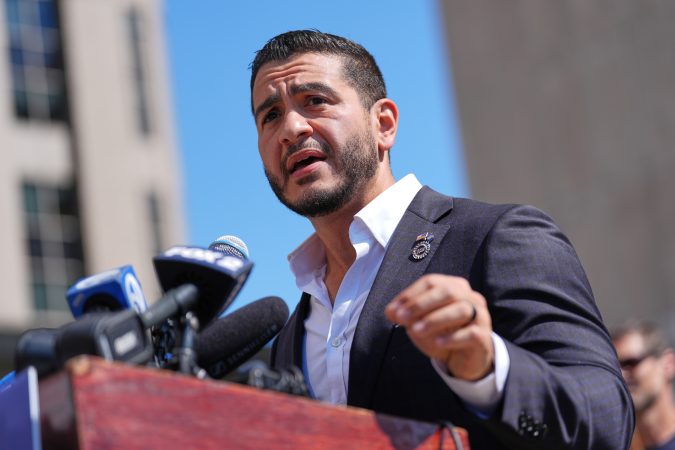
    The narrow victory of former health official Abdul El-Sayed over four-term Rep. Haley Stevens, who had the near-unanimous backing of senior establishment figures in Washington and Michigan as well as a more than 8-to-1 television spending advantage, marked yet another stumble by the traditional power brokers.

    It also amplified how out of touch they have grown with the angry left that has become the party’s ascendant force.

    This time, the victory by a progressive insurgent happened not in a deep-blue enclave, such as New York City, where Democrats are pretty certain to win no matter what candidate they put up. It was in a statewide contest in Middle America. Donald Trump won Michigan twice, in 2016 and 2024.

    In 2026, the stakes could hardly be higher. Democrats currently hold the Michigan seat being vacated by the retirement of Sen. Gary Peters. Should El-Sayed lose in November against Republican nominee Mike Rogers — a former congressman who came within a third of a percentage point from winning Michigan’s other Senate seat in 2024 — the party’s uphill effort to win back control of the Senate will become even steeper.

    Much criticism has focused on how Senate Minority Leader Chuck Schumer and the campaign arm that he effectively steers, the Democratic Senatorial Campaign Committee, have attempted to orchestrate the primary process. They have boosted favored contenders in three primaries this year. Michigan marked the second one — the first having been Maine — in which Schumer’s anointed contenders were rejected by Democratic voters.

    “What voters have been screaming from the rooftops is they’re sick of the status quo. They’re sick of the establishment. They want something different,” said Lis Smith, a Democratic consultant who worked for Mallory McMorrow, a state senator who dropped out of the race after failing to gain traction in a middle lane.

    Nor were Democrats in a critical swing state persuaded by the argument that Stevens was more “electable.”

    “If you listen to focus groups or interviews with Michigan voters, they are very interested in winning,” former Obama White House official Dan Pfeiffer wrote Monday in his Substack. “They want to pick a winner; they just don’t trust Democratic politicians to tell them who can really win. This is a very understandable impulse after 2024 and every Democratic leader backing Biden when he clearly shouldn’t have run.”

    The stresses and divisions within the Democratic Party, including over support for Israel and the role of money in politics, were on full display in Michigan. El-Sayed rarely missed an opportunity to mention that Stevens had benefited from $62 million in advertising spending by outside groups, led by the American Israel Public Affairs Committee, the influential pro-Israel lobby.

    The entire race, El-Sayed argued in the candidates’ final debate, “really comes down to how you are funded.” Rarely has a candidate been so effective at that kind of political jujitsu, using the weight of campaign money against its intended beneficiary.

    Late polls that had El-Sayed comfortably ahead of Stevens were wrong. The race turned out to be a photo finish.

    The results also complicated any clean story about a party moving left. El-Sayed ran up his margins in the counties with the youngest and most highly educated voters. Stevens carried the poorest counties and the areas with the most Black residents — the parts of the Democratic coalition that have historically decided general elections in Michigan. An insurgent left that wins on campuses and in college towns but loses in Detroit’s suburbs and the state’s poorest counties has proved it can win a primary. It has not yet proved it can win a state.

    Stevens quickly endorsed El-Sayed after the race was called. “I spoke with Abdul a few moments ago to offer him my full support as we work to defeat Mike Rogers this November,” she posted on X. But given the acrimony of their battle, it is unclear whether Democrats can bind their wounds and regroup behind their new nominee.

    Progressives in Michigan notched other victories Tuesday: William Lawrence, co-founder of the climate action group Sunrise Movement, defeated two more moderate Democrats to win the Democratic nomination in a swing district that includes Lansing. And incumbent Rep. Shri Thanedar lost to Michigan state Rep. Donavan McKinney, a democratic socialist.

    The implications could well extend beyond November. The Democratic National Committee has tentatively approved Michigan to vote fifth in the 2028 presidential primaries — making it the biggest prize on the early calendar.

    Should the progressives who were chosen Tuesday win this November, that may strengthen the hand of 2028 prospects who hew to the left. But if they lose, the party may be seeking a more centrist standard bearer.

    With the 2026 primary season coming to an end, more optimistic Democrats are hoping that raging battles over their party’s identity will move to the back burner as they refocus their energies on Trump and the Republicans.

    “We’re gonna have a great November. We’re gonna win the House, and I’m still bullish on the Senate,” former Virginia governor Terry McAuliffe, who also chaired the Democratic National Committee, said in an interview. “This is going to be about the party in power, plain and simple.”

    Clara Ence Morse contributed to this report.

  • Why Republicans could still keep control of the House

    Why Republicans could still keep control of the House

    Democrats are favored to flip the House, but Republicans could still save their majority under the right conditions.

    Historically, midterm elections are a referendum on the party that holds the White House, which voters are prone to punish. This year, the Democratic Party is well positioned to win a House majority, buoyed by voters’ dissatisfaction with President Donald Trump and the war in Iran that he started.

    But Trump’s party could defy conventional wisdom and still eke out a win, election analysts say. Here’s how.

    Voters aren’t angry enough to vote blue

    Registered voters support Democrats over Republicans in Congress by five percentage points, according to a Washington Post average of July “generic ballot” polls that ask preferences for parties rather than individuals.

    Analysts estimate that Democrats need to win the national House vote by three to four points to win the majority. Democrats have a bigger advantage among highly motivated voters, who are more likely to turn out in November.

    But polls also show that the Democratic brand is bruised.

    The Democratic Party is less popular than before the 2018 midterm elections, when a blue wave delivered 41 new seats, according to a CNN poll released in late July.

    Just before that 2018 election, 46 percent of adults rated Democrats favorably while 45 percent rated them unfavorably. Now, 30 percent rate Democrats favorably while 51 percent rate them unfavorably, almost identical to ratings for the Republican Party.

    Much of that discontent comes from Democrats who are unhappy with their own party but unwilling to vote for Republicans.

    Democrats are counting on people who don’t like them but are fed up with a GOP-controlled Washington to vote blue. That might be a harder sell by November if voters aren’t as outraged.

    “Republicans have to hope that gas prices come down and that the war fades from the news a bit,” said David Wasserman, a senior elections analyst with Cook Political Report, a nonpartisan race handicapper.

    A redrawn map protects GOP majority

    A party needs 218 seats to control the House, and Republicans hold a razor-thin majority with several vacancies.

    Aggressive redistricting to favor parties in congressional elections has resulted in a smaller battleground for control of Congress.

    As of mid-July, Cook Political Report deemed 37 districts competitive. Eighteen were toss-ups, while 10 leaned Democrat and 9 leaned Republican.

    Republicans made it unusually hard for Democrats to win the majority by launching a national battle to redraw electoral maps mid-decade. While Democrats tried to gain their own seats, the redistricting gambit proved advantageous for the GOP.

    Because the two parties are competing on the new map, November’s results could be close even in a difficult year for Republicans, Wasserman said.

    If Democrats win all of the most competitive districts classified by the Cook Political Report, they would win 235 seats under the 2024 map. But under the current map, they would only win 223 seats.

    Big money saves vulnerable Republicans

    In June, a Supreme Court ruling granted Republicans financial leverage to spend big to boost their candidates.

    The high court lifted limits on how much political parties can spend in coordination with candidates, allowing the political parties’ national committees and their House and Senate campaign committees to funnel as much money as they want in coordination with candidates.

    This will allow political parties to boost their candidates with more ads, probably at lower costs because candidates get cheaper rates than parties and super PACs from the Federal Communications Commission, which regulates the airwaves. Republican committees have more money to spend than Democrats on those efforts.

    Conservatives could also benefit from Trump’s super PAC, MAGA Inc., which ended June with $400 million in the bank. It’s unclear whether that money will go toward midterm races.

    The Republican campaign committees have also not yet detailed how they will spend their money in the coming months but said after the Supreme Court ruling that they were “ready to fully support our candidates and put them in the strongest position possible.”

    The Democratic Congressional Campaign Committee, the House Democrats’ campaign operation, disputed that the GOP’s financial resources would sway the midterms out of Democrats’ reach. They pointed to special elections in which Democrats won despite being outspent by Republican opponents.

    “Donald Trump’s money won’t save the vulnerable Republicans who have spent the last two years making life worse for the American people,” DCCC spokesperson Viet Shelton said.

    Weak candidates lose winnable races

    In past elections, Republicans lost competitive congressional races after more hard-line conservatives emerged from primaries. Now Democrats have a similar problem.

    Primary victories by several progressive candidates have made some in the party establishment worry about losing winnable seats.

    Most of these candidates have been in blue districts, but Matthew Dunlap in Maine and Randy Villegas in California beat more moderate, DCCC-endorsed candidates in primaries. Amish Shah, who lost a 2024 race in an Arizona battleground district, defeated a former Republican endorsed by the DCCC to run again.

    On Tuesday in Michigan, Sunrise Movement co-founder William Lawrence, a progressive, bested two moderate Democrats in the battleground 7th Congressional District. The DCCC did not endorse any candidate before the primary.

    Manny Rutinel defeated a more moderate opponent in a beef-producing Colorado district where some Democrats fear his history of animal rights activism and liberal voting record in the state House could render him unelectable.

    Those districts could still go for Democrats, according to national analyses, and progressives argue that their preferred candidates are better at turning out voters even if they turn off some moderates.

    Doug Heye, a Republican strategist, said that while Republicans have a “very narrow” path to the majority, they could defy expectations if the party successfully casts its opponents as extreme and out of touch. They include candidates affiliated with the Democratic Socialists of America, a growing political movement with far-left views.

    “With every candidate on the DSA side that succeeds, that makes that argument that much easier,” Heye said.

    In an analysis this week, the University of Virginia’s Center of Politics said “Democratic candidates flopping is integral to GOP chances” in several states.

    Scott Clement contributed to this report.

  • The first small steps taken in Neil Armstrong’s childhood home inspired a giant leap for mankind

    The first small steps taken in Neil Armstrong’s childhood home inspired a giant leap for mankind

    WAPAKONETA, Ohio — Inside Neil Armstrong’s boyhood home, at the top of a creaky stairway, sits his bedroom where he launched model airplanes out of the rear window to measure how far they’d fly.

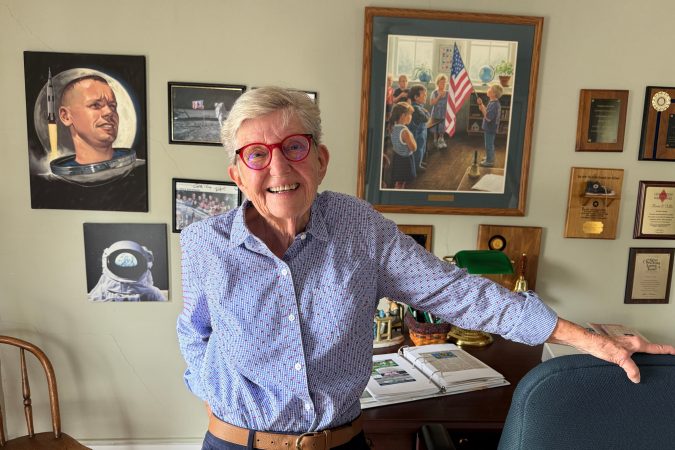
    Hanging in the room now are autographed photos of astronauts who have visited the privately kept house to see where Armstrong’s first steps to the moon began.

    Owned by a retired history teacher devoted to preserving its past and charming character, the home is for sale for the first time in nearly 40 years. What will become of it remains uncertain.

    All over Armstrong’s hometown of Wapakoneta, there are reminders of his history-making moonwalk. But few places played a bigger role early in his journey than 601 W Benton St. — the house where the Armstrong family settled in western Ohio when he was a young teenager.

    It’s where Armstrong built planes out of balsa wood and glue in the dining room and constructed a basement wind tunnel to test his models. He’d often pedal his bike from home to take flying lessons at an airstrip.

    At age 16, Armstrong made his first solo flight and got his pilot’s license. Just 20 years later, he rocketed into space for the first time. After the 1969 moon landing, he taught at the University of Cincinnati.

    A parade of astronauts has visited Armstrong’s house

    Today, Armstrong’s two-story boyhood home is an occasional stop for visitors to the Armstrong Air and Space Museum in Wapakoneta, even though the house isn’t open for tours.

    When Karen Mikesell bought the place in 1988, she had no idea who once lived there until another teacher soon told her.

    As a history teacher who later became a school principal, Mikesell felt a responsibility to “keep it like the Armstrongs had it,” she said.

    She’s hosted nine astronauts, including Buzz Aldrin, who flew to the moon with Armstrong and Michael Collins in 1969.

    Aldrin stepped inside the bedroom upstairs a few years after Armstrong died in 2012, Mikesell recalled, “and the tears just streamed down his cheeks.”

    Over the years, she’s been given a moon rock and received a piece of gold foil that covered the Apollo 11 capsule — a gift from one of the Navy frogmen who helped recover the command module and its crew.

    Some astronauts autographed their photos with personal messages to Mikesell — “thanks for taking such great care of Neil’s home!” wrote Mike Foreman, who flew on two space shuttle missions.

    “You can read books, but you can never have those kinds of experiences that I was able to have because I lived here,” she said. “I could go on and on.”

    House holds many reminders of the first man on the moon

    Armstrong’s family bought the home in 1944 after his father had moved them about a dozen times with his job as a government auditor. The oldest of three children, Neil was born in a farmhouse just outside Wapakoneta, today a city of just under 10,000 people.

    The house on Benton Street with its big front porch has changed little on the outside. Inside, the layout is similar too, though it has been updated.

    In the backyard, a garage that Armstrong and his father built with scrap lumber still stands, though a chicken coop where he and his friends gathered for Boy Scout meetings is long gone.

    Armstrong’s old bedroom is now decorated with photos and paintings of the moon landing. Hanging from the ceiling is a model of the Wright brothers’ first production airplane — the aviation pioneers were from nearby Dayton and an inspiration for Armstrong.

    Mikesell never met Armstrong, who was famously private. She did talk with his parents, siblings, and children about the 1908 home and its place in Armstrong’s upbringing.

    A part of American history is for sale

    Mikesell, who’s 82, said she hopes someone might be willing to buy the house and donate it to the Armstrong museum, which doesn’t have the funds to acquire the property, according to Logan Rex, its spokesperson.

    She is just one of a handful of people who’ve owned the home since the Armstrongs sold it in the mid-1960s. By the time she bought the house, the rooms were covered with wallpaper in a rainbow of colors, so she sought to restore its original look.

    While the house, which is listed at $430,000, isn’t legally protected from alteration, Mikesell is also optimistic that the new owners will respect it — whether it remains a private residence or becomes a place for overnight stays.

    “It’s time to let someone else have the opportunity to be as blessed as I’ve been,” she said, “and to take care of it and keep it as a part of history.”

  • Letters to the Editor | Aug. 6, 2026

    Letters to the Editor | Aug. 6, 2026

    Balanced facts

    Congratulations to Luis F. Carrasco for writing the most sensible column on immigration I have ever read. Both the left and the right promote those facts that favor their point of view. This is true not just on immigration, but on virtually all issues that divide our country.

    How can we agree on anything if we do not share the same facts?

    However, I do take exception to one point. Carrasco says he does not begrudge the U.S. Department of Homeland Security for regularly trumpeting that U.S. Immigration and Customs Enforcement has detained “the worst of the worst.” But who are these people?

    If ICE were succeeding, the names of these arrested “worst of the worst” would be front-page news every single day. Their mug shots, alleged crimes, names, and photos would be as familiar to us as news of LeBron James’ move to Philadelphia.

    Instead, we hear ICE describe grandmothers like me, who attend peaceful No Kings rallies, as “domestic terrorists.” So how can we begin to take ICE’s claims seriously?

    Both sides lose when we cherry-pick our facts. Thank you, Mr. Carrasco, for reminding us that balance matters.

    Rosemary McDonough, Narberth

    Women disenfranchised

    As we read about the SAVE America Act being attached to budget legislation, and members of the administration constantly demanding its passage, I am beyond perplexed that I don’t see, read, or hear more women discussing the difficulties ahead if this. Like eight out of 10 women, I took my husband’s last name, and my birth certificate obviously does not reflect that name change. But if the SAVE Act is passed by the Senate, I will not be able to vote until I can show proof of my citizenship and name change by paying for and presenting new documents. It is simply outrageous that half the country’s voters can be disenfranchised in order to “remedy” a vanishingly rare event, an event that is caught through our current state review systems. Why are we meekly standing by while our rights — which we’ve only enjoyed since 1920 — are being threatened? Women, do you want to be turned away from voting because you didn’t get reregistered with new paperwork, but men get to breeze right through?

    Liese Sadler, Philadelphia

    Join the conversation: Send letters to letters@inquirer.com. Limit length to 150 words and include home address and day and evening phone number. Letters run in The Inquirer six days a week on the editorial pages and online.

  • Horoscopes: Thursday, Aug. 6, 2026

    ARIES (March 21-April 19). Venus asks: Which project deserves more of your love? Let your heart answer. Where discipline fails, affection will succeed. Assume there’s a reason certain things capture your attention. That’s where to invest your patience and work.

    TAURUS (April 20-May 20). Venus asks: What do you most want to invite into your life in the weeks to come? Make room for it now. The universe has an easier time delivering the package when you already know where it fits in your world.

    GEMINI (May 21-June 21). Venus asks: What would you do if there were no limits? Because some of these obstacles will evaporate over the next three weeks. Pretend you’re already free. What would your next courageous step be then? It’s very close to the step you can take now.

    CANCER (June 22-July 22). Venus asks: How could you apply beauty as a strategy? For instance, a welcoming room encourages conversation. A thoughtful gesture builds trust. An elegant solution succeeds where force or urgency would be a major turnoff. Beauty moves the plot now.

    LEO (July 23-Aug. 22). What do you love enough to share? There will still be plenty left for you. Joy multiplies that way. Your enthusiasm, hospitality, encouragement and creativity will be ever-abundant throughout this cycle.

    VIRGO (Aug. 23-Sept. 22). Venus asks: What deserves another chance? Time changes everything, and all will change in time. People, circumstances and even your own perspective are evolving quickly these days, so stay open to an entirely different experience with entirely different possibilities.

    LIBRA (Sept. 23-Oct. 23). Venus asks: What’s keeping you from a more beautiful day today? It’s probably the cost — financial, emotional, energetic or more likely a mix of all three. But with a little creativity, this can be done on a simple scale.

    SCORPIO (Oct. 24-Nov. 21). Venus asks: Which relationship buzzes with special energy? That’s where to invest. It doesn’t have to make sense. Connection is more chemistry than logic — a puzzle of the body and subconscious mind. Trust.

    SAGITTARIUS (Nov. 22-Dec. 21). Venus asks: What’s already working? In the weeks to come you’ll benefit from doing, seeking and making more of that. And no, you won’t get bored. Because you’re about to hit another level, and it will be like starting anew.

    CAPRICORN (Dec. 22-Jan. 19). Venus asks: What have you been saving for a special occasion? Wear it. Use it. Serve the good dishes. Write in the beautiful notebook. The weeks ahead reward the choice to enjoy your favorite things in your everyday life.

    AQUARIUS (Jan. 20-Feb. 18). Venus asks: What do you most want to feel? Then follows up with: What are ways to get to that feeling that you haven’t tried yet? It’s easy to think one person is the only supplier for a feeling, but it’s just not true.

    PISCES (Feb. 19-March 20). Venus asks: What have you been trying to earn that could simply be received? The next breakthrough starts the moment you stop proving your worth and start accepting it.

    TODAY’S BIRTHDAY (Aug. 6). It’s your Year of the Magical Crossing in which you start out in familiar territory and walk the bridge into an altogether foreign realm akin to Narnia or Oz, then continue on a changed person. More highlights: Decisiveness echoes through your finances and relationships. You will be in the rare position of creating opportunities not only for yourself, but for those close to you. A triumph at work. Gemini and Sagittarius adore you. Your lucky numbers are: 22, 39, 16, 6 and 18.

  • Dear Abby | Woman has no clue why friend group ousted her

    DEAR ABBY: Four years ago, my cousin “Roy” introduced me to his friends, who, once a month, have a party at the home of one of the couples. We would eat and then play a form of dominoes. It was raucous and fun. The second time I went, a couple in the group told me that now I was “part of the family.” I always had fun and laughed a lot, which I hadn’t experienced much after my husband died years ago. Roy even invited me to go on a couple of cruises with six people from the group. At the end of the last cruise, everyone shunned me, except for Roy, who instead was cruel and insulting to me. Abby, no one will tell me what horrible thing I could’ve said or done to make everyone so furious. I told Roy that he knew I’d never do anything to deliberately hurt or offend someone I loved. He never explained anything to me, and although I reached out to five members of the group, they won’t answer me either. How can I apologize if I don’t know what I said or did wrong? Roy has since died, so I can’t pursue the matter with him, and I’m wondering if I should try again with any of them to find out why they ghosted me?

    — LONELY WITHOUT THEM IN MISSOURI

    DEAR LONELY: If the reason you want to keep pursuing this after four years is to reestablish social relationships with these people, I think the ship has sailed on that score. If, for your own peace of mind, you would like an answer, consider approaching your cousin Roy’s friends one last time and asking about it. Whatever the answer may be, however, it is important that you enlarge your social circle and move forward. Continuing to dwell on this hurt will not be helpful at this point.

    ** ** **

    DEAR ABBY: Six months ago, my wife and I hired a cleaning company to help around the house once a month. It has been a big help because my wife has arthritis. Even though her arthritis is debilitating at times, she insists on still working at least part time.

    When “Helen,” the woman who cleans our home, arrives, we offer her tea or something before she starts to clean. Recently, she asked my wife if she worked, and my wife responded that she works part time as a librarian. Helen’s response was, “Oh, I wish I could work part time.”

    My wife is 64 and worked full time until two years ago. Helen is probably in her 30s. I didn’t appreciate Helen’s demeanor. Her response had a hint of jealousy. My wife and I are quiet people. We dislike strife. How can we politely tell Helen she talks too much? We don’t mind for a little while, but she talks almost the entire time she’s at our home.

    — UNRECEPTIVE AUDIENCE IN NEW YORK

    DEAR U.A.: A way to accomplish that would be to stop offering Helen “tea or something” when she arrives, which should give her less time to socialize. Another would be to make it a habit not to be in the same room with her while she’s working. I’m sure you and your wife can find something else to do while the place is being cleaned. You could even go out for coffee or lunch unless your intuition is telling you she can’t be trusted. If that’s the case, you need another cleaning person.