Tag: no-latest

  • Bear encounters are rising across the United States. Here’s why.

    Bear encounters are rising across the United States. Here’s why.

    They climb through bedroom windows and open car doors. They sneak into restaurants, fire stations, and vacation rentals. Across the country, black bears are foraging for food.

    Human-bear encounters are on the rise this year in at least 15 states. Across the West, Northeast, and Southeast, agencies received more bear-related calls than last year. In Colorado, reports have increased by as much as 200%, and in Utah, bears in cities have reached a record high.

    Some calls report a sighting. Others involve bears breaking into homes, cars, or chicken coops. Very rarely, the calls report attacks.

    There are about 450,000 black bears in the United States. Most avoid people, only getting close when they are in search of food. But when these opportunistic omnivores succeed in eating human food, they will continue doing so and, experts say, it is impossible to reverse the behavior.

    As more people move into bear country, humans must adapt.

    While Keryn Francisco and her son were fishing, a black bear broke through an open window to raid the fridge in their cabin in South Lake Tahoe, Calif. The bear had expensive taste, eating avocados, brioche buns, croissants, chocolate strawberries, and tri-tip steaks.

    It returned for seconds and then thirds, bringing the food to the porch to eat and leaving a mess behind. “He was living his best life,” Francisco said.

    In California and across much of the West, human-bear encounters are increasing. Experts say environmental conditions are driving much of this year’s uptick by wiping out the black bear’s natural food supply.

    Colorado, Montana, New Mexico, Nevada, Utah, Washington, and Wyoming have cited drought as a factor in the increase. Officials in North Carolina, Oklahoma, and Tennessee said the same.

    Arjun Dheer, California’s statewide black bear coordinator, said parts of the West had unusually low snowpack and warm, dry conditions that were followed by drought, early snowmelt, and damaging late-spring freezes.

    “Those conditions can reduce or disrupt natural foods like grasses, berries, fruits, acorns, and other mast, causing bears to range farther and take greater risks around developed areas in search of calories,” he said.

    Colorado, which saw its worst snowpack on record, has seen the steepest surge. Wildlife officials have recorded 10,019 bear reports so far this year, more than triple last year and more than double the state’s annual average.

    In the past, John Livingston, a Colorado Parks and Wildlife public information officer, said, the impact was confined to only a few counties, but this year it’s statewide.

    Livingston, who is part of the Statewide Bear Working Group, said he was alarmed in July. The number of reports had surpassed all of last year.

    “That’s when it’s like, OK, buckle up,” he said.

    Typically the fall is when bear encounters are most common, as bears prepare to survive winter hibernation.

    The reports: A bear jumping on the tables of a restaurant. Exploring the inside of a ski lodge. Breaking into trucks and trash cans. Eating garbage and nabbing a bag from a fire station. Wandering into neighborhoods where they don’t typically go.

    In Durango, a bear group posts photos showing what is left in the bears’ wake when trash is unsecured.

    “We’re still in the thick of it,” Livingston said. “We’ve got another month and a half of really high levels of bear activity.”

    Meanwhile, a growing population of humans and bears have spurred more bear encounters in the East.

    One Connecticut black bear, known to officials as Bear 213 and to Simsbury neighbors as “White Paw,” had a string of encounters starting in 2022, when a resident spotted the bear approaching her door.

    “He noticed me and very quickly came to investigate,” she wrote on a neighborhood Facebook group at the time, adding that the bear “was not easily deterred by three dogs going nuts on him.”

    In the year that followed, the bear broke into two homes and a garage before wildlife officials put a geolocation collar around her neck to track her. Bear 213 eventually had a “rap sheet.”

    Black bears were once nearly eliminated by European settlers. Reforestation efforts have since reestablished populations in at least 40 states.

    Building homes and businesses closer to wild lands increases the likelihood of human-bear encounters.

    While black bears’ natural diet is mostly plant-based, high-calorie foods like human garbage, bird seed, and pet food are all things that are “attractive to bears,” said Chris Servheen of IUCN Bear Specialist Group. And once bears succeed in eating human food, they continue doing so and mother bears will teach the behavior to their cubs.

    Bears have entered about 60 homes in Connecticut this year, said Jason Hawley, the leading bear biologist at Connecticut’s Department of Energy and Environmental Protection.

    While many states use hunting to manage their black bear populations, Connecticut does not. Officials said it’s the only state with a notable bear population where hunting them is illegal.

    North Carolina, New Jersey, and New York extended the hunting season in recent years. Florida recently reintroduced bear hunting, and California increased the number of bears that hunters may kill.

    In 2024, “White Paw,” also known as Bear 213, was seen with three cubs, according to a Connecticut bear report. Her behavior got bolder.

    She broke into garages, porches, barns, and sheds, ripping open freezers and trash cans, eating frozen cookies and drinking apple cider. She was not deterred by people. She growled and lunged at them, scaring one resident and his 30-pound goldendoodle.

    She entered a home with her cubs in June of that year and tried again in July. The next day, Hawley’s staff euthanized her.

    Some bears become so comfortable around people that they pose a safety threat, Hawley said.

    “Bears are just going to do this indefinitely,” said Dave Wattles, the black bear and furbearer biologist for the Massachusetts Division of Fisheries and Wildlife. “Those bears that develop these more serious behaviors like home entries, unfortunately, they’re not just going to stop that because they feel like it someday.”

    Massachusetts has also seen an increase in bears entering homes, and Wattles suspects the bears learned the behavior in Connecticut.

    Even in developed places like Massachusetts and Connecticut bears and humans have “minimal negative interaction,” Wattles said. “They’re not inherently aggressive towards people.”

    Bear conflicts in which a person dies or is injured are rare. The most common cause is when a person surprises a bear at close range, prompting the bear to defend itself.

    Recently, a 17-year-old awoke at 2 a.m. as a black bear entered her bedroom through a cracked window. Officials reported she covered herself in blankets as the bear approached her bedside and sniffed her head. After making a noise, the bear huffed and scratched her stomach. She screamed and sat up, and the bear left through the window.

    Colorado has recorded 10 bear conflicts this year. The last fatality was in 2021.

    “I wouldn’t say, and I haven’t said that they are more aggressive this year or more dangerous toward humans necessarily. They’re just willing to cross lines,” Livingston said.

    In August, Eagle County sheriff’s deputies responded to a crowd of about 40 people filming a bear and her cubs outside of an Eagle-Vail apartment complex.

    A week earlier, a man had been injured near the laundry room of the same complex during a bear incident.

    After dispersing the crowd, deputies yelled and fired nonlethal rounds to get the bear to flee to a nearby river. The bear charged and a deputy fired several shots, killing it.

    “I think somewhere along the line people have gotten really comfortable with being around bears,” Livingston said. “Like we’re forgetting that wild animals are wild.”

    Bears adorn the names and logos of cabins, restaurants, coffee shops, and pizzerias across Gatlinburg, Tenn., at the edge of the Great Smoky Mountains National Park.

    The national park is the country’s most visited and home to nearly 2,000 black bears, with some that wander between the park and the city.

    This year, like the rest of Tennessee, Gatlinburg has seen an increase in bear-related calls.

    “You have so many bears in such a small area,” said Janelle Musser, assistant black bear program coordinator at the Tennessee Wildlife Resources Agency. “And then you add all those people, which means a lot of attractants like garbage.”

    In 2023, Gatlinburg invested $3 million into more than 460 bear-proof dumpsters and later posted signs reminding the public that feeding bears is illegal.

    Musser said the program is working but “experiencing some growing pains.” With the garbage less accessible, Musser said, bears are increasingly showing bold behavior to find food.

    Videos show bears breaking into cars, opening doors, and running through parking lots and shopping centers as bystanders watch amused.

    “All these videos, they’re not funny. As bear managers, we look at them and they’re scary to us,” Musser said. “We are thinking, oh my goodness, unfortunately, we’re going to have to try to capture that animal and put it down.”

    What we teach the bears from these interactions, Musser said, is “When I get food, nothing bad happens. And all the humans do is take a photo of me.”

    One of their biggest sources of food now is also one of Gatlinburg’s hardest to educate: tourists.

    Many visitors don’t know what to do to secure their trash or how to respond to a bear sighting. And there’s no singular park entrance booth to educate people.

    Removing food and trash may not be enough to deter bears especially when they are highly food-conditioned and used to being around people, said Hawley.

    As bears and humans more frequently encounter each other, experts agree that bears are not the problem. Humans must adapt.

    “The bears have been there for thousands of years,” Servheen said. “You just moved here.”

    Whether you live in bear country or are visiting, learn what to do when you encounter a bear. Secure food, garbage and recycling. And never feed or approach a bear.

    BearWise, an outreach and education program dedicated to helping people live responsibly with bears, has guides for home and outdoor safety, as well as safe ways to scare a bear.

    Experts also recommend consulting local wildlife agencies for region-specific advice, including when and how to report bear activity.

  • A Trump 2024 campaign ad returns, now brought to you by the government

    A Trump 2024 campaign ad returns, now brought to you by the government

    As President Donald Trump ran to return to the White House in 2024, his campaign released a somber, black-and-white ad in which he railed against the “deep state” and vowed to expel “warmongers” from government.

    “This is the final battle,” Trump is heard saying in the online ad, which shows him walking silently down a hallway.

    That ad returned over the weekend, airing on television stations across the country, with one notable difference: As it ends, the words “Paid for by the U.S. Government” appear on the screen.

    The spot is the latest in a series of pro-Trump ads funded by public money. Some ethics experts have argued that the Trump administration is violating federal laws banning the use of taxpayer dollars for propaganda, and the ads have drawn criticism from both parties. The most recent ad, one expert argued, is a more flagrant violation given its prior use in the political arena.

    “The president and his administration have gone from breaking the law to trampling it,” said Norm Eisen, a former White House special counsel for ethics and government reform under President Barack Obama who has sued the Trump administration several times. “The prior ad was bad enough, but this one openly repurposes prior political conduct.”

    The ad aired during Fox News Sunday, Saturday Night Live, and several college and NFL football games last weekend, including the Seattle Seahawks vs. Washington Commanders contest and the Ohio State-Illinois matchup, according to data from the ad-analytics firm AdImpact.

    The White House has defended the ads, saying in a statement it reissued Sunday that the spots are “public service announcements” that are “reminding Americans to love their country and understand what makes it worth defending, at home, at our borders, and abroad.” The White House said that there was no “call to action” in the ads.

    But Richard Painter, a former White House ethics lawyer under President George W. Bush, said the use of federal funds for the ads could be an “abuse of power” and “an impeachable offense.” He urged Congress to demand a reimbursement for the spending.

    “This is very dangerous,” Painter, a law professor at the University of Minnesota, said in a phone interview Sunday. “We do not allow government-sponsored propaganda in the United States.”

    Three pro-Trump ads that say they are funded by the government have run in recent days, according to AdImpact. While it is not clear how much the government is spending to air the ads, the figure appears to be more than $1 million, according to an AdImpact modeled estimate based on media markets where the ads were spotted on the airwaves.

    The initial ad, which debuted last week, showed the president vowing to defeat “socialism and communism and Marxism” as a montage plays. The ad, which is set to the song “Love Me,” was first posted on the White House YouTube channel two weeks ago. A second ad features quotes and clips from Trump’s July 4 speech at Mount Rushmore.

    The latest ad appears to be backed by more than $70,000, according to AdImpact’s modeled estimate. The audio resembles remarks Trump made at several different campaign events across the country in 2023 and 2024.

    The current ad repromotes Trump’s 2024 campaign promise to “expel the warmongers from our government,” at a moment when his administration continues a war against Iran, which has no clear resolution in sight.

    The ads come in the run-up to the November midterm elections. Trump’s low approval ratings and a war that has driven up prices threaten to hurt Republicans’ chances of holding their congressional majorities.

    Democrats and some Republicans have expressed concern about the ads. Sen. John Kennedy (R., La.) said in an interview broadcast Sunday that no public official, including Trump, “should spend public money on private ads for themselves.”

    “The White House sees it differently,” Kennedy said in an interview on CBS News’ Face the Nation.

    Sen. Andy Kim (D., N.J.) questioned how much taxpayer money was spent on the ad on Sunday. “Trump has overseen the most corrupt administration in modern history, making billions of dollars for him and his friends, while your costs go up,” he said in a social media post.

    In addition to federal appropriations laws, some ethics experts said the ads might go against the Hatch Act, passed in 1939, which bars government employees from making political statements in their official capacity. The president is exempt from the Hatch Act, but if government employees worked on the ads or their placement, they could have run afoul of the law, the experts said.

    “A divisive campaign commercial paid for by the U.S. government defies the Hatch Act’s very purpose,” said Margaret Dylus-Yukins, senior legal counsel for ethics at the Campaign Legal Center, a nonpartisan watchdog group.

    Trump’s campaign spent an estimated $60,000 to boost the original version of the latest ad online between Oct. 18, 2024, and Nov. 2, 2024, according to AdImpact.

    The White House website has a page dedicated to defending the new ads. The page lists examples of what it calls “public service announcements” funded by past administrations, including pro-war messages under Woodrow Wilson and Franklin D. Roosevelt. Ads from the George W. Bush administration about a Medicare law and the dangers of drug use, and the Biden administration’s campaign to encourage COVID-19 vaccination, are also cited.

    The defense is a weak one, Painter said. In 2004, the General Accounting Office, an investigative arm of Congress now called the Government Accountability Office, found the Bush administration violated a federal appropriations law against propaganda because its ads portrayed the Medicare law as a boon to the elderly.

    “They really shouldn’t have done it the way they did,” Painter said, referring to the Bush administration ad, which aired before he joined the White House. “Even though it’s nowhere near as bad as this. Nowhere near.”

    Four Democratic members of Congress, including the top Democrat on the House Appropriations Committee, have demanded that the White House take down the ads and provide information on the cost of producing and running them.

    “This is the sort of government propaganda one might expect in North Korea, not the United States of America, and it is an egregious and illegal misuse of Americans’ hard-earned tax dollars,” Sens. Patty Murray and Jack Reed, and Reps. Rosa DeLauro and Steny Hoyer wrote in a letter to White House chief of staff Susie Wiles on Thursday.

    Sen. Maggie Hassan (D., N.H.), the ranking member on the joint economic committee, also demanded information on who created the ads.

    This article originally appeared in the New York Times.

  • White House claim of finding $250 billion in fraud uses questionable numbers

    White House claim of finding $250 billion in fraud uses questionable numbers

    WASHINGTON — Since the White House formed a task force in March intended to combat fraud, top administration officials have repeatedly heralded its work, pointing to huge amounts of recovered payments and graft stopped in its tracks.

    “We found $250 billion of fraud just since the president made me the fraud czar,” Vice President JD Vance, who leads the task force, said in a speech this month at the Republican midterm convention.

    Yet some of the numbers Vance and his task force have promoted are overstated or lack specificity, and rely on temporary pauses in funding as well as cases and actions that long predated President Donald Trump’s second term, according to a New York Times analysis of documents released by the administration. The task force also appears to be relying on claims of fraud that could not be verified or leaning on allegations of fraud that are being prematurely included.

    In August, the White House published a so-called fraud ledger chronicling its work. It singled out three categories of fraud identified and eliminated since January 2025 — not, as Vance said, since this March, when the task force was established. As of Wednesday afternoon, the task force asserted it had found, or “uncovered,” $245.7 billion in fraud through data analysis, “stopped” $62.9 billion annually through actions like suspending providers and enacting rule changes, and “enforced” $59.1 billion through indictments, settlements, and financial fines.

    It is difficult to verify those figures because there is no publicly available breakdown of the total. A senior White House official said the task force chose not to itemize fraud schemes and actions to avoid compromising current law enforcement investigations.

    The task force ledger’s chronology and a White House news release from August offer some details about $47 billion of the more than $300 billion the task force asserts it has identified or eliminated. But even that information falls short, leaving unclear how that amount is spread across the three categories.

    Undoubtedly, the federal government loses vast amounts of money to fraud: $233 billion to $521 billion annually, equal to about 3% to 7% of federal spending, according to one estimate from the Government Accountability Office, an independent, nonpartisan agency that has scrutinized how the government spends taxpayer funds for more than a century.

    Vance and his task force have ferreted out real cases of fraud, and their efforts to draw attention to the problem and recover taxpayer funds are laudable, experts said. But the task force’s unverifiable claims may undermine efforts at transparency and obscure the actual scale of the work it is performing.

    “There’s absolutely no question it’s a ramp-up of effort, and there’s absolutely no question that there’s an opportunity to use technology, especially artificial intelligence, in ways that didn’t exist in the past,” said David Walker, who led the Government Accountability Office as the comptroller general in the Clinton and George W. Bush administrations.

    But, he said, the figures the task force has cited are “assertions that have not been validated by independent parties.”

    Over the years, various inspectors general have struggled to quantify their anti-fraud work in broad strokes, as the task force has done, given the vast differences in how different agencies investigate cases and measure impact, said Mark Greenblatt, a former inspector general for the Interior Department who once led the council of inspectors general.

    It is entirely possible that the task force’s figures are accurate, he added.

    But given that Trump fired more than a dozen independent inspectors general (including Greenblatt) at the beginning of his second term and installed political allies in their place, “There’s no one that can look at those numbers in detail and share with the American people whether they are valid, transparent and that the methodology is sound,” he said.

    Fuzzy figures and possible double-counting

    The task force’s description of its largest “fraud actions” offers few details about how it arrived at the estimates, making it impossible to verify the reliability of those figures.

    About half of what the task force casts as the $245.7 billion in “fraud uncovered” on its ledger can be attributed to the Small Business Administration. But neither the ledger nor the August news release elaborates on what that figure refers to.

    When asked, a spokesperson for the agency referred to a 2023 estimate, calculated by its inspector general, of $200 billion in pandemic-era fraud. She said the agency had identified about $122 billion of that figure as potentially fraudulent but did not provide further details.

    After repeated requests by the Times for additional documentation, the agency announced Wednesday that it had provided the IRS with tax information associated with pandemic-era loans earlier this year, and that the IRS had identified discrepancies associated with about $100 billion in loans. The announcement did not detail what the discrepancies or suspected tax violations may entail, but said that the tax agency was examining cases.

    What the administration has described as other instances of anti-fraud victories appear to refer twice to the same actions or cases. The senior White House official denied that the task force double-counted any figures, saying that it included developments merely as informational updates. But whether the total figures include double-counting — as a ledger of government funding cuts maintained by the Department of Government Efficiency did — cannot be verified given that there is no breakdown.

    The White House news release includes as “key actions and victories” the June captures of two fugitives accused of orchestrating Medicare fraud schemes that totaled $4.9 billion. But another key action encompasses charges against 455 defendants — including those two fugitives — accused of orchestrating healthcare fraud schemes totaling more than $6.5 billion.

    Another key action details the April suspension of payments to 447 hospice providers in Los Angeles “with estimated fraud exceeding $600 million.” But a later action lists separately the May suspension of some 800 hospices, including the initial 447 providers. A news release from the Centers for Medicare and Medicaid Services notes that it suspended $70 million in Medicare payments to 800 hospices in Los Angeles that billed Medicare $1.4 billion last year.

    Taking credit for old cases

    Fraud cases often span years as investigators gather evidence, prosecutors bring charges, juries deliver convictions, and judges issue sentences across different administrations. Many figures the task force has reported take credit for work conducted under previous administrations and local governments.

    “They deserve credit for taking them through the finish line,” Greenblatt said. “I don’t want to denigrate it, but to make it sound like all of the effort, you know, occurred during the lifespan of the task force is a sleight of hand, in my view.”

    The White House declared that the Justice Department’s National Fraud Enforcement Division, which was established in April, “took enforcement action in schemes totaling over $340 million in its first week alone.”

    But according to the department’s own announcement, the bulk of that amount — nearly $280 million — represented people sentenced in fraud cases uncovered and tried months before the establishment of the fraud task force or even the second Trump administration itself.

    For example, the biggest single action cited was the sentencing of a Minneapolis man for his role in a $250 million scheme by a local nonprofit during the pandemic to siphon off food assistance funding. That scheme was hardly unknown: The Times covered the department’s investigation in March 2022 and the man was charged in September 2022, under the Biden administration.

    Prematurely counting pending actions

    Several of the largest numbers the task force reported in its ledger describe actions that have not borne tangible results, but are merely the first steps in building cases or seeking repayment. Other examples refer to so far temporary withholding of federal funding.

    More than a third of the total amount of “fraud enforced” can be attributed to $22.6 billion from the Small Business Administration, which appears to figure prominently in two of the three categories in the ledger. The vast majority of that figure refers to the agency’s announcement in April that it would send 562,000 delinquent pandemic-era loans for debt collection. The loans were previously identified by the Biden administration as potentially fraudulent and totaled $22.2 billion.

    Just how much of that amount has been recovered is not known. In March 2024, under the Biden administration, the Small Business Administration referred about $20 billion in pandemic-era loans for debt collection, according to news reports and agency data. It recovered just over $1 billion in the 2024 fiscal year.

    Topping the White House website’s list of “highest-impact anti-fraud actions” is the administration’s assertion of having recouped “$2.5 billion in Medicaid fraud deferrals,” referring to pauses in federal reimbursements to California and Minnesota.

    But it is possible that the funds, or a portion of them, will be released in the future. The Department of Health and Human Services’ website notes that these are “not permanent funding cuts.” Moreover, top department officials said at a news conference that “federal funds move forward” once the states provide adequate documentation of eligibility.

    When Minnesota sued the federal government for withholding funds, a judge declined to issue a preliminary injunction, ruling that the deferral was “not final,” and assumed “possible future harm.”

    Some have also disputed the notion that a broad freeze on payments can reasonably be counted as fraud that has been prevented. Two officials who managed the Medicaid programs in North Carolina and Indiana recently wrote that withholding funding came with plenty of caveats.

    It “does not identify a fraudulent provider,” they said. “It does not prove a false claim. It does not strengthen service documentation, improve provider screening, modernize data systems to better detect fraud, or help investigators build cases. It simply disrupts the flow of dollars that pay for healthcare and that pay to prevent fraud.”

    Greenblatt said the deferral most likely did stop some fraud — “probably an uncomfortably high amount of fraud” — but assuming all $2.5 billion is fraudulent overstates the amount of fraud prevention.

    Greenblatt added the potential discrepancy captured his prevailing concern over the task force’s accounting: “Are these figures grounded in any sort of standards?”

    This article originally appeared in the New York Times.

  • Police hunt gunmen after 2 mass shootings in South Africa leave at least 27 dead

    Police hunt gunmen after 2 mass shootings in South Africa leave at least 27 dead

    CAPE TOWN, South Africa — Two separate mass shootings in South African townships within hours of each other have left at least 27 people dead, police said on Sunday.

    South Africa has struggled with violent crime for years, but recent shooting incidents have shocked a country used to some of the highest homicide rates in the world.

    In the first attack, eight gunmen armed with AK-47 rifles and pistols opened fire at a bar near Johannesburg late on Saturday. The South African Police Service said 17 people were killed at the small venue in Wedela township, southwest of South Africa’s biggest city.

    The attackers fired at patrons outside the bar before moving inside and continuing to shoot. The victims included 13 men and four women, with at least 15 other people injured, police said.

    The gunmen searched some of the patrons and took their mobile phones before escaping in two vehicles. Two cars were set alight outside the bar during the shooting.

    Around four hours later, 10 people were killed and 11 wounded in a shooting at a store linked to what police described as an entertainment venue in Lwandle township, near Cape Town, South Africa’s second biggest city. Police said they were searching for multiple suspects, though they didn’t give an exact number.

    No arrests have been made in either case. Police deployed specialized units to both townships and surrounding areas in the hunt for the gunmen.

    The attacks came five days after another mass shooting in a township near Durban killed at least 11 people, including a pregnant woman, when multiple gunmen attacked a house party in KwaMakhutha township. Police have not reported any arrests.

    South Africa’s gun violence problem

    Wedela resident Siyabonga Nondabula said there had been shootings in the area in the past involving illegal mining gangs, but none of them targeted so many people.

    “Seventeen people and (maybe) even more have died, this has never happened here,” he said. “So I feel very sad and traumatized.”

    A high rate of killings is a longstanding problem for Africa’s most advanced economy, but the phenomenon of mass shootings is becoming more common, according to experts, with recent killings often being carried out by multiple gunmen.

    Gun homicides mostly affect South Africa’s poorest communities in townships and informal settlements made up of shacks and small homes on the edges of many big cities. Police have linked some of the recent shootings, including last week’s house party killings near Durban, to criminal gangs.

    Other recent mass shootings include one in June in a poor neighborhood of Johannesburg that killed 12 people, and two in the space of two weeks in December that left a total of 21 people dead.

    Soldiers deployed to help police fight crime

    South Africa’s violent crime problem prompted President Cyril Ramaphosa to deploy soldiers on the streets in March in a yearlong operation to combat crime in some of the country’s worst-affected areas. The deployment included high-crime areas around Johannesburg and Cape Town, as well as other areas.

    Announcing the deployment, Ramaphosa said crime by organized gangs was the biggest threat to South Africa’s democracy and economic development. Some critics viewed the use of soldiers on the streets as an admission that police were failing.

    Soldiers were deployed Sunday to the scene of the bar shooting in Wedela.

    South Africa has on average 60 homicides a day

    South Africa recorded 5,427 homicides in the three months ending June 30, an average of nearly 60 a day, according to police statistics.

    Shootings are the most common method of homicide in the country. Police and crime experts have long identified the large number of illegal firearms in circulation as a major problem.

    Firearm ownership is legal in South Africa but heavily regulated and subject to strict competency requirements. Estimates from political parties and the country’s national gun owners association suggest that between 2 million and 6 million illegal firearms are in circulation. Those groups say the weapons are used in the vast majority of gun homicides.

  • Palestinian death toll in Gaza war passes 74,000, and other Mideast news

    Palestinian death toll in Gaza war passes 74,000, and other Mideast news

    The Palestinian death toll from the nearly three-year Israel-Hamas war has surpassed 74,000, according to Gaza’s Health Ministry.

    Meanwhile, Iran’s Foreign Minister Abbas Araghchi says Tehran has not been formally notified of U.S. President Donald Trump’s rejection of its proposed deal to reopen the Strait of Hormuz. And the World Health Organization says nearly 700 people have been killed in Yemen since fighting escalated last month.

    Iran’s top diplomat says they await word from mediators

    Araghchi said Tehran awaits a U.S. response through mediators after Trump rejected Iran’s proposal to reopen the Strait of Hormuz and resume negotiations.

    Speaking from New York, Araghchi told NBC that Iran is “fully prepared for the war to be resumed.”

    He added, however: “At the same time, we stand ready for diplomacy. It is up to President Trump to choose.”

    Trump told Axios he expects U.S. negotiators to engage in more talks this week.

    Araghchi, who had described the proposal on the sidelines of the U.N. General Assembly, earlier told Iranian state media that Tehran’s conditions for reopening the strait remained unchanged and there would be “no backing down from them.”

    Israel to expel Dutch diplomats over settlements-related ban

    Israeli Foreign Minister Gideon Saar said the government had notified the Dutch embassy in Israel that its diplomats in Ramallah had to leave within one week.

    Saar said the decision was in response to a Dutch ban that went into effect on Sept. 22 on the “import, purchase, and sale of goods” originating from Israeli settlements in the occupied West Bank, which the Netherlands, like most of the international community, considers illegal.

    Israeli news outlets reported Sunday that Dutch authorities searched the luggage of passengers on a flight from Tel Aviv to Amsterdam to ensure compliance.

    “Any country that acts in a hostile and unilateral manner against Israel will lose influence and relevance in the region,” Saar said in a statement.

    Israel also ousted the Dutch delegation from the International Gaza Support Center last month.

    In Gaza, over 1,100 killed since ceasefire

    Gaza’s Health Ministry on Saturday said the Palestinian death toll has risen to 74,016, with 175,068 wounded. The war began on Oct. 7, 2023, when Hamas-led militants invaded Israel, killing some 1,200 people, mostly civilians, and taking 251 others hostage.

    While a ceasefire that took effect last Oct. 10 has halted the heaviest fighting, Israeli strikes have continued in what the military has said are responses to threats or attacks.

    Since the ceasefire, 1,145 Palestinians have been killed, said the ministry, which is part of the Hamas-led government. It maintains detailed records viewed as generally reliable by U.N. agencies and international organizations. It does not distinguish between civilians and militants. Meanwhile, seven Israeli soldiers have been killed since the ceasefire.

    Next steps in the U.S.-brokered ceasefire remain largely stalled. Israeli forces now control over half of the territory, and Prime Minister Benjamin Netanyahu says they will not withdraw until Hamas disarms.

    Israeli strikes in Gaza kill at least 2

    Israeli strikes in central and southern Gaza killed two Palestinians and wounded several others, according to hospital officials.

    In Gaza City, a strike hit a car, killing one person and wounding several others, according to Shifa Hospital. Video showed a chaotic scene around the charred vehicle.

    Israel’s military said it targeted a military operative.

    A separate Israeli strike in the Muwasi area of Khan Younis killed one person and wounded three others, according to Nasser Hospital.

    Israeli’s military said it targeted a Hamas militant.

    Houthi rebels accuse Yemeni forces of a deadly strike

    Iranian-backed Houthi rebels accused Saudi-backed Yemeni government forces of striking a market in Yemen’s Taiz province, killing at least seven people.

    Anees al-Asbahi, a spokesperson for the Houthi-run health ministry, said the strike hit shops in a market in the district of Taiziyah. He said at least other 40 people, including five children, were wounded.

    The military of Yemen’s internationally recognized government rejected the Houthi claims, saying it attacked Houthi “warehouses and positions” in northern, southern, and western Taiz and left “dozens of dead and wounded” among the rebels.

    There has been fierce fighting on Yemen’s Red Sea coast as government forces attempt to reverse recent Houthi advances. The WHO says almost 700 people have been killed since the escalation last month.

    Hezbollah supporters mark Nasrallah’s death

    Thousands of people gathered in Beirut’s southern suburbs to mark the two-year anniversary of former Hezbollah leader Hassan Nasrallah’s death in an Israeli airstrike. In a video address, his successor, Naim Kassem, reiterated the militant group’s refusal to disarm while Israeli forces occupy southern Lebanon.

    “With regard to disarmament, we have told (the government) that we are ready for dialogue, but first the south must be liberated and its people return,” he said.

    The latest Israel-Hezbollah war began when the Iran-backed group fired missiles across the border, two days after the U.S. and Israel attacked Iran. Israel responded with bombardment and a ground invasion and now occupies a large swath of the south.

    Lebanon’s government signed a U.S.-brokered agreement in June under which Israeli forces would gradually withdraw in exchange for Hezbollah disarming. Hezbollah was not a party to the negotiations, and implementation of the agreement has stalled.

  • Eviction of 87-year-old sparks encampment protest in Madrid over housing crisis

    Eviction of 87-year-old sparks encampment protest in Madrid over housing crisis

    MADRID — Protesters outraged by the eviction of an 87-year-old woman camped overnight in Madrid’s historic Puerta del Sol plaza, where more demonstrators — including multigenerational families — joined them on Sunday for a second day of protests over Spain’s housing crisis.

    Tens of thousands marched through Madrid on Saturday to protest the eviction of María del Carmen Abascal from the apartment in the upscale Retiro neighborhood where she had lived for more than seven decades.

    The demonstrators are demanding stronger tenant protections, measures to combat fraud, and a ban on evictions when alternative housing is unavailable.

    Many refused to leave after Saturday’s march and pitched tents in Puerta del Sol for the night.

    “The housing situation is unsustainable,” said Natalia Navarro, a 27-year-old actor who was among those camping out at the plaza. “We are all out on the street because we are fed up.”

    “The wave of indignation and anger that has been unleashed is now unstoppable,” said Alicia del Río, a spokesperson for the Madrid Tenants’ Union, which led the protests.

    “We will remain here” until the government passes new laws, including indefinite rental contracts, and stops evictions like Abascal’s, del Río told journalists at the plaza on Sunday. Spain’s Socialist-led government is expected to announce new measures in its weekly cabinet meeting next Tuesday.

    Eviction ‘sparked this social unrest’

    On Sept. 23, Abascal was carried from her apartment on a stretcher and placed in an ambulance as supporters — who had tried unsuccessfully to stop the eviction — chanted her nickname, “Maricarmen.”

    “I haven’t managed to defend my home, but I have fought so that others can learn to fight for what’s theirs,” Abascal said in a video recorded from her hospital bed after the eviction.

    Images of the eviction spread widely across Spain, fueling outrage and criticism of public authorities and real estate investment companies accused of pricing residents out of their homes. Critics often refer to such companies as “vulture funds.”

    “Maricarmen has been, in a way, the last straw that sparked this social unrest,” said Simón de la Riva, 43, a teacher who took part in Saturday’s protests.

    Speaking at a Socialist Party rally in Madrid, Prime Minister Pedro Sánchez addressed Abascal directly: “I have a message for you, Maricarmen: The government is working around the clock to bring a Royal Decree on housing next Tuesday. And I ask parliamentary groups to make one last effort to have it validated in the National Parliament for Maricarmen.”

    Abascal has criticized Sánchez and blamed him for her ordeal.

    “Does he not realize the quantity of evictions that there are daily?” she asked during an interview with Spain’s state broadcaster RTVE the day before she was forcibly removed from her home. “Does he not realize, or does he not want to realize?”

    A home for seven decades

    Spanish media reported that Abascal’s father first rented the apartment in 1956 and that she remained there as a tenant under rent controls after her parents died.

    The building changed ownership in 2018, and Abascal was offered the opportunity to buy the apartment but could not afford it, according to the Madrid Tenants’ Union.

    Urbagestión, an investment fund that later bought the unit, raised her monthly rent from 500 euros ($570) to 2,650 euros.

    It subsequently lowered the rent to 1,650 euros, which Abascal still could not afford on her pension, the union said.

    Rising costs and a growing housing shortage

    Rising costs and a housing shortage are pricing many Spaniards out of the market, despite strong economic growth in Europe’s fourth-largest economy. Incomes have not kept pace with the rising housing costs, and analysts say tourism and immigration-driven population growth in cities have placed further pressure on the limited housing supply.

    The Bank of Spain estimated that the country had a shortage of about 550,000 homes last year, with Madrid, Barcelona, and Valencia accounting for a substantial share.

    The demonstrations in the symbolic Madrid plaza this weekend reminded many in Spain of the historic demonstrations starting May 15, 2011, when members of the “indignados movement” camped for 28 days straight, sparking similar sit-ins across the country and the world. That movement was a reaction to evictions and other issues following a global economic crisis, including unemployment, austerity measures, and corruption.

    Estefania Molina, a political scientist and columnist, said the stakes of popular frustration are growing. In 2011, “people protested because they couldn’t buy an apartment.”

    “Today, the protest is about not being able to rent a room in someone else’s home,” she told Spanish television.

    Spain ranks near the bottom of countries in the Organization for Economic Co-operation and Development for subsidized public rental housing, which represents less than 2% of the country’s housing stock. The European Union average is 8%.

  • Trump administration plans to gut clean car rules

    Trump administration plans to gut clean car rules

    WASHINGTON — The Trump administration will move Monday to sharply scale back fuel-efficiency rules for new cars and light trucks, gutting one of the government’s most significant efforts to reduce gasoline consumption and speed the country’s shift to electric vehicles.

    President Donald Trump said Saturday on social media that he had “just approved new Fuel Economy Standards,” adding falsely that President Joe Biden had implemented an “EV mandate.” Transportation Secretary Sean Duffy said in his own social media post that the move would be announced Monday.

    The final rule from the Transportation Department is expected to significantly weaken federal mileage standards, which have prodded automakers to increase the fuel efficiency of gasoline-powered cars and to sell more nonpolluting electric models.

    The proposed rule, issued in December, required automakers to achieve an average fuel efficiency of 34.5 mpg for cars and light trucks in model year 2031, down from the standard of 50.4 mpg set by the Biden administration.

    Trump claimed on social media that loosening the mileage standards would lower the price of new cars by thousands of dollars. But Congress already eliminated fines for automakers that don’t meet the standards, rendering the rollback on Monday largely symbolic.

    At the same time, drivers across the country have been spending more on gas since the U.S.-Israeli attacks on Iran began in February. The national average price of a gallon of gas was $4.48 on Saturday, according to AAA.

    The move Monday would mark the final step in a remarkable retreat from U.S. attempts to counter China’s chokehold on the production of EVs and their batteries.

    In February, the Environmental Protection Agency ended all federal limits on planet-warming pollution from cars. Last year, lawmakers also repealed tax credits of up to $7,500 for buyers of new electric cars and blocked California from setting its own stricter limits on automobile pollution.

    When Congress ended the fines for failing to meet the mileage standards, it already saved automakers hundreds of millions of dollars. The new announcement could further encourage U.S. car companies to make more big pickup trucks and sport utility vehicles, which tend to generate the most profit in the short term.

    But that could threaten their competitiveness in the long run.

    EV sales are growing rapidly in the rest of the world, spurred by concerns about spiking fuel prices amid the war in the Middle East. U.S. carmakers that delay EV development could be left at a significant disadvantage to foreign rivals in the coming years.

    Congress created the mileage standards in 1975 in response to an oil embargo by Middle Eastern countries. Since then, automakers have steadily improved the distance that conventional cars can travel on a tank of gas while expanding their electric and hybrid offerings.

    Transportation is the country’s largest source of the greenhouse gases, like carbon dioxide, that are warming the planet. The Biden administration strengthened the mileage standards as part of its sweeping strategy for addressing climate change.

    But Trump, who has called climate change a “hoax,” made attacks on EVs a mainstay of his campaign to retake the White House. He claimed falsely and repeatedly that Biden’s policies would ban conventional cars and force motorists to go electric.

    The Sierra Club, an environmental group, said in a statement Saturday that it planned to challenge the Trump administration’s move in court. It also argued that the decision would raise fuel costs when affordability is a top concern for many voters.

    “Americans need relief from high costs, but instead Trump is giving automakers a free pass on pollution and handing families the bill — at the pump and with their health,” said Katherine Garcia, director of the group’s Clean Transportation for All campaign. “The Sierra Club will fight this senseless rollback every step of the way.”

    Representatives for the Alliance for Automotive Innovation, a lobbying group for most major carmakers, did not immediately comment on the plan. The group previously argued that the Biden administration’s rules were difficult for many members to meet.

    This article originally appeared in the New York Times.

  • Networks to resume Trump coverage, even as White House excludes CNN

    Networks to resume Trump coverage, even as White House excludes CNN

    The major networks were set to resume their collective television coverage of President Donald Trump on Sunday, even though the White House blocked CNN from participating in the TV pool over the weekend, according to four people briefed on the deliberations.

    Five networks — ABC, CBS, CNN, Fox News, and NBC — collaborate to provide footage of Trump’s daily events, covering the president on a rotating basis and sharing footage with one another and other global news outlets.

    Throughout the past week, the quintet had suspended the TV pool in an effort to force the administration to reinstate CNN, after Trump barred its journalists from the White House grounds. The networks went so far as to refuse to air footage of portions of Trump’s summit with China’s top leader, Xi Jinping.

    But under a tentative plan that began taking shape late Friday, the other four networks would return to performing pool duties, the people said. Each time that CNN came up in the pool rotation, the group of networks would decide whether to provide a substitute crew. Otherwise, CNN’s slot would be left unfilled, and Trump would not receive major network coverage.

    The networks could agree to suspend the White House TV pool at any time, the people said.

    The major networks declined to comment Saturday. In a previous joint statement, they wrote that “no administration should restrict a news organization because it objects to its reporting.”

    Resuming the TV pool effectively hands Trump more control over the list of news outlets granted close-up access to many of his events. It also ensures that viewers will receive high-quality broadcast coverage of the president.

    On Friday, the White House allowed CNN to provide pool footage for Trump and Xi’s visit to the National Archives. But the administration later backtracked, telling CNN it could not serve as the pool for Trump’s trip to Tennessee on Saturday. The other networks declined to provide a substitute.

    In private discussions over the weekend, network leaders said that Trump’s decision to restart the barricade of CNN had left them choosing among several unpleasant options.

    If the TV pool was indefinitely suspended and an emergency or crisis occurred, there would be no cameras to film Trump, leaving the public relatively in the dark.

    CNN’s tussle with the administration is also wending its way through the courts, and that could take months to resolve. A legal dispute involving the Associated Press, which the administration barred from the White House press pool in 2025, has dragged on for more than a year. Network leaders believe it would be untenable to suspend TV coverage of Trump for a significant length of time, according to two of the people briefed on their discussions.

    (A federal court quickly restored the AP’s access, but an appeals court mostly reversed that decision.)

    Network leaders stressed that their new plan for pool operations was ad hoc: If the White House was making last-minute decisions about which outlet could attend certain presidential events, they said, then the network pool would do so as well.

    Trump’s standoff with the press began Sept. 18, when he abruptly banned CNN, MS NOW, and Politico from the White House, saying he disliked their coverage.

    On Thursday, a federal judge in Washington ordered the White House to reinstate the outlets for two weeks.

    The order, from Judge Timothy J. Kelly of U.S. District Court in Washington, made clear that CNN journalists should be given back their hard passes, the press badges that allow access to the White House grounds. But the ruling included no explicit instructions about whether the administration had to allow CNN back into the smaller TV pool, which is allowed to cover the president in tighter spaces like the Oval Office and Air Force One.

    The next hearing in the case has not yet been scheduled.

    For now, the president does not appear to be backing down. He posted on social media Saturday, in all capital letters: “Fake News should not be allowed in the White House!!! It has gone on far too long, at a tremendous cost to our country.”

    This article originally appeared in the New York Times.

  • Trump administration considers building baseball park in Grand Teton National Park

    Trump administration considers building baseball park in Grand Teton National Park

    Major League Baseball has approached the Trump administration about hosting a game at a national park, officials from the White House and MLB confirmed Saturday.

    The administration has scouted locations in Grand Teton National Park to build a baseball park to host an MLB game, according to two other people familiar with the matter, who spoke on the condition of anonymity because they were not authorized to speak to the media.

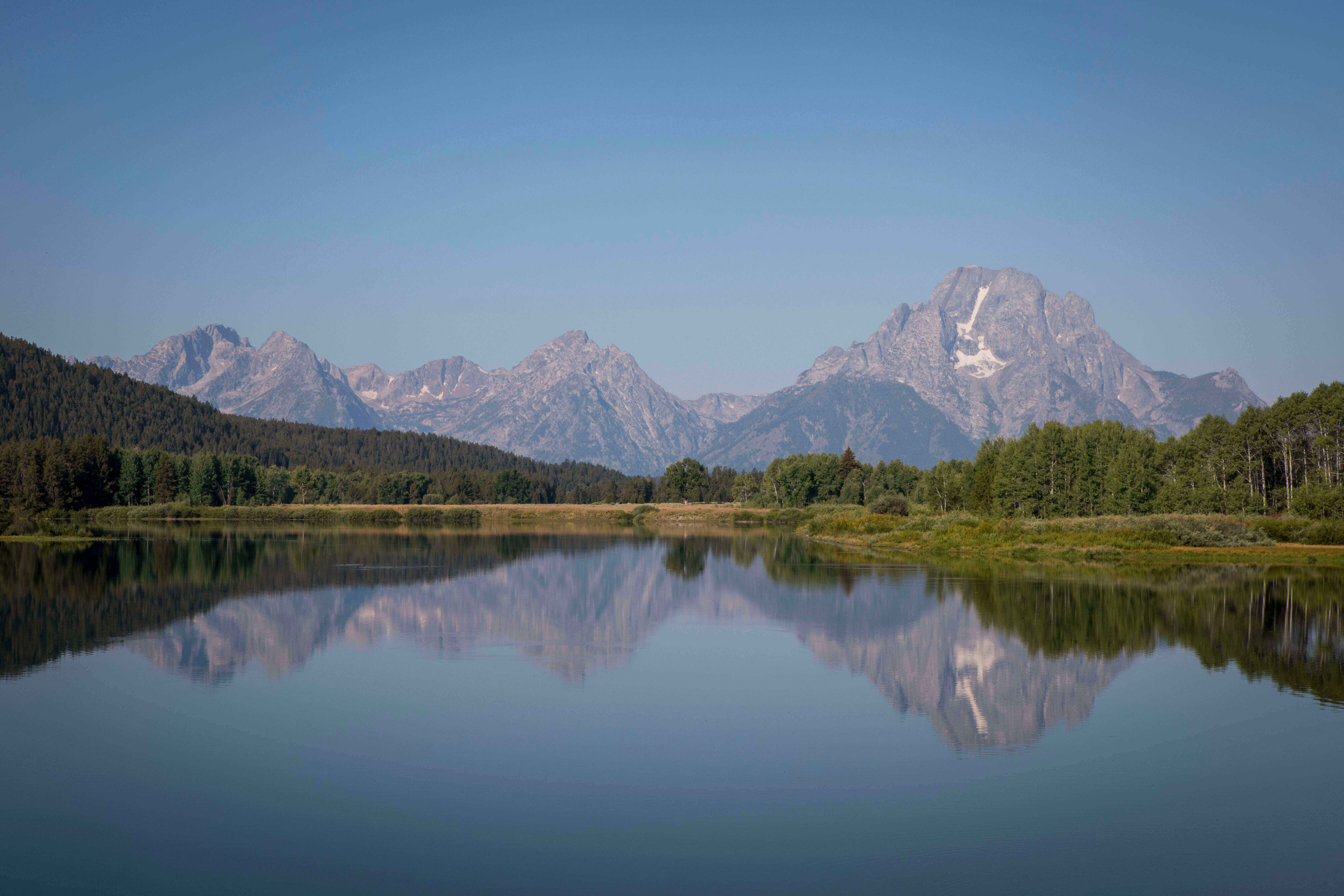
    Grand Teton is the country’s eighth-most-visited national park and is famous for its breathtaking views of the Teton Range of the Rocky Mountains. National parks are among the country’s most protected federal lands, and constructing a sports facility at Grand Teton could set a new precedent for the use of vast national park land in the Western United States.

    An MLB official, who spoke on the condition of anonymity because he was not authorized to speak publicly, said the league approached the administration after the success of MLB’s other stand-alone events, such as the recurring Field of Dreams game in Iowa. The idea of playing a game in a national park is one of several that MLB is exploring.

    The White House said in a statement that MLB asked the administration “if it was possible to host a game at a national park, similar to the Field of Dreams game.”

    “This is not a Presidential directive, nor is it being directed by the White House. It’s also not being driven by the Department of Interior,” the statement said. “Therefore, this is not a White House or Administration priority.”

    The White House said MLB has not made any decisions and the Park Service has not granted any permits. “If the MLB wants to go on site visits of national parks, that is their prerogative,” the statement said.

    It referred additional questions to MLB.

    National Park Service Deputy Director Frank Lands visited Grand Teton National Park in recent days and looked at three potential locations for a baseball park within the park’s boundaries, the two people familiar with the matter said.

    One of the sites that Lands visited is already disturbed land that is not pristine park property, these individuals said. Many parks have “bone yards” or storage areas for materials or equipment not being used.

    Lands, reached by phone Saturday evening, declined to comment.

    After publication of this piece, the White House said in a statement that Lands “has not been actively scouting sites” and was on an official trip to several national parks including Grand Teton, Yellowstone, and Grand Canyon.

    “The MLB happened to schedule their trip to Grand Teton at the same time that Frank was there,” it said. “It is incorrect to say that Frank is actively scouting sites. It is also incorrect to say that the administration is sending officials to scout sites.”

    A prized national park like Grand Teton is not an appropriate place for a baseball park, said Betsy Buffington, Northern Rockies regional director for the National Parks Conservation Association, an advocacy group.

    “It is irreplaceable. There is no other Grand Teton that is home to bears and wolves and bison, elk and pronghorn,” Buffington said in an interview. “So the idea that we would put a baseball stadium in Grand Teton National Park is just — what would the word be? — ludicrous. Crazy. Ridiculous. I mean, I just can’t fathom.”

    Luther Propst, a county commissioner for Teton County, Wyo., who met Lands this week on his visit there, said in an interview that the federal government had not sought county input and that Lands did not mention the issue.

    “Grand Teton National Park is about wild America, wildlife, opportunity for solitude, not for more amusement,” Propst said, calling the proposal for a ballpark “a radical departure from the tradition of national parks.”

    Since assuming office in January 2025, President Donald Trump has taken actions to drastically reshape the National Park Service. His efforts to shrink the government resulted in the Park Service losing a quarter of its staff, which has at times led to closures of some park facilities, fewer tours at national parks, and other disruptions. The president has sought to scrub the Park Service of signs and information related to historic racism, gender discrimination, and Indigenous persecution.

    The administration is also weighing whether to give a sliver of Yosemite National Park to a private developer to build road access to a resort in exchange for land of equal value. Park advocates say that giving up park land for goals other than conservation sets a new and dangerous precedent.

    Starting in 2016, MLB has staged single games at various locations across the country: once at Fort Bragg, in North Carolina; once in Omaha, tied to the College World Series; once at the historic Negro League ballpark, Rickwood Field, in Birmingham, Ala.; once at Bristol Motor Speedway, a NASCAR racetrack in Bristol, Tenn.; three times in Dyersville, Iowa, in the cornfield made famous by the movie Field of Dreams; and annually at Williamsport, Pa., tied to the Little League World Series.

    Most of those were played at permanent facilities, but after the Bristol game, racetrack officials disassembled the stadium and donated some of the materials.

    The Field of Dreams stadium was initially temporary, but the site was eventually expanded to make it permanent.

    The 2027 MLB schedule is set and includes a Field of Dreams game and a Little League Classic game, so no new specialty game can take place before 2028.

  • Tensions run high in Northern Ireland after contentious march blocked from historic flashpoint

    Tensions run high in Northern Ireland after contentious march blocked from historic flashpoint

    LONDON — Tensions ran high in Northern Ireland on Sunday after a contentious parade was blocked from making its way through the town of Portadown by thousands of protesters.

    The demonstrators, many wearing balaclavas, congregated on a street in the town, where many favor unification with the Republic of Ireland. They came after an early hours decision from the High Court in Belfast to give the parade the go-ahead.

    It’s the first time in nearly 30 years that the Orange Order parade has been allowed to go down the Garvaghy Road, which had been a notorious flashpoint between the communities in the years before the Good Friday Agreement of 1998 largely ended the bloodshed in Northern Ireland. During the so-called Troubles, some 3,600 people were killed while some 50,000 were wounded.

    Ending the Troubles meant balancing competing identities in Northern Ireland, which remained in the United Kingdom when the rest of Ireland won independence a century ago. Irish nationalists in the north — most of them Catholic — seek union with the Republic of Ireland, while largely Protestant unionists want to stay part of the U.K.

    Both sides appeared to be adhering to calls from across the political spectrum, including from British Prime Minister Andy Burnham, to avoid stoking tensions further.

    “I am hoping we will bring all of today’s events to a sensible and peaceful conclusion,” said Jon Boutcher, the head of the Police Service of Northern Ireland.

    Boutcher said there had been many “sensible voices” calling for calm which he thought had been “listened to by all parties.”

    Northern Ireland First Minister Michelle O’Neill, who represents Sinn Fein, the party historically linked to the Irish Republican Army, faced criticism for attending the unlicensed protest on the Garvaghy Road to support the local community.

    “She’s the head of an executive and she is prepared to willfully disregard the ruling of our courts, the determination by the statutory body charged with determining parades in Northern Ireland,” said Gavin Robinson, who is the leader of the Democratic Unionist Party, the largest pro-U.K. party in Northern Ireland.

    O’Neill, whose government is made up of a cross-section of Northern Ireland parties as part of the power-sharing agreement within the Good Friday Agreement, defended her actions, saying “the progress of the last 28 years have been brought into question by the actions of the Orange Order and those within political unionism that want to drag us backwards.”

    For days, there had been uncertainty about whether the parade, which celebrates Northern Ireland’s Protestant heritage and links with the U.K., would happen. It was given the final go-ahead at a court hearing concluded at 2:15 a.m. Sunday, a move that prompted the protesters to take to the street.

    The Orange Order is named after William of Orange, a Protestant prince of Holland who defeated the Catholic King James to take over the British throne in the 17th century.