When Erin Pysher dropped her son off Saturday at Frankie & Johnnie’s, the Pottstown bar where one of his friends was celebrating his 21st birthday, she told him she loved him and to be safe.
It was Glenwood Pysher IV’s last weekend of summer fun. Come Monday, he would be at St. Elizabeth University in North Jersey for his senior year and one final season as a college baseball catcher.
Pysher, affectionately called “Bubba” by those who knew the 22-year-old Lower Pottsgrove native best, had his sights set on becoming a history teacher and baseball coach after graduation.
After the bar, Pysher and his friends headed to an after-party at the birthday boy’s home, according to his mother. Later, as Pysher walked to another friend’s house to spend the night, he missed a turn and got separated from the group.
He ended up at the wrong house on Snyder Road, pounding on a door and yelling to be let into what he did not realize was a stranger’s home.
An Upper Pottsgrove police officer, responding to a 911 call for a reported break-in, shot him twice, killing him almost instantly.
The shooting is under investigation by the Montgomery County District Attorney’s Office. A spokesperson for District Attorney Kevin Steele declined to provide any additional details or to identify the officer, citing the investigation.
“It was a senseless loss, and it shouldn’t have happened,” Erin Pysher said, her voice cracking with emotion. “I don’t know what the officer was thinking or doing that his first response was to shoot an unarmed kid.
“This was all a huge mistake, and they killed him.”
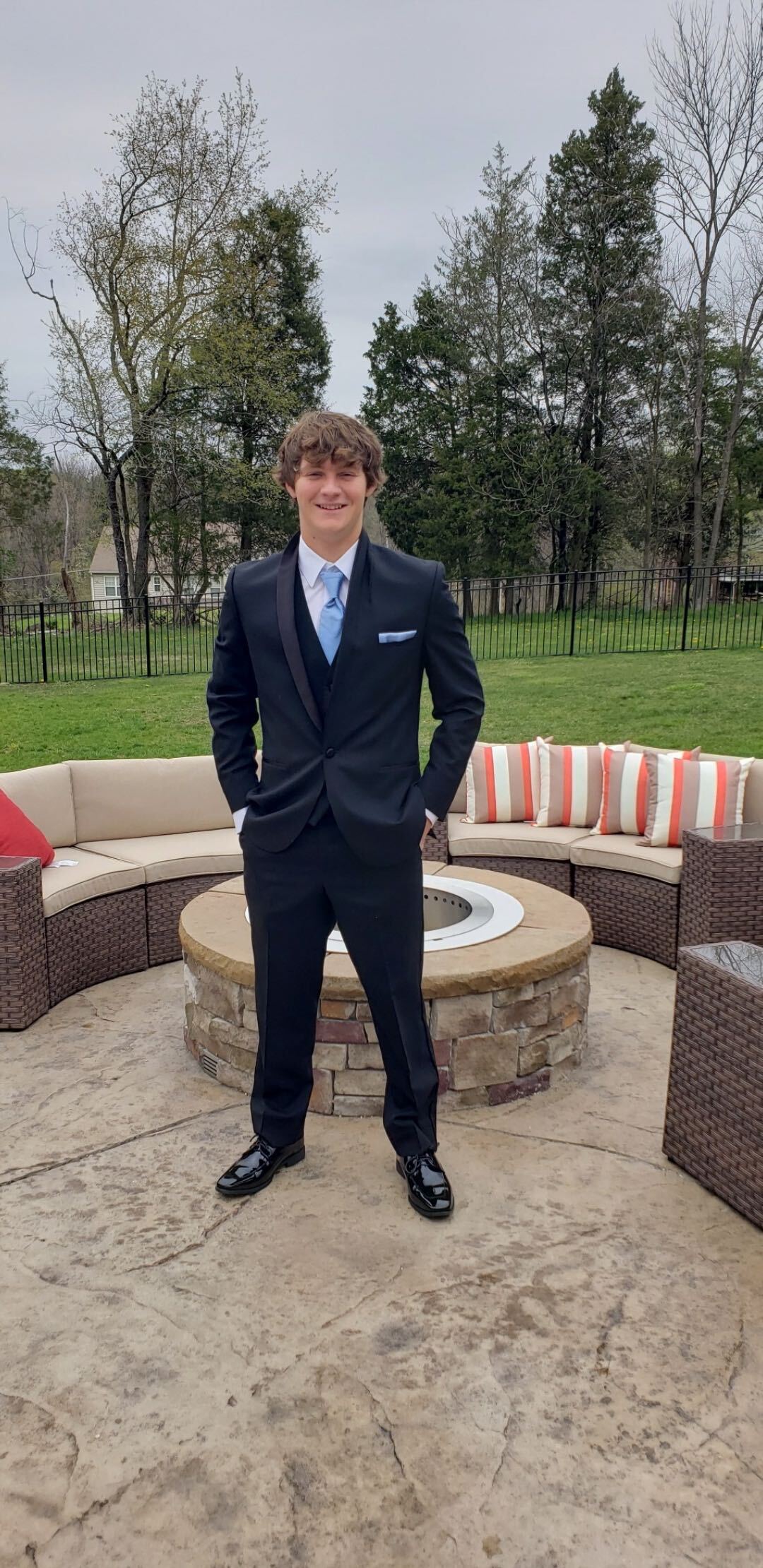
Glenwood Pysher IV was the oldest of four, his mother said. She described him as a lovable, goofy son who spent his summers in between college working.Courtesy Erin Pysher
She said she reviewed her son’s cell phone logs and saw that he had called his friends to pick him up at 12:32 a.m. Sunday after realizing his error. By 12:35, the police-radio call had come out that the officer had shot someone.
Pysher’s friends later told his parents that as they drove to get him, the officer sped past them, lights and sirens activated.
“There was no attempt to stop him another way,” his mother said. “He never got into a fight in his life, never harmed a soul. I don’t believe he had any ill intention toward the officer.”
Pysher was the oldest of four, a lovable, goofy son who, she said, spent most of his summers working at the Walmart store in Pottstown or helping a friend at his seasonal landscaping business.
She laughed while retelling one of her final days spent with him: He had a habit of texting her every day, even while away at college, asking, “What’s for dinner?”
Last week, he joined her for a grocery run for ingredients for that night’s meal. When they got home, Erin Pysher still got that usual text from her son, even as he sat a few feet away from her.
“As a mom, I couldn’t ask for a better kid,” she said.
“All these news reports keep saying, ‘A man was killed,’” she added. “But he wasn’t a man, not to me. He’ll always be my baby.”
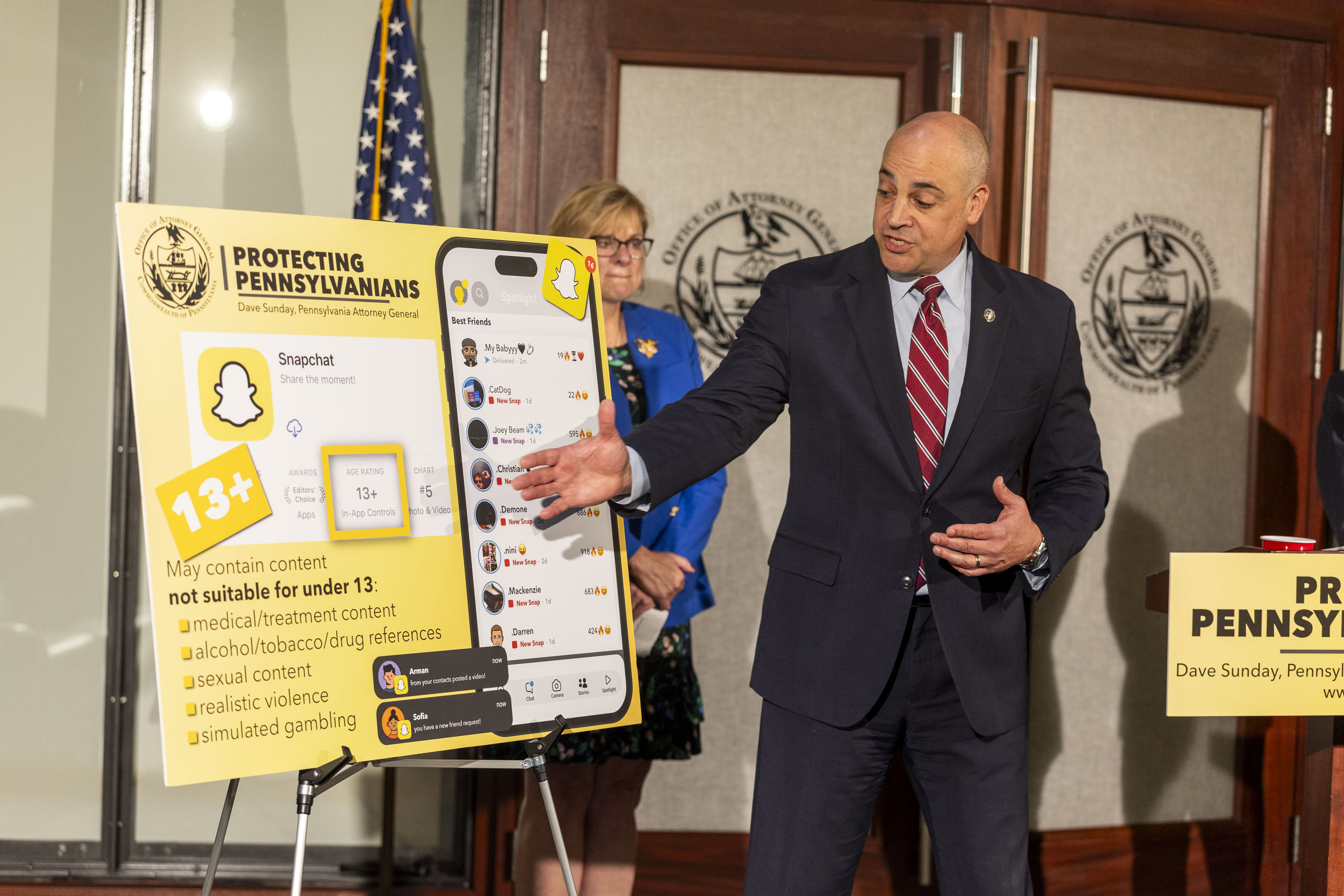
“Both of these actions reflect my priority as attorney general to protect our young people from tech giants who are choosing growth at all costs over the mental wellness of its users,” Sunday saidTuesday at a news conferencein Philadelphia.
The suit alleges that Snap Inc., owner-operator of Snapchat, does not properly warn users of the addictiveness of its features and does not protect children properly from compulsive use.
“The allegations against Snap fundamentally misrepresent our platform and our approach to teen safety,” a Snap spokesperson said in a statement. “We share the Attorney General’s commitment to protecting young people online and are disappointed they have chosen litigation rather than working with us toward that shared goal.”
The complaint, which Sunday’s office filed this week in Common Pleas Court in Philadelphia, asks the company to take steps to protect children from becoming addicted. It cites the SnapStreak feature and the ephemeral nature of the content as examples of ways the app hooks teens specifically.
“To a 13-, 14-, 15-year-old, social acceptance is everything,” Sunday said. “The streak feature puts a tangible value on friendships and influences a child’s feelings of self-worth.”
The app sends an implicit message that the more a child is on the app, the more friends they will have and the more socially accepted they will be, Sunday said.
“That exploits the fear-of-missing-out culture to the absolute extreme,” he said.
It also alleges that Snapchat improperly promotes how frequently adult-themed material — including sexual content and nudity, suicidal ideation, and drug use — appears on the platform to achieve an age-13-plus app rating in app stores.
Through this litigation, Sunday said, he hopes to see Snapchat required to provide a more honest depiction of its content to app stores so it can be marked with a more mature rating, and to change its algorithm to be less addictive.
Montgomery County similarly sued some of the nation’s largest social media companies, including Snapchat’s and TikTok’s parent companies, in a federal court in Northern California earlier this month.
A Supreme Court decision on mail voting has created uncertainty with 70 days until critical midterm elections, but Pennsylvania Democrats are trying to reassurevoters that they will have the option to cast a ballot by mail.
More litigation over this highly watched issue is expected and further rulings could still come even after November, affecting the next presidential election.
“We will continue to fight at every stage — including in the Supreme Court the moment they attempt to implement this — to make sure every eligible Pennsylvanian can cast their ballot by mail, free from federal interference,” said Montgomery County Commissioner Neil Makhija, a Democrat and an attorney who sits on the county’s election board.
The procedural update, issued Monday, does not rule on the underlying legality of President Donald Trump’s March executive orderthat directed the U.S. Postal Service to help decide which voters should receive mail ballots but rather whether lower courts had the authority, at this stage, to block it.
Pennsylvania was among the states suing to block the order.
“Absolutely nothing has changed here in Pennsylvania. You can vote in person on Election Day or you can vote by mail before Nov. 3,” Democratic Gov. Josh Shapiro said Tuesday evening during a visit to the Eagles’ training camp.
“Your vote will be counted. Your vote is safe and secure,” Shapiro said. “No matter how many times the president wants to try and undermine people’s right to vote in this commonwealth, he needs to know that he will be met with a swift rebuke from me.”
Shapiro noted that the election is administered by the state and its counties under the Constitution.
Revival of the debate about the availability and security of mail voting, and the temporary clearance, however, may instill doubt among voters that their ballot will be received and tabulated, Makhija said.
“With just weeks until ballots go out, last-minute federal interference sows chaos for the voters we serve,” he said.
Trump’s efforts to restrict mail voting, part of his long-standing grievance against the system despite repeatedly utilizing the method himself, are still working through the courts, and several experts doubt the proceedings will move fast enough to affect the November elections, whenfour swing districts in Pennsylvania could help determine control of the U.S. House.
“Whatever may ultimately happen in this litigation, I’m pretty skeptical that anything is going to change for this November’s election,” saidBen Geffen, staff attorney at the Public Interest Law Center in Philadelphia, a nonprofit group that monitors election issues.
States across the country will soon begin preparing applications and mailing ballots to voters.
Pennsylvania voters, who can cast a ballot by mail for any reason, must complete an application by Oct. 27, and all ballots must be returned by Nov. 3 at 8 p.m., according to the Pennsylvania Department of State’s website.
“Turning that battleship around in a matter of days is extremely unlikely,” Geffen said.
A spokesperson for the Pennsylvania Department of State said the ruling does not change state law, and voters should be confident that counties will continue to ensure eligible voters can cast their ballot by mail.
“The USPS action is not lawful, and we will continue to challenge that rule to ensure that Pennsylvania voters can have their voice heard — whether they vote in person, on demand, or by mail,” Geoff Morrow, the department spokesperson, said.
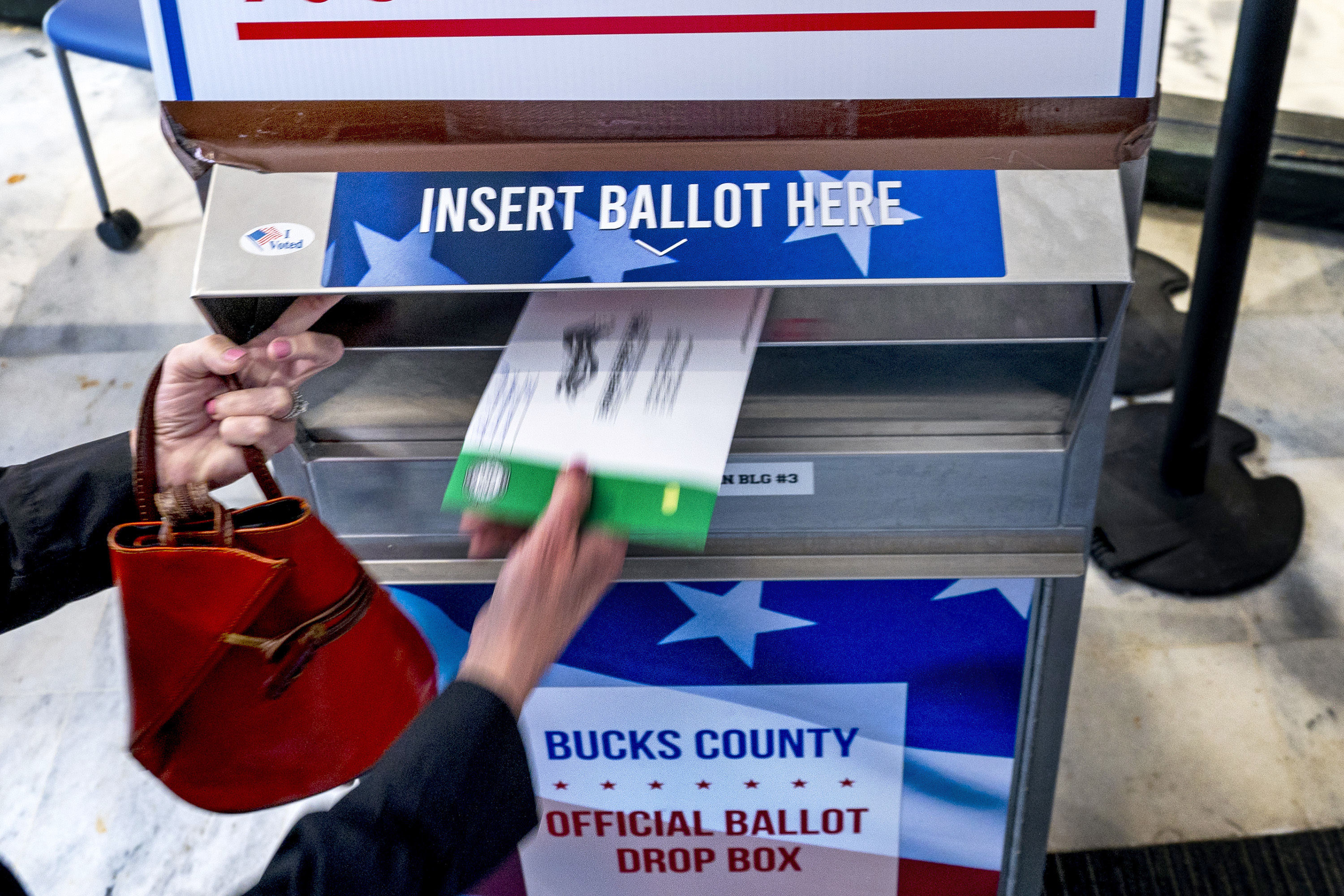
Geffen’s advice for those concerned is to start early. Get your mail ballot application in right away, and as soon as you receive your ballot, fill it out and return it. For now, you can still send your ballot through the U.S. mail. But you can also drop it off at your county election board, and many counties offer satellite locations and drop boxes.
If you prefer to vote in person on Election Day, go in the morning, he said.
“You have options for how to vote, and you will get to vote. Nobody’s taking away the election, and just jump on it early,” he said.
After Trump, through his directive, ordered the Postal Service to withhold mail ballots to individuals who are not on an approved list, which he instructed states to develop in order to prevent noncitizens from voting, Shapiro promised to protect Pennsylvanians’ right to vote by mail. In April, he used his power as governor to join other Democratic states in a lawsuit that argued the order violated states’ constitutional power to carry out elections.
The unions representing postal employees also criticized Trump’s push to restrict mail voting as November approaches.
“Any insinuation that voting by mail is not safe and secure is severely misguided. Letter carriers have securely delivered ballots for decades, and there is no evidence that the existing system requires substantial changes,” NALC president Brian L. Renfroe said in the statement.
Gwen Ivey, president of the American Postal Workers Union, Local 89, which represents between 1,300 and 1,400 U.S. clerks in Philadelphia who process mail, maintenance employees, and drivers who transport mail, also warned against inserting the Postal Service into decisions over voting.
“The Postal Service is a public institution that serves the American people,” Ivey said Tuesday. “It should not be placed in a position of determining who is entitled to participate in elections or becoming an instrument for restricting access to the ballot boxes.”
Trump has long railed against mail voting, referring to the ballots as “crooked” in his State of the Union address and suggesting they amount to cheating. But his 2024 victory in Pennsylvania was thanks, in part, to a higher rate of mail voting by Republicans.
The practice is particularly useful for seniors and voters in rural areas — often with strong Republican bases — where voters may live far from their nearest polling location.
“If you want to win, mail it in, that’s our message to our Republican voters,” then-Pennsylvania GOP chairman Lawrence Tabas said two years ago. The Pennsylvania GOP did not respond to a request for comment for this article.
Pennsylvania Republicans have been more supportive of Trump’s SAVE America Act, an election reform proposal stalling in Congress that he insists will make voting more secure, though most election experts say new guidelines in the legislation would make it harder to vote.
Jenkintown Borough is seeking a design and engineering consultant to help decide whether to expand or reorganize its historic library.
Library use is booming, according to Jenkintown’s request for consultant proposals: Almost a third of the borough’s residents are active patrons, owing in part to new apartments within walking distance, borough officials wrote. Visits from Philadelphia residents are also up 28% from last year.
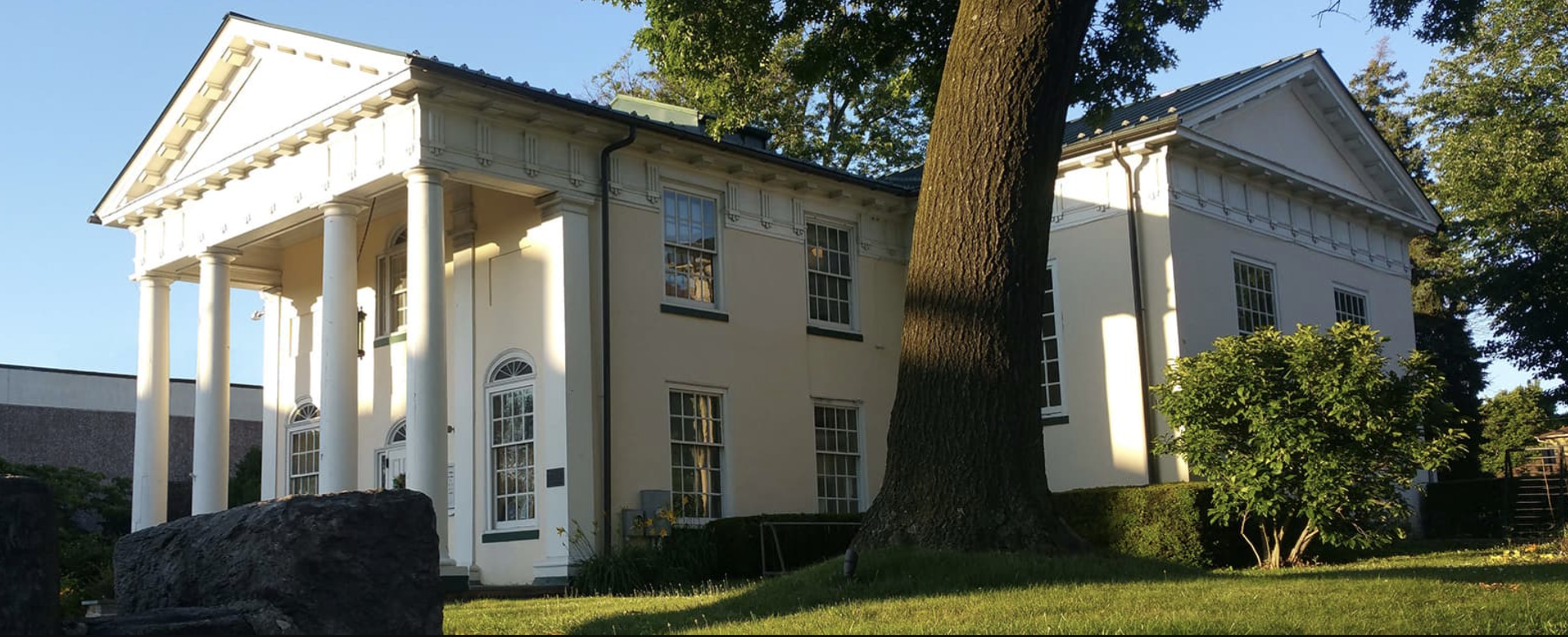
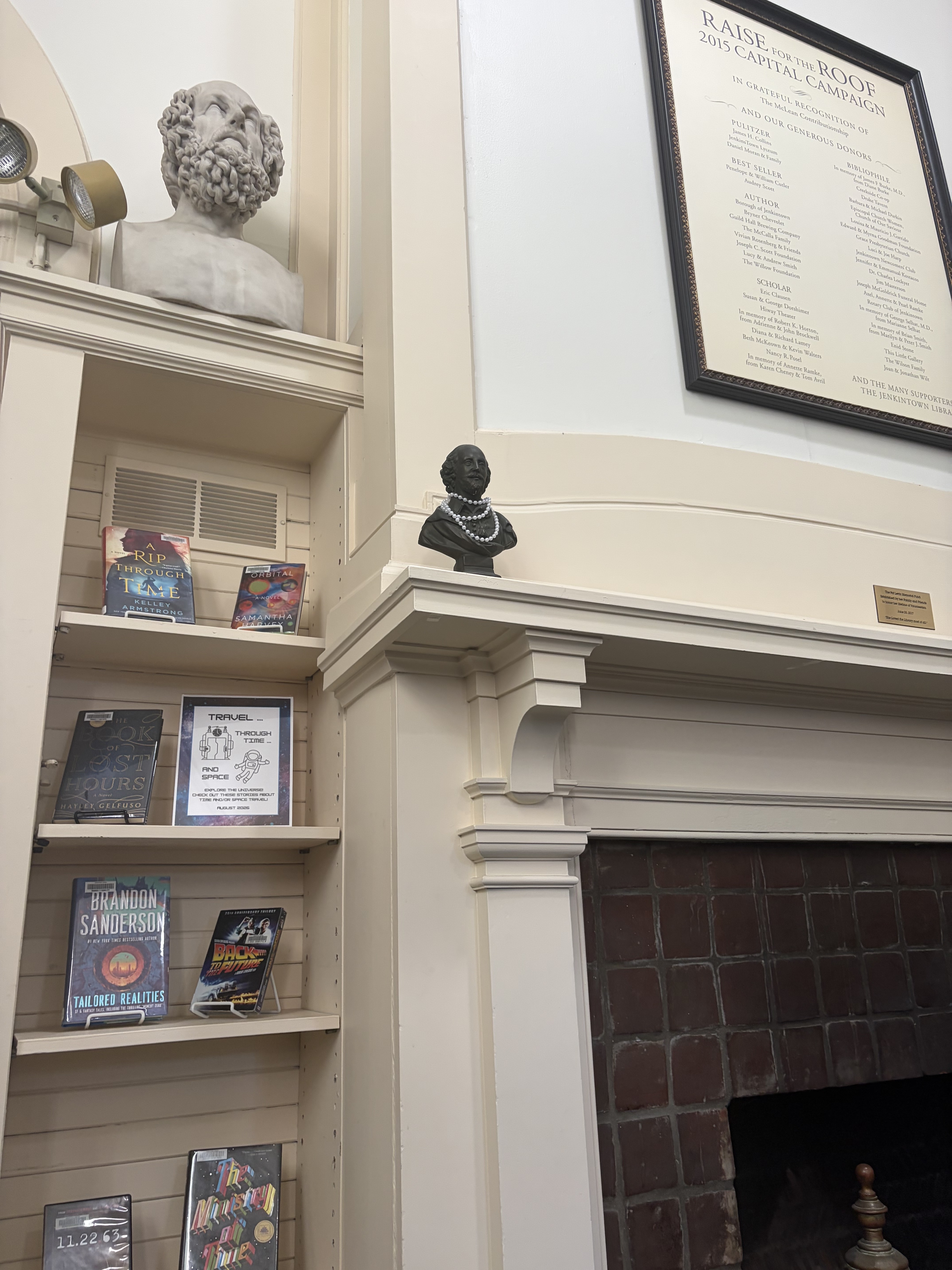
Busts by the fireplace at Jenkintown Library, a pre-Civil War building listed on the National Register of Historic Places.Jess Rohan
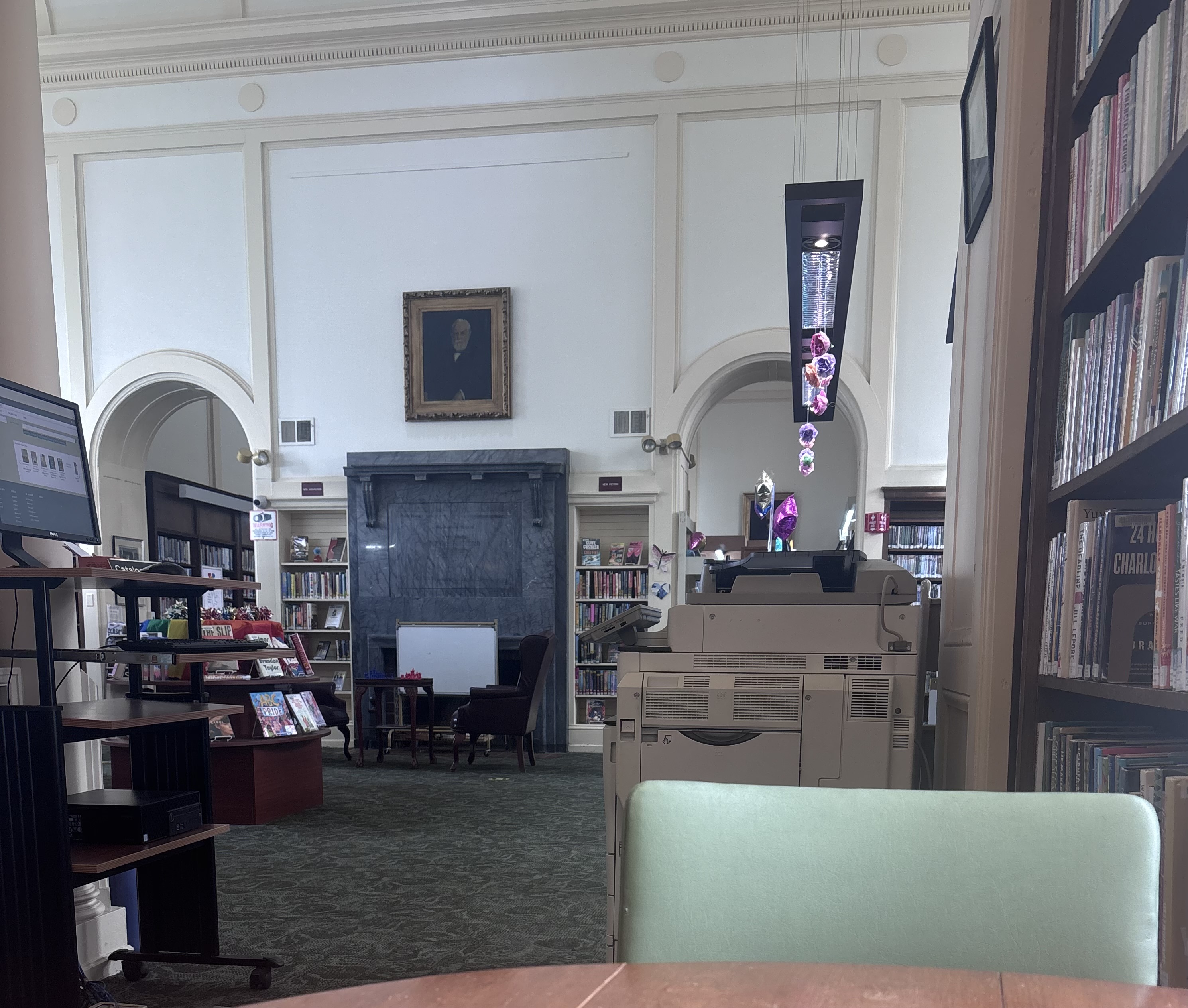
But the 187-year-old building, which is on the National Register of Historic Places, is not suited to the needs of modern library users. The building, which includes additions from 1909 and the 1970s, has just six computer stations and no quiet study areas. Originally designed as a lecture hall, the library also lacks energy efficiency and accessibility.
“These spaces were designed for a very different era,” borough officials wrote.
Jenkintown won a state grant for $81,900 to fund the master plan process, which the borough will match with its own money under the grant requirements.
Jenkintown Borough plans to either reorganize or expand its historic library, which has only six computer stations and no quiet study room.Jess Rohan
The consultant will assess all of the library’s facilities, including fire code compliance, the electrical system, and architectural elements, and identify short- and long-term facilities needs.
The community would then be presented with the consultant’s recommendations for two options: either expanding the library or reconfiguring the existing space. The consultant would use the community feedback to create the final master plan.
This suburban content is produced with support from the Leslie Miller and Richard Worley Foundation and The Lenfest Institute for Journalism. Editorial content is created independently of the project donors. Gifts to support The Inquirer’s high-impact journalism can be made at inquirer.com/donate. A list of Lenfest Institute donors can be found at lenfestinstitute.org/supporters.
The people who built 3.0 University Place, an eight-story lab and office complex that covers a landscaped block of West Philly, had a problem: During the biotech slump after their 2023 opening, security costsescalated faster than occupancy.
“We had 80 Siemens cameras in there,” remotely monitored from a suburban surveillance office, and were “paying more than $150,000 a year for guard shifts,“ said Anthony Maher, the University Place Associates president.
But the building’s New York owners were still getting midnight calls for nonevents. Meanwhile the human video watchers missed incidents of concern — the stranger who had taken to sleeping on a tenant’s canopy at night, the fired contractor who sneaked back into the building one weekend.
Investors pressed them for a better way.
Maher and his partner, Scott Mazo, went hunting for an artificial-intelligence solution — an AI-era automated security system to collect and analyze camera, physical, and human-observed surveillance data; rank threats; sort out false alarms; open or shut locks; and quickly notify law enforcement, emergency services, management and owners’ groups as needed.
They rang an entrepreneur they’d met five years earlier at a Drexel University pitch meeting: Matias Klein, founder of Manayunk-based Kognition AI.
Kognition specializes in what Klein calls “cyber-physical threat detection systems,” which link and analyze digital security video, activate remote locks and sensors, load key data into formulas matching clients’ priorities and requests, sort and sharecommunications to alert the right people and agencies, and update responses based on results.
“You hang the cameras; we network the building systems,” as Klein puts it.
100 North American buildings
At 3.0 University Place, “Matias’ system gave us full access to the best 25 cameras, every floor, all times,” said Maher. The system caught incidents, routed them to the right people, and suggested simpler warning paths.
“They keep teaching us to manage the building, telling us, for example, about our people coming in when they didn’t really need to,” he said.
It worked so well “we told the owners to take the security-guard line-item out of the budget,” though they still use guards on occasion. It helps that the building’s big new tenant is the city police forensics unit: “We have a lot of cops coming here,” Mazo added, laughing.
More than 100 North American properties use Kognition AI, from Scotia Plaza, one of the largest office buildings in Toronto; to Pa.-based Benco Dental locations in several states.
A growing sector
Kognition, founded by Klein in 2017, was one of a handful of Philadelphia-area AI start-ups that presented to local investors at a June gathering. Investors included Osage Capital, MissionOG, and Susquehanna International Group’s SIG Growth Equity Fund.
“The AI landscape is changing so fast, it’s hard to tell what will be supplanted in a few months,” said Ellen Weber, who runs Robin Hood Ventures, and attended the meeting.
Robin Hood is a Philadelphia investors’ group whose members include start-up veterans. Members’ portfolio of local AI-dependent start-ups include Center City-based Deepwave, which makes laser weapons guidance systems for Air National Guard jets and other military projects; University City-based GreenIRR, which uses AI to speed carbon-emissions detection for truckers; and Proscia, which digitizes biotech images for fast diagnosis and pharmaceutical drug trials.
Thomas P. Dwyer, a partner at the law firm Troutman Pepper Locke who organized the June meeting, said Philadelphia trails other AI hotbeds.
“Philly has a lot of potential and opportunity here, especially if some of its larger companies get involved, as they do in Silicon Valley,” he said.
AI, he noted, is still seen as a threat by many local companies. They worry, “Can someone armed with Claude overtake your business, duplicate your software, and compete with you immediately — without having to hire people?”
And veteran investors are “gun shy” about AI profitability, he said.
Which, he added, leaves opportunity to those investors who make the “leap of faith” to promising AI start-ups
Operating on ‘the edge’
“An AI product makes itself better” the more it is used, said Kognition AI founder Klein.
Some of the best-known (and most-feared) AI image-and-data applications are based on giant AI companies’ mass sorting of millions of individuals’ information into ever-improving, readily searchable central databases at big new data centers — raising familiar privacy worries, as seen in the recent controversy over the alleged misuse of Flock digital camera data that police have used in attempting to quickly identify drivers.
By contrast, Kognition is one of the firms that operates at the “edge” of big networks, Klein said in an interview at his firm’s Manayunk meeting space. “We don’t send customers’ data throughout our network, and we don’t preload that information,” he said. “We don’t flow data back to a central monitoring station.”
Rather, the goal is “to give people control over the spaces where they live or work or worship, so they can get into a defensive posture fast, if they ever need to.” Custom, localized, focused solutions are “a big area of value creation” for AI start-ups, according to Klein.
Customized experiences
Kognition AI’s custom sharing limits and options are part of its appeal to Ravi Kalidindi. He was tasked by leaders of Bharatiya Temple, a Jain and Hindu religious congregation inMontgomery County, with setting up a system “that gave us control of our doors” without intimidating visitors or compromising members’ private information.
Kalidindi turned to Kognition as a locally based provider.
The system at Bharatiya starts with security cameras at the main entrance and stairways, integrated into a software and communications platform. “They check if our doors are closed. They tell us where there is human traffic. We can let the cleaning crew in without a key. It has mobile device control. It can even work on fobs,” Kalidindi said.
Kognition also has capabilities the temple has not used: “It has a weapons-detection system we have not enabled. It has additional sensors that can ID what people are carrying. It can tell us if we are seeing an above-average or above-expected crowd, make a note of the faces of people who are entering for the first time, and trigger an alert.”
There is a sense of user control of the AI systems that Kalidindi finds reassuring: ”We want to enhance the sense of security, that our facilities are being monitored, but also that everyone with good intent is allowed to enjoy the premises.”
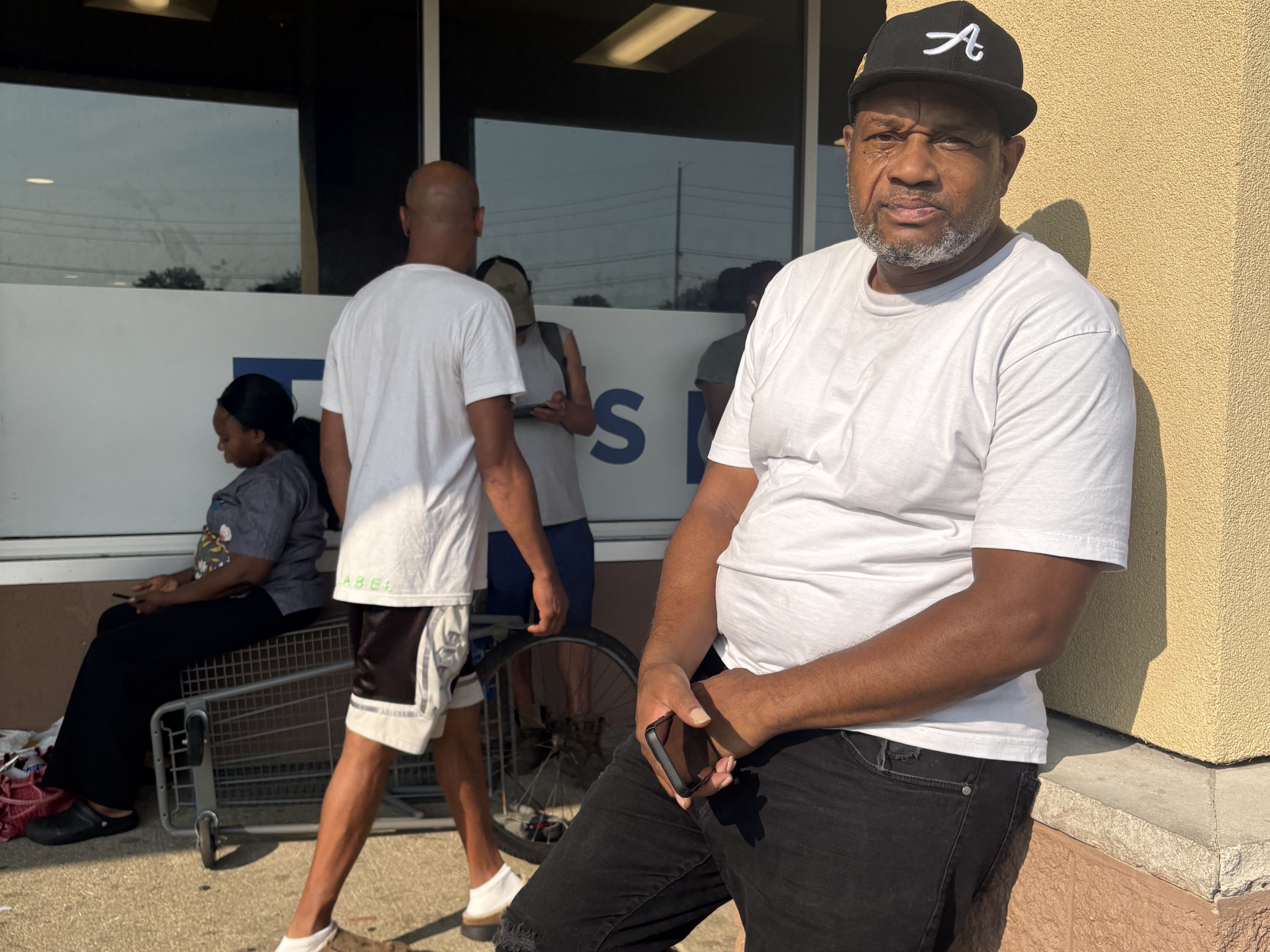
Maleka Evans waited outside Octapharma Plasma in South Jersey at 8:30 on a recent sweltering morning, sweat beading on her face. A dozen other prospective donors had arrived before her, and the line was still growing a half hour before doors opened.
One woman sat on an overturned shopping cart pilfered from the nearby Walmart. Another brought her own folding chair. A man held a bicycle tire, removed to protect his bike from being stolen once he was inside and hooked up to a machine that extracts antibody-rich blood plasma needed for medical treatments.
Every Monday and Friday for the last three years, Evans has trekked to the Audubon strip mall for what she considers her second job. She takes a 45-minute bus ride from her Willingboro home to Camden, then walks another 45 minutes to the donation site with a slogan posted in its window: “When it pays to give hope. That’s plasmagic.”
The 37-year-old single mom has noticed the lines growing in the last year, as others are seeing at donation sites elsewhere in the Philadelphia region and across the nation. The for-profit business is booming as more and more Americans, both poor and middle class, struggle to straddle the gap between stagnant wages and increased living costs.
Evans relies on the $50 that she typically earns for each plasma donation — loaded onto a prepaid debit card — to help with bills that she cannot cover with her $18-per-hour job packing boxes at a warehouse.
“Prices for everything — food, rent, transportation, electricity — are just getting higher and higher,” Evans said. “You have to work two jobs to make ends meet, and you’re still living paycheck to paycheck.”
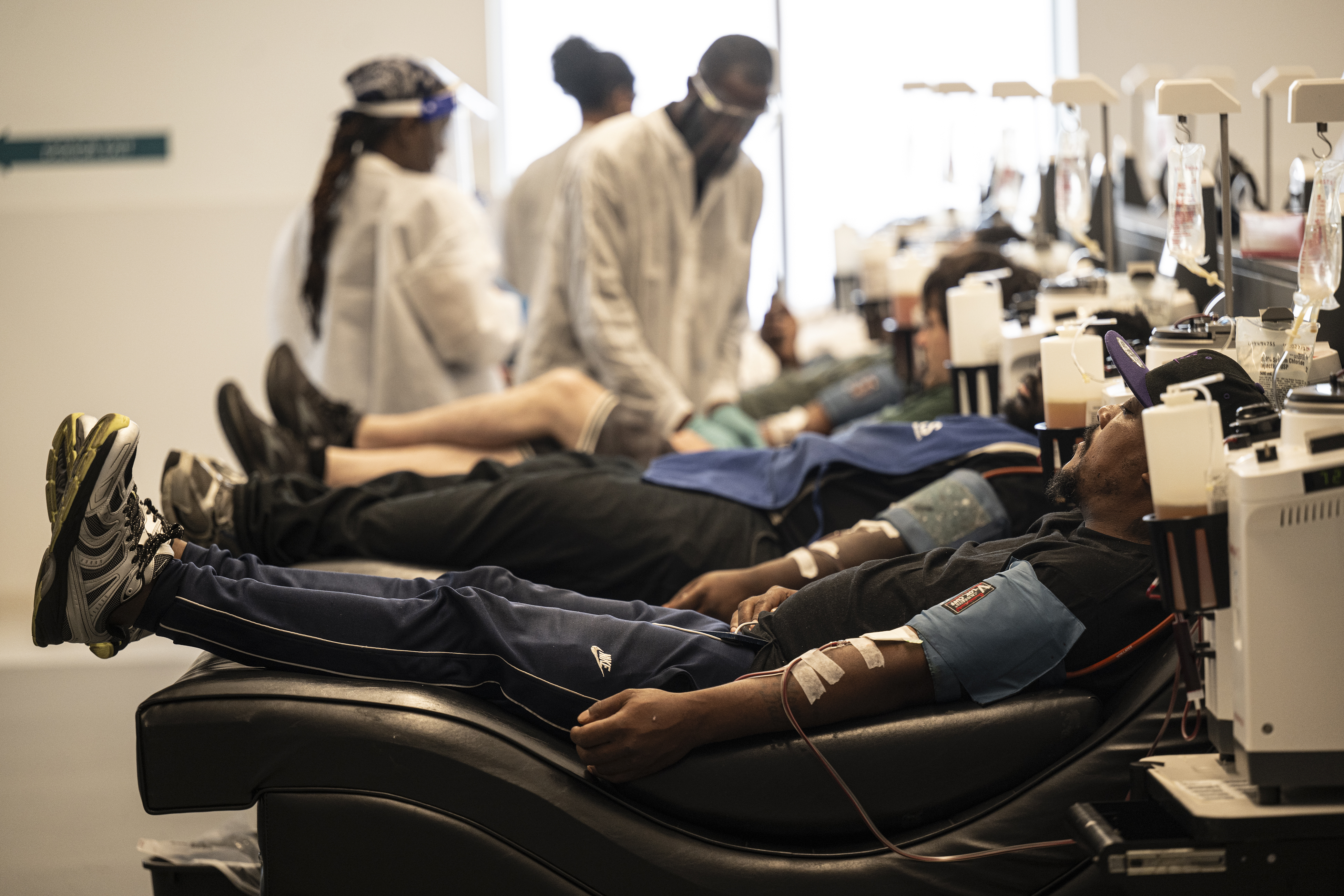
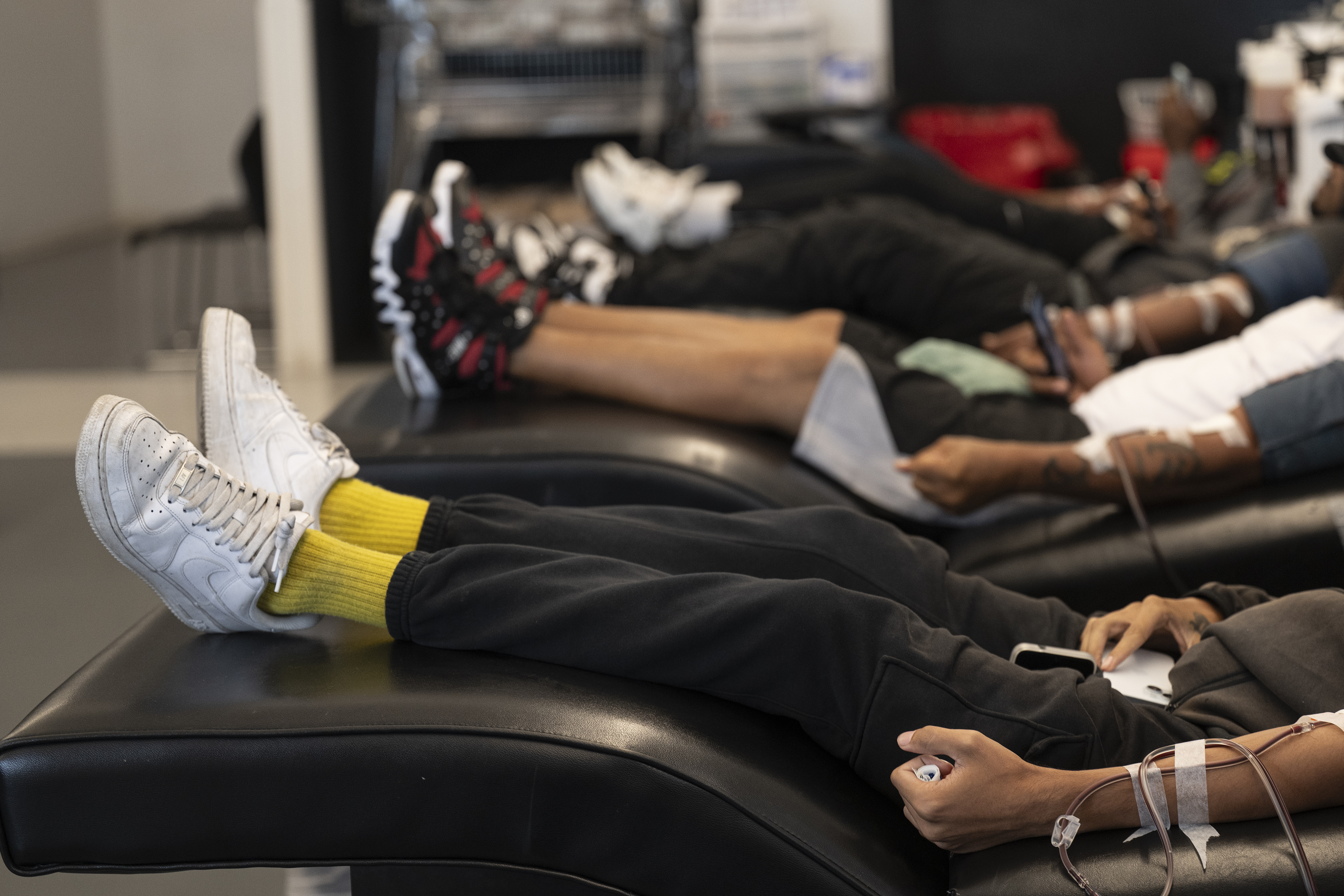
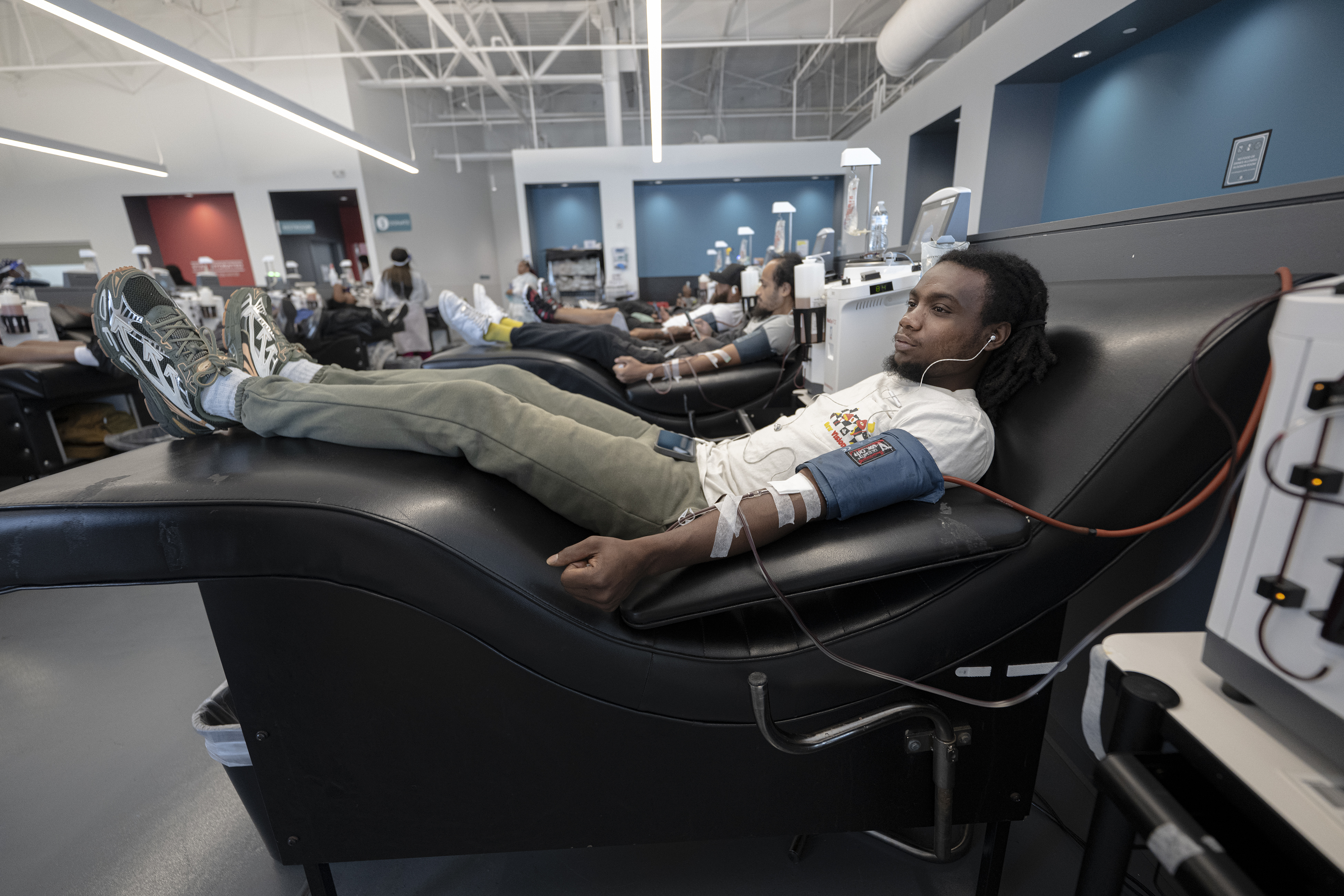
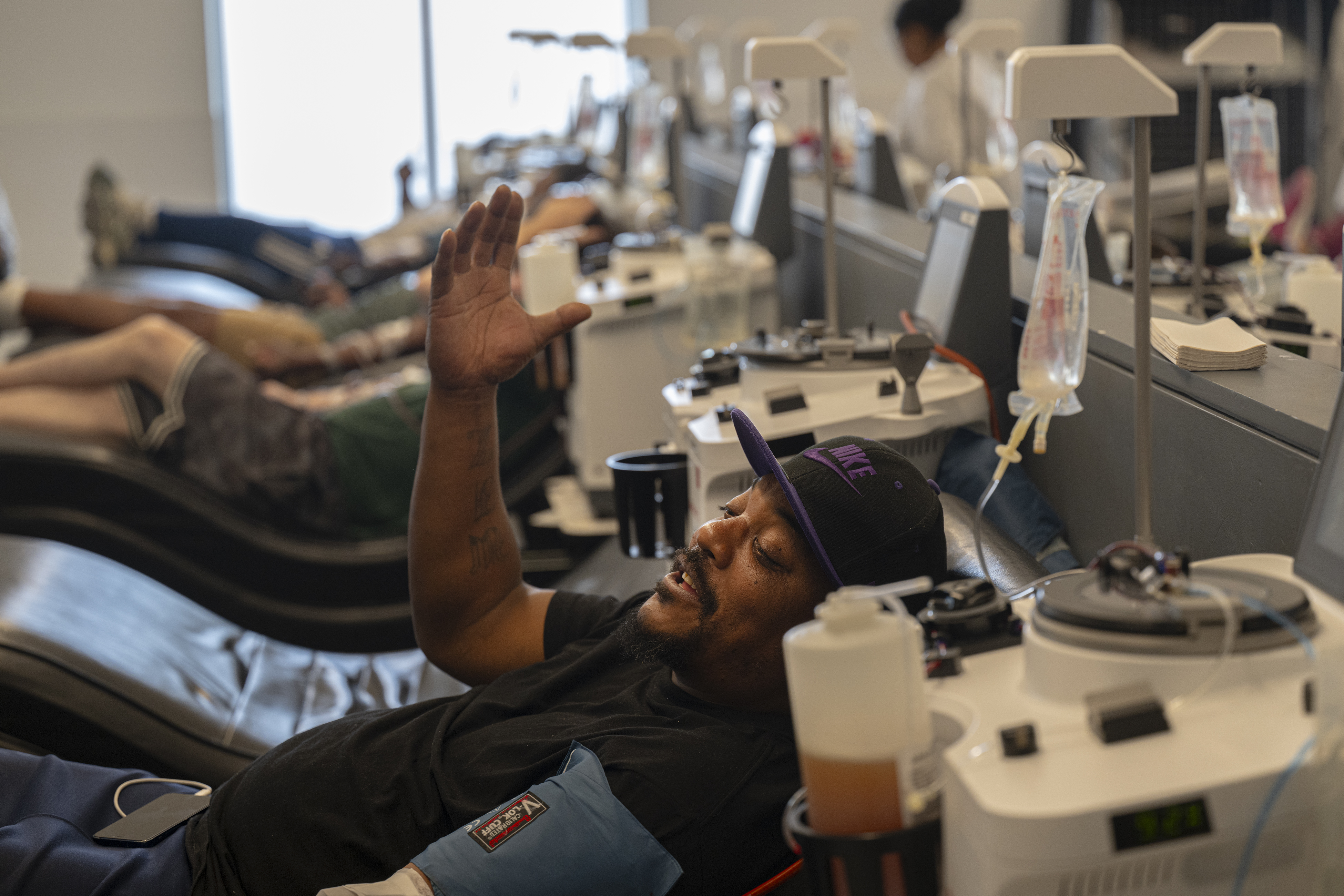
An increasing number of people in the Philadelphia region are selling their blood plasma for money. Here, local donors sit in recliners with needles in their arms at B Positive Plasma in Montgomery County.Jose F. Moreno / Staff Photographer
The U.S is one of about a dozen countries where it is legal to pay donors for plasma. It is among only three countries where people are allowed to donate two times over seven days, though not on back-to-back days, per U.S. Food and Drug Administration regulations.
Nearly 70% of the world’s plasma comes from donors in America, fueling a multibillion-dollar global industry. Plasma, a straw-colored liquid in blood, contains antibodies and other proteins used for treating a wide range of patients with immunodeficiencies, neurological conditions, kidney disease, and bleeding disorders.
Last year, U.S. donors produced 62.5 million liters of plasma — the highest volume ever collected and an 8% increase from the previous year. That trajectory has continued into this year, according to Georgetown University professor Peter Jaworski.
“When the price of most staples goes up, so does the amount of plasma donations,” Jaworski said. “If I fell on hard times, the very first thing I would do is become a regular plasma donor.”
Donating plasma is widely considered low-risk, with millions of people doing it each year without reported health problems. However, the long-term health effects of donating twice weekly for years have not been well-studied. Safety concerns raised by the deaths of two people in Canada who had recently donated at for-profit clinics run by the healthcare company Grifols haveprompted an investigation there.
In the U.S., an FDA investigation into 34 deaths of people who had donated plasma between 2016 and 2020 did not find a link between donations and fatalities.
Some donors experience lightheadedness, fatigue, bruising, bleeding, or dehydration. Drinking water and eating foods high in iron and protein can help alleviate those side effects, according to U.S. health guidance.
Security guard Danny Morales of North Philadelphia said he feels “tired” after donating. But that has not deterred him from heading to CSL Plasma in the city’s Olney neighborhood twice a week, as soon as he finishes his overnight shift at 6 a.m.
Morales can earn $520 a month donating plasma, which helps to offset rising expenses that have the 35-year-old father feeling ever more drained: The cost to fill up his Honda Civic’s gas tank jumped from $30 to $80 in the last year; a package of ground beef increased by $8; and even the brand of mac and cheese that his 8-year-old daughter and 2-year-old son enjoy costs about $1 more, he said.
“It’s just getting worse and worse,” said Morales, whose plasma donations supplement his $18 hourly security job wage. “Stuff is just getting so expensive. Groceries are ridiculous.”
CSL opens at 6 a.m., but a line starts to form around 4:30 a.m. In late July, it snaked past the building, wrapping around the corner. The sight caught the attention of nearby Olney resident Tony Reed.
“There’s always a line there, especially toward the end of the month and definitely on Monday mornings,” Reed said. “People are broke.”
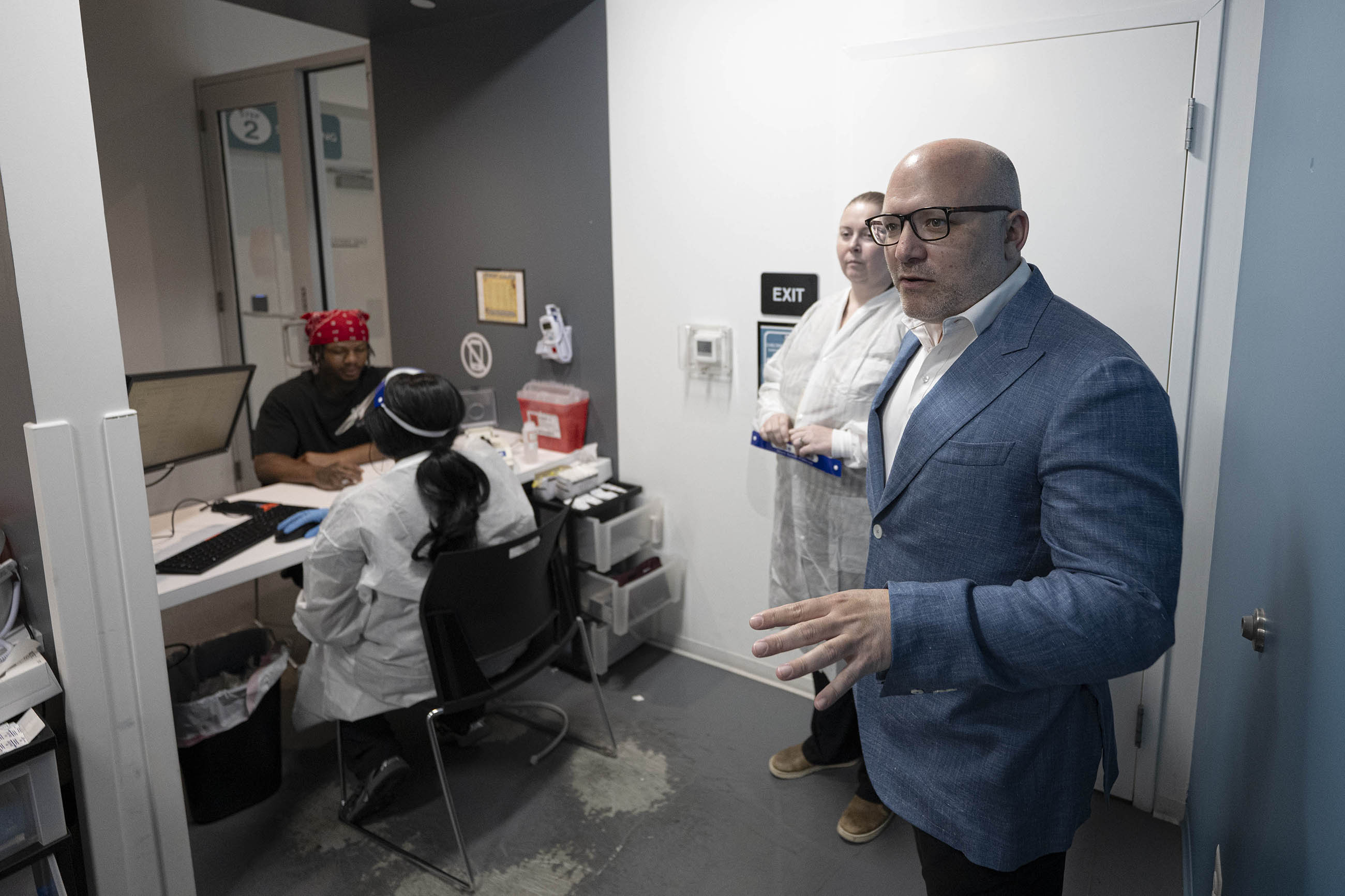
Ben Ruder, CEO and founder of B Positive Plasma, and Pearl Dixon, an assistant manager and phlebotomist, explain the donor intake process. Each donor fills out an extensive health questionnaire, undergoes a medical exam, and gets a finger prick to test their blood for iron and protein levels. Jose F. Moreno / Staff Photographer
Inside the booming industry
On a recent Wednesday afternoon at B Positive Plasma in Montgomery County, a steady stream of donors checked in at kiosks in the lobby.
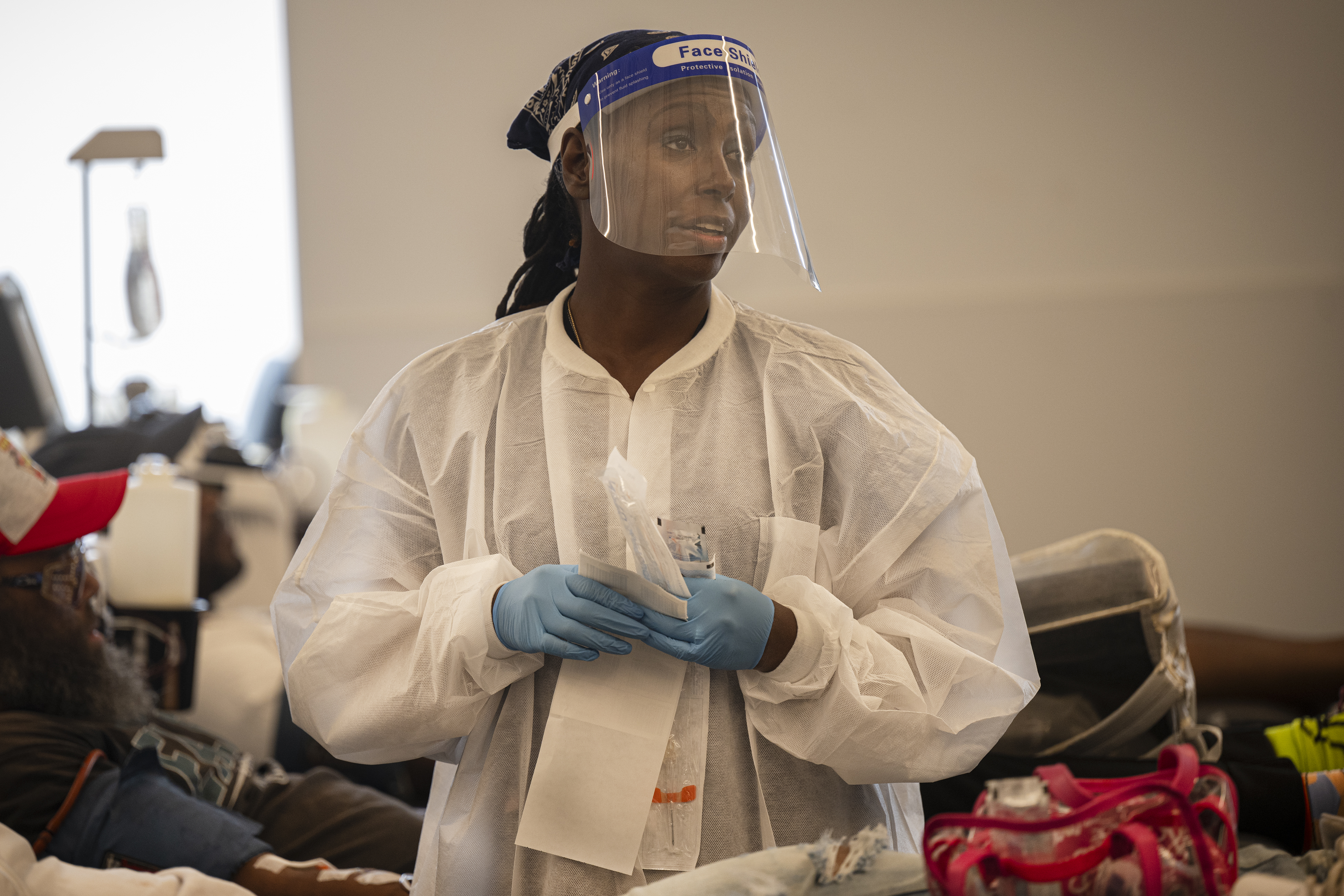
After filling out an extensive health history questionnaire, each new donor undergoes an on-site medical exam by a licensed practical nurse. Repeat donors must get annual exams. At each visit, a medical tech checks their vitals, including blood pressure, pulse, and temperature, and performs a finger prick to test their blood for protein and iron levels. Donors must weigh at least 110 pounds.
“We make sure they’re healthy and well,” said Ben Ruder, founder and CEO of B Positive Plasma, noting that the plasma itself is tested for HIV and hepatitis B and C before being sold.
Next, plasma donors are hooked up to a machine that draws out blood, spins off the plasma, and then returns the red blood cells back to the donor, a process that typically takes 45 minutes to an hour.
At 2 p.m., 18 of the 24 cushioned recliners at the Wyncote location on Cheltenham Avenue were occupied by donors, each with a needle in one arm. They included a Philadelphia police officer who had donated more than two dozen times since May 2025; a casino cleaner who earns $120 a week donating to support his young daughter; and a home health aide who donates twice a week to help cover his $750 monthly apartment rent.
Jason Johnson, 29, of East Mount Airy, has donated plasma 68 times at B Positive Plasma in the past two years. He makes an extra $120 a week donating twice weekly. The money helps supplement the $17.80 an hour he earns as a cleaner at Live! Casino & Hotel Philadelphia. “In the beginning, I was doing it for the extra money, but once I learned that I’m helping people out in their life, it made me want to come back even more,” Johnson said. Jose F. Moreno / Staff Photographer
Plasma donation differs from whole blood donation, a faster process that relies on unpaid volunteers who can donate only once every 56 days in the U.S.
B Positive Plasma is on track to see a record year, with 180,000 donations, peaking this holiday season, when people need extra money for gifts. Last year, the company saw 150,000 donations at about 1 liter per person.
Ruder, 42, who lives in Center City, opened his first plasma donation center in Cherry Hill in 2012 and rapidly expanded to 12 locations in New Jersey, Pennsylvania, and Delaware. He plans to open two more sites in Maryland next year and another in Allentown later this year.
B Positive Plasma, like other plasma companies, structures payments to incentivize twice-weekly donors. For instance, donors whose weight and physical health yield the maximum amount of plasma — 1,001 to 1,200 milliliters — will receive $45 for the first visit and another $90 if they return that same week. Plus, the company offered a $50 bonus for anyone who donated eight times in August.
Donyele Wilkins, 48, a phlebotomist and medical assistant, works in the donation room at the B Positive Plasma in Montgomery County. She suffers from lupus, a chronic autoimmune disease for which she receives plasma-derived infusions to control her symptoms.Jose F. Moreno / Staff Photographer
Phlebotomist Donyele Wilkins works 12-hour shifts, four days a week, at B Positive Plasma.
For Wilkins, the paycheck is not the only benefit of working there.
The 48-year-old Northeast Philadelphia resident suffers from lupus, an autoimmune disease in which the body’s immune system attacks its own tissues and organs. Wilkins said she relies on plasma-derived medication, infused through an IV every four to five months, to help control symptoms like inflammation and joint pain.
Knowing how plasma is processed makes her feel “safe,” she said. She also likes getting to know “the regulars” who donate.
“It makes me feel like I know exactly where it’s coming from, and I know the people who are doing it,” Wilkins said. “A lot of them really need the money, so they’re helping me, on top of me helping them.”
‘Blood money’
Paying donors for plasma has sparked ethical debate, with some accusing the industry of exploiting poor people.
In her 2023 book, Blood Money: The Story of Life, Death, and Profit Inside America’s Blood Industry, Kathleen McLaughlin, a Montana-based journalist, found that donors in many U.S. regions are disproportionately Black and brown people.
McLaughlin, who has a rare autoimmune disease treated withmonthly plasma-derived infusions, said today’s rise in donations is “a symptom of our broken economic system.”
While the FDA regulates health safety at plasma centers, the pay rate is set by the companies, McLaughlin found. She thinks donors should be paid more and the amount should be standardized.
“Right now, it’s a capitalist free-market system, where the pricing isn’t transparent,” McLaughlin said. “The profit margins are crazy for these plasma companies, and it’s gamified to make you donate twice a week, every week, in perpetuity.”
Jaworski, the Georgetown University professor, said donors are compensated fairly. A donor whosits for an hour and a half makes “significantly more than” New Jersey’s $15.92 minimum hourly wage and Pennsylvania’s $7.25. Plus, he stressed, donors save “hundreds of thousands of lives.”
Wallace Smith, 45, of Upper Darby, prides himself on making an honest living. He earns $15 an hour as a home health aide. He makes an extra $130 a week selling his blood plasma. The money helps cover cigarettes, rent, and his phone bill. Jose F. Moreno / Staff Photographer
Recently published research suggests that communities can benefit when a new plasma center opens, because fewer young people take out high-interest payday loans and area crime drops, mostly driven by decreases in property and drug-related offenses.
“It helps you from having to do something wrong,” plasma donor Wallace Smith said.
When Smith was in his late 20s, he got arrested for selling drugs. Now 45, he is still struggling to find a job that pays a living wage, he said.
Smith, of Upper Darby, works three days a week, earning $15 an hour, as a home health aide. He earns $130 a week donating plasma, which helps pay for cigarettes, his phone bill, and rent, he said.
Like many donors, Smith said he likes the win-win of earning extra cash and helping patients who depend on plasma.
“They say there’s a job’s out here for everybody, but when you become a person who made mistakes in life, then they look at your background, so there’s only certain jobs you can do,” Smith said as his blood flowed into a spaghetti-thin clear tube at B Positive Plasma.
“With that being said, you don’t go back to your old ways,” he said. “You find better resources like this.”
On a hot August morning, donors line up outside Octapharma Plasma in South Jersey to sell their blood plasma for money. They arrive before the doors open at 9 a.m. to beat the wait. Donor Carl Davis, 56, of Camden, donates every Saturday and Monday, earning $70 each time. The extra money helps supplement his $900 monthly Social Security Income disability check. “I get SSI disability, but it’s not enough at all to pay my bills and buy food,” Davis said.Wendy Ruderman
Beach boardwalk fun
At Octapharma Plasma in South Jersey, the wait time can be as long as three hours, donors said. When a sewer pump broke and bathrooms stopped working earlier this year, the company trucked in a row of porta-potties to accommodate donors and staff.
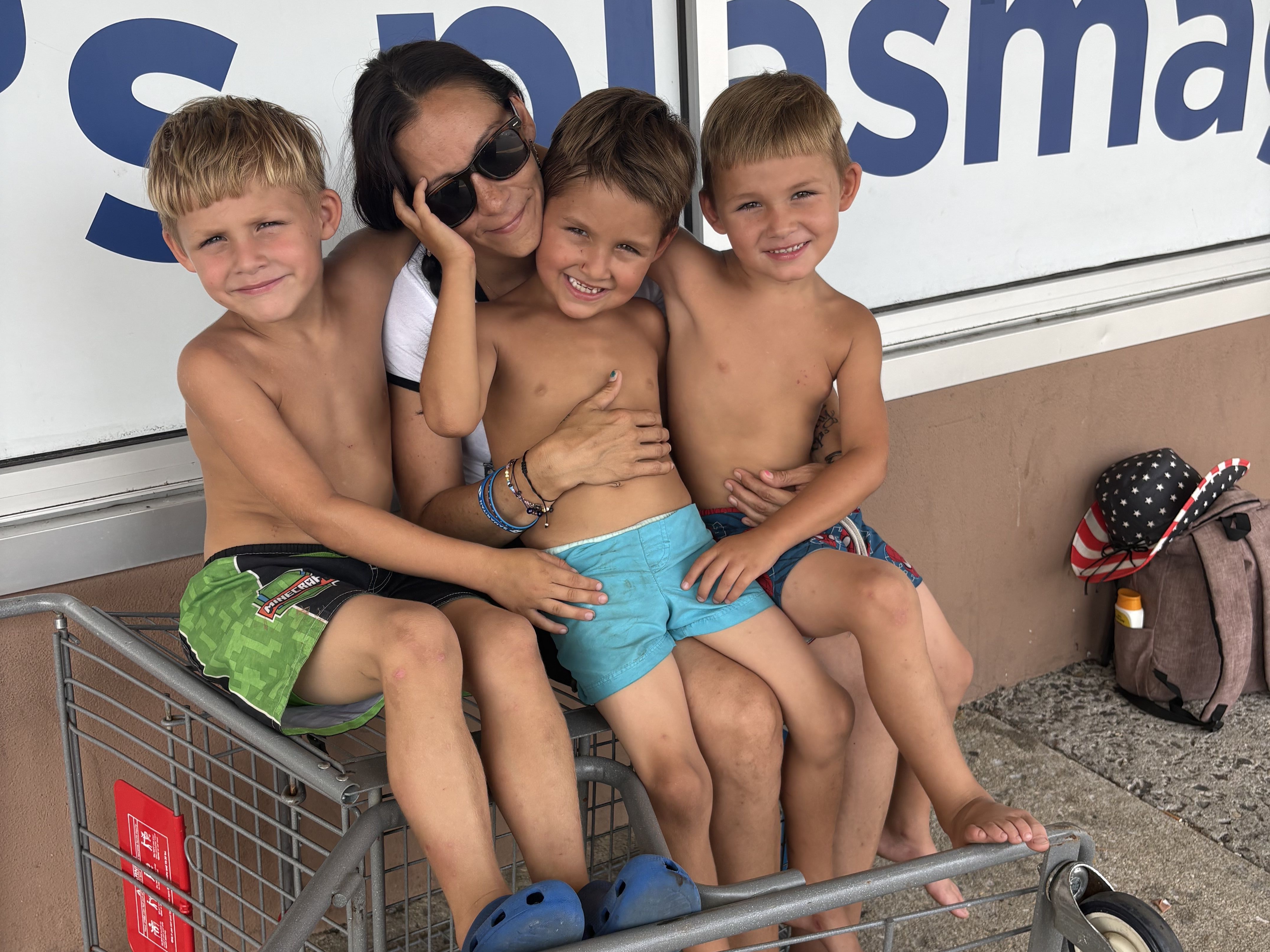
On a recent August morning, Brittany Barr, 36, and her three sons — 5-year-old twins and a 6-year-old — waited outside Octapharma as her husband donated. The family had walked roughly two miles from their Gloucester City home.
When Barr learned her friend had kidney failure and needed plasma infusions, she wanted to help. Barr was unable to donate plasma because she is anemic, so her husband agreed to do it.
In the month since Barr’s husband started donating, the family has earned more than $500. It has helped with groceries and their phone bills to supplement her husband’s income as a shipping manager.
“With only one income, money is tight these days,” Barr said. “Everything is messed up.”
The boys, clad in their bathing suits, climbed up on Barr as she sat on a tipped-over shopping cart. They were headed next to Atlantic City for a beach day.
“This week, the money is going toward fun. They’re going to play arcades and have ice cream or whatever their little hearts desire,” Barr said. “Next week, it’s going to school supplies.”
Brittany Barr, 36, seated with her boys (from left) Cooper, Cannon, and Colton, waits outside for her husband to finish donating plasma at Octapharma Plasma in Audubon, N.J. The family from Gloucester City was next headed down the Shore, where they planned to spend the extra money earned from donating plasma on arcade games and ice cream.Wendy Ruderman / Staff
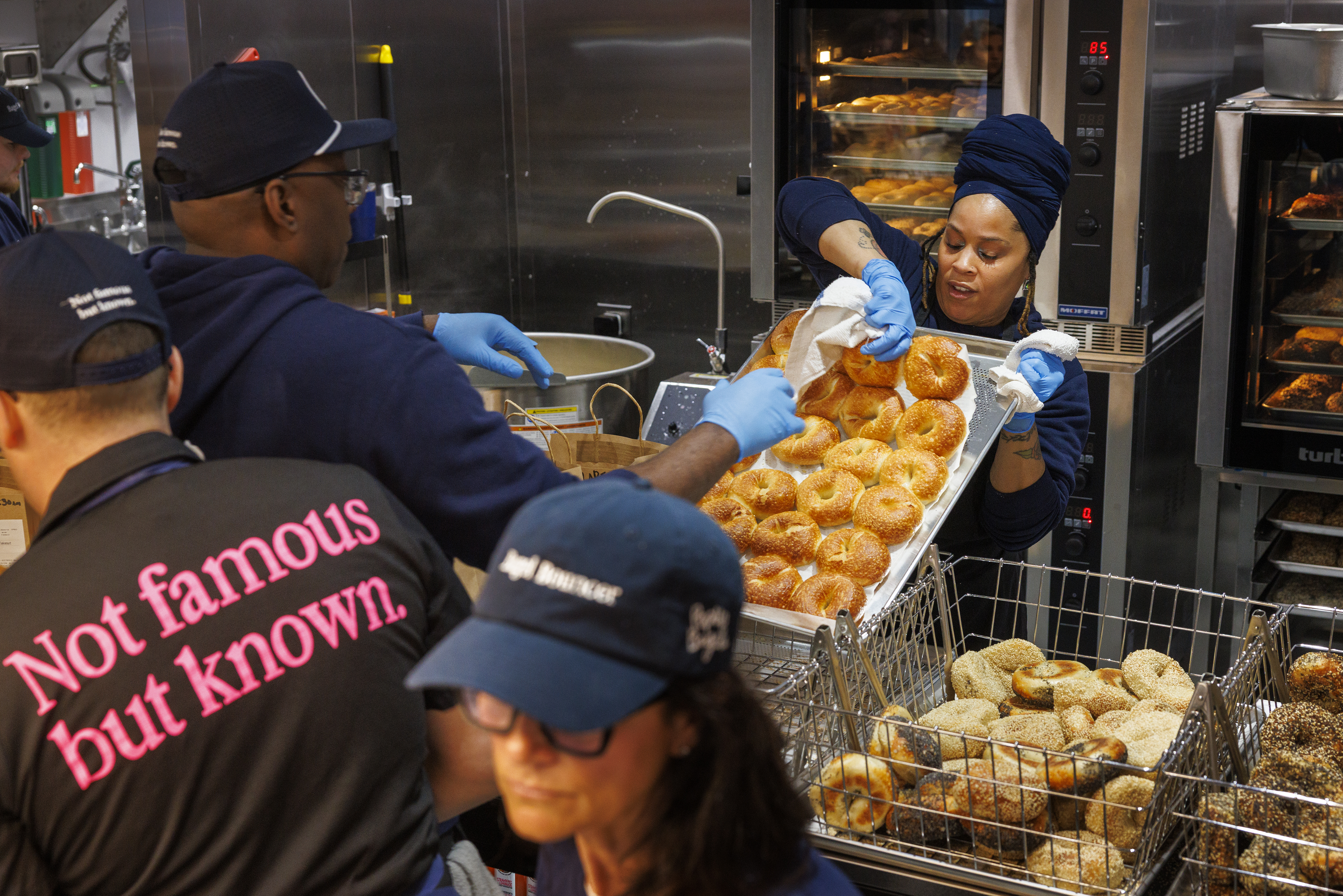
Since the beginning of 2025, nearly a dozen bagel shops have opened or leased space in Philadelphia and its suburbs, bringing new locations from local operators as well as fast-growing out-of-town brands that see the region as fertile ground for expansion.
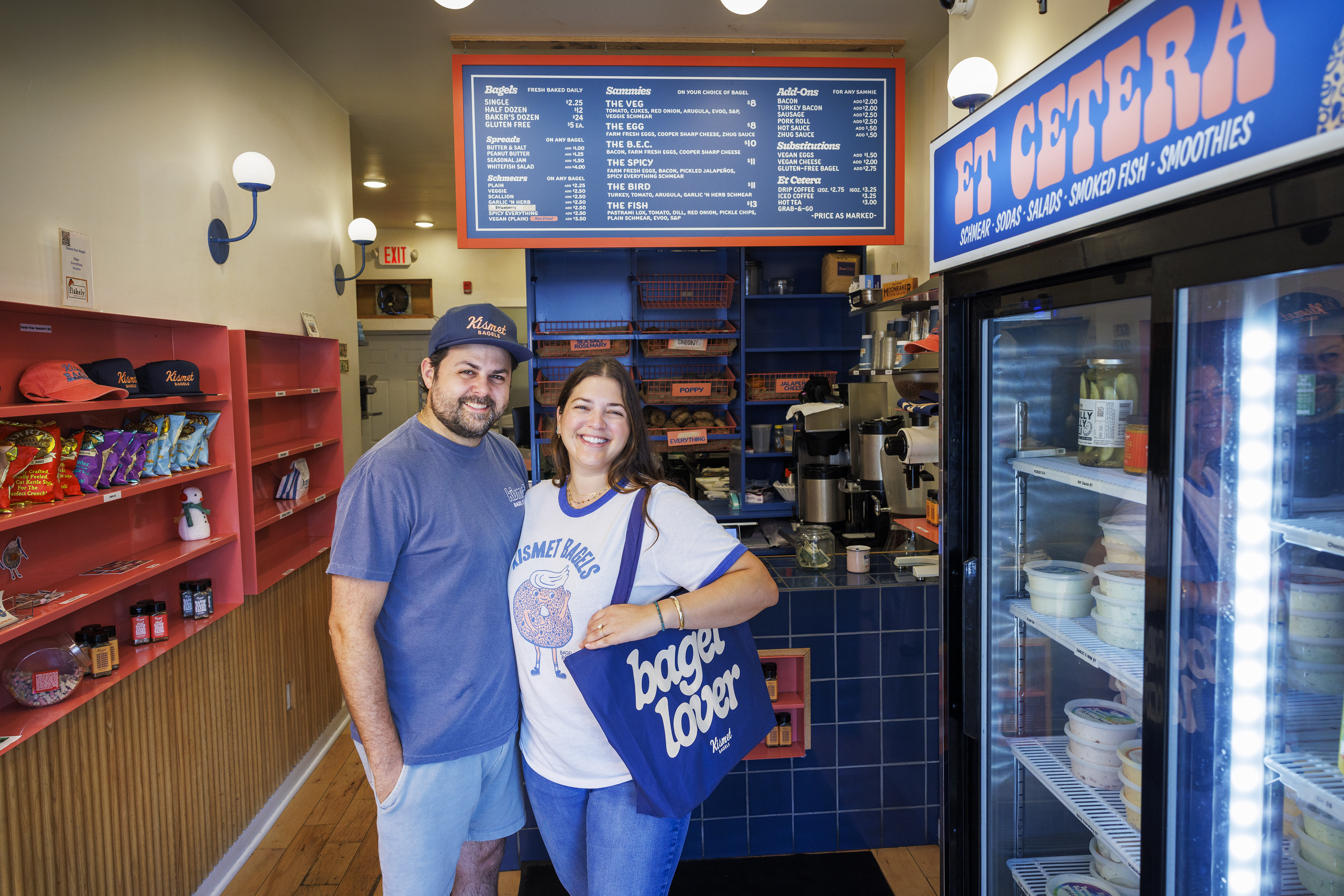
Jacob and Alexandra Cohen, owners of Kismet Bagels, at their location on Girard Avenue in Fishtown in 2024.Alejandro A. Alvarez / Staff Photographer
Kismet Bagels has opened its fourth and fifth shops, in Manayunk and Collingswood. Bart’s Bagels, which has shops in West Philadelphia and Bella Vista, recently expanded to the founders’ hometown of Bala Cynwyd. PopUp Bagels, the Connecticut-born chain that built a following on social media, made its local debut in Ardmore this spring and has signed a lease for a Rittenhouse shop as part of a larger regional expansion.
And Washington, D.C.-based Call Your Mother is preparing three soon-to-open Philadelphia locations — in Fishtown (due first), Rittenhouse, and Washington Square West — committing to all three before serving its first Philadelphia bagel.
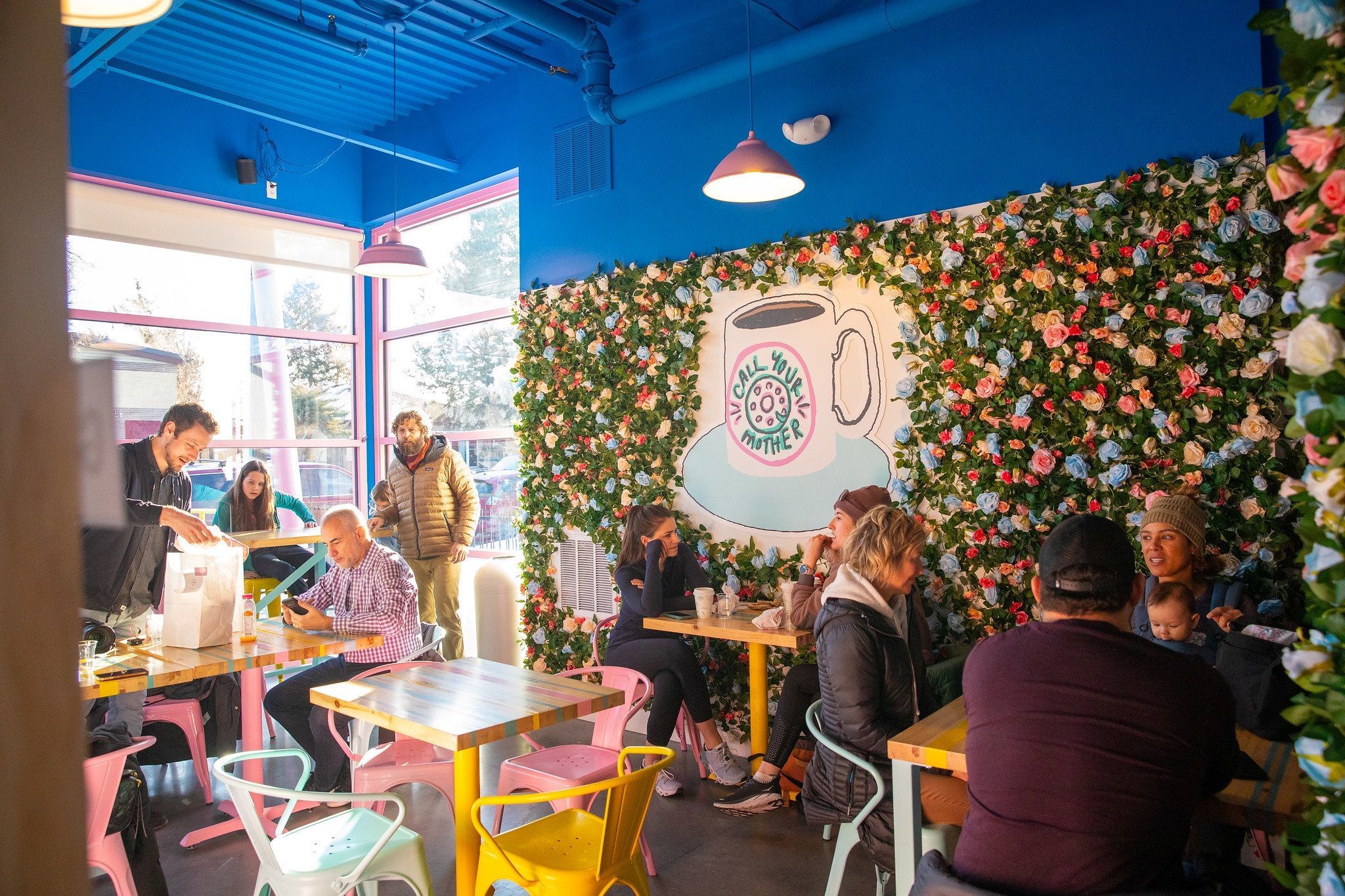
Call Your Mother bagel sandwich shops have a subtropical feel.Courtesy of Call Your Mother
That tally doesn’t include all of the stores that could follow. Florida-based Jeff’s Bagel Run has announced a 10-unit development agreement for Eastern and South Central Pennsylvania, while PopUp franchisee Brian Harrington is scouting additional territory in the Philadelphia suburbs.
All this raises an obvious question: How many bagels can Philadelphia eat?
Plenty, apparently — at least for now.
Jacob Cohen, who started Kismet six years ago with his wife, Alexandra, said the company has seen sales increase even as new bagel shops have entered the market. “I don’t think they’re just dividing the same customer base, because we’ve already had new shops open in Philadelphia and we haven’t seen a decrease in sales,” Cohen said.
But Cohen, who rapidly expanded Kismet before putting thebrakes on growth earlier this year, also sees a limit. “More is not always better,” he said. “I obviously don’t have a crystal ball, but I have a feeling that some of these private-equity bagel companies coming are going to learn that the hard way.”
Bagels are having a moment
Philadelphia is part of a much broader bagel boom. The U.S. bagel market generated an estimated $3.17 billion in revenue in 2025 and is projected to reach $4.51 billion by 2033, according to Grand View Research, a market-research firm. That represents annual growth of about 4.6%. Worldwide, the firm values the bagel market at $5.8 billion in 2025 and projects it will reach $8.6 billion by 2033.
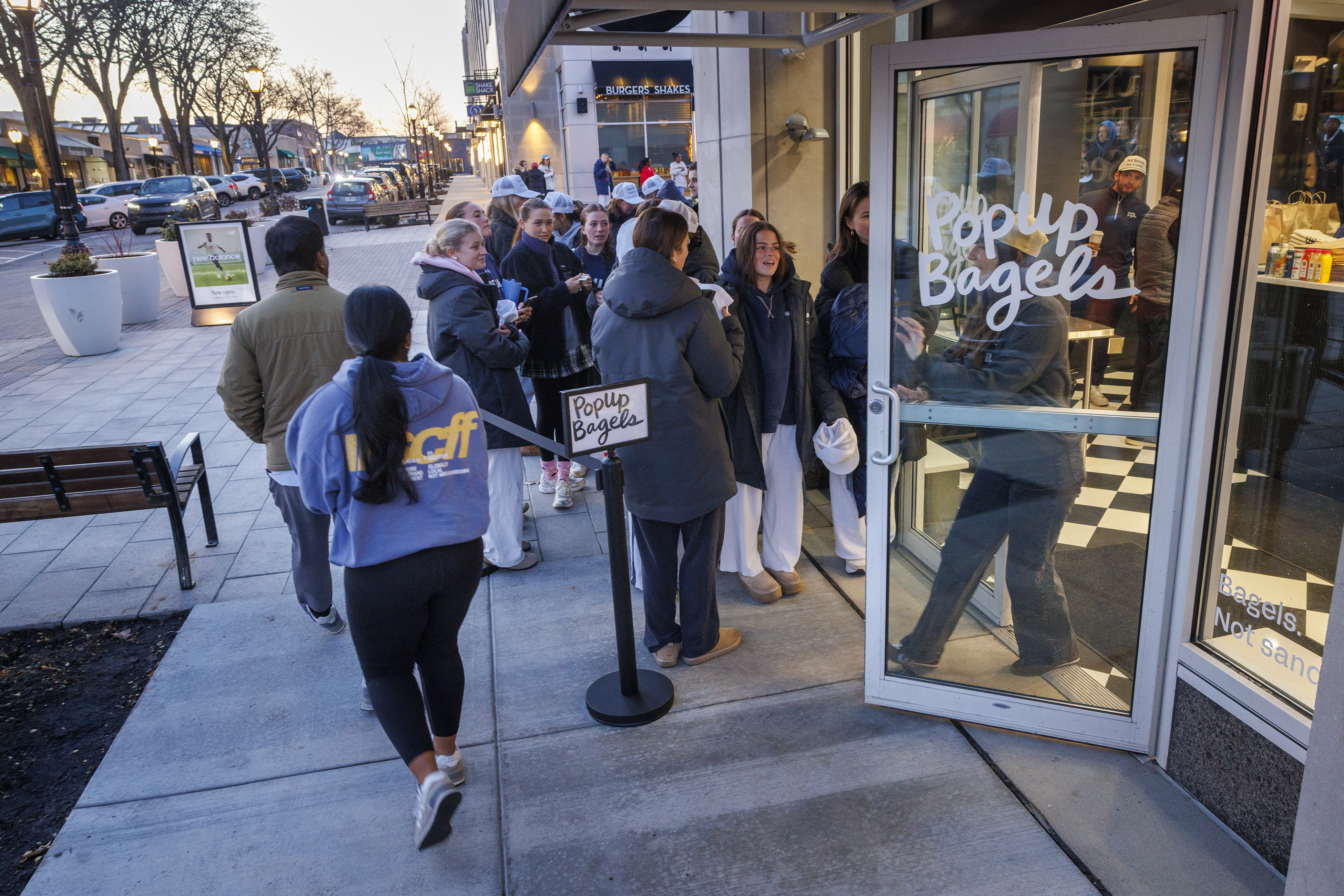
Customers lining up for the grand opening of PopUp Bagels in Ardmore in March.Alejandro A. Alvarez / Staff Photographer
Mike Kostyo, vice president of Menu Matters, a Vermont-based food-industry consulting firm, sees the current surge as the convergence of several trends rather than the sudden discovery of a new food. Artisan baked goods have been rising in popularity for years, he said, after the pandemic produced a generation of home bakers and pop-ups experimenting with sourdough and bagels. At the same time, café culture and the rise of the “little treat” have made consumers more willing to spend on premium versions of everyday foods.
“At its core, the bagel has always been a blank canvas for lots of flavors and toppings,” Kostyo said. “But now, instead of sesame seeds, you see them topped with Flamin’ Hot Cheetos.”
The traditional formula — bagels by the dozen, cream cheese, lox, and coffee — also has evolved into something closer to a breakfast-and-lunch fast-casual restaurant.
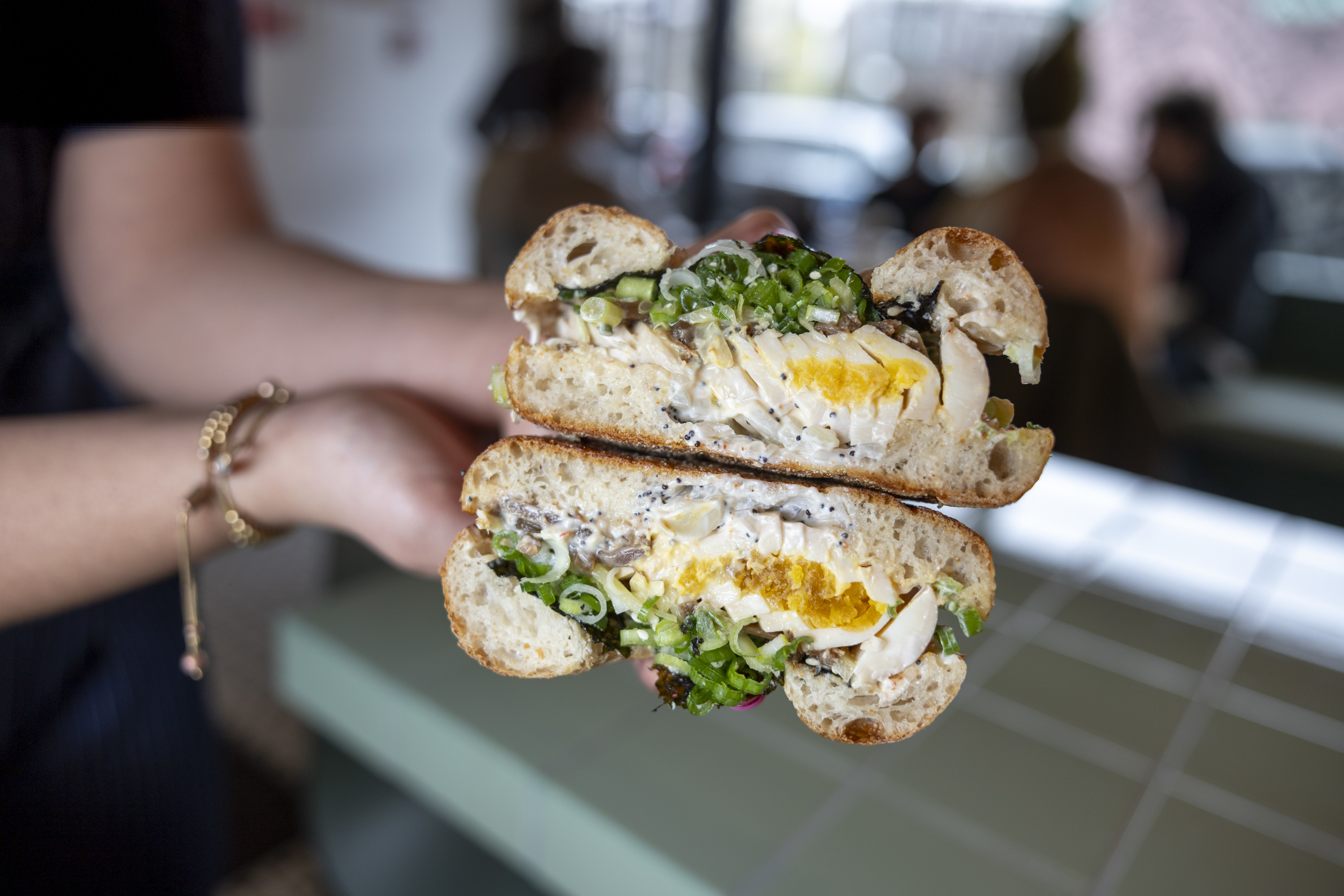
The Ramen Thing bagel sandwich from Cleo Bagels in West Philadelphia.Tyger Williams / Staff Photographer
Bagels become vehicles for egg sandwiches, smoked salmon, avocado, specialty cream cheeses, and elaborate combinations that can command substantially more than a plain bagel and schmear. And operators increasingly are looking beyond breakfast.
“The sandwich factor is so important,” Kostyo said. “You need something that you can sell across multiple occasions, not just to commuters in the morning.”
That versatility helps explain why investors have noticed.
“Investors are always looking for that next category that could blow up,” Kostyo said. “They want Call Your Mother or PopUp Bagels to be the next 7 Brew or Dutch Bros.”
From pandemic project to expansion vehicle
Some of the brands now expanding grew directly out of the pandemic.
The Cohens started Kismet as a pandemic project before turning it into a brick-and-mortar business and eventually growing to five locations — down from seven after the company shuttered a stand at Reading Terminal Market in 2025 and closed a shop in Ventnor earlier this year.
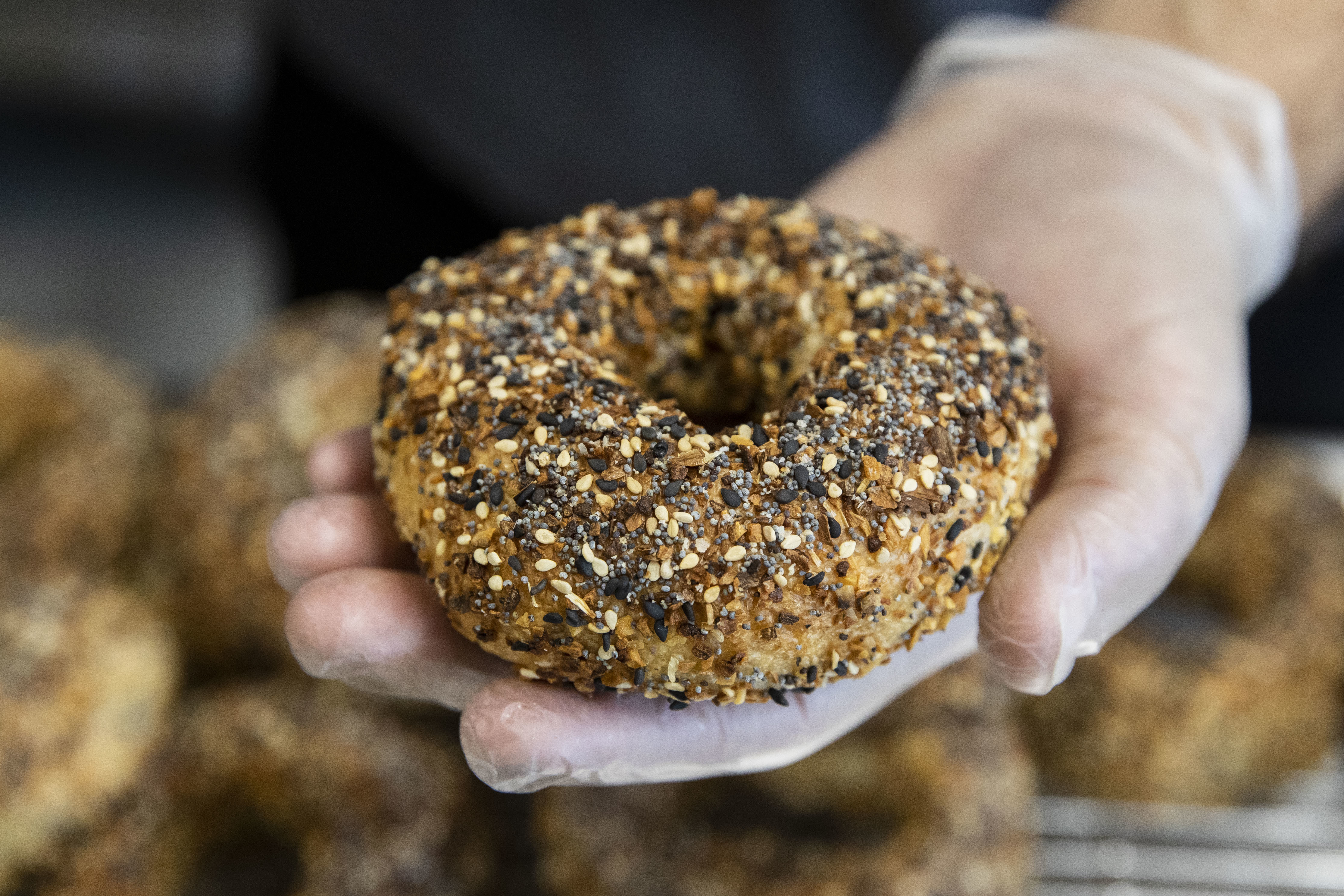
Jacob Cohen of Kismet Bagels holds an everything bagel.MONICA HERNDON / Staff Photographer
PopUp followed a similar trajectory. Founder Adam Goldberg began baking bagels at home during the pandemic and developed the idea into a business built around an unusually stripped-down concept: hot bagels and schmears, rather than the sprawling sandwich menus associated with many modern bagel shops.
Customers are encouraged to “grip, rip, and dip,” tearing apart the bagels and dipping them into containers of cream cheese.
The company’s first Philadelphia-area shop opened in the spring in Suburban Square in Ardmore. Harrington, the franchisee developing PopUp in this region, said sales have remained strong even through the summer.
“We anticipated a little bit of pullback with a lot of our core [teen] clientele getting jobs in Avalon and down the Shore, and with vacations and things like that,” Harrington said. “But it’s been very, very steady.”
In more than 25 years in the restaurant business, Harrington said, he has typically seen sales soften in late June, July, and early August. “We’ve not seen that,” he said.
PopUp has signed for the former Starbucks at 1709 Chestnut St. in Rittenhouse, as reported by the Philadelphia Business Journal. Harrington said he has a deal for a location in Lawrence Township, N.J., near Princeton, that is awaiting its permits. Another South Jersey deal is close, he said, and he sees additional potential in Montgomery County.
Despite the influx of bagel shops, Harrington said he believes PopUp occupies a somewhat different niche.
“We’re not making sandwiches,” he said. “So far, people have found us and enjoyed the way that we do it, and it doesn’t preclude them from going and getting a bacon, egg, and cheese somewhere else.”
Three stores before the first bagel
Call Your Mother is making an even larger initial bet on Philadelphia. Founded in Washington in 2018 by Andrew Dana and his wife, chef Daniela Moreira, the self-described “Jew-ish” deli has expanded beyond the Washington area as New York investment firm Invus acquired a majority stake in the company in January 2025.
Call Your Mother has signed three Philadelphia leases: 1500 Frankford Ave. in Fishtown, the former Metropolitan Bakery at 262 S. 19th St. near Rittenhouse Square, and 12th and Sansom Streets in Washington Square West. Dana said the decision to enter Philadelphia was considerably less scientific than the three-store commitment might suggest.
“My mom grew up there, my grandparents lived there, and I’ve been there so much visiting my friends,” Dana said. “I’ve been in Fishtown on a Sunday when it’s popping, and I’ve been in Rittenhouse Square when it’s super-crowded on the weekend and the market’s going. A lot of it is just gut and feel.”
Dana does not believe Philadelphia lacks good bagels. On a recent trip, he tried Bart’s and came away impressed.
“I think a lot of people are doing a great product in Philadelphia,” he said, “but there’s always room for a different bagel shop. At least I hope so.”
Dana also rejects the idea that taking investment inevitably leads to runaway growth or declining quality.
He described Invus as “patient capital” and said the investment agreement carries no requirement that Call Your Mother open a prescribed number of stores.
“We’re going to do what we can do while still keeping the quality of the food and the service top-notch,” Dana said. “And if that ever slips, we have the ability to hit the pause button.”
Local operators dig in
For some Philadelphia bagel operators, however, the arrival of heavily financed brands is cause for skepticism.
Cohen, at Kismet, is particularly wary.
“I think it’s the rare exception when private equity marries itself to a food brand and they continue to do good things,” he said. “I’d like to keep private equity out of bagels.”
He stressed that Kismet remains owned solely by him and Alexandra, financed through bank loans rather than outside investors.
David Fine, owner of Schmear Bagel Parlor, is also watching the expansion. Fine entered the business in 2013 with his Schmear It food truck and has since acquired the shops owned by Philly Bagels, giving the company eight locations in Philadelphia.
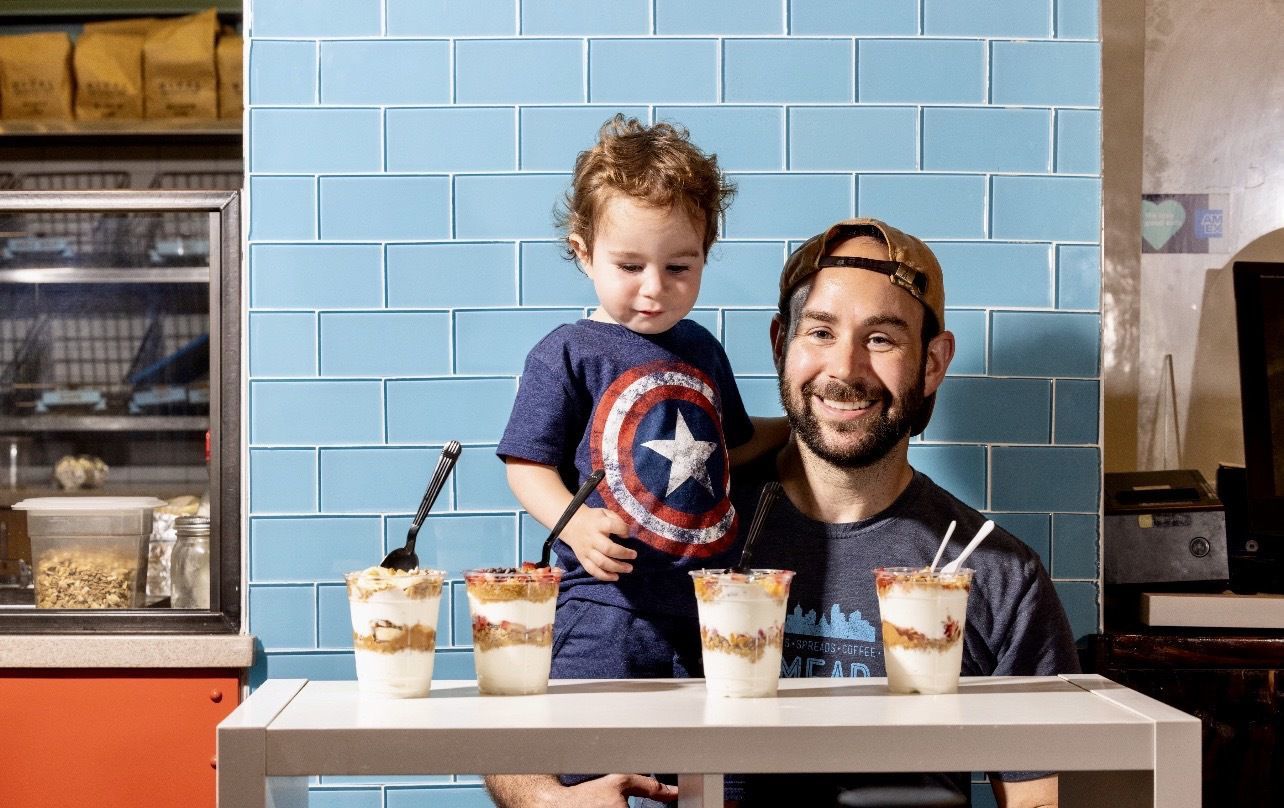
David Fine of Schmear with his son.Courtesy of David Fine
Fine said those stores have not appeared to steal business from one another.
He thinks part of the bagel’s appeal is almost mundane: It is familiar, relatively accessible, portable, and infinitely customizable.
“They’re comfort food at their very core, and they can really appeal to such a wide variety of customers,” he said.
He is less certain about the economics behind the rapid expansion of some competitors.
“The buildouts are expensive,” Fine said. “You have to be quite profitable for quite some time just to recoup that investment.”
Schmear is expanding, too, Fine said, renovating its original brick-and-mortar location at 36th and Market Streets. But he believes that being local gives the company an advantage as more national and regional shops arrive.
“There’s a keen allegiance to local brands,” Fine said.
Built for the feed
Bagels also have another quality particularly suited to the moment: They look good on a phone.
Kostyo points to the now-familiar image of a bagel sandwich sliced in half and held toward the camera, its fillings and schmear exposed.
“The visual factor is also so important in today’s social media age,” he said. “That picture … is the type of indulgent food that people go out of their way for today.”
The lines themselves become part of the marketing. A crowd outside a shop signals that the food is worth leaving home for, he said, while arguments over the proper density, crust, schmear, toppings, and even whether a respectable bagel can be made outside New York keep the category in the conversation.
“In the end, it’s all advertising and marketing,” Kostyo said.
But social media enthusiasm is fickle — witness the rise and fall of cookies and cupcakes — and Kostyo sees the flood of investment and expansion as carrying the seeds of an eventual shakeout.
“This is a pretty classic bubble where some of these brands that are doing a great job and really resonate with people will survive, but a lot will overexpand and shut down in the next few years,” he said.
Cohen, meanwhile, has decided not to test Kismet’s limits.
After years of opening shops, Kismet entered 2026 determined to improve what it already has rather than add more locations. The company is focusing on consistency, profitability, new products, employees, and customers, he said.
He is happy to see Philadelphia’s bagel culture growing and says he does not regard every new shop as a competitor. Years ago, Cohen recalled, Inquirer restaurant critic Craig LaBan told him that Philadelphia did not have enough bagels per capita.
“We might be starting to get there now,” Cohen said.
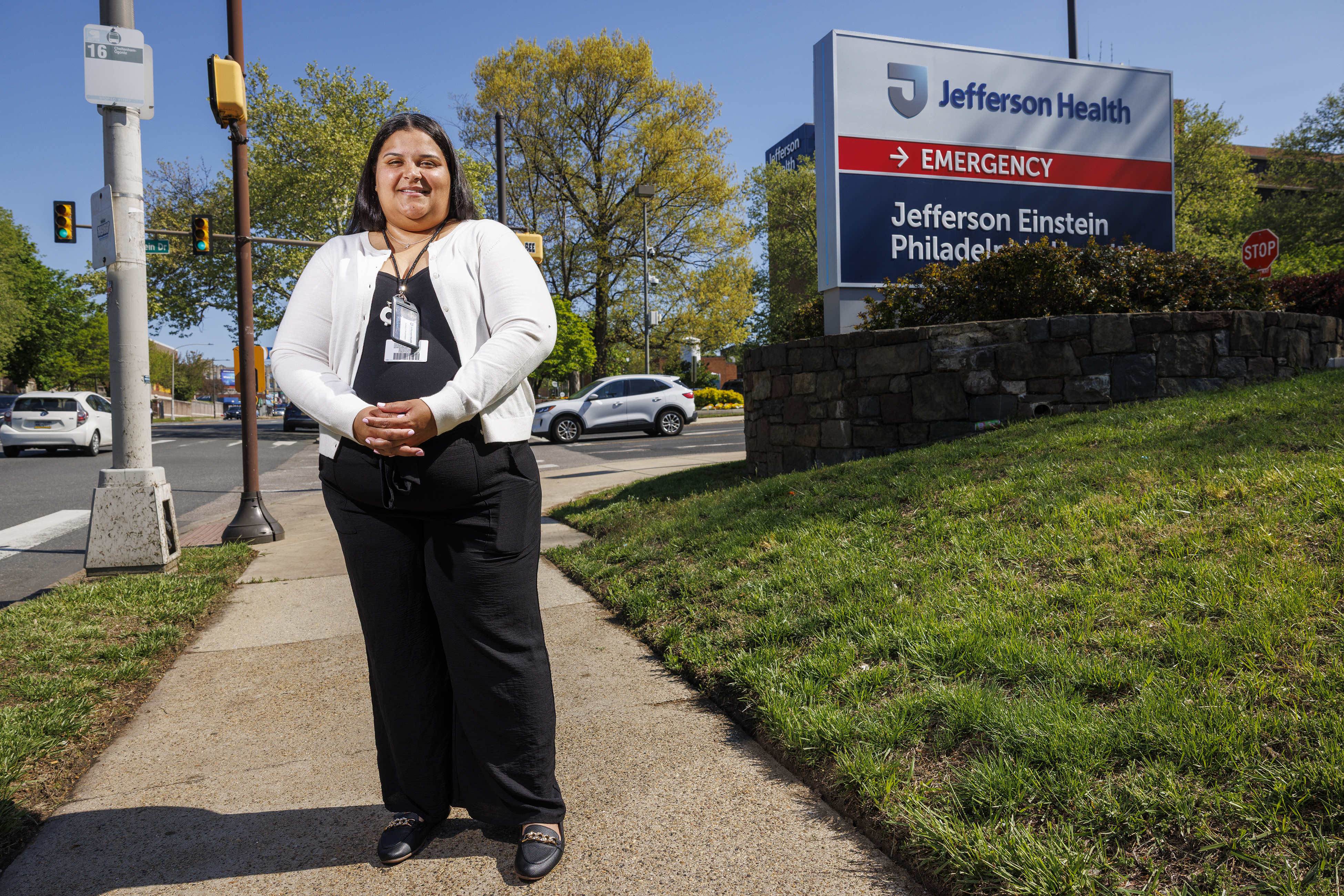
Ashley Boudreaux, an operations manager at Jefferson Health, would like to run a hospital someday.
“I would really like to make it to the C-suite — be a CEO,” said Boudreaux, 37, who works at the medical group’s Philadelphia and Montgomery County sites.
So, without quitting her job, Boudreaux pursued her undergraduate degree in health administration with the University of Phoenix. She graduated in 2023, and now she’s on track to get her master’s in business in November. She’s done all her coursework while working full-time.
It wasn’t easy, Boudreaux said.
“You’re just moving constantly,” she said. “When I look back, I’m like, I don’t know how I did it.”
It helped that Jefferson provided some financial support for Boudreaux’s education.
More than 40% of employers offer this benefit, according to Alex Alonso, chief knowledge officer at SHRM, a human resources association. That number has waned a bit in recent years, but some large local employers still do so.
They include Comcast, which offers tuition reimbursement as an employee benefit and works with Drexel University to shape several master’s programs for tech workers. Another is Aramark, which covers up to the full cost of tuition for eligible hourly employees, and tuition assistance for salaried employees. And Philadelphia’s city workers get tuition discounts at more than a dozen local colleges.
For many, completing a four-year degree would still prove beneficial, said Sean Vereen, president and CEO of nonprofit Heights Philadelphia, which connects young people with education and career opportunities.
“The college degree is not the only way to get to economic success, … [but] there is a connection between your ability to have stronger credentials and your ability to move economically,” Vereen said.
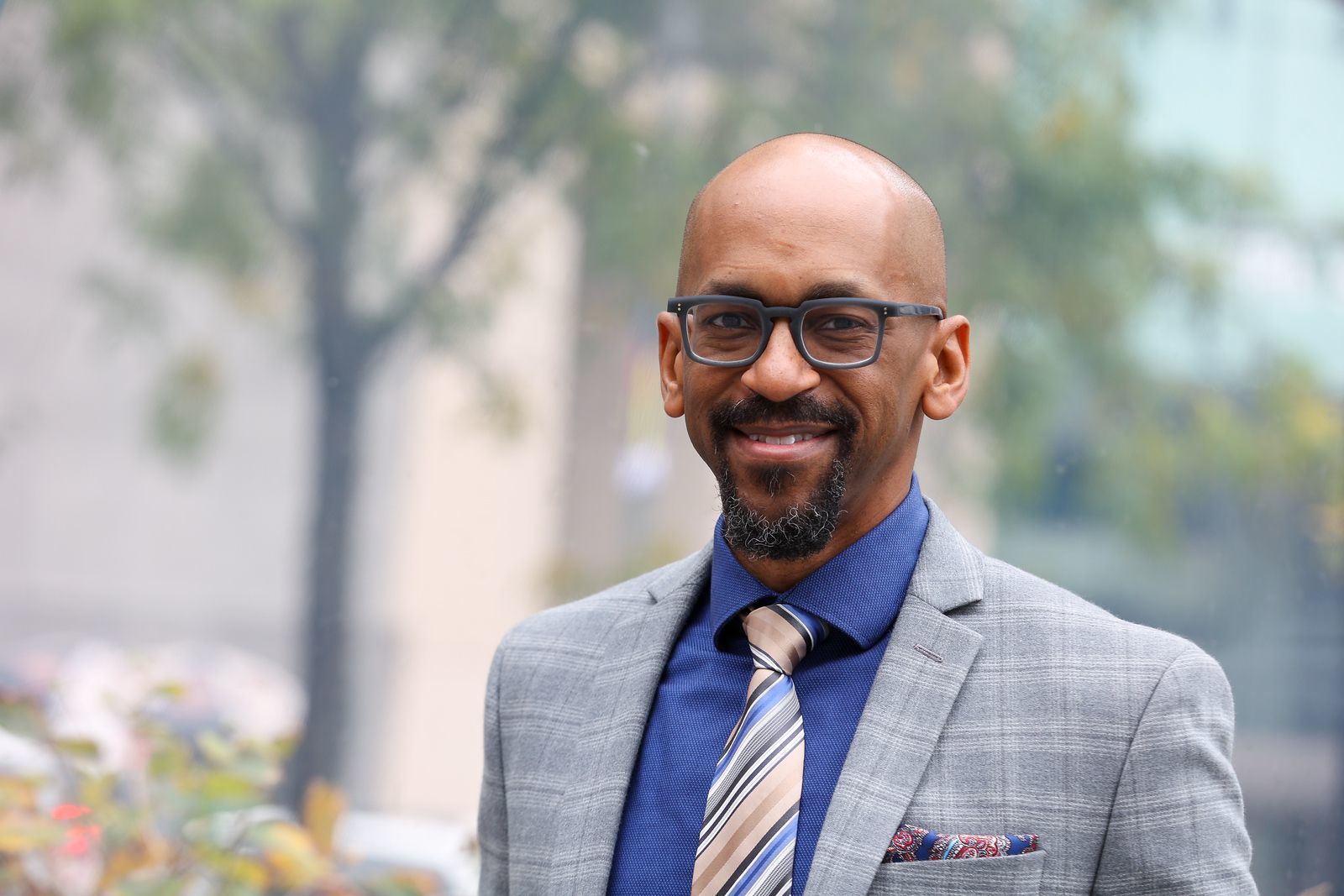
Sean Vereen of Heights Philadelphia. Paola Nogueras
Why workplaces offer tuition assistance
Federal tax incentives have encouraged employers to assist with education costs, said Alonso of SHRM. The benefit also helps companies compete for good hires, he noted.
Most commonly, Alonso said, employers offer up to $5,250 per employee per year. That’s the maximum they can give toward education costs without the employee paying taxes on it. Workers are often required to show that the education is related to their job or career, so they “can actually bring back what they learn to their workplace,” he said.
Sometimes getting additional education, including short-term microcredentials, are prerequisite to a promotion, said Phil Brooks, a vice president at nonprofit Graduate Philadelphia, which supports adult students.
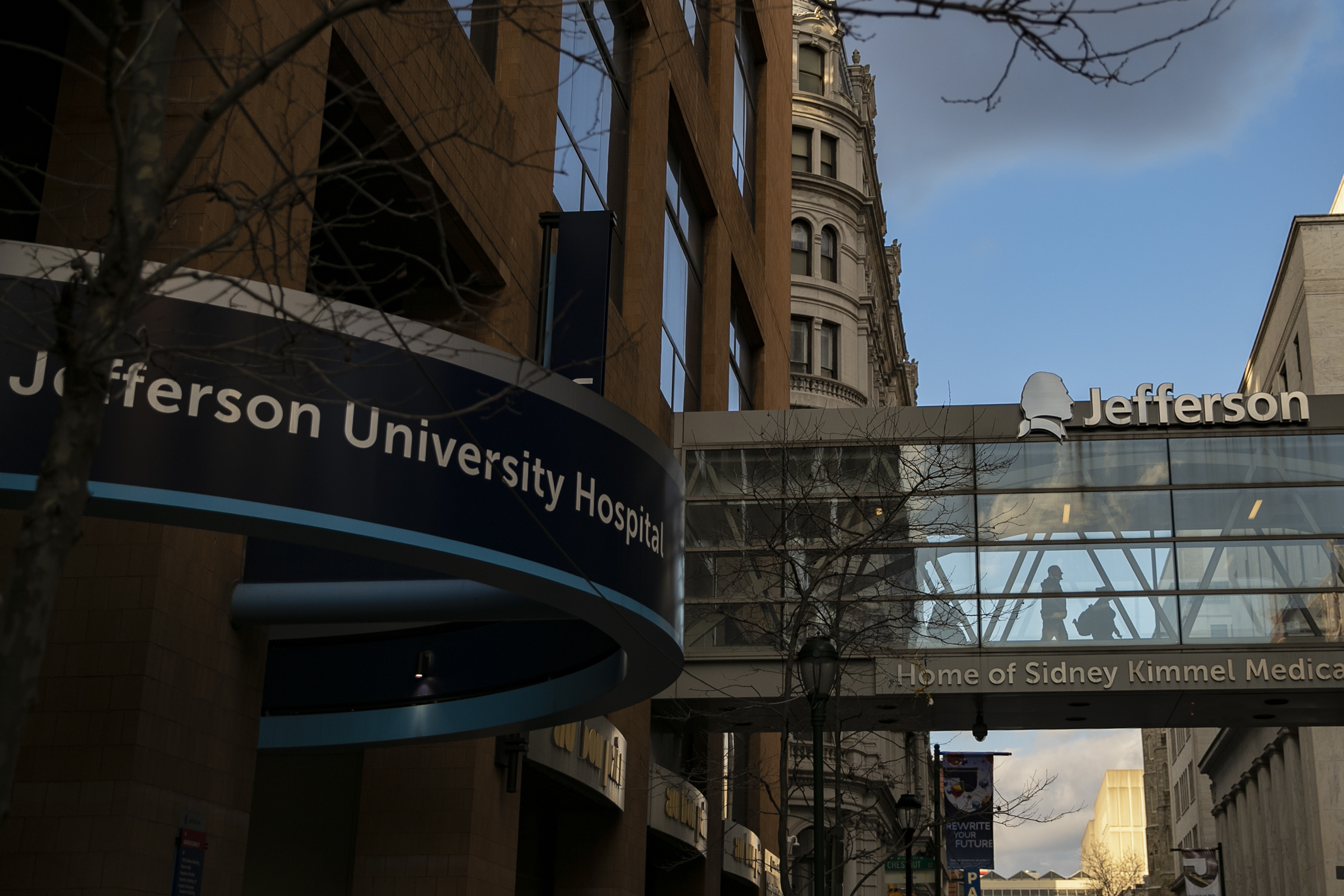
Thomas Jefferson University Hospital in Center City Philadelphia is shown in this 2020 file photo. Heather Khalifa / Staff Photographer
Hurdles for worker-students
Getting a degree while working full-time can mean early mornings, later nights, giving up weekend time, or even using lunch breaks to squeeze in school work.
Other challenges can include transportation for in-person programs or access to a computer and reliable internet connection, says Brooks. Students who owe money to a school where they were previously enrolled might also be held back from transferring or finishing their degree.
Graduate Philadelphia sometimes helps students negotiate with schools to decrease that amount owed, “literally removing this barrier as much as we can,” Brooks said.
“Slow progress is still progress,” she said. “A lot of times, when we start off on a journey, we see the entire staircase, but not realizing that it takes one step at a time to get to the top.”
Getting the promotion
When Nicole Henderson, 38, graduated high school, going to college right away wasn’t an option.
“It just didn’t make sense for our family,” she said. “We just couldn’t afford it.”
Years later, while working at a trading firm, she started pursuing a bachelor’s in accounting. But she put it on hold after a semester when she learned her employer, who encouraged her to go back to school, wouldn’t cover her tuition.
Five years ago, while searching for work as an executive assistant, she saw a role open up at the Children’s Hospital of Philadelphia that didn’t require a bachelor’s degree. She got the job and soon felt the urge to continue advancing her career.
“I’m now at this huge organization with all these opportunities,” Henderson said. “I was like, oh, man, eventually I’m going to have to have this bachelor’s degree.”
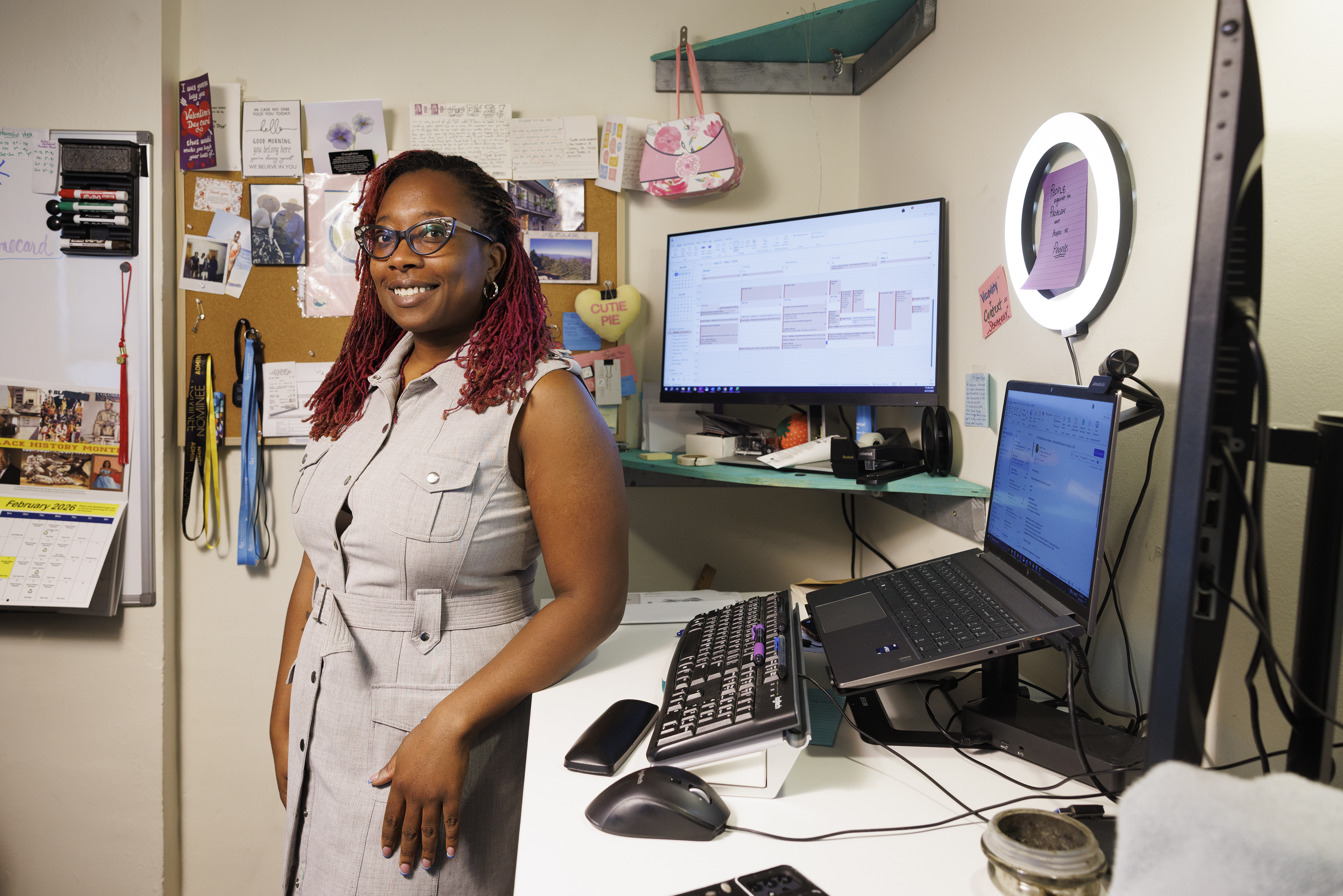
Nicole Henderson in her home office in Darby. She went back to school while working full-time and recently earned her bachelor’s from Temple.Alejandro A. Alvarez / Staff Photographer
In 2023, she started working toward that undergraduate degree again. Her colleagues at CHOP were supportive, and she was given flexibility to tune into classes from work sometimes, or work remotely on the days she had a lot of studying to do. CHOP also reimburses a portion of her tuition and has a student loan repayment program. Without that financial support, Henderson says she wouldn’t have pursued the degree.
Juggling work and school can be exhausting, Henderson said. She slept through the day some Saturdays because her “brain was just so overloaded with information.”
But she got her bachelor’s in business from Temple University in December and walked across the stage at graduation in May.
Her classes gave her a new awareness of what’s important to bosses and leaders at her organization, she said, and “how to speak their language.”
She also negotiated a promotion from executive associate to project manager, with a raise.
Now she doesn’t have to wonder “how am I going to convince people that I’m qualified to do this?” she said. “I kind of already have this degree that says that for me.”
A shuttered bridal shop in downtown Conshohocken will soon become the home of another family-run business with local roots.
Goodness Bowls, a “healthy-eats cafe” chain run by Montgomery County residents, has signed a lease for the former La Bella Moda bridal shop at 200 Fayette St., with the goal of opening a corporate headquarters there by early 2027. La Bella Moda closed in May after 45 years in business.
“I always looked at La Bella Moda, and I thought, ‘God, that would be the perfect corner,’” said Susan Persichetti, Goodness Bowls’ cofounder and CEO. “ But I never thought they would close their doors.”
In the coming months, the Goodness Bowl team plans to open a 1,500-square-foot restaurant on the first floor, according to company executives, and use 2,000 square feet upstairs for additional seating and its corporate offices. They declined to share the terms of the lease.
The Conshohocken restaurant will be Goodness Bowls’ 10th location and its third corporate outpost. The rest of its cafes are franchised.
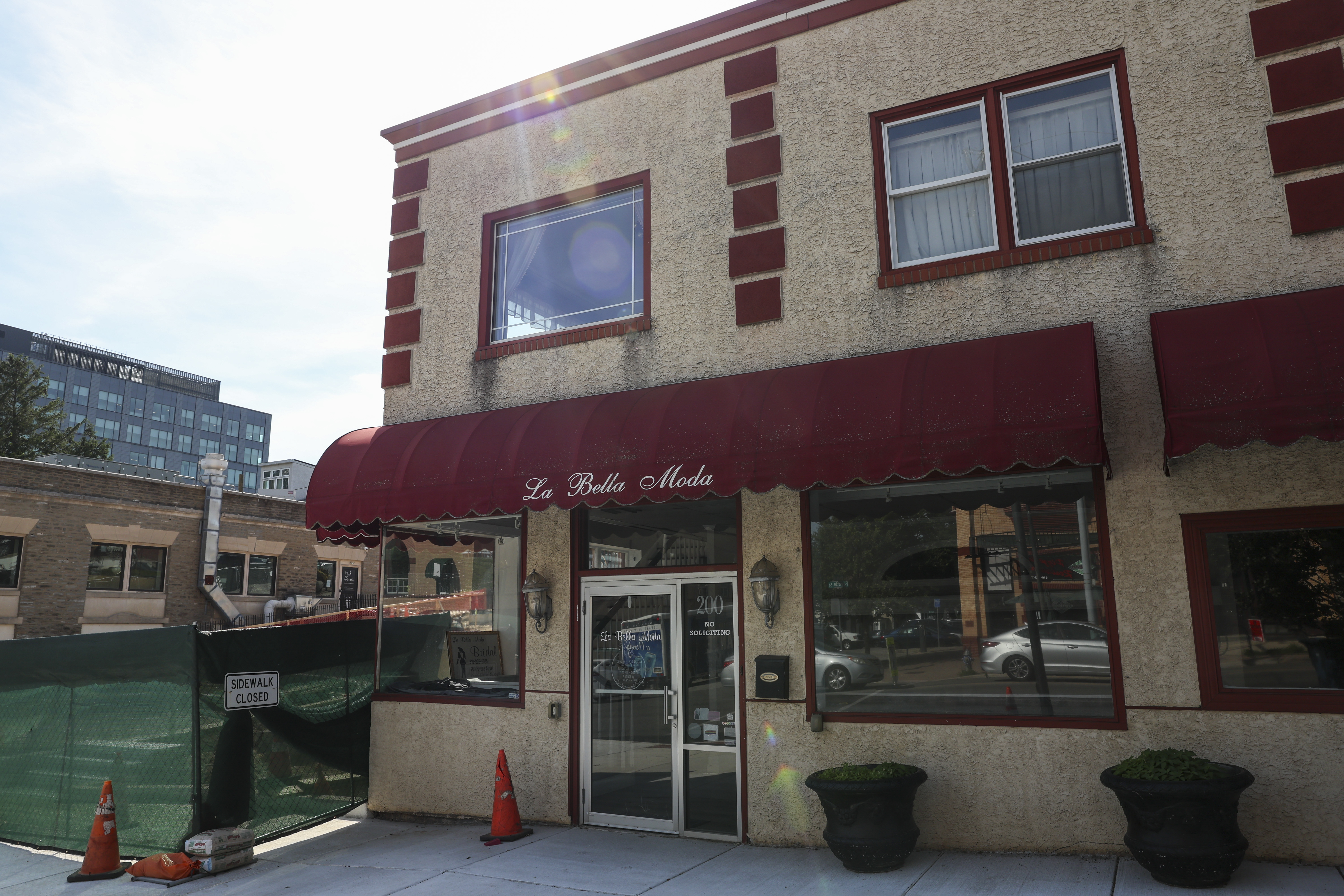
The closed La Bella Moda, as seen in June.Monica Herndon / Staff Photographer
The chain’s expansion comes as acai bowls — smoothie bowls loaded with toppings like fruit, granola, and peanut butter — and other more nutritious fast food have surged in popularity.
Shops selling these bowls seem to be popping up everywhere. Over the past decade, Belmar, N.J.-based Playa Bowls has grown to more than 100 locations in 20 states, including more than a dozen spots in the Philly area. And the Juice Pod, founded in Avalon and now headquartered in Bryn Mawr, has expanded to more than two dozen cafes, most of which are in the region.
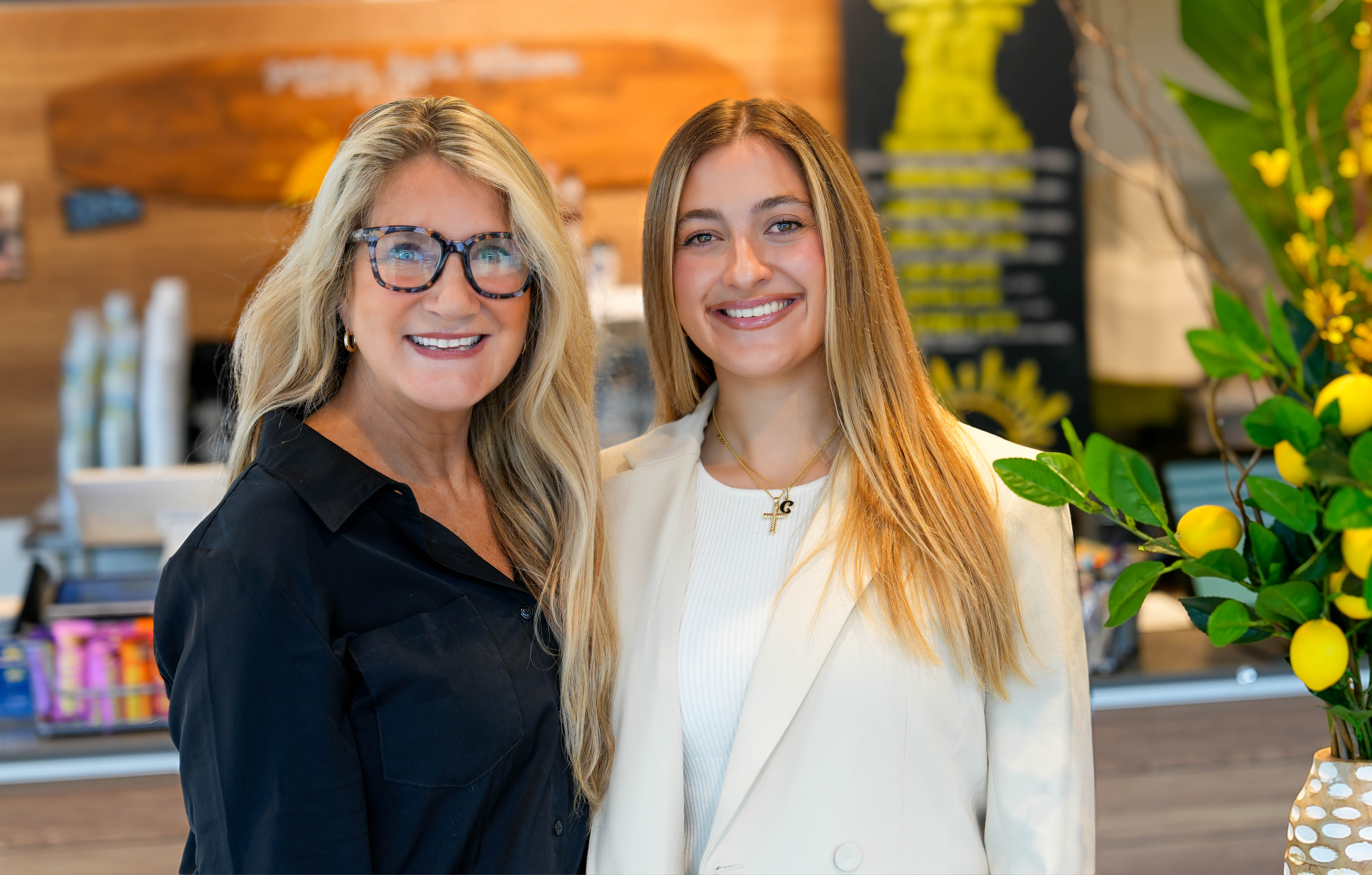
A mother-daughter duo, Susan and Corinne Persichetti, opened the first Goodness Bowls in Avalon in 2019. Susan said her daughter Corinne — a former Division I field hockey player at Fairfield University and a health enthusiast — was the driving force behind the business.
Susan Persichetti, cofounder and CEO of Goodness Bowls, with her daughter Corinne Persichetti, cofounder and chief operating officer.Courtesy Goodness Bowl
Corinne created the cafe’s menu, which includes acai bowls, salads, wraps, and smoothies, and came up with its slogan, “Eat Good. Feel Good. Do Good.” Susan, meanwhile, crafted the shop’s coastal aesthetic and branding.
For a couple years, Susan and Corinne ran the Avalon location in the summertime while working corporate jobs. In 2022, they opened a second location in Villanova, where they quickly found success. They realized there was demand for the Shore-inspired business in the Philadelphia suburbs, Susan said, and started franchising.
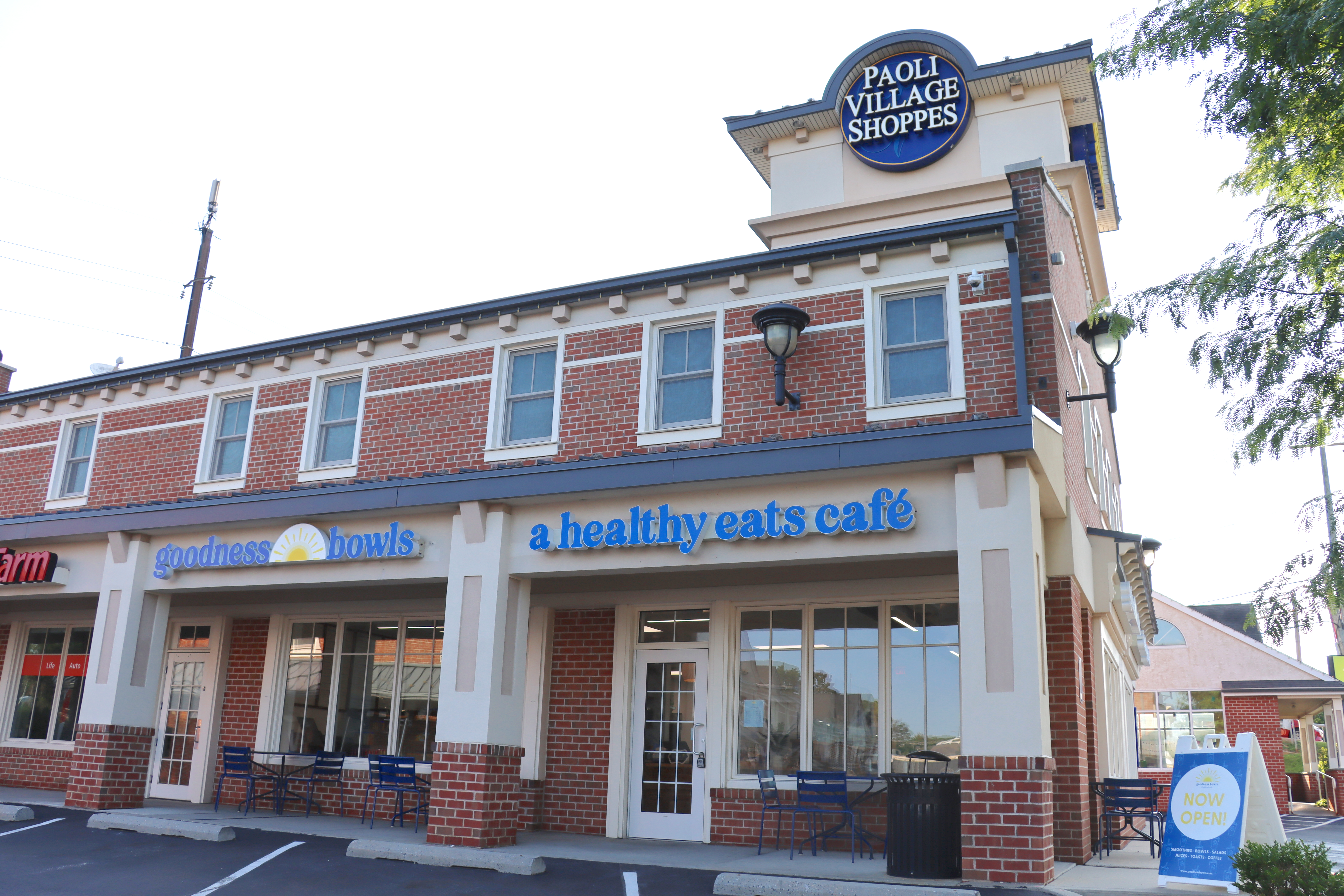
Goodness Bowls currently has franchise locations in Narberth, Paoli, Collegeville, Spring House, Haddon Township, Sea Isle, and Scranton.
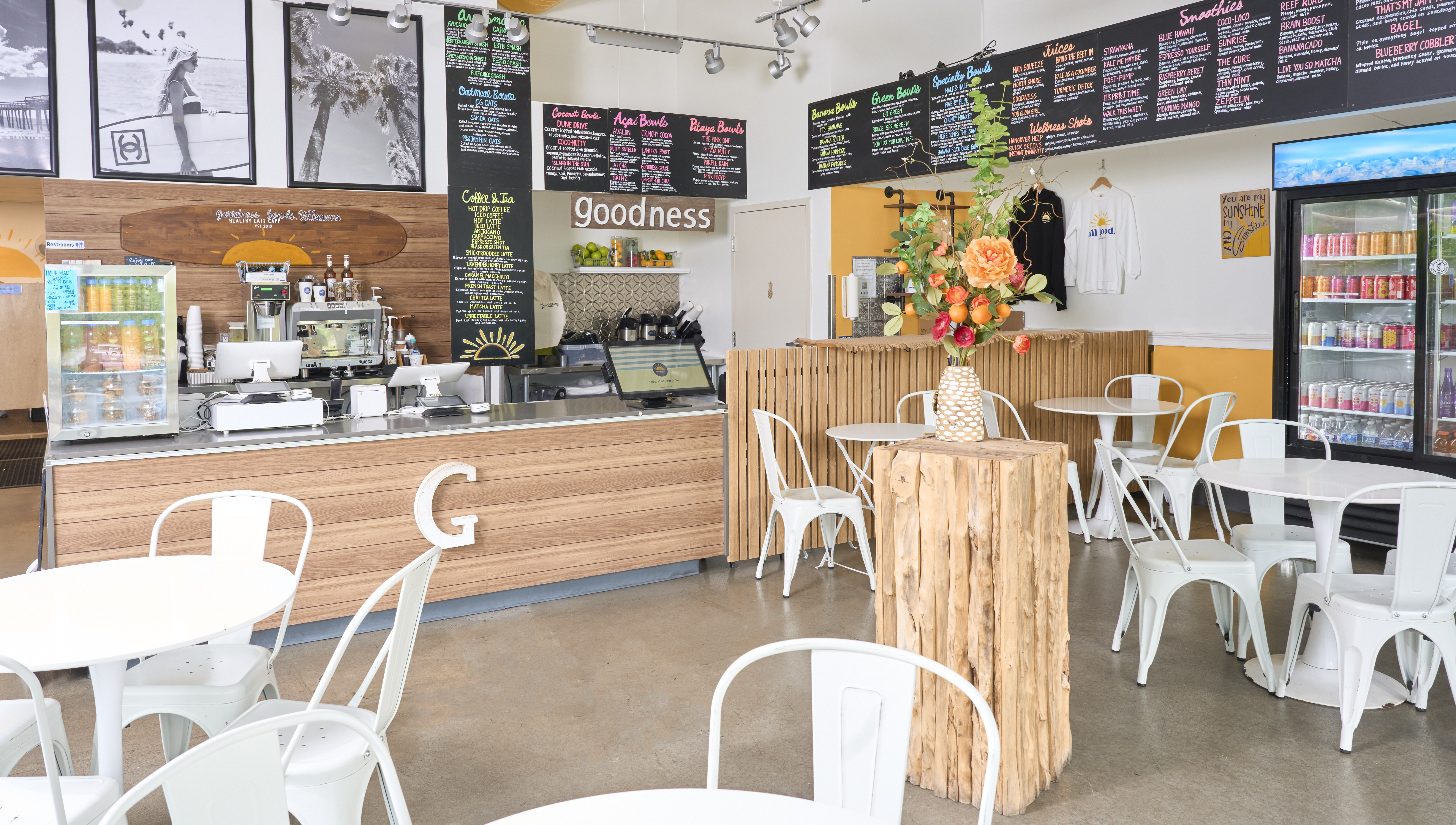
The new Paoli location of Goodness Bowls.Courtesy Goodness Bowls
In recent years, Goodness Bowls has also expanded their team, including by hiring a company president, Finn Loftus, who also lives in Montgomery County.
“People really are craving healthy options,” she said. “And they really want food that they’re able to get quickly.”
Customers also say they are drawn to the bright cafes and friendly service, according to Susan.
Goodness Bowls executives look at their move to Conshohocken as a homecoming, and are excited to be back in the borough where Susan raised Corinne and her other children.
“We want to add to the community,” Susan said, by “keeping a small, family-owned business there on a really great corner that’s built such great traditions.”
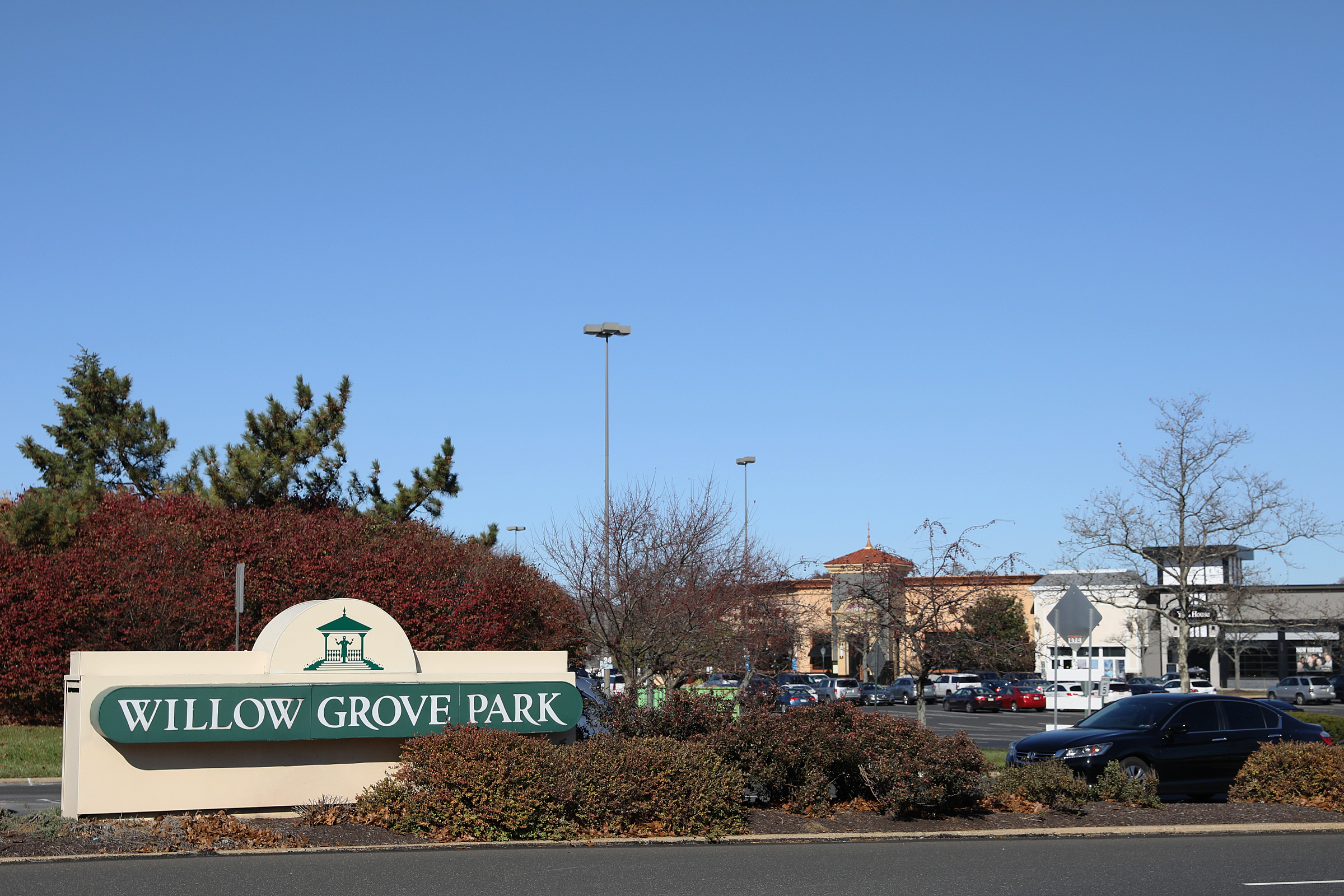
Willow Grove Park Mall is on track to be sold soon.
A representative for Pennsylvania Real Estate Investment Trust (PREIT), which owns the Montgomery County mall, said in a statement Thursday that “a lender-directed sale process is underway and expected to be completed in the near term.”
The Philadelphia Business Journal first reported the news, saying that a partnership of New York firms — Namdar Realty Group, Mason Asset Management, and CH Capital Group — were set to buy PREIT’s 725,000-square-foot section of the 1.2 million-square-foot mall, as well as its debt on the property, for an undisclosed price.
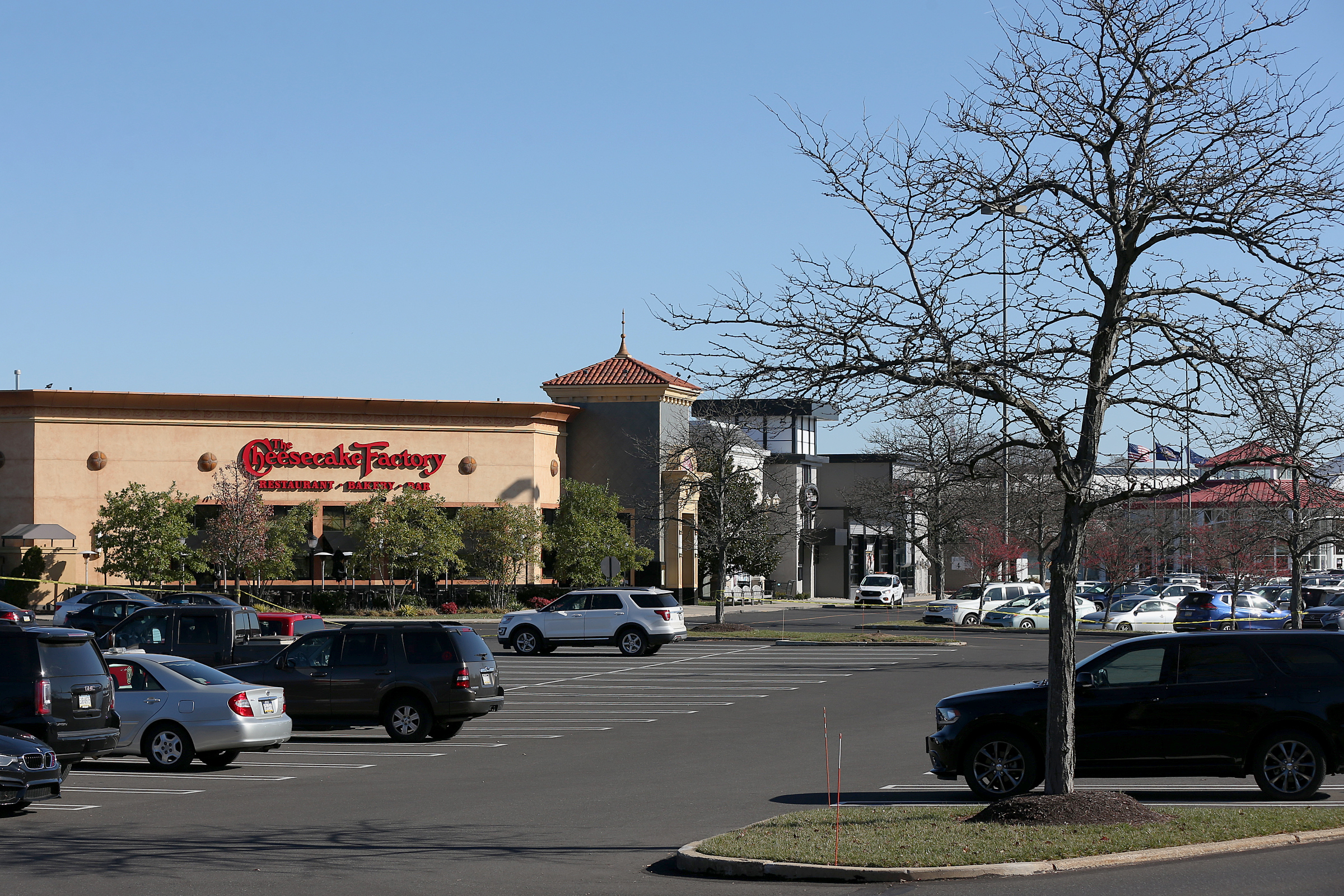
The sale would include most of the mall, including Macy’s, Cheesecake Factory, and Nordstrom Rack, but not parcels that house Primark and Bloomingdale’s, according to the Journal, citing marketing materials that have since been removed from real estate firm JLL’s website. JLL did not return a request for comment.
The Willow Grove Park Mall is shown in 2019.TIM TAI / Staff Photographer
The potential new buyers, all based in New York, did not return calls or emails from The Inquirer.
Willow Grove Park Mall would not be their first acquisition in the region.
The Willow Grove Park Mall opened in 1982 at a time when the Philadelphia suburbs were flush with shopping malls. The complex got off to a bumpy start, failing to meet its first-year sales expectations and leading some mall developers to say, as an Inquirer headline read at the time: “No more malls.”
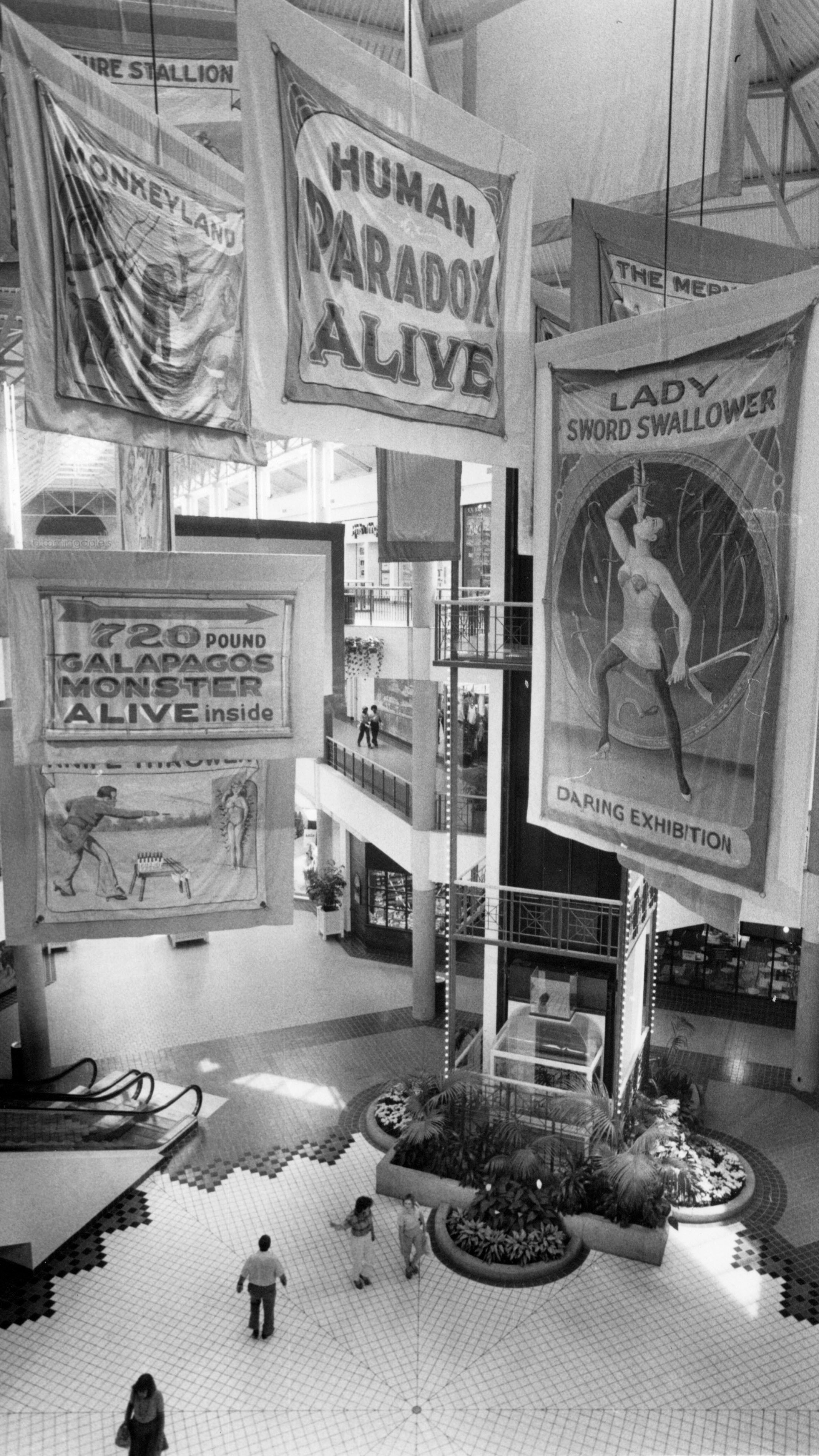
Banners hung over the elevator court in the Willow Grove Park Mall in this 1984 photo.Michael Plunkett / Staff Photographer
PREIT has had a stake in Willow Grove Park Mall since 2000, when it and the Pennsylvania State Employees’ Retirement System signed on to buy the center for $140 million.