Hailey Price grew up in Ambler and her husband, Grant, grew up in Illinois, but both had always thought about moving to a coastal area.
So when job opportunities made a move feasible this year, Grant, managing director for a financial firm and Hailey, a pediatric physician assistant, decided to head for Tampa, Fla.
“If we don’t do it now we’ll never do it,” Grant recalled saying.
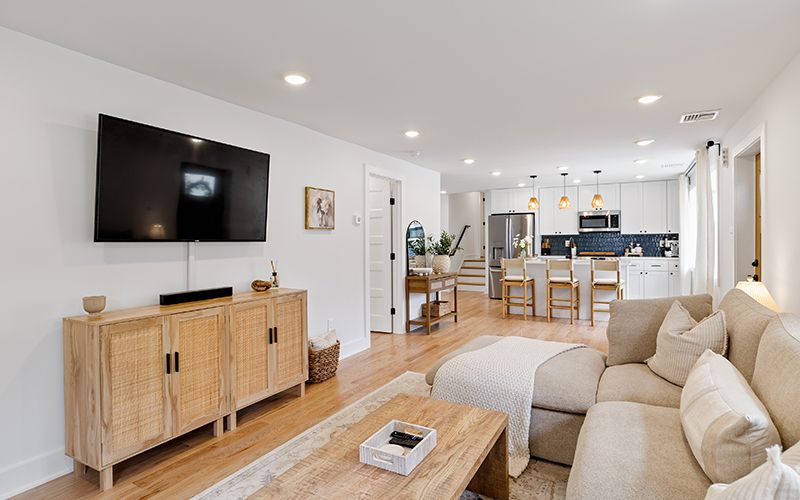
The living room of the home, which has hardwood flooring on the main floor. Handout
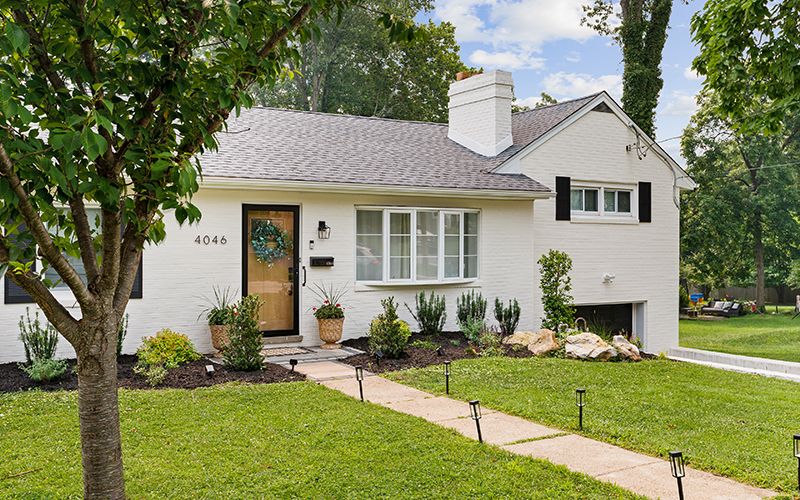
The couple’s 2,244-foot house is in Lafayette Hill, Montgomery County, which Grant called “a good middle ground without Main Line prices.” They moved there last year from the Roxborough area.
“There was a ton of yard space, and our dogs loved it,” he said. “And we loved how safe the neighborhood felt.”
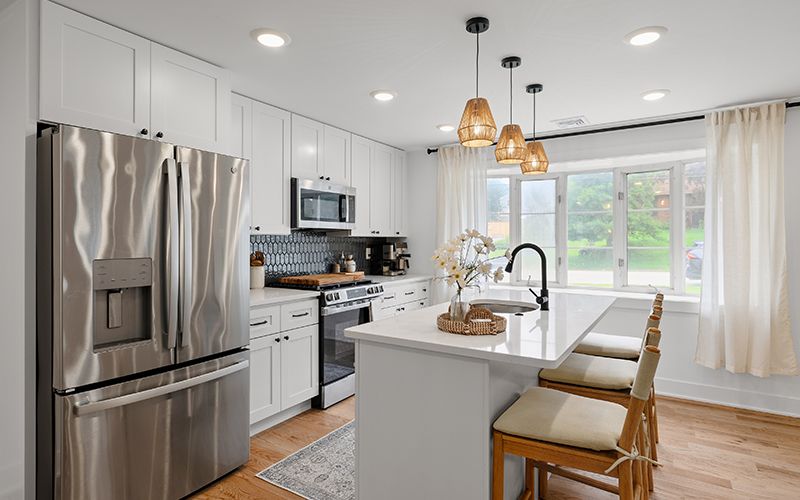
The new kitchen has a large island with breakfast seating, soft-close cabinetry, and a tile backsplash.Handout
The three-bedroom, 3½-bathroom house has hardwood flooring on the main floor and a brand new kitchen with a large island with breakfast seating, soft-close cabinetry, and a tile backsplash.
The main level also has a bedroom and laundry and the upper level has the primary bedroom and another bedroom, both with full bathrooms.
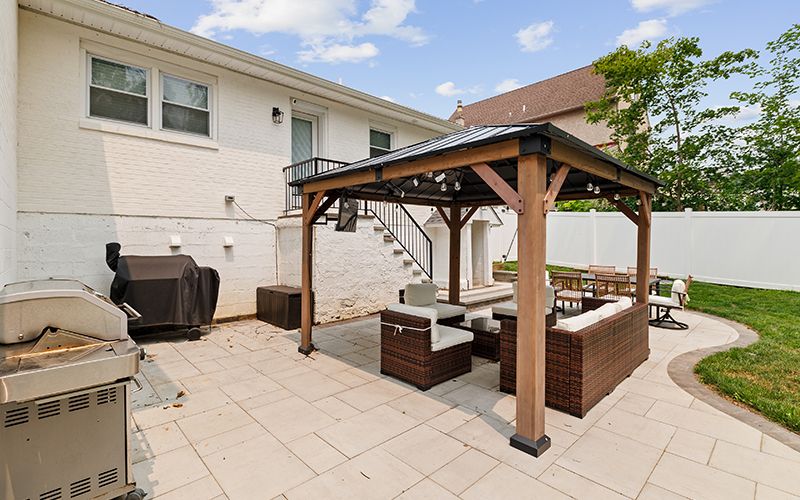
The backyard has a new slate patio, a new white vinyl fence, and a gazebo.Handout
The finished basement has a large entertainment area, an office area, and a powder room.
The backyard has a new slate patio, a new white vinyl fence, and a gazebo.
The home has an attached garage, a new roof, 200-amp electrical service, recessed lighting, and ceiling fans.
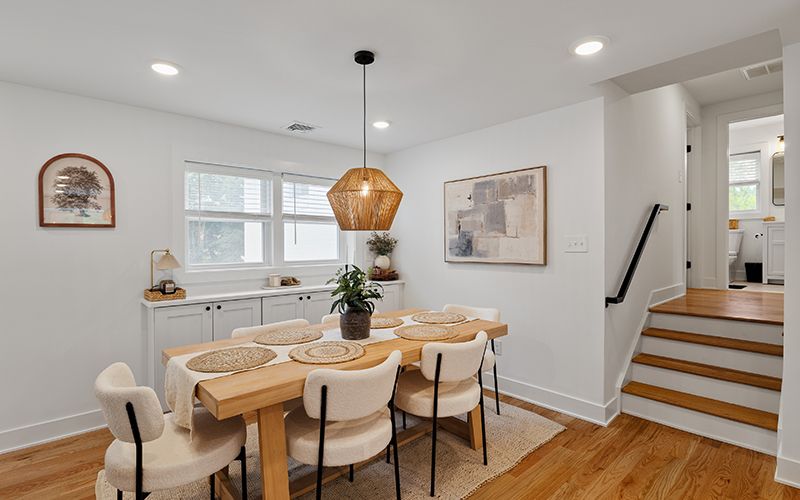
The dining area.Handout
The property is walkable to Miles Park and several neighborhood restaurants. It is close to I-476 and multiple SEPTA Regional Rail lines.
The house is in the Colonial School District.
It is listed by Jen Toadvine of Space & Co. for $715,000.
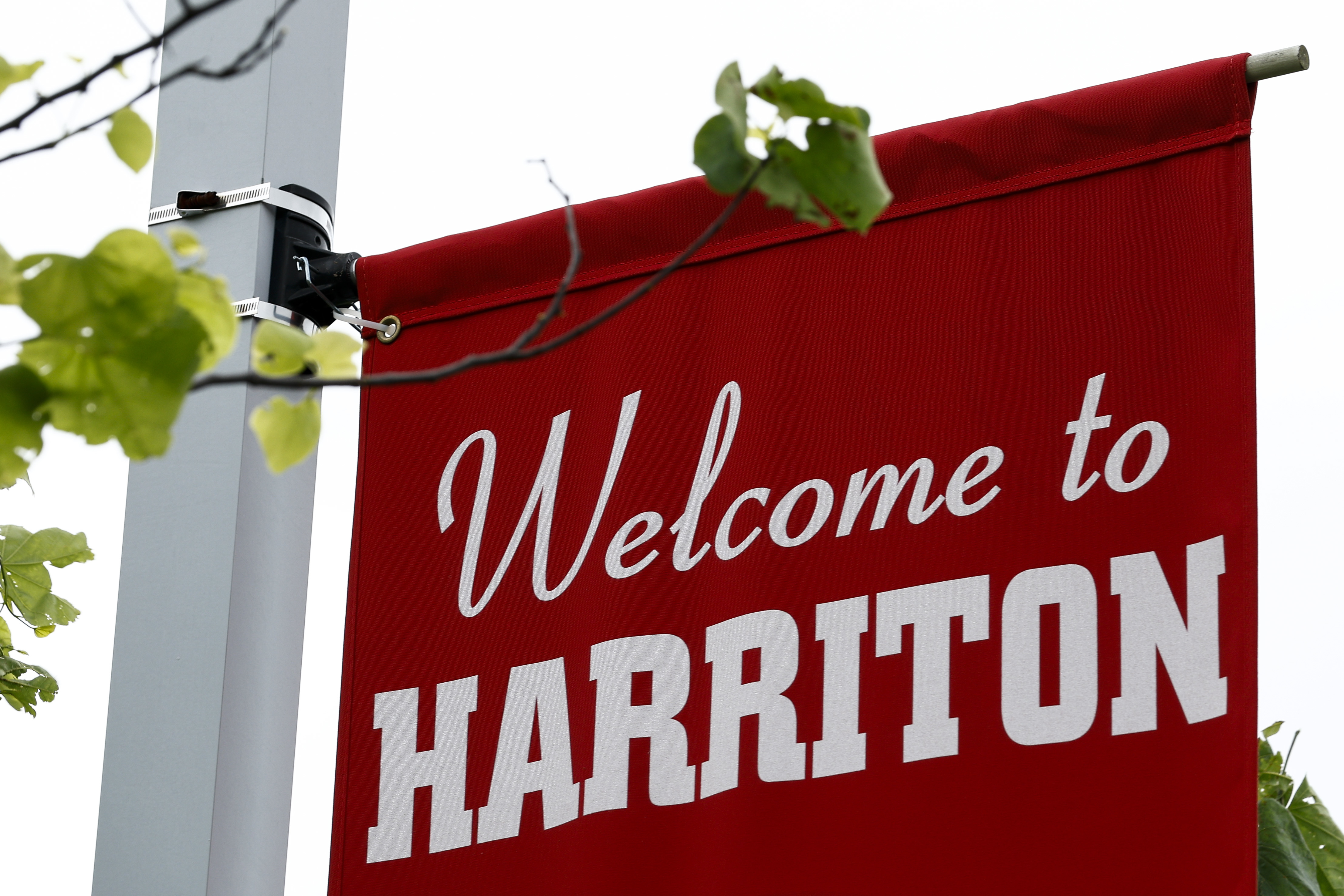
Harriton High School’s varsity football season has been suspended due to low participation, concerns over player safety, and questions about “the sustainability of maintaining a competitive program,” according to a letter sent to families on Monday.
“We recognize that this is disappointing news for our student-athletes, families, coaches, and the entire football community. We understand the time, effort, commitment, and excitement that goes into preparing for a football season, and we do not make this decision lightly,” the letter, signed by principal Stu Warshawer and athletic director Shawn Albert, read.
The Lower Merion school board in May approved the formation of a cooperative between Lower Merion and Harriton’s football programs for the upcoming school year, however the cooperative is awaiting approval from the Pennsylvania Interscholastic Athletic Association (PIAA). Under PIAA rules, schools can merge athletic teams under specific conditions, including low participation numbers or “lack of success” in a sport.
Michael Barber, chairman of PIAA District 1, which serves Bucks, Montgomery, Chester, and Delaware Counties, did not immediately respond to questions about the status of the proposed cooperative.
School officials said in the letter that the cooperative has been requested through the PIAA and that exploring the merger “may help create the participation numbers and competitive structure necessary to build a safer and more sustainable football program for our students.”
While Harriton’s varsity season will be suspended, the district is actively exploring maintaining a junior varsity season, according to the letter.
The letter to families noted that “this decision is not a decision to end football in our district.”
“The district remains committed to providing opportunities for football in the future and to identifying a sustainable path forward for our student-athletes and programs,” it stated.
Harriton’s football team played its first regular season game on Aug. 28, losing to Pottstown 53-0. Harriton was scheduled to play Radnor, its first conference game of the season, on Sept. 3.
This suburban content is produced with support from the Leslie Miller and Richard Worley Foundation and The Lenfest Institute for Journalism. Editorial content is created independently of the project donors. Gifts to support The Inquirer’s high-impact journalism can be made at inquirer.com/donate. A list of Lenfest Institute donors can be found at lenfestinstitute.org/supporters.
After graduating nursing school and navigating the loss of her mother, Corinne Kucewicz was looking for something positive to focus her energy on. That’s when she found Brandywine Roller Derby, Chester County’s only league.
Now the league’s president, overseeing roughly 26 members, Kucewicz, 28, worries about Brandywine’s future as they struggle to find a permanent and affordable home in Chester County to practice, hold games, and fundraisers. Without any roller rinks in the county, they’ve ended up at their current space at a school facility in Exton. It offers enough room for their track, but with a slippery — and sometimes muddy — floor that can make skating conditions iffy, the location is starting to hurt retention.
“It worries me if we don’t find another space that our league is going to go kaput,” said Kucewicz, who goes by Maria Von Scrapp on the track. “That would obviously be worst-case scenario, but unfortunately, as one of the leaders of the league, that’s something I have to worry about.”
Corinne “Maria Von Scrapp” Kucewicz, captain of Brandywine Roller Derby, sits for a portrait at the 422 Sportsplex in Pottstown on Saturday, Aug. 22, 2026.Kriston Jae Bethel / For the Inquirer
Roller skating has seen its peaks and valleys. There was a boom as far back as the 1880s. More recently it’s been a fixture of school trips or birthday parties. Roller derby, which started in 1935, has a long history itself, transforming from a race, to a full-contact sport, to a scripted professional-wrestling-esque performance.
Today’s roller derby — a DIY, gender-expansive, and LGBTQ+-friendly sport — cropped up in the early 2000s. Gone are many of the banked tracks, the raised, curved oval that was synonymous with derby of the ’70s and ’80s. Many leagues rent spaces and play on “flat tracks,” which is exactly how it sounds.
COVID-19 offered a bit of a paradox for roller skating and derby. The pandemic led to the closing of rinks across the country, as many large venues struggled with shutdowns. It simultaneously put roller derby leagues on pause, with skaters unable to hold practices or bouts (i.e. games), eating into funds they had raised through selling tickets and skaters’ dues. Some leagues collapsed.
Members of the Brandywine Roller Derby warm up on the track before a bout against the Dirty Jersey Roller Derby Violet Uprising at the 422 Sportsplex in Pottstown. Kriston Jae Bethel / For the Inquirer
As pandemic restrictions eased, and roller derby leagues were able to practice again, they saw a depleted returning membership but heightened interest in the niche sport.
Kucewicz was among them. She showed up with a cohort of other interested skaters to a 2024 recruiting event. The team took her in despite having no past skating experience, and taught her how to skate, how to fall safely, how to hit, and how to take a hit.
“It was an amazing mix of friendly people and people that I saw myself being friends with,” Kucewicz said. “That was something that I definitely needed at the time, and is still important.”
Before the pandemic, Brandywine had a large league that was doing well, Kucewicz said. When they were able to start skating again after, they were down to six returning skaters but also had a crowd of interested newbies.
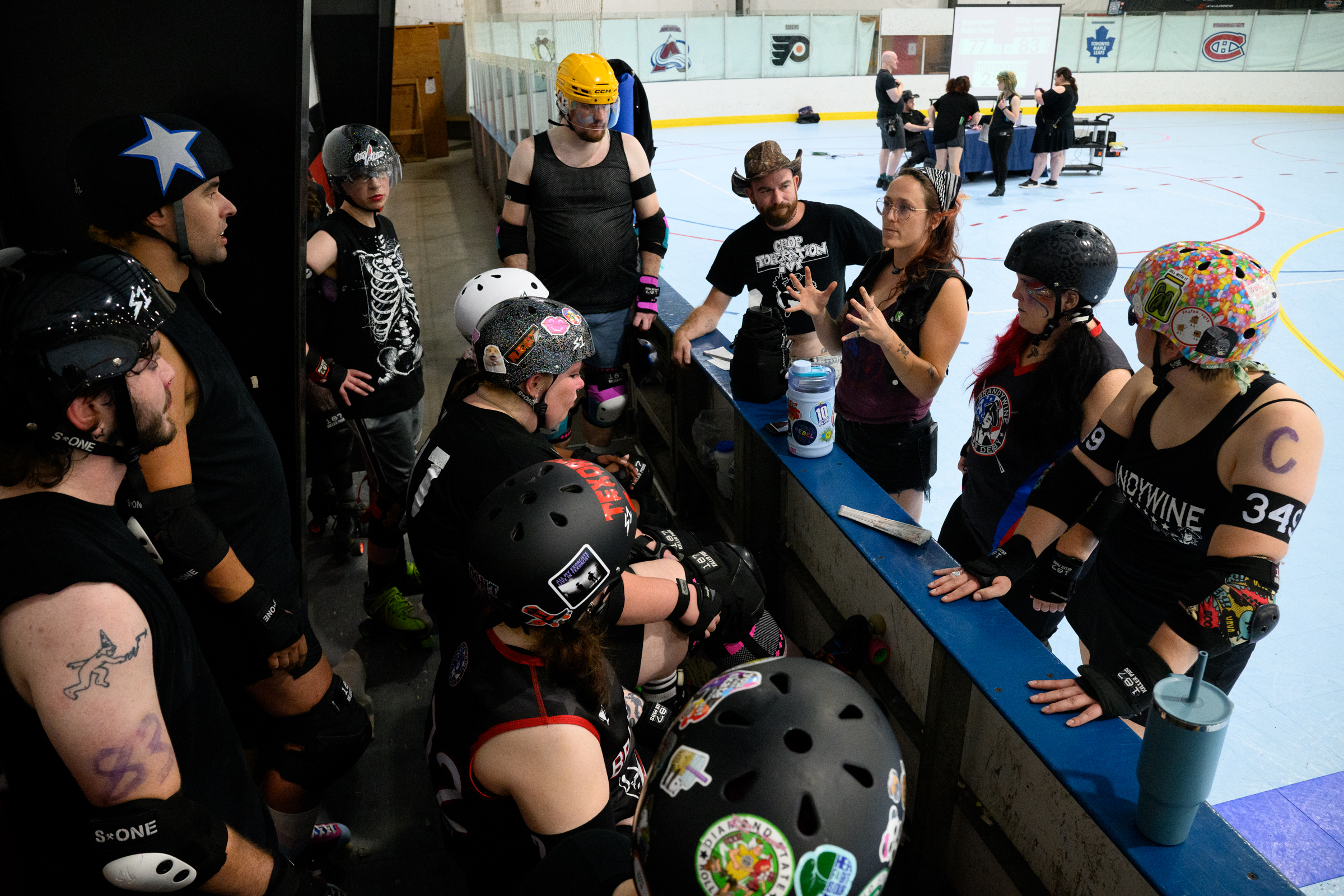
Rachael “The Texorcist” Gable laughs alongside teammates. Kriston Jae Bethel / For the Inquirer
Finding a space has proven to be difficult. When the league was founded in 2010 by a group of skaters, they met at the Caln Roller Rink in Downingtown. But a changing of the rink’s ownership ultimately closed the rink.
The league ended up at Collegium Charter School in Exton two years ago, practicing in an outdoor-indoor, climate-controlled space. The floor is, essentially, plastic tiles on top of dirt. When it rains, mud seeps through.
The floor itself is uneven: On one side of their track, it goes uphill; the other, downhill. Aside from scrimmaging, derby is a lot of learning and drilling fundamentals, focusing on agility and footwork. A slippery, uneven floor makes that difficult.
“Members have left and gone to other leagues because they’re afraid, because our floor is so slippery, that they’re going to injure themselves. Or they just want a higher level of derby that we can’t really provide at this moment because our floor is not that great,” Kucewicz said.
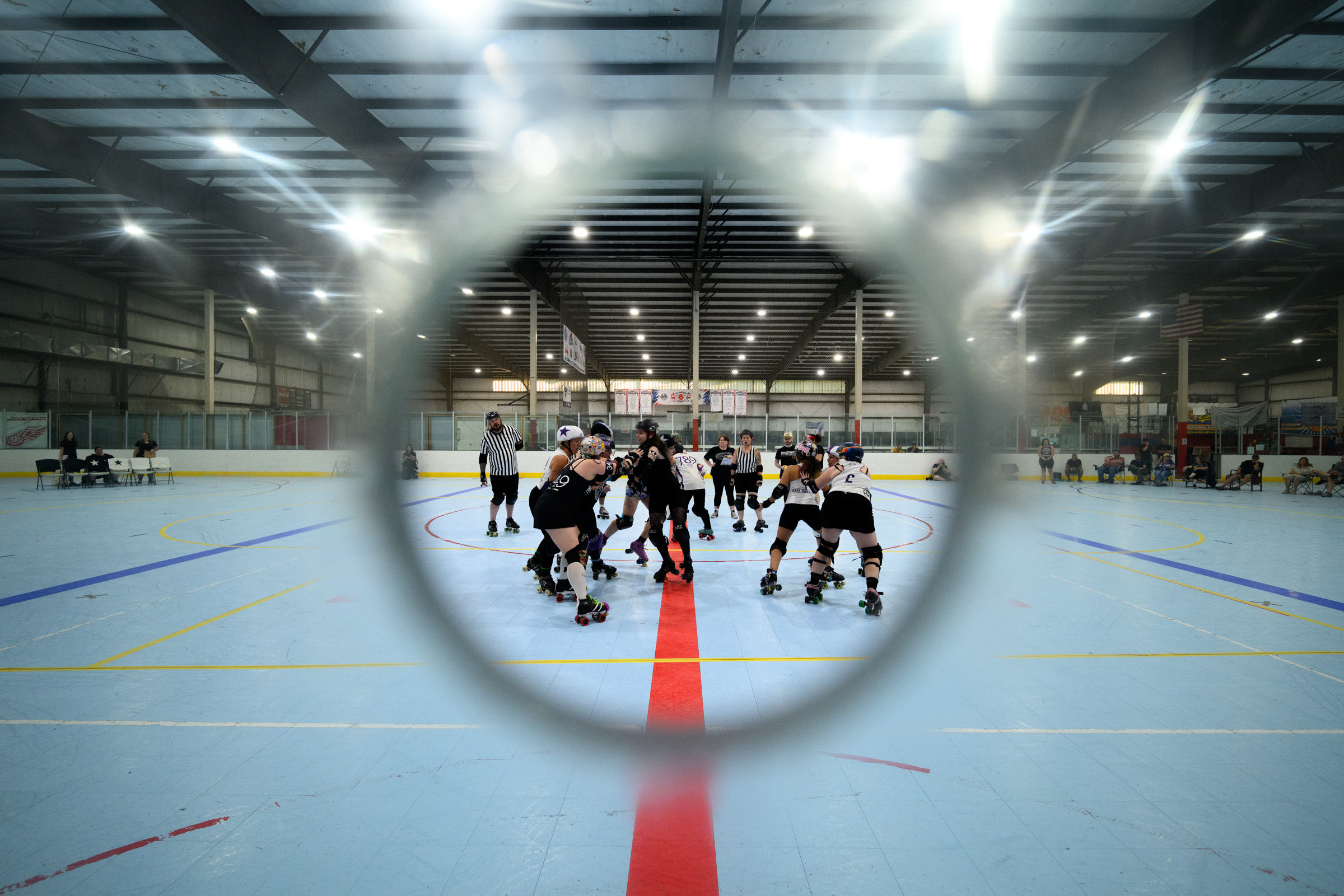
Brandywine Roller Derby and Dirty Jersey Roller Derby Violet Uprising compete during a bout at the 422 Sportsplex in Pottstown. Kriston Jae Bethel / For the Inquirer
In their hunt, they’ve been priced out of anywhere that can be an option for them, said Christi Tuminelli, a league skater who has been overseeing the search for a new space. Most warehouse spaces are going for $12 to $24 per square foot. Their budget is closer to $2 per square foot. They’ve reached out to more than 30 properties. Most have gone quiet.
Others don’t work, either because the property doesn’t fit the size of the track they need, or the owner isn’t interested in sports. They also have had to contend with worries about damaging the floor, which they say is a nonissue.
The league is open-minded about its future home; Tuminelli was contacting farms about their barns. They need an open space, with minimal columns in the way. The track spans 108 by 75 feet, which is roughly 8,100 square feet. They want to stay in Chester County, with the hope of getting more involved with the community when they have a stable location. Ideally, they’ll be able to host the public for games or fundraising events. Right now, the team hosts its bouts in Pottstown, in Montgomery County. They’re breaking even between renting the space and raising funds from ticket sales, they said.
“Right now we’re at an impasse because we need the space to generate the income, but we can’t afford the space without new people,” Tuminelli said. “We are a working nonprofit that can pay sustainable rent. We just can’t compete with the market rates in Chester County.”
While derby is a sport, it’s also a community.
Najah “Chaotic Condor” Coon from Brandywine Roller Derby sits on the bench during a recent bout. Kriston Jae Bethel / For the Inquirer
Tuminelli — or Mother Mayhem, on the track — went to her first bout wracked with nerves but walked away feeling excited and empowered. Tuminelli, 42, was never a “sports girlie” growing up, she said. But if she had known what they offered, maybe she would have joined earlier.
With other teams an hour or so away from the suburbs, it’s an important to have the outlet within their own community, Tuminelli said.
“When I moved here from New York, I didn’t know anybody. And having a kid that was young and being in a new space, it’s scary as a new mom,” she said. “I wanted something for me, and this was great. Derby just allows you to do things. It raises your confidence.”
This suburban content is produced with support from the Leslie Miller and Richard Worley Foundation and The Lenfest Institute for Journalism. Editorial content is created independently of the project donors. Gifts to support The Inquirer’s high-impact journalism can be made at inquirer.com/donate. A list of Lenfest Institute donors can be found at lenfestinstitute.org/supporters.
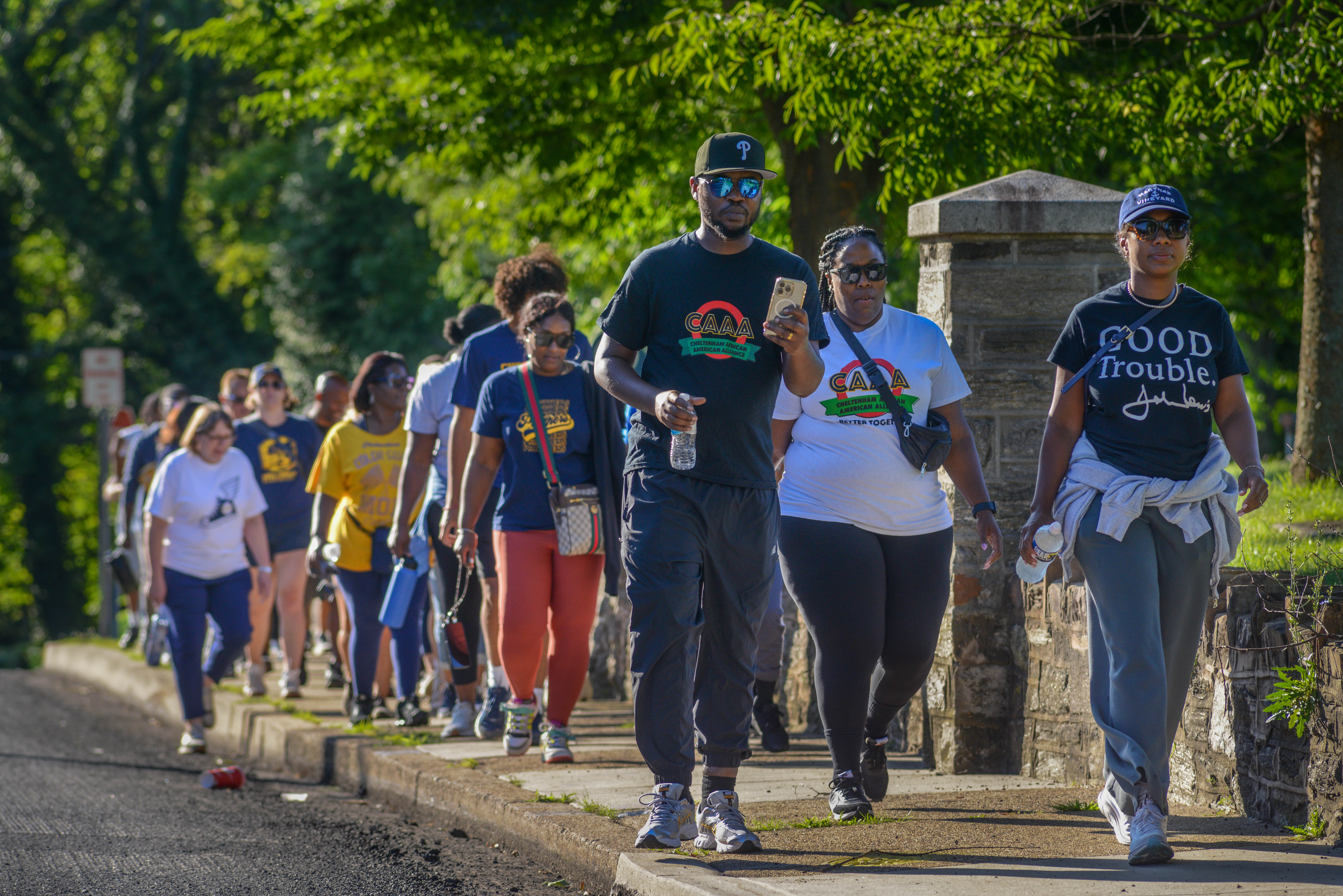
After a football hazing scandal led to criminal charges for coaches and players, about 35 Cheltenham School District parents, students, and school board members marched across town Saturday morning to show their support for students.
The purpose of the march, just days before school starts, was to show students that the community cares about what they are going through, and is calling on the school board to make needed changes, organizers said. Marchers also said it is important to portray the district in a positive light.
“We need to come together as a community, address needed changes, and also push back against some of the false information out there,” said Ikysha Dearry, president of the Cheltenham African American Alliance.
Dearry said the school has faced a barrage of negative attention online from opportunists who want to bring issues like race and the region’s changing demographics into the discussion. “That can have an impact, not just on how our district is viewed, but on how our students are viewed,” she said.
School board director Caroline Watts was one of the first to arrive in the parking lot behind the Cheltenham School District building Saturday morning. She wore athletic shoes for the nearly two-mile walk to the high school. Watts said the message of the march was a “delicate balancing act.”
”We’re addressing what happened, making sure it doesn’t happen again, and we’re starting the school year,” Watts said.
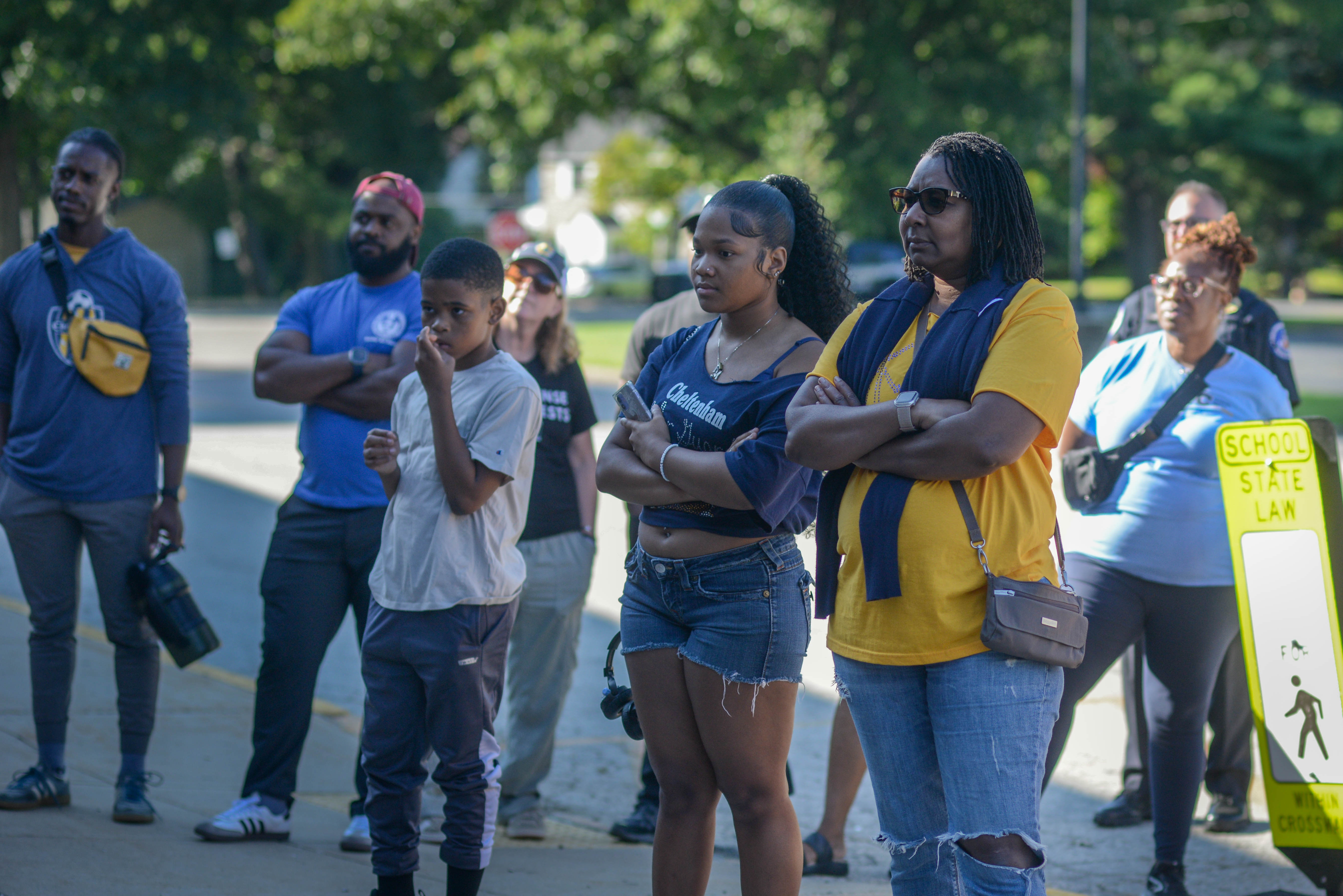
Participants listens as Ikysha Dearry, president of Cheltenham African American Alliance (not shown), addresses the crowd after a community march was held as residents are banding together before the new school year begins to advocate for students, Saturday, Aug. 29, 2026, on Ashbourne Road near the Cheltenham School District Administration Building in Elkins Park. Dr. Brian Scriven resigned as superintendent of the Cheltenham School District in the aftermath of Cheltenham High School football coaches and players being charged with assault in a locker-room hazing incident. Dr. Chris McGinley recently took over as interim superintendent.William Thomas Cain / For The Inquirer
“It’s horrific, what happened,” board vice president Jenny Lowman said before the march. “To think that it happened more than once, it’s also horrifying. Those coaches were responsible for these children. And two of the coaches were parents of students on the football team.”
According to prosecutors, the coaches urged the player not to tell his parents. And according to a grand jury report, high school employees downplayed a complaint from the player’s mother and took then-head coach Terence Tolbert at his word that he had not instructed the boy not to tell his mom.
The report faulted the district’s handling of the situation from the start, saying employees had included Tolbert in their investigation and failed to discover there were two assaults. Employees were also confused about their duties to report child abuse, and at least five football coaches did not have clearances related to mandatory-reporter training, according to the report.
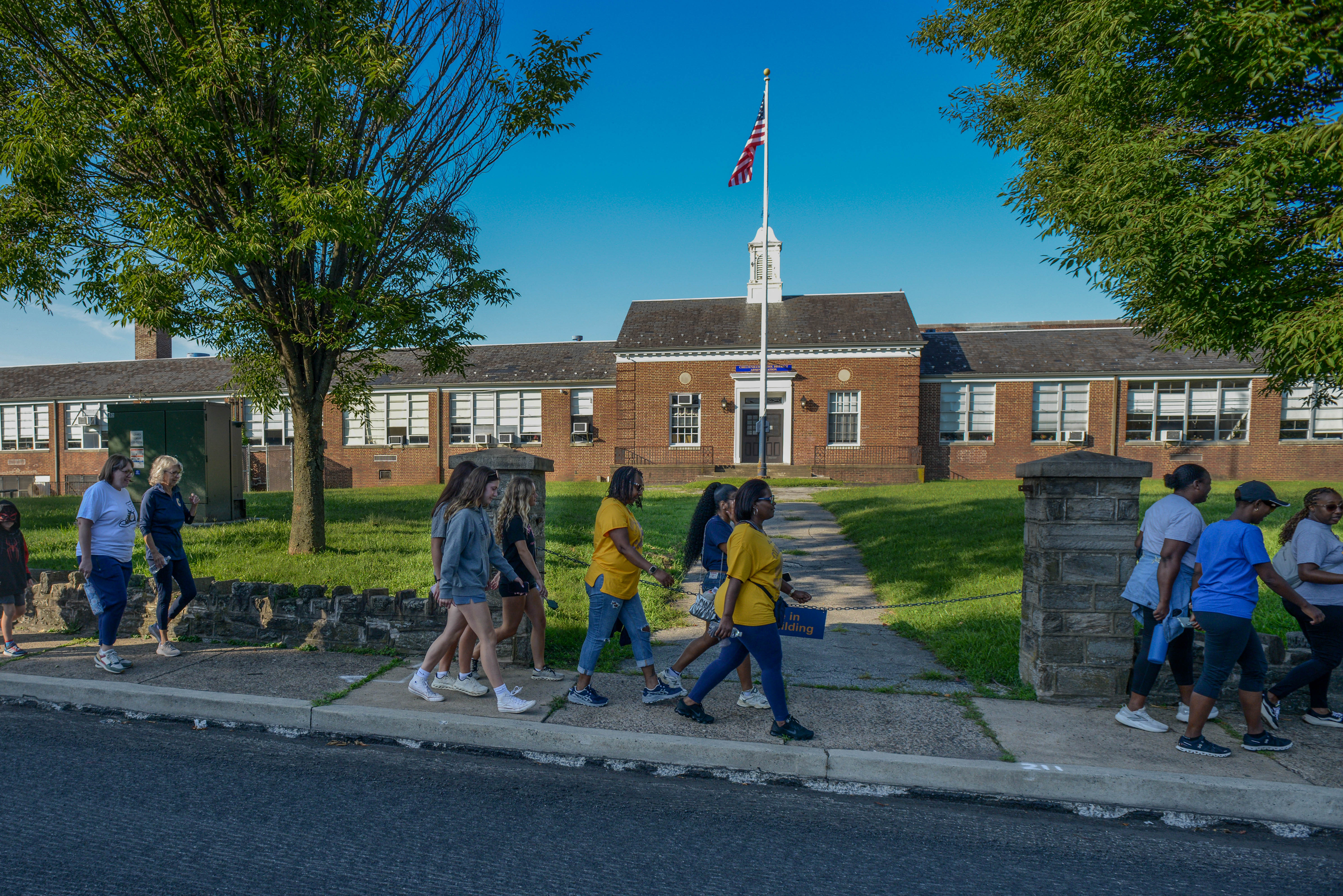
A community march was held as residents are banding together before the new school year begins to advocate for students Saturday, Aug. 29, 2026, on Ashbourne Road near the Cheltenham School District Administration Building in Elkins Park. Dr. Brian Scriven resigned as superintendent of the Cheltenham School District in the aftermath of Cheltenham High School football coaches and players being charged with assault in a locker-room hazing incident. Dr. Chris McGinley recently took over as interim superintendent.William Thomas Cain / For The Inquirer
Cheltenham parent Aubria Nance said the alleged assaults have “absolutely shaken” the students. Nance, a board member of the Cheltenham African American Alliance, said students need to know their concerns are being taken seriously.
“We want the board and the interim superintendent to know that we are advocating for the safety of our students,” Nance said.
Cheltenham parent Kisha Rodwell-Green said the type of hazing she believes to have happened is called “broomsticking.” Searching online, she said, she learned that many other schools had dealt with this.
Rodwell-Green wants the board to approve funding to work with an advocacy group called Stop Hazing. She said the athletic department needs to build a “culture of trust,” one where athletes feel comfortable speaking up if something does not seem right.
“We know we have a lot to correct in our community, and we are starting to see that work being done,” said Rodwell-Green, who also serves as president of a parent-teacher organization called United Parents Group.
Jackson Scott, a student at the high school, speaks to a reporter after a community march was held as residents are banding together before the new school year begins to advocate for students Saturday, Aug. 29, 2026, on Ashbourne Road near the Cheltenham School District Administration Building in Elkins Park. Dr. Brian Scriven resigned as superintendent of the Cheltenham School District in the aftermath of Cheltenham High School football coaches and players being charged with assault in a locker-room hazing incident. Dr. Chris McGinley recently took over as interim superintendent.William Thomas Cain / For The Inquirer
Still, she said, the issues Cheltenham High faces are not unique to the school, and media attention from the hazing incidents has cast an unfair light on a good school.
“Comments on Facebook got very nasty,” Rodwell-Green said. “There’s a microscope on Cheltenham, and we want to take that microscope off.”
For some community members, the criminal charges added fuel to complaints that the district has not been taking safety seriously enough. Parents of football players said they had urged the district not to hire Tolbert, citing concerns he let bullying go unchecked during his one-year stint as Abington’s head football coach.
The district, which in May canceled the forthcoming football season, has responded to the charges by commissioning an outside investigation and hiring a new superintendent. Chris McGinley, a veteran educator who had served as Cheltenham’s superintendent two decades ago, was approved by the board on Aug. 18 to lead the district under a one-year contract. He replaces Brian Scriven, who resigned last month.
The changes also have forced high school students to grapple with the fallout.
Cheltenham senior Jackson Scott, 17, had mixed feelings. Scott, a soccer player, said it was unfair that his friends on the football team had their seasons canceled. Steps must be taken to stop such incidents from happening again, he said, but he also wondered if some of the details of the hazing incidents had been exaggerated.
Senior Isabella Pero, 17, said she was disgusted that other students said nothing despite knowing about the hazing.
Pero said she was shocked to learn that Tolbert, who taught one of her classes and seemed like a nice person, was involved. The same goes for the students involved in the alleged assaults, she said. She struggled to square her impression of the students with the violence.
“In my opinion, in the moment, you’re so hopped up in wanting to win a game, and have a good season, that you make those tainted, not good decisions,” Pero said.
Parent Michelle Gregorio said she hopes athletic director Sam Sheridan will help the district move forward. “And we don’t want to sweep under the rug what happened, but we want to let students know we’re addressing it.”
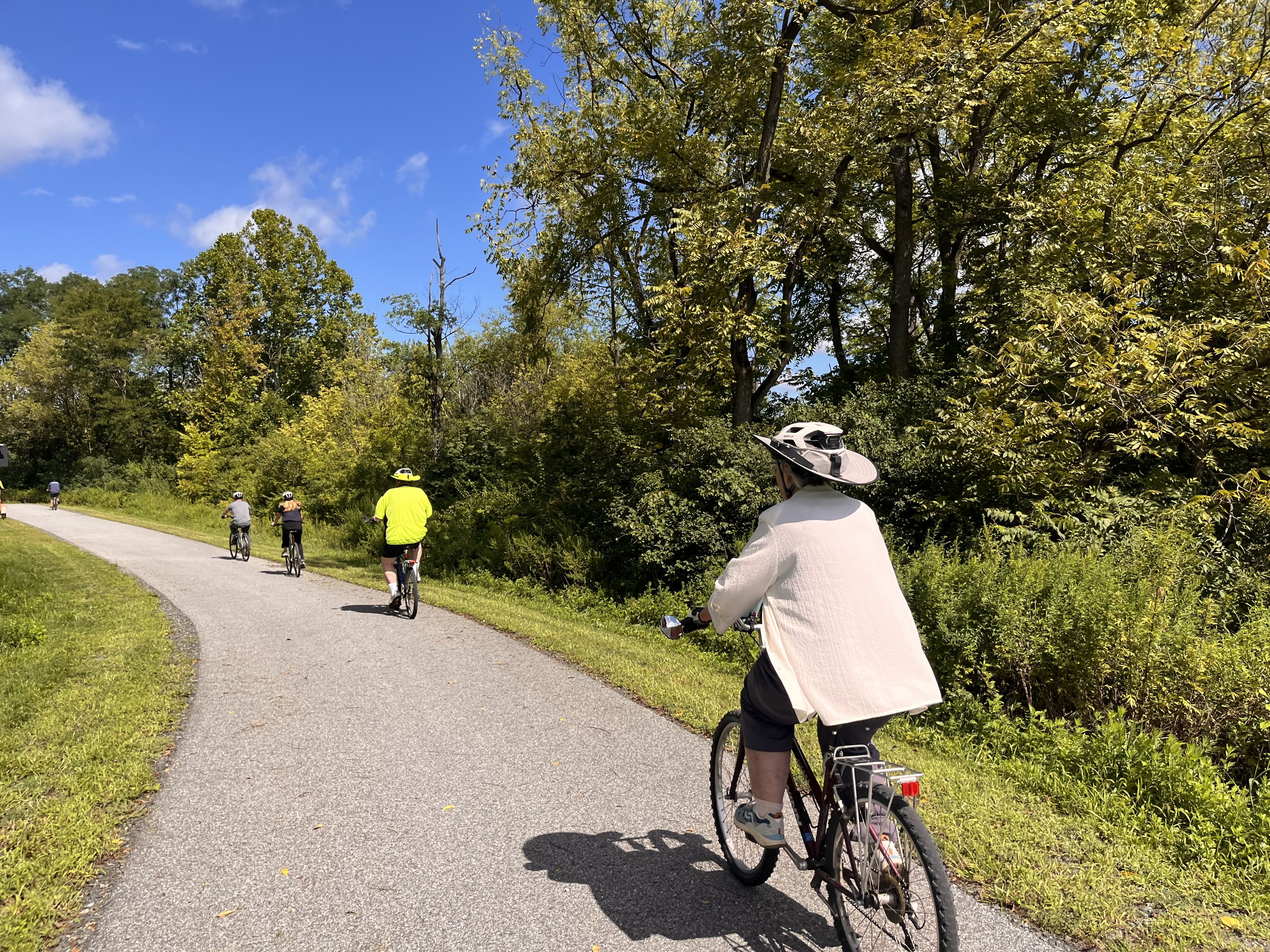
Towering 80 feet above the Schuylkill and shaped by its colossal concrete arches, the Manayunk Bridge is a key connector in the region’s trail system and a link between Philadelphia and its suburban neighbor, Lower Merion Township.
While the trail is beloved by city dwellers and suburbanites alike, a mid-trail traffic pattern switch for bikers and pedestrians has confused some users and prompted one reader to write in, asking The Inquirer to investigate. According to city and township officials, the traffic flow switch-up midway across the bridge is no accident.
The Manayunk Bridge connects Manayunk to Bala Cynwyd. Monica Herndon / Staff Photographer
The Manayunk Bridge connects the 80-plus mile Schuylkill River Trail with the Cynwyd Heritage Trail, a 2-mile multiuse path that runs along an unused segment of SEPTA tracks in Lower Merion. Much of the trail was once SEPTA’s Ivy Ridge line, which connected Philadelphia with Manayunk via Bala Cynwyd, but was truncated in the 1980s due to poor track conditions. The trail’s completion in 2011, and extension in recent years, has marked a major transformation for the previously underutilized corridor of Bala Cynwyd.
Penn Valley resident J.J. Cutuli enjoys running and biking with his kids on the Cynwyd Trail.
“We really love the pedestrian bridge. We really love the trail,” Cutuli said.
But halfway across the Manayunk Bridge, “there’s this curious little thing that happens,” Cutuli said. The trail’s traffic pattern switches. The bicyclist side becomes the pedestrian side, and vice versa.
“I’m kind of a rule-follower. One of my kids is a rule-follower, and he asked me that question. He was like, ‘What side should I be on? Should I be on this side? Should I be on that side? What are the rules of the road?’” Cutuli said.
Unable to summon an answer himself, Cutuli wrote into Curious Lower Merion, The Inquirer’s forum for answering questions about the Lower Merion community.
Chris Leswing, Lower Merion’s director of building and planning, said the traffic pattern switch was a deliberate choice to slow bikers traversing the downward slope from Lower Merion to Manayunk.
It’s “easy to speed through areas where people may linger and watch the river” and the “idea was that bikers would need to be aware of the pavement markings to check their speeds,” Leswing said in an email.
The city concurred.
The switching of the bike and pedestrian zones was designed to slow bikes down and allow users to “experience both sides of the bridge and the amazing views,” Ra’Chelle Rogers, spokesperson for Philadelphia’s parks and recreation department, said in an email.
The traffic pattern switch was in response to “what was heard from the public and stakeholders,” according to Rogers.
Are trail users following the rules? Not completely.
On one Reddit post, cyclists said the traffic pattern change and accompanying signage “makes zero sense” and “could not be more Looney Toons.” Most cyclists and pedestrians just stay to the right, commenters said.
This suburban content is produced with support from the Leslie Miller and Richard Worley Foundation and The Lenfest Institute for Journalism. Editorial content is created independently of the project donors. Gifts to support The Inquirer’s high-impact journalism can be made at inquirer.com/donate. A list of Lenfest Institute donors can be found at lenfestinstitute.org/supporters.
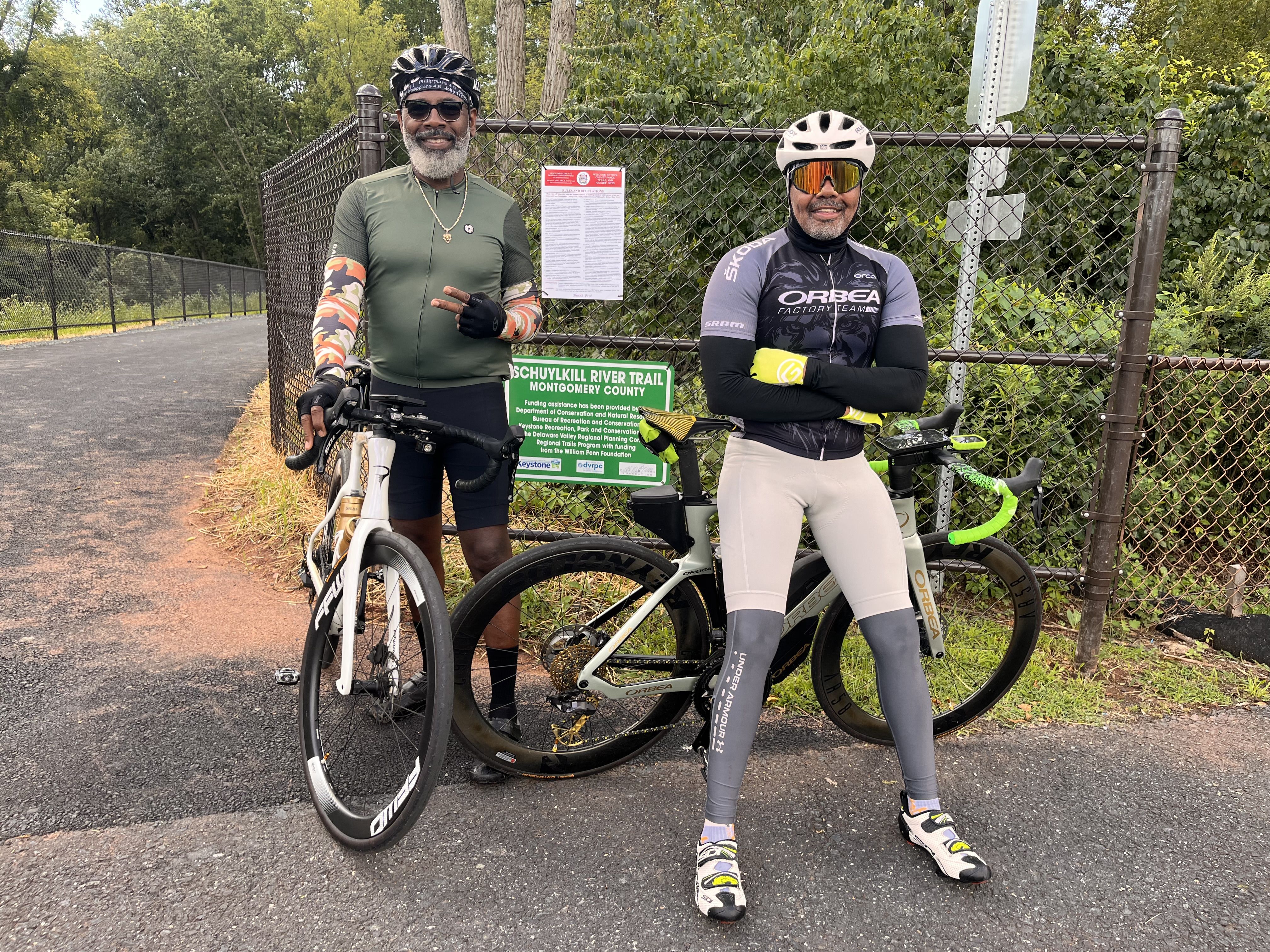
CyclistsAlvin Morris and Rick Young departed Philadelphia via Shawmont Avenue on the Schuylkill River Trail on Tuesday morning for a heart-pumping, 75-mile round trip ride.
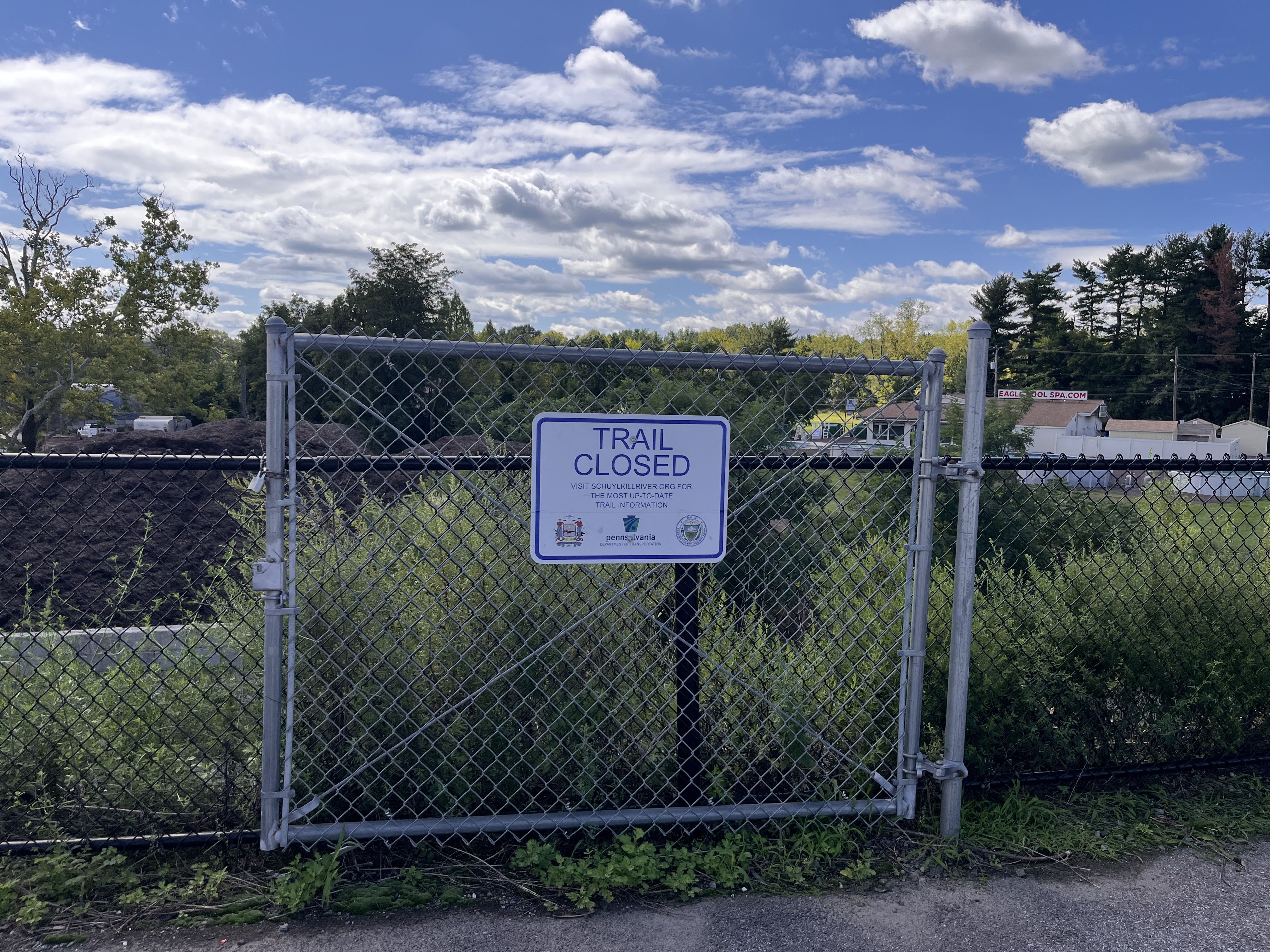
On previous trips, they, like thousands of otherriders, had to stop at a gate where the trail abruptly ended near Pottstown and decide whether to risk traveling a busy alternate route.
No more.
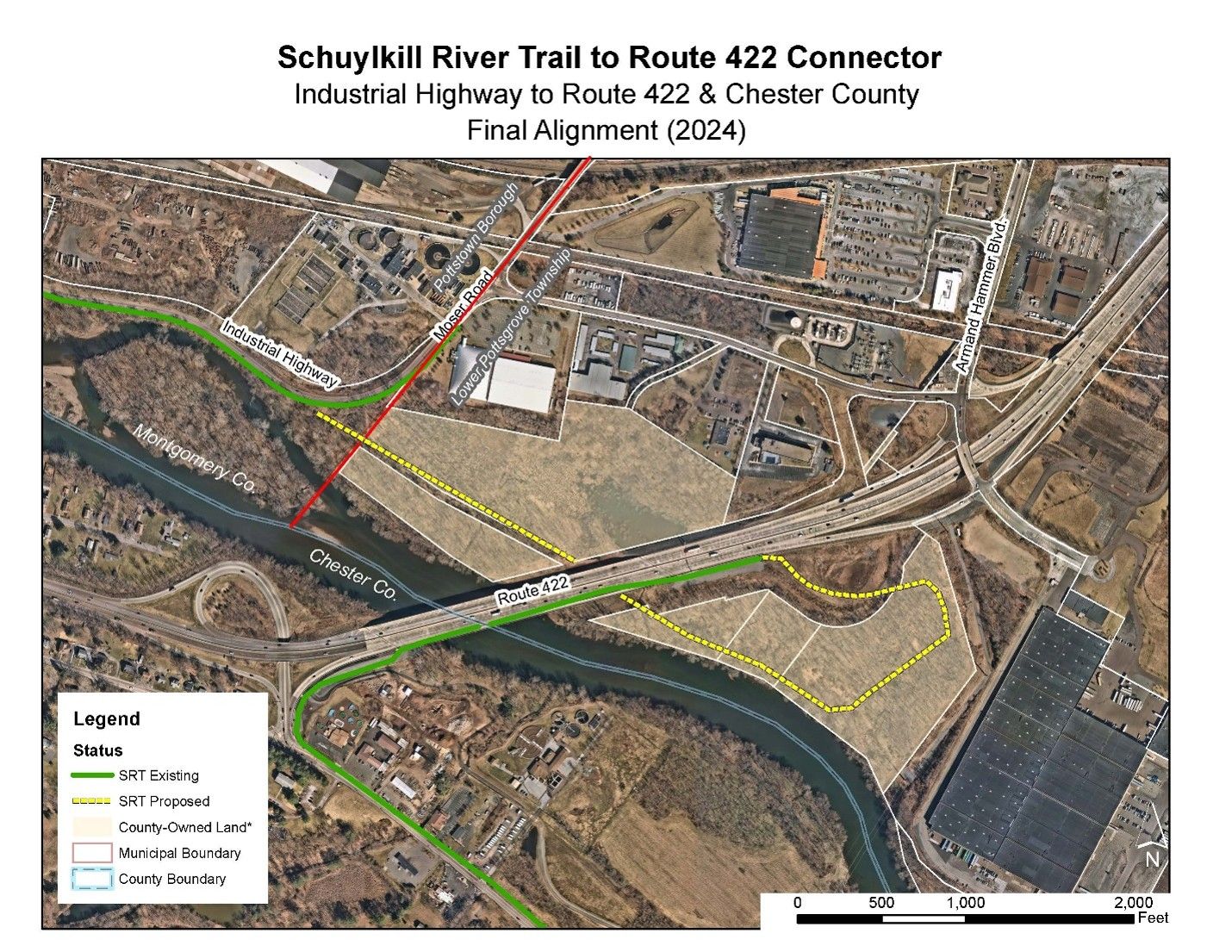
Schuylkill River Trail organizers are celebrating the completion of a nearly one-mile connector in Montgomery County that gives cyclists a clear 70-mile path from Philly to Reading. The connector took about 10 years from planning to its Aug. 19 opening.
“I just found out about the connector Sunday,” Young said. “I love it. I told Al about it. We’re preparing for the [city-to-Shore] MS ride, so we need to get in some distance.”
The duo planned to continue on the Schuylkill River Trail for a few more miles past the connector before returning to Philly.
A Montgomery County Planning Commission map of the new Schuylkill River Trail connection between Industrial Highway and the Route 422 bridge near Pottstown. The 0.9-mile section of paved asphalt trail is now open, providing an unbroken path from South Philadelphia to Reading.Frank Kummer
‘A really, really big deal’
Elaine Paul Schaefer, executive director of the nonprofit Schuylkill River Greenways, says the connector is more than just a new trail segment.
“It’s a really, really big deal,” Schaefer said. “On many, many levels.”
Schaefer and others believe the unbroken 70-mile stretch could be a tipping point for cycling tourism because it is long enough for cyclists to plan trips that allow them to linger in towns for brews and food, or overnight stays, she said.
“At that point, the economic impact to towns along the way really exponentially increases,” she said.
Her group manages the Schuylkill RiverGreenways National Heritage Area,connecting people to the river and trail. Schuylkill RiverGreenways has its office in Pottstown, but manages 40 miles of the trail in Berks and Schuylkill Counties, raising money to help maintain it.
The new connector allows riders pedaling south from Chester County to ride parallel to Route 422 in Pottsgrove Township, Montgomery County, then loop under the busy highway and continue into Pottstown Borough.
“The trail now connects the population centers of Philadelphia to Montgomery County and Reading,” Schaefer said. “Soon, it will connect beyond that.”
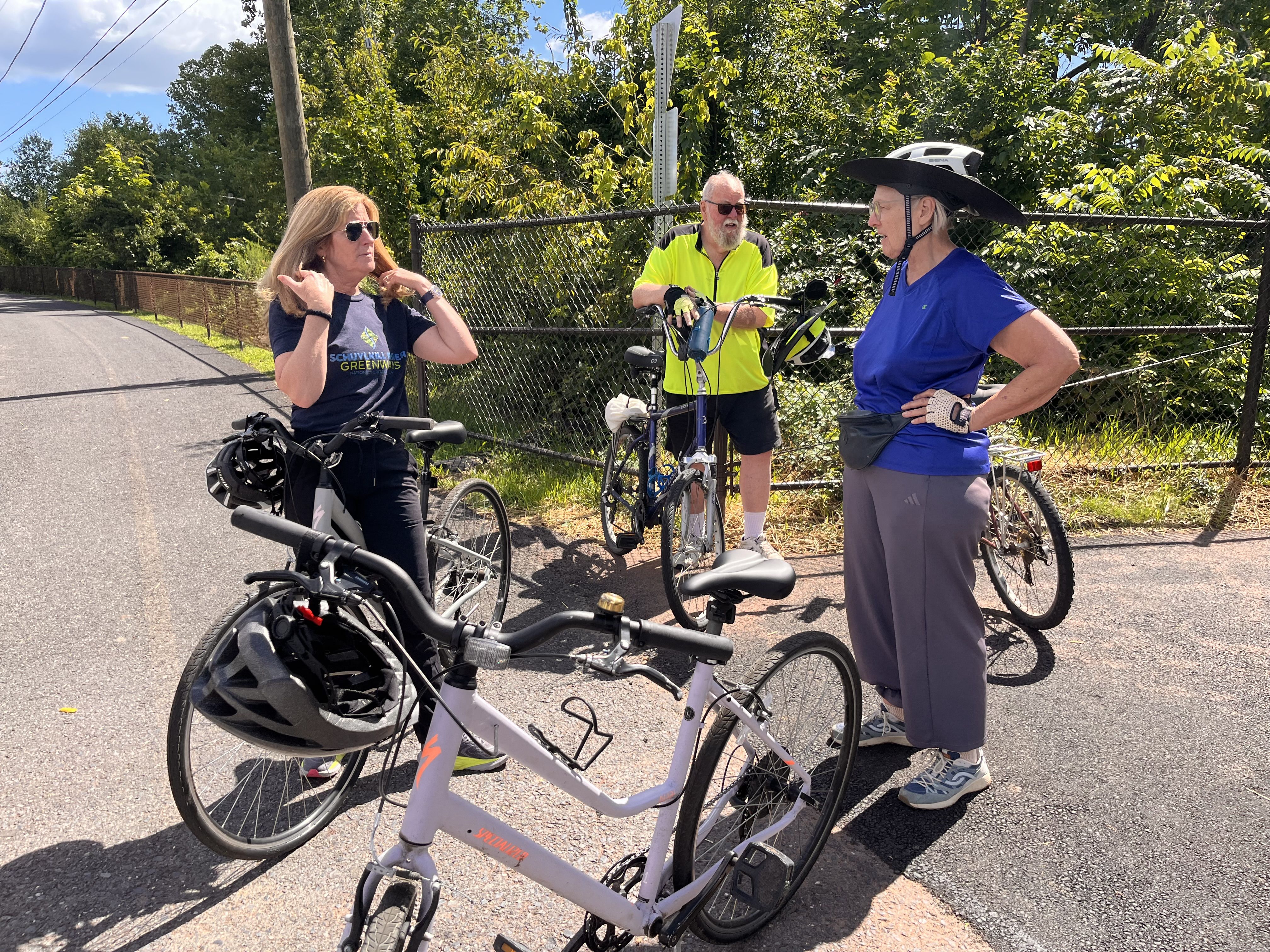
Elaine Paul Schaefer, executive director of the nonprofit Schuylkill River Greenways, speaks with Sue Shellman, foreground, and her husband, Bill Shellman, in yellow, both of Skippack, at the new connector.Frank Kummer
A boost for Pottstown?
Schaefer believes the new connector will lure cyclists willing to stop and spend money in Pottstown, a former steel town whose sizable downtown contains restaurants, inns, and breweries. Pottstown’s Riverfront Park along the trail is already widely used.
Peggy Lee-Clark, executive director of the nonprofit Pottstown Area Economic Development Inc., said it is too early to judge the impact of the connector, but there is “excitement.”
“I think that always any connection for the trail is an economic boost,” she said.
Commuting workers also use the trail, Lee-Clark noted.
“The river is an important asset to us, as is the trail,” Lee-Clark said. “The connector is just one more thing that brings people to the area and exposes them to all of the other opportunities here in Pottstown.”
When complete, the Schuylkill River Trail will run about 120 miles from Fort Mifflin near Philadelphia International Airport to Frackville, Schuylkill County. About 80 miles of paved and crushed stone trail are currently open. A swing bridge connecting Grays Ferry to Bartram’s Gardenis nearing completion.
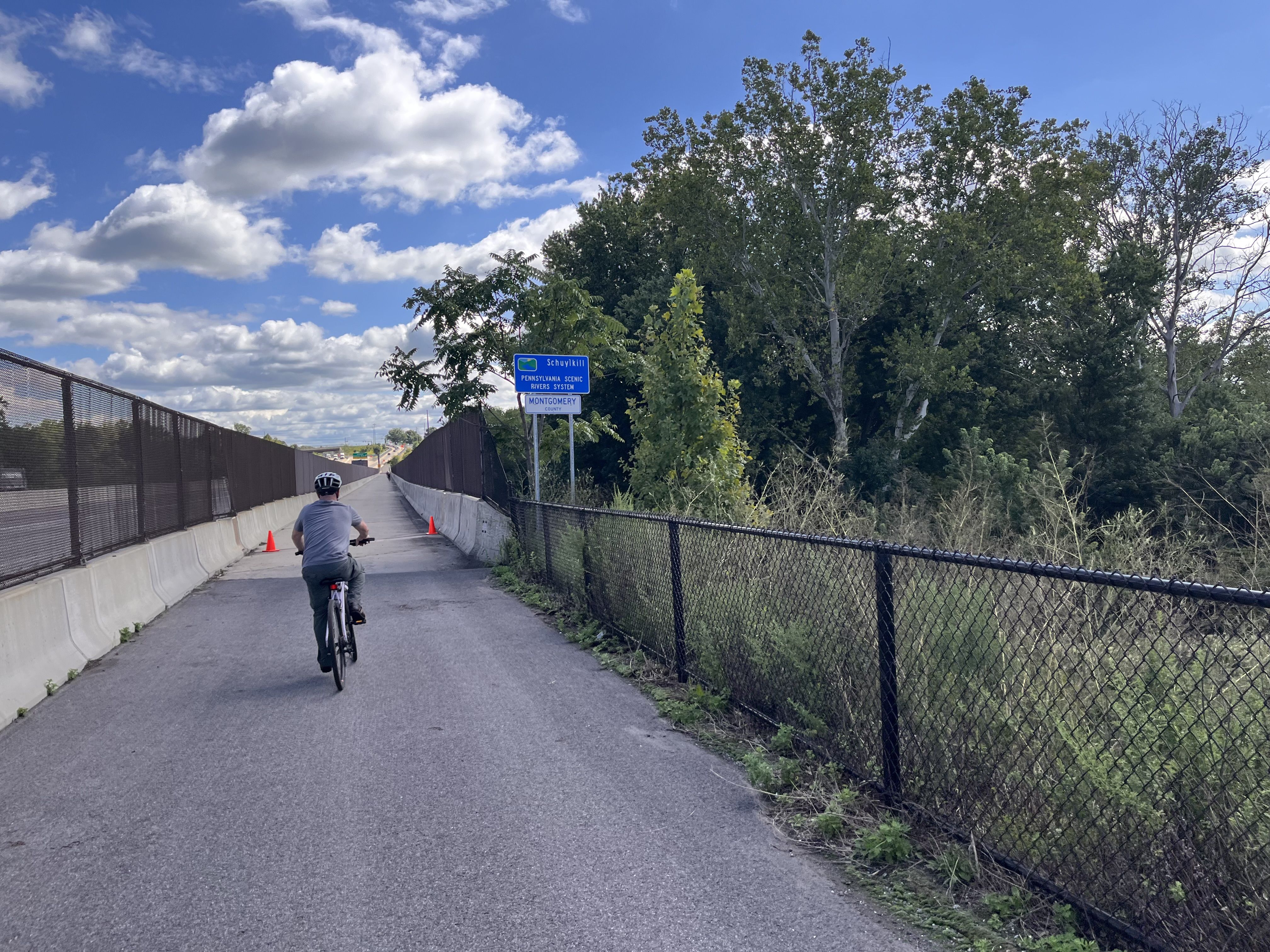
Jason Brudereck, of the nonprofit Schuylkill River Greenways, rides new the Schuylkill River Trail connector as it crosses from Chester County into Montgomery County.Frank Kummer
How the connector got built
Montgomery County is planning a formal ribbon-cutting on Sept. 29 for the connector, which is alreadypopular. On Tuesday, dozens of cyclists were riding at midday.
Scott France, executive director of the Montgomery County Planning Commission, said the county started trying to acquire rights-of-way to the land a decade ago.
“We are super excited this is open,” France said. “It’s been a long time in the works. This has had its share of challenges, but the fact is that we got there.”
The connector cost $1.28 million, France said. Most of it was paid for from a $550,000 grant from the Pennsylvania Department of Conservation and Natural Resources, and a $542,000 grant from the William Penn Foundation. The county funded the balance.
Although the connector is less than a mile, it was a challenge, France said.
This is the sign cyclists and pedestrians once had to stop at before the connector was finished.Frank Kummer
The county had to build around a state-owned bridge, work with Peco and Verizon to move utilities, and obtain permits to build in a flood zone. Additionally, crews had to stop work during the breeding season of the northern red-bellied turtle,a threatened species common in the area.
Bill Hartman, trails and open space planning manager for the commission, said the connector serves another key role.
“It provides full access to a number of other trails,” Hartman said, including the Cross County and Perkiomen Trails.
Further, Montgomery County Commissioner Neil Makhija noted that the connector and Schuylkill River Trail are also part of the much wider Circuit Trails network, a planned 850 miles of interconnected trails in the Philadelphia region, including South Jersey.
Makhija said he plans to celebrate his 40th birthday on Sept. 13 by riding the inaugural Tour de Montco, a 40-mile ride from Pottstown to Bala Cynwyd.
The new trail segment, Makhija said is, “not just a trail in the woods — it’s a connection, bringing us closer to Philly and Reading and connecting the two.”
Sue Shellman, foreground, and her husband, Bill Shellman, in yellow, both of Skippack, ride from Chester County onto the new Schuylkill River Trail connector into Montgomery County.Frank Kummer
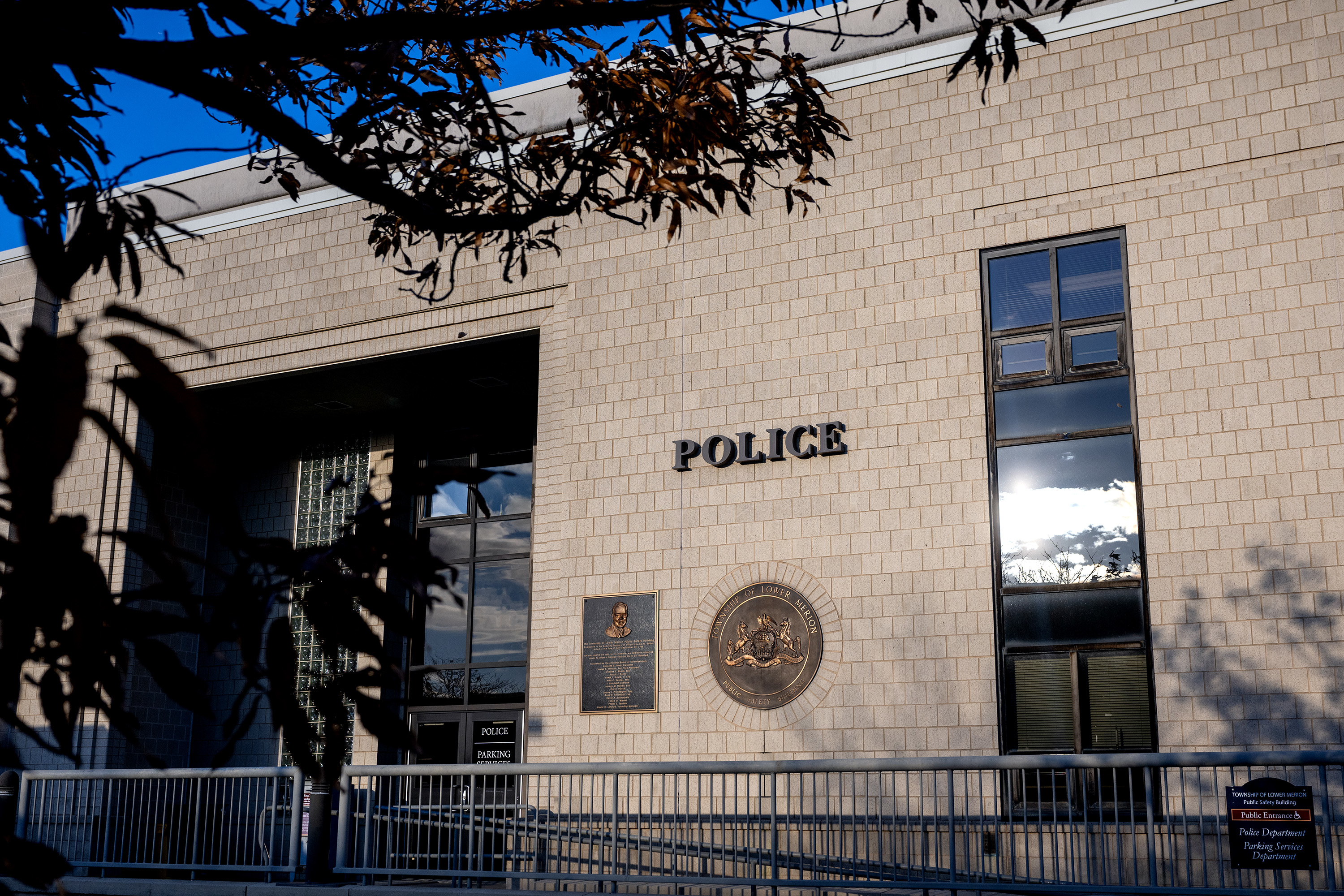
Lower Merion’s automated red-light cameras have captured hundreds of violations since they went into effect last month.
As of Monday, red-light cameras installed at the intersection of Lancaster Avenue and Remington Road had led to 663 citations, according to Andy Block, Lower Merion’s superintendent of police.
The cameras went live on May 13, kicking off a 60-day warning period before the police department began issuing tickets on July 13.
Lower Merion’s cameras capture photos and videos of drivers apparently running red lights. Video and photo evidence is sent to the police department, which reviews each case and determines whether to send a citation to the vehicle’s owner. Red-light violationscome with a $100 fine and can be contested at an in-person municipal hearing.
The intersection of Lancaster Avenue and Remington Road was chosen as the first site for the automated red-light enforcement cameras, and officials have said they hope to expand the program to other high-traffic intersections. Other locations being considered for red-light cameras include the intersections of Montgomery Avenue and Airdale Road and of Lancaster Avenue and Haverford Station Road.
The township has estimated that if cameras are placed at all three high-traffic intersections, around $24 million in annual revenue could be captured initially, with revenue dropping to around $8 million annually as compliance improves.
The township, however, will not collect revenue from the automated red-light tickets. Collected funds will cover administrative costs, with the rest going to a state fund that supports transportation enhancement projects across Pennsylvania. Municipalities that participate in the automated red-light enforcement program receive priority status when applying for transportation grants from the state.
Block said in an email that traffic enforcement is a priority for the police department and that using the automated cameras “provides additional safety for our motorists traveling in the township.”
Under the township’s ordinance, the cameras must be used strictly for red-light violations, not general surveillance. Photo and video evidence taken by red-light cameras must be destroyed within 30 days of a violation being settled and cannot be released under Right to Know requests.
This suburban content is produced with support from the Leslie Miller and Richard Worley Foundation and The Lenfest Institute for Journalism. Editorial content is created independently of the project donors. Gifts to support The Inquirer’s high-impact journalism can be made at inquirer.com/donate. A list of Lenfest Institute donors can be found at lenfestinstitute.org/supporters.
A coyote killed by Cheltenham police last week was rabid, the police department announced Wednesday.
Cheltenham police responded to reports of an aggressive coyote in the Wyncote area but were initially unable to find the animal, until someone reported a coyote attacking a resident and their dog at Curtis Dog Park on Friday.
Cheltenham Township Police Chief Richard Schaffer said the animal was “humanely dispatched” but declined to say how.
Police are advising township residents who have had contact with a coyote to seek medical or veterinary care.
The incident marks the fifth rabies case in Montgomery County this year, according to the state’s rabies tracking dashboard, and the first in a coyote.
The other four cases were identified in two raccoons, a skunk, and a cat.
Cheltenham officers will continue to work with the Pennsylvania Game Commission to monitor the area, and advised residents who see wildlife acting erratically to call 911.
This suburban content is produced with support from the Leslie Miller and Richard Worley Foundation and The Lenfest Institute for Journalism. Editorial content is created independently of the project donors. Gifts to support The Inquirer’s high-impact journalism can be made at inquirer.com/donate. A list of Lenfest Institute donors can be found at lenfestinstitute.org/supporters.
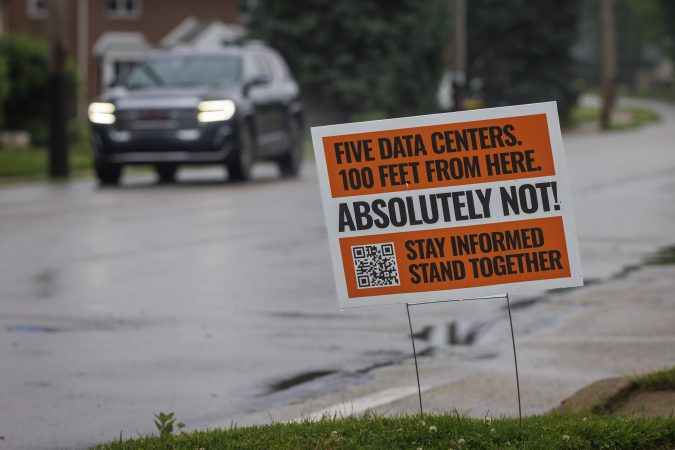
A majority of Pennsylvania voters oppose data center development in the United States, according to a new poll, as the issue has quickly become a flash point in the state’s gubernatorial race and other midterm elections.
Six in 10 likely Pennsylvania voters do not want the U.S. to construct data centers to house artificial intelligence, according to a poll conducted from Aug. 17 to 21 by The Inquirer, the New York Times, and Siena University. The poll, which surveyed 760 likely voters in Pennsylvania, found that Democratic and independent voters oppose data centers at higher rates, while just over half of Republicans support their construction.
(function(){function e(){window.addEventListener(`message`,function(e){if(e.data[`datawrapper-height`]!==void 0){var t=document.querySelectorAll(`iframe`);for(var n in e.data[`datawrapper-height`])for(var r=0,i;i=t[r];r++)if(i.contentWindow===e.source){var a=e.data[`datawrapper-height`][n]+`px`;i.style.height=a}}})}e()})();
The United States is in an international race to lead advancements in AI, with $2.3 trillion in data center projects underway or in the planning stages across the country. Pennsylvania, with more than 100 proposed projects, is among the hot spots targeted by developers for its key location near top U.S. metropolitan areas, vast rural space for building, and significant energy resources.
Gov. Josh Shapiro originally welcomed data center developments to the state, and last year championed a $20 billion investment from Amazon to build at least twodata center campuses in Bucks and Luzerne Counties. He also offered developers fast-track permitting in an attempt to establish Pennsylvania as a leader in AI development.
But in a year’s time, public animosity toward data centers has grownin Pennsylvania and beyond, as residents say they fear the facilities will drive up electricity costs, overuse water supplies, depreciate home values, and disrupt their daily lives. Last week, Shapiro, a Democrat running for reelection in November and a 2028 presidential prospect, announced plans to restrict data center development in the state.
Shapiro said his position on data centers evolved as he listened to more constituents who live in areas like Archbald, a small northeastern Pennsylvania town with six data center campuses under construction, and pointed to a developer in Montgomery County who he said is “bullying” residents to push projects through amid public opposition.
(function(){function e(){window.addEventListener(`message`,function(e){if(e.data[`datawrapper-height`]!==void 0){var t=document.querySelectorAll(`iframe`);for(var n in e.data[`datawrapper-height`])for(var r=0,i;i=t[r];r++)if(i.contentWindow===e.source){var a=e.data[`datawrapper-height`][n]+`px`;i.style.height=a}}})}e()})();
Pennsylvania’s youngest voters were most likely to reject data centers, according to the poll: 83% of likely voters ages 18 to 29 opposed their development, as did 71% of voters ages 30 to 44. Opposition, while above 50% for all age groups, decreased among older voters.
Kelly Harrington, 29, of Conshohocken, who participated in the poll, said she has been attending Plymouth Township Council meetings to oppose a controversial proposal for a 2 million-square-foot data center project there.
“Some of my concerns about that specific data center are selfish in the sense that I think my home value is going to go down, I think it’s going to be loud and obstructive, I think it’s going to pollute the air that I want to breathe every day,” Harrington said. “But in a wider sense, I’m also concerned about the environmental impacts of data centers.”
Front and center in the Pa. governor’s race and beyond
Data centers have become a key issue in the Pennsylvania gubernatorial election, where Shapiro hopes to ride his high popularity to reelection and usher in Democratic gains in down-ballot races for the statehouse and Congress.
Both Shapiro and his Republican opponent, State Treasurer Stacy Garrity, have released ads criticizing the other’s past support for data center development.
Democratic and Republican politicians across the country have reversed course on data centers in recent months as the projects have grown increasingly unpopular.
Gov. Josh Shapiro answers questions after signing an executive order restricting data centers in Pennsylvania during a ceremony in the Capitol in Harrisburg, Pa., Tuesday August 18, 2026.Kalim A. Bhatti / For The Inquirer
Prior to Shapiro’s announcement last week touting the “strictest guardrails in the nation” for data center development, his support for the projects appeared to be one of the major tests of his popularity. A Quinnipiac University poll published in July found that while 56% of voters approved of Shapiro overall, only 24% approved of how he was handling data center development in Pennsylvania.
Andsome Pennsylvanians who had voted for Shapiro in 2022 said his support for the developments had caused them to contemplate sitting out the November election or writing in a different candidate for governor.
For some voters, like Montiese McKenzie, Shapiro’s change in position has been enough.
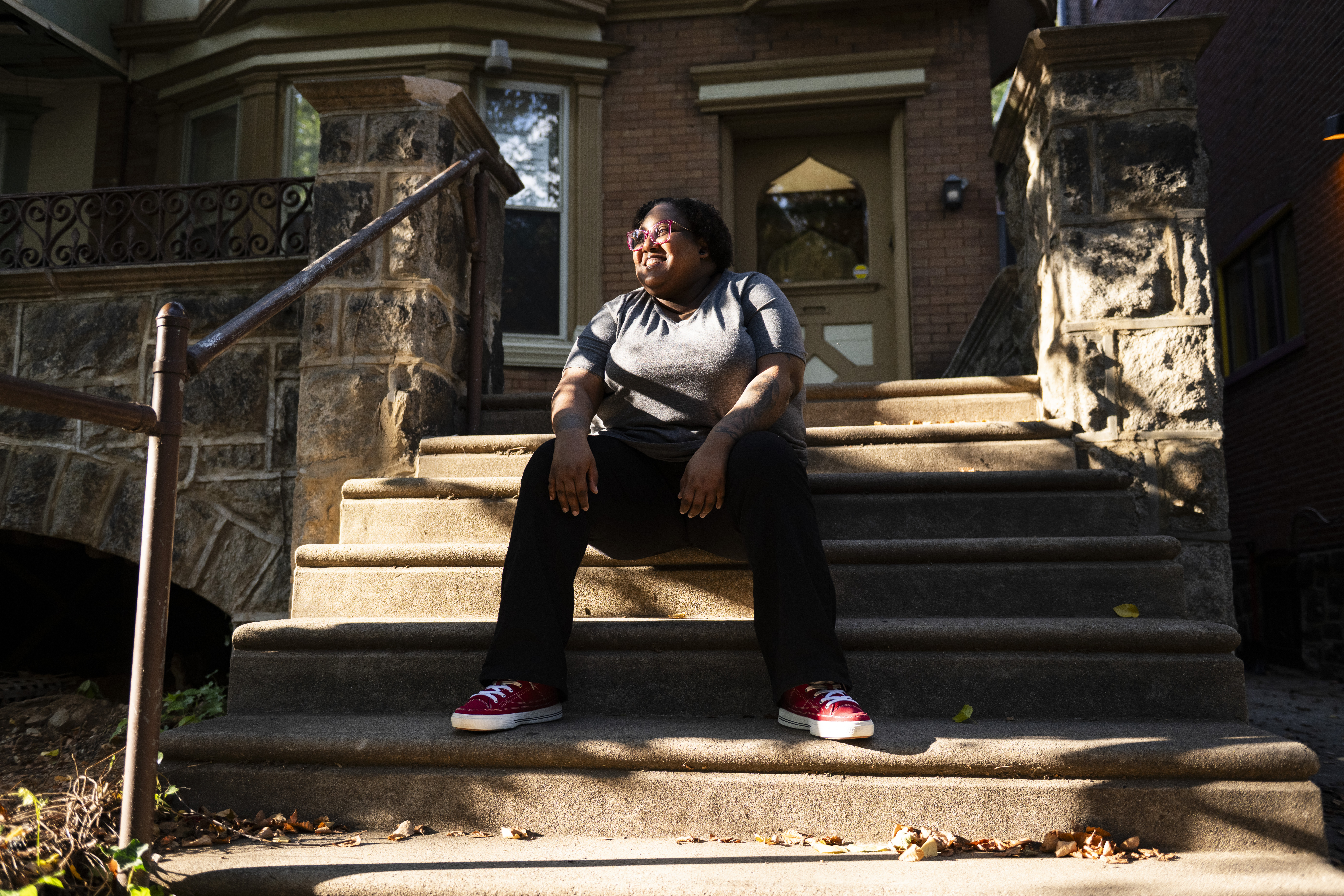
“I’m very proud of Gov. Shapiro for being anti-data center,” said McKenzie, 48, of West Philadelphia. The Democratic voter said she fears that poor communities will face disproportionateconsequences of the construction of AI data centers.
“What happens will be very important for how I see him as a future leader,” McKenzie said.
Montiese McKenzie, 48, poses for a portrait near her home in West Philadelphia on Monday, Aug. 24, 2026.Allie Ippolito / For The Inquirer
Still, Shapiro’s recent change in position has not wooed all Pennsylvania voters.
Maryann Klaus, 82, a Democrat in Upper Bucks County, supported Shapiro in 2022. But, she said, his initial embrace of data centers in the region without consulting the community was “just not good governance.” Despite Shapiro’s recent moves to restrict data center development, Klaus said, she is still reconsidering her vote for his reelection this fall.
The executive order Shapiro signed last week is a “a start,” Klaus said. “But, unfortunately, when you open the door, too many things occur and then you can’t walk them back.”
Others, like Steven Keenan of Ridley Township, say they want more data center development in the state.
Keenan, 60, a Republican who is supporting Garrity in November, said he wants Pennsylvania to lead on data centers.
“I’m not afraid of advancement in technology,” Keenan said. “I think we need all that [development]. We’re in a race with other countries that we want to dominate.”
Keenan said Shapiro’s change in position reaffirmed his support for Garrity. The shift in stance, he said, showed Shapiro was reacting to public opinion instead of doing what is right for the state. (Garrity, too, has moved away from her public support for data centers. She has called for the state to temporarily pause all data center development.)
“He goes where the wind blows,” Keenan added.
Staff writer Fallon Roth contributed to this article.
Two years ago, every child in the kindergarten class at Eleanor Emlen Elementary in Mount Airy had vaccine protection against measles.
A year later, the school’s kindergarten immunization rate had dropped to just 80%, putting students and the surrounding community at risk of an outbreak of the highly contagious disease.
Emlen is among more than two dozen Philadelphia-area schools that saw double-digit declines in kindergarten immunization rates last school year — in many cases because parents are increasingly refusing vaccines.
The affected schools span a diverse range of communities, from city neighborhoods like Mount Airy to the outlying suburbs. In Chester County, for example, a small private school in Downingtown saw its vaccination rates plunge by 20%.
Even as countywide immunization levels remain relatively high, some 40% of kindergarten classrooms across the region became vulnerable to an outbreak during the 2025-26 school year, up from 33% the year prior, an Inquirer analysis of newly released state data found.
(function(){function e(){window.addEventListener(`message`,function(e){if(e.data[`datawrapper-height`]!==void 0){var t=document.querySelectorAll(`iframe`);for(var n in e.data[`datawrapper-height`])for(var r=0,i;i=t[r];r++)if(i.contentWindow===e.source){var a=e.data[`datawrapper-height`][n]+`px`;i.style.height=a}}})}e()})();
That means that at least 249 schools had vaccination rates below 95%, the level at which scientists say a population must be vaccinated to prevent the spread of measles, one of the most contagious diseases.
Of these, 98 Philadelphia-area schools reported measles vaccination rates below 90%, presenting an even greater risk to students.
A sharp increase in parents opting out of vaccination for religious or philosophical reasons continued to drive down vaccination rates; exemptions in this category rose by 15% in the latest two years for which data are available.
(function(){function e(){window.addEventListener(`message`,function(e){if(e.data[`datawrapper-height`]!==void 0){var t=document.querySelectorAll(`iframe`);for(var n in e.data[`datawrapper-height`])for(var r=0,i;i=t[r];r++)if(i.contentWindow===e.source){var a=e.data[`datawrapper-height`][n]+`px`;i.style.height=a}}})}e()})();
Pennsylvania is among a handful of states that allows parents to opt out of vaccine requirements for philosophical or religious reasons, often by simply signing a form.
The health department published more granular, school-level vaccination data this summer for the first time, after reporting by The Inquirer and the Pittsburgh Post Gazette made this information public for the prior school year, exposing pockets of vulnerability within counties with overall high vaccination.
The new data show the growing public health threat to the region from Pennsylvania’s growing measles outbreak, in which two people in Lancaster County have died, state officials reported Tuesday. They were the state’s first measles-related deaths in three decades.
(function(){function e(){window.addEventListener(`message`,function(e){if(e.data[`datawrapper-height`]!==void 0){var t=document.querySelectorAll(`iframe`);for(var n in e.data[`datawrapper-height`])for(var r=0,i;i=t[r];r++)if(i.contentWindow===e.source){var a=e.data[`datawrapper-height`][n]+`px`;i.style.height=a}}})}e()})();
So far, nearly 400 cases have been diagnosed, with nearly half in Lancaster County. The rapidly spreading outbreak is edging closer to densely populated Philadelphia. Chester County, just west of the city, has reported the second-highest number of cases in the state.
At a news conference on the measles deaths Tuesday, Gov. Josh Shapiro stressed his concern about the rise in Pennsylvania parents opting out of vaccinations over the last 10 years.
“It has dramatically reduced community immunity in different areas of our Commonwealth,” he said. “Today, we see the consequences of a lack of immunization.”
The new school-level data on vaccines, he said, allow “everyone to see their school’s vaccination coverage and make informed decisions.” Lawmakers have also said they hope that having more access to data about their children’s schools will make families more aware of risks within their communities and encourage them to vaccinate their children.
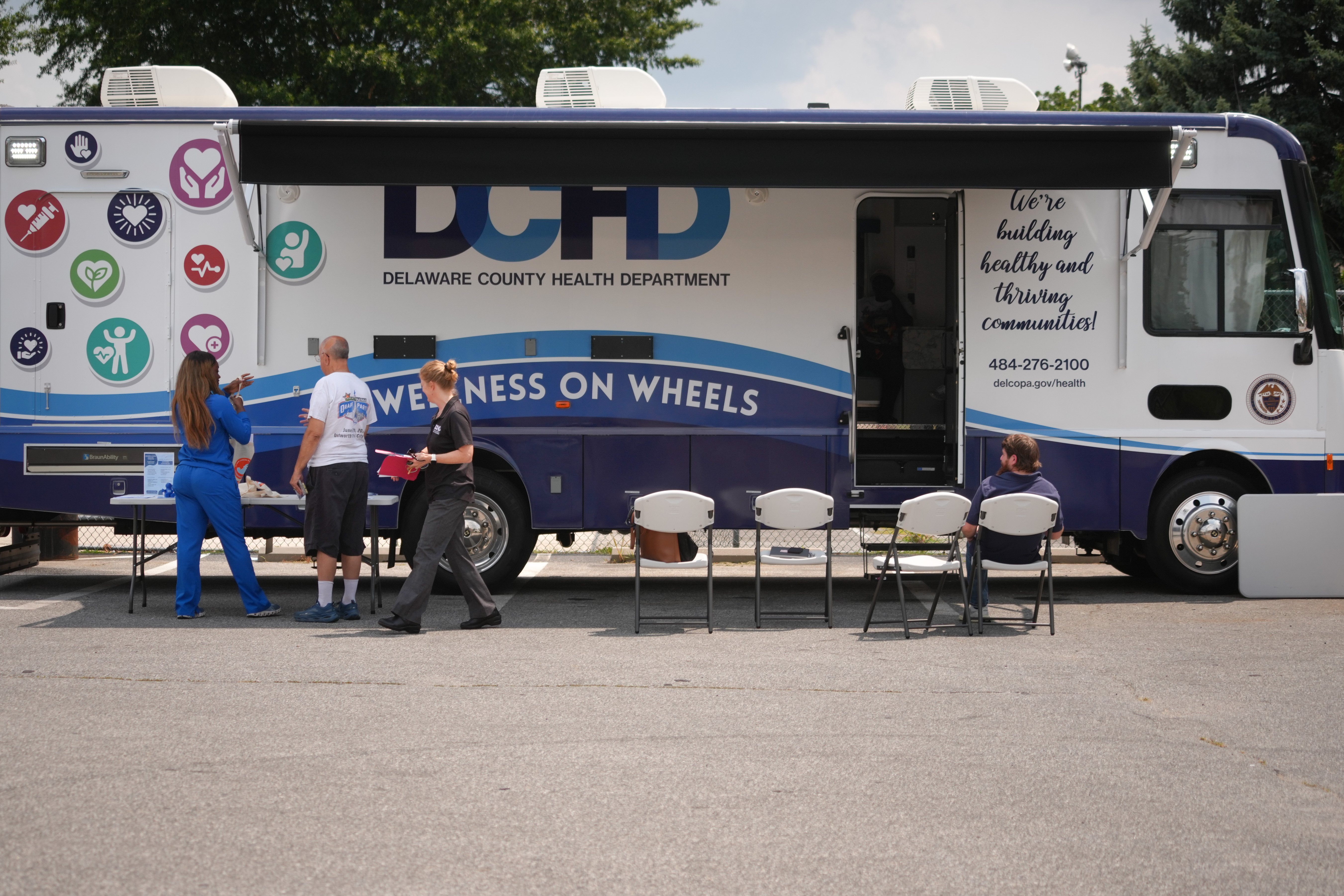
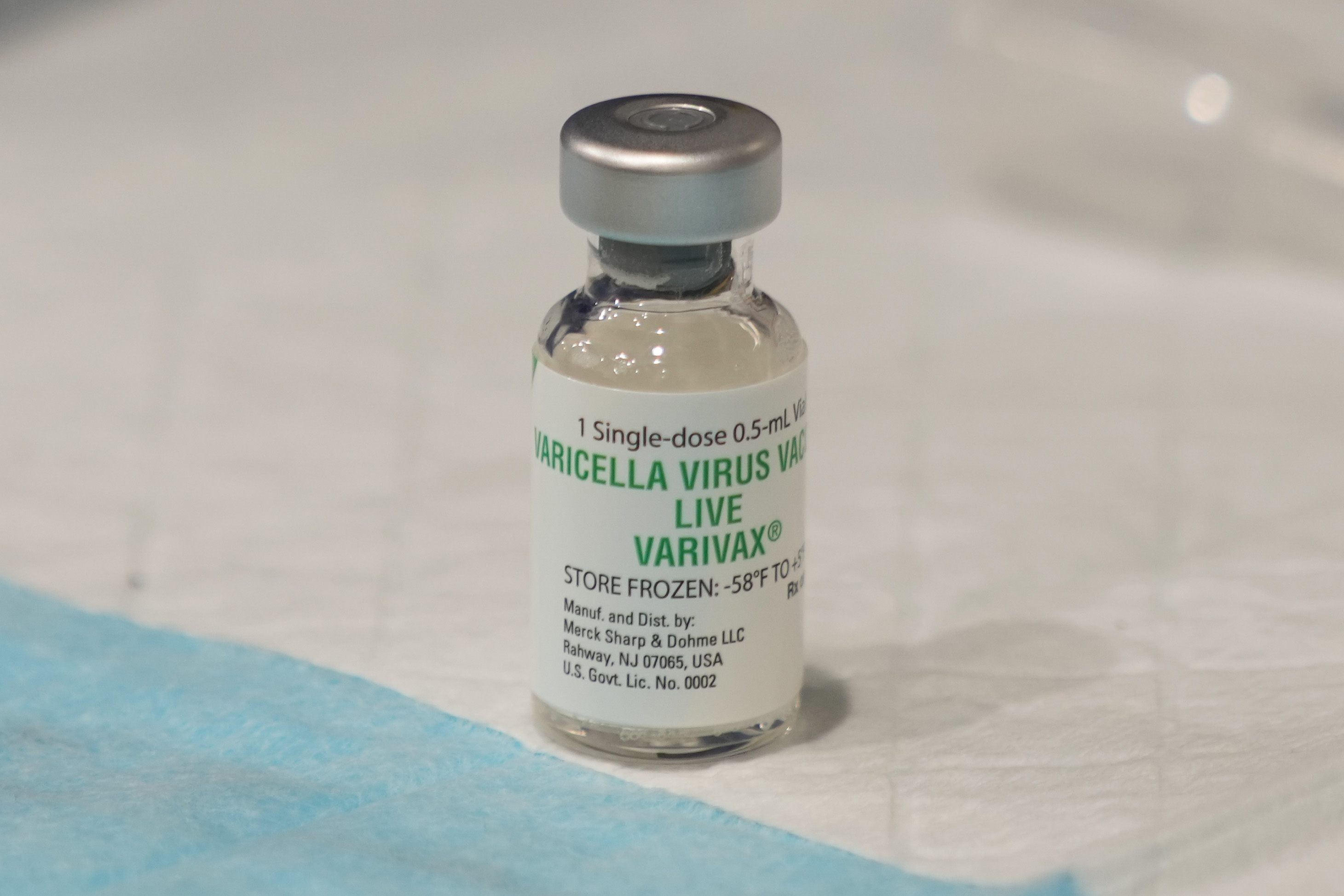
Amid rising measles case counts and declining immunization rates, Delaware County’s health department launched an immunization campaign over the summer to encourage families to vaccinate.Jessica Griffin / Staff Photographer
Emlen, which saw one of the steepest drops in protection, was one of 40 schools in the five-county region that reported 100% measles vaccination rates two years ago, only to drop below the 95% herd immunity threshold last year.
Philadelphia school officials say the changes at Emlen likely reflect increasing hesitancy among parents to immunize their children against measles, mumps, and rubella (MMR) and other diseases. State records show that most unvaccinated kindergarteners at Emlen have philosophical or religious exemptions.
Some fluctuations in kindergarten vaccination rates are typical from year to year, but the rise of anti-vaccine rhetoric in federal leadership appears to be exacerbating fears around vaccination, said Kendra McDow, a pediatrician who serves as the Philadelphia school district’s medical director.
“What we’re seeing is reflective of what I believe are local and national trends,” McDow said. “Families are confused, and they want to do right by their children.”
In the latest federal vaccine maneuver — opposed by the medical establishment, prominent Democrats, and Republican Sen. Bill Cassidy, a physician — President Donald Trump signed an executive order this month asking states to “consider updating” laws to require fewer vaccinations for schoolchildren without any medical justification. He also advocated for splitting the MMR vaccine into three separate shots — even though no separate measles, mumps, or rubella vaccines are licensed in the United States.
The order came after a chaotic year in which Health and Human Services Secretary Robert F. Kennedy fired federal vaccination advisers and pushed to upend the federal vaccine schedule. Kennedy, a longtime anti-vaccine activist, has promoted false concerns that vaccinations can lead to autism.
Families are faced with a barrage of misinformation about vaccines. Jessica Griffin / Staff Photographer
With Pennsylvania now experiencing its largest measles outbreak in three decades, Kevin Ressler, a healthcare nonprofit leader in suburban Philadelphia who was raised in Lancaster County, worries that declining vaccine rates reflect increasing political polarization.
“You don’t have to be a scientist to recognize that’s a problem,” said Ressler, the CEO of Alliance for Health Equity, a Coatesville nonprofit that works to improve access to health services. “A lot of this is rooted in whether we are able to hold trusted relationships.”
Philly-area counties all at risk
Philadelphia and its suburban counties overall remain well protected against measles, state officials say. The declines seen in the latest school year amount to less than 1% of all kindergarteners in each of the five counties in the area, an improvement from the drops that followed the COVID-19 pandemic.
But even small drops can be significant given the contagiousness of measles, which can linger in the air for hours and infect nine in 10 unvaccinated people who come into contact with it.
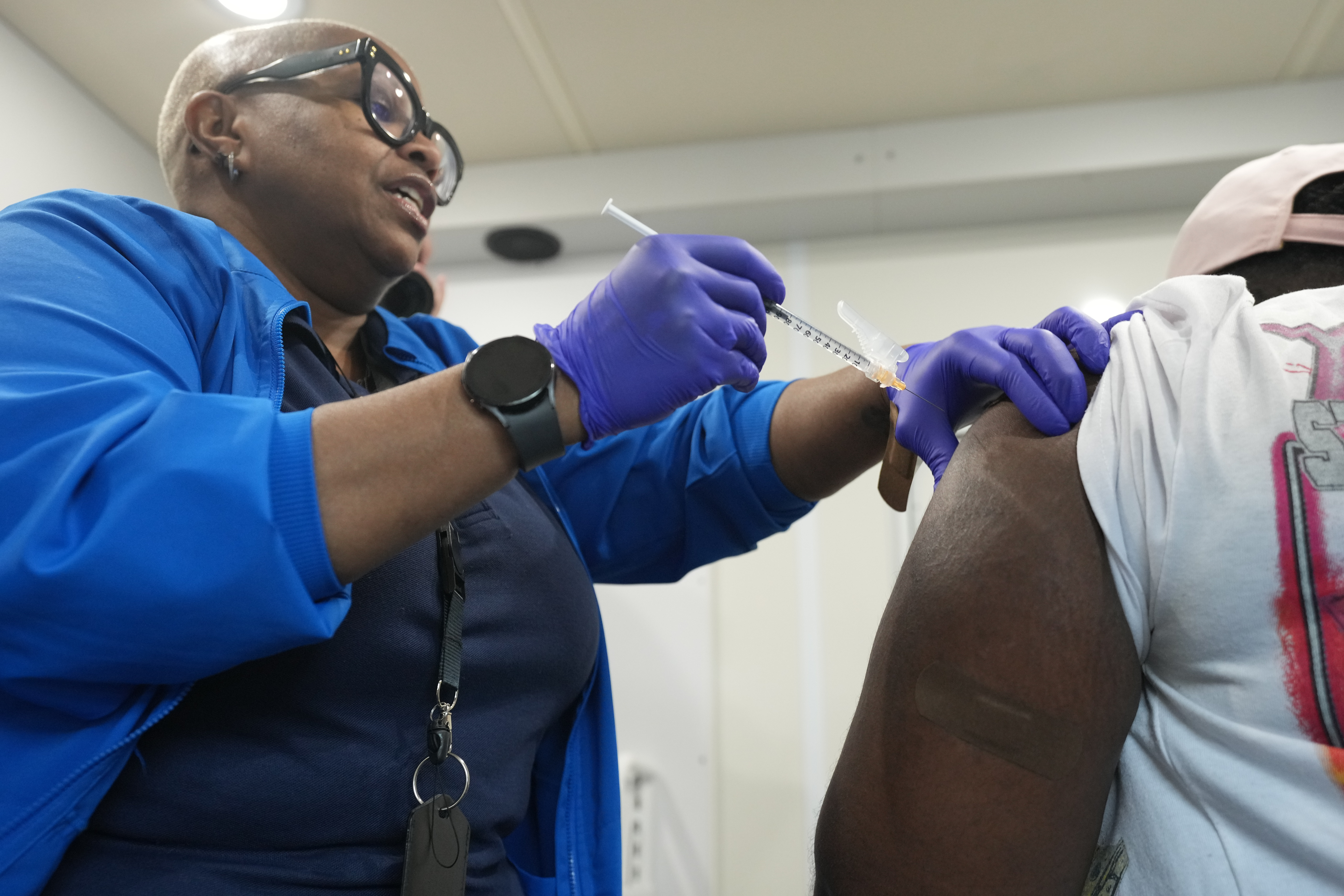
Mia Williams, a registered nurse, vaccinates a client at Delaware County’s mobile clinic in Upper Darby in July. Jessica Griffin / Staff Photographer
“The risk has definitely gone up because of lower vaccination numbers,” said Rene Najera, the director of public health at the College of Physicians of Philadelphia.
Najera says slipping vaccination rates especially endanger vulnerable students and community members beyond the schools, like pregnant women, cancer patients, or babies too young to be vaccinated. Parents of high-risk children should speak with their pediatricians about the risks of attending a school with lower vaccination rates, he said.
Last year marked the first time in more than 10 years that no Philadelphia-area county had reported measles vaccination rates above herd immunity.
Bucks County had the lowest MMR vaccination rate for kindergartners, at 93.7%, down by more than a half a percentage point from the year before.
Montgomery County, the only county in the Philadelphia region with kindergarten vaccination rates at herd immunity two years ago, slipped just below the threshold in 2025, to 94.8% vaccinated.
About 94% of Delaware County and Philadelphia kindergarteners were vaccinated last school year.
In Chester County, the only Philadelphia-area county to report cases in the current outbreak, vaccination rates for kindergartners have held steady at 94.5% for the last two school years. Some schools in the county reported steep drops in MMR coverage ahead of the current outbreak, which has seen 40 cases confirmed since June.
At Windsor Christian Academy in Downingtown, only one in four kindergarteners were vaccinated last year at a school that exceeded the herd immunity threshold the year prior. About 14% of the class had religious exemptions for vaccination. School officials did not return a request for comment.
Caln Elementary School in Thorndale saw measles vaccination rates drop from 100% to 74% in a year. Officials at the school declined to comment. (Caln closed at the end of last school year, and most of its students are transferring to the newly built Doe Run Elementary this year.)
Jeanne Franklin, Chester County’s health director, said she is “moderately” concerned about the current measles outbreak, given that many of the county’s most populous public schools still have high vaccination rates.
The school-level data improve the county’s ability to identify schools with lower vaccination rates.
Chester County health officials talk to school nurses, principals, and other administrators before the start of every school year to remind them of what to do if they identify a case of measles.
Under county policy, a single measles case in a school will mean all unvaccinated students and staff must stay home for 21 days.
This year, conversations that are usually hypothetical have taken on more urgency.
The health department has urged schools to take stock of who within their school is unvaccinated and develop a plan for how they will teach unvaccinated students who are sent home and staff classrooms of absent teachers.
“You don’t own getting them vaccinated,” Franklin said she tells administrators. “But you have to think through these things.”
Sisters A’zuri, 3, and A’Sara, 6, wait while their mother, Shania’ Jason, checks in at a vaccination clinic during the School District of Philadelphia’s sixth annual Back-To-School Bus Tour stop this month at Marcus Foster Memorial Stadium. Tom Gralish / Staff Photographer
Philly schools on alert
As the school district’s lead health officer, McDow worries about the threat of measles so close by, but believes concerted efforts in the city have kept vaccination rates “as high as they can be in this current climate.”
She’s also monitoring Philadelphia schools where the state data show declining vaccination coverage. (The publicly available school-level data does not include classes with fewer than 20 students, for privacy reasons, or schools that did not report to the state. About 90% of schools statewide reported data in 2025.)
In some cases, what looks like a decline can be explained by delays in data reporting due to administrative issues or staff absences. School vaccination records are reported to the state during the month of December.
For example, Mantua’s Morton McMichael School reported a 50% drop in MMR vaccination coverage, initially going from nearly nine in 10 kindergarteners vaccinated to just over a third.
But by the end of the 2025-2026 school year, records show 93% of McMichael kindergarteners were fully vaccinated against measles, district officials said, though the state data does not show the improvement.
McDow worries about drops at other schools, from Mount Airy’s Emlen Elementary to North Philadelphia’s James Logan Elementary’s 18.5% decrease in vaccination rates, which are likely related to parents increasingly refusing vaccines.
Pediatrician Amanda Bernard (left) talks with Shania’ Jason and her daughter A’zuri, 3, at a vaccination clinic hosted by the Philadelphia School District this month at Marcus Foster Memorial Stadium.Tom Gralish / Staff Photographer
The school district hosts vaccination clinics over the summer and during the school year, working with the city health department to target families with unvaccinated children and schools with low vaccination rates.
The district also works to ensure vaccination clinics are accessible to working parents, organizing some on weekends or evenings.
“We need to be talking to families and answering questions in transparent ways,” McDow said. “But we also need to be providing the opportunities for vaccination.”
Some families line up for immunizations
On a recent sweltering August afternoon, families lined up at a tent pitched on the football field at Marcus Foster Memorial Stadium in Olney, part of a back-to-school fair sponsored by the Philadelphia School District.
“IMMUNIZATIONS,” read a flag waving in the breeze. Business was brisk all day.
Some families who visited the tent were recent immigrants, getting caught up on vaccinations before their children started at their new schools.
“We’re vaccinated, my husband and I, because our parents vaccinated us. And I’ll do the same for my children,” said Betty Bachene, who moved to Philadelphia from Paris this summer. Speaking in French, she said she’s never been afraid of vaccinating her children, but does fear the diseases vaccines prevent.
Anaiya Burnham, a nurse, said she’d opted against getting COVID or flu shots for her two children, one of whom is entering kindergarten this year. But vaccinating them against measles was never a question.
“I would really be curious to know why anyone would opt out of the MMR, given the research,” she said.
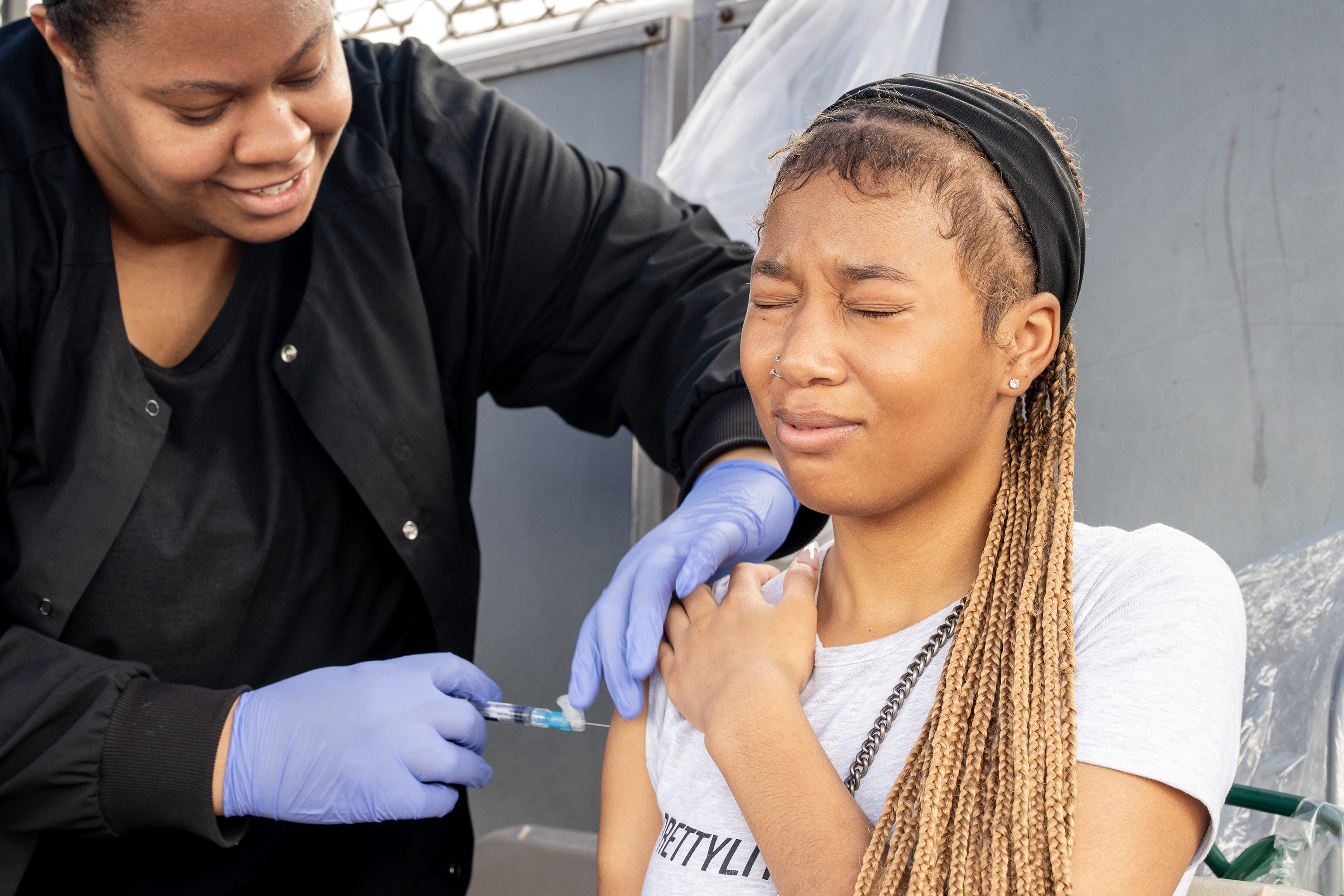
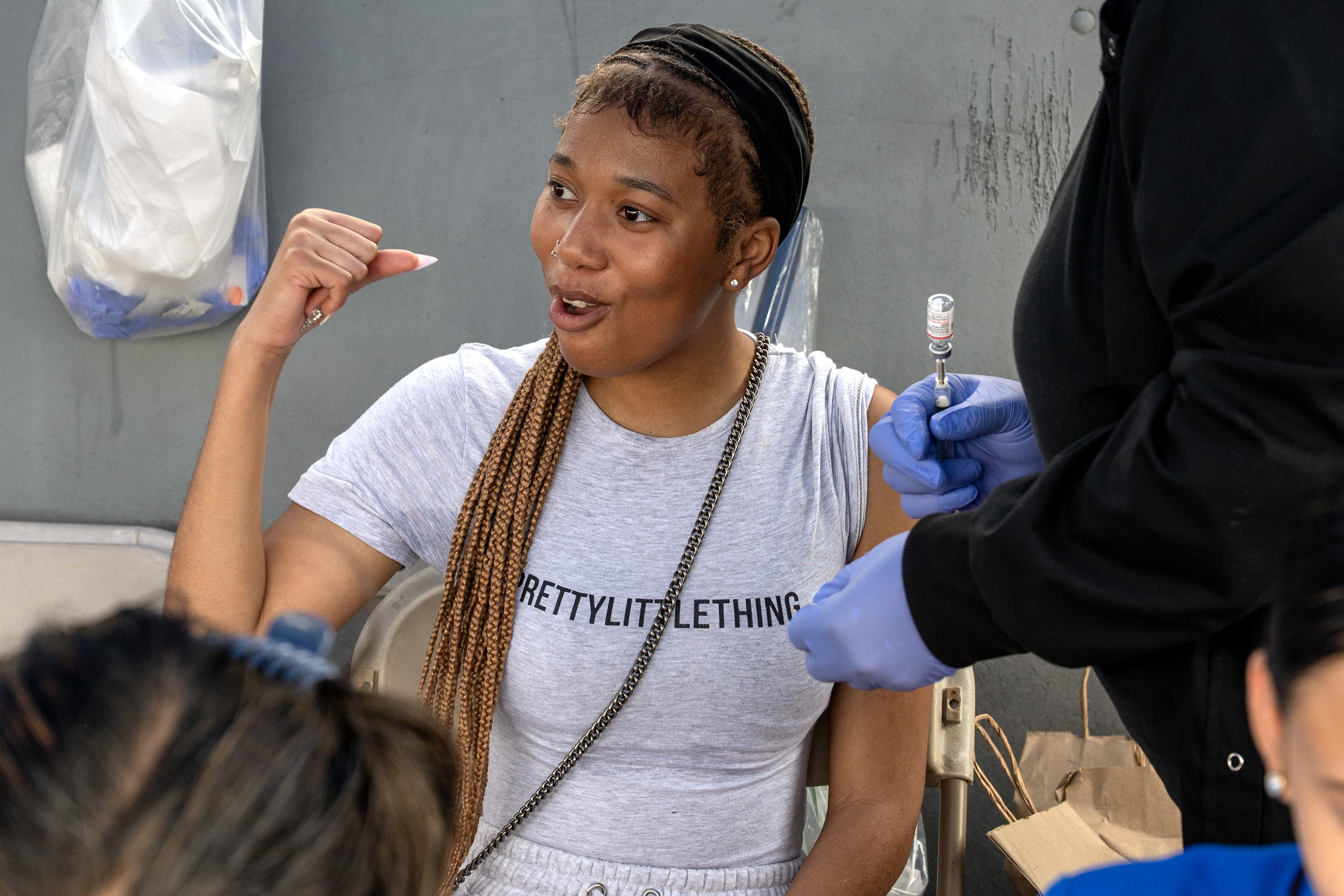
Cianey Brown, 16, reacts and turns to her family after getting an immunization at a Philadelphia school district vaccination clinic this month at Marcus Foster Memorial Stadium. Tom Gralish / Staff Photographer
Philadelphia parents face a number of different barriers that keep them from vaccinating children — and not all of them are related to vaccine hesitancy, said Amanda Bernard, a pediatrician with Greater Philadelphia Health Action, the clinic offering vaccinations at the event.
Some lack transportation to get to a health center outside their neighborhood, or don’t speak English well enough to navigate the healthcare system, she noted.
“I think that these sorts of events are really a way that we could combat that,” said Bernard, who has heightened her advocacy around vaccination as Pennsylvania’s measles outbreak has spread.
“There’s almost a desperation in my education. I sometimes feel like I’m almost begging [families] to get it.”
Editor’s note: This story has been updated to correct the name of James Logan Elementary in Philadelphia.
(function(){function e(){window.addEventListener(`message`,function(e){if(e.data[`datawrapper-height`]!==void 0){var t=document.querySelectorAll(`iframe`);for(var n in e.data[`datawrapper-height`])for(var r=0,i;i=t[r];r++)if(i.contentWindow===e.source){var a=e.data[`datawrapper-height`][n]+`px`;i.style.height=a}}})}e()})();