Tag: Mikie Sherrill

  • Josh Shapiro joins lawsuit against Trump administration’s plan to withhold disaster aid to pressure states on voter data

    Josh Shapiro joins lawsuit against Trump administration’s plan to withhold disaster aid to pressure states on voter data

    Pennsylvania Gov. Josh Shapiro was one of 26 Democratic officials from across the nation to join a lawsuit challenging President Donald Trump’s administration over its efforts to compel states into sharing raw voter data by threatening federal funding for natural disasters.

    “Withholding this funding will make our communities less safe and would be dangerous under any circumstance, but doing this in an attempt to undermine states’ authority over elections is reckless and unconstitutional,” Shapiro in a statement Thursday.

    New Jersey and Delaware are among the other states on the Illinois-led lawsuit. The complaint, filed in U.S. District Court in Rhode Island, comes amid escalating tensions between Democratic-run states and the federal government over how best to ensure noncitizens are not voting in any elections — a situation these states say happens extremely rarely.

    But New Jersey’s admission Tuesday that about 6,600 noncitizens were inadvertently added to the state’s voter rolls, due to a system error in the state’s department of motor vehicles voter registration program, has thrust the issue into the national spotlight as these efforts were already underway.

    The Department of Homeland Security announced earlier this month that the Federal Emergency Management Agency would require states to hand over their unredacted voter rolls and adhere to significant changes in their election administration in order to receive funding for preparation and recovery from catastrophic disasters, such as major storms.

    The policy puts nearly $6 million in federal aid at jeopardy for Pennsylvania, according to Shapiro.

    Shapiro has routinely signed on to lawsuits against the Trump’s administration, particularly when federal funding to the state has come under threat.

    Pennsylvania election officials have repeatedly declined to hand over unredacted voter rolls to the Trump administration, citing privacy concerns.

    New Jersey has also refused to provide voter roll data to the Trump administration, though the federal government is using the state’s registration mishap to justify its request.

    “We are not in the practice of turning this kind of personally identifying data over to the federal government because we have seen them weaponize it … and they don’t have a reputation for keeping it private, either,” New Jersey Gov. Mikie Sherrill said after a news conference Thursday.

    As for the FEMA funding, New Jersey Attorney General Jennifer Davenport said in a social media post Thursday that the Trump administration “threatens our safety when it plays politics with these funds.”

    While most of the plaintiffs are attorneys general, Shapiro was one of two governors to join the complaint, along with Kentucky Gov. Andy Beshear, another potential 2028 presidential contender who also leads a state with a Republican attorney general.

    In a prime-time address last week, Trump called for an overhaul of U.S. election administration and ticked through old debunked claims about his 2020 election loss.

    Pennsylvania and New Jersey are among four states — along with California and Nevada, which also joined the suit — that the Trump administration is targeting for additional scrutiny over their voter rolls, according to a document posted to the White House website last week. The one-pager claimed widespread instances of noncitizen voting, much broader than what New Jersey said it uncovered, though election experts have suggested caution when examining these numbers.

    “The Trump Administration is holding critical funding for homeland security and disaster response hostage in their latest attempt to take over our elections and perpetuate baseless conspiracy theories,” Shapiro said in his statement Thursday.

  • Gov. Mikie Sherrill says motor vehicle vendor is responsible for issues beyond N.J. voter registration error

    Gov. Mikie Sherrill says motor vehicle vendor is responsible for issues beyond N.J. voter registration error

    New Jersey Gov. Mikie Sherrill revealed Thursday that her administration had already been trying to get rid of the vendor that she blames for thousands of illegal voter registrations in the state before she discovered the misstep.

    Sherrill, a first-term Democrat, announced Tuesday that she had learned almost a week earlier that about 6,600 noncitizens had been registered to vote between June 2023 and June 2024 under her predecessor, former Democratic Gov. Phil Murphy. She said fewer than 400 of those people had voted.

    The news coincided with President Donald Trump’s effort to revive conspiracy theories about the 2020 election. In an attempt to bolster his proposal for a national overhaul of elections, his administration has alleged large numbers of noncitizens are registered in a handful of states.

    Sherrill said a glitch in software at the New Jersey Motor Vehicle Commission (MVC) operated by a vendor called IDEMIA registered people to vote through the state’s automatic motor vehicle voter registration program even after they identified themselves as noncitizens.

    The term noncitizen can refer to people who are in the United States legally on green cards or visas as well as undocumented people, who have been able to get driver’s licenses in New Jersey since 2021. The state has allowed citizens to register to vote automatically at the MVC since 2018 unless they opt out.

    “I think it’s well known that the motor vehicle commission has been a mess, and IDEMIA is at the heart of that,” Sherrill said after a news conference Thursday.

    Sherrill said in remarks on Tuesday that her administration would replace the vendor but did not discuss the depth of her issues with the company before the recent scandal. She focused her criticism on the administration of her predecessor, Murphy, who has remained publicly silent on the issue.

    But on Thursday, the governor took more aim at IDEMIA.

    She blamed the company for long waits, bureaucracy, and red tape, and said she had already viewed the MVC as a “failure” prior to this incident. She said New Jerseyans have been told to get a passport because it would be faster than the process of getting a REAL ID in New Jersey, one of which is required for travel to avoid extra fees.

    “That’s the disarray that was going on there,” she said.

    Sherrill said Rosalie Johnson, whom she said she recruited from Colorado to appoint as the new MVC administrator this year, “was already in the process of removing them for their incompetence.”

    Johnson said Tuesday that her team has already made improvements at the MVC, is implementing additional safeguards, and is “actively working with a new vendor to ensure this type of technical malfunction does not happen in the future.” She said she expects the new vendor to begin next year.

    Additionally, Sherrill said her administration hired an independent firm to investigate what happened.

    In a separate news conference Thursday, New Jersey Republicans said an independent, bipartisan committee with subpoena power should also investigate the circumstances that led to the faulty registrations.

    New Jersey GOP chair Christine Hanlon said she believes there may be more instances of noncitizens improperly registered than what Sherrill disclosed.

    According to a sampling of data collected by the state party, she said, there were “hundreds” of noncitizens who had proactively requested to be removed from the voter rolls outside the time frame between 2023 and 2024. Not every county provided data, so the results show an incomplete picture, she said.

    “It just shows us we need a lot more information about what happened and when,” she said.

    Federally, Assistant Attorney General Harmeet Dhillon said in a post on X that the Civil Rights Division of the Department of Justice “is investigating this unlawful dilution of American votes.” U.S. Rep. Josh Gottheimer, a North Jersey Democrat who unsuccessfully ran for governor last year, called for a national audit of IDEMIA.

    IDEMIA released a statement Tuesday blaming the improper voter registrations on the New Jersey Department of State’s Division of Elections, saying the department is “ultimately responsible for verifying eligibility to vote.”

    The company’s responsibility was to transmit information from the motor vehicle system to the New Jersey Department of State, but the information “must still be validated and adjudicated by the Division of Elections,” the statement said. IDEMIA did not respond to a request for further comment on Thursday.

    Sherrill blasted the company’s justification on Thursday.

    “To suggest somehow that the fact that they had a huge software error like this for a year that they did not catch is somehow not something they were responsible for, I mean, this is why we’re getting rid of them,” she said.

  • DOJ says it needs New Jersey’s voter database to verify that more noncitizens aren’t registered to vote

    DOJ says it needs New Jersey’s voter database to verify that more noncitizens aren’t registered to vote

    New Jersey Gov. Mikie Sherrill revealed Tuesday that roughly 6,600 self-identified noncitizens were wrongly added to the voter rolls ahead of the 2024 general election — and President Donald Trump’s administration pounced to capitalize on the disclosure.

    Within hours, a Department of Justice attorney sent a revamped request for New Jersey’s unredacted voter database to Dale Caldwell, the Garden State’s lieutenant governor and secretary of state.

    And the department’s Civil Rights Division launched an investigation and sent Sherrill a letter demanding, within five business days, information about the 6,600 people wrongfully registered as voters, and when and where up to 400 of them voted.

    “Ensuring that U.S. citizens’ votes are not illegally diluted by noncitizens’ votes is of paramount importance,” Harmeet Dhillon, assistant attorney general in the Justice Department’s Civil Rights Division, wrote in the Tuesday letter to Sherrill.

    For the last year, the Justice Department has been seeking the state’s voter rolls, which include each voter’s full name, date of birth, address, and driver’s license or the last four digits of their Social Security number. But the requests have been rebuffed.

    The Trump administration sued Caldwell in February, accusing him of violating federal voting and civil rights laws. Without the data, the suit said, the federal government could not ensure the state was in compliance with federal requirements for voter roll maintenance.

    The Tuesday letter to Caldwell said the new information shared by Sherrill provides an “additional basis” to the request, wrote Jesus Osete, a principal deputy assistant attorney general in the Civil Rights Division.

    “The Division must also verify that no other noncitizens remain on New Jersey’s voter rolls, in violation of federal law,” Osete’s letter said.

    The roughly 6,600 people were improperly added to the voter rolls when applying for driver’s licenses and identification cards. Even though they checked “no” when asked if they were a U.S. citizen, they were registered anyway.

    Fewer than 400 of these individuals voted, Sherrill said.

    The erroneous registrations took place between June 2023 and June 2024, Sherrill said, “through no fault” of the noncitizens, who were registered due to a software glitch in New Jersey’s motor vehicle system, which processes the automatic registration when a citizen obtains an ID or license.

    The Justice Department shared the letter it sent Caldwell with U.S. District Judge Zahid N. Quraishi, who is presiding over the lawsuit.

    “While it is currently unknown in which elections those noncitizens voted or whether the ballots those noncitizens cast affected the outcome of any race,“ the department said in a court filing, ”Governor Sherrill acknowledged in a press conference the seriousness of noncitizens voting in American elections.”

    But the disclosure did not lead Sherrill, a Democrat who took office in January, to change her position about sharing the unredacted voter data with the federal government.

    “The Trump administration has a long history of weaponizing the Justice Department for political purposes and attempting to overturn election results,” Sean Higgins, a spokesperson for Sherrill, said in a statement. “Governor Sherrill has been clear that she will use all the legal tools available to her to protect New Jerseyans’ personal information.”

    The announcement came less than a week after Trump delivered a prime-time address in which he repeated his grievances over his 2020 election loss, and claimed without evidence that more than 250,000 noncitizens had registered to vote in New Jersey, Pennsylvania, California, and Nevada.

    Republican officials used the New Jersey revelation to make the case for the SAVE Act, which would require proof of citizenship to register to vote.

    “This is why we must confirm citizenship before anyone registers. Only US citizens should vote in our elections,” U.S. Sen. Dave McCormick (R., Pa.) said on X in response to the Garden State’s news.

    The Trump administration has also attempted to get the Keystone State’s voter rolls through litigation. A judge tossed out the Justice Department’s lawsuit against Pennsylvania Secretary of State Al Schmidt last month. The suit, which is nearly identical to the one against New Jersey, is one of 16 similar lawsuits that have been dismissed by federal judges throughout the country, according to the Brennan Center for Justice.

    But this month, the Justice Department threatened to bring criminal charges against top election officials in all 50 states if they allowed noncitizens to vote. The letter threatening Pennsylvania officials was addressed to Schmidt, who again declined to share voter information.

    “I take seriously the obligations under both federal and Pennsylvania law to ensure that only eligible voters have access to the ballot box and to see to it that Pennsylvania’s voter rolls are appropriately maintained and updated,” Schmidt wrote.

    Staff writer Aliya Schneider contributed to this article.

  • How 6,600 noncitizens were registered to vote in New Jersey and what happens next

    How 6,600 noncitizens were registered to vote in New Jersey and what happens next

    New Jersey Gov. Mikie Sherrill was handed an election security crisis that took place under her predecessor just days after President Donald Trump’s administration pushed out claims of widespread noncitizen voting.

    Sherrill revealed Tuesday that about 6,600 noncitizens had been illegally registered as voters in New Jersey due to a system error in the state’s department of motor vehicle voter registration program under former Gov. Phil Murphy.

    The governor said fewer than 400 of those people had voted. There is no evidence that their ballots changed any election outcomes, but the news has thrust the Garden State into the middle of the national debate over election security.

    “This failure didn’t occur on my watch, but accountability starts now,” she said at a news conference Tuesday.

    Here is what to know about what happened and how, and what the fallout could be — both in Trenton and in Washington.

    How many noncitizens got registered in New Jersey and how many voted?

    About 6,600 people who identified themselves as noncitizens were registered to vote in New Jersey between June 2023 and June 2024 “through no fault of their own” due to the glitch, though fewer than 400 cast a ballot, Sherrill said.

    Sherrill said at a news conference that the error “was caught and stopped in 2024” but that her administration is now working to remove those hundreds of voters from the rolls. She said they could have voted in any elections since then but there is no evidence at this time that they could have swayed any results. She said they were registered as Democrats, Republicans, and mostly unaffiliated, and scattered throughout the state.

    She said her team is “taking a hard look at the process failures that occurred under the previous administration and the guardrails we can put down for the future.” Through a spokesperson, Murphy declined to comment.

    Sherrill, a former member of Congress who began her term in January, campaigned on changing the culture in Trenton and distanced herself from Murphy on the campaign trail but remained cordial with him. Her tone sharply changed this week.

    “This entire situation is unacceptable,” she said. “It’s unacceptable that the vendor released software with such a glaring error. It’s unacceptable that the MVC [Motor Vehicle Commission] took a year to get this fixed, and it’s unacceptable that no one in the previous administration brought this to light, demanded accountability, or took action when it happened years ago.”

    How did this happen?

    Sherrill called the issue a “serious software error in New Jersey’s motor vehicle system.”

    New Jersey began automatic voter registration in 2018, which allows citizens to be automatically registered to vote when they get an ID at the MVC unless they opt out.

    The noncitizens who were improperly registered had answered “no” when asked on a keypad at the MVC whether they were a U.S. citizen, Sherrill said. But she said the system registered them anyway “through no fault of their own.” She said the error could put those individuals’ immigration status at risk. It would be hypocritical for the state to charge the individuals and she wants to protect them, she said, but she “would not put it past” the federal government to charge them.

    U.S. Rep. Josh Gottheimer, a North Jersey Democrat who unsuccessfully ran for governor last year, called for a national audit into IDEMIA, the vendor whose software was used for the registrations.

    But IDEMIA pointed a finger at the New Jersey Department of State, noting that while the vendor’s role is to transmit information between the motor vehicle and state departments, it is ultimately the state department’s responsibility to verify voter eligibility.

    “Information submitted by IDEMIA must still be validated and adjudicated by the Division of Elections,” the company said in a statement.

    When did Gov. Sherrill find out?

    Sherrill said she learned about the error last Wednesday, the day before Trump’s speech. She announced the discovery on Tuesday.

    What is Gov. Sherrill doing about it?

    Sherrill said she immediately ordered an investigation when she learned about the issue and ordered the removal of the noncitizens from the voter rolls. She said that Rosalie Johnson, whom Sherrill appointed as New Jersey Motor Vehicle Commission administrator this year, had already begun replacing the system vendor.

    The governor said her administration hired an independent firm, CSG Law, to conduct the investigation. She said “they will be moving very quickly” and had already found the figures she has been citing. She said she will “present the findings” of the investigation to the public.

    Johnson said she expects to launch the new vendor next year and is working on creating additional safeguards to regularly review information before sending it to the elections division.

    Sherrill said her administration is looking at ways to make the state’s elections more secure and vowed to hold any government workers accountable.

    “Should there be anyone that is identified that is still working in this space that has not done the right thing, I will hold them personally accountable for this,” she said.

    How is the Trump administration responding?

    The Trump administration and other prominent Republicans are using the issue to call for the passage of the SAVE Act, a federal bill that Republicans say would improve election security but Democrats warn would suppress millions of voters.

    Assistant Attorney General Harmeet Dhillon said in a post on X that the Civil Rights Division of the Department of Justice “is investigating this unlawful dilution of American votes.”

    Additionally, the department argued in a letter that the incident justifies the Trump administration’s efforts to obtain the state’s unredacted voter rolls.

    Vice President JD Vance called on New Jersey U.S. Sens. Cory Booker and Andy Kim, both Democrats, to support the legislation in a post on X, given the issue in their home state.

    “If only there was a way to stop this type of ‘software error’ that allowed non citizens to vote in our elections,” Vance said in the tongue-in-cheek post.

    Booker said he trusts the Sherrill administration to solve the problem and criticized “those who will choose to weaponize this issue.” Kim declined to comment on the matter.

    Why is the timing beneficial for the president?

    The news came at an opportune time for Trump, just days after his speech in which he reignited conspiracy theories about his 2020 election loss. The same day, the White House shared claims of widespread noncitizen voting, including in New Jersey.

    DHS Secretary Markwayne Mullin claimed that more than 35,000 noncitizens could be registered in New Jersey. The department has not shared how it arrived at that number, and experts cautioned it could include new citizens who have not been updated in a system meant to check work eligibility.

    Sherrill said her administration received a letter with that 35,000 figure after Trump’s speech — which was also after she said she had learned about the 6,600 noncitizen voters.

    “We have asked them for any evidence of this, where they got that number, who this is,” she said. “We’ve received nothing back yet.”

    Sherrill said that the president “knows that if he provides us any credible information we will of course investigate it” but that he has “zero credibility on the issue of election integrity.”

    “For the past 10 years he’s cried wolf and peddled bizarre conspiracy theories about fraud with no evidence,” she said.

    Trump called for the passage of a national proof of citizenship requirement Wednesday during a speech in Georgia, but he did not directly reference New Jersey.

    How will New Jersey lawmakers respond?

    State Sen. Anthony Bucco of North Jersey, the Senate Republican leader, said the state should “at the very least” suspend the automatic voter registration program until a full investigation is complete and next steps are made clear.

    He also called on the state to enact a voter identification requirement.

    New Jersey requires identification or a Social Security number to register to vote, and first-time voters who registered to vote by mail may need to provide ID at the polls. But overall, most voters do not need to show ID at the polls in New Jersey.

    Republican-led efforts to enact legislation following this incident are unlikely to succeed in Trenton because Democrats hold a supermajority in the Assembly and a majority in the Senate.

    Sherrill said at the Tuesday news conference that the problem is not with the state’s laws, but rather with how the state government has been operating — further pushing blame on her predecessor.

    “I see no reason why our state cannot run our election system well and have a computer program that can operate well, and should any problem occur it should be caught quickly … it’s a problem with accountability,” she said. “It’s a problem with making sure government is effective and running well, and it really is a lack of responsibility.”

    Has this happened before?

    In 2017 Pennsylvania Secretary of State Al Schmidt, a Republican city commissioner in Philadelphia at the time, uncovered and resolved a similar glitch at the Pennsylvania Department of Transportation in which all Pennsylvania drivers were asked if they wanted to be registered to vote regardless of citizenship status.

    Schmidt said at the time that the glitch led to 168 noncitizens registering to vote in Philadelphia but that just 44 ballots were cast in the city as a result.

    Schmidt has since said that noncitizen voting is rare and that the threat has been exaggerated.

    Staff writers Michelle Baruchman and Abraham Gutman contributed to this article.

  • New Jersey reveals glitch allowed 6,600 noncitizens to register to vote ahead of 2024 election

    New Jersey reveals glitch allowed 6,600 noncitizens to register to vote ahead of 2024 election

    Roughly 6,600 people who were not citizens were improperly registered to vote over a yearlong span ahead of the 2024 election because of a software error in New Jersey’s motor vehicle system, New Jersey Gov. Mikie Sherrill disclosed Tuesday.

    The revelation came just days after President Donald Trump’s administration targeted New Jersey as one of four states that the Department of Homeland Security claimed had noncitizens on its voter rolls, along with neighboring Pennsylvania. The White House said the announcement from New Jersey underscored the need for Trump’s proposed national overhaul of elections.

    Among the noncitizens, who were wrongly registered between June 2023 and June 2024, fewer than 400 cast a ballot, Sherrill said.

    The voters were scattered across the state and registered as Democrats, Republicans, and unaffiliated voters, though the office did not provide percentage breakdowns.

    Sherrill, a Democrat who took office in January, pointed a finger at her predecessor, noting that the wrongful registrations took place under former Democratic Gov. Phil Murphy. She said that she “immediately ordered” her chief counsel to investigate the issue and that the individuals erroneously added to the voter rolls be removed “before the next election,” which will be the November midterms that will determine control of Congress. The individuals have been notified of their planned removal.

    “As a military veteran who swore an oath to defend our Constitution, and as a former federal prosecutor, I believe the integrity of our elections is fundamental to our democracy. I am appalled by the reckless failures that allowed this to happen and the lack of transparency shown by those in charge at the time,” Sherrill said in a statement.

    Sherrill, at a news conference Tuesday afternoon, said the investigation would determine which elections the noncitizens’ votes were cast in — and whether they included the 2025 gubernatorial race in New Jersey, which Sherrill won, or the 2024 presidential election, when the state went for Vice President Kamala Harris — but neither contest’s outcome would have been changed by these ballots cast.

    The glitch occurred when individuals were applying for driver’s licenses and identification cards in New Jersey. Although they answered “no” when asked on a keypad whether they were a U.S. citizen, “through no fault of their own, the system registered them anyway,” Sherrill’s office said.

    Trump last Thursday delivered a prime-time address in which he, amid conspiracy theories about his 2020 election loss, claimed the Department of Homeland Security had identified more than 250,000 noncitizens registered to vote across four Democratic-led states — New Jersey, Pennsylvania, California, and Nevada — according to a document the White House posted online during Trump’s speech.

    DHS Secretary Markwayne Mullin claimed Tuesday on X that more than 35,000 noncitizens could be registered in New Jersey. However, the department has not shared the methodology it used to arrive at that number, and experts have cautioned it could include new citizens who have not been updated in a system meant to check work eligibility.

    “Just ONE illegal vote cancels out the vote of a U.S. citizen,” Mullin said.

    He said he appreciated Sherrill’s announcement, but “this should’ve been done a LONG time ago.”

    Pennsylvania election officials have disputed DHS claims of noncitizen registrations, but the timing of the New Jersey disclosure is sure to fuel scrutiny of the four states.

    Sherrill said she learned of the error last Wednesday, the day before Trump’s address.

    White House, Republicans call for changes to voting laws

    Trump’s administration has been pushing states to hand over unredacted voter rolls and threatening legal consequences for election officials, but New Jersey and Pennsylvania have resisted, saying doing so could put voters’ personal information at risk.

    “As the Trump Administration tries to weaponize elections for political gain, I am ensuring we protect our elections. Let me be clear: Donald Trump has zero credibility on the issue of election integrity,” Sherrill said in her statement.

    The White House argued that the New Jersey disclosure helped make the case for the SAVE Act, which would require prospective voters to prove their citizenship in order to register to vote.

    “Democrats and their media allies have repeatedly said it is impossible for noncitizens to register to vote, let alone cast a ballot. Time and again, they have been proven wrong. As President Trump has said, there is nothing more important than the integrity of our elections,” said Abigail Jackson, a spokesperson for the White House.

    The legislation has stalled in the Senate, but the New Jersey announcement will likely renew a push for it ahead of the midterms.

    “This is why we must confirm citizenship before anyone registers. Only US citizens should vote in our elections,” U.S. Sen. Dave McCormick (R., Pa.) said on X in response to the Garden State’s news.

    The senator has yet to weigh in on Pennsylvania’s inclusion on the White House’s list.

    U.S. Sen. Cory Booker (D., N.J.) called the failure of the registration software “not acceptable.” But he said he trusts Sherrill and the state to solve the problem and criticized “those who will choose to weaponize this issue” as attempting to undermine confidence in elections.

    “I have full confidence in New Jersey’s ability to administer voter registration and elections accurately and securely, and to ensure every legal ballot is counted,” Booker said.

    U.S. Sen. Andy Kim, a South Jersey Democrat who criticized Trump’s speech last week, declined to comment.

    New Jersey Republicans called for a bipartisan investigation and chastised Democrats for dismissing the issue in the past.

    “We believe this issue is not isolated to this one-year time frame or a software glitch. The system and verification process must be improved in order to safeguard our elections,” said Christine Giordano Hanlon, chair of the New Jersey GOP. “The public also deserves to know why this was covered up and who was responsible for keeping this critical information from the public.”

    U.S. Rep. Jeff Van Drew, a South Jersey Republican facing a challenge from Cape May Mayor Zack Mullock this fall, said the state should end automatic registration through the New Jersey Motor Vehicle Commission and require proof of citizenship to register.

    “We have had extremely close elections in New Jersey, and God knows how many other ineligible voters may still be on the rolls or how many ballots have been cast without ever being identified,” Van Drew said in a statement. “It is unacceptable.”

    The National Voter Registration Act of 1993, commonly known as the motor voter law, requires states to enable people to register to vote through departments of motor vehicles when they are getting a driver’s license. Twenty-three states, including New Jersey and Pennsylvania, provide automatic voter registration through the DMV, according to the National Conference of State Legislatures.

    Micah Rasmussen, the director of the nonpartisan Rebovich Institute for New Jersey Politics at Rider University in Mercer County, said the wrongful registrations were a small slice of the state’s 6.6 million voters.

    “It’s got to be dealt with,” he said. “The administration is dealing with it, but it’s also something well short of systemic.”

    He said that the DMV has long been a weak link in motor vehicle voter registration and that it is worth looking into replacing the vendor that runs the registration software.

    “On Election Day, when voters can go and argue and plead their case before a judge because they’re not registered and they thought that they were, invariably, it surprises nobody when DMV winds up being the problem,” he said.

    This is not the first time a state’s motor vehicle system has incorrectly registered noncitizens.

    Pennsylvania Secretary of State Al Schmidt uncovered a similar glitch in 2017 while he was serving as a Philadelphia city commissioner, discovering that a Pennsylvania Department of Transportation error had allowed 168 noncitizens to register to vote in the city, and likely a couple of hundred statewide.

    The state’s voter rolls were updated in 2018, and Schmidt has emphasized that noncitizen voting remains incredibly rare.

    In a statement, Schmidt said Pennsylvania’s automatic voter registration system, which was implemented in 2023, permits only eligible applicants — American citizens — to register to vote.

    “AVR has allowed hundreds of thousands of eligible Pennsylvanians to register to vote while safeguarding the integrity of our voter rolls,” he said in the statement.

    Sherrill said that she is exploring options to rectify the problem, and that the vendor behind the error will be replaced. Individuals responsible for the error will be held accountable, she said.

    “We’re open to suggestions that make our elections more safe,” she said. “The investigation will have findings on what occurred. We will be looking carefully at what we can do to make sure it doesn’t occur again.”

  • Shapiro says Trump’s claims of widespread noncitizen voting are ‘not connected to reality’

    Shapiro says Trump’s claims of widespread noncitizen voting are ‘not connected to reality’

    Gov. Josh Shapiro blasted President Donald Trump Friday morning, a day after the president used a prime-time speech to reignite a series of conspiracy theories about his 2020 election loss that intelligence and voting experts have both warned are based on misrepresentations and falsehoods.

    “It was an unfortunate day for America to have really an unhinged president in the White House spewing a whole bunch of conspiracy theories that are just simply not connected to reality,” Shapiro said on MS NOW’s Morning Joe Friday morning.

    The speech comes less than four months ahead of the November election, which will determine control of Congress and the Pennsylvania governor’s office. As Trump administration looks to usher in sweeping national changes to election administration, Shapiro and other Democrats have promised to continue resisting those efforts.

    Shapiro, a potential Democratic contender for the presidency in 2028, noted his role in battling Trump’s team in court as Pennsylvania attorney general in the aftermath of the 2020 election — which Trump continues to insist he won, without evidence, six years later.

    “I went 43-0,” Shapiro said, calling Trump’s assertions baseless.

    DHS targets Pennsylvania and New Jersey

    While the president did not directly reference Pennsylvania in the speech, the White House did target the state — along with New Jersey, California, and Nevada — in a document it posted online Thursday evening in support of the president’s claims.

    The document claims that the Department of Homeland Security has identified more than 250,000 noncitizens registered to vote spread across the four Democratic-led states, but it provides little explanation of the methodology used.

    Pennsylvania Secretary of State Al Schmidt, a Republican appointed by Shapiro, rejected the allegation in a statement.

    “Pennsylvania follows all state and federal laws when it comes to our elections, and our voter rolls are properly maintained and updated,” Schmidt said in a statement Thursday. “All evidence has shown that noncitizen voting is extremely rare across the country, including in Pennsylvania.”

    The assertions, which Trump said were made in concert with the nation’s top intelligence agency chiefs, are included in memos on the White House homepage that together weave broad allegations of fraud surrounding the 2020 presidential election that remain unproven despite multiple audits and investigations six years later.

    “These disclosures reveal an election system so broken and so vulnerable that no one can possibly defend it. It is not defensible,” Trump said Thursday.

    But none of memos show evidence that would change the outcome of the election and a broad range experts have pointed that some contain information that undercut Trump’s claims.

    The document targeting Pennsylvania and New Jersey is a one-page summary of a Department of Homeland Security investigation, which the White House says identified, a total of 278,000 noncitizens across the country who are registered to vote in federal elections.

    The White House document suggests the number was derived from putting voter files through the federal government’s Systematic Alien Verification for Entitlements (SAVE) tool, which has previously been used to further false claims of widespread voter fraud.

    “While the Department has made clear that we cannot share Pennsylvanians’ private, personal information, we welcome DHS sharing their methodology and list of potential ineligible voters so we can carefully review the validity of their claims,” Schmidt said in the statement.

    The announcement also comes as Pennsylvania and other states have pushed back against requests from the Department of Justice to hand over unredacted voter rolls. Schmidt has argued that sharing the rolls would put voters’ personal information at risk.

    The Trump administration has insisted doing so is the best way to avoid criminal prosecution for “aiding and abetting the violation” of federal voting laws.

    DHS Secretary Markwayne Mullin said 23 states already work with the department to screen for noncitizen voters, in a news conference Friday, and those who continue to resist could face legal consequences.

    States that want to be reimbursed for the cost of running federal elections must implement the department’s requests, he said.

    “We will make sure that we make those states a priority to look at who voted in their states, and hold the election officials accountable,” Mullin said. “If the election officials — once we gave them the information they need to secure their elections — chose not to, then those individuals can also be held accountable by fines, by penalties, and even depending on how far it goes, prison time.”

    But funding from the federal government to run elections “is modest at best and neither reliable nor consistent,” according to the Center for Election Innovation & Research.

    Schmidt, who investigated noncitizen voting in his previous role as Philadelphia’s Republican city commissioner, has repeatedly rebuffed the department’s demands and said it is extremely rare for noncitizens to vote and already prohibited by state law.

    There have been only 77 instances of noncitizens voting in the entire United States between 1999 and 2023, according to an analysis from the Bipartisan Policy Center, and authorities investigated in each instance.

    To vote in Pennsylvania, you must be a U.S. citizen, a resident of the state for 30 days, and 18 years old by Election Day. Registration must be done 15 days prior to an election.

    There are three main ways to register: online, via a paper form handed into a county board of elections, or at PennDot or another state agency. Some people register when obtaining a driver’s license, if eligible, or after a naturalization ceremony.

    But the SAVE system doesn’t always catch up with those changes, said Ben Geffen, a senior attorney at the Public Interest Law Center in Philadelphia who reviews elections. That means, results might show “false positives” that evaporate upon “even a little bit of investigation” into individual circumstances.

    Pennsylvania will be crucial in determining control of the House with four swing districts being targeted by both parties, meaning that the state’s election is likely to fall under the microscope as they repeatedly have since the 2020 election when Trump sought to overturn Joe Biden’s victory.

    “We are prepared here in the Commonwealth of Pennsylvania to once again have a free and fair, safe and secure election,” Shapiro said.

    State audit found only one noncitizen on Pa. voter rolls

    Shapiro said he trusts Schmidt, a Republican, “because we believe here in Pennsylvania the administration of elections is nonpartisan.”

    In 2017, Schmidt, then a Philadelphia city commissioner, identified a glitch in PennDot’s system that had allowed 168 noncitizens to register to vote in the city, and likely a couple hundred statewide.

    The voter rolls were updated in 2018, Geffen said, so none of the glitches would have impacted the 2020 election or any beyond.

    A 2026 audit from Pennsylvania Auditor General Timothy DeFoor, a Republican, found that just one noncitizen was improperly registered to vote at PennDot due to human error. The individual never cast a ballot.

    New Jersey has also fought against the full release of its voter rolls.

    Gov. Mikie Sherrill joined other Democratic governors in calling Trump’s speech “alarming” in a statement issued Thursday.

    “Democratic governors stand ready to fight back against the Trump administration and stop any and all unlawful attacks on every American’s constitutional right to vote,” said the statement from the Democratic Governors Association.

    Sen. Andy Kim, (D., N.J.) referred to Trump’s address as “25 minutes of conspiracy theories from a man who still can’t get over 2020” in a post on X.

    Trump also used the speech, which was not carried live on ABC, NBC, or CNN, to advocate for the SAVE Act, the elections bill that would require people to prove that they are U.S. citizens when registering to vote.

    “Addressing this crisis of election security demands that Congress must pass the SAVE America Act,” Trump said. “How easy is that to do unless you want to cheat?”

    The legislation, which has stalled in Congress, is unpopular among Democrats and even some Republicans. Among the concerns that have been raised from opponents is that it could block married people who take their spouse’s surname from registering to vote because of the mismatch with their birth certificates.

    Sen. Dave McCormick (R., Pa.) urged passage of the bill on social media Thursday, but he did not respond to a question Friday about the Trump administration’s claims about noncitizen voting in Pennsylvania.

    But as November approaches, another Pennsylvania Republican, Philadelphia City Commissioner Seth Bluestein, said voters can be sure their votes will be counted accurately.

    “Prior to every election, we conduct logic and accuracy testing on every piece of equipment that is used for the election,” said Bluestein, the sole Republican on the three-member board that oversees Philadelphia elections.

    “Voters, when they cast their ballots, have a verifiable paper ballot for every single vote that gets cast, and then after the election, we conduct two audits of a random sampling of ballots to verify that they were tabulated accurately,” he said.
  • EMR will reopen Camden facility after recent fire, following judge’s ruling

    EMR will reopen Camden facility after recent fire, following judge’s ruling

    The EMR scrap metal recycling plant will reopen after Camden suspended its operations following a late May fire, the latest in a string of fires in recent years.

    The decision fell to Camden Superior Court Judge Stephen J. Polansky on Wednesday after the Camden City Council voted unanimously on Tuesday against a settlement that would have allowed EMR to reopen under certain safety precautions. EMR had sued Camden for suspending its junkyard license last month for the facility, where Camden officials say there have been more than a dozen fires in the last six years.

    Shortly after the hearing, New Jersey Gov. Mikie Sherrill’s office announced that she signed a bill into law aimed at increasing safety in the scrap metal industry led by Assembly member Bill Moen, a Camden County Democrat. He introduced the bill after a four-alarm fire in February 2025 at EMR.

    The court fight to open EMR

    The judge said EMR can open its doors only if it follows a list of safety precautions. The company’s legal team told The Inquirer that it had already fulfilled those requirements and is ready to open as soon as the judge submits his order.

    “We intend to open and operate in accordance with the judge’s order, which directly incorporates the recommendations of EMR’s third-party fire expert,” Joe Balzano, CEO of EMR USA, told The Inquirer after the hearing Wednesday. “EMR is the only scrap metal recycling facility in the state of New Jersey that has a facility-wide fire suppression system installed and operating.”

    Among the required precautions are a 24-7 fire watch, fire suppression system testing, and procedures for scanning material coming into the facility and responding to fires.

    In court, EMR’s legal team argued that the city did not have the authority to suspend its license without proper hearing or notice, and that the company has undergone irreparable harm as a result. It has lost millions of dollars, endured tainted industry relationships, and, as of Wednesday morning, sent more than 300 layoff notices, said Kathleen Campbell, a lawyer for EMR.

    The fire took place on May 29, at which point EMR voluntarily shut down its operations. The city issued an immediate suspension notice days later, on June 4. A big question in the courtroom was whether there was enough of an emergency at that point that the city could circumvent its normal due process.

    “The city can regulate,” Campbell said in court. “What it can’t do is continue an emergency shutdown when there is no basis for it. The fire is over. The testing that this court authorized is complete.”

    She argued that the city is more worried about a “desire to keep EMR closed” than an actual immediate danger.

    William Tambussi, the city’s lawyer, argued that the possibility of another fire was enough to present an emergency.

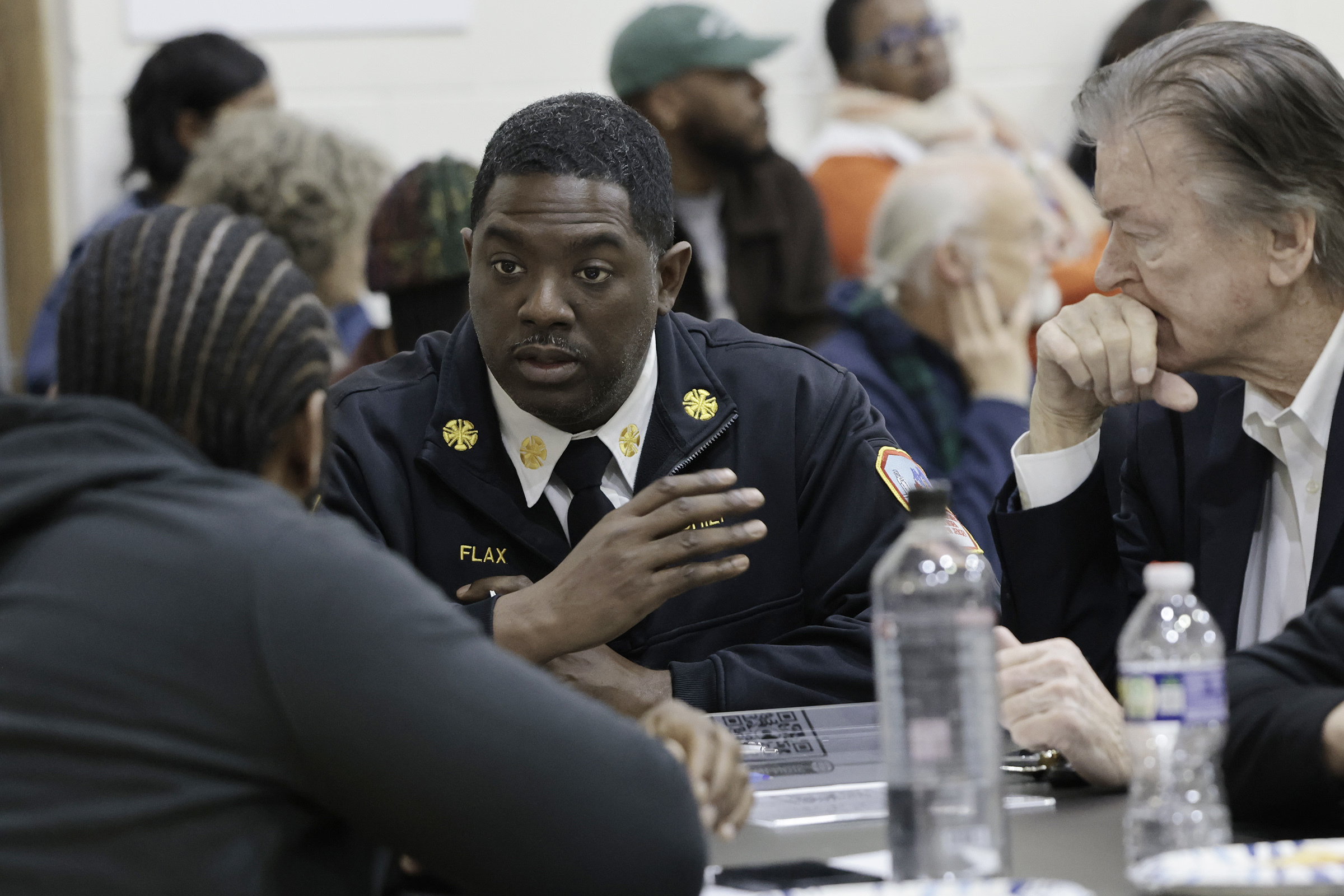
    Camden Fire Chief Jesse Flax talks with people during a community meeting for residents, affected by a 2025 fire at EMR, at MJD Fieldhouse Gym on Broadway in Camden on Sunday, February 23, 2025.Elizabeth Robertson / Staff Photographer

    “The city is required and has the right to protect its citizens from the harms that come,” he said in court.

    Tambussi said after the hearing that the judge’s decision is still a win for the city because the safety precautions EMR has to follow overlap with what the city wants from the company.

    “The judge found that the city rushed the process, which the city doesn’t apologize for,” he said in an interview.

    Camden and EMR will meet again in court in August, where they will assess whether EMR has complied. The city can also attempt to shut down EMR through a full hearing process if it finds that the company has violated its terms of opening. The city cannot, however, just shut the company down.

    A new law stemming from a Camden County legislator’s fight against EMR

    The law Sherrill signed on Wednesday, which goes into effect in a year, will require heat detection equipment, publicly accessible fire safety plans developed with local fire officials, and compliance with certain fire prevention standards. It also requires fire suppression systems that can be remotely operated and limits the height allowed for piles of material.

    The legislation is part of a four-bill package Moen has been pushing for in Trenton, but is the only one to make it to the governor’s desk before the summer recess.

    “We were met at every step of the way with opposition from a well-funded industry,” Moen said in an interview Wednesday.

    Balzano, the CEO of EMR USA, said in an interview Wednesday that he believes his Camden site is mostly in line with what the new law requires. But he said the height limit would be “very detrimental to the industry and probably to the environment,” arguing that it is too broad and applies to scrap metal that is not prone to fires. He said that could have “unintended consequences” by having scrap metal spread out across more space.

    “I fully support the premise of it,” said Balzano, who has pointed to lithium-ion batteries as a source of scrap metal fires.

    Moen emphasized that while the issue of scrap metal fires has become particularly important in Camden, it is not restricted to the city’s borders. Scrap metal sites in Vineland and Newark, for example, have also seen fires in recent years.

    “This will be the first step in hopefully many of the state bringing greater transparency, accountability, and an expected level of responsibility for these scrap facilities,” Moen said.

  • Gov. Mikie Sherrill says fighting data centers is part of her response to extreme weather during Camden visit after flooding

    Gov. Mikie Sherrill says fighting data centers is part of her response to extreme weather during Camden visit after flooding

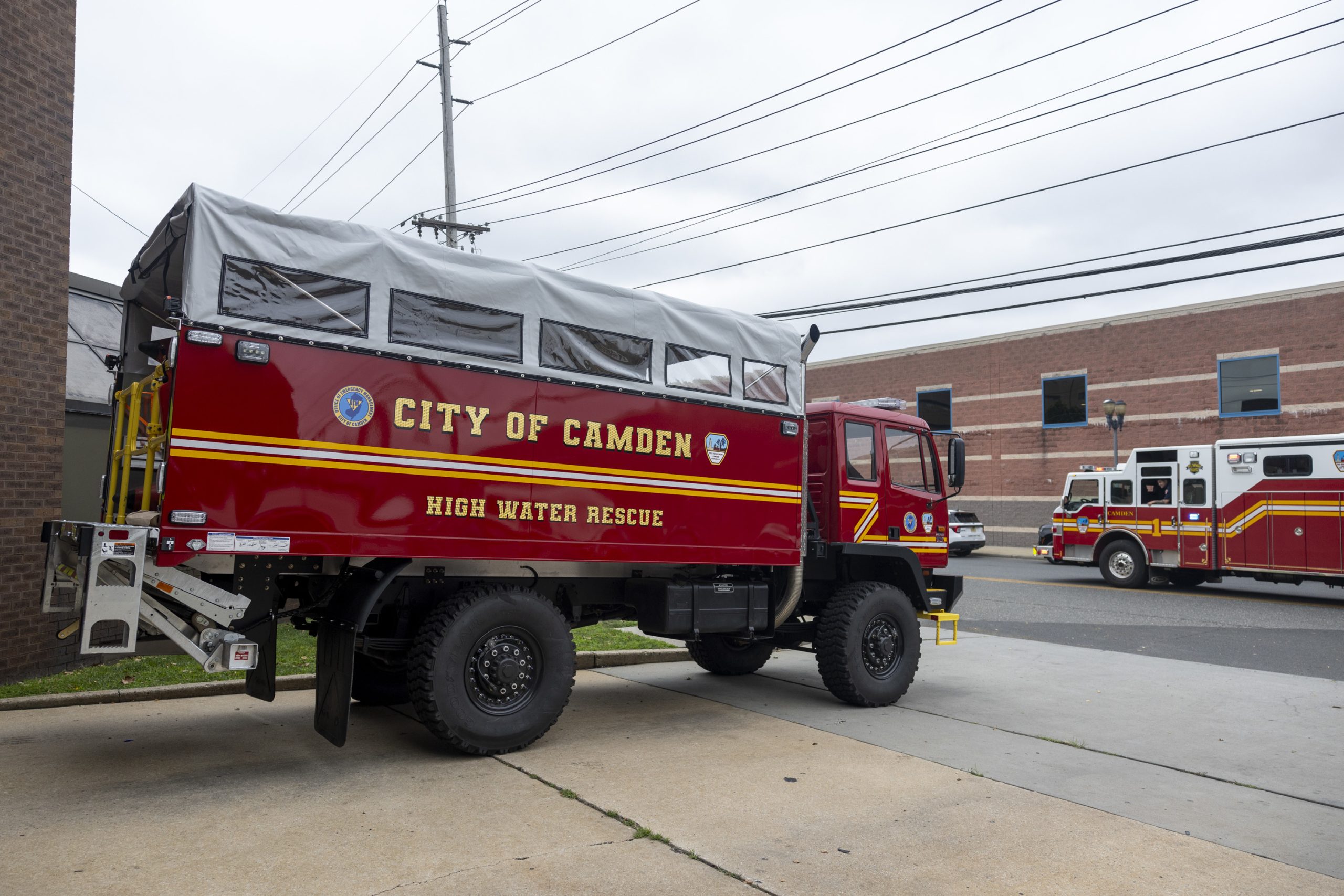
    New Jersey Gov. Mikie Sherrill climbed onto an emergency water vehicle in Camden on Tuesday with Camden Fire Chief Jesse Flax. That vehicle, called the High Water One, was used by local emergency responders on Monday to rescue 14 people from the flooded streets of Camden, Flax said.

    The vehicle had arrived in the city one week earlier, just in time for what officials said was the worst flooding they had ever seen in the city, including from Hurricane Sandy in 2012.

    “I’ve never seen this in my whole career,” said Flax, who has worked in the city for three decades. “I’ve seen bad fires, I’ve seen a lot of different things. But I’ve never seen it flood in this capacity.”

    The new High Water Rescue vehicle that was used in the recent rainfall and flooding at the Fire Administration Building in Camden on Tuesday.Tyger Williams / Staff Photographer

    No one was reported injured among 1,000 calls to emergency services.

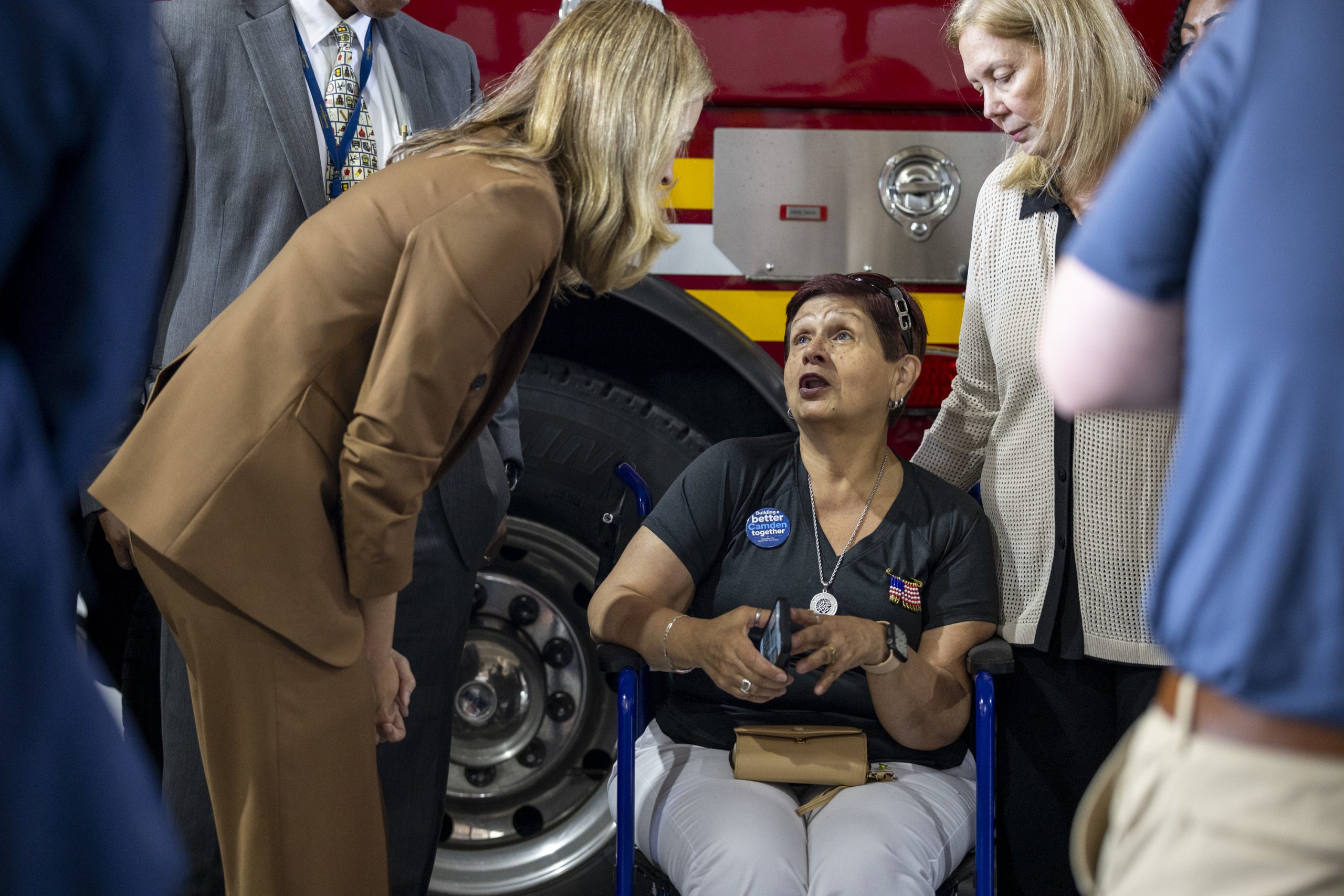
    Sherrill thanked emergency responders and comforted Maria Perez, a Camden resident recovering from surgery who worked with her neighbors to fight the flooding by “telling them what to do and keeping them calm.”

    “I wanted them to keep plastic bags on their feet, too, because you don’t know what’s in that water. … I’m so glad that we had such a great team,” Perez, a member of the Camden schools advisory board, said in an interview.

    The governor’s visit came just a little more than an hour after she signed legislation in Salem County aimed at data centers. She said that very work can help prevent strain on the power grid during future storms and that the electrical grid is “top of mind” for her.

    Gov. Mikie Sherrill, left, speaks with Maria Perez, center, and Sen. Nilsa Cruz-Perez, right, at the fire house in Camden on Tuesday.Tyger Williams / Staff Photographer

    “We are seeing these extreme weather events more and more and more frequently,” said Sherrill, who was dealt a historic snowstorm just weeks into her term and has recently seen a deadly heat wave. After her stop in Camden, she went to a BJ’s Wholesale Club store in Monmouth County where a roof fell in from Monday’s flooding.

    One of the bills Sherrill signed into law on Tuesday creates a new ratepayer class and rate structure for data centers that is meant to ensure they pay for their own energy. Another creates more oversight for utility companies’ grid upgrades to try to save money.

    “We’ve set them aside in a separate class of utility users, so that if we have storms like this, they will be first impacted, not normal rate payers,” Sherrill said.

    Data centers have caused concern on both sides of the aisle in South Jersey, with towns including Medford taking steps to block their development locally. But according to county spokesperson Dan Keashen, Camden did not have widespread power outages during the storm, just a handful that were rectified the same day.

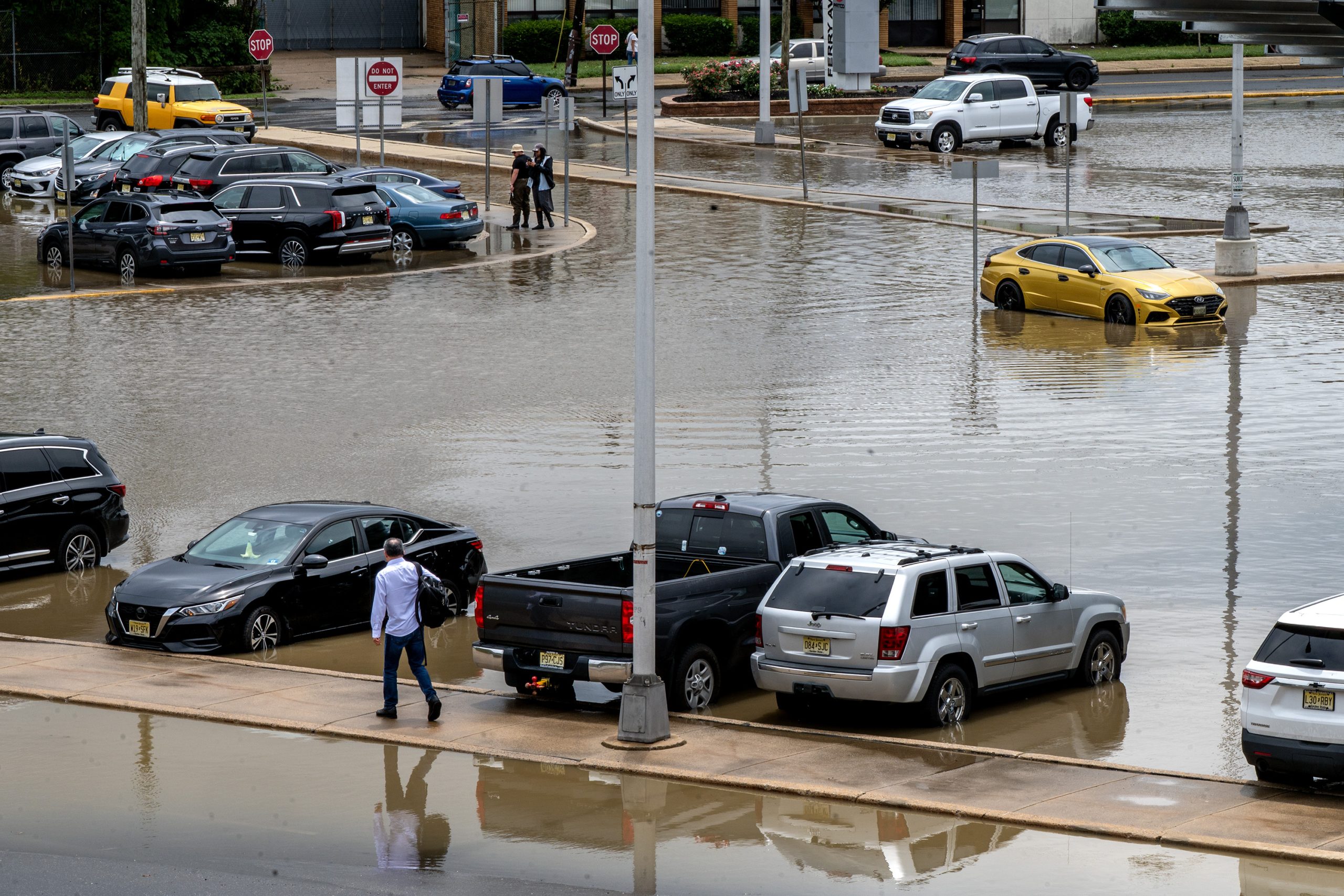
    Oscar Parra makes his way to his car in the flooded parking lot at the Ferry Avenue PATCO station in Camden on Monday amid a flash flood threat for the region.Tom Gralish / Staff Photographer

    So what about the damage in Camden?

    Sherrill said residents should report damage through the New Jersey Office of Emergency Management so the state can calculate how much federal assistance to request.

    “There are technical things we need to meet,” she said. “I think we probably will, but we’re collecting that now.”

    American Red Cross workers in Camden on Tuesday were providing cleaning supplies like mops, bleach cleaners, gloves, and tarps — as well as snacks and water, said Diane Concannon, the organization’s communications director for the New Jersey region.

    “Flooding is horrible for any family … because everyone wants to be able to save everything,” she said.

    While the rain was intense, it cleared up quickly because the city has maintained its sewers so well, Sherrill said.

    “They have done a really good job here in Camden with some of these resiliency efforts,” she said. “It’s why this wasn’t worse.”

  • Camden is a winner in New Jersey’s $60.7B budget. Who are the losers?

    Camden is a winner in New Jersey’s $60.7B budget. Who are the losers?

    Gov. Mikie Sherrill signed the New Jersey budget for fiscal year 2027 Tuesday night, shortly before the clock ran out on the constitutionally mandated deadline.

    The budget ranks as the largest in state history, but Sherrill also contends it is the most “fiscally responsible” in decades in part because it fully funds the state pension program and doesn’t come with widespread tax increases for residents.

    Lawmakers approved the budget on Tuesday after adding millions in legislative add-ons Sunday night, a move that countered Sherrill’s earlier vows to change the culture in Trenton. But she softened her stance as the deadline neared and she conceded that lawmakers know their districts best.

    South Jersey Democrats defended the spending, which Republican lawmakers criticized as “pork.”

    “I know sometimes it gets disparaging names, but I think one of our responsibilities as elected officials is to be responsive to the needs of our communities,” said Sen. Troy Singleton, a Burlington County Democrat.

    But the last-minute shuffle didn’t result in the transparency Sherrill originally promised, with some legislators saying they weren’t sure of the details they were voting on. The budget passed mostly along party lines in the Democratic-dominated legislature. Sherrill and legislative leaders touted record funding for schools and property tax relief programs.

    “I know the process needs work,” Sherrill said at a Tuesday night news conference. “It takes too long. It could be much more transparent, but we took steps in the right direction this year.”

    Here are some of the winners and losers in the budget.

    Camden County Commissioner Director Louis Cappelli, Jr., left, with Gov. Mikie Sherrill and Camden Mayor Victor Carstarphen, right, at SoccerFest26, the World Cup fan fest at Wiggins Waterfront Park in Camden on Friday.Aliya Schneider / Staff

    Winner: Camden City and County

    South Jersey obtained funding for projects across the region with Camden scoring one especially big-ticket item: $9 million for property acquisition and demolition. The funding is for a county-run program focused on removing vacant, unusable, or otherwise deemed dangerous properties in the city.

    Louis Cappelli Jr., the director of the Camden County Commissioners, said in an interview that the county has demolished more than 1,200 residential and commercial buildings over the past decade as part of this effort, mostly with state money. He said the program’s mission is to encourage the city’s redevelopment.

    “The city is in desperate need of new housing, especially market-rate housing, and by creating opportunities for development on these properties, we believe we will draw the interest of residential developers to build in Camden City,” he said.

    The city of Camden was also allocated $250,000 for a statue of Martin Luther King Jr., which Sherrill promised the city ahead of her inauguration. This project was a priority for the governor, who systematically struck a pen through legislative projects but dedicated funding to the statue in her proposal earlier this year.

    Several organizations that serve Camden city and county received hundreds of thousands of dollars in the budget.

    The Camden Coalition of Healthcare Providers received $500,000 for a program that connects emergency department patients to outpatient behavioral care and $750,000 for a program that helps people experiencing homelessness obtain housing. Joseph’s House, a homeless shelter in the city of Camden, received $600,000, and a separate spending bill also sends $650,000 to a new construction homeownership project.

    The budget also allocates $300,000 for job training for youth and young adults, $75,000 for a program dedicated to improving school attendance in the city of Camden, and $25,000 for a new county program that supports formerly incarcerated people reentering their community.

    It also includes $3.2 million for structural improvements for a bridge at Route 30 and Somerdale Road and $12.1 million for the Camden County LINK Trail, a planned 34-mile multiuse trail.

    Loser: High-income seniors

    Senior homeowners who earn between $200,000 and $500,000 a year will no longer qualify for the nascent Stay NJ property tax credit program under the new income cap. They just began receiving checks for the program this year.

    Sherrill proposed scaling back the expensive program in her budget proposal earlier this year, which caused some tension because the new program was championed by Assembly Speaker Craig Coughlin, a Middlesex County Democrat and a key budget negotiator.

    But Sherrill and legislative leaders found a compromise by giving higher payments than she proposed for those who make less money, and an even lower income limit than she proposed for the program.

    Qualifying taxpayers will get refunded up to half their property tax bill up with maximum refunds ranging from $4,000 to $6,500, depending on their income, with those earning more getting less.

    Rowan University’s Shreiber School of Veterinary Medicine Tuesday, April 14, 2026. Tom Gralish / Staff Photographer

    You win some, you lose some: Rowan University

    Rowan University is receiving less money than it did this year, but significantly more money than Sherrill initially proposed. At the end of the day it’s a win for the university, which saw significant cuts reversed.

    Sherrill’s initial proposal included about $125 million, but legislators brought the total up to nearly $135 million — a drop from the $155 million the state gave the school this year.

    Sherrill zeroed out funding for Rowan’s new veterinary school but legislators successfully got $6.2 million for the program — still less than the $8 million it received this year and a far cry from the $20 million the school requested.

    State Sen. John Burzichelli, a Gloucester County Democrat, said the money is enough for the school to at least “keep the lights on,” for the veterinary school and the medical school funding is “sound.”

    Sherrill also proposed cutting all state funding for Virtua Health College of Medicine and Life Sciences. Legislators restored $2 million to the program — half of what it received this year and much less than the requested $12 million.

    The Rowan-Virtua Child Abuse Research Education and Service Institute (CARES) program, which provides medical and mental healthcare to children who have experienced abuse, had all its $1.85 million funding restored after Sherrill initially zeroed it out.

    In anticipation of the governor’s proposed cuts, Rowan sent employees layoff notices and announced the closure of its Vineland office. A union representing CARES employees has called on Rowan to reverse these changes.

    But Rowan spokesperson Jose Cardona said the university “will evaluate next steps and very soon determine the most responsible path for operations, staffing, and long‑term sustainability.”

    The bill that passed alongside the budget with funding from this fiscal year sent nearly $15 million going to Cooper Medical School of Rowan University and support to Cooper University Hospital. That bill also sends $5 million to Cooper University Healthcare’s South Jersey cancer program, which got an additional $27.4 million in the new budget.

    Winner: Parents

    Legislative leaders secured a 25% increase in the state’s child tax credit program, which is claimed by 217,000 tax filers with children, according to the governor’s office.

    The expansion, which will be in place over the next three tax years, bumps each tax credit tier by 25%. So, for example, a household that previously got the highest tier of $1,000 will receive $1,250 and households that got $800 will get $1,000.

    Sherrill, a former member of Congress and mother of four, said she saw positive impacts of the national tax credit, “giving parents more money for childcare and summer camps, so their kids can thrive while they’re at work.”

    Gov. Mikie Sherrill talks with state Sen. Troy Singleton (D., Burlington) as she arrives to meet with the South Jersey business community for a fireside chat event hosted by the Chamber of Commerce of Southern New Jersey in Mt. Laurel Monday, March 16, 2026.Tom Gralish / Staff Photographer

    Loser: Businesses

    What Sherrill touted Tuesday night as closing “corporate loopholes” and asking employers “to pay their fair share in healthcare,” the business community saw as an attack.

    The budget includes Sherrill’s proposals to introduce new fees for businesses with at least 50 employees on Medicaid, an effort that was led in part by Assembly member Carol Murphy, a Burlington County Democrat, in the legislature. It also imposes limits on two methods businesses use to deduct losses from their taxes.

    Hilary Chebra, the director of governmental affairs for Chamber of Commerce Southern New Jersey, criticized these policies, as well as a bill passed by the legislature that bans food surveillance pricing as it’s written.

    “Employers aren’t reacting to a single tax increase or one new regulation,” she said. “They’re responding to all of it at once.”

    She said these measures will have more severe consequences in South Jersey for small and family-owned businesses that compete with businesses in Pennsylvania and Delaware.

    Tom Bracken, the president & CEO of the New Jersey Chamber of Commerce, said businesses were given “minimal support” and that the budget did not focus on supporting economic growth. He said the policies Sherrill championed in the budget “send the wrong message” to employers that New Jersey should be working to attract.

    “The negative financial and reputational consequences of these policies will make it more difficult for New Jersey to be competitive — and competitiveness is essential if the state economy is going to grow,” he said.

  • Rowan’s vet school can ‘keep the lights on’ under tentative state budget deal, and other South Jersey program updates

    Rowan’s vet school can ‘keep the lights on’ under tentative state budget deal, and other South Jersey program updates

    Rowan University’s nascent veterinary school will get enough funding to “keep the lights on” under the tentative New Jersey budget deal, according to one South Jersey lawmaker.

    It’s among several South Jersey programs with a fate tied to the negotiations ahead of the state’s June 30 budget deadline.

    New Jersey Gov. Mikie Sherrill proposed completely slashing state funding for the state’s only vet school in her budget proposal rolled out in March.

    The Shreiber School of Veterinary Medicine was created with state support and its first class just finished its first year. On top of training the next generation of vets and conducting research, the South Jersey institution provides veterinary services to the region and helps address a large animal vet shortage.

    Since the four-year school only has had only one 75-student class paying tuition so far, the prospect of losing all state funding was potentially devastating.

    The state legislature will vote Tuesday on a budget that allocates $6.2 million to the school, a lower number compared to the $8 million it got this year (and much lower than the $20 million it had requested). But the amount will be sufficient enough for the vet school to survive, said Sen. John Burzichelli, a Gloucester County Democrat.

    “Will they keep the lights on? Will they continue to grow? I’m confident they can,” he said in a Monday interview.

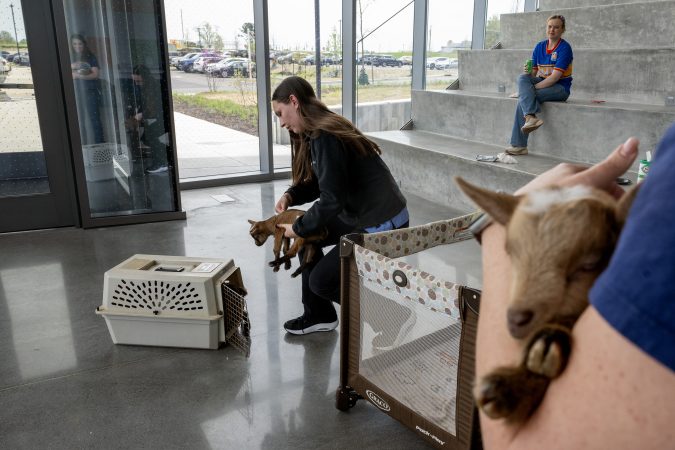
    Veterinary students at Rowan University’s Shreiber School of Veterinary Medicine interact with a group of less than-a-week-old kids (baby goats) brought in by classmate Cana Patterson (back to camera, second from right).Tom Gralish / Staff Photographer

    Burzichelli said he and other supporters of the school were trying to allocate $12 million to the school to provide “more resources as they grow out.”

    Rowan spokesperson Jose Cardona declined to comment because the deal has not been signed into law.

    The legislature is expected to approve the budget Tuesday, the final day before the new fiscal year begins on July 1. Sherrill has the power to veto items in the budget before signing it into law.

    As part of her March proposal, Sherrill warned that legislators must provide cuts to equal out any spending they want to add to the budget, a stance she softened more recently.

    On Friday, she said in Camden that because of cuts she identified with legislative leaders, there’s money for lawmakers to “really push into their local projects.” The state’s revenue forecasts have also gone up.

    Sherrill announced last week that she came to a budget agreement with legislative leaders with a price tag of $60.7 billion, the same rounded figure she proposed earlier this year.

    Then, on Sunday, legislators advanced a budget with $15 million more than Sherrill’s proposed total earlier this year.

    Sherrill has repeatedly touted her budget proposal as” the most fiscally responsible budget New Jersey has seen in years,” though it’s the largest in the state’s history.

    Gov. Mikie Sherrill delivers her budget address Tuesday, Mar. 10, 2026, in the Assembly Chamber at the New Jersey State House. Assembly Speaker Craig J. Coughlin (left) and Senate President Nicholas P. Scutari (right) are behind her.Tom Gralish / Staff Photographer

    Funding restored for child trauma care in South Jersey

    Sherrill’s original proposal also zeroed out funding for a program that provides medical and mental health care to South Jersey children who have experienced abuse in her budget proposal earlier this year. But the legislature restored funding to the same level as the current fiscal year at $1.85 million.

    The Rowan-Virtua Child Abuse Research Education and Service Institute (CARES) has locations in Stratford in Camden County and Vineland in Cumberland County. Rowan informed employees of layoffs across both locations and said the university would be closing down the more rural Vineland location as a result of the cuts.

    Cardona, the Rowan spokesperson, declined to say Monday whether the Vineland center will remain open and if the layoffs will be reversed. He said it’s “premature to comment on a budget that has not been approved.”

    Dio Tsitouras, the executive director of the American Association of University Professors Biomedical and Health Sciences union — which represents CARES employees — said the union is awaiting “an announcement from Rowan that rescinds all layoffs and indicates that the Vineland office will remain open.”

    “We are pleased that the budget the Legislature passed restores critical funding to the CARES program so that our members can continue serving the most vulnerable children of South Jersey,” Tsitouras said.

    State Rep. Anthony Angelozzi, a Burlington County Democrat, said his office advocated for CARES, one of dozens of groups at risk of funding cuts that met with his office. He called the program’s work “imperative.”

    “There were certain priorities we had to fight for because we are sorta on the ground in our districts in a way sometimes the governor is not,” he said. “There are some programs that legislators realize how profound they are at helping people that the governor may underestimate.”

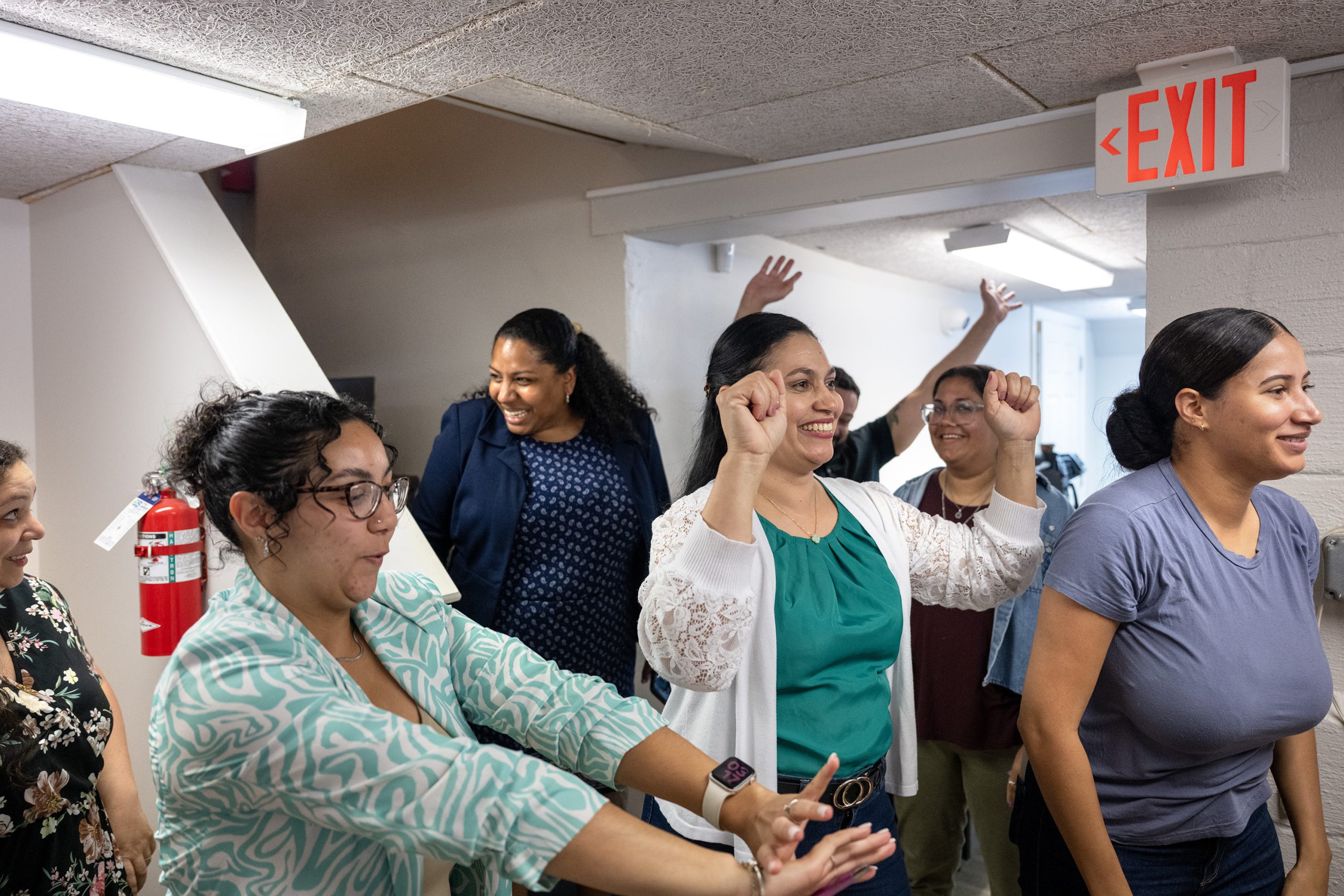
    Staff members observe from back of the room during a workshop at the Hispanic Women’s Resource Center in Camden Thursday, June 11, 2026. Tom Gralish / Staff Photographer

    Hispanic Women’s Resource Centers still at risk

    New Jersey has one of the largest wage gaps for Hispanic women in the country. Hispanic Women’s Resource Centers were established by the legislature in the early 1990s to help that disparity, providing employment training and other support to Latinas. Sherrill proposed cutting 80% of state funding for these programs, down to just $535,000 statewide.

    Legislators restored most of that funding in their tentative budget to nearly $1.8 million but program leaders say it’s still not enough, at almost 30% less than this year’s allocation of $2.5 million.

    The Latino Action Network Foundation runs these centers in partnership with six nonprofits across 14 sites, including five in South Jersey in Camden, Vineland, Hammonton, Pennsville, and Rio Grande.

    Latino Action Network president Javier Robles said that decrease will still cause the closure of centers and reduce job training, mental health services, and English language classes to thousands of families statewide.

    “At a time when Latino families across our state are being targeted by the right-wing Trump anti-immigrant agenda, these cuts will only put additional strain on our community,” Robles added.