New Jersey hospitals could lose an estimated $3.6 billion from Medicaid changes through 2032, forcing them to bring their expenses in line, Inspira Health Network CEO Amy Mansue said Friday during a panel discussion in Cherry Hill.
“That will only happen with dramatic changes in how we look at our business,” she said during the Southern New Jersey Development Council’s Annual Health Care Leadership Forum at the Legacy Club of Woodcrest.
Mansue predicted that health systems will close little-used programs. “There is no way to cut that much money out of the hospitals without doing some of that,” she said.
The $3.6 billion estimate from the New Jersey Hospital Association does not include hospitals’ losses from the growing population of uninsured people who show up at emergency departments because they can’t afford to pay cash for a doctor visit.
The hospital executives pleaded for state officials to reduce the red tape that makes it hard to implement programs needed to meet community needs.
“We need to be more nimble, we need to be more adaptable, we need to be more flexible,” said Aaron Chang, president of Jefferson Health NJ, which includes hospitals in Cherry Hill, Stratford, and Washington Township.
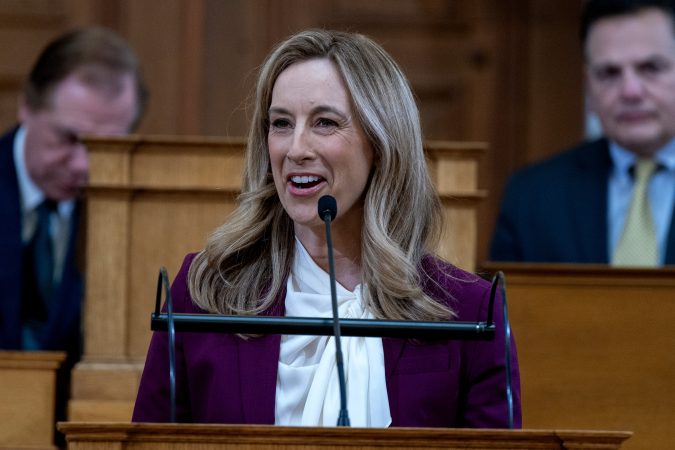
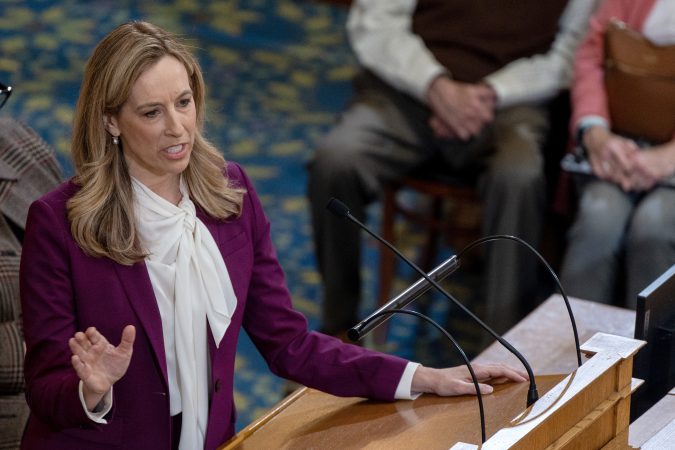
Jennifer Khelil (left), Virtua Health’s chief clinical Officer; Aaron Chang (center), president of Jefferson Health New Jersey; and Amy Mansue, CEO of Inspira Health spoke Friday at the Southern New Jersey Development Council’s Health Care Leadership Forum.Southern New Jersey Development Council
Inspira is adding a $220 million patient tower at Inspira Mullica Hill in Harrison Township, near the intersection of Routes 55 and 322. Construction is expected to be completed Oct. 1, Mansue said. “The reality is we’re not going to open until March” because it will take that long to get all the regulatory approvals, she said.
Inspira operates three other hospitals in Cumberland and Salem Counties.
Raynard E. Washington, who heads the N.J. Department of Health, spoke after the panel and said Gov. Mikie Sherrill is serious about making it easier to do business in the state. She told state agencies “to limit additional regulations and to look for opportunities to streamline,” he said.
Workforce development is a top priority
Six years ago, Virtua and Rowan University started working together to create the Virtua Health College of Medicine & Life Sciences out of Rowan’s School of Osteopathic Medicine, Rowan’s School of Nursing & Health Professions, and Virtua’s Our Lady of Lourdes Nursing School, plus a new school of translational biomedical engineering and sciences.
The institution officially launched in 2022 with $85 million in support from Virtua and $125 million from Rowan and has seen its class sizes grow steadily.
“We are now training about 360 nurse graduates every year, 300 medical students,” said Jennifer Khelil, Virtua’s chief clinical officer. Virtua operates five hospitals in South Jersey.
Workforce efforts also reach into high schools, Chang said. Jefferson Cherry Hill Hospital has a relationship with Cherry Hill West High School that brings 12 to 15 interns to the hospital.
“Because of the internship, their exposure to the hospital environment, whether it’s the ancillary departments and or the clinical areas, over 95% of those individuals get a healthcare job as a first foray into the workforce,” Chang said.
Editor’s note: This story has been updated to correct the time period for the Medicaid cuts.
A nascent property tax relief program for New Jersey seniors has been at the center of budget negotiations between Gov. Mikie Sherrill and lawmakers as the state’sbudget deadline quickly approaches.
That program, called Stay NJ, is expected to undergo changes that would slice the income eligibility by more than half, kicking off seniors that made hundreds of thousands of dollars and started reaping the benefit this year.
The benefit is currently available to seniors making less than $500,000, but that cap would be lowered to $200,000 under an agreement between the governor and legislative leaders, according to reports of closed-door budget talks. Those making less money would be eligible for a larger refund under the arrangement.
The proposal is a compromise between Sherrill, who pushed for cuts to the program, and House Speaker Craig Coughlin (D., Middlesex), a key player in budget negotiations who has championed Stay NJ.
As the name suggests, Stay NJ was created in 2023 to incentivize New Jerseyans to remain in the Garden State by providing refunds to eligible seniorhomeowners. The program was designed to start payments in 2026, so the very first checks had just begun going out when the first term governor presented her early March budget proposal.
Here’s what to know about the status of the Stay NJ program.
Is there a budget deal?
Sherrill, Coughlin, and State Sen. President Nicholas Scutari (D., Union) announced Tuesday that they came to a budget “agreement.” The closed-door deal wasn’t made public, and legislators continue to iron out the details ahead of the deadline this coming Tuesday.
They said the budget agreement totals $60.7 billion, the same total Sherrill proposed in March. The governor has touted her proposal as “fiscally responsible,” though it’s still the highest price tag in the state’s history.
The joint statement mentioned few details but cited a handful of measures, including Stay NJ.
The state leaderssaid their agreement ensures the program “is a sustainable benefit retirees can count on.”
The propertytax relief program issues refund payments to eligible seniors in quarterly installments. The first Stay NJ payments were issued in February with an average of $600 each, according to the state treasurer’s office.
Under the current policy, eligible homeowners over 65 years old who make under $500,000 a year are eligible to get refunds for as much as half their property tax bills. The refunds are capped at $6,500 in a year.
What did Gov. Sherrill want to change about Stay NJ?
Sherrill wanted to slice the eligibility cap in half so only seniors with an annual household income below $250,000 would qualify.
She also wanted to lower the maximum benefit to $4,000.
“That’s a fairer, more efficient use of taxpayer money,” she said in her budget address in early March.
Stephen Sigmund, a spokesperson for Sherrill, said at the time of her proposal that 90% of Stay NJ recipients would keep their benefits.
The AARP expressed outrage at her proposal as New Jersey seniors struggle with the cost of living. But critics of the program who believe it directs too much state money to higher earners praised her for wanting to rein it in.
So what’s actually changing?
According to reports of the budget agreement, Sherrill and legislators agreed on a compromise.
Sherrill agreed to steer an additional $100 million funding to the program, NJ.com reported.
Meanwhile, legislative leaders agreed to lower the income threshold to qualify for the program to $200,000, even lower than what Sherrill initially suggested.
And as part of the new plan, those earning the least would get bigger deductions, according to the report.
Seniors making $100,000 or less would qualify for up to $6,500; those making between $100,000 and $150,000 would be eligible for up to $5,000, and those making $150,000 to $200,000 would qualify for up to $4,000, according to the report.
Coughlin said at an AARP town hall that Sherrill’s proposed cap across the board of $4,000 was “too low,” and that he would “stand up for Stay NJ,” New Jersey Monitor reported earlier this month.
Spokespeople for the governor did not respond to a request asking for confirmation of the plan.
Consensa Francisca Silva Silva moved to Camden from Costa Rica more than two years ago knowing nobody. She lived on the street for two months, she said, and thenwas bouncing from house to house when a young man in the neighborhood told her to check out the Hispanic Women’s Resource Center in Camden, one of several such centers in the state.
She went. With help from the program, Silva received food, obtained a work permit, made a down payment for a studio apartment, and started a job at McDonald’s.
That statewide initiative is now facing detrimental cutsunder DemocraticGov. Mikie Sherrill’s budget proposal. The governor has proposed cutting nearly 80% ofits funding, and Silva worries that other immigrant women looking to improve their circumstances will not get the help she received.
“It was very hard to come here without knowing anyone, and it was really hard because at first I couldn’t find any work,” Silva, who is Nicaraguan, said in Spanish, translated by Jesselly De La Cruz, the executive director of the Latino Action Network Foundation, which funds the centers.
Sherrill and legislative leaders announced Tuesday they had come to an “agreement” on a budget totaling$60.7 billion, the same price tag Sherrill proposed in March. But it has not been made public and it is unclear how far into the details they have gotten. They have until Tuesday to figure it out.
And the process is still underway. State Sen. Nilsa Cruz-Perez, a Camden Democrat who sits on the Senate Budget and Appropriations Committee, has been a supporter of the centers.She was unable to speak Wednesday afternoon because she was in a committee budget hearing.
Client Consensa Francisca Silva Silva (right) participates in a workshop at the Hispanic Women’s Resource Center in Camden Thursday, June 11, 2026.Tom Gralish / Staff Photographer
On a recent Thursday, Silva participated in a healthy life skills workshop in Spanish at the Camden center, where she learned about taking care of herself as summer temperatures get hotter in the city. About 20 adults clapped for one another with big smiles on their faces, and they received goody bags with sunscreen, lip balm, a towel to keep cool, and a little fan. A young girl played with magnetic tiles and a baby was kept calm, passed between women.
The governor proposed cutting funding for the center’s programs to$535,000, down from more than $2.5 million this year and more than $3 million in 2025. Murphy had proposed a similar cut last year, but the funding was restored during budget negotiations.
Hispanic Women’s Resource Centers were established through 1991 legislation to address the wage gap for Latinas. New Jersey is one of the states with the biggest wage gap for Latina workers, according to the National Women’s Law Center.
Staff members observe from back of the room during a workshop at the Hispanic Women’s Resource Center in Camden Thursday, June 11, 2026. Tom Gralish / Staff Photographer
The Latino Action Network Foundation funds these resource centers in partnership with six nonprofits across 14 sites, including five in South Jersey. The Camden center is located at the nonprofit Healthy Families and Communities, and there are centers in Vineland in Cumberland County, Hammonton in Atlantic County, Pennsville in Salem County, and Rio Grande in Cape May County.
Sherrill’s proposal would “drastically cut” the number of resource centers, and sites in Hammonton and in Lakewood, in Ocean County, would likely be on the chopping block, De La Cruz said, adding that services would need to be cut in eight of 11 counties.
Martha Infante, 38, who lives in Pennsauken, said she was disoriented when she moved to South Jersey from the Dominican Republic. But through the Camden center, she found out how to apply for work online and learned basic English. She obtained coats for her daughters’ first U.S. winter, and a staffer accompanied her to a New Jersey Department of Motor Vehicles center to get her driver’s license.
“I came here and my mind was all over the place, I didn’t know where things were,” she said in Spanish.
She now works as a home health aide, thanks to training she got through the center, and even participated in a program where she learned about advocating for her community in Trenton.
“Don’t cut these funds, Gov. Sherrill,” she pleaded. “Don’t cut the funds! This is like a family. It’s like a home for the community.”
Client Martha Infante (left) talks with staff member Chailienisse Vega (right) after participating in a workshop at the Hispanic Women’s Resource Center in Camden Thursday, June 11, 2026. Tom Gralish / Staff Photographer
Some of the women in the program are fleeing domestic violence and seeking financial independence. Others are struggling to get a work permit, or may have lost a family member who helped pay the bills to deportation. A lot of former “Dreamers” — undocumented immigrants who came to the U.S. as children — utilize the center as well, De La Cruz said.
The need for the centers has only escalated under President Donald Trump’s second administration, she said.
The social worker-turned-executive said she was surprised by the severity of Sherrill’s proposed cut, especially because of the governor’s efforts to push back against Trump’s immigration policies.
A 2023 Rutgers study funded by the Latino Action Network Foundation found that the most popular services at these resource centers were English-language classes and employment services, such as job referrals, assistance filling out applications, resume writing, and interview preparation.
Staff member Andreina Pardo pauses to stretch with participants as she leads a workshop at the Hispanic Women’s Resource Center in Camden Thursday, June 11, 2026. Tom Gralish / Staff Photographer
“Aside from helping them with the technical aspects of job hunting, the assistance from the Centers seemed to provide a boost of confidence for many of the women, giving them an additional push to apply for positions even if they felt hesitant to do so at first,” the study said.
Gladys, 48, who declined to give her last name due to concerns over her safety, said in Spanish that the free English courses made her feel like she could “come up for air and breathe” after not being able to communicate.
The Camden resident had been an ecologist in Nicaragua and has gotten involved in the center’s community garden. She said she would love to pursue a career teaching children about the environment, but her plans are on hold because her work visa was canceled.
In the meantime, Gladys said, activities at the center like art classes have made her feel less alone. She has been able to connect with women in the same situation as her, and those who migrated to the U.S. earlier who can give her advice from their experiences.
“Maybe my circumstances don’t change, but my emotional well-being changes because I’m able to connect with others,” she said in Spanish.
Large-scale data centers will not be moving into Medford any time soon thanks to a new ordinance adopted unanimously by the Medford Township Council this week.
While the township has not yet received any formal applications for data centers, officials are taking steps like the ordinance passed Tuesday that specifically prohibits the land use within town limits as a chance to be proactive.
“These are extra precautions to ensure that we don’t move forward in a direction that we can’t come back from until we know full well what the impacts of data centers will be,” Medford Mayor Michael Czyzyk said at Tuesday’s public hearing.
The ordinance received support from Medford-area residents at the hearing but some questioned whether the township might be making its bed too early considering how quickly technology evolves, especially if there’s a chance to reap the rewards of a data center project without negatively impacting the surrounding community.
“If there’s no impacts to the residents and there’s only a financial benefit, I believe I would consider looking at that at that time, but we’re not there yet,” Czyzyk said.
While the ordinance constraints may seem all-limiting as it exists today, Czyzyk said, council maintains the authority to at any point amend the ordinance to permit data centers in the township’s redevelopment district.
“I definitely understand that things will evolve and there may be a time in the future that the term data center is something that is more amenable to the residents and the body that governs them,” Czyzyk said.
“I will feel comfortable with the vote I cast on this ordinance tonight knowing full well that today I feel that way and that there’s mechanisms in the future if things do change, a process will be undertaken to remedy that,” he said.
There are dozens of data centers currently operating throughout the state with major hubs located primarily in North Jersey urban centers like Secaucus and Newark. But more recently, developers have been eyeing spots in rural South Jersey as the industry expands to meet growing demands for generative AI.
Developers and other data-center proponents say the facilities bring in tax revenue, create jobs, make use of old industrial sites, and put towns on the cutting edge of a hot industry, all without straining school districts or emergency services.
Opponents, meanwhile, cite concerns about pollution, noise, power and water use, and the impact on their electric bills. Some also say they worry the AI boom is a bubble that could soon burst.
As concerns continue to grow among towns across the Garden State, representatives from more than 60 environmental, labor, and community groups sent a letter to New Jersey Gov. Mikie Sherrill last month calling for a statewide moratorium on the approval and construction of new facilities that use 20 megawatts or more of power.
So far in response to the public pressure, Sherrill has proposed a plan that would require new data centers to cover grid upgrades, utilize their own power generators, and publicly report resource usage.
While some municipalities like Medford have issued moratoriums on new data centers, no state governments have successfully done so, according to the National Conference of State Legislatures.
Julie Harrison, a clinical psychologist in South Jersey who works with children who have experienced abuse, received a letter from Rowan University: Notice of Layoff.
Her position as a teacher, researcher, and provider in Camden County would be eliminated “due to the loss of state appropriation funding,” the May 12 letter said. Harrison works for the Rowan-Virtua Child Abuse Research Education and Service Institute (CARES), which provides evaluation, treatment, and other services to children who have experienced abuse in South Jersey, and conducts research on the subject.
The notice came after Gov. Mikie Sherrill proposed slashing the $1.85 million line item in her state budget plan for the program.
CAREShas offices in Stratford in Camden County and Vineland in Cumberland County. The Vineland location, which opened two years ago to provide better access to families in deeper South Jersey, is shutting down due to the anticipated cuts.
“With Mikie Sherrill being in office, we had a lot of hope because she really was pretty loud about wanting to help kids, wanting to help families, wanting to really champion mental health services, and so we were pretty surprised about this budget,” Harrison said in an interview.
The clinician ispregnant with twins and her job prospects are uncertain as the clock ticks until her final day at CARES. But she is mostly concerned about the impacts the funding cuts will have on children facing trauma in South Jersey, and the workers caring for them.
The South Jersey program serves more than 1,500 children across more than 4,000 visits in both locations. Though just about 200 families use the more rural Vineland location, that is where these types of services can be the most critical, Harrison said.
“It’s a pretty resource-dry community,” she said. “There’s not a ton of public transportation to get around. … The amount of services that are available to these families generally is much lower than other parts of New Jersey.”
Harrison is one of about 20 people whose jobs are being impacted by the anticipated funding cuts across both office locations, according to union members. The majority of those are layoffs, and some employees had their hours dramatically reduced to the point they lost their healthcare benefits, according to union members.
Ali A. Houshmand, president of Rowan University, said in a May 11 email that Sherrill’s proposed cuts forced the child abuse care center to pull back its services beginning July 1. He announced the closure of the Vineland office without saying it outright.
“CARES will consolidate its work into our Stratford campus offices and will continue to fulfill its mission there: delivering high‑quality evaluations and treatment, supporting partner agencies across the region and educating the next generation of physicians and health professionals,” he said in the email.
Joe Cardona, a Rowan University spokesperson, said the program also receives $3 million from other state agencies that will not be cut. He said the program’s goal is to offer the same services but reduce the quantity of care.
“The exact outcome, of course, is to be determined,” he added.
What is clear is that the closing of the Vineland center will have a domino effect on Stratford.
“It’s creating an environment where people who are already doing multiple roles, performing multiple jobs, are going to be asked to do more,” Harrison said. “It’s just that horrible ‘do more with less.’”
Harrison said she was just days away from submitting a grant application to start a food pantry out of the Vineland office when she heard the news. Her team did not submit the application after learning about the cuts and Vineland’s planned closure.
CARES is one of four legislatively mandated diagnostic and treatment centers through the New Jersey Department of Children and Family, though it provides more expansive medical and mental healthcare than legally required. The center champions trauma-focused cognitive behavioral therapy, an internationally recognized model that was developed by the South Jersey program’s codirector.
The program has tried to keep waiting lists for trauma care to under three weeks, but it has now grown to 10 to 12 weeks and the wait for care will probably get longer, Harrison said.
“There is a high cost to what untreated trauma can look like for medical, mental health, all those services down the road if trauma isn’t treated early on,” she said.
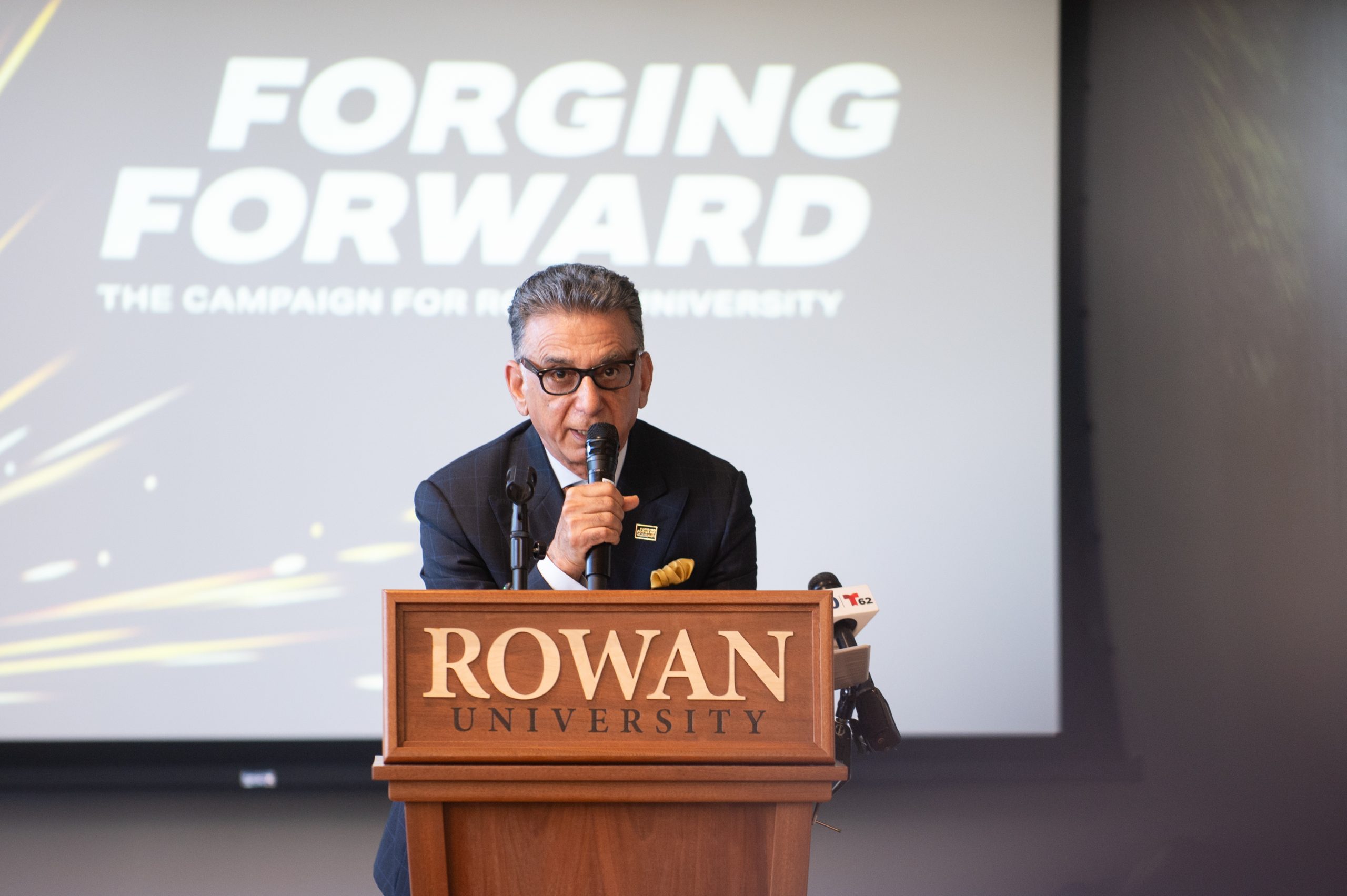
Dr. Ali A. Houshmand, president of Rowan University, speaks to students and staff at a fundraising event in September 2025. Erin Blewett / For The Inquirer
‘Tough choices’
Sherrill championed improving mental health for young people on the campaign trail and in her budget proposal by allocating $33 million to expand mental health services for students with high needs in K-12 schools, $500,000 for a new social media research center focused on young people’s mental health, and $125,000 for the newly created New Jersey Office of Youth Online Mental Health Safety and Awareness.
Her office did not respond to a request for comment on her proposal to decrease funding for CARES.
In response to a request for comment for an earlier Inquirer story about Sherrill’s decision to cut all state funding for Rowan’s brand-new veterinary school, an administration official cited the governor’s “blanket cut to all legislative add-ons.” These items refer to funding allocations legislators secure for their district that are sometimes criticized as “pork” or “Christmas tree items.” They can range from improvements for a local park to community services, like CARES.
Sherrill, in her budget address, spoke about making “tough choices” in order to have “the most fiscally responsible budget that our state has seen in years.”
The state budget is a negotiation between the governor and legislative leaders due June 30, so it is unclear how much funding these programs will get in the end. But Rowan has moved forward as if the money for CARES is not on the table.
This is not the first time the program has been at risk as part of the budget dance.
Former Gov. Phil Murphy proposed cuts to the program last year, citing “belt-tightening,” but legislators were able to get the money back in the budget.
This year, Harrison said, people are not optimistic because CARES is one of so many programs Sherrill struck a pen through.
Dio Tsitouras, the executive director of the American Association of University Professors Biomedical and Health Sciences union, said he hopes Sherrill allocates more money to CARES because more state revenue has been identified since her budget proposal. But state officials have still warned of financial uncertainty on the horizon.
“The CARES program is invaluable to protecting our state’s most vulnerable children,” Tsitouras said.
One of my many New Year’s resolutions back in January was never to write what I call “Captain Obvious columns” about the Donald Trump scandal du jour that’s all over your social media feed. So you’ll have to imagine the column I didn’t write about Trump’s tacky UFC cage match that desecrated the White House, and the role of bread and circuses (or just circuses…where’s the bread?) in the inevitable decline and fall of decrepit empires.
A ‘President JD Vance’ would be a different kind of dictator. The scary kind.
They say you never get a second chance to make a first impression — unless your name is JD Vance, or it becomes JD Vance after a few false starts. In 2016, a then utterly unknown Yale Law grad introduced himself to America with a No. 1 bestseller, Hillbilly Elegy, that used his (sort-of) Appalachian family’s hardscrabble story to come off as an empathetic horse whisperer for the white working class.
He cemented that first impression when we learned he’d privately described Trump as a kind of a demagogue feeding off the pathologies he’d written about in Elegy — someone he feared might become “America’s Hitler.”
But Trump’s victory coupled with some exposure to the ketamine-fueled paranoia of Silicon Valley’s billionaires gave the former James Donald Bowman yet another shot at reinvention — now embracing extreme right-wingers and crackpot conspiracy theories all the way to his election, at age 40, as the 50th vicepresident of the United States.
Today, less than two weeks before the 10th anniversary of Hillbilly Elegy’s publication, Trump has become America’s…Mussolini, a strutting yet sometimes buffoonish strongman and a hopelessly corrupt invader of faraway lands.
It’s Vance who could actually become America’s Hitler, if he gets that chance…a very real possibility.
That’s a strong statement, but it’s also perhaps the most powerful takeaway from the heavily promoted, about-to-be-published book from all-access New York Times reporters Maggie Haberman and Jonathan Swan, Regime Change. It portraysthe vice president as eager to go much further than Trump in crushing domestic dissent.
In book excerpts published Monday, Haberman and Swan depicted Vance — in a tag-team alliance with Trump’s ruthless mass-deportation guru Stephen Miller — as calling for the radical step of invoking the Insurrection Act to send in troops to put down protests by everyday Americans in Minnesota who were enraged by masked goon squads snatching their immigrant neighbors and the killing of two U.S. citizens.
Describing a White House meeting of senior aides — but not Trump — in late January after Renee Good and Alex Pretti were gunned down, the Times reported that “Vance got to the point. They needed to invoke the Insurrection Act, swiftly, to crush the unrest in Minnesota. It would be painful in the short term, he said, but the message it would send — that paid agitators could not get away with disrupting ICE operations — would make sure no one tried it again.”
There are many problems with Vance’s anti-democratic impulses. As Haberman and Swan reported, even most of the Trump aides in the room agreed that invoking the 1807 law in this circumstance would be both a significant expansion of presidential power and a public-relations nightmare. Even worse, the nation’s No. 2 official was urging this would-be abuse of power based on a right-wing internet lie — the falsehood that Minnesota’s angry neighbors were “paid protesters.”
The deeply reported episode isn’t the only disturbing glimpse of Vance’s governing philosophy in recent months, but it’s the most revealing, and mostdamning: a true believer in the worst conspiracy theories about the left, with the inclination to wield dictatorial powers against them.
Earlier this month, Vance — arguably the regime’s top cheerleader for Europe’s extreme far-right political parties — stunned the United Kingdom’s center-left government by weighing in on growing unrest over the stabbing death of an 18-year-old English college student by a Sikh migrant. He sounded more like a wannabe X influencer than a top official of the U.K.’s historic American ally. As racist hate mobs prowled streets in England and Northern Ireland, Vance said the murder of Henry Nowak proved that “European elites” had failed to oppose the “politics of self-hatred and the mass invasion of migrants.”
One thing is clear: Vance is not on the side of calm, which is problematic when what the world needs now is love, sweet love.
Increasingly, Vance seems to disappear for longer stretches of time, and when he reemerges he is bathed in the stench of the social media sewers where he seems to spend much of his time.
That’s certainly appears to be the case with his main mission in 2026; rooting out fraud, which isn’t targeted at the nation’s biggest scam — the multi-dollar enrichment of the president’s family — but at alleged schemes by Somali immigrants and other heirs to Ronald Reagan’s racially coded “welfare queen.” A recent Washington Post report found many claims by a Vance-led task force are misleading or overhyped, and that legitimate business have been swept up in its wide net.
Ten years ago, Vance wrote a book seeking your empathy because that served his true purpose: ruthless ambition. In that context, it was no moral conflict at all to pull a 180 and support a victorious Trump, or to leverage his rising fame into a hookup with Silicon Valley types like his billionaire patron Peter Thiel — people who believe in building private cities to protect them from the masses and the government, and who are more prone to conspiracy theories than your 79-year-old uncle on Facebook.
Thiel and the other tech billionaires have programmed Vance into a true believer of whatever nonsense they believe, and lined him up next in the queue for power. That makes him even more dangerous than Trump, who believes in nothing beyond himself.
Ever since Trump first claimed victory on Nov. 8, 2016, I’ve worried that the next guy would be even worse — chasing American autocracy with a real plan, not clown-car narcissism. Vance is the one I was worried about, and he is only an 80-year-old, Big Mac-infused heartbeat away from the presidency for the next 31 months.
I’ve made clear my disgust at political violence, and the possibility of a Vance succession is another reason why I shudder to think what would happen if an attack killed or disabled the 47th president someday. If Vance was willing to send troops to Minneapolis to stomp down soccer moms and baristas with whistles, his militaristic power grab against the left after an assassination would end any last hope for our bedridden democracy.
It’s one more item on the pro-democracy checklist. It may be the proverbial lost cause worth fighting for, but we should try to ensure that JD Vance does not become the 48th president of the United States.
If Democrats stay on track to retake the House and possibly the Senate, they should hold hearings not only on Trump’s high crimes and misdemeanors but on the vice president’s involvement — and, based on that evidence, his possible impeachment. It may prove impossible to remove Vance from office, but hearings will help to establish a record that will end his dreams — and those of his billionaire buddies — about 2028.
It’s past time for the next transition for this American chameleon who calls himself JD Vance: back to private citizen.
Yo, do this!
The World Cup’s return to North America has gone much as I expected it would: Marred by its runaway commercialism and the U.S. immigration hassles that kept too many fans and a world-class referee from Somalia at home, but with a focus on joy on the pitch and in the stands now that the games have begun. Here in Philadelphia, the essence of everything good about the World Cup has been the FIFA Fan Festival at Lemon Hill, the city greenspace on the hill behind the Art Museum on the Schuylkill. It’s been a daily gathering post for thousands of fans to watch the matches on a 60-foot screen, imbibe from a beer garden, and load up on official merch. It’s free but ticketed; learn how to gain access and how to get there here.
Some 51 years after Jaws, filmmaker Steven Spielberg is still finding ways to get us out to the multiplex for a summer blockbuster. His new the-aliens-are-here epic, Disclosure Day, merges nostalgia for his greatest hits like E.T. with our 21st century anxieties about artificial intelligence, outsiders, space, and what it means to be human in our modern world. It’s getting excellent, but not perfect, reviews, and I’m looking forward to seeing it for myself.
Ask me anything
Question: What is your favorite fast food joint? — @funkndonuts.bsky.social via Bluesky
Answer: Most of this week’s questions were in this lighthearted mode; it feels like the good sports excitement of the World Cup and the NBA finals has provided us a calm eye in the hurricane. Anyway, as an apparent donut lover you’ll be glad to know that my modern family runs on Dunkin coffee. As a kid, my barely-evolved-from-hillbillies family had low-brow tastes that I now appreciate in hindsight, and on our yearly road trips to the ancestral home of Peoria, I fell in love with the greasy pizza — later augmented by greasy fried chicken — at Shakey’s. The chain has shrunk to a few West Coast outlets and I haven’t been in decades. Probably for the best.
What you’re saying about…
Last week’s question about what the next, hopefully normal U.S. president should do about the ballroom monstrosity rising on the east side of Donald Trump’s White House drew a good array of responses. Although a couple of you wanted to see the project repurposed for community gardens or housing for D.C.’s homeless, others believe any Trump creation must be expunged in dramatic fashion. “Provide Pulaskis (fire axes) and sledgehammers and a good crew of competent supervisors and let we the people come and pay five bucks for the privilege of fifteen minutes of smashing it up,” wrote Linda Nafziger-Meiser. “Hell, I’ll bring my own Pulaski.” But architect Larry Weintraub thinks the White House needs a ballroom, as long as it meets historical and architectural standards. “Hopefully, the new design will be understated but appropriate and subordinate to the majesty of the White House,” he wrote.
📮 This week’s question: In a recent column, I announced that I’ve deleted Elon Musk’s social-media app X, which once thrived as Twitter. I saw that as a way to protest Musk’s racism, and his obscene wealth. Should governments and corporations continue to use X for communications? Are you still on X or have you left, and why? Please email me your answer and please put the exact phrase “Deleting X” in the subject line.
Backstory on the birthright citizen who’s a U.S. hero
Folarin Balogun, now 24, grew up in London, which is where one of the world’s top clubs, Arsenal, spotted him as a potential soccer star at age 8. His parents are Nigerian. He currently plays club soccer in Monaco. So how was it that Balogun found himself last Friday wearing the red, white, and blue jersey of the United States in front of 70,000 delirious Americans on the pitch near Los Angeles, mixing skillful footwork with an aura of glee as he scored two goals in a 4-1 World Cup opener win over Paraguay?
Credit the 14th Amendment — or maybe blame it, if you’re one of the reactionaries who believe that people like Balogun should not be U.S. citizens, soccer gods be damned.
Even if for some weird reason you’re not yet a soccer fan, you’ve probably followed the heated debate over birthright citizenship. The notion that anyone born on U.S. soil is automatically an American citizen — an idea enshrined after the Civil War to remove any potential doubts about the citizenship of formerly enslaved African Americans — is disputed by the Donald Trump regime. The president’s executive order seeking to undo the longstanding interpretation of the 1868 14th Amendment, and strip citizenship from millions of people born here to immigrant, non-citizen parents, is currently before the U.S. Supreme Court. Trump’s xenophobic MAGA supporters have long slurred children of undocumented migrants with the epithet, “anchor babies.”
It turns out that Balogun, when he’s not lighting up the back of the net, is a law-school case study of the immigration debate roiling his accidental country. In the summer of 2001, Balogun’s future mom, who was seven months pregnant, and dad decided to vacation in the United States. When the couple attempted to fly home to London, an unnamed airline worker who would change the course of soccer history told Florence Balogun she was too pregnant to safely fly. So she stayed in Brooklyn, gave birth to her son, and the family left America after two months.
As he developed into a world-class striker on European soil, Balogun came to understand that his U.S. citizenship offered a much better shot at competing in the World Cup than the other two nations where he was also eligible, England or Nigeria. For his mom, Balogun’s fate was sealed in the summer of 2001. “Even when he wasn’t even thinking of making an international decision, I’d already made up my mind that he is going to play for America,” Florence Balogun said.
They say that the Supreme Court, despite all the blather about “calling balls and strikes,” is in reality always aware of the political zeitgeist. Even a right-wing justice who happens to also be a long-suffering Phillies fan in Samuel Alito probably sees on some level that stripping citizenship from the breakout star of U.S. men’s soccer would be highly unpopular. The World Cup — the idea, and not its capitalist corruption by FIFA — imagines a society that abhors exclusion, where it takes every kind of people to make what life’s about. I dream of an America that can run with France and Argentina on the pitch, and that welcomes human beings like Balogun, even ones who’ve never kicked a soccer ball in their lives.
What I wrote on this date in 2019
This newsletter goes out Tuesday on the 11th anniversary of the day that changed America forever: Donald Trump’s gilded Trump Tower journey down an escalator to join the 2016 presidential race, as Neil Young’s “Rockin’ in the Free World” blared behind him. In 2019, I used that date to reflect how much we’d fallen in just four years since June 16, 2015. I wrote: “The president’s “shocking” tweet or statement of the day still sparked hours and hours of cable TV blather, including a parade of congressional Democrats who were concerned or saddened or what not. They called Trump’s worst acts impeachable offenses, but then nobody impeached him. They said Trump was unpresidential, but the next day he was still president.” Read the rest: “4 years since Trump came down that escalator and the cycle of empty outrage has become unbearable.”
Recommended Inquirer reading
Last week I focused on the little people who’ve been crushed by the return of Donald Trump, and the big guys getting obscenely rich. In my Sunday column, I looked at the agonizing fate of Tuan Van Bui, an Amerasian born in Saigon at the height of the Vietnam War who was welcomed to Philadelphia in 1990 under a government-approved visa. Why was he violently arrested by U.S. Immigration and Customs Enforcement, and what is the truth about his April death behind bars in Indiana, at age 55? Over the weekend, I voiced my outrage over Elon Musk, who in just one week used his massive platform on X to whip up race riots in Belfast, and was rewarded by Wall Street as the world’s first trillionaire. I looked at how we enable this situation, and announced my small step in fighting back by deleting the X app.
One depressingly constant story in the 21st century is the way that supposedly liberal blue states and big cities still fall back on oppressive, militarized policing to crack down on protesters. Progressive activists in New Jersey took to The Inquirer this week to express their lingering disappointment in first-year Gov. Mikie Sherrill — a Democrat that many of them had worked to elect in 2025 — and her state police’s aggressive handling of demonstrations outside the ICE detention center in Newark, Delaney Hall. They would have found an amen chorus here in Philadelphia’s LGBTQ+ community, where city cops showed up at the annual Gayborhood Pride festival in riot gear and arrested 15 of the revelers. The backlash against the police actions has already triggered a City Council investigation. Journalists are typically society’s first line of defense against police misconduct. You support that mission when you subscribe to The Inquirer.
By submitting your written, visual, and/or audio contributions, you agree to The Inquirer’s Terms of Use, including the grant of rights in Section 10.
Josue Barreiro stood in front of a crowd of 200 people seated inside a church last week in Haddonfield. He was there to speak about his experience as one of 61 protesters arrested in one night outside Delaney Hall after Gov. Mikie Sherrill had sent over state police.
He told the crowd, gathered for a meeting of the South Jersey progressive group Cooper River Indivisible, that the governor made it seem like she was sending state troopers to protect demonstrators from federal immigration officers. Instead, he said, they brutalized protesters on horseback in riot gear. He showed a video of state police knocking him to the ground.
“All accounts say the state police were considerably more violent than the federal government was,” Barreiro, a Bridgeton resident and activist with Los Tequios, told receptive audience members who made sounds of disgust.
Josue Barreiro speaks about the protests outside Delaney Hall during the Cooper River Indivisible general meeting at the Haddonfield United Methodist Church on June 9.Elizabeth Robertson / Staff Photographer
Sherrill, a former member of Congresswhose double-digit victory last year was seen as a rebuke of President Donald Trump, has been in her most high-profile political bind yet as she juggles her opposition to the ICE detention center while facing widespread criticism for her handling of protests outside it.
The first-term governor campaigned as a fighter against Trump and Immigration and Customs Enforcement. She highlighted her experience as a Navy helicopter pilot and said she was trained “that in a crisis, you run toward the fight.” But to South Jersey progressives who worked hard to campaign for her, Sherrill’s decision to respond to tensions between protesters and ICE with a designated protest zone policed by state officers represented a betrayal. The governor called the decision “absolutely necessary to protect public safety and avoid escalation from ICE.” But the state police’s show of force, video of which replayed across national news and social media channels for days, “kind of resembled what ICE was doing in the first place,” said Newark Mayor Ras Baraka, one of Sherrill’s primary opponents, who was arrested outside the facility last year.
“This was not the kind and quality of leadership we were voting for, or hoping to see,” said Michele Messer, 52, a leader of Cooper River Indivisible, one of the groups that campaigned for Sherrill.
People sign up to volunteer after the Cooper River Indivisible general meeting at the Haddonfield United Methodist Church.Elizabeth Robertson / Staff Photographer
Sherrill said she was trying to “lower the temperature” to prevent Newark from becoming another Minneapolis when she announced her plans to send state troopers to Delaney Hall. She later disagreed with a comparison between state police and federal immigration officers in Minneapolis during a tense interview on WNYC’s Ask Governor Sherrill, noting that state police didn’t kill anyone.
“I don’t think they have the same concern for human life in many cases that I do, and that our police forces in New Jersey share,” she said.
Activists said she should have known that sending in police and corralling people into a free speech zone can escalate already fraught demonstrations.
“I mean, there’s precedent, there’s history. We’ve all read about how these things go, and yet that was the choice she made,” said Messer, a Haddon Township resident who has protested at Delaney Hall.
Patricia Campos-Medina, a former campaign adviser to Sherrill, said the governor’s handling of Delaney Hall — and how she manages “the fallout of her decisions” — has been an early test of her leadership.
“It’s her first real test [of] how she manages the duties of being the highest public safety officer of the state leading New Jersey, and then still protecting the immigrant community who lives here,” said Campos-Medina, an ally of the governor who works with the labor movement.
Sherrill has built her national profile on fighting the Trump administration, and those who have become the most frustrated with her share that mission. How she navigates this moment could determine whether she can keep that base focused on fighting the president, instead of her.
Mounted New Jersey State Police troopers move toward protesters outside the Delaney Hall detention center on May 29 during a protest against the transfer of detainees and federal immigration policies.AP Photo/Andres Kudacki
‘I’m not proud to have voted for her’
Sherrill has called for the closure of Delaney Hall and her administration announced multiple measures to support the fight against the detention center since the late May backlash against her began.
Activists from across the staterallied in Trenton on June 1 and delivered a letter to Sherrill calling on her to “honor our First Amendment rights, cease police brutality and to enable the closure of Delaney Hall.”
“As the grassroots who campaigned for you, we also expect ongoing communication with your administration to navigate this perilous time in New Jersey,” the letter continued, signed by about 40 organizations statewide, including Cooper River Indivisible and several other South Jersey groups.
The next day, New Jersey Attorney General Jennifer Davenport, Sherrill’s appointee, filed a lawsuit against GEO Group — the private company that runs Delaney Hall — to give the state health department full access to the facility over reports of “inhumane and unsanitary conditions.”
Two days later, Sherrill and the state legislature announced an infusion of $20 million to assist with immigration defense and launched a rapid legal defense effort amid concerns about due process.
Marie Henselder-Kimmel, 65, a Cherry Hill resident who leads the South Jersey group NJ Voters Want More Say, said the reports of bad conditions in the facility are not new, so she doesn’t understand why the administration did not take legal action months earlier.
“I foresee that we’re going to have to keep pressuring to get them to keep doing those more bold things,” she said.
Henselder-Kimmel said she feels “torn” about Sherrill’s decision to send state police because she agrees ICE would have escalated otherwise. But she said it seemed like Sherrill may have sent the police in without understanding what they were going to do.
Marie Henselder-Kimmel (left) and Michele Messer (right) talk with Vikki Toomer (back to camera) after the Cooper River Indivisible general meeting at the Haddonfield United Methodist Church.Elizabeth Robertson / Staff Photographer
Cristian Moreno-Rodriguez, who works as the executive director of El Pueblo Unido of Atlantic City, an organization that supports Latino immigrants, said Sherrill’s handling of the protests has fully broken the trust with his community.
Sherrill’s campaign made a particular effort to target Latino voters. She did particularly well in New Jersey’s largest Hispanic-majority cities, which moved an average of 18 points toward the Democrat after rightward shifts in 2024.
“We’re not going to forgive her for what she’s done,” said Moreno-Rodriguez, who worked for One Giant Leap, asuper PAC that supported Sherrill and raised about $9 million by the end of 2025.
Sherrill was not Moreno-Rodriguez’s first choice in the primary, but she was a better choice for his community than Republican Jack Ciattarelli, he said. Still, he said he was expecting better from the Democrat.
“I don’t regret voting for Mikie Sherrill because she was better than Jack Ciattarelli, but I’m not proud to have voted for her,” he said.
Gov. Mikie Sherrill poses for a selfie at a Latinos for Mikie event at the Rancho Mateo restaurant in Elizabeth, N.J., last May.Aristide Economopoulos
Activists have been demanding Sherrill meet with detainees, but she says she has not been allowed in except for one “closely controlled and limited tour” on June 8, in which she was not allowed to speak with those being held there.
Several members of Congress, who are authorized to conduct oversight visits, have visited the detention center, including Sen. Andy Kim, a South Jersey Democrat who made headlines for getting pepper-sprayed while trying to de-escalate tensions between federal immigration officers and protesters. Kim faced criticism from some activists for what they viewed as trying to negotiate with ICE, but others have praised him for being on the ground in a way they have not seen from Sherrill.
Sen. Andy Kim stands between federal agents and demonstrators in an attempt to prevent a clash outside the Delaney Hall migrant detention center in Newark on May 25.DAKOTA SANTIAGO
Sherrill and activists alike have said that the demonstrators have been largely peaceful. But U.S. Rep. Jeff Van Drew, a Cape May County Republican, accused the protests of being “more like anarchy” and called on Sherrill to bring state police back.
State Sen. Michael Testa, a Cumberland County Republican, praised Sherrill’s “decision to cooperate with federal authorities” and “restore order” by bringing state police in, and added fuel to the fire by thanking her for “supporting President Trump and the brave men and women of ICE.”
‘The buck stops with her’
Activists have expressed frustration that the narrative has strayed from the conditions inside Delaney Hall to the fight outside it — a point Sherrill has echoed.
But after state police clashed with protesters, Sherrill focused her criticism on what she described as “aggressive and dangerous” disruptors and defended the officers.
Her remarks further infuriated activists who accused her of echoing the state police’s narrative, which they say does not align with what they experienced on the ground or saw online.
When a radio caller confronted Sherrill on WNYC over state police brutalizing nonviolent protesters, the governor said “if there were incidents like that, the attorney general will be looking into that.”
Vikki Toomer, a Cooper River Indivisible leader who has protested outside Delaney Hall, said that listening to Sherrill’s news conferences have given her “that same visceral reaction” she gets from listening to Trump.
Vikki Toomer speaks during the Cooper River Indivisible general meeting at the Haddonfield United Methodist Church.Elizabeth Robertson / Staff Photographer
“I don’t know if they were feeding her lies, or that’s the narrative she was trying to spin … all I know is what she was saying was not true, and she was not taking the time to listen,” Toomer said.
Toomer said she believes the governor knows her plan did not go well but also “has not come out publicly and said, ‘Oops, I made a mistake.’”
When asked on the radio whether she believes her administration has suffered a loss of trust, Sherrill said sending state police “was really not done focusing on politics, and I certainly hope not.”
“This was focused on making a really hard decision in a situation that nobody wanted,” she said.
Folks leave messages on a collage (left) during and after the Cooper River Indivisible general meeting at the Haddonfield United Methodist Church on June 9. The poster will be part of an exhibit at Perkins Center for the Arts.Elizabeth Robertson / Staff Photographer
Linda Greenwood, 74, a Voorhees resident who belongs to Cooper River Indivisible and campaigned for Sherrill, believes the governor has good intentions but does not think she has been unfairly blamed.
“She’s the governor,” Greenwood said. “The buck stops with her. She brought the state police in. She has to take responsibility for what happened there, and I think she will.”
Lawrence Garrity, 29, was the lead volunteer for long shifts at Sherrill’s Cumberland County campaign office between overnight shifts at Wawa last year. The Rowan student said he feels “salty” he worked so hard to elect her and it feels like she is not on their side.
“It doesn’t feel like she’s not on our side either. It’s like she’s sitting in the middle … people are genuinely in danger, and you’re trying to, like, half-ass fight it,” he said.
Garrity said he had to go to urgent care after state police unleashed tear gas and pepper balls on protesters.
“Somebody said they’re gonna make T-shirts that said ‘I voted for Mikie Sherrill and all I got was tear-gassed,’” he said.
Gov. Mikie Sherrill announced Tuesday that 770 free World Cup tickets will be given to New Jersey residents, with the tickets earmarked for youth soccer players, families of National Guard members, sick children, and first responders.
The news comes just days before the first New Jersey match at MetLife Stadium in East Rutherford, and about three weeks after New York City Mayor Zohran Mamdani announced that 1,000 New Yorkers would receive discounted World Cup tickets, which angered Garden State soccer fans and some of our state lawmakers.
“As governor, I promised to open the doors of opportunity, and I meant that in ways both big and small. Today, we’re giving fans another opportunity to get to the game,” Sherrill said at a press conference at Hackensack University Medical Center.
The 770 tickets will be spread across five group stage matches and two knockout rounds, and none will be available for the final match played in East Rutherford on July 19.
Five hundred of the tickets will go to New Jersey Youth Soccer players from underserved communities, families of New Jersey National Guard members deployed overseas, Hackensack Meridian Health patients in the Make-A-Wish program, and Bergen County first responders helping with World Cup operations. Another 200 tickets will be made available to New Jersey nurses, other healthcare workers, and pediatric patients, including children facing serious illnesses and their families.
The remaining 70 tickets will be available for state residents through a World Cup rewards program that allows people to earn entry by visiting small businesses and attending community events.
Sherrill said the free tickets are funded entirely through private sector partnerships, including with Uber, Choose New Jersey, and Hackensack Meridian Health. The committee organizing New Jersey’s World Cup matches is separately providing $3.6 million to support transportation costs for these ticket holders.
FIFA, soccer’s global governing body, has struggled to fill seats for what it touts as the largest World Cup in the tournament’s history, and NJ Transit’s dedicated train service has seen far fewer sales than expected. FIFA’s website shows tickets available for all matches in East Rutherford, ranging from a few hundred dollars to over $30,000 for the final.
Transportation to the game on NJ Transit costs $98, a drop from the original $150 cost, but still several times more than the typical $12.90 fare to MetLife Stadium. According to NJ.com, just 10% of tickets were sold as of Sunday.
Gov. Mikie Sherrill of New Jersey on Monday was allowed to visit Delaney Hall, a detention center in Newark that has drawn protests for two weeks after immigrants inside complained about inhumane living conditions.
Sherrill described the visit as closely controlled and limited, and she said she was not permitted to meet with or speak directly with detainees.
“That is unacceptable,” Sherrill said in a prepared statement.
Sherrill, a Democrat, said she would continue to ask for a more thorough inspection of the center, including a visit by the state’s Department of Health. New Jersey’s attorney general has sued the center’s operator, Geo Group, which is one of the largest private prison operators in the United States. The attorney general is asking that state health inspectors be given full access to the facility.
Fights between demonstrators and detention center employees have erupted since last month at the front gates of Delaney Hall, with violent clashes common in the early morning hours. Demonstrators had blocked vehicles trying to leave the center, and in late May, heavily armed federal agents with U.S. Immigration and Customs Enforcement had responded with pepper spray and pepper balls.
In a statement, Homeland Security Secretary Markwayne Mullin said his department had granted Sherrill access to the federally run facility despite the fact she is not a federally elected official. Mullin said prisons operated by New Jersey were run more poorly than Delaney Hall.
“Gov. Sherrill won’t tell you: New Jersey state prisons face systemic health code violations,” Mullin said. “I’d encourage Gov. Sherrill to focus on her own backyard, and put the safety of her own constituents above illegal aliens.”
During an appearance on “Fox & Friends” on Monday, Tom Homan, President Donald Trump’s top border adviser, criticized the demonstrators and argued that detainees inside Delaney Hall were treated and fed well, contrary to claims that many have made about rotten food and dirty bathrooms.
Homan also said federal officials would send more federal agents to New York, vowing to push back against new restrictions approved by Gov. Kathy Hochul against federal immigration operations in the state. The recently passed legislation bars agents from wearing masks during immigration operations, allows agents to be sued for constitutional violations, and prohibits agents from searching “sensitive locations” such as hospitals and schools without a warrant signed by a judge.
Homan suggested that local officials were endangering the public by refusing to help facilitate the arrests of migrants.
“I made her a promise — you are going to see more ICE agents than you have ever seen in New York City,” Homan said on “Fox & Friends.” “It’s coming.”
Hochul said Homan’s threat directly contradicted what Trump had said to her in a room full of fellow governors. Trump, Hochul said, had told her that the federal government would not deploy a crackdown where it was not welcome.
“If they come here and go throughout New York state with a surge in ICE, there won’t be a Republican standing in this state,” Hochul said to a group of reporters. “Americans have had enough with the overreach of ICE.”
Asked about Hochul’s account of her interaction with Trump, the White House said, “Any criminal illegal alien living any place in the United States is subject to removal.”
In a social media post on Monday, New York City Mayor Zohran Mamdani criticized Homan’s threat.
“We will not allow ICE or anyone else to sow fear in our communities,” Mamdani said. “We will stand proudly with our immigrant neighbors and reject these attacks for what they are: an attempt to divide us.”