Tag: Mikie Sherrill

  • Family of the man who died in ICE custody in N.J. calls for release of medical records and closure of Delaney Hall

    Family of the man who died in ICE custody in N.J. calls for release of medical records and closure of Delaney Hall

    The family of an immigrant from El Salvador who died in ICE custody in New Jersey on Tuesday outlined a list of demands for state and federal officials that they said would bring justice after his death.

    Edwin Jeovanny López Cornejo, 41, whose family said he had been living in the U.S. for two decades, died in ICE custody on Saturday after having a medical episode at Delaney Hall in Newark. The privately run ICE facility has been the subject of complaints of poor conditions, ongoing protests, and the site of clashes between federal officials and elected Democrats.

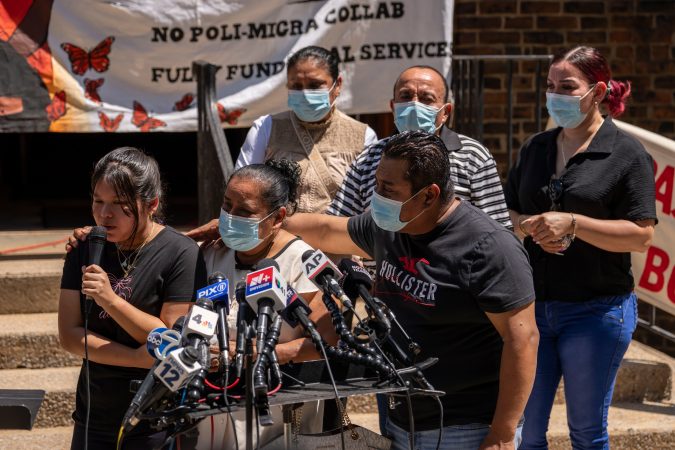
    “On the same day, we were both dead, the only difference was his heart stopped beating,” his 12-year-old daughter Ashley López said at a news conference held outside the Reformed Church of Highland Park on Tuesday streamed by Cosecha New Jersey, an immigrant-rights group. “I am going to grow up without a father. They did not even let me see him one last time before he died.”

    “We had so many plans, we will never do them, because they are heartless monsters,” she added.

    López Cornejo’s family members have accused ICE of neglecting to provide proper medical care to him, an accusation the federal agency denies. His mother María Cornejo questioned whether ICE gave her son his medicine for high blood pressure, diabetes, and seizures. He was detained in Plainfield in North Jersey on June 18.

    ICE said Monday evening that López Cornejo’s cause of death was pending further medical review, but Sen. Andy Kim shared later that night that he died of a heart attack and cardiac arrest. Kim said López Cornejo already had a habeas corpus case calling for his release due to his medical issues.

    (function(){function e(){window.addEventListener(`message`,function(e){if(e.data[`datawrapper-height`]!==void 0){var t=document.querySelectorAll(`iframe`);for(var n in e.data[`datawrapper-height`])for(var r=0,i;i=t[r];r++)if(i.contentWindow===e.source){var a=e.data[`datawrapper-height`][n]+`px`;i.style.height=a}}})}e()})();

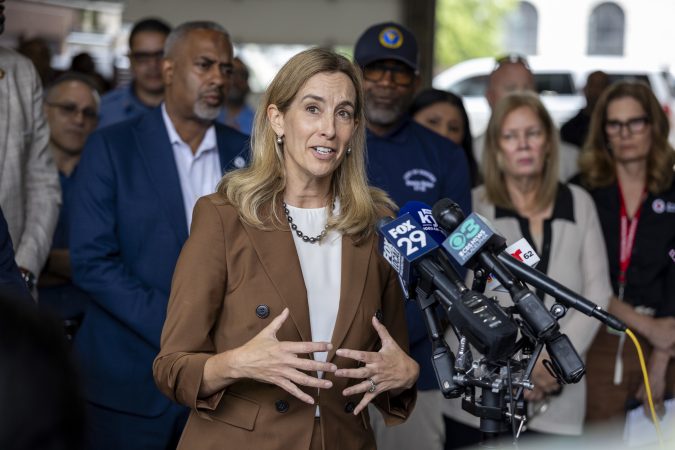
    While speaking at the news conference, Danilo López, the brother of López Cornejo, called for an independent investigation of the incident by New Jersey Attorney General Jennifer Davenport, a release of his brother’s medical records by the facility’s owner GEO Group and ICE, the closure of the detention center and the release of all those detained. He also asked Gov. Mikie Sherrill to open an investigation into health protocols at the center.

    “I know that there’s nothing that will bring my brother back but if we feel our pain now maybe we can avoid other deaths,” Danilo López said in Spanish.

    Davenport’s office said Tuesday it “can neither confirm or deny an investigation at this time.”

    Sherrill has called for the shuttering of Delaney Hall amid a broader battle over President Donald Trump’s immigration crackdown. Her administration is in various court fights with Trump’s administration, including one attempting to gain access to Delaney Hall for a full state health inspection.

    Activists have repeatedly called for Delaney Hall to shut its doors but the Trump administration has made clear it’s not closing the facility anytime soon as it holds a crucial role in the president’s mass deportation operation.

    U.S. Rep. Analilia Mejia, a progressive Democrat who represents a North Jersey district, said at the news conference that she’s spoken to people inside Delaney Hall during oversight visits who say they’re being denied their medication and proper medical care.

    “We must all use this moment to lift our voices and say not one more,” said Mejia, whose opposition to ICE was a key part of her platform to succeed Sherrill in Congress.

    A spokesperson for U.S. Rep. Bonnie Watson Coleman, a Central Jersey Democrat, said her office gets calls from families saying their loved ones aren’t receiving their medication and are getting moldy food inside the facility.

    Trump officials and allies have denied there are issues inside Delaney Hall, including U.S. Rep. Jeff Van Drew, a South Jersey Republican who, prior to this incident, visited the facility and called it clean and “well-run” with “medical care, recreation, and other basic services.”

    ICE said it provides “comprehensive medical care” to people in the facility, including 24 hour emergency care.

    “While in custody, Lopez-Cornejo received proper medical care and was seen by medical professionals,” the federal agency said in a statement.

    Danilo López said that his brother had told him over the phone that he had to fill out a form to just get Tylenol at Delaney Hall and it could be days before he received it.

    María Cornejo accused ICE of lying about giving her son proper medical attention.

    “I just want justice for my son and for my granddaughter who is going to grow without a father,” she said in Spanish.

    Danilo López said Tuesday he didn’t know why his brother was detained because he had a valid work permit, but ICE said López Cornejo was arrested by the U.S. Border Patrol “for illegally entering the United States without inspection” in August 2006 and was sent back to El Salvador that October before returning without permission.

    López Cornejo’s daughter, Ashley, said Tuesday that “no one is illegal on stolen land,” a common refrain from immigrant rights activists.

    Her mother, who was not named, called the incident the result of a systemic failure.

    “From the bottom of my heart I feel the system failed Edwin,” she said in Spanish. “Failed my daughter, failed me as a mom, and failed all those other kids who are suffering like my daughter is.”

  • N.J. attorney general sues Amazon over delivery driver network she says is bad for workers

    N.J. attorney general sues Amazon over delivery driver network she says is bad for workers

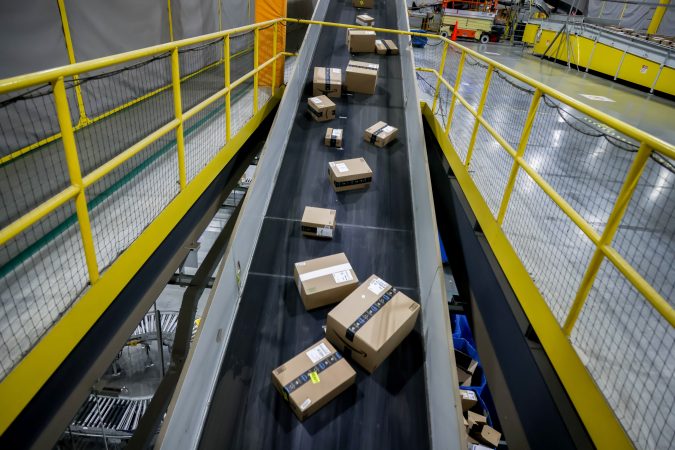
    New Jersey Attorney General Jennifer Davenport filed the state’s fourth open lawsuit against Amazon on Tuesday, accusing the tech giant of creating worse work conditions for lower pay through its “anticompetitive” delivery driver network.

    “Today, my office is acting to stand up for thousands of New Jersey delivery drivers who are being exploited every day by one of the world’s biggest, richest corporations,” Davenport said at a news conference.

    The suit homes in on Amazon’s Delivery Service Partners (DSPs) program, which the company advertises as an opportunity for prospective entrepreneurs to open their own business while partnering with the tech giant by managing a local system of drivers. But these businesses are beholden to Amazon, Davenport argues, and the tech giant’s system prevents drivers from unionizing or getting better work conditions.

    “These are the workers who bring Amazon packages to our front doors,” she said. “They often show up in Amazon vans, wearing Amazon vests, carrying boxes with the Amazon logo on them. And in our view, they are working longer hours in worse conditions and for less money because of Amazon’s anticompetitive behavior.”

    These drivers earn “significantly less” than drivers for UPS, FedEx, and the U.S. Postal Service, according to the complaint.

    The complaint describes a work environment of employee surveillance, union busting, and drivers having no choice but to urinate in water bottles to meet Amazon’s metrics.

    “They must accept invasive surveillance that monitors their every moment and action while at work and face the possibility of immediate termination for the smallest infraction or failure to meet these unreasonable requirements,” the complaint states.

    Steve Kelly, a spokesperson for Amazon, pushed back strongly on the claims made in the suit and accused Davenport of choosing to hold a news conference rather than seeking a greater understanding of the program.

    “This complaint is not grounded in fact. The Attorney General’s characterization of the DSP Program and the claims about working conditions are just wrong. The truth is, DSPs are independent business owners who make their own decisions about hiring, fleet management, and capacity planning — and they choose whether to work with other companies besides Amazon,” Kelly said in a statement.

    “Had the Attorney General bothered to look at the facts, they would have also seen that the vast majority of routes are finished on-time or early — built on real-world data accounting for stop complexity, traffic, and geography. DSPs manage their drivers’ workday and route execution, and DSP employees are free to choose their employer and associate with who they want, full stop.”

    Kelly said the company was confident that it would prevail in court.

    On its website, Amazon advertises the DSP program as providing “the unique opportunity to create jobs in your neighborhood and lead a team that delivers gifts, textbooks, and pet food to your community.”

    But Davenport’s office argues that the DSPs “are anything but independent.”

    “Rather, Amazon keeps control of the levers that matter — setting demanding operational requirements, monitoring driver performance, controlling route allocations, and restricting DSPs from hiring one another’s drivers — with exploitative consequences for the drivers themselves,“ her office said in a release.

    Davenport also alleges that Amazon monitors DSP workers with artificial intelligence and cameras inside the vehicles they drive, and that the company has intimidated and retaliated against drivers who were suspected of union organizing.

    The complaint cites an incident in Queens, N.Y., in which Amazon allegedly sent drones to blacklist striking workers. It also cites an instance in Edison where workers were allegedly told that labor organizing could endanger DSP’s partnership with Amazon, putting their jobs in jeopardy.

    The suit claims also accuses Amazon of blacklisting workers who support unionization from a broad network of DSPs, and cites workers who were terminated after their bosses learned they supported labor organizing.

    Amazon is the dominant purchaser of this delivery driver labor, and since it is about buying rather than selling, their alleged anticompetitive practice is called a monopsony, rather than a monopoly. Davenport’s office said this is the first time a state has filed a monopsony complaint.

    It adds to a list of court battles with the company.

    In September 2023, former Attorney General Matthew Platkin joined the Federal Trade Commission and other states in suing the tech giant for allegedly maintaining a monopoly. Last October, Platkin filed one complaint over the company’s treatment of pregnant people and workers with disabilities, and another over how Amazon classifies certain workers as independent contractors and therefore denies them rights and benefits.

    Davenport’s lawsuit Tuesday is the first lawsuit against Amazon filed under Democratic Gov. Mikie Sherrill’s administration, but the state’s top lawyer said the three other cases are ongoing.

    The complaint, filed in the U.S. District Court for the District of New Jersey, alleges violation of the federal Sherman Antitrust Act and New Jersey’s Antitrust Act and seeks damages for DSP drivers and for Amazon to stop the alleged behavior.

  • Hanwha vs. Holt: How New Jersey lost a shipyard

    Hanwha vs. Holt: How New Jersey lost a shipyard

    Hanwha Philly Shipyard says it needs a lot more space outside its 110-acre South Philadelphia complex to win lucrative U.S. Navy contracts, turn the money-losing facility profitable, and hire up to 1,000 union welders and metalworkers.

    The Korean-owned yard’s leaders thought they had found just the place, four miles by barge down the Delaware River at the New Jersey-funded Paulsboro facility, vacated by the offshore wind industry when President Donald Trump killed that program. In December, Hanwha agreed to take over the lease.

    But port operator Holt Logistics refused approval and sued to block the deal. After months of lobbying, Hanwha has given up and is now collecting offers from southern states that hope Hanwha will invest a big chunk of the $5 billion it has pledged for U.S. shipbuilding into their yards and future workers.

    Philadelphia Shipyard as seen from southbound I-95 in 2024.Alejandro A. Alvarez / Staff Photographer

    This despite the fact Hanwha’s proposal enjoyed support from federal, state, and local officials and even made it into the U.S. military budget for fiscal year 2026, which called for $110 million “to support shipbuilding industrial capacity” and steel fabrication in a manufacturing facility “formerly used for offshore wind manufacturing.”

    Paulsboro Mayor John Giovannitti estimates that on a given day, there are fewer than 50 workers at the port.

    Leo Holt, whose century-old company runs ports in Gloucester City and South Philadelphia, said he’s not completely averse to manufacturing around the Paulsboro terminal after his family’s plans to beef up container and bulk shipping there accelerate.

    Hanwha declined to comment, confirming only that the shipyard is still looking for space “in the U.S.”

    A rendering of a 600-acre shipyard that the Port of Tampa Bay has offered to build for Hanwha. Port Tampa Bay

    What went wrong?

    Since the early 2010s, New Jersey borrowed and spent more than $500 million building a Paulsboro wharf, highway ramps, and other facilities to attract big employers to the port. It replaced lost oil industry jobs and also compensated for nearby Camden’s loss of piers due to Holtec Inc.’s redevelopment in that city’s aging port district.

    In borrowing documents and news releases, the public spending was justified by predictions that the port would draw hundreds, even thousands, of port and industrial jobs, which in more than a decade have yet to arrive.

    Paulsboro sublets the facility to Holt as the port operator. Holt paid $1.6 million to use the property last year.

    At the urging of then-Gov. Phil Murphy, then-State Senate President and iron workers union leader Steve Sweeney, then-Paulsboro Mayor John Burzichelli, and other officials, Holt in 2020 agreed to let EEW, a global pipemaker based in Germany, build supports up to 400 feet long and 40 feet across for the federally subsidized offshore wind-electric generation facilities that its Danish partner Orsted planned to locate off the New Jersey coast.

    Orsted canceled in 2023, citing rising costs. Trying to cut his company’s losses, EEW executive vice president Esben Strandgaard began looking for new tenants, attracting more than 200 inquiries and initiating talks with Hanwha.

    Hanwha needed the landlord’s permission to take over the lease. Hanwha Defense USA president Tom Anderson, a retired Navy rear admiral, and the Holts met last fall to discuss the proposal.

    Instead of approving, the Holts sued, challenging EEW’s authority to pick a replacement and demanding control of the facility.

    Hanwha, aided by its political supporters, tried to make a deal, but Holt stood firm. In March, Hanwha canceled the agreement.

    What the Holts want

    “The north star for redevelopment at Paulsboro has been marine terminal operations,” said Leo Holt, president of the Gloucester City-based company. “We stretched to assist the state in any way we could,” but “Hanwha was never a part of the plan, nor was shipbuilding.”

    Holt spoke of the failed industrial proposals — wind, shipbuilding, and others to build power plant equipment on site — as an obstacle, not a goal.

    “The detour imposed on New Jersey is over, and the road is clear to the Paulsboro Marine Terminal,” he said. “We were glad to see that the page was turned on the detour.”

    Holt Logistics, which has been expanding containerized cargo facilities on both sides of the river, has shipped containers to Paulsboro and hopes to augment Paulsboro’s current port tenants, Holt said.

    Those include Novolipetsk Steel (NLMK), owned by Russian billionaire Vladimir Lisin, which due to Ukraine war sanctions stopped importing Russian steel through the port for its plant in Farrell, Pa., and has switched to steel from Latin America, East Asia, and other countries, according to Holt.

    The port also ships containers to the U.S. Navy base in Rota, Spain, and to ports in Cyprus, Israel, and other Mediterranean countries.

    More than a container port

    New Jersey has spent more than half a billion dollars improving the Paulsboro site with a wharf, highway connections to I-295, and other public works, the mayor said.

    “I’m not aware of Paulsboro people, Gloucester County people, working there right now,” said Burzichelli, now a state senator and a supporter of both the wind and the Hanwha projects.

    New Jersey invested in the BP site to make it more than a container port, Burzichelli says.

    “That [state-built] wharf was designed to handle any industry, and the public investment was designed to create the maximum amount of high-paying jobs that can be created,” he said.

    The port section “was always intended to be a bulk port,” requiring plenty of longshoremen’s labor, and “certainly not a container port,” which “take up a lot of space but don’t generate big jobs,” Burzichelli said.

    “They don’t pay taxes the way an [industrial] building will pay,” he added.

    The Holts’ “choices and the interest of the state of New Jersey, the interests of Gloucester County, and the interests of the borough of Paulsboro, are not aligned, at this point,” Burzichelli said. “I hope we can get them aligned.”

    Mayor Giovannitti said, “We thought we had a deal last year with Hanwha” but are left with “a $750,000 hole in our budget” — the annual payment, in lieu of taxes, that EEW and its partners paid the borough while it was operating. The town’s annual budget is $13 million.

    Instructors and graduates of the union-backed preapprenticeship program Global Skills Union Pathways Project at Philly Hanwha Shipyard in February.GSUPP

    What Paulsboro could offer

    Strandgaard says he’s not surprised Hanwha decided not to “waste any more of their time” on Paulsboro: “They could not see themselves working with a hostile landlord.”

    It’s an ideal site for shipbuilding or any other industry that needs a deep water port, he said. But “Holt Logistics really controls what comes in and out. This was very upsetting, for us and Hanwha, that Hanwha with the support of the Navy did not have enough leverage.”

    Other East Coast sites would take a year or more to prepare. “The beauty of Paulsboro is they could start the day after” concluding a deal, Strandgaard said.

    He said he was surprised the new administration of New Jersey Gov. Mikie Sherrill didn’t make landing Hanwha a priority.

    Sherrill was “disappointed that EEW could not reach an agreement with Hanwha or other parties despite the state’s efforts to facilitate discussions and bring stakeholders together,” spokesperson Maggie Garbarino said in a statement.

    Holt’s goal: A modern marine terminal

    On any given day, between 500 and 900 Holt employees are moving cargo at the company’s South Jersey operations, Holt said. He declined to estimate how many of those were in Paulsboro.

    According to tax records, the port handled about 250,000 tons of cargo last year. That’s less than one-tenth of all South Jersey Port Corp. cargoes.

    Holt called the state “vital partners in the renovation of the facility. We are working to have both marine operations and manufacturing operations. But we cannot be deterred from taking it where we promised: to be an active modern marine terminal.”

    He said he expects the Sherrill administration will prove to be more congenial to the Holts’ vision for the property — “manufacturing, distribution, or anything” that makes sense to his family.

    South Jersey officials say they haven’t given up. “The people of Paulsboro were told this was about jobs, jobs, jobs, and those would be manufacturing jobs. Not stacking containers four high with automated forklifts,” Giovannitti said.

    Burzichelli still hopes Hanwha and Holt can be brought to the same page. “Many of us still don’t think we are done with manufacturing,” he said.

  • The death of an immigrant held at Delaney Hall brings fresh focus to the ICE facility in Newark

    The death of an immigrant held at Delaney Hall brings fresh focus to the ICE facility in Newark

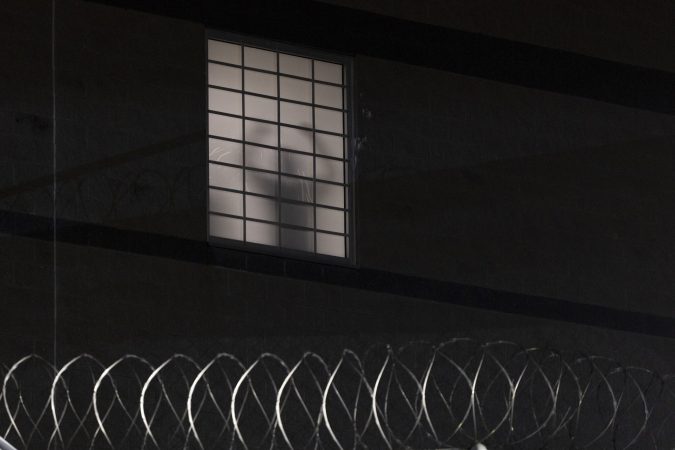
    A 41-year-old man from El Salvador who was detained at the Delaney Hall ICE facility has died, the U.S. Immigrations and Customs Enforcement confirmed Monday evening hours after his family and a member of Congress spoke out about the incident.

    Delaney Hall, a privately operated detention center under contract with ICE, has been the site of turmoil during President Donald Trump’s immigration crackdown. It’s been the target of complaints almost since it reopened in 2025. Elected officials have clashed with the federal government over accessing the facility, and altercations between law enforcement and protesters outside the facility went viral earlier this summer.

    On Monday, immigrant rights group Cosecha New Jersey shared a video identifying the person who died as Edwin Jeovanny López Cornejo.

    María Cornejo, who identified herself as his mother, said in Spanish in the video that the hospital called her to inform her of her son’s death, and that his heart was not beating when he arrived.

    “There is this pain that has struck me now — it’s not just me who’s been struck by it, yet there are many people in this country who are growing tired of this pain,” his mother said in Spanish.

    “If they don’t ensure that justice is served, well, they’re going to keep doing this forever, and we don’t know how many more people we’ll have to lose in this country,” she added. “Hardworking people. People who aren’t involved in other things, but who devote themselves to their work.”

    Shortly after that video streamed on Facebook, U.S. Rep. Rob Menendez, a North Jersey Democrat, said in a video on X that he was showing up for an unannounced oversight visit to Delaney Hall. A few hours later, he said ICE confirmed López Cornejo’s death.

    “We asked certain medical questions which ICE couldn’t give us answers to,” he said. “We have to request it or his family has to request it, which we will.”

    Later on Monday, ICE said in a statement that López Cornejo experienced a medical emergency while in custody and was pronounced dead at University Hospital in Newark after medical staff “responded immediately” and called emergency services.

    The agency said the cause of his death is pending further medical review on Monday evening, but Sen. Andy Kim attributed it to a heart attack and cardiac arrest in a video he posted on X later that night.

    Kim, whose office said it was notified of the death Monday morning, noted that López Cornejo already had a habeus corpus case open arguing for his release due to his medical issues.

    “I’m not going to jump to conclusions, but we have to get answers to what happened to Edwin to understand all of what transpired,” the South Jersey Democrat said.

    Cornejo said her son took medicine for blood pressure, diabetes, and seizures. She said that while she does not know for sure whether he had access to his medicine, she believes ICE neglected to provide it to him, leading to his death.

    She said she last spoke on the phone with her son on Friday — the day before his death — when he said that he felt ill and part of his face and hand had fallen asleep. He told her he was taken to the doctor that day and they were going to run some labs, but he didn’t say when.

    ICE said López Cornejo “received proper medical care and was seen by medical professionals.”

    Menendez said he learned that López Cornejo “complained of difficulties that he was having” on Saturday and collapsed at Delaney Hall, where CPR was performed before he was taken to the hospital.

    Cornejo said her son had been in the U.S. for 20 years and was a hard worker. She said he had a 12-year-old daughter who had not been able to see him since he entered the facility six weeks ago. He previously told her on the phone that his hands turned purple from the handcuffs he was arrested in.

    Danilo López, who identified himself as López Cornejo’s brother, said in the video he doesn’t know why his sibling was detained because he had a valid work permit.

    “I wouldn’t wish the pain we’re going through right now on anyone, and I don’t want this to keep happening,” he said. “Because it hurts so much — it leaves a void, it leaves a daughter orphaned, and above all, it leaves an irreparable void in the family. And that’s why I’m asking for justice for my brother.”

    According to ICE, López Cornejo was arrested by U.S. Border Patrol “for illegally entering the United States without inspection” in August 2006 and he was sent back to El Salvador that October.

    He later returned to the United States at an “unknown date” before he was arrested in Plainfield in Union County in June, according to ICE.

    Sebastiana Cornejo, who identified herself as López Cornejo’s aunt, said in the video that he was arrested on his way to work.

    She blamed her nephew’s death on ICE detaining him and called for the Trump administration to stop its mass deportations, and “that they stop separating families, leaving children orphaned with no one to care for them.”

    “Why are they detaining so many working people?” she said. “We immigrants don’t harm anyone; we come to work, not to harm anyone.”

    Democratic Gov. Mikie Sherrill said her administration is working with the state’s congressional delegation “to gather all the facts surrounding his death,” but noted that the state health department continues to struggle to access the whole facility for an inspection, which is at the heart of one of New Jersey’s court battles with Trump.

    “Every effort to block oversight raises serious questions about what is happening inside Delaney Hall and what those operating the facility are trying to hide,” she said. “This tragedy is another painful reminder of why Delaney Hall should be closed.”

    Sen. Andy Kim (D., N.J.) stands between federal agents and demonstrators in an attempt to prevent a clash outside the Delaney Hall migrant detention center in Newark, N.J., on May 25.DAKOTA SANTIAGO

    Turmoil at Delaney Hall

    Detentions have surged across the nation, from about 38,000 when Trump took office to more than 70,000 in January and standing at about 66,000 as of July. Delaney Hall, a gray, two-story building in an industrial area of Newark, has been a key part of that infrastructure.

    It has also been the site of protests, complaints, and political fights between the Trump administration and New Jersey Democrats since its doors opened in May 2025.

    Last year, Newark Mayor Ras Baraka was arrested outside the facility before his charges were dropped. U.S. Rep. LaMonica McIver, a North Jersey Democrat, still faces federal charges over an altercation outside the facility on the same day.

    And over Memorial Day weekend, reports of a detainee hunger strike exploded into violence between demonstrators and ICE officers and later between protesters and New Jersey State Police.

    Kim was pepper-sprayed outside the facility as he tried to quell tensions between ICE and demonstrators, and Sherrill faced pushback from her own supporters for unleashing state police.

    Federal officials insisted there was no hunger strike and said detainees there and elsewhere in the system were being held in safe and humane conditions.

    Delaney Hall is important to ICE officials who move detainees across the country and the world, because it offers easy access to major highways and to airports in the New York metro area. It also offers the Trump administration a stage for highly publicized battles against “sanctuary politicians” it believes should thank ICE for removing murderers, rapists, pedophiles, and drug traffickers off the streets.

    Research by Syracuse University professor Austin Kocher showed that 88.3% of detainees at Delaney have no criminal convictions. On a typical day the facility holds about 850 detainees, though the New Jersey Vindicator reported that about 120 were suddenly bused away during the July 4 weekend.

    Deaths in ICE custody

    At least 22 people have died in ICE custody so far this year, according to DHS data, provoking outrage from immigrant allies who blame poor medical care, unhealthy conditions, and lack of agency training.

    Human Rights Watch, a nonprofit watchdog group, calculated that more than 50 people died in ICE custody in the first 500 days of Trump’s term — the highest rate in more than a decade. It’s more than two and a half times as high as during the first Trump administration, and stands nearly four times that of the Biden administration, Human Rights Watch said.

    ICE says the health of detainees ranks among its highest priorities, and national detention standards require it to provide comprehensive medical, dental, and mental health care from the moment someone arrives at a facility.

    The federal agency says some people who are detained may not have received prior, reliable care for existing conditions. And some people may never before have had comprehensive medical care at all.

    In December, a 41-year-old Haitian national named Jean Wilson Brutus died one day after entering Delaney Hall, succumbing to what ICE said was suspected natural causes following a medical emergency. ICE said agents tried to revive him and EMS performed life-saving measures but he died in the hospital.

    Menendez said on Monday that another individual who had been in custody at Delaney Hall died just weeks ago at University Hospital after a possible seizure.

    Amol Sinha, executive director at the ACLU of New Jersey, said in a statement Monday that López Cornejo’s death is “another devastating result of the rampant inhumane conditions” at detention centers across the country.

    “The Trump administration’s detention and deportation machine continues to terrorize and traumatize communities at an unprecedented level, yet numbers cannot encapsulate the grief and devastation that these abuses cause,” he said.

  • Trump denied New Jersey’s request for FEMA aid after a blizzard. Andy Kim is worried it’s about politics.

    Trump denied New Jersey’s request for FEMA aid after a blizzard. Andy Kim is worried it’s about politics.

    Sen. Andy Kim wants to get to the bottom of why President Donald Trump rejected New Jersey’s request for FEMA aid over a record-breaking snowstorm earlier this year.

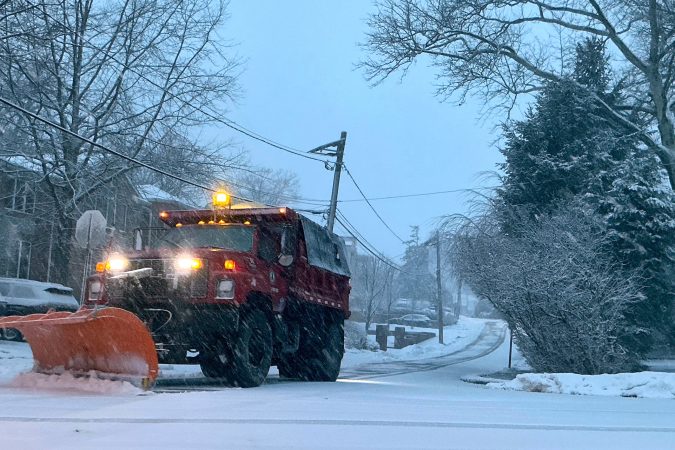
    Winter Storm Hernando, a massive blizzard, hit New Jersey and other Northeastern states hard in February. New Jersey submitted an $84 million disaster request after tallying the damage in the weeks that followed.

    The Federal Emergency Management Agency (FEMA) this month rejected New Jersey’s request as part of $227 million in disaster aid requests from four Democratic-led states that were denied, Politico reported Wednesday.

    The decision came from Trump after regional FEMA offices and the National Oceanic and Atmospheric Administration (NOAA) determined that the states met the required thresholds to receive aid, according to the report, which cited a former FEMA official calling the move to override the agencies unconventional.

    Kim said in an interview Thursday that Americans need “absolute assurance” that FEMA decisions won’t be based on “the whims of the president.”

    ”I think we should all just declaratively be able to say that partisan politics does not belong in disaster response … I would hope that every single public servant, from the White House to FEMA to the Capitol, believes that,” he said.

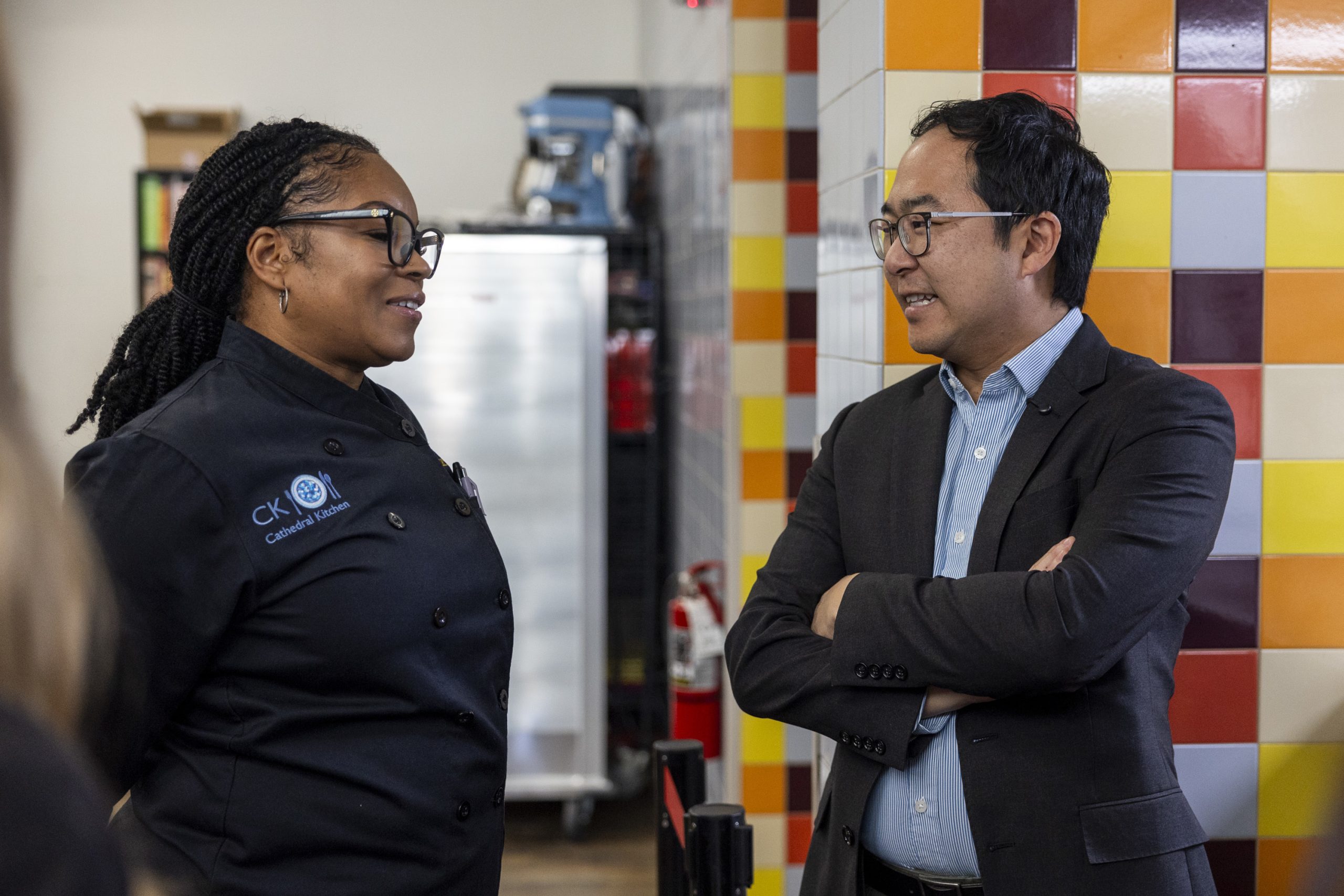
    Sen. Andy Kim speaks with Naimah Rutling, executive chef at Cathedral Kitchen in Camden, N.J., during a visit this month. Tyger Williams / Staff Photographer

    The South Jersey Democrat is the ranking member on the subcommittee that oversees FEMA, the federal agency responsible for doling out aid to communities hit by disaster.

    The president must declare a disaster in order for states to access FEMA aid — and the same goes for individual assistance. Democrats have in recent weeks raised concerns that Trump has penalized blue states in these decisions.

    A 16-page NOAA report indicated snowfall records in seven counties in the state, and a 12-page spreadsheet developed by FEMA and New Jersey documented the $84.4 million in costs, which were primarily for snow removal, Politico reported.

    The National Weather Service reported blizzards in several counties, including in Southeast Burlington County and other parts of South Jersey. The blizzard caused disruptions to the region such as thousands going without power, school closures, and transit disruptions.

    Sean Higgins, a spokesperson for New Jersey Gov. Mikie Sherrill, said the state’s request included costs incurred by the state’s municipalities and counties. He said Sherrill’s administration will appeal the denial.

    “Without that aid, our local governments will be stuck with the costs of an unprecedented snowstorm that didn’t care about political boundaries … Governor Sherrill will continue to fight for every dime that New Jerseyans are owed, regardless of political party,” Higgins said in a statement.

    FEMA’s cost threshold for public assistance for New Jersey is about $18 million, according to the New Jersey Office of Emergency Management, far below the assessed damage from the storm.

    FEMA did not respond to an inquiry about the rejection on Thursday, but Kim said the agency said it disagreed that New Jersey met the threshold.

    White House spokesperson Abigail Jackson has told news outlets that Trump is ensuring FEMA aid is used “to supplement — not substitute” states’ “obligation to respond to and recover from disasters.”

    The South Jersey senator said he has “concerns” that the rejection was political but he can’t say for sure.

    “I understand that you know, the federal government’s not supposed to cover everything for everything, but … this was a situation of record snowfall in wide swaths of New Jersey and, frankly, across the country,” Kim said.

    If the state’s appeal isn’t successful, Kim said he has “more tools in my toolbox to try to get my state the funding they deserve” but declined to share what those would be, saying it’s part of a “broader negotiation.”

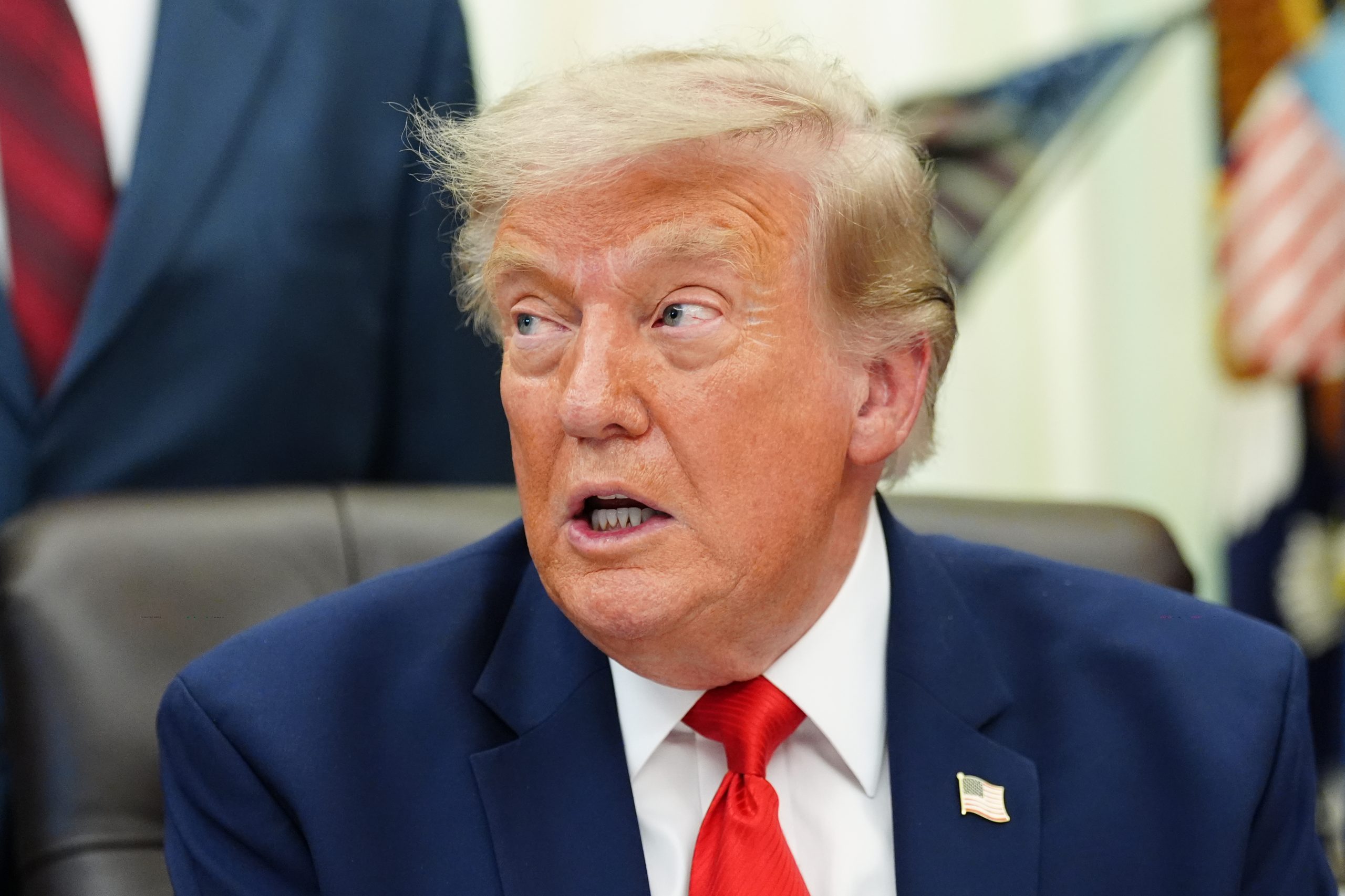
    President Donald Trump speaks in the Oval Office of the White House Wednesday, July 29, 2026, in Washington. (AP Photo/Julia Demaree Nikhinson)Julia Demaree Nikhinson

    The White House has maintained that Trump’s rejections have not been political. But Kim and other Democrats have cited a March Politico report that found Trump’s second administration rejected disaster aid for Democratic-run states at the highest rate in the 47 years that FEMA has existed.

    The rejections underscore bigger questions of the future of FEMA. Trump previously called for the dismantling of FEMA before changing course, but his advisers have recommended an overhaul of the agency that would put more responsibility on states, NPR reported.

    Trump has also caused concern among Democrats for withholding FEMA’s Homeland Security grants from states that do not comply with his administration’s requests for unredacted voter data, including New Jersey and Pennsylvania.

    New Jersey was also hit hard by flooding earlier this month and Sherrill said she believes the state would likely qualify for FEMA aid.

    Joseph Walsh, a spokesperson for the New Jersey Office of Emergency Management, said New Jersey is still in the process of “collecting and validating” the assessed flood damage. Once that’s complete, the state will decide on whether to submit a request.

    Kim said he is trying to clarify and codify FEMA’s role and work with a bipartisan group of legislators on the issue.

    “Every single state is prone to some type of disaster, and so I just don’t want a situation where we’re pitting the states against each other … I hope we can all agree that we want to be there for each other in their time of need,” he said.

  • Federal judge dismisses Trump administration’s lawsuit seeking New Jersey voter records

    Federal judge dismisses Trump administration’s lawsuit seeking New Jersey voter records

    A federal judge on Wednesday dismissed a lawsuit from President Donald Trump’s administration that sought New Jersey’s unredacted voter files.

    The case — one of more than two dozen lawsuits filed by the Trump administration against states ahead of the midterm election — predates New Jersey’s recent disclosure that thousands of noncitizens had been registered to vote in 2023 and 2024 due to a glitch in the motor vehicle system.

    The Justice Department attempted to use that news as leverage in the case, but it was unsuccessful.

    U.S. District Judge Zahid N. Quraishi ruled the department did not have the authority to compel New Jersey to hand over its unredacted records.

    “The Constitution’s architects chose to delegate election administration to the states, recognizing local governments have the deepest understanding of their constituents’ circumstances,” Quraishi wrote in the ruling, which granted New Jersey’s motion to dismiss the lawsuit.

    Quraishi has become the 18th U.S. District Court judge to rule against the Trump administration on the issue, according to data from the Brennan Center for Justice.

    The Trump administration will likely appeal the case, as the president and his allies have made election security a focal point ahead of the November midterms. It is mounting an appeal in a similar case in Pennsylvania.

    The ruling in the state’s favor came a day after New Jersey Gov. Mikie Sherrill formally told the Justice Department she would not release personal information about noncitizen voters who had been mistakenly added to the state’s voter rolls ahead of the 2024 election.

    Sherrill announced last week that about 6,600 noncitizens had been registered to vote due to a glitch in the automatic voter registration system at the New Jersey Motor Vehicle Commission. She said fewer than 400 had cast ballots and there was no evidence they had affected election results.

    On Tuesday, she said the New Jersey Department of State had begun removing 4,500 voters from the rolls. But there is a chance the rest could actually be citizens, so counties will review those about 2,000 individuals to ensure no eligible voters are disenfranchised, she said.

    Following Sherrill’s disclosure last week, Assistant U.S. Attorney General Harmeet Dhillon requested the full names, dates of birth, nationalities, and home addresses of the individuals who were erroneously registered, as well as additional information about the noncitizens who voted, within a week.

    Sherrill had publicly indicated she would not hand over the data, but her letter Tuesday put it on the books.

    The Justice Department’s request has no legal basis, Sherrill said in a Tuesday letter to Dhillon, and sharing “extensive personal information about thousands of New Jersey residents” is limited by state and federal privacy laws.

    “Here and always, I remain committed to protecting New Jerseyans’ personally identifying information,” Sherrill wrote, reiterating her stance from the previous week, when she cited concerns about federal data breaches under Trump.

    In response to Sherrill’s rebuffing, Dhillon said the Justice Department’s request was rooted in the legal authority to “keep ineligible voters off its rolls” and vowed to obtain the information “through all legal means!”

    Sherrill’s “refusal to cooperate with federal law enforcement does nothing to protect law-abiding NJ voters,” Dhillon said on X.

    Sherrill on Tuesday criticized the Trump administration for “weaponizing the government against individuals that disagree with them.”

    She pointed to an issue during her campaign last year in which the federal government provided personal information about her that should have been redacted, like her Social Security number, to an ally of her Republican opponent. The National Personnel Records Center director apologized at the time and called it a rare error, but Sherrill claims her data were “weaponized” against her.

    Sherrill has not shied away from the issue of voter access in New Jersey as it becomes a national talking point in the debate over election security after last week’s revelation that thousands of people had been improperly added to the voter rolls when applying for driver’s licenses and identification cards.

    On Tuesday, she championed a new law, the John R. Lewis Voter Empowerment Act, that offers a slew of policies meant to increase voter participation.

    The erroneous registrations took place between June 2023 and June 2024 under former Gov. Phil Murphy’s administration due to a software glitch in New Jersey’s motor vehicle system, which processes the automatic registration when citizens obtain an ID or a license unless they decline.

    Even though they checked “no” when asked if they were a U.S. citizen, the noncitizens were registered anyway.

    Sherrill pointed a finger at her predecessor but a spokesperson for Murphy said the former governor had “no knowledge” of the glitch.

    U.S. Rep. Jeff Van Drew, a South Jersey Republican, said he planned to hold hearings over the issue and called on Sherrill to answer a slate of questions.

    Sherrill said Tuesday that her administration had hired a law firm to conduct an independent bipartisan investigation. One of the firm’s main partners worked under former Republican Gov. Chris Christie as attorney general and was later appointed by Christie to the Senate, she noted, saying “we have nothing to hide.”

    Christie said in a post on X that Sherrill “made the right choice tapping my former AG Jeff Chiesa to lead the independent investigation into New Jersey’s voter rolls.”

    “Jeff won’t hide anything from the public,” he said. “You can count on it.”

    But the New Jersey GOP questioned Wednesday why Sherrill would not comply with the Justice Department if she “has nothing to hide.”

    “She ran on transparency and accountability,” the party said in a post online. “Apparently, those were campaign promises that expired the moment she was sworn in.”

    Republicans have seized on the noncitizen voter registrations to make the case for the SAVE America Act, which would require proof of citizenship like a passport or birth certificate to register to vote.

  • More than 2,000 of N.J.’s ‘noncitizen voters’ could actually be citizens, Gov. Sherrill says

    More than 2,000 of N.J.’s ‘noncitizen voters’ could actually be citizens, Gov. Sherrill says

    About 2,000 New Jersey voters identified last week as noncitizens could actually be citizens after all, Gov. Mikie Sherrill said Tuesday, a week after her disclosure of a voter registration glitch put the state at the center of a heated national debate over election security.

    Sherrill announced last week that approximately 6,600 noncitizens had been registered to vote ahead of the 2024 election due to a software glitch with the New Jersey Motor Vehicle Commission’s automatic voter registration program. She said fewer than 400 of those people had voted and there is no evidence that they affected the results of any election. The finding came in the midst of a political fight over President Donald Trump’s claims of widespread voter fraud, including by noncitizens, and his aggressive push for an overhaul of the country’s election system.

    The first-term governor said Tuesday that the New Jersey Department of State’s Division of Elections has begun a process to remove more than 4,500 individuals who were registered because of the software error, but that the rest of the registrations will be referred to county election officials for further review “to ensure that any lawfully registered voters are not being disenfranchised.”

    “We are taking this extra step because our initial review indicates that a number of these individuals may be citizens,” she said in a statement. “That has been the case in other states where clerical and administrative voter registration errors have occurred, and we’re determined to get this right.”

    Her office announced the discovery a little more than one hour after celebrating New Jersey’s new John R. Lewis Voter Empowerment Act, which Sherrill signed July 2. Lewis was a civil rights leader who represented Georgia in Congress from 1987 until his death in 2020.

    The law, which is based on a federal proposal that former President Joe Biden unsuccessfully tried to pass, promotes equal opportunity to voting and voter outreach to communities that do not speak English proficiently, and prohibits intimidation, deception, violence, or restraint of voters or election workers.

    The law lays out a process for individuals who want to file a complaint over voting rights and requires public hearings for redistricting.

    If jurisdictions have a history of discrimination, the law requires approval from the attorney general before they can make changes to their election administration. It also gives the attorney general authority to enforce the law through litigation, investigations, and studies, and by representing the public in federal court.

    “Here in New Jersey, if your rights are violated, you have a right of action,” Sherrill said at Union Baptist Church in Trenton.

    Sherrill said New Jersey is the 10th state to enact the model, but the first to do so since an April Supreme Court ruling that weakened part of the Voting Rights Act as the court’s conservative majority ruled against a majority-Black district in Louisiana.

    Supporters of the bill said they had been advocating for it for four years in New Jersey.

    Sherrill’s Tuesday celebration at the church shows the governor is not shying away from the issue of voting rights even as the state becomes a talking point for Republicans who want enact new national restrictions — including requiring voters to provide proof of citizenship to register with documents like a birth certificate or passport.

    Sherrill opposes the national legislation, known as the SAVE America Act, which has been championed by Trump as a way to make elections more secure but which opponents warn could make it tougher to vote for millions of Americans.

    “Trump has only one concern: winning at any cost, and he’s willing to put the right to vote at risk,” Sherrill said Tuesday. “There’s no line he won’t cross, no rule he won’t break, no norm he won’t violate. But we will not stand idly by.”

    The former member of Congress will likely continue to have a role in the debate as Republicans ramp up their advocacy ahead of November’s midterm elections.

    U.S. Rep. Jeff Van Drew, a South Jersey Republican who was elected as a Democrat in 2018 before vowing his loyalty to Trump a year later, led a public letter with other House Republicans calling on Sherrill to answer a series of questions about the noncitizen voting issue. He questioned how she knows it was “just a software glitch and not a nefarious act.”

    Van Drew, who chairs the House Judiciary Subcommittee on Oversight, said he plans to hold hearings over the issue and is “absolutely exploring” the possibility of subpoenas, Politico reported.

    On Tuesday, Sherrill said Van Drew “has a very sordid history as far as elections go.” She said Van Drew’s campaign had hired a political operative who was a “known ballot harvester” — referring to Craig Callaway, who worked on Van Drew’s 2022 bid.

    Callaway, a former Atlantic City Council president, had previously served prison time for blackmail and bribes when Van Drew’s campaign hired him. In 2025 under former U.S. Attorney Alina Habba, Callaway pleaded guilty in connection with fraudulent mail-in ballots during the 2022 election, but Van Drew said he was not aware of any illegal activity and was not accused of wrongdoing.

    Sherrill said her administration hired the CSG law firm to conduct an independent investigation into the voting registration glitch. One of the firm’s main partners, Jeffrey Chiesa, served as attorney general under former Republican Gov. Chris Christie, who later appointed him to the Senate.

    “We have a bipartisan, independent investigation going on right now because we have nothing to hide,” Sherrill said.

  • New Burlington County shuttle bus will connect Philly suburbs with regional transportation options

    New Burlington County shuttle bus will connect Philly suburbs with regional transportation options

    A new free shuttle bus in Burlington County will be concentrated in a small slice of the county in some of the places closest to Philadelphia and Camden, according to a draft brochure for the service.

    But it’ll also serve as a transfer point for other residents in the area.

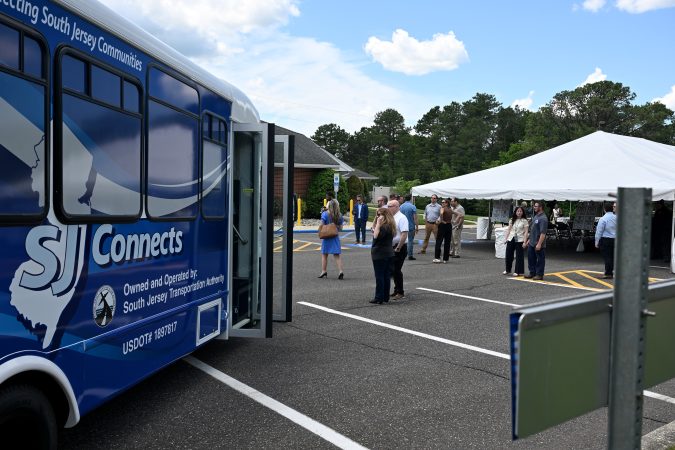
    SJ Connects, a free shuttle bus service run by the South Jersey Transportation Authority (SJTA), was granted $5 million under former Gov. Phil Murphy’s administration for an 18- to 24-month trial run to improve transit in the region. All of the service’s routes already began running except for Burlington County’s bus, which is expected to start service in September despite being included in a June 1 launch announcement.

    The SJTA has not yet posted the details of the Burlington County route but The Inquirer obtained its draft brochure through a public records request. The document shows that the planned 11-stop route connects Burlington County’s Palmyra, Moorestown, Cinnaminson, Mount Laurel, and Maple Shade with the Pennsauken Transit Center in Camden County.

    While it will most directly service the residents who live along the route, the planned route will also connect with existing transportation centers in the area to serve as a transfer point for riders.

    Locally, the bus is slated to stop at Cooper University Health Care‘s Moorestown campus, Moorestown Library and Town Hall, Cinnaminson Shop Rite, Fox Meadow Apartments, and the Mount Laurel Walmart Supercenter.

    Stops at the Moorestown Mall and Pennsauken Transit Center will connect riders to NJ Transit buses that go to Philadelphia’s 30th Street Station, Trenton, Camden County municipalities such as Cherry Hill, Haddonfield and Gloucester City, and other Burlington County locations such as Mount Holly and Willingboro. It will also link riders with the RiverLine and Atlantic City Rail.

    (function() {
    var l2 = function() {
    new pym.Parent(‘BURLCO28-A’,
    ‘https://media.inquirer.com/storage/inquirer/projects/innovation/arcgis_iframe/BURLCO28-A.html’);
    };
    if (typeof(pym) === ‘undefined’) {
    var h = document.getElementsByTagName(‘head’)[0],
    s = document.createElement(‘script’);
    s.type = ‘text/javascript’;
    s.src = ‘https://pym.nprapps.org/pym.v1.min.js’;
    s.onload = l2;
    h.appendChild(s);
    } else {
    l2();
    }
    })();

    Dominic D’Amico, director of transportation services at the SJTA, said the agency designed the routes to connect with NJ Transit’s existing infrastructure and the region’s “eds and meds.”

    Some parts of Burlington County that are excluded from SJ Connects — such as Pemberton and Mount Holly — have access to a separate, existing system called the BurLINK shuttle, which is administered by the county and run by a private company.

    The new SJ Connects route is not slated to directly connect with BurLINK. But riders can transfer between the two services using the River Line, for example.

    Assembly member Andrea Katz, a Burlington County Democrat, said in an interview earlier this month that she hopes SJ Connects will expand further into her district in the future. The long-term viability for the program will likely depend on whether its advocates can convince Democratic Gov. Mikie Sherrill and legislative leaders that it’s worth funding in future state budgets.

    “We have very little down here in Burlington County, and in South Jersey as a whole, but folks still have those issues that they need a ride to the hospital, they need a ride to a grocery store,” Katz said. “They need to get access to these things, and we’re finally starting to see this expansion into South Jersey.”

  • Shapiro, Democrats blasted Trump’s ‘conspiracy theories.’ That message has not changed after New Jersey’s noncitizen voting revelation.

    Shapiro, Democrats blasted Trump’s ‘conspiracy theories.’ That message has not changed after New Jersey’s noncitizen voting revelation.

    The day after President Donald Trump delivered a prime-time speech contending, among other claims, that 250,000 noncitizens were registered to vote in just four states, Pennsylvania Gov. Josh Shapiro derided it as “a whole bunch of conspiracy theories that are just simply not connected to reality.”

    A week later, when New Jersey revealed that 6,600 noncitizens were improperly registered to vote in the state and nearly 400 cast a ballot due to a glitch, Shapiro’s message was nearly identical — that Trump is pushing “baseless conspiracy theories” as he seeks more power over state-run elections.

    Pennsylvania and New Jersey were both on the list of Democratic-led states that Trump claimed had thousands of noncitizens on their voter rolls. The methodology of how the Trump administration arrived at that figure remained unclear, but his administration has sought to leverage the New Jersey disclosure as evidence of a larger problem.

    But Shapiro and other national Democrats have not shifted their messaging on the issue ahead of the high-stakes midterm elections. They are refusing to cede to the GOP any suggestion that New Jersey’s voter rolls are evidence of widespread voter fraud and are warning that the changes Republicans seek would make it tougher for many Americans to vote.

    Shapiro, a likely presidential contender in 2028, joined 25 other Democratic officials from across the nation in a lawsuit last Thursday challenging the administration’s ramped-up attempts to coerce states to share their raw voter data by threatening to withhold money for homeland security and disaster preparedness.

    “Withholding this funding will make our communities less safe and would be dangerous under any circumstance, but doing this in an attempt to undermine states’ authority over elections is reckless and unconstitutional,” Shapiro said.

    Kentucky Gov. Andy Beshear, another potential 2028 candidate, also joined the suit. (Both Shapiro and Beshear lead states with Republican attorneys general.)

    The day after Trump’s speech, Shapiro challenged the administration to present “real evidence” of noncitizen voting, which Pennsylvania election officials say is extremely rare.

    In addition to Pennsylvania and New Jersey, the White House also targeted Nevada and California for additional scrutiny over their voter rolls, according to a document posted to the White House website last week shortly after Trump’s speech.

    California Gov. Gavin Newsom, one of Trump’s most vocal critics in the Democrats’ potential 2028 field, said the president’s speech was fueled by debunked lies.

    “It was unhinged. Unfounded allegations of election fraud — it’s madness. But he’s setting it up. He’s setting you all up. You know what he’s doing. He’s doing it in plain sight. He’s socializing all of this to normalize all of this,” Newsom said last week, during a news conference that took place the same day as New Jersey’s announcement.

    Trump has repeatedly promoted conspiracy theories about California elections in recent weeks — including in two Pennsylvania speeches — despite no evidence that fraud occurred.

    For U.S. Sen. Cory Booker (D., N.J.), pushing back against Trump presents a tougher challenge.

    Booker, also a likely 2028 aspirant, must balance the governing changes he sees as needed in New Jersey with the larger politics of the moment. He said the failure of the software was “not acceptable” but rejected Trump’s efforts to portray the entire election system as faulty.

    “There are those who will choose to weaponize this issue to undermine confidence in our elections,” Booker said in a statement. “We cannot allow that.”

    But Republicans have pointed to New Jersey as proof that a sweeping overhaul is needed for November’s results to be trusted.

    Trump’s allies are pushing the SAVE America Act, which would require voters to provide proof of citizenship when registering to vote and to show photo ID at the polls. The effort has stalled in Congress amid concern, even among Republicans, that the bill’s restrictions on mail voting could make it harder to cast a ballot and that many citizens could wrongly be blocked from voting if they do not have access to required paperwork.

    Vice President JD Vance, widely viewed as a 2028 Republican candidate and a potential political heir to Trump, seized on New Jersey’s revelations as a renewed opportunity for the legislation’s relevance.

    “If only there was a way to stop this type of ‘software error’ that allowed non citizens to vote in our elections,” he wrote in a post on X that targeted Booker and Sen. Andy Kim (D., N.J.), both of whom are unlikely to support the Republican-led bill.

    But the registration glitch happened despite these individuals answering “no” when asked on a keypad whether they were U.S. citizens. They were added to the system “through no fault of their own,” New Jersey Gov. Mikie Sherrill said last week, so it is not clear that showing additional documentation would have prevented the error.

    Sherrill ordered her chief counsel to investigate the issue, which occurred under her predecessor, former Democratic Gov. Phil Murphy, and promised to hold those responsible for the error accountable.

    Talking about this issue can pose an obstacle for both parties now that New Jersey’s glitch has been identified, said Sam Chen, a Pennsylvania strategist who has worked for former Gov. Tom Corbett and other Republicans.

    Republicans have overplayed their hand and are not seen as an authoritative voice on voter fraud, but Democrats have spent the same amount of time dismissing all of Republicans’ concerns, including some that are legitimate, Chen said.

    “When you’ve got an entire party saying, ‘No, this is never happening,’ and now you see what you see in New Jersey, it is going to leave a serious credibility issue for them,” Chen said.

    Democrats, like Shapiro, could build more credibility if they acknowledged the positive parts of the SAVE Act, he contended.

    “Grab what’s good, vehemently oppose what’s bad, and states can blaze their own path,” he said.

    But J.J. Balaban, a Philly-based Democratic ad maker, said it does not make sense for Democrats to go along with the SAVE Act because the charges are being made in bad faith.

    While many Democrats would support efforts to make election systems more secure, Balaban said, that is not what the Trump administration is trying to do — and New Jersey does not change that.

    “Voter fraud was shockingly rare a month ago. It remains shockingly rare today,” he said.

  • New Jersey enacts law to prevent surveillance pricing of groceries. Here’s what to know.

    New Jersey enacts law to prevent surveillance pricing of groceries. Here’s what to know.

    New Jersey Gov. Mikie Sherrill signed a surveillance pricing ban into law on Thursday as she champions herself as a fighter for lower costs in New Jersey.

    The Democrat lauded the initiative as part of her broader agenda and campaign promise of making life more affordable in the state. Also in line with her messaging, she blamed President Donald Trump’s tariffs and the war in Iran for high grocery prices at a news conference announcing the new law.

    “Surveillance pricing essentially gives Big Brother a look into your shopping cart,” she said. “It’s incredibly invasive and it’s expensive.”

    Several states across the country have similar bills under consideration, but New Jersey is just the third to write the ban into law, after Maryland and Connecticut.

    Here’s what to know about the new law.

    What is surveillance pricing?

    Essentially, it’s when grocery stores or apps create individualized pricing based on shoppers’ personal data.

    As defined by the new law, it’s a pricing strategy in which food prices are adjusted, optimized, or recommended by an algorithm or automatic system that uses personal data, such as through biometrics, cameras, sensors, device tracking, or other forms of observing consumers’ personal attributes.

    What does this law do?

    The new law, called the Fair Price Protection Act, bans surveillance pricing or other pricing strategies that determine the cost of groceries based on consumers’ data. The law takes aim specifically at groceries and not at restaurants or other places that sell food or beverage for immediate consumption.

    It also implements a one-year ban on new electronic shelf labels and requires the state to study the use of such labels. The New Jersey Innovation Authority is required to submit findings no more than six months before the end of the moratorium along with policy recommendations surrounding the practice. Companies are allowed to repair or replace existing electronic shelf labels during this moratorium.

    These labels allow companies to update prices more efficiently and do not mean surveillance pricing is being used. But a group that has lobbied for a surveillance pricing ban — the United Food and Commercial Workers International Union — has also called for bans on electronic price tags and called them “the missing piece of the surveillance pricing puzzle.”

    The surveillance pricing ban will not take effect for a year, but the electronic shelf label moratorium will begin in six months.

    A violation of the new law carries penalties of up to $10,000 for the first offense and up to $20,000 for further violations, and the attorney general can pursue additional civil penalties.

    What did lawmakers think of this bill?

    Earlier this year, some South Jersey legislators said they wish the bill had gone further and banned the practice across other industries.

    The bill passed both chambers of the legislature on June 30 as part of a slew of last-minute actions before the budget deadline.

    It passed largely along party lines, though two Democrats voted against it in the Senate, including Sen. James Beach, a Camden County Democrat who had been listed as a cosponsor on the bill. He did not immediately respond to a request for comment Friday.

    In the Assembly, seven Democrats did not vote on the bill, and one Republican voted for it.

    Does Instacart use surveillance pricing?

    At her news conference, Sherrill cited figures from a Consumer Reports study that found Instacart used artificial intelligence-driven pricing that left customers with price tags differing as much as 23% per item for an annual household cost difference of $1,200 per year.

    However, Instacart has said it did not use personal information to set those prices, and therefore it did not involve surveillance pricing — a practice the company said it does not use. The company also said it has changed its practices outlined in the study.

    That being said, experts have warned that the combination of AI pricing models and the mass amounts of data collected on U.S. shoppers paves the way for surveillance pricing, per Consumer Reports.

    Will this law interfere with your loyalty discounts?

    Opponents of the bill, such as business groups and Republican lawmakers, have argued that the bill will have the opposite effect than intended, leading to higher prices because of negative effects on loyalty discount programs.

    “The reason so many businesses pushed back on ‘The Fair Price Protection Act’ wasn’t because they want to price gouge customers, it’s because the bill threatens the loyalty programs, discount apps, and member pricing that brings in customers and actually brings prices down for everyday shoppers. … This law threatens to take that all away,” Assembly Republicans said in a post on X on Thursday.

    But Sherrill insists the new law will not go after those discounts.

    “Deals are fine,” Sherrill said. “Surveillance-driven surcharges driving up costs are not. If companies violate your privacy to try and make a buck, they’ll be held accountable under our state’s Consumer Fraud Act.”

    The law specifically says it does not prevent discounts with publicly shared eligibility requirements, such as being a teacher or veteran. It also allows companies to offer discounts through loyalty programs that shoppers opt in to and provide discounts based on customers’ purchases as long as all members of the program are eligible to receive them under the same conditions.