Tag: Mikie Sherrill

  • South Jersey shocker: Four-term GOP U.S. Rep. Jeff Van Drew concedes to Democrat Zack Mullock

    South Jersey shocker: Four-term GOP U.S. Rep. Jeff Van Drew concedes to Democrat Zack Mullock

    The blue wave has hit the Jersey Shore.

    In a major upset, Republican U.S. Rep. Jeff Van Drew has conceded to Democratic Cape May Mayor Zack Mullock in South Jersey’s 2nd Congressional district. Van Drew’s concession came even as the Associated Press was still reporting the race too close to call.

    The victory for Mullock, 41, is a major win for Democrats in a right-leaning district where Van Drew, 73, has been elected four times even though he switched his party to Republican in 2019, a year after being elected as a Democrat.

    “I am so humbled. I can’t believe this is happening,” Mullock said Tuesday, joined by his family and Gov. Mikie Sherrill who flew in on a helicopter to be present for the historic moment.

    “It’s a wave election. It can happen,” Van Drew said in an interview after conceding.

    He compared this year’s election cycle to the 1974 midterms, when Democrats racked up victories amid voter frustration with President Richard Nixon following the revelation of the Watergate scandal.

    “What I said all along is I’ll be fine as long as it’s not a Watergate, and it kind of is a Watergate,” Van Drew said. “There’s no Watergate issue, but it’s kind of like a Watergate where it’s larger than life and just swept people along with it.”

    Local Democrats saw the Jersey Shore mayor as their best bet to oust Van Drew but he was largely ignored by national players until the final stretch of the race. The Democratic Congressional Campaign Committee added the district to its ”districts in play” list just last month but did not prioritize it among more competitive races across the country and region.

    (function () {window.addEventListener(‘message’, function (e) { var message = e.data; var els = document.querySelectorAll(‘iframe[src*=”‘ + message.id + ‘”]’); els.forEach(function(el) { el.style.height = message.height + ‘px’; }); }, false); })();

    But Mullock’s victory indicates a blue tsunami even greater than the wave observers were expecting. U.S. Sen. Cory Booker (D, N.J.) declared at a get-out-the-vote rally that Democrats can turn their TVs off if Mullock wins his race “because you know we will have taken back the House.”

    Sen. Andy Kim, a Burlington County Democrat, also campaigned with Mullock, and in the final stretch of the race he was joined by DNC Chair Ken Martin, U.S. Rep. Jamie Raskin (D., Md.), and Sherrill.

    Van Drew has held elected positions in South Jersey for decades. He maintained support in the state even after switching his party from Democrat to Republican and vowing his “undying support” to President Donald Trump in 2019, one year after getting elected to the House. He defeated Amy Kennedy by almost 6 percentage points in 2020 and won reelection by nearly 19 percentage points in 2022 and nearly 17 points in 2024.
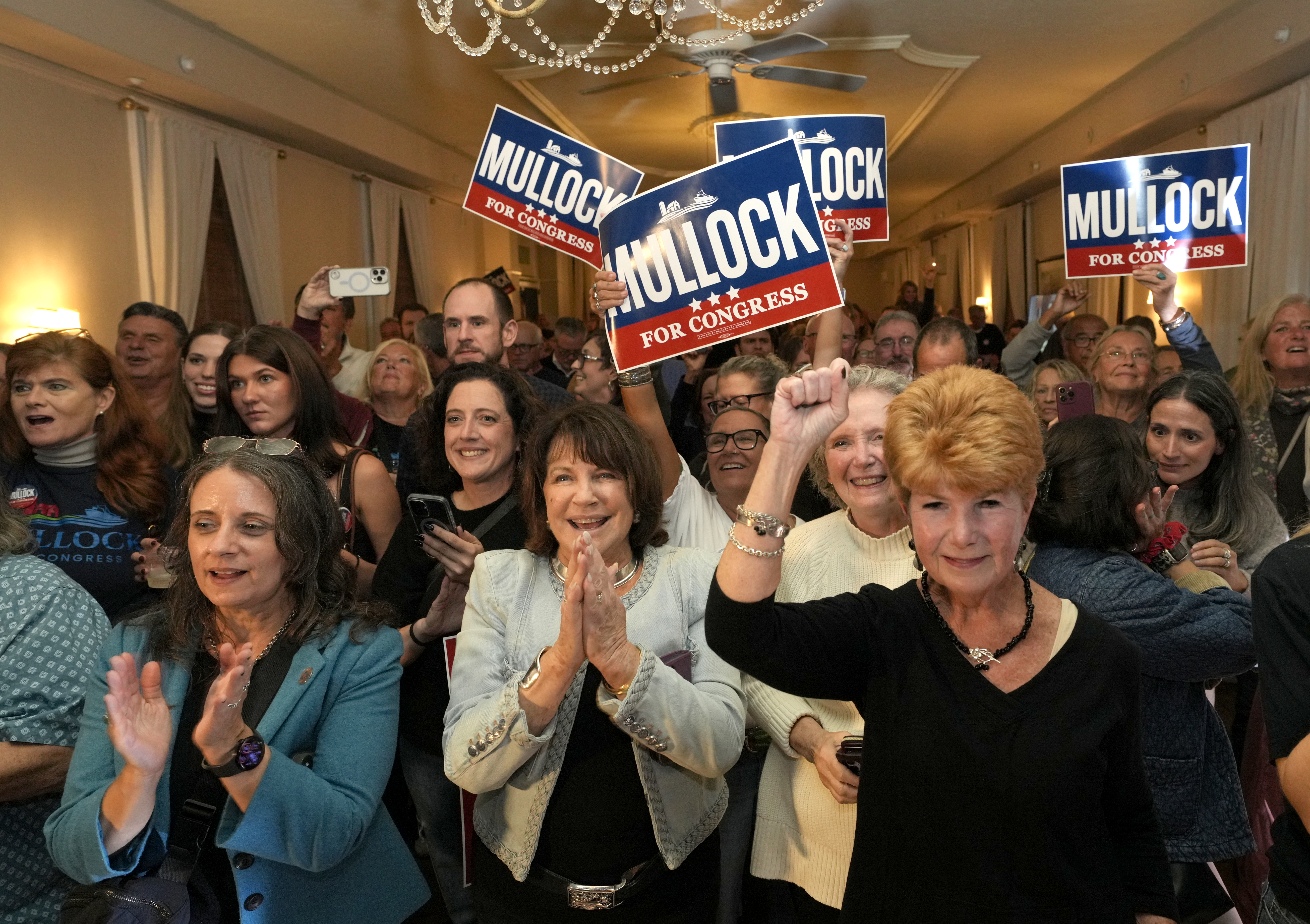
    Supports of Democratic congressional candidate and Cape May Mayor Zack Mullock cheer during an election night party at the Chalfonte Hotel in Cape May.Tim Hawk / For The Inquirer

    Galloway Township resident William Collier, 53, said he voted for Van Drew when he ran as a Democrat. The incumbent’s party change, Collier said, helped motivate him to vote for Mullock this year.

    “Van Drew doesn’t do anything for Jersey,” said Collier, a hospice worker who was interviewed while leaving work in Atlantic City. “He doesn’t do anything. He let us down. He was a Democrat, then he switched over to be a Republican. I can’t vote for Van Drew.”

    At Mullock’s results party, Karen Kurtz, 73, a resident of Cape May for 50 years, said Mullock’s victory was “amazing.”

    “We’ve gone out and went house to house and promoted him, and we are just over the moon that he has won,” Kurtz said. “Everybody was ready for a change. … It needed to happen.”

    One local issue that may have helped Mullock was the development of a controversial data center in Vineland.

    Irene Demaio, 68, said she can hear a constant hum from the data center in Vineland at her home on quiet mornings.

    “Someone I spoke to today, her brother lives even closer and has hearing aids, has to take them out, and still wear earplugs because of the humming noise,” Demaio said from a polling site at a fire station less than two miles away from the massive data center.

    Van Drew, whose district includes the center, has said he has no authority over the project. But Demaio said she doesn’t trust his word.

    “I think the politicians that let it happen need to go. Point blank,” she said. “They need to be out of office. Van Drew, specifically.”

    Dan Vandzura, 31, also had the data center front of mind on Tuesday — this year above other issues he would usually prioritize, he said.

    “There’s a certain set of issues that I might usually be inclined to focus on,” he said. “That one, definitely, I’ll say has risen higher than others. … I never thought data center would be the thing that’s a big deal, but here we are.”

    He declined to share who he was voting for.

    Mullock said in an interview last month that voters across the state are most interested in knowing whether he will “be a decent human being.”

    “I think it’s beautiful that people are willing to put aside some of their biggest issues for the greater good, but it also says how low the bar has gotten,” he told The Inquirer.

    “They have zero faith in the system, and they just think what’s happening right now is just outright corruption, and they just want good people to go in and fight it,” he added.

    Cape May is a nonpartisan government, and the South Jersey Democrat said he’s hired Republican city managers and has no problem working across the aisle. He’s touted local investments in his community and said he has kept taxes down.

    With his family, Mullock helped create the Harriet Tubman Museum and the Cape May Point Arts and Science Center. His family also owns the Cape May National Golf Club, where he has worked as vice president.

    He’s also a general contractor and serves on the Atlantic Cape Community College Board.

    Born and raised in South Jersey, Mullock and his wife, Justine, have three children.

    Mullock raised less than $1 million through Oct. 14 while Van Drew raised more than $2.4 million in the same time period. The Cape May mayor was also outspent in a four-way Democratic primary, which he won with nearly 40% of the vote.

    Mullock criticized Van Drew over his support of Trump’s One Big Beautiful Bill Act, which made large cuts to Medicaid. He also admonished the lawmaker for voting against bills calling for an end to the Iran war.

    “It’s been about fighting for the middle class for Social Security, for Medicare, for Medicaid and for affordable healthcare for all families,” Mullock said in his victory speech. “Yes, it’s about ending the war in Iran. It’s been about ending the tariffs that are causing all of our prices to skyrocket.”

    For some voters, national political concerns were top of mind.

    Margate resident Andy Slobotkin, 67, who owns a place mat advertising company, said he didn’t know much about Mullock, but was voting for him because “I know that I’d like some change.”

    “People are embracing a little bit of a change this election cycle,” said Slobotkin, a Democrat. “They need to send a message to the Republican Party that we were promised one thing and we got something else.”

    Staff writer Sarah Nicell contributed to this article.
  • Democrats project confidence while GOP braces for possible midterm losses in Pa. and New Jersey

    Democrats project confidence while GOP braces for possible midterm losses in Pa. and New Jersey

    Two years after President Donald Trump won a record number of votes in Pennsylvania and Republicans swept statewide races, the party entered Tuesday bracing for very different results.

    The president’s cratering approval ratings amid widespread concerns around affordability, corruption, and the war in Iran have fueled Democratic optimism for months.

    And in the lead-up to Tuesday’s election, Democrats look poised to win back two congressional seats they lost in 2024 and potentially flip two others with popular Gov. Josh Shapiro at the top of the ticket. They even have a shot at winning control of the state Senate for the first time in three decades.

    Republicans have pushed back — defending their records, attacking their opponents and, in some cases, distancing themselves from the historically unpopular president.

    But even in the final hours of the more than yearlong campaigns, Democrats were projecting confidence on Monday in ways they hadn’t in previous years which yielded a “blue wave.”

    “The path to the majority in the House of Representatives runs right through Pennsylvania, and right through Pennsylvania One,” U.S. Rep. Suzan DelBene (D., Wash.), the national leader of House Democrats’ efforts to win control of the chamber, said during an event with Democrat Bob Harvie in Bucks County.

    Harvie is locked in a neck-and-neck race against Republican U.S. Rep. Brian Fitzpatrick in the 1st Congressional District, which covers Bucks and a sliver of Montgomery County.

    The Democratic Congressional Campaign Committee, which DelBene chairs, and other national Democratic groups steered significant resources toward Harvie’s candidacy in the final month of the campaign.

    And Shapiro, a likely White House contender after Tuesday, provided consistent support, making multiple visits to the district, including a Saturday rally.

    Stumping with DelBene and former Chicago Mayor Rahm Emanuel — another potential 2028 presidential candidate — on Monday in Lower Bucks County, Harvie said his mindset in the home stretch was to keep running “like you’re behind.”

    “It’s one of those things you’re getting toward the goal that you’ve been fighting for,” Harvie said.

    Fitzpatrick has handily defeated Democratic challengers in the last decade in a district where his late brother once served and where he’s built a brand as one of the few moderate, anti-Trump Republicans left in the country.

    In interviews in recent days and throughout his campaign, he’s repeatedly stressed his independence even as national Republican leaders — including Trump’s super PAC — have combined to spend millions to push him over the finish line.

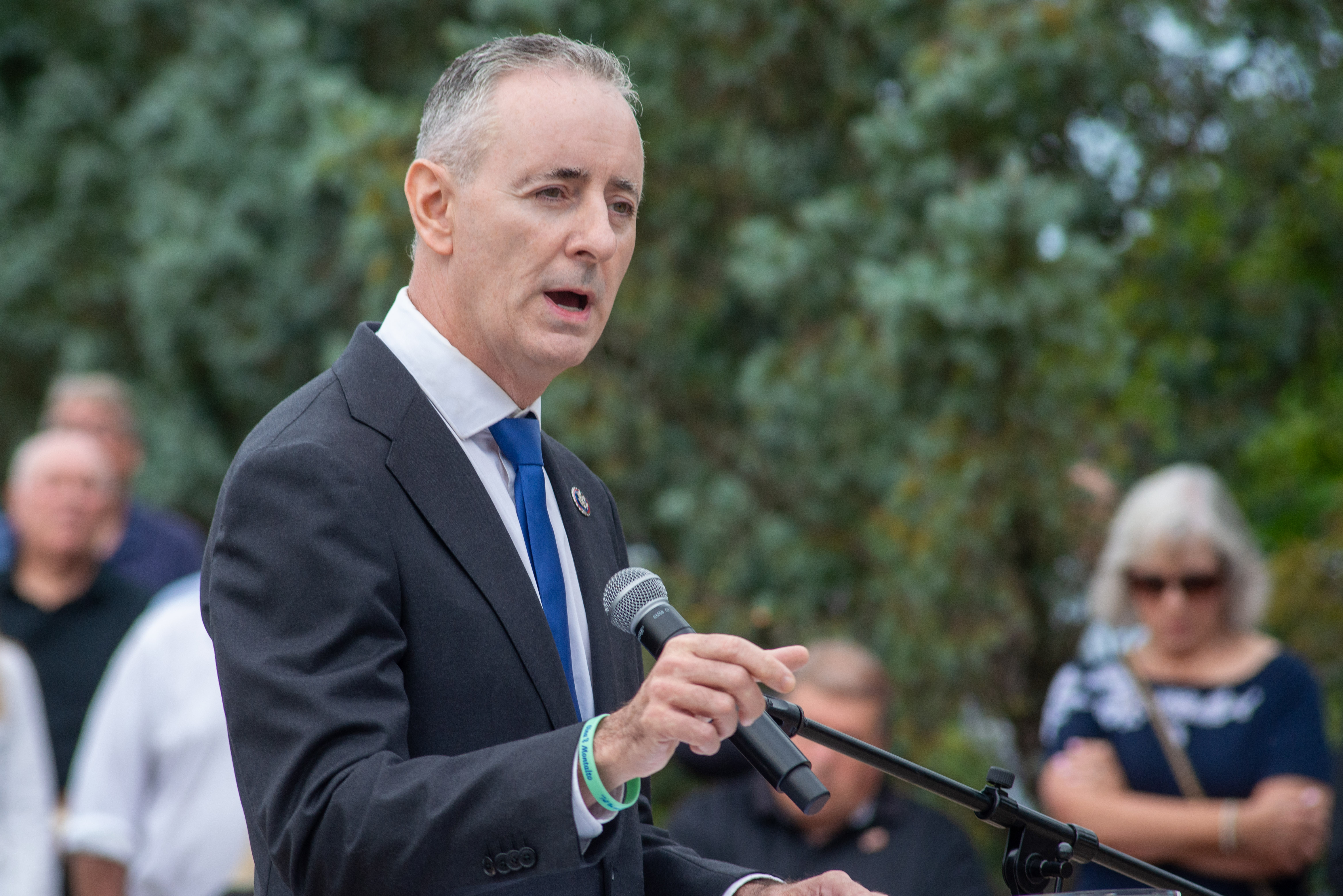
    U.S. Rep Brian Fitzpatrick speaks during the Garden of Reflection remembrance ceremonies on Sept. 11 in Yardley. The Garden of Reflection is Pennsylvania’s official state memorial honoring all 2,973 victims of the September 11 terrorist attacks, with a special tribute to 18 local residents from Bucks County.William Thomas Cain / For The Inquirer

    The Republican incumbent held no major public events in the district on Monday and a judge rejected his lawsuit seeking to disqualify a member of the Bucks County election board over her connections with Harvie.

    Fitzpatrick’s family has held the seat for most of the past two decades, except for a four-year period between 2007 and 2011. That could change after Tuesday.

    Larry Sabato’s Crystal Ball, a major nonpartisan elections forecaster based at the University of Virginia, moved the district from “toss-up” to “leans Democratic.”

    Each of the other three swing districts in Pennsylvania that could help decide control of the U.S. House on Tuesday were also rated “leans Democratic” by the forecaster and by the Cook Political Report, another widely cited ratings report.

    In the Lehigh Valley-based 7th and Scranton-based 8th Congressional Districts, freshmen Republican U.S. Reps. Ryan Mackenzie and Rob Bresnahan were looking for second terms in districts they flipped in 2024. In the Harrisburg-based 10th Congressional District, GOP U.S. Rep. Scott Perry, a staunch Trump ally, was hoping to fend off a challenge from the same Democrat who nearly beat him two years ago.

    Reilly Richardson, spokesperson for the National Republican Congressional Committee, said in a statement that the GOP nominees were in a “strong position” because they “successfully fought for the priorities the American people elected them to enact.”

    “Voters in Pennsylvania have a clear choice: While Republicans are running commonsense, battle-tested incumbents who have delivered results for their communities, Democrats have nominated radicals whose far-left, high-cost, tax-and-spend agenda would be a disaster for working families,” Richardson said.

    Shapiro’s final push

    In their bid for the governorship, Republicans were set to spend their final night before Election Day with a rally in Bucks County, the county that could decide control of the state Senate in addition to Fitzpatrick’s race.

    Joining GOP nominee Stacy Garrity in Newtown were all of the state’s Republican heavy hitters — U.S. Sen. Dave McCormick, Attorney General Dave Sunday, Auditor General Tim DeFoor, Pennsylvania Republican Party Chairman Greg Rothman and more.

    Garrity brushed off her double-digit polling deficit on the eve of the election.

    “The most important message of tonight,” she said to a crowd of about 170 people Monday, “we will win this race.”

    Stacy Garrity and Jason Richey hold up their arms in Harrisburg on Feb. 7. The state Republican Party endorsed the two in their quest for the governor’s mansion.Kalim A. Bhatti / For The Inquirer

    Shapiro, who has led Garrity by significant margins in every poll, finished a statewide bus tour with a pair of events in Montgomery County, where the governor resides and first launched his political career.

    During his bus tour, Shapiro stumped in the four big congressional races and for candidates further down the ballot. The Democrat has sought to elevate state Senate candidates in particular, aiming to win control of all three branches in Harrisburg for the first time in three decades. At the top of the agenda if he secures it: Raising Pennsylvania’s minimum wage, codifying abortion rights, and increasing funding for mass transit, he said at a rally in Lower Merion on Monday.

    “I’m fighting hard across this commonwealth to win that trifecta, so that we can do good for other people,” Shapiro said.

    Gov. Josh Shapiro at a campaign event Sunday in Dickinson Square Park in South Philadelphia.Tom Gralish / Staff Photographer

    The final campaign swing also made clear that more than just the immediate races were on the line for Shapiro.

    “OK, Mr. President,” Scott Anthony Romano, a 61-year-old Belmont Hills resident said at Shapiro’s rally, temporarily interrupting the governor’s speech. “He’s going to be our next president,” Romano said.

    Shapiro, who has dismissed questions about a potential 2028 presidential run, quickly brushed the suggestion off on the eve of his likely reelection.

    “All right, let’s ease up here. My wife’s here. I don’t want her hearing that kind of stuff,” Shapiro said, before returning to his story.

    Sherrill’s pitch in New Jersey

    Across the river, Democrats led by New Jersey Gov. Mikie Sherrill were making their final push on Monday in an area that underscored Democrats’ expanding hopes on Tuesday.

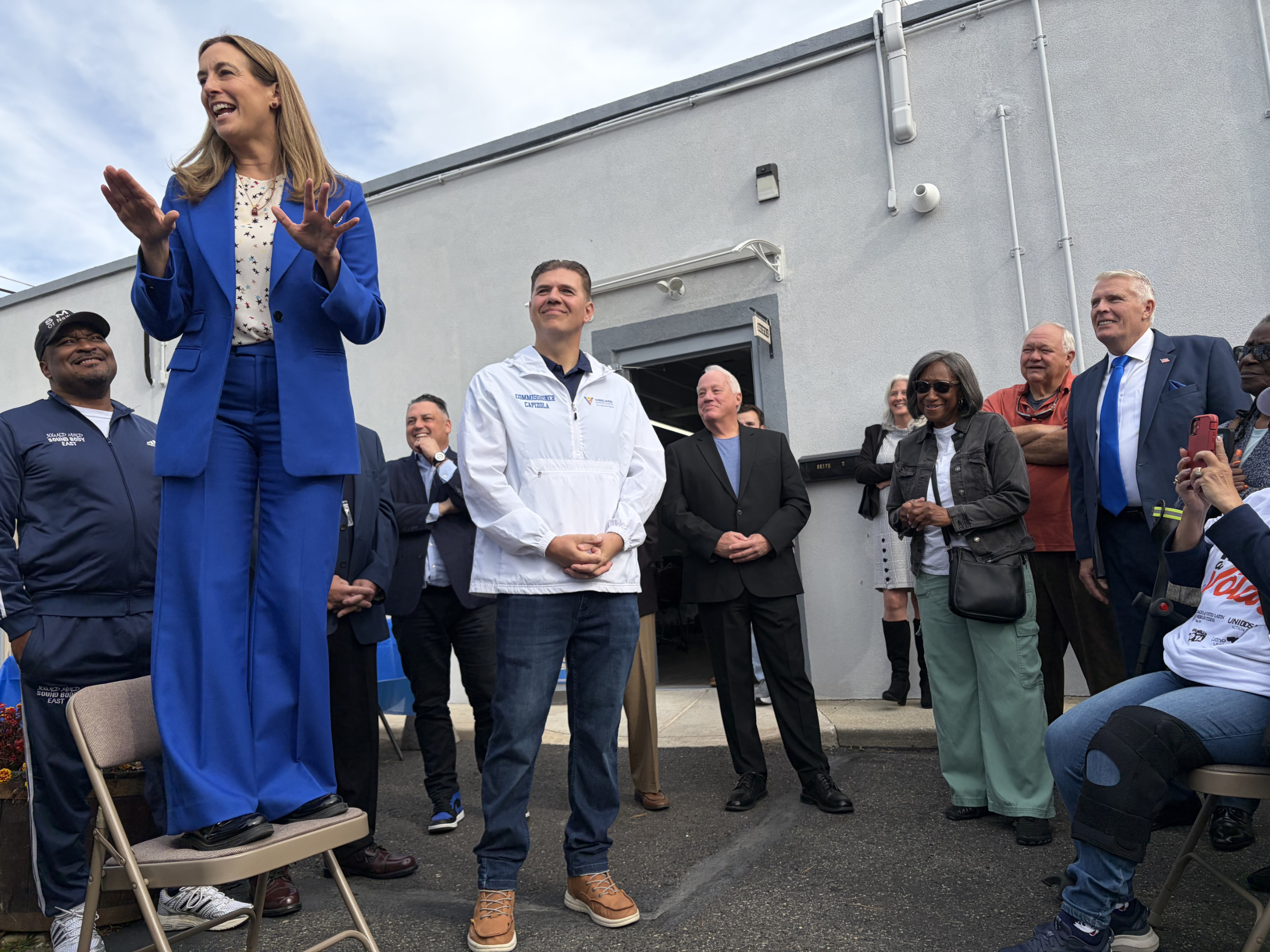
    Cumberland County Democrats were bursting with excitement as Sherrill made an appearance at their Vineland headquarters in support of congressional candidate Zack Mullock, the Cape May mayor challenging Republican U.S. Rep. Jeff Van Drew.

    Democrats have spent most of 2026 targeting GOP Rep. Tom Kean Jr. in the state’s 7th Congressional District. Sherrill rallied with Kean’s Democratic challenger Rebecca Bennett in Union County Monday evening, alongside U.S. Sens. Cory Booker and Andy Kim.

    New Jersey Gov. Mikie Sherrill campaigns in Vineland to support House candidate Zach Mullock on Monday.Aliya Schneider / Staff

    National Republicans ultimately redirected resources intended to reelect Kean while Democrats spent the end of the campaign rallying for Mullock — including with visits from U.S. Sens. Cory Booker and Andy Kim, as well as DNC Chair Ken Martin.

    “The governor doesn’t usually come to Vineland, especially the night before election night, so we are super thrilled about that,” said Carlos Mercado, a Democratic state committee member and legislative chair for the New Jersey State Firefighter Mutual Benevolent Association.

    While Pennsylvania Democrats claimed their races were the keys to control the U.S. House for the final years of Trump’s term, Sherrill made the same case in South Jersey.

    “That’s why we need Zack,” she said after criticizing Trump’s decision to purchase diesel from Russia and his administration’s impact on rising costs. “Because I mean, I almost feel like it’s because he’s a Democrat in New Jersey, and we know what we’re doing here. We got the vision, but it’s also because the path to the majority for the House of Representatives runs right through New Jersey.”

    Staff writer Denali Sagner contributed to this article.

  • Gov. Mikie Sherrill said she’s calling in support for Zack Mullock, the Democrat challenging South Jersey’s Jeff Van Drew

    Gov. Mikie Sherrill said she’s calling in support for Zack Mullock, the Democrat challenging South Jersey’s Jeff Van Drew

    Gov. Mikie Sherrill rallied with Democratic Cape May Mayor Zack Mullock on Saturday in their first appearance together for his campaign against Republican U.S. Rep. Jeff Van Drew, just days before the election.

    “I gotta tell you guys, this is a tough race,” Sherrill said Saturday in front of a crowd of roughly 100 people gathered in the backyard of Cape May County NAACP president Quanette Vasser-McNea’s Whitesboro home. “It’s not easy flipping a red seat. But if ever there’s a year to do it, this is the year.”

    The Democratic governor emphasized Mullock’s family’s connections to the region and Van Drew’s support for President Donald Trump.

    “He just wants to make life work better,” she said of Mullock, standing on a hill surrounded by sun-soaked fall foliage. “He comes from a family that you know.”

    “And you know what? He’s not going to take a loyalty oath to the president, no matter who that person is,” she added.

    Van Drew was elected to Congress as a Democrat in 2018 after years in the state legislature and local office. He became a Republican in 2019 and vowed his “undying support” to Trump. In 2020, Democrat Amy Kennedy came within 6 percentage points of him, but he won by double digits in 2022 and 2024. The sprawling 2nd Congressional District spans from Gloucester County to the Jersey Shore.

    Gov. Mikie Sherrill speaks with Emily Dempsey and and Eugene Dempsey at a campaign event for Cape May Mayor Zack Mullock, a candidate for Congress, in Whitesboro on Saturday.Aliya Schneider / Staff

    The race largely flew under the radar this year as national Democrats focused on more competitive districts. But with increasing anticipation of a blue wave, the party began taking the race more seriously in recent weeks, attracting more spending for Mullock. Early voting numbers have also shown enthusiasm among Democrats in the region.

    National political analysts have shifted their ratings for the district from “safe Republican” to “likely Republican” in recent days, favoring a Van Drew win, but less confidently than before.

    Saturday was the first time Sherrill appeared at an event to campaign with Mullock, and it came three days before the election.

    At the get-out-the-vote event, Mullock told a crowd of supporters that the governor’s team had reached out to him about a week ago asking where he wanted to do an event together in Cape May County. He said he wanted to meet in Whitesboro, an unincorporated community with a rich African American history, “because this is a town that has been skipped over far too long.”

    Mullock criticized Trump for “selling bitcoins and Bibles” while the middle class struggles.

    “When we get elected and we get into office, there’s a few things that are going to happen right away. We’re going to restore the cuts to Medicare and Medicaid,” he said, Sherrill clapping behind him with a big smile.

    “We’re going to vote to end the war in Iran. We’re going to vote to end the tariffs. But then we’ve got to roll up our sleeves and really get to work,” he added. He said Congress also needs to address the cost-of-living crisis and make homeownership more attainable.

    Aside from being the mayor of Cape May, Mullock, a contractor, worked with his family to create the Harriet Tubman Museum and the Cape May Point Arts and Science Center. His family members also own the Chalfonte Hotel and the Cape May National Golf Club, where he works as vice president.

    Eric Morey (left), a candidate for Cape May County Board of Commissioners, takes a photo with Gov. Mikie Sherrill and Cape May Mayor Zack Mullock at an event in Whitesboro on Saturday.Aliya Schneider / Staff

    Eric Morey, a Democrat running for commissioner in Cape May County, said in an interview at the event that Mullock is well-known across the county, which “carries a lot, especially in a conservative area like Cape May County.”

    “He’s shown that he’s someone that cares about South Jersey in general,” Morey said. “People connect with that.”

    Despite her lack of presence on the campaign trail, Sherrill said in an interview after the event that the race has been on her radar and that she is “feeling really good about it.” She pointed out how Democratic Sens. Andy Kim and Cory Booker have campaigned with Mullock and said she has been calling for support.

    “I was just on the phone with [House Democratic leader] Hakeem Jeffries last week saying like, ‘Guys, no time like the present here,’ and I think he heard me,” Sherrill said. “He said, ‘Yeah, I’m excited about that race.’”

    As for why Van Drew has maintained his seat for so long, Sherrill said: “That’s always been a little bit of a puzzle.”

    “I think people maybe don’t realize how he has just given up, sort of, focusing on the people he serves, and just has done whatever, you know, Trump tells him to,” she said.

    “I think people see that that pathway is not working for them; it’s driving up their costs, and they want somebody like Zack Mullock in Congress who is going to both hold Donald Trump accountable and always focus on serving them,” she added.

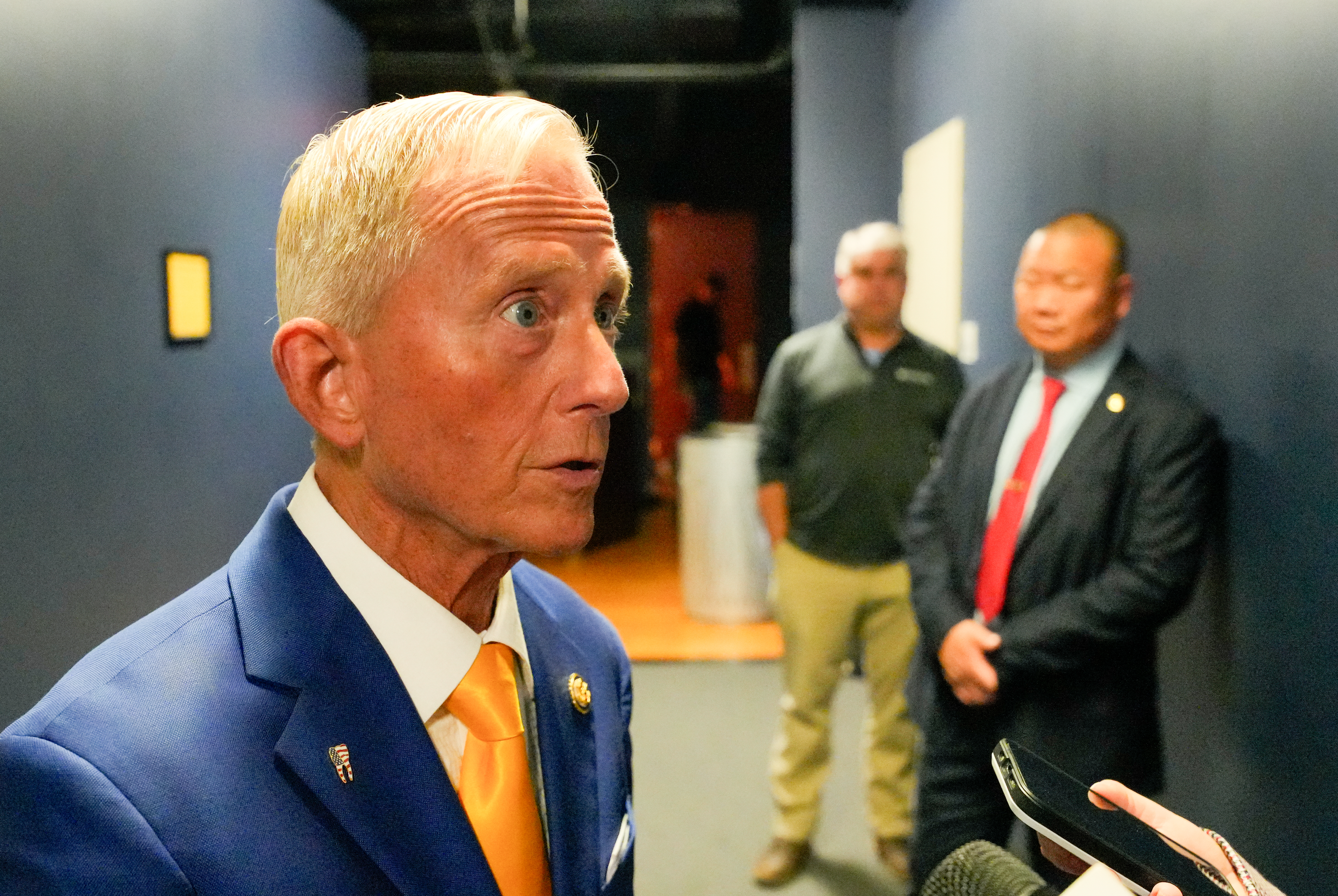
    U.S. Rep. Jeff Van Drew exits speaks to reporters after a debate with Democrat Zack Mullock, at the Campus Center Theatre at Stockton University on Thursday, Oct. 22.Tim Hawk / For The Inquirer

    The high cost of living and dissatisfaction with Trump have presented challenges to Republican incumbents.

    Van Drew, of Dennis Township, acknowledged in a phone interview Saturday that it is a hard year for Republicans given the national landscape, but he still feels good about his seat.

    “I’m not sure whether we keep the [House] majority or not,” he said. “I realistically understand what’s going on.”

    But he said that his district knows him well and that newer elected officials who had closer races than his in 2024 are more at risk.

    “I’ve always had a real connection … and a relationship with my constituents, and I think that always keeps me in good stead,” he said. “So I’ve always relied on it before. I rely on it now. I work super hard all the time, and I think that even in a tougher year like this, we’ll be fine.”

    His final pitch to voters is twofold. One is that he has delivered a slew of projects for South Jersey, and the other is more philosophical, he said.

    “I do believe in American exceptionalism,” he said. “I do believe it’s the greatest nation that ever existed on the face of the earth.”

  • Some N.J. voters are rethinking their support for Gov. Mikie Sherrill, new poll shows

    Some N.J. voters are rethinking their support for Gov. Mikie Sherrill, new poll shows

    Ten months into her term, New Jersey Gov. Mikie Sherrill’s approval rating has dropped, especially among Democrats, who say they don’t know enough to judge her performance yet, a poll released Wednesday said.

    But there is nothing ambiguous about how New Jersey voters feel about President Donald Trump, according to a new Fairleigh Dickinson University poll of 805 voters this month.

    The poll found 66% voters disapprove of the president, 29% approve, and 5% said they did not know or declined to answer.

    Sherrill’s approval ratings declined 10 percentage points in October, to 48%, compared with the last time Fairleigh Dickinson surveyed voters, in March, when it was 58%. Yet her disapproval rating of 32% remained the same in both polls, said Dan Cassino, a professor of government and politics and the executive director of the FDU poll.

    The difference is the 12-point spike in the number of people who said they “didn’t know,” “weren’t sure,” or declined to answer the question, according to the poll.

    “Normally, you’d expect attitudes toward the governor to become more, rather than less, certain over time,” Cassino said. “But for whatever reason, Democrats are not as happy with the governor as they were when she took over.”

    Steve Sigmund, Sherrill’s spokesperson, said the poll demonstrates the public’s continued support of her goals.

    “Gov. Sherrill’s relentless focus on affordability and rejecting politics as usual in 2025 gave Democrats a playbook to win this cycle,” Sigmund said. “New Jerseyans’ strong approval of her job leading the state shows that they recognize she is delivering on these commitments.”

    The poll did not ask why some voters did not approve of Sherrill’s performance. But she has faced some controversies since the last poll.

    She asked for and received the resignation of Lt. Gov. Dale Caldwell after an independent investigation concluded he had sexually harassed a woman on his staff and made other ethical lapses, which he denies. She was also criticized by some progressives for bringing in the state police to quell protests outside the Delaney Hall ICE detention center in Newark. They claimed the state police treated them no better than Immigration and Customs Enforcement officers by showing up in riot gear on horseback and assaulting them.

    Cassino said he suspects the uncertainty rose because the Democratic brand remains unpopular nationally and the number of people who identify as progressive or liberal is growing.

    In March, 88% of Democrats said they approved of the job Sherrill was doing, compared with 71% in the October survey, which was conducted by text-to web surveys from Oct. 16 through 22 by Braun Research of Princeton on behalf of the university.

    “It’s not clear what Sherrill has done to cause voters who should be among her most loyal supporters to distance themselves,” Cassino said. “But whatever it is, this is a blinking yellow light for the administration.”

    Among Republican voters statewide, the president holds a 95% approval rating among self-identified MAGA voters, 68% among conservatives, and 21% among moderates, the poll said.

    “Trump isn’t running for reelection, but he has made himself the face of the Republican Party,” Cassino said. “The fact that he’s this unpopular means that he’s dragging down Republican candidates in a way that a less visible president might not be.”

    The Nov. 3 midterm elections will decide whether Republicans maintain control of the U.S. Senate and House of Representatives.

    Polls widely indicate the Democrats are most likely to flip the House, with two-term Republican Rep. Tom Kean Jr. in New Jersey’s 7th District in central and north Jersey considered to be among the most vulnerable GOP incumbents. Democratic newcomer and former U.S. Navy pilot Rebecca Bennett is favored to win.

    South Jersey Republican Rep. Jeff Van Drew is likely on more solid ground in the 2nd District, but his Democratic challenger, Cape May Mayor Zack Mullock, is gaining more attention as pundits predict a “blue wave.”

  • Amid rising political violence, N.J. candidates may now use campaign donations to beef up security

    Amid rising political violence, N.J. candidates may now use campaign donations to beef up security

    New Jersey Gov. Mikie Sherrill signed a law Tuesday that will permit people running for office to use campaign contributions to hire security guards and buy surveillance equipment, in a sign that politically motivated violence is on the rise.

    New Jersey has now become the 17th state to allow political contributions to be spent on protection and security measures, according to the National Conference of State Legislatures.

    The law takes effect immediately, according to the legislation.

    Typically, candidates cannot not use political donations to cover personal expenses. But since the execution of New Jersey U.S. District Judge Esther Salas’ son in their Middlesex County home in 2020 by a self-described men’s rights lawyer, appointed and elected public officials nationwide have taken steps to protect their privacy.

    Those fears only multiplied after President Donald Trump was wounded during a shooting at a Pennsylvania campaign rally in 2024, last year’s arson attack at the Pennsylvania governor’s mansion while Gov. Josh Shapiro slept inside, and the 2025 assassination of Democratic Minnesota State Rep. and former House Speaker Melissa Hortman and her husband.

    The protections could extend to candidates’ immediate family members with whom they live. Candidates shall not hire relatives to work as security personnel, nor may they hire security companies owned by family, according to the bill.

    The state Senate unanimously approved the legislation in June. The Assembly voted 51-12 with nine abstentions in September, sending it on to the governor for her signature.

  • Jeff Van Drew, House GOP leaders subpoena Mikie Sherrill’s administration over N.J. noncitizen voter records

    Jeff Van Drew, House GOP leaders subpoena Mikie Sherrill’s administration over N.J. noncitizen voter records

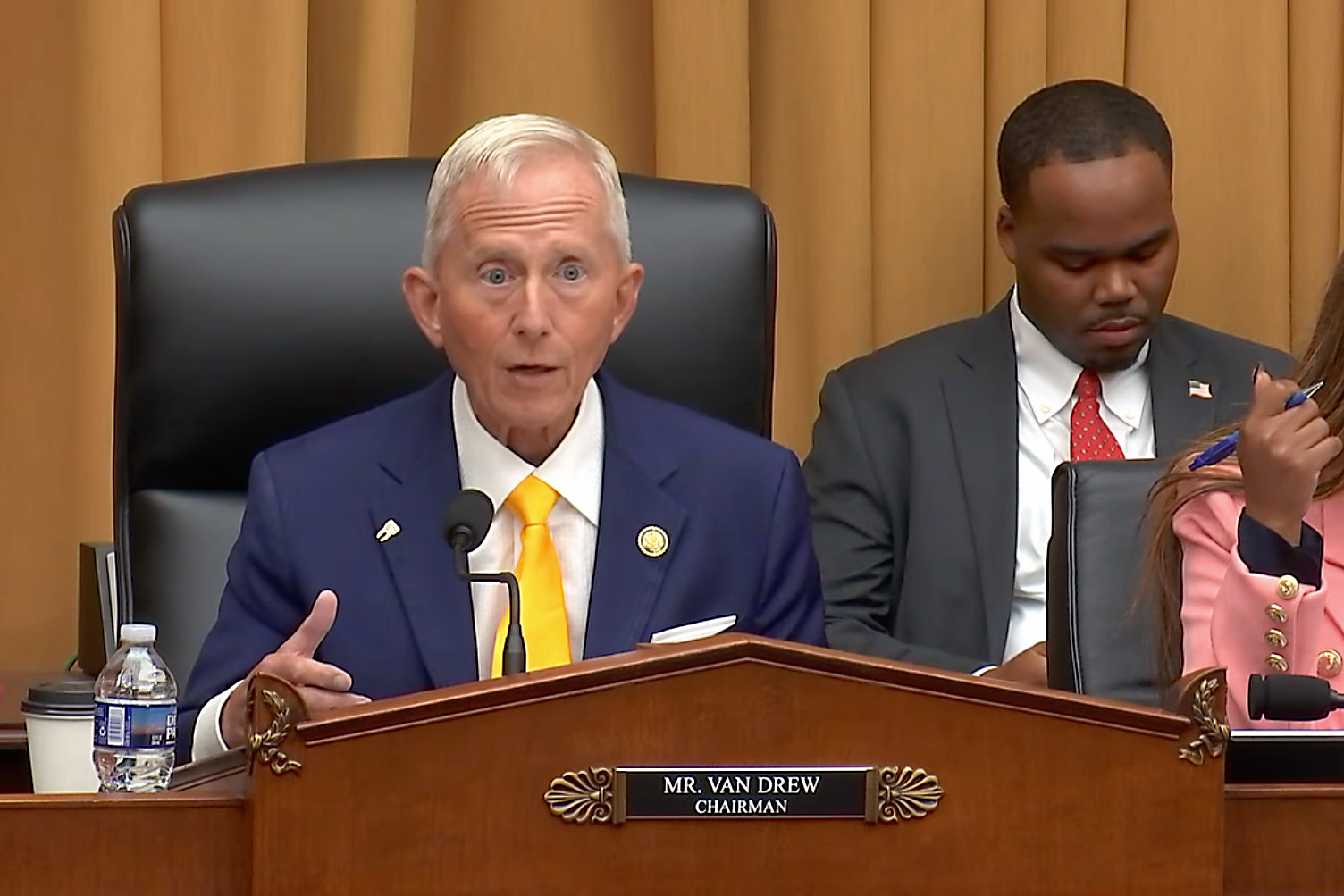
    South Jersey Republican Rep. Jeff Van Drew Wednesday announced a congressional subpoena of New Jersey Gov. Mikie Sherrill’s administration, demanding it produce records he requested three months ago that may explain how 6,600 noncitizens were added to the voter rolls in violation of federal law.

    Sherrill, a first-term Democrat, revealed in July that approximately 6,600 people who identified themselves as noncitizens were registered to vote in New Jersey between June 2023 and June 2024 through the Motor Vehicle Commission, though fewer than 400 actually cast ballots.

    Van Drew, the Cape May Republican who chairs House Judiciary Committee’s subcommittee on Oversight, first requested the documents Aug. 7 as part of the subcommittee’s investigation. To date, the state has produced just 12 documents that shed no light on how this happened, Van Drew and other Republican congressional leaders wrote in a letter accompanying the subpoena from the Judiciary Committee and the House Administration Committee.

    Her administration’s response has been “inadequate,” and “an impediment” to their investigation, the letter said.

    “None of the documents offered any substantive insight into how the noncitizen voter registration issue was discovered or why New Jersey did not conduct any remediation efforts until 2026,” said the letter Van Drew co-authored.

    “These ineligible voter registrations raise concerns about the application of federal law in New Jersey as it pertains to accurate voter registration, as well as the effect that New Jersey’s failure to identify and remove noncitizens from its voter rolls has on the civil liberties of American voters and their ability to elect representatives,” according to the letter.

    Sherrill has blamed former Gov. Phil Murphy’s team, as well as software vendor IDEMIA, for the registration of people who had answered they weren’t citizens and therefore ineligible to vote. Both have denied responsibility.

    Murphy spokesperson Mahen Gunaratna on Wednesday pointed to his one statement on the matter from July in which he said Murphy “had no knowledge” of the issue and “applauds” Sherrill for looking into it.

    In addition to removing thousands of people from the rolls, Sherrill sent about 2,000 registrants to county election officials for verification to make sure they didn’t accidentally disenfranchise citizens.

    Sherrill also referred the matter the law firm of former Republican Attorney General Jeffrey S. Chiesa for an independent investigation, which is ongoing, Sherrill noted Wednesday.

    “I promised that when we discover a problem, we communicate the facts and fix it — and I meant it,” Sherrill’s statement said. “From the moment we discovered the Motor Vehicle Commission registration issue from 2023, we took action immediately, went above and beyond in making agencywide reforms, and have been transparent every step of the way. We did this so that New Jerseyans can feel confident that we are running the strongest and fairest election in our country.”

    Sherrill dismissed the subpoena as “political theater,” and derided Van Drew and House Judiciary Chair Jim Jordan (R., Ohio) as “enablers” of President Donald Trump, whose administration has pushed for more power over state-run elections.

    Van Drew defended IDEMIA, the vendor Sherrill has blamed, at the hearing on the matter last month but no one from New Jersey’s government or the voter registration system participated. Van Drew repeatedly accused the state of knowing about the noncitizen registration issue since 2024 and called it a “cover-up.”

    Van Drew spokesperson Paxton Antonucci told The Inquirer after the hearing that documents showed the state contacted IDEMIA in June 2024 after noticing registered voters whose files were missing their age and party affiliation. Those questions were only asked of people who identified themselves as citizens wanting to vote, but the system still allowed people who said they aren’t citizens to register.

    “This information was missing due to the fact that the software, for some reason, was failing to flag that this group of individuals had selected the ‘No’ option when asked if they were a U.S. citizen but were still allowed to be registered to vote,” Antonucci said last month.

  • Election Day will ‘end the Trump era,’ says former N.J. Gov. Chris Christie, who may be mulling a White House run

    Election Day will ‘end the Trump era,’ says former N.J. Gov. Chris Christie, who may be mulling a White House run

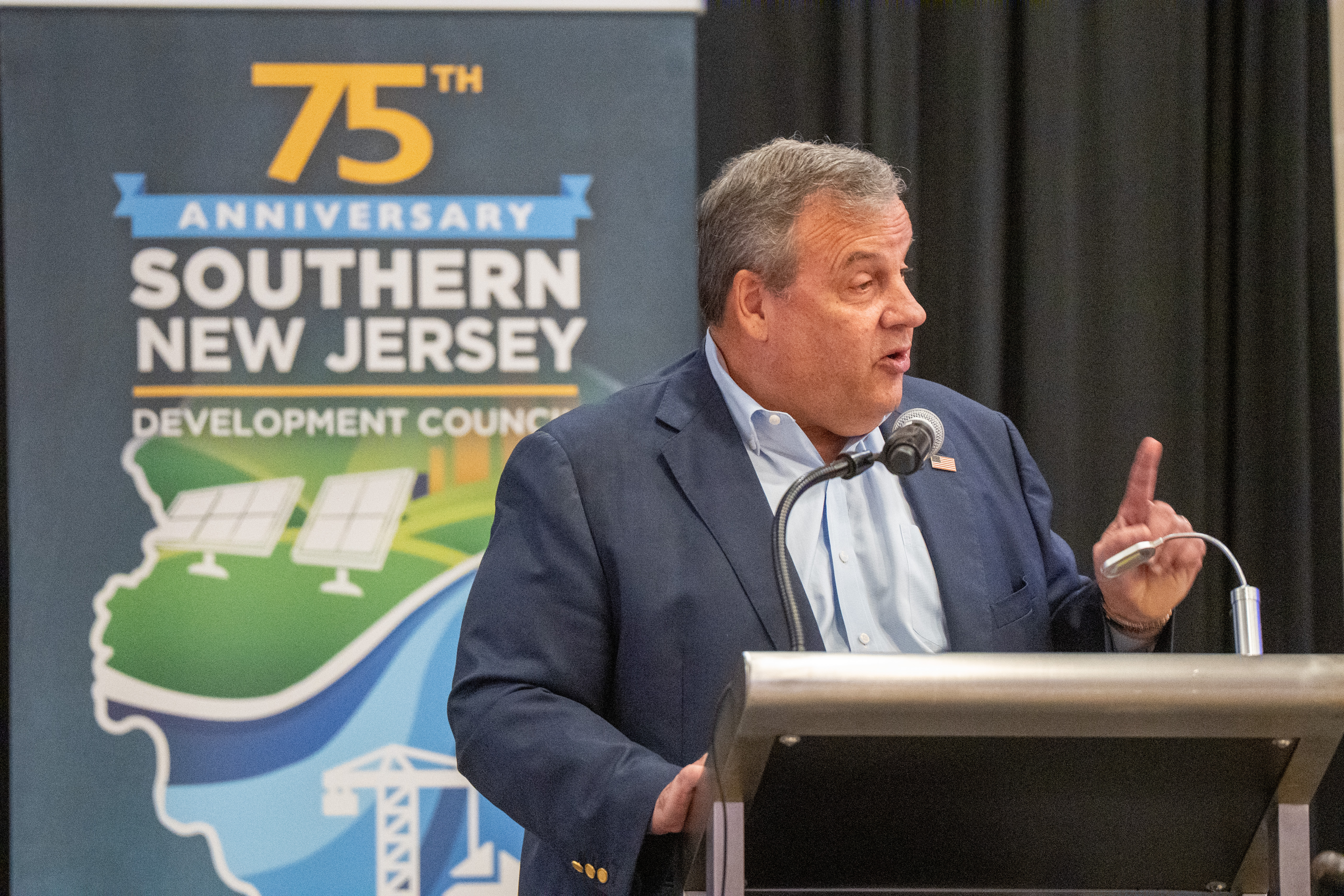
    Former New Jersey Gov. Chris Christie predicted the Nov. 3 election will mark “the official end of the Donald Trump era,” when Democrats are expected to win control of the U.S. House, but warned the final two years of his presidency will not result in the stability the public craves.

    The country needs leadership to “give people a view beyond the next crisis point” and “feel better about who we are as Americans and what we can do for each other and the world,” the former two-term Republican governor told 200 business leaders gathered Friday at a Southern New Jersey Development Council conference in Mount Laurel.

    Trump cannot provide that kind of leadership, Christie said.

    “We have a president now who markets every day in anger, in hate, in vengeance and self-dealing,” he said.

    Polls universally show Democrats are poised to win control of the House — with pickups in Pennsylvania and New Jersey likely — and the Senate looks in play as the party has gone on offense in traditionally GOP states.

    “We are ending an era, everybody. … I suspect it will officially be over Nov. 3. The only person who doesn’t know that is President Trump,” Christie said.

    Christie was one of the first elected officials to endorse Trump after ending his own 2016 campaign, but he broke with the president after Trump claimed the 2020 election had been stolen from him. When Christie briefly ran for president again in 2024, he released an ad admitting backing Trump was a mistake.

    “What we are in for are the most tumultuous two years,” as Trump will try “with every bit of his strength to hold on to attention and power,” Christie added.

    His remarks at times sounded like a stump speech for his own potential candidacy in 2028, which he said last month he would consider after the election.

    Christie said he would remain a loud voice for leadership and building back the country’s economy and standing in the world.

    “I’m not going anywhere,” he said.

    He also praised Democratic Gov. Mikie Sherrill and offered advice to corporate leaders on how to weather more economic and political upheaval.

    Christie said he expected that Democrats will open numerous investigations into the Trump administration’s conduct when the new Congress convenes in January. He added that he hoped they would not put the country through another impeachment process, which he said would result only in giving Trump more attention.

    “Attention to him is like oxygen to everyone else in this room,” he said.

    ‘Rooting for Sherrill’

    Christie described the fruitful partnerships he forged with Democrats, including his collaboration with former state Senate President Steve Sweeney (D., Gloucester) in 2011 to force workers to pay more for their pensions and benefits to avert a collapse. The deal was immensely unpopular with public union workers.

    Christie and Camden Mayor Dana Redd opened charter and Renaissance schools that outperformed the public schools.

    He said governors and elected officials in general need more courage and collaboration to take on the tough issues. Sherrill showed promise in this regard for keeping spending in check with her $60.7 billion state budget, Christie said.

    He criticized her immediate predecessor, former Democratic Gov. Phil Murphy, for allowing the budget to balloon from $34 billion to $60 billion. (Murphy has criticized Christie for spending down the state’s surplus to about $600 million.)

    “If you want to be governor of this state, and this is a cautionary tale to our current governor, who, by the way, I like and I am rooting for, you can’t be governor part-time,” Christie said. “What I hope we now do is encourage the current governor to have some courage.”

    Earlier in the day, South Jersey elected leaders of both parties discussed how to strengthen the region’s economy and rebuild after Trump.

    U.S. Rep. Herb Conaway, a Burlington County Democrat, said House Democrats are committed to making “a case against the rampant corruption of the Trump administration” and to restoring the cuts to Medicaid slated to take effect next year under Trump’s One Big Beautiful Bill Act, which will threaten the eligibility of hundreds of thousands of low-income New Jerseyans.

    “The American people expect it, and we are going to give it to them,” he said.

  • Mikie Sherrill will headline DNC dinner in D.C. after Philly speech to business leaders

    Mikie Sherrill will headline DNC dinner in D.C. after Philly speech to business leaders

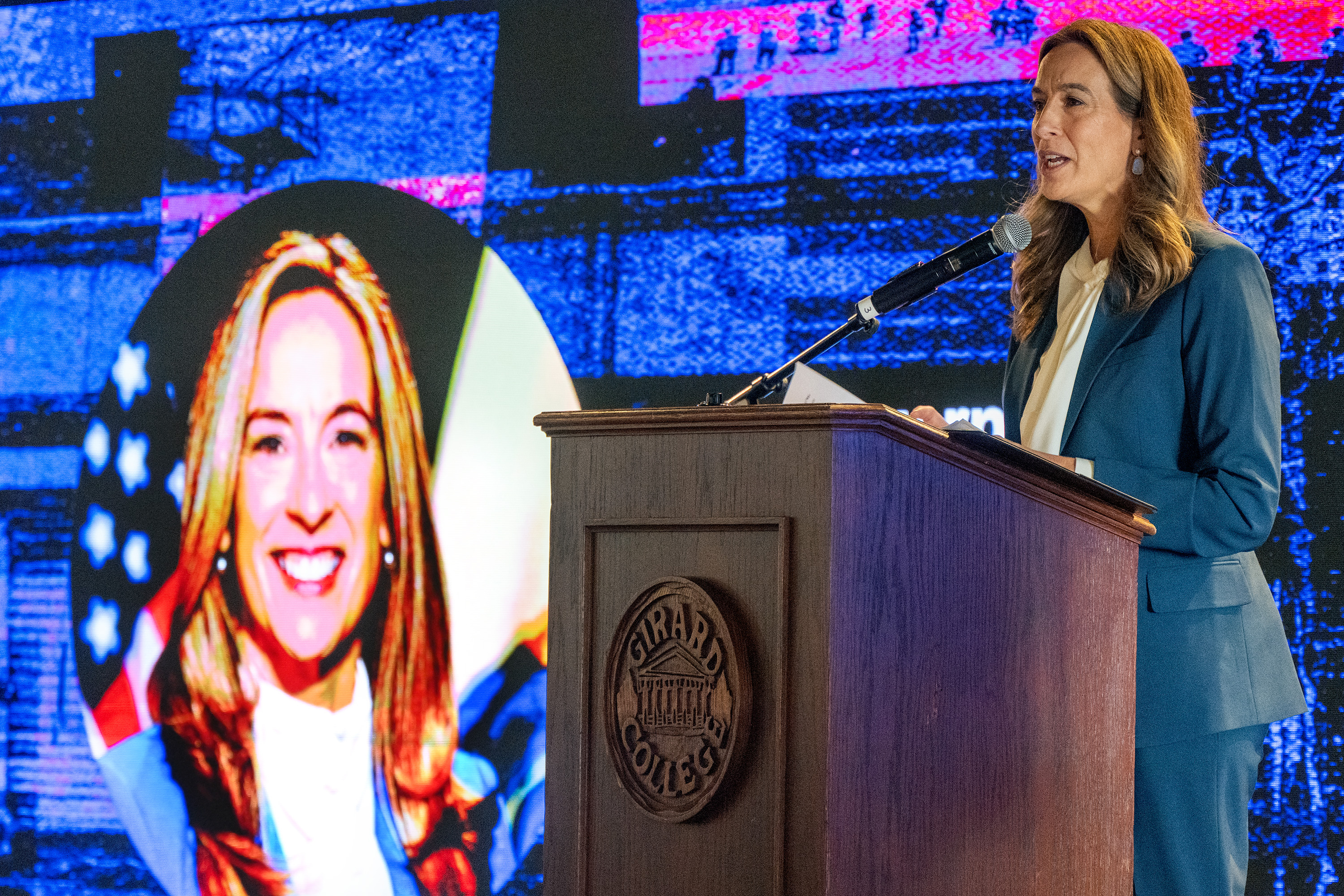
    New Jersey Gov. Mikie Sherrill had a whirlwind day, rushing to headline a high-profile political event in Washington by way of a Philadelphia business conference.

    The Democrat gave a 10-minute speech at the Economy League of Greater Philadelphia’s Leadership Exchange at Girard College ahead of schedule on Thursday before rushing to her Washington-bound train.

    She was slated to headline the Democratic National Committee Women’s Leadership Forum opening dinner for donors and attendees alongside her friend and former roommate Virginia Gov. Abigail Spanberger and historian Heather Cox Richardson.

    The two stops are a sample of how Sherrill, a former member of Congress, is raising her national profile.

    Pennsylvania Gov. Josh Shapiro and Delaware Gov. Matt Meyer — both Democrats — were also invited to speak at the Philadelphia conference, which had the theme of “collaboration across lines of difference,” but Sherrill was the only one to accept, per conference spokesperson Raymond Brothers.

    She opened her speech with her signature Philadelphia joke, calling it the “Greater Camden Metropolitan Area,” and nodded to her love for the rich American history on both sides of the river.

    N.J. Gov. Mikie Sherrill rushes to catch a train after delivering remarks at the Economy League’s 21st Annual Greater Philadelphia Leadership Exchange at Girard College.Tom Gralish / Staff Photographer

    Sherrill leaned into the theme of the conference by calling for collaboration among New Jersey, Pennsylvania, and Delaware while still trying to to lure businesses to the Garden State. Just last month, Burlington Coat Factory announced that it was leaving the South Jersey home it was named after to move to Philadelphia in light of Shapiro’s state incentives for businesses.

    “As you consider regional expansion or investment, we want you to choose New Jersey,” Sherrill said as a direct invitation to the audience at the business-oriented event. “My team is ready to help you take your next step in the Garden State.”

    More than 200 people attended from Pennsylvania, Delaware, and New Jersey, according to Jeff Hornstein, executive director of the Economy League of Greater Philadelphia.

    Sherrill juggled lauding business efforts in the other Delaware River states while keeping her focus on what she is proud of in New Jersey.

    She touted the pharmaceutical industry and innovation efforts in New Jersey while praising robotics in Pennsylvania and business incorporation in Delaware.

    “Each of those is attractive on its own, but together they’re world-class,” she said.

    “If all of us in this room can work together, we’re unstoppable,” she added.

    Asked for an example of cross-state collaboration as she rushed out of the building, Sherrill shouted out: “Photonics.”

    Photonics is a method of using light particles instead of electrons to transmit information, as in fiber-optic cables. This effort is already underway — Princeton University has a regional consortium of groups across Southeastern Pennsylvania, New Jersey, and Delaware studying the practice called Advancing Photonics Technologies.

    Sherrill left Senate President Nicholas Scutari, a North Jersey Democrat, in charge of the Garden State after departing Philadelphia for Washington. Sherrill is currently without a lieutenant governor after her former No. 2, Dale Caldwell, resigned last month.

    The same DNC dinner that Sherrill was slated to address had been headlined by former President Barack Obama in 2015 and former Vice President Kamala Harris in 2022, according to a source familiar with the matter. It was to be followed by a day full of panels on Friday featuring a slew of prominent Democratic women, including former Secretary of State Hillary Clinton and New York Attorney General Letitia James, with tickets ranging from $250 to $44,300.

    Govs. Mikie Sherrill and Josh Shapiro talk before they’re introduced to speak on a panel with two other governors April 16, 2026 at a National Governors Association event on energy.Tom Gralish / Staff Photographer

    Praise for Gov. Josh Shapiro

    During her quick Philly visit, the New Jersey governor tipped her hat to Shapiro for his agreement with regional grid operator PJM to cap costs across 13 states while emphasizing her own efforts at increasing energy production in New Jersey with the goal of lowering costs. Shapiro could not attend because of a scheduling conflict, his spokesperson Rosie Lapowsky said.

    “Today, 67 million customers across the region are benefiting from that collaboration, but New Jerseyans were demanding that our state go even further to drive down costs in the short and long term,” she said. “We need, and we are implementing, transformative change in energy production and the utility business model in New Jersey.”

    She said that she has approved 18 solar and battery storage projects and expanded the state’s community solar program by 3,000 megawatts since taking office.

    She said her attempt to expand nuclear energy production in South Jersey would help lower energy bills across the region and “create good-paying jobs across state lines.”

    “Our two plants in Salem County employ 1,600 technicians and engineers from both New Jersey and Delaware,” she said. “Just imagine how many more careers we could build with another plant or two.”

    Gov. Sherrill rushes to catch a train after delivering remarks at Girard College. She was slated to headline the Democratic National Committee Women’s Leadership Forum opening dinner in Washington, D.C.Tom Gralish / Staff Photographer
  • N.J. Republican Tom Kean Jr. faces a ‘blue wave’ as former Navy pilot Bennett gains ground

    N.J. Republican Tom Kean Jr. faces a ‘blue wave’ as former Navy pilot Bennett gains ground

    NEW PROVIDENCE, N.J. — While most Democrats running for Congress this year are squarely focused on running against President Donald Trump, New Jersey candidate Rebecca Bennett deviated from the typical playbook last week during a swing through Union County.

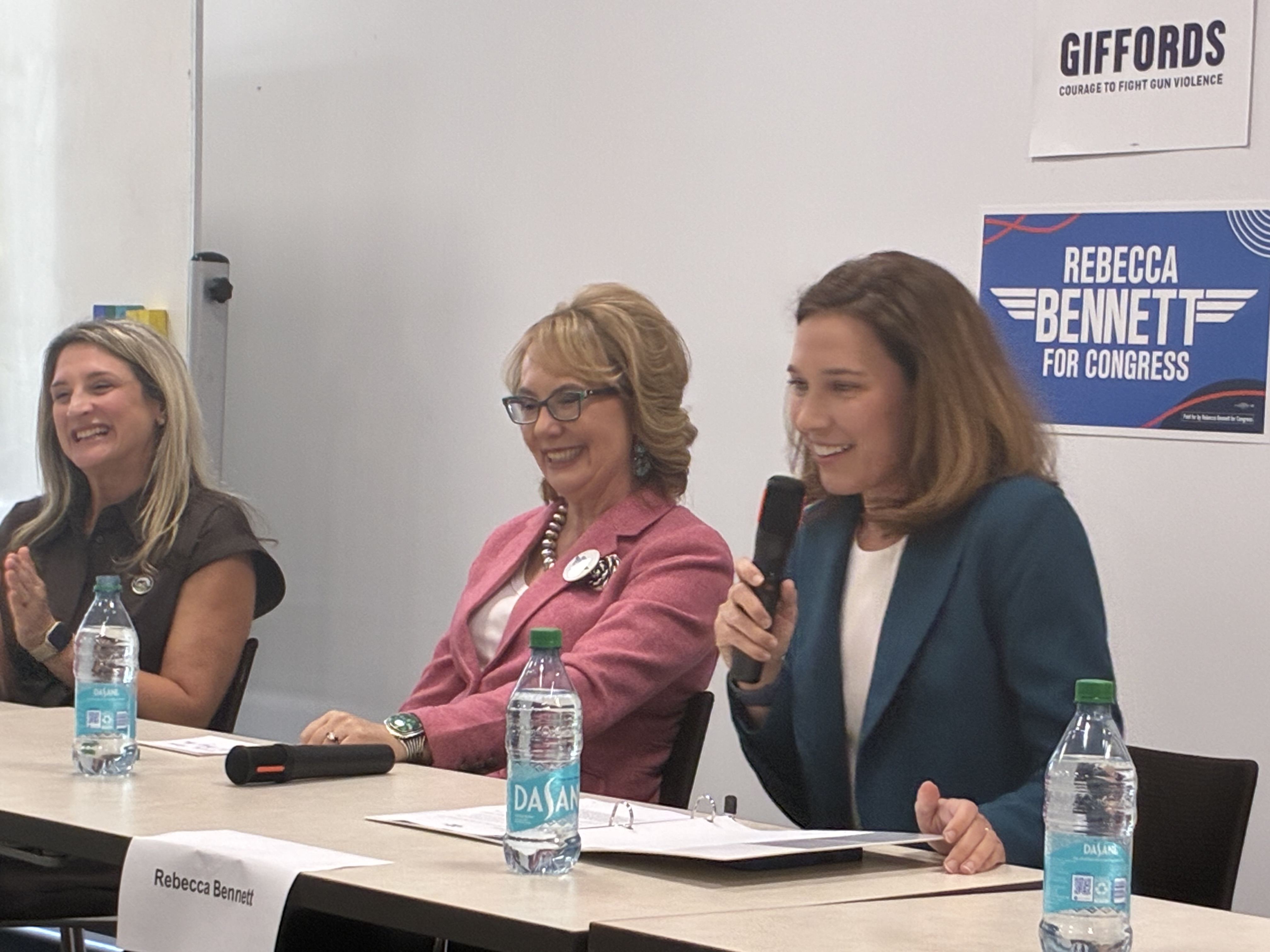
    She mentioned Trump only once. And Bennett did not even mention her opponent, 7th District incumbent Republican U.S. Rep. Tom Kean Jr., until the final minute of an hour-long discussion on gun control with former U.S. Rep. Gabby Giffords, an Arizona Democrat who has been a leading voice on the issue since surviving an assassination attempt in 2011.

    “I want to be clear that we are traumatizing a generation of kids because our elected officials in Washington are failing to solve this crisis that we are dealing with in this country,” Bennett said.

    “There are very clear, commonsense things that we can do to tackle this, like background checks, like red flag laws, like secure storage and assault weapons bans. I want you all to know this is absolutely going to be a priority for me.”

    Bennett is projecting confidence three weeks before Election Day.

    Kean, the two-term GOP incumbent, must overcome a strong anti-Trump backlash and lingering questions over his nearly four-month medical leave of absence for depression that he did not explain until his return in June.

    This week, two major Republican PACs confirmed they have pulled funding from Kean’s race, while the Democratic Congressional Campaign Committee told Politico it would spend $13 million on ads in 39 targeted races, including the 7th District.

    The same day she campaigned with Giffords, Bennett announced her latest fundraising haul: $4 million since the start of July.

    The enthusiasm for Bennett at the gun control event was palpable, with Giffords’ participation attracting an enthusiastic group of supporters in red T-shirts bearing the Moms Demand Action logo.

    “Strong women get things done,” Giffords said.

    “Words once came easily. But I’ve not lost my voice,” said Giffords, whose lingering injuries affect her speech and gait. “America needs all of us to speak out, even when you have to fight to find the words. … We are at a crossroads. We can let the shooting continue or we can act.”

    Kim Banks of Somerset, whose 19-year-old son, Samaad Zaire Frazier, died by gun violence in 2019, said she supports Bennett because “our family’s safety needs to guide who we send to Congress.”

    “As a mother who lost her son, I know we cannot wait,” said Banks, who took part in the discussion. “We need a representatives like Rebecca Bennett who will turn these commitments into votes, funding, and action that helps protect our children and communities.”

    Frustration with Trump

    If the predicted “blue wave” enables Democrats to wrest control of the House from Republicans, it will carry Bennett to victory, said Ashley Koning, director of Rutgers University’s Eagleton Center for Public Interest Polling.

    Trump’s approval ratings in New Jersey continue to tumble, to 24% statewide, according to an Oct. 1 Rutgers-Eagleton poll.

    To prevail, Kean must overcome voters’ “absolute frustration and dissatisfaction with the Trump administration,” as well as his absence from Congress this year — unexplained until he returned and revealed he had been in treatment for depression, Koning said.

    “This is a perfect storm against Kean. It becomes very hard for him to overcome,” Koning said.

    But Kean, a fixture of the region’s politics for decades, should not be dismissed, his supporters say.

    Rep. Tom Kean Jr. (R-N.J.) departs after delivering a speech to the House of Representatives on his absence at the Capitol in Washington, on Tuesday, June 30, 2026. Kean has finally reappeared in Congress, but questions remain about his nearly four-month absence from public life, which he said was due to depression. (Eric Lee/The New York Times)

    The 7th District — spread across Hunterdon and Warren Counties and parts of Morris, Somerset, Sussex and Union — knows Kean well, said Mike Duhaime, a Republican strategist who has run statewide and national campaigns but is not involved with Kean’s race.

    Kean represented some of these counties as a state lawmaker for nearly 20 years. His father, former Gov. Thomas H. Kean, remains New Jersey’s most revered political figure of the last 40 years, Duhaime said.

    Pre-Trump, the Kean brand was solidly fiscally conservative and socially moderate.

    “He has a core group of voters, so he will do much better than the average Republican,” said Duhaime, who is also a friend of the Kean family.

    “But there is no arguing the environment is really bad for Republicans,” Duhaime said, noting that party leaders are spending more this year to defend traditionally red states, like Kansas.

    Three prominent forecasters, including the nonpartisan Cook Political Report, last week tagged the New Jersey race as “leans Democratic.”

    Bennett spokesperson Carly Jones tried to reinforce the candidate’s underdog status by downplaying the Congressional Leadership Fund’s decision to steer money intended for Kean to other districts.

    “Here’s what we know: Trump and National R’s placed a $500k media buy for Kean Jr. yesterday b/c he’ll be a rubber stamp for forever wars & higher prices. CLF pulling their ads represents, at most, 13% of R’s total spend against Rebecca. They still have $19M in ad reservations,” Jones posted Tuesday on X.

    Kean had raised $4.89 million as of June 30, according to the most recent filings to the Federal Election Commission. Kean’s campaign declined to share its latest fundraising totals ahead of this week’s deadline.

    “Tom has always proven to be a good fundraiser for himself,” said Bill Palatucci, a committeeman in the National Republican Committee who also has strong ties to the Kean family.

    If anyone can survive the anticipated blue wave, Kean can, Palatucci said. Warren and Sussex Counties are “deep, deep red, the president is still popular there, and Tom has a very good team who knows how to turn out the vote.”

    “I’d put this in the toss-up category,” Palatucci said.

    Gun control advocate and former Arizona Rep. Gabby Giffords, center, campaigns with Democrat Rebecca Bennett at a library in New Providence. Bennett is challenging incumbent Republican Tom Kean Jr. in the 7th district.Susan Livio

    Former Navy helicopter pilot charts similar course to Sherrill

    There was a time when a newcomer like Bennett, a 39-year-old health technology executive from Bridgewater, would have struggled to gain any traction in a contest against a well-known, well-financed incumbent.

    But in the Trump era, all politics is national. And the national mood is bleak, according to polls, as an unpopular war rages on and energy and food costs remain high. A recent Rutgers poll found three-quarters of New Jerseyans find it either “very” or “somewhat” difficult to afford education expenses like student loans and childcare, and two-thirds struggled with gas and medical costs.

    These conditions create a path for Bennett, one that Democratic Gov. Mikie Sherrill blazed last November, Koning said. Bennett, like the governor, is a former Navy helicopter pilot.

    Sherrill won handily in Kean’s backyard in Westfield and Summit on her way to a 14-point statewide win over Republican Jack Ciattarelli after a Trump-focused campaign.

    “The Democrats smartly nominated someone here more in the moderate Sherrill mold rather than a socialist or far left,” Duhaime said.

    “I don’t think people know where she stands on the issues,” Duhaime added. “She’s a former military pilot, so they probably think she is centrist.”

    Bennett has campaigned on making healthcare, energy, and childcare more affordable. Her to-do list includes rolling back the cuts to Medicaid that Kean supported when he voted for Trump’s One Big Beautiful Bill Act, which paid for tax cuts partly by reducing spending on programs that benefit low-income people.

    She would undo the tax break on the wealthy and use the money to cap families’ childcare costs at 7% of their household income and create a separate rate class for data centers “to make sure they are paying their fair share,” Bennett told The Inquirer Editorial Board.

    (The editorial board, which runs The Inquirer’s opinion pages and decides endorsements, operates independently from the newsroom. Newsroom editors and reporters have no role in endorsements, and opinion staffers have no role in news coverage).

    Kean has not responded to the board’s invitations to appear.

    The Republican has touted his success in helping to restore the State and Local Tax (SALT) deduction through 2029, a win for high-tax states like New Jersey.

    At a Sept. 28 debate, Kean stood apart from Trump on two key issues. For the first time, he spoke out against Immigration and Customs Enforcement operating an immigrant detention center in Roxbury, in the district. He also stressed his support for the Gateway Hudson River rail tunnel project, which Trump repeatedly has tried to defund.

    “I will make sure that I counter anybody who gets in my way, including this president,” he said.

    These are not the issues featured in the attack ads bombarding TV viewers.

    Bennett’s ads have focused on introducing herself to voters and contrasting herself with Kean on issues such as stock trading by members of Congress — a controversial topic in the district for several election cycles.

    In one ad, titled “Fighting For,” Bennett says: “I approve this message because the Navy taught me service over self. So I’ll never take corporate money. I already sold my stocks.” During the debate, she slammed Kean for signing off on stock trades, even during his medical leave.

    Kean denied the claim, saying that his signature is legally required but that he has had no input on how his money is invested. “I’ve not traded an individual stock since I’ve been a member of Congress,” he fired back.

    Kean’s attorney told NJ Monitor an outside firm independently manages the lawmaker’s investments.

    One of Kean’s most recent ads, titled “Profits Over Patients,” calls Bennett “a greedy, liberal millionaire who doesn’t care about you.” Kean’s campaign declined to answer questions about the ad, which flashes to headlines involving Lifepoint Health, a private equity-owned hospital chain. As an executive at Midi Health, a telemedicine company focused on women’s health, Bennett brokered a deal for Midi to work with Lifepoint.

    According to an NBC News report, Lifepoint denied numerous patients cancer treatment by refusing to accept their insurance.

    Kean is running a lower-profile campaign compared with Bennett by having fewer public events and discouraging the media from attending. But Palatucci said Kean is “out there in the district seven days a week. Voters see him. And his social media efforts are very, very good.”

    Palatucci said this is where Bennett comes up short. “If you get out and talk to people in Hunterdon, Warren, and Sussex Counties and ask them who is Rebecca Bennett, they would have no idea,” he said

    When it comes time to vote, what 7th District residents think of Trump’s record is likely to determine the outcome, Duhaime said.

    “It’s harder to carve out an image unique from the party and from Trump,” he said.

  • Trump administration bars Pa. and other states from using federal funds on transgender youth care

    Trump administration bars Pa. and other states from using federal funds on transgender youth care

    Prominent children’s hospitals and other providers of care to transgender youth are facing a new threat to funding from President Donald Trump’s administration.

    A federal rule that took effect this week bars states from seeking U.S. funds for transgender youth medical care, including puberty blockers, hormones, or rare surgical interventions.

    The rule applies to youth under 18 covered by Medicaid and patients under 19 using the Children’s Health Insurance Program, or CHIP.

    The rule is the latest effort by the Trump administration to curtail gender-affirming care for children and teens in the 23 states where it remains legal.

    Last year, federal authorities also launched investigations into more than 20 hospitals, including Children’s Hospital of Philadelphia and Nemours Children’s Health in Delaware, seeking confidential medical records of transgender youth to review for potential healthcare fraud.

    University of Pittsburgh Medical Center and five other hospitals under investigation nationwide recently signed settlement agreements with the U.S. Department of Justice to end civil and criminal inquiries and protect patient records. In exchange, the hospitals have agreed to end medical care for transgender children and adolescents and pay the government millions of dollars in fees.

    CHOP, which has successfully fought in court to protect patient records, did not reply to requests for comment on whether it is negotiating with the DOJ. Nemours declined to comment.

    Advocates of transgender rights say the mounting legal and political pressure has intensified an atmosphere of fear.

    “It’s really terrifying when you see families who have relocated to places like Philadelphia and Pittsburgh to get care for their child and now they are faced with potentially not being able to make sure their kid can go to the doctor like everyone else,” said Pittsburgh resident Shelby Chestnut, executive director of the Transgender Law Center.

    A coalition of 21 Democratic-led states and the District of Columbia have filed a federal lawsuit seeking to overturn the new federal rule. New Jersey, Delaware, and Pennsylvania are part of the coalition.

    The federal rule took effect on Tuesday.

    “We are ending federal taxpayer funding for sex-rejecting procedures on children,” U.S. Health and Human Services Secretary Robert F. Kennedy Jr. said in an August statement announcing the new rule. “These interventions carry serious risks and can cause irreversible harm. The federal government will no longer use Medicaid and CHIP dollars to fund procedures that fail to meet the evidentiary standard our children deserve.”

    What the new rule means

    For transgender adolescents on hormone therapy, the federal government will continue Medicaid and CHIP reimbursement for those medications during a “tapering-off period” for up to six months from the rule’s start date.

    The rule does not apply to mental health services, such as talk therapy, for patients with gender dysphoria — a medical condition in which a person’s body does not match their gender identity.

    It also does not prohibit states from covering the medical treatments with their own dollars.

    In Pennsylvania, the total cost for Medicaid participants, both adults and youth, who received gender-affirming care was about $11.9 million in fiscal year 2024-25. (The state was not immediately able to provide a financial breakdown by age.)

    Of the total, Pennsylvania paid roughly $3.9 million, or 33%. CHIP expenses totaled nearly $1 million. The amounts covered both medical and behavioral health, according to the Pennsylvania Department of Human Services.

    Pennsylvania will use state dollars to cover puberty blockers and hormone medications for transgender children and teens enrolled in Medicaid, according to Rosie Lapowsky, a spokesperson for Democratic Gov. Josh Shapiro.

    Under Pennsylvania law, however, the state cannot use its own funds to cover CHIP, she said.

    Delaware Gov. Matt Meyer, a Democrat, has decided to plug federal funding gaps with state money.

    “Gov. Meyer is committing state funds to replace the lost federal funding in full, ensuring these young people continue to receive the care they need,” Meyer spokesperson Jonah Anderson wrote in an email. “Medical needs should guide care, and Delaware will not allow callous political stunts to interrupt their treatment.”

    Democratic New Jersey Gov. Mikie Sherrill, who recently signed a law that makes it a crime to interfere with individuals trying to access gender-affirming care, is weighing the state’s options.

    “The governor and the Sherrill administration will continue to fight the Trump administration’s endless efforts to weaponize what should be decisions between doctors and their patients,” a spokesperson said in an email.

    The Philadelphia region’s three Democratic-led states are also involved with the pending federal lawsuit, which argues that the rule oversteps the Trump administration’s authority, creates illegal barriers for low-income and vulnerable individuals, and strips states of their authority to decide which services should be covered under Medicaid and CHIP.

    “Gov. Shapiro joined this lawsuit to defend the rights of patients and parents to make healthcare decisions with their doctors and because he believes federal government action to dictate the kinds of care medical professionals can provide is dangerous,” his spokesperson, Lapowsky, said in a statement.

    Pittsburgh hospital settles with DOJ

    The new rule comes as federal authorities continue to investigate alleged healthcare and consumer fraud by providers of pediatric transgender care nationwide.

    CHOP won its case late last year before a U.S. District Court judge based in Philadelphia, who prevented the DOJ from obtaining patient medical records for its investigation. CHOP’s Gender and Sexuality Development Program is one of the largest of its kind in the country.

    Asked about the status of its program following news of the recent settlements by other hospitals, CHOP did not respond to requests for comment.

    A Nemours spokesperson declined to comment on the status of the DOJ’s investigation and whether it was considering a settlement agreement. In July 2025, Nemours stopped providing gender-affirming care beyond behavioral health services to new patients.

    The DOJ also declined to comment on whether it is having conversations with either hospital, citing its “ongoing investigations.”

    In a victory touted by the Trump administration, the University of Pittsburgh Medical Center has agreed to pay nearly $1 million to the DOJ, while “expressly and resoundingly” denying any wrongdoing, according to the Sept. 18 agreement.

    The UPMC settlement was announced on the same day as a DOJ agreement with New York University Langone Hospitals, which also agreed to end the care and pay $8.5 million to the government.

    Last year, UMPC had voluntarily stopped providing medical treatment for transgender youth. The agreement formalizes UMPC’s decision to end the care.

    “UPMC chose to resolve the matter to avoid prolonged litigation, protect patients and families from unnecessary disclosure of sensitive personal and health information, protect employees, and remain focused on patient care and advancing its core mission,” a University of Pittsburgh Medical Center spokesperson said in a statement.

    Mimi McKenzie, legal director for the Public Interest Law Center, lambasted UPMC for “failing transgender children.”

    Her organization, a Philadelphia-based nonprofit that advocates for the civil, social, and economic rights of marginalized communities, had represented a handful of UPMC patients and their families in their fight to prevent the DOJ from getting their medical records.

    “Our country’s shameful turn against vulnerable children will be made temporary. UMPC’s stain on its reputation, however, will last forever,” McKenzie said in a statement.