Tag: Larry Krasner

  • Six killed, more wounded in wave of weekend violence in Philadelphia

    Six killed, more wounded in wave of weekend violence in Philadelphia

    Six people were killed in Philadelphia between Friday morning and Sunday night — five shot and one stabbed — in a wave of violence across the city, according to police.

    At least two others were wounded in the spate of attacks, a jarring stretch of violence in a year that has otherwise been among the least deadly Philadelphia has recorded in decades.

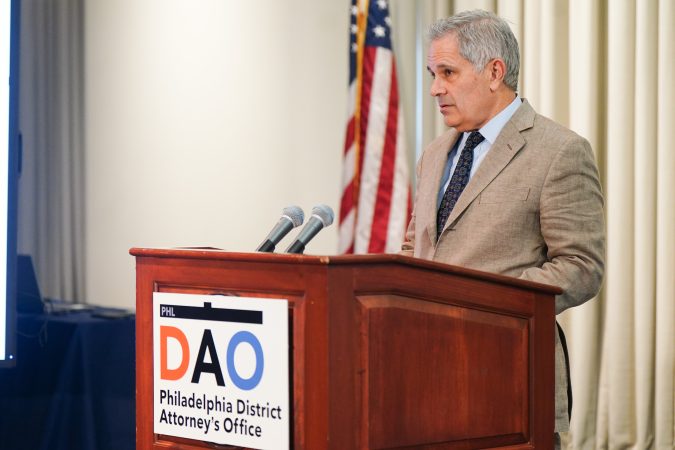
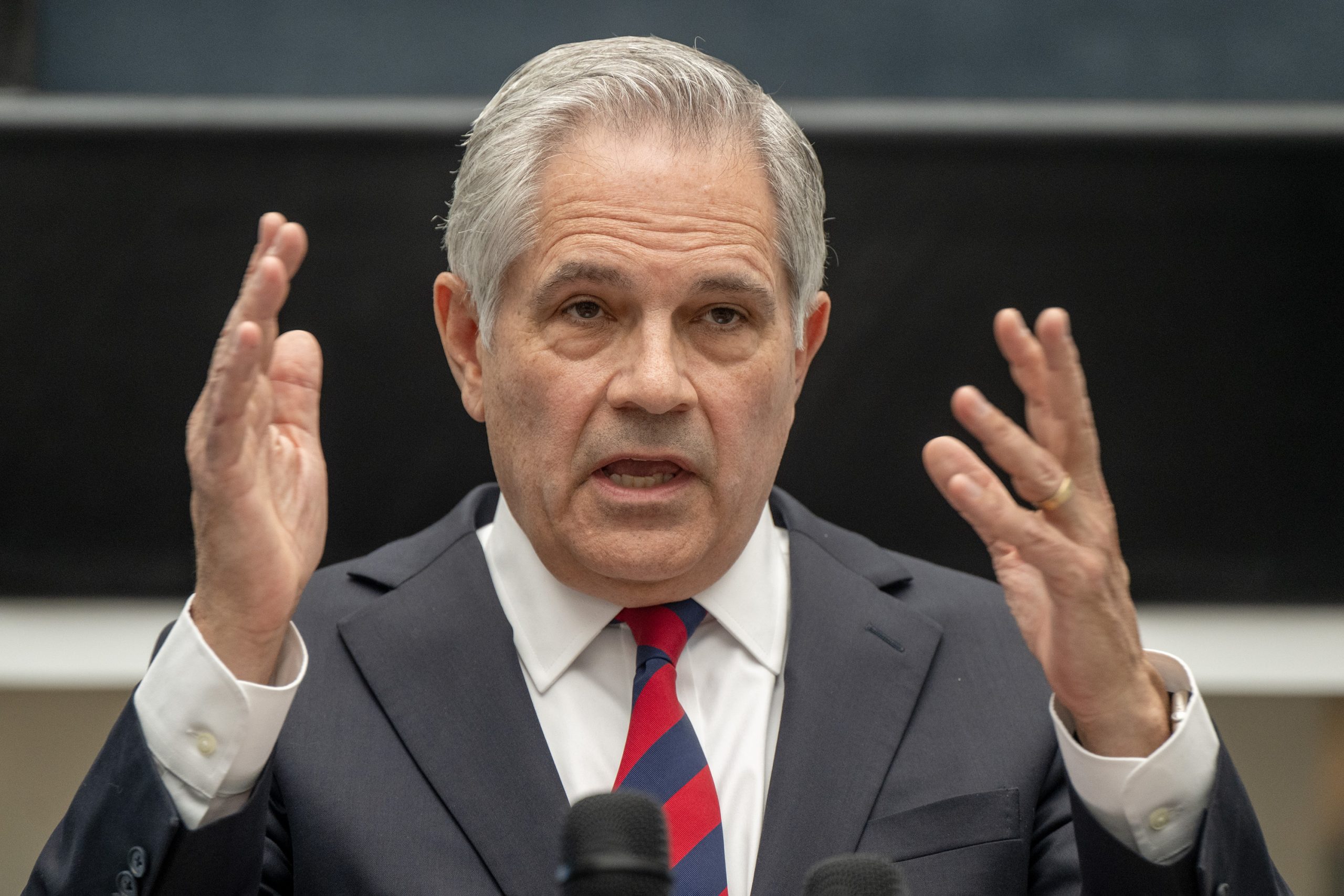
    At a news conference on Monday, District Attorney Larry Krasner acknowledged the weekend’s toll but pointed to the city’s steep drop in killings, arguing that a brutal few days had not erased months of historic progress.

    “We had a bad weekend,” Krasner said. “We’re not having a bad year.”

    As of Monday, Krasner said, there had been 108 homicides so far this year in the city — 29 fewer than at the same time last year.

    Even so, the six deaths amounted to more than 5% of the city’s homicides this year, a striking toll for a single weekend. The victims ranged in age from 26 to 70.

    The bloodshed began shortly after 9 a.m. Friday, when officers responded to a report of a gunman on the 2100 block of North 20th Street in North Philadelphia West and found Savion Young, 31, shot in the chest and arm. He was pronounced dead at Temple University Hospital about 20 minutes later, police said.

    That same evening, Felix Serrano, 70, was found shot inside a BMW on the 4300 block of North Seventh Street in Hunting Park, according to police. Investigators believe Serrano’s vehicle may have traveled a short distance after he was shot before his car struck a parked vehicle. He was also pronounced dead at Temple University Hospital.

    The killings resumed before dawn Sunday. At about 3:20 a.m., police who were called to the 800 block of West Oxford Street in Ludlow found Rafi Colón-White, 30, shot in the head inside a Subaru Outback.

    Colón-White was pronounced dead at Temple University Hospital. A 34-year-old man who arrived separately at the hospital with gunshot wounds to his legs was in critical condition, police said. That man, whom police have not identified, was also a victim in the shooting, said police spokesperson Cpl. Jasmine Colón-Reilly.

    Sunday evening brought three more killings in as many hours. About 8:20 p.m., a man was fatally stabbed on the 500 block of West Courtland Street in Logan, and pronounced dead at Einstein Medical Center, police said. He has not been publicly identified.

    Less than an hour later, DaJuan Coffee, 26, was shot multiple times on the 2000 block of East Lehigh Avenue in East Kensington and pronounced dead at Temple University Hospital, police said.

    The weekend’s final killing came at about 11:49 p.m. Sunday. Officers sent to the 2800 block of North 24th Street in Strawberry Mansion for a report of a person with a gun found Michelle Wilson, 61, on a porch, shot in the neck and back, police said. She was pronounced dead moments later.

    Wilson’s husband was also on the porch and was shot, but survived, police said. They did not share the man’s condition, but said he was stable.

    Loved ones lingered on the sidewalk in front of the North 24th Street house Monday afternoon, hugging, trying to find comfort in one another amid their grief. They declined to be interviewed.

    A 71-year-old neighbor said the family has lived on the block for decades.

    “They were quiet people,” said the woman, who asked not to be identified for fear of reprisal. On Sunday afternoon, she said, Wilson’s family had a barbecue, with children and extended family playing on the porch.

    Surveillance video from a business on the block, reviewed by The Inquirer, showed a man wearing a hat and surgical face mask walking down the street when he appeared to take a black handgun from his bag and slip it into his jacket. The video showed him then calmly walk up to the porch and open fire.

    Police have not shared the video with the public, nor identified the man captured in it as a suspect.

    Nearby, on North 20th Street, an array of candles, stuffed teddy bears, and handwritten posters lay Monday across the sidewalk where Young was killed Friday morning.

    Police said Young and his girlfriend were arguing outside the apartment around 9:10 a.m. when the woman’s 16-year-old brother pulled a gun and shot Young multiple times, police said. He died at the hospital.

    The teen is wanted for murder.

    Tributes for Young, also known as Apex, poured across social media over the weekend, and hundreds gathered in North Philadelphia for a balloon release.

    Young had a daughter and large family scattered across the city, friends said. He had just started a clothing brand called Bad English, and neighbors said he was frequently seen lifting weights and working out outside his rowhouse.

    “This was his Planet Fitness,” a man who trained with him said Monday on the block. The man, who declined to give his name for privacy reasons, looked down at the dozens of candles melting into the sidewalk beneath a collection of silver balloons. “He will be truly missed,” he said.

    William Fritze, chief of the district attorney’s office Gun Violence Task Force, declined to provide additional information on the incidents, citing ongoing investigations.

    No arrests have been made in any of the cases, said Colón-Reilly. Police are asking anyone with information to contact the department’s homicide unit at 215-686-3334, or its tip line at 215-686-TIPS.

    Last year marked Philadelphia’s fewest homicides in nearly six decades, with 222 people killed. The last time the city’s homicide numbers fell below that mark was in 1966, when there were 178 murders.

    During Monday’s news conference, called to announce grants awarded to more than 20 anti-violence organizations in the city, Krasner called the weekend’s violence a tragedy that “no one would ever celebrate,” even as he stressed that the city remained far safer than in years past.

    “The facts are clear: Homicides are way down,” he said. “In almost every category, crime is down.”
  • Larry Krasner’s exoneration push faces a reckoning

    Larry Krasner’s exoneration push faces a reckoning

    No one should have to spend even a single day behind bars for a crime they did not commit. But in his zeal to right legal wrongs, District Attorney Larry Krasner lost the plot.

    Since first getting elected in November 2017, Krasner, a former defense and civil rights attorney, has pushed for scores of exonerations for people convicted mainly of murder. But, it turns out, most are not exonerations in which the convict’s innocence is proven through incontrovertible evidence, such as DNA.

    Instead, the DA’s office often sides with defense attorneys who claim some sort of procedural error, such as withheld evidence or inadequate defense counsel. In most of these cases, there isn’t a court hearing in which the new findings get presented, and witnesses testify under oath. Instead, the prosecutors offer what is known as a concession, which often results in dropping the charges and letting the person go free.

    But state and federal courts are starting to challenge Krasner’s tactics.

    In June, the state Supreme Court rebuked the DA’s handling of a case in which it was seeking to vacate a 2004 murder conviction of Laver Brown, who was convicted of second-degree murder and robbery following the shooting death of Michael Richardson, a Rite Aid worker at a North Philadelphia store.

    In July, former Assistant District Attorney Jaclyn Mason testified in federal court that Krasner’s office did not investigate the appeal of another convicted murderer and instead relied on the claims of his defense attorneys — and then encouraged her to lie about the lack of independent verification. Instead of going along with the scheme, Mason said, she quit.

    That hearing before U.S. District Judge Paul S. Diamond was continued to Aug. 27, where more damning testimony may come.

    The state Supreme Court has already seen enough. The court ordered the state attorney general to be allowed to review future cases in which Krasner’s office is seeking to overturn a conviction.

    “What we have seen in this case and too many others is the opposite of justice,” Justice Kevin Dougherty wrote in the scathing 109-page opinion.

    The high court found Krasner’s office misled the courts and submitted false statements when asking a lower-court judge to vacate Brown’s life sentence.

    In June, the state Supreme Court ordered Pennsylvania’s attorney general to be allowed to review future cases in which Krasner’s office is seeking to overturn a conviction.Tom Gralish / Staff Photographer

    After his conviction, Brown’s attorneys said some earlier witness statements were not provided to his trial lawyer, which violated his right to a fair trial. Krasner’s office agreed and argued that the case file revealed a “pattern of prosecutorial misconduct” and requested Brown receive a new trial.

    But lawyers for the families of Richardson and a second man Brown was convicted of killing in a separate incident asked the state Supreme Court to intervene.

    Lawyers for the victims’ families argued that Krasner had a conflict of interest because two of his former law partners had been involved in Brown’s case.

    The high court ordered a hearing that shed a harsh light on the conduct of Krasner’s prosecutors.

    “We find the [district attorney’s office] … violated its duty of candor to the [Post Conviction Relief Act] court, withheld material evidence from the court, opposed efforts by [the victims’ families] to gain access to this evidence, submitted a false stipulation of fact, misstated facts in its pleadings, failed to conduct a reasonable investigation, and opposed a required evidentiary hearing,” Dougherty wrote.

    Whoa. What the heck is going on?

    The Supreme Court also found the prosecutors filed a joint document with Brown’s attorneys that “was false in multiple respects.”

    The court rejected claims by the DA’s office that it conducted a thorough review of the record in the case. Instead, the court said prosecutors “cut corners” and failed to interview a single witness or any of the original investigators involved in the case.

    The DA’s handling of Brown’s case is troubling enough. But it turns out this was not a one-off blunder. The Supreme Court found the case fit a disturbing pattern.

    “There have been numerous instances of untrustworthy concessions, lack of candor, misrepresentations of fact, lack of adequate investigation, and avoidance of hearings,” the opinion said.

    The Supreme Court went on to highlight problems with the DA’s handling of 10 additional cases, and said there may be many more.

    One case involved efforts by Krasner’s office to overturn the death sentence of Robert Wharton, who was convicted in the 1984 strangulation and drowning deaths of a couple in their East Mount Airy home, leaving their then-7-month-old child alone. She survived.

    The case eventually ended up before a three-judge panel of the U.S. Court of Appeals for the Third Circuit. In a unanimous decision, the panel found that Krasner’s office misled the court and “slant[ed] the facts” surrounding Wharton’s case before a lower federal court in 2019 in an attempt to vacate the death penalty and instead let Wharton remain in prison for life.

    Again, with the lack of candor.

    U.S. District Judge Mitchell S. Goldberg denied the request and imposed penalties that required Krasner to write a letter of apology to the family of Wharton’s victims, which the appellate panel found were both “mild and fitting.”

    “Courts rely on lawyers’ honesty; lawyers may not mislead them,” Circuit Judge Stefanos Bibas wrote in the panel’s March 2024 opinion. “But the Philadelphia District Attorney’s Office did just that.”

    Back to the state Supreme Court.

    After highlighting problems with the Brown case and 10 others, the court wrote, “These cases, and the present one, likely represent only a fraction of the [district attorney’s] problematic concessions since January of 2018.”

    The court said many of the DA’s concessions did not include hearings in which sworn testimony from both sides is presented, which the court wrote “is generally the best means to expose problems and ensure a reliable and just outcome.”

    For his part, Krasner was unrepentant. He issued a video statement following the Supreme Court opinion that leaned on his electoral victories to claim the ruling “undermines the value of a vote in Philadelphia as compared to every other county.”

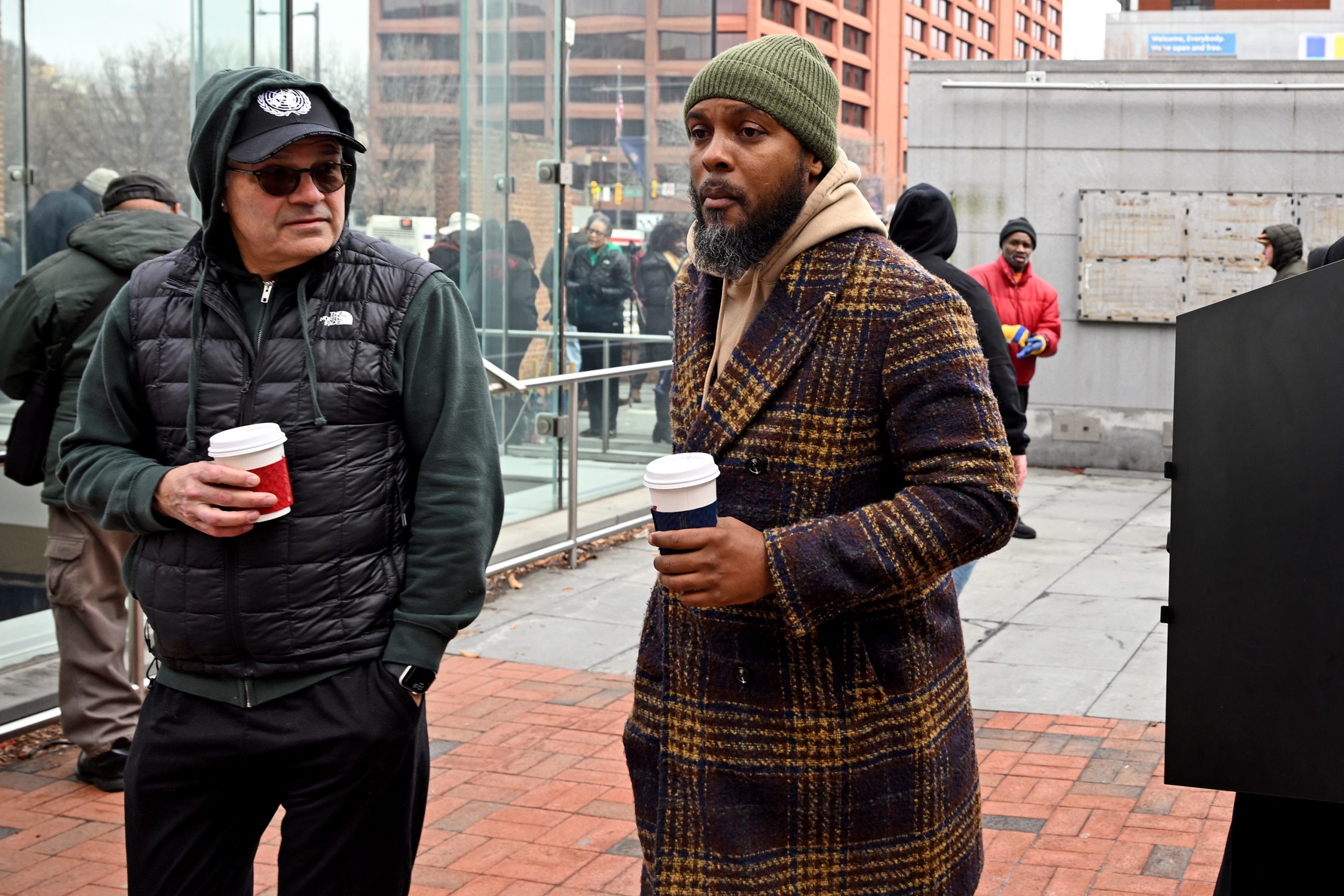
    District Attorney Larry Krasner (left) and G. Lamar Stewart, head of the community engagement and government affairs division, at Independence National Historical Park in February.Tom Gralish / Staff Photographer

    Krasner added that social justice efforts like his often face a familiar pattern of resistance: “First they ignore you — we’re past it. Then they laugh at you — we’re past that. Then they fight you — and we have been fighting for 8½ years.”

    The district attorney’s website trumpets 59 “exonerations” by the Conviction Integrity Unit created by Krasner. But the National Registry of Exonerations said the total number of exonerations by the DA’s office during Krasner’s tenure is 75 — an extraordinary number given that reversing a conviction faces a high bar and often takes years.

    Nearly all of those set free have been Black men, underscoring how the legal system is often stacked against people of color. At the same time, no new charges have been brought in those cases, leaving killers and other wrongdoers walking the streets.

    There is no denying systemic racism exists across our legal system, including in Philadelphia. I witnessed abuses and failures of cops, prosecutors, lousy defense attorneys, eyewitness misidentifications, and forced confessions up close as a reporter covering the courts years ago for the Wall Street Journal.

    I wrote a story about a Latino man who was convicted of murder in the Bronx, N.Y., despite having a solid alibi: On the night of the murder, he was in prison in the Dominican Republic.

    That’s all to say wrongful convictions happen, and sending someone to prison for a crime they didn’t commit — or worse, putting them to death — is the most heinous abuse of the legal system imaginable.

    That’s why I welcomed Krasner’s efforts to review cases in which misconduct or errors may have occurred.

    But the sloppy work by Krasner’s office has undermined his theory of the case. Sadly, those who have been truly wrongfully convicted will be the ones to suffer because judges will no longer trust the DA’s office.

    When judges in state and federal courts and former prosecutors in Krasner’s own office are citing similar patterns of corner-cutting and lying, there is a serious problem.

    Krasner built his career on demanding accountability from the system. He owes Philadelphians no less from his own office.

  • Krasner misses a chance to send a message against violence on SEPTA | Shackamaxon

    Welcome to Shackamaxon, a weekly politics column focused on what’s happening at City Hall and in Harrisburg. It is named for the place where the Lenape chiefs would meet to conduct the people’s business, which is now known as Penn Treaty Park.

    This week’s edition questions a plea deal, looks at Center City’s efforts to bring back daytime foot traffic, and examines the legacy of the Philadelphia wage tax.

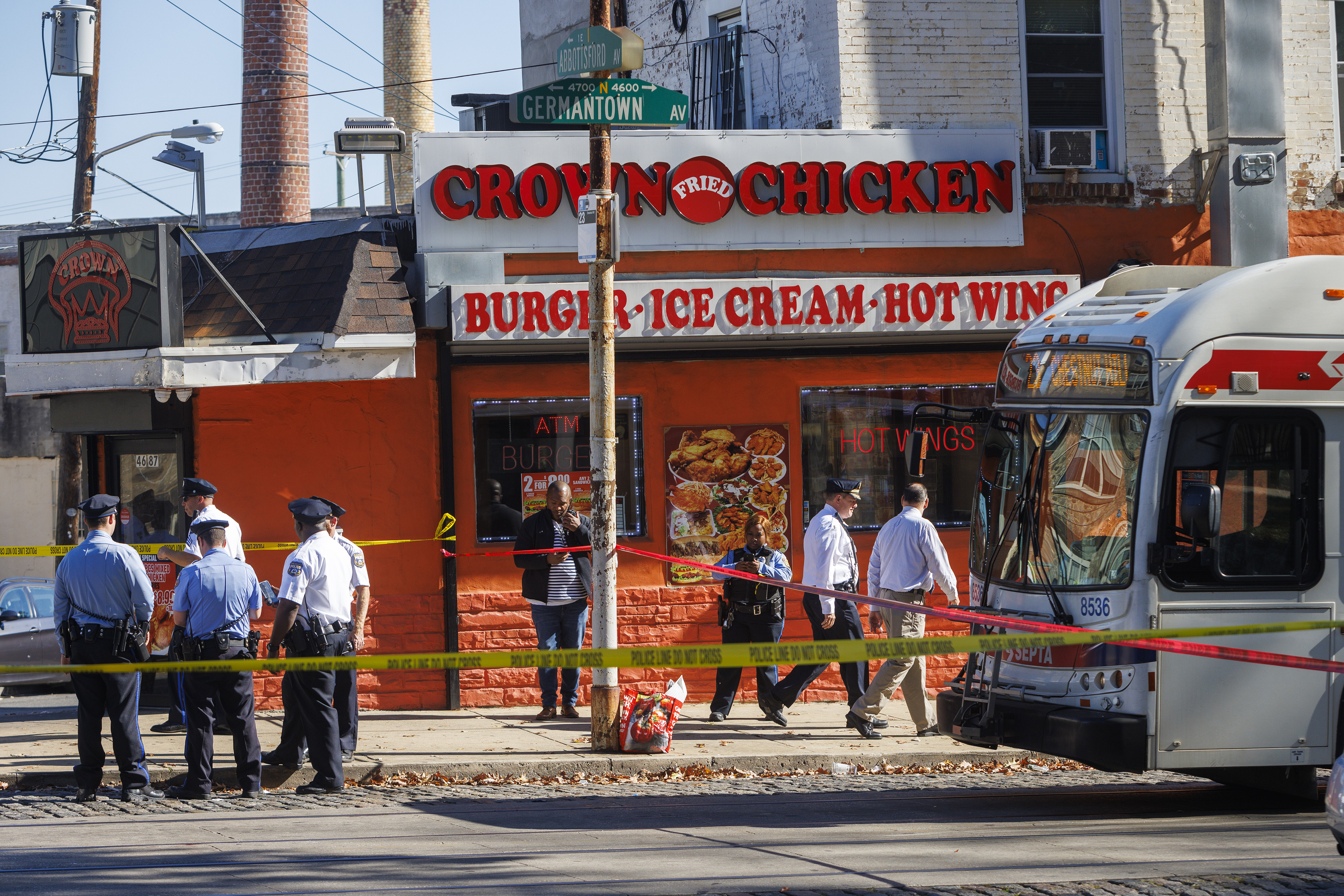
    SEPTA Transit and Philadelphia Police at the scene of the fatal shooting of SEPTA bus driver Bernard Gribbin in Germantown in October 2023.Alejandro A. Alvarez / Staff Photographer

    Deterrence desired

    On Oct. 26, 2023, Bernard Gribbin became the first city transit operator to die by gunfire while on the job. Family members called him “the best of the best,” and described the 48-year-old Army veteran as a man who loved Philadelphia, who proudly took out-of-town relatives on tours of the city when they came to visit, and who served the public by working as a bus operator — a demanding, underpaid, and utterly essential job.

    Gribbin’s murder sent shock waves through the city’s transit agency. His colleagues were left angry and afraid.

    Around that time, reporting from Mensah Dean at the Trace identified a spate of attacks against public employees. During the next contract negotiations, the Transport Workers Union demanded SEPTA install bulletproof glass to protect drivers. Operators report that management, which has long emphasized de-escalation, became even more strict about the kinds of interactions bus drivers and train conductors are permitted to have with unruly passengers. For many, this undermined their sense of stewardship of their vehicles.

    The death of Gribbin seemed like a case in which prosecutors could send a message that violence against SEPTA workers will be met with serious consequences. Instead, District Attorney Larry Krasner opted to accept a plea bargain.

    Gribbin’s killer, Zhontay Capers, was able to secure a conviction for third-degree murder this week, rather than first, which was her original charge. Pennsylvania law defines first-degree murder as a willful, deliberate, and premeditated killing. Given Capers shot six times and that surveillance video showed her with a firearm shortly before the shooting, there would seem to be a strong case.

    Of course, there could be complications I don’t know about. Perhaps another passenger was armed, a witness recanted, or Capers stood a good chance of being declared incompetent to stand trial. Prosecutors often accept plea deals in cases in which going to court presents too much risk.

    Yet, Krasner’s office refused to comment on any of these possibilities when asked. Instead, they called it an example of individual justice. Capers now faces up to 40 years in prison, rather than a life sentence. Unlike Gribbin, she may one day again enjoy the unfettered company of friends and family.

    Of course, individual justice is important. And if the circumstances of a particular case merit a third-degree charge, then so be it. But Krasner has not provided any additional information or shed any light on his office’s decision-making.

    Every killing is a tragedy that deserves justice, but Gribbin’s death had a magnified impact. Capers’ actions also caused public servants to be fearful of coming into work, and resulted in millions of dollars’ worth of unplanned spending in installing the protective glass.

    The public deserves a fuller account of why the plea deal happened.

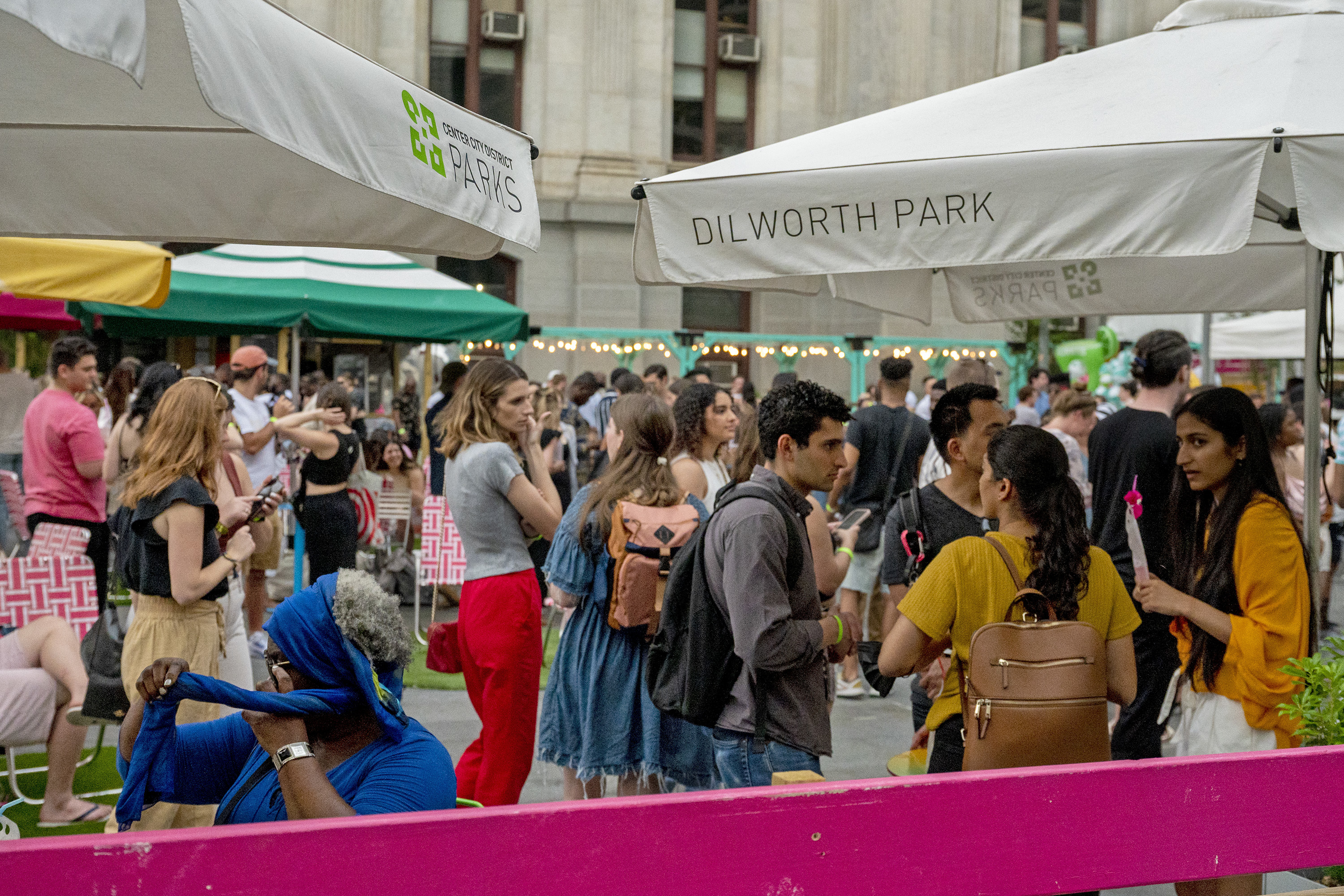
    Happy Hour at the Air Grille Garden at Dilworth Park in 202, part of the midweek Center City District Sips after-work events.TOM GRALISH / Staff Photographer

    Eventful days

    Like most big city downtowns, Center City is a major employment hub. More than 300,000 people work there, representing around 42% of jobs in Philadelphia.

    According to Clint Randall, the vice president for economic development at the Center City District, the amount of downtown office space has remained relatively stable for decades. That’s despite the rise of residential conversions and remote and hybrid work arrangements. Still, people are coming to the office less often, and momentum on bringing workers downtown on a more regular basis has stalled.

    Thankfully, Randall and his colleagues have a plan to ensure the city’s commercial core remains as essential as it can be by leveraging its status as a regional host, with events seen as both a short- and long-term way to make Center City more vibrant.

    Randall cited Center City Sips as a way to bring more people into town on Wednesday evenings during the summer. Philadelphia Open Streets, the FIFA World Cup, festivities around the MLB All-Star Game, and other smaller events have proved a major boon. They’ve brought out not just those who live and work in Center City, but also people from around the region and the world who may not otherwise have had a reason to come.

    I asked Randall about the potential for event fatigue among locals. With Center City adding thousands of new residents each year, would this create pressure to draw down on hosting? Randall said that vibrancy is what brings many people to live downtown in the first place. As inconvenient as it can be to live next to major festivals, it is also a major amenity.

    My own experience bears this out. I may not have made it to the Eagles’ Super Bowl parades if they hadn’t marched down Broad Street, not far from my South Philly home. Our friends and family also enjoyed the convenience of having a place to sit down and use a nonportable restroom.

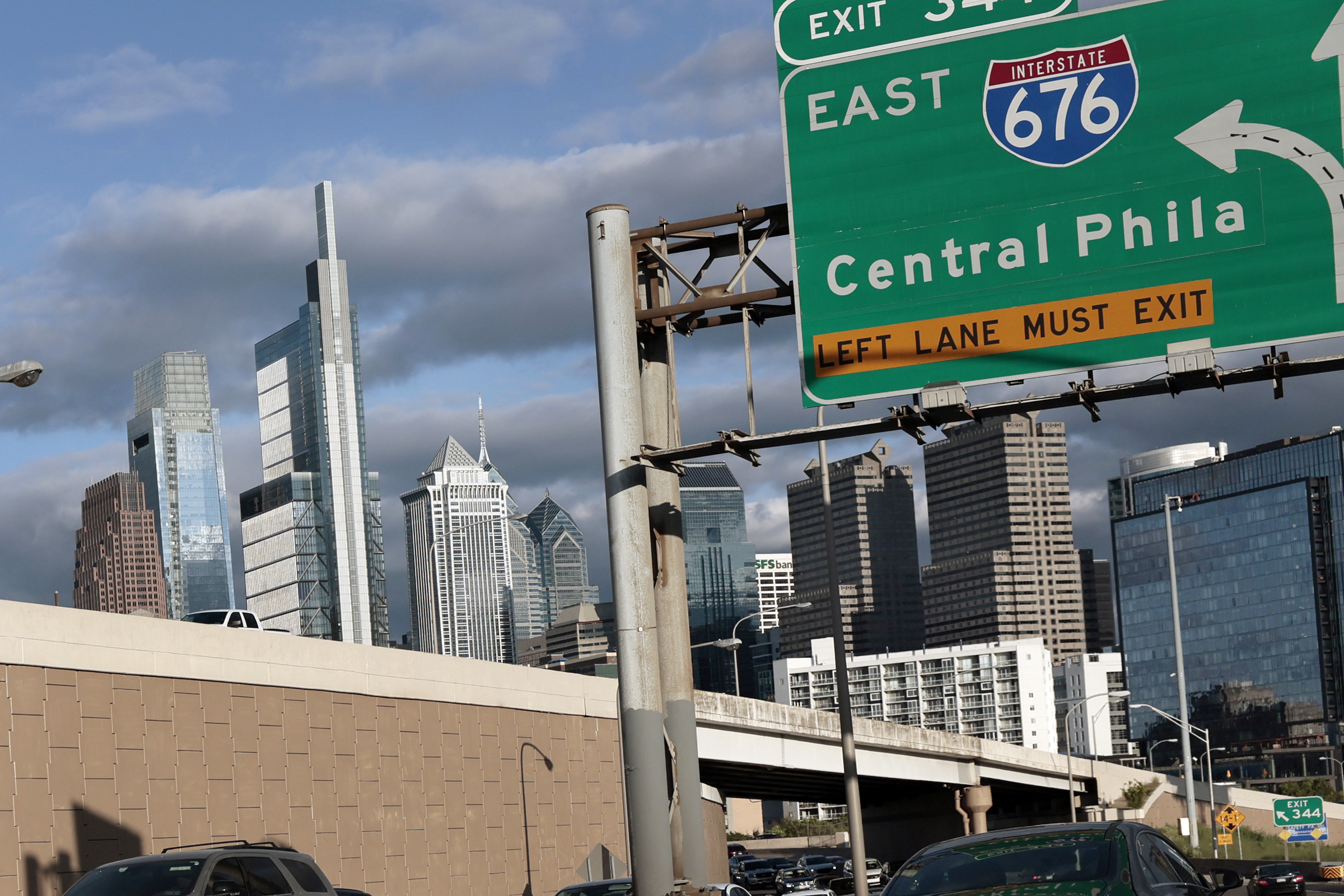
    A view of the Center City skyline as seen from the Schuylkill Expressway, where it intersects with the Vine Street Expessway, in May.Elizabeth Robertson / Staff Photographer

    Tax switch

    When Philadelphia became the first American city to institute a wage tax all the way back in 1940, the idea seemed like a no-brainer. After all, where else were people supposed to work? Suburban rail stations were packed to the brim with commuters, the Interstate Highway System did not yet exist, and anyone who wanted access to skilled workers had little choice but to open offices in Center City.

    Today, however, the region looks different.

    While Center City remains a major regional hub, Philadelphia has lost tens of thousands of jobs to suburban office parks. Most Delaware Valley residents drive themselves to work, and hundreds of thousands of people have moved to the suburbs. This has left us with an important policy question: How much of this shift is simply due to national cultural trends, and how much of it was caused by public policy?

    A new study from René Livas and Matthew Jacob at Harvard University, working with the Progress and Poverty Institute, attempts to answer this question. They say there is a clear link.

    As the wage tax rate rose between 1940 and 1976, jobs fled to the suburbs. Since City Hall began decreasing the tax in 1995, jobs have started to flow back into Philadelphia. In fact, the city recently overtook Montgomery County as the top host for office jobs in the region.

    The researchers’ proposal for replacing the wage tax is based around switching to a land value tax, an idea that is popular among economists. Separate tax rates for land and property are already legal in Pennsylvania, and the city already splits the two in its own property assessments.

    The idea, however, may be politically fraught. Homeowners already resent the chaos of the city’s regular assessments. Additionally, determining how much of a property’s value is inherent to its location may be easier said than done. While an 80/20 split between structural and land value is often cited as standard, levying the two individually would require significantly more research from the city’s Office of Property Assessment.

    In an email, Livas suggested phasing in the switch, which would help avoid big increases. He also said that the city’s existing programs, like the homestead exemption and Longtime Owner Occupants Program, should help alleviate the burden on homeowners.

    The data suggests the city could add around 26,000 jobs if this reform is pursued.

  • DA Larry Krasner to appeal overturned murder conviction in 2012 killing of Philly cop Moses Walker Jr.

    DA Larry Krasner to appeal overturned murder conviction in 2012 killing of Philly cop Moses Walker Jr.

    District Attorney Larry Krasner on Tuesday said he strongly disagreed with a judge’s decision to overturn the murder conviction of a man who killed Philadelphia Police Officer Moses Walker Jr. in 2012 and vowed to appeal.

    Krasner said Common Pleas Court Judge Jennifer Schultz, who handed down the ruling Monday, was “legally incorrect” in vacating the conviction of Rafael Jones, who is serving life in prison for killing the officer during a street robbery at the end of his shift.

    In deciding that Jones deserved a new trial, Schultz cited the case’s connection to disgraced ex-homicide detective Philip Nordo, who was convicted in 2022 of sexually abusing witnesses and suspects for more than a decade.

    But Krasner, speaking at a news conference alongside Walker’s mother and Roosevelt Poplar, president of Lodge 5 of the Fraternal Order of Police, said Jones’ conviction was different from others involving Nordo that have since been reevaluated.

    “We believe now that Rafael Jones is guilty — that he murdered Moses Walker Jr.,” Krasner said.

    If the appellate court denies the district attorney’s appeal, he added, “we will be retrying this case. We have a lot of evidence to do so. And we will be retrying it vigorously.”

    Jones’ attorney, Jason Edward Parris, said Tuesday afternoon that the vacated conviction represented justice.

    If jurors heard Jones’ case today, Parris said, they would have information about Nordo’s sex abuse crimes involving informants in homicide investigations that was not available at the time of Jones’ trial.

    “I don’t think anybody should be comfortable with someone serving life in prison based in part on an investigation done by an officer who is now doing 49 years [in prison] for crimes committed during the investigation of this case,” Parris said.

    Walker, 40, was shot and killed shortly before dawn on Aug. 18, 2012.

    The officer had just left the 22nd District station in North Philadelphia dressed in civilian clothes when Jones and another man, Chancier McFarland, targeted him in a robbery, prosecutors said.

    Jones fired at Walker after the officer reached for his gun, according to prosecutors. Both men were arrested, and McFarland pleaded guilty and testified against Jones as part of a deal to avoid life in prison.

    Years later, during Nordo’s sexual abuse trial in 2022, one of his accusers testified that the detective had steered him toward a $20,000 reward and later raped him.

    Though Krasner acknowledged the “messy history” that came with Nordo’s involvement in Jones’ case, he said the district attorney’s office was confident in the conviction.

    There were multiple pieces of evidence that pointed to Jones’ guilt, he said, including a murder confession that was not introduced at trial because Jones did not testify, and McFarlane’s eyewitness account of the crime.

    “We concluded years ago that this conviction was in the category that should not be disturbed,” Krasner said.

    The district attorney’s office will appeal Schultz’s ruling to Superior Court, a process Krasner said could take up to two years.

    Poplar, the FOP president, said he had faith that Krasner’s office would prevail.

    “Yesterday was a tough day,” he said, echoing comments made by Police Commissioner Kevin Bethel, who said he was disappointed by the ruling.

    Walker’s mother, Wayniya, said she and her family “would not allow these latest developments to weaken us.”

    “We remain confident justice will prevail,” she said, adding that she hoped that the death of her son, not the vacated conviction of his killer, would “remain at the center of this case.”

    “No decision rendered can alter what happened on Aug. 18, 2012,” she said.

  • DA’s office says two prosecutors who said Krasner told them to ‘protect the office’ in controversial case are ‘ill-informed’

    DA’s office says two prosecutors who said Krasner told them to ‘protect the office’ in controversial case are ‘ill-informed’

    The Philadelphia District Attorney’s Office said Thursday that the two prosecutors who accused DA Larry Krasner of encouraging them to act unethically in a controversial appellate case did so in a court filing that was both unauthorized and “ill-informed.”

    In a court document filed late Thursday, written by Assistant District Attorney Thomas Gaeta and signed by Krasner, the office said prosecutors Katherine Ernst and Steven J. Wildberger acted inappropriately and without Krasner’s permission when they filed a brief Monday saying the office had a conflict in the appeal of Dennis Johnson, who is seeking to have his murder conviction overturned.

    The office said it had taken steps to address all of the issues it saw with Johnson’s case, and that Ernst and Wildberger’s assertions were “ill-informed” and made without firsthand knowledge because they were no longer a part of the case.

    The filing primarily focused on the steps the office took to ensure it was handling the case in a legal and ethical manner — and did not directly address the two prosecutors’ contentions that Krasner had asked them to “protect the office.”

    In their filing Monday, Ernst and Wildberger said they tried to persuade Krasner to allow the state attorney general’s office to take over Johnson’s appeal after the prosecutor previously assigned to the case, Jaclyn Mason, recommended that his case be overturned — a recommendation the office later sought to reverse, saying Mason’s filing was full of false statements.

    U.S. District Judge Paul S. Diamond then ordered a hearing on the matter. And in explosive testimony in federal court last week, Mason said she had sought to vacate Johnson’s conviction at the direction of her boss, Matt Stiegler — whom she accused of colluding with defense attorneys. Stiegler has said that was not the case.

    Mason, who has since resigned, also said she was later told to lie about the case to minimize scrutiny of the office.

    District Attorney Larry Krasner at a 2025 press conference. Tom Gralish / Staff Photographer

    Ernst and Wildberger, who work in the law division of the DA’s office, said that as they were evaluating the case in the spring, they tried to encourage Krasner to refer the case to the state attorney general because of issues with how it was handled.

    For example, they said, Stiegler, the supervisor who they believed had made mistakes while overseeing the case, was still offering legal advice about it from a different role in the office, which Ernst and Wildberger viewed as self-interested and “inappropriate” because of his potential interest in clearing his name rather than evaluating the case on its merits.

    But Krasner’s office kept the case. And as they deliberated how to move forward, the two prosecutors wrote, Krasner told them “to litigate the case in a manner to ‘protect the office.’”

    Then, in late June, Ernst and Wildberger wrote, they again asked Krasner to refer the matter to state prosecutors, but “DA Krasner stated that there would be ‘consequences’ for anyone who notified the court of the conflict issues.”

    Ernst and Wildberger then filed a notice in federal court saying they believed the DA’s office was beset by conflicts and should not handle Johnson’s appeal.

    Krasner’s team, in its first response to the matter this week, said that was not true.

    Ernst and Wildberger, they said, were appropriately excluded from the case as soon as they disclosed a personal conflict with it, and did not have firsthand knowledge of the office’s discussions thereafter.

    The prosecutors “are disqualified from filing or speaking on behalf of the Commonwealth” and were not authorized to file the “notice of conflict” or to speak for the office about the matter, they said.

    Any discussions Ernst and Wildberger had with the office about the case are privileged conversations they should not be able to disclose, the DA’s filing said.

    To remedy the issue, the office said, it has hired a new prosecutor to handle the case who has been walled off from the ongoing conversations. Assistant District Attorney Jean Peters-Baker, who recently joined the office and has spent more than 25 years as a prosecutor, will review Johnson’s case and decide if it has merit, the filing said.

    Johnson was convicted of second-degree murder in 2009 in the shooting death of Kenyatta Smith during a robbery outside a North Philadelphia convenience store two years earlier. He was sentenced to life in prison.

    Johnson appealed his conviction, in part because he said his trial attorney was ineffective. Mason filed court documents in 2022 agreeing with that assertion and saying Johnson’s conviction should be overturned.

    But then, this spring, others in the office reviewed the case and took the opposite view.

    Ernst and Wildberger said they were prepared to testify before Diamond about the situation. Others in the office are also expected to take the stand as the case proceeds.

    The judge has not yet scheduled a date for testimony.

  • Founder of Kensington anti-violence nonprofit arrested for knife attack on SEPTA train, authorities say

    Founder of Kensington anti-violence nonprofit arrested for knife attack on SEPTA train, authorities say

    A well-known activist and founder of a Kensington anti-violence nonprofit was charged with aggravated assault and related crimes for attacking a woman with a box cutter during an argument on a SEPTA train last week, authorities said Thursday.

    Rosalind “Roz” Pichardo, 48, was taken into custody days after the July 17 assault, which left the victim in critical condition with deep lacerations to her face and chest that required more than 70 stitches to close, according to the Pennsylvania Attorney General’s Office, which is prosecuting the case.

    Pichardo is the founder of Operation Save Our City, a nonprofit that offers social services to people who have experienced grief, addiction, or trauma from exposure to violence, according to the group’s website. She also runs “Sunshine House,” a storefront on Kensington Avenue where people in addiction can drop in for meals, clothes, and other forms of support.

    She has been involved with other anti-violence and victim services organizations throughout the city and has received at least two city grants for her work.

    Last week, one day before the assault, Pichardo touted a $20,000 grant that Operation Save Our City received from the Philadelphia Office of Public Safety.

    And in 2024 and this year, the Philadelphia District Attorney’s Office awarded Pichardo’s organization $25,000 and $10,000, respectively, through its violence prevention microgrant program.

    Pichardo declined to comment Thursday. No attorney for her was listed in court documents.

    Around 9 p.m. Friday on an eastbound SEPTA train near Eighth and Market Streets, prosecutors say, Pichardo assaulted a woman with a box cutter. They said the conflict began when the two women argued on a platform at the transit agency’s 15th Street Station.

    The victim told investigators Pichardo “got smart with her” after she asked a man who was blocking a platform bench to move so she could sit down, according to an affidavit of probable cause for Pichardo’s arrest. She said she, in turn, “got smart” with Pichardo.

    During the spat, the victim said, Pichardo complained about “how rude young people are” and called her entitled for asking the man to move.

    The women then boarded the train, where the argument continued, and they “both got in each other’s face and started fighting each other,” the woman told investigators, according to the affidavit.

    At some point during the scuffle, the woman said, Pichardo pulled out a box cutter and assaulted her. She told investigators she felt warmness on her face and felt “a lot of blood.”

    The attack left the woman with severe lacerations on her cheeks and her chest that, in addition to needing stitches, required surgery to help her regain muscle movement, the documents said.

    Pichardo was taken into custody by SEPTA transit police but released the same evening.

    Investigators said technical issues initially prevented them from viewing surveillance footage captured within the train car, but they later recovered footage from an adjoining car that showed portions of the incident.

    On Wednesday, Pichardo was charged with two counts of aggravated assault, simple assault, possessing an instrument of a crime, reckless endangerment, harassment, and disorderly conduct.

    She was released from custody after posting 10% of $25,000 bail, court records show.

    The case will be handled by the attorney general’s special prosecutor for mass transit, a position created by the state legislature to address what Republican lawmakers said was the failure of District Attorney Larry Krasner to prosecute violent crimes on or near SEPTA properties.

    A spokesperson for Krasner’s office declined to comment on the case and referred questions to the attorney general.

    Pichardo appeared to address the matter in cryptic posts on Facebook, where she frequently promotes her activist work to her 23,000 followers.

    On July 18, one day after the assault, she posted a photo of a SEPTA train car with the caption: “Lord please give me strength to get through this pain.”

    And on Wednesday evening around 9 p.m., she updated followers: “I’m Good .. I’m Home and trusting the process . My head is up..”

    In addition to founding Operation Save Our City in 2012 and later Sunshine House, Pichardo has worked as a lead educator with the harm reduction nonprofit Prevention Point and as a trauma victims advocate in Temple University Hospital’s emergency department.

    Staff writers Ellie Rushing, Aubrey Whelan, and Jillian Kramer contributed to this article.

  • One of DA Larry Krasner’s top advisers once sent $100 to a man in prison for murder who’s now appealing his conviction. It’s under investigation.

    One of DA Larry Krasner’s top advisers once sent $100 to a man in prison for murder who’s now appealing his conviction. It’s under investigation.

    The Philadelphia District Attorney’s Office is investigating ties between one of DA Larry Krasner’s top advisers and a man serving life in prison after prosecutors learned that the official sent the man money years ago and did not disclose it.

    G. Lamar Stewart, chief of external engagement and government affairs in the DA’s office, said he sent $100 to Anthony Sutton in January 2021 to support Sutton’s mentorship program, “Mann Up,” for men incarcerated at State Correctional Institute Phoenix.

    Sutton, 61, who is serving life in prison for killing a man in Germantown in 1984, has been appealing his conviction for more than a decade.

    The issue came to light last week, after the prosecutors assigned to Sutton’s appeal were reviewing his prison records and noticed that Stewart was among those who had sent Sutton money in recent years.

    The records showed Stewart did so only once, Krasner said.

    The payment raised concerns, in part because Stewart had organized and participated in meetings between Sutton’s defense attorney, Krasner, and prosecutors about the case, according to a source familiar with the matter.

    Krasner’s office has opposed Sutton’s appeal and said his profession of innocence lacked merit.

    When the prosecutors discovered the payment, it was quickly brought to the attention of Krasner, who then asked his office’s special investigation unit to investigate, according to multiple sources familiar with the case. The inquiry remains ongoing.

    Stewart, who is also senior pastor of Taylor Memorial Baptist Church in Nicetown-Tioga, was working as the head of the office’s community engagement unit at the time of the donation. In an interview, he said he used his own money to support Sutton’s program as part of the faith-based charitable work he does to assist families and community organizations across the region every holiday season.

    “I thought that the work that they were doing was positive, transformative, and it was geared to helping reduce violence in Philadelphia and to make communities and families whole,” he said.

    He said he did not know of any way to reach the organization other than to send it through Sutton directly. “I was very intentional to make sure that my name was listed because when you’re not trying to hide anything, you just do things above the board,” he said.

    District Attorney Larry Krasner (left) and G Lamar Stewart, head of the Community Engagement and Government Affairs at the DA’s Office, outside the President’s House in Independence National Historical Park in February 2026.Tom Gralish / Staff Photographer

    During a brief hearing in Sutton’s case on Monday, Assistant District Attorney David Napiorski, supervisor of the office’s law division, told Common Pleas Court Judge Giovanni O. Campbell that his attorneys needed additional time to investigate Sutton’s case after they found that someone in the office had put “money on the defendant’s books in prison.”

    “That needs to be investigated by the office thoroughly before we can take any further action,” Napiorski told the judge.

    Stewart said he did not try to influence the outcome of the appeal or advocate for Sutton. He acknowledged that he attended at least one meeting about Sutton’s case, but said his job requires him to coordinate and attend meetings with Krasner.

    Krasner said that he saw no issue with Stewart’s donation or subsequent participation in meetings, and that his office’s inquiry and prosecutors’ comment in court Monday “establishes integrity.”

    “G. Lamar Stewart gave a small amount of money for an organization … and then this office decided to oppose Mr. Sutton’s request. Where’s the issue?” he asked.

    He added: “Any rock we haven’t flipped yet, we will flip. Preliminarily, it seems quite clear that this was a donation given for a completely legitimate purpose.”

    Sutton did not immediately respond to a request for comment sent through a messaging app for people in prison. His attorney, Jason Javie, said Tuesday that he did not know anything about Stewart’s payment to Sutton and declined to discuss the matter further.

    “My focus is 110% on the exoneration of Mr. Sutton,” he said.

    The revelation comes amid mounting scrutiny over Krasner’s office’s handling of post-conviction matters. In a forceful ruling last month, the Pennsylvania Supreme Court said Krasner’s office had a pattern of misleading judges when seeking to overturn old murder convictions.

    Last week, in a separate, controversial federal appellate case, a former assistant district attorney in Krasner’s office said prosecutors were “colluding” with defense attorneys to find the most effective way to have the murder conviction thrown out. And then, on Monday, in a striking court filing in that same contentious case, two supervisors in the law division said Krasner had instructed them to litigate the matter in a way that would “protect the office.”

    And now, the office is investigating a case connected to Stewart, who has worked in the DA’s office since 2019 and is one of Krasner’s most trusted advisers.

    District Attorney Larry Krasner at a press conference in May, denouncing criticism of his office leveled by Republican members of the House Judiciary Committee.Tom Gralish / Staff Photographer

    Stewart, who is paid $154,500 annually, oversees the office’s community engagement, public affairs, and communications strategies, and acts as a conduit between Krasner and other public officials. Since Robert Listenbee retired as first assistant district attorney in January, Krasner has not named a successor — and several prosecutors say Stewart, who is not a lawyer, has effectively absorbed parts of that job. He often helps coordinate sensitive matters in cases, including relocating victims and witnesses.

    He is respected by many in city government and across the community. Mayor Cherelle L. Parker, speaking at Krasner’s inauguration ceremony in January, mentioned Stewart as one of the office’s most essential staffers.

    “District Attorney Krasner, as a moment of personal privilege, I want you to know that G. Lamar Stewart is one of the most committed, committed, committed members of your team in engaging in community outreach, and he represents you well, sir,” she said to applause.

    Stewart, born and raised in Germantown and North Philadelphia, served in the U.S. Army and worked for the Philadelphia Police Department before joining Krasner’s team in 2019. At his church, he runs a nonprofit called Taylor Made Opportunities that offers job support and mentorship to young men in the neighborhood, and supports families of homicide victims.

    Stewart said he donates to community organizations, and provides meals, Christmas gifts, and other means of support to crime victims’ families each year, using his personal money.

    He does not typically disclose those donations to the DA’s office, he said, and it has never been a problem.

    “My Christian faith is rooted in giving, in love, in showing up for the least of these, showing up for those who have been harmed, for showing up for those who are trying to rehabilitate and be accountable for the harm they caused to bring healing to our community,” he said. “For anyone to suggest that me giving through a faith lens, in the interest of good for community, is problematic for me, that is an infringement upon my faith tradition and my religious rights.”

    Krasner said he did not think it was necessary for Stewart — or other employees in the office — to disclose donations.

    “I don’t know that it makes sense to require 700 employees, especially if they’re doing so on a faith basis, to disclose everyone they give donations to,” he said. “It’s certainly something we could think about.”

    In Stewart’s case, his money went to support a program run by Sutton, better known as Benny Doo, who was sentenced to life in prison after a jury convicted him of first-degree murder in the shooting death of Richard Berry in the Pelham section of Germantown in December 1984. In the early 1980s, prosecutors said, Berry hired Sutton and other members of his crew, called the “Ghostbusters,” to retrieve jewelry that had been stolen from him, and agreed to pay with “a few ounces of blow and a couple thousand dollars.”

    Berry never paid up, and after he started avoiding Sutton and his crew, Sutton killed him, prosecutors said.

    But Sutton said prosecutors violated his right to a fair trial when they failed to turn over police documents — including polygraph results and police interviews with several witnesses — to his defense attorney. One man who testified at trial has also since come forward to recant his testimony.

    Prosecutors, in a court filing in May, said Sutton failed to show how those issues could have changed the outcome of his trial. His appeal, prosecutors wrote, was untimely and lacked merit.

  • Two Philly prosecutors accused DA Larry Krasner of telling them to ‘protect the office’ in a controversial appellate case

    Two Philly prosecutors accused DA Larry Krasner of telling them to ‘protect the office’ in a controversial appellate case

    Two Philadelphia prosecutors have accused District Attorney Larry Krasner of instructing them to litigate a controversial appellate case in a manner that would “protect the office” — a highly unusual assertion that effectively accuses the city’s top law enforcement official of telling his staff to act in a way they now say was “incompatible with their ethical obligations and the interests of the Commonwealth.”

    In a court document filed late Monday, Assistant District Attorneys Katherine Ernst and Steven J. Wildberger wrote that Krasner’s directive came after they had been seeking to persuade him to allow the state attorney general’s office to take over the appeal of Dennis Johnson, who is seeking to have his murder conviction overturned.

    That case — which the district attorney’s office has been handling — has become a flash point in an ongoing debate about whether Krasner’s office has behaved improperly in its efforts to overturn flawed convictions.

    And it received renewed attention last week, when a former prosecutor who was once assigned to Johnson’s appeal, and who had recommended that the conviction be overturned, said she had done so only at the direction of her boss. She also said she was encouraged to lie about aspects of the case in court to try to minimize scrutiny on the way the office handled it.

    According to Ernst and Wildberger, they experienced similar pressures from Krasner.

    As the office was weighing how to handle aspects of Johnson’s appeal this spring, they wrote, they tried to persuade Krasner to refer the case to the state attorney general’s office because of issues that had arisen internally over its handling.

    One example, they said, was that a supervisor who was initially involved with the appeal — and who they believed had made mistakes while overseeing it — was still offering legal advice about it from a different role in the office, which Ernst and Wildberger viewed as self-interested and “inappropriate.”

    But the district attorney’s office kept the case. And during the deliberations about how to move forward, Ernst and Wildberger wrote, they “received instruction from DA Krasner to litigate the case in a manner to ‘protect the office.’”

    Then, in late June, Ernst and Wildberger wrote, they again asked Krasner to refer the case to state prosecutors, but “DA Krasner stated that there would be ‘consequences’ for anyone who notified the court of the conflict issues.”

    Ernst and Wildberger nonetheless filed a notice in federal court saying they believed their office was beset by conflicts and should no longer handle Johnson’s appeal. Their filing Monday expanded on their reasons.

    The accusations they lodged against Krasner represent a striking display of discord between line prosecutors and the city’s district attorney. And they come at a moment in which Krasner is under court scrutiny over his office’s actions in cases involving post-conviction review.

    Krasner said in an interview Monday that although he had “a lot to say” about the latest filing, he was largely unable to comment because the case remains pending in federal court. A hearing at which many of the issues were being aired was cut short last week, and U.S. District Judge Paul Diamond has not yet scheduled the next portion of the proceeding.

    “The DA’s office will be responding to the recent filing in the ethically appropriate way — on the record, because it is generally viewed as inappropriate and possibly unethical to comment during a pending hearing,” Krasner said.

    The case on which the saga is centered is Johnson’s conviction for second-degree murder. A jury found him guilty in 2009 of having fatally shot Kenyatta Smith during a robbery outside a North Philadelphia convenience store two years earlier, and he was sentenced to life in prison.

    Johnson appealed his conviction, in part because he said his trial attorney was ineffective. And in 2022, then-Assistant District Attorney Jaclyn Mason filed court documents agreeing with that assertion and saying Johnson’s conviction should be overturned.

    But earlier this spring, Ernst and Wildberger signed on to a brief that tried to walk that recommendation back. They said that Mason’s filing had been filled with “material misstatements” and that they could no longer support it.

    And according to Ernst and Wildberger’s latest brief, as they were having internal discussions in recent weeks about how to proceed with the case, the supervisor who had approved Mason’s work, Matthew Stiegler, was continuing to offer his thoughts on what to do. That included speaking to Krasner — which Ernst and Wildberger viewed as a clear conflict of interest because of his potential interest in seeking to clear his name rather than evaluate the case on its merits.

    That development and others led the pair to “repeatedly” implore Krasner to refer the case to the attorney general’s office, Ernst and Wildberger wrote, which he did not do.

    Krasner’s subsequent instructions to “protect the office” only deepened the degree of their office’s conflicts, they wrote, because such statements could lead to questions about whether prosecutors were acting primarily out of self-interest.

    It was not immediately clear how or if Monday’s filing might affect Johnson’s appeal. Ernst and Wildberger said they were prepared to testify before Diamond about the situation, and they are expected to take the stand as the case proceeds.

    Diamond has not yet set a timetable for when that testimony might occur.

  • The SEPTA special prosecutor in Philly is set to expire this year. Will state lawmakers extend it into Larry Krasner’s third term?

    The SEPTA special prosecutor in Philly is set to expire this year. Will state lawmakers extend it into Larry Krasner’s third term?

    The special prosecutor for crimes on or near SEPTA property will be funded through the end of the year as part of the newly approved state budget, Pennsylvania lawmakers said this week.

    After that, the office’s fate is uncertain.

    The controversial position is set to expire in December. It was championed by GOP lawmakers in Harrisburg, who for years have tried to limit Philadelphia District Attorney Larry Krasner’s powers and contended that the position was necessary because Krasner failed to prosecute crimes on the state’s largest transit system.

    Legislators set aside another full year of funding for the office — $1.2 million — but haven’t agreed whether they will extend it further into Krasner’s third term, which began in January.

    Senate Majority Leader Joe Pittman (R., Indiana), the top Republican leader in Pennsylvania’s split legislature, where Democrats narrowly control the state House and Republicans lead the state Senate, said Democratic leaders repeatedly rejected GOP efforts to extend the position as part of the closed-door budget talks.

    Krasner’s office has strongly opposed the law that created the special prosecutor position, calling it a “shocking usurpation of power” that unconstitutionally singled out Philadelphia and stripped an elected officials’ authority.

    He could not be reached for comment Thursday.

    The post has also faced opposition from Philadelphia-area lawmakers who say the effort is an affront to city voters who have reelected Krasner, a progressive prosecutor, three times.

    “This is nothing more than voter suppression and an attempt to circumvent some of the extremely popular criminal justice reforms under this DA,” said Sen. Nikil Saval (D., Philadelphia), who chairs the city’s Senate delegation to Harrisburg.

    Pittman, by contrast, said extending the special prosecutor is a critical component for Senate Republicans to agree to a new long-term funding source for SEPTA, which is approaching another fiscal cliff that could cause service disruptions when the state’s current short-term fix runs out next year.

    Asked about the future of the special prosecutor’s office, House Majority Leader Matt Bradford (D., Montgomery) said at Shapiro’s budget signing earlier this week that he hadn’t “given it much thought.”

    Pennsylvania Attorney General Dave Sunday, a Republican who is tasked with overseeing the office, has lauded the special prosecutor’s work so far.

    He said his office supports extending the position, calling it a “force multiplier” that has been effective in combating violent crimes against both SEPTA employees and riders.

    “Our caseload reflects a range of very serious conduct — including murder and aggravated assaults — and we have secured results through convictions,” he said.

    In one example of that effort, the special prosecutor will oversee the case of a 22-year-old woman charged with simple assault after authorities said she pepper-sprayed and punched a conservative social media influencer during a viral confrontation on a SEPTA bus.

    While legislators approved the special prosecutor’s office in 2023, it has been mired in legal challenges from the district attorney’s office in years since and did not begin taking on cases until last year.

    Some House Democrats supported creating the role in 2023, as part of a state budget deal with the Senate GOP and Democratic Gov. Josh Shapiro, who was critical of Krasner when he served as attorney general.

    Saval said Democrats shouldn’t use the position as a bargaining chip again.

    “House Democrats who voted to suppress the will of Philadelphians should be ashamed of themselves, and should not support other attempts to do so,” Saval added. “This has nothing to do with the essential task at hand, which is to secure funding for mass transit.”

    A spokesperson for Bradford said the House needs to “take a critical look” at whether the SEPTA special prosecutor is necessary. She noted SEPTA’s success in reducing crime and the size of its police force, but said the money used to fund the position may be better spent to reduce fare evasion by replacing gates to full-length ones that cost $40,000 each.

    The funding was approved in the 2026-27 fiscal year budget “in the case of reauthorization,” and would be used to wind down the office, said Beth Rementer, Bradford’s spokesperson. Any unused funds would be returned to the general fund, she said.

    A spokesperson for Shapiro declined to comment on the prosecutor role, but said Senate Republicans “need to do their jobs” to find a long-term funding solution for mass transit.

    The office

    The office is overseen by Special Prosecutor Michael Untermeyer, a former deputy attorney general and real estate investor who ran against Krasner in the 2017 primary.

    Untermeyer did not respond to a request for comment.

    The single lawyer employed by his office is investigating about 15 cases, including charges of homicide, aggravated assault, and robbery, according to a spokesperson for the attorney general’s office. That figure does not include cases the special prosecutor is considering taking on or are still under investigation, the spokesperson said.

    Lawmakers could still choose to extend the position as part of their fall legislative session. It is among the several time-sensitive issues before the General Assembly ahead of the November election, in which Democrats hope to flip control of the state Senate for the first time in decades.

    Krasner’s office has challenged the special prosecutor role from the beginning. His office filed a lawsuit in 2024 in an attempt to nullify the law, but was rebuffed by a 4-3 Commonwealth Court ruling that said legislators had not violated the state constitution in creating the post.

    The office then appealed to the state Supreme Court, which has yet to decide the matter. As the high court heard oral arguments in the case last year, justices cited the Pennsylvania Constitution when suggesting that the legislature had been free to pass such a law, even if it interfered with the duties of an elected county official.

    And lawyers for the attorney general’s office argued that the special prosecutor role did not strip Krasner’s power, but rather offered additional powers to a prosecutor appointed by the attorney general to handle cases involving crimes in and around SEPTA property.

  • A former prosecutor said DA Larry Krasner’s Office colluded with defense attorneys to try to overturn a murder conviction

    A former prosecutor said DA Larry Krasner’s Office colluded with defense attorneys to try to overturn a murder conviction

    A former Philadelphia prosecutor who recommended that a man’s murder conviction be overturned said she did so at the direction of her boss — who she said had done no meaningful review of the evidence and instead was “colluding” with defense attorneys to find the most effective way to have the case thrown out.

    While testifying at a unique hearing Friday in federal court, former Assistant District Attorney Jaclyn Mason said supervisors in the district attorney’s office had effectively abandoned their responsibility to independently investigate Dennis Johnson’s appeal and determine if he should be freed from prison.

    Instead, Mason said, her supervisor, Matthew Stiegler, held routine meetings with Johnson’s lawyers, including the Federal Community Defender Office and the Pennsylvania Innocence Project, to strategize the most effective paths to secure Johnson’s release. And neither she nor Stiegler reviewed key evidence in Johnson’s case, she said, including trial transcripts, homicide files, or witness interviews.

    “Matt told me: ‘If it’s good enough for the Innocence Project, it’s good enough for me,’” Mason said.

    Just as strikingly, she said, earlier this spring, when it became clear that that process might be exposed in court, another set of supervisors asked her to lie to a federal judge.

    As Mason recalled, the supervisors were worried that if the judge found out the full extent of the office’s actions in the case, it would exacerbate the already intense public scrutiny the office was under for the way it had acted in other murder appeals.

    According to Mason, the supervisors suggested she simply tell the judge that any mistakes in the case were hers, and hope that that would be enough to avoid a more thorough inquiry.

    Mason said she declined and resigned.

    “I said, ‘I’m not going to go to court to lie to protect the district attorney’s office,” Mason said. “How come telling the truth isn’t an option?”

    The extraordinary testimony came as part of Johnson’s appeal, which has taken an unusual path through the courts and remains pending before U.S. District Judge Paul S. Diamond.

    It also served as the latest chapter in a series of developments that have raised questions about one of District Attorney Larry Krasner’s key policy initiatives: his office’s willingness to review old convictions and seek to overturn those that prosecutors believe were marred by legal problems.

    Just last month, the Pennsylvania Supreme Court ruled that Krasner’s office had misled judges so consistently and flagrantly in appellate matters that moving forward, any time his office recommends that a conviction be overturned, the state attorney general must be brought in to review the matter as well.

    Diamond was also involved in disciplining two top supervisors in Krasner’s office in recent months, finding that they had been “misleading and dishonest” while seeking to overturn an inmate’s death sentence.

    Krasner has made post-conviction review a central part of his reform-oriented agenda, touting the fact that his office has helped free 59 people — mostly Black men — from what he’s called wrongful convictions.

    But judges in both state and federal court have raised pointed questions in recent months about whether Krasner’s office has been sloppy or even intentionally misleading while seeking to advance that agenda.

    And during Friday’s hearing, Diamond expressed occasional bewilderment at some of Stiegler’s admissions on the stand — including that while he led the office’s Federal Litigation Unit, his staff generally did not reinterview witnesses or speak to previous prosecutors before deciding whether to recommend that a conviction be overturned.

    “It’s a smorgasbord of error — and we’re just gonna pick one?” Diamond asked.

    A ‘pawn’ in a preordained process

    The case around which Friday’s hearing was nominally centered was Johnson’s conviction for second-degree murder.

    In 2009, a jury found him guilty of fatally shooting Kenyatta Smith during a robbery outside a North Philadelphia convenience store two years earlier. He was sentenced to life in prison.

    Johnson appealed, in part because he said his trial lawyer was ineffective.

    And in 2022, Mason filed court documents agreeing with that assertion — and saying the error was so pronounced that his conviction should be thrown out.

    “The case against Johnson was not overwhelming from the outset and his counsel was constitutionally ineffective,” Mason wrote. “The post-trial investigation unearthed additional factors that highlight weaknesses in the prosecution and confirm a low level of confidence in the outcome of Johnson’s trial.”

    In court Friday, however, Mason said she was effectively doing Stiegler’s bidding when she filed that brief.

    She’d only been in the office for about four months when Stiegler assigned her Johnson’s case, she said. And she’d never before worked as a prosecutor or handled similar federal appeals.

    The office also gave her close to no training, she said. And from the moment she was assigned Johnson’s case, she said, she got the impression that Stiegler knew how he wanted the matter to go.

    “The decision to concede had been made, and then I was his pawn,” she said. “I was his scribe.”

    In the months that followed, Mason said, she and Stiegler did almost no independent examination of the evidence in Johnson’s case. But they did have meetings with Johnson’s attorneys, she said, at which the two sides sometimes collaborated on legal strategies for how to ensure his petition would succeed.

    When Mason did actually draft the brief supporting the appeal, she said, Stiegler offered edits — all of which made it into the document. Another supervisor, Nancy Winkelman, the onetime head of the Law Division, also made suggestions that were included in the final brief, Mason said.

    Stiegler testified Friday as well, and said he believed that when Mason was assigned the case, she would review it and provide her best assessment to him. That review, he said, was expected to include an examination of key evidence, including trial testimony or witness statements.

    But under questioning by Diamond, he acknowledged that his unit at that time did not regularly reinvestigate cases, either by re-interviewing witnesses or reexamining primary evidence — an admission that seemed to baffle the judge.

    “You did no investigation on your own?” he asked at one point.

    “No,” Stiegler replied.

    As for the decision to agree that Johnson’s conviction should be overturned, Stiegler said: “My recollection is it was a collaborative decision between Ms. Mason and me.”

    But Mason said that wasn’t true.

    “He met and conferred with the Federal Defender and the Innocence Project to decide how it was going to go before it was assigned to me,” she said.

    A sudden resignation

    Still, none of that discord surfaced until this spring, when Diamond — who will ultimately decide whether to overturn Johnson’s conviction — scheduled an evidentiary hearing. At the time, he said he wanted to hear from several key witnesses to evaluate the strength of the evidence against Johnson.

    He also asked the attorney general’s office to review the case, apparently wary that the district attorney’s office was simply agreeing with Johnson’s lawyers.

    At that point, Mason said, a set of different supervisors in the Law Division “started to panic.”

    And after she told them the “collusive” manner in which the appeal had been handled, she said she was told, in essence, to fall on her sword.

    As Mason recalled it, the supervisors told her to tell Diamond that any mistakes in the office’s brief were hers, “and if we do that, the court might get angry, but it won’t find out how this concession got put together — which is what we really want to avoid.”

    “The whole goal [was] that the process by which that concession came to be not be revealed,” Mason said.

    Within days, Mason said, she resigned.

    A few days after that, the supervisors in the Law Division — David Napiorski, Steven Wildberger, Peter Andrews, and Katherine Ernst — filed a motion with Diamond seeking to undo the position that Mason and Stiegler had once recommended, saying the pair’s brief had been based on “material misstatements.”

    Mason said she was “blindsided” by that filing, and that she believed she was being used as a scapegoat to protect the office and its actions in the case.

    “The whole scheme was designed to cover up how that brief was put together,” she said.

    Friday’s hearing ended before the supervisors she accused of wrongdoing had time to testify or respond to her assertions. Diamond said he would schedule another hearing to hear from them.

    Johnson’s fate also remains undecided with the legal issues unresolved.

    Stiegler, meanwhile, denied that he’d pushed Mason to take a specific position in the case, or that he’d had improper interactions with Johnson’s defense lawyers as the office worked on the appeal.

    Mason was definitive in her view of Stiegler’s testimony.

    “Nothing Matt said was true,” Mason said. “Nothing he said was true.”