A Philadelphia judge has ordered a new trial for a former city police officer who was convicted of perjury, finding that one of the jurors on the case failed to disclose ties to a law firm representing the district attorney’s office — an association she said deprived the officer of a fair trial.
Daniel Levitt, 52, was found guilty of perjury in June for lying under oath about how he recovered a gun during a 2021 traffic stop. But on Thursday, Common Pleas Court Judge Natasha Taylor-Smith vacated the conviction and ordered that Levitt be retried.
Her ruling centered on the jury foreman, a personal injury lawyer who did not disclose that his law firm was representing the Philadelphia District Attorney’s Office in ongoing civil litigation against opioid manufacturers and distributors.
The foreman’s relationship to the law firm became public moments after the jury returned its verdict. Taylor-Smith questioned the jurors and concluded that the foreman’s affiliation had not affected the verdict.
In a letter to the court earlier this month, Levitt’s attorney, Coley Reynolds said he would have exercised a peremptory challenge to strike the juror had he known about the firm’s work for the district attorney’s office.
On Thursday, Taylor-Smith reversed her earlier decision and granted Levitt a new trial.
Reynolds welcomed the ruling, saying, “We believe he did not get a fair trial.”
District Attorney Larry Krasner said Friday that his office would appeal the ruling and if necessary, retry the case.
Prosecutors said Levitt found an illegal firearm inside a bag that he did not have probable cause or a warrant to search during an April 2021 traffic stop. Then, they said, he lied about how he found it during the prosecution of the man he arrested.
Levitt, a 12-year veteran of the force, was the first officer charged after a department review raised concerns that some officers had conducted unlawful searches of people and vehicles before recovering guns. He was fired following his arrest.
All seven justices rejected District Attorney Larry Krasner’s argument that the law unconstitutionally strips the authority of an elected district attorney by granting jurisdictions to crime “within” SEPTA to a special prosecutor appointed by the Pennsylvania attorney general. But they did not unanimously agree on the reason.
The special prosecutor can investigate crimes in all counties in which SEPTA operates, but can take over cases unilaterally only in Philadelphia.
Chief Justice Debra Todd wrote in the majority opinion that the part of the special prosecutor law specific to Philadelphia serves a “legitimate state interest: promoting public safety through the protection of SEPTA employees and riders by supporting the prosecution of crimes within SEPTA, and specifically, SEPTA-related crimes in Philadelphia.”
The law responds to “public safety concerns regarding increased SEPTA-related crime in Philadelphia, and the belief that such crimes were not being sufficiently prosecuted,” Todd wrote.
State Attorney General Dave Sunday, who is authorized to appoint the special prosecutor, said the law “has paid great dividends in holding violent offenders accountable” for crimes on SEPTA.
“Our mass transit prosecutor will continue to prosecute criminals who have killed and assaulted other individuals, perpetrated acts of gun violence, and stolen SEPTA property,” Sunday said in a statement.
A spokesperson for the district attorney’s office did not return a request for comment.
The special prosecutor’s office has become more active in the last year after a slow start. The office initially hired a sole attorney and did not prosecute a case until 2025, two years after its creation. The office has since taken on a portfolio of around two dozen cases, a spokesperson for the attorney general said. Serious crime on SEPTA has trended downward, according to the agency, falling around 20% in mid-2026 compared with the same period the previous year.
Earlier this year, the special prosecutor,Michael Untermeyer, took on an assault case involving a woman accused of pepper-spraying and punching a conservative influencer during a viral confrontation on a SEPTA bus. And a representative for Sunday’soffice said the prosecutor was preparing for a homicide trial in November, and the office was recently referred a case involving an assault on a SEPTA bus driver.
The ruling is the latest in which the Supreme Court has shown willingness to take away from Krasner functions that county prosecutors traditionally havehad sole discretion over. The justices in June found that Philadelphia prosecutors had engaged in a pattern of misleading judges when seeking to overturn murder convictions, and instructed judges to notify the state attorney general’s office so it can review cases when Krasner’s office makes such requests going forward.
But the ruling on the SEPTA special prosecutor might be short-lived.
Krasner’s lawsuit called the law an “unconstitutional, radical, and unprecedented measure” amounting to a “shocking usurpation of power.”
In June, Commonwealth Court issued a 4-3 decision against Krasner, finding the law constitutional. In the majority opinion, Judge Anne E. Covey said the act “does not clearly, palpably, and plainly violate the Pennsylvania Constitution.”
In a Thursday concurring opinion, Justice David Wecht emphasized the ways the special prosecutor law was tailored to Krasner specifically.
The law disqualifies anyone who worked at the Philadelphia district attorney’s office as of roughly the beginning of Krasner’s tenure from serving as special prosecutor, the justice noted. And the measure was set to expire a year after Krasner’s second term ended (he has since won a third, which began in January).
The special prosecutor law is “tailored to hamstring Philadelphia’s thrice-elected and sitting District Attorney’s customary prerogatives relative to crime within the jurisdiction that office serves,” Wecht wrote.
“But none of that matters,” he said, because since 1951 the Pennsylvania Constitution has allowed for laws ”regulating the affairs of the City of Philadelphia.”
Philadelphia District Attorney Larry Krasner said Wednesday that the federal judge who accused him of potentially breaking the law while overseeing a post-conviction case had reached “baseless,” illogical, and legally unsupported conclusions — and that the judge should be removed from the case because he had acted more like “an advocate against DA Krasner” than an impartial arbiter.
In a series of documents filed in federal court overnight, Krasner took the unusual step of openly criticizing U.S. District Judge Paul S. Diamond — sometimes using strikingly pointed language.
In one brief, signed by Krasner and a subordinate, the district attorney said Diamond’s suggestion that Krasner might be guilty of criminal conspiracy relied on allegations “more closely resembling fever-dream conspiracy theories than evidence.”
Other suggestions of criminality by Diamond — which revolved around actions Krasner took while overseeing the case and his staff — were equally wrong, Krasner wrote.
“When it comes to all of these nominally-serious-but-actually-wafty accusations of criminal conduct, tempered by ‘coulds’ and ‘mights’ and ‘may haves,’ [Diamond’s] analysis rests on nothing of substance,” he wrote.
Then, in a separate nine-page letter signed only by Krasner, the city’s top prosecutor said Diamond’s “factual findings and accusatory legal conclusions twist the truth to the point of breaking in ways that defy logic and employ Orwellian language.”
And if Diamond’s assertions had been made in a setting other than a court case, Krasner said, “these accusations could be litigated as civil claims of defamation, slander, or libel.”
Finally, in a third document, Krasner and Assistant District Attorney Thomas Gaeta wrote that Diamond’s actions had been so out of line that he should no longer oversee the case. At one point, they said the proceedings had become a “circus,” with Diamond the “ringmaster.”
And they said Diamond — who was appointed by President George W. Bush, a Republican — had displayed his biases against Krasner, a Democrat, in a number of ways, including by asking improper questions of witnesses, reaching inconsistent conclusions about which witnesses were credible, and improperly blaming and discrediting Krasner for not testifying — even though Diamond had never asked him to.
Diamond’s conduct, they wrote, “provides a clear and obvious view into the type of unfair and improper proceedings and decisions [Diamond] deigned to make.”
The filings served as the latest chapter in a saga that has been marked by a series of explosive developments about Krasner’s office in recent months. The episode has also raised legal and political questions about Krasner’s future.
Most recently, in mid-September, Diamond filed a stunning memorandum in which he said Krasner and one of his top supervisors, Matthew Stiegler, may have committed crimes including conspiracy, obstruction of justice, or perjury while participating in the underlying case. Diamond also said he had referred the matter to the U.S. Attorney’s Office for potential investigation. Federal prosecutors have declined to comment.
Krasner has consistently disputed the notion that his actions were improper and appealed Diamond’s ruling, which also disqualified him and Stiegler from participating in the case moving forward.
The underlying matter is centered on Dennis Johnson’s attempts to have his 2009 murder conviction overturned; Krasner’s office had once supported that effort, but reversed course earlier this year after some of his staff discovered that a previous prosecutor had made mistakes in her handling of the appeal.
Wednesday’s filings served as Krasner’s most extensive response yet to accusations that he had committed misconduct while his staff tried to rectify those errors in court.
In Krasner’s view, the fact that his office was seeking to correct its own mistakes in open court was just one example of how Diamond’s conclusions — including that Krasner may have conspired to concoct a false cover story about the episode — “cannot logically be reconciled with each other.”
“I know many of the facts found by [Diamond] and conclusions inferred by [Diamond] are not correct from personal knowledge,” Krasner wrote. “I lived it.”
Dispute over ‘false narrative”
The roots of the controversy date to 2022, when then-Assistant District Attorney Jaclyn Mason filed a brief supporting Johnson’s bid to have his conviction overturned.
Krasner was unaware of the case at that time, he said in his new filings. But he became involved this spring, when some of Mason’s supervisors in the law division concluded that she had made significant errors in her brief, and that they needed to try to withdraw it.
Krasner approved a document alerting Diamond to the mistakes and apologizing for Mason’s errors.
Mason, meanwhile, resigned and said Stiegler — her former boss — was most at fault.
Diamond, in his Sept. 15 memorandum, said that in the aftermath of Mason’s resignation, staff in Krasner’s office discussed how the errors occurred. And in those discussions, he said, Krasner and Stiegler worked to create a “false narrative” to blame Mason, including by considering a Stiegler proposal: to review all of Mason’s old cases and find additional errors they could use to cast Mason as a “rogue” prosecutor.
Diamond said such an effort could amount to criminal conspiracy.
But Krasner, in his filings, called that conclusion “baseless,” saying Stiegler’s proposal was to review Mason’s old cases to see if there were additional errors — not to manufacture problems they could improperly attribute to her.
“Nothing in the record supports the Court’s determination that providing a broader account of their competence would have advanced a ‘false narrative,’” Krasner wrote. “They either had or had not made errors in other cases, and there was absolutely no testimony indicating that DA Krasner (or Stiegler, for that matter) suggested submitting false allegations of error.”
In addition, he said, Stiegler’s proposal was never actually pursued once other law division supervisors voiced opposition to it — further diluting any notion that Krasner was seeking to force his staff into lying to Diamond.
“Stiegler proposed a strategy that DA Krasner considered, but DA Krasner also considered and accepted the Law Division supervisors’ advice that it was inadvisable,” Krasner wrote. “This is not misconduct.”
‘Reasonable’ consequences?
Diamond, in his Sept. 15 memorandum, also took issue with Krasner threatening “consequences” for prosecutors who told the judge about another issue roiling the district attorney’s office: whether to refer Johnson’s case to the state attorney general’s office.
The law division supervisors handling the case after Mason’s resignation — Katherine Ernst, Steven Wildberger, David Napiorski, and Peter Andrews — generally agreed that was the appropriate course of action because of the inner-office drama consuming the matter. And they repeatedly urged Krasner to refer the case to avoid what they viewed as a conflict of interest.
But Krasner disagreed. And in his filings, he said that as the referral discussions took place over several weeks, he had consulted with several ethics experts who generally agreed there was no conflict necessitating a referral.
As for the threat of consequences, he said, he was not seeking to prevent his staff from telling Diamond the truth about their deliberations — which the judge later said could amount to obstruction of justice. Instead, Krasner said, he was seeking to prevent them from submitting court documents without his approval.
“That is particularly so where, as here, those pleadings are premature, legally incorrect, and unnecessary,” Krasner wrote. “It is reasonable to expect consequences for filing a pleading the District Attorney disapproves of while he is still examining the issue and determining the correct course of action.”
Seeking the judge’s recusal
In addition to disputing Diamond’s conclusions about his actions — and whether they constituted crimes — Krasner went on to say the judge should no longer oversee the case, which remains pending.
He said Diamond’s “apparent bias is evident from a number of remarkable circumstances,” all of which should lead to his removal, according to the district attorney.
One example, Krasner said, was that as Diamond questioned witnesses in his courtroom this summer about what happened in the case — including asking questions of lawyers who still work in Krasner’s office — the judge “departed from [his] role as a neutral arbiter and undertook an active inquisitorial and advocacy role.”
“The Court’s questions and assertions reflected the Court’s apparently preconceived view that the DAO’s conduct in all cases is inherently suspect,” Krasner wrote.
Diamond also made “selective credibility determinations” about which witnesses he believed and which ones he discredited, the DA wrote. And he took particular issue with what he cast as Diamond’s reluctance to criticize Mason: Krasner, in his filing, said there were “many additional reasons to question the honesty of Mason’s testimony, all of which were ignored by the Court.”
Then there was the issue of Krasner’s failing to testify.
Diamond, in his memorandum, blamed Krasner for not taking the stand. But Krasner, in his filing, said Diamond — who scheduled the hearings and set the witness list — “appears to have taken pains to avoid having DA Krasner testify.”
In any case, he said, it was improper for Diamond to assume that Krasner’s lack of testimony was somehow “concession by silence.”
Overall, Krasner said in his motion, the judge “served as a prosecutor for DA Krasner and his office,” thereby requiring his recusal from the matter.
In his nine-page letter, Krasner went even further, saying he believes Diamond should be recused “from this matter and every other matter involving the Philadelphia District Attorney’s Office for the foreseeable future.”
It was not immediately clear how Diamond might respond to such a request. On Wednesday, he said any additional paperwork on that issue must be filed within a week.
The high court will rule in the case of Jerome Coffey, a Philadelphia man convicted in a 1992 killing in which prosecutors said a group of men posing as law enforcement officers boxed in a man’s car and shot him.
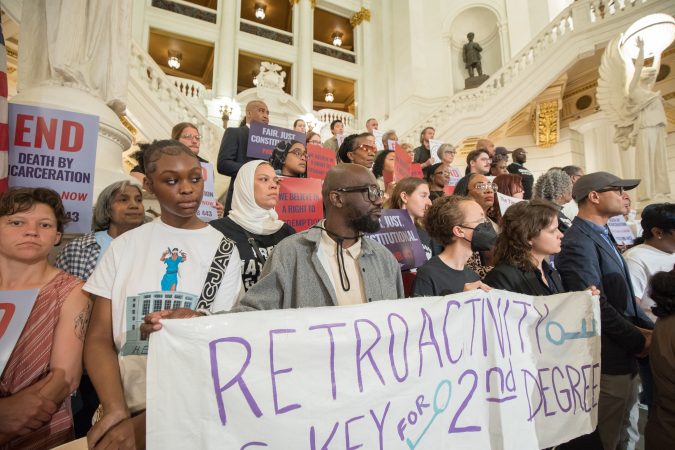
The court’s decision will reach well beyond Coffey. It will settle whether roughly 1,100 people — including more than 500 convicted in Philadelphia — can ask judges for new sentences, or will remain bound by a punishment the state’s highest court has ruled unconstitutional.
In a unanimous decision in March, the justices said Pennsylvania’s mandatory life sentence for second-degree murder violates the state constitution’s ban on cruel punishments.
Second-degree murder covers killings committed during another felony — even when the defendant did not kill anyone. The high court held that judges must weigh a person’s individual role before imposing a punishment that lasts a lifetime.
But the high court did not say whether its ruling applied to people who had already been sentenced. Instead, it put the decision on hold for 120 days so the General Assembly could write a new sentencing law and, if lawmakers chose, decide the question of retroactivity themselves.
The legislature did neither, as measures introduced in both the Republican-controlled Senate and Democratic-controlled House failed to advance.
Coffey was convicted in 1994 in the death of Johnny Moss two years earlier. According to court records, three men got out of two cars that had pinned Moss’ vehicle near 24th and Thompson Streets in North Philadelphia. One man shouted “task force” and pulled Moss from his car.
Moss was shot in the head. His brother, who was standing beside the car, was shot in the arm.
At trial, prosecutors said Coffey was the man who shouted “task force,” while Coffey’s mother and sister testified that he was at home that night. The jury convicted him of second-degree murder, conspiracy, and related crimes. It acquitted his codefendant, Lee Smith, of all charges.
No physical evidence tied Coffey to the killing, his lawyers have said, and a key prosecution witness recanted before trial. The lawyers also said prosecutors withheld evidence that could have helped Coffey, but the state Superior Court rejected those contentions.
And on Tuesday, the state Supreme Court declined to review them, limiting the scope of his appeal to the sentencing question alone.
Even so, Bret Grote, the legal director of the Abolitionist Law Center, which represents Coffey, praised the court’s decision to hear the case.
“This is what those who have been serving this sentence have been waiting for,” said Grote, who also represented Derek Lee, the Pittsburgh man whose appeal of his life sentence for his second-degree murder conviction led to the court’s decision in March.
Grote said Coffey, who founded the grassroots Human Rights Coalition from prison, will be “well able to demonstrate” why the decision “should apply to people like him who need to be home with us out here in our communities.”
Because Coffey’s case began in Philadelphia, the district attorney’s office will argue for the state in his appeal. In an interview Tuesday, District Attorney Larry Krasner reiterated his support for retroactivity, saying, “We cannot have a legal system where people sit in jail for the rest of their lives for an unconstitutional sentence.”
He added that “this office, consistent with its obligation to seek justice and uphold the Constitution, will support retroactivity” in Coffey’s case.
Prosecutors elsewhere have signaled resistance, however. In August, the Pennsylvania District Attorneys Association’s communications chair, Berks County District Attorney John Adams, said prosecutors would not concede that the high court’s ruling applies retroactively without a new sentencing law.
Coffey’s case is unlikely to be resolved quickly. And in the meantime, lawmakers could still act.
Some stakeholders have predicted that legislative agreement on how to handle such cases is more likely after the Nov. 3 elections. A law that applies to people already serving the sentence could make the court’s answer moot.
But the outcome was always likely to land back with the high court without action by lawmakers, said Ben Lerner, a former Philadelphia Common Pleas Court judge and former chief defender.
“I’m not surprised,” Lerner said Tuesday. The high court, he said, was going to give the legislature “the first crack” at reforming the system. But if it failed, “the court was always going to have to step in and do what needs to be done.”
“It’s too important an issue,” he added. “Too basic a right.”
In the five years he spent researching his book Mobilization Politics, Haverford College political scientist Stephen J. McGovern interviewed former Mayor Jim Kenney and other Philadelphia elected officials, political activists, campaign consultants, labor leaders, and protesters.
The book, which covers events from the 2010s through Mayor Cherelle L. Parker’s victory in the 2023 election, uses Philly as a case study to examine the national rise of grassroots progressive politics over the last two decades. McGovern details how local activists employed bottom-up tactics to win major policy victories in areas like criminal justice reform, helping to decrease the jail population, and immigration, leading to Philly becoming a so-called sanctuary city.
The activists often used an inside/outside strategy, McGovern wrote, of leaning on officials they helped elect, like District Attorney Larry Krasner, and publicly pressuring more moderate ones, like Kenney.
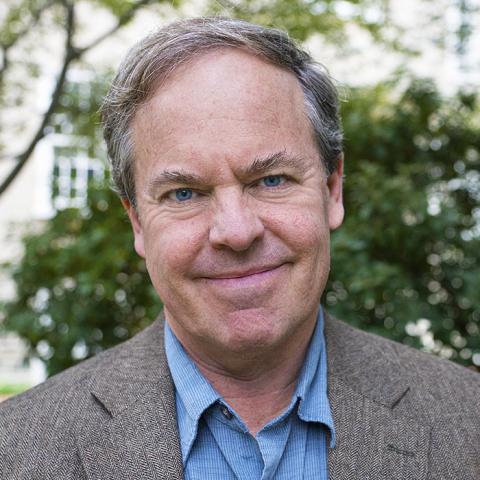
Haverford College political scientist Stephen J. McGovern authored the 2025 book “Mobilization Politics,” on grassroots activism in Philadelphia.Sean Walsh
McGovern also explores areas where progressives have fallen short of their goals, and the problems associated with a brand of politics driven by groups that tend to be more affluent and white than the city as a whole. Much of the new type of political organization has been driven by millennials born outside the city, McGovern found, leading to tensions over gentrification.
McGovern recently spoke with The Inquirer about his 2025 book, the rise of the local progressive movement, and what it all means during Parker’s administration. The interview has been lightly edited and condensed for clarity.
Your book describes how grassroots activists are really driving the agenda in Philadelphia City Hall, and, as you say, across the nation in local government. Is that an accurate summation of your thesis statement?
I think that’s fair, and what I want to call attention to is how significant that change is. There may be a lot of people today who assume, “Well, hasn’t that always been the case in city politics?” But no, for much of the mid- to late 20th century, city politics operated in a very different way. It was much more of a top-down phenomenon, and the shift towards more bottom-up politics has been a relatively recent one. And increasingly it’s pretty widespread throughout the United States. So as a scholar of urban politics, I was interested in trying to explain how and why that happened.
In the book, you describe various political science theories that have sought to explain urban politics in the past. Can you explain how your thesis is different from those previous schools of thought, such as “regime theory”?
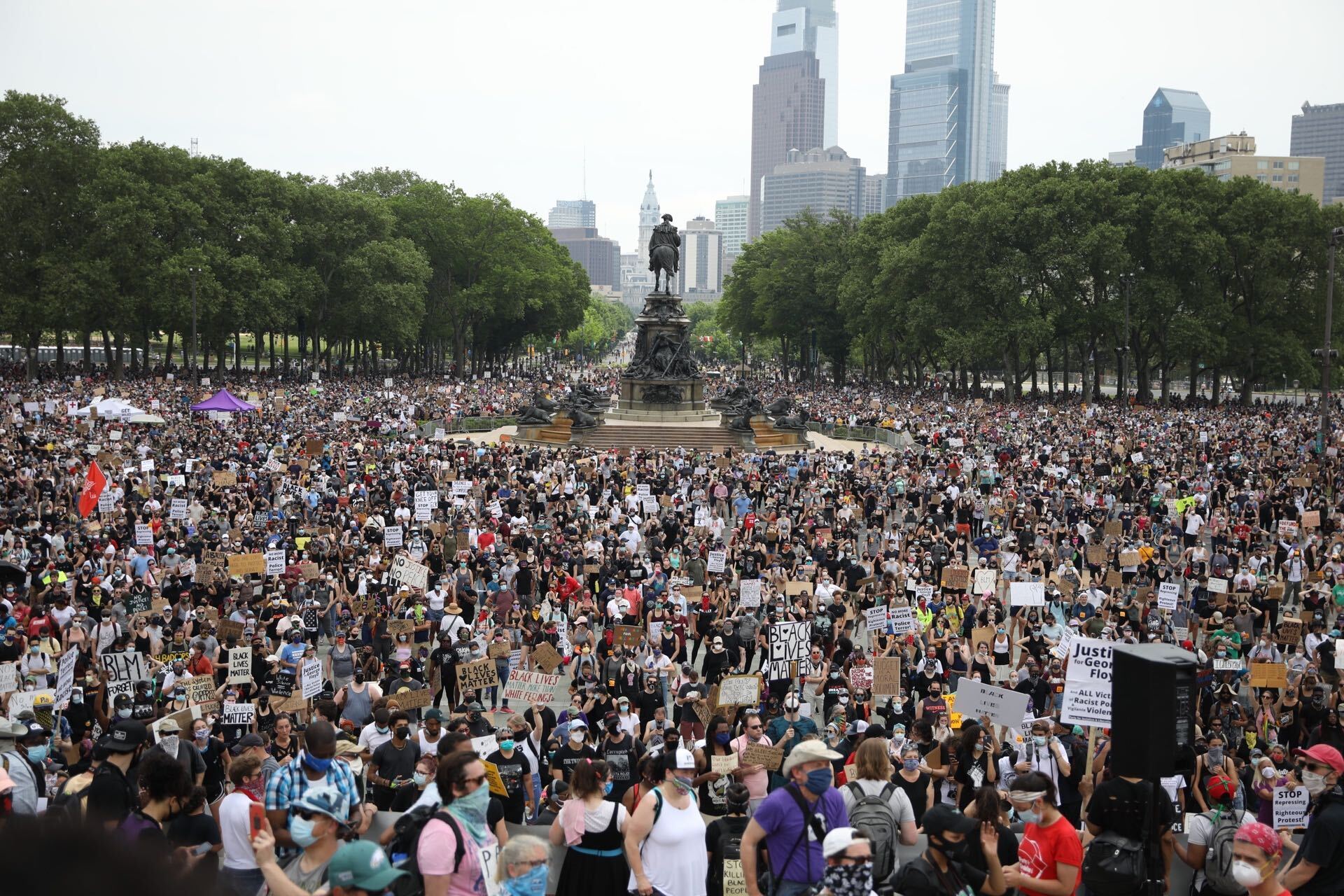
Many scholars have argued that downtown-led regimes wielded a great deal of power over urban policymaking. Regimes were led by business leaders and their allies — law firms, accounting firms, mass media relations firms, and interest groups that had an interest in promoting growth, especially pro-growth labor unions, and, of course, public officials. Basically from 1970 on, every Philadelphia mayor headed a downtown-led regime in a relatively top-down fashion, in terms of governing style. So that’s the backdrop. My book is all about how that pattern began to change around the turn of the century, and then picked up in the 2010s with a burst of social movement activity. Occupy Wall Street really started things off, but then it picked up, especially with Black Lives Matter, the immigrant rights movement, and all of that social movement protest had a catalytic effect on grassroots organizing in cities with respect to a whole host of public policy issues.
As your book points out, much of the activism has been driven by millennial transplants who have moved into the city. Is it fair to say that trend is the main driver of this change, or one of several factors?
That is one of the main factors in explaining why there is this big shift. But there are also some underlying changes in the local political environment, what social movement scholars sometimes call the “political opportunity structure.” One of those changes is a decline in the organizing capacity of the downtown business community, which had been so dominant. It started to create a vacuum. Into that vacuum steps young people. Populations had been steadily declining in virtually all big American cities. They started to stabilize around 2000, and you see an influx of young people who are relatively well educated, more likely to be professional, more likely to be progressive, more likely to get involved in local politics. Some people call it the “back to the cities” movement.
What’s different about these newcomers compared with other left-leaning groups that have sought to impact city politics in the past?
In the past, a lot of young people tended to get involved in protest politics. People on the left were very wary about engaging in electoral politics. The folks who are moving into Philadelphia after 2000 increasingly are participating in more conventional politics, including electoral politics, and that’s a big change. That escalates when Bernie Sanders runs for president in 2016. One of the lessons learned for lots of people who volunteered for him is: This is something we can do at the local level.
As you note, the groups driving this style of politics tend to be more affluent, more educated, and more white than Philadelphia as a whole. That’s created a lot of friction. There’s a debate over whether this is a phenomenon that will be limited to gentrified areas, or whether it will grow into a cross-racial or cross-class coalition. Is it fair to say that’s the central question going forward?
Absolutely. So much of this is turf-oriented. The millennials and Gen Zers moving into Philadelphia tended to congregate in neighborhoods that attract a lot of white, middle-class people who were relatively well educated, and so those became significant bases of progressive politics. The challenge then becomes organizing in other neighborhoods. Some of the grassroots groups made impressive inroads. I’m thinking about campaigns for Larry Krasner, in particular, in lower-income, predominantly Black and brown neighborhoods, where a group like Reclaim Philadelphia or the 215 People’s Alliance were pretty effective. But in many cases, it was fairly difficult for a group like Reclaim Philadelphia to venture into neighborhoods beyond their comfort zones, if you will. They were mindful of some of the skepticism that residents of those neighborhoods felt towards the millennials and Gen Zers flocking into the city and contributing to gentrification. Somebody from Reclaim Philadelphia might be knocking on the door talking about the affordable housing crisis, and people answering the door might look at them and say, “You’re actually a big part of the problem here.” This tension between so-called new Philadelphians and old Philadelphians became more pronounced, and navigating those tensions becomes a real challenge.
Your book finishes with the 2023 mayor’s race, when Cherelle L. Parker defeated more progressive candidates and won the election with a “law and order” platform. So perhaps that was a surprising twist on your thesis at the end of your research.
She’s obviously fascinating. She’s a shrewd operator. In the primary election, two progressives split the vote. And being the only prominent Black candidate worked to her advantage. But since she’s been elected, she’s been very skillful about maneuvering in ways that have brought back a return of the traditional kind of urban politics — a top-down governing coalition led by a somewhat resurgent business community and pro-growth unions, the building trades unions, and a somewhat resurgent establishment-oriented Democratic Party, all of which is led by Parker. This is very reminiscent of standard politics of the mid- to late 20th century. So in some ways, Philadelphia is a bit of an aberration in that it’s moved backwards, if you will, recently. But I still see lots of evidence that bottom-up grassroots activism remains a force, and will become much more impactful in the next four years.
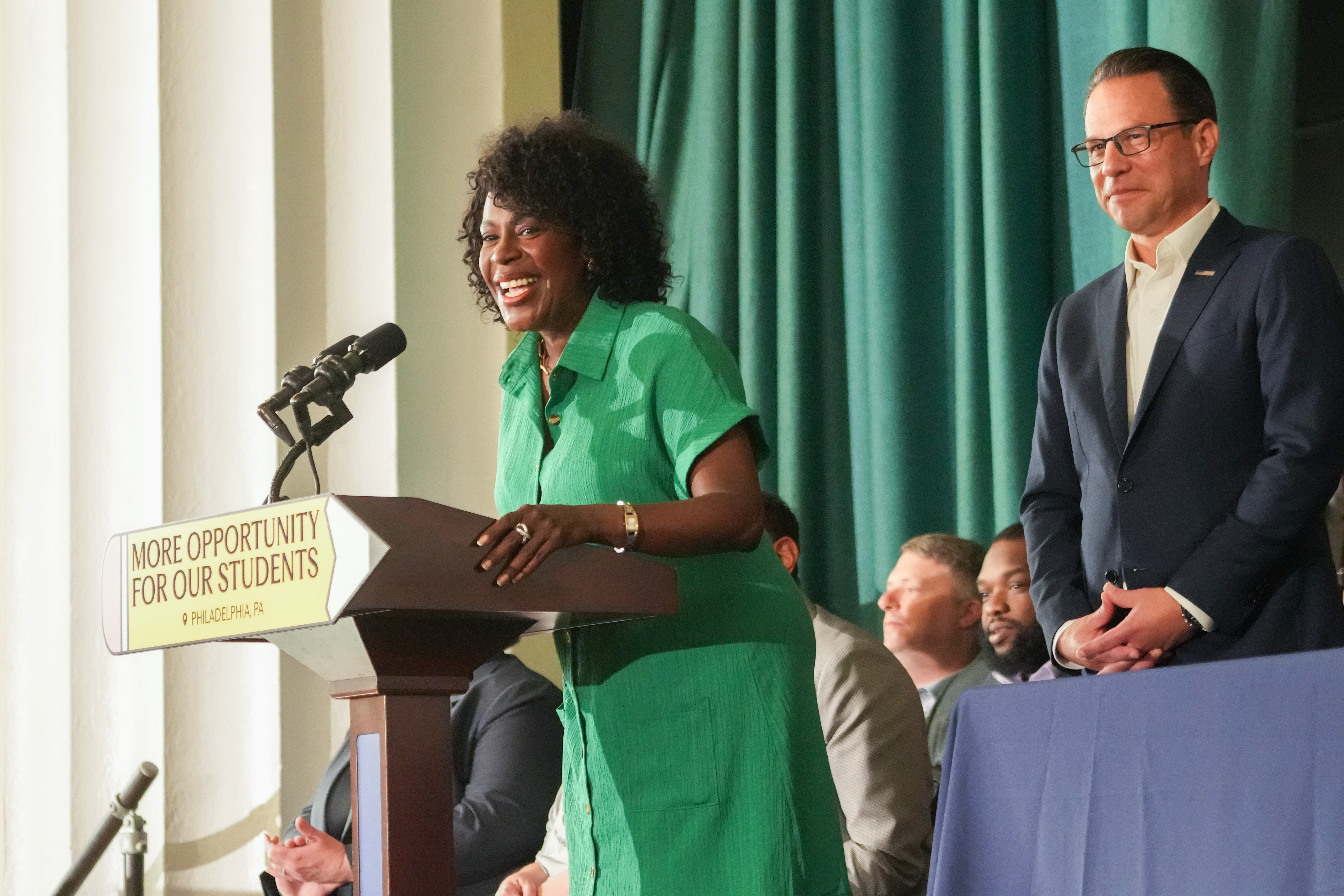
Mayor Cherelle L. Parker speaks at Vare-Washington Elementary School to highlight the historic education investments included in the 2026-27 state budget, in Philadelphia, July 14, 2026.Jessica Griffin / Staff Photographer
For what it’s worth, Parker herself seems to be mindful that grassroots politics are still relevant. We reported last year that she ordered a bunch of copies of a book called Performative Outrage: How Manufactured Fury Undermines Local Government and Public Service, and was handing it out to people. So I think it’s safe to say she isn’t a fan of the trends you described. You alluded to Parker returning to a “regime theory” style of politics. What’s an example of that?
The 76ers’ arena, for example. She was siding with the Sixers and other downtown-oriented interests that wanted to see the arena in Center City on East Market Street, and discounting the views of community groups, most prominently Chinatown. There’s a general mode of governance style associated with Parker that’s very uncomfortable with dealing with grassroots-oriented groups. That’s just not her style. She’s much more comfortable dealing with downtown business elites and people in the building trades unions. Her whole mindset is much more comfortable with the old ways of governing cities.
Parker won in 2023, when Joe Biden was president. Progressives in Philly and elsewhere seem to do better when Trump is in office. This spring Democrats just elected Chris Rabb, a progressive firebrand, in a high-profile primary for a Philly congressional seat.
Politics is cyclical. Donald Trump has had that effect of reinvigorating lots of activists. So there was a lull in progressive activism in the city for a while, but it’s on the rise again. But it takes time to regroup, especially on the activist side. Some groups last for a long time, but the norm is for groups to be quite ephemeral. New groups have to pop up, often involving activists who had been involved in the old groups. The transition costs are pretty steep. Somebody like Chris Rabb winning doesn’t surprise me at all. There will probably be more successes in the next two or three years. That said, progressive activists have lots of challenges. They’re in a holding pattern right now.
Thanks for your time. That’s all I’ve got. Is there anything I didn’t touch on that you want to include?
I’m an urban politics specialist. I wrote this book. I devoted five years of my life to it. But in the last year or two, I’ve been so fixated on what’s going on in national politics and Donald Trump and the threat that he and his administration pose to democracy. With that in mind, I just want to say that urban politics in general offers some hope for people who are increasingly demoralized. At the local government level, partisan polarization isn’t nearly as intense. We’ve got divisions between progressives and moderates, but that’s nothing like what we’re seeing in national politics. There’s real hope for city governments to address big problems and offer real solutions. There’s a path forward. One can make a case that right now, democracy in American cities is actually thriving.
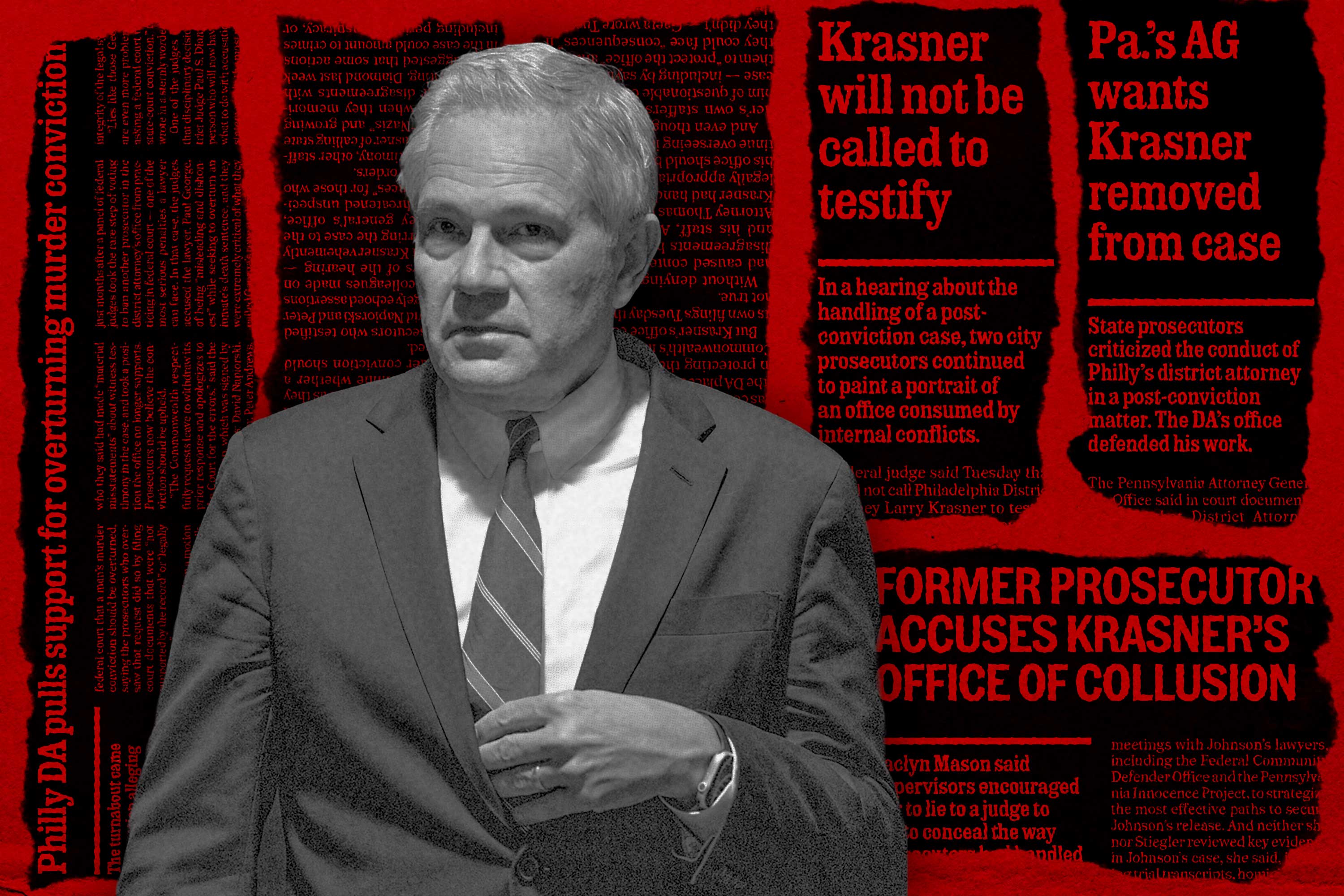
Philadelphia District Attorney Larry Krasner’s office has been roiled by controversy in recent months after a federal judge said Krasner and one of his supervisors may have committed crimes while overseeing a post-conviction case.
It could be months — or longer — before it’s clear if federal prosecutors agree that Krasner should face charges including conspiracy and obstruction of justice.
story continues after advertisement
But the events that led to that striking conclusion from U.S. District Judge Paul S. Diamond were laid out in testimony that unfolded in his courtroom this summer, as well as in a 40-page memorandum he filed in the case in September.
Krasner has disputed Diamond’s findings, and said he plans to file an appeal of the judge’s ruling, which also barred Krasner and one of his supervisors, Matthew Stiegler, from participating in the underlying case.
Here’s a recap of how the situation evolved from a routine legal matter into a contentious saga that could lead to consequences for the city’s top prosecutor.
In 2009, Dennis Johnson was convicted of second-degree murder after a jury found that he fatally shot Kenyatta Smith two years earlier during a robbery outside a North Philadelphia convenience store.
The case was largely built on the testimony of eyewitnesses, whose credibility Johnson sought to dispute at trial. Even after being sentenced to life in prison, Johnson maintained he did not commit the crime.
He filed several unsuccessful appeals in Pennsylvania courts. Then, in 2015, he filed a petition seeking to overturn his conviction in federal court. The case landed in front of Diamond.
story continues after advertisement
2022
The case is assigned to Jaclyn Mason
Prosecutors opposed Johnson’s petition for years. But in 2022, they changed course when it was assigned to a new assistant district attorney: Jaclyn Mason.
Mason had only joined Krasner’s office a few months earlier, and Johnson’s case was her first in her new role in the federal litigation unit. Although she had extensive experience as a lawyer — working primarily on patent and trademark cases — she’d never before worked as a criminal litigator, and she said she received almost no training in the DA’s office before being asked to handle cases.
Her boss was Stiegler, who had a controversial history working for Krasner. Over the course of a few years, he’d joined and left the office twice. And in one of those stints, nearly everyone under his supervision requested a transfer. One prosecutor later told Diamond that Stiegler did “not have the best reputation” among his colleagues.
When it came time to decide how to handle Johnson’s petition, Mason said, Stiegler had already made up his mind. Although he’d done nothing to independently review Johnson’s claims, Mason said, Stiegler had conferred with Johnson’s attorneys — including the Pennsylvania Innocence Project and federal defenders — and decided his conviction should be reversed.
“Matt told me: ‘If it’s good enough for the Innocence Project, it’s good enough for me,’” Mason said later. “The decision to concede had been made, and then I was his pawn.”
Mason also acknowledged that she reviewed almost nothing before submitting and signing off on her brief recommending Johnson’s conviction be thrown out. But at that point, she said, she believed she had to follow her boss’ orders.
“I didn’t know anything enough to push back,” she later testified. “I’d been at the office for four months — I’d never done this kind of work before.”
Once Mason did actually draft the brief, she said, Stiegler offered edits, and all of them made it into the final document. Another supervisor, Nancy Winkelman, the onetime head of the Law Division, also made suggestions that were included in the final brief, Mason said.
Mason’s name, however, was the only one that ended up on the document.
May 2026
Discovery of errors
A federal magistrate, Judge Lynne A. Sitarski, eventually agreed that Johnson’s conviction should be overturned, based in part on the findings in Mason’s brief.
But Sitarski’s decision was not binding — the final call would fall to Diamond. And in May, rather than accepting Mason’s conclusions, he decided to schedule an evidentiary hearing to hear testimony and weigh the pieces of evidence before issuing a ruling.
As the hearing approached, Mason reached out to a group of supervisors in the law division to prepare: Katherine Ernst, Steven Wildberger, David Napiorski, and Peter Andrews. And Ernst said when she reviewed Mason’s brief, she discovered it contained “significant errors” — issues that, in her view, contradicted the notion that Johnson’s conviction should be overturned.
Asking a judge to do so — and admitting a document was filled with mistakes — is a significant step for a lawyer to take.
But Ernst said the office had no choice: Lawyers are duty-bound to be honest with courts, and there was no ethical way to proceed with a document containing such errors.
The supervisors first decided to break the news to Mason. And in a meeting, they said, they asked her to sign on to the withdrawal with them.
But Mason declined. She told the supervisors the situation was Stiegler’s fault — and that his downfall was “a long time coming.” The supervisors later said she didn’t offer more specifics, and that at that point, none of them knew the extent of Stiegler’s role in the brief’s preparation.
Mason, however, felt the supervisors were setting her up to take the fall. She decided to resign, and said in her resignation letter that Stiegler had “used me to further his personal agenda” — and that he should be forced to “submit and swear in an affidavit that he erred and that he was responsible for what was filed in this case.”
She said she was prepared to stay until the end of June to wrap up any outstanding obligations, but that Krasner’s chief of staff, Jennifer Lin, told her that wouldn’t be necessary. Mason’s email was cut off, she said, and her badge granting her access to the office was disabled.
story continues after advertisement
Early June 2026
Mason resigns, and Stiegler tries to assign blame to her
After Mason resigned, her former supervisors began drafting the motion to withdraw her brief.
Stiegler, meanwhile, took on a different assignment: Seeking to blame Mason for the errors.
According to Ernst, in the days after Mason quit, Stiegler told colleagues she must have “purposefully inserted false facts” into her brief, and that it was “100% her fault and 0% his fault.”
And he came up with a plan to try to support that narrative, proposing that her colleagues review all of her work to find other cases with errors, so that the office could file a brief with Diamond casting Mason as “an ADA who went rogue, basically.”
The supervisors said no. Beyond viewing the proposal as inappropriate, Ernst said, she also pointed out to Stiegler that it would not help his reputation to show the court that one of his employees made consistent mistakes.
But Stiegler persisted — and even proposed the idea to Krasner.
And during a meeting on June 5, during which the supervisors were seeking Krasner’s approval on the motion to withdraw Mason’s brief, the DA repeated Stiegler’s proposal, describing it as “a really good idea.”
The supervisors again said no. Wildberger told Diamond he found the notion “tremendously inappropriate.”
Diamond, in his September memorandum, said it was more serious than that.
“In urging that others lie to me,” he wrote, “Stiegler might be liable for obstruction of justice.”
He also said Stiegler’s testimony about the episode contained enough omissions and “falsehoods” that it “may well amount to perjury.”
And he said Krasner’s attempt to work with Stiegler and urge others to present a false narrative to Diamond “might amount to criminal conspiracy.”
In the same June 5 meeting, meanwhile, Krasner did approve the supervisors’ motion to withdraw Mason’s brief, which they filed that afternoon.
But another dispute emerged — one that would linger well beyond that meeting.
Late June 2026
A potential conflict of interest
In Ernst’s view, the internal turmoil over the case — particularly the attempts to assign blame about what happened — had compromised the office’s ability to handle Johnson’s petition appropriately.
The internal discussions had become consumed by the office’s inner-workings, Ernst said, and not the merits of Johnson’s appeal, creating, in her view, a conflict of interest.
As a result, Ernst said, she told Krasner the case should be referred to the state attorney general’s office, the typical process if the DA’s Office has a conflict.
But Krasner disagreed.
In the supervisors’ telling, Krasner was consistently and sometimes angrily opposed to sending the case to state prosecutors. During meetings over the next several weeks, the supervisors said, Krasner repeatedly expressed disdain for the people who worked there, describing them as “Nazis” and saying he “hated” them.
The views are not new; Krasner, during his first week in office in 2018, fired 31 prosecutors, some of whom went on to join the attorney general’s office. And in 2019, Krasner said some people in his office had jokingly come to describe the AG’s Office as “Paraguay,” a South American country where Nazis took refuge after World War II.
Beyond the war criminal reference, however, the supervisors said Krasner expressed other reasons for opposing the referral.
One was that he wanted his staff to “protect the office,” the supervisors said. And according to Ernst, Krasner said: “We need somebody in the room so that [we] can control the proceedings.”
Ernst said she pushed back, telling Krasner: “A person can’t both protect the office and competently handle this case.”
But Krasner was insistent, they said. And he told them he was consulting with legal ethics experts — whom he did not name — to ensure there was no issue with keeping the case in-house.
Over the next several weeks, the supervisors said, they began putting their thoughts in writing. That practice led to additional disputes on June 24.
That day, according to Napiorski, he emailed Krasner a draft memorandum outlining the various issues the supervisors believed created a conflict. Napiorski said he emailed it to Krasner’s personal and work e-mail addresses because Krasner rarely responds to messages from his government account.
Two hours later, the supervisors said, an email response came from Lin, Krasner’s chief of staff. But the message opened by saying that Krasner had written it, and that he took issue with many of the assertions in the group’s memo.
In a meeting that afternoon, the supervisors said, Krasner also said he was angry that the supervisors had sent the memo by email because doing so created a record that could be discoverable in potential litigation.
The next day, Napiorski said, he spoke with his own ethics expert, who agreed that the case should be referred to another office. As a result, he said, he and Wildberger brought Krasner another new piece of writing: A draft of a letter that would refer the case to state prosecutors.
Krasner was “apoplectic,” Wildberger said. And he went on to threaten “consequences” for anyone who told Diamond about the conflict discussions — a reference that both Wildberger and Napiorski took to mean losing their jobs.
The two men called Ernst, who said the threat made it clear: They needed to recuse themselves from the case.
Ernst and Wildberger filed a memo before Diamond withdrawing their appearances that day. Napiorski and Andrews followed suit a day later.
Diamond, meanwhile, said in his September memo that Krasner’s threat to fire people who were seeking to tell the truth in court “could amount to obstruction of justice.”
July 2026
Examining attorney conduct
On July 17, Diamond held an evidentiary hearing in the case — which he decided to limit to issues concerning attorney conduct, rather than the merits of Johnson’s petition. He said he would address that later.
Mason took the stand first, describing what she viewed as an attempt to scapegoat her on Stiegler’s behalf. She also accused the law division supervisors of urging her to lie to Diamond — something the supervisors would later deny.
Stiegler also testified, saying he believed Mason had — and should have — conducted a full investigation into Johnson’s claims before filing her brief.
Behind the scenes, meanwhile, turmoil was continuing in the office.
On July 20, Wildberger stepped down from his supervisory role in the law division, later saying he did so because he had “lost faith in the administration of the Philadelphia District Attorney’s Office.”
And after Mason accused the supervisors of wrongdoing from the stand, Ernst and Wildberger filed a more detailed memo with Diamond about why they had stepped off the case, including by saying that Krasner had asked them to “protect the office” and potentially violate their ethical oaths.
Three days later, Krasner responded with a filing of his own, saying Ernst and Wildberger’s assertions were both unauthorized and “ill-informed.”
And although he did not — and has not — denied saying he wanted to “protect the office,” he said in a later filing that he “plainly did not appreciate [his subordinates’] repeated, unsolicited, and wavering advice” to refer the case to state prosecutors, and that their recommendation was “inexpert and legally unsupported.”
He also said he’d hired an expert who agreed with him — Bruce Green, a professor at Fordham Law School — and later attached a memo written by Green to one of his filings. Diamond would go on to call Green’s memo “a disorganized mess and largely useless.”
In addition, Krasner said, as a measure of extreme caution and to ward off any suggestion of a potential conflict, he hired an outside attorney to handle the case on his office’s behalf: Jean Peters-Baker, a longtime prosecutor from Missouri who previously led the prosecutor’s office in the county that includes Kansas City.
Diamond later disqualified her, saying that because Krasner had been hampered by the conflict issues months before he reached out to Peters-Baker, his decision to bring her aboard was invalid.
story continues after advertisement
September 2026
‘Often contradictory, evasive, or outright dishonest.’
All of the law division supervisors went on to testify before Diamond, and he said in his Sept. 16 memorandum that he found their testimony, as well as Mason’s, “compelling and corroborated by contemporaneous documents.”
Although Mason had accused her supervisors of encouraging her to lie in court, Diamond found that they hadn’t done so, saying they’d sought to truthfully tell him about the issues in her brief, and that her “understandable dismay caused her to misunderstand” their intentions.
The judge took a dimmer view of Stiegler, calling his testimony “often contradictory, evasive, or outright dishonest.”
And although Diamond did not call Krasner to testify about the saga, he nonetheless criticized the DA in his memorandum for not taking the stand, saying Krasner “chose” not to testify, and noting he didn’t submit an affidavit to offer his version of events.
Diamond’s decision to alert federal prosecutors about the case, and say they should investigate potential crimes by Krasner and Stiegler, was practically unheard of, legal experts said. The U.S. Attorney’s Office has declined to comment, and any investigation it might pursue would likely take months.
Johnson’s petition, meanwhile, remains in limbo. Diamond said the district attorney’s office could continue to litigate it — but with Krasner, Stiegler, and the law divisions’ supervisors removed from the case, it was not clear who might do so.
Kendra Brooks, a progressive who made history as the first third-party candidate to win a seat on Philadelphia City Council in 100 years, is considering challenging Mayor Cherelle L. Parker in the spring Democratic primary election, according to two sources familiar with her thinking.
The sources, who were not authorized to speak about the matter publicly and did so on the condition of anonymity, said Brooks is mulling a campaign but has not yet made a decision. She declined to comment Friday.
To run in the Democratic mayoral primary, Brooks would have to resign from her seat on Council. Under state law, she could remain a member of the Working Families Party or switch her party registration to Democrat..
A bid for the mayor’s office would pit Brooks, the de facto leader of the city’s Working Families Party and democratic socialist faction, against Parker, a centrist who has long been aligned with the city’s Democratic Party establishment.
“People want to see leaders fighting for something,” Brooks said at the time, “and right now we don’t see our city fighting for anything.”
Aren Platt, the executive director of the mayor’s political campaign arm, declined to comment.
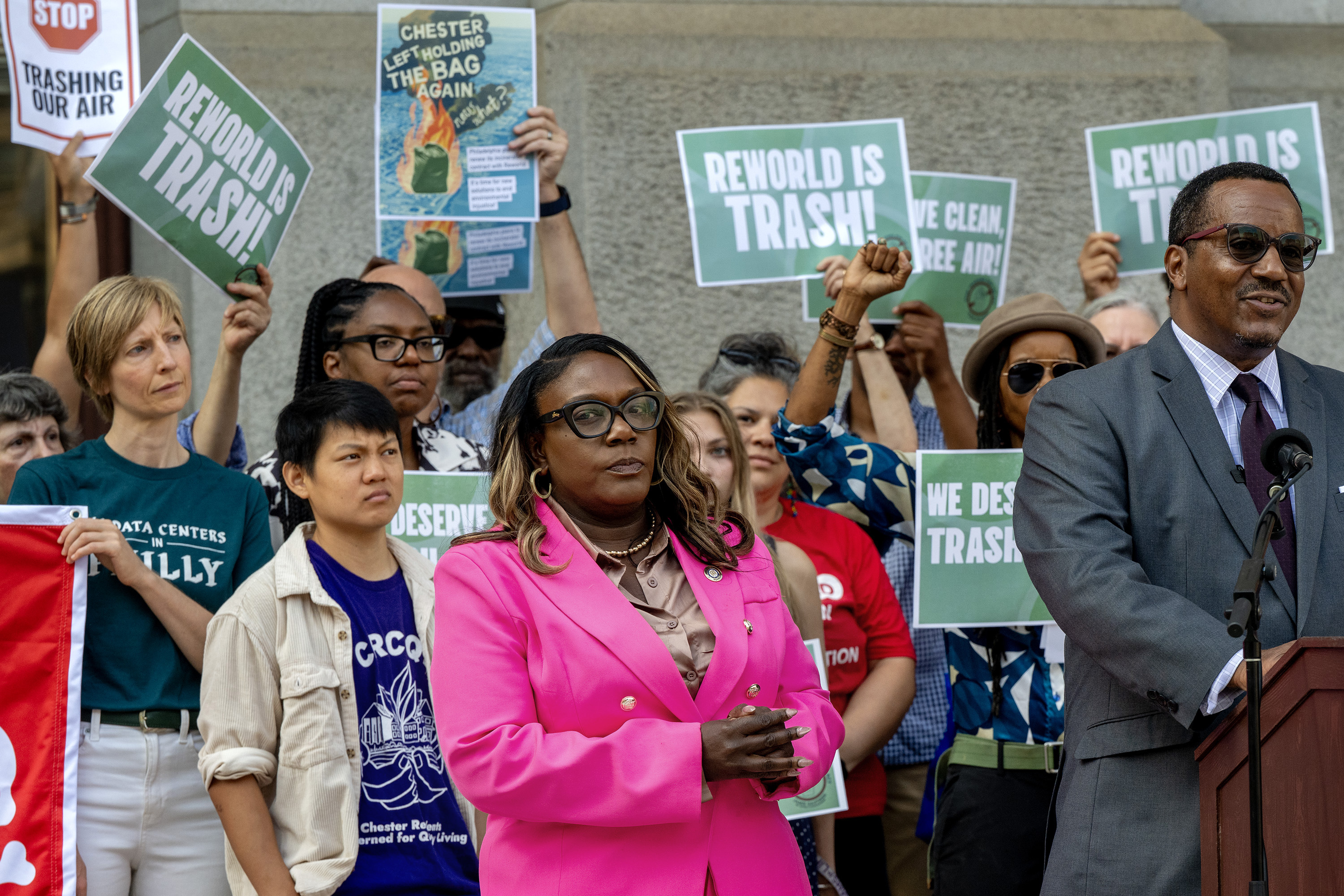
City Councilmember Kendra Brooks joins Chester Mayor Stefan Roots (right) and protesters at a rally outside City Hall Sept. 17, 2026.Tom Gralish / Staff Photographer
Brooks’ supporters see the mayor as potentially vulnerable as progressives have ascended nationally and notched wins over more traditional Democrats. That includes Mayor Zohran Mamdani’s victory last year in New York City and Abdul El-Sayed’s win in the Michigan Democratic primary for U.S. Senate.
Closer to home, the left is emboldened by State Rep. Chris Rabb, who was backed by Brooks’ coalition and in May won the Democratic primary for a seat in Congress representing about half of Philadelphia. He toppled two centrist Democrats who were each supported by party leaders, big donors, and politically powerful labor unions.
Despite the energy on the left, no progressive has officially launched a run for mayor ahead of the May primary election. Shania Bennett, the mayor’s former director of youth engagement, who has never run for office before, said this month that she will challenge Parker. Bennett said recently that she had not yet hired a campaign team or developed a policy platform.
Any challenger to Parker faces significant hurdles. No Philadelphia mayor has lost reelection in modern history, and Parker would be backed by the city’s Democratic Party, which can now spend unlimited amounts of money in coordination with its chosen candidates under a new board of ethics policy.
Parker will also be supported by the deep-pocketed building trades unions that boosted her in the crowded open mayoral primary in 2023.
“We’re going to put all the resources, both financial resources and people resources, to bear to make sure that Mayor Parker has a second term,” said Ryan Boyer, the head of the Philadelphia Building and Construction Trades Council. “I want to be clear and vociferous that the Philadelphia Building Trades … are fully and completely behind Cherelle Parker.”
In this March 2025 file photo, City Councilmember Kendra Brooks, left, listens to Mayor Cherelle L. Parker deliver her annual budget address.Alejandro A. Alvarez / Staff Photographer
Parker is likely to see support from a super PAC bankrolled by city developers, and she also has her own massive war chest. Her campaign had $1.4 million in the bank as of May, according to the most recent campaign finance paperwork available. Brooks had $17,000 on hand as of her last report in January.
But Brooks, who has won citywide election twice to represent the city as an at-large member of Council, could be a formidable opponent. She is one of the most prominent left-wing politicians in the city, and she is well-known in national progressive circles.
The Working Families Party’s chapter in Pennsylvania recently commissioned a poll that showed Brooks as broadly popular with the city’s Democratic primary electorate but with much lower name recognition than Parker, according to polling documents obtained by The Inquirer.
According to the survey of 900 respondents, 35% said they had a favorable view of Brooks, with just 4% saying they had an unfavorable view. Nearly 40% of respondents said they did not know who Brooks was.
Nearly all of the respondents knew of Parker. Forty-eight percent said they had a favorable view of the mayor, and 40% said they had an unfavorable view. Those findings are similar to a June Suffolk University/Philadelphia Inquirer poll.
Nick Gavio, a spokesperson for the Working Families Party, said in a statement that the organization often conducts polling on public opinion in the city and that the survey was “one test among a battery of others that we conducted in Philadelphia ahead of the 2027 elections.”
“We are pleased that the Working Families Party and Minority Leader Brooks are so popular,” he said, “which we believe reflects our focus on the issues that matter to the working people of this city.”
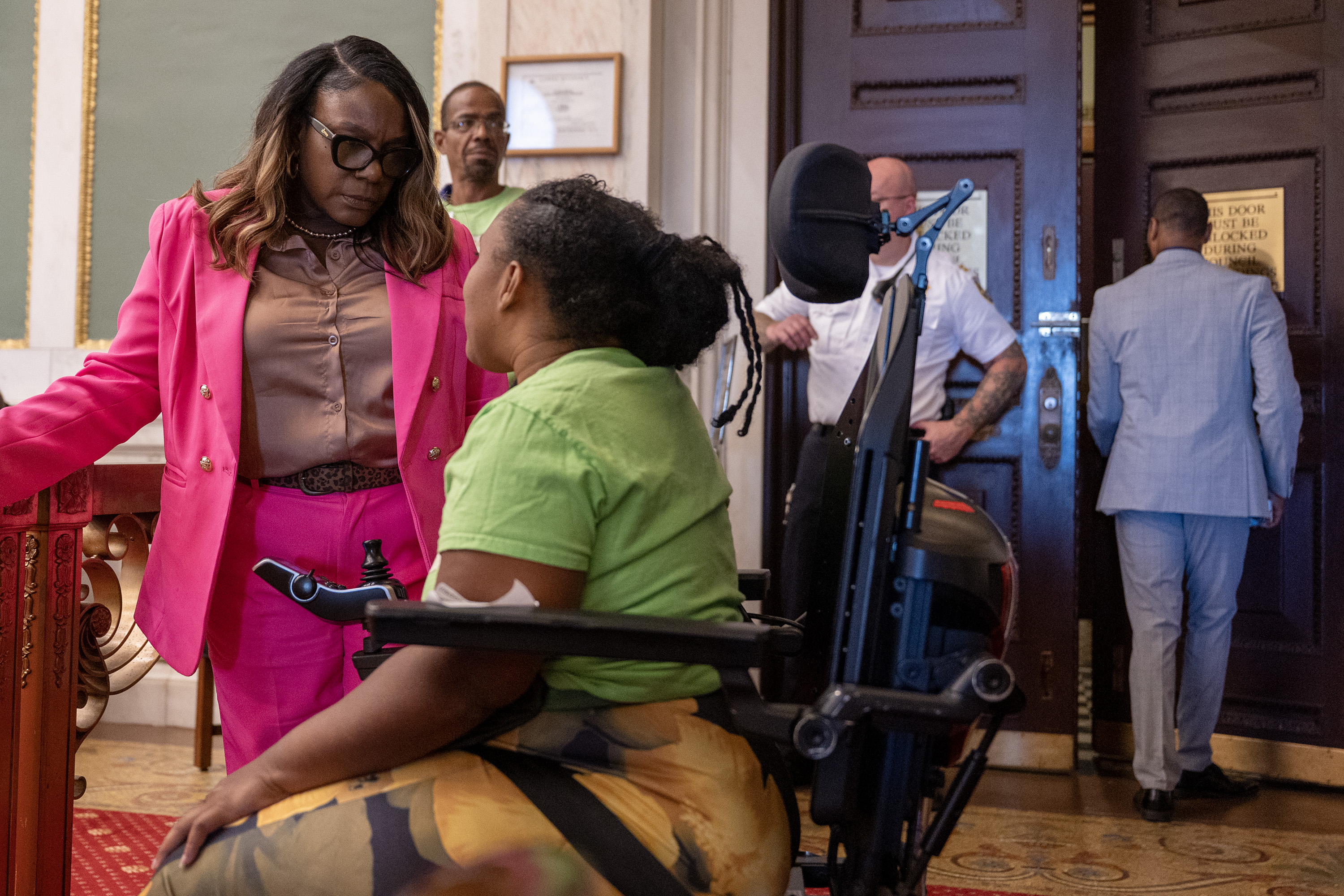
City Councilmember Kendra Brooks talks with Dominique Howell (right) in chambers as City Council returns for its fall session Thursday, Sept. 17, 2026. Howell is a long-time constituent and was there with the non-profit Liberty Resources, part of the Philadelphia Coalition for Affordable Communities.Tom Gralish / Staff Photographer
Several other leftist politicians in the city have been rumored to be considering running for mayor against Parker, but none have said publicly that they intend to launch a campaign.
One is District Attorney Larry Krasner, the third-term prosecutor who is one of the most prominent progressive district attorneys in the country. Krasner has been increasingly critical of Parker, and in June said that he would not rule out the possibility of running against her.
Correction: A previous version of this article incorrectly stated the steps Brooks would have to take to run in the Democratic mayoral primary. She could remain a registered member of the Working Families Party or switch her party registration.
After a federal judge said last week that Philadelphia District Attorney Larry Krasner may have committed federal crimes, questions quickly emerged about the prosecutor’s political future.
Krasner, an outspoken Democrat and one of the nation’s most well-known progressive prosecutors, has recently entertained entreaties to run for higher office, including a possible bid for Philadelphia mayor next year.
But in the week since U.S. District Judge Paul S. Diamond said he had referred Krasner and a top supervisor to the Department of Justice for investigation, Krasner has largely stayed quiet, and few elected Democrats have publicly come to his defense.
Behind the scenes, many insiders asked: Could this episode damage Krasner too much for him to mount a campaign for another office?
In a statement Tuesday, Krasner said he had already told another progressive considering a bid for mayor that he would defer to her.
“I’m a big believer in Councilmember Kendra Brooks,” Krasner said, referring to the City Council member who The Inquirer reported is considering a run for mayor. “Prior to these accusations, I told her that if she runs for mayor, I will not consider running.”
And he framed the legal conclusions by Diamond — a federal jurist appointed by former Republican President George W. Bush — as merely “accusations,” citing others who have been targeted for investigation by the Department of Justice under President Donald Trump.
He referenced the New York attorney general, a former FBI director, and a DOJ employee who was charged after throwing a sandwich at a federal agent and has since become a symbol of resistance to Trump’s administration.
“Ask Letitia James, James Comey, the ‘sandwich man’ or the guy who took peeling paint from the reflecting pool what they have to say about accusations,” Krasner said. “Or ask dozens of innocent people whose exonerations this DA’s office supported what they say about accusations.”
Krasner’s statement Tuesday was one of the first public comments he has made regarding the case since Diamond’s criminal referral, aside from a brief statement last week saying that he disagrees with Diamond’s conclusions and could not comment further because the matter is pending in court.
The uncertainty around Krasner alsohas some city Democrats contemplating a dramatic outcome: Could criminal charges or judicial discipline sweep Krasner from office before the end of his term in 2030?
And if that happened, who would replace him as the city’s chief law enforcement officer?
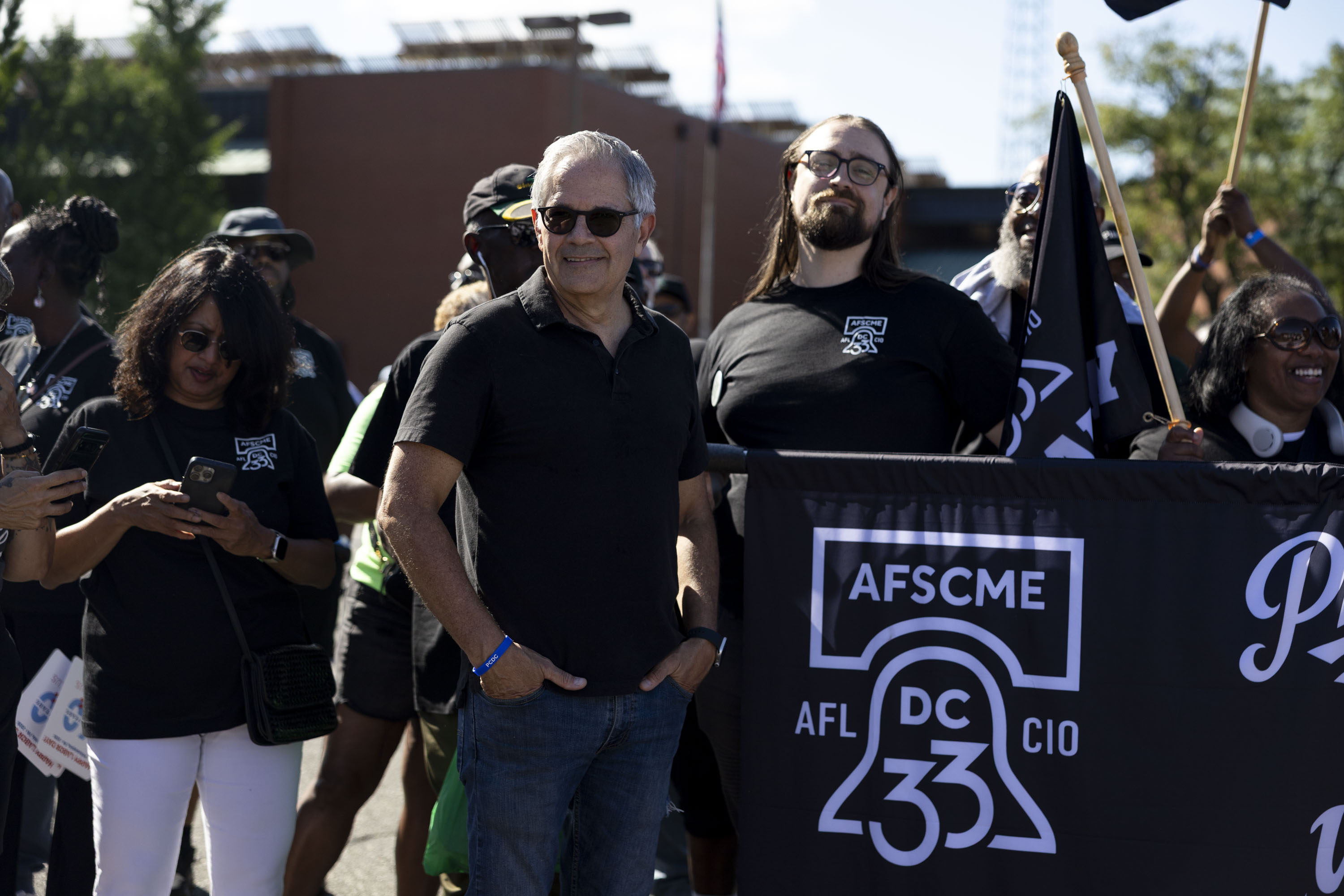
District Attorney Larry Krasner standing with District Council 33, for the 39th Annual Tri-State Labor Day Parade on Sept. 7.Tyger Williams / Staff Photographer
At least two elected Democrats have spoken to ward leaders about filling the district attorney’s role if Krasner were to be forced from office, according to sources familiar with the conversations who were not authorized to speak about them publicly.
But some of Krasner’s allies say this is all much ado about nothing. They maintain that Diamond’s legal conclusions and the referral of the matter to the Department of Justice were politically motivated and that Krasner will weather it, as he has past tribulations.
“They’re trying to do something that they’ve been trying to do for years, which is go after Krasner’s head,” said Sergio Cea, political director of the progressive group Reclaim Philadelphia, which has supported Krasner since his first run for office in 2017. “What they’re trying to do is roll back the gains that Philly voters pushed forward.”
Silence from elected officials
Krasner has always been something of a political outsider. He has never been endorsed by the city’s Democratic Party and has been critical of its leadership.
City Councilmember Nicolas O’Rourke, a member of the progressive Working Families Party and a longtime supporter of the district attorney, said in a statement Tuesday that he has confidence in Krasner’s ability to lead his office.
“There’s no question,” he said. “DA Krasner can and should be doing the work that Philadelphians have tasked him with through their votes.”
Aside from O’Rourke, most of the city’s top officials have declined requests for comment about Krasner’s recent legal jeopardy, including some of his ardent supporters.
Some say that Krasner has not asked them to weigh in, and that they are hesitant to take a position on a complex legal issue. Others say they do not want to distract from a midterm election that is just six weeks away.
Jack Inacker, a Democratic strategist based in Philadelphia, said he was not surprised that few elected Democrats have spoken on Krasner’s behalf.
“You’ve got these major dustups all the time, it seems now,” Inacker said. “Krasner being so antagonistic to everyone doesn’t get him allies.”
Inacker also said the courtroom allegations are “esoteric in nature,” making it challenging for elected officials to stake a position.
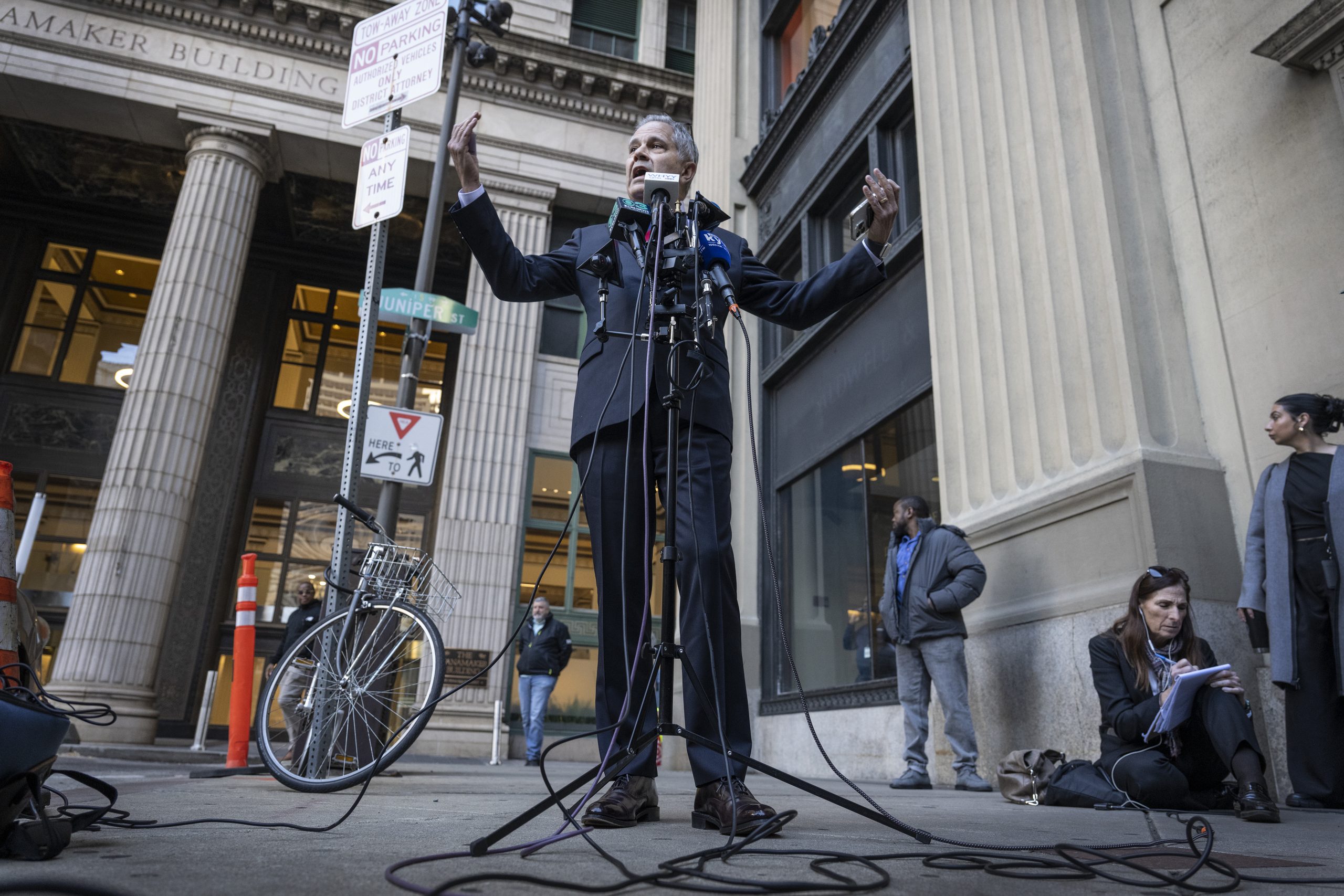
Newly reelected District Attorney Larry Krasner speaks to reporters during a news conference outside the District Attorney’s Office on Nov. 5, 2025.Jose F. Moreno / Staff Photographer
The case before the federal judge centers on Dennis Johnson, who has sought for more than a decade to have his 2009 murder conviction overturned. In 2022, a former assistant district attorney working for Krasner filed paperwork to support Johnson’s bid.
But four supervisors in Krasner’s office later testified that they found errors in that 2022 brief, and that Krasner was involved in conversations about attempting to mislead the court to cast the former prosecutor as rogue.
Krasner has denied wrongdoing.
Brian Hart, a Democrat who has been critical of Krasner and served as a media adviser to Dugan’s campaign, said this episode is more fraught for Krasner than his 2022 impeachment.
“The allegations aren’t coming from just Republicans,” said Hart, a public relations strategist. “They’re coming from testimony within his own office.”
The mayor’s race question
Some activists on the left wing of the city’s Democratic Party have said they feel emboldened to mount a serious challenge against Parker, who will be up for reelection next year. They cite recent wins by progressives both in the city and nationally.
And eight months out from the May primary election, several prospective candidates, including Brooks, are mulling whether to launch a campaign.
When asked then whether he might consider a future campaign for mayor — or even U.S. Senate — Krasner responded: “Do I have a plan to run for these offices today? No. But … it would be foolish for me to completely rule out those possibilities.”
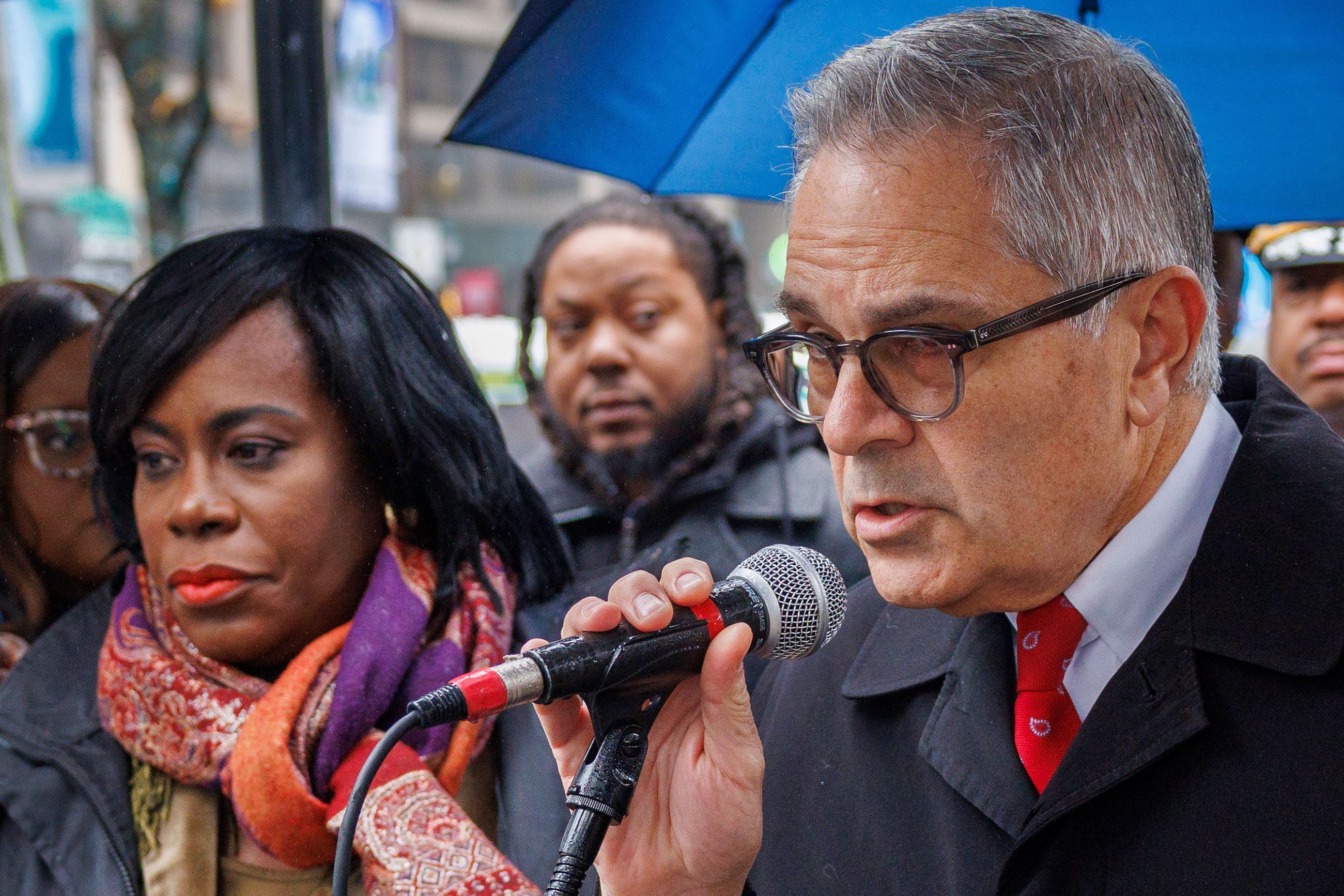
Philadelphia District Attorney Larry Krasner, seen here with Mayor Cherelle Parker at a news conference at Dilworth Park on Dec. 16, 2024.Alejandro A. Alvarez / Staff Photographer
Larry Ceisler, a public affairs executive based in Philadelphia, said a federal criminal investigation of Krasner could pose a logistical problem if it was conducted while he was running for mayor.
But politically speaking, Ceisler said, it might not be an impediment. An investigation by the Department of Justice under Trump — an entity many Democrats distrust — could rally progressive support.
“I think he would probably run with it as a badge of honor,” he said.
Ceisler pointed to former Mayor John F. Street, who in 2003 was locked in a tight race for reelection when police found an FBI bug in his office. Street blamed Republican President George W. Bush’s administration, and he went on to win the election a few weeks later.
“When these things happen, everybody puts on their respective jerseys, so the Krasner people are going to say, ‘It’s political,’” Ceisler said. “I think to the Krasner constituency, especially if he wants to run for mayor, or do something else, I don’t think this fazes them.”
Weighing a post-Krasner future
It is unclear where any potential criminal investigation or disciplinary probe of Krasner and his office might lead, and legal experts have said that a hypothetical investigation would likely take months.
But some Philadelphia Democrats are already contemplating what would happen if Krasner cannot finish the term that he began this year and that ends in 2030, with some quietly discussing contingency plans to fill the office.
Under state law, in the event of a vacancy, the city’s Common Pleas Court judges vote by secret ballot to appoint a new district attorney. The appointed interim district attorney would serve until the next general election. Those elections take place in even-numbered years.
During the three-week gap between when Williams resigned and Hodge was appointed, the district attorney’s office was led by Williams’ first assistant district attorney, Kathleen Martin.
Krasner does not have a first assistant district attorney. Robert Listenbee, who formerly held the role, retired in January, and the legally required position remains unfilled.
Staff writers Chris Palmer and Ellie Rushing contributed to this article.
For Blake Fleischer, an early morning jog in Center City last month began like any other.
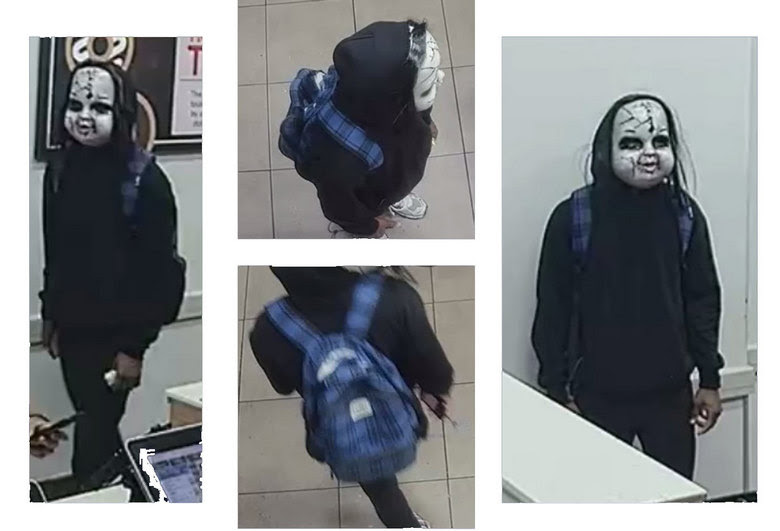
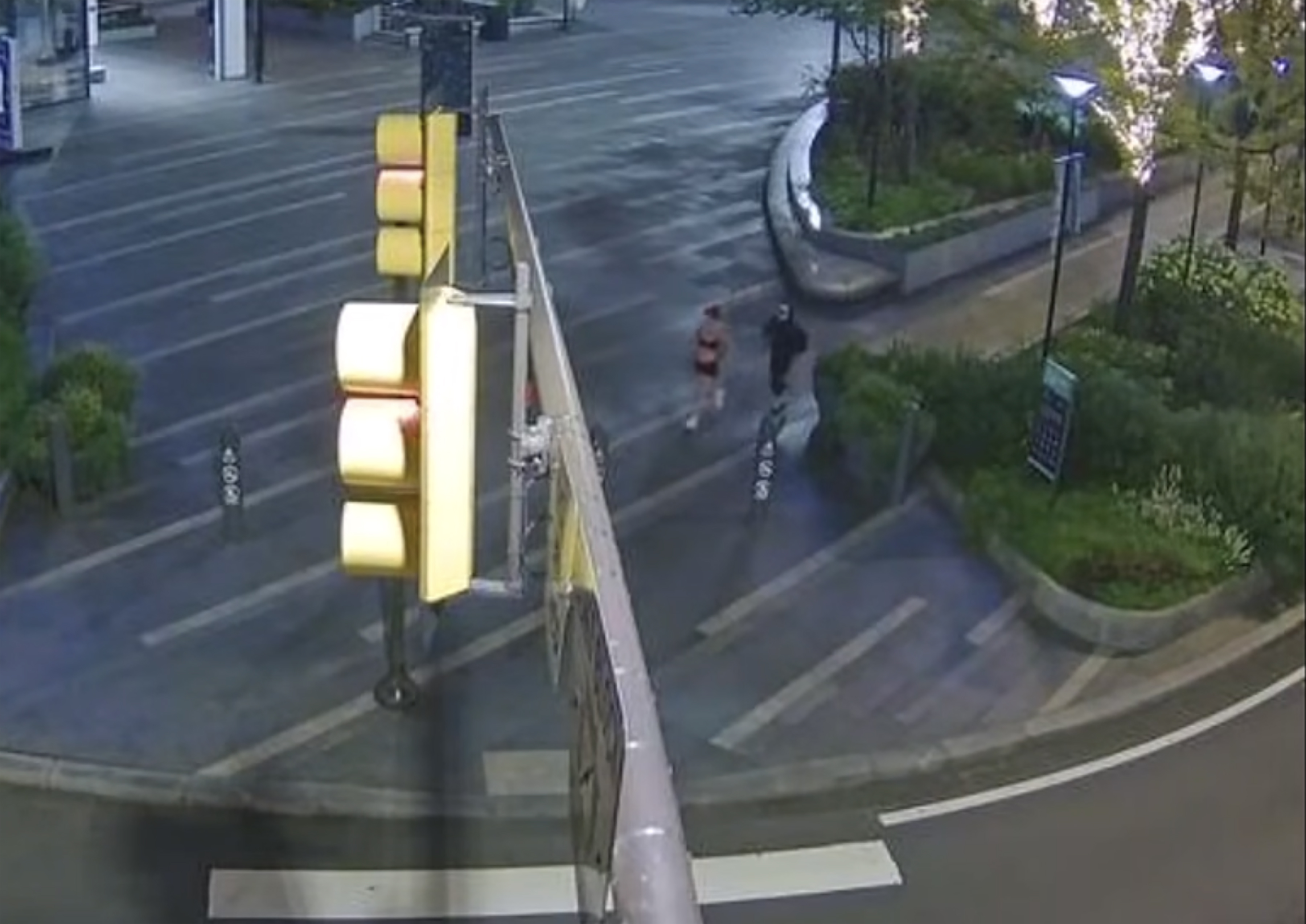
But it ended in terror, she said as she recalled running into traffic near City Hall, seeking help as a man wearing a Chucky-style horror mask followed close behind.
“I was extremely terrified,” Fleischer, 40, testified Wednesday in Philadelphia Municipal Court.
Fleischer, who entered the courtroom limping and using a crutch, tearfully recounted the pain of tearing her hamstring as she fled the man in the mask, who she feared was armed when he asked if she was “ready to die.”
“I thought he was going to attack me,” Fleischer said.
Hughes, 22, was arrested by U.S. marshals in Las Vegas two weeks after the incident. He sat across the courtroom wearing a blue prison jumpsuit and did not speak during the hearing, in which his defense attorney disagreed with many of the prosecution’s findings.
Municipal Court Judge Karen Simmons held Hughes for trial on charges of aggravated assault, possessing an instrument of a crime, terroristic threats, simple assault, reckless endangerment, and harassment. Simmons dismissed charges of disorderly conduct by engaging in fighting, as well as flight to avoid apprehension.
The hearing marked the first time that details about Hughes were heard in court after videos of the masked man’s antics went viral across local and national media outlets and social media feeds.
Prosecutors said Tuesday that surveillance footage recovered from cameras throughout the city had tracked Hughes’ travels, capturing him taking a SEPTA bus from his apartment building near North 23rd and West Venango Streets to Center City after 2 a.m. Aug. 12.
They said Hughes donned the horror mask and began harassing pedestrians in the Suburban Station concourse. He ignored a SEPTA transit officer’s request to remove the mask, they said, briefly flashing his face before putting it back on and leaving the area.
He encountered Fleischer around 5:30 a.m. as she jogged near the north side of City Hall, she testified to prosecutors.
The masked man began to chase her, she said, eventually cutting her off as the two got within several feet of each other.
In an image provided by the Philadelphia Police Department, a man dressed in dark clothing and wearing a mask styled after the character Chucky in “Child’s Play,” the 1988 horror film, chases a jogger in Philadelphia on Aug. 12, 2026. On Thursday, Aug. 20, the police identified a suspect, Zymire Hughes, 22, and said there was an arrest warrant for him. (Philadelphia Police Department via The New York Times) — NO SALES; FOR EDITORIAL USE ONLY. —PHILADELPHIA POLICE DEPARTMENT
Fleischer said she found herself caught between the facade of City Hall and the man, who held a phone in his left hand while his right hand was concealed behind his back, and she fled.
It was not until the next day — when she awoke in “extreme pain” and had trouble walking — that she went to the hospital for her hamstring injury, she said.
Prosecutors also called on detectives from the Central Police Division to verify surveillance footage of Hughes’ activity. That included a clip in which it appears Hughes is filming himself and gesturing toward his phone before leaving his apartment to head to Center City.
A SEPTA transit officer later testified that he was able to help detectives identify Hughes because he had interacted with him in 2023 and 2024 while on duty. Detectives added that widely circulated images of Hughes yielded a phone tip that aided their investigation.
Lauren Zitsch, Hughes’ public defender, told Simmons she took issue with many of the prosecutors’ assertions, particularly the aggravated assault charge.
“You have to show some form of malice” for that crime to stand, she said, noting that the confrontation between Fleischer and Hughes was not captured on video.
But Simmons agreed with prosecutors, who argued that by frightening the woman enough for her to flee, Hughes would have understood the “legal and likely consequence” of his actions.
Hughes is expected to appear in court for a formal arraignment in early October.
He had not posted the required 10% of his $100,000 bail and remained in custody at the Philadelphia Detention Center.
This week’s edition of Shackamaxon looks at a crackdown on “smoke shops,” the Philadelphia police’s handling of traffic citations, how Harrisburg deadlines can be leveraged to fund transit, and what City Council forgot to talk about in its first session after returning from summer break.
Up in smoke?
An increasingly common frustration has been expressed across Philadelphia over the rise of what are known as “smoke shops,” which have proliferated in the city’s commercial corridors. Ostensibly operating as grocery stores, they are often locations where illegal drugs and drug paraphernalia are sold. They tend to operate late into the night and attract the ire of both residents and other business owners.
That’s why it was refreshing to see someone make a substantive move to shut them down. State Rep. Amen Brown, whose district includes parts of West Philadelphia and Logan Square, has put together an initiative he’s called Operation Breezy. Working with both city and state law enforcement, and relying on the support of members of the community, Brown’s efforts have already shuttered 13 of the establishments.
Brown’s approach uses confidential informants, many of whom come from the community itself. He told me that one of the now-closed shops had roughly 40 pounds of marijuana on thepremises, the outlets routinely sell out-of-state cigarettes, and that firearms have been seized as part of the efforts. Residents who would like to help can send an email to OperationBreezy@gmail.com or a message to the effort’s Instagram page, @operationbreezy.
Brown said he’d like to do more to stop the smoke shops, but that the best option requires action at the local level. Rather than enacting a broad-based curfew for all businesses, he’d prefer to target just the smoke shops. He says that might be possible by imposing restrictions on the operating hours of grocery stores that are smaller than 300 square feet. That’s a size below which, officials say, legitimate uses for a storefront become impractical.
Still, I couldn’t help wondering whether this incident is a natural outgrowth of the department’s policies. The Philadelphia police simply do not seem to take enforcing traffic laws seriously enough. Traffic citations have plunged over the last few decades. In the 1990s, officers regularly issued roughly half a million tickets per year. In 2023, about 45,000 tickets were handed out. These days, we celebrate an increase of a few thousand citations, even as overall stops remain at a fraction of the total pedestrian safety experts say is needed. Commissioner Bethel has said that enforcing traffic violations is a lesser priority.
While many officers blame the city’s Driving Equality Law for this decline, that measure does not prevent officers from enforcing moving violations, which are the most dangerous offenses. Failing to do so is a choice the department has made on itsown. The result of this lack of enforcement, traffic safety experts say, has been an increase in reckless and aggressive driving.
Given thata city controller report called Philadelphia’s streets the most dangerous of any major U.S. city, this lack of prioritization must change. While speed cameras and other forms of automated enforcement have made a difference along high-traffic corridors like Roosevelt Boulevard and Broad Street, they can only enforce certain offenses in certain locations. Reckless driving is an issue almost everywhere.
It is impossible to know what went through the mind of the officer who left Eugene Beauford in the street. The department has declined to publish his name, let alone make him available for an interview. But perhaps this horrific incident will prompt police brass to rethink the department’s strategy for enforcing traffic laws.
Skill game shutdown
Next month, Pennsylvania’s so-called games of skill will need to be unplugged. Oct. 13 marks the last day of the grace period the state Supreme Court gave the General Assembly to devise a taxation and regulatory scheme for the machines, devices that resemble slot machines and which are currently banned under state law. For years, legislators have debated where the machines can operate, and whether they should pay the same tax rate as existing slot machines.
By pure coincidence, there’s another big deadline approaching: the authorization period for the state-appointed SEPTA prosecutor. I’d like to propose a potential compromise for both issues. Harrisburg should extend the SEPTA prosecutor’s authority by three years, agree to Gov. Josh Shapiro’s proposed shift in sales tax revenue to support public transit, and pay for it by legalizing skill games and taxing them at the same rate as slot machines. They should also pass regulations limiting the placement of the machines and creating penalties for owners who allow children to use them.
Given District Attorney Larry Krasner’s recent struggles, extending the SEPTA prosecutor should be less politically contentious now than it was in years past. Lawmakers can also point to the significant decline in fare evasion and violent crime on the transit system over the last few years as justification.
For Philadelphia lawmakers who may be reluctant to place limits on the authority of Krasner, who has been overwhelmingly elected by their constituents three times, that kind of middle ground can provide fiscal peace of mind for SEPTA, which has been subject to financial uncertainty for three years. While Democrats seem to be pinning their hopes for approving more state funding for SEPTA on winning control of the state Senate during this fall’s elections, that is hardly guaranteed. If a deal can be reached ahead of time, it reduces the risk of a collapse. It also does not preclude additional action next year.
Finally, the need to act on skill games is clear. As it stands, it will be difficult for the commonwealth to shut down every location that houses the machines. We don’t even know how many exist. I am not a fan of these devices, which have a negative impact on the communities that host them. Regulation will make it easier to mitigate that damage and ensure Pennsylvanians see some benefit from the funds that flow through them.
Council comeback
After its three-month summer hiatus, City Council is back in session. All eyes on the second floor of City Hall will be trained on how Mayor Cherelle L. Parker will respond to a series of potentially contentious legislative proposals — from Councilmember Jamie Gauthier’s bill to stop burning trash to Councilmember Isaiah Thomas’efforts to stop at least part of the school closure plan.
City Council should hold investigatory hearings into both officials. Residents deserve better from their leaders than what both Krasner and Bilal have shown.