Tag: Larry Krasner

  • Will a pedestrian death move Philadelphia police to step up traffic enforcement? | Shackamaxon

    Will a pedestrian death move Philadelphia police to step up traffic enforcement? | Shackamaxon

    This week’s edition of Shackamaxon looks at a crackdown on “smoke shops,” the Philadelphia police’s handling of traffic citations, how Harrisburg deadlines can be leveraged to fund transit, and what City Council forgot to talk about in its first session after returning from summer break.

    Up in smoke?

    An increasingly common frustration has been expressed across Philadelphia over the rise of what are known as “smoke shops,” which have proliferated in the city’s commercial corridors. Ostensibly operating as grocery stores, they are often locations where illegal drugs and drug paraphernalia are sold. They tend to operate late into the night and attract the ire of both residents and other business owners.

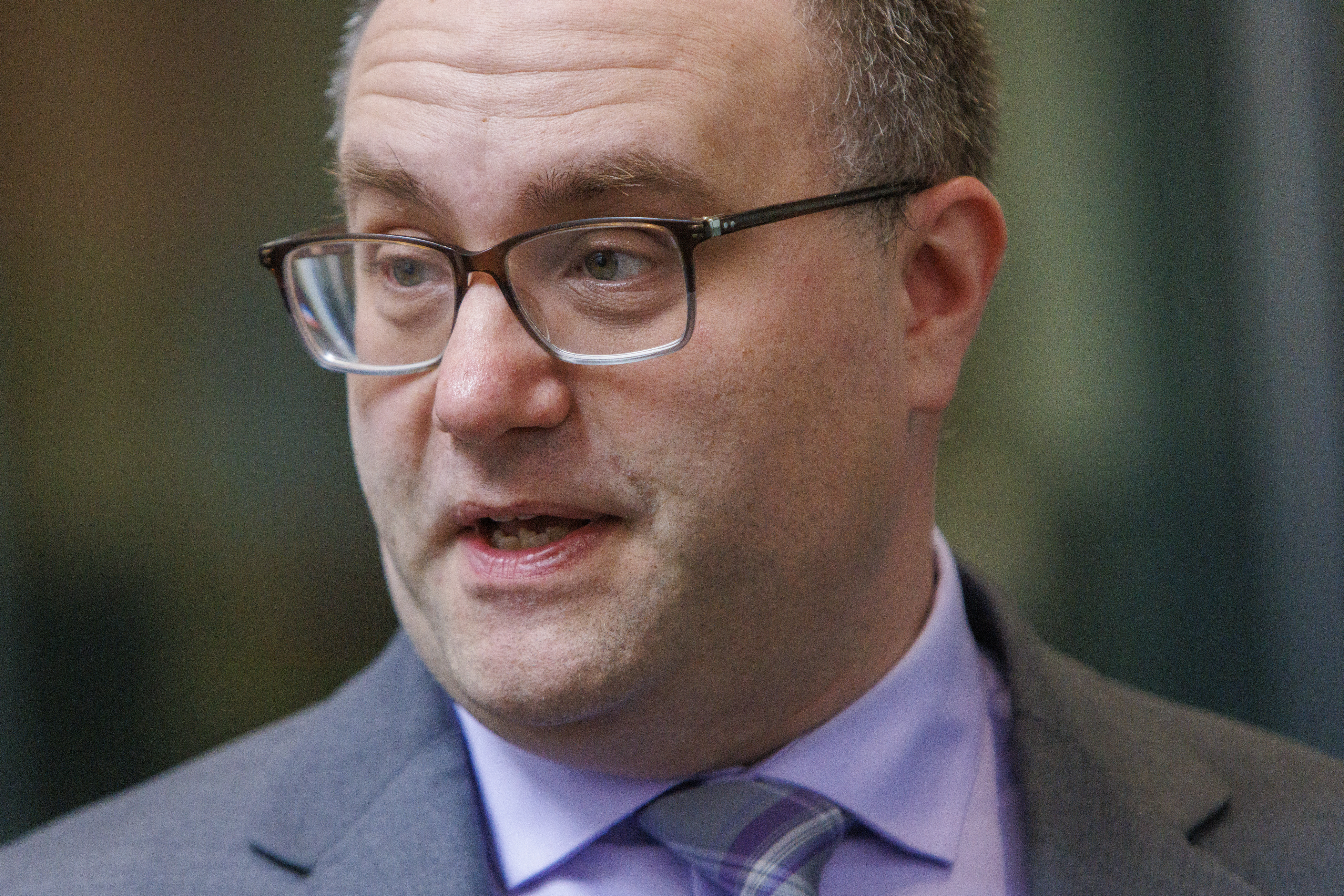
    That’s why it was refreshing to see someone make a substantive move to shut them down. State Rep. Amen Brown, whose district includes parts of West Philadelphia and Logan Square, has put together an initiative he’s called Operation Breezy. Working with both city and state law enforcement, and relying on the support of members of the community, Brown’s efforts have already shuttered 13 of the establishments.

    Brown’s approach uses confidential informants, many of whom come from the community itself. He told me that one of the now-closed shops had roughly 40 pounds of marijuana on the premises, the outlets routinely sell out-of-state cigarettes, and that firearms have been seized as part of the efforts. Residents who would like to help can send an email to OperationBreezy@gmail.com or a message to the effort’s Instagram page, @operationbreezy.

    Brown said he’d like to do more to stop the smoke shops, but that the best option requires action at the local level. Rather than enacting a broad-based curfew for all businesses, he’d prefer to target just the smoke shops. He says that might be possible by imposing restrictions on the operating hours of grocery stores that are smaller than 300 square feet. That’s a size below which, officials say, legitimate uses for a storefront become impractical.

    Official inaction

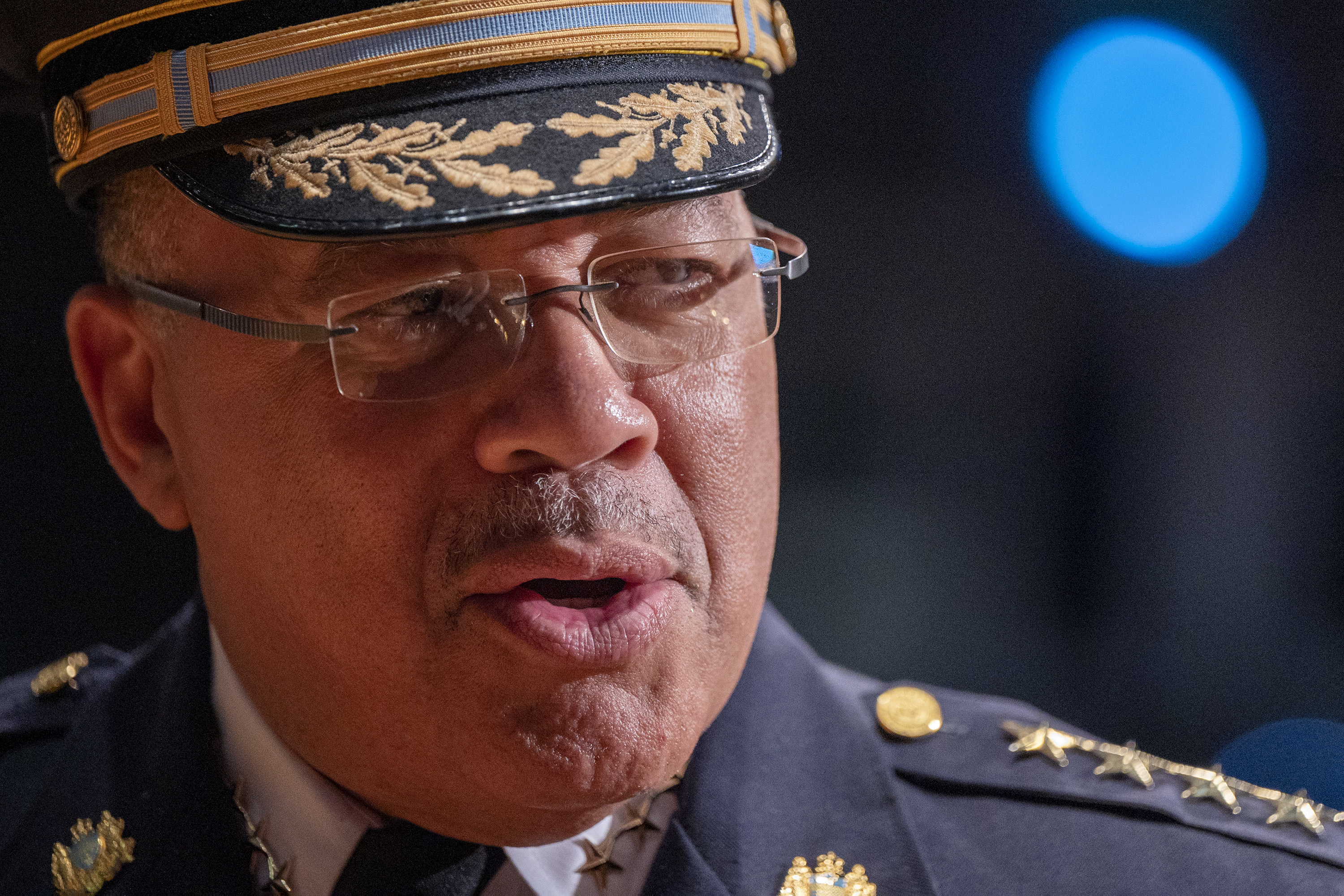
    Philadelphians were rightly outraged at the actions of a police officer who, in August, left a struggling pedestrian lying in the street, where he was later killed in a hit-and-run. Commissioner Kevin J. Bethel said he was “disgusted” by the patrolman’s behavior. City officials announced their intent to fire the officer. That’s the right call, even if the city’s cop-friendly arbitration process leads to 85% of officers getting their jobs back after alleged misconduct.

    Still, I couldn’t help wondering whether this incident is a natural outgrowth of the department’s policies. The Philadelphia police simply do not seem to take enforcing traffic laws seriously enough. Traffic citations have plunged over the last few decades. In the 1990s, officers regularly issued roughly half a million tickets per year. In 2023, about 45,000 tickets were handed out. These days, we celebrate an increase of a few thousand citations, even as overall stops remain at a fraction of the total pedestrian safety experts say is needed. Commissioner Bethel has said that enforcing traffic violations is a lesser priority.

    While many officers blame the city’s Driving Equality Law for this decline, that measure does not prevent officers from enforcing moving violations, which are the most dangerous offenses. Failing to do so is a choice the department has made on its own. The result of this lack of enforcement, traffic safety experts say, has been an increase in reckless and aggressive driving.

    Given that a city controller report called Philadelphia’s streets the most dangerous of any major U.S. city, this lack of prioritization must change. While speed cameras and other forms of automated enforcement have made a difference along high-traffic corridors like Roosevelt Boulevard and Broad Street, they can only enforce certain offenses in certain locations. Reckless driving is an issue almost everywhere.

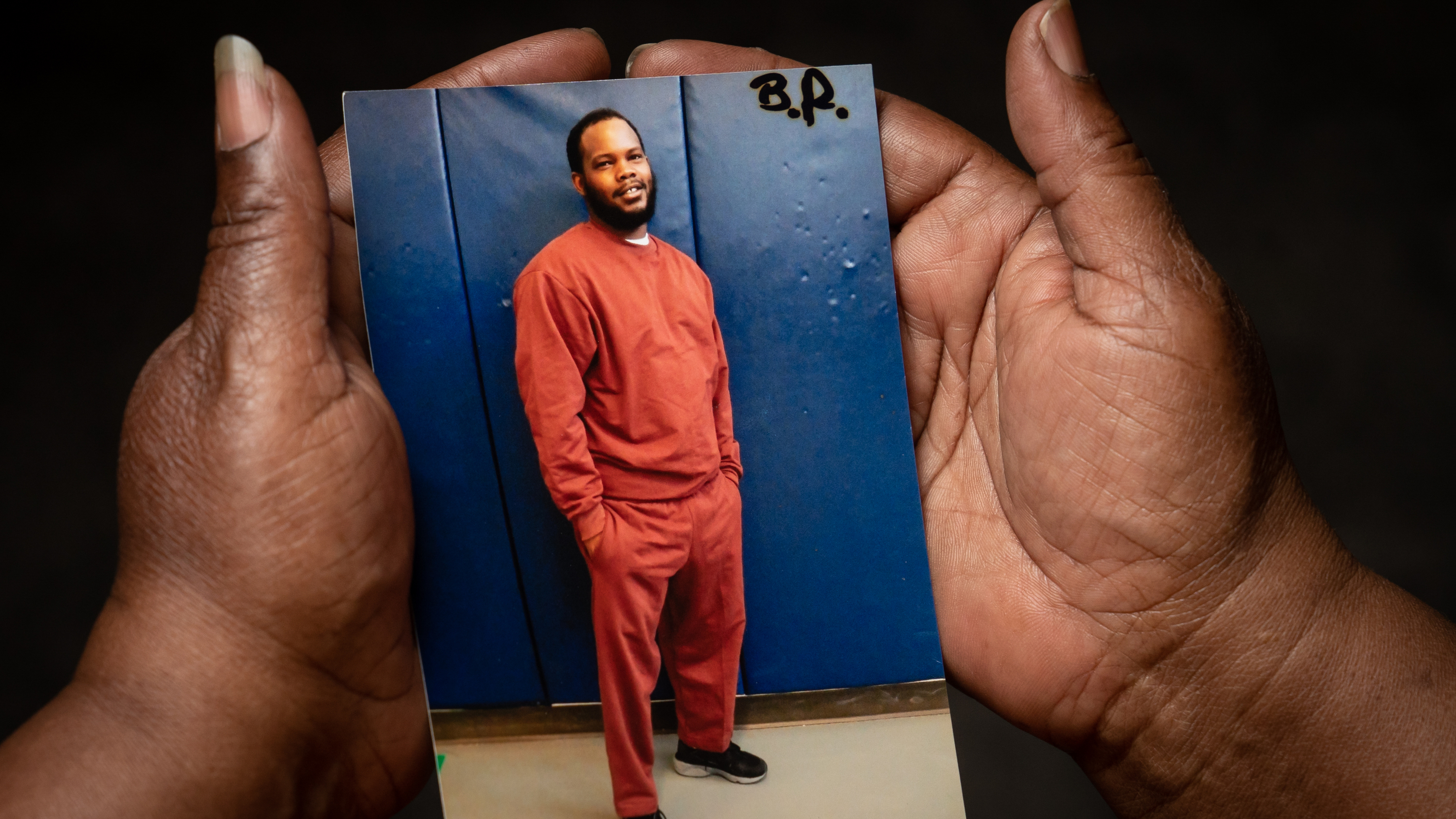
    It is impossible to know what went through the mind of the officer who left Eugene Beauford in the street. The department has declined to publish his name, let alone make him available for an interview. But perhaps this horrific incident will prompt police brass to rethink the department’s strategy for enforcing traffic laws.

    Skill game shutdown

    Next month, Pennsylvania’s so-called games of skill will need to be unplugged. Oct. 13 marks the last day of the grace period the state Supreme Court gave the General Assembly to devise a taxation and regulatory scheme for the machines, devices that resemble slot machines and which are currently banned under state law. For years, legislators have debated where the machines can operate, and whether they should pay the same tax rate as existing slot machines.

    By pure coincidence, there’s another big deadline approaching: the authorization period for the state-appointed SEPTA prosecutor. I’d like to propose a potential compromise for both issues. Harrisburg should extend the SEPTA prosecutor’s authority by three years, agree to Gov. Josh Shapiro’s proposed shift in sales tax revenue to support public transit, and pay for it by legalizing skill games and taxing them at the same rate as slot machines. They should also pass regulations limiting the placement of the machines and creating penalties for owners who allow children to use them.

    Given District Attorney Larry Krasner’s recent struggles, extending the SEPTA prosecutor should be less politically contentious now than it was in years past. Lawmakers can also point to the significant decline in fare evasion and violent crime on the transit system over the last few years as justification.

    For Philadelphia lawmakers who may be reluctant to place limits on the authority of Krasner, who has been overwhelmingly elected by their constituents three times, that kind of middle ground can provide fiscal peace of mind for SEPTA, which has been subject to financial uncertainty for three years. While Democrats seem to be pinning their hopes for approving more state funding for SEPTA on winning control of the state Senate during this fall’s elections, that is hardly guaranteed. If a deal can be reached ahead of time, it reduces the risk of a collapse. It also does not preclude additional action next year.

    Finally, the need to act on skill games is clear. As it stands, it will be difficult for the commonwealth to shut down every location that houses the machines. We don’t even know how many exist. I am not a fan of these devices, which have a negative impact on the communities that host them. Regulation will make it easier to mitigate that damage and ensure Pennsylvanians see some benefit from the funds that flow through them.

    Council comeback

    After its three-month summer hiatus, City Council is back in session. All eyes on the second floor of City Hall will be trained on how Mayor Cherelle L. Parker will respond to a series of potentially contentious legislative proposals — from Councilmember Jamie Gauthier’s bill to stop burning trash to Councilmember Isaiah Thomas’ efforts to stop at least part of the school closure plan.

    Then there’s the matter of those city officials who deserve additional scrutiny, in particular Krasner and Sheriff Rochelle Bilal. Krasner has been referred for prosecution by a federal judge, while Bilal misled Council during her budget hearing earlier this year.

    City Council should hold investigatory hearings into both officials. Residents deserve better from their leaders than what both Krasner and Bilal have shown.
  • Should Larry Krasner still lead the Philadelphia District Attorney’s Office? | Editorial

    Should Larry Krasner still lead the Philadelphia District Attorney’s Office? | Editorial

    District Attorney Larry Krasner came into office promising to end mass incarceration, decriminalize minor offenses, eliminate cash bail, and free anyone who was wrongly convicted.

    On its face, those reforms seemed laudable given Philadelphia’s — and the nation’s — decades-long, tough-on-crime politics, policies, and policing that resulted in high incarceration rates and a justice system rooted in racial and economic disparities.

    But in Krasner’s zeal to right past wrongs, he has caused grave damage to himself and his office. A series of legal setbacks has cast doubt on Krasner’s ability to administer fair and impartial justice, let alone manage his office.

    As a result, crime victims and the accused are left to wonder if the city’s top law enforcement official can properly do his job.

    Krasner’s latest and most perilous legal trouble stems from a recent court case involving a man’s attempts to overturn his 2009 murder conviction.

    Following an evidentiary hearing that stretched for three days over the summer, U.S. District Judge Paul S. Diamond referred the matter to federal prosecutors to investigate Krasner and Matthew Stiegler — the former head of the district attorney’s office’s Conviction Integrity Unit — for potential crimes, including conspiracy, obstruction of justice, and perjury.

    Krasner and Stiegler have not been charged. It is unclear if the U.S. Attorney’s Office in Philadelphia will launch an investigation, though it appears very likely considering that amid the hearing that spurred the criminal referral, Diamond said that “potential wrongdoing abounds.”

    Even before Krasner’s latest legal morass, a disturbing pattern of lies and chicanery emerged involving the office’s handling of other post-conviction cases, mainly for murder.

    One supervisor was disbarred last year and another suspended in June for repeatedly lying in federal court while seeking to overturn the death sentence of a man convicted of killing a couple in their East Mount Airy home. The federal judge in that case found the DA’s office provided a “false account” of the events, and ordered Krasner to write a letter of apology to the victims’ family.

    In the very first exoneration of Krasner’s first term, a Common Pleas Court judge ruled his team unfairly accused two former prosecutors of misconduct and had “misplaced and/or destroyed” records and relevant evidence. The judge fined the district attorney’s office $120,000.

    In June, the state Supreme Court found the office had violated its duty of candor to the court and ordered the state attorney general’s office to review future attempts by the DA’s office to reduce a sentence or overturn a past conviction.

    The latest case before Judge Diamond featured stunning sworn testimony by four supervisors hired during Krasner’s tenure who remain on the job.

    Their accounts from the witness stand painted a disturbing picture of Krasner and Stiegler scrambling to contain any legal fallout involving the lazy and disingenuous handling of their decision to initially go along with defense attorneys seeking to overturn the 2009 second-degree murder conviction of Dennis Johnson.

    For years, Johnson’s post-conviction appeal efforts were repeatedly rejected. In 2022, then-Assistant District Attorney Jaclyn Mason filed a brief that agreed with Johnson’s lawyers that his trial counsel had been ineffective, and his conviction should be overturned.

    In May, Diamond ordered an evidentiary hearing to examine what new evidence emerged to prompt the DA’s change in position.

    That spurred a group of supervisors in the district attorney’s office to scrutinize Mason’s initial brief in which they found numerous “material misstatements.” The four supervisors — Katherine Ernst, Steven Wildberger, David Napiorski, and Peter Andrews — determined the office needed to withdraw the motion and apologize to the court.

    They asked Mason to sign the filing with them, but she said Stiegler should take responsibility since he drove the effort to concede after several meetings with Johnson’s defense attorneys at the Pennsylvania Innocence Project.

    Fearing she would get all the blame, Mason quit in June and testified the following month that Stiegler had “colluded” with Johnson’s defense team and told her, “If it is good enough for the Innocence Project, it was good enough for him.”

    After Mason quit, the supervisors said Stiegler lobbied his fellow supervisors to go through Mason’s other cases, find errors, and tell Diamond she was a rogue actor. Krasner endorsed the plan, calling it a “good idea,” according to the supervisors.

    The supervisors rejected that scheme and instead argued for the case to be turned over to the state attorney general. Krasner repeatedly opposed that plan, citing the need to “protect the office.” The four supervisors concluded the efforts by Stiegler and Krasner created a conflict of interest for them and the office.

    The supervisors testified that Krasner threatened “consequences” if they told Diamond about the internal discussions. But rather than go along with the ruse, the four supervisors withdrew from the case.

    Diamond found Krasner’s threat “could amount to obstruction of justice,” and the scheme with Stiegler to present a false narrative “might amount to criminal conspiracy.”

    Diamond credited Ernst, Wildberger, Napiorski, and Andrews for coming forward “at the risk of their jobs.” He wrote their testimony was “compelling and corroborated by contemporaneous documents.”

    The judge rejected Stiegler’s version of events, writing that he found his testimony “contradictory, evasive, or outright dishonest.” He said Stiegler was “responsible” for the errors in the concession brief and that Mason followed his orders. Diamond added that Stiegler’s testimony “may well amount to perjury.”

    Confirming Mason’s fears, Diamond found Krasner directed the four supervisors to implement Stiegler’s plan to blame her for errors in the brief.

    Sources told The Inquirer that Stiegler abruptly resigned from his position as head of the exonerations unit Thursday, but he will remain in the district attorney’s office.

    Krasner issued a statement that said he “respectfully and vigorously” disagreed with Diamond’s findings and planned to appeal. He said he couldn’t comment further because the case is pending.

    But even that is not entirely truthful. Diamond said Krasner could have defended himself at the hearing. The judge wrote that Krasner “chose not to testify” or even to submit an affidavit after the hearing.

    “[Krasner] apparently does not dispute — or does not address — much of the testimony presented,” Diamond wrote.

    Krasner’s handling of the Johnson matter is beyond troubling. Perhaps just as telling, before the judge’s ruling was released, Krasner’s take on events, detailed in a filing made by his office, underscored that he remains unbowed. Indeed, as the legal setbacks have mounted, Krasner has demonstrated a glaring blind spot regarding his failings as a leader.

    As a result, Krasner faces a legal peril of his own making.

    Krasner came into office with a long list of real and perceived detractors. But he has frittered away his credibility, and his actions have undermined the hard work and dedication of many of his rank-and-file attorneys.

    This Editorial Board has endorsed Krasner in previous elections, but now believes he has created an untenable situation that could impact the treatment of crime victims and wrongdoers.

    One significant challenge: Will judges and juries trust prosecutors from the DA’s office?

    There is no denying that innocent people who were wrongly convicted sit in prisons. Krasner was right to review past convictions. But the questionable handling of these cases that was described in court has sabotaged his own authority to right those wrongs.

    The DA’s office is now rife with turmoil, fear, and distrust. Krasner sent a chill through the office after he allegedly threatened jobs and called prosecutors in the state attorney general’s office “Nazis.” One assistant supervisor recently stepped down from his leadership post after losing faith in the office.

    Krasner, who spent decades as a defense attorney, entered public office with a list of grievances and a deep mistrust of law enforcement, which he called “systematically racist.”

    Before first getting elected district attorney in 2017, Krasner sued the Philadelphia Police Department 75 times. Days after taking office, he ousted more than two dozen staffers, including many experienced prosecutors.

    Krasner has expressed disdain for the state attorney general’s office. He often views judges who oppose him as hostile, according to people familiar with his thinking.

    His jaded and often huffish views inform how he administers justice, whom he indicts or doesn’t indict. Not to mention his fraught relationship with police. Lives hang in the balance, including the accused, victims, and the wrongly convicted.

    Krasner now faces a major challenge: Can he regain the trust of the public and the prosecutors in his office? He should start by installing experienced and respected leaders.

    Then Krasner needs to look in the mirror and determine if he can continue to run the district attorney’s office under the giant cloud he has created.

  • Head of conviction integrity unit in DA’s office steps down after judge points to possible crimes, sources say

    Head of conviction integrity unit in DA’s office steps down after judge points to possible crimes, sources say

    The head of the conviction integrity unit in the Philadelphia District Attorney’s Office has stepped down from his supervisory role, sources said, days after a federal judge said his actions in a contentious post-conviction case could amount to crimes.

    Assistant District Attorney Matthew Stiegler resigned from his position as supervisor of the unit on Thursday, said the sources, who spoke on the condition of anonymity to discuss a sensitive personnel decision.

    Stiegler would remain a prosecutor with the office, the sources said, though it was not immediately clear what his role would be.

    Stiegler did not respond to a request for comment. A spokesperson for the district attorney’s office also did not respond.

    The personnel shake-up comes as Stiegler faces scrutiny over his role in a controversial case that has since drawn extraordinary attention and criticism from a federal judge — and raised questions about one of District Attorney Larry Krasner’s key policy initiatives.

    On Tuesday, U.S. District Judge Paul Diamond said Stiegler and Krasner may have broken the law in their handling of the case, and said he had referred the matter to the U.S. Attorney’s Office to investigate whether the pair should be charged with crimes including conspiracy or obstruction of justice.

    Stiegler came under public scrutiny this spring over his unit’s handling of the case of Dennis Johnson, who was convicted of second-degree murder in 2009. Prosecutors for years had opposed his bid for freedom.

    Then, in 2022, Assistant District Attorney Jaclyn Mason, who worked under Stiegler, filed a brief saying she had discovered problems with Johnson’s case, and recommended the conviction be overturned.

    Diamond scheduled an evidentiary hearing on the matter this spring.

    Ahead of that hearing, Mason’s colleagues in the office’s law division reviewed the filings in the case and found what they called “material misstatements” in the brief. They sought to withdraw Mason’s filing, and apologized to Diamond.

    Mason resigned. Diamond called a hearing on the matter.

    Mason, during the first of a series of explosive hearings in front of Diamond, said she filed the brief only because Stiegler had pressured her to do so.

    Stiegler, she said, had been “colluding” with Johnson’s defense attorneys from the Federal Community Defender Office and the Pennsylvania Innocence Project on the most effective paths to secure Johnson’s release. Neither of them had reviewed key evidence in Johnson’s case before seeking to overturn his murder conviction, she said.

    “Matt told me: ‘If it’s good enough for the Innocence Project, it’s good enough for me,’” Mason said.

    Stiegler denied this and said he has reviewed every case carefully.

    In a subsequent hearing, supervisors in the law division testified that Stiegler, in an attempt to avoid blame, then suggested they review Mason’s cases to look for other errors in her work to paint her as a “rogue” prosecutor who was routinely making mistakes.

    Those supervisors said Krasner later echoed that potential course of action, saying he had learned it from Stiegler and it was a “good idea.”

    The supervisors refused.

    Diamond said those actions were particularly troubling, and suggested Krasner and Stiegler were conspiring to “present a false narrative to the Court.”

    Diamond also said he found Stiegler’s testimony “was often contradictory, evasive, or outright dishonest,” and that Stiegler may have committed perjury while on the stand.

    In a statement Tuesday, Krasner said, “I respectfully and vigorously disagree” with Diamond’s findings.

    “I look forward to appealing to the higher court as soon as the law allows,” he said, adding that he could not comment further because the case is pending.

    Staff writer Chris Palmer contributed to this article.

  • Philly DA Larry Krasner faces legal and political uncertainty after a judge said he may have committed crimes

    Philly DA Larry Krasner faces legal and political uncertainty after a judge said he may have committed crimes

    A federal judge’s statement this week that Philadelphia District Attorney Larry Krasner may have committed crimes while running his office came as part of a lengthy battle in a complex post-conviction case.

    But the fallout is likely just beginning.

    The stunning remarks by U.S. District Judge Paul S. Diamond — that Krasner may be guilty of conspiracy or obstruction of justice, and that federal prosecutors should investigate — triggered uncertainty over the future of one of the city’s top elected officials, who is a nationally recognized leader of the progressive prosecutor movement.

    It amounts to the latest unprecedented episode of Krasner’s tumultuous tenure as the city’s district attorney — a stretch in which he has also been impeached by the state House, excoriated by the Pennsylvania Supreme Court, and seen two of his highest-ranking deputies face disbarment and suspension in federal court.

    Legal experts said Diamond’s decision to refer actions by Krasner and one of his supervisors to the U.S. Attorney’s Office would almost certainly lead to an inquiry of some kind. But the fate of any possible probe into Krasner not only was difficult to predict, they said, but could take months or longer to determine.

    Political repercussions could arise as well.

    While Krasner’s Republican enemies reiterated their long-held disdain for the reform-oriented prosecutor, no elected Democrats immediately came to his defense. And some Democrats in the city have quietly begun discussing potential contingency plans if Krasner is forced from office before the end of his third term in 2030.

    Krasner, for his part, has denied wrongdoing, and said in a statement that he planned to appeal Diamond’s ruling, in which the judge also disqualified Krasner and a lawyer in his office, Matthew Stiegler, from participating in the underlying case — a matter in which a man is seeking to have his murder conviction overturned.

    Here is a recap of what led to Diamond’s scathing filing, and what might be next for Krasner.

    What happened in the underlying case?

    The case at issue began in 2015, when Dennis Johnson — found guilty in 2009 of second-degree murder — filed a petition in federal court seeking to have his conviction overturned.

    For years, the district attorney’s office opposed Johnson’s bid for relief. But in 2022, then-Assistant District Attorney Jaclyn Mason filed a brief reversing course and agreeing that his trial counsel had been ineffective.

    This spring, while preparing for a hearing before Diamond about the case, Mason said, she reached out to new supervisors in the law division: Katherine Ernst, Steven Wildberger, David Napiorski, and Peter Andrews. And Ernst said when she reviewed Mason’s brief, she discovered it contained “significant errors,” and the supervisors decided they needed to try to withdraw it.

    Mason thought they were setting her up to take the blame, so she quit. And in her resignation letter, she said that Stiegler — her onetime boss — had forced her to file a faulty brief and that she would not lie or mislead the court to protect him.

    After that, the supervisors testified, Stiegler proposed an unusual path forward, effectively suggesting they find a way to cast Mason as a “rogue” prosecutor prone to making mistakes.

    Stiegler also shared his proposal with Krasner, the supervisors said, and the district attorney told them he thought it was a “really good idea.”

    But the supervisors rejected it, they said. Wildberger told Diamond he found the notion “tremendously inappropriate.”

    From internal disagreements to potential crimes

    Krasner ultimately did agree to let the supervisors try to withdraw Mason’s brief. But he and the supervisors then got into heated arguments about whether to refer the case to state prosecutors — something the supervisors thought was appropriate because of the internal drama consuming their office.

    As the referral debate raged on, the supervisors said, Krasner told them the case needed to stay in-house so someone could “protect the office” and “control the proceedings.” He also threatened “consequences” if any of them told Diamond about their discussions — which they took to mean being fired.

    Diamond, in his memorandum, said threatening people’s jobs when they are trying to tell the truth to a judge could amount to obstruction of justice, as could attempting to conceal the truth about Stiegler’s role in the drafting of Mason’s brief.

    He also said Krasner’s attempts to work with Stiegler to create a false narrative about Mason could amount to conspiracy.

    And while the judge said he found the supervisors and Mason to have testified credibly, he said Stiegler may have committed perjury, calling his testimony “often contradictory, evasive, or outright dishonest.”

    Will Krasner actually face charges?

    For those reasons, Diamond said, he sent the case to the U.S. Attorney’s Office to investigate if Krasner or Stiegler should be charged.

    Diamond, as a judge, does not have the power to prosecute the case himself. And how or if prosecutors decide to proceed remains an open question — and one that might remain unclear for some time.

    Legal experts said it is rare, though not unprecedented, for judges to refer potential wrongdoing to prosecutors. And any time that happens, they said, prosecutors take it seriously — reviewing any materials the judge disclosed, deliberating paths forward, and potentially empaneling a grand jury to begin calling witnesses.

    Still, full criminal investigations often take months or years to conduct. And such probes — conducted in secret — can go in unexpected directions. Sometimes that might mean a broader discovery of wrongdoing than was initially expected. Other times, investigations can close without charges.

    Also unclear is whether the local U.S. Attorney’s Office would oversee any potential investigation into Krasner — or if staffers from elsewhere in the Justice Department might be called on to handle it, since Philadelphia-based federal prosecutors often work on cases with lawyers in Krasner’s office.

    A spokesperson for the U.S. Attorney’s Office declined to comment on Diamond’s memorandum.

    Krasner has made no secret of his antipathy for President Donald Trump, and Trump, in his second term, has been unabashed about asking the Justice Department to prosecute political foes. It was not clear how or if that might influence prosecutors’ course of action in this case.

    Whatever might happen, experts said, one thing was generally clear: A referral from a federal judge targeting an elected district attorney was practically unheard of.

    “I really cannot think of an equivalent situation,” said Lauren Ouziel, a Temple University Beasley Law School professor and former federal prosecutor.

    Michael Levy, who worked as a federal prosecutor in Philadelphia for nearly 40 years before retiring in 2019, said: “For a judge to do this, it’s really unusual.”

    Could Krasner face other consequences?

    Even if Krasner and Stiegler are not criminally charged, they could still face additional consequences.

    If the case is referred to the federal court’s disciplinary committee, for example, a panel of judges could seek to determine whether any of the prosecutors involved behaved in a way that would warrant a suspension or disbarment from practicing in federal court.

    That would likely be detrimental to Stiegler, who has spent much of his career working on federal cases. But it would be even more problematic for Krasner — and could raise questions about whether he could continue to serve as the city’s district attorney.

    Still, similar to any criminal investigation, the disciplinary process — which is largely confidential — would also likely be lengthy. When some of Krasner’s deputies were disbarred or suspended in federal court in 2025, those outcomes came about three years after a federal judge said he was sending the case out for a disciplinary review.

    Diamond did not specify if he was referring the matter to the region’s chief federal judge, the first step in a potential disciplinary inquiry. Legal experts said prosecutors — if they investigate — would likely prefer to have their probe take precedent over any potential disciplinary proceeding.

    Will there be political fallout?

    Outside of the legal realm, Krasner, a Democrat, has faced political attempts to oust him before.

    In 2022, the Republican-led Pennsylvania House voted to impeach Krasner, saying he had not adequately enforced state laws and, by extension, had contributed to the city’s gun violence crisis.

    Krasner denied the allegations, and appellate courts — including the Pennsylvania Supreme Court — later agreed with various arguments he made describing the process as improper.

    State Rep. Martina White, a Republican from Northeast Philadelphia who led the impeachment drive against Krasner, on Wednesday called for him to resign, saying in a statement that “Philadelphia needs a reliable DA, not a defendant-in-waiting.”

    Few top Democrats defended Krasner.

    Mayor Cherelle L. Parker declined to comment this week, as did City Council President Kenyatta Johnson, who supported Krasner’s bid for reelection last year.

    Some activists on the progressive left said they still support Krasner and see Diamond’s referral as politically motivated. Diamond was appointed by former President George W. Bush, a Republican, in 2004.

    “This is unfortunately a continuation of the right’s assault on DA Krasner and the policies that he’s implemented,” said Robert Saleem Holbrook, executive director of the progressive political group Straight Ahead. “This is a judge using an internal conflict in the office to further the objective of removing Krasner from office.”

    Krasner has proved politically resilient over the years, winning three terms despite the impeachment drive and opposition from elected officials in his own party, said Sergio Cea, political director of the progressive group Reclaim Philadelphia.

    Krasner, he said, is “like Teflon.”

    “He is somebody that has consistently, without the Democratic establishment support, won primary after primary,” he said. “And that is because he is wildly popular with Philly voters who are tired of status quo district attorneys who are more focused on filling jails than achieving justice.”

    A ‘devastating’ environment

    Krasner, meanwhile, is not in the office this week, according to people familiar with his whereabouts. First he was on a recruiting trip in Washington, they said, then he was headed on a pre-planned personal trip to Ireland.

    Inside the office Wednesday, staffers said they were sharing feelings of dismay and fatigue from years of upheaval and political headlines under Krasner’s leadership. Several prosecutors, who spoke on the condition of anonymity to speak candidly about a sensitive matter, said they have endured the impeachment saga, mass firings, and the departure of veteran staffers.

    And although some said Diamond’s ruling was not entirely surprising — the judge had signaled at a previous hearing that he might refer the matter to federal prosecutors — they also anticipated that any investigation could stretch on for months or even years.

    One longtime prosecutor called the allegations “devastating” and said the reputation of the office “has been reduced to rubble.”

  • A federal judge believes DA Larry Krasner may have broken the law, and he referred the case to the U.S. Attorney’s Office

    A federal judge believes DA Larry Krasner may have broken the law, and he referred the case to the U.S. Attorney’s Office

    A federal judge said Tuesday that District Attorney Larry Krasner may have broken the law while overseeing a contentious post-conviction case, and he said he referred the matter to the U.S. Attorney’s Office to investigate whether Krasner should be charged with crimes including conspiracy or obstruction of justice.

    U.S. District Judge Paul S. Diamond made those stunning statements in a memorandum in which he also ruled that Krasner and one of his top supervisors, Matthew Stiegler, could no longer participate in the case — a matter in which a man is seeking to have his murder conviction overturned.

    Diamond wrote that over the last several months, as he conducted hearings to learn more about how attorneys in the district attorney’s office handled that case, testimony from some of Krasner’s staffers revealed actions by Krasner and Stiegler that Diamond called “troubling,” “disturbing” — and potentially illegal.

    Those actions, he wrote, included pressuring other staffers to take steps to protect Stiegler and blame one of his subordinates, urging staffers to lie to Diamond in court, and threatening “consequences” for those who did not follow Krasner’s orders.

    “I have thus reluctantly concluded that Philadelphia’s highest law enforcement official and one of his top assistants may have violated the law,” Diamond wrote. “In these circumstances, with the issuance of this Memorandum, I refer the DAO, Mr. Krasner, and Stiegler to this District’s United States Attorney’s Office for investigation and other appropriate action.”

    In a statement Tuesday, Krasner said, “I respectfully and vigorously disagree” with Diamond’s findings, adding: “I look forward to appealing to the higher court as soon as the law allows.” He said he could not comment further because the case is pending.

    Stiegler did not respond to a request for comment. A spokesperson for the U.S. Attorney’s Office declined to comment. That office would have to determine whether to open an investigation or file charges. Diamond, as a judge, cannot do so himself.

    The filing was the latest explosive development in the case, which is centered on Dennis Johnson’s 2009 conviction for second-degree murder. Johnson has been fighting to have that conviction overturned, and the matter before Diamond began years ago as a routine petition in federal court.

    But in recent months, the case has led to a series of unusual revelations about the inner workings of the district attorney’s office as various lawyers have worked on aspects of the case. And it comes as Krasner’s office has faced increasing scrutiny over the way it has acted in other murder appeals — including a forceful opinion from the Pennsylvania Supreme Court, which said Krasner’s office had misled judges so frequently and flagrantly in such matters that state prosecutors must now review instances when his office says a conviction should be overturned.

    Diamond, in his filing Tuesday, said the assertions in his courtroom — made primarily by members of Krasner’s staff — were not only proof of significant internal disagreements about Johnson’s case, but also “evidence of possible criminal wrongdoing by Mr. Krasner and Stiegler.”

    Contentious internal discussions

    The origins of the controversy began to take shape in 2022.

    That year, after the district attorney’s office had spent years opposing Johnson’s bid for freedom, then-Assistant District Attorney Jaclyn Mason filed a brief changing course.

    In her filing, Mason agreed with Johnson’s lawyers that his trial counsel had been ineffective. She also said the office had discovered additional problems with the case while reviewing it again, and she recommended that Johnson’s conviction be overturned.

    A federal magistrate — relying on Mason’s brief — agreed, but Diamond was the judge with the power to accept or reject the recommendations. And this spring, he scheduled an evidentiary hearing to evaluate some of the evidence before deciding how to proceed.

    That led to a series of contentious developments within the district attorney’s office, prosecutors have since testified.

    First, Mason’s supervisors in the law division reviewed her brief and found a series of what they called “material misstatements.” They decided they needed to try to withdraw Mason’s filing and apologize to Diamond for the mistakes.

    They asked Mason to sign on to the filing with them, but she declined and resigned instead. She has since said she filed her brief only because Stiegler pressured her to do so, and she thought her supervisors, in preparing an apology, were angling to make her a scapegoat on Stiegler’s behalf.

    During testimony before Diamond in recent months, her supervisors said that was not true. But the supervisors — Katherine Ernst, Steven Wildberger, David Napiorski, and Peter Andrews — said Stiegler and, eventually, Krasner did try to persuade them to direct blame toward Mason.

    Potential crimes?

    In the supervisors’ telling, Stiegler asked them to review every case Mason had handled to find other errors in her work. That way, Stiegler suggested, Mason could be painted before Diamond as a “rogue” prosecutor who was routinely making mistakes in problematic filings.

    Krasner echoed that potential course of action, and even described it as a “good idea,” the supervisors testified.

    Diamond said those actions were “troubling.” He wrote that Krasner “did not simply learn of the Stiegler proposal; he urged the Law Division supervisors — who serve at Mr. Krasner’s pleasure — to implement it and to present a false narrative to the Court.”

    And Stiegler, he said, was “urging the DAO to present the Court with a false account to shield himself.” Diamond said that he found all of Stiegler’s testimony “contradictory, evasive, or outright dishonest” and that Stiegler may have committed perjury while on the stand.

    In addition, Diamond said, as internal discussions continued about how to proceed in the case, Krasner repeatedly rejected requests by the law division supervisors to refer it to the attorney general’s office. The supervisors generally agreed that was the appropriate course because the inner-office drama surrounding the matter was hampering their ability to handle it properly.

    But Krasner, they testified, was vehemently opposed — in part because of his disdain for people who worked in the attorney general’s office. And during some meetings, they said, Krasner said he wanted to “protect the office”; expressed opposition to telling Diamond about the referral deliberations; and said they would face “consequences” if they did so, which they took to mean being fired.

    Diamond, in his memorandum, said such a threat “could amount to obstruction of justice.” And he said the efforts by Krasner and Stiegler to present a false narrative to the court “might amount to conspiracy.”

    It was not immediately clear Tuesday if federal prosecutors would agree with Diamond’s assessment, or if they would seek to empanel a grand jury to evaluate it.

    Johnson’s petition, meanwhile, remains on hold. Diamond said the district attorney’s office could continue to handle the case moving forward, but it was not clear who might do so.

    All of the law division supervisors have already recused themselves, and Diamond said Tuesday that neither Krasner nor Stiegler could have any role in the matter. He also said he also would not allow an outside attorney selected by Krasner to handle the matter on his behalf.

  • Krasner hasn’t said a word about a growing exoneration controversy — but his own court filing does

    Krasner hasn’t said a word about a growing exoneration controversy — but his own court filing does

    District Attorney Larry Krasner didn’t attend the dramatic three-day evidentiary hearing recently in which four supervisors from his office testified about his conflicts of interest, job threats, and other inappropriate steps, following efforts to overturn a murder case.

    But Krasner’s take on the imbroglio can be found throughout a recent 47-page federal court filing by his office.

    The filing paints a picture of a district attorney unbowed by the controversy that has roiled his office. Krasner’s handling of the exoneration case has prompted one prosecutor in his office to step down following what they described as a loss of confidence in Krasner’s leadership. A federal judge presiding over the case also voiced concern about possible obstruction of justice, perjury, and criminal conspiracy.

    Despite admitting “serious errors” in the original motion that said Dennis Johnson was entitled to a new trial, the filing contains no contrition or introspection by Philadelphia’s DA.

    In the world according to Krasner, he’s right, and everyone else is wrong.

    Krasner’s worldview is hardened by his decades as a public defender and criminal defense attorney before getting elected district attorney in 2017. In the second paragraph of the filing, Krasner’s office blames prior district attorneys for violating “their constitutional duties” to secure convictions.

    The filing makes no apologies for how Krasner’s office handled the appeal by Johnson, who was found guilty of second-degree murder in 2009.

    After arguing for four years to overturn the verdict, Krasner’s office did a 180 in June, claiming its initial concession was “legally erroneous” and “not supported by the record.”

    The reversal came after U.S. District Judge Paul S. Diamond ordered an evidentiary hearing in May. That prompted supervisors in Krasner’s office to take a closer look at the case, in which they discovered “material omissions” in their initial concession claim.

    The blunder stems from the failure of Krasner’s office to fully investigate Johnson’s appeal, and its willingness to go along with the arguments put forward by his defense attorneys.

    Here’s the bigger problem: That appears to be the way Krasner’s office has handled other post-conviction cases. Under Krasner, more than 60 people convicted — mainly of murder — have been set free or had their sentences reduced following concessions despite no incontrovertible proof of the person’s innocence.

    Instead, Krasner’s office has conceded other cases by not mounting a substantive challenge to the arguments put forth by defense lawyers. In many exoneration cases, defendants claim their cases were harmed by their own ineffective lawyers or by prosecutors who withheld evidence; the latter, known in legal circles as a Brady violation, constitutes a major breach of the court’s rules.

    Full steam ahead

    Judge Diamond has yet to decide if Krasner’s office can continue handling Johnson’s case, or if it should be turned over to the state attorney general because of the issues aired during the evidentiary hearing.

    Regardless of the outcome, Krasner appears determined to keep conceding cases.

    “The current [district attorney’s office] administration will continue to do its duty under Brady and to self-correct moving forward, regardless of how the instant matter resolves,” the filing said.

    The full-steam-ahead approach seems obtuse given the controversy that has engulfed the office’s handling of several post-conviction cases.

    In recent months, supervisors in Krasner’s office have been disbarred and suspended for lying in federal court while seeking to overturn the death sentence of a man convicted of killing a couple in their home in East Mount Airy.

    In June, the state Supreme Court ordered judges to ask the state attorney general’s office to review any cases in which Krasner’s office wants to alter a sentence or overturn a past conviction.

    That unprecedented ruling came after the high court found prosecutors in Krasner’s office misled judges in several post-conviction cases. The court said it could no longer trust the word of Krasner’s prosecutors.

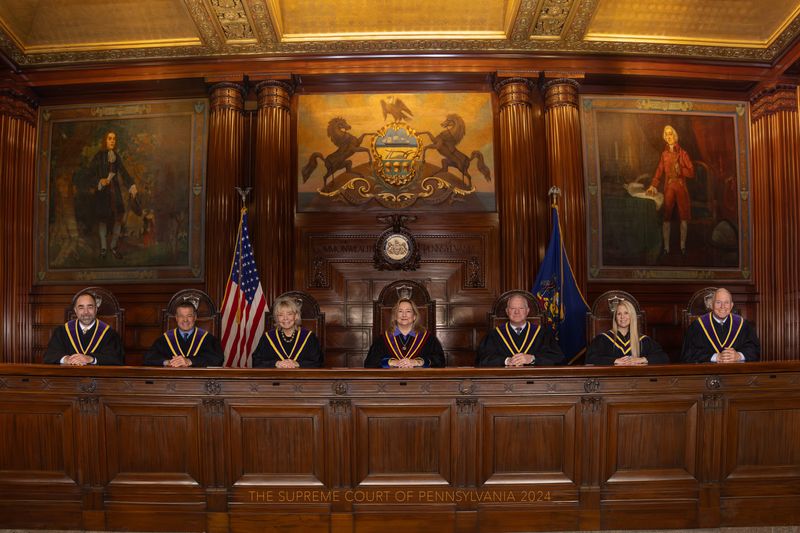
    Pennsylvania Supreme Court justices (from left): P. Kevin Bobson, David N. Wecht, Christine Donohue, Chief Justice Debra Todd, Kevin M. Dougherty, Sallie Updike Mundy, and Daniel D. McCaffery. In June, the court ordered judges to ask the state attorney general’s office to review any cases in which Larry Krasner’s office wants to alter a sentence or overturn a past conviction.Provided by Jen Barker Worley/Ad

    Office strife

    Amid that major setback came the Johnson case, which has splintered Krasner’s office.

    After Judge Diamond ordered the evidentiary hearing in May, Katherine Ernst, the chief of training in the law division, reviewed the initial motion to concede Johnson’s conviction and found multiple errors.

    Ernst worked with three other supervisors — Steven Wildberger, David Napiorski, and Peter Andrews — who all agreed the motion needed to be withdrawn.

    They met with Jaclyn Mason, the assistant district attorney who signed the original motion, and urged her to withdraw the concession and apologize to the judge. Mason argued that her supervisor, Matthew Stiegler, was largely responsible and should also have to sign the motion.

    Fearing she would be forced to take the blame, Mason quit in June. That set off a chain of events that exposed the sloppy handling of the matter.

    Mason testified in July that Stiegler, the head of the office’s Conviction Integrity Unit, colluded with defense attorneys to develop the legal rationale to have Johnson’s case thrown out.

    Mason, who was new to the DA’s office at the time of filing, testified she took direction from Stiegler, who told her that if Johnson’s claims were “good enough for the Innocence Project, it’s good enough for me.”

    To be sure, Mason bears some responsibility because she signed the motion and failed to fully investigate the defense claims. But her instinct that she would be thrown under the bus proved correct.

    The four other prosecutors testified last month that Stiegler proposed reviewing Mason’s other cases to find errors and tell the judge she was a “rogue” actor.

    Krasner backed that plan, telling the prosecutors Stiegler had a good idea.

    In the end, Krasner’s filing largely blamed Mason and said the judge “should not credit” her testimony.

    Posters featuring criminal justice analytics adorn the district attorney’s offices in May. The controversy over the handling of an exoneration case has splintered the office, Paul Davies writes.Tom Gralish / Staff Photographer

    “Mason signed and filed a brief rife with errors that supported the defense’s request for a new trial,” the filing said. “Mason has admitted that she did not review the relevant records, including the trial transcripts, before supporting overturning a murder conviction; she may have simply cribbed and modified the filings of the defense attorneys.”

    The filing said Stiegler “failed” to detect the errors, but largely lets him off the hook. Krasner even went out of his way to change a footnote in an earlier motion that initially said Stiegler “edited several drafts” of the original Johnson filing to instead say he “supervised its preparation.” Stiegler remains in charge of the Conviction Integrity Unit even after other supervisors voiced concerns about him.

    What conflict?

    Meanwhile, Krasner remains adamant his office has no conflict of interest in the Johnson case even after four supervisors withdrew from the case, arguing that they and Krasner had conflicts after the internal machinations went from the legal merits of Johnson’s case to the self-interest of protecting the office.

    Krasner’s filing waved away their arguments and said the prosecutors who left the case acted “without authority or a reasonable legal basis to do so.” He added that he “did not appreciate” his team’s “repeated, unsolicited, and wavering advice” to refer this case to the state attorney general.

    The filing said any potential conflicts have been resolved by Krasner’s recent hiring of an outside attorney, Jean Peters-Baker, a longtime prosecutor from Missouri, to handle Johnson’s case. The AG’s filing argued that Krasner’s conflict can’t be cured by handpicking an outside prosecutor.

    Krasner’s filing did not address the testimony from his own prosecutors who said he warned them there would be “consequences” if they raised the conflict issue with the court.

    The prosecutors also said that Krasner refused to refer the case to the state attorney general because he wanted to “protect the office.” Krasner’s filing said his efforts to maintain control of the case were “entirely appropriate.”

    The filing did not specifically address Krasner’s comments revealed by the supervisors who testified that he called prosecutors in the attorney general’s office “Nazis.” But it shed light on his hatred for the state AG’s office.

    The filing explained that Krasner had a “general mistrust” of prosecutors in the AG’s office “based upon decades of observing their work.” Indeed, several prosecutors Krasner pushed out after he was elected now work in the AG’s office.

    The filing added that “any animus he may have toward individual employees of that office based upon their own actions and inactions has nothing to do with whether he correctly declined to refer a case.”

    Krasner is also apparently not a fan of Diamond, whom he views as a hostile judge, according to people familiar with the matter. Krasner’s contempt stems, in part, from the fact that Diamond spent four years in the DA’s office in the late 1970s and early 1980s, and was nominated to the federal bench by former President George W. Bush, a Republican.

    So, by Krasner’s logic, is everyone who ever worked in the DA’s office before him tainted?

    Krasner’s filing contained a footnote complaining the judge only provided a week, which included a holiday weekend, to address the disqualification issue. The filing added that any ruling that removes his office from the case would be “an abuse of discretion.”

    That seems like a particular failure to read the room given the credibility issues exposed in Krasner’s handling of exoneration cases.

    Judge Diamond’s ruling will likely have a lot to say about this fiasco.

    I’m not a lawyer, but Krasner’s filing doesn’t even seem like the way to win friends and influence people, let alone succeed in a legal argument.

  • Next-door states banned ICE-cop deals. Why not Pa.? | Will Bunch Newsletter

    Next-door states banned ICE-cop deals. Why not Pa.? | Will Bunch Newsletter

    One of the many things we won’t forget about the Trump era is how much the family of POTUS 47 has enriched itself — not only the president but his children, including Donald Trump Jr., who is said to be now worth at least $500 million and growing. So it was no surprise when his second marriage to Palm Beach, Fla.’s Bettina Anderson in May was a lavish affair on two private islands in the Bahamas. What is a surprise — as we now know from some stunning work by a team of reporters from ProPublica — is who paid: a very close associate of Russian dictator Vladimir Putin. So maybe the “Russia, Russia, Russia” folks were onto something?

    If someone forwarded you this email, sign up for free here.

    Pa. Democrats are alarmed at the rapid growth of ICE-police deals. But can they stop them?

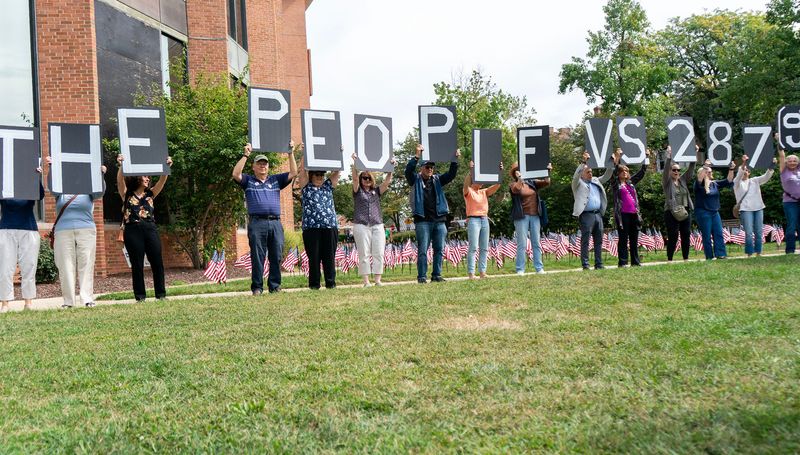
    Immigrants’ rights advocacy group members and their supporters hold up letters that read “The people vs 287(g)” during a rally last September in Doylestown against the Bucks County sheriff’s efforts to implement a 287(g) program.Daniella Heminghaus | Bucks Coun

    The big, mostly under-the-radar story around the Donald Trump regime’s relentless push to arrest and remove immigrants from the United States has been this year’s explosion of so-called 287(g) agreements. These allow local cops to act as immigration agents, working collaboratively with U.S. Immigration and Customs Enforcement, or ICE.

    But if you look at a national map to understand how these 287(g) agreements have spiked from just 135 when Trump retook office in January 2025 to more than 2,500 such pacts today, you’ll notice that one state sticks out like a sore thumb.

    In Pennsylvania, amped-up promises of federal cash incentives have meant a soaring number of localities where local beat cops are now working with ICE to make arrests — up from just a handful at the start of the year to some 130 now. Most 287(g) collaborators are in Trump-voting pockets of the Keystone State — northeast and south-central Pennsylvania, or out west near the Ohio border.

    But when you look at the rest of the Northeastern United States, the 287(g) map is very sparse. That’s partly because most local pols across the region agree with their constituents about opposing Trump’s mass deportation policies, and in several states it’s also the result of legislation that aims to ban the program altogether.

    In late August, New York enacted the Local Cops, Local Crimes Act — backed and signed by its Democratic Gov. Kathy Hochul — which calls on police departments and county sheriffs to terminate their 287(g) agreements, although several counties are still challenging the measure in court. Maryland has a similar law on the books, while New Jersey, which had long prevented such pacts under an attorney general’s directive, also passed a law this spring to codify the ban.

    There’s a growing number of Pennsylvania lawmakers who want to pass a similar law here, but there’s one big problem: Republicans. They control the state Senate in Harrisburg — currently by a 27-23 margin — and GOP lawmakers have no interest in rebuking the president on immigration policy.

    “The reason we exist alone is because of our split legislature,” State Rep. Heather Boyd, a Democrat who represents heavily immigrant Upper Darby and adjacent parts of Delaware County, told me. Last year, Boyd circulated proposed legislation to ban 287(g) deals in Pennsylvania, and while dozens of Democrats in Harrisburg are supportive, any move is on hold until a November election that could shift the balance of power. Boyd said lawmakers are wary of “starting any culture wars” ahead of the vote.

    I pressed the office of Gov. Josh Shapiro, who’s running for a second term and who is seen as a possible top contender for the 2028 Democratic presidential nomination, for his position on reining in the 287(g) program here.

    “Governor Shapiro has been clear that law enforcement should be focused on keeping Pennsylvanians safe — not sowing fear in communities or targeting people who are working hard, raising families, and contributing to our Commonwealth,” his press secretary, Rosie Lapowsky, said. She noted that the governor has barred Pennsylvania State Police from any formal ICE collaboration, and he would urge local police to take a similar stance.

    She added: “Ultimately, however, these decisions rest with local law enforcement agencies. The governor does not have the unilateral authority to dictate whether individual sheriffs or police departments enter into these agreements.”

    Many of those local law enforcement agencies have instead rushed to join 287(g), with ICE promising small-town departments an initial $100,000 cash windfall and additional incentives for training officers to make arrests and to cover the cost of working overtime on the program.

    Last week, I reported from Schuylkill County in east-central Pennsylvania, where some 14 law enforcement agencies have raced to adopt 287(g), more than any other county in the state. Since the spring, local cops there have arrested about 100 immigrants at highway stops or by assisting ICE in job site raids. The blitz has prompted rising complaints about alleged racial profiling, the handcuffing of U.S. citizens, and a sense of fear that permeates a growing Latino community in Pennsylvania coal country.

    Statistics obtained from the U.S. Department of Homeland Security by advocates show that local police in Pennsylvania have arrested and turned over to ICE more than 1,200 immigrants this year — ranking the state fourth in the nation on a list in which the other leading states are all south of the Mason-Dixon Line.

    In Washington, some of the state’s Democratic House members say they’re fed up with a lack of transparency over who is being detained and how the 287(g) program is working here. Last week, four of them — Reps. Mary Gay Scanlon and Madeleine Dean from the Philadelphia suburbs and Reps. Chris Deluzio and Summer Lee from Western Pennsylvania — sent a letter to ICE’s acting director David Venturella demanding information on why the agency’s data lack any specific details about which departments are making arrests, which is required by law.

    “It is unacceptable to me that ICE is hiding information from Pennsylvanians about who ICE is working with in their mass deportation regime,” Deluzio — viewed as a potential 2028 primary challenger to embattled Sen. John Fetterman — told me in an emailed statement.

    Deluzio also summed up the growing unease by many over the speedy growth of 287(g) in the state. “Let’s keep local law enforcement focused on local public safety, rather than enlisting them in extreme federal immigration enforcement that has ripped away American liberties and targeted so many law-abiding families,” he said. Indeed, 287(g) data guru Andrew Thrasher has reported that a whopping 70% of the immigrants arrested in Pennsylvania under the program have no criminal record or pending charges.

    “People in my community are getting smashed off the streets,” said Boyd, the Upper Darby lawmaker. That Delco township is about to vote on a local ordinance to restrict its cops from collaborating or sharing data with ICE.

    Statewide, Boyd says she’s one of about 50 House Democrats in a Welcoming Pennsylvania Caucus with an extensive list of proposed bills that would not only bar 287(g), but look to expand opportunities for noncitizens to do things like obtaining driver’s licenses or gain professional certification. But any serious action hinges on November, when Democrats are hoping a blue wave at the ballot box will flip at least three more Senate seats and create a trifecta for their party in Harrisburg.

    “Even if we can’t stop ICE from picking them up on the streets, we have to protect their rights,” Boyd said. “And right now, there are barriers to that in the state of Pennsylvania.”

    Yo, do this!

    • The issue of wrongful convictions is back in the news here in Philadelphia — but for all the wrong reasons. Some reckless and seemingly wrongheaded moves by Philadelphia District Attorney Larry Krasner and his underlings have the vultures who’ve always opposed criminal justice reform circling. The shame is that the real crisis around wrongful conviction is the thousands of mostly Black and brown folks who remain behind bars for crimes they did not commit. I cannot say enough about a book that came out earlier this year from Brown University (yay!) sociologist Nicole Gonzalez Van Cleve called Crime Fictions: How Racist Lies Built a System of Mass Wrongful Conviction. She mines the most outrageous prosecutions — often of young Black teens and boys — to make a compelling argument that wrongful convictions aren’t a flaw in the criminal justice system. They are the system.
    • If timing is everything, then you’ve got to hand it to my freshman dorm pal at Brown who became Washington bureau chief for Mother Jones, David Corn. On the heels of ProPublica’s bombshell reporting on ties between the Trump family and Vladimir Putin, Corn is out Tuesday with his newest book: How Russia Won — Donald Trump, Vladimir Putin, and the Fight for America. It promises a raft of new information about Russia’s efforts to meddle in U.S. elections in 2020 and 2024, the ongoing close links between Team Trump and Team Putin, and how the current president’s pro-Russian slant has changed the world.

    Ask me anything

    Question: What happens when [House Speaker Mike] Johnson refuses to seat newly elected Dems in January? — David Minckler (@audivita.bsky.social) via Bluesky

    Answer: Suddenly, Jan. 3 — the date the 120th U.S. Congress begins, and new members who won their November elections are to be sworn in — has become the new Jan. 6. Summer vacations are over, and the body politic is focused on the looming midterms, and — more importantly — with polls showing the Democrats on track to retake one and possibly both chambers. So there’s been a surge of speculation that the Trump-allied Johnson will do what former Vice President Mike Pence would not do on Jan. 6, 2021, and somehow fail to certify Democratic winners. That’s based on an assumption that Trump’s election-meddling tactics like stopping mail voting — blocked on Monday by the U.S. Supreme Court — won’t work, yet Team MAGA will attempt to undo the election after the fact, as was tried unsuccessfully in 2020-2021. Lawfare has published the most detailed analysis of a so-called rogue clerk theory in which Johnson appoints a MAGA loyalist to serve as House clerk with the understanding that some Democratic wins won’t be certified. Its article notes that such a gimmick is unlikely to pass muster in the courts, but that won’t necessarily stop Trump and the GOP from trying. My only guidance is: Fasten your seat belts.

    What you’re saying about …

    It turns out readers of the newsletter aren’t eager to join the punditocracy. Only a few of you responded to last week’s question about the chances of a Democratic-led Senate in 2027, and one of them was to give me a verbal tongue-lashing for even asking this. (Frequent writer Daniel Fleisher called it “a pointless exercise in predicting the unpredictable.”) That said, Cathy King has her eye on Abdul El-Sayed in Michigan, her home state, writing that “he seems to be following [Zohran] Mamdani’s playbook.” Meanwhile, in Iowa, Mary Chilton thinks the Dems’ Josh Turek has a real shot in a state won three times by Donald Trump, noting that farmers are up in arms “over the data center issue, imported beef, water pollution and the soaring cancer rates …”

    📮 This week’s question: Suddenly, everyone is talking about one thing: the Silicon Valley whistleblowers saying there’s not a trivial chance that a swarm of angry artificial intelligence agents could wipe out humankind by the end of the decade. Are you worried by this, or do you think Big AI is deflecting here to draw attention away from other issues like data center opposition or the stock market bubble? Please email me your answer and put the exact phrase “the AI threat” in the subject line.

    Backstory on that other thing that could kill humanity

    A barge on the Ohio River moves past the Mountaineer Power Plant, a coal-fired power plant near New Haven, W.Va., in March.Carolyn Kaster

    This weekend, a Bluesky post went super viral almost the second its author, a scientist named David Ho, hit the button to post it. “I resigned from ExxonMobil today,” he wrote. “I spent the last three years doing fossil fuel extraction research at both BP and ExxonMobil. Neither company is acting responsibly. They are racing to maximize extraction while the window to act closes, and gambling with our lives.”

    It’s a safe bet that many of the 13,000 people who liked Ho’s post truly believed they were sharing the words of a brave whistleblower — but instead the post was satire from a leading climate scientist based at the University of Hawaiʻi at Mānoa. Ho would never work for a Big Oil giant. He was trying instead to mimic — and thus make a point about — the recent posts from Silicon Valley whistleblowers that triggered the new freakout over whether AI robots are a threat to human existence.

    Climate change is a threat to society, and it’s even closer to reality. Maybe we should freak out about that?

    Ho absolutely has a point. Just before his post, it was announced that August had been tied for the hottest month ever recorded in the history of the planet. That doesn’t come without consequences. In the Himalayas between Nepal and Tibet, a glacier and the adjacent bedrock of mountains at 17,000 feet abruptly collapsed in a region plagued by higher-than-normal temperatures, sending a 150-foot-high cocktail of floodwater and debris down a populated valley at 100 mph. At least 1,386 were killed, and thousands more remain missing. Here in the U.S., a summer of record heat triggered wildfires across the Pacific Northwest.

    Robots didn’t do this. Humans did. Maybe that’s why humans — at least the ones that are running Donald Trump’s America — are reacting so differently to the danger of AI than the way they’re dealing, or not dealing, with the lethal pollution from burning fossil fuels. In the case of artificial intelligence, even tech leaders like Anthropic’s Dario Amodei, whose firm makes the Claude program, have urged a slowdown until we better understand the risk from rogue AI agents.

    But in the case of climate change, willful ignorance rules the day. The latest outrage from a Trump regime that’s expensively killing off wind farms while racing to extract as much fossil fuel as possible? The now ironically named Environmental Protection Agency is repealing the rule that limits greenhouse-gas emissions from power plants that burn coal or natural gas. A president who spent his summer sweltering on the golf course continues to insist climate science is “the greatest con job ever perpetrated on the world.”

    There’s one last irony here. Increasingly, the biggest new sources of climate-altering pollution are the massive data centers that power AI. An Amazon data center proposed for Pecos County, Texas, would likely become the world’s largest source of carbon dioxide if it opens, spewing out 33 tons from natural gas generators every year. Slowing down the AI arms race would also help the planet. Artificial or not, that would be intelligence.

    What I wrote on this date in 2019

    Joe Biden performing badly in a presidential debate? Say it ain’t so, Joe. We all remember what happened on that 2024 stage in Atlanta (“The night the lights went out in Georgia,” I called that one), but I was almost as unimpressed with the future 46th president during a Democratic primary debate on this date seven years ago. That put me at odds with the punditocracy. I wrote, “The cable TV news show that both channels and is most revered by Washington’s elites — MSNBC’s Morning Joe — is at times so over the top in its bias toward Barack Obama’s former wingman that it could be renamed Morning Joe Biden.”

    Read the rest from Sept. 15, 2019: “Elite D.C. pundits love moderation, low taxes on the rich … and Joe Biden. They just don’t get it.”

    Recommended Inquirer reading

    • Summertime is over, and the living is no longer easy. I published my monthlong investigation into local cops collaborating with ICE under the controversial 287(g) program in semirural Schuylkill County, northwest of Philly. I found U.S. citizens handcuffed, families hiding behind blanket-covered windows, and a community wrestling with what it means for neighbors to be treated as suspects. Over the weekend, I delved into the astonishing $850 million or so Trump World has raised in campaign contributions since his reelection — despite the fact that he’s barred from seeking office again. You don’t think he has a scheme to pocket the excess cash, do you?
    • Dante only had Nine Circles of Hell, but the downward spiral of Pennsylvania Sen. John Fetterman seems to be never-ending. It’s one thing to profoundly disagree on a political and moral issue such as the war crimes of Israel’s right-wing government in Gaza, but recent reporting suggests things are far, far worse in Fettermanland. No senator — regardless of how much their ideology has flip-flopped — should be blowing off their home-state constituents, or clocking out of committee hearings after five minutes. The Democratic senator’s surprise video appearance at the midterm miniconvention of Donald Trump’s GOP, introducing his new best buddy, Republican Sen. Dave McCormick, did nothing to dispel the sense of utter betrayal among liberal voters who now see his winning 2022 campaign as a big lie. The next two years will be crazy as Democrats line up to primary Fetterman, amid rumors the hoodie-clad politico might run as an independent or even change parties. The only sure thing is that The Inquirer will be there for every move. Join us. Subscribe!

    By submitting your written, visual, and/or audio contributions, you agree to The Inquirer’s Terms of Use, including the grant of rights in Section 10.

  • State prosecutors say DA Larry Krasner’s office should be kicked off a contentious federal court case. Krasner disagrees.

    State prosecutors say DA Larry Krasner’s office should be kicked off a contentious federal court case. Krasner disagrees.

    The Pennsylvania Attorney General’s Office said in court documents Tuesday that District Attorney Larry Krasner should be barred from continuing to oversee a controversial post-conviction case in federal court — and that his office should be kicked off the case as well.

    In a brief filed with U.S. District Judge Paul S. Diamond, state prosecutors said Krasner’s office should not be allowed to continue to weigh in on whether a man’s murder conviction should be overturned. In recent months, prosecutors wrote, inner-office drama about the case has consumed Krasner’s office, and “the DA placed his personal interest in protecting the office above the Commonwealth’s interest.”

    But Krasner’s office countered in its own filings Tuesday that that was not true.

    Without denying that the case had caused contentious internal disagreements between Krasner and his staff, Assistant District Attorney Thomas Gaeta wrote that Krasner had handled the matter in legally appropriate ways, and that his office should be allowed to continue overseeing it.

    And even though some of Krasner’s own staffers have accused him of questionable conduct in the case — including by saying he told them to “protect the office” and that they could face “consequences” if they didn’t — Gaeta wrote Tuesday that Krasner had taken pains to ensure the case was handled “with competence and integrity.”

    “DA Krasner has taken no action inconsistent with his obligation to fairly represent the Commonwealth on behalf of the people of Philadelphia, despite the intemperate comments witnesses claimed he made,” the document said.

    The dueling filings came a week after the end of testimony in a multiday hearing in front of Diamond, during which the judge sought to learn more about how various attorneys connected to the case have behaved while it has been moving through federal court.

    The underlying case began as a routine post-conviction matter, as Dennis Johnson — found guilty of second-degree murder in 2009 — sought to have his conviction overturned.

    But in recent months, the case has led to a series of explosive revelations about the inner workings of the district attorney’s office. Many of the accusations have come from four prosecutors who said they advised Krasner to refer the case to the attorney general’s office, which, in their telling, led Krasner to respond angrily, or by suggesting tactics they thought were legally inappropriate.

    Those tactics, they said, included keeping the case in-house, potentially seeking to assign blame to a line prosecutor while protecting her supervisor, and taking steps to “protect the office” in court.

    Diamond, at one point during the proceedings, suggested he viewed the allegations as potentially criminal, saying if they were true, they could amount to perjury, conspiracy, or obstruction of justice. He did not specify who he believed might be at fault.

    The attorney general’s office wrote Tuesday that the testimony from Krasner’s staff in the case demonstrated that he had acted in ways that were self-motivated or otherwise disconnected from the merits of the underlying petition — a situation that, in court cases, is considered a conflict of interest.

    And that conflict, wrote the state prosecutors — Susan E. Affronti and John J. Boscia — would inevitably extend to anyone working for Krasner, particularly after his threat of “consequences” for those who did not follow his orders.

    “At that point, any attorneys working under DA Krasner would themselves be subject to the conflict, knowing that they were required, on the one hand, to do what the boss wanted, and, on the other hand, to do what professional ethics required,” they wrote.

    Krasner, in his office’s filing, said that was not so.

    Although the filing acknowledged that Krasner “plainly did not appreciate [his staffers’] repeated, unsolicited, and wavering advice” to refer the case to state prosecutors, he said their recommendation was “inexpert and legally unsupported.” And he said he had consulted with legal experts who agreed with him, including one whose written opinion his office attached to Tuesday’s brief.

    He also reiterated that he had hired an outside attorney to handle the case on his office’s behalf: Jean Peters-Baker, a longtime prosecutor from Missouri who previously led the prosecutor’s office in the county that includes Kansas City.

    In addition, Krasner’s filing said, “as the elected chief prosecutor, the decision on whether or not to refer the case was entrusted to him. It was not a decision for his employees to make, or attempt to force him into making, via unauthorized and legally inappropriate public pleadings.”

    His office’s brief did not deny another notable allegation from his staff: that when they suggested he refer the matter to the attorney general’s office, he described that office’s lawyers as “Nazis.”

    While the filing did not address the use of that particular term, it did say Krasner had “general mistrust” of many people working in that office “based upon decades of observing their work” in the legal system — including, in his view, people who sought to secure or defend wrongful convictions. Some lawyers who now work in that office were fired by Krasner just days after he took office in 2018.

    “DA Krasner’s view (i.e. that illegally and willfully acting to convict and incarcerate an innocent person for decades is akin to kidnapping, torture, or other war crimes) is well known,” the filing says. “But any animus he may have towards individual employees of that office based upon their own actions and inactions has nothing to do with whether he correctly declined to refer a case.”

    The attorney general’s office, in its filing, said Krasner’s refusal to send the case to an office he disliked was another demonstration of how his judgment in the matter had been flawed.

    “His actions, and his words, thus demonstrate that he acted on the basis of personal animus, not the interests of the Commonwealth,” the filing said.

    Johnson’s attorneys, meanwhile, also filed a brief Tuesday in which they took no position on who should serve as the prosecutor in his ongoing case. Their only request was that Diamond appoint only one agency to handle it moving forward, rather than forcing him to litigate his petition against prosecutors from both the city and the state.

    The decision on whether to allow Krasner’s office to continue handling the case will now fall to Diamond. The judge has not indicated how quickly he might rule.

  • Who is the federal judge overseeing the case roiling Philly DA Larry Krasner’s office? And what will he do next?

    Who is the federal judge overseeing the case roiling Philly DA Larry Krasner’s office? And what will he do next?

    Nearly a decade ago, when U.S. District Judge Paul S. Diamond was asked to determine the fate of a prosecutor who admitted breaking the law, he did not hold back.

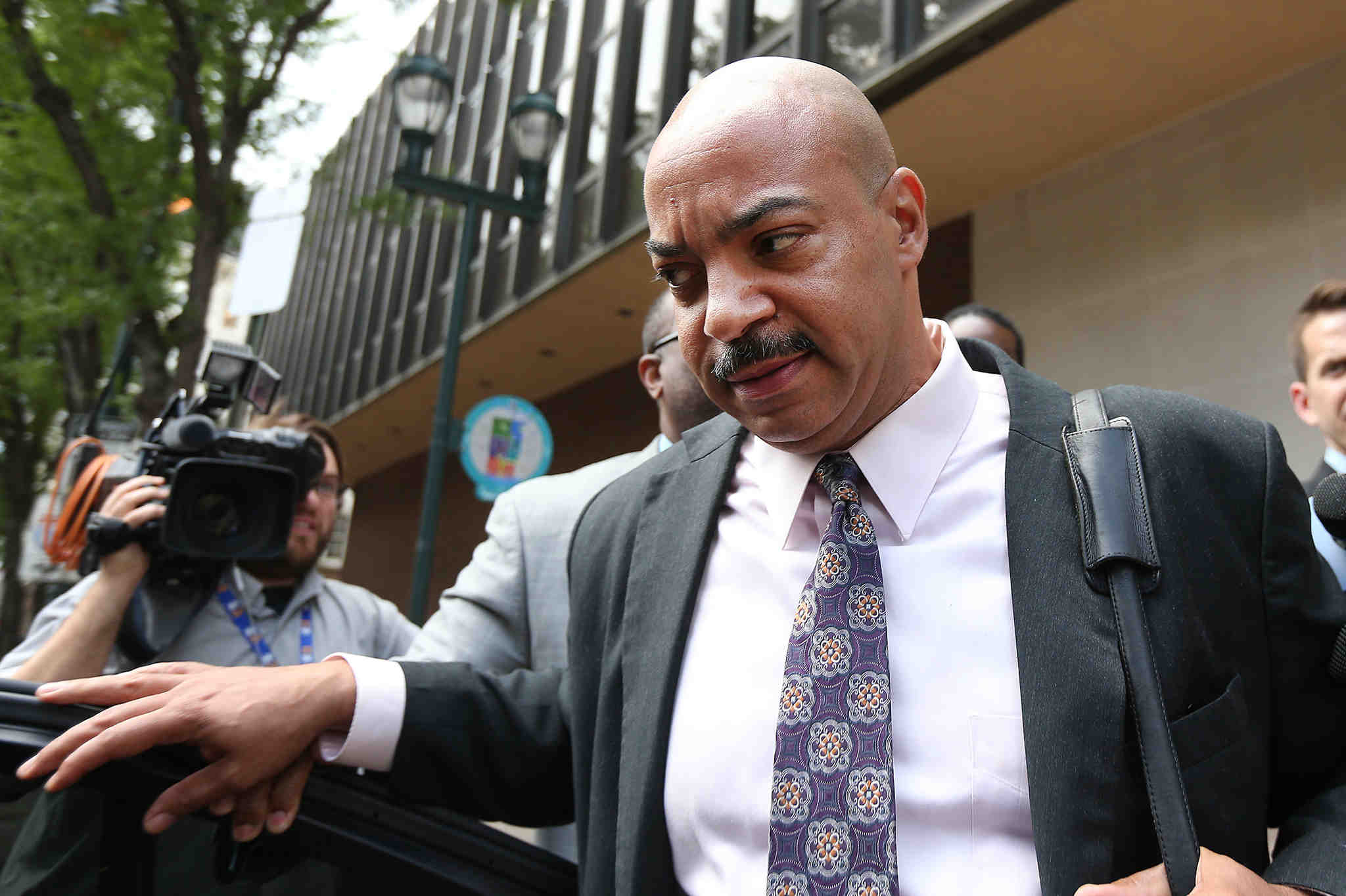
    Just moments after then-Philadelphia District Attorney Seth Williams pleaded guilty in a public corruption case, Diamond had Williams handcuffed and hauled off to jail to await sentencing.

    Then, a few months later, Diamond imposed the maximum prison term allowed by law — five years. And he upbraided Williams as a “criminal” who surrounded himself with “parasites” and “fed his face at the trough” of public money.

    Then-District Attorney Seth Williams leaves the federal courthouse in 2017.DAVID MAIALETTI / Staff Photographer

    Now, Diamond is overseeing a new case with a new set of accusations against a different district attorney.

    The allegations against top prosecutor Larry Krasner have come as part of a dispute with staffers over how to handle a case, and Diamond has already made clear that he views the assertions as serious — suggesting in a hearing last month that he believed some could amount to federal crimes.

    “If what they say is true, potential wrongdoing abounds,” Diamond said, listing off offenses including perjury, conspiracy, and obstruction of justice.

    To some area legal observers, the pointed remarks were reflective of Diamond’s reputation as a stern, no-nonsense jurist — particularly when it comes to assessing the conduct of fellow lawyers.

    In the last year, Diamond had a hand in federally disbarring one of Krasner’s staffers and suspending another for three years.

    Then-Assistant District Attorney Paul George (back left) was disbarred in federal court in 2025.JESSICA GRIFFIN / Staff Photographer

    In 2017, while the case against Williams was still pending, he ordered it to proceed to trial just months after the indictment was unsealed — a highly unusual timetable for a federal case, but one the judge said was necessary because of its “obvious and possibly calamitous effect on the city’s criminal justice system as well as the city itself.”

    And even in a comparably trivial legal dispute in 2014, Diamond was unabashedly critical of a lawyer who sued over the rights to a song by the R&B artist Usher, writing: “It is difficult to convey the poisonous atmosphere created by [the lawyer’s] continual belligerence.” The lawyer was ultimately suspended from practicing in the region’s federal courts for three months.

    Samuel Stretton, a veteran defense lawyer who often handles legal ethics cases, said Diamond “has high standards. And if someone violates, in his mind, those high standards, he takes a very tough position on them and voices that opinion quickly.”

    Still, Stretton said he thinks Diamond’s principled views are sometimes expressed in overly harsh ways.

    “He has a strong belief in ethics, and lawyers having those especially, and he feels he must enforce them,” Stretton said. “But sometimes his manner of enforcing them is overstated, and he’s abrupt and a little bit of a bully.”

    The question now facing Krasner is what actions Diamond might take in the post-conviction case pending in his courtroom — and whether any could lead to consequences for the city’s DA.

    District Attorney Larry Krasner in a file photo from 2023.Allie Ippolito / Staff Photographer

    Who is Paul Diamond?

    Diamond, 73, was appointed to the region’s federal bench in 2004 by then-President George W. Bush. He was unanimously confirmed by the U.S. Senate.

    Before his judicial nomination, he spent nearly two decades in private practice. He began his career as an assistant district attorney in Philadelphia in the late 1970s, and graduated from the University of Pennsylvania law school and Columbia University.

    While he worked in private practice, Diamond focused on civil litigation, white-collar criminal cases, and disciplinary matters, according to an online biography. And his clients were sometimes unique.

    In 1994, he represented a South Philadelphia candy making company that pleaded guilty to safety violations after an unguarded taffy-pulling machine killed one of its workers.

    A few years later, he represented Lower Merion Township when the Barnes Foundation sued and accused township officials of using racism and discrimination to try to hurt the foundation. The suit was dismissed, and a defiant Diamond was later quoted in The Inquirer saying he planned to bill the Barnes around $1 million to cover the township’s legal fees.

    “This is a claim that should never have been filed; it’s outrageous that it was ever filed, and now the Barnes is going to see the mother of all fee petitions,’’ he said.

    A consistently exacting judge

    Like all federal court judges, Diamond oversees a mix of criminal and civil cases. And even though not all receive significant public scrutiny, Diamond is viewed by some as a consistently exacting judge.

    In 2012, for example, he ordered a 60-year-old grandmother jailed for using her dead mother’s Social Security checks to support her grandchildren.

    “Did it ever occur to you to go out and get a job?” Diamond asked the woman. “Did it ever occur to you that the way to help your grandchildren is not to commit a series of endless federal frauds?”

    The federal courthouse in Philadelphia.TYGER WILLIAMS / Staff Photographer

    Last year, he was subtly critical of the Trump administration in court documents, writing that it was using competing interpretations of the law to try to justify its policy to detain nearly all undocumented immigrants.

    It is “difficult to credit the Government’s squarely contradictory position here,” Diamond wrote.

    The Krasner matter that ended up in his courtroom arrived as a routine post-conviction case: Dennis Johnson, who was found guilty of second-degree murder in state court in 2009, filed a petition in federal court seeking to have his conviction overturned.

    The petition was filed more than 10 years ago, but it wasn’t until 2022 that the origins of the current controversy would begin to take shape.

    A frenzy within the DA’s office

    That year, after the district attorney’s office had spent years opposing Johnson’s bid for relief, prosecutors changed course.

    Then-Assistant District Attorney Jaclyn Mason filed a brief agreeing with Johnson’s lawyers that his trial counsel had been ineffective. And she said her office had discovered problems or inconsistencies with testimony from key witnesses, leading her to recommend that the conviction be overturned.

    The case was first sent to a federal magistrate to review, and Judge Lynne A. Sitarski — relying on Mason’s brief — agreed with her position.

    But Sitarski’s recommendation was not binding — the final call would fall to Diamond. And this spring, Diamond signaled he was not inclined to accept the assertions in Mason’s brief. He scheduled an evidentiary hearing to hear testimony that could corroborate — or undercut — the office’s conclusion.

    That triggered a frenzied sequence of events inside the DA’s office, prosecutors have since testified.

    District Attorney Larry Krasner speaks at a news conference while flanked by two prosecutors who have since testified about actions he took in a controversial post-conviction case: David Napiorski (left) and Peter Andrews.Tom Gralish / Staff Photographer

    To prepare for the hearing, Mason’s supervisors in the law division reviewed her brief and found a series of what they called “material misstatements.” They decided they needed to try to withdraw Mason’s filing and apologize to Diamond for the mistakes. And they asked that Mason sign on to the new filing with them.

    But Mason declined and resigned. She’s since said she only filed her brief at the urging of her then-boss, Matthew Stiegler, who she said had done nothing to review the case himself but instead was “colluding” with Johnson’s defense attorneys to secure his release from prison.

    Mason said she didn’t want to become a scapegoat for Stiegler or the office. And she accused her colleagues of attempting to force her to lie to protect the institution.

    Her former supervisors have denied that, saying that once they noticed the errors in her brief, they were ethically obligated to correct the record in front of Diamond.

    But as they strategized their approach, they said, they encountered consistent resistance from an unusual source: Krasner.

    In their telling, Krasner was ardently opposed to asking the state attorney general’s office to take over the case — something the supervisors generally agreed was appropriate because of the drama surrounding the matter within their office.

    Assistant District Attorney David Napiorski, head of the office’s law division.Alejandro A. Alvarez / Staff Photographer

    And according to the supervisors — Katherine Ernst, Steven Wildberger, David Napiorski, and Peter Andrews — Krasner made a series of notable statements during their discussions, including that he wanted to handle the case in a way that would “protect the office,” that those who didn’t follow his orders would face “consequences,” and that he wanted to keep the matter from the attorney general’s office because he viewed its staffers as “Nazis.”

    Several potential paths forward

    All of those assertions were aired in Diamond’s courtroom in recent weeks, after the judge decided the evidentiary hearing in Johnson’s case would, for now, focus on the conduct of the prosecutors involved, rather than the merits of his petition. The judge said he’ll evaluate that aspect of the case later.

    The attorney conduct portion of the hearing concluded last month, leaving Diamond with several choices about what to do with their startling testimony, legal observers said.

    The most immediate issue is whether he’ll allow the DA’s office to continue handling Johnson’s case. Given the dysfunction prosecutors testified to, he could ask the attorney general’s office to take over instead.

    But Krasner — who was not called to testify and who has said he can’t comment on the case while it’s pending — will likely have the opportunity to propose his own solution in court documents. In earlier filings, he said he engaged an outside lawyer to handle the matter on the office’s behalf — which, in his view, would insulate the case from the issues roiling his office, and preclude the need to involve state prosecutors.

    Beyond that question, however, the testimony about conduct by the DA’s office could, in theory, lead to other consequences.

    District Attorney Larry Kranser was not called to testify in front of U.S. District Judge Paul S. Diamond in the post-conviction case that Diamond is overseeing.Heather Khalifa / Staff Photographer

    Stretton, the defense lawyer and ethics expert, said Diamond could refer the matter to the federal court’s disciplinary committee. There, a panel of judges could seek to determine if any of the prosecutors involved — including Krasner — behaved in a way that might warrant disciplinary action, such as a suspension or disbarment from practicing in federal court.

    That process, which is largely confidential, would also likely be lengthy: In an earlier federal case that led to sanctions for two supervisors in Krasner’s office, a federal judge said he was seeking to initiate the disciplinary process in 2022, and punishments were not decided for another three years.

    After that, Stretton said, if discipline is imposed in federal court, the matter would likely be forwarded to the state’s disciplinary board, which would make its own determination of possible penalties. That could also be an extended process.

    And in what would likely be the most serious scenario, Stretton said, Diamond could refer the matter to federal or state prosecutors — or prosecutors could decide to pursue it themselves — to determine if crimes were committed. That, too, would almost certainly not be resolved quickly.

    Stretton said any of those processes — and any potential outcomes — could also be further delayed or complicated because of inevitable disputes or competing interpretations over what lawyers did. In his view, for example, ethical rules generally allow a supervisor such as Krasner to pursue a legal strategy opposed by his subordinates as long as he had a “reasonable” argument for doing so.

    And the testimony that unfolded before Diamond has already demonstrated that different lawyers had different recollections of what occurred: Mason accused her bosses of encouraging her to participate in a cover-up, but the supervisors said that wasn’t true.

    The supervisors, meanwhile, accused Krasner of trying to get them to violate their ethical obligations, a contention he has similarly denied.

    For now, the case remains on hold as Diamond weighs how to move forward. He has asked lawyers in the case to file additional briefings by Tuesday about how they believe the case should proceed.

    Beyond that, Diamond has not indicated how quickly he might rule on the matter.

  • A Philly man who was serving life in prison for murder will be released after yearslong legal appeal

    A Philly man who was serving life in prison for murder will be released after yearslong legal appeal

    A man serving life in prison for a 2010 first-degree murder conviction will be released from prison after pleading no contest to lesser crimes for his role in a fatal North Philadelphia shooting.

    Rasheem Hall, 42, was granted the right to a new trial in April after a judge agreed with his defense attorney that prosecutors had withheld evidence that could have aided Hall’s ongoing effort to appeal his conviction.

    They said prosecutors’ main witness had been an unreliable jailhouse informant who had recanted statements he’d made about Hall’s involvement in the 2007 shooting that left 34-year-old Ronald Kennel dead.

    Rather than retry the case, however, prosecutors agreed to conditions Friday that allowed Hall to plead no contest to aggravated assault and a firearms violation. During the hearing, Common Pleas Court Judge Diana L. Anhalt approved a sentence of nine to 18 years in prison in exchange for Hall’s plea.

    Because he had already served that time in custody, he could be released as early as Friday afternoon, she said.

    Hall’s family members reacted to the news with a mixture of smiles and tears.

    “I’m just happy for Rasheem, I’m just happy for his family,” Hall’s defense attorney, Robert Gamburg, said after the hearing.

    The development comes as District Attorney Larry Krasner’s office faces scrutiny of its handling of post-conviction cases. Last week, a federal judge said actions city prosecutors took in another case could amount to perjury, conspiracy, or obstruction of justice.

    Friday’s hearing ended a yearslong campaign by Hall to appeal his conviction.

    That effort centered on issues with Deric Williams, an informant who was recorded on a jailhouse phone line telling his mother he had wrongfully implicated Hall in the crime and that he had tried, unsuccessfully, to recant his statements to detectives.

    Earlier this year, Gamburg told a judge prosecutors had failed to hand over that recording of Williams to Hall in 2013 during his appeal, though prosecutors contended that jurors had heard similar remarks from Williams at Hall’s 2010 trial.

    Judge Rose Marie DeFino-Nastasi sided with Hall, saying that in addition to the phone recording, emails between prosecutors with details of their relationship with Williams should have been turned over to his defense team.

    On Friday, Assistant District Attorney Trey Flynn told Anhault that while prosecutors accepted Hall’s plea, they stood by their earlier assertions about the case.

    He said prosecutors would have told jurors that Hall and another man, David Satchell, only fired guns during the May 20, 2007, incident after being shot at by another person first.

    Hall’s gunfire struck a bystander, Charlene MacDonald, in the leg, Flynn said.

    “It was individuals firing at Hall who actually struck Ronald Kennel, who was standing behind them,” Flynn said.

    Still, prosecutors would have argued that Hall was responsible for Kennel’s death via transferred intent, Flynn said. The legal theory holds a defendant responsible for injury or death based on their intent to harm, regardless of who was actually affected.

    Flynn said he had spoken with Kennel’s brother “at length” about prosecutors’ decision to accept Hall’s plea. And he said District Attorney Larry Krasner agreed with the decision as well.

    Outside the courtroom, Hall’s family members were moved to tears by his imminent release and return home for the first time since his early 20s.

    “It’s been almost 19 years,” said Hall’s father, Ronald. “He’s got a daughter, he’s got nieces, nephews. People that passed away. It’s a lot of time lost, time you can’t get back.”

    Ronald Hall said his son only learned of the opportunity to plea to lesser charges last week, and that the gravity of the news is still fresh.

    Naturally, Hall said of his son, “he’s ecstatic.”