Tag: Larry Krasner

  • Forceful Pa. Supreme Court ruling constrains one of DA Larry Krasner’s signature initiatives

    Forceful Pa. Supreme Court ruling constrains one of DA Larry Krasner’s signature initiatives

    The Pennsylvania Supreme Court’s decision to limit Philadelphia prosecutors’ ability to seek to overturn old convictions not only took aim at one of District Attorney Larry Krasner’s defining initiatives — it altered the work of an office he will one day leave behind.

    The high court’s ruling adds an extraordinary new layer of oversight to an issue that helped make Krasner one of the nation’s most prominent progressive prosecutors: correcting what he has described as injustices of decades past.

    But the newly established changes to the appellate processes in Philadelphia will outlive Krasner’s tenure and reshape the way the office reviews post-conviction cases for years to come. It could not only apply to high-profile exonerations in murder convictions, but also extend to cases that even Krasner’s more conservative predecessors were eager to undo, like drug and gun convictions linked to corrupt cops.

    It also deepens a yearslong conflict between Krasner and his critics in the justice system. Several justices, in dissenting opinions, raised concerns that the change could inject politics into a high-stakes legal process.

    Since taking office in 2018, Krasner has made post-conviction review a centerpiece of his reform agenda. His office said it has overturned the wrongful convictions of 59 people — almost all of them Black men. It has also struck deals that allowed defendants to plead guilty to lesser charges in dozens of other cases in which prosecutors did not say those charged were innocent, but agreed their original trials were unfair, often because of prosecutorial or police misconduct.

    But the high court, in a forceful majority opinion written by Justice Kevin Dougherty, said Krasner’s prosecutors had misled judges in several of those cases, that the prosecutors were not acting as the necessary adversaries to test the cases’ merit, and that the courts could no longer trust his prosecutors’ word when deciding whether to overturn a conviction.
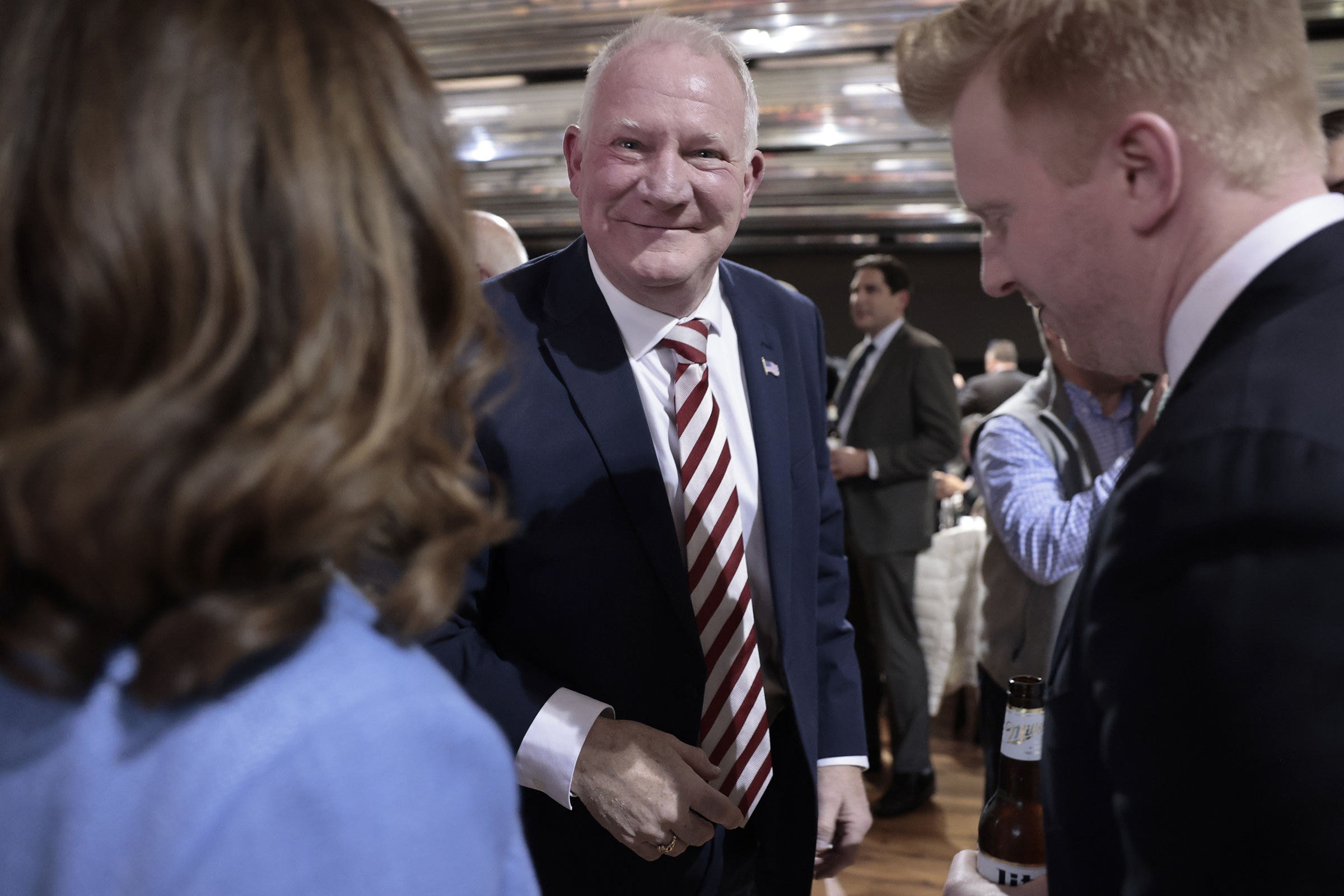
    Pennsylvania Supreme Court Justice Kevin Dougherty greets supporters during an election night party in November 2025.Elizabeth Robertson / Staff Photographer

    Moving forward, the justices ruled, if the district attorney’s office agrees to alter a sentence or overturn a past conviction, judges must ask the state attorney general’s office to review the case before proceeding. The ruling applies only to Philadelphia; prosecutors in every other Pennsylvania county can continue to evaluate cases on their own.

    Krasner declined to comment this week. While it was not immediately clear whether he had a legal path to challenge the ruling, he said in a video statement last week that it “undermines the value of a vote in Philadelphia.”

    He compared criticism of his post-conviction review efforts to attacks that have been leveled against other social and racial justice movements.

    “We know where we are in the fight,” he said, “and once we get past the fight, we all win.”

    But the Supreme Court’s ruling sharply curtails part of that effort, and it is expected to significantly reshape — and likely slow — one of the most consequential parts of Krasner’s agenda.

    It was “an extraordinary remedy for something the court thought was an extraordinary problem,” said Aaron Marcus, chief of the appeals division at the Defender Association of Philadelphia.

    But, he added, “the remedy might go beyond what was necessary in the court’s mind to address the problem in front of it.”

    While the decision gives the attorney general broader authority to intervene when city prosecutors support post-conviction relief, it remains unclear how often — or when in the process — it will weigh in.

    Brett Hambright, a spokesperson for the office of Attorney General Dave Sunday, a Republican, said in a statement this week that officials were still evaluating the order and its potential impact. Because of the many unknowns, he said, “it may be difficult to fully assess … until the process truly begins.”

    Still, on Wednesday, Sunday’s office filed a notice of intervention in a murder case that Philadelphia prosecutors helped overturn just last month — setting up a potential test case for the new legal landscape around the issue.

    Marcus, of the Defender Association, said the ruling could cause confusion — and delays — in cases that the conviction integrity unit does not typically handle, such as weapons and drug-possession cases, as well as more routine matters, like correcting prison sentences that had been miscalculated.

    “There’s already too few attorneys with too little time and insufficient resources,” he said.

    Marissa Boyers Bluestine, assistant director of the Quattrone Center for the Fair Administration of Justice at the University of Pennsylvania’s law school, said that because the courts did not set a timeline for how quickly the attorney general’s office must review each case, the added oversight could draw out an already yearslong appellate process filled with delays. And, she said, it could create “confusion on who exactly is representing the state.”

    “Now you have two entities who are potentially in opposition to each other,” she said. “It raises confusion and diminishes the real trust in the criminal legal system.”
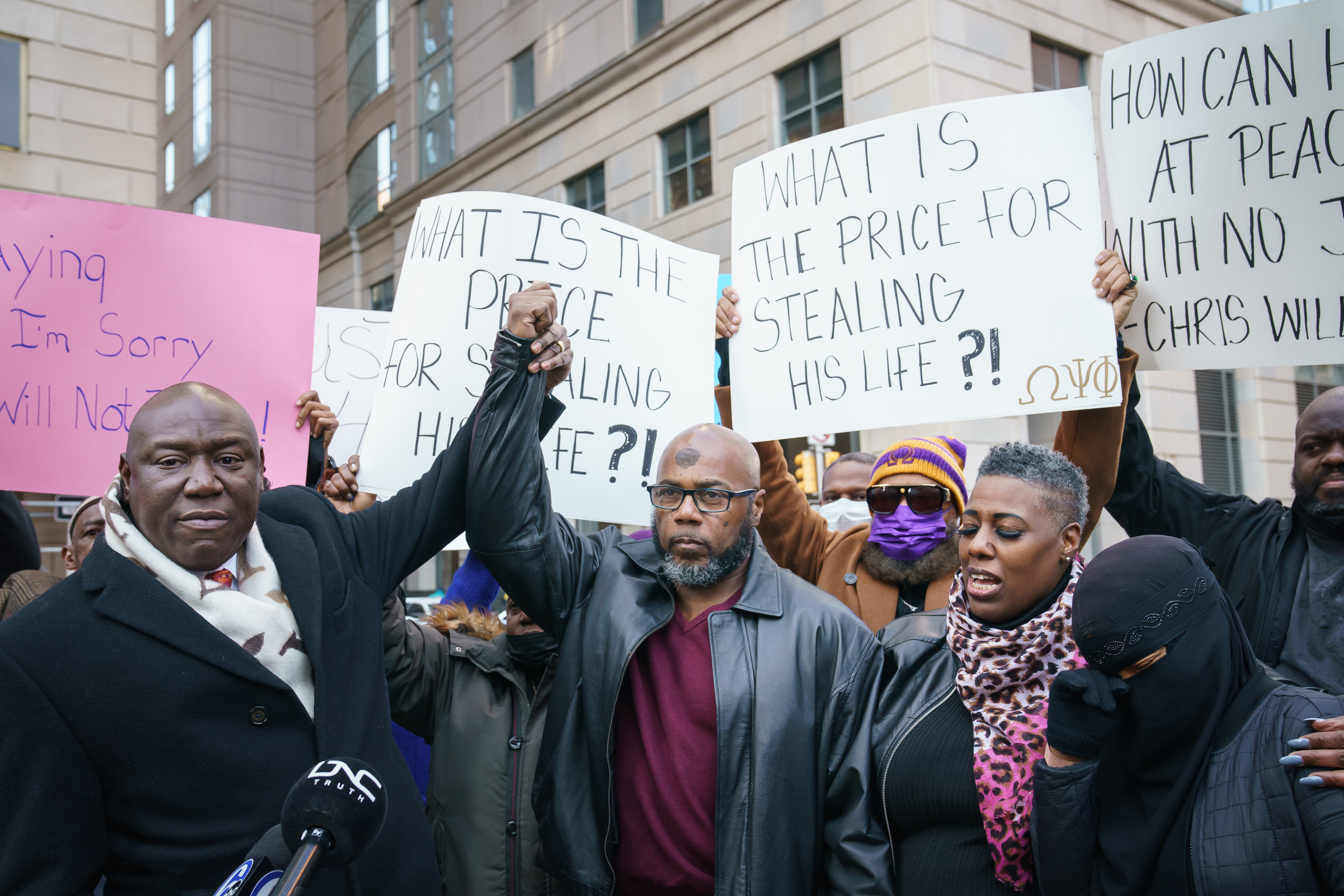
    Dozens of people have been released from prison in Philadelphia after prosecutors agreed their trials were unfair. In this 2021 photo, Christopher Williams, center, gathered outside the Criminal Justice Center to announce a lawsuit against the city of Philadelphia, police and prosecutors. Williams was exonerated and released from prison in February 2021 after more than 25 years on death row.JESSICA GRIFFIN / Staff Photographer

    Several defense lawyers who handle post-conviction cases were similarly concerned about the unknowns of the ruling — and said the majority opinion did not address the decades of problematic police and prosecutorial behavior that led to this moment.

    Michael Wiseman said Krasner’s office has opposed most of his clients’ petitions over the years. Like other district attorneys before him, Krasner is not perfect, Wiseman said, but the high court “is vexing in its willingness to ignore all the times when Krasner’s office got it right.”

    At the same time, he said, “It is similarly vexing for not recognizing the imperfections of past administrations, who, unlike Krasner, defended every conviction without regard to innocence or unconstitutional convictions.”

    Adding to the complexity of the issue, some justices believed the majority’s decision could threaten to reignite long-running feuds between Krasner and prosecutors he has clashed with in the past.

    In one of his first actions after taking office in 2018, Krasner fired dozens of veteran prosecutors, effectively describing them as unfit to serve in a reform-oriented administration. Some who were ousted then went on to work in the state attorney general’s office, and Krasner, in a remark that was widely criticized, jokingly referred to that office as “Paraguay,” a South American country where Nazis fled after World War II.

    Justice Christine Donohue warned in a dissenting opinion that the majority’s ruling could threaten to inject personal disputes between rival lawyers into a process that is supposed to be unbiased. In addition, she said, giving the attorney general’s office authority in those cases could give some state prosecutors a role in defending convictions they helped obtain when they worked for the city.

    “This is in stark contrast to acting as a friend of the court,” she said.

    Ben Lerner, a former Philadelphia Common Pleas Court judge and former chief defender, said Krasner deserves credit for creating a meaningful system to revisit convictions — something he said previous administrations largely failed to do.

    But state and federal courts have repeatedly raised concerns about the office’s methods, he said, including allegations that prosecutors excluded investigating officers and former trial attorneys from parts of the review process, and focused disproportionate attention on cases tied to prosecutors Krasner had clashed with during his years as a defense lawyer.

    “In my view, it’s a shame,” he said, “because this was basically a very important thing that he was doing that previous district attorneys had had no interest in doing.”
  • Two Philadelphia pastors charged with sexual exploitation, corruption of minors

    Two Philadelphia pastors charged with sexual exploitation, corruption of minors

    Two Philadelphia pastors groomed and sexually exploited two teenage boys, authorities say, paying them for explicit videos and sharing the images with each other in a scheme that stretched across years and may involve additional victims.

    Isaiah Banks, 30, and Bryan Jackson, 42, are charged with sexual abuse of children, sexual exploitation of children, conspiracy, corruption of minors, and related crimes, District Attorney Larry Krasner said Tuesday.

    Banks served as pastor of Second Pilgrim Baptist Church in Francisville, while Jackson served as a pastor at Garden of Prayer World’s Prayer Center in Strawberry Mansion, Krasner said.

    Both men were arrested, arraigned, and released from jail after posting bail — $600,000 for Banks, and $100,000 for Jackson. Prosecutors said they had sought higher bail, but their request was denied.

    Efforts to reach Banks’ attorney, Richard Kravets, were unsuccessful. No attorney for Jackson was listed in court records.

    The investigation into the men began in April after police received a report that a teen had been solicited by Banks through text messages and social media to send sexually explicit videos in exchange for money or food, authorities said. The messages, they said, came to light after a witness checked the boy’s phone.

    Prosecutors said Banks shared images he received with Jackson, who they said had also posed online as a female to solicit additional images and videos from the victim.

    As investigators dug deeper, authorities said, they found evidence suggesting that Banks and Jackson had received sexually explicit images and videos from other victims, dating back to February 2024.

    “A position of trust, when it is abused, has its criminal consequences,” Krasner said during a news conference to announce the charges.

    He declined to provide additional details about the case, including the victims’ ages and genders. He said that the investigation is continuing and that releasing additional information could discourage other victims or witnesses from coming forward.

    Court records, however, offer a more detailed portrait of the alleged crimes.

    The victims, both boys, were 15 and 16 years old when investigators began their inquiry, according to the affidavit of probable cause for Jackson’s arrest. None of the crimes is alleged to have occurred on church grounds.

    In the document, police described what they said was a yearslong pattern of communications, photographs, and videos showing Banks and Jackson cultivated transactional relationships with the boys.

    Messages recovered from the men’s phones were also “littered with images and videos of nude men,” and photographs “from a barbershop and church events,” according to the affidavit.

    By May, as the police investigation was underway, the tone of the messages between the two men had shifted, police said: In one message, Banks warned that one of the boys was rattled by the involvement of authorities.

    During an interview with detectives, Banks acknowledged knowing the boys for more than a decade, and said Jackson was a friend, according to the affidavit. He told detectives he typically paid $50 for videos that the boys sent, the document said.

    Efforts to reach officials at the church and prayer center where the two men worked were unsuccessful Tuesday.

    According to Second Pilgrim Baptist Church’s website, Banks was elected senior pastor in 2017. The website describes him as a leader who is “loved genuinely by our congregation because of his passion to see our church thrive and because of his genuine care and love for all those who are a part of our church.”

    Garden of Prayer World’s Prayer Center does not appear to have a website. An Instagram account appearing to belong to the church features photographs of Jackson promoting its events.

    Krasner asked that anyone with additional information contact the district attorney’s office victim and witness services unit at 215-686-5709; the police department’s special victims unit at 215-685-3251; or the Philadelphia Center Against Sexual Violence hotline at 215-985-3333.

  • A former supervisor in DA Larry Krasner’s office has been suspended in federal court

    A former supervisor in DA Larry Krasner’s office has been suspended in federal court

    A former supervisor in Philadelphia District Attorney Larry Krasner’s office has been suspended from the region’s federal courts, a development that came just one day after the Pennsylvania Supreme Court sharply curtailed the office’s ability to seek to overturn old convictions and accused its lawyers of misleading judges.

    Nancy Winkelman was suspended for three years by a panel of federal judges who found that she was complicit in efforts to mislead a federal judge while seeking to overturn the death sentence of a man convicted of killing an East Mount Airy couple in the 1980s and allow him to serve life in prison instead.

    The ruling, made public this week, adds to the mounting judicial scrutiny of post-conviction work in Krasner’s office. On Tuesday, the state Supreme Court imposed remarkable new restrictions on prosecutors’ efforts to reverse potentially problematic convictions.

    In a forceful and scolding opinion, the high court said Krasner’s office misled judges, submitted false statements, and “violated its duty of candor” in asking a judge to vacate a 2004 murder conviction.

    The court wrote that prosecutors’ actions in the case were part of a troubling pattern of conduct in seeking to overturn murder convictions and ordered that, going forward, the state attorney general’s office must be asked to review and weigh in on all such cases.

    The panel of federal judges, in ordering Winkelman’s suspension, echoed some of those concerns.

    Winkelman, who had led the office’s law division since 2018 before moving into a part-time role handling legal matters in state court last year, did not respond to a request for comment Wednesday. Her attorney, Andrew Hellman, declined to comment.

    Winkelman is appealing the decision. In an earlier request that the findings remain under seal, Hellman described the ruling as having “findings and conclusions infected by serious errors.”

    Krasner said in a statement Wednesday night that Winkelman is an exceptional attorney who left a lucrative private law practice to serve the public. He said she always showed “exceptional competence and integrity and contributed mightily to needed reform.”

    “On the eve of Juneteenth,” he said, “we should all remember that reform is necessary in every era. And that those who bring needed reform sometimes are made to pay a price.”

    The three-judge panel, in a ruling issued in March and unsealed this week, said Winkelman and a subordinate, former assistant district attorney Paul George, misled a federal judge by misrepresenting parts of the case while attempting to reverse the death sentence of Robert Wharton.

    Wharton was convicted of first-degree murder and sentenced to death for the 1984 strangulation and drowning deaths of Bradley and Ferne Hart inside their East Mount Airy home.

    The jury found that Wharton, angry over a disputed debt, spent months terrorizing the family before he forced his way inside the home at knifepoint and killed the couple. Afterward, he turned off the heat, leaving the couple’s seven-month-old baby, Lisa, to freeze to death — but she survived.

    Decades later, prosecutors in Krasner’s office, in seeking to vacate his death sentence, suggested in court that the victims’ family backed their effort. But it was later discovered that they had consulted only one relative and never contacted Lisa Hart-Newman, the couple’s surviving daughter, who strongly opposed the move.

    George later acknowledged that was a mistake, and U.S. District Judge Mitchell Goldberg ordered Krasner to write apology letters to the Harts’ relatives.

    Goldberg, who denied the request to reduce Wharton’s sentence, later said that George’s and Winkelman’s review of the case was “patently deficient” and that they had violated federal rules of procedure in a manner that was “egregious” and “exceptional.”

    The two prosecutors then faced federal disciplinary proceedings to examine whether they had been intentionally deceptive.

    Last year, the three-judge panel found that George had lied to Goldberg about key facts, “flouted the interests of the public and the victims’ families,” and acted as the “quarterback” of efforts by the district attorney’s office to undo or undermine all death penalty cases.

    George, 75, was disbarred in federal court. He has denied the accusations and filed an appeal. His attorneys said his disbarment was “highly disproportionate and offends basic tenets of justice.” Krasner also defended George’s work and said he believed the appeals court would find that the opinion criticizing George was filled with “factually and legally incorrect” statements.

    The panel’s probe into Winkelman’s conduct continued, and the judges said they determined she “was willfully blind to, and complicit in,” George’s misrepresentations to Goldberg.

    Winkelman, the judges said, “knowingly made misrepresentations” as part of the district attorney’s office “policy of vacating all death sentences.”

    Krasner and his staff have long denied that the office has any such policy.

    But the panel appeared to reject that, writing: “We do not credit [Winkelman’s] testimony that there is no such policy.”

    According to the order, after Krasner was elected in 2017, he asked Winkelman, who had spent decades in civil appeals work but had no criminal law experience, to lead his office’s law division, a unit that handles hundreds of appeals and post-conviction cases in state and federal court each year.

    George, a veteran attorney in the office, was made her assistant supervisor “to fill what she described as the ‘very big gap’ in her resume,” the order said.

    The judges wrote that while Winkelman “betrayed the public’s trust,” she “has had a long and distinguished career.” George was the “quarterback of the DAO’s misrepresentations,” they said, and he alone misled Goldberg in the office’s communication with the Hart family.

  • Why did a firearms instructor who promoted gun safety shoot three Philly cops? Those who knew him struggle for answers.

    Why did a firearms instructor who promoted gun safety shoot three Philly cops? Those who knew him struggle for answers.

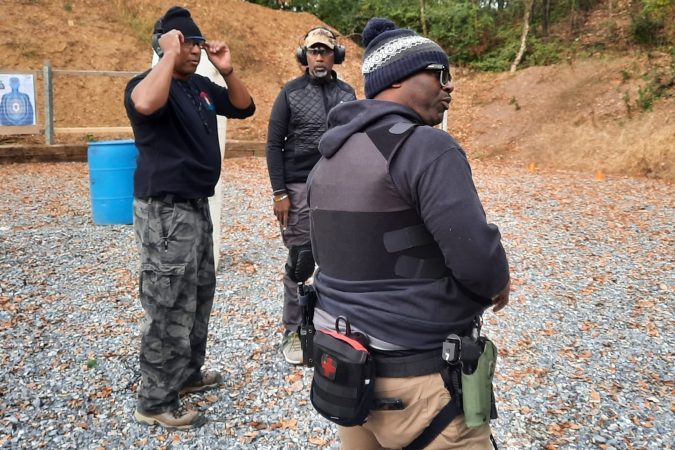
    In videos posted online, firearms instructor Eric Franks taught others how to handle guns safely.

    “If you don’t have a leg strap on … your firearm’s going to be flapping out,” the 57-year-old Wynnefield man said in an Instagram video demonstrating how to properly secure a “battle belt,” a tool for holstering guns and equipment.

    So some people who knew him found it hard to fathom that Franks, a retired Philadelphia firefighter, father, and business owner, walked up to a group of police officers on a West Philadelphia street and got into a confrontation that ended in gunfire.

    On Saturday night, police said, Franks shot and wounded three officers, and they returned fire, killing him.

    “The biggest thing he taught was restraint, situational awareness,” said Randy Robinson, a friend and fellow member of That Gun Talk, a firearms training organization Franks helped found during the pandemic.

    Robinson said Franks taught students: “The last thing you want to have to do is pull your firearm.”

    Like others grappling with conflicting emotions about Franks’ role in the shooting, Robinson is struggling to understand why his friend of seven years fired the shots that cost him his life.

    Police were called to the block around 10:30 p.m. that night for a report of a shooting on 54th Street, not far from Mingle, a popular event space Franks owned that had hosted a teenager’s birthday party that evening.

    Alerted by his son to the nearby gunfire, Franks made his way to Mingle, near where he began to argue outside with several police officers who told him they were trying to establish a crime scene, according to surveillance footage and police accounts.

    As officers investigated a vehicle that had been struck by bullets, Franks approached and began complaining about crime and policing in the area, said a source familiar with the case who spoke on the condition of anonymity to discuss an ongoing investigation.

    He appeared frustrated, the source said, that officers had not yet cordoned off the area around the vehicle with crime scene tape, and became increasingly agitated as officers repeatedly asked him to step back so they could do their jobs.

    Video obtained by The Inquirer appears to show Franks yelling at officers, then pushing one, before stepping back and pulling a gun from his waistband.

    Franks then fired multiple shots at the officers, who took cover behind nearby vehicles, according to the video and police accounts, and four officers returned fire. Three officers — including a sergeant — were struck by gunfire. Franks was shot in the chest and the leg and later died at Thomas Jefferson University Hospital.

    Police have not released the names of the injured officers or identified those who discharged their weapons that night. One officer was shot in the face, one in the hip, and another in the leg, officials said. A 43-year-old officer was released from the hospital on Tuesday, police said, following the release of a 39-year-old sergeant on Monday.

    The shooting remains under investigation by the police department’s officer-involved shooting unit and the Philadelphia District Attorney’s Office.

    DA Larry Krasner said investigators from his office had visited the scene, spoken to witnesses and Franks’ family, and reviewed video footage and other evidence. He said his office — like Franks’ family and members of the community — has questions about what happened that night.

    James Funt, an attorney for Franks’ wife, Michelle, and his two children, said he, too, is looking for more information on what transpired in the moments before the gunfire.

    “That’s all the family is looking for — a full, fair, and thorough investigation,” Funt said.

    Meanwhile, those who knew Franks say the shooting ran counter to the behavior of the man they knew — an advocate for responsible gun ownership and reducing crime in the neighborhood.

    Franks was a founding member of That Gun Talk, a local chapter of the National African American Gun Association formed in 2020 to promote self-defense training among Black gun owners, according to Robinson.

    He said he was puzzled that Franks would resort to violence in a neighborhood he had urged local leaders to make safer.

    In recent years, Franks had brought his concerns to City Councilmember Curtis Jones Jr., who grew up near the Franks family in West Philadelphia and was familiar with his older brothers.

    Jones said in a recent interview that Franks had spoken with him multiple times about his frustrations with crime and policing on the business corridor near Mingle.

    “What he wanted was better enforcement of laws, and felt frustrated with the reality of our ability to patrol in a way he thought [the corridor] deserved,” Jones said.

    And Franks once visited Jones’ office to discuss firearms education for city residents, as well as the possibility of opening a Black-owned shooting range in the neighborhood, an idea Jones said he did not agree with.

    The Council member recalled that Franks’ relatives were among the first to open a business on the 54th Street corridor in Wynnefield in the 1970s, a variety store not far from where Franks was killed.

    “This whole tragedy, it’s bizarre, ironic, and I grieve for everybody,” Jones said. “The officers that were shot, the family — Franks was a patriarch, the community respected him.”

    Funt, the family lawyer, agreed.

    Franks cared about “getting more police on the beats, trying to get drugs out of the neighborhood,” Funt said. “I think it was in that spirit that he went there,” to the block in West Philadelphia, on the night he was killed.

    How that instinct led to the gunfire that wounded three police officers and ended Franks’ life is a question police and prosecutors will seek to answer as their investigation continues.

    Staff writer Ellie Rushing contributed to this article.

  • Pa. Supreme Court blasts DA Larry Krasner’s office, saying it misled judges in seeking to vacate old murder convictions

    Pa. Supreme Court blasts DA Larry Krasner’s office, saying it misled judges in seeking to vacate old murder convictions

    In a forceful and scolding opinion, the Pennsylvania Supreme Court ruled Tuesday that District Attorney Larry Krasner’s office misled the courts, “violated its duty of candor,” and submitted false statements when asking a judge to vacate a 2004 murder conviction.

    In the opinion released Tuesday, Justice Kevin Dougherty wrote that prosecutors’ pattern of misleading judges in seeking to overturn murder convictions is so troubling and recurrent that, going forward, before Krasner’s office seeks such relief, judges must notify the state attorney general’s office and allow it to review the case.

    The decision amounted to one of the most scathing rebukes yet of Krasner’s efforts to revisit decades-old convictions, and arrives amid intensifying scrutiny of the office’s Conviction Integrity Unit and appeals division, whose handling of post-conviction cases has drawn criticism from judges in both state and federal court.

    Just last week, Krasner’s office reversed course in a separate murder case, writing in a federal court filing that one of its prosecutors had made “material misstatements” and submitted “legally erroneous” statements when seeking to overturn a man’s murder conviction. The office sought to withdraw its recommendation to grant the defendant a new trial.

    And in December, a panel of federal judges voted to disbar a supervisor in the office’s appellate unit, saying he “lied repeatedly” while seeking to overturn the death sentence of a man who killed a couple inside their East Mount Airy home, then left their infant daughter inside to die.

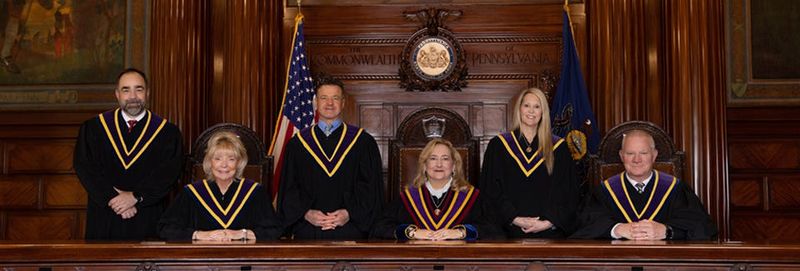
    Supreme Court of Pennsylvania Justices Kevin Brobson, Christine Donohue, David Wecht, Debra Todd, Sallie Updyke Mundy and Kevin Dougherty in 2023.Provided by Administrative Offic

    By giving the state attorney general authority to intervene when Philadelphia prosecutors decline to defend a conviction, the high court added a new layer of oversight to the state’s largest prosecutor’s office — a rare step that reshapes who controls post-conviction litigation in Pennsylvania.

    Krasner, in a video statement shared late Tuesday, said the high court’s ruling “undermines the value of a vote in Philadelphia as compared to every other county.”

    In the video, which featured images of the Rev. Dr. Martin Luther King Jr. and Rosa Parks, Krasner compared the pushback to his criminal justice reform efforts to those of other social justice movements.

    “First they ignore you — we’re past it. Then they laugh at you — we’re past that. Then they fight you — and we have been fighting for 8½ years,” he said.

    While four justices — Dougherty, Sallie Updyke Mundy, P. Kevin Brobson, and Daniel McCaffery — agreed there are systemic concerns about the district attorney’s office, three — Debra Todd, Christine Donohue, and David Wecht — supported neither that narrative nor the court’s remedy.

    Wecht cast the lone full dissent, arguing that the case did not warrant the Supreme Court’s intervention and that the lower courts already have the tools necessary to prevent improper concessions by prosecutors.

    The case at the center of the court’s ruling was that of Lavar Brown, who was sentenced to life in prison without the possibility of parole after a jury convicted him of second-degree murder in the robbery and shooting death of Michael Richardson, a North Philadelphia Rite Aid worker, in 2003.

    Brown was later convicted of shooting and killing a second man, Robert Crawford, in 2005, and was sentenced to death — in part because of the first conviction.

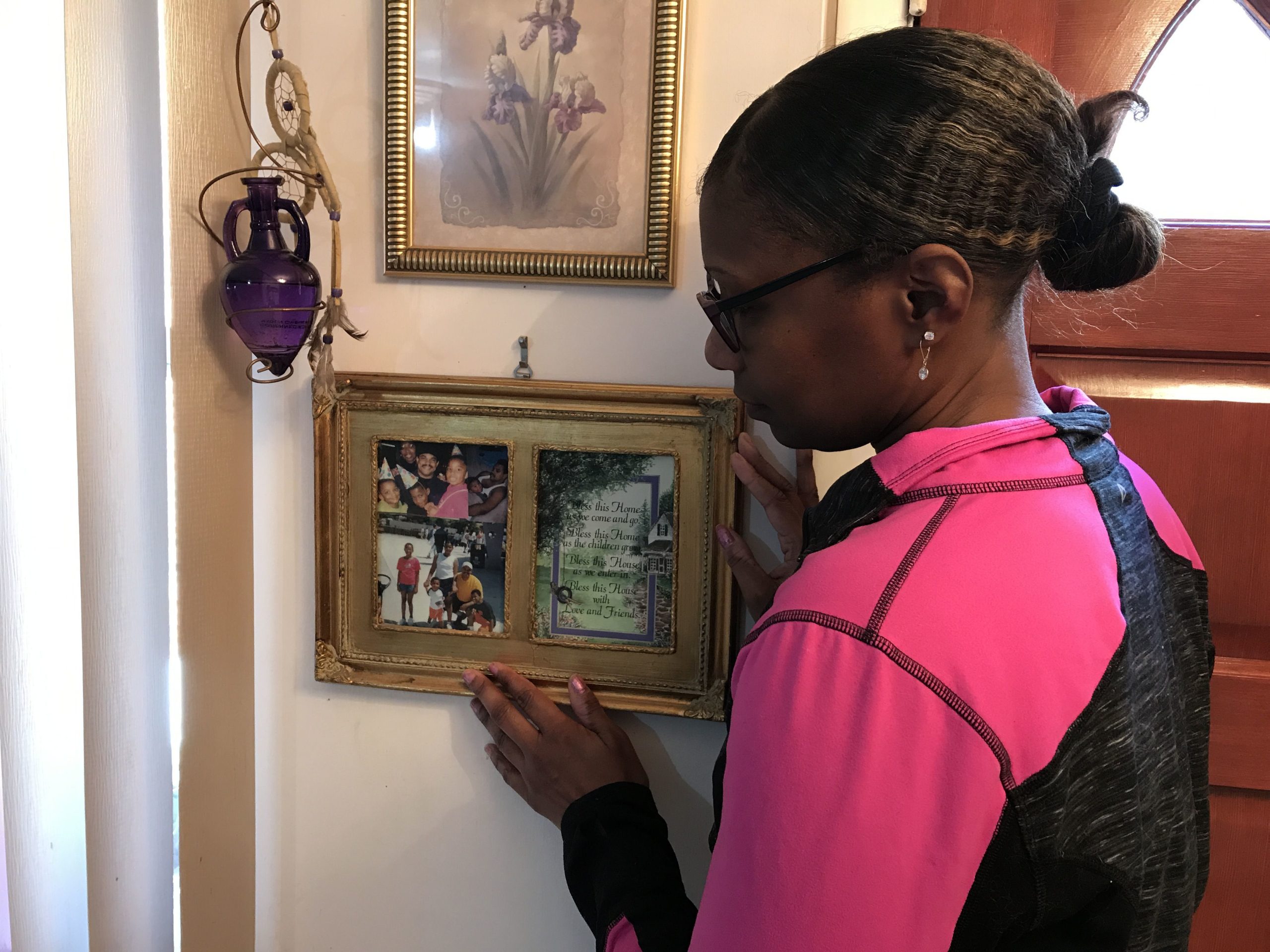
    In this 2019 photo, Kristi Richardson looks at photos of her husband, Michael Richardson, who was shot and killed during a robbery at the Rite Aid where he worked in 2003.JULIE SHAW / Staff

    In post-conviction court filings, Brown’s attorneys said the prosecution’s case in Richardson’s killing largely relied on the testimony of two witnesses — including one who, in a statement to police, implicated a teenage girl who was incarcerated at the time of the murder. The witness’ earlier statements were never provided to his trial lawyers, the attorneys said, which violated his right to a fair trial.

    In 2021, Krasner’s office said Brown should be granted a new trial, arguing his case had been “infected by serious misconduct” by past prosecutors.

    When a Common Pleas Court judge later granted Brown a new trial, the families of Richardson and Crawford took the unusual step of asking Pennsylvania’s highest court to intervene.

    The families said Krasner had a conflict of interest because two of his former law partners had previously been involved in Brown’s case. They also argued the district attorney’s office was trying to “circumvent” the courts by conceding relief in the Rite Aid killing, which had served as an aggravating factor for his death sentence.

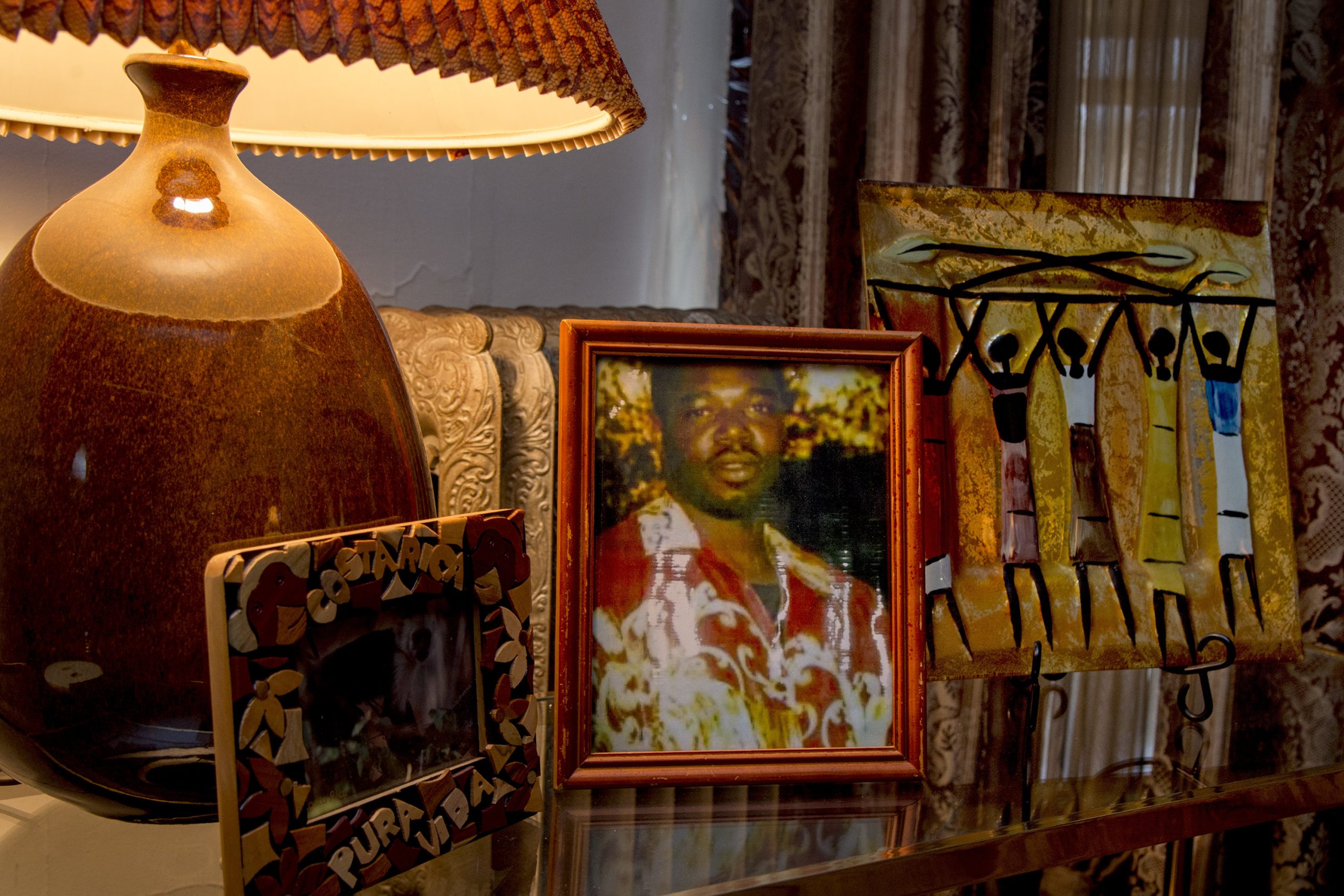
    A photo of Robert Crawford in the home of his sister Suzette Crawford March 27, 2019. Robert was shot to death in Philadelphia in December 2003. His killer, Lavar Brown, is on death row.TOM GRALISH / Staff Photographer

    The Supreme Court agreed to hear arguments in March 2025. And on Tuesday, six justices agreed that Brown’s conviction should not have been overturned and ordered a new hearing in the case.

    Dougherty, in writing the majority opinion, was scathing in his assessments of prosecutors’ conduct.

    In a case involving a murder conviction and death sentence, he wrote, the district attorney’s office’s “fidelity to its duty of candor should have been at its zenith. Regrettably, it was anything but.”

    The opinion said prosecutors did not disclose a memorandum in which a key witness, Ronald Vann, identified Brown as being involved with the murder, even as they asked Common Pleas Court Judge Glenn Bronson to vacate the conviction.

    Instead, the court said, they asserted that the document was irrelevant to Brown’s claims.

    Krasner’s office also tried to keep the victim’s families from accessing it.

    But the memorandum was “unquestionably relevant” to the case and showed a consistency over time of Vann’s statements, the opinion said. That Krasner’s office would say otherwise “rings hollow and smacks of post hoc rationalization,” the court said.

    “The memorandum would have poured salt on the ‘fertile ground’ for impeachment envisioned by the DAO,” the ruling said, adding that withholding the document was a “breach of its duty of candor” to the court.

    The high court also said prosecutors filed a joint stipulation with Brown’s attorneys that “was false in multiple respects,” including mischaracterizations of the timeline of witness statements to police.

    The justices said prosecutors had not interviewed a single witness or investigator who had handled the case, and rejected their claims that it had conducted a “thorough, independent review of the records in this case.” Krasner’s office, the court said, “cut corners and shirked its duties in conducting its post-conviction ‘investigation.’”

    The court reversed Bronson’s order granting Brown a new trial.

    To “promote just outcomes” moving forward, the opinion said, the courts handling appeals must notify the attorney general’s office of any case in which Krasner’s office plans to seek relief, and give state prosecutors the opportunity to review it and weigh in on whether the decision is appropriate.

    A lawyer for Brown could not be reached for comment. The Pennsylvania Innocence Project, which had filed a brief supporting Brown and the district attorney’s office alongside dozens of other prosecutors’ offices, former judges, and defense attorneys, declined to comment.

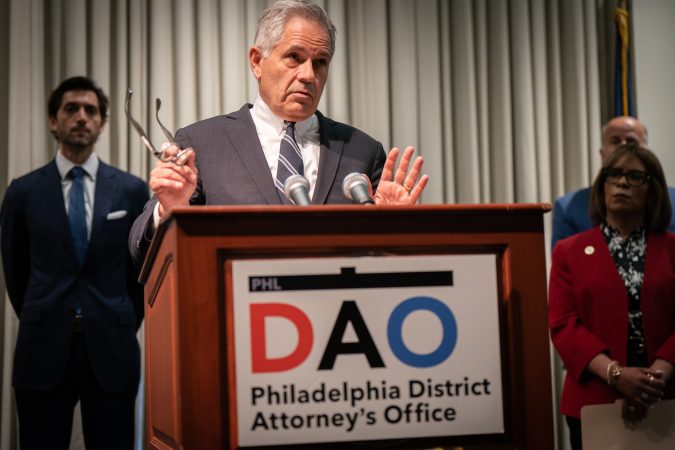
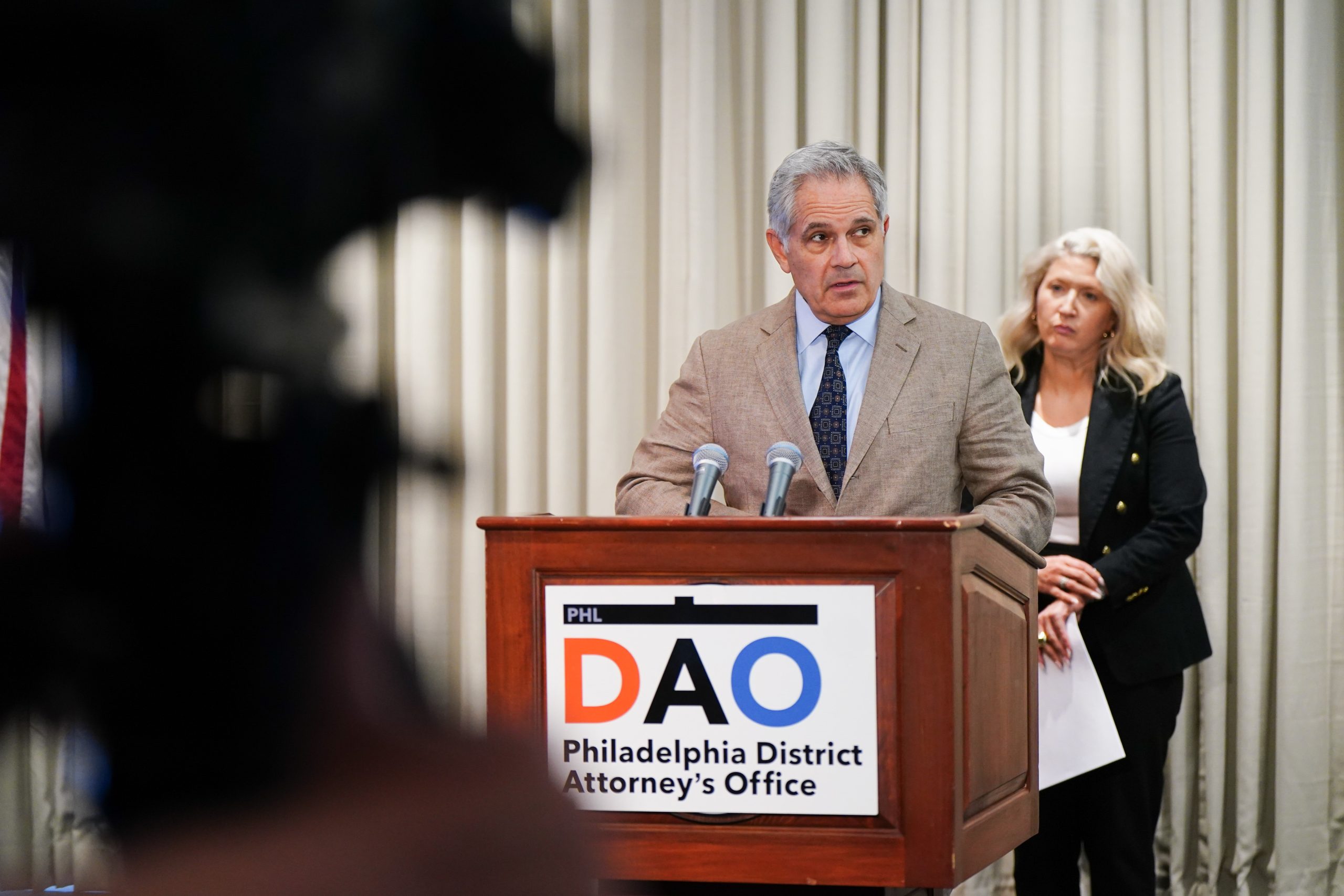
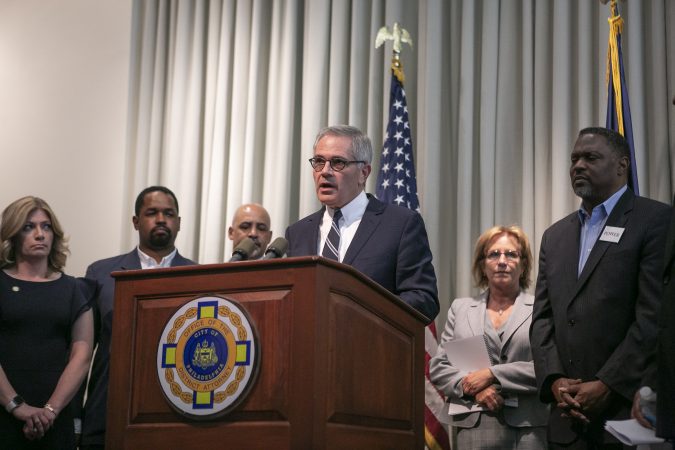
    Da Larry Krasner speaks during a May 2026 press conference. Jessica Griffin / Staff Photographer

    Chris Lynett, the lawyer who represented the families of Richardson and Crawford, said the high court’s opinion supported their belief that Brown’s case — like others — had not been scrutinized closely enough by prosecutors.

    “We can’t just say that if we feel uncomfortable with a conviction that we are going to overturn it,” he said. “You need a full record, you need honesty, and you need an evaluation.”

    Lynett, who worked as an assistant district attorney in Philadelphia for five years before leaving the office in 2020, said its leadership needs to “think about what they’re doing and what they’re encouraging their line prosecutors to do in court.”

    The attorney general’s office had filed an amicus brief in support of the families, arguing that, since 2018, Krasner’s office agreed to overturn convictions in 115 cases with little to no meaningful opposition to defendants’ claims.

    Attorney General David Sunday, a Republican, said in a statement Tuesday that his office is grateful to serve “as a check on this process for the citizens of Philadelphia and ensure that the interests of victims’ families are represented.”

    When an investigation shows that a defendant was wrongfully convicted, his office said, prosecutors have a duty to remedy the situation — through the established court processes.

    “As the Court noted,” his office said, “this case is about the failure of the process in Philadelphia, both as to this defendant and many others.”

    Krasner, for his part, stood by his office’s policies. Philadelphia is on track to record the fewest homicides in recent memory, he said in the video, and correcting past mistakes builds trust in the criminal justice system.

    Acting as an adversary in overturning wrongful convictions, he said, “doesn’t help safety, it doesn’t help democracy, it doesn’t help freedom, but that’s OK. Because we know where we are in the fight, and once we get past the fight, we all win.”

  • Bob Brady has chaired Philly’s Democratic Party since 1986. Ward leaders just gave him four more years.

    Bob Brady has chaired Philly’s Democratic Party since 1986. Ward leaders just gave him four more years.

    Since 1986, Philadelphia has had six different mayors and five City Council presidents. But over those four decades, the city’s Democratic Party has known only one leader: Robert A. Brady.

    And he’s not done yet.

    Brady, 82, on Monday night won an 11th term as chair of the Democratic City Committee, continuing an astonishing run as the top official in the local party despite growing tensions between the local Democratic establishment and progressive insurgents.

    Fresh off democratic socialist Chris Rabb’s victory in last month’s Democratic primary for an open Philly congressional seat, District Attorney Larry Krasner called on Brady to resign, and progressive activists hoped to shake up the local party they blame for Philly Democrats’ lackluster turnout in recent federal elections.

    But following last week’s ward leader elections — in which left-leaning candidates notched at least five victories but came up well short of the numbers needed to seriously threaten Brady and his allies — the writing was on the wall.

    No challenger stepped forward during Monday night’s leadership elections at the party’s headquarters, the Robert A. Brady Office Building on Spring Garden Street, and the incumbent won another four-year term.

    “It‘s pretty nice to get it unanimous — nobody complains at all, no problems whatsoever, and that’s the way I like to have it,” Brady told reporters after his reelection, in which the ward leaders approved his slate of party officers in a unanimous voice vote.

    He added that he believes the party’s factions can overcome their differences.

    “They know that my heart’s in the right place,” Brady said of the party’s left-leaning critics. “I want to go in the right direction, and it might be the direction that they want to go.”

    Mayor Cherelle L. Parker, who leads the 50th Ward, addressed party officials during the election meeting, telling them she is a “progressive with a capital P — because if you want to be a progressive, you got to make some progress.”

    “People want results,” Parker said in an interview afterward. “They don’t want to see fighting. They don’t want to see finger-pointing. Let’s focus on an agenda and not try to eat our own.”

    Also Monday, the party elected several new officers to serve alongside Brady and ordered reruns of three ward leader elections with contested outcomes.

    Those include Mount Airy’s 22nd Ward, in which City Councilmember Cindy Bass controversially declared herself the winner after a contested voice vote.

    All three reruns will take place Wednesday night.

    Soup to nuts in Democratic politics

    Brady lives in Overbook, where he is the 34th Ward leader.

    His mother was a committeeperson, and he worked as a union carpenter before his mentor, the late City Council President George X. Schwartz, got him a patronage job as a Council sergeant-at-arms. (Schwartz later went to jail after being convicted on corruption charges as part of the Abscam scandal in the 1980s.)

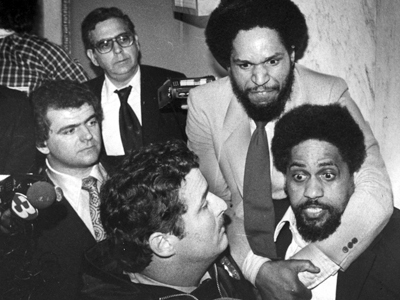
    City Council Sergeant-at-Arms Bob Brady, left, looks on as Councilmember John F. Street, top, and State Rep. Milton Street, right, take part in a near-riot in Council chambers. (Daily News File Photo)

    Brady was elected to Congress in a 1998 special election, and eventually chaired the House Administration Committee, which handles behind-the-scenes tasks such as assigning office space to lawmakers.

    While in Congress, he ran unsuccessfully for mayor in 2007, losing to Michael A. Nutter, who ran on an anti-corruption campaign.

    In 2017, news broke that Brady’s congressional campaign was the subject of a federal investigation over an alleged scheme in which a would-be challenger accepted $90,000 to withdraw from running against Brady in a 2012 primary.

    Two of Brady’s aides served prison time, but Brady never admitted wrongdoing. He chose not to run for reelection the following cycle, in 2018.

    A modern political ‘boss’

    While Brady is often referred to as Philly’s “party boss,“ leading the Democratic City Committee is not the same job as it was in the heyday of big-city machine politics.

    Thanks to civil service reforms in the 1950s, there are far fewer patronage jobs to hand out. And Brady’s time is more often spent attempting to maintain peace among the various political organizations around the city, rather than telling them what to do.

    “It really isn’t all that easy, you know, keeping everybody together,” Brady said Monday night. “You got all kinds of factions, all kinds of egos, and I try to do the best I can to keep together, like we did tonight.”

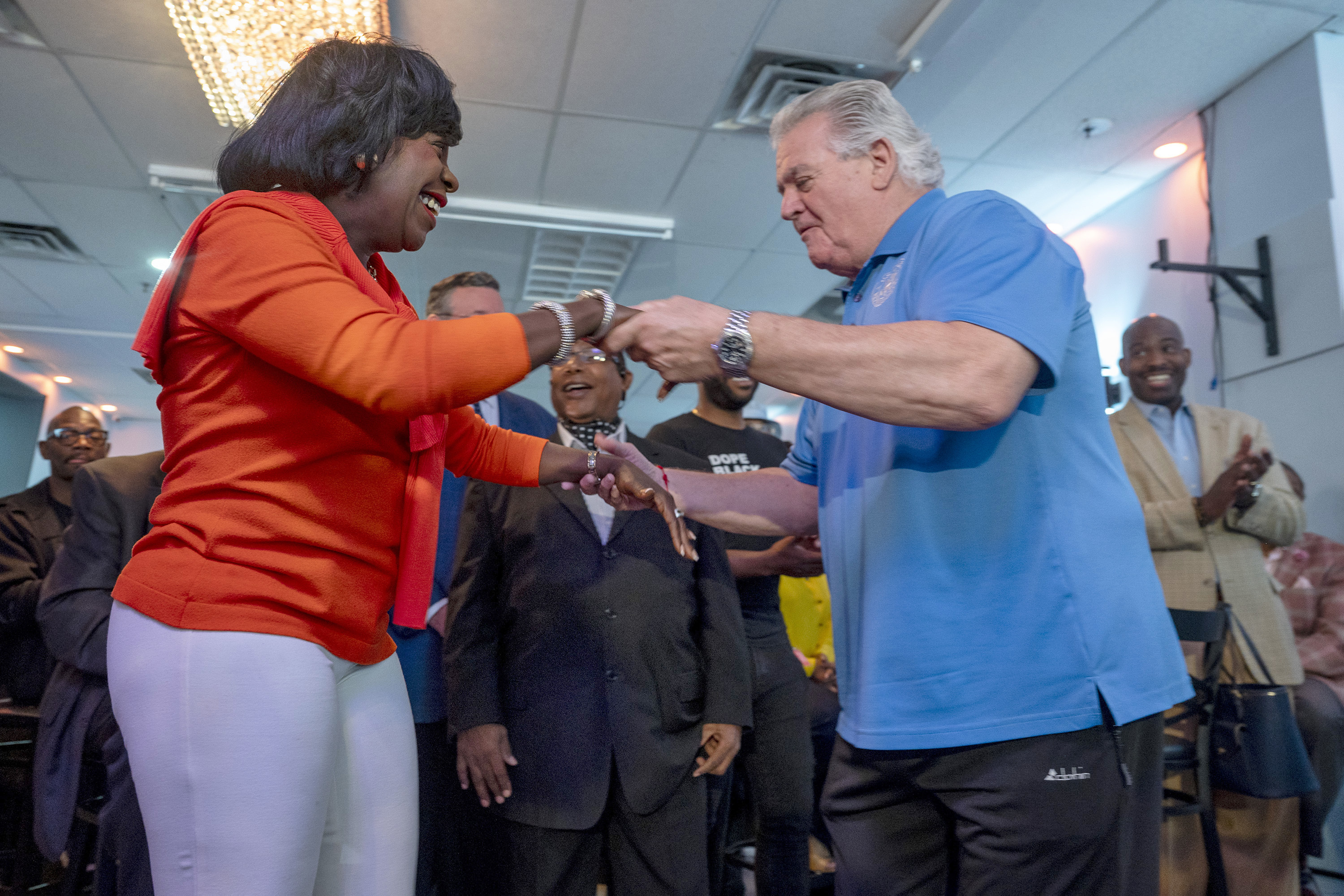
    Bob Brady, right, chair of the Philadelphia Democratic City Committee, dances with Cherelle L. Parker at a “unity breakfast” following her victory in the 2023 Democratic mayoral primary. Tom Gralish / Staff Photographer

    One area where today’s party does resemble the machine politics of old is local judicial elections. Party-endorsed candidates almost always win seats on the local Municipal Court and Common Pleas Court benches, and many of their staffs are in turn filled with people connected to the local party.

    Brady and party leaders have no qualms about admitting what it takes to win their approval: doing favors and free legal work for the city committee, ward leaders, and their constituents.

    Philly Democrats’ new No. 2

    Although the Democratic City Committee does not have a new chair, ward leaders on Monday elected a new No. 2.

    Former Councilmember Sharon Vaughn, who leads the 49th Ward, will be the new first chair of the party, replacing former Councilmember Jannie Blackwell, who did not run for reelection as 46th Ward leader.

    Vaughn, who is also a secretary of the Pennsylvania Democratic Party, would temporarily become city committee chair if Brady were to step aside. Brady said Monday he would support her to one day hold the position on a permanent basis as well.

    “She’s a great world leader, a former Council person, a hard worker,” Brady said. “What you see is what you get, straight shooter, and she’ll tell you just what it is. And she’s a loyal lady.”

    Lauren Rinaldi, the 18th Ward leader who is seen as having relationships with both the progressive and establishment wings of the party, became the second vice chair. She replaces Bass, who has now lost out on her citywide party leadership post regardless of how Wednesday’s 22nd Ward election redo shakes out.

    Rinaldi said Monday night she understands her election to leadership was partially an olive branch to the left wing of the party.

    “I‘m sure that’s part of it, definitely,” Rinaldi said in an interview. “But I am seeing my role as an advocate — advocating for reform to strengthen the party and modernize the way we do some things and bring more people in instead of shut them out. Basically to rebuild trust with voters.”

    The third vice chair remains 7th Ward leader Angel Cruz, and 63rd Ward leader Brian Eddis has replaced Bill Dolbow as fourth vice chair.

    Former City Controller Jonathan Saidel will stay on as the party’s treasurer, with John Brady, who is not related to the chair, serving as assistant treasurer.

    And 6th Ward leader Pete Wilson was retained as secretary, with 8th Ward leader Elaine Petrossian elected as assistant secretary.

    Back-to-back-to-back reruns

    The party on Monday ordered the results of three contested ward leader races voided. They will be rerun on Wednesday at the Brady building, with a committee of other ward leaders overseeing the results.

    In all three instances, the ward elections were found to have violated the party’s procedures.

    The redo for the 14th Ward, in which incumbent Arthur Green lost to Valerie Williams, will take place at 6 p.m.

    City Councilmember Cindy Bass, left, speaks with a reporter about her contested 22nd Ward leader election. Aidan T. Gallo / Staff Photographer

    That will be followed by a 7 p.m. rerun of the 17th Ward election, which was an open seat in which Tyrone Barge defeated Michelle Schley.

    And finally, the 22nd Ward redo will take place at 8 p.m., with progressive challenger Octavius Price taking on Bass.

    In all three races, the party will allow submission of “proxy votes” from committeepeople who cannot attend if they are accompanied by notarized affidavits.

    Brady said the decision to redo the 22nd Ward vote was an easy one after he saw a video published by The Inquirer showing Bass, who chaired her own reelection meeting, shutting down requests for a roll-call vote that could have clarified the results.

    “I don’t think anybody that saw that … was supportive of it,” Brady said. “One ward is one ward, and there’s 68 others, and we’re all going to fix that on Wednesday night.”

  • Officer wounded in fatal West Philly shooting released from hospital, as questions about the incident remain

    Officer wounded in fatal West Philly shooting released from hospital, as questions about the incident remain

    One of three Philadelphia police officers wounded in an exchange of gunfire that left a retired firefighter dead in West Philadelphia late Saturday was released from the hospital Monday, as authorities continued to investigate the shooting.

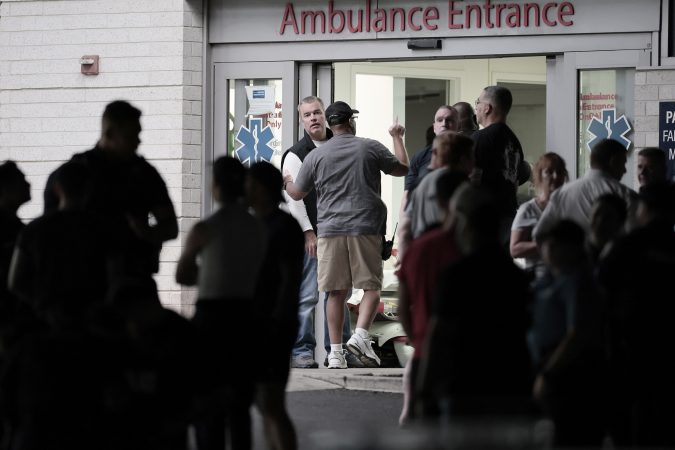
    The officer, whom police did not identify, left Penn Presbyterian Medical Center shortly after 1 p.m. Monday, 6abc reported. Dozens of uniformed officers lined the emergency department entrance and saluted as their colleague was pushed outside in a wheelchair and helped into a silver SUV. The crowd erupted in applause as the vehicle pulled away.

    His release came nearly two days after authorities say Eric Franks, 57, opened fire on officers who were investigating an unrelated report of a vehicle struck by gunfire near 54th and Arlington Streets in Wynnefield around 10:30 p.m.

    As the investigation entered its second day, both law enforcement officials and Franks’ family struggled to understand what could have led him to shoot at police. The police department declined to provide additional details about the confrontation, but a source familiar with the case said footage from the officers’ body worn cameras offered little explanation for such a reaction.

    According to the source, who spoke on the condition of anonymity to discuss an ongoing investigation, as officers investigated the vehicle that had been struck by bullets, Franks approached and began complaining about crime and policing in the area.

    He appeared frustrated, the source said, that officers had not yet cordoned off the area around the vehicle with crime scene tape, and became increasingly agitated as officers repeatedly asked him to step back so they could do their jobs.

    Video obtained by The Inquirer appears to show Franks yelling at officers, then pushing one, before stepping back and pulling a gun from his waistband.

    Franks then fired multiple shots at the officers, according to the video and police accounts, and four officers returned fire. Three officers — including a sergeant — were struck by gunfire. Franks was shot in the chest and leg and later died at Thomas Jefferson University Hospital.

    Police said Franks had a license to carry a firearm. Commissioner Kevin Bethel said investigators are trying to determine why Franks confronted the officers.

    District Attorney Larry Krasner said at a news conference Monday that his office is investigating. He said representatives of his office had spoken with Franks’ family, and had visited the scene and begun reviewing evidence, including video footage that captured the events leading up to the fatal encounter.

    Krasner declined to provide additional details, describing the investigation as “very active” and saying he could not divulge further information in order to “preserve the integrity of the investigation.”

    The district attorney said his “thoughts are with all the people who have been affected and harmed,” but added that his office — like Franks’ family and members of the community — has questions about what transpired.

    He joined Mayor Cherelle L. Parker in a promise to “make sure officers receive the support they need as they heal and process the trauma connected to the shooting.” At the same time, he said, “We also stand in solidarity with all Philadelphians who want to make sure we get the truth, and that we apply the law appropriately.”

    He encouraged anyone with information about the shooting — including police officers — to contact his office and speak with investigators.

    Franks’ wife, Michele, described her husband as a longtime Wynnefield resident, business owner, and former Marine who spent nearly two decades with the Philadelphia Fire Department before retiring last year.

    “He cared very much about community, and about Wynnefield,” she said.

    The retired firefighter was also a community activist, an attorney representing Franks’ family said, adding that Franks had met with City Councilmember Curtis Jones Jr. about an uptick in drug-related crimes in the neighborhood.

    In a letter posted Sunday on Facebook that did not mention Franks by name, Jones wrote that he was “deeply saddened and heartbroken” by the shooting, and called for a continued commitment to “building a safer, and more peaceful Wynnefield for all.”

  • No Philly mayor has lost reelection in modern history. So does Mayor Parker have anything to worry about?

    No Philly mayor has lost reelection in modern history. So does Mayor Parker have anything to worry about?

    Through much of Mayor Cherelle L. Parker’s first two years in office, most political insiders in Philadelphia assumed she would cruise to reelection.

    After all, no mayor in the last eight decades in the deep-blue city has lost a bid for a second term. And Parker is backed by the city’s long-powerful Democratic establishment, contributing to the foregone conclusion that their allied mayor would win again.

    Even some of Parker’s staunchest critics on the left admitted privately that they were resigned to her serving eight years in office.

    Then last month, conventional wisdom started to crack.

    State Rep. Chris Rabb — a democratic socialist and an anti-establishment firebrand — won a tightly contested battle for an open seat in Congress, prevailing over Parker’s endorsed candidate and even carrying the 50th Ward in Northwest Philadelphia, where Parker is ward leader.

    Now some of the activists who lead the city’s largest left-leaning organizations think that race showed that Philadelphians are ready to pick a progressive over the Democratic establishment. And they are looking at next year’s mayor’s race again, asking the question: Is Parker vulnerable?

    “We would love to have a progressive challenger in this race,” said Sergio Cea, political director of the progressive group Reclaim Philadelphia. “The establishment was really defeated on all fronts this election cycle.”

    In a little more than 10 months, Parker, a centrist Democrat and the city’s first female mayor, will be up for reelection. She has not officially announced a campaign — doing so would trigger strict fundraising rules and limits — but all signs indicate she intends to run again, including an already huge campaign war chest.

    Any challenger to Parker would be considered a significant underdog. The mayor has the power of incumbency, and can point to progress on her 2023 campaign promises to make the city safer and cleaner, not the least of which is a historically low homicide rate. Thousands of residents are getting their trash picked up twice a week, and polls consistently show that more Philadelphians say they think that the city is heading in the right direction now than when Parker took office.

    She even seemed to recover politically after one of her lowest moments: the eight-day municipal worker strike last year that left so much garbage piling up that it became colloquially known as “the trash strike.” Parker, through her signature unyielding negotiating style, muscled her way to an agreement with the union.

    Today, she is supported by most of the city’s elected officials and powerful organized labor groups. Ryan N. Boyer, the head of a coalition of deep-pocketed building trades unions, said recently that any challenger to Parker would face “annihilation.”

    “This is Philadelphia, there are always people who want to run for mayor. But mayoral elections are decided on whether people think their city is moving in the right direction,” said Aren Platt, executive director of People for Parker, the mayor’s political campaign arm. “Mayor Parker has been underestimated her entire career, and she has a habit of proving people wrong.”

    Mayor Cherelle L. Parker raises a finger with her call-and-response “One Philly, A United City” mantra ending her speech during a ceremonial meeting of the Pennsylvania Senate at the National Constitution Center across the mall from Independence Hall on May 5.Tom Gralish / Staff Photographer

    However, some on the left see a coalescence of forces that could bolster their chances: national frustration with the Democratic establishment that has manifested in leftist wins, a widespread anti-incumbent sentiment, and liberal rage toward President Donald Trump, whom Parker has largely avoided maligning publicly.

    They also see potential signs of Parker’s power waning, including her recent budget battle during which she could not get Democrats in Harrisburg and City Hall on board with her tax plans.

    “If you just have the right candidates that are able to speak to the dissatisfaction of Democratic voters in Philadelphia,” Cea said, “I do think [Parker] is in trouble.”

    But the biggest question for Philadelphia progressives in the approaching mayoral race remains: Who could be their candidate?

    The potential challengers

    Jack Inacker, a Democratic strategist based in Philadelphia, said there are few, if any, challengers to Parker who could pull off a win in 2027.

    “The progressive infrastructure now has built up in a way where, if you squint really hard, you can see a path to a progressive challenger,” Inacker said. “The problem is that [Parker] is one big mistake away from being beatable, but she’s not beatable yet. And people know that.”

    Candidates have plenty of time to decide. Paperwork to get on the ballot likely would not be due until March.

    Perhaps the most talked-about potential challenger so far is District Attorney Larry Krasner, the city’s most prominent progressive. He has not ruled out a run for mayor, and he has recently publicly criticized Parker and some of her closest allies.

    Last week, he invited media to walk along with him while he hand-delivered a letter to the mayor’s suite in City Hall to express dissatisfaction with his office’s budget. Parker called the move “stunting.”

    Platt, in a thinly veiled shot at Krasner, said in a statement that “what we’ve seen recently is too many politicians focused on generating headlines rather than solving problems: manufacturing controversy, looking for someone else to blame, and confusing political theater with leadership.”

    District Attorney Larry Krasner greets supporters during his election night party at the Pipeline Philly coworking space on May 20, 2025, in Philadelphia. Krasner defeated challenger Patrick Dugan both in the Democratic primary and in the general election.Monica Herndon / Staff Photographer

    Krasner has won citywide election three times, twice winning reelection in landslide fashion. He is one of the nation’s most well-known progressive prosecutors and one of the city’s most polarizing figures. His base of support includes the city’s left, as well as a large swath of Black voters and elected officials.

    But it was Parker’s political family — the vaunted Northwest Coalition of the some of the city’s most storied Black politicians — that was key to Krasner’s political ascent. Challenging Parker could be seen as a betrayal by some in the voter-rich northwest corner of the city, and his base there could fracture.

    Krasner has also in the past struggled to keep up with his opponents in fundraising. Any challenger to Parker would likely need to bring in well over a million dollars, a sum of money that Krasner has never raised before.

    Several other elected officials are seen as potential challengers to Parker, including several sitting members of City Council.

    Councilmember Isaiah Thomas, who represents the city at-large, has long been rumored to have ambitions for higher office. He has been elected citywide twice, and recently was among the most vocal opponents of the Philadelphia School District’s controversial plan to close 17 schools.

    And he has allies both on the left and in the city’s business community, the latter of which has been frustrated with a Parker administration policy shift that increased the tax burden on small businesses.

    Councilmembers Isaiah Thomas (from left), Curtis Jones Jr., and Jamie Gauthier protest at an April school board meeting as the board prepared to vote on the facilities plan.Jessica Griffin / Staff Photographer

    Thomas said last week that he is focused on his job in City Council.

    “That job right now is hard enough, looking at the affordability crisis, the crisis around public education, and other issues that we’re facing,” he said.

    There’s also two-term Councilmember Jamie Gauthier, who represents parts of West Philadelphia and has positioned herself as one of Council’s chief critics of the Parker administration. She said earlier this year that running for mayor “could be interesting one day,” but that she would not run if she did not see a clear path to victory.

    She said in a statement that her focus is “finishing what we started on City Council, especially building affordable housing.”

    Gauthier added: “But it’s clear Philadelphians are hungry for leaders who will put working families above big business.”

    And there is Councilmember Kendra Brooks, the de facto leader of the city’s left-leaning coalition and a member of the progressive Working Families Party. Brooks, who represents the city at-large, has twice campaigned and won citywide.

    A political adviser to Brooks said she is focused on her work in City Hall and running for reelection to Council, as well as “building Black progressive political power through the WFP.”

    What do progressive gains mean for the 2027 mayor’s race?

    Parker’s camp sees strength in her numbers.

    In March, the mayor’s political arm commissioned a poll that found that 60% of respondents approve of the job Parker is doing as mayor, while 33% disapprove. Her approval rating was even higher among Black voters, older voters, and residents of Northwest Philadelphia — one of the highest-turnout areas of the city.

    Mayor Cherelle L. Parker (right) hugs Rachel O’Neal, executive of the Friends Childcare Center, at the unveiling of a new playful learning hub at Sisters Cities Park on Thursday.Jessica Griffin / Staff Photographer

    Cornell Belcher, one of the top Democratic pollsters in the nation, has conducted polling for Parker dating back to her mayoral campaign. He said that a key indicator of voter attitude toward an incumbent mayor is the number of residents who think the city is heading in the right direction.

    The results this spring, he noted, were “dramatically different” from when Parker was first campaigning for the office. In April 2023, Belcher measured that 66% of Democratic primary voters in the city were dissatisfied with the direction of Philadelphia.

    Today, he said, 62% are satisfied.

    Still, other polls have shown potential warning signs for Parker.

    In three polls that were conducted this spring in the 3rd Congressional District and obtained by The Inquirer, an average of 48% of Democratic primary voters said they had a favorable view of Parker and 41% had an unfavorable view. The polls, which measured voter attitudes in roughly half the city, were conducted by three different firms, and they were commissioned by different campaigns and organizations.

    Approval and favorability ratings are not apples-to-apples. An approval rating is often considered a more reliable data point for an incumbent executive, because it measures attitudes about job performance, not reputation.

    Belcher, who founded his polling firm 25 years ago and polled for former President Barack Obama, said he would not draw conclusions from polls of a congressional district that includes only half the city and was taken in a different election year. And he questioned other pollsters’ methodology in Philadelphia, a city that is tricky to survey.

    “A city like Philadelphia, with all its different racial and ethnic groups, getting that right is hard,” Belcher said. “The more diverse an area is, the more work you have to put into getting it right.”

    Chris Rabb greets supporters on election day. He is arriving to his polling place to vote, Grace Epiphany Episcopal Church, on May 19.Alejandro A. Alvarez / Staff Photographer

    The results of last month’s congressional race energized progressives, in part because Rabb performed well in parts of the city that Parker carried when she won the crowded open Democratic mayoral primary in 2023. An Inquirer analysis found that more than a quarter of Rabb’s votes came from divisions that voted for Parker in 2023.

    Rabb won his Democratic primary in a race that included three front-runners. But mayoral reelection battles in Philadelphia have historically been head-to-head, meaning the winner will look to reach 50% of the vote, a more challenging proposition for an ideological candidate.

    Platt said he would caution against concluding that Parker is politically vulnerable based on the outcome of the congressional race.

    And he said Rabb’s win in Parker’s 50th Ward is not a sign of cracks in the mayor’s base. He noted that the ward’s Democratic committeepeople last week unanimously reelected Parker as ward leader.

    “The mayor is organized, and her coalition across Philadelphia is strong,” Platt said. “They may not be active on Reddit, but they’re there, and they believe in what she’s doing because they can see the results in their neighborhoods.”

  • In a striking reversal, the Philly DA’s office said it no longer supports a man’s bid to overturn his murder conviction

    In a striking reversal, the Philly DA’s office said it no longer supports a man’s bid to overturn his murder conviction

    The Philadelphia District Attorney’s Office is attempting to withdraw a recommendation it made in federal court that a man’s murder conviction should be overturned, saying the prosecutors who oversaw that request did so by filing court documents that were “not supported by the record” or “legally erroneous.”

    The about-face, made in a motion filed last week, represents a striking reversal of a posture that could have led a judge to wipe out a guilty verdict in a deadly shooting.

    The filing was all the more unusual because the prosecutors who signed it named the colleagues who they said had made “material misstatements” about witness testimony in the case, and took a position the office no longer supports. Prosecutors now believe the conviction should be upheld.

    “The Commonwealth respectfully requests leave to withdraw its prior response and apologizes to the Court for the errors,” said the new motion, which was signed by four prosecutors: David Napiorski, Steven Wildberger, Peter Andrews, and Katherine Ernst.

    The filing was submitted Friday, just months after a panel of federal judges took the rare step of voting to ban another prosecutor in the district attorney’s office from practicing in federal court — one of the most serious penalties a lawyer can face. In that case, the judges accused the lawyer, Paul George, of being “misleading and dishonest” while seeking to overturn an inmate’s death sentence, and they were extremely critical of what they called George’s repeated misrepresentations on behalf of his office, saying the conduct threatened the integrity of the legal system.

    “Lies like those George told … are even more problematic when asking a federal court to disturb a state-court conviction,” the judges wrote in a sternly worded opinion.

    One of the judges involved in that disciplinary decision, U.S. District Judge Paul S. Diamond, is the person who will now have to decide what to do with accusations of misstatements in the most recent case. An evidentiary hearing is scheduled for next month.

    Diamond had initially ordered that hearing to learn more about the strength of the evidence against Dennis Johnson, who was convicted of second-degree murder in the 2007 killing of Kenyatta Smith outside a corner store in North Philadelphia.

    It was not clear whether Diamond would follow through with his plan to hear witness testimony about Johnson’s role in the crime — or if he might use the hearing to instead ask prosecutors how and why their office had urged him and a federal magistrate judge to undo a conviction based on assertions they now say were wrong.

    The assistant district attorney who signed that original request, Jaclyn Mason, resigned on June 2, according to court documents. She declined to comment.

    Her supervisor in 2022, when she filed the request, was Matthew Stiegler, who has since become the chief of the office’s Conviction Integrity Unit. He did not respond to a request for comment.

    A spokesperson for District Attorney Larry Krasner did not respond to questions about the situation or the office’s change of heart.

    A flawed conviction?

    The crime for which Johnson was convicted occurred on Aug. 17, 2007, when Smith was fatally shot while being robbed outside a convenience store near 30th Street and Lehigh Avenue, court documents say.

    Several witnesses identified Johnson as the shooter, and he was convicted of second-degree murder and sentenced to life in prison.

    Johnson appealed his conviction and said his lawyer had been ineffective for failing to object to a detective’s testimony that a witness who did not testify, and who could not be cross-examined, had also identified Johnson as the shooter.

    In 2022, Mason — then assigned to the district attorney’s Federal Litigation Unit — agreed, writing in court documents that the detective’s testimony was improper and had “tipped the scales” toward a conviction.

    She also said the office had discovered problems or inconsistencies with testimony from other key witnesses, and asked a federal magistrate judge to recommend that the conviction be thrown out.

    “The case against Johnson was not overwhelming from the outset and his counsel was constitutionally ineffective,” Mason wrote. “The post-trial investigation unearthed additional factors that highlight weaknesses in the prosecution and confirm a low level of confidence in the outcome of Johnson’s trial.”

    The magistrate, Judge Lynne A. Sitarski, agreed with Mason and recommended that Johnson’s conviction be overturned. Still, her decision was not binding.

    Diamond, the district court judge, was the one with the power to reverse Johnson’s conviction. And he did not seem inclined to accept the assertions made in Mason’s briefing.

    ‘Material misstatements’ in court documents

    Last month, Diamond scheduled an evidentiary hearing at which he ordered all of the witnesses who testified against Johnson to take the stand in his courtroom and testify again.

    Prosecutors from the district attorney’s Law Division said they then began working with Mason to prepare for the proceeding. But as they did, they said in their motion, they discovered that Mason’s filings “contained material misstatements” about the case.

    Most of the issues concerned ways in which they said Mason characterized witness testimony at trial. In one example, prosecutors said, Mason wrote that a key eyewitness “did not visually identify Johnson” as the shooter while on the witness stand.

    But the trial transcript shows that the witness did so “repeatedly,” prosecutors said, and the witness also said he had “known Johnson for at least five or six years.”

    That issue and several others led the Law Division staffers to conclude that the office’s earlier filing seeking to undo the conviction was flawed — and they also concluded that the case against Johnson was stronger than Mason contended, and that “relief on Johnson’s claim was not warranted.”

    It remains unclear what Diamond might do in the case, or how it might affect any of the lawyers involved.

    Johnson’s fate is also unclear. One of his lawyers, Nilam Sanghvi of the Pennsylvania Innocence Project, said she and her colleagues will continue advocating for his freedom.

    “We believe in Dennis Johnson’s innocence, and that Magistrate Judge Sitarski’s recommendation that Dennis receive habeas relief based on the violation of his constitutional rights is thorough and well-reasoned,” Sanghvi said.

    The evidentiary hearing currently remains scheduled to take place in July.

  • Philadelphia’s top public defender warns of service cuts if city budget passes unchanged

    Philadelphia’s top public defender warns of service cuts if city budget passes unchanged

    Philadelphia’s chief public defender warned this week that the city’s indigent defense system will begin scaling back services next month unless City Council approves additional funding for the Defender Association of Philadelphia.

    In an email sent Tuesday to judges, City Council members, and Mayor Cherelle L. Parker, Chief Defender Keisha Hudson said the agency would reduce or withdraw from several programs beginning July 1 if lawmakers on Thursday adopt the mayor’s proposed budget as is.

    The planned changes include ending representation at expungement hearings and reducing participation in specialty courts and programs, including Neighborhood Wellness Court and the Accelerated Misdemeanor Program, according to the email.

    Hudson said the Defender Association would also stop staffing emergency bail hearings, a practice she credited with helping to significantly reduce the city’s jail population.

    The warning escalates a monthslong dispute over funding for the Defender Association, which has argued that its expenses and responsibilities have expanded without a corresponding increase in city support.

    Despite that growth, Hudson said in an interview, the Defender Association is the only major criminal justice stakeholder that would receive no additional money under Parker’s proposed budget. That decision “felt very much personal and political,” she said.

    A spokesperson for Parker did not respond to a request for comment Wednesday.

    Parker’s proposed budget allocates $69 million to the Defender Association for the coming fiscal year, unchanged from its current funding level. Hudson had sought about $5 million more, saying the bulk of the money was needed to cover rising labor costs — including contractual obligations to unionized attorneys and staff — and higher rent, insurance, and technology expenses.

    The disparity had left the agency facing “difficult decisions” about what services it can continue to provide, Hudson said. “There are human and financial costs to us not being in certain spaces,” she said.

    Hudson wrote in the email that additional reductions could follow in the coming months, including in Veterans Court, Treatment Court, and other tasks that are not constitutionally required — such as representing people at preliminary arraignments.

    A spokesperson for the courts did not respond to a request for comment on the cutbacks’ potential impact.

    A written statement by UAW Local 5502, which represents public defenders, immigration attorneys, and child advocates at the Defender Association, said this was the third year in a row that funding for the agency had remained flat — which it called “a funding decrease when accounting for record-high inflation.”

    The announcement came as other criminal justice agencies also made final appeals for funding before City Council’s scheduled vote on the budget Thursday.

    On Monday, District Attorney Larry Krasner publicly urged Parker to provide additional funding for his office, delivering a letter to the mayor requesting $5.6 million beyond the amount included in the proposed budget. Krasner said the money would support shooting investigations, domestic violence prosecutions, victim services, and other public safety initiatives.

    Parker has allocated $62.4 million to the district attorney’s office — about $3 million more than last year.

    Parker’s proposed budget would spend roughly $7 billion next fiscal year, with major investments in housing, public safety, and other priorities. City officials have cited financial constraints and uncertainty about future revenue as they weigh competing requests for additional funding.

    Vincent Thompson, a spokesperson for City Council President Kenyatta Johnson, said that Council members had advocated for the Defender Association’s funding priorities during budget negotiations but that “any additional funding increases must be agreed upon through the budget negotiation process.”

    Last Thursday, after City Council rejected a series of tax increases the mayor had proposed, Parker told a reporter that the association’s request was among several funding priorities her administration weighed with Council members “to do the best we could with what we had.”