Tag: Immigration

  • A refugee family found a new home and ‘the first step of hope’ in Philly. Now, fewer may get that chance.

    A refugee family found a new home and ‘the first step of hope’ in Philly. Now, fewer may get that chance.

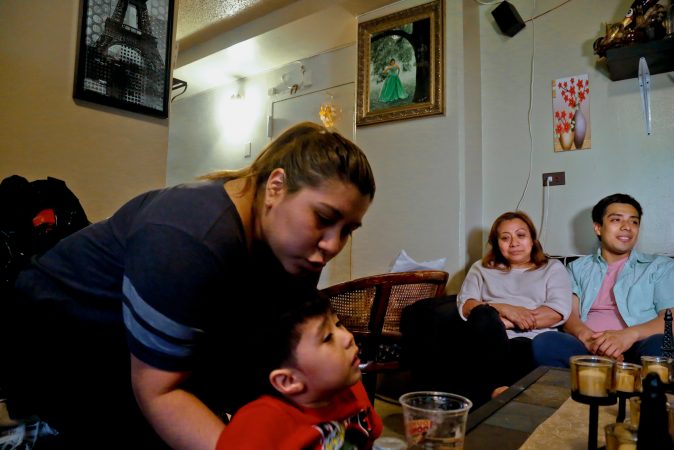
    A small garden stands outside the two-story Northeast Philadelphia home where Fatima Alsalih Alti Keli and Waled Keli live with their three children. Inside, their 8-year-old daughter, Abeer Janna Keli, sits on the couch drawing pictures with her two brothers, her small arms carefully wrapped in bandages to protect her fragile skin. The ordinary domestic scene would have seemed nearly impossible before the family immigrated to the United States from Turkey, after the civil war in Syria had prompted both parents to flee.

    Over the last two years, the family’s future has been radically transformed in Philadelphia with the help of specialized treatment for Abeer. And yet, the resettlement process by which they were granted visas is threatened: When the family applied for resettlement in the United States around 2020, the annual refugee admission cap was set to 18,000. The cap this year is set to 7,500, the lowest in U.S. history.

    Alti Keli, 28, and Keli, 30, had known each other through their families in Syria, but they married after both had fled to Turkey and started their family there. Once in Turkey, they applied to move to seek medical treatment for Abeer, a process that took about five years.

    Abeer was born with epidermolysis bullosa, a rare genetic disorder that causes the skin to blister and tear from minor friction. Children with the condition are often described as having “butterfly skin.” Before the family came to the United States, Abeer had little access to specialized medical care. She struggled to eat because of sores in her mouth, relied on a wheelchair, and spent much of her time asleep.

    “She was like a ghost,” her mother said in Arabic through a translator.

    The family applied to immigrate through the United Nations High Commissioner for Refugees in 2020 on the basis of receiving treatment for Abeer’s disease and were connected with Children’s Hospital of Philadelphia, where Abeer still receives treatment. When they arrived in Philadelphia in July 2024, they went directly to CHOP, where Abeer stayed for 12 days before she could go home. Two years after the move, the Kelis have settled into their lives in Philadelphia.

    “Now that she is here, she is talking, walking, and is happy going to school,” Alti Keli said, smiling through tears. “Her doctors saved her life.”

    They moved to their predominantly Arab neighborhood after first living in Southwest Philadelphia. Struggling with the language barrier and the job search, they were feeling isolated there. The friction of daily life was a real struggle as the family balanced learning English, taking their daughter to medical appointments, finding employment, and coordinating schooling for Abeer and her brothers — Abdul Rahman, now 10, and Mahmoud, now 6.

    For example, they were flabbergasted when their water bill spiked from $50 to $500 a month. Realizing their toilet was leaking, they struggled to communicate with their landlord. Those struggles have eased. In their new neighborhood, their children can easily walk to school and have made friends who share their Arab heritage. With the help of English classes, phone translators, and a refugee-support organization, the family has been able to build a comfortable life.

    Volunteer Dan McVay talks with Abeer Keli, 8, about her drawing at her home on Wednesday, July 22, 2026 in Philadelphia. The Refugee Empowerment Support Team (REST) works with refugee families in Philly.Monica Herndon / Staff Photographer

    The Refugee Empowerment Support Team (REST) helped the family confront the logistical challenges of moving to a new country. Efforts by President Donald Trump’s administration to curb immigration have affected not only the number of refugees allowed into the country, but also the kind of help they receive while they are here. After the administration threatened to close resettlement offices in 2025 and froze federal funding, many of the offices shut down and laid off employees. Provisions in the One Big Beautiful Bill Act limited refugees’ access to government services like Medicaid, Medicare, and SNAP benefits.

    REST has filled in those gaps by helping to connect refugees with employers, assisting with transportation to medical appointments, and dealing with other logistical challenges. Dan McVay, a leader with REST, said more refugees are now contacting the organization directly through Facebook, asking for help finding jobs and accessing services.

    “There is no money for refugees already in the country,” McVay said.

    Alti Keli, however, is “very happy with the challenge” of adjusting to life in a new country. While she takes care of the children, her husband works in landscaping at a golf course. He also loves to garden at home and has filled the front of the house with potted plants and flowers.

    McVay describes the family as very welcoming, often serving guests tea or coffee and homemade sweets.

    Before the family moved to the United States, the Kelis fled to Turkey from Syria in 2014, where they married and had their three children. Alti Keli’s face contorts while describing her life in Syria, where she lost her father and four siblings, during the civil war: “It was like a nightmare.”

    The family had to keep moving and did not have access to shelter, food, or even potable water.

    “We had to drink dirty water,” Alti Keli said. In Turkey, life was better, but Abeer could not get the specialized care she needed.
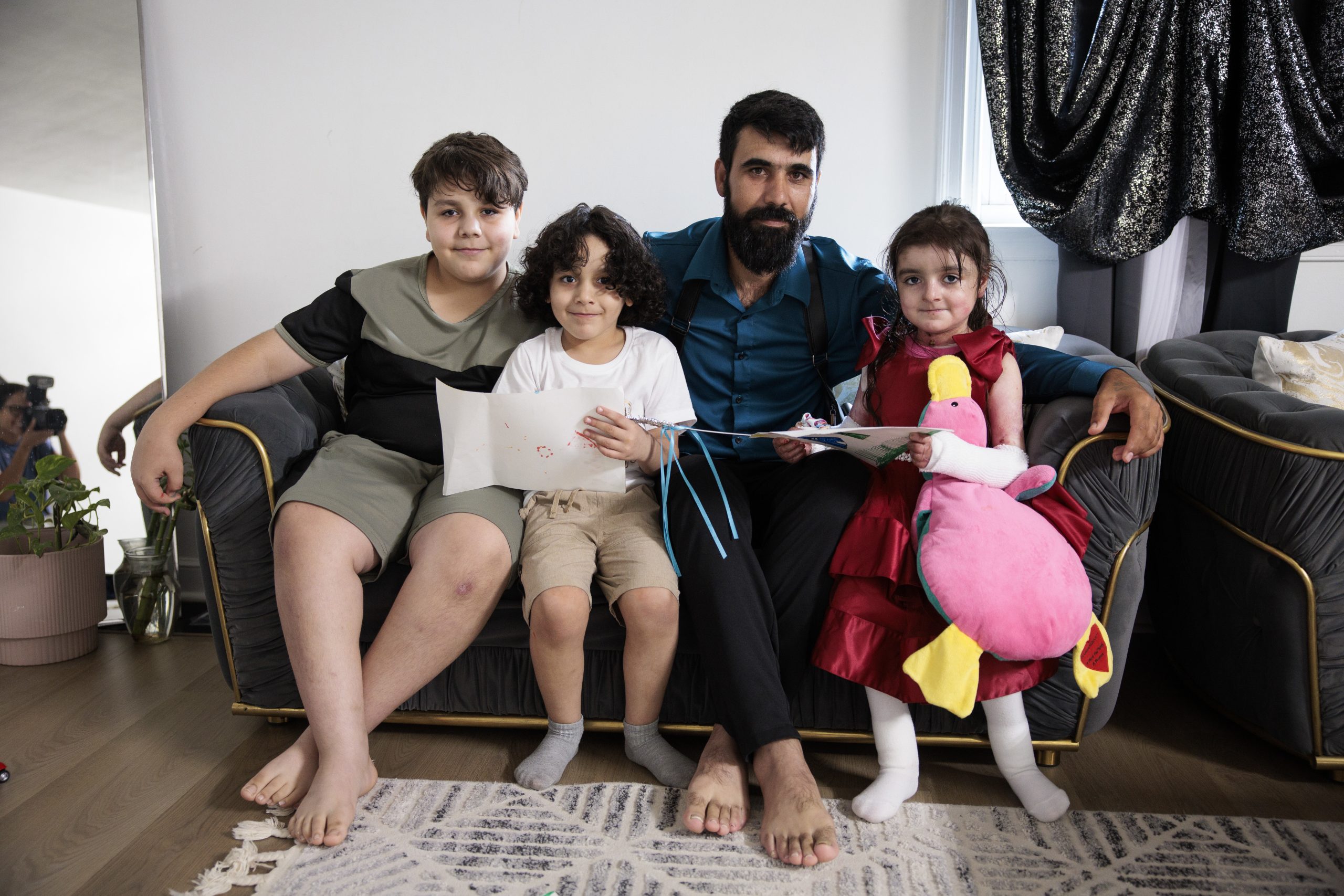
    (left to right) Abdul Rahman Keli, 10, Mahmoud Keli, 6, Walid Keli, and Abeer Keli, 8, posed for a portrait at their home on Wednesday, July 22, 2026 in Philadelphia. The Refugee Empowerment Support Team (REST) works with refugee families in Philly.Monica Herndon / Staff Photographer

    A United Nations spokesperson described the situation in Syria during 2013 as “a complete meltdown of humanity,” as Bashar Assad’s Russian-backed regime tried to recapture rebel-held territory. During the war, civilians were subject to chemical warfare, indiscriminate bombing attacks, and systematic torture and execution by the Assad regime.

    Moving to Philadelphia was “the first step of hope,” Alti Keli said, a step that has been realized now that her daughter is doing well. “I came here for hope,” she says. “What else can I ask for?”

  • ICE wants to deport a Philly man who has lived legally in the U.S. for 20 years. He fled Guinea after being jailed by the government.

    ICE wants to deport a Philly man who has lived legally in the U.S. for 20 years. He fled Guinea after being jailed by the government.

    Abdoulaye Cherif was asleep when his phone rang that morning, and he answered only because the display showed the call was coming from a prison.

    He was shocked to hear the voice of his father, who was supposed to be at work, driving for Uber.

    Mamadou Fadel Cherif told his son he had been arrested by ICE as he left the family home in West Oak Lane. He said he needed his son to break the news to his mother, because she would be devastated to hear it over the phone.

    Cherif, 21, called his mom at work and told her she needed to come home.

    Now, two weeks after that July 13 morning, “we’re all scrambling,” Cherif said in an interview. “A piece of us is missing.”

    Fadel Cherif, 56, never expected to be arrested by ICE. He lives legally in the United States, having been granted Withholding of Removal almost 20 years ago.

    That status allows him to stay and work, and bars the government from deporting him to his homeland, the West Africa nation of Guinea, where the U.S. government agrees he could be harmed or killed over politics.

    His status, however, does not shield him from being sent to a third country, if ICE can find a nation willing to accept him.

    Those kinds of third-country deportations are difficult for the agency to achieve. But recent ICE guidance tells agents that when immigrants with Withholding of Removal or Convention Against Torture protections report for check-ins, officers should consider the viability of their removal and if they should be detained in the meantime.

    Advocacy groups and immigration lawyers say the Trump administration is increasingly arresting and detaining migrants who have been granted withholding, keeping them in custody while it pursues removal to a third country. Last year, an Iranian immigrant who had fled the regime spent nearly six months in detention before a federal judge ordered his release.

    Officials with U.S. Immigration and Customs Enforcement, who did not initially respond to queries, said Tuesday that they were working on a response to questions about the case.

    (function(){function e(){window.addEventListener(`message`,function(e){if(e.data[`datawrapper-height`]!==void 0){var t=document.querySelectorAll(`iframe`);for(var n in e.data[`datawrapper-height`])for(var r=0,i;i=t[r];r++)if(i.contentWindow===e.source){var a=e.data[`datawrapper-height`][n]+`px`;i.style.height=a}}})}e()})();

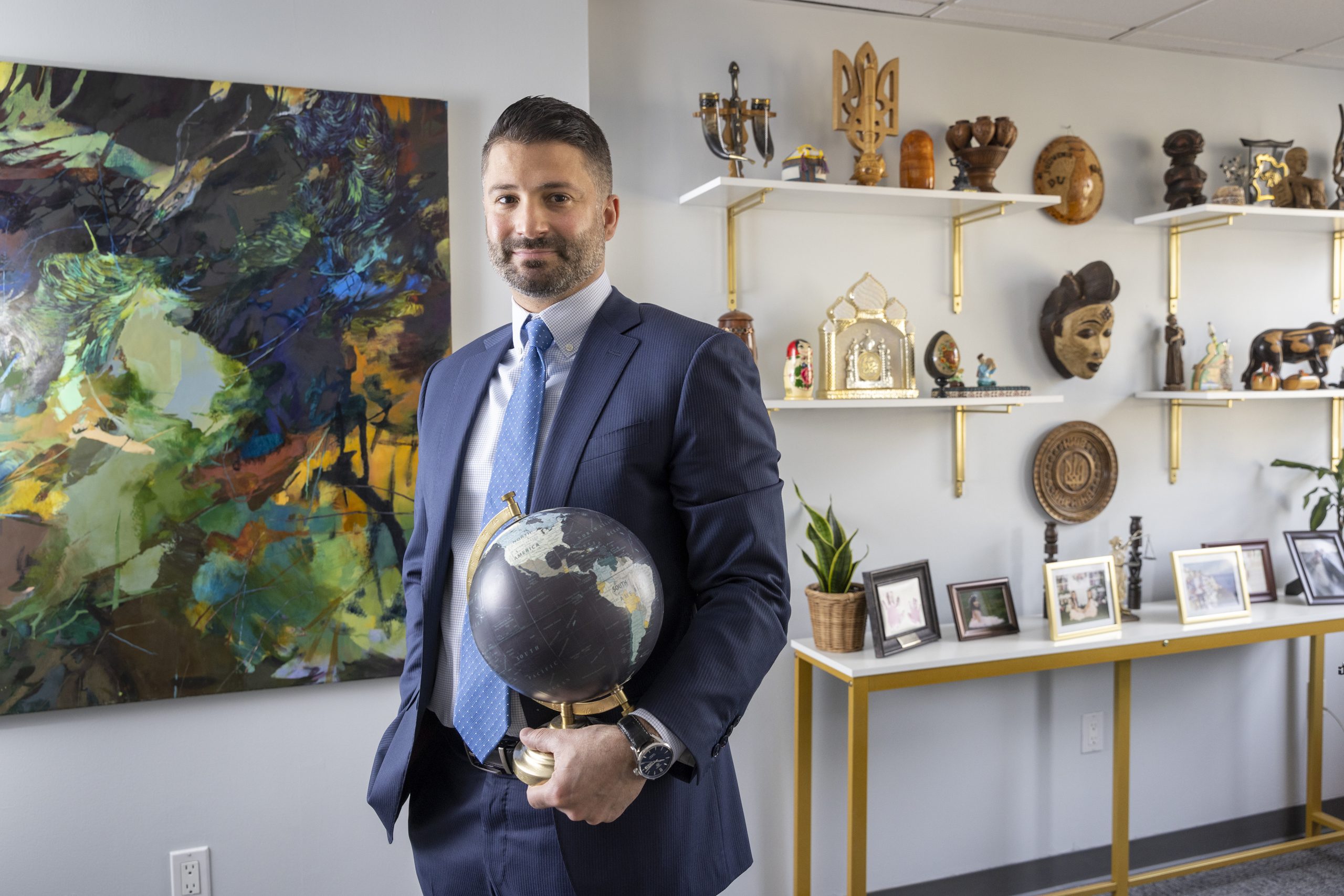
    Philadelphia immigration attorney Ricky Palladino, who represents Fadel Cherif, said there is no reason for ICE to detain him. He has no criminal record. He has legal authorization to work, a Social Security number, and a driver’s license.

    Palladino filed a petition in federal court that seeks Fadel Cherif’s immediate release, arguing that he has been denied due process under the law.

    In nearly 20 years, the filing says, no government official has suggested that Fadel Cherif’s deportation was “even remotely likely.” And it says that ICE can return someone with his status to custody only if, on account of changed circumstances, the agency finds “a significant likelihood that the alien may be removed in the reasonably foreseeable future.”

    Immigration attorney Ricky Palladino with Palladino, Isbell & Casazza, LLC, at his office on Walnut Street in Center City Philadelphia in 2022.Alejandro A. Alvarez / Staff Photographer

    Palladino said in an interview that Fadel Cherif is the main support for his wife, who has legal permanent residency, also known as a green card, and for their four American-born sons, including Abdoulaye, a Marines reservist.

    In Guinea, a nation of 12 million people that is roughly twice the size of Pennsylvania, Fadel Cherif was jailed by the government after protesting the results of his country’s 1998 presidential election, which was marred by irregularities. He later fled in fear of being rearrested, using a document that showed a different Guinean identity to enter the United States in New York in November 2003.

    For years he has worked in dining services at La Salle College High School, the private Catholic boys school in Montgomery County, and also drives for Uber.

    Matt Beck, director of dining services for CulinArt at the school, was upset to learn of the arrest, describing Fadel Cherif as an extremely hard worker.

    “He’s a good guy,” Beck said. “The students here love him. And so does the staff.”

    Fadel Cherif’s detention comes as ICE is arresting record numbers of immigrants. In one five-day span this month, the agency detained more than 10,000 people across the country, the New York Times reported.

    The rate of ICE arrests topped 1,300 a day in June ― and grew again to a record 1,474 a day during the first 11 days of July, Syracuse University professor and immigration-data analyst Austin Kocher reported last week.

    “ICE has been touting record high arrest numbers this summer ― and they are not wrong,” Kocher wrote in an analysis.

    The ICE directive issued shortly after President Donald Trump took office meant that people with Withholding of Removal could be detained, noted the Catholic Legal Immigration Network Inc., even if they had no criminal record and had been reporting to ICE for years without incident.

    “Given the increased pressure that ICE has been under to meet quotas for arrests, detentions, and deportations,” the network wrote, “it is not surprising that the agency is focused on those who already have removal orders as being easy targets.”

    Fadel Cherif was denied asylum when he could not prove that he had filed within a year of entering the United States.

    To receive Withholding of Removal, applicants must prove that they were persecuted in the past or that their lives would be threatened in the future, that the government harmed or will harm them ― or failed to control others who might do so. And they must show that moving to a different part of their country would not provide safety.

    Withholding offers fewer benefits than asylum, which includes a path to citizenship and allows people to seek to have their spouses and children join them in the United States.

    When Withholding of Removal is granted, the immigration judge also enters a deportation order, then tells the government it cannot deport the person to their homeland. In that way the removal is “withheld.”

    People with that status cannot leave the United States without triggering deportation, have no path to citizenship, and cannot petition to bring family members to this country.

    While the U.S. government may try, deporting people with withholding to a third country is difficult to accomplish. Nations that willingly accept their own citizens can be disinclined to accept other foreign nationals.

    The Migration Policy Institute estimates that during its first year back in office, the Trump administration carried out about 15,000 removals to third countries, a fraction of the total 396,000 deportations.

    Deportations of those who have Withholding of Removal are even more rare, according to the Amica Center for Immigrant Rights in Washington. The center says it is pointless to detain those people while attempting to deport them. If ICE were to release a foreign national and later identify an appropriate third nation, it could simply detain them again.

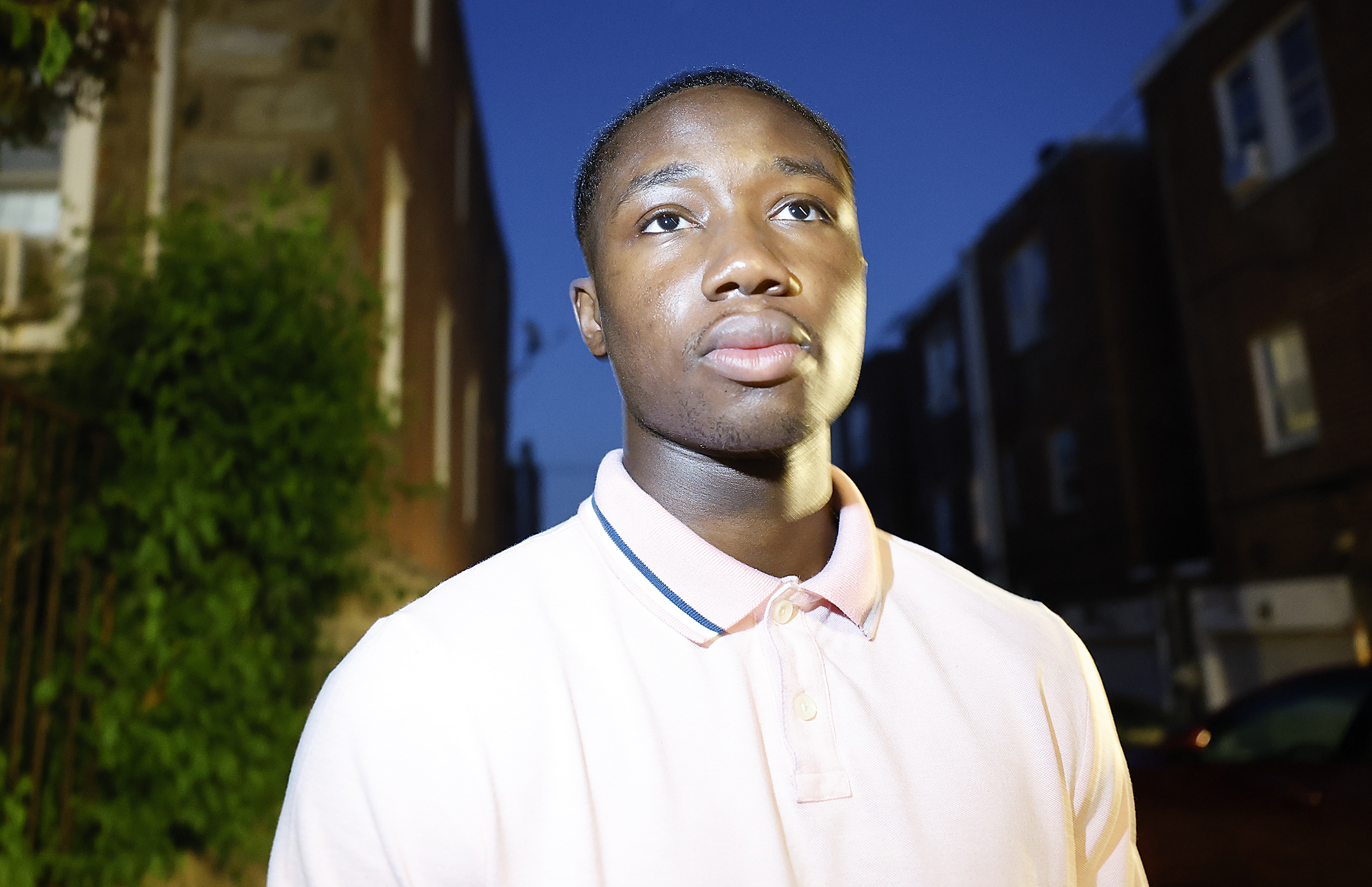
    Abdoulaye Cherif near his West Oak Lane home on July 23. His father, Mamadou Fadel Cherif, was arrested by ICE and has been detained for weeks.Yong Kim / Staff Photographer

    Fadel Cherif remains in custody at the Moshannon Valley Processing Center, the ICE facility in central Pennsylvania.

    “My brothers, they need their dad in their life,” said his eldest son, Ahmad, 22, noting that the youngest brothers are 13 and 15. “It’s very important for my dad to be here.”

    Abdoulaye Cherif said his father told him that on that morning, he demanded that the ICE agents show him an arrest warrant signed by a judge. Instead, he said, the officers presented an agency-issued detainer.

    Today, he said, the family is surviving financially on savings. Emotionally, they struggle without their father.

    “He’s like the glue,” Abdoulaye Cherif said. “He directs us, he leads us, he’s the dad. He’s been worried about the situation at home, making sure we get all the bills paid on time.”

    Inquirer staff writer Abraham Gutman contributed to this article.

  • Wu Shaoping escaped China’s repression, only to get busted by ICE in Pa.

    Wu Shaoping escaped China’s repression, only to get busted by ICE in Pa.

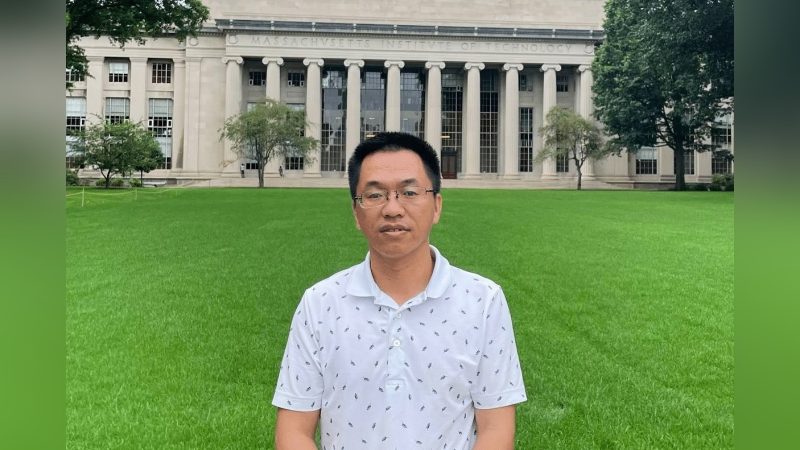
    Seven years ago, the walls were closing in on Wu Shaoping in his native China.

    Like a firefighter who rushes into a burning building, attorney Wu had watched China’s repressive Communist Party arrest scores of human rights lawyers under a crackdown that began in 2015, and responded by joining their dangerous cause, representing practitioners of Christianity or the Falun Gong sect.

    “It is simply a duty of my profession, part of my responsibility, to uphold the legal right of every person,” Wu said in a 2023 video urging his fellow Chinese to quit the Communist Party, or CCP. “It’s one of the things we should do as lawyers.”

    In late 2019, China’s totalitarian government began arresting human rights advocates who’d attended a secretive conference in the southern city of Xiamen and charging them with subversion of state power. Wu was at that confab, and — fearing he’d be next — he fled with his wife and young daughter to a place that had offered a safe haven to so many Chinese dissidents: the United States.

    Wu’s family traveled to New York on a tourist visa, and before that expired, the attorney applied for political asylum. As his case lagged in the clogged U.S. immigration courts, Wu built a life in his new country.

    In 2023, the family moved to a more affordable town just outside Lancaster and joined a local Chinese Christian church, while Wu’s daughter enrolled in Hempfield High School. Wu supported them by driving for Uber, delivering packages for Amazon, and trying his hand at construction work. But he also built up his connections with the diaspora of Chinese dissidents while using his newfound free speech to speak out against the CCP.

    It took just one traffic stop in Donald Trump’s America to turn everything upside down.

    On July 15, Wu was making Amazon deliveries in Cumberland County, Pa., when a local police officer pulled him over and later placed him in the custody of U.S. Immigration and Customs Enforcement. Despite having a work permit and an active application for asylum — which should have shielded him from deportation — Wu was quickly sent to ICE’s notorious Moshannon Valley Processing Center in Northwestern Pennsylvania, which has been criticized for squalid conditions.

    Wu’s arrest and detention have stunned and demoralized the close community of Chinese political refugees on U.S. soil, who for years have faced harassment here from agents and allies of Xi Jinping’s dictatorship. Now they find themselves fighting on a second front as the reality sets in that the U.S. government they saw as their protector is no longer a reliable ally.

    “The CCP is the ultimate source of fear, whereas the threat of being detained by ICE like this is more kind of imminent, immediate,” Zhou Fengsuo, who’d been jailed as a student leader of the 1989 Tiananmen Square uprising and gained asylum and U.S. citizenship after fleeing here in 1995, told me on Wednesday.

    But Wu’s arrest is also a powerful symbol of an inhumane mass deportation policy that has become a mindless and lawless machine of evil banality. It is sweeping up all kinds of refugees to fill its gulag detention quota, without any thought to why its victims have come to America or preserving the U.S. legacy as a safe place for the world’s stateless dissidents, which is getting permanently destroyed by this meat grinder.

    How can anyone possibly make sense of the twisted logic of the Trump regime, which in arresting Wu has targeted an outspoken critic of communism and the Chinese government — the same government the president has just accused (with no evidence) of attacking our elections.

    But locking up an asylum-seeking Chinese dissident is no less illogical than the Minnesota ICE raids against the Hmong people who came here after aiding the CIA in Laos in the 1960s and ‘70s, or the detention of Afghan nationals who worked with U.S. troops after 2001, or so many others who thought America offered them safety. Instead, there is terror — not just for the detained and their families, but for those who fear they could be next.

    “I came here not only for my freedom, but for the freedom of other Chinese people,” Wu said this week in a conference call from the Moshannon Valley lockup that was translated into English by a dissident friend and reported by Lancaster Online. He added that he shouldn’t have been arrested because “America is a country built on the rule of the law.”

    Well, it was supposed to be.

    Wu’s passion for fighting injustice has burned since he was a teenager and took a year off from his studies in 1997 to leave his rural home and earn some money by working in bustling Shanghai. The cramped, filthy back alleys where factory workers lived looked nothing like the thriving communist state he’d learned about in school. He started tracking down banned books, where he learned the truth of the 1989 Tiananmen Square massacre that the government had lied about when he was in third grade.

    “It was upside down,” Wu said, as translated in the 2023 video. “They lied to the world and praised themselves, making the butcher the sweetest person in the world.” He said his dissatisfaction with China’s regime only grew after he became an attorney and witnessed rampant bribery, or saw residents whose homes were getting demolished for new projects get beaten by police when they tried to complain.

    The turning point was a date that’s little known to most Americans but holds great significance in the Chinese dissident community: July 9, 2015. More than 300 human rights lawyers and activists were detained in a government crackdown that launched that day, while others lost their law license and have been subjected to harassment.

    That’s also when Wu stepped up his legal representation of clients targeted by the regime — especially those facing persecution for their religious beliefs in the officially atheist nation. That’s how he came to be one of roughly 20 pro-democracy activists who attended the private December 2019 meeting in Xiamen, and why he fled when two prominent attendees were arrested, and others felt they were in the crosshairs.

    Wu Shaoping (right), his wife Li Caoliu, and their daughter after their 2022 baptism in Texas. Handout art

    Wu’s life in America with his wife, Li Caoliu, and their daughter, now 17 and entering her senior year at the Lancaster County high school, has been divided between his quest for a normal family life and his tireless political activism. He helped found the Overseas Chinese Human Rights Lawyer Alliance — refugee attorneys who continue to advocate for the rule of law in their homeland.

    The family converted to Christianity in 2022, and joined the Chinese Bible Church of Lancaster after moving to Pennsylvania. The pastor there, the Rev. Daniel Luo, described his congregant Wu as a busy man who nonetheless would drop everything to drive cancer-stricken Chinese children from New York City airports to a hospital in Hershey.

    “He was so inspired by these persecuted Christians that he represented, and he felt a conviction to follow Christ,” said Wu’s close friend, the Rev. Bob Fu, the leader of the Christian diaspora group China Aid, who baptized the entire family during a 2022 retreat.

    Big changes were happening for Wu — except for his asylum case, which stalled as the surge at the southern border in the early 2020s slowed immigration courts to a crawl.

    The details of what happened when Wu was stopped by police earlier this month remain somewhat murky. Wu’s attorney in Montgomery County, John C. Visher, didn’t return calls or emails, but he’d previously told the New York Times that Wu was pulled over by police in Mount Holly Springs, Pa., while making his Amazon deliveries, and informed the officer of his work permit and his pending asylum application. But the officer called in ICE, whose agents detained Woo and eventually shipped him to Moshannon Valley.

    An ICE spokesperson claimed last weekend that Wu lacks legal status and had overstayed his visa by six years. Advocates find the arrest baffling and are hopeful the case can be resolved in Wu’s favor in a scheduled hearing before an immigration judge on Monday.

    His plight has gained support from two members of Congress — Republican Chris Smith of New Jersey and Democrat James McGovern of Massachusetts, who said in a letter to Homeland Security Secretary Markwayne Mullin and Secretary of State Marco Rubio that Wu “would face a severe risk of persecution — including detention and harsh punishment — if returned to China.”

    Fu said that on this week’s call from Moshannon Valley, his friend was grateful for the support, but “he’s very, very nervous, very concerned about the possible deportation.” His friends and allies agree that returning Wu to China would ensure the arrest he thought he’d avoided when seeking asylum in the United States.

    But he’s already been arrested, in a nation where the beacon of democracy has nearly died out.

    This man who has done absolutely nothing wrong is behind barbed wire walls in his adopted homeland, in a detention center where others have complained of rotten food and medical neglect. The irony is painful: Trump’s increasingly senseless human rights nightmare has totally lost the plot.

  • Citizens Bank says it has ended lending to private prison companies used by ICE

    Citizens Bank says it has ended lending to private prison companies used by ICE

    Citizens Bank no longer funds two private-prison companies that house people detained by federal immigration services, the company said in a statement on its investor page Friday.

    The federal government has purchased some facilities it had been using from private prison operator CoreCivic and plans to buy some from the GEO Group, so those companies no longer need as much capital, according to the bank. Citizens now finds it “appropriate to exit” those lending relationships, the bank said.

    Citizens, based in Rhode Island, has the largest bank branch network in the Philadelphia area, according to FDIC data, and ranks among the dozen largest U.S. commercial banks.

    Opponents of the facilities have asked for “assurances in writing” from Citizens Bank that the GEO Group and CoreCivic relationships are over, said Peyton Fleming, a spokesperson for De-ICE Coalition, which organized protests against the bank.

    Earlier this month, CoreCivic announced the sale of two prisons in California to the U.S. for $1.5 billion.

    Protests against Avelo Airlines’ role in transporting deportees for immigration agencies ended last winter after ICE purchased its own airplanes.

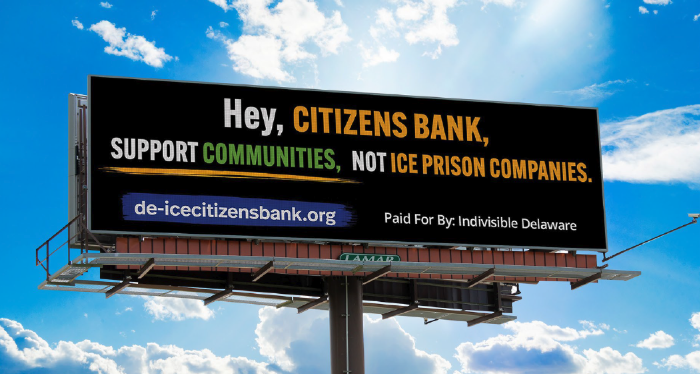
    A billboard near the Route 420 exit of I-95 North in Delaware County pressuring Citizens Bank to stop funding private prison operators who housed deportees for federal agencies.Indivisible Highlands

    De-ICE in a statement Friday called Citizens’ decision “an important victory for the people who refused to let a major bank finance human suffering brought on by ICE detention activities of the current federal administration.”

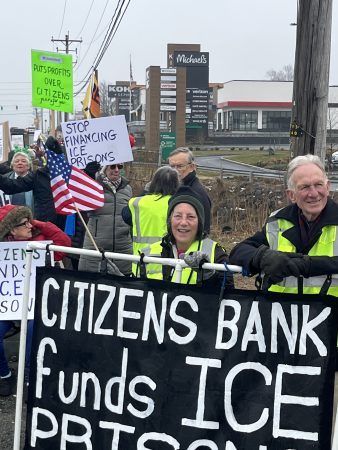
    De-ICE backers sponsored signs, trucks, a billboard on northbound I-95 near the Route 420 exit, a flyover banner before the Major League All-Star Game, and pickets in the region urging Citizens to drop the prisons. The group took credit for the decision, said Debbie Travers, a healthcare consultant and a leader of Indivisible Highlands and Beyond, a Wilmington-based group opposed to aggressive worker and family deportations.

    Citizens, one of the few big banks to finance private prison companies, also was targeted in New Jersey and other states by local ordinance proposals urging towns to withdraw public accounts from Citizens. Jersey City and Montclair voted earlier this summer to withdraw more than $300 million in total from Citizens, according to NJ.com.

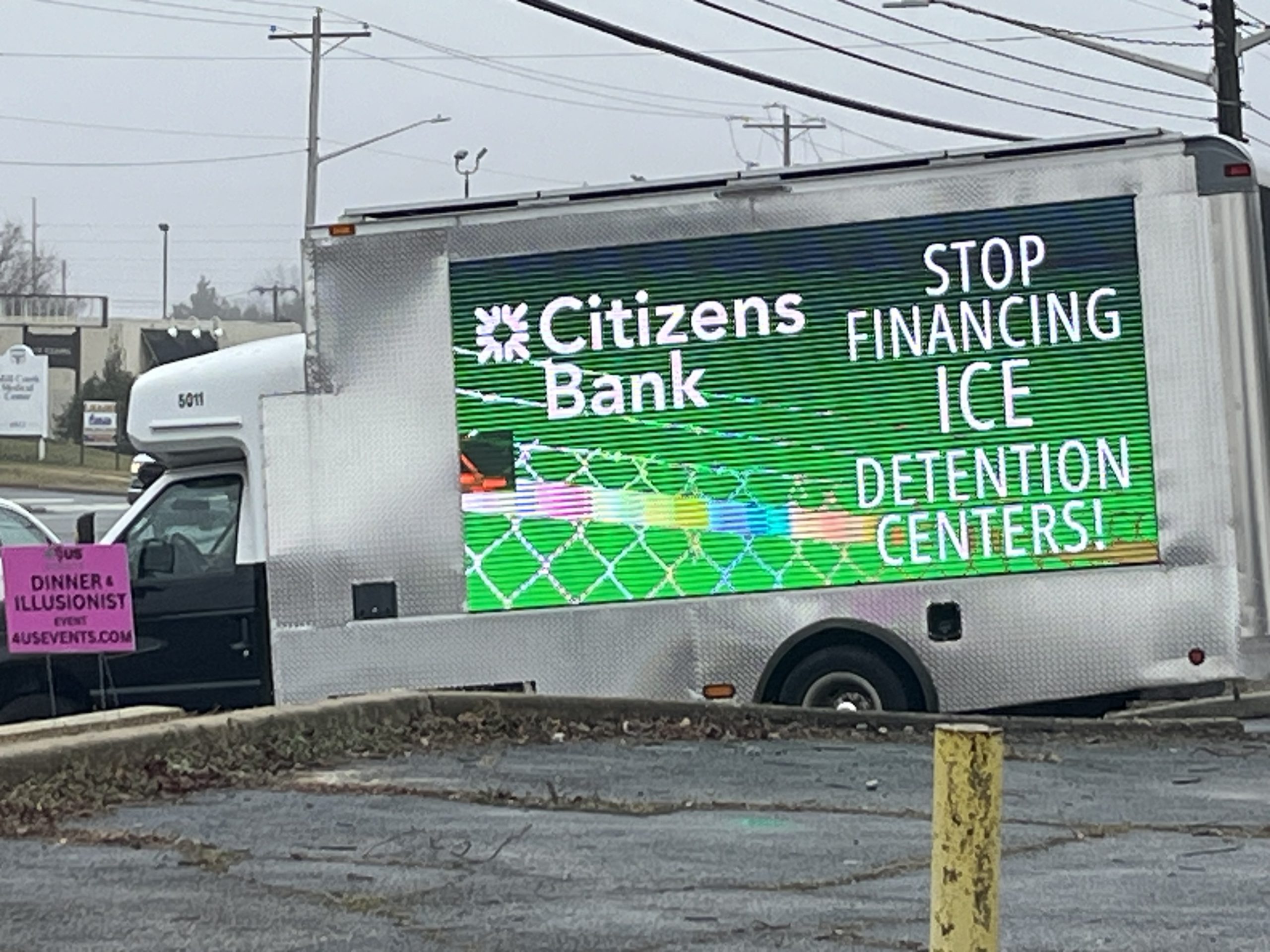
    This truck, adorned with illuminated signs urging “Citizens Bank Stop Financing ICE Detention Centers,” was parked near a Citizens branch in Delaware as part of a national protest March 5. Organizers said they visited 68 branches, including several in the Philadelphia area.Joseph DiStefano

    In its statement, Citizens said that due to privacy concerns, it hadn’t previously commented on its relationships with private prison owners and U.S. Immigration and Customers Enforcement detention center operators CoreCivic, which Citizens had served since 2011, and the GEO Group, which Citizens has financed since 2018.

    Activists, including Philadelphia and Delaware chapters of Indivisible, complained that Citizens funding enabled the GEO Group, of Boca Raton, Fla., to operate the Moshannon Valley Processing Center in central Pennsylvania, Delaney Hall in New Jersey, and more than a dozen ICE prisons where conditions have been criticized. CoreCivic, of Brentwood, Tenn., ran the Elizabeth Detention Center in New Jersey, among others.

    Protest organizers, including local branches of Indivisible, said they had marched outside at least 70 of Citizens’ 988 full-service branches, including locations in Center City and Northwest Philadelphia last winter and spring.

    The bank said it has been “disappointed that the activists have dragged it into what is largely a political matter” and complained they mischaracterized the bank as anti-immigrant, pointing to its record of funding agencies that serve immigrants and other nonprofit support.

    Citizens also said bank regulators don’t allow them “to deny banking services to individuals and to lawful businesses based on political or religious considerations, a practice referred to as ‘debanking.’”

    The federal Office of the Comptroller of the Currency, a bank regulatory agency in the Treasury Department, is reviewing banks and has threatened to punish them for politically motivated debanking, citing private prison operators, gun makers, and oil companies among the industries the administration wants to protect.

    Banks “must consider these regulatory and contractual frameworks in making decisions on who to bank or not bank,” Citizens said. “Fair access to bank funding should be something all should agree with. Political concerns should be addressed through political channels.”

    De-ICE spokesperson Fleming said group members believe “public conscience and community resistance” helped change the policy, adding that “doing some good does not cancel out the harm caused by these business relationships.”

    In 2019, eight large U.S. banks including JPMorgan Chase & Co. and Citibank agreed to stop funding private-prison operators.

    In 2024, Citizens’ banking arm agreed to lead a group of lenders raising $1.3 billion for the GEO Group, which operates 82 prisons for state and federal agencies, some of which house immigration detainees.

    Last year, Citizens led a group of lenders, mostly smaller Southern banks, in raising $500 million for CoreCivic, to pay down debt and “for general corporate purposes.”

  • Fellowships shelter exiled writers. The hard part comes after.

    Fellowships shelter exiled writers. The hard part comes after.

    Not long ago, I was a celebrated exiled writer, one of the most visible faces at City of Asylum Pittsburgh — a grassroots organization that helps endangered writers build new homes and new lives in Pittsburgh. Today, I am alone, unable to find a job, without health insurance, and, if I remain in this situation, I may soon be unable to pay my rent and find myself — God forbid — homeless.

    My story begins in Algeria — the country that prompted Salman Rushdie and other writers to first establish the “parliament of writers” internationally in 1993 because of the alarming number of attacks on, and assassinations of, writers in the country in the ’90s during the civil war. This is the same country that had earlier welcomed the international Black Panthers, and many African liberation movements since its independence from France.

    I came here as a threatened writer.

    For years in Algeria, I was persecuted because of my novels, my legal and constitutional struggle as a gay Muslim man, and my defense of women’s rights, LGBTQ+ rights, and freedom of expression.

    In 2015, I was the first Algerian to call for the legalization of same-sex marriage. I started speaking up on taboo topics, crimes against children, for example, and family laws that relegated women to second-class citizens and prioritized men in the family. In 2017, I was interrogated for hours about one of my novels, which highlighted the participation of the LGBTQ community in the war of independence against the French — another taboo topic.

    In 2019, I broke the greatest taboo of all in Algeria, calling for the truth to be told about the 20,000 young men kidnapped during the civil war.

    I was tried and sentenced to pay a fine for using humor to criticize the presidential elections in 2020, and then in 2021 I was interrogated for hours about two articles I had written: one in which I criticized the president, the other, a call to liberate “God” from politics.

    I was already in the U.S. when I was sentenced, in absentia, to a year in prison in Algeria for those same articles.

    The German Bundestag honored me through its “Parliamentarians Protect Parliamentarians” program for human rights advocates, and I was shortlisted for the Index on Censorship Freedom of Expression Awards in 2021. There were other recognitions, but also so much pain, which finally pushed me to escape.

    I say escape because I chose myself, for the first time in my life. I chose to live. In 2017, PEN International contacted me and proposed that I get in touch with the International Cities of Refuge Network, a Norwegian organization that has a network of many cities of asylum around the world. In 2021, I got Artist Protection Fund funding, and through that, I got a fellowship with the City of Asylum Pittsburgh and Carnegie Mellon University.

    City of Asylum welcomed me in Pittsburgh and gave me an important period of safety and opportunity. During this period, I taught Arabic and worked at Carnegie Mellon, where I also studied translation as part of the employee educational benefits while holding a fellowship there. These opportunities changed my life, and I am grateful for them.

    Elaine Moukhtefi with Anouar Rahmani in Pittsburgh in 2025. Moukhtefi — an American writer, translator, and activist — worked with Frantz Fanon in support of the anti-colonial Algerian National Liberation Front in the 1950s and ’60s. She helped welcome members of African national liberation movements, including Nelson Mandela and the international Black Panther members, to Algeria before she was forced to leave the country in 1974. Rahmani says that meeting her in Pittsburgh “was the most beautiful surprise in my life.”Courtesy of Anouar Rahmani

    But eventually, as happens with fellowships, programs end, and the difficult question of what comes next begins.

    Excitedly, I began applying for jobs related to my degrees and experience. When that didn’t pan out, I applied for translation jobs and positions requiring Arabic or French. I applied for work that matched my résumé, and for work that did not. Being an immigrant, I lowered my expectations and looked for work almost anywhere. To give you the full picture, I applied for cleaning jobs, including one cleaning hotel toilets in Pittsburgh.

    I hoped to find anything that would protect me from the bitter winter cold and the eyes of racists. Above all, I wanted a job that would preserve my dignity and my life. I did not have many conditions. Any legal work would have been enough to begin my life again. But perhaps because of a curse, bad luck, or something beyond my ability to understand or predict, I was not successful.

    Today, I live afraid, on the verge of homelessness, in debt, without health insurance, and without a passport because the Algerian Embassy will not renew mine. I do not know where to turn or what to do. All doors seem closed to me. And all that comes to mind is the applause of audiences at the many events where I was once a guest speaker, on days when I truly believed myself to be an “important” person. Now it seems like a joke.

    Anouar Rahmani (left) and Kenya C. Dworkin y Méndez, from Carnegie Mellon University, in a public conversation and preview of Rahmani’s novel, “The End of the Third World,” at a City of Asylum Pittsburgh event in 2025.Courtesy of Anouar Rahmani

    We do not matter much as immigrants. U.S. Immigration and Customs Enforcement hunts immigrants down, and politicians direct hateful rhetoric against us. We are labeled with the ugliest descriptions in the media. I am a queer immigrant from Algeria. I have become almost everything some politicians in this country hate.

    After the Gaza War, many Arab and Muslim scholars and students spoke with me about their fears. When students were arrested during pro-Palestinian protests, many of us became afraid in a country that had promised us we would not need to be afraid again.

    I am afraid. Do I have the right to say this? Or must I live within a diplomatic discourse that allows only gratitude to be expressed after a rescue?

    I need to write about the difficult side of rescue, the “after the rescue” nobody speaks about.

    This photo shows House Poem, a home painted by Huang Xiang, the first exiled writer in the City of Asylum Pittsburgh residency program, in December 2020. City of Asylum Pittsburgh is a nonprofit organization that is part of an international network of support to writers and artists threatened by a lack of freedom of expression in their home countries./ AP

    My story is perhaps personal, but it is bigger than me. It is about exiles brought into this country with hope — who later discover how fragile their survival is. While we are often presented as examples of success, many exiles live in psychological, economic, and legal fragility and under indescribable pressure.

    The danger for an exiled writer, scholar, or artist does not end simply because a fellowship ends. I do not doubt the sincerity of the people and the organization that brought me to America and sheltered me. I am not trying to blame my failures on it or on others. But I want us to reconsider the rescue model on which it is built and to work toward sustainable mechanisms of support.

    Perhaps the end of a fellowship should be announced with the same energy as its beginning. When an exiled writer or artist arrives, organizations often use newsletters, social media, institutional networks, and public events to introduce the new fellow to a city. The arrival becomes news. But the departure, and the professional uncertainty that may accompany it, can happen almost silently. Why not use the same networks to announce that a fellowship is ending and that a writer, scholar, or artist is entering the job market? Visibility should not disappear precisely when it may be most vital to survival.

    Snow welcomed the author when he first arrived in Pittsburgh as a City of Asylum and International Cities of Refuge Network fellow in January 2022.Courtesy of Anouar Rahmani

    Host organizations can make introductions, advocate, and help open doors that are often inaccessible to a newcomer navigating a foreign labor market. Many exiles have advanced degrees, years of professional experience, and strong résumés. What they lack is access: knowledge of the hidden mechanisms of the local job market, professional references, institutional introductions, and networks capable of converting experience into employment.

    Most importantly, the path toward employment after a fellowship should be treated as part of the fellowship. This work should begin even before the fellow arrives. What credentials may need recognition or supplementation in the host country’s labor market? What legal barriers to employment might exist? These questions should be asked from the beginning, revisited throughout the residency, and followed beyond its formal end.

    I want to be clear about what I am saying. City of Asylum Pittsburgh helped me in many ways. I am not dismissing that assistance. The question is not whether individual people tried to help me. The question is whether the fellowship model itself is adequately designed for what happens after the fellowship ends.

    What matters in the idea of rescue is not the moment of rescue itself, but the possibility of survival afterward. We do not want to remain symbols of rescue; we want to survive.

    All of us want to be beings breathing under the sky — but not in fear that it is about to fall on our heads.

    Anouar Rahmani is an Algerian novelist, writer, journalist, and internationally recognized defender of freedom of expression. Rahmani’s literary and public trajectory has positioned him as one of the most visible contemporary Algerian voices confronting censorship, religious and moral authoritarianism, and the criminalization of imagination.

  • New York vowed to protect immigrants. The World Cup final is the moment of truth.

    New York vowed to protect immigrants. The World Cup final is the moment of truth.

    On Sunday, the eyes of the world turn to New York for the World Cup final, capping a tournament set to beat the record for highest cumulative attendance in World Cup history.

    The deeper story of this tournament isn’t playing out under the lights. It’s unfolding in the parking lots, transit hubs, and neighborhoods around the stadiums, where immigrant families are asking whether hosting the world’s game means being welcomed — or being watched.

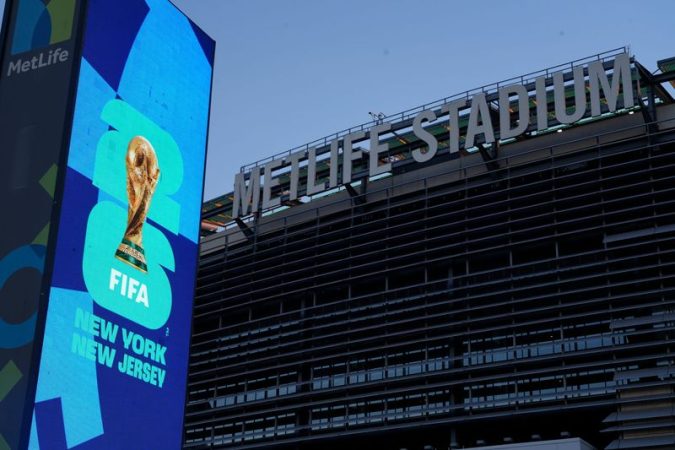
    Fans of Senegal and France gather outside New York New Jersey Stadium in East Rutherford, N.J., on June 16. The deeper story of this tournament is unfolding in the parking lots, transit hubs, and neighborhoods where immigrants wonder if they are being watched by ICE, writes Debbie Almontaser.Hiroko Masuike

    A recent poll conducted by Opinium for the transatlantic think tank Concordia Forum found that 45% of Muslims in the U.S. are often or always worried they or someone close to them will be affected by anti-Muslim violence. More striking still, over 39% said they avoid certain places out of safety concerns. Their fears will have been sharpened by two fatal shootings within a week by U.S. Immigration and Customs Enforcement agents — one in Maine, one in Houston. In both cases, neither man was the original target of the enforcement operation, and both leave behind grieving families.

    This is what “enforcement” looks like under this administration: lethal, indiscriminate, and expanding.

    Now Washington is bringing that same posture to New York. In advance of the final match, border czar Tom Homan has promised New Yorkers “more ICE agents than you’ve ever seen,” framing it as payback for New York’s sanctuary laws — local rules limiting how far city agencies help federal immigration enforcement. The surge is timed to a tournament that’s drawn millions of visitors, many from countries now targeted by expanded travel restrictions.

    It is hard to read this as anything other than an attempt to punish New York for refusing to do Washington’s enforcement work for it.

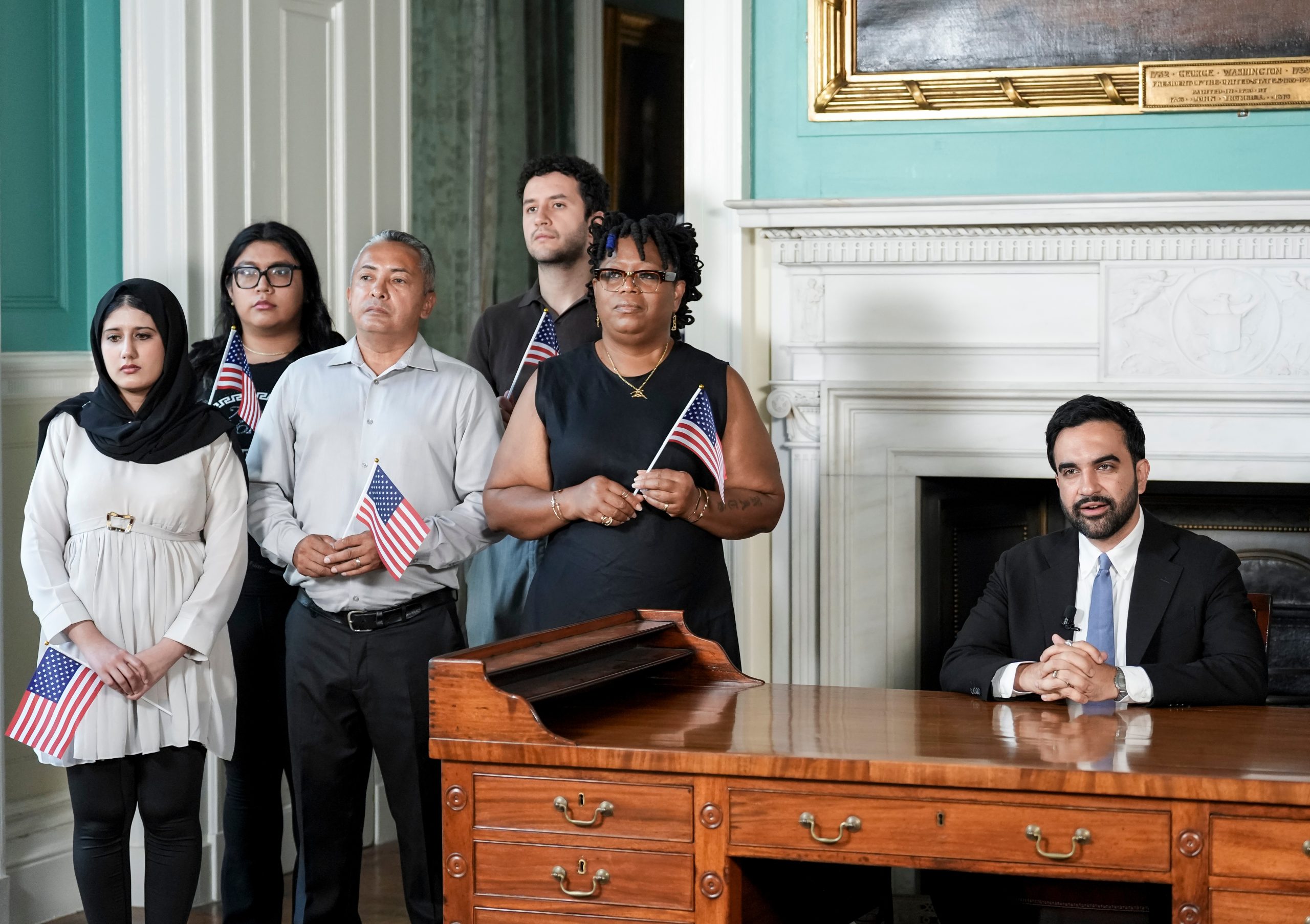
    New York City Mayor Zohran Mamdani delivers an address from George Washington’s desk, surrounded by recently naturalized citizens, to commemorate America’s 250th anniversary on Friday, July 3.Anna Connors

    New York has not backed down. Mayor Zohran Mamdani has been unambiguous, calling ICE’s presence an attempt “to divide us” and noting that six U.S. men’s national team players are themselves immigrants. His administration has restricted New York Police Department cooperation with ICE, barred federal agents from city property without a judicial warrant, and has completed and published a citywide audit of every city agency’s dealings with federal immigration authorities — a level of transparency and follow-through most sanctuary cities never attempt.

    That kind of institutional courage carries a cost, and I know exactly what it can look like up close. As an immigrant rights advocate in the weeks after 9/11, I saw this play out in my Brooklyn backyard on Coney Island Avenue, where thousands of Muslims were rounded up and detained and/or deported under the Bush administration. Washington is running the same playbook now, just at a much larger scale: manufacture a threat, attach it to an immigrant identity, and let the political pressure do the rest.

    Brazil fans sing while watching the FIFA World Cup Group C match between Brazil and Morocco during a public watch party in New York’s Central Park on June 13.Andres Kudacki

    That escalation doesn’t stop with the final whistle. Los Angeles hosts the Olympics in 2028, and Washington’s willingness to weaponize federal enforcement against a host city sets a precedent every future host will have to reckon with. Agents visibly stationed near Sunday’s Central Park watch party would send an unmistakable message about how far this administration is willing to go to undermine New York’s resolve in full view of the world.

    New York’s sanctuary protections are real, and Mamdani has been consistent in defending them. Washington’s decision to turn a global celebration into a show of federal force against a city that has broken no law — a city that has only declined to do the federal government’s job for it — is the actual failure here. Call it what it is: retaliation, staged for an audience of billions. All eyes are on New York again — this time, waiting to see what Washington does next.

    Debbie Almontaser is a Yemeni American educator with 25 years’ experience teaching in New York City public schools. She is a published author and motivational speaker, spending two decades advocating for Muslim and immigrant communities in New York. She is also the founding principal of NYC’s Khalil Gibran International Academy and CEO of Bridging Cultures Group.

  • Philly-area Haitians brace for possible deportations as protected immigration status nears its end

    Philly-area Haitians brace for possible deportations as protected immigration status nears its end

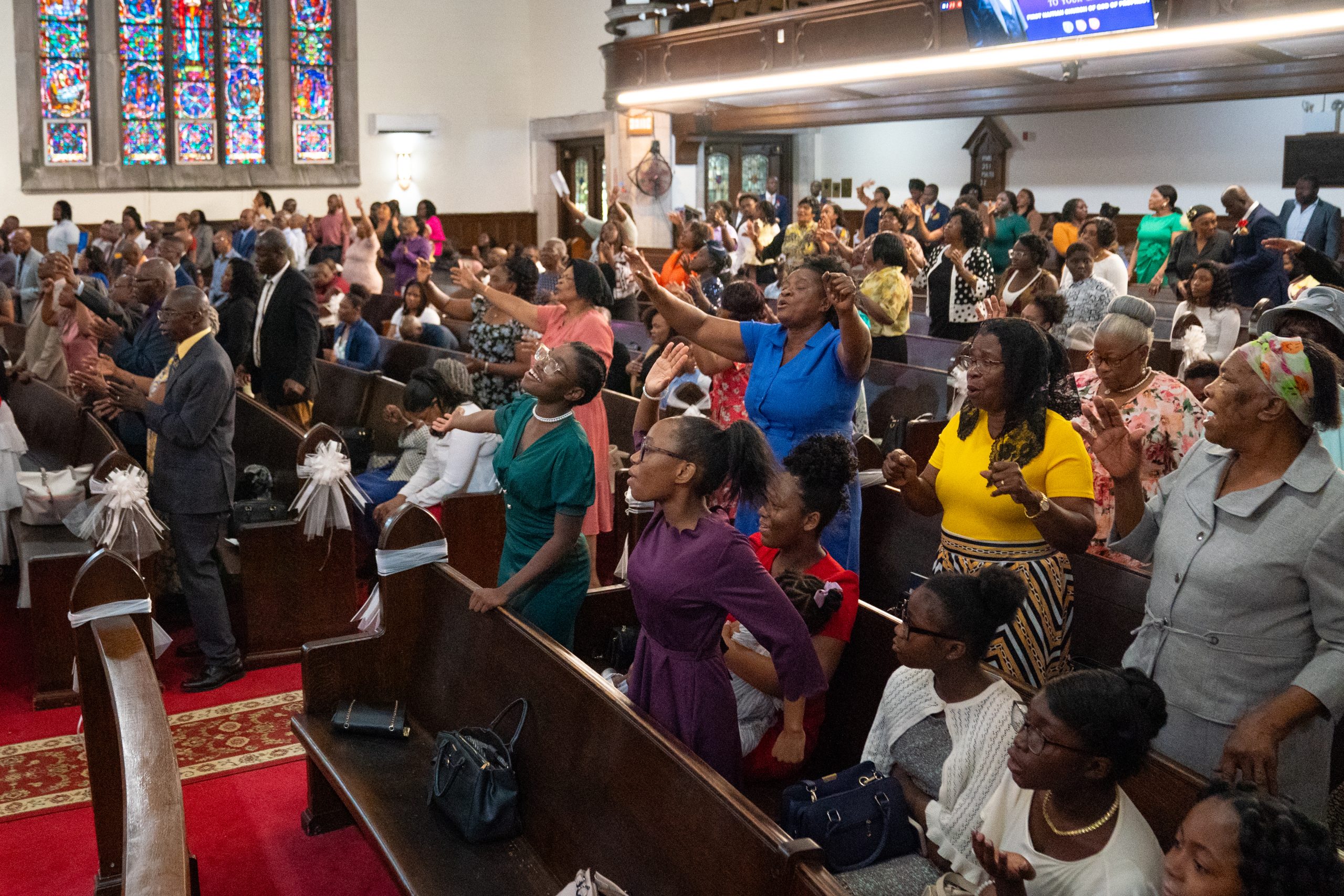
    After taking the pulpit at the First Haitian Church of God of Prophecy on Sunday, the Rev. Frantz Ulysse immediately spoke to the calamity that confronts families in his congregation:

    The end of the special immigration status that for years has allowed thousands of Haitians to live and work in Philadelphia and across the United States with their homeland in chaos ― ruinous natural disasters, governmental collapse, and gang violence that has displaced more than a million people.

    “We, as Haitians, we are in trouble,” Ulysse told worshipers at the Olney church. “We need to pray, because our God is a faithful God, and I believe he’s going to do something for us. … Our homeland, Haiti, it is not a safe place to go back to right now.”

    Prayers have been buttressed by petitions and by pleas to Congress to help before it’s too late.

    President Donald Trump is poised to return roughly 350,000 Haitians to a country that the U.S. government says is too dangerous for Americans, after the Supreme Court ruled last month that he could end temporary protected status for immigrants from Haiti and Syria.

    TPS is a humanitarian status that the U.S. can grant to foreign nationals whose nations are embroiled in war, environmental disasters, epidemics, or other extraordinary circumstances. It provides work authorization and protection from removal, but no path to permanent residency or citizenship.

    Among Philadelphia’s 11,000-strong Haitian community, disbelief over the court decision has turned to misery and fear, advocates say.

    The U.S. State Department has told Americans to stay out of Haiti, issuing its highest “Do Not Travel” advisory and warning those who insist on going to prepare a last will and testament.

    Many Haitians ask: How can Haiti be safe for my family if it’s not safe for others? Some face the prospect of separation from spouses and children who are U.S. citizens. Some will not step outside their homes to go to work, church, or school, afraid that federal agents could be watching, advocates said.

    “A lot of people are suffering now,” said Clifford Solomon, a church usher who is the father of four American children and whose wife is about to deliver a fifth. “A lot of my family is here [under TPS], my friends, my neighbors, all of them.”

    Clifford Solomon, a church usher at the First Haitian Church of God of Prophecy, poses for a portrait before service in Philadelphia on July 12.Sarah Silbiger / For The Inquirer

    The Trump administration insists that “temporary” means temporary. The president tried and failed to end TPS for Haiti, the poorest nation in the Western Hemisphere ― two-thirds of residents live in poverty ― during his first term.

    While running for president in 2024, he falsely accused Haitian immigrants in Springfield, Ohio, of eating cats and dogs, and blamed those in tiny Charleroi, Pa., set on the Monongahela River about 20 miles south of Pittsburgh, of causing “massive crime.”

    The court decision did not immediately terminate TPS for people from Haiti and Syria, but started the process for implementing an order that typically takes 32 days. Once TPS ends, holders revert to their previous immigration status, meaning those Haitians who were undocumented or have no other protection will be subject to arrest and deportation.

    Meanwhile, U.S. Citizenship and Immigration Services says work authorizations for Haitians will expire on July 24.

    “We are seeing the impact on the community in Pennsylvania, in Philadelphia, and across the country,” said Guerline Jozef, founder of the California-based Haitian Bridge Alliance, a national nonprofit. “The fear of deportation, the fear of family separation, the fear of losing everything.”

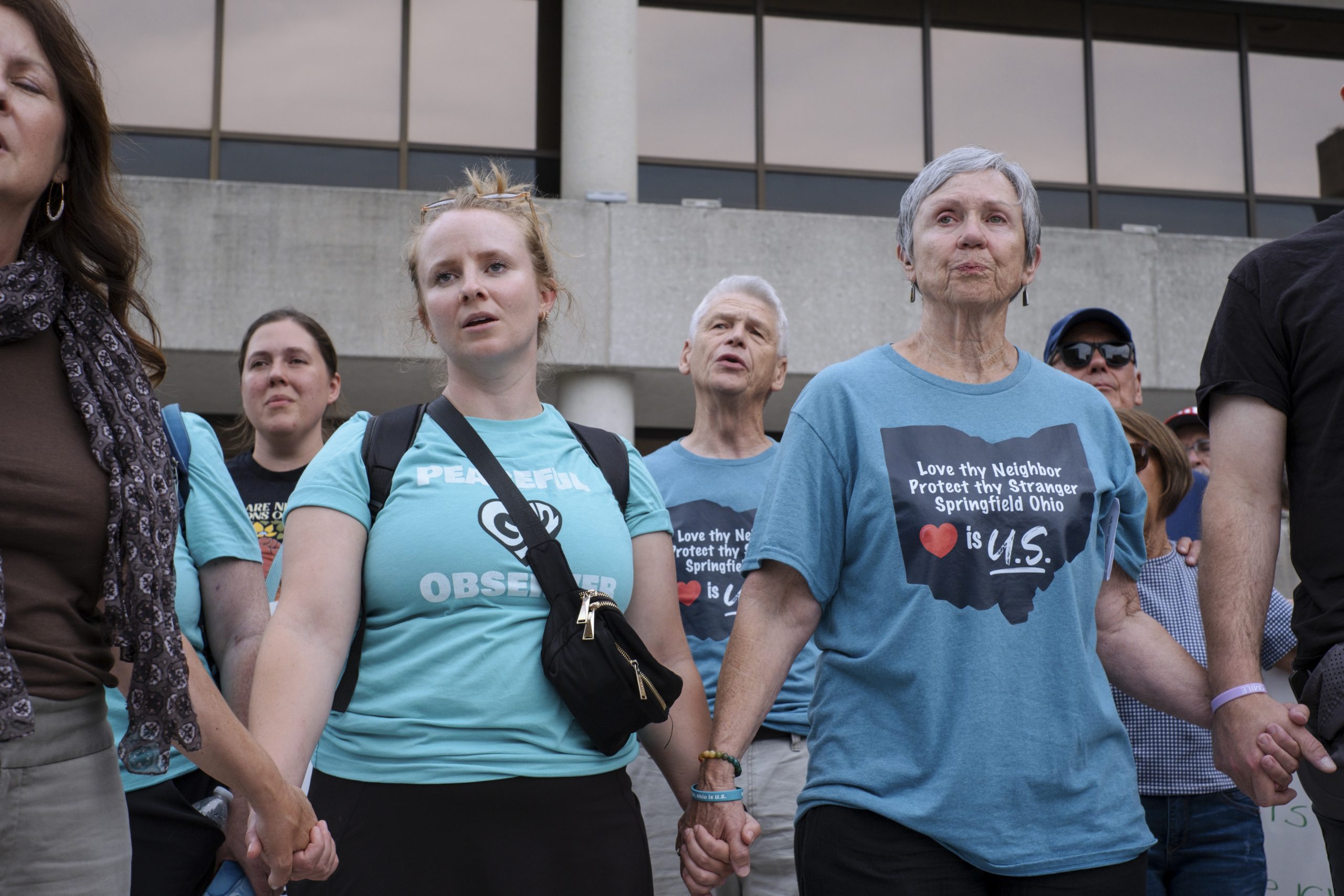
    The alliance has helped commence a series of pro-TPS rallies led by labor unions, faith leaders, and immigrant rights groups in cities from San Diego to Boston, proclaiming that “families who have built their lives, careers, and communities in the United States deserve stability, dignity, and protection — not fear and uncertainty.”

    Supporters of the Haitian community rally at City Hall in Springfield, Ohio, June 25. In Springfield, some residents see the end of an economic boom after the end of a humanitarian program for immigrants. Others see still darker possibilities. AMY POWELL

    Yet uncertainty rules, and many Haitians with TPS are investigating options even as they hope for relief from Congress.

    Esaie Pierre, founder of Men Anpil, a Philadelphia-based nonprofit that helps Haitian migrants, said he is assisting people who want to apply for asylum in the United States. Others who come to him are considering where else in the world they might be able to live.

    One young man is thinking about Chile, Pierre said.

    “They are not wanted here, but have established some kind of life here,” Pierre said. “We’ve assimilated. I’ve assimilated.”

    The events that led to this moment began in January 2010, when Haiti suffered a massive earthquake ― the 7.0-magnitude seism followed by a 6.1-magnitude aftershock ― that, as the National Immigration Forum put it, fundamentally altered the nation’s trajectory.

    Estimates of the death toll ranged from 100,000 to 300,000 people, while about 1.5 million were forced into unsanitary, overcrowded camps. The damage crippled the government.

    Three days after the initial quake, the Obama administration announced that undocumented Haitian immigrants in the U.S. would be granted TPS.

    Thousands more would be welcomed over time under humanitarian programs, and become eligible for TPS, as Haiti grew mired in crisis ― a deadly cholera epidemic the same year, Hurricane Sandy in 2012 and Hurricane Matthew in 2016, and a 7.2-magnitude earthquake in 2021 that killed more than 1,000.

    That year the assassination of President Jovenel Moïse ― elected four years earlier amid allegations of fraud and corruption ― saw the collapse of basic government functions and the rise of armed gangs.

    “You send them back, it’s like you’re signing a death sentence for them,” said Esther Emmanuel, a church soloist who has family members here under TPS. “We’re asking God to do a miracle and to hear the cries of his people, and to also soften the hearts of Congress.”

    Esther Emmanuel, a church soloist who has family members in the United States under temporary protected status at the First Haitian Church of God of Prophecy in Philadelphia on July 12.Sarah Silbiger / For The Inquirer

    Today the United Nations estimates that 90% of Port-au-Prince, the capital and largest city, is under the control of criminal groups, the violence having left thousands dead and displaced more than 1.4 million people.

    The State Department warns of robberies, carjackings, and sexual assaults. It advises U.S. citizens who go to Haiti to establish plans in case they are kidnapped ― including a “proof of life” protocol, so family members can ask specific questions to kidnappers as a way to determine if their loved one is still alive.

    “The only general hospital in Port-au-Prince has been closed for over two years,” Jozef said. “There’s no infrastructure in Haiti for people to be received. … We find ourselves as a community without a home, without a home to go to, without a home to stay in.”

    Talie Cerin, who lives in Philadelphia’s Cobbs Creek neighborhood, was visiting Haiti at the time of the 2010 earthquake. She watched her childhood home crumble.

    She has lived here under TPS, graduating from Immaculata University, then earning a master’s degree in education from Eastern University, and now working as the founder and lead editor of Woy Magazine, an internet publication about Haitian experiences.

    “The toughest part about being a TPS recipient is the ambiguity,” Cerin said. “The confusion keeps you from making long-term plans. It traps you in a prison of conjecture, whispers of ICE raids, and stories of people in detention centers.”

    Her sister, Lunise Cerin, was born in Philadelphia but lived in Haiti from age 5 to 16 before returning here to attend high school and college. The worry of losing her sister, and possibly their home, has been disorienting, Lunise Cerin said, generating “an enormous cloud of grief.”

    Her family has lived in Philadelphia since the 1980s, she said, and for them the end of TPS would mean the end of an established, multigenerational life.

    “Are we going to be gone?” she wondered.

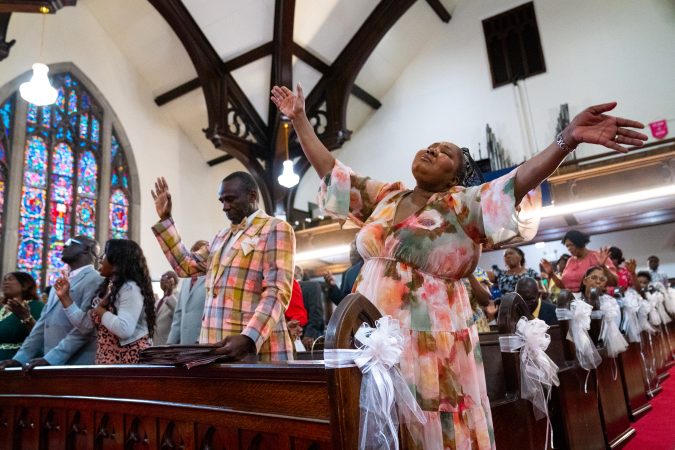
    Congregants sing during service at the First Haitian Church of God of Prophecy in Philadelphia on July 12.Sarah Silbiger / For The Inquirer

    Many at the First Haitian Church of God of Prophecy ask the same.

    The pastor’s office has been deluged with phone calls. Some people tell Ulysse that they might as well die, that returning to Haiti is impossible, but trying to stay here without TPS means they cannot work to pay rent or to buy food for their children.

    “They don’t know what to do,” Ulysse said. “I let them know God is the same yesterday, today, and forever, to trust the Lord. … Me, my heart is telling me something good is going to happen.”

  • DHS chief faces crisis moment amid mounting arrests, fatal shootings

    DHS chief faces crisis moment amid mounting arrests, fatal shootings

    Homeland Security Secretary Markwayne Mullin was speaking to reporters this month in New York when one asked whether he was under pressure from the White House to increase immigration arrests. Mullin replied that his department was in lockstep with the president’s team and boasted that arrests and deportations were rising.

    “When we go after the worst of the worst, which is exactly what we’re doing, we’re saving lives,” he said.

    Just over two weeks later, Mullin is facing his biggest political and managerial crisis since taking office in March as he scrambles to respond to two deadly shootings involving U.S. Immigration and Customs Enforcement officers. The violence has drawn harsh denunciations from Democrats and immigration advocates, as well as criticism from one prominent Republican senator, and the situation has threatened to reignite the wide public backlash that arose in January when immigration officers killed two U.S. citizens during a surge of operations.

    Mullin’s attempt to quell the uproar over the shootings this week — ordering a moratorium on vehicle-stop arrests by ICE officers — has exposed the precarious position he is in while trying to comply with President Donald Trump’s demands. Less than 48 hours after Mullin issued the directive on traffic stops, a White House official confirmed that it had been reversed.

    Mullin promised to rebuild public trust in the Department of Homeland Security after replacing Kristi L. Noem, and he has undone some of his predecessor’s moves, taking a quieter approach in an effort to stay out of the headlines.

    At the same time, he has doubled down on Trump’s deportation agenda. Data provided to Congress and reviewed by the Washington Post show that under Mullin’s leadership, ICE officers have been making record numbers of arrests. Through July 12, ICE had arrested more than 200,000 people in 2026, a more than 40% increase compared with the same period last year.

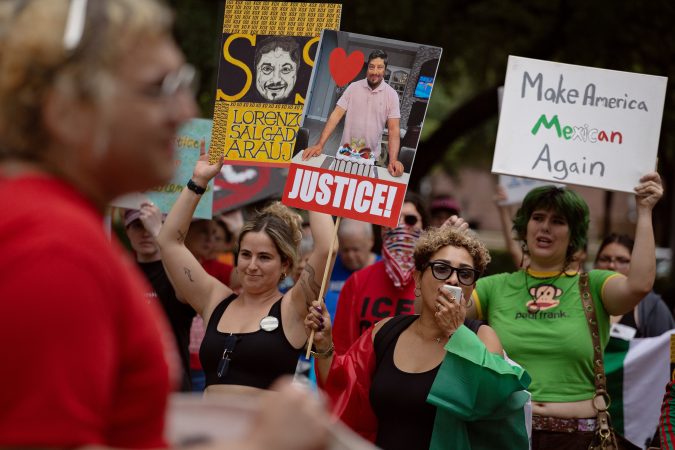
    Those arrests were largely happening outside public view until last week, when an ICE officer shot and killed a 52-year-old Mexican man, Lorenzo Salgado Araujo, in Houston. Salgado had been driving to work, and DHS officials said he was not the target of the ICE operation. His family said he had lived in the United States as an undocumented immigrant for more than 35 years and had no criminal record. Surveillance footage has raised questions about DHS’s account of the events surrounding the shooting.

    Less than a week later, a 25-year-old Colombian man, Johan Sebastián Durán Guerrero, was shot and killed by an ICE officer in Biddeford, Maine. He was also shot while driving, was the father of a young child and does not appear to have had a criminal record.

    Mullin’s apparent predicament illustrates the competing incentives within the Trump administration over immigration enforcement ahead of the midterm elections in November that will determine whether Democrats win back control of Congress and establish a meaningful check on Trump’s power for his final two years.

    Trump abruptly undercut Mullin on Wednesday by praising vehicle stops as one of ICE’s most important tools, and Trump’s far-right base revolted over Mullin’s leadership on enforcement, calling him weak and ineffective. After the policy was reversed, Mullin wrote on social media that there was no conflict between himself and the president.

    “President Trump and I are on the same page,” he wrote. “We want our @ICEgov officers to have all options available to keep them safe while executing our mission of deporting as many illegal alien criminals from our country as possible.”

    Some Republican allies and Trump political advisers are wary about the potential for a broader public backlash to the president’s immigration agenda in an election year. But the administration’s immigration hawks, including White House deputy chief of staff Stephen Miller, have continued to push for mass deportations to make good on the president’s campaign promise and appeal to his hard-line base.

    “The president’s supporters reacted absolutely as they should have, and I think the president saw that,” said Mike Howell, president of the Oversight Project and a visiting fellow at the Heritage Foundation, in regards to Mullin’s pause on traffic stops. “Everyone is now seeing another example of the walk-back instinct of DHS leadership.”

    ICE earlier this month had topped 2,000 arrests per day several times, a DHS official said, after setting that figure as a daily arrest target. The official spoke on the condition of anonymity to share internal information not authorized for release.

    In June, ICE arrested and detained more than 39,500 individuals, topping the previous monthly high of 37,800 in December, according to the data reviewed by the Post. DHS is on pace to exceed that number in July.

    The agency has added thousands of new officers, as well as surveillance technology and other resources, thanks to more than $170 billion in new immigration enforcement funding approved by congressional Republicans last year.

    During his news conference in New York this month, Mullin called that funding “the most consequential bill — definitely of President Trump’s tenure and possibly in recent history.” He accused Democrats, including New York Mayor Zohran Mamdani, of being soft on crime and immigration enforcement, and said DHS “might have to flex a little bit more” to respond to the policies in places such as New York.

    Yet Mullin’s pullback on the vehicle stops, which came after he spoke with Sens. Susan Collins (R) and Angus King (Ind.) of Maine, has left him open to criticism from immigration hawks inside and outside the administration.

    One former DHS official suggested that Mullin made the policy change amid pressure from Collins, who is facing a difficult reelection campaign, without consulting the White House.

    “A cabinet secretary just went 180 degrees from the policy of both Trump administrations,” said the former official, who spoke on the condition of anonymity to frankly discuss his former agency.

    In an interview with Fox News on Tuesday, White House border czar Tom Homan said Mullin had made the decision to pause vehicle stops after consulting with ICE leadership.

    “I’m confident that ICE is well trained in vehicle stops,” Homan said. “This is a temporary pause while they look at the incidents.”

    Mullin has said little publicly about the shootings. When asked about the Houston incident in a brief phone interview with Atlanta News First, he expressed regret that ICE officers were not wearing body cameras and blamed a 76-day partial shutdown of DHS in the spring as Congress was deadlocked over a funding bill for slowing efforts to distribute more cameras.

    Wednesday on X, Mullin reposted Trump’s message in support of ICE and added his own statement, saying DHS is focused on keeping officers safe and removing criminals.

    “Illegal aliens will be arrested and deported wherever they are. If you are here illegally, LEAVE NOW,” Mullin wrote, adding that officers are facing a major increase in attacks by people using vehicles to threaten them. (In fact, federal prosecutors in several cases have dropped charges against people accused of assaulting officers in light of contradictory evidence.)

    “We remind illegal aliens attempting to evade arrest is dangerous,” Mullin wrote.

    A former ICE official said Mullin was chosen for the role because he would follow White House directives, and had predicted that Mullin would walk back the pause on vehicle stops or water it down if Trump demanded he do so.

    “He’s not going to do anything counter to what the president wants,” the former official said, speaking on the condition of anonymity to offer a frank assessment of internal deliberations.

    Immigrant rights advocates expressed skepticism that Mullin is committed to softening ICE’s image to restore broader public trust in the agency.

    Nayna Gupta, policy director at the American Immigration Council, said the Trump administration “may have moved away from the more theatrical displays of force that characterized operations in places like Minneapolis and Chicago, but the basic objective has not changed: a fixation on increasing detentions and deportations simply for the sake of numbers.”

    Gupta said that effort has accelerated as ICE has begun to spend the money from the congressional funding bill, and that it’s leading to more violence by federal officers.

    Yet some business leaders who have worked with Mullin, who previously owned a large plumbing company in Oklahoma, say he has taken a measured approach to enforcement and been far more receptive than Noem to hearing their concerns over the impact of mass deportations on their companies, many of which rely on immigrant labor.

    To the immigration hard-liners, any sign that Mullin is appeasing more moderate interests reads as a betrayal of the president and his voters.

    “Secretary Mullin comes from the Senate, and when it comes to that body, there’s an overeagerness to please other people in that body,” said Howell, of the Heritage Foundation. “So when Senator Collins calls and asks him to do something, then he does it, and it looks bad.”

  • Trump administration revives rule that could deny green cards to immigrants who use public benefits

    Trump administration revives rule that could deny green cards to immigrants who use public benefits

    MIAMI — The Trump administration is reviving a rule that could deny green cards to immigrants who use public benefits that could include food stamps, Medicaid, and housing vouchers.

    The policy, known as “public charge,” appeared on Thursday in the Federal Register. It will be formally published on July 20 and take effect Sept. 18. Under the policy, applicants for green cards have to show they wouldn’t be burdens to the country or “public charges.”

    The policy was first implemented in February 2020 as one of President Donald Trump’s moves to limit legal immigration during his first administration, but it was reversed after Democratic President Joe Biden came to power.

    Its return comes when the Republican administration is implementing a hard-line policy to curb both illegal and legal immigration, and when the cost of healthcare and food is rising.

    The federal government “is reaffirming the requirement of self-reliance, protecting public resources and ending policies that encouraged dependency on the backs of hard-working American taxpayers,” U.S. Citizenship and Immigration Services said in a post published on its X account.

    “Under President Trump, USCIS is restoring the basic principle that immigrants must be able to support themselves,” the post said.

    While the administration’s crackdown on immigration has an increased focus on deportations and immigration enforcement in cities across the country and at borders and entry points, it has also taken actions that target legal immigrants and mixed-status families, in which the parents are foreign nationals with U.S.-born children.

    The rule expands disqualification options

    Federal law already requires those seeking permanent residency or legal status to demonstrate that they will not become a public charge. The Trump administration’s rule, however, broadens the grounds for disqualification.

    The new rule does not describe or specify by name the benefits and programs that could be considered a public charge. Instead, it says that officers who would implement the policy will make “individualized, fact-specific public charge inadmissible determinations, based on a totality of the alien’s circumstances.”

    It says that, “using good judgment and discretion, officers will more accurately assess an alien’s likelihood at any time of becoming a public charge.”

    The Trump administration first promoted the rule in 2018 as a way to ensure that only those who were self-sufficient came to the U.S. Immigrant rights advocates criticized it, saying it amounted to a “wealth test.” Public health experts said it would lead to worse health outcomes.

    Manatt Health, a group that provides advice to state and federal governments, estimated the policy would have deterred as many as 26 million people from seeking healthcare, food, housing, or other aid through programs for which they qualified under federal law. About half were U.S. citizens, mostly children or adults living in a mixed-status family, according to the group.

    Experts also noted that most people who receive benefits from the government are already legal residents.

    A 2020 study from the Migration Policy Institute said that while the “chilling effects” may be vast, the number of immigrants who could be deemed ineligible for legal permanent residence based on use of one of the public benefits under the rule was small.

    The institute estimated that no more than 167,000 people — less than 1% of the 22.1 million noncitizens residing in the United States at that time — could be determined ineligible for a green card based on their current use of a listed benefit.

    There were 22.8 million noncitizens living in the U.S. in 2023, according to the Census Bureau.

    Critics say the rule creates fear in the community

    Nongovernmental organizations said the policy generated confusion and fear and caused many immigrants and their U.S.-born relatives to decide not to apply for benefits and services to which they were entitled.

    Immigrant advocates condemned the government’s decision to revive the “public charge” rule and expressed concern.

    “This regulation is a direct assault on immigrant families, and a threat to our country’s health and economic security,” said Adriana Cadena, executive director at the Protecting Immigrant Families Coalition. “The Trump administration is basing immigration decisions on bias and politics, regardless of the resulting harm.”

    Sarah Krieger, senior policy counsel at the National Immigration Law Center, said the rule would make immigrants afraid to go to the doctor, buy food at the grocery store and file taxes.

    “With this new rule, they are sowing fear and chaos to ultimately reshape America into a country where only the few who are white and ultra-wealthy are welcome,” Krieger said. “The rule is not just deeply harmful, it also violates the law.”

  • House Judiciary Committee issues subpoena to Philly DA Larry Krasner, demands immigration records

    House Judiciary Committee issues subpoena to Philly DA Larry Krasner, demands immigration records

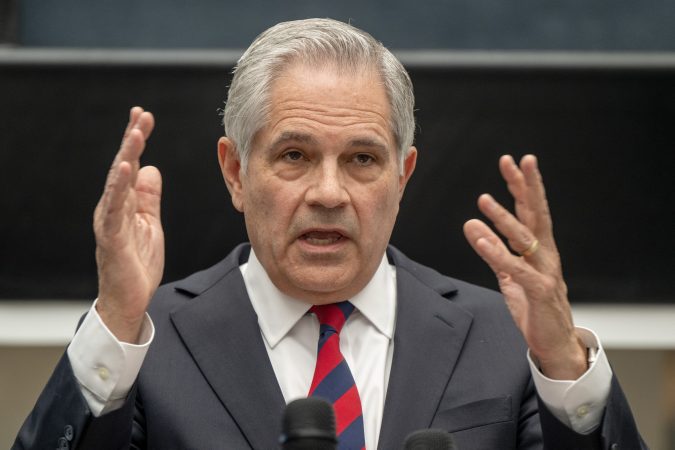
    The House Judiciary Committee subpoenaed Philadelphia District Attorney Larry Krasner on Wednesday, ordering him to turn over documents related to his office’s handling of immigration matters and criticizing what it called the prosecutor’s “pro-illegal-alien policies.”

    The Republican-led Congressional committee said in a letter that it sent the subpoena after Krasner, a Democrat, promised but failed to provide materials that were requested in May.

    The committee, in a letter signed by Rep. Jim Jordan (R., Ohio), its chair, accused Krasner of declining to prosecute or under-prosecuting foreign nationals so that they could avoid consequences connected to their immigration status. The committee said it was asserting its authority to try to end sanctuary-city policies in cities including Philadelphia.

    In response, Krasner called the subpoena “yet another step in authoritarian efforts to do dirt in the dark” and to put pressure on state prosecutors.

    “We have always complied with the law and will continue to do that,” Krasner said Wednesday. “That makes us different from [President Donald] Trump, who spends all day, every day, violating the law of the U.S. Constitution ― and morality.“

    Krasner and the House committee have sparred since May, when the panel accused top city law enforcement officials of shielding criminal immigrants through sanctuary policies and demanded that they quickly turn over a trove of related records and correspondence.

    That represented an escalation by Trump-allied Republicans in their criticism of Philadelphia government on rules concerning undocumented residents, particularly around limiting city cooperation with U.S. Immigration and Customs Enforcement.

    In April, City Council approved high-profile “ICE Out” legislation aimed at restricting immigration enforcement in Philadelphia, putting the city at the forefront of local resistance to Trump’s deportation campaign. The Trump administration challenged part of that package of bills, and this month a federal judge ruled that the city could not prevent ICE agents from concealing their identities.

    In May, in letters to Krasner, Police Commissioner Kevin Bethel, and Sheriff Rochelle Bilal, the Judiciary Committee accused each of hindering federal immigration enforcement. Each letter sought up to six years of immigration communications between their agencies and immigration officials and, in the sheriff’s case, with activist groups including No ICE Philly, Juntos, Asian Americans United, and others.

    The Trump administration has clashed with cities and states that embrace sanctuary policies, contending they are hurting Americans and threatening to cut their federal funding. Philadelphia has long been among the targets.

    Krasner had responded by telling the committee, which said it was conducting oversight of state and local jurisdictions that it believes endanger Americans by not assisting immigration agents, that such policing powers belong to the city.

    “The legal errors are unsurprising,” Krasner wrote to Jordan and to Rep. Tom McClintock (R., Calif.), chair of the subcommittee on immigration, noting that neither had passed the bar. “The factual errors are also unsurprising, given your histories of adhering to wholly repudiated, counterfactual and unscientific election denialism, climate change denialism, and the like.”

    Krasner wrote that he needed time to address each of the committee’s allegations and requests, and was working to hire a lawyer who would be in touch soon.

    In July, Krasner wrote the committee and encouraged it to “question me in public so all Americans are able to see who is telling the truth.”

    The committee’s “fear of such a public airing only makes clearer your lack of real purpose and your complicity in peddling lies,” such as, he said, that local and state prosecutors “rather than President Trump’s ill-conceived deportation actions are responsible for criminals going free.”

    Immigrants are far less likely to commit and be arrested for crimes than U.S. citizens, Krasner noted. But the small number of immigrants who commit serious crimes are being deported by ICE before they can stand trial and be sentenced, given “a ‘get out of jail free’ card and a plane ride to another country, a country where they will never face American justice.”

    The committee told Krasner on Wednesday that time to provide the requested records had run out. Its subpoena directs him to turn over the materials by July 29.

    “Although you may disagree about the need to reform federal law to end sanctuary policies … you cannot seriously contend that the committee lacks the authority to do so,” the committee wrote, adding that Congress may amend statutes “to ensure that prosecutors cannot circumvent immigration law and allow aliens to escape accountability for their crimes.”