Tag: Immigration

  • With or without World Cup tickets, these Philly fans are ready for Sunday — and beyond

    With or without World Cup tickets, these Philly fans are ready for Sunday — and beyond

    The World Cup is finally here, and for the next 39 days, billions of soccer fans worldwide will hang on the fate of the 48 national teams vying to be named the global best for the next four years.

    There is nothing else quite like it.

    If you haven’t followed it closely, try to imagine it as a kind of March Madness wherein the bracket’s unexpected turns and Cinderella runs can upend every expectation: add into it the international scope and quadrennial timing of the Summer Olympics; then top it off with the fervor of beloved religious observance — and you’ll be getting close.

    My familial WhatsApp group started really buzzing two days ago, after New York City Mayor Zohran Mamdani posited the possibility of Morocco winning it all, and won’t stop buzzing until the confetti rains down on the overjoyed winners. In between will be everything from play-by-play game commentary, to status reports on Panini collections or taste tests of World Cup branded snacks, to shared photos of candles lit for the success of a favored team.

    Because, when you are all in you are all in, am I right?

    Thursday the opening match took place between Mexico (which, along with the United States and Canada, is co-hosting this World Cup) and South Africa.

    On Sunday, our own Linc-turned-Philadelphia-Stadium will host Cote d’Ivoire vs. Ecuador. Philadelphia Inquirer columnist Will Bunch has written about the Cote d’Ivoire team — which he will see in person — and whose fans came to watch them in Chester even before the World Cup started.

    The Vourvouliad (the collective we’ve coined for my extended family) long toyed with the idea of attending one of the Philadelphia matches as a group — but FIFA’s dynamic pricing put the kibosh on that by making every seat cost a small fortune.

    But we’ll make do — as we have every mundial before this one — watching from afar.

    Truth is, many of us are also approaching this World Cup with more than a little bit of trepidation. We will watch the World Cup matches taking place on U.S. soil with bated breath, given President Donald Trump’s xenophobia and his administration’s targeted deployment of Immigration and Customs Enforcement and other Department of Homeland Security agents to Black and brown cities, communities and gathering spaces.

    But we longtime fans have too many great memories born of our experiences of soccer to boycott the World Cup altogether — even though some have called for that.

    In fact, most of the fans that I’ve spoken with lately are consumed by the exact opposite: trying to find a way to get into a World Cup stadium.

    Ecuador’s Moisés Caicedo carries the ball during a World Cup 2026 qualifying soccer match against Argentina at Banco Pichincha Stadium in Guayaquil, Ecuador in September.A

    Felipe, who — perhaps channeling Pelé, Neymar and countless other soccer icons — only wanted to go by one name, will be at the Philadelphia opener Sunday, rooting for his home country of Ecuador.

    “I will be going to the stadium with my family. We will also be tailgating with some other friends from Ecuador before the game outside the stadium,” he told me. “I think it will be a great opportunity to meet other soccer fans there.”

    “I am really excited for the World Cup, not only because Ecuador’s national team is in great shape but also because it is a once in a lifetime [opportunity] to have your home country’s national team playing a World Cup in the city you are living in,” Felipe added. “I wish the organization would take into account the fans’ enjoyment before the profit, but I guess this is the business model we sadly see in many other sports as well.”

    France’s Kylian Mbappé, left, scores his side’s third goal during a World Cup 2026 group D qualifying soccer match between France and Ukraine in Paris in November.Christophe Ena

    Ben Rush-Goebel, who moved to Philadelphia from France more than a decade ago, probably won’t be at France’s match on June 22.

    “The tickets are really too expensive,” he told me, “so unless I find a magical way to get to the Philly game, I will be watching it with my friends. I can’t wait to go to the FanFest to watch this game and others. Might also go to a bar. Fado has always been our spot. In 2018, when France went to the finals to beat Croatia, we were in the rain on South Street watching from the screen set up by Brauhaus Schmitz. This was the most amazing time as we rushed after the victory to buy cheap champagne to celebrate.”
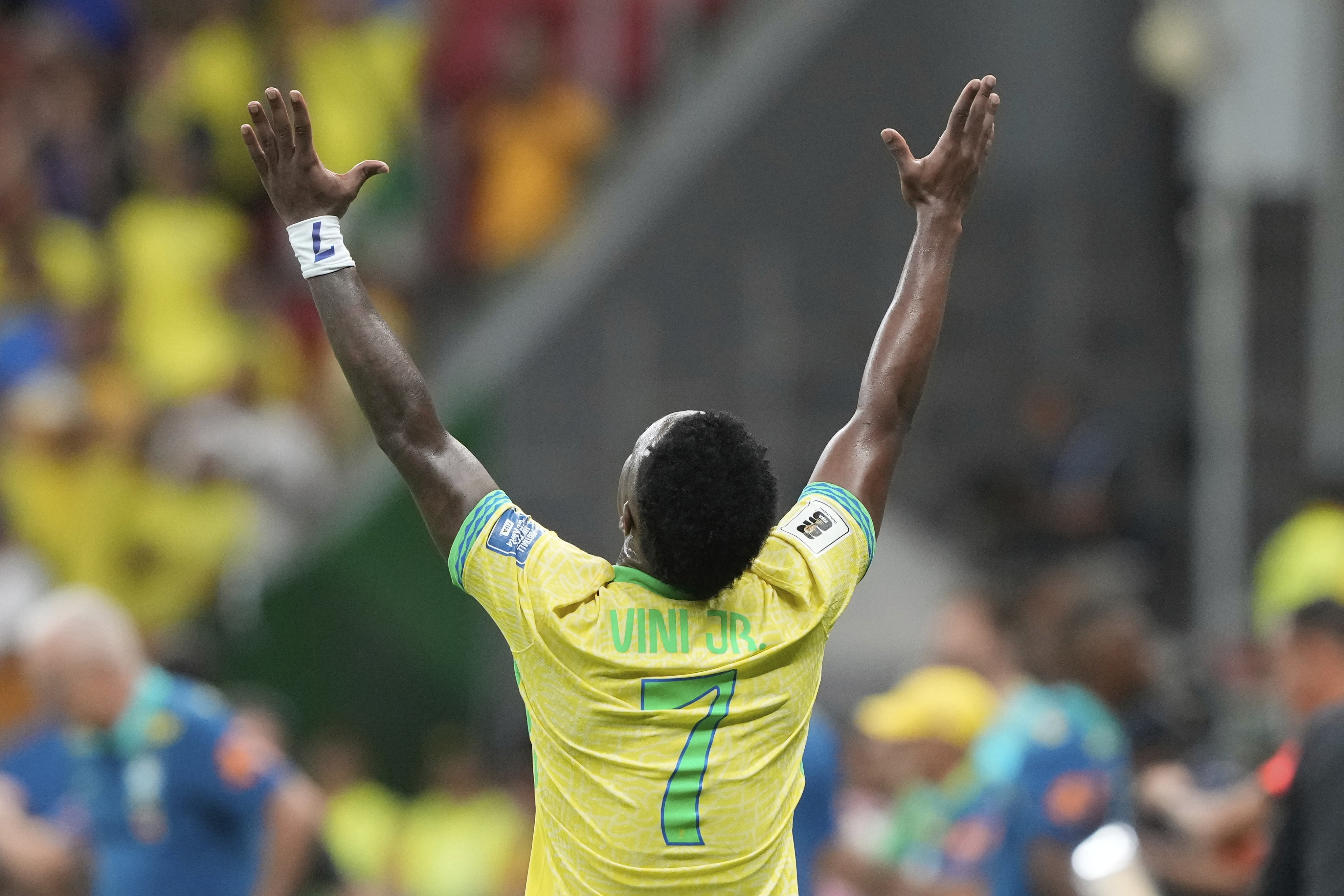
    Brazil’s Vinícius Júnior celebrates after scoring his side’s second goal against Colombia during a FIFA World Cup 2026 qualifying soccer match at Mané Garrincha stadium in Brasilia, Brazil, in March 2025.Eraldo Peres

    Rob Levin, raised in Brazil and rooting both for their Seleção and Argentina’s Albicelestes, will be watching Brazil play in Philadelphia June 19 from home, or with others at a watch party.

    “Chevere to have the World Cup here,” he said. “It’s a shame that the ticket costs are so high and travel to and fro is so fraught — I hope all the fans behave and all players are treated well and with respect — no place for politics in these games. May everything go as smoothly as possible, as it should.”

    The Union’s Danley Jean Jacques, right, is the first active player from the Philadelpha club to play in a World Cup, on the Haitian national team.Jessica Tobias

    Numa St. Louis, whose team, Haiti, is participating in the World Cup for the first time in more than 50 years, hasn’t given up on seeing the team play against Brazil on June 19.

    “I’m still hoping to score a ticket for the Haiti-Brazil game,” he told me, “but if not, I’ll be enjoying the tournament the Haitian way — at community watch parties, breaking bread with friends and family, dancing, and vibing to Haitian music and rhythms while cheering on our team.”

    “The entire Haitian community is energized by the opportunity to support our national team and celebrate this historic moment together …Win, lose, or draw, this team has already made us proud,” he added.

    Like Levin, St. Louis worries about the welcome players and international fans might feel in the U.S. venues. “I have some concerns about how the United States is being perceived by many international fans,” he said. “Reports regarding the treatment of an African referee, Senegalese players, and issues involving Iranian supporters have raised questions about whether the spirit of the tournament is being fully embraced. The World Cup should be a celebration of cultures, people, and the beautiful game. It should feel welcoming, joyful, and inclusive for everyone.”

    And it should resonate, even years later.

    “My best soccer memory goes back to 1996, the first time Ecuador beat Argentina in Quito,” Felipe told me. “I was 12 years old and went to watch the game at the stadium with my grandfather who was a huge fan of soccer.”

    Rush-Goebel points to that 2018 moment on South Street after France’s win as his favorite soccer memory: “A whole lot of French people, many of whom were my friends, my wife, [all of us] stressing together, in the rain, to an amazing victory!”

    For myself, I have fond memories of seeing Mexican immigrants in Philly dressing their Jesus figures in El Tri’s national jerseys before Mexico played in the 2014 mundial — but you have to go all the way back to the 1970 World Cup in Mexico for my best memory.

    Sure, I recall snippets of the televised semi-final “game of the century” between Italy and West Germany, and maybe even Pelé’s magnificent header that opened the final between Brazil and Italy…

    In this June 21, 1970 file photo, Brazil’s Pelé jumps for joy after scoring his team’s first goal against Italy in the first half of a World Cup final at Azteca Stadium in Mexico City, before winning 4 – 1. Kurt Strumpf

    But what lives most vividly in my memory played out during the long lent leading up to those games.

    I’m a kid, standing under the eucalyptus tree in my grandmother’s house in Guatemala with my brothers, trading Panini we purchased for centavos at the corner store in Zone 7 so that we could fill every team roster with stamps in our albums. We talked fútbol nonstop — me, who can’t stand sports, and my brothers, who love soccer and baseball with equal passion — and cheerfully bickered about who would go the distance.

    For me soccer will always be about those two people I love, who I want to keep talking fútbol with until the day I die. The beautiful game is beautiful precisely because of the profound connections it invites and honors — be it with family members, friends or strangers across continents and time zones.

    Or with a city, hosting its first ever World Cup matches with characteristic style and grit. May you hold our deep and indelible memories forever, Philadelphia.
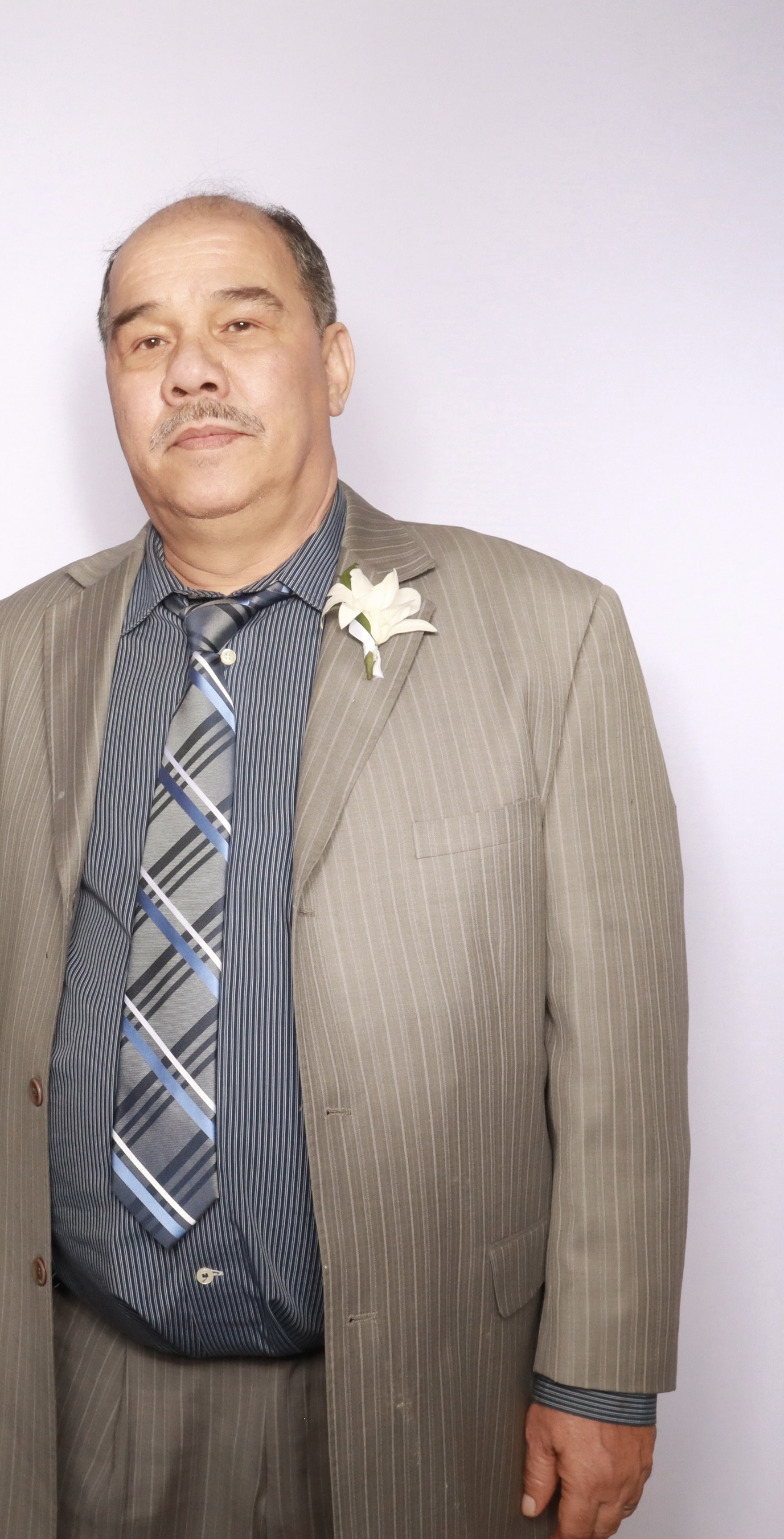
  • The U.S. welcomed this child of the Vietnam War. Why did he die in ICE custody?

    The U.S. welcomed this child of the Vietnam War. Why did he die in ICE custody?

    Tuan Van Bui’s bad luck arguably started the day he was born in 1970 in the city then known as Saigon — the child of a Vietnamese woman and one of the thousands of U.S. soldiers who fought in Southeast Asia for nearly two decades.

    Van Bui never knew his dad, but he quickly learned what it was like to grow up in a hostile homeland that called the estimated 25,000 to 50,000 Amerasian kids like him “children of the dust.” The communist government that won the war in 1975 denied him any education past grade school.

    In 1990, Van Bui caught a break — of sorts. In the late 1980s, a U.S. Congress struggling to come to grips with the mess America had left behind passed the Amerasian Homecoming Act. That allowed Van Bui to legally immigrate to America and settle in Philadelphia’s Kensington neighborhood, but with no real safety net.

    His first two decades on U.S. soil were rough, marked by occasional run-ins with the law. But in middle age, Van Bui had settled into a more comfortable American life. He married a fellow Amerasian immigrant in 2017, earned some money from construction and other odd jobs, and indulged his quirky hobbies like stamp collecting. He was paying back his fines from the bad years and — although threatened with a removal order — he religiously showed up for check-ins with U.S. immigration officials.

    His family says Van Bui was doing everything the right way.

    Still, it was with much trepidation that Van Bui showed up with his wife at the Philadelphia immigration office on Aug. 18, as the reelected Donald Trump and his team pushed for a massive increase in arrests and deportations. What happened next, as his wife related to family members, was even worse than they had feared.

    Tuan Van Bui in an undated family photo. Van Bui, 55, died in immigration custody at the Miami Correctional Facility in Bunker Hill, Ind., on April 1.Handout art

    Van Bui’s stepdaughter, Ly Wang, told me this week that U.S. Immigration and Customs Enforcement officers were waiting. “Before he could even really check in, they saw him, they spotted him,” she said. “The ICE agents ambushed him, and they shoved my mom out of the way. They tackled my stepdad … shoving him into a wall because he’s a big dude.” Wang said the ICE agents threw Van Bui’s paperwork in the trash and warned her mom, “You need to leave before we make it a problem for you, too.”

    Van Bui’s arrest that August day was the start of a seven and a half month Kafkaesque journey through the rancid food and 4 a.m. wake-ups of ICE detention sites, first in upstate Pennsylvania, and then nearly 700 miles away in rural Indiana.

    It ended on April 1. That morning, Van Bui had made his usual phone call to his wife and, despite the routine complaints, sounded fine. The next call came that night, but from the chaplain at Indiana’s Miami Correctional Facility. Van Bui had suddenly collapsed and died. He was just 55.

    It took more than two months for Wang and her mom — who herself had suffered a debilitating stroke in the days right after watching Van Bui’s violent arrest — to deal with Indiana authorities, obtain some additional testing, bring his body back home, and secure a spot for him in the Fernwood Cemetery in suburban Lansdowne, where he was buried on June 5.

    But his family’s many questions have not been laid to rest.

    Why was Van Bui’s ICE detention dragged out for so many months when — given the wretchedness of life behind barbed wire — he and his family would have preferred deportation to Vietnam, even if he hadn’t been there for 36 years? Why wasn’t Van Bui given more medical attention, as doctors noted his swollen knees and other signs of worsening health? And why is ICE’s account of Van Bui’s death so different from what other detainees told the family — that staff did nothing at first while they, the detainees, attempted CPR until paramedics finally arrived a full hour after the collapse, too late to do anything but declare him dead?

    And a bigger question hangs over all of this: Why did a redemption-seeking United States government invite Van Bui to come here from the other side of the world, only to leave him to fend for himself before brutally arresting him, dumping him in a hellhole prison, and allegedly watching him die from chronic and then acute neglect?

    “I think he fully considered America to be his home, and he was very comfortable here despite even all the challenges against [Amerasians],” Wang said. What happened to Tuan Van Bui is in many ways mystifying, but he is also not unique.

    Even as the Trump regime’s deportation raids have sometimes dominated the headlines, much of the attention has focused on the targeting by masked ICE and Border Patrol agents of brown and Black neighborhoods, such as Latinos in Los Angeles and Chicago or the Somali community in Minneapolis. The government’s stepped-up arrests of Asian Americans have largely flown under the radar.

    “There’s just a severe sense of fear in the community,” Nancy Nguyen, the executive director of Philadelphia-based VietLead, told me, adding that the message “for the Asian communities is that they are not wanted here under Trump.”

    A painful irony is that the hardest hit have been refugees for whom the United States opened its doors in the latter years of the 20th century — a belated acknowledgment that their plight was often the result of America’s violent and unpopular war in Southeast Asia. This winter in Minnesota, masked immigration raiders frequently targeted the Hmong people from Laos who’d once been welcomed for their role in helping American troops and the CIA over there.

    Nguyen said that nationally, more than 1,000 Vietnamese immigrants and more than 500 Laotians were deported in 2025 — compared with fewer than 100 a year before the second coming of Trump. A few have been sent to remote African nations like Eswatini, where they don’t know any people or the language. Many more have been languishing, as Van Bui did, in the cruel limbo of ICE detention — sometimes with lethal consequences. Nguyen said that of the 50 or so ICE detainees who’ve died under the Trump regime, nearly a third were of Asian descent.

    Van Bui was actually the second Asian American to die at the Miami Correctional Facility — run by the state of Indiana, which contracts with ICE — since February. Lorth Sim, 59, who came to America in 1983 as a refugee from the brutal dictatorship of Cambodia’s Pol Pot, also collapsed at the facility, where officials also blamed heart disease.

    What’s more, Van Bui is the third member of Pennsylvania’s Asian community to die in immigration custody in less than a year. In January, 46-year-old Cambodian American Parady La was arrested outside his Upper Darby home and died three days later at Philadelphia’s federal detention center, reportedly while undergoing narcotics withdrawal. Last August, 32-year-old Chinese immigrant Chaofeng Ge died at the upstate Moshannon Valley Processing Center five days after his arrest near Harrisburg; family members and advocates have challenged ICE’s assertion that his death was a suicide by hanging.

    In Van Bui’s case, ICE issued a fairly detailed statement that insisted the Amerasian detainee — who’d suffered a serious stroke on Christmas Eve 2023 and used a cane for mobility, among other preexisting health problems — was properly monitored and treated amid clear signs his condition was deteriorating, with a decreased platelet count and then swollen knees indicating “obstructive pulmonary disease.” It also claimed — disputed in the accounts other detainees have offered Van Bui’s family — that staff at the Indiana facility responded quickly to his April 1 collapse with CPR and a defibrillator before he was pronounced dead at 6 p.m.

    Whether ICE and Indiana corrections officers offered Van Bui adequate medical care is still up for debate, but what the government definitely did not offer was empathy. As with other ICE custody deaths, grieving relatives were slammed with an official press release that denied Van Bui’s humanity.

    “Criminal illegal alien from Vietnam passes away at Miami Correctional Center” was the headline on ICE’s press release, which stressed Van Bui’s encounters with law enforcement when he was a younger man.

    His stepdaughter Wang told me the litany of criminal charges in the release includes some arrests for which he was not charged or convicted, and that he was diligently repaying fines for other past violations. But what hurts more is the regime’s cruel characterization of a human being whom Wang described as a soft-spoken, gentle giant who never turned down a request for help from his Kensington neighbors and — “a nerd in a way” — loved to scour flea markets for cuckoo clocks or rare coins or stamps.

    Chaofeng Ge, 32, died in August at the Moshannon Valley Processing Center while detained by ICE.Courtesy of David Rankin

    She said he’d told her little about the first 20 years of his life in Saigon (renamed Ho Chi Minh City after the war), but did admit that the abandonment of his American GI father weighed on him.

    “Something that he did tell me and just confided in me was that he never felt like he grew up feeling wanted, you know? Starting with his dad not being around, and his mother being very busy and being a single parent,” she said. “So he had kind of a rough start.”

    Amerasian kids were treated cruelly in Vietnam — as reminders of the hated Americans who’d invaded their country — and typically denied any education beyond grade school, which apparently was the case for Van Bui. The United States seemed to acknowledge that harsh reality when Congress and the Reagan administration enacted the special AM-1 visa that allowed Van Bui to come here in 1990. But the new arrivals didn’t always adapt easily to a home where they were reminders of a war that most Americans wanted to forget as much as the Vietnamese.

    “My impression that he got into kind of the wrong mix of crowds,” said Wang, who first met her future stepfather when she was a teenager. “I see him as someone who, because he didn’t have that much of an education … that you could manipulate, unfortunately.”

    Like many others, Van Bui faced an immigration judge’s removal order from the 2000s because of his legal problems, yet was allowed to remain as long as he continued his regular check-ins — which he did until his violent arrest last August.

    Van Bui was initially sent to the large Moshannon Valley site in Clearfield County, Pa., then transferred in December hundreds of miles west to the lockup in tiny Bunker Hill, Ind., where, since last year, ICE has promised the state of Indiana $291 a day — four times the normal rate — to house some of its rising numbers of detainees.

    In just a short period of time, complaints from detainees, advocates, and Indiana Democratic Rep. André Carson — who visited the site just days after Van Bui died — that conditions at Miami Correctional Facility are cruel and inhumane have mounted. Carson said two detainees he met described “heartbreaking” conditions, and that a lack of functioning intercoms may have played a role in Van Bui’s death. The American Civil Liberties Union of Indiana settled multiple suits from state inmates — predating the 2025 deal with ICE — alleging pitch-black conditions from windows covered with steel plates, and frequent episodes of cells flooded with wastewater.

    Wang said it took weeks to even learn Van Bui had been moved to Indiana, and when they did reconnect, he complained of freezing-cold winter conditions and horrible food, even as they were awakened by guards for breakfast at 4 a.m. Things were so bad that Van Bui actually wanted to be deported back to Vietnam, but despite finally seeing a judge in February, the government continued to hold him in these gulag-like conditions.

    Until he died.

    During the agonizing weeks Van Bui’s wife and stepdaughter worked to bring home his remains — an effort which included this still active GoFundMe page — they heard from other detainees, most of them also Asian Americans. One Vietnamese native from Philadelphia who successfully won his release in a habeas corpus case tracked down Van Bui’s wife for a surprise visit, to tell the family his version of what really happened on April 1.

    “What we’ve heard from the cellmates is that he collapsed, and they immediately called for help, and no one came,” Wang recounted. “So the cellmates themselves, they did the CPR. None of the staff did CPR. The cellmates did the CPR. They … did CPR and chest compressions relentlessly, with somebody else pressed up against the gate of the jail cell just yelling, ‘Help! Help!’”

    They allege there was no help, not right away.

    “From their view, what they saw was the correction officer sitting there staring at the video and not moving at all,” Wang continued. “It’s reported that [the corrections officers] waited at least around 15 to 20 minutes before they got up, locked down all the cells, and then finally went over to see what happened. Once they came over, they bought a defibrillator, except they did not know how to use it, so they had to call the paramedics. By the time the paramedics showed up, they declared him dead, which was about an hour later than he actually collapsed.”

    I asked a spokesperson for the Indiana Department of Correction about what really happened on April 1, but was referred to ICE. And ICE, as with past columns, has not responded to my request for more information. All we have is ICE’s official report, which insists that detention center staff were the ones who performed CPR, that the defibrillator was used — and which offers no timeline for how long it really took for the paramedics to arrive.

    Those explanations aren’t satisfactory to Van Bui’s family, or to immigration advocates here in Philadelphia or the ACLU back in Indiana, who continue to press for answers while they explore possible legal action.

    But there are questions that are bigger than any courtroom. Why are Asian communities that, in those post-Vietnam War years, drove the comeback of America’s cities and older suburbs now targeted by a terror campaign from the U.S. government? Why did the United States abuse innocent people from Southeast Asia — and especially the Amerasians — twice, first in a pointless war and now in a gulag archipelago on American soil?

    What did Tuan Van Bui do to deserve neglect and death in a dark, dank cell hundreds of miles from the people who loved him?

    When his family finally held his services at a Chinatown funeral home, it wasn’t known if his wife would be healthy enough to attend. She did show up briefly at his wake, just long enough to utter these anguished words that Ly Wang posted on their GoFundMe page.

    “You said you would come home! Why didn’t you come home?”

  • Gov. Mikie Sherrill says ICE detention center visit was strictly limited

    Gov. Mikie Sherrill says ICE detention center visit was strictly limited

    Gov. Mikie Sherrill of New Jersey on Monday was allowed to visit Delaney Hall, a detention center in Newark that has drawn protests for two weeks after immigrants inside complained about inhumane living conditions.

    Sherrill described the visit as closely controlled and limited, and she said she was not permitted to meet with or speak directly with detainees.

    “That is unacceptable,” Sherrill said in a prepared statement.

    Sherrill, a Democrat, said she would continue to ask for a more thorough inspection of the center, including a visit by the state’s Department of Health. New Jersey’s attorney general has sued the center’s operator, Geo Group, which is one of the largest private prison operators in the United States. The attorney general is asking that state health inspectors be given full access to the facility.

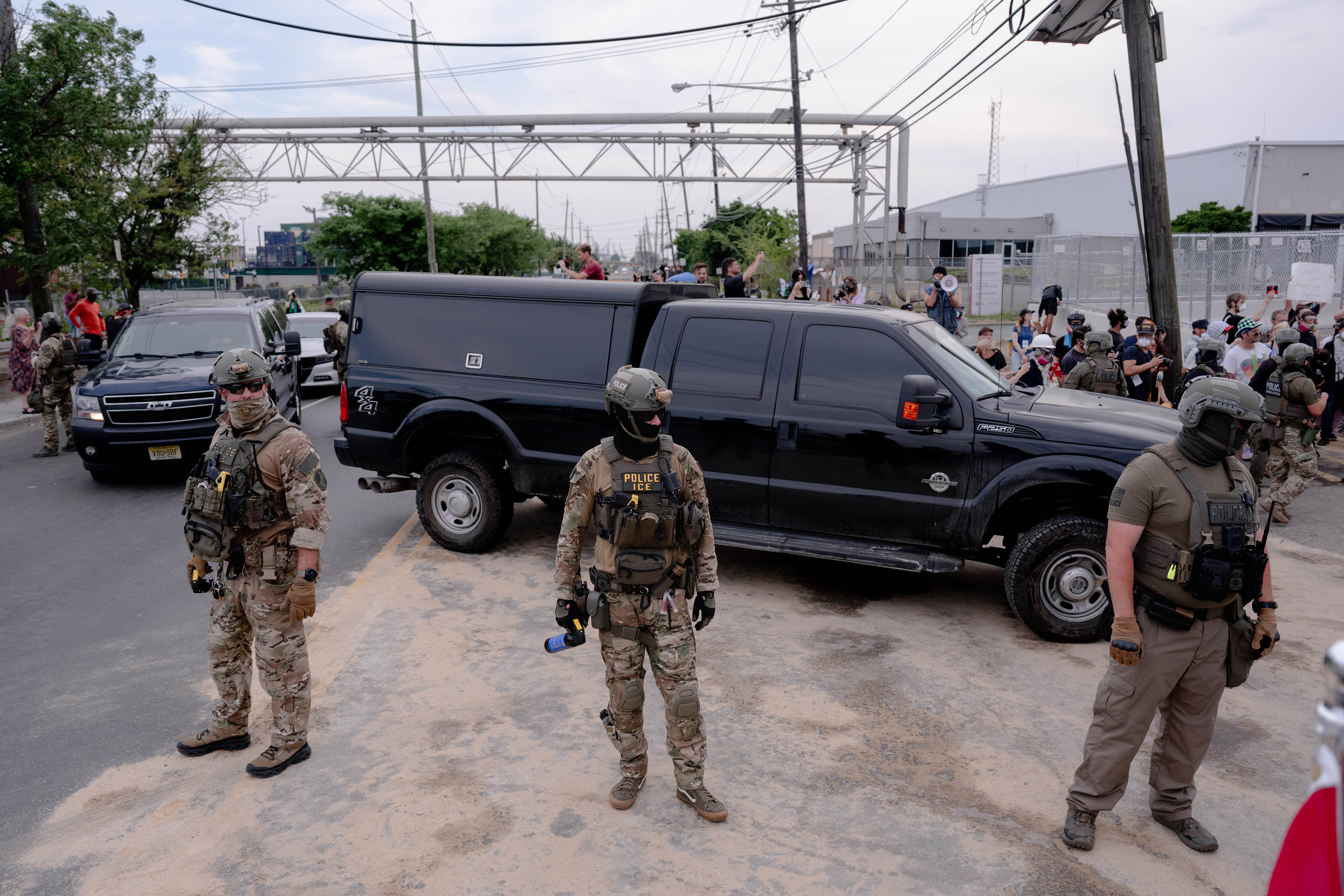
    Fights between demonstrators and detention center employees have erupted since last month at the front gates of Delaney Hall, with violent clashes common in the early morning hours. Demonstrators had blocked vehicles trying to leave the center, and in late May, heavily armed federal agents with U.S. Immigration and Customs Enforcement had responded with pepper spray and pepper balls.

    In a statement, Homeland Security Secretary Markwayne Mullin said his department had granted Sherrill access to the federally run facility despite the fact she is not a federally elected official. Mullin said prisons operated by New Jersey were run more poorly than Delaney Hall.

    “Gov. Sherrill won’t tell you: New Jersey state prisons face systemic health code violations,” Mullin said. “I’d encourage Gov. Sherrill to focus on her own backyard, and put the safety of her own constituents above illegal aliens.”

    During an appearance on “Fox & Friends” on Monday, Tom Homan, President Donald Trump’s top border adviser, criticized the demonstrators and argued that detainees inside Delaney Hall were treated and fed well, contrary to claims that many have made about rotten food and dirty bathrooms.

    Homan also said federal officials would send more federal agents to New York, vowing to push back against new restrictions approved by Gov. Kathy Hochul against federal immigration operations in the state. The recently passed legislation bars agents from wearing masks during immigration operations, allows agents to be sued for constitutional violations, and prohibits agents from searching “sensitive locations” such as hospitals and schools without a warrant signed by a judge.

    Homan suggested that local officials were endangering the public by refusing to help facilitate the arrests of migrants.

    “I made her a promise — you are going to see more ICE agents than you have ever seen in New York City,” Homan said on “Fox & Friends.” “It’s coming.”

    Hochul said Homan’s threat directly contradicted what Trump had said to her in a room full of fellow governors. Trump, Hochul said, had told her that the federal government would not deploy a crackdown where it was not welcome.

    “If they come here and go throughout New York state with a surge in ICE, there won’t be a Republican standing in this state,” Hochul said to a group of reporters. “Americans have had enough with the overreach of ICE.”

    Asked about Hochul’s account of her interaction with Trump, the White House said, “Any criminal illegal alien living any place in the United States is subject to removal.”

    In a social media post on Monday, New York City Mayor Zohran Mamdani criticized Homan’s threat.

    “We will not allow ICE or anyone else to sow fear in our communities,” Mamdani said. “We will stand proudly with our immigrant neighbors and reject these attacks for what they are: an attempt to divide us.”

    This article originally appeared in The New York Times.