Some days it’s hard to know what’s worse for America: the wars Donald Trump is losing — most notably in Iran, as U.S. motorists pay painful reparations at the gas pump — or the ones he’s winning, like his onslaught against a free press.
Americans are sadly used to such appalling behavior at the White House, but what’s much more alarming is the countless ways hostility, contempt, and Trump-flavored threats to a free press have filtered down to town halls, college campuses, the football field, or other mileposts of Main Street USA.
One glaring example: Tensions between student journalists asking the right questions about labor disputes and other problems at Southern Illinois University at Edwardsville (SIUE) and the school administration escalated to the point where officials demanded to sit in and monitor interviews by reporters for the Alestle. When the paper’s editor complained in an email, a top university official called the cops and triggered a university police investigation. SIUE’s Nicole Franklin had reported that a journalist questioning school policy “has become an unsafe environment for me.”
Another: A bad on-the-field encounter between ESPN sideline reporter Holly Rowe and Texas football coach Steve Sarkisian was made much, much worse when a) some knucklehead on social media used AItoalter the footage to end with the Longhorns’ coach slapping Rowe, and b) their highly touted quarterback Arch Manning told a news conference he found the video “hilarious,” prompting laughter.
The fact that Manning later apologized for the incident, and that the Edwardsville cop who had to go out and interview Alestle editor Dylan Hembrough was embarrassed by the probe, only means that respect for the First Amendment and the humans struggling to uphold it 235 years later is hanging by a thread.
The stinking fish at the head of all this — Trump — hasn’t physically attacked a White House reporter … yet. But he sure came close last weekend, lunging at ABC News’ Rachel Scott as she tried to ask the president about his harebrained scheme to send every American a $5,000 check, wagging his finger and screaming, “Not you!”
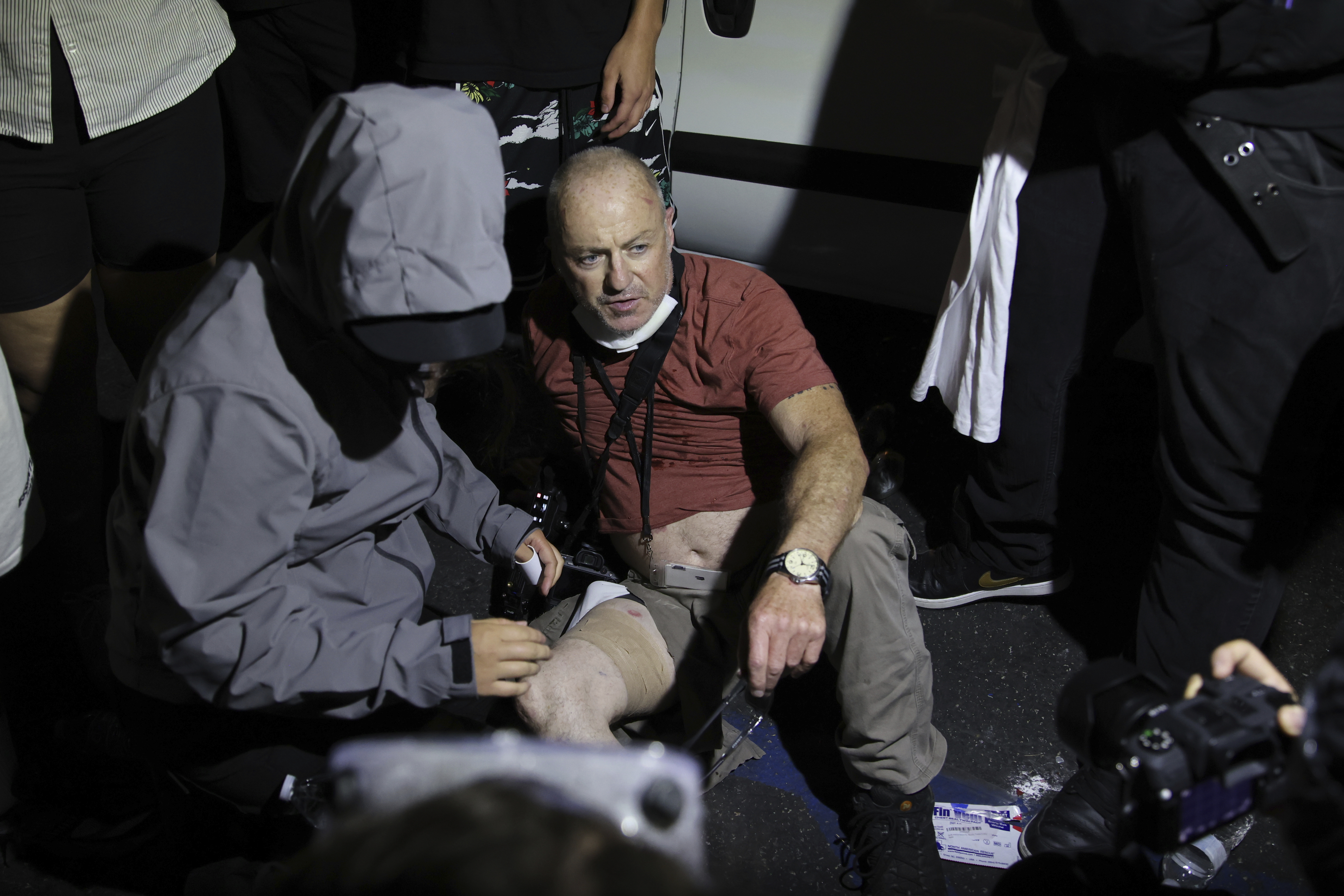
But out in the American streets, actual violence — as well as unconstitutional arrests and other restraints — is happening on a routine basis. During Trump’s first year back in office, 2025, the Freedom of the Press Foundation found a massive upsurge in assaults on journalists. It said the 170 incidents were roughly equal to the prior three years combined. The attackers ranged from federal immigration agents to riot cops under the control of big-city Democratic mayors.
But things were deteriorating well before Trump became the 47th president on Jan. 20, 2025. The year before, a survey of working U.S. journalists by the International Women’s Media Foundation revealed that 36% have experienced either physical threats or actual violence.
I’m publishing this piece on Constitution Day, and a nation that has long touted the guarantees of its then-landmark 1791 First Amendment as proof of American exceptionalism ought to be ashamed that our current press freedom ranking from Reporters Without Borders has plunged to 64th out of 180 nations, the lowest ever.
But I’m also writing this column now because a) I’m terrified that the climate in which everyone laughs at AI videos of a journalist getting slapped is the prelude to somebody getting killed in the real world, and b) I, and it’s safe to say most of my colleagues, feel an increasing climate of contempt toward just the day-to-day stuff of answering a reporter’s questions or providing basic information about how our government is spending our tax dollars or policing our streets.
I’ve been a full-time journalist for 45 years now — a half century if you throw in high school and college — and the changes I’ve witnessed over the course of a lifetime have been remarkable, epitomized by the evolution from phone books that listed almost everyone’s number to call-screening and spam filters that make it virtually impossible to connect with people and tell their stories.
When they threw me onto the night shift at the Washington (Pa.) Observer-Reporter in September 1981, the job consisted of calling hospital emergency room nurses who’d happily volunteer the names and conditions of that night’s car-crash victims, and then police desk sergeants who’d chit-chat and tell you about any major crimes.
It’s good, actually, that HIPAA was enacted and medical information can’t be volunteered to the public, but it’s bad that police departments — whose track record for honesty runs neck-and-neck with the current administration in theWhite House — now dole out as little information as possible through stage-managed press releases.
I thought a lot about those hazy days as a rookie reporter out in Western Pennsylvania this summer, as I tried to report on local police cooperation with federal immigration agents on this side of the state. Police chiefs and township officials batted 1.000 when it came to not returning phone calls or emails. In person, they insisted the federal government told them not to divulge how much of their taxpayer-funded time is spent on busting immigrants instead of protecting neighborhoods.
Whatever your personal opinion toward journalists, the arrogant and autocratic stance of today’s public officials is spreading to what they think of you, the everyday citizen, and your right to know. This was summed up this week by the police chief of Pitcairn, Pa., who, after listening to public complaints that his 287(g) cooperation pact with U.S. Immigration and Customs Enforcement wasreached without a council hearing or vote, said, “I’ve been listening to this crap all night.”
A couple of important points: Like so many of my colleagues, I’ve felt the growing threats firsthand, from various efforts on social media to map where I live or describe my house, to the time someone drew a bullet hole on a sheet of paper and mailed it to my home.
It’s no accident that the worst invective gets slung toward a female sideline reporter like Rowe, or that Trump goes out of hisway to abuse Black female journalists like ABC’s Scott. It’s impossible to draw the boundaries between media hatred and the racism and misogyny that fuel American fascism. That is also clear in the Trump regime’s unconscionable targeting of on-the-ground journalists from immigrant communities like Nicaraguan exile Luis Galeano, detained this week by ICE in Florida.
It’s all connected.
Second, my love for journalism and the role we must play in a healthy democracy is exactly why I also believe the media deserves tough scrutiny for the many times we get it wrong. (And I have my receipts from CNN, the New York Times, the Washington Post, etc., etc.) The back-and-forth of media criticism is also the mark of a healthy society in every way that anti-media violence and government officials’ contempt for your right to know are not.
We can acknowledge that we live in a world where our privacy is under constant assault and needs to be protected — yet also believe, at the same time, that there’s no excuse for government officials or police to hide information that needs to be in the public domain, such as whom they’re arresting and why.
That requires a vibe shift from all of us — whether it’s not laughing ata video of a female journalist getting slapped, or not dialing 911 when a journalist asks a well-intended question. It means privileged white reporters need to object and walk out of the room the next time Trump verbally assaults a Black female reporter.
But that also means we need to be as vocal in praising the times journalists get it right — ProPublica’s scoop about Vladimir Putin’s pal paying for the president’s son’s wedding springs to mind — as we are in carping at the many peccadillos of elite media.
What’s scary is that all of this is happening at a time when vulture capitalists are cutting news organizations to the bone, especially in rural and small-town news deserts. The fewer working journalists that are left, the easier it will be to crush what remains.
“All of us who sit up here have been held accountable at one point or another by the Herald Leader,” she said. “Not everything that they have ever written about me is stuff that I’ve liked, but our community is better for it. We are smarter, more informed citizens because of it.”
I wish more of our leaders — and heck, more regular folks — would talk about this more often. Any attack on a journalist — whether it’s physical or verbal, or some ridiculous AI video posted on X, and whether it comes from the president of the United States or a college quarterback — is ultimately an attack on our sick, barely breathing democracy.
One of the many things we won’t forget about the Trump era is how much the family of POTUS 47 has enriched itself — not only the president but his children, including Donald Trump Jr., who is said to be now worth at least $500 million and growing. So it was no surprise when his second marriage to Palm Beach, Fla.’s Bettina Anderson in May was a lavish affair on two private islands in the Bahamas. What is a surprise — as we now know from some stunning work by a team of reporters from ProPublica — is who paid: a very close associate of Russian dictator Vladimir Putin. So maybe the “Russia, Russia, Russia” folks were onto something?
Pa. Democrats are alarmed at the rapid growth of ICE-police deals. But can they stop them?
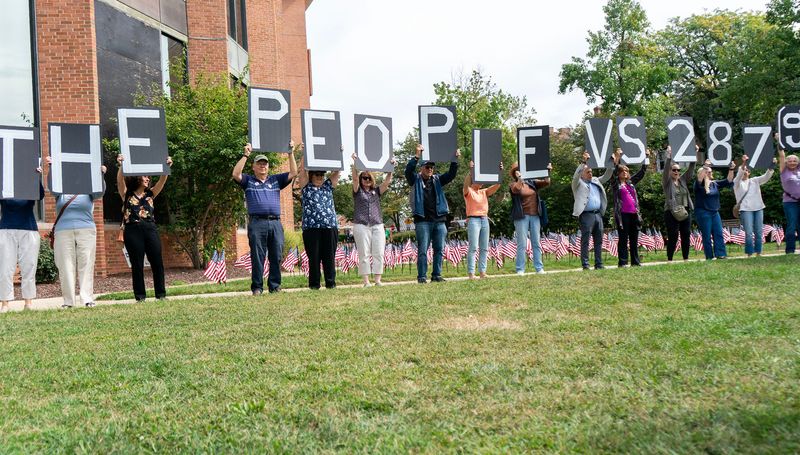
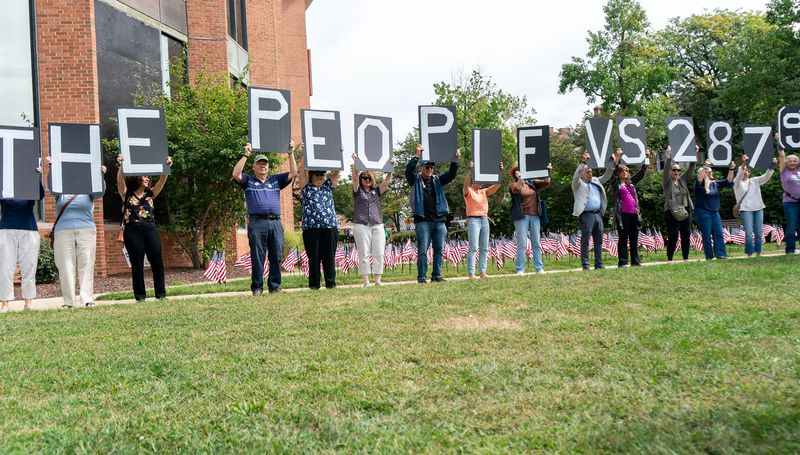
Immigrants’ rights advocacy group members and their supporters hold up letters that read “The people vs 287(g)” during a rally last September in Doylestown against the Bucks County sheriff’s efforts to implement a 287(g) program.Daniella Heminghaus | Bucks Coun
The big, mostly under-the-radar story around the Donald Trump regime’s relentless push to arrest and remove immigrants from the United States has been this year’s explosion of so-called 287(g) agreements. These allow local cops to act as immigration agents, working collaboratively with U.S. Immigration and Customs Enforcement, or ICE.
But if you look at a national map to understand how these 287(g) agreements have spiked from just 135 when Trump retook office in January 2025 to more than 2,500 such pacts today, you’ll notice that one state sticks out like a sore thumb.
In Pennsylvania, amped-up promises of federal cash incentives have meant a soaring number of localities where local beat cops are now working with ICE to make arrests — up from just a handful at the start of the year to some 130 now. Most 287(g) collaborators are in Trump-voting pockets of the Keystone State — northeast and south-central Pennsylvania, or out west near the Ohio border.
But when you look at the rest of the Northeastern United States, the 287(g) map is very sparse. That’s partly because most local pols across the region agree with their constituents about opposing Trump’s mass deportation policies, and in several states it’s also the result of legislation that aims to ban the program altogether.
In late August, New York enacted the Local Cops, Local Crimes Act — backed and signed by its Democratic Gov. Kathy Hochul — which calls on police departments and county sheriffs to terminate their 287(g) agreements, although several counties are still challenging the measure in court. Maryland has a similar law on the books, while New Jersey, which had long prevented such pacts under an attorney general’s directive, also passed a law this spring to codify the ban.
There’s a growing number of Pennsylvania lawmakers who want to pass a similar law here, but there’s one big problem: Republicans. They control the state Senate in Harrisburg — currently by a 27-23 margin — and GOP lawmakers have no interest in rebuking the president on immigration policy.
“The reason we exist alone is because of our split legislature,” State Rep. Heather Boyd, a Democrat who represents heavily immigrant Upper Darby and adjacent parts of Delaware County, told me. Last year, Boyd circulated proposed legislation to ban 287(g) deals in Pennsylvania, and while dozens of Democrats in Harrisburg are supportive, any move is on hold until a November election that could shift the balance of power. Boyd said lawmakers are wary of “starting any culture wars” ahead of the vote.
I pressed the office of Gov. Josh Shapiro, who’s running for a second term and who is seen as a possible top contender for the 2028 Democratic presidential nomination, for his position on reining in the 287(g) program here.
“Governor Shapiro has been clear that law enforcement should be focused on keeping Pennsylvanians safe — not sowing fear in communities or targeting people who are working hard, raising families, and contributing to our Commonwealth,” his press secretary, Rosie Lapowsky, said. She noted that the governor has barred Pennsylvania State Police from any formal ICE collaboration, and he would urge local police to take a similar stance.
She added: “Ultimately, however, these decisions rest with local law enforcement agencies. The governor does not have the unilateral authority to dictate whether individual sheriffs or police departments enter into these agreements.”
Many of those local law enforcement agencies have instead rushed to join 287(g), with ICE promising small-town departments an initial $100,000 cash windfall and additional incentives for training officers to make arrests and to cover the cost ofworking overtime on the program.
Last week, I reported from Schuylkill County in east-central Pennsylvania, where some 14 law enforcement agencies have raced to adopt 287(g), more than any other county in the state. Since the spring, local cops there have arrested about 100 immigrants at highway stops or by assisting ICE in job site raids. The blitz has prompted rising complaints about alleged racial profiling, the handcuffing of U.S. citizens, and a sense of fear that permeates a growing Latino community in Pennsylvania coal country.
Statistics obtained from the U.S. Department of Homeland Security by advocates show that local police in Pennsylvania have arrested and turned over to ICE more than 1,200 immigrants this year — ranking the state fourth in the nation on a list in which the other leading states are all south of the Mason-Dixon Line.
In Washington, some of the state’s Democratic House members say they’re fed up with a lack of transparency over who is being detained and how the 287(g) program is working here. Last week, four of them — Reps. Mary Gay Scanlon and Madeleine Dean from the Philadelphia suburbs and Reps. Chris Deluzio and Summer Lee from Western Pennsylvania — sent a letter to ICE’s acting director David Venturella demanding information on why the agency’s data lack any specific details about which departments are making arrests, which is required by law.
“It is unacceptable to me that ICE is hiding information from Pennsylvanians about who ICE is working with in their mass deportation regime,” Deluzio — viewed as a potential 2028 primary challenger to embattled Sen. John Fetterman — told me in an emailed statement.
Deluzio also summed up the growing unease by many over the speedy growth of 287(g) in the state. “Let’s keep local law enforcement focused on local public safety, rather than enlisting them in extreme federal immigration enforcement that has ripped away American liberties and targeted so many law-abiding families,” he said. Indeed, 287(g) data guru Andrew Thrasher has reported that a whopping 70% of the immigrants arrested in Pennsylvania under the program have no criminal record or pending charges.
“People in my community are getting smashed off the streets,” said Boyd, the Upper Darby lawmaker. That Delco township is about to vote on a local ordinance to restrict its cops from collaborating or sharing data with ICE.
Statewide, Boyd says she’s one of about 50 House Democrats in a Welcoming Pennsylvania Caucus with an extensive list of proposed bills that would not only bar 287(g), but look to expand opportunities for noncitizens to do things like obtaining driver’s licenses or gain professional certification. But any serious action hinges on November, when Democrats are hoping a blue wave at the ballot box will flip at least three more Senate seats and create a trifecta for their party in Harrisburg.
“Even if we can’t stop ICE from picking them up on the streets, we have to protect their rights,” Boyd said. “And right now, there are barriers to that in the state of Pennsylvania.”
Yo, do this!
The issue of wrongful convictions is back in the news here in Philadelphia — but for all the wrong reasons. Some reckless and seemingly wrongheaded moves by Philadelphia District Attorney Larry Krasner and his underlings have the vultures who’ve always opposed criminal justice reform circling. The shame is that the real crisis around wrongful conviction is the thousands of mostly Black and brown folks who remain behind bars for crimes they did not commit. I cannot say enough about a book that came out earlier this year from Brown University (yay!) sociologist Nicole Gonzalez Van Cleve called Crime Fictions: How Racist Lies Built a System of Mass Wrongful Conviction. She mines the most outrageous prosecutions — often of young Black teens and boys — to make a compelling argument that wrongful convictions aren’t a flaw in the criminal justice system. They are the system.
If timing is everything, then you’ve got to hand it to my freshman dorm pal at Brown who became Washington bureau chief for Mother Jones, David Corn. On the heels of ProPublica’s bombshell reporting on ties between the Trump family and Vladimir Putin, Corn is out Tuesday with his newest book: How Russia Won — Donald Trump, Vladimir Putin, and the Fight for America. It promises a raft of new information about Russia’s efforts to meddle in U.S. elections in 2020 and 2024, the ongoing close links between Team Trump and Team Putin, and how the current president’s pro-Russian slant has changed the world.
Ask me anything
Question: What happens when [House Speaker Mike] Johnson refuses to seat newly elected Dems in January? — David Minckler (@audivita.bsky.social) via Bluesky
Answer: Suddenly, Jan. 3 — the date the 120th U.S. Congress begins, and new members who won their November elections are to be sworn in — has become the new Jan. 6. Summer vacations are over, and the body politic is focused on the looming midterms, and — more importantly — with polls showing the Democrats on track to retake one and possibly both chambers. So there’s been a surge of speculation that the Trump-allied Johnson will do what former Vice President Mike Pence would not do on Jan. 6, 2021, and somehow fail to certify Democratic winners. That’s based on an assumption that Trump’s election-meddling tactics like stopping mail voting — blocked on Monday by the U.S. Supreme Court — won’t work, yet Team MAGA will attempt to undo the election after the fact, as was tried unsuccessfully in 2020-2021. Lawfare has published the most detailed analysis of a so-called rogue clerk theory in which Johnson appoints a MAGA loyalist to serve as House clerk with the understanding that some Democratic wins won’t be certified. Its article notes that such a gimmick is unlikely to pass muster in the courts, but that won’t necessarily stop Trump and the GOP from trying. My only guidance is: Fasten your seat belts.
What you’re saying about …
It turns out readers of the newsletter aren’t eager to join the punditocracy. Only a few of you responded to last week’s question about the chances of a Democratic-led Senate in 2027, and one of them was to give me a verbal tongue-lashing for even asking this. (Frequent writer Daniel Fleisher called it “a pointless exercise in predicting the unpredictable.”) That said, Cathy King has her eye on Abdul El-Sayed in Michigan, her home state, writing that “he seems to be following [Zohran] Mamdani’s playbook.” Meanwhile, in Iowa, Mary Chilton thinks the Dems’ Josh Turek has a real shot in a state won three times by Donald Trump, noting that farmers are up in arms “over the data center issue, imported beef, water pollution and the soaring cancer rates …”
📮 This week’s question: Suddenly, everyone is talking about one thing: the Silicon Valley whistleblowers saying there’s not a trivial chance that a swarm of angry artificial intelligence agents could wipe out humankind by the end of the decade. Are you worried by this, or do you think Big AI is deflecting here to draw attention away from other issues like data center opposition or the stock market bubble? Please email me your answer and put the exact phrase “the AI threat” in the subject line.
Backstory on that other thing that could kill humanity
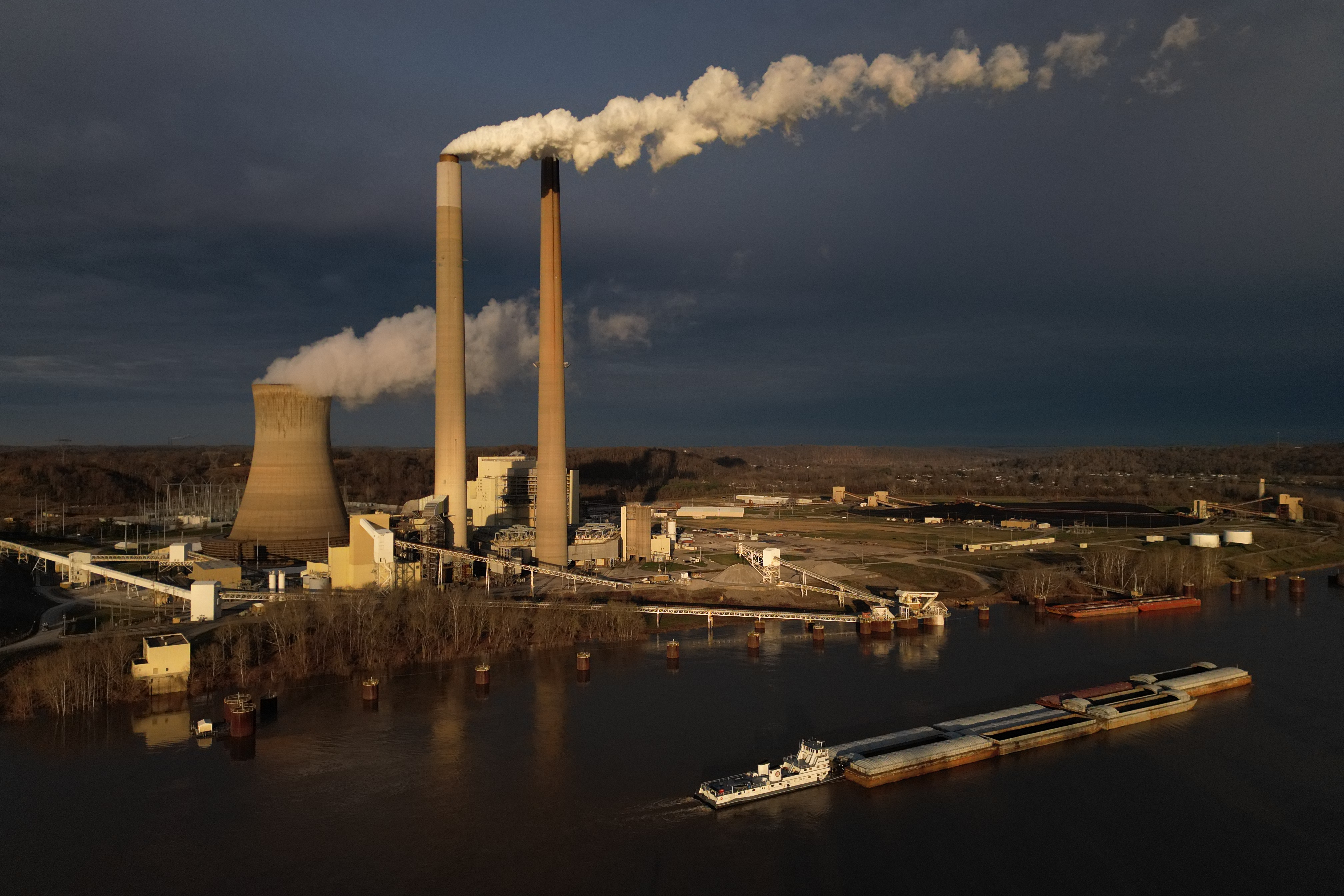
A barge on the Ohio River moves past the Mountaineer Power Plant, a coal-fired power plant near New Haven, W.Va., in March.Carolyn Kaster
This weekend, a Bluesky post went super viral almost the second its author, a scientist named David Ho, hit the button to post it. “I resigned from ExxonMobil today,” he wrote. “I spent the last three years doing fossil fuel extraction research at both BP and ExxonMobil. Neither company is acting responsibly. They are racing to maximize extraction while the window to act closes, and gambling with our lives.”
It’s a safe bet that many of the 13,000 people who liked Ho’s post truly believed they were sharing the words of a brave whistleblower — but instead the post was satire from a leading climate scientist based at the University of Hawaiʻi at Mānoa. Ho would never work for a Big Oil giant. He was trying instead to mimic — and thus make a point about — the recent posts from Silicon Valley whistleblowers that triggered the new freakout over whether AI robots are a threat to human existence.
Climate change is a threat to society, and it’s even closer to reality. Maybe we should freak out about that?
Ho absolutely has a point. Just before his post, it was announced that August had been tied for the hottest month ever recorded in the history of the planet. That doesn’t come without consequences. In the Himalayas between Nepal and Tibet, a glacier and the adjacent bedrock of mountains at 17,000 feet abruptly collapsed in a region plagued by higher-than-normal temperatures, sending a 150-foot-high cocktail of floodwater and debris down a populated valley at 100 mph. At least 1,386 were killed, and thousands more remain missing. Here in the U.S., a summer of record heat triggered wildfires across the Pacific Northwest.
Robots didn’t do this. Humans did. Maybe that’s why humans — at least the ones that are running Donald Trump’s America — are reacting so differently to the danger of AI than the way they’re dealing, or not dealing, with the lethal pollution from burning fossil fuels. In the case of artificial intelligence, even tech leaders like Anthropic’s Dario Amodei, whose firm makes the Claude program, have urged a slowdown until we better understand the risk from rogue AI agents.
But in the case of climate change, willful ignorance rules the day. The latest outrage from a Trump regime that’s expensively killing off wind farms while racing to extract as much fossil fuel as possible? The now ironically named Environmental Protection Agency is repealing the rule that limits greenhouse-gas emissions from power plants that burn coal or natural gas. A president who spent his summer sweltering on the golf course continues to insist climate science is “the greatest con job ever perpetrated on the world.”
There’s one last irony here. Increasingly, the biggest new sources of climate-altering pollution are the massive data centers that power AI. An Amazon data center proposed for Pecos County, Texas, would likely become the world’s largest source of carbon dioxide if it opens, spewing out 33 tons from natural gas generators every year. Slowing down the AI arms race would also help the planet. Artificial or not, that would be intelligence.
What I wrote on this date in 2019
Joe Biden performing badly in a presidential debate? Say it ain’t so, Joe. We all remember what happened on that 2024 stage in Atlanta (“The night the lights went out in Georgia,” I called that one), but I was almost as unimpressed with the future 46th president during a Democratic primary debate on this date seven years ago. That put me at odds with the punditocracy. I wrote, “The cable TV news show that both channels and is most revered by Washington’s elites — MSNBC’s Morning Joe — is at times so over the top in its bias toward Barack Obama’s former wingman that it could be renamed Morning Joe Biden.”
Summertime is over, and the living is no longer easy. I published my monthlong investigation into local cops collaborating with ICE under the controversial 287(g) program in semirural Schuylkill County, northwest of Philly. I found U.S. citizens handcuffed, families hiding behind blanket-covered windows, and a community wrestling with what it means for neighbors to be treated as suspects. Over the weekend, I delved into the astonishing $850 million or so Trump World has raised in campaign contributions since his reelection — despite the fact that he’s barred from seeking office again. You don’t think he has a scheme to pocket the excess cash, do you?
Dante only had Nine Circles of Hell, but the downward spiral of Pennsylvania Sen. John Fetterman seems to be never-ending. It’s one thing to profoundly disagree on a political and moral issue such as the war crimes of Israel’s right-wing government in Gaza, but recent reporting suggests things are far, far worse in Fettermanland. No senator — regardless of how much their ideology has flip-flopped — should be blowing off their home-state constituents, or clocking out of committee hearings after five minutes. The Democratic senator’s surprise video appearance at the midterm miniconvention of Donald Trump’s GOP, introducing his new best buddy, Republican Sen. Dave McCormick, did nothing to dispel the sense of utter betrayal among liberal voters who now see his winning 2022 campaign as a big lie. The next two years will be crazy as Democrats line up to primary Fetterman, amid rumors the hoodie-clad politico might run as an independent or even change parties. The only sure thing is that The Inquirer will be there for every move. Join us. Subscribe!
By submitting your written, visual, and/or audio contributions, you agree to The Inquirer’s Terms of Use, including the grant of rights in Section 10.
Tuesday is the first day of Hispanic Heritage Month, which runs from Sept. 15 to Oct. 15. I’ve always had a bit of a love/hate relationship with this month, which purports to recognize and celebrate that Latinos have been a formative part of the nation since its early days. While the attention to the extraordinary individuals and myriad cultural heritages that comprise “Latinidad” in the United States is gratifying, it is, by its very nature and time limitation, a glancing and shallow attention.
Even so, I always note the arrival of a mass email from the mayor’s office about the events the city has programmed to mark the month.
This year, I’m still waiting.
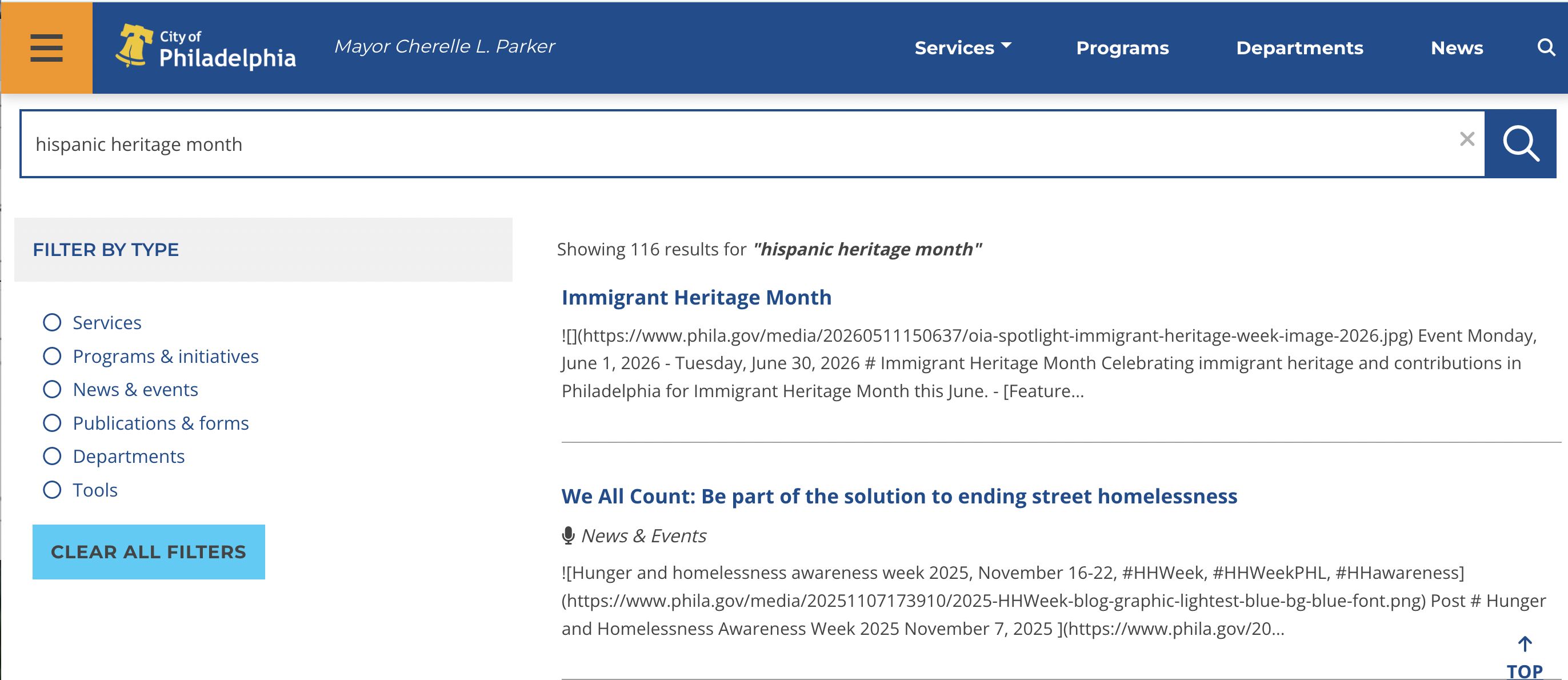
As yet, there’s been no email from the city of Philadelphia announcing any special programming during Hispanic Heritage Month, and nothing when I search for that on phila.gov.
Screen capture of a search for “Hispanic Heritage” month on the phila.gov website on Monday.Screen capture of phila.gov
There aren’t even links to information about two signature events that took place this past Sunday: La Feria del Barrio (organized by Taller Puertorriqueño) and the Mexican Independence Day Festival (organized by the Mexican Cultural Center), nor even the unofficial culminating event in Philadelphia — the Puerto Rican Day Parade, which Concilio has been hosting for more than 60 years — on Sept. 27.
While I’d like to say I’m completely surprised by the elision of Hispanic Heritage Month that the city is doing, I’m not.
Francisco Gonzales, of Lawrenceville, N.J., dances with his daughter Bianca, 17, near the stage as musicians perform at last year’s Mexican Independence Day Festival at the Independence Blue Cross RiverRink at Penn’s Landing.Tom Gralish / Staff Photographer
Philadelphia’s Latino communities get surprisingly little respect — outside of the high regard for our undeniably wonderful food and dance moves — from our electeds, and have long been slighted by city government in far more significant ways.
For me, nothing epitomizes that more than an example from 2015, when there was a Latino managing director and even so, then-Mayor Michael Nutter convened — at the behest of Attorney General Eric Holder and the U.S. Department of Justice — a Philadelphia roundtable about the imperative of improving police-community relations at which there wasn’t a single person from a Latino-serving organization at the table. In a city where our community was subjected to relatively high stop-and-frisk rates, experienced excessive force incidents (and still does), was historically targeted for extortion by police, and was (and still is) racially profiled by police and U.S. Immigration and Customs Enforcement.
No. Latinos. At. The. Table.
Is it simply that our political capital has been stagnant since the 1980s — or is there something else?
We’ve had three Latino primary contenders for mayor (two in 2015 and one in 2023), but no substantive progress when it comes to the political power necessary to be taken seriously in Philadelphia.
To wit, in 1983 Philadelphia elected its first Latino City Council member, and a year later it elected a Latino state legislator (the second in the city’s history). The census conducted in 1980 put Philadelphia’s Latino population at 3.9% of the city’s total. Fast-forward some four decades, and Latinos are now about 17% of Philadelphia’s total population, but we still have only one Latina City Council member, and just two Latino Philadelphia state legislators.
But departments and offices reflect the administrations they are part of, and Mayor Cherelle L.Parker has sent mixed signals to her Latino constituents.
On the one hand, she has addressed issues in Kensington in concert with District 7 Councilmember Quetcy Lozada — who is a well-liked and respected Boricua leader. On the other hand, she had to be dragged, kicking and screaming, by City Council’s veto-proof “ICE Out” proposals into offering any public comment about ICE actions under President Donald Trump.
Or maybe the offices that are meant to be in conversation with, and about, Philadelphia’s Latino communities aren’t up to the job?
I’m willing to offer the benefit of the doubt: Maybe they are focusing on important work behind the scenes. But in my opinion, they have minimized Latino visibility — to our detriment, and to all of Philadelphia’s detriment.
I was struck recently by the events the Office of Immigrant Affairs is publicizing as part of its Welcoming Week 2026 (from Sept. 10 to 25), for example. The focus this year is on the Caribbean, but in the publicity I’ve received (or dug up) about it, there seems to be nothing scheduled about or from the Spanish-speaking Caribbean. The thing is, this isn’t a zero-sum game — we can (and must) celebrate our significant Haitian and Jamaican communities, for example, and their incredible cultural contributions to Philadelphia, without ghosting our Dominican and Boricua ones.
So, come on, send that Hispanic Heritage Month email, Mayor Parker. List those events and programs on the website. Latinos are here and doing amazing things in service of our city. We should celebrate that together.
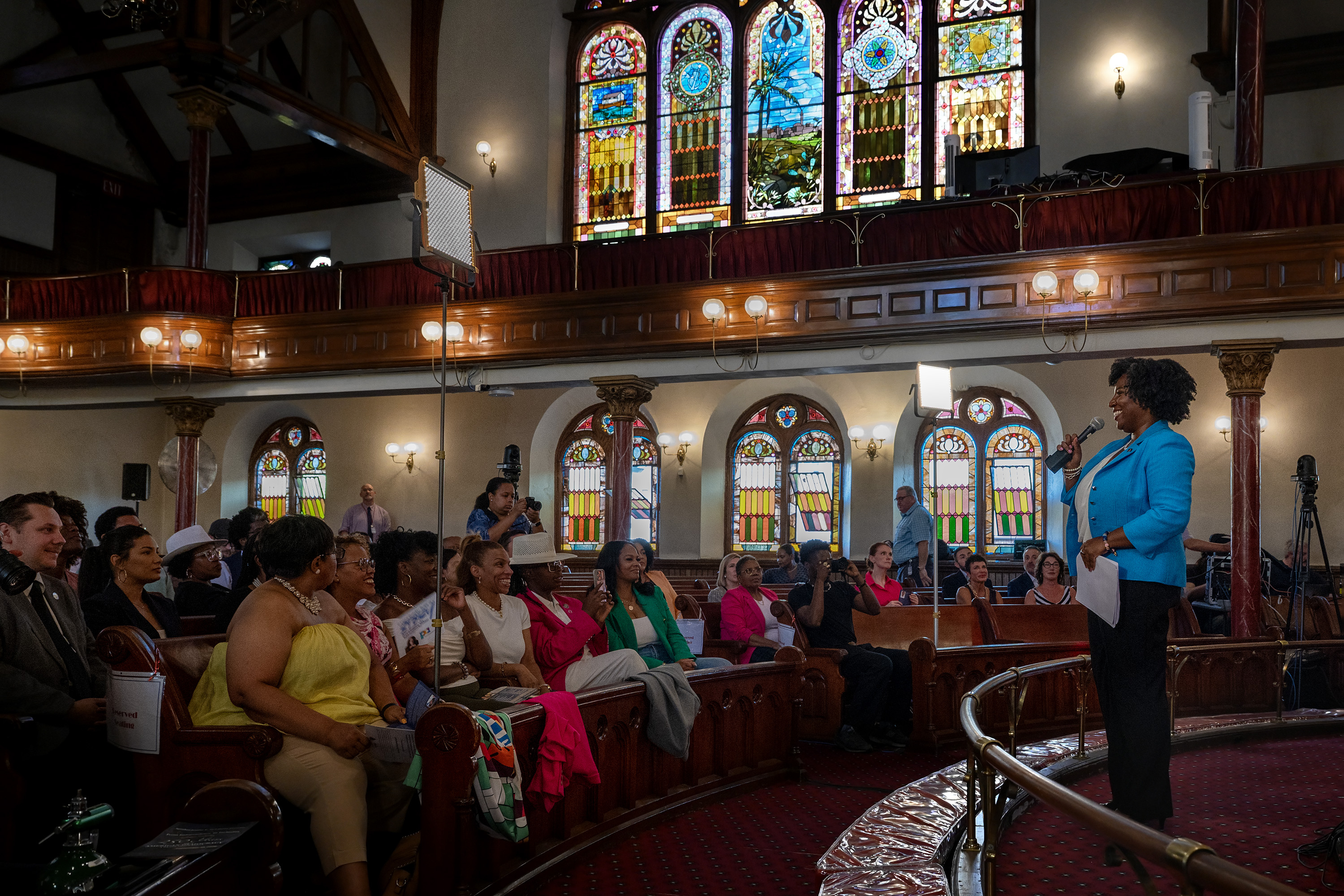
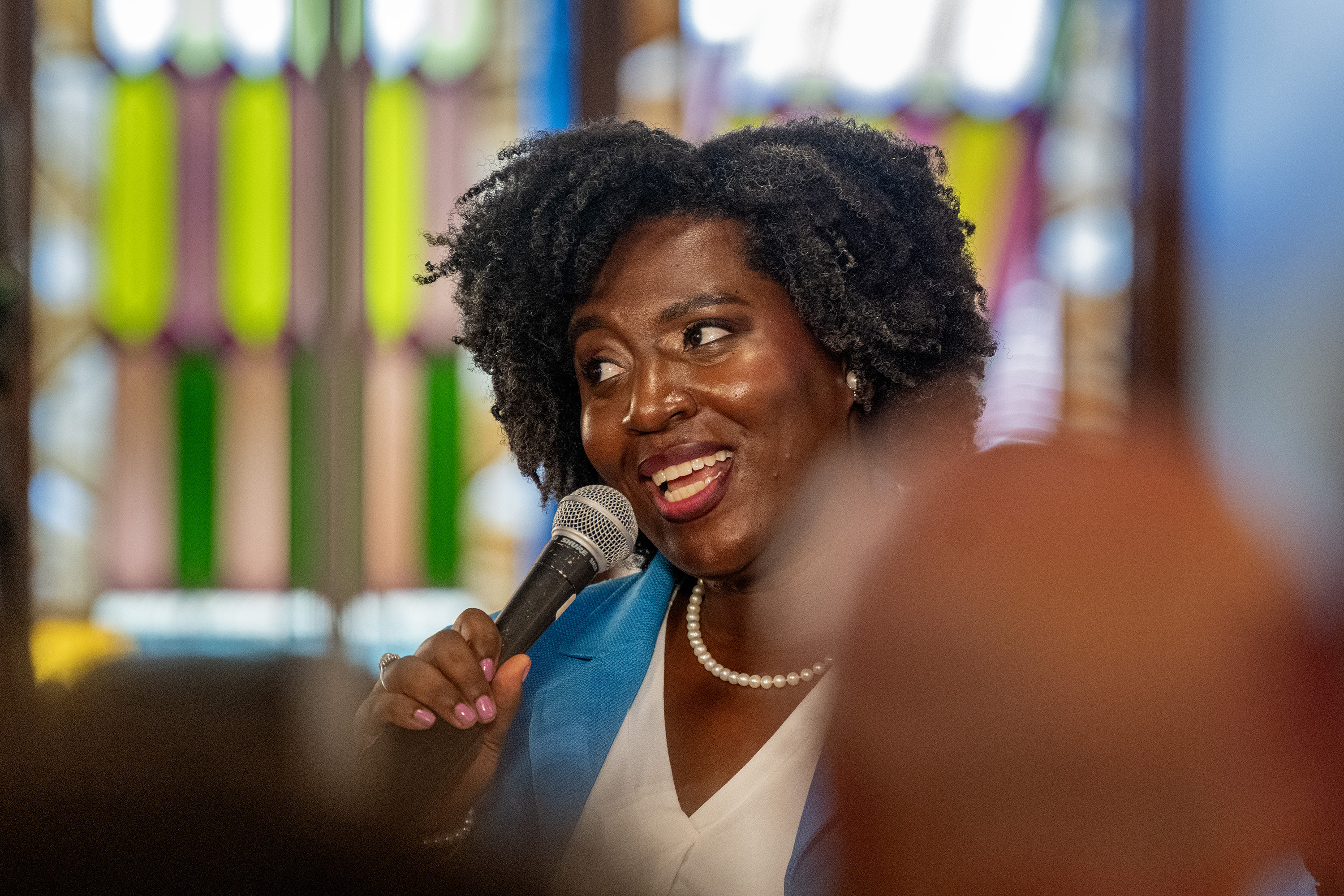
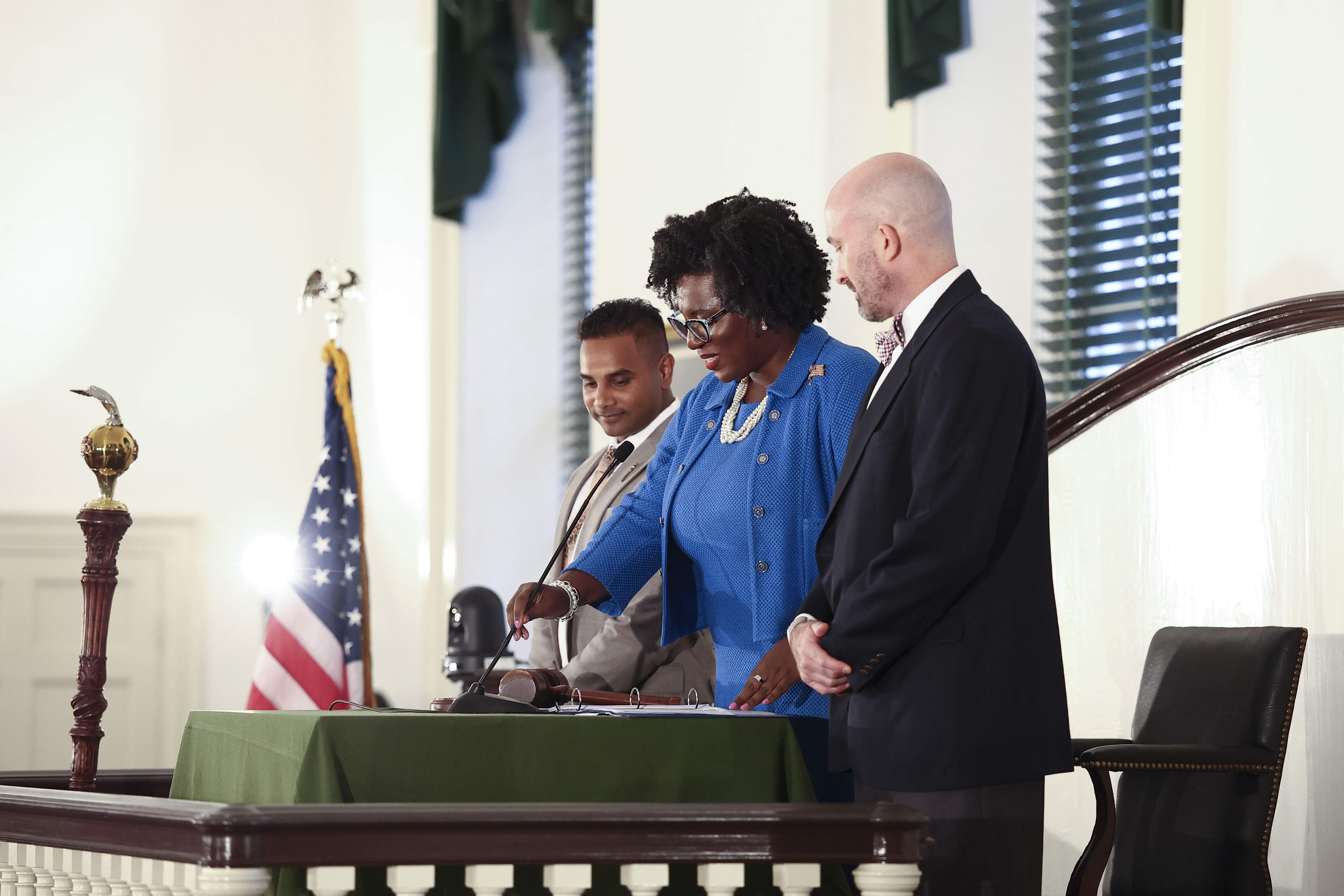
Addressing the crowd packed into Mother Bethel African Methodist Episcopal Church in Philadelphia on Thursday, Pennsylvania House Speaker Joanna McClinton and three other Black House speakers from around the country outlined the steps they’re taking in their state legislatures to safeguard the future of American democracy under President Donald Trump’s administration.
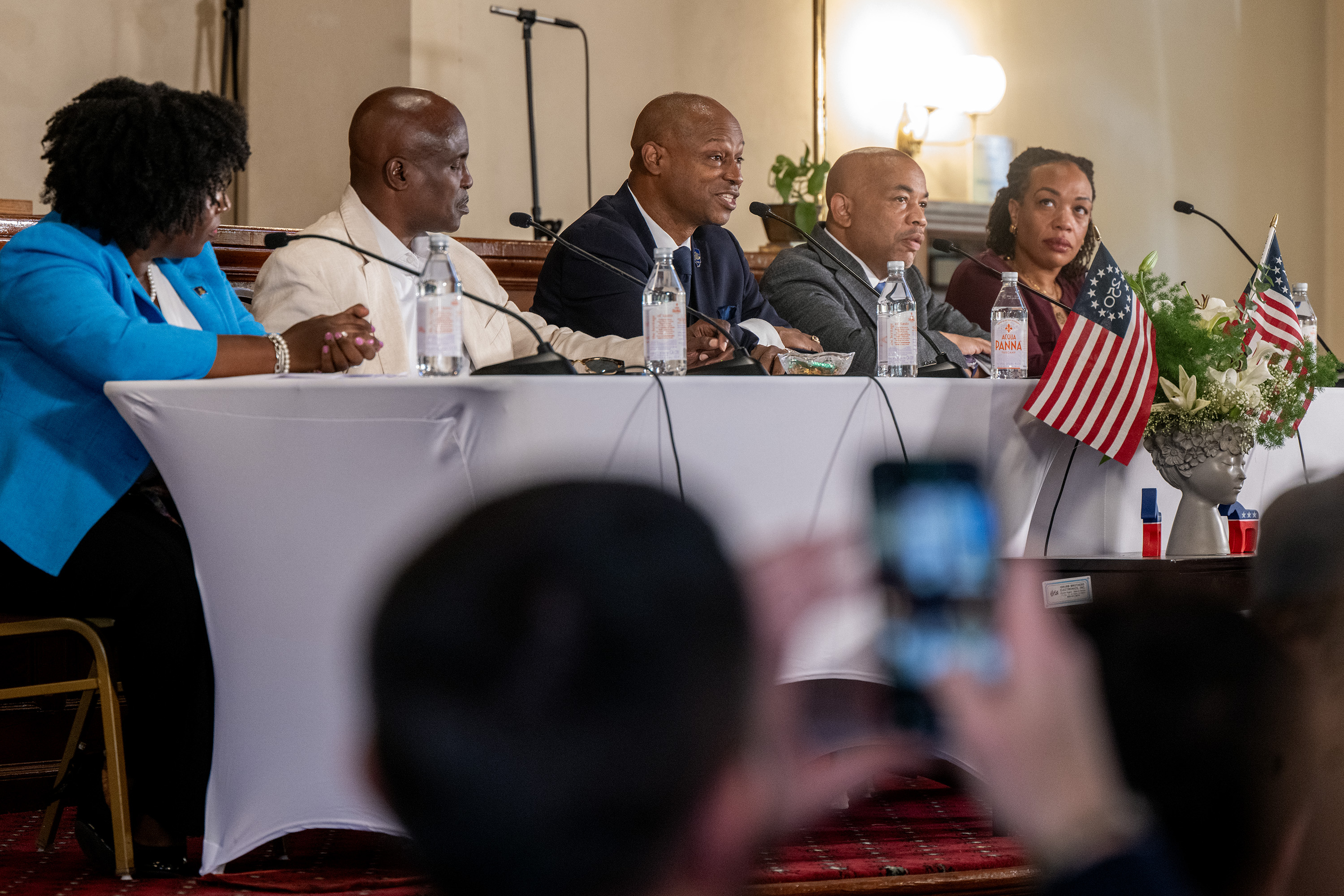
McClinton hosted the three House speakers — Delaware House Speaker Melissa Minor-Brown, New York House Speaker Carl Heastie, and Illinois House Speaker Emanuel “Chris” Welch — for the discussion on America’s progress toward its founding ideals 250 years ago. Each of the speakers, including McClinton, are the first Black person or Black woman to lead their chambers.
The event was moderated by WURD radio host Solomon Jones. Attendees from around the city, including at least two high school classes, packed Mother Bethel A.M.E. Church in Society Hill, which is on the oldest property continuously owned by African American people in the United States since 1791.
House Speaker Joanna McClinton (left) hosts an America 250 Conversation at Mother Bethel A.M.E. Church on Thursday. Others reflecting on America’s history and path to inclusion for Black Americans are, from left, moderator Solomon Jones, Illinois House Speaker Emanuel “Chris” Welch, New York House Speaker Carl Heastie, and Delaware House Speaker Melissa Minor-Brown.Tom Gralish / Staff Photographer
The three blue-state leaders from Illinois, New York, and Delaware have enshrined voting protections into state law under the John Lewis Voting Rights Act, following a U.S. Supreme Court ruling earlier this year that dismantled some federal protections.
“When we talk about voting, it’s very personal,” said Welch. “When I first got elected to the state House in 2012, I won my election by 36 votes … Eight years after winning the election by 36 votes, I became the state’s first Black speaker. You can’t tell me every vote doesn’t count.”
Similar legislation has yet to become law in Pennsylvania, where the General Assembly is split, with Democrats controlling the House and Republicans controlling the Senate.
McClinton, the first woman and first Black woman to lead the Pennsylvania state House, said she was jealous of her blue-state neighbors, as Pennsylvania Democrats are vying for control of the state Senate in November. The state House passed a bill to expand voting access to include same-day voter registration in a bill titled the Leroy Irvis Voting Rights Protection Act to memorialize the late Pennsylvania House speaker, who in 1977 became the first Black person to lead any state legislature since Reconstruction. That bill has yet to be called up for a vote by the GOP-controlled Senate.
“I know I’m not supposed to be envious of my neighbors,” McClinton joked from the table set up in front of the church pulpit.
House Speaker Joanna McClinton hosts an America 250 Conversation at Mother Bethel A.M.E. Church on Thursda. She hosted three other state House speakers from around the country at the event, reflecting on America’s history and path to inclusion for Black Americans.Tom Gralish / Staff Photographer
Each of the leaders acknowledged the ways Black Americans were purposely excluded from many of America’s liberties by the nation’s founders, progress in broadening civil rights since then — and how their state governments are trying to safeguard those protections under Trump’s administration. They each expressed concern about voting access, immigration, healthcare, and their state-level efforts to protect them through legislation.
“State legislatures have power,” McClinton said, noting Pennsylvania’s increased investments in public education and a focus on Black maternal health. “We are not in charge of ICE, we are not in charge of the president, but we do have power, and we do good work.”
In New York, Heastie said state lawmakers included protections in this year’s state budget to discourage U.S. Immigration and Customs Enforcement from appearing near polling places as Trump ramps up his efforts against noncitizen voting that advocates fear will discourage American citizens from going to the polls.
Each of the legislative leaders encouraged the young people in attendance to get involved in their local government, expressing hope for the future.
“I look at pictures of my late aunt and uncle back in the ’60s and ’70s and I see them at protests,” Minor-Brown said. “When I see those pictures, I look at our young people today and know that’s the direction that we’re going in. That’s where we’re at right now, and that’s what brings me hope that we’re going to get to a better place. I know we will, because our young people are so energized and ready to move and ready to close these gaps.”
McClinton also noted the ways the Trump administration has tried to rewrite history just a few blocks away from Mother Bethel A.M.E. Church at the President’s House Site, where officials swapped panels detailing the brutality of slavery for ones that sanitize George Washington’s history as an enslaver.
“We see the fact that this federal administration continuously out an eraser and says, ‘Oh that didn’t happen, that’s not how it occurred,’” McClinton said. “We, in this moment, have to recommit to the promise of this nation.”
During Thursday’s panel, the speakers fielded questions on a number of current events, including about the 25th anniversary of the Sept. 11, 2001, terrorist attacks. McClinton recalled her experience in college at the time, and said that America is at risk of another terrorist attack due to Trump eroding the nation’s image in the rest of the world.
“Thank God we’ve not had another attack … But we have to also recognize that our policies are impacting our perception around the world,” she said.
Several Pennsylvania Republicans were quick to seize on her comments on the eve of the anniversary as insensitive and trying to blame America for the terrorists’ actions.
Earlier in the week, McClinton presided over a ceremonial session of the state House in Independence Hall, the same place where the Declaration of Independence was signed 250 years ago, and the building that also served as Pennsylvania’s first statehouse.
Joanna McClinton, speaker of the Pennsylvania House of Representatives, along with members of the Pennsylvania House of Representatives convened a special session at Congress Hall on Wednesday in Philadelphia. The gathering commemorates the 250th anniversary of America and Pennsylvania’s Constitution.Monica Herndon / Staff Photographer
She stood at the rostrum, leading the same room where in 1787 the nation’s founders decided that enslaved Black people would only be counted as three-fifths of the number of white residents when tallying America’s population to calculate congressional representation.
“We are in a day where ‘We, the people’ should mean what it says, finally,” McClinton said Thursday. “But starting with the inception of this country, it did not mean all of us. ‘We, the people’ meant white men who owned a certain amount of property.”
SCHUYLKILL HAVEN, Pa. — Brett Sell had a bad feeling about coming to work on July 28. The painting contractor was part of a small work crew rehabbing a two-story commercial property in Orwigsburg — a borough of just over 3,000 people in the heart of east-central Pennsylvania’s coal country — and workers had seen what looked like an unmarked law enforcement vehicle circling the site the day before.
“Yo, look up!” Sell said to his fellow painter, Orlando Rivera.
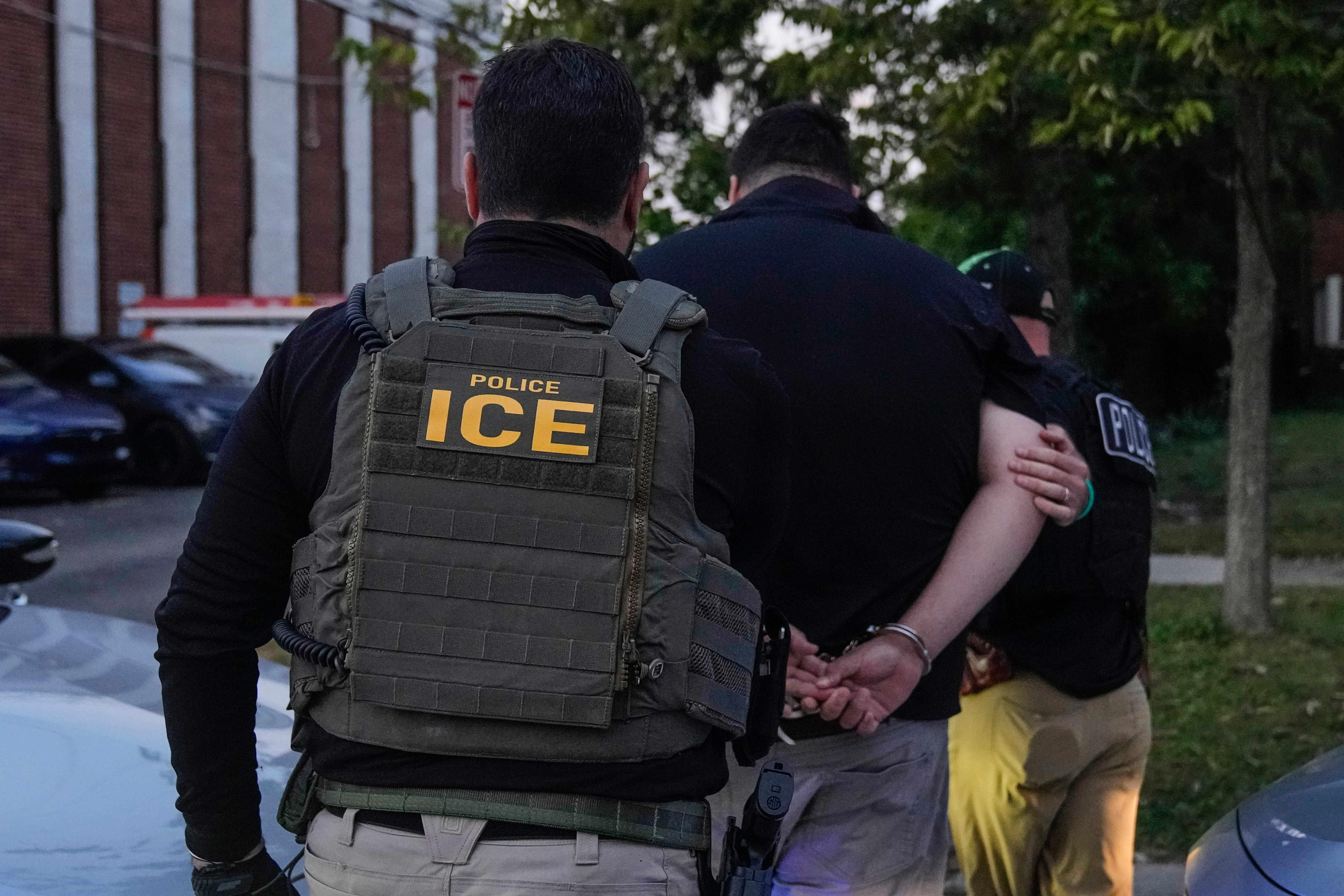
Police cars from Orwigsburg and neighboring Schuylkill Haven, lights flashing, blocked off the street while agents from U.S. Immigration and Customs Enforcement in tactical vests swarmed the work site. Sell was stunned as he and four other workers were quickly handcuffed by ICE agents — even though Sell and Rivera are native-born U.S. citizens.
Rivera, a biracial Puerto Rican who grew up in Bethlehem and now lives in another Schuylkill County borough, Tamaqua, said he was “embarrassed” as he stood in handcuffs while locals came out into the street to gawk. “I do a lot of work in that town,” he said, adding that “it made me feel like I was portrayed as a criminal.”
And he’s convinced he was handcuffed — even after offering to show the agents his ID — because of his race. “I get that my skin tone is tan,” he said, “but with the Fourth Amendment, they can’t go off my skin color, you know?”
Two workers were detained. One was later released, but the other — Catarino Hernandez Velasquez — a Mexican native who’s lived in Pottsville for at least 14 years, and a well-known contractor who poured concrete for the just-reopened 1928 Miners Hotel — was taken away and sent to ICE’s Moshannon Valley Detention Center in Central Pennsylvania, known for its overcrowding and complaints about lousy food and medical neglect. Kevin Medina, a leader of the local Latino community, bemoaned the arrest of a “very hardworking gentleman with a stable contracting business in the area … very busy.”
Now, gone … in a matter of minutes.
Painting contractors Brett Sell (left, white painting outfit) and Orlando Rivera are handcuffed during an ICE raid on a job site in Orwigsburg, Pa., on July 28. The men — both native-born U.S. citizens — were released without charges.Facebook
The Orwigsburg raid was a dramatic moment, yet such scenes are becoming increasingly common this summer in Schuylkill County, Pa., a constellation of rusty boroughs where coal was king in the 20th century, and Donald Trump got 71% of the vote in 2024.
‘In Schuylkill Haven, they can’t go there’
Since the start of the year, ICE — flush with a whopping windfall of $170 billion shoveled by Congress to the U.S. Department of Homeland Security to amp up immigration raids and detention — has dangled pledges to many tiny police departments. In Schuylkill County, which locals call “the Skook,” more than $1.5 million has been distributed to law enforcement. The police chief and pols all but publicly salivated at the chance — under the controversial program known as 287(g) — to buy a desperately needed new cruiser or other cop tools in return for working with ICE to arrest and hold local immigrants for the feds.
Some 14 law enforcement agencies — the most of any of Pennsylvania’s 67 counties — have inked 287(g) pacts with ICE, launching a new era of beat cops making immigration arrests that has roiled daily life in Schuylkill County. Practically overnight, cops were setting up truck inspections on a busy rural bypass or running checkpoints at places like the Freeze, a popular ice cream joint on the main drag, Route61. Officers were pouncing on immigrants who showed up at the county courthouse in Pottsville, or assisting ICE on workplace raids like the one in Orwigsburg.
Arrests leading to ICE detention and deportation cases skyrocketed across Schuylkill County — more than 100 since the start of the year, with most the result of ICE cooperation under 287(g) — leaving families torn apart while creating a climate of fear among what had been a rapidly growing Latino community in and around Pottsville. Suddenly, essential workers or their loved ones grew terrified that a busted taillight or failing to signal while shifting lanes could turn their world upside down.
One borough with just over 5,000 residents — Schuylkill Haven — has seen at least 59 immigration arrests in about four months, a staggering number. The figures come from Chicago-based ICE watcher Andrew Thrasher, a law-firm staffer and data expert who regularly crunches federal statistics obtained by the Deportation Data Project through Freedom of Information Act (FOIA) requests.
“People are afraid to go out,” Medina — who immigrated to Schuylkill County from Honduras, became a U.S. citizen and a notary and insurance agent, and formed a local Latino support group, Puentes de Apoyo — told me when we met in a Hispanic-owned Pottsville pizza joint. “I’ve got one contractor who told me they’ve got to change routes because now they know that in Schuylkill Haven, even they can’t go over there. And the stress, mentally, that I’m seeing in these families of, ‘What am I goingto do if this happens?’”
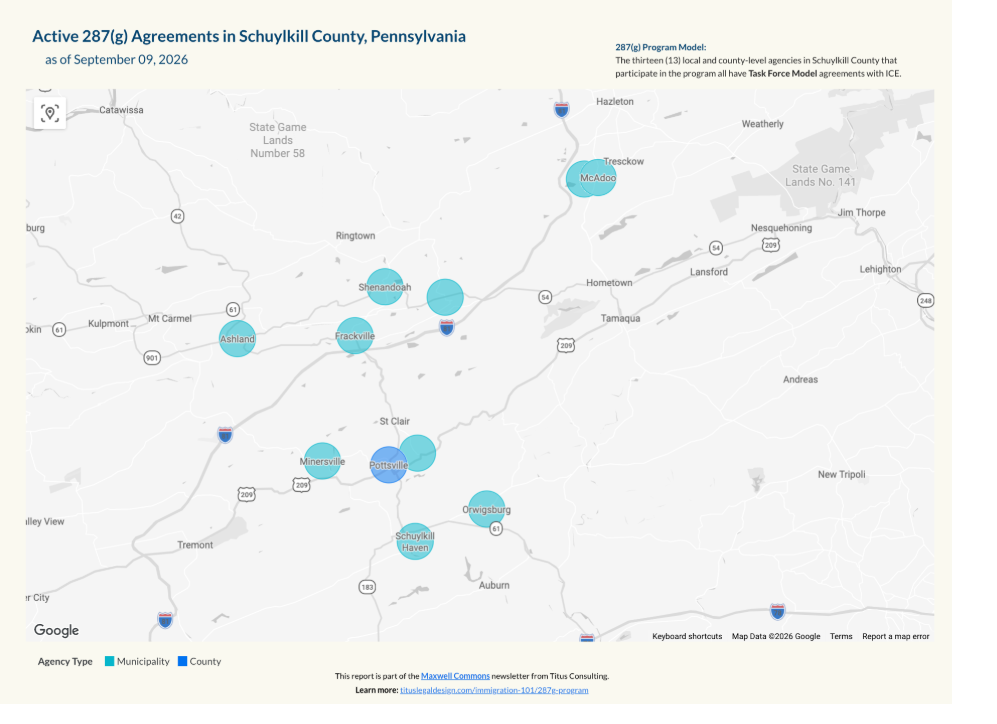
A map, provided by immigration statistics expert Andrew Thrasher, showing 13 current Schuylkill County localities that have signed 287(g) cooperation agreements with ICE. A 14th, Mahanoy Township, is inactive.Andrew Thrasher
The wave of arrests has put Schuylkill County — mostly rural, mostly conservative, and far removed from the glare of media or the kind of organized ICE resistance you see in big cities — on the cutting edge of an aggressive new strategy for mass deportation. This approach is bringing a xenophobic Donald Trump regime closer to fulfilling its once-unthinkable goal of removing one million immigrants from the United States every year.
Trump Country embraces 287(g)
The tag team of local cops and tactical-gear-wearing ICE agents is the biggest reason why federal immigration arrests spiked in July to a Trump-era high of 49,571, or about 1,600 every day. Statisticians who are tracking mass deportation said that 287(g) arrests — named for the section of a 1996 law that authorized the program — involving local police went from less than 3% of the total under Joe Biden to about 15% now, and will only climb higher as hundreds of new departments sign up.
This year, about 58% of the people nabbed by cops and turned over to ICE under 287(g) have no criminal record or pending charges, a higher rate than the typical ICE arrestee. Thrasher found the number for Pennsylvania is even higher, about 70%.
While not as numerous as inbig and heavily conservative states like Texas and Florida, the Keystone State’s 1,216 arrests under the 287(g) program in the first seven months of 2026 rank the commonwealth fourth in the nation — on a Top 15 list made upof states almost exclusively south of the Mason-Dixon Line.
Pennsylvania’s outlier status is punctuated by the fact that two large bordering states — New York and Maryland — have moved, with some bumps, to ban their police agencies from signing 287(g) agreements. Almost all of the Pennsylvania arrests came from smaller cities, exurbs, or rural areas — especially the south-central and northeastern regions of the state, and a smattering of western localities — that voted heavily for Trump and his anti-immigrant message.
The small-town nature of this renewed push for mass deportation is a defining feature of the Trump regime strategy, and not a bug. The race among Schuylkill County’s police departments — many with just three or four cops, including the chief — to sign up for 287(g) and its pumped-up pile of cash came exactly as the two Minneapolis murders of U.S. citizens by immigration cops were fueling growing public outrage.
As a brutal ICE winter ended, the Trump regime ousted Homeland Security Secretary Kristi Noem and the notorious field general Greg Bovino, and ended an era of loud, publicity-seeking operations with catchy names in large blue cities that stirred up local protesters who blew whistles and filmed every move by the masked, armed agents.
Immigrants’ rights advocacy group members and their supporters hold up letters that read “The people vs 287(g)” during a rally last September in Doylestown against the Bucks County sheriff’s efforts to implement a 287(g) program.Daniella Heminghaus | Bucks Coun
Under new DHS boss Markwayne Mullin, ICE and its allies are focused on what you might call small-batch immigration busts — in courthouses or on airport security lines, and thanks to 287(g), at local traffic stops or truck inspections. No one is blowing whistles, and few of these busts get caught on video. Yet, even here in blood-red Trump Country, some locals are troubled by the intense police focus on immigrants and what it’s doing to the moral fabric of their community.
‘Arrest them like the Gestapo’
“No one’s telling you not to arrest people — I’m telling you not to hunt for them, to do stops on the side of the road and arrest them like the Gestapo,” a Democratic city council member in Pottsville, Andy Wollyung, told me after he tried and failed to stop the county seat from joining 287(g). He later fretted that immigration arrests “will drive a wedge in people, you know? These aren’t unknown people. These are our neighbors.”
“When local police officers serve as a force multiplier for ICE, we know that people become more afraid to report crime,” Nayna Gupta, policy director at the American Immigration Council, told me. “They become less willing to cooperate with local law enforcement when it comes to investigations, including things like homicides. And there’s an overall mistrust of public institutions.”
The irony is that today’s Schuylkill County was built on the backs of immigrants — initially a wave of Irish who dug the 19th-century coal mines and were also persecuted, including six members of the infamous Molly Maguires who were hanged in Pottsville in 1877. They were followed by Eastern Europeans who filled the local mining towns like Mahanoy City and Shenandoah.
Those who stayed behind after the mines started closing in the 1950s and kept its hillside towns of striking Victorian architecture and utilitarian rowhouses alive got a booster shot in the 21st century with an unexpected new wave: Latinos. Many landed in Schuylkill County when seeking a place with cheaper housing and more job opportunities for hard workers than big cities like New York or Philadelphia.
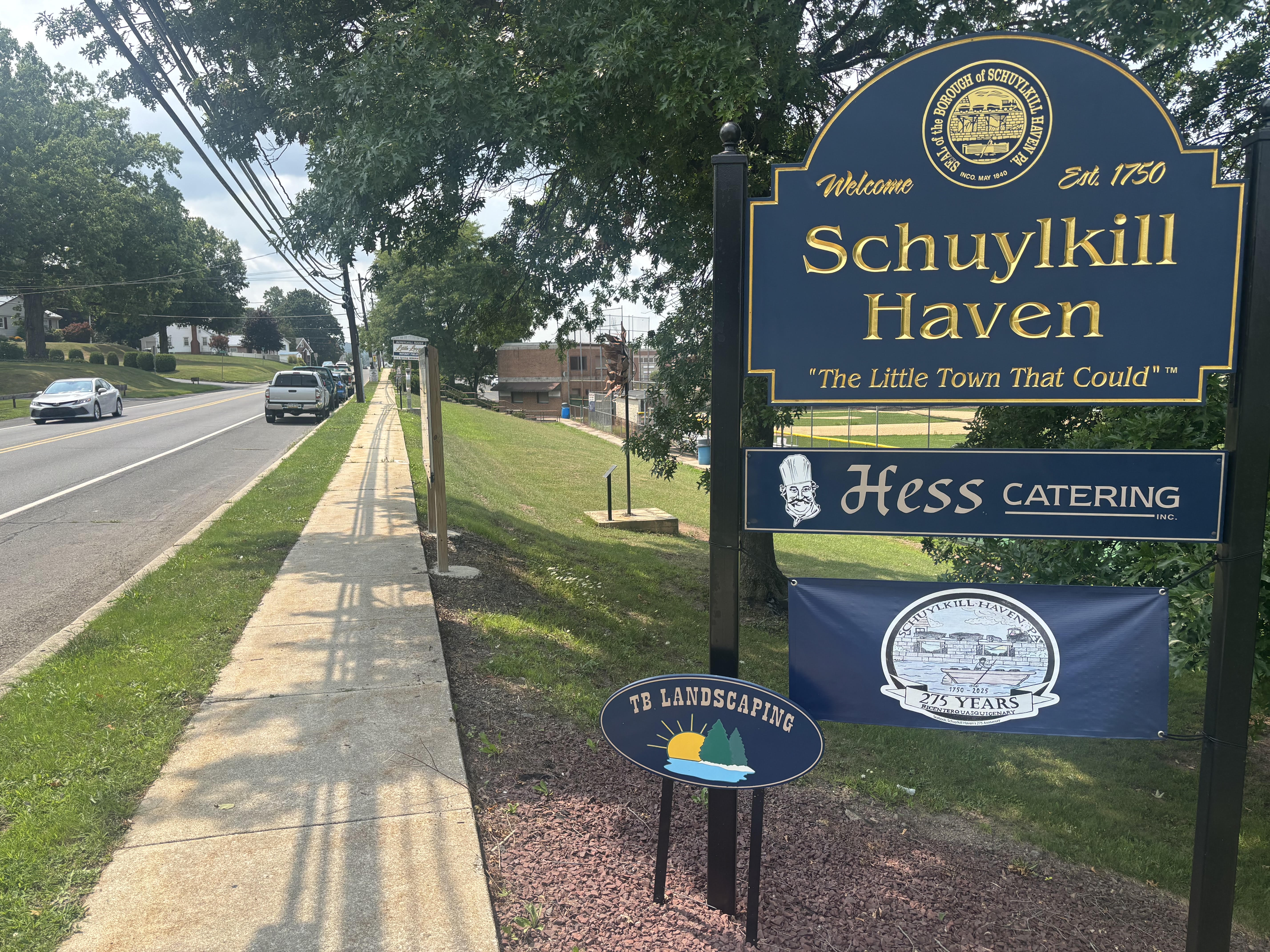
Schuylkill Haven, with a population of just over 5,000, has arrested at least 59 people and turned them over on federal immigration charges since signing a so-called 287(g) agreement with U.S. Immigration and Customs Enforcement (ICE) this spring.Will Bunch
Four years ago, Pastor Luis Rivera and his wife bought a historic local church building in Pottsville and rechristened it as Iglesia Cristiana El Kairos, under the umbrella of the Evangelical New Life Church, to serve a Latino community now growing by leaps and bounds.
“You see a lot of traffic,” the pastor told me. “You see people remodeling more houses. And a lot of the stores are opening around here … It was really dead before, you know?” Today, it’s estimated that about 1,000 of Pottsville’s 14,000 residents are Latino.
A ‘stable’ life is upended
Six of the more recent arrivals were Venezuelan-born Carlos Moreno, his wife, Wendy Martínez, and their blended family of four teenagers. They’d been on the run from government persecution and armed conflict across South America when they came to America in 2023, and stayed in a cramped public shelter in New York City as the family sought asylum and obtained work permits.
When they moved to a narrow rowhouse on a rugged patch of Norwegian Street on the steep hillside up from downtown Pottsville, the couple found jobs at the county’s large Amazon warehouse and even started a small cleaning business, even though Moreno, 37, is legally blind and has severe hearing problems.
“For the first time in years, it felt like our lives were finally becoming stable,” Martínez would later write. “Then, in the fall of 2025, we learned that I was pregnant. It was an unexpected surprise, but a very welcome one.”
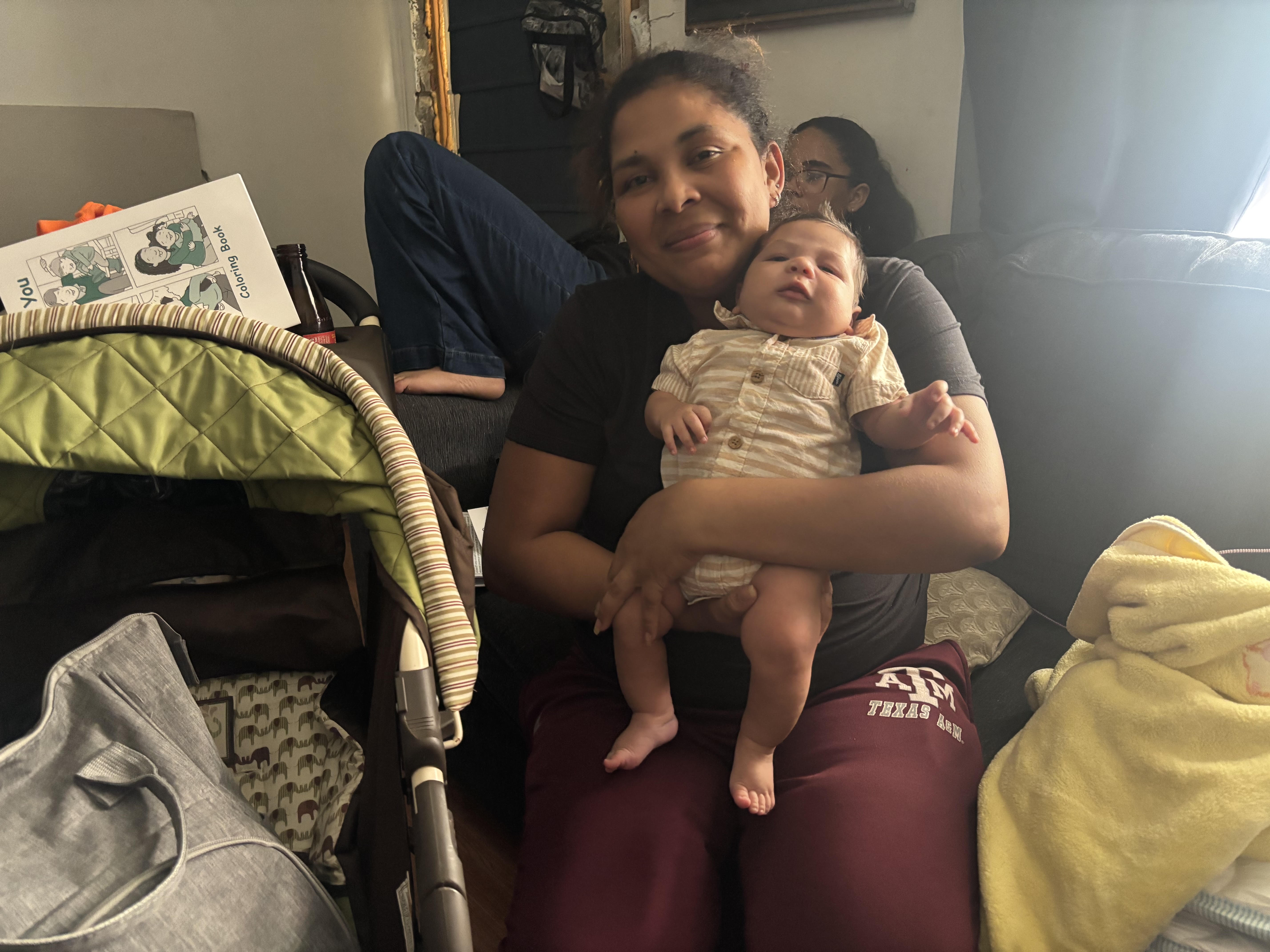
Wendy Martínez, whose husband, Carlos Moreno, a Venezuelan refugee, has been detained by immigration authorities since May after losing a misdemeanor noise complaint at the Schuylkill County Courthouse. She is holding her baby Noah, who was roughly 6 weeks old.Will Bunch
A bigger and less welcome surprise awaited. This spring, a neighbor called police to complain about noise —music from a small boom box — and Moreno received a summons. He decided to challenge it at the Schuylkill County Courthouse a few blocks away, and when he lost, he paid a fine, walked out of the courtroom — and right into ICE agents waiting to arrest him. He was sent to detention in the Cambria County Jail and stayed there as massive earthquakes halted deportations to Venezuela. He was locked up when his son, Noah, was born — on the Fourth of July.
Martínez was alternately rocking and bouncing her then-6-week-old son when I joined Medina in visiting their cluttered, narrow rowhouse in August. The windows were covered with thick blankets that let in only a sliver of light, and Martínez was bookended on a sofa by her two daughters, on their phones, who rarely leave home.
“They told him that he was a dangerous person,” Martínez said in Spanish, interpreted by Medina, as her baby babbled. “There hasn’t been any situation where he was against the law, or anything.” Struggling to pay her bills and support the five children, Martínez launched a GoFundMe page, but has only raised $2,695 of her $4,000 goal. Her husband was recently moved to ICE detention in Louisiana.
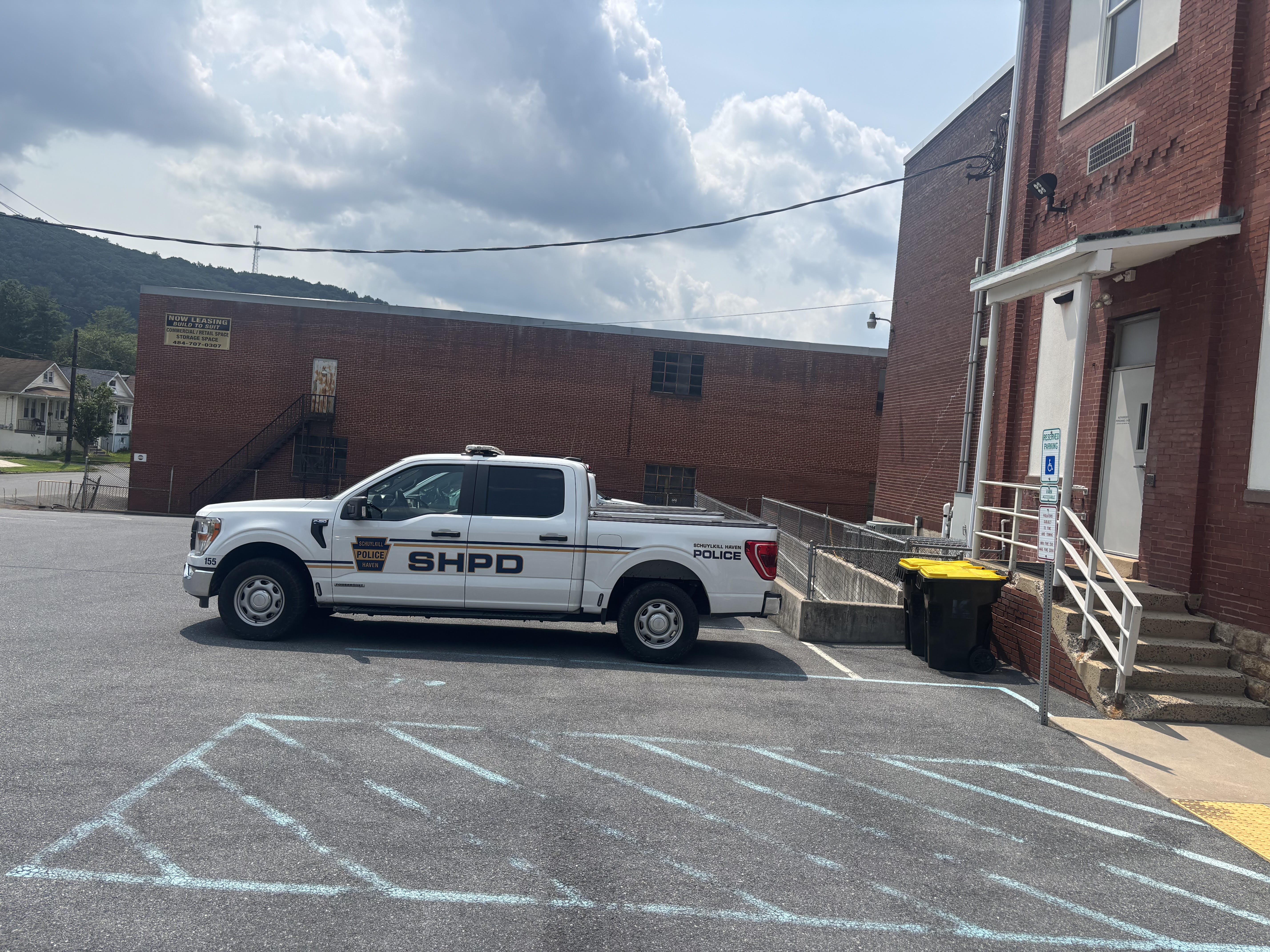
In August, Schuylkill Haven officials said they’re expecting a federal check for $152,000 — money the police department wants to spend on buying the currently leased police headquarters, pictured here.Will Bunch
Like most immigration arrests since 287(g) swept across Schuylkill County, there is an element of mystery about what exactly happened to Moreno. I twice called the Schuylkill County sheriff, Shawn Butler, to ask if his department — the first county agency to join 287(g), back in January — was involved, but he did not get back to me. Not once in a month of reporting did a police chief or municipal official return a call or email from this out-of-town columnist. Secrecy, and a lack of accountability, seems to be baked into the 287(g) program.
‘You don’t answer anything’
“Any Right-to-Know requests, any FOIA requests, anything — you defer that right down to the Department of Homeland Security,” Jody Long, the then-police chief in Mahanoy Township, told the Pottsville City Council when it was voting on a 287(g) agreement in May. “You don’t answer anything with that. That’s right from their legal team.”
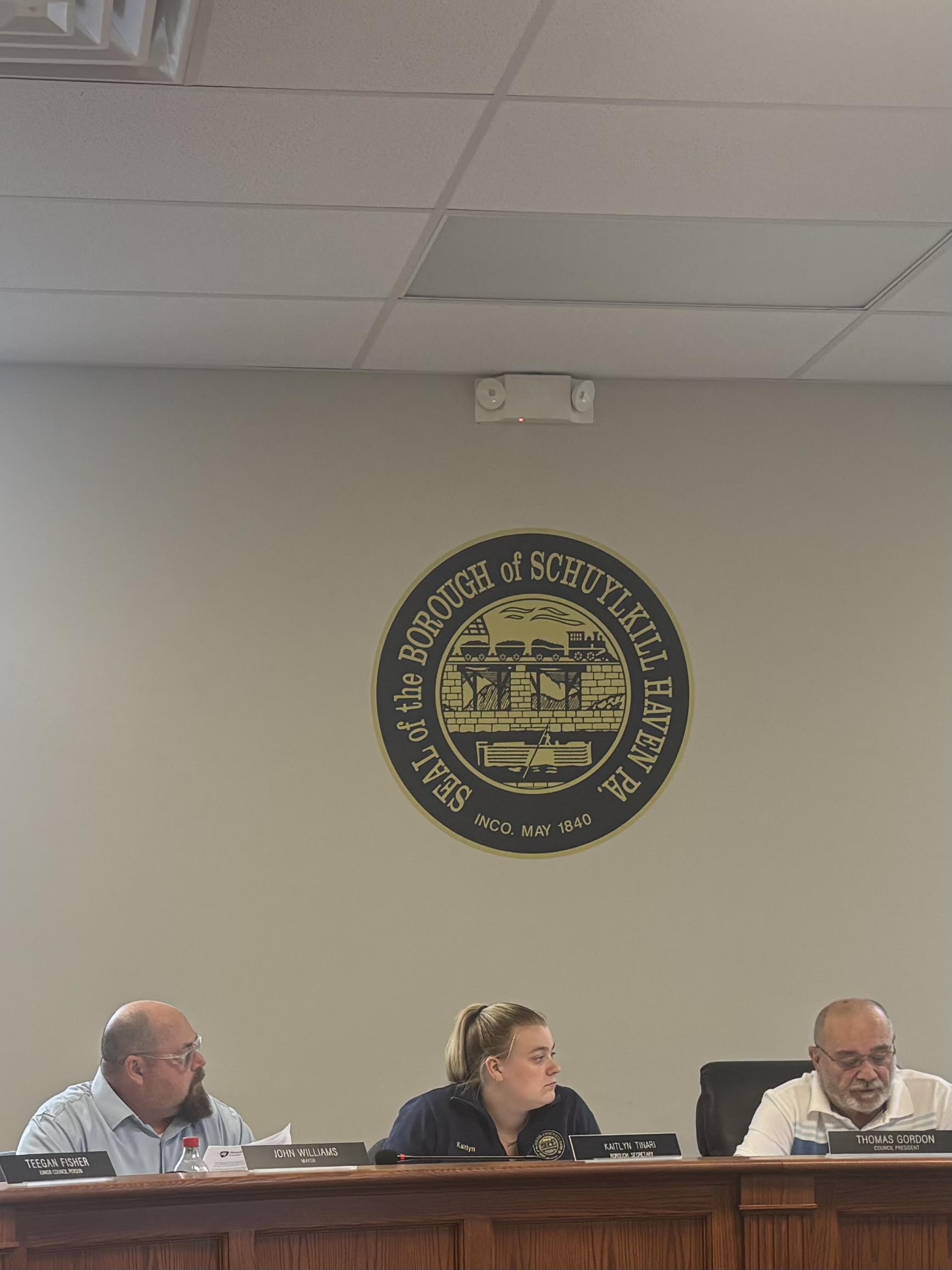
In early September, I attended the bimonthly meeting of the Schuylkill Haven borough council hoping to ask Police Chief Jeffrey Walcott, Mayor John Williams, or other officials how and why their small borough just south of Pottsville had managed to make at least 59 immigration arrests since signing a 287(g) pact with ICE on April 5. I didn’t get very far.
In a brief conversation, Walcott suggested, interestingly, that commenting on 287(g) might bring protesters to Schuylkill Haven. When I asked Williams about the program after the meeting, the police chief interrupted our conversation to say there should be “a unified response,” and then later told me any information would need to come from Homeland Security or a FOIA request.
Schuylkill Haven Mayor John Williams (left) at a borough council meeting on Sept. 2. Next to him are borough secretary Kaitlyn Tinari (center) and council president Thomas Gordon (right). Williams said Schuylkill Haven’s cooperation with federal immigration enforcement is going well, but declined to elaborate.Will Bunch
Most of what citizens and the media in Schuylkill County know about the 287(g) programs comes from borough or township council meetings in which a police chief tells elected officials about all the sweeteners that cash-flush ICE added to the program when Congress and Trump enacted the so-called Big Beautiful Bill in 2025.
Police departments or county sheriffs who join the most common 287(g) Task Force model get $100,000 for vehicles or other equipment and $7,500 for each officer who undergoes 40 hours of mostly online training, as well as additional dollars for their time on immigration matters — all contingent on making actual arrests. In August, Schuylkill Haven officials said they’re expecting a federal check for $152,000 — money the borough wants to spend on buying the currently leased police headquarters.
The cash incentives have sparked a kind of deportation arms race across Pennsylvania, which has gone from just a few 287(g) programs at the start of the year to more than 130, with new ones coming online every day. Most of the council debates tread lightly on the question of liability for an officer who makes a bad arrest — a problem ICE is belatedly looking to fix with a proposal to insure each officer up to $500,000 — or the elevated risk that a traffic stop could lead to violence.
Fighting in the Schuylkill
That’s already happened. On May 20, a Schuylkill Haven cop stopped a car on Route61 after he claimed the driver had illegally dark-tinted windows. ICE agents who were in the borough and arrived at the stop ran the license of 34-year-old Yensy Rafael Santana Alvarez of New York City and determined he had an immigration removal order.
According to the Skook News, a court affidavit said the man handed over his car keys and stepped out of his car — then ran for it. Alvarez led the law officers on a wild foot chase across the Schuylkill and back, getting tased once, and allegedly pulling one officer underwater as another suffered minor injuries. He was eventually arrested, and felony charges were filed but then dropped.
Some local critics also questioned whether minimally trained cops making immigration arrests is a good idea in a county where some departments have a history of police abuses. “In northern Schuylkill County, over the last 10 years, we’ve had horrendous police … acting very unprofessional in different departments,” John Hampton, a lawyer who has worked with Mahanoy Township, told me.
A heated and emotional debate over the federal 287(g) immigration enforcement program dominated Monday night’s Pottsville Council meeting.
After initially failing in a 3-2 vote, the resolution was reopened moments later and ultimately passed following a council member changing… pic.twitter.com/kSW1QXhgqS
In 2022, two then-police officers in the borough of Minersville were indicted on still-pending federal police brutality charges for allegedly severely beating a man during a traffic stop and falsifying police reports to cover it up. That didn’t prevent ICE from signing a 287(g) agreement with Minersville police in May.
That same month, local activists pleaded with the Pottsville City Council during a meeting that lasted more than five hours not to join the 287(g) program, arguing that immigration arrests would make tourists and new businesses not want to come there. They thought they’d won in a 3-2 vote, only to have GOP council member Scott Price change his position and demand a revote that flipped the outcome, saying that, in the end, “I have to side with our police officers.”
One of the few pro-287(g) advocates who spoke at that May hearing was Mahanoy Township’s Long, who said his department had been “the leader in the county” by making 10 immigration arrests, mainly at what he called a truck-safety inspection point. “ICE does not come in and tell you what to do,” Long insisted. “We tell them what to do.”
He was joined by one of his officers, Anthony Maldonado, who cited his own heritage as a Puerto Rican to insist there is no racial profiling. “I have family members who are light-skinned, dark-skinned, everywhere in between, so I would take it very personally if we conducted ourself unprofessionally to that effect,” he said.
‘Because you look like a Mexican’
The room in Pottsville did not hear from Moe Montalvo, a gutter contractor from nearby Tamaqua who, in mid-April, passed through the checkpoint on Burma Road operated by cops from Mahanoy Township and assisted by adjacent Ryan Township officers. He said he was part of a two-truck convoy, and the first one with two white occupants was waved through, while his was stopped to allow the officers to ask Montalvo, a 28-year-old U.S. citizen who is half Puerto Rican and half Egyptian, for his ID and grill him about his identity.
Montalvo posted that day on Facebook that when he told an officer he was born in Montgomery County, the cop replied: “Are you sure? Because you look like a Mexican.” Montalvo also quoted the officer: “Why are you worried? The only thing you should be worried about is when I take my Taser out, because I’m going to aim right for your nose piercing.” I confirmed the incident with Montalvo, who told me that “it seems like there was no doubt that racial profiling was involved here.”
Weeks later, the Mahanoy Township Police Department went dark, at least temporarily, after Long, Maldonado, and its other officer all quit in a disagreement with supervisors. One of the supervisors, Republican Tony Merchlinsky, confirmed to me the entire force had resigned after a dispute with supervisors over its refusal to wear body cameras. He said it was triggered by a civilian complaint over an arrest that did not involve immigration, although he added that “it may have involved racial profiling.”
Maldonado took to Facebook to give his side of the story, saying that a different supervisor had told the township officers they were making too many arrests, and that, as quoted by Maldonado, he preferred “a [B]arney Fife department and have his police drive around and wave at people instead of making arrests.” Merchlinsky confirmed that Mahanoy Township — which recently hired a new, albeit part-time, police chief — has yet to see one dime from the feds of the more than $100,000 that was promised.
The checkpoint drama and police tensions in Mahanoy Township demonstrate some of the many problems when beat cops are drafted to join Trump’s mass deportation crusade. Are police really making their towns safer when one part of the community is taking long traffic detours and covering up their windows in terror of any contact with cops? Is the economic gloom over Pennsylvania’s fading coal country really going to be lifted by clamping down on immigrants who’d been flocking there to pour concrete and rehab old buildings?
Does a region whose very DNA is handed down by the immigrants who once came here to shovel anthracite now want to be known in the 21st century as a “show me your papers” police state?
Few of these questions are being asked as one former coal burg after another races to embrace a Trumpian bargain with the 287(g) program. The latest is Mahanoy Township’s next-door neighbor, Ryan Township, which in June voted conditionally to join the ICE mass deportation program, citing as the biggest incentive its need to replace its run-down Ford Explorer, one of the oldest police cars in Schuylkill County.
ICE agents arrested at least 49 immigrant construction workers in two separate operations carried out in the last week in the central Pennsylvania community of Danville, according to immigration advocates.
All remain in detention, they said.
The arrests targeted workers who were leaving the construction site at the Geisinger Medical Center, where a patient tower is being built.
At least 41 people were arrested on Sept. 2 as they left the property around 5 p.m., and eight more were arrested on Tuesday, beginning about 6 a.m., according to Centre County Rapid Response Network, an immigrant-assistance group, and the Pennsylvania Immigration Coalition. The men are nationals from Nicaragua, El Salvador, Honduras, and other countries.
U.S. Immigration and Customs Enforcement officials could not immediately be reached for comment, nor could those with the Department of Homeland Security.
The Pennsylvania Immigration Coalition said the arrests represent the largest workplace raid in the state to date.
In a statement, the Geisinger Medical Center said it was aware of law enforcement activity on Sept. 2 that involved workers from its tower construction project. The activity did not occur on Geisinger property, it said.
“As with any large construction project, we hire a construction manager to oversee the project,” the statement said. “It is their responsibility to make sure all workers on the project meet all federal and state work eligibility requirements.”
Immigration advocates said that ICE agents made the arrests with the assistance of Danville police, that workers driving cars were stopped as they left, and that police followed other workers from the edges of Geisinger property to their homes.
Workers leaving Danville for other parts of the state encountered checkpoints near highway entrances, the coalition said.
The immigration coalition said eyewitnesses to the Sept. 2 operation reported that ICE was using drones, which increased an atmosphere of militarization.
“We don’t need our local police enforcing federal law. It is not their job and has proven time and again to harm public safety,” said Jasmine Rivera, executive director of the Pennsylvania Immigration Coalition. “ICE and billionaires profiting off federal contracts are making billions of dollars from kidnapping our people. They are terrorizing families and attacking our neighbors who are literally building our communities. We don’t need $240 billion of our tax dollars to go to ICE and [U.S. Customs and Border Protection]; we need that money to make education, healthcare, and housing affordable.”
Correction: An earlier version identified the construction site by the name of the project designer, which has been deleted from the story. EwingCole does not manage the site and is not responsible for its operations nor the employment of workers there.
Bruce Springsteen and the E Street Band’s “Land of Hope and Dreams American Tour” had its grand finale at the Xfinity Mobile Arena in South Philly this spring.
That May 30 concert — originally scheduled for earlier in the month but moved due to a scheduling conflict with a Sixers playoff game — was the culmination of a tour built around “Streets of Minneapolis,” the anti-ICE protest song Springsteen penned after the deaths of Renee Goode and Alex Pretti at the hands of U.S. immigration and border enforcement officers.
Now, the Philadelphia show is going to be a concert film titled Land of Hope and Dreams (Philadelphia Freedom Cut), which will begin streaming on YouTube on Wednesday.
As of Saturday afternoon, Springsteen had not officially announced the film or any details surrounding it via his social media or a news release. But a trailer for the film appeared on the Bruce Springsteen.net website on Friday afternoon, labeled “Streaming September 9.”
The Philadelphia show began with a speech, as did all the shows on the tour, which opened in Minneapolis in March and played to sold-out arenas across the country, as well as one stadium date, at Nationals Park in D.C.
Bruce Springsteen and members of the E Street band perform during their “Land of Hope & Dreams” tour stop at Xfinity Mobile Arena in Philadelphia on Saturday, May 30, 2026. Elizabeth Robertson / Staff Photographer
In it, Springsteen called President Donald Trump’s administration “corrupt, incompetent, racist, reckless, and treasonous.” Trump, in response, has called the Jersey rocker “dumb as a rock” and “not a talented guy,” among other insults.
In The Inquirer’s review of the May 30 show, I called the show “a thrilling, sharply-focused marathon that played like an unabashedly partisan spirit-lifting revival meeting — and sounded astoundingly good in a cavernous sports arena — as the band roared through a standard Springsteen-length three-hour show that included 27 songs and several spoken interludes.”
The show, with guitarist Tom Morello guesting on several songs, featured covers of Edwin Starr’s “War,” the Clash’s “Clampdown,” and Bob Dylan’s “Chimes of Freedom,” as well as Springsteen’s own protest songs, such as “American Skin (41 Shots).”
Watch the trailer, which begins with Springsteen stating the obvious — “It is great to be in Philadelphia” — below.
Weeks after thousands of Haitian and Syrian immigrants saw the end of their protected status in the U.S., exposing them to ICE arrest and deportation, more than 170,000 people from El Salvador now face the same fate.
And soon.
Temporary protected status for the Central American nation is set to end on Sept. 9, a deadline that’s provoked urgency and uncertainty among community leaders, activists, and businesspeople around the country. They say the loss of legal status hurts not only the immigrants who have built lives and families here, but also Americans who depend on their labor, expertise, and tax dollars.
TPS, as it’s called, has been a mainstay of U.S. immigration and humanitarian policy for more than three decades — and now is fast disappearing under the Trump administration.
It was created by Congress in 1990, and El Salvador became the first country to be designated, in 1991, in response to Salvadorans fleeing a brutal 12-year civil war.
As of last year the U.S. provided TPS to about 1.3 million people, allowing them to live and work in this country while their homelands grappled with war, environmental disaster, epidemics, or other extraordinary circumstances.
When Trump returned to office in January 2025, TPS was provided to nationals of 17 countries. Since then the administration has ended or is moving to end status for 13, affecting about 1 million of the 1.3 million recipients, according to the Pew Research Center.
A key aspect of that evolving effort came in June, when the Supreme Court ruled that the administration could terminate TPS for countries such as Haiti and Syria. And further that Department of Homeland Security decisions about TPS would be largely unreviewable by lower courts, disarming advocates of a weapon they had used to fight cancellations.
The Trump administration insists that temporary means exactly that, that TPS was never meant to become a path to permanent residency. The White House promises to deport those who lose legal status, an outcome that advocates say is guaranteed to hurt immigrant families that include spouses and children who are American citizens.
Homeland Security posted video of a Haitian deportation flight on social media, where it said: “Those with terminated TPS are in our nation Illegally. They have two options: LEAVE IMMEDIATELY or be DEPORTED.”
Some legal groups argue that the law requires the secretary of Homeland Security to formally extend or terminate TPS at least 60 days before the expiration date for any particular country. And that the Trump administration failed to publish such a notice for El Salvador in the Federal Register, meaning that protections should automatically extend for six months.
However, U.S. Citizenship and Immigration Services says the TPS designation expires on Sept. 9, as scheduled.
El Salvador has the third-highest TPS population in the U.S. at just over 170,000, ahead of the 101,000 from Ukraine, whose status expires next month.
Elnora Bassey, a policy attorney at CLINIC, the Catholic Legal Immigration Network Inc., said in a statement that renewing TPS for El Salvador offers the administration “an opportunity to make a choice that demonstrates its ability to protect vulnerable populations, and that we are a nation that demonstrates compassion for all people.”
The 1991 designation for El Salvador was followed by immigration relief that allowed El Salvadorans to stay when initial TPS finding expired. In 2001 the country was redesignated after two earthquakes killed at least 1,100, injured nearly 8,000, and displaced more than one million people.
An estimated 2.5 million Salvadorans live in the U.S., according to a Pew Research Center analysis of census data. Philadelphia is home to an estimated 2,759, with about 17,300 statewide and 78,000 in New Jersey.
El Salvador, known as the “Land of Volcanoes” for its frequent and often destructive eruptions, is roughly the size of New Jersey and has a population of about 6.3 million people.
For years, the nation was beset by one of the world’s highest homicide rates, more than 100 per 100,000 people. That has declined dramatically amid the government’s use of emergency powers that have seen the detention of more than 80,000 suspected gang members.
Research by the National TPS Alliance says that deporting Salvadoran immigrants would deepen difficult socioeconomic conditions in that country and potentially cause political unrest and destabilization.
The alliance estimates that remittances from the U.S. to Salvadoran families would decrease by more than $1.2 billion. And that poverty rates there would increase 10%, with older, deported immigrants unable to find jobs, and younger ones facing unemployment.
TPS provides immigrants in the U.S. with work authorization and protection from removal, but no path to permanent residency or citizenship. Once TPS protection ends, holders revert to their previous immigration status.
For many that means they become undocumented and subject to removal proceedings.
TPS holders work at higher proportions than the country as a whole, pay billions of dollars each year in federal and local taxes, and contribute to the solvency of a Social Security system from which they are unlikely to ever draw benefits.
TPS holders from El Salvador annually pay about $1.5 billion in federal, state, and local taxes, according to the National TPS Alliance. They work mainly in construction, in buildings and grounds services, in transportation, and in manufacturing.
“TPS holders from El Salvador are our neighbors, friends, colleagues, faith leaders, highly skilled workers, and small-business owners,” said Dulce Guzmán, executive director of Alianza Americas, a nonprofit group that supports Latino communities. “At a moment when immigrant communities face tremendous uncertainty and fear, our faith and shared humanity call us to choose compassion, uphold human dignity, and love our neighbors without distinction.”
The lawyer for a Guinean man who has lived legally in the United States for nearly 20 years asked a federal judge to free him from ICE detention on Thursday, even as government attorneys described plans to proceed with his deportation.
Mamadou Fadel Cherif, 56, was arrested by immigration officers as he left his West Oak Lane home for work on July 13 and remains in custody at the Moshannon Valley Processing Center in Central Pennsylvania.
“There’s a human being underlying these proceedings,” attorney Conor Deane told U.S. District Judge Juan Sanchez, as the lawyers debated complicated immigration regulations and law. “An exceptional human being. … He’s the epitome of who you would want to live in this country.”
Fadel Cherif works in dining services at La Salle College High School, the private Catholic boys school in Montgomery County, and also drives for Uber. He’s the main support for his wife, who has legal permanent residency, and for their four American-born sons, one of whom is a Marines reservist.
Deane sought Fadel Cherif’s immediate release, saying he has been illegally detained and denied due process under the law.
Nearly two decades ago, Fadel Cherif was granted what’s called Withholding of Removal, which allows him to live and work in the United States, and bars his deportation to his West Africa homeland, where the U.S. government agrees he could be harmed or killed over his political beliefs.
That status does not shield him from being sent to a third country, however, if ICE can find a nation willing to accept him. Those kinds of third-country deportations are difficult for the agency to achieve, but the Trump administration has pushed to accomplish them.
The Migration Policy Institute estimates that during its first year back in office, the Trump administration carried out about 15,000 removals to third countries, a fraction of the total 396,000 deportations.
Deportations of those who have Withholding of Removal are even more rare, according to the Amica Center for Immigrant Rights in Washington. The center says it is pointless to detain those people while attempting to deport them. If ICE were to release a foreign national and later identify an appropriate third nation, it could simply detain them again.
In court Thursday, the judge noted that authorities plan to deport Fadel Cherif to Ghana — sparking courtroom debate over the West African land’s assurances to the U.S. government that he would be safe there.
Deane said those assertions are not sufficient to deport someone. He described Ghana’s diplomatic assurances as “very boilerplate,” and not barring that nation from sending his client to another country or even back to Guinea.
Assistant U.S. Attorney Landon Jones told the judge he did not have additional information regarding Ghana’s assurances, but the U.S. State Department has deemed them credible.
Abdoulaye Cherif near his West Oak Lane home in July 2026. His father, Mamadou Fadel Cherif, was arrested by ICE and has been detained while the agency tries to deport him.Yong Kim / Staff Photographer
Fadel Cherif’s wife and two of his sons, who were in court for the proceedings, declined to comment.
Advocacy groups and immigration lawyers say the Trump administration is increasingly arresting and detaining migrants who have been granted withholding, keeping them in custody while it pursues removal to a third country.
One challenge to deportation is even those nations that willingly accept their own citizens can be disinclined to accept other foreign nationals.
Ricky Palladino, another lawyer for Fadel Cherif, said earlier that there’s no reason for ICE to detain him. He has no criminal record, but does have work authorization, a Social Security number, and a driver’s license.
Fadel Cheriff is nearing the end of his eighth week in detention.
In Guinea, a nation of 12 million people that’s roughly twice the size of Pennsylvania, Fadel Cherif was jailed by the government after protesting the results of his country’s 1998 presidential election, which was marred by irregularities. He later fled in fear of being rearrested, using a document that showed a different Guinean identity to enter the United States in New York in November 2003.
Fadel Cherif was denied asylum — which carries a path to citizenship — when he could not prove that he had filed within a year of entering the United States.
To receive Withholding of Removal, applicants must prove they were persecuted in the past or that their lives would be threatened in the future, that the government harmed or will harm them — or failed to control others who might do so. They also must show that moving to a different part of their home country would not provide safety.
When Withholding of Removal is granted, the immigration judge also enters a deportation order, then tells the government it cannot deport the person to their homeland. In that way the removal is “withheld.”
People with that status cannot leave the United States without triggering deportation, have no path to citizenship, and cannot petition to bring family members to this country.
Fadel Cherif’s lawyers filed what’s called a habeas petition, which asks a judge to order the government to prove it has the lawful authority to detain the person. The term “habeas corpus” translates from Latin as “you have the body,” and such filings are considered crucial constitutional safeguards against wrongful imprisonment.
Habeas petitions, once rare, have dominated the docket at Philadelphia federal court since the Trump administration initiated a policy of mandatory detention last year. That provoked an avalanche of lawsuits by immigrants who challenged their incarceration, demanding their freedom or at least a bond hearing in Immigration Court.
Judge Sanchez gave no indication of when he would issue a ruling.
Jhon Perez Romero carries a driver’s license, Social Security card, and an employment permit, working as a Spark Driver for Walmart in York, Pa.
He also carries the fear of being tortured or killed if he should be deported to his Venezuelan homeland, where he’s been accused as a “traitor” by the government he once served as an intelligence officer.
Perez Romero, who was interviewed and released by U.S. immigration officials when he crossed the border in 2023, was arrested by ICE in Philadelphia on June 30, when he appeared for what he thought would be a routine check-in. He joined a growing number of immigrants taken into custody even while they pursue asylum, a long-established legal process that can grant permission to live in the United States to people who could be harmed at home.
Perez Romero, 39, is being held at the Moshannon Valley Processing Center, the 1,876-bed ICE facility in Philipsburg, Pa., his future uncertain, his wife and step daughter in anguish.
“I thought the U.S. represented a place where people who are escaping political or religious persecution can come here and find safety,” said his wife, Sandra Quinones, an American citizen and high school teacher. “Especially if you’re law-abiding and contribute to society. That’s where my heart is broken.”
The Trump administration’s aggressive approach departs from previous administrations, where asylum seekers with no criminal record were mostly allowed to remain free while they pursued their claims. Now applicants have been detained in communities across the United States, including Pennsylvania and South Jersey.
Last week news broke that the administration intends to revoke the business and tourism visas of up to 200,000 people who are seeking asylum, putting them at risk of arrest and detention. That comes on top of procedural changes that have made it harder for people to prove they should be allowed to stay.
A spokesperson for the Department of Homeland Security said Perez Romero was released at the border by the Biden administration, not by officials under President Donald Trump.
“He will remain in ICE custody pending removal proceedings and will receive due process,” the spokesperson said in a statement. “A pending application does NOT confer legal status in the United States.”
The agency said that on Jan. 20 Perez Romero was charged with “harassing communication,” an offense that usually involves phone calls or text messages sent to upset someone.
DHS provided no other information. Dauphin County court records show that Perez Romero pleaded guilty in magisterial district court in March, but do not include details of what occurred. A court worker said Friday she could provide no additional information.
“Criminal illegal aliens are not welcome in the U.S.,” Homeland Security said. “We will find you, we will arrest you, and we will deport you.”
Jhon Perez Romero, originally of Venezuela, came to the United States seeking asylum in late 2023, afraid he could be harmed or killed by government agents in his homeland. Now Perez Romero, 39, is being held at the Moshannon Valley Processing Center, the ICE detention facility in Philipsburg, Pa., as the Trump administration detains more people who are seeking safety in the United States.Courtesy of family
Generally, the government cannot deport someone while their asylum claim is being decided — claimants must be given what’s called a merits hearing, where they can present evidence, before any final removal action.
The government does have the power to hold asylum seekers in detention for certain reasons, including if it believes the person might flee or is a danger to the public.
Immigration lawyers argue that there’s no gain for the government in detaining asylum seekers, since their names, addresses, and identifying information are already known to authorities, who require regular, in-person check-ins.
“The Trump administration is targeting people to subject them to detention, knowing they won’t be able to fight their way out of the system, so they’ll give up and leave,” said lawyer Lilah Thompson, who leads the immigration unit at the Defender Association of Philadelphia. “They’re wearing people down.”
For immigrants, freedom while pursuing asylum means everything, enabling them to work and earn money to hire an attorney, and to more easily gather evidence and documents for their cases.
Prolonged detention leads some to drop their legal cases and accept voluntary departure. Leaving voluntarily avoids the automatic 10-year ban on returning that can accompany a formal deportation.
“It’s very tough, for people who are facing these choices,” said immigration lawyer Robert Barchiesi II, who represents Perez Romero.
Thompson is helping defend a Chester County newlywed who has so far spent two months in detention after being arrested at a late-June check-in.
Nelson Contreras-Gelves, 35, originally from Venezuela, has followed government directions and broken no rules, Thompson said, noting that he recently married a U.S. citizen.
People seeking asylum must show not only that they could be harmed in their homeland, but also that the danger springs from at least one of five specific causes — their religion, race, nationality, political beliefs, or membership in a particular social group.
Moshannon Valley Processing Center, in Clearfield County, Pa., is the largest immigrant detention facility in the Northeastern United States.Max Marin / The Philadelphia Inquirer
People granted asylum can apply for lawful permanent residency and eventually for U.S. citizenship.
Perez Romero’s life has taken him from a position in Venezuela’s notorious national intelligence agency, to a flight across countries in fear of his life, to love and marriage to a U.S. citizen and a caring role as stepfather to her 17-year-old daughter.
From roughly 2011 to 2019, according to his asylum application, Perez Romero was an agent at the Servicio Bolivariano de Inteligencia Nacional, known as SEBIN. It was created in 2010 by then-President Hugo Chávez, officially aimed at protecting the nation but accused by human-rights groups of arresting and torturing political opponents, journalists, and activists.
Perez Romero said he quit the agency after receiving instructions — the specifics were not described in his asylum application — that he refused to obey. His resignation came less than three months after a failed military uprising against authoritarian President Nicolás Maduro triggered a purge of the intelligence services, targeting those suspected of disloyalty.
Perez Romero was told to report to government officials — and that he was accused of treason.
“Which is erroneous,” he wrote in his asylum application, “since I have not committed any crime.”
In March 2020, facing an arrest warrant, Perez Romero fled to Colombia, keenly aware of “what happens to political prisoners in Venezuela, things like imprisonment for life or murder.”
Two years later, after Gustavo Petro was elected as that nation’s president, he said, he began receiving threats from Venezuelan agents that he would be seized and forced home.
Perez Romero headed north. On New Year’s Eve 2023, he reached the U.S. border at Eagle Pass, Texas, where he was interviewed and released by immigration agents.
The next year he met Quinones at La Iglesia de Dios Voz de Alerta Church in York, and they wed in 2025.
She described him in an interview as an outstanding husband and father, working long hours to provide for their family. He’s deeply invested in their church, she said, and before his detention was developing a resource package to help missionaries serving in remote and dangerous areas.
Last month, he tried and failed in federal court to win his freedom from Moshannon.
U.S. District Court Judge Joseph Leeson ordered the government to hold a bond hearing, but Immigration Judge Tamar Wilson ruled that Perez Romero did not show he was not a flight risk or a danger to the community.
He may say he’s innocent of treason, the judge wrote, but “the court cannot simply take his word for it.”
Quinones says the family hasn’t lost hope. Their GoFundMe has raised $8,000 of its $9,000 goal, all of it going for legal fees and related expenses. They await the hearing to present evidence to support Perez Romero’s case for asylum.
Quinones said her husband relies on his Christian faith to stay strong. She’s trying to stay optimistic as well, she said, but so much is uncertain and in flux. Her husband could end up having to accept voluntary departure to a third country, like Colombia.
She’s prepared to retire early and join him, if necessary, and has begun exploring job possibilities there.
“I can’t be apart from my husband,” she said. “I can’t picture my life without him.”
Staff writer Dylan Purcell contributed to this article.