Tag: freestory

  • unCovering the Birds: Two Important Days

    unCovering the Birds: Two Important Days

    The Eagles’ first-stringers get little to no action in exhibition games, annual joint practices with other teams become one of the few opportunities for starters to get preseason reps of consequence. This year, the Eagles traveled to New England for two days of live workouts with the Patriots. The Philadelphia Inquirer’s Jeff McLane and Boston Sports Journal’s Greg A. Bedard recap what they saw, and explain why, even after the joint practices, the Eagles still haven’t shown much of an identity.

    00:00 Eagles vs. Patriots joint practices: was there a winner?

    04:37 Bedard’s impressions of Eagles’ new offense

    09:42 What will offensive coordinator Sean Mannion be able to get out of quarterback Jalen Hurts?

    21:30 How has A.J. Brown looked for Patriots?

    29:50 Highlighting some key one-on-one battles

    36:03 Are joint practices worth it?

    43:14 Jeff’s mailbag

    unCovering the Birds is a production of The Philadelphia Inquirer and KYW Newsradio Original Podcasts. Look for new episodes throughout the season. We’re always looking for mailbag questions! Hit Jeff up on his socials, or drop a question in the comments. Jeff could answer it in a future episode!

  • Trump ignores joint efforts by his favorite dictators to undermine U.S. security

    Trump ignores joint efforts by his favorite dictators to undermine U.S. security

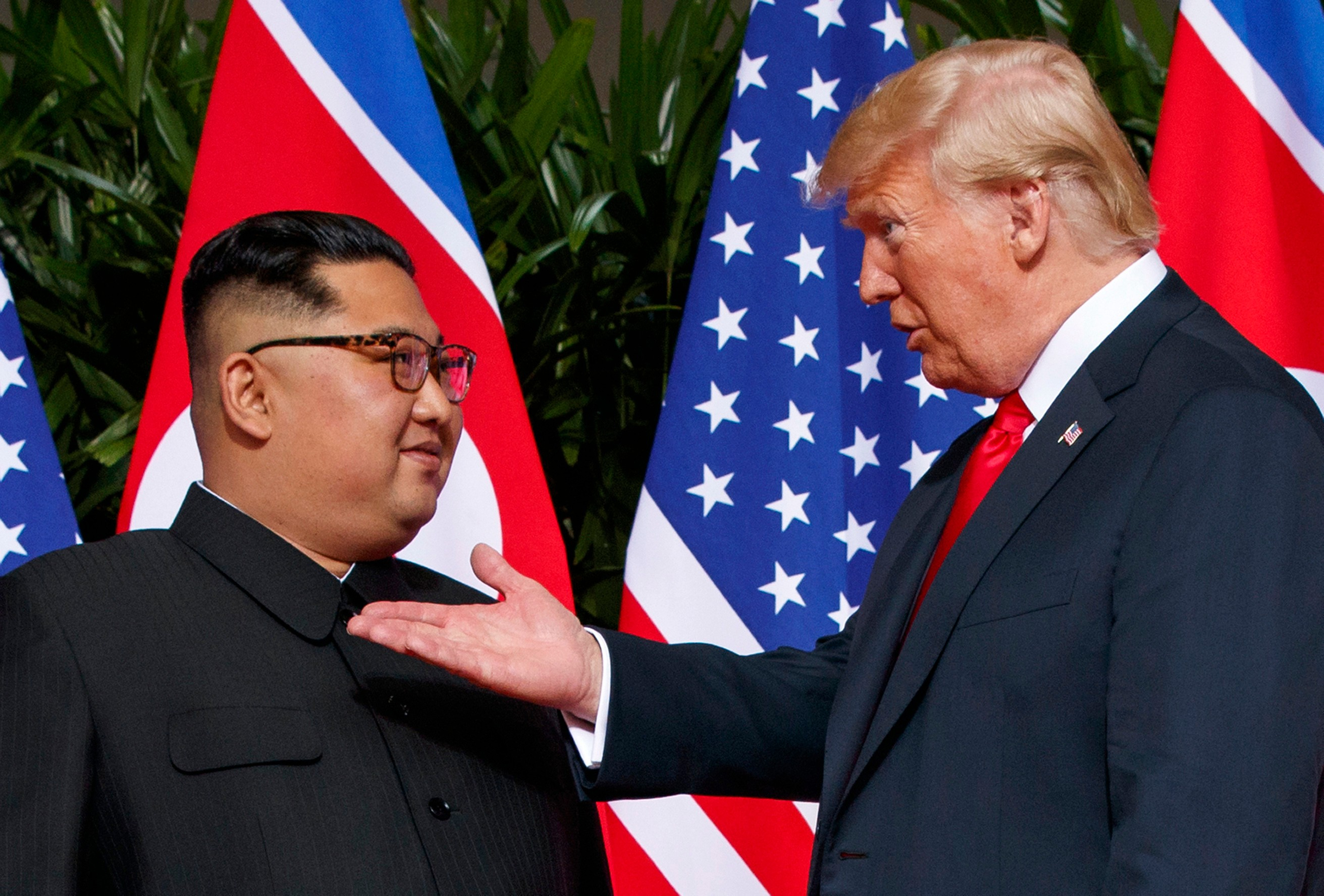
    He’s become world famous for embracing America’s enemies and backstabbing our allies. Yet, Donald Trump outdid himself Sunday — on the eve of joint military exercises with South Korea — when he announced the U.S. was scaling back participation to avoid offending his great friend, the nuclear-armed North Korean dictator Kim Jong Un.

    Perhaps this was just a frantic attempt to shift attention from the quagmire in Iran. Having failed to end Tehran’s nuclear program, the president is offering nuclear talks “without preconditions” to Kim. You will recall the two “fell in love” after Kim wrote Trump “beautiful letters” in 2018, and he responded in kind.

    The military exercises, Trump said, would be “inappropriate and hostile” to a country that “has been unthreatening and respectful” during his presidency.

    Unthreatening? Respectful? Anything but.

    Kim humiliated Trump after meetings in 2018 and 2019 by rejecting nuclear talks and massively increasing his stock of nuclear weapons and missiles. He’s made clear he wants U.S. recognition as a nuclear power, one that threatens South Korea, Japan, the Philippines, as well as U.S. bases and territory.

    Yet, Trump’s selective memory — remembering Kim’s love letters, but ignoring his rebuffs and insults — lays bare a terrible truth about our aging, raging president: his unshakeable belief that his “great” relations with Kim (and with Russia’s Vladimir Putin and China’s Xi Jinping) will ultimately convince them to do his bidding.

    The president’s megalomaniacal belief in his own brilliance blinds him to his repeated failures with all three dictators. He refuses to recognize that far from friendship, Kim, Putin, and Xi are bound together in an axis of adversaries who are helping a fourth member — Iran — stand up to the United States.

    Trump’s superman delusions aid all these adversaries, even as he dismisses allies who could help keep them in check.

    “To treat Kim Jong Un as a partner of some kind is absolutely illogical and counterproductive,” I was told by retired Rear Adm. Mark Montgomery, who served for more than three decades in the U.S. Navy, including in the Pacific.

    Montgomery, who is a recognized expert on cyber and technology policy, is now a senior fellow at the Foundation for Defense of Democracies, where he has coauthored an important book, Axis of Aggressors: Countering the Cooperation of China, Russia, Iran, and North Korea.

    Canceling the South Korea exercises, which Trump said he would have done if it wasn’t too late, decreases U.S. readiness, Montgomery told me, and puts U.S. troops at risk. About 28,500 are based in South Korea.

    “Kim is not going to give up his nuclear weapon nor is he going to make some kind of deal that will win a Nobel Prize,” he said.

    In fact, Montgomery added, Trump’s touted first term tête-à-têtes with Kim “made no impact whatsoever.” Kim increased his nuclear weapons yearly during Trump’s first and second term, and is now estimated to have around 50 to 60 nuclear warheads ready for use.

    Moreover, North Korea is the perfect example of the close ties and fraternal help that the axis powers provide to each other. “Russia has helped North Korea build more accurate intercontinental missiles which can reach much of U.S. territory,” Montgomery said. “This already puts us under threat.”

    Russia has also aided Pyongyang with advanced technology to improve its nuclear and missile programs, which decreases Kim’s willingness to negotiate.

    For his part, the North Korean leader has repaid Russia by sending artillery shells, missiles, and tens of thousands of troops to help Putin attack Ukraine. They also work in Russian drone factories, freeing up Russian soldiers to go to the front.

    Thus, the man Trump so admires contributes daily to Moscow’s slaughter of civilians in hospitals, schools, and apartment buildings in Ukraine.

    Moreover, Putin, the president’s other self-professed buddy, joins axis members in helping the Iranian regime survive and continue to threaten American troops. Iran initially provided Russia with deadly Shahed drones, which Moscow now manufactures and upgrades. Those now-upgraded Iranian drones have killed U.S. troops in Kuwait. Putin also shared intelligence with Tehran that helped the regime target U.S. bases.

    All this hasn’t even touched on the intensified partnership between Moscow and Beijing in which the two primary axis members share technology and intel to jointly undermine U.S. interests.

    “The axis has helped Iran. The conflict with Iran ties up the U.S. military and makes us less ready for China, and the Russian attack on Ukraine distracts Europe. And Trump doesn’t see that the threats from North Korea make us less able to defend Taiwan,” Montgomery said.

    Trump is incapable of connecting the dots. Like a sun god at the center of the world, he looks at each adversary through the lens of their relationship to him. He is blind to the links that bind them together.

    The president thinks his personal diplomacy and that of close friends, like fellow real estate tycoon Steve Witkoff and son-in-law Jared Kushner, are superior to normal diplomatic engagement. No expertise is necessary, Montgomery told me.

    “His first term didn’t prove that to be true. It hasn’t moved any of the four axis powers, and it hasn’t moved the Iranian Revolutionary Guards,” he noted. “It is an integrated task to fight the axis of aggressors. Especially if the president doesn’t recognize who the bad guys are.”

    And, I would add, if those who do recognize the bad guys — like Secretary of State Marco Rubio and many GOP senators — are more interested in pacifying POTUS than in the security of the United States.

  • N.J. towns, school districts owe millions to public worker health plans

    N.J. towns, school districts owe millions to public worker health plans

    Municipalities and school districts owed New Jersey’s public worker health programs nearly $50.5 million in arrearages earlier this year, months before experts recommended steep rate increases for health plans that insure hundreds of thousands of school and government workers.

    The debts owed by nearly 50 local units are part of the mix behind another year of steep premium increases for state-run health plans that have become increasingly unstable in recent years amid what actuaries have called a “death spiral.” Mounting costs drive some towns and school districts to leave the state-run plans for private plans, driving costs yet higher and leaving the state-run plans in distress.

    “The delinquent payments just put salt in the wound, and I recognize they are not alone driving the death spiral. Don’t get me wrong — I’m not suggesting they are. But if there’s death by a thousand papercuts, these are quite a few papercuts,” said Assemblyman Mike Inganamort (R-Morris).

    Thirty-five local governments owed the State Health Benefits Program $28.1 million in April, while 13 school districts owed $22.3 million to their state-run plan, according to a tally of April arrearages drafted by the Treasury and released by Inganamort.

    Though the arrearages are not the main drivers behind trends that could push premiums for current school workers up by as much as 34%, or 17.3% for local government workers, they contribute to rate growth by reducing the amount the state collects in premiums.

    “It all adds up,” said Dudley Burge, the AFL-CIO representative for local government workers on the State Health Benefits Commission, which sets rates and approves contracts for the government worker health plans. “A one or one-and-a-half percent decrease in premium helps, right?”

    It’s unclear how or whether individual local units’ debts have changed since April in most cases, but the overall level of outstanding balances has ticked up a bit since then. More recently, the plans were owed about $58 million, $43 million to the plan for local government workers and $13 million to the plan for school workers, according to the Treasury. Unlike the data provided to Inganamort, it’s unclear how the $58 million cited by the Treasury breaks out across individual towns and school districts.

    Debts are marked delinquent if a town or school district is at least 31 days late on its payments.

    The debts varied wildly by size and age. Paterson, which held the largest outstanding debt, owed the State Health Benefits Program $11.8 million in April, while Hope, a Warren County Township with fewer than 2,000 residents, owed just $4.04.

    Some of the debts are held by local units that left state-run plans years ago or that have dissolved entirely. While state officials said they continued to work with locals to secure payment, it is unclear when those funds would arrive or, in some cases, if they ever would.

    Darryl Isherwood, a spokesperson for the Treasury, said most disenrolled districts eventually pay off their balances. The department had not moved to forgive any debts owed to public worker health plans, Isherwood said.

    “Treasury continues to work with local employers to try to collect all outstanding amounts owed,” he said.

    The department had boosted outreach to governments in arrears, both to collect what’s owed and to help towns and school districts avoid expulsion, Isherwood said.

    In April, disenrolled districts’ debts were significant, accounting for about $26.9 million across school and local government plans.

    In general, those debts were concentrated in a handful of units: Newark (which owed $11.4 million), the Hudson County Schools of Technology ($11.6 million), and the Orange Board of Education ($2.4 million).

    Both Newark and the Orange school board left state plans in 2023. They last made payments on their debt that February and March, respectively. A spokesperson for Newark did not provide comment.

    The Hudson County Schools of Technology last made a payment on its debt last October. They separated from the public plan this February.

    Burdge said Paterson’s debt did not appear on a separate report drafted for health benefit commissioners in March, suggesting its arrearages are new. Diana Nunez, a spokesperson for the city, said its debt was related to the timing of state transitional aid and would soon be resolved for the rest of the year.

    “Because many of the city’s largest costs come before a significant portion of its revenue is received, the city must prioritize certain payments until those funds become available. If transitional aid were distributed evenly over the course of the year, the city would be current on all of its financial obligations at all times,” Nunez said.

    Inganamort said the state should get more aggressive in collecting health benefit debts, including by cutting or withholding state aid to districts that owe money to the state plans.

    “What I think we should consider is any public entity that has a delinquent payment to the state, that should be reflected in any aid that they do get from the state of New Jersey, whether it’s to the municipality or the school district,” he said. “I don’t believe we should continue to give aid to entities that owe the state money.”

    In some cases, debts may be unrecoverable because the unit that owes them has closed.

    That appears to be the case for the Wildwoods Joint Construction Office, which owes government workers’ plan $7,714.45 and, according to Civil Service records, ceased to exist in 2007.

    The School Employees’ Health Benefit Commission is due to vote on rate increases for next year on Aug. 19. The State Health Benefits Commission has tentatively set its rate renewal vote for Aug. 26.

  • unCovering the Birds: Life after Lane Johnson?

    unCovering the Birds: Life after Lane Johnson?

    Lane Johnson rejoined training camp this past week after a multi-day absence, but his return brought with it the announcement that 2026 is “probably” going to be his last NFL season. What does the prospect of the All-Pro’s retirement mean in both the short- and long-term? The Philadelphia Inquirer’s Jeff McLane and Ryan Novozinsky take a look at what the Eagles can expect from Johnson in his 14th year as a pro, and who might be waiting in the wings to replace him.

    00:00 Will this actually be Lane Johnson’s final hurrah, and if it is, who’s next?

    13:42 An overdue discussion about about Saquon Barkley

    26:10 Training camp stock report

    38:12 Jeff’s mailbag: Makai Lemon’s status, and other key injuries

    unCovering the Birds is a production of The Philadelphia Inquirer and KYW Newsradio Original Podcasts. Look for new episodes throughout the season. We’re always looking for mailbag questions! Hit Jeff up on his socials, or drop a question in the comments. Jeff could answer it in a future episode!

  • Food insecurity in N.J. nearly doubled over four years, new report says

    Food insecurity in N.J. nearly doubled over four years, new report says

    Food insecurity nearly doubled in New Jersey since 2020, with some 1.2 million people struggling to regularly afford food here, according to a nonprofit analysis of federal data.

    Statewide, 13% of Garden State residents could not always count on three meals a day in 2024, the latest federal figures available, up from 7.4% in 2020, according to a new analysis of U.S. Department of Agriculture figures released by the nonprofit advocacy group Feeding America. That included nearly 330,000 children, the analysis found.

    Hunterdon County had the least food insecurity in 2024, with just 7.2% of its residents struggling to put food on the table, while Hudson had the highest rate, with 19.1%, Feeding America found.

    Feeding America has surveyed food insecurity since 2011 and produces the annual “Map the Meal Gap” study to help illustrate the scope of the problem. Nationwide, nearly 48 million people — 14.4% of Americans — meet the federal definition of food insecure, meaning the household did not earn enough to always afford food.

    The latest report notes that the U.S. Department of Agriculture has since canceled its collection of food-security data.

    “Feeding America is collaborating with the nationwide network and partners to explore alternative data sources to ensure local updates can continue in 2027 and beyond,” the organization said.

    In New Jersey, close to 900,000 people benefit from federally funded food stamps, which provide cash payments based on their income level to help them afford groceries. These payments, which average $194 a month, have been shown to reduce stress and boost the local economy, prompting some $33 million in direct spending between 2023 and 2025, according to a report commissioned by the state Department of Human Services, which oversees the food stamp program, formally known as the Supplemental Nutrition Assistance Program, or SNAP.

    “SNAP remains a critical lifeline that helps ensure families can meet their basic needs and maintain food security,” Human Services Commissioner Stephen Cha said when the office released that data in June.

    New Jersey’s food stamp program costs $1.9 billion annually, most of it traditionally covered by federal funding. Feeding America said it would have cost another $920 million to eliminate food security in New Jersey in 2024.

    Changes enacted by the Trump administration recently shifted some of the cost of the food stamp program to state governments. Other changes, including new rules requiring certain recipients to prove they are working, in school, or caring for a loved one at least 20 hours a week, could reduce benefits for some people and force at least 47,000 people from the food stamp program entirely, experts warn.

    In 2022, the state launched the New Jersey Office of Food Insecurity, as part of the Department of Agriculture, to help more families access nutrition. New Jersey had the fifth-lowest prevalence of food insecurity nationwide in 2024, according to the office.

  • Violence by extremist Israeli settlers against Palestinian civilians on the West Bank threatens new Mideast flash point

    Violence by extremist Israeli settlers against Palestinian civilians on the West Bank threatens new Mideast flash point

    While the world is focused on the failures of Donald Trump’s warmongering in Iran and “peacemaking” in Gaza, too little attention is being paid to a potential new Mideast flash point sparked by messianic Israeli settlers on the occupied West Bank.

    Escalating settler violence against Palestinians — attacking their villages, farms, and even homes — is unchecked and often assisted by Israeli military forces. It is also chilling because it is fully supported by extremists in Prime Minister Benjamin Netanyahu’s government who have his full backing.

    I have witnessed such settler violence during reporting trips over the years, but it is reaching unprecedented heights (or depths) as Bibi courts right-wing votes before Israeli elections in October.

    Far-right extremists are even encouraging Jewish-Arab violence atop the Temple Mount, the most sacred site in Judaism and the third holiest in Islam, which could ignite anti-Israel religious violence and terrorism in the region.

    The extremists’ goal — as clearly spelled out in a “Decisive Plan” by current Finance Minister Bezalel Smotrich, who also oversees administration of the West Bank — is to present the Palestinians with three choices: legalized apartheid and repression, massive ethnic cleansing (labeled “voluntary emigration”) from the West Bank, or death if Palestinians resist.

    The plan’s goals have extended to Gaza.

    The quibble over language that feeds debate over Israel in the United States — as in whether to call what’s happening in Gaza “genocide” — only distracts from the central problem. When Palestinians are offered nothing — meaning no political future or rights — they have nothing to lose. Unfettered occupation and ethnic cleansing will provoke resistance and terror attacks. It will be untenable in the long run.

    What is more likely to happen is a third uprising on the West Bank, followed by massive bloodshed between Palestinians and settlers. It would guarantee a disastrous end to Trump’s Gaza project and to his Abraham Accords, which were meant to advance peace between Israel and Gulf Arab states. Yet, the president is clearly blind to how quickly his Mideast peace efforts are sliding toward disaster.

    In desperation, 600 retired Israel Defense Forces generals and colonels, as well as retired intelligence and foreign service officers, recently wrote to Trump urging him to press Bibi to halt the West Bank violence.

    I spoke to one of the group’s organizers, Nimrod Novik, a senior adviser to former Prime Minister Shimon Peres, a deeply experienced negotiator and distinguished fellow at the Israel Policy Forum, about his fears for the future if Israel’s policy toward Palestinians doesn’t change.

    “What we will see in the West Bank in the next 90 days [before the Israeli election], you haven’t seen ever,” he warned. “The whole ideological right-wing extremist group, helped by the government, fears this is their last opportunity [to advance Smotrich’s goals]. If the Netanyahu government is ousted, the next government would deal harshly with Jewish terrorism.”

    President Donald Trump listens as Israel’s Prime Minister Benjamin Netanyahu speaks at President Donald Trump’s Mar-a-Lago club, Dec. 29, 2025, in Palm Beach, Fla.Alex Brandon

    I would add a caveat: It isn’t clear how much a coalition of opposition parties, even if they were able to push Bibi out, would change policy toward Palestinians. The two largest opposition parties are against any future Palestinian state alongside Israel. But a new Israeli prime minister would likely try to reassert Israeli army control over army reserve units that support extremist settlers who regularly attack Palestinian civilians. And he might have less patience with radical groups of settler youths who roam unchallenged and even attack Israeli soldiers who try to block their violence.

    Novik had a stark warning about what could happen if the violent settlers were allowed to continue their rampage. In certain security circles, he told me, “They think the settlers want to provoke a security crisis, and the West Bank might be the best opportunity.” He believes Jewish settler terrorism will produce revenge-seeking by Palestinians who are defending their families. Israeli security agencies, he added, are worried about a possible effort to provoke large-scale violence on the Temple Mount.

    I still recall how a 1982 plot by Jewish religious terrorists to blow up the third holiest mosque in Islam atop the Temple Mount was discovered only at the last minute. “Even if they don’t bomb the mosque,” Novik pointed out, violence could still explode. Only recently, “one thousand Israelis in one day violated the status quo by praying on the mount.”

    The status quo between Israel and Arab states, in place since the 1967 war, prohibits such praying, which is also banned by Israel’s rabbinate for religious reasons. Palestinians fear it indicates an imminent takeover of the holy site by Israeli Jews.

    Unless a new Israeli government reestablishes central military control over settler military units and armed extremist youths, unless it stops these youths from destroying Palestinian villages and homes, there is bound to be violence.

    And unless a newly elected leadership permits the rebuilding of the West Bank’s Palestinian Authority, the body which technically governed Palestinians, there is no authority to counter Hamas. Bibi did everything he could to destroy and bankrupt the Palestinian Authority. What would happen with a new government is unclear.

    What is clear is that Bibi’s tolerance of Jewish terror is leading to a clash in the West Bank, and is aimed at driving the population of Gaza out into the Sinai Desert by keeping two million Palestinians underfed, without schools or medicine, and living in tents.

    Even liberal Israelis are still traumatized by Hamas’ Oct. 7, 2023, slaughter, and a new government will still tilt rightward. But a recent Israeli survey by the Israeli Democracy Institute shows that the largest share of respondents — among left, center, and even center-right — said authorities treat violence by Jews against Palestinians in the West Bank too leniently, with perpetrators rarely arrested and hardly ever punished.

    Whether or not that poll hints at a particular voter response is also unclear.

    However, Trump has a chance to stop his being labeled a complete loser in the Mideast by backing the opposition to Bibi, which may still carry weight with many Israeli voters. Yet no one should rely on Trump’s awakening to reality.

    It will be up to Israeli voters to decide whether or not they accept Smotrich’s vision — and the consequences that are bound to follow if they do.

  • Gov. Sherrill targets ‘big tech’ with new law aimed at kids’ social media use

    Gov. Sherrill targets ‘big tech’ with new law aimed at kids’ social media use

    Social media platforms will face a bevy of new restrictions in New Jersey that limit their use of children’s data, restrict algorithmic content recommendations to minors, and block notifications during school hours, among a range of others.

    The new restrictions, which are set to take effect in September 2027, flow from legislation Gov. Mikie Sherrill signed Tuesday and are New Jersey’s bid to regulate tech giants the governor said federal policymakers had largely left to their own devices.

    “Big tech isn’t just the big tobacco of our era. They are worse. They designed platforms that highjacked our kids’ attention spans,” Sherrill said at a bill signing ceremony in Jersey City. “The typical American teen spends about 35 hours a week, almost a full-time job, on platforms like TikTok, Instagram, and YouTube.”

    The restrictions in the New Jersey Kids Code Act would require privacy settings on minors’ social media accounts be set to their strictest mode and would limit platforms’ ability to request minors change those settings.

    It would restrict platforms’ use of children’s data to the purposes for which it was collected and bar algorithmic content recommendations unless a minor specifically requests more or less content from a given account or of a specific type.

    The restrictions mandate that social media platforms limit the discoverability of children’s accounts, both to adults on their own sites and through search engines.

    And the law will bar social media platforms from sending notifications to minors between 8 a.m. and 4 p.m. on school days between Labor Day and Memorial Day and block notifications between 10 p.m. and 6 a.m. at all times of the year.

    Assemblywoman Andrea Katz was a chief sponsor on the bill to restrict how social media platforms deliver content to children.Anne-Marie Caruso / New Jersey Monitor

    “Half of parents say their children’s mental health has suffered over the past year because of social media,” said bill sponsor Assemblywoman Andrea Katz (D-Burlington). “Nearly half of teenagers say they lose sleep every single night because they feel stuck on these platforms.”

    The law permits both parents and the New Jersey attorney general to sue over violations. If they’re victorious, courts could award $5,000 per violation or treble damages — an amount equal to three times the harm suffered — whichever is greater, plus attorney fees.

    They can also order punitive damages for reckless or knowing violations and injunctions to bar offending conduct.

    Lawmakers on Tuesday described a social media landscape that had sold children’s mental health for engagement and shifted threats that once appeared in physical spaces to digital ones.

    “When I was a kid, our parents worried about strangers and who’s talking to us at the park or at the mall,” said bill sponsor Sen. Raj Mukherji (D-Hudson). “Today, we have to worry about who’s DMing them, what algorithms are pushing into our kids’ feeds, and what sensitive information is being collected, used, even sold before they’re old enough to understand what they’re giving away.”

    Meta, which operates Facebook, Instagram, and other social media platforms, did not immediately respond to a request for comment.

    Other bills Sherrill signed Tuesday order the creation of a social media research center at one of the state’s public four-year universities and direct it to begin studying the efficacy of social media warning labels and disclaimers in curbing social media addiction among children.

    The state’s higher education office began accepting proposals for the center Tuesday and aims to open it sometime this fall with a $500,000 appropriation from the state’s budget.

  • Former Eagles running back granted early release from prison to see dying daughter

    Former Eagles running back granted early release from prison to see dying daughter

    Wendell Smallwood Jr. will be by his daughter’s side in her final days after being granted early release from prison.

    Gloucester County Superior Court Judge Renard Scott approved a motion to withdraw Smallwood’s guilty plea from last year, on August 7, in order to see his dying daughter, The News Journal reported on Monday.

    Mila, Smallwood’s eight-year-old daughter, was diagnosed with diffuse anaplastic Wilms tumor, an aggressive and rare childhood kidney cancer, in 2026. After unsuccessful chemotherapy treatments, she is in palliative care and is expected to live for weeks at most, according to the report.

    Smallwood, a former running back with the Eagles, Commanders and Steelers, was sentenced to 18 months in prison last September for a COVID-19-related fraud scheme. He pleaded guilty in December 2024 to charges of felony wire fraud, conspiracy and tax fraud tied to economic relief programs.

    In March, he pleaded guilty to second-degree unlawful possession of an assault firearm for possessing an AR-15 rifle in New Jersey. He was sentenced to three years in state prison, concurrent to his federal sentence.

    At the time, New Jersey banned the ownership of assault weapons, but a July ruling from the 3rd Circuit Court of Appeals ruled that New Jersey’s ban on assault weapons was unconstitutional. This provided Smallwood legal grounds to withdraw his guilty plea.

    Smallwood’s emergency hearing on August 7 ruled that Mila’s severe illness was a notable reason for granting Smallwood’s motion, which could have seen him released as early as Monday.

  • I-95 on-ramp in Northeast Philly is closing for good next week

    I-95 on-ramp in Northeast Philly is closing for good next week

    An I-95 ramp in Northeast Philly is set to close for good next week.

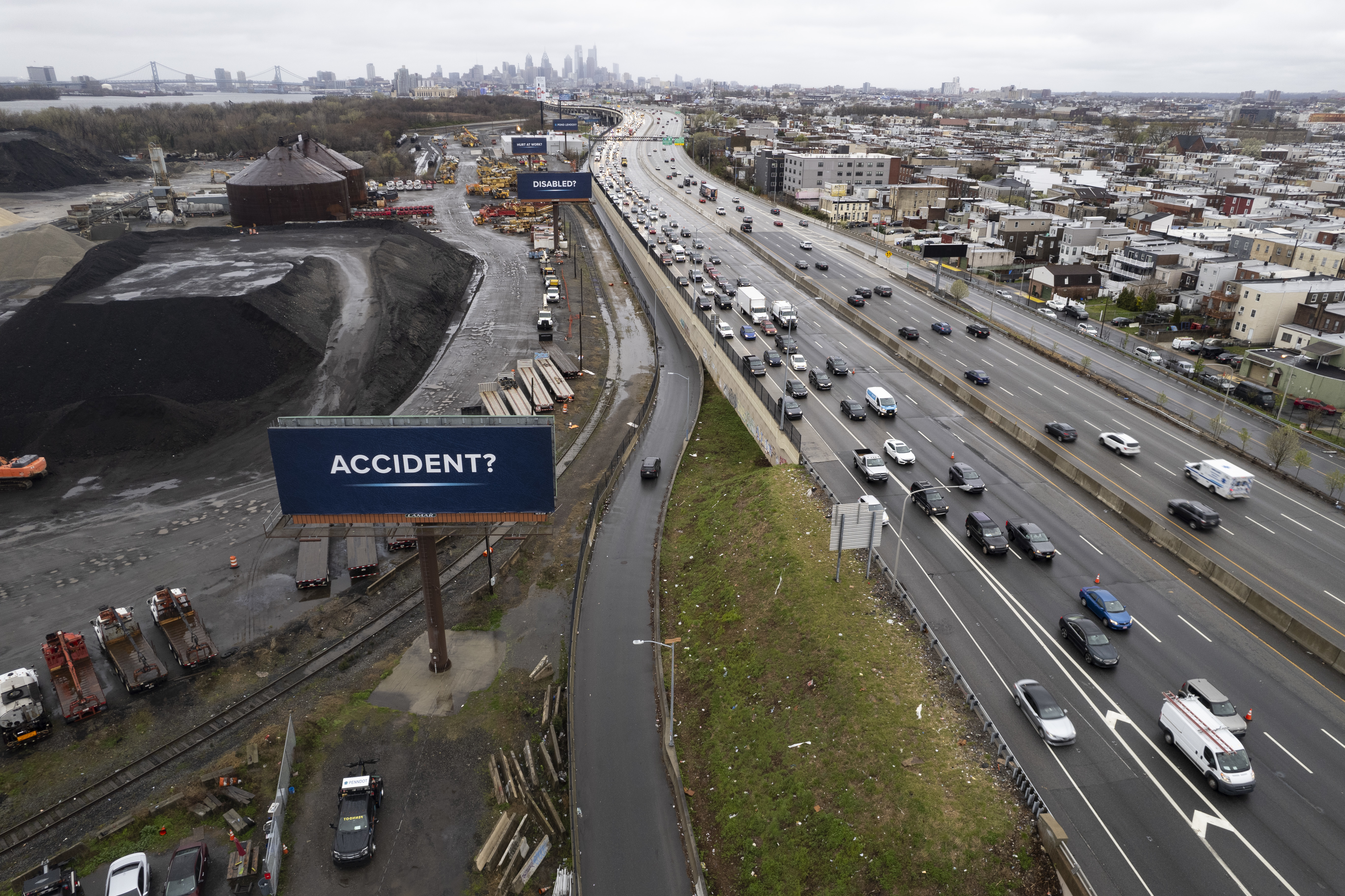
    The ramp from Bridge Street to I-95 North is slated to shut down at 8 p.m. on Friday, Aug. 21, the Pennsylvania Department of Transportation announced Monday.

    The closure will make way for construction of a new I-95 entrance from Tacony Street and the Delaware Avenue extension, which the agency expects to open in late 2027.

    Until then, drivers will be detoured to Tacony Street and State Road/New State Road, where they can get on I-95 North via the Milnor Street ramp.

    The rerouting is part of a larger I-95 rehabilitation, which includes nearly $268 million of Northeast Philly improvements, including the reconstruction of the viaduct over Bridge and Tacony Streets.

    In addition to the ramp closure, I-95 North drivers will experience a traffic shift from 8 p.m. Aug. 21 to 5 a.m. Aug 22. They will be temporarily rerouted to southbound lanes as northbound reconstruction begins at the Bridge Street Interchange. PennDot expects to complete that project in 2028.

    The agency advises drivers in the area to allow for extra time, as backups and delays are expected due to the ramp closure.

  • unCovering the Birds: Offense vs. Defense: Who’s Ahead?

    unCovering the Birds: Offense vs. Defense: Who’s Ahead?

    The Eagles are grinding their way through the second week of training camp. Some parts of the team have looked good, others remain very much a work in progress. The Philadelphia Inquirer’s Jeff McLane and Jeff Neiburg assess quarterback Jalen Hurts’ play, how some of his targets are faring, and why, regardless of how the offense is coming together, the defense could be elite enough to help the Eagles contend for another title.

    00:00 Jalen Hurts’ so-so start to training camp in Sean Mannion’s new offense

    14:51 The importance of and questions about the offensive line

    26:20 Why this defense could be good enough to position the Eagles for Super Bowl contention

    unCovering the Birds is a production of The Philadelphia Inquirer and KYW Newsradio Original Podcasts. Look for new episodes throughout the season.

    We’re always looking for mailbag questions! Hit Jeff up on his socials, or drop a question in the comments. Jeff could answer it in a future episode!