The regular season is almost here! All the preseason talk has been about Jalen Hurts and new offensive coordinator Sean Mannion. But there’s somebody else who will have a big say in how high the Eagles fly. The Philadelphia Inquirer’s Jeff McLane explains why this year, in the absence of traded star A.J. Brown, DeVonta Smith has to take the next step, while also taking charge of the Eagles’ wide receivers group. Plus, Jeff dips into the mailbag for listener questions about Jalen Hurts and some key roster spots.
00:00 Is DeVonta Smith ready to fill A.J. Brown’s shoes?
17:00 Yes, the Jalen Hurts scrutiny is justified
19:07 Biggest candidates to disappoint, surprise this season
unCovering the Birds is a production of The Philadelphia Inquirer and KYW Newsradio Original Podcasts. Look for new episodes throughout the season.
We’re always looking for mailbag questions! Hit Jeff up on his socials, or drop a question in the comments. Jeff could answer it in a future episode!
Fetterman’s disdain for the job — which comes with a $174,000 annual salary, free healthcare, and months off at taxpayer expense — has been well documented. He whined about missing a family beach trip during a lengthy debate last year over Donald Trump’s costly and harmful One Big Beautiful Bill.
Several major media outlets have chronicled the senator’s dysfunction. In May 2025, New York Magazine detailed Fetterman’s erratic behavior as staffers expressed concerns about his mental health since suffering a stroke. The New York Times quoted staffers who feared his mood swings and were warned not to get in the car if he is driving.
The Washington Post reported on Fetterman’s clashes with Democratic colleagues and increased isolation, while Politico detailed efforts by Republicans to get Fetterman to switch parties.
The Inquirer disclosed last year how Fetterman lashed out at representatives from the teachers’ union, and cited a half dozen former staffers who said he skipped meetings and spent hours alone in his office scrolling on his phone.
“It’s pretty impossible to overstate how disengaged he is,” a departed staffer said.
Last week, a devastating story in the Wall Street Journal underscored the senator’s disregard for voters and his job in a story headlined: “Behind Closed Doors, John Fetterman Shows Little Interest in the Work of a Senator.”
The story included text messages between Fetterman and staffers that showed him dismissing executives from Children’s Hospital of Philadelphia (CHOP) who wanted to discuss Medicaid cuts and changes to vaccine policy.
“Why do I have to keep having to meet with chop,” Fetterman texted an aide.
“Because they’re worried about Medicaid cuts,” the aide wrote.
Fetterman responded, “Well, I’m not,” before adding, “I’m convinced they just want free trips to DC.”
Fetterman later told CNN that comment was a “dumb joke, and for that, I sincerely apologize.”
In another exchange, Fetterman nixed a plan to attend a funeral for three police officers killed in the line of duty in York County, where he grew up. Apparently, Fetterman was put off by the time commitment.
“3 hours??” he wrote, before adding that attending the services “may be a nonstarter.” The senator did not go, but said he sent flowers and met with the families later.
The Journal reported that Fetterman also stiffed three disabled veterans who traveled to Washington to meet with him, alleging he was ill, only to appear later that day on Fox News to talk about Israel and the war in Iran.
Apparently, teachers, healthcare officials, police, and veterans take a backseat while Fox News and the Israel-Hamas war command Fetterman’s full attention. The senator has appeared on the conservative news outlet roughly 60 times this year and has gone on two junkets to Israel since 2024. (He even made a cameo at the GOP convention in Dallas Wednesday night to praise Trump and boost Republicans before the midterms.)
The Journal reported that Fetterman told aides he wanted to introduce a resolution to force lawmakers to vote on whether the war in Gaza constituted a genocide. But instead, Israel’s ambassador to the U.S., Yechiel Leiter, suggested he write an op-ed explaining his support for Israel, while many Democrats have turned against the country because of killings and destruction in Gaza.
Leiter even supplied the talking points. But Fetterman’s aides did not tell him about the talking points out of fear that the op-ed would violate the Foreign Agents Registration Act.
Fetterman did not publish the op-ed, but the incident reinforces the perspective of critics who argue that his tenure has been marked by complacency and carelessness: He was either unaware of the potential ramifications of penning the essay, or he chose to ignore them — both explanations should concern Pennsylvanians.
Like the previous reports, Fetterman called the Journal story a “hit piece.” The sad truth is the reports from his own staffers paint a picture of a lazy, unengaged, and unstable senator who is not up to the job.
Last year, this Editorial Board said Fetterman should either do his job effectivelyor step away.
In the private sector, most workers who fail to perform their basic job duties get fired. Unless Fetterman resigns, voters will get their chance to oust him in 2028.
ICE agents arrested at least 49 immigrant construction workers in two separate operations carried out in the last week in the central Pennsylvania community of Danville, according to immigration advocates.
All remain in detention, they said.
The arrests targeted workers who were leaving the construction site at the Geisinger Medical Center, where a patient tower is being built.
At least 41 people were arrested on Sept. 2 as they left the property around 5 p.m., and eight more were arrested on Tuesday, beginning about 6 a.m., according to Centre County Rapid Response Network, an immigrant-assistance group, and the Pennsylvania Immigration Coalition. The men are nationals from Nicaragua, El Salvador, Honduras, and other countries.
U.S. Immigration and Customs Enforcement officials could not immediately be reached for comment, nor could those with the Department of Homeland Security.
The Pennsylvania Immigration Coalition said the arrests represent the largest workplace raid in the state to date.
In a statement, the Geisinger Medical Center said it was aware of law enforcement activity on Sept. 2 that involved workers from its tower construction project. The activity did not occur on Geisinger property, it said.
“As with any large construction project, we hire a construction manager to oversee the project,” the statement said. “It is their responsibility to make sure all workers on the project meet all federal and state work eligibility requirements.”
Immigration advocates said that ICE agents made the arrests with the assistance of Danville police, that workers driving cars were stopped as they left, and that police followed other workers from the edges of Geisinger property to their homes.
Workers leaving Danville for other parts of the state encountered checkpoints near highway entrances, the coalition said.
The immigration coalition said eyewitnesses to the Sept. 2 operation reported that ICE was using drones, which increased an atmosphere of militarization.
“We don’t need our local police enforcing federal law. It is not their job and has proven time and again to harm public safety,” said Jasmine Rivera, executive director of the Pennsylvania Immigration Coalition. “ICE and billionaires profiting off federal contracts are making billions of dollars from kidnapping our people. They are terrorizing families and attacking our neighbors who are literally building our communities. We don’t need $240 billion of our tax dollars to go to ICE and [U.S. Customs and Border Protection]; we need that money to make education, healthcare, and housing affordable.”
Correction: An earlier version identified the construction site by the name of the project designer, which has been deleted from the story. EwingCole does not manage the site and is not responsible for its operations nor the employment of workers there.
Where LeBron James would choose to play the final years of his storied career was a fixture on prediction markets this summer. Now, James could benefit from the boom of those platforms.
On Saturday, James shared a short video on social media announcing a partnership with the prediction platform Polymarket. The Sixer then posted a longer commercial-ready version of the video Tuesday, in which James visits Polymarket’s fictional headquarters and its “sports” floor.
In his tour around the office, Eli Manning, Derek Jeter, Spike Lee, Sue Bird, Emily Ratajkowski, John Leguizamo, and other athletes and celebrities make cameospromoting the platform ahead of football season.
It is unclear what the nature of James’ partnership with Polymarket is, or if the partnership extends beyond this commercial. Polymarket did not respond to questions about James’ partnership.
Step inside Polymarket HQ.
Somebody get the ice bath ready for @EliManning after that tackle. 🧊🤣🏈
James’ partnership raises ethical questions about whether an active athlete should be promoting and benefiting from gambling platforms, and particularly prediction markets, where inside information and influence could sway bets or determine their outcomes.
Polymarket and other prediction markets typically have rules prohibiting insider trading and are regulated by the Commodity Futures Trading Commission. The NBA has no policy against its athletes partnering with prediction markets, and is likely to join other leagues by announcing its own official prediction market partnerships before the start of the forthcoming season, as reported by Front Office Sports.
Prediction markets vs. traditional gambling
Polymarket and other prediction markets argue they are distinct from traditional sports gambling platforms because there is no “house” that sets odds and stands opposite gamblers. Instead, bets are agreements between individuals and the market sets the odds. But in practice, prediction markets function similarly to sportsbooks, with even more opportunities to wager money.
Prediction markets offer opportunities that go beyond traditional bets on wins and stats, like which teams won’t win the Super Bowl, which team a free agent player might sign with, or whether a quarterback will average a certain number of fantasy football points over the season. The bets are phrased as binary, yes-or-no outcomes.
Prediction market offerings extend beyond sports, bringing even more ethical questions — at any moment someone can bet on whether a public figure will say a particular word during a speech, when traffic in the Strait of Hormuz will return to normal levels, or the number of confirmed measles cases in the United States in 2026. Last month, several Democratic senators wrote a letter to the Commodity Futures Trading Commission demanding it stop allowing bets on California wildfires.
“Prediction markets have been enabled to expand rapidly, increasingly inviting speculation on war, political violence, disasters, and public emergencies that raise ethical and public policy concerns. These markets risk creating perverse incentives, undermining public trust and commodifying human suffering,” they wrote.
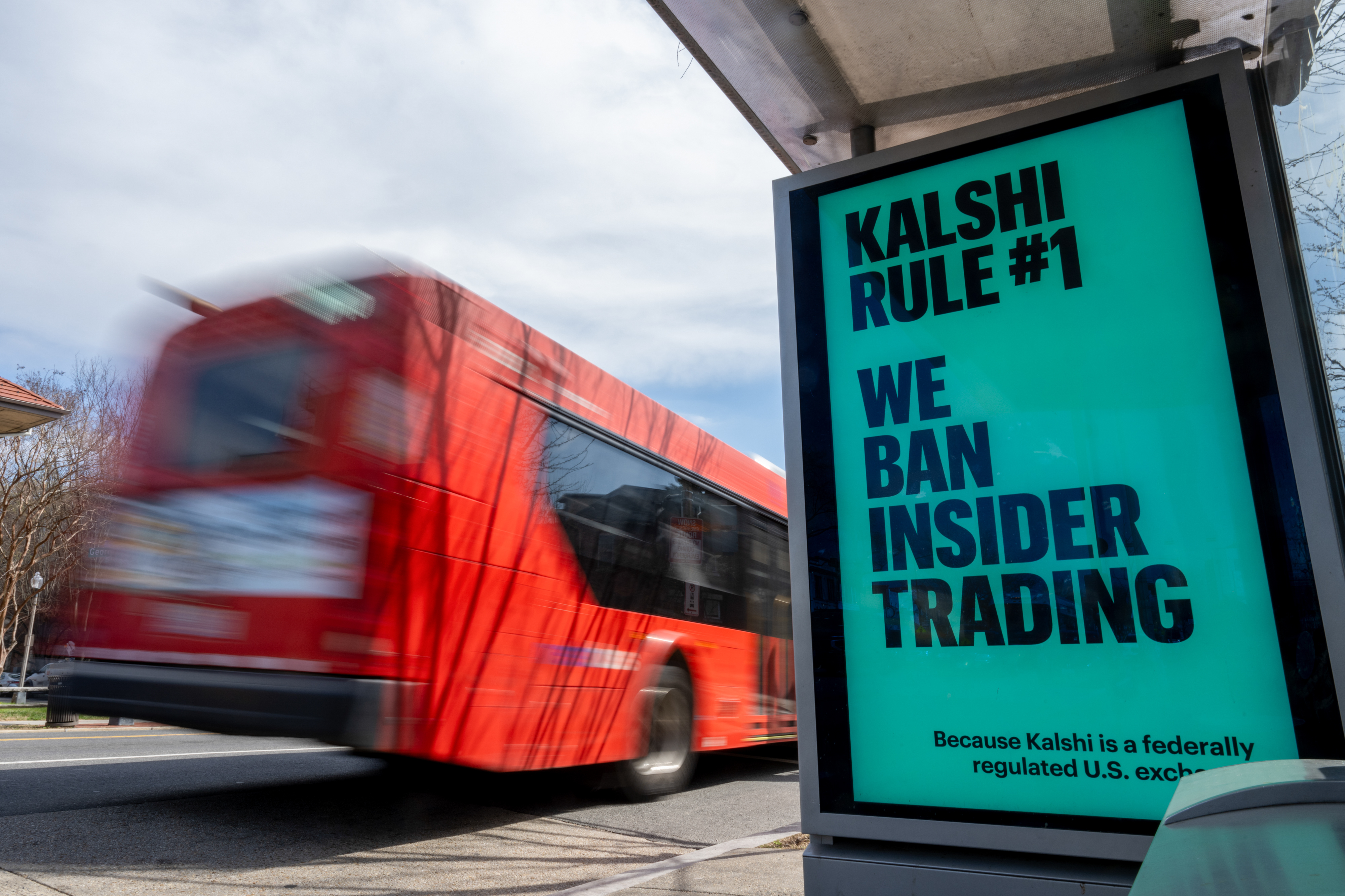
A Kalshi advertisement at a bus stop in Washington, D.C. Daniel Heuer
A U.S. Special Forces soldier was arrested in April after authorities said he made more than $400,000 using insider information to place Polymarket bets on the military’s raid capturing Venezuela’s president, Nicolás Maduro.
Athletes are typically prohibited from placing traditional bets on their own leagues, but the rules on prediction markets are less defined.A few months ago, the NBA, MLB, and their players unions sent a letter to the Commodity Futures Trading Commission asking it to bar athletes and league employees from betting on the NBA and MLB in prediction markets.
The gray areas of legality and ethics around sports gambling are how Phillies All-Star Bryce Harper became the center of controversy this summer, after The Inquirer reported that Harper had sent a personalized video on behalf of the sports betting platform FanDuel to a man who had become addicted to gambling.
Harper later said he did not have a partnership with FanDuel, and was not aware what the video was being used for or that it was going to someone with a gambling addiction.
More partnerships on the way?
Despite the ethical issues, partnerships between athletes and prediction markets appear to be growing. James seems to be the only active athlete partnered with Polymarket, but other major athletes — including soccer star Lionel Messi —have deals with a competitor, Kalshi, or have invested in the platform.
Elsewhere in the NBA, Giannis Antetokounmpo announced he had become a Kalshi shareholder in February, just after the NBA trade deadline, when Antetokounmpo had been the subject of numerous trade rumors attracting bets on prediction platforms. On deadline day, Antetokounmpo tweeted a clip from The Wolf of Wall Street to happily announce he was not leaving the Milwaukee Bucks, but over the summer, he successfully pushed for a trade to the Miami Heat.
Bettors on Kalshi reportedly traded more than $23 million over Antetokounmpo’s future during the deadline betting window.
“One of the things in terms of the ethical issues [of the partnership] is the timing,” Melinda Roth, a professor of business, finance, and sports law at Washington and Lee University, told Fortune magazine of Antetokounmpo’s investment. “The timing really puts a spotlight on how prediction markets work, who is allowed to buy contracts, and who has inside information.”
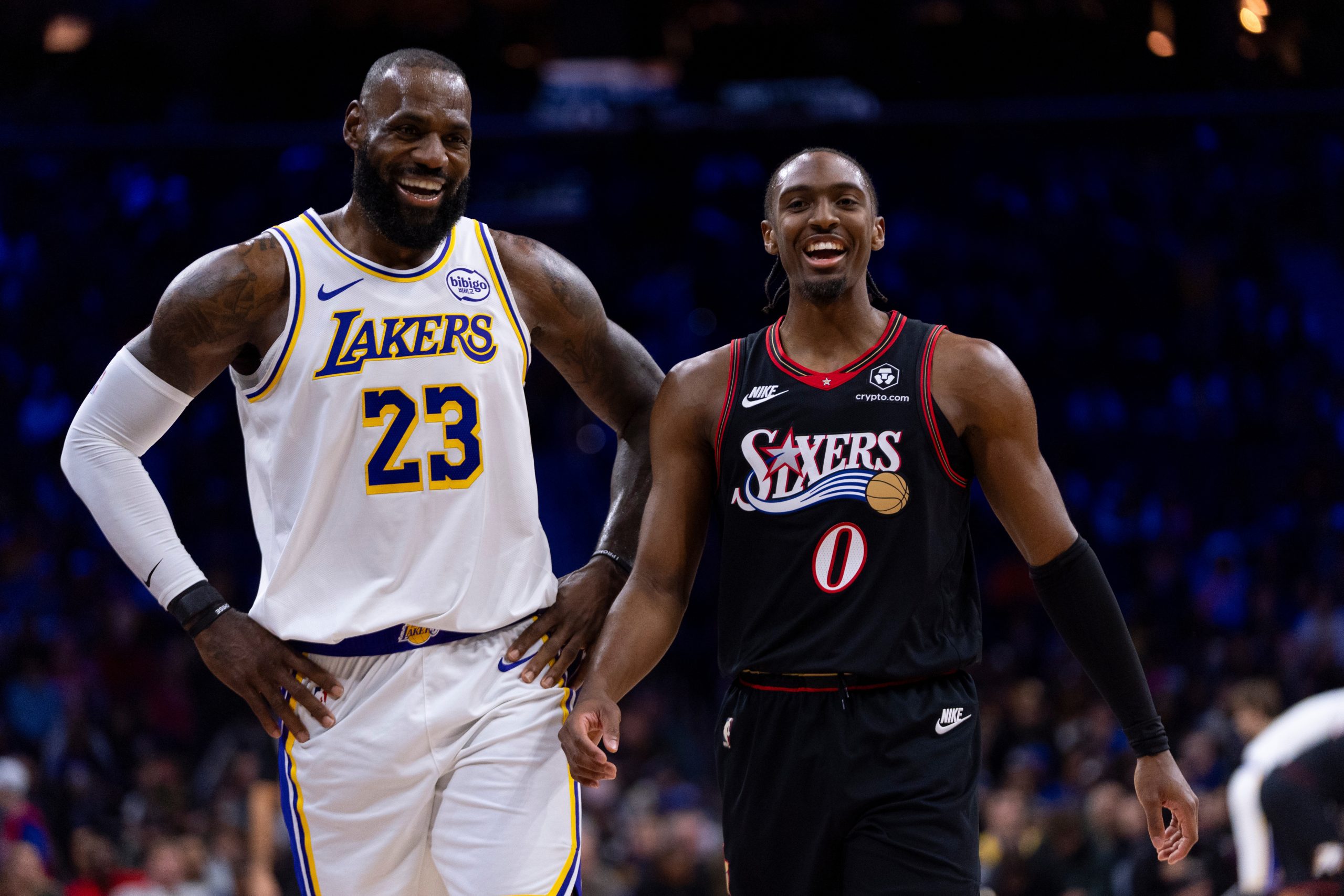
Los Angeles Lakers’ LeBron James, left, shares a laugh with Philadelphia 76ers’ Tyrese Maxey, right, during an NBA basketball game, Sunday, Dec. 7, 2025, in Philadelphia.Chris Szagola / AP
Yet the future of prediction markets is somewhat unclear. They have the backing of President Donald Trump’s administration. Meanwhile, some states are attempting to wrest regulatory control back from the federal government, and the issue may soon come before the U.S. Supreme Court.
But the direct ties between prediction markets with athletes are not necessarily inevitable — the NFL and PGA Tour prohibit their players from partnering with prediction markets.
Only a few years ago, James took a much different stance on sports gambling, sayingthe practice was taking the integrity out of sports.
“It’s weird that some of our regular fans that love the game kind of only care about a parlay now. … It’s kind of taken some of the integrity out of the game because people are kind of really only caring about the betting,” he told the Los Angeles Times in 2023.
A year later, James signed an endorsement deal with the sports betting platform DraftKings, promoting wagers during football season in a series of commercials alongside Kevin Hart.
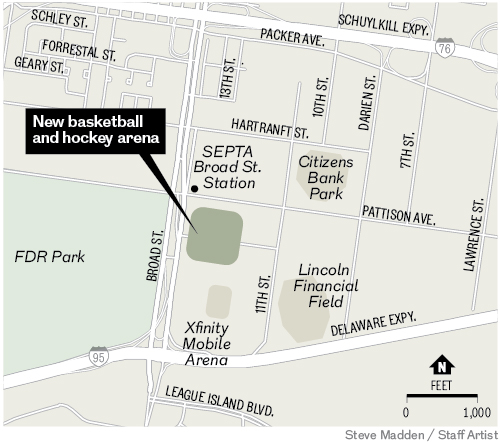
A new home for the 76ers and Flyers is scheduled to open in 2030, and now we have our first glimpse of what the new arena might look like.
The teams released the first renderings of the privately funded arena Tuesday that will be built at the former site of the Spectrum, next to where Xfinity Mobile Arena sits.
The new design features inspiration from the Spectrum, the former home of both teams from 1967 to 1996. The renderings show the facade will be composed of three stacked and cantilevered “bands,” a nod to the Spectrum’s exterior.
The Spectrum was home of the Sixers and Flyers until 1996. It was demolished in 2010.
“To build our future where Ed Snider and the Spectrum made history makes this project truly special,” Comcast chairman Brian Roberts said in a statement.
A plaza outside the arena will feature over a half-acre of outdoor space. The renderings show an expansive footprint that includes food and beverage pavilions, along with a giant screen outside the stadium.
“The first-look renderings reflect fan feedback and stakeholder input on the arena experience, public spaces and amenities,” the teams said in a statement. “Fan surveys, focus groups, community engagement, and public review will continue throughout the design and approval process.”
Stateside Live!, previously known as Xfinity! Live, sits near the new stadium site on 11th Street and just underwent a $15 million expansion. It is expected to remain open.
The location of the yet-to-be-named new arena. Steve Madden
In addition to the Sixers and Flyers, the arena will also be home to the yet-to-be named WNBA team slated to begin playing in Philly in 2030.
The stadium will be co-owned by Comcast and Harris Blitzer Sports & Entertainment, which owns the Sixers. Comcast owns the naming rights of the new arena but hasn’t announced a name. It’s unclear how much the new arena will cost, but it will be the largest fully privately funded project in the city’s history, according to a Comcast spokesperson.
“Philly fans deserve the best arena in the world, and we are excited to partner with Comcast to deliver just that,” 76ers managing partner Josh Harris said in a statement.
The new arena is scheduled to open in 2030. Courtesy of the Philadelphia 76ers and FlyersHow the new arena might look for Flyers fans arriving for a game. Courtesy of the Philadelphia 76ers and Flyers
The Sixers’ original plan was to build a new $1.3 billion stadium on Market Street in Center City, a contentious idea backed by Mayor Cherelle L. Parker that secured legislative approval in 2024.
Weeks later, the project was canceled after the Sixers struck a deal with Comcast to build a new arena in South Philly.
The new arena still needs regulatory and legislative approval before the start of construction, which is scheduled to begin in the first half of 2027.
Parker’s office did not respond to a request for comment, but the city shared the renderings on social media along with the comment, “Get excited Philly fans!”
Ryan Boyer, the head of the Philadelphia Building and Construction Trades Council praised the project’s job creations. “Beyond the construction jobs themselves, this is the kind of investment that opens doors for new contractors, suppliers, and small businesses throughout the city of Philadelphia.”
That announcement came before the Sixers abandoned their Center City stadium idea and decided to remain in South Philly. For now, the focus is on the new arena.
“We see [this location] as a unique opportunity to connect the retail affiliated with the arena, to the retail that we have in Stateside Live! and the expansion of that effort,” Comcast Spectacor chairman and CEO Dan Hilferty told The Inquirer in April.
Beyond the new retail, restaurant, and outdoor activation space included in the new arena’s plan, there is an opportunity for the four teams (five once the WNBA comes to town) to work together to further develop the sports complex, according to Phillies CEO and managing partner John Middleton.
“Having four major professional sports teams together in one destination creates an energy and sense of community that is unmatched anywhere in the country,” Middleton said, adding the new arena “represents an exciting next chapter for South Philadelphia and creates important opportunities” to realize the potential of the sports comlex space.
The arena is expected to feature an outdoor plaza with food pavillions. Courtesy of the Philadelphia 76ers and FlyersThe new arena will sit in the South Philly sports complex at the former site of The Spectrum. Courtesy of the Philadelphia 76ers and FlyersA renderings also show a giant screen outside the arena. Courtesy of the Philadelphia 76ers and Flyers
Over the summer, Comcast and Harris Blitzer Sports & Entertainment upgraded and donated storefronts for use as pop-up retail stores and other temporary activations to take advantage of the city’s busy calendar.
Last month, the companies extended the leases of four pop-up retail stores along Market Street, and both continue to work with the mayor’s Market East Advisory Committee on a master plan for the corridor, according to a Comcast spokesperson.
Cathy Engelbert was the Jalen Hurts of the WNBA, the subject of the same kind of questions about whether a prominent figure on a speeding ship was the captain or a passenger — except with her, the answers were more definitive and damning.
For these last few years, for the period in which the league has made its greatest gains in popularity, relevance, and quality of play, she was at best a nonfactor and at worst an impediment. The people behind those gains were the players, one in particular, and with the announcement Friday that Engelbert, a Collingswood native, was “retiring,” the WNBA has a better chance of accelerating its growth and calming the churning waters around it.
No one looks or will look at Engelbert’s tenure atop the WNBA and credit her for the league’s progress, and no one should. The rise of women’s sports in America, particularly of women’s basketball, already was a wind at her back when she became commissioner in 2019.
Title IX had been doing its good work on behalf of girls and young women for nearly two generations by then. Because the WNBA, founded in 1996, rarely has players to enter the league after leaving college early, women’s college basketball has been a fertile garden of talent and star power, feeding the league long before Engelbert oversaw it. UConn, Tennessee, Notre Dame, Baylor: These programs and others like them pumped out stars who had spent four years in school setting records and competing in Final Fours, whose names and games had become familiar before they’d ever signed their first professional contracts.
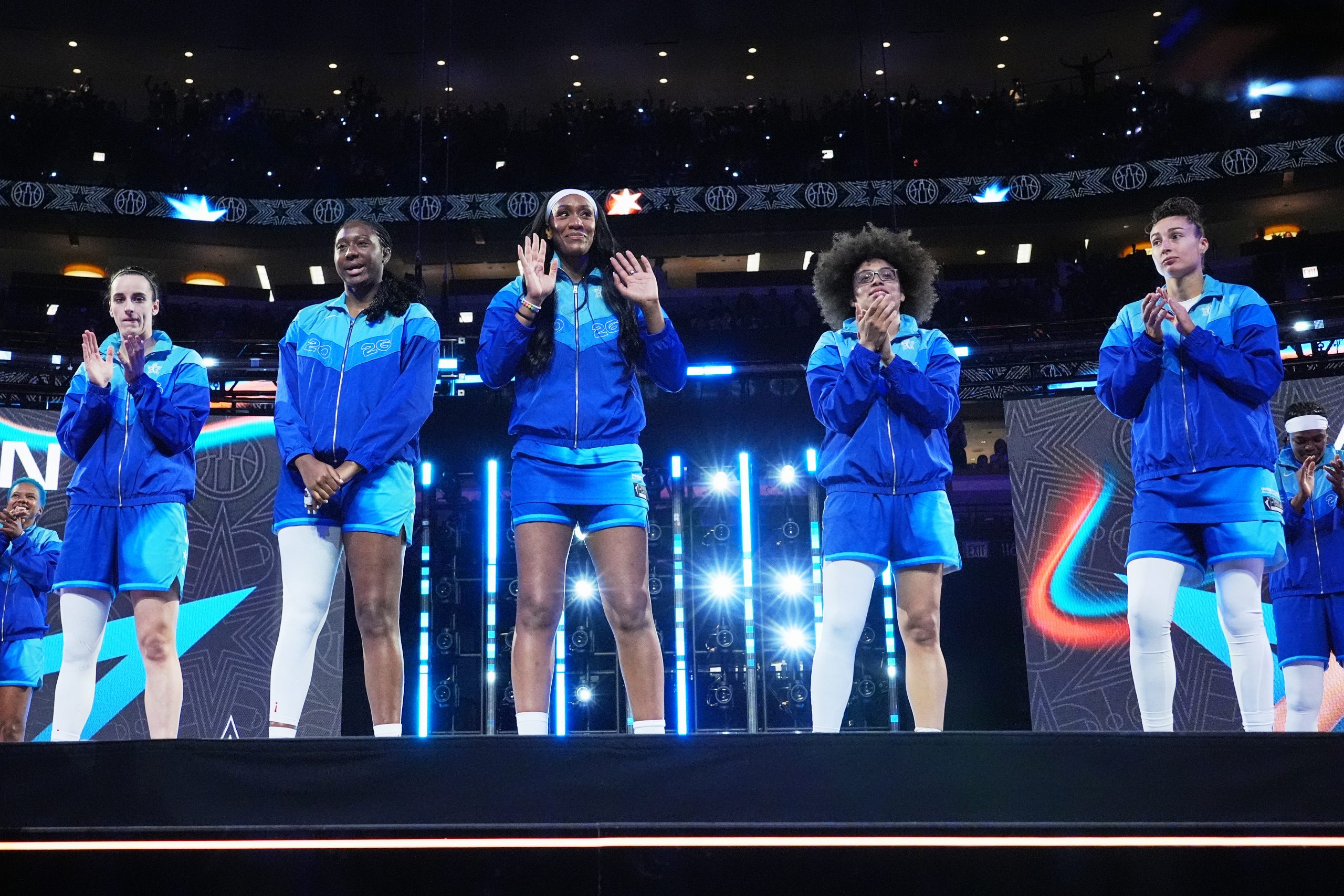
The WNBA’s biggest stars include Caitlin Clark (left), Aliyah Boston, A’Ja Wilson, Olivia Miles, and Jessica Shepard.Nam Y. Huh
That tide turned into a wave that has crested with Caitlin Clark, with the woman who can lay claim to the title of the most popular and important female athlete in the United States. The NBA lifted off in the early 1980s — once talent poured in after the league merged with the ABA, once Magic Johnson and Larry Bird brought their rivalry to the Lakers and the Celtics — and the WNBA should be on its way to telling a similar story. It has Clark. It has A’ja Wilson and Paige Bueckers and Olivia Miles and Breanna Stewart. It has a depth and breadth of talent unmatched in its history. The games should matter more than they ever have. The games should matter most.
Except … they don’t. Who wants to hear that story now? Out of Engelbert’s lack of leadership, out of her inability and unwillingness to speak simple truths in plain language or take strong stands to benefit it, the WNBA has morphed into a cudgel in the culture war.
On one side are the sexists and misogynists who don’t watch women’s basketball — and wouldn’t dare confess to tuning in even if they did — but whittle away their days complaining about the sport and attacking its athletes on Twitter/X. On the other are the activist players, coaches, fans and compliant media members so defensive and discomfited over the slightest criticism or question — about the inevitable byproducts of a major pro sport going mainstream and gaining a new audience — that they seem to wish that only people like them were permitted to play and watch and cover it.
Engelbert let those sides squish her like a grape. It was bad enough for the league’s image, for its attempts to shake the perception that it was small-time in its operations and approach, that she botched the pronunciation of Golden State Valkyries coach Natalie Nakase’s last name when she presented Nakase (nuh-KAH-say) the WNBA Coach of the Year Award. That it took Clark’s presence and some timely social media posts before Engelbert stopped insisting teams fly commercial and instituted a charter flight program for the league. That her communication skills with the players were so poor that one, Napheesa Collier, felt emboldened enough to say that the league “had the worst leadership in the world.”
No, what has been worse is Engelbert’s cowing in the face of obvious problems with obvious solutions. The league should have started hunting for better, more qualified officials years ago, rather than waiting until May to … form a task force about the topic. Engelbert must have been living in a dream world when, according to Collier, she said that Clark and the WNBA’s other stars “should be on their knees” thanking the league for the prominence it has given them … when it’s actually the other way around.
But it’s the latest and silliest controversy — over the league’s policy, or lack thereof, on transgender athletes — that brought Engelbert’s weakness most clearly to bear.
Royce White and Enes Kanter Freedom are clowns for their publicity campaign to declare themselves to be women so they can join the league. A commissioner with any spine would have swatted them away like gnats simply by pointing out what everyone can already see: Royce, you’re 6-foot-8. Enes, you’re 6-10. You guys played in the NBA! Do you have any idea how pathetic you are for begging to be in our league?
A commissioner with any spine would have pointed out that FIBA, the IOC, and the USOPC already have policies that only biological females can compete in women’s sports, that the WNBA’s players follow those guidelines when they compete internationally — as they are right now, in the FIBA World Cup — and that the league’s policy reflects those policies. Instead, Engelbert has stayed silent, allowing the issue to fester, allowing this sideshow to dominate conversation about the sport.
This is a critical moment for women’s athletics and for the WNBA. The league is expanding, adding three more franchises in the next four years, including one here in Philadelphia. It has an opportunity both to solidify its existing fan base and build upon it. It has an opportunity to climb to a level that, just a decade ago, few would have thought reachable. It will need a new commissioner who can be more than the one Cathy Engelbert was, more than someone sitting on the deck, doing nothing to avoid the swells and crashes, more than someone just along for the ride.
The Eagles’ regular season roster is set – for now. How ready is the team for the new year, and will the talent be enough for the Eagles to get back to Super Bowl contention? The Philadelphia Inquirer’s Jeff McLane and Mike Sielski examine general manager Howie Roseman’s final roster decisions in the aftermath of cutdown day.
00:00 Eagles’ 2026 regular season roster overview
04:10 How ready is the wide receiver group after A.J. Brown’s departure and Makai Lemon’s injury?
11:51 Is tight end the biggest area of concern?
21:10 The importance of the run game and offensive line
28:04 Could the defense carry the day?
unCovering the Birds is a production of The Philadelphia Inquirer and KYW Newsradio Original Podcasts. Look for new episodes throughout the season.
This is not the America we thought we were. As nurses, we’re sensitive to negative shifts in compassion and empathy. Almost two years of multiple, relentless attacks on America’s core values have left us morally distressed.
It is not like us to set a weekly quota of arresting 2,000 of our law-abiding neighbors seeking asylum in the United States. It’s not like us to propose spending $20 million in taxpayer dollars on a device that will allow immigration agents to deliver painful electric shocks to any human being. It’s not like us to put those without criminal records in jails and provide them with less than adequate medical care that has now resulted in the deaths of at least 50 innocent human beings.
Values out of whack
As a nation, our actions are out of alignment with our values.
As nurses, we have seen how words are used to evoke false beliefs. We have never seen a “vat” of solution injected into any person — let alone an infant, asPresident Donald Trump recently claimed about the childhood vaccination regimen. We have witnessed the fear and confusion of parents related to the mixed messages coming from non-pediatricians about the value of childhood vaccinations. Why change the vaccination schedule without evidence?
President Donald Trump and his former press secretary Karoline Leavitt at the White House earlier this year. Both have brought a new level of coarseness and personal denigration to official public discourse.Tom Brenner
These developments are not mutually exclusive, and they represent a troubling sign for a country where trust in the values of public institutions and in government leaders and workers is being eroded by outright lies and a lack of mutual respect. In 2025, only 17% of Americans trusted the government to do “what is right.”
Moral distress occurs when one’s values are constrained because of institutional, social, political, or other barriers.
The concept is often applied to healthcare workers, such as nurses. For example, moral distress has been widely documented when nurses are unable to deliver a treatment they know is best because of restraints imposed by the healthcare system in which they work.
Repeated experiences of moral distress often lead to a sense of disillusionment, disengagement, moral outrage, burnout, and apathy. When this moral distress and resulting harm is experienced by a broad swath of the general population, we call this civic moral distress.
So what can we do?
We know respectful dialogue instead of derision advances collaborative agendas and builds solid coalitions. We know public health is key to the prevention of disease. We know respect for the dignity of our fellow humans has nothing to do with their age, race, gender, political ideology, or immigration status. We know a lack of basic healthcare leads to emergency room visits and higher costs. We know the average citizen is not being heard by those who represent them to address the broader societal and moral problems at home and feels powerless to change any of it.
Don’t be disillusioned
There are no easy antidotes to civic moral distress. Experts coalesce around key principles, grounded in a foundation of trust, that could move us from a morally distressed nation to one characterized by moral strength and integrity.
For everyone: Be kind, be truthful, perform one random act of kindness every day, care for your neighbors. For newspapers: Publish one issue a week that focuses on local community issues. For all government officials: Don’t break everything just because you can; stay in your lane and do not make healthcare recommendations out of your area of expertise.
For all Americans: Do not be disillusioned.
Advancing this agenda will require significant moral courage. Failing to do so will further erode our society, our humanity. And although civic moral distress is our current reality, it need not be our future.
Connie M. Ulrich is a registered nurse and professor of nursing and of medical ethics and health policy at the University of Pennsylvania School of Nursing. She is a Hastings Center Fellow. Mary D. Naylor is a registered nurse and professor of gerontology and nursing at Penn’s School of Nursing. Martha A.Q. Curley is a registered nurse and professor of pediatric nursing at Penn’s School of Nursing.
There were two noticeable no-shows as Western leaders gathered Monday to mark the 35th anniversary of Ukraine’s independence — and its five years of resistance to Vladimir Putin’s effort to re-subjugate the country to Russian rule.
There were multiple news reports that President Donald Trump’s clueless peace envoys — son-in-law Jared Kushner and real estate magnate Steve Witkoff — might finally join European allies at anniversary ceremonies.
I say “finally” because neither of these supposed peacemakers has ever deigned to visit Ukraine. Not once. Meantime, Witkoff has visited Moscow eight times, and gushed over Putin as he and Kushner (also a repeat visitor) discussed business deals with Russia.
It is no surprise, then, that Trump’s blinkered envoys postponed their trip, reportedly blaming their absence on intensified Russian missile and drone strikes. Never mind that former Vice President Mike Pence, British Prime Minister Andy Burnham, and other European leaders showed up.
They recognized — as Trump and his envoys still do not — that Ukraine is fighting not just for its own freedom, but for the security of Europe and the United States.
Burnham, who came to Kyiv on his first foreign trip as prime minister, understands the significance of Ukraine’s brave stand against the world’s second-largest army. A Russian military that is heavily aided by the dictators of China, North Korea, and Iran, all eager to undermine America and the democracies of the West.
The U.K. leader rightly compared Ukraine’s resistance against Russian imperialism to Britain’s fight against Nazi Germany in the 1940s, telling Ukrainians, “My nation kept the flame of European freedom alive in the 20th century; you hold that flame in the 21st.”
Burnham is right on the mark.
Ukraine’s President Volodymyr Zelensky hands over the flag of a military unit during the ceremony to mark Ukraine Independence Day in Kyiv, Ukraine, Monday.Efrem Lukatsky
The image of London firefighters bravely battling the blazes caused by the German Blitz, which rained rockets down on civilians in order to break their morale, comes right to mind when watching video of Ukrainian rescue workers pulling women and children out of the rubble of collapsed apartment towers that have been hit with Russian missiles or drones.
Then-Prime Minister Winston Churchill understood that if Britain fell, the Nazis would take over Europe. The Battle of Britain in the summer and fall of 1940, in which incredibly courageous Royal Air Force pilots pushed back the Luftwaffe, forced Adolf Hitler to abandon his planned invasion of England. The courage and spirit of Britons under bombing gave the RAF the time to regroup and attack the Nazis in Europe. It gave President Franklin D. Roosevelt time to act on sending Lend-Lease war supplies to Britain.
Burnham grasps that Putin is a stalking horse for an axis of adversaries – namely China, North Korea and Iran – that backs and finances Russia’s crimes.
Ukraine’s battle of the skies is effectively the first round of World War III. And only one weapon can take down the ballistic missiles Russia is pouring down on Ukraine’s civilian infrastructure: U.S.-made Patriot interceptors.
Yet, Trump has wasted much of America’s Patriot missile stock chasing cheap Iranian drones, and refuses to sell Kyiv a small percentage of what the U.S. retains. And after proposing joint production of Patriots with Ukrainian President Volodymyr Zelensky, the U.S. president immediately backed off.
That is why Burnham announced Monday that the U.K. (along with France) will help Ukraine make its own version of a Anglo/French long-range cruise missile by sharing classified technical information. That will help Ukraine preempt Russian missiles by eliminating the firing sites.
But setting up that production line will take months or years, and Ukraine desperately needs Patriots now.
Ukraine’s President Volodymyr Zelensky (left) hands over the Ukraine state award to European Council President António Costa during a commemorative ceremony in Kyiv, Ukraine, Monday, marking Ukraine’s 35th Independence Day.Efrem Lukatsky
It is hard for many Americans to grasp how important Ukraine’s survival is to our future security. Few U.S. politicians consider Ukraine to be a critical campaign issue. Trump has communicated his disdain for Kyiv to his MAGA followers, and Vice President JD Vance boasts that his proudest moment was helping cut off aid to Ukraine. As for Democrats, they’d rather focus on cost of living and the endless Iran war.
But Gen. Ben Hodges, former commander of U.S. Army Europe, nailed it when he told me recently that what’s been missing from the lack of U.S. attention “is the recognition that it’s in the U.S. interest for Ukraine to be successful.” President Joe Biden was too timid, he noted, and Trump is worse.
America’s enemies are taking full notice.
China is watching and learning from the drone, robot, and electronic warfare being fought in Ukraine, while sharing dual-use weapon parts and technology with Moscow. Every lesson is being fed into the hopper of Xi Jinping’s massive agglomeration of data used for prep to take back Taiwan and dominate South and East Asian neighbors and territorial waters.
North Korea is earning hard currency by sending troops and missiles to aid Russia’s war on Ukraine. In return, it is accessing Russian technology to build up its nuclear arsenal. Iran sends Shahed drones to Russia and learns from Russian upgrades of those drones, which helps Tehran attack U.S. bases and threaten Gulf Arab states in the Middle East.
Meantime, Trump is focused on his White House ballroom, car races, and starting a trade war with Canada, while Kushner and Witkoff chicken out of visiting Kyiv. They have no clue that the fate of the Ukraine war will overshadow everything they now think is important.
Their trips to Moscow are feckless unless they recognize that Putin has no interest in peace. Any “peace process” is dead (irrespective of CIA Director John Radcliffe’s secret visit to Moscow last weekend) until the United States recognizes reality and joins Europeans in squeezing Putin until he fears the war is endangering his survival.
I believe Ukraine will hold out via its tech brilliance and innovation, and its people’s determination not to surrender to the brutal domination of Russia. But the United States will pay a dear price for failing to step up when it could have blocked Putin and his allies — before their war on the West got much, much worse.
New Jersey officials have deleted 5,100 registered voters from state voter rolls and directed another 1,650 to county election officials for review, one month after Gov. Mikie Sherrill revealed that thousands of noncitizens may have registered to vote after interactions with the Motor Vehicle Commission.
Sherrill announced the moves Wednesday, saying only about 340 of 6,600 erroneously registered to vote in 2023 and 2024 actually voted. She has blamed the problem on a software error by Idemia, the vendor that has managed driver’s license printing in New Jersey since 2010, and blasted former Gov. Phil Murphy’s administration for transparency and accountability failures. Idemia has denied responsibility for the problem, and Murphy has said he was unaware of it.
Sherrill on Wednesday said state officials have worked around the clock to fix the issue and review state records “to preserve the integrity of our voter rolls, and ensure that our elections remain free and fair.”
“I said we would conduct a thorough, complete, and fair investigation, and that is exactly what we are doing. Because that is what accountable government looks like,” she said in a statement. “My commitment to the people of New Jersey is to confront this issue with the urgency it deserves, so we have strong and fair elections.”
Republicans, including those in the Trump administration, have criticized Sherrill for the voter registration debacle, saying it proves their claims that noncitizens have committed widespread voter fraud. On Wednesday Sherrill said the GOP’s “only interest has been in trying to use this issue for political gain.”
Assemblyman Paul Kanitra (R-Ocean), one of the Republicans who have sharply criticized the Sherrill administration and Democrats on this issue, believes the number of noncitizens who have cast ballots could be far larger than state officials have admitted. Kanita told the New Jersey Monitor Wednesday that the governor has been less than fully transparent here by not specifying where and in what elections noncitizens have voted.
“Governor Sherrill has over and over again minimized the harsh reality created by her own party members: Hundreds of noncitizens have voted in several elections in New Jersey,” he said, adding, “We need total and full cooperation of the Sherrill Administration right now. Anything less is a betrayal of the office of governor.”
State officials took New Jersey’s voter registration system offline briefly so state election officials could copy and preserve it and then update it to remove or modify the status of people impacted, she said.
That review drove the state to delete 5,100 of the improperly registered voters from voter rolls because officials could find no other proof of their eligibility to vote. State officials also changed the status of about 1,450 others to “rejected” pending further review, because they found separate voter registrations or other transactions in the system suggesting eligibility. County election officials have been tasked with verifying their eligibility and further amending their status after that review.
Sherrill, who has previously said fewer than 400 of the wrongly registered people had actually cast ballots, put that number at 340 on Wednesday. An additional 220 voted but had previously been registered to vote or otherwise had made attestations in state systems suggesting they are eligible, Sherrill said. County officials also are reviewing that second batch of people, too, to verify eligibility.
Sherrill said her administration has directed county officials to complete their reviews before voting begins in the upcoming general election. The state’s investigation remains ongoing, she added.