Just a few months ago, when Eagles training camp got underway, the defense drew rave reviews. The prevailing sentiment was that the unit was poised to dominate this year. So far through three games, Vic Fangio’s group has done anything but. From the lack of forced turnovers to missed coverage assignments, the Eagles have plenty of room for improvement. Can Fangio work his magic to get the defense on track in time for this week’s showdown with the high-powered LA Rams? The Philadelphia Inquirer’s Jeff McLane puts the defense under the microscope, and also answers listener questions in this week’s mailbag!
00:00 How a busted defensive play vs. Chicago signals a bigger issue
10:06 Is Jalen Carter catching too much criticism?
11:42 Could there be a change coming at back-up quarterback?
15:45 Week 4 mailbag! Pre-snap motion and three glaring flaws
unCovering the Birds is a production of The Philadelphia Inquirer and KYW Newsradio Original Podcasts. Look for new episodes throughout the season.
New Jersey farmers whose fruit crops were damaged or destroyed by an unexpected four-day freeze last spring could apply for grants to help them recover their losses under new legislation that would earmark $60 million in state funding for such relief.
The late-April cold snap zapped peach, apple, pear, cherry, and other early-blooming trees, as well as shrub, vine, and ground crops like blueberries, strawberries, and grapes at farms both statewide and throughout the eastern U.S. from Virginia to Michigan. Many growers lost 30% or more of their fruit crops, with some reporting total losses. Officials estimated damages in New Jersey would top $300 million.
Assemblywoman Dawn Fantasia (R., Sussex) applauded the state and federal response, with both Gov. Mikie Sherrill (D) and the U.S. Department of Agriculture making statewide disaster declarations that cleared the way for farmers to apply for emergency loans and other relief assistance.
But in the weeks afterward, farmers called for direct financial aid, with many saying the freeze was the most catastrophic of their lifetimes. So Fantasia recently introduced a bill that would allocate $60 million for grants impacted farmers could apply for, with priority given to those hardest hit. The bill would require the state agriculture secretary to report within a year how the money was spent and advise if more aid is needed.
Seven Republicans signed on to co-sponsor the bill. Sen. Parker Space (R., Sussex), who’s also a farmer by trade, will sponsor the bill in the upper chamber, Fantasia said.
Fantasia said $60 million in aid for farmers is far from the controversial budget add-ons that annually bloat the state budget and make GOP legislators howl in protest.
This year, state budget appropriations critics deride as “pork” included $500,000 for pickleball courts and millions for other “really beautiful things that are absolutely wants and not needs,” Fantasia said. Farm relief “is not a want. It’s a need,” she added.
Farming has a sprawling footprint in New Jersey, she said. Almost 10,000 farms generated nearly $1.5 billion in sales in 2022, federal data shows. They employ about 25,000 farmworkers, the bill says.
“We can sure as hell take $60 million from the general fund and give it to an industry that spans the entire state and brings in over a billion dollars to the state of New Jersey,” Fantasia said. “We’re talking about people’s livelihoods and ability to keep jobs and stay in their homes.”
April’s freeze came as farmers already were struggling with rising labor, fertilizer, and fuel costs. Some smaller farms rely on a single season for their annual income, prompting industry observers to predict the freeze would force some growers to cut staff, sell off acreage, or quit farming altogether.
For those reasons, Fantasia expects legislators from both sides of the aisle will support the bill.
“There’s no question here: Severe losses happened. No product to sell. Devastating to the economy. Devastating to the jobs in New Jersey. I think it’s a no-brainer,” she said.
Hunterdon County farmer John Melick lost much of his peach, apple, cherry, plum, and pear crops to the April freeze.
Crop insurance has helped him recover, he said. But he welcomes any assistance the state wants to offer the fruit-growing industry, noting it would be most beneficial for smaller farmers, those without diversified crops, and the few who couldn’t afford or thought they didn’t need crop insurance.
“It’s not going to put me out of business if I don’t get it, but I won’t turn it away either,” Melick said of state aid.
He’d be more excited for Trenton’s intervention if legislators could control the weather, he joked, because the recent rainy stretch has kept customers away.
“I’m hoping for sunny weekends for October, so that the 30% crop that I do have I can sell to pick-your-own customers,” Melick said. “When it rains every Saturday and Sunday, they’re not coming out.”
It was a blowout, and it left a lot of questions. The Eagles’ 27-7 loss to the Bears Monday night at Soldier Field featured an offense that fizzled, a defense that folded, and a coaching staff that looked outmatched. The Philadelphia Inquirer’s Jeff McLane and Jeff Neiburg provide a postmortem of the defense’s disappointing start to the season, critique of offensive coordinator Sean Mannion’s approach, and assessment of how some of general manager Howie Roseman’s moves have panned out so far.
00:00 The defense has been a major disappointment
16:12 Sean Mannion’s offense has yet to impress
34:17 Scrutinizing Howie Roseman’s roster construction
unCovering the Birds is a co-production of KYW Newsradio Original Podcasts and The Philadelphia Inquirer, hosted by award-winning Inquirer reporter Jeff McLane. Look for new episodes throughout the season.
We’re always looking for mailbag questions! Hit Jeff up on his socials, or drop a question in the comments. Jeff could answer it in a future episode!
The pods are open. Twelve Philly chefs are looking for their perfect collab partner — but only one team will earn the title of Love at First Bite.
Hosted by The Inquirer’s Ariane Datil, Food Fest Love at First Bite is a reality TV-inspired culinary matchmaking series, where Philly chefs enter the “pods” to find their perfect collaboration partner.
Together, the matched chefs will create a dish for The Inquirer Food Fest. On November 14, at The Fillmore, they will compete for the coveted title of Love at First Bite.
New episodes will be released twice a week leading up to Food Fest.
Come back to watch the chefs “date” each other in the pods, find out who they’ve been paired with, and get a behind the scenes look at the chefs in the kitchen as they figure out what they’ll serve up for the Inquirer Food Fest.
Like one of our favorite reality dating shows, after each episode of Love at First Bite you’ll get a chance to vote on different moments from the episode. More on that later. But first …
Which chef are you most excited to see at the Food Fest?
Thanks for voting
Are you coming to The Inquirer Food Fest?
Thanks for voting
We’ll be back with episode two on October 3.
Want to taste what these chefs are cooking up?
Limited tickets are available for The Inquirer’s second ever Food Fest. Join us on Nov. 14, 2026, 11 a.m. for one day to taste it all.
Earlier this year, the scenario seemed far-fetched, especially after the Eagles used a second-round draft pick on a tight end. Zach Ertz overcoming a serious injury to make a nostalgic return to the city where his career began? It just didn’t feel like a possibility. Then rookie Eli Stowers got hurt in the preseason, and starter Dallas Goedert went down Week 2 vs. Tennessee. All of a sudden, the Eagles had a need. Now, the 35-year old Ertz has been tapped to fill it. The Philadelphia Inquirer’s Jeff McLane explains how an unlikely reunion between Ertz and the Eagles came together, why both sides are hoping for more than a feel-good story, and which player on the roster could be affected by this move the most.
00:00 Inside the Eagles’ reunion with Zach Ertz
10:08 What Ertz’s signing could mean for the rest of the roster, especially a couple rookies
16:12 Week 3 mailbag: The Kenny Moore acquisition, and Jalen Hurts’ contract extension
unCovering the Birds is a production of The Philadelphia Inquirer and KYW Newsradio Original Podcasts. Look for new episodes throughout the season.
The Eagles survived – again. This time, instead of holding on for dear life as they did in their opener against Washington, the Eagles came from behind in the final minutes to pull out a gutsy win at Tennessee, with their quarterback leading the way. With the Eagles 2-0, The Philadelphia Inquirer’s Jeff McLane and Mike Sielski examine Jalen Hurts’ promising performance through two games, and dig into the uneven play of the defense.
00:00 A version of Jalen Hurts “we’ve never seen”
16:05 Giving offensive coordinator Sean Mannion the benefit of the doubt
21:50 The Eagles’ defense hasn’t delivered as advertised
30:35 Revisionist history: Nakobe Dean
unCovering the Birds is a production of The Philadelphia Inquirer and KYW Newsradio Original Podcasts. Look for new episodes throughout the season.
Landon Dickerson has made a career of fighting through injuries and pain, last season being the latest instance. But after the left guard looked like a shell of himself Week 1 vs. Washington, the Eagles decided to shut him down – at least for now. With Dickerson landing on injured reserve, The Philadelphia Inquirer’s Jeff McLane explains why, this time around, he and the Eagles are taking the cautious route. Jeff also shares what he’s heard about how the Eagles might fill Dickerson’s void on the offensive line, and takes listener questions in this week’s mailbag segment.
00:00 The Landon Dickerson dilemma: injury history, replacements, long-term outlook
17:40 Why isn’t Makai Lemon lower on the depth chart?
19:40 Should we be worried about the defensive line?
unCovering the Birds is a production of The Philadelphia Inquirer and KYW Newsradio Original Podcasts. Look for new episodes throughout the season.
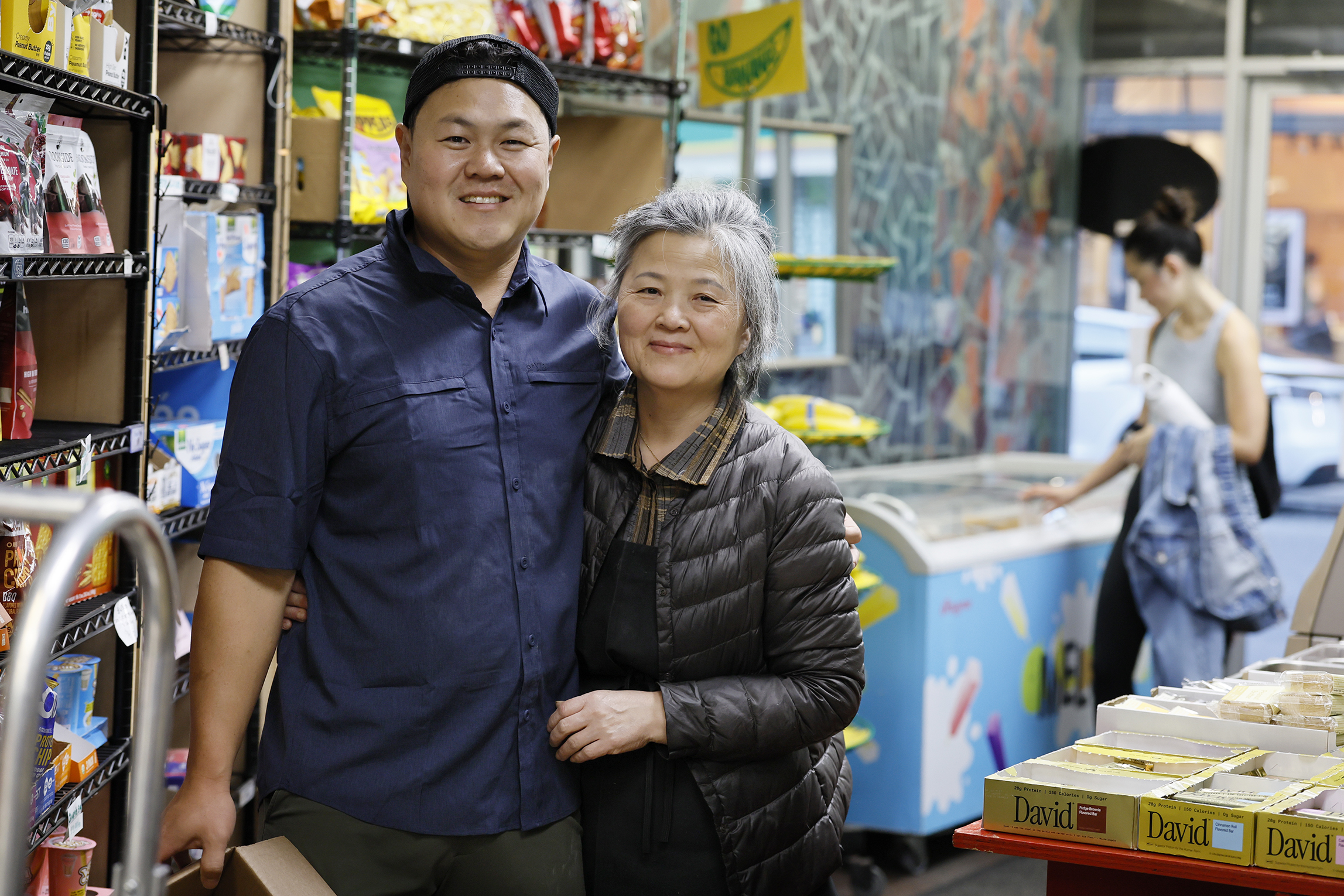
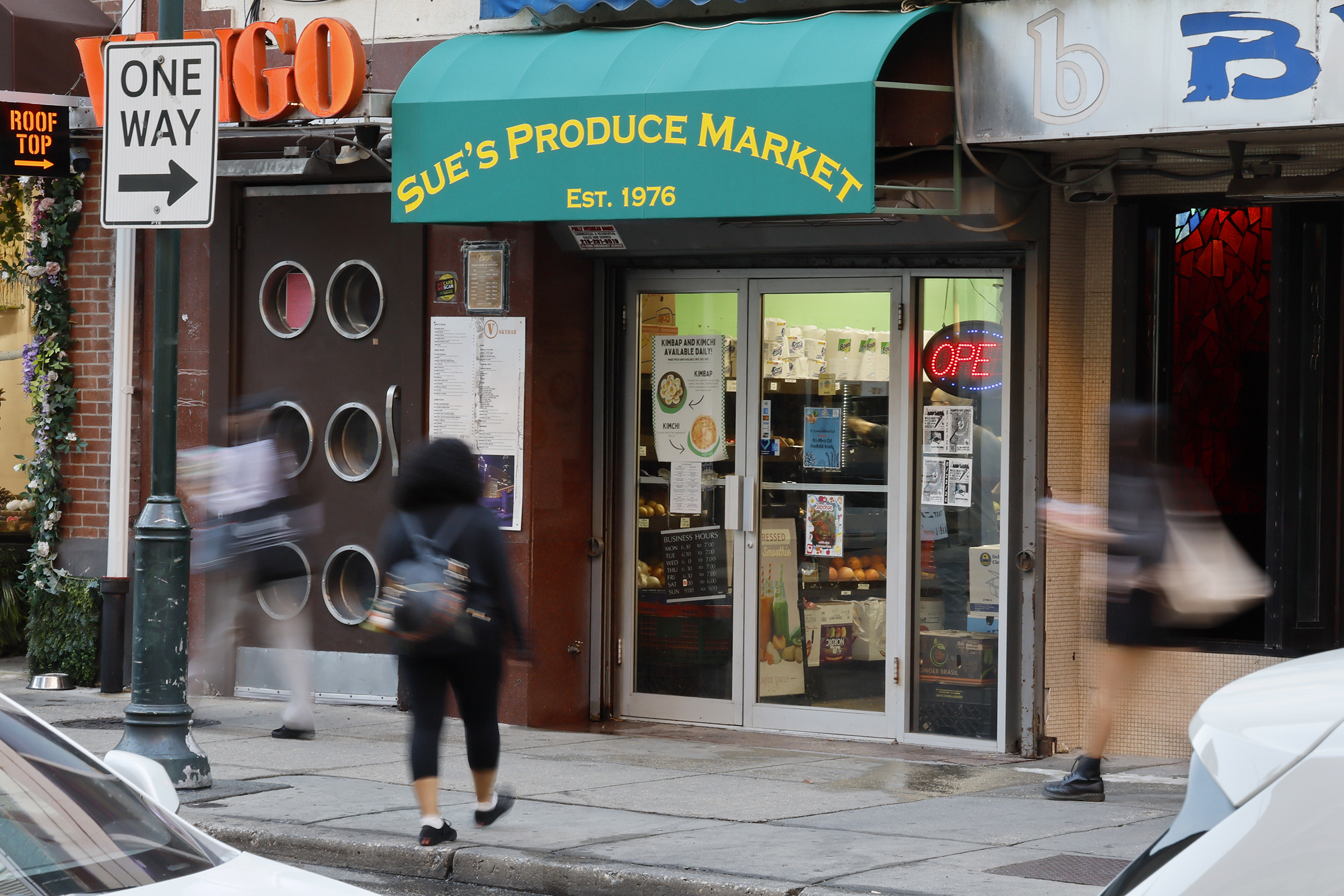
Mi Ja “Tina” Shin smiled at the man approaching the register at Sue’s Produce, her small food market on 18th Street, two blocks from Rittenhouse Square. They locked eyes. Silently, he pressed a $100 bill into her hand. Shin stared at it and gave him a hug.
And so it has been going lately at Sue’s, one of the few small grocery stores in a retail district dominated by restaurants, boutiques, and big-name brands.
While Di Bruno Bros. across the street offers scores of cheeses and elaborate charcuterie, Sue’s takes a more workaday approach to retail: Packaged Dietz & Watson cold cuts and everyday cheeses, plus dozens of varieties of produce, snacks, drinks, and pantry staples are jammed into the narrow storefront. Shin’s homemade Korean food at the counter is the house specialty.
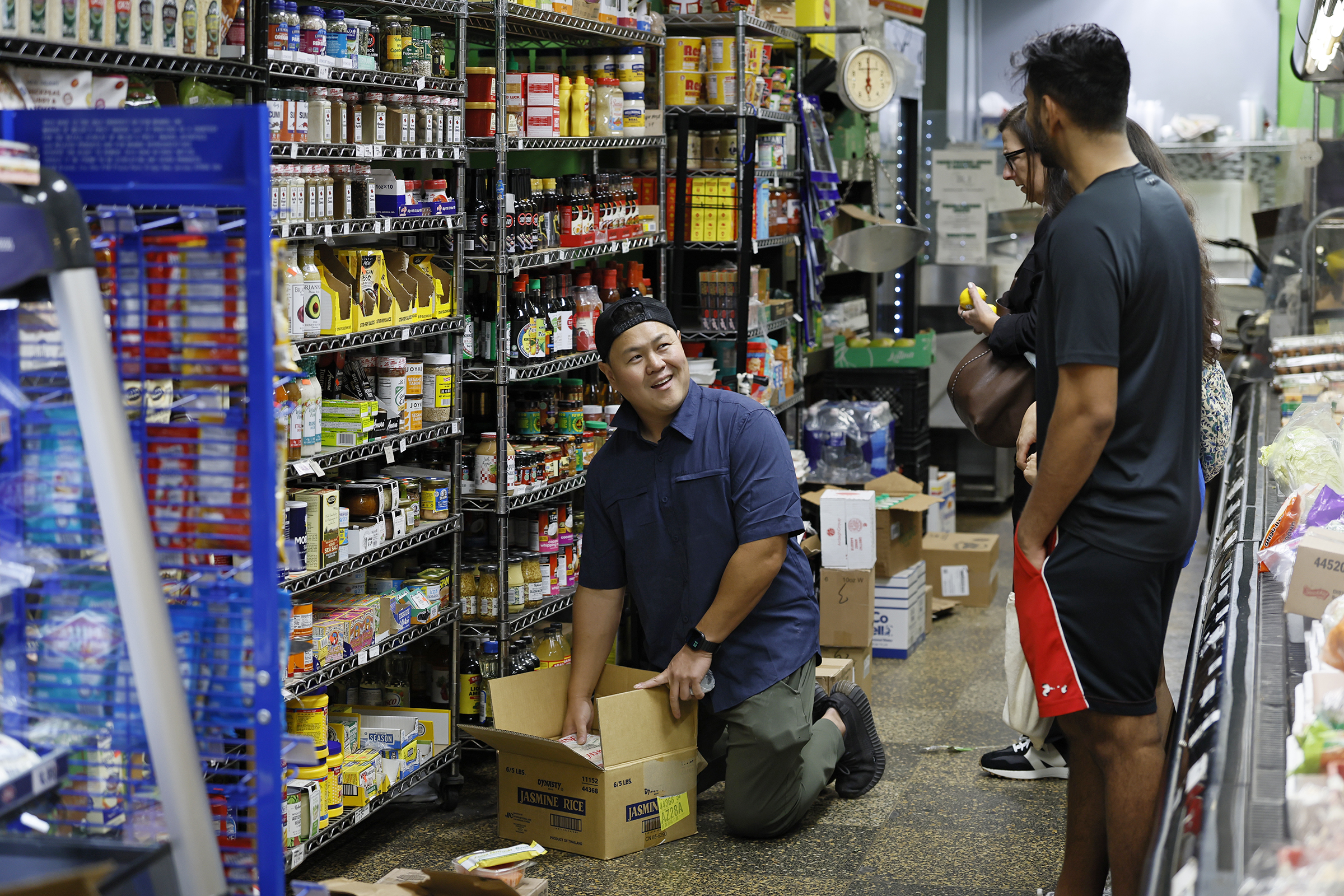
James Shin talks with customers while stocking shelves at Sue’s Produce Market.Elizabeth Robertson / Staff Photographer
But Sue’s is behind on its rent, and neighbors have been stepping up since Shin’s son James launched a GoFundMe campaign last week.
By early Friday, the fundraiser had exceeded $27,000 and was closing in on its current goal, $30,000.
James Shin said his last understanding was that his mother owed about $38,000 in back rent, which is why the fundraiser was initially set at $40,000. Diaa Sawan, whose family owns the building at 114-116 S. 18th St., said Thursday that the current arrears are about $32,000.
Sue’s has been struggling for some time, according to both Shin and Sawan.
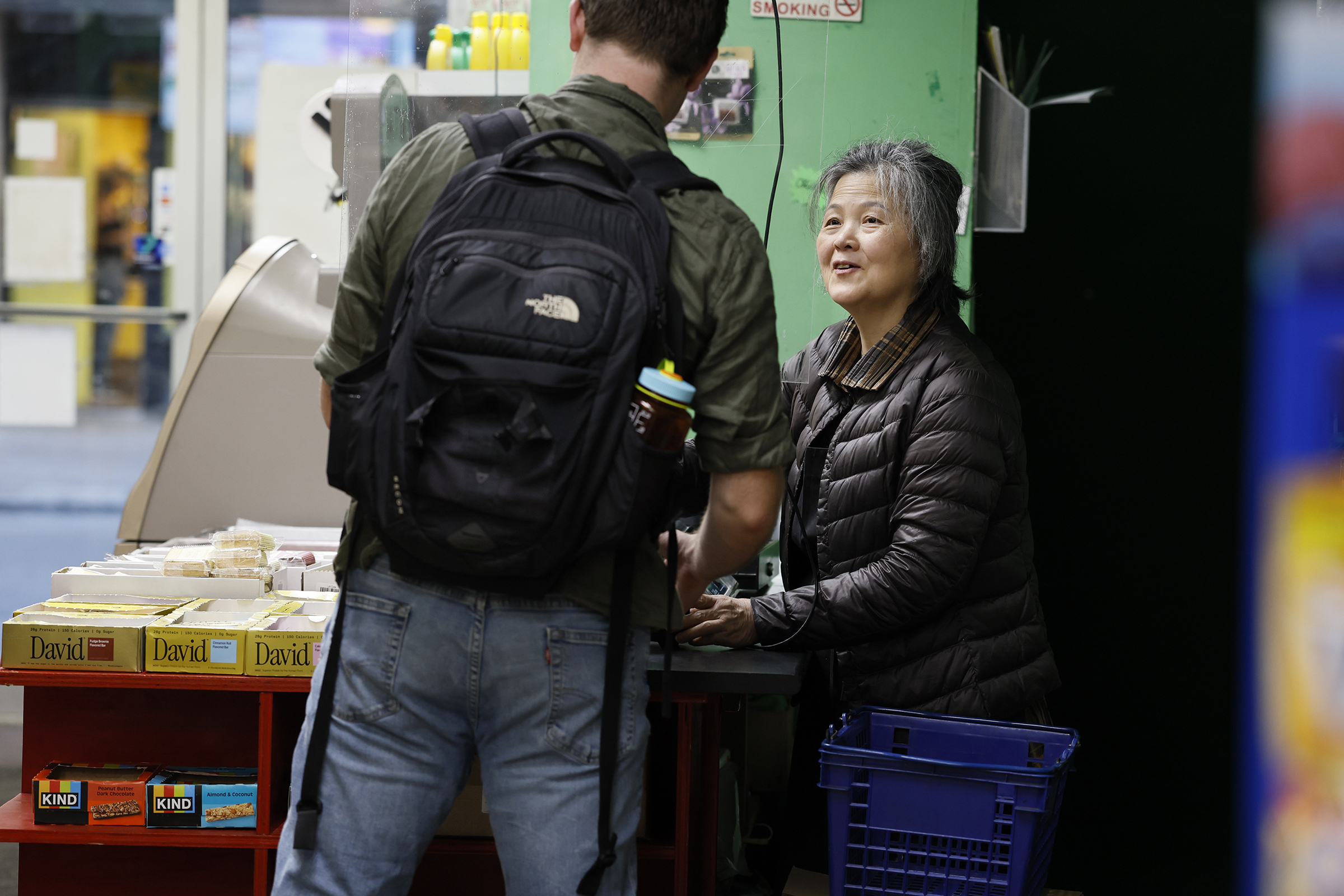
Mi Ja “Tina” Shin chats with a customer at Sue’s Produce Market.Elizabeth Robertson / Staff Photographer
Sawan said the store has typically been three or four months behind, and has at times made partial payments. “We’ve been so patient,” he said. “My family and I are actually trying to give them a chance, and hopefully she can make it.”
Asked whether eviction proceedings were possible, Sawan said it was. “After a couple of years, I have no choice,” he said. “We have a mortgage. We have to pay the bank.” He said well-funded national tenants could pay thousands more in rent.
James Shin, who has been speaking publicly for his mother because she is not comfortable speaking in English, described the relationship with the Sawans as longstanding and accommodating. “They’ve always tried to help my mom out,” he said.
Sue’s Produce Market, 114 S. 18th St.Elizabeth Robertson / Staff Photographer
A neighborhood rallies
So are the customers. The man who handed her $100 Thursday morning was Ron Schlesinger, a neighbor.
“I don’t like GoFundMe because they take a fee,” Schlesinger said. “I’ll give her more money if she needs it. My whole family has been coming here for 50 years.”
That history predates the current store. Tina Shin’s aunt Sue operated a produce business nearby before the family opened the 18th Street storefront in the early 2000s next to Byblos, the Mediterranean restaurant owned by the Sawan family. Vango, the Sawans’ club, is above both establishments.
Support is also coming from Amanda Shulman, chef-owner of nearby Michelin-starredHer Place Supper Club, who announced this week that she would host a Korean-inspired benefit dinner Oct. 16, with snacks provided by Shin and proceeds donated to Sue’s.
The dinner will have two family-style seatings, at 6 and 8:30 p.m., with 48 seats total at $275 per person, beverages included. Reservations will go online at 6 p.m. Sunday. The goal is to raise $10,000.
Sue’s is “such an integral part of our little Rittenhouse neighborhood,” Shulman said. “Someone from our team visits Sue’s at least two times and sometimes up to four times a day for this or that or a pick-me-up snack or gorgeous herbs when we’re shorted.”
‘Having a hard time’
James Shin, 37, who runs another market at Society Hill Towers, said the family’s problems built gradually. “My mom has a lot of business expenses, plus the slowdown of the economy and her trying to keep up,” he said. “Eventually, she fell behind on rent. I knew my mom was having a hard time. Business was slow.”
Part of the problem, he said, is that Sue’s was built around a shopping habit that has faded.
“We’ve always been a produce market, so people know us for produce,” Shin said. “But nowadays, no one really grocery-shops or buys produce as much as they used to.”
Tina Shin, 63, has had decades of experience in the food trade. Her son said she came to the United States from South Korea in the late 1980s after marrying his father, Dong Shin. In the early 1990s, the couple took over a fruit cart from a relative at 18th and Walnut Streets, outside of what was then Urban Outfitters and is now Anthropologie.
James remembers tagging along with his mother when he was young because the family had no babysitter. On rainy days, he said, he would crouch beneath the shelter of the building while she cut fruit inside the cart.
The family later operated a series of stores in North Philadelphia that failed through fire or economic downturns. In 2012, they took over Sue’s from relatives. “At the time, business was still pretty good, but it was shifting,” Shin said.
Rent then was about $5,000 a month, he said. Today it is $12,000, according to Sawan.
A survival strategy
As produce sales declined and costs rose, Tina Shin began leaning more heavily on prepared Korean food.
After the pandemic, she started with kimchi, then kimbap. At first, James Shin said, she made only five or 10 rolls a day and would be disappointed if one or two remained unsold. Then demand grew.
“She was selling 10, and next thing you know, she’s selling 20, 30, 40 a day,” he said.
She expanded into banchan and other dishes, studying recipes and techniques online and adapting them.
The cooking also extended an already-grueling workday. James Shin said his mother often wakes at 2 a.m. to prepare food, works at the store from 7 a.m. to 7 p.m., then goes home, preps again, sleeps a few hours, and starts over.
But are the fundraisers just putting a bandage on a systemic problem? James Shin said he hopes that the attention will help in the long term.
People who are not donating online, he said, have been coming into the Rittenhouse store to buy Korean dishes, smoothies, and groceries.
“I feel like this is a good opportunity for us to catch back up and try to start — not fresh, exactly — but restart and get everything back together,” he said.
For his mother, he said, the strongest encouragement remains the simplest kind.
“What keeps my mom going is the customer who comes back and says, ‘Your food is the best. Your Korean food is really good,’” Shin said. “I feel like that’s the drive that’s been keeping her going.”
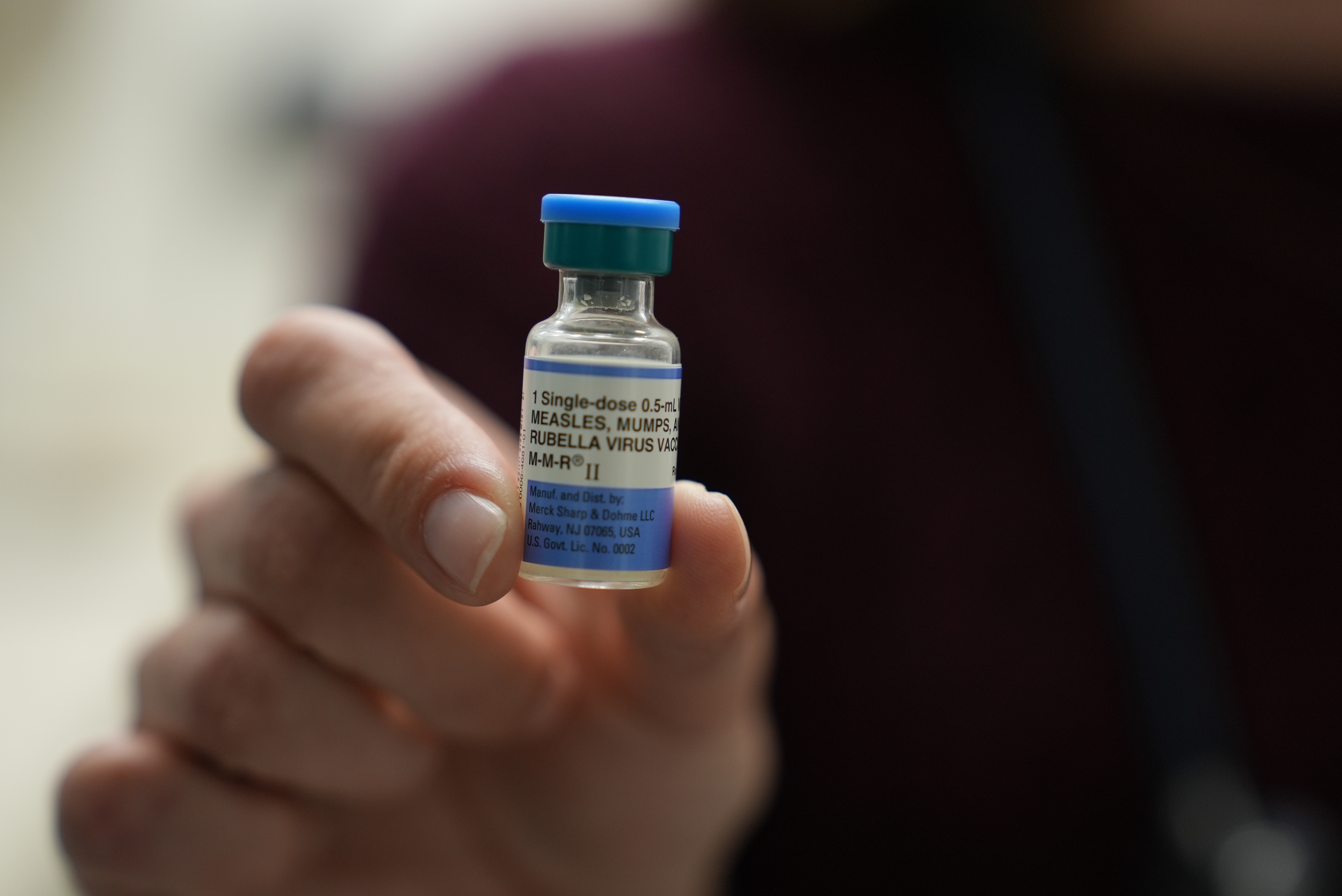
Philadelphia health officials warned that people may have been exposed to measles at the Children’s Hospital of Philadelphia in West Philadelphia on Friday.
Health officials said the potential exposure took place at the following times and locations on Sept. 11 at the hospital at 3401 Civic Center Blvd.:
CHOP neonatal intensive care unit (NICU) West: 9:30 a.m. to 4:15 p.m.
CHOP NICU West Family Lounge: 9:30 a.m. to 4:15 p.m.
CHOP Atrium: 9:30 a.m. to 4:15 p.m.
CHOP main cafeteria: 12:05 p.m. to 2:45 p.m.
In a press release, Philadelphia’s health department said that they are working with CHOP and the state health department to ensure infants in the NICU receive a “preventive antibody product” to protect them from contracting the highly contagious virus, or to lessen the chance they develop a serious disease.
Measles can infect up to nine in 10 unvaccinated people exposed to it, and can linger in the air for up to two hours.
People who were exposed at the hospital should check their vaccination status and watch for symptoms of measles, the city health department said.
Symptoms of measles include a fever, a runny nose, a cough, and red, watery, eyes, followed by a rash. Most cases are mild, but the disease can cause severe complications, including pneumonia, brain infection, and death. Young children are at particular risk for complications.
The exposure comes as Pennsylvania deals with a major measles outbreak that, as of Wednesday, has sickened 731 people across 38 counties, including in neighboring Chester County, which has reported 67 cases this year. State officials have confirmed four measles-associated deaths in the last several weeks, and have clashed with federal officials over how to characterize the deaths.
Philadelphia has not reported any cases of measles, though the health department earlier this year noted potential measles exposures at the airport and 30th Street Station.
Philadelphia Health Commissioner Palak Raval-Nelson said in a statement that she did not believe the exposures at CHOP poses a “broad risk” to Philadelphians because most are vaccinated.
But she urged residents to ensure they get the measles, mumps, and rubella vaccine.
“Given the ongoing outbreaks in Pennsylvania and other places, it is imperative that everyone who is not up to date on their MMR vaccine gets their vaccine as soon as possible,” she said. “Remember, this is not just about protecting yourself, it’s about protecting our most vulnerable Philadelphians.”
Some people cannot be vaccinated, including infants too young for the vaccine, pregnant people, and some immunocompromised people.
Typically, children get their first dose of the MMR vaccine at 1 year old, and a second between 4 and 6 years old.
In recent months, as Pennsylvania’s measles outbreak has spread, state officials have recommended vaccinating children early if they live in or are traveling to areas with measles.
City officials said they recommend an early first dose of the MMR vaccine for infants between six and 11 months old before international travel or travel to affected areas in Pennsylvania.
Children from 1 to 4 years old should also get their second dose of the MMR vaccine early, at least 28 days after their last dose, officials said.
People who were possibly exposed at CHOP should determine if they’re protected against measles, officials said.
People are generally considered immune if they were born before 1957, have already had measles, or have received two doses of the MMR vaccine.
City officials said that people who have only received one dose of the MMR vaccine have a low risk of contracting measles from the CHOP exposure, but they should discuss getting a second dose with their doctor.
People who are protected against measles don’t have to do anything else, officials said.
People who are not immune to measles should get a dose of the MMR vaccine, officials said. People under 12 months old, pregnant people who are not immune, or people with a weakened immune system should consult a doctor as soon as possible.
Those who are not immune and may have been exposed at CHOP should wear a mask in indoor public spaces and around any unvaccinated people until three weeks have passed since their exposure, officials said. On its measles website, the department said that people who are not immune should quarantine for 21 days, until Oct. 2.
In an email, deputy health commissioner James Garrow clarified that the department’s general recommendation is for exposed people to mask and monitor themselves for symptoms, and that the department would contact exposed people for whom they have “a higher level of concern” and recommend they quarantine.
This is because a person with measles can spread the virus for four days before a rash appears, and for four days after it starts.
Exposed people who aren’t immune to measles should call their doctor immediately if they develop measles symptoms through Oct. 2. They should inform their doctors that they’ve been exposed to measles, and notify the city health department at 215-685-6740. (Residents of other counties in Pennsylvania should call the state health department at 877-724-3258.)
The Eagles eked out a season-opening win over the Washington Commanders thanks, in large part, to Jalen Hurts channeling the elements of his game that make him so dangerous. But when it comes to other areas of the offense, concerns from last year still linger. The Philadelphia Inquirer’s Jeff McLane and David Murphy assess Hurts’ performance, Sean Mannion’s debut as offensive coordinator, and warning signs on the offensive line.
00:00 Shades of 2022 Jalen Hurts???
12:56 Concerns about Landon Dickerson and the offensive line
20:38 Sean Mannion’s first game, and thoughts on Makai Lemon and Eli Stowers
30:46 Did the defense live up to expectations?
unCovering the Birds is a production of The Philadelphia Inquirer and KYW Newsradio Original Podcasts. Look for new episodes throughout the season.