Tag: Eds & Meds

  • A Penn Medicine employee shuttle was struck by a car and knocked on its side early Friday in South Philly

    A Penn Medicine employee shuttle was struck by a car and knocked on its side early Friday morning in South Philadelphia, police said.

    One passenger was initially in critical condition, but has since been upgraded to stable, Philadelphia police said.

    The van was transporting 11 employees, plus the driver, the University of Pennsylvania Health System said. All were taken to hospitals for evaluation and treatment, Penn said, but other details on the passengers’ conditions was not provided.

    The white Ford van was traveling east on Reed Street when a red Honda Civic Sport traveling south on South Christopher Columbus Boulevard struck the front driver’s side.

    The impact caused the van to spin and tip onto the driver’s side, before stopping near train tracks in the road’s median.

    The incident remains under investigation, police said.

  • One year of inspections at Nazareth Hospital: April 2025 – March 2026

    One year of inspections at Nazareth Hospital: April 2025 – March 2026

    Nazareth Hospital was not cited by the Pennsylvania Department of Health for any safety violations between April 2025 and March of this year.

    Located in northeast Philadelphia, the hospital is part of Trinity Health Mid-Atlantic.

    Here’s a look at the publicly available details:

    • July 1, 2025: Inspectors came to investigate a complaint but found the hospital was in compliance. Complaint details are not made public when inspectors determine it was unfounded.
    • Feb. 18, 2026: Inspectors came to investigate a complaint but found the hospital was in compliance.
  • Monell Chemical Senses Center is relocating within University City after 55 years on Market Street

    Monell Chemical Senses Center is relocating within University City after 55 years on Market Street

    Monell Chemical Senses Center is relocating to a new facility in University City to expand its operations and evolve its science, officials announced Wednesday.

    The nonprofit research institute dedicated to studying taste and smell signed a 20-year lease at One uCity Square, a 13-story research hub, that will include more than $30 million worth of new infrastructure and facility improvements.

    The new location at 25 N. 38th Street is a roughly seven-minute walk from the current home at 3500 Market St., where Monell has resided since 1971.

    Monell plans to finish moving into the new space in early 2027.

    “We’re just at capacity. We don’t have the facilities that are going to push us forward into the future,” said Benjamin Smith, Monell’s executive director and president.

    The move has been a long time coming, as the center’s more than 150 scientists and staff have outgrown its space over the last 50-plus years.

    For example, more scientists have wanted to use newer research methods, such as organoids — miniature versions of organs grown in the lab, he said. However, the current building has limited cell culture space and imaging capabilities.

    “Our people are excited because we’re moving to facilities that are going to help them do more of the work that they want to do,” Smith said.

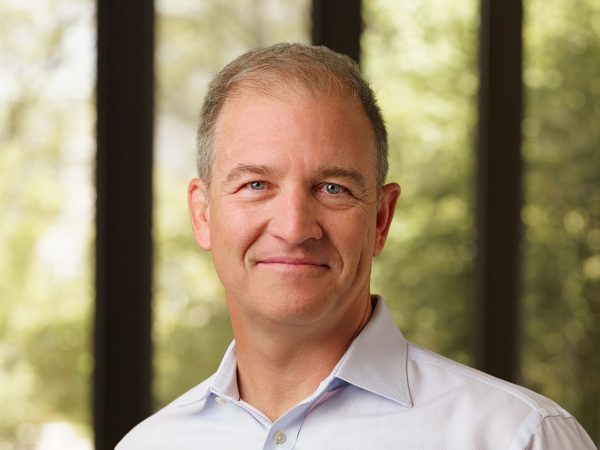
    Benjamin Smith is the executive director and president of Monell.Courtesy of Monell Chemical Senses Center

    More shared space, room for growth

    The new space, which spans 64,000-square feet across three floors, is technically smaller than Monell’s current building. However, the design will allow for more efficient use of lab space.

    The modern facility has an open layout filled with shared spaces, “as opposed to the old sort of academic lab where you were in one corner of a basement or one corner of a building and you locked your door,” Smith said.

    He hopes this will encourage collaborations and interactions between scientists. That includes both within Monell and with other groups in the building.

    Its neighbors within One uCity will include Dispatch Bio, Century Therapeutics, Penn NSF AIRFoundry, among other research and biotech companies. The office building opened in 2023 and is now roughly 90% occupied.

    Monell’s iconic “Face Fragment” sculpture, perched outside its current building, will move, too. The giant nose and mouth will be featured at the front of the One uCity building, looking out at the lawn.

    “We’re making sure that we don’t lose that legacy,” Smith said. “We take our culture and we move it into the new building and we grow it.”

  • Jefferson, Nemours, Temple, and St. Chris are exploring alliance to support the North Philadelphia children’s hospital

    Jefferson, Nemours, Temple, and St. Chris are exploring alliance to support the North Philadelphia children’s hospital

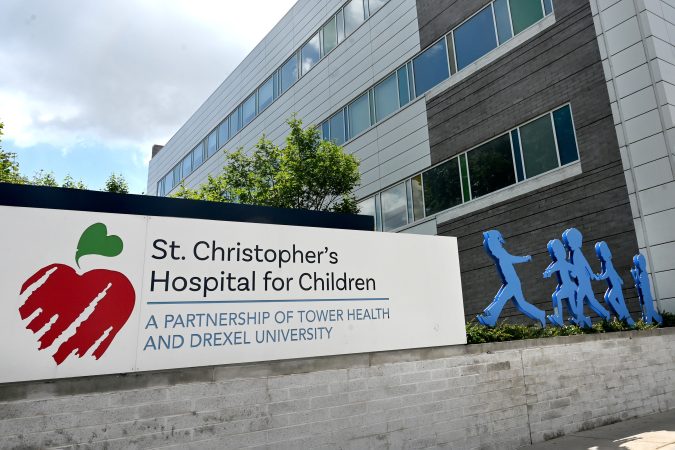
    Three major Philadelphia-area health systems are exploring an alliance to support financially struggling St. Christopher’s Hospital for Children in North Philadelphia, its leaders announced Wednesday.

    The proposed alliance would involve Nemours Children’s Health, Jefferson Health, and Temple Health, a St. Chris statement said.

    St. Chris’ ownership would not change from the current 50-50 partnership between Drexel University and Tower Health.

    Under the alliance, Wilmington-based Nemours would provide highly advanced, or tertiary, care. Nemours is Jefferson’s primary pediatric partner in the Philadelphia area.

    The preliminary agreement announcement provided no timeline to form the alliance. It also did not mention specific financial support for the North Philadelphia institution, which has received millions from local health players following a 2019 bankruptcy and steep losses during the pandemic.

    St. Chris’ board chair, P. Sue Perrotty, said the 150-year-old hospital will remain a “gateway” to care for families.

    “Our goal is to preserve what makes St. Christopher’s so special while strengthening our operations, so our community-focused mission will endure,” she said.

    “Whether care is delivered at St. Christopher’s or through our partners when clinically appropriate, our team will continue to coordinate every step of a patient’s journey, providing families with a seamless experience and a trusted guide throughout their child’s care.”

    Beyond the critical health services St. Chris provides, the institution also plays a vital part in medical education for area medical schools, including those at Drexel, Thomas Jefferson University, Philadelphia College of Osteopathic Medicine, and Temple University.

    It serves as a safety net for healthcare in some of Philadelphia’s lowest-income communities. About 85% of its patients in recent years have been insured by Medicaid, the highest percentage of any children’s hospital in the nation, according to St. Chris.

    Twice in the past four years, a coalition of Philadelphia nonprofits provided financial lifelines for St. Chris.

    Children’s Hospital of Philadelphia, Jefferson, Temple, Philadelphia College of Osteopathic Medicine, Independence Health Group, and private donors provided $50 million over two years starting in 2022. Two years later, the same group, minus Independence, contributed another $30 million.

    Jefferson and Temple were also part of a consortium that considered bidding for St. Chris in 2019 during its parent company’s bankruptcy. They backed out before the auction, which Drexel and Tower won with a $50 million bid.

    Nemours spokesperson Shelley Meadowcroft said there was no financial support included in the agreement.

    Nemours in recent years has lost affiliations with Main Line Health and ChristianaCare to CHOP. The alliance will strengthen “access to high-quality pediatric care in our region,” she wrote in an email.

    “This collaboration also strengthens Delaware’s role in pediatric care by positioning Nemours Children’s Delaware-based clinical operations as a central hub for advanced specialty care, education, and innovation,” she added, “while supporting the long-term strength and mission of St. Christopher’s Children’s Hospital and the communities it serves.

    In a statement, Temple University officials characterized the agreement as “non-binding letter of intent” to form an alliance “in support of St. Chris and its future.”

    “The proposed alliance reflects a shared commitment to securing a future for St. Christopher’s while preserving the mission, clinical excellence and community role that have made the hospital a resource for children and families in Philadelphia and across the region,” officials said.

  • Feds award $43 million to Philly gene therapy research to advance treatments for rare diseases

    Feds award $43 million to Philly gene therapy research to advance treatments for rare diseases

    The U.S. government has awarded Children’s Hospital of Philadelphia $39 million to develop a scalable platform for treating rare genetic, liver-related diseases in infants and children.

    The federal Advanced Research Projects Agency for Health (ARPA-H) also announced this week another $4 million for local gene therapy pioneer Jim Wilson to design gene therapies using AI at his University of Pennsylvania spinout, GEMMABio.

    The $43 million in funding earmarked for Philadelphia researchers comes through a new federal effort to advance gene therapies for rare diseases.

    CHOP’s team includes the duo behind last year’s first-of-its-kind, personalized gene-editing treatment involving a Philadelphia-area infant, known as Baby KJ. CHOP’s Rebecca Ahrens-Nicklas and Penn Medicine’s Kiran Musunuru together created a custom drug to correct the genetic mutation driving Baby KJ’s rare metabolic disease — dramatically improving his liver function.

    The funding will expand their work and bring in another CHOP researcher, Lindsey George, who develops gene therapies for bleeding disorders.

    “We’re trying to move beyond just one diagnosis or one gene,” Ahrens-Nicklas said.

    Philly-based scientists comprise two of seven research teams nationwide to receive funding through ARPA-H’s new $160 million effort.

    Called THRIVE, the program aims to help the roughly one in 10 people — most being newborns, infants, and children — with chronic genetic diseases. Ninety-five percent of rare diseases have no approved treatments.

    Leaders want to develop “precision genetic medicines through platforms that can test multiple treatments for multiple diseases in a single clinical trial,” ARPA-H director Alicia Jackson said in a Thursday news release.

    CHOP’s expanding focus

    The CHOP team will focus on building a scalable gene-editing platform that can be used to treat a variety of infants and children.

    Their initial focus is on liver-related genetic diseases, ranging from urea cycle disorders to blood clotting diseases.

    “Essentially it’s the same drug, whether or not you’re targeting a genetic variant that causes a rare metabolic disease or a genetic variant that causes a rare coagulation disorder,” Ahrens-Nicklas said.

    Their five-year plan includes launching preclinical and clinical trials testing the safety and efficacy of their individualized treatments.

    They will also pursue regulatory approvals, work with payors, and implement their therapies at community sites and remote hubs to expand access.

    “We are the three musketeers that already text 25,000 times a day, and will continue to do so,” Ahrens-Nicklas said.

    Wilson experimenting with AI

    Wilson founded academia’s first gene therapy program back in 1993 as a professor at Penn.

    He left in 2024 to spin out biotech start-ups dedicated to tackling rare diseases with genetic medicines.

    “The question is, can we find ways to scale this bespoke personalized medicine strategy, so that it is affordable and cost-effective?” he said.

    In partnership with a biotech called ProFluent, GEMMABio will use AI to design its base editors — the machinery that goes in and make edits to DNA.

    The tool could be rapidly adapted to different patients and diseases, theoretically making the process more affordable, scalable, and efficient, Wilson said.

    His $4 million award will fund preclinical studies of their technology.

    GEMMABio’s initial focus is on two rare liver diseases “for which there is significant unmet need,” he said, including Maple Syrup Urine Disease and homozygous familial hypercholesterolemia (HoFH).

  • One year of inspections at Jefferson Einstein Philadelphia Hospital: April 2025 — March 2026

    One year of inspections at Jefferson Einstein Philadelphia Hospital: April 2025 — March 2026

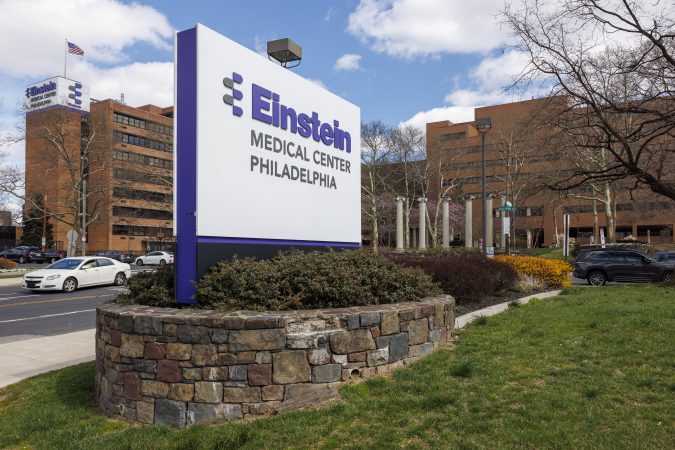
    Jefferson Einstein Philadelphia Hospital was cited by the Pennsylvania Department of Health for maintenance and sanitation issues in March.

    The incident was one of nine times inspectors visited the hospital, formerly known as Einstein Medical Center, to investigate potential safety problems.

    Here’s a look at the publicly available details:

    • April 15, 2025: Inspectors came to investigate a complaint but found the hospital was in compliance. Complaint details are not made public when inspectors determine it was unfounded.
    • June 3: Inspectors came to investigate a complaint but found the hospital was in compliance.
    • June 18: Inspectors came to investigate a complaint but found the hospital was in compliance.
    • July 30: Inspectors came to investigate a complaint but found the hospital was in compliance.
    • Sept. 30: Inspectors came to investigate a complaint but found the hospital was in compliance.
    • Nov. 19: Inspectors came to investigate a complaint but found the hospital was in compliance.
    • Jan. 23, 2026: Inspectors came to investigate a complaint but found the hospital was in compliance.
    • March 11: Inspectors visited for a mental health survey and found the hospital was in compliance.
    • March 11: Inspectors cited the hospital for sanitation issues in several rooms, including tacky floor stains, debris left in trash cans, and a dark substance in the corners of a shower stall. Inspectors also found the hospital had not installed sloped safety coverings for medical gas and vacuum valves on the wall above the bed in four patient rooms. Without the coverings, the exposed valves posed a ligature risk, meaning a patient could use the edges to harm themselves. Hospital administrators agreed to install valve covers and retrained staff on cleaning procedures.
  • Rothman Orthopaedics is refocused on Philly region, opening three new surgery centers

    Rothman Orthopaedics is refocused on Philly region, opening three new surgery centers

    Rothman Orthopaedics plans to open three new surgery centers over the next year and keep adding doctors in its Philadelphia-area market, as the large physician-owned group refocuses growth efforts on its original territory.

    “Our biggest priority in the near term is strengthening our core business here, in Southeastern Pennsylvania and New Jersey,” Rothman CEO Christian Ellison said. “We’re not gonna ignore opportunities. We’ll be opportunistic around things that make strategic sense.”

    The new approach comes after a now abandoned effort to break into the New York market, first in a partnership with Northwell Health in 2017 and then with NYU Langone Health. That foray ended last year with the sale of Rothman Orthopaedics of Greater New York and its three locations to NYU Langone.

    Rothman has seen more success after following the lure of fast population growth to Florida, where it opened offices in the Orlando area in 2020 in partnership with AdventHealth.

    “Florida has been a big success, because we’ve had the partnership down there with Advent Health that’s been kind of mutually beneficial,” said Ellison, who became Rothman’s CEO last fall.

    The Philadelphia draw

    The practice headquartered in Center City already has 24 locations in the Greater Philadelphia market. That number includes facilities that Rothman operates in partnership with Jefferson Health, Main Line Health, AtlantiCare, and RWJ Barnabas.

    Rothman located its newest office in West Chester, an area where Rothman had little market share, according to Ellison. He also sees opportunity in other parts of the Philadelphia region and contiguous markets.

    To make that growth possible, Rothman is partway through an effort to hire 41 physicians by the end of this year. That represents a 20% increase and will bring Rothman’s total to 214 physicians, the company said.

    The need for ambulatory surgery centers

    Rothman is a partner in nine surgery centers in Pennsylvania and New Jersey and two surgical hospitals (Rothman Orthopaedic Specialty Hospital in Benslam and Physicians Care Surgical Hospital in Limerick).

    Those outpatient facilities account for nearly two-thirds of Rothman’s surgeries. Even the surgical hospitals function primarily as ambulatory centers, Ellison said. The remaining third of surgeries takes place in acute-care hospitals.

    “We are challenged for operating room capacity right now, both in the acute care hospitals, as well as in our ASCs, and so we feel like we need to bring more operating rooms online,” Ellison said.

    What’s more, Medicare and private insurers want more procedures done in lower-cost surgery centers. In the future, insurers will pay the same price for an outpatient knee replacement whether its done in a hospital of freestanding surgery center, Ellison predicted.

    Rothman hasn’t finalized locations for the new surgery centers, but Ellison said he expects two to be in Southeastern Pennsylvania and one in New Jersey. The centers will likely be in areas where Rothman has an established patient base.

    The physician group prefers to open the new centers independently, as opposed to going through partnerships like it has historically. “We think we’re uniquely positioned to manage that patient experience in the surgical environment,” Ellison said.

  • How much did Philly-area nonprofit health system CEOs make in 2024?

    How much did Philly-area nonprofit health system CEOs make in 2024?

    Jefferson’s Joseph G. Cacchione ranked as the highest-paid CEO at the Philadelphia region’s nonprofit health systems in 2024, with total compensation of $7 million, according to The Inquirer’s annual review of public tax forms.

    Madeline Bell at Children’s Hospital of Philadelphia collected $5.5 million in 2024, giving her the number two spot.

    Both also were top earners in The Inquirer’s 2023 compensation analysis. Jefferson is the largest system based here, both by revenue and number of hospitals, with 33 stretching from South Jersey to near Scranton. CHOP is among the nation’s top-ranked children’s hospitals.

    Janice Nevin at ChristianaCare joined the ranks of the top five. She received $3.5 million, about the same pay as the region’s fourth highest earner, Al Maghezehe at Capital Health, which has a network of outpatient clinics in Bucks County and two hospitals in Mercer County. Maghezehe’s compensation stands out because Capital had by far the lowest revenue among the systems with the 10 highest-paid CEOs.

    A couple of CEOs who left their positions before 2024 continued collecting long-term compensation, as is common in the industry.

    Most notably, Jefferson’s former CEO Stephen K. Klasko collected just over $1 million in 2024. He retired at the end of 2021, but remained an adviser through June 2022. The 2024 payment brought his total through 2024 to $48.7 million for 8½ years as CEO.

    Lori Herndon left AtlantiCare in June 2023. Her compensation the following year was $1.3 million.

    Other CEOs left during 2024, making it possible they will be listed in the next round of 990s. Those executives include Donald Mueller at St. Christopher’s Hospital for Children, Michael Laign at Redeemer Health, and Ronald W. Johnson at Shore Medical.

    Here’s a look at the numbers from The Inquirer’s review of the latest 990 tax returns of 20 nonprofit health systems, covering 11 health systems with operations concentrated in Southeastern Pennsylvania, seven in South Jersey, and two in northern Delaware:

    (function(){function e(){window.addEventListener(`message`,function(e){if(e.data[`datawrapper-height`]!==void 0){var t=document.querySelectorAll(`iframe`);for(var n in e.data[`datawrapper-height`])for(var r=0,i;i=t[r];r++)if(i.contentWindow===e.source){var a=e.data[`datawrapper-height`][n]+`px`;i.style.height=a}}})}e()})();

  • One year of inspections at Chestnut Hill Hospital: April 2025 — March 2026

    One year of inspections at Chestnut Hill Hospital: April 2025 — March 2026

    Chestnut Hill Hospital was not cited by the Pennsylvania Department of Health for any safety violations between April 2025 and March of this year.

    The Philadelphia-based hospital is majority-owned by Temple Health, which holds an 80% share in a partnership with Philadelphia College of Osteopathic Medicine.

    Here’s a look at the publicly available details:

    • May 21, 2025: Inspectors came to investigate a complaint but found the hospital was in compliance. Complaint details are not made public when inspectors determine it was unfounded.
    • July 7: Inspectors came to investigate a complaint but found the hospital was in compliance.
    • Aug. 15: The Joint Commission, a nonprofit hospital accreditation agency, renewed the hospital’s accreditation, effective June 2025, for 36 months.
  • 1,200 union nurses at Jefferson Einstein Philadelphia Hospital vote in favor of strike as bargaining continues

    1,200 union nurses at Jefferson Einstein Philadelphia Hospital vote in favor of strike as bargaining continues

    Nurses at Jefferson Einstein Philadelphia Hospital on Monday voted to authorize a strike if their bargaining committee calls for it as they negotiate a new union contract.

    The nurses want the contract to include solutions to staffing issues, as well as assurances that the hospital will not close departments. Earlier this year, Jefferson Health announced plans to close several pediatric clinics, including the Pediatric & Adolescent Ambulatory Center at Einstein Philadelphia at the end of this month.

    “Our patients deserve better than Jefferson is willing to deliver on its own. So do the nurses who care for them,” said Stephanie Stucka, a neuroscience nurse and co-president of Einstein Nurses United, in a statement.

    The Logan hospital has about 1,200 unionized nurses, whose contract expired over six weeks ago. They are members of Einstein Nurses United, a local of Pennsylvania Association of Staff Nurses and Allied Professionals (PASNAP).

    A little more than half the local’s members participated in the in-person vote, and 96% voted in favor of a strike, according to the union.

    The union also voted to authorize a strike during their last contract negotiations in 2023, and ultimately reached an agreement on a new contract without walking off the job.

    The union and hospital management continue to negotiate. Bargaining sessions are scheduled Tuesday, Wednesday and Monday, PASNAP spokesperson Megan Othersen Gorman said. If the committee does call for a strike, it must submit a 10-day notice under the National Labor Relations Act, she said.

    “This action risks putting disruption ahead of patients and community members,” a Jefferson spokesperson said in an e-mailed statement Tuesday. “While a strike is not imminent, this vote sends the wrong message at a time when our community needs stability, partnership, and a shared commitment to care — especially as Philadelphia prepares to host major national and global events that will place increased demand on our healthcare system.”

    The nurses’ union has proposed changes to improve staffing levels in most units, as well as contract language to protect staffing standards. It says Jefferson management has rejected these proposals.

    The nurses also want management to commit to keeping hospital safety measures put in place in recent years, including increased security and weapons screenings. The union also noted nurses’ concerns that benefits like paid time off and pension may be cut, and that the cost of their healthcare plans could rise.

    The hospital, formerly known as Einstein Medical Center Philadelphia, became part of Jefferson Health when it acquired the Einstein Healthcare Network in 2021.